
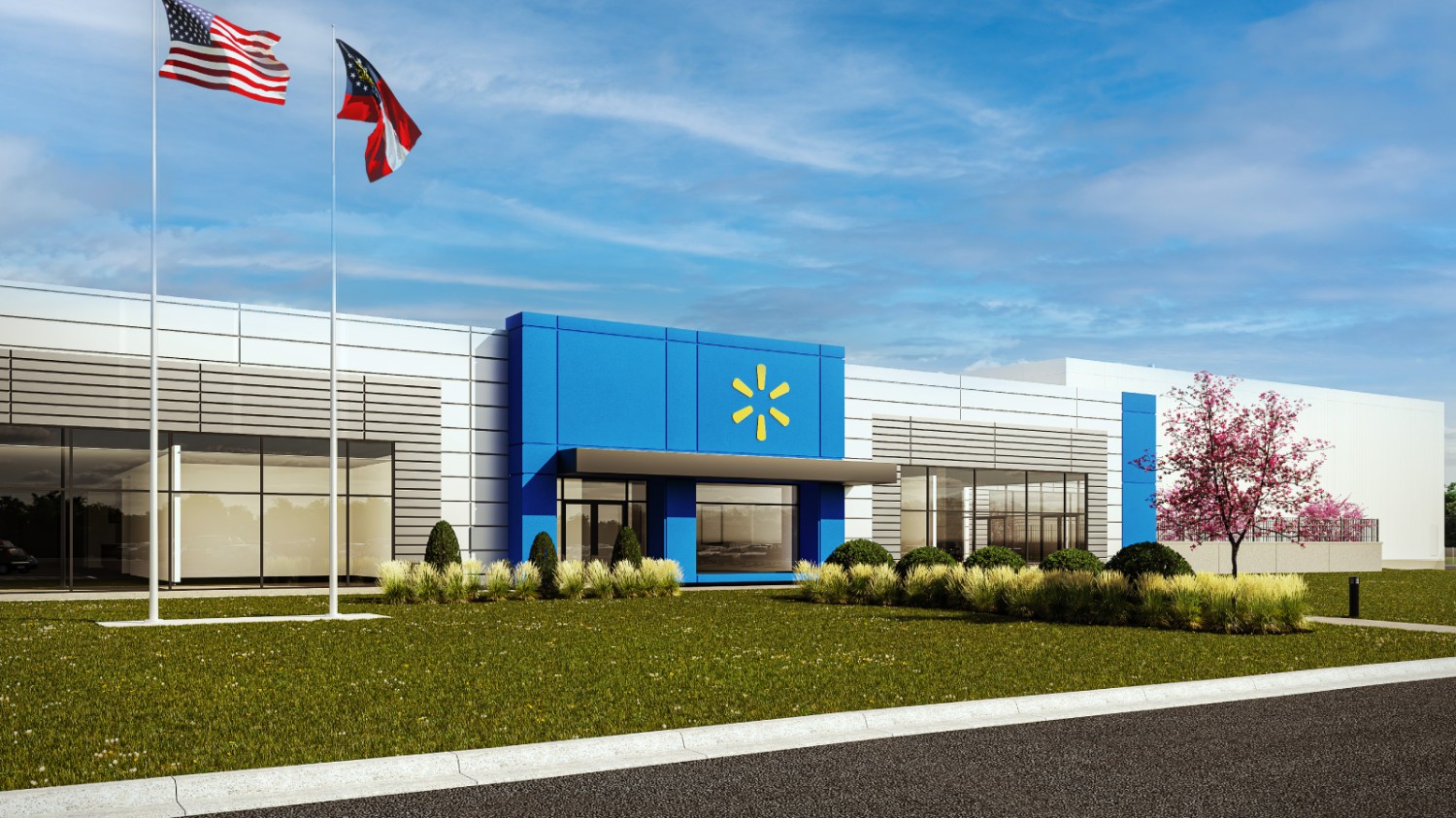
By Sherry Bunting, updated from Farmshine, October 13, 2023
VALDOSTA, Ga. – Walmart announced it will break ground later this year on a $350 million milk processing plant in rural south Georgia, according to a company statement released Oct. 11 by vice president of manufacturing Bruce Heckman and senior vice president of beverage merchandising Tyler Lehr.
The new facility will serve more than 750 Walmart stores and Sam’s Clubs in the Southeast.
The joint statement highlighted innovation, stating that the new plant “will bolster our capacity to meet the demand for high-quality milk, while making our supply chain more resilient, and building even more transparency around sourcing.”
The move is seen by the company as a milestone to control more of the factors around delivering a grocery staple – milk – that is high quality at low prices.
Using ingredients it says will be sourced from local farmers, the new Walmart facility will process and bottle a variety of milk options including gallon, half gallon, whole, 2%, 1%, skim and 1% chocolate milk for Walmart’s Great Value and Sam’s Club’s Member’s Mark brands.
The new facility is expected to create nearly 400 Walmart jobs in the Valdosta, Georgia community. Walmart seeks more vertical integration in staple commodities, having added beef facilities in Georgia and Kansas and initiated long-term agreements on beef and vertical farming.
Walmart opened its first milk processing facility in Fort Wayne, Indiana in 2018, triggering a ripple effect in farm contract terminations by then Dean-owned milk bottling plants serving the affected areas from Indiana and Ohio to Pennsylvania, New York, Kentucky, Tennessee and the Carolinas. Today, most of the former Dean Foods bottling plants are either owned and operated by the DFA milk cooperative or the Prairie Farms milk cooperative or have been closed.
Currently, there is a dearth of milk processing in Georgia relative to the rate at which milk production is growing, making up for the production in Florida that is slowing. Dean Foods closed the Braselton plant in 2018. Other plants have also closed over the past five years. Publix has two plants in Georgia, one expanded in 2017.
At the 2022 Georgia Dairy Conference in Savannah, former Southeast Milk Inc. CEO Calvin Covington noted in his dairy outlook that the 10 southeastern states have lost 8 fluid milk plants in the past 2 years.
“That’s done some damage,” he said. “The major challenge for milk markets in the Southeast is we need more of them. A lot of the fluid milk products that are sold in the Southeast are not processed here. If we are going to have a viable dairy industry in the Southeast, we need growing and stable markets for milk produced in the Southeast.”
In December 2022, USDA listed 39 pool distributing plants for the three southeastern Federal Milk Marketing Orders — down from 44 a year earlier. Most of the loss in fluid milk plants has occurred in Order 7. This includes Georgia, which currently has the fewest number of fluid milk plants — down to just two.
As the new leader in southeastern milk production, Georgia’s growth — combined with having just two milk plants at present — leaves producers with a per-capita fluid milk surplus of 53 pounds in 2022, according to Covington.
Together, the 10 southeastern states remain milk deficit, he said, but the relationship between milk supply and fluid milk demand is steadier across the region. Producers made 101 pounds of milk per person across the 10 southeastern states in 2022 compared with fluid milk consumption at 133 pounds per person, leaving the Southeast region at a 32-pound per person deficit, he reported.
On the same day (Oct. 11) that Walmart announced the new $350 million milk plant in south Georgia, Covington happened to be testifying in USDA’s Federal Milk Market Order hearing in Indiana. He responded to questions about the Class I differentials and alignments to move milk into the Florida peninsula and questions on why milk production is growing in south Georgia.
He said Georgia’s nearly 90 dairy farms include some young and passionate producers who “know how to make milk and know how to make money. They know how to manage a dairy farm, and they are passionate about dairy.”
They are expanding to multiple sites in an area of the state where there is not much else that can be done with the land. They have a good water source for irrigation, are triple-cropping and producing good forage. They excel in cow comfort and milk quality and have far fewer environmental or permitting obstacles than in neighboring Florida, he observed.
Covington noted land cost is much less in rural south Georgia as compared with Florida. Much of the growing milk supply produced in southern Georgia currently goes to Florida, he added.
“There’s growth potential there… These producers are young with an entrepreneurial spirit, and if we can’t keep them competitive to serve the fluid markets in Florida, I think longer term they could look for other alternatives,” said Covington, adding that Southeast producers are looking closely at the results of the national FMMO hearing and the previous regional hearing in making their future economic and business decisions.
-30-
 Ag Moos