
Thompson: ‘This is a win for children and dairy farmers, but we’re not done’
By Sherry Bunting, Farmshine, June 9, 2023
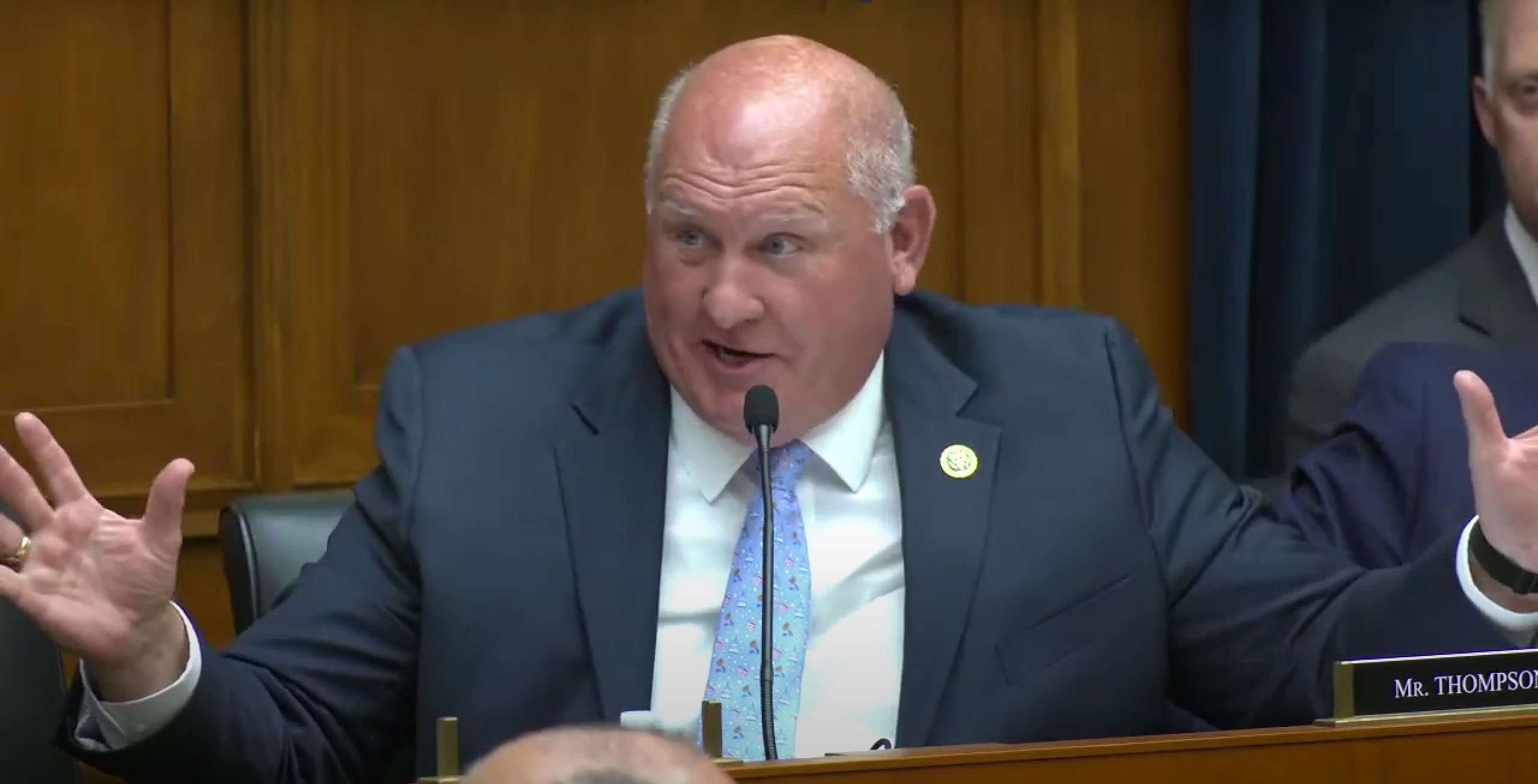
WASHINGTON — The Whole Milk for Healthy Kids Act, H.R. 1147, reached a major milestone this week, passing mark-up in the U.S. House Committee on Education and Workforce.
Dairy farmers could not have asked for a better way to kick off June Dairy Month as the committee discussion exposed the sides of this issue, and Congressman Glenn ‘GT’ Thompson, the Republican from Pennsylvania and the bill’s prime sponsor, laid out the case for children to have true access to the most nutritional beverage — milk.
In the end, the Education Committee on Tuesday, June 6 approved the bill in a bipartisan 26 to 13 vote.
Now that it is recommended by the House Education and Workforce Committee, the next step is scheduling of the vote on the House floor.
This is the first time in three legislative sessions that the bill to restore the choice of whole and 2% unflavored and flavored milk in schools has made it this far in the legislative process.
“This is a win for children and dairy farmers, but we’re not done. I took a deep breath to see this satisfying outcome in this first stage and another deep breath as we move to the next stage to get it onto the House calendar,” said Rep. Thompson in a Farmshine interview after committee passage.
A further breath of bipartisan fresh air also came from Rep. Jahana Hayes, a Democrat and educator from Connecticut. She rose in support of the bill, quoting from the Dietary Guidelines 2020-25 report and from USDA, giving statistics about what is offered and what is consumed in recommended dairy intake, especially for children ages 2 to 18.
“I have belabored this point that children receive a huge amount of their daily nutrition at schools. Also, the school meal programs are a significant source of milk and dairy for kids,” said Hayes.
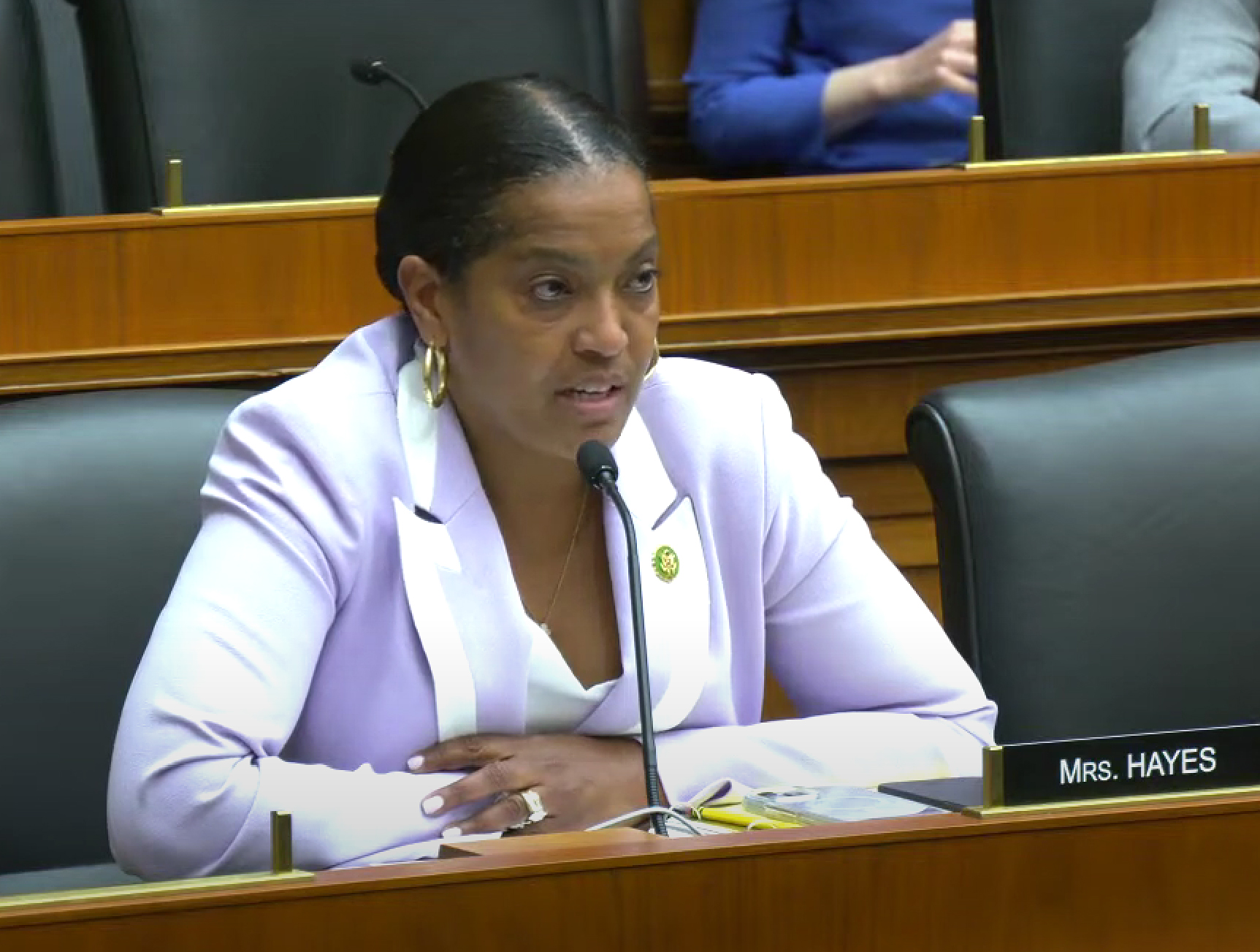
“But the part that sticks for me is that none of this matters if kids aren’t drinking the milk. We can have as much data and statistics on what kids need as dietary dairy intake, but if they’re not drinking it, then it’s all for naught,” she stressed. “We’ve seen students take less milk and throw away more milk when they don’t like the way it tastes.
“I support this amendment. I drink whole milk. My kids drink whole milk. We like it,” Hayes asserted.
Chairwoman Virginia Foxx, a Republican from North Carolina said the debate over whole milk “takes the cake.”
She talked about how previous recommendations have been “walked back,” and she bemoaned the fact that there are “no checks and balances” over the Dietary Guidelines process of making these recommendations.
“I was shocked last year when I learned that whole milk has only 3.5% fat content, when we are saying to students: ‘drink skim milk or 1% milk,” the Chairwoman said.
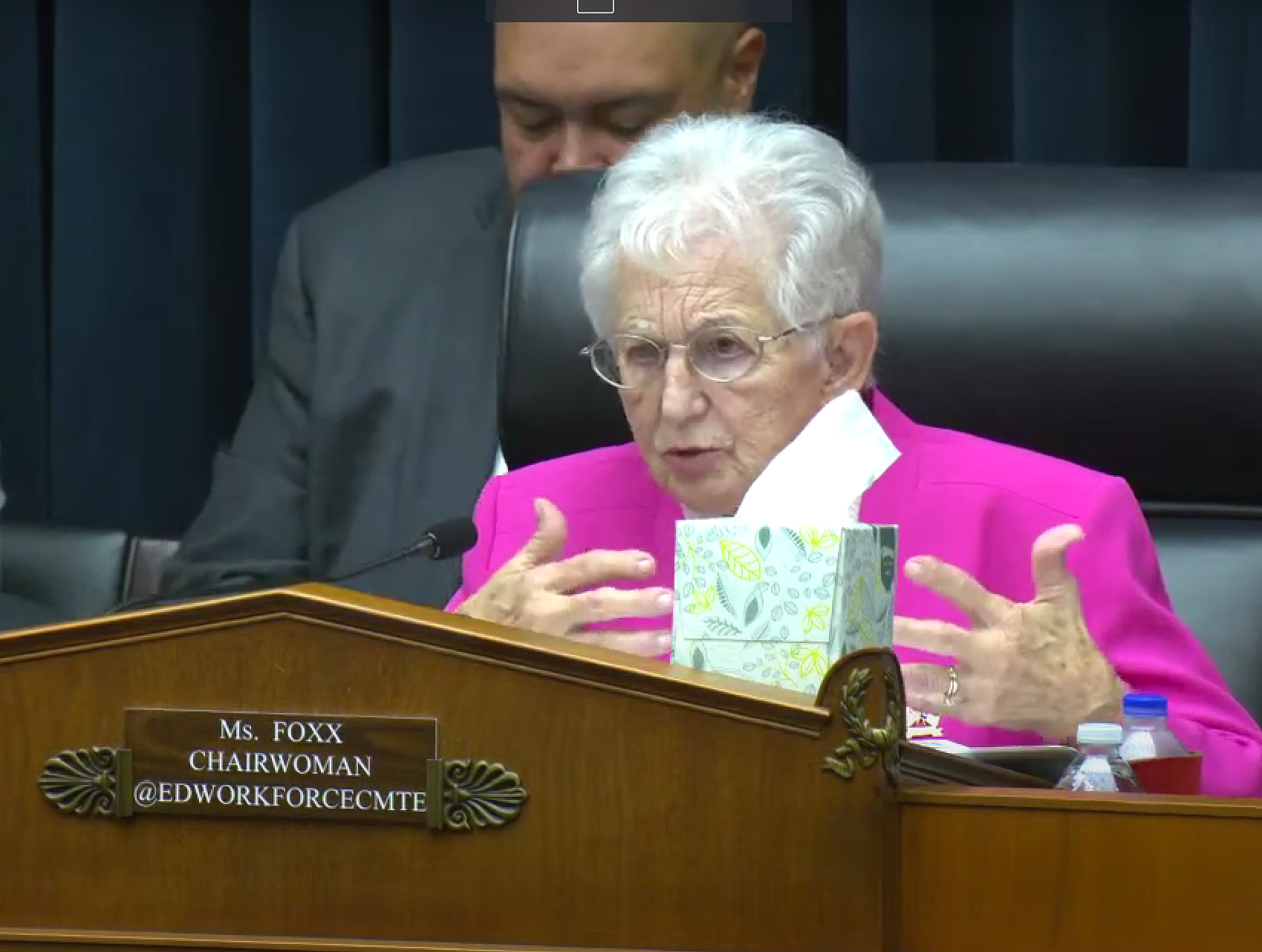
“Surely-to-goodness, that kind of fat content is not doing the damage that some people are saying. This Dietary Guidelines Advisory Committee is just a small group of unelected, appointed people, and we want to turn children’s lives over to groups like this? We should be dealing with this,” she added.
The bill’s champion, Rep. GT Thompson is a senior member of the Education Committee, and chairs the Agriculture Committee.
Thompson said he is discussing the next stage with the House Majority Leader to schedule the legislation for a vote on the House floor.
“The bill had 106 bipartisan cosponsors supporting it from 39 states — before this committee vote — and we can build on that,” said Thompson. (As of June 16, there are 110 from 40 states).
This cosponsor list includes 22 members of the Education Committee. It also includes bipartisan cosponsors from the Agriculture Committee. It includes prime cosponsor Rep. Kim Schrier, a pediatrician from Washington State, and numerous members of Congress who are doctors, educators, parents. It has garnered the support of schools, students, parents and families throughout America who will benefit, according to Thompson.
His staff reports that more cosponsors continue notifying their office to sign on to the bill.
“This has been a really grassroots effort. Dairy farmers, the dairy industry, all of the rural businesses who provide inputs, the folks in the schools, the parents… we’ve had great support for this bill, and all of that helps,” said Thompson with a tip of the hat to the grassroots 97 Milk effort.
In fact, while speaking on his bill, Thompson mentioned “how this policy has negatively impacted the economy in Rural America. This (federal prohibition of whole milk in schools) negatively impacts kids and dairy farmers, and it’s time to turn that around.”
The Whole Milk for Healthy Kids Act allows the 95% of schools that are participating in the school lunch program to serve all varieties of flavored and unflavored milk, including whole milk. Thompson amended the bill from previous renditions to make minor technical changes that will help ensure foodservice workers have the flexibility they need in serving the students whole milk.
“Some Democrats on the committee spoke in opposition to the bill, using the same outdated science, but in the end, the committee vote to approve it was bipartisan,” said Thompson.
During the committee discussion, he told his colleagues that he is focused on “listening to the school professionals who serve students every day and parents who are concerned about the lack of options.
“We need to follow real science, not political science. It’s time that we push back on the notion that federal bureaucrats know what’s best for students. Although there is more work to be done on school nutrition, this bill gives students access to the milk they want and need. The bottomline is the Whole Milk for Healthy Kids Act is all about ensuring students have the necessary nutrients to learn and grow,” he said.
Thompson was quick to point out that, “We’re not force-feeding anybody anything. We’re providing children options so we don’t turn them over to less healthy beverages.
“We’ve really ruined an entire generation of milk drinkers and have cheated them out of access to the most nutritional beverage. I appreciate the comments that there is nutrition also in 1% milk, but even that’s because of the milkfat, the vehicle that delivers the nutrition,” he explained.
This bill “will improve the nutritional status of our children going forward. If we give them a good milk experience … I would argue we will see a reduction in childhood obesity,” he said, pointing to studies showing whole milk to be an effective drink weight management because of how satisfying it is.
To his colleagues citing ‘the science’, Thompson was tactful but blunt: “I agree we ought to do things with data and science, I just question the process of the Dietary Guidelines Advisory Committee. They’re completely appointed. These are unelected bureaucrats, and there’s no oversight. This is our chance to actually do something positive in that process to say ‘hey we’re watching what you’re doing. We’re looking over your shoulder.’”
Chairwoman Foxx reminded her committee that, “This is a choice. Instead of having bureacrats tell us what to do… we give a choice and not let someone else run our lives.”
At the start of the discussion, she explained the Whole Milk for Healthy Kids Act as “empowering food service providers and parents to make decisions on the health and welfare of children.”

Ranking member Bobby Scott, a Democrat from Virginia, was one of four Democrats voicing opposition, saying H.R. 1147 is “an attempt to legislate nutrition standards and disregard evidence-based recommendations made by the Dietary Guidelines for America.” He said the bill would allow schools to “violate current science-based standards.
“If it was consistent with science, we wouldn’t be here. The science-based committees would have already done this,” he said, also objecting to considering the bill outside of doing a comprehensive childhood nutrition reauthorization.
The last childhood nutrition reauthorization by Congress was the 2010 Healthy Hunger Free Kids Act, which tied schools more closely to the saturated fat restrictions of the Dietary Guidelines in the first place.
Scott noted the American Heart Association, Association of Nutrition and Dietetics, Center for Science in the Public Interest have “expressed concerns for this bill.” But mostly, he quoted from a letter of opposition from the Physicians Committee for Responsible Medicine. (PCRM is a known animal rights group tied to PETA.)
Rebutting Scott’s assertions in his characteristic calm and methodical manner, Congressman Thompson said he appreciated the recognition of science but that, “we don’t always get it right, and that’s what we’ve found with the Dietary Guidelines process.
“You reference the Dietary Guidelines Committee, but the most recent Dietary Guidelines reported that more than two-thirds of school age children FAIL to meet the recommended level of dairy consumption, and a big part of that is, quite frankly, we gave them since 2010 an awful milk experience,” said Thompson.
“We’re talking about 3.5% milkfat. I was here for that 2010 debate. It’s been proven since then that it was bad science. The most recent science I referenced and our practioners, the American Academy of Pediatrics, have stated that dairy plays an important role in the diet of children, and it’s the leading food source for three of the four nutrients of public health concern — calcium, vitamin D and potassium,” said Thompson, providing 15 academic studies for the record on full fat dairy.
As members of Congress, “we visit our schools and spend time in the lunch line, and we see the waste and the unopened half-pint milk containers that are discarded. Quite frankly, we’ve been contributing to childhood obesity because … children are going to drink some type of beverage, and the substitutes have been high sugar beverages that do not have healthy outcomes,” said Thompson.
“This policy has cheated our children… and has led to economic demise in Rural America as we’ve seen a loss of dairy farms, dairy herds and small businesses that are in that supply chain. It’s time to reverse the mistake that was made in 2010,” he stressed.
Rep. Jamaal Bowman, a Democrat from New York agreed that the meals at school are for some kids the most important that they receive, and he said these meals should be consistent with the “latest science on nutrition.”
However, he maintained that the Dietary Guidelines for Americans (DGAs) are “based on up-to-date science” and said “allowing whole milk to be served to children contradicts those recommendations.”
Rep. Bowman called the bill an “inappropriate attempt to legislate nutrition standards,” but he failed to acknowledge the shortcomings observed by other independent scientific bodies calling into question the research screening methods used in the DGA process, the make-up of the DGA committee, and the predetermined questions that form the boundaries for what “up-to-date research” will be included as “relevant” to the predetermined questions in each 5-year DGA cycle.
Bowman quoted extensively from the PCRM letter, which stated that “full fat milk is both unnecessary and harmful to children’s health.” Reading from the PCRM letter, Bowman said “early signs of heart disease, high total and LDL cholesterol and other indicators of impending cardiovascular disease are appearing in children with increasing frequency.”
(If that’s the case, then how can whole milk be blamed? How can saturated fat be blamed? Whole milk is nonexistent at school, and saturated fat is limited to less than 10% of calories in school meals since 2010. Children receive one, two, or even three meals a day, five days a week for at least three-quarters of the year at school. If the poor health outcomes the PCRM letter identifies are rising, doesn’t that tell us something about the scientific validity of the DGA recommendations? The PCRM’s own letter hits that nail on the head with its own statistics. PCRM calls “whole dairy milk a troubling source of saturated fat.” And yet, kids have not been allowed to have whole milk or 2%, and in some cases not even 1% fat milk, for the past 13 years during two meals a day, five days a week, most of the year!)
Here’s an eye-opener: Quoting again from PCRM, Bowman said lactose intolerance among communities that have been impacted by “historic racism” and “health inequities” are those less likely to be able to see a doctor for the doctor’s note to have dairy substitutes at school. The letter even mentioned children needing ‘climate friendly’ beverages.
The roots of the anti-whole-milk agenda are clear in terms of encouraging more “non-dairy substitutes” for children in schools.
Rep. Alma Adams, a Democrat from North Carolina said the bill sets a “dangerous precedent” that takes the years of building nutrition programs backward, noting this would cause poor health outcomes. (But the poor outcomes were said to be already happening by those opposing the whole milk bill. This is occurring while whole milk is prohibited.)
During the committee markup, Thompson said he is proud of the number of cosponsors to-date and the broad and bipartisan support for the whole milk bill.
“My legislation supports students and dairy farmers across America,” he explained. “Milk is an essential building block for a well-rounded and balanced diet offering 13 essential nutrients and numerous health benefits. However, out of touch federal regulations have imposed dietary restrictions on the types of milk that students have access to in school meals… limited to fat free and low-fat milk since 2010. For our children to excel in the classroom and beyond, they must have access to more nutritious options they enjoy.”
Thompson also stressed that the situation could become worse if the Whole Milk for Healthy Kids Act is not enacted into law.
“The USDA’s latest proposed guidelines could roll back options even further by restricting flavored milk only to high school students and counting milk fat against weekly saturated fat allowances,” he said, giving several reasons why these top-down regulations are harmful to students and school districts that are forced to comply.
“First, we have seen students opt out (from milk) altogether,” said Thompson. “Let’s face it, the only way to benefit from milk’s essential nutrients is to consume it, and when students turn away from milk, they often opt for far less healthy alternatives.”
Thompson noted that these regulations also “perpetuate baseless claims that milk is bad for kids, but research has shown time and time again that whole and 2% milk are not responsible for childhood obesity and other health concerns. In fact, these beverages are so nutritious that research consistently shows positive health outcomes for children who consume milk.”
Referencing the 15 academic studies submitted from researchers across the country and around the world, Thompson asserted that, “These studies, and there are more, show that full fat dairy foods have no association with high blood pressure, cardiovascular disease, type II diabetes, obesity or cholesterol. In fact, several show full fat foods helped improve or lower negative health outcomes for children who drank more full fat dairy beverages.”
He also added to the record several letters of support, including a letter from the Nutrition Coalition (founded by science journalist Nina Teicholz, author of the Big Fat Surprise), the International Dairy Foods Association, the Northeast Dairy Foods Association, and a coalition of dairy producers from across the country.
He said the bill has the support of schools and families across the country.
This is evident by the tens of thousands of citizen petition signatures over the past few years and a 2021 IDFA survey of parents showing 78% find whole or 2% milk healthier for their families. Trouble is, their kids can’t get it at school where most of their meals are consumed.
-30-
 Ag Moos
Great job GT–finally a Congressman that doesn’t allow Science to be dominated by
“political coutintributions”. My only hope is that Vilsak dosent continue using the $400 million Checkoff monies to Kakash this bill in yielding to the Chineese “Global Initiative”. Good luck, GT.
LikeLike
Pingback: Editorial: Momentum builds for whole milk in schools | Ag Moos
Pingback: Whole Milk for Healthy Kids Act S. 1957 needs more cosponsors: We need your help! Please contact your state’s two U.S. Senators | Ag Moos