Covering Ag since 1981. The faces, places, markets and issues of dairy and livestock production. Hard-hitting topics, market updates and inspirational stories from the notebook of a veteran ag journalist. Contributing reporter for Farmshine since 1987; Editor of former Livestock Reporter 1981-1998; Before that I milked cows. @Agmoos on Twitter, @AgmoosInsight on FB #MilkMarketMoos
As bird flu detections escalate among California dairy and poultry operations, Pennsylvania’s State Vet urges early detection to ‘stamp it out’
By Sherry Bunting, Farmshine, Nov. 15, 2024
HARRISBURG, Pa. – USDA is set to amend the spring order on transportation testing to include a new National Bulk Milk Testing (NBMT) program for H5N1 in dairy cattle, which will be patterned off the former Brucellosis strategy.
This will be a regionally tiered approach, testing samples from processing plants, to assess where the virus is at this time, according to Dr. Kellie Hough, USDA District Emergency Coordinator.
“Depending on the results, we will then drill down to the state level and to the farm level, if necessary, to attempt to eradicate this,” she said.
Federal and state agencies will work with affected facilities to enhance their biosecurity levels and restrict animal movements, but also to ensure their business continuity.
The federal action is in addition to the ongoing voluntary multi-state silo milk testing surveillance program that Pennsylvania is participating in already. In that program, processors provide blinded samples from bulk milk silos, according to their own cadence of frequency, said Pennsylvania State Veterinarian Alex Hamberg.
Hough and Hamberg gave updates on the Center for Dairy Excellence monthly industry call Nov. 13.
“We supply processors with everything they need to send these samples, and the only information going to the NVSL network laboratory is the date of sample collection and the states represented by the milk in the silo at the time of the sample collection. This helps show we are clear of the virus and helps build a baseline,” said Hamberg.
He said states are having ongoing discussions with USDA about what federal surveillance will look like under the NBMT.
He stressed that the virus can be found in milk samples two to three weeks before clinical infection.
“If we can identify every farm infected right now, then we can contain this thing right now and make this virus extinct to never be seen again,” Hamberg urged. “But if we continue to avoid early identification, we could be stuck with it for as long as it wants to stick around.”
Dairy farmers have been slow to sign on to voluntary bulk tank testing at the farm level, with only 69 herds enrolled nationally, six in Pennsylvania.
Mandatory testing is currently being done in Massachusetts, Colorado, Oklahoma, Arkansas, and California. For the latter, it only began after the spread of H5N1 had escalated among dairy herds and poultry flocks in California.
During the past 30 days, as of Nov. 14, there are 201 new herd detections of H5N1 nationally. Of those, 186 were in California, two in Idaho, and 13 in Utah. The Golden State has had H5N1 detections in 291 dairies to-date, with more tests pending, and this represents more than half of the 505 cases across 15 states since the start of the outbreak in Texas last March.
Hamberg said dairies saw a 50% herd turnover within three months of infection in states that have contended with H5N1 in cattle. This is presumed to be a combination of cattle culling as well as some mortalities. Owners of infected herds also report struggling to regain their prior herd production per cow and seeing prolonged elevation in somatic cell counts.
“They are getting slammed in California,” said Hamberg. “It is not a good situation. The dairy industry is suffering, and the poultry industry is suffering. If they had had good participation in voluntary testing beforehand, they may have been able to stamp it out before it spread like this.”
He sees this as particularly important for dairies to consider the voluntary bulk tank testing that gives them ‘monitored herd status’ in Pennsylvania. “Our state is more dense than California, where it is spreading like wildfire,” he said. “In Lancaster County we have dairy on top of dairy on top of poultry on top of pigs. If we find this in an early stage, we can stamp it out quickly and contain it before it spreads all over the place.”
There is no evidence yet that the dairy variant of H5N1 has taken up residence in migratory bird populations or any other wildlife reservoir, but the cattle strain is being found in domestic poultry flocks.
On the human side, Dr. Miriam Wamsley, Pennsylvania Department of Health Epidemiologist reported there have been 36 confirmed human cases across the U.S. of the H5N1 strain found in cattle. Some have been dairy workers, others poultry workers. The cases have been mild, marked by conjunctivitis (pinkeye).
Blood samples collected from workers recently in Michigan and Colorado showed employees previously had it without knowing it.
Wamsley, urged seasonal flu shots, especially for anyone exposed to cattle and poultry: “Flu season is here. If you would contract them simultaneously, there is the possibility of the two (viruses) mixing in the human body to create a new strain, and at the same time, the combination can make a person very sick.”
The recent news of a teenager in British Columbia, Canada, hospitalized in critical condition, as well as the first pig detected with bird flu in Oregon, were confirmed to have the strain that is active in migratory bird populations, not the dairy variant.
Hough reported that USDA is clearing the path to test four vaccine candidates for dairy cattle.
The USDA and FDA have confirmed that there is no threat to human health and that milk and dairy products are safe to consume.
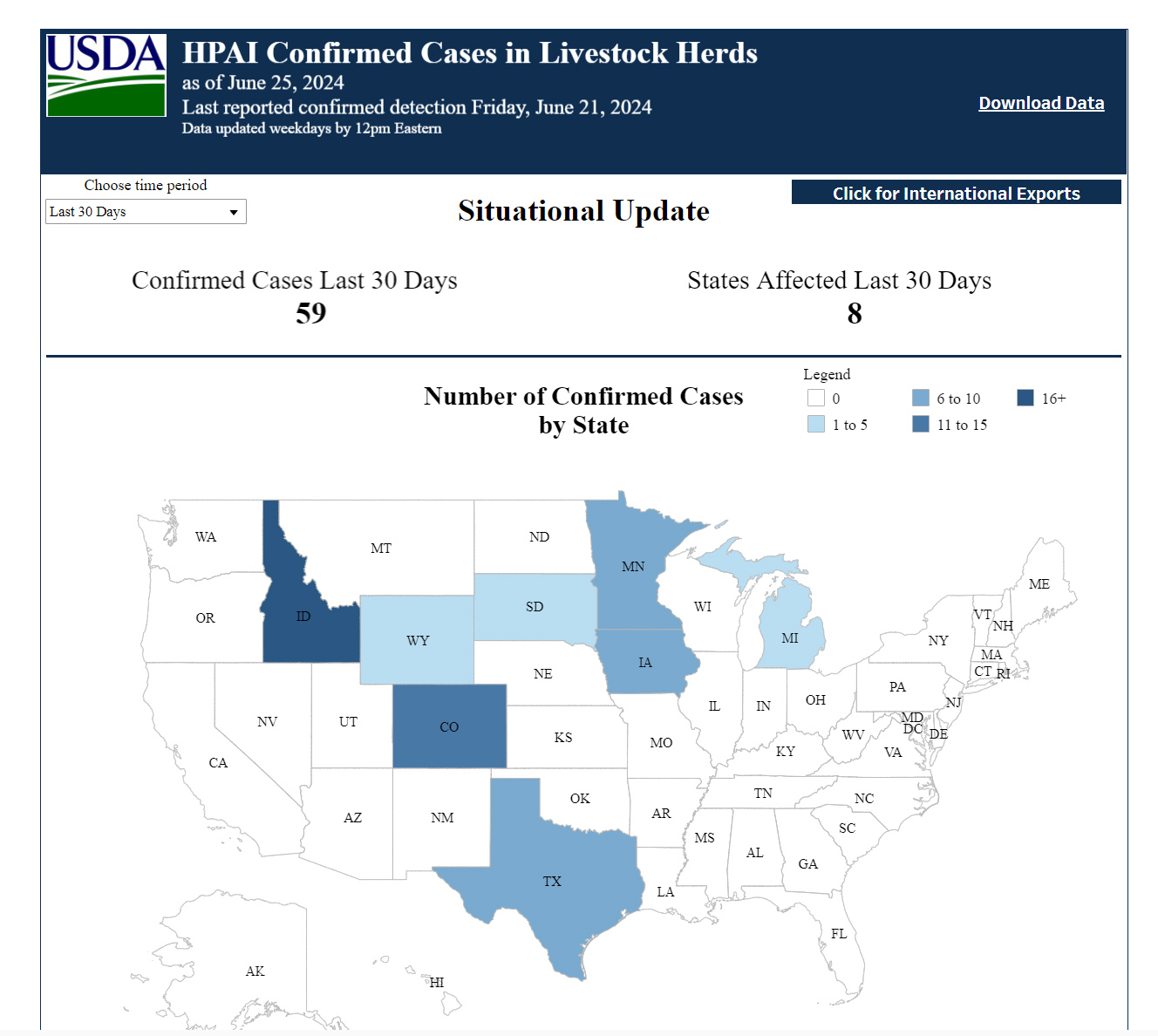
WASHINGTON – While 30-day detections of ‘bird flu’ in dairy have dropped to 59 herds in just 8 states (down from 116 in 12 states cumulatively), two epidemiologic studies published recently shed more light on dairy biosecurity risks.
Nationally, epidemiologic data were available for slightly more than half of the dairy herd premises affected by highly pathogenic avian influenza (HPAI), known as Bovine Influenza A / H5N1 in dairy cattle. These data reveal linkages reported June 8th in a National Brief, which reported “no genomic or epidemiologic evidence that wild birds are spreading H5N1 to cattle, but it cannot be ruled out.”
In fact, the key takeaway is that H5N1 spread in dairy cows — between states — is linked to cattle movements, not to independent wild bird introductions, with further local spread between dairy farms occurring in some states.
A similar epidemiologic investigation looked at Michigan data, alone. Published June 13, this report also showed that migratory waterfowl were not culprits in independently spreading H5N1 to cattle in Michigan.
Both Briefs note the disease spread between dairy cattle herds is likely multi-faceted with both direct and indirect transmission. Biosecurity remains the key to mitigation.
The National Brief reveals more than 20% of farms with HPAI detections in the data set had moved cattle into the herd within 30 days of clinical signs, and 60% of those farms continued to move cattle after the onset of clinical signs.
The linkages revealed by the Michigan report show it began via movement of infected cattle from a Texas herd, before H5N1 had been detected in that herd. It is then believed to have spread to other herds through cattle movement and other direct and indirect transmission.
Other linkages were discussed, such as visitors, shared vehicles and equipment and shared workers. (Fig. 4 below)
Employees working at more than one dairy farm or working at both dairy and poultry farms, and employees from one dairy or poultry farm sharing housing with employees working on a different dairy or poultry farm have also been noted in the epidemiologic linkages.
Operations sharing equipment and livestock trailers (62% of affected premises) have also been implicated in disease transmission as only 12% of those operations reported cleaning trailers between uses.
The National Brief reports more than 20% of the affected dairies have chickens or poultry present with nearly all of those farms observing sick or dead poultry.
In the national investigation, researchers report that more than 80% of affected farms have cats present, with over 50% of these farms observing sick or dead cats. However, the Brief provided no data — one way or the other — on whether the HPAI H5N1 genotype B3.13 was detected in cats on these premises.
The Michigan study, on the other hand, confirmed the HPAI H5N1 genotype B3.13 in wildlife and other somewhat domestic species on affected dairies.
Despite collecting a large number of samples from wild birds and animals on these dairies (such as cats, racoons, opossums, foxes, pigeons and starling), the number of individual animals and species detected was small. Whether they were affected by their access to cattle or are fomites in transmission to cattle is hard to say, particularly since the large sampling yielded only a small number of confirmed findings in comparison to the larger numbers of cows confirmed on these affected farms.
Both Briefs indicate risk from manure appears to be low, but more research is needed.
Status of H5N1 in dairy herds (cumulative with last date of detection noted) as of June 12, 2024
By Sherry Bunting, Farmshine, June 14, 2024
WASHINGTON – Bovine Influenza A / H5N1, known in birds and domestic poultry as highly pathogenic avian influenza (HPAI), has spread to dairy herds in three more states — Iowa, Minnesota, and Wyoming.
As part of emergency response plans, as many as 16 states, including Pennsylvania, are rolling out voluntary bulk tank monitoring programs as supported by USDA’s May 31 announcement for a federal pilot program.
As of June 12, 2024 (updated to June 21), there are no detections of H5N1 in dairy herds and no active HPAI in poultry flocks in Pennsylvania.
The USDA APHIS website confirmed 93 detections in dairy herds in 12 states since March 25, of which 47 have been confirmed in the past 30 days (as of June 12) in just 8 states (in order of most recent detection): Idaho, Minnesota, Iowa, Wyoming, Texas, Michigan, South Dakota, and Colorado.
Of the other four states, Ohio and North Carolina are beyond 60 days since detection. Kansas and New Mexico reached 60 days on June 16.
During the monthly Center for Dairy Excellence call on June 12, Pennsylvania State Veterinarian Dr. Alex Hamberg said herd detections in other states have come primarily from “either sick cows or through epidemiologic tracing from positive farms.”
“It appears this is still a single bird to cow spillover that occurred in late 2023 and was not found until early 2024, so it spread out from there, and we’re now trying to catch up,” he said.
“Equipment, people, and cattle — that’s how this spreads. I can’t stress this strongly enough,” said Dr. Hamberg. Iowa is testing cattle close to positive poultry operations to provide data on species transfer risk.
Hamberg announced a Pennsylvania bulk tank monitoring program, supported by USDA. “This will be voluntary. The goal is to provide data of the status of the virus in Pennsylvania, or more likely the lack of it,” he said.
“We also need this data for quicker response time, and to protect nearby poultry farms. Even more important, is to provide a platform to engage concerned consumers and stakeholders to show we are addressing this proactively, that we are looking for it, that we have a plan, have it under control, and that pasteurized dairy products continue to be safe and wholesome,” he explained.
The status-enrollment period is three weeks, during which bulk tank and other samples will be taken. After three consecutive weeks of negative results, the dairy farm would achieve enrolled monitored herd status and continue weekly bulk tank samples thereafter to maintain that status.
An enrolled monitored herd with negative status would be able to move cattle without pre-movement testing, according to Dr. Hamberg.
“We are flying the plane while building it,” he said, noting early enrollment in the voluntary bulk tank testing program has already begun, so the testing can begin during the week ending June 21.
Those interested in enrolling can email RA-Ag_StateVet@pa.gov or call 717-307-3258. Or, to complete a web form for enrollment, go directly to this link
“We will then get back to you with an enrollment packet,” said Hamberg.
Hamberg said the May Exhibition Quarantine Order does not go into effect unless HPAI reaches dairies in Pennsylvania. However, effective now: Dairies within 3 kilometers (1.7 miles) of an HPAI-infected poultry flock cannot show dairy cows at fairs and shows. Currently, there are no active poultry infections in Pennsylvania.
Dr. Ernest Hovingh, director of the PADLS said testing is currently well under capacity and prepared to handle bulk tank monitoring.
Status of H5N1 in dairy herds (cumulative with last date of detection noted) as of June 4, 2024
By Sherry Bunting, Farmshine, June 7, 2024
USDA announced new actions and $824 million in emergency funding from the Commodity Credit Corporation (CCC) to focus on highly pathogenic avian influenza (HPAI) known as Bovine Influenza A in dairy cattle, which is the H5N1 virus.
Call it what you will, these funds target HPAI in dairy cattle through data collection, surveillance, diagnostics, as well as vaccine research, and food safety studies to better understand and mitigate outbreak risk.
In the May 31 announcement, USDA also launched a new Voluntary H5N1 Dairy Herd Status Pilot Program to monitor the health of dairy herds and allow enrolled farms to move cows more quickly, while providing on-going testing that would expand USDA’s herd surveillance capabilities.
Dairy farms that enroll in the recently announced voluntary monitoring program would sign Herd Monitoring Plan Agreements to do weekly bulk tank testing, enabling them to move dairy cows across state lines without doing the individual pre-movement testing – as long as their weekly bulk tank tests show three consecutive weeks of negative results, and as long as they agree to continue the tests weekly going forward.
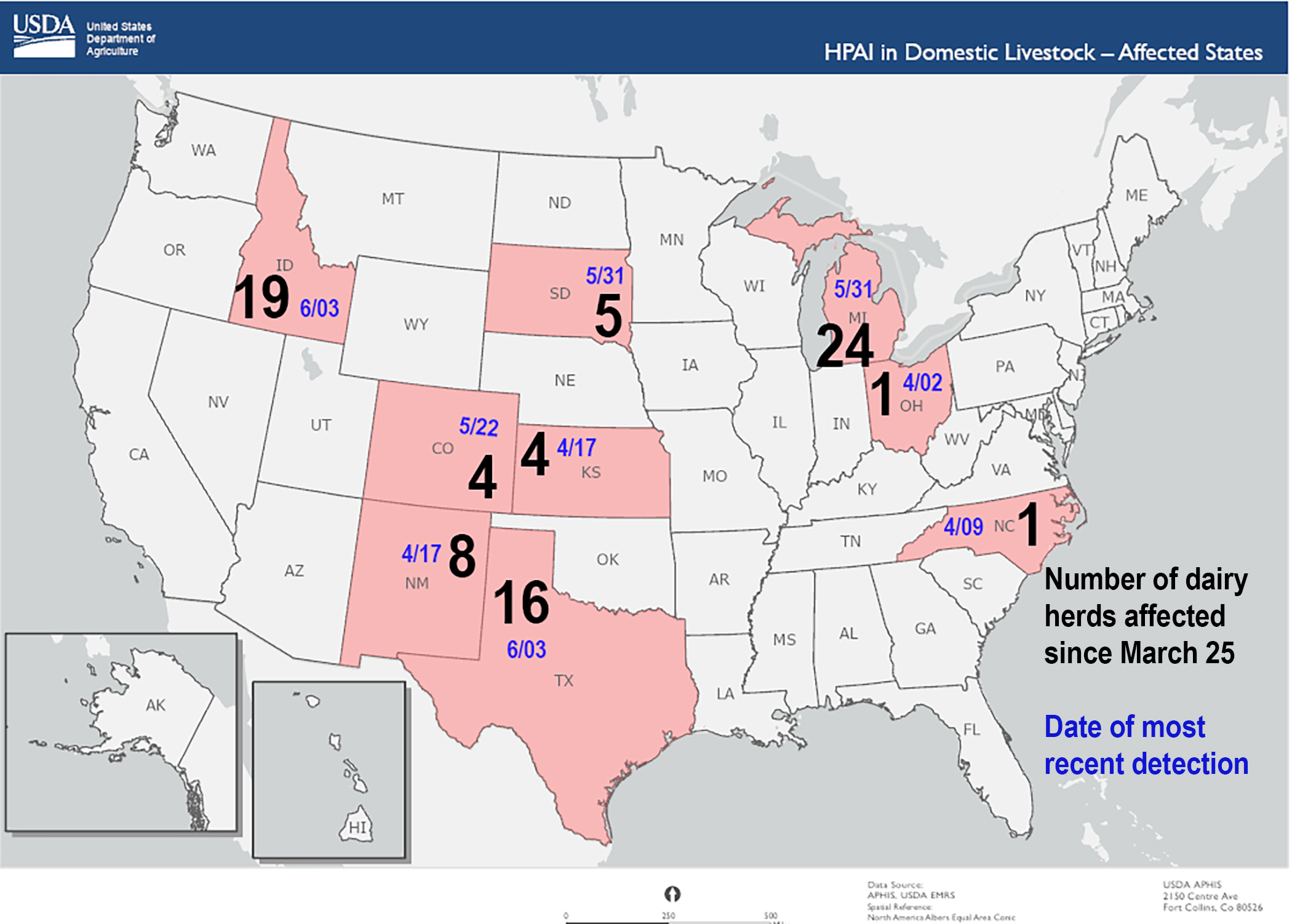
As of June 5, 2024, the APHIS website shows 82 total HPAI detections in dairy herds in 9 states since the first detection in Texas on March 25.
Topping the list is Michigan with 24 detections, the most recent on May 31. Idaho saw a slew of new detections over the past 10 days with 19 total, the most recent on June 3. Texas has had 16 detections, the most recent on June 3; followed by South Dakota with 5 detections, the most recent May 31; and Colorado with 4, the most recent May 22.
States that have seen no new detections since April include New Mexico (8) and Kansas (4) with their last new detections on April 17; Ohio and North Carolina each only had one dairy herd detection on April 2 and April 9, respectively.
According to USDA, the new voluntary monitoring program will enable the Department to increase its monitoring and surveillance of herds that are currently not known to be infected.
APHIS is working with state animal health officials to identify states that want to participate in a pilot phase of the program. Producers from participating states can start enrolling this week (June 3), by contacting their State Veterinarian and signing a Herd Monitoring Plan Agreement.
USDA says high participation will help them establish state and/or regional “disease-free statuses” that could further ease compliance with the current Federal Order.
Those herds not enrolled in the pilot program would continue to follow the interstate testing and movement requirements published in the Federal Order. More specific guidance on the new voluntary monitoring program, including how to enroll and how to obtain and maintain a herd status, will be made available on the APHIS website in the future or by contacting state animal health officials.
USDA expects to see increased testing, yielding increased positive detections, through this voluntary monitoring, which they will analyze to learn how HPAI may spread between herds.
To-date, three people who worked with infected cows (two in Michigan and one in Texas) have tested positive with the H5N1 influenza. The symptoms were similar to pinkeye, and they recovered in a few days.
Meanwhile, the Federal Government has already put $200 million in additional funds into surveillance, testing, PPE, and vaccine development with indications they will ask Congress for more ‘bird flu’ funding.
Authorities still deem the risk to the general public as very low because pasteurization deactivates the virus, and no detections have been found in any retail meat samples. In addition, milk from sick cows is discarded and cattle at beef plants are inspected.
The $824 million will also support anticipated diagnostics, field response, other necessary surveillance and control, surveillance in wildlife (APHIS), work by the Agricultural Research Service’s (ARS) in developing vaccines for HPAI in cattle, turkeys, pigs, and goats, and food safety studies conducted by ARS and the Food Safety and Inspection Service (FSIS).
The Secretary is authorized to transfer funding from available resources including the CCC to address emergency outbreaks of animal and plant pests and diseases. The new $824 million is focused primarily on dairy cattle in addition to previously approved $1.3 billion in emergency funding to address nationwide HPAI detections in wild birds and commercial poultry operations.
States are moving to issue their own additional emergency response plans. In Pennsylvania, for example, the Department of Agriculture recently issued its General Quarantine Order for the Exhibition of Dairy Cattle, which would apply to all dairy cows traveling to shows and exhibitions. This would ONLY take effect IF a detection is confirmed anywhere in the state. It would apply to all dairy cows traveling to shows and exhibitions.
If that happens, the Order would require testing through the PADLS system within 7 days of the date of arrival at any animal exhibition grounds. Prior to arrival those dairy cows would have to be part of a biosecure assembled group for 30 days prior to testing with no new cattle added to that assembly.
Other quarantine measures are also detailed in the Pennsylvania Order, but again, would only be implemented IF HPAI is detected in dairy cattle in Pennsylvania.
Michigan issues emergency order and prohibits cow shows; now has HPAI detections in more dairies (14) than any of the other nine states.
By Sherry Bunting, May 17, 2024
WASHINGTON — The Biden Administration announced new actions and $200 million in funding on May 13th to “combat highly pathogenic avian influenza (HPAI).”
These announcements appear to be the start of incremental expansion of federal surveillance and control of dairy, livestock and food industries to a level not seen before, but apparently planned for over the past two decades.
USDA said it is separately taking steps to make funding available through the Emergency Livestock Assistance Program (ELAP) to compensate eligible producers with positive herds, who had milk production losses.
(Note after press: National Milk Producers Federation announced May 16 that it has been awarded funding by the USDA APHIS Disease Preparedness and Response Program supporting two NMPF and FARM projects advancing dairy cattle disease preparedness, but the press release did not provide a dollar amount.)
H5N1 was first detected in lactating dairy cows on March 25, 2024 in the Texas Panhandle, where a syndrome was noticed in February marked primarily by reduced feed intake, reduced rumination, 20% drop in herd level milk production, colostrum-like changes in milk appearance, and dry tacky manure.
New detections have spread to 49 dairy herds in 9 states, as of May 15. They are: Michigan (14), Texas (13), New Mexico (8), Idaho (5), Kansas (4), Colorado (2), Ohio (1), North Carolina (1), and South Dakota (1).
Product testing continues to confirm that pasteurized retail milk and dairy products are safe, according to the CDC and FDA. In addition, as expected, meat tests show no trace of virus. The primary concern, especially for states with poultry and dairy farms, is the potential for spread from dairy to poultry. Cattle recover from the virus, poultry do not.
USDA will control approximately $98 million of the funding announced May 13th, and the Department of Health and Human Services (HHS) will oversee $101 million in funding from budgetary appropriations. The Administration says it plans to ask Congress for more.
According to HHS, “public and animal health experts and agencies have been preparing for avian influenza outbreak for 20 years.” The department said this funding “capitalizes on the influenza foundation that has been laid over the last two decades.”
Within the new funding structure, Centers for Disease Control (CDC) is monitoring the virus to detect changes that may increase human risk and releasing PPE from the “strategic stockpile.” The Food and Drug Administration (FDA) is working with USDA to sample-test retail milk and dairy products across the country and to evaluate vaccine platforms. The National Institutes of Health (NIH) is providing supportive science.
In short, the HHS funding will be used to expand testing capacity of the national laboratory system; scale up and expand surveillance among animal and human populations; release PPE for states to distribute to farmworkers and others; beef-up animal electronic identification systems; and streamline contact tracing, not just for cattle and poultry, but people too.
Funds are also being directed to make or procure over one million additional influenza tests, evaluate ‘candidate virus vaccines’ and develop new ones, continue testing retail milk and dairy product samples, evaluate vaccine platforms, and scale up community surveillance through testing of patients with respiratory symptoms in a variety of care environments as well as monitor public waste treatment systems for viral load.
On the USDA side, direct funding will be available to affected dairies (up to $28,000 per affected dairy) to prevent the spread in the following ways:
— Up to $2000 per month per affected premises for distribution of PPE, which includes agreeing to facilitate worker participation in surveillance studies and monitoring. Separate incentives up to $100 per employee will be paid for their participation.
— Up to $1500 per month per affected dairy to develop and implement ‘secure milk supply’ enhanced biosecurity plans that USDA APHIS has already developed as a framework for disease outbreak over the past 20 years.
— Up to $2000/month per affected premises to implement heat treatment of waste milk before disposal.
— Up to $10,000 per affected premises to compensate for veterinary treatment costs.
— Offset costs of shipping samples for testing (up to $50 per shipment and up to two shipments per affected premises per month). Funds will also be provided to farms that install inline milk testing and monitoring equipment.
Testing through National Animal Health Laboratory Network (NAHLN) Labs is already free of charge to both the unaffected dairies doing premovement testing and affected dairies testing samples from symptomatic and asymptomatic cows.
After a quiet 10 days in terms of new detections, APHIS added 10 new ones to the chart on the day before the Biden Administration announcements, backdated May 8-11, and three more on May 14, all in just four of the affected states: Michigan, Texas, Idaho and Colorado. No new states have emerged since April 25.
In addition to the April 25 Federal Order on pre-movement testing for interstate shipment of lactating dairy cows, reported previously in Farmshine, USDA is now urging states to take stronger action in restricting movement of dairy cattle within their state borders, especially states with positive HPAI herds.
The Michigan Department of Agriculture and Rural Development (MDARD) has already issued its “HPAI Risk Reduction Response Order” – designated as a “Determination of Extraordinary Emergency” Order.
Michigan now has the highest number of HPAI-detected dairies (14), surpassing Texas (13), where the first HPAI detections were reported. Michigan has also seen the highest number of poultry flock losses due to HPAI depopulations.
The Michigan Order mandates that, “All lactating dairy cattle, and those in the last two months of pregnancy, are prohibited from being exhibited until there are no new cases of HPAI in dairy cattle in the State of Michigan for at least 60 consecutive days.” In addition, no dairy cattle of any age may be exhibited from an infected premises until further notice.“
The Michigan Order also requires ALL dairy and poultry farms – whether or not they are confirmed HPAI detections — to designate a biosecurity manager, designate secure area perimeters that limit points of access, establish cleaning and disinfection practices for individuals and vehicles that include deliveries of feed and supplies, and provide training for employees.
Logbooks must be kept maintaining records of all vehicles and individuals who have gotten out of those vehicles and crossed identified access points on Michigan dairies – and their reason for doing so — which must be made available to examiners upon request.
Texas detections point to wild migratory birds as source; Public risk remains low; Cows exhibit low appetite, reduced rumination, sharply reduced milk production
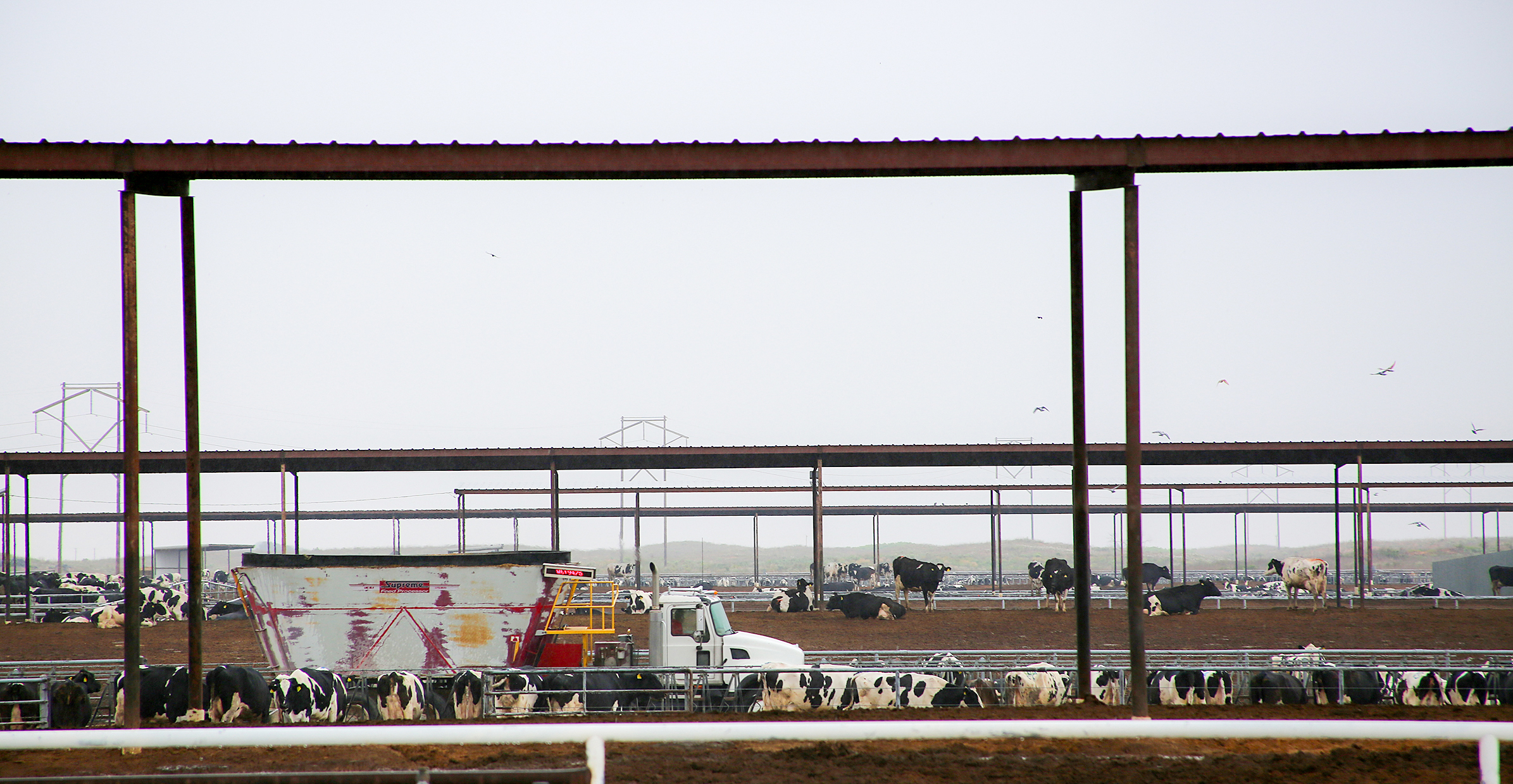
Symptoms of what officials are saying are the first ever detections of bird flu in dairy cows include a sharp drop in milk production, reduced appetite, reduced rumination, and colostrum-like milk appearance. As the investigation continues in the Texas Panhandle region, incl. Kansas and New Mexico, dairy producers are implementing advanced biosecurity measures. Texas Ag Commissioner Sid Miller cited “ongoing economic impacts to facilities as herds that are greatly impacted may lose up to 40% of their milk production for 7 to 10 days until symptoms subside. There is no threat to the public,” he said. S. Bunting file photo
By Sherry Bunting, Farmshine, March 29, 2024 (updated since print edition went to press)
WASHINGTON – Federal and state officials confirmed this week that highly pathogenic avian influenza (HPAI), otherwise known as bird flu, has been detected and deemed the culprit in the mystery illness “among primarily older (mid-lactation) dairy cows in Texas, Kansas, and New Mexico that is causing decreased lactation, low appetite, and other symptoms.”
USDA’s Animal and Plant Health Inspection Service (APHIS) believes “wild migratory birds to be the source of infection as viral testing and epidemiological efforts continue.”
In an email exchange with the APHIS press office on Wed., March 27, Farmshine asked if cow-to-cow transmission has been ruled out at this juncture.
They could not answer directly, but on background, gave this response that mirrored a portion of the March 25 APHIS press release:
“The testing from Texas shows consistency with the strain seen in wild birds. As the release shared, based on the findings, the detections in Texas appear to have been introduced by wild birds. Federal and state agencies are moving quickly to conduct additional testing for HPAI, as well as viral genome sequencing, so that we can better understand the situation, including characterization of the HPAI strain or strains associated with these detections.”
The answer appears to be that cow-to-cow transmission is not suspected as birds are the vector in what APHIS describes as a “rapidly evolving situation” and one in which they are continuing to investigate, working closely with the Food and Drug Administration (FDA), the Centers for Disease Control and Prevention (CDC), as well as state veterinary and public health officials.
Furthermore, if migratory wild birds are the source, then this could be a seasonal anomaly that may shift or dissipate soon.
Word spread quickly on Monday, March 25 as public announcements from federal and state agencies and industry organizations were released in rapid, near simultaneous succession within minutes of the USDA APHIS press release announcing that, “Unpasteurized, clinical samples of milk from sick cattle collected from two dairy farms in Kansas and one in Texas, as well as an oropharyngeal swab from another dairy in Texas have all tested positive for HPAI. Additional testing was initiated on Friday, March 22, and over the weekend, because farms have also reported finding deceased wild birds on their properties.”
Preliminary testing by the National Veterinary Services Laboratories further confirmed that, “No changes to the virus have been found that would make it more transmissible to humans, which would indicate that the current risk to the public remains low.”
Announcements from all corners of health and industry conveyed this main message: “At this stage, there is no concern about the safety of the commercial milk supply or that this circumstance poses a risk to consumer health. The commercial milk supply remains safe due to both federal animal health requirements and pasteurization.”
Bird flu (avian influenza) is a disease caused by a family of flu viruses primarily transmitted among birds.
According to USDA, there are two classifications, and the ‘high’ or ‘low’ pathogenic acronyms are based on the genetic sequence and the severity of disease caused in poultry: HPAI (high pathogenic, meaning it causes severe disease in poultry), which is found mostly in domestic poultry and LPAI (low pathogenic, meaning it causes no signs or few signs of disease in poultry), which is often seen in wild birds.
“It is too soon to predict if all of the recent reports of unexplained illnesses in dairy cattle in the U.S. are due to HPAI. Veterinarians and the dairy industry are working collaboratively with state and federal officials during the ongoing investigation,” noted the American Association of Bovine Practitioners in a March 25 press release
AABP reports that HPAI (H5N1) is most commonly found in birds and poultry with wild waterfowl as known carriers. According to the USDA, 48 states have had cases of HPAI in poultry and wild birds since the outbreak began in 2022. Over 82 million birds have been affected. There have also been reports of over 200 mammals diagnosed with the virus.
The samples from Texas and Kansas are the first confirmed detections of HPAI (H5N1) in cattle anywhere in the U.S. and only the second mammalian detection in Texas, the first being a skunk.
This marks the second detection in a ruminant animal in the U.S. The first was just a week prior, when HPAI was detected in a goat on a Minnesota farm where chickens and ducks had been quarantined for previous HPAI detection.
In a March 26 American Veterinary Medical Association newsletter, Dr. Brian Hoefs, Minnesota state veterinarian, noted that, “Thankfully, research to-date has shown mammals appear to be dead-end hosts, which means they’re unlikely to spread HPAI further.”
“Mammals, including cows, do not spread avian influenza — it requires birds as the vector of transmission, and it’s extremely rare for the virus to affect humans because most people will never have direct and prolonged contact with an infected bird, especially on a dairy farm,” a joint dairy industry statement by National Milk Producers Federation (NMPF), International Dairy Foods Association (IDFA), Dairy Management Inc (DMI), and U.S. Dairy Export Council (USDEC) reported on March 25.
Since early 2022, when HPAI was first confirmed in wild waterfowl in the Atlantic flyways and the first domestic poultry flocks were affected, APHIS has been tracking wild mammal detections in the U.S. The list includes skunks, racoon, red and gray fox, coyote, several types of bears, mountain lions, bobcats, fishers, opossums, martens, and harbor seals – all having in common their known contact with wild waterfowl and/or domestic poultry and/or their eggs.
The APHIS webpage devoted to avian influenza notes that, “Wild birds can be infected with HPAI and still show no signs of illness. They can carry the disease to new areas when migrating, potentially exposing domestic poultry to the virus.”
This is why APHIS conducts a wild bird surveillance program to provide early warning system for the introduction and distribution of avian influenza viruses of concern in the U.S., allowing APHIS and the poultry industry to take timely and rapid action to reduce the risk of spread to the poultry industry and other populations of concern.
For the U.S. poultry industry, HPAI detection in domestic flocks means implementing response programs for flock depopulation and geographic quarantine to prevent the spread because of the high mortality rate in domestic poultry and bird-to-bird transmission within a production setting. According to USDA, approximately 58 million birds were killed in such depopulations in the U.S. last year.
The current detection in cattle is different because there is no confirmation of cow-to-cow transmission, and according to AABP, “there have been no confirmed deaths in cattle due to this disease. Cattle appear to recover in two to three weeks with supportive care.”
“Unlike affected poultry, I foresee there will be no need to depopulate dairy herds. Cattle are expected to fully recover,” said Texas Agriculture Commissioner Sid Miller in a press statement March 25, noting that the Texas dairy industry contributes roughly $50 billion in state economic activity, ranking 4th in milk production nationwide in 2023, moving up to 3rd since the start of 2024.
Assuring consumers of rigorous safety measures already in place and soothing concerns about potential milk supply shortages, Commissioner Miller highlighted pasteurization and milk diversion protocols and the “limited number of affected herds.”
The required dumping of abnormal-appearing milk or milk from sick cows, as well as pasteurization as a fail-safe inactivation of bacterial and viral agents were stressed in the variety of press releases as normal public health safeguards already in place.
“There is no threat to the public, and there will be no supply shortages,” assured Commissioner Miller. “No contaminated milk is known to have entered the food chain; it has all been dumped. In the rare event that some affected milk enters the food chain, the pasteurization process will kill the virus.”
He also noted that, “Cattle impacted by HPAI exhibit flu-like symptoms including fever and a sharp reduction in milk production averaging between 10-30 pounds per cow throughout the herd.”
“On average about 10% of each affected herd appears to be impacted, with little to no associated mortality reported among the animals,” the USDA APHIS report stated, with declines in milk production described as “too limited to impact the supply and price of milk and dairy products.”
Yet in an AABP webinar March 22, before the HPAI strain was confirmed in the Texas and Kansas samples, the findings of veterinarians involved early-on over the past four to six weeks were described, and presenters were asked about the numbers of affected dairy cattle.
An effort is underway “to count them up, but the number is significant, and I’ll leave it at that,” said Dr. Brandon Treichler, DVM, who was joined by Dr. Alexis Thompson with Texas A&M Veterinary Medical Diagnostic Laboratory (TVMDL) in presenting AABP webinar information.
Treichler hails from a family dairy farm in eastern Pennsylvania and serves as a quality control veterinarian, primarily working with large dairies in West Texas and eastern New Mexico. He is active with AABP and National Mastitis Council.
Previously mentioned are the higher rates of culling in herds where an economic decision is made about affected cattle in mid-lactation, when their production is not regained after recovering to health.
Dr. Treichler talked about practitioner findings as “inclusion criteria,” and mentioned some herd to herd variations as well.
“The most consistent factors seen across herds include a decreased feed intake in the herd and at the same time less rumination… These cows are being sorted for us for changes in the milk, and (the facilities that have) conductivity available will see conductivity spike on a large number of cows, and then decreasing milk production across the herd, with individual cows seemingly more severely affected, going from a high production cow to dry or very nearly dry, very quickly. Some of those cows appear to have colostrum-like milk that is either thickened, or thickened with some discoloration,” he said.
According to Treichler, manure among the more severely affected cows is reported to range from dry or tacky to some diarrhea. Other signs that vary include fever, which is potentially attributable to the impact on the immune system from the metabolic disruption of being off-feed with reduced rumination.
In his March 25 press statement, Texas Ag Commissioner Miller cited “ongoing economic impacts to facilities as herds that are greatly impacted may lose up to 40% of their milk production for 7 to 10 days until symptoms subside. It is vital that dairy facilities nationwide practice heightened biosecurity measures to mitigate further spread.”
He advised dairies in the region “to use all standard biosecurity measures, including restricting access to essential personnel only, disinfecting all vehicles entering and leaving premises, isolating affected cattle, and destroying all contaminated milk. Additionally, it is important to clean and disinfect all livestock watering devices and isolate drinking water where it might be contaminated by waterfowl.”
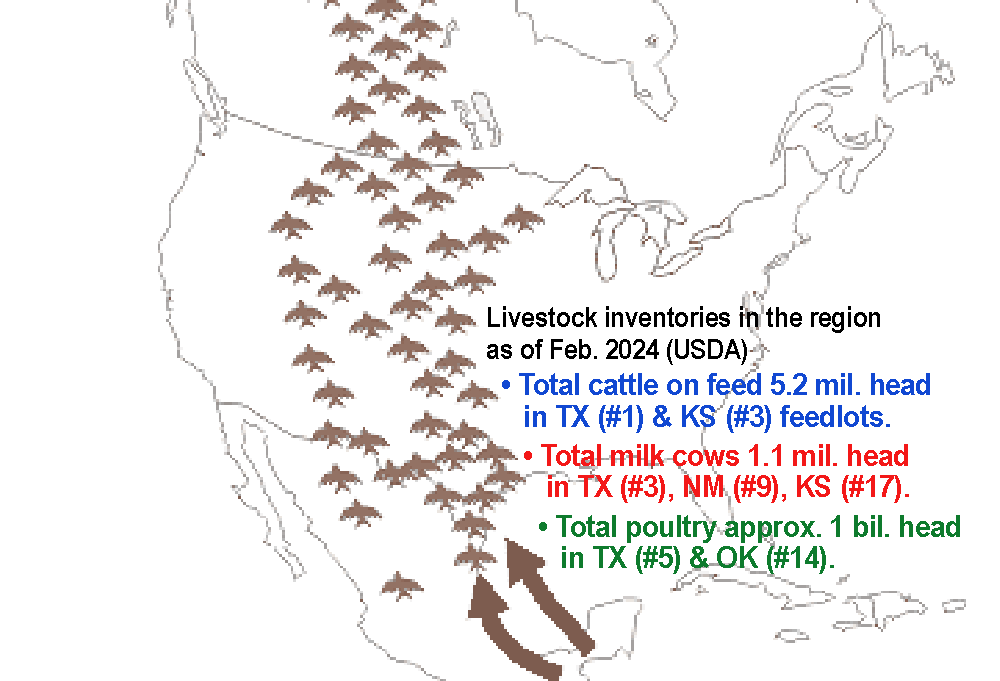
No affected beef cattle have been reported, only older primarily mid-lactation dairy cows. This is interesting, considering the fact that the number of cattle on feed — mostly in open lots similar to drylot dairies that are prevalent in the Panhandle region of the No. 1 cattle feeding state of Texas and No. 3 Kansas – far outweigh milk cow numbers by 5 to 1.
The region’s milk cows are most concentrated in and around the Panhandle of the No. 3 dairy state of Texas, No. 9 New Mexico and No. 17 Kansas portions of the Central Flyway for ‘migratory wild birds.’
Also within this zone are the country’s 5th and 14th largest poultry states of Texas and Oklahoma, respectively, totaling a combined nearly 1 billion head of poultry.
Farmshine asked APHIS and the Texas Animal Health Commission (TAHC) about the status of beef cattle monitoring, to which a TAHC spokesperson responded by email noting: “TAHC and Texas A&M TVMDL have, and continue to ask for, samples from affected and unaffected dairies to gather the full scope of the situation. The feedlot and beef cattle industry are monitoring and doing similar surveillance among their producers that many dairy operations have been conducting — not specifically screening, necessarily, but many are watching for clinical signs of illness that they can identify in the operation and keeping a close eye for abnormal health events among their herds.”
On other questions about whether there are any differences or commonalities in terms of external contributing factors among affected herds, the TAHC spokesperson stated “No dairy specific information could be provided related to type of facilities or other factors where HPAI was detected.”
Dairy industry organization statements point to the National Dairy Producer FARM Program (NDPFP) as the go-to for specific biosecurity, reporting, and recordkeeping measures that are urged on all U.S. dairy farms, including much emphasis being given to the safeguard of milk pasteurization.
“Dairy farmers have begun implementing enhanced biosecurity protocols on their farms, limiting the amount of traffic into and out of their properties and restricting visits to employees and essential personnel,” the NMPF-IDFA-DMI-USDEC joint statement noted.
They cite biosecurity resources, including reference manuals, prep guides, herd health plan protocol templates, animal movement logs, and people entry logs that dairies can use “to keep their cattle and dairy businesses safe.”
USDA APHIS encourages farmers and veterinarians, nationwide, to report cattle illnesses quickly so they can “monitor potential additional cases and minimize the impact to farmers, consumers and other animals.”
Industry announcements urge dairy farmers to immediately contact their veterinarians if they observe clinical signs in their herds that are consistent with this outbreak, such as a significant loss of animal appetite and rumination or an acute drop in milk production.
In turn, veterinarians who observe these clinical signs and have ruled out other diagnoses on a client’s farm should contact the state veterinarian and plan to submit a complete set of samples to be tested at a diagnostic laboratory.
Animals may also be reported to the APHIS toll-free number at 1-866-536-7593.
In Pennsylvania, where HPAI depopulations and quarantines have occurred over the past two years in the poultry industry, there have been no reported cattle affected. However, the state is monitoring the situation, and the Center for Dairy Excellence is conducting a conference call by zoom and telephone at Noon EDT on Wed., April 3 for dairy producers and dairy industry service providers, featuring state veterinarian Dr. Alex Hamberg and Penn State extension vet Dr. Hayley Springer.





 Ag Moos