
By Sherry Bunting, Farmshine, Oct. 14, 2016 (Photos by author except where noted)
MADISON, Wis. — As the World Dairy Expo celebrated 50 years earlier this month, nostalgia could be found both in and out of the showring. For starters, the five days of shows for seven breeds yielded grand champions that were predominantly bred-and-owned, many with their breeder-owners at the halter.
In fact, six of seven open grands and four of seven junior grands were bred and owned. Let’s take them in alphabetical breed order!
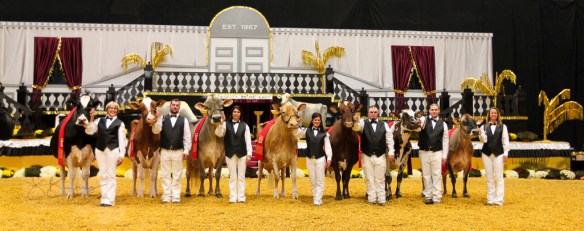
Throughout the week, judges recognized how difficult it is to get to this show and win, and even more so to breed the animal and get her here and win. Exhibitors, judges and breeders, alike, point out in their own way that there is as much art as there is science to breeding a top cow… but also a bit of luck.
Take for example, the grand champion of the International Ayrshire Show: Margot Patagonie was bred, owned and exhibited by Expo first-timer Ferme Margot of Ste Perpétue, Quebec, Canada.
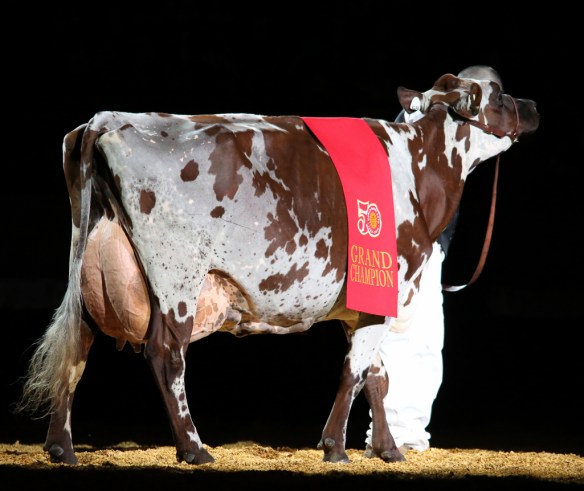
The striking thing about this grand champion is that not only did Ferme Margot breed the winning cow, they also bred her dam and her sire! What an achievement for the visiting World Ayrshire Conference to witness during their time in Madison, where they also saw the Expo’s largest Ayrshire show ever, with 321 entries, reportedly 60 more entries than the previous record.
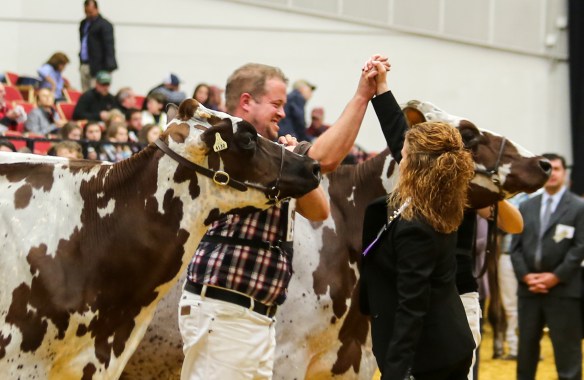
In the junior Ayrshire competition, Erin Curtis-Szalach of Cedarcut Farms, Cazenovia, New York, knabbed grand champion honors for the second straight year with her bred-and-owned Cedarcut Burdette Clove Colatta.
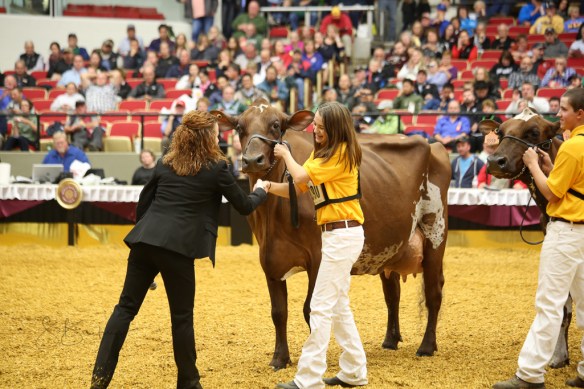
She also made a strong honorable mention grand champion and total performance winning in the Open Show where entries were up by 60.

In the Brown Swiss competition, which also topped previous records with 385 entries, both grand champions were repeat show-toppers as well as bred-and-owned with owners at the halter.
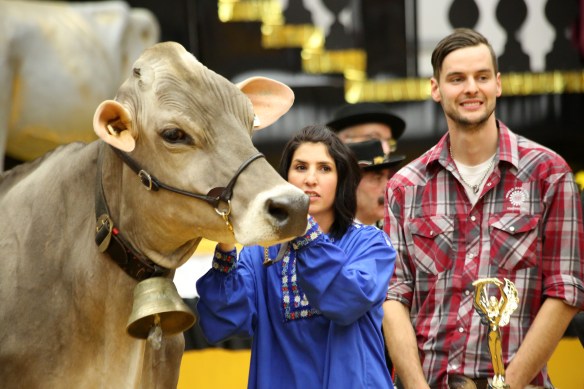 Brown Heaven Glenn Fantasy topped the open show with Josee Charron from Ferme Brown Heaven, Vercheres, Quebec at the halter.
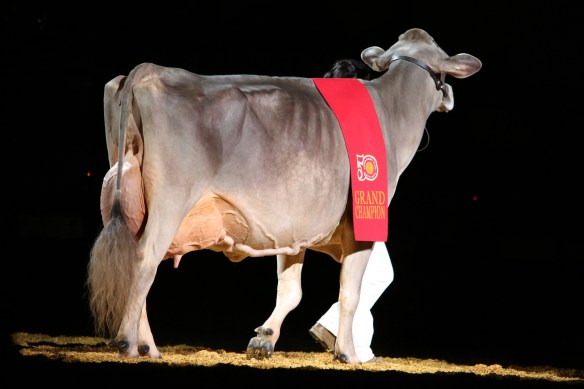 Kyle Barton, grandson of Ken Main of Elite Dairy, Copake, New York, earned the grand champion banner in junior competition for the second year with homebred Cutting Edge T Delilah (below).
 She went on to be reserve supreme of the Junior Show, and she was reserve grand champion of the open Brown Swiss Show, second only to Fantasy (above).
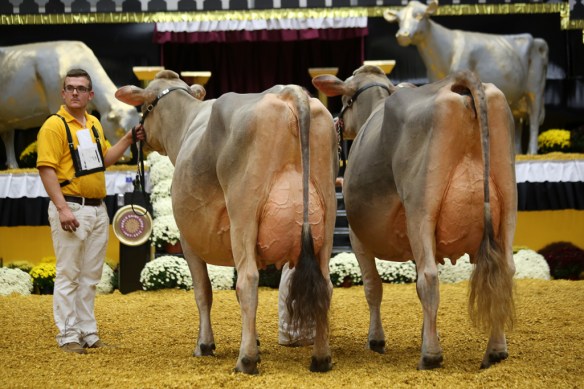 Kyle and his older brother Mickey have done quite well over the years and their grandfather is pleased that they enjoy the cattle among their other activities.
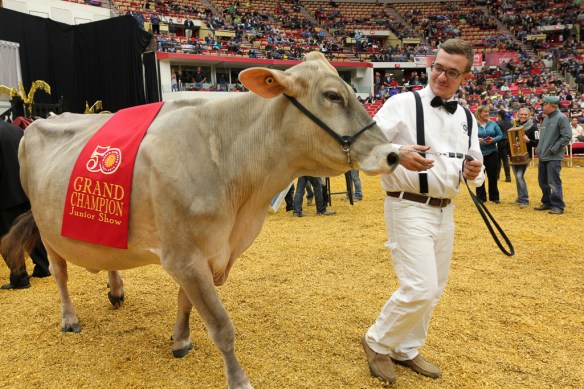 Among the Guernseys, it was bred-and-owned Flambeau Manor Ro Lauren-ET to go grand in the Open Show. With Tracy Mitchell again at the halter, Lauren repeated her 2014 performance as grand champion for Gary and Steve Van Doorn of Flambeau Manor, Tony, Wisconsin.
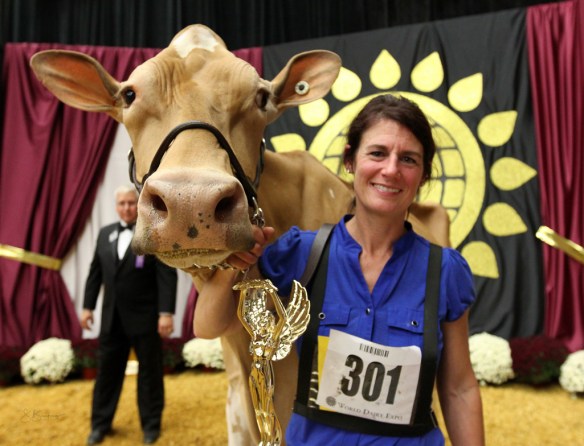
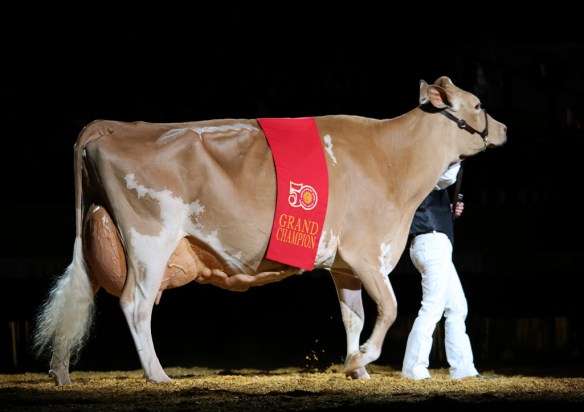 Among the juniors, Austin and Landen Knapp of Epworth, Iowa threepeated with the homebred Knapps Regis Tambourine-ET. The Knapps are premier breeders.
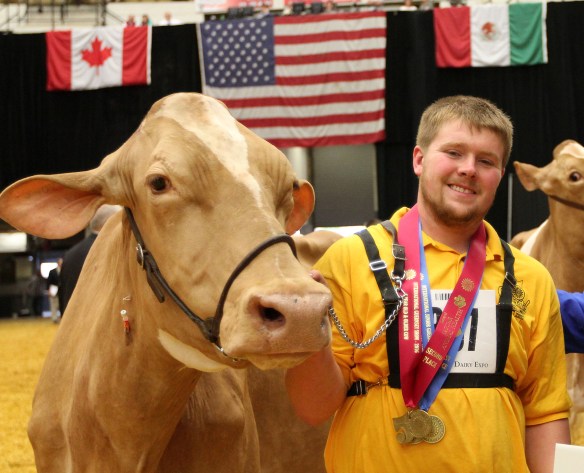
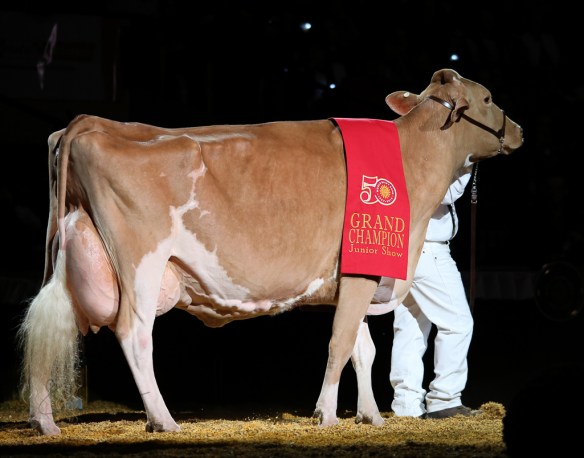 A large field of Holsteins narrowed down to grand champion Sheeknoll Durham Arrow. She impressed judge Pat Conroy as a cow that “lets you know she does not need to be pampered.” With Jeannette Sheehan at the halter, the aged cow moved through the ranks to achieve a storybook ending for her leadswoman, whose father Vernon Hupf — a lifelong farmer who attended every World Dairy Expo but this one as a spectator — had passed away in June.
“To win the show that Dad idolized is just amazing,” said Jeannette after “Thomas” (as the cow is affectionately known to all after a grandson dubbed her as a calf in honor of Thomas the Train) went reserve supreme of the International Open Shows Saturday night.
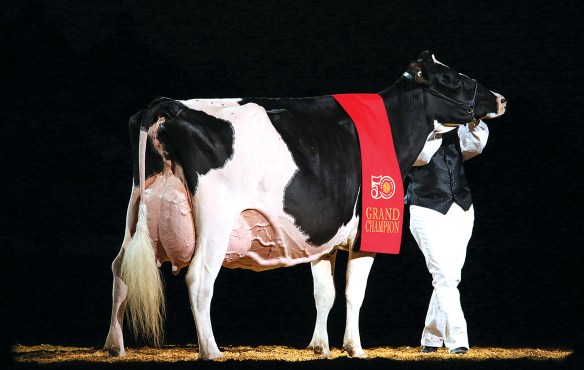 “Each time the judge picked her out, I was surprised, but I didn’t have time to process what was happening. I was pretty much just trying to hang on to the cow. At one point it just felt like Dad was here, on my shoulder telling me what to do, right down to that look out of the corner of the eye.”
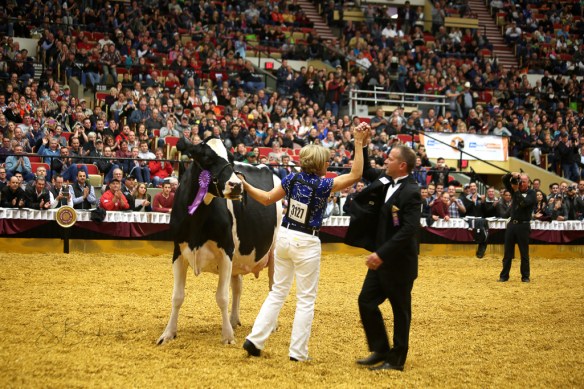 Not only did the Sheehan family have a winner, they did so with a bred and owned animal in a highly competitive Holstein show. “We are still a little stunned. You don’t come here with expectations because this show will humble you in a hurry,” Jeannette’s husband Robert added just after her reserve supreme honors were awarded Saturday evening. “The whole thing is unbelievable. We like to breed nice cows, the kind of cows we like to milk. Breeding is science and art with luck involved. The match has to work and every once in a while you get a cow like this.”
Thomas has shown a lot in the last 4 to 5 years. “This year she blossomed and matured into the kind of cow we thought she could be.” he added.
Robert and his brothers Jim and Jerome and their wives Karen, Mary and Jeannette are partners at Sheeknoll Farms, with the next generation also involved. They milk 300 cows at the farm in Rochester, Minnesota, and are known by their peers to treat them all like queens with great cow comfort and attention to detail. In fact, the mantra on their Facebook page says it all: “If we take care of the cows, they will take care of us.” They were thankful for the total team effort taking care of the EX 96 97MS Thomas in her grand journey to this surreal finish.
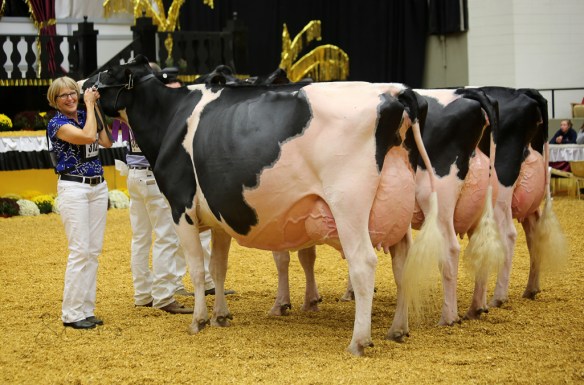 Sheeknoll Durham Arrow (aka Thomas) had an exciting path to her grand champion honors at the 50th World Dairy Expo, having won the 2016 Minnesota State Fair and other shows leading up to it.
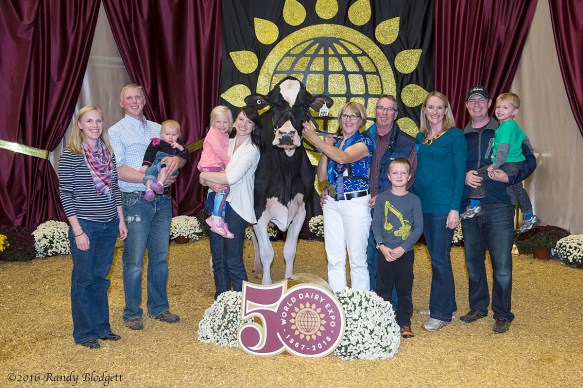
Photo courtesy Randy Blodgett, Blodgett Communications
The Sheehan family, friends and Thomas’ fans watched as judge Pat Conroy and his associate Yan Jacobs placed Thomas first aged cow, best bred-and-owned, best udder, production cow, senior and grand champion, over a competitive field including last year’s supreme champion Katrysha and over this year’s reserve and honorable mention grand champions, the latter exhibited by Glamourview Farms of Walkersville, Maryland.
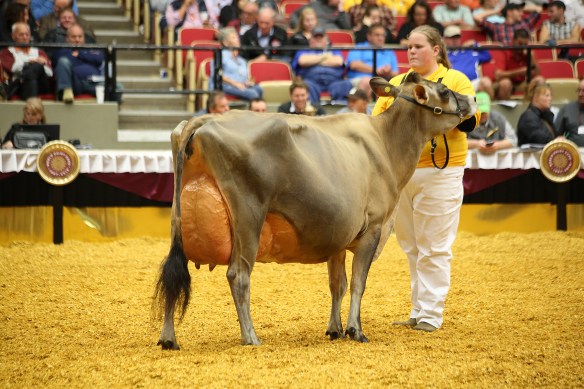 In the junior Jersey competition it was Cora and Cari of Darlington, Wisconsin. The homebred Red Rock View Cari was the grand champion Jersey of the Junior Show, with Cora Carpenter at the halter.
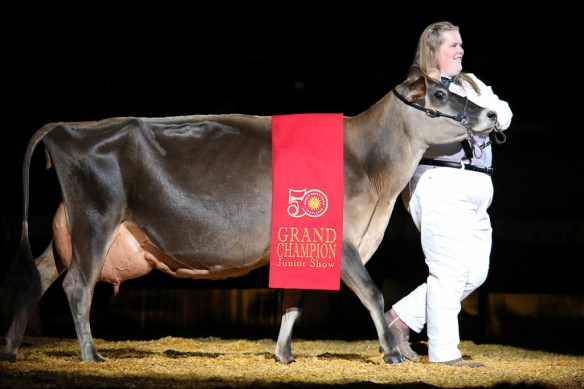 The Carpenter family was overjoyed to see their daughter and homebred Jersey do so well.
Earlier in the week, the grand champion Milking Shorthorn of the open show was Cates Ruben Tulsa-Time-EXP, bred, owned and exhibited by Peter Cate of Cornish Flats, New Hampshire for the second straight year.
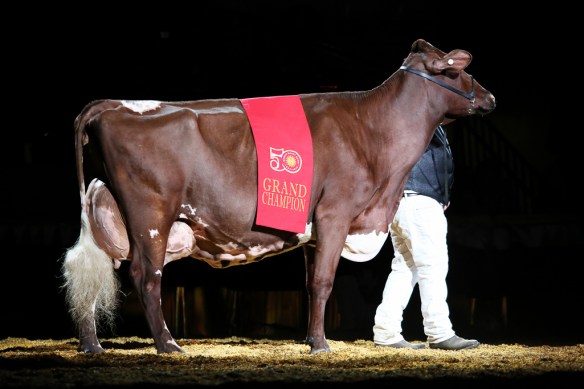 The Milking Shorthorn Show at World Dairy Expo has grown and lasted into Wednesday evening, but was quite exciting.
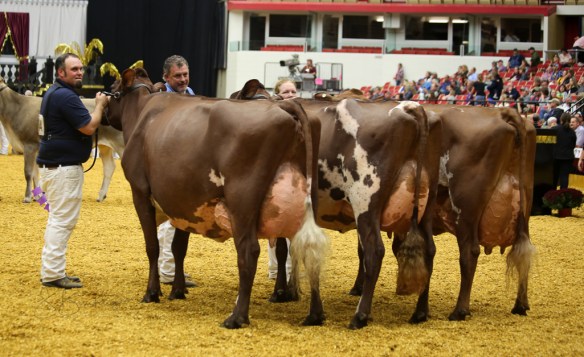 In the International Red & White show, Pheasant Echo’s Turvy-Red-ET was grand champion with breeder-owner Kenny Stambaugh, Westminster, Maryland, at the halter.
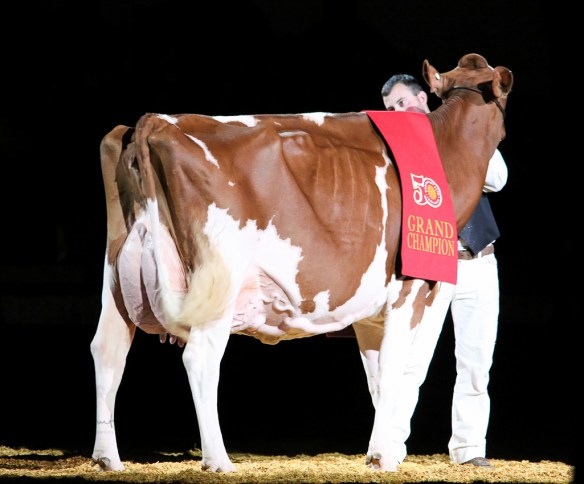 When Kenny Stambaugh’s homebred Turvy was named grand champion of the International Red & White Show on Friday, his sister Crystal Edwards was there in person to celebrate. Most of the rest of the family could probably be heard hooting-and-hollering over a thousand miles away in Westminster, Maryland as they gathered around the television to watch Kenny show and be victorious in the online live-feed of the showring proceedings.
What they did next, as you might imagine, is figure out how to get everyone out there by the next afternoon to see Kenny and Turvy vie for supreme in the closing ceremonies Saturday evening.
By 9:00 p.m. Friday evening, they had secured a flight that got Kenny’s parents, siblings and spouses to Madison by 2:30 p.m. Saturday — just three hours before the closing ceremonies – to surprise Kenny, who had no idea they were coming out.
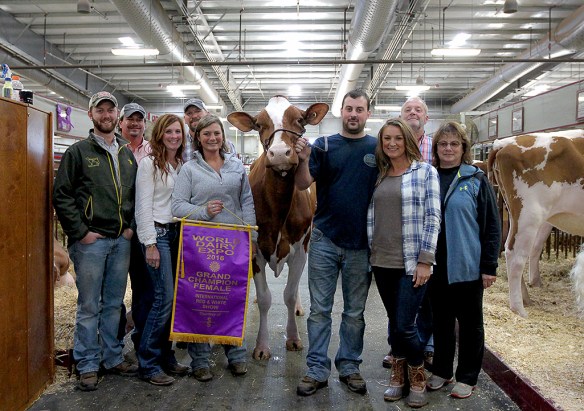
The Stambaugh family (photo by Sherry Bunting)
Kenny confessed he was pretty nervous in the ring, but it never showed because he had faith his cow stacked up pretty well against the competition.
When asked what gave Turvy the edge in a competitive Red & White class, Kenny and Crystal agreed: “It was her youthful udder and big frame,” said Kenny. Turby is classified EX-94 with a 96-point mammary system.
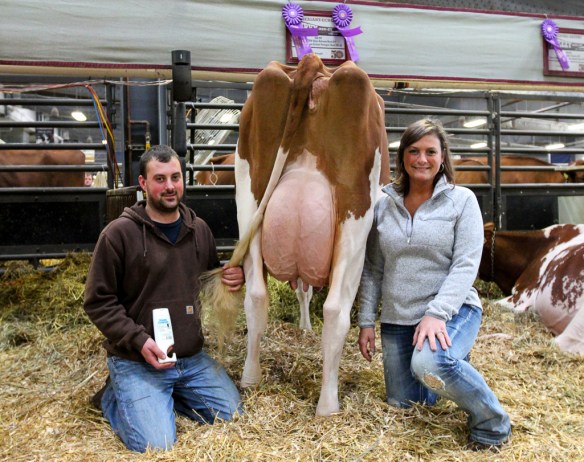 “She also walks on an awesome set of feet and legs,” Crystal added. “But after three calves at five years old, to have that youthful udder is pretty special.”
What makes the win even more special for the family is that Turvy’s dam was the Stambaugh family’s first homebred Red & White Holstein. To have a World Dairy Expo grand champion in a daughter of their first homebred Red & White just makes the win belong to everyone on the farm.
When Barney and Debbie Stambaugh started farming on their own in 1991, they purchased some Red & Whites and over the years bred them to some top black and white Holstein genetics, which yielded a red line within the herd.
“Dad had worked for Peace and Plenty as a kid, and that really sparked it in him,” Crystal recounted.
She describes the breeding philosophy at Pheasant Echo’s as one that allows them to have “a lot of old cows. We are fortunate that way,” she said. “Between the genetics and cattle care, we want cows that hang around, breed back and have productive life.”
The family sold an Armani heifer out of Turvy in the Apple Mania Sale and another out of this family at the National Red & White Convention Sale when that sale was hosted at the farm during the convention week in Maryland last summer.
Turvy had previously placed second in the junior competition at the 2014 World Dairy Expo and 7th in the open competition that year. “She has really come into her own,” said Crystal of the cow that likes to swish her tail.
“Nothing makes me happier than being able to come out and look at good cows when it’s time to milk,” said Kenny. “It sure makes it easier to get up at 3 a.m.,” Crystal added.
Kenny and Crystal agree that this will now be their favorite show memory. Prior to this win, it was the grand champion win at the 2014 All-American Dairy Show in Harrisburg.
But nothing tops winning at the 50th World Dairy Expo with a bred-and-owned cow, and being the leadsman at the halter to boot.
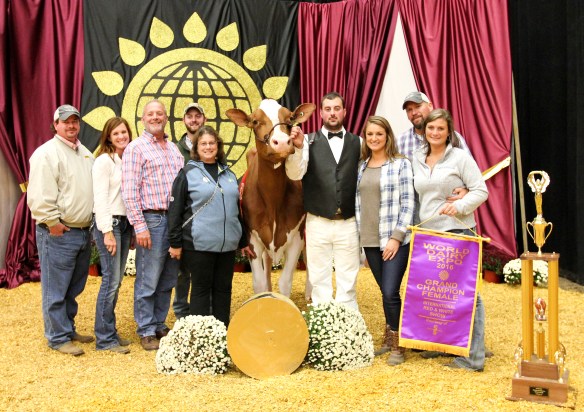
Kenny Stambaugh and his wife Nicole and homebred WDE grand champion Pheasant Echo’s Turvy-Red are flanked by parents Byron (“Barney”) and Debbie (right) and siblings and spouses from left, Bud Stambaugh, CJ and Tanya Miller and Dan and Crystal Edwards. Photo by Sherry Bunting as appeared on Cover of Farmshine Oct. 14, 2016
-30-




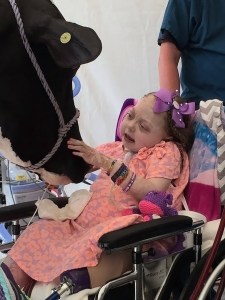
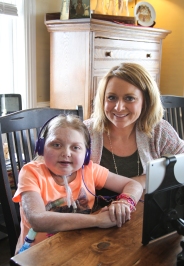 That didn’t happen immediately, but not long after she was home, she sure did.
 It was something she had worked for daily with the support of her family, friends, therapists… and a last minute pep talk from dad, Justin Burdette.
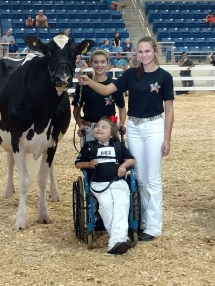 Reese was surrounded Monday by her support team of friends and family, including friends from Johns Hopkins, who came to Harrisburg to witness how much Reese loves the dairy industry and how this dairy industry family continues to support her and her family. Her ever-faithful cousin Regan Jackson and friend Lane Kummer helped make it possible to also lead her cow Pantene.
 As for Reese, her family, favored cow Pantene, and all who continue to support and love her… the joy of the day and its milestones was plain to see.


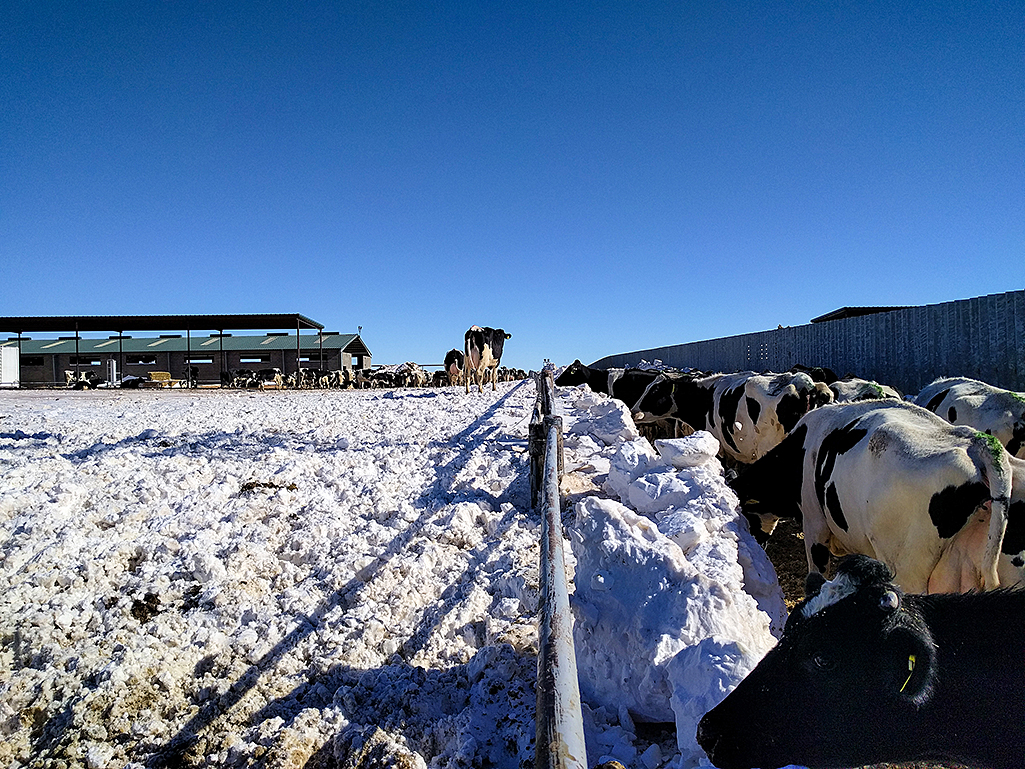
 Caption: The health of the dairy and livestock economies are harbingers of the economic health of rural America … and of the planet itself. Here’s some food for thought as we celebrate Earth Day and as climate change discussions are in the news and as researchers increasingly uncover
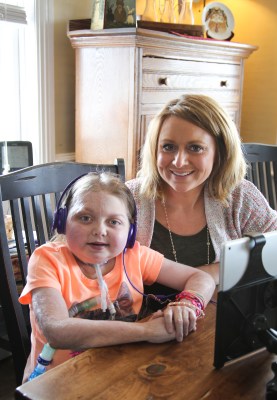 Author’s Note: It has been almost a month since Reese’s homecoming and she is getting back to the precious rhythms of life on the farm: Greeting her little sister off the bus on sunny afternoons, feeding her prize cow’s new calf, riding the gator with her grandfather, having tea parties with sister and cousins on Sunday afternoons, getting together with school friends, still attending school virtually via “Double,” her robot, even going to the dentist! Her journey continues to inspire. I am grateful for the opportunity to interview Reese and her mother and grandmother on the quiet first Monday after her arrival home Friday, March 18, 2016. Get ready to be inspired by this young lady, and by her family and the local farming community and worldwide dairy community who continue to think of her. Thank you to Jean Kummer, Laura Jackson and Jennifer DiDio for providing some of the photos here.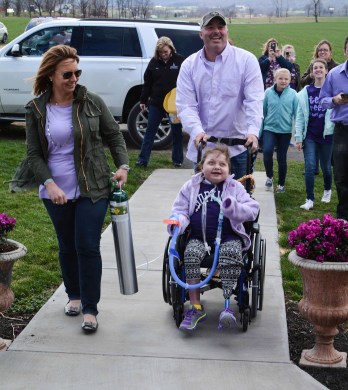







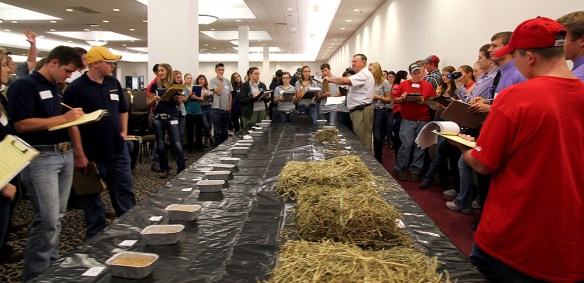
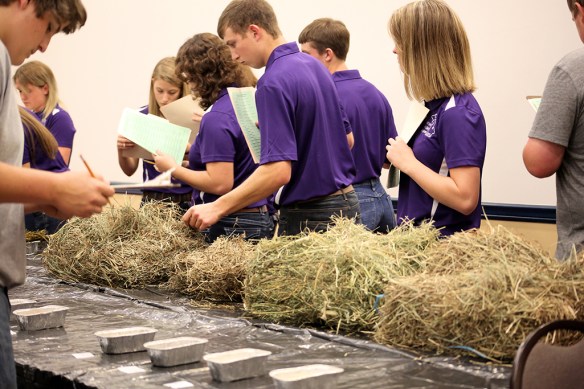
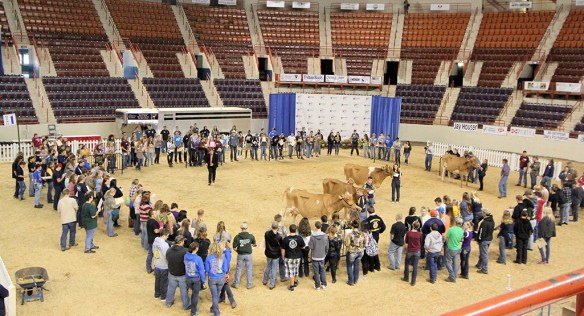
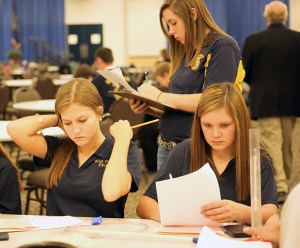
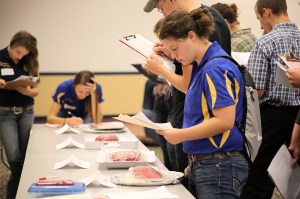 Specifically, students are judged in seven categories: cattle selection, linear type appraisal, business management, feed and nutrient management, meats and quality assurance, calf management, and DHI records and benchmarks. They receive an overall score as teams and individuals. Part of what they do is to evaluate feedstuffs and their role in dairy rations, milk samples in evaluating milk quality and udder health, reproduction anatomy, animal health and care via dairy records, and even the economically important beef-side of the dairy cow at the end of her productive life reflecting proper handling and proper administration of treatments and withdrawal times.
 Ag Moos