‘Stop feeding us lies’ say protesters as Dietary Guidelines Committee unbelievably doubles down against animal fat, protein

Dietary Guidelines have most negatively impacted children and youth.

Dietary Guidelines Advisory Committee holds final meeting. Draft recommendations include: Reductions in total protein; Less protein from animals, more from plants; Dairy emphasis still low-fat, non-fat; Implementation recommendations include food supply leverage

By Sherry Bunting, Farmshine, October 25, 2024

WASHINGTON, D.C. – This week is National School Lunch Week, and on Oct. 22 while USDA Secretary Tom Vilsack kicked off the so-called “largest federal-led summit in support of healthy school meals” in Las Vegas, the 2025-30 Dietary Guidelines Advisory Committee (DGAC) met publicly by zoom to gamble away the nutrients children need for the development of their brains, bodies and long-term health.

This was the seventh and final meeting of the DGAC after 22 months of subcommittee meetings and periodic full committee meetings, yielding a draft “scientific report” that is increasingly vegetarian.

Its recommendations to USDA and HHS are to develop 2025-30 Guidelines that significantly decrease the role of nutrient dense animal foods, even though they spent the first hour of the 12-hour, two-day virtual meeting puzzling over how to solve the nutrient deficiencies in their analysis.

The recommendations merge the three current DGA patterns (Vegetarian, Mediterranean and Healthy U.S.) into one dietary pattern with a draft name of “Healthy Flex U.S. Diet.” The flexibility part, according to the DGAC discussion, is the ‘how much’ and ‘how to’, which relies on ‘food pattern modeling’ and more specific strategies on how to replace animal based foods with plant based foods. 

The DGAC aims to improve its poor performance on the under-consumed nutrients by “including more nutrient-dense plant-based meal and dietary recommendation options” in its advice for 2025-30 Dietary Guidelines. 

The draft advice aims to continue to “emphasize consumption of low-fat or non-fat dairy and unsaturated fats; limit consumption of red or processed meats and foods high in saturated fat; and limit foods like sweetened beverages.”

Some committee members raised the concern that further addressing one problem (fat, salt, and sugar) leads to other problems in other areas (under-consumption of key nutrients, over-consumption of carbohydrates, and impacts on metabolic health). 

In fact, a week before the DGAC met, the first ever Change the Dietary Guidelines protest drew hundreds of people to the nation’s capitol — with Nina Teicholz, author of Big Fat Surprise, as emcee. It was organized by Metabolic Revolution with the mission of asking the Administration to “STOP FEEDING US LIES.”

Nutrition Coalition photo

Meanwhile, in the DGAC meeting, at least one member at the end of the first day noted how animal foods, specifically mentioning dairy, have all of these essential nutrients and that the bioavailability of the nutrients is important.

This didn’t make much difference. On the question of saturated fat restrictions, the 2025-30 DGAC doubled-down. These restrictions began with the first edition in 1980, and the quantitative recommendation of “limit saturated fat intake to less than 10% of calories per day starting at age 2 and replacing it with unsaturated fat, particularly poly-unsaturated” began in 2005.

The Committee’s biggest justification was that, “This has been confirmed by several previous DGACs based on the relationship between saturated fat intake and cardiovascular disease risk.” Basically saying it has been previously decided, and “we’re sticking with it.” Essentially, all evidence to the contrary was again ignored.

The Committee stated that only 1 in 5 Americans implement this limitation; so, food replacement strategies, cultural diet pathways, and diet simulations were recommended to show how to get more nutrient density from plant sources. Pre-packaged and pre-portioned implementation strategies and plated combinations of plant-based meals are suggested as ways to ensure nutrients without the fat.

This high-level academic exercise means very little to everyday Americans making choices about food, but it could fundamentally change what is available to choose from — if the “systems science, implementation science, and behavioral science” the DGAC is also recommending pushes diets even more toward highly processed, pre-packaged, pre-portioned options designed by global food giants.

Bottomline: the DGAC will recommend to the USDA and HHS to further reduce animal-based protein consumption and to further increase plant-sourced consumption in the 2025-30 Guidelines, while continuing to limit dairy to non-fat and low-fat options.

For dairy, the DGAC is also recommending that USDA update nutrition composition and dairy reference guides to reflect what they say are ‘improved’ plant-milks, and to use ‘diet simulators’ to show Americans how to be more ‘flexible’ in replacing animal foods with plant foods.

The DGAC also changed the wording of its 2025-30 mission to “reduce the focus on chronic disease risk reduction, to instead focus more on promoting growth and development and improving the healthspan.”

These are key takeaways despite the Committee spending the first hour of the first day stupefied by the analysis showing — uniformly across all socio-economic and cultural demographics — children ages 5-19 had the nutritionally poorest diets in terms of under-consuming key nutrients at this most critical lifestage.

Even when they picked up their Health Equity Lens to look at the data, it was uniformly bad.
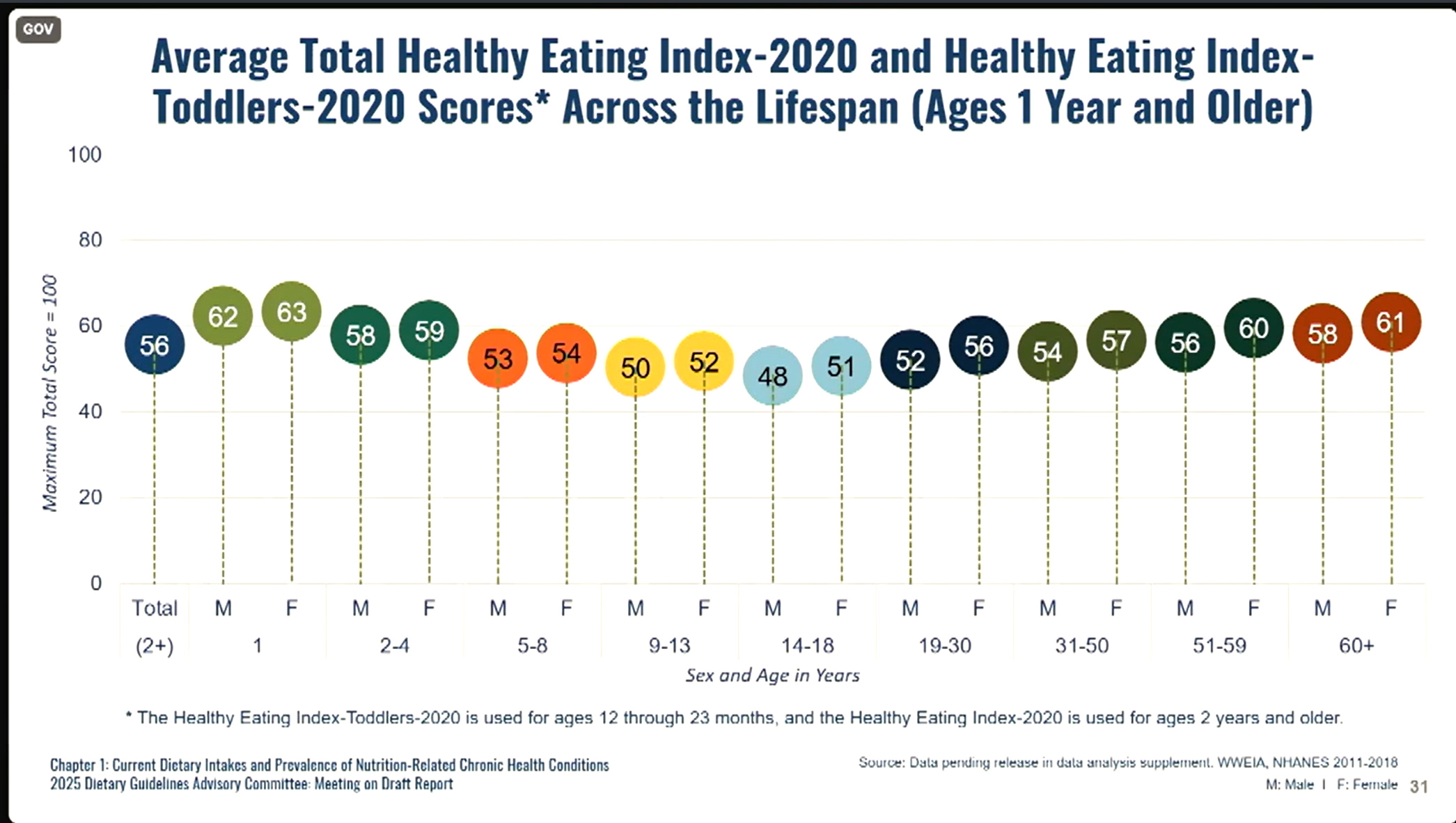
The DGAC could not understand why the healthy eating index showed such uniformly poor performance in the under-consumption of key nutrients, especially among children ages 5 to 19 across all populations. (Simple. It’s because the anti-fat DGAs are enforced at school meals twice a day, five days a week, most of the year for this life stage. Kids do not get to choose; adults do.) Oct. 21 screenshot DGAC meeting 

Their interpretation? I will paraphrase: Parents need help understanding how to feed their children.

My interpretation? The Dietary Guidelines are, themselves, the problem because they are used rigidly to formulate the meals that the age 5 to 19 lifestage (kids) are presented with twice a day, five days a week, nine to 12 months of the year – at school! The body will keep snacking until it gets the nutrients it seeks. 

“Obesity is a major public health issue, impacting 36% of children ages 2 through 19 years and 41% of adults ages 20 and older,” according to the DGAC.

However, by the end of the two days, the DGAC showed it would stay on the anti-fat path and give USDA and HHS the “expert” advice to double-down on saturated fat restrictions that have prevailed over the years while Americans become less healthy, more obese, with more chronic disease, at ever younger ages. Do they not wonder why this was not the situation pre-Guidelines? So much valuable research on saturated fat and health was again left off the table.
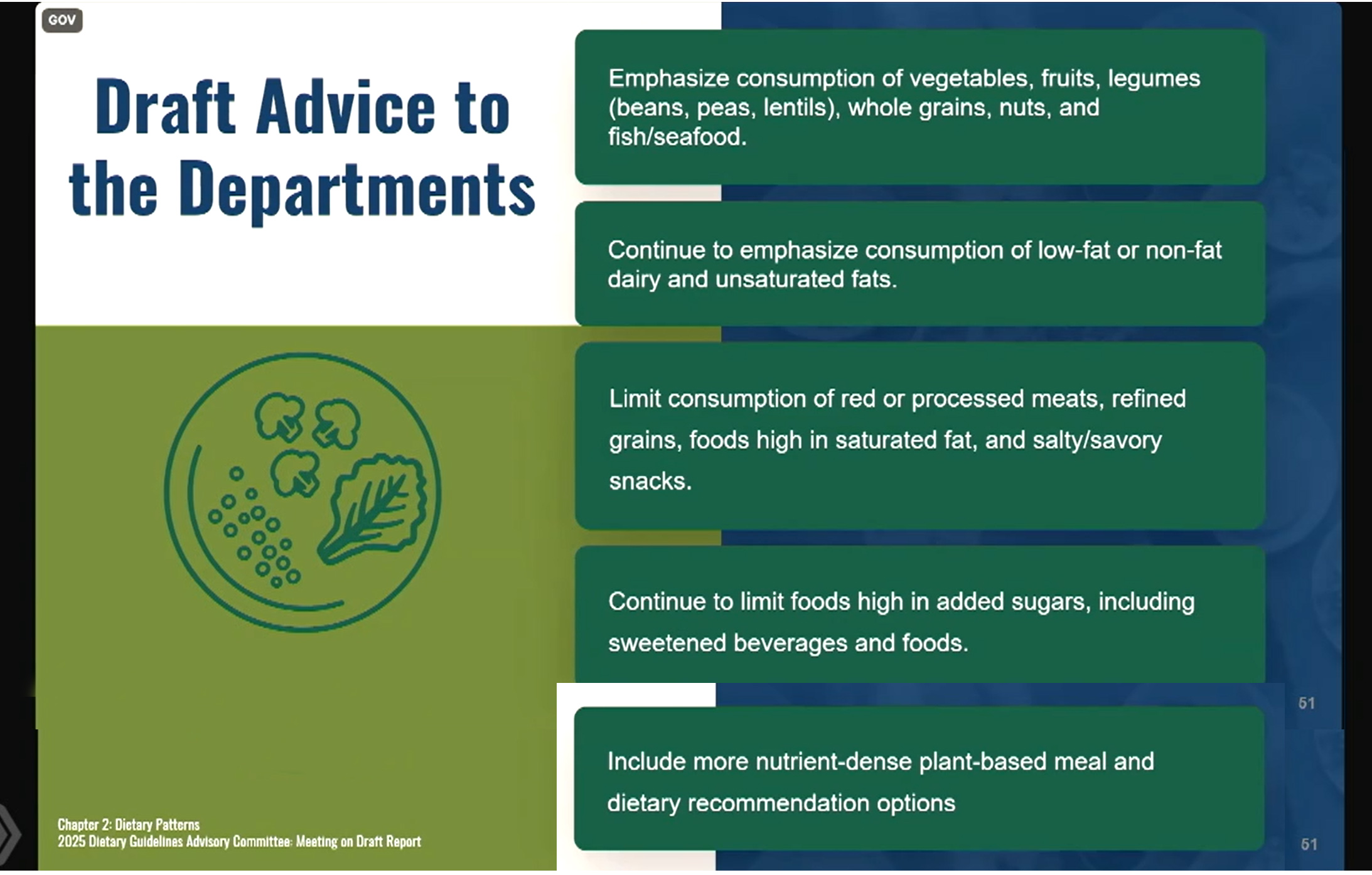
One of many draft advice slides for 2025-30 Dietary Guidelines emphasizing non-fat and low-fat dairy and unsaturated fats; addressing nutrient density by increasing plant-based meal options and decreasing animal-based. Oct. 21 DGAC meeting 

Impacts of the DGAC draft report on Dairy:

1) Dairy’s ‘place’ in the diet remains somewhat intact, but the committee advises things like not referring to soy milk as an “alternative” because it is part of the dairy grouping. They also are questioning if ‘Dairy’ is the right term for the Dairy group. The DGAC also will advise USDA to update nutrient composition and daily reference amounts to reflect the current state of nutrition art in “plant-milks” and to use diet simulations to show Americans how to be more flexible in replacing animal-based with plant-based.

2) Nonfat and low-fat dairy will continue to be the recommendation (3 milk cup equivalents), although they mentioned that there was not enough evidence to make this a strong conclusion for ages 2 through 5. Perhaps this leaves a door open for daycares and WIC to expand to 2% and whole fat milk up to age 5 instead of the current age 2, but schoolchildren are still out of luck. Dairy fat and butter were mentioned as being consumed mostly in processed foods.
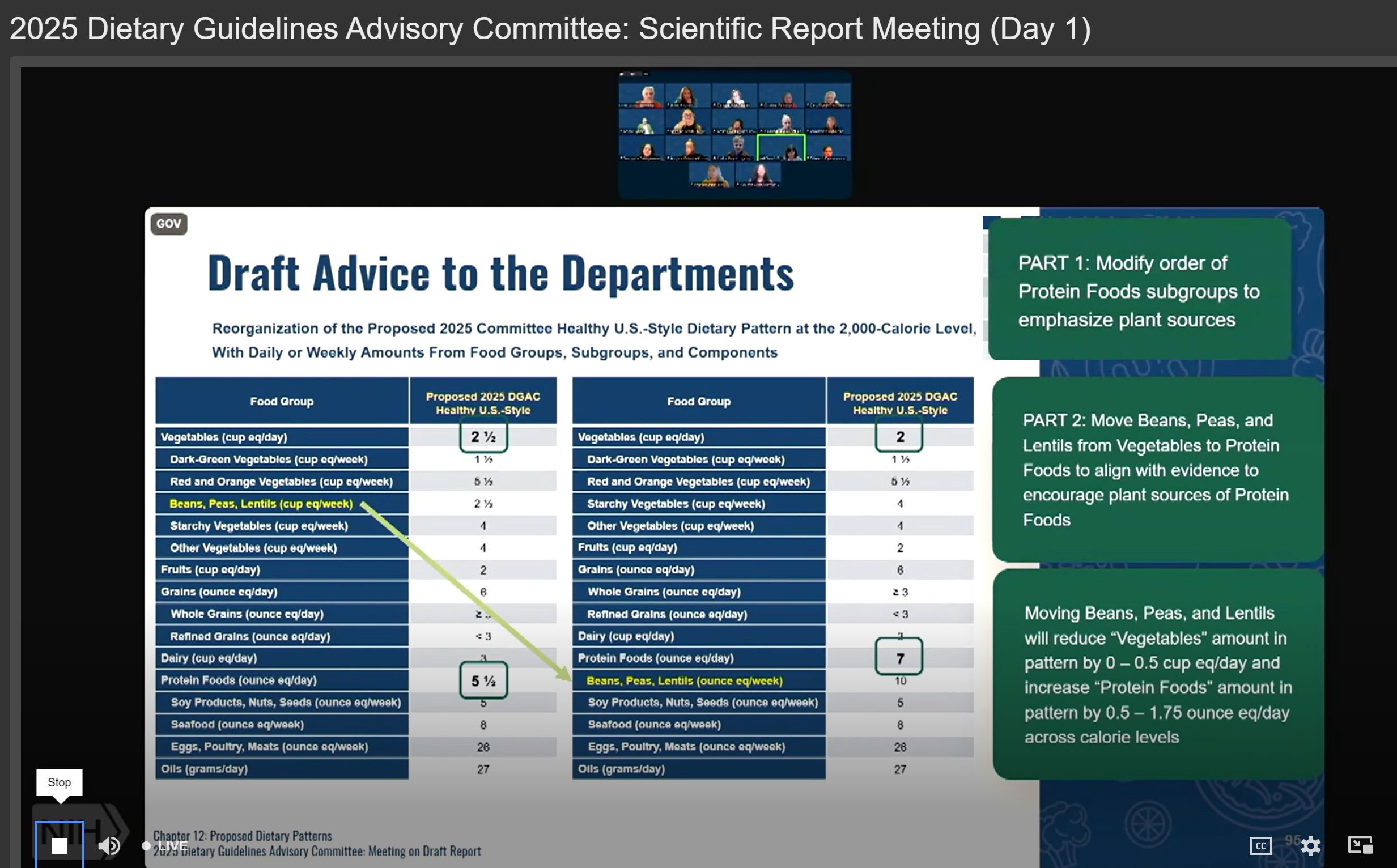
3) The Protein category has been flipped on its lid. The DGAC moved beans, peas and lentils from the vegetable category to the protein category and increased the daily quantities for beans, peas, lentils, seeds, soy, nuts, and fish, while reducing the allowance for meat, poultry and eggs. In fact, they will represent this visually by listing first in the protein category the plant sources, followed by fish, then eggs, then poultry, and lastly, red meat. The DGAC pointed to the dairy group as a source of protein that is not in the protein group, so protein level importance in plant-based comparisons can be reduced. (Several Committee members indicated their belief that Americans consume too much protein, so they wanted to show these crossovers differently.)

4) The additional considerations chapter is of particular concern for the future, advising USDA and HHS to: a) Encourage shifts to nutrient-dense plant-based meals; b) Put stricter limits on foods and beverages high in added sugars, sodium, and saturated fat; c) Use sugar limitations to exclude foods from the dietary pattern (with implications for flavored milk and dairy products); d) Make sodium reduction targets mandatory not voluntary (may impact the cheesemaking process for schools and other institutional feeding); e) Avoid referring to soy milk as “alternative”; Research name change for Protein group and determine if ‘Dairy’ is the right term for the Dairy group.

This draft report ends the DGAC’s work. In the coming days, it will be edited to reflect the discussion for submission as final recommendations to USDA and HHS.

A joint team of staff from both Departments will prepare this DGAC Scientific Report for posting at DietaryGuidelines.gov, along with data analysis, food pattern modeling and other supplemental documents. 

USDA and HHS will then open a new public comment period.

In 2025, the Secretaries of USDA and HHS (whoever they end up being), along with their joint team, will review the DGAC scientific report and the public comments to develop the actual 2025-30 Dietary Guidelines for Americans.

Expect these DGAs to continue most negatively impacting America’s schoolchildren and elderly in senior centers where meals must follow them.

However, it will have some impact on all of us if the Departments use the DGAC recommendation to implement food system science at the food supply level. We can already see what happens to choices for consumers and markets for farmers when the middlemen decide what can be put on grocery store shelves or in the dairy or meat case.

Not only did we not see a serious effort to address the need for more nutrient dense foods in the dietary pattern, the new pattern will double-down against saturated fat, along with salt and added sugar, and erode protein levels, while continuing to search for the missing nutrition profile of its increasingly vegetarian recommendations. 

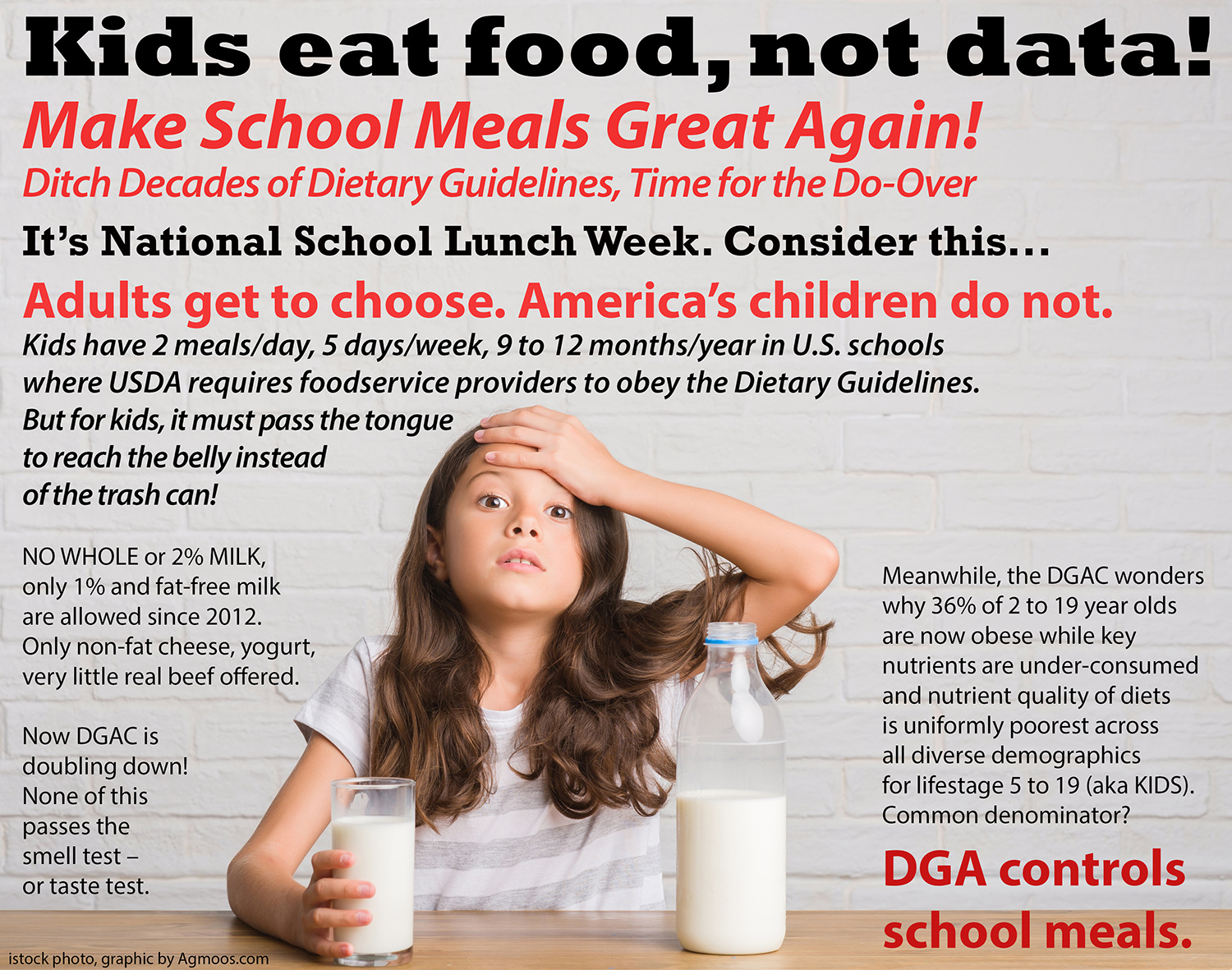
None of this passes the smell test, and likely not the taste test. Kids eat food not data. Nutrients must pass the tongue to reach the belly. Look for more on that in terms of action next week from the Grassroots Pennsylvania Dairy Advisory Committee and 97 Milk.

***

Additional information:

In its report, The Nutrition Coalition notes: “The collective shift toward emphasizing more plant-based foods has lowered the quality and quantity of protein in our diets. It is time to pause and question whether these changes are endangering health in the U.S., especially among children and the elderly. Still, with plant-based advocates dominating the public comments, plant-based industries and interests lobbying the USDA, and plant-based proponents on the expert committee itself, we may see further reductions of this important macronutrient in the 2025 Dietary Guidelines.”

Nina Teicholz, Ph.D. explains that these draft recommendations “fly in the face of our knowledge that plant proteins are of lower quality than animal proteins. With the exception of soy, all plant proteins lack all the necessary amino acids to make muscle tissue (as well as perform other critical functions in the human body). Reducing the total amount of protein and replacing animal proteins with plant proteins are both harmful changes. These alterations will mean that anyone receiving USDA-funded meals, such as kids consuming school lunches, the women and infant children on the WIC program, and the elderly will receive fewer complete proteins. Also, reductions in meat, dairy and eggs are sure to exacerbate nutritional deficiencies in the guidelines, which currently fail to meet basic targets iron, vitamin D, vitamin E, choline, and folate. The Dietary Guidelines are already deficient in complete proteins. The erosion of protein in the guidelines has been happening for decades, as we wrote about in this post.”

-30-
Dietary Guidelines Committee must be stopped, its flawed upcoming report excludes rigorous fat studies

ThenAndNow_DGAs_web

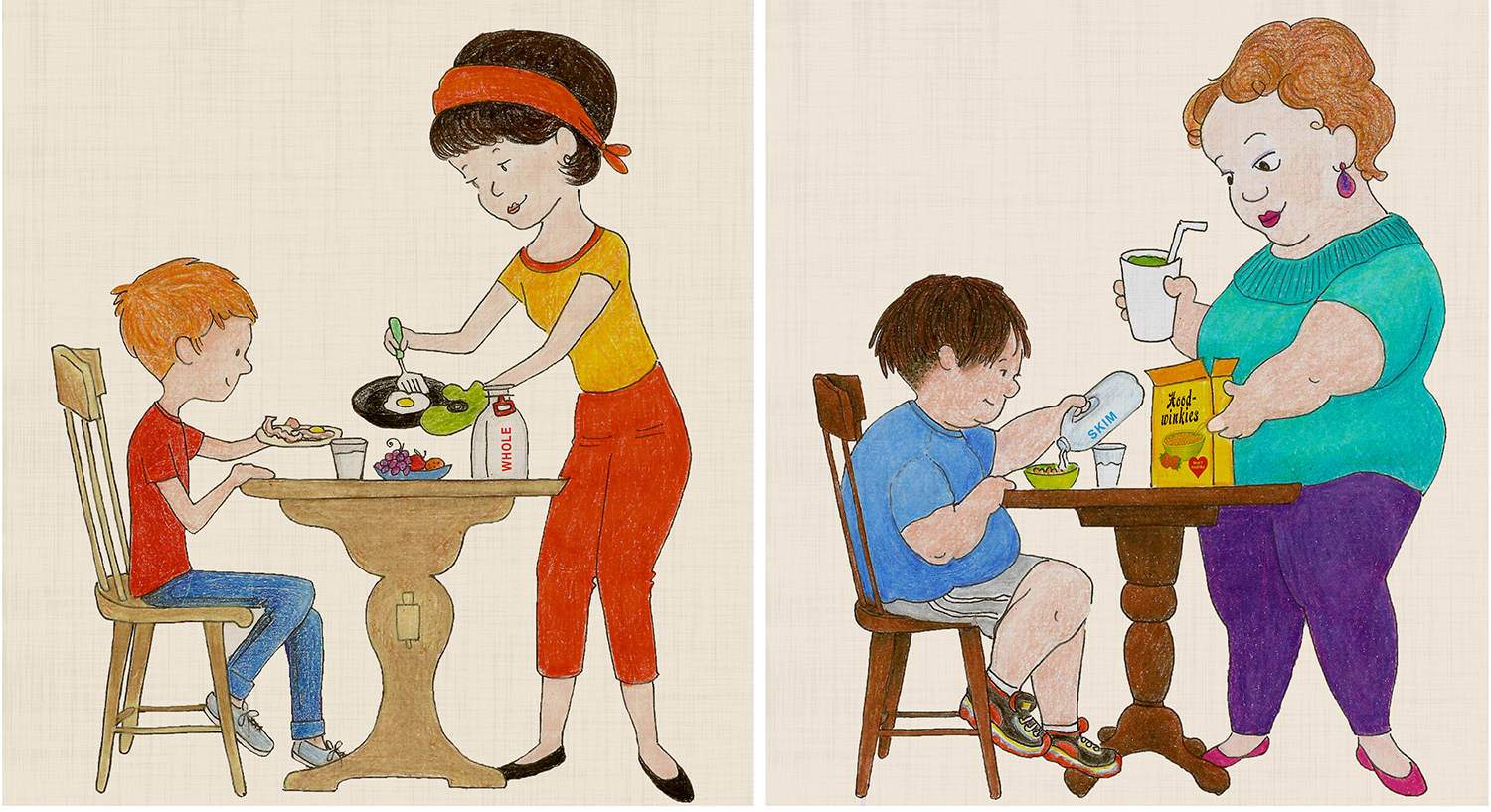
Drawings by Heidi Krieg Styer as published on Farmshine cover, June 12, 2020 edition

By Sherry Bunting, Farmshine, June 12, 2020

WASHINGTON, D.C. — As we have reported for several years now, there is this thing called the Dietary Guidelines for Americans that most people think is simply government guidance of how Americans should eat to be healthy, and that we can take – or leave – that advice based on our own choices and understanding of the science.

Wrong!

The Dietary Guidelines for Americans increasingly control our choices in ways subtle and obvious, especially where our children are concerned and especially where the poorest among us are concerned.

They began in the 1980s and are updated every five years by a Dietary Guidelines Advisory Committee. Since 2000, these Guidelines have become more restrictive, and in 2010 — under the Obama administration with Ag Secretary Tom Vilsack implementing measures to ban whole milk in schools and then lobbying for the bill, Congress took the step that linked the guidelines more closely than ever to our schoolchildren through the Healthy Hunger-Free Kids Act. The bill is anything but what its name implies.

At the same time, Americans have continued to grow fatter, sicker and sadder as the limits on saturated fat have grown stricter and the federal control more pervasive.

dga2

Most of the ‘experts’ on the DGA Committee are free to choose their own meal pattern. Our schoolchildren, our poor, our chronically ill, our elderly, our military, our economically and nutritionally at-risk persons — their dietary choices are controlled by the DGA. According to the CDC, these are the demographic populations dealing with the most pervasive rise in obesity, diabetes and other chronic illnesses many scientists believe are rooted in the DGAs.

For 40 years, the advice coming from the Dietary Guidelines Advisory Committee every five years, and then virtually rubber-stamped by the Secretaries of Agriculture and Health and Human Services, has led Americans down an unhealthy road. The Committee pushes vegetarian eating patterns, high carb / low fat dogma, and increasingly strict saturated fat restrictions despite sound science to the contrary.

The process needs reform, according to the Academies of Sciences.

The 2020-25 Dietary Guidelines draft will be released next Wednesday, June 17 by the current Dietary Guidelines Advisory Committee (DGAC), and as the Nutrition Coalition and others have been warning, this draft is bad for Americans, bad for our children, and bad for our dairy and livestock producers.

What’s more, this draft is based on the deliberations of a committee that excluded rigorous studies showing the saturated fat in milk and dairy products is actually GOOD for us, especially for our children, and that it has little if any negative effect on cardiovascular health and all-cause mortality, with positive effect on Type II diabetes, obesity, cognition, brain function and mood.

Quite literally, the DGAC, Secretaries of Ag and HHS (even Congress and past and present administrations) — in their infinite wisdom and refusal to turn this Titanic away from the iceberg – are happy to watch American health sink, and the survival of our farmers and ranchers to sink right along with it.

If ever there was a time for action (and believe me, this chorus I’ve sung quite a few times since the year 2000), it is now!

Contact your Senators and Representatives in Washington and ask them to urge Secretaries Perdue and Azar to delay this DGAC report until all of the science is considered.

It is unconscionable that USDA – through its strange screening process that includes “conformance to current federal policy” implemented by department interns – was the first layer prohibiting rigorous science from the DGAC work over the past year.

It is even more deleterious that the DGAC further refined the science included in the saturated fat questions to illogical parameters that no other DGAC subcommittee used for its screening process.

Americans are smart. They are choosing whole milk and full-fat dairy products because they are learning about the science that was buried and suppressed over the past 40 years as well as the new studies surfacing.

But that’s only good for the wealthy adults among us. Children are ruled by DGAC decisions, thanks to Congress. Those suffering poor health are ruled by DGAC decisions because medical professionals tend to regurgitate them.

Families in need are perhaps MOST controlled by DGAC decisions because they rely on government feeding programs that must meet these fat-restricting Dietary Guidelines, but are issued SNAP cards that allow them to buy soda and cheap snacks full of carbohydrates that do nothing nutritionally for them.

Amid the COVID-19 crisis, how many times have we heard that the obesity and diabetes in our population, especially the poor, increases how harmful this virus is to certain populations, demographically? With these guidelines governing USDA feeding programs, it’s no wonder.

Shameful!

Not to mention, a year ago, military generals crafted a letter to Congress over their concerns about recruits being too obese or unhealthy to serve. Yes, the military is another sector of government-feeding that is tied to the flawed Dietary Guidelines for Americans.

So, big deal, my family can still choose. Right? For many families, those choices are made for them when dining out as restaurants increasingly document calories, saturated fat and other information on menus. This is required by the federal government for chain restaurants of a certain size. More of these restaurants admit to using “stealth health” to make adjustments to meals to show that they are meeting – you guessed it – the Dietary Guidelines.

In fact, the Food and Drug Administration (FDA) began its multi-year Nutrition Innovation Strategy, whereby it is seeking to “modernize” standards of identity to “achieve nutritional goals.” FDA also is designing a “good for you” symbol that foods will only get if they meet the criteria being developed. The agency in its meetings over the past year, cited reduced consumption of fat and salt as primary nutritional goals, and have made statements such as “American consume too much protein.” The FDA’s “modernization” of food labeling and standards of identity will certainly move forward under the good ‘ole Dietary Guidelines.

Meanwhile, when it comes to the simple “choice” of whole milk or even 2% in schools and daycares for children over two years of age, these wholesome products are outright banned because of the Dietary Guidelines. In fact, not only does the government require non-fat and 1% milk to be served, cheese and yogurt are also limited to low- and non-fat.

When fat is removed from the diet, carbs and sugars replace it, and foods are not consumed that bring tons of nutrients and vitamins to the table.

Here we are at a crossroads in our nation’s health. Obesity and diabetes are reaching epidemic proportions in our children. Iron, iodine, calcium, and certain vitamins, especially fat-soluble vitamins found in whole fat dairy and meats are nutrients of concern. Doctors are finding Americans, especially children and teens, are deficient in these nutrients when low-fat Dietary Guidelines rule the plate.

The only thing that can possibly turn the Titanic as it is already crashing on the iceberg is a groundswell of letters, phone calls, emails and faxes to members of Congress, Secretary of Agriculture Sonny Perdue, Secretary of Health and Human Services Alex Azar, even the President of the United States.

Sheer numbers are needed. To-date, medical and health professionals, scientists, teachers, parents, citizens have commented on the DGAC docket. Many have written letters and opinions, forwarded research that has been excluded, pointed out the flaws in research that was included.

Now Congress needs to hear from their constituents. There’s a war to win for our health and our farmers.

Concerned citizens have met with members of Congress over the past year on issues such as whole milk in schools, and yet the Whole Milk for Healthy Kids Act, House bill 832, and Milk in Lunches for Kids Act, Senate Bill 1810, have stalled at 41 and 3 cosponsors, respectively, which is where they were in October when I went to Washington with the first 10,000 of the 30,000 names on the Whole Milk Choice in Schools petition.

There are heavy hitters on the other side of this fat discussion. Never mind the animal and climate activists with their facts all jumbled up, there are huge investments in the future of food by powerful people who want to see the Dietary Guidelines continue the current path.

Processed With Darkroom

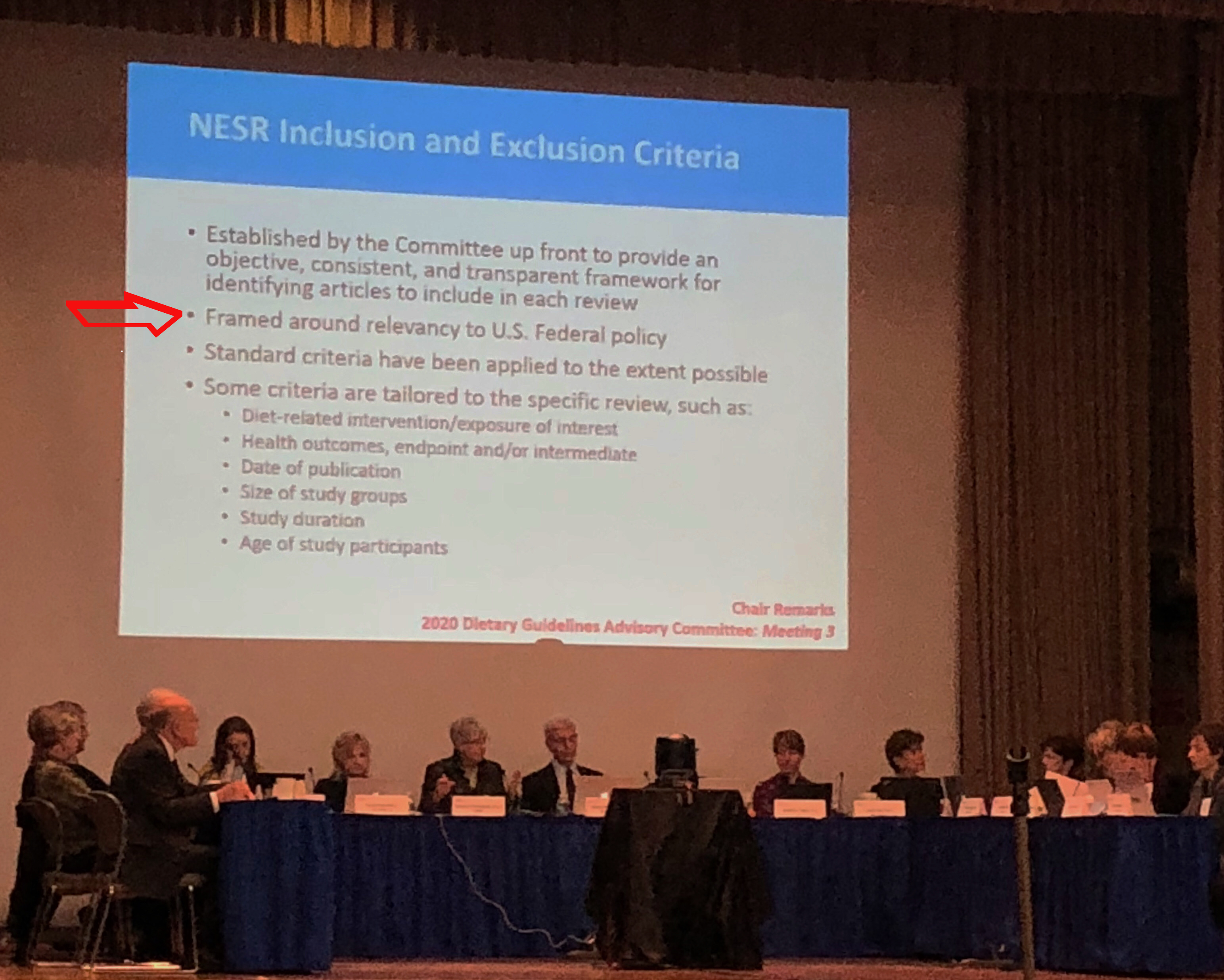
Part of the screening process used by USDA for science that will be included or excluded from Dietary Guidelines Advisory Committee consideration is this curious item shown above: “Framed around relevancy to U.S. Federal  Policy”. Committee members in October asked for more information on this research screening criteria. USDA explained it to them and those watching that this refers to including only the research that “aligns with current federal policy.”

While I was in Washington in October, my eyes were opened. I sat in on the DGAC meeting and wrote about it in Farmshine. There, I learned that one of the screening criteria by USDA for determining what science was “in” or “out” of the DGAC process is this strange point: “relevancy to U.S. federal policy.” When a question was asked by a member of the committee about that point, it was explained as “research inclusion that conforms or aligns with current federal policy”.

That, my friends, is the unelected bureaucracy feeding itself and pretending to have the scientific basis to use diet to achieve other goals.

I visited Senator Bob Casey (D-Pa.) that day and asked his staffer why Sen. Casey would not support Senator Pat Toomey’s (R-Pa.) Milk in Lunches for Schools bill.

The response? “We (Congress) are not a scientific body. We have a process for that, the Dietary Guidelines.”

Yep. There it is again.

When pressed further, asking how citizens – constituents — can redress their concerns with ELECTED officials if that committee stands in the way, I was surprised to hear the staffer note that National Milk Producers Federation (NMPF) did not support Sen. Toomey’s bill. I had identified myself as a member of the Grassroots PA Dairy Advisory Committee but also as a mother, grandmother and former school board director, but the answer I was given honed-in on my “dairy” reference.

I was told by the Casey staffer that NMPF did not support Toomey’s Senate bill on whole milk because it included language that would not just allow the choice of whole milk, but would also exempt school milk choices from the “10% calories from saturated fat limit.”

Later, I contacted NMPF and spoke with one of their lobbyists who confirmed that NMPF did not support the Toomey bill language. They did not want that exemption for milk because they said they believed “we can win the fat argument.”

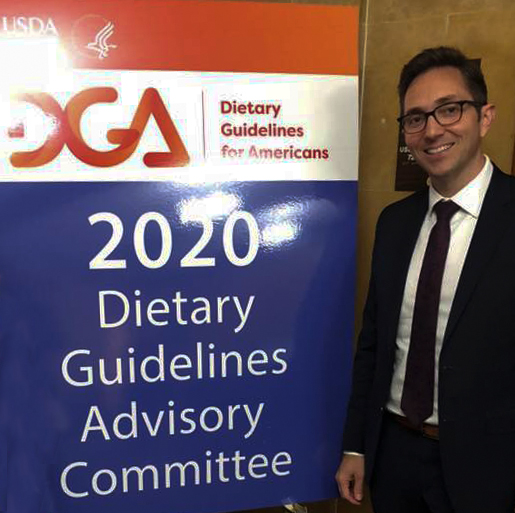
dga1Meanwhile, on the day of my trip to Washington in October, as I posted a photo on facebook of USDA Food and Nutrition Services undersecretary Brandon Lipps in front of the Dietary Guidelines sign at the DGAC meeting in the USDA building, I recalled his words to me, that the department loves milk, but that the “science” needs to come together, and that the industry needs to be on the same page. (I had just handed him his copy of the first 10,000 signatures on the whole milk in schools petition)

Mr. Undersecretary, how can “the science” come together when your USDA interns and DGAC members left a lot of the good science on the cutting room floor and effectively screened it out of the “coming together” process these 5-year DGAC cycles are intended to address?

As I walked out of the USDA building to meet with legislators on that day in October 2019, I noticed a post on my facebook newsfeed from Hoard’s Dairyman quoting DMI CEO Tom Gallagher as follows:  “Now, we’re not sure if it will be in this go-around with the Dietary Guidelines for Americans . . . but I believe by the next Dietary Guidelines we will get the fat story reversed,” said Gallagher. “That opens up the door to whole milk products and other dairy products in schools, which would be a big plus.”

Already in October, when the DGAC process was near its beginning, the top national dairy checkoff leader was publicly admitting defeat. Or, was he actually telegraphing the wishes of DMI “partners” to USDA, another partner, that they’d prefer to keep stalling it.

In this quote, Gallagher makes it look like DMI supports whole milk in schools, while at the same time stalling a change in policy and conceding to a defeat in 2020 before the game got off the ground — while diverting everyone’s attention to 2025.

Back in 2014-15, I was involved in that DGAC cycle, writing several columns for a metropolitan newspaper. Same story, different year. You’ll find lots of background here.

At the time, I asked checkoff leaders at a dairy meeting why they weren’t involved in turning this around on saturated fat and why were they not more vocal in the guidelines process. I was told in 2015, that they were working on it for 2020.

Stall, delay, stall.

Our kids and our farmers don’t have 5 more years to get 40 years of wrong and 10 years of really-really-wrong, right.

This week, I was pleased to see Bob Gray who has represented the Northeast Council of Dairy Cooperatives sent out a memo to industry colleagues citing what Nina Teicholz and the Nutrition Coalition have been sounding the alarm about. He urged people to contact members of Congress and ask them to get a delay in the release of the DGAC 2020-25 report, to keep it from being released next Wednesday, and to keep it off the table until the science that was excluded is considered.

Unfortunately, at other levels of industry involvement, the response is a shrug.

For example, two weeks ago, I heard from a dairy farmer who contacted her regional dairy checkoff organization and asked for help distributing whole milk gallons to families in need at her local school during lunch pickup.

“You can’t do that,” she was told. “It’s not allowed.”

Unfazed, she contacted the school and the processor anyway, on her own, and both were enthusiastic about making her idea happen. She and her husband purchased the whole milk with their own money – 200 gallons of it – and they stood beside the school foodservice folks and gave it to families driving through picking up school lunches.

Additionally, ADA Northeast is a regional checkoff organization that has indicated to dairy farmers that their taste tests in cities show children don’t really notice the difference between whole milk and 1% low-fat milk, and that consumption of milk did not increase when whole milk was offered, but that consumption did increase when 1% chocolate milk was offered instead of just non-fat chocolate milk.

For the industry – it’s all about the 1% milk in schools. In fact, if the DGAC report is released next Wednesday and gets on its way to USDA / HHS approval, 1% milk will be kissed goodbye in schools as well because the DGAC is doubling-down on saturated fat levels, not loosening them.

Meanwhile, a high school / middle school trial in western Pennsylvania would put these checkoff findings to shame. Teenagers given the choice of whole milk this school year favored whole milk three to one over 1% low-fat milk. The milk choices were put in front of them with no information, and within a short time, they figured it out on their own. Within five months of students having this choice of whole milk, teenagers were consuming 65% more milk and the amount of milk being discarded fell by 95%.

On every level – nutrition, satiety, sustainability, environment – you name it, that’s a win. A win that schools and children will not get to realize if the DGAC issues its 2020-25 report doubling-down on saturated fat.

This Dietary Guidelines scandal has many players and parties involved – and it’s obvious by now this has nothing whatsoever to do with “the science.”

Contact your Senators and Representatives as soon as possible before Wed., June 17 and ask them to urge Sec. Perdue and Sec. Azar to delay the DGAC report and to send the committee back to the drawing board to include the science they left out.

If you don’t know who represents you in Washington, use this link to plug in your home address at this link to find out: 

Also, register your comment with Secretaries Perdue and Azar here

Let’s get this Titanic turned around. We don’t have 5 more years to waste. Who’s with me?

-30-