Market fundamentals suggest favorable forecast, yet uncertainty jars milk futures markets

Editorial AnalysisTumultuous 2024 spills over into 2025 – Part Two

By Sherry Bunting, Farmshine, January 17, 2025

EAST EARL, Pa. – Year 2024 was tumultuous, and 2025 is shaping up to be equally, if not more so. Here’s a look at how supply, demand, and other market factors are shaping up for milk prices and dairy margins heading into 2025. This is part two of a four part series, see part one here and part three here.

We are a few weeks away from a few key yearend reports that will give us a better handle on production and cattle inventories, but the current market fundamentals favor a forecast for higher milk prices into 2025.
Better prices

In fact, the Jan. 10th World Agriculture Supply and Demand Estimates (WASDE) just raised by 50 cents per cwt the estimated 2025 All-Milk price average at $23.05 after having lowered it the month before.

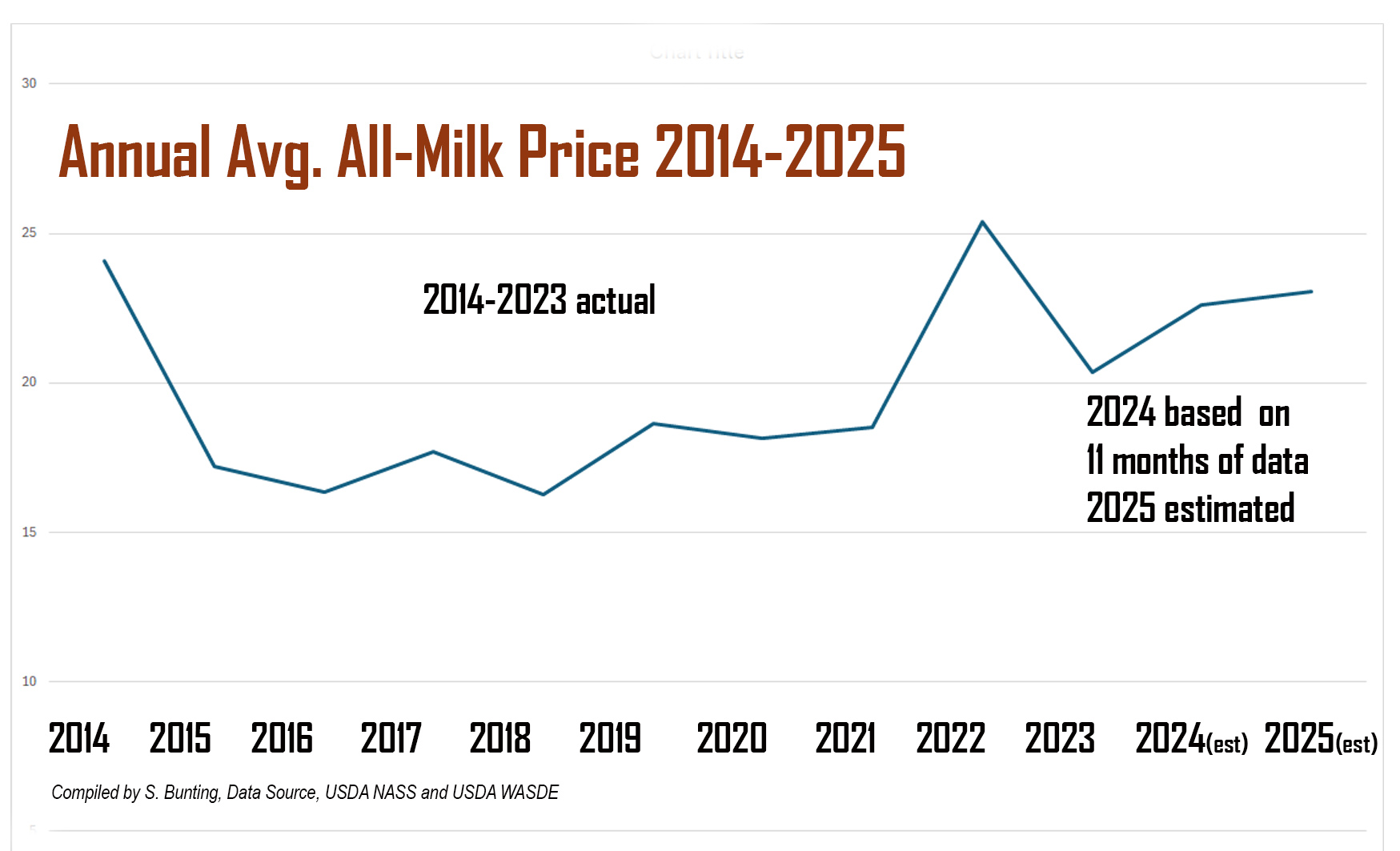
Based on 11 months of official data, however, the January WASDE shaved another nickel off the 2024 average All-Milk price, now estimated at $22.60, which would be $2.20 higher than the average All-Milk price of $20.40 for 2023 but $2.80 lower than the decade’s high point of $25.40 in 2022.

At an estimated $22.60, the average All-Milk price for 2024 would be the fourth time in the past decade and the third consecutive year that the annual average All-Milk price was above the $20 mark. (Fig. 1).

Strong demand

Positive supply and demand fundamentals for 2025 include the reported strong domestic and international demand for cheese and butter; tighter than expected milk supplies; tight to adequate dairy product inventories; growth in year over year (YOY) sales of fluid milk; and strong domestic demand for skim solids in the form of nonfat dry milk, dry whey and whey protein concentrate coupled with reduced production of these products limiting the availability for export.

A sustained price rally in the CME spot market-clearing price for the market indicator product dry whey reached a multi-year high of 75 cents per pound by the end of the 2024 and is holding at near 74 cents per pound into mid-January. Trouble is, this market-clearing price has been tardy all year in translating to sales reported on the USDA weekly price survey used in the Federal Milk Marketing Order (FMMO) price formulas.

Despite the positive supply and demand fundamentals, we saw fourth quarter 2024 milk prices decline $1 to $1.50 from the year’s high point at $25.50 in September, and even though dairy products are holding steady on the CME spot cash markets, the CME milk futures markets took a tumble into below-$20 territory across the board this third week of the New Year. 

So what’s the deal? Uncertainty.

Fewer cattle?

Uncertainty prevails about future cattle inventories after Sec. Vilsack canceled the mid-year 2024 Cattle Report last summer. The Jan. 1 Cattle Inventory Report comes out Jan. 31st. It’s unlikely to show any big surprises in the two-year trend toward reduced cattle numbers, including dairy replacement heifers. USDA says this report will give the trade an indication of producers retaining dairy heifers for their milk herds. 

With prices skyrocketing $800 to $1200 per head above year ago levels for fresh cows and springing, bred, and open heifers, a sudden rise in replacement heifer numbers is unlikely. 

Meanwhile, beef-on-dairy calves continue to give dairies an immediate $800 to $1000 check on a 3-day-old bull calf requiring very little input cost. That’s $900 in income per cow for dropping a calf, even before she starts her lactation.

The tug-of-war on breeding decisions for future dairy farm calf crops continues as the total U.S. beef and dairy calf crop, by the way, has already declined 1.6 million head in the two year period from Jan. 1, 2022 to Jan. 1, 2024. On Jan. 31st, we’ll see what the Jan. 1, 2025 numbers say.

Global trade

Uncertainty also exists around global trade amid ‘tariff talk’ against the backdrop of YOY growth in export volume, that is tempered by YOY growth in import volume. The January WASDE expects the trend of export volume growth to continue, but also expects the larger import volumes to continue. While the report specifically mentions cheese and butter, USDA FAS data show growth in the imported volume of skim milk powder, and especially YOY growth in whole milk powder (WMP) imports in each of the past four years.

FMMO changes

Uncertainty about the implementation of USDA Federal Milk Marketing Order (FMMO) price formula changes in the second half of 2025 that will impact risk management. The updated make allowances will trim class and component index prices by 75 cents to $1.00 against a CME milk futures markets that bases contracts on the FMMO formulas. That changeover will have to be dealt with.

Uncertainty about how new, efficient expansions of cheese and ingredient production capacity may be tied into sourcing from multi-site dairy farms that have planned expansions with internal heifer replacement models. What will be the impact on the rest of the industry when they start cranking out tons more cheese on the new and higher make allowance margin.

H5N1 impacts

Uncertainty about milk production trends after the impact of the bird flu outbreak in California dragged down total U.S. milk output well below expectations. The next report for December milk output will be released on Jan. 24th.

The January WASDE reduced its total milk production forecasts for 2024 and 2025, driven by “lower milk cow inventories and lower expected milk output per cow.”

This came on the heels of the November milk production report released in late December, showing California’s 9.3% drop in state-wide milk output, attributed to HPAI H5N1 hitting at that point half of the state’s dairy herds. This drove the total U.S. output down an unexpected 1% YOY.

The WASDE also forecasts “slower growth in output per cow” in its rationale for reducing the milk production estimate for 2025. This means what producers have been reporting is now showing up in the USDA data. Producers in areas hit by H5N1, especially California, report an initial 30 to 40% herd level production loss that only comes back about half-way, six to eight weeks later.

Producers also indicate a 2% increase in herd-level mortality and increased culling. Both veterinarians and producers in previously affected areas are now reporting impacts on dry cows and springing heifers, aborted calves, shaved production peaks, and emerging questions about milking performance in the following lactation.

According to APHIS data, as of Jan. 10, the virus was detected in 708 dairy herds in California since the outbreak was first reported there in September. That’s nearly 75% of the state’s dairies affected to-date. In the past 30 days, 66 California herds have been affected, with the most recent detection on Jan. 10.

Apart from the California outbreak, the only other detections of H5N1 on U.S. dairies in the past 30 days is one herd in Michigan on Dec. 30. This is good news, considering that 13 states have now been fully brought into the National Bulk Milk Testing Program announced on December 6th as a mandatory program for all 48 continental states. 

Those initial states include California, Colorado, Indiana, Maryland, Michigan, Mississippi, Montana, New York, Ohio, Oregon, Pennsylvania, Vermont, and Washington.

Better margins

For 2024, the milk over feed cost margin only fell below the Dairy Margin Coverage (DMC) program’s highest payment trigger level of $9.50/cwt in the first two months of the year. In fact, Sept. 2024 saw the highest DMC margin on record at $15.57 with an All-Milk price of $25.50 and a feed cost at $9.93. Since then, Q4 margins have declined to $14.50 as the All-Milk price fell and feed cost remained fairly constant.

This measure does not account for the higher fuel and energy costs, higher labor costs, rising cost of insurances, higher interest rates on capital, and generally higher costs for other inputs that keep a dairy farm going.
Labeling games

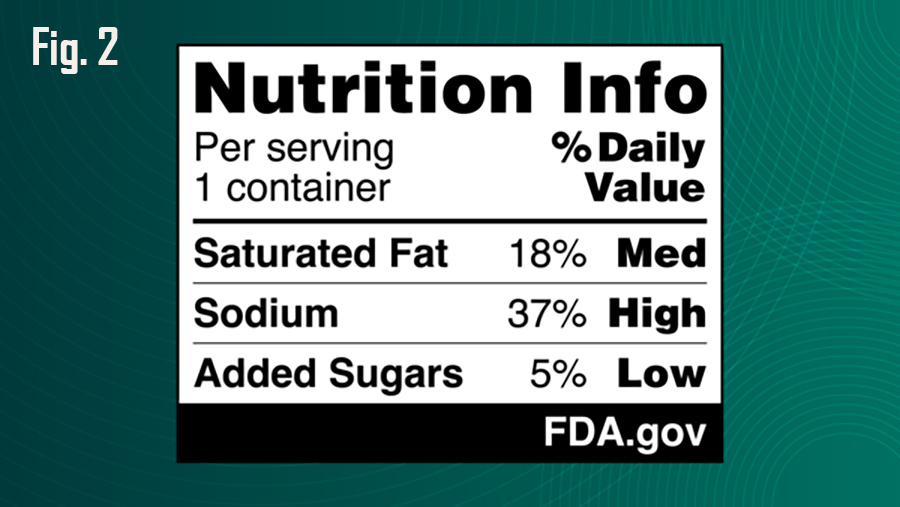
Other market factors may increasingly play a sidebar role. On the demand side, FDA’s new draft rule on Jan. 14 requires front-of-package labeling (Fig. 2 example above), which in addition to listing grams of saturated fat and percent of total recommended daily value, will now use a rating system to mark the saturated fat content of foods and beverages as high, medium, or low as the outgoing Administration attempts to further push consumers into the low-fat Dietary Guidelines regime.

Despite the noise around low-fat and anti-animal, USDA reports strong demand for real beef and dairy, with whole milk the top volume growth category in the fluid milk market.

FDA also issued new draft guidance on Jan. 14 for ‘best practices’ in naming and labeling of fake plant-based foods that are marketed and sold as alternatives for animal-derived foods. This guidance applies to fake meat, eggs, seafood, and dairy products, but does not include the labeling of fake beverage milk. FDA reminded the trade of its 2023 draft rule for plant-based fake milk.
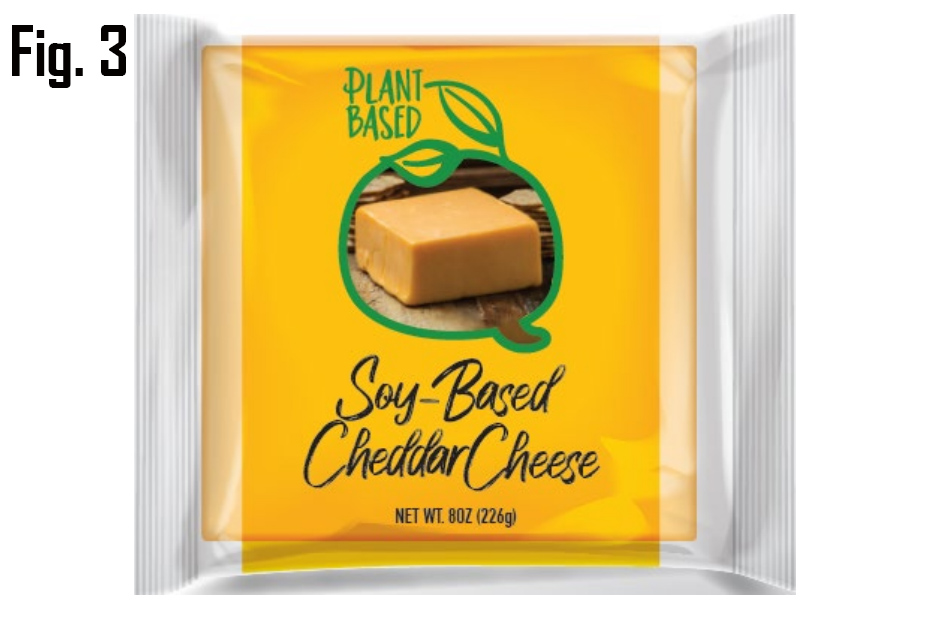
his follows the same pattern as the previous fake milk guidance – recommending that the plant-based food be “qualified by type of plant source” when using the name of a standardized animal product such as cheese or beef. (Fig. 3 above)

This is how FDA has treated fake milk for the past 15 years, by allowing for example, the ‘almond’ qualifier in front of the word ‘milk.’ The FDA’s 2023 guidance on milk, specifically, recommends, but does not require, additional nutrition statements to clarify nutritional differences.

Frankenfoods

Likewise, on the supply side, fake Frankenfood is emerging as FDA continues mulling a draft rule on what to call the products of lab-creation seeking to replace real animal-derived foods.

For dairy, this comes in the form of microbes bioengineered with bovine DNA to excrete fake dairy protein and fat analogs that USDA refers to as “precision fermentation protein products” while lab-created gene-edited cells growing into blobs of fake meat, egg, seafood, even dairy analogs are referred to as “cell-cultured” chicken, seafood, beef, dairy etc.

In late December, the USDA Economic Research Service (ERS) released its first ever report on “The Economics of Cellular Agriculture.” This means the Department has now recognized Frankenfood as part of the Agriculture domain. Yes, we’re talking about fake food from a factory, not a farm.

The 45-page ERS report notes that for 25 years, scientists in the public and private sectors have been “actively researching methods for producing food products that are physically and chemically equivalent to livestock- and poultry-produced foods (i.e., meat, dairy, eggs) but that minimally rely (if at all) on animals.”

By 2023, more than 200 private firms existed worldwide, and cumulative invested capital in the cell-culture and precision fermentation industries exceeded $5 billion. As of 2024, more than 100 patents have been filed. U.S. food agencies (FDA, USDA and FSIS) have been developing regulatory frameworks to accommodate and ensure the safety of these products, according to the report.

To-date cell-cultured fake chicken meat has been commercialized in Singapore and the U.S., largely through unique restaurant chains. This led to states like Florida banning the stuff.

Meanwhile, “precision fermentation-derived fake dairy protein analogs have been commer­cially available more broadly,” according to the ERS report.

These Frankenfoods tout smaller carbon footprints, less land and water usage, but ERS authors observe that, “Open questions remain concerning the design of bioreactors and important elements of the production process, including cell source, growth medium, and energy requirements, as well as the optimal size and configuration of production-processing plants.”

The report states so-called “precision-fermented dairy products are already on the market in the U.S., and, like their plant-based counterparts, sell for a premium over animal-based. For example, the company Perfect Day partners with other companies that sell products like ice cream and milk featuring their precision fermen­tation animal-free whey protein.”

In this way the fake dairy protein analogs are marketed as an ingredient in a business-to-business vs. business-to-consumer model. 

According to the ERS, precision fermented protein products (fake dairy analogs) are increasingly available in U.S. markets, while cell-cultured products (fake meat and seafood analogs) are not.

Short run profitability, according to ERS, will rely on consumer willingness to pay for these products with current consumer attitudes described as “mixed.” But the labeling guidance remains unclear as the fake dairy protein analogs are actually the harvested excrement of the bioengineered microbes, not the DNA-altered microbes themselves. Consumers need to know what they are buying.

The ERS report also states that despite some of these companies and investors releasing bold lifecycle ecosystem claims, the “environmental impacts are largely unknown.”

Part III in a future Farmshine will look at the yearend reports due later this month.

-30-

Danone’s sale of Horizon Organic fulfills transition to fake-milk brands

New owner is global giant with $47 billion portfolio

By Sherry Bunting, Farmshine, Jan. 5, 2024

PARIS — On the first day of 2024, another brand of fluid milk was sold to a private equity firm. 

This time was no surprise: Paris, France-based Danone announced on Jan.1st its agreement to sell organic dairy businesses, including flagship Horizon Organic, to Platinum Equity, based in Los Angeles, California.

The sale is said to be part of the Renew Danone Strategy announced in March 2022 and is mentioned in Danone’s 2023 Climate Transition Plan. 

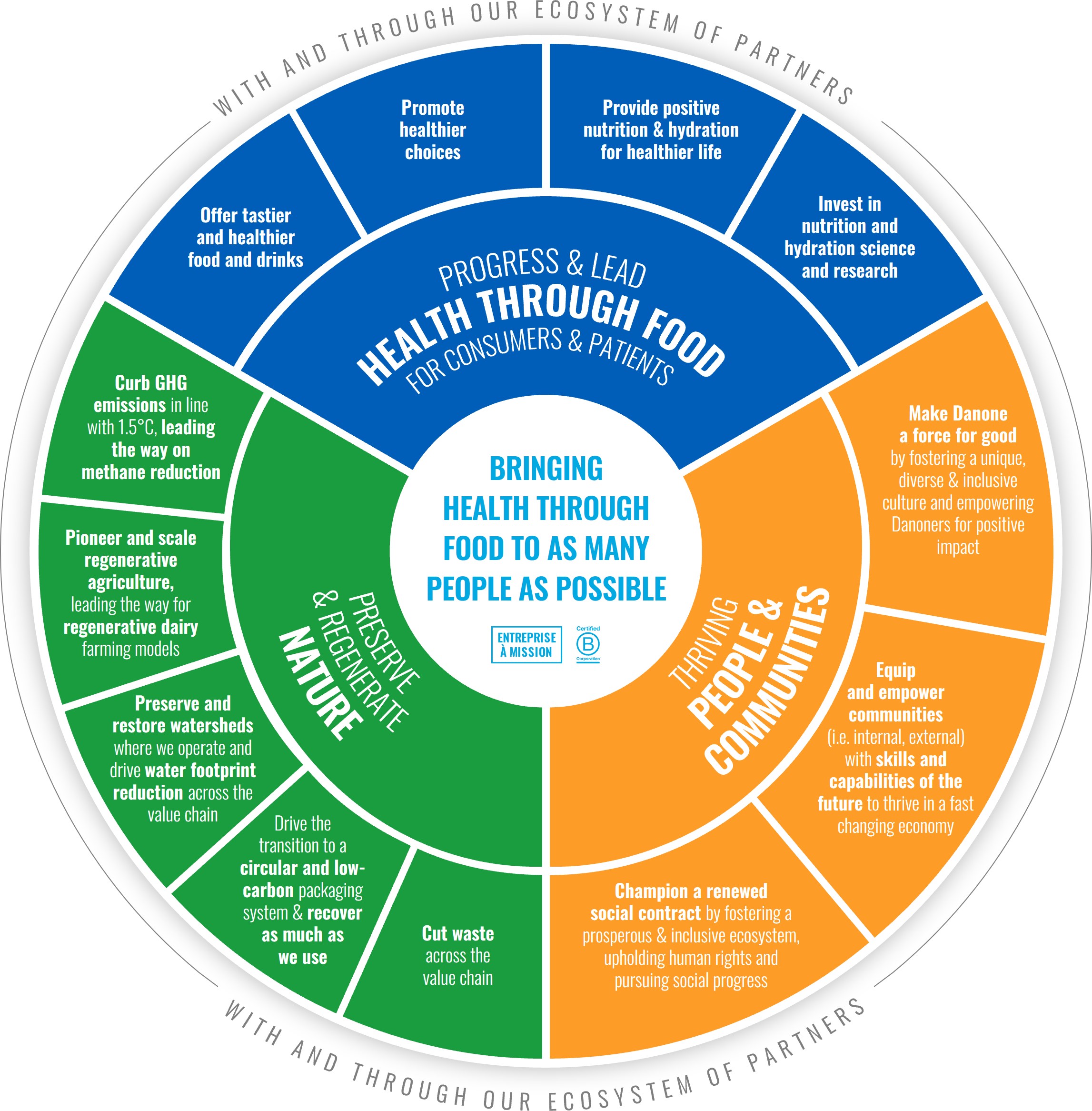
Danone graphs its “Impact Journey” this way in its 2023 “Climate Transition Plan,” which includes reducing methane emissions by 30% by 2030, aligning with the Global Methane Pledge, and achieving Net-Zero emissions by 2050 as the global giant says it will “continue to transform the food system.”  (Web image from Danone Climate Transition Plan)

The company reported its organic dairy sector represented approximately 3% of its global revenues in 2022 and had a “dilutive impact” on sales growth and operating margin.

But mainly, said CEO Antoine de Saint-Affrique, the organic dairy business “fell outside our priority growth areas of focus,” he said, reiterating his very words to investors a year ago when he first announced “eyeing sale” of Horizon Organic and Wallaby.

Terms of sale were not disclosed, but Danone will retain a non-consolidated minority stake in the business, executives said. The closing of the transaction is subject to customary conditions and regulatory approvals.

“Today marks an important milestone in delivering this (Renew Danone) commitment while giving the Horizon Organic and Wallaby businesses the opportunity to thrive under new leadership. This sale, once completed, will allow us to concentrate further on our current portfolio of strong, health-focused brands and reinvest in our growth priorities,” said de Saint-Affrique.

According to Platinum Equity’s New Year’s Day announcement of the acquisition, Horizon Organic is deemed the largest organic fluid milk company in the world and the first brand of organic milk available coast to coast in the United States. It has since grown to include organic creamers, yogurt, cheese and butter.

Platinum Equity Co-President Louis Samson said the acquisition will “build on that legacy and support Horizon Organic’s growth as a standalone company.”

Horizon Organic became the first public organic food company in 1994 and was purchased by Dean Foods in 2004, where it became part of WhiteWave holdings alongside International Delight, Silk and other fake-milk brands. A 2012 spin-off separated WhiteWave from Dean, taking former Dean CEO Gregg Engles with it as the WhiteWave CEO. In April of 2017, Danone purchased WhiteWave, and Engles continued as a current Danone S.A. board member.

Wallaby is an Australian-style organic yogurt found mostly in natural food stores as well as the Whole Foods chain throughout the U.S.

Platinum Equity estimates that the total U.S. dairy category is valued at $68 billion in sales with fluid milk comprising approximately $17 billion of that total. Of that $17 billion in packaged fluid milk sales, organic milk sales comprised 6.7% of the  volume for the first 10 months of 2023, according to the most recent USDA Monthly Packaged Fluid Milk Sales Report.

Meanwhile, Danone has launched full-force into expanding the fake side of its 2017 WhiteWave purchase, adding products and launching new brands of plant-based and AI-engineered biological concoctions of fake-milk, fake-yogurt, fake-cheese, and other fake-dairy products in its quest for so-called “Climate Transition” and “Food Transformation.”

The sale of Horizon to a global private equity firm that specializes in mergers and acquisitions also comes on the heels of Danone’s December 2021 decision to end contracts with all of its New England and eastern New York dairy farms after sourcing milk from larger organic farms to the west and south.

After the sale of Horizon Organic is completed, Danone will be able to completely withdraw from Federal Milk Marketing Orders (FMMO) to do Cost Performance Model (CPM) pricing with a much smaller number of dairy farms, just like with other ingredient sources. Only Class I fluid milk sales are required to participate in FMMOs, and the sale of Horizon Organic to Platinum Equity ends Class I milk sales for Danone because the rest of their former WhiteWave beverage holdings are plant-based.

While Danone moves on to grow its fake-dairy business, owning the largest plant-based manufacturing facility in the world located in northern Pennsylvania and launching new plant-based alternatives to disrupt the dairy case, the Managing Director of Horizon Organic’s new owner, Adam Cooper, sees organic and value-added products as the “premium offerings” that are “driving growth in the dairy milk category.

“Horizon Organic is a pioneer of that segment and is in position to continue capitalizing on and accelerating the trend,” said Cooper.

Platinum Equity has completed more than 450 acquisitions over the past 28 years, and today operates about 50 global businesses that have been shaken loose from larger corporate entities. The global firm’s current $47 billion portfolio includes a few other companies in the food and beverage sector, such as biscuits, wine, seafood, packaged meat and bakery products, and food ingredients distribution.

“We are excited about Horizon Organic’s potential as an independent business with a renewed sense of focus and a commitment to investing in its success,” said Cooper. “We look forward to partnering with Horizon Organic’s management team to ensure a seamless transition and chart a path for continued growth and expansion.”

Already deemed a “component stock of leading sustainability indexes,” Danone’s ambitions are entrenched with ESG investors, the Global Methane Pledge, Climate Transition, Food Transformation and aspirations to be the publicly-traded global company that is B-Corp certified at the global level in 2025. (Danone is already B-Corp certified in the U.S.)

Over the past seven years, Danone North America has moved toward branding its ‘sustainability’ as increasingly plant-based.

In 2022, Danone North America received a $70 million USDA Climate-Smart grant, which the company says will be used to: 1) reduce methane emissions for dairy through innovative manure management, 2) create infrastructure to sustainably grow and trace U.S. food-grade oats and soybeans, and 3) build processing for traceable organic soy.

During the White House Conference on Hunger, Nutrition and Health in September 2022, Danone announced a $22 million investment by 2030 to improve access to, and availability of, “nutritious and health-promoting foods,” the bulk of these funds will be used to “educate consumers and healthcare providers” (aka, marketing).

Shortly thereafter, the FDA Milk Labeling Proposed Rule hit the Federal Register for comment requiring only voluntary compliance for nutrition comparisons on labels of fake-milk using the term ‘milk.’ This rule has not been finalized as FDA continues to look the other way when it comes to milk and dairy label standards of identity abuses.

(Rest assured, Danone’s big goal is to become ‘net zero’ by 2050 by transforming food. Sound familiar?)

DANONE FOOD TRANSFORMATION TIMELINE

July 2016, Danone launched the Dannon Pledge for non-GMO verified, positioning its conventional milk supply around a concept of ‘almost-organic.’

Apr. 2017, Danone purchased the Dean WhiteWave spinoff, which included Horizon Organic and Silk, So Delicious, and Alpro plant-based brands. The DOJ Antitrust Division required Danone to simultaneously divest its Stonyfield Farms subsidiary.

Apr. 2018, Danone quietly notified smaller Horizon Organic dairy farms in the western states that their future contracts would not be renewed amid a glut of organic milk and differences in how USDA’s organic livestock origin rules were being applied. Some of these producers were offered conventional non-GMO milk contracts using Danone’s proprietary Cost Performance Model (CPM). Some found other markets, and many exited the business. According to Danone’s 2021 Regenerative Agriculture Report, more than half of all U.S. milk collected by Danone now comes from farms with CPM contracts. 

Feb. 2019Danone completed construction of the world’s largest plant-based yogurt factory in Dubois, Pennsylvania, where other non-dairy lookalike products are also made.

Feb. 2020, Danone told investors the rising global temperature is a business opportunity, and the company would accelerate food transformation with climate at the core of its growth strategy.

Oct. 2020, Danone announced its partnership with a bioscience startup to use artificial intelligence to explore new formulations to improve taste and texture of plant-based dairy alternatives.

Jan. 2021, Danone’s So Delicious launched its first plant-based cheese and Danone S.A. was acknowledged as the largest plant-based company in the world with 10% of total sales coming from plant-based dairy alternatives. The company told investors it would grow this with further acquisitions and a “plant-based acceleration unit.”

Apr. 2021, Danone and the EAT Lancet Commission announced a strategic partnership to promote a so-called “healthier and more sustainable food system by driving a change to planetary diets.” Danone pledged to use its ‘One Planet. One Health’ framework to “accelerate this food revolution.”

July 2021, Danone announced three new plant-based fake-milk launches for 2022, along with a list of other lookalikes. During the July 2021 earnings call, Danone executives identified the U.S. as a “key plant-based market,” but noted 60% of U.S. consumers are not in the category because of product taste and texture. They announced a plan to win them over “with new dairy-like technology under Silk NextMilk, under So Delicious Wondermilk and under Alpro Not Milk.”

Aug. 2021, Danone sent letters notifying all 89 of its organic dairy farms in New England and eastern New York that their milk contracts would be terminated in 12 months’ time. Later, under pressure from organic groups, officials and consumers, Danone agreed to a Feb. 2023 extension.

Jan. 2022, Danone launched the three new fake-milks: NextMilk, Wondermilk, and Not Milk. 

(Interestingly, the Silk NextMilk Whole Fat has 6 grams of saturated fat from processed coconut and seed oils. That’s more saturated fat per serving than Real Whole Dairy Milk naturally from cows. Danone’s Silk NextMilk is packaged in red and white cartons with the words ‘Whole Fat’ appearing directly under the brand name to mimic the Whole Milk appearance. Interestingly, the FDA’s proposed healthy labeling rule sets a tougher threshold for saturated fat in dairy products compared to saturated fats from plant-sources.)

Mar. 2022, Danone described its Horizon Organic and “traditional dairy” holdings as “troubled offerings,” telling investors: “There are no sacred cows,” as they “keep pruning” the portfolio to “boost growth” and “distance” the company from “underperformance”… by investing more in “winning products” and selling existing brands or buying new ones.

May 2022, Danone launched its “Dairy & Plants Blend” baby formula (60% plant-based, 40% dairy) “to expose children to food tastes early in life that can help shape their future food preferences… while shifting toward plant-rich diets and embracing alternative sources of protein to help reduce carbon emissions.”

Sept. 2022, Danone joined the White House Conference on Hunger, Nutrition, and Health to announce a $22 million ‘nutrition and health’ investment by 2030 with $15 of the $22 mil. Earmarked “to further nutrition education for consumers and healthcare providers.” (Sounds like marketing). This includes Danone’s new pledge to increase the nutrient density of its plant-based beverages.

Sept. 2022 — Danone was part of a team that was awarded a $70 million USDA Climate Smart grant for projects that include: 1) Reducing methane emissions for dairy through innovative manure management, 2) Creating the infrastructure to sustainably grow and trace U.S. food-grade oats and soybeans, 3) Building processing for traceable organic soy.

Oct. 2022, Danone announced it would use artificial intelligence through its bioscience partner BrightSeed, to reformulate over 70% of its plant-based fake-milk alternatives to reduce added sugars and increase nutrient density. At the same time, it allocated $15 million to “partner with retailers on healthy eating education” and $7 million to partner with community-based programs that provide nutritious foods.

(Timing is everything: Danone is among the financial supporters of the infamous Tufts University Food Compass, launched recently into the federal nutrition policy arena through the Biden-Harris Hunger, Health and Nutrition Strategy and the FDA proposed rule on  “healthy labeling.” The Food Compass nutrition profiling algorithm rates nonfat dairy yogurt high as an encouraged food, along with plant-based fake-milks; but real milk and cheese are rated lower as foods to moderate or discourage. More artificial intelligence, to be sure.)

Jan. 2023, Danone announced it was looking for a buyer for Horizon Organic, saying it fell outside of their growth areas of focus.

Feb. 2023, Contract extensions ended for terminated Horizon Organic dairy farms in the Northeast. Some have gone out of business. Others have gone to Stonyfield or Organic Valley, which eventually agreed to take on the remaining Northeast farms facing Horizon termination, along with 40 organic dairies cut last year by Maple Hill in New York.

Mar. 2023, Danone launched a fake-milk-mustache campaign for its Silk NextMilk brand using children, nieces, and nephews of three original real-milk-mustache celebrities to twist the knife.

Apr. 2023, Danone launched an organic alternative beverage: ‘So Delicious Organic Oatmilk’ in ‘original’ and ‘extra creamy.’

May 2023, Danone launched So Delicious Dairy-Free Yogurt

Jan. 2024, Danone announced its agreement to sell organic dairy businesses — Horizon Organic fluid milk and Wallaby yogurt to Platinum Equity.

-30-

FOOD FIGHT: USDA, Scholastic join billionaire-invested brand-marketing of ‘fakes’ in school meals, curriculum

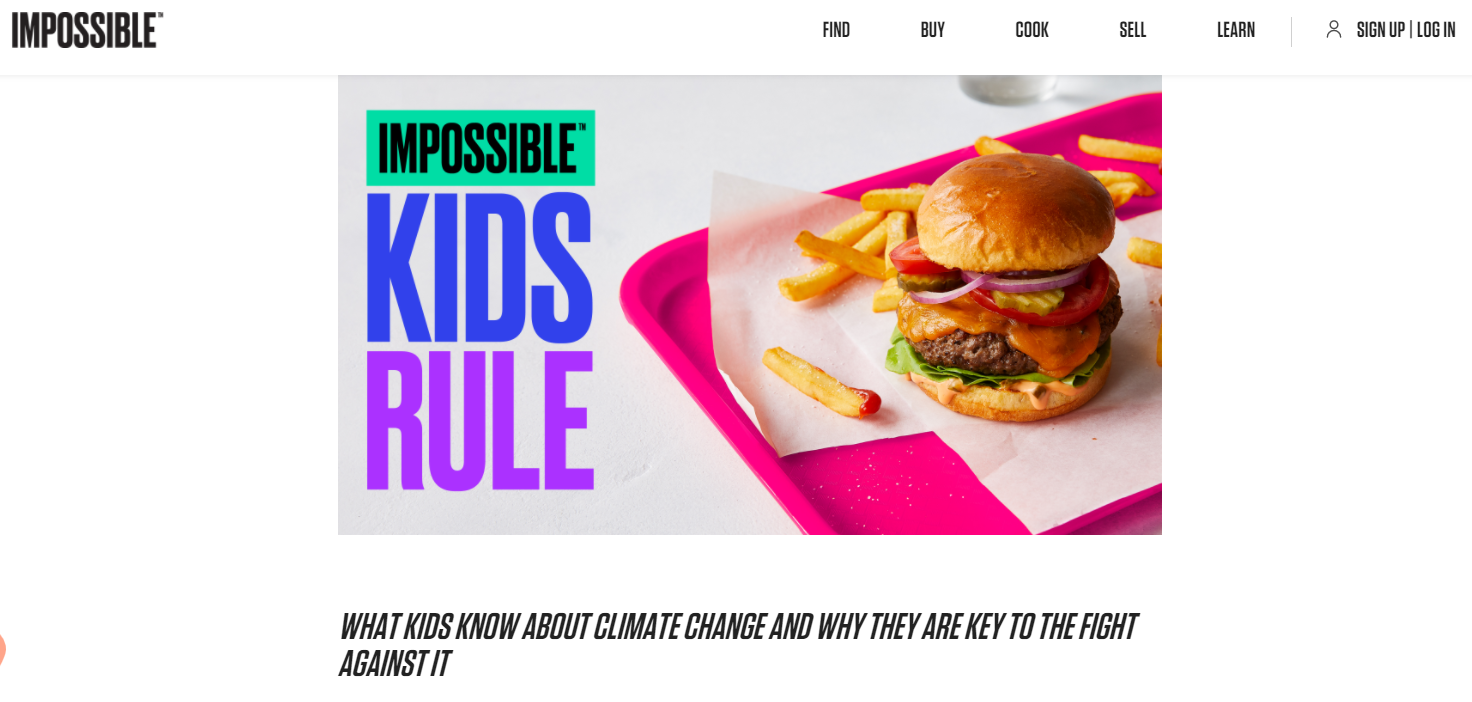
The cover story of a recent Junior Scholastic Weekly Reader — the social studies magazine for elementary school students — was dated for school distribution May 11, 2021, the same week USDA approved a Child Nutrition Label for Impossible Burger and released its Impossible Kids Rule report. This label approval now allows the fake burger to be served in place of ground beef in school meals and be eligible for taxpayer-funded reimbursement. Meanwhile, Scholastic Weekly Reader and other school ‘curricula’ pave the marketing runway with stories incorrectly deeming cows as water-pigs, land-hogs, and huge greenhouse gas emitters, without giving the context of true environmental science.

Is USDA complicit? Or ring-leader? One Senator objects

By Sherry Bunting

WASHINGTON – It’s appalling. Bad enough that the brand of fake meat that has set a goal to end animal agriculture has been approved for school menus, fake facts (brand marketing) about cows and climate are making their way to school curriculum as well. The new climate-brand edu-marketing, and USDA has joined the show.

“Schools not only play a role in shaping children’s dietary patterns, they play an important role in providing early education about climate change and its root causes,” said Impossible Foods CEO Pat Brown in a May 11 statement after Impossible Meats received the coveted USDA Child Nutrition Label. “We are thrilled to be partnering with K-12 school districts across the country to lower barriers to access our plant-based meat for this change-making generation.”

U.S. Senator Joni Ernst (R-Iowa), who was born and raised on a rural Iowa family farm, has called on U.S. Agriculture Secretary Tom Vilsack to ensure students will continue to have access to healthy meat options at schools. The Senator’s letter to the Secretary asked that USDA keep political statements disincentivizing meat consumption out of our taxpayer-funded school nutrition programs.

Food transformation efforts are ramping up. These are political statements where cows and climate are concerned, not backed by science, but rather marketing campaigns to sell billionaire-invested fake foods designed to replace animals. (World Wildlife Fund, the dairy and beef checkoff sustainability partner, figures into this quite prominently.)

As previously reported in FarmshineImpossible Foods announced on May 11 that it had secured the coveted Child Nutrition Label (CN Label) from the USDA. The food crediting statements provide federal meal guidance to schools across the country. The CN label also makes this imitation meat eligible for national school lunch funding.

“This represents a milestone for entering the K-12 market,” the CEO Brown stated, adding that the use of their fake-burger in schools could translate to “huge environmental savings.” (actually, it’s more accurate to say it will translate to huge cash in billionaire investor pockets.)

Concerned about ‘political statements’ made by USDA and others surrounding the CN label approval — along with past USDA activity on ‘Meatless Mondays’ initiated by Vilsack’s USDA during the Obama-Biden administration —  Sen. Ernst wrote in her letter to now-again current Sec. Vilsack: “School nutrition programs should be exempt from political statements dictating students’ dietary options. Programs like ‘Meatless Monday’ and other efforts to undermine meat as a healthy, safe and environmentally responsible choice hurt our agriculture industry and impact the families, farmers, and ranchers of rural states that feed our nation.”

No public information has been found on how Impossible Foods may or may not have altered its fake-burger for school use. My request for a copy of the Child Nutrition Label from USDA AMS Food Nutrition Services, which granted the label, were met with resistance.

Here is the response to my request from USDA AMS FNS: “This office is responsible for the approval of the CN logo on product packaging. In general, the CN labeling office does not provide copies of product labels. This office usually suggests you contact the manufacturer directly for more information.”

I reached out to Impossible for a copy of the nutrition details for the school product. No response.

It’s obvious the commercial label for Impossible is light years away from meeting three big ‘nutrition’ items regulated by USDA AMS FNS. They are: Saturated Fat, Sodium, and Calories.

As it stands now, the nutrition label at Impossible Foods’ website shows that a 4-oz Impossible Burger contains 8 grams of saturated fat. That’s 3 more grams than an 8-oz cup of Whole Milk, which is forbidden in schools because of its saturated fat content. The Impossible Burger also has more saturated fat than an 85/15 lean/fat 4-oz All Beef Burger (7g).

Sodium of Impossible Burger’s 4-oz patty is 370mg! This compares to an All Beef at 75g and a McDonald’s Quarter-pounder (with condiments) at 210 mg. Whole Milk has 120 mg sodium and is banned from schools.

The Impossible Burger 4-oz. patty also has more calories than an All Beef patty and more calories than an 8 ounce cup of Whole Milk. But there’s the ticket. USDA is hung up on percent of calories from fat. If the meal is predominantly Impossible Burger, then the saturated fat (more grams) become a smaller percent of total calories when the fake burger has way more calories! Clever.

In her letter to Vilsack, Sen. Ernst observes that, “Animal proteins ensure students have a healthy diet that allows them to develop and perform their best in school. Real meat, eggs, and dairy are the best natural sources of high quality, complete protein according to Dr. Ruth MacDonald, chair of the Department of Food Science & Human Nutrition at Iowa State University. Meat, eggs, and dairy provide essential amino acids that are simply not present in plants. They are also natural sources of Vitamin B12, which promotes brain development in children, and zinc, which helps the immune system function properly.”

She’s right. A recent Duke University study goes behind the curtain to show the real nutritional comparisons, the fake stuff is not at all nutritionally equivalent. But USDA will allow our kids to continue to be guinea pigs.

In May, Ernst introduced legislation — called the TASTEE Act — that would prohibit federal agencies from establishing policies that ban serving meat. She’s looking ahead. Sen. Ernst is unfortunately the only sponsor for this under-reported legislation to-date.

Meanwhile, within days of the Impossible CN approval from USDA, school foodservice directors reported being bombarded with messaging from the school nutrition organizations and foodservice companies, especially the big one — Sodexo — urging methods and recipes to reduce their meal-serving carbon footprint by using less beef for environmental reasons, and to begin incorporating the approved Impossible.

The Junior Scholastic Weekly Reader for public school students across the nation — dated May 11, the same day as the USDA CN Label approval for ‘Impossible Burger’ — ran a cover story headlined “This burger could help the planet” followed by these words in smaller type: “Producing beef takes a serious toll on the environment. Could growing meat in a lab be part of the solution?”

The story inside the May 11 scholastic magazine began with the title: “This meat could save the planet” and was illustrated with what looked like a package of ground beef, emblazoned with the words: “Fake Meat.”

Impossible Foods is blunt. They say they are targeting children with school-system science and social studies (marketing disguised as curriculum) — calling the climate knowledge of kids “the missing piece.”

In the company’s “Impossible Kids Rule” report, they identify kids as the target consumer for their products, and how to get them to give up real meat and dairy.

Toward the end of the report is this excerpt:“THE MISSING PIECE: While most kids are aware of climate change, care about the issues, and feel empowered to do something about it, many aren’t fully aware of the key factors contributing to it. In one study, 84% of the surveyed young people agreed they needed more information to prevent climate change. Of the 1,200 kids we surveyed, most are used to eating meat every week—99% of kids eat animal meat at least once a month, and 97% eat meat at least once a week. Without understanding the connection between animal agriculture and climate change, it’s easy to see why there has been so little action historically on their parts. Kids are unlikely to identify animal agriculture as a key climate threat because they often don’t know that it is. Similar to adults, when we asked kids what factors they thought contributed to climate change, raising animals for meat and dairy was at the bottom by nearly 30 points.

After showing the impressionable children Impossible marketing, they saw a big change in those “awareness” percentages and noted that teachers and schools would be the largest influencers to bring “planet and plate” together in the minds of children, concluding the report with these words:

When kids are educated on the connection between plate and planet
and presented with a delicious solution, they’re ready to make a change. And adults might just follow their lead,” the Impossible Kids Rule report said.

USDA is right with them, piloting Impossible Burger at five large schools using the Impossible brand name to replace ground beef with fake meat in spaghetti sauce, tacos and other highlighted meals. This allows brand marketing associated with the name — free advertising to the next generation disguised as “climate friendly” options with marketing messages cleverly disguised as “education.”

In the New York City school system, one of the pilot schools for Impossible, new guidelines are currently being developed to climate-document foods and beverages served in the schools.

Impossible doesn’t have a dairy product yet, but the company says it is working on them.

Impossible’s competitor Beyond Meat is also working on plant-based protein beverages with PepsiCo in the PLANeT Partnership the two companies forged in January 2021. PepsiCo is the largest consumer packaged goods company globally and has its own K-12 Foodservice company distributing “USDA-compliant” beverages, meals and snacks for schools.

How can this brand-marketing in school meals be legal? Dairy farmers pay millions to be in the schools with programs like FUTP60 and are not allowed to “market”. In fact, dairy checkoff leaders recently admitted they have a 12-year “commitment” to USDA to “advance” the low-fat / fat-free Dietary Guidelines in schools, top to bottom, not just the dairy portion.

Pepsico has a long history of meal and beverage brand-linking in schools. Working with Beyond, they will assuredly be next on the Child Nutrition alternative protein label to hit our kids’ USDA-controlled meals.

Like many things that have been evolving incrementally — now kicking into warp speed ahead of the September 2021 United Nations Food System Transformation Summit — the taxpayer-funded school lunch program administrated by USDA is a huge gateway for these companies. Ultimately, will parents and children know what is being consumed or offered? Who will choose? Who will balance the ‘edu-marketing’? Will school boards and foodservice directors eventually even have a choice as huge global companies mix and match proteins and market meal kits that are guaranteed to be USDA-compliant… for climate?

-30-

How did we get here?

OPINION

By Sherry Bunting, Farmshine, Friday, February 15, 2019

It’s like whack-a-mole. So many converging things are happening rapidly related to a ‘herding’ mechanism for the masses in terms of what we will eat in the future. 

Where did it all come from? How did we get here? Why is the science so flawed and against us?

What we see unfold via the EAT Lancet Commission and the Green New Deal over the past few weeks — not to mention the currently ongoing FDA and USDA deliberations on dietary guidelines and labeling for fake dairy and fake meat — has been a disaster gradually in the making. 

The wheels were set in motion 10 years ago, or more, and Dairy Checkoff was at the table in more ways than one.

Trouble is, until now, no one really knew about the seat at the table, the foundations, pre-competitive environments, memorandums of understanding and so forth. 

The connections, directions and alliances were unclear and clothed in happy talk about breakfast carts that put a half-pint of milk on every plate and maybe some fat-free yogurt and skim-processed cheese, excited talk about helping kids move more to lose weight, enthusiasm about putting farmers face-to-face with school children to teach them how they care for cows and environment (we all know that there are plenty of these efforts paid for by voluntary organizations and farmers themselves, FUTP60 can’t claim the ground on this part). 

What we did not see, due to lack of transparency, was the deeper layers of direction where dairy farmers have, in a sense, been funding their own demise.

This is not meant to attack people in the checkoff system working with good intention on behalf of dairy farmers or our nation’s young people. This series of articles I have been involved in has been a peeling of an onion that should have been diced on the table to pass the sniff test from the beginning — but it was not.

In part one of the GENYOUth series in January, we showed the steep nosedive in fluid milk sales from 2010 to the present. There is no shortage of experts who now point to the school milk changes as precipitating this decline and in fact costing dairy farmers a whole generation of beverage decision-makers who have and are now graduated into the New World Order on “healthy diets for a healthy planet” — despite the lack of rigorous science to support either in terms of milk and meat production.

There was no transparency in which primary dairy checkoff stakeholders could question the direction as the track was greased for where we are today. 

There was no transparency about alliances developed over the past 10 years — never mind the rather small detail of who paid whom for what and how many football players showed up to christen a school’s new breakfast cart. The IRS 990 figures reported in parts three and four of the GENYOUth series pale in comparison to the lack of transparency in Dairy Checkoff’s role as a participant educating and leading a whole generation of consumers, tied by an MOU to tote the government’s diet message.

There are two crossroads in front of us, and our dairy cows are standing in that intersection — mooing loudly for assistance, I might add.

Dairy Checkoff has taken the dairy industry down both roads — diet and sustainability — without transparency to its funding dairy farmers. 

Now, today, these two roads are converging at regulatory, legislative, corporate, media and cow-less protein innovation levels.

And the industry is splintering over what to do about it.

This conversation is at least 10 years past-due, and it is why farmers are fragmented, why they can’t come together.

You see, the template for the future is written for some, not all. 

It is written to be complicit in dietary goals that are not supported by rigorous science for our human health or our planetary health. 

It has been written, in part, with money taken mandatorily under USDA oversight from dairy farmers of all types and sizes to streamline “U.S. Dairy” into the New World Order of food choices that are on the cusp of substantial change with Silicon Valley in the picture with its billionaire-funded cell and yeast cultured startup companies needing this propaganda to launch their cattle-less dairy and beef protein. 

The FDA and USDA are poised to decide (and in the case of some labeling have already decided) how and IF consumers are going to be informed about what they are eating in the future.

As the deeper layers of the past 10 years of GENYOUth and Innovation Center for U.S. Dairy are revealed — with their separate memorandums of understanding (MOU’s) signed with USDA during the Obama/Vilsack era, and in ‘pre-competitive’ alliances with the world’s largest food and agriculture supply-chain companies — anyone publicly revealing or questioning the direction of checkoff on this road, is now cast as a character of division, a spoiler of profitability, a misinformed stakeholder reading the writings of a ‘yellow’ journalist.

In fact, DMI has created a secret facebook group for discussion of Dairy Checkoff questions and concerns. Participation is by invitation. Checkoff staff — hired by all dairy farmers through their mandatory checkoff dollars — are the gatekeepers, deciding who can join the group-think.

To understand where this is all leading, the crossover alliances between GENYOUth and the EAT Lancet Commission are known. (See related story here).

Dairy Checkoff is smack dab in the middle and has been for some time. That’s where you want to be if you want to influence a debate. But thus far, the direction of influence is questionable, naive and opaque at best, and has at worst created winners and losers among our nation’s dairy farmers, individually and regionally.

The global agenda unfolding right now has been years in the making. The deeper layers of the work at that table where Dairy Checkoff has had a seat — and its impact on the dairy farmers who collectively funded that seat — has been quietly pursued… until now.

Consumers have been telling us what they want: simple, flavorful, natural, real food. That’s what dairy and livestock producers do best!

But instead of marketing to that desire, instead of bolstering our consumer ranks by feeding that desire, the industry and checkoff have aligned us with government and corporate and special interests who want to shape and restrain those choices for future generations, by using our children as change agents for an agenda that has not been transparent, nor adequately discussed, by its funding stakeholders… until now.

Now, the global agenda has hit play in the public domain, and many of us are trying to find the rewind button.

Stay tuned. We’re not done.

-30-