House Ag Chair and new Ranking Member share bipartisan priorities at Farm Show listening session

Whole milk, new farm bill top their bipartisan to-do list

By Sherry Bunting, Farmshine, Jan. 17, 2025

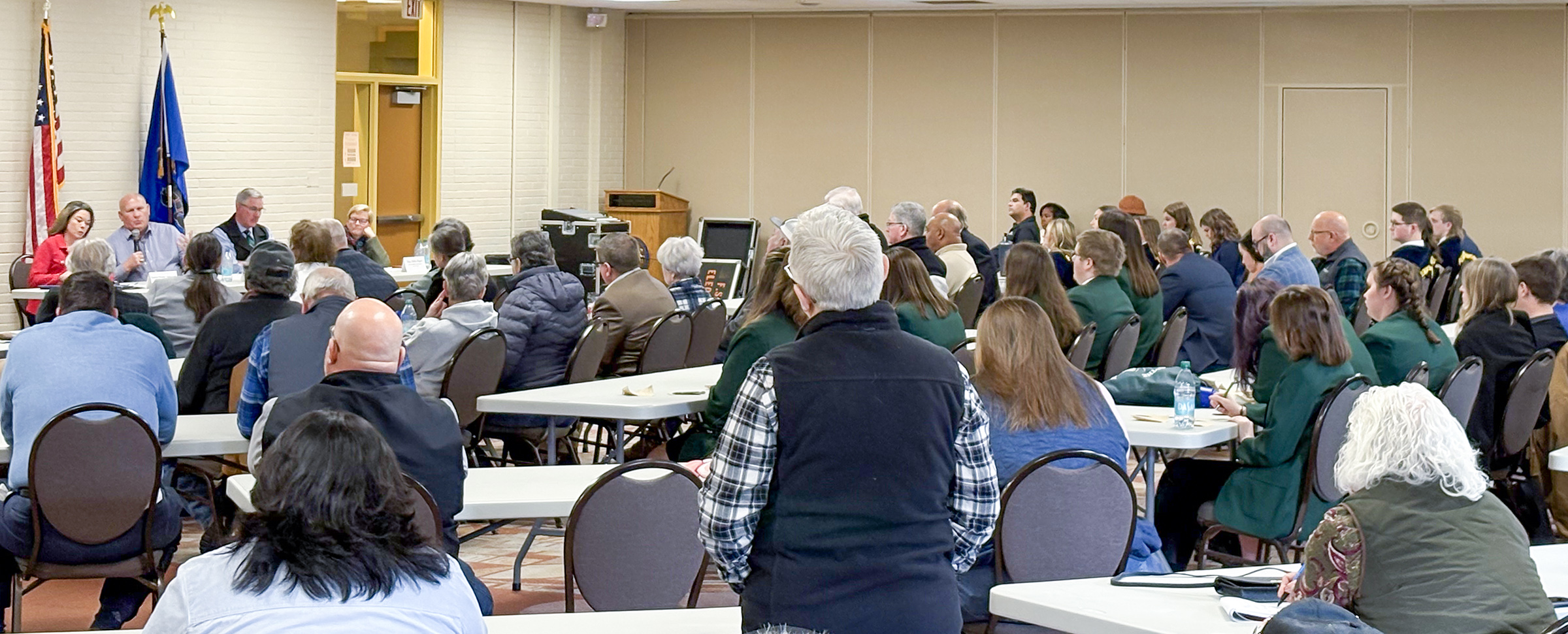
HARRISBURG, Pa. – Bipartisan priorities were evident — especially on getting whole milk back in schools and completing a new farm bill — during Rep. Glenn ‘GT’ Thompson’s annual listening session on opening day of the Pennsylvania Farm Show Jan. 4th in Harrisburg.

With a thin Republican House majority, Thompson, who represents the largely rural 15th district of north central Pennsylvania, will continue as Chairman of the Ag Committee. 
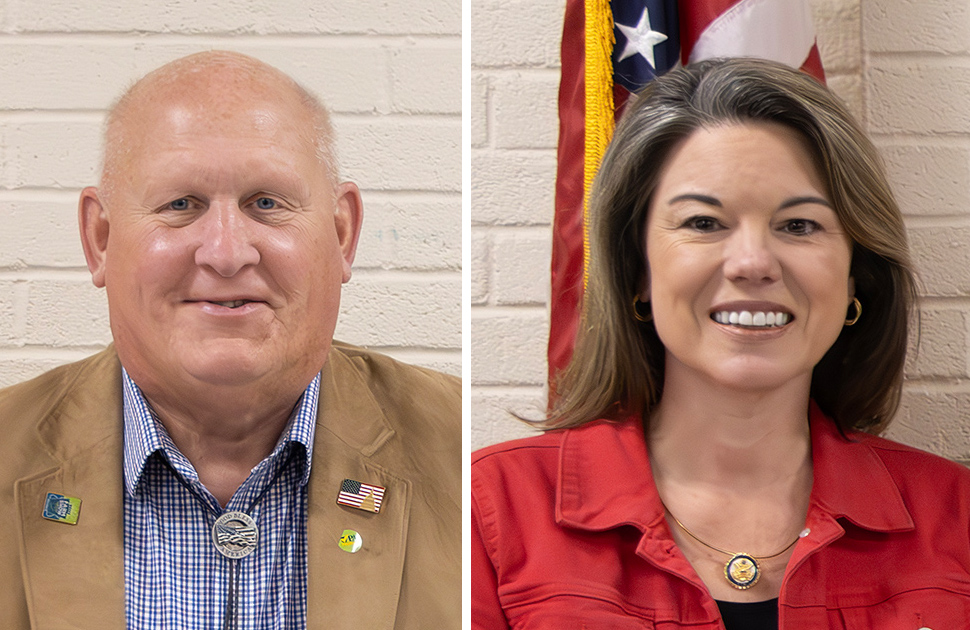
He introduced the more than 100 attendees to the Ag Committee’s new top Democrat, Ranking Member Angie Craig, who represents the mostly rural 2nd district of southeast Minnesota.

They were joined by Ag Committee and Ag Appropriations Committee member, Rep. Chellie Pingree, representing the 1st district of Maine, and by Pennsylvania Secretary of Agriculture Russell Redding.

Whole milk

“We got really close to getting this done,” said Thompson about his Whole Milk for Healthy Kids Act after Berks County dairy farmer Nelson Troutman with the Grassroots Pennsylvania Dairy Advisory Committee asked: What’s next for the bill in the new 2025-26 Congress?

“We have to start over, but there is a lot more support this time,” Thompson replied. He doesn’t see any obstacles on the House side after overwhelming bipartisan support in the 2023 floor vote.

He expects the bill to move quickly through the Education and Workforce Committee under its new Chairman Tim Walberg (R-Mich.), a whole milk bill cosponsor. Then Thompson will work with House leadership to get it on the calendar for a 2025 vote.

He said the Senate side also looks “very promising” as Sen. John Boozman (R-Ark), a supporter of the bill, replaces former Ag Committee Chair Debbie Stabenow (D-Mich.) who had blocked it.

Craig gave further assurance. She and the new Ag Committee Ranking Member on the Senate side, Amy Klobuchar (D-Minn.), are working together on this. “We do not see what we saw last time on the Democratic side to get this done for GT,” said Craig.

Both are Democrats from Minnesota who previously cosponsored the bill – Craig on the House side, Klobuchar on the Senate side.

Thompson credited the education and leadership of the Grassroots Pennsylvania Dairy Advisory Committee and 97 Milk in raising awareness and support. “The grassroots effort also helped improve the bill by suggesting language that makes sure the calories don’t count toward the fat in the school meal,” he said.

Pingree is also a big supporter of whole milk in schools. She was “amazed” to see all the Drink Whole Milk signs, banners, and painted bales while visiting her brother-in-law in Lancaster County, Pennsylvania. 

“I don’t know too many states where you see something this interesting while you’re driving down the road. It’s pretty impressive. It has spread far and wide,” she noted.
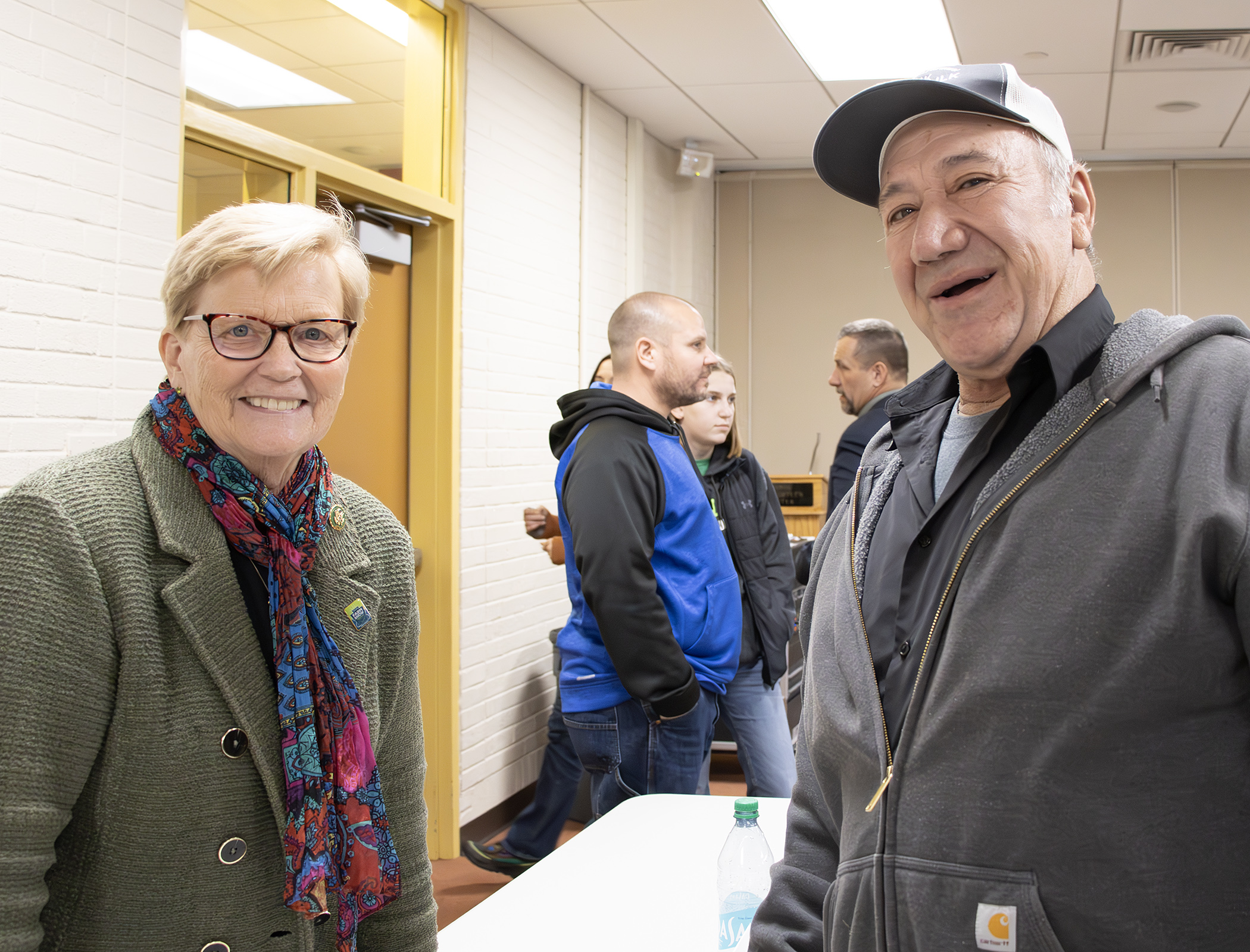
Congresswoman Chellie Pingree (D-Maine) was “impressed” by the Drink Whole Milk signs along roadsides when she spent time in Lancaster County, Pennsylvania. That was music to the ears of Berks County dairy farmer Nelson Troutman with the Grassroots Pennsylvania Dairy Advisory Committee. His original painted round bales in December 2018 motivated the launch of the 97 Milk education movement in February 2019. It is run by volunteers and donations at 97milk.com

ESL milk

Troutman asked if the bill could address extended shelf life (ESL) milk in schools. He is concerned about taste and acceptance by students, saying “schools should only be allowed to serve ESL milk if that’s the only option available to them.”

His concern arises from the volume of new plant capacity coming online across the country for ESL and aseptic shelf-stable milk packaging, along with new Federal Milk Marketing Order formulas that will price Class I milk differently based on shelf life. This creates potential competitive issues, especially in Pennsylvania, for bottlers of conventionally pasteurized milk that tends to be more local vying for school contracts with ESL milk coming from potentially more distant locations.

Farm-to-School

State lawmakers and young people in attendance voiced further concerns about the quality of school meals and the practice of schools shipping-in prepackaged meals prepared out-of-state, leaving Pennsylvania agriculture out of the loop. 

They requested incentives for local farm-to-school food programs. Frank Stoltzfus, a 9th generation farmer from Lancaster County pointed to the PA Beef to PA Schools program as a successful example.

These discussions come under the jurisdiction of the House Education and Workforce Committee and its “long overdue overhaul,” said Thompson: “The Childhood Nutrition Reauthorization is where we reform and refine to update school meals. I’ll be encouraging Chairman Walberg that we do that reauthorization, and this (ESL question) is something we can certainly take a look at.”

Pingree noted “some farm bill funding also goes to school meals, and we can put more into resupplying kitchens for on-site meal prep and local procurement.”

Nutrition overhaul

The last time Congress did a Childhood Nutrition Reauthorization was in 2010, when it tied school meals more strictly to the Dietary Guidelines for Americans (DGAs).

“When it comes to nutrition, if kids won’t eat it, then it’s not nutritional, and we are seeing a lot of waste today,” Thompson observed.

On that score, he pointed to “good reforms” to the Dietary Guidelines process that will again be part of the markup of the farm bill to “take some of the food politics out of the process coming from the so-called ‘experts.’ We want science-based not agenda-based guidelines.”

Farm bill

Asked about a timeline for the new farm bill, Thompson was optimistic. New committees are still being populated, and new members will need some farm bill education.

“But I would love to see this farm bill go to committee markup in the first quarter of this year — that is my goal – and then see it move quickly to the floor,” he said in a Farmshine interview after the event. “We will continue to do listening sessions, but I want to move ahead. We’ve had great input from all across the country, but I do think it’s important that we keep listening and touching base.”

Both he and Craig shared concerns about nosediving grain prices and net farm income. They differed on what constitutes cuts vs. cost-control on the Supplemental Nutrition Assistance Program (SNAP) that makes up the bulk of the now over $1 trillion farm bill. They both want the Inflation Reduction Act (IRA) funds pulled into the conservation title and baseline, but they differ on removing the IRA’s climate mandates for these funds.

Thompson warned about competition from conservatives who are interested in using these funds as ‘pay-fors’ on tax policy, which he said Ag Committee Republicans would oppose. “I want these IRA funds in this farm bill,” he said.

Craig said the IRA funds best practices like carbon sequestration, and Pingree said she likes the focus on resilience for healthy soils. They pointed to carbon markets that see the value and lauded Sec. Vilsack’s use of $3 billion in CCC funds for pilot projects that will “help give us better metrics.”

While there is general agreement that most practices on farms improve the planet, the question is – how do the things farmers already do get monetized?

“They are not getting enough credit for their ecosystem services — carbon sequestration, air quality, water quality, filtration of rain. Farmers improve our environment just by farming,” said former State Senator Mike Brubaker. “Is there some way for them to get paid?”

SUSTAINS Act

Thompson said the farm bill does not address this specifically, but legislation passed in 2022 includes the SUSTAINS Act, which he described as “providing a framework for private industry to be involved.”

Corporations and foundations can donate funds to USDA for conservation purposes, like improving technical assistance for more farmers to have access to popular programs like EQIP. He cited a “great return on investment” from Chesapeake Bay Foundation initiatives as an example.

But he pushed back on the Ag Secretary’s use of CCC funds for such purposes because administrations come and go, with their own changing priorities.

“Having certainty going forward is incredibly important,” he said. “Sec. Vilsack wanted to do things by regulation and his interpretation of how CCC funds could be used. He should have come to us (Congress), instead.”

Likewise, concerns were voiced about emerging land use policies at local, county, state and federal levels.

Renewable energy

Asked for their views on traditional and alternative energy, a bipartisan preference emerged for balancing affordable and renewable sources with science, technology and innovation as “pathways for solutions.”

“We need ‘all of the above’ because energy will be a mix for a very long time,” said Pingree. “But we have to stay in this (renewable) dialog.”

Thompson said the ultimate destination of the Farm Show butter sculpture — a digester on a Pennsylvania dairy farm — is a good example of renewable energy produced from cow manure and food waste.

Craig said biofuels through E15 standards are vital for corn and soybean farmers in her district of Minnesota, with new biobased aviation fuel standards an exciting opportunity that U.S. farmers should benefit from, not imported corn from Brazil.

“Our farmers have to be at the forefront of it, we have to get this right,” said Craig. “As Ranking Member, I’ve got to manage my caucus just like GT does as Chairman, to work together for the right solutions, which are probably somewhere in the middle.”

Food security

Questions were also raised about invasive species, animal health, and safeguarding the food supply — especially in regard to inspection of border crossings for invasive pests that threaten all types of agriculture and novel cross-species migration of highly pathogenic avian influenza (HPAI H5N1) in poultry and now dairy operations.

“We have to make sure we keep investing in our laboratories, inspections, and research,” said Thompson.

According to Redding, the Pennsylvania Diagnostic Laboratories System (PADLS) was born out of the poultry industry’s first difficult encounter with avian influenza back in the early 1980s. Today PADLS is instrumental as the state is one of the first to enter the mandatory national bulk milk testing strategy, and has established some protocols credited to the poultry industry.

He stressed the importance of cross-species engagement between Pennsylvania’s top two ag sectors of poultry and dairy, where biosecurity is essential.

“We’re at about 100% of milk representing our nearly 5000 dairy farms, and we’ve not found (H5N1) on the third cycle of testing now,” Redding reported. “The difficulty with a national strategy is finding a model that fits the diversity of all the states.”

Craig said HPAI is a big concern for her home state of Minnesota, which is No. 1 in turkey production and No. 7 in dairy.

They look forward to working with the new U.S. Secretary of Agriculture on what the national strategy looks like going forward “without overburdening the farmers.”

-30-
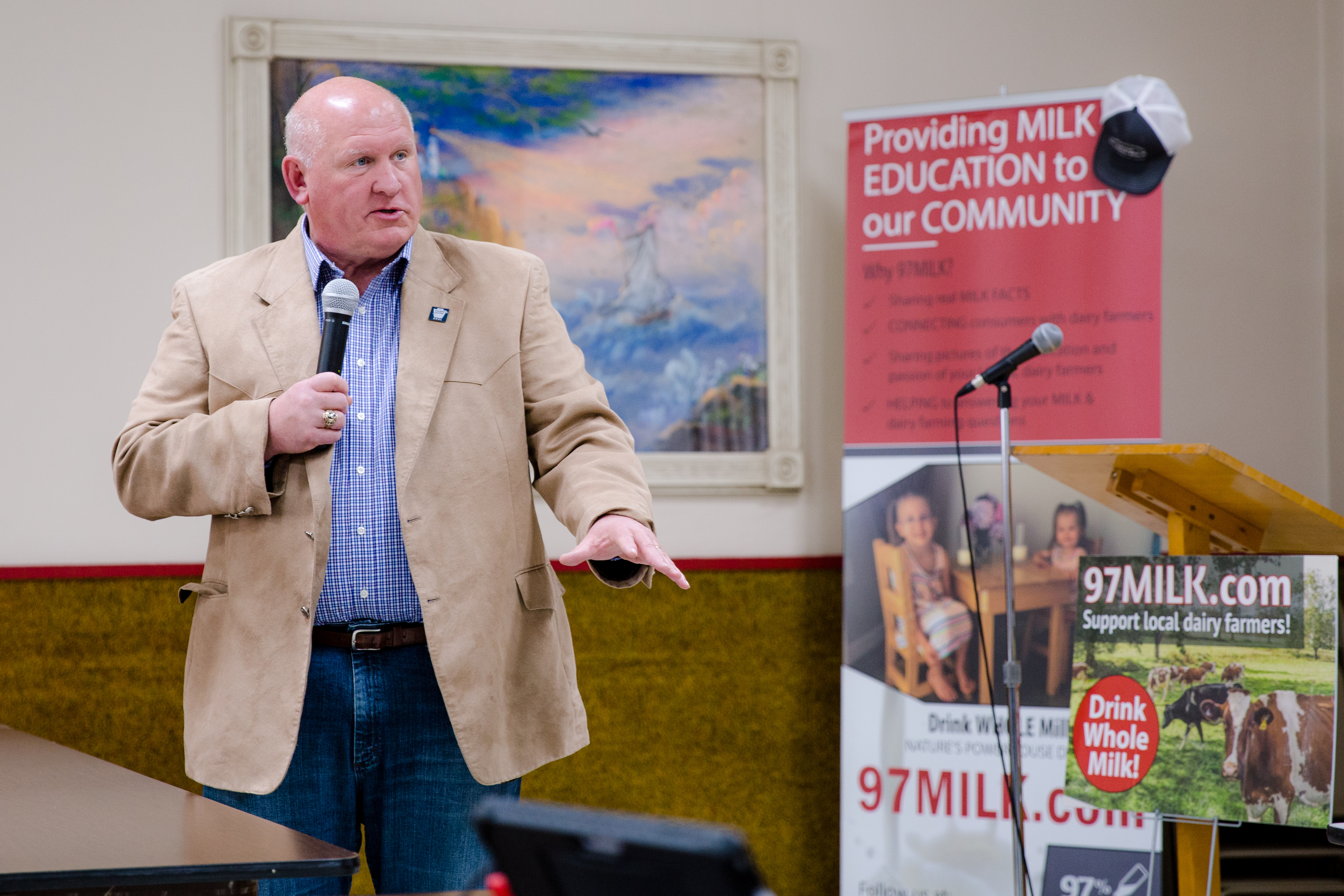
Thompson pushes effective, transformational farm bill. Whole Milk for Healthy Kids Act included!

Representative GT Thompson of Pennsylvania once told a group of farmers gathered for a 97 Milk meeting that he has gone by a lot of titles and been called a lot of things over the years, and while it’s an honor to be the Chairman of the House Agriculture Committee, his favorite title is ‘Representative’ because, he said “that’s what we do. We are representing The People.” True to form, GT led the House 2023-24 farm bill process with representation in mind by making the bipartisan endeavor ‘tripartisan’ — going to great lengths to bring grassroots farmers into the process. One thing he heard repeatedly at the 85 listening sessions in 40 states was ‘bring whole milk choice back to schools,’ even though school meal rules fall under the childhood nutrition reauthorization led by the Education Committee, not the farm bill. But now he’s done that too. Bolstered by the overwhelmingly bipartisan 330 to 99 passage of H.R. 1147 on Dec. 13, 2023, he found a way to make Whole Milk for Healthy Kids part of his proposed farm bill that heads to House Ag Committee markup next week. He says he is intent on getting the whole milk legislation through the Senate blockade and “over the finish line.” File photo by Sherry Bunting

By Sherry Bunting, Farmshine, May 17, 2024

WASHINGTON – House Ag Committee Chairman Glenn ‘GT’ Thompson (R-Pa.) says the bipartisan farm bill has reached a milestone and holds the potential for being transformational.

The chairman’s mark, released ahead of committee markup set for May 23, demonstrates the listening that went on in his busy schedule traveling to 40 states and one territory for 85 listening sessions over the past two years.

“We are hopeful that the House Ag Committee markup of this chairman’s mark legislation helps feed the momentum to get this farm bill done,” said Chairman Thompson in a May 14 Farmshine phone interview.

There are important highlights here, including reforms to the Dietary Guidelines process for greater transparency and accountability with new checks and balances, as well as language to expand the reach, funding and impact of the dairy incentive and school meal programs by including full fat fluid milk, flavored and unflavored, as seen in H.R. 5099 and H.R. 1147 (Whole Milk for Healthy Kids Act).

“I was able to work with Dr. Virginia Foxx (chair of the House Education and Workforce Committee), and they will be providing a waiver after we mark this bill up, so we will be able to include Whole Milk for Healthy Kids in the farm bill,” Thompson shared.

He has previously stressed that, “This is about our kids and the outdated and harmful demonization of milkfat.”

“When we get to conference (with the Senate), it could be an issue, but Whole Milk for Healthy Kids passed the House by a 330 vote. I am intent on getting this provision over the finish line. 

“It may be the most important thing we do out of many things in this farm bill for dairy farmers,” he said.

Other dairy subtitle provisions

The dairy subtitle includes language to return the Class I ‘mover’ price to the ‘higher of’ calculation instead of the ‘average plus 74 cents’ that was implemented in May 2019.

“We obviously recognize that USDA has now gone through an extensive hearing process, and will honor what USDA comes up with, which will supersede what we’re doing,” Thompson reported. “But it was the Ag Committees in the Congress through the 2018 farm bill that eliminated the ‘higher of’ language, which has been followed by significant unanticipated losses.”

Language has also been included to mandate biennial cost of processing surveys. This also appears in the Senate farm bill.

Processors making products used in Federal Milk Marketing Order (FMMO) formulas would participate in processing cost surveys every two years. In addition to reporting costs for those products, the Dairy Pricing Opportunities Act language that is rolled into the farm bill proposal states that the cost and yield information for all products processed in the same facility be included. (Note: This would ensure accurate allocation of plant costs that apply just to the products that are actually used in the FMMO pricing formulas so that the costs to process other value-added products that are not included in FMMO pricing, but are made in the same plant, do not influence future ‘make allowance’ hearings.)

These cost surveys would be published for the purposes of informing the regulatory or administrative (hearing) process for the establishment of pricing rules (such as determining how to use that published information to set ‘make allowance’ levels that are embedded in FMMO pricing formulas).

The dairy subtitle also expands the Dairy Margin Coverage (DMC) tier one cap on annual milk production history from 5 million pounds to 6 million pounds, similar to the Senate bill.

It also includes language for updating DMC production history and provides a 25% discount in premium costs for any producer signing up for all five years of DMC coverage.

“That’s quite a savings,” Thompson observed.

IRA funds included without ‘climate sideboards’

In the Conservation Title, the chairman’s mark brings Inflation Reduction Act (IRA) conservation funds into the farm bill baseline without the ‘climate sideboards’ and arbitrary measures that ride along in the Senate version.

“All conservation programs, as long as they are locally-led and voluntary, contribute to climate and carbon sequestration. What the IRA legislation did is make it overly prescriptive with a lot of practices we know are successful not being eligible for these conservation dollars.

“We believe that the principles of locally-led and voluntary are a huge part of what has made conservation programs so successful. Agriculture sequesters 6.1 gigatons of carbon annually, over 10% more than we emit,” said Thompson.

Timelines matter

There are a couple reasons timelines matter in getting this farm bill done. The IRA funding is one of them.

“Number one is the American farmer is struggling right now. The chairman’s mark, as we prepared it in the House Committee, will be of great service to them as producers of food, and to struggling families as consumers of food, quite frankly,” said Thompson.

“The other reason timelines matter is these IRA dollars. As the Secretary of Agriculture continues to push those dollars forward, the original $19 billion – between what he already spent and what the CBO projects he will not be able to spend – that number is now down to $14 billion,” Thompson explained. “That’s opportunity lost for the future, unless and until we pass and reauthorize the farm bill and roll those dollars into its baseline.”

Thompson continued, explaining that, “Every dollar in IRA conservation funds spent between now and the passage of the farm bill is a dollar lost to the baseline for the future. One of the flaws of the IRA is these conservation dollars expire in 2031. Whatever we bring into the farm bill – into the baseline – is there for perpetuity. It will be there for the 2050 and 2055 farm bills. That’s smart, and it’s good for agriculture and great for conservation.”

The Senate proposal also brings IRA conservation funds into the farm bill baseline, but puts climate requirements on these funds, especially in regard to methane.

Tripartisan effort produces nutrition cost-savings, not cuts

“My chairman’s mark is built on solid tripartisan input from Republicans and Democrats and the hardworking people of American agriculture,” Thompson affirmed. “The Senate proposal is a partisan proposal. They did not bring Senate Republicans to the table.”

In his May 10 open letter, Chairman Thompson stated that his door is always open.

“There exists a few, loud armchair critics that want to divide the Committee and break the process. A farm bill has long been an example of consensus, where both sides must take a step off the soapbox and have tough conversations,” he wrote. “The 2024 farm bill was written for these precarious times and is reflective of the diverse constituency and narrow margins of the 118th Congress. Each title takes into consideration the varying opinions of all who produce as much as those who consume. It is not one-sided, it does not favor a fringe agenda, and it certainly does no harm to the programs and policies that feed, fuel, and clothe our nation.”

Case in point, the CBO has scored the House farm bill chairman’s mark to save $28 to $29 billion in the Nutrition Title.

“Some would have you believe we are cutting $28 to $29 billion from feeding struggling families, but we are not,” Thompson declared. “There are no cuts to individual SNAP benefits in this bill. My Democratic colleagues say we are cutting by that much, but the CBO score on my proposal reflects cost savings from increased efficiencies, reduced fraud, and things that better meet the needs of families struggling in poverty.”

Justifiably proud of the intense work he and his committee have done on the nutrition programs lightning rod that makes up more than 80% of the farm bill baseline, Thompson said his proposal actually “creates a fire wall so that a future right-leaning administration would not be able to arbitrarily cut benefits either. It exercises our Article I prerogative on how we do market basket analysis, keeps the variables and the cost of living. These things are significant factors.”

His proposal also expands access to a couple populations not eligible for SNAP in the past, including families with adult children in school up to age 21 (not 18). In the past, their part-time jobs affected family eligibility.

Putting the farm back in the farm bill

The Commodities and Crop Insurance Titles also engaged input from farmers, farm groups and industry. On reference prices, Thompson said the Senate bill picks three crops and puts in a 5% increase for base acreage.

“In our proposal, we’ve worked with the stakeholders. We’ve done the math, the financial and risk analysis on what is needed.”

This includes a more commodity-specific update to reference prices and granting the Secretary of Agriculture authority to expand base acres.

“We have been committed to putting the farmer back into the farm bill commodities title,” he said.

This scratches the surface of what is included in the farm bill chairman’s mark. An overview and title by title summary are available at https://agriculture.house.gov/farmbill/

When asked about what other dairy topics could come up during markup, Thompson said he wouldn’t be surprised to see other amendments in committee.

“There are some labeling issues that are not in our purview or jurisdiction but come under the Energy and Commerce Committee. We could get the ball rolling, but we would need them to get on board for that to go forward,” he said.

Reflecting on the milestone this week, Thompson answered our question about what he’s most proud of to this point.

“The fact that this farm bill was built using the input of American farmers, ranchers, and foresters, and it reflects what their priorities are and what their needs are, and the fact that as I look at the chairman’s mark and all 12 titles according to the goal placed early on, two years ago as I started my leadership of this process: 

“This will be not only a highly effective farm bill for our producers, processors and all of us who consume food, it will be transformational,” he said.

-30-

From DMC to FMMOs, from price ‘movers’ to ‘make allowances’: House Ag hearing reviews farm bill dairy provisions

By Sherry Bunting, June 24, 2022

WASHINGTON — It was a lot to wade through, but after two panels and nearly four hours, many cards were on the table, even if the full deck was not counted. 

The U.S. House Agriculture Committee hearing Wednesday, June 22 was a 2022 review of the current farm bill’s dairy provisions. Chairman David Scott (D-Ga.) set the stage with his opening remarks, noting a significant part of the hearing would be devoted to the dairy safety net, namely the Dairy Margin Coverage (DMC), but also to talk about the Federal Milk Marketing Orders (FMMO) to learn if this system is “the best fit for today’s world.

“We want to continue to listen to farmers and navigate the issue for the best approaches to any changes,” he said, setting the next stage for listening sessions.

Those testifying talked about building consensus for FMMO changes, a charge handed down from Ag Secretary Tom Vilsack last December, and again more recently, when he said a consensus agreement by stakeholders on one plan was needed before a national hearing on milk pricing could be held.

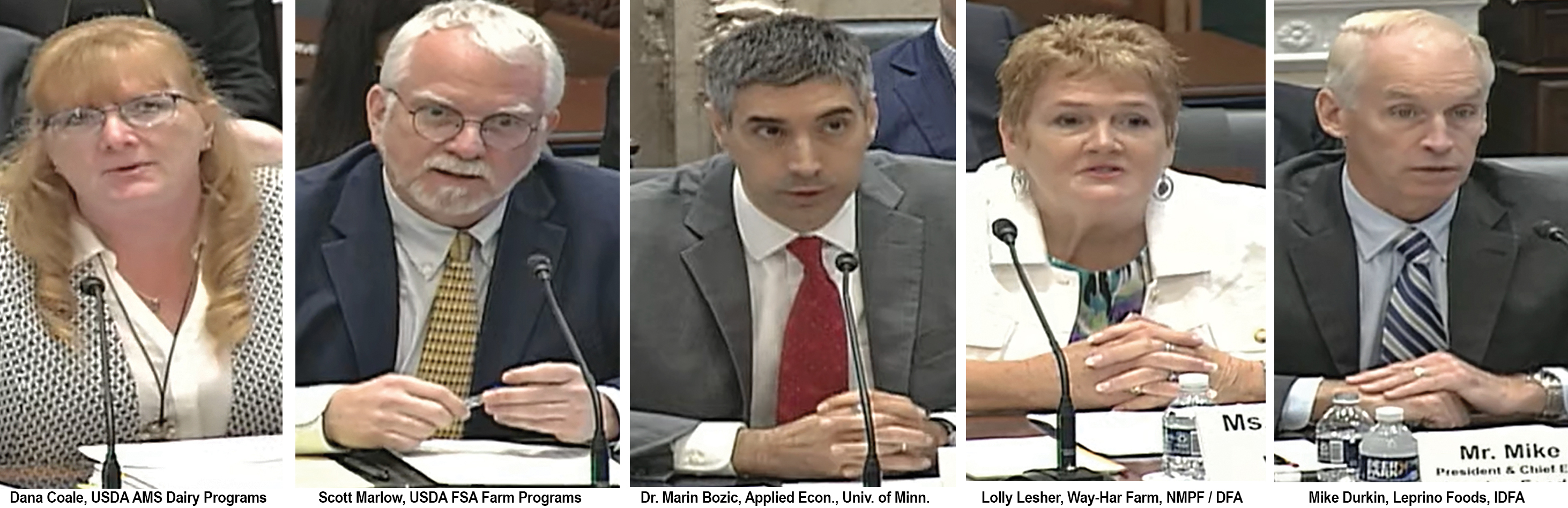
On the Class I ‘mover’ change in the last farm bill, USDA AMS Deputy Administrator Dana Coale noted that the change was authorized by Congress after an agreement was reached between NMPF and IDFA to change the ‘higher of’ to a simple average plus 74 cents. This was designed to be revenue neutral, she said, but the pandemic showed how an unforeseen market shock can create price inversions that significantly change this neutrality. (testimony)

Coale noted that “market abnormalities” brought on a situation where Class I was below Class III, which doesn’t typically happen, and this created losses.

“In the 2018 farm bill Congress authorized a change to the Class I price mover. We implemented that in the department in May 2019. This change was a consensus agreement reached between NMPF and IDFA to benefit the entire industry. Implementation in the farm bill was designed to be revenue neutral. However, nobody foresaw a pandemic occurring, and no one could have projected the implications that pandemic would have on (prices), particularly within the dairy sector. What we saw occur from mid-2020 through mid-2021 was a significant change in that revenue neutrality. As you look at the Class I mover before the pandemic and moving out of the pandemic, it is maintaining pretty much a revenue neutral position compared to the prior mover. However, due to the (class) price inversions that occurred, we had some major losses incurred by the dairy sector.”

Dana Coale, Deputy Administrator, USDA AMS Dairy Programs

On the primary dairy safety net, Farm Service Agency Deputy Administrator Scott Marlow went over the Dairy Margin Coverage (DMC) and explained the beneficial changes that have been implemented since the 2018 farm bill. (testimony)

He noted that supplemental DMC would have to be made permanent in the next farm bill in order for that additional production history between the 2011-13 figure and the 5 million pound cap to be covered in future years.

“In 2021, DMC payments were triggered for 11 months totaling $1.2 billion paid to producers who enrolled for that year, with an average payment of $60,275 per operation. At 15 cents per cwt at the $9.50 level of coverage, DMC is a very cost-effective risk management tool for dairy producers. Ahead of the 2022 DMC signup, FSA made several improvements. The program was expanded to allow producers to enroll supplemental production (up to the 5 million pound cap). In addition FSA updated the feed cost formula to better reflect the actual cost dairy farmers pay for alfalfa hay. FSA now calculates payments using 100% premium alfalfa hay, rather than 50% of the premium alfalfa hay price and 50% of the conventional alfalfa hay price. This change is retroactive to January 2020 and provided additional payments of $42.8 million for 2020 and 2021. We are very concerned about the margins. It is very important the way DMC focuses on the margin. Farmers are facing inflation of costs beyond the feed that is part of this calculation. This margin based coverage has proven to a model and is something we need to look at for other costs and commodities.”

Scott Marlow, Deputy administrator usda fsa farm programs

Dr. Marin Bozic, Assistant Professor Applied Economics at the University of Minnesota gave some long range trends and observed the factors that are decreasing participation in Federal Milk Marketing Orders. (testimony)

He mentioned that a consideration not to be ignored is the status of vibrancy and competition as seen in transparency and price discovery. When asked about proposals to improve this, Bozic said the proposals need to come forward from the industry, the stakeholders, and that the role of academia is to provide numbers, trends, and analysis of proposals, not to decide and determine these marketing structures.

“Farm gate milk price discovery is challenged by this lack of competition,” he said. “If a corn producer wishes to know how different local elevators would pay for corn, all he needs to do is go online or tune in to his local radio station. Dairy producers used to be able to ‘shop around’ and ask various processors what they would pay for their milk.”

Bozic was quick to point out that, “We should not rush to generalize from such anecdotal evidence, but in my opinion, it would also be prudent not to ignore it.”

“FMMOs start from a set of farmer-friendly ideas… They have somewhat lost luster due to declining sales of beverage milk. In regions other than Northeast and Southeast, fluid milk sales no longer provide strong enough incentives for manufacturers to choose to stay consistently regulated under FMMOs. My estimates are that the share of U.S. milk production in beverage milk products is likely to fall from 18.3% in 2022 to 14.5% by 2032. Do Federal Orders suffice to deliver fair market prices to dairy producers? The critical missing ingredient is vibrant competition for farm milk. Whereas just six or seven years ago, many producers had a choice where to ship their milk, today it is difficult. When some dairy producers have asked for milk price benchmarking information from their educators or consultants, those service providers have in multiple instances faced tacit disapproval or even aggressive legal threats from some dairy processors. Further research and an honest debate on competition in dairy is merited.”

Marin bozic, ph.d., department of applied economics, university of minnesota

Where FMMO changes are concerned, Bozic noted some of the broader issues to come out of the Class I pricing change that was made legislatively in the last farm bill. For example in future reforms, when there is lack of wide public debate on proposals, he said: “It increases odds of a fragile or flawed policy design, and lack of grassroots support for the mechanism in changing markets. FMMOs have a comprehensive protocol for instituting changes through an industry hearing process. The Class I milk price formula can be modified through a hearing process.”

From Bernville, Pennsylvania, representing National Milk Producers Federation (NMPF) and DFA, Lolly Lesher of Way-Har Farms shared the benefits of the Dairy Margin Coverage (DMC) program through FSA and other risk management tools through RMA. She said they purchase the coverage at the highest level each year as a safety net for their 240-cow dairy farm. (testimony)

DMC is intended for smaller farms producing up to 5 million pounds of milk annually, but other farms can layer it in with other available tools at the tier one level on the first 5 million pounds or choose to pay the tier two premium to cover more of their milk through that program, but other tools like DRP are also available, Marlow explained.

Turning to the Class I pricing change in the last farm bill, Lesher said the change was an effort to “accommodate a request for improved price risk management for processors, while maintaining revenue neutrality for farmers… but the (pandemic) dramatically undercut the revenue neutrality that formed its foundation.”

“As valuable as the (DMC) program has been, many farmers have not been able to fully benefit because the underlying production history calculation is outdated. It is critical that the (supplemental DMC) production history adjustment be carried over into the 2023 farm bill… The events of the last two years have shined a spotlight on the need for an overall update to the FMMO system. Class I skim milk prices averaged $3.56/cwt lower than they would have under the previous ‘mover’. This undermined orderly marketing and represented net loss to producers of more than $750 million, including over $141 million in the Northeast Order. The current Class I mover saddles dairy farmers with asymmetric risk because it includes an upper limit on how much more Class I skim revenue it can generate… but no lower limit on how much less… those losses become effectively permanent.”

lolly lesher, way-har farm, bernville, pennsylvania, representing nmpf and dfa

According to Lesher’s testimony: “The dairy industry through the National Milk Producers Federation is treating this matter with urgency and is seeking consensus on not only the Class I mover, but also a range of improvements to the FMMO system that we can take to USDA for consideration via a national order hearing.”

Lesher serves on DFA’s policy resolutions committee and she noted that DFA, as a member of NMPF “is actively participating in its process (for FMMO improvements), which involves careful examination of key issues to the dairy sector nationwide… We look forward to working with the broader dairy industry and members of this committee as our efforts advance.”

Representing International Dairy Foods Association (IDFA), Mike Durkin, President and CEO of Leprino Foods Company stressed the “extreme urgency” of updating the “make allowances” in the FMMO pricing formulas. These are processor credits deducted from the wholesale value of the four base commodities (cheddar, butter, nonfat dry milk and dry whey) used in FMMO class and component pricing as well as within the advance pricing for fluid milk. (Leprino is the largest maker of mozzarella cheese in the U.S. and the world. Mozzarella cheese is not reported on the USDA AMS price survey used in the FMMO class and component pricing.) (testimony)

Durkin also noted the importance of making the Dairy Forward Pricing Program that expires September 2023 a permanent fixture in the next farm bill for milk. This program allows forward pricing of milk used to make products in Classes II, III and IV so that longer-duration contracts can be used by this milk when also pooled under FMMO regulation without fear of the authority expiring in terms of the FMMO minimum pricing. (Milk that is used to make products in Classes II, III and IV is already not obligated to participate in or be regulated by FMMOs.)

“The costs in the (make allowance) formula dramatically understate today’s cost of manufacturing and have resulted in distortions to the dairy manufacturing sector, which have constrained capacity to process producer milk. Congress can improve the current situation by directing USDA to conduct regular cost of processing studies to enable regular make allowance updates. The need to address this lag is now extremely urgent. While our proposal to authorize USDA to conduct regular cost surveys will eventually provide data to address this in the longer term, steps must be taken now to ensure adequate processing capacity remains. Updating make allowances to reflect current costs will enable producer milk to have a home. Making the (Dairy Forward Pricing Program for Class II, III and IV) permanent could also facilitate additional industry use of this risk management tool for longer durations without concern about the program expiring.”

Mike Durkin, president and ceo, leprino foods, representing idfa

Lesher also thanked House Ag Ranking Member G.T. Thompson for his Whole Milk for Healthy Kids Act, seeking to bring the choice of whole and 2% milk back to schools. The bill currently has 94 additional cosponsors from 32 states, including the House Ag Chair David Scott and other members of the Agriculture Committee. The bill was referred to the House Committee on Education and Labor.

Other key dairy provisions were reported and questions answered, including a witness representing organic dairy farmers. There’s more to report, so stay tuned for additional rumination in Farmshine and here at Agmoos.com

Recorded hearing proceedings available at this link

Written testimony is available at this link


-30-