
The Ja-Bob Holsteins dispersal Nov. 10 represents a unique journey in Holstein genetics and the first step as Mark and Joy Yeazel embark on a mission to build a dairy at Eternal Families Tanzania
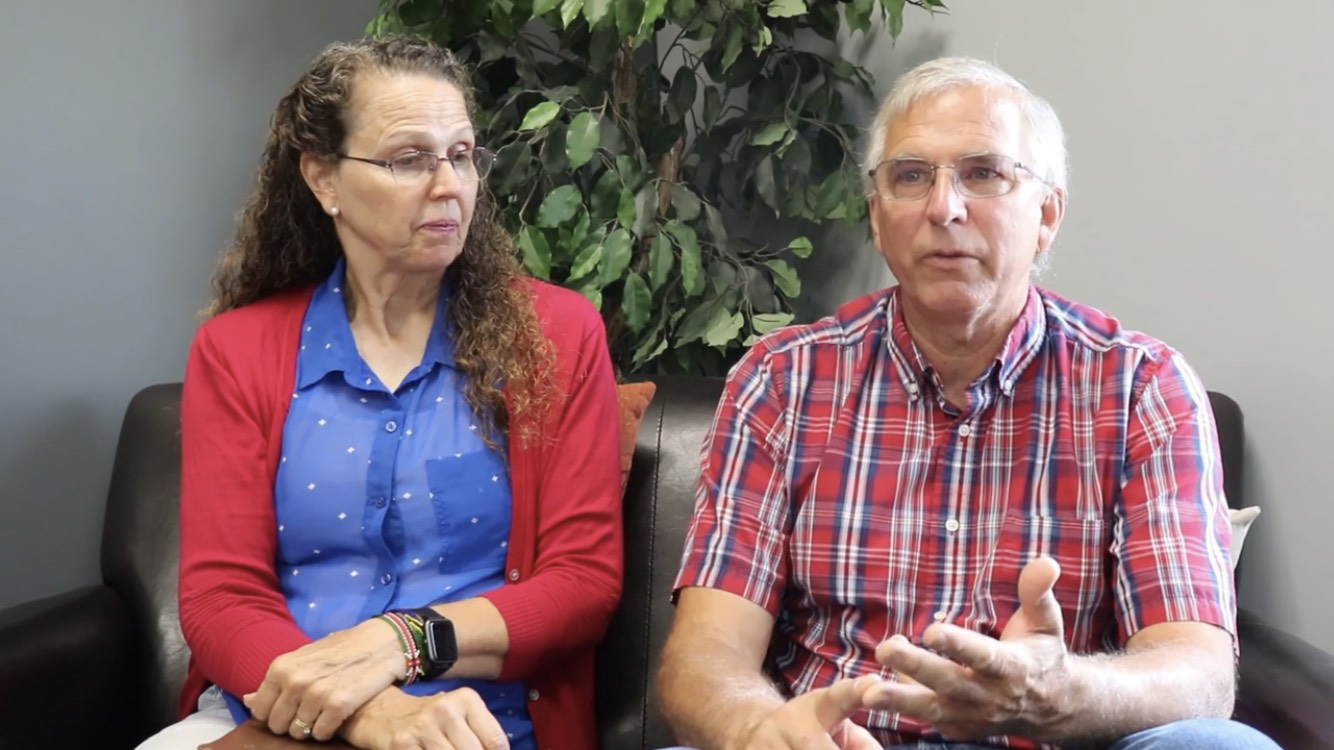
Be inspired by the video about the mission here
The sale catalog, including benefit lots and donations can be found here
By Sherry Bunting, Farmshine, October 27, 2023
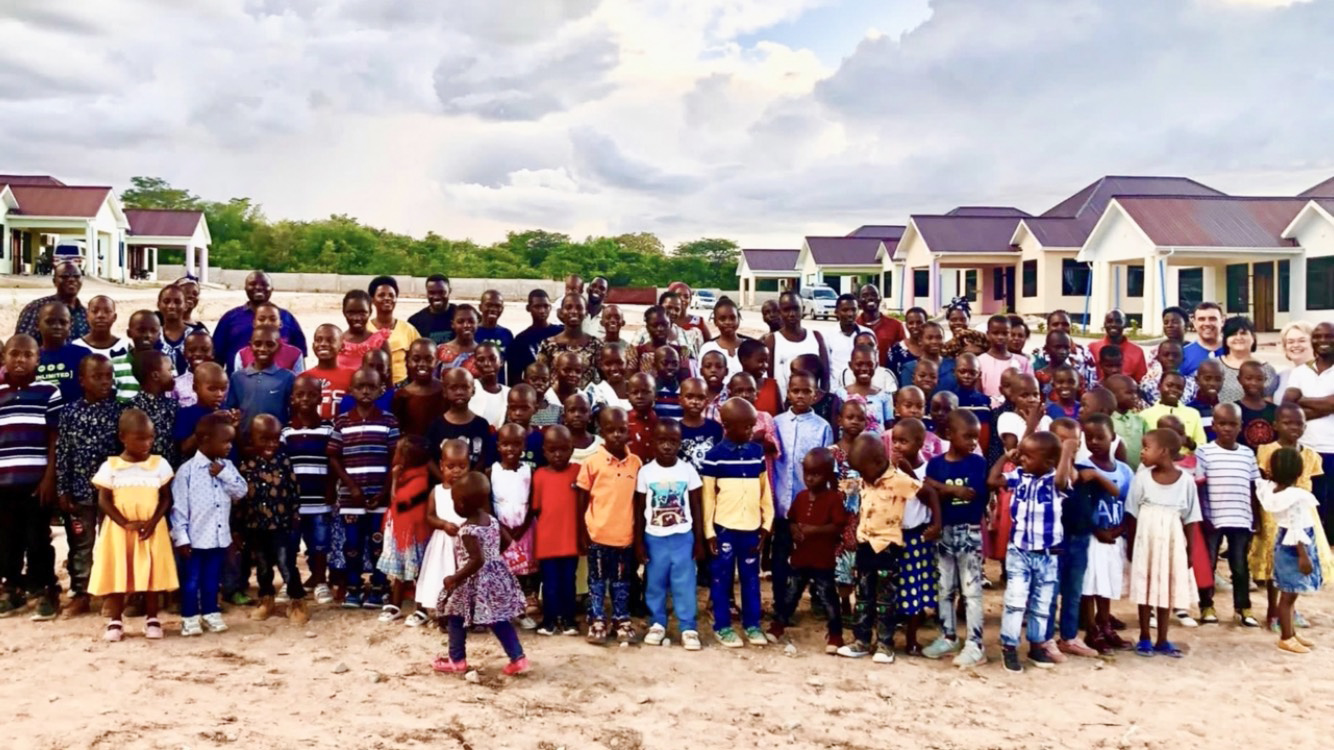
EATON, Ohio – A new chapter begins for Mark and Joy Yeazel of Ja-Bob Holsteins in early 2024. It has been in the making since they first visited Eternal Family Tanzania orphanage in East Africa in March of 2019. In fact, their Junk for Jesus ministry they started 18 years ago had already been financially supporting this ministry — a village of 10 sets of house parents each raising a dozen orphans and growing the farming enterprise to feed them.
Fast-forward to spring 2023 when they went back to see how God was working there. On April 2, Mark, who turns 63 this week, had planned to milk five more years. Seven days later, on April 9, he was planning to sell the herd. Mark says they are doing this for the children, “for the least of these,” called by God to build a dairy at the Eternal Family Tanzania farm.
Nearly 200 lots will be offered at the November 10 complete dispersal of the unique Ja-Bob Holstein herd. All of the dairy equipment, including robots, will sell in the auction managed by Fraley at the farm in Eaton, Ohio, and on Cowbuyer. There will also be donation lots with proceeds going 100% to the mission.
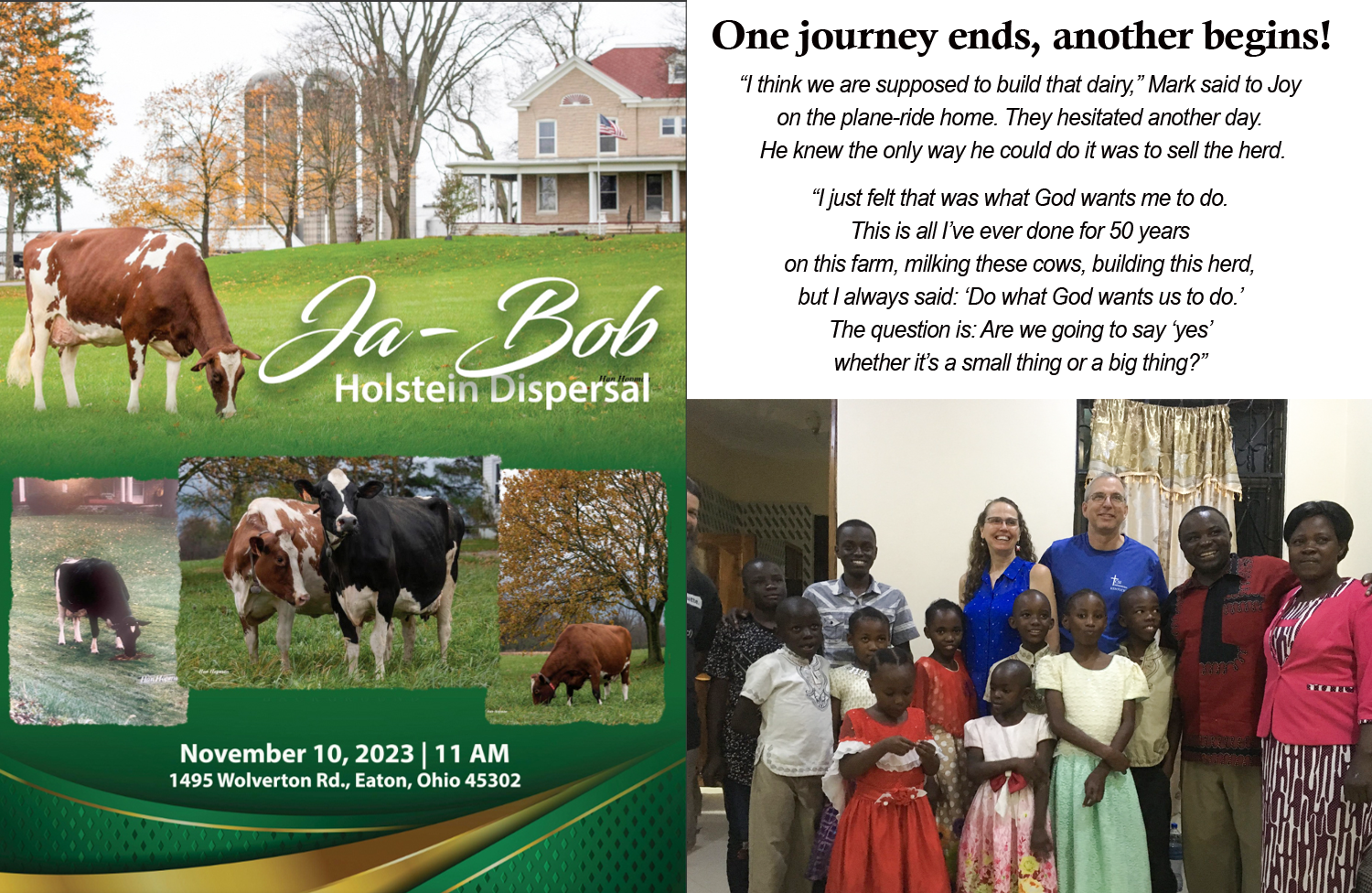
The sale catalog is creating some buzz among breeders for its foundation and the unique traits Mark has brought in. Selling are 105 of the 125 milking cows, 80 calves and heifers, as well as embryos and semen. There will be many unique combinations of red, polled, homozygous polled, A-2 and ‘slick’, from a foundation built on cow families like matriarch Sky-Hi Mars Helen-ET RC 4E92 GMD DOM, and 35 years of aAa breeding. Mark has prioritized width, strength and function.
Some of the lots, as well as donations of semen (including Ja-Bob Jordan-Red) from Triple Hil and embryos from ABC Genetics will directly support the mission. Donated lots continue to come in. This includes a recently added 20 units of early-release Ja-Bob Heritage PP-RED-ET (homozygous polled) from Triple Hil and an anonymous dairyman donated 10 units of sexed Radix P. NoBull Sires recently donated 10 units sexed and 20 units conventional semen (buyer chooses bull in their program).
Mark notes in a Farmshine phone interview that on their spring 2023 visit to Eternal Families Tanzania, they were “so impressed with the village, the design, the school they built, the way they are farming and really embracing the whole vision of caring for the children and doubling the size of the village. One of their stated goals is to be food independent. They built a fishpond and catch water off the roofs. They wanted to start raising chickens, and they wanted to start milking cows and to graze the fields in the off season.”
His wheels started turning. “I think we are supposed to build that dairy,” he said to Joy on the plane-ride home. They hesitated another day. He knew the only way he could do it was to sell the herd.
“I just felt that was what God wants me to do. This is all I’ve ever done for 50 years on this farm, milking these cows, building this herd, but I always said: ‘Do what God wants us to do.’ The question is: Are we going to say ‘yes’ whether it’s a small thing or a big thing?” he says.
Everything he has done may have prepared him and pointed him in this direction.

“We are still relatively young and healthy. Our children aren’t interested in continuing what I do here. We’ve accomplished a lot and have been so blessed. To have a cow family like the Helens has been amazing, and the other goals and foundations we’ve been able to build that can be embraced by other breeders who can add their expertise to do good in the world,” he explains.
Talking humbly of the blessing of the chapter that is closing and enthusiastically about the chapter opening ahead, Mark cites Ephesians 3:20: “Now to Him who is able to do immeasurably more than all we ask or imagine, according to His power that is at work within us.”
“The first thing I need to do is to be there and to understand what an East African dairy looks like, not what a Mark Yeazel robotic dairy looks like,” he says, noting he has timelines in his mind, but “I’m not sure what God has in mind. It’s really one step at a time. This is what God has called me to do for the next year. What the following year holds, I don’t know, and that’s alright.”
Mark’s journey in the chapter that is closing really began when he came home from college thinking he needed to add some income to the farm. His interest in genetics led him to look for cows with red factor out of top families. Out of two major cow purchases he made in 1983, it was Helen that turned out to be the brood cow, with some in the Helen family today now 10th generation EX, with up to 12 generations potential in the youngstock.
He added polled over 25 years ago and has had success selling polled bulls into AI. While he did not intend to chase the A-2 genetics, he used enough of those bulls that over 40 head are identified A-2 with over 40 homozygous polled, over 120 polled and 120 red, as well as 9 Linebacks in these categories. Seen here are 31 heifers arriving for the sale from the heifer raiser in Wooster, 80% of the Ja-Bob youngstock are red.
The ‘slick’ gene was added six years ago, working with Girolando embryos. Girolando are Holstein-like in appearance, but with heat-tolerance and adaptability. He wanted ‘slick’ calves out of red A-2. He has sold six slick bulls to the minor AI studs already, and about 20 slick animals are in the sale.
“I felt like we were ignoring some of the needs of the international community, that this is a void, and the heat-tolerant genetics would really help those breeders,”Mark relates. “I was not seeing anyone else doing it, so I thought: ‘Why not make some lines for the common breeder in tropical countries?’”
Not long after he got into it, ST Genetics and Select Sires started doing this also. So, while the large studs did a quick acceleration with genomics, Mark followed the red and the cow families. There were three bulls with the slick gene available, and he used all three, plus some semen from a bull in New Zealand. He also bought some embryos out of the University of Florida for outcross.
“I made my own bulls for the second generation breeding because I came into this early, so I needed several of them,” he explains.
While he didn’t set out a goal to breed for Tanzania, slick embryos could benefit the dairy project there in the future.
“Our first goal in Tanzania is to produce milk for children, so the type of cow is not nearly as important as just getting started in production, to start milking and see where God takes that,” Mark explains, adding that there are no organized dairies in that location, so cattle will be brought in from further away.
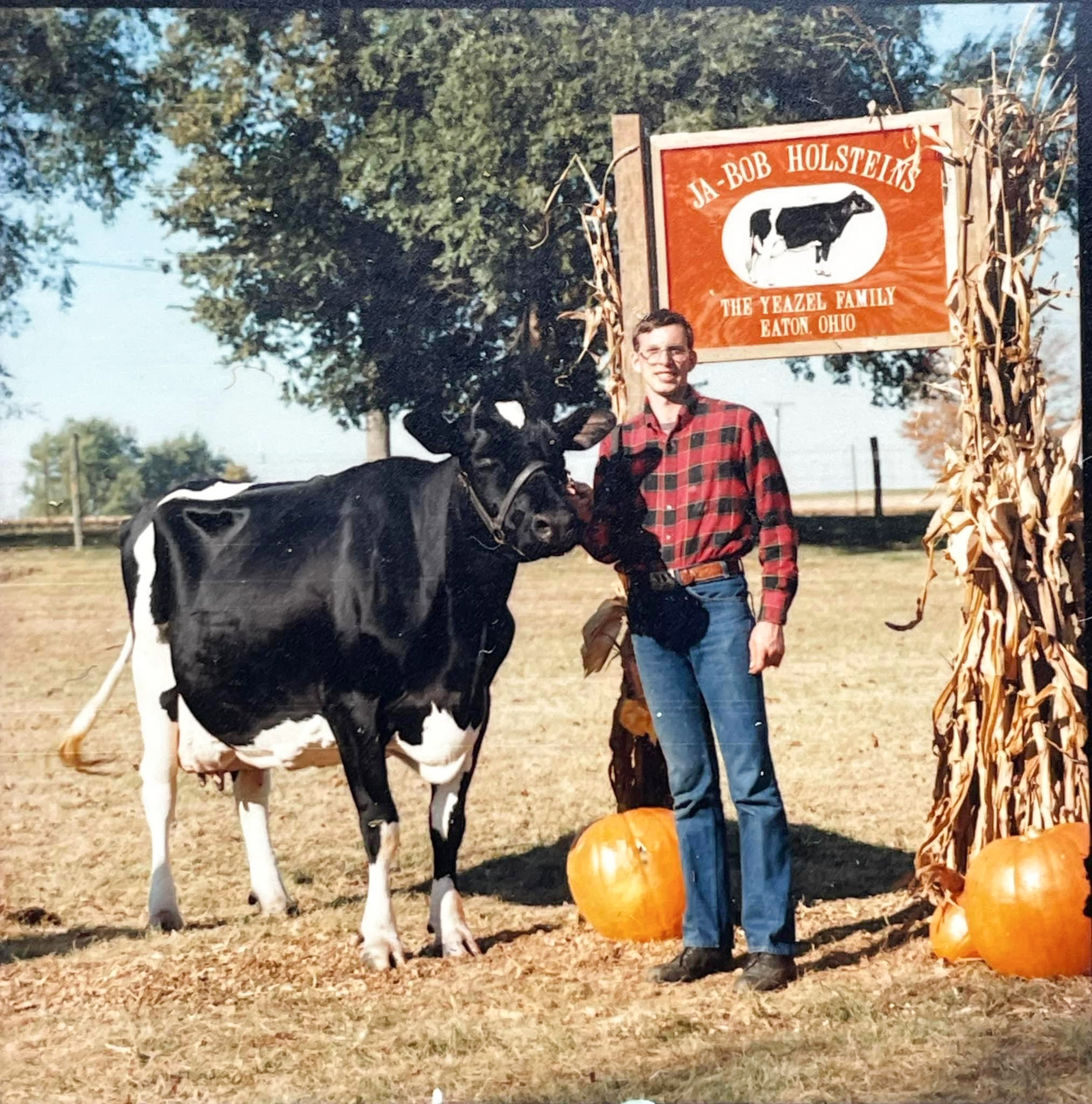
The first major mile-marker in the Ja-Bob journey was exactly 40 years ago in October 1983 when Mark purchased Helen as a first lactation 2-year-old from Sky-Hi Holsteins in Lacrosse, Wisconsin. He knew her full brother was a red ET bull at 21st Century Genetics, but back then there was no DNA testing. So, he looked for an ET sister.
He went to Lacrosse to view the herd, and when he saw Helen standing in the stall beside her 14-year-old dam, it was her deep pedigree for longevity that sealed the deal.
He spent $10,000 on Helen – more than double what his father had ever paid for a cow. He was hoping she would carry the red factor like her brother. “But I knew her pedigree was so good that even if the RC was not there, she was worth it,” he says.
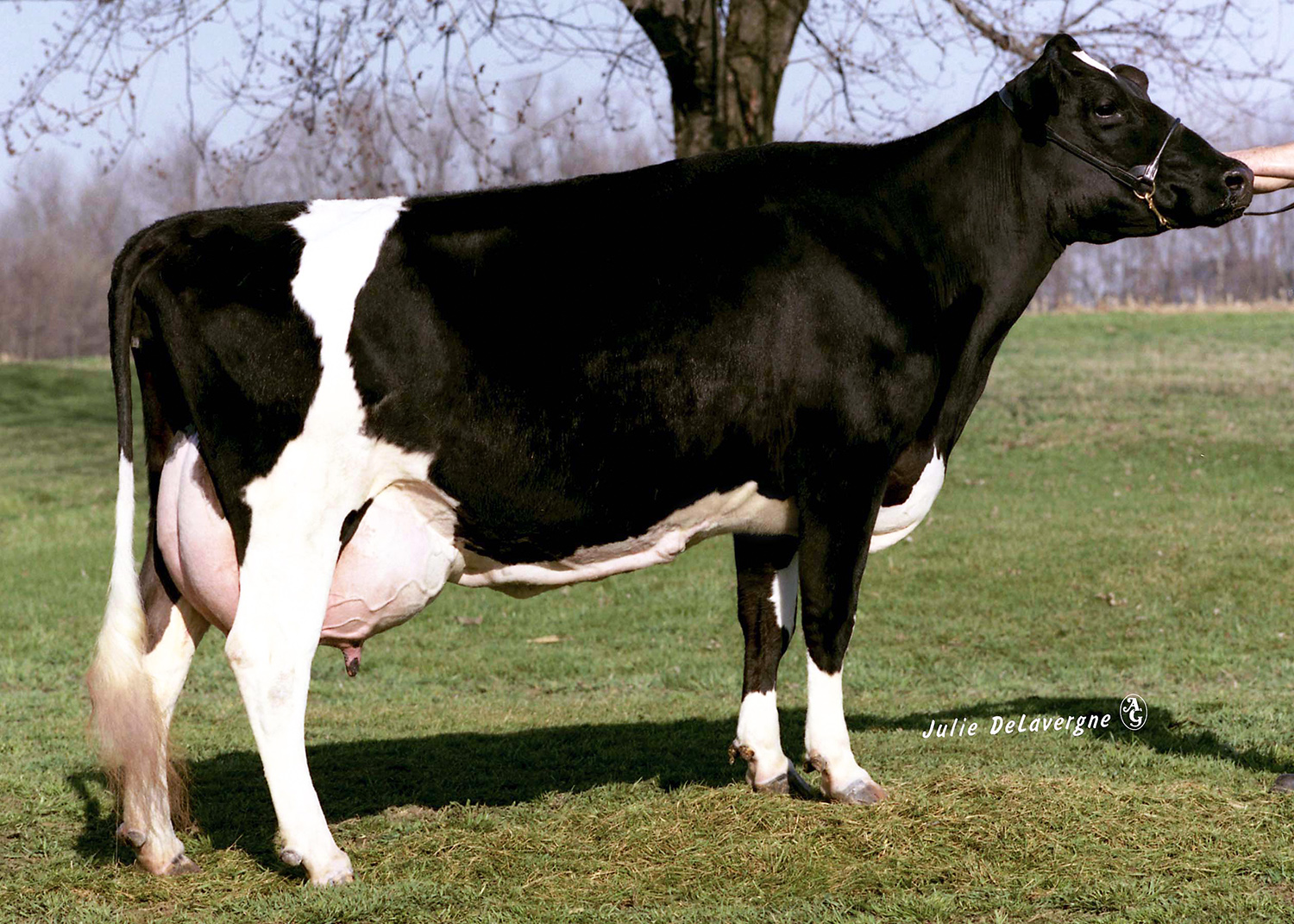
Having just completed an internship at Select Embryos, Mark was excited about the prospects to bring the red gene out faster. Helen was flushed to a couple red bulls, including Needle-Lane Jon-Red-ET.
“Three of the first six calves were born red, and we knew we had the red factor. We also flushed her to black bulls, including Walkway Chief Mark,” he recalls.
It was the natural breeding of Helen to Chief Mark that produced Ja-Bob Mark Heavenly Joy, a cow that would go on to be rather famous in her own right. She was born 20 days after he started dating the woman (Joy) whom he would marry four months later.
While Mark says he has never been hung up on milking averages, the Ja-Bob RHA is 27,641M 4.1 1128F 3.25 898P with a 140,000 SCC. He has a couple cows over 200,000-pounds lifetime and several over 150,000, with some individual lactations over 40,000, and recently the first with 2000 of fat.
His original goals were to sell a bull to AI, make an Excellent cow, and produce a 1000F record. All of that was achieved in the first three years. Did he imagine then that he would sell well over 100 bulls into AI, that he would have 10th generation EX in his herd, and a cow with 2000 pounds of fat?
No, but he knew good things would come from staying true to what was important. To accomplish what he did, he used aAa analyzing to shore up that foundation while pursuing the unique traits with young sires.
“I am not anti-genomics, by any means, but I feel the philosophy of genomics has narrowed the breeding base of the business, and breeds a like-kind cow. Sometimes, you don’t get a lot of balance with that type of cow,” Mark observes.
Strong front ends. Good feet and legs. That’s important, he says.
He talks about showing contacts in Kenya pictures of national champions in the 1970s, 80s and 90s, these wide, strong animals. He believes the industry needs to be “more intentional to sell internationally what fits the environment.” Toward that end, the red and slick bulls, he describes as built to be more rugged.
“I think we can do better,” he says. Even in the U.S., he encourages breeders to go back and look and know the cow’s environment. “If that is delivering feed to cows on concrete, and an average 2.5 to 3 lactations, then you’re making a terminal cow. But if those cows are grazing or in tie stalls, you want a little different type of cow, and the genomics may not reflect that.”
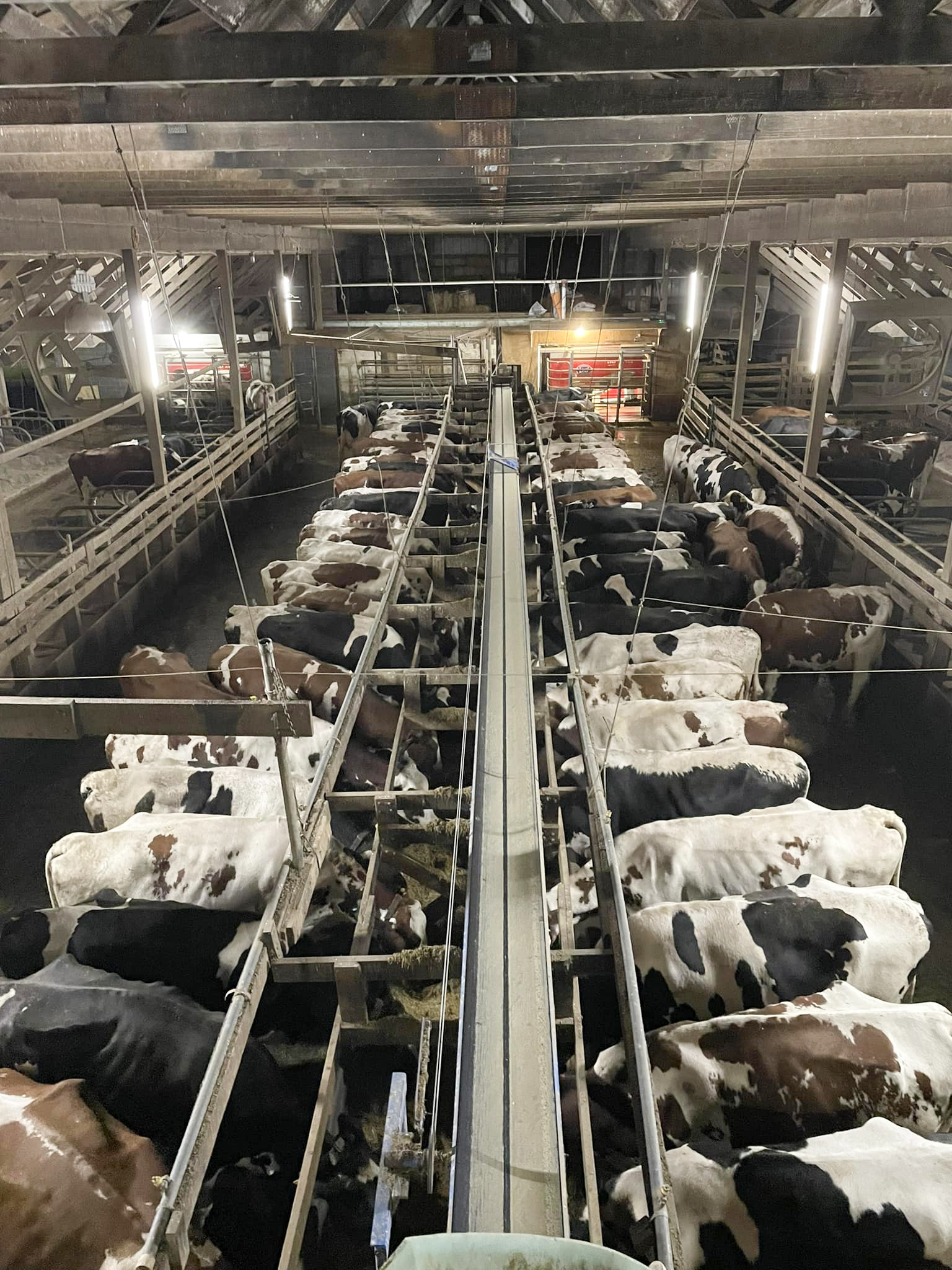
At Ja-Bob, cows are milked with robots that were installed in June 2013. In that system, teat placement is important, and it’s something Mark says must be considered when using genomic bulls. But when using Triple Hill or smaller studs, he says “I knew that wouldn’t be a problem. It’s the higher genomic bulls that have put emphasis on tight, high udders and short teats. Those are the ones you have to watch out for with robots.”
He notes that the common combinations of aAa matings can be found in higher genomic bulls, so, if that’s what he needs, it will more than likely be a genomic mating. But if he needs a less common combination, a 5-4-6 or a 5-1-3 or 2-1-6, for example, that won’t be genomic.
“If I am looking at red and the occasional RC, and combinations like 5-1-3 or 2-1-6, then I look at Triple Hill and K.I. Samen, and I am watching for those numbers to pop up,” he says, continuing to talk about the way aAa has worked for him from the beginning, something that keeps the foundation on track because it gets complicated when bringing in unique traits that can eliminate whole populations of choices.
What has been most satisfying about this journey as he looks ahead to the next?
Mark tells the story of visiting a farm in Holland many years ago. The breeder wanted to show him daughters of Ja-Bob Horizon-Red, one of Helen’s first sons. “I felt I did my job that a breeder somewhere in the world had a nice daughter from a bull I had bred, and he is happy with her.”
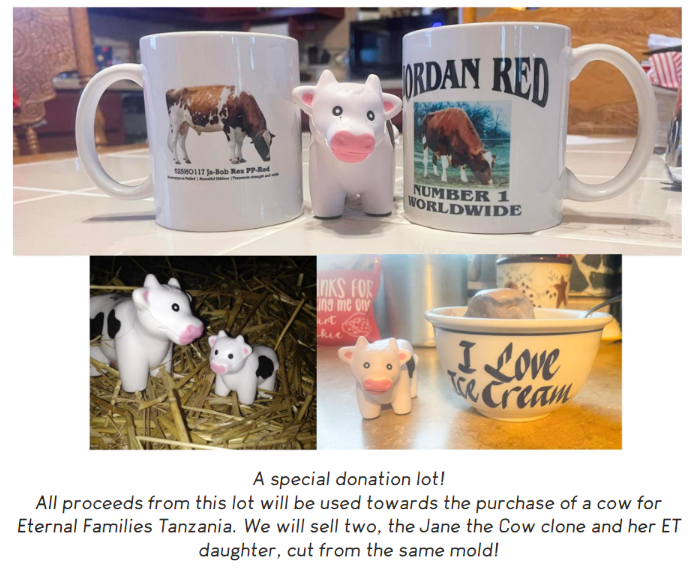
Of course, breeding a bull like Jordan multiplied this feeling quite a bit as Jordan went into 47 programs worldwide.
Reflecting on two Helen sons Jordan and Helium, he confesses he never set out to breed a top TPI bull, but Jordan was 66th in the top-100 and number one red bull for a while. Helium was the number one udder composite bull for a while in Germany.
“To think that a little breeding program in Preble County, Ohio could impact people all over the world is hard to believe sometimes,” he admits.
“I’ve tracked the Helen family all over the world, so I have traced animals in 16 different countries, and identified 350 EX and over 1000 VG female maternal line descendants in 11 countries — not counting daughters of Jordan.”
In fact, he shares that Roxy may be the only cow to have more EX descendants worldwide. “Bob Miller and I have talked about this,” says Mark. “He traced over 450 EX back to Roxy.”
Helen also produced 13 red sons in AI. Perhaps Apple had that many, but Helen did it decades ago, when ET was in its infancy and long before IVF.
-30-
 Ag Moos