Senate Ag hearing overwhelmingly endorses whole milk in schools

By Sherry Bunting, Farmshine, April 4, 2025

WASHINGTON, D.C. – We need to be the change-makers that our students and farmers both need. We need to bring back the ability to offer milk fat choice in schools, including nutrient dense whole milk – which, by the way, is just 3.25 to 3.5% fat,” said Krista Byler, a witnesses during the hearing by the U.S. Senate Committee on Agriculture, Forestry, and Nutrition to “review the Whole Milk for Healthy Kids Act, S. 222, and improve children’s health.”

April 1st, the day of the hearing, was a great day for America’s children and dairy farmers, and that’s no April Fools joke!

The livestreamed hearing opened with a reminder from Senate Ag Chairman John Boozman (R-Ark.) that the whole milk bill had passed the House in the last Congress “by an impressive 330 to 99 vote” and his desire to “make progress in the Senate.” 

Ranking Member Amy Klobuchar (D-Minn.) expressed her support for the bill and thanked Sen. Roger Marshall (R-Kan.) for introducing it. She also set the stage to broaden the hearing to other school nutrition matters. (To be covered in a separate article at another time).

The hearing ended with universal expressions of bipartisan support, thanking the Senate’s ‘milkman’ Marshall. Several Senators urged moving the bill forward as a standalone without delay.

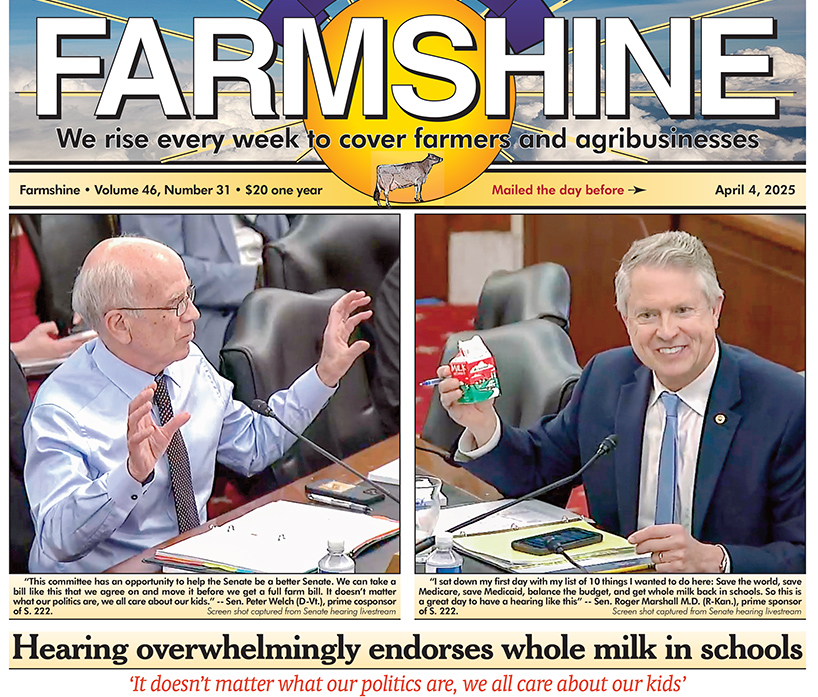
“If we can do something that’s good, let’s do it, and then we’ll do the next thing that’s good,” said Senator Peter Welch (D-Vt.), the bill’s prime cosponsor, addressing the Chair. “This committee has an opportunity to help the Senate be a better Senate, we can take a bill like this that we agree on and move it before we get a full farm bill. It doesn’t matter what our politics are, we all care about our kids. I hope as we pursue this whole milk opportunity for our kids and our farmers that it’s the beginning of a real commitment to nutritious, locally produced, natural foods.”

In between the open and close, the Senate Ag Committee heard from and questioned five witnesses, spending the first chunk of time with Dr. Eve Stoody, Director of the Nutrition Guidance and Analysis Division at the Center for Nutrition Policy, within the Food Nutrition Service of the USDA. 

She is tasked with supporting the development of the Dietary Guidelines (DGA) since the 2010 edition and is the self-described career subject matter expert on the DGA process.

She revealed that 90% of Americans don’t consume the daily recommended amount of dairy, a statistic that has worsened over time, setting the stage for nutrient shortfalls.

“Across the board… whatever the form is, we need to have greater consumption of dairy,” she said, citing national survey data showing that on any given day, the percentage of adolescents reporting drinking milk was 75% in the 1970s, just under 50% in the early 2000s, and about 35% in the most recent data.

Chairman Boozman asked what justification was used to remove whole and 2% milk from schools in 2010?

Instead of addressing that question, specifically, Dr. Stoody said the current Dietary Guidelines recommend “most” dairy be low-fat or fat-free, but the guidelines (10 years later) in 2020 were constructed as overall dietary patterns with more flexibility.

“It’s also a reality that we kind of have a number of calories that individuals should consume, so across the guidelines we recommend consuming foods from all of those different food groups and that most should have little to no added sugars or saturated fat to help us stay within those calorie limits,” she said. “We don’t have a lot of room in the calories of the diet to consume milk and dairy with higher fat.”

Stoody parsed this as a population-level guideline: “That doesn’t mean whole milk and higher fat dairy can’t be part of a healthy diet, but it’s really important to look at the overall diet. The DGAs are there to provide flexibility based on needs and preferences.”

(This confusing ambiguity opened the door for the next panel to walk through, even though only two of the remaining four witnesses talked about the whole milk bill, while the other two talked exclusively about USDA’s recent cuts to programs like the local farm-to-school cooperative grants and concern about changes to how school lunch eligibility. Even those witnesses agreed that simplifying regulations and providing flexibility allows schools to focus on the quality of the meals instead of being bogged down by red tape.)
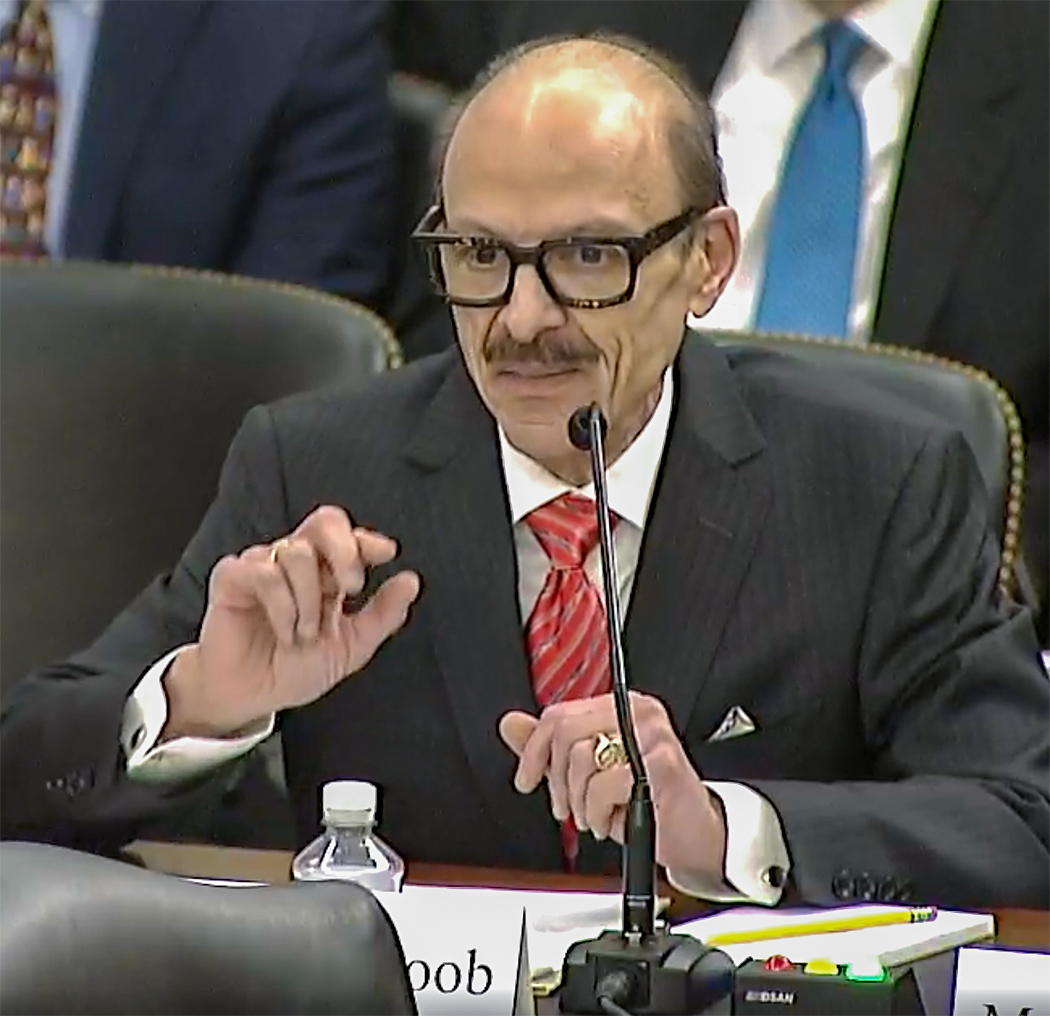
“I’m here because this issue matters to the children I serve, so it matters to me,” said witness Dr. Keith Ayoob, Associate Professor of Pediatric Nutrition at the Albert Einstein College of Medicine in New York City. He runs a diagnostic and treatment clinic working with mostly low-income children, and their families, in the Bronx.

“A plethora of research demonstrates consumption of cow’s milk provides children with better bone health, a lower risk of type II diabetes, and a lower risk for cardiovascular disease,” he shared, as he zeroed-in on milk’s 13 essential nutrients, including 3 of the 4 under consumed nutrients calcium, potassium and Vitamin D.

He said saturated fat does not occur in foods in isolation, and new research shows the protein-fat matrix “behaves differently” in the body. “While other foods that are lower in saturated fat can also lower cardiometabolic risk, they can’t deliver the 13 essential nutrients in milk. Milk delivers a package I’ve not been able to find in any other food or beverage.”
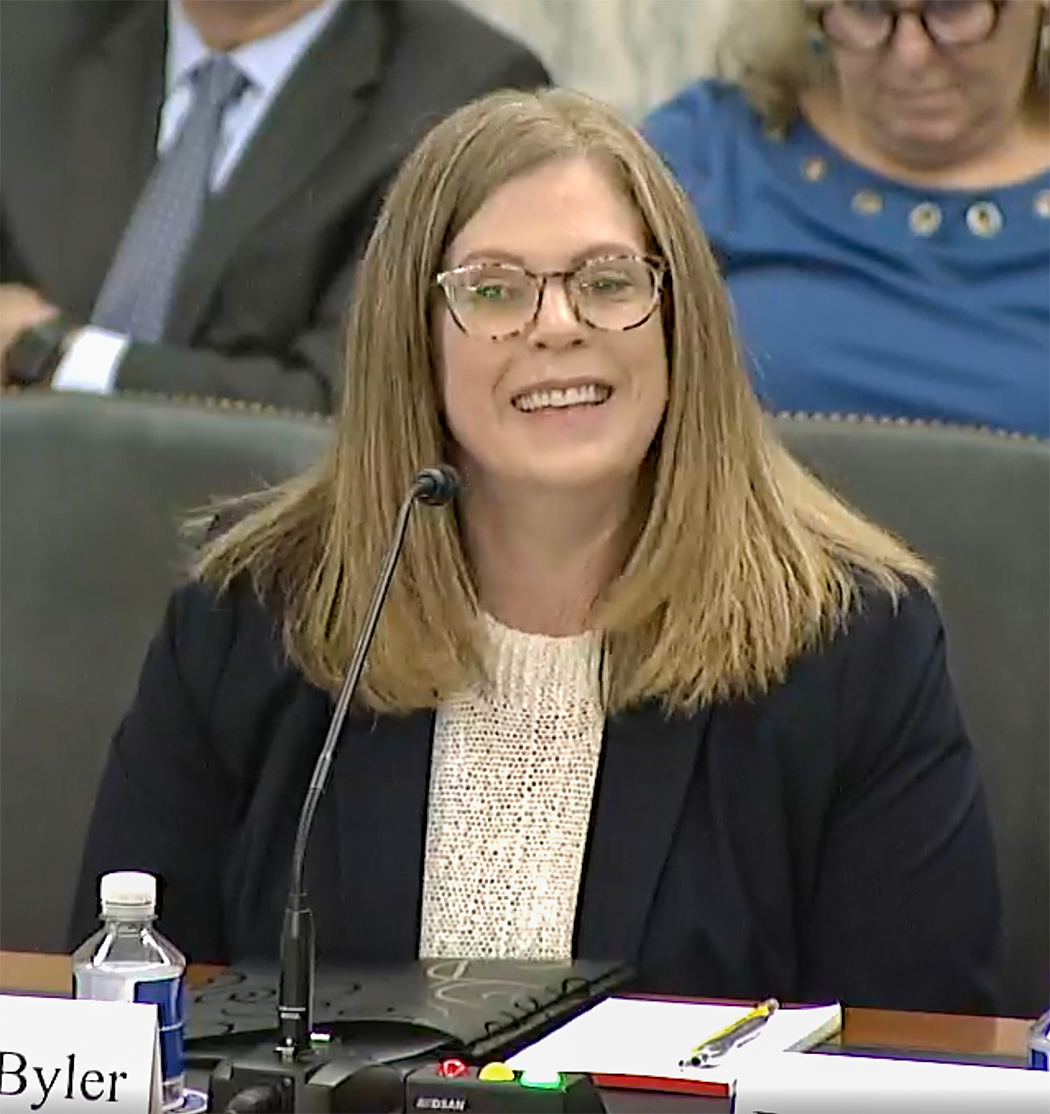
Krista Byler of Spartansburg, Pennsylvania testified next. She is the Foodservice Director and District Chef for the past 20 years at Union City Area School District, or as she puts it: “The professional chef turned lunch lady.”

The granddaughter and wife of former dairy farmers, she was the one witness to bring a combined experience in dairy farming, culinary arts, and childhood nutrition, saying she believes “access to good quality nutrient dense whole food is a basic right of education.”

Byler spoke from the heart, bringing experience and data. She described the impact of the 2010 Childhood Nutrition Reauthorization’s school milk changes on students and dairy farm families.

“It was heartbreaking… we were seeing a huge increase in waste and a huge decline in the amount of milk that I was actually ordering because our children were not choosing to take the milk,” she said.

In 2018, Byler attended an event with the School Nutrition Association where she met Rep. Glenn ‘GT’ Thompson (R-Pa.) – the decade-long champion for The Whole Milk for Healthy Kids Act. 

At that meeting, Byler said she heard her peers also talking about the large amounts of waste. She was later introduced to the Grassroots Pennsylvania Dairy Advisory Committee of dairy farmers and school-involved parents, affiliated with what later became the separate milk education nonprofit 97 Milk.

(The Grassroots PA Dairy Advisory Committee is chaired by Bernie Morrissey, with current participants that include dairy farmers Nelson Troutman of Berks County (the Milk Baleboard painter), along with Dale Hoffman and Tricia Adams of Potter County, certified RN school nurse Christine Ebersole of Blair County, Dr. Ed Silverman, a retired internal medicine physician, Mike Sensenig of Sensenig’s Feed Mill, and this reporter who helps in communication. Like the separate board comprising 97 Milk, all the work is done by volunteers without compensation.)

This grassroots committee invited Byler to do some data collection. She explained that in the 2019-20 school year, with the blessing of her school board of directors, they conducted a school milk choice trial at the middle and high school, offering all levels of milkfat, both flavored and unflavored.

“The results are astounding.” Byler said, referencing her written testimony to find more complete data and survey results.

“What I want to really drive home are two main data points: The 50% increase in milk consumption (evidenced by ordering more milk) and the 95% — that’s right – the 95% reduction in milk waste, just because we offered a variety of milk choices that fit our students’ needs,” she said to the visibly astonished Senators who had previously unsuccessfully asked the first witness from USDA for such data.

“That’s incredible. It’s amazing when we give a little education and we give the choices, eventually the consumer makes the right choice,” said Sen. Marshall who is a medical doctor and prime sponsor of the bill in the Senate. He described his frustration in seeing the impact of osteoporosis and osteopenia, when bone density has not been built in the first 26 to 28 years of life.

Byler explained that the school student council helped collect, measure, and document the waste, and they “took a little heat after the 2020 school year when we (ended the trial) and went back to not being able to offer the variety. Overwhelmingly, students said they want something that is satisfying. Athletes, especially, were very vocal about wanting something that sticks with them. It’s a perfect recovery drink.”

Dr. Ayoob agreed: “My kids in my clinic have said that they find skim milk ‘watery.’ They may take that carton of milk. The school will get reimbursed. But I’m concerned that they drain that carton, not just take a few sips. Not only is there less food waste but more nutrition goes into the children.”

Sen. Ben Ray Lujan (D-Calif.) reminisced that he didn’t grow up with much money in the bank, but was blessed to have a dairy down the street. “Today when I get a carton of milk at the store, my habit is still to shake it because growing up that cream rose to the top, and we knew we had to shake it if we were going to enjoy it.”

“Our kids want to do better. They want to eat better. We have their attention,” said Sen. Jim Justice (R-W.V.), who spent his days with students as a longtime coach. “We have an opportunity here to step up. I am absolutely, wholeheartedly in favor of moving forward with whole milk.”

Every Senator present and asking questions expressed or implied support from both sides of the aisle.

With a nod to “the milkman Sen. Marshall,” Sen. Dick Durbin (D-Ill.) said he had to read through the list he had been provided of the organizations that are opposed to the bill, including the American Heart Association, American Academy of Pediatrics, and American Academy of Nutrition and Dietetics. He then asked the USDA representative what health organizations are for it? Dr. Stoody said she didn’t have that information.

(Perhaps more to the point, were her continued circular answers that forced this realization: The “population-level guidelines” get drilled down to individuals in governmental feeding environments, which then feed into the health and nutrition organizations and back again. Meanwhile, individual health and nutrition practitioners are out there seeing real people as individuals every day, wondering how to get off the spinning merry-go-round.)

Chairman Boozman asked Dr. Ayoob how policymakers have gotten it so wrong in drawing a correlation between whole milk and obesity?

“Actually, the correlation is inverse,” Dr. Ayoob declared. “A review of the studies in my written testimony show that greater consumption of dairy foods, including whole fat milk, has been associated with less obesity and less cardiometabolic risk.”

He said in 2010 when whole and 2% milk were first removed from school meals, obesity prevalence was about 17%. Since that removal, it has increased. “It’s now 21%, and it’s higher, about 25%, in black and Hispanic children, the population that I work with.” 

Ranking Member Klobuchar came back to calcium, asking Dr. Ayoob to explain why it’s so important at this stage.

“We don’t have our whole lives to build our bone bank. We have the first 25-ish years,” he replied. “If they skip milk in school, that might seem like it’s no big deal for a day, maybe even for a week. But if they forgo a glass of milk every day they are in school for 12 years, we’re going to graduate kids with a diploma and not very good bones. We owe our kids better than that. Osteoporosis and osteopenia are really pediatric diseases with adult consequences.”

Sen. Marshall drove this point home in his questions for all witnesses. He talked about the milk fat as carrying key vitamins and facilitating absorption. He and Dr. Ayoob talked back and forth about how replacement beverages, like soda, take the missed opportunity with milk and add further negative impacts.

“No matter what type of milk is offered in school, none of it is nutritious until students drink it, and they don’t drink it often enough, which presents nutrition and dietary gaps, especially in low-income groups, where 77% of a child’s opportunity for milk intake is from school meals,” said Dr. Ayoob.

“Chef Byler, what’s your advice to us as we look at bringing whole milk back to schools?” asked Sen. Marshall.

“It’s been said very well by others today, that we can do better,” she replied. “If we just bring back the milk choice to schools, we would see a huge increase in consumption, a huge decrease in waste, and satisfaction for our students would be through the roof.” 

-30-
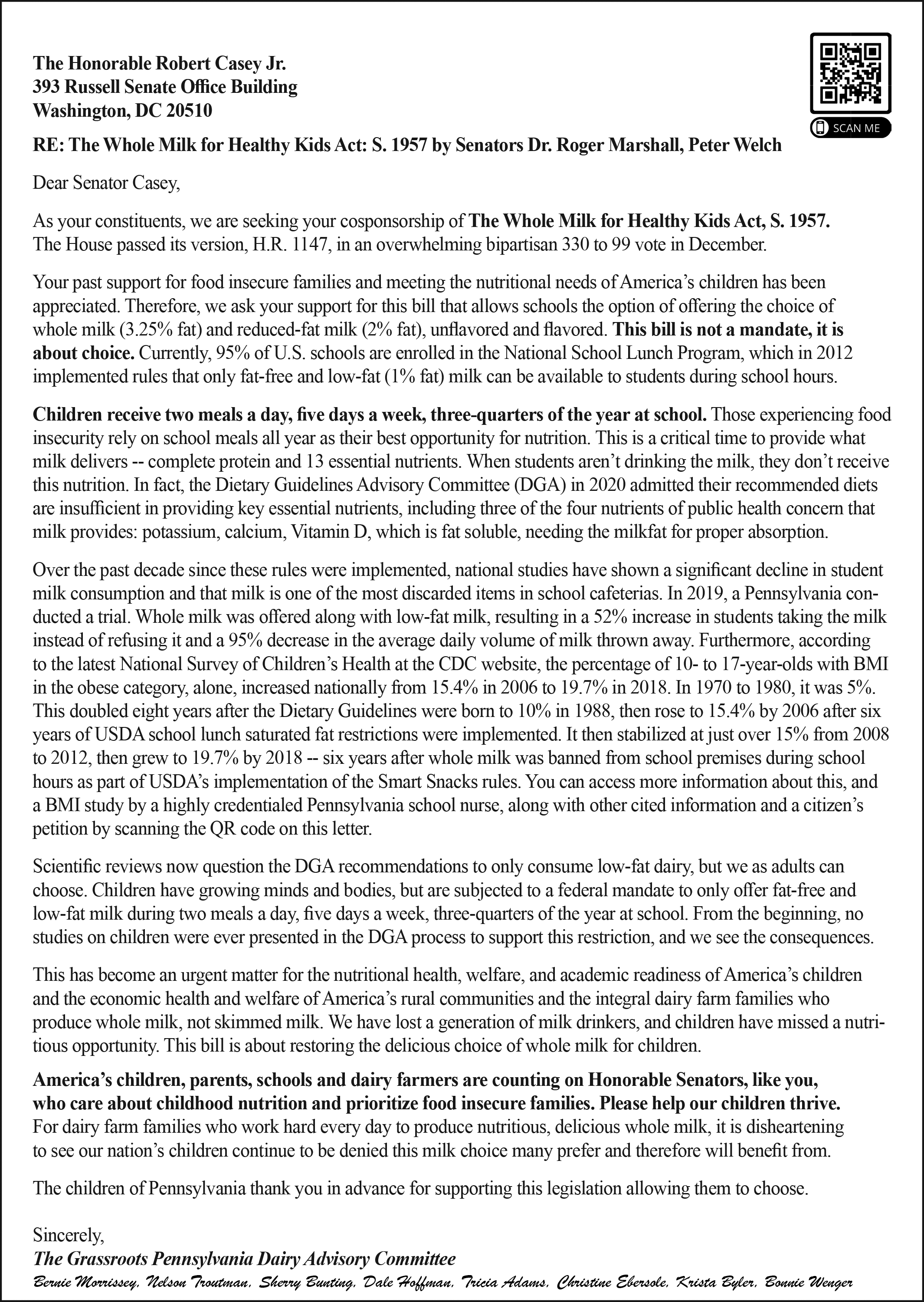
Letter-writing campaign launched by grassroots group seeking U.S. Senate cosponsors for Whole Milk for Healthy Kids Act

‘Will you write to your two?

By Sherry Bunting, Farmshine, January 12, 2024

EAST EARL, Pa. – In December, the House passed Congressman G.T. Thompson’s Whole Milk for Healthy Kids Act, H.R. 1147. This is a major milestone for this bill, which passed in the U.S. House of Representatives by an overwhelming bipartisan 330 to 99 vote.

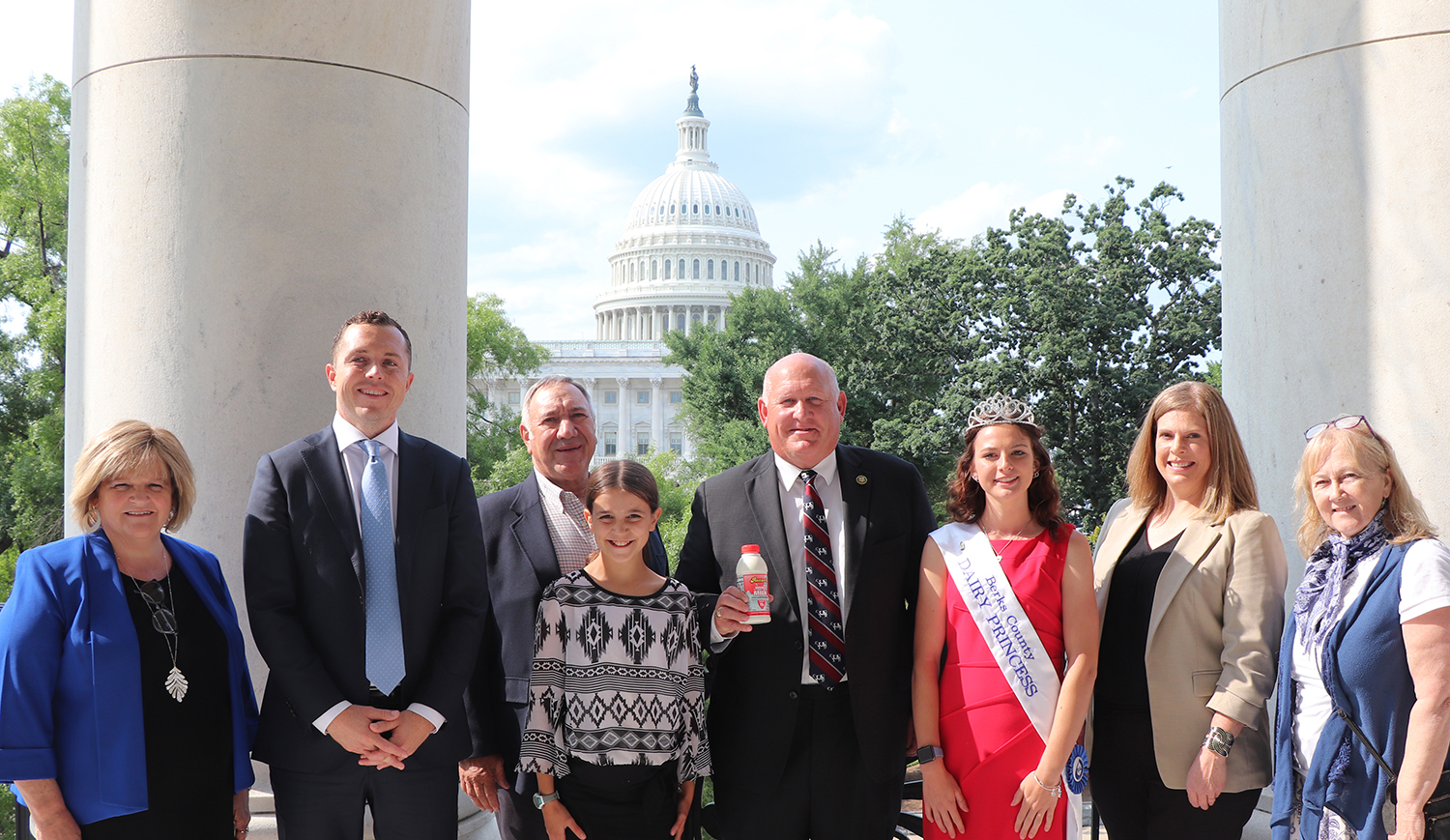
Pictured are a few of the members of the Grassroots Pennsylvania Dairy Advisory Committee and others who joined them for a staff briefing at the Capitol last summer. The focus now is on the U.S. Senate. From left are Christine Ebersole, school nurse in Blair County, Pa.; John Bates, then executive director of The Nutrition Coalition; Nelson Troutman, Berks County dairy farmer and his granddaughter Madelyn, 2022-23 Lebanon County Dairy Maid; Congressman G.T. Thompson (R-PA-15), the champion and prime House sponsor of the Whole Milk for Healthy Kids Act; Sara Haag, 2023-24 Berks County Dairy Princess; Krista Byler, school foodservice director in Crawford County, Pa.; and Sherry Bunting, Farmshine contributor and volunteer advocate for whole milk in schools. Photo courtesy Maddison Stone

“The next stop is the Senate, and we are going to have to work hard to get the Senate bill (S. 1957) to the floor and passed. In Pennsylvania, we need to work on our Senator Bob Casey. We already have Senator John Fetterman as a cosponsor of the bill, but we need Senator Casey also,” says Nelson Troutman, Berks County farmer and originator of the Drink Whole Milk 97% Fat Free baleboards that led to the 97 Milk effort and 97milk.com

“We also need more Senators to cosponsor S. 1957 from across the country,” adds Bernie Morrissey, retired agriculture advocate from Robesonia, Pa. “We need dairy farmers, agribusinesses, organizations and citizens all across the country to reach out to their Senators to cosponsor this bill.”

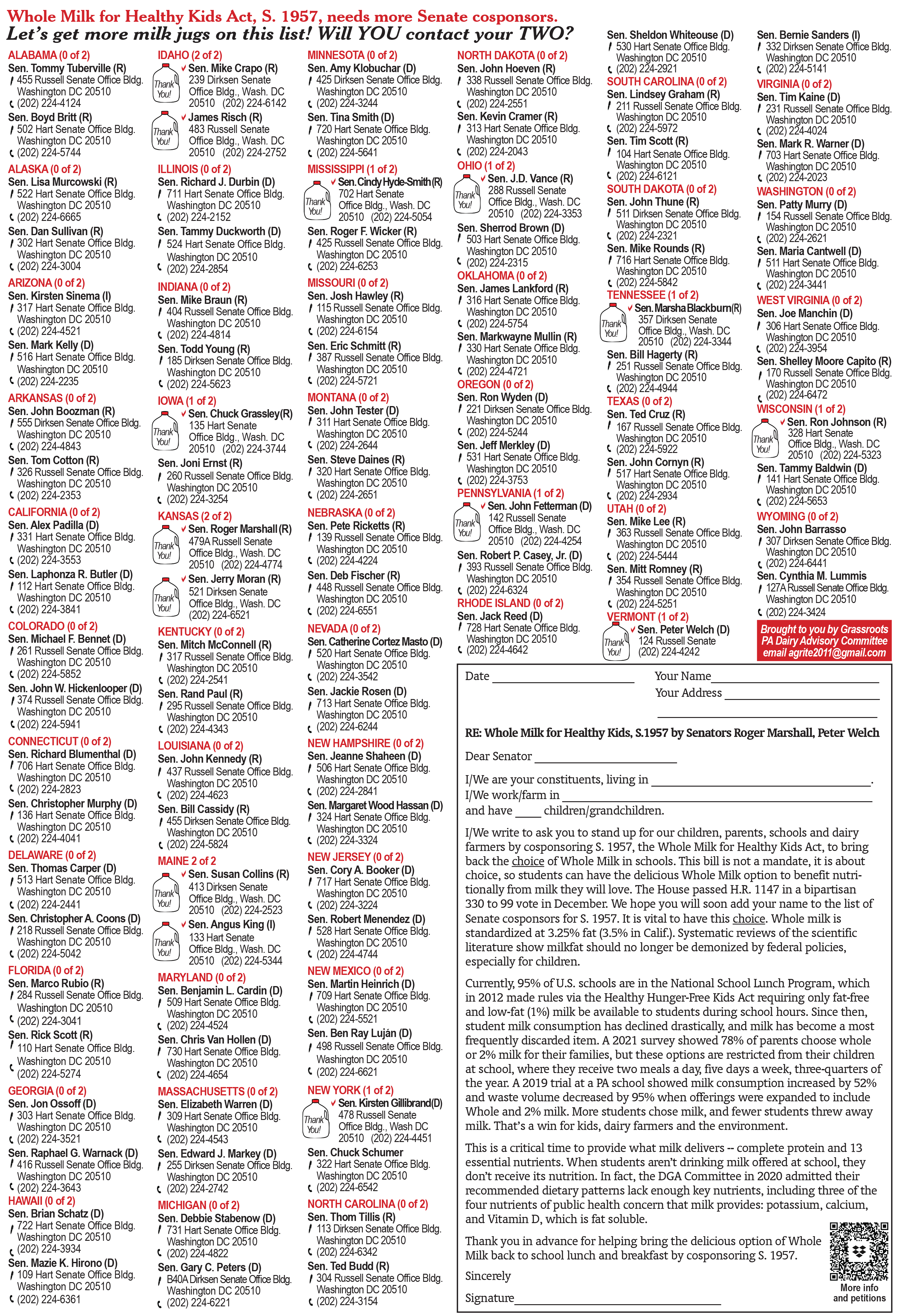
The Senate bill has 14 cosponsors from 11 states as of January 20th. They include Republicans, Democrats and an Independent as follows: both Dr. Roger Marshall (prime sponsor) and Jerry Moran of Kansas, Peter Welch (prime cosponsor) of Vermont, Ron Johnson of Wisconsin, John Fetterman of Pennsylvania, both James Risch and Mike Crapo of Idaho, both Susan Collins and Angus King of Maine, Kirsten Gillibrand of New York, Cindy Hyde-Smith of Mississippi, Chuck Grassley of Iowa, J.D. Vance of Ohio, and Marsha Blackburn of Tennessee.

“Every state has two United States Senators. We want every dairy farmer, every organization and business calling their two Senators. If they are already a cosponsor, thank them. If they are not a cosponsor, please write to them, and use our sample letter (or the template at the end of this article),” Bernie explains.

(Find the Washington addresses and phone numbers for your state’s Senators at https://www.senate.gov/ – Click the icon in the top left corner, select your state from drop-down menu to see how to contact them. Go to the end of this article to learn about email options. Some additional resources can be found in a folder at https://qrco.de/WholeMilk-Info )

“We have written to Senator Casey (see letter at top) to let him know how important this is to us, to the children of Pennsylvania, and to the dairy farmers. We need more people, organizations, and businesses to write to him also. If this doesn’t work, it will be our own fault for not getting involved,” he stresses, adding that constituent phone calls and visits are also welcome.

“We must also contact Senate Ag Committee Chairwoman Debbie Stabenow of Michigan. It is important that she knows how vital this bill is to come through her committee to the Senate floor,” Bernie notes. (The call-in notice below was published in the Jan. 5 Farmshine).

The Grassroots Pennsylvania Dairy Advisory Committee asks organizations and agribusinesses to use the sample letter on this page as-is or tailor it to their state’s Senators and also send it out to all their members or customers asking them to each sign it and send it to their two Senators as well.

“Let us know if you did this,” Bernie continues. “We want to know: Did YOU contact your TWO?” (Email Sherry Bunting at agrite2011@gmail.com or text or call 717.587.3706 to confirm you contacted your two.)

“After all,” Bernie observes: “If the dairy farmer’s next generation of consumers – the children — cannot choose milk they will love, what is your future as a dairy farmer? And what is their future as tomorrow’s leaders?”

“Whole milk is nutritious and delicious. Science supports this choice. It’s up to each one of us to get it done.”

-30-

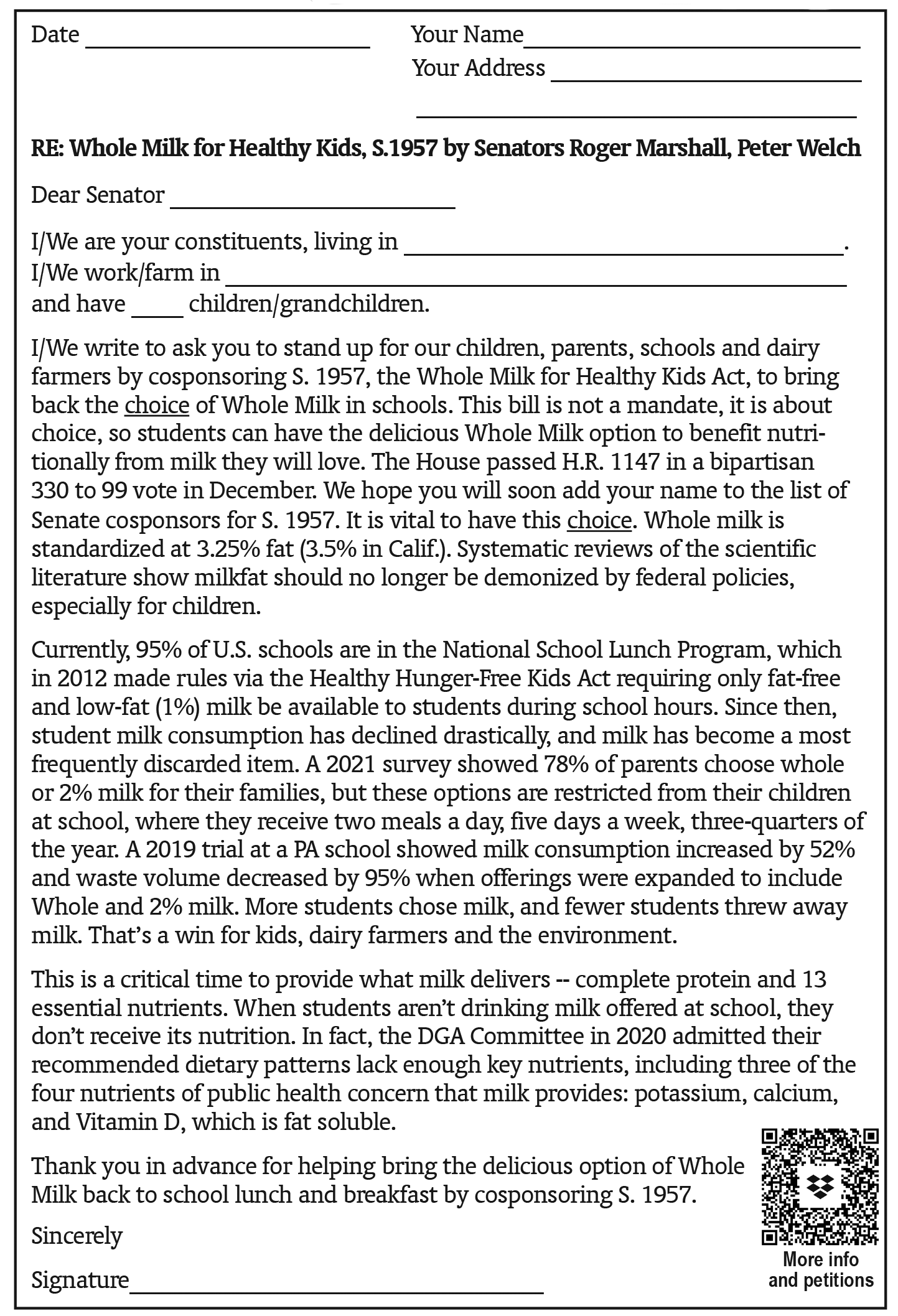
To email your Senators directly, go to https://democracy.io/  – type in your own address, city and zip code, click submit. Your two Senators and one Representative will show up with red checkmarks. Click ‘Write to them,’ and on the next screen compose the body of your letter. First, say who you are and where you live/work/farm and mention if you have children or grandchildren in school, if you wish. Sample text about cosponsoring S. 1957 can then be copied and pasted from the template below:

———————————————————————————————————————-

Dear Senator,

I write to ask you to stand up for our children, parents, schools and dairy farmers by cosponsoring S. 1957, the Whole Milk for Healthy Kids Act, to bring back the choice of Whole Milk in schools. This bill is not a mandate, it is about choice, so students can have the delicious Whole Milk option to benefit nutritionally from milk they will love. The House passed H.R. 1147 in a bipartisan 330 to 99 vote in December. We hope you will soon add your name to the list of Senate cosponsors for S. 1957.

It is vital to have this choice. Whole milk is standardized at 3.25% fat (3.5% in Calif.). Systematic reviews of the scientific literature show milkfat should no longer be demonized by federal policies,
especially for children.

Currently, 95% of U.S. schools are in the National School Lunch Program, which in 2012 made rules via the Healthy Hunger-Free Kids Act requiring only fat-free and low-fat (1%) milk be available to students during school hours. Since then, student milk consumption has declined drastically, and milk has become a most frequently discarded item. A 2021 survey showed 78% of parents choose whole or 2% milk for their families, but these options are restricted from their children at school, where they receive two meals a day, five days a week, three-quarters of the year. A 2019 trial at a PA school showed milk consumption increased by 52% and waste volume decreased by 95% when offerings were expanded to include Whole and 2% milk. More students chose milk, and fewer students threw away milk. That’s a win for kids, dairy farmers and the environment.

This is a critical time to provide what milk delivers — complete protein and 13
essential nutrients. When students aren’t drinking milk offered at school, they don’t receive its nutrition. In fact, the DGA Committee in 2020 admitted their
recommended dietary patterns lack enough key nutrients, including three of the four nutrients of public health concern that milk provides: potassium, calcium, and Vitamin D, which is fat soluble.

Thank you in advance for helping bring the delicious option of Whole Milk back to school lunch and breakfast by cosponsoring S. 1957.

Sincerely

————————————————————————————————————————–

House passes Whole Milk for Healthy Kids 330-99!

Education Chair Virginia Foxx: ‘Let’s end the war on milk. Pass the bill!’

Ag Chair G.T. Thompson praised as champion who doesn’t give up

Bill mooves on to U.S. Senate

By Sherry Bunting, Farmshine, December 15, 2023

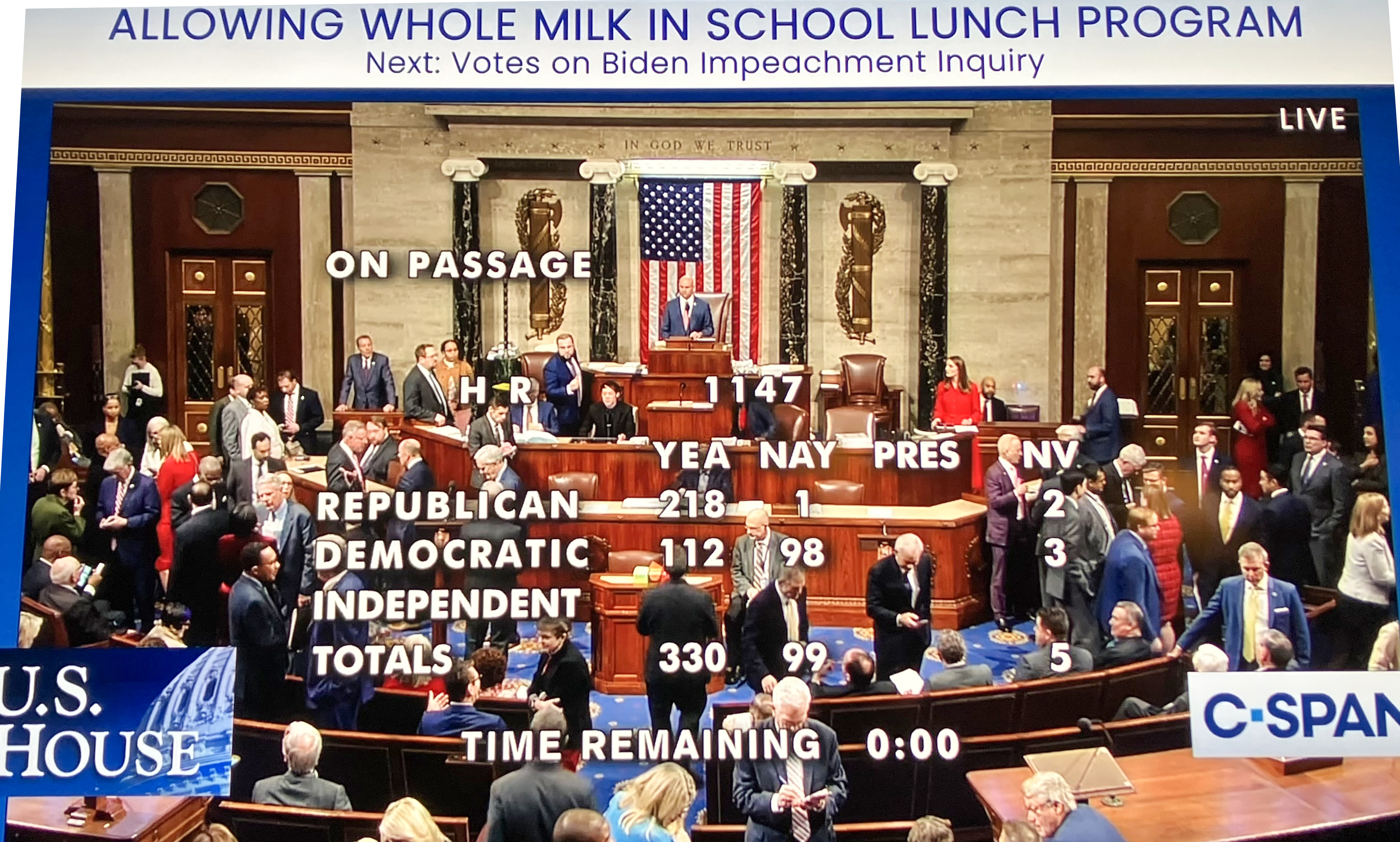
WASHINGTON — Wednesday, December 13th was a big day for dairy farmers and schoolchildren! After clearing the House Rules Committee Mon., Dec. 11, the Whole Milk for Healthy Kids Act, H.R. 1147, passed overwhelmingly in the U.S. House of Representatives.

The strong bipartisan 330 to 99 vote moves the choice of whole milk closer to school cafeterias across the nation with momentum for the next stop: the U.S. Senate, where S. 1957 has 12 bipartisan sponsors from 10 states – and more are needed.

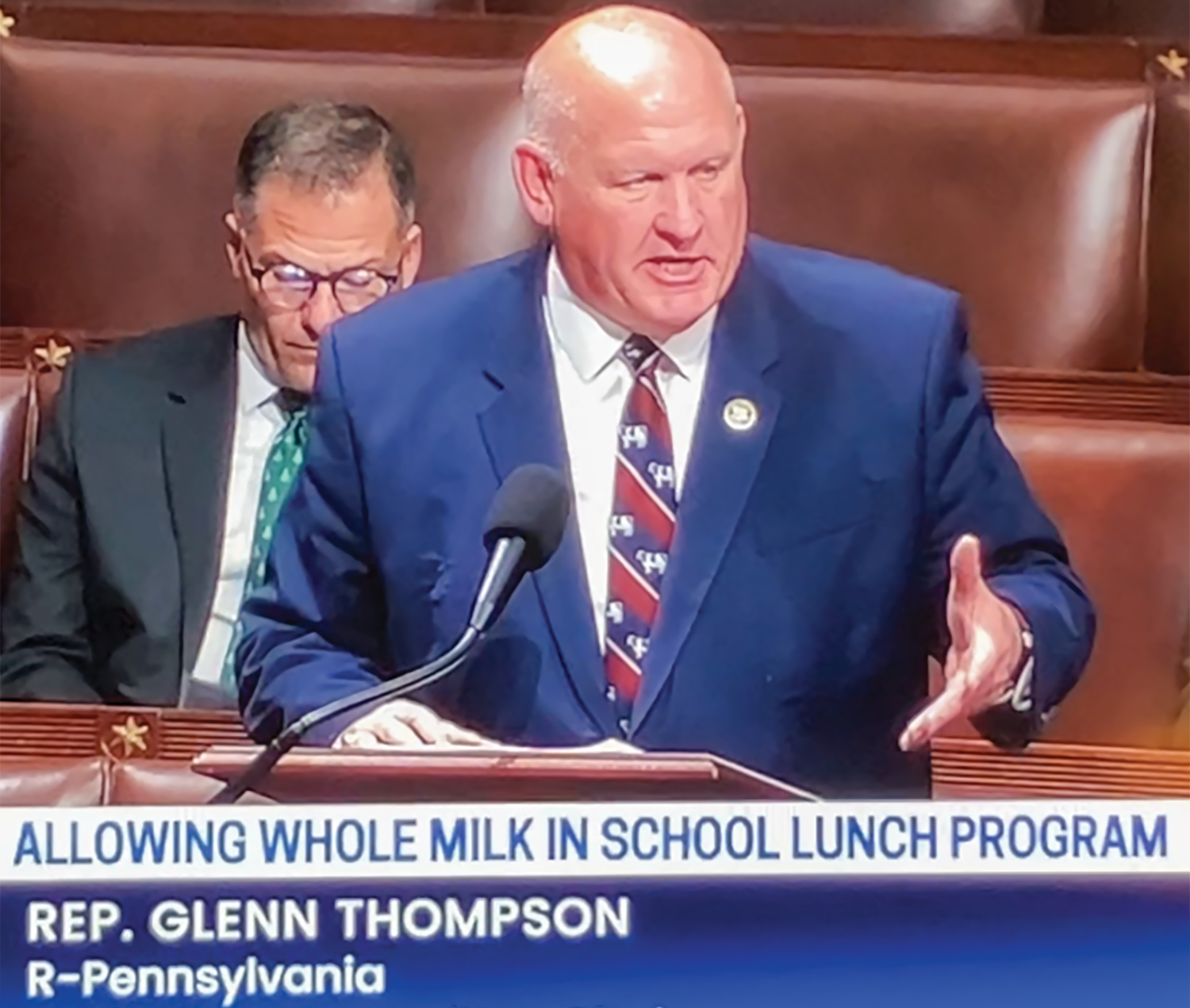
“Students across the nation deserve school lunches that are both enjoyable and nutritious, and this legislation achieves these goals,” said Whole Milk for Healthy Kids Act champion Glenn ‘G.T.’ Thompson (R-PA-15), Chairman of the House Agriculture Committee and senior member of the Education and Workforce Committee as he testified before the Rules Committee Monday.

“Milk is an essential building block for a well-rounded and balanced diet, offering 13 essential nutrients and numerous health benefits. However, outdated and out-of-touch federal regulations have imposed restrictions … Students are not able to access any of the milk’s essential nutrients if they won’t drink the milk being served to them. As we have seen over the last decade, there has been a steady decline in school milk consumption. This bill does not mandate anything. It gives schools, parents, and students the option of whole milk,” said Thompson.

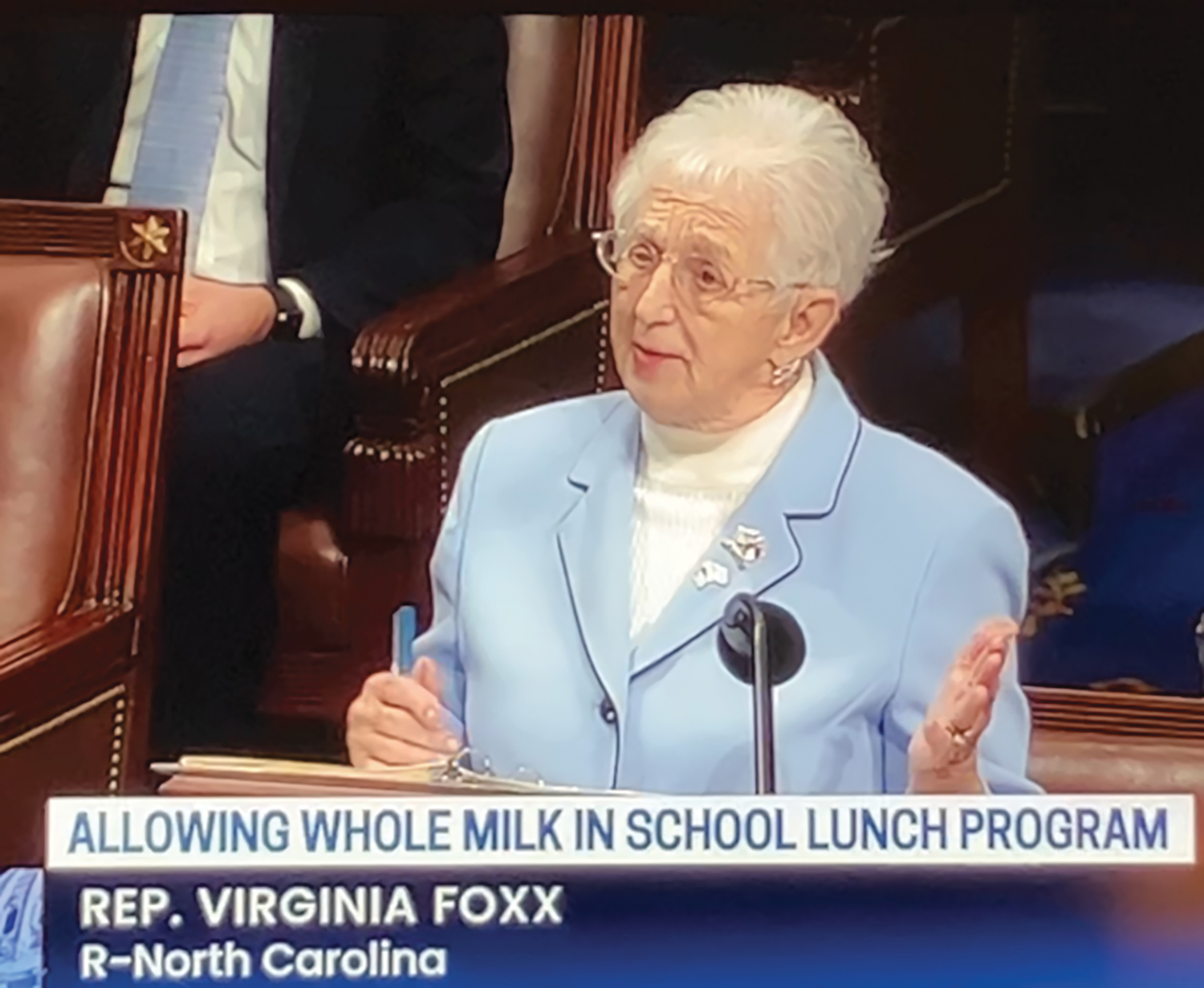
Education Committee Chairwoman Virginia Foxx (R-NC-5) was blunt on the House floor: “Whole milk isn’t just a beverage; it’s a vital source of nutrients essential for children’s growth. Denying access to its calcium, vitamin D, and protein threatens to inhibit their development. To the anti-milk advocates, I have one thing to ask of you: What do you have against milk? Let’s end this war on milk. Pass the bill!”

And they did. Resoundingly, the People’s House sent a strong message to the opposition that hung their hats on the flawed Dietary Guidelines for Americans (DGAs) as the end-all, be-all.

Education Committee Ranking Member Bobby Scott (D-VA-3rd) re-litigated his argument that was previously defeated in bipartisan Committee passage of H.R. 1147 in June. He kept referring to the DGAs. He insisted skim milk is the same as whole milk, nutritionally, but disregarded the roles of milkfat in key vitamin absorption and flavor to keep those nutrients from going down the drain.

Congress tied school meals closer to the DGAs in 2010, and the Obama-era USDA developed beverage rules in 2012 that banned whole milk — leading to the loss of a generation of milk drinkers and unprecedented increases in childhood obesity and diabetes — to the point where an April 2019 U.S. Senate hearing noted concern from U.S. military generals on fitness of recruits.

The Rules Committee asked why whole milk is being handled as a separate bill instead of within a Childhood Nutrition Reauthorization package. Thompson explained that the reauthorization has not occurred since the 2010 Healthy Hunger Free Kids Act created the issue.

“There is widespread bipartisan support in the Education and Workforce Committee, on the beverage part of this, milk in particular, because studies have shown the BMIs have gone up from what was a baseline prior to removing whole milk. Part of the urgency here is the significant impact that has had on the health of our youths,” he said.

Thompson cited the case study analysis of annual body mass index (BMI) data aggregated by Christine Ebersole RN, BSN, CSN, a school nurse from Martinsburg, Pennsylvania. She shared her data on 7th to 12th graders in a 97 Milk / Grassroots Pennsylvania Dairy Advisory Committee education session in Washington in June 2023 and in a State Senate hearing in Harrisburg in 2021

Her data showed the percentage of students in the overweight and obese categories, combined, grew from 39% in 2008 to 52% in 2021. This mirrors national trends demonstrating the anti-milkfat approach has not helped and may have harmed. The trends in fact have worsened ever since DGAs were created to infiltrate institutional feeding programs.

According to the latest National Survey of Children’s Health at the CDC website, the percentage of 10- to 17-year-olds with BMI in the obese category, alone, increased nationally from 15.4% in 2006 to 19.7% in 2018. In 1970 to 1980, it was 5%. This doubled eight years after the DGAs were born to 10% in 1988, then rose to 15.4% by 2006 after six years of USDA school lunch saturated fat caps were implemented, then stabilized at just over 15% from 2008 to 2012, then grew to 19.7% by 2018 — six years into the USDA ban on whole milk in schools.

The big milestone for whole milk in schools comes on the 5-year anniversary of Berks County, Pennsylvania dairyman Nelson Troutman placing his first painted roundbale “Drink Whole Milk (virtually) 97% Fat Free” in a pasture by a crossroads, which led to questions, publicity, and the creation of 97 Milk.

The 97 Milk educational organization has worked alongside the Grassroots Pennsylvania Dairy Advisory Committee on the legislative side. As a team, they continue to lead the charge for children to have the choice of whole milk once again at school. They are pleased to have worked with the Nutrition Coalition, founded by Nina Teicholz, author of Big Fat Surprise, and to see other national dairy and farm organizations join in support in recent years — from the American Dairy Coalition and Farm Bureau to National Milk Producers Federation and International Dairy Foods Association.

“We are grateful for this bill’s champion, the honorable G.T. Thompson. We thank him for not giving up,” said 97 Milk Baleboard originator Nelson Troutman in a Farmshine phone interview about the bill. “So many legislators get pounded from the top down, and they give up… and really, G.T. didn’t have a lot to gain out of this except helping the people. He did this for the kids, for the people, for the farmers. This is not a mandate. This is a choice, and I cannot emphasize the word choice enough.”

“The reason we got here is G.T.’s dedication to children having nutritious and delicious milk choices, and he brought it to the finish line in the House,” said Bernie Morrissey, chairman of the Grassroots PA Dairy Advisory Committee. “We have to keep working on the Senate, and 97 Milk has been a major part of educating people about this choice kids will have when the Whole Milk for Healthy Kids Act becomes law. The people on our grassroots committee and 97 Milk – we are a team. Our teams help each other. When you have a great team and teamwork, that’s how things get done.”

“This is a strong step in the right direction, and we have to keep going to our total destination,” said G.N. Hursh, Lancaster County, Pa. dairy farmer and chairman of 97 Milk. “We at 97 Milk totally support this bill. Whole milk choice in schools is clearly a national improvement for our future leaders. This is a win for good taste and excellent nutrition!”

Dale Hoffman and his daughter Tricia Adams, also members of the Grassroots Pennsylvania Dairy Advisory Committee expressed their gratitude. Three generations operate Hoffman Farms in Potter County, Pa.

“G.T. has really fought for this and put a lot of work into this. We appreciate what he has done in helping out the kids and the farmers,” said Dale in a phone interview. “When you look at the health situation, the trends have gone the other way without whole milk in the schools. Kids are dumping the milk, and you can’t blame them. They need those nutrients physically and mentally. Milk is one of nature’s most perfect foods. We produce it and grew up with it. Children should be able to choose it.”

Grassroots committee member Krista Byler, of Spartansburg, Pa. is a Union City school foodservice director and head chef. She said the Whole Milk for Healthy Kids Act “is huge for me because I have seen this from the startup, and I finally seeing movement in the school nutrition organizations. I see the whole picture coming together. I am amazed to see it reach this point that now students are much closer to having a milk choice that meets their nutritional needs,” she said.

Byler notes that the milk carton shortage affecting school districts this year has been a catalyst for support among her peers for the expansion of choices in milkfat levels.

“It’s sad to say, but as we struggle on the milk carton shortage, it forces people in my position to think outside the box and look at alternative service methods,” said Byler. “We are seeing students asking for other milkfat options, such as whole milk.”

She says she sees more of her peers today are excited about this bill and how it is worded in a way that makes it possible for them, as school foodservice directors, to implement — to actually offer whole milk as an option for students and not be financially penalized by the federal government for exceeding arbitrary and outdated fat percentages on the meal.

“I’m excited to be closer to having this choice to meet students’ needs in a way that is nutritious and that they find delicious. My students will be so excited,” said Byler. “When it becomes law, it will be a huge win for kids everywhere, and our waste will certainly go down.”

Look for more in Farmshine about this milestone, what’s next, and the three amendments that were offered and approved along with the bill. They are: 1) allowing school milk to be either organic or non-organic, 2) preventing school milk from Chinese state-owned enterprises, and 3) prohibiting USDA from doing its proposed elementary school ban on flavored milk.

What does USDA’s ‘transitional’ standard on school milk REALLY mean?

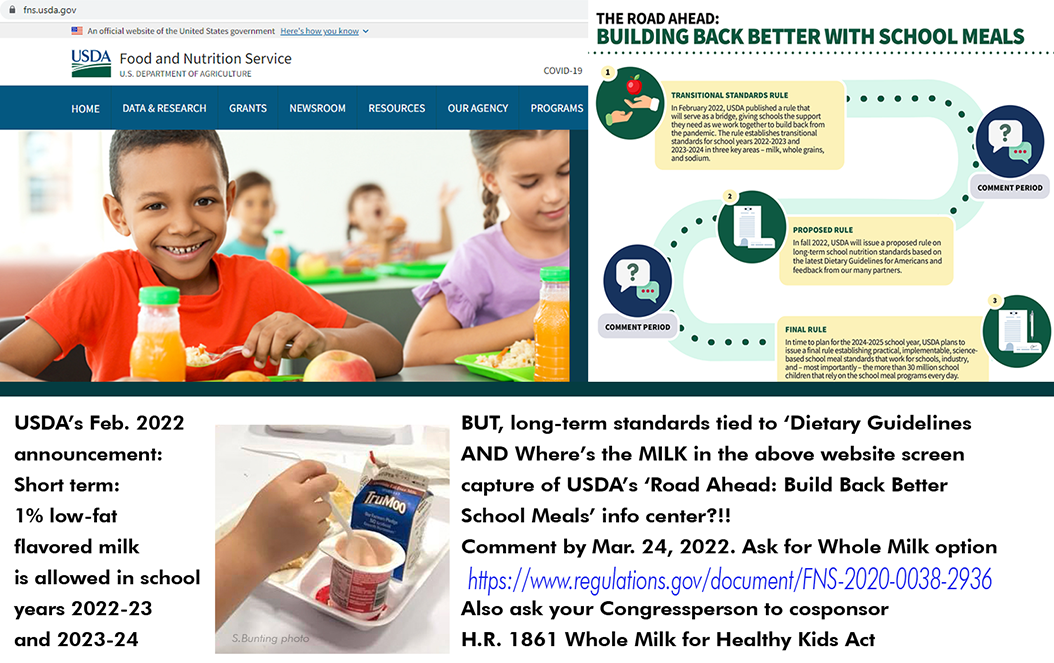
USDA announced a ‘transitional standards’ rule on Feb. 4 for milk, whole grains, and sodium for school years 2022-2023 and 2023-2024. In short, the transitional standards are only in place while USDA works with stakeholders to strengthen meal standards through a new rulemaking for the longer term. The proposed rule for the longer-term is expected in fall 2022 and will be based on the Dietary Guidelines for Americans 2020-2025 — effective school year 2024-2025. A “gradual implementation” plan for the long-term standards will be developed by USDA based on ‘stakeholder input.’ Read the transitional standards rule and comment here. Stay tuned for proposed long-term standards rule and comment period this fall. Even the American Association of School Superintendents (AASA) made a statement this week, believing the long-term standards will be ‘more stringent’ due to the Dietary Guidelines, and that “it is important to acknowledge that healthy meals are only healthy if students eat them.” That goes for the milk also. Milk consumption plummeted and waste skyrocketed since USDA’s 2012 fat-free/low-fat milk rules were set for both ‘served’ milk and competing a la carte offerings.

By Sherry Bunting, Updated (above) since published in Farmshine, Feb. 11, 2022

WASHINGTON — USDA announced ‘transitional’ nutrition standards on Friday, Feb. 4 that put low-fat 1% flavored milk back on the menu next school year, without the cumbersome waiver process. The announcement also delays the planned sodium reductions, helping the cheese side of school lunches. 

National Milk Producers Federation (NMPF) and International Dairy Foods Association (IDFA) came out with hearty applause for the news, thanking Congressmen G.T. Thompson (R-Pa.), author of the Whole Milk for Healthy Kids Act, and Joe Courtney (D-Conn.), author of the School Milk Nutrition Act, for their leadership on this issue through the years, using words that treat this USDA announcement as though it’s a done-deal, and all is good to go. 

But let’s hold our horses and examine the USDA announcement — described clearly as “transitional” based on schools “needing more time to adjust” post-pandemic. 

USDA stated that future nutrition standards will be proposed in the fall of 2022 as part of the administration’s “Build Back Better with School Meals, input will be gathered, and those will be the standards that go into place beginning with the 2024-25 school year. 

USDA also made it clear that these future long-term standards “will line up with the Dietary Guidelines” and input from schools and industry will be sought in “how to gradually implement them.”

In 2010, the Healthy Hunger Free Kids Act of Congress tied government food and nutrition programs, like school lunch, to the Dietary Guidelines. By 2012, under President Obama’s USDA — with Tom Vilsack at the helm then as now — had banned whole milk as an a la carte offering in the ‘Smart Snacks’ rules. At the same time, the Department required flavored milk to only be offered if it was fat-free and required unflavored milk to be either fat-free or low-fat 1%.

Milk sales plummeted and waste increased.

Then, the Trump-USDA in 2018, under Ag Secretary Sonny Perdue, “rolled back” some of the 2012 USDA standards, delaying the sodium rules and allowing low-fat 1% flavored milk to be offered through a waiver system at the state level. Some states, like Pennsylvania, made blanket waivers available, and many schools began offering low-fat 1% flavored milk over the next few years.

Then, a lawsuit took the Trump-era USDA to court for the rollbacks. The court ruled that the Trump-USDA did not use a proper public comment process before doing the rollbacks. So, beginning with the 2021-22 school year, the low-fat 1% flavored milk was again bumped out of school menus — except where waivers were sometimes granted for pandemic-related supply disruptions as justification for serving a higher fat milk.

Over the past year, USDA Food Nutrition Services has received comments about how to gradually implement nutrition standards to line up with the Dietary Guidelines on sodium, whole grains, and milkfat. Friday’s announcement on ‘transitional standards’ was accompanied by a detailed and lengthy rule that will be implemented July 1, 2022.

“USDA is giving schools time to transition from current, pandemic operations, toward more nutritious meals. In 2022, USDA will continue to prioritize supporting schools as they navigate the challenges of the pandemic and related operational issues,” the announcement said, adding that USDA “is also planning for the future by engaging with school meal stakeholders to establish long-term nutrition standards beginning in school year 2024-2025 that will be achievable.”

Ag Secretary Tom Vilsack was quoted in the announcement blaming the pandemic disruptions of the past two years for making schools “unprepared to fully meet those standards at this time” for milk, whole grains and sodium.

“These transitional standards are step one of a longer-term strategy to lean into the school meal programs as a crucial part of improving child health,” said Vilsack.

“Over the coming months and years, USDA will work closely with its school meal partners to develop the next iteration of nutrition requirements. We’ve got to find the right balance between standards that give our kids the best chance at a healthy future based on the latest nutrition science, and ensuring those standards are practical, built to last, and work for everyone,” Vilsack added.

The purpose of the “transitional” standards, according to the USDA announcement, is to “give schools clarity for the coming school years, allowing them to gradually transition from the extraordinary circumstances caused by the pandemic to normal program operations and meal standards that are consistent with the latest nutrition science, as required by law.”

Specifically, the transitional standards beginning with the 2022-23 school year are as follows:

1) Milk: Schools and childcare providers serving participants ages six and older may offer flavored low-fat (1%) milk in addition to nonfat flavored milk and nonfat or low-fat unflavored milk;

2) Whole Grains: At least 80% of the grains served in school lunch and breakfast each week must be whole grain-rich; and

3) Sodium: The weekly sodium limit for school lunch and breakfast will remain at the current level in SY 2022-2023. For school lunch only, there will be a 10% decrease in the limit in SY 2023-2024. (This affects school cheese).

The expressed linkage of long-term USDA nutrition standards to the anti-fat 2020-25 Dietary Guidelines was mentioned throughout the USDA announcement, giving an indication of where the school milk standards are headed, long-term.

That is, unless Congress acts to remove all doubt and make fuller fat milk — whole milk — a legal option for schools in the future.

For a true solution for the long-term, Congressional leadership is needed on the school milk issue.

-30-

The long and the short of it

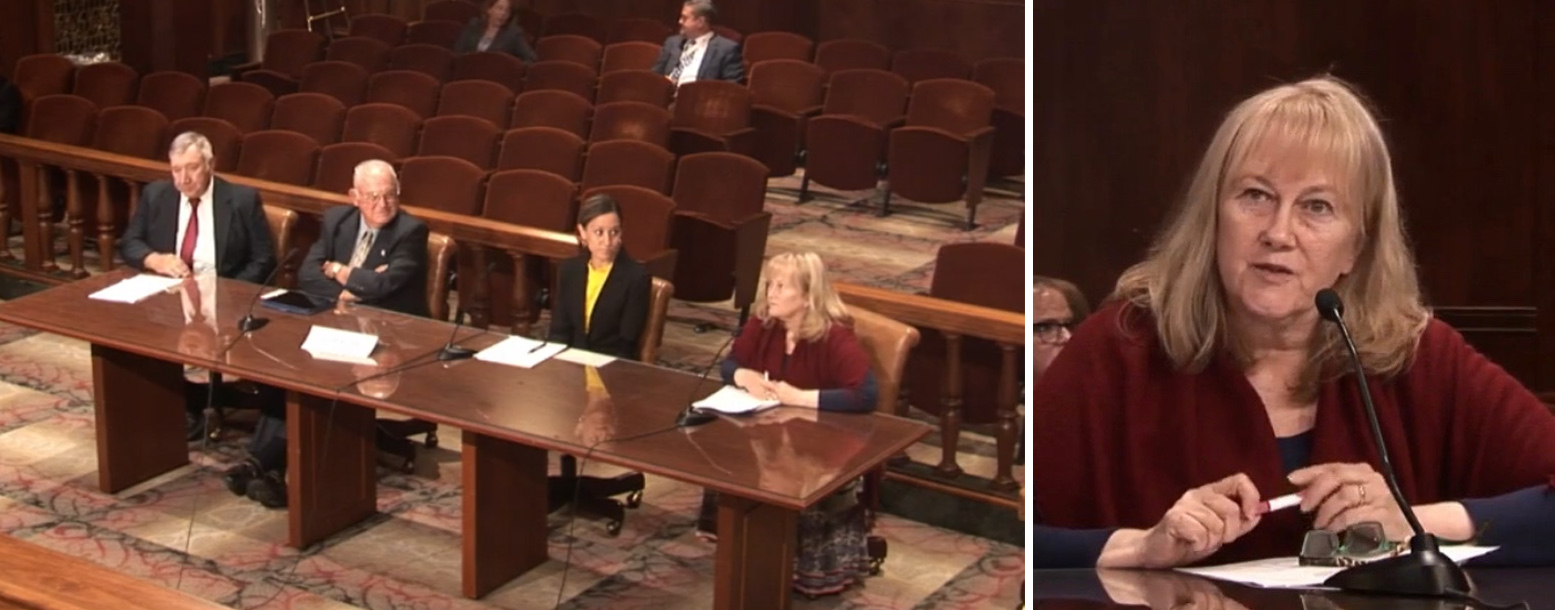
In all, 11 people testified during the Pennsylvania Senate Majority Policy Committee’s public hearing about the federal prohibition of whole milk in schools. I testified (right) in one of three panels, which also included (l-r) Nelson Troutman, Bernie Morrissey and Jackie Behr.
Below is the shorter, oral version of my full written testimony for the June 16, 2021 public hearing.

By Sherry Bunting

Good morning Honorable Chairman Scavello and Senate Committee. Thank you for inviting me to testify on whole milk choice in schools. My name is Sherry Bunting. As an ag journalist 40 years and former Eastern Lancaster County School Board member 8 years, not to mention as a mother and a nana, I see this from many sides.

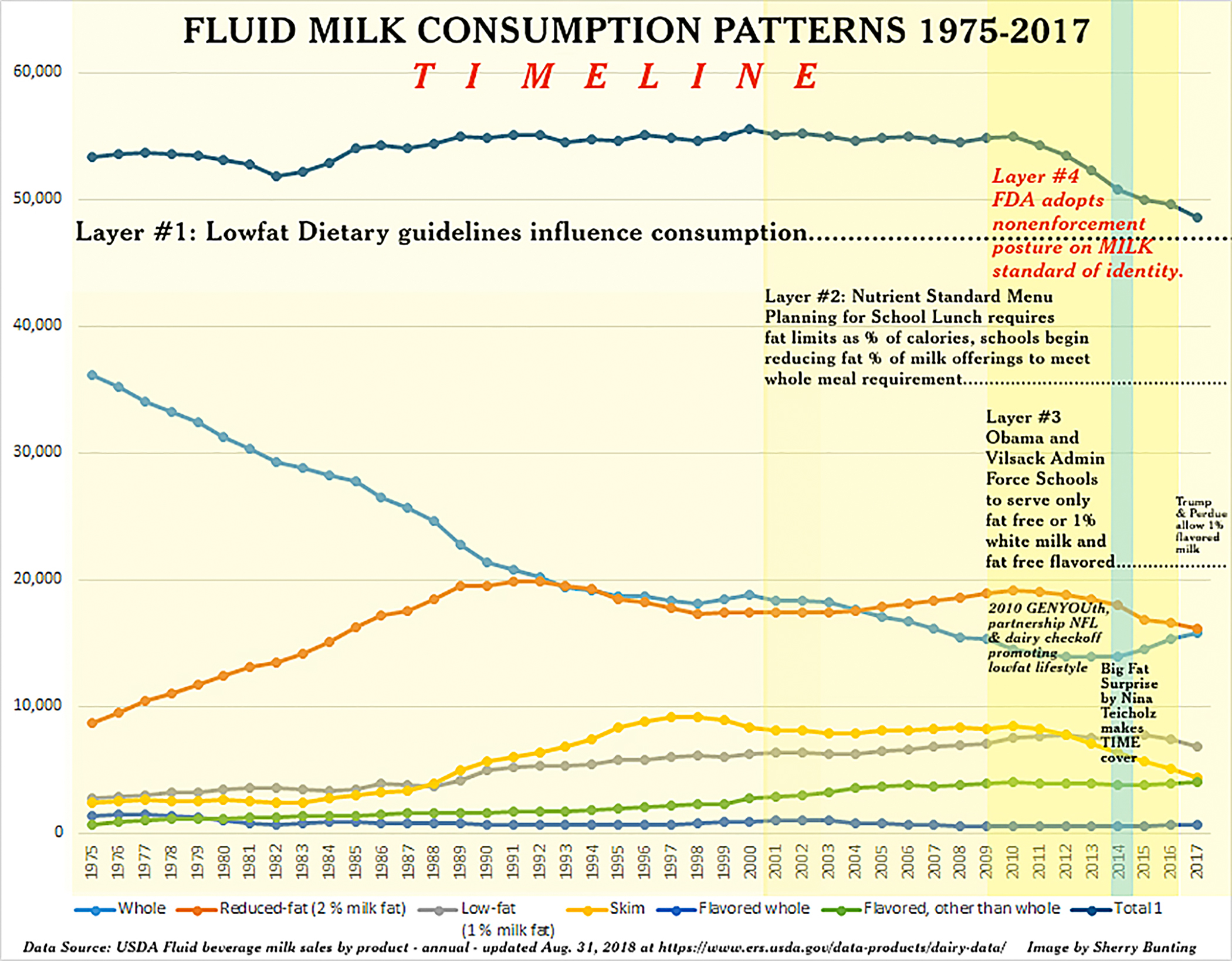
From the dairy side, fluid milk sales had their steepest decline over the past decade as seen in the chart (above) with my written statement. There was a decline slowly before that, but you can see the drop off after 2010.

That was the year Congress passed the Healthy Hunger-Free Kids Act.

Two years prior, the national dairy checkoff, which farmers must pay into, signed a memorandum of understanding with USDA to advance the department’s Dietary Guidelines using the checkoff’s Fuel Up to Play 60 program in schools — promoting only fat-free and low-fat dairy.

(Note: This was confirmed in a May 2021 dairy checkoff press conference, stating that “DMI has been focusing on the youth audience ever since making its commitment to USDA on school nutrition in 2008,” and that Gen Z is the generation DMI has been working on since the launch of Fuel Up to Play 60, which was followed by the formation of GENYOUth and the signing of the memorandum of understanding, MOU, with USDA Secretary Tom Vilsack in that 2008-10 time period.)

By 2011, USDA had their data showing schools that voluntarily gave up whole and 2% milk were meeting the Department’s Dietary Guidelines more consistently — on paper — as far as fat content across the ‘served’ meals and the ‘a la carte’ offerings, combined.

With this data, USDA targeted whole and 2% milk, specifically, for mandatory removal from school grounds during school hours by 2012.

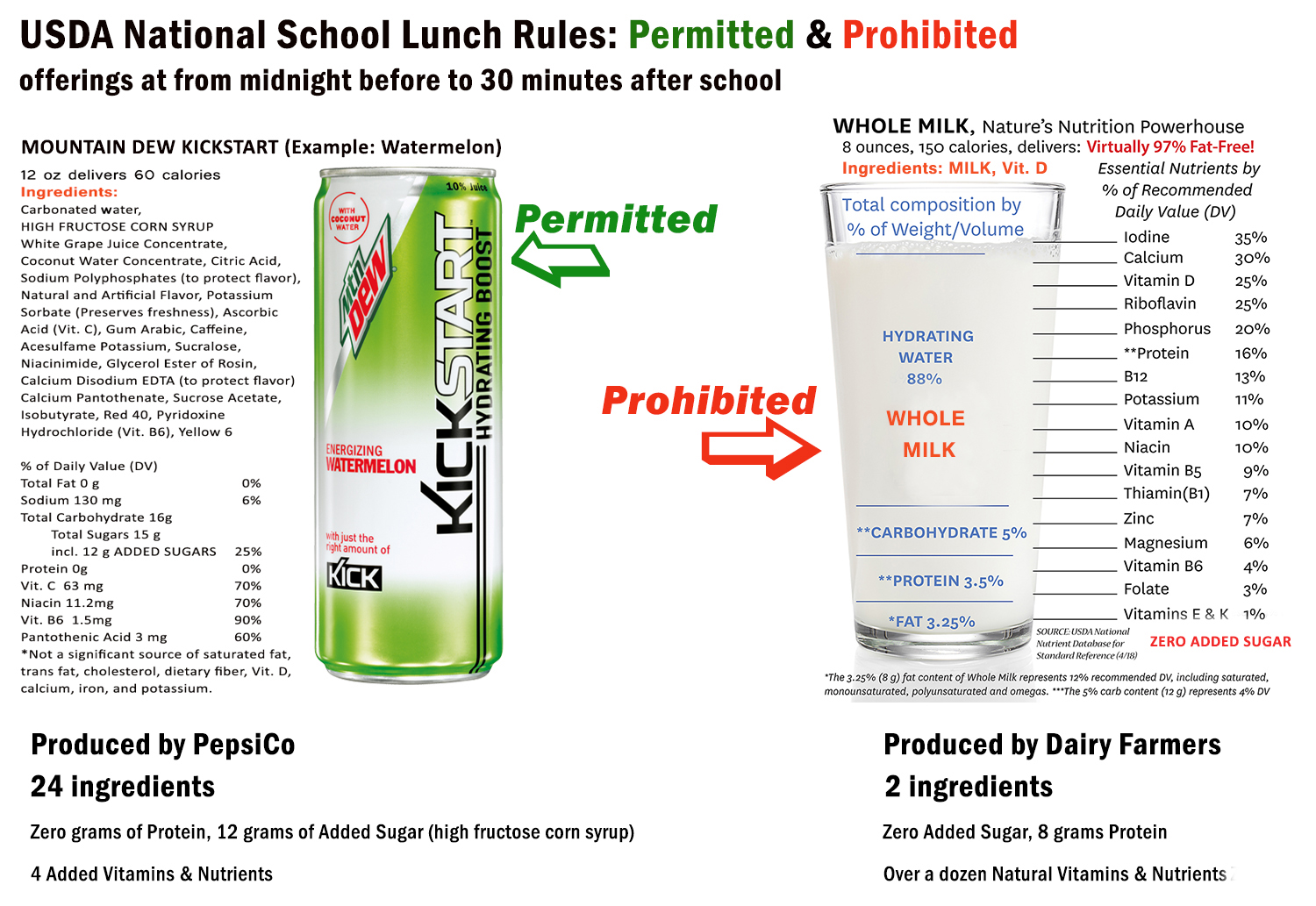
In fact, the ‘competing foods’ regulatory language at the time stated that even if you wanted to have a vending machine (with whole milk) as a fundraiser for FFA, it could only be open for two weeks for the fundraiser, maybe three. The rest of the time it had to be closed between the hours of midnight before the start of the school day and 30 minutes after the end of the school day.

This is how we are treating whole milk.

That looked good on paper, but the reality? Since 2008, the rate of overweight and diabetes has climbed fastest among teens and children after a decade of stipulations that you can only have whole milk until you’re 2 years old — and in the poorest demographics, who rely the most on school lunch and breakfast. This fact was acknowledged during a U.S. Senate Ag hearing on Childhood Nutrition in 2019, where senators even referenced a letter from 750 retired Generals sounding the alarm that young adults are too overweight to serve.

This is a federal and state issue, and I might add, a national security issue. Our state has an interest in the outcomes.

An example…

While Pennsylvania school doors are closed to whole milk — a fresh product most likely to be sourced from Pennsylvania farms — their doors are wide open to processed drinks profiting large global beverage and foodservice companies.

What the kids buy after throwing away the skimmed milk does not come close, as you’ve heard, to offering the minerals, vitamins and 8 grams of complete protein in a cup of whole milk. What’s on paper is not being realized by growing bodies, brains and immune systems. Not to mention the milkfat satiates and helps with absorption of some of those nutrients. A wise foodservice director who saw this coming told me in the late 1990s, while I was serving on the School Board, he said: “when too much fat is removed from a child’s diet, sugar craving and intake increase.” Some of the latest data show he was right.

School milk sales are 6 to 8% of total U.S. fluid milk sales. However, this represents, as you’ve heard, the loss of a whole generation of milk drinkers in one decade.

The Northeast Council of Farmer Cooperatives looked at school milk sales from 2013 through 2016 and reported that 288 million fewer half pints of milk were sold in schools during that period. This does not include half-pints that students were served but then discarded.

This situation impacts Pennsylvania’s milk market, farm-level milk price, and future viability — a factor in Pennsylvania losing 1,974 farms; 75,000 cows and 1.8 billion in production since 2009 – rippling through other businesses, ag infrastructure, revenue and jobs. We are, actually now, 8th in milk production in the U.S. If you go back 15 years, we were 4th. As of last year, we were passed by Minnesota.

The fat free / low fat push devalues milkfat as a component of the price paid to farms, making it a cheaper ingredient for other products. Our kids can have whole milk. There is no shortage of milk fat because if there was, producers would be paid a fairer price that reflected its value.

While the flaws in the Dietary Guidelines process would take a whole hearing in itself, Pennsylvania consumers see the benefits of milk fat in study after study and are choosing whole milk for their families. Redner’s Warehouse Markets, for example, reported to me their whole milk sales volumes are up 14.5%. Nationally, whole milk sales surpassed all other categories in 2019 for the first time in decades. So parents are choosing whole milk, and we saw that during Covid, and even before Covid.

Today, children receive one or two meals at school, and there’s a bill actually being considered by Congress to make three meals and a snack universal at school. Then what?

Many parents don’t even know that whole milk choice is prohibited. Even the New York State Senate Agriculture Committee, during a listening session on various issues, had a request brought up to legalize whole milk in schools. Three of the senators expressed their shock. One asked the person testifying — who is both a dairy farmer and an attorney — how could this be true? They thought she was joking.

(In fact, skepticism prompted Politifact to investigate. They confirmed, indeed, Lorraine Lewandrowski’s statement — “Make it legal for a New York state student to have a glass of fresh whole milk, a beautiful food from a beautiful land” — received the completely true rating on Politifact’s Truth-O-Meter because, yes, there is a federal prohibition of whole milk in schools.)

There’s just not enough people understanding that this is happening. Many people think the kids do have the choice, but they don’t.

My petition, that I started in late 2019, has nearly 25,000 signatures online. The links are with my written statement — and 5000 were mailed to me by snail-mail — so over 30,000 total. Nearly half of those are from Pennsylvania, and New York would be second as far as signatures, but we have signatures from every state in the nation.

When I looked through to vet it, to balance it and make sure we didn’t have people from other countries in these numbers, I started to see who was signing, from all walks of life — from farmers, to parents, to teachers, doctors, and on and on. Even state lawmakers, I recognized some names on there. The whole milk choice petition has opened eyes.

Thank you for this hearing, and please help bring the choice of whole milk back to our schools. Our children and dairy farmers are counting on us.

If I could just have a couple more seconds here, this is personal for me, as a grandmother. One of my grandchildren is lactose intolerant, or I should say, that’s how it would seem, but she has no trouble drinking whole milk at home. Her doctor says she may be lactose intolerant because she keeps coming home from school and having stomach problems at the end of the day. She now is not drinking the milk at school, just drinking whole milk at home. She can’t drink the skimmed milk, and there’s really some science behind that.

A professor in North Carolina (Richard C. Theuer, Ph.D.) mentioned this role of milk fat actually slowing the rate of carbohydrate absorption — which is the lactose. (As a member of the National Society for Nutrition and Adjunct Professor in the Department of Food, Bioprocessing and Nutrition Sciences at North Carolina State University, Theuer addressed this in at least two public comments on the Dietary Guidelines Federal Register docket, once in 2018 and then again in 2019.)

I’ll end my comment here, sorry I went a little over.

— At the conclusion of my time, Pennsylvania Senate Majority Policy Committee Chairman Mario Scavello said this was a good place for me to end my testimony because “what we’ve heard here today is children are not drinking the skim milk and the low-fat milk. We’ve got to get this corrected, the more I listen to this,” he said. Then, turning to Nelson Troutman on the panel in regard to the 97 Milk education effort, Scavello added: “By the way, I did see that 97 percent bale. Thank you for explaining it because I thought, what is this about? I could see the bales while driving on I-80.”

-30-

Dietary Guidelines catastrophe not understood by most

A15_32PG_FSN_06_26_20.indd

— Get involved by sending or phoning a comment to YOUR members of Congress and the Secretaries of Agriculture (USDA) and Health and Human Services (HHS) at this link https://www.nutritioncoalition.us/take-action/

By Sherry Bunting, Farmshine, June 26, 2020

WASHINGTON, D.C. — After months of warning about flaws in the 2020 Dietary Guidelines Advisory Committee process, the June 17th  final meeting of the 2020 Dietary Guidelines Advisory Committee (DGAC) unveiled their draft recommendations, which will become their official report at the end of this month for submission to USDA and HHS. That’s when their work will be turned into the official 2020-25 Dietary Guidelines in mid-July for public comment and implementation.

However, the DGAC process and flaws exposed in the weeks leading up to their final meeting — as well as during the final meeting itself — are prompting outrage and actionby various groups and citizens, but little media attention.

On the very same day, a separate panel of scientists published their state-of-the art review “Saturated Fats and Health: A Reassessment and Proposal for Food-based Recommendations” in the Journal of the American College of Cardiology. (Not to mention 20 review papers cited by the Nutrition Coalition.)

So far, media coverage of that has also been scant. Understandably, mainstream media are busy these days with pandemic and protests. But they also don’t seem to understand that these are not just “recommendations.” These Guidelines increasingly control the most vulnerable citizens in our county — children and families in need. The DGAC readily admits that its approved food patterns do NOT come close to meeting the nutrient needs. This shortcoming includes nutrients of concern identified by physicians.

Perhaps more disappointing is the lack of attention the farm and food media have given this whole deal. Where are their voices?

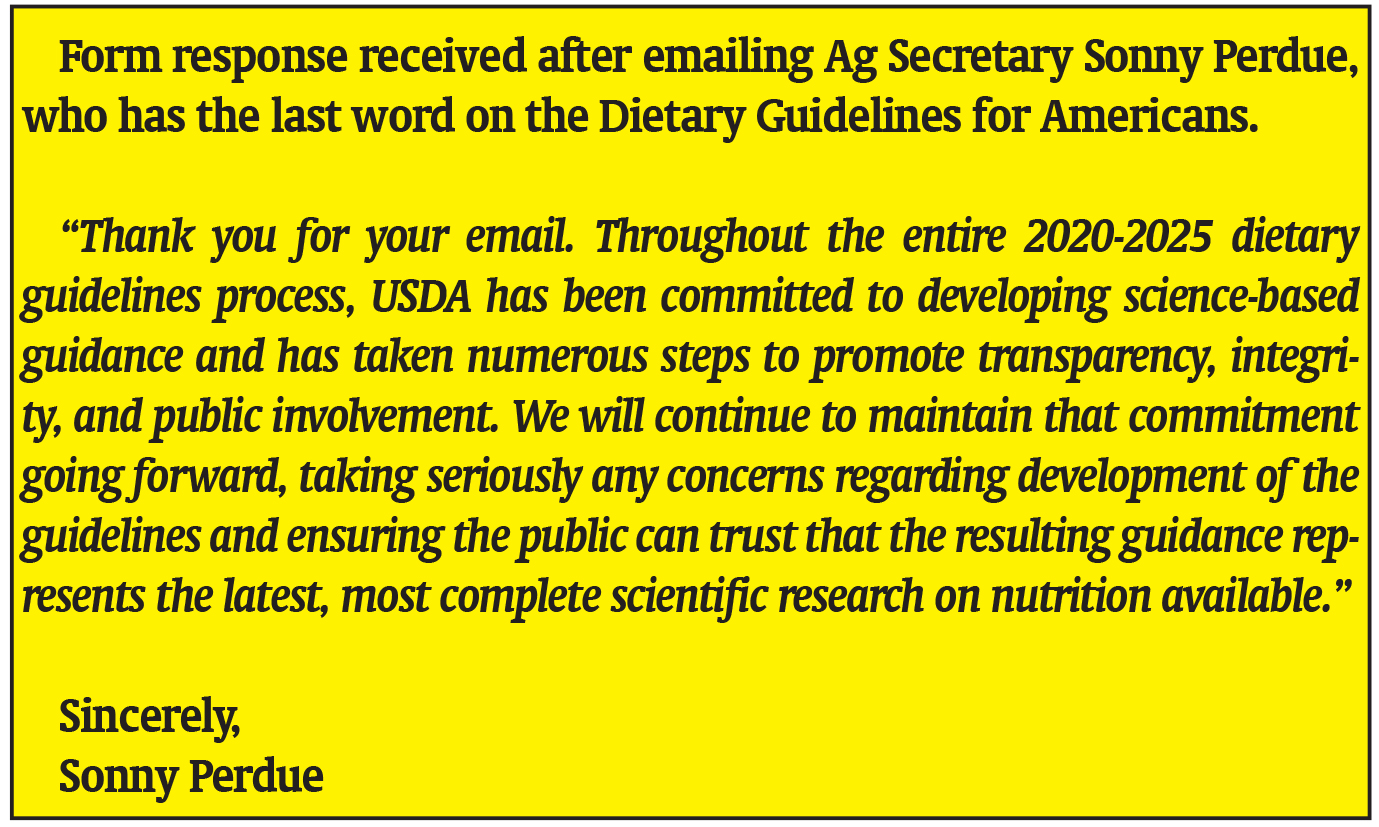
As emails are sent to USDA Secretary Sonny Perdue and HHS Secretary Alex Azar to delay the progress of the final DGAC report due to a number of unsettling factors, form letter “we are committed” responses are what is received.

First and foremost, the DGAC did not follow the Congressional mandate to include the most recent studies on questions about saturated fats. In fact the Committee did not include any key pieces of research conducted prior to 2010 and after 2016.

With cherry-picked studies, their recommendations keep government agencies in place as anti-fat overlords, even recommending reductions in allowable saturated fats as a percentage of calories from 10% (official recommendation) down to 7 or 8% (the committee’s preference) and pushing this agenda onto children under two years of age that up until now could still drink whole milk and eat the animal products that provide the nutrients the government-favored diets do not provide.

Second, the DGAC was found by a Corporate Accountability study to be “subject to undue industry influence that can jeopardize the health of all Americans — especially Black, Indigenous, people of color both during a pandemic and the mounting diet-related disease crisis.”

The corporate accountability brief makes the case that, “It’s time public health policies were set by independent public health professionals, not food and beverage corporations.”

Third, one or more members of the 2020 DGAC have anonymously blown the whistle on the process as being rushed, and lacking scientific rigor. And over 300 doctors and medical professionals have written to urge a delay to investigate these claims.

Fourth, the National Academy of Sciences, Engineering and Medicine has called for a redesign of the process, citing flaws in the criteria for screening research for consideration.

Fifth, the recommendations in a separate panel’s scientific review published in the Journal of the American College of Cardiology demonstrate that important food interactions have been ignored as well as the different biologic effects of saturated fatty acids in whole foods vs. processed foods.

Throughout the DGAC final meeting last Wednesday, the committee could not determine what foods were included and excluded in their own references to red meat, lean meat, and processed meat in different subcommittee reports and research findings. Ditto for milk (was it whole or lowfat?) and for enriched / refined grains and carbohydrates.

While the DGAC said it wanted people to focus on foods, not formulas, the report solidifies a continuation, or lowering of the current saturated fat “formula” applied to institutional feeding such as schools and daycares as well as foodservice menu-boarding.

In short, despite the fact that several foods that are relatively rich in saturated fatty acids — such as whole milk, full-fat dairy, dark chocolate and unprocessed meat — remain on the “avoid” list for the 2020-25 DGAC report, the separate panel of scientists point out the mounting evidence to the contrary — that these foods are not associated with increased cardiovascular disease or diabetes risk.

“There is no robust evidence that current population-wide arbitrary upper limits on saturated fat consumption in the US will prevent cardiovascular disease or reduce mortality,” the JACC paper states.

Quite simply, the DGAC did not follow its Congressional mandate, was not selected to include independent experts open to revisiting these long-held beliefs, and did not include important timely research to answer some of the most important questions.

At one point in last Wednesday’s meeting, it was obvious that some on the committee were frustrated by the inability of the approved diets to provide essential nutrients the medical community lists as nutrients of concern. And at one point, a mention of nutrient-dense foods containing saturated fats had one member of the unbalanced DGAC saturated fat subcommittee alluding to “new foods that are coming” as though a magic wand will fix these issues.

There it is. Without the saturated fat restrictions, and now reintroduction of cholesterol caps, how will billionaire investors in Impossible Meats, Beyond Meat, Perfect Day fake dairy proteins. and the like. get their products off the ground?

There are only two ways these silicon valley food technology investors will get a return on their investments: That is to use the anti-fat Dietary Guidelines and so-called “sustainability” benchmarks to reduce dairy and livestock production and consumption to make way for their fake food.

— Additional information: According to the Nutrition Coalition, the JACC paper comes after the group of scientists attended a workshop, “Saturated Fats: A Food or Nutrient Approach?” in February. Members of that workshop wrote a consensus statement, submitted two formal public comments to USDA, and sent a letter to the Secretaries of U.S. Departments of Agriculture and Health and Human Services (USDA-HHS) on their findings which concluded that limits on saturated fats are not justified and should be re-examined. The USDA-HHS have not yet replied to their letter.

— Get involved by sending or phoning a comment to YOUR members of Congress and the Secretaries of Agriculture (USDA) and Health and Human Services (HHS) at this link https://www.nutritioncoalition.us/take-action/

-30-