USDA inches closer to a national FMMO hearing

Consensus evident on some key proposals, such as returning the Class I mover formula to the ‘higher of’; but 10 packages contain over 30 variations and a few new biggies.

New to the party are:

  • AFBF wants to end ‘advance’ pricing of Class I;
  • NAJ wants uniform component-based pricing of Class I in all Orders;
  • MIG, made up of 7 fluid processors want organic exemptions, an assortment of new credits, and they want to knock $1.60 off the Class I differentials, forgetting they already get over $3.00 in ‘make allowance’ credits while not incurring those costs
  • California Dairy Campaign seeks an extension to consider alternative pricing formulas
  • Some proposals want to drop products (500-lb barrel cheese) from the FMMO formulas and price surveys, others want to add products (ie. 640-lb block cheese, mozzarella, unsalted butter)
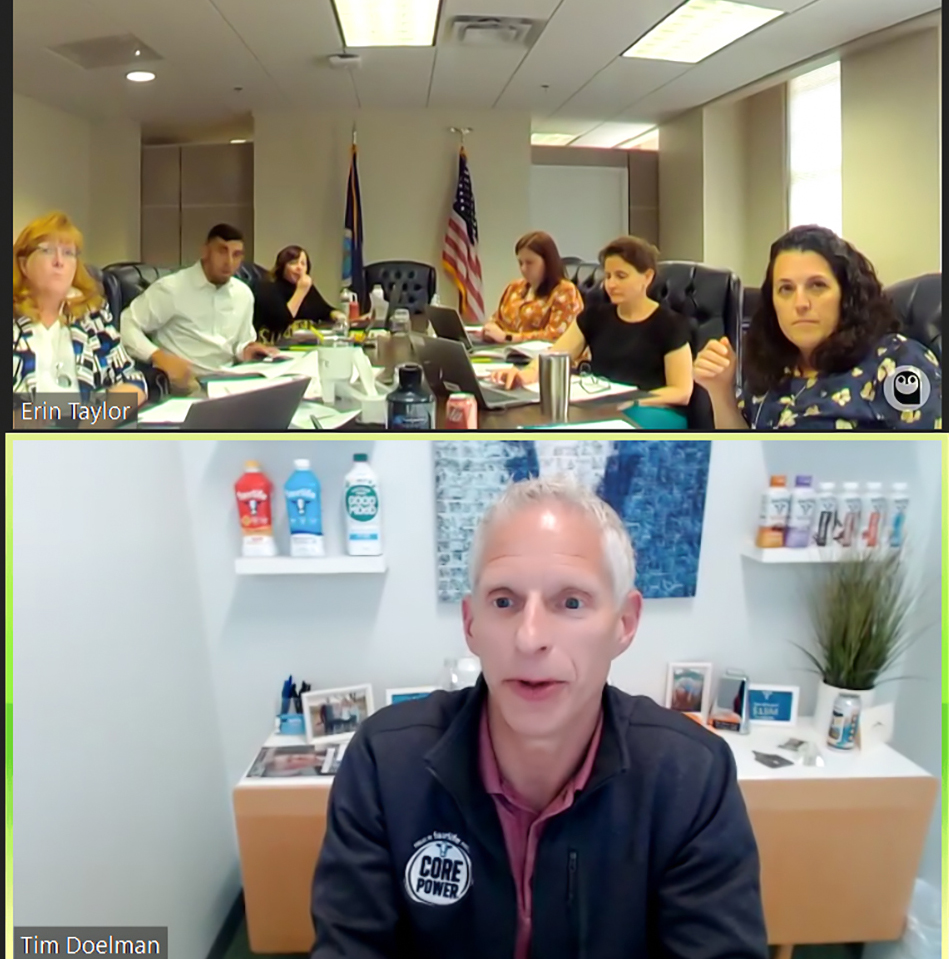
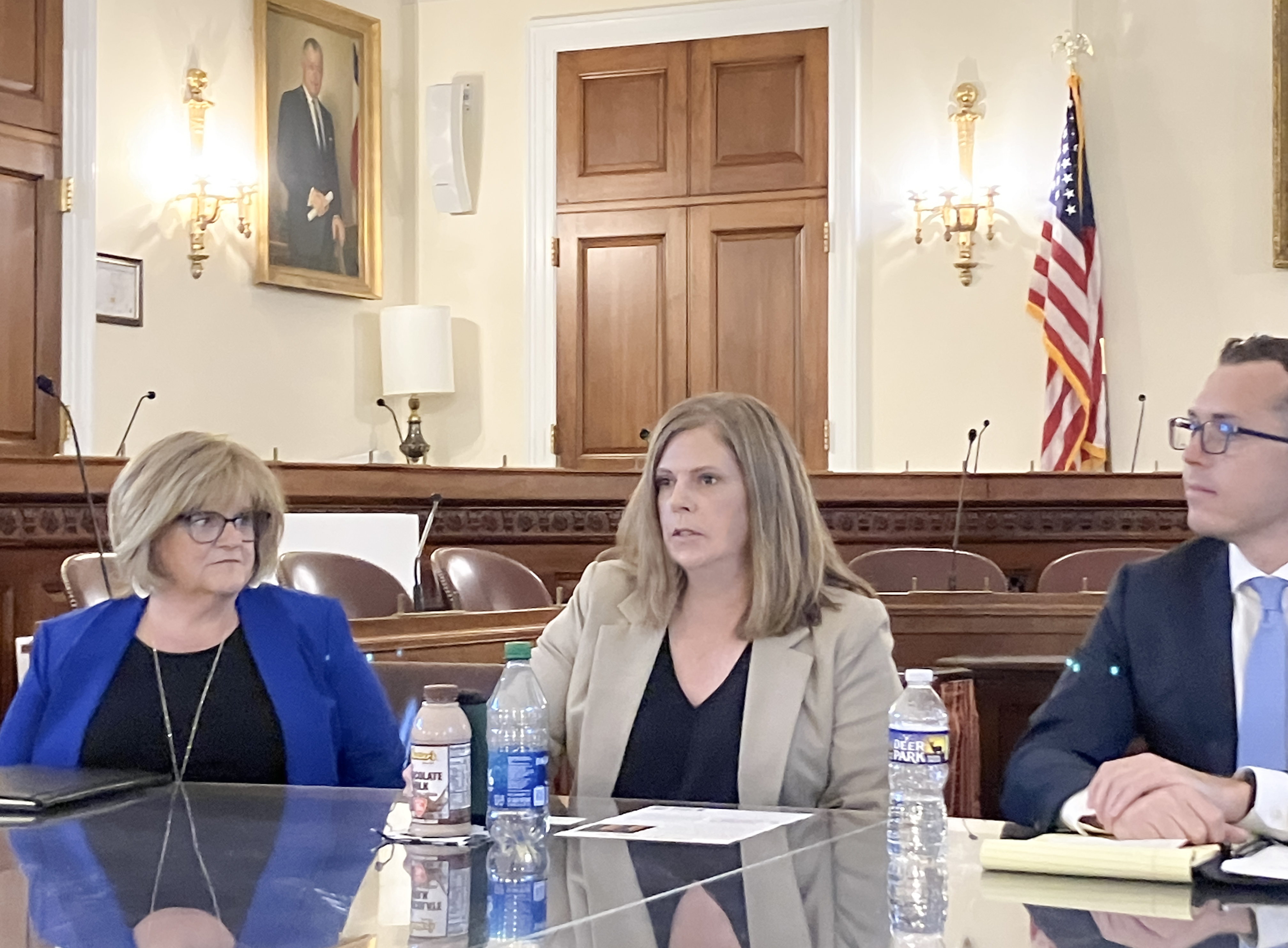
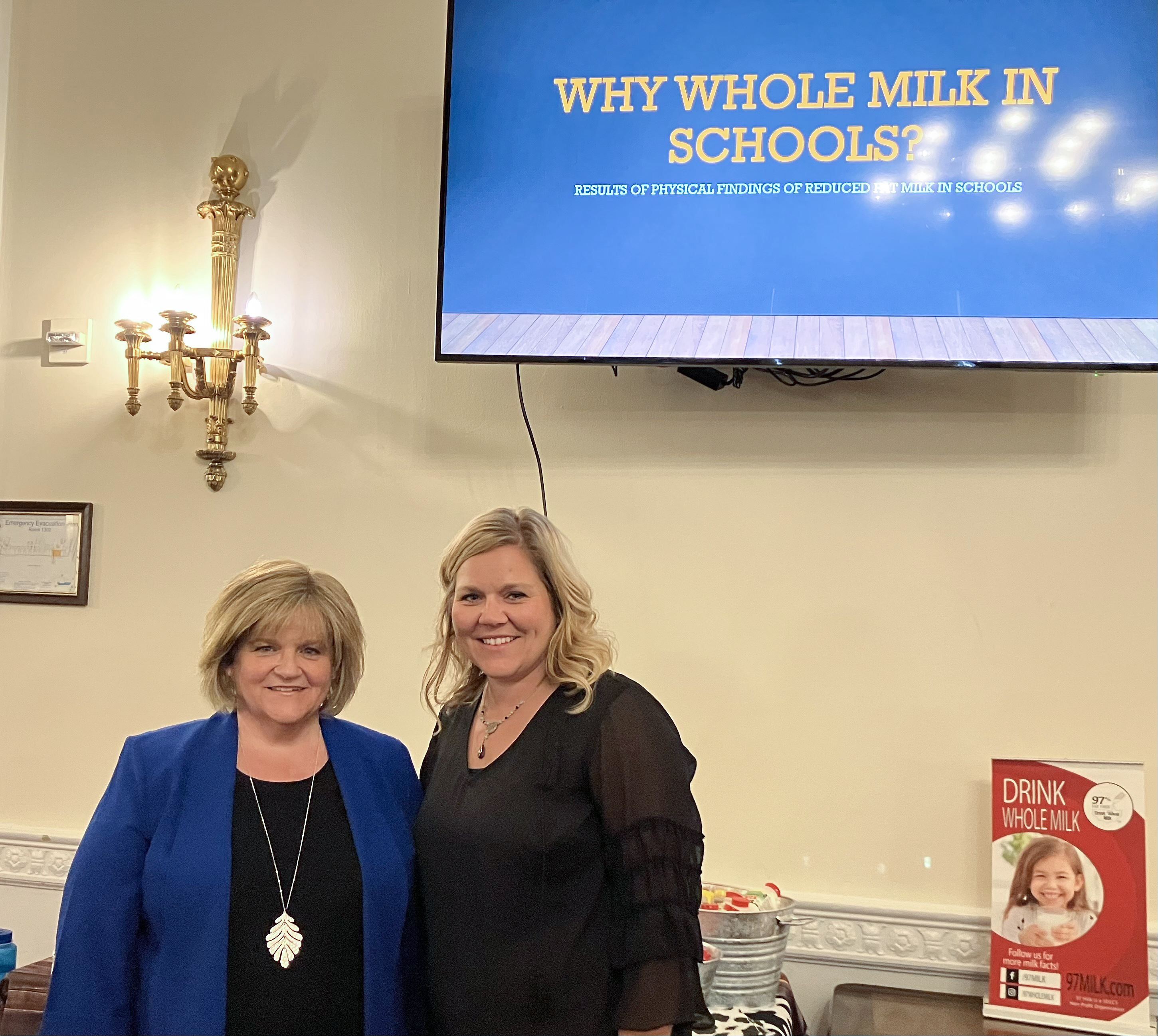
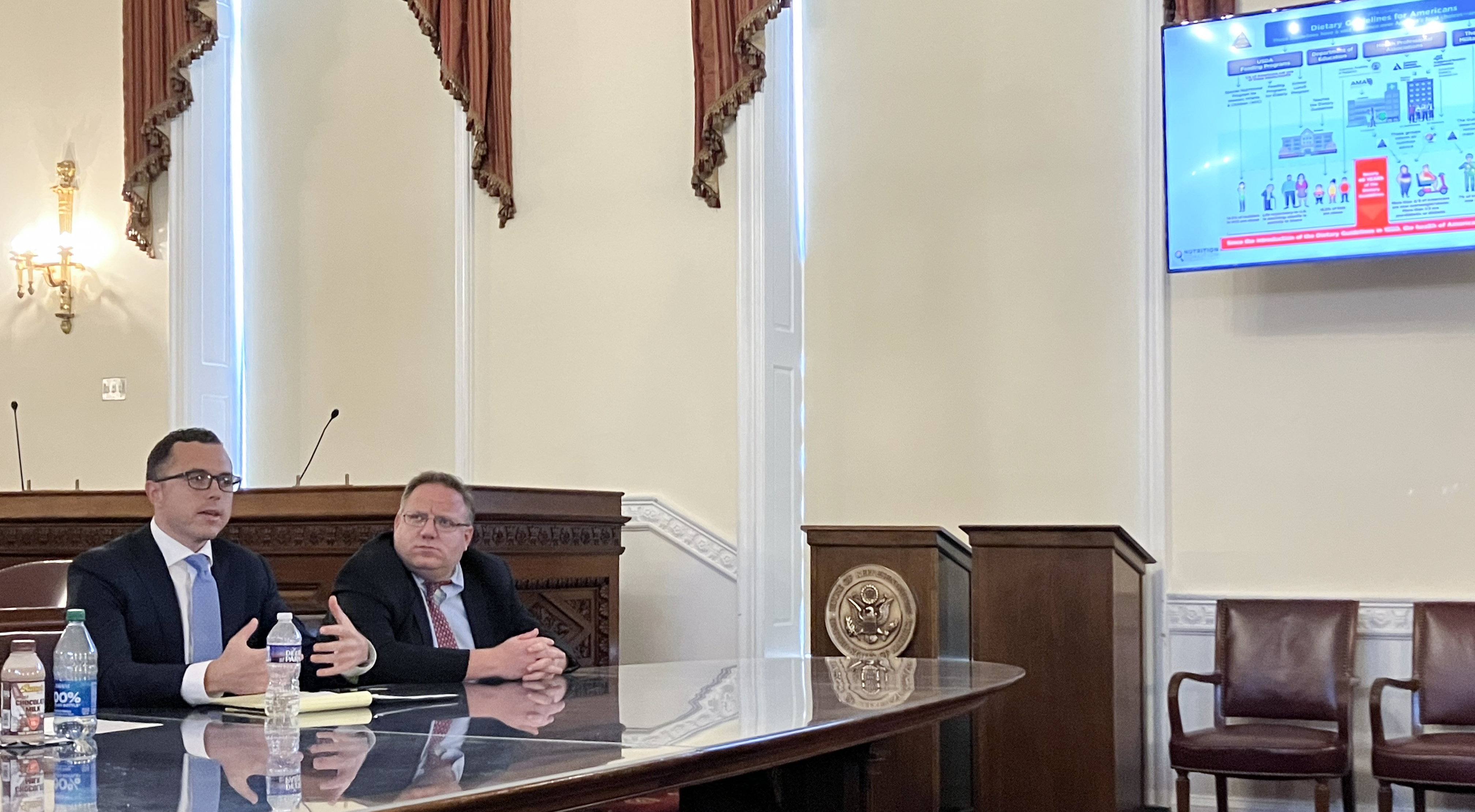
Dana Coale, Deputy Administrator (top, left) and Erin Taylor, Director (top, right) and their USDA Dairy Division staff engaged with leads for 30 hearing proposals contained in packages submitted by 10 organizations in the pre-hearing information session Friday, June 16. Tim Doelman (bottom), CEO of Fairlife, a Coca-Cola subsidiary, explains one of the Milk Innovation Group’s (MIG) proposals that bucks the consensus on going back to the ‘higher of’ in setting the Class I mover. MIG wants to keep the averaging method with their ‘Floored Adjuster” proposal. He said returning to the ‘higher of’ prevents processors from forward-pricing their milk like soda and other beverage companies do for other ingredients. MIG also wants to knock $1.60/cwt off the current Class I differentials, and they want an assortment of new credits (obviously forgetting that fluid milk processors already get more than $3/cwt in various Class III and IV product manufacturing credits. These so-called ‘make allowances’, are built in as credits on the Class I and II prices also, for costs that fluid processors do not incur.) Zoom screen capture

By Sherry Bunting, Farmshine, June 23, 2023

WASHINGTON – In preparation for a potential national Federal Milk Marketing Order (FMMO) hearing, the Dairy Division of USDA’s Agricultural Marketing Service had a pre-hearing information session Friday, June 16. During the day-long session, held virtually through zoom, Deputy Administrator Dana Coale, Director Erin Taylor and others heard presentations of the more than 30 pieces contained in proposals submitted by 10 organizations, and they engaged in questions for clarification as well as accepting requests for data before the 10 proposals were to be modified for final submission June 20.

While the Secretary of Agriculture has not yet declared a hearing, the AMS Dairy Division has publicized the timelines and action plan.

Coale stated that mandated time frames by Congress, govern the amount of time from the point at which a proposal is received to the end of a hearing 120 days later. “All of our proposed time frames are based on keeping us focused to meet the 120-day mandate,” she said.

“Once submitted, USDA will further evaluate them, and the Secretary will make the determination,” said Coale. “If the Secretary intiates rulemaking, you will see a hearing notice containing all proposals to be heard. This will be mid- to late-July, and we would expect to move forward – if a hearing is initiated – on Aug 23 as the start of that hearing.”

The location will be Carmel, Indiana, and because of the new time constraints, new procedures will be put in place, she said.

“Expect to see a very different process than customarily done to create a very efficient process while maintaining transparency and a robust evidentiary record,” she explained, noting this includes a process for submitting testimony in advance, and a naming vs. numbering convention for exhibits.

After the hearing is noticed, there will be another information session, said Coale.

“It takes an entire village,” she stressed. “Ex parte communication does not begin until a hearing is noticed, so if you have questions or need explanation or discussion on data for submitted proposals, contact us at fmmohearing@usda.gov

The marquis proposal is the comprehensive package submitted by National Milk Producers Federation (NMPF) that set into motion the Secretary’s call for other proposals. The NMPF package has five proposals, previously reported in Farmshine through various articles since the October stakeholders meeting hosted by American Farm Bureau in Kansas City in October 2022.

Retired cooperative executive Calvin Covington is the lead on one of the five NMPF proposals, which seeks to update skim components to more accurately reflect the percentage of protein, nonfat solids and other solids in a hundredweight of milk today.

Covington said he also expects to testify on the NMPF proposal to raise Class I differentials with a new pricing surface map, something that has not been done since 2007-08, and the proposal to return the Class I base price ‘mover’ to the ‘higher of’. The current average plus 74 cents method has been in place since May of 2019, which produced unintended consequences and losses for dairy farmers.

In a phone interview Tuesday, June 20, Covington explained that after more than a year of task force meetings and discussions via NMPF with its members and their farmer members, “We’ve gotten this far, and we have got a consensus,” he said of the NMPF package.

In addition to updating skim components and Class I differentials and changing the Class I ‘mover’ back to the ‘higher of,’ the NMPF package includes a proposal to modestly update make allowances and to discontinue the barrel cheese price in the Class III protein formula while allowing 45-day forward-priced nonfat dry milk and dry whey to be included in the formula price survey instead of the current 30-day forward-price limit.

“It took a year, and that’s pretty good, to have coast-to-coast consensus on five major proposals,” said Covington. “Then you also read the Farm Bureau’s proposal and there’s pretty good consensus there too.” 

Central to both the NMPF package and AFBF package of proposals is strong support for returning the Class I mover formula back to the previous ‘higher of’ method.
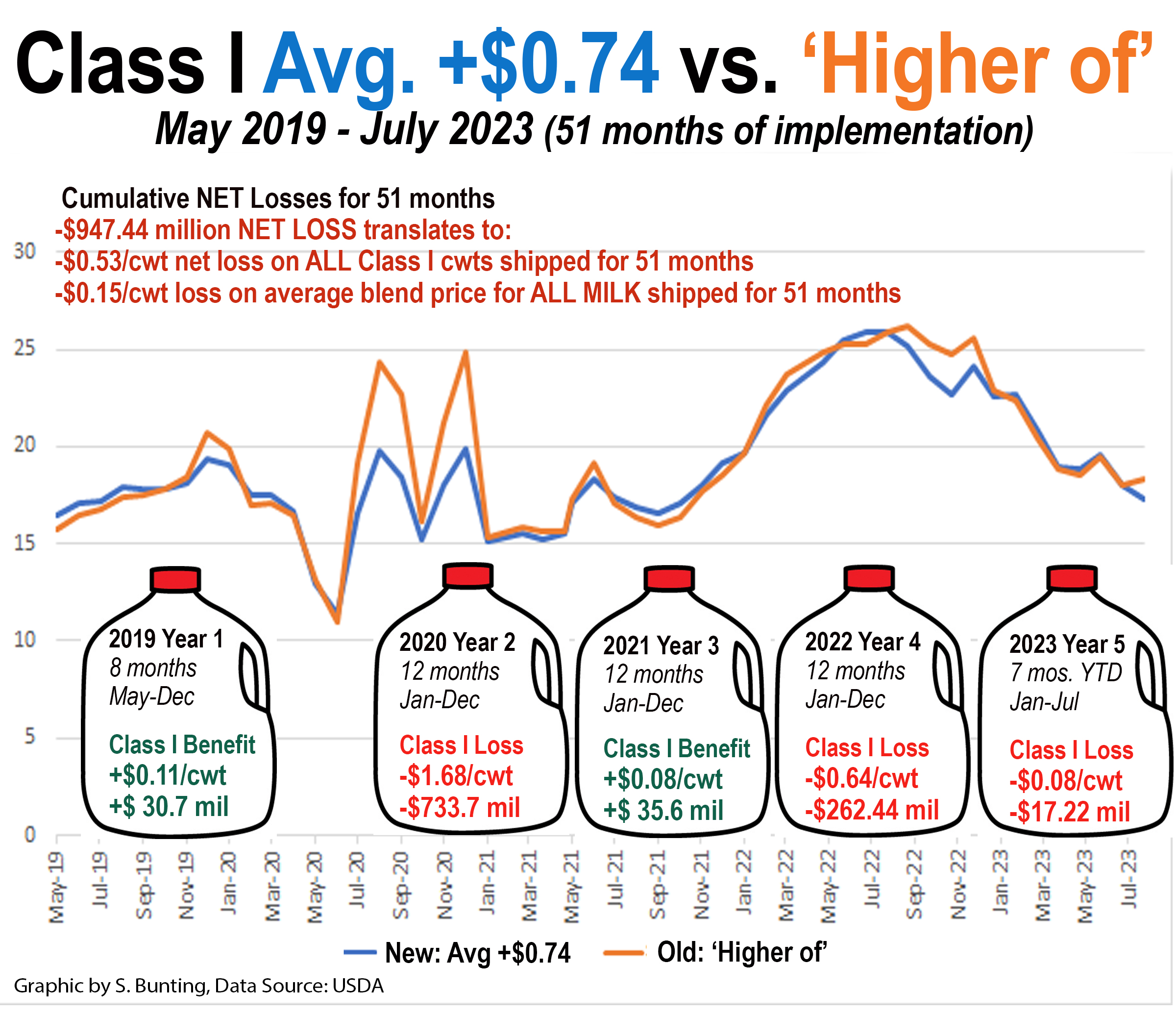
(Farmers have had a cumulative net loss of nearly $950 million, equivalent to losing 53 cents on every hundredweight of milk shipped for Class I use for the past 51 months or 15 cents per hundredweight on the FMMO blend price for all milk across all 51 months — since the change to ‘average of’ was made in May 2019 via the 2018 Farm Bill. In fact, the July 2023 Class I mover was announced June 22, 2023 at $17.32, which is a whopping $1.02 below the $18.34 it would have been under the ‘higher of’ method.)

AFBF supports NMPF’s proposal to restore the Class I mover to the ‘higher of’ Class III or IV, to drop the barrel cheese price from the Class III component and price calculation, to update component values into Class III and IV formulas, and to update Class I differentials, but notes this should be done through careful review where changes are based on a transparent record.

AFBF chief economist Roger Cryan stated that AFBF will defer to NMPF for substantiation on the Class I mover change, but if by any chance NMPF would back away from this proposal, Farm Bureau wants it kept on the table and will defend it.

On adjustment to Class III and IV product make allowances, AFBF supports this under the same logic as the NMPF proposal, but states that “such adjustment cannot be fairly undertaken except in using the data from a mandatory and audited USDA survey of, at least, those plants participating in the National Dairy Product Sales Report (NDPSR) survey.” 

The difference is NMPF says it will seek mandatory surveys through legislation, whereas AFBF sees USDA as already having the authority to do this.

AFBF’s package includes some “new” proposals as well. One would add 640-pound block cheese to the Class III component and price formula and the NDPSR survey and another would add unsalted butter to the butterfat and protein calculation and the NDPSR survey.

AFBF includes a proposal to update the Class II differential to $1.56 to account for current drying costs and to adjust formula product yields and include an adjustment to the ‘make allowances’ for cooperatives and plants that “balance the market.”

The AFBF package also cites “universal milk check transparency requirements” regarding clarity to be shared on producer milk checks regarding pooled volume, Order value and actual payment for pooled and nonpooled milk.

AFBF seeks a seasonal Class I differential adjustment to “address seasonal differences in supply and demand.”

The most notably divergent AFBF proposal is one that seeks to eliminate the advanced pricing of Class I milk and components and the advanced pricing of Class II skim milk and components. It would base both on the 4-week “announced” Class III and IV components and prices instead of the 2-week “advanced” pricing factors. The advanced factors are calculated for a given month during the first two weeks of the previous month and have been part of FMMO pricing for decades.

Edge Dairy Farmer Cooperative, representing farmers in nine Midwest states shipping to 34 processors also proposes ending advanced pricing of Class I.

A newsflash proposal came from the Milk Innovation Group, which was formed within the last few years and testified at the recent Southeast FMMO hearings. 

MIG is made up of seven companies — Anderson Erickson Dairy, Aurora Organic Dairy, Danone North America, Fairlife, HP Hood, Organic Valley/ CROPP Cooperative, and Shamrock Foods.

They want to REDUCE Class I differentials, whereas NMPF and AFBF support updates that increase them. 

MIG companies want to establish Class I differentials that remove the “Grade A compensation” portion that has been built into all Class I differentials from the beginning, as well as removing the “market balancing compensation.” 

Together, these removals would account for the $1.60 per hundredweight base differential that all FMMOs receive. As explained in the pre-hearing session, this would have the net effect of reducing Class I differentials (and producer pay prices) by $1.60 per hundredweight across all FMMOs.

In their justification, MIG writes that it is “far past time for the base Class I differential to be reconsidered in light of market changes, including the exploding growth of dairy beverage alternatives… and the exponential growth of non-fluid milk products often sold in the export market.”

(In this reporter’s analysis and opinion, reducing Class I differentials instead of raising them, ignores the fact that every Class I fluid milk processor – including the aseptic, ultrapasteurized, organic, ultrafiltered and other ‘specialty’ fluid milks – are already getting more than $3.00 per hundredweight embedded as a processor credit in the Class I base price mover by virtue of the cumulative sum of all product make allowances on the Class III and/or IV pricing factors used to establish that mover, but since they don’t make Class III and IV product, they don’t incur these costs. Now they want $1.60 more, plus “assembly” and other credits?)

The MIG also proposes exempting processors of Class I organic milk from paying into FMMO pools as long as they show they pay their producers at least the minimum FMMO price. There are a few other guard rails to this. 

They also want to receive “assembly credits,” specialty credits, and a higher shrink credit (forgetting that they already get make allowance credits that don’t even apply to them).

Citing the “unequivocal decline in Class I sales,” the MIG sets the stage with its package of proposals to transition further away from pricing mechanisms that support local fresh milk in favor of aseptic, extended shelf-life milks and specialty products. Some of the companies in the MIG are making dairy beverages that are not even Class I, and several are getting big into plant-based and other non-milk alternatives and blends. (Is that a conflict of interest?)

USDA AMS also accepted further information on the prior petition by the International Dairy Foods Association (IDFA) and Wisconsin Cheese Makers Association (WCMA) to update make allowances. With this additional information, their petitions are back on the table and are based on voluntary cost surveys.

Additionally, IDFA submitted a proposed alternative method for establishing the Class I mover they call the “Floored Class I Mover proposal.” This is IDFA’s response to NMPF’s proposal to return Class I to the ‘higher of.’

The IDFA alternative is described as using the current simple average of the Class III and IV advance pricing factors to set the base Class I price, and floor the adjuster at the current 74 cents — while allowing that adjuster to increase if a two-year look-back shows it was deficient vs. the higher of. This is a complex two-years back “making producers whole” in the two-years forward with the adjuster always being floored to go no lower than 74 cents even if it turns out that this method benefited farmers vs. the ‘higher of.’

The IDFA Class I proposal contains several pages of justification for the averaging method built around “preserving price hedging and risk management” for processors, particularly those in the ‘value-added’ category,” such as ultrafiltered and aseptic Class I milk products.

But it doesn’t end there…

National All Jersey (NAJ) brought forward its proposal, explained by Erick Metzger. “One mirrors NMPF’s proposal to update skim component factors in the Class III and IV formulas, except we want to see it be a simple annual update based on the previous year’s average, with an appropriate lag time to address risk management tools instead of being based on a three-year average,” he said.

In addition, NAJ proposes that FMMOs 5, 6, 7 and 131 (the Southeastern Orders and Arizona) become multiple component pricing (MCP) Orders instead of pricing on a fat/skim basis.

NAJ also proposes Class I payment requirements to be based on MCP pricing instead of skim / butterfat in all FMMOs, nationally.

“We are proposing uniform pricing across all orders — both on how processors pay for components and how producers are paid for components,” said Metzger. “Extensive updates are needed to Orders 5, 6, 7 and 131, and the needed Order language already exists in the other Orders.”

The NAJ proposal notes that Class I should be paid on actual solids, instead of valuing the skim on a skim basis. “In our proposal, it would be valued or priced on actual skim components,” he said.

What this means is if a dairy farm’s actual components processed (in Class I) were below the standard components in the Class III or IV formulas, the processor obligation would be less; and if the farm’s skim components are greater than the standard, then the obligation of Class I processors to the pool would be more. In short, accounting for actual skim components in the NAJ proposal, would replace the current pricing of Class I skim on a pounds of skim basis.

Select Milk Producers cooperative submitted proposals to update product yields to reflect “actual farm-to-plant shrink,” to update the butterfat recovery factor and to update nonfat solids yields. According to their own limited 5-year-average analysis the three proposals combined would net 13 cents/cwt on the Class III price and 42 cents/cwt on the Class IV price, but they’ve requested more data from USDA AMS to analyze — if their proposals are accepted for a hearing.

For its part, Edge Cooperative states in a cover letter to its proposals that a hearing should occur after the farm bill. “There is no imminent crisis that would present a compelling reason to initiate a hearing before the next farm bill is enacted,” the proposal states.

In the farm bill, Edge seeks a mandatory cost of processing survey before make allowance updates could be heard. Edge also seeks legislative language to expand flexibility to base individual FMMOs around something other than uniform pricing, to be determined on an Order by Order basis. This “flexibility” was explained by Lucas Sjostrom and Marin Bozic at the Farm Bureau stakeholders meeting in Kansas City last October.

However, Farm Bureau’s package of proposals asserts that there is no reason to hold off on a hearing while waiting for a farm bill, and indeed seeks the fastest resolution to the Class I ‘mover’ issue. Furthermore, Congress previously mandated timelines that don’t allow “waiting” once proposals are received by USDA. This process is in motion, unless Secretary Vilsack refuses a hearing on any of the proposals.

AFBF, in fact, cited areas of the Agricultural Agreement Act that give USDA authority to do mandatory cost surveys, without further legislation, because the Secretary has discretion to require any reporting deemed necessary from FMMO participating plants.

On the Class I ‘mover, Edge proposes two options, either a Class III-plus option if the ‘advanced pricing’ is retained or if the ‘higher of’ option is used, then to base it on final 4-week announced skim milk prices each month. This option would effectively end the 2-week advanced pricing factors and advance pricing of the Class I ‘mover,’ which has also been proposed by AFBF.

The Edge proposals include a request to align make allowance changes so that they don’t impact ‘risk management tools’ and a proposal to add Order formulation language about the information handlers shall furnish to producers with the intent of “transparency in producer milk checks.”

The California Dairy Campaign’s proposal asks USDA to extend the proposal deadline and to add mozzarella to the Class III component and price formula and the NDPSR survey. They also want consideration of “alternative pricing formulas that guarantee dairy farmers are paid according to current market rates.”

The California proposal includes a National Farmers Union (NFU) Dairy Policy Reform Special Order of Business that was passed at the 2023 NFU Convention in San Francisco. It states opposition to the call for a federal milk marketing order hearing, noting that, “If a hearing is granted, it is essential that any modifications to the federal order minimum pricing formulas take into account the volume and value of all dairy products, particularly high-moisture cheeses such as mozzarella.”

Dairy Pricing Association (DPA) submitted a few proposals explained by Wisconsin dairy farmer Tom Olson. One seeks to pay Grade B milk at FMMO minimums, but without a producer price differential (PPD).

DPA also proposes a supply-balancing feature, whereby milk handlers notify farms at least 7 days prior to milk disposal action, stating the baseline production needs, how much to reduce production, and for how long, with farmers making this reduction by dumping (or not producing) this milk.

In effect, the DPA proposal includes a processor-led supply management program, not a government intervention. But to do it, the FMMOs would be the arbiter, and therefore all Orders would have to be amended to require 100% mandatory participation and pooling of all U.S. milk. Something like that may require legislation since a producer referendum bloc-voted by cooperatives could vote it down, and it’s unclear how unregulated areas would be included since states like Idaho already voted the FMMOs out.

Currently, only Class I milk handlers are required to participate in FMMOs within marketing areas that have FMMOs. Participation is voluntary for most Class II, III and IV processors. Over the past three years, roughly 60% of total U.S. milk production has been pooled on FMMOs.

-30-
Editorial: Momentum builds for whole milk in schools

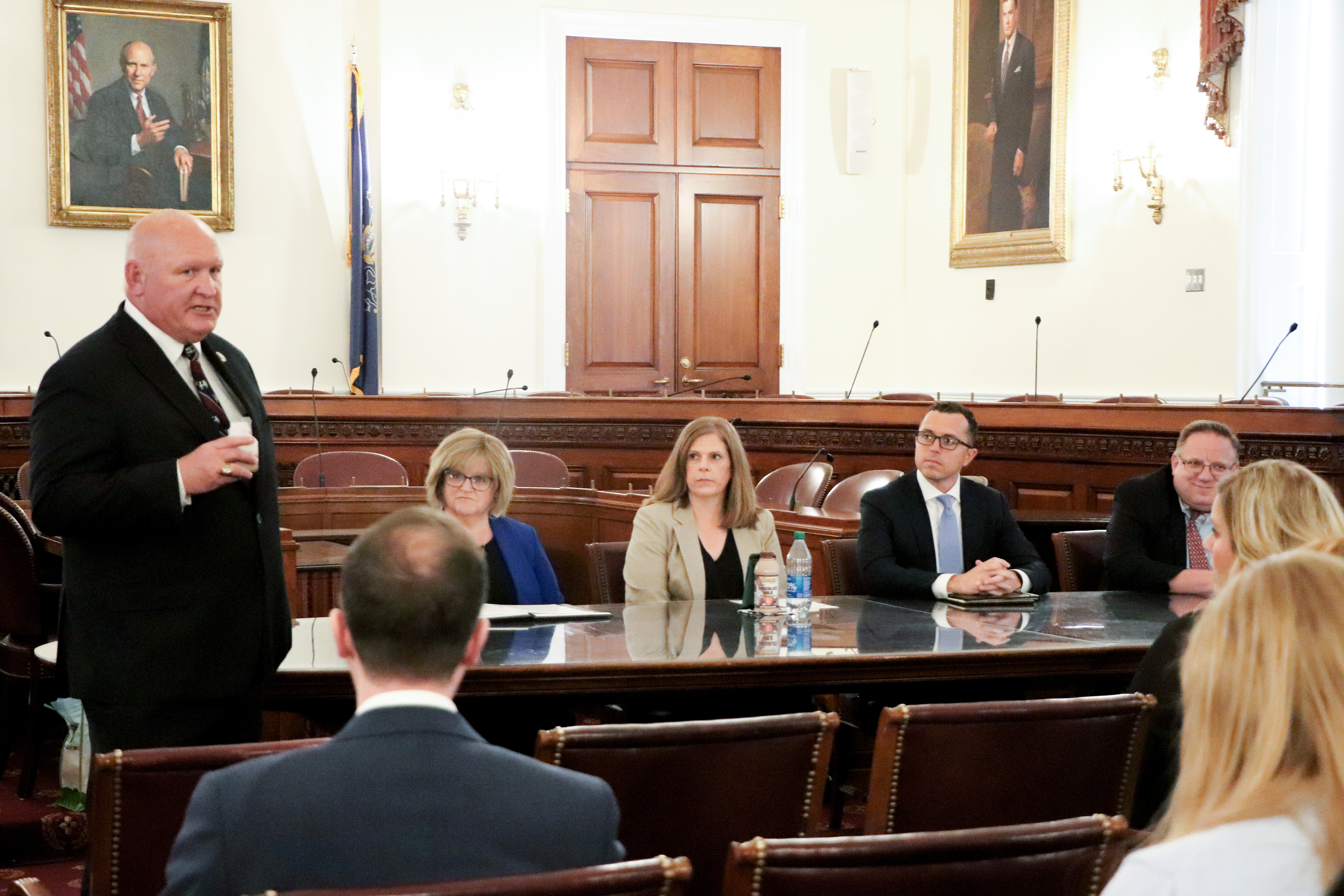
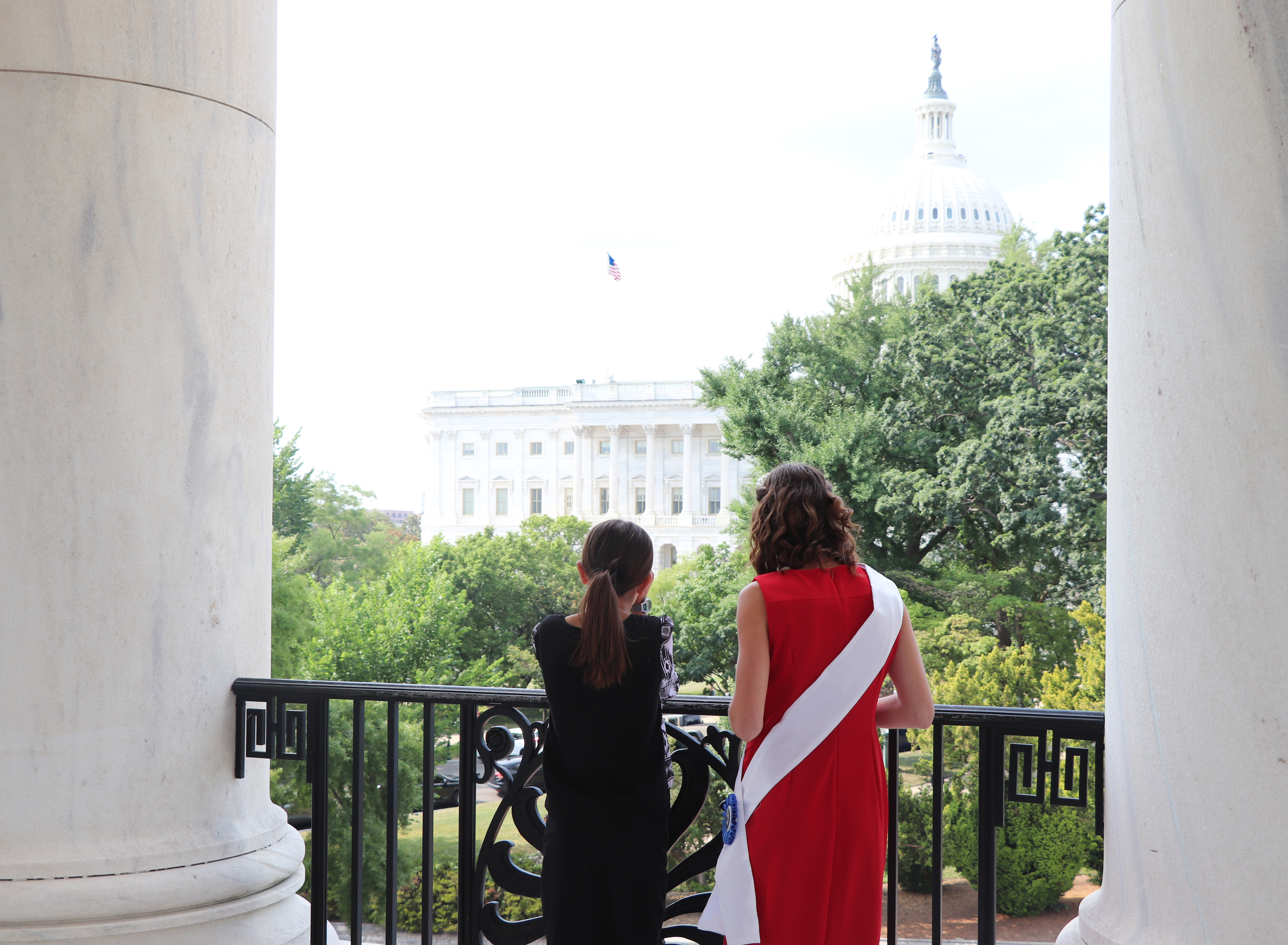
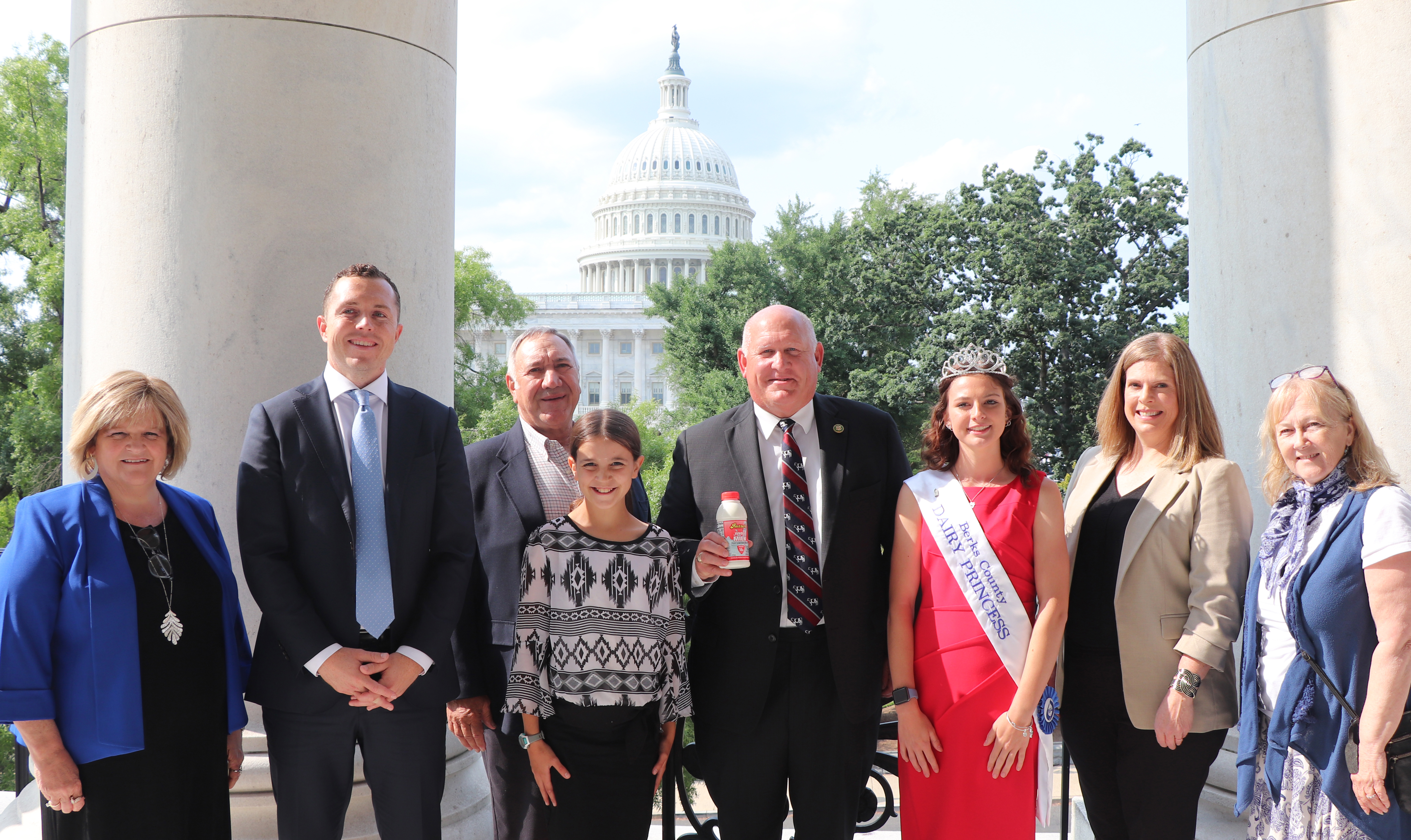
Standing with U.S. House Ag Committee Chairman, Glenn ‘G.T.’ Thompson are some of the volunteers who participated in the legislative staff briefing on G.T’s Whole Milk for Healthy Kids Act, including a June Dairy Month celebratory Whole Milk Bar at the Capitol in Washington on Tuesday, June 13. Congressman G.T. says he wants to reach 150 to 200 cosponsors before it comes to the House floor for a vote. Currently, there are 128 cosponsors representing 43 states (103 R’s and 25 D’s), and the Education and Workforce Committee recently passed H.R. 1147 in a bipartisan 26-13 vote. From left are Christine Ebersole, a school nurse in Blair County, Pa.; John Bates, executive director of The Nutrition Coalition; Nelson Troutman, a Berks County dairy farmer and 97 Milk Baleboard originator and his granddaughter Madalyn, the 2022-23 Lebanon County, Pa. Dairy Maid; Congressman G.T. Thompson (R-PA-15), the champion and prime sponsor of the Whole Milk for Healthy Kids Act; Sara Haag, the 2023-24 Berks County Dairy Princess; Krista Byler, a school foodservice director in Crawford County, Pa.; Sherry Bunting, Farmshine contributor and volunteer advocate for whole milk in schools. Photo credit: Maddison Stone

By Sherry Bunting, Farmshine, June 16, 2023 with June 23 update

WASHINGTON – “Wouldn’t it be great if we could unite the country with whole milk?” That question was posed by a fellow journalist in the Southeast, Julie Walker of Agrivoice, as I was updating her about the grassroots effort to bring milk education and the choice of whole milk to schools.

After the events of the past two weeks, my answer to that question is: Yes, I believe we can and we are… seeing the fruits of the labor of grassroots volunteers.

On Tuesday, June 13, the Grassroots Pennsylvania Dairy Advisory Committee and 97 Milk were part of a legislative staff briefing hosted by Congressman G.T. Thompson and his staff at the Longworth House office building on Capitol Hill in Washington. This had been planned weeks earlier, before Thompson’s bill – the Whole Milk for Healthy Kids Act, H.R. 1147 – passed the Education and Workforce Committee on June 6 in a bipartisan 26-13 vote.

This week, the identical bipartisan Senate companion bill was introduced on June 13 by prime sponsor Senator Roger Marshall, a Republican and medical doctor from Kansas and prime cosponsor Peter Welch, a Democrat from Vermont along with other bipartisan cosponsors.

Allow me to take you behind the scenes of the June 13 legislative staff briefing on Congressman Thompson’s House bill and why it gives me hope to see people rediscovering and uniting behind the effort to legalize whole milk in schools so children have true access to the most wholesome nutritional beverage, milk.

What becomes apparent is that children are not benefiting from milk’s nutrition when their choices at school are restricted to fat free and low fat. They should be able to choose whole milk and 2% milk that are currently banned by federal nutrition standards, and they should be able to continue to choose flavored milk, which USDA is considering restricting to only high school students.

“Milkfat was demonized as a part of the child nutrition standards, especially since 2010… and we’ve seen a lot of waste and unopened milk cartons at school cafeterias because (fat-free/low-fat milk) is not a great milk experience for kids. Meanwhile, we’ve seen a significant increase in childhood obesity. If they don’t have access to milk they like, they will drink something, and the alternatives won’t give them milk’s essential nutrients or be as satisfying,” said Rep. Thompson. “Everything has its own time, and I’m pleased that we’ve gotten to this point with the bill and appreciate the panel here today to share and answer the question: ‘Why whole milk in schools?’”

Two school professionals from the grassroots advisory group were on the panel: Krista Byler (second from left) of Spartanburg, foodservice director for Union City Area Schools and Christine Ebersole RN, BSN, CSN (left) of Martinsburg, school nurse at Williamsburg Community School District. They were joined by John Bates (second from right), executive director of the Nutrition Coalition, a nonprofit founded by Nina Teicholz, author of The Big Fat Surprise; as well as Paul Bleiberg (right) of National Milk Producers Federation.

Around 25 to 30 staff members working for Representatives and Senators from both parties attended for the entire briefing. That may not sound like a lot, but for this setting, and the constantly changing schedules during floor votes, hearings and meetings, it’s a big deal. The event was by invitation and targeted key legislative offices for an educational briefing on the bill.

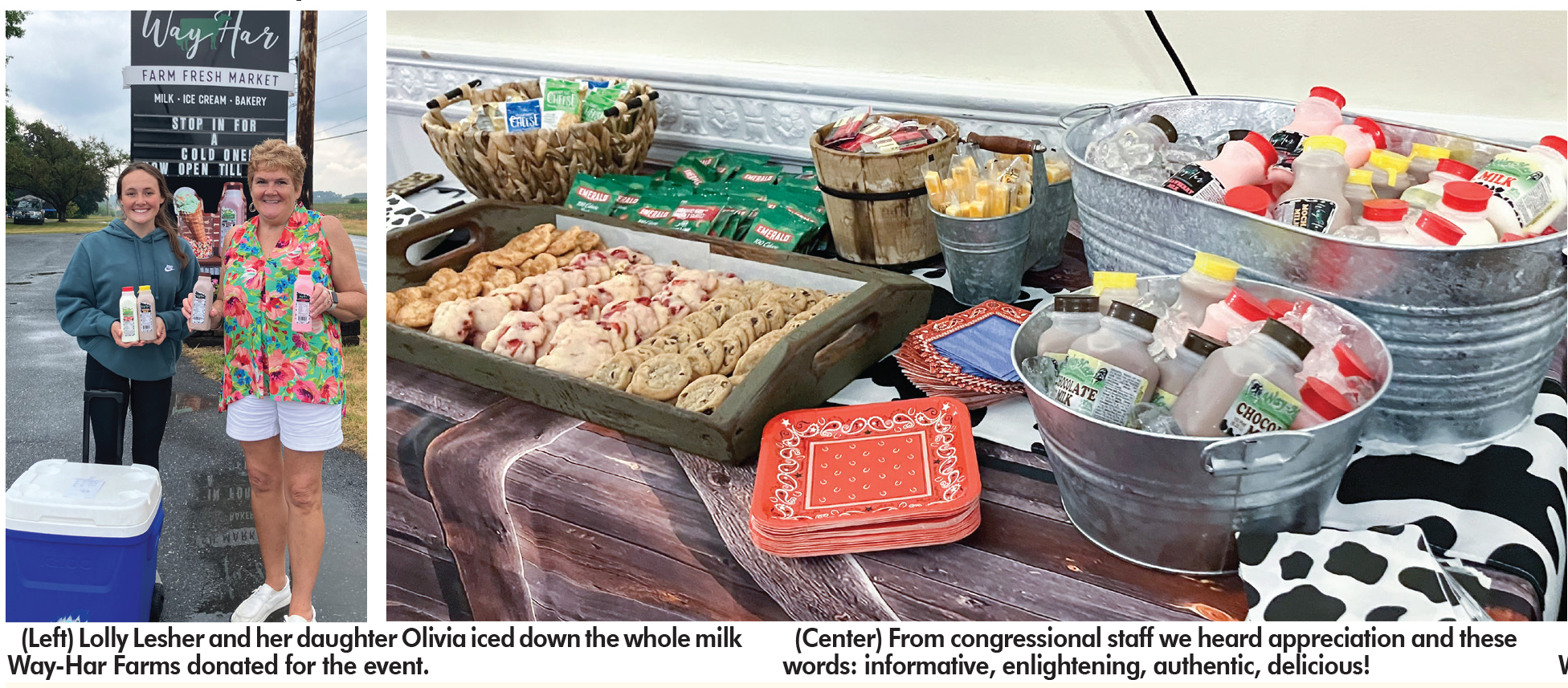
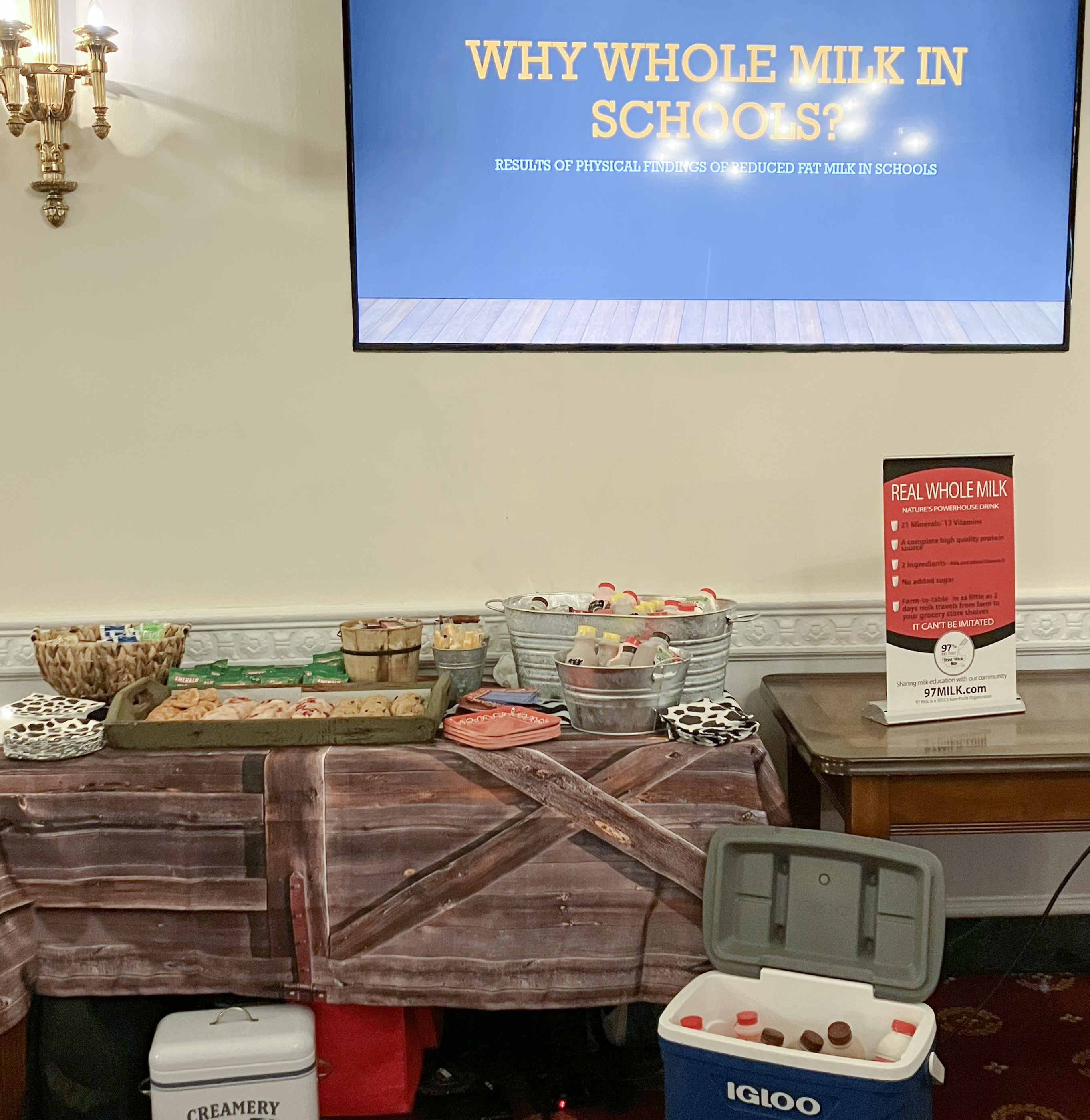
It was Congressman Thompson’s idea to have a “whole milk bar,” so our crew brought 100 half pints of whole milk — unflavored, chocolate, strawberry and mocha — donated by the Lesher family of Way-Har Farms, Bernville, Pennsylvania. We added some full pints of flavored and unflavored milk picked up at two convenience stores on the way (Rutter’s and Clover) to be sure we had enough as we heard interest in the briefing was growing.

We baked fresh strawberry cheesecake cookies with butter and cream cheese, and brought a few other types of cookies, as well as cheese snacks and nuts, arranged a nice table, kept the milk iced cold (that was a fun challenge through security scanners).

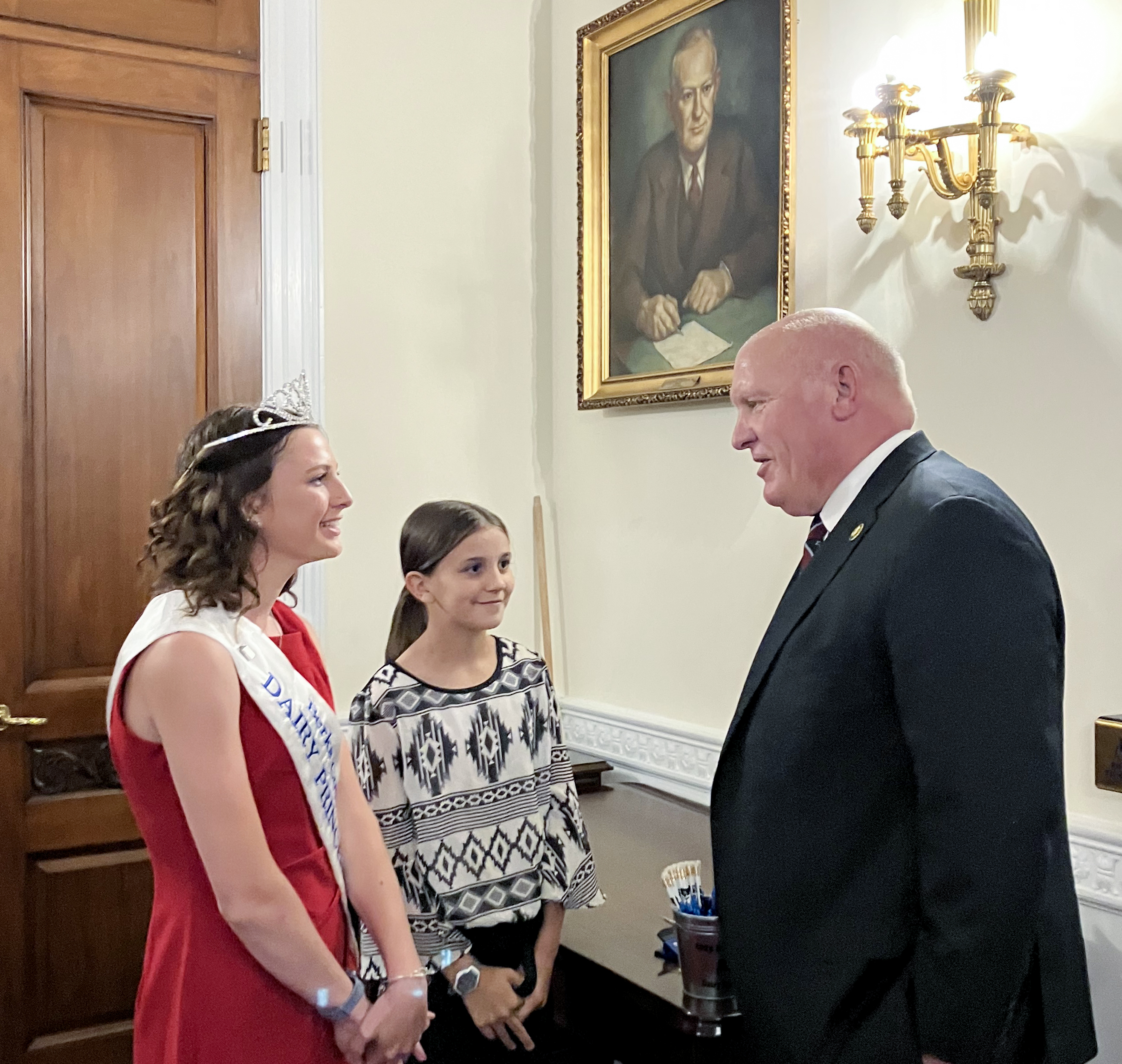
We brought with us Berks County Dairy Princess Sara Haag and former Lebanon County Dairy Maid Madalyn Troutman. Ebersole brought her daughter Vanessa Wiand, an elementary school teacher.

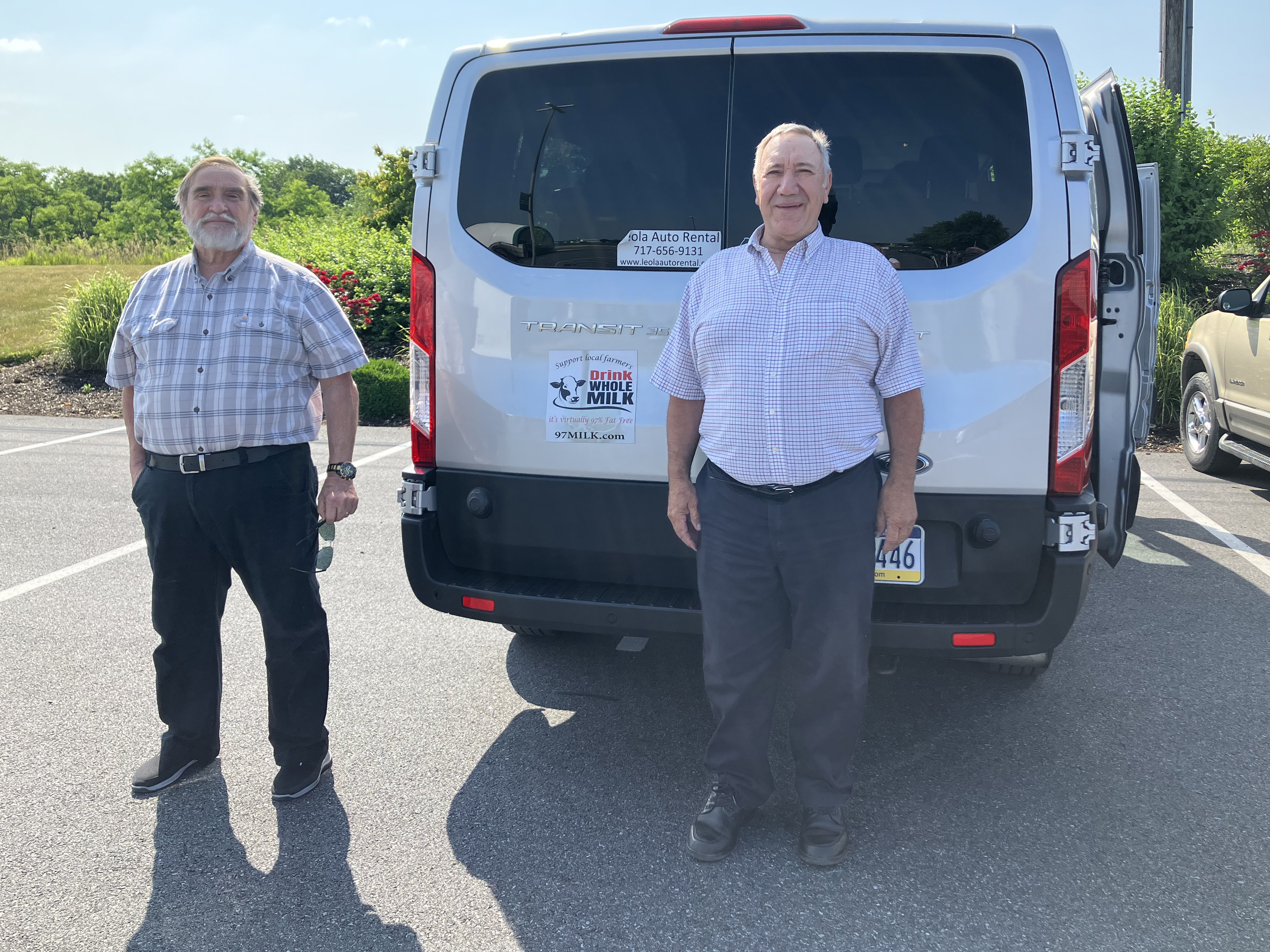
Nelson Troutman (right) with our driver Frank Tomko

Berks County farmer and Drink Whole Milk 97% fat free Baleboard originator Nelson Troutman was part of our crew, and he made sure the van we rented for travel had several 97 Milk magnets for the ride.

I provide these details because here’s the deal: Each person in our crew is a volunteer among the many volunteers working on the whole milk in schools issue, not just in Pennsylvania, but in other states as well.

Sara and Madalyn handed out the 6×6 cards designed by Jackie Behr at 97 Milk that visually show what milk provides nutritionally. It’s an impressive piece. They also handed staffers a business card with a QR code (above) that they could scan to reach the online folder to a video created by students and technology teacher at Krista’s school as well as finding other important information about whole milk and the Whole Milk for Healthy Kids Act. On the table next to the whole milk bar was a one page handout with bullet points, and 97 Milk provided milk education tabletop displays.

As Congressman Thompson talked about “ruining a generation of milk drinkers with failed federal nutrition policy,” he praised the bipartisan support for H.R. 1147 and noted the 107 cosponsors in the House (as of June 13, the number as of June 23 is 128 and counting).

That’s a large number by historical standards, but Thompson wants to get to 150 cosponsors by the time the bill is officially reported to the House, which will be soon.

There is still time, and it is still important to keep contacting members of Congress to ask them to consider cosponsoring the Whole Milk for Healthy Kids Act in the House, and thank them if they already have signed on.

Ebersole shared with staffers her perspective as a nurse, what she observes, what milk nutrition means for children.

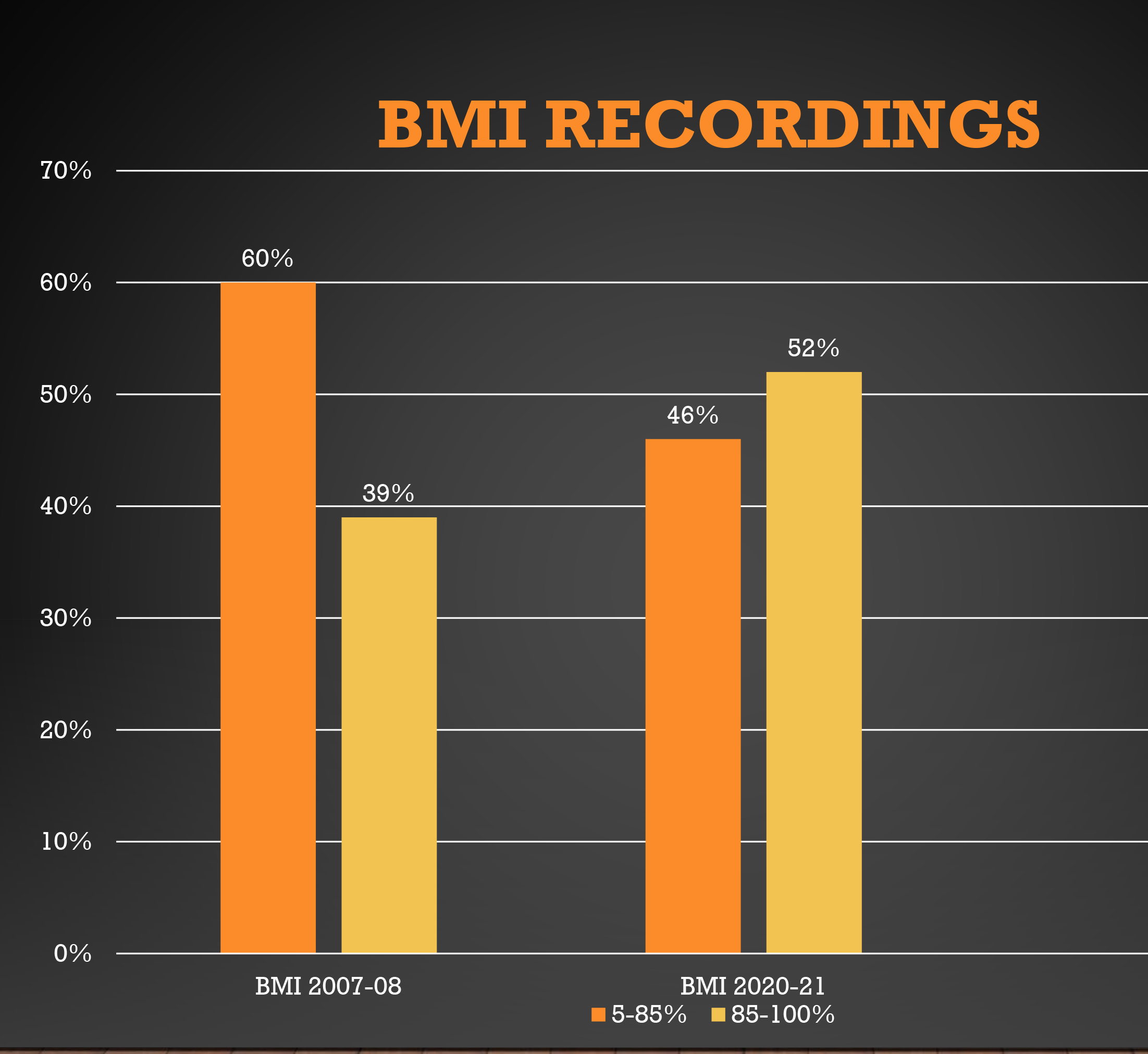
“I thought it would be interesting to compare BMI (Body Mass Index) screenings when whole milk was served in schools with the recent screening where students have been served only skim and 1% milk. The results of the comparison are striking (above). The overweight and obese categories for students in grades 7-12 in 2007-2008 school year was 39% with 60% in the proper BMI scale. In the year 2020-2021, after being served low fat milk during school hours, the overweight and obese categories were increased to 52% while the recommended range was decreased to 46%. That is a 13% increase over the past 13 years!” said Ebersole.

“While one cannot assume that the low fat milk alternatives are the only determining factors, they certainly did not have the intended outcome of reducing obesity in school age children,” she said.

Ebersole explained that, “Whole milk is a nutrient dense food and with its natural combination of protein, fats and carbohydrates, it is called Nature’s most nearly perfect food. Whole milk also provides satiety, which is stabilizing for blood sugar as well as feeling fuller longer thus decreasing food intake. Another important quality is that students prefer the taste of whole milk compared to the reduced fat and skim milk options.”

Byler talked about the trial at her school in the 2019-20 school year. She explained that the milkfat restrictions at school have led to a loss of school milk consumption with results that are far reaching.

“We are now hearing of very early onset osteoporosis and an increase in malnutrition and/or obesity. It is shameful that our youth cannot have a choice of a wholesome, nutritious product that is farm-to-table/farm-to-school,” said Byler. This, and the amount of milk wasted daily prompted the school trial.

She provided slides of the trial results and talked about how half of the students didn’t really know whole milk was not allowed. This means they didn’t know how good milk can be.

“The results of the trial were astounding. When offerings were expanded to include whole and 2% milk, the amount of wasted milk was reduced by 95% and we saw a 52% increase in students choosing milk,” said Byler, explaining that the student council did actual milk collection data as part of an environmental project.

She also shared results of her survey of the elementary school children showing that if this latest possible restriction on milk options for schoolchildren is approved by USDA, fewer than 25% of students currently taking and drinking the milk say they would continue taking milk and drinking it if flavored milk were not offered. 

“That’s huge,” said Byler.

That means we would see even more reductions in milk consumption at school and more waste. This struck a chord because when Byler presented the 2019-20 trial where her school offered whole and 2% along with fat free and 1% milk, for trial purposes, we heard audible gasps among those attending the briefing when Byler shared the data on the reduction of wasted milk. ((The students also created a video about school milk, view it here.)

We also saw reactions while Ebersole was sharing her analysis of student BMI data over the past 13 years.

Both women concluded by sharing a heartfelt message about how important dairy farmers are to communities, how they care for their cattle and work to provide a high quality nutritious product, and what it means to them for children to be able to choose milk they love so they can benefit from the nutrition the milk provides.

“As the wife and granddaughter of proud Pennsylvania dairymen, I knew the decrease in milk we were ordering for schools would impact dairy families. I know firsthand about the dairy farmers we have lost,” said Byler. “What I know based on 18 years in school nutrition, raising two children and being part of two dairy families is that restricting milk offerings to our school children does not benefit our children or our dairies. It benefits big corporations who have exponential marketing power and are preying upon our youth.”

School nurse Christine Ebersole and her daughter Vanessa Wiand, an elementary teacher at the briefing.

Ebersole noted that, “Being born and raised on a dairy farm and having lived in the dairy community all my life, I can say I know something about the American Dairy Farmer. They are on call 365 days a year and 24 hours a day.  They care about their animals and also care about their neighbors. When a tragedy happens like a fire, the neighbors come together. Dairy farmers work diligently to bring a wholesome natural food to us. Let’s do our part to support this industry by allowing students to have a choice of a delicious, nutritious whole food, whole milk,” she said.

For the Nutrition Coalition, John Bates explained they are a non-profit, non-partisan organization that seeks to improve health in America by ensuring that the public gets evidence-based nutritional advice. They emphasize good science, transparency, and methodology and receive no industry funding.

“When the Healthy, Hunger-Free Kids Act was enacted in 2010, milk became counted as part of that less than 10% of calories from saturated fat, when previously it had been in its own, separate beverage category,” said Bates.

He noted that the U.S. Dietary Guidelines that these rules for schools are based on “never reviewed studies on dietary fat specifically for children until 2020. Children have just been assumed to be like adults, but children are different: they need more protein for their growing bodies and more fat for their growing brains,” said Bates.

The Guidelines in 2020 cite a single clinical trial on school-aged children, ages 7-10 (“DISC,” funded by the NIH). It showed ‘Modestly’ lowered LDL-cholesterol, he explained. “Yet the study was not on a normal population. The expert USDA committee acknowledged this study could not reliably be generalized to a larger population

The bottom line, said Bates is that expert committees have found “insufficient evidence” to show that restricting saturated fats in childhood could prevent heart-disease or mortality in adulthood.

“In our view, a single trial on an atypical population is not enough to make population-wide guidelines to all American children,” he said.

Paul Bleiberg for National Milk Producers Federation focused his comments on the problems with underconsumption of dairy.

“Milk is the number one source of three of the four food nutrients of public health concern as identified by the DGA’s — calcium, vitamin D and potassium. Dairy delivers 7 of the 14 nutrients the American Academy of Pediatrics recommends for optimal brain development as well as nutrients vital for immune health and bone growth and development during a child’s school-aged years,” said Bleiberg. 

“The 2020 DGA Committee found that 79% of 9 to 13 year olds fall short of recommended dairy intake and the data from MilkPEP show that students take less milk and throw away more milk at schools when they do not have options they like,” he added.

Before, after and during these four short presentations on whole milk choice in schools, staffers trickled in, gathered around the whole milk bar and had conversations.

In fact, when news began to spread through texts and emails that there were milk and cookies in room 1302 — more staffers came and went. Connections were made around good food and delicious, nutritious milk.

From congressional staff we heard appreciation and these words: informative, enlightening, authentic, delicious!

Those four words give me hope that we can unite with whole milk… for our children and our dairy farmers.

June 23 UPDATE: This was another good week for the Whole Milk for Healthy Kids Act in Washington, and here’s how you can help…

As of June 23, the bipartisan Whole Milk for Healthy Kids Act, H.R. 1147 grew the number of cosponsors to 128 including prime sponsor G.T. Thompson (103 Republicans, 25 Democrats). These cosponsors represent 43 states.

Texas tops the list with 13, followed by Pennsylvania 10, New York 8, California, Florida and Wisconsin at 7. Maine, Idaho, Iowa, North and South Dakota and Wyoming have fewer Representatives and their full delegations are on board. Wisconsin is nearly 100% with 7 of their 8 Representatives signed on.

The 43 states now represented are listed in the order of number of cosponsors vs. the total number of representatives for the respective states: Texas 13 of 36, Pennsylvania 10 of 17, New York 8 of 26, California 7 of 52, Wisconsin 7 of 8, Florida 7 of 28, Georgia 5 of 14, Indiana 4 of 9, Iowa 4 of 4, Michigan 4 of 13, Minnesota 4 of 8, North Carolina 4 of 14, Illinois 3 of 17, Virginia 3 of 11, Washington 3 of 10, Alabama 2 of 7, Arizona 2 of 9, Connecticut 2 of 5, Idaho 2 of 2, Kansas 2 of 4, Kentucky 2 of 6, Maine 2 of 2, Missouri 2 of 8, New Jersey 2 of 12, Ohio 2 of 15, Oklahoma 2 of 5, Oregon 2 of 6, South Carolina 2 of 7, Tennessee 2 of 9, Arkansas 1 of 4, Colorado 1 of 8, Hawaii 1 of 2, Louisiana 1 of 6, Maryland 1 of 8, Mississippi 1 of 4, Nebraska 1 of 3, Nevada 1 of 4, New Mexico 1 of 3, North Dakota 1 of 1, South Dakota 1 of 1, Utah 1 of 4, West Virginia 1 of 2, and Wyoming 1 of 1.

To reach all 50 states, here’s what we need in the East: Delaware, Massachusetts, New Hampshire, Rhode Island, and Vermont. In the West: Alaska and Montana. Is your state on the list? Is your Congressional Representative a cosponsor? Make the call! Go to this link to see the bill’s progress and cosponsors, and click “contact your member” on the right to find your Representative.

Call Senators too. On June 13, the bipartisan Senate companion bill, S.1957, was introduced by Senator Roger Marshall, a Republican and medical doctor from Kansas, along with prime cosponsor Peter Welch, a Democrat from Vermont. Also cosponsoring right out of the gate are Democratic Senators Kirsten Gillibrand of New York and John Fetterman of Pennsylvania; Independent Senator Angus King of Maine; and Republican Senators Ron Johnson of Wisconsin, Chuck Grassley of Iowa, Susan Collins of Maine, Cindy Hyde-Smith of Mississippi, and James Risch and Mike Crapo, both of Idaho. As of June 23, that’s 11 Senate sponsors from 9 states. Maine and Idaho have both of their respective Senators on board!

-30-

Congressman G.T. Thompson’s Whole Milk for Healthy Kids Act approved 26-13 by House Education Committee

Thompson: ‘This is a win for children and dairy farmers, but we’re not done’

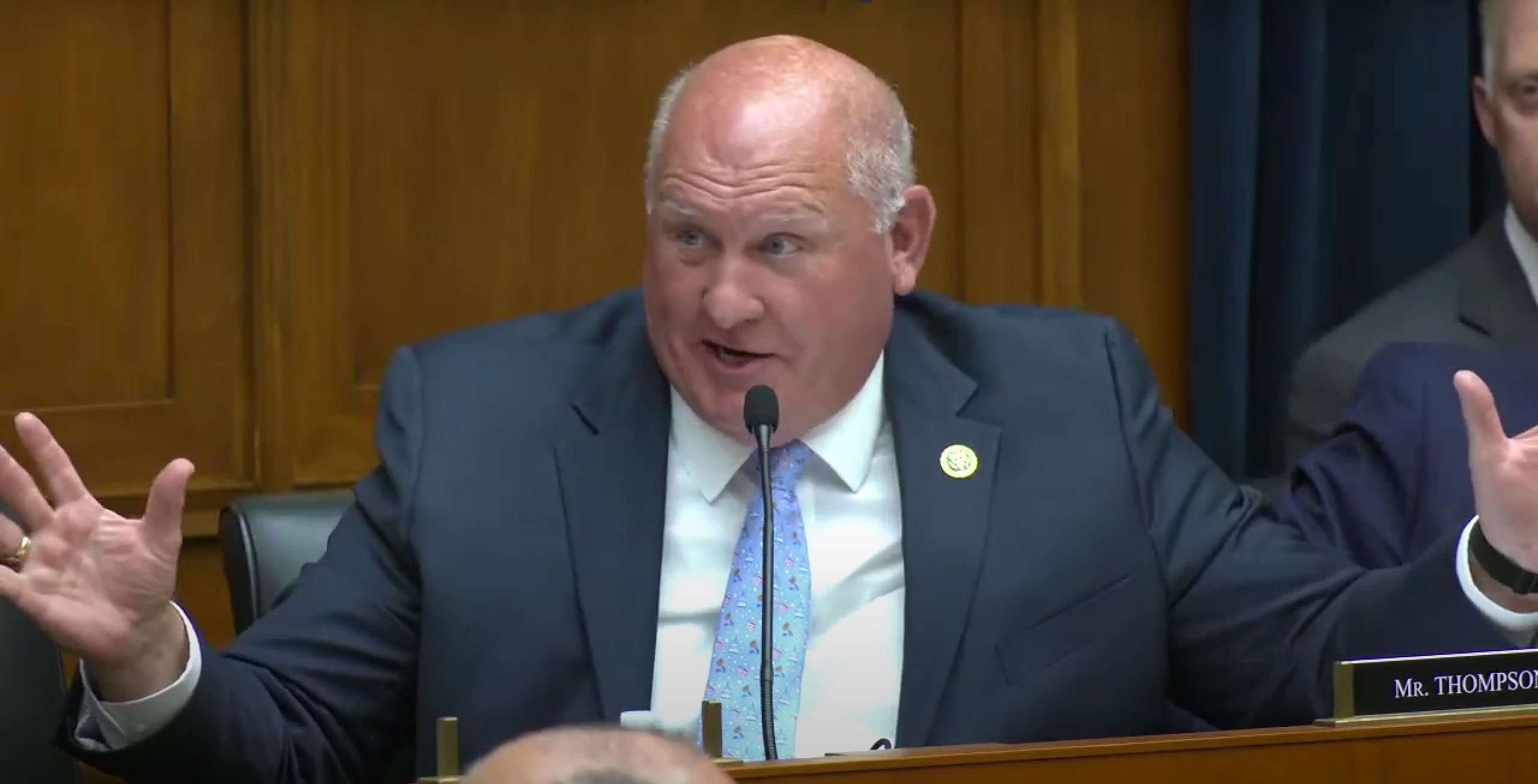
“This policy has cheated our children and has led to economic demise in Rural America as we’ve seen a loss of dairy farms and small businesses that are in that supply chain. It’s time to reverse the mistake that was made in 2010. We need to follow real science, not political science. I question the process of the Dietary Guidelines Advisory Committee. These are unelected bureaucrats, and there’s no oversight. This is our chance to actually do something positive in that process to say ‘hey we’re watching what you’re doing. We’re looking over your shoulder,’” said Rep. GT Thompson (R-PA-15). In a bipartisan 26 to 13 vote, the Committee on Education and Workforce passed Thompson’s motion to report the Whole Milk for Healthy Kids Act, H.R. 1147, to the House of Representatives with recommendation of passage. On the Republican side, 21 voted yes and 4 were absent. On the Democratic side, 5 voted yes, 13 no, and 3 were absent. The next step is getting the bill on the calendar for a vote on the House floor.

By Sherry Bunting, Farmshine, June 9, 2023

WASHINGTON — The Whole Milk for Healthy Kids Act, H.R. 1147, reached a major milestone this week, passing mark-up in the U.S. House Committee on Education and Workforce.

Dairy farmers could not have asked for a better way to kick off June Dairy Month as the committee discussion exposed the sides of this issue, and Congressman Glenn ‘GT’ Thompson, the Republican from Pennsylvania and the bill’s prime sponsor, laid out the case for children to have true access to the most nutritional beverage — milk.

In the end, the Education Committee on Tuesday, June 6 approved the bill in a bipartisan 26 to 13 vote. 

(Cross-section highlights of Education and Workforce Committee discussion and vote.)

Now that it is recommended by the House Education and Workforce Committee, the next step is scheduling of the vote on the House floor.

This is the first time in three legislative sessions that the bill to restore the choice of whole and 2% unflavored and flavored milk in schools has made it this far in the legislative process.

“This is a win for children and dairy farmers, but we’re not done. I took a deep breath to see this satisfying outcome in this first stage and another deep breath as we move to the next stage to get it onto the House calendar,” said Rep. Thompson in a Farmshine interview after committee passage.

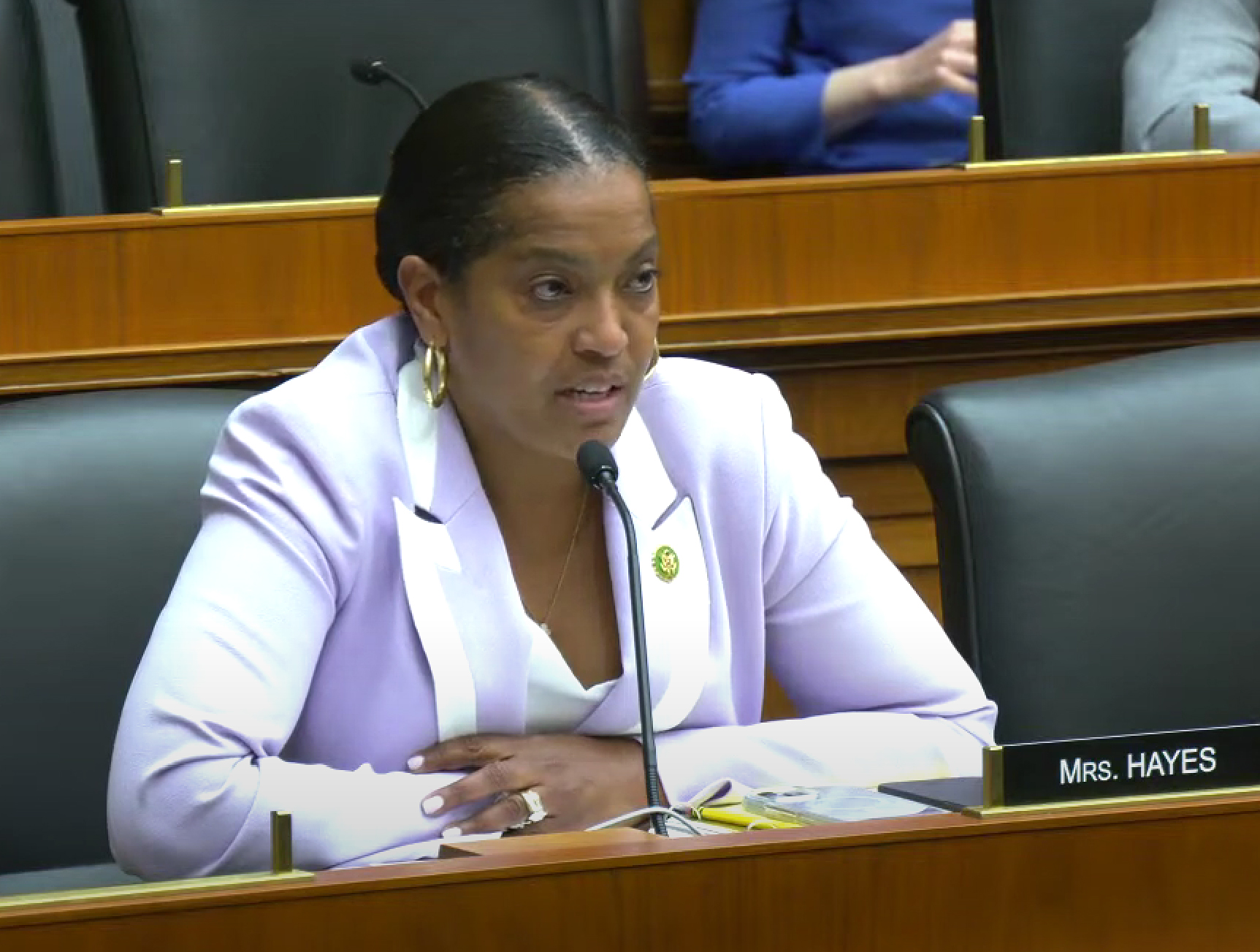
A further breath of bipartisan fresh air also came from Rep. Jahana Hayes, a Democrat and educator from Connecticut. She rose in support of the bill, quoting from the Dietary Guidelines 2020-25 report and from USDA, giving statistics about what is offered and what is consumed in recommended dairy intake, especially for children ages 2 to 18.

“I have belabored this point that children receive a huge amount of their daily nutrition at schools. Also, the school meal programs are a significant source of milk and dairy for kids,” said Hayes.

“But the part that sticks for me is that none of this matters if kids aren’t drinking the milk. We can have as much data and statistics on what kids need as dietary dairy intake, but if they’re not drinking it, then it’s all for naught,” she stressed. “We’ve seen students take less milk and throw away more milk when they don’t like the way it tastes.

“I support this amendment. I drink whole milk. My kids drink whole milk. We like it,” Hayes asserted.

Chairwoman Virginia Foxx, a Republican from North Carolina said the debate over whole milk “takes the cake.” 

She talked about how previous recommendations have been “walked back,” and she bemoaned the fact that there are “no checks and balances” over the Dietary Guidelines process of making these recommendations.

“I was shocked last year when I learned that whole milk has only 3.5% fat content, when we are saying to students: ‘drink skim milk or 1% milk,” the Chairwoman said. 

“Surely-to-goodness, that kind of fat content is not doing the damage that some people are saying. This Dietary Guidelines Advisory Committee is just a small group of unelected, appointed people, and we want to turn children’s lives over to groups like this? We should be dealing with this,” she added.

The bill’s champion, Rep. GT Thompson is a senior member of the Education Committee, and chairs the Agriculture Committee. 

Thompson said he is discussing the next stage with the House Majority Leader to schedule the legislation for a vote on the House floor.

“The bill had 106 bipartisan cosponsors supporting it from 39 states — before this committee vote — and we can build on that,” said Thompson. (As of June 16, there are 110 from 40 states).

This cosponsor list includes 22 members of the Education Committee. It also includes bipartisan cosponsors from the Agriculture Committee. It includes prime cosponsor Rep. Kim Schrier, a pediatrician from Washington State, and numerous members of Congress who are doctors, educators, parents. It has garnered the support of schools, students, parents and families throughout America who will benefit, according to Thompson.

His staff reports that more cosponsors continue notifying their office to sign on to the bill.

“This has been a really grassroots effort. Dairy farmers, the dairy industry, all of the rural businesses who provide inputs, the folks in the schools, the parents… we’ve had great support for this bill, and all of that helps,” said Thompson with a tip of the hat to the grassroots 97 Milk effort.

In fact, while speaking on his bill, Thompson mentioned “how this policy has negatively impacted the economy in Rural America. This (federal prohibition of whole milk in schools) negatively impacts kids and dairy farmers, and it’s time to turn that around.”

The Whole Milk for Healthy Kids Act allows the 95% of schools that are participating in the school lunch program to serve all varieties of flavored and unflavored milk, including whole milk. Thompson amended the bill from previous renditions to make minor technical changes that will help ensure foodservice workers have the flexibility they need in serving the students whole milk.

“Some Democrats on the committee spoke in opposition to the bill, using the same outdated science, but in the end, the committee vote to approve it was bipartisan,” said Thompson. 

During the committee discussion, he told his colleagues that he is focused on “listening to the school professionals who serve students every day and parents who are concerned about the lack of options.

“We need to follow real science, not political science. It’s time that we push back on the notion that federal bureaucrats know what’s best for students. Although there is more work to be done on school nutrition, this bill gives students access to the milk they want and need. The bottomline is the Whole Milk for Healthy Kids Act is all about ensuring students have the necessary nutrients to learn and grow,” he said.

Thompson was quick to point out that, “We’re not force-feeding anybody anything. We’re providing children options so we don’t turn them over to less healthy beverages.

“We’ve really ruined an entire generation of milk drinkers and have cheated them out of access to the most nutritional beverage. I appreciate the comments that there is nutrition also in 1% milk, but even that’s because of the milkfat, the vehicle that delivers the nutrition,” he explained.

This bill “will improve the nutritional status of our children going forward. If we give them a good milk experience …  I would argue we will see a reduction in childhood obesity,” he said, pointing to studies showing whole milk to be an effective drink weight management because of how satisfying it is.

To his colleagues citing ‘the science’, Thompson was tactful but blunt: “I agree we ought to do things with data and science, I just question the process of the Dietary Guidelines Advisory Committee. They’re completely appointed. These are unelected bureaucrats, and there’s no oversight. This is our chance to actually do something positive in that process to say ‘hey we’re watching what you’re doing. We’re looking over your shoulder.’”

Chairwoman Foxx reminded her committee that, “This is a choice. Instead of having bureacrats tell us what to do… we give a choice and not let someone else run our lives.”

At the start of the discussion, she explained the Whole Milk for Healthy Kids Act as “empowering food service providers and parents to make decisions on the health and welfare of children.”

Ranking Member Bobby Scott (D-VA-3, right) and Rep. Jamaal Bowman (D-NY-16) read from a letter of opposition to the whole milk bill from the Physician’s Committee for Responsible Medicine (PCRM). According to Guidestar, PCRM describes its vision as “creating a healthier world through a new emphasis on plant-based nutrition and scientific research conducted without using animals. ” In 2010, Newsweek and New York Times articles identified PCRM links to extreme animal rights organizations such as PETA. 

Ranking member Bobby Scott, a Democrat from Virginia, was one of four Democrats voicing opposition, saying H.R. 1147 is “an attempt to legislate nutrition standards and disregard evidence-based recommendations made by the Dietary Guidelines for America.” He said the bill would allow schools to “violate current science-based standards. 

“If it was consistent with science, we wouldn’t be here. The science-based committees would have already done this,” he said, also objecting to considering the bill outside of doing a comprehensive childhood nutrition reauthorization.

The last childhood nutrition reauthorization by Congress was the 2010 Healthy Hunger Free Kids Act, which tied schools more closely to the saturated fat restrictions of the Dietary Guidelines in the first place.

Scott noted the American Heart Association, Association of Nutrition and Dietetics, Center for Science in the Public Interest have “expressed concerns for this bill.” But mostly, he quoted from a letter of opposition from the Physicians Committee for Responsible Medicine. (PCRM is a known animal rights group tied to PETA.)

Rebutting Scott’s assertions in his characteristic calm and methodical manner, Congressman Thompson said he appreciated the recognition of science but that, “we don’t always get it right, and that’s what we’ve found with the Dietary Guidelines process. 

“You reference the Dietary Guidelines Committee, but the most recent Dietary Guidelines reported that more than two-thirds of school age children FAIL to meet the recommended level of dairy consumption, and a big part of that is, quite frankly, we gave them since 2010 an awful milk experience,” said Thompson.

“We’re talking about 3.5% milkfat. I was here for that 2010 debate. It’s been proven since then that it was bad science. The most recent science I referenced and our practioners, the American Academy of Pediatrics, have stated that dairy plays an important role in the diet of children, and it’s the leading food source for three of the four nutrients of public health concern — calcium, vitamin D and potassium,” said Thompson, providing 15 academic studies for the record on full fat dairy.

As members of Congress, “we visit our schools and spend time in the lunch line, and we see the waste and the unopened half-pint milk containers that are discarded. Quite frankly, we’ve been contributing to childhood obesity because … children are going to drink some type of beverage, and the substitutes have been high sugar beverages that do not have healthy outcomes,” said Thompson.

“This policy has cheated our children… and has led to economic demise in Rural America as we’ve seen a loss of dairy farms, dairy herds and small businesses that are in that supply chain. It’s time to reverse the mistake that was made in 2010,” he stressed.

Rep. Jamaal Bowman, a Democrat from New York agreed that the meals at school are for some kids the most important that they receive, and he said these meals should be consistent with the “latest science on nutrition.” 

However, he maintained that the Dietary Guidelines for Americans (DGAs) are “based on up-to-date science” and said “allowing whole milk to be served to children contradicts those recommendations.”

Rep. Bowman called the bill an “inappropriate attempt to legislate nutrition standards,” but he failed to acknowledge the shortcomings observed by other independent scientific bodies calling into question the research screening methods used in the DGA process, the make-up of the DGA committee, and the predetermined questions that form the boundaries for what “up-to-date research” will be included as “relevant” to the predetermined questions in each 5-year DGA cycle.

Bowman quoted extensively from the PCRM letter, which stated that “full fat milk is both unnecessary and harmful to children’s health.” Reading from the PCRM letter, Bowman said “early signs of heart disease, high total and LDL cholesterol and other indicators of impending cardiovascular disease are appearing in children with increasing frequency.”

(If that’s the case, then how can whole milk be blamed? How can saturated fat be blamed? Whole milk is nonexistent at school, and saturated fat is limited to less than 10% of calories in school meals since 2010. Children receive one, two, or even three meals a day, five days a week for at least three-quarters of the year at school. If the poor health outcomes the PCRM letter identifies are rising, doesn’t that tell us something about the scientific validity of the DGA recommendations? The PCRM’s own letter hits that nail on the head with its own statistics. PCRM calls “whole dairy milk a troubling source of saturated fat.” And yet, kids have not been allowed to have whole milk or 2%, and in some cases not even 1% fat milk, for the past 13 years during two meals a day, five days a week, most of the year!)

Here’s an eye-opener: Quoting again from PCRM, Bowman said lactose intolerance among communities that have been impacted by “historic racism” and “health inequities” are those less likely to be able to see a doctor for the doctor’s note to have dairy substitutes at school. The letter even mentioned children needing ‘climate friendly’ beverages. 

The roots of the anti-whole-milk agenda are clear in terms of encouraging more “non-dairy substitutes” for children in schools.

Rep. Alma Adams, a Democrat from North Carolina said the bill sets a “dangerous precedent” that takes the years of building nutrition programs backward, noting this would cause poor health outcomes. (But the poor outcomes were said to be already happening by those opposing the whole milk bill. This is occurring while whole milk is prohibited.)

During the committee markup, Thompson said he is proud of the number of cosponsors to-date and the broad and bipartisan support for the whole milk bill. 

“My legislation supports students and dairy farmers across America,” he explained.  “Milk is an essential building block for a well-rounded and balanced diet offering 13 essential nutrients and numerous health benefits. However, out of touch federal regulations have imposed dietary restrictions on the types of milk that students have access to in school meals… limited to fat free and low-fat milk since 2010. For our children to excel in the classroom and beyond, they must have access to more nutritious options they enjoy.”

Thompson  also stressed that the situation could become worse if the Whole Milk for Healthy Kids Act is not enacted into law. 

“The USDA’s latest proposed guidelines could roll back options even further by restricting flavored milk only to high school students and counting milk fat against weekly saturated fat allowances,” he said, giving several reasons why these top-down regulations are harmful to students and school districts that are forced to comply.

“First, we have seen students opt out (from milk) altogether,” said Thompson. “Let’s face it, the only way to benefit from milk’s essential nutrients is to consume it, and when students turn away from milk, they often opt for far less healthy alternatives.”

Thompson noted that these regulations also “perpetuate baseless claims that milk is bad for kids, but research has shown time and time again that whole and 2% milk are not responsible for childhood obesity and other health concerns. In fact, these beverages are so nutritious that research consistently shows positive health outcomes for children who consume milk.”

Referencing the 15 academic studies submitted from researchers across the country and around the world, Thompson asserted that, “These studies, and there are more, show that full fat dairy foods have no association with high blood pressure, cardiovascular disease, type II diabetes, obesity or cholesterol. In fact, several show full fat foods helped improve or lower negative health outcomes for children who drank more full fat dairy beverages.”

He also added to the record several letters of support, including a letter from the Nutrition Coalition (founded by science journalist Nina Teicholz, author of the Big Fat Surprise), the International Dairy Foods Association, the Northeast Dairy Foods Association, and a coalition of dairy producers from across the country. 

He said the bill has the support of schools and families across the country. 

This is evident by the tens of thousands of citizen petition signatures over the past few years and a 2021 IDFA survey of parents showing 78% find whole or 2% milk healthier for their families. Trouble is, their kids can’t get it at school where most of their meals are consumed.

-30-