Covering Ag since 1981. The faces, places, markets and issues of dairy and livestock production. Hard-hitting topics, market updates and inspirational stories from the notebook of a veteran ag journalist. Contributing reporter for Farmshine since 1987; Editor of former Livestock Reporter 1981-1998; Before that I milked cows. @Agmoos on Twitter, @AgmoosInsight on FB #MilkMarketMoos
Updated from Milk Market Moos, by Sherry Bunting, Farmshine, Oct. 20, 2023
On the day after the global dairy industry had just gathered at World Dairy Expo — a place where people come from all over the world of different backgrounds and cultures to see great cows, learn about new technologies, meet up with old friends and make new ones, we learned of the orchestrated terrorist attack in southern Israel.
Listening to the news of the atrocities committed Oct. 7 in communities along the Gaza border, the farthest thing from my mind was dairy.
But over the following days, we’ve learned that dairies were hit hard in these attacks. Dozens of dairy farmers, managers, workers, and interns were murdered and taken hostage, including those who came from other countries to work and to learn. One college student from Cambodia had just arrived two weeks earlier to begin his internship, gone now at the hands of unspeakable evil, his family talking of his love of animals and how he had looked forward to what he would learn there.
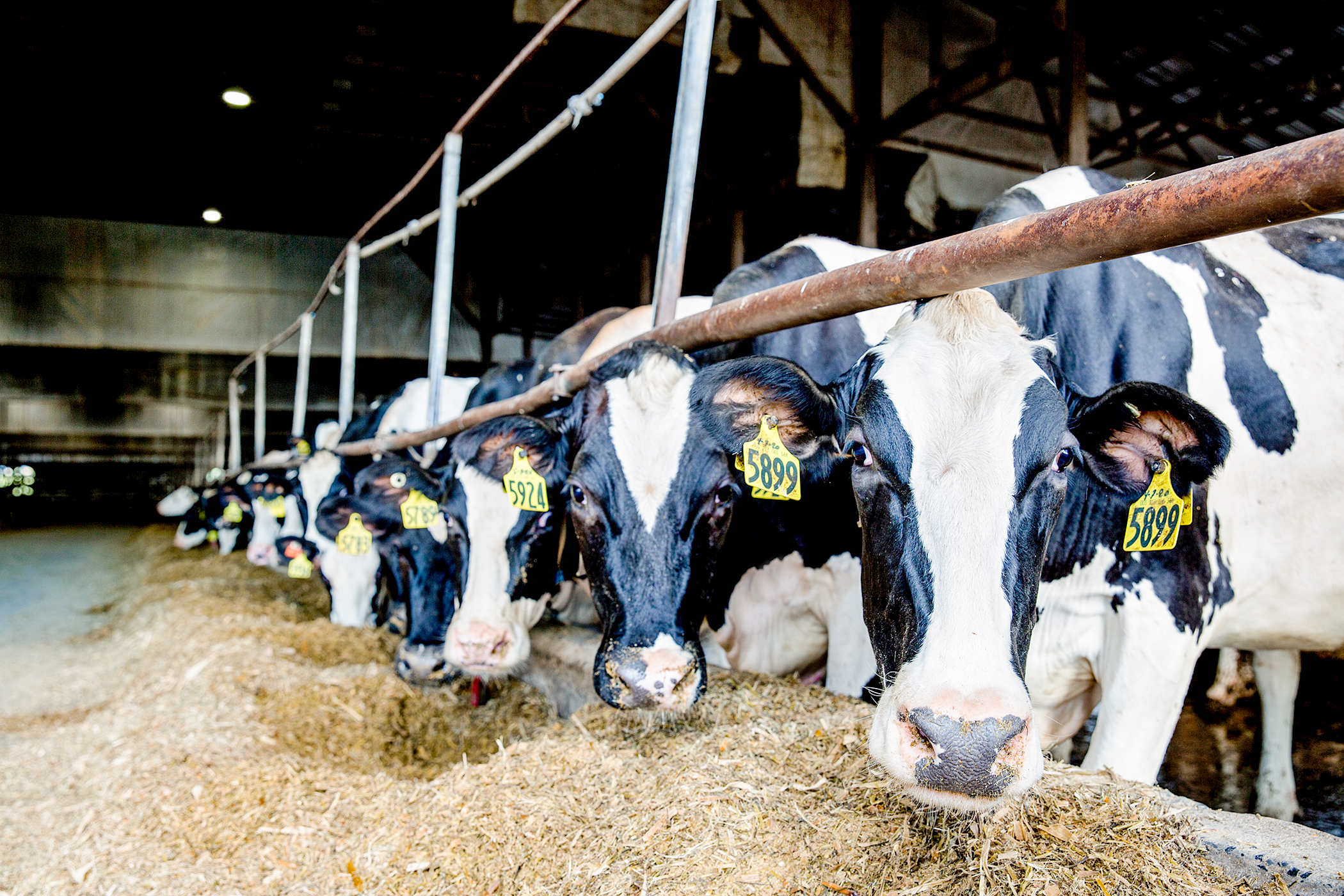
Cows were killed, equipment and barns have been burned. Reports indicate that 16 dairy farms have been impacted representing more than 5% of Israel’s milk production. Five of these farms were completely closed off to access in a “no-go” zone for at least a week, with soldiers reportedly putting hay out for the now isolated cows.
The terrorist attacks have impacted Israeli agriculture as each kibbutz that came under attack is a community centered around a farm, including a dairy, in the rural areas. According to the Israeli Institute for Dairy Farming, the 537 farms operate under two systems: 167 are kibbutz farms, the balance are private “moshav” farms.
International journalist Chris McCullough of Belfast, Ireland writes in Agri-view, a Madison, Wisconsin-based newspaper about the tragedy that unfolded as farms were finishing up the milking that morning.
In the aftermath, he interviewed Ofier Langer, who has run the Israeli Dairy School for the past 13 years. The school attracts people from 30 countries to these farms each year, educating them on the practicalities of dairy farming, Israeli style. He personally knows many of his colleagues that were murdered.
McCullough writes: “Holding back the tears, Ofier said: ‘It’s hard to take this all in. Hamas entered a number of farms and shot people indiscriminately. The area that came under attack is not just any area as it’s home to 16 dairy farms… home to anything from 350 to 700 cows per farm with average milk yields of 12,500 litres per cow per year. A few of them are even among the top 10 in the country for production per cow.All of these farms were attacked. The loss we have suffered is immense. We’ve lost friends and colleagues. Two dairy farm managers and dozens of workers were murdered. This is a heartbreaking moment for our tight-knit community. We share the pain deeply.’“
He tells of a glimmer of hope, that the Israeli Institute for Dairy Farming is collecting volunteers to help on the farms that can be reached to take care of the cows.
In a later report from McCullough for The Fence Post (see photos and report here), we are learning that efforts are underway by volunteers in bullet-proof vests trying to prevent more cows dying from starvation.
“Normal operations on those farms are slowly recovering but many have suffered serious damage as well as a loss of workers and cattle,” writes McCullough. “Following a period of five days of not being milked or fed, the cows on the farms in the military no go zone are now receiving food as trucks carrying forage are allowed in under armed military guard.”
One thing we are learning is that the attacks in kibbutzim of southern Israel targeted civilians — men, women and children, people of service, doctors, nurses, teachers, and farmers — people going about their day in their communities taking care of each other, and their animals.
By Sherry Bunting, updated from Farmshine, October 13, 2023
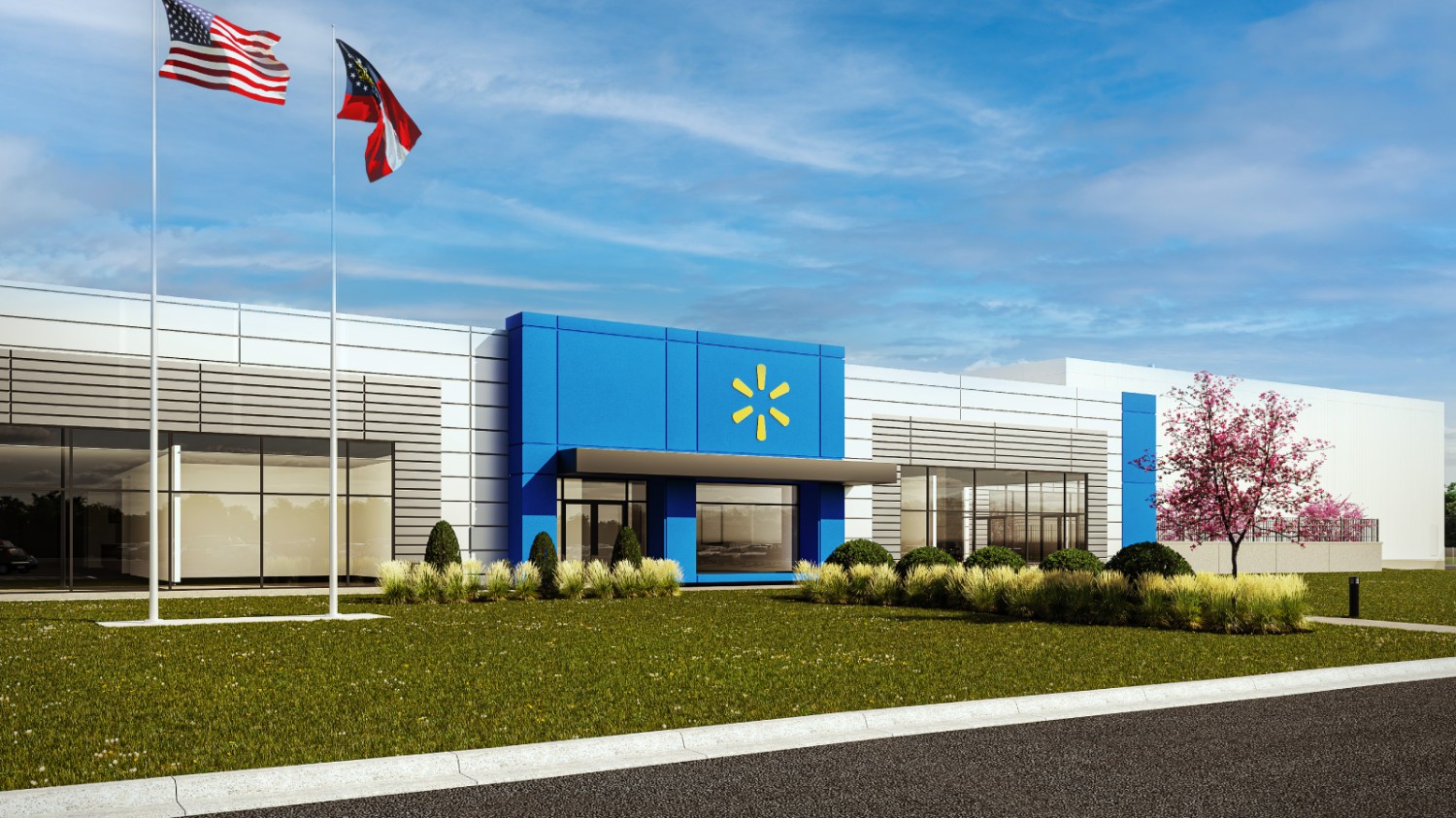
VALDOSTA, Ga. – Walmart announced it will break ground later this year on a $350 million milk processing plant in rural south Georgia, according to a company statement released Oct. 11 by vice president of manufacturing Bruce Heckman and senior vice president of beverage merchandising Tyler Lehr.
The new facility will serve more than 750 Walmart stores and Sam’s Clubs in the Southeast.
The joint statement highlighted innovation, stating that the new plant “will bolster our capacity to meet the demand for high-quality milk, while making our supply chain more resilient, and building even more transparency around sourcing.”
The move is seen by the company as a milestone to control more of the factors around delivering a grocery staple – milk – that is high quality at low prices.
Using ingredients it says will be sourced from local farmers, the new Walmart facility will process and bottle a variety of milk options including gallon, half gallon, whole, 2%, 1%, skim and 1% chocolate milk for Walmart’s Great Value and Sam’s Club’s Member’s Mark brands.
The new facility is expected to create nearly 400 Walmart jobs in the Valdosta, Georgia community. Walmart seeks more vertical integration in staple commodities, having added beef facilities in Georgia and Kansas and initiated long-term agreements on beef and vertical farming.
Walmart opened its first milk processing facility in Fort Wayne, Indiana in 2018, triggering a ripple effect in farm contract terminations by then Dean-owned milk bottling plants serving the affected areas from Indiana and Ohio to Pennsylvania, New York, Kentucky, Tennessee and the Carolinas. Today, most of the former Dean Foods bottling plants are either owned and operated by the DFA milk cooperative or the Prairie Farms milk cooperative or have been closed.
Currently, there is a dearth of milk processing in Georgia relative to the rate at which milk production is growing, making up for the production in Florida that is slowing. Dean Foods closed the Braselton plant in 2018. Other plants have also closed over the past five years. Publix has two plants in Georgia, one expanded in 2017.
At the 2022 Georgia Dairy Conference in Savannah, former Southeast Milk Inc. CEO Calvin Covington noted in his dairy outlook that the 10 southeastern states have lost 8 fluid milk plants in the past 2 years.
“That’s done some damage,” he said. “The major challenge for milk markets in the Southeast is we need more of them. A lot of the fluid milk products that are sold in the Southeast are not processed here. If we are going to have a viable dairy industry in the Southeast, we need growing and stable markets for milk produced in the Southeast.”
In December 2022, USDA listed 39 pool distributing plants for the three southeastern Federal Milk Marketing Orders — down from 44 a year earlier. Most of the loss in fluid milk plants has occurred in Order 7. This includes Georgia, which currently has the fewest number of fluid milk plants — down to just two.
As the new leader in southeastern milk production, Georgia’s growth — combined with having just two milk plants at present — leaves producers with a per-capita fluid milk surplus of 53 pounds in 2022, according to Covington.
Together, the 10 southeastern states remain milk deficit, he said, but the relationship between milk supply and fluid milk demand is steadier across the region. Producers made 101 pounds of milk per person across the 10 southeastern states in 2022 compared with fluid milk consumption at 133 pounds per person, leaving the Southeast region at a 32-pound per person deficit, he reported.
On the same day (Oct. 11) that Walmart announced the new $350 million milk plant in south Georgia, Covington happened to be testifying in USDA’s Federal Milk Market Order hearing in Indiana. He responded to questions about the Class I differentials and alignments to move milk into the Florida peninsula and questions on why milk production is growing in south Georgia.
He said Georgia’s nearly 90 dairy farms include some young and passionate producers who “know how to make milk and know how to make money. They know how to manage a dairy farm, and they are passionate about dairy.”
They are expanding to multiple sites in an area of the state where there is not much else that can be done with the land. They have a good water source for irrigation, are triple-cropping and producing good forage. They excel in cow comfort and milk quality and have far fewer environmental or permitting obstacles than in neighboring Florida, he observed.
Covington noted land cost is much less in rural south Georgia as compared with Florida. Much of the growing milk supply produced in southern Georgia currently goes to Florida, he added.
“There’s growth potential there… These producers are young with an entrepreneurial spirit, and if we can’t keep them competitive to serve the fluid markets in Florida, I think longer term they could look for other alternatives,” said Covington, adding that Southeast producers are looking closely at the results of the national FMMO hearing and the previous regional hearing in making their future economic and business decisions.
CARMEL, Ind. — “Fear of retribution” has been mentioned by some of the dairy farmers who have testified at the federal milk pricing hearings over the past seven weeks in Carmel, Indiana.
“I cannot believe predatory milk pricing is happening in America,” said Brenda Cochran, a Tioga County, Pennsylvania dairy farmer.
Cochran was among the producers testifying Friday, Sept. 29. She, like others, stated they are speaking for thousands of other farmers who are “unrepresented and voiceless” because “they fear losing their milk market for speaking out.”
She said she dedicated her time to speak for them and to speak for “the memory of those farmers who have already lost their farms, their families, and, some of them, their lives because of this decades-long catastrophe of low milk prices.”
Cochran noted the “blindingly abstruse complexities” of federal milk pricing and the hearing process that “seem to presume the impacted farmers possess economics credentials at the PhD level.”
The room full of administrators, accountants, economists, and lawyers listened as she spoke virtually from home, saying that as an average dairy farmer, she finds it “impossible to comprehend the ‘dairy industry’ language.” She noted that “the ‘dairy industry’ is all anyone focuses on.
“There are some dairy farmers who believe milk pricing is deliberately made complicated to keep dairy farmers in the dark about how their milk is priced,” said Cochran. “Others believe the low milk prices are part of an effort to displace farmers from their land.”
She asked USDA to truly look at what this hearing can do “to fix broken milk-pricing formulas for the farmers.
“When was the last time U.S. dairy farmers were given a ‘cost of living’ adjustment?” she asked. “How are dairy farmers supposed to dig out from debt and cover basic farm and family living expenses if ‘make allowance increases’ for processors take more money away from the paltry milk checks that are also being drained by higher transportation charges and the incessant monetary hemorrhage of capricious ‘market adjustment fees’ that are never included in Dairy Margin Coverage (DMC) payments?”
Like others who have testified, Cochran pointed out: What is done to dairy farmers also decimates the rural communities that have been “laid waste by over 40 years of degrading milk prices.”
Last Friday, Oct. 6, John Painter, also of Tioga County, Pennsylvania, testified for Farm Bureau’s positions. He cited the loss of dairy farms and cow numbers in Pennsylvania.
“While there are multiple factors leading dairy farmers to sell their herds, one of the main reasons is pricing. In Pennsylvania, our milk pricing is twice as complicated… but the outdated FMMOs certainly do not help,” said Painter.
“I can attest that farmers are leaving the dairy industry, especially Class I producers, simply because the money and labor just is not there. We have a chance to change that narrative by amending the FMMO system to meet the economic needs of our farmers,” he explained.
Painter noted that both the Pennsylvania Farm Bureau and the AFBF support NMPF’s proposal (13) to return to the ‘higher of’ calculation for the Class I ‘mover’ and to raise the Class I differentials as outlined by NMPF in proposal 19.
AFBF also does not want to see any increase in make allowances to processors without a mandatory and audited cost survey. The NMPF proposal would raise all four product make allowances to net a roughly 50 cents per hundredweight loss to farmers; whereas IDFA’s proposal would raise make allowances to net a roughly $1.25/cwt. loss to farmers.
NMPF and IDFA reportedly support AFBF’s request that Congress in the farm bill authorize USDA to do mandatory audited FMMO cost surveys.
NMPF also includes yield composition factors and other pieces of their package of proposals to both ‘give’ and ‘take’ to get pricing alignments to better perform the FMMO pooling functions without negatively impacting farmers.
NMPF’s economist Peter Vitaliano admitted earlier in the hearing — with regard to the Class I change made legislatively to the averaging formula — they had previously supported it, but, he said: “The market taught us a very severe lesson.”
Painter noted the Class I mover change is top of mind for producers. Furthermore, he noted the Class I differentials under NMPF’s proposal 19, would add more positivity in all locations.
This stands in direct conflict with the Milk Innovation Group’s proposal to subtract $1.60 per hundredweight from the base Class I differential, to negatively affect every dairy farmer in every area.
The Milk Innovation Group is made up of fluid processors that market value-added milk or milk-based beverages, including ultrafiltered, organic, aseptic and ESL.
This is the group that put several company CEOs on the stand to support keeping the “average of” method for calculating the Class I mover, but use a rolling adjuster or “adder” that is floored.
The CEO of fairlife said the models show the MIG proposal on the Class I mover would benefit farmers longterm by $1.43/cwt. What wasn’t mentioned was the MIG proposal to subtract $1.60 from differentials at the same time.
Also not mentioned is the fact that when wide swings occur, they produce severe losses that lead to dairy farm exits, depooling of milk from FMMOs due to misaligned pricing, and disorderly marketing that disproportionately affects pooled producer that serve the Class I market, creating both individual and geographic impacts.
Another farmer testifying Friday, Oct. 6 was Mark McAfee, of Fresno County, California. As vice president of both the California Dairy Campaign and California Farmers Union, he has heard from organizations that few if any dairy farmers want to volunteer to testify due to “fear of retaliation by processors.
“Dairy farmers are scared and live in fear of processors and loss of contracts,” said McAfee.
Supporting the prior testimony of CDC’s Lynn McBride and Joaquin Contente on the addition of mozzarella cheese to the FMMO Class III pricing survey, McAfee explained why this is vital and why producers are so afraid to speak out on it.
Mozzarella (4.49 billion pounds produced and sold) is now much larger than cheddar cheese (3.96 billion pounds) in the U.S., but it is not used in the Class III formula, he explained.
“The moisture levels are much higher. If added to the pricing formula, farmers would be paid a much higher price. This is being ignored and overlooked,” said McAfee.
He said that adding mozzarella to the pricing survey could be a key to “structural price change (that) will return a substantial amount of value to farmers that are currently being paid $15/cwt., when breakeven is at least $23 to $27/cwt.”
Processors are dead-set against this, as was apparent in the testimony and cross examination of representatives for Leprino a few weeks ago. They bemoaned USDA whey make allowances as “too low.” They blamed USDA for upsetting the supply and demand scenario by setting farm milk class minimum prices “too high.”
They said they might not build any more plants (after the Lubbock plant that is currently under construction) nor invest in capacity in the U.S. in the future if this is not remedied.
USDA AMS’s Erin Taylor had questioned Leprino reps, asking if they build cheese plants to make whey or to make mozzarella cheese? She also asked if there are other factors that might lead to increased milk production — other than the processors’ contention that USDA has minimum prices set “too high.”
It’s clear from such exchanges that the largest global processors, like Leprino, want to cash flow plants on the make allowance of byproduct whey, leaving their unsurveyed mozzarella cheese as an area of unaccountable profit that another testifying farmer – Joaquine Contente also of California – said is made on the backs of farmers.
In an attempt to respond, Leprino reps said the whey and the cheese come out of the same hundredweight of milk. This seems to make clear the model of cash-flowing a plant on the whey make allowance, while the mozzarella remains unreported gravy, and none of its value translates back to the milk.
On the “too high” FMMO minimum milk prices provoking “too much production,” processor reps acknowledged there are other factors, which they would not name, but they kept pointing out the dumping of milk and the negative premiums, and sales of loads at $10 under Class III minimum this summer as “proof” that USDA sets FMMO minimum prices too high.
In essence, they walked right into the CDC point that milk pricing should match profitable growth with profitable demand.
(In a two-part series in June and July 2023, Farmshine reported that the record whole milk powder imports in the first half of 2023, and the proliferation of new manure-methane-driven dairy expansions together produced what was seen as a regional glut of milk this summer that drove everyone’s prices lower. Now, magically, there’s not enough milk and spot loads sell above minimum as global dairy supplies recede, and in the U.S. imports decline and whole herds have been sold to high beef and dairy replacement prices. An update of that report can be found at https://wp.me/p329u7-2N2)
McAfee launched into some root causes for where we are today. (More on that in the future.)
He cited how processors are moving to more heavily processed milk beverages, but consumer research shows the public wants milk that is unfooled-around-with.
The availability and orderly marketing of fresh, unfooled-around-with milk is essentially why FMMOs exist. However, as a product, its benefits are not being promoted, nor are they naturally innovated, said McAfee.
The dairy innovation solution is always to do more processing, and this has created a bifurcation in how milk is priced. The more processed the milk, the more longterm the pricing; whereas fresh milk remains a month to month pass-through sale.
The checkoff push to ‘think beyond the jug’ or break the ‘jug habit’ has now created a pricing dilemma for the FMMOs.
CARMEL, Ind. – USDA’s federal milk pricing hearing continued into its 7th week on Wednesday, Oct. 4, and USDA announced another virtual farmer testimony session for Friday for Oct. 6, with the signup notice and link posted at the hearing website with just three days notice on Oct. 3.
Farmer testimony was heard virtually also on Friday, Sept. 29, including from two Pennsylvania producers and a third from the Keystone State testified in person on Tues., Oct. 3. More on their testimonies in a future edition.
Here are some observations as I’ve listened on and off over the past several weeks as the testimony and cross-examinations dug into this issue of the Class I mover formula.
As one can imagine, daily testimony from 8 to 5 with exhibits and cross-examination add up to a lot of material for USDA to parse through.
This is particularly daunting with the introduction of significant testimony about the CME futures, hedging, risk management and other such business management by farms and processors and how FMMO changes affect these practices.
Last week, Pittsburgh milk bottler Chuck Turner of Turner Dairy Farms testified in support of the Milk Innovation Group’s concept of modifying the current ‘average of’ method for calculating Class I to create a floor under which the add-on adjuster cannot fall below.
The fairlife CEO also testified about the MIG proposal for the Class I mover last week, explaining that fairlife relies on hedging so the company can offer 9 to 12 month pricing of extended shelf life fluid milk products to foodservice, institutional food buyers and convenience stores that purchase plant-based alternatives and other beverages with annual contracts.
He explained that if the Class I price goes back to the ‘higher of’, companies like fairlife and Nestle (also testified), and others will not be able to hedge that annual price without introducing increasingly volatile price risk to their businesses.
The Nestle rep noted that Nesquick sales increased since late 2019. That’s when they started offering buyers longer-term pricing because the Class I mover was changed to the averaging formula in 2019.
For his part, even Turner said hedging on the CME butter, powder and cheese markets might work to build a protected price for selling fresh fluid milk to schools and other buyers that want longer term pricing.
He was asked several questions about the role of the Pennsylvania Milk Marketing Board in his payment of farmers and competition in the state and region.
Here’s the problem: Grocery stores still largely receive fresh milk a few times a week direct-ship to stores.
On the other hand, the extended shelf life milk, aseptically packaged (shelf stable) milk, and various milk based innovations are shipped to a warehouse. They are not treated the same as fresh fluid milk from a pricing and supply standpoint.
Additionally, the foodservice, institutional, convenience stores, and schools want to know a price for 6 months, 9 months, one year. Bottlers say they can’t offer that if they can’t protect their risk.
So, to minimize risk for processors, the ‘average of’ formula for the Class I mover was put into legislative language in the 2018 Farm Bill with the acknowledgment that it could be changed in two years by a USDA hearing process like the one in Indiana the past six weeks.
That change ended up introducing significant risk to dairy farmers, who found their ability to hedge THEIR risk was jeopardized.
Just as there are two classes of Class I processors — fresh milk and ESL fluid products, there are two classes of dairy farmers. On the one hand, producers whose milk routinely goes to Class I fluid milk plants or pool distributing manufacturing plants cannot be depooled, but milk routinely going to manufactured dairy products can be depooled.
When manufacturing class prices are higher than the Class I mover, a ripple effect occurs that disrupts the class pricing alignments. When higher priced milk is depooled, the processors can keep that money, or pass it on to their own shippers — disrupting one of the functions of the FMMOs to have orderly marketing and uniform pricing.
As one market analyst noted in her testimony last week, it’s like the story of Goldilocks and the Three Bears. These alternate Class I mover proposals are complicated with rolling adjusters to be added to the averaging formula.
For the function of the FMMOs, the ‘just-right’ porridge is the ‘higher of’ for the Class I mover, many have testified.
Trouble is, some regions may see more processors leave the FMMOs if they can’t make it work for them, and the bifurcation in the Class I fluid milk market will leave some processors unable to adapt to long-term pricing for large institutional buyers.
Which way is fluid milk consumption heading? That may be the question to answer first.
In the Eastern U.S., one thing’s for sure, the current flat milk production is being soaked up by strong bottling demand, and the market is paying above class prices right now to get milk for other uses.
The Class I pricing question, along with the other proposals in the lengthy USDA hearing, are being looked at by USDA through the lens of the FMMO’s purpose, especially “orderly marketing.”
However, USDA has no concrete definition for orderly marketing. Will we see that intuitive definition change? What do farmers have to say about it?
For its part American Farm Bureau Federation has been orderly in its presentation of testimony. Economists Roger Cryan and Danny Munch have testified. Farm Bureau members have testified.
This week, Cryan testified on removing the “advance pricing” from the Class I and II formula as this function of using two weeks of product prices to determine four weeks of pricing the following month is another piece of the puzzle bringing more volatility into the equation that can lead to depooling.
However, processors say they want advance pricing, and they want long-term hedging too! They want it all!
According to AFBF data presented at the hearing, advanced pricing has disrupted the orderly marketing of milk and led to unfair marketing conditions for dairy farmers. This disruption is caused when the price of other classes of milk rises above the announced advanced price of Class I and Class II milk. A full explanation of advanced pricing is available via AFBF’s Market Intel.
AFBF supports several proposals by the National Milk Producers Federation, which would increase Class I prices, drop barrel cheese from the Class III price formula, and return to the “higher-of” Class I formula. AFBF also supported in testimony its proposals to add salted butter and 640-lb block cheese to the pricing survey.
WASHINGTON – Several important amendments aimed at limiting USDA and FDA powers in the administration’s climate agenda, nutrition mandates, even an amendment on checkoff transparency, peppered the hotly debated FY2024 Ag Appropriations bill in an overnight marathon at the end of September as House of Representatives worked to avoid a government shut-down Oct. 1.
Some amendments passed and others failed.
Perhaps most notable was the Spartz Amendment (76) related to commodity checkoff transparency. It passed on a voice vote in the near midnight hour Sept. 26, but a recorded vote was requested by the opposition, and it was soundly defeated 326 to 72 in the late afternoon on Wednesday.
Here’s what we’ve learned from C-SPAN coverage and other sources about key agricultural amendments that are included and excluded.
The defeated Spartz Amendment would have prohibited use of taxpayer funds to carry out, administer or oversee the 22 commodity checkoff programs.
Other amendments that succeeded would prohibit USDA’s use of the appropriated funds to carry out the administration’s “climate agenda” via a long list of executive orders. Some amendments that passed prohibit USDA’s use of appropriated funds to enforce certain school meal rules, such as a proposed to ban chocolate milk in elementary schools and the current 14-year ban on whole milk at all grade levels.
A half-dozen amendments targeted specific USDA and FDA bureaucrat’s salaries by using the Holman Rule to cut down to $1 the salaries of, for example, the USDA Food Nutrition Services deputy under secretary for her role in expanding SNAP eligibilities beyond congressional intent and in expanding USDA diet-police tactics in schools by implementing the whole milk ban from a la carte offerings in 2012.
On the failure side, in addition to the Spartz amendment, another amendment offered by Wyoming Congresswoman Harriet Hageman would have undone the USDA mandate for electronic cattle identification. It would have left the funding in place for farmers and ranchers wanting to use the electronic ID (EID) system, but would have removed the mandate language.
Said Hageman: “Ireland required this. Today, a year later, there are untold numbers of reports they must fill out for the government, and Ireland now is considering killing off 1.3 million head of cattle to reach their ‘climate targets.’ Their EID mandate will help them carry out this slaughter.”
She said mandatory EID “will cost ranchers millions in compliance cost, causing smaller farms to sell out and accelerating vertical integration so the farmers and ranchers will be nothing but serfs. This is supported primarily by the four big packers — two of which are owned by Brazil and by China.
In opposition to the EID amendment, Chairman of the House Ag Committee, Glenn G.T. Thompson (R-Pa.), said technology and innovation are needed to protect livestock agriculture from disease outbreaks.
On the Spartz checkoff amendment, Thompson said the place to handle this is in the farm bill, not appropriations.
In defense of her approps amendment, Indiana Congresswoman Victoria Spartz said: “I am a farmer, and my cosponsor is a farmer, and we want to stand with the farmers.
“Farmers used to pay a checkoff voluntarily to promote the commodities. Then Congress made it mandatory, and there is no transparency,” she said. “If you are going to force farmers to pay the money, they should know where their money goes. Do they promote commodities? Or do they promote very wealthy jobs?”
She explained further that her amendment had two parts. One calls for checkoff transparency language in the farm bill. The other sought to be included in the Ag Appropriations, simply stating that no taxpayer funds can be used to carry out or oversee checkoff programs.
“It’s a simple amendment, but the special interests have gone on the attack saying: ‘How can Congress ask us what we’re doing with the money?’” said Spartz. “Now it has become imperative since they are now lobbying with this money against this amendment and against transparency.
“They say they aren’t using taxpayer money… So, just clarify this to Congress — that no taxpayer dollars are going to these boards that who knows where they spend the money,” she explained.
Cosponsoring the amendment, Rep. Tom Massie of Kentucky said: “This program has gone rotten and no longer serves farmers. In fact, we just sent a bipartisan letter to Secretary Vilsack reminding him that the USDA is required to report annually to Congress on the disbursement of these funds and show a third-party audit of their effectiveness.”
Massie noted that these reports to Congress have not been filed since 2018 for dairy, during which time dairy farmers paid over $1 billion, and more than 6000 have gone out of business.
Thompson stressed that the debate on checkoff transparency “should be reserved for the farm bill, not appropriations.” He said taxpayer funds are not being used in checkoff programs nor to oversee them.
Thompson expressed caution that some recent challenges to checkoff programs can be a veiled attack by animal rights groups that see this as an opportunity to weaken livestock agriculture. He said the farm bill is the place, “where conversations are already occurring, to improve these programs, to refine them, and to make them more transparent. I see the farm bill process as the appropriate path forward for achieving this transparency.”
“They should already want to be transparent to show this great thing they do for farmers,” Spartz countered. “But they are serving large monopolies, contributing to more consolidation so the little guy cannot survive.”
Spartz noted that Congress should “not be afraid to challenge these programs… to be the lobby for the people.”
For the three days leading up to the vote on the Spartz amendment, many agricultural groups with close ties and joint programs with commodity checkoff organizations amassed a barrage of lobbying efforts in opposition.
National Milk Producers Federation and National Cattlemen’s Beef Association spearheaded these efforts, including a letter signed by 130 organizations, saying that the Spartz amendment “unfairly targeted ‘producer-led’ checkoff programs that only use funds collected from proceeds of sale of these commodities – not taxpayer funds.
Here’s how I see it… If that premise is true, then what are the lobbyists opposing it so afraid of? No foul, no harm, right?
Perhaps they are afraid of the auditing that may be required to prove to Congress that no taxpayer funds are used to carry out checkoff programs. In fact, at the 11th hour, the Ag Environmental Coalition signed on to the letter opposing the Spartz amendment that was sent broadly to congressional offices urging a ‘no’ vote.
Could it be that taxpayer funds in the USDA coffers are being coughed up to further so-called ‘net-zero’ pathways initiated by the national dairy checkoff via DMI and its various tentacles?
It was USDA Secretary Vilsack, himself, who was first to announce Dairy Net Zero while testifying to the U.S. Senate in 2019 — asking them to fund Net Zero pilot programs. At that time, he was employed by checkoff, pulling down a million dollar salary via checkoff.
Now, Net Zero is the centerpiece of DMI’s “U.S. Dairy transformation” and the USDA ‘climate agenda’.
In fact, during a debate on an amendment offered by Florida Congresswoman, Kat Cammack, she cited a recent report citing Vilsack’s coordination with Arabella Advisors, a Soros-funded group, on “transforming the U.S. food system.”
She said the U.S. “can’t produce and process food for this country and abroad if we can’t rely on fuel and food systems not to be hijacked by the extremest climate agenda” and noted “many of these radical things do more harm than good to our environment. Our farmers and ranchers are the best in the world, and this amendment prevents the Biden administration from pushing its climate initiatives. It safeguards farmers and ranchers from these misguided policies.”
Could there be some blurred lines between taxpayer and checkoff funds piled into the climate-smart wheel-of-fortune?
Is there some leakage of taxpayer funds into certain checkoff industry structures and pre-competitive proprietary partnerships that create winners and losers among farms, among processors, among regions?
Certainly, Secretary Vilsack’s salary has been drawn from two pockets over the past 15 years (taxpayer, then checkoff, then taxpayer). This raises eyebrows as do the shared pathways to the same destination (net-zero) being paved with funds from both pockets. Each may fund a different track, but moving in unison to the same destination: putting the cow in the loser column so that Big Food and Big Tech can collect Big Money with the tools to move her over to the winner column (temporarily, folks, because cows don’t stop belching).
The way I see it, DMI and its many tentacles have charted a path for dairy that deems the cow a loser while developing the pathway to be her savior — to turn her into a winner and then tell her story. They promote the RNG projects, feed additives and sustainability practices that reduce her natural methane emissions, but forget to promote the fact that
With or without these pathways to Net Zero, the cow is already a winner! Cows are not the problem! A cow’s global warming potential (GWP) is not new, it is a constantly recycled baseline in a natural biochemical cycle that is as old as life itself. Math matters here!
Meanwhile, some of the checkoff-promoted tools deemed to make her loser-methane a “winner” will actually consolidate the dairy industry even more rapidly.
Large new production sites hinge on huge Renewable Natural Gas (RNG) projects that hinge on lucrative renewable fuel credits. Each permit recorded over the past two years and forward for the next five equals 2500 to 10,000 cows in expansions and new dairy sites.
These operations are less dependent on the level of the milk price to cash-flow, and they are bound by contracts to milk large numbers of cows to produce quantities of methane to then offset via RNG production to then generate credits for the exchanges.
At the federal milk pricing hearing in Indiana, we have heard processors lament that the FMMO minimum prices are too high. They’ve said the proof is the negative premiums and dumped milk this summer.
Are they really looking at getting the milk price minimums low enough that they can pay for those large new and expanded farm methane credits for their own scope 3 portfolios? Some processor testimony has mentioned sustainability costs in the make allowance part of the FMMO hearing. Do they want to weaken FMMO uniform pricing so they can cut farms that don’t measure up and use creative methane math to buy credits from others via milk premiums built on lower FMMO minimum prices?
We even have a global processor in New York State already doing a ‘pilot’ right now to monitor methane by analyzing their shippers’ Dairy One milk test data to benchmark farm methane emissions and make “recommendations.”
There’s a lot of money to be made by keeping cows in the loser column, and then building the consolidated pathways to move her into the Net Zero winner column.
Unfortunately, the math doesn’t add up, and the real losers will be our beloved cows – foster mothers of the human race — and our children and grandchildren who are already deprived of the very best our cows have to offer during 2 meals a day, 5 days a week, 9 months a year at school.
Farmshine editor and publisher Dieter Krieg hit the nail on the head in his editorial in the September 22 edition. The anti-animal agenda is real, and that fox is has been inside our henhouse with an agenda that began in 1995 when DMI was created to manage both halves of the checkoff structure, and it has become more obvious since 2008, when the Innovation Center for U.S. Dairy was created. This is also the year the whole milk ban train started rolling and DMI began conspiring with USDA to “advance the dietary guidelines” via a memorandum of understanding that initiated GENYOUth.
We’ve reported extensively on the murky methane math, the ten-fold typographical errors, the worsening dietary guidelines that ignore science, and the progressively more restrictive fat rules for school meals that are now morphing to anti-cow climate considerations.
More recently, we’ve reported on how the bubble-up in milk production in the Central U.S. that led to dumping of milk and unforeseen disastrous prices this summer was largely fueled by new RNG projects like are promoted by checkoff to help our very-bad, no-good cows become good for the planet.
The misappropriation of math and science has been staggering. Government is the problem, not the solution. Cows are the solution, not the problem. Newsflash: cows are already good for the planet, and they provide us with optimum natural nutrition we enjoy.

 Ag Moos