‘Stop feeding us lies’ say protesters as Dietary Guidelines Committee unbelievably doubles down against animal fat, protein

Dietary Guidelines have most negatively impacted children and youth.

Dietary Guidelines Advisory Committee holds final meeting. Draft recommendations include: Reductions in total protein; Less protein from animals, more from plants; Dairy emphasis still low-fat, non-fat; Implementation recommendations include food supply leverage

By Sherry Bunting, Farmshine, October 25, 2024

WASHINGTON, D.C. – This week is National School Lunch Week, and on Oct. 22 while USDA Secretary Tom Vilsack kicked off the so-called “largest federal-led summit in support of healthy school meals” in Las Vegas, the 2025-30 Dietary Guidelines Advisory Committee (DGAC) met publicly by zoom to gamble away the nutrients children need for the development of their brains, bodies and long-term health.

This was the seventh and final meeting of the DGAC after 22 months of subcommittee meetings and periodic full committee meetings, yielding a draft “scientific report” that is increasingly vegetarian.

Its recommendations to USDA and HHS are to develop 2025-30 Guidelines that significantly decrease the role of nutrient dense animal foods, even though they spent the first hour of the 12-hour, two-day virtual meeting puzzling over how to solve the nutrient deficiencies in their analysis.

The recommendations merge the three current DGA patterns (Vegetarian, Mediterranean and Healthy U.S.) into one dietary pattern with a draft name of “Healthy Flex U.S. Diet.” The flexibility part, according to the DGAC discussion, is the ‘how much’ and ‘how to’, which relies on ‘food pattern modeling’ and more specific strategies on how to replace animal based foods with plant based foods. 

The DGAC aims to improve its poor performance on the under-consumed nutrients by “including more nutrient-dense plant-based meal and dietary recommendation options” in its advice for 2025-30 Dietary Guidelines. 

The draft advice aims to continue to “emphasize consumption of low-fat or non-fat dairy and unsaturated fats; limit consumption of red or processed meats and foods high in saturated fat; and limit foods like sweetened beverages.”

Some committee members raised the concern that further addressing one problem (fat, salt, and sugar) leads to other problems in other areas (under-consumption of key nutrients, over-consumption of carbohydrates, and impacts on metabolic health). 

In fact, a week before the DGAC met, the first ever Change the Dietary Guidelines protest drew hundreds of people to the nation’s capitol — with Nina Teicholz, author of Big Fat Surprise, as emcee. It was organized by Metabolic Revolution with the mission of asking the Administration to “STOP FEEDING US LIES.”
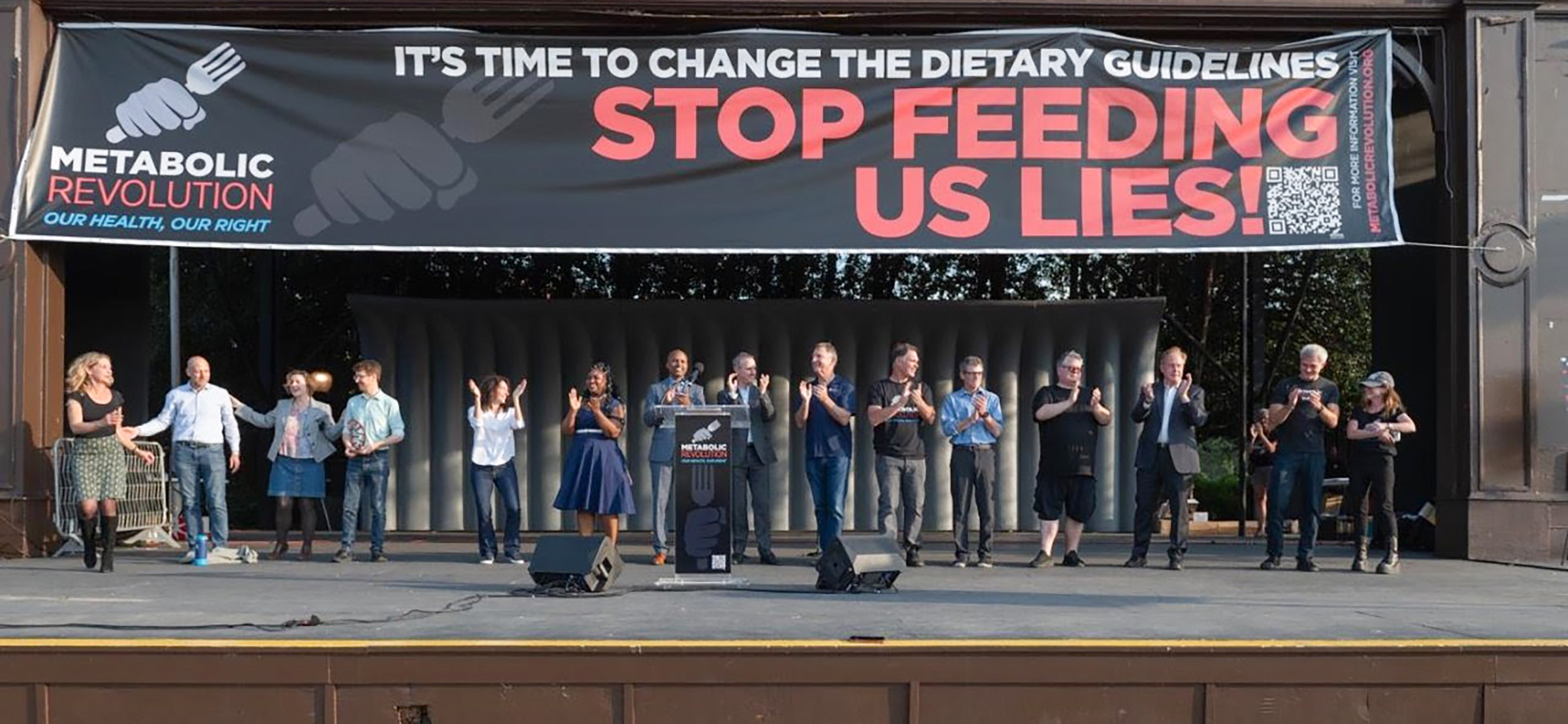
Nutrition Coalition photo

Meanwhile, in the DGAC meeting, at least one member at the end of the first day noted how animal foods, specifically mentioning dairy, have all of these essential nutrients and that the bioavailability of the nutrients is important.

This didn’t make much difference. On the question of saturated fat restrictions, the 2025-30 DGAC doubled-down. These restrictions began with the first edition in 1980, and the quantitative recommendation of “limit saturated fat intake to less than 10% of calories per day starting at age 2 and replacing it with unsaturated fat, particularly poly-unsaturated” began in 2005.

The Committee’s biggest justification was that, “This has been confirmed by several previous DGACs based on the relationship between saturated fat intake and cardiovascular disease risk.” Basically saying it has been previously decided, and “we’re sticking with it.” Essentially, all evidence to the contrary was again ignored.

The Committee stated that only 1 in 5 Americans implement this limitation; so, food replacement strategies, cultural diet pathways, and diet simulations were recommended to show how to get more nutrient density from plant sources. Pre-packaged and pre-portioned implementation strategies and plated combinations of plant-based meals are suggested as ways to ensure nutrients without the fat.

This high-level academic exercise means very little to everyday Americans making choices about food, but it could fundamentally change what is available to choose from — if the “systems science, implementation science, and behavioral science” the DGAC is also recommending pushes diets even more toward highly processed, pre-packaged, pre-portioned options designed by global food giants.

Bottomline: the DGAC will recommend to the USDA and HHS to further reduce animal-based protein consumption and to further increase plant-sourced consumption in the 2025-30 Guidelines, while continuing to limit dairy to non-fat and low-fat options.

For dairy, the DGAC is also recommending that USDA update nutrition composition and dairy reference guides to reflect what they say are ‘improved’ plant-milks, and to use ‘diet simulators’ to show Americans how to be more ‘flexible’ in replacing animal foods with plant foods.

The DGAC also changed the wording of its 2025-30 mission to “reduce the focus on chronic disease risk reduction, to instead focus more on promoting growth and development and improving the healthspan.”

These are key takeaways despite the Committee spending the first hour of the first day stupefied by the analysis showing — uniformly across all socio-economic and cultural demographics — children ages 5-19 had the nutritionally poorest diets in terms of under-consuming key nutrients at this most critical lifestage.

Even when they picked up their Health Equity Lens to look at the data, it was uniformly bad.
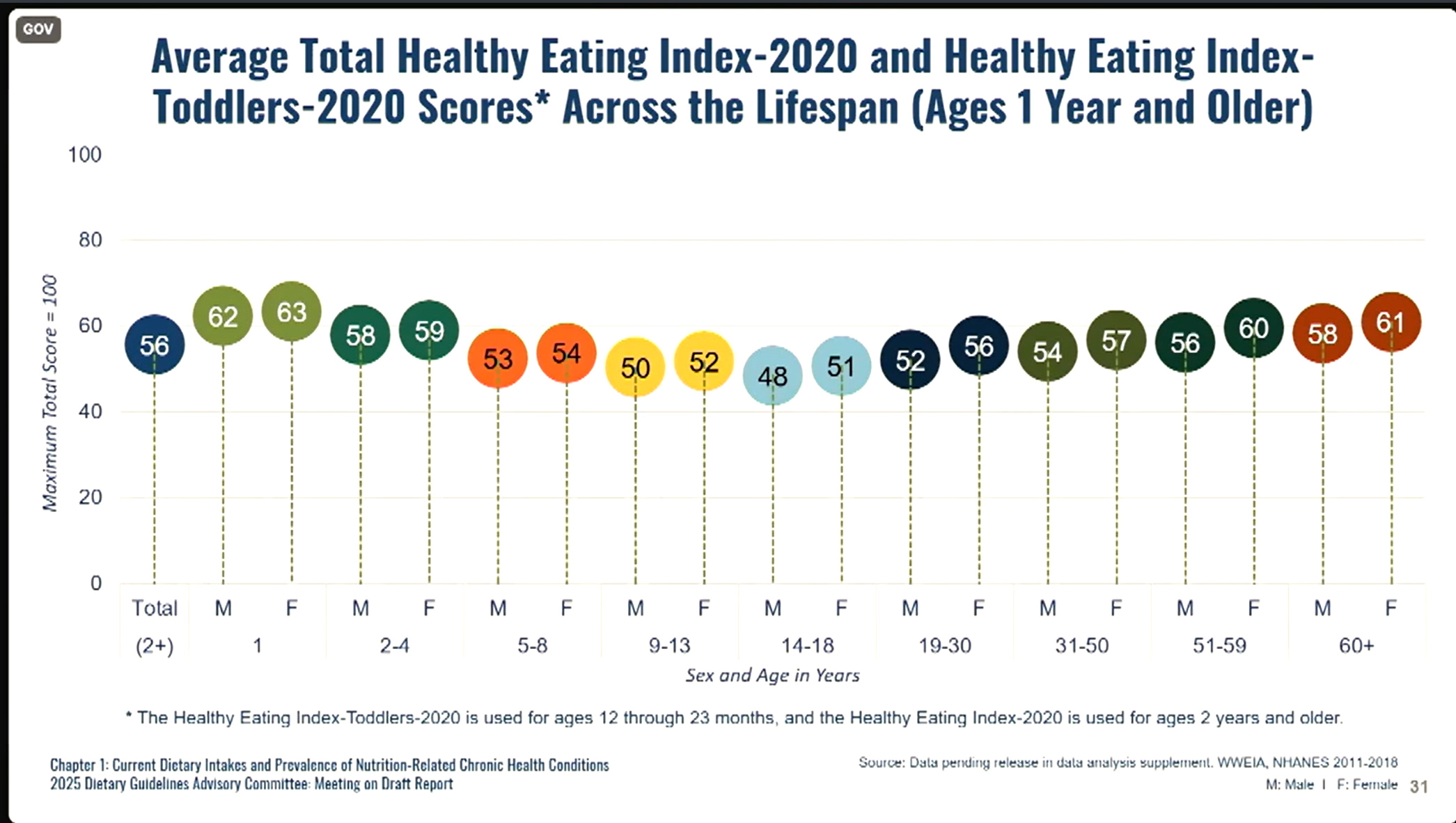
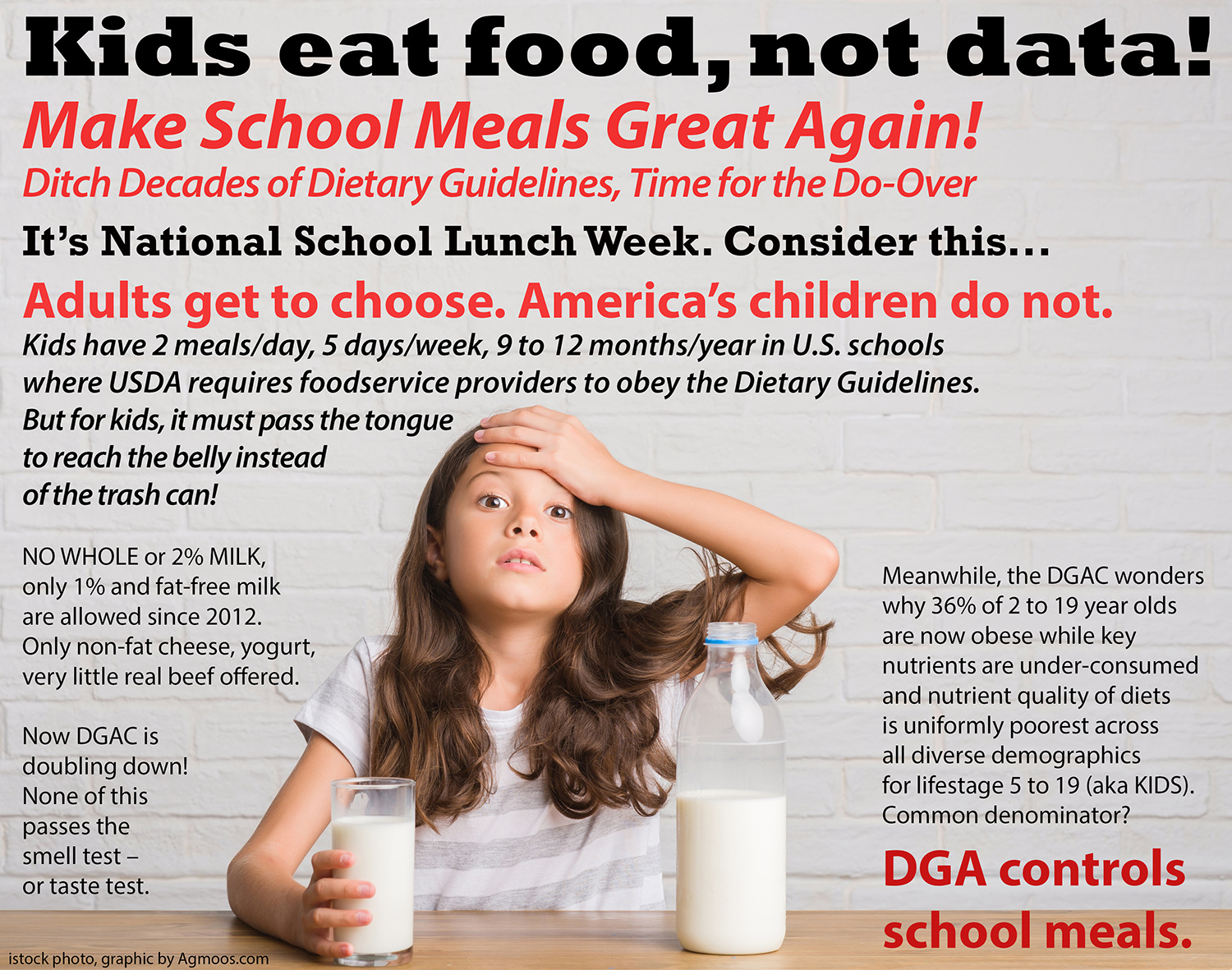
The DGAC could not understand why the healthy eating index showed such uniformly poor performance in the under-consumption of key nutrients, especially among children ages 5 to 19 across all populations. (Simple. It’s because the anti-fat DGAs are enforced at school meals twice a day, five days a week, most of the year for this life stage. Kids do not get to choose; adults do.) Oct. 21 screenshot DGAC meeting 

Their interpretation? I will paraphrase: Parents need help understanding how to feed their children.

My interpretation? The Dietary Guidelines are, themselves, the problem because they are used rigidly to formulate the meals that the age 5 to 19 lifestage (kids) are presented with twice a day, five days a week, nine to 12 months of the year – at school! The body will keep snacking until it gets the nutrients it seeks. 

“Obesity is a major public health issue, impacting 36% of children ages 2 through 19 years and 41% of adults ages 20 and older,” according to the DGAC.

However, by the end of the two days, the DGAC showed it would stay on the anti-fat path and give USDA and HHS the “expert” advice to double-down on saturated fat restrictions that have prevailed over the years while Americans become less healthy, more obese, with more chronic disease, at ever younger ages. Do they not wonder why this was not the situation pre-Guidelines? So much valuable research on saturated fat and health was again left off the table.
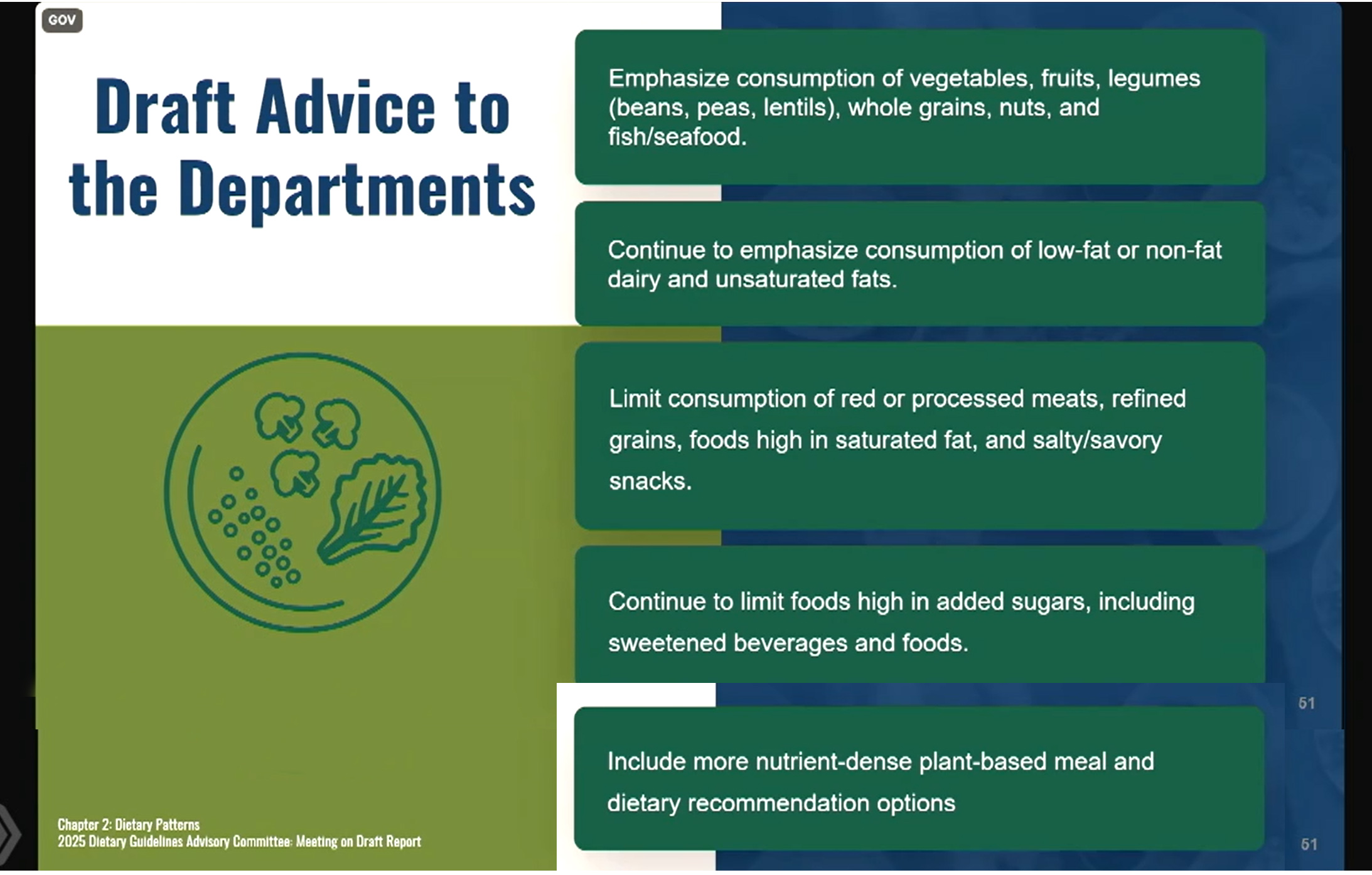
One of many draft advice slides for 2025-30 Dietary Guidelines emphasizing non-fat and low-fat dairy and unsaturated fats; addressing nutrient density by increasing plant-based meal options and decreasing animal-based. Oct. 21 DGAC meeting 

Impacts of the DGAC draft report on Dairy:

1) Dairy’s ‘place’ in the diet remains somewhat intact, but the committee advises things like not referring to soy milk as an “alternative” because it is part of the dairy grouping. They also are questioning if ‘Dairy’ is the right term for the Dairy group. The DGAC also will advise USDA to update nutrient composition and daily reference amounts to reflect the current state of nutrition art in “plant-milks” and to use diet simulations to show Americans how to be more flexible in replacing animal-based with plant-based.

2) Nonfat and low-fat dairy will continue to be the recommendation (3 milk cup equivalents), although they mentioned that there was not enough evidence to make this a strong conclusion for ages 2 through 5. Perhaps this leaves a door open for daycares and WIC to expand to 2% and whole fat milk up to age 5 instead of the current age 2, but schoolchildren are still out of luck. Dairy fat and butter were mentioned as being consumed mostly in processed foods.
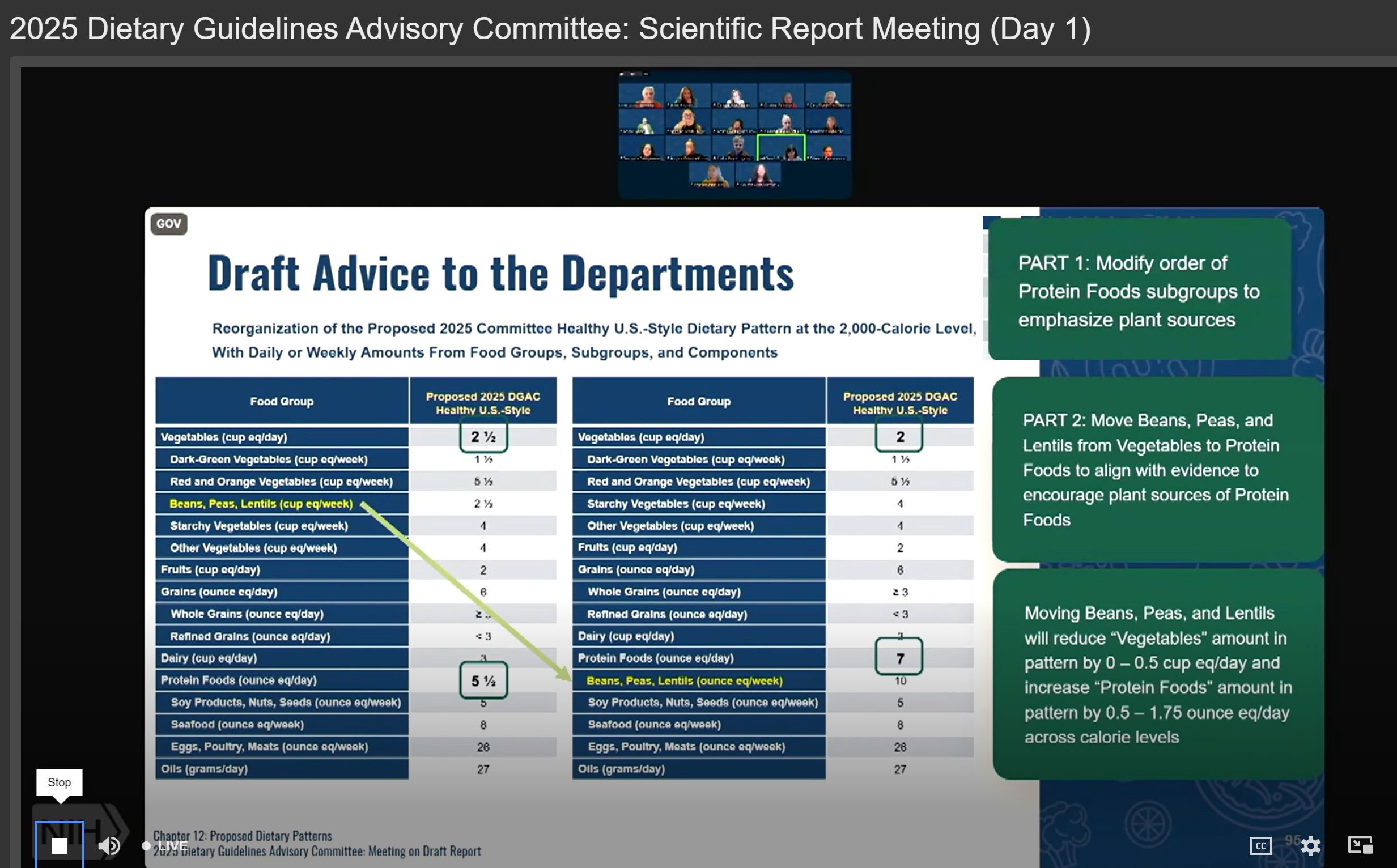
3) The Protein category has been flipped on its lid. The DGAC moved beans, peas and lentils from the vegetable category to the protein category and increased the daily quantities for beans, peas, lentils, seeds, soy, nuts, and fish, while reducing the allowance for meat, poultry and eggs. In fact, they will represent this visually by listing first in the protein category the plant sources, followed by fish, then eggs, then poultry, and lastly, red meat. The DGAC pointed to the dairy group as a source of protein that is not in the protein group, so protein level importance in plant-based comparisons can be reduced. (Several Committee members indicated their belief that Americans consume too much protein, so they wanted to show these crossovers differently.)

4) The additional considerations chapter is of particular concern for the future, advising USDA and HHS to: a) Encourage shifts to nutrient-dense plant-based meals; b) Put stricter limits on foods and beverages high in added sugars, sodium, and saturated fat; c) Use sugar limitations to exclude foods from the dietary pattern (with implications for flavored milk and dairy products); d) Make sodium reduction targets mandatory not voluntary (may impact the cheesemaking process for schools and other institutional feeding); e) Avoid referring to soy milk as “alternative”; Research name change for Protein group and determine if ‘Dairy’ is the right term for the Dairy group.

This draft report ends the DGAC’s work. In the coming days, it will be edited to reflect the discussion for submission as final recommendations to USDA and HHS.

A joint team of staff from both Departments will prepare this DGAC Scientific Report for posting at DietaryGuidelines.gov, along with data analysis, food pattern modeling and other supplemental documents. 

USDA and HHS will then open a new public comment period.

In 2025, the Secretaries of USDA and HHS (whoever they end up being), along with their joint team, will review the DGAC scientific report and the public comments to develop the actual 2025-30 Dietary Guidelines for Americans.

Expect these DGAs to continue most negatively impacting America’s schoolchildren and elderly in senior centers where meals must follow them.

However, it will have some impact on all of us if the Departments use the DGAC recommendation to implement food system science at the food supply level. We can already see what happens to choices for consumers and markets for farmers when the middlemen decide what can be put on grocery store shelves or in the dairy or meat case.

Not only did we not see a serious effort to address the need for more nutrient dense foods in the dietary pattern, the new pattern will double-down against saturated fat, along with salt and added sugar, and erode protein levels, while continuing to search for the missing nutrition profile of its increasingly vegetarian recommendations. 

None of this passes the smell test, and likely not the taste test. Kids eat food not data. Nutrients must pass the tongue to reach the belly. Look for more on that in terms of action next week from the Grassroots Pennsylvania Dairy Advisory Committee and 97 Milk.

***

Additional information:

In its report, The Nutrition Coalition notes: “The collective shift toward emphasizing more plant-based foods has lowered the quality and quantity of protein in our diets. It is time to pause and question whether these changes are endangering health in the U.S., especially among children and the elderly. Still, with plant-based advocates dominating the public comments, plant-based industries and interests lobbying the USDA, and plant-based proponents on the expert committee itself, we may see further reductions of this important macronutrient in the 2025 Dietary Guidelines.”

Nina Teicholz, Ph.D. explains that these draft recommendations “fly in the face of our knowledge that plant proteins are of lower quality than animal proteins. With the exception of soy, all plant proteins lack all the necessary amino acids to make muscle tissue (as well as perform other critical functions in the human body). Reducing the total amount of protein and replacing animal proteins with plant proteins are both harmful changes. These alterations will mean that anyone receiving USDA-funded meals, such as kids consuming school lunches, the women and infant children on the WIC program, and the elderly will receive fewer complete proteins. Also, reductions in meat, dairy and eggs are sure to exacerbate nutritional deficiencies in the guidelines, which currently fail to meet basic targets iron, vitamin D, vitamin E, choline, and folate. The Dietary Guidelines are already deficient in complete proteins. The erosion of protein in the guidelines has been happening for decades, as we wrote about in this post.”

-30-
What’s the future for fluid milk?

Fluid milk sales are up, Whole Milk for Healthy Kids Act is moving. Meanwhile industry globalists put big bets on ESL, shelf-stable, with favor from Vilsack  

By Sherry Bunting, Farmshine, October 18, 2024

EAST EARL, Pa. — Protein is all the rage right now, and consumers are turning back to real milk as they realize its natural high quality protein benefits. Year-to-date fluid milk sales continue to outpace year ago, and that’s good news. Here are some key factors in the future of fluid milk in the U.S.

Fluid milk sales up!

July’s total packaged fluid milk sales more than recovered the June slump — in a big way, and August looks promising too.

USDA estimated packaged fluid milk sales at 3.4 billion pounds in July, up 4.3% year-on-year (YOY). This amplifies the pivotal year-to-date trend above year ago for the first time in decades (except the 2020 pandemic year).

Specifically, USDA’s Estimated Fluid Milk Product Sales Report for July, released in late September, noted conventional fluid milk sales total 3.7% higher YOY, with organic up 11.7%.

Conventional unflavored whole milk sales were up 4.7% YOY in July, while organic whole milk sales were up 17.1%.

Flavored whole milk sales were mixed because these sales rely upon what processors are willing to make and offer on store shelves, not necessarily reflecting what consumers want to buy. When fewer packages of whole flavored milk are offered, the full potential of sales are restrained.

Year-to-date (YTD) sales of all fluid milk products for the first seven months of 2024, at 24.7 billion pounds, are up 0.7% YOY, adjusted for Leap Year. Of this, YTD conventional whole milk sales for the first seven months of 2024, at 8.8 billion pounds, are up 2.1% and organic whole milk sales at 914 million pounds are up 12.6%.

The August report to be released in the coming weeks is shaping up similarly. August Class I utilization pounds reported last week by USDA are up 1.1% YOY and 1.1% YTD (Jan-Aug).

Making more fat, importing it too?

Meanwhile, the monthly World Agricultural Supply and Demand Estimates (WASDE) released Oct. 9 reduced its milk price forecasts for the rest of 2024 and into 2025, expecting Class III prices to fall from September highs as cheese price declines are expected to more than offset the higher whey prices.

This report is looking at all the major new cheese capacity coming online in the next 12 months, which is expected to saturate the cheese market to drive prices lower so that U.S. cheese makers can be globally competitive and continue exporting record amounts of cheese.

But is the milk available to do this? Likely not without robbing from Classes I, II and IV channels. Still, the WASDE forecasts lower Class IV prices also due to the abruptly declining butter price being only partially offset by the higher nonfat dry milk prices.

In short, dairy farms are making higher-fat milk, and the food industry is importing more milkfat, especially in the form of whole milk powder. WMP imports have been up by a record amount YOY in each of the past four years, especially 2024.

Restoring whole milk choice for kids!

Now would be a particularly good time for whole milk choice to be restored in our nation’s schools since we apparently have too much milkfat and not enough skim. Given this scenario, how can anyone in this industry still believe the whole milk in schools would hurt the industry’s ability to make enough butter and cheese. 

Unless it is excess butter and cheese that is needed to push prices down in order to continue beating record exports at reduced prices paid to farmers. 

Getting whole milk choice into schools would help. IDFA has been touting the Whole Milk for Healthy Kids Act. NMPF says they are on board too. This means the industry is united, right?

What are the chances that GT Thompson’s bill to bring whole milk choice back to schools will finally make it all the way to the President’s desk?

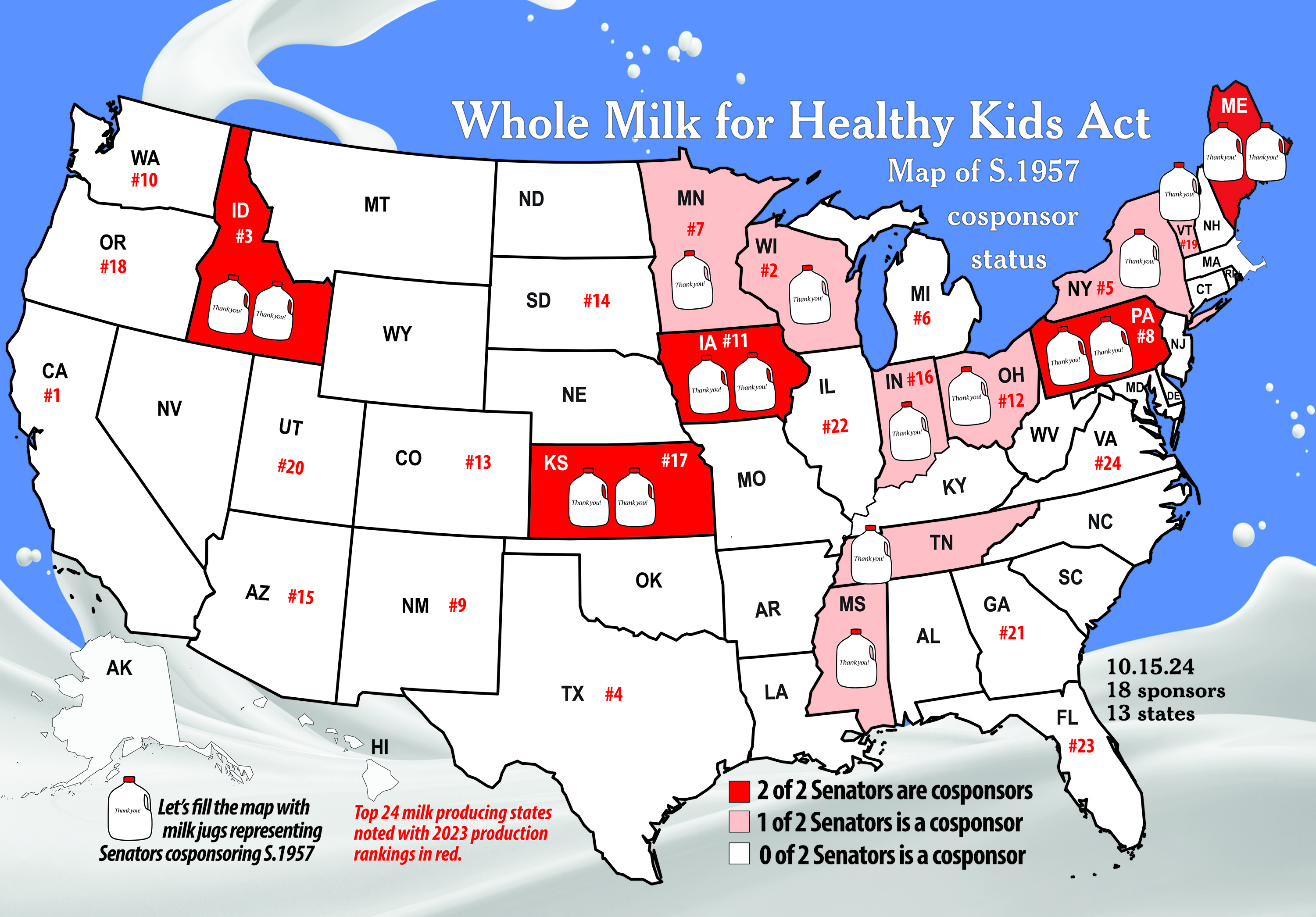
For starters, it passed the House by an overwhelming bipartisan majority last December. The Senate bill, S. 1957, has 11 Republicans, one Independent and five Democrats signed on, including notable Democrats such as Amy Klobuchar of Minnesota, Peter Welch of Vermont, Kirsten Gillibrand of New York, and John Fetterman of Pennsylvania who chairs the Senate Ag Subcommittee on Nutrition. 

The main sponsor is Republican Senator Roger Marshall of Kansas, a doctor. States represented are Pennsylvania, Vermont, Wisconsin, Idaho, New York, Iowa, Ohio, Indiana, Tennessee, Maine, and Mississippi.

In fact, Pennsylvania now has both Senators signed on. Senator Bob Casey Jr. (D-Pa.) is late to the party, but he has finally signed on as a cosponsor of S. 1957 on Sept. 19. It’s nice to see both senatorial milk jugs filled on the map for the Keystone State, but the bill needs more cosigners to fend off the blockade by Senate Ag chairwoman Debbie Stabenow (D-Mich.).

GT has included the Whole Milk for Healthy Kids Act in the House Ag Committee-passed farm bill. Word from Washington over the past few weeks is that a new farm bill is expected to get done after the elections in the lame duck session, and that GT will fight to keep the Whole Milk for Healthy Kids Act in the bill. Let’s hope so.

USDA: two movers for Class I?

Also related to Class I fluid milk sales, the dairy industry awaits a final decision on USDA’s proposed changes to federal milk pricing formulas, which includes a surprise for fluid milk: splitting the baby and adding a fifth class of milk in the form of two Class I mover announcements each month. 

The hearing record is woefully inadequate. No proposal. No evidence. No testimony. No analysis. No parameters. No definition. Even USDA’s own static analysis shows these two movers would be as much as $1 or more apart in any given month.

Fresh, conventionally processed (HTST) milk would go back to being priced by the the higher of the Class III or IV advance pricing factors to determine the Class I skim milk base price portion of the mover. 

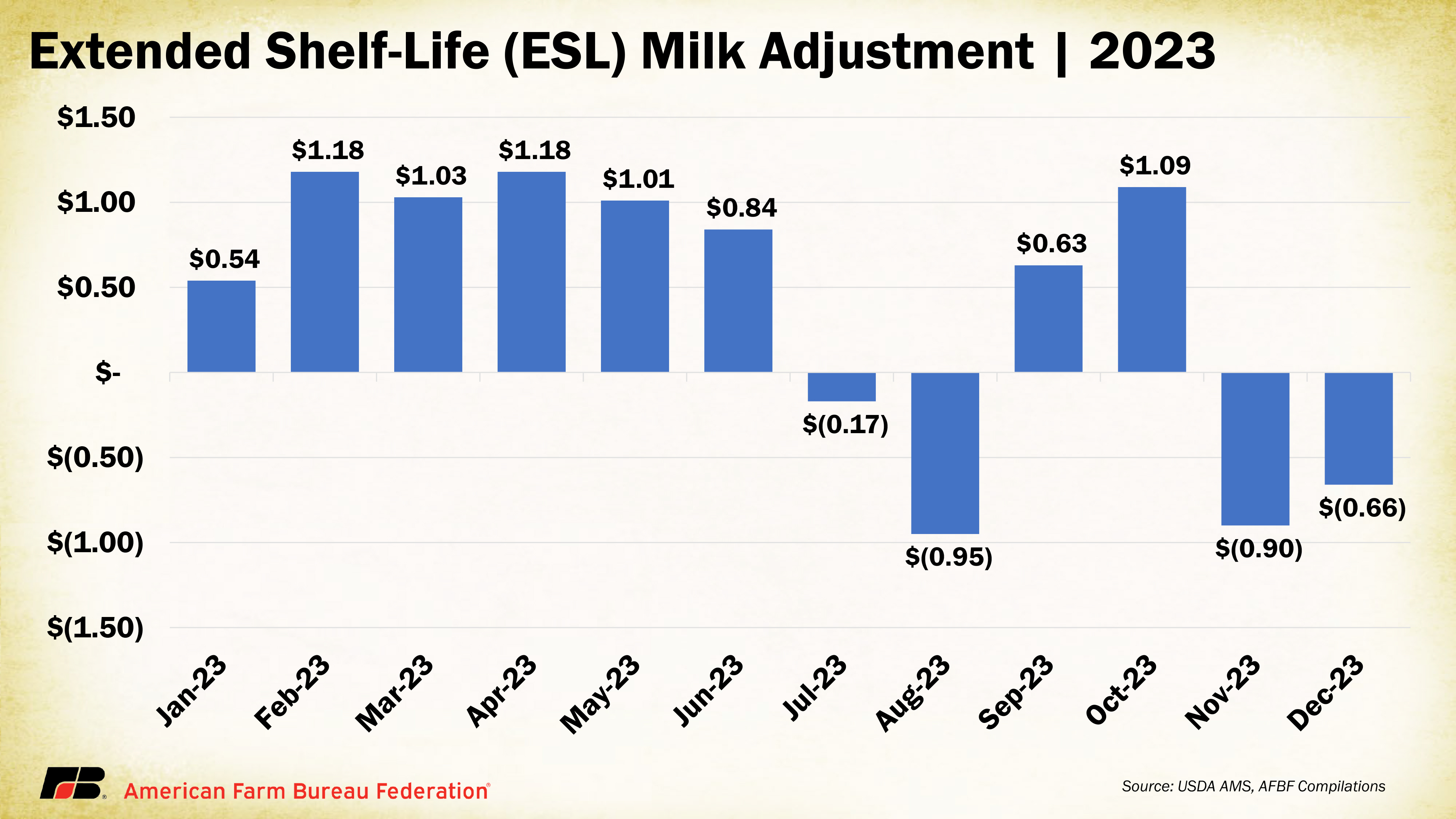
However, milk used to make extended shelf life (ESL) fluid milk products, defined only as “good for 60 days or more,” would continue to be priced using the average of these two pricing factors, plus-or-minus a rolling adjuster of the difference between the higher-of and average-of for 24 months, with a 12-month lag.

With two movers, fluid milk costs could be different for plants in the same location based on shelf life, with no clear definition for the new class, nor parameters established to qualify. Could we see label changes to move between movers?

Processors will know the rolling adjuster 12 months in advance, due to the “lag.” They will know the two advance-priced calculations (higher-of and average-of) a month in advance. They will have it charted in an algorithm no doubt and make decisions accordingly.

Farmers, on the other hand, will find out how their milk was used and priced two weeks after all their milk for the month was shipped. Those milk checks will be even less transparent than they are now.

Big bets on ESL, shelf stable

The dairy checkoff has openly identified ESL, especially shelf stable aseptically packaged milk, as its “new milk beverage platform,” using dairy farmer funds to research and promote it and to study and show how consumers can be “taught” to accept it.

The whole deal is driven by the net-zero sustainability targets. So, follow the money.

Dr. Michael Dykes of IDFA, at the Georgia Dairy Conference in January 2024, told dairy producers that “this is the direction we (processors) are moving… to get to some economies of scale and bring margin back to the business.”

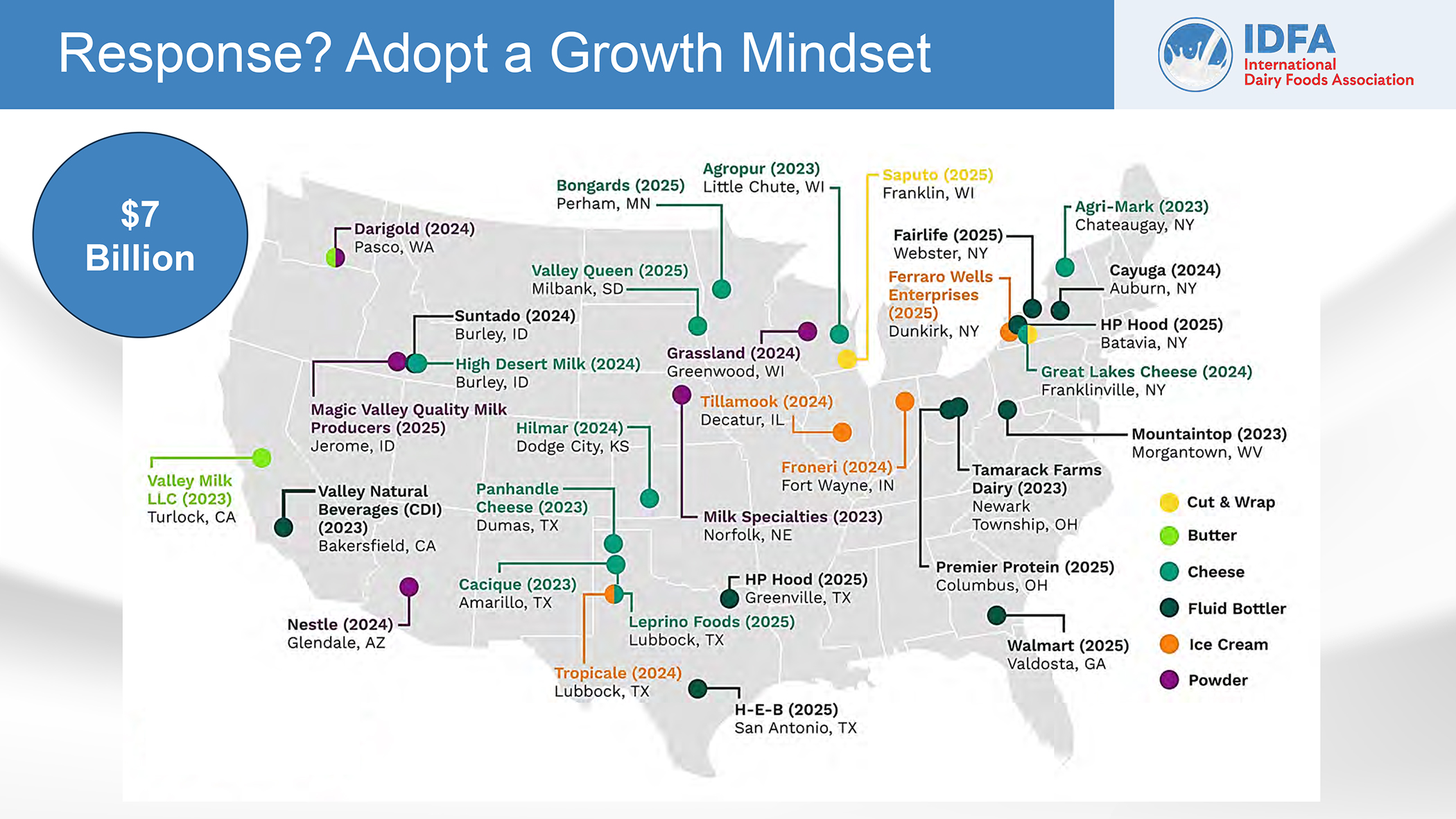
He said the planned new fluid milk processing capacity investments are largely ultra-filtered, aseptic, and ESL — 10 of the 11 new fluid plants on the IDFA map he displayed are ESL. Some will also make ultrafiltered milk, and some will make plant-based beverages also.

Meanwhile, the linchpin of regional dairy systems is conventionally pasteurized (HTST) fluid milk, prized as the freshest, least processed, most regionally local food at the supermarket.

To be sure, this two-mover proposal fits the climate and export goals set forth by the current Ag Secretary Tom Vilsack when he was working as the highest paid dairy checkoff executive in between the Obama and Biden administrations. 

The pathway to rapidly consolidate the dairy industry to meet those goals is to tilt the table against fresh fluid milk, something he already put a big dent in when removing whole milk from schools.

They decided thou shalt drink low-fat milk and like it. Apparently, they are equally convinced about ESL / shelf stable milk as the way of the future and will continue using mandatory farmer checkoff funds to figure out how to get consumers to like that too.

Just this week, the food writer for The Atlantic did a piece on shelf-stable milk, calling it “a miracle of food science” and lamenting in her Op-Ed that it’s a product “Americans just can’t learn to love.”

Author Ellen Cushing took jabs at America’s preference for fresh natural milk from a global perspective, without a thought for the local dairy farms and regional food systems that are tied to fresh milk. She states that by worldwide standards, other countries have gone shelf-stable milk, which she describes as “one of the world’s most consumed, most convenient and least wasteful types of dairy.”

Processors are making big bets on consumer conversion to ESL and shelf-stable.  There are cards to play in every hand. TO BE CONTINUED!

-30-

There is NO basis for two Class I movers in FMMO recommended decision!

AUTHOR’S NOTE: Who’s the wizard behind the curtain on USDA’s last-minute milk pricing surprise, the splitting of the Class I baby to favor ESL? Vilsack, of course, with a little help from his checkoff cronies at Midwest Dairy and DMI — masquerading as ‘dairy farmers.’

By Sherry Bunting

USDA’s recommended decision on Federal Milk Marketing Order Class I (fluid milk) formulas brought a big surprise getting very little attention. That surprise: “splitting the Class I baby” and adding what constitutes a “fifth Class” of milk — TWO Class I movers announced each month.

ZERO proposals to divide Class I into a two-mover system were aired at the national hearing. Even USDA’s analysis shows the two movers would differ by as much as $1 apart — or more — in any given month.

The hearing record is woefully inadequate, indeed completely void of testimony for a second Class I mover. No proposal. No evidence. No testimony. No analysis. No parameters. No definition.

What does this surprise two-mover decision mean? 

Fresh, conventionally processed (HTST) milk would go back to being priced by the prior method, using the higher of the Class III or IV advance pricing factors to determine the Class I skim milk base price portion of the mover. 

On the other hand, milk used to make extended shelf life (ESL) fluid milk products, defined only as “good for 60 days or more,” would continue to be priced using the average of these two pricing factors, plus-or-minus a rolling adjuster of the difference between the higher-of and average-of for 24 months, with a 12-month lag.

Confused yet? 

The industry is calling this surprise two-mover twist ‘innovative’ and ‘creative’, even ‘brilliant.’ But let’s hold the horses a moment. 

With two movers, fluid milk costs could be different for plants in the same location based on shelf life. Could processors change the label to move between the movers and pay whichever mover was lower? Who knows? There is no clear definition for the new class, and the parameters to qualify are non-existent.

ESL processors will know the rolling adjuster 12 months in advance, due to the “lag.” They will know the two advance-priced movers a month in advance. They will have it charted in an algorithm no doubt, and make decisions accordingly.

Dairy farmers, on the other hand, will find out how their milk was used and priced two weeks after all their milk for the month was trucked off the farm. If the two-price Class I system becomes law, dairy producers’ milk checks will be even less transparent than they are now!

Not only does the USDA hearing record and decision fail to clearly define ESL, the industry doesn’t even have an exact and generally-accepted definition or standard for ESL.

ESL is both a loose and specific term.

Generally speaking, ESL is a term covering a broad range of products — ranging from UHT (ultra high temperature) or ultra pasteurization, aseptic packaging, to the inclusion of a process that combines microfiltration, skim separation, and indirect heating (in stages). These processes yield what is more specifically referred to as ESL fresh milk with a longer shelf life in refrigeration, but is not shelf-stable.

What’s at the root here?

Dairy checkoff personnel have openly identified ESL — especially shelf stable aseptically packaged milk — as its “new milk beverage platform.” Dairy farmers’ promotion funds are being used to research and promote ESL milk, as well as studying and showing how consumers can be “taught” to accept it.

For the past few years, the four research centers supported by the checkoff have been drilling into milk’s elements to sift, sort, and test different combinations to reinvent milk as new beverages.

In 2023, North Carolina State researcher Dr. MaryAnne Drake —speaking at the 2023 Georgia Dairy Conference — talked about this “new milk beverage platform. We are after a shelf-stable milk that tastes great and meets our consumer’s sensory needs and our industry’s sustainability needs,” she said.

Bingo. Dairy checkoff funds for ESL are being driven by the net-zero sustainability targets. And now USDA’s federal milk order changes are proposing to lower dairy farmers’ Class I income and/or competitively favor, and in a way subsidize, ESL processors over fresh HTST fluid milk processors. Follow the money.

Dr. Michael Dykes of IDFA, at the Georgia Dairy Conference in January 2024, told dairy producers that “this is the direction we (processors) are moving… to get to some economies of scale and bring margin back to the business.” He said the planned new fluid milk processing capacity investments are largely ultra-filtered, aseptic, and ESL — 10 of the 11 new fluid plants on the IDFA map he displayed are ESL. Some will also make ultrafiltered milk and plant-based beverages too.

The linchpin to regional dairy systems and markets for milk from farms that fit USDA’s description of small businesses is the processing of fresh, conventionally pasteurized (HTST) fluid milk.

Meanwhile, dairy checkoff overseers, in cahoots with processors, are making big bets that consumers will embrace the obvious conversion underway to the consolidating shelf stable ESL milk, emboldened by the average-of pricing that has failed farmers miserably over the past five years and is now part of the proposed two-price Class I system mysteriously added to the USDA recommended decision when a two-price Class I system was never noticed as part of the hearing scope.

In the recommended decision, USDA notes that ESL currently represents 8 to 10% of total fluid milk sales but does not present the full picture of how the industry began aggressively converting to ESL since 2019 when Class I average-of was implemented. More of these accelerated investments will become operational in 2024-26.

Before we know it, the industry will have converted to ESL, and dairy farmers will once again experience disorderly marketing, depooling, and the basis risk of the mysterious average-of mover.

Dairy farmers have seen this movie before. 

In 2018, the average-of method — which changed how the Class I base was calculated — was portrayed by National Milk and the IDFA as “revenue neutral.” But at the recent national milk order hearing, testimony revealed that farmers experienced Class I revenue losses totaling nearly $1.25 billion from May 2019 through July 2024… and other impacts. 

Disorderly markets via the ‘average-of’ continue to result in losses and disrupt performance of risk management tools that fail to protect farmers against the intervals of extreme basis risk.

Proponents say the proposed rolling 36-to-13-month ESL adjuster on the second mover in USDA’s decision provides compensation to farmers for the difference between average-of and higher-of. However, that occurs gradually — over time — with a lagged interval. If tight milk supplies boost commodity prices and drive up all classes of milk, then dairy farmers’ incomes will at least partially lag years behind real-time markets!

ESL processors like Nestle and fairlife testified that the average-of method over the past five years allowed them to use Class III and IV hedges on the CME to offer flat 9- to-12-month pricing to wholesale customers and increase their sales. Nice to know the big corporations made money on that inequitable Class I pricing system.

Would a two-mover system ultimately reduce farmers’ access to milk markets in some regions and diminish the food security of those consumers? Watch the impact of a new, unregulated ESL plant now being built in Idaho!

Many legitimate questions lack answers

Milk is commonly prized as the freshest, least processed, most regionally local food at the supermarket. Will the USDA recommended decision accelerate consolidation and a reduction in fresh fluid milk availability for consumers?

Has USDA considered the purpose of the FMMO system is to promote orderly marketing and the adequate supply of fresh fluid milk? Will consumers accept the taste of the not-so-fresh ESL, or migrate faster to other beverages if fresh fluid milk is less available to them?

How will the two-mover system impact dairy farms located outside of the industry’s very specific identified growth centers? 

Will this perpetuate the wide divergence between Classes III and IV that has been an issue since 2019, further punishing dairy farmers with disorderly marketing and opportunistic depooling?

Who knows? The hearing failed to define, examine, or obtain evidence on any such questions… or any other questions that the hearing process is meant to be open to because this decision falls outside of the hearing scope!

Vilsack strikes again?

This proposal — a price break favoring ESL milk — fits the climate and export goals set forth by Ag-Secretary-then-DMI-executive-then-Secretary-again, Tom Vilsack. The pathway to rapidly consolidate the dairy industry to meet those goals is to tilt the table against fresh fluid milk. This is something Vilsack already put a big dent in by removing whole milk from schools.

It’s like one well respected veterinarian in the industry observed recently in conversation: “Someone decided: Thou shalt drink low-fat milk and like it.”

That “someone” is apparently equally convinced that the industry shall move to ESL and aseptic milk processing… while using dairy farmers’ checkoff funds to figure out how to get consumers to like that too.

-30-

‘Make allowance’ among hot topics ahead of producer vote on USDA’s proposed milk pricing changes

35 dairy farmers, industry representatives, and farm media attended “Winners and Losers: a discussion about USDA’s proposed milk pricing reforms,” hosted by the American Dairy Coalition during the 57th World Dairy Expo in Madison, Wisconsin October 3rd.

By Sherry Bunting, Farmshine, October 11, 2024

MADISON, Wis. – “I’m in Wisconsin, and on the graph (below) it looks like producers in Order 30 are having to decide between less money with an Order or even less money without an Order. Am I wrong and is there a silver lining?”

That was the crux of the question one dairywoman asked during the American Dairy Coalition’s (ADC) ‘Winners and Losers’ seminar and press conference Oct. 3 at World Dairy Expo. Over 35 farmers, industry representatives, and media professionals gathered to hear insights about USDA’s recommended decision on changes to Federal Milk Marketing Order (FMMO) price formulas.

American Farm Bureau economist Danny Munch was the invited presenter, followed by time for questions, moderated by Kim Bremmer of Ag Inspirations, and opportunities for networking and farmer-to-media connections during the remainder of the two hours.

Dairy farmers attending ADC’s press conference gave interviews after the discussion on USDA’s proposed milk pricing changes.

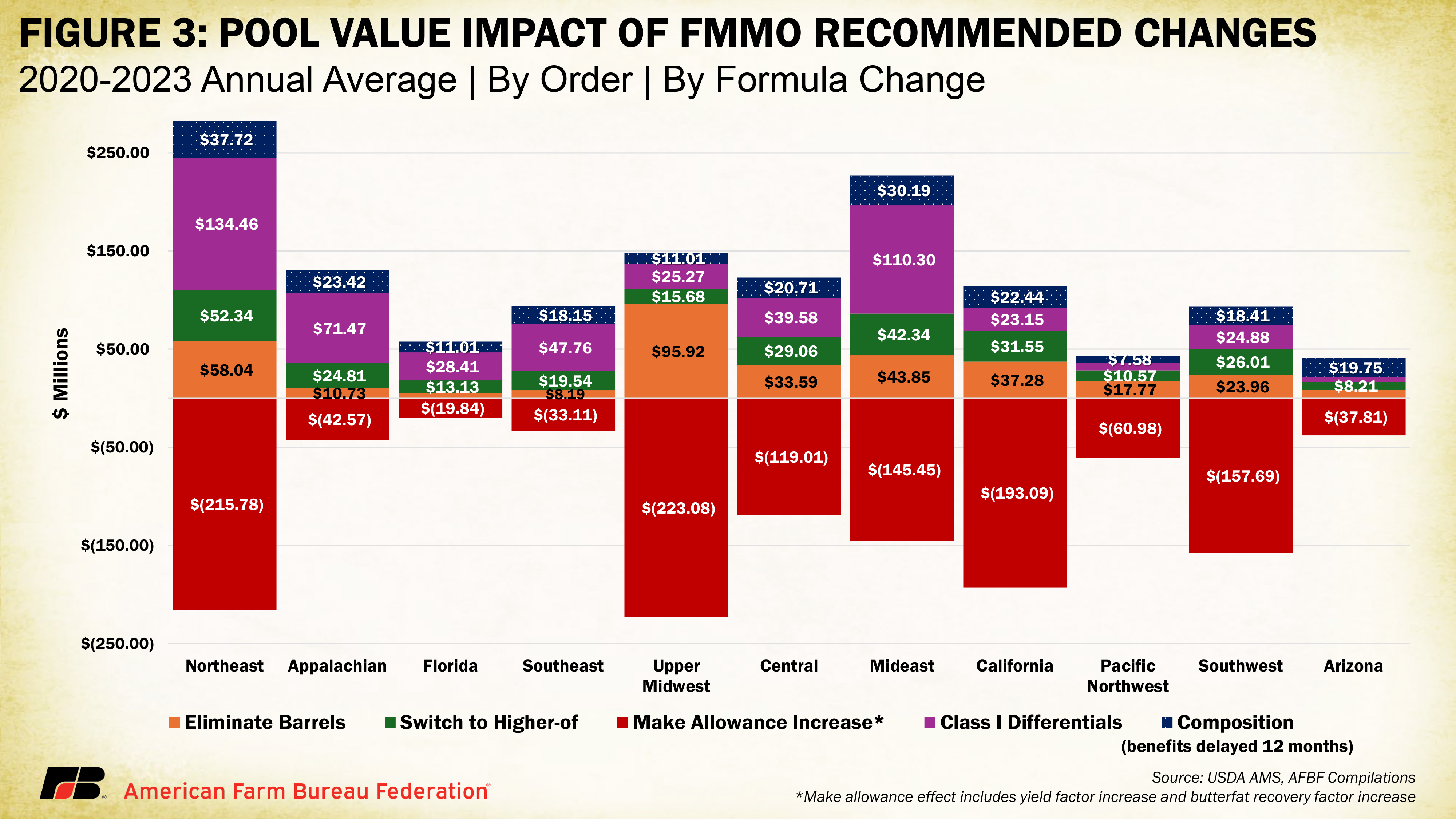
At issue was the impact on FMMOs with more cheese and less fluid milk, that would experience the negative impacts of a proposed hike in processor make allowances without the positive buffer of higher Class I location differentials.

Bremmer said over 126 individuals and organizations provided comments to USDA. The comment period ended Sept. 13. 

During his visit to Expo on Oct. 4, Ag Secretary Tom Vilsack said USDA would issue a final decision in mid-November. Also on Oct. 4, USDA held a webinar explaining the producer referendum expected in January. (Look for more specifics in a future Farmshine, and check out the Farm Bureau recap here)

The short answers to the above question appear to be yes, yes, and yes. With an Order, producers in some regions will see lower FMMO blend prices. Without an Order, they would lose minimum prices altogether and other important FMMO functions.

The silver lining? Munch pointed to better competition currently for milk, and he sees opportunity for milk in the future as consumers focus on protein.

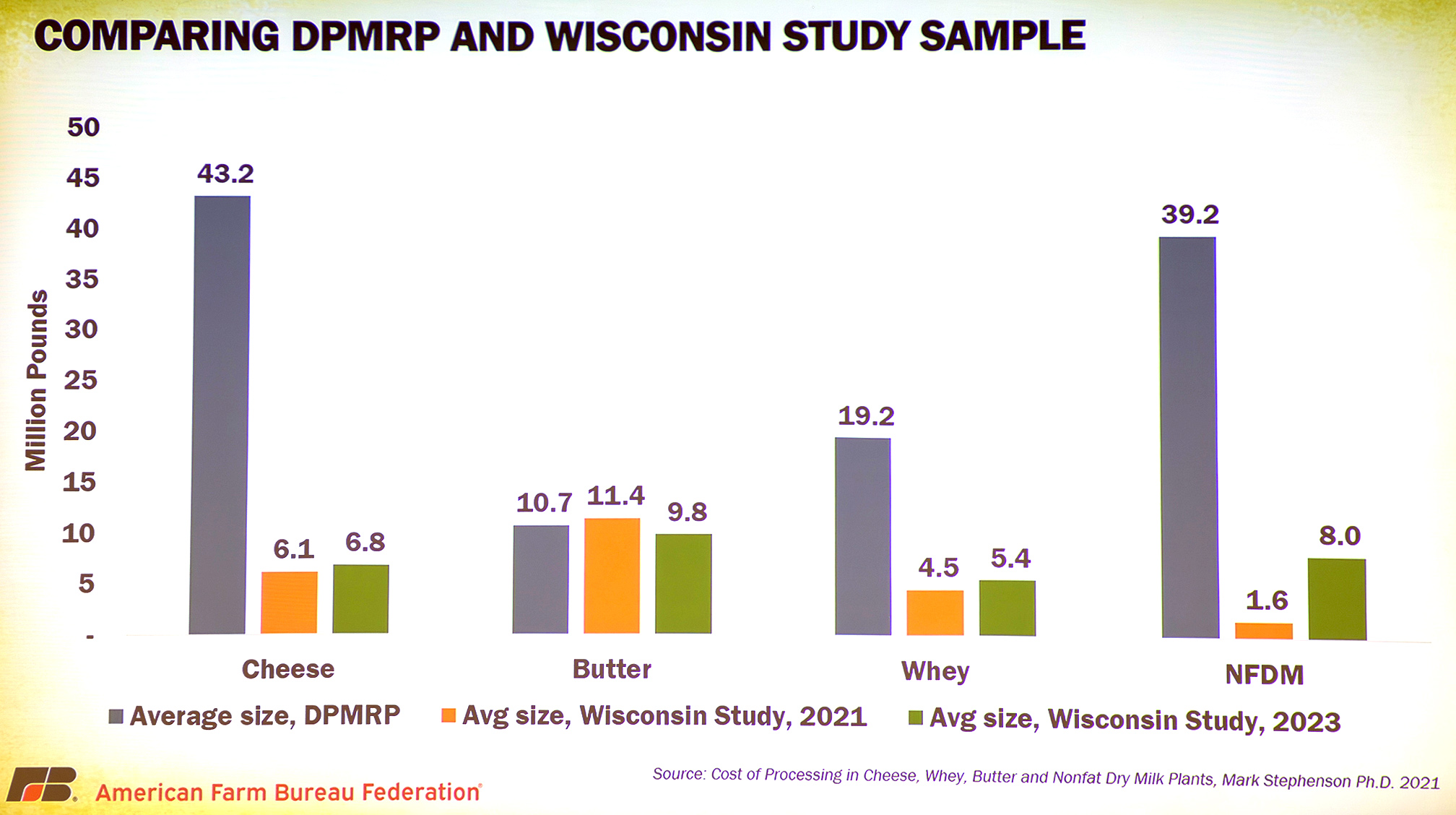
New to the discussion was make allowance data compiled by AFBF for its official comment at the Federal Register showing the average plant size of processors participating voluntarily in the Stephenson Survey relative to the average plant size of processors reporting to the NASS Dairy Product Manufacturing Survey (below)

The average size and volume of the plants in the voluntary cost of processing survey is 5 to 20 times smaller than the size and volume of plants reporting to USDA on price and production. This is further evidence that mandatory surveys are the only fair way to examine and set make allowance levels.

ADC reports that farmers have called with questions and concerns about the FMMO changes they will vote on. Part of ADC’s mission is to inform dairy farmers and help them understand factors like this that affect their businesses, said Bremmer.

For example, it’s helpful for farmers to realize that current make allowances equate to $2.17 to $3.17 per hundredweight in deductions already in the pricing formulas to cover the cost of converting milk to butter, cheddar cheese, nonfat dry milk, and dry whey. 

The proposed new make allowances add 70 cents to $1.00, depending on class utilization, bringing the total deduction to about $2.89 to $4.07 per hundredweight, maybe more.

The splitting of Class I into a two-mover pricing system is also causing discontent and concern. On the one hand, USDA would restore the ‘higher-of’ method for conventionally pasteurized fluid milk but use an ‘average-of’ method with a rolling and delayed adjuster for the extended shelf life (ESL) fluid milk products. This new milk class was not vetted nor defined during the hearing.

Also of concern is the delay in implementing positive updates to milk composition standards that have not been updated since Order Reform in 2000.

USDA’s recommended decision applies to all 11 FMMOs nationally but will be voted on by eligible (pooled) producers in each Order, individually.

A two-thirds ‘yes’ vote within each individual Order continues that Order with the changes. If the two-thirds threshold is not met by either producer numbers or volume in an Order, then the result is termination of that Order. 

Producers do not have the option of voting separately on the five pieces of the USDA decision, nor do they have the option of voting to keep the FMMO pricing formulas as they are currently.

Economists with National Milk Producers Federation have stated previously that 65 to 70% of the U.S. milk supply is marketed through cooperatives that tend to bloc vote for their producers, but this percentage can vary on an individual Order basis.

USDA determines voting eligibility, based on whether milk was pooled in the reference period selected by each Market Administrator. 

“When we get down the road to the vote, and if we vote ‘no,’ that will dissolve the Order, right?” asked one dairy farmer. “What opportunity does any geography have to reorganize a new Order to fit what works for them?”

Munch said producers could start a process to create a new Order, but it would still be required to use the same price formula rules because these will apply to ALL Orders uniformly. In contrast, he noted that USDA leaves pooling and depooling rules to be decided individually by each Order.

One member of the media pressed Munch to speculate on what happens if a western Order votes no, but an eastern Order votes yes?

“People always want me to speculate on what happens if California or the Upper Midwest vote out their Order(s). What we’ve seen in the past in unregulated areas, or areas with state orders — they still base a lot of their pricing on the nearby Federal Order system,” he responded.

“If we remove more milk out of the Federal Order system, does that system then play less of a role in pricing milk, and does that unregulated market start to dictate and suck milk out of the regulated areas, if you’ve taken out some of the large milk production states? That’s just some speculation, something to think about in the long term,” he said.

On a more immediate basis, Munch said that if an Order is terminated by this vote, “farmers lose protections like timely payments and component verifications, and the minimum prices. You could end up with a patchwork.”

He pointed out that USDA did not raise make allowances by the full amount requested by processors, but also did not go with the more modest increases requested by the cooperatives.

In their post-hearing comments, processors voiced great unhappiness with the decision, he said, because they didn’t get the multi-year increases to even higher levels.

“We don’t blame USDA for trying to come up with a middle ground… we just don’t have the data. The way hearing processes work is they collect this data brought by stakeholders and try to come up with a compromise that works for everybody,” Munch explained. “Our argument is that the data may not reflect market conditions, and we want to make sure that it does. We can’t get that assurance until there’s an audited, mandatory survey.”

As a standalone piece, AFBF estimates that USDA’s proposed increase in make allowances would remove an additional $1.25 billion annually from producer pool revenue, nationwide, based on past pooling data. However, USDA proposes a one-year delay in implementing the milk composition updates that would contribute $200 million annually in producer pool revenue nationwide.

Munch sees the 12-month delay in implementing the milk composition standards and the splitting of the Class I mover with an ESL adjuster as two things that appear to be “thrown in there,” with a lot of groups voicing discontent and confusion.

When asked by a reporter if the add-ons to Class I will create consumer resistance to what could be a 25-cents-per-gallon increase in retail fluid milk prices, Munch cited the hearing record where economists testified to the relative inelasticity of fluid milk demand.

He also sees great opportunity for milk: “When I go to the gym, I used to see no one drinking milk. Now I see tons of people drinking milk, protein shakes, and other things, and it’s not plant-based products. I think milk can take advantage of marketing the protein benefits that people in my generation are looking for and are willing to pay for.”

Munch was asked if AFBF will recommend how its dairy members should vote.

“We will not make that recommendation. We take positions based on our policy, which includes opposing any make allowance updates until we have mandatory cost of processing surveys, and other aspects related to our policy book,” he replied. “It’s up to our members to make those voting decisions, and there is a regionality to this, so we don’t get involved at that level.”

Florida producers, for example, “will be okay with the new rules” because the over 80% Class I utilization brings with it higher location differentials. The Upper Midwest, on the other hand, has been at roughly 5% Class I and 93% Class III, so there is very little benefit from the Class I changes, but those producers are subjected to the highest make allowance deductions for Class III products, which is 95% of their blend price.

-30-

Helene leaves trail of loss and disruption to farms, dairies; immediate needs for hay, feed, fencing; farmer-to-farmer efforts underway

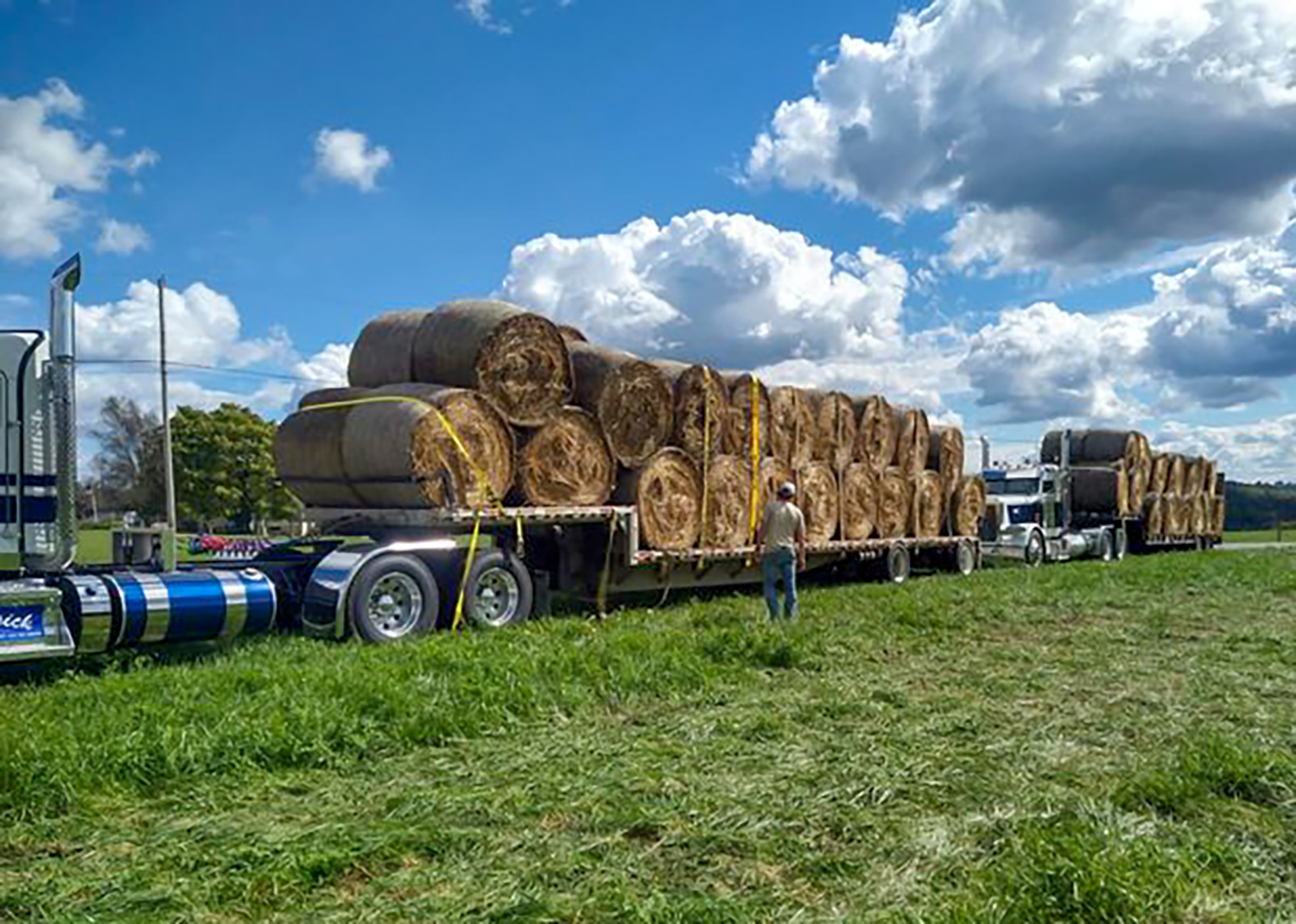
American Farm Bureau estimates 96,871 farms are located in counties impacted by Hurricane Helene in Florida, Georgia, South Carolina, North Carolina, Virginia, Tennessee, West Virginia, and Kentucky. Northwest Pennsylvania farmers filled the first tractor trailerloads of hay to go to western North Carolina via the volunteer NW PA Hay Drive. Other such farmer-to-farmer efforts are popping up in the unaffected portions of the Southeast, as well as Northeast, Midwest and Southwest. County extension offices, FFA chapters, churches and organizations like Samaritan’s Purse are organizing drop points for hay, feed, fencing and other dairy and livestock supplies. It’s important to have a contact in the region, and know where to go before participating. (Facebook photo provided by Brittany Eisenman  )

By Sherry Bunting, Farmshine, October 11, 2024

SOUTHEAST U.S. — The USDA Dairy Market News and other reports gathered by Farmshine indicate significant disruption to dairy plant operations, fluid milk production volumes, supply, transportation, distribution, infrastructure, and demand across Florida, the greater Southeast and part of the MidAtlantic region in the wake of Hurricane Helene.

This is now compounded by evacuations just 11 days after Helene’s destruction as the potential category five Hurricane Milton is forecast to make landfall Oct. 9 and 10 to affect the entire Florida Peninsula with storm surge north into Georgia and the Carolinas.

Farmers in hard-hit counties throughout the Southeast are helping others in their communities even as they face the devastation of their own livelihoods. 

One poultry farmer who lost everything his family worked to build over decades in Jeff Davis County, Georgia was interviewed by the Georgia Agribusiness Council. He put it direct: “We need help. If the government can reach out and help other countries, they need to help this country. We need the help, desperately… as quick as we can get it. We want to farm. We want to build back.”

A big pressing need in western North Carolina and eastern Tennessee is hay and feed for dairy and beef cattle. Also needed are fencing supplies, chainsaws, water pumps, generators, TPost, wire, gas jugs, gloves, hammers, water troughs, fence staples, basically items to care for or contain livestock.

Farmer-to-farmer efforts are popping up across the Northeast, Midwest and Southwest to assemble donations of hay, feed, fencing, and other livestock related items and to secure funds and trucking to get the items to drop points manned by local contacts, churches, FFA chapters, extension, and volunteer organizations like Samaritan’s Purse working in the area. 

One example is the Northwest Pennsylvania Hay Drive assembling loads for the WNC Regional Livestock Center drop point in Canton, N.C. (call or text Brittany Eisenman at 814.221.4291 if you have hay, trucking, or funds to donate or contact Mark Muir with Erie County Farm Bureau).

In addition, former dairy farmer Mark Yeazel of Ohio put a load together to drive to an East Tennessee FFA chapter drop point, working with Samaritan’s Purse.

FFA chapters in affected counties are organizing drop points in at least eight counties. Hay deliveries are also being received at Greene County Fairgrounds on Tuesday and Wednesday afternoons from 2 to 6 pm., or call the University of Tennessee Extension office at 423.798.1710 or text 423-552-4073.

Some farm supply stores in the region are also taking donations by phone to amplify their ongoing efforts to get essential farm and livestock supplies where they are needed.

For the affected farmers and rural communities, the North Carolina Extension has posted a Farm Helpline to talk to someone who understands farm stress, by calling or texting 844-325-3276 for support, available 24/7.

For other information on how to assist victims, visit the American Farm Bureau’s Hurricane Helene Webpage at https://www.fb.org/issue/hurricane-helene

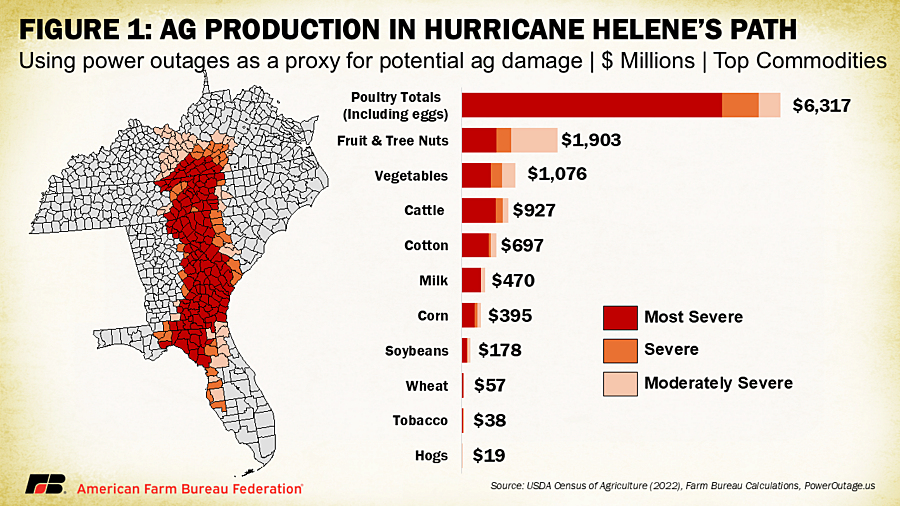
American Farm Bureau economist Danny Munch release an important preliminary economic analysis: Hurricane Helene Devastes Rural Southeast

Fig. 1 shows the agricultural production in Hurricane Helene’s path.

Helene leaves tragic losses, devastating conditions across the Southeast; Farms and dairies see significant impacts

A dairy farm in Haywood County, North Carolina moves their whole herd to another farm. Photos like these only scratch the surface of a wound likely much deeper.

By Sherry Bunting, Farmshine, October 4, 2024

In what will go down as one of the deadliest of hurricanes to hit the Southeast U.S., Helene left a path of tragic loss and destruction spanning 900 miles from landfall over portions of 10 southeastern states.

Tragically, the death toll has risen above 160, with hundreds of people still missing.

Entire communities, communications and infrastructure have been wiped out, especially in parts of western North Carolina and eastern Tennessee, where 35 to over 40 inches of rainfall in a 24-hour period brought record flooding of biblical proportions to mountain towns.

While the category four hurricane damaged coastal towns in Florida’s big bend, it quickly trekked north to dump all of that moisture, creating flash floods and wind damage in southern Georgia and Alabama, and unfathomable destruction in mountain towns of Appalachia.

The overall estimates continue to grow in terms of estimated cost and the sheer scope of the ongoing emergency. The full extent is unknown due to impassable roads and the inability to communicate. The pressing needs are basics, like food, water, medicines, fuel, generators.

Extensive damage to crops in affected areas include pecans, peaches, other fruits, cotton, peanuts, as well as any unharvested corn and soybeans already suffering from drought. 

There are as yet uncounted livestock losses, farms sustaining loss of stored feed, and along with crop losses, washed out pastures.

One dairy farmer reported his pasture of cows were swept away by the flood, with a few surviving. A video captured in east Tennessee shows the power of water, carrying a large barn filled with 500 round bales away from its footers.

Jay Moon has a dairy farm in north Georgia; he reports that people from south Georgia are coming north for food, and essential supplies are dwindling in affected and non-affected areas just as humanitarian efforts are able to ramp up.

Moon also works for USDA Farm Service Agency. What he sees as the primary concern is communication and travel that are necessary to both assess and reach farmers with assistance. For now the focus is on clean up and infrastructure and finding ways to get the essentials to people.

“I think there is a lot going on that we do not know about due to no phone service,” says Moon. He and his wife drove to south Georgia where her parents live. “It’s hard to understand how bad it is. Some areas you still can’t get to.”

Georgia Milk Producers executive director Bryce Trotter reports that over 20 dairy farms have been impacted from significant wind damage to freestalls and parlors, to downed fencing, missing roof-tin, and some mangled center pivots.

All 20 were still without electricity five days after the hurricane swept through and are operating on generator power where possible. Most have a generator running the parlor, refrigeration system and wells.

Communication there is difficult, and GMP is working to coordinate with farmers via text messages and to arrange fuel deliveries and find generators for those needing them for their dairies. This will be a pressing issue throughout affected communities in the Southeast.

The storm’s path from Valdosta, Georgia, north of Augusta has also taken down transmission lines and cell towers, and smaller communities outside of Augusta may be without power for more than a week.

“It’s going to take time to dig out from this,” Trotter wrote. “There will be downed trees and debris piled up for a very long time. Augusta is the second largest metro area in Georgia.”

He said this is ‘déjà vu’ to 2018’s Hurricane Michael, except that one moved east, not west.

As rough as it is in Georgia, the situation is quite dire for those in western North Carolina and eastern Tennessee. Communities and infrastructure throughout the great Smoky Mountains have been either severely damaged or completely wiped out.

One dairy farmer in that region responded to a Farmshine message to verify that he is okay, but there were many fatalities in his community, and they have sustained serious property damage. The roads are impassable, and so they are having to dump their milk.

Reports indicate that dairy farmers in western North Carolina are having to move cattle from flooded and damaged facilities. Farms have reported losing cattle, though numbers are not known at this time. Some have reported losing all of their feed and pasture.

It will take years for western North Carolina and east Tennessee to recover from this as the damage and extent of the situation is difficult to describe as the full extent is yet untold because of the inability to fully communicate and connect with the outside world.

From forestry services to infrastructure engineers to Starlink satellite trucks to Red Cross, Samaritan’s Purse, and all manner of humanitarian food aid groups are just beginning to filter into the hardest hit areas, which is challenging in the mountain communities of Appalachia cut off by mud- and debris-covered or completely washed out roads and bridges.

In conjunction with Plain Compassion Crisis Response based in Honey Brook, Pennsylvania, Blessings of Hope based in Ephrata, with a warehouse also in Kentucky, has taken three trucks filled with food and disaster relief supplies and other critical items to western North Carolina. The plan is to continue with a truck a day.

American Farm Bureau reports the devastation in rural and farm communities has been widespread, and it will be weeks—possibly months—before knowing the full impact of the storm. AFBF has organized a list of non-profit aid organizations on the ground helping the farming communities impacted by Helene, go to https://www.fb.org/issue/hurricane-helene

-30-