How these dairies manage with innovation, diversity

By Sherry Bunting, Farmshine, November 15, 2024

HARRISBURG, Pa. – Innovation on the dairy farm isn’t just the big investments that come to mind, but a mix of changes and a mindset to improve. Three distinctly different Pennsylvania dairy farms were showcased in a producer panel during the 2024 Dairy Financial and Risk Management Conference hosted by the Center for Dairy Excellence recently.

The audience of mainly ag lenders and industry representatives along with some fellow dairy farmers, had the opportunity to see how producers think through the challenges, progress, and investments, and how they manage their risk in areas such as herd health, feed and nutrition, as well as adversities they can’t control like weather, markets, and labor.
Automation at Oakleigh

For Matt Brake of Oakleigh Farm, Mercersburg, the five-year plan was accelerated in a different direction after a barn fire in December of 2019 forced the family to ask the question whether they would even continue in dairy. No animals were lost, and the 1950s parlor was saved, but they had big decisions to make about the future without a facility.

“We did a lot of praying and had a lot of difficult conversations,” he recalls.

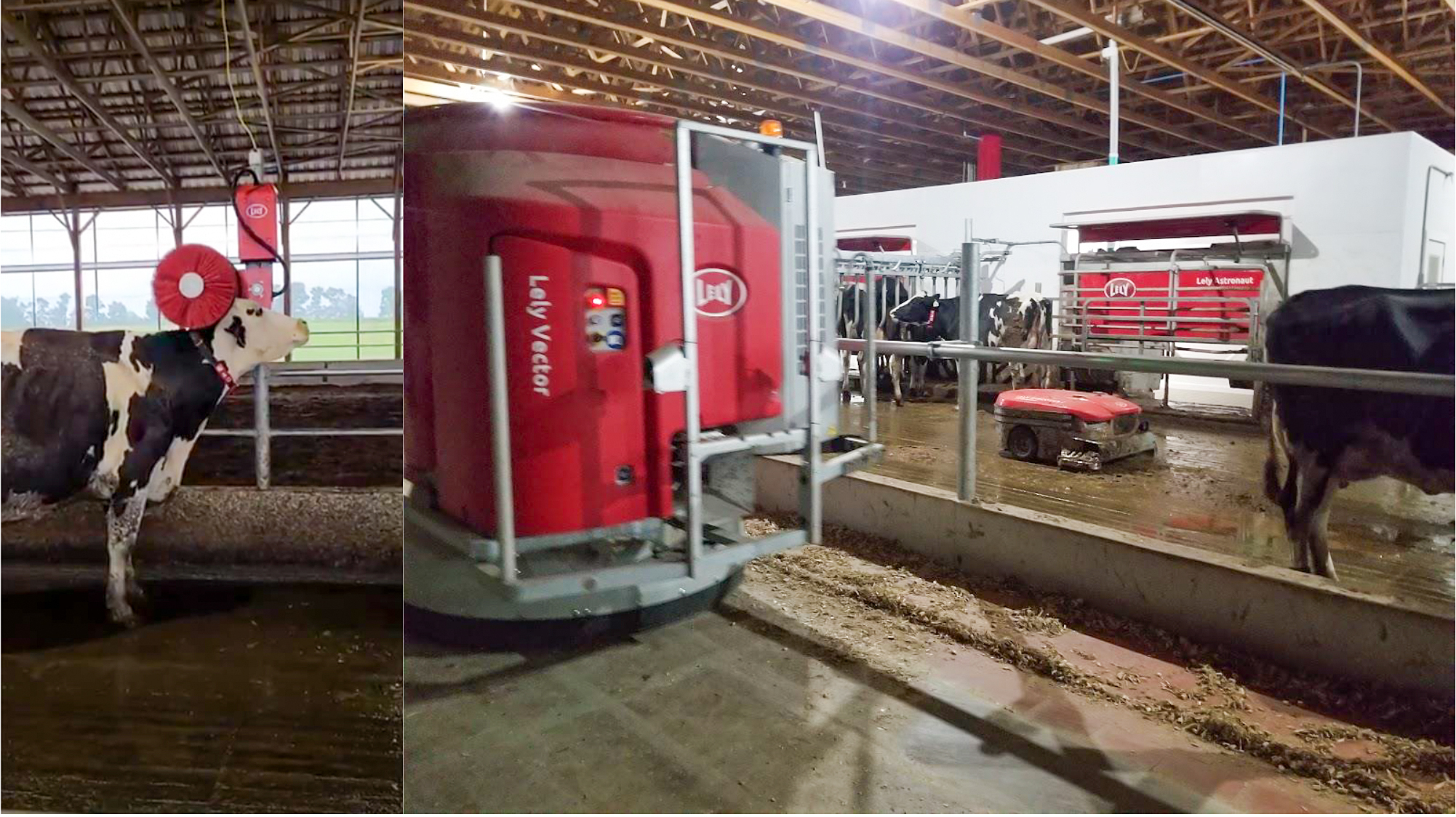
By July 2020, they were milking 120 registered Holsteins with two Lely robots, automated feeding, automated bedding, and retained their preference for a bedded pack barn rebuilt within the existing footprint.

“We really appreciate the cow comfort we get from a bedded pack, and the longevity, which is something we are really seeing now, more than ever,” Brake explains.

They didn’t know — at first – that they would go robotic, but they did know the Lely Vector feeding system would be used for feeding in place of buying a new tractor and mixer and firing it up twice a day.

“It’s amazing to see how all these different pieces of technology play together,” says Brake.

The curtains and fans are all automated and integrated. All data points for the herd are displayed on every single milking. The system ranks cows from zero to 100 on percentage chance of illness, and the automatic sorting for individual attention is based on things like activity, rumination, production, and intakes.

“Everything just plays together in real time, without guessing. We’re still involved as managers, but the data and automation are the tools we didn’t have before. We saw an increase in production, but farming is still farming,” Brake relates, giving examples of ration changes that had to be made with a forage quality issue, and how data systems helped with early detection.

Overall, the animals are doing better in this system, and they are treating fewer cows because they are getting to them earlier.

“It’s really true that an ounce of protection is better than a pound of cure. The quicker we can give those cows the attention, the less likely they are to really nosedive on us,” he says.

Brake sees how automation saves labor in some respects, but it’s more accurate to say that, “With automation, we are better utilizing our skills. We’re able to spend our time better with the cows or focusing on priorities – like chopping corn or getting the alfalfa harvested at the right time.

“We don’t have to stop those activities two times a day or worry about if we have enough help in the parlor, and do we trust that person to stand in the parlor. The robot might ‘call in sick’ temporarily here and there, but in general, compared with some of the employees we’ve had, it’s reliable.”

Moving from just the paper DHIA to incorporating this into the electronic records, changes how they manage culling to be more voluntary than involuntary.

“We can look at space and overcrowding and begin to evaluate cows not just on milk but how efficient they are in the robots looking at deviation from the average with rankings on everything from performance in the robot to reproductive performance and past treatments and other metrics,” he explains.

Better management of the culling decisions also gives them the ability to plan how many heifers to raise. “One of the things we are doing is using more beef semen and using the system to decide who to use it on,” he says.
Renovation at Mount Rock

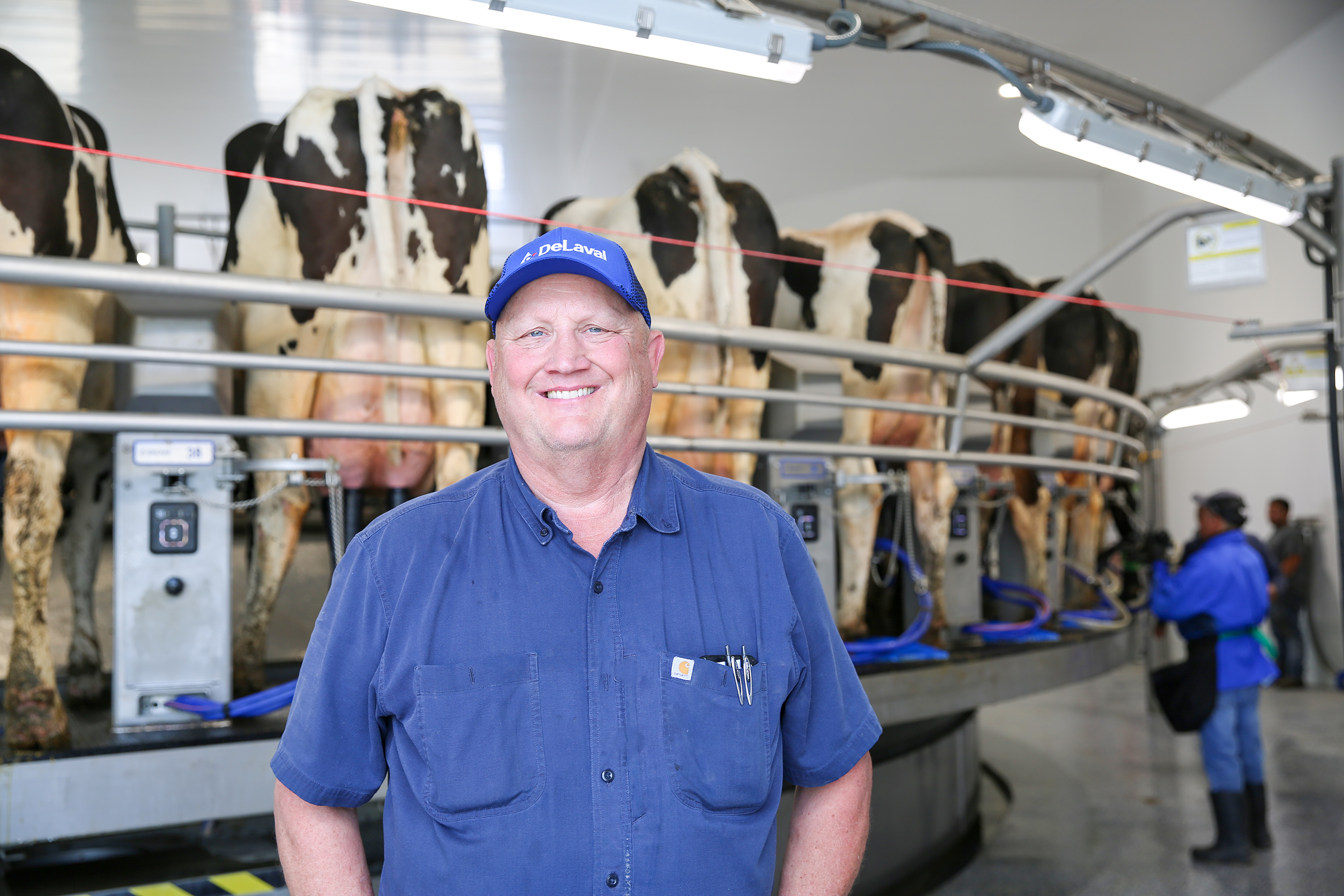
For Alan Waybright, innovation was the focus when he purchased Mount Rock Dairy from the Mains five years ago near Newville.

A building project was in order to update the over 30-year-old milking systems. About a year ago, they began milking in a 50-stall rotary, which changed the milking time on 2.5 times a day with each milking in a double-12 taking 9 hours, to now milking 4 times a day with each milking taking 3 hours and 45 minutes.

Waybright has been expanding from the 650 cows and 150 bred heifers he brought to Mount Rock from his prior home farm involvement at Mason Dixon, to milking 940 cows today with a 92-pound average, 4.2F and 3.3P.

Automation features were part of the rotary to reduce labor, and the calf barns include the wet barn to get them started before grouping for automatic feeders where they receive four to five feedings a day, resulting in healthier, better growing calves.

With the automated pre- and post-dipper, Waybright says the milking procedure in the DeLaval 50-stall rotary is very consistent, requiring just two employees, the first to wipe and forestrip and the second to dry and attach.

“This is a labor savings, yes, but there have been other benefits for udder health too,” Waybright reports. “When we went from the double-12 where we were hand dipping to the sprayer, a 50-gallon drum used to last seven days, now it’s three days.”

One of the innovative things he has worked on is the use of manure solids for bedding while keeping somatic cell counts low. His system uses two screw-presses dropping manure into the drum, leaving about two days’ worth of bedding at the other end with moisture levels around 50%.

They bed stalls every day during the week to use the solids as they come right out of the separator drum, adding acidifying ag lime to control mastitis.

Diversity key at Slate Ridge

“For us the secret weapon is diversity,” says Ben Peckman of Slate Ridge Dairy, Thomasville. He and his wife and high-school aged children milk 150 cows and raise 100 heifers, also feeding out all bull calves as steers.

He says there’s not one multi-million-dollar investment here, just the things that altogether add up to make a large impact.

At the dairy, he looks for ways to streamline, like ovsynch for repro. “It’s the little pieces here and there, he says, mentioning the machine with a smart phone app he purchased to do daily dry matter analysis on feedstuffs before mixing.

“Instead of always looking at the past for those adjustments, I can go out and see what the DM is right now,” says Peckman.

He fills the small sampler with three samples to get an average. “I have feed charts on my phone, pop in that number, and it changes out what I put in the mixer to get the same DM pounds,” he explains.

With feed stored in drive over piles, this is even more important to get the accurate measures each day, according to Peckman, who sees how it changes daily, firsthand.

“On a rainy day, it goes up, and on a dry, hot day, it goes down,” he says. “When changes happen day to day, testing every two weeks is not enough. My spreadsheet smooths out the changes by using the average of the past three days. When we started doing this we saw better production and components.”

A robotic feed pusher is another feed technology that’s made a difference. “We see higher intakes, fresher feed, labor savings and the ability to do this when I’m not there,” Peckman relates.

Bankers asked what ‘calculus’ goes into making such investments. For Peckman, the answer was blunt. “It’s something that improves how my herd performs but the robotic pusher does something I’m not willing to do. I’m not getting out of bed at 2:30 a.m. to push up feed.”

Other barn updates include ventilation controls and ceiling fans above bed pack areas. It’s better for cow comfort but there’s also a cost savings. “We use half as much straw and bedding with the new fans drying the air.”

His wife’s mobile milk pasteurizer is another innovation. They always fed whole milk and had a few problems when they fed it unpasteurized.

With the mobile pasteurizer, it’s two-fold: “the milk is better, but also the temperature is much better. It keeps the milk warmer, and we have healthier, better growing calves.”

Peckman really enjoys the cropping side, farming 1100 acres of diversified crops to feed the cowherd and take advantage of other markets.

“Diversity is how I mitigate risk. It’s my key technology. Diversity can’t be bought, but it pays. It helps me combat weather, combat markets, and combat other adversities in general,” he says, adding that it’s “not rocket science,” just looking at things other farmers are doing and adapting.

He does use GPS guidance for his tractors for planting and spraying, which saves seed and inputs and work off field monitoring with yield maps.

In addition to traditional corn for grain and silage and alfalfa haylage, they grows high oleic soybeans at Slate Ridge Dairy. “We saw a drastic increase in butterfat percentage,” Peckman reports.  
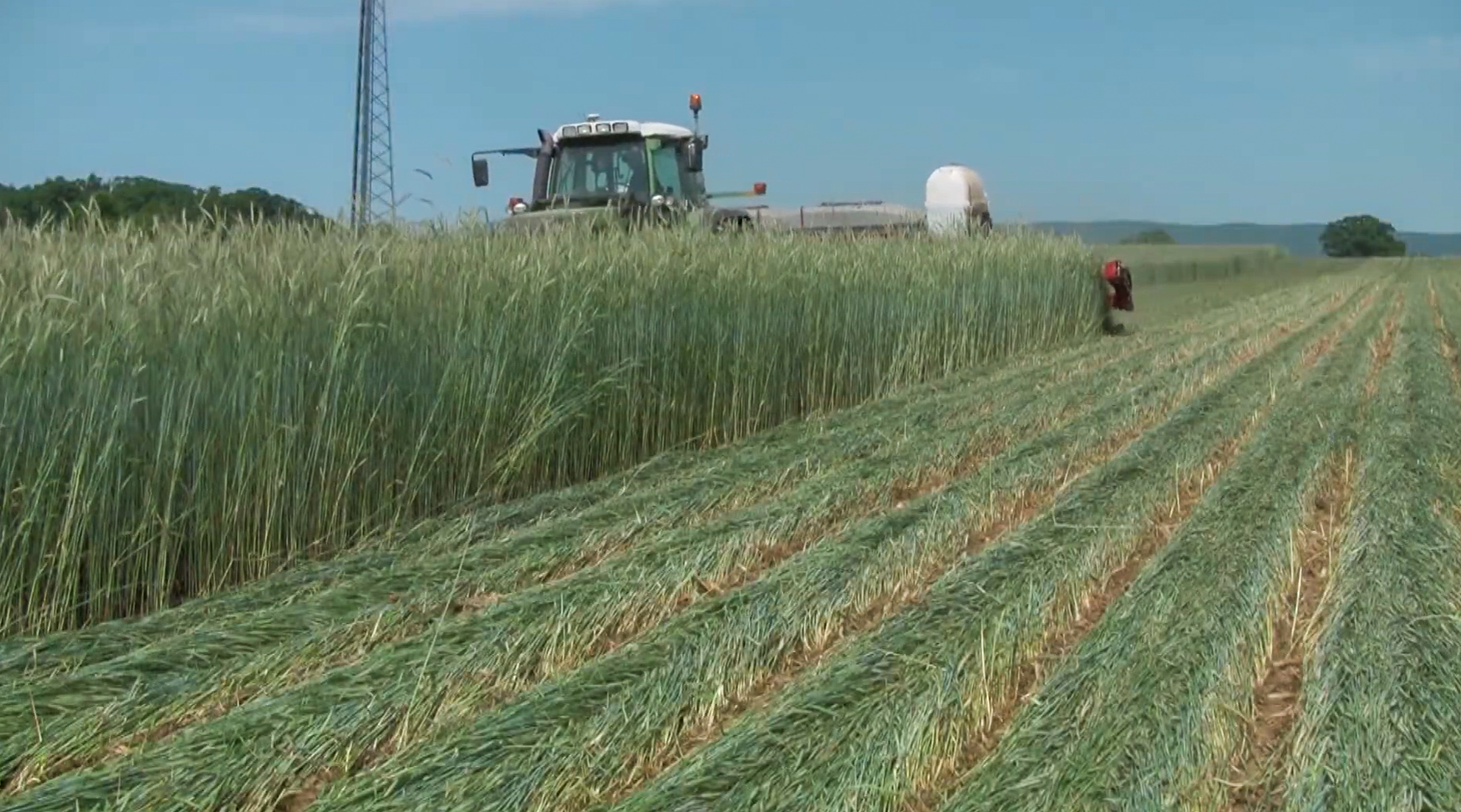
On his silage ground, small grains are grown — triticale, wheat, and barley. The barley he harvests after it gets the head, two weeks before it would be a grain harvest, as silage for feeding heifers.

One “big new innovation” he’s excited about is male sterile forage sorghum.

“It puts a head on without developing grain in the head,” Peckman explains. “This allows the plant to concentrate on putting energy into a plant that is a high sugar crop not a high starch crop. It’s very comparable to corn silage. I take a pound of corn silage out of the ration and put a pound of this stuff right in.”

He has replaced up to 40% of his corn silage with this particular sorghum silage and would like to get to 50% because “it’s a very economical feed to grow, the seed is cheap and inputs are less. It’s working well for me, but you have to have a way to harvest it as the BMR forage sorghums don’t ‘stand’ all the way to harvest.

“We started feeding this two years ago, and our components are up.”

Another newer crop in Peckman’s diversified portfolio is milo, or grain sorghum. He says it’s economical to grow and drought resistant, and they have a market for bird seed.

The wheat is grown as a cash crop but it has been fed too. The barley he harvests is a supplement for dry corn, depending on the year. He likes to grow these crops because they make good straw to bed the cows.

Peckman is a big believer in keeping his soil covered at all times, so some of the decisions and rotations are tweaked with weather and calendar. Over the past couple years, he has added a few acres of sunflowers to the crop rotations.

“We can double crop sunflowers after wheat, and there is a viable bird seed market for those,” he says.

“Mainly, they are beautiful, and I see people enjoying them. Nobody is paying me for that part of it, but it warms my heart to see neighbors stopping with the families, taking pictures and looking at my flowers. With everything going on in the world today, if I can see someone go out and smile a little, it’s worth it.”
Awareness, appreciation, and praise don’t pay the bills

97 Milk is a 501(c)3 non-profit. Donations are tax deductible.

By Sherry Bunting, Farmshine, November 22, 2024

EPHRATA, Pa. – Farmshine readers are no-doubt aware of the work of the volunteers operating the 97 MILK education efforts. But awareness and thank you’s don’t pay the bills.

First of all, 97 MILK is a 501c3 non profit, meaning donations are tax deductible.

Secondly, 97 MILK is managed and operated by volunteers. Not a single person doing any of this great work is paid a dime or a nickel (not even a penny) for their time and only in some cases are personal expenses for projects reimbursed

97 MILK has made huge strides on literally a shoestring budget. 

However, even the frugal cannot survive without donations because printers have to be paid for printing materials like the popular and eye-opening 6×6 cards.

Website hosts and programmers have to be paid to keep the platform up and running.

When whole milk isn’t donated for an event, it has to be purchased.

When dieticians or other experts are interviewed for a Q&A at the website or on social media platforms, they expect their expert time to be paid.

Boosting the best and most informative ad posts on facebook also comes at a cost. 

The list goes on, and it doesn’t even cover the things 97 MILK wants to do that are expensive, like BILLBOARDS.

There’s a reason Nelson Troutman started this movement by painting a wrapped round bale, or BALEBOARD — because the billboards were too expensive, but wouldn’t it be nice to amplify the good work of 97 MILK with a few larger than life billboards?

These are tangible costs that surround the small but strong and dedicated army of 97 MILK volunteers.

When it comes to the content created, the daily social media posts, the educational printed materials, the interactions with followers to answer their questions on social media, the constant monitoring of social media conversations, along with the answering of emailed questions at the website question desk, the compiling of new information for the website designer to keep it refreshed, the staffing of booths at consumer-facing events, the painting of bales, the miles driven, time spent talking to consumers, time spent designing eye catching ads to show consumers, time spent actually communicating with consumers – that is all done by volunteers who take time away from their paid livelihoods to voluntarily promote whole milk education, often not even being reimbursed their personal costs for supplies.

We are in the season of Thanksgiving. A great way to show some gratitude to the hardworking 97 MILK volunteers is to help keep the boat afloat with a donation. Apart from a few regular givers, donations have not come into this volunteer effort for a long time, and the shoestring is baring thread, despite the important advances this educational effort has made for dairy farmers and the many agribusinesses that serve and depend on them.

A recent Dairy Foods Magazine website panel discussed the State of the Dairy Industry in 2024. One panelist observed that their monitoring data show a 30% increase in social media conversations about milk and dairy products. We can chalk some of that gain up to 97 MILK, posting six days a week and reaching hundreds of thousands of consumers every quarter, with many reacting and having conversations with 97 MILK volunteers — engaging directly.

The website, alone, is averaging 200 users per day, most of them new users. That’s a big number.

Total page views at 97milk.com were 11,000 over the past 30 days – another big number.

Facebook reached tens of thousands of people last week, without any paid ads, but reaches tens of thousands more with boosting. Of these numbers, the nationwide reach is broad. Nope, they don’t all come from Pennsylvania. The places with the highest views register as California and Texas, along with states all in between East to West and North to South.

Of the website interactions, the No. 1 draw is the Milk Facts section. Visitors to the website spend an average of 2 minutes and 40 seconds there. In today’s fast-paced digital world, that’s a long visit! 

97 MILK is doing things right.

And guess what? Have you read the Oct. 16, 2024 Farmshine story about fluid milk trends? Do you read Market Moos keeping you up to date on the monthly estimated packaged fluid milk report by USDA?

Fluid milk sales are UP year-to-date over year ago, and have been trending this way since partway through last year. In fact, the long-term fluid milk sales downturn was slowed and flattened ever since 97 MILK was formed in February 2019. But in the past 18 months, it’s turning slightly higher. There is momentum now — enough that industry trade organizations and other farm publications are beginning to take notice.

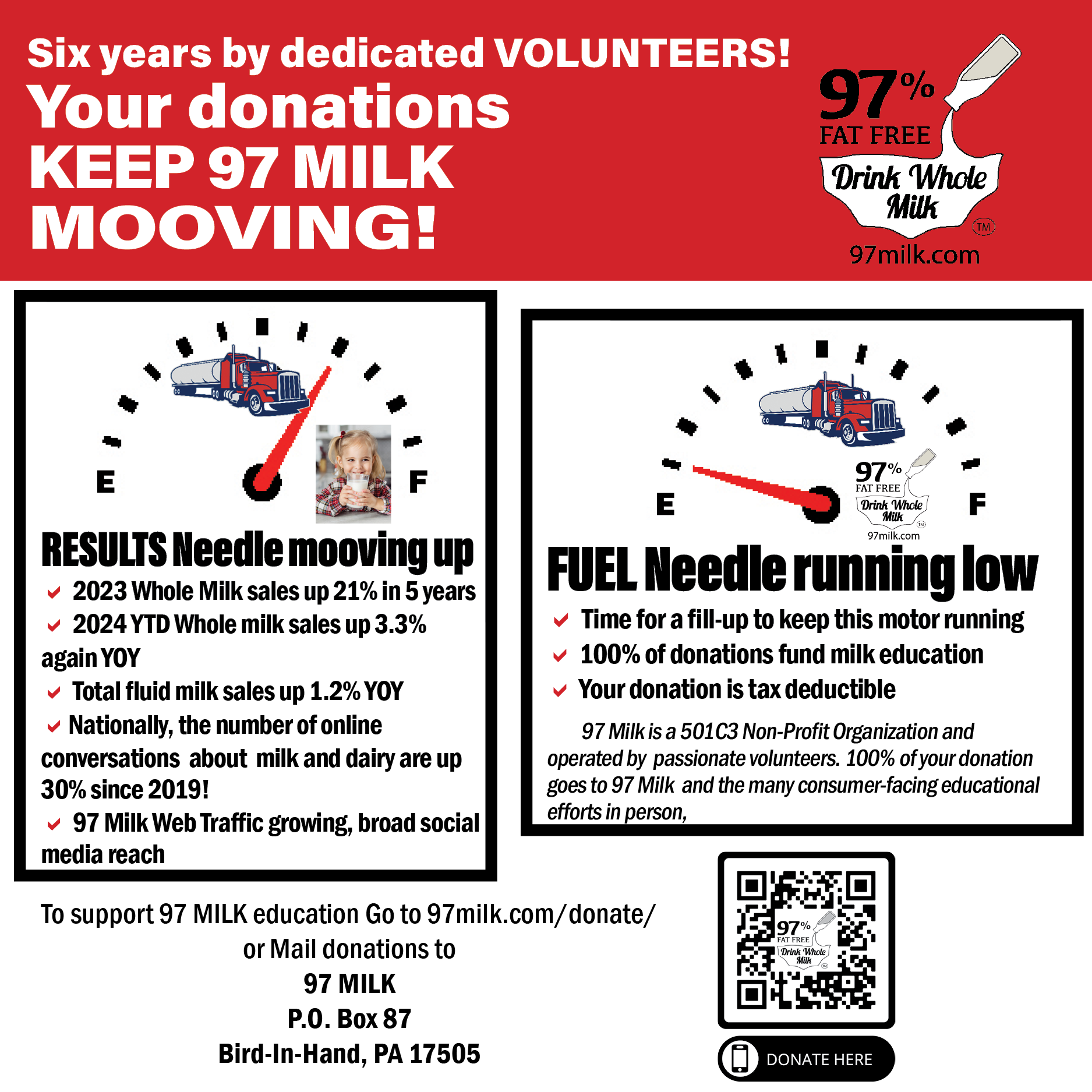
This is spurred by the big increases in whole milk sales as one of the main categories turning the trend around when looking at the volume, not just the percentage of increase on a smaller volume category. Whole milk sales are up 21% since 2019 when 97 MILK was formed.

Consumers want to eat and drink more healthfully. They want to know about milk!

97 MILK has caught their attention, piqued their curiosity to learn more, and helped reveal the details about the nutrition in a glass of whole milk. Not to mention, the Whole Milk for Healthy Kids Act that passed the House of Representatives 330 to 99 last December got this far because of one thing: Whole Milk Education.

Whole milk bill champion, Representative G.T. Thompson, Chair of the House Ag Committee, said it best during a 97 MILK meeting attended by farmers in 2021, and he’s repeated similar statements at other meetings and panels where the subject of whole milk in schools comes up: 

“Keep doing what you are doing with the well-designed combination of influencing, marketing and providing factual information. Keep up the education. It’s working,” said G.T.

I personally want to thank each and every person who has donated funds and / or donated their time to help keep this whole milk education movement going. Thank you 97 MILK for all you’ve done for America’s dairy farmers and consumers – and above all for America’s children!

So, what are you waiting for? Want 97 MILK to continue and do more? If so, go to https://www.97milk.com/donate/ and prove it, or mail your donation to 97 MILK, PO Box 87, Bird In Hand, PA 17505.

-30-

USDA to start national H5N1 testing at dairy plants

As bird flu detections escalate among California dairy and poultry operations, Pennsylvania’s State Vet urges early detection to ‘stamp it out’

By Sherry Bunting, Farmshine, Nov. 15, 2024

HARRISBURG, Pa. – USDA is set to amend the spring order on transportation testing to include a new National Bulk Milk Testing (NBMT) program for H5N1 in dairy cattle, which will be patterned off the former Brucellosis strategy. 

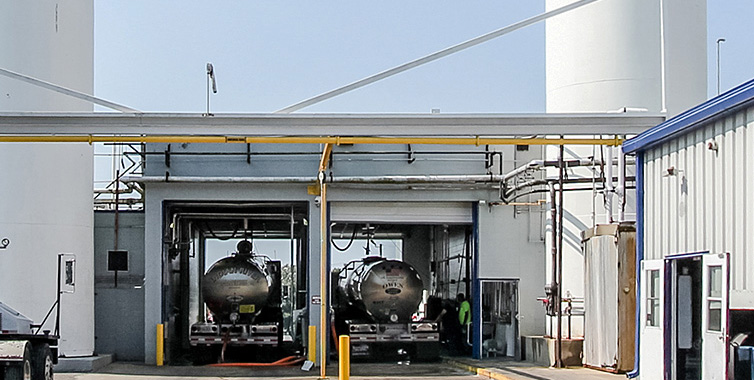
This will be a regionally tiered approach, testing samples from processing plants, to assess where the virus is at this time, according to Dr. Kellie Hough, USDA District Emergency Coordinator.

“Depending on the results, we will then drill down to the state level and to the farm level, if necessary, to attempt to eradicate this,” she said.

Federal and state agencies will work with affected facilities to enhance their biosecurity levels and restrict animal movements, but also to ensure their business continuity.

The federal action is in addition to the ongoing voluntary multi-state silo milk testing surveillance program that Pennsylvania is participating in already. In that program, processors provide blinded samples from bulk milk silos, according to their own cadence of frequency, said Pennsylvania State Veterinarian Alex Hamberg.

Hough and Hamberg gave updates on the Center for Dairy Excellence monthly industry call Nov. 13.

“We supply processors with everything they need to send these samples, and the only information going to the NVSL network laboratory is the date of sample collection and the states represented by the milk in the silo at the time of the sample collection. This helps show we are clear of the virus and helps build a baseline,” said Hamberg.

He said states are having ongoing discussions with USDA about what federal surveillance will look like under the NBMT.

He stressed that the virus can be found in milk samples two to three weeks before clinical infection.

“If we can identify every farm infected right now, then we can contain this thing right now and make this virus extinct to never be seen again,” Hamberg urged. “But if we continue to avoid early identification, we could be stuck with it for as long as it wants to stick around.”

Dairy farmers have been slow to sign on to voluntary bulk tank testing at the farm level, with only 69 herds enrolled nationally, six in Pennsylvania.

Mandatory testing is currently being done in Massachusetts, Colorado, Oklahoma, Arkansas, and California. For the latter, it only began after the spread of H5N1 had escalated among dairy herds and poultry flocks in California.

During the past 30 days, as of Nov. 14, there are 201 new herd detections of H5N1 nationally. Of those, 186 were in California, two in Idaho, and 13 in Utah. The Golden State has had H5N1 detections in 291 dairies to-date, with more tests pending, and this represents more than half of the 505 cases across 15 states since the start of the outbreak in Texas last March.

Hamberg said dairies saw a 50% herd turnover within three months of infection in states that have contended with H5N1 in cattle. This is presumed to be a combination of cattle culling as well as some mortalities. Owners of infected herds also report struggling to regain their prior herd production per cow and seeing prolonged elevation in somatic cell counts.

“They are getting slammed in California,” said Hamberg. “It is not a good situation. The dairy industry is suffering, and the poultry industry is suffering. If they had had good participation in voluntary testing beforehand, they may have been able to stamp it out before it spread like this.”

He sees this as particularly important for dairies to consider the voluntary bulk tank testing that gives them ‘monitored herd status’ in Pennsylvania. “Our state is more dense than California, where it is spreading like wildfire,” he said. “In Lancaster County we have dairy on top of dairy on top of poultry on top of pigs. If we find this in an early stage, we can stamp it out quickly and contain it before it spreads all over the place.”

There is no evidence yet that the dairy variant of H5N1 has taken up residence in migratory bird populations or any other wildlife reservoir, but the cattle strain is being found in domestic poultry flocks.

On the human side, Dr. Miriam Wamsley, Pennsylvania Department of Health Epidemiologist reported there have been 36 confirmed human cases across the U.S. of the H5N1 strain found in cattle. Some have been dairy workers, others poultry workers. The cases have been mild, marked by conjunctivitis (pinkeye).

Blood samples collected from workers recently in Michigan and Colorado showed employees previously had it without knowing it.

Wamsley, urged seasonal flu shots, especially for anyone exposed to cattle and poultry: “Flu season is here. If you would contract them simultaneously, there is the possibility of the two (viruses) mixing in the human body to create a new strain, and at the same time, the combination can make a person very sick.”

The recent news of a teenager in British Columbia, Canada, hospitalized in critical condition, as well as the first pig detected with bird flu in Oregon, were confirmed to have the strain that is active in migratory bird populations, not the dairy variant.

Hough reported that USDA is clearing the path to test four vaccine candidates for dairy cattle.

The USDA and FDA have confirmed that there is no threat to human health and that milk and dairy products are safe to consume.

-30-

USDA to complete producer vote before new administration comes to town

Final FMMO rule adds more to make allowances, shortens delay on composition updates, restores higher-of, keeps controversial ESL adjuster.

By Sherry Bunting, Farmshine, Nov. 15, 2024

WASHINGTON, D.C. – The USDA released on Nov. 12 the Secretary’s nearly 400-page final decision on the Federal Milk Marketing Order (FMMO) price formula changes, with a few changes from the July ruling.

USDA rejected comments seeking to forestall the make allowance increases or to reduce their size. All make allowances are further raised in the final rule vs. preliminary rule by a fraction of a penny for marketing costs. Also, USDA has added more than a penny per pound to its earlier decision on the nonfat dry milk make allowance. These are milk check deductions that are embedded in the class and component formulas.

USDA also plans to stick with its earlier decision to introduce a rolling adjuster for extended shelf life (ESL) milk, which creates essentially two-movers for Class I that was not part of the hearing scope. The Department further defined ESL milk by processing method to be all milk using ultra-pasteurization, not just relying on the shelf life designation of 60 days or more.

The broad range of changes in the proposed final rule are the result of the national hearing and rulemaking process that began in 2023. It will be made final for implementation after dairy producers vote to approve these changes in the Order-by-Order referendum that will be completed before the new administration takes office on January 20th.

USDA AMS will mail voting ballots to eligible producers and qualified cooperative associations — which may bloc-vote on behalf of their eligible members — after the final rule is published soon in the Federal Register. Ballots must be returned with a postmark of December 31, 2024 or earlier and be received by the Department by January 15, 2025 in order to be counted.

Not all producers in a Federal Order will be eligible to vote. Only producers with milk pooled on a Federal Order in the month of January 2024 are eligible to vote in that Federal Order.

A ‘yes’ vote accepts all parts of the final rule. A ‘no’ vote rejects the changes but also rejects the continuation of that Order. Any of the 11 Federal Orders that does not meet the two-thirds majority requirement for acceptance of these changes will be terminated. The two-thirds majority is calculated among eligible producers in the Order who return a ballot.

USDA AMS will host three public webinars to further inform stakeholders of the changes and referendum process on Nov. 19 and Nov. 25 at 11:00 a.m. ET and Nov. 21 at 3:00 p.m. ET. A link to access the webinars will be provided at the AMS hearing website along with supplementary educational documents. 

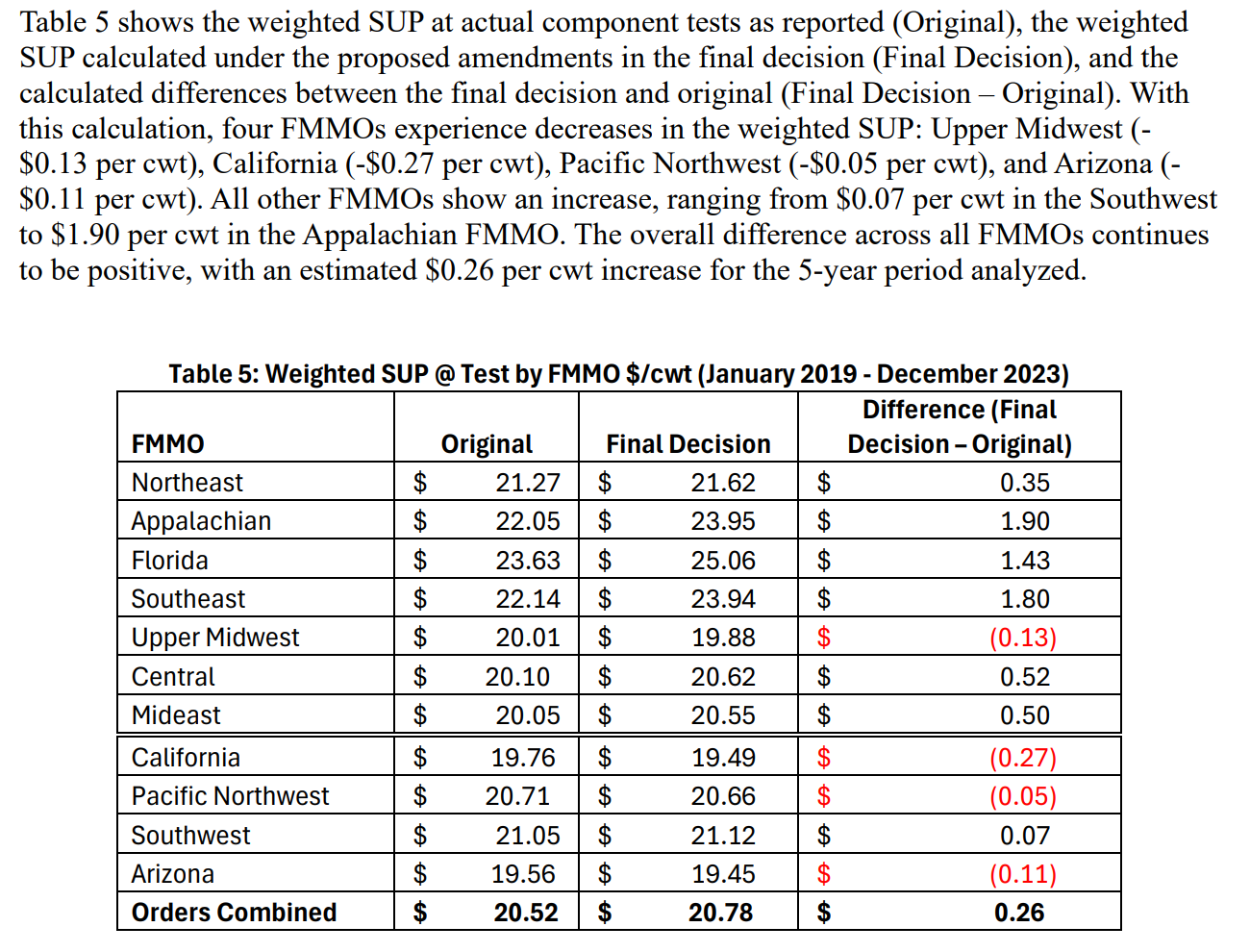
Using its backward-looking analysis of applying the changes to actual 2019-23 pool test data, the combined net benefit for all 11 Federal Orders of all the changes in the final rule is estimated at +$0.26 per hundredweight. However, an average does not tell the full story, and it does not include the positive orderly marketing impact of restoring the higher-of method for calculating the Class I base price mover.

USDA’s Table 5 above is the backward-looking static analysis of the weighted Statistical Uniform Price (SUP) – at actual pool component test – showing net benefits for the following Orders: Appalachian +$1.90 per hundredweight, Southeast +$1.80, Florida +$1.43, Central U.S. +$0.52, Mideast +$0.50, Northeast +$0.35, Southwest +$0.07. 

Table 5 shows net-negative impact for California -$0.27, Upper Midwest -$0.13, Arizona -$0.11, and Pacific Northwest -$0.05.

However, this analysis does not factor-in the positive impact of restoring the higher-of method for calculating Class I. The Orders showing net negative impacts above have more liberal policies for jumping in and out of FMMO pools. Since USDA did not quantify the benefit of its restoration of the higher-of method for the Class I mover, it’s important to note that this can soften the blow. 

According to experts consulted by Farmshine on this matter, the potential average benefit for the same 2019-23 period of orderly marketing under the higher-of method in a low-Class-I FMMO like the Upper Midwest is 7 to 10 cents per hundredweight.

More importantly, the orderly marketing restored by this part of the final rule has a protective effect on the month-to-month hits taken by pooled producers from opportunistic depooling and negative PPDs. Why? Because the higher-of method — used for two decades, before the legislative change in 2019 — encourages functional class price relationships that promote orderly marketing.

In short, producers should realize that the restoration of the higher-of reduces the prevalence of very large negative PPDs that can disrupt performance of their risk management tools and treat pooled producers inequitably during black swan events and times of major market imbalances — like have been experienced over the past five years under the average-of method. This is a benefit that is difficult to quantify, but is contained in this decision nonetheless.

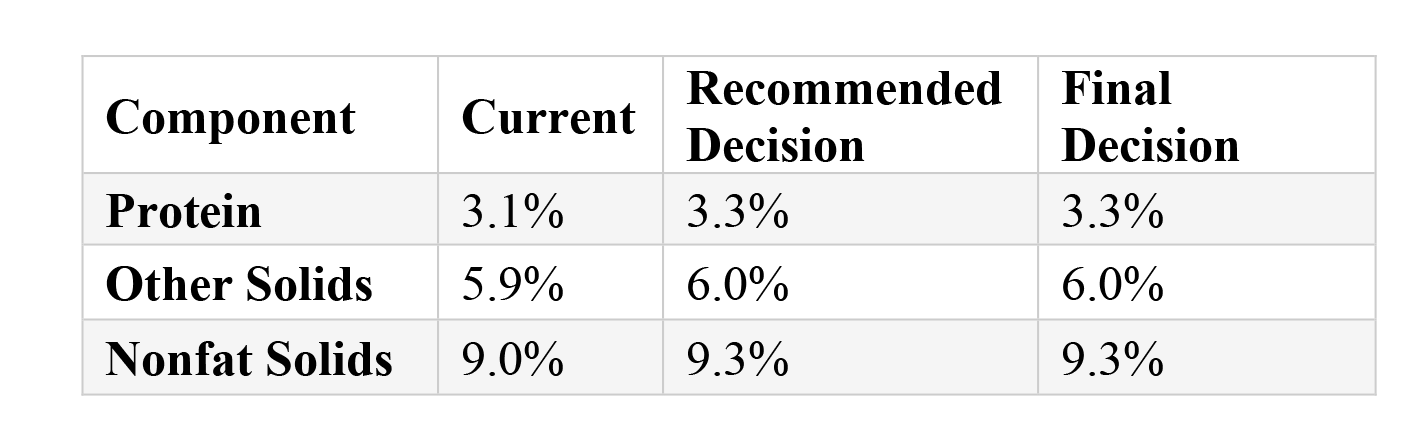
On the positive side for dairy farmers, the USDA will also shorten the delay from 12 months to six months for implementing the updated skim milk composition factors. These updates are shown above, which witnesses testified would raise Class I prices in all Federal Orders by an estimated 70 cents per hundredweight (based on 2022 data), while also increasing the manufacturing class prices in the four fat/skim Orders.

Raising the skim component standards helps bring the Class I, III, and IV in alignment, reduces the frequency of negative PPDs, and reduces the incentives for depooling that undermine orderly marketing.

The manufacturing class prices in the other seven Orders that use multiple component pricing are already paid on actual components, not by standardized levels.

Standardized butterfat composition at 3.5% will not be updated in this decision because this is a paper number that does not affect how producers are actually paid. Each pooled producer’s individual minimum price in all Federal Orders is already based on their actual butterfat test for pounds shipped.

The updates to county-by-county Class I location differentials were also tweaked in places, compared with the July preliminary decision, and the base differential for all counties at $1.60 per hundredweight remains in place.

Butterfat recovery within class and component formulas will be updated from 90% to 91%. Several proposals had requested a larger increase.

The Secretary’s final decision on the Class I base price mover remains unchanged from July.

USDA will restore the higher-of formula, which had been changed to an average-of formula in the 2018 farm bill. USDA is also sticking with the ESL adjuster, creating what is essentially a two-mover system for fluid milk.

Processors will separately report sales of conventionally processed (HTST) and ultra-pasteurized (ESL) fluid milk product sales each month. The higher-of method will set the base price mover, and USDA will apply the new ESL adjuster to the sales of ultra-pasteurized milk to determine their final pool obligation.

The ESL adjuster represents the difference between the higher-of vs. the average-of the Class III and IV advance pricing factors over a 24-month period with a 12-month lag. USDA states that it sees this adjuster “stabilizing” the difference between HTST and ESL over time.

USDA also rejected comments that had raised competitive concerns, stating: “The record does not contain evidence to support the implication that manufacturers of dairy products, the majority of which do not manufacture ESL products, would make business decisions to gain an advantage in the fluid market where they do compete.”

On the negative side for dairy farmers, the large increases in processor make allowance credits were made a bit larger, not reduced, after the 60-day public comment period.

USDA relied on the voluntary surveys of processor costs that were presented at the hearing as customary data sources from past make allowance adjustments. While USDA did not fully meet the requests of International Dairy Foods Association (IDFA) and Wisconsin Cheesemakers Association (WCMA), it does recommend much larger make allowances than what National Milk Producers Federation (NMPF) had proposed.

Make allowances represent the costs of converting raw milk into the four manufactured dairy products surveyed by USDA. They are embedded in the pricing formulas, not line items on a milk check, and they aggregate to an impact of 75 cents to $1.00 per hundredweight — depending on product mix and Class utilization.

USDA responded to processor comments about marketing costs, adding $0.0015/lb to its previously proposed processor make allowance credits for cheese, butter, nonfat dry milk, and dry whey. USDA also responded favorably to the processors’ request to adjust the nonfat dry milk make allowance to be more than a penny per pound higher than previously proposed.

The final decision will raise the make allowances on the four products used in class and component pricing – per pound — as follows:

Cheddar cheese will be increased from the current make allowance of $0.2003 to $0.2519 per pound; dry whey from $0.1991 to $0.2668; butter from $0.1715 to $0.2272, and nonfat dry milk from $0.1678 to $0.2393.

In its rationale, USDA stated that NMPF member-cooperative-processors supported the NMPF proposal as “a more balanced approach” to consider impacts on producers and processors. However, they also testified that the smaller increases proposed by NMPF “did not cover their costs.”

This put USDA in the position of having to rely only on the cost data provided by IDFA and WCMA because NMPF offered no cost data to support their smaller proposal. USDA said it rejected consideration of the impact on dairy farmers because the Agricultural Marketing Agreement Act does not include producer profitability as a factor for the Secretary’s consideration on this matter.

USDA chose not to wait for the mandatory and audited cost of processing survey that Congress is expected to authorize and require USDA to utilize in the future. This language is included in all versions of the new farm bill and is reportedly supported by NMPF, IDFA and American Farm Bureau Federation (AFBF).

The final rule also removes 500-pound barrel cheese prices from the protein and Class III formulas, meaning only 40-pound block Cheddar price surveys will be used going forward. USDA rejected proposals that sought to add 640-pound block Cheddar, bulk mozzarella cheese, and unsalted butter to the pricing survey.

-30-