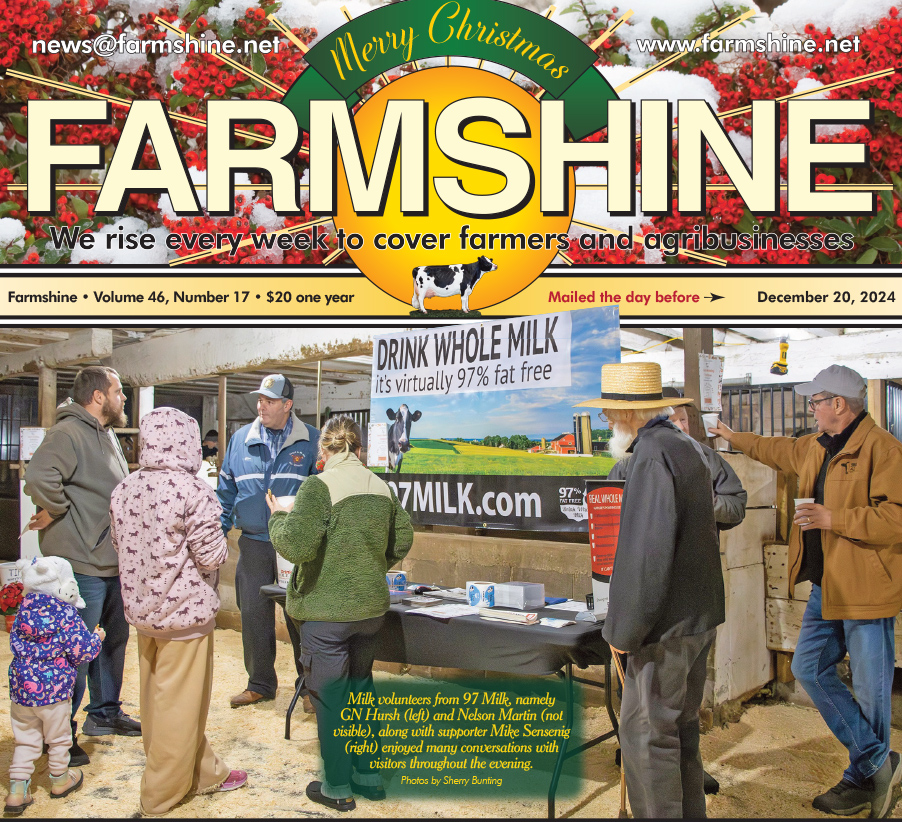
Christmas with cows shared with the public at milking time

‘It’s not about us, it’s about the cows’

By Sherry Bunting, Farmshine, December 20, 2024

RONKS, Pa. – What better place to be on a chilly evening 12 days before Christmas than in a stable with cows as a family goes about their evening milking and feeding? How fitting to remind the public not just about where their milk comes from, but also the way the Lord Jesus entered this world as a baby, wrapped in a manger, in a stable, with cattle lowing His lullaby.

The second annual Christmas with the Cows at the Melvin Stoltzfoos farm was a big hit, drawing double the attendance of 380 people from six states to the 50-cow dairy in Ronks, Pennsylvania.

While many visitors came from all around Lancaster and nearby counties, many also came from other parts of the state as well as New Jersey; Long Island, New York; a few from Delaware and Maine; and an over-the-road trucker brought his family from Houston, Texas after seeing the signs.
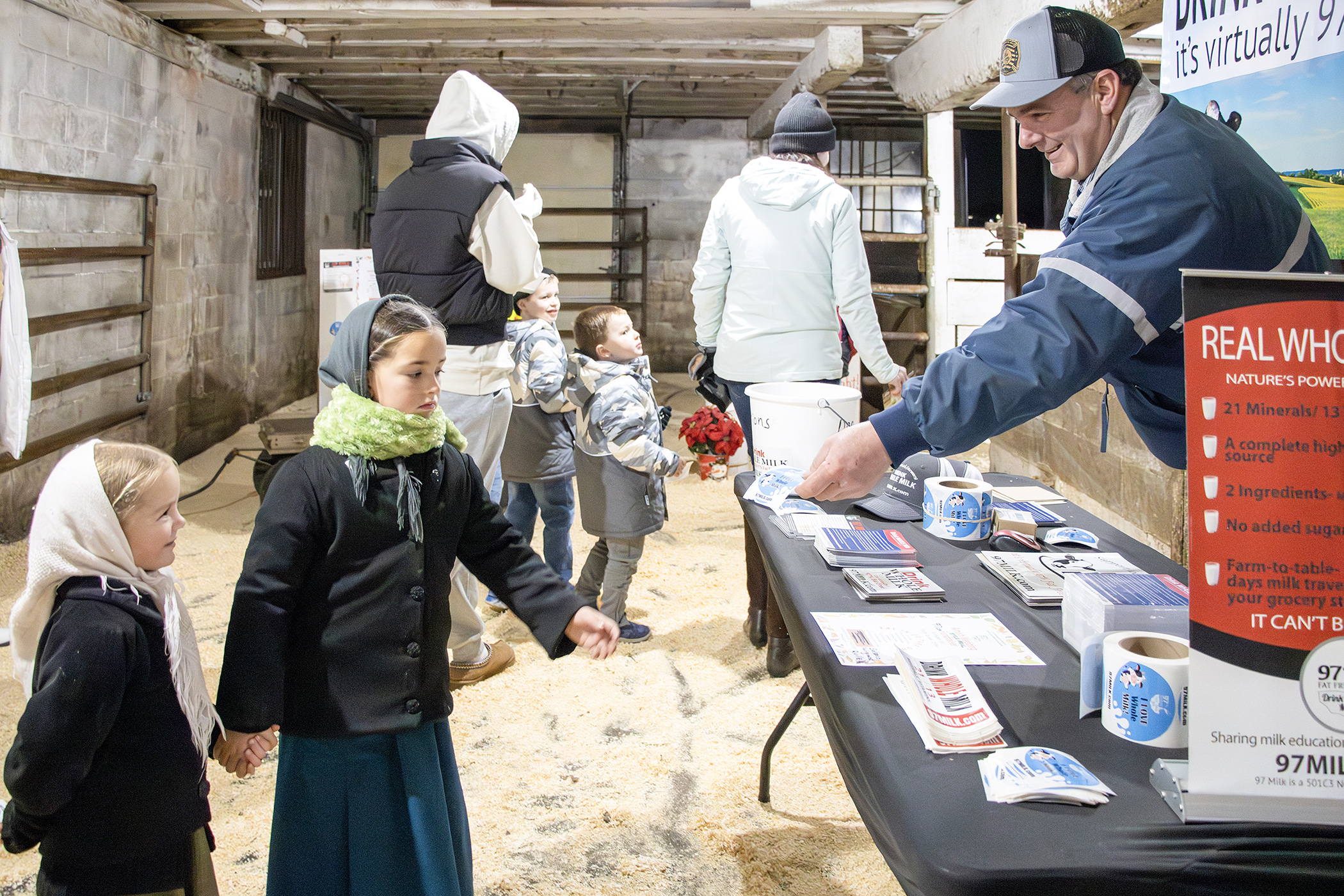
Local attendees like Bridgette Zell of Nottingham said they saw the event posted on Facebook. She brought her two young boys to see what it was all about. Bridgette had the quote of the night as she stopped by the 97 Milk table, where GN Hursh of Ephrata and Nelson Martin of Robesonia were the volunteers handing out stickers, 6×6 cards, small magnets, and other informative goodies.

“I get so tired of people saying milk is not for humans,” she said. “When I was growing up, if any of us didn’t feel well or had something wrong, my mother would tell us: ‘Drink a glass of milk see how you feel!’”
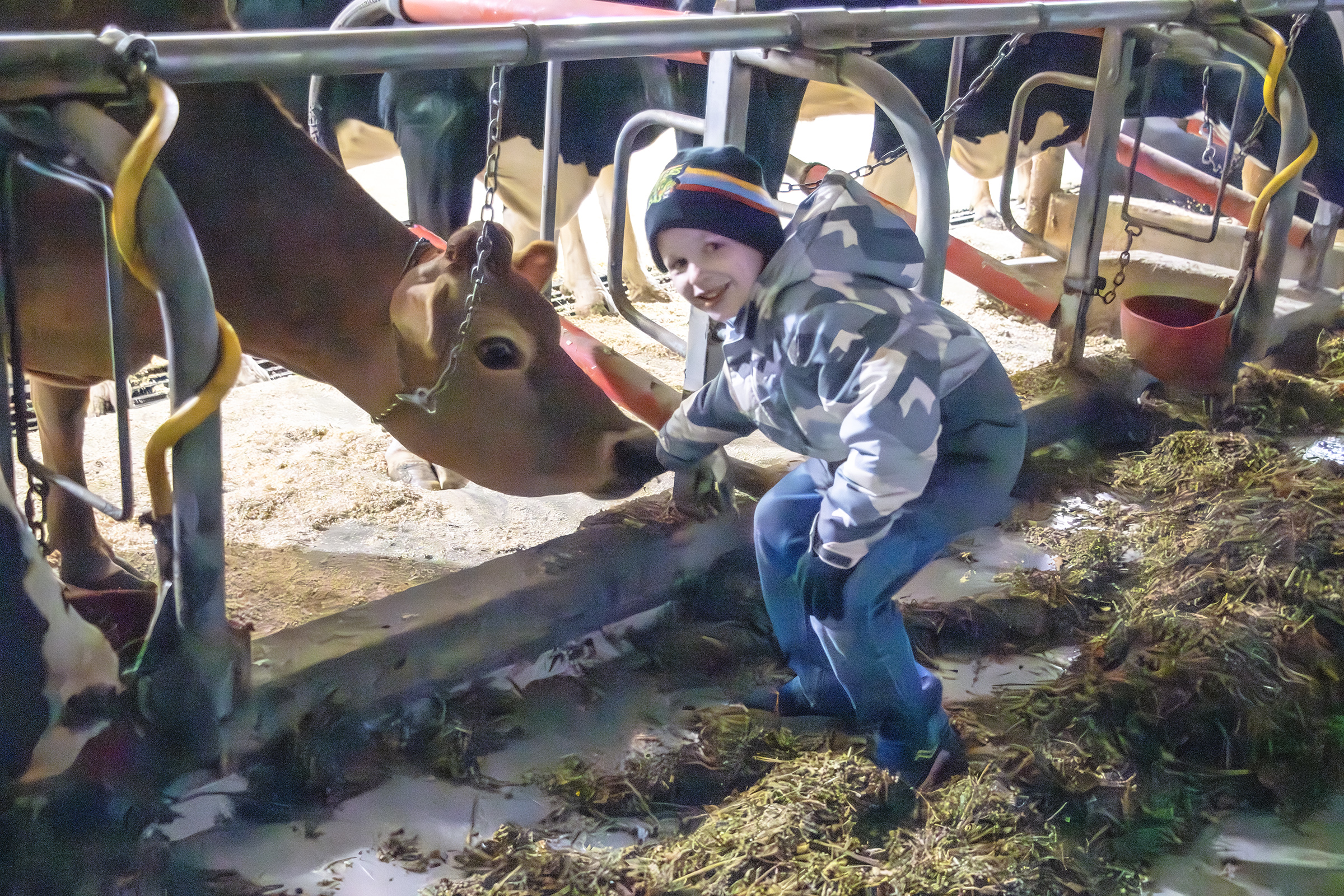
One of her boys, Dylan, was thrilled to pet his first cow. He quickly learned the Jerseys were more curious to bring their noses right up to his hand. “This one must give chocolate milk!” he said about the brown cows, flashing a great big smile.

“Well, they are more curious than their black and white herd mates,” I responded while capturing his photo, “and their milk is richer in fat and protein, but we still have to add the chocolate.”

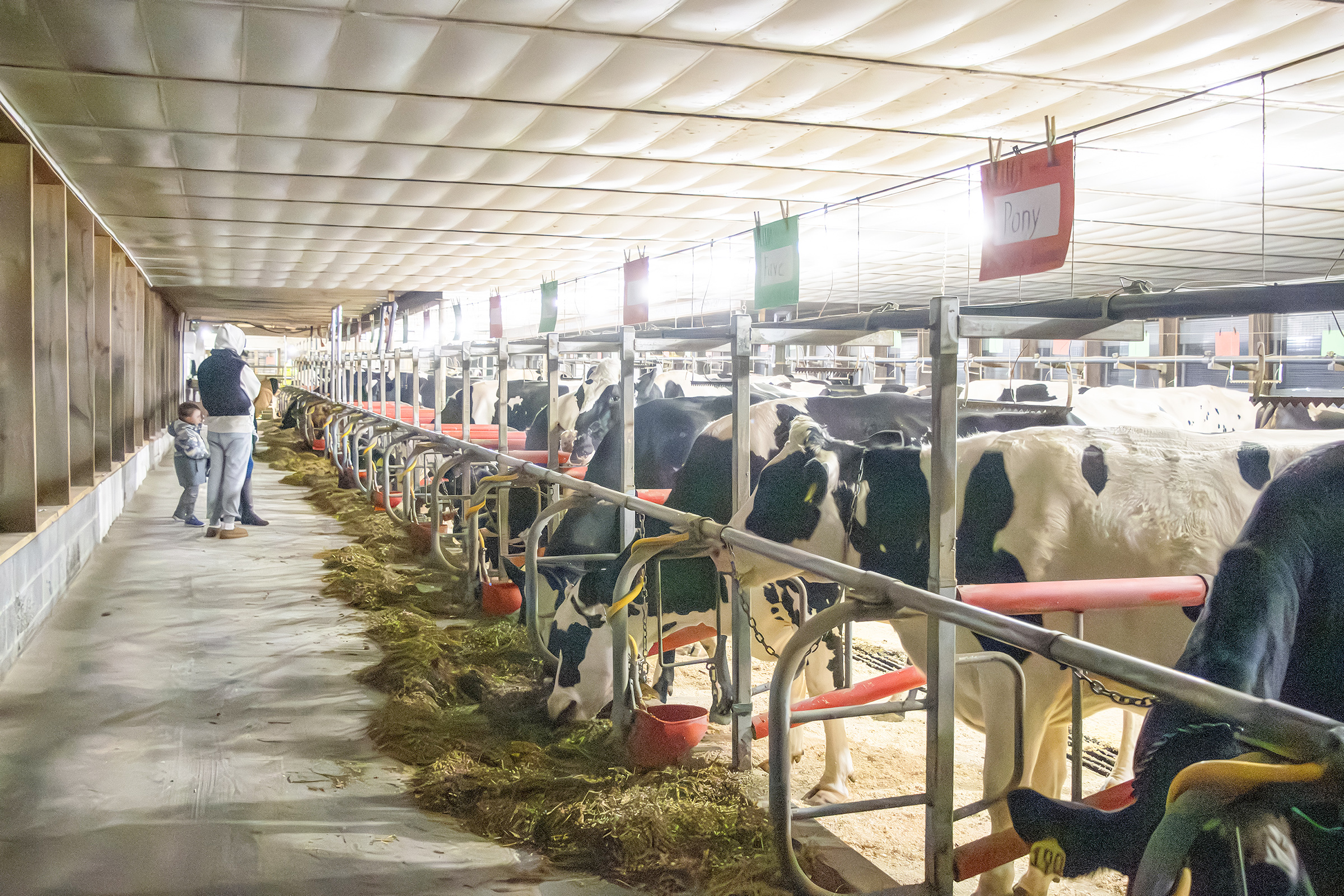
The whole event is a leisurely walk around the barn during chore time, culminating at a table with whole milk, chocolate milk and homemade Christmas cookies.

This was not a fancy event, but rather a time to simply take in the serenity while the Stoltzfoos family — from the littles on up — shared the blessing of their stable routines with the public.
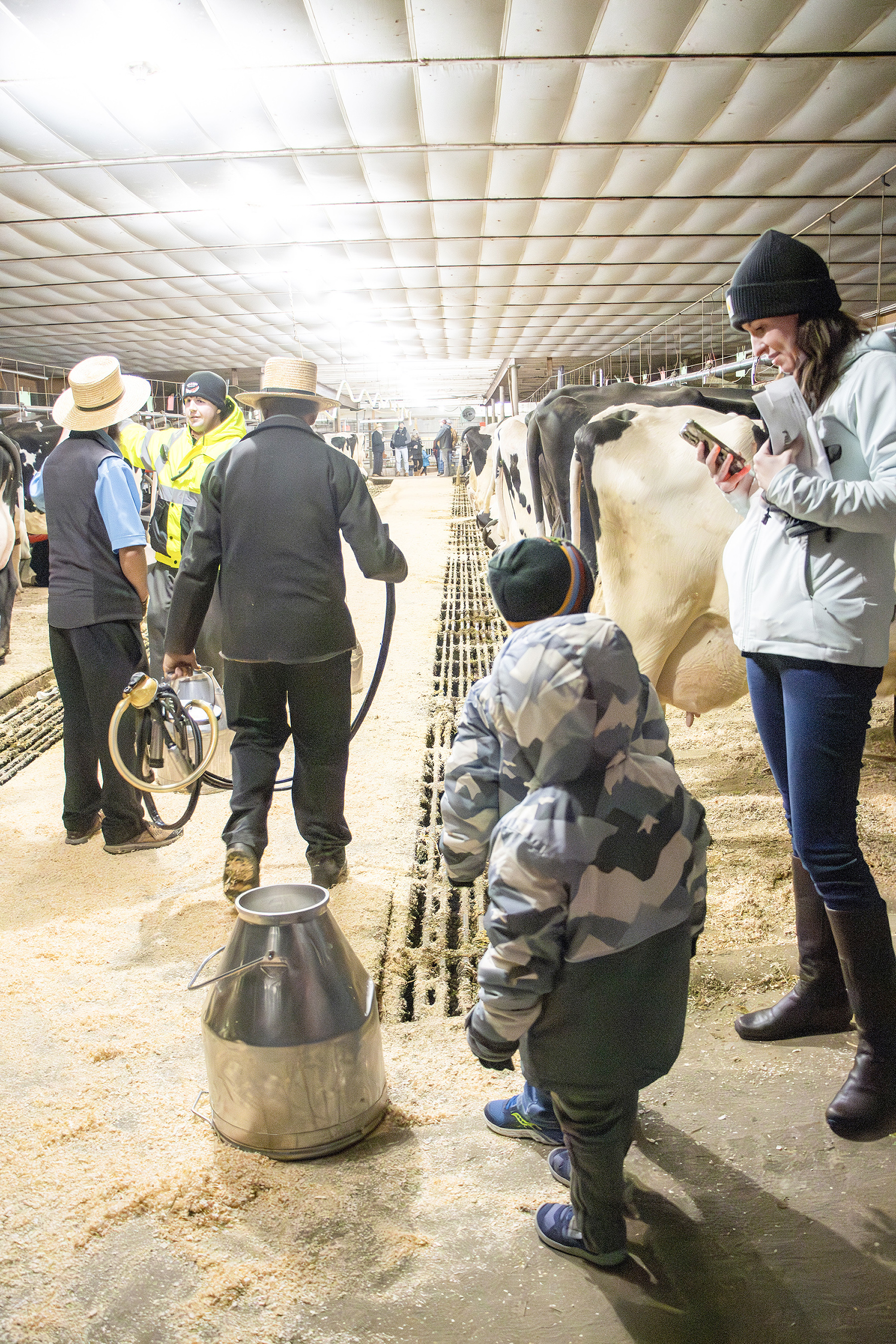
“People ask me what do we get out of it? It’s really just seeing people have fun. Seeing people have fun with the cows is what we get out of it. Everyone I talked to was happy and in a good mood. People were tickled to have the opportunity to just be in a barn,” says Melvin.

And along the way, they learn something too. Upon entering, visitors are given a paper with fun facts about Agriculture and the nutrition of delicious whole milk, along with a welcome note with facts about the farm — names of the draft horses, facts about Holsteins and Jerseys in the herd, fun facts about cows and what they eat. Visitors also receive a thank you card with the Christmas story as told in Luke 2:11-16 and the Reason for the season as told in John 3:16-17.

Melvin and his family truly love doing this. They are already thinking about next year’s Christmas with the Cows, marked on the calendar for Dec. 12, 2025.
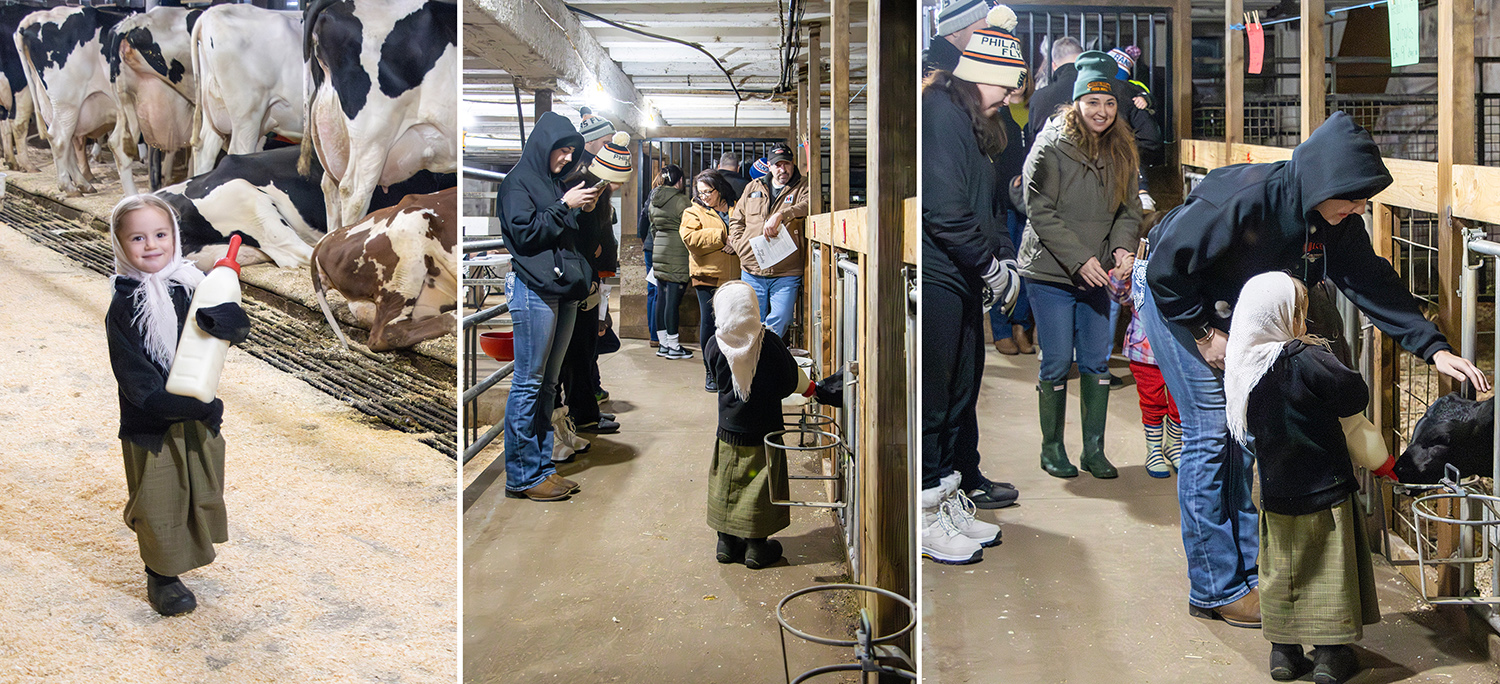
The host family’s youngest daughter is pleased to have the calf feeding responsibility.

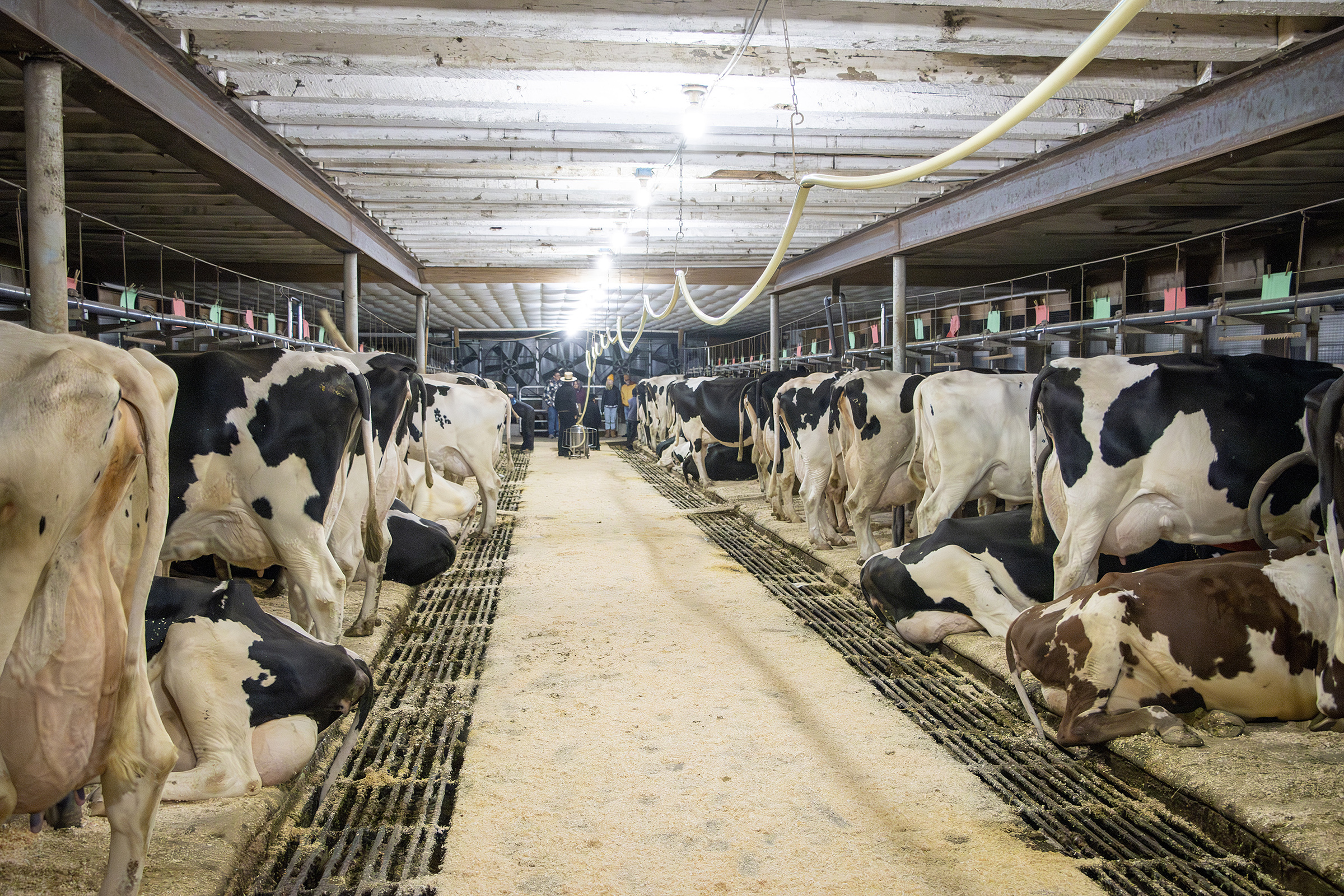
Feeling blessed to be dairying, Melvin and his family want to share this gift with others — the quiet rhythms of milkers pulsating and cows munching, the soft sounds of their lowing, the nickers from the horse stalls, the rustling of calves at feeding time, the sight of clean, contented, cows in their stalls, placidly chewing their cuds as the family moves the milkers down the row, amid casual conversations answering any questions the visitors may have.

“It’s not about us,” says Melvin. “It’s about the cows. It’s about people having the opportunity to see the cows.”

The largest crowd came early, lined up right at the start of the evening milking at 4:30 p.m. Visitors continued to flow in steadily right up until the advertised ending time of 7:30 p.m. The family rented portable toilets and tower lights, placed outside. They cleaned and emptied the loafing pen to make way for the 97 Milk table and refreshments.
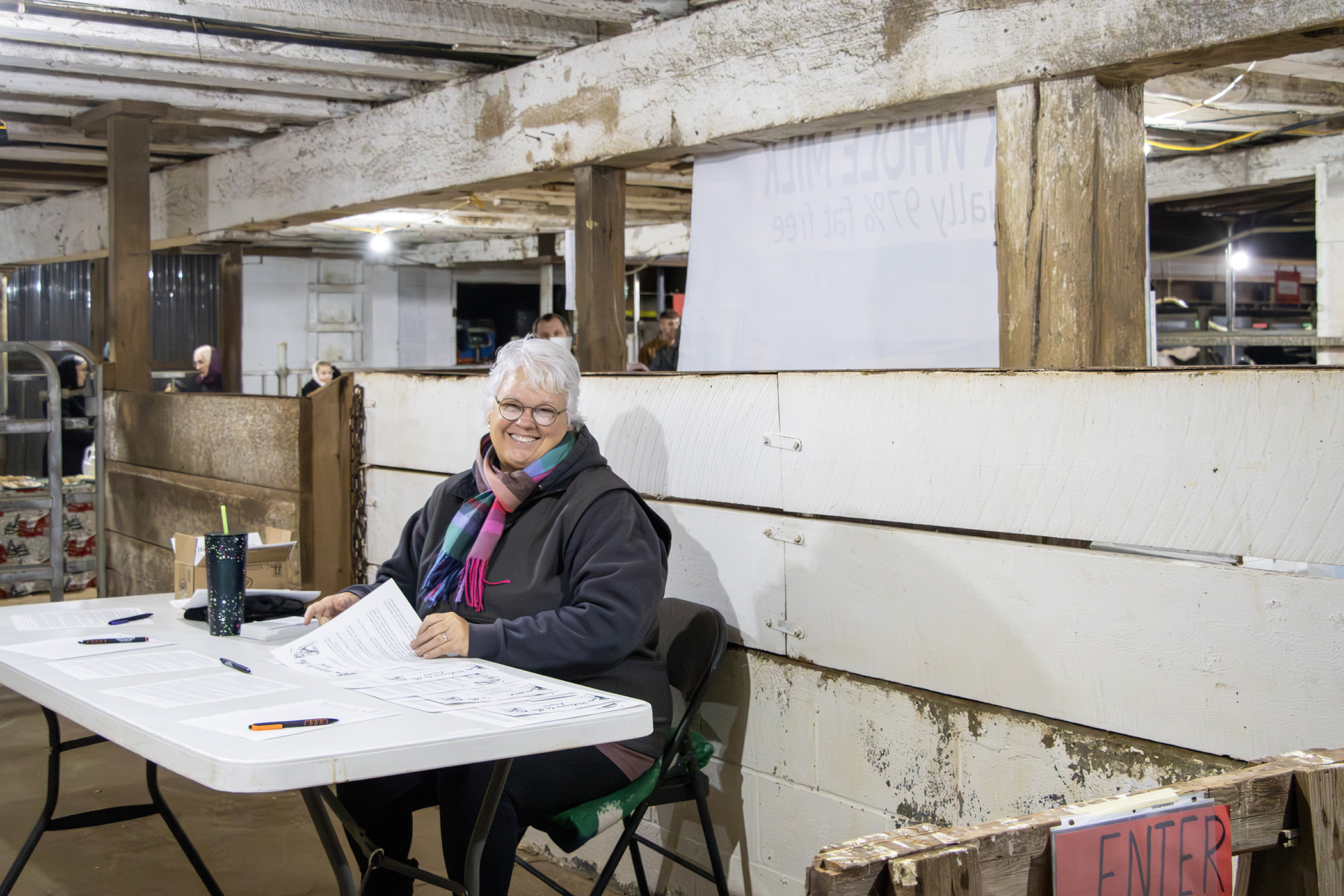
Half a dozen people from Sensenig’s Feed Mill in New Holland volunteered their time too. Nancy Sensenig manned the registration table, drawing people in with her ready smile and outgoing nature, while dairy nutritionists Kyle Sensenig, Steve Morris and Justin Brenneman answered questions about dairy cows and what they eat.

Other volunteers guided traffic to parking, and Mike Sensenig was encourager in chief – walking around all smiles throughout the evening, talking with visitors.

“Melvin does a really good job here, and we support this because it’s grassroots,” says Kyle. “We like to get behind grassroots efforts that are an outreach to our community and consumers.”

He observed a few repeat families who came out last year, but mostly, he shares: “We saw a lot of new faces tonight.”

When asked what tough questions he may have encountered, he says it was really a relaxed evening, people were here out of genuine curiosity to experience something new that dairy farmers see and do every day.
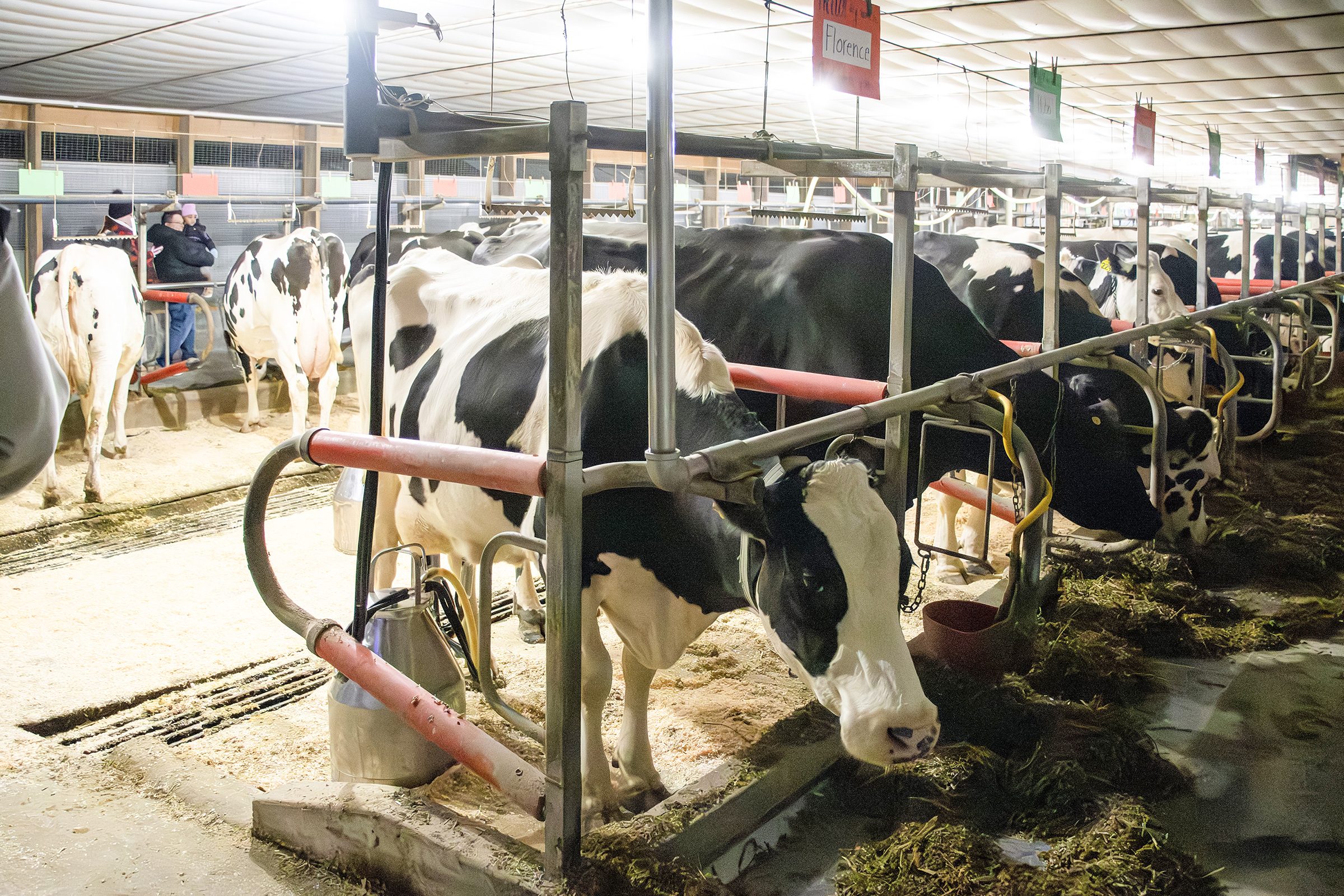
He did get questions about grass-fed dairies and took the opportunity to broaden that discussion to recognize not all feeding systems are the same. He shared that these cows were getting grasses in their feedstuffs, and that cows are superheroes, able to utilize a wide variety of feedstuffs to make nutrient dense milk.

“The important thing is we want to have healthy and content cows, and that’s really what drives every dairy farmer,” he relates.
As I walked through with a group of visitors from southern Lancaster and Chester counties, the conversation turned to A2 milk. Melvin talked about his own progress toward a herd now 75% A2 through the bulls he selects for breeding. In his quiet manner, he demonstrated the reassuring message about how dairy farmers are always looking to improve and put their best quality forward.

-30-
Organizations react to USDA, HHS picks as Trump nominates Brooke Rollins to top Agriculture post

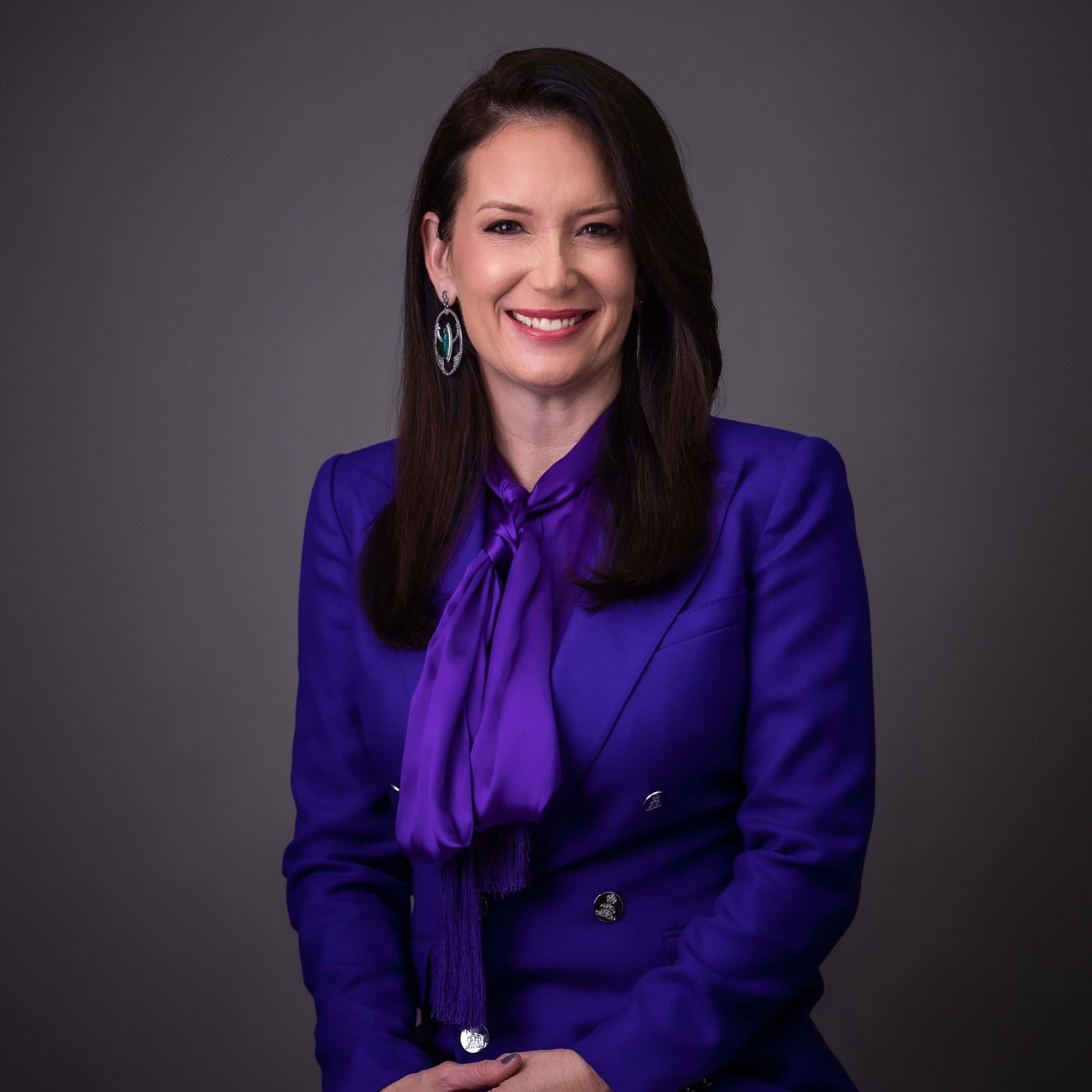
Brooke Rollins, photo courtesy America First Policy Institute

Bringing whole milk choice back to schools could align with Rollins’ and Kennedy’s priorities

By Sherry Bunting, Farmshine, November 29, 2024

WASHINGTON, D.C. – President Elect Donald Trump has nominated Brooke Rollins of Fort Worth, Texas to be the 33rd U.S. Secretary of Agriculture. She would be the second woman to serve in the top USDA post, the first being Ann Veneman in 2001 under President George W. Bush.

Trump’s announcement Saturday, Nov. 23 brought ripples of surprise across ag media outlets after many had floated a long list of other names under consideration.

In the end, it came down to Rollins, a lawyer and trusted advisor who previously served on Trump’s 2016 Economic Advisory Council as well as Director of Domestic Policy Council and Assistant to the President for Strategic Initiatives in Trump’s first term.

Rollins has spent the past four years as founder and CEO of the America First Policy Institute (AFPI). Trump highlighted her commitment to American farmers, food self-sufficiency, and rural small-town restoration.

The AFPI has not had much to say on agriculture, specifically, but has advocated for a ban on China’s ownership of American farmland. Rollins also spoke out against any sort of carbon or methane tax in a 2018 Texas Public Policy Foundation broadcast.

“As our next Secretary of Agriculture, Brooke will spearhead the effort to protect American farmers who are truly the backbone of our country,” Trump stated.

Raised with a generational ranching background in the small town of Glen Rose, Texas, Rollins was involved in 4-H and FFA leadership and credits her high school ag teacher for “changing her life.”

She earned her B.S. in agriculture development at Texas A&M and spent her public policy career in nonprofit and governmental leadership at the state and federal levels. 

She and her husband Mark have four teenage children, who avidly show cattle.

While searches for paper or interview trails on her agriculture policy positions come up mostly empty, what can be gleaned is that Rollins has the President-Elect’s ear and a penchant for analyzing issues with an ear to those affected, not just the ‘experts.’ 

In a post on X (formerly twitter), Rollins thanked Trump for “the opportunity to serve… It will be the honor of my life to fight for America’s farmers and our Nation’s agricultural communities. This is big stuff for a small-town ag girl from Glen Rose, Texas… Who’s ready to Make Agriculture Great Again?”

Ag and dairy organizations responded. Several took the opportunity to also weigh-in on Trump’s nomination of Robert F. Kennedy Jr. a week earlier for Secretary of Health and Human Services with the Make America Healthy Again agenda.

The two departments jointly issue the Dietary Guidelines for Americans (DGAs) every five years, which USDA uses to regulate meals (and milk) served at schools, daycares, and senior centers. A large chunk of USDA’s massive budget and staff administer and regulate nutrition programs. 

The next cycle of DGAs is already in process with the two new USDA and HHS secretaries tasked with finalizing the 2025-30 DGAs by the end of next year that will set the rules for schools and other nutrition programs for years to come.

American Dairy Coalition CEO Laurie Fischer observed in a statement that the incoming secretaries will have the opportunity “to fix food nutrition policy, such as a long overdue reform of the Dietary Guidelines that govern school meals where children have been prohibited from choosing whole milk and 2% milk since 2010.”

Grassroots Pennsylvania Dairy Advisory Committee chairman Bernie Morrissey also expressed hope that Rollins and Kennedy, if confirmed by the Senate, will work together to bring the choice of whole milk back to schools. 

“For far too long, America’s children have been deprived of the choice of delicious, nutrient-dense whole milk. USDA requires schools to only offer fat-free and 1% low-fat milk. Many children throw that milk away, so they are missing nature’s nutrition powerhouse. Now, more than ever, we need to offer the “good stuff,’” Morrissey stated, adding that “Rollins is a mother, and that helps. We have mothers on our committee and they really get it.” 

He explained that his committee includes dairy farmers, allied industry representation, a recently retired internal medicine doctor, school nurse, school foodservice director, and former school board director who have worked on this issue over more than a decade. He wants the incoming secretaries to understand the problem so they can unwind the decades of worsening low-fat rules that pave the way for more ultra-processing leaving children with less nutrient-dense choices and unfavorable nutrition and health outcomes.

“We look forward to working with the next Administration on reforms that allow dairy farmers to market the whole milk they produce and allow children the opportunity to choose milk they will love,” Morrissey added. “Our friends at the 97 Milk organization are doing a wonderful job educating the public. Now, we just need real leaders willing to stand up and roll back the federal ban on whole milk in schools. We are eager to help Make America Healthy Again and Make Agriculture Great Again.”

The International Dairy Foods Association (IDFA) has conducted surveys showing the vast majority of parents want their kids to have the choice of whole milk at school. 

In his response to the Rollins and Kennedy nominations, IDFA CEO Michael Dykes, DVM also highlighted the joint nutrition roles of USDA and HHS, citing the need to “enhance the diet quality of Americans, protect the integrity of food production and processing, and establish a regulatory environment that drives innovation and efficiency… to continue leading the world in the production of high-quality dairy nutrition.” 

In a follow up interview with ADC, Fischer said dairy labeling integrity is another big issue for dairy farmers in the wheelhouse of both USDA and HHS. “We hope to see the restoration of labeling integrity in the dairy case when it comes to plant-based lookalikes that don’t even come close to real dairy’s nutrition. That includes the regulation and clear labeling of these novel bioengineered fake ‘dairy’ and ‘meat’ lab-created proteins.” 

More broadly, she cited the need for real world application of sound farmer-led policy and innovation that meet the realities farmers face daily. 

“ADC looks forward to working with the next Secretary on ways to reduce redundancies and wasteful spending to improve efficiency so more of the dollars intended to support farms get to the actual farmers. We are encouraged by Rollins’ history with the Office of American Innovation in Trump’s first term because our farmers are key innovators and lifelong stewards of natural resources,” she said. 

As of Nov. 26, National Milk Producers Federation (NMPF) had not yet released a public statement to the media on the nominations of either Rollins or Kennedy, stating simply in a social media post on X: “Congratulations to Brooke Rollins on her nomination to become the next USDA Secretary. Dairy farmers are ready to hit the ground running in 2025!” 

National Cattlemen’s Beef Association VP of government affairs, Ethan Lane touted Rollins’ “history of fighting for Main Street and Rural America. America’s cattle producers need a secretary of agriculture who will protect family farms and ranches, roll back crushing regulations, and stand up for rural values.” 

American Farm Bureau president Zippy Duvall weighed in, noting the “good relationship” Rollins has with the Texas Farm Bureau: “We hope to build on that. We’re encouraged by her statement that she’d ‘fight for America’s farmers and our nation’s agricultural communities.’ Effective leadership at USDA is more important than ever as farmers and ranchers face a struggling agricultural economy.” 

Trump’s cabinet nominations are now complete and require confirmation by the U.S. Senate.

Check out some other interesting perspectives on the next USDA Secretary, pending Senate confirmation.

-30-

Milk Market Moos, Nov. 29, 2024

USDA Standoff?

DTN policy editor Chris Clayton is reporting that a standoff could be brewing at the USDA between current Ag Secretary Tom Vilsack and the Trump transition team. Vilsack has urged the Trump team to sign “key ethics documents required by the Presidential Transition Act as soon as possible” so they can start the process of “educating folks… about what they are walking into,” and so the next Secretary of Agriculture “can be fully prepared for the job she is undertaking.”

After 12 years at the helm of USDA, with a 4-year intermission between the Obama and Biden Administrations, pulling a cool million in dairy checkoff salary, Sec. Vilsack has watered down dairy in the WIC program, mangled the recently completed Dietary Guidelines Advisory Committee selection and recommendation process, further deflated whole milk and dairy’s position in the school lunch and other nutrition programs, and has been tightly tied to his pet projects, especially the climate-smart partnerships he lobbied the Senate for in 2019 while working for DMI, given the ‘slush fund’ appropriated through the so-called Inflation Reduction Act that many describe as the undercover Green New Deal.

For that initiative, alone, Vilsack told the House Ag Committee a year ago he was hiring 4000 new USDA employees and that 4000 more would be needed at local levels to gather data, do the monitoring, and herd farmers into the data-collection squeeze chute to participate in climate-smart projects. The House Ag Committee expressed their concern about funds getting to actual farmers. (See Feb. 16, 2024 Milk Market Moos ‘carrot and stick’)

Hog wrestling strategy?

One could say there are a lot of pigs at the USDA climate trough. The whole deal needs a good auditing to see how much of what was spent or promised is getting into the hands of actual farmers and their on-farm contractors vs. going into the black hole of bureaucracy.\

While Trump’s Ag Secretary-Designate Brooke Rollins, still to be confirmed by the Senate, is only the second woman nominated to head the USDA, don’t let her femininity fool you. One thing we learned watching Rollins, 52, as a guest on legendary football coach Lou Holtz’s Nov. 4th Show about faith and leadership, this Texas Aggie was a hog wrestling champion.
Holtz asked Rollins about the hog wrestling title. It was 10 years ago when she and her sister Ann went to Bandera, Texas for an annual festival. They decided that year to enter the annual Wild Hog Explosion Contest. They won, even set a record, against younger women in the competition.

Rollins recalled: “We had a strategy and a plan, which seems to be a common theme in my life. You always have to have a strategy, and you always have to have a plan. We had a plan to wrestle that wild hog — and he was a wild, big hog — and put him into a bag and drag him across the finish line.”

A mom-coach could do wonders

USDA Secretary nominee Rollins also revealed that while coaching her daughter’s softball team a few years back when she was 10, they wrote their own mission statement that hung on the fence for every game. “Coaching is a reflection of life, to be our best, work as a team, have a common goal, never give up, and go for the win, every time.”

Rollins and Holtz talked of her leadership style to “find amazing people” to build teams that work together “not caring who gets the credit, but what gets accomplished.”

When asked the Bible verse most meaningful in her life, she said for this season in time “with the arrows slinging every which way,” Joshua 1:9 “Be strong and courageous. Do not be afraid; do not be discouraged, for the Lord your God will be with you wherever you go.”
One that strikes a chord throughout her life is: Matthew 25:40: “Whatever you did for one of the least of these brothers and sisters of mine, you did for me.”

When it comes to USDA’s failed nutrition policy, this verse rings true. It’s also worth noting that Rollins is a mother. That may be just what USDA needs at the top! Mom’s understand the school meal and school milk issue! Can we imagine how many more hungry children could be nourished if USDA devoted funds to the food that are now going to the bureaucrats calculating fat percentages and other criteria to regulate schools so they don’t violate the fat limits; and how much better off those children most reliant on school meals would be if they could choose nutrient-dense delicious whole milk, 3.25% healthy fat.

What’s up with milk production?

USDA Dairy Market News reports that milk availability is still tight for processors. Some processors expect milk availability to loosen in coming weeks, as plants slow production or shut down during the week of Thanksgiving. Class I bottling is strong as demand from schools is steady up to the coming holiday, and consumer demand increases. Demand from Class III is strong. Cheesemakers report that some plants are running as much as possible. Component levels are reported to be strong across the board. We’ll did into the report next week.

The USDA NASS milk production report released late Wednesday showed total U.S. milk production was up 0.2% in October vs. year ago. Meanwhile, milk production in the 24 major milk producing states gained 0.4% over year ago. For Q3, USDA reports total U.S. milk producers virtually flat with a year ago.

This indicates that states and regions that are expanding milk production rapidly in the Plains from western Minnesota, Iowa, South Dakota south to Texas, have large expansion units coming online — and their own circular systems for heifer-rearing are geared up to fill new stalls to supply new cheese processing that is coming online — perhaps not at all impacted by the overall tight supplies of milk cows, springing heifers, and bred heifers in today’s marketplace.

Remember, the current Secretary of Agriculture, Tom Vilsack, canceled the July 2024 mid-year All Cattle and Calf Inventory, so the industry won’t get a look at dairy and beef numbers until the end of January 2025.

In the East and Mideast, October’s milk production was generally steady vs. year ago. USDA estimates for Northeast and Midatlantic: Pennsylvania up 0.6%, New York up 0.2%, Vermont and Virginia down 0.5%; In the Southeast, Florida down 0.6% and Georgia up 1.9%; In the Mideast: Michigan up 0.5%, Indiana up 0.3% and Ohio down 0.2%.

Midwestern milk production slipped 0.2% and 0.5% in Wisconsin and Minnesota, but grew across the Central Plains, up 3.3% in Iowa, up 4.2% in Kansas, up 9.6% in South Dakota.
Southwest milk production grew a substantial 8.8% vs. year ago in the No. 3 milk producing state of Texas, while New Mexico continued its decline, off 4.4%.

California is in the midst of an escalation in bird flu with production down 3.3% vs. year ago. USDA APHIS reports 261 herds have had the virus in the past 30 days in California, 436 since the first outbreak there in September.

Dec. Class I mover drops $0.90 at $21.43

The December advance Class I base price mover was announced at $21.43 on Wed., Nov. 20 for a loss of 90 cents per hundredweight below November’s Class I mover, but up $1.67 per cwt. above a year ago.The USDA NASS milk production report showed total U.S. milk production was up 0.2% in October vs. year ago. Meanwhile, milk production in the 24 major states gained 0.4% over year ago. For Q3, USDA estimates total U.S. milk production virtually flat vs. year ago.

Class III milk slips lower despite less cheese

Despite USDA again reporting cheese stocks smaller than a year ago for the 8th straight month, dwindling to levels 8% below year ago, the CME spot cheese price headed south this week, dragging Class III milk futures lower too. On Tues., Nov. 26, Class III milk future averaged $18.77 for the next 12 months (Nov24-Oct25), losing 29 cents/cwt — more than was gained last week. Class IV milk futures were mixed, but the 12-month average fell a dime to $20.85.

CME dairy lower, but whey skyrockets

Dairy product prices on the CME daily spot market lost ground across the board this week, except dry whey gained an unprecedented nickel per pound, reaching just shy of what would be a near record 70 cents per pound.

On Tues., Nov. 26, the ‘market clearing’ dry whey price on the spot CME was a whopping 69 cents/lb with 6 loads trading over the 4 days pre-holiday. That’s more than a dime per pound higher than the weekly USDA National Dairy Product Sales Report price that has lagged all year and is the one used in the Federal Milk Marketing Order pricing formulas. Whey is usually the commodity to watch in relation to future milk prices, but it’s not translating. The 40-lb block cheddar price was pegged 4 cents lower at $1.6950/lb with just 2 loads trading over 4 days. Pegged at $1.64/lb, the 500-lb barrel cheese price lost 9 cents per pound with 8 loads trading across the 4 days.

On the Class IV side, the spot butter price fell 11 cents per pound, pegged at $2.4850/lb with 18 loads trading. Nonfat dry milk lost the penny gained last week, pegged at $1.39/lb with 21 loads trading in 4 days.

Live cattle imports from Mexico ‘paused’

USDA APHIS will halt cattle imports from Mexico due to a detection of New World screwworm (NWS) in Mexico Nov. 22. It was discovered in a cow at an inspection checkpoint close to Mexico’s border with Guatemala. USDA reports that around 5% of feeder cattle placements come from south of the border, meaning this pause in live cattle imports will further tighten beef supplies. The USDA cold storage report indicates red meat supplies continue to run below year ago levels.