Meeting on case involving ultrasound of livestock draws 300, mainly Amish

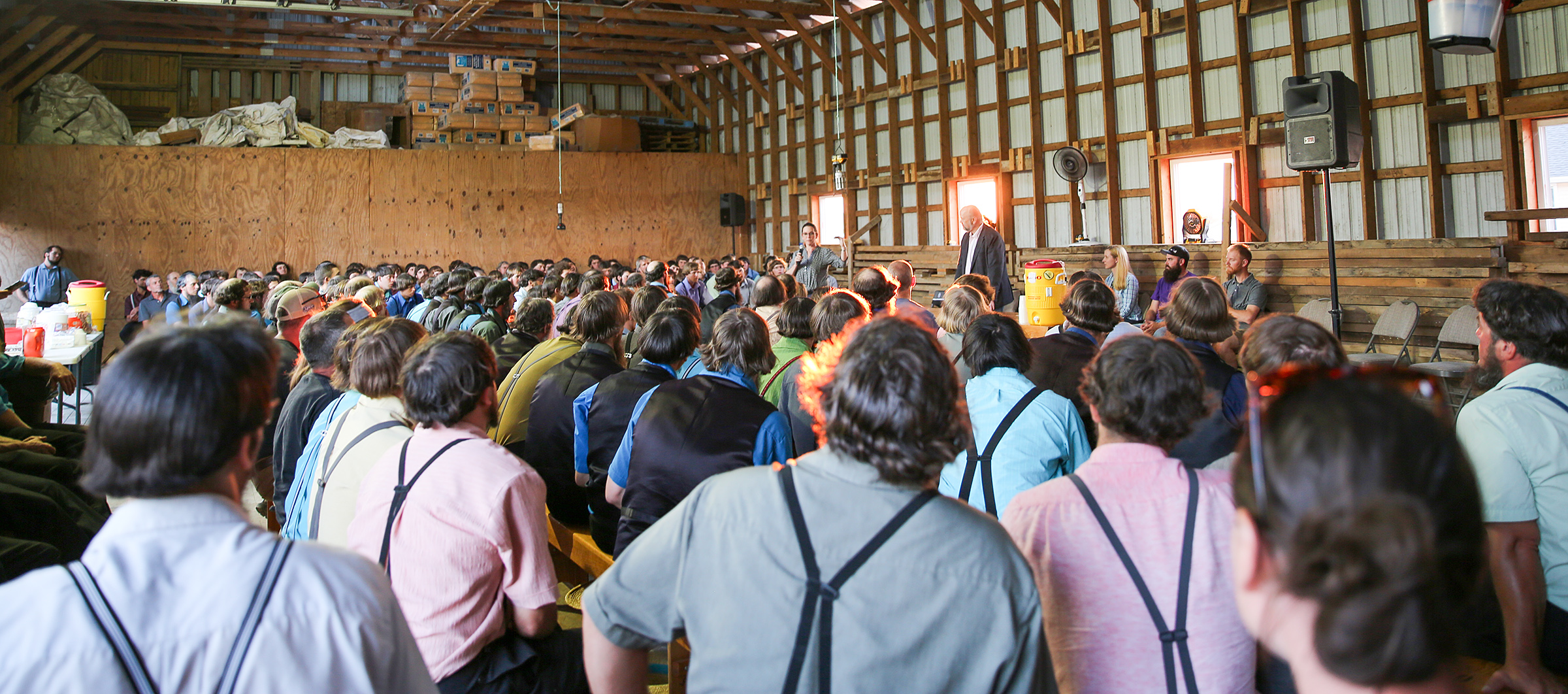
On the evening of June 13th, 300 people, mainly Amish dairy farmers and business owners with horses, came to a farm near Quarryville, Pennsylvania to hear from and show support for Rusty Herr and Ethan Wentworth (far front right and second from right). Their attorney Robert Barnes (standing), spoke about the case and their quest to get clarity on the law. Also speaking briefly (standing left) was Pennsylvania State Representative Wendy Fink of York County. Photo by Sherry Bunting

By Sherry Bunting

QUARRYVILLE, Pa. — It was a clear, balmy evening that farmers could have spent in field work, but over 300 people arrived by buggy, van, and on foot to hear from two men and their legal team at 7 p.m. Thursday, June 13 on an Amish dairy farm in southern Lancaster County, Pennsylvania. (Click here to read author’s analysis/opinion)

The meeting came just one month after Rusty Herr and Ethan Wentworth were released from prison, having served the 30 days on contempt charges for failing to provide names, addresses, and records as part of a 2021 subpoena from the Bureau of Professional and Occupational Affairs (BPOA) on behalf of the State Veterinary Board.

The 2021 subpoena was set in motion by a 2020 petition from the Pennsylvania Veterinary Medical Association targeting Rusty and Ethan for continuing to perform veterinary practice without a license by ultrasounding livestock.

The majority of attendees were from the Amish community, half of them dairy farmers, and half business owners, tradesmen, who have horses. A sprinkling of non-Amish farmers were also in attendance. 

One could hear a pin drop while Rusty and Ethan talked separately of their time in prison, highlighting what the prayers and support of family, friends, colleagues, and customers have meant to them and crediting their team of employees for stepping up in their absence and their wives and families for all they have done and endured.

They talked of how their faith in God grew stronger over those 30 days, and of their steadfast resolve to continue serving this community.

Attorney Robert Barnes of Barnes Law LLP talked about two of the exceptions in Section 32 of the Vet Practice Act of 1974, as amended in 1986: “This Act does not apply to (32. 4) Any person or his or her regular employee or agent while practicing veterinary medicine on his or her own animals… and (32. 7) Any person performing normal husbandry practices on bovine, porcine, caprine, ovine or equine animals or avis.”

Neither ‘agent’ nor ‘normal husbandry practices’ are defined in the list of terms in the Act’s introduction.

According to Webster’s the definition of ‘husbandry’ is “the care, cultivation, and breeding of crops and animals,” and the definition of ‘agent’ is “a person who acts on behalf of another person or group.”

‘Agent’ is actually a legal term used to describe “a person that has been entrusted with important powers or responsibilities that are to be carried out on behalf of another person.”

A legal basis for the term ‘normal husbandry’ is traditionally understood as a combination of the producer’s self-interest (economic sustainability) and duties of humane treatment for the animals on which we depend. The two go hand in hand.

“There is a war on the small farmers around the world. The Amish are caught in the middle. They bring essential value and high-quality food from a farming community that seeks to protect a way of life,” said Barnes, who also represents Amos Miller in the raw milk case brought by the Pennsylvania Department of Agriculture.

Barnes called the April 2024 arrests of Rusty and Ethan an “abuse of power” treating civil contempt as though criminal through incarceration.

He called this an example of using regulatory process to bolster “new and novel interpretations of the law.” Other examples he gave involved access to water, takings of food, and animal welfare interpretations that, according to Barnes, use the court system to create new definitions for ‘normal farming.’

“They pick people who are in an isolated position, where it is hard to afford a legal defense,” he said.

Barnes also spoke of power and control, referring to ‘Big Food’ and ‘Big Pharma.’ He said “corporate interests” want to define normal farming and husbandry as it applies to food distribution and animal care in such a way that small independent farms find it difficult to comply or economically unfeasible to survive in the future.

“People are having more chronic diseases, dying earlier, and living less happy lives, but this (Amish) community is not relying on (the world) for your cultural values. This community is a beacon, and so is your independent food system,” he declared.

One attendee spoke up to say: “We need both. We need our veterinarians, and we need NoBull (breeding management services).”

In light of a shortage of vets and the much smaller number of animals on farms like his, this man wondered how a middle ground can be reached by working together.

Farmers who spoke privately after the meeting echoed the same thought to this reporter. When asked what their vets think of this, they said they can’t even discuss it with their veterinarians for fear of losing their services altogether.

They said they have their vets come regularly for herd check and will even list a cow that may have already been checked timely when the breeder was there.

“Why would I call the vet to check one animal (in between herd checks), when my breeder is already here? Would they even come (timely) for one animal?” a farmer noted, shaking his head.

To protect the farms in this equation, Barnes said clarity in the law is required.

“We want the court to rule on the law… to establish the farmer’s right to do these practices and do them through an employee or ‘agent’, as the law states,” said Barnes. “This is the start of a long process. If they (NoBull) are shut down, who will be next? It’s about the impact this can have to small farmers across the country… and on this community. This is a consequential case.”

Pennsylvania State Representative Wendy Fink (R-94th), covering part of York County, also attended the June 13 meeting. She has been closely following the case and spoke briefly about it, citing the abundance of phone calls that have poured into her office and other legislators’ offices. She said she hopes a similar meeting will be held soon in York County and one in the future with additional State lawmakers.

“Your phone calls are important. Keep doing what you’re doing. We support these two gentlemen. Most people would cower… but these two are putting themselves out there. They’re standing up for you. This starts at our local government, so keep the pressure on to make sure that they are abiding by the laws as they’ve been written,” she said.

-30-
My thoughts on the livestock ultrasounding case in PA: Law needs clarified to find the middle ground

By Sherry Bunting, opinion / analysis

While the nation’s largest dairy farms may have economies of scale, smaller dairies have traditionally had a level playing field in tools available for herd management and husbandry. 

This is changing as the dairy industry continues to evolve and bifurcate.

All sizes of dairies are essential, especially in Pennsylvania, where the average herd size is 94 cows, and the number of dairy farms was 4,940 in 2023, according to USDA — down 67% in the past decade.

To survive and thrive today means honing management and diversifying income. Smaller herds also benefit from a supportive community to be less isolated as part of a collective ‘milk-presence.’

From timely breeding and a focus on longevity to minimize the cost of raising replacement heifers, to the beef-on-dairy trend for income from more valuable calf sales, reproductive efficiency is critical. It is no wonder small dairy farms are looking to keep up in this evolving area of husbandry.

But here’s the problem: The nation’s largest dairies have the ability to employ vet techs, including those placed as employees on large farms by veterinary practices, as well as those training under a farm owner or manager, or who attend a multi-day husbandry school to learn. 

Many articles in dairy trade journals over the past decade tout the increasingly available tool of ultrasound technology in the hands of ‘regulars’ who are on the farm daily, or often, to breed cows and/or manage repro — not only from an economic standpoint to breed timely and avoid wasting semen, costly mistakes, and unnecessary culling decisions, but also to positively impact herd management. In group discussions, herd owners even talk about what tools will improve the ultrasounding capabilities of their employees or provide a more comfortable experience for them.

The recent 30-day incarcerations of NoBull Solutions’ founders Rusty Herr of Christiana and Ethan Wentworth of Airville, Pennsylvania brought to light the bifurcation in how portions of the Pennsylvania Vet Practice Act are interpreted, and how interpretations may impact smaller farms inequitably.

The Department of State’s (DOS) Bureau of Professional and Occupational Affairs (BPOA) explained in an April Farmshine interview that the State Veterinary Board adjudications clarify the law with the authority granted them by the legislature, and the legislature is the body to consult for the Section 32 exceptions.

A debate now brews not just on how ultrasounding in conjunction with breeding service is being interpreted as veterinary practice, but also on the Section 32 exemptions. Where is the middle ground?

Robert Barnes, Esq. of Barnes Law LLP and the 1776 Law Center told farmers at a meeting on June 13 that not only were Rusty and Ethan never named party to a case, but their arrests were also unconstitutional, violated state and federal laws, and the state agencies and Commonwealth Court did not have jurisdiction in the first place.

Beyond that, the legal team wants the law clarified in the courts as Rusty and Ethan are back to work, providing breeding services to owners of dairy cows and horses, largely in the Amish Community.

-30-

NoBull’s Herr and Wentworth home, families grateful

Defense attorney: ‘We see no reason why they can’t continue doing work that needs to be done’

Sherry Bunting, Farmshine, May 24, 2024

HARRISBURG, Pa. – Rusty Herr and Ethan Wentworth are home with their families after their 30-day incarceration on contempt linked to an investigation and subpoenas for records and names regarding ultrasounding of livestock as part of their NoBull Solutions breeding services.

Through their attorney Robert Barnes of Barnes Law LLP and founder of the 1776 Law Center, the two men and their families express gratitude for the prayers that have meant so much, and donations for their legal defense.

“Their wives and children are glad they are home, and we are putting together our plan to protect their interests going forward, while fighting the legal onslaught,” said Barnes in a Farmshine interview Monday, May 20.

He met with them and their families in Lancaster County last week, and he shares that they saw things and experienced things they are not ready to talk about. 

“It was psychological torture,” said Barnes. “The state officials may have thought this would break them, but it has not had that impact. They are caught up in something bigger than themselves.”

Barnes also met some of NoBull Solutions’ customers, who talked about the value of their services and their shock over the situation.

He noted that the Habeas Corpus petition is now moot because the men are no longer in jail, having served the 30 days. However, Barnes said they have appealed the contempt order to the State Supreme Court with direct appellate authority over the Commonwealth Court.

NoBull Solutions “continues to get served subpoenas, and we continue to object to those, so this is yet to be determined,” said Barnes, adding that they “are still not personally named, which is a very odd dynamic. Subpoenas had been done on NoBull Solutions, but the individuals were never properly served or named party to the case.”

Referring back to docket 325 MD 2021, Herr and Wentworth have not been noticed individually, with only NoBull Solutions listed as respondent in the 2021-23 investigative subpoenas and petitions for enforcement. 

No new documents have been added since the April 29 rulings by the Commonwealth Court judge, who unsealed the docket and denied the petition for immediate relief.

Barnes explains that his office is contesting jurisdiction, authority, and bringing constitutional objections.

“We are looking at bringing a federal civil rights claim against the various state actors and private participants that appear to have conspired with state actors to violate their civil rights,” said Barnes, noting they hope to get clarity on the scope of these laws in the process.

He reviewed the legislative history with several lawmakers who have reached out.

“They say they made sure farmers were completely excluded from this type of action, so the language allows practices on your own animals and anyone working as your employee or your agent, which is broad. Here, they’ve made it clear that anyone that’s your ‘agent’ would be excluded,” he said. 

Barnes sees the use of ‘agent’ in the law as substantive. 

“There is no question whatsoever that they are exempt because they worked for farmers as their ‘agent,’” he said.

He confirmed that his office has heard from both state and federal legislators and from staff for two of the three presidential candidates.

There are aspects of this case and the NoBull defense that go to the substance of the authority here, in addition to alleged due process violations.

“We will be seeking legal clarity from the courts on these questions,” said Barnes.

When asked specifically what happens now in terms of their work? Barnes was blunt.

“We believe what the state is doing is illegal, and we see no reason why they can’t continue doing work that needs to be done for farmers in Pennsylvania, which is legal and entirely economically necessary,” he said.

-30-

Dairy biosecurity risks highlighted in two H5N1 data briefs

By Sherry Bunting, Farmshine, June 21, 2024

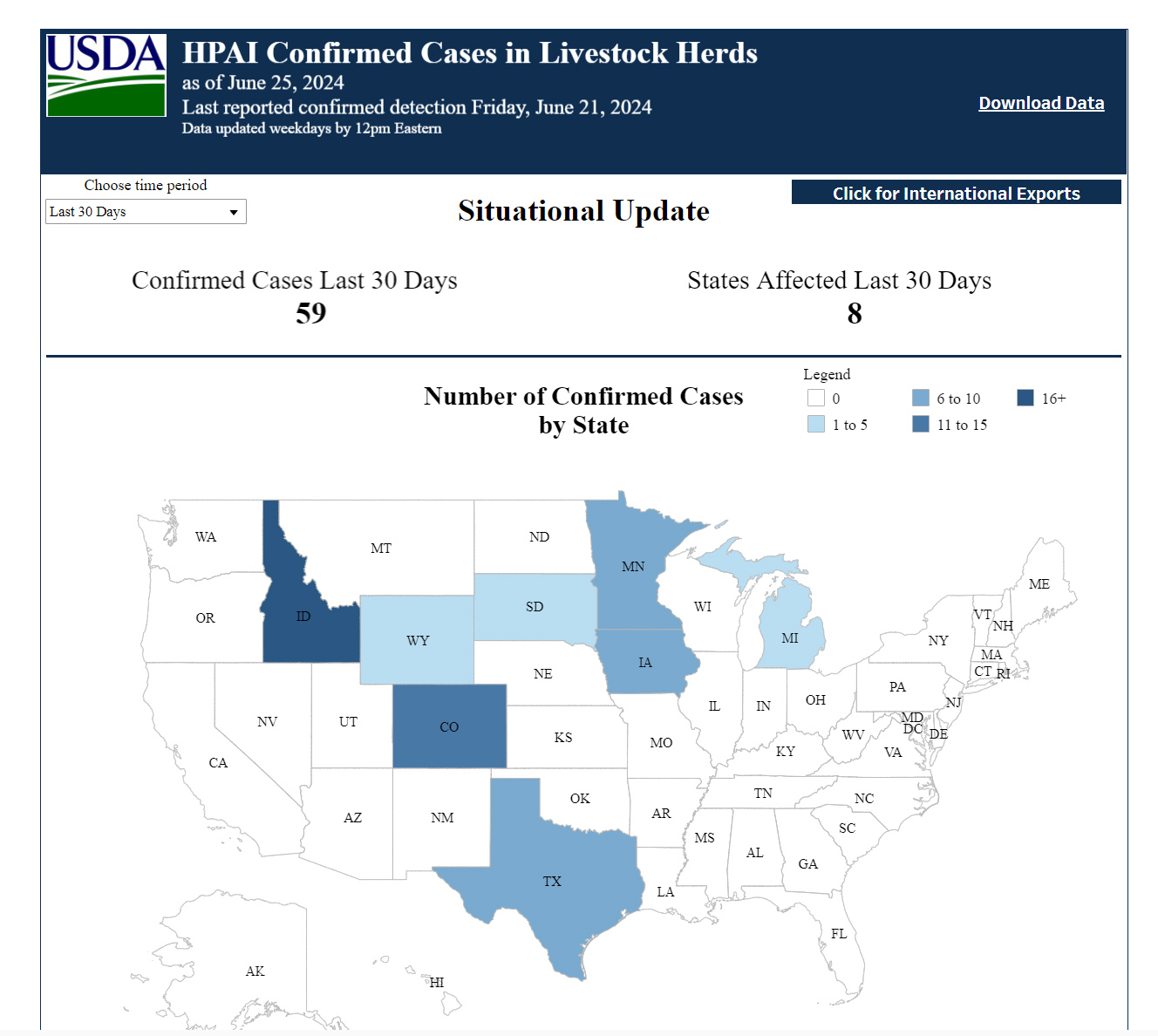
WASHINGTON – While 30-day detections of ‘bird flu’ in dairy have dropped to 59 herds in just 8 states (down from 116 in 12 states cumulatively), two epidemiologic studies published recently shed more light on dairy biosecurity risks.

Nationally, epidemiologic data were available for slightly more than half of the dairy herd premises affected by highly pathogenic avian influenza (HPAI), known as Bovine Influenza A / H5N1 in dairy cattle. These data reveal linkages reported June 8th in a National Brief, which reported “no genomic or epidemiologic evidence that wild birds are spreading H5N1 to cattle, but it cannot be ruled out.”

In fact, the key takeaway is that H5N1 spread in dairy cows — between states — is linked to cattle movements, not to independent wild bird introductions, with further local spread between dairy farms occurring in some states.

A similar epidemiologic investigation looked at Michigan data, alone. Published June 13, this report also showed that migratory waterfowl were not culprits in independently spreading H5N1 to cattle in Michigan.

Both Briefs note the disease spread between dairy cattle herds is likely multi-faceted with both direct and indirect transmission. Biosecurity remains the key to mitigation.

The National Brief reveals more than 20% of farms with HPAI detections in the data set had moved cattle into the herd within 30 days of clinical signs, and 60% of those farms continued to move cattle after the onset of clinical signs.

The linkages revealed by the Michigan report show it began via movement of infected cattle from a Texas herd, before H5N1 had been detected in that herd. It is then believed to have spread to other herds through cattle movement and other direct and indirect transmission.

Other linkages were discussed, such as visitors, shared vehicles and equipment and shared workers. (Fig. 4 below)

Employees working at more than one dairy farm or working at both dairy and poultry farms, and employees from one dairy or poultry farm sharing housing with employees working on a different dairy or poultry farm have also been noted in the epidemiologic linkages.

Operations sharing equipment and livestock trailers (62% of affected premises) have also been implicated in disease transmission as only 12% of those operations reported cleaning trailers between uses.

The National Brief reports more than 20% of the affected dairies have chickens or poultry present with nearly all of those farms observing sick or dead poultry.

In the national investigation, researchers report that more than 80% of affected farms have cats present, with over 50% of these farms observing sick or dead cats. However, the Brief provided no data — one way or the other — on whether the HPAI H5N1 genotype B3.13 was detected in cats on these premises.

The Michigan study, on the other hand, confirmed the HPAI H5N1 genotype B3.13 in wildlife and other somewhat domestic species on affected dairies.

Despite collecting a large number of samples from wild birds and animals on these dairies (such as cats, racoons, opossums, foxes, pigeons and starling), the number of individual animals and species detected was small. Whether they were affected by their access to cattle or are fomites in transmission to cattle is hard to say, particularly since the large sampling yielded only a small number of confirmed findings in comparison to the larger numbers of cows confirmed on these affected farms.

Both Briefs indicate risk from manure appears to be low, but more research is needed.

-30-

Pennsylvania announces voluntary bulk tank monitoring program as ‘bird flu’ spreads to Iowa, Minnesota

Status of H5N1 in dairy herds (cumulative with last date of detection noted) as of June 12, 2024

By Sherry Bunting, Farmshine, June 14, 2024

WASHINGTON – Bovine Influenza A / H5N1, known in birds and domestic poultry as highly pathogenic avian influenza (HPAI), has spread to dairy herds in three more states — Iowa, Minnesota, and Wyoming.

As part of emergency response plans, as many as 16 states, including Pennsylvania, are rolling out voluntary bulk tank monitoring programs as supported by USDA’s May 31 announcement for a federal pilot program.

As of June 12, 2024 (updated to June 21), there are no detections of H5N1 in dairy herds and no active HPAI in poultry flocks in Pennsylvania.

The USDA APHIS website confirmed 93 detections in dairy herds in 12 states since March 25, of which 47 have been confirmed in the past 30 days (as of June 12) in just 8 states (in order of most recent detection): Idaho, Minnesota, Iowa, Wyoming, Texas, Michigan, South Dakota, and Colorado. 

Of the other four states, Ohio and North Carolina are beyond 60 days since detection. Kansas and New Mexico reached 60 days on June 16.

During the monthly Center for Dairy Excellence call on June 12, Pennsylvania State Veterinarian Dr. Alex Hamberg said herd detections in other states have come primarily from “either sick cows or through epidemiologic tracing from positive farms.”

“It appears this is still a single bird to cow spillover that occurred in late 2023 and was not found until early 2024, so it spread out from there, and we’re now trying to catch up,” he said.

“Equipment, people, and cattle — that’s how this spreads. I can’t stress this strongly enough,” said Dr. Hamberg. Iowa is testing cattle close to positive poultry operations to provide data on species transfer risk.

Hamberg announced a Pennsylvania bulk tank monitoring program, supported by USDA. “This will be voluntary. The goal is to provide data of the status of the virus in Pennsylvania, or more likely the lack of it,” he said.

“We also need this data for quicker response time, and to protect nearby poultry farms. Even more important, is to provide a platform to engage concerned consumers and stakeholders to show we are addressing this proactively, that we are looking for it, that we have a plan, have it under control, and that pasteurized dairy products continue to be safe and wholesome,” he explained.

The status-enrollment period is three weeks, during which bulk tank and other samples will be taken. After three consecutive weeks of negative results, the dairy farm would achieve enrolled monitored herd status and continue weekly bulk tank samples thereafter to maintain that status.

An enrolled monitored herd with negative status would be able to move cattle without pre-movement testing, according to Dr. Hamberg.

“We are flying the plane while building it,” he said, noting early enrollment in the voluntary bulk tank testing program has already begun, so the testing can begin during the week ending June 21.

Those interested in enrolling can email RA-Ag_StateVet@pa.gov or call 717-307-3258. Or, to complete a web form for enrollment, go directly to this link 

The Center for Dairy Excellence has posted a downloadable enrollment form.

“We will then get back to you with an enrollment packet,” said Hamberg.

Hamberg said the May Exhibition Quarantine Order does not go into effect unless HPAI reaches dairies in Pennsylvania. However, effective now: Dairies within 3 kilometers (1.7 miles) of an HPAI-infected poultry flock cannot show dairy cows at fairs and shows. Currently, there are no active poultry infections in Pennsylvania.

Dr. Ernest Hovingh, director of the PADLS said testing is currently well under capacity and prepared to handle bulk tank monitoring.

For PADLS updates, visit http://padls.agriculture.pa.gov/InnerPages/HPAICattle.html

For details from the CDE call, to hear a recording, and see links to resources, visit https://www.centerfordairyexcellence.org/hpai-industry-call/

 -30-

USDA announces $824 million for H5N1, dairy herd monitoring pilot program launched as alternative to pre-movement testing

Status of H5N1 in dairy herds (cumulative with last date of detection noted) as of June 4, 2024

By Sherry Bunting, Farmshine, June 7, 2024

USDA announced new actions and $824 million in emergency funding from the Commodity Credit Corporation (CCC) to focus on highly pathogenic avian influenza (HPAI) known as Bovine Influenza A in dairy cattle, which is the H5N1 virus.

Call it what you will, these funds target HPAI in dairy cattle through data collection, surveillance, diagnostics, as well as vaccine research, and food safety studies to better understand and mitigate outbreak risk.

In the May 31 announcement, USDA also launched a new Voluntary H5N1 Dairy Herd Status Pilot Program to monitor the health of dairy herds and allow enrolled farms to move cows more quickly, while providing on-going testing that would expand USDA’s herd surveillance capabilities.

Dairy farms that enroll in the recently announced voluntary monitoring program would sign Herd Monitoring Plan Agreements to do weekly bulk tank testing, enabling them to move dairy cows across state lines without doing the individual pre-movement testing – as long as their weekly bulk tank tests show three consecutive weeks of negative results, and as long as they agree to continue the tests weekly going forward.

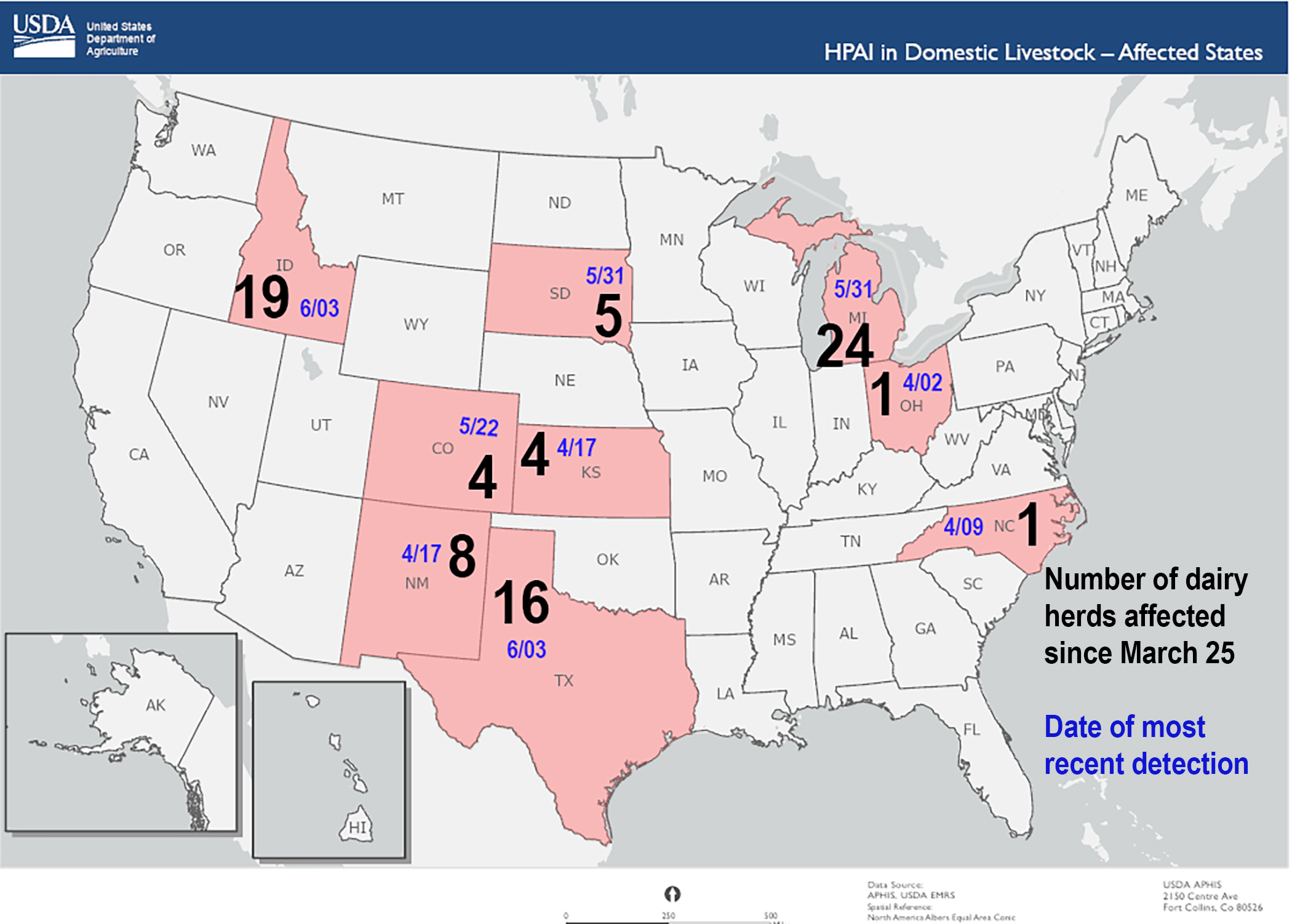
As of June 5, 2024, the APHIS website shows 82 total HPAI detections in dairy herds in 9 states since the first detection in Texas on March 25. 

Topping the list is Michigan with 24 detections, the most recent on May 31. Idaho saw a slew of new detections over the past 10 days with 19 total, the most recent on June 3. Texas has had 16 detections, the most recent on June 3; followed by South Dakota with 5 detections, the most recent May 31; and Colorado with 4, the most recent May 22.

States that have seen no new detections since April include New Mexico (8) and Kansas (4) with their last new detections on April 17; Ohio and North Carolina each only had one dairy herd detection on April 2 and April 9, respectively.

According to USDA, the new voluntary monitoring program will enable the Department to increase its monitoring and surveillance of herds that are currently not known to be infected.

APHIS is working with state animal health officials to identify states that want to participate in a pilot phase of the program. Producers from participating states can start enrolling this week (June 3), by contacting their State Veterinarian and signing a Herd Monitoring Plan Agreement.

USDA says high participation will help them establish state and/or regional “disease-free statuses” that could further ease compliance with the current Federal Order.

Those herds not enrolled in the pilot program would continue to follow the interstate testing and movement requirements published in the Federal Order. More specific guidance on the new voluntary monitoring program, including how to enroll and how to obtain and maintain a herd status, will be made available on the APHIS website in the future or by contacting state animal health officials.

USDA expects to see increased testing, yielding increased positive detections, through this voluntary monitoring, which they will analyze to learn how HPAI may spread between herds.

To-date, three people who worked with infected cows (two in Michigan and one in Texas) have tested positive with the H5N1 influenza. The symptoms were similar to pinkeye, and they recovered in a few days.

Meanwhile, the Federal Government has already put $200 million in additional funds into surveillance, testing, PPE, and vaccine development with indications they will ask Congress for more ‘bird flu’ funding.

Authorities still deem the risk to the general public as very low because pasteurization deactivates the virus, and no detections have been found in any retail meat samples. In addition, milk from sick cows is discarded and cattle at beef plants are inspected.

The $824 million will also support anticipated diagnostics, field response, other necessary surveillance and control, surveillance in wildlife (APHIS), work by the Agricultural Research Service’s (ARS) in developing vaccines for HPAI in cattle, turkeys, pigs, and goats, and food safety studies conducted by ARS and the Food Safety and Inspection Service (FSIS).

The Secretary is authorized to transfer funding from available resources including the CCC to address emergency outbreaks of animal and plant pests and diseases. The new $824 million is focused primarily on dairy cattle in addition to previously approved $1.3 billion in emergency funding to address nationwide HPAI detections in wild birds and commercial poultry operations.

More information is available at the designated APHIS page at https://www.aphis.usda.gov/livestock-poultry-disease/avian/avian-influenza/hpai-detections/livestock

States are moving to issue their own additional emergency response plans. In  Pennsylvania, for example, the Department of Agriculture recently issued its General Quarantine Order for the Exhibition of Dairy Cattle, which would apply to all dairy cows traveling to shows and exhibitions. This would ONLY take effect IF a detection is confirmed anywhere in the state. It would apply to all dairy cows traveling to shows and exhibitions. 

If that happens, the Order would require testing through the PADLS system within 7 days of the date of arrival at any animal exhibition grounds. Prior to arrival those dairy cows would have to be part of a biosecure assembled group for 30 days prior to testing with no new cattle added to that assembly.

Other quarantine measures are also detailed in the Pennsylvania Order, but again, would only be implemented IF HPAI is detected in dairy cattle in Pennsylvania.

The Center for Dairy Excellence will have its monthly conference call on the subject June 12 at 1:00 p.m. For information, go to the special events page at https://www.centerfordairyexcellence.org/about-the-center/upcoming-events/event/weekly-hpai-calls/

Feds announce new actions and $200 mil to ‘combat bird flu’

Michigan issues emergency order and prohibits cow shows; now has HPAI detections in more dairies (14) than any of the other nine states.

By Sherry Bunting, May 17, 2024

WASHINGTON — The Biden Administration announced new actions and $200 million in funding on May 13th to “combat highly pathogenic avian influenza (HPAI).” 

These announcements appear to be the start of incremental expansion of federal surveillance and control of dairy, livestock and food industries to a level not seen before, but apparently planned for over the past two decades.

USDA said it is separately taking steps to make funding available through the Emergency Livestock Assistance Program (ELAP) to compensate eligible producers with positive herds, who had milk production losses.

(Note after press: National Milk Producers Federation announced May 16 that it has been awarded funding by the USDA APHIS Disease Preparedness and Response Program supporting two NMPF and FARM projects advancing dairy cattle disease preparedness, but the press release did not provide a dollar amount.)  

H5N1 was first detected in lactating dairy cows on March 25, 2024 in the Texas Panhandle, where a syndrome was noticed in February marked primarily by reduced feed intake, reduced rumination, 20% drop in herd level milk production, colostrum-like changes in milk appearance, and dry tacky manure.

New detections have spread to 49 dairy herds in 9 states, as of May 15. They are: Michigan (14), Texas (13), New Mexico (8), Idaho (5), Kansas (4), Colorado (2), Ohio (1), North Carolina (1), and South Dakota (1).

Product testing continues to confirm that pasteurized retail milk and dairy products are safe, according to the CDC and FDA. In addition, as expected, meat tests show no trace of virus. The primary concern, especially for states with poultry and dairy farms, is the potential for spread from dairy to poultry. Cattle recover from the virus, poultry do not.

USDA will control approximately $98 million of the funding announced May 13th, and the Department of Health and Human Services (HHS) will oversee $101 million in funding from budgetary appropriations. The Administration says it plans to ask Congress for more.

According to HHS, “public and animal health experts and agencies have been preparing for avian influenza outbreak for 20 years.” The department said this funding “capitalizes on the influenza foundation that has been laid over the last two decades.”

Within the new funding structure, Centers for Disease Control (CDC) is monitoring the virus to detect changes that may increase human risk and releasing PPE from the “strategic stockpile.” The Food and Drug Administration (FDA) is working with USDA to sample-test retail milk and dairy products across the country and to evaluate vaccine platforms. The National Institutes of Health (NIH) is providing supportive science.

In short, the HHS funding will be used to expand testing capacity of the national laboratory system; scale up and expand surveillance among animal and human populations; release PPE for states to distribute to farmworkers and others; beef-up animal electronic identification systems; and streamline contact tracing, not just for cattle and poultry, but people too.

Funds are also being directed to make or procure over one million additional influenza tests, evaluate ‘candidate virus vaccines’ and develop new ones, continue testing retail milk and dairy product samples, evaluate vaccine platforms, and scale up community surveillance through testing of patients with respiratory symptoms in a variety of care environments as well as monitor public waste treatment systems for viral load.

On the USDA side, direct funding will be available to affected dairies (up to $28,000 per affected dairy) to prevent the spread in the following ways:

— Up to $2000 per month per affected premises for distribution of PPE, which includes agreeing to facilitate worker participation in surveillance studies and monitoring. Separate incentives up to $100 per employee will be paid for their participation.

— Up to $1500 per month per affected dairy to develop and implement ‘secure milk supply’ enhanced biosecurity plans that USDA APHIS has already developed as a framework for disease outbreak over the past 20 years.

— Up to $2000/month per affected premises to implement heat treatment of waste milk before disposal.

— Up to $10,000 per affected premises to compensate for veterinary treatment costs.

— Offset costs of shipping samples for testing (up to $50 per shipment and up to two shipments per affected premises per month). Funds will also be provided to farms that install inline milk testing and monitoring equipment.

Testing through National Animal Health Laboratory Network (NAHLN) Labs is already free of charge to both the unaffected dairies doing premovement testing and affected dairies testing samples from symptomatic and asymptomatic cows.

These announcements are detailed and available at the continually updated APHIS webpage devoted to HPAI in livestock: https://www.aphis.usda.gov/livestock-poultry-disease/avian/avian-influenza/hpai-detections/livestock

After a quiet 10 days in terms of new detections, APHIS added 10 new ones to the chart on the day before the Biden Administration announcements, backdated May 8-11, and three more on May 14, all in just four of the affected states: Michigan, Texas, Idaho and Colorado. No new states have emerged since April 25.

In addition to the April 25 Federal Order on pre-movement testing for interstate shipment of lactating dairy cows, reported previously in Farmshine, USDA is now urging states to take stronger action in restricting movement of dairy cattle within their state borders, especially states with positive HPAI herds.

The Michigan Department of Agriculture and Rural Development (MDARD) has already issued its “HPAI Risk Reduction Response Order” – designated as a “Determination of Extraordinary Emergency” Order.

Michigan now has the highest number of HPAI-detected dairies (14), surpassing Texas (13), where the first HPAI detections were reported. Michigan has also seen the highest number of poultry flock losses due to HPAI depopulations.

The Michigan Order mandates that, “All lactating dairy cattle, and those in the last two months of pregnancy, are prohibited from being exhibited until there are no new cases of HPAI in dairy cattle in the State of Michigan for at least 60 consecutive days.” In addition, no dairy cattle of any age may be exhibited from an infected premises until further notice.

The Michigan Order also requires ALL dairy and poultry farms – whether or not they are confirmed HPAI detections — to designate a biosecurity manager, designate secure area perimeters that limit points of access, establish cleaning and disinfection practices for individuals and vehicles that include deliveries of feed and supplies, and provide training for employees.

Logbooks must be kept maintaining records of all vehicles and individuals who have gotten out of those vehicles and crossed identified access points on Michigan dairies – and their reason for doing so — which must be made available to examiners upon request.

-30-

Thompson pushes effective, transformational farm bill. Whole Milk for Healthy Kids Act included!

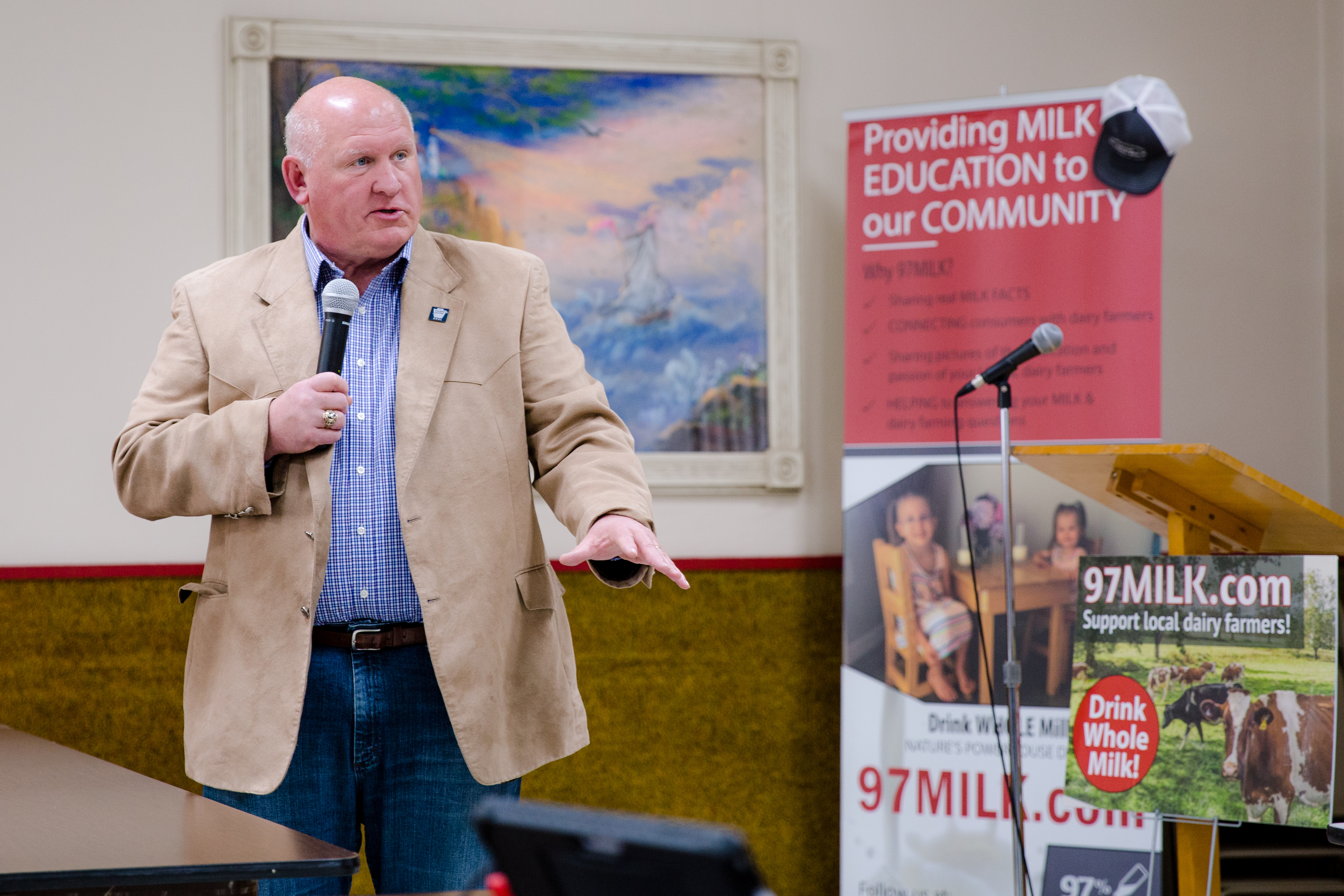
Representative GT Thompson of Pennsylvania once told a group of farmers gathered for a 97 Milk meeting that he has gone by a lot of titles and been called a lot of things over the years, and while it’s an honor to be the Chairman of the House Agriculture Committee, his favorite title is ‘Representative’ because, he said “that’s what we do. We are representing The People.” True to form, GT led the House 2023-24 farm bill process with representation in mind by making the bipartisan endeavor ‘tripartisan’ — going to great lengths to bring grassroots farmers into the process. One thing he heard repeatedly at the 85 listening sessions in 40 states was ‘bring whole milk choice back to schools,’ even though school meal rules fall under the childhood nutrition reauthorization led by the Education Committee, not the farm bill. But now he’s done that too. Bolstered by the overwhelmingly bipartisan 330 to 99 passage of H.R. 1147 on Dec. 13, 2023, he found a way to make Whole Milk for Healthy Kids part of his proposed farm bill that heads to House Ag Committee markup next week. He says he is intent on getting the whole milk legislation through the Senate blockade and “over the finish line.” File photo by Sherry Bunting

By Sherry Bunting, Farmshine, May 17, 2024

WASHINGTON – House Ag Committee Chairman Glenn ‘GT’ Thompson (R-Pa.) says the bipartisan farm bill has reached a milestone and holds the potential for being transformational.

The chairman’s mark, released ahead of committee markup set for May 23, demonstrates the listening that went on in his busy schedule traveling to 40 states and one territory for 85 listening sessions over the past two years.

“We are hopeful that the House Ag Committee markup of this chairman’s mark legislation helps feed the momentum to get this farm bill done,” said Chairman Thompson in a May 14 Farmshine phone interview.

There are important highlights here, including reforms to the Dietary Guidelines process for greater transparency and accountability with new checks and balances, as well as language to expand the reach, funding and impact of the dairy incentive and school meal programs by including full fat fluid milk, flavored and unflavored, as seen in H.R. 5099 and H.R. 1147 (Whole Milk for Healthy Kids Act).

“I was able to work with Dr. Virginia Foxx (chair of the House Education and Workforce Committee), and they will be providing a waiver after we mark this bill up, so we will be able to include Whole Milk for Healthy Kids in the farm bill,” Thompson shared.

He has previously stressed that, “This is about our kids and the outdated and harmful demonization of milkfat.”

“When we get to conference (with the Senate), it could be an issue, but Whole Milk for Healthy Kids passed the House by a 330 vote. I am intent on getting this provision over the finish line. 

“It may be the most important thing we do out of many things in this farm bill for dairy farmers,” he said.

Other dairy subtitle provisions

The dairy subtitle includes language to return the Class I ‘mover’ price to the ‘higher of’ calculation instead of the ‘average plus 74 cents’ that was implemented in May 2019.

“We obviously recognize that USDA has now gone through an extensive hearing process, and will honor what USDA comes up with, which will supersede what we’re doing,” Thompson reported. “But it was the Ag Committees in the Congress through the 2018 farm bill that eliminated the ‘higher of’ language, which has been followed by significant unanticipated losses.”

Language has also been included to mandate biennial cost of processing surveys. This also appears in the Senate farm bill.

Processors making products used in Federal Milk Marketing Order (FMMO) formulas would participate in processing cost surveys every two years. In addition to reporting costs for those products, the Dairy Pricing Opportunities Act language that is rolled into the farm bill proposal states that the cost and yield information for all products processed in the same facility be included. (Note: This would ensure accurate allocation of plant costs that apply just to the products that are actually used in the FMMO pricing formulas so that the costs to process other value-added products that are not included in FMMO pricing, but are made in the same plant, do not influence future ‘make allowance’ hearings.)

These cost surveys would be published for the purposes of informing the regulatory or administrative (hearing) process for the establishment of pricing rules (such as determining how to use that published information to set ‘make allowance’ levels that are embedded in FMMO pricing formulas).

The dairy subtitle also expands the Dairy Margin Coverage (DMC) tier one cap on annual milk production history from 5 million pounds to 6 million pounds, similar to the Senate bill.

It also includes language for updating DMC production history and provides a 25% discount in premium costs for any producer signing up for all five years of DMC coverage.

“That’s quite a savings,” Thompson observed.

IRA funds included without ‘climate sideboards’

In the Conservation Title, the chairman’s mark brings Inflation Reduction Act (IRA) conservation funds into the farm bill baseline without the ‘climate sideboards’ and arbitrary measures that ride along in the Senate version.

“All conservation programs, as long as they are locally-led and voluntary, contribute to climate and carbon sequestration. What the IRA legislation did is make it overly prescriptive with a lot of practices we know are successful not being eligible for these conservation dollars.

“We believe that the principles of locally-led and voluntary are a huge part of what has made conservation programs so successful. Agriculture sequesters 6.1 gigatons of carbon annually, over 10% more than we emit,” said Thompson.

Timelines matter

There are a couple reasons timelines matter in getting this farm bill done. The IRA funding is one of them.

“Number one is the American farmer is struggling right now. The chairman’s mark, as we prepared it in the House Committee, will be of great service to them as producers of food, and to struggling families as consumers of food, quite frankly,” said Thompson.

“The other reason timelines matter is these IRA dollars. As the Secretary of Agriculture continues to push those dollars forward, the original $19 billion – between what he already spent and what the CBO projects he will not be able to spend – that number is now down to $14 billion,” Thompson explained. “That’s opportunity lost for the future, unless and until we pass and reauthorize the farm bill and roll those dollars into its baseline.”

Thompson continued, explaining that, “Every dollar in IRA conservation funds spent between now and the passage of the farm bill is a dollar lost to the baseline for the future. One of the flaws of the IRA is these conservation dollars expire in 2031. Whatever we bring into the farm bill – into the baseline – is there for perpetuity. It will be there for the 2050 and 2055 farm bills. That’s smart, and it’s good for agriculture and great for conservation.”

The Senate proposal also brings IRA conservation funds into the farm bill baseline, but puts climate requirements on these funds, especially in regard to methane.

Tripartisan effort produces nutrition cost-savings, not cuts

“My chairman’s mark is built on solid tripartisan input from Republicans and Democrats and the hardworking people of American agriculture,” Thompson affirmed. “The Senate proposal is a partisan proposal. They did not bring Senate Republicans to the table.”

In his May 10 open letter, Chairman Thompson stated that his door is always open.

“There exists a few, loud armchair critics that want to divide the Committee and break the process. A farm bill has long been an example of consensus, where both sides must take a step off the soapbox and have tough conversations,” he wrote. “The 2024 farm bill was written for these precarious times and is reflective of the diverse constituency and narrow margins of the 118th Congress. Each title takes into consideration the varying opinions of all who produce as much as those who consume. It is not one-sided, it does not favor a fringe agenda, and it certainly does no harm to the programs and policies that feed, fuel, and clothe our nation.”

Case in point, the CBO has scored the House farm bill chairman’s mark to save $28 to $29 billion in the Nutrition Title.

“Some would have you believe we are cutting $28 to $29 billion from feeding struggling families, but we are not,” Thompson declared. “There are no cuts to individual SNAP benefits in this bill. My Democratic colleagues say we are cutting by that much, but the CBO score on my proposal reflects cost savings from increased efficiencies, reduced fraud, and things that better meet the needs of families struggling in poverty.”

Justifiably proud of the intense work he and his committee have done on the nutrition programs lightning rod that makes up more than 80% of the farm bill baseline, Thompson said his proposal actually “creates a fire wall so that a future right-leaning administration would not be able to arbitrarily cut benefits either. It exercises our Article I prerogative on how we do market basket analysis, keeps the variables and the cost of living. These things are significant factors.”

His proposal also expands access to a couple populations not eligible for SNAP in the past, including families with adult children in school up to age 21 (not 18). In the past, their part-time jobs affected family eligibility.

Putting the farm back in the farm bill

The Commodities and Crop Insurance Titles also engaged input from farmers, farm groups and industry. On reference prices, Thompson said the Senate bill picks three crops and puts in a 5% increase for base acreage.

“In our proposal, we’ve worked with the stakeholders. We’ve done the math, the financial and risk analysis on what is needed.”

This includes a more commodity-specific update to reference prices and granting the Secretary of Agriculture authority to expand base acres.

“We have been committed to putting the farmer back into the farm bill commodities title,” he said.

This scratches the surface of what is included in the farm bill chairman’s mark. An overview and title by title summary are available at https://agriculture.house.gov/farmbill/

When asked about what other dairy topics could come up during markup, Thompson said he wouldn’t be surprised to see other amendments in committee.

“There are some labeling issues that are not in our purview or jurisdiction but come under the Energy and Commerce Committee. We could get the ball rolling, but we would need them to get on board for that to go forward,” he said.

Reflecting on the milestone this week, Thompson answered our question about what he’s most proud of to this point.

“The fact that this farm bill was built using the input of American farmers, ranchers, and foresters, and it reflects what their priorities are and what their needs are, and the fact that as I look at the chairman’s mark and all 12 titles according to the goal placed early on, two years ago as I started my leadership of this process: 

“This will be not only a highly effective farm bill for our producers, processors and all of us who consume food, it will be transformational,” he said.

-30-

More questions answered on ‘bird flu’ and the new rules for interstate shipment of dairy cows

By Sherry Bunting, Farmshine, May 3, 2024

WASHINGTON – The recent USDA federal order requiring testing before transport of any lactating dairy cow from any state to any other state, effective April 29, took many in the industry by surprise after it appeared there was a lull in new cases of highly pathogenic avian influenza (HPAI) in dairy herds. Some wonder why, given the fact that cattle recover and the one and only human case in a dairy worker was a mild conjunctivitis that resolved on its own.

Stemming the spread is important, officials say, because of potential transmission from dairy cows to poultry, since it is lethal in poultry. Additionally, they explain that researchers need to understand what is an evolving in this novel situation blamed for a syndrome that began in Texas in February marked primarily by reduced feed intake, marked drop in herd level milk production, thick or colostrum-like milk in affected cows, and dry tacky manure.

On April 25, USDA Animal and Plant Health Inspection Service (APHIS) updated the number of herds with HPAI detections to 36 in 9 states: Texas (12), New Mexico (8), Michigan (6), Kansas (4), Idaho (2), Ohio (1), North Carolina (1), South Dakota (1), and Colorado (1).

The federal order includes mandatory reporting of HPAI, and the required pre-movement testing pertains only to lactating dairy cows. 

Pennsylvania State Veterinarian Alex Hamberg says the next few weeks will tell us if H5N1 is more widespread in dairies via the federal surveillance now underway through the pre-movement testing of all lactating dairy cows crossing borders from any state to any other state.

The only exception is for interstate shipment of cows directly from the farm to a federally-inspected slaughter plant. 

Any lactating cows shipped across state lines to an auction (even a slaughter-only auction) at a sale barn must have official identification, a certified veterinary inspection (CVI) and an HPAI-negative milk sample test from a qualified lab within 7 days of transport.

Lactating dairy cows can move to sale barns within the same state, with just owner/shipper statement and back tags. After the sale, they are permitted to go from the sale barn to an out of state federally-inspected slaughter plant if they proceed there directly without any stops to unload any commingled animals from that trailer to a non-slaughter premises.

Farmers and cattle dealers have questions about what is needed to ship cull dairy cows to livestock auctions, where packer buyers come from several states.

Hamberg gave examples.

“If you are going to a sale barn within your state, you don’t need the extra testing, but this would limit the sale to buyers within your state – unless that buyer takes the animal(s) directly from the auction, to slaughter,” he said. 

“Dairy cows (from Pennsylvania dairy farms) can go to a sale barn in Pennsylvania, and then go across state lines to a slaughter plant in New Jersey with just an owner-shipper statement and back tags — as long as they leave as a group, get on the trailer as a group, and don’t get off that trailer until they are at an FSIS inspected slaughter plant.” 

During the call Hamberg noted that Pennsylvania raised its testing age for non-lactating dairy cattle from 12 months to 18 months via nasal swab. These animals require testing only when coming into Pennsylvania from states that have had an HPAI detection.

Lactating dairy cow testing is only through milk samples. These milk samples must be collected by a licensed veterinarian or a designee at the farm, if the veterinarian is comfortable signing for that sample via a valid client-patient relationship (VCPR).

USDA APHIS will pay for the cost of all pre-movement and suspected illness testing for HPAI H5N1, but the costs of taking the samples and sending them to a qualified lab are not covered.

Both Hamberg and Jeff Warner, director of the Pennsylvania Department of Agriculture Bureau of Food Safety and Laboratory Services, emphasized the effectiveness of pasteurization to inactivate the virus in milk. Hamberg noted that PCR testing has a tendency to pick up dead strands of virus so that can be confusing, but pasteurized milk is safe.

Warner said there is no ban on raw milk sales from permitted farms at this time because there have been no HPAI detections in Pennsylvania; however, all permit holders have been notified by mail and email to be mindful of the signs of HPAI, and as all dairy farms are expected to do with any sick cow, withdraw that milk from sale.

“We have no cases in Pennsylvania to-date. We have done some testing, and so far, no detections. Let’s keep that trend going,” said Hamberg.

Producers asked: What happens when there is a positive test?

“If a test comes back positive,” said Dr. Ernest Hovingh, Penn State extension veterinarian and resident director of the Penn State Animal Diagnostic Laboratory System (PADLS), “we notify the national veterinary lab system and the state department of agriculture, and then Alex (the state vet) springs into action.”

“Our quarantine response says cattle can’t leave the farm without permission, but if cattle need to go to slaughter or somewhere else, we would do a risk assessment for permitting,” said Hamberg.

“We also would use 30-day increment permits for milk movement to processing, so you could move milk from this point to this processor, but while doing it, you follow these biosecurity rules like being the last stop on the truck and having additional cleaning for trucks leaving the farm, and having enhanced biosecurity plans in place,” he explained.

Hamberg has much experience with quarantine response for HPAI in Pennsylvania’s poultry industry, which this year surpassed dairy for the first time as the largest cash receipts ag sector in the Commonwealth. He noted the risk of spread from dairy cows to poultry is a big concern, since HPAI is deadly to poultry.

At the same time, he said, “we are seeing nationally a 20% drop in herd level milk production (in dairy herds where HPAI has been detected). That hurts. Dairy is tough enough, and losing 20% of your milk, that stinks, so we don’t want to compound that loss. We want to move milk in a safe way to get your milk to processing” — if HPAI is detected on a Pennsylvania dairy farm.

“This is not a big scary thing. We have steps we can do — even if we get a positive case,” said Hamberg.

Hovingh noted that having Pennsylvania dairy heifers raised out west is now a high-risk practice. “Your animals would be going west to a potentially infected state, and they would return at over (18 months of age) and be subject to state rules for testing” — if they come back from a state with HPAI detections.

USDA’s final rule on mandatory electronic identification was published in the May 1 Federal Register, Hamberg noted. In 180 days, the rule requires E-ID for all sexually intact cattle over 18 months of age, as well as bison and all cattle in exhibition (show) and rodeo.

With the HPAI pre-movement testing for interstate movement of lactating dairy cows and the mandatory E-ID at the same time, crossing state lines for shows and sales now requires additional documentation.

According to Dr. Hovingh, the state PADLS system promises a 3-day turnaround on pre-movement testing, which has to be done within 7 days of interstate transport. “But we think we can do same day turnaround, depending on volumes submitted.”

He urged producers planning herd dispersal sales to give a heads up as they prepare to “get their ducks in a row” so cattle can move on to buyers from other states on sale day.

Hovingh said now is the time for Pennsylvania dairy farmers to get their biosecurity plans in place, so they have that box checked in the event of an HPAI detection and quarantine in the state. Approved biosecurity plans would be required for those 30-day milk movement permits that are part of the state’s response.

It’s also important for farmers suspecting HPAI, to report it. “We’ll come out and test,” said Hamberg. “Our concern is that if cattle transmit it to poultry, those flocks are depopulated and control areas are set up. Following through is essential for both our dairy and poultry industries.”

Hovingh said species segregation is important on farms with both dairy cows and poultry, and biosecurity is essential for personnel tending both. The new twist is clean clothes and a shower go beyond clean boots to keep from exposing poultry to any raw milk on clothing, hands, etc.

-30-

Whole milk sales surge as Senate bill for schools remains blocked

By Sherry Bunting, Farmshine, May 10, 2024

EAST EARL, Pa. — Year-to-date Whole Milk sales for the first two months of 2024 are up a whopping 5% year-over-year (YOY) at 2.57 million pounds. Even when adjusted for Leap Year, the average daily increase is a substantial 3% surge, compared with the past several years of steady 1% increases YOY.

Flavored whole milk sales, year-to-date (YTD) are up a whopping18.6% YOY. Adjusted for Leap Year, the increase is a substantial 14%.

As the number one volume category representing more than one-third of the fluid milk category since 2020, the recent surge in whole milk sales has been enough to reverse the decline in total packaged fluid milk sales in four of the past five months.

USDA tallied 2023’s total packaged fluid milk sales down by a smaller margin of 1.5% for the year compared with previous years of decline; however, October and November sales were up 1% and 0.3% YOY for the first time since the months of the Covid shutdown when families ate at home. December’s total packaged fluid milk sales trailed year-earlier, but January and February 2024 have come back strong.

USDA estimates total fluid milk sales were up 2.4% and 2.5% YOY for January and February, respectively. When adjusted for Leap Year, the February increase is a respectable 0.8%. Similarly, when we adjust the YTD total of 7.325 million pounds in total fluid milk sales to reflect the extra consumption day in February, this is also 0.8% higher on an average daily basis vs. year ago.

This is good news! Let’s keep this upward trend MOOVING in fluid milk sales, led by surging whole milk sales — thanks to volunteers spreading the good word.

Now, if we could just get the United States Senate off the sidelines and into cosponsoring S. 1957 Whole Milk for Healthy Kids, we could really gain some ground — and America’s kids would be free to choose milk they love at school where they receive 2 meals a day, 5 days a week, 3/4 of the year. 

Thanks to the U.S. House of Representatives and the leadership of Congressman G.T. Thompson of Pennsylvania, the Whole Milk for Healthy Kids Act (H.R. 1147) passed the House on December 13, 2023 by an overwhelming bipartisan majority 330 to 99. If the U.S. Senate doesn’t have the opportunity to vote it through by December 31, 2024, we must start all over again in the next legislative session 2025-26!

Check out the map above to see how S. 1957 remains stalled for the past 60 days at just 17 sponsors from 13 states. 

Where do your state’s U.S. Senators stand? Ask them! And think about their answers when going to the polls this fall. Elections have consequences. 

Also consider asking your state senators and representatives to follow Tennessee’s lead and get a whole milk bill passed in your state and signed by your Governor. 

Pennsylvania and New York State tried to be first, but leaders are afraid of USDA’s monetary penalties. Maybe the No. 8 and No. 5 milk producing states can be second and third in state whole milk bill passage.

Just think what would happen if more states passed bills that ALLOWED choice and sought creative language to let their schools choose to let children choose. Tennessee will make it available in bulk dispensers separate from the school lunch line. Pennsylvania sought to do it as a wholly in-state proposition. 

Meanwhile, DMI sent a press release on April 29 touting their “checkoff-led pilot in Cincinnati schools that offered lactose-free chocolate milk increased milk consumption…” Specifically, the pilot schools experienced a 16% increase in milk consumption and a 7% higher meal participation, according to DMI. 

(Of course, this lactose-free pilot was also fat-free per the USDA rules for milk at school built on the Dietary Guidelines that the dairy checkoff agreed to “advance” when the memorandum of understanding was signed between the USDA, National Dairy Council, GENYOUth and the NFL in 2010).

Remember, this reporter warned several years ago that checkoff and dairy industry leaders would wait until lactose-free shelf-stable milk was firmly entrenched in schools before pushing whole milk choice through. Senate Ag Chairwoman Debbie Stabenow is the main blockade this time around. She hails from the No. 6 milk producing state of Michigan, where the foundation fairlife plant is located, collecting milk from large producers in Michigan, Indiana and Ohio.

Wonder what consumption looks like when whole milk is offered as a choice. That’s right! A Grassroots PA Dairy Advisory Committee / 97 Milk trial in a school in northwestern Pennsylvania saw consumption grow 52% and waste decline 95%.

So, drink up Senators! Talk to your constituent Moms this Mother’s Day. Sales data and surveys both show what Moms think, and most don’t even realize the federal ban, the bait-and-switch their kids face at school where milk and dairy are concerned.

Then pour a tall cold glass of delicious, nutritious whole milk. It may just strengthen those political spines!

-30-