Day 1: Milk and ministry are gifts that keep giving

12 days of Christmas… with a twist.

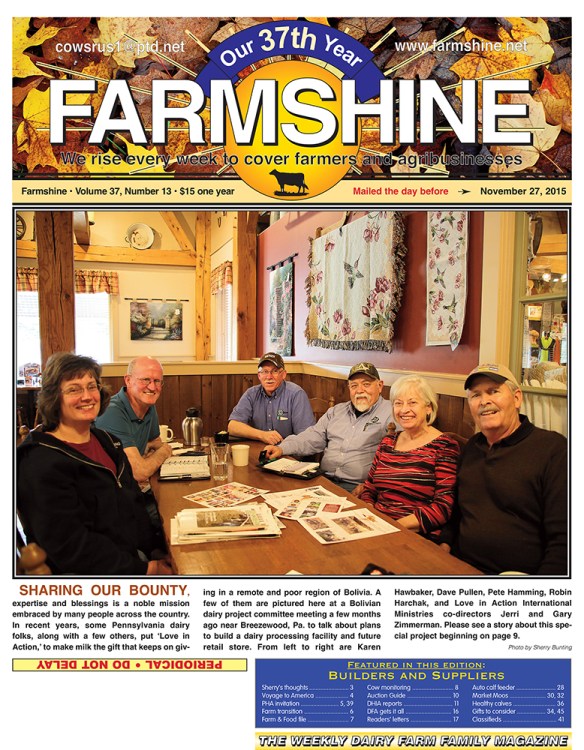
Day 1:  I met these folks last summer, learning of this mission to Bolivia that is rooted in Pennsylvania while visiting the Rice family of Prairieland Dairy in Nebraska last Spring. Two stories in two dairy publications resulted at long last. This one was the cover story in the Nov. 27, 2015 Farmshine and another will be found in the Dec. 14 edition of Progressive Dairyman. What these folks are doing is “love in action” for sure. Milk and ministry are gifts that keep giving. They’d love to share the project with others by speaking at dairy, church and other meetings where people have a passion for children, ministry… and milk!
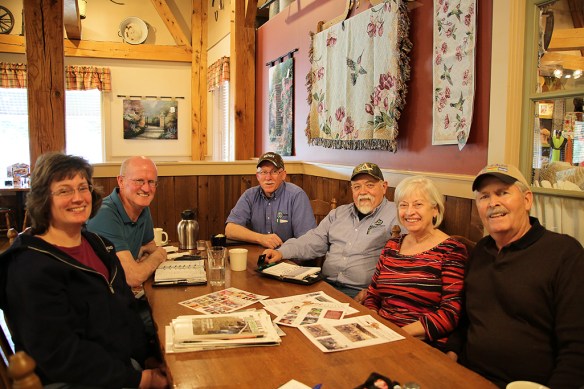
BoliviaDairyCommittee3262web

The Bolivian dairy project committee met a few months ago near Breezewood, Pa. to talk about plans to build a dairy processing facility and future retail store: (l-r) Karen Hawbaker, Dave Pullen, Pete Hamming, Robin Harchak, and Love in Action International Ministries co-directors Jerri and Gary Zimmerman. Photo by Sherry Bunting

By Sherry Bunting 

BREEZEWOOD, Pa. — The people we love and lose in our lifetimes leave indelible imprints on how we view the world and connect with others and where we put our time and energies.

For the dairy producers and industry folks involved with Andrea’s Home of Hope and Joy — an orphanage of individual family units in Bolivia — the ‘Love in Action’ is linked to folks from Pennsylvania wanting to see that these children have the gift that keeps giving — Milk, of course!

The first seeds to build a dairy farm at Andrea’s Home were planted by the late Rodney Hawbaker, a Franklin County, Pa. dairy farmer. In late 2007, Hawbaker and his industry friends — Dave Pullen, a dairy nutritionist, Pete Hamming with AI, and Robin Harchak, a milking equipment specialist — brought their idea to Gary and Jerri Zimmerman of Love In Action International Ministries (LIAIM).

By 2009, they were fundraising, designing and planning for a dairy future at Andrea’s Home.

Known as Warm Springs Farm (Finca Aguas de Manantial), the Bolivian dairy project is so named in honor of Hawbaker, who died in a tragic farm accident in 2011 at the family’s Warm Springs Dairy, Chambersburg, Pa.
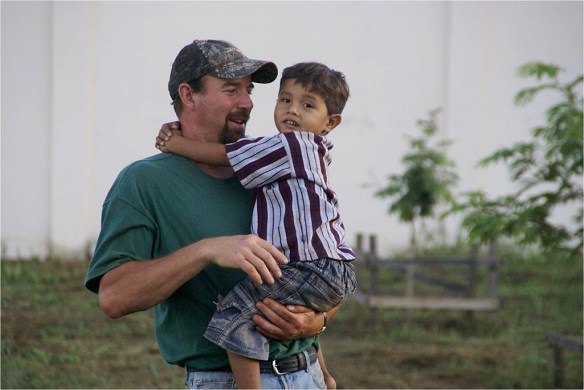
bolivia-rodneyweb

The late Rodney Hawbaker in 2010 with Wilson, one of the children at Andrea’s Home of Hope and Joy, where Hawbaker was instrumental in starting the Bolivian dairy project. It is now entering its next phase named in Hawbaker’s honor as Warm Spring Farm. Photo by Karen Hawbaker

“This was Rodney’s passion,” recalls his wife Karen during a planning meeting of the LIAIM dairy committee just off the Breezewood exit of the Pa. turnpike recently. Karen runs the 160-cow dairy in Franklin County and has taken Rodney’s place on the LIAIM board and dairy committee as well as volunteering with daughter Kirsten to help with the dairy’s progress at Andrea’s Home.

“Rodney was instrumental in helping design the barn as well as spearheading the initial fundraising through our church and a heifer sale in September of 2009,” Karen relates. “Rodney, Pete, Dave and Robin really dug into this, and we would travel to Bolivia every few months to work with the children and provide labor for the barn.”

Andrea’s Home, too, has its history — so-named for the Zimmermans’ youngest daughter Andrea, whom they had lost to cancer. Gary, a carpenter, and Jerri, a teacher, continued their mission work by fulfilling Andrea’s dream to focus the mission work on children. Thus, they set up Andrea’s Home of Hope and Joy through LIAIM. With the advent of the dairy project, the concept of Andrea’s Home has the potential to become a somewhat self-sustaining model for the future.

Divided into four 2-parent / 20 child units, Andrea’s Home currently serves 63 children with plans to build four more to serve 120 children. The dairy has become a key aspect of the planning to realize the goals of expanding Andrea’s Home and to build at a second location.

The heifers and bull for the dairy were delivered in 2014, with calvings ramping up through the summer and fall. Now plans are underway to build a processing facility and retail store.
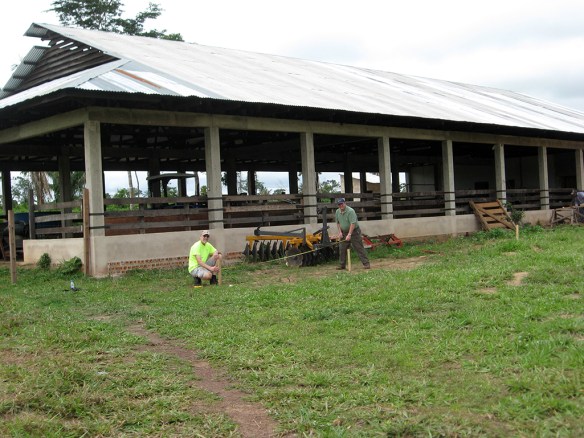
boliviaworking at barnweb

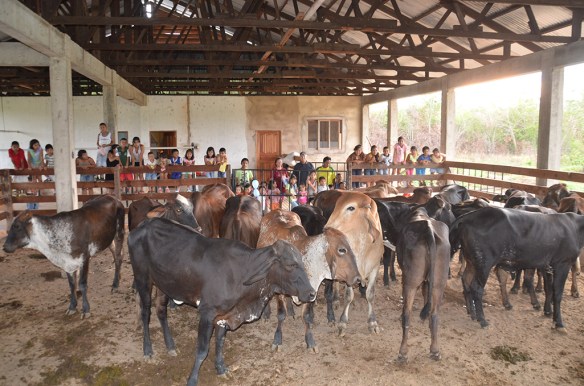
Cows are housed on a bedded pack and milked in eight stalls using a vacuum and bucket system — doable with limited funds and infrastructure. Photo by Karen Hawbaker


The cow-to- consumer dairy has a fourfold purpose: Nutrition for the children, education and skills for the children, a business plan that improves the community infrastructure while employing members of the community, and eventual retail dairy sales to support the growth and mission of Andrea’s Home.

The nearby town of Guayaramerin is home to over 40,000 people. The region is isolated and poor with many children orphaned by tough lives on the street. Being just a mile from the Brazilian border — where coffee houses proliferate — the hope is that Warm Spring Farm can provide a source of milk for the orphanage, the town and additional offshoot sales to tourists crossing the Brazilian border, through a coffee and smoothie house run by the home.

“We are looking for others in this compassionate dairy industry with the heart to come down to Bolivia and help with the processing end of what we are planning,” Gary Zimmerman explained. “We want to have the capability to produce milk and also yogurt, butter and ice cream with the whole project providing a source of revenue for the orphanage, as well as learning opportunities, work and nutrition for the orphans.”
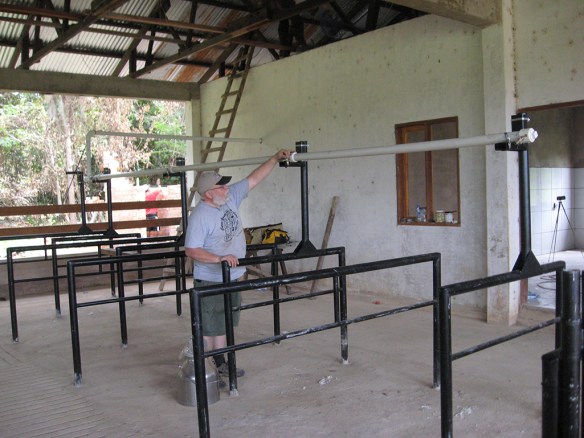
boliviamilking 'parlor'web

Robin Harchak works on the milking parlor. The challenge will be to convert to more advanced technologies as the dairy processing construction is planned. Photo by Karen Hawbaker

“We’re ministering to the needs of the orphans, and also trying to change the culture of what they return to for their futures and that of the region,” he added. For example, when the children age-out of the home, they will have skills and a purpose and something to turn to and a good base on which to continue their education.

Gifted 230 acres of land by the veterinarian who today serves as the farm’s director, they have stocked natural springs with fish and planted orchards and gardens, along with the work of getting the dairy up and running.

The processing and retailing idea began to form when five acres became available last year in the nearby town of Guayaramerin. With a location to build a retail store, the processing facility plan became the logical next step.

Since 2008, the group closest to the Warm Spring Farm project have worked to raise funds and to gather and send work crews to build the dairy. Now that the focus has shifted to processing and retail construction, they are reaching out in search of folks with this expertise. One such person is David Rice, a former Berks Countian who has two sons dairying near Kempton, Pa. and a son that is manager and partner in Prairieland Dairy out in Firth, Nebraska.
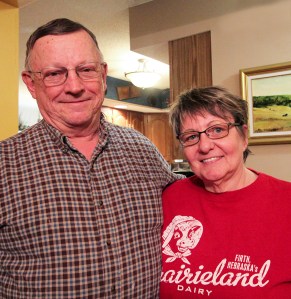
Dave&GloriaRice4263web

Dave and Gloria Rice of Firth, Nebraska (formerly from Berks County, Pa.)

Rice bring his building and dairy background, along with knowledge of the milk bottling and ice cream making at Prairieland, to his volunteer trips to Andrea’s Home.

He observes that, “Not only will the young people learn agriculture and industry skills, they will also learn the business side of operating the future store.”

“All the profits will go back to benefiting the home, and to build a second home with the idea that the business can be developed to cover 65 to 75 percent of the cost of the home’s operation, which now relies mostly on donations,” Zimmerman explains.

While the dairy’s initial cowherd consists of a native breed suited to the climate of life right on the Equator, the dairy committee plans to improve the herd with good milking genetics via AI crossbreeding.
boliviaour cows in the barnweb

As first calvings and milking are underway, the director brings milk to the home from his own primarily beef herd, and the children learn to make dairy products for their own use.
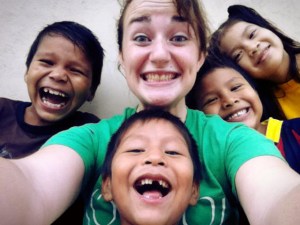
boliviagroupweb

Karen and Rodney Hawbaker’s daughter Kirsten with children at Andrea’s Home of Hope and Joy.

While there are no other dairies in this poor region of northeast Bolivia, the LIAIM dairy committee, and the folks at the home, have toured Brazilian dairies to look at cropping systems and forage ideas such as sugar cane and yucca root, which can be fed as green chop to boost dietary energy for more milk production.


The milking facility uses a vacuum and bucket system, which serves well its current purpose.

“Bolivia is the poorest South American country, and this LIAIM ministry seeks to reach the children here to provide the nutrition of milk while teaching business and industry skills that they can learn to be a part of,” Karen Hawbaker added. “We want to raise them and equip them for life. What better way to teach work habits and skills then through dairy.”

Hamming noted that the kids just love the dairy farm, the animals, seeing things grow, and are anxious to see the whole project move forward.
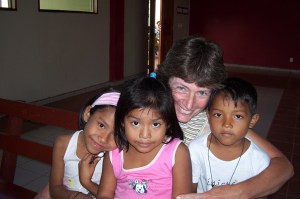
boliviakidsweb

Karen Hawbaker at Andrea’s Home…

Rodney’s good friend and area veterinarian Corey Meyers, DVM, wrote of Hawbaker after his passing: “Rod knew his purpose in life. He got it. Just days before the accident he had commented to friends in a Bible study in Ecclesiastes: ‘When I hear of a righteous man dying, I take it as a challenge or as a reminder that you never know when your time is up. Live each day as if it were your last.’”

Members of the LIAIM dairy committee are also interested in speaking at dairy meetings to raise awareness of the Bolivian dairy project at Andrea’s Home of Hope and Joy.

To learn more visit www.myloveinaction.com. Director Gary Zimmerman can be contacted at 719.440.6979 or email liaim@aol.com
Farmshine

-30-


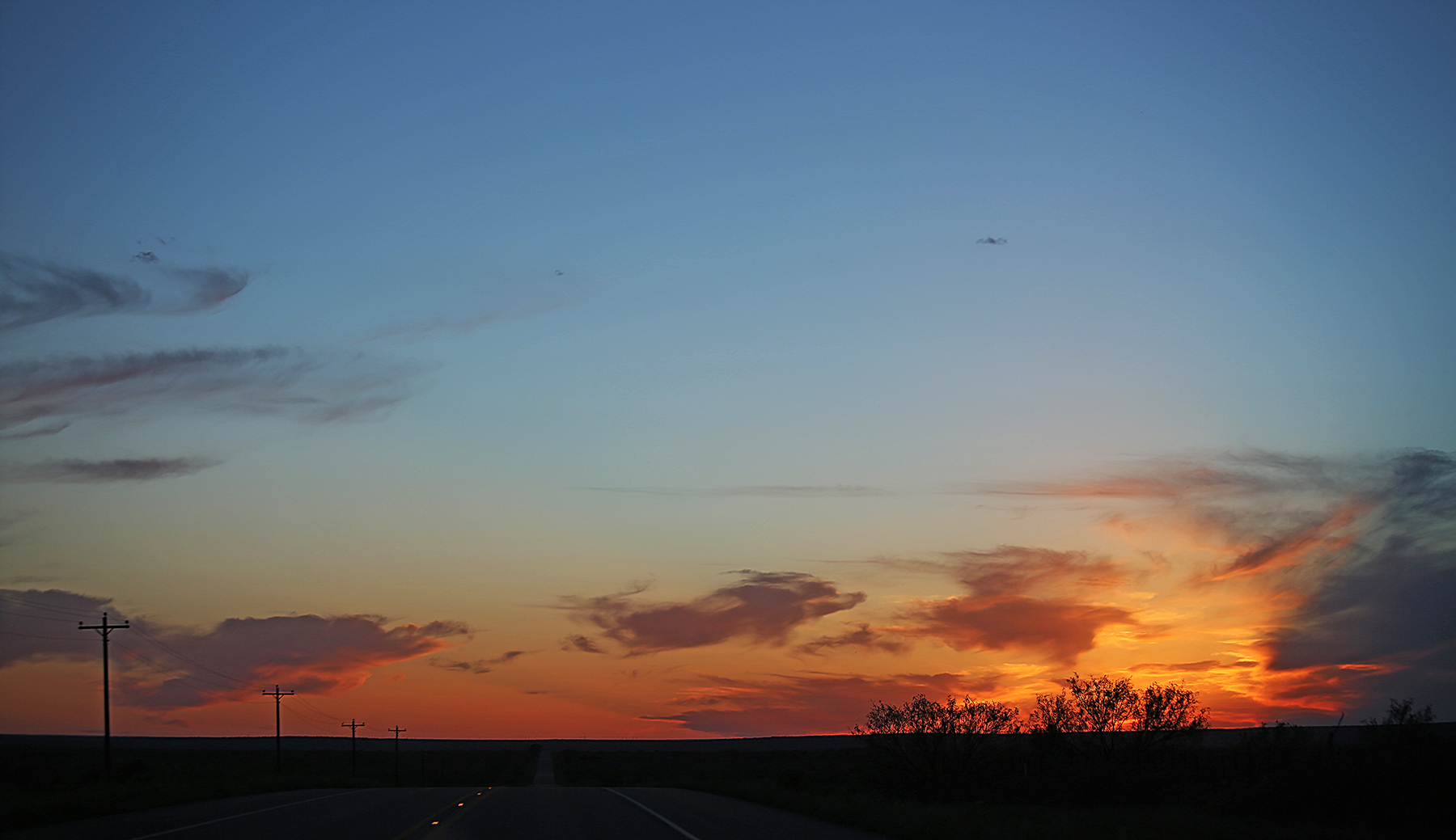
No sun to set

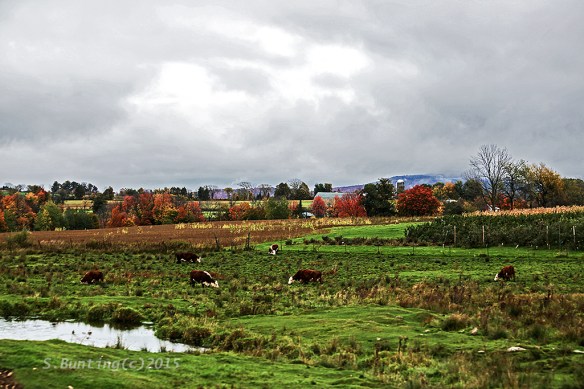
Cover9179xCows grazing send their melancholy chords
From on the hill
Into the valley
Where all is still.

Descending from the wooded ridge
Grey mist brushes mute the palette.

Sun, today, has not chanced to live
And will not, in its splendored fashion, die
As night and Moon creep ever higher
Into Day’s grey sky.

Subtle transformation is achieved
As Day melts into Night.
Without its rainbowed Joy, it is bereaved
Of having lived as Light.

∼Sherry Bunting(c)2015∼

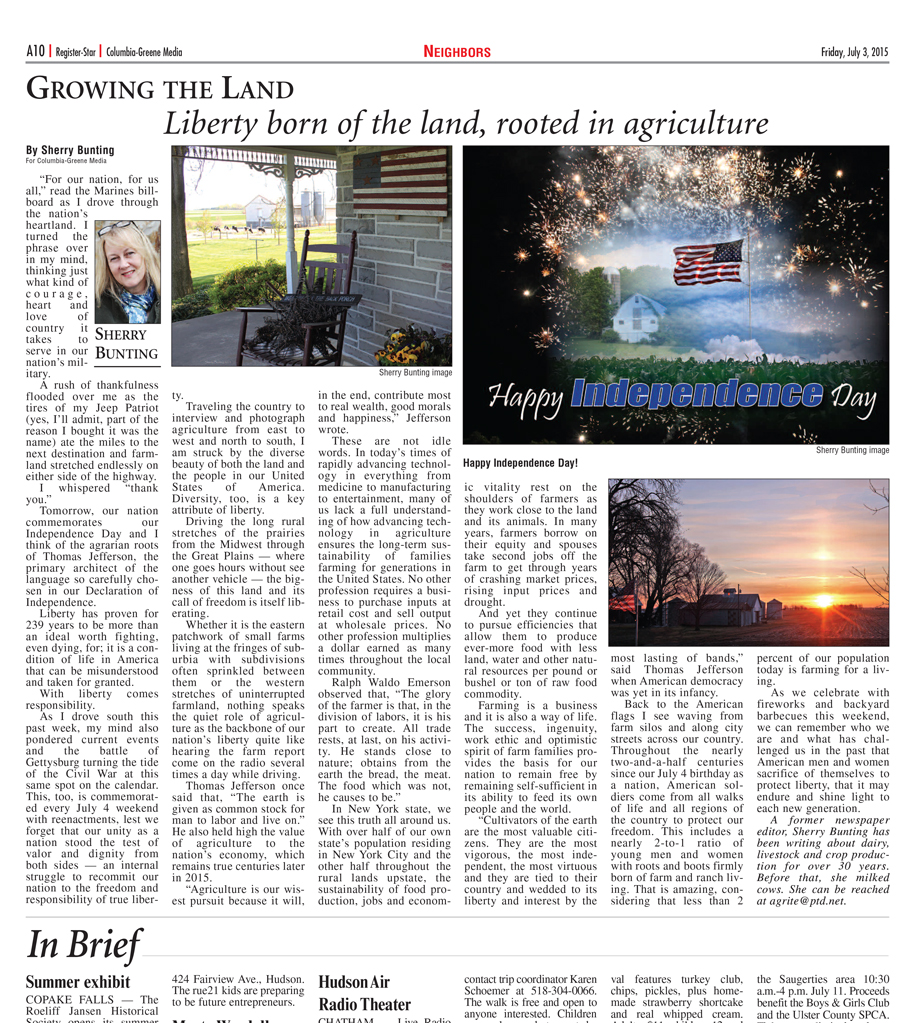
Liberty born of the land, rooted in agriculture

By Sherry Bunting (Growing the Land in July 3, 2015 Register-Star)

“For our nation, for us all,” read the Marines billboard as I drove through the nation’s heartland. I turned the phrase over in my mind, thinking just what kind of courage, heart, and love of country it takes to serve in our nation’s military.

A rush of thankfulness flooded over me as the tires of my Jeep Patriot (yes, I’ll admit, part west-texas-sunsetof the reason I bought it was the name) ate the miles to the next destination,
and farmland stretched endlessly on either side of the highway.

I whispered ‘thank you.’

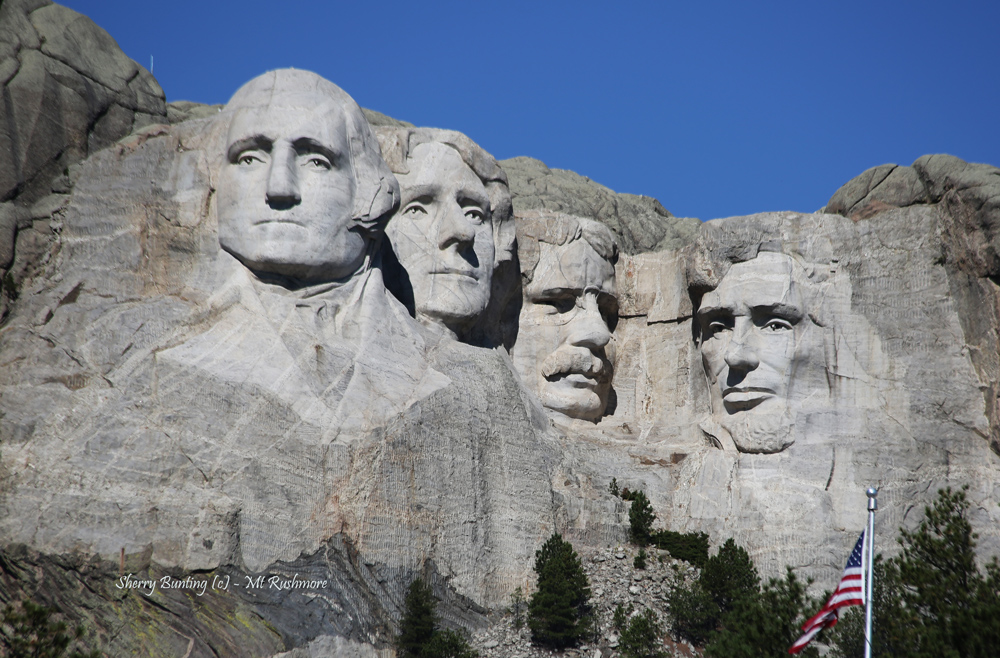
Tomorrow, our nation commemorates our Independence Day, and I think of the agraweb063A8492rian roots of Thomas Jefferson, the primary architect of the language so carefully chosen in our Declaration of Independence.

Liberty has proven for 239 years to be more than an ideal worth fighting — even dying — for, it is a condition of life in America that can be misunderstood and taken for granted.

With liberty, comes responsibility.WestPA7331

As I drove South this past week, my mind also pondered current events and the battle of Gettysburg turning the tide of the Civil War at this same spot on the calendar. This too is commemorated every July 4th weekend with re-enactments, lest we forget that our unity as a nation stood the test of valor and dignity from both sides — an internal struggle to recommit our nation to the freedom and responsibility of true liberty.063A1117xx

Traveling the country to interview and photograph agriculture from East to West and North to South, I am struck by the diverse beauty of both the land and the people in our United States of America. Diversity, too, is a key attribute of liberty.

Roundup7357x

Driving the long rural stretches of the prairies from the Midwest through the Great Plains — where one can go hours without see another vehicle — the bigness of this land and its call of freedom is, itself, liberating.

Whether it is the eastern patchwork of small farms living at the fringes of suburbia with subdivisions often sprinkled between them or the King6373western stretches of uninterrupted farmland — nothing speaks the quiet role of agriculture as the backbone of our nation’s liberty quite like hearing the farm report come on the radio several times a day while driving.

wElmFarms(IL)9570

Thomas Jefferson once said that, “The earth is given as common stock for man to labor and live on.” He also held high the value of agriculture to the nation’s economy, which remains true centuries later in 2015.

“Agriculture is our wisest pursuit because it will, in the end, contribute most to real wealth, good morals and happiness,” Jefferson wrote.

wfinke9634

These are not idle words. In today’s times of rapidly advancing technology in everything from medicine to manufacturing to entertainment, many of us lack a full understanding of how advancing technology in agriculture ensures the long term sustainability of families farming for generations in the U.S. No other profession requires a business to purchase inputs at retail cost and sell output at wholesale prices. No other profession multiplies a dollar earned as many times throughout the local community.

063A6426xxx

Ralph Waldo Emerson observed: “The glory of the farmer is that, in the division of labors, it is his part to create. All trade rests, at last, on his activity. He stands close to nature; obtains from the earth the bread, the meat. The food which was not, he causes to be.”

In the East, we see this truth all around us. With over half of the New York State population residing in New York City and the other half throughout the rural lands upstate, the sustainability of food production, jobs and economic vitality rest on the shoulders of farmers as they work close to the land and its animals. In many years, farmers borrow on their equity and spouses take second jobs off the farm to get through years of crashing market prices, rising input prices and drought.

chitt-alto-

And yet, they continue to pursue efficiencies that allow them to produce ever-more food with less land, water and other natural resources per pound or bushel or ton of raw food commodity.

ElmFarms9596xx

Farming is a business, and it is also a way of life. The success, ingenuity, work ethic and optimistic spirit of farm families provides the basis for our nation to remain free by remaining self-sufficient in its ability to feed its own people and the world.

“Cultivators of the earth are the most valuable citizens. They are the most vigorous, the most independent, the most virtuous and they are tied to their country and wedded to its liberty and interest by the most lasting of bands,” said Thomas Jefferson when American democracy was yet in its infancy.

flag5

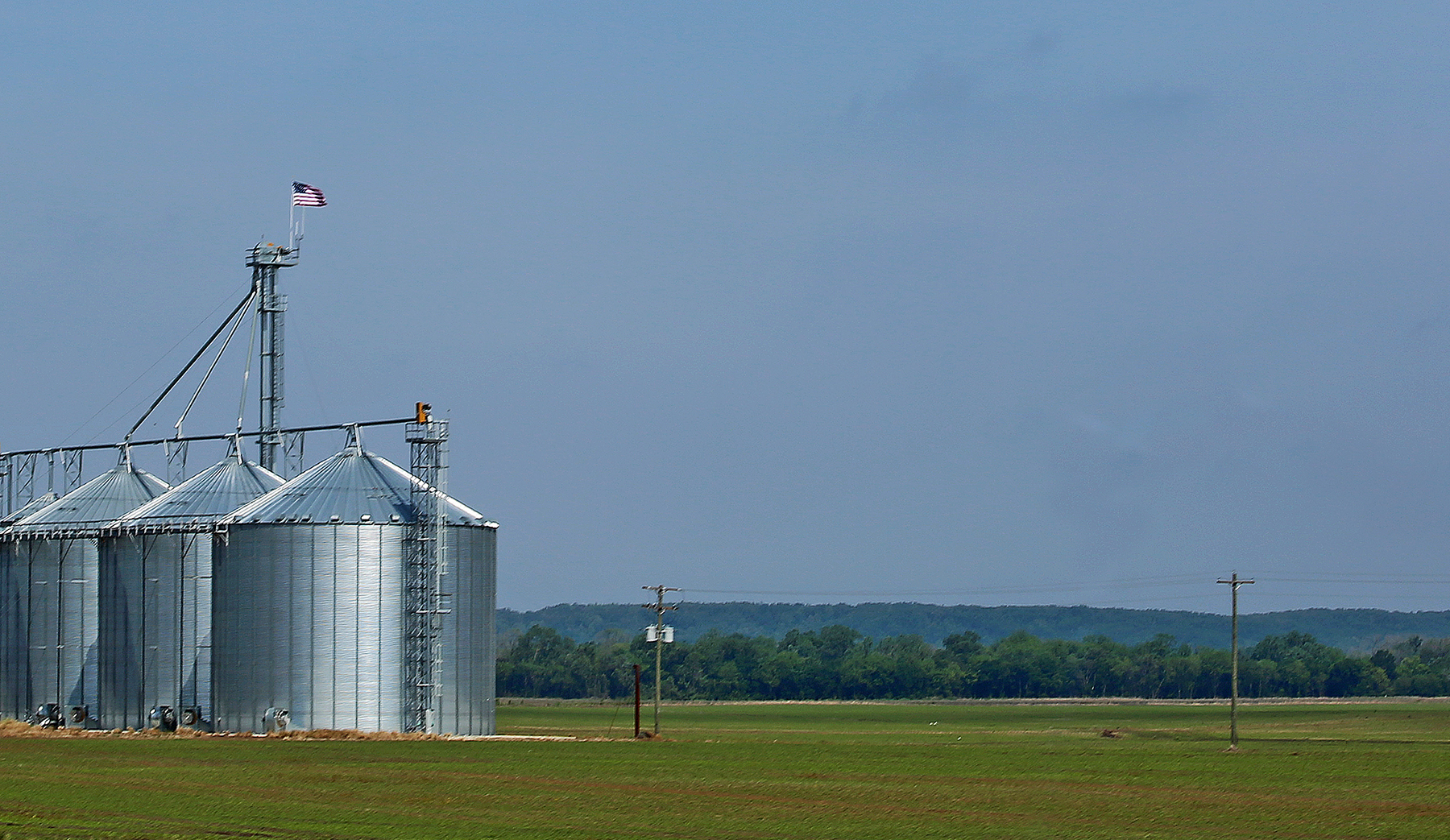
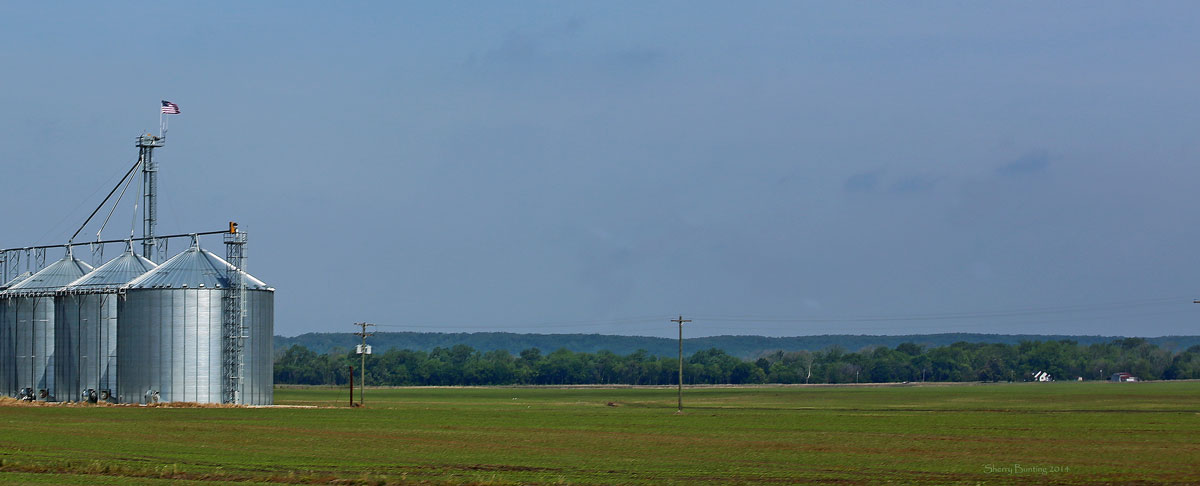
Back to the American flags I see waving from farm silos and along city streets across our country…  Throughout the nearly two-and-a-half centuries since our July 4th birthday as a nation, American soldiers come from all walks of life and all regions of the country to protect our freedom. This includes a nearly 2-to-1 ratio of young men and women with roots and boots firmly born of farm and ranch living. That is amazing, considering that less than two percent of our population today is farming for a living.

flage

As we celebrate with fireworks and backyard barbecues this weekend, we can remember who we are and what has challenged us in the past that American men and women sacrifice of themselves to protect liberty, that it may endure and shine light to each new generation.

A former newspaper editor, Sherry Bunting has been writing about dairy, livestock and crop production for over 30 years. Before that, she milked cows. She can be reached at agrite@ptd.net.

cropped-cropped-flag-4323.jpg
-30-

RegisterStar070315web

PHOTO CAPTION: Happy Independence Day! Sherry Bunting image.

The deeply rooted tree

Agmoos's avatarAg Moos

Like the deeply rooted tree unleashing new blossoms of spring, Dad loved life. In his later years before the illness, he was an avid runner, taking in everything from 5k’s to marathons—even running 5 miles to work and home each day… He called running his “natural high.”

tree1

When we were growing up, Dad was the worrier, so it was surprising the way he let go of his worry and accepted my work with large animals. First it was the Vet-Science project at my 4-H leader’s farm. Then it was the work caring for camp horses and keeping them fresh with regular riding through the winter. Then it was the day I came home to tell him I took a job feeding and milking cows on a local dairy farm.

Dad didn’t understand these things that interested me, but he trusted me to do them just the same. After all, he had fostered my love for the written word and all those…

View original post 781 more words

Flying the flag is like renewing a vow… to the next generation

In my travels, I see flags of all sizes and locations in rural towns and farmland. From the tops of silos to the hands of children…
flag19In 1776 a nation of immigrants sought it’s independence with the noblest of words written and deliberated in Philadelphia to be ultimately signed on July 4th. A year later on June 14, the stars and stripes design of our flag was approved by Congress.

But it was our 28th President Woodrow Wilson who reminded Americans at a turbulent time — in some ways like today — why our unity and freedom are so emblemed in Old Glory. flag4

President Wilson’s speech in proclaiming Flag Day on June 14, 1916 holds some words of wisdom for our times nearly one century hence:

My Fellow Countrymen:

Many circumstances have recently conspired to turn our thoughts to a critical examination of the conditions of our national life, of the influences which have seemed to threaten to divide us in interest and sympathy, of forces within and forces without that seemed likely to draw us away from the happy traditions of united purpose and action of which we have been so proud, It has therefore seemed to me fitting that I should call your attention to the approach of the anniversary of the day upon which the flag of the United States was adopted by the Congress as the emblem of the Union, and to suggest to you that it should this year and in the years to come be given special significance as a day of renewal and reminder, a day upon which we should direct our minds with a special desire of renewal to thoughts of the ideals and principles of which we have sought to make our great Government the embodiment.

I therefore suggest and request that throughout the nation and if possible in every community the fourteenth day of June be observed as FLAG DAY …flag12

 Let us on that day rededicate ourselves to the nation, “one and inseparable” from which every thought that is not worthy of our fathers’ first vows in independence, liberty, and right shall be excluded and in which we shall stand with united hearts, for an America which no man can corrupt, no influence draw away from its ideals, no force divide against itself,–a nation singly distinguished among all the nations of mankind for its clear, individual conception alike of its duties and its privileges, its obligations and its rights.

Yes, it’s near dusk on Flag Day 2015 as I write this, 99 years after President Wilson’s flag20observation and proclamation …. These words to give us pause to reflect and cause to see Old Glory flown high and to remember who we are and what has challenged us in the past that American men and women did sacrifice of themselves to protect that our freedom would endure and shine its light to each new generation.

flag5

flag6 flag8 flag18flag9  flag15flags3

June is dairy month… everywhere but New York City

By Sherry Bunting, June 5 Hudson Valley Register-Star

If milk is a never-ending tide, then the folks of New York City are the shore it rarely touches.

Not only has distribution into the city been a long term issue, which has improved, today’s urban consumers simply don’t know what they are missing. The dairy industry has, for too long, assumed people know what is in — and out — of real dairy milk!

Last week, local dairywomen Beth Chittenden and Sandy Ferry took more than a dozen “Dairy Vision” youth to NYC to “focus on food and learn about our consumer,” according to Chittenden. An outgrowth of the local 4-H program, youth do not need to be 4-H members to participate in this stepping-stone to the Junior Dairy Leaders program. They meet once a month to focus on different career paths.KIMG0362

“We are closest to the city and yet the lack of dairy in the stores was totaling amazing to these kids,” Chittenden reports. “No milk was found in most of the bodegas, just a couple containers of yogurt and not much cheese, generally, either. People in the city are not used to having milk, which goes back to the distribution issues that linger yet today.”

It’s not like you can walk into a Stewarts and buy milk, chocolate milk, strawberry milk and shakes or into a Mobil gas station to take home a gallon. NYC is different. The only place gallons can be found are in Whole Foods and a few other grocery stores, but not to the quantity and variety found locally and not at convenient corner shops.

The shelf space there is four feet by three feet and that’s it, Chittenden explains. Each kind of milk gets one space. The rest is all almond, silk and soy, and the huge word in the city is “organic.”

“A whole market is being missed here by not getting milk into the city. That is 55 percent of our state’s population,” Chittenden observes. The milk from her family’s Dutch Hollow Farm goes to make Cabot cheese as well as to New York City’s famous Beecher’s Handmade cheese on Broadway. It also goes to Hudson Valley Fresh, which delivers fresh milk to many of the city’s coffee houses.

Chittenden makes regular trips to NYC to talk with vendors and consumers. “We need to change the attitudes in NYC because people don’t know the nine essential nutrients real dairy milk contains. They don’t know that all dairy milk is higher in protein than the competing ‘non-milks.’ So Hudson Valley Fresh has started labeling the grams of protein on the front of the bottles and is using the 9-essential-nutrients post card in the stores,” she explains.Ray Shenk 7.14.06

The Dairy Vision students were also surprised to learn that consumers believe conventional dairy milk to be “full of chemicals.” As we kick off June Dairy Month, one of the biggest messages Chittenden and others carry forward is how all dairy milk — organic and conventional — is tested at the farm, on the truck, at the plant, in the bottle to be free of antibiotics or any other chemicals for that matter.

She notes that many consumers believe almond milk to be a healthier choice, but don’t realize dairy milk has more protein, more nutrients, less fat and no added sugar. And, it supports jobs and economic development right here in New York State. Not so with almond and other non-dairy juices referred to as ‘milk.’

“We told the kids ‘this is your future, and it is one that we need to change,’” said Chittenden. “We can’t assume consumers know. The whole concept of milk is different in NYC than it is in the rest of NYS.”

Another aspect of milk’s future is to find a pathway to the poor. While agriculture trade groups have worked to get fruits and vegetables in the Food Banks, dairy milk is the most requested product that is not available at Food Banks. The Great American Milk Drive is an effort to change that, but more needs to be done to get the world’s most healthful and nutrient-packed beverage into the hands of families who depend on Food Banks.

Chittenden says the Dutch Hollow Day at the Dairy on August 1 will feature a Great American Milk Drive display with opportunities to help.

Juxtaposed with the lack of milk availability in the city is the current flood of milk in New York State. Some of the state’s dairy farms have been asked by their handlers to randomly dump milk over the past year due to an excess supply made worse by distribution issues in getting it to populations like NYC. Farms have been cut off with no market in Central New York as well as to the south in Pennsylvania. In some cases, dairy farming on land stewarded by families for generations is in jeopardy. Some have sold their cows, others take it day-to-day wondering if they will have a market for the milk.

Dairies are not widget factories. Cows are like family. They must be fed and cared for whether their milk has a home or not. They can’t be turned off and on like a spigot.

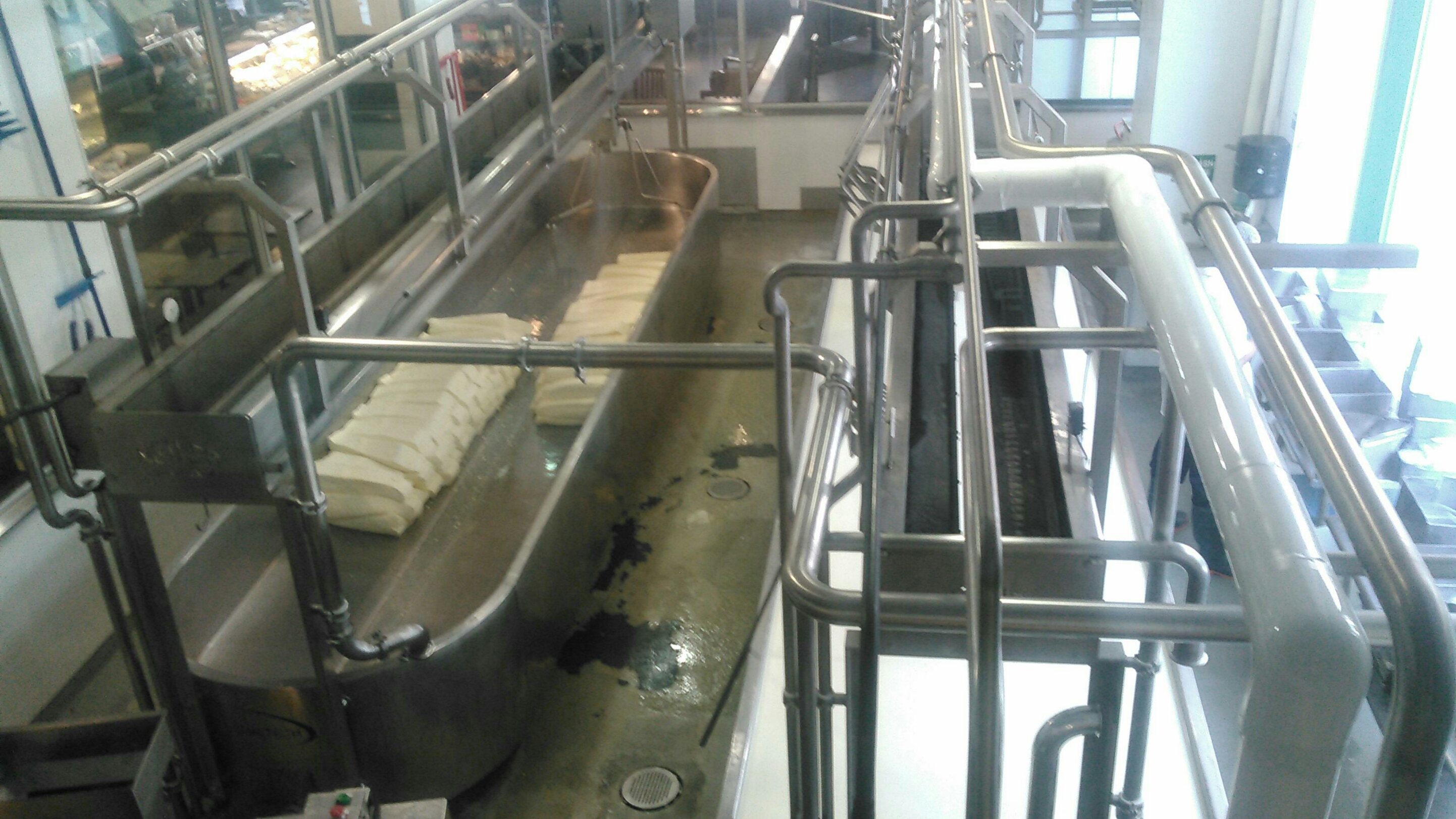
Included in the Dairy Vision students’ NYC trip was a visit to Beechers Handmade cheese, where they observed cheesemaking behind the glass. This has been a great story of connection between the Hudson Valley and NYC. Milk comes in daily by the tanker load right to 28th and Broadway.KIMG0359 KIMG0360

If Beechers can do it, why can’t it be done elsewhere in the city? Why is milk not in the stores? Changing this dynamic begins with telling real dairy milk’s story every place possible. Not only does the health and nutrition of future generations of consumers benefit, but the generations of future farmers and the New York State economy depend on this as well.

New York State is the third largest state for milk production in the country. This June Dairy Month, take time to learn and tell the story of milk. You would be surprised how many people have forgotten that the ThinkDrink-MilkAlternative (1)simplest, least fooled-around-with beverage on the planet also delivers nutrition and flavor that can’t be beat and is an integral ingredient in many of the foods, jobs, and economics that sustain us here.
A former newspaper editor, Sherry Bunting has been writing about dairy, livestock and crop production for over 30 years. Before that, she milked cows. She can be reached at agrite@ptd.net.

-30-

PHOTO CAPTION: June is Dairy Month and local dairywoman Beth Chittenden led a Dairy Vision students’ trip to New York City last week, where students learned how half of the state’s population has a different concept and availability of real dairy milk compared with the other half in New York State where jobs, farms, rural economies and land sustainability rely on dairy. Sherry Bunting photo.

A remembrance

flag0373It’s a roar not soon forgotten when the field of 33 drivers rounds the curve to the paddock straightaway and the pace car exits the track. The thrill of the Indy500 is unmatched in motorsports, and the refreshing, replenishing, revered beverage associated with this great race is MILK. On Sunday, two Indiana dairy farmers (selected each year as a rookie and a done-it-before) not only provided that winner’s refreshment, they greeted race goers. People love talking to the actual dairy farmers who personally deliver the “coolest trophy in sports.”

Having the opportunity to cover the Indy500 and the celebratory bottle of milk three years ago, the roar of the cars exceeding 200 mph for 250 laps around a 2.5-mile oval, and its famous ending with the celebratory milk, were preceded by a far more important and time-honored remembrance of our fallen countrymen who have paid the supreme sacrifice so we may be free.

What is freedom in today’s fast-paced ever-changing world?

According to Merriam Webster’s dictionary, Freedom is “the power or right to act, speak, or think as one wants without hindrance or restraint; absence of subjection to foreign domination or despotic government; the state of not being imprisoned or enslaved.”

Today (Monday, May 25) we honor with solemn gratitude the memory of those who bought our freedom at a dear price — those who gave all to protect it. Our freedom as a
eagle flagdemocracy is to be cherished, revered, protected and practiced with integrity. We owe a debt of gratitude every day of the year.

In the 1982 words of President Ronald Reagan: “Our pledge and our prayer this day are those of free men and free women who know that all we hold dear must constantly be built up, fostered, revered and guarded vigilantly from those in every age who seek its destruction. We know, as have our Nation’s defenders down through the years, that there can never be peace without its essential elements of liberty, justice and independence. Those true and only building blocks of peace were the lone and lasting cause and hope and prayer that lighted the way of those whom we honor and remember this Memorial Day. To keep faith with our hallowed dead, let us be sure, and very sure, today and every day of our lives, that we keep their cause, their hope, their prayer, forever our country’s own.”

To read more click here10847751_1012858118726604_3161744334898761459_o

Breaking winter’s stillness. Better late than never.


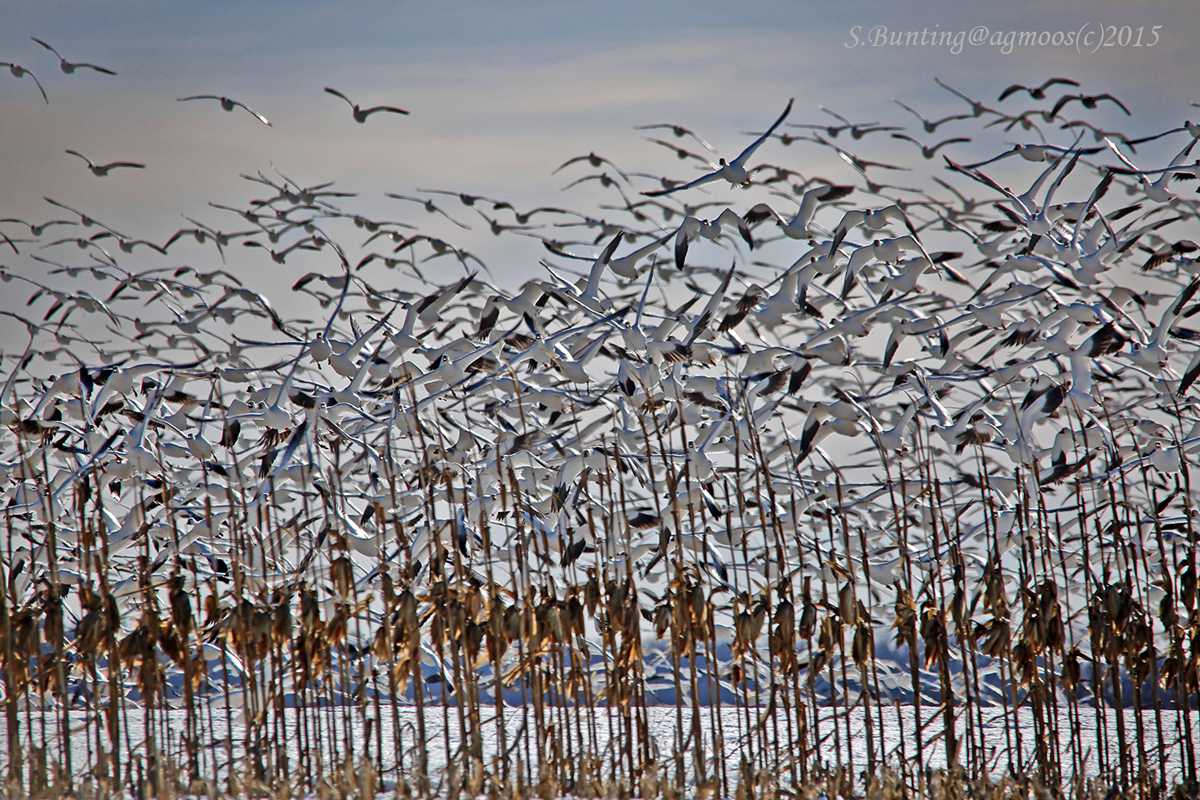
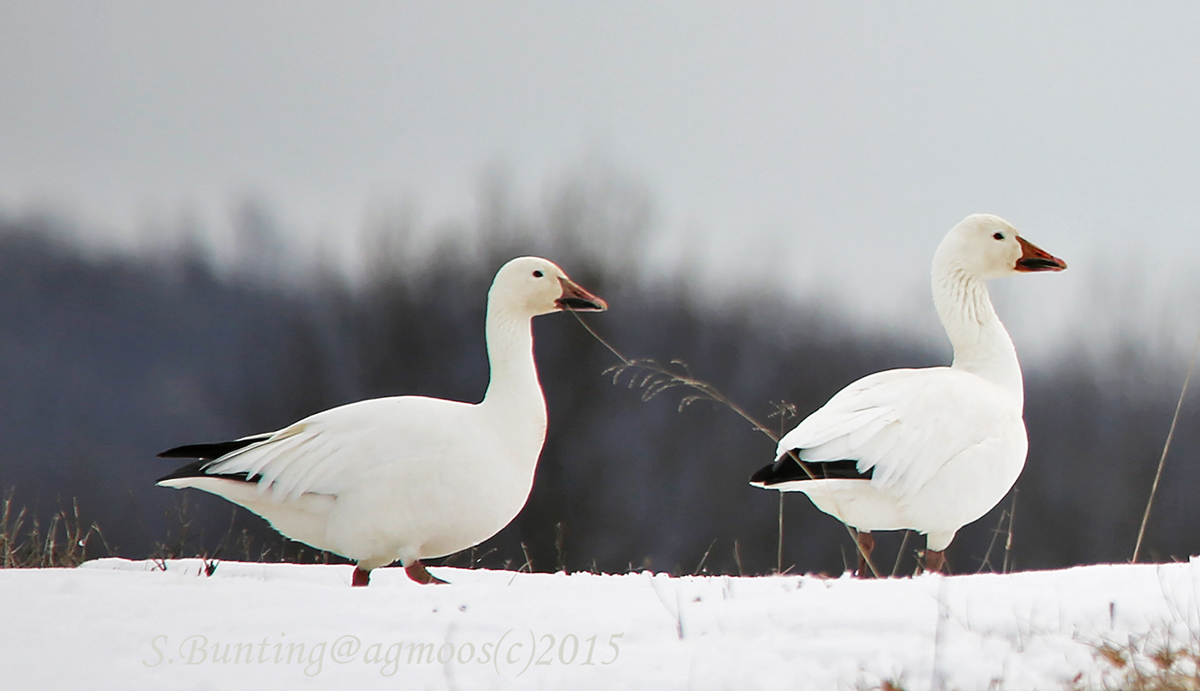
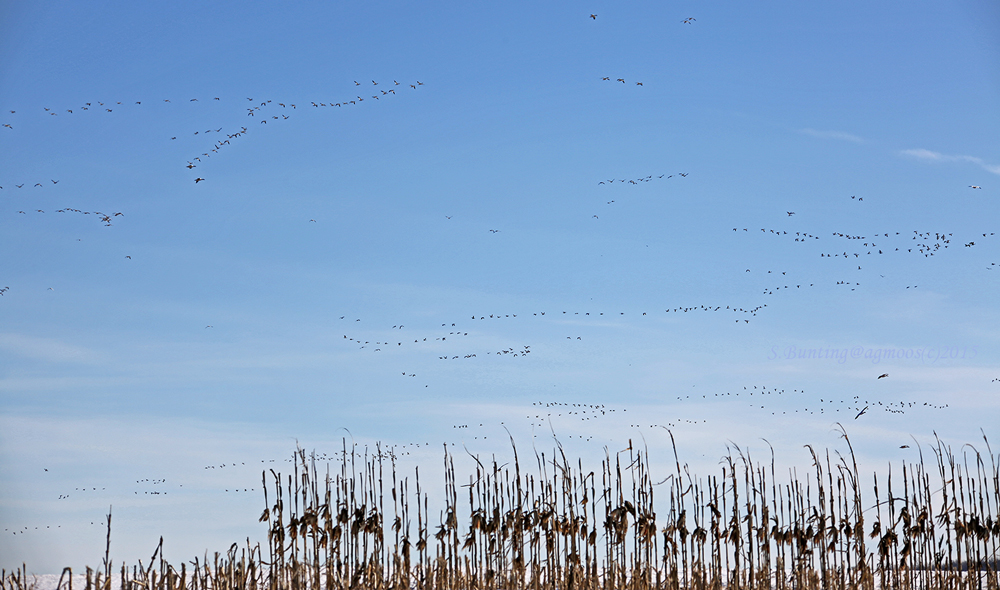
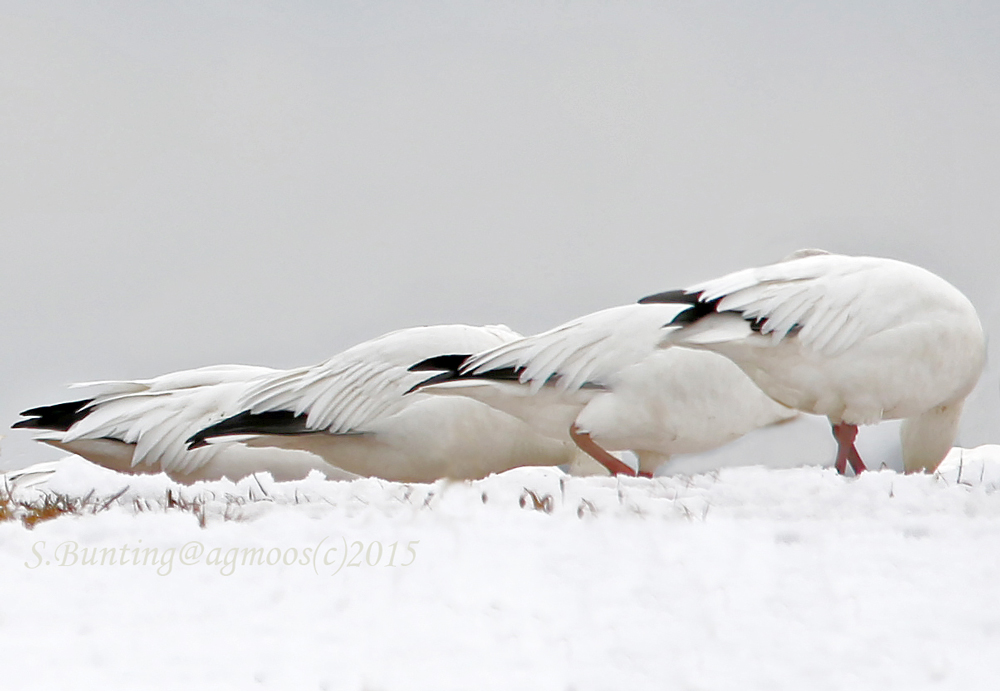
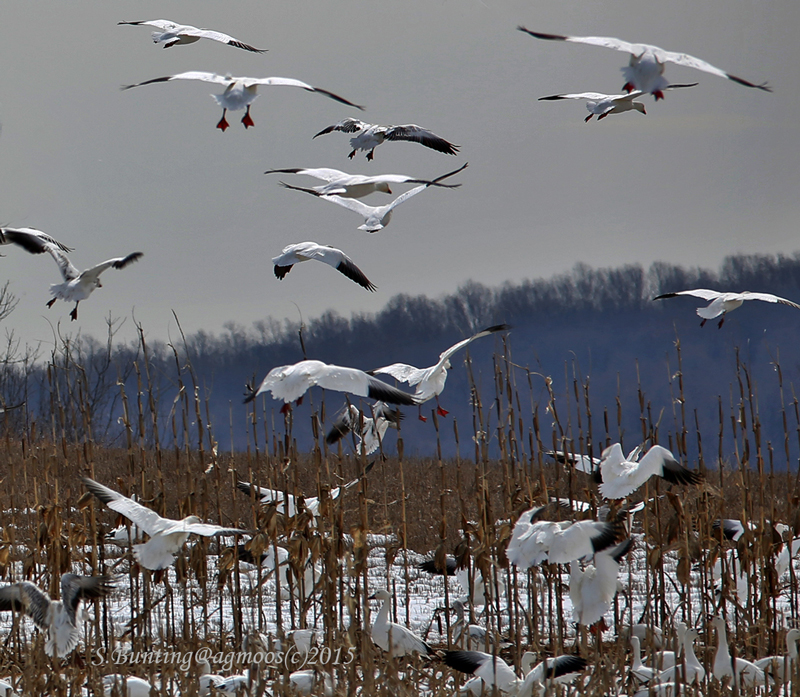
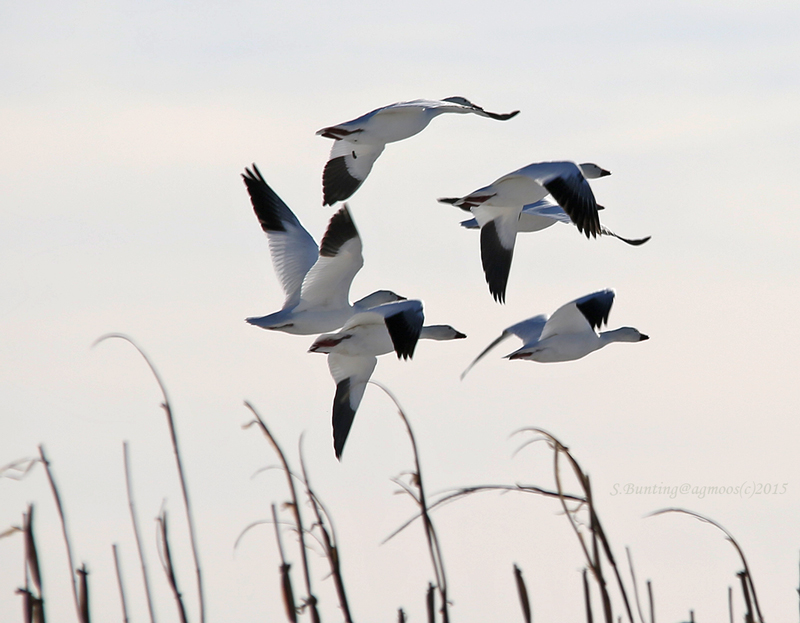
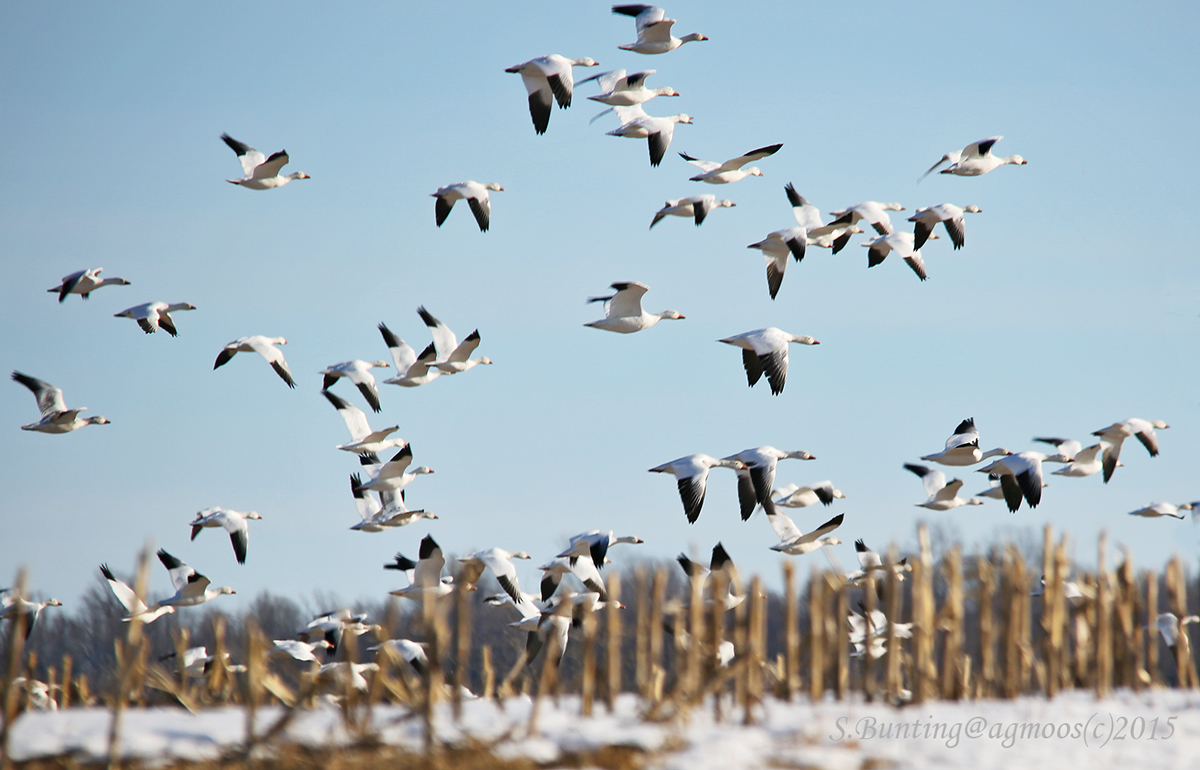
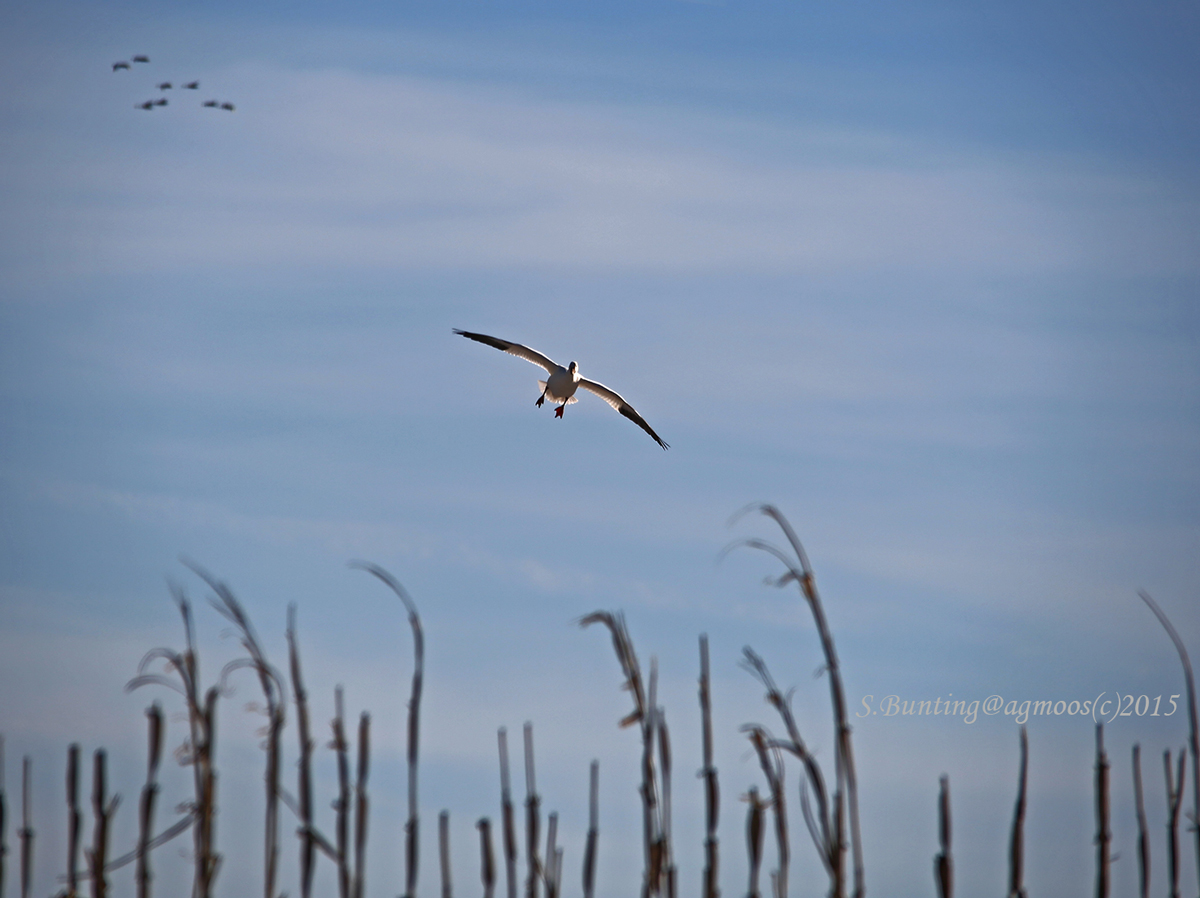
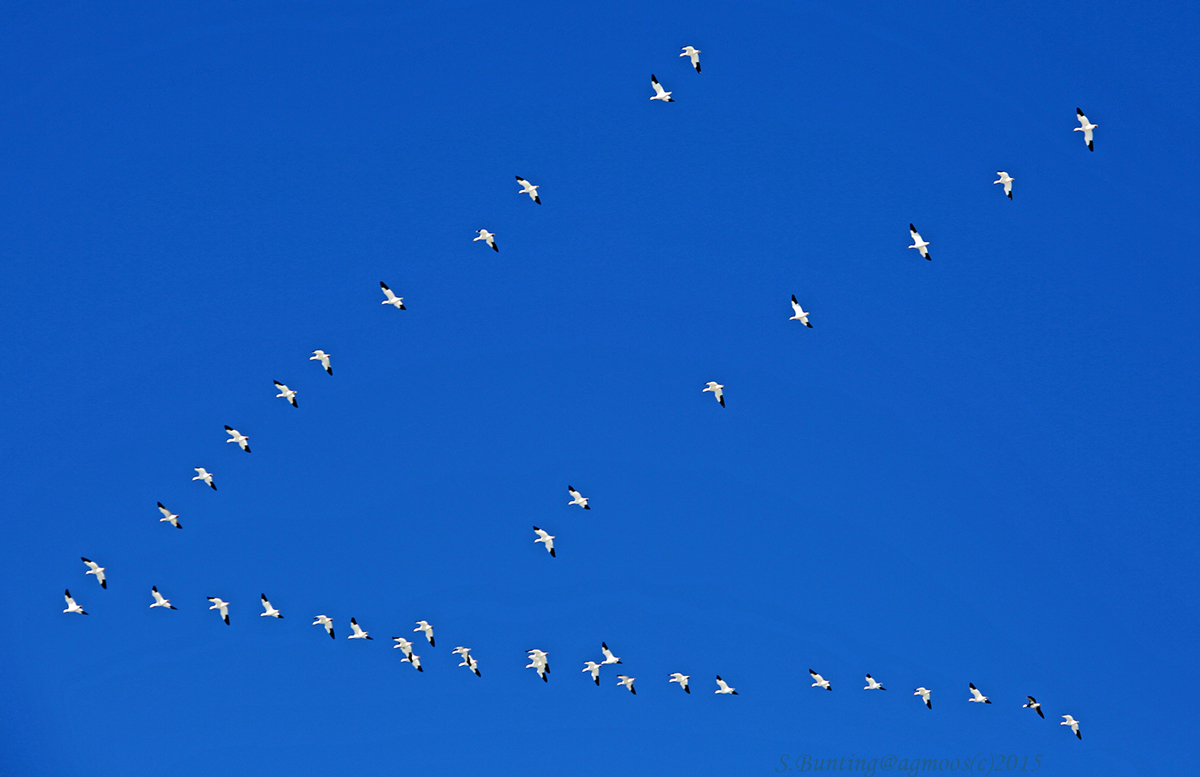
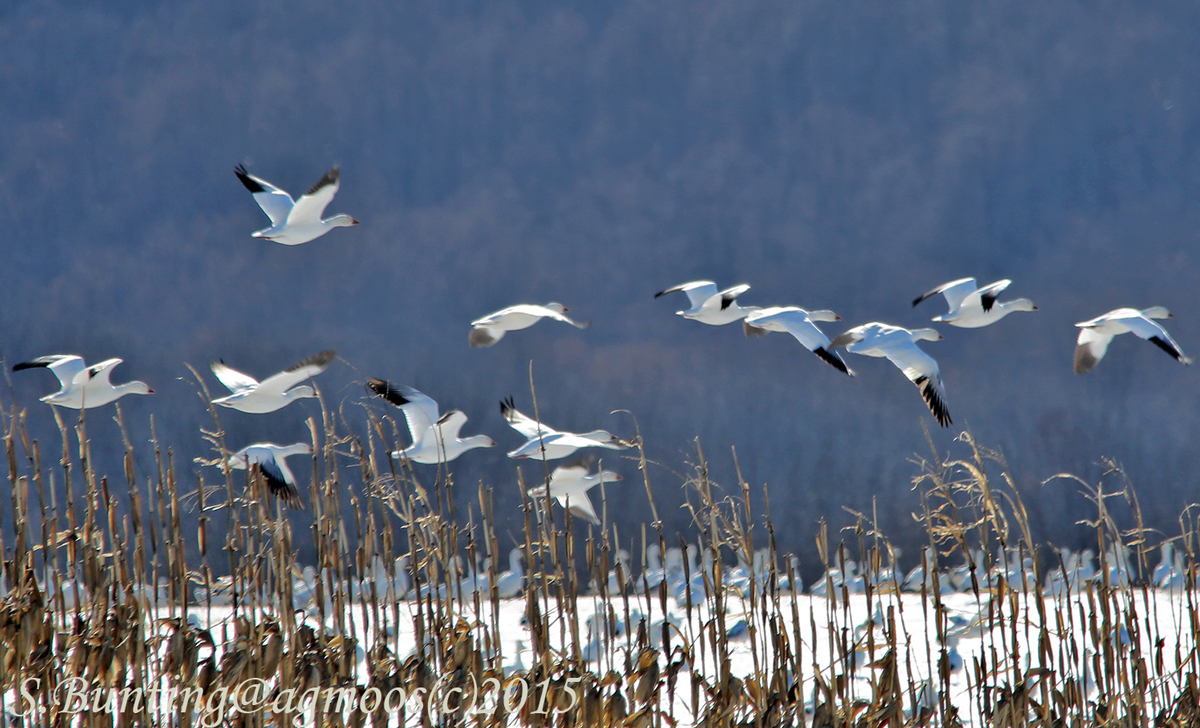
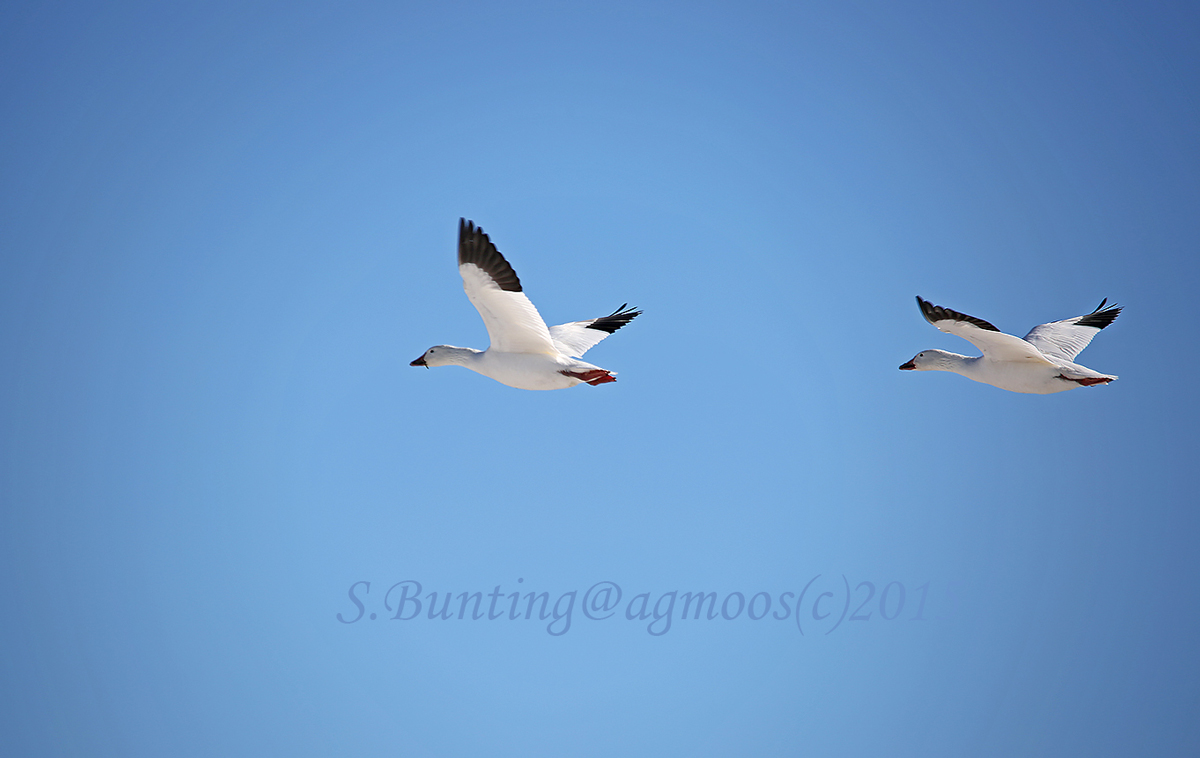
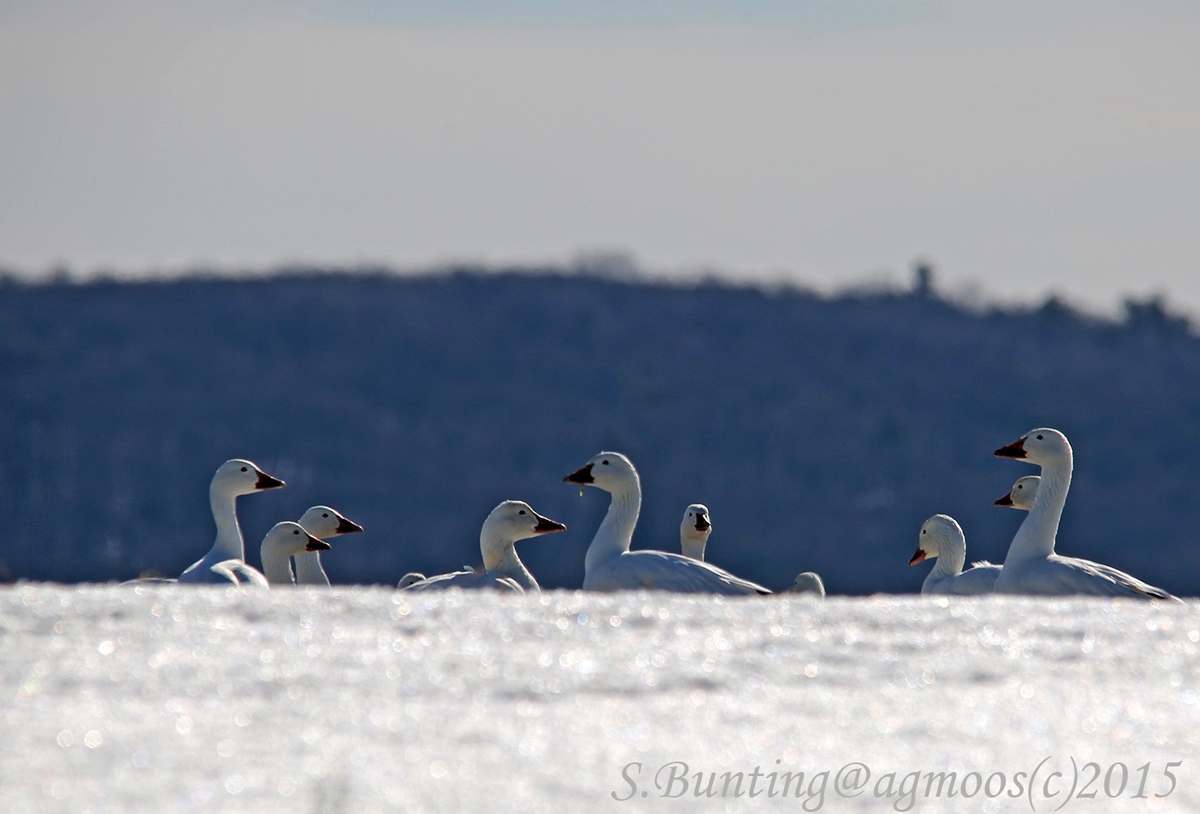
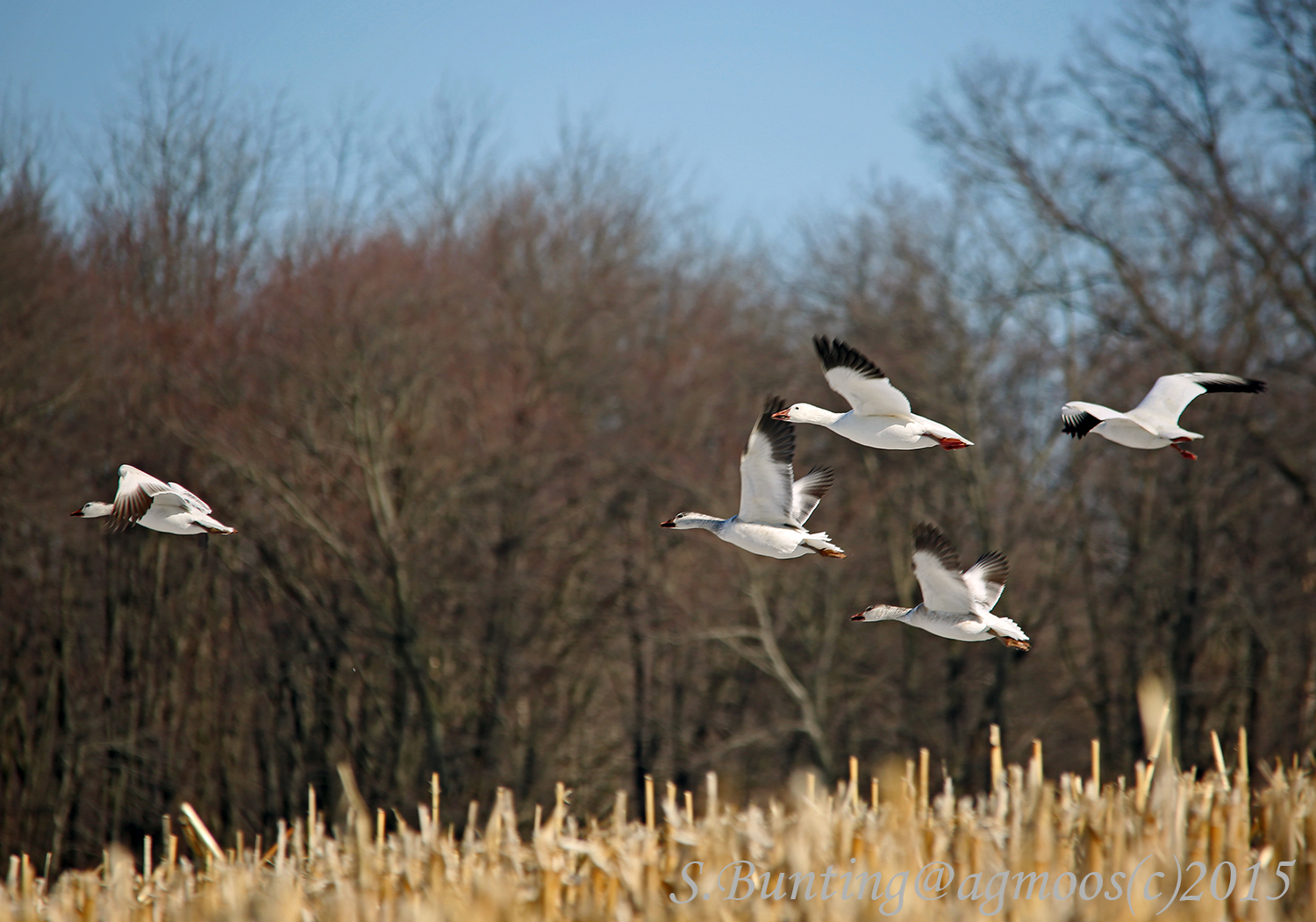
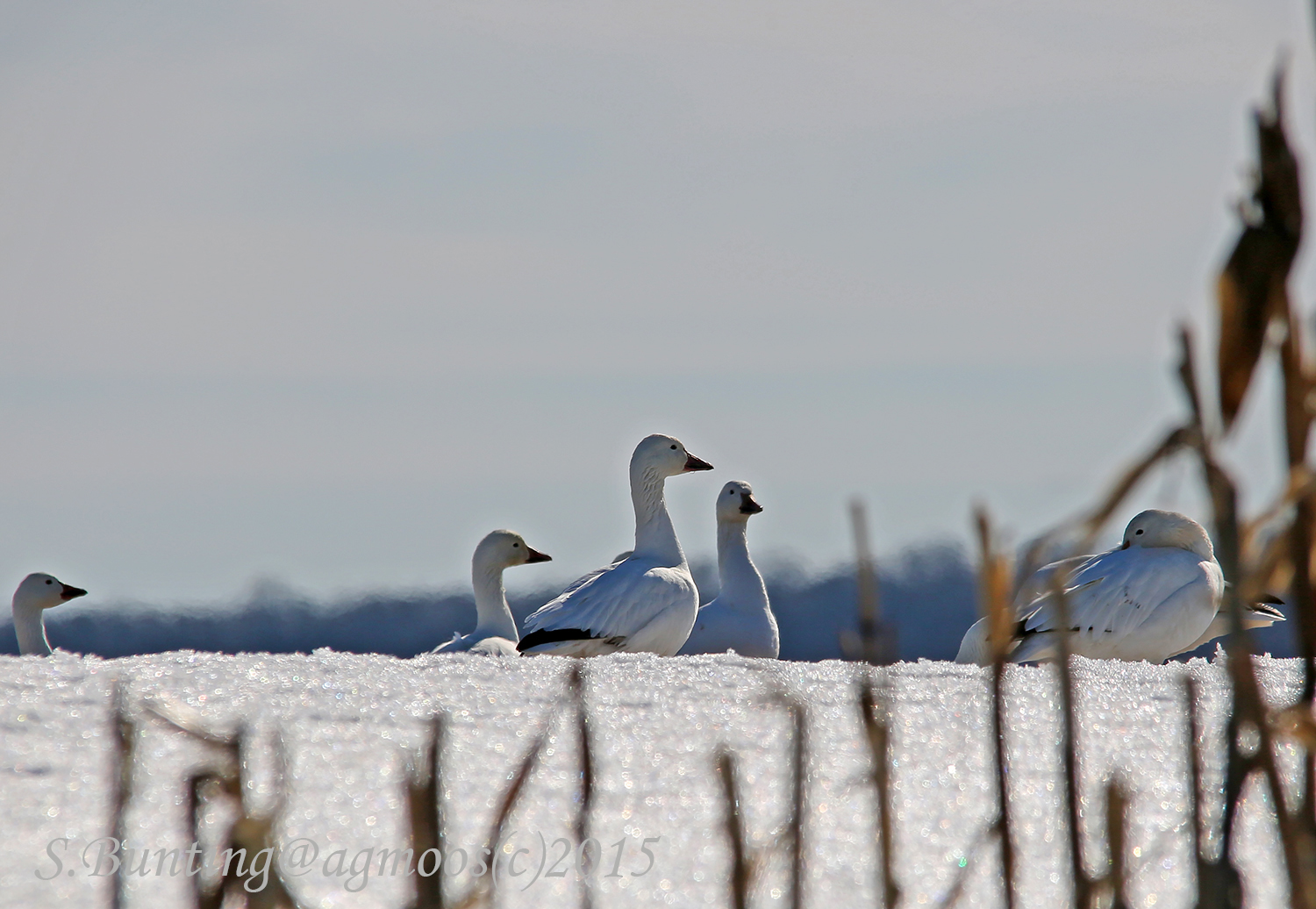
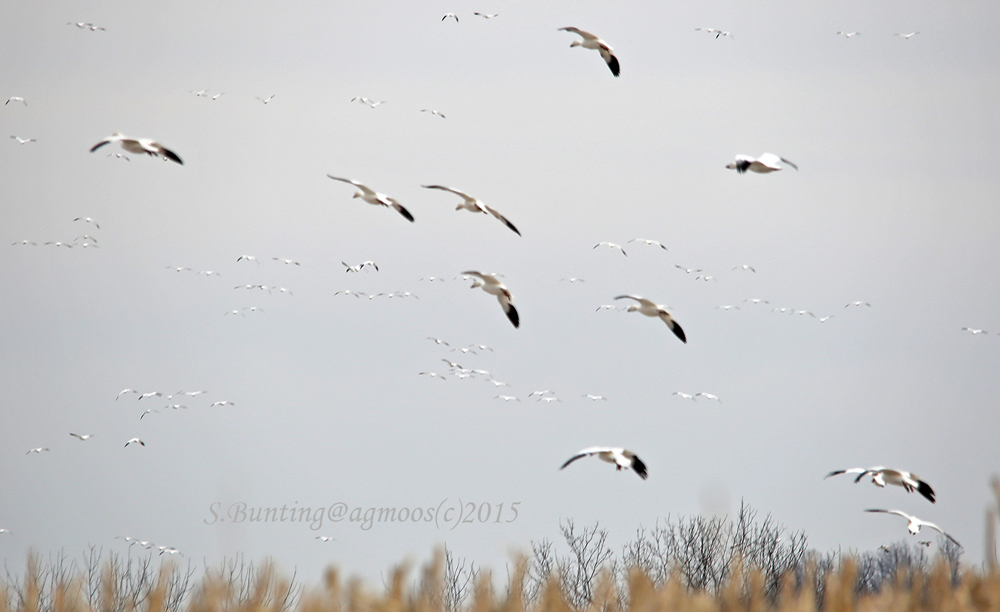
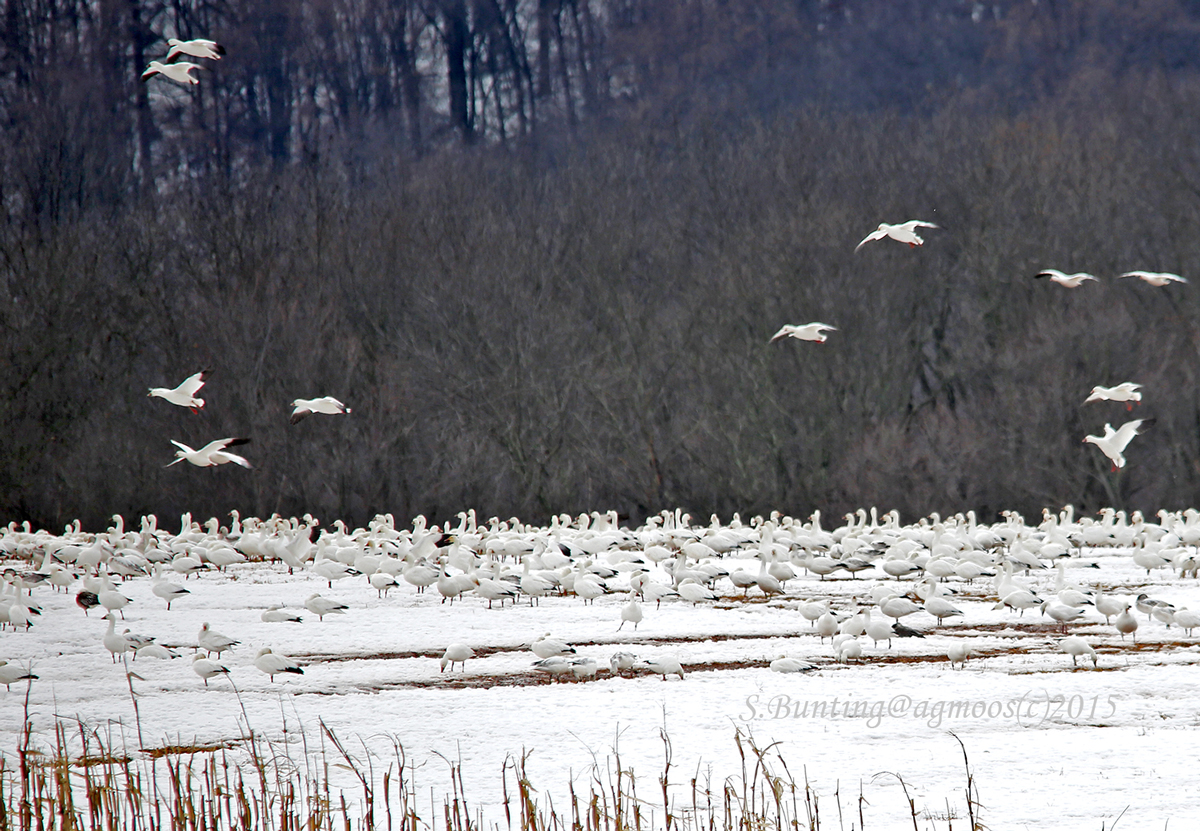
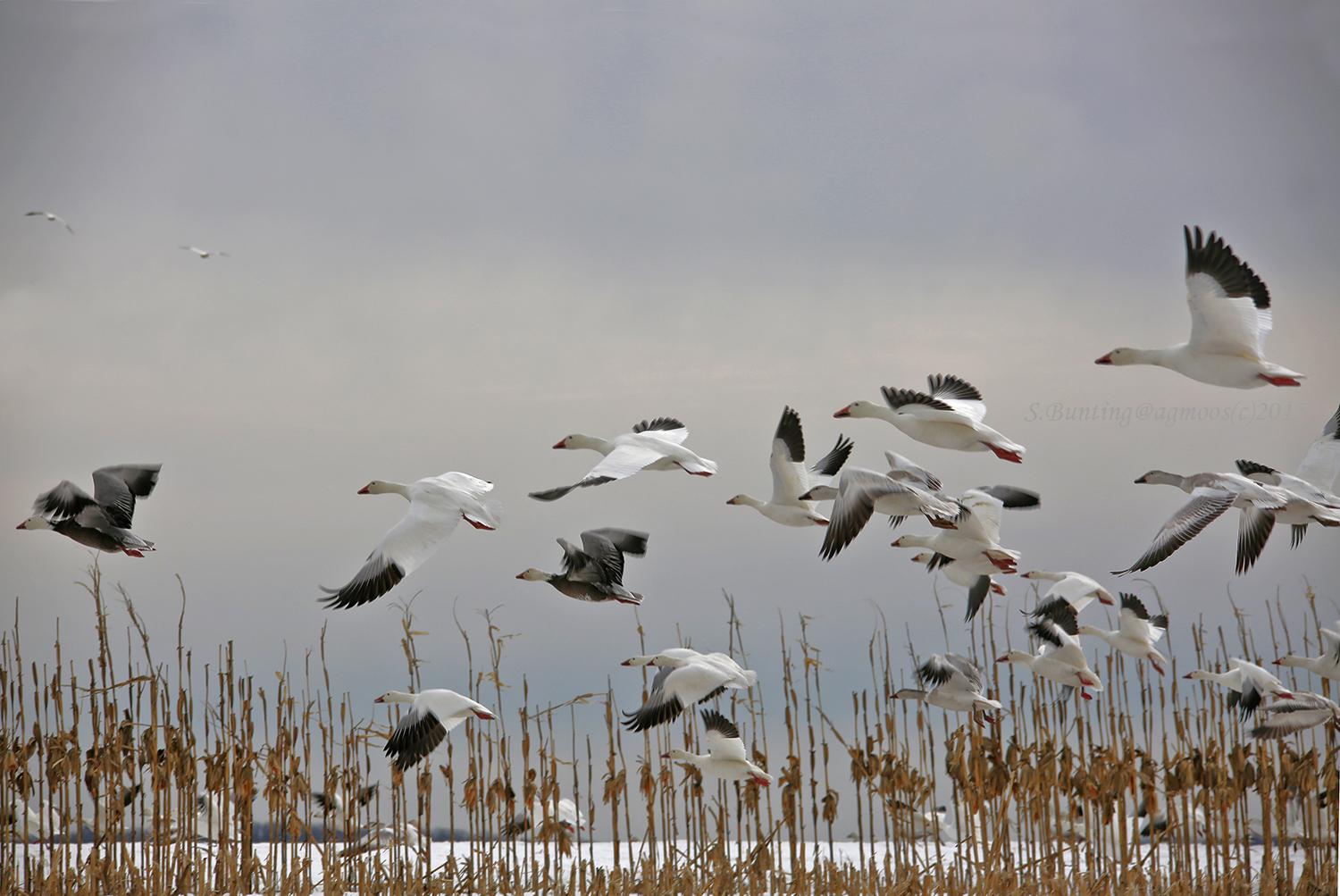
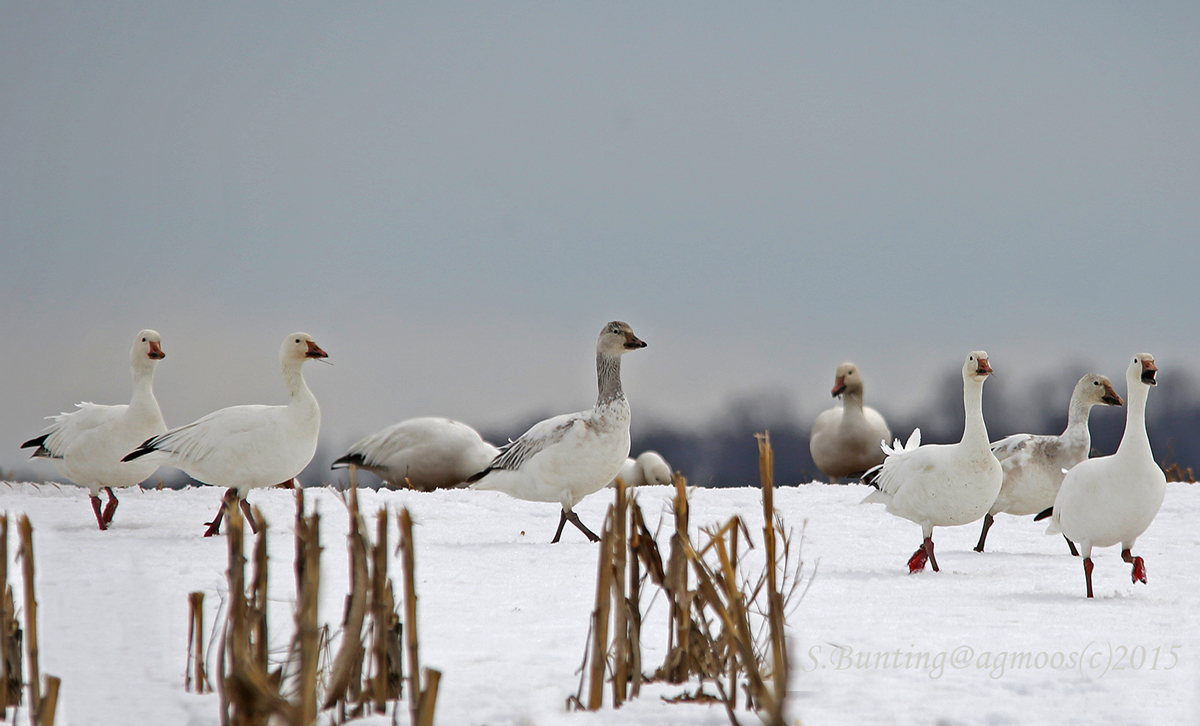
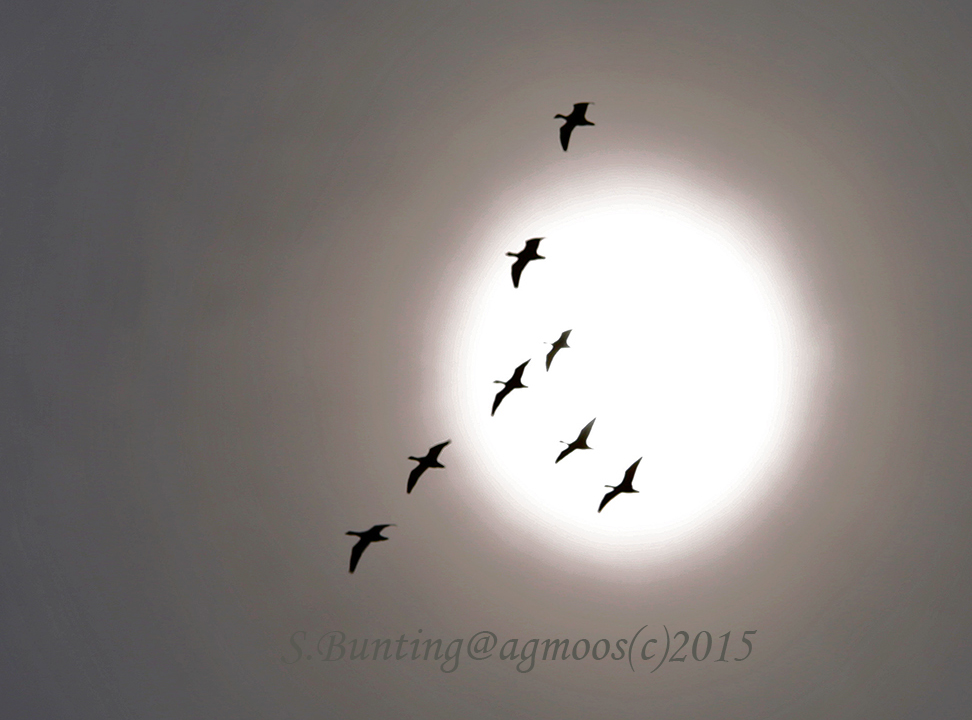
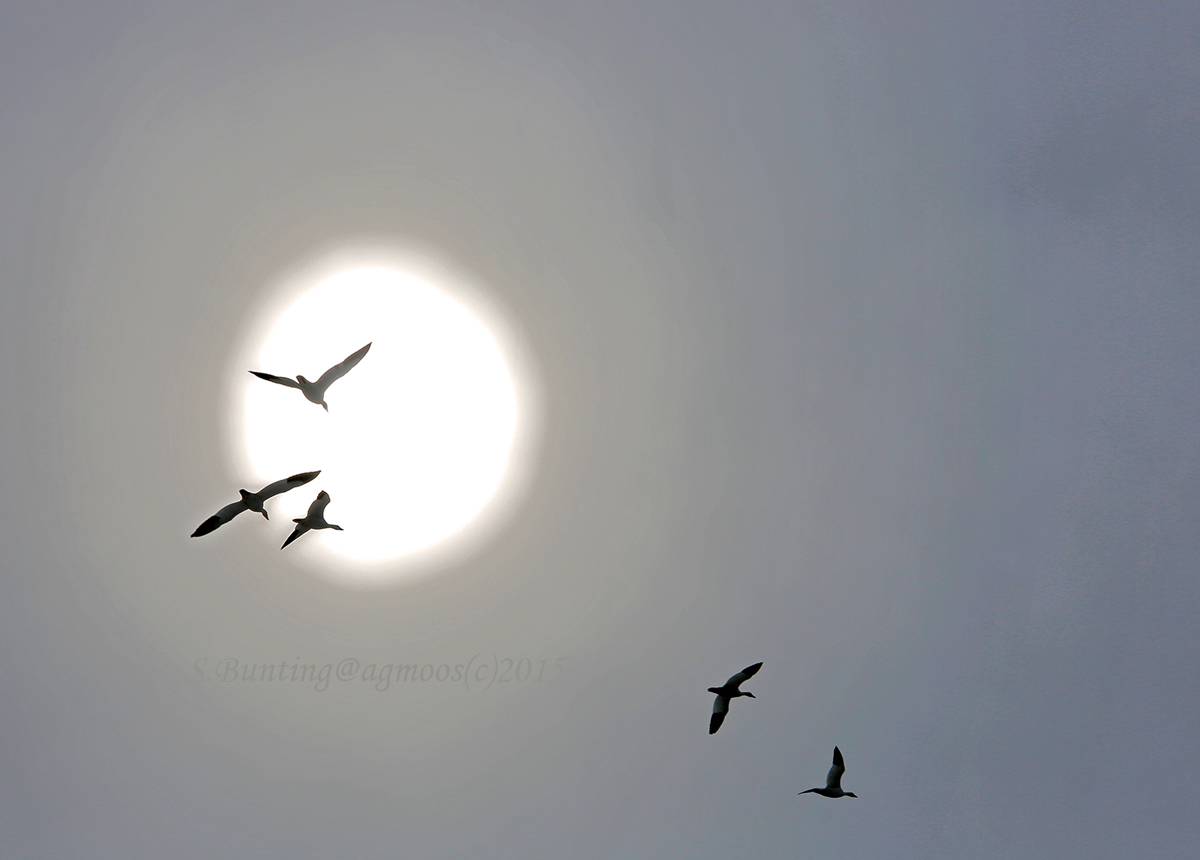
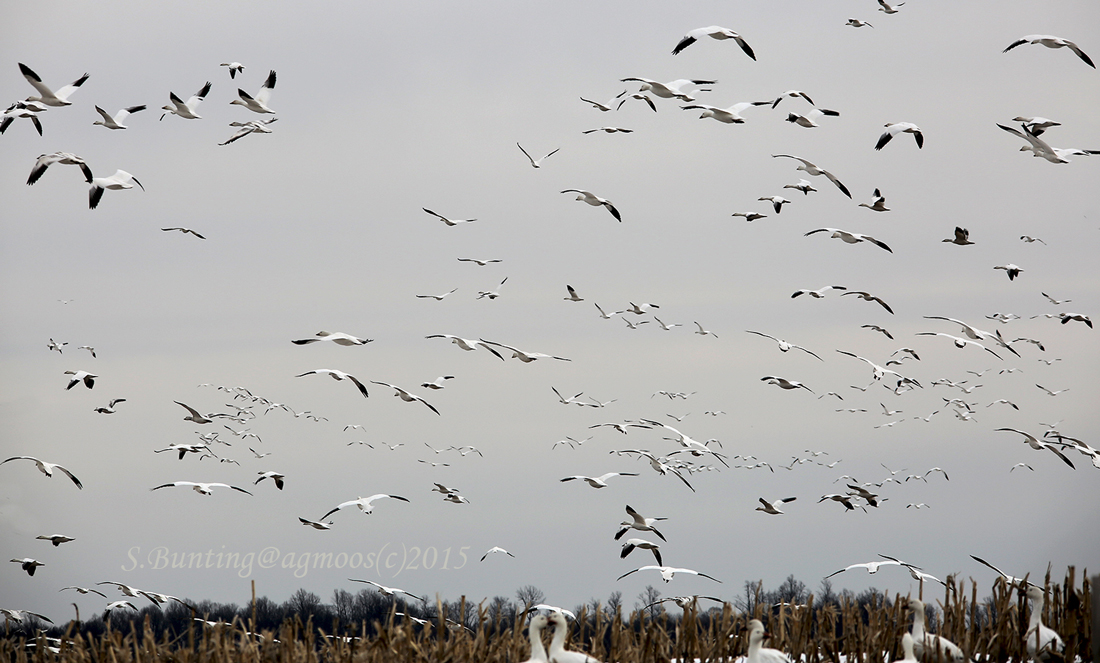
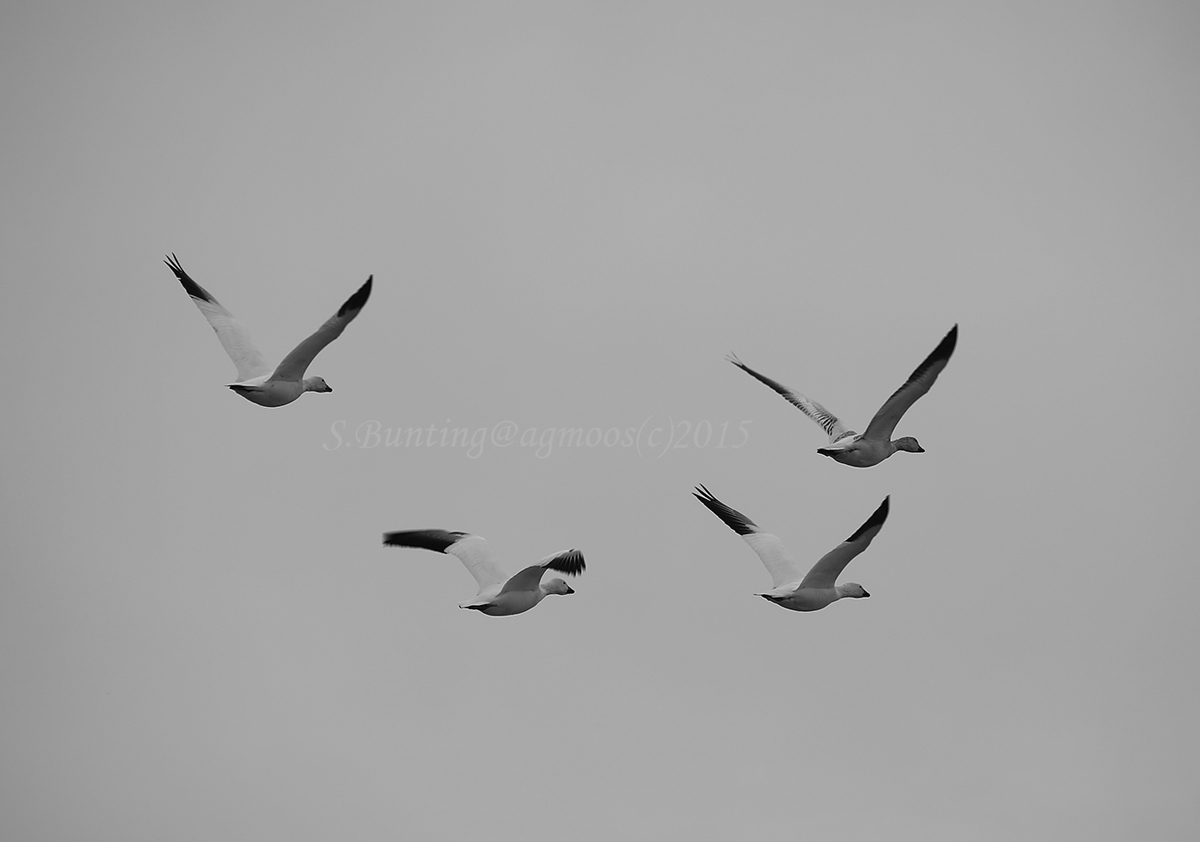
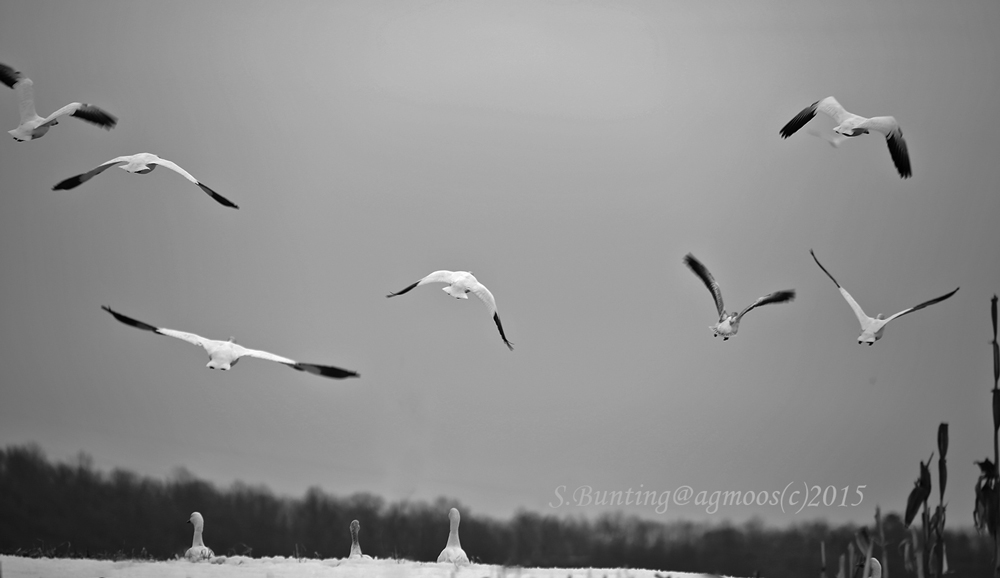
Breaking winter’s stillness with a cacophony of sound, a sea of white emerges over the hill, nearly blending with the remnant snow, as 75,000 (and counting) snow geese arrived March 10 -13, 2015 to the frozen tundra that is usually the lake at Middle Creek. Pushed from their normal roost on the lake by 15 inches of frozen cover on which ice-fishing continued this week, the annual harbingers of spring moved inland to the fields in various stages of snowmelt —  like waves to a beach.

aweb7822x

Typically they arrive in mid-February and stay through March 10 to 20 to refuel for the rest of their long trip.

This year and last, the longer and colder winters here delayed their arrival, and it will undoubtedly be brief.

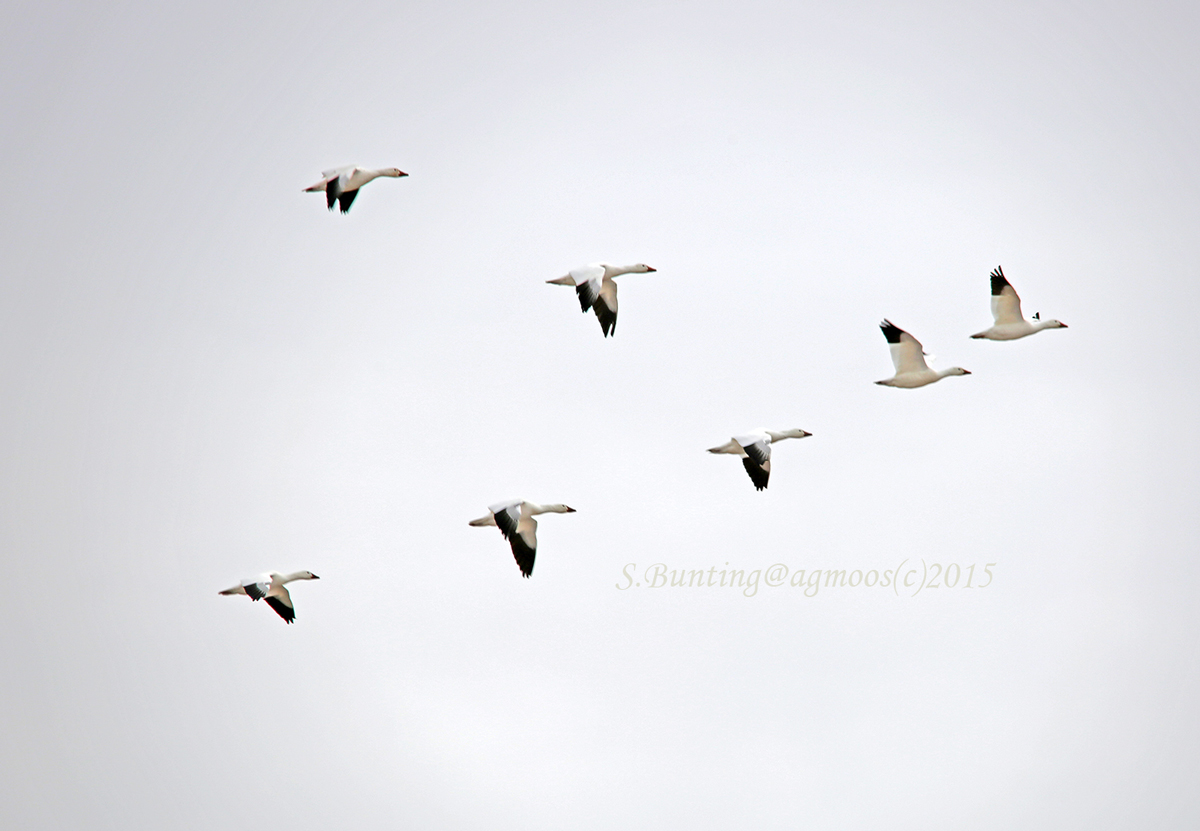
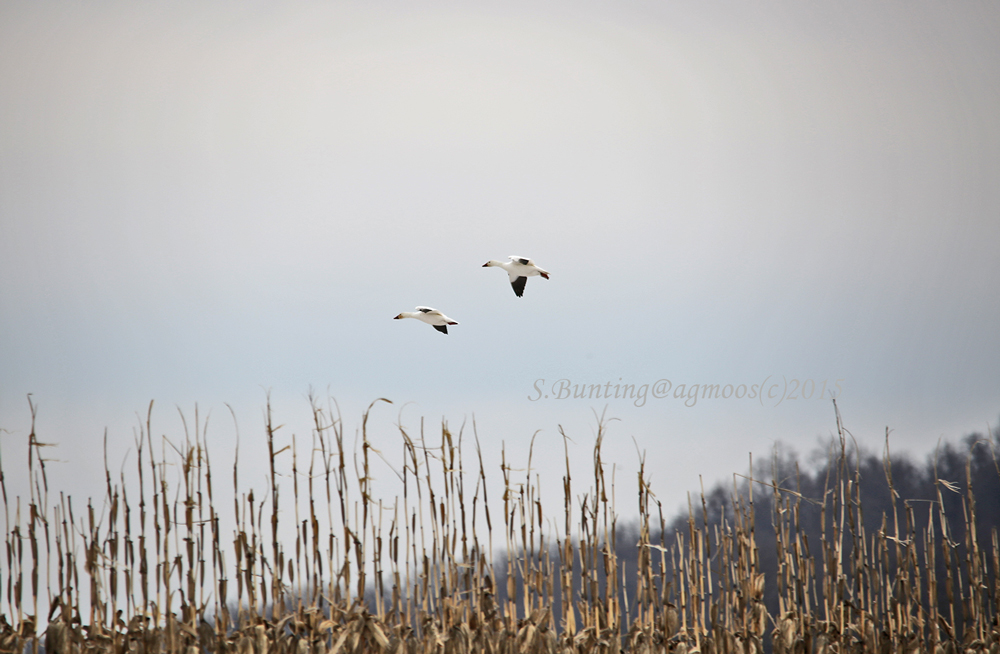
These are the scenes of flocks arriving from points south in the afternoons of March 12 and March 13.

aweb8342

So glad I was to hear them, see them, feel them with my husband and our grandchildren before heading south and west, myself, for a 2-week business migration to farms and dairies.


As a child of March, the tundra swan and snow geese connect me to a new year through this annual rite of the not-yet-spring.

aweb8230


These migrations are another intangible benefactor of Growing the Land…


aweb7938

In the deep rural countryside and fringelands of urban development, farmers and ranchers sustain the land that sustains these beautiful migrating birds with open space and nourishment before the new crop season begins.

aweb8361

Wildlife management areas, alone, are not enough. Working farms and ranches provide the interconnectedness of the migration — growing the land these flocks require to heed anew the age-old call of the changing season.


Photos by Sherry Bunting

aweb8230

aweb8198 aweb7938 aweb7929 aweb7905 aweb7892 aweb7822x aweb7808 aweb7724 aweb7709 aweb7684 aweb7641 aweb7627 aweb8473 aweb8466 aweb8400 aweb8384 aweb8370 aweb8361 aweb8351 aweb8345 aweb8342 aweb8307 aweb8286 aweb8284


Moving forward… ‘We take care of their families and they take care of ours’

By Sherry Bunting, reprinted from Farmshine, November 21, 2014

NEW LONDON, Wis. — November is a many-faced month for agriculture. It’s the month we recognize women in agriculture. It’s the month we bring the sewebTank7962ason’s harvest to a close. It’s the month we are reminded to be thankful for God’s blessings.
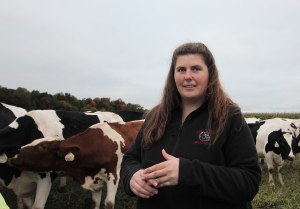
In September, I met a truly inspirational dairywoman who is quietly and methodically moving forward in the face of difficult odds. She and her two daughters exemplify a thankful heart as they care for their cows, which in turn care for them.

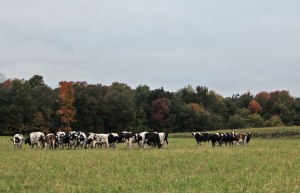
It was a downright cold, rainy central Wisconsin day as I was visiting farms ahead of the World Dairy Expo at the end of September. My lastwebTank8066 stop of the day was Milk-Flo Holsteins, New London, where Cathy Tank still does the 3 a.m. milking of her 150-cow dairy herd, and then works off the farm until supper time; so the appointed time to meet was toward evening. Her daughters were home from school and the hired man was busy pushing up feed for the cows.
What started as a typical family farm interview, soon turned into much more. By the time I left a few hours later, it was dark and one of the two ladies employed to milk the other two of the 3x milkings had arrived as Cathy’s daughters fed the chickens befowebTank8046re heading inside to do homework.

A former dairy queen of Wayne County, Wisconsin, Cathy Tank is a woman who not only works hard, she believes in working smart and using the right tool for a job.

She and her daughters Elizabeth, 15, and Rebecca, 11, love the dairy farm they are keeping going — and progressing — after losing husband and father Bob Tank to melanoma in 2009. It has been a journey, to say the least, and Cathy is quick to point out the way communities and extended family work together during harvest and in times of need.

“That’s what makes farm folk different,” she says. “A farmer can be having the worst day, ever, and would still stop and help pull another out of the ditch.”

“I am fortunate to have good help,” she adds. Working smart, means picking the jobs she can and can’t do. While she harvests her own haylage and works the ground to get it ready for planting, Cathy uses custom manure hauling and custom choppers for the corn silage harvest.

“They can do in a few hours what would take me weeks,” she says, adding that her brother helps her do most of the planting. That is something her father, Keith Knapp, helped her with over the past few years, but this spring she lost her Dad, too, in an accident.

Getting on the tractor is therapeutic, she says matter-of-factly. “It is refreshing work, and it reminds me to be thankful. I think about all of the things my Dad taught me how to do.”

While fieldwork is refreshing, what Cathy really loves is the cows. The dairy herd was her domain until six years ago. One year before Bob’s illness, they decided she would take a job off the farm. Today, she continues onward with both the job and the farm, and she’s set some pretty high goals for her cows with the focus on paying down debt. She would like to see her cows get over that 90 lbs/cow/day mark into 100-lb territory. “That’s a hard goal,” she says. But she’s already reached a few toughies.

She started 3x milking in February, and over the past two years, she made a focused effort to reduce somatic cell counts. Today, the herd averages 87 pounds/cow/day with 3.5 fat and 3.9 protein and SCC ranging 100 to 150,000.

The herd cleared $1 million in milk sales last year, which was a goal, reached, and Cathy says she has been able to reduce the farm’s debt by almost half. The milk from Milk-Flo goes to a cheese plant, and so the premiums for reducing SCC have really helped the bottom line.

While shifting the farm from pasture-based to more conventional in order to increase production and pay down debt, Cathy muses that maybe one day in the future, it webTank8077could return to more of a pasture-based system. She has already diversified a bit, adding pastured poultry and home-raised pork, beef and chicken. She and the girls sell their eggs at a local farmers’ market. The few steers on the farm are fed refusals from the milking herd and the chickens help keep some of the lawn areas mowed.

“We do what we can to not waste anything here. We are learning how to be more self-sufficient. You learn to be resourceful when you are on your own,” she says.

“We also try to do as much as we can without antibiotics,” explains Cathy, who grew up milking cows and has an Ag Education degree from the University of Wisconsin-River Falls. “We don’t sell the milk at the farmers’ market, but people who buy our eggs know we have cows, and we get those questions. We are trying to pay attention and be more preventive in how we manage the cows, so we don’t have as much need for treatments during lactation. This approach has helped us qualify for quality premiums and have a healthier herd.”

Cows are milked in a step-up parlor and housed in an open-front barn in freestalls. The farm includes 310 acres of forages for the 150-cow milking herd and young stock. Dry cows and older heifers are on pasture.

“I like color and variety,” says Cathy about the composition of the herd today, which is mainly Holstein but includes Brown Swiss crosses, Red & Whites, Linebacks,webTank8013 and Ayrshire crosses. She has hired a breeder but picks the bulls. The two biggest things she looks at are feet-and-legs and protein.
After two years in a row of poor forage in parts of the Upper Midwest, Cathy is thankful for this year’s good hay crop and the “jumbo corn” crop yielding over 23 tons of corn silage per acre, much of which was still ‘ripening’ in the field as the calendar headed into October.

She has put some thought into positioning the farm for alternate plans should the need arise. A few years ago, she installed a scrape alley and simple manure storage for the parlor holding area. This and the open-faced barn make the property suited to substantial heifer-raising if milking cows would ever get to be too much.

Elizabeth and Rebecca are the fourth generation on the farm. Cathy explained that Bob’s family has farmed here 100 years as of 2008, which was the year before he died.

“I’m just a steward,” she said. “I’m pretty interested in staying in this industry. I can’t imagine the farm without the cows.”

While she focuses on the areas of the farm where her efforts are most productive, she still enjoys the 3 a.m. milking. “I like getting up when it’s calm and you can see the stars,” she says as she looks around at the herd, noting her oldest cow is 15 years old. “It’s a good feeling to have dams, grand-dams and daughters in the barn here. We take care of their families and they take care of ours.”webTank8005

-30-

Fly away…

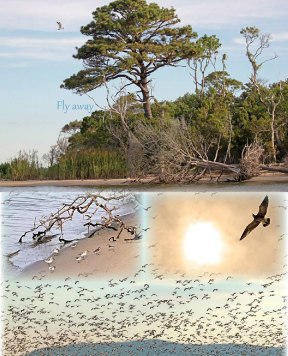
While most of my posts are more ag-related, here is something I wrote in January for a Writing the Land class with author and professor Dawn Wink. Her book “Meadowlark” made a lasting impression. Folks who know me, know I love birds. These photos, and the experiences attached to them, inspired this writing in the midst of the coldest winter in memory. I offer it today on National Wildlife Day.

So put yourself into this moment… and fly away!

******Fly-away(WeekTwo)

Dozens of plover playfully turned and twisted in the breeze as she looked toward the horizon of sea marsh teaming with life. A cacophony of birdsong drifted over the sound of the current caressing the shoreline as the sun kissed the glassy azure sky — staining it with a steamy haze.

She breathed deeply. The moist and salted air blanketed her in tranquility.

The sand — besmirched by scattered strands of blackened green and gold, cold and clammy against her skin — slid shimmering and sprightly between her toes as she plunged her feet into its silky solitude. Dawn’s glow seeped through her skin into her muscles as though to reach her very bones, wrestling away the stiff and weary chill that had settled there.

She saw the long-fallen army of weathered wood — mere skeletons of their former selves — scattered about the island’s one giant sentinel. As the brush of morning painted away the night, she saw the solitary tree rising above the crowd of scrubs below. Its full head of foliage offered a kingly perch to the bird who would land there, watchful of the morn.

The silence gave way to the whir of a thousand wings trumpeting the night gone. Taking flight as one, their presence echoed as they vanished to distant particles of windswept sand. She would take wing in the silence of their wake, if not for the flutter of ten thousand wings at her core. Every nerve within her said “fly away.”

She could hear nothing but the beat of her own heart — deafening it was to her in that moment as the sand covered her feet.

—S.Bunting (c) January 2014