Senate Ag hearing overwhelmingly endorses whole milk in schools

By Sherry Bunting, Farmshine, April 4, 2025

WASHINGTON, D.C. – We need to be the change-makers that our students and farmers both need. We need to bring back the ability to offer milk fat choice in schools, including nutrient dense whole milk – which, by the way, is just 3.25 to 3.5% fat,” said Krista Byler, a witnesses during the hearing by the U.S. Senate Committee on Agriculture, Forestry, and Nutrition to “review the Whole Milk for Healthy Kids Act, S. 222, and improve children’s health.”

April 1st, the day of the hearing, was a great day for America’s children and dairy farmers, and that’s no April Fools joke!

The livestreamed hearing opened with a reminder from Senate Ag Chairman John Boozman (R-Ark.) that the whole milk bill had passed the House in the last Congress “by an impressive 330 to 99 vote” and his desire to “make progress in the Senate.” 

Ranking Member Amy Klobuchar (D-Minn.) expressed her support for the bill and thanked Sen. Roger Marshall (R-Kan.) for introducing it. She also set the stage to broaden the hearing to other school nutrition matters. (To be covered in a separate article at another time).

The hearing ended with universal expressions of bipartisan support, thanking the Senate’s ‘milkman’ Marshall. Several Senators urged moving the bill forward as a standalone without delay.

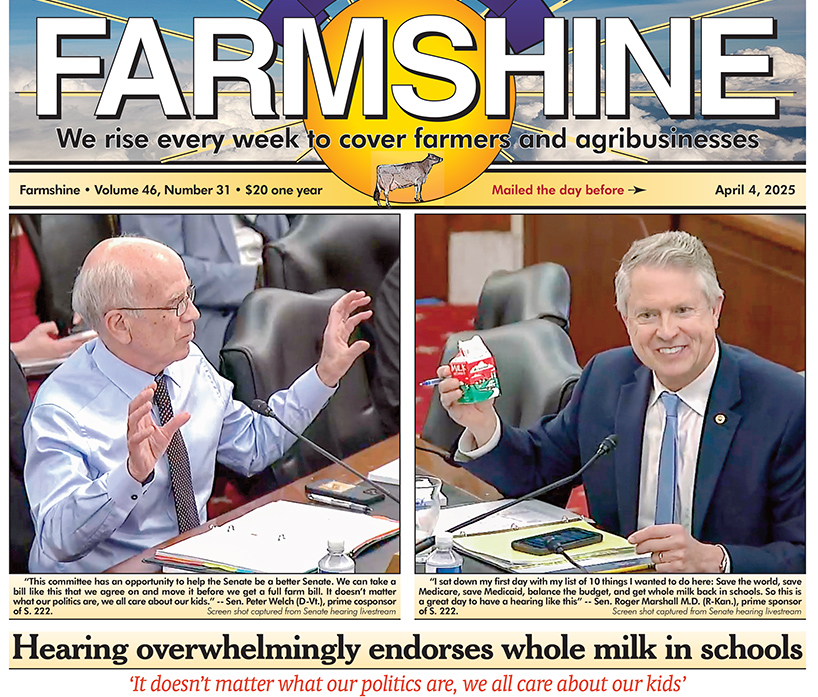
“If we can do something that’s good, let’s do it, and then we’ll do the next thing that’s good,” said Senator Peter Welch (D-Vt.), the bill’s prime cosponsor, addressing the Chair. “This committee has an opportunity to help the Senate be a better Senate, we can take a bill like this that we agree on and move it before we get a full farm bill. It doesn’t matter what our politics are, we all care about our kids. I hope as we pursue this whole milk opportunity for our kids and our farmers that it’s the beginning of a real commitment to nutritious, locally produced, natural foods.”

In between the open and close, the Senate Ag Committee heard from and questioned five witnesses, spending the first chunk of time with Dr. Eve Stoody, Director of the Nutrition Guidance and Analysis Division at the Center for Nutrition Policy, within the Food Nutrition Service of the USDA. 

She is tasked with supporting the development of the Dietary Guidelines (DGA) since the 2010 edition and is the self-described career subject matter expert on the DGA process.

She revealed that 90% of Americans don’t consume the daily recommended amount of dairy, a statistic that has worsened over time, setting the stage for nutrient shortfalls.

“Across the board… whatever the form is, we need to have greater consumption of dairy,” she said, citing national survey data showing that on any given day, the percentage of adolescents reporting drinking milk was 75% in the 1970s, just under 50% in the early 2000s, and about 35% in the most recent data.

Chairman Boozman asked what justification was used to remove whole and 2% milk from schools in 2010?

Instead of addressing that question, specifically, Dr. Stoody said the current Dietary Guidelines recommend “most” dairy be low-fat or fat-free, but the guidelines (10 years later) in 2020 were constructed as overall dietary patterns with more flexibility.

“It’s also a reality that we kind of have a number of calories that individuals should consume, so across the guidelines we recommend consuming foods from all of those different food groups and that most should have little to no added sugars or saturated fat to help us stay within those calorie limits,” she said. “We don’t have a lot of room in the calories of the diet to consume milk and dairy with higher fat.”

Stoody parsed this as a population-level guideline: “That doesn’t mean whole milk and higher fat dairy can’t be part of a healthy diet, but it’s really important to look at the overall diet. The DGAs are there to provide flexibility based on needs and preferences.”

(This confusing ambiguity opened the door for the next panel to walk through, even though only two of the remaining four witnesses talked about the whole milk bill, while the other two talked exclusively about USDA’s recent cuts to programs like the local farm-to-school cooperative grants and concern about changes to how school lunch eligibility. Even those witnesses agreed that simplifying regulations and providing flexibility allows schools to focus on the quality of the meals instead of being bogged down by red tape.)
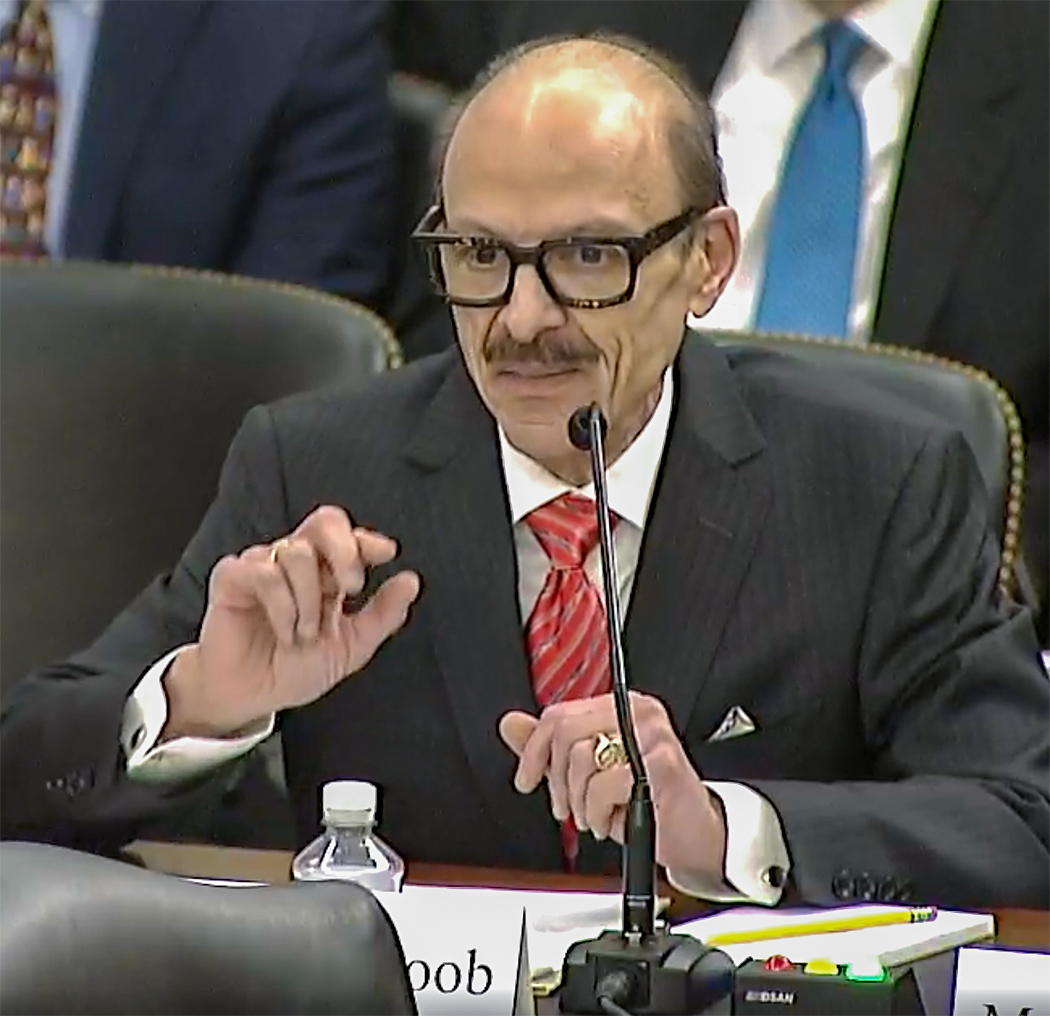
“I’m here because this issue matters to the children I serve, so it matters to me,” said witness Dr. Keith Ayoob, Associate Professor of Pediatric Nutrition at the Albert Einstein College of Medicine in New York City. He runs a diagnostic and treatment clinic working with mostly low-income children, and their families, in the Bronx.

“A plethora of research demonstrates consumption of cow’s milk provides children with better bone health, a lower risk of type II diabetes, and a lower risk for cardiovascular disease,” he shared, as he zeroed-in on milk’s 13 essential nutrients, including 3 of the 4 under consumed nutrients calcium, potassium and Vitamin D.

He said saturated fat does not occur in foods in isolation, and new research shows the protein-fat matrix “behaves differently” in the body. “While other foods that are lower in saturated fat can also lower cardiometabolic risk, they can’t deliver the 13 essential nutrients in milk. Milk delivers a package I’ve not been able to find in any other food or beverage.”
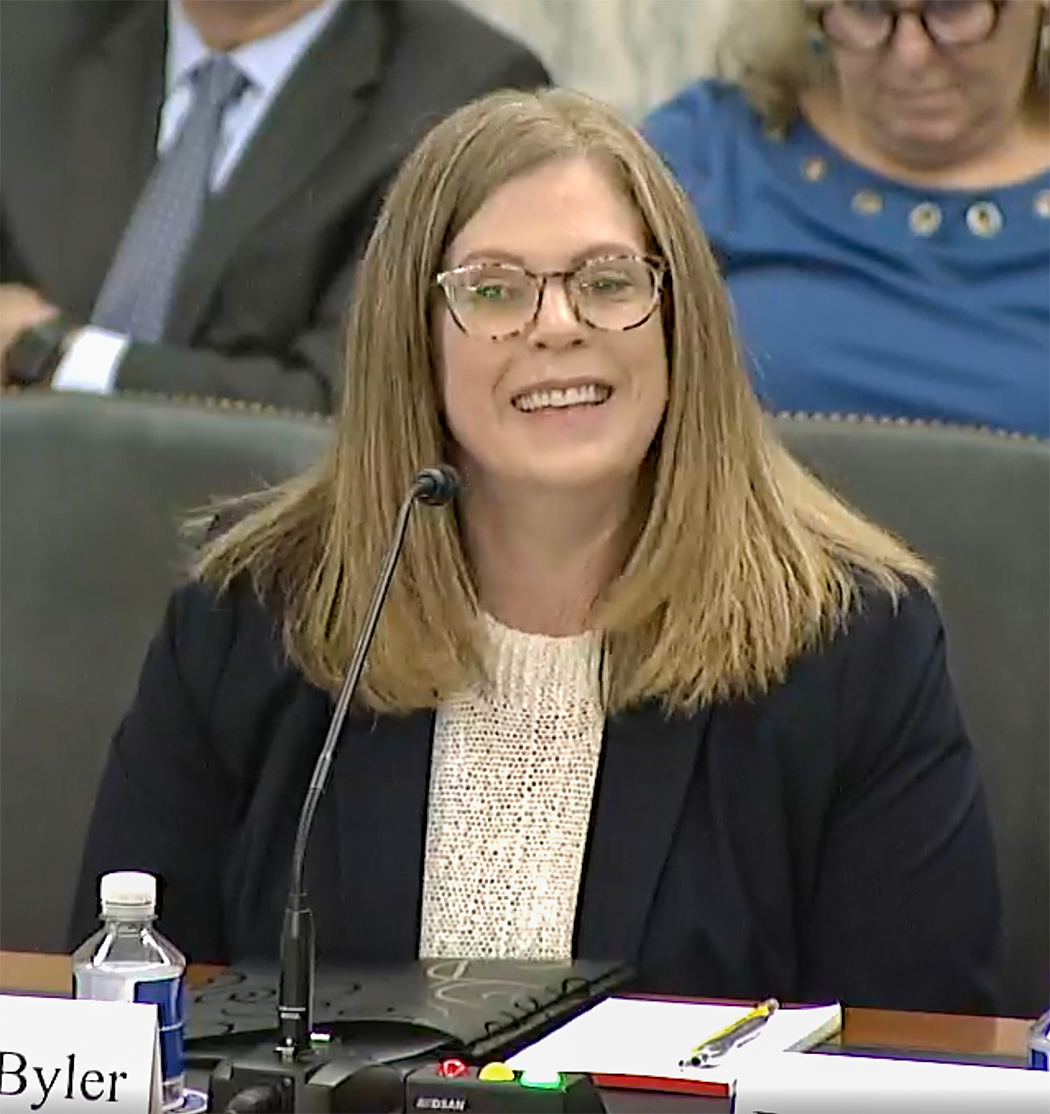
Krista Byler of Spartansburg, Pennsylvania testified next. She is the Foodservice Director and District Chef for the past 20 years at Union City Area School District, or as she puts it: “The professional chef turned lunch lady.”

The granddaughter and wife of former dairy farmers, she was the one witness to bring a combined experience in dairy farming, culinary arts, and childhood nutrition, saying she believes “access to good quality nutrient dense whole food is a basic right of education.”

Byler spoke from the heart, bringing experience and data. She described the impact of the 2010 Childhood Nutrition Reauthorization’s school milk changes on students and dairy farm families.

“It was heartbreaking… we were seeing a huge increase in waste and a huge decline in the amount of milk that I was actually ordering because our children were not choosing to take the milk,” she said.

In 2018, Byler attended an event with the School Nutrition Association where she met Rep. Glenn ‘GT’ Thompson (R-Pa.) – the decade-long champion for The Whole Milk for Healthy Kids Act. 

At that meeting, Byler said she heard her peers also talking about the large amounts of waste. She was later introduced to the Grassroots Pennsylvania Dairy Advisory Committee of dairy farmers and school-involved parents, affiliated with what later became the separate milk education nonprofit 97 Milk.

(The Grassroots PA Dairy Advisory Committee is chaired by Bernie Morrissey, with current participants that include dairy farmers Nelson Troutman of Berks County (the Milk Baleboard painter), along with Dale Hoffman and Tricia Adams of Potter County, certified RN school nurse Christine Ebersole of Blair County, Dr. Ed Silverman, a retired internal medicine physician, Mike Sensenig of Sensenig’s Feed Mill, and this reporter who helps in communication. Like the separate board comprising 97 Milk, all the work is done by volunteers without compensation.)

This grassroots committee invited Byler to do some data collection. She explained that in the 2019-20 school year, with the blessing of her school board of directors, they conducted a school milk choice trial at the middle and high school, offering all levels of milkfat, both flavored and unflavored.

“The results are astounding.” Byler said, referencing her written testimony to find more complete data and survey results.

“What I want to really drive home are two main data points: The 50% increase in milk consumption (evidenced by ordering more milk) and the 95% — that’s right – the 95% reduction in milk waste, just because we offered a variety of milk choices that fit our students’ needs,” she said to the visibly astonished Senators who had previously unsuccessfully asked the first witness from USDA for such data.

“That’s incredible. It’s amazing when we give a little education and we give the choices, eventually the consumer makes the right choice,” said Sen. Marshall who is a medical doctor and prime sponsor of the bill in the Senate. He described his frustration in seeing the impact of osteoporosis and osteopenia, when bone density has not been built in the first 26 to 28 years of life.

Byler explained that the school student council helped collect, measure, and document the waste, and they “took a little heat after the 2020 school year when we (ended the trial) and went back to not being able to offer the variety. Overwhelmingly, students said they want something that is satisfying. Athletes, especially, were very vocal about wanting something that sticks with them. It’s a perfect recovery drink.”

Dr. Ayoob agreed: “My kids in my clinic have said that they find skim milk ‘watery.’ They may take that carton of milk. The school will get reimbursed. But I’m concerned that they drain that carton, not just take a few sips. Not only is there less food waste but more nutrition goes into the children.”

Sen. Ben Ray Lujan (D-Calif.) reminisced that he didn’t grow up with much money in the bank, but was blessed to have a dairy down the street. “Today when I get a carton of milk at the store, my habit is still to shake it because growing up that cream rose to the top, and we knew we had to shake it if we were going to enjoy it.”

“Our kids want to do better. They want to eat better. We have their attention,” said Sen. Jim Justice (R-W.V.), who spent his days with students as a longtime coach. “We have an opportunity here to step up. I am absolutely, wholeheartedly in favor of moving forward with whole milk.”

Every Senator present and asking questions expressed or implied support from both sides of the aisle.

With a nod to “the milkman Sen. Marshall,” Sen. Dick Durbin (D-Ill.) said he had to read through the list he had been provided of the organizations that are opposed to the bill, including the American Heart Association, American Academy of Pediatrics, and American Academy of Nutrition and Dietetics. He then asked the USDA representative what health organizations are for it? Dr. Stoody said she didn’t have that information.

(Perhaps more to the point, were her continued circular answers that forced this realization: The “population-level guidelines” get drilled down to individuals in governmental feeding environments, which then feed into the health and nutrition organizations and back again. Meanwhile, individual health and nutrition practitioners are out there seeing real people as individuals every day, wondering how to get off the spinning merry-go-round.)

Chairman Boozman asked Dr. Ayoob how policymakers have gotten it so wrong in drawing a correlation between whole milk and obesity?

“Actually, the correlation is inverse,” Dr. Ayoob declared. “A review of the studies in my written testimony show that greater consumption of dairy foods, including whole fat milk, has been associated with less obesity and less cardiometabolic risk.”

He said in 2010 when whole and 2% milk were first removed from school meals, obesity prevalence was about 17%. Since that removal, it has increased. “It’s now 21%, and it’s higher, about 25%, in black and Hispanic children, the population that I work with.” 

Ranking Member Klobuchar came back to calcium, asking Dr. Ayoob to explain why it’s so important at this stage.

“We don’t have our whole lives to build our bone bank. We have the first 25-ish years,” he replied. “If they skip milk in school, that might seem like it’s no big deal for a day, maybe even for a week. But if they forgo a glass of milk every day they are in school for 12 years, we’re going to graduate kids with a diploma and not very good bones. We owe our kids better than that. Osteoporosis and osteopenia are really pediatric diseases with adult consequences.”

Sen. Marshall drove this point home in his questions for all witnesses. He talked about the milk fat as carrying key vitamins and facilitating absorption. He and Dr. Ayoob talked back and forth about how replacement beverages, like soda, take the missed opportunity with milk and add further negative impacts.

“No matter what type of milk is offered in school, none of it is nutritious until students drink it, and they don’t drink it often enough, which presents nutrition and dietary gaps, especially in low-income groups, where 77% of a child’s opportunity for milk intake is from school meals,” said Dr. Ayoob.

“Chef Byler, what’s your advice to us as we look at bringing whole milk back to schools?” asked Sen. Marshall.

“It’s been said very well by others today, that we can do better,” she replied. “If we just bring back the milk choice to schools, we would see a huge increase in consumption, a huge decrease in waste, and satisfaction for our students would be through the roof.” 

-30-
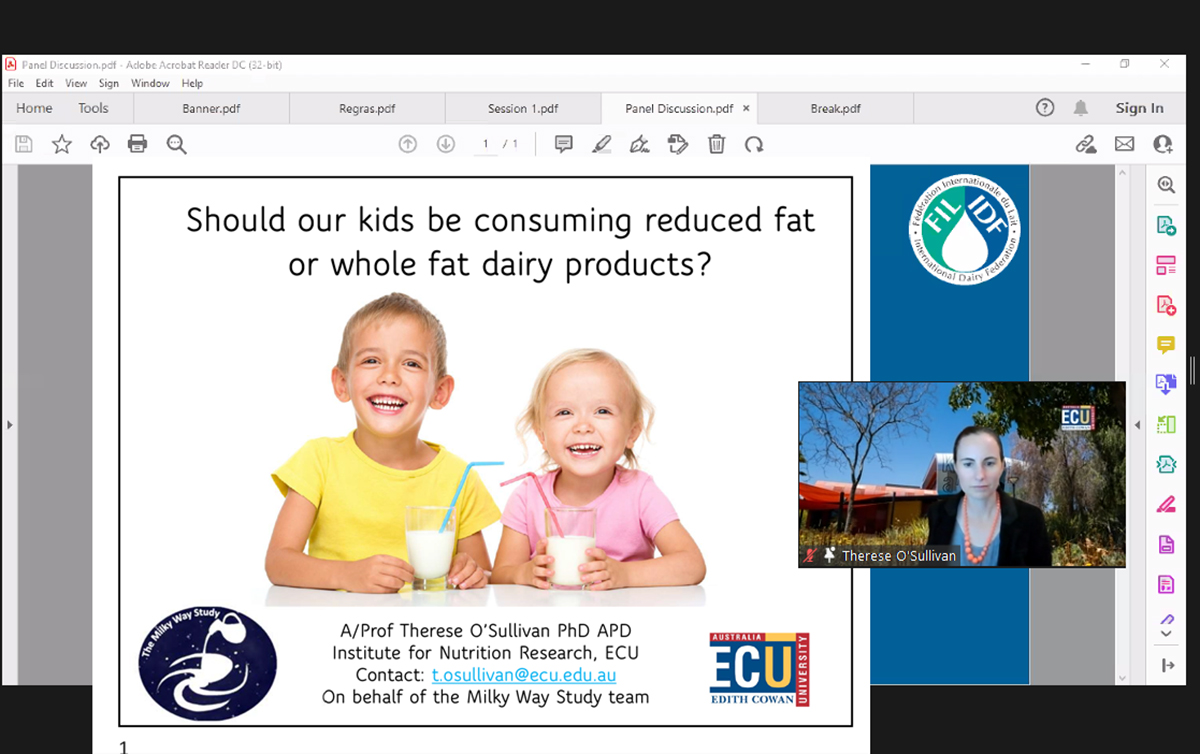
Global Symposium: Milky Way Study reinforces why children should be allowed to choose whole milk

Therese O’Sullivan, professor of nutrition and dietetics at Edith Cowan University in western Australia shared results from the Milky Way Study, answering the question: “Should our children be consuming reduced fat or whole fat dairy products?” The short answer, according to the evidence: “Let them choose!” IDF Symposium screen capture

Other countries are taking note, when will the U.S. get it right?

By Sherry Bunting

BRUSSELS — A new double-blind randomized study of children consuming whole fat vs. low fat milk and dairy reinforces the already accumulated evidence that the choice should be allowed, especially for children, according to Professor Therese O’Sullivan in nutrition and dietetics at the Edith Cowan University in western Australia.

“The Milky Way Study suggests healthy children can safely consume whole fat dairy without concern. Future dietary guidelines can and should recommend either whole or reduced fat dairy,” O’Sullivan confirmed as she presented the study’s results during the Nutrition and Health Symposium organized by the International Dairy Federation in Brussels, Belgium last Thursday (May 12).

The virtual event was attended by over 200 nutrition and health professionals from all over the world. They heard from eight experts and two moderators from various regions of the world, focusing on the role dairy plays across life stages. The first five sessions of the daylong event focused on the role of dairy in maternal diets and for children and teens. The last half focused on aging adults.

The Milky Way Study is deemed the first ‘direct dairy intervention’ study, and it supports the already accumulating evidence that children should be able to choose whole fat milk and dairy as there is no scientific or health reason not to let them choose, O’Sullivan indicated.

The study was costly and time intensive as a double-blind randomized intervention in which the whole fat dairy group consumed more milkfat during the study than their normal consumption had been before the study, and the low fat dairy group consumed less.

Continual testing during the study period showed no statistical differences in key health and nutrition biomarkers except the whole fat milk group’s BMI percentile declined during the study period. This is a key result because this is the first “intervention” study to test “causation” in what the already accumulated evidence shows.

The push by dietary guidelines to limit milkfat in countries like the U.S. and Australia was mentioned during panel discussion in relation to the Milky Way Study, supporting studies, and meta-analysis, with experts noting these guidelines need revisited.

“There is no evidence to suggest that moving to low fat dairy helps,” O’Sullivan said, noting there were no significant differences between the whole fat and low fat study groups when it came to the children’s daily caloric intake, blood pressures, blood cholesterol and lipids, cardiometabolic disease — or any other measure.

However, O’Sullivan did observe a slight trend toward a reduction in BMI (body mass index) percentile in the study group consuming whole fat milk and dairy vs. low-fat milk and dairy.

As the primary researcher on the Milky Way Study, O’Sullivan found it interesting that the daily calorie intakes of both groups were equal, even though the group of children consuming whole fat milk and dairy were getting more calories in their dairy servings because the fat was left in.

“This showed us that as the calories came out of milk in the low fat group, the kids replaced those calories with something else,” O’Sullivan reported.

The sodium intakes were also higher in the low-fat milk group, suggesting the “replacement calories” came from snacks.

O’Sullivan noted that another “very interesting finding was that we didn’t see any improvement in blood lipids in the low fat group that we would expect to see based on the theory of saturated fat increasing lipids,” she said.

Bottom line, she noted: “Whole milk and dairy had a neutral or beneficial effect on cardiovascular (biomarkers) with no difference in lipids, and a small decrease in LDL (bad cholesterol) in the whole fat dairy group.”

She also observed that as the calories came out of the milk in the low fat group, the children were coming up in their consumption of other foods that – depending on their choices — could have an impact on lipid profiles.

(This basically supports the tenet that whole fat milk and dairy is satiating, satisfying, and because it is nutrient dense, children may be less likely to keep ‘searching’ for needed nutrition via salty, sweet and high-carb snacks. The Milky Way study supports what many have long said should be changed in dietary guidelines to increase and make more flexible the saturated fat limits and return the choice of whole fat milk and dairy to schools and daycare centers.)

“High fat dairy foods are not detrimentally affecting adults, children or adolescents,” said O’Sullivan in discussing supporting research and meta-analysis. She noted that her three-month Milky Way Study could be repeated for 12 months for more data, but that it is in line with other evidence.

During the panel discussion, nutrition experts talked about some of the issues in vegan / vegetarian dietary patterns, noting that even when given vitamin and mineral supplements, studies show children and teens could not get their levels where they needed to be in many cases, especially true for B12 and calcium, key nutrients found in milk.

One attendee asked why saturated fats are always ‘the bad guys’ in the dietary guidelines, wondering if there was any associated health risk effect in going from the whole fat to the low fat in the first place.

“Similar to other studies, we saw the kids were good at regulating their food intake to appetite and as we take away the fat, they replace it with something else for the calories to be the same,” O’Sullivan replied. “In one group, they ate more tortillas, in another we noticed sodium intakes went up, suggesting they ate more snack foods (when the fat was removed from the milk and dairy).”

She reminded attendees that there are also other types of fats in milk, including Omega 3 fatty acids.

“Kids do not have much Omega 3 in their diets because they are not as likely to be eating oily fish,” said O’Sullivan. “In the low fat group (in the Milky Way Study), when Omega 3 status went low, they were not replacing it.”

This means the whole fat milk group had an advantage in maintaining Omega 3 status also.

O’Sullivan explained that researchers looked at the membranes of the red blood cells and saw the long chain fats were also down, so if they stayed on that (low fat) diet, and did not have increased Omega somewhere else in the diet, “they may have a health impact down the line.”

An attendee from India noted their government is planning to introduce milk into the supplemental feeding programs for children, with milk programs in schools, beginning with elementary schools.

Increasingly, the global focus is on milk in schools, and this means the type of milk recommended by government dietary guidance is so important.

Attendees also wanted to know “How much saturated fat would be recommended daily for children?”

(In the U.S., schools, daycares and other institutional settings are required to keep calories from saturated fat below 10% of total calories of the meal with the milk included, and of the milk as a competing a la carte beverage, with no attention paid to nutrient density.)

O’Sullivan indicated the answer lies in looking more at the food source of the saturated fat and the level of nutrients accompanying it.

“We need food-focused dietary guidelines,” she said, noting the evidence shows it’s important to change the focus from ‘dietary’ saturated fat ‘levels’ to looking at “the whole food matrix, the overall matrix of the food and the nutrients when the saturated fat is contained in that matrix.”

Good nutrition is key for health and wellbeing throughout life and can help us live our lives to the fullest, said Symposium organizers. They noted that dairy products are nutrient-rich and are a source of protein, B vitamins, iodine, calcium, phosphorus, vitamin A, zinc and potassium – making them an excellent choice for nutritional needs at all ages and stages of life. The unique combination of nutrients and bioactive factors, and how they interact with each other in the dairy matrix, combine to produce the overall effect on health.

In fact, during panel discussion, some noted there is so much emphasis now on maternal nutrition and the first 1000 days of life, whereas not enough attention has been paid to children and teens.

“Intervention is required in the three later phases: middle childhood (5-9 years), when infection and malnutrition constrain growth; adolescent growth spurt (10-14 years) and the adolescent phase of growth, brain maturation and consolidation (15-19 years) if a child is to achieve his full potential as an adult – an important but often overlooked area being the diet”, noted Professor Seema Puri from Delhi University, India.

Professor Lisanne Du Plessis from Stellenbosch University, South Africa explained that food-based dietary guidelines are a key way to provide healthy eating guidance in every life stage. 

However, she said, only a few countries such as South Africa, Kenya and Nigeria have guidelines tailored to the specific nutritional needs of children.

In fact, this was a glaring concern in the Australian and U.S. guidelines — given the emphasis on avoiding milkfat leaving children and teens missing out on the key nutrients if they didn’t consume the required low-fat and fat-free products.

Talking about what type of milk children can and should drink seemed like a basic area of discussion that needs intervention.

“Changing to reduced-fat dairy does not result in improvements to markers of adiposity (high body mass index) or cardiometabolic disease risk in healthy children,” O’Sullivan stated.

Contrary to popular belief, she said, “there are no additional health benefits to consuming low-fat or fat-free dairy for children.”

Not only did conclusions from the Milky Way Study back this up, but also comparisons to other supporting evidence were shared.

-30-

Comments due March 24: Ask USDA to end its prohibition of whole milk in schools, give students milkfat choice

Photo credit (Top) USDA FNS website screen capture from https://www.fns.usda.gov/building-back-better-school-meals and (bottom) fat-free flavored milk and fat-free yogurt on a local school lunch tray.
Screen capture and lunch tray photo S.Bunting

By Sherry Bunting, published Farmshine, Feb. 18, 2022

WASHINGTON — As reported in the Feb. 11 Farmshine, USDA announced a ‘transitional standards’ rule on Feb. 4 for milk, whole grains, and sodium for school years 2022-2023 and 2023-2024. 

The transitional standards are only in place while USDA works with stakeholders on long-term meal standards through a new rulemaking. 

The proposed rule for the longer-term is expected to come from USDA in fall 2022 and will become effective in school year 2024-25. It will be based on the Dietary Guidelines for Americans 2020-2025, but USDA says it is conducting a public comment and review process related to the standards and to the “gradual implementation” plan it will develop based in part on stakeholder input. 

In the official transitional standards rule, USDA notes that full implementation of its 2012 meal pattern requirements for milk, grains and sodium have been delayed at intervals due to legislative and administrative actions. “Through multiple annual appropriations bills, Congress directed USDA to provide flexibility for these specific requirements.” 

Read the transitional standards rule here at https://www.regulations.gov/document/FNS-2020-0038-2936 where a comment button can be clicked to provide a public comment to USDA by March 24, 2022.

Now is the time to comment before March 24, 2022 and to call for an end to the prohibition of whole milk in schools. Request that USDA restore the choice of whole milk in schools by commenting at the online rulemaking portal https://www.regulations.gov/commenton/FNS-2020-0038-2936

Comments and questions can also be sent to: Tina Namian, Chief, School Programs Branch, Policy and Program Development Division—4th Floor, Food and Nutrition Service, 1320 Braddock Place, Alexandria, VA 22314; telephone: 703-305-2590. 
Include FNS-2020-0038-2936 in your correspondence. 

In a rare move Feb. 7, the American Association of School Superintendents (AASA) made a public media statement on the transitional standards — pointing out their concern that the long-term standards will be ‘more stringent’ due to the restrictive Dietary Guidelines that were approved by USDA and HHS in 2020. 

The Association of School Superintendents stated: “It is important to acknowledge that healthy meals are only healthy if students eat them.” 

Agreed! This applies to the milk also. Students miss out on 21 minerals, 13 vitamins, complete high quality protein, a healthy matrix of fat and several nutrients of concern when they don’t actually consume the milk offered or served at school. Those nutrients ‘on paper’ are then not realized. Many key nutrients of concern are also fat-soluble. A study at St. Michael’s Children Hospital, Toronto, showed children consuming whole milk had 2.5 to 3x the Vit. D absorption compared with those consuming low-fat milk, and they were at 40% less risk of becoming overweight! Details were presented in a June 2021 hearing in the Pennsylvania Senate, listen here

Milk consumption plummeted and waste skyrocketed since USDA’s 2012 fat-free/low-fat milk rules were set for both ‘served’ milk and competing a la carte offerings. Studies by USDA and others show milk is now one of the most discarded items at school. In fact, USDA did a plate waste study comparing 2011 to 2013 (pre-/ and post-change) They focused on fruits and vegetables, but saw milk decrease significantly, waiving it off as though it were due to an “unrelated policy change.” Technically, it was the smart snacks rules for beverages and it WAS related to the 2012 standards as both were implemented together.

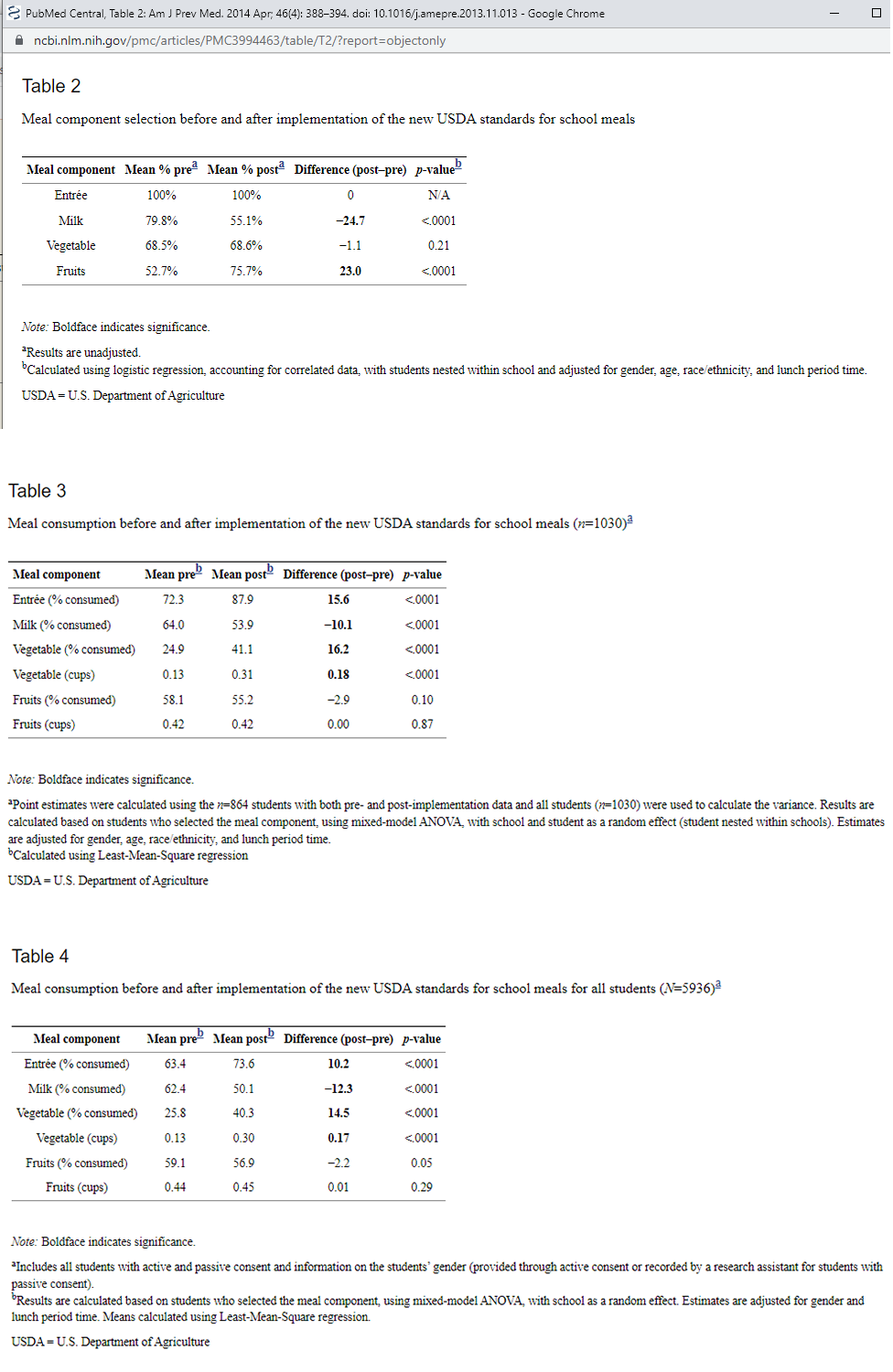
See the losses in Tables 2 through 4 below in ‘selection’ and ‘consumption’ of milk from the USDA study reflecting a 24% reduction in student selection of milk (offer vs. serve) after the 2012 fat-free/low-fat implementation and 10 to 12% reduction in consumption among those students being ‘served’ or selecting the restricted fat-free/low-fat white milk option or fat-free flavored milk option. That’s a double whammy for childhood nutrition and for dairy farm viability. Since 2012, at least one generation of future milk drinkers has been lost.

Charts above are from a USDA study published in 2015 to assess school meal selection, consumption, and waste before and after implementation of the new school meal standards in 2012. Those standards impacted a la carte offerings as well as beverages, not just served meals. The method for the USDA study was: Plate waste data were collected in four schools in an urban, low-income school district. Logistic regression and mixed-model ANOVA were used to estimate the differences in selection and consumption of school meals before (fall 2011) and after implementation (fall 2012) of the new standards among 1030 elementary and middle school children. Analyses were conducted in 2013. The authors note that prior to the full implementation of new nutrition standards in 2012, a variety of fat levels of milk were offered to students and no restriction upon flavored milks. See the report here —– Additionally, a PA school trial offering all fat percentages, including whole milk, revealed a 52% increase in selection of milk and 95% reduction in discarded milk, netting a 65% increase in consumption of milk in 2019.

-30-

Child nutrition reauthorization sparked in D.C.

Military insights suggest backtracking, but disappointing answers given on school lunch and milk fat

By Sherry Bunting, Farmshine, April 26, 2019

WASHINGTON, D.C. — The last time a childhood nutrition authorization was passed by Congress was in 2010: The Healthy Hunger-Free Kids Act. A decade later, the Senate Ag Committee held a hearing last Wednesday (April 10) on perspectives in childhood nutrition. 

Chairman Pat Roberts (R-Kan.) said this is the first step in the reauthorization of the $30 billion in mandatory and discretionary childhood nutrition programs he wants examined and passed this year.

The hearing panels included representatives of federal agencies, state and community food programs, and the national childhood health program.

Most of the discussion centered on ways to streamline programs, increase enrollment that has been declining since 2010, and provide more flexibility.

There were a few eye-opening highlights and some discussion related to milk.

Chairman Roberts said in his opening statement: “One size fits all does not work for all.

Ranking Member Debbie Stabenow (D-Mich.) stated that, “Whether it’s a mother getting enough calcium to insure healthy bones for her baby, or making sure a 10-year-old isn’t fighting hunger pains in math class, child nutrition is about building a stronger future. It’s also important to our national security.”

Stabenow then revealed how and why the National School Lunch Program began 80 years ago, and what the concerns are today — two decades after the saturated fat limitations were introduced and a decade after the last reauthorization under the leadership of President Obama and Secretary Vilsack, when the screws were further tightened on milk choices and other aspects in 2009-10.

“Interestingly, the National School Lunch program was created in the 1940s because General Lewis Hershey came before Congress to explain that recruits were being rejected due to malnutrition,” said Stabenow. 

Sen. Debbie Stabenow (D-Mich.)

“Today, over 750 retired Generals, and other military leaders, are sounding alarm bells again, this time because young adults are too overweight to serve,” she stated. “With 14% of children as young as 2 showing signs of obesity, we have to address this issue early and everywhere.”

That said, Sen. Stabenow touted the “tremendous progress in the past 20 years in schools and daycares. It is vital to move forward, not backward,” she stated, while in her next breath saying that “obesity in adolescents continues to rise while over 12 million kids do not have enough to eat.”

She touted the need for greater enrollment in the National School Lunch Program so kids can have access to that “better” lunch, breakfast, after school snacks and even supper. She talked about a “veggie van” driving out into communities. She cited the Women Infant and Children (WIC) program as critical to first stages of life.

But when her opening statement was said-and-done, Sen. Stabenow again touted “the progress made in 2010” and said several times “we don’t want to backtrack while streamlining these programs.”

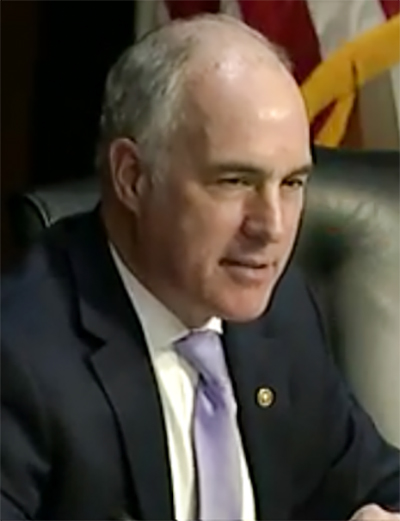
Sen. Bob Casey (D-Pa.)

Toward the end of the session, Senator Bob Casey (D-Pa.) brought up “the science of milk” and addressed his question specifically to Dr. Olanrewaju Falusi, a pediatrician who is director of the Children’s National Health System in Washington, D.C.

It was not surprising that the most important question of the day got the most disappointing and predictable answer. 

After hearing Dr. Falusi present her comments about how early childhood diets are responsible for critical programming of lifelong metabolism, brain development, and educational outcomes, Sen. Casey addressed Dr. Falusi as follows:

“There’s been much discussion in Pennsylvania about the ability of schools to serve whole milk to students. What does ‘the science’ say about the appropriate levels of whole milk consumption?” the Democratic Senator from Pennsylvania asked.


Dr. Olanrewaju Falusi, a pediatrician who is director of the Children’s National Health System in Washington, D.C.

Predictably, Dr. Falusi replied: “As a pediatrician, I recommend to my patients that they drink water or low-fat or fat-free milk. We know that milk has many benefits from protein and calcium and Vitamin D. We also know, though, that lower fat and lower sugar in diets are healthier for children.”

Dr. Falusi continued matter-of-factly: “What we would admonish, from the American Academy of Pediatrics, is that the standards for school nutrition programs — including the type of milk served — really be based on the science, and the science is that lower fat and lower sugar are what we should be advocating for children. And we do encourage the USDA to rely on the nutrition experts and to look at a number of studies for those guidelines.”

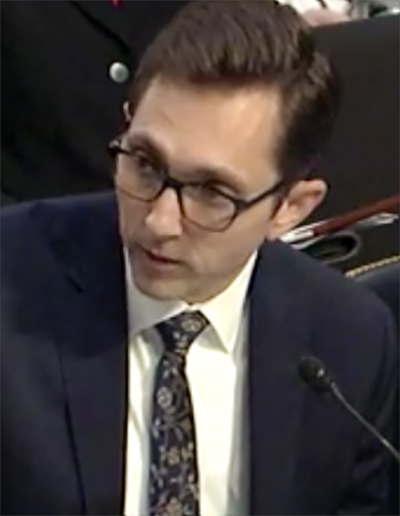
Senator Deb Fischer (R-Neb.) asked about students turning to competitive foods when the school lunch does not appeal or satisfy. She addressed her concern to USDA Acting Deputy Under Secretary for Food, Nutrition and Consumer Services, Brandon Lipps.

Lipps replied that the government seeks a balance between the school lunch and “competing foods” allowed on campus. He also noted they are “looking to see that kids are not leaving the school lunch line to buy competitive foods elsewhere on campus. But we’re not making the schools or states be the food police.”

Sen. Fischer asked: What are the foodservice professionals telling you? Are kids eating the school lunches?


Brandon Lipps, USDA Acting Deputy Under Secretary for Food, Nutrition and Consumer Services

Lipps replied that the “schools are very positive on the flexibilities in the final rule… It’s not a major change, just a comfort in long-term planning. Schools have to buy a long way out to plan their menus in the way that we require them to do. So they’re glad to have finality on the flexibility” (for example, they have flexibility to serve 1% flavored milk instead of only fat-free).

In response to the suggestion that the nutrition standards are “no good.” Lipps stated that, “We put in a calorie limit in 2009, and if the kids don’t eat half the food on their plate, and if they are getting half of the maximum calories that we provide them, if that’s happening, then that’s a problem.”

USDA is monitoring this, said Lipps: “As you know, the same is true, particularly with milk and the nutrients that it provides, so we are going to continue to listen and see if further flexibility is needed on that front.” 

Repeatedly, the 2010 Healthy Hunger-Free Kids Act was cited for making “historic changes” that led to “greater consumption of fruits, vegetables and whole grains as encouraged by USDA.” But at the same time, panelists repeatedly said fewer eligible families and children use the programs today compared with before 2010, and that obesity and diabetes and hunger are rising in our youth.  

When asked by Sen. Joni Ernst (R-Iowa) about school waste related to the 2010 changes, USDA Under Secretary Lipp said flexibility in the final rule on whole grains, sodium and 1% low-fat flavored milk went a long way toward changing that.

“I don’t think we have anyone telling us we need a major change in the nutrition meal pattern requirements for the school meal, but they do want flexibility,” said Lipp.

Sen. Ernst also noted the concerns about portion sizes being the same for a first-grader as an eighth-grader. “School foodservice professionals say they want the flexibility to vary it,” she said. “Right now, booster clubs are bringing in food for athletes who are not getting enough. And with mandated portions and mandated nutrition requirements, we are seeing a lot of food waste, what can USDA do?”

Lipp replied that USDA will continue to “look and listen.”

Josh Mathismeier, Director of Nutritional Services for Kansas City public schools and Mike Halligan, CEO of God’s Pantry Food Banks, based in Lexington, Kentucky, said participation would increase if they could take the food to the people instead of forcing the people to congregate to access the food.

Some states have actually hired market research firms to do focus groups with eligible families to learn how to increase their enrollment.

-30-