
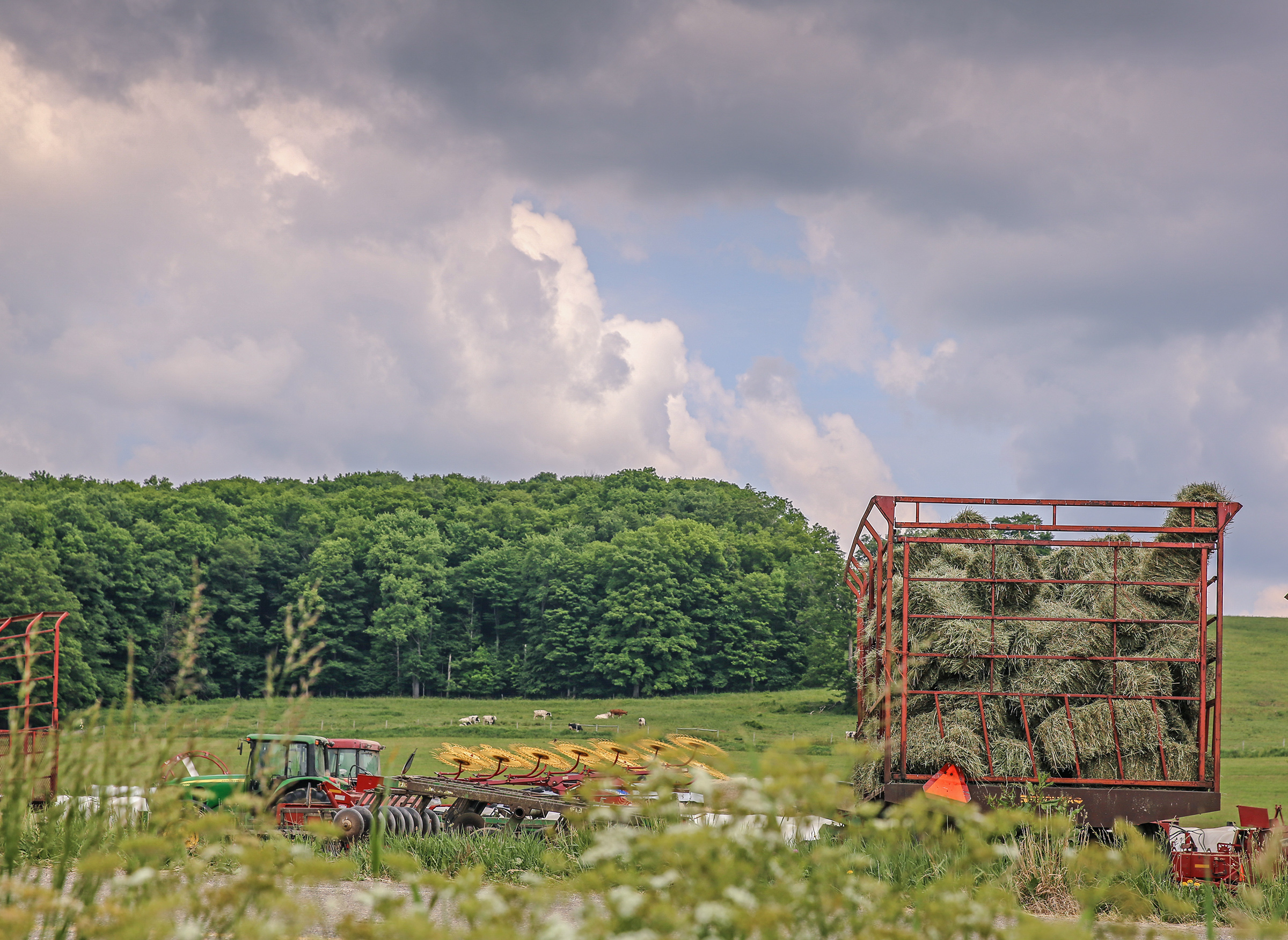
Bottomline: Keep an eye on the pot, even if doing so draws accusations of claiming a tepid pot is about to boil. Every cook knows what happens when looking away. Here’s an update since the meeting between elected officials and the U.S. Fish and Wildlife Service.
By Sherry Bunting, Farmshine
MEADVILLE, Pa. – The U.S. Fish and Wildlife Service (USFWS) has “committed to a ‘pause’ and will draft a new proposal that could potentially limit the size and scope of a National Wildlife Refuge in the French Creek watershed,” according to a press release from Congressman Mike Kelly’s office.
The proposed refuge and concerns shared by farmers were first reported in the June 30 Farmshine, followed by a more detailed report in the July 7 edition.
Congressman Kelly and elected officials from affected counties met on July 6 at the Crawford County Courthouse in Meadville to discuss the proposed Refuge with USFWS representatives Vicki Muller, the project manager, and Mark Maghini, a realty chief.
This comes after the ‘public scoping’ phase where opposition and concerns were raised by farmers, members of Congress, county leaders, local residents, as well as questions about its necessity being raised by those involved in local land trusts and conservation efforts already operating in the watershed.
The ‘planned Refuge’ would create new federal ownership and oversight of lands in the watershed of nearly 800,000 acres along the 117-mile French Creek through portions of Crawford, Erie, Mercer and Venango counties, Pennsylvania and Chautauqua County, New York.
According to Congressman Kelly’s office, the USFWS acknowledged it did not properly engage and inform the communities of impact and will include elected officials in future planning.
“A pause on the proposed French Creek National Wildlife Refuge is absolutely necessary. Officials from the U.S. Fish and Wildlife Service have told us there is no official plan or size for this refuge, and I believe that’s exactly the problem — this has been a solution in search of a problem with farmers and landowners caught in the middle. The federal government does not need to have control of French Creek,” said Rep. Kelly in the statement.
“We all support a healthy and vibrant French Creek, but I believe local conservation efforts are already accomplishing what the USFWS is trying to do,” he noted.
Nothing to see here. Just go about your business…
Meanwhile, Maghini, the realty chief (land acquirer) for the Northeast region of the Fish and Wildlife Service indicated in an email to the Meadville Tribune that there is “no proposal,” pointing to a June 4 update at the special webpage for the project with these words highlighted in bold type.
He insists that the goal of the meetings and input-gathering this spring was to “identify whether there’s a role USFWS can play in the French Creek watershed.”
However, the agency’s own documents at the site show it already has a plan and has identified the next steps, which indicate it is already in the process of evaluating those public comments to develop a final proposal, which had a summer 2023 timeline.
Specifically, the “Schedule for Establishing the Proposed French Creek National Wildlife Refuge” on the second page of the May 9 FAQ document at the project webpage, is as follows:
1) Develop draft Land Protection Plan (LPP) and Environmental Assessment (EA) in the Spring of 2023;
2) Conduct public review and comment on proposal in the Spring of 2023; and
3) Evaluate the comments and develop the final plan for approval in the summer of 2023.
The customary procedure is for comments from the public scoping phase to be used when USFWS develops a land protection plan and environmental assessment. The ‘pause’ may extend this schedule to allow more time for the agency to evaluate the comments it received and to include elected officials in its planning.
Whenever a final plan is developed, the public then has 45 days to review and comment before it is ultimately left to the USFWS director, who has the sole authority to approve or disapprove a plan, according to the agency’s FAQ.
Residents tell Farmshine they hope a new draft provides more detail and a much smaller scope, but they also hope the ‘pause’ allows time for more public input on whether or not the Refuge designation is even needed.
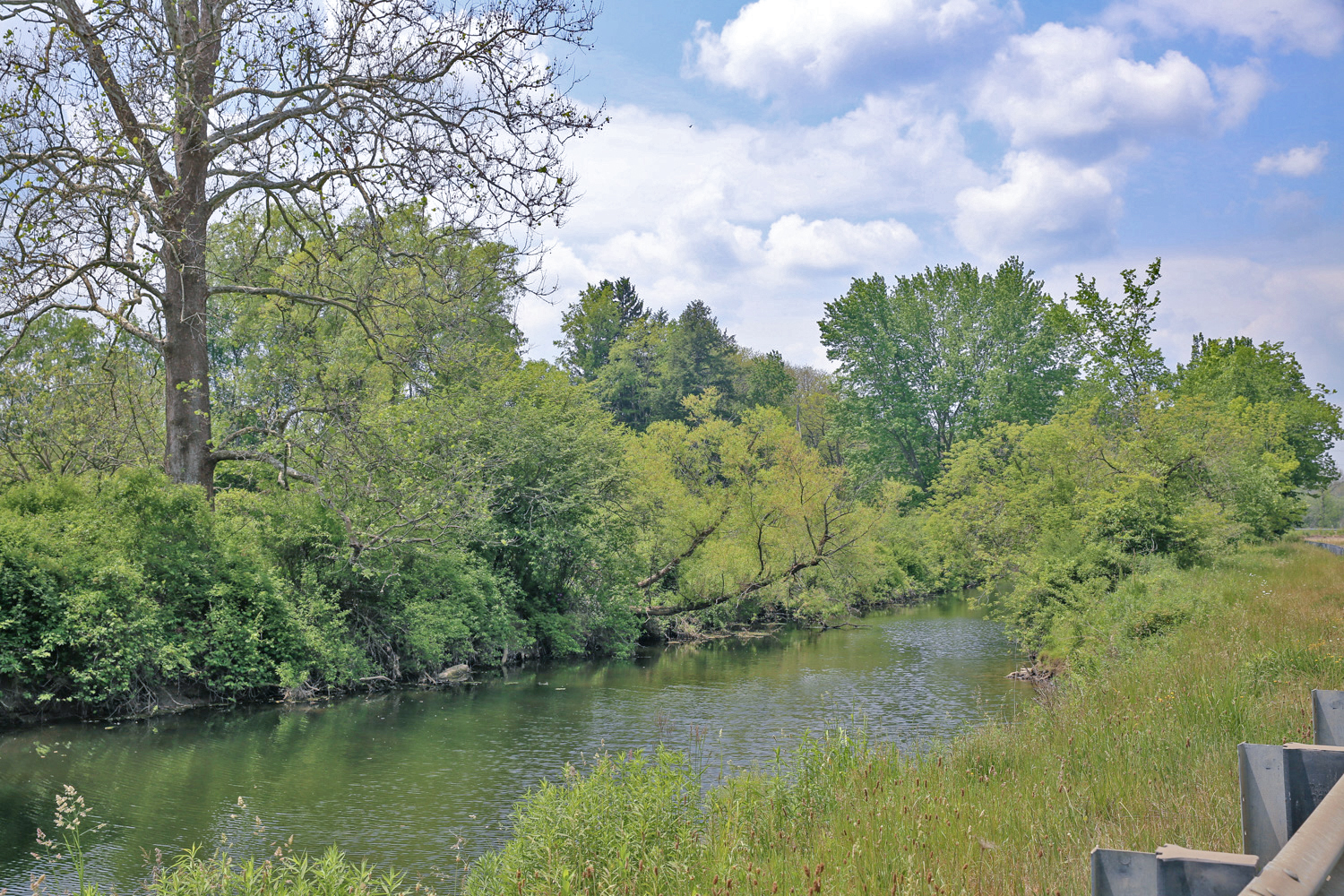
The designation of the French Creek as 2022 River of the Year by Pennsylvania Organization for Watersheds and Rivers came largely due to the success of the existing local conservation efforts in promoting the health and biodiversity of French Creek in the first place, they say.
This brings the feeling that one can farm for generations, keep the working lands clean and natural, and then find out this can lead to being more, not less, vulnerable to having a Refuge designation with potential impacts for the future.
Pennsylvania Farm Bureau legislative director Nick Mobilia said as much to the Corry Journal: “I feel we have presented our issues with the refuge as positively as we can. We asked what USFWS thought was wrong with the waterway — they did not have any areas of concern.
“We as a local collective maintain French Creek and take pride in it — of course we are going to fight for it to be left as it is,” he said. “I think this was realized on (July 6) and (USFWS) will walk away from French Creek and focus on waterways that do need the government’s help.”
Will USFWS walk away? Doubtful.
Maghini, the USFWS realty chief for the region told the Meadville Tribune Friday (July 7) that the agency “looks forward to working with local officials once a plan that incorporates local feedback already collected has been prepared.”
Interestingly, the title of the FAQ document on the project webpage refers to the project as a “Proposal to Expand Refuge Lands in the French Creek Watershed.”
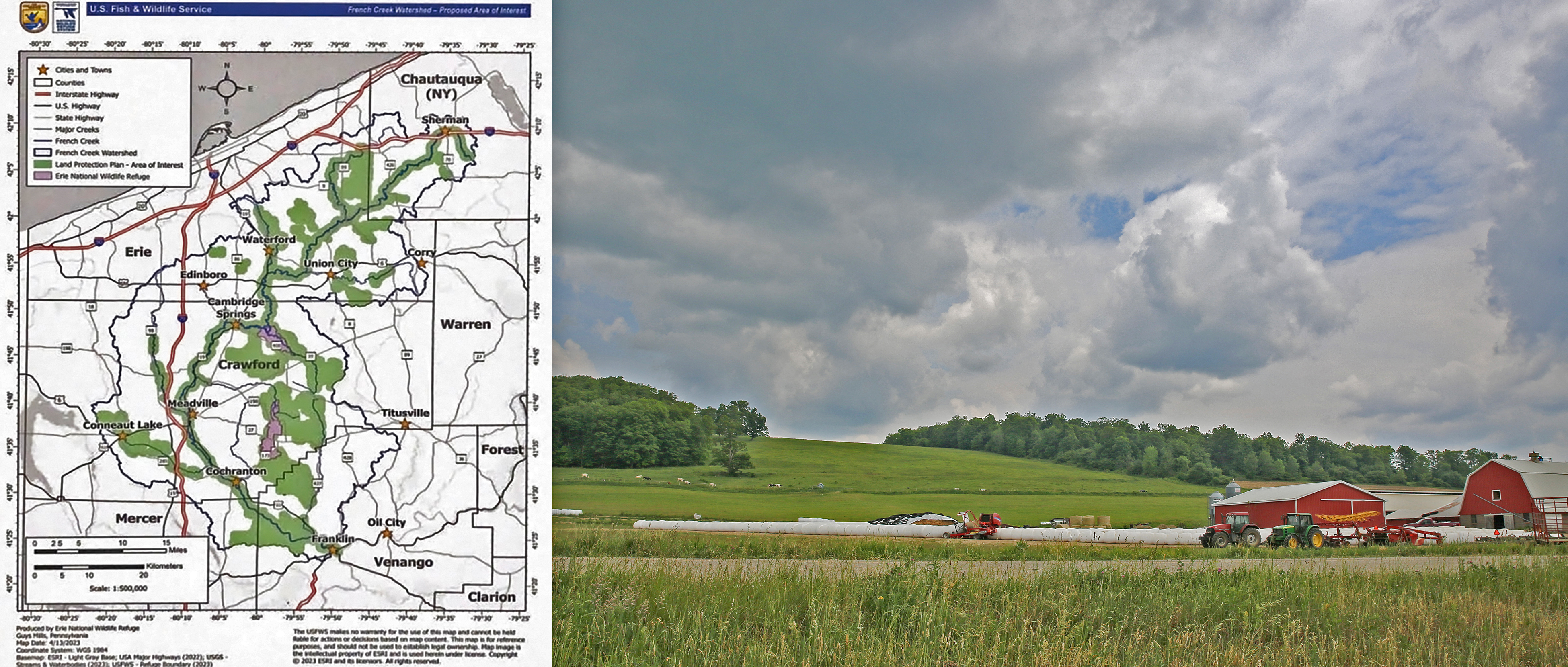
This reference to “expansion” is significant. At the center of the land protection plan “areas of interest” on the USFWS conceptual map (above) lies the already existing Erie National Wildlife Refuge (shaded pink within the green). Previously managed by Muller, the existing Erie National Refuge encompasses 8,777 acres of the 798,000-acre French Creek watershed.
At public meetings this spring, a farmer recalled his family’s farmlands eventually falling into eminent domain in the 1970s – more than a decade after private lands within what is today the Erie National Wildlife Refuge were originally designated by the USFWS in the late 1950s.
According to local newspaper accounts, Muller responded by telling the crowd that the USFWS “doesn’t do that anymore.”
The other significant aspect of ‘expanding’ an existing refuge vs. declaring a new one is that the Inflation Reduction Act provided climate resiliency and biodiversity funds for 2023 through 2026, including more than $121 million to the USFWS for restoration, rebuilding and expansion of existing wildlife refuges and $125 million for endangered species recovery.
The latter identifies 32 initial plant and animal species to be recovered “wherever found.” One, for example, is the snufflebox mussel with one area shown on its map as the French Creek watershed.
Will the public get more input? Will it help?
USFWS documents explain that when land protection plans are drafted and approved, they include land acquisition timelines that follow a “Landscape Conservation Design to ensure actions contribute to the landscape-level vision.”
Will a ‘pause’ give farmers, landowners and communities more say in the vision for their landscape, one they want to retain locally? Will the USFWS commitment to include elected officials in the planning happen before or after the new draft is presented?
Revamped ‘live text’ at the special webpage for the proposal notes that the USFWS review of public comments in April and May boil down to the following beliefs held by residents that USFWS says it agrees with:
1) Residents have a deep affection for French Creek;
2) They believe maintaining use of prime agricultural lands is important;
3) They value the rural character of the watershed and want to ensure its persistence; and
4) They value local land trusts within the community and trust them in their land protection efforts.
USFWS states further that a National Refuge designation is what authorizes the agency to pursue the land acquisitions from willing sellers and that it does not detail how USFWS would manage the lands it acquires through fee-title or easement.
USFWS also states that it does not fund local conservation efforts because it must show a dollar of federally-acquired land for every federal dollar it spends.
However, within this two-page “Proposal to Expand Refuge Lands,” the agency lists goals for “new refuge lands” (beyond the existing Erie National Refuge) that would allow the agency to “protect and manage the French Creek and its tributaries and wetlands.”
It also purports to “help” local conservancies by adding federal acquisitions to local acquisitions since none of these entities have access to unlimited funds. The only way it can “help” is to federally acquire land.
The U.S. Fish and Wildlife Service is a Bureau within the U.S. Department of Interior that operates in a quasi-independent fashion, having federal authority to establish and manage protected lands within its National Wildlife Refuge System, and to complete approved land protection plans over subsequent years, through its Land Acquisition and Realty division.
According to that division’s section of the USFWS website, funding for land acquisition comes from the Migratory Bird Conservation Fund through federal Duck Stamps and import duties on arms and ammunition as well as through the Land and Water Conservation Fund from offshore oil and gas leases.
In 2021, at the start of the Biden Administration, the USFWS updated its “Climate Adaptation Strategy” to be a framework that is part of the Administration’s “U.S. Climate Resilience Toolkit.”
Several documents available at the USFWS website explain that this toolkit has now equipped USFWS to “take immediate action to build ecosystem resilience in the face of climate challenges.”
As noted in the previous Farmshine articles, this is a process that moves at a snail’s pace — with or without a ‘pause.’
The ‘pause’ is expected to move the project from the front-burner to the back-burner — for now — amid the public heat surrounding it, but this doesn’t mean it is off the stove.
National Wildlife Refuge designations and land protection plans are long-simmering recipes, so it’s important to keep eyes on the pot while the heat is presumed to be turned down. Does a watched pot boil?
-30-
Photos by Sherry Bunting

 Ag Moos