What’s the future for fluid milk?

Fluid milk sales are up, Whole Milk for Healthy Kids Act is moving. Meanwhile industry globalists put big bets on ESL, shelf-stable, with favor from Vilsack  

By Sherry Bunting, Farmshine, October 18, 2024

EAST EARL, Pa. — Protein is all the rage right now, and consumers are turning back to real milk as they realize its natural high quality protein benefits. Year-to-date fluid milk sales continue to outpace year ago, and that’s good news. Here are some key factors in the future of fluid milk in the U.S.

Fluid milk sales up!

July’s total packaged fluid milk sales more than recovered the June slump — in a big way, and August looks promising too.

USDA estimated packaged fluid milk sales at 3.4 billion pounds in July, up 4.3% year-on-year (YOY). This amplifies the pivotal year-to-date trend above year ago for the first time in decades (except the 2020 pandemic year).

Specifically, USDA’s Estimated Fluid Milk Product Sales Report for July, released in late September, noted conventional fluid milk sales total 3.7% higher YOY, with organic up 11.7%.

Conventional unflavored whole milk sales were up 4.7% YOY in July, while organic whole milk sales were up 17.1%.

Flavored whole milk sales were mixed because these sales rely upon what processors are willing to make and offer on store shelves, not necessarily reflecting what consumers want to buy. When fewer packages of whole flavored milk are offered, the full potential of sales are restrained.

Year-to-date (YTD) sales of all fluid milk products for the first seven months of 2024, at 24.7 billion pounds, are up 0.7% YOY, adjusted for Leap Year. Of this, YTD conventional whole milk sales for the first seven months of 2024, at 8.8 billion pounds, are up 2.1% and organic whole milk sales at 914 million pounds are up 12.6%.

The August report to be released in the coming weeks is shaping up similarly. August Class I utilization pounds reported last week by USDA are up 1.1% YOY and 1.1% YTD (Jan-Aug).

Making more fat, importing it too?

Meanwhile, the monthly World Agricultural Supply and Demand Estimates (WASDE) released Oct. 9 reduced its milk price forecasts for the rest of 2024 and into 2025, expecting Class III prices to fall from September highs as cheese price declines are expected to more than offset the higher whey prices.

This report is looking at all the major new cheese capacity coming online in the next 12 months, which is expected to saturate the cheese market to drive prices lower so that U.S. cheese makers can be globally competitive and continue exporting record amounts of cheese.

But is the milk available to do this? Likely not without robbing from Classes I, II and IV channels. Still, the WASDE forecasts lower Class IV prices also due to the abruptly declining butter price being only partially offset by the higher nonfat dry milk prices.

In short, dairy farms are making higher-fat milk, and the food industry is importing more milkfat, especially in the form of whole milk powder. WMP imports have been up by a record amount YOY in each of the past four years, especially 2024.

Restoring whole milk choice for kids!

Now would be a particularly good time for whole milk choice to be restored in our nation’s schools since we apparently have too much milkfat and not enough skim. Given this scenario, how can anyone in this industry still believe the whole milk in schools would hurt the industry’s ability to make enough butter and cheese. 

Unless it is excess butter and cheese that is needed to push prices down in order to continue beating record exports at reduced prices paid to farmers. 

Getting whole milk choice into schools would help. IDFA has been touting the Whole Milk for Healthy Kids Act. NMPF says they are on board too. This means the industry is united, right?

What are the chances that GT Thompson’s bill to bring whole milk choice back to schools will finally make it all the way to the President’s desk?

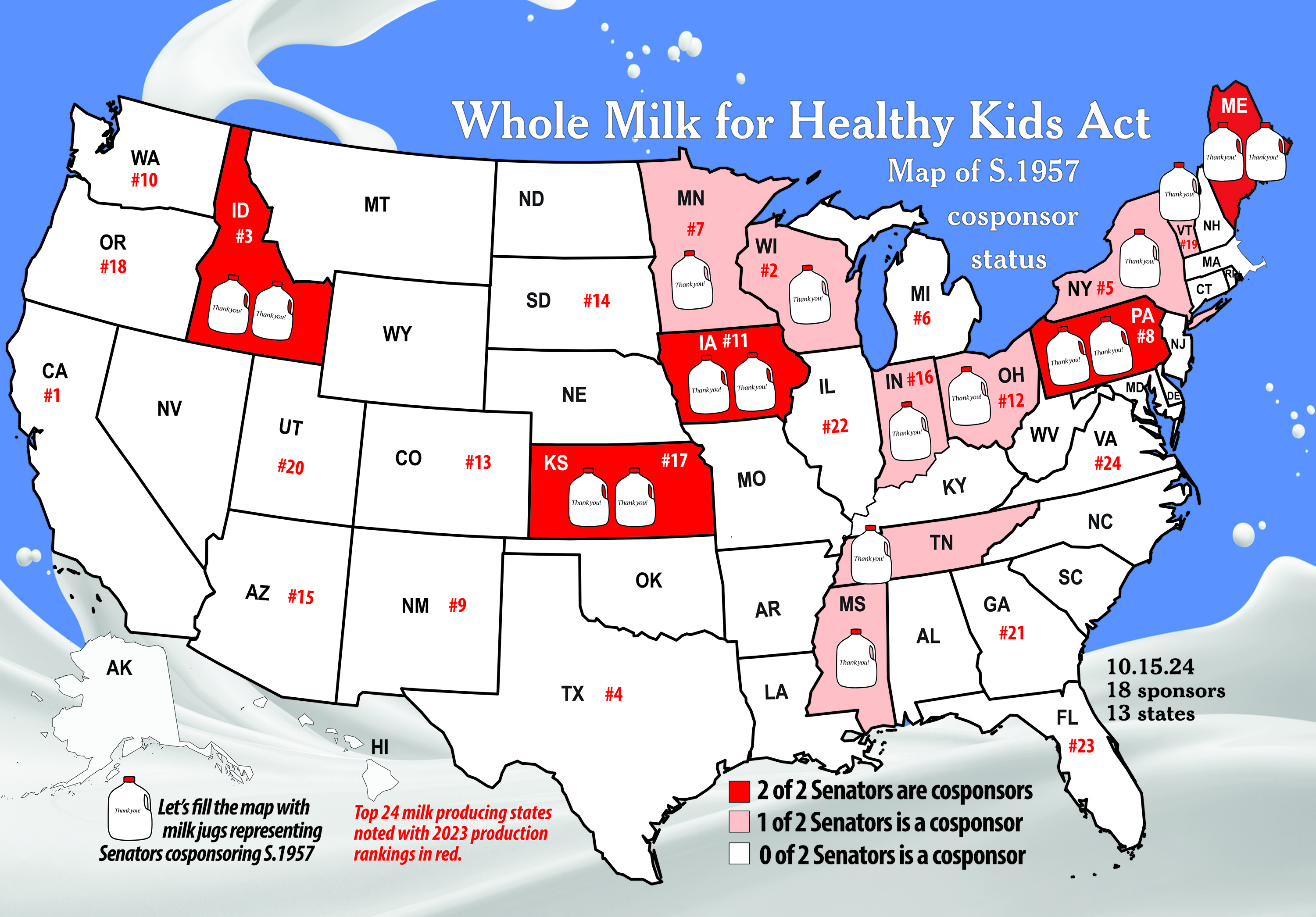
For starters, it passed the House by an overwhelming bipartisan majority last December. The Senate bill, S. 1957, has 11 Republicans, one Independent and five Democrats signed on, including notable Democrats such as Amy Klobuchar of Minnesota, Peter Welch of Vermont, Kirsten Gillibrand of New York, and John Fetterman of Pennsylvania who chairs the Senate Ag Subcommittee on Nutrition. 

The main sponsor is Republican Senator Roger Marshall of Kansas, a doctor. States represented are Pennsylvania, Vermont, Wisconsin, Idaho, New York, Iowa, Ohio, Indiana, Tennessee, Maine, and Mississippi.

In fact, Pennsylvania now has both Senators signed on. Senator Bob Casey Jr. (D-Pa.) is late to the party, but he has finally signed on as a cosponsor of S. 1957 on Sept. 19. It’s nice to see both senatorial milk jugs filled on the map for the Keystone State, but the bill needs more cosigners to fend off the blockade by Senate Ag chairwoman Debbie Stabenow (D-Mich.).

GT has included the Whole Milk for Healthy Kids Act in the House Ag Committee-passed farm bill. Word from Washington over the past few weeks is that a new farm bill is expected to get done after the elections in the lame duck session, and that GT will fight to keep the Whole Milk for Healthy Kids Act in the bill. Let’s hope so.

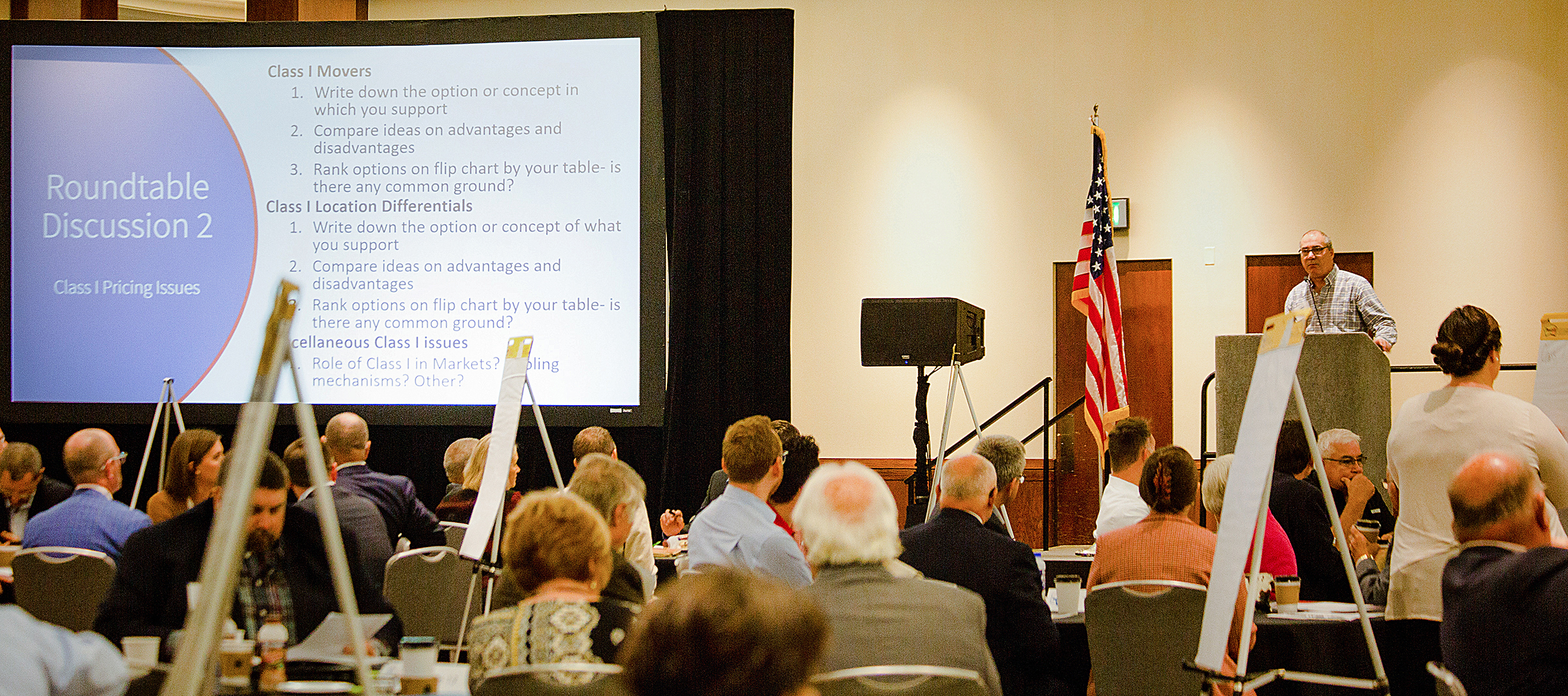
USDA: two movers for Class I?

Also related to Class I fluid milk sales, the dairy industry awaits a final decision on USDA’s proposed changes to federal milk pricing formulas, which includes a surprise for fluid milk: splitting the baby and adding a fifth class of milk in the form of two Class I mover announcements each month. 
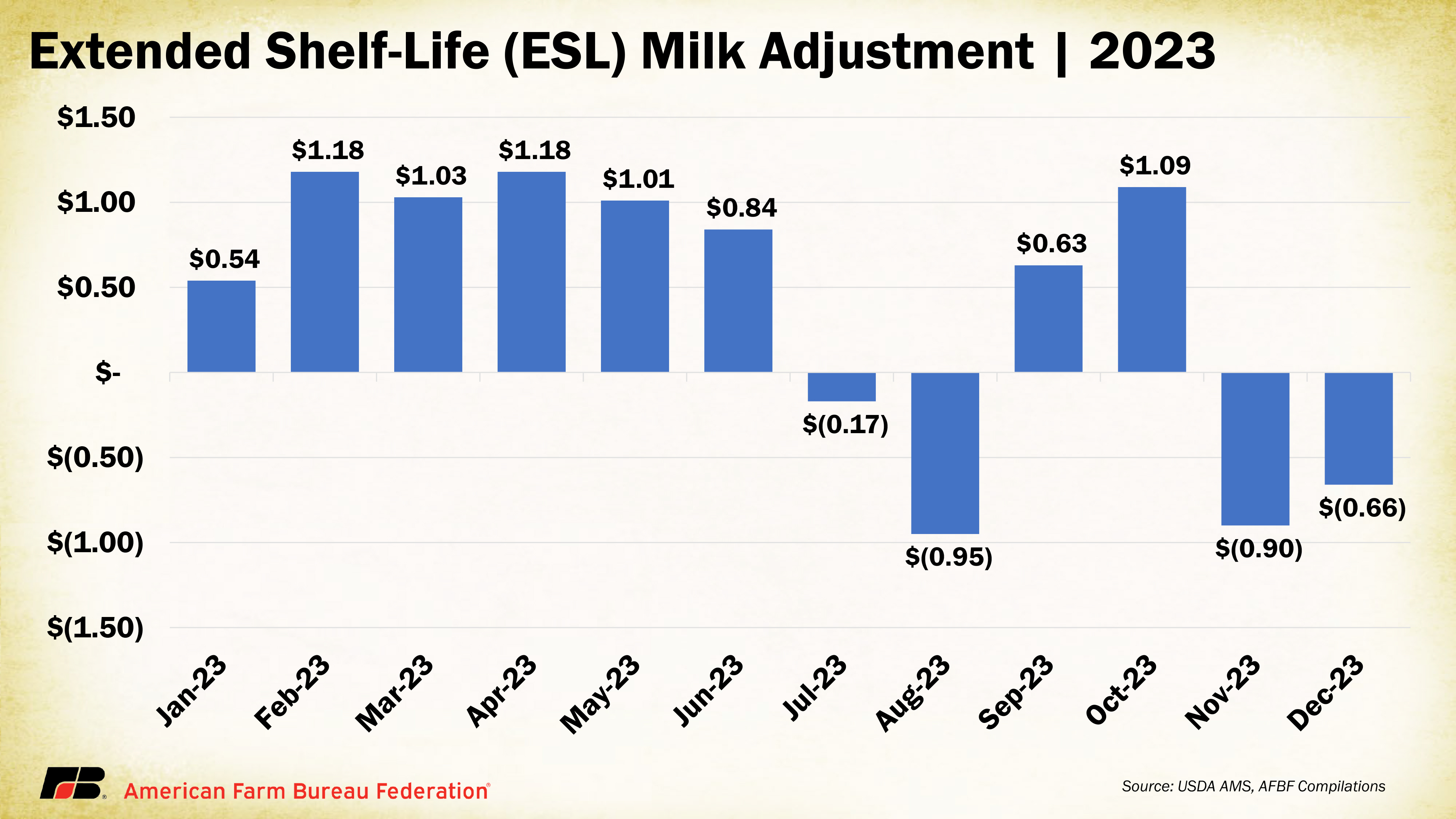
The hearing record is woefully inadequate. No proposal. No evidence. No testimony. No analysis. No parameters. No definition. Even USDA’s own static analysis shows these two movers would be as much as $1 or more apart in any given month.

Fresh, conventionally processed (HTST) milk would go back to being priced by the the higher of the Class III or IV advance pricing factors to determine the Class I skim milk base price portion of the mover. 

However, milk used to make extended shelf life (ESL) fluid milk products, defined only as “good for 60 days or more,” would continue to be priced using the average of these two pricing factors, plus-or-minus a rolling adjuster of the difference between the higher-of and average-of for 24 months, with a 12-month lag.

With two movers, fluid milk costs could be different for plants in the same location based on shelf life, with no clear definition for the new class, nor parameters established to qualify. Could we see label changes to move between movers?

Processors will know the rolling adjuster 12 months in advance, due to the “lag.” They will know the two advance-priced calculations (higher-of and average-of) a month in advance. They will have it charted in an algorithm no doubt and make decisions accordingly.

Farmers, on the other hand, will find out how their milk was used and priced two weeks after all their milk for the month was shipped. Those milk checks will be even less transparent than they are now.

Big bets on ESL, shelf stable

The dairy checkoff has openly identified ESL, especially shelf stable aseptically packaged milk, as its “new milk beverage platform,” using dairy farmer funds to research and promote it and to study and show how consumers can be “taught” to accept it.

The whole deal is driven by the net-zero sustainability targets. So, follow the money.
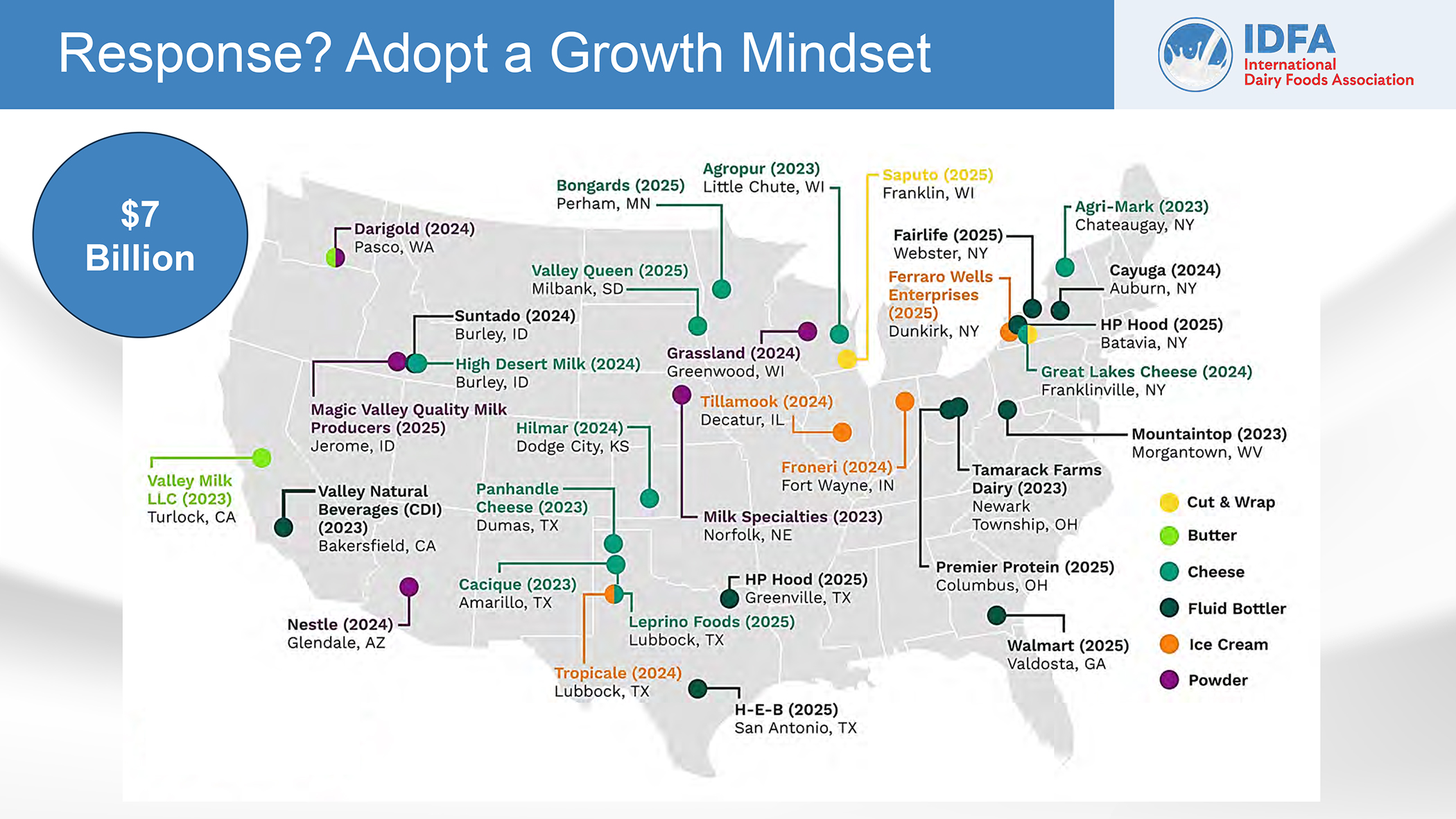
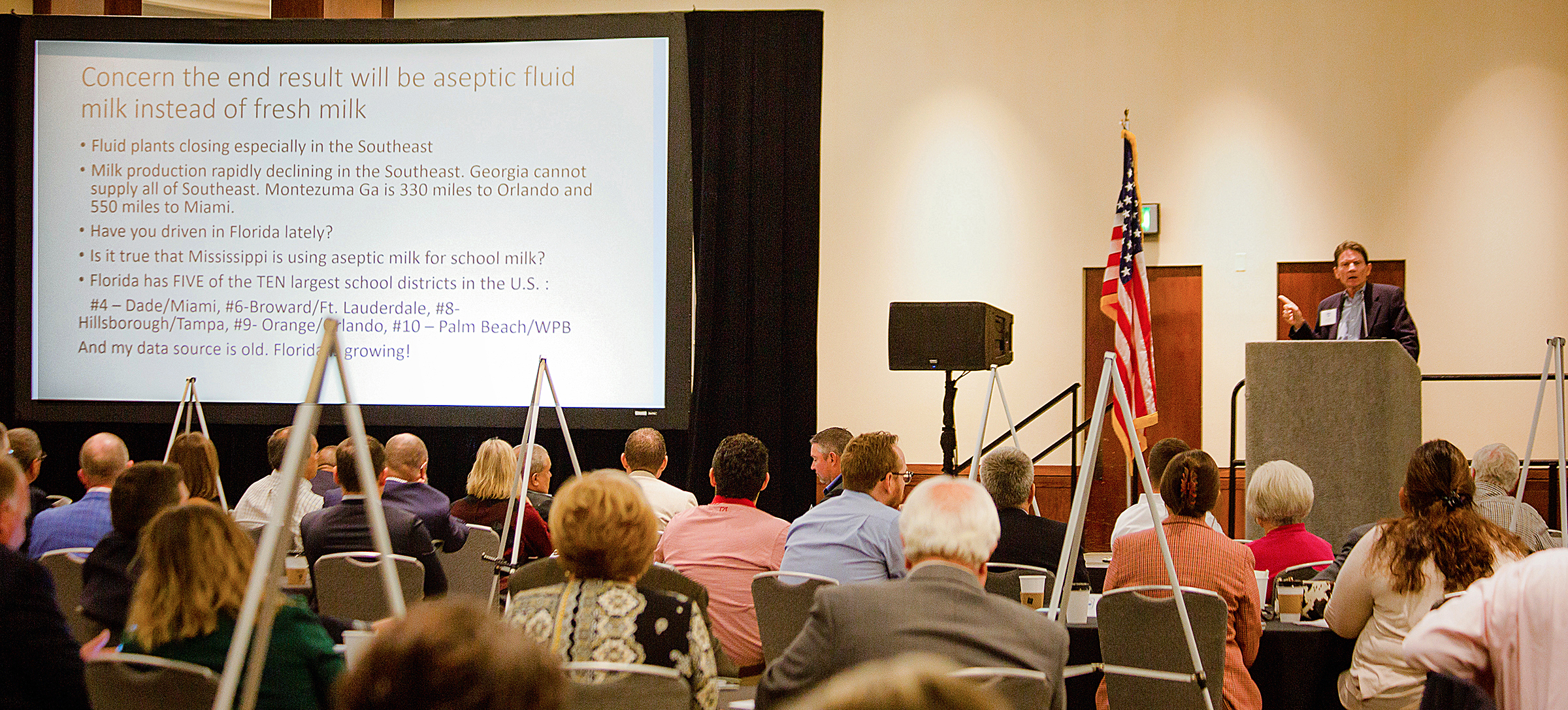
Dr. Michael Dykes of IDFA, at the Georgia Dairy Conference in January 2024, told dairy producers that “this is the direction we (processors) are moving… to get to some economies of scale and bring margin back to the business.”

He said the planned new fluid milk processing capacity investments are largely ultra-filtered, aseptic, and ESL — 10 of the 11 new fluid plants on the IDFA map he displayed are ESL. Some will also make ultrafiltered milk, and some will make plant-based beverages also.

Meanwhile, the linchpin of regional dairy systems is conventionally pasteurized (HTST) fluid milk, prized as the freshest, least processed, most regionally local food at the supermarket.

To be sure, this two-mover proposal fits the climate and export goals set forth by the current Ag Secretary Tom Vilsack when he was working as the highest paid dairy checkoff executive in between the Obama and Biden administrations. 

The pathway to rapidly consolidate the dairy industry to meet those goals is to tilt the table against fresh fluid milk, something he already put a big dent in when removing whole milk from schools.

They decided thou shalt drink low-fat milk and like it. Apparently, they are equally convinced about ESL / shelf stable milk as the way of the future and will continue using mandatory farmer checkoff funds to figure out how to get consumers to like that too.

Just this week, the food writer for The Atlantic did a piece on shelf-stable milk, calling it “a miracle of food science” and lamenting in her Op-Ed that it’s a product “Americans just can’t learn to love.”

Author Ellen Cushing took jabs at America’s preference for fresh natural milk from a global perspective, without a thought for the local dairy farms and regional food systems that are tied to fresh milk. She states that by worldwide standards, other countries have gone shelf-stable milk, which she describes as “one of the world’s most consumed, most convenient and least wasteful types of dairy.”

Processors are making big bets on consumer conversion to ESL and shelf-stable.  There are cards to play in every hand. TO BE CONTINUED!

-30-

There is NO basis for two Class I movers in FMMO recommended decision!

AUTHOR’S NOTE: Who’s the wizard behind the curtain on USDA’s last-minute milk pricing surprise, the splitting of the Class I baby to favor ESL? Vilsack, of course, with a little help from his checkoff cronies at Midwest Dairy and DMI — masquerading as ‘dairy farmers.’

By Sherry Bunting

USDA’s recommended decision on Federal Milk Marketing Order Class I (fluid milk) formulas brought a big surprise getting very little attention. That surprise: “splitting the Class I baby” and adding what constitutes a “fifth Class” of milk — TWO Class I movers announced each month.

ZERO proposals to divide Class I into a two-mover system were aired at the national hearing. Even USDA’s analysis shows the two movers would differ by as much as $1 apart — or more — in any given month.

The hearing record is woefully inadequate, indeed completely void of testimony for a second Class I mover. No proposal. No evidence. No testimony. No analysis. No parameters. No definition.

What does this surprise two-mover decision mean? 

Fresh, conventionally processed (HTST) milk would go back to being priced by the prior method, using the higher of the Class III or IV advance pricing factors to determine the Class I skim milk base price portion of the mover. 

On the other hand, milk used to make extended shelf life (ESL) fluid milk products, defined only as “good for 60 days or more,” would continue to be priced using the average of these two pricing factors, plus-or-minus a rolling adjuster of the difference between the higher-of and average-of for 24 months, with a 12-month lag.

Confused yet? 

The industry is calling this surprise two-mover twist ‘innovative’ and ‘creative’, even ‘brilliant.’ But let’s hold the horses a moment. 

With two movers, fluid milk costs could be different for plants in the same location based on shelf life. Could processors change the label to move between the movers and pay whichever mover was lower? Who knows? There is no clear definition for the new class, and the parameters to qualify are non-existent.

ESL processors will know the rolling adjuster 12 months in advance, due to the “lag.” They will know the two advance-priced movers a month in advance. They will have it charted in an algorithm no doubt, and make decisions accordingly.

Dairy farmers, on the other hand, will find out how their milk was used and priced two weeks after all their milk for the month was trucked off the farm. If the two-price Class I system becomes law, dairy producers’ milk checks will be even less transparent than they are now!

Not only does the USDA hearing record and decision fail to clearly define ESL, the industry doesn’t even have an exact and generally-accepted definition or standard for ESL.

ESL is both a loose and specific term.

Generally speaking, ESL is a term covering a broad range of products — ranging from UHT (ultra high temperature) or ultra pasteurization, aseptic packaging, to the inclusion of a process that combines microfiltration, skim separation, and indirect heating (in stages). These processes yield what is more specifically referred to as ESL fresh milk with a longer shelf life in refrigeration, but is not shelf-stable.

What’s at the root here?

Dairy checkoff personnel have openly identified ESL — especially shelf stable aseptically packaged milk — as its “new milk beverage platform.” Dairy farmers’ promotion funds are being used to research and promote ESL milk, as well as studying and showing how consumers can be “taught” to accept it.

For the past few years, the four research centers supported by the checkoff have been drilling into milk’s elements to sift, sort, and test different combinations to reinvent milk as new beverages.

In 2023, North Carolina State researcher Dr. MaryAnne Drake —speaking at the 2023 Georgia Dairy Conference — talked about this “new milk beverage platform. We are after a shelf-stable milk that tastes great and meets our consumer’s sensory needs and our industry’s sustainability needs,” she said.

Bingo. Dairy checkoff funds for ESL are being driven by the net-zero sustainability targets. And now USDA’s federal milk order changes are proposing to lower dairy farmers’ Class I income and/or competitively favor, and in a way subsidize, ESL processors over fresh HTST fluid milk processors. Follow the money.

Dr. Michael Dykes of IDFA, at the Georgia Dairy Conference in January 2024, told dairy producers that “this is the direction we (processors) are moving… to get to some economies of scale and bring margin back to the business.” He said the planned new fluid milk processing capacity investments are largely ultra-filtered, aseptic, and ESL — 10 of the 11 new fluid plants on the IDFA map he displayed are ESL. Some will also make ultrafiltered milk and plant-based beverages too.

The linchpin to regional dairy systems and markets for milk from farms that fit USDA’s description of small businesses is the processing of fresh, conventionally pasteurized (HTST) fluid milk.

Meanwhile, dairy checkoff overseers, in cahoots with processors, are making big bets that consumers will embrace the obvious conversion underway to the consolidating shelf stable ESL milk, emboldened by the average-of pricing that has failed farmers miserably over the past five years and is now part of the proposed two-price Class I system mysteriously added to the USDA recommended decision when a two-price Class I system was never noticed as part of the hearing scope.

In the recommended decision, USDA notes that ESL currently represents 8 to 10% of total fluid milk sales but does not present the full picture of how the industry began aggressively converting to ESL since 2019 when Class I average-of was implemented. More of these accelerated investments will become operational in 2024-26.

Before we know it, the industry will have converted to ESL, and dairy farmers will once again experience disorderly marketing, depooling, and the basis risk of the mysterious average-of mover.

Dairy farmers have seen this movie before. 

In 2018, the average-of method — which changed how the Class I base was calculated — was portrayed by National Milk and the IDFA as “revenue neutral.” But at the recent national milk order hearing, testimony revealed that farmers experienced Class I revenue losses totaling nearly $1.25 billion from May 2019 through July 2024… and other impacts. 

Disorderly markets via the ‘average-of’ continue to result in losses and disrupt performance of risk management tools that fail to protect farmers against the intervals of extreme basis risk.

Proponents say the proposed rolling 36-to-13-month ESL adjuster on the second mover in USDA’s decision provides compensation to farmers for the difference between average-of and higher-of. However, that occurs gradually — over time — with a lagged interval. If tight milk supplies boost commodity prices and drive up all classes of milk, then dairy farmers’ incomes will at least partially lag years behind real-time markets!

ESL processors like Nestle and fairlife testified that the average-of method over the past five years allowed them to use Class III and IV hedges on the CME to offer flat 9- to-12-month pricing to wholesale customers and increase their sales. Nice to know the big corporations made money on that inequitable Class I pricing system.

Would a two-mover system ultimately reduce farmers’ access to milk markets in some regions and diminish the food security of those consumers? Watch the impact of a new, unregulated ESL plant now being built in Idaho!

Many legitimate questions lack answers

Milk is commonly prized as the freshest, least processed, most regionally local food at the supermarket. Will the USDA recommended decision accelerate consolidation and a reduction in fresh fluid milk availability for consumers?

Has USDA considered the purpose of the FMMO system is to promote orderly marketing and the adequate supply of fresh fluid milk? Will consumers accept the taste of the not-so-fresh ESL, or migrate faster to other beverages if fresh fluid milk is less available to them?

How will the two-mover system impact dairy farms located outside of the industry’s very specific identified growth centers? 

Will this perpetuate the wide divergence between Classes III and IV that has been an issue since 2019, further punishing dairy farmers with disorderly marketing and opportunistic depooling?

Who knows? The hearing failed to define, examine, or obtain evidence on any such questions… or any other questions that the hearing process is meant to be open to because this decision falls outside of the hearing scope!

Vilsack strikes again?

This proposal — a price break favoring ESL milk — fits the climate and export goals set forth by Ag-Secretary-then-DMI-executive-then-Secretary-again, Tom Vilsack. The pathway to rapidly consolidate the dairy industry to meet those goals is to tilt the table against fresh fluid milk. This is something Vilsack already put a big dent in by removing whole milk from schools.

It’s like one well respected veterinarian in the industry observed recently in conversation: “Someone decided: Thou shalt drink low-fat milk and like it.”

That “someone” is apparently equally convinced that the industry shall move to ESL and aseptic milk processing… while using dairy farmers’ checkoff funds to figure out how to get consumers to like that too.

-30-

Seeds of doubt being sown, Part II: ‘What will processors do with all that skim?’ Oh my!

By Sherry Bunting, Farmshine, Feb. 23, 2024

EAST EARL, Pa. — The status of the Whole Milk for Healthy Kids Act, S. 1957, has 17 Senate sponsors from 13 states, including 12 Republicans, 4 Democrats, and 1 Independent. 

Even though both NMPF and IDFA have shown support for the measure, a bit of resignation can be sensed — riding the overwhelming House vote as enough progress for one legislative session. After taking bows for the performance of the bill in the House, representatives of both NMPF and IDFA – while speaking at winter meetings – have indicated a prevailing view that Senate opposition to S. 1957, is a big barrier. 

They say they are working to get the science in front of the Dietary Guidelines Committee, which has been tried before – over and over.

The DGA committee operates under a USDA that does not want whole milk options in schools or SNAP or WIC. This same USDA is proposing to remove chocolate milk options from schools, except for senior high students, and is proposing to reduce WIC milk by 3 gallons per recipient per month. This same USDA projects 20 billion more pounds of milk will be produced in the U.S. by 2030, according to IDFA CEO Michael Dykes, presenting future trends at the Georgia Dairy Conference in Savannah.

Seeds of doubt about the whole milk bill are being sown among farmers. Some asked me recently if their co-ops will lose money on the deal.

Last week, we discussed ‘Confusion’ — the first of 3 C’s that are facing the whole milk bill within the dairy industry. 

This week we look at the second C: ‘Consternation’ — a fancy word for fear.

“What will they do with all of our skim?” farmers asked me at a recent event. Is this something they are hearing from a milk buyer or inspector?

Here are some facts: Whole milk sales move the skim with the fat — leaving some of the fat through standardization, but not leaving any skim. Therefore, an increase in whole milk sales does not burden the skim milk market.

Surely, the practice of holding schoolchildren hostage to drinking the byproduct skim of butter and cream product manufacturing is a poor business model if we care about childhood nutrition, health, and future milk sales. 

Furthermore, the market for skim milk powder and nonfat dry milk is running strong as inventories are at multi-year lows in the U.S. and globally.

Cheese production, on the other hand, is what is cranking up, and it has been the market dog for 18 months. Like whole milk sales, cheesemaking uses both fat and skim. But cheesemaking leaves byproduct lactose and whey, and it can leave some residual fat depending on the ratios per cheese type.

Things are pretty bad for farmers right now in cheesemilk country. Some tough discussions are being had around kitchen tables. The 2022 Ag Census released last week showed the dire straits for farmers nationwide over the last five years as the number of U.S. dairy farms declined below 25,000, down a whopping 40% since 2017.

Wouldn’t an increase in whole milk sales through the school milk channels help pull some milk away from rampant excess cheese production that is currently depressing the Class III milk price, leading to price divergence and market dysfunction?

While there is no one data source to specifically document the percentage of the milk supply that is sold to schools, the estimates run from 6 to 7% of total fluid milk sales (Jim Mulhern, NMPF, 2019), to 8% of the U.S. milk supply (Michael Dykes, IDFA, 2023), to 9.75% of total fluid milk sales (Calvin Covington, independent analysis, 2024). 

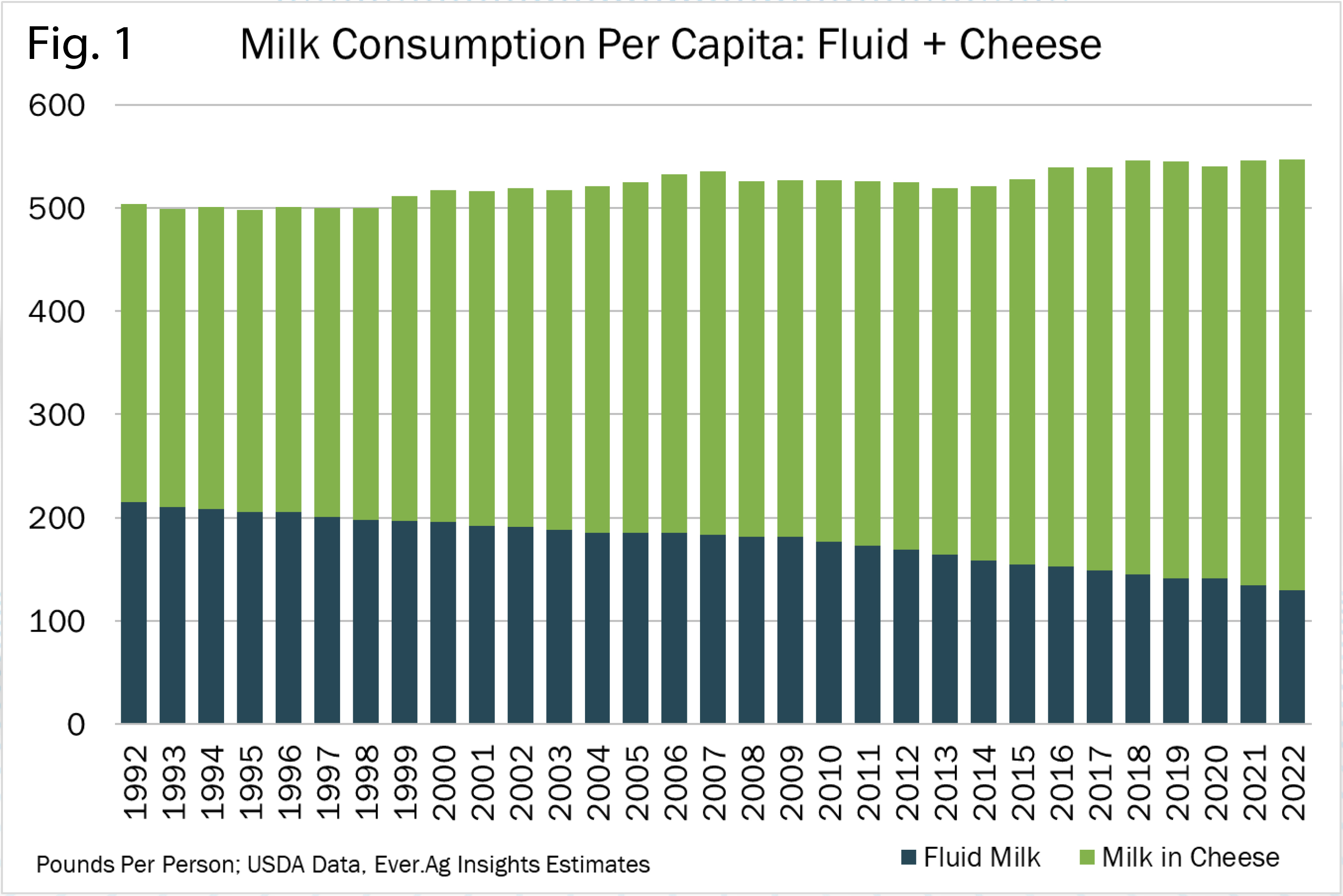
If even half of these sales became whole milk sales, it could modestly positively impact the amount of excess cheese being made even as processors say they plan to make more cheese because people eat more of their milk than are drinking it. (Fig. 1)

Meanwhile, the cheese price is under so much downward price pressure that there is a $2 to $4 divergence of Class IV over Class III causing farmers to lose money under the ‘averaging’ formula for Class I milk. In many parts of the country, farmers lose additional money when the milk that is used in Classes II and IV is depooled out of FMMOs.

Without the ‘higher of’ pricing mechanism that was in place from the year 2000 until May 2019, Class I can fall below the higher manufacturing price, removing incentive to pool, which leaves pooled producers with smaller payments for their milk and leaves the decision about what to pay depooled farmers up to the processors after they’ve succeeded in reducing the benchmark minimum by depooling.

Ultrafiltered (UF) milk represents 2.4% of fluid milk market share, having grown by more than 10% per year for four years with sales up 7.7% in 2023 vs. 2022, according to Circana-tracked market data shared by Dykes.

UF milk is also cheese-vat-ready-milk with capability to remove not just the lactose but also the whey as permeate at the front end for use in distilleries that are now funneling lactose into ethanol production in Michigan and whey into alcoholic beverages in Michigan and Minnesota.

Processors want farmers to do “a tradeoff” to decide how much revenue comes to their milk checks and how much goes to processing investments for the future. The future is being dictated by where we are in fluid milk consumption relative to cheese production.

This is one reason IDFA and Wisconsin Cheesemakers, as well as NMPF, had proposals asking USDA to increase the processor credits (make allowances) that are embedded in the dairy product price formulas. IDFA and Milk Innovation Group also put forward other proposals to further reduce regulated minimum prices.

We wonder with these new processing investments, how is it that the make allowances are too small? Only bulk butter, nonfat dry milk, dry whey, 40-lb block Cheddar and 500-lb barrel cheese (yellow not white) are surveyed for the circular class and component price formulas. Everything else that doesn’t meet CME spec for these specific product exchanges is excluded.

This means the costs to make innovative new products and even many bulk commodity-style products, such as bulk mozzarella, unsalted butter, whey protein concentrate and skim milk powder, can be passed on to consumers without being factored back into the FMMO regulated minimum prices paid to farmers.

If market principles are applied, processors wanting to encourage more milk production, to make more cheese, would pay more for the milk – not less. But when the margin can be assured with a make allowance that yields a return on investment, all bets are off. Cheese gets made for the ‘make’ not the market.

We saw processors petition USDA in the recent Federal Milk Marketing Order hearing to reduce the minimum prices in multiple ways so they can have the ability to pay market premiums to attract new milk. This would be value coming out of the regulated FMMO minimum price benchmark for all farmers to get added back in by the processors wherever they want to direct it.

Cheese is in demand globally, and the U.S. dairy industry is investing to meet this. Dykes told Georgia producers that processors want to grow and producers want to grow. He wasn’t wondering what to do with all of the skim when he asked: “Where will the milk come from for the over $7 billion in new processing investments that will be coming online in the next two to three years?”  

This is happening, said Dykes, “due to market changes from fluid milk to more cheese production (Fig. 1). There’s a lot of cheese in those plans. With over $7 billion in investment… These are going to be efficient plants. You’re going to see consolidation. If you are part of a co-op, you’re going to decide how much (revenue) comes in through your milk check and how much goes into investment in processing for the long-run, for the future. That’s the debate your boards of directors will have.” 

Even the planned new fluid milk processing capacity is largely ultra-filtered, aseptic and extended shelf life, according to Dykes.

“That’s the direction we are moving,” he said. “We are seeing that move because as we think about schools, are we still going to be able to send that truck driver 20 miles in any direction with 3 or 4 cases of milk 5 days a week? Or do we do that with aseptic so they can store it and put it in the refrigerator one night before, and get some economies of scale out of that, and maybe bring some margin back to the business?”

As the Class III milk price continues to be the market dog, we don’t see milk moving from Class III manufacturing to Class IV, perhaps because of the dairy processing shifts that have been led by reduced fluid milk consumption. 

Allowing schoolchildren to have the choice of whole milk at school is about nutrition, healthy choices, future milk consumers, and the relevance of fresh fluid milk produced by local family farms in communities across the country. Having a home for skim does not appear to be the primary factor affecting milk prices where Class III is dragging things down.

Bottomline, dairy farmers should have no consternation (fear) over what processors are going to do with “all of that skim” once they are (hopefully) allowed to offer schoolchildren milk with more fat.

Next time, we’ll address the third ‘C’ – Competition – If kids are offered whole milk in schools, will it reduce the butterfat supply and impact the industry’s cheese-centered future? 

A final note, just in case the question about ‘what to do with all that skim’ still bothers anyone… What’s wrong with animal feed markets for skim milk powder? Protein is valuable in animal health, there are livestock to feed, and people spend major bucks on their pets too. Did you know dog treats made with nonfat dry milk powder, flour and grated cheese are a thing?

That idea got a good laugh from those farmers when I suggested it.

However, Cornell dairy economist Dr. Chris Wolf noted recently how China’s purchases are what drive global skim milk powder and whey protein prices, and that much of that market for both is to feed… you guessed it… Pigs. 

Little bit new, little bit Dé-jà vu – PA Senate Ag hearing digs into ABC’s of milk OOP

Data and reform needed, but is Secretary eyeing portion of estimated $30 million-plus for ‘dairy reinvestment’?

By Sherry Bunting, Farmshine, April 27, 2023

HARRISBURG, Pa. – Little bit new, little bit Dé·jà vu. (That’s French for ‘the feeling of having experienced this situation before.’) 

Those first thoughts came to mind listening to the Pennsylvania Senate Ag Committee’s hearing Tuesday (April 25) on reforming the state’s mandated over-order premium (OOP) that is part of the state’s minimum wholesale and retail milk prices, set by the Pennsylvania Milk Marketing Board (PMMB).

Ag Secretary Russell Redding laid out for state lawmakers the Department of Agriculture’s plan to seek reforms that: 1) uniformly and fairly distribute the OOP, 2) ensure the amounts charged to Pennsylvania consumers substantially equal amounts distributed back to farmers, and 3) uses a distribution system that does not have incentives to avoid paying Pennsylvania producers by selling milk from across state lines.

He said the Department is a “reluctant participant” but sees the need to make the “collective case” for the “composite of Pennsylvania Dairy.”

“We believe there are inequities, and we see division and growing farmer mistrust,” said Redding. “We knew there were data gaps in our petition last year… Think about the OOP as an equation: A + B = C.

“What we know today is that of the $23.6 million in OOP collected by processors in 2022, $14 million was required to go back to farmers. That’s A. 

“B is generated in the marketplace but not collected,” he explained. “Our belief is that this is another $5 to $10 million (annually). 

“C is the total that we believe is in the neighborhood of $28.6 to $33 million. The question is, what do we do about it?” he asked.

He answered to say the only way to fix this is to change the system and begin removing the OOP from the minimum price buildup and instead have the PMMB establish a retail-based premium, collected at that point of sale and remitted to the Department of Revenue into a designated fund.

This would require the legislation.

“The General Assembly could then appropriate direct payments to producers and to reinvestment in dairy processing,” said Redding.

The Secretary called it an “embarrassment that we don’t have this number (B)” to complete the A + B = C equation, but as he talked about the PDA’s plan, we heard articulated for the first time this idea that once numbers can be put to the equation and legislative authority for the Board to devise a formula, the OOP could become a “milk tax.” 

The difference being that many consumers don’t know they are already paying the OOP, but when pulled out of the minimum price buildup, it becomes a known quantity.

“We trust the state to do this with liquor, cigarettes and liquid fuel. The legislature could decide how these funds would be used, and a portion could be used to help processors invest or reinvest,” said Redding.

In fact, Zach Myers for the Center for Dairy Excellence said a study is underway to assess the obstacles that are preventing processing investment and reinvestment in Pennsylvania.

PMMB Chairman Rob Barley noted that, “It’s certainly time to evaluate how the OOP dollars get back to farmers and not pick winners and losers. The over $800 million that has gone back to dairy farmers since 1988, especially when the majority of it did, no doubt made a positive difference, but that is changing,” he said. “Fluid milk sales have dropped in half (since then), and it is difficult to account for the dollars with the current tools that we as a Board have.”

Barley noted that if the process moves forward to reform the structure, perhaps other products could be eventually added.

“Right now we don’t have the authority to do any of this. Going back to the 1988 testimony, the primary reason the over-order premium was added (to Class I) is that was the practical point, that was the mechanism already in place for fluid milk. There is no such system for other classes, and Class I is also more of a localized product, which I think is still true today,” Barley explained.

Going forward, he said, the choices for the Board are “to get rid of what we have, which is a choice many are not in favor of, or to have legislation to change the OOP without violating interstate commerce, or to develop a new system that strengthens the Pennsylvania dairy industry to benefit all sectors.”

Redding stressed the point that, “This is all about the dairy farmer, how do we incentivize what we need? Keeping our eye on the farmer and understanding we can do something extraordinary here, we have this opportunity to extract this premium from the marketplace and get (the OOP) back to farmers and for the purposes of reinvestment…”

That’s the New. Now for the Dé·jà vu…

The next thought to emerge in this reporter’s mind after hearing the new twist on OOP as ‘milk tax’ and a portion for ‘reinvestment’ was this: Everyone is at the table now, sitting up, alert, paying attention, and offering solutions after 15-plus years of meetings, hearings and discussions. But the same bottomline emerges: everyone still wants a dip of the farmer’s elusive cream.

Not 15 minutes later, after PMMB board member Jim Van Blarcom testified, his Senator Gene Yaw of the northern tier counties shared a similar thought about how this may be already happening within the minimum price buildup in a rapidly changing industry.

“We made this so complicated and there are too many fingers in this pie, frankly,” said Yaw, asking whether processors get any of this money, now.

PMMB auditor supervisor Gary Gojsovich answered that the OOP is currently collected by processors through their sales, and they pay it back to Pennsylvania producers only when the milk is produced, processed and sold in Pennsylvania, all three must apply.

“In the simplest terms, it sounds like we need to change how the premium is collected and the point of where it is collected,” Senator Yaw responded.

Senator Judy Schwank representing parts of Berks County said: “We need the data. We have to have the data.”

So, we are back to the data. 

The Secretary called it an “embarrassment that we don’t have this number.”

Chairman Elder Vogel and ranking member Schwank said they plan to reintroduce their bills that did not move forward in the last legislative session that would give PMMB authority to license distributors, a move that would account for all packaged milk sales coming into Pennsylvania from out-of-state and other cross-border transactions, which ‘strand premiums.’

A quick history

For decades, there have been meetings and hearings and discussions about the future of the Pennsylvania Milk Marketing Law and the PMMB that sets minimum wholesale and retail milk prices. The law dates back to the 1930s, but the mandated OOP was introduced to the existing structure during a year of drought and high feed prices in 1988.

At that time, the state’s OOP was set by the Board at $1.05 per hundredweight (9 cents per gallon). Today it is $1.00 plus a 50-cents per hundredweight fuel adjuster (combined is 13 cents per gallon). 

At intervals before 2018, the OOP was as high as $3.00 plus a fuel adjuster (over 26 cents per gallon). In 2017, it was nearly $2.00 (17 cents per gallon), but was abruptly cut in half in December of 2017 due to the pressure of out-of-state milk — a harbinger of things to come just four months before Dean Foods announced it was ending contracts with 130 dairy farms in 8 states, 42 of them in Pennsylvania and five months before the startup of the Walmart bottling plant in Indiana.

Also included in the minimum resale and retail milk price buildups are the Federal Order price benchmarks, which vary geographically because Pennsylvania is split between two different Federal Orders. To this minimum federal benchmark price, the OOP is added, translating now to about 13 cents per gallon. 

Also added are the average cost recovery amounts for bottlers and retailers as determined by annual hearings for each area of the state, along with adding the 2.5 to 3.5% profit margin the Milk Marketing Law guarantees milk bottlers and retailers on top of the average cost recovery.

What has come under fire, especially since 2009, is the producer OOP, how it is collected and passed back to farmers, how some of it is stranded and how the changing dairy industry has impacted the real and perceived equity of the distribution of these funds.

Lawmakers made it clear that they look at this as two distinctly separate things, the collection is one issue, and the distribution quite another.

Among those testifying, the amount of the current OOP at $1.50 including fuel adjuster that is received on their farms ranged from 6 cents to 50 cents.

The bottomline is for all of the PMMB’s efforts to expand communication and transparency with the tools available, even board member Van Blarcom conceded that it is becoming more difficult to justify the OOP to his peers.

For his part, Matt Espenshade, a Lancaster County dairy farmer representing the State Grange, told lawmakers that producers and cooperatives that are ‘in’ the Class I market take risks and have requirements other class markets do not experience. 

He cautioned against reforms that would dilute the premium for the 15 to 20% of state farmers currently receiving a meaningful amount because they have costs and risks associated with that reward.

Johnny Painter, a Tioga County dairy farmer testifying for the Pennsylvania Farm Bureau advocated for a uniform distribution of the OOP in reforms that would have the state collect it all. He said farmers in all classes of milk have the same quality standards to meet. 

When pressed by Senator Schwank on why PFB made policy to end the OOP, Painter said it was a tactic to get the dialog started.

Troye Cooper for the Pennsylvania Association of Dairy Cooperatives and a member services director for Maryland and Virginia Cooperative said those receiving very little OOP are part of the 3500 Pennsylvania dairy farms shipping milk through cooperatives that perform essential “balancing” services for the fluid milk market. As coop members, they share in the cost of that.

However, what remained unspoken in his testimony is that the current minimum wholesale and retail milk price buildups now include a roughly 25-cent ‘co-op procurement cost’ for these balancing services along with the requirement that cooperatives list on member milk checks how much of the producer OOP was included. 

Representing the Pennsylvania Association of Milk Dealers, Chuck Turner of Turner Dairy near Pittsburgh, pointed out that fluid milk sales are declining, and other class products are increasing. He asked how bottlers can continue cutting checks to the Federal Orders to bring up the payments for other class milk while reducing the payments to their own shippers when their own fluid milk market volumes are shrinking.

“The fluid milk business is in tough shape. Sales volume has trended downward for 13 years by more than 20%. That’s 1 gallon in 5 lost, 1 plant in 5 closed. It can’t bear the burden for the other classes. It seems particularly unfair with sales growing in the other categories,” said Turner, noting that plants outside of Pennsylvania have been closing “at an astonishing rate.” 

He said the number of independent milk processors in the U.S. fell from 69% to 44% in 2020, whereas in Pennsylvania, independent bottlers still represent 62% of the fluid milk, and he credited the PMMB system for that difference.

Myers noted that Pennsylvania is the state with the second most dairy farms and the fourth smallest average herd size, with production costs that are higher than in some neighboring states. 

He cited loss of market premiums, including quality premiums, the impacts of other price erosion such as Federal Order make allowances that a potential hearing could further degrade. 

Compared to the U.S. All-Milk price published monthly by USDA, Myers noted the Pennsylvania All-Milk price used to be higher than the U.S. average, but this gap has narrowed significantly in the past 15 years.

“It was $1.73 per hundredweight from 2008 to 2012, averaged $1.29 from 2013 to 2017, and in the last five years, it has narrowed to just 49 cents, on average,” said Myers.

In fact, during the pandemic in 2020-21, the Pennsylvania All-Milk price averaged 18 cents less than the U.S. All-Milk price, according to Myers.

“There are several factors for this narrowing, but it’s safe to say it can’t be fixed by increasing the premiums,” said Myers, noting that 80% of the milk produced in Pennsylvania is marketed through cooperatives, and there are cooperative base programs limiting expansion on Pennsylvania farms.

These coop base programs and penalties affect the dairy farms and are in part tied to the limits in processing capacity.

Meanwhile, there were several references by testifiers citing milk coming from New York into Central Pennsylvania for processing and sale and displacing milk produced in that area. The OOP, of course, stays with that retailer, processor and/or cooperative as part of their business model to expand their state’s markets into Pennsylvania so their producers can grow.

“When that premium goes back to New York, that’s exactly what is playing out, and it feels like an injustice to be asking our consumers to pay it without regard to that investment,” said Redding. “We want to capture that premium and put it back into our Pennsylvania dairy farmers.”

The problem, said Barley, is the PMMB can’t just “grab that money and give it to Pennsylvania farmers if the milk is not produced, processed and sold in-state without being challenged in court as in the past on the grounds of violating the interstate commerce clause.”

Senator Yaw interjected that, “If the milk is sold here, we should give the premium back to our farmers. If the milk came from New York, those farmers should not benefit from what we are doing to support Pennsylvania farmers.”

Redding said lawmakers “do not have to wait for the data. The bill on licensing distributors could go forward along with a bill to set up a structured system, assuming the amount to be around $30 million, and we believe it to be higher, to decide how to distribute that revenue.”

Redding said his fear is that as the frustration undertow grows, Pennsylvania will lose this premium without action.

He pointed out that his committee “kept its promise” to get everyone around the table to hear ideas, but that it will be “difficult to thread this needle and it will require collaboration.”

Ranking member Schwank said everything hinges on getting the data that is needed to know how to proceed.

Click to read Part Two.

-30-

Fluid milk’s precarious future can’t be ignored

Class I is at a tipping point, will future FMMO strategies strengthen or exploit it?

“Probably some of you have never recently met an independently owned fluid milk bottler. We are the only prisoners in the Federal Order system. Everybody else can opt in or opt out. Even now… our cooperative competitors don’t have to pay their member producers a minimum price — but we do. I just ask that you take into consideration not just what we can get from Class I … We are on a 13-year losing streak that fluid milk consumption has declined on a total basis. We are at a tipping point,” said Farm Bureau member Chuck Turner, Turner Dairy Farms, a third generation independent milk bottler near Pittsburgh, Pa.

By Sherry Bunting, Farmshine, October 28, 2022

KANSAS CITY, Mo. — The precarious future of Class I fluid milk was an underlying concern expressed in different ways at the AFBF Federal Milk Pricing Forum in Kansas City recently. Some have written off the future of fresh fluid milk and have turned sights elsewhere. Others recognize federal orders don’t fulfill their purpose when fresh fluid milk doesn’t get to where the people are. And then there’s the wedge product — aseptic milk — in the mix as some changes have already been made to promote investment in it.

Since the federal orders are based on regulation of Class I fluid milk, its future is most definitely at the core of the Federal Milk Marketing Order (FMMO) discussion. 

A critical point made by panelists is that more money is needed to get fresh milk to consumers in high population areas. Also mentioned was the restoration of higher over-order premiums to farmers in milk-deficit areas to keep these areas from becoming even more deficit.

But at the same time, Class I sales are declining relative to a growing dairy pie of other class products, and the flurry of fluid milk plant closures near population areas has caused further disruption. 

On day three of the forum in Kansas City, Phil Plourd of Ever.Ag attributed most of the fluid milk sales decline to the fact that “milk lost its best friend – cereal.” When asked, he did acknowledge that about one-third of the problem facing fluid milk is rooted in the low-fat school milk requirement. He also pointed out how the entire food industry is changing, and he warned about the lab-created dairy proteins made in fermentation tanks that can be ‘turned on and off.’

Bottom line is the growth markets are in other products, he said. The declining fluid milk sector can no longer shoulder all of the responsibility for the federal order system. 

He showed a bar-graph depicting the decline in the share of total U.S. production participating in federal or state revenue sharing pools. Using estimates of California’s pre-federal order mandatory state order, the percentage of U.S. milk production that was pooled exceeded 80% in 2018. In November of 2018, California became a federal order. Pooled volume vs. total production fell to just over 70% in 2019, the first year the new Class I mover formula was implemented. In 2020, during the pandemic, pooled volume fell to just over 60% and ticked a few points lower to 60% in 2021.

Several panelists, including Calvin Covington, confirmed that cooperatives, especially DFA, own the majority of the fluid milk plants in the U.S. today. This evolution has only increased with plant closures over the past 18 months, and cooperatives have payment and pooling flexibilities not enjoyed by proprietary plants.

As the Class I sector consolidates to roughly 80% owned by cooperatives and the balance owned by grocery chains and independents, there is another problem with federal orders that is easily overlooked. Who is it regulating? It does not regulate what cooperatives pay their members, therefore, it is regulating a declining number of participants in a growing global industry.

A milk bottler from Pennsylvania used the open-microphone between panels to address this 800-pound gorilla in the room full of consensus-builders doing their level-best to ignore it.

“I am sort of an ‘odd duck’ here. Probably some of you have never recently met an independently owned fluid milk bottler. We are the only prisoners in the Federal Order system,” said Chuck Turner, a long-time Farm Bureau member and third-generation milk bottler from Pittsburgh.

“Everybody else can opt in or opt out. Even now, with recent developments, our cooperative competitors don’t have to pay their member producers a minimum price — but we do,” he confirmed.

Turner asked the room of consensus-builders to “take into consideration not just what we can get from Class I — but let’s think more about what we need to do to sell it. We are on a 13-year losing streak with Class I — 13 years that fluid milk consumption has declined on a total basis. We are at a tipping point,” said Turner.

While half of the forum’s table groupings agreed Class I differentials need to be increased, others wondered how much more money can be extracted from Class I without killing it?

Joe Wright, former president of Southeast Milk Inc., laid out the problem as a “downward spiral” — making it more difficult to attract milk to populated areas in the Southeast. He said it started with the Dean and Borden bankruptcies and continues with more plant closings announced every few months.

In the Southeast, said Wright, it’s to the point where school kids won’t get fresh milk in some areas because no one will bring it.

He noted that the over-order premiums in Florida have decreased by $1.50 per hundredweight. Some 30 years ago, it was $3.00. “We don’t have that now,” said Wright, noting this makes it difficult for farms to continue producing milk for the Class I market in the face of encroaching subdivisions and other pressures to sell.

“There are 9 million people just from Miami to Orlando,” said Wright. “But if we don’t do something soon, we’ll have no dairy farms left in Florida. Do we want the answer to be a push to aseptic milk? Total milk consumption was stable until 2010. That’s when the government gave us low-fat, low-taste milk in schools. Now, we’re going to start them with low-fat, low-taste, aseptic milk? That is going to kill fluid milk.”

He also noted that fluid milk sales are not helped when dairy shelves are empty, showing slide after slide of empty Walmart dairy cases in the same town in Florida in December – three years straight (pre-Covid, during Covid, and post-Covid). When he asked attendees if they have seen this in their own areas, many hands were raised.

He pointed out that when the fresh milk is completely missing on store shelves, it is the aseptic or ESL milk – and plant-based alternatives – that are available. This has a cumulative effect on fresh fluid milk sales.

Again, the topic of aseptic, shelf stable, warehoused milk was brought up with feelings of ambivalence as milk producers are both drawn to it as a hedging mechanism to even-out the supply and demand swings in areas like the Southeast, but on the other hand offended by the prospect that this product can be considered by bottling retailers like Kroger as an innovative “value added” growth category, while the original fresh fluid milk is treated like the Cinderella sister – a low-margin commodity non-growth category.

As more aseptic packaging comes on line, and as schools go without milk and stores short customers on the availability of fresh milk, a transition is being signaled toward packaged milk that is capable of moving farther without refrigeration cost — from anywhere to anywhere – right along with Coke or Pepsi for that matter.

“How do we fix the empty case syndrome that has gotten worse over the years? It’s all about being accountable,” said Wright, giving some history on how this was handled in the past and voicing his hope that having the Dean plants under DFA and Prairie Farms ownership could help.

“Can they push back on Walmart on stocking? I don’t know. There has to be margin in that relationship, but these are correctable problems that affect milk sales,” he said.

For its part, Kroger also closed a plant last year that was running half-full, according to Mike Brown, senior VP of Kroger’s dairy supply chain. 

Milk bottling is consolidating rapidly to run the remaining plants at or above capacity to capitalize on throughput and improve margin.

“The reality,” says Wright, “is we are seeing a downward spiral, and milk is not always available where the people are. The question is, what are we going to do about it?”

Brown noted that the Class I mover formula change, which was an agreement by IDFA and NMPF in the 2018 farm bill, was intended to make fluid milk pricing “more predictable.” This was deemed necessary to attract investment to make fluid milk “more durable and transportable.”

In short, the Class I change was done to attract investment in expensive aseptic packaging to make shelf-stable milk and milk-based high protein beverages. 

Going forward, said Brown: “Risk management is important and especially for specialty products such as extended shelf-life and aseptic milk, which are growing more than the plant-based beverages for Kroger. We have to be sure we nurture these new products because they are value-added growth markets for fluid milk.”

On the other hand, farmers in Kansas City voiced their concern for what happens to fresh fluid milk, that it matters for consumers and it matters for their dairy farms, and it also matters for the continuation of the federal orders. 

Aseptic milk is experiencing growth, but why? Is necessity the mother of invention or is the investment driving the necessity. 

After all, it is the regional and perishable nature of fresh fluid milk that led to the development of the federal orders in the 1930s. Aseptically-packaged and warehoused milk is not fresh enough — and may not be local enough — to be the product that helps extend the viability of the federal orders. 

More Borden plants close under ‘great consolidator’ Gregg Engles

Checkoff cites ‘uncontrollable circumstances’  bringing shelf-stable milk to schools

With an uncertain future for five remaining Borden plants after five plant closures, one partial closure (Class I) and three sell-offs since April, what does the future hold for fluid milk markets in the South and the iconic Elsie? Screen capture, bordendairy.com

By Sherry Bunting, Farmshine, Aug. 12, 2022

DALLAS, Tex. — Last week, yet another round of plant closures was announced by Borden, well-timed as a factor said to be driving shelf-stable milk into schools and other venues in affected regions like the Southeast; however, an industry “innovation” shift to the convenience, “experience ” and reduced deliveries (carbon/energy cost and intensity) said to be associated with lactose-free extended shelf-life and aseptically-packaged milk has been gradually in the making for months, if not years.

The Dallas-based Borden, owned by two private equity firms, will close fluid milk plants in Dothan, Alabama and Hattiesburg, Mississippi “no later than Sept. 30, 2022, and will no longer produce in these states,” the company said.

The Aug. 3 announcement represents Borden’s fifth and sixth plant closures in as many months.

A string of sell-offs and closings since April have occurred under “the great consolidator” — former Dean Foods CEO Gregg Engles. Engles has been CEO of ‘new Borden’ since June 2020, when his Capital Peak Partners, along with Borden bankruptcy creditor KKR & Co., together purchased substantially all assets to form New Dairy OpCo, doing business as Borden Dairy.

“While the decision was difficult, the company has determined that it could no longer support continued production at those locations,” Borden said in the Aug. 3 statement that was virtually identical to the statement released April 4 announcing previous closures of its Miami, Florida and Charleston, South Carolina plants by May 31, including a stated withdrawal from the South Carolina retail market as well.

In addition to ending fluid milk processing at six of its 14 plants — four in the Southeast, two in the Midwest — Borden announced in late June its plans to sell all Texas holdings to Hiland Dairy, including three plants in Austin, Conroe and Dallas, associated branches and other assets.

Hiland Dairy, headquartered in Kansas City, Missouri, is jointly owned by the nation’s largest milk cooperative Dairy Farmers of America (DFA), headquartered in Kansas City, Kansas, and Prairie Farms Dairy, a milk cooperative headquartered in Edwardsville, Illinois that includes the former Wisconsin-based Swiss Valley co-op.

DFA already separately owns the Borden brand license for cheese.

Also in June, Borden announced an end to fluid milk operations in Illinois and Wisconsin at two former Dean plants the company purchased jointly with Select Milk Producers in June 2021 after a U.S. District Court required DFA to divest them.

Borden closed the Harvard (Chemung Township), Illinois plant in July, and local newspaper accounts note the community is hopeful a food processing company other than dairy will purchase the FDA-approved facilities. Borden also ceased bottling at De Pere, Wisconsin on July 9, but continues to make sour cream products at that location.

The combined plant closures and sales by Borden now stand at nine of the 14 plants, leaving an uncertain future for the remaining five plants in Cleveland, Ohio; London, Kentucky; Decatur, Georgia; Lafayette, Louisiana; and Winter Haven, Florida. The sales and closures, including announced withdrawals from some markets, having combined effects of funneling more market share to DFA and to some degree Prairie Farms and others against a backdrop of additional Class I milk plant closures and reorganizations during the 24 months since assets from number one Dean and number two Borden were sold in separate bankruptcy filings.

“Borden products have a distribution area which covers a wide swath of the lower Southeast, including the Gulf’s coastal tourist areas. The Dutch Chocolate is a favorite of milk connoisseurs, and their recent introductions of flavored milks have received great reviews,” an Aug. 6 Milksheds Blog post by AgriVoice stated. A number of Georgia, Tennessee, Alabama and Mississippi farms may be affected by the most recent closures.

Meanwhile, the closures are affecting milk access for schools and at retail. According to its website, Borden serves 9,000 schools in the U.S.  

A random sampling of the many Facebook-posted photos by individuals from northern Illinois to Green Bay, Wisconsin from July 15 to the present after Borden and Select closed two former Dean plants in Illinois and Wisconsin that they jointly purchased from DFA in June 2021. Screen capture, Facebook

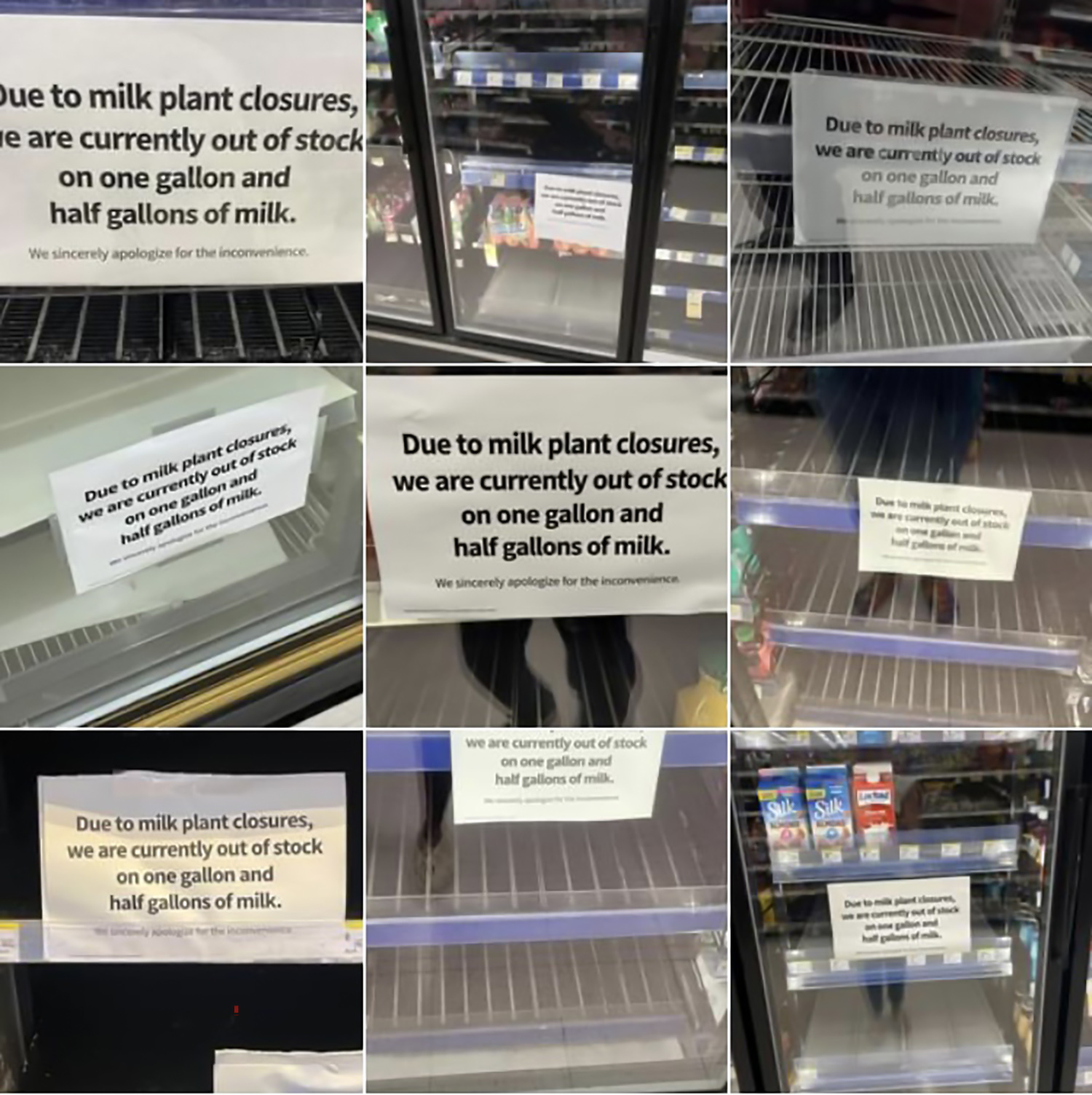
In recent weeks, photos have been circulating of empty dairy cases in the Green Bay, Milwaukee and greater Chicago region with signs stating: “Due to milk plant closures, we are currently out of stock on one gallon and half gallons of milk.”

School milk contracts in that region are also reportedly impacted.

However, most notable is the impact on school milk contracts in the Southeast as students begin returning to classrooms.

According to the Aug. 5 online Dairy Alliance newsletter to Southeast dairy farmers, the regional checkoff organization confirmed the latest round of Borden closures are plants that “currently provide milk to 494 school districts… and use around 95 million units a school year.”

The Dairy Alliance reported it is working with schools “to keep milk the top choice for students… We do not want schools to apply for an emergency waiver that would exempt them from USDA requirements of serving milk until they find a supplier.

“These uncontrollable circumstances will lead to more aseptic milk in the region, but this is better than losing milk completely in school districts that have little or no options,” the newsletter stated.

Southeast dairy farmers report their mailed copy of a Dairy Alliance newsletter in July had already forecast more shelf-stable milk coming to schools as part of the strategic plan to protect and grow milk sales by ensuring milk accessibility and improving the school milk experience. In addition to the Borden plant closures, the report cited school milk “hurdles” such as inadequate refrigerated space requiring multiple frequent deliveries amid rising fuel and energy costs and labor shortages.

Southeast dairy farmers were informed that the Dairy Alliance School Wellness Team was already working to mitigate bidding issues with shelf-stable milk for school districts in Alabama, Georgia, South Carolina and Virginia.

Diversified Foods Inc. (DFI), headquartered in New Orleans, was identified as the main supplier of this shelf-stable milk to schools in the region, reportedly sourcing milk through Maryland-Virginia, DFA and Borden.

In addition, DFI is a main sponsor of the Feeding America conference taking place in Philadelphia this week (Aug 9-11), where it is previewing for nutrition program attendees their new lactose-free shelf-stable chocolate milk. DFI also sponsored the School Nutrition Association national conference in Orlando earlier this summer, and social media photos of the booth show the shelf-stable, aseptically packaged versions of brands like DairyPure, TruMoo, Borden and Prairie Farms, along with DFI’s own ‘Pantry Fresh’ shelf-stable milk in supermarket and school sizes.

Coinciding with the flurry of Borden closings and shelf-stable milk hookups for schools, DFA announced last week (Aug. 1) that it will acquire two extended shelf-life (ESL) plants from the Orrville, Ohio based Smith Dairy. The SmithFoods plants will operate under DFA Dairy Brands as Richmond Beverage Solutions, Richmond, Indiana and Pacific Dairy Solutions, Pacific, Missouri. A SmithFoods statement noted the transfer would not affect the farms or employees associated with these plants.

This acquisition aligns with DFA’s similar strategy to “increase investment and expand ownership in this (shelf-stable) space… and create synergies between our other extended shelf-life and aseptic facilities,” the DFA statement noted.

-30-

From DMC to FMMOs, from price ‘movers’ to ‘make allowances’: House Ag hearing reviews farm bill dairy provisions

By Sherry Bunting, June 24, 2022

WASHINGTON — It was a lot to wade through, but after two panels and nearly four hours, many cards were on the table, even if the full deck was not counted. 

The U.S. House Agriculture Committee hearing Wednesday, June 22 was a 2022 review of the current farm bill’s dairy provisions. Chairman David Scott (D-Ga.) set the stage with his opening remarks, noting a significant part of the hearing would be devoted to the dairy safety net, namely the Dairy Margin Coverage (DMC), but also to talk about the Federal Milk Marketing Orders (FMMO) to learn if this system is “the best fit for today’s world.

“We want to continue to listen to farmers and navigate the issue for the best approaches to any changes,” he said, setting the next stage for listening sessions.

Those testifying talked about building consensus for FMMO changes, a charge handed down from Ag Secretary Tom Vilsack last December, and again more recently, when he said a consensus agreement by stakeholders on one plan was needed before a national hearing on milk pricing could be held.

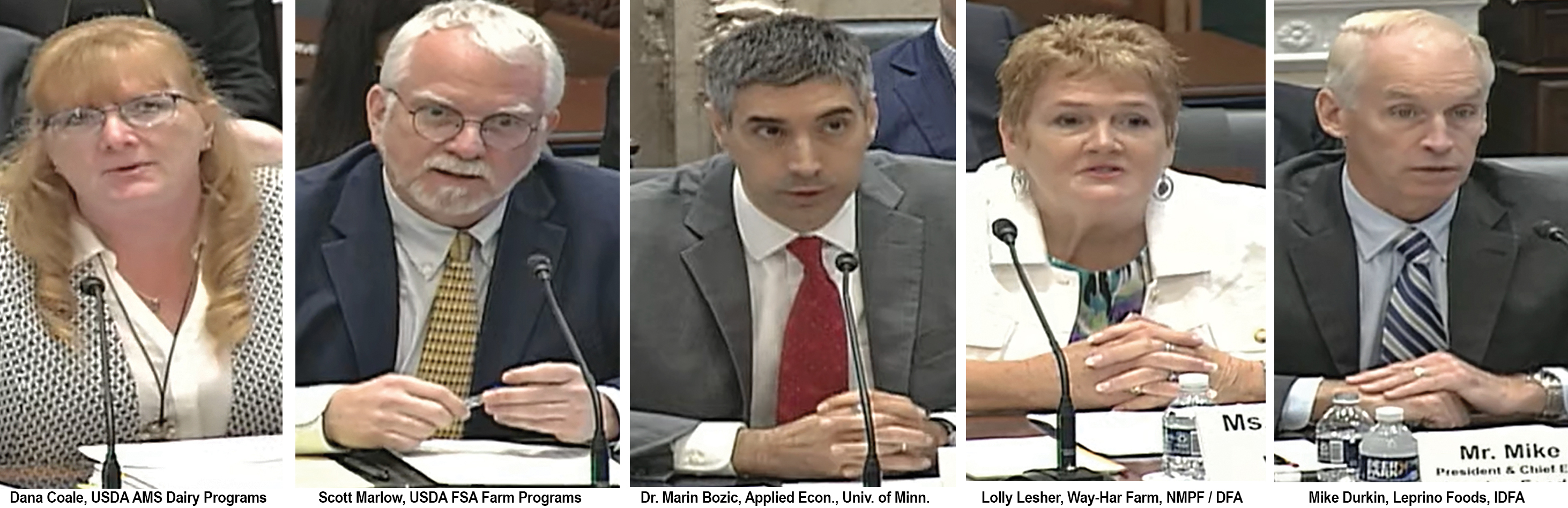
On the Class I ‘mover’ change in the last farm bill, USDA AMS Deputy Administrator Dana Coale noted that the change was authorized by Congress after an agreement was reached between NMPF and IDFA to change the ‘higher of’ to a simple average plus 74 cents. This was designed to be revenue neutral, she said, but the pandemic showed how an unforeseen market shock can create price inversions that significantly change this neutrality. (testimony)

Coale noted that “market abnormalities” brought on a situation where Class I was below Class III, which doesn’t typically happen, and this created losses.

“In the 2018 farm bill Congress authorized a change to the Class I price mover. We implemented that in the department in May 2019. This change was a consensus agreement reached between NMPF and IDFA to benefit the entire industry. Implementation in the farm bill was designed to be revenue neutral. However, nobody foresaw a pandemic occurring, and no one could have projected the implications that pandemic would have on (prices), particularly within the dairy sector. What we saw occur from mid-2020 through mid-2021 was a significant change in that revenue neutrality. As you look at the Class I mover before the pandemic and moving out of the pandemic, it is maintaining pretty much a revenue neutral position compared to the prior mover. However, due to the (class) price inversions that occurred, we had some major losses incurred by the dairy sector.”

Dana Coale, Deputy Administrator, USDA AMS Dairy Programs

On the primary dairy safety net, Farm Service Agency Deputy Administrator Scott Marlow went over the Dairy Margin Coverage (DMC) and explained the beneficial changes that have been implemented since the 2018 farm bill. (testimony)

He noted that supplemental DMC would have to be made permanent in the next farm bill in order for that additional production history between the 2011-13 figure and the 5 million pound cap to be covered in future years.

“In 2021, DMC payments were triggered for 11 months totaling $1.2 billion paid to producers who enrolled for that year, with an average payment of $60,275 per operation. At 15 cents per cwt at the $9.50 level of coverage, DMC is a very cost-effective risk management tool for dairy producers. Ahead of the 2022 DMC signup, FSA made several improvements. The program was expanded to allow producers to enroll supplemental production (up to the 5 million pound cap). In addition FSA updated the feed cost formula to better reflect the actual cost dairy farmers pay for alfalfa hay. FSA now calculates payments using 100% premium alfalfa hay, rather than 50% of the premium alfalfa hay price and 50% of the conventional alfalfa hay price. This change is retroactive to January 2020 and provided additional payments of $42.8 million for 2020 and 2021. We are very concerned about the margins. It is very important the way DMC focuses on the margin. Farmers are facing inflation of costs beyond the feed that is part of this calculation. This margin based coverage has proven to a model and is something we need to look at for other costs and commodities.”

Scott Marlow, Deputy administrator usda fsa farm programs

Dr. Marin Bozic, Assistant Professor Applied Economics at the University of Minnesota gave some long range trends and observed the factors that are decreasing participation in Federal Milk Marketing Orders. (testimony)

He mentioned that a consideration not to be ignored is the status of vibrancy and competition as seen in transparency and price discovery. When asked about proposals to improve this, Bozic said the proposals need to come forward from the industry, the stakeholders, and that the role of academia is to provide numbers, trends, and analysis of proposals, not to decide and determine these marketing structures.

“Farm gate milk price discovery is challenged by this lack of competition,” he said. “If a corn producer wishes to know how different local elevators would pay for corn, all he needs to do is go online or tune in to his local radio station. Dairy producers used to be able to ‘shop around’ and ask various processors what they would pay for their milk.”

Bozic was quick to point out that, “We should not rush to generalize from such anecdotal evidence, but in my opinion, it would also be prudent not to ignore it.”

“FMMOs start from a set of farmer-friendly ideas… They have somewhat lost luster due to declining sales of beverage milk. In regions other than Northeast and Southeast, fluid milk sales no longer provide strong enough incentives for manufacturers to choose to stay consistently regulated under FMMOs. My estimates are that the share of U.S. milk production in beverage milk products is likely to fall from 18.3% in 2022 to 14.5% by 2032. Do Federal Orders suffice to deliver fair market prices to dairy producers? The critical missing ingredient is vibrant competition for farm milk. Whereas just six or seven years ago, many producers had a choice where to ship their milk, today it is difficult. When some dairy producers have asked for milk price benchmarking information from their educators or consultants, those service providers have in multiple instances faced tacit disapproval or even aggressive legal threats from some dairy processors. Further research and an honest debate on competition in dairy is merited.”

Marin bozic, ph.d., department of applied economics, university of minnesota

Where FMMO changes are concerned, Bozic noted some of the broader issues to come out of the Class I pricing change that was made legislatively in the last farm bill. For example in future reforms, when there is lack of wide public debate on proposals, he said: “It increases odds of a fragile or flawed policy design, and lack of grassroots support for the mechanism in changing markets. FMMOs have a comprehensive protocol for instituting changes through an industry hearing process. The Class I milk price formula can be modified through a hearing process.”

From Bernville, Pennsylvania, representing National Milk Producers Federation (NMPF) and DFA, Lolly Lesher of Way-Har Farms shared the benefits of the Dairy Margin Coverage (DMC) program through FSA and other risk management tools through RMA. She said they purchase the coverage at the highest level each year as a safety net for their 240-cow dairy farm. (testimony)

DMC is intended for smaller farms producing up to 5 million pounds of milk annually, but other farms can layer it in with other available tools at the tier one level on the first 5 million pounds or choose to pay the tier two premium to cover more of their milk through that program, but other tools like DRP are also available, Marlow explained.

Turning to the Class I pricing change in the last farm bill, Lesher said the change was an effort to “accommodate a request for improved price risk management for processors, while maintaining revenue neutrality for farmers… but the (pandemic) dramatically undercut the revenue neutrality that formed its foundation.”

“As valuable as the (DMC) program has been, many farmers have not been able to fully benefit because the underlying production history calculation is outdated. It is critical that the (supplemental DMC) production history adjustment be carried over into the 2023 farm bill… The events of the last two years have shined a spotlight on the need for an overall update to the FMMO system. Class I skim milk prices averaged $3.56/cwt lower than they would have under the previous ‘mover’. This undermined orderly marketing and represented net loss to producers of more than $750 million, including over $141 million in the Northeast Order. The current Class I mover saddles dairy farmers with asymmetric risk because it includes an upper limit on how much more Class I skim revenue it can generate… but no lower limit on how much less… those losses become effectively permanent.”

lolly lesher, way-har farm, bernville, pennsylvania, representing nmpf and dfa

According to Lesher’s testimony: “The dairy industry through the National Milk Producers Federation is treating this matter with urgency and is seeking consensus on not only the Class I mover, but also a range of improvements to the FMMO system that we can take to USDA for consideration via a national order hearing.”

Lesher serves on DFA’s policy resolutions committee and she noted that DFA, as a member of NMPF “is actively participating in its process (for FMMO improvements), which involves careful examination of key issues to the dairy sector nationwide… We look forward to working with the broader dairy industry and members of this committee as our efforts advance.”

Representing International Dairy Foods Association (IDFA), Mike Durkin, President and CEO of Leprino Foods Company stressed the “extreme urgency” of updating the “make allowances” in the FMMO pricing formulas. These are processor credits deducted from the wholesale value of the four base commodities (cheddar, butter, nonfat dry milk and dry whey) used in FMMO class and component pricing as well as within the advance pricing for fluid milk. (Leprino is the largest maker of mozzarella cheese in the U.S. and the world. Mozzarella cheese is not reported on the USDA AMS price survey used in the FMMO class and component pricing.) (testimony)

Durkin also noted the importance of making the Dairy Forward Pricing Program that expires September 2023 a permanent fixture in the next farm bill for milk. This program allows forward pricing of milk used to make products in Classes II, III and IV so that longer-duration contracts can be used by this milk when also pooled under FMMO regulation without fear of the authority expiring in terms of the FMMO minimum pricing. (Milk that is used to make products in Classes II, III and IV is already not obligated to participate in or be regulated by FMMOs.)

“The costs in the (make allowance) formula dramatically understate today’s cost of manufacturing and have resulted in distortions to the dairy manufacturing sector, which have constrained capacity to process producer milk. Congress can improve the current situation by directing USDA to conduct regular cost of processing studies to enable regular make allowance updates. The need to address this lag is now extremely urgent. While our proposal to authorize USDA to conduct regular cost surveys will eventually provide data to address this in the longer term, steps must be taken now to ensure adequate processing capacity remains. Updating make allowances to reflect current costs will enable producer milk to have a home. Making the (Dairy Forward Pricing Program for Class II, III and IV) permanent could also facilitate additional industry use of this risk management tool for longer durations without concern about the program expiring.”

Mike Durkin, president and ceo, leprino foods, representing idfa

Lesher also thanked House Ag Ranking Member G.T. Thompson for his Whole Milk for Healthy Kids Act, seeking to bring the choice of whole and 2% milk back to schools. The bill currently has 94 additional cosponsors from 32 states, including the House Ag Chair David Scott and other members of the Agriculture Committee. The bill was referred to the House Committee on Education and Labor.

Other key dairy provisions were reported and questions answered, including a witness representing organic dairy farmers. There’s more to report, so stay tuned for additional rumination in Farmshine and here at Agmoos.com

Recorded hearing proceedings available at this link

Written testimony is available at this link


-30-

Iconic Readington Farms prepares to transition to procuring milk from DFA plants for ShopRite, other stores


By Sherry Bunting

WHITEHOUSE STATION, N.J. — The iconic Readington Farms plant bottling milk brands for ShopRite and other stores — both subsidiaries of Wakefern Foods Corp. — is “concluding negotiations to procure its milk and other beverages from Dairy Farmers of America (DFA),” according to an email response today (Dec. 23, 2021) from Karen O’Shea, Wakefern corporate communications. (The communication came after Farmshine’s press deadline, and this updates the brief mention in this week’s Milk Market Moos.)

“The transition from Readington to DFA is expected to begin sometime in January 2022 and continue until all our stores are serviced by our new provider. We are also working with DFA on a path to offer cooperative membership to the dedicated direct shippers who currently supply Readington, if they so choose,” O’Shea stated.

According to its website, Readington Farms is currently served by over 150 independent dairy farms and the Whitehouse, New Jersey plant processes 15,000 gallons of milk per hour.

DFA is a national cooperative with 7000 members and seven fluid milk and beverage plants in the Northeast/Midatlantic trading region, many of them purchased during the Dean Foods bankruptcy sale in May 2020. DFA purchased the Cumberland Dairy in Bridgeton, N.J. in November 2017.

In 2019, Readington Farms was authorized a $2.5 million RACP grant from the Pennsylvania Redevelopment Authority to build a new milk plant and headquarters in the Lehigh Valley. Pre-design plan review was to be part of the Upper Macungie Township Planning Commission’s August 2021 meeting, but this review was postponed to October and again postponed to January 2022, according to township agendas and minutes.

According to Wakefern, this new facility will not be pursued and no public funds were received or accepted. The company will withdraw its grant application for a facility in Lehigh Valley, Pennsylvania.

“Readington and Wakefern considered a number of locations in the region as potential sites for a new fluid processing dairy. After an extensive search and exploration of all possibilities and costs, Wakefern decided not to pursue a new facility and instead procure its milk and other beverages from a third-party provider,” O’Shea reported.

“Currently, Wakefern is concluding negotiations with Dairy Farmers of America (DFA) to provide its fluid milk and other beverages. In addition to their network of 7,000 dairy farmers, DFA also has seven fluid milk processing facilities located in our trading area that will serve Wakefern’s needs,” she said.

Supply and demand are the real story behind chaos in cream markets

istock photo purchased and used with permission
As shortages of cream products become more obvious in retail and foodservice channels, USDA’s Dec. 8 fluid milk and cream report acknowledged raw milk cream supplies are “tight to extremely tight” in the eastern U.S. at the same time that processors nationwide are trying to ramp up production of cream cheese, butter and seasonal products to meet sustained strong demand. In the midwestern markets, USDA notes Class I bottling needs have risen instead of declining like they normally do in December, and in the eastern markets, Class I bottlers are taking in more milk for steady to strong sales. istock photo

By Sherry Bunting, Farmshine

BROWNSTOWN, Pa. — What’s the real story with the availability of cream products and whole milk, especially in the population centers of the eastern U.S., and why the continued base penalties, base reductions, warnings of greater deductions on future milk checks — even for the base-obedient producers? Why the talk of overproduction of milk — especially in the Northeast and Mid-Atlantic region — when headlines are noticing a crimp in supplies?

A paradox, for sure.

One clue that makes this a true supply and demand situation — as opposed to purely a sign of supply chain disruptions — is the most recent USDA dairy products report showing 1.6% less butter was produced in October compared with a year ago, attributable to increased demand for cream and declining milk production.

The U.S. also exported more fat in the product mix than prior years.

In relation to this, October butter stocks, according to USDA NASS, are down 13% from September and 6% lower than a year ago after being double-digit percentage points higher than year earlier for the previous two to three years. The seasonal increase of 11.2% more butter produced in October than September was not as robust as previous years and it met an increased drawdown that has left cold storage stocks short heading into the holiday baking season in competition with cream product-making season.

While processor leaders from IDFA did a second Washington D.C. fly-in last week, talking with members of Congress about the trade disruptions, exports have continued strong and domestic shortages of milk and cream products are popping up all over the place – especially in the Northeast and Mid-Atlantic region.

It’s clear that trucking and worker shortages contribute, but it’s also clear the issues go beyond the frequently-cited packaging shortages, given the fact that bulk product is also becoming limited in foodservice channels.

So much so that the Dec.4 New York Times covered what has become a worsening cream cheese shortage in New York City. This pertains to the bulk cream cheese base that bagel shops purchase to tailor-make their own schmears. Consumers report retail packs of cream cheese in short supply at chain stores in New York while the bulk cream cheese base is tenuous for foodservice.

In both New York and Pennsylvania, shoppers confirm scarcity of cream cheese and other cream products while stores are placing limits on purchases. Reports from Boston indicate stores are “screaming” for half and half. Others observe that eggnog production is exacerbating already tight cream supplies, but acknowledge the issues are bigger than just the seasonal beverage production.

Fox News picked up the story Dec. 6 and 7. They interviewed NYC bagel shop owners to learn how they are navigating the problem. One owner talked about begging his vendors for product, then locating some cream cheese in North Jersey and driving 90 minutes in his own truck three times to transport a total of 2000 pounds of the schmear.

The Fox and Friends morning hosts checked with Kraft-Heinz, the parent company of Philadelphia Cream Cheese, conveying the company’s statement that they are seeing a 35% spike in demand for the product, which they then blamed on panicking restaurateurs stockpiling it.

“We continue to see elevated and sustained demand across a number of categories where we compete. As more people continue to eat breakfast at home and use cream cheese as an ingredient in easy desserts, we expect to see this trend continue,” Kraft-Heinz spokesperson Jenna Thornton told Fox News in a written statement.

Fox and Friends host Steve Doocy, who does a lot of cooking, chimed in that he can’t find cream products, and they all wondered out loud, what’s the deal with no whole milk in the stores?

Facebook responses to queries about what’s happening in different areas confirm many are having trouble finding half and half, heavy cream, cream cheese, even butter, and some reported spot depletion of whole milk or all milk.

A Pennsylvania store owner texted a note claiming he simply can’t get whole or 2% milk for his store.

A ‘Lunch Ladies’ group on facebook discussed numerous incidents of milk order shortings, delays and non-deliveries lasting more than a week, in some cases several weeks.

In both eastern and western Pennsylvania, shoppers are reporting purchase limits and limited or non-existent supplies of whole milk and cream products at major supermarket chains. (In my own shopping over the weekend, a Weis location just outside of Lancaster had a decent supply of milk, but only a few off-brand unsalted butter packages in the case. I was lucky to pick up the very last Land O’Lakes butter pack lingering way back in the corner. In the baking aisle, the canned evaporated milk shelf was bare.)

A reader from Virginia reached out to say her local Walmart was full with milk Saturday, but not a jug to be found Sunday.

An anecdotal report from a shopper in Florida, after stopping at two stores, found no half and half, no heavy cream, limited fluid milk, a buying limit on cream cheese – but “lots and lots of non-milk ‘milk.’”

Coffee houses are also randomly affected, with reports out of New York and New England. in the Twitterverse noting both real-milk and oat-milk shortages as people tell of stopping at multiple locations for morning lattes. Mothers were also tweeting frustration this week over limited supplies of infant formula in some areas.

Perhaps complicating the issue – waiting in the wings — is the foray of DNA-altered yeast-excrement protein analogs being tested in the supply chains of large global corporations – like Starbucks. A headline from three weeks ago read “Perfect Day’s Dairy-identical Alt Milk lands at Starbucks.”

Starbucks is among the multinationals testing Perfect Day’s DNA-altered yeast-excrement deemed as dairy analogs in select West Coast locations. The Perfect Day company claims to be “on a roll” with the brand valued at over $1.6 billion and recently raising $350 million in its admitted efforts to “remove cows from the dairy industry, without losing the dairy.”

One aspect of the Perfect Day ramp up is the company works B2B with processors, not making their own consumer-facing products. If other companies are experimenting with the goal stated by Perfect Day last year of 2 to 5% augmentation of dairy processing with the yeast-excrement protein analog by 2022, there’s a scenario in this to think about: These protein analogs may be deemed “identical” to whey and casein in processor application, but they do not bring along the healthy fats, minerals, vitamins and other components of real milk.

Could current chaos in cream markets and product availability be a glimpse of future disruptions by protein analogs as the B2B model seeks to dilute real dairy under the guise of cow climate action? That’s a story for another day, but it bears watching in the context of the current paradoxical supply and demand situation right now.

For its part, USDA Dairy Market News reported Dec. 1 that milk output was rising in the East, but demand was still beating it. Then the Dec. 8 report said Northeast milk production had flattened under the pressure of rising input costs and penalties on overbase production.

Specifically, USDA DMN cites steady to higher bottling demand and active cheese production schedules soaking up supplies.

“Cream demand is strong throughout the East,” the Dec. 1st report said. “Some market participants have noted that widespread logistical issues – including driver shortages and delivery delays – pose a greater hindrance to cream-based operations than the tighter cream availability, itself, at this point.”

By December 8th, USDA DMN reported that eastern handlers were working to secure milk spot loads from other areas as local supplies are tight, noting that eastern cream supplies are “tight to extremely tight,” and some dairy processors reported very limited spot load availability.

The report also sought to explain the cream cheese shortage in retail and foodservice channels, noting multiple factors, including “logistics bottlenecks, labor issues and supply shortages at manufacturing facilities.”

While the report indicated stepped up butter production this week, one Pennsylvania milk hauler observed two empty silos and no trucks to be seen at the Carlisle butter/powder plant at the start of this week, which is unusual.

Related to cream cheese production in Northern New York, producers there say they were told plant worker shortages this fall meant less processing of their milk. This resulted in multiple occasions of having to dump milk that could not be processed, but the incidents were deemed “overproduction” with producers footing the bill.

Meanwhile, USDA DMN indicated more outside milk coming East to meet processing needs.

At the same time, dairy producers from multiple cooperatives in the Northeast and Mid-Atlantic region confirm they are still incurring stiff penalties on over-base milk. While some of the penalty levels have softened a bit from earlier highs, most are still being held to their base levels, or in the case of DFA, the Northeast and Mid-Atlantic producers are still being penalized for milk that is above 88% of their base.

This means in the face of reduced supply vs. strong demand, DFA continues its 12% reduction in base allotments that became prevalent, especially in the Northeast and Mid-Atlantic region, at the start of the pandemic. 

Furthermore, producers with other cooperatives report they have been warned to expect further deductions on their milk checks this winter – even if they did not exceed their bases — because there is still “too much milk,” they are told.

Attempts to gain further insights on the situation from major milk cooperatives and USDA went unanswered at this writing, so stay tuned for updates.

Checkoff leaders describe dairy transformation, milk-based blends, dual-purpose processing

During the 2021 Pa. Dairy Summit in February, dairy checkoff leaders presented a “virtual” breakout session on ‘what dairy checkoff has done lately’. Some key concepts discussed were transformation, trust, supply chain infrastructure and how DMI’s unified marketing plan is driving the industry’s “Dairy Transformation” plan and framework (also known as Dairy 2030). In a previous article, the sustainability and net-zero part of the equation was covered.

By Sherry Bunting, Farmshine, March 5, 2021

HARRISBURG, Pa. — As part of the 2021 Pennsylvania Dairy Summit, virtual attendees had the option of ‘attending’ a zoom session sponsored by American Dairy Association Northeast (ADANE), entitled What has dairy checkoff done for you lately? Moderated by Jayne Sebright, executive director of Pennsylvania’s Center for Dairy Excellence, the guests included Rick Naczi, CEO of ADANE, Barb O’Brien, DMI president, Karen Scanlon, senior VP of sustainability, Paul Ziemnisky, executive VP of global innovation partnerships, and Marilyn Hershey, DMI chair.

The first part of the program was a history lesson on how and why DMI (Dairy Management Inc) was formed to “bring greater efficiency” to how checkoff dollars are used. Leaders stated that DMI “eliminates millions spent in redundant money.” A graph was displayed showing that since the formation of DMI in 1995, total dairy disappearance has risen, along with milk production, to record levels.

A key point made is that DMI leaders see the unified and integrated plan “has helped the dairy industry grow, to help fulfill the dairy producers’ goal of growth.”

Leaders acknowledged that consumers trust farmers, but they believe checkoff’s role is defined as “educating consumers about that trust.”

Paul Ziemnisky gave a look at the future of dairy beverages, going so far as to say new processing facilities will need to be built as beverage plants able to handle all kinds of ingredients for the blended products of the future. In essence, he said, the future of fluid milk is “dual purpose” processing plants.

“We have taken milk to the energy arena, the cold brew with milk arena. We’re adding plants to dairy, making lactose-free dairy to address gut health. Our partners have led, and we have driven growth by over 1 billion pounds,” he said.

Touching on full fat dairy, O’Brien said DMI is “leveraging” the growth in full fat science.

A pressing question of farmers was asked: “Why do we not see television ads?”

The answer, said O’Brien, is “We are going to market differently from the consumer standpoint with less traditional TV ads and shifting to social and retail media channels like other companies are doing. We are looking to our partners, dairy brands, and foodservice brands to elevate their presence and elevate dairy’s presence within that,” she explained.

Ziemnisky pointed out the significant growth in foodservice investment in promoting products that highlight cheese within their own advertising channels.

“For the fluid milk category to be successful,” he said, “Brands need to establish the relationship with consumers.”

Hershey noted that the list of companies that advertised in the Super Bowl 10 years ago include Blockbuster video, Gateway computers, companies that are not in business any more, indicating that television ads are a large investment of ‘past’ industries (even though this year’s Super Bowl had ads by milk’s up-and-coming new competitors).

O’Brien and Hershey explained that DMI and MilkPEP (the fluid milk processor checkoff fund of over $90 million a year) work in “lockstep on consumer understanding, messaging and coordinating with the science.”

“We (DMI) are investing in thought-leadership and university partnerships while they (MilkPEP) have a consumer-focused charter,” said O’Brien.

An example she gave is Amazon launching into groceries in 2017 and ramping up in the last 12 months.

“They won’t settle for being second or third in 10 years, and we (DMI) get to be the ones to educate them on dairy,” she said, stating that Amazon Fresh dairy offerings today are 90% cows’ milk. “That could have been 50/50. We are a voice for dairy in the category.”

This led into further discussion of DMI’s target and the move to blended product partnerships.

Ziemnisky said “90% of consumers who buy plant-based drinks also buy milk today. The urban/suburban mom trying to get in shape is looking for low fat and looking for flavor. We have to give her more flavor. She is looking for advanced nutrition and things to energize her. She’s buying 27 gallons of traditional milk and 5 gallons of plant-based beverage a year because we did not give her almond flavor and oat flavor. She has to trust that we will give her the products she is looking for.”

Toward that end, said Ziemnisky, “We are blending to specific consumers around their dietary needs.”

“We will see the beverage space set up differently and our manufacturing plants will need to be set up as dual plants to make milk-based beverages because that is where the consumer is going, and it is our job to keep them where dairy is front and center,” he explained, noting that these blends “are shelved with milk so that the consumer is not walking over to the plant-based aisle.”

(In most stores, the plant-based is shelved in the dairy aisle so it’s hard to know how these blended products pull sales from solo-dairy or solo-plant.)

Ziemnisky noted, as farmers have heard before, that, “We have to be relevant, to develop formulations that make sure dairy is front and center, but provide the taste, nutrition and sustainability consumers are looking for.”

O’Brien said DMI’s mandate has been to “build trust” and address “shared priorities” while streamlining dairy promotion to be more efficient.

“We know accountability is absolutely critical,” said Hershey. “Farmers make the program and budget decisions through the significant farmer input” of United Dairy Industry Association (UDIA), the portion of the national branch that represents the state and regional promotion entities.

The bottom line, DMI leaders explained, is that the national decisions, strategies and unified marketing plan are ultimately governed by DMI’s board of 15 farmers, with two-thirds of dairy funding still residing with local leadership, but aligning with the “unified marketing plan” as all the state and regional organizations making up UDIA giving 2.5 cents of the local dime to DMI.

DMI works on two levels, said O’Brien, one being as a “global umbrella that farmers have created to address threats over time.”

The other level, they talked about was the domestic side, focused on youth wellness, developing a “deep bench” of nutrition experts and organizations to work with, and engaging on hunger with the food bank system.

On that “global umbrella” level, they explained that the U.S. Dairy Export Council, formed in 1995 receives $20 million annually in checkoff funds and is made up of the membership of 125 dairy companies, including cooperatives.

The Innovation Center for U.S. Dairy was later formed in 2008-09, with World Wildlife Fund (WWF) at the table right from the beginning  “to bring farmers, cooperatives, manufacturers and customers around common sustainability metrics.” Essentially, WWF has been involved from the beginning in the shaping of the FARM program and the sustainability metrics that are part of DMI’s Net Zero Initiative.

O’Brien and Hershey talked about GENYOUth (formed in 2008-09), saying it was “founded by farmers and brings tens of millions of dollars in from other sources to support dairy’s commitment to youth wellness in schools.”

O’Brien noted that since its founding, GENYOUth has “brought in” $100 million from companies outside the dairy industry to achieve the goal of what they calculate to be over 800 million servings of milk per year, and accounting for what they say are school sales of 400 million “incremental” pounds of milk.

In existence for 12 years, with an annual budget of around $10 million, $4 million of which is line-item national and regional checkoff funding, the percentages show the GENYOUth budget now includes more outside money than inside money; however, there is no clear accounting for the ‘vehicle’ costs of the various staff and fixtures, which would likely be additional. Furthermore, there’s the $6 million paid annually to the NFL, which is DMI’s GENYOUth ‘partner’. The purpose of this money was not divulged by DMI leaders during the session. 

Leaders also spent a good portion of time talking about how GENYOUth “worked tirelessly” to raise $17 million of “other people’s money” to support the distribution of milk to schools as cafeterias shut down during the pandemic. They maintained that without these efforts by GENYOUth, milk and dairy products would not have flowed steadily to children through schools. They said GENYOUth grants were given to 14,000 schools to pay for things like coolers for off-site meal distribution.

“We have insured milk and dairy products got to schools during the pandemic,” said O’Brien. She and Naczi both shared how they believe their organizations “pivoted and kept milk flowing” through schools, food banks, CFAP food boxes and other government feeding programs as well as “educating” schools on how to use the waivers for milk and dairy food sizes and packaging during the pandemic. They described national and regional checkoff organizations as the logistical coordinators for the flow of dairy to hunger channels – even though much of this was connected to the USDA CFAP programs.

They also explained how ADANE staff worked with stores to get the purchase-limit signs removed and to keep the dairy cases stocked during the height of the pandemic shut down last spring.

“We knew foodservice channels would get disrupted and looked at how to be sure dairy was going with and through the industry. With the retail influx of volume (purchases), we looked at how we can work across the supply chain,” said O’Brien, adding that dairy outperformed the growth in the rest of the retail sector by three percentage points during the pandemic.