Covering Ag since 1981. The faces, places, markets and issues of dairy and livestock production. Hard-hitting topics, market updates and inspirational stories from the notebook of a veteran ag journalist. Contributing reporter for Farmshine since 1987; Editor of former Livestock Reporter 1981-1998; Before that I milked cows. @Agmoos on Twitter, @AgmoosInsight on FB #MilkMarketMoos
I am a journalist writing primarily about agriculture for various newspapers over the past 30 years...and before that, I milked cows and tended calves and heifers. I am also a mother and grandmother with three grown children: A teacher, restaurateur and homemaker. Our two sons and one daughter all like to cook and they are food conscious... not paranoid. My "foodographic" Agmoos blog is a place to find stories and photos of the people and places behind the food we eat and for commentary and analysis on food, farm and marketing issues facing producers and consumers.
This still frame from drone footage of the 2,136,973 square-foot facility at South Fork Dairy shows the fire damage involved the entire roof of the cross-ventilated building. The Texas State Fire Marshal’s office is calling it accidental, indicating machinery malfunction as the cause and further investigation continuing. One employee remains hospitalized and 18,000 dairy cows are dead. Photo captured from drone video courtesy Blake Bednarz, West Texas Tech
By Sherry Bunting, Farmshine, April 19, 2023
DIMMITT, Texas — The Texas State Fire Marshal confirmed the April 10 catastrophic explosion and fire on a West Texas dairy was accidental, saying in its April 17 statement: “There was no evidence found that would indicate foul play.”
The explosion and fire occurred at South Fork Dairy near Dimmitt in Castro County, leaving one female employee still hospitalized for critical injuries and an estimated 18,000 dairy cows dead.
The recently constructed 40-acre cross-ventilated barn housed nearly 20,000 cows with estimates that one to two percent of the herd survived. It is one of several dairies owned by the Frank Brand family. At this site, 60 to 80 people were employed.
According to the Fire Marshal’s press statement, the investigation is ongoing, but has so far “revealed evidence… that the fire originated in the northern end, more specifically Pen 3, and was the result of a failure of a piece of equipment that is used within the dairy on a daily basis.”
In the first 24 hours after the fire, on April 11, Castro County Sheriff Sal Rivera reported to local news stations that the machinery involved was likely a ‘honey-vac’ used in pumping manure.
While the April 17 statement by state fire officials does not specifically cite manure pumping equipment, the Fire Marshal did state: “Because of the size of the fire, the insured loss amount, the number of cattle killed, and the fact that two other pieces of equipment, identical to the one that caught fire, have burned previously — one at this dairy and one at another dairy — there will be a more in-depth investigation of the reason for the failure by other origin-and-cause investigators and engineers that are experts in the field of equipment failures.”
Officials also reported that the explosion was the result of flammable liquids, including liquid fuel, hydraulic oil and other materials, “expanding rapidly,” causing a “smoke explosion.” The preliminary report made no mention of methane as a trigger or an accelerant, contrary to the widespread social media discussions blaming methane accumulation in the barn or blaming a methane digester.
In fact, anaerobic digestion was reportedly not yet operating at South Fork Dairy. According to a January 2023 Clean Energy announcement, the Renewable Natural Gas project there was set to begin construction in February or March 2023.
Concerns shared within the dairy industry revolve around how quickly the fire spread through the roof insulation of the 2 million square foot steel-construction dairy facility.
On April 17, the Texas Commission on Environmental Quality said Amarillo office investigators “continue to provide assistance to South Fork Dairy to ensure that dead livestock and any other debris is disposed of in accordance with TCEQ rules and regulations.”
This task must be done as quickly and efficiently as possible, but experts expect the cleanup of this many carcasses to take several weeks even with the aggressive support of teams of professionals, volunteers, officials and university extension.
The local and agricultural community is supporting the Brand family, and a ‘meal train’ was started by a neighboring dairy and is funded by companies giving donations to feed the minimum 100 to 150 people working at the site daily for the next three to four weeks.
Texas Agriculture Commissioner Sid Miller released a statement shortly after the fire, calling it “a tragic blow.”
He thanked law enforcement and fire and EMS personnel and urged prayers for the injured employee and the owners and workers as they deal with the impact and cleanup from this disaster.
“We don’t know all the facts yet surrounding this disaster… This was the deadliest barn fire for cattle in Texas history, and the investigation and cleanup may take some time. We all want to know what the facts are. There are lessons to be learned, and the impact of this fire may influence the immediate area and the industry itself. Once we know the cause and the facts surrounding this tragedy, we will make sure the public is fully informed — so tragedies like this can be avoided in the future,” noted Commissioner Miller in his statement.
South Fork Dairy is among many relatively new construction dairies housing large numbers of cows in cross-ventilated facilities that can be 24-rows wide, or wider, and are enclosed, automated systems that do not present the option of natural ventilation.
This is a horrific tragedy for the owners and employees that had worked with these cows.
The complete investigation is expected to take some time to learn as much as possible not just about how it started, but how it spread so rapidly and other aspects of the explosion and fire that could pertain to questions of safety for the future.
Wealth from the tech sector led Silicon Valley Bank (SVB) to be central to venture capital investments in food and energy tech startups, including plant-based and cell-based fake-meat and fake-dairy. Beyond Meat is one high-profile example in SVB’s ‘Clean Tech’ portfolio amid the rampant climate/ESG-focused investment that has occurred throughout the financial sector when interest rates were low and the economy was being pumped full of capital. Now, after eight interest rate hikes by the Federal Reserve in response to record inflation, the SVB collapse is the second largest bank failure in history. Did we see a ‘bubble’ or the tip of an iceberg designed in Davos. Istock photo collage by Sherry Bunting
Looking back and ahead, there’s more than meets the eye
By Sherry Bunting, Farmshine March 31, 2023
The Federal Reserve policy shift to raise interest rates and restrict the money supply after more than a decade of ultra-low rates and two years of pumping money into the economy opening a Pandora’s box of unrealized losses and liquidity problems in areas of the banking system as consumers and businesses rifle through savings in the face of record inflation, and now rising interest rates.
Ongoing global banking stress, central bank interest rate hikes, tightening credit conditions, and continued inflation are affecting both the U.S. and Europe against the backdrop of two important geopolitical developments in late March.
First, the UN Secretary General accelerated ‘net-zero’ climate commitments for the U.S. and EU to 2040 instead of 2050, while China and India have until 2060 and 2070. Second, leaders of authoritarian regimes in China and Russia made a pact to “shape the new world era by cooperating on a range of economic and business areas.”
At the same time, the second largest bank failure in U.S. history — then backstopped by the federal government and run by federal regulators — re-opened as Silicon Valley Bridge Bank. Within days, it had regained its status as the darling of the tech-elite. Venture capital startups came back to it “in droves,” according to several business news reports.
Looking back two years in my reporter’s notebook, I found harbingers of these current events from the World Economic Forum’s 2021 meeting in Davos, and the global transformation — the Great Reset — that underlies it.
Let’s review, and look ahead:
At the leading edge of the ‘banking crisis’ that emerged in March 2023 was the Silicon Valley Bank (SVB) collapse and subsequent Biden backstop for all of its deposits over and above FDIC-insured levels.
Known as the venture capital bank for the tech sector, SVB doubled its deposits from $115 billion to $225 billion from 2021 to 2022, according to a lengthy Feb. 2023 report in Forbes that eerily discussed the ramp up in ESG-investing in 2021 facing off with 20 states moving to restrict it in 2022.
In 2021, there were huge venture capital investments, and high-profile public offerings for climate-focused startups such as those in SVB’s ‘Clean Tech’ division for alternative energy, food, and biotech.
As interest rates rose in 2022, venture capital investment slowed, and these startups started eating into their deposits backed by long-term securities, leaving insufficient upfront liquidity. Many of the food tech startups banked by SVB are pre-market, others are plant-based imitations with lackluster sales and bottom line losses.
Food Dive reporters described the scene at a food tech expo when a tweet about SVB broke the news. Startup owners went into a bit of a panic, transferring, or attempting to transfer, funds from their phone apps.
They say the Biden backstop makes these depositors whole, but not the investors. That is misleading. The deposits consist mostly of investor funds now being used for payroll and cost of business.
Why was SVB deemed ‘systemic’ enough to elicit a rapid and complete federal backstop? It’s the epitome of ESG / climate investment funding models.
In fact, one of the executive orders signed by President Biden in Jan. 2021 repealed the Trump rule that had previously restricted retirement fund managers from using ESG (Environmental, Social Governance) factors. Then, just this week on Monday (March 20), Biden vetoed legislation passed by Congress to undo his Jan. 2021 executive order, seeking to restore those restrictions.
It’s worth noting that the climate agenda focus on ESG-investing-on-steroids over the past two years may have distracted the financial sector from minding the books.
Is it a ‘bubble’? Is it the tip of the iceberg? Will there be fallout for agriculture?
The good news, wrote American Farm Bureau chief economist Roger Cryan on March 17 is that regional banks are in a strong position, and farmers – mostly – have strong balance sheets coming out of 2022.
An article about the SVB and Signature Bank failures was shared with farmers during a Lancaster County, Pa. meeting Thursday (March 16), noting that, “As of now, these issues don’t appear to be systemic.”
The author, Matthew Brennan, senior investment strategist and portfolio advisor for Fulton Bank, wrote: “These aren’t questions of solvency, these are questions of liquidity. While we expect the measures put in place by the government should go a long way towards providing stability to a sector that was beleaguered last week, volatility is expected to remain high.”
Meanwhile, the entire financial sector braced for the Federal Reserve meeting March 22, anticipating a 0.25% rise in interest rates as the consumer price index announced March 14 for February showed inflation was 6% higher than a year ago with core inflation on a month-to-month basis the highest of the past four months.
So, how did we get here, and is there more than meets the eye?
As mentioned, venture capital investment for climate-tech startups in energy, food and cellular ag ramped up in 2021 amid low interest rates, expansion of the monetary supply, and government incentives.
Inflation, which followed, actually helps these alternative sectors by making their higher-cost products align better with the cost of conventional fossil energy and traditional ‘real’ foods in the meat and dairy sectors that experienced the highest inflationary surges.
As the Biden Administration and the Federal Reserve were both late to react to rising inflation, all of this money pumped into the economy created an ESG investment runway. But as startups now eat into those deposited investments, while consumers go through prior government funds and are now borrowing to keep up with inflation, reality hits home.
Analysis by experts across the financial spectrum vary from blaming ‘woke’ ESG-investing, to calling the bank failures ‘unique’ and not likely to spread, to describing these failures as ‘tips of an iceberg’, to suggesting a designed consolidation to globalized central banking.
A Stanford University report on March 20, pegs the banking sector’s ‘unrealized losses’ as high as a collective $2.2 trillion. Therefore, as Fed monetary policy has tightened, the ‘paper’ losses become real losses if depositors use or move even 10 to 20% of their funds.
Parallel to these financial unravelings, a United Nations report March 20 from the Intergovernmental Panel on Climate Change (IPCC) shortened the climate ‘crisis’ timetable in dramatic style.
Calling the report “a guide for defusing the climate time-bomb,” the UN Secretary-General promptly announced for September’s Climate Summit an “acceleration agenda for first-movers”, specifically calling upon the U.S. and EU to shave 10 years off their commitments to reach net-zero by 2040 instead of 2050, while China and India meet their commitments by 2060 and 2070.
That’s a 20- to 30- year difference, and China is already positioned to be a prime supplier for digital transformation of energy and food for us all to become dependent upon. Recent agreements made by China and Iran and by China and Russia this week make these stark climate-commitment differences even more geopolitically important.
China already has significant investments in U.S. food and agriculture, including food and energy tech startups that were just bailed-out with U.S. funds in the collapsed SVB.
Beyond EV batteries, wind turbines and solar panels, largely made in China, China is investing heavily in lab-created protein alternatives and is already the world’s largest concentrator of soy, pea, oat, and other proteins that are the mainstay of plant-based imitation meat and dairy.
China and Russia have both invested in infrastructure, along with Singapore, to ramp up cellular protein via biotech, DNA-altered fermentation products as dairy analogs and gene-edited stem-cells with no growth endpoint as cell-cultured meat analogs.
To be clear, a recent Bloomberg business report confirmed alternative cellular protein to be based on ‘immortal cells’ in the same way as cancer cells have no growth endpoint, but somehow scientists reassure us — without proof — that this will not harm us when we are expected to dutifully consume climate-saving cancer-like blobs of immortal cells, made in China. (No, I’m not a conspiracy theorist, but I am a realist. It’s looking more and more like China is attempting to call the shots for the American consumer. I’m not the only one pointing out the need to return to ‘reality.’)
In a CNBC interview over the weekend, one business analyst said what is needed in the face of disruptor-tech-gone-wild is investment in real companies making real products for real people.” (Sound familiar?)
True to form, however, what sector of the stock market is rallying this week? The tech sector and artificial intelligence. Which sectors are seeing their values fall? The staples, the real essentials. This is counterintuitive unless we recall that it’s a page directly out of the World Economic Forum (WEF) playbook that has been written in Davos for decades.
Let’s go back to the WEF-Davos meeting two years ago and have a look…
It was January 2021 when the World Economic Forum (WEF) launched its annual meeting ‘virtually’ in Davos with a transformation agenda centered on the post-Covid ‘reset.’ During that week, two things caught my eye and ears.
First, China’s president Xi Jinping was given the status of opening the Davos 2021 ‘reset,’ talking about four global governance ‘tasks’: digital, health, climate and economic. He spoke of China’s ‘superior’ role in global digital governance and global health governance. Then he stated: “China will get more engaged in global economic governance.”
Xi had the audacity to scold any nation or region that may try to reverse globalization or to decouple supply chains. He described such moves as “arrogant.”
Never mind the fact that Covid supply chain disruptions made the world keenly aware of the dangers in over-reliance on made-in-China medical essentials or centralized, globalized food systems.
Also in my notes are comments from business news analysts, admitting Environmental, Social, Governance benchmarks for investing (ESGs) and the UN Sustainable Development Goals (SDGs) are “not well-defined” and could be “a bubble”. Some even warned ESG venture-capital in tech startups (food and energy) “will fail.”
Nevertheless, more than 60 corporations covering tech, food, pharma, energy, finance, and accounting signed the ESG agreement in Jan. 2021 to outline what is measurable and pledging to “implement and enforce ESG and SDG at the supply chain and stakeholder level to drive consumers to a ‘net-zero’ consumption level.”
Think of this as the high-speed high-occupancy lane for pass-holders on the beltway — bypassing the methodical traffic of regular folk into and out of, well, Washington D.C., for example. Move all the climate-tech startups into that bypass lane, infuse them with trillions of dollars in capital — while the steady-eddy slow-going lanes are the shunned real asset essentials.
Also in my Jan. 2021 notes, are recorded comments by BlackRock and Bank of America CEOs who led the 60-plus global corporations in signing that ESG agreement in Davos. They talked about “following and auditing” the ESG and UN Net Zero SDG “decarbonization” investments.
A week later, President Biden took office and signed a stack of executive orders, followed by congressional spending packages that, together, created a cascade of ‘green new deals’ per the WEF ESG agreement signed in Davos.
Reading the next lines in my notes from the 2021 WEF-Davos, I had to catch my breath. In quotes are the words of Bank of America CEO Moynihan at the time. He said: “It will take $6 trillion per year investment for world consumption to be Net Zero by 2050. Governments and charities cannot do it without the corporate finance sector shepherding loans and investment funds in that direction with carbon performance measurement.”
We could be seeing the first fallout, the first sign of the ESG ‘bubble’ bursting, but right on cue, these huge investments over the past two years are now being backstopped by policies to keep the infusion of capital flowing in that special bypass lane on the climate beltway.
The structure is being set for capital to flow to the now “accelerated climate agenda”, the carbon-control agenda, whether by hook or by crook, by corporation or by government — one way or the other the push to accelerate this agenda is already occurring.
Did we just see Act 1? Did we just witness a Trojan Horse carrying tech venture capital out of Silicon Valley Bank, et. al., while the government performs a backstop flow of capital to refill it?
Will we see more federal spending packages, and additional tools unveiled to meet the combined global government-corporation-charity investments of $6 trillion that the BlackRock and Bank of America CEOs said will be necessary annually on a global scale to “bring consumption to ‘net zero’ by 2050?”
What the Davos crowd may not have factored-into the equation is the skepticism of freedom-loving American consumers who are not keen to be globally digitized via artificial intelligence that could control the very essence of life – carbon — by consolidating the flow of capital and information to an accelerated decarbonization of essential food, health and energy.
The Davos crowd and cohort China may not realize freedom-loving Americans will resist this bitter pill.
They certainly did not foresee American legislators and Governors standing up against out-of-control ESG-investing.
And, they didn’t foresee the victory for Dutch farmers and their pro-farmer political party that shocked the world in last week’s elections.
(By the way, Dutch dairy farmer Ad Baltus, whom I interviewed in the 2022 Farmshine series about the farmers’ plight and protests in The Netherlands is now among the six people helping to form Holland’s new national administration and working on the coalition parliament there. Look for a follow up interview with him in the future.)
In what appears to be scripted unison, the disappointing draft guidance on imitation milk labeling, published by the FDA on Feb. 22, is timed perfectly for Danone’s new advertising campaign to position its Silk Nextmilk as “the better milk.”
This includes putting imitation ‘Nextmilk’ mustaches on the adult daughters and sons of several “Got Milk” celebrities that donned real milk mustaches decades ago.
Never has the flagrant abuse of misleading marketing been more corrupt.
Danone officials have been quoted in news releases saying their NextMilk campaign is aimed at “inspiring a new generation of plant-based milk drinkers.”
In fact, Danone is deliberately corrupting the iconic milk mustache of the former MilkPEP ‘Got Milk’ campaign, which was originally launched by the California Milk Processor Board that started Got Milk 30 years ago.
This move by Danone’s Silk actually mocks producers of Real Milk.
Several weeks ago, in Farmshine, I authored an article detailing Danone’s timeline on plant-based imitations for the milk, yogurt and cheese categories and the company’s stance on seeing this fake-milk area as the growth market they are investing in.
The recent FDA draft guidance on labeling of plant-based and other imitations is pathetic. FDA has caved to big global corporations seeking to exploit the nutritional benefits that are unique to real milk for their own fake-product financial gains.
FDA even acknowledged in its draft guidance that consumers are confused about the nutritional differences and that a smaller percentage of consumers may even be confused about whether or not these products contain milk. Somehow, the FDA concluded that consumers are not being misled!
The FDA draft guidance “recommends” a “voluntary” statement about nutritional deficiencies, but this is not mandatory.
Even the voluntary statement criteria are described as being measured against USDA’s Food and Nutrition Service “substitution levels” for key nutrients, not what milk actually contains.
Furthermore, no importance is given in the FDA draft guidance to the differences between calcium additives and natural bioavailable calcium. No importance is given to milk as a COMPLETE protein with all 9 essential amino acids we must get from our foods and beverages because our bodies don’t make them.
Animal-derived protein, like in dairy and meat, contain all of these amino acids. Plant-derived proteins only contain some of these amino acids. Consumers need to know this.
There is much to say about the FDA’s track record of ignoring its own standards of identity for milk and other dairy products. The current administration shows little respect for milk’s integrity in the new draft guidance and other bureaucratic moves.
What will the dairy checkoff programs do about the manner in which Danone is stealing and perverting past real milk campaigns to dupe consumers into thinking NextMilk is real and better? What will be done about the packaging made to resemble whole milk?
We asked that question in an email to DMI’s press office and are still waiting for a response.
(UPDATE: The following response was provided to Farmshine by the DMI press office two days after this article was published: “The trademark registration for the ‘milk mustache’ expired and was not renewed by the organization which managed the campaign. And while imitation is the sincerest form of flattery, the national and local dairy checkoff teams along with MilkPEP, NMPF and IDFA remain focused on engaging consumers with the nutritional value that dairy from a cow provides. It’s important to note plant-based alternatives overall are down 2.6% year over year, according to IRI data.” )
To me, it appears the dairy checkoff organizations are unconcerned. We have researchers paid with checkoff dollars looking at ways to fractionate milk and develop new protein drinks that address other desires of consumers — practically giving in to their survey findings that consumers don’t think dairy protein has any advantage over plant protein.
BUT IT DOES! Why are we not pushing that message? Does USDA forbid such comparisons by checkoff organizations? Or is that a convenient excuse?
Now is not the time to give up the fight. Now is not the time to say, oh well, protein is protein so let’s blend them and make new beverages or let’s focus on other ways to draw consumers. Now is not the time to be shy, but to be bold.
Now is the time to push the education of consumers and rally the troops to support real milk and dairy.
All of the checkoff emphasis on ‘sustainability’ is not going to sell milk.
All of the emphasis on Gen-Z and ‘meeting consumers where they are’ is not going to sell milk.
Gen-Z has been robbed of the opportunity to have good tasting whole milk in school where they grow up receiving two meals a day, five days a week, three-quarters of the year with the only milkfat option being fat-free and 1%. They have been sold a bill of goods by Big Food while farmers have paid billions out of their own pockets in checkoff funds over the past 12 years to ‘play nice’ with the enemy.
To be honest, soy beverage has always been an alternative for those who can’t consume milk, and it remains the most nutritious of the fakes. But the proliferation of fake imitations is now just completely out of control, and most of these beverages aren’t much more than water, flavor and additives.
Danone is using “artificial intelligence” to redesign its imitation products. This global giant takes the lazy and perverse path of stealing not only milk’s name through misleading advertising, it is using a former real milk advertising campaign to promote an imitation product.
Danone is packaging Silk’s fake imitations in red and white cartons to resemble whole milk in the supermarket dairy case, and even adding the words ‘whole’ or ‘whole fat’ under the brand name to make consumers THINK it’s the whole milk more people are turning to.
In 2019, Danone even trademarked the phrase and artwork for its imitation beverage: “Silk – the original nutrition powerhouse”.
Silk? Original? Nutrition Powerhouse? Give me a break!
Danone is thumbing its nose at dairy farmers and using “sustainability” as the virtue signal to get away with these perversions.
In fact, I got a text message from a farmer this week who caught the tail end of a Today Show spot on television, where they interviewed the Danone Silk models, wearing Nextmilk mustaches like their celebrity mothers or fathers did years ago in the Got Milk campaign.
This farmer thought actor John Travolta was going to do a Got Milk mustache campaign. But no, Danone hired his daughter to do a Silk NextMilk mustache campaign. Even the Today Show headline called it a ‘new milk campaign’ and highlighted the way the FDA draft guidance makes it all possible.
No one was there to talk about the nutritional differences or to talk about real milk.
Americans are being misled, dairy farmers are being thrown under the bus, and children are being deprived, while government agencies facilitate, and checkoff organizations twiddle their thumbs or say their hands are tied.
We are thankful there are champions in the United States Congress who have introduced legislation to try to turn these circumstances around. We are thankful that Pennsylvania lawmakers are working on resolutions to file with federal government agencies on these proposed rules.
We are thankful for people like dairy producer and country singer Stephanie Nash of Tennessee who was interviewed on the Fox Business channel about the FDA guidance. She put it straight: ‘Milk comes from cows, not a lab.’
This is going to require all of us to get involved.
Call your state lawmakers and ask them to pass resolutions in support of whole and 2% flavored and unflavored milk options in schools and then formally file those resolutions on the open USDA proposed rules docket.
Write a brief public comment and urge others to comment by April 10 on the USDA school nutrition proposed rule that would limit flavored milk in schools. Simply tell USDA our children need the nutrition whole milk provides, so school meals should include the options of whole and 2% unflavored and flavored milk. Comment on that docket at link https://www.regulations.gov/commenton/FNS-2022-0043-0001
And stay tuned on how to get involved as the next round of USDA Dietary Guidelines Advisory Committee deliberations recently got underway. The stage is already set for more demonization of milkfat and abuse of milk’s integrity there as well.
This abuse of milk cannot stand. It’s going to be up to us — the grassroots farmers and citizens — to stand in the gap for what is right.
WASHINGTON — Pennsylvania has dairy champions in Congress. Not only has Rep. Glenn ‘G.T.’ Thompson (R-15th) introduced the Whole Milk for Healthy Kids Act, and made it better, Rep. John Joyce (R-13th) is getting ready to launch the House version of the Dairy Pride Act to uphold real milk’s standard of identity.
It’s “more urgent than ever” that Congress act on these bills, in light of recent USDA and FDA proposed rules, said Thompson in a Farmshine phone interview as Congress returned to session Monday (Feb. 27).
The bipartisan 2023 Whole Milk for Healthy Kids Act, H.R. 1147, has been introduced for just over one week, and already the number of congressional cosponsors grows daily at 43 to-date, including prime sponsor Rep. Thompson, a Republican from Pennsylvania and prime cosponsor Rep. Kim Schrier, a Democrat and pediatrician from Washington state.
The other 41 cosponsors so far represent both sides of the aisle from 22 states.
“I’m very honored to reintroduce this whole milk legislation. We made some real progress in the 117th Congress with not quite 100 cosponsors and broad bipartisan support. That’s what it takes to get things done,” said Thompson. “But we had headwinds with the Republicans not having the majority and the Democratic party owning the demonization of milkfat and the removal of whole milk and flavor from the school system.”
What will be different this time?
Thompson explained it’s a new Congress and he has the support of the new Education and Workforce Committee chair Virginia Foxx, a Republican from North Carolina.
“She is very excited about this bill and has had me speaking on it at a number of events over the past year,” said Thompson.
In addition to being chairman of the House Agriculture Committee, Thompson is also a senior member of the Education and Workforce Committee through which the Whole Milk bill must pass first.
Thompson believes it will be put on the House agenda, and he is optimistic that it will get passed off the House floor.
He is also looking for a sponsor for companion legislation in the Senate.
He said he appreciated former Senator Pat Toomey of Pennsylvania who had previously introduced a version of the bill.
“With Senator Toomey’s retirement from the Senate, we now have to find someone to take the lead in the Senate,” he said.
The fact that the number of cosponsors has grown quickly for the House bill, within the first few days, is a good sign.
This response so far has happened without Thompson “working the floor” yet.
This “speaks to the significant need that this legislation addresses,” he said.
“This bill is about providing the best nutrition for children and addressing the economic impact on rural America,” he explained. “When the Democrats did what they did in 2010 with the nutrition standards, it was a crushing blow to dairy farmers. Dairy is the number one ag commodity in my home state of Pennsylvania, and agriculture is the number one industry. This is the case not just in Pennsylvania.
“This topic comes up everywhere I go and in every state,” he added. “Part of the reason is the awareness as many people and organizations, and quite frankly the 97 Milk grassroots effort, has impacted nationally and internationally by speaking to this need.”
Thompson improved the bill with what he calls a “common sense addition.”
He acknowledged former Senator Toomey for articulating language that would allow whole and 2% milk to fit within the meal calculation for saturated fat since the milk has been included in the meal calculation since 2010.
This way, not only does the Whole Milk for Healthy Kids Act proclaim the permission for whole and 2% unflavored and flavored milk options in school meals, it expands the saturated fat limit to accommodate these options so school foodservice directors are empowered to actually offer them.
“Milk is the only beverage that is regulated within the meal. Meanwhile, students may have access to non-nutritious beverages with high fructose corn syrup and caffeine that are not regulated, so we’re making sure we do not have a situation where the milkfat counts against the meal,” said Thompson.
“Whole milk is only 3 to 3.5% fat compared to the low-fat milk being 1%. That means whole milk is 96.5 to 97% fat free. That extra milkfat is a positive thing in the lives of those young people,” Thompson declared, with a nod to the mountain of scientific evidence.
As the White House is moving rapidly in its proclaimed “whole of government approach” to implement the Biden-Harris Hunger, Nutrition and Health National Strategy, a flurry of bureaucratic actions could further affect milk access for children via USDA and FDA.
USDA just published proposed school nutrition rules, with comment period ending April 10, 2023, which could remove access to flavored milk in elementary and potentially middle schools, while further etching in concrete the fat-free and 1% sole options.
FDA’s healthy labeling proposed rule also presents obstacles for whole milk, and that comment period recently ended.
Plus, FDA last week issued draft guidance allowing imitation non-dairy beverages to be labeled as ‘milk’ with only a ‘voluntary’ recommendation that companies describe shortfalls in key nutrients. That public comment period ends April 24, 2023 (see related article in this week’s Farmshine).
Will the Whole Milk for Healthy Kids Act force revisions of any of these proposed rules?
Rep. Thompson was outspoken on this question.
“I don’t believe they have the authority to do what they are doing now,” he stated.
“These moves are an outgrowth of the White House summit that they weren’t serious about. They failed to invite Republicans, including the Ranking Member of the Ag Committee until 48 hours before the conference. They didn’t want our input. It is more political science than science, and it is really frustrating,” he related.
“It is the Congress that determines nutritional standards, not the bureacrats. While the Whole Milk for Healthy Kids bill is mostly in the Education and Workforce Committee, I will do all I can in the Ag Committee to make sure science, not political science, is foremost.
“Science shows whole milk and whole milk with flavor added, are the most nutritious beverage available,” said Thompson.
On the FDA draft guidance for labeling fake-milk alternatives as ‘milk’, Thompson was even more blunt.
“The Dairy Pride Act is being reintroduced by Rep. John Joyce (R-PA). This bill is more important than ever given the insane draft guidance of the Biden-FDA. It is urgent to pass this one also,” said Thompson, confirming later that the Dairy Pride Act, which was introduced in the Senate this week will also be introduced in the House shortly by Rep. Joyce, along with a bipartisan cosponsor.
Thompson lamented the bombardment of parents and kids with marketing for alternative fake-milk beverages that are proliferating rapidly.
“I have a lot of friends among almond growers and soybean growers, and I like almonds, but this is about truth in advertising. The word ‘milk’ communicates a certain level of nutrition, and FDA has even acknowledged this. If FDA is going to mislead people by allowing the labeling of something as milk that is not milk, then they should be required to truly define the differences,” he said, adding that he’s not surprised.
“This administration can’t define what a woman is, and now it can’t define what milk is,” Thompson declared.
SAVANNAH, Ga. — In a much anticipated market outlook with its full complement of charts and graphs, retired milk co-op executive Calvin Covington told the crowd of 500 attending the mid-January Georgia Dairy Conference in Savannah that 2022’s record-high blend prices outpaced his earlier projections, and he sees the pressure in 2023 coming more from the demand side than the supply side.
At levels more than $7 per hundredweight higher than 2021, Covington calculated the 2022 Federal Order blend price averages at $26.42, $28.42 and $26.87 for Orders 5, 6, and 7, respectively.
The higher national butterfat price — up almost $1.50 per pound from 2021 — accounted for more than 40% of southeastern fat-skim blend prices and was a big factor in record milk prices for farmers in multiple component pricing FMMOs, nationwide, in 2022.
Covington projected the Federal Order blend prices to average $22.84, $24.83 and $23.07 for Orders 5, 6 and 7, respectively, in 2023.
If the more than $3.50/cwt. decline is realized this year, and prices don’t go below these projections, “2023 could still have the third highest blend prices on record,” he said.
He cautioned that his projections are FO blend prices, not farm mailbox milk prices and said relatively small changes can make a big impact on these prices.
Covington stressed the high cost to balance the fluid milk markets affects how the blend prices translate to mailbox milk checks in the Southeast.
“This high cost to balance Class I is something we have to keep educating the rest of the country about,” he said. (In fact this is one reason a public hearing is set to begin Feb. 28 for the Appalachian, Florida and Southeast Federal Orders to consider proposals to amend inter-market transportation credits in Orders 5 and 7 and adopt plant delivery credits, otherwise known as intra-market transportation credits, in Orders 5, 6 and 7.)
Nationwide, Covington expects milk production growth in 2023 to be constrained by several factors including interest rates, operating margins and available replacements.
On the demand side, however, he said domestic and export sales on a total solids basis — while up year-over-year – are showing softer growth.
Looking ahead, he said the dry whey price is something he watches because it is the dairy commodity with the most worldwide impact. He sees it as a bellwether for milk prices going up or down. (Dry whey prices had come under pressure in December and January, but showed strength in spot sales on the CME into the beginning of February.)
Over the longer term, Covington looks at total milk production, number of cows as well as demand in terms of sales and product inventories on a quarterly basis to take the month-to-month variation out of the equation.
“In 2022, we had three quarters of lower milk production that helped bring up prices. Why? Cow numbers. We had a lot of cows in the first half of 2021, and those numbers began to get depleted into 2022.
“Now we are starting to get a little more milk from dairy farmers adding a few more cows,” he said.
On the demand side, Covington looks at domestic and export demand separately by tracking commercial disappearance, trade, and inventories. He reported domestic dairy product demand was up 0.5% in 2022 on a total solids basis vs. prior year, compared to a 5-year average annual growth of 1.5%.
“Domestic demand has slowed down,” he said.
On the export side, it was a record year; however, export sales on a total solids basis were up 3.5% year-to-date through October, compared with a 5-year average annual growth of over 6%, according to Covington.
Combining these figures for the first 10 months of 2022, he said total demand was up 1% from prior year, compared to a 5-year average increase of 1.8% on a total solids basis. Covington said this could change slightly when November and December figures are included.
Bottomline, he sees dairy demand is growing, but this growth is slower than the average annual growth over the past five years.
Higher prices and overall inflation are affecting butter sales as reflected in commercial disappearance comparisons and anecdotal evidence shared by Covington. Using a chart of commercial disappearance comparisons, he said American cheese demand appears to be declining, while other cheese categories are showing demand growth. Dry skim milk powder represents 72% of all exports, and even though exported quantities were up in 2022, total commercial disappearance was down.
Some of these commercial disappearance trends are also a function of what is being produced and manufactured in the first place.
“The good news going into this new year is inventories,” he said. “We have no overly burdensome inventories to be concerned about.”
Covington projects 2023 milk production to increase by no more than 1% over 2022, and he thinks the increase could be less than that. Why? Higher interest rates, lower operating margins and the prevalence of beef-on-dairy limiting the supply of dairy replacement heifers. (A tighter than expected supply of dairy replacements was later confirmed in the January 1 semi-annual All Cattle and Calf Inventory Report released by USDA on January 31.)
In the Class I fluid milk markets during 2022, Covington reported sales January through November were off 2.3% from prior year, and he highlighted the fact that the number of fluid milk plants is dwindling.
A producer asked why this is happening, and Covington’s answer was blunt: “There’s no money in it, no profitability. Class I sales are down, so that business is not able to grow volume, and some of those plants are on land that’s a whole lot more valuable to sell than to run a milk plant,” he said.
Over the past two years, the 10 southeastern states have lost 8 fluid milk processing plants, “and that’s done some damage,” said Covington.
At the end of December 2022, USDA listed 39 pool distributing plants for the three southeastern FMMOs — down from 44 a year earlier and down from 70 in the year 2000. The only balancing plants now located in the region are in Kentucky and Virginia.
Of the 39 pool distributing plants across Orders 5, 6 and 7, Covington said 18 are owned by cooperatives, 9 by grocery stores and 12 are privately-owned, but smaller.
“The bulk of your fluid milk is being processed by plants owned by cooperatives — by you — or by retail stores,” he said.
Meanwhile, most of the loss in fluid milk plants has occurred in Order 7, which has half as many fluid milk plants today as in 2000, according to Covington.
Located in Order 7 is Georgia, which has become the Southeast’s new leading state in total milk production. Georgia’s production growth is offsetting Florida’s production losses, moving Georgia to surpass Florida in total output.
At the same time, Georgia has the fewest number of fluid milk plants — down to just two. This combination left Georgia’s farmers producing a per-capita fluid milk surplus of 53 pounds.
Together, the 10 southeastern states remain milk deficit, but the relationship between milk supply and fluid milk demand is steadier across the region, according to Covington. He said the 10-state production total over the past three years “has started to level a bit at 8.1 billion pounds, and is more concentrated to Georgia and Florida with Georgia as a milk producing state, not a milk processing state.”
With producers making 101 pounds of milk per person across the 10 southeastern states, and fluid milk consumption at 133 pounds per person, the Southeast had a 32-pound per person deficit in 2022, he said.
That is a smaller deficit than in 2010 — just before the accelerated annual declines in fluid milk sales began accumulating over the past decade. But as the milk supply in the southeastern states has steadied relative to declining fluid milk sales, the Class I utilization percentage across the three Orders has increased. Averaged at just over 74% for 2022, this was 4 points higher than in the year 2000, although the breakdown shows Class I utilization has been steadily increasing in Order 5 (Appalachian) while decreasing in Order 6 (Florida) and fluctuating in Order 7 (Southeast).
“The major challenge for milk markets in the Southeast is we need more of them,” said Covington. “A lot of the fluid milk products that are sold in the Southeast are not processed here. If we are going to have a viable dairy industry in the Southeast, we need growing and stable markets for milk produced in the Southeast.”
On the production side, he said the region has seen location shifts about every 40 years. “Since the 1980s, Florida was the highest and now into the 2020s, Georgia is number one,” Covington said. Together, they account for over 50% of the milk produced in the Southeast. Before the 1980s, Kentucky was number one with Tennessee a close second.
Covington predicts this pattern will continue while other states in the Southeast become smaller and are vulnerable to begin losing infrastructure.
When asked why Georgia is growing so fast, Covington said simply: “Good dairy farmers. If you look at production per cow and how this has improved, we see Georgia has had one of the highest per-cow production increases in the U.S.”
At the same time, he said, addressing the Georgians in the audience of around 500 people from multiple states: “Your farms are growing, and the state seems conducive to allowing you to grow. You just need to build some milk plants.”
The challenge for the Southeast region is to expand profitable sales at existing plants and/or seek to attract new dairy processing to the region, said Covington.
By Sherry Bunting, (updated from Farmshine print edition, Feb. 10, 2023)
WASHINGTON — USDA is taking aim at a different area of school milk with new proposed rules announced Feb. 7 that could limit flavored milk to only students in grades 9 through 12. A second option would be to allow all grade levels access to flavored milk, but with draconian cuts to the amount of added sugar they could contain, without regard for nutrient density.
We already have nonsensical restrictions on fat levels for school milk. The more fat is removed from diets, the more sugar is added. That’s a default truth, especially for chocolate milk.
In the subsequent news release, USDA stated that the proposed rule is part of this National Strategy, which was released in conjunction with the White House Conference on Hunger, Nutrition and Health in September. The conference development, incidentally, was headed up by Dariush Mozaffarian, Dean of the Tufts University Friedman School of Nutrition Science and Policy.
(Please note that the FDA Healthy Labeling proposed rule is another piece of the National Strategy. Public comments on that end Feb. 16, 2023 at this link)
The goal of the National Strategy and the Feb. 7 proposed school meal rule, said Vilsack, is to end hunger and diet-related diseases by 2030.
With that pronouncement and other platitudes about hunger and health… USDA set off to the races on a set of new standards in a proposed rule for school meals that will further limit consumption of nutrient dense foods as multi-year implementation begins when ‘transitional flexibilities’ end in the 2024-25 school year.
Reducing added sugar and sodium levels, as well as increasing the percentages of whole grains, are at the core of the new rules, but there are pages and pages of rules to analyze.
Saturated fat restrictions, including milkfat, will continue and will be more restrictive as the transitional flexibilities USDA has allowed since the Covid pandemic and supply chain disruptions will end in school year 2024-25; however, more flexibility is granted to saturated fats from plant-based sources, such as seed oils.
Secretary Vilsack insists USDA has been on the right track with school meals since 2010. He applauded the results since the Healthy Hunger Free Kids Act was passed (which set up the vehicle for USDA to further restrict saturated fat and to remove whole and 2% milk from schools).
He said that the rate of obesity has declined among children in lower income brackets in every year since 2010. (We’ll have to dig into that because we’ve seen studies and reports showing quite the opposite trend.)
In other words, Vilsack is fully committed to the fat restrictions, and now added sugar and sodium are the new screws to be tightened.
“This makes me sad for our kids,” wrote one school foodservice director in an email after reading the proposed rule.
“If they don’t want us anymore, just tell us now and save us all the misery,” a milk bottler said in conversation upon hearing the news.
“Do public comments ever really make a difference?” a prominent nutrition and health investigator and advocate wrote in an email. “It seems to me that it’s so much window-dressing.”
Friday’s panel with Secretary Vilsack could be described as window-dressing. Consisting of a school-involved mother, a teacher, and a foodservice director, they each called for greater flexibility, more resources and support and more tools to feed nutritious meals as well as more time for children to eat their meals.
Flexibility was a big part of their panel comments. However, the new proposed rule is anything but flexible.
According to the USDA news release Monday, the USDA Food Nutrition Service describes this as “a gradual, multi-year approach to implementing a few important updates to the nutrition standards.”
These include, according to USDA:
— Limiting added sugars in certain high-sugar products and, later, across the weekly menu;
— Allowing flavored milk in certain circumstances and with reasonable limits on added sugars;
— Incrementally reducing weekly sodium limits over many school years; and
— Emphasizing products that are primarily whole grain, with the option for occasional non-whole grain products.
In some of these areas, USDA FNS proposes different options and is requesting input on which of the options “would best achieve the goal of improving child health while also being practical and realistic to implement.”
Specifically for milk, the proposed rule open to public comment contains two options, stating: “Both options would include the new added sugars limit for flavored milk and maintain the requirement that unflavored milk is offered at each meal service.
The two options further restrict flavored milk — even after the added sugars are reduced — as follows:
• Option 1: Allow only unflavored milk for grades K-8 and allow flavored and unflavored for grades 9-12. OR Allow only unflavored milk for grades K-5 and allow flavored and unflavored for grades 6-12. Either proposal would be effective School Year 2025-26.
• Option 2: Continue to allow flavored and unflavored milks for all grades (K-12).
On added sugars affecting the milk as well as other dairy products served in schools, the proposed rule states:
• Limits for grain-based desserts, breakfast cereals, yogurts, and flavored milks, effective in school year (SY) 2025-26.2 are product-based. (This means different rules for different foods).
• Weekly added sugars limit that must average less than 10% of calories per meal, effective school year 2027-28.
Stricter sodium levels are another area of multi-year implementation that will impact cheeses served in schools.
Dairy organizations are noting in their statements that they are looking into the particulars of these changes, and are at least glad to see non-fat and low-fat milk and dairy included but share concern about the proposed flavored milk restrictions.
(In this reporter’s opinion, the food police are going too far. We must find a way to feed and nourish children at school without jeopardizing their actual consumption of nutrient-dense whole foods that strengthen them and help them learn.)
One thing is clear about children. If it doesn’t taste good, they’re not going to consume it. In fact, several surveys indicate that if flavored milk is removed at the grade levels USDA is proposing, school milk sales could drop as much as 40%. This is on top of the 30% drop seen since 2012 when USDA — under then Secretary Vilsack — issued the rule restricting school milk to be fat-free or 1% low-fat unflavored or fat-free flavored options only.
First, USDA removed the fat, which is one element of milk’s flavor, not to mention a wealth of scientific evidence USDA continues to ignore on the health and nutritional benefits of milkfat, especially for growing children. Now, USDA proposes to remove the flavored options of milk until high school (or middle school).
Offering only fat-free and 1% low-fat white milk to elementary and middle-school aged students will be a non-starter for most of them.
Count on this leading to reduced consumption of a most nutrient-dense food and beverage, more wasted milk headed to landfills as the requirement to serve the milk stays intact, and a faster decline in fluid milk consumption into the future.
The proposed rules do not address the role of ‘offer vs. serve’. Currently, many schools allow students to refuse one or two of the meal options to cut down on waste. If fat-free or 1% low-fat white milk is the only milk option for students until 9th grade or 6th grade, count on it being refused, which then produces trends that have cumulative effects on school milk orders.
USDA FNS encourages all interested parties to comment on the proposed school meal standards rule during the 60-day comment period that began February 7, 2023 and ends April 10, 2023.
To read the proposed rule and comment on the docket FNS-2022-0043-0001, click here
Or mail comments to School Meals Policy Division, Food and Nutrition Service, P.O. Box 9233, Reston, Virginia 20195. Reference Docket # FNS-2022-0043-0001
Meanwhile, Congresswoman Elise Stefanik of New York recently introduced — again — her bill requiring schools to offer flavored milk. This was a response in the last legislative session to prevent the New York City mayor and others from removing flavored milk options from schools. It looks like now this is a bill that will directly compete with USDA’s proposed new rule. Interested parties may also want to contact their members of Congress to support the flavored milk bill and to support the choice of whole milk in schools, WIC and other government feeding programs. More on such legislative efforts later.
Companies say: ‘Transaction will secure operations into future’
By Sherry Bunting, previously published in Farmshine, February 3, 2023
READING, Pa. — For over a year, the dairy industry has been aware that the iconic Clover Farms Dairy in Reading, Berks County, Pennsylvania was up for sale, and something was in the works, as its owners and officers near retirement.
On January 23, a joint statement by Clover Farms Dairy and Florence, New Jersey-based Cream-O-Land Dairy confirmed what had been rumored, that the two companies are working together to close a deal that will keep the Berks County plant operational. The recent official statement announces that a subsidiary of Cream-O-Land will purchase Clover Farms, but no details are being revealed.
Clover’s milk shippers received letters dated Jan. 18, stating “Clover Farms Management is pleased to announce that an asset purchase agreement has been executed between Clover Farms Dairy and Cream-O-Land Dairy” and that “both parties are working diligently to close the transaction, likely to occur within two months.”
“I hope this is a seamless transition,” observed Pennsylvania Senator Judy Schwank in a public statement the next day, January 24. Schwank represents Pennsylvania’s 11th district in which the Clover Farms plant and a large number of its patron dairy farms reside.
“I understand independent dairy farmers who have been shipping their milk to Clover Farms have a commitment from Cream-O-Land Dairy to continue that arrangement, and the plant in Berks County will remain operational,” she said. “Milk processors are a key component of the dairy industry infrastructure in Pennsylvania; so it’s important that we maintain existing processing plants. Clover Farms is an iconic brand, and is known as a premium local product, my hope is it will continue to be while under new ownership.”
Specifically, the Clover Farms letter states that, “This transaction will secure operations into the future as a strong regional dairy processor, which provides hundreds of jobs in eastern Pennsylvania and a stable market for the independent producer network.”
According to its website, Clover Farms employs 300 people, and is supplied by 170 independent dairy farms. These farms are located in Berks, Lancaster, Lebanon and Lehigh counties. According to additional sources close to the situation, milk supplies are often balanced via cooperatives.
Clover Farms milk and dairy products are sold throughout eastern Pennsylvania as well as in New Jersey, New York, Delaware and Maryland. Clover Farms also bottles private label store brands, including the Redner’s Warehouse Markets whole milk. The two companies have had a longstanding business relationship.
With the tagline “fresh taste, local farms,” Clover Farms Dairy has focused on connecting consumers to farmers, being among the first to put a simple QR code on packaging that can be scanned with a cell phone to go to links on the internet with stories and videos about some of the farms supplying the milk, and to understand how milk goes “from cow to carton.”
Sources close to the situation indicate Clover Farms and Cream-O-Land have had an existing co-packing and distribution business relationship for a number of years.
Clover Farms Dairy was established in 1937 by the Rothenberger family, with John B. Rothenberger still listed as treasurer at Dun and Bradstreet; however, digital entries at OpenCorporates indicate he and president Rick Hartman were removed as officers in April 2022 in anticipation of a transition in ownership.
Cream-O-Land Dairy was established in 1943 by Samuel Schneier. According to its website, the company is run today by grandsons Jay and Robert.
Cream-O-Land’s logistical footprint, according to its website, includes a network of warehouses and truck fleets that service grocery stores, supermarkets, schools and colleges throughout New Jersey, New York, Pennsylvania, Delaware, Connecticut, Florida, and The Bahamas.
In addition to its Cream-O-Land brand of milk, cream and cultured dairy products, the company distributes specialty milks such as lactose-free, fortified, organic, flavored and seasonal; as well as New York brands Five Acre Farms and Ronny Brook; several brands of teas, waters and juices; eggs, salad and bakery items; and non-dairy alternative almond, soy and pea beverages under brands like Ardmore Farms, Pacific and Ripple, as well as the Elmhurst ‘Milked’ brand of plant-based alternative beverages bottled in Steuben, New York.
Calls to Clover Farms and Cream-O-Land were not immediately returned.
By Sherry Bunting, previously published in Farmshine, February 3, 2023
PARIS, France — Danone put Horizon Organic on the proverbial chopping block last week, positioning itself to take another step away from real milk after spending the past several years building an operational runway to catapult the French-based global food and beverage giant even further into the world of fake-milk.
On January 26th, Danone announced it is exploring the “strategic option” of selling its U.S. organic dairy line — namely the Horizon Organic and Wallaby businesses.
“Both are strong, much-loved brands with compelling growth opportunities,” said Danone CEO Antoine de Saint-Affrique in a brief press release. “That said, seen through the lens of our Renew Strategy, which requires us to stay disciplined in how we allocate our resources, they fall outside of our priority growth areas of focus.”
Previously, Danone executives noted Horizon and Wallaby represent 3% of global revenues and have a “dilution impact on operational margins.”
On the chopping block
Wallaby is an Australian-style organic yogurt found mostly in natural food stores as well as the Whole Foods chain throughout the U.S.
Horizon Organic is ubiquitous and foundational. It became the first public organic food company in 1994 and was purchased by Dean Foods in 2004, where it became part of WhiteWave holdings alongside International Delight, Silk and other fake-milk brands. A 2012 spin-off separated WhiteWave from Dean, taking former Dean CEO Gregg Engles with it, until April of 2017, when Danone purchased WhiteWave, and Engles continued as a current Danone S.A. board member.
The announcement that Danone may dump Horizon comes just before Danone’s fiscal 2022 earnings call, just before the final extensions expire on previously announced contract terminations for 89 Northeast Horizon Organic dairy farms, and just after Danone closed the book in its final negotiations under pressure from organic and consumer groups by presenting its 2023 Northeast Region Investment Package.
Ed Maltby, executive director of Northeast Organic Dairy Alliance (NODPA), recounted the final communication.
Pegged at $18 million, Danone’s package “is designed to drive meaningful impact in the region and the organic farming community in both the immediate and longer term,” Chris Adamo, Danone vice president of public affairs and regenerative agriculture policy, told the Northeast organic community in his December 2022 presentation.
Three Northeast projects were promised:
First, a partnership with dairy farming co-ops and processors to invest more than $14 million to “establish new relationships with more than 50 dairy producers in western New York.”
“A year earlier, in December 2021, Danone maintained they were going to take on 50 new organic dairy farm suppliers to replace those farms they had dumped as part of improving their trucking logistics,” Maltby reflected. “Is this investment geared to making these farms more efficient to improve the supply of milk to Danone, or perhaps to improve their co-op’s infrastructure? How can producers access this money or is it just for processors?”
Second, a ‘market-premium price payment’ is included, whereby Danone commits to providing “direct financial support to farmers in the Northeast, along with additional pay price increases totaling approximately $3.6 million.”
Maltby wonders: “Is this the transition payment that Danone already said it had paid to producers that they dumped? Or is it an increase in pay price for those farms they took on when they dumped their existing producers?”
Third, Danone pledges $500,000 in new grants, administered by The Organic Center in 2023, to “support projects connected to the future of organic dairy and Northeast farming.” Recipients can be individual farms, groups representing farmers, non-profit organizations, academic institutions and universities, groups that provide agricultural technical assistance or groups that train and educate farmers on emerging agricultural topics.
“(Adamo) left many of us, and a few State Agriculture Commissioners, confused about exactly who would get what, when, and how. The phrase ‘smoke and mirrors’ accurately describes the way they have attempted to make consumers believe that something is being done to assist Northeast organic dairy farm families when it is not,” writes Maltby.
“Danone’s lack of transparency at every step, and their green-washing, does not surprise anyone. Their actions have highlighted the problems faced by the Northeast organic dairy community that we continue to work on with support from consumers and other organic advocates,” he adds.
The potential offload of Horizon is not surprising, considering Danone’s pattern of ending contracts with smaller organic dairy farms, consolidating its conventional non-GMO pledge milk via larger farms, while at the same time making a big push into plant-based fakes. These pathways integrate operational control with green-washed growth.
Meanwhile, the promises made by Danone appear to skate all the way around the core impacts and could be up in the air if Horizon Organic comes under new ownership.
The entire organic dairy farming complex has long operated as a premium-priced real milk option alongside what are now ramped-up and continually reinvented plant-based fake-milks. Now they brace for what a Horizon sell-off could mean, and hope to see a real dairy renewal strategy of their own.
Danone’s timeline has shaped up like this:
In July 2016, Danone launched the Dannon Pledge for non-GMO verified, positioning its conventional milk supply around a concept of ‘almost-organic.’
In April of 2017, Danone purchased the Dean WhiteWave spinoff, which included Horizon Organic and the Silk, So Delicious, and Alpro plant-based brands. The DOJ Antitrust Division required Danone to simultaneously divest its Stonyfield Farms subsidiary.
In 2018, Danone quietly notified smaller Horizon Organic dairy farms in the western states that their future contracts would not be renewed amid a glut of organic milk and differences in how USDA’s organic livestock origin rules were being applied. Some of these producers were offered conventional non-GMO milk contracts using Danone’s proprietary Cost Performance Model (CPM). Some found other markets, and many exited the business. According to Danone’s 2021 Regenerative Agriculture Report, more than half of all U.S. milk collected by Danone now comes from farms with CPM contracts.
In February 2019, Danone completed construction of the world’s largest plant-based yogurt factory in Dubois, Pennsylvania, where other non-dairy lookalike products are also made.
In February 2020, Danone told investors the rising global temperature is a business opportunity, and the company would accelerate food transformation with climate at the core of its growth strategy.
In October 2020, Danone announced its partnership with a bioscience startup to use artificial intelligence to explore new formulations to improve taste and texture of plant-based dairy alternatives.
In January 2021, Danone’s So Delicious brand launched its first plant-based cheese, and Danone S.A. was acknowledged as the largest plant-based company in the world. The company told investors it would grow revenue in plant-based with further acquisitions and a “plant-based acceleration unit.”
In April 2021, Danone and the EAT Lancet Commission announced a strategic partnership to promote a so-called “healthier and more sustainable food system by driving a change to planetary diets.” Danone pledged to use its ‘One Planet. One Health’ framework to “accelerate this food revolution.”
In July 2021, Danone announced three new plant-based fake-milk launches for 2022, along with a list of other lookalikes. During the July 2021 earnings call, Danone executives identified the U.S. as a “key plant-based market,” but noted 60% of U.S. consumers are not in the category because of product taste and texture. They announced a plan to win them over “with new dairy-like technology under Silk NextMilk, under So Delicious Wondermilk and under Alpro Not Milk.”
In August 2021, Danone sent letters notifying all 89 of its organic dairy farms in New England and eastern New York that their milk contracts would be terminated in 12 months’ time. Later, under pressure from organic groups, officials and consumers, Danone agreed to a Feb. 2023 extension.
In January 2022, Danone launched the three new fake-milks: NextMilk and Wondermilk hit U.S. dairy cases, and Not Milk hit shelves in Europe.
(Interestingly, the Silk NextMilk Whole Fat has 6 grams of saturated fat from processed coconut and seed oils. That’s more saturated fat per serving than Real Whole Dairy Milk naturally from cows. Danone’s Silk NextMilk is packaged in red and white cartons with the words ‘Whole Fat’ appearing directly under the brand name to mimic the Whole Milk appearance. Interestingly, the FDA’s proposed healthy labeling rule sets a tougher threshold for saturated fat in dairy products compared to saturated fats from plant-sources.)
In March 2022, Danone described its Horizon Organic and “traditional dairy” holdings as “troubled offerings,” telling investors: “There are no sacred cows,” as they “keep pruning” the portfolio to “boost growth” and “distance” the company from “underperformance”… by investing more in “winning products” and selling existing brands or buying new ones.
In May 2022, Danone launched its “Dairy & Plants Blend” baby formula (60% plant-based, 40% dairy) “to expose children to food tastes early in life that can help shape their future food preferences… while shifting toward plant-rich diets and embracing alternative sources of protein to help reduce carbon emissions.”
In October 2022, Danone announced it would use artificial intelligence through its bioscience partner BrightSeed, to reformulate over 70% of its plant-based fake-milk alternatives to reduce added sugars and increase nutrient density. At the same time, it allocated $15 million to “partner with retailers on healthy eating education” and $7 million to partner with community-based programs that provide nutritious foods.
(Timing is everything: Danone is among the financial supporters of the infamous Tufts University Food Compass, launched recently into the federal nutrition policy arena through the Biden-Harris Hunger, Health and Nutrition Strategy and the FDA proposed rule on “healthy labeling.” The Food Compass nutrition profiling algorithm rates nonfat dairy yogurt high as an encouraged food, along with plant-based fake-milks; but real milk and cheese are rated lower as foods to moderate or discourage. More artificial intelligence, to be sure.)
This brings us to January 2023, when Danone announced it is eyeing sale of Horizon Organic, saying it falls outside of their key areas of focus.
(Previously, Danone set its sights on being among the first multinational corporations to achieve global B-Corp certification by 2025, already certified in the U.S. Part of this certification involves accountability for social elements such as fair trade and treatment of suppliers. This posed a problem throughout 2022 as Danone was called upon to rethink the Northeast farm contract terminations or to provide financial assistance for the farms and the region.)
Heading into February 2023, the contract extensions end for the terminated Horizon Organic dairy farms in the Northeast. Some have gone out of business. Others have gone to Stonyfield or Organic Valley, which eventually agreed to take on the remaining Northeast farms facing Horizon termination, along with 40 organic dairies cut last year by Maple Hill in New York.
By Sherry Bunting, previously published in Farmshine
HARRISBURG, Pa. – “It’s crunch time and we are obligated to get this done on time and get it done right,” the new U.S. House Ag Committee Chaiman G.T. Thompson (15th-Penna.) told a packed room attending his first listening session for the 2023 Farm Bill on Jan. 13 during the Pennsylvania Farm Show in Harrisburg.
Thompson is the first Congressman from the Keystone State to chair the Ag Committee since 1855.
“We’re a little overdue,” he said, indicating he is proud and humbled to serve as he introduced eight of his colleagues joining him for the listening session, where 20 people from a diverse spectrum of agriculture and nutrition testified.
Thompson encouraged more feedback by scanning the QR code on signage posted around the room (or click here).
“We want to hear from rural America and the farmers who touch the lives of every American more times a day than any other industry,” said Thompson.
Joining him from Washington were several Ag Committee members who were officially named four days later on January 17: Austin Scott (8th-Ga.), Doug LaMalfa (1st-Calif.), Mark Alford (4th-Mo.), Chellie Pingree (1st-Maine), Mary Miller (15th-Ill.) and Derrick Van Orden (3rd-Wis.). Also joining the panel of lawmakers were Dwight Evans (3rd-Pa.), who formerly served on the House Ag Committee but is now on the Ways and Means Committee as well as Dan Meuser (9th-Penna.) serving on the Finance Committee.
Pennsylvania Ag Secretary Russell Redding (above left) also participated, and it was announced that Redding has agreed to stay on as the Commonwealth’s Ag Secretary under incoming Governor Josh Shapiro. Chairman Thompson (above right) noted that Pennsylvania is the first to also have a state farm bill, which Redding said would not be possible without a federal farm bill.
On the importance of research, Dean Roush represented the Penn State College of Ag Sciences, stressing the need for more investment in land grant universities.
“A nation that controls its food controls its destiny. We are being outspent by China and others,” he said.
Crop insurance was deemed critical by many who testified, and suggestions were given to make good programs better and to make them easier for diverse farmers to participate.
On dairy, representing the Pennsylvania Dairymen’s Association, executive director Dave Smith, a dairy farmer in Lebanon County, said having a reliable workforce is essential, and he highlighted crop insurance and the Dairy Margin Coverage (DMC) program.
Smith said the Supplemental DMC was helpful in 2021, but that dairy farmers should have the opportunity to bring their production history more current. He also said the coverage cap for tier one should be raised to more adequately reflect the average U.S. herd size of 316 cows as of 2021.
Smith called for Congress to “make a good program better” by raising the highest coverage level above the current margin of $9.50 per hundredweight as other farm costs are going up that are not included in the milk over feed cost margin.
On milk pricing, Smith said real reforms are needed, but should be accomplished through federal order hearings, not through legislation.
“That process allows industry professionals to examine proposals more thoroughly,” said Smith as he touched on the Class I pricing change made in the last Farm Bill that was exacerbated by the pandemic and led to disorderly marketing.
“The Federal Milk Marketing Orders were established to ensure orderly marketing,” said Smith. “It’s failing and has led to a significant loss of dairy farmers. The Class I change was made with the best of intentions but has led to lost revenue.”
Smith concluded by stressing the need to get legislation over the finish line that restores whole milk in schools and allows whole milk to be offered throughout the government’s charitable feeding programs.
(Representing the Grassroots PA Dairy Advisory Committee was yours truly. In my testimony, I thanked G.T. Thompson for his sponsorship of the legislation seeking to bring whole milk choice back to schools, and that even though this doesn’t fall under the Farm Bill, the Nutrition Title should exempt nutrient-dense foods, like whole milk, from the out-dated and arbitrary fat limits of the Dietary Guidelines. I noted the poor performance of the Class I change made in the last Farm Bill and expressed farmer concerns on emissions tracking and how methane is calculated. See my full written testimony here.)
Frank Stoltzfus, a Lancaster County beef producer representing the Pennsylvania Cattlemen’s Association and NCBA (recently elected to the executive board), said a livestock title is “not necessary in the farm bill. We don’t want one. We don’t want to open the door to unnecessary regulations and mandates.”
However, he did cite the importance of strengthening risk management tools, disaster recovery, animal health and conservation programs to remain voluntary and incentive-based, where farmers are recognized for what they have already done for the environment.
“We are pretty good at this,” said Stoltzfus. “We can do it with your help.”
He also stressed that farm policy and climate policy should recognize cattle as a solution, not a problem — that beef cows efficiently use land not suited to crops to produce protein, nutrient dense food, that is “necessary for the sustaining of America and its people.” He applauded Chairman Thompson for adopting this position.
“Cattle take land that is too-something — too steep, too wet, too rocky, too-something — and they naturally turn that into a valuable food product,” said Stoltzfus, a past environmental stewardship award winner.
“Cattlemen and take blue sky and green grass and make red meat — a protein that really feeds the world,” he said.
A full house of farmers and ag-interested people attended House Ag Committee Chairman G.T. Thompson’s 2023 Farm Bill listening session at the Pennsylvania Farm Show last week.
Rep. Doug LaMalfa, chair of the Conservation and Forestry subcommittee, picked up on this. His family grows rice in northern California, and he was blunt.
“I would caution folks with cattle, that when cows are vilified on methane, stay strong. Don’t be pulled into that. Don’t be railroaded into doing all of this climate stuff,” said LaMalfa.
He went on to note his concern about the electric conversion of everything, mentioning the talk recently about banning gas-powered stoves and generators.
“We need to take a lot of this with a grain of salt and apply commonsense. We have a lot of commonsense in Rural America,” said LaMalfa.
Earlier in the listening session, Shawn Wolfinger of Horizon Farm Credit touched on climate, noting that “Agriculture is part of the solution for mitigating the impact, but our ask is that the farm bill provide voluntary, incentive-based assistance and that private sector and ag lending not be required to be conditioned on adoption of certain ag practices,” he said.
Conservation programs were highlighted as critical to agriculture and ecosystems, but testifiers noted these programs are 50% oversubscribed and need more funding to provide voluntary, incentive-based assistance to more farms.
Rep. Pingree of Maine said streamlining conservation programs so they are easier to use by small and specialty crop farms and dealing with food waste are important for the future. “We want to treat farmers as partners – our best partners – in renewable energy, innovation and research. We have to work hand-in-hand,” she said.
National Farmers Union president Michael Kovach highlighted the need for “decentralization of our food system” and “renewal of our soils.”
Representatives for Pennsylvania Farm Bureau and Pennsylvania Corn Growers both stressed the need for robust crop insurance programs to manage risk.
Among the panel of lawmakers, Rep. Austin Scott from Georgia, chairman of the subcommittee on General Commodities and Risk Management, made it clear these tools “are there to reduce risk, not guarantee profit.”
He said reference prices have not been updated since 2004, so that’s on tap for re-evaluation in this round, along with loan rates.
Rep. Mark Alford of the ‘show me’ state, said he comes from the media world with a career in television news and a desire to get the important farm bill messages out there.
“Our food security is our national security,” he said, noting his goals for a Farm Bill in which “farmers are protected, the nation is fed, children are healthy and we are good stewards of God’s resources.”
Rep. Mary Miller of Illinois, took the opportunity to state her support for whole milk for healthy kids. “We raise corn, cattle and kids,” she said. “Our seven children are all trim and healthy adults and they grew up on whole milk.”
Rep. Derrick Van Orden of Wisconsin said he looks forward to being a new member on the Ag Committee and is a firm believer that “milk comes from cows, not from nuts.”
He also touched on the need to reset baselines, look at the Federal Milk Marketing Orders and to reinforce nutrition in programs like SNAP.
There is no time like the present to get nutrition right. That was a central message pointed out by Joe Arthur, testifying as director of the Central Penn Food Bank, part of the Feeding America network.
“The food crisis is not over and we fear it might be deepening,” he said.
Stating the importance of the SNAP, WIC and TEFAP programs as a lifeline for food and nutrition, Arthur said one goal should be to strengthen the partnership with local farms when their markets face disruptions.
“We are now well beyond the pandemic, and the crisis of inflation and food system supply chain challenges are almost as impactful as the height of the pandemic,” he said. “We saw 20% more food bank distribution in 2022 than in 2019.”
Rep. Evans from Pennsylvania noted the importance of bridging the language gap between urban and rural for better understanding. “We are all in this together,” he said.
For his part, Pennsylvania’s continuing Ag Secretary Redding thanked Chairman Thompson for bringing the Farm Bill information-gathering process to Pennsylvania. He stressed that farm policy at the federal and state levels is critical to “food, jobs and quality of life. It’s rural and urban, west and east, north and south, and the pieces need to fit together and find that equilibrium.”
“We need all of you involved in this process,” said Thompson. “The only way to get it right, to restore a robust rural economy and grow it, is for farmers to be at the table and stay at the table.”
-30-
Pennsylvania dairy farmers Dale Hoffman (left) of Potter County and Nelson Troutman of Berks County are both members of the Grassroots PA Dairy Advisory Committee and attended the 2023 Farm Bill listening session Jan. 13 at the Pennsylvania Farm Show.
Berks County dairy farmer Nelson Troutman attended the Farm Bill listening session wearing his Drink Whole Milk – 97milk.com hat. In fact, he reports that Congresswoman Mary Miller of Illinois, who was recently named to the House Ag Committee, noticed his cap and came right over to him before the Farm Bill listening session began. She told him how much she loves whole milk and appreciates this education effort. He is pictured after the listening session with grandchildren (l-r) Emma, Madalyn, Jace, and Nolan.
Good afternoon honorable Chairman, members of Congress, farmers, colleagues and friends. Thank you for this opportunity to make comments on the importance of the federal farm bill.
My name is Sherry Bunting. For 40 years, I have served as an ag journalist. Before that I milked cows. I am a volunteer resource person with the Grassroots PA Dairy Advisory Committee, which I am representing today. The grassroots committee works with the separate volunteer 97 Milk education effort that began when Berks County dairy farmer Nelson Troutman painted a round bale ‘Drink Whole Milk 97% Fat Free.’
Our main effort is to educate policymakers about the importance of children having the simple choice of whole milk in schools. We thank Congressman GT Thompson and the cosponsors of The Whole Milk for Healthy Kids Act in the last legislative session and hope to see it become reality in the next session.
We understand this does not fall within the farm bill; however, there are some intersections.
Bottomline:
We believe children should be able to choose nutrient dense whole milk that they will enjoy and therefore actually consume in school meals and other USDA-funded nutrition programs.
We believe farmers should be free to offer children the quality product they actually produce and be free to use their own mandatory promotion checkoff funds to promote what they produce: That would be the nutrient dense whole milk that is naturally 3.25 to 4.5% fat, mostly standardized at 3.25% fat – or virtually 97% fat free.
Under the Nutrition Education part of the Nutrition Title, we support language to exempt nutrient dense foods, like whole milk, from the arbitrary and outdated fat-limits imposed by the Dietary Guidelines for Americans (DGA).
We support a farm bill provision to untie the hands of the dairy checkoff program to come out from under these arbitrary fat-limits so farmers can promote the nutrient dense whole milk they produce.
The cafeteria where Pennsylvania state lawmakers and staff have lunch offers the choice of whole milk, whereas our children are federally prohibited from choosing whole or 2% milk at school where they have two meals a day, five days a week for three-quarters of the year.
Nutrition title
The nutrition title of the farm bill sends mixed messages. Are we nutritionally supporting families in need when the arbitrary fat-limits unfairly keep nutrient dense foods like whole and 2% milk out of schools and other programs like WIC for children over age 2?
Worse, USDA has proposed a new rule to reduce the amount of milk a mom can buy under WIC.
The administration’s new Hunger, Health and Nutrition Strategy goes even farther, using FDA authority to – as President Biden and Secretary Vilsack put it — “tell us what we should eat”. This is a chilling thought.
Under the proposed FDA Healthy Labeling rule, whole milk will qualify as nutrient dense but may not qualify for a healthy label because of these outdated fat-limits.
Meanwhile, we see the SNAP program puts few if any limits on sugary snacks and sodas with zero nutrients. We hear from our own school nurse committee member that it’s normal to see donuts with sugary sprinkles and fat-free flavored milk for school breakfast while nutrient dense whole milk is forbidden. How does this make sense?
Dairy policy
After more than 10 years of allowing only fat-free and 1% milk at schools, a generation of milk drinkers has been lost and milk consumption declined more rapidly.
The Class I pricing change in the 2018 farm bill was supposed to help fluid milk innovation while being farmer-neutral, but it made these trends worse. Over the past 4 years, we have seen the following:
1) More price risk put onto dairy farmers with a net loss of $941 million in Class I value over 4 years comparing the new Class I pricing formula to the old one, including $264 million in losses for 2022 losses, alone; (Backgrounder submitted)
2) Disruption in how risk management tools work so farmers have less confidence in using them;
3) More processors de-pooling milk, so just 60% of U.S. milk production participated in federal milk marketing orders in 2021,
4) Rapid increases in the number of competing highly processed ‘fake-milks’, and
5) A large number of fluid milk plant closures and rapid consolidation of the industry toward cow islands and milk deserts. (Some analysis from 2021 and 2022 can be found at these two links:
The Class I ‘mover’ formula should revert back to the ‘higher of’ at least until national hearings can explore the future of the milk pricing system and figure out what to do about farmer payment protections if more processors stop participating in federal orders. Only Class I fluid milk processors are required to be regulated under federal orders.
Dairy farmers appreciate and rely on farm bill programs like Dairy Margin Coverage, Dairy Revenue Protection and Livestock Gross Margin. However, these programs don’t make up for, nor do they function properly, if we don’t have transparent pricing and competitive markets.
Also, these margin programs do not consider rising fuel costs. Farmers pay transportation to bring inputs on the farm and to ship milk off the farm.
Sustainability
Moving ahead, we see sustainability targets as the next big consolidator. We have concerns about how methane is calculated and see an anti-cow bias that started with the anti-fat Dietary Guidelines, now moving into the way climate targets are discussed and measured. We encourage you to look at the work of Dr. Frank Mitloehner on how Global Warming Potential is incorrectly calculated for cattle.
We believe the farm bill should remain focused on conservation and innovation research and assistance. It should be voluntary and not tie needed farm programs to climate goals.
We believe farmers should get credit for what they are already doing, such as here in Pennsylvania, where farmers have long used cover cropping and conservation tillage practices.
Thank you for your work on developing a farm bill that recognizes our farmers as the environmental and economic backbone of America and to support farm vitality that will ensure our nation’s food security and freedom.
Respectfully submitted,
Sherry A. Bunting for Grassroots PA Dairy Advisory Committee / 97 Milk
Lifelong resident of Lancaster County, Pennsylvania; freelance writer and columnist, Farmshine; former school board director, Eastern Lancaster County School District; member North American Ag Journalists




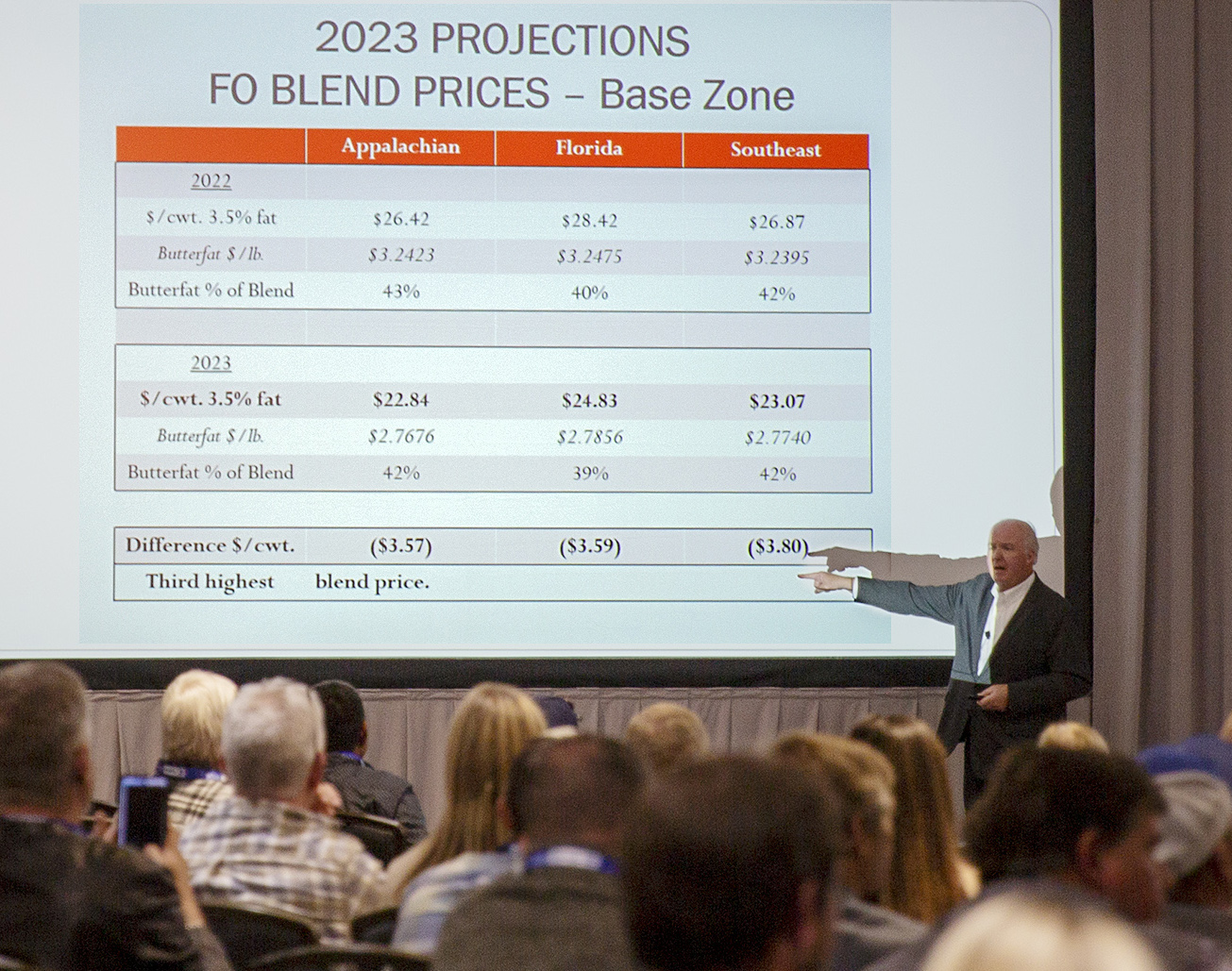

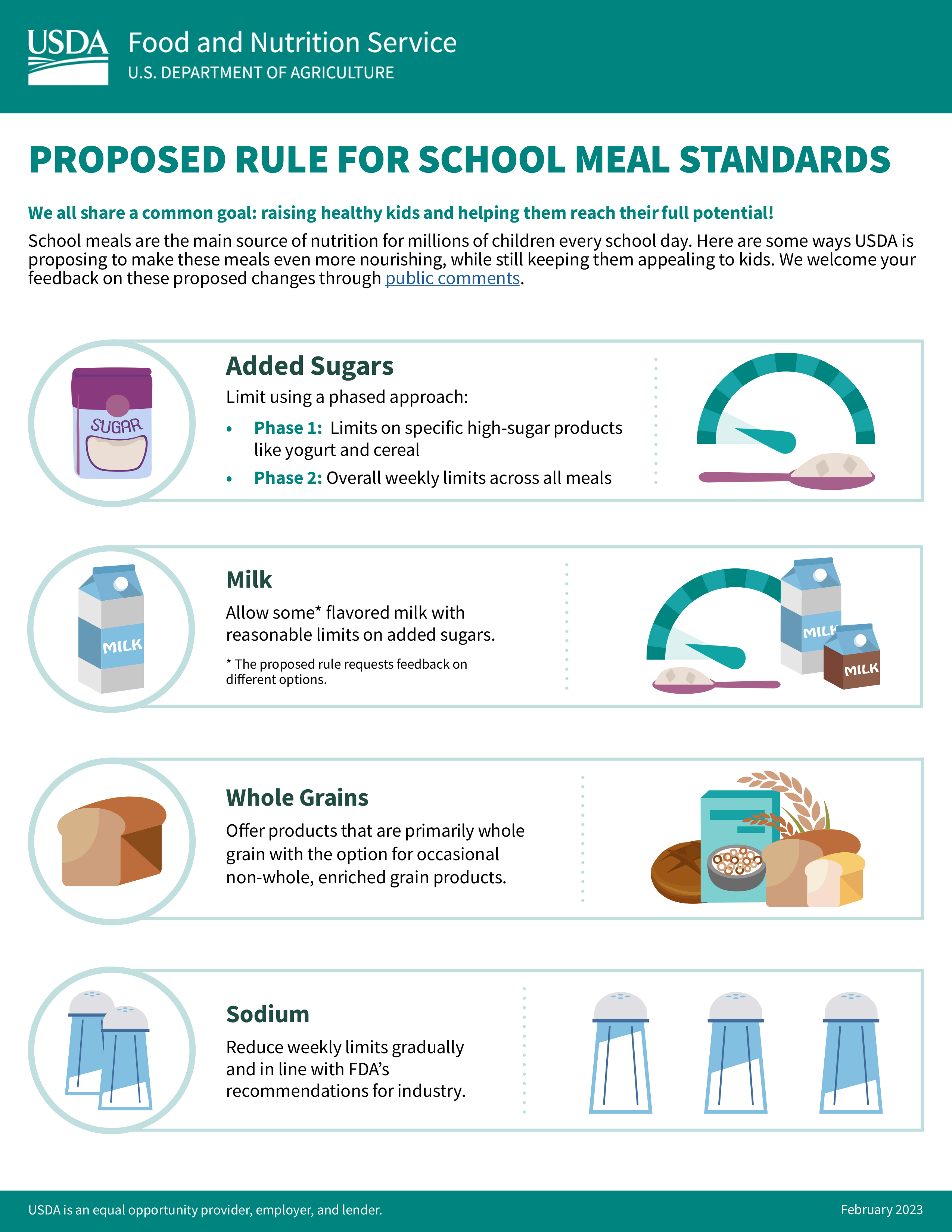
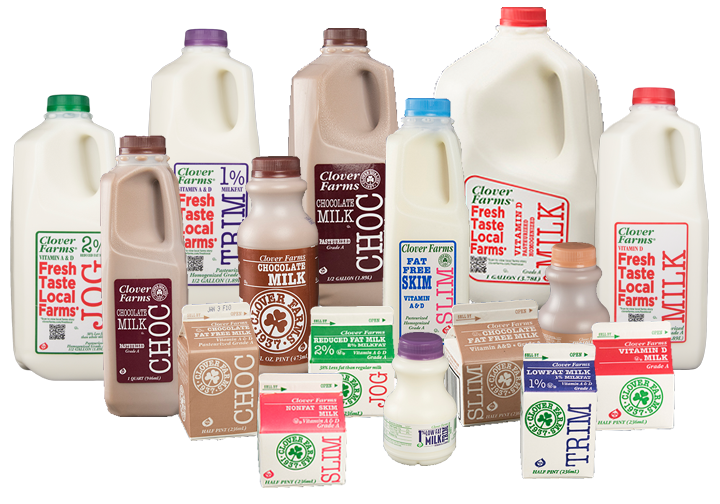


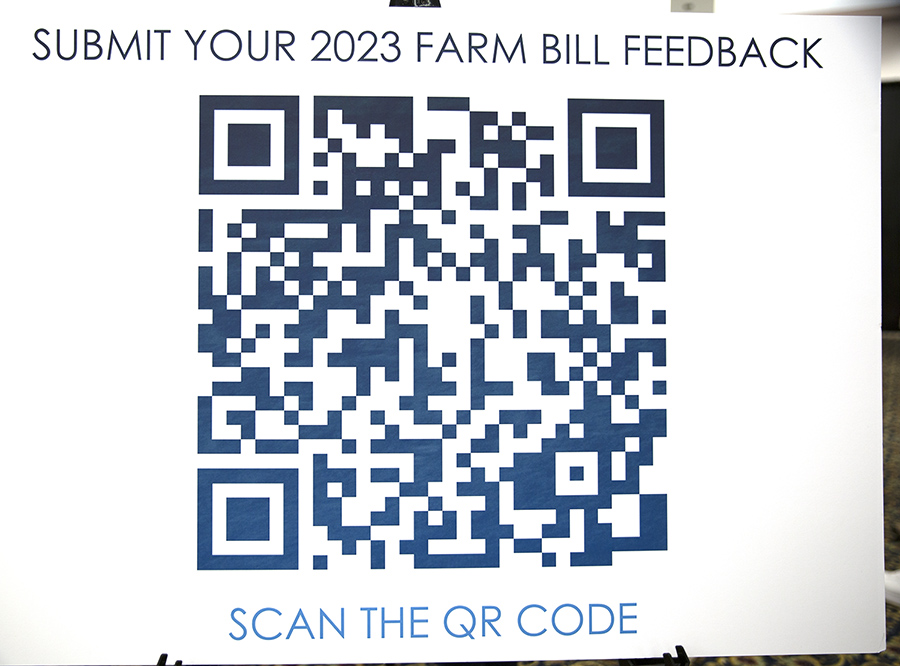
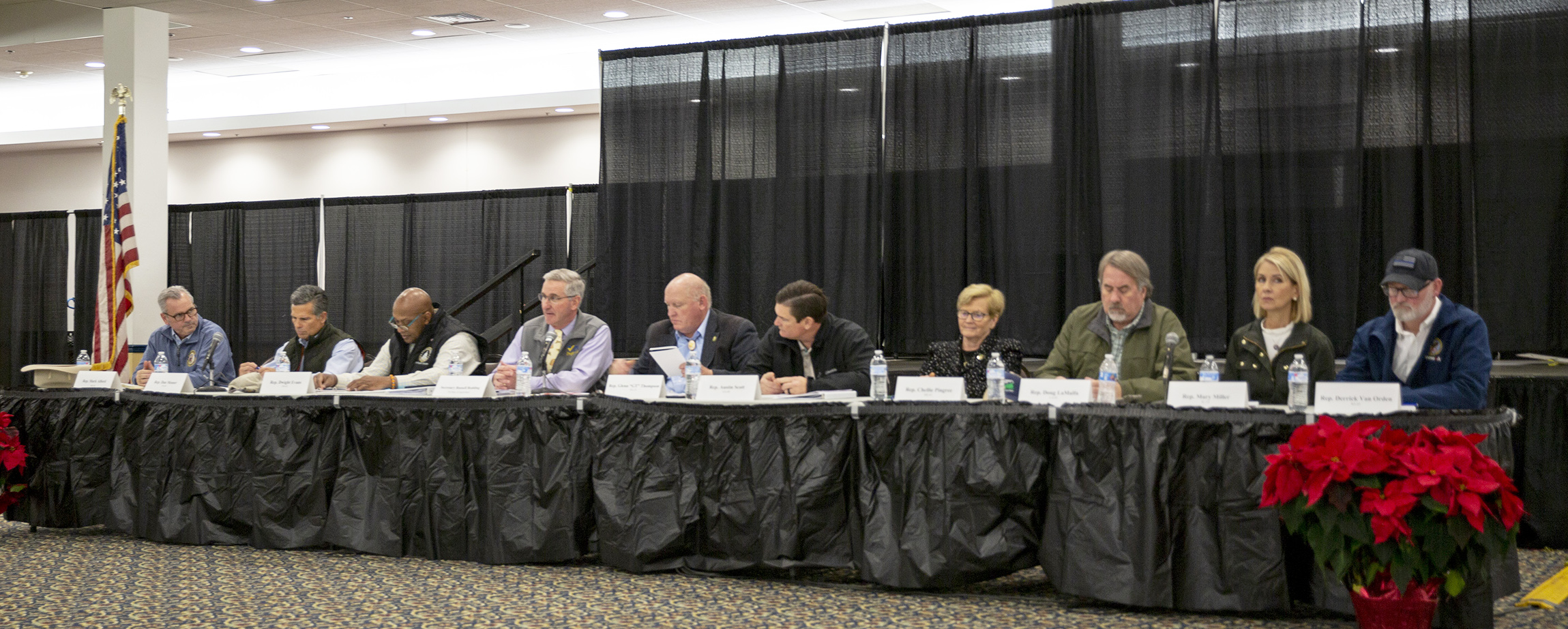
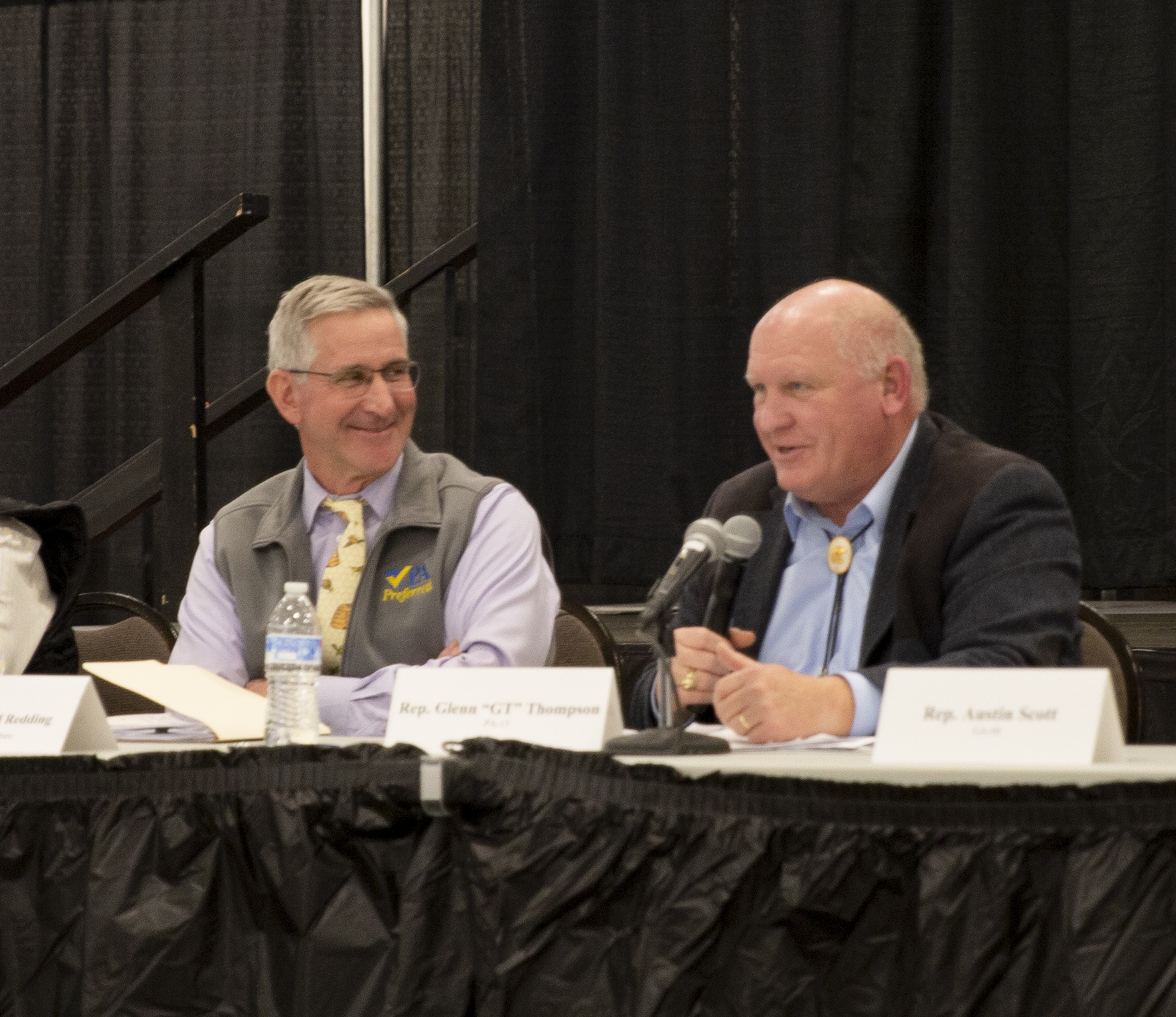
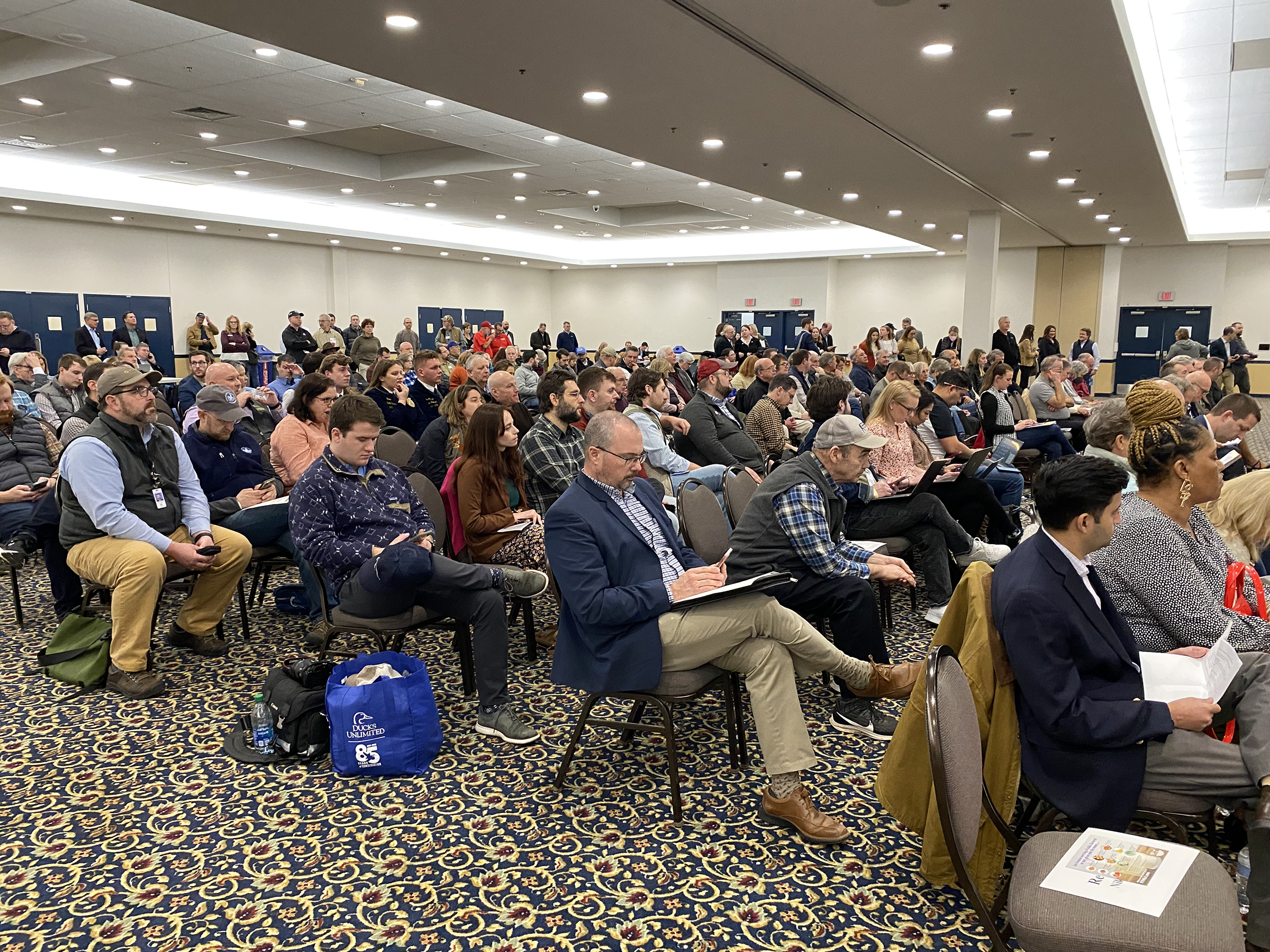


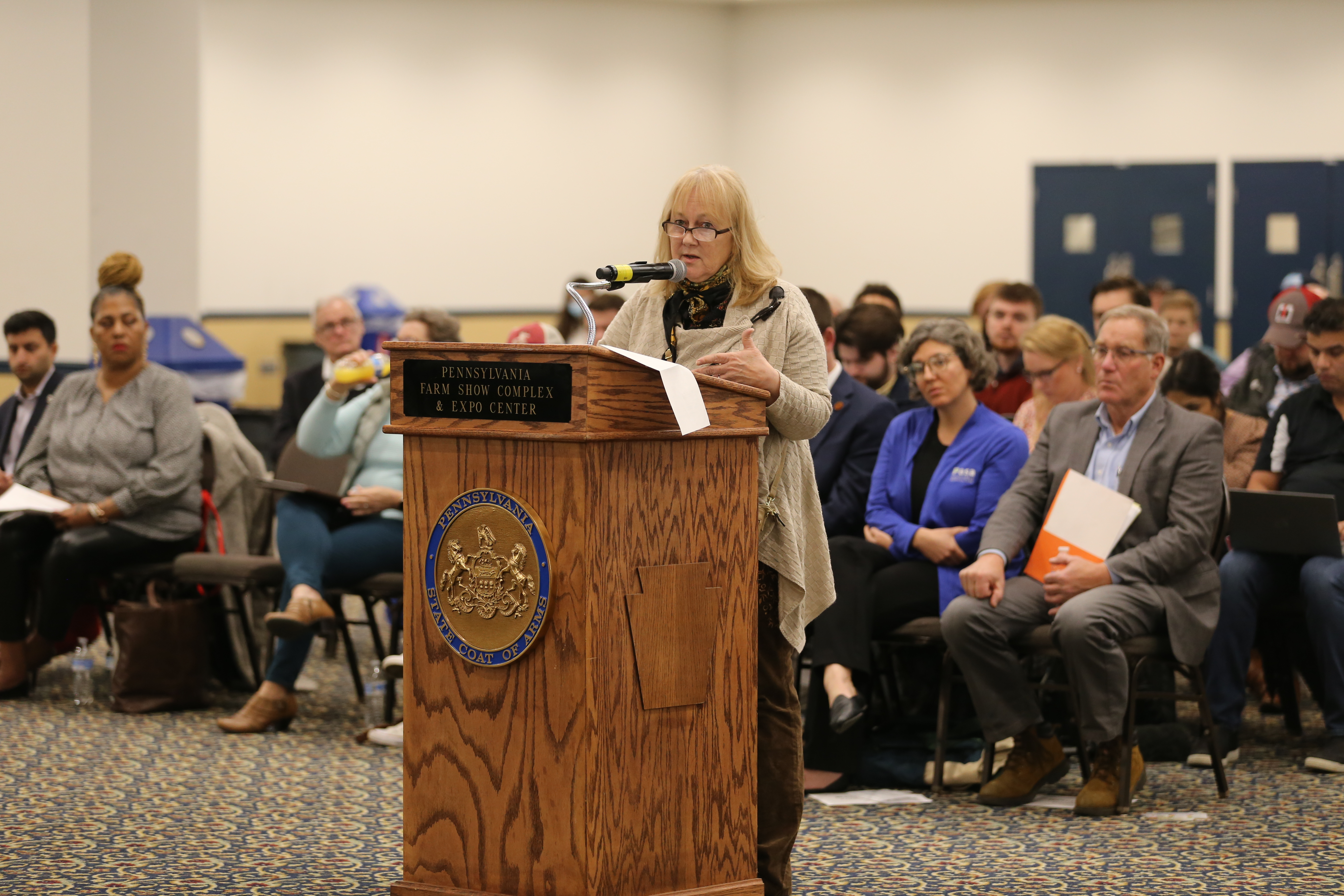
 Ag Moos