DMI details decent dairy conditions on all fronts during industry, media calls

Exports up, Retail up, Food banks up, Inventories stable, Foodservice down but recovering, Future unknown

By Sherry Bunting, May 22, 2020

headshots.indd

CHICAGO, Ill. – How do dairy industry leaders view the status of dairy sales, marketing and promotion and what insights will they share? A few themes emerged from phone conferences with media and producers.

First, it appears that not only is Dairy Management Inc (DMI) working to move product to “hunger” systems, including schools, food banks and charitable organizations, they are also working to reassure consumers — both domestically and overseas — that the U.S. is producing a reliable supply of milk and dairy products, despite the news of so much milk dumping.

After six to eight weeks of supply chain disruptions, milk dumping news, sparse dairy case shelves and/or purchase limits, DMI says national, state and local teams have worked to get stores to remove limits, keep shelves stocked and assure domestic consumers and export buyers that the milk will keep coming.

The news from dairy checkoff leaders is pretty decent on how dairy looks on many of its marketing and inventory fronts. Exports are up. Retail sales are up. Food bank usage and government purchases are up. Inventories are stable. And the previously plunging foodservice sector is recovering.

Meanwhile, dairy farmers received April settlement milk checks in the $10 to $12 range, many with COVID-19 deductions as high as 87 cents/cwt. Some report milk checks netting a single-digit price for April milk. And for direct shippers to Dean Foods, zero checks or deposits were received in mid-May for April milk.

Top dairy leadership talked Tuesday on a media conference call as well as Monday on a producer ‘open mic’ call about some of the dairy market statistics and insight, and how DMI is “pivoting” during the Coronavirus pandemic to “get more dairy in the hands of consumers.”

On the research front — “We need to maintain the things we have to maintain and alter the things we can alter,” said DMI CEO Tom Gallagher in the May 19 media call. One example he emphasized is “DMI’s commitment to publishing milkfat research to keep that front and center.”

On the “open mic’ call with producers the day before, Gallagher said dairy checkoff has been involved in either funding or publishing 59 studies related to milkfat since 2002. He said that the Dietary Guidelines won’t change until there is a “preponderance” of evidence – a “mountain” that is so large — large enough to overcome 40 years of anti-fat dietary advice.

In looking at the list, most are studies related to full-fat cheeses and the role or impact of dairy consumption, no matter the fat content, on various health indicators. Some are studies of milkfat composition, beyond the saturated fat portion, and a handful of the 59 studies pertained to fluid milk of all fat percentages (more on this in a future edition of Farmshine).

On the foodservice front — Sharing data provided to DMI by Inmar Insights, Gallagher said that the foodservice losses can now be measured by transactions but not by dollars or volume, yet.

At the lowest point in the pandemic, the number of sales transactions in the quick serve restaurants (QSR) was down 42% below year ago, but now these transactions are down 20% from year ago.

For full-service restaurants, transactions were down 80% at the height of the pandemic, and now they are 60% below year ago as more full-service restaurants adopt curbside and contactless meal options.

“At the height of the pandemic, 70% of consumers said they would avoid eating outside the home. That percentage is now 50%, and we believe it will reduce over time,” said Gallagher.
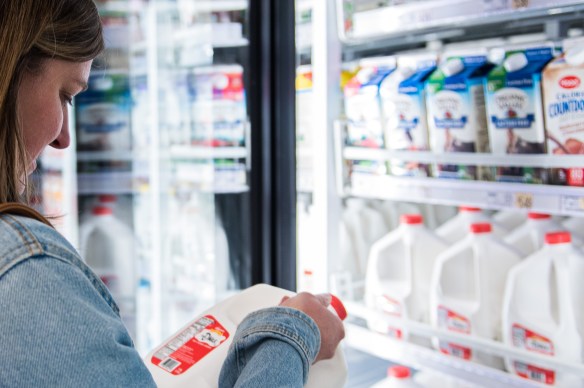
Various fresh dairy products

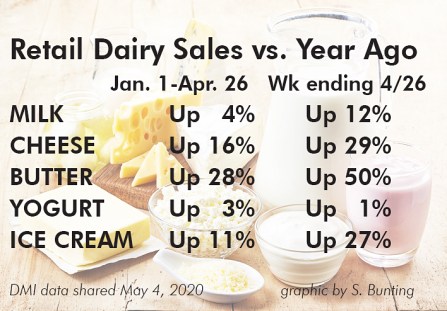
On the retail sales front — Gallagher shared that fluid milk sales pre-COVID were trending 5% below year ago. “But in the first two weeks of the pandemic, fluid milk sales jumped 34% higher, and now, in the past month or so, fluid milk sales are averaging 10% above year ago,” he said.

Looking at products that surround a milk choice, Gallagher noted that cereal sales have been declining 1 to 3% per year pre-COVID. But in the first two weeks of the pandemic, cereal sales jumped 78% and are now averaging 17% above year ago.

He said milk used on cereal has historically accounted for 3% of all fluid milk sales, so the rise in cereal sales is at least a partial factor in the increased fluid milk sales, according to Gallagher.

Looking ahead, Gallagher noted that DMI expects to receive “deep analysis” this week about “why people buy what they bought” both in the first two weeks of so-called “panic buying” and for the four to six weeks after as conditions stabilized.

“There is a lot of conjecture and a lot of opinions out there,” said Gallagher, “But we can’t be in the business of taking our opinion of nutritional or comfort reasons, we really have to understand what was the motivation.”

Gallagher noted that the total all-beverage sector saw very large increases in sales post-COVID, and that the alternative dairy beverage category showed very high percentage increases but are still a very small percentage of volume.

“On an incremental basis, (non-dairy alternative beverage) increases are nowhere near what the increase was for fluid milk sales,” he said.

Another retail category DMI highlighted was frozen pizza sales. “Historically, frozen pizza sales were flat, pre-COVID,” said Gallagher, adding that in the first two weeks of the pandemic, frozen pizza sales jumped 120% over year ago, with sales over the past month averaging 39% higher than year ago.

“That’s just as important to us as cereal sales,” said Gallagher.

Looking ahead, he noted that the “deep analysis” of why consumers buy what they bought will be used as a benchmark and monitored periodically for changes.

“Ultimately, what happens to sales will not be determined by some great ad or some smart thing that one group does, it will be determined by what is the behavior of consumers after this pandemic,” he explained. “We know going into this pandemic, we have moved from consumers spending 90% of their food dollars in the home in the 1950s and 60s to over 50% spent outside the home. Now, those at-home dollars are way up.

“At the end of this, what will their behavior be? Will they eat more at home? Will they keep eating cereal? Or will they go back to breakfast on the go? Will they still do more baking?” Gallagher wondered aloud.

“The idea that we can just educate and the problem will be solved, it wouldn’t,” said Gallagher. “If you look at the competition up and down the grocery aisle, there are two aisles with no dairy in them in the nutrient-rich niche market for on-the-go (shelf-stable). That could have been dairy, but now it’s not, and we have to play catchup.”

He said consumers “eating at home can be a hope that would be huge for the white gallon, but if we think the white gallon is the innovation of the future, it’s not.”

While Gallagher acknowledged that these current retail buying trends during COVID-19 bode well for fluid milk and butter, and DMI can market toward that once they understand why, he also countered these trends, observing that, “If consumers go back to where they were, then we are back to the same opportunities and issues that were always there. The reality will likely be somewhere between those two extremes.”

Gallagher pointed out that many people believe consumers are responding to messages about dairy nutrition, and that it might seem to be a good idea to “market to nutrition, but it’s not that simple,” he said. “What we do for dairy farmers has to be based on the reality of the data.”

In other words, DMI will market to the why’s behind the sales data once they receive the next layers of  “deep analysis” – to continue a promotion direction of following consumers with partner ‘innovations’ instead of leading them with an emphasis on product information.

On the export front — “The numbers look better than we anticipated for the first quarter of 2020 despite the virus, and we hope this will continue for the year,” said Tom Vilsack, president and CEO of the U.S. Dairy Export Council (USDEC).

Specifically, Vilsack reported that the U.S. exported 109,000 more metric tons of dairy products in the first three months of 2020 as compared with a year ago, and these exports were worth $528 million more than exports a year ago.

He expects to see a decline in exports into the summer with a rebound later in the year.

He said USDEC is “using aggressive social media in all export markets for U.S. cheese and dairy ingredients to make sure buyers know milk is still being produced here.”

According to Vilsack, export buyers are diversifying their purchases and spreading supply risk, “so some of that market share is coming our way from diversification,” he said. “Our price-competitiveness is good at the moment, and this is something we watch, so our ‘Next 5%’ plan for growth continues even in this much-changed landscape.”

USDEC is marketing with Costco in China and Southeast Asia, including significant advertising about American-made cheeses. In the Middle East, recipes using cheese are being included in grocery bags and hung on doorknobs, said Vilsack. Culinary efforts are also being geared to encourage the next generation of overseas chefs to use American cheeses.

On the inventory front — Vilsack noted that USDEC sent a “warning shot” letter to the European Union and other to be sure any dairy intervention does not lead to a stockpile of powder or dairy products like the EU accumulated in 2015, which had led to three of the past five years of dismal global milk prices.

In a producer call the day before, Gallagher’s guest Jim Mulhern from National Milk Producers Federation described U.S. dairy commodity inventories as “not that bad.”

Mulhern said some dairy product stocks were building at the start of the pandemic, but mostly inventories are “not really burdensome right now. We are not in bad shape (inventory-wise). That’s one reason barrels moved is stocks are not that large right now,” he said.

“That’s one of the reasons we focused on the need to have USDA buy products now and get them into commerce through feeding programs and into food banks right away. The need is there, and we have the product,” said Mulhern. “We don’t want to go back to holding product in storage and selling it on the market later.”

On the food bank front — Vilsack confirmed that there is a 70% increase in overall food demand by the food bank system, and Gallagher added that fluid milk is still the most requested item.

“Food banks get most of their food from retail, and this is a challenge at a time when the retail sector is challenged by this higher demand,” said Vilsack, who in addition to being CEO of the dairy checkoff-funded U.S. Dairy Export Council, sits on the board for the Feeding America national food bank system.

Vilsack noted there is a significant demand for volunteers and for equipment such as refrigeration to handle these higher volumes of food being supplied to serve the expanded need brought on by around 30 million newly unemployed workers during the COVID-19 economic shut down.

National Dairy Board president Barb O’Brien talked about the “emergency action team” that was assembled after foodservice and restaurant trade began to shut down with business restrictions.

“We shifted our focus,” said O’Brien, noting that DMI partner Kroger, with its 16 milk plants, got involved in moving “hundreds of thousands of gallons of milk into the hunger system.

“We also worked with other processors on fluid milk, cottage cheese and turning 40-pound blocks into smaller packages, and we worked with processors to solve infrastructure challenges around refrigeration, to get coolers and refrigerated trucks placed at pantries,” O’Brien said, explaining that their teams are looking at the supply chain issues in four quadrants: schools, hunger, foodservice, and retail and then “working with farmers, processors and cooperatives to redistribute product.”

For school feeding, some of the regional checkoffs developed free emergency menu resources, donated thousands of coolers at alternative school feeding sites, worked with school nutrition personnel and USDA to help translate the rules – to understand the waivers that allow bulk or gallon containers for multiple meal service.

On the schools front –  Also on the media call was Alexis Glick, CEO of GENYOUth. She talked about the COVID-19 School Fund that was launched on March 30 two weeks into the closure of schools and non-life-sustaining businesses.

The purpose of the fund, which has raised $5.5 million to-date, is to provide grants and resources to help schools package, distribute and deliver meals in the grab and go model. Glick said they have received $33 million in requests so far as 12,000 school buildings, to-date, have applied for individual $3000-grants for equipment needed for such distribution.

“So far, $5.5 million in cash and equipment has been awarded to support over 6000 schools, said Glick. She estimates that these 6000 are collectively delivering 50 million meals per week (two meals per day).

“We are aiming to approve 250 to 500 grants per week by prioritizing schools that are serving the highest number of meals with the highest numbers of (USDA) free- and reduced lunch eligibility,” she said.

Glick noted that “alongside dairy farmers,” support for the COVID-19 School Fund has come from financial institutions, Domino’s, PepsiCo, National Football League, United Healthcare and a recent partnership with the Rockefeller Foundation as well as private donations from chefs, athletes and celebrities.

“We are working with our health and wellness partners, our partners at USDA, the School Nutrition Association, celebrities and media entities to get the word out and draw awareness. Just because the school year ends, doesn’t mean the end for hungry kids,” said Glick.

GENYOUth’s technology partner SAP has developed a “resource locator” called SAP for Kids to connect families to school meal resources in their zipcodes.

Glick also said school meals will convert soon to summer feeding sites and then in the fall, meals at schools will likely change based on CDC recommendations for eating in classrooms instead of cafeterias. “Schools will need our help to buy equipment that they will need for that,” she said.

Moving and messaging — As mentioned in the Farmshine article last week, O’Brien again touted the “deep relationships” dairy farmers have with ‘some of the biggest foodservice partners.” saying those partners “extend what we can do to immediately drive incremental cheese volume.”

An example she gave is an extra two ounces of cheese on pizzas and new national ads to be run by Papa Johns and Pizza Hut now through the end of August about more cheese. She also highlighted Domino’s new concept launching carside delivery full-tilt in July, saying this will move “more cheese.”

Meanwhile, said O’Brien, the “Undeniably Dairy” messaging is focused on “building trust and bringing joy by reassuring people that dairy farmers and the dairy community are essential and working tirelessly to ensure a safe and consistent supply.”

They are also repurposing content to provide virtual farm tours for parents and teachers to access for at-home curriculum and promoting recipes.

“Consumers are still interested in where their food comes from and how it is produced,” said O’Brien. So, these “tell your story” and “sustainability” themes the checkoff has been focusing on pre-COVID will continue, but are changed a bit to conform to stay-at-home communication venues.

Among the planned media segments leading up to June Dairy Month are the one Monday, May 18 on Fox and Friends featuring Maryland dairy farmer Katie Dotterer-Pyle and the 30-second video produced with footage from several dairy farms that will be shown 20 times in the following weeks and will be picked up by other stations through online “streaming.”

She also said that the MilkPEP television commercial that was running about dairy farmers, haulers, bottlers, and store employees has now been “co-branded” with a large Undeniably Dairy logo, it reinforces the essential care of the entire dairy supply chain.

O’Brien hinted at a surprise promotion to happen May 21 in partnership with a major pizza chain on late-night-TV — a ‘pizza party’ celebrating 2020 graduates as their traditional graduation ceremonies have been suspended by COVID-19.

-30-
Consumer trends amid COVID-19 have DMI a bit perplexed

Gallagher skeptical about ‘comfort and nutrition’, wants data from partners, not opinions. O’Brien says ‘future of dairy’ may go fast-forward

Various fresh dairy products
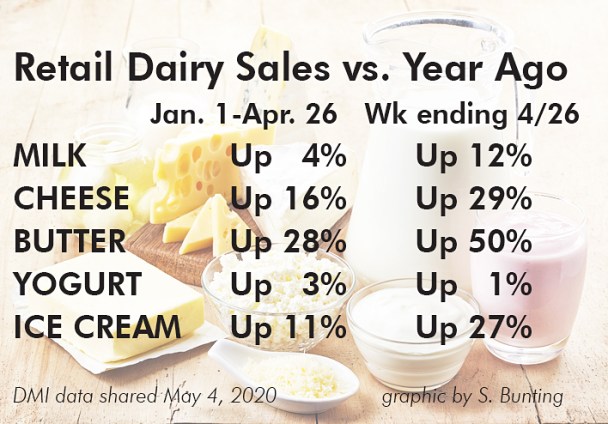
Data shared by DMI in the May 4, 2020 industry call shows all retail dairy sales categories are up significantly year over year. DMI CEO Tom Gallagher noted that the level of increased sales of fluid milk compared with a year ago are “still relatively consistent” as of the end of April.

By Sherry Bunting, Farmshine, May 15, 2020

CHICAGO, Ill. — Amid the supply chain disruptions brought on by COVID-19 restrictions, Dairy Management Inc. (DMI) and the National Dairy Board are having weekly conference calls. They say 100 to 150 farmers have been participating.

And they are scratching their heads a bit over what to make of the now ‘unleashed’ consumers.

‘Unleashed consumers’ is the phrase I have coined for describing consumers now in control over their food, beverage and dairy choices, now that they are not so completely influenced by away-from-home and institutional feeding that adhere more closely to the dietary guidelines.

This has emerged most notably in the huge increases in whole milk sales that have boosted the fluid milk category well over year ago levels to the first year-over-year increase last month in decades. It has also shown up in the demand for butter, full fat cheeses and other cream products that sell out quickly at retail and prompt spot shortages.

On the May 11 DMI call, Russell Weiner, Domino’s COO and president of the Americas, was a guest and he highlighted his company’s partnership with dairy checkoff since 2008. That is a separate and quite interesting story. One thing he referenced is that pizza sales have been strong through the pandemic, and that consumers historically spend 5% of their disposable income in the quick-serve-restaurant (QSR) sector through recessions and other crises. This appears to be holding true amid the pandemic.

DMI CEO Tom Gallagher and National Dairy Board president Barb O’Brien also gave updates about what DMI is doing about consumer buying patterns and future trends. It was evident in the discussion that DMI has a future of food concept for dairy based on prevailing insights from its partners and does not want to deviate from this framework unless data from partners points to a true shift in consumer purchasing and unless they have a “why” behind the shift.

Gallagher stressed that DMI, and the states and regions, are collecting every piece of information from every partner they can to “see what it will mean post-COVID or during COVID. There are a lot of opinions out there,” he said, “but it’s too early for us to put our stake in the ground as to this is what it will be.”

He talked about DMI’s data partner Inmar Analytics, which did the recent 2019 “Future of Food Retailing” report. “At no charge to us, they are looking at the buying patterns after the initial ‘panic buying,’” said Gallagher. “We know what people bought, but why did they buy it? Was it because they were interested in comfort food or nutrition? Or were they hoarding? Or were they baking more? I am a data guy. I want to see the data as to why they buy what they bought.”

In a skeptical tone, Gallagher went on about these so-called “opinions” on the buying patterns revealed by COVID-19 impacts.

“Some say, ‘Oh, it’s a return to nutrition.’ And some say, ‘Oh it’s a return to comfort food.’ But what really drove their behavior? And what strategies should really influence our thinking about the future? We don’t know. In the meantime, we will collect information,” Gallagher said. “We all have opinions, but we want to be informed with data, not opinions, to design how we move forward.”

Gallagher mentioned a study coming out this week on what food companies are thinking will be the patterns after COVID. When pressed later about how to hang on to the new-found bump in purchases of certain dairy products at retail (such as whole milk and butter), given that some of these purchases may be relatively new for some consumers, Gallagher was steadfast on not changing the future plan because of current “opinions.”

He stated — again — that Inmar Analytics will be able to tell DMI “exactly what shoppers put in their baskets and compare it to what they put in prior to COVID. They will be able to tell us what changed and through technology, why did that change occur, that’s the data I want,” he said.

One ‘why’ for ‘what changed’ (in this reporter’s opinion) may be too subtle for the Inmar Analytics surveys to detect — that is the nuances of just how much consumers have been controlled by the Dietary Guidelines pre-COVID, without even realizing it. There is rarely any talk from DMI about what those flawed guidelines — set by the government with very little opposition by the dairy industry — actually do to buying patterns when people are consuming 54% of their calories away from home and much of that in schools, workplaces, quick-serve-restaurants and other institutional settings where food choices are more “formulated.”

The COVID-19 pandemic has abruptly unleashed consumers nationwide from the fat-restrictive Dietary Guidelines. Now, consumers are able to use more of their own discretion and choice apart from institutional food settings, guidelines and formulas. Some experts ‘reading the tea leaves’, such as Nielson Global Insights, observe that after a significant event like a pandemic of this magnitude, consumers can be expected to stay with some of the choices that made them feel healthy and safe during the pandemic, once the world gets back to a new-normal. That could be significant for dairy — but it may not line up with the ‘future of dairy’ pathway set by DMI and its partners.

O’Brien explained that dairy checkoff teams are actively involved in both long-term and immediate efforts.

“We are looking at the future of dairy. COVID-19 may fast-forward some of that future to happen more quickly,” she said. “In the immediate term, our retail teams are working with MilkPEP, to keep stores stocked and address the concerns people have about value, and we’re doing things with e-commerce to offer recipes that extend the use of the dairy products they bought.”

DMI’s ‘future of dairy’, as we know, is built on partnerships, innovation, and promotion of dairy farmers and sustainability and animal welfare practices, not education and promotion about milk and dairy products. It is well known that the innovations over the past decade have been focused on consumers eating dairy, not drinking it; and in the fluid space, these innovations emphasized through DMI partnerships have focused on ultrafiltered, shelf stable, lower-fat dairy beverages and blends and away from the whole milk gallon jug.

But we also can see that in their time of freedom to choose for their families amid the pandemic, consumers are reaching for the whole milk gallon jug. In fact, prices are rising on whole milk by $1 to $2 per gallon, while other fat content milks have remained the same, and still sales of whole milk are strong.

A producer from Wisconsin on the call asked Gallagher to make sure to track convenience store purchases when gathering the data, not just grocery retail, noting that many consumers buy their milk at convenience stores. Gallagher responded that they may have to check with another data partner for that piece.

O’Brien also stressed that while they gather data about consumer patterns, DMI will continue to chart the path it has set. That is to “gain the trust of consumers and celebrate dairy’s role in sustainably nourishing families and communities,” she said, adding that a media segment is being prepared for Fox and Friends next Monday morning, May 18 that will feature Katie Pyle of Cow Comfort Inn Dairy in Maryland.

“That piece will help bring to life our dairy farmers’ commitment to sustainably producing nutritious food,” said O’Brien. An estimated 2.5 million viewers will see the spot, and it will be supplemented with “live-streaming” on two other network stations where farmers will be interviewed to “tell their story.”

“That piece is supported by a 30-second video drawing footage from many farms and will run this week to the end of the month in streaming venues,” said O’Brien. She also explained that DMI has been working extensively with MilkPEP (fluid milk processors promotion) and that MilkPEP’s ‘Love what’s real’ ads are on television right now during the COVID period (when everyone is at home). The ads review the essential role of dairy farmers, and others involved in the dairy supply chain, she said.

“We co-brand these ads using the Undeniably Dairy logo, and design ways to help them reach consumers with these interests,” said O’Brien. “That’s our runway into June Dairy Month.”

While Gallagher said he expected to have some data insights from Inmar Analytics as early as next week, he added that it will begin a process to use technology to interact with consumers to learn more of the why’s behind their choices so that DMI — and its partners — can “appeal” to those drivers.

Stay tuned.

-30-

From USDA to checkoff, no one in farmer’s corner

By Sherry Bunting, Farmshine, April 17, 2020

BROWNSTOWN, Pa.– From the fortress of the USDA to the ivory towers of the dietary command to the branches of the checkoff government-speech machine and the centralized, globalized food system ‘partners’ in between — No one is in the farmer’s corner. Not even the people paid by the farmers to be in their corner.

This much is crystal clear by now in the collapsing markets and stark realities laid bare by the COVID-19 pandemic.

The curtains have been opened.

And the usual players do what they do.

They pat themselves on the back, converse about their insights from within their echo-chamber, and lecture those who would dare call attention to the sight before us or deviate from the script.

Over the last week, dairy checkoff newsletters have bragged about what they are doing for dairy demand amid the deepening crisis; how DMI is “adjusting to move more dairy.”

Yep, the bulk butter and bulk cheese and bulk powder plants in growth areas are moving more dairy — right into the already bursting at the seams cold storage inventory warehouses.

Few if any reports from states with these large plants indicate any milk dumping whatsoever.

Butter inventories were already 25% higher than year ago heading into the COVID-19 pandemic and cheese inventory was already growing too.

Reports indicate such fully functioning cheese and whey or powder plants are running full tilt, while a shopper has to store-hop through three or more establishments to find a package of butter, walk into Walmart and see rows of empty cheese racks, try to walk out of a Walmart or Sam’s Club with two gallons of milk and be forced to give one back.

Other supermarkets aren’t much better, except for the smaller family-owned markets. Pictures and texts continue to pour in, while our leaders assure us that the purchasing limits are really lifted.

Go to Kroger’s website (a DMI partner) and see their explanation of why they’ve raised the price of milk. It’s because there is a shortage, they say, while farms all around them are forced to dump milk. Just six weeks ago, a Kroger executive I spoke with said, ‘no we can’t raise the price of milk — it was $1.25/gal pre-COVID (not in PA of course but elsewhere).

I was making the point that we have loss-led and commoditized this deal long enough. Please respect the milk. “No,” I was told, “raise the price? How is that going to sell more milk?”

What is Kroger doing today (and Walmart and other heavy hitters for that matter)? NOW, they are raising the price, even canceling some orders without much to spare, as they are being asked to stop limiting sales.

Meanwhile farmers are forced to dump milk.

As the commodities crash with barrel cheese at around $1/lb and butter headed there too, are the food system heavy-hitters holding back to buy that higher-priced inventory on the cheap just to turn it around and charge more?

We are getting to see how the system works — how the losses and consolidation of a decade or more are threatening our farms and food security. But leaders and policymakers are still convinced this system is the best, and thanks to new stricter rules coming on animal proteins and fat, it’s about to get better, more diluted, and void.

Take the DMI update in the ADA Northeast newsletter from April 6, how proud they are of the “seven ways checkoff is working for you during COVID-19” and how they are “adjusting to move more dairy”, how GENYOUth is “keeping the meals flowing to students”, while in reality the real school chefs and lunch ladies — even bus drivers — are out on the front lines figuring it out for real on their own every day; how proud they are that the National Dairy Council “sorted through milk myths.”

Now that last one is a doozie. Here’s one of the seven ways checkoff is working for you: “National Dairy Council is among the expert organizations to debunk claims that milk can help ward off coronavirus.”

Remember the news about milk and it’s immune-building properties? Even Hoards Dairyman noted milk was “flying off the shelves” as consumers sought the health benefits and comfort of milk.

Remember how DMI tells us “you can’t educate people to drink what you want them to drink?” How “we want to move people away from the habit of reaching for the jug and toward the new innovative products?”

It wasn’t even a week after fluid milk sales skyrocketed 40% that the National Dairy Council helped debunk some of that immune-building “myth” in Reuters story.

And yes, rest assured, DMI is talking to “your (their) partners” to get them to “move more dairy”.

So here’s the clincher. Watching the President’s daily COVID-19 press conference Wednesday evening (April 15), it really hit home, bringing together so much of what I have seen and heard over the past few weeks and the months and years before that.

Agriculture Secretary Sonny Perdue was part of President Trump’s daily presser Wednesday, and I was hopeful when he went to the microphone that he would talk about impact to food and agriculture during the COVID-19 pandemic.

He told Americans that “Our food system is strong, resilient and safe,” despite the bare shelves and limits on purchases that people are seeing in supermarkets.

“In the United States, we have plenty of food for all of our citizens,” Perdue said. “I want to be clear, the bare store shelves that you may see in ‘some’ cities in the country are a demand issue, not a supply issue.” (Huh? At least he didn’t phrase it the way Pennsylvania’s Ag Secretary does, saying in a PDA public service announcement to radio and television stations that store limits, bare shelves and dumped milk are a ‘hoarding issue”, and saying in a dairy industry conference call: “this is what happens when people hoard food.”

No Mr. Secretaries, this is not hoarding and it’s not a ‘demand’ issue, it’s a centralized, consolidated, globalized food industry structure issue.

Back to Sec. Perdue’s moment before the American people… Perdue said simply that there has been a large shift from people eating in restaurants and fast food businesses, and now eating at home, which has spiked in the last few weeks and placed a high demand on grocery stores.

“Our supply chain is sophisticated, efficient, integrated and synchronized, and it’s taken us a few days to relocate the misalignment between institutional settings and grocery settings.” Perdue said.

Bingo. The accelerated creation of this machine over the past decade has been designed by government policy from the flawed dietary guidelines, to the government speech farmers are forced to pay for, to the mergers and acquisitions and antitrust behaviors, to the globalization and centralized decision-making, to the erosion of local/regional milksheds and foodsheds.

Yes, Mr. Secretary, that sophisticated, efficient, integrated, synchronized food supply chain has moved our country closer to cow islands and food deserts and fracturing of regional food security.

Some of the best minds in agriculture economics are seeing it. Consumers are waking up to the realization of what that means when the chips are down. They are watching their communities’ farmers dump milk, depopulate poultry flocks, send milk herds to slaughter.

This pandemic has peeled back the band-aid covering gaping wounds inflicted for years, and now when it is open and bleeding for all to see, the Secretary reassures the nation that this big beautiful bountiful ag food system simply needs to “relocate a misalignment.”

Tammy Goldammer, a cattle rancher friend of mine in Missouri put it bluntly in a social media post after listening. Here are some of her words:

“Production Ag People?

Did you happen to listen to US Ag. Sec. Perdue’s comments today at the Rona Update press conference? Were you reassured about your occupation of raising the highest quality protein sources to feed the world?

Did you find it interesting that there was no mention about “producers” and what is going on with what they raise to feed people?
1. There was no mention of the killing of millions of ready to harvest chickens and turkeys…to leave them to compost.
2. There was no mention of the dumping orders for milk and the orders to let cows go dry and to sell the dairy cow herds.
3. There was no mention of the shuttering of ethanol plants and the resulting depletion (no supply) of by-products utilized in the livestock feeding industries.
4. There was no mention of the Mercantile Exchanges and the crashing commodity prices for livestock, dairy and grain futures.
5. There was no mention of the bankruptcies and insolvencies of feeders who grow the nation and the world’s protein sources.
6. There was no mention of the sucking sound to the south of the beef cattle industry.
7. There was a mention there are a few “slaughter” plant closures due to Covid-19 being detected in some employees.
8. There was a mention that our nation’s food supply is abundant and there should be no fear about food availability.
Do you all like math? Mr. Perdue? Your commentary today to assure the American public was absolutely “void” of speaking to the producers/people who produce what you stated is in good shape and rest assured there are no shortages.
To say I was “stunned” at your “void” on the big picture, well, let’s say I was totally bewildered.”

But never fear oh sophisticated, efficient, integrated and synchronized food system, President Trump followed the Perdue comments with news that there is $15 billion in tariff money left in Sec. Perdue’s charge to help farmers who were targeted and he gave the Secretary the go ahead to use it.

Later this evening, word came that the government will begin buying milk and meat. Yes, as mentioned by Pennsylvania’s own Secretary in his PSA ‘stop hoarding food’… ‘food banks need the food’… ‘we have a system…’

Yes, the integrated centralized system is the proper channel while communities take care of their own with whatever resources they can muster. Good people in communities like mine right here in Lancaster County, Pa. are buying milk, giving it to the needy or seeking processors (for pay) to process milk headed to manure pits so it can be donated, only to bump up against that integrated system.

Kudos to those businesses in the community who are buying milk to give to the needy or stepping up to allow their smaller processing plants get milk ready for food banks before it is wasted.

The efficient, sophisticated, integrated, synchronized food system is not. But it will when the price is low enough and the government starts buying.

-30-

Call to action: Feds ignore science on saturated fats, poised to tighten restrictions in 2020-25 guidelines

Where is our dairy industry? No time to waste!

dga2

By Sherry Bunting, Farmshine, April 3, 2020

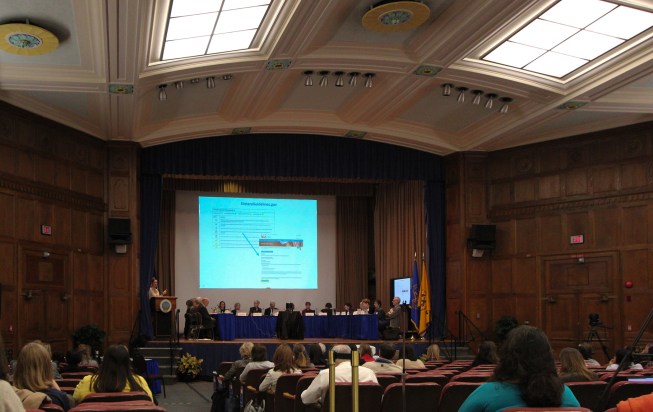
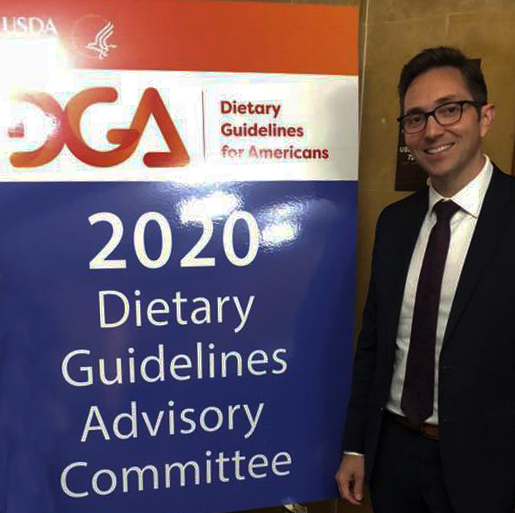
 WASHINGTON, D.C. — While Congress, USDA and HHS are all consumed by the health concerns of the COVID-19 pandemic, the Dietary Guidelines Advisory Committee is moving forward full-steam-ahead with what looks like more restrictions on saturated fats to be announced in May. Meanwhile, dairy leadership organizations sit on the sidelines, just letting it happen.

According to the Nutrition Coalition, and this reporter’s own following of the DGA Committee process, the process has been flawed from beginning and has reached a critical juncture. There is an urgent need for the public to pay attention and get involved.

Many had hoped the Committee would review and include the sound science and revelations about the flaws in the saturated fat limits in the current dietary guidelines to remove those restrictions or improve them in the 2020-25 guidelines. But the opposite is occurring.

As reported previously in Farmshine, some of the very best and most rigorous science on saturated fats and in relation to dairy fats vs. cardiovascular disease have been excluded from the review process from the very beginning.

Unfortunately, the process that began in 2019 is poised to move Americans even further down the wrong road with even more restrictive fat rules that will govern and inform all institutional feeding and which heavily influence the foodservice industry. Even worse, farmer checkoff funds are forced, by USDA, to help promote these unhealthy guidelines.

While National Milk Producers Federation, International Dairy Foods Association, Dairy Management Inc., and other industry organizations are silent, the Nutrition Coalition, founded by Nina Teicholz, author of The Big Fat Surprise, is sounding the alarm.

“We need your help to ensure that the federal government not continue to ignore large, government-funded rigorous clinical trials — the “gold standard” of evidence — that could reverse decades of misguided nutrition policy on the subject of saturated fats,” writes Teicholz in a recent communication.

She’s right. From the beginning, the DGA Committee was formed, and the research pre-screened by USDA, in such a way that many of the best studies and minds have been excluded.

Processed With Darkroom

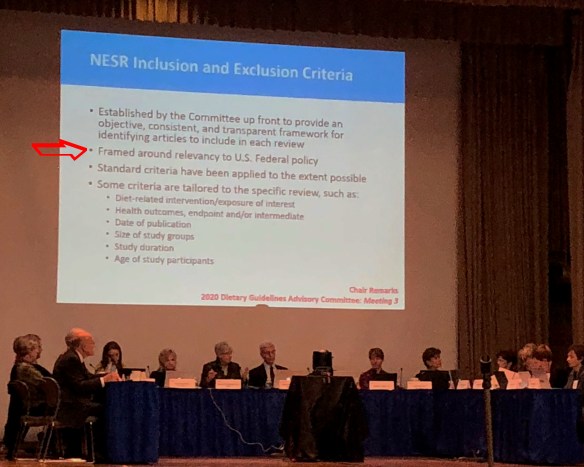
Part of the screening process used by USDA for science that will be included or excluded from Dietary Guidelines Advisory Committee consideration is this curious item shown above: “Framed around relevancy to U.S. Federal  Policy”. Committee members in October asked for more information on this research screening criteria. USDA explained it to them and those watching that this refers to including only the research that “aligns with current federal policy.”

Interestingly, one of the criteria for screening the research the Committee can consider is that it must “align with current federal policy.”

This dooms the entire process to a slanted view that is entrenched in the flawed bureacracy right from the start!

During the recent meeting of the DGA Committee in March — the last such meeting before release of the 2020 Dietary Guidelines for Americans (DGA) in May or June 2020 — the Committee failed to consider any of this evidence on saturated fat.

Instead, the committee announced it had found the link between saturated-fats consumption and cardiovascular disease to be “strong,” for both children and adults.

In fact, the committee recently proposed lowering the caps on saturated fat even further, from the current 10% of calories down to 7%!

“These conclusions ignore the entire last decade of science, during which a growing number of scientists have concluded that the caps on saturated fats are not supported by the science,” Teicholz points out.

She cites the work of a group of leading scientists who have reviewed the research on saturated-fats and released a consensus statement.

“Scientists are concluding that the most rigorous and current science fails to support a continuation of caps on saturated fats,” writes Teicholz. “So, why is the current DGA Committee — yet again — simply rubber-stamping the status quo and ignoring the science?”

The Nutrition Coalition is working fervently to expose the flaws in the process the DGA Committee is using under the USDA Food Nutrition Services umbrella. This in turn is what is used by USDA and HHS to govern what Americans eat.

These are not just “guidelines”, these are edicts to which everything from school lunches to military provisions are tied.

In fact, even farmers are tied to these guidelines as the dairy checkoff program leaders maintain they cannot promote whole milk because they are governed by USDA to stick to the guidelines, forcing farmers to mandatorily fund this completely flawed and unscientific “government speech.”

Americans deserve a recommendation on dietary saturated fat that is based on the most current and rigorous science available, and the Nutrition Coalition is issuing a call to action for Americans to join them in calling on the 2020 DGA Committee to critically review the most up-to-date evidence and modify its position on saturated fats accordingly.

“When we refer to “rigorous science,” we mean the data from well-controlled, randomized, clinical trials—the type of evidence that can demonstrate cause and effect,” writes Teicholz. “These trials were conducted on some 75,000 people addressing the question: do saturated fats cause heart disease? The results are that fats have no effect on cardiovascular or total mortality. This evidence has never been directly reviewed by any DGA committee.

“Ignoring evidence in order to preserve the status-quo is not acceptable,” she continues. “It’s not good policy, and it has not been good for the health of the American people. With the next iteration of the guidelines, your help is more crucial than ever to ensure that the USDA critically review the most up-to-date evidence and modify the government’s position on saturated fats to reflect the science accurately.”

Meanwhile, the dairy industry leaders continue to drag their collective feet.

As reported in Farmshine over the past few years, the call to action and support for healthy recommendations that consider the science on saturated fats and the goodness of whole milk, for example, has been largely pursued by grassroots efforts while industry organizations either fall in lockstep with the guidelines or stay neutral on the sidelines.

Once again, it will be up to the grassroots to get involved, for the public to be aware and get involved, for the Congress to be contacted, informed and involved.

How many times have we heard industry leaders shrug their shoulders and say “it all hinges on the Dietary Guidelines”?

dga1

When presented at the October DGA meeting with the first 12,000 names on the “Bring the choice of Whole Milk Back to Schools” petition (now numbering close to 30,000 online and by mail), Brandon Lipps, USDA Deputy Under Secretary of Food Nutrition Services, gave this response: “We have to see the science start coming together and be sure to bring everyone in… into the process.” Now it appears the Dietary Guidelines that control food at school, daycare, work settings, military, and many other foodservice and institutional feeding settings will be even MORE restrictive allowing even LESS of the healthy fat we — especially our children — need. The fat we eat is not the fat we get! Why is USDA moving us further in the wrong direction and excluding the science on this?! Act now. There are links in this article to speak out. Sign the Whole Milk in Schools petition also!

If there is even a chance that our children can have whole milk and healthy meals at school, that farmers can use their mandatory checkoff to promote the true healthfulness of whole milk and full-fat dairy foods, this biased process of DGA Committee guidelines has got to be challenged in a big way.

Here’s how you can help.

Contact your Senators and Representatives in Congress with a simple message. Ask them to please ensure that USDA is not ignoring the science on saturated fats.

Below is a message that the Nutrition Coalition suggests, which you or your organization can adapt and share with others in communicating with members of Congress:

Please urge the agencies in charge of the Dietary Guidelines for Americans (DGA), the USDA and HHS, to stop ignoring large clinical trials-the “gold standard” of evidence – that could reverse decades of misguided caps on saturated fats.

Shockingly, none of this evidence has ever been reviewed by any expert committee overseeing the science for the Guidelines. In fact, the current committee is pushing to lower the caps even further.

This is extremely alarming given that a growing number of prominent nutrition scientists have concluded the evidence shows that saturated fats have no effect on cardiovascular or total mortality. In fact, a recent panel of leading scientists reviewed the data and in a groundbreaking consensus statement, soon to be published in a medical journal, found that the science fails to support a continuation limits on saturated fats.

The current DGA committee appears to be one-sided and biased on this issue.

Please urge the USDA to stop ignoring the science and give serious consideration to lifting the caps on saturated fat for the upcoming 2020 DGA.

An easy way to do this online is available at this “take action” link https://www.nutritioncoalition.us/take-action

Or find the name and contact information for your Senators and Representative at this link and contact them that way https://www.govtrack.us/congress/members

Also, comment at the Federal Register docket for the DGA Committee by May 15, 2020. The sooner, the better, because the committee is expected to make its recommendations in May. Submit a comment to the Dietary Guidelines Advisory Committee here https://www.regulations.gov/docket?D=FNS-2019-0001

Also take this opportunity to sign this petition to “Bring the Choice of Whole Milk Back to Schools” at https://www.change.org/p/bring-whole-milk-back-to-schools

-30-

When freed from institutional food-police, what are consumers choosing?

_DSC0830Bad news meets dairy good news as industry navigates COVID-19 pandemic
By Sherry Bunting, Farmshine, Friday, March 27, 2020

BROWNSTOWN, Pa. — We will get to the good news, but first, the bad news…

These are tough times for Americans, and dairy farmers are hearing from their cooperatives and industry in such a way as to put a black cloud of doom over 2020.

Farmers are getting letters and phone calls stating milk base penalties will be strictly enforced beginning this week, in the case of Land O’Lakes, MDVA, DFA — for example — which ask for “voluntary milk reductions” and make plans for dumping milk on farms and at plants as “potential plant closures” meet spring flush.

They indicate that the ability of plants to process milk could “worsen,” giving folks the sense that the ability to process all the milk is already bad. And the dairy industry is preparing its farmers for the possibility of no compensation for displaced / dumped milk.

National Milk Producers Federation’s bulletin and press releases this week state they are seeking three things from the federal government — asking to reopen 2020 Dairy Margin Coverage enrollment, to purchase additional dairy products for humanitarian feeding programs, and to compensate them for “milk disposal” they deem to be “a real possibility as logistical challenges on the farm and at manufacturing plants may create severe disruptions.”

In fact, just 11 days into the COVID-19 national emergency declaration, NMPF came out with an estimate that the dairy industry’s losses “may exceed $2.85 billion”. Analyst after analyst is coming out with new forecasts — projecting milk prices paid to farmers could fall well below pre-COVID-19 forecasts and conjuring up images of 2008-09.

While the pessimistic psychology in these letters, phone calls and industry proclamations is peppered with platitudes such as “we’re in this together” and “we’ll rise to the challenge”…  dairy farmers are already rising to the challenge all day every day producing the milk that consumers are turning to in their time of grave health concern.

The psychology in the letters and phone calls received by farmers stands in stark contrast to the good news.

Now for the good news…

A silver lining became obvious last week and is continuing this week. Consumers are reaching for the jug! In fact, they are reaching for so many jugs that some stores are reportedly limiting milk purchases to one gallon per shopper.

They are also reaching for cheese, butter, yogurt and other dairy products as stores and plants scramble to restock.

While the Dietary Guidelines Advisory Committee is poised to further clamp-down on the allowable percentage of calories from saturated fat (sources say new guidelines might drop to 7% instead of the current 10%!), what are consumers doing?

Consumers are currently free from the government’s flawed and unhealthy “food police” nonsense that the Dietary Guidelines foist upon us by dictating our nation’s institutional feeding and foodservice in schools, daycares, workplaces — even restaurants.

Those dairy farmers attending the dairy checkoff question and answer session in Chester County, Pa. on March 5 heard firsthand from DMI leaders that dairy checkoff foodservice “partners” — like McDonalds – “want to meet the dietary guidelines on saturated fat and calories,” which is why their meals, especially for children, only offer fat free or 1% milk and it’s why the cheeseburger is not on the Happy Meal board. (But you can get a slice of cheese on that kid’s burger if you ask for it, and you can get whole milk in your hot chocolate, they say, if you ask for it.)

In our collective American lives — pre-COVID-19 —  stealth-health according to government rules has been in effect more than we realized.

The point here is this: Supermarkets are where consumers get to choose what they want to feed their families when the menu is theirs to create. And consumers are learning that saturated fat is not to be so-feared, that Whole milk has less fat than they thought, and that Whole milk and dairy products provide more healthy benefits than they ever thought — including immune-building benefits.

Yes, milk education works. As soon as consumers get to choose freely, what are they choosing? They are choosing milk and dairy, and they are choosing whole milk over all other forms — when it is available.

While DMI leaders talk about “consumer insights” and “moving to where the consumers are” and “moving them away from the habit of reaching for the jug to try innovative new products”… what are we seeing when all the stealth-health controls are lifted and people are home choosing what they will feed their families during COVID-19 “social distancing” and “sheltering in place”?

We see them choosing the truly healthy comfort foods. They are choosing whole milk and 2% gallons and half-gallons, butter, full-fat cheeses and red meat for their families.

These items are quite literally “flying off the shelves.” This phrase is used in report after report this week about the demand pattern that is unfolding.

This supply-chain shift is something the dairy industry is wholly unprepared for, as the path charted for dairy processing and promotion has been so heavily linked to flawed dietary guidelines, institutional feeding, foodservice chain partners and new, more expensive, innovative products — that the concept of filling so many jugs with healthy, affordable, delicious milk is a bit off the charted path.

Even USDA Dairy Market News observed in its weekly report on Friday, March 20th what we also reported to you from our sources in Farmshine last week — that the surging demand at the retail level is more than overcoming reductions in sales to schools and foodservice. In fact, USDA DMN reports that retail milk demand is “overtaking inventories” and that retail orders are “heading into new territory.”

Pictures of empty dairy cases populate social media posts. And yes, USDA DMN confirms that Class I milk demand is ranging mostly from “strong” and “surging” in the West and Midwest, to “extraordinary” in the Northeast, to going “haywire” in the Southeast.

Given that the spring flush has begun, the current surge in fluid milk demand means less of this extra milk will go into manufacturing — as long as consumers continue the current level of fluid milk buying and as long as the milk is in the stores for them to buy.

This pattern should help the surplus butter situation, which was revealed again in last week’s February Cold Storage Report. Last year ended with inventories of butter up 18% compared with the end of 2018. The February report showed butter storage was still bursting at the seams.

But earlier this week, at a local grocery store, only a very local brand of butter was available. Zero Land O’Lakes butter could be found in the case.

USDA DMN in its March 20 weekly report stated that cream is widely available, which seemed to contradict the agency’s description of whole milk sales and its notation in the report that butter churns have strong orders from retailers for what they call “print” butter – butter for retail sale, not bulk inventory.

So what do the numbers look like?

It’s more difficult than ever to get timely information from USDA AMS about packaged fluid milk sales, but here’s what virtually every dairy analyst is reporting this week. They cite the Nielson supermarket data showing fluid milk sales were up 32% last week, that sales of whole and 2% are dominating, when available, and that retail sales of other dairy product classes were up double digits.

Milk and dairy products are a centerpiece of “comfort food” and in-home meals. Families are enjoying milk again. Will they keep enjoying it after they return to school and work? Or will they be back in rush zone of packaged carbs instead of cereal and milk, and back in the government’s “stealth-health” or “fake health” zone where fat is restricted and carbs are unlimited?

It will take some time to sort out the buying patterns that linger after the initial surge in dairy demand currently experienced at retail, but here’s some additional positive news to think about.

When consumers are educated and get the opportunity to seriously whet their appetite. When they tune-out the frivolous ‘sustainability’ banter about cows and climate and can ignore the rules about saturated fat… When they focus-in on their families, turn to milk for health, flavor and comfort, and remember or realize for the first time what they were missing… Who knows what they will choose going forward – when they are allowed to choose?

Even when families return to work and school, they may remember coming to dairy for immune-building properties, for comfort, for health.

Nielson has a chart at its public website tracking key consumer behavior thresholds in six quadrants: Reactive health management, pantry preparation, quarantine preparation, restricted living, and living a new normal. It shows their consumer insights on how buying patterns evolve during a health emergency of the scale of COVID-19, and how this peels away some of the frivolous drivel and constraints that influence consumer behavior in ordinary times.

In the sixth phase, “living a new normal,” Nielson describes how “people return to daily routines of work and school, but operate with a renewed cautiousness about health.” It goes on to state that this creates “permanent shifts in the supply chain.”

Citing the use of e-commerce and hygiene practices as examples, this sixth phase of “living a new normal” when returning to daily routines could also apply to food and beverage purchases as consumers returning to true health and comfort during the first five phases may continue to prioritize true health and comfort after those phases have passed.

What do consumers really want? Where are consumers moving when they are free to move?

Without institutional control of daily diets and promotion, we are seeing a glimpse of the answer to that question within the context of COVID-19 pandemic buying patterns. Real whole nutrition, foods that build immunity, awareness of Vitamin D deficiencies in our population affecting immune system response, the role of other elements in milk for immune-building, preference for local food that doesn’t travel so far, and a revitalized awareness of how regional food systems are critical to our food security — these are perspectives that could prevail to influence buying patterns into the foreseeable future.

Uncertainty prevails right now, but hope is alive, and the good news is that milk and dairy have much to offer.

-30-

WWF school milk waste report ignores the one small step that changes the WHOLE story!

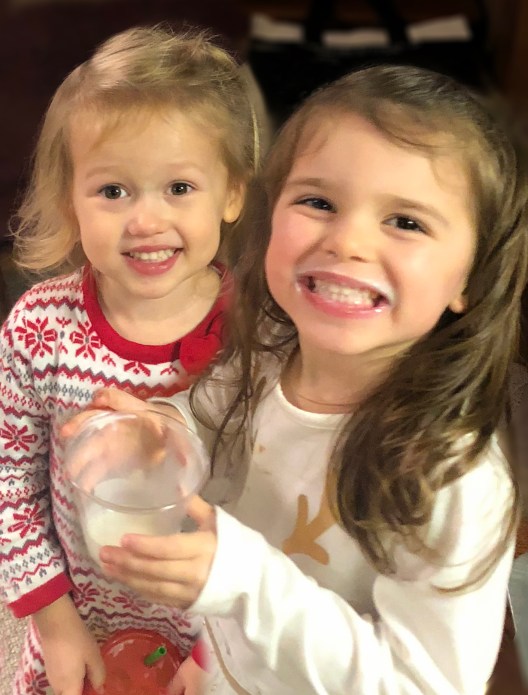
WholeMilkKidsBy the time these two little girls are in school, their happy smiles and enjoyment of milk will be but a memory as the low-fat and fat-free brain-washing will begin and the full-fat brain-building they get at home will come to an end. Milk will become yucky to them, and the one they get with their school lunch and/or breakfast will likely go into the trash. Such is the plight for millions of children in our schools every day over the nine years of government prohibition against whole milk. Meanwhile the weights and waste at U.S. schools are ballooning out of control. 
But never fear, the government (and its NGOs) are here! Dairy checkoff’s “sustainability” partner, the World Wildlife Fund (WWF) — in cooperation with the U.S. Environmental Protection Agency (EPA) — estimates 45 million gallons of milk are discarded at U.S. schools annually. Here’s the unbelievable part: They recommend schools reduce the size of milk containers, use self-serve dispensers and end the practice of ‘serving’ milk with every meal. Yes, the dairy checkoff’s sustainability partner is recommending less milk as the solution to more waste.

Meanwhile, one school is offering whole milk on a trial basis and gathering data showing how this one small step is changing the whole story — for healthy kids and a healthy planet. We are protecting the identity of this school from the USDA school milk police because if “caught” for doing what’s right, they could lose eligibility for state and federal education funds that are tied to participation in USDA’s low-fat school lunch rules.

By Sherry Bunting

Dairy Checkoff’s “sustainability” partner — the World Wildlife Fund (WWF) — released a 2019 “Food Waste Warriors” student-led audit report a few weeks ago indicating that U.S. schools discard an average of 28.7 containers of milk per student per year.

This amounts to an estimated 45 million gallons of milk discarded from schools annually, the report said.

Of the totals, elementary students discarded 37.6 cartons per student per year while middle schools discarded 19.4 cartons per student per year. The difference is middle and high school students have more alternative beverage options.

A gallon of skimmed milk weighs 8.63 pounds, so 45 million gallons amounts to over 388 million pounds per year and a cumulative estimated 3.5 billion pounds of discarded school lunch skimmed milk over the past nine years since USDA removed whole and 2% milk as choices in the 100,000 schools participating in the National School Lunch Program (95% of U.S. schools).

WWF funded the study, with support from Kroger Co. Foundation and the EPA, analyzing food waste in 46 schools in nine cities across eight states.

The objectives of the WWF project were to engage students in the act of measuring waste, foster an understanding of connections between food and its environmental impacts, and “formalize how we might gather more streamlined data on cafeteria food waste,” the report explained.

In its report, WWF identifies the National School Lunch Program as “one of the most influential programs for educating youth on conservation opportunities linked to our food system.”

Waste-reducing milk strategies used, compared and suggested in the WWF report are: 1) serve smaller containers of milk, 2) educate schools to realize they are actually not required by USDA to force students to take a milk with their lunch or breakfast in the first place, and 3) invest in bulk milk dispensers so students can take only the amount of milk they will drink.

So here we go. Let the WWF / USDA / EPA / DMI ‘sustainability’ propaganda begin. The idea of milk dispensers is a good one. But, what matters more is the fat content of the milk IN the dispensers, bottles or cartons!

Of course, the report does not identify the simplest, tastiest, most nutritious and ‘sustainable’ solution: Waste could be reduced overnight if USDA would simply allow the 100,000 schools enrolled in the National School Lunch Program to put whole milk on the menu! 

That’s right folks: 95% of U.S. schools are ruled by the iron-hand of the USDA milk police.

Not only are school nurses beginning to report to Farmshine that their annual student weight averages have climbed 7 to 9% in the 9 years that whole milk has been forcibly removed from school menus, one school reports it is doing its own study of student preferences and milk waste reduction this year.

We are keeping the names of the reporting schools anonymous to protect their identities from the USDA milk police.

Since September, one anonymous school’s study shows students are choosing whole milk 3 to 1 over 1% low-fat milk at the middle school and high school where the trial is being conducted.

Imagine that! Middle and high school students CHOOSING milk, and actually drinking it!

Oh, and by the way, when whole milk is used to make chocolate milk instead of using skimmed (1% or fat free) milk, less sugar is added!!

And, by the way, the data from this particular anonymous school shows that not only are their secondary students CHOOSING whole milk 3 to 1 over skimmed, the school has reduced its milk waste by 94%… in one year!

They report that their “milk not consumed” totals now average 32 ounces per day as compared with 4 gallons, or 512 ounces, per day the previous year!

Where school lunch is concerned, USDA’s rules are neither practical, nor are they logical, nor are they healthy for our kids or our planet. At the same time, WWF’s suggestions miss the mark completely!

Join in with those farmers and consumers asking Congress and USDA to bring back the choice of whole milk in schools. Sign the petition for choice and be part of the WHOLE solution. If you haven’t signed, you have until February 15 to do so online at this link: https://www.change.org/p/bring-whole-milk-back-to-schools

Also, to get signatures in your community, download the printable version of the petition at this link: WHOLE-MILK-IN-SCHOOL_PETITION_011520_


-30-

Surprise. Surprise. Whole Milk is on the rise!

… Even in the face of massive opposition by USDA, DMI and others

Editor’s note: Farmshine contributor Sherry Bunting continues her opinion and analysis on where the milk bus is heading and some thoughts on what to do about it.

editorialgraphic (1)

By Sherry Bunting, Farmshine, Friday, January 17, 2020

BROWNSTOWN, Pa. — Activist non-governmental organizations (NGOs) are increasingly driving the milk bus as dairy industry organizations, checkoff organizations and government agencies partner with entities such as World Wildlife Fund (WWF) on dietary and sustainability goals.

The leaders who are working with NGOs and government agendas long enough might think they speak for us as consumers, as society. They don’t. But through our organizations partnering with them, they ultimately and incrementally not only speak for us, they are driving the bus.

If we are listening, we’ve heard the model described by industry experts and thought-leaders in articles, at conferences, and in roundtable discussions: Build huge cheese and protein ingredient plants at designated growth locations. Innovate with ultrafiltration and reverse osmosis technologies. And begin to balance the export-driven dairy industry focus and consolidation by transporting ultrafiltered solids “more sustainably” – minus the 88% water portion – and do the reconstitution, extended shelf-life and aseptic packaging on location in the regions that are currently fluid-milk-centered markets, such as the Southeast, Mid-Atlantic and Northeast.

Rampant supermarket loss-leading on fluid milk by the nation’s largest retailers on one hand, with USDA-regulated farm-level price enforcement on fluid milk on the other hand, has produced the vice-grip in which the fluid milk sector has found itself over the past four to five years in particular.

Dairy producers were in the grip the past five years, but now that farm-level prices have ticked a bit higher the past five months, fluid milk bottlers suddenly find themselves unable to weather the margin compression, as we see in the recent high profile bankruptcy proceedings of Dean Foods and Borden, not to mention the smaller companies along the way.

As long as producers were the ones receiving the ugly side of the stick, the conversation could be generally centered on “too much milk” or “market forces” or “trade and tariffs.”

Now that farm-level milk prices have moved up (even though export volume was down), the unsustainable, low-margin, commodity treatment of fresh fluid milk is being seen as a primary factor fueling fluid milk processor bankruptcies – for those looking into these issues more deeply. In fact, checkoff leaders cite the milk bottler bankruptcies as proof that milk should be reinvented. Some have gone so far as to say — in presentations to industry groups — that the goal of innovation is to “move consumers away from the habit of reaching for the jug and toward these new and innovative products.”

While per-capita milk sales have been declining for 45 years, the past 10 years have seen faster rates of decline. This has been no accident. From dietary guidelines, to checkoff’s government speech requirements, to memorandums of understanding, to sustainability objectives, dairy’s own national checkoff organization has partnered with USDA, WWF, and others to move milk in a different direction – yes, intentionally.

Meanwhile, consumers are showing a thirst to know more about milk nutrition, and they are responding by buying more whole milk even in the face of this extreme neglect and alternative direction.

Case in point. While Coca-Cola, now 100% owner of fairlife, cites double-digit growth of the its 3% market share, the USDA Class I packaged milk sales show a different perspective.

The most recent report for October shows that the “other fluid products” category had year-to-date volume growth of over 300% but amounts to just 269 million pounds (10 months) — less than one percent (0.7%) of market share.

Meanwhile, whole milk’s growth for year-to-date volume of 12.5 billion pounds comes in at just under 1% (0.9%) on 33% of market share, which makes fresh whole milk the top VOLUME gainer this year, and it has surpassed sales of 2% reduced-fat milk.

Flavored whole milk is also growing by double-digits some months, with year-to-date sales through October of 629 million pounds – up 8.9% on 1.7% market share.

Under Organic brands, whole milk sales are up 4.4% year-to-date, with 412 million pounds representing 43% of organic milk market share.

Consider this: While whole milk is prohibited in schools and daycare centers, and it goes virtually un-promoted and is often poorly stocked in the dairy case, those sales still manage to be the largest volume growth category under all of these constraints.

Innovation can be good, but the fact remains that whole milk naturally meets many of the desires consumers have even though labeling makes its fat percentage a mystery, and even though it has to overcome a low-fat and fat-free promotion campaign pitted directly against it… In the face of all of that, whole milk’s growth is not too shabby.

In short, fresh whole fluid milk has the potential to solve many of the problems it was previously blamed for in diet and health trends, and it has a ‘clean’ label and local sourcing and flavor and nutrition going for it.

Whole milk checks all the boxes.

Trouble is, if whole milk sales grow faster, then the best laid plans for using innovation and sustainability and dietary edicts to lead farmers and consumers into dairy industry structural transformation would be in jeopardy.

What can be done? What can be accomplished?

Get USDA’s attention. Get the attention of the Administration and Congress and hold industry leaders accountable for the following steps:

Federal Order price reform has never been more needed. The regulated value center is mostly on the diminishing Class I fluid milk sector. That’s a big weight to carry. Many of the innovations and reinventions of fluid milk beverages are not even Class I. Small regional entities wanting to get into the fresh fluid Class I milk market have difficulty doing so because they must – in effect — pay the cartel. Now the recent bankruptcy and potential sale of Dean Foods’ assets to DFA, suggest we could see an even bigger cartel.

In that scenario, an even larger national footprint entity would run the table, deciding how fluid milk markets will be supplied, with what product mix, and from what plants. DFA CEO Rick Smith has already indicated some Dean plants should be shut down. DFA president Randy Mooney in his address at the DMI / NMPF convention a week before the Dean bankruptcy was announced said dairy resources should be consolidated to focus on plants that “make what consumers want”, instead of having “plants on top of plants” in a region.

Add to this the push to normalize ultrafiltration in FDA standards of identity for all sectors of dairy beverage and product development and production, and we see the stage being set for meeting “sustainability” objectives by removing water from the transportation scenario and moving more milk from designated export-growth areas into the markets with higher Class I utilization at a lower cost.

In effect, this trend would use the fluid milk markets to physically and financially ‘balance’ the designated growth regions and huge protein export plants more freely — weakening the position of farms operating in those Class I utilization markets.

Transportation cost is already diluted to where it is not the equalizer it should be for regional milksheds to take local milk first. Ultrafiltration and reinvention of milk in the name of innovation is all coming from the Sustainability Council of DMI’s Innovation Center for U.S. Dairy. At a certain point, the trend – especially with the help of the world’s largest players in ultrafiltration including Coca-Cola – make location and transport even less relevant with milk’s 88% ratio of water taken out of the transport equation. These trends need full and transparent discussion instead of creeping along quietly under the mantra of “innovation” and “sustainability.”

Uphold standards of identity, not just the plant-based deal on the left hand that we are all watching so intently. While the industry talks about FDA’s milk standard vs. the imitations, the right hand is busy behind the scenes working on other dairy identity standards to make changes.

One such change is getting FDA to overlook reconstitution of milk solids with water on long-haul transport. This is a step that could enable Class I fluid milk markets to become the balancer for the huge commodity export plants that are being built in designated growth centers, and which get the make allowances built into manufacturing class prices.

Cheaper transport of excess milk – without the water — into Class I FMMOs would, and potentially is, allowing those suppliers to use eastern fluid markets as the export plant balancers.

Draw a line in the sand with a retail minimum on fluid milk. This step is necessary, at least as an interim step until the larger pricing issues have a full airing. A simple $2/gallon line in the sand certainly allows for capitalistic free markets while stopping the supermarket insanity that makes milk the Cinderella-sister that all other dairy case beverages, dairy and non-dairy, market off the back of and are free to make and keep the profit at milk’s expense.

Unless Walmart and Amazon and Kroger and others want to eat their own loss-leading decisions, themselves, they should not have the ability to price milk at $1.50, $1.15, 99 cents, 67 cents per gallon. This is crushing the supply chain and further diminishing milk’s stature.

Stop dumping skimmed milk on our kids. We’ve already lost at least one generation of milk drinkers, simply allow whole milk at schools for all the reasons that have been written about over and over in Farmshine. It’s also what is right for our kids.

Stop forcing producers to pay a checkoff tax that promotes government speech, and aligns with NGO-influenced government agendas on the future of food. At the very least, allow regions and local entities to keep and target all of their checkoff funds to promote what is made with their milk and to promote sustainable regional supply chains and food security.

Ask checkoff leaders to start promoting all milk instead of using the qualifiers “low-fat / fat-free.” Stop beating everyone over the head with the familiar “fat-free and low-fat” refrain. It’s not helping farmers, and it’s certainly not helping the health and obesity crisis, and it clouds the healthy choices consumers are able to make – once they learn the truth.

This is just a start.


Coca-Cola now sole owner of fairlife, beyond the headlines

lead-fairlife (2)By Sherry Bunting, Farmshine, Friday, Jan. 10, 2020


CHICAGO, Ill.  The Coca-Cola Company announced Friday (Jan. 3) that it has acquired the remaining stake in fairlife LLC from its joint venture partner Select Milk Producers, a 99-member cooperative run and founded by Dr. Mike and Sue McCloskey. Mike McCloskey is also co-founder and chairman of the board of Fair Oaks Farms, and he was chairman of the Sustainability Initiative of DMI’s Innovation Center for U.S. Dairy in 2014, when fairlife was officially launched.

As a result of the recent transaction, Coca-Cola now owns 100% of fairlife, up from its previous 42.5% minority stake, according to company statements.

Financial terms were not disclosed.

According to a company statement, fairlife will continue to operate as a standalone business and will continue to be based in Chicago, where the brand got its start as a joint venture of Select Milk Producers and Coca-Cola, and received partnership grants for research and promotion through the Innovation Center of the checkoff-funded Dairy Management Inc. (DMI).

“We are excited for the next chapter of fairlife’s growth and innovation,” said fairlife CEO Tim Doelman in a press release, emphasizing the strength and scale of the Coca-Cola Company.

“It’s important for fairlife to continue to operate as a standalone business based in Chicago,” stated Jim Dinkins, president of Coca-Cola North America in a press release. “This will continue to give Tim and his team the space and running room they need to innovate and build the fairlife brand in a unique and fast-changing category.”

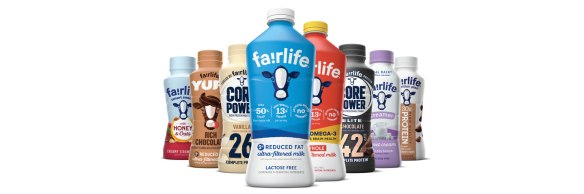
The fairlife LLC launched in 2012 to make use of a patented cold-filtration process known as ultrafiltration, which removes some natural sugars (lactose) while concentrating milk’s protein and calcium. The launch began with a high-protein milkshake called Core Power and has grown to offer a portfolio of products in what Coca-Cola calls “the fast-growing value-added dairy category in North America.”

In addition to Core Power, the line of products includes fairlife ultrafiltered milk with 50% more protein and 50% less sugar, fairlife DHA with DHA Omega-3 fatty acids, fairlife (drinkable) smart snacks, fairlife nutrition plan (shakes), and the new fairlife creamers for coffee.

Coca-Cola reports fairlife sales have grown by double-digits each year since 2014, playing a big role in what the company sees as steady growth of value-added dairy products in contrast with the traditional fluid milk category. The brand has been supported by the reach of Coca Cola’s distribution, both through the Minute Maid system and Coca-Cola bottlers across the country.

According to IRI data, fairlife’s first-year sales were $62 million, representing 0.36% of market share in 2014. According to Nielsen AMC, fairlife surpassed $500 million in retail sales last year, an 8-fold increase and representing just shy of 3% of market share.

A new fairlife milk facility is under construction in Goodyear, Arizona to expand production beyond its current plants in Waco, Texas and Coopersville, Michigan. In 2018, fairlife launched its products for sale in Canada and will begin local production and sourcing in Ontario this spring.

According to Dinkins, Coca-Cola “will continue to ensure that fairlife has the best distribution possible and will be here to provide resources and expertise in areas such as sustainability and supply chain management to make the brand stronger and better for the future.”

In the same week as the Coca-Cola announcement on acquiring whole ownership of fairlife, a joint public statement was released by fairlife and Fair Oaks Farms announcing their new and evolving four-part animal and worker care platform as their long term response to the animal abuse videos that became public last June involving one of the 12 separate dairies at Fair Oaks Farms. This was also mentioned in the ownership transaction press packet.

“To guide this journey, we’ve assembled a fairlife Animal Welfare Advisory Council to ensure we are both learning and leading for the short- and long-term,” Doelman stated in a public statement. “We’re working with our supplying farmers to outline more detailed animal welfare policies… investing with and in our farmers … And we continue to require that every farm in our supply chain is subject to regular third-party unannounced audits with clear action plans for learning and improvement after each audit.”

DMI officials have indicated funding promotion and exhibits at Fair Oaks Farms’ visitor center an hour south of Chicago in Indiana. However, DMI indicates that its financial grants to fairlife for promotion ended in 2019. To receive DMI promotion funding, companies with approved innovations must spend a comparatively larger amount of their own funds.

Available tax forms for 2017 and 2018 list DMI grants to fairlife of $8 million for promotion in each of those years, and prior support was available from affiliated research and development resources in the Chicago suburbs of Rosemont where DMI and Fonterra are both located.

Ultrafiltration is a process that can vary by dairy product application and is used around the world. A 2018 Transparency Market Research report pegged Coca-Cola among the companies it listed as “key players operating in the global ultrafiltered milk market, along with HP Hood LLC, Idaho Milk Products Inc., Fonterra Co-operative Group, Kerry Group, Tatura Milk Industries Ltd., Darigold Ingredients Company, Erie Foods International Inc., Enka Sut Company, Grassland Dairy Products and others.”

In 2017, the FDA said ultrafiltered milk could be used to make any fresh cheese product.

While fairlife milk is still considered a fresh product with a 90-day shelf-life, some products in the lineup are shelf-stable and aseptically packaged.

Dr. McCloskey confirmed in a presentation on “the road to innovation” at the 2016 Georgia Dairy Conference that fairlife ultrafiltered milk was at that time designated a Class I fluid milk product; however, some of the other beverages in the lineup are Class II.

-30-


Politics of whole milk, part 2: Vilsack banned whole milk in schools, gets dairy checkoff’s top pay

By Sherry Bunting, Farmshine, Dec. 13, 2019

The former Ag Secretary instrumental in removing whole milk from schools is now the highest-paid executive at Dairy Management Inc. (DMI) whose virtual $1 million/year in 2018 came from dairy farmers who are going bankrupt.

Farmshine Editor’s Note: Sherry Bunting has written a lengthy, well researched commentary on how the dairy economy and dairy product promotion and marketing evolved over the past decade with Tom Vilsack at the helm. Vilsack served as USDA Secretary in the Obama Administration and is the current chief of the U.S. Dairy Export Council (USDEC), an affiliate of Dairy Management, Inc. Wherever he has been since 2009, Vilsack is unquestionably one of America’s most powerful influencers when it comes to dairying. And the outcome has seldom been favorable to the nation’s milk producers. Part I of this reportappeared in the December 6th edition of Farmshine, page 20. Part II follows

In my journalistic pursuits of the past decade, two statements by checkoff-paid executives and dairy checkoff board members now reverberate in my mind:

1) On milk as a beverage: “Fluid milk is dead, we have to stop beating that horse and innovate for these new beverage markets.” – 2016 during questions after a presentation by a USDEC checkoff-paid employee at a meeting of dairy policy analysts and economists.

2) On dietary guidelines and school milk: “They are a different breed. We have our own plan. We have a friend inside the White House. We are already working with someone on this. And we finally have a drink that consumers want (fairlife).” — 2015 phone call to me from a DMI board member who also served on DFA’s board, challenging an article I had written that year. In the course of our conversation, he made this comment in response to my question to him asking why the dairy industry was being silent on the 2015 Dietary Guidelines that year, and why dairy was not joining forces with beef to push the solid science on animal fat as revealed in Nina Teicholz’s book Big Fat Surprise. I had also asked him why they weren’t supporting the beef industry’s opposition to the “sustainability” driven parts of the 2015 dietary guidelines.

In his Ag Secretary role in 2010, Vilsack was instrumental in the creation of GENYOUth through the MOU signed between USDA, National Dairy Council (Dairy Checkoff) and the NFL. (In fact, as Ag Secretary, Vilsack appointed some of the current Dairy Board members who then hired him at the end of the Obama administration as a DMI executive vice president and CEO of USDEC.)

Fuel Up and Play 60

USDA Photo from Feb. 4, 2011 where then Agriculture Secretary Tom Vilsack spoke to young people at the Fuel Up to Play 60 (FUTP60) event held at the Sheraton Hotel in Dallas, Texas before the 2011 Super Bowl, the same day that the MOU was signed between NFL, USDA, Dairy Checkoff and GENYOUth to focus on ending childhood obesity with fat-free / low-fat foods and beverages and 60 minutes of daily exercise. And so, a decade later… here we are so much farther down this wrong road.

Today, GENYOUth is the bus on which more companies each year are hitching a ride into the schools — paid for primarily by dairy farmers in effect funding their own demise. Meanwhile, dairy farmers are the only ones not free to fully promote their best product, being relegated and regulated to government speech on fat-free / low-fat.

When Vilsack was presented the Vanguard Award during the 2017 GENYOUth Gala aboard the U.S.S. Intrepid in New York City Harbor, former President Bill Clinton spoke his accolades, and congratulated him on being the one to overcome the hurdle of getting beverage calories included in the school meal calculations. It is the very thing the current Senate Bill seeking to allow whole milk in schools would reverse.

Bill Clinton, a vegan, went on in his 2017 GENYOUth Gala speech to emphasize how beverages were a “huge” problem in the obesity epidemic, that we don’t think about how many calories kids consume in a drink, and that regulating school beverages was a big step forward on that front.

He was talking about whole milk. Whole milk is named, specifically, on the list of beverages prohibited from sale on school grounds during school hours.

And yet plenty of PepsiCo beverages — made specially to meet the 60-calorie threshold with a combination of high fructose corn syrup and sucralose, including Gatorade and Mountain Dew Kickstart — are welcomed on those school lunch “smart snacks” acceptable beverage lists.

Vilsack started with DMI six days after the Obama Administration ended in January 2017. But 2018 was his first full year as a DMI executive, and he has been busy earning his highest-paid status.

In May, Vilsack wrote about how the U.S. dairy industry would meet its new goals to export 20% of production, and he praised the record level of exports in 2018 as “a banner year for exporters.” (We all know 2018 was anything BUT banner for dairy farmers paying his salary. In fact, export volumes were higher in 2018 than in 2017 and 2019 while prices paid to farmers were lower in 2018 than in 2017 and 2019.)

In June, Vilsack testified before Congress that the government should partner with the dairy industry to pay ‘pilot farms’ to develop and test the innovations “U.S. Dairy” will need in order to reach the Net Zero emissions goal he has been instrumental in setting. In fact, Senators referred to him as ‘the president of dairy innovation.’

The ultimate vehicle for those practices after they are tested on pilot farms will be the dairy checkoff-funded and NMPF-administrated FARM program initiated through the Innovation Center for U.S. Dairy.

At that “sustainability” hearing of the Senate Ag Committee in June, Vilsack earnestly stated that the Net Zero project – and government assistance for pilot farms to find the practices to achieve it — was essential for the U.S. dairy industry to have an edge in international markets.

In November, Vilsack endorsed former vice president Joe Biden for President of the United States and praised his candidacy “for including a path to addressing climate change while at the same time helping the rural economy and creating jobs by investing in green infrastructure, renewable fuels and low-carbon manufacturing,” according to an article about the Vilsack endorsement of Biden in the Nov. 23 edition of the Des Moines Register.

In fact, the Register article stated that Vilsack “helped write Biden’s plan for rural America.” But that’s not political involvement by a checkoff executive, is it?

It is interesting that when dairy checkoff board members are asked by the farmers paying the checkoff why they can’t stand up for whole milk in schools, the response they always get is: “That’s politics, and we can’t get into that.” Of course, the rules and regs of USDA overseeing checkoff are then cited forward and backward.

But, when it comes to Vilsack’s hands in the political pie – not to mention dairy farmers’ pockets – there are no rules and it’s all good. In fact, it’s encouraged because it’s part of the plan, the future of dairy, of food.

Vilsack is, after all, the dairy checkoff’s highest-paid executive, who is most culpable in his former position as Ag Secretary for putting the last nail in the fluid milk coffin. His policies on milk in schools and the fat-free / low-fat ‘government speech’ that now defines milk promotion, have at the very least contributed to – if not accelerated — the loss of fluid milk sales in the past decade of steepest decline.

In 2015, when confronted with what investigations have revealed about the science on animal fat, especially milk fat – according to the new and previously buried research — Vilsack said the preponderance of the evidence still favored low-fat diets. And with that proclamation, he signed the 2015 Dietary Guidelines that accelerated taking dairy markets – and our nation’s children – down the wrong road.

Think about this. From 2010 to 2018, the era in which the alliance between Vilsack’s USDA and the dairy checkoff was initiated and bloomed and in which he is now the highest paid executive – DMI controlled $140 to $159 million annually in mandatory dairy farmer funds. In that pool of funds, 25% went to salaries and other costs associated with core operations and another 30% went to contractors for promotion in ways that could be considered ‘core operations.’

In 2018, as in previous years, the NFL received $5 million; Edelman, the world’s largest PR firm, received $16 million; Fairlife $8 million, Domino’s $9 million, a marketing firm for GENYOUth with ties to Edelman $4 million, McDonald’s $5 million, and Vilsack got his virtual million.

Yes, folks, hindsight is 20/20. And here we are on the eve of 2020 with former Ag Secretary Vilsack – who was paid a $999,421 salary in 2018 from mandatory dairy producer checkoff funds and is now the top-paid DMI executive — to thank for the removal of whole milk and whole dairy products from our schools. And no one cares to ask him to testify to Congress about why whole milk should be allowed in schools, but he is politically involved in so many other discussions.

The dairy industry had and has Tom Vilsack — or vice versa.

110206_OSEC_AL_1642

Memorandum of Understanding (MOU) was signed on Friday, Feb. 4, 2011 at Sheraton Hotel in Dallas, TX. The MOU outlines the joint commitment of the National Football League (NFL), Department of Agriculture, National Dairy Council (NDC), and Gen YOUth Foundation, to end childhood obesity. (Signing L to R President of the National Dairy Council Jean Regalie, Agriculture Secretary Tom Vilsack, NFL Commissioner Roger Goodell, and GENYOUth Foundation CEO Alexis Glick) 

Today, DMI IRS 990 forms show that Dairy Checkoff pays Tom Vilsack just shy of $1 million/year as DMI’s highest paid executive; Dairy Checkoff pays the world’s largest PR firm Edelman $15 to $17 million/year as the purpose-driven brain-trust behind the GENYOUth and Innovation Center ‘sustainability’ concepts; Dairy Checkoff pays the GENYOUth CEO over $200,000/year to run the foundation; Dairy Checkoff pays the core operations of GENYOUth to the tune of $1.5 million; Dairy Checkoff has USDA attorneys at every meeting and on every conference call to approve promotion projects and messages (government speech); and Dairy Checkoff pays the NFL $5 to $7 million annually for their part in this “promotion.” Meanwhile, NFL promotes its brand through flag-football sets to FUTP60-participating schools; USDA markets and enforces dietary guidelines with the financial assistance of dairy farmers through the checkoff; and other companies participating in GENYOUth, most notably PepsiCo, are able to market their own pet projects, products, brands and influence to kids while the dairy farmers are regulated to government speech. Dairy Checkoff touts the FUTP60 breakfast carts as serving milk with every breakfast, but only fat-free and 1% are promoted and permitted, and USDA’s own studies show that this fat-free and 1% low-fat school milk is among the most frequently discarded items. The entire deal ignores the fact that the dietary guidelines have exacerbated the obesity and diabetes trend, that children are not getting the valuable nutrients from the milk they are served if they don’t like the taste of fat-free and 1% and throw it away to buy something else. And the deal further ignores studies showing that body fatness was lower and Vit. D status higher in children drinking whole milk as compared with children drinking 1% low-fat milk. What will it take to see positive change when the very government figure who was influential in getting us here is now the dairy industry leader that the industry organizations revere and who is looked at by USDA, Congress and other policymakers as speaking for dairy? If he took whole milk out of the schools, and he now ‘speaks for dairy’ and is ‘believed’ to be so concerned about kids, who else matters in the discussion? Does the government care about the over 15,000 online and 5000 by mail signatures of dairy farmers, parents, grandparents, students, teachers, coaches, school boards, town boards, county commissioners, state lawmakers, health experts, nutrition experts, athletes, nurses, doctors, and generally comcerned citizens among these signatures asking for the choice of whole milk in schools

-30-

DMI umbrella covers seen and unseen

New tax-exempt entities form — some with aliases — as checkoff funds flow to partnerships

By Sherry Bunting, Farmshine, Sept. 20, 2019

CHICAGO, Ill. — The Dairy Management Inc. (DMI) umbrella keeps expanding to include a growing number and assortment of tax-exempt 501c3 and 501c 6 organizations, all having addresses of record being either DMI headquarters at 10255 W. Higgins Road, Suite 900, Rosemont, Illinois, or National Milk Producers Federation (NMPF) headquarters at 2107 Wilson Blvd., Suite 600, Arlington, Virginia.

Several file their public IRS 990 forms under alias names, so these forms are a challenge to find. Some of the boards of these related organizations are not announced except on these IRS forms.

In reviewing IRS 990’s, many of these boards are comprised of the executive staff of prominent multinational dairy supply chain companies as well as executive staff and board chairs for prominent dairy cooperatives based in the U.S. and from other countries.

In addition to those IRS forms we could find for 2016-17, there are new organizations that are being formed since 2016-17, for which no IRS forms are yet publicly available.

One up-and-coming new organization is the so-called Center for Dairy Excellence, which is the product of the U.S. Dairy Export Council and the Innovation Center for U.S Dairy under their Dairy Sustainability Initiative and Dairy Sustainability Alliance.

At a recent dairy risk management seminar in Harrisburg, Pa., a panel of DMI staff mentioned the new “Center for Dairy Excellence”, which they said is unrelated to Pennsylvania’s Center for Dairy Excellence, it just happens to use the same name.

An internet search shows the information about this new center is available in the password-protected “members-only” area of USDEC’s website, but the word is that it will be a new hub for product innovation and sustainability.

One point the DMI panelists made really hit home: “We want to move consumers away from the ‘habit’ of reaching for the jug and get them to be looking for these new and innovative products.”

Products that are rooted in what is increasingly the very hands-on work of national dairy checkoff through these proprietary partnerships that are facilitated by this growing series of related tax-exempt organizations that are then able to push decisions about how checkoff funds are used further into the proprietary pre-competitive hands of the global dairy supply chain and multinational corporations that serve on these related boards.

The companies involved benefit from DMI’s ability to use tax-exempt status to conduct new product research and market testing paid for by dairy farmers under entities such as the Dairy Research Institute — a 501c3 organization that files under the alias name of Dairy Science Institute Inc. and includes several university laboratory sites, including Cornell, where the new fake butter made with water and 10% milkfat was recently discovered and paid for by New York dairy promotion dollars (reported in Farmshine Sept. 6, 2019).

The Dairy Research Institute is referenced at the websites for National Dairy Council and the Innovation Center for U.S. Dairy, but most of the links to their work are in a password-protected “members-only” area. Attempts to sign up to view this information were denied.

Yes, dairy farmers pay for the research, the market testing, and so forth, and the companies then bring these products into the marketplace via the national dairy checkoff funding stream via the tax-exempt status of the Innovation Center for U.S. Dairy.

Having gathered as many related IRS 990 forms as we could find (due to the confusing use of alias names), there are some interesting things to learn about how the vehicle of dairy industry consolidation and trends in promotion and research have been forming since 2008 — right under our noses — and how the mandatory dairy farmer checkoff continues to fuel the global supply chain engine.

IRS 990 forms show how executive staff for large multi-national companies – some of them based in other countries – are influential in charting this course under the mantra of “pre-competitive collaboration”, which of course makes it all confidential and proprietary.

These related organization boards include leaders of companies and cooperatives based not just in the U.S. but also in New Zealand, China, Netherlands, Canada and Denmark as they acquire assets and form joint ventures in the U.S.

The 2011 implementation of the 7.5-cent import promotion checkoff that perhaps gave entities like Fonterra the entitlement to help shape this direction, leading UDIA to transfer ownership of the Real Seal to NMPF, which now charges companies a licensing fee to use the Real Seal. (More on that another day.)

While a main focus of the USDEC and U.S. Dairy efforts is to increase exports, it is interesting to note that these gains have had a reverse effect on dairy farm milk price revenue, according to a recent study by dairy economist and supply chain expert Chuck Nicholson (more on that, too, another day).

Suffice it to say for now that export volumes were higher in 2016 and 2018 compared with 2017 and 2019, while dairy farm level milk prices were lower in 2016 and 2018 compared with 2017 and 2019. In fact, former Ag Secretary Tom Vilsack called 2018 “a banner year for exporters.” For dairy farmers, 2018 was anything but banner.

Meanwhile, Tom Vilsack, president and CEO of USDEC and a primary leader on the board of U.S. Dairy, is heavily promoting two of DMI’s new internal campaigns: 1) The “Next Five Percent” campaign wants to move exports from 15% of U.S. milk production to 20% within the next two years, and 2) The Net Zero Initiative wants the entire dairy supply chain at net zero emissions by 2050.

Let’s open the DMI umbrella with a short summary on some of the DMI-funded 501c3’s and 6’s by their known names and aliases. (We published a timeline for some of the major pieces under the umbrella in Keep in mind that NMPF is intrinsically involved in at least two: USDEC and Innovation Center for U.S. Dairy. These are the two organizations spawning a growing number of new tax-exempt organizations under DMI’s umbrella.

U.S. Dairy Export Council

USDEC and NMPF share offices at 2107 Wilson Blvd., Suite 600, Arlington, Virginia, just outside of Washington D.C., according to forms filed with the IRS. According to financial audits, DMI and NMPF trade and buy services from each other, and NMPF rented offices from DMI in Arlington until 2016 when these offices were sold.

In 2017, USDEC listed NMPF as an independent contractor paid $1.85 million for “trade services”.

USDEC paid DMI $6.5 million for management services in 2017, while also listing $6.4 million in salaries and employee compensation.

USDEC’s total revenue was $24.6 mil in 2017, of which $1.43 mil came from membership dues, $5.7 mil from government grants and $17.1 mil from DMI. This means that USDEC received 71% of its funding from national mandatory dairy checkoff and 23% from government grants with just 6% of its funding coming from the membership dues paid by the corporations and cooperatives that are significantly represented on the USDEC board of 140 directors.

The chief financial officer for USDEC in 2017 was Carolyn Gibbs, who was also listed as the CFO for the Innovation Center for U.S. Dairy. Halfway through 2017, she left this position to become a principal officer of Newtrient LLC, another related organization formed under the DMI umbrella in 2017. IRS forms for this organization are not yet publicly available.

Before coming to DMI, Gibbs spent 13 years at Kraft Foods, Inc. Her consulting work today with Newtrient LLC is described as “industry outreach, strategy, Net Zero Initiative, and project continuity.”

Innovation Center for U.S. Dairy

The Innovation Center for U.S. Dairy — a 501c6 formed in 2008 — is officially known to the IRS as Dairy Center for Strategic Innovation and Collaboration doing business as Innovation Center for U.S. Dairy. The national dairy checkoff organizations increasingly refer to this organization simply as “U.S. Dairy,” and the website for some of its activities is USDairy.com.

According to DMI’s IRS 990 form, this organization is directly controlled by DMI.

The “collaboration” has a small budget of around $115,000 for each of the past three years and no paid staff. But it is the hub of new tax-exempt organizations as well as trademarked initiatives.

Innovation Center for U.S. Dairy describes its reason for tax-exempt status on the 990 forms, as follows: “…to provide a forum for the dairy industry to identify opportunities to increase dairy sales through pre-competitive collaboration. It combines the collective resources of the dairy industry to provide consumers with nutritious dairy products and foster industry innovation for healthy people, healthy products and a healthy planet.”

On its 990 forms, U.S. Dairy lists its board of directors — a who’s who of chief executive officers and board chairs for prominent dairy cooperatives as well as multinational dairy processors. The board also includes DMI CEO Tom Gallagher and of course Vilsack.

The Dairy Sustainability Alliance

A key subset of The Innovation Center for U.S. Dairy is The Dairy Sustainability Alliance, trademarked by DMI in June 2017. A search for The Dairy Sustainability Alliance at guidestar.org, a database of non-profits, brings up Global Dairy Platform Inc.

Global Dairy Platform Inc.

Global Dairy Platform is a tax-exempt organization formed and incorporated as a 501c6 in 2012 and it lists its physical address as DMI headquarters in Rosemont, Illinois.

It describes its tax-exempt justification as follows: “A pre-competitive collaboration of dairy sector organizations, the Global Dairy Platform works with its global membership, scientific and academic leaders and other industry collaborators to align and support the international dairy industry to promote sustainable dairy nutrition.”

Chaired by Rick Smith, president and CEO of Dairy Farmers of America (DFA), the Global Dairy Platform (GDP), has a board of 12 executives representing the following corporations, cooperatives and organizations: Fonterra (New Zealand), Saputo (Canada-based multinational), Leprino (multinational), Land O’Lakes, Meiji Holdings Ltd. (China), FrielandCamprino (Dutch multinational), Arla (Denmark multinational), China Mengniu Dairy Company and the International Dairy Federation.

Donald Moore was paid nearly $600,000 as GDP executive director in 2016, the most recent IRS 990 form available. Moore currently also serves as chairman of the International Agri-Food Network and the Private Sector Mechanism to the United Nations Committee on World Food Security.

DMI senior vice president Dr. Greg Miller is listed as the research lead for the GDP, and he is currently also serving on a food and sustainability committee with the UN World Health Organization. He was the highest paid DMI executive in 2017 at $1.49 mil (including benefit package and deferments).

GDP had revenue of $3.74 million from DMI in 2017 — $2.6 mil for program services and $1.12 mil in the form of grants in 2016. According to the IRS 990, $583,329 of this revenue came from the import checkoff assessment. Research projects accounted for $1.85 million of expenses.

Newtrient LLC

Until July of 2017, Carolyn Gibbs was listed as chief financial officer of USDEC and the Innovation Center for U.S. Dairy, where she assisted with the launch of Newtrient LLC, another tax-exempt 501c6 formed in 2018, according to Gibbs’ bio at newtrient.com.

Newtrient falls under the Dairy Sustainability Alliance (Global Dairy Platform), which comes under the Dairy Sustainability Initiative.

No IRS 990 forms are available yet for Newtrient LLC.

Newtrient is described at its website (newtrient.com) as “an entity focused on turning waste into renewable energy and other commercially viable products, while reducing dairy’s environmental footprint and improving economic returns for dairy farmers.”

Dairy Research Institute

The Dairy Research Institute is a name trademarked by DMI, but the IRS recognizes this 501c3 as Dairy Science Institute Inc. doing business as Dairy Research Institute with a physical address at DMI headquarters in Rosemont, Ill.

The Institute describes its tax-exempt status to the IRS as “created to strengthen the dairy industry’s access to and investment in the technical research required to drive innovation and demand for dairy products and ingredients globally. The Institute works with and through industry, academic, government and commercial partners to drive pre-competitive research in nutrition, products and sustainability on behalf of the Innovation Center for U.S. Dairy, the National Dairy Council and other partners.”

The Institute is primarily funded by DMI with reported revenue of $1 million in 2016 and $785,935 in 2017. However, from 2013 through 2017, the Institute received a total of $24.3 million from DMI, including it’s first-year startup grant of $19.16 mil. in 2013.

Its officers are listed as Dr. Gregory Miller, president, Tom Gallagher, chairman and Carolyn Gibbs, CFO through July 2017 (before heading over to Newtrient and being replaced by Quinton Bailey).

Dr. Miller is also the research lead for Global Dairy Platform and chief science officer for the National Dairy Council (NDC), a 501c3 tax-exempt organization formed in 1969 and today controlled by United Dairy Industry Association (UDIA) and managed by DMI.

GENYOUth

While the sustainability organizational rollouts have been ongoing since 2009-10 memorandums were signed between USDA and DMI, another organization was simultaneously formed while Tom Vilsack was Ag Secretary in 2010 through a three-way memorandum of understanding between National Dairy Council, USDA and the National Foodball League.

This 501c3, of course, is Youth Improved Inc. doing business as GENYOUth, describing its tax-exempt status as “activating programs that create healthy, active students and schools, empowering youth as change-agents in their local communities, engaging a network of private and public partners that share our goal to create a healthy, successful future for students, schools and communities nationwide.”

DMI is listed as GENYOUth’s controlling organization and paid one of its partners, the NFL, $5.6 million for promotion in 2017, according to IRS filings. 

At the same time, in 2017, GENYOUth’s most expensive “charitable activity” was listed as Fuel Up to Play 60, costing $5.4 million and giving considerable advertising exposure to the NFL among future fans. That year, the NFL contributed less than $1 million to GENYOUth, and that year the NFL also received $5.6 million from DMI.

Alexis Glick, a television personality until 2009, has been GENYOUth’s CEO since its inception in 2010. In both 2016 and 2017, she was paid $259,584 as “compensation for services provided under an independent contractor agreement.”

Other employee compensation totaled $517,165, including vice president Mark Block, at $221,000. Pension plans and other employee benefits totaled $110,026 and other professional fees paid to contractors totaled $2.36 million.

Since 2010, the organization has brought donors to the table including some of the multinational dairy and foodservice corporations DMI is working with in other tax-exempt product innovation and ‘sustainability’ ventures.

-30-