And the winner is: MILK!

By Sherry Bunting

INDIANAPOLIS, Ind. – It’s a roar not soon forgotten when the field of 33 drivers rounds the curve to the paddock straightaway and the pace car exits the track. The thrill of the Indianapolis 500 is unmatched in motorsports, and the refreshing, replenishing, refueling and revered beverage associated with this great race is MILK — Real Dairy Milk!

Wait for it… The patriotic blend of freedom and speed after the recognition of our military, the moment of silence and playing of Taps for fallen heroes, the Blue Angels flyover, the singing of America the Beautiful and the National Anthem, and Back Home in Indiana, the anticipated “Drivers Start Your Engines”, the breaking free of the pace cars as the field of Indy cars passes the paddock with Old Glory in tow!

For 103 years, on the Sunday of Memorial Day weekend, a patriotic display, Blue Angels fly-over, recognition of our military and moment of silence for our fallen precede the 500-mile race at the Indianapolis Motor Speedway (IMS).

And for 83 years, the legendary race is complete with the ice cold Drink of Milk in Victory Circle — deemed the “coolest trophy in sports”, awarded for the “greatest spectacle in racing,” also known as the largest single-day sporting event in the world.
Indy5294
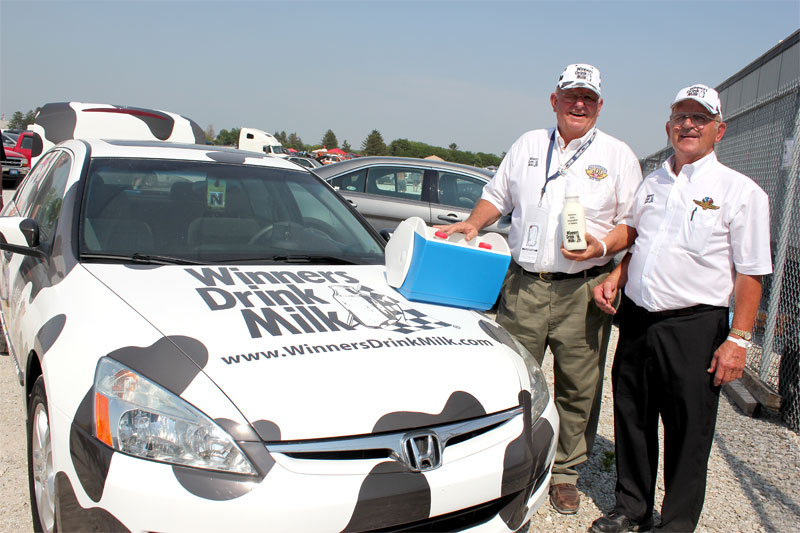
2012 Milkman Dave Forgey (left) of River-View Dairy Farm, Logansport and his rookie Duane Hill of MayHill Farm, Fountain City.

Dave Forgey of Logansport was an Indy500 spectator for years before having the chance to be the ‘Milkman.’ As a dairy farmer he was enthusiastic when the Indiana milk promotion board began choosing dairy farmers, instead of executives, to be the ones to give the famed bottle of milk to the winning driver each year. After serving as the ‘rookie’ in 2011, he was lead Milkman in 2012.

“As dairy farmers, we bring a personal touch to the award, that brings it to the common level of the fans. At the end of the race, the Milk is always first,” said Forgey with a broad grin standing in front of the IMS Pagoda race day morning talking to fans in 2012.

The job of the Indy500 Milkmen (or women) begins long before Sunday, and continues throughout the year in venues such as Rotary Club presentations and small town parades, as well as other competitive events that capitalize on the Winners Drink Milk slogan of American Dairy Association Indiana.

By Sunday, the Milkmen are focused on keeping the Milk iced for Victory Lane and promoting milk and dairy farming to race-day fans. They ask all the drivers to choose between Whole, 2% and fat-free and have those selections ready since they don’t know who the winner will be. Whole milk has been topping the choices 2 to 1 over the past few years, and two top drivers, Ed Carpenter and James Hinchcliffe in 2019 said they would return to the buttermilk choice of 3x winner Louis Meyer in 1936, if it were an option!

In short, the Indy500 milkmen are charged with protecting the future of this unique sports award ruled tops for its “cool factor” according to Sports Illustrated writer Pete McEntegart, who in his si.com column ranked milk #1 among the Sports World’s top-10 unique trophies.

And in a recent interview, champions rate the Milk as the top tradition of this famed race that is certainly steeped in many traditions.

“It is certainly a tradition that everyone respects. What else can we do that is this national and international in scope?” Forgey observes. He said he came home to find an email from a friend in New Zealand who saw the whole thing on television.
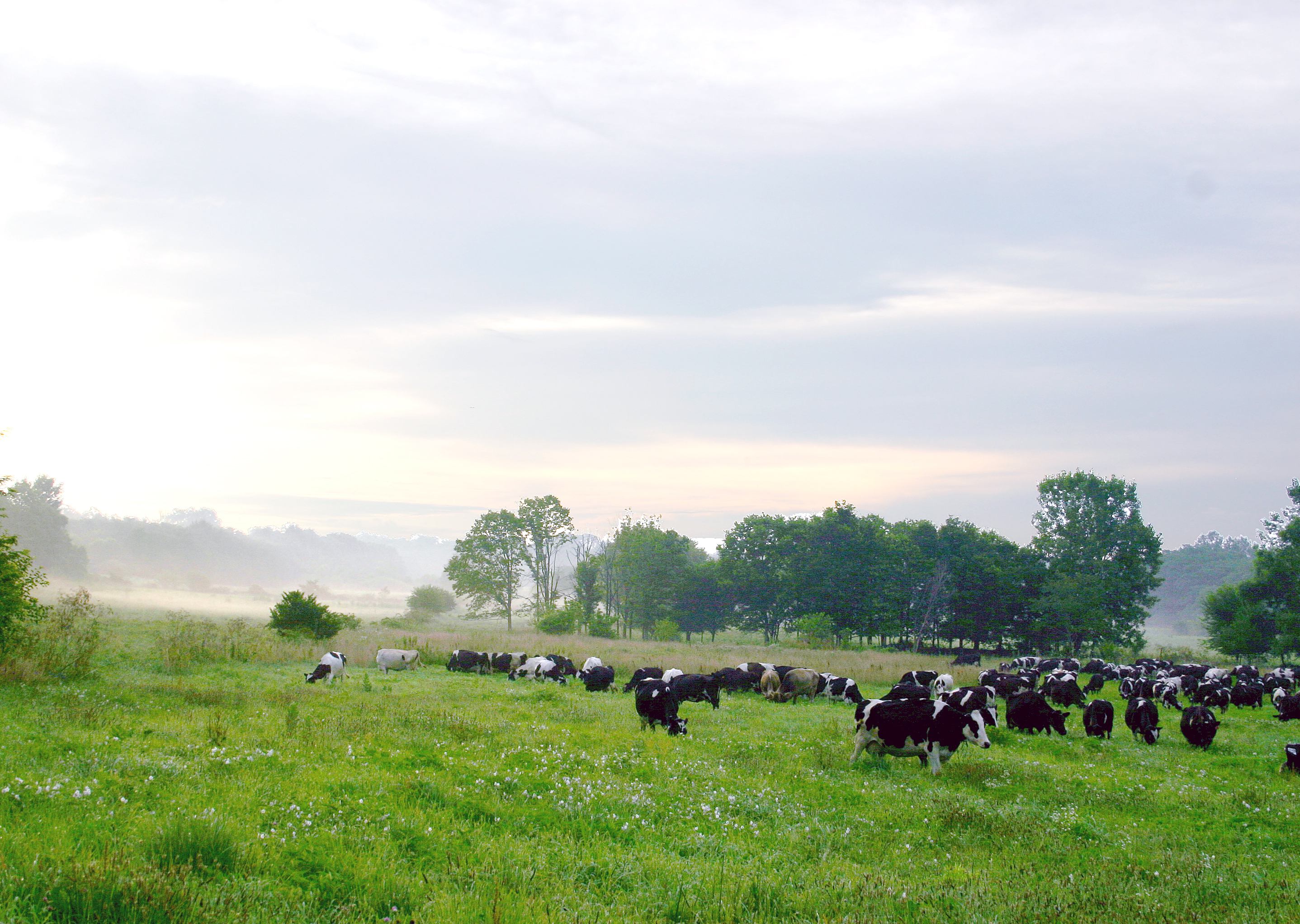
“The fans are interested. They want to talk about our dairy farms,” says Forgey. When fans realized he was giving the bottle of mlk, they wanted to know how he qualified for the job. When Forgey explained that he and his rookie are Indiana dairy farmers, the fans were eager to know more. Of course, they also want to see the milk. Standing by the milkmen in front of the IMS Pagoda on race day morning, enthusiasm for “the milk” is evident. Fans paused to take pictures, and ask questions.

“There is always a lot of excitement for the milk among the racing fans,” says Forgey. “They know the tradition. They know about the milk. And when we can help them connect it back to the farmer, that generates interest.”
Indy500-4137
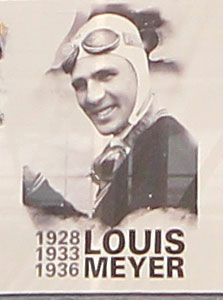
Thanks to Louis Meyer, 3-time winner who started the Winning Drink of Milk!

Initiated 83 years ago when the first three-time winner, Louis Meyer, asked for buttermilk to quench his thirst after the grueling 500-mile race, the Drink of Milk tradition has endured. Today, scientific evidence shows Louis Meyer knew what he was doing back in 1936, when he turned after that grueling race to the unique, natural and un-matched combination of hydrating re-fuel found in Real Dairy Milk with it’s healthy maitrix of fat, protein, carbohydrate, a dozen essential nutrients and refreshment. In fact, in those days, buttermilk was the name given to full-fat milk with extra heavy cream! Today’s drivers tend to choose Whole Milk (standardized at 3.25% fat) more than the reduced fat (2%) or fat-free options.

ADA Indiana coordinates the Indy500 Drink of Milk promotion today, and 45 years ago they added to the heritage by sponsoring the “Fastest Rookie” award on the Tuesday before the big race. The coveted award recognizes the first-year driver who achieves the fastest four-lap average speed from among fellow rookie competitors during time trials.

“The rookies are very interested in the milk and getting their pictures taken with the milk,” says Forgey.
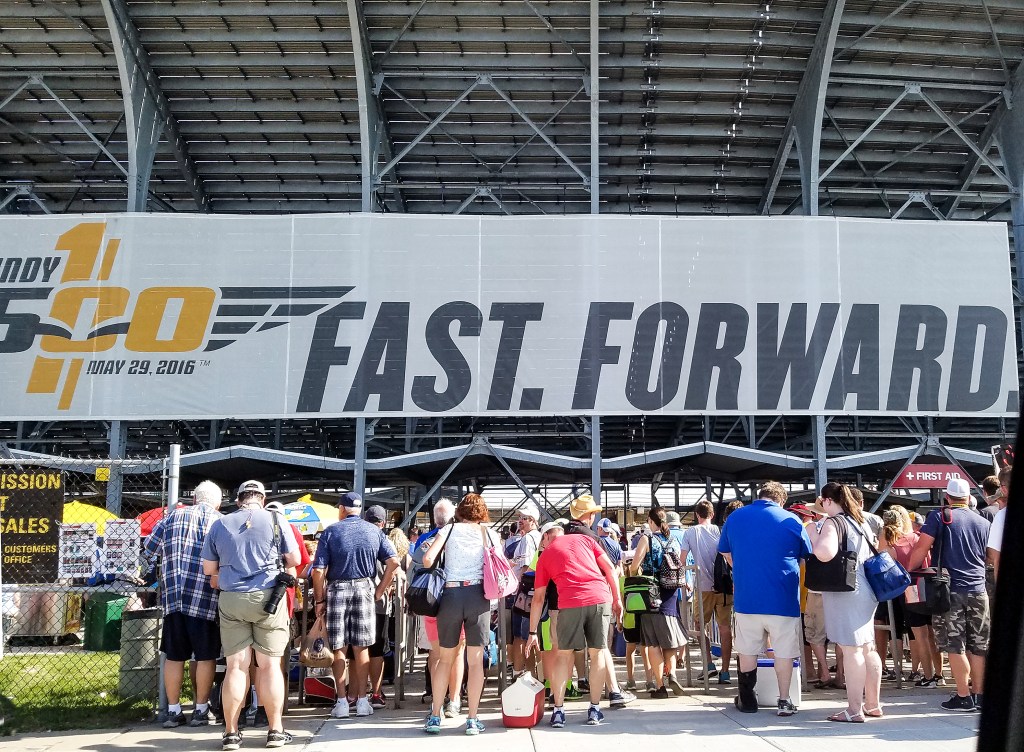
Fast forward to 2016 with the 100th running of the Indy500 and what a celebration it was! Nearly half a million people attended in person. To put this into perspective, the largest-ever attendance of the NFL Superbowl was just over 100,000 people. The 100th running of the Indy500 in 2016 clocked in at 350,000 in the gates and another estimated 100,000 outside the gates just wanting to “be there.”
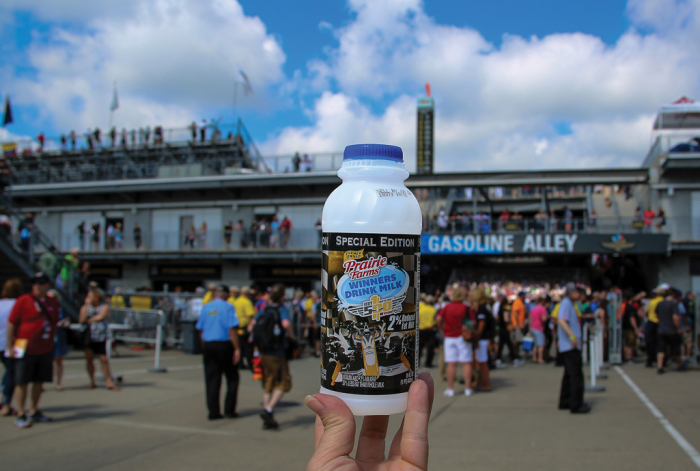
Prairie Farms, American Dairy Association Indiana and the IMS together gave commemorative, specially-packaged bottles of milk to fans for a winning milk toast and they were available in stores throughout the region.

After 500 miles, 200 laps, 54 lead changes and 13 different leaders, the winning of the 100th Indy500 came down to a fuel strategy that put Alexander Rossi — the 9th rookie ever, and the first since 2001 — into Victory Lane at the Indianapolis Motor Speedway for the sweet taste of victory — the 80th traditional ice cold drink of milk, delivered in 2016 by Milkwoman Janet Dague, a dairy farmer from Kewana, Indiana and rookie Joe Kelsay of Kelsay Farms, Whiteland.
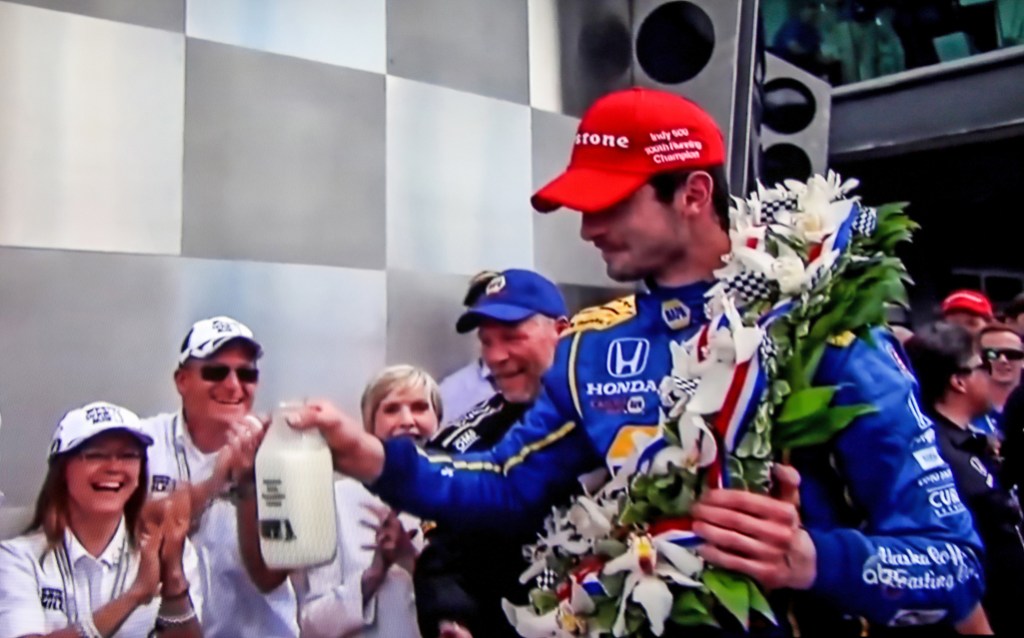
“I was so excited to see our rookie win the 500,” said Dague, an avid race fan and dairy farmer after delivering the Drink of Milk to Rossi in Victory Circle. “I was jumping up and down, cheering when he crossed the finish line. I even said to Joe ‘I told you I wanted our rookie to win!’

By “our rookie,” Dague was referring to Rossi earning the 42nd Fastest Rookie award given annually by the ADA-Indiana at a special dairy-and-racing-focused luncheon on the Tuesday before the race. There, Rossi was honored as the qualifying rookie with the fastest 4-lap average speed on qualification day, at an average 228 mph.
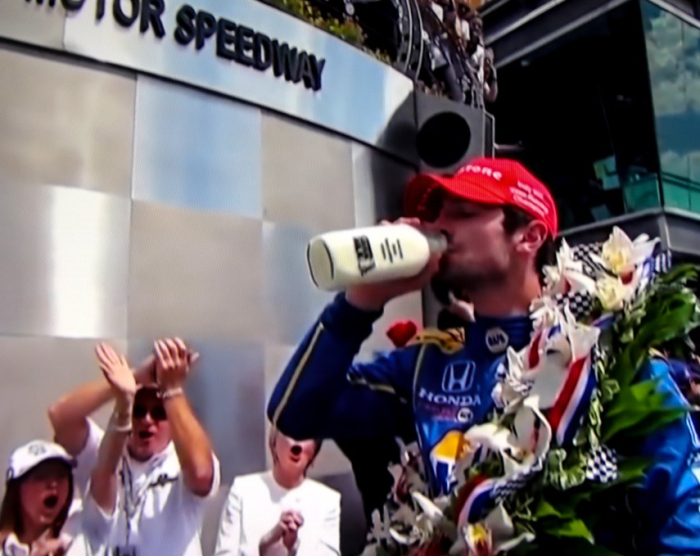
Dague described Rossi as “so gracious about winning. I think because of the rookie luncheon that just took place, he understood how important this was for the ADA-Indiana and every other dairy farmer around the world,” she explained. “In every picture, he made sure to take a drink of the milk and even made sure our logo was facing front and center. We couldn’t ask for a better spokesperson.”
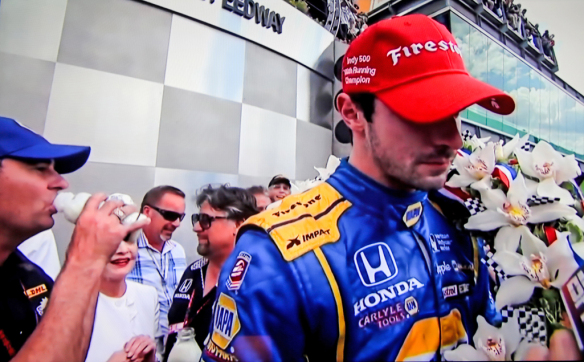
The whole crew was celebrating that win with their milk, along with race fans given commemorative bottles on the 100th anniversary. Owners Michael Andretti and Bryan Herta were toasting each other, drinking their milk. Andretti, in particular, was happy to taste the elusive beverage right from driver Rossi’s official bottle while Rossi did his victory interview with ESPN, and their chief mechanic was next for the taste of victory!

Rookie Milkman Kelsay was excited to be there for the first time with the Drink of Milk in that 100th year of the Indy500.

“To have the spotlight shine on the nutrition of milk in this way is just awesome,” he said during the parade honoring military and the heritage of the race on the day before. “It is an honor to represent fellow dairy farmers who are back home milking and feeding and listening to the race on the radio. It has been a humbling experience so far. It seems as important to the fans as it is to dairy farmers. Even one of the police officers mentioned what an honor it was to meet us, saying he would be sure to keep me safe if something happens.

“We just thank Louis Meyer for starting this trend over 80 years ago that we can highlight the healthy choice of milk and deliver that message to a global audience here at the Indy500,” Kelsay adds.

“What better way could we as dairy farmers promote our product than to be out in the forefront of this event, which is so significant worldwide?” says Forgey, who appreciated the honor of spending 2011 and 2012 representing the dairy farmers in Indiana and across the U.S., who work hard to produce a healthy product.

After all, #WinnersDrinkMilk because #RealMilkAlwaysWins #TasteTheVictory
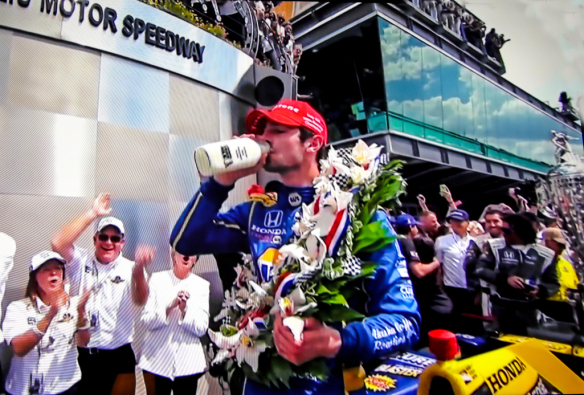
2018 winner: Milk!
Hubs and I at the 100th Indy500 in 2016 in the paddock straightaway. He has followed the race his entire life. I was drawn in when we met in 1978 and was happy we could cover the 100th Anniversary run for Farmshine as farm media in 2016!

Farmers bring questions to DMI chair

By Sherry Bunting, Farmshine, April 19, 2019

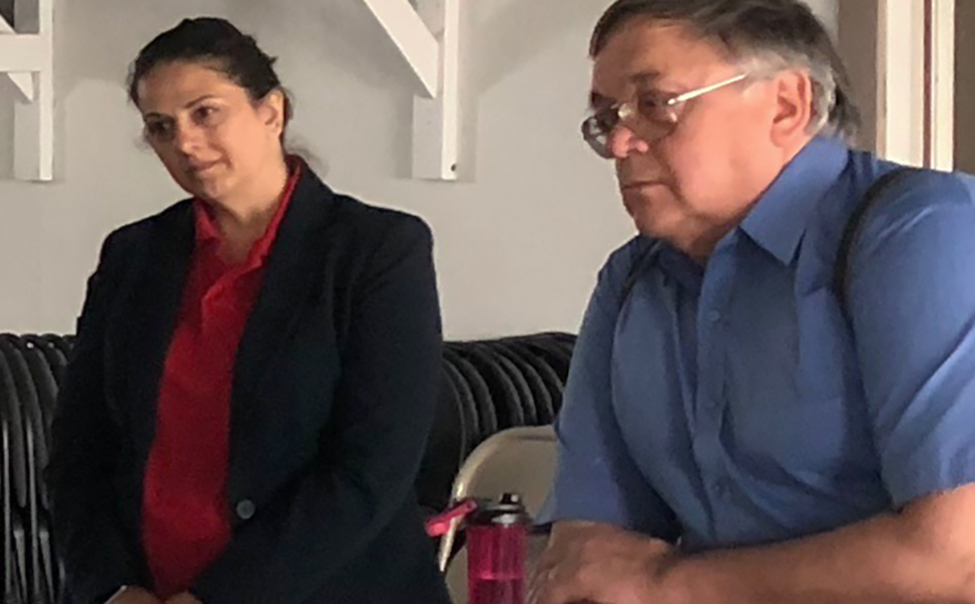
GORDONVILLE, Pa. — “You are hearing the negatives, not the positives,” said Marilyn Hershey about the dairy checkoff during a meeting requested by Lancaster County dairy farmers hosted here in Gordonville on Friday, April 12.

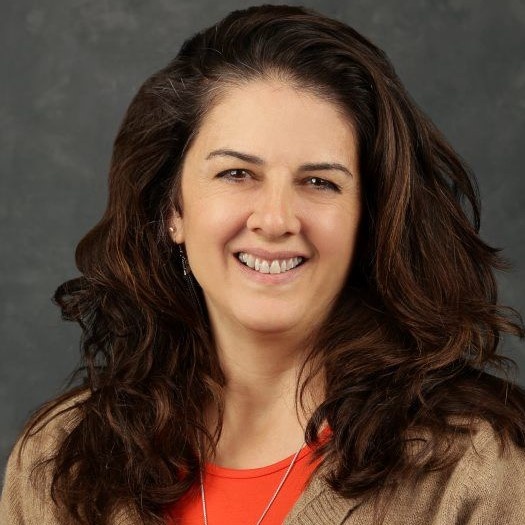
Hershey has a dairy farm with her husband Duane in neighboring Chester County, and she serves as the national chairperson of the Dairy Management Inc. (DMI) board.

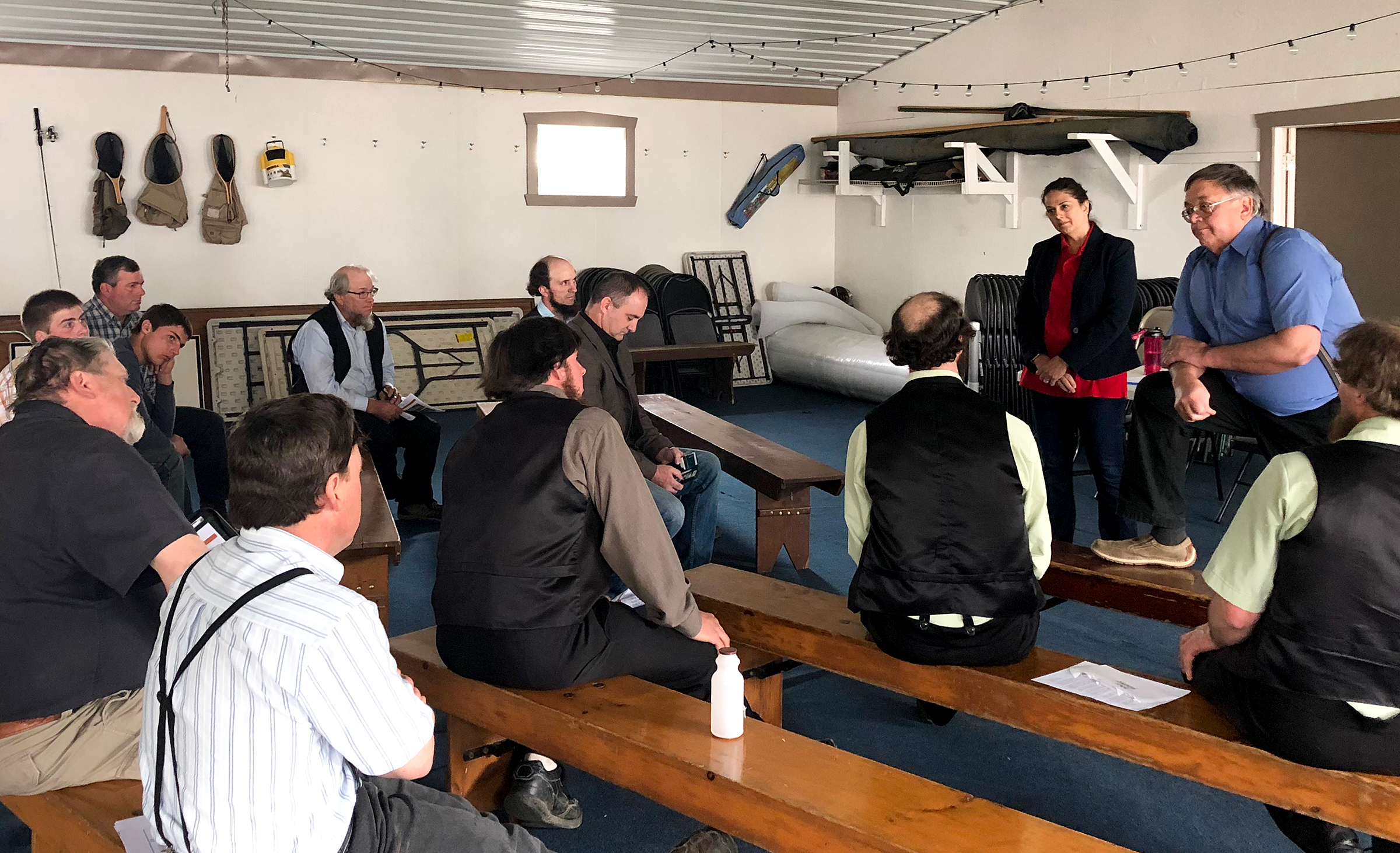
Approximately 12 of the expected 30 farmers attended the meeting with a range of topics on their minds, in particular fluid milk sales and whole milk promotion.

Hershey got involved in dairy promotion eight years ago, serving first on the National Dairy Board, then becoming vice chair of DMI, the board that combines various boards, before becoming chairperson two years ago. National Dairy Board has term limits, whereas the DMI board does not.

Accompanying Hershey for the discussion was Harold Shaulis of Somerset County, who served 25 years on state, regional and national checkoff boards. Having sold his cows, he is no longer a board member, but helps with promotion.


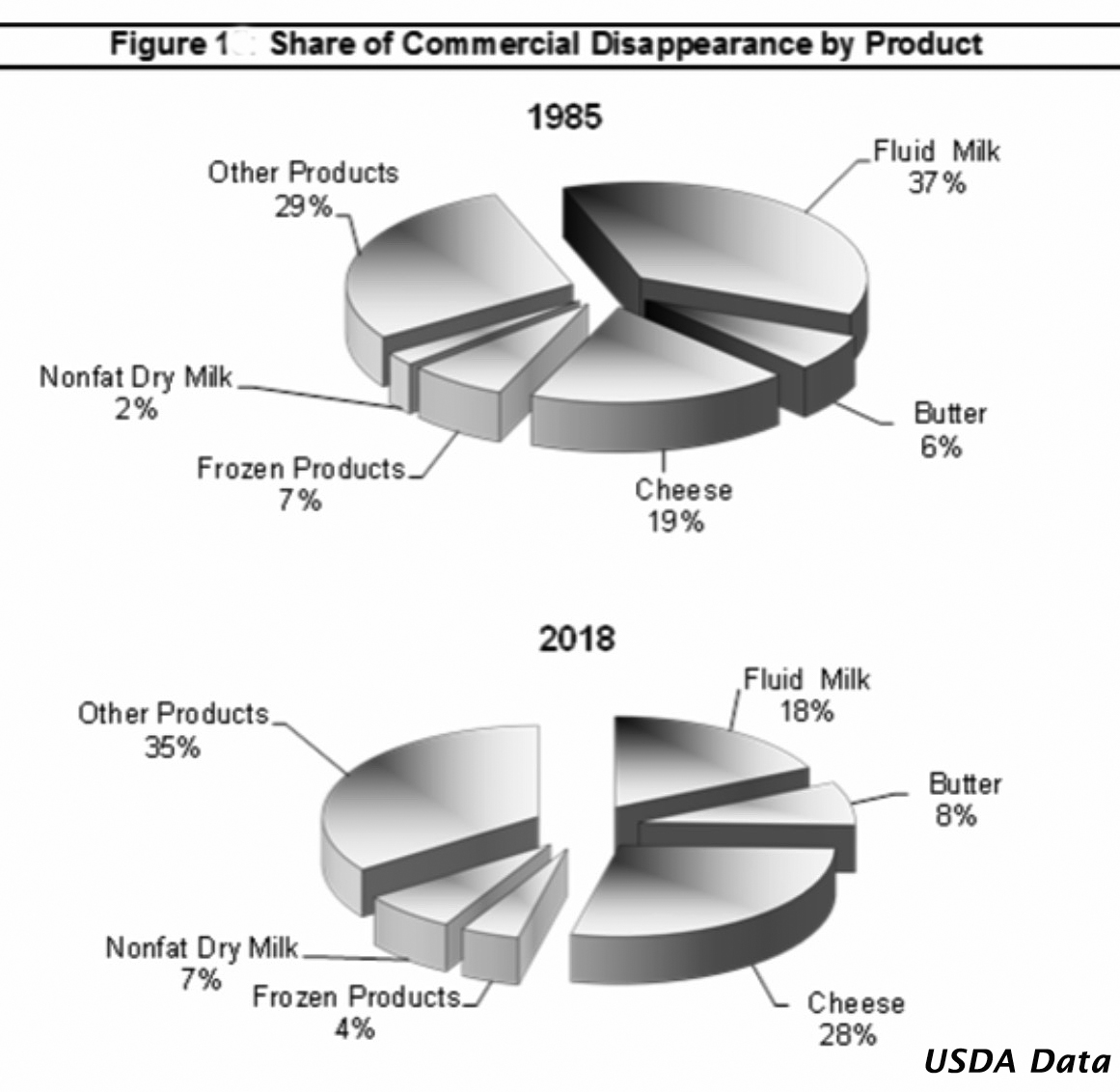
After a Q&A session with farmers, DMI chairperson Marilyn Hershey supplied this graphic of how dairy consumption has increased while product share has changed from 1985 through 2018. The chart represents National Milk Producers Federation (NMPF) analysis of USDA commercial disappearance. According to USDA, the agency’s commercial disappearance figures include imports and most exports.

Shaulis said the bottom line in dairy promotion is to sell more milk. He said total per-capita dairy consumption has grown since the 1980s, even though fluid milk sales have declined (Fig. 1). He also talked about trade missions to China and Southeast Asia.

“We are in a global market. One out of six loads of milk a day is exported, and we want to see that grow,” he said.

In addition to exports, Hershey said consumers are eating more dairy products, overall. “The National Dairy Council has funded 20 years of research on butter to get it back in the mainstream. We got butter into McDonalds in place of margarine, and 80% of McDonalds’ sales have a dairy ingredient in them,” she explained as an example of DMI’s partnership strategy.

By email, after the meeting, Hershey furnished the previously requested list of National Dairy Council research we will explore for a future edition.

However, a perusal of the science summaries section of National Dairy Council’s own website, where a few summaries are available, each download is prefaced with these words: “Low-fat and fat-free dairy foods are part of the Dietary Guidelines for Americans (DGA) and American Heart Association (AHA) dietary recommendations. You can download our full report, which shows further support for consuming low-fat or fat-free dairy foods as recommended in the 2015 DGA.”

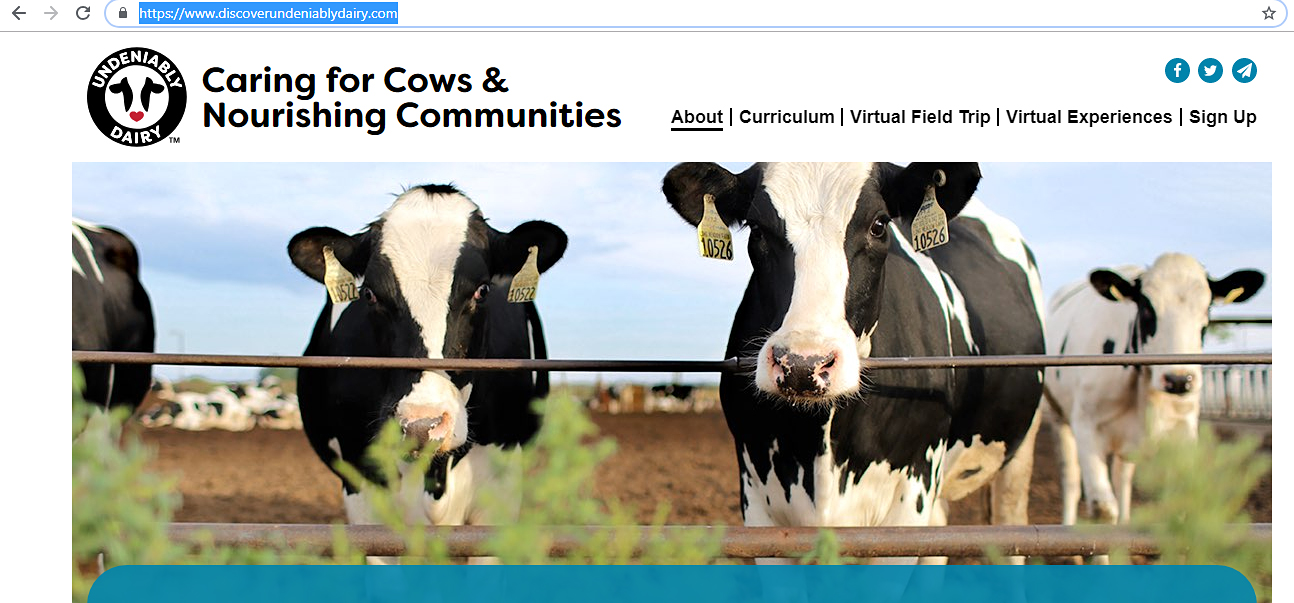
The website also talks about “nourishing communities,” about farm animal care and sustainability measures (FARM program) adopted and funded by checkoff dollars that tie in with the low-fat and fat-free dietary theme.


This screenshot of the landing page for the Undeniably Dairy campaign’s website (https://www.discoverundeniablydairy.com/) illustrates the nourishing communities theme that DMI chair Marilyn Hershey says targets “conflicted health seekers.” She also said: “We want Undeniably Dairy to replace the Real Seal. That is the goal.”

Undeniably Dairy replaces Real Seal

Cross-referenced to the National Dairy Council website is the Undeniably Dairy campaign. Hershey said this promotes positive messages to targeted audiences with school curriculum and through social media.

At this website, the “nourishing communities” theme continues as well as the reinforcement of low-fat and fat-free dairy.

Hershey provided a handout on Undeniably Dairy and said: “We are targeting the ‘conflicted health seeker’ with four messages: Responsibly produced, nutrient rich, locally driven, real enjoyment.”

More interesting is where DMI wants to take the campaign.

“We want Undeniably Dairy to replace the Real Seal. That is the goal,” said Hershey. “We are combining MilkPEP’s ‘Love What’s Real’ campaign with our Undeniably Dairy campaign.” 

The Real Seal was previously owned by UDIA / DMI, but it is now the property of National Milk Producers Federation (NMPF). The Real Seal can only be used on milk and dairy products that contain real dairy ingredients, no imitation dairy ingredients and are made with milk produced and processed in the USA.

This posed a problem for DMI, since importers must pay a small checkoff fee for dairy promotion, so the dairy checkoff stopped promoting the Real Seal and came up with Undeniably Dairy two years ago.

Hershey fielded questions about the requirements for using the Undeniably Dairy Seal. How might those requirements differ from the Real Seal? She did not have the specifics and promised to get back with those details.

In the schools

Fielding questions on the school breakfast carts, Hershey explained that GENYOUth is the umbrella organization, and Fuel Up to Play 60 (FUTP60) is the boots on the ground.

“We don’t just have a foot in the schools, we are IN the schools,” said Hershey. “Companies would kill to have what we have in the schools.”

The Northeast program is strong because there are seven football teams here so the program can affect a large number of kids in the Northeast, according to Hershey.

Asked what is on the breakfast carts, she said: “Yogurt, cheese, milk, fruits and vegetables, and some have smoothie machines.”

She said the Grab N Go Breakfast Carts have ice packs to keep the milk cold. She also stated that every dime ADA Northeast sends in to GENYOUth is returned to the Northeast region to fund FUTP60 and breakfast carts as well as other foodservice equipment grants to schools. (See ADA Northeast 2017 Annual Report here)

Hershey confirmed that the GENYOUth Gala raises more money than it spends by getting funds from other donors to buy more carts. She explained, as previously reported in Farmshine, that PepsiCo gave $1 million to translate FUTP60 into Spanish and pay for more breakfast carts. She said PepsiCo made a large 2018 commitment to the program, and that’s why PepsiCo recognized with the Vanguard Award at the 2018 Gala.

“We buy the carts, and we have multi-year contracts with the schools to keep milk on the carts,” said Hershey.

Acknowledging that the milk provided is fat-free or 1%, she stressed that, “As independent dairy producers, we can advocate for whole milk, but DMI, FUTP60, and GENYOUth cannot influence policy,” she explained.

“You have to go to your co-ops and Farm Bureau and G.T. Thompson to get that done. We can’t do it,” said Shaulis.

What we can do is put out our research and promote research,” said Hershey.

Shalis said the FUTP60 breakfast carts “absolutely sell more milk.”

He reported that 95,000 more children participated in school breakfast in 2018 compared with 2017. “That’s 95,000 more servings of milk since they have to take a milk.”

“But do they like it?” asked one farmer.

Hershey quickly replied: “It doesn’t matter if it’s 3%, 1%, 2% or 0%, they are getting the same nutrition. Even though they are not getting the fat content, they are getting the nutrients.”

A discussion of fat-soluble nutrients and bioavailability of nutrients ensued.

When asked if DMI, yes or no, believes 1% and fat-free milk are equal to whole milk, Hershey said: “We have no control over what we serve or promote in the schools. With that carton of 1% milk, we want children to know they are getting the nutrition, we can’t address the fat.”

When asked what DMI can do about 20-plus years of having the low-fat diet-heart hypothesis “forced on us,” Hershey’s reply was that, “It took 20 years to get here and it will take a while to turn it around.”

She informed the group that the American Heart Association has already written a letter to Congress signed by 18 health organizations protesting the House Bill 832: Whole Milk for Healthy Kids Act.

“They are against the bill, so there is a battle in front of us,” Hershey said.

On the positive side, Hershey said farmers can thank Dr. Greg Miller, global chief science officer for the National Dairy Council, for his use of the research on full-fat dairy. She also said dairy farmers can thank the dairy scientists in each partnering company’s kitchen as DMI develops new products for Pizza Hut, Taco Bell, Domino’s and McDonalds.

Beyond the fat

“Lots of things with school milk need changing, not just the fat,” said Hershey as she dove into the innovations side of DMI’s strategy.

“I appreciate that the fat content is your focus, but it has to be the right temperature, delivered correctly and packaged correctly,” she said. “We are working on this with processors.”

She said that giving high school teens the same packaging as kindergarteners doesn’t fly. She cited research showing that when schools switched from paper cartons to plastic bottles, milk sales grew by double-digits in the first year, and waste was down by 20% in those schools.

“Kids want to drink their milk from a bottle because that’s how they drink everything else,” said Hershey, noting that Rick Naczi, executive director of ADA Northeast, pointed this out at a fluid milk meeting DMI had in Chicago in February.

“School milk got a lot of discussion there,” Hershey reported. “But, let’s not get lost in this whole milk point. There is a huge price difference (between whole milk and 1% or fat-free), and school contracts are lost by one-quarter of a penny per carton.”

Some of the farmers in attendance said that didn’t matter unless other beverages can compete for those contracts. The bottom line would be whole milk going into the schools.

Time was also spent talking about the trend toward smaller containers and ultra-high temperature (UHT) pasteurization. “All the milk in Europe is UHT, and it tastes good,” said Shaulis.

Some of the farmers in the room disagreed, sharing their concerns that UHT leaves a less valuable product nutritionally and in flavor. To which, Hershey and Shaulis said the entire food industry is going that way, and there’s nothing they can do about that.

“What we have to try to do (in promotion) is stand by the value milk has and promote what we are able to promote,” said Hershey.

She shared figures showing that overall fluid milk sales represent 18% of total milk production: “79% of consumers are not eating meals as a family. Everything is grab and go. That’s where we need to be,” said Hershey. “We have to meet consumers where they are with our innovation and packaging.”

Citing fairlife, she explained how “that product came through our fluid milk committee, and now others are following. Darigold has a new high protein ‘fitness’ drink. DFA has a couple things coming out under the Live Real Farms label. Kroger and Shamrock are coming out with beverages – all this year. These products have a lot of milk in them,” she said.

Farmers learned that these new products are not Class I products. They are largely Class II.

“We partner on these products,” said Hershey. “We give money for research. They do the product research. We only contribute to the research to try and get the innovation out there in order to survive.”

“We gave up on selling milk. ‘Got Milk’ did nothing,” Shaulis added. “Generic milk advertising doesn’t work.”

Farmers wanted more statistics to back up this claim, and they referenced the overwhelming reaction among consumers to the 97 Milk Baleboards and campaign done voluntarily at a grassroots level, starting in Lebanon County, Pennsylvania with signs and baleboards now in five states and spreading nationwide and internationally through the website and social media.

Hershey did share the news that retail data show whole milk sales grew more in the first quarter of 2019 than the already higher whole milk sales in 2018.

She later sent an email stating that in the Northeast, retail sales data show 40% of fluid milk sales are coming from whole milk sales. She also reported that, nationally, whole milk sales as a percentage of total fluid milk sales rose from 29.7% in 2014 to 39.3% currently.

As one farmer noted, “DMI has done a good job promoting cheese, what we are asking for is more focus on fluid whole milk than we are seeing now.”

Farmers were concerned that if they continue to be forced to pay into a checkoff program that represents their market less and less, what does the future hold for them?

Hershey had explained that the national checkoff boards are represented geographically by milk volume.

Some wondered if making the checkoff voluntary would allow them to put money into promoting local whole milk, and to take on the imitations head-to-head without the restrictive oversight of USDA.

“It’s all or nothing. That’s how the whole world of checkoff programs work,” said Shaulis. “These farmers on the board look at every penny spent, and they look at what is best for the industry while regions look at what is best for their region.”

To be continued.


DMI chairperson Marilyn Hershey and former board member Harold Shaulis met with dairy farmers for a question-and-answer session in Lancaster County, Pennsylvania on Friday, April 12. Hershey explained that DMI, the board she chairs, combines the National Dairy Board and the UDIA board. In this way, DMI brings together the national 5-cent spending with the portion of the 10 regional cents that is brought into national efforts under the unified marketing plan.

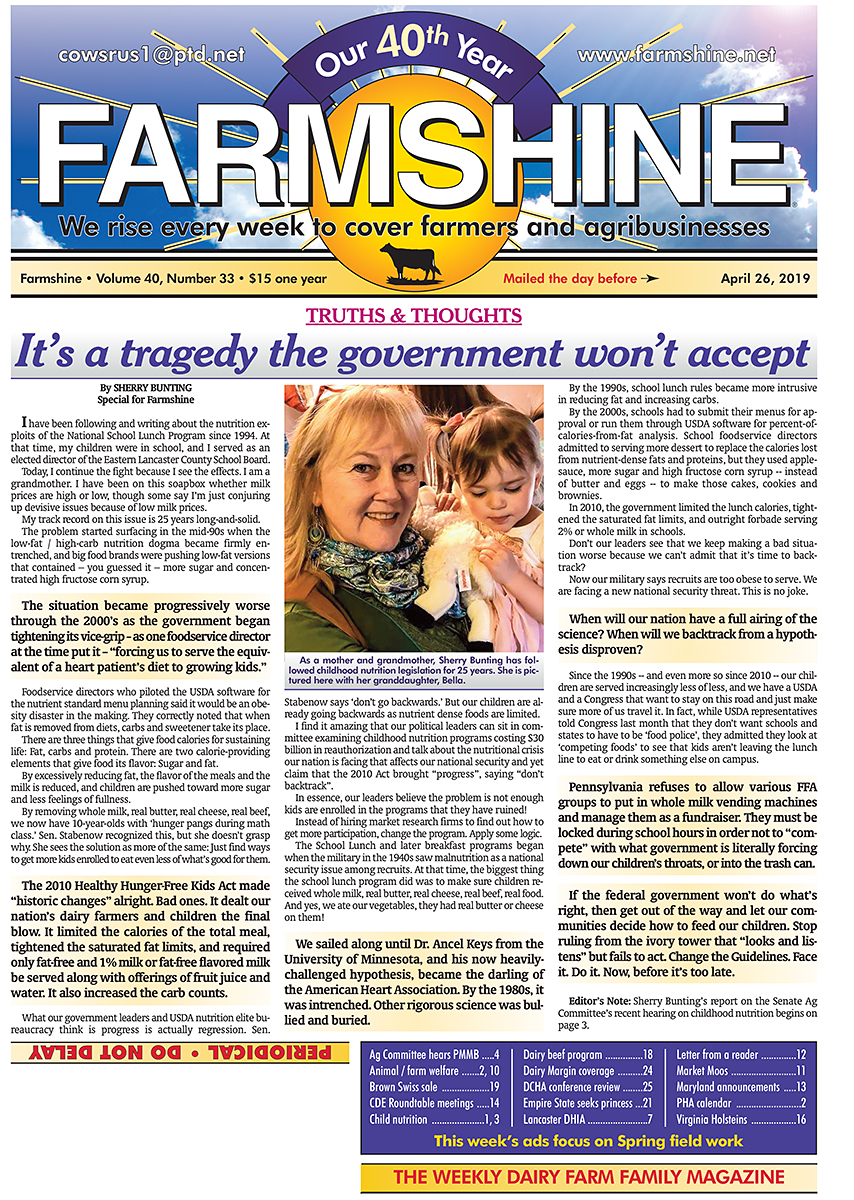
Truth and thoughts: A tragedy the government won’t accept

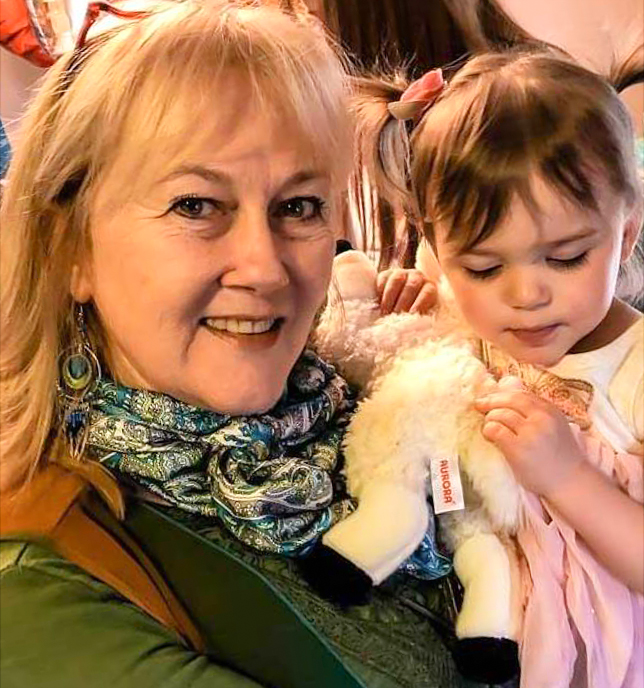
As a mother and a grandmother, Sherry Bunting has followed childhood nutrition legislation and government guidelines for 25 years. She is pictured here recently with Bella, one of her five grandchildren.

By Sherry Bunting, Farmshine Cover Commentary, April 26, 2019

I have been following and writing about the nutrition exploits of the National School Lunch Program since 1994. At that time, my children were in school, and I served as an elected director of the Eastern Lancaster County School Board.

Today, I continue the fight because I see the effects. I am a grandmother. I have been on this soapbox whether milk prices are high or low, though some say I’m just conjuring up devisive issue because of low milk prices.

My track record on this issue is 25-years-long-and-solid.

The problem started surfacing in the mid-90s when the low-fat / high-carb nutrition dogma became firmly entrenched, and big food brands were pushing low-fat versions that contained – you guessed it – more sugar and concentrated high fructose corn syrup.

The situation became progressively worse through the 2000’s as the government began tightening its vice-grip — as one foodservice director at the time put it — “forcing us to serve the equivalent of a heart patient’s diet to growing kids.”

Foodservice directors who piloted the USDA software for the nutrient standard menu planning said it would be an obesity disaster in the making. They correctly noted that when fat is removed from diets, carbs and sweetener take its place.

There are three things that give food calories for sustaining life: Fat, carbs and protein. There are two calorie-providing elements that give food its flavor: Sugar and fat.

By excessively reducing fat, the flavor of the meals and the milk is reduced, and children are pushed toward more sugar and less feelings of fullness.

By removing whole milk, real butter, real cheese, real beef, we now have 10-year-olds with ‘hunger pangs during math class.’ Sen. Stabenow recognized this, but she doesn’t grasp why. She sees the solution as more of the same: Just find ways to get more kids enrolled to eat even less of what’s good for them.

The 2010 Healthy Hunger-Free Kids Act made “historic changes” alright. Bad ones. It dealt our nation’s dairy farmers and children the final blow. It limited the calories of the total meal, tightened the saturated fat limits, and required only fat-free and 1% milk or fat-free flavored milk be served along with offerings of fruit juice and water. It also increased the carb counts.

What our government leaders and USDA nutrition elite bureaucracy think is progress is actually regression. Sen. Stabenow says ‘don’t go backwards.’ But our children are already going backwards as nutrient dense foods are limited.

I find it amazing that our political leaders can sit in committee examining childhood nutrition programs costing $30 billion in reauthorization and talk about the nutritional crisis our nation is facing that affects our national security and yet claim that the 2010 Act brought “progress”, saying “don’t backtrack”.

In essence, our leaders believe the problem is not enough kids are enrolled in the programs that they have ruined!

Instead of hiring market research firms to find out how to get more participation, change the program. Apply some logic.

The School Lunch and later breakfast programs began when the military in the 1940s saw malnutrition as a national security issue among recruits. At that time, the biggest thing the school lunch program did was to make sure children received whole milk, real butter, real cheese, real beef, real food. And yes, we ate our vegetables, they had real butter or cheese on them!

We sailed along until Dr. Ancel Keys from the University of Minnesota, and his now heavily-challenged hypothesis, became the darling of the American Heart Association. By the 1980s, it was intrenched. Other rigorous science was bullied and buried.

By the 1990s, school lunch rules became more intrusive in reducing fat and increasing carbs.

By the 2000s, schools had to submit their menus for approval or run them through USDA software for percent-of-calories-from-fat analysis. School foodservice directors admitted to serving more dessert to replace the calories lost from nutrient-dense fats and proteins, but they used applesauce, more sugar and high fructose corn syrup — instead of butter and eggs — to make those cakes, cookies and brownies.

In 2010, the government limited the lunch calories, tightened the saturated fat limits, and outright forbade serving 2% or whole milk in schools.

Don’t our leaders see that we keep making a bad situation worse because we can’t admit that it’s time to backtrack?

Now our military says recruits are too obese to serve. We are facing a new national security threat. This is no joke.

When will our nation have a full airing of the science? When will we backtrack from a hypothesis disproven?

Since the 1990s — and even moreso since 2010 — our children are served increasingly less of less, and we have a USDA and a Congress that want to stay on this road and just make sure more of us travel it. In fact, while USDA representatives told Congress last week that they don’t want schools and states to have to be ‘food police’, they admitted they look at ‘competing foods’ to see that kids aren’t leaving the lunch line to eat or drink something else on campus.

Pennsylvania and other states will not allow various FFA groups to put in whole milk vending machines and manage them as a fundraiser, or they must be locked during school hours in order not to “compete” with what government is literally forcing down our children’s throats, or into the trash can.

If the federal government won’t do what’s right, then get out of the way and let our communities decide how to feed our children. Stop ruling from the ivory tower that “looks and listens” but fails to act. Change the Guidelines. Face it. Do it. Now, before it’s too late.

Child nutrition reauthorization sparked in D.C.

Military insights suggest backtracking, but disappointing answers given on school lunch and milk fat

By Sherry Bunting, Farmshine, April 26, 2019

WASHINGTON, D.C. — The last time a childhood nutrition authorization was passed by Congress was in 2010: The Healthy Hunger-Free Kids Act. A decade later, the Senate Ag Committee held a hearing last Wednesday (April 10) on perspectives in childhood nutrition. 

Chairman Pat Roberts (R-Kan.) said this is the first step in the reauthorization of the $30 billion in mandatory and discretionary childhood nutrition programs he wants examined and passed this year.

The hearing panels included representatives of federal agencies, state and community food programs, and the national childhood health program.

Most of the discussion centered on ways to streamline programs, increase enrollment that has been declining since 2010, and provide more flexibility.

There were a few eye-opening highlights and some discussion related to milk.

Chairman Roberts said in his opening statement: “One size fits all does not work for all.

Ranking Member Debbie Stabenow (D-Mich.) stated that, “Whether it’s a mother getting enough calcium to insure healthy bones for her baby, or making sure a 10-year-old isn’t fighting hunger pains in math class, child nutrition is about building a stronger future. It’s also important to our national security.”

Stabenow then revealed how and why the National School Lunch Program began 80 years ago, and what the concerns are today — two decades after the saturated fat limitations were introduced and a decade after the last reauthorization under the leadership of President Obama and Secretary Vilsack, when the screws were further tightened on milk choices and other aspects in 2009-10.

“Interestingly, the National School Lunch program was created in the 1940s because General Lewis Hershey came before Congress to explain that recruits were being rejected due to malnutrition,” said Stabenow. 

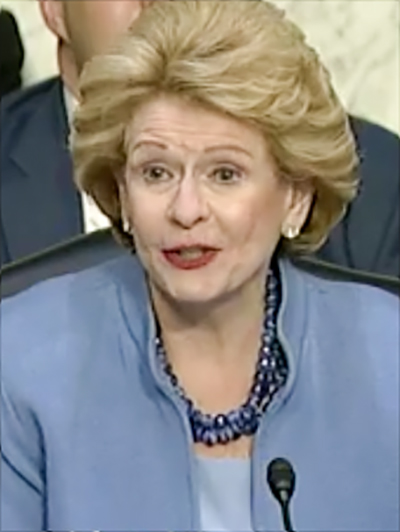
Sen. Debbie Stabenow (D-Mich.)

“Today, over 750 retired Generals, and other military leaders, are sounding alarm bells again, this time because young adults are too overweight to serve,” she stated. “With 14% of children as young as 2 showing signs of obesity, we have to address this issue early and everywhere.”

That said, Sen. Stabenow touted the “tremendous progress in the past 20 years in schools and daycares. It is vital to move forward, not backward,” she stated, while in her next breath saying that “obesity in adolescents continues to rise while over 12 million kids do not have enough to eat.”

She touted the need for greater enrollment in the National School Lunch Program so kids can have access to that “better” lunch, breakfast, after school snacks and even supper. She talked about a “veggie van” driving out into communities. She cited the Women Infant and Children (WIC) program as critical to first stages of life.

But when her opening statement was said-and-done, Sen. Stabenow again touted “the progress made in 2010” and said several times “we don’t want to backtrack while streamlining these programs.”

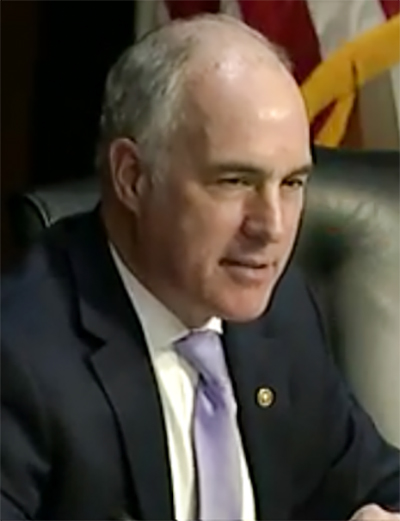
Sen. Bob Casey (D-Pa.)

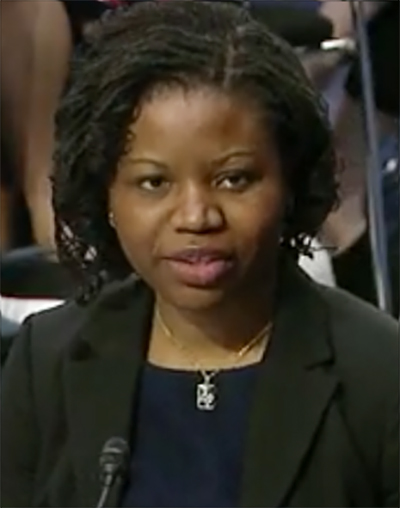
Toward the end of the session, Senator Bob Casey (D-Pa.) brought up “the science of milk” and addressed his question specifically to Dr. Olanrewaju Falusi, a pediatrician who is director of the Children’s National Health System in Washington, D.C.

It was not surprising that the most important question of the day got the most disappointing and predictable answer. 

After hearing Dr. Falusi present her comments about how early childhood diets are responsible for critical programming of lifelong metabolism, brain development, and educational outcomes, Sen. Casey addressed Dr. Falusi as follows:

“There’s been much discussion in Pennsylvania about the ability of schools to serve whole milk to students. What does ‘the science’ say about the appropriate levels of whole milk consumption?” the Democratic Senator from Pennsylvania asked.


Dr. Olanrewaju Falusi, a pediatrician who is director of the Children’s National Health System in Washington, D.C.

Predictably, Dr. Falusi replied: “As a pediatrician, I recommend to my patients that they drink water or low-fat or fat-free milk. We know that milk has many benefits from protein and calcium and Vitamin D. We also know, though, that lower fat and lower sugar in diets are healthier for children.”

Dr. Falusi continued matter-of-factly: “What we would admonish, from the American Academy of Pediatrics, is that the standards for school nutrition programs — including the type of milk served — really be based on the science, and the science is that lower fat and lower sugar are what we should be advocating for children. And we do encourage the USDA to rely on the nutrition experts and to look at a number of studies for those guidelines.”

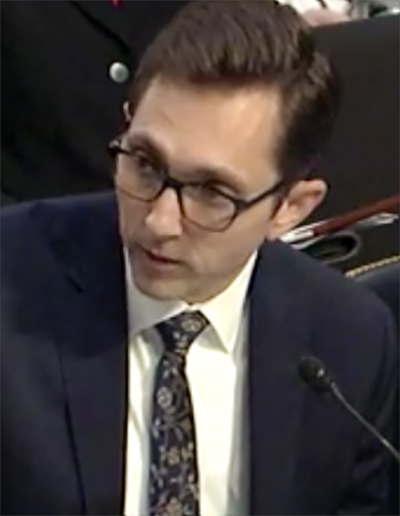
Senator Deb Fischer (R-Neb.) asked about students turning to competitive foods when the school lunch does not appeal or satisfy. She addressed her concern to USDA Acting Deputy Under Secretary for Food, Nutrition and Consumer Services, Brandon Lipps.

Lipps replied that the government seeks a balance between the school lunch and “competing foods” allowed on campus. He also noted they are “looking to see that kids are not leaving the school lunch line to buy competitive foods elsewhere on campus. But we’re not making the schools or states be the food police.”

Sen. Fischer asked: What are the foodservice professionals telling you? Are kids eating the school lunches?


Brandon Lipps, USDA Acting Deputy Under Secretary for Food, Nutrition and Consumer Services

Lipps replied that the “schools are very positive on the flexibilities in the final rule… It’s not a major change, just a comfort in long-term planning. Schools have to buy a long way out to plan their menus in the way that we require them to do. So they’re glad to have finality on the flexibility” (for example, they have flexibility to serve 1% flavored milk instead of only fat-free).

In response to the suggestion that the nutrition standards are “no good.” Lipps stated that, “We put in a calorie limit in 2009, and if the kids don’t eat half the food on their plate, and if they are getting half of the maximum calories that we provide them, if that’s happening, then that’s a problem.”

USDA is monitoring this, said Lipps: “As you know, the same is true, particularly with milk and the nutrients that it provides, so we are going to continue to listen and see if further flexibility is needed on that front.” 

Repeatedly, the 2010 Healthy Hunger-Free Kids Act was cited for making “historic changes” that led to “greater consumption of fruits, vegetables and whole grains as encouraged by USDA.” But at the same time, panelists repeatedly said fewer eligible families and children use the programs today compared with before 2010, and that obesity and diabetes and hunger are rising in our youth.  

When asked by Sen. Joni Ernst (R-Iowa) about school waste related to the 2010 changes, USDA Under Secretary Lipp said flexibility in the final rule on whole grains, sodium and 1% low-fat flavored milk went a long way toward changing that.

“I don’t think we have anyone telling us we need a major change in the nutrition meal pattern requirements for the school meal, but they do want flexibility,” said Lipp.

Sen. Ernst also noted the concerns about portion sizes being the same for a first-grader as an eighth-grader. “School foodservice professionals say they want the flexibility to vary it,” she said. “Right now, booster clubs are bringing in food for athletes who are not getting enough. And with mandated portions and mandated nutrition requirements, we are seeing a lot of food waste, what can USDA do?”

Lipp replied that USDA will continue to “look and listen.”

Josh Mathismeier, Director of Nutritional Services for Kansas City public schools and Mike Halligan, CEO of God’s Pantry Food Banks, based in Lexington, Kentucky, said participation would increase if they could take the food to the people instead of forcing the people to congregate to access the food.

Some states have actually hired market research firms to do focus groups with eligible families to learn how to increase their enrollment.

-30-

DMI CEO on fluid milk

‘Let’s have dairy-based protein in 3-D printers and whatever comes next.’

Schools represent more consumer touch-points for milk than all other sectors, combined

By Sherry Bunting, Farmshine, Friday, March 22, 2019

CHICAGO, Ill. — The fluid milk category is receiving much attention after a decade of rapid declines in sales. What does the CEO of the national dairy checkoff organization DMI have to say on the topic?

For starters, he says the dairy industry should stop blaming the alternative beverages and start looking at its own failures.

In his CEO’s Report, delivered at the February DMI board meeting, DMI CEO Tom Gallagher addressed the fluid milk question. While no press release or public statement or copy of the CEO’s Report was provided to Farmshine, a video was posted to the private Dairy Checkoff facebook page and was subsequently provided to Farmshine by a dairy farmer participant.

Since Gallagher states while giving his “CEO’s Report” that this information is ‘public’ and that “we want you to take pictures of it and share it, do what you want with it, it’s yours.” So we are sharing with Farmshine readers what was shared with us by dairy farmers what was shared with dairy farmers via the closed facebook group.

Gallagher began his report talking about farmer engagement. 

“The power of the industry is within the industry, it’s the farmer,” he said. “We can commit to activating the dairy farmer at the local and national levels, then we can have a big voice, especially, on what it is that your checkoff really does.”

He talked about the changing world of consumer influence, saying that, “When you think about the things we need to do, more and more they are moving away from the things we are familiar with.”

From there, he referenced a presenter for the following day who would be talking about the future, about 3-D printing of food.

“Well, it’s not the future because you can go on Amazon today, and for $2000, buy a 3-D printer that will print dessert for you,” said Gallagher. “We think, why would people eat that? They don’t like processed foods. But the people who make those and the food production people — and hopefully dairy protein will be in that, not plant protein — they don’t need the 90% of people consuming your product. They just need 5 or 10 or 4% to have a very successful business. If that’s what people are going to be doing, we need to be there.”

Gallagher announced that DMI will be buying a 3-D printer, a few of them. “We’ll buy one, and we’re going to figure it out and we’ll figure out how to approach these 3-D printing companies with dairy-based proteins in foods to be used in them,” he said. “We can’t afford to be nickeled and dimed with 4% of consumers here and 5% there.”

He went on to observe that just 4% of consumers identify as vegan and that vegetarians are also a small number. “What is really driving plant-based foods and beverages is not predominantly the vegan movement, it’s because these companies are investing  hundreds of millions of dollars and are getting really good at taste, are phenomenal at marketing and great at innovation.”

He referenced diets that promote being vegan or vegetarian before 6:00 and other consumer trends.

“I think our goal is it is not either-or, it can be both… We have to be honest with ourselves, there will be plant-based beverages out there, and people will buy them, and they will gain share, not because people are vegan or concerned about sustainability… it’s because the food and beverage companies are doing a great job at what they do,” Gallagher said.

“If we do the same job in the dairy industry, we will be just fine. But if we sit back like we did with fluid milk, we will be where we are with fluid milk,” he added.

Referencing a report in the 1980s before the checkoff was authorized by Congress, Gallagher said: “That report laid out everything that needed to be done for fluid milk, and that same report would be valid today because none of it was done — not until fairlife and a few other things.”

“It’s not that the bad guy came and took it (fluid milk sales), it’s that us, the dairy industry collectively, did not keep growing and innovating and doing what we should do,” said Gallagher from a marketing, not policy, standpoint. “Instead of getting in a lather about plant-based food companies, let’s do what we are supposed to be doing as an industry.

“Let’s do marketing. Let’s do innovation. Let’s have dairy-based protein in 3-D printers and whatever comes next. That’s were we need to be,” said Gallagher. When it comes to policy, nutritional values and sustainability discussions, that’s another discussion we need to enter into.” 

In the breakdown on sales, he said foodservice milk is up slightly even though retail and other sectors are down. The data was by servings, and he explained how sales figures are pieced together and how program evaluations fit into those.

He also talked about a meeting DMI had with the top persons from the five top coops for packaged fluid milk salesn — DFA, Select, Prairie Farms, Darigold and Maryland-Virginia — along with Jim Mulhern of NMPF, Tom Vilsack of USDEC, Rick Naczi of ADANE, Marilyn Hershey, president of DMI, along with a former CEO of fairlife with some insights. 

“We came out of that meeting as positive about fluid milk as ever on how the industry can work together to change the trajectory,” said Gallagher, explaining that they looked at how much of fluid consumption is really pushed down into Class II, and to see if getting and including that number, what that would do to the per-capita fluid milk consumption numbers. 

“The group focused on kids. Kids is the deal — at 6 billion containers a year, when everything else is 5.3 billion,” said Gallagher. “So while schools only represent 7.7% of consumption, it represents more touch-points with consumers than everything else combined. So, they, on their own, quickly came to the conclusion that we have got to deal with the kids for a variety of reasons — sales and trust. And they asked DMI to put together a portfolio of products for kids inside of schools and outside of schools. What are the niches that need to be filled? What’s the right packaging? What needs to be in the bottle? And we can do that,” he said.

Depending on the results of the next meeting, the circle could be expanded. And regulatory, legislative and standards of identity issues were brought up that DMI can’t be involved in, but NMPF can. 

Author’s note: Meanwhile, all of those kids in school, those 6 billion touch-points for milk every year that surpass all other touch-points for milk, combined, are forced to consume (or discard) fat-free or 1% milk. The simple answer would be to give them whole milk that tastes good so they know what milk is vs. trying to re-invent the wheel. As an industry, we can’t know what the per-capita fluid milk consumption figures would look like today if the 60 billion touch-points over the past 10 years had been permitted by the government to consume whole milk. Before reinventing some pre-competitive proprietary wheel, shouldn’t those touch-points (schoolkids) have an opportunity to try real whole milk?

To be continued

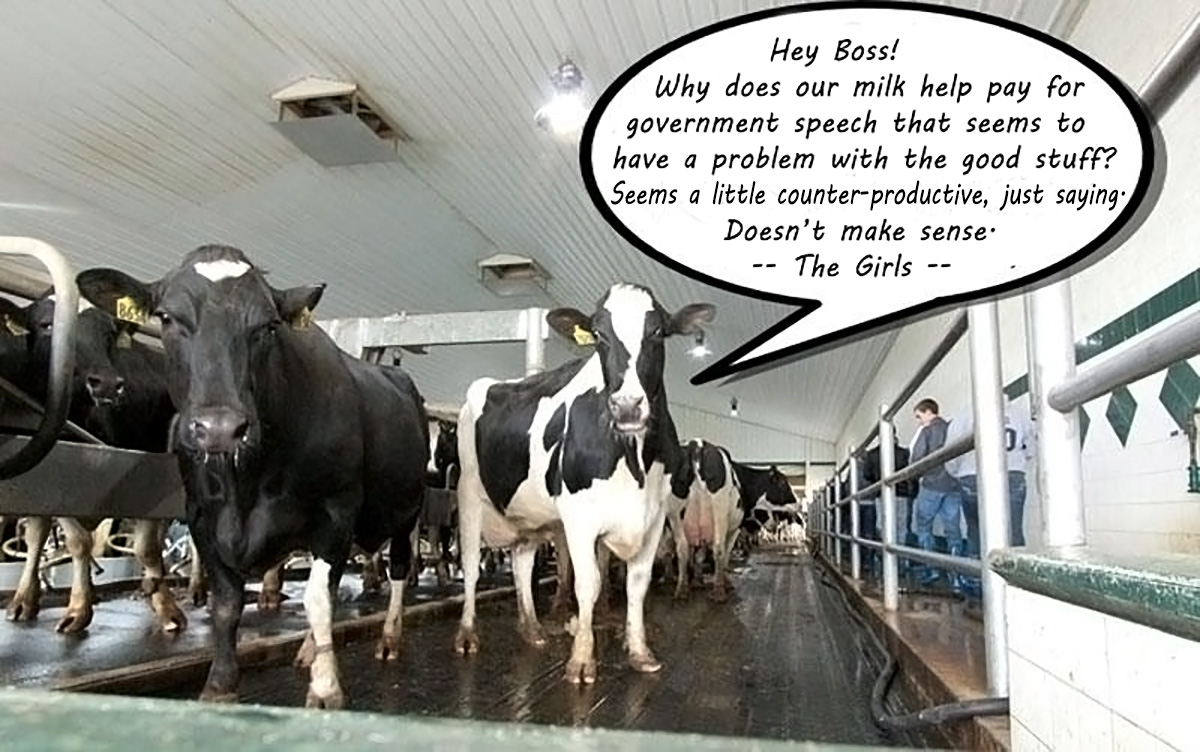
Should dairy farmers be forced to fund ‘government speech’?

Dietary Guidelines among the factors plunging us deeper.

By Sherry Bunting, Farmshine, Friday, March 15, 2019

Many are confused about what the dairy checkoff organizations can and can’t do. There is nothing in the Order that says the checkoff programs must promote according to the USDA Dietary Guidelines.

So where did this idea come from and how does it look today and what might it look like tomorrow?

To stave off challenges brought by folks questioning the government’s authority to require farmers to fund private speech, USDA defended the checkoff programs as “government speech,” which is a protected form of speech. This was explained in more detail in part 6 of the GENYOUth series in the February 22, 2019 edition of Farmshine.

Here’s why it matters. Government speech on dietary concerns has become increasingly restrictive, and by the looks of the recently-named USDA Dietary Guidelines Advisory Committee, it could get worse.

With so much control by USDA, how will dairy farmers fully defend their position — even when rigorous science is on their side? They can’t count on government speech because rigorous science is all too often ignored by government bureaucracies and the advisory committees with links to foundations and corporations that have other ideas for that money.

The proof is in the long trend of using mandatory farmer funds to promote the low-fat / fat-free government speech that has become their own undoing, not to mention detrimental to health, especially for our children.

Here’s a glimpse of where we are headed with this dairy-farmer-funded government speech.

Separation of Church and State, for example, seems to apply only when convenient for politicians. Could a religious doctrine of animal rights and vegan diets become even more embedded into the government Dietary Guidelines that dairy farmers are forced to promote?

I was told by more than a few people that Ag Secretary Sonny Perdue is a scientist and would not allow this to happen to his formation of the current committee, but the composition of this Dietary Guidelines Committee takes us further down this wrong road.

In fact, could the U.S. guidelines be on the brink of cowtowing even more toward the Adventist-funded EAT Lancet Global Food Transformation Agenda?

Some scoff, saying not to take this report seriously because it’s not gaining traction.

Unfortunately, they are not paying attention. This track has been laid and the wheels are in motion, and plenty of bargains with the devil have been made behind closed doors.

Our dietary choices are poised to be further corrupted. Just writing about these topics makes my blood boil and causes me to second-guess my own sanity. 

But folks, this is real. 

We can be proactive, or we can sit with our heads in the sand and be run over. This is happening, and our own leaders don’t want us to see it, hear it or speak of it. 

People can criticize the series of articles on this topic all they want, but the truth is that alliances formed — most notably over the past 10 years — are poised to plunge us even further into dietary guidelines, labeling, look-alikes and standards that have the potential to remove even more animal-based dietary choices from Americans — especially our children. 

As an ag journalist, I’m appalled. 

As a grandmother, watching the effect it is having and will have on our children, I am angry. 

What I see coming is a dietary future that will be a mix of fake proteins, grains, legumes, vitamin/pharmaceutical cocktails and high fructose corn syrup fashioned into whatever you want it to be or taste like from your 3-D printer.(Even the venerable Dr. Kohl talked about it at a farmer meeting and how much this “spooks” him out.)

In the beginning, these 3-D printer options may use dairy or meat proteins, but they are set up for not just plant-based proteins, and what some in the industry call “dairy-based” proteins. What does ‘dairy-based’ mean? (more on that later). The 3-D printer technology is the handmaiden of the gene-edited cell cultured fake-meat proteins and the gene-altered yeast sourced by USDA to a company growing them (with the commercial assistance of ADM) in fermentation vats to produce fake-dairy protein without the cow.

Here’s the deal: The co-author of the 2013 report favoring epidemiological studies of the vegan/vegetarian Adventist communities vs. rigorous scientific evidence was put on the USDA Dietary Guidelines Advisory Committee in the capacity of weighing the scientific credibility of evidence to be considered by the committee in shaping the 2020-25 guidelines.

His name is Dr. Joan Sabate, and he was placed on the committee in this role instead of Stanford professor John Ioannidis — despite over 1000 letters supporting Ioannidis being sent to Ag Secretary Sonny Perdue by the public that included medical doctors, dieticians, veterinarians and other experts, including specialists in oncology, heart disease and endocrinology (diabetes, etc).

Not only is Sabate Chair of the Nutrition Department at the Seventh Day Adventist institution, Loma Linda University, he also constructed the vegan food pyramid and co-authored a book on Adventist doctrine for global change, called “The Global Influence of the Seventh Day Adventist Church on Diet” where this playbook is well laid out.

It’s pretty clear that Sabate has been given an influential position and has spent his career promoting a religious-dietary-doctrine with undue influence now in a government dietary advisory capacity.

Also, an article co-authored by Sabate in 2011 talked of how the Adventists praised the 2010 dietary guidelines that took the destruction of school lunch under the Obama / Vilsack administration to new lows. That report said the 2010 Guidelines “confirmed” the findings of Sabate’s predecessor at Loma Linda University.

Last Friday, while doing a Rural Route Radio show as a guest of Trent Loos, I learned from him a piece I did not know — that the Wellcome Trust, which wrote the check for the EAT Lancet Commission, is the trust of Henry Wellcome. He passed away in the 1930s, and was the founder of what is today a Big Pharma player.

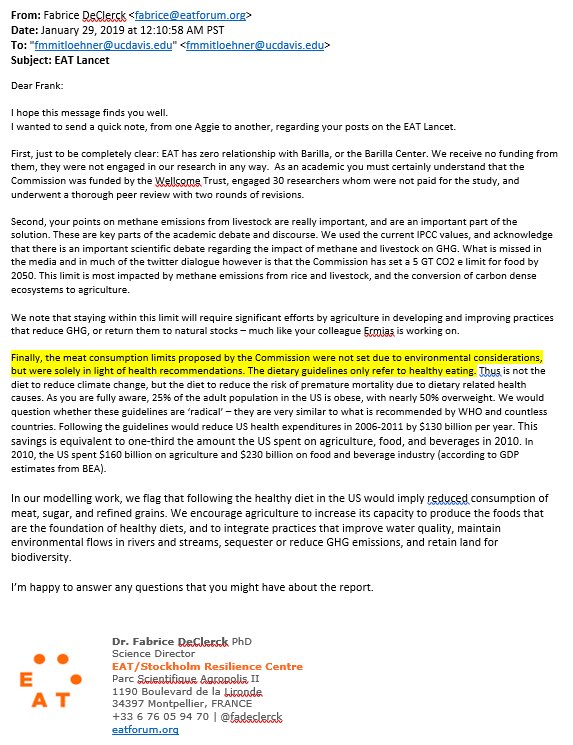
Remove whole milk, full-fat dairy and red meat from our diets and we’ll all need more drugs for a panacea of ills. Yes, the EAT Lancet report calls for just a little over one ounce of meat per day, the equivalent of one 8-oz cup of milk per day and 1 and ½ eggs per week. See the picture?

Our kids are already drinking fat free or 1% milk in school, eating fake butter, skim processed cheese, non-fat yogurt (if you can call it yogurt) and a host of other real-food-replacements when they should receive the best nature has to offer.

Yes, there it is: The religious doctrine. Mr. Wellcome was an avid Adventist, and his legacy lives on through the EAT forum and initiatives that have pulled-in not only governments across the globe (through their respective bureaucracies setting diet standards) but also 41 major corporations that are poised to profit — including the Edelman PR and marketing firm,which provided their Amsterdam account director to that effort until she went to work for the World Business Council for Sustainable Development and its EAT FReSH Initiative the very month that the EAT Lancet report was released (as detailed in part 8 in last week’s Farmshine).

Yes, Edelman is the same PR and Marketing firm that has worked for dairy checkoff for 20 years and increasingly in the past 10 years and was instrumental in the GENYOUth formation (2010), a non-profit with a pretty face that is also tied in with the Clinton Foundation of the same persuasion, and the Obama / Vilsack administration’s heavy hit to school milk and the school lunch program parameters, which also happened in 2010.

This really is one big thing connected, moving gradually to where we are today amid several key converging factors.

Call me “negative” or “unhinged” or whatever name you have for this investigative reporting, that is your choice. Meanwhile, some of our own organizations are tied in, and it is disturbing. 

The dairy and beef checkoff organizations — whose budgets are funded mandatorily by the farmers and ranchers whose livelihoods and contributions to human and planetary health are in jeopardy — have aligned on the sustainability side with the noted anti-animal organization World Wildlife Fund (WWF). This is detailed on website documents and power point slides bearing the WWF emblem.

The template is set for a sustainability footprint that is focused on streamlining the food industry with rapid consolidation to get the WWF stamp of approval for the largest and most vertically integrated animal food producers.

Recently, other organizations that challenge these institutions have put farmers on a new HSUS ag-advisory board to try to influence that particular anti-animal organization to get a similar stamp of approval for small farms and regional food supplies. 

Meanwhile, the anti-animal heavy-hitters are laughing all the way to the bank as their strategy as kindred NGOs is to divide and conquer — while raking in hundreds of millions of dollars. Their strategy is working because there is division. Not because I’m writing about it, but because none of our organizations and institutions have the backbone to stand up for what’s right.

The mode of operation is to work quietly through alliances and advisory boards and non-profits — to paint a pretty face on these alliances, hoping to come out of the internal fray with a few crumbs for a surviving streamlined industry.

If you dare question these alliances or dig into them, you are attacked.

You must remain politically correct at all costs! Don’t touch the third rail! Shame on anyone who dare question! If you question, dig, report, enlighten (all while said organizations refuse to answer interview questions), then you are “negative”, “unhinged”, “divisive”, “harming farmers” and a journalist who has “an agenda” or is just trying to “sell newspapers.”

Not in the least. I would much rather be spending all of my time writing the positive stories, and I have quite a few lined up! But I can’t discard the concern for the people whose stories I’ve written as I watch one after another sell their cows and/or their farms, and as I’m deeply concerned for the health and well-being of our children.

It’s time for Congress to revisit the law authorizing the dairy checkoff. I don’t say this lightly. The dairy checkoff budget dwarfs all others at $350 million a year. That’s a huge budget of dairy farmer funding under increasingly detrimental USDA control.

Maybe government speech is “protected” under the law, but the law  should no longer require dairy farmers to pay for it.

-30-

Are we going to keep zigging? Or is it time to zag?

By Sherry Bunting, Farmshine, March 8, 2019

BROWNSTOWN, Pa. — In Part 7 last week, we looked at some of the questions still unanswered by DMI regarding GENYOUth. As noted, a copy of the Memorandum of Understanding (MOU) created in 2009-10 and signed in 2011 by USDA, National Dairy Council and the NFL has not been provided.

Data requested on the “before” and “after” purchases of dairy by FUTP60 schools has also not been provided.

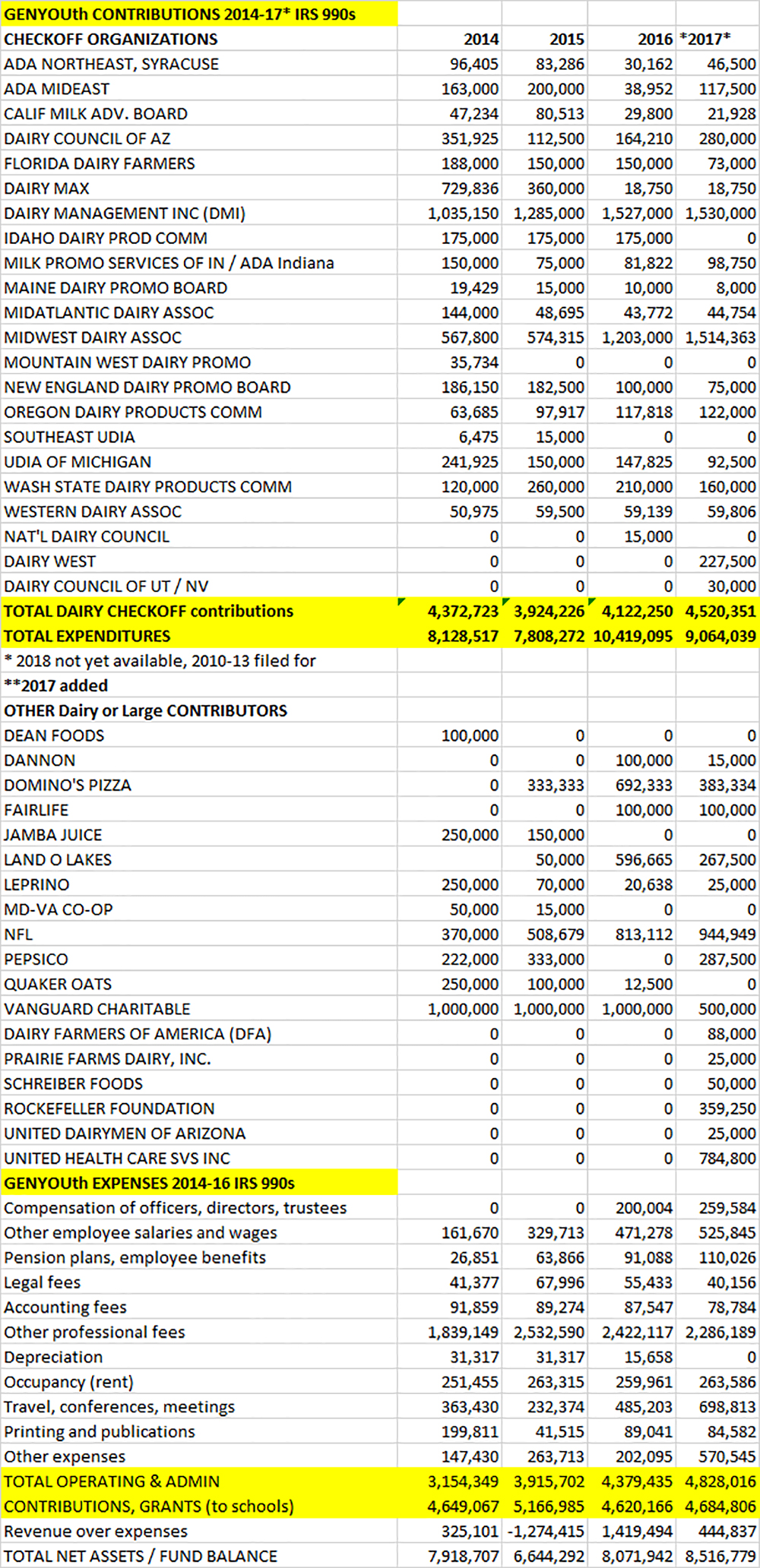
The question about total funds provided by DMI in addition to what appears on the GENYOUth 990 form has also not been answered. However, the 2016-17 DMI audit reflects amounts that are almost double what appears on the GENYOUth 990s.

And the question about Edelman’s role in the formation of GENYOUth and any knowledge or concern DMI may have about Edelman’s role in the EAT FReSH Initiative was simply not been acknowledged, let alone answered.

This is the concern that is perhaps most vexing, and here is the what the public record tells us.

Richard Edelman sits on the board of GENYOUth and as previously mentioned, he is credited with recruiting GENYOUth CEO Alexis Glick in a marketing publication’s story about her taking this position.

The Edelman firm is listed as a corporate sponsor of GENYOUth, including the board seat held by Richard Edelman, but the firm is not listed as a donor of funds on the GENYOUth IRS 990s, except that Richard Edelman, himself, is on record donating $25,000 in both 2016 and 2017.

Edelman is widely considered the world’s largest and leading public relations and marketing firm with offices worldwide. Based in Chicago, the firm, according to the writings of Richard Edelman himself, has been involved in work for DMI (Dairy Checkoff) for 20 years.

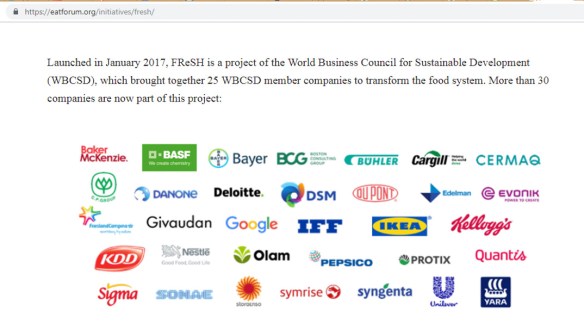
The firm is listed among the 41 corporate sponsors (logos pictured below) of the EAT FReSH Initiative. This Initiative is an extension of the World Business Council for Sustainable Development (WBCSD).

And, in Edelman’s own words in a May 2018 blog post, “Edelman has partnered with FReSH to help accelerate transformational change in global food systems.”

As reported in Part 6 of this series, Danone and PepsiCo are just two companies among the 41 corporate sponsors that are Edelman clients, and both companies planned new plant-based non-dairy “look-alike” product launches to coincide with the EAT Lancet Commission and EAT FReSH launch in the first quarter of 2019.

Edelman is best known for its annual Edelman Trust Barometer shared with the world’s leading business CEOs each year at the World Economic Summit in Davos, Switzerland.

Purpose driven marketing is their thing.

DMI will not acknowledge our question about Edelman’s role in the formation of GENYOUth. Our question about the link between Edelman and the marketing of the EAT FReSH Initiative was also not acknowledged.

However, on the secret Dairy Checkoff facebook page, we have received screenshot copies of answers given to farmers who have asked the checkoff staff questions about this. In those one-to-one facebook group replies, DMI staff are stating on the one hand that “Edelman is not involved in EAT Lancet.” On the other hand, stating that, “we should be glad we have someone representing us there.”

So which is it? And who is representing whom?

What we found in the public record is that Edelman is not, technically, on record as “the” marketing firm for EAT Lancet. The situation is far more subtle, and clever, because Edelman “loaned” their Amersterdam office account director, Lara Luten, to the EAT FReSH initiative for at least one year prior to 2019’s EAT FReSH launch.

This was confirmed in Richard Edelman’s blog post at the company website in May 2018 where he did a series of questions and answers about the work Luten was doing with the EAT FReSH Initiative during her second 6-month “secondment” with EAT FReSH.

A “secondment” is defined as the detachment of a person from his or her regular organization for temporary assignment elsewhere. 

In the blog post, Richard Edelman asks the firm’s Amsterdam account director on loan to the EAT FReSH Initiative what has been most interesting in her work with FReSH.

Her answer: “The current (2018) preparations for the EAT Stockholm Food Forum and the EAT Lancet Commission Report. But also: Setting a basis for communications for the FReSH team.”

That’s pretty clear, isn’t it?

He asks her what she has learned from this partnership that can be applied to other work, and Luten replies: “Working in a pre-competitive environment on a project (EAT FReSH) that is driving impact by leading the change. I’m also gaining in-depth knowledge about the food system (its topics and stakeholders) that will definitely be useful for other projects.”

So not only was the Edelman firm involved, but their involvement is “leading the change.”

In mid-January 2019, at precisely the point in time when the EAT Lancet Commission report was released and the EAT Forum and EAT FReSH Initiatives were launched, Luten left her employment with Edelman to take the job as manager of communications for the World Business Council for Sustainable Development (WBCSD).

What is the WBCSD? It is described at its website as “ a CEO-led organization of forward-thinking companies that galvanizes the global business community to create a sustainable future for business.” It is made up of the 41 corporations, including the Edelman firm, that have launched the EAT FReSH Initiative.

In her new employment as WBCSD communications manager, Luten now carries on the public relations, social strategies and marketing she began planning, organizing and laying the groundwork for during the time that she was employed by Edelman “on secondment” to this 41-corporation group now launching the EAT FReSH Initiative.

It all fits together with how Edelman does business. This is not in any way a question of ethics. Plenty of marketing agencies work for competing accounts in the world of advertising and public relations. There’s nothing new about that.

There’s also nothing new about this concept of working in “pre-competitive” environments where products and marketing are developed in a way that all corporations involved can utilize in their own new product campaigns.

This is, in fact, a signature way that DMI has also functioned over the past 10 years. In addition to GENYOUth, the Sustainability and Innovation Center for U.S. Dairy began similarly with an MOU between DMI and the USDA, and it also includes the participation of dairy processors in a pre-competitive environment to develop and initiate innovations and sustainability measures. One example to come out of that pre-competitive environment is the innovation of ultrafiltered milk known as fairlife. Another example is the F.A.R.M program.

The goal of these pre-competitive collaborations is to give all corporate participants something they can use in a way that takes away a competitive edge.

What is concerning for dairy producers — who are mandatorily funding DMI — is that this has folded dairy promotion into a broader setting of corporations working in pre-competitive environments to pass back through the supply chain requirements about how things are done on the farm.

Toward that end, Edelman has actually played an even larger role in DMI projects over the past 20 years and especially in the past two years in coming up with the design of the Undeniably Dairy campaign. Again, purpose-driven marketing is an Edelman specialty.

And it seems noble to drive marketing with a social purpose. More companies today engage in purpose-driven social marketing, aiming to win consumers by showing what they are doing to address social concerns, such as the environment. In fact, they create problems to fit the solution they want to market.

In its own way, each corporate member of pre-competitive collaborations then capitalizes by introducing products that solve a real or “created” need in this realm of social purpose.

Here’s where it gets cloudy for dairy farmers. The government mandates that dairy farmers pay 15 cents per hundredweight for education, research and promotion. DMI administrates the use of the national portion of these funds and even sets the direction for regional funds — under the ever-more-micro-managing-oversight of USDA via two key MOU’s (GENYOUth and Innovation and Sustainability Center for U.S. Dairy).

DMI’s association with Edelman over 20 years has increased its alignment with purpose-driven marketing via pre-competitive environments with food supply chain corporations. On its surface, that doesn’t sound so bad.

But here’s another way to look at this trend. As one creative strategist, Zac Martin, stated recently in his opinion piece for an ad agency publication, “purpose” was 2018’s “most dangerous word.”

Martin defines “purpose” in marketing in the context of “brands aligning with and promoting social causes, almost always seemingly out of nowhere.”

This is most definitely the road we are on. We are being told that consumers don’t want to know what you know, they want to know that you care. We are told that consumers make brand choices based on the “why” not the “what.”

Some of this comes from the annual Edelman Trust Barometer and other research where consumers are surveyed about who they trust in their buying decisions.

But what information do consumers actually use when they buy? Price, flavor, freshness, perceived nutrition. 

Are we part of the problem? Are these alignments helping or hurting the promotion of actual milk?

Think about this. EAT FReSH is just the newest and most transformational example of how a “why” – climate change and the environment – are being used to sell new food products based on their fulfillment of a created “why”.  

What could be more perfect than to use unsubstantiated “science” to make untrue claims about certain food and agriculture impacts and then use that as a selling point for a whole new product answering the “why” that has first been created?

The EAT Foundation even has the new “planetary” diet patterns outlined (1 cup of dairy equivalent a day, a little over 1 ounce of meat/poultry/fish a day, and only 3 ounces of red meat per week, and 1 ½ eggs per week for examples). Within that context, the participating corporations are now coming out — simultaneously — with a whole bevy of new beverages, snacks and staples that do not contain any animal protein. Protein is played down and favors plant protein (incomplete proteins) and refined sugar or high fructose corn syrup is just fine.

They’ve created the “why” (planetary boundaries that they have set) and now they can sell consumers the products (fake meat and fake dairy) that fulfill that social planetary purpose that they themselves have convinced us we need!

Looking at this ‘social purpose’ trend in marketing, Zac Martin states the following: “The fad (of purpose-driven marketing) seems to driven by the likes of Simon Sinek, who notoriously said: ‘People don’t buy what you do, they buy why you do it.’ But Simon is wrong. It’s a claim made without substantiation.”

In fact, Martin observes that purpose-driven marketing to is made up of “feel good” stuff that promotes and aligns with social causes while doing little as a sound marketing strategy.

Undeniably Dairy feels good. Telling our “why” feels good. Do consumers need to understand more about what happens on a dairy farm, why we do what we do? Of course! But this does not substitute for sound marketing of the dairy farmers’ product: Milk.

Martin says this trend amounts to “brand noise” that is “a sign of desperation”.

He defines purpose-driven social marketing as “fabricating an experiment, presenting pseudoscience disguised as research,” and all the while appearing “authentic.” (Think EAT FReSH).

He makes the point that when everyone is zigging, maybe it’s time to zag. I could not have said it better myself.

This series of articles is not meant to question the good intent of good people doing what they believe is good for their industry. Rather, the point is to show the direction dairy promotion dollars have taken since 2009 and some of the guiding principles that are not working.

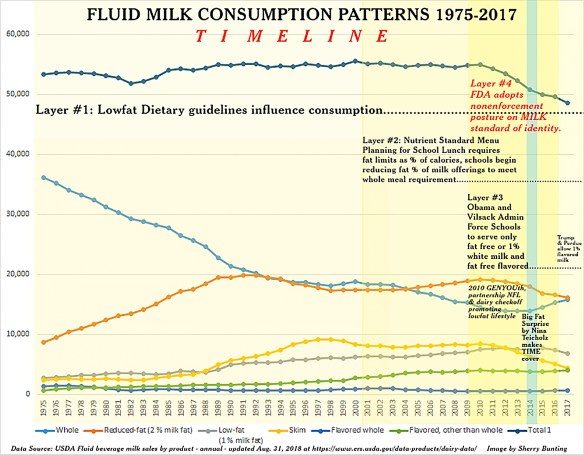
Going back to part one, the graph showing fluid milk consumption trends could not be more clear. What we are doing is not working — unless the objective is to sell less fresh fluid milk, especially whole milk, that returns the highest value to farmers and keeps dairy farms relevant in communities, especially in the eastern states, while selling more global dairy commodities, at cheaper prices, fueling rapid expansion of more consolidated and integrated dairy structures in the western states.

Dairy Checkoff has been aligning more closely to USDA/HHS Dietary Guidelines when nothing in the Congressional Act establishing the Checkoff states that it must. Dairy Checkoff has been aligning in pre-competitive environments with corporations that turn around and push us right out of the dairy case with non-dairy alternatives that fill a social purpose of their own creation.

Dairy Checkoff has partnered with fast food chains that help sell more cheese, and yet one pre-emptive cheese company is a primary beneficiary, and rapid milk production expansion in certain states follows with that.

Dairy Checkoff has bought-in to the idea that rapid expansion of exports is a primary mission, when that actually lowers the farm-level milk price because the focus of those sales is the lower-value commodity dairy.

Meanwhile, the marketing largely ignores the best selling point we have: Nutrition and Flavor in the domestic market.

Now the pressure is on for Dairy Checkoff promotion to draw more farms into “telling our story.” As noble and wonderful as this may be, what’s the 15 cents doing to actually sell milk, to win back the milk market we’ve been losing in the process?

We have a simple product. It doesn’t have a list of additives to make it look, feel and sort of taste like milk, it IS milk.

We have a nutritious product. Nothing else on the market comes close.

We have a delicious product. But we have to market the tasteless version and train our children to dislike milk by doing so… because somehow we have ended up in a place where the government’s dietary police are in charge, and we either must obey, or we just think we must.

Telling consumers our ‘why’ can be a good thing, but with 15 cents per hundredweight forked over by farmers by government mandate, the question remains, what is being done to truly sell the “what” — the actual milk that comes out of the cow because of all the good things farmers do. 

Consumers don’t know squat about milk. That’s being proven over and over again, despite over $300 million a year in mandatory promotion funds deducted from farmer milk checks for promotion.

We’ve been zigging with the ziggers long enough.

Maybe it’s time to zag.

(The graph below shows us what has happened to per capita real fluid milk consumption since 2010 while we increased the amount of zigging, suggesting it is time to zag.)


This graph illustrates what has happened to fluid milk consumption and the steep drop-off since 2010 while the dairy industry has increased the amount of zigging with the ziggers. It may be time to zag, especially when we see that consumers — where given a choice — are CHOOSING whole milk more frequently since 2014 even though the checkoff message is still fat-free / low-fat.

-30-

The need for more digging is even more obvious

Delays, diversions and disregard for specific questions keep the investigation rolling.

By Sherry Bunting, Farmshine, March 1, 2019

BROWNSTOWN, Pa.– The public record is clear on Dairy Checkoff alliances of the past decade through GENYOUth, and the financial side of the picture is coming into even sharper focus. 

Meanwhile, important questions were only partially answered last week while other questions were outright ignored.

This is especially true about the questions concerning the firm doing public relations and marketing for DMI over the past 20 years. 

Instead of answering those questions, we saw diversions. We saw DMI chairperson Marilyn Hershey, in her letter on page 17 of Farmshine last week (and at the end of the article at this link, here), give Dairy Checkoff the credit for changing the conversation on milk fat! Hard to believe!

While it is true that Dairy Checkoff has moved a bit in that direction since 2014, the change in the conversation can be attributed to independent science writer Nina Teicholz and her 10 years of exhaustive investigation that led to her book The Big Fat Surprise, which led to the interest of Time magazine on this topic.

As for our unanswered questions? We are still waiting.

Last week, we referenced some of the questions that had been sent to DMI three weeks ago. One being the MOU between USDA, Dairy Checkoff and NFL.

In previous installments of this series, we had mentioned the Memorandum of Understanding (MOU) signed by USDA and other government agencies, along with GENYOUth, National Dairy Council (NDC / DMI) and National Football League (NFL), and we included a photo of the original 2011 signing found on a Flickr photo stream link at a USDA blog post that year.

There had been no press release about this development at the time. But that’s water under the bridge.

After examining the public record, we reached out to DMI via chairperson Marilyn Hershey, and her letter, of course, was published on page 17 in the Feb 22 edition of Farmshine and at the end of the report at this link. Instead of answering each of our questions, she chose the option of writing a letter for publication, unedited, in Farmshine.

Most of the questions, however, remain unanswered. While there are vague glimpses here and there of something to hang a hat on, it is the outright silence on some questions that is so telling.

First and foremost, we have not received the requested full copy of the MOU. Our request to DMI was ignored. Our request to USDA has been referred to Public Affairs. And we wait.

Hershey maintained in an email response that the MOU is nonbinding and has nothing to do with how milk is promoted in school. In her letter, she said,“MilkPEP and DMI programs are limited to promoting school milk as governed by the Dietary Guidelines set by USDA.”

As mentioned last week, there is nothing in the Checkoff Order that requires this, just a progression in that direction over the past 10 years, and no sign of the MOU that was in development 10 years ago and officially signed eight years ago.

Another question we asked was: “What role did Edelman (the longtime public relations firm for DMI) play in the creation of GENYOUth as some public articles say Richard Edelman, on the GENYOUth board played a significant role?

This question was completely ignored in both the DMI letter published last week and in any other correspondence with Hershey or DMI staff. It was not even acknowledged. When pressed, it was ignored further.

We also asked: “What role does Edelman continue to play and are you at all concerned that Edelman and other aligned partners in GENYOUth are aligned with the EAT Forum, specifically the FReSH initiative which seeks to accelerate global transformation of the food system to plant-based diets for “healthy people and a healthy planet”?

This question was also completely ignored in both the DMI letter published last week and in any other correspondence with Hershey or DMI staff. It was not acknowledged.

Meanwhile, after these articles were published, the information has come under heavy criticism by DMI staff and board members in discussions with questioning farmers on the private facebook page where farmers can join to ask checkoff-related questions and DMI staff and board members engage in conversation. 

There, farmers who ask are told on the one hand that Edelman is “not involved” in the EAT Lancet Commission or EAT FReSH initiative, and on the other hand that it’s “good to have representation on the inside”. 

But again, no public statement or answers to these questions are forthcoming. This seems odd given that DMI is funded by dairy farmers through an Act of Congress and the questions are being asked by a dairy farming publication.

When asked if a particular statement made by DMI staff on the private Checkoff facebook page is considered an official public statement answering a question for which we have not yet received an answer, the staff reply by email was that these statements are only for the private facebook participants, not official public statements.

To this point, we have information from the public record,  questions for which we have received indirect answers, at best. Many questions that have been completely ignored. And we have a letter of response that contains plenty of diversions.

I find it puzzling that Hershey attempts to position DMI in the letter as the champion of changing the conversation on milk fat, that checkoff would be credited with the Time magazine “Eat Butter” cover in 2014, when that was through the independent work of science writer Nina Teicholz! 

I find it puzzling that I was promised a long list of all the whole milk and full-fat dairy research DMI has done for years to change the conversation, but I am still waiting for that list.

These are more diversions. Look over here, not over there. 

We’ll look at some of the other unanswered questions next week and see if we can press for more information about the Edelman PR firm regarding the EAT FReSH initiative.

As the public record is clear on some of the Dairy Checkoff alliances of the past decade, and as the financial side of the GENYOUth connection comes into sharper focus with additional documentation that is surfacing, and as specific important questions about the Edelman firm doing public relations and marketing for DMI over the past 20 years are ignored, it’s obvious to me that the digging needs to go further. 

And it will. 

-30-

With science-fiction, they socially herd us like cattle to ‘alternative’ squeeze chute

By Sherry Bunting, Farmshine, February 22, 2019

All circles lead back to marketing, which is on display right now with the EAT Lancet report in January and the EAT Forums and social marketing that are hitting us in rapid succession, having already filtered into the Green New Deal in Washington and other legislation proposed in California.

Dr. Frank Mitloehner, a greenhouse gas (GHG) emissions expert from the University of California, Davis is not the only one questioning the GHG findings in the report.

He offered proof this week that the science director for the EAT Foundation, in an email (below), admitted the report’s dietary recommendations are not based on environmental considerations, they are based on – you guessed it – a hyper-charged version of the flawed dietary guidelines that have been making us, especially our children, fatter and sicker through ever-increasing government control of food choices!

This is a clear admission that the GHG figures being peddled are, as Mitloehner put it in Lancaster recently “without a single leg to stand on.”

This brings everything back to the common denominator in the ongoing social engineering project: USDA Dietary Guidelines.

In the pages of Farmshine for years (through two dietary guideline cycles, 10 years to be exact), we have warned about the Dietary Guidelines.

For months, we’ve sounded alarms about the genetically-altered yeast making ‘dairy without the cow’.

For weeks, we’ve been tracing the alliances of the Edelman company that has done the marketing and PR for DMI for 20 years and is also doing the social marketing and communication strategies for EAT Lancet.

That story was laid out here last week.

This week the EAT Lancet Commission’s desire for drastic reductions in meat and dairy consumption grew major legs as the Edelman social marketing machine — via staff loaned and now working as employees of EAT’s corporate initiative — have been in full artillery mode with our nation’s dairy and beef cattle in the crosshairs.

The right hand has been telling us we have a seat at the table, while the left hand has been working overtime to pull out the rug.

I’ll borrow this term: Resist! The Science Fiction EAT Lancet report is slowly but surely being spoonfed without a transparent airing in the press.

The EAT Lancet Commission had little actual press since 2019 launch, but not to worry! The global food tranformation effort (EAT Lancet, EAT FReSH) is coordinated by the world’s largest marketing and PR firm — spawning the seemingly random and unconnected legislative and marketing campaigns from the Green New Deal and new global diet ‘wisdom’ (flexitarian / reducitarian) to the outright lies about cows in foundation versions of prominent news organizations like Reuters, Bloomberg, The Economist, The Guardian and positioning of the new PepsiCo’s Quaker Oat beverage launch inprime dairy case real estate this week, to the unveiling of Danone’s new non-dairy yogurt plant in Dubois, Pennsylvania geared to “take plant-based products to the max.”


PepsiCo and Danone are two of the 41 corporate sponsors of the EAT Lancet global food transformation propaganda, and they are launching their ‘solutions’ right now. PepsiCo launched it’s Quaker Oat beverage this week, and it’s showing up prominently in dairy cases like this one. Danone unveiled the largest ‘dairy free’ yogurt plant in the world in Pennsylvania a few weeks ago, with its new ‘sustainable’ yogurt products reaching store shelves also in time to capitalize on the EAT FReSH social marketing campaign. Photo submitted by a Farmshine reader in northwest Indiana 

A convergence of the elite. It’s really one big thing, connected. The funding corporations are rolling out their food ‘solutions’ as we speak, hoping unwitting consumers will jump on the food-transformation-train.

I am resisting any brand that participates in this tomfoolery. 

EAT FReSH corporate sponsor Danone launched their marketing campaign for the new “dairy free” yogurt now made in Pennsylvania, and it has EAT Lancet taglines written all over it.

Of course, Danone is also a client of Edelman. So is PepsiCo.

Follow the money, folks.

Inside this high-stakes game is the world’s largest marketing and PR firm coining elite catch phrases about “eating within planetary boundaries” — you know — to save the planet, and other such “purpose-driven marketing” they are known for.

(Technically, the account director of Edelman Amsterdam planned and organized for two years as employee on assignment with the World Business Council for Sustainable Development (WBCSD), which is the organization launching the EAT FReSH initiative with the 41 corporate sponsors, including Edelman. When the EAT Lancet Report and EAT Forums did launch in mid-January 2019, Lara Luten left Edelman’s employ at that point to become the full time director of the communications and social marketing plans that have been laid).

Boil it down. The nobles are telling the serfs: Forget animal protein, ‘Eat cake!’

I’m not against dairy alternatives, they should be available. We are omnivores. Plants need animals and animals need plants and we need them both.

What I am against is global propaganda that positions itself as science and is being used to socially herd us like cattle to the plant-based chute without the integrity to tell us it’s a bridge to genetically-altered-laboratory-designer-proteins (aka fake-meat and fake-dairy) grown in vats and bioreactors. 

Roughly 70% of the available land for food production is grasslands and marginal lands. It is these lands that cattle can graze or where forages for cattle are harvested in systems much different from row crops and vegetable plots. 

Cows upcycle low quality feedstuffs and plant byproducts that we can’t use, and they turn it into nutrient dense, delicious milk and beef. (Those grasslands and forages sequester carbon too!!)

Animal Ag emits less than half of the total greenhouse gas emissions for all of agriculture, and if we look at this per unit of nutrition, it’s amazing.

Animal Ag (dairy, beef, pork, poultry all combined) are responsible for just 3.9% of the U.S. greenhouse gas (GHG) inventory, but EAT Lancet tells a different story, and the lies are being exposed.

Just imagine how much stress will be on our so-called “planetary boundaries” if science fiction and social purpose-driven marketing prevails and more of us are “herded” or fooled into replacing more of our animal-based dietary nutrients with plant-based sources. It can’t be done. 

This is a Silicon Valley bridge to the billionaire-funded bioreactor factories to grow (3-D print) replacement protein from gene-altered yeast or gene-edited cell blobs. In fact, Microsoft founder Bill Gates was on CNN with Fareed Zakaaria Sunday talking about “cow farts being one of the world’s biggest problems” and the need for lab-cultured animal protein … to save the world. (Let’s be all the dumber for watching that interview clip here)

What Mr. Gates forgot to mention is his considerable investment in this disrupter technology of fake-meat, and that Microsoft is a corporate sponsor of EAT FReSH / EAT Foundation.

Yes, more science-fiction propaganda in the form of so-called purpose-driven marketing is coming from all sides and hyping up fast because the billionaire investors and food supply chain corporations need this social herding process to launch their new products. It’s not about people and it’s not about the planet, it’s about profit — at our expense!

No thanks here. I’m jumping the gate. The social-herders have gone too far.

-30- 

Top photo credit Michele Kunjappu

Gov. speech rules; producers have little say

Creation of GENYOUth in 2010 brought Dairy Checkoff and USDA into closer alignment

By Sherry Bunting, Farmshine, February 22, 2019

BROWNSTOWN, Pa. — Examining the public record over the past six weeks, we find no specific language in the Dairy Research and Promotion Order requiring commodity checkoff organizations to promote USDA Dietary Guidelines. Legal and other challenges may have fostered this association as the federal government’s defense of mandatory checkoff programs in the 2006 time frame offered protection as “government speech.”

A slippery slope, but the shoe fit as Congress authorized these programs in 1983, and USDA oversees them, appoints the boards that manage them and enforces the assessments paid by producers to fund them.

With the government declaring checkoff advertising to be “government speech” as a defense to challenges, producers cannot claim they are forced to support private or commercial speech with which they disagree. Instead, they are said to be supporting “government speech,” which is protected from such challenges, according to a scholarly articles published by Parke Wilde, a Cornell-educated professor of nutrition science and policy at the Friedman School at Tufts University. 

Wilde is the author of several editions of “Food Policy in the United States.” His 2010-12 article, entitled Federal Communication about Obesity in the Dietary Guidelines and Checkoff Programs explored this relationship, with special focus on dairy and meat checkoff programs. In fact, he wrote in 2018 about diet as a means of reducing greenhouse gas emissions late in 2018 previewing the EAT Lancet Commission’s report released officially in January 2019.

While Congress has never acted to require checkoff promotion within the boundaries of USDA Dietary Guidelines, the path to align the two was chosen by dairy checkoff in 2010 to protect it from external and internal challenges.

Dairy collects, by far, the largest pot of money among all checkoffs – approximately $350 million annually. Much of this money over the past 10 years has been spent through various partnerships in pre-competitive environments to potentially drive category demand, particularly for cheese.

The creation of GENYOUth in 2010 brought Dairy Checkoff and USDA into closer alignment. 

Unanswered questions remain. On February 11, specific questions and document requests were sent by email to Marilyn Hershey. A Chester County, Pennsylvania dairy producer with her husband Duane, she has served on the DMI board for almost seven years and has been chairperson for almost two years.

We asked specific questions about GENYOUth and Fuel Up to Play 60 (FUTP60) and other aspects of DMI alliances, including a request for information about the role of Edelman in the founding of GENYOUth.  As mentioned last week, Edelman is the world’s largest marketing, communications and public relations (PR) firm, and they have done social marketing and communication strategies for DMI for 20 years, including the 2017 creation of the Undeniably Dairy social ‘trust’ campaign.

We also asked if DMI had knowledge or concern about Edelman’s simultaneous involvement as social marketing and communications strategist for the EAT Lancet Commission, EAT Forum, and in particular the EAT FReSH Initiative — funded by 41 corporations, many of them Edelman clients.

We asked what specific entities received the more than $2 million paid annually in 2014-17 for “professional services” from the GENYOUth fund, which is by DMI’s own 2016-17 audit, described as being primarily funded by DMI “as the primary source of unrestricted funds for administration and operations” to the tune of more than $2.5 million annually.

We asked why the audit shows those numbers funding GENYOUth, which are much larger amounts than the $1.5 million listed annually as DMI contributions on the GENYOUth 990 forms filed with the IRS.

We asked for a full copy of the Memorandum of Understanding (MOU) signed by National Dairy Council, USDA and the NFL in 2011 after the agreement for GENYOUth was solidified in 2010.

We asked for specific dairy sales tracking data from FUTP60 schools before and after receiving a grant for implementation, since we have learned from current and former board members and staff of DMI that this information is available and in fact part of the grant process.

We asked for comments about the benefits of GENYOUth programs to dairy farmers, such as what has been mentioned in the articles already in terms of breakfast carts containing dairy offerings, asking for specific information about recorded dairy sales via the breakfast carts.

And we asked for comments about the GENYOUth alliances being formed, and how they are beneficial for the dairy farmers funding the checkoff, which remains the foundation’s primary sponsor for operations – given the example of PepsiCo’s specific goals to be a leader in plant-based diet transformation through the incubator and ‘oat milk’ the company CEO touted when receiving the Vanguard Award at the 2018 GENYOUth Gala.

These questions were presented, and two options were offered — answering the questions point-by-point or providing a letter of response.

Marilyn Hershey chose the latter, providing Farmshine with a letter of response on Feb. 18, which was published on page 17 of the Feb. 22 edition (see it included at the end of this report).

As an editor’s note, the DMI letter of response by Hershey highlights the June 23, 2014 Time Magazine “Eat Butter” cover story, by Brian Walsh, as a checkoff accomplishment that changed the conversation on fat. However, Walsh in fact wrote the revealing cover story one month after his May 14, 2014 review of The Big Fat Surprise, by Nina Teicholz, which made the New York Times Best Sellers List at that time.

Walsh had reviewed her book before his “Eat Butter” story, stating: “It’s nutrition dogma: saturated fat is bad for you. But a new book makes the case that our obsession with low-fat diets has made us, and he went on to tell of the “6 facts about saturated fat that will astound you” as revealed in Teicholz’s book.

In fact, the checkoff-funded full fat dairy research mentioned by Hershey in her DMI response is said to be within the past five years, which would be since the publication of Teicholz’s book, which lays out the 10 years of investigation Teicholz conducted as an independent investigative science journalist, beginning in 2004. She accepted no industry funds for this work.

Walsh in his Time cover story retraced the steps of Teicholz’s book, leading with: “The taste of my childhood was the taste of skim milk. We spread bright yellow margarine on dinner rolls, ate low-fat microwave oatmeal flavored with apples and cinnamon, put nonfat ranch on our salads. We were only doing what we were told” (And what we are still told).

He then retraced the history Teicholz laid out in her book, beginning at the point in the book where a Senate committee, led by George McGovern in 1977, codified the Dietary Guidelines by 1980.

And, like today with the EAT Lancet Forum unfolding before our eyes, the food industry jumped in step – overnight — filling shelves with lowfat offerings and effectively replacing fat with sugar and carbs.

“… beef disappeared from the dinner plate, eggs were replaced … and whole milk almost wholly vanished,” Walsh wrote in the 2014 Time article patterned from the work of Teicholz he had reviewed a month earlier. “We had embarked on a vast nutrition experiment… Nearly four decades later, the results are in: The experiment was a failure.”

We will leave it to readers to determine whether the letter of response (below the chart) answers these questions.

———————————————————-

DMI chair Marilyn Hershey responds

Marilyn Hershey

I am thankful that Farmshine gave me the opportunity to comment on the series of recent articles that have been published about the work of the checkoff.

Let me introduce myself, I’m Marilyn Hershey, a fourth-generation dairy farmer from Pennsylvania and have been Chairman of Dairy Management Inc., for a little more than a year.

As a dairy farmer, like all of you, I’m experiencing the same economic difficulties and challenges. I invest in the checkoff just like every dairy farmer in the U.S. does. And just like everyone else I expect a solid return on my investment. Like you, I too want to ensure that my checkoff investment is used effectively to increase sales and trust. So does every member of both the DMI Board and the State and Regional Promotion Boards.

My fellow board members and I take great care in knowing and watching how every penny is spent by the checkoff to improve sales and trust on behalf of all dairy farmers. And we take program measurement and accountability seriously.

I have recently read Farmshine articles where GENYOUth and other checkoff related matters are discussed. Many of the statements and conclusions are out of context. 

As a dairy farmer, I am extremely proud of the programming that has been put into place to help raise healthy and high-achieving youth for decades. While my aim is not to provide a counter to each point, I do want to share a few key facts about the achievements we’ve made through farmers’ investments in dairy promotion and youth wellness.    

First, the fact is, dairy processors’ milk promotion board MilkPEP and DMI programs are limited to promoting school milk as governed by the Dietary Guidelines set by USDA. But we have had a laser focus on bringing full fat milk, and its benefits, back to the diet.

As you are aware, the benefits of milk fat are finally being recognized in the public health community as essential in the diet. Why? The checkoff. The checkoff research on the value of dairy fat was an important foundation for the health professional community to rethink the role of dairy fat in the diet, ultimately leading to the Time Magazine cover headline, “Eat Butter.”

This change in thinking, plus the powerful voices of leaders like Nina Teicholz, are why full-fat dairy products such as whole milk are enjoying a resurgence with consumers. For more on farmer-funded NDC research over the last five years, people can visit  http://researchsubmission.nationaldairycouncil.org.

Given all that has been accomplished in this arena, we are hopeful that the next round of Dietary Guidelines will include whole milk. I am also hopeful that the new Dietary Guidelines Committee will include voices around the table that support and stand behind whole milk.

Second, GENYOUth, just like the Gala it hosts, brings a net return of other organizations’ resources and money well above any farmer expenditure.

Through the Fuel Up to Play 60 program, the money coming from other companies has been used to fund school breakfasts and breakfast carts, which always include milk along with rotating options like yogurt, whole grain granola bars, string cheese, oatmeal, and fruit. The resources have also helped translate Fuel Up to Play 60 into Spanish for the increasing number of Hispanic students in America’s schools.

Through our efforts, we have increased millions of school breakfast meals each year consumed by kids, all of which include servings of milk and possibly yogurt and cheese. As a farmer, I’m very proud of this achievement.

As we look at our American Dairy Association North East specifically, we served 104,226 additional breakfasts in 2018. The new dairy occasions were over and above 2017’s numbers. Dairy is optimized in the breakfasts. We calculate that three-quarters of the kids choose milk as their drink of choice in this breakfast opportunity. 

Another recent example of unlocking GENYOUth’s network in partnership with the local promotion group includes securing funds from five new benefactors leading up to Super Bowl 53 — Georgia Power, Delta, The Home Depot, Arby’s Foundation and WellCare. These companies contributed $400,000 to get 53 breakfast carts into Atlanta schools, increasing access to 5.3 million breakfasts over the course of a school year.  

Being a part of GENYOUth, gives us the ability to work with other companies and health professional organizations to extend the message of dairy’s role in the diet. It also gives us the ability to educate others on the exceptional things dairy farmers do on their farm and in their communities.

What’s more, when we need coalition partners to address things like plant-based diets, attacks on dairy farmer practices and/or on animal agriculture in general, we benefit by having partners who speak on our behalf. For example, Domino’s, who sits on the GENYOUth board and funds GENYOUth, has been a strong proponent for dairy farmers. Domino’s has donated $1 million to the future of farming through FFA.

It’s unrealistic to expect to combat animal agriculture detractors without allied partners in health and wellness, environment and agriculture across a wide range of industries. This is a fact.

Since the articles have been published, I am not going to address each point. However, I contribute posts to a checkoff blog at www.dairy.org/blog where I will include more information about GENYOUth and youth wellness programming, as well as keep you informed of other activities the checkoff is implementing locally, nationally and internationally on dairy farmers behalf. Thank you for listening.

-30-