Under the DMI umbrella: Fonterra CEO to chair Global Dairy Platform, Danone sustainability strategist to join GDP operating committee

Global Dairy Platform launched Pathways to Dairy Net Zero Initiative in September 2021, one year after DMI’s Innovation Center for U.S. Dairy launched the Dairy Net Zero Initiative (NZI) in October 2020 (A year prior to that in 2019, the current and former Ag Secretary Tom Vilsack testified to the Senate Ag Committee as a dairy-checkoff executive, serving then as president of the U.S. Dairy Export Council, and he foretold the nuts and bolts of the not-yet launched Dairy Net Zero Initiative and asked Congress to fund pilot farms. GDP has governance in and manages the Dairy Sustainability Framework that underpins what U.S. farmers, and their cows, will have to live up to — including how livestock methane is calculated, mitigated and monitored, which may be based on inaccurate math and science in terms of CO2 equivalents.

By Sherry Bunting, Farmshine, Friday, May 5, 2023

ROSEMONT, Ill. — Fonterra CEO Miles Hurrell has been named the new board chairman of the Global Dairy Platform (GDP), a non-profit industry association representing the international dairy sector. A portion of its revenue is from membership dues, but also from the 7.5-cents per hundredweight equivalent checkoff on U.S. dairy imports as well as grants for research and program services from Dairy Management Inc (DMI).

Fonterra’s Hurrell will replace Hein Schumacher, who is leaving his position as CEO of Royal FrieslandCampina to become CEO of Unilever.

In the April 26 news release, Hurrell cites Schumacher’s leadership in “accelerating climate action via the ground-breaking Pathways to Dairy Net Zero Initiative.” 

Announced in the same release is the appointment to the GDP operational committee of French multinational Danone’s senior vice president of sustainability strategy.

According to its 501(c)6 non-profit tax filings, “GDP is a pre-competitive collaboration,” and its governance groups — the board and the operational committee — “manage a ‘Dairy Sustainability Framework’ to unify the approach being taken by dairy organizations to the broad challenges of sustainability from environmental, social, and economic perspectives.”

The Dairy Sustainability Framework is part of the Dairy Sustainability Alliance of the Innovation Center for U.S. Dairy, another non-profit founded and funded by dairy checkoff organizations under the DMI umbrella. The Innovation Center sets U.S. Dairy Stewardship Commitments that are implemented through the FARM program and reviewed every three to five years to show U.S. dairy is, according to its website, “moving the needle toward achieving the Sustainable Development Goals (SDGs) of the United Nations.”

DMI, its Innovation Center, Dairy Sustainability Alliance, Dairy Sustainability Framework, and U.S. Dairy Stewardship Commitments are all located at Suite 900, 10255 W Higgins Road, Rosemont, Illinois, and the Global Dairy Platform (GDP) address of record is Suite 820 at the same street address.

Along with New Zealand’s Fonterra, CEOs from these top-15 dairy multinationals serve on the GDP Board: Dairy Farmers of America (DFA), headquartered in Kansas; Arla Foods, headquartered in Denmark; Leprino, headquartered in Colorado; China’s Mengniu Dairy Company; Moringa Milk Industry, headquartered in Japan; Royal FrieslandCampina, headquartered in the Netherlands, and Saputo, headquartered in Canada.

Along with the board of directors, the GDP operational committee provides governance and includes sustainability executives for Arla, DFA, Fonterra, Land O’Lakes, Meiji Holdings and FrieslandCampina.

In a separate April 2023 bulletin, GDP announced the May 1, 2023 retirement of Dr. Greg Miller from his position as research lead for GDP since its inception. Known as ‘Dr. Dairy’, Miller has served as the chief science officer for the National Dairy Council for nearly 32 years and as executive vice president of research, regulatory and scientific affairs for DMI. Miller will continue as a member of the UN Food and Agriculture Organization Scientific Advisory Committee.

Key paid staff for GDP is Donald Moore, the executive director since 2010. Before that, he was a Fonterra senior executive in business development and ingredients marketing for 20 years.

Moore also serves as chairman of the governance group for the Dairy Sustainability Framework since its inception in 2013.

With Fonterra’s CEO as the new board chairman of the GDP, and with a former Fonterra senior executive serving 13 years to-date as the executive director of the GDP and the chair of the governance group for the Dairy Sustainability Framework, it’s worth noting that Fonterra announced six months ago its new start-up company for alternative dairy ingredients. According to the October 2022 press release, Fonterra has partnered with Royal DSM, a Dutch company, in creating this start-up “to accelerate the development and commercialization of (animal-free) fermentation-derived proteins with dairy-like properties.” 

With Danone’s senior vice president of sustainability strategy now appointed to the GDP operational committee, it’s worth noting that in October 2022, Danone announced it would use artificial intelligence to reformulate 70% of its plant-based fake-milk products. This followed the 2021 earnings call where Danone executives outlined new fake-milk and dairy product launches with plans to use “new dairy-like technology” to “win over” the 60% of U.S. consumers not in the plant-based category because of taste and texture. The Danone executives told shareholders their Renew strategy identifies the U.S. as a “key plant-based market.” In January 2023, Danone announced it is eyeing sale of Horizon Organic, saying it falls outside of their key areas of focus.

Global Dairy Platform (GDP) was formed in 2006 as an alliance, according to its website. Its tax filings confirm incorporation as a 501(c)6 non-profit in 2012 and its address of record at Suite 820 at 10255 W Higgins Road, Rosemont, IL 60018.

According to the GDP’s most recent IRS 990s that are publicly available for 2017 through 2019, the years when former DFA CEO Rick Smith was its chairman, GDP had revenues between $3.7 and $4.2 million annually. This increased to $4.7 million in 2020, according to an available summary of the IRS 990 for that year.

The tax returns show approximately $1 million in GDP revenue came from membership dues and approximately $2.7 million annually from granted program services and research funds (checkoff). 

The GDP revenue also included approximately $500,000 in ‘import assessments.’ The 7.5-cent import checkoff, which was implemented in 2011 amid formation of the Innovation Center and its resulting alliances and frameworks.

GDP’s executive director Donald Moore is paid a salary package of nearly $600,000 annually. The top three independent contractors in 2018-19 included DMI receiving over $800,000 annually for program services and administration; Massey University in New Zealand $451,000; Emerging Ag in Calgary, Alberta, Canada $600,000 (for UN access), and Lindsey Consulting, in the UK nearly $300,000 with Brian Lindsey serving as the GDP’s sustainability lead.

According to GDP, its membership consists of more than 95 corporations, companies, associations, scientific bodies, and other partners, with operations in more than 150 countries, collectively accounting for approximately one-third of global milk supplies.

DMI manages the national nickel from the 15 cents per hundredweight checkoff deducted from U.S. milk checks for research, education, and promotion. DMI also manages the unified marketing plan many state and regional checkoff organizations contribute toward, and DMI manages the 7.5 cents per hundredweight equivalent import checkoff, handed off to the GDP.

DMI states in its 501(c)6 non-profit tax filing that it is “investing dairy producer checkoff funds in strategic, coordinated marketing programs designed to increase consumption of U.S. dairy products domestically and internationally.”

The Innovation Center for U.S. Dairy was initiated in 2008, but according to its tax filings, was incorporated as a 501(c)6 non-profit in 2012 under the name: The Dairy Center for Strategic Innovation and Collaboration Inc., doing business as Innovation Center for U.S. Dairy.

In 2017, DMI trademarked the names ‘Innovation Center for U.S. Dairy’ and ‘Dairy Sustainability Alliance.’

Leprino CEO Mike Durkin was elected chairman of the board of the Innovation Center in January 2023.

-30-

AUTHOR’S NOTE: Why do these connections matter? Because the UN Food and Agriculture Organization is getting ready to make a decision about how livestock methane is calculated using GWP100, a 30 year old measure that the Intergovernmental Panel on Climate Change even agreed overblows the problem by 3 to 4 times, or GWP*, which includes not just the sources but also the natural sinks for methane as a short-lived greenhouse gas. Dr. Frank Mitloehner has written about this, and Farmshine readers have read my many articles about the differences between the calculations and what they mean for our cows in the future. The Global Dairy Platform put out a bulletin a few months ago and pinned it to their website exploring the differences in these calculations, saying that “GWP* is not appropriate as a benchmarking tool at less than a global level.” This is concerning because it means that global dairy multinationals have oversight through dairy checkoff non-profits and alliances into formulating and deciding what U.S. dairy farmers — and their cows — will be expected to live up to, even when the science behind the decision is highly debatable. As we now know, even scientists are becoming frustrated. It’s important to know that multinational companies investing in competing animal-free fermentation-produced DNA-altered dairy-like ingredients are in leadership positions in these collaborations.


OPINION: Abuse of dairy is long-running orchestration of deceit

By Sherry Bunting, Farmshine, March 3, 2023

In what appears to be scripted unison, the disappointing draft guidance on imitation milk labeling, published by the FDA on Feb. 22, is timed perfectly for Danone’s new advertising campaign to position its Silk Nextmilk as “the better milk.”

This includes putting imitation ‘Nextmilk’ mustaches on the adult daughters and sons of several “Got Milk” celebrities that donned real milk mustaches decades ago.

Never has the flagrant abuse of misleading marketing been more corrupt.

Danone officials have been quoted in news releases saying their NextMilk campaign is aimed at “inspiring a new generation of plant-based milk drinkers.”

In fact, Danone is deliberately corrupting the iconic milk mustache of the former MilkPEP ‘Got Milk’ campaign, which was originally launched by the California Milk Processor Board that started Got Milk 30 years ago.

This move by Danone’s Silk actually mocks producers of Real Milk. 

Several weeks ago, in Farmshine, I authored an article detailing Danone’s timeline on plant-based imitations for the milk, yogurt and cheese categories and the company’s stance on seeing this fake-milk area as the growth market they are investing in.

The recent FDA draft guidance on labeling of plant-based and other imitations is pathetic. FDA has caved to big global corporations seeking to exploit the nutritional benefits that are unique to real milk for their own fake-product financial gains. 

FDA even acknowledged in its draft guidance that consumers are confused about the nutritional differences and that a smaller percentage of consumers may even be confused about whether or not these products contain milk. Somehow, the FDA concluded that consumers are not being misled!

The FDA draft guidance “recommends” a “voluntary” statement about nutritional deficiencies, but this is not mandatory.

Even the voluntary statement criteria are described as being measured against USDA’s Food and Nutrition Service “substitution levels” for key nutrients, not what milk actually contains.

Furthermore, no importance is given in the FDA draft guidance to the differences between calcium additives and natural bioavailable calcium. No importance is given to milk as a COMPLETE protein with all 9 essential amino acids we must get from our foods and beverages because our bodies don’t make them.

Animal-derived protein, like in dairy and meat, contain all of these amino acids. Plant-derived proteins only contain some of these amino acids. Consumers need to know this.

There is much to say about the FDA’s track record of ignoring its own standards of identity for milk and other dairy products. The current administration shows little respect for milk’s integrity in the new draft guidance and other bureaucratic moves.

What will the dairy checkoff programs do about the manner in which Danone is stealing and perverting past real milk campaigns to dupe consumers into thinking NextMilk is real and better? What will be done about the packaging made to resemble whole milk?

We asked that question in an email to DMI’s press office and are still waiting for a response.

(UPDATE: The following response was provided to Farmshine by the DMI press office two days after this article was published: “The trademark registration for the ‘milk mustache’ expired and was not renewed by the organization which managed the campaign. And while imitation is the sincerest form of flattery, the national and local dairy checkoff teams along with MilkPEP, NMPF and IDFA remain focused on engaging consumers with the nutritional value that dairy from a cow provides. It’s important to note plant-based alternatives overall are down 2.6% year over year, according to IRI data.” )

To me, it appears the dairy checkoff organizations are unconcerned. We have researchers paid with checkoff dollars looking at ways to fractionate milk and develop new protein drinks that address other desires of consumers — practically giving in to their survey findings that consumers don’t think dairy protein has any advantage over plant protein. 

BUT IT DOES! Why are we not pushing that message? Does USDA forbid such comparisons by checkoff organizations? Or is that a convenient excuse?

Now is not the time to give up the fight. Now is not the time to say, oh well, protein is protein so let’s blend them and make new beverages or let’s focus on other ways to draw consumers. Now is not the time to be shy, but to be bold.

Now is the time to push the education of consumers and rally the troops to support real milk and dairy.

All of the checkoff emphasis on ‘sustainability’ is not going to sell milk.

All of the emphasis on Gen-Z and ‘meeting consumers where they are’ is not going to sell milk.

Gen-Z has been robbed of the opportunity to have good tasting whole milk in school where they grow up receiving two meals a day, five days a week, three-quarters of the year with the only milkfat option being fat-free and 1%. They have been sold a bill of goods by Big Food while farmers have paid billions out of their own pockets in checkoff funds over the past 12 years to ‘play nice’ with the enemy.

To be honest, soy beverage has always been an alternative for those who can’t consume milk, and it remains the most nutritious of the fakes. But the proliferation of fake imitations is now just completely out of control, and most of these beverages aren’t much more than water, flavor and additives.

Danone is using “artificial intelligence” to redesign its imitation products. This global giant takes the lazy and perverse path of stealing not only milk’s name through misleading advertising, it is using a former real milk advertising campaign to promote an imitation product. 

Danone is packaging Silk’s fake imitations in red and white cartons to resemble whole milk in the supermarket dairy case, and even adding the words ‘whole’ or ‘whole fat’ under the brand name to make consumers THINK it’s the whole milk more people are turning to. 

In 2019, Danone even trademarked the phrase and artwork for its imitation beverage: “Silk – the original nutrition powerhouse”.

Silk? Original? Nutrition Powerhouse? Give me a break!

Danone is thumbing its nose at dairy farmers and using “sustainability” as the virtue signal to get away with these perversions.

In fact, I got a text message from a farmer this week who caught the tail end of a Today Show spot on television, where they interviewed the Danone Silk models, wearing Nextmilk mustaches like their celebrity mothers or fathers did years ago in the Got Milk campaign. 

This farmer thought actor John Travolta was going to do a Got Milk mustache campaign. But no, Danone hired his daughter to do a Silk NextMilk mustache campaign. Even the Today Show headline called it a ‘new milk campaign’ and highlighted the way the FDA draft guidance makes it all possible. 

No one was there to talk about the nutritional differences or to talk about real milk. 

Americans are being misled, dairy farmers are being thrown under the bus, and children are being deprived, while government agencies facilitate, and checkoff organizations twiddle their thumbs or say their hands are tied. 

We are thankful there are champions in the United States Congress who have introduced legislation to try to turn these circumstances around. We are thankful that Pennsylvania lawmakers are working on resolutions to file with federal government agencies on these proposed rules.

We are thankful for people like dairy producer and country singer Stephanie Nash of Tennessee who was interviewed on the Fox Business channel about the FDA guidance. She put it straight: ‘Milk comes from cows, not a lab.’ 

This is going to require all of us to get involved.

Here’s what you can do:

Call your Senators and Representatives and ask them to cosponsor the Dairy Pride Act and Whole Milk for Healthy Kids Act.

Call your state lawmakers and ask them to pass resolutions in support of whole and 2% flavored and unflavored milk options in schools and then formally file those resolutions on the open USDA proposed rules docket.

Sign and promote others to sign the Whole Milk in Schools petition at https://www.change.org/p/bring-whole-milk-back-to-schools

Write a brief public comment and urge others to comment by April 10 on the USDA school nutrition proposed rule that would limit flavored milk in schools. Simply tell USDA our children need the nutrition whole milk provides, so school meals should include the options of whole and 2% unflavored and flavored milk. Comment on that docket at link https://www.regulations.gov/commenton/FNS-2022-0043-0001

Write a brief public comment and urge others to comment by April 24 to the FDA to stop allowing beverages that aren’t milk to be labeled as milk. Comment on that docket at https://www.regulations.gov/commenton/FDA-2023-D-0451-0002

And stay tuned on how to get involved as the next round of USDA Dietary Guidelines Advisory Committee deliberations recently got underway. The stage is already set for more demonization of milkfat and abuse of milk’s integrity there as well.

This abuse of milk cannot stand. It’s going to be up to us — the grassroots farmers and citizens — to stand in the gap for what is right.

Rep. G.T. Thompson: Whole Milk and Dairy Pride bills ‘more urgent than ever’

By Sherry Bunting, Farmshine, March 3, 2023

WASHINGTON — Pennsylvania has dairy champions in Congress. Not only has Rep. Glenn ‘G.T.’ Thompson (R-15th) introduced the Whole Milk for Healthy Kids Act, and made it better, Rep. John Joyce (R-13th) is getting ready to launch the House version of the Dairy Pride Act to uphold real milk’s standard of identity.

It’s “more urgent than ever” that Congress act on these bills, in light of recent USDA and FDA proposed rules, said Thompson in a Farmshine phone interview as Congress returned to session Monday (Feb. 27).

The bipartisan 2023 Whole Milk for Healthy Kids Act, H.R. 1147, has been introduced for just over one week, and already the number of congressional cosponsors grows daily at 43 to-date, including prime sponsor Rep. Thompson, a Republican from Pennsylvania and prime cosponsor Rep. Kim Schrier, a Democrat and pediatrician from Washington state. 

The other 41 cosponsors so far represent both sides of the aisle from 22 states.

“I’m very honored to reintroduce this whole milk legislation. We made some real progress in the 117th Congress with not quite 100 cosponsors and broad bipartisan support. That’s what it takes to get things done,” said Thompson. “But we had headwinds with the Republicans not having the majority and the Democratic party owning the demonization of milkfat and the removal of whole milk and flavor from the school system.”

What will be different this time? 

Thompson explained it’s a new Congress and he has the support of the new Education and Workforce Committee chair Virginia Foxx, a Republican from North Carolina.

“She is very excited about this bill and has had me speaking on it at a number of events over the past year,” said Thompson.

In addition to being chairman of the House Agriculture Committee, Thompson is also a senior member of the Education and Workforce Committee through which the Whole Milk bill must pass first.

Thompson believes it will be put on the House agenda, and he is optimistic that it will get passed off the House floor.

He is also looking for a sponsor for companion legislation in the Senate.

He said he appreciated former Senator Pat Toomey of Pennsylvania who had previously introduced a version of the bill.

“With Senator Toomey’s retirement from the Senate, we now have to find someone to take the lead in the Senate,” he said.

The fact that the number of cosponsors has grown quickly for the House bill, within the first few days, is a good sign. 

This response so far has happened without Thompson “working the floor” yet.

This “speaks to the significant need that this legislation addresses,” he said.

“This bill is about providing the best nutrition for children and addressing the economic impact on rural America,” he explained. “When the Democrats did what they did in 2010 with the nutrition standards, it was a crushing blow to dairy farmers. Dairy is the number one ag commodity in my home state of Pennsylvania, and agriculture is the number one industry. This is the case not just in Pennsylvania.

“This topic comes up everywhere I go and in every state,” he added. “Part of the reason is the awareness as many people and organizations, and quite frankly the 97 Milk grassroots effort, has impacted nationally and internationally by speaking to this need.”

Thompson improved the bill with what he calls a “common sense addition.” 

He acknowledged former Senator Toomey for articulating language that would allow whole and 2% milk to fit within the meal calculation for saturated fat since the milk has been included in the meal calculation since 2010. 

This way, not only does the Whole Milk for Healthy Kids Act proclaim the permission for whole and 2% unflavored and flavored milk options in school meals, it expands the saturated fat limit to accommodate these options so school foodservice directors are empowered to actually offer them.

“Milk is the only beverage that is regulated within the meal. Meanwhile, students may have access to non-nutritious beverages with high fructose corn syrup and caffeine that are not regulated, so we’re making sure we do not have a situation where the milkfat counts against the meal,” said Thompson.

“Whole milk is only 3 to 3.5% fat compared to the low-fat milk being 1%. That means whole milk is 96.5 to 97% fat free. That extra milkfat is a positive thing in the lives of those young people,” Thompson declared, with a nod to the mountain of scientific evidence.

As the White House is moving rapidly in its proclaimed “whole of government approach” to implement the Biden-Harris Hunger, Nutrition and Health National Strategy, a flurry of bureaucratic actions could further affect milk access for children via USDA and FDA.

USDA just published proposed school nutrition rules, with comment period ending April 10, 2023, which could remove access to flavored milk in elementary and potentially middle schools, while further etching in concrete the fat-free and 1% sole options. 

FDA’s healthy labeling proposed rule also presents obstacles for whole milk, and that comment period recently ended. 

Plus, FDA last week issued draft guidance allowing imitation non-dairy beverages to be labeled as ‘milk’ with only a ‘voluntary’ recommendation that companies describe shortfalls in key nutrients. That public comment period ends April 24, 2023 (see related article in this week’s Farmshine).

Will the Whole Milk for Healthy Kids Act force revisions of any of these proposed rules?

Rep. Thompson was outspoken on this question.

“I don’t believe they have the authority to do what they are doing now,” he stated. 

“These moves are an outgrowth of the White House summit that they weren’t serious about. They failed to invite Republicans, including the Ranking Member of the Ag Committee until 48 hours before the conference. They didn’t want our input. It is more political science than science, and it is really frustrating,” he related.

“It is the Congress that determines nutritional standards, not the bureacrats. While the Whole Milk for Healthy Kids bill is mostly in the Education and Workforce Committee, I will do all I can in the Ag Committee to make sure science, not political science, is foremost.

“Science shows whole milk and whole milk with flavor added, are the most nutritious beverage available,” said Thompson.

On the FDA draft guidance for labeling fake-milk alternatives as ‘milk’, Thompson was even more blunt.

“The Dairy Pride Act is being reintroduced by Rep. John Joyce (R-PA). This bill is more important than ever given the insane draft guidance of the Biden-FDA. It is urgent to pass this one also,” said Thompson, confirming later that the Dairy Pride Act, which was introduced in the Senate this week will also be introduced in the House shortly by Rep. Joyce, along with a bipartisan cosponsor.

Thompson lamented the bombardment of parents and kids with marketing for alternative fake-milk beverages that are proliferating rapidly.

“I have a lot of friends among almond growers and soybean growers, and I like almonds, but this is about truth in advertising. The word ‘milk’ communicates a certain level of nutrition, and FDA has even acknowledged this. If FDA is going to mislead people by allowing the labeling of something as milk that is not milk, then they should be required to truly define the differences,” he said, adding that he’s not surprised.

“This administration can’t define what a woman is, and now it can’t define what milk is,” Thompson declared.

Stay tuned to Farmshine for updates!

-30-

Measure every decision by cow comfort and know your numbers: ‘That’s how you fight inflation’

By Sherry Bunting, Farmshine, December 23, 2022

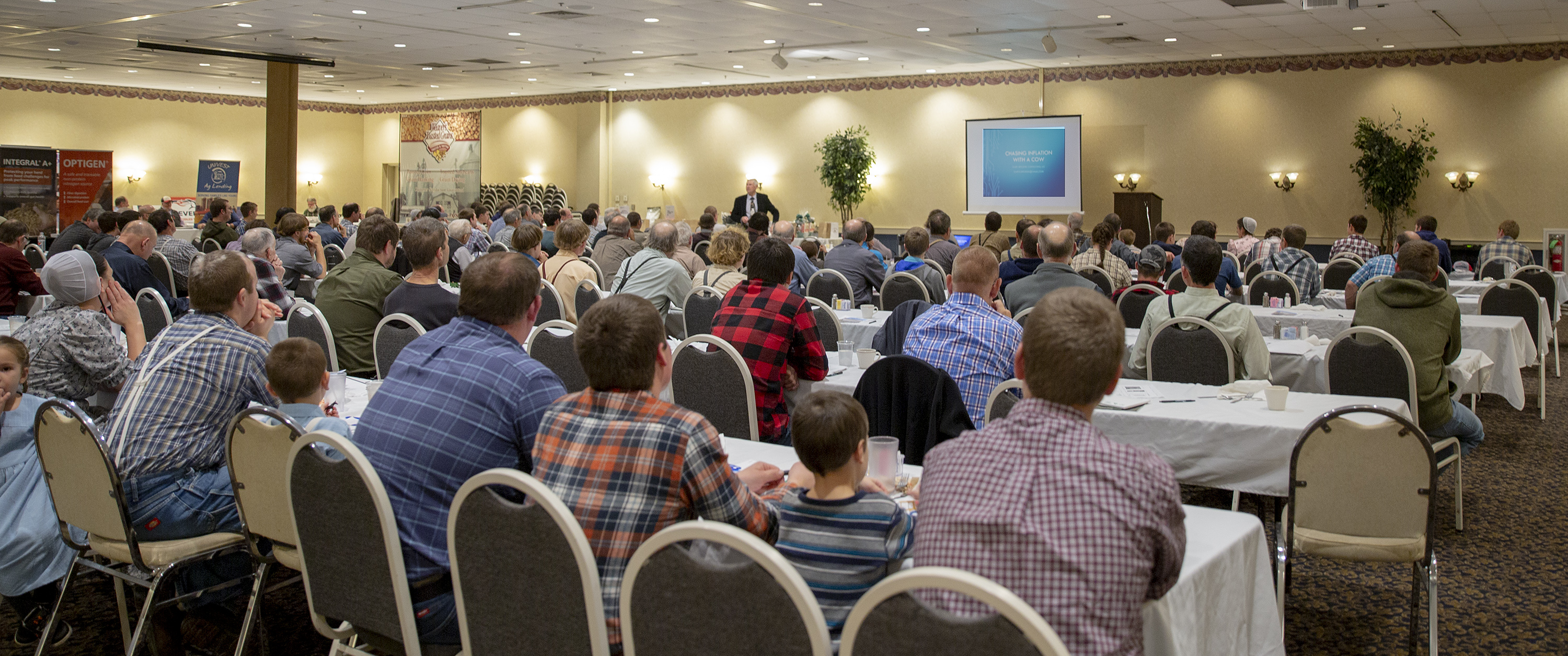
NEW HOLLAND, Pa. – “Too much money chasing too few assets,” that’s the definition of inflation, said Gary Sipiorski, ag lender and financial consultant from Wisconsin.

He didn’t have to tell the over 250 dairy farmers attending Homestead Nutrition’s dairy seminar at Yoder’s Restaurant in New Holland on December 7 that inflation is real, because they are feeling it.

His bottom line is to measure every decision by its impact on cow comfort and manage the net income the cows generate.

As president and CEO of Citizens State Bank of Loyal, Wisconsin, Sipiorski is also an advisor to the Federal Reserve Board of Chicago. He expected the Fed would raise interest rates another half a percent, and several days later, that’s what they did.

Raising interest rates is meant to slow things down enough to curb that inflation, and as farmers, “you’re feeling the effects of both,” he said.

Sipiorski described the effects of both the disease and the cure as something that creeps up gradually to squeeze the margin.

“You can be taking good care of things and don’t see this happening, as the temperature gradually increases. It sneaks in slowly,” he said. “The war on inflation will continue for at least the next 12 months, and we are likely to see interest rates continue higher before stabilizing around the middle of next year.”

The good news for dairy, he said, is that even though consumers are drinking a little over half as much milk per capita as they did 50 years ago (18 gallons vs. 30 per person per year), they are eating more than double the gallons of milk in the form of all dairy products, combined.

In 2021, Americans consumed 667 pounds (77 gallons) of dairy products per capita. That’s 12 more pounds per capita than in 2020.

“We didn’t drink the 77 gallons, we ate it,” said Sipiorski, adding that dairy exports have also become crucial.

“By the end of this year, 20% of your milk production will be going elsewhere,” he said. “That shows the faith the rest of the world has in the superior product you make.”

Inflation, rising interest rates and supply disruptions are slowing the rate of dairy expansion, as the industry focus turns inward to manage margins even more tightly as feed costs have doubled, cropping costs have quadrupled, lines of credit cost more and are harder to get, machinery and parts cost more and are harder to find, and some farms must deal with a milk base program from their milk co-op or buyer — putting penalties on overbase milk in the output side of that margin equation.

Sipiorski shared his insights on the most important things the top 30% of dairy producers do in a talk he titled ‘Chasing inflation with a cow.’

The top third of dairy producers double-down on managing these primary areas: feed, debt, labor, cow comfort, and knowing their numbers.

Minimize feed shrink

With feed and cropping costs so much higher, Sipiorski told dairy farmers the 10 to 20% they can be losing in feed shrinkage is a significant area to manage.

“Losing 10 to 20% of the feed from field to rumen is a big cost to the dairy,” he said. “We are seeing more investment in feed storage sheds, bringing the mixing indoors and thinking about how you mix the feed, in what order.”

Pay down lines of credit, not term debt

Choosing carefully what debt to pay down at this time of rising rates is also critical. Paying down lines of credit that have adjustable interest rates and keeping some of that cash liquidity may make more sense than paying additional principal on longer-term fixed rate loans.

“Your thought process may be to pay down that term debt, but if the rate is locked-in, and you pay it down, that money is gone, and you may need that money later, and then pay a higher interest rate for it,” Sipiorski explained, advising farmers to talk with their lenders about their debt structure.

Push pencil on machinery

“Do the math on whether to lease or buy machinery,” Sipiorski urged. “If it is something you use three months of the year, can you afford it? Can you afford the cost to have and maintain that piece of equipment?”

He noted that the top dairy farms push the pencil to compare costs of owning new equipment, leasing it, or hiring custom operators for segments of their field work.

Time is money, spend it wisely

In addition to dealing with hired labor cost and availability, Sipiorski advised farmers to “count your steps and measure your time.”

In other words, know what your time is worth and find ways to streamline chores for yourself and your employees. One example he gave was to put tools around where they will be used to minimize time spent going back and forth for tools needed.

Keep improving cow comfort

“Cow comfort is a place to keep improving to fight that inflation with that dairy cow,” Sipiorski declared.

It’s the accumulation of a lot of simple little things the top third of producers do, such as providing enough space at the feedbunk, waterer and in the dry cow area.

“The dry cows are working just as hard for you, so don’t cheat them” he said, adding that top producers are absolutely passionate about cow comfort.

The cows require a lot of investment, and the top producers benchmark the investment per cow at $8,000 to $20,000, while benchmarking gross income per cow at $5,000.

“Cow comfort is an area of investment that brings you the most return. Every decision you make, ask yourself, are you making money with that decision?” he said. In other words, “are you making cows more comfortable with that decision?”

Keep improving milk components, quality

Producing milk with higher component levels and lower somatic cell counts (SCC) is what the top third of producers are doing, said Sipiorski.

“This is even more important if your co-op has a base program. If you can’t produce more milk, make the milk you are producing better,” he said, noting that components drive value.

Quality as measured in SCC will also increasingly drive value and market access. Sipiorski sees the industry getting to the place where milk will eventually have to be under 150,000 SCC.

While he didn’t specifically mention transformation in the processing sector, it’s becoming clear that ultrafiltration and microfiltration in some of the newer dairy plants is aimed at removing the lactose from the milk to be used in making cheese, other dairy products and lactose-free high protein milk beverages.

Those working with this technology have repeatedly said it requires farm-level SCC thresholds to be even lower because, as the water and lactose are removed through membranes and reverse osmosis, the remaining solids are condensed. This includes the SCC being concentrated with those valuable solids, so those processors expect a lower-SCC limit at the starting point.

Get educated on marketing

Sipiorski advised farmers to be “educating yourself on marketing and risk management.”

He noted that milk markets are volatile, and marketing through a broker or a cooperative program or other risk management can be good or bad.

“You won’t know if it’s a good deal or not, if you don’t know your cost of production, your margin,” he said.

Know the numbers, focus on high quality forage production, and look at areas where changes and investments can help fight inflation, he advised.

One thing he has seen more farms moving toward – to reduce marketing costs – is to increase milk storage to go from once a day to every-other-day pickup to reduce fuel costs, transportation and ‘stop’ charges.

This is something that has been occurring at the retail end for years, with less frequent deliveries from processors to retailers becoming the norm today.

Benchmark against industry or self

Benchmarking the dairy to itself year over year or to industry averages is important financial management, according to Sipiorski.

The numbers that are needed to do this are found on the balance sheet, income statement, and accrual accounting of yearend income – not the IRS tax return. 

He said that doing a business plan with projected cash flows helps make better financial decisions.

Sipiorski gave farmers some financial benchmarks to keep in mind, noting again that the numbers need to be based on accrual accounting, not the year end IRS tax return.

“In that tax return, you have prepayments and depreciation,” he said. This skews the cost of production calculation, for example, because the cost of inputs are not directly aligned with the output revenue.

Sipiorski ticked through some industry benchmarks to be aware of: Equity position (50%), liquidity (2:1), net profit margin (10%), cost of production ($17-22.00/cwt), operating expense as a percentage of gross income (65-80%), and debt to revenue ratio (1:1).

The bottom line, he said, is “you need to produce 100 pounds of milk for less than you sell it for.”

On that point, he noted the most recent USDA forecasts at the end of November are for Class III milk to average $19.80 in 2023 with the All-Milk price next year forecast to average $22.70, while the cost of production in 2022 is averaging $20 to $22.00 across the industry, but the range is wide.

“Pennies (per hundredweight) are a big deal,” he said, showing that the 47-pennies per hundredweight difference in a Q2 2022 comparison of the net margin per hundredweight of $6.64 for all herds vs. $7.11 for the ‘top 30% of herds’ amounts to just shy of $113 per cow annually.

“That’s $2800 on 25 cows, $11,280 for a 100-cow dairy. That’s how we fight inflation with a cow,” he said. “Who in this room wouldn’t want another $11,000 in the pocket to fight inflation?”

Sipiorski described dairy as a dynamic business full of chaos and volatility, but with that comes lots of opportunities.

He sees a ‘barbell-shaped’ future for dairy, where there will be opportunities for small and mid-sized family dairies even if a large portion of the milk supply comes from much larger dairies.

-30-

Gary Sipiorski, a lender from Wisconsin, talked about dairy financial management in these inflationary and volatile times. Despite the chaos and consolidation, he sees opportunities for small and mid-sized family dairies in the future, even if a large portion of the milk supply comes from much larger dairies. Photo by Sherry Bunting

Dream in progress at BAD Farm, where they DON’T live up to their name

‘Tis the season for something special. Their story began with raw milk sales over 10 years ago, today it is becoming so much more.

By Sherry Bunting, Farmshine, December 16, 2022

KEMPTON, Pa. — ‘Tis the season for something special. It’s Christmastime, and diversified consumer-facing dairy farms are featuring special products, memories and events, complete with decorations, milk (or hot chocolate) and cookies, wagon rides, Christmas settings and on-site photographers for on-the-spot family Christmas portraits – you name it, and dairy farmers are doing it.

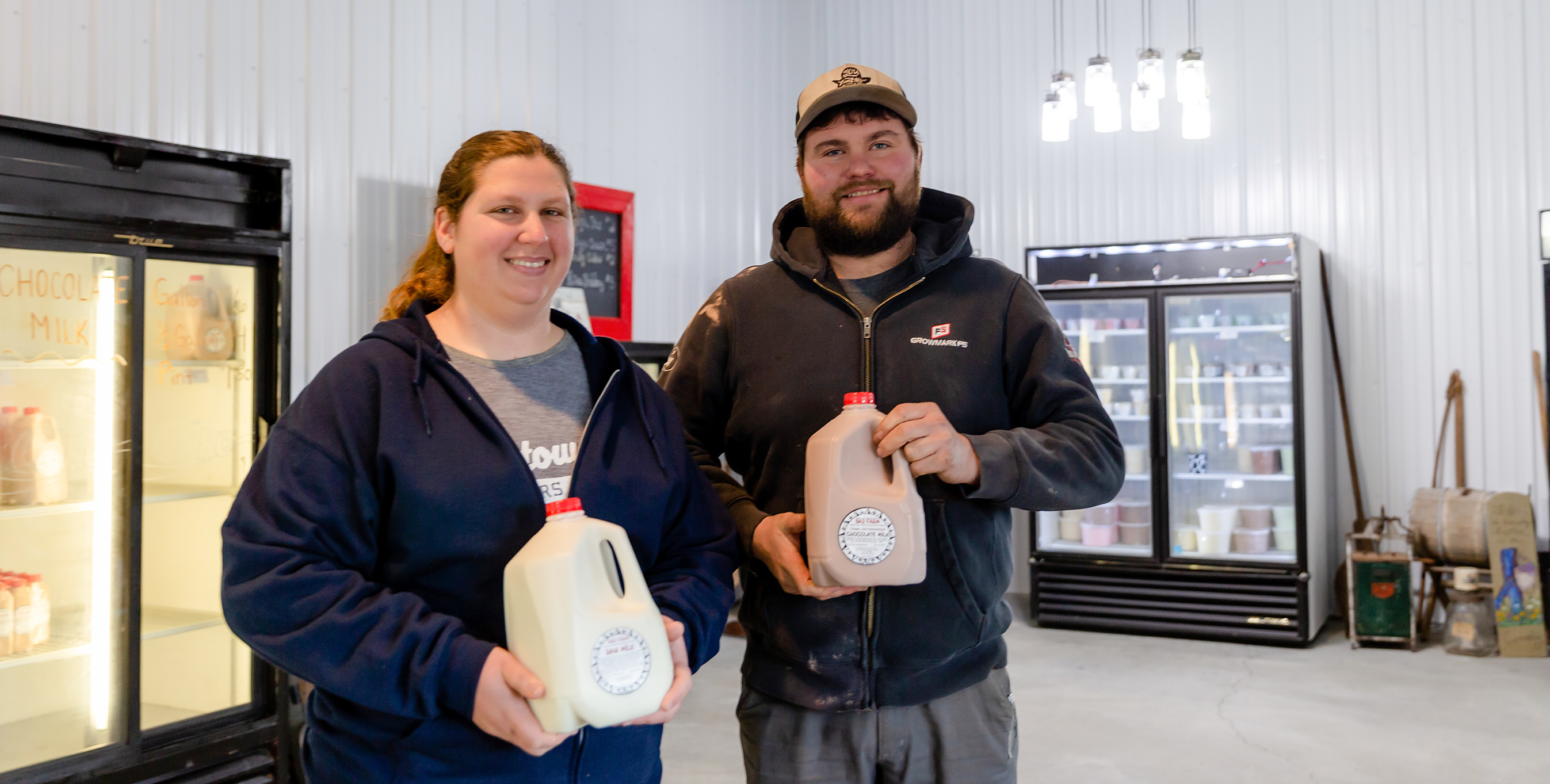
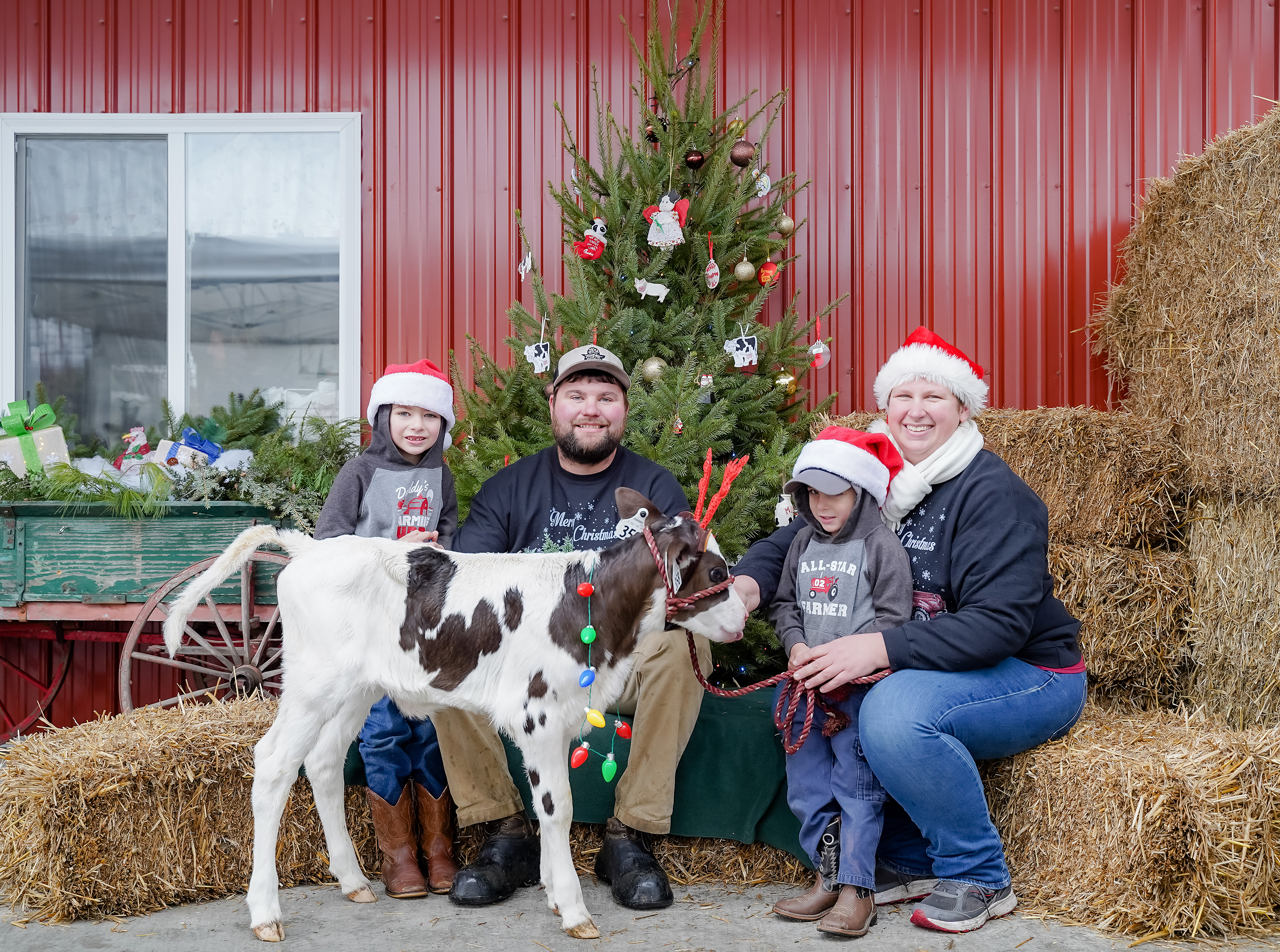
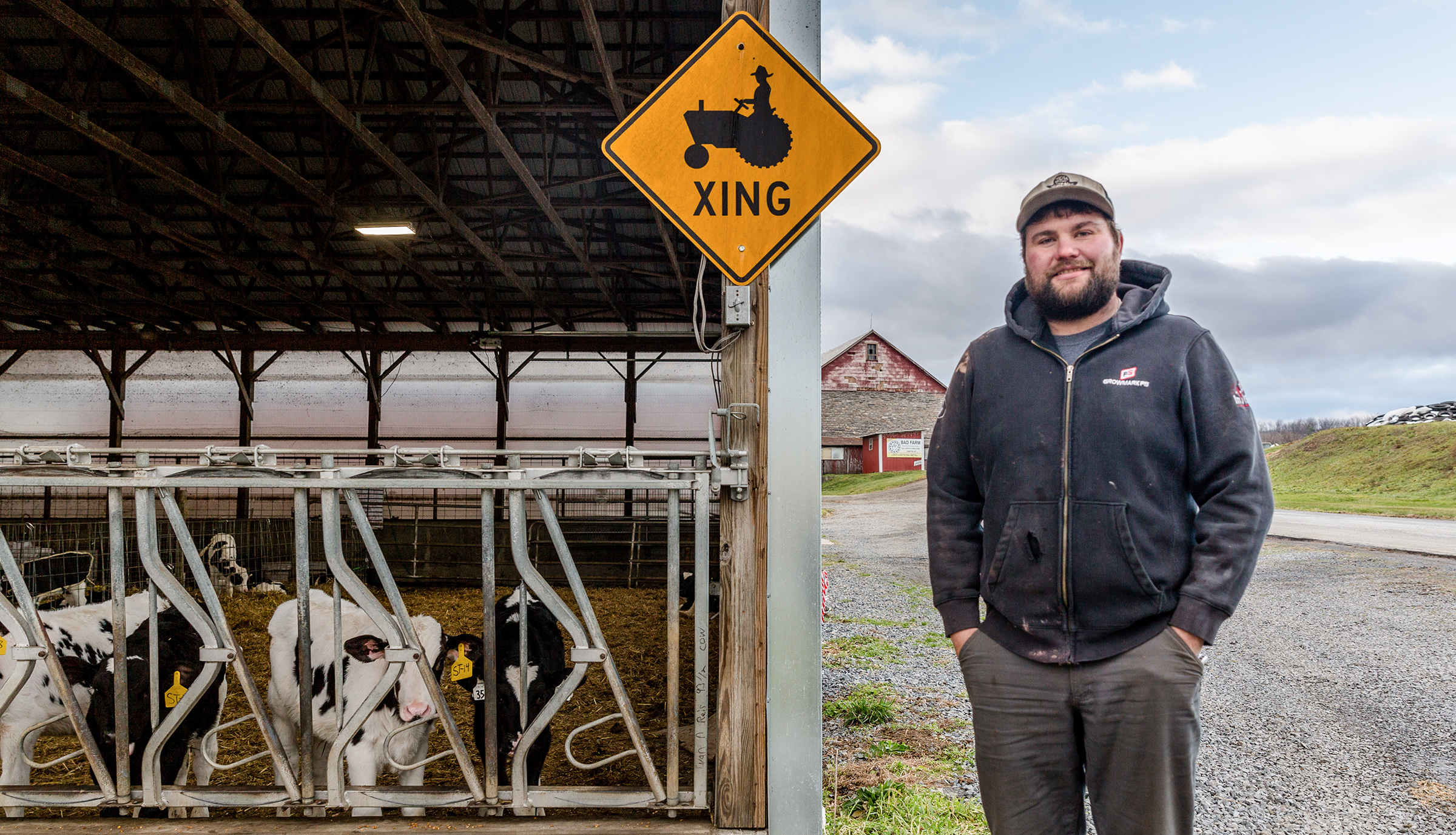
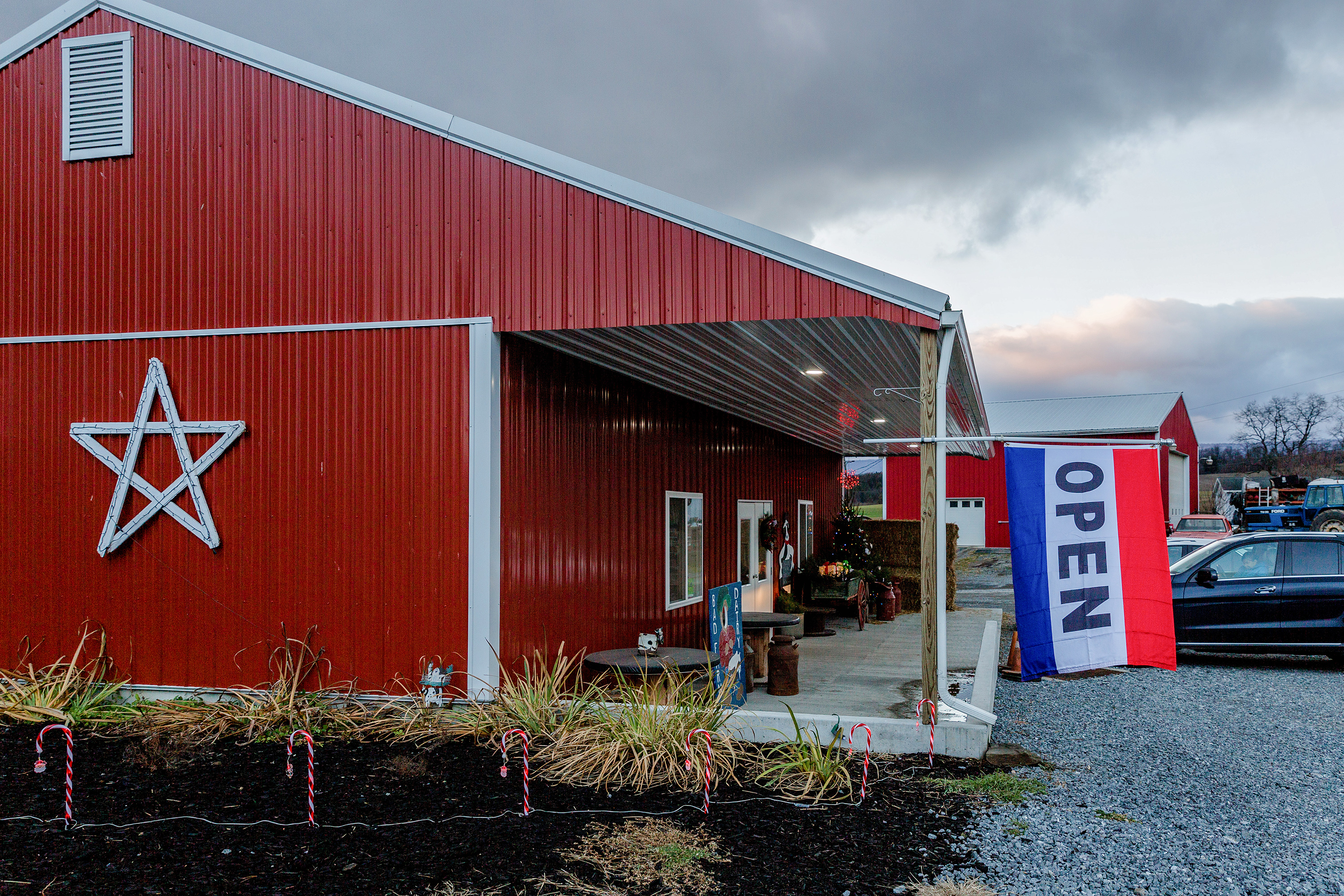
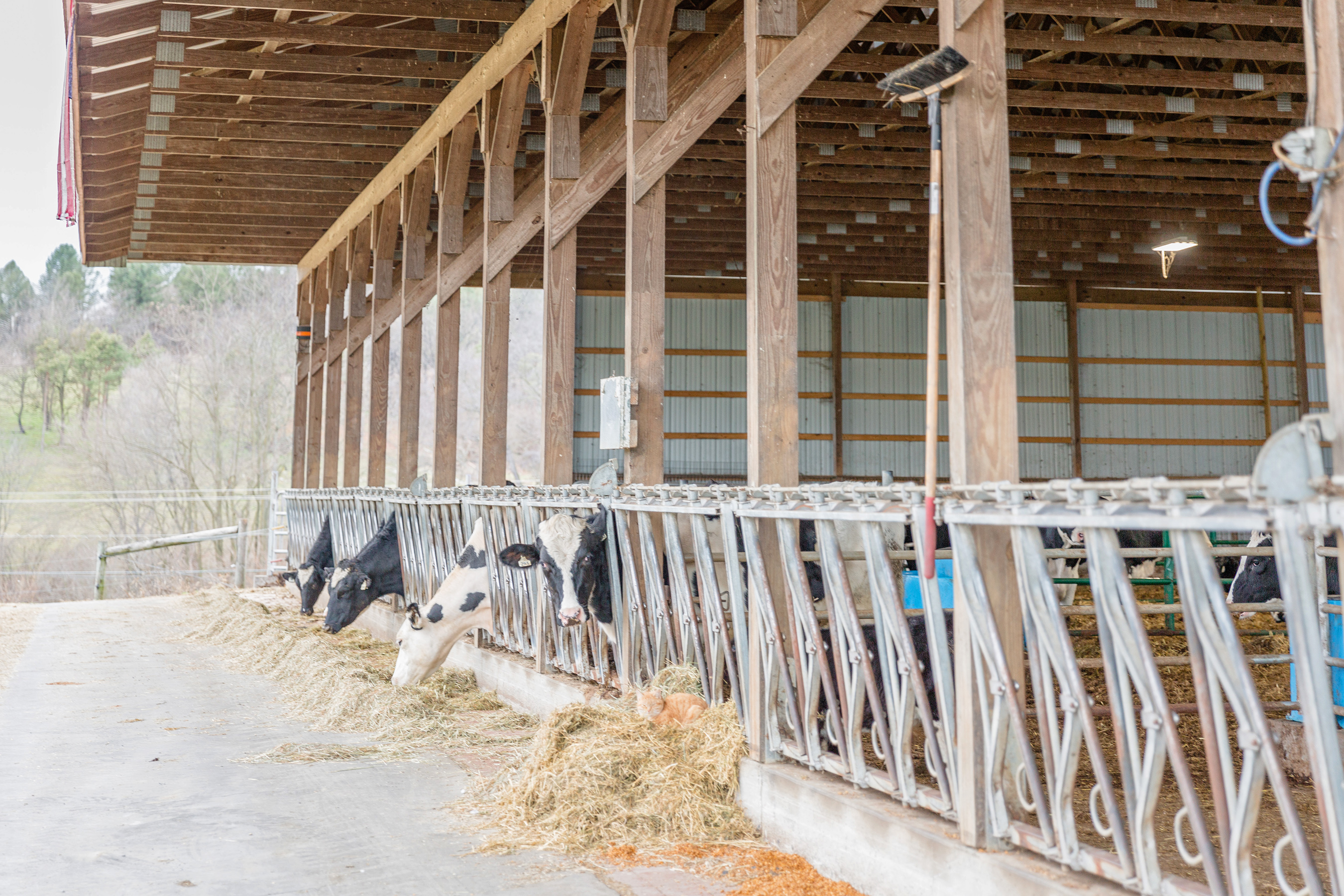
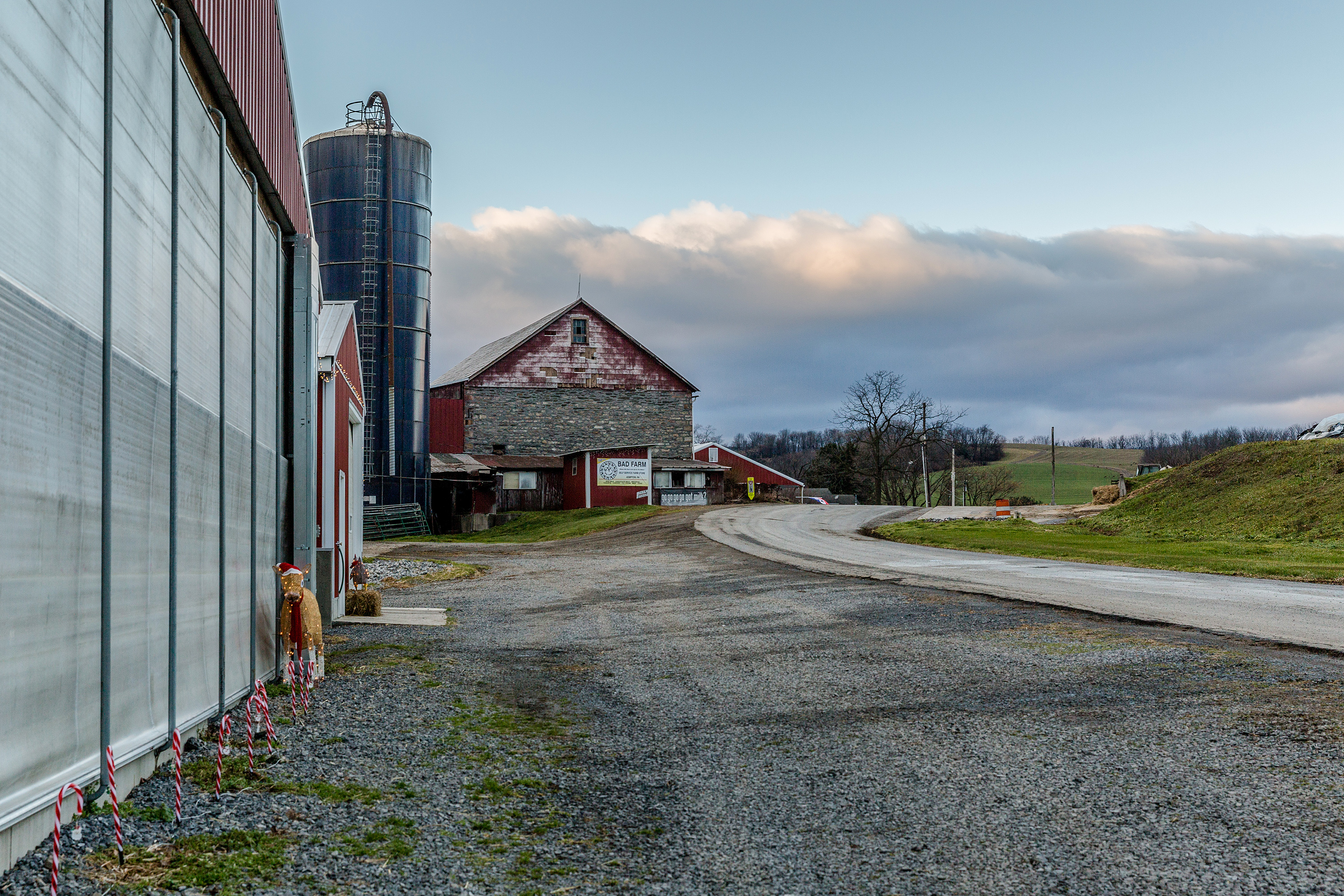
Recently Jason and Kacey Rice (and sons Emmit, 6, and Ellis, 4) had such a “Christmas on the farm” event at their BAD Farm near Kempton, Pennsylvania. Delicious dairy products, made with the milk from their 60 cows, were combined with holiday festivities, opportunities to see a working farm, visits with Santa, and, yes, portrait sessions with a holiday setting, a festively outfitted calf and a photographer.

Almost 100 people dodged the raindrops on the first Saturday in December to attend the event at the store the Rice’s built on the farm in 2020 as they began offering more products.

But their journey began with selling just raw milk and eggs more than a decade earlier.

In addition to the store, BAD Farm products are sold at pop-up farmers markets in Emmaus and Lehighton. Jason’s dad manages the meat sales. His mom is the point person for the farmers markets, staying in touch with Kacey, who runs the on-farm processing of the items they do on-site and ordering those products that are processed for them elsewhere — all using the milk from their own cows.

The farm’s name gets some attention, notes Jason during a Farmshine visit Monday (Dec. 12).

His parents, Beth and Dave Rice (the original B and D Farm) found themselves and others abbreviating the initials BAD. Jason’s middle name is Dave and his wife Kacey’s middle name is Beth – so they kept the acronym after transitioning the farm.

Today, BAD Farm milk and dairy labels state the motto: “Where we DON’T live up to our name.”

“It’s a conversation starter at the farmers’ markets,” says Jason. “People remember it.”

When he came home from SUNY Mohrsville in 2009, it was a rough time for dairy farms. He already had a vision for the farm to get closer to consumers, and his parents already had done the work for a raw milk permit.

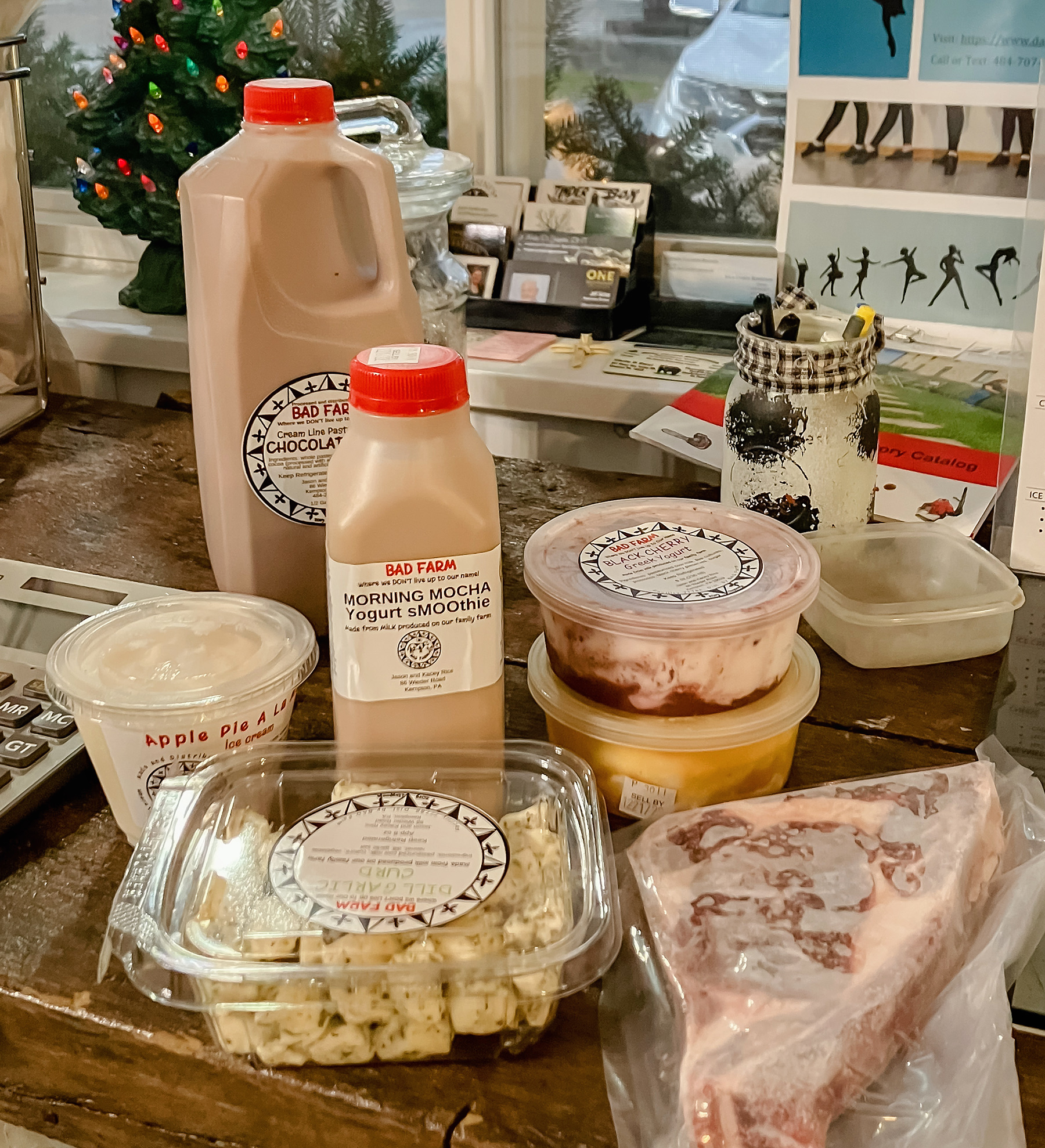
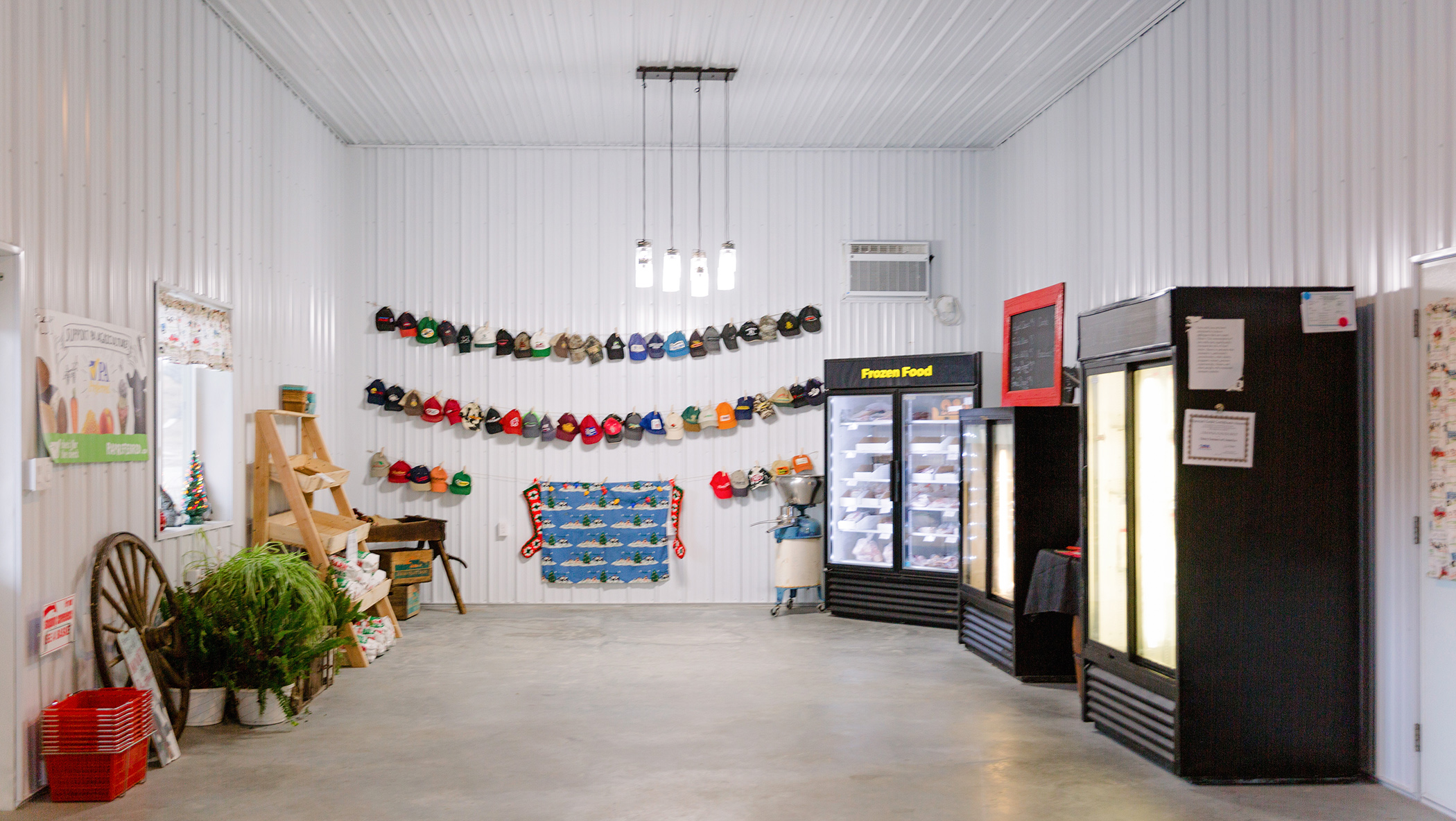
For more than 10 years, they sold raw milk and eggs in a tiny outbuilding by the barn and did freezer beef as well. Today, the coolers in the new farm store hold fruited regular and Greek yogurts as well as aged cheeses and cheese curds in some popular flavors — all made with their farm’s milk by two different processors. 

The beef in the freezer is from their own Holstein calves that are fed out at another location. The eggs are from their own chickens, cage-free but in a poultry building on the farm due to their location at the base of Hawk Mountain. The prepared meals are made for them by a commercial kitchen, featuring items like shepherd’s pie, meatloaf, quiche Lorraine – all dishes that use the dairy, eggs and beef produced at BAD Farm.

This year, they realized a dream making their own ice cream and chocolate milk.

In Pennsylvania, raw milk can be sold with a permit, but raw milk cream cannot. Jason’s ultimate dream of making their own chocolate milk and Kacey’s dream to make their own ice cream, from scratch, became reality when a Pa. Department of Agriculture innovation grant helped them invest in this processing infrastructure.

Previously, these products were made for them elsewhere. They have also started a line of coffee creamers, with peppermint in the cooler for the holidays, pumpkin spice in the fall, and traditional vanilla and salted caramel. They now do pasteurized creamline milk in addition to raw milk, and they offer yogurt sMOOthies, which are a big seller in fruit flavors, mocha, and a peppermint for the holidays.

For Jason, the chocolate milk is the big one. His enthusiasm about it is clear. It’s an area he has always believed the industry can do better. 

“We wanted to make a really good chocolate milk — something people can be proud to put on their dinner table,” he says.

(Yes, they succeeded. BAD Farm’s chocolate milk is super GOOD. I brought some home, and found it has a really smooth and silky finish to go with that creamy texture. I also took along a Mocha Morning yogurt sMOOthie, which was quite a treat, finishing it before I was 5 miles down the road.) 

As for the BAD Farm chocolate milk, it is a pasteurized non-homogenized creamline chocolate milk. It is 90% whole milk with 10% heavy cream added. They don’t standardize the whole milk, and their herd test is right around 4.0 butterfat.

“We found we could really pull back on the added sugar this way,” Jason reports.

With the processing infrastructure, Kacey was able to start making old-fashioned ice cream. “I always wanted to do ice cream from scratch, and the innovation grant helped with that,” she says. 

Kacey works with seven ice cream flavors, rotating in some seasonal specials. Her philosophy is to focus on quality and marketing and “getting the products to the people,” rather than trying to make every flavor under the sun. 

They shoot for memorable ice cream experiences. Their chocolate blast uses three kinds of chocolate for a signature blend. They work with orchards on custom flavors. They offer peaches and cream in the summer and apple pie ala mode in the fall. They rotate core flavors to keep it interesting. 

Neither Jason, nor Kacey, studied dairy processing specifically in college, but they learned concepts that contributed to their vision. They read, and ask questions, talk to peers and seek advice from those who’ve done it. They are constantly learning and looking for trends and ways to extend what comes from their farm — milk, eggs and beef – and turn it into what consumers are looking for. 

“We don’t have hired help except one high school employee to help milk,” says Kacey.  “Instead, we pay people to process some of the products we offer that are made with our milk while we are focusing on building our connection to consumers.” And they are gradually doing more of their own processing also.

“To do this, you have to want to talk to people. You have to want to have those consumer conversations. Our store is right in the middle of everything on the farm. People can see the cows as they walk down to the calf barn. They can see the farm tractors coming and going through the seasons. They see it all,” says Jason, noting that they don’t do group tours, as such, but “we’re here, and we’re available. We could be in the middle of doing corn silage and someone stops and has a question. We need to stop what we’re doing and talk to them. It’s a priority. That’s the commitment we make.”

And that’s okay with Jason and Kacey because connecting with consumers has been part of their vision for the farm since the transition began. 

With their on-farm self-serve store completed in April 2020, just as the Covid pandemic hit, the couple had to pivot quickly to meet customer demand for more staples and more products as consumers were faced with shortages in stores and became more tuned-into where their food comes from and were looking for things to do, places to go.

Being somewhat off the beaten trail, BAD Farm is a destination, not a quick stop on the way home from work, but the raw milk sales on the farm and the connections made at the farmers’ markets off the farm give the Rices core customer bases to build on.

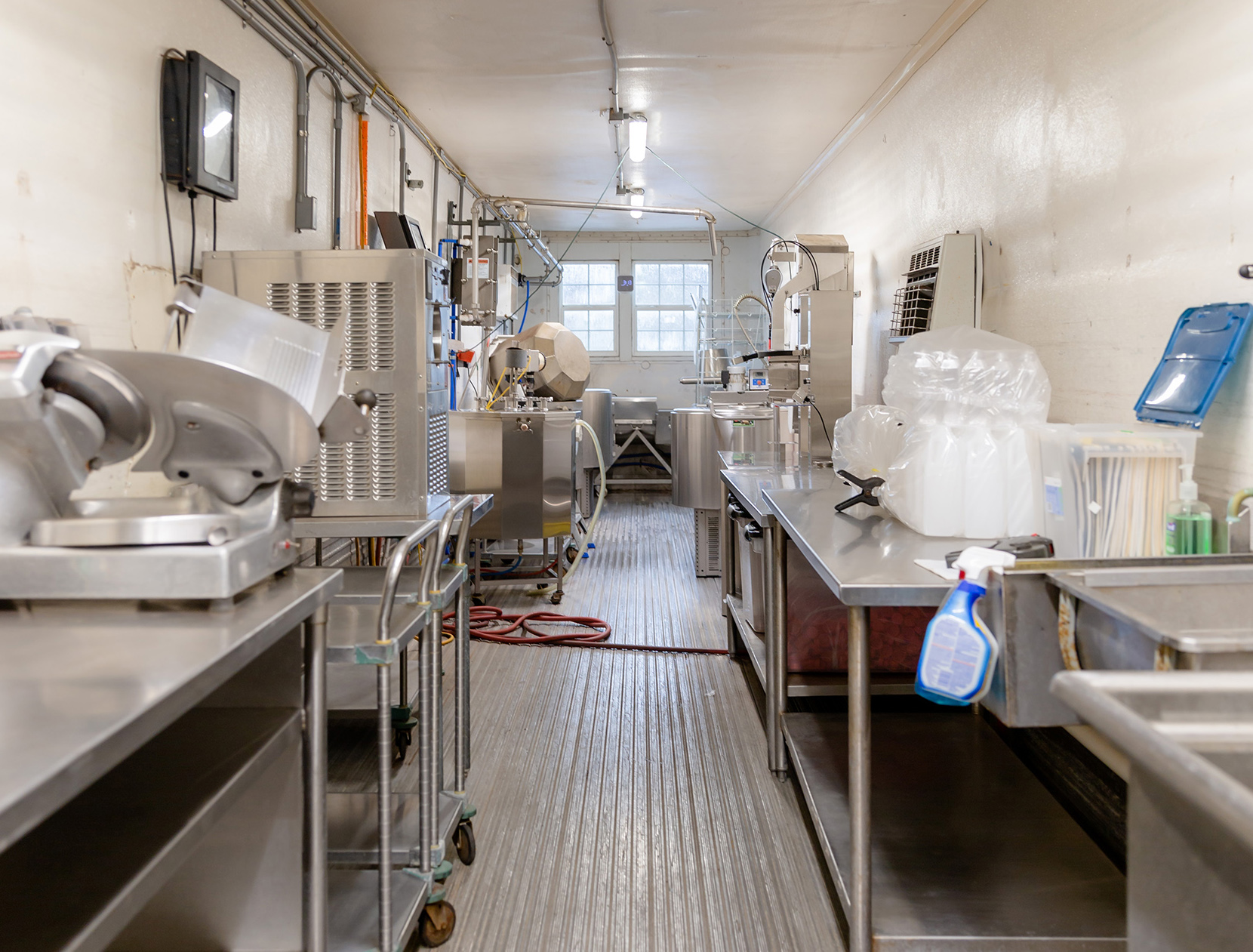
The store is built on the other side of the barn toward the house. The dairy innovation grant helped the Rices add processing with three uniquely incorporated trailers.

Jason’s grandfather David Rice, an electrician and retired contractor, came back for a long visit from Nebraska where he had moved many years ago (helping Jason’s uncle, Dan Rice, when he was still a partner in Prairieland Dairy, before the processing part of that business was sold).

The Rices had purchased a ‘processing trailer’ and revamped it with some new equipment to do the pasteurized creamline milk, chocolate milk and ice cream. They purchased a frozen foods trailer and turned it into their refrigerated storage cooler and another trailer for their storage freezer. The infrastructure adaptations are smart and practical. The three trailers back up into the back of the store building, with a buffer area for storage in between — and each with its own sets of sealed entry doors.

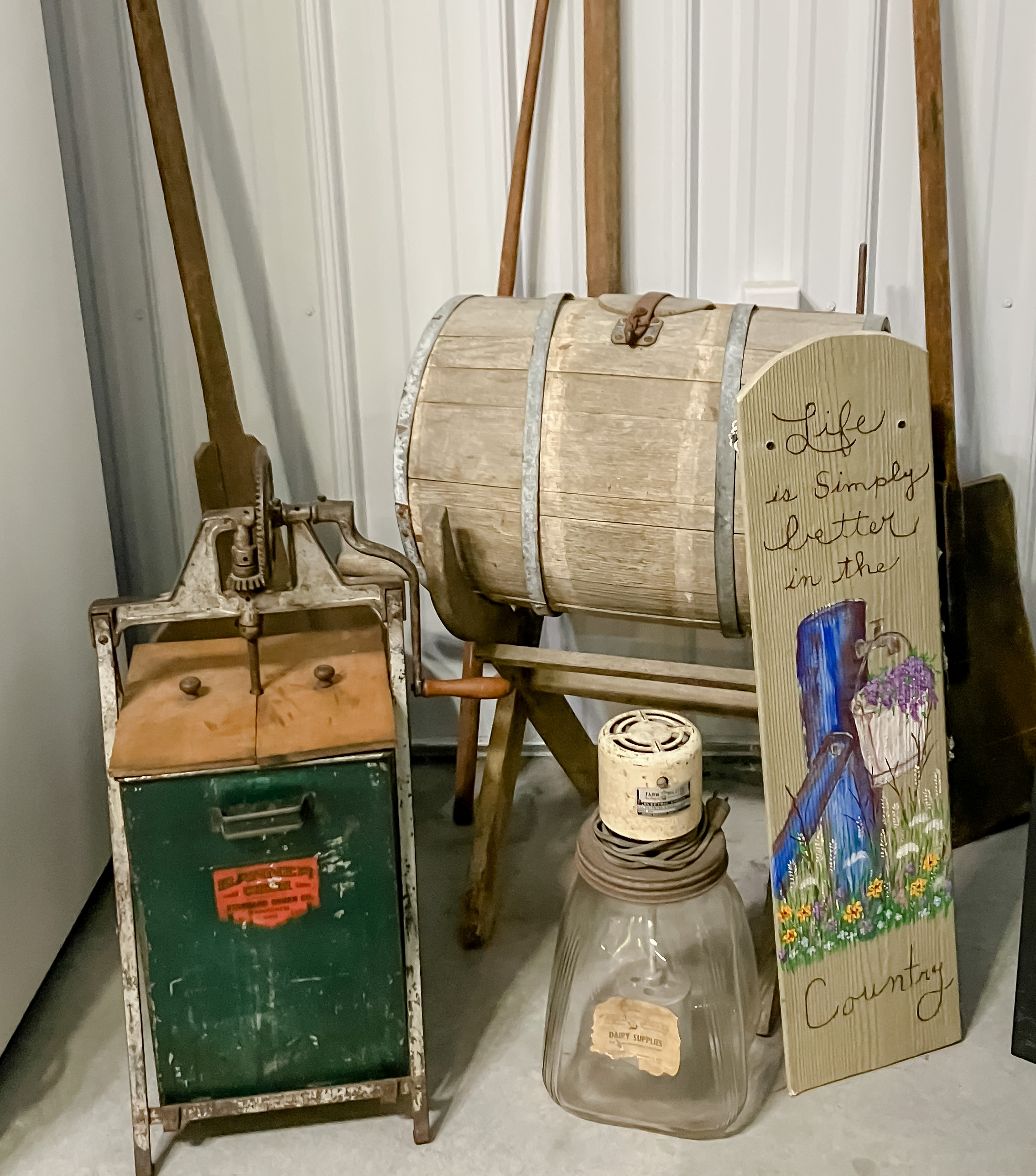
While grandfather David helped with the electrical work and mapping out the flow in processing, storage and retail, grandmother Gloria painted country art for the vintage displays of old farm and dairy equipment interspersed between coolers — giving the space that country store feel. 

Jason and Kacey have known each other since high school. He went to SUNY Mohrsville for animal science and ag business management. She went to Penn State for ag education. For the past 10 years, Kacey was an ag teacher, until August 2022. Now she is full time at the farm, where she enjoys the processing and marketing. They have two young boys, Emmit, 6, and Ellis, 4, keeping them busy as well.

As their dream progresses, the Rices are methodical, taking incremental steps with eyes on how they invest and where they put their focus to continue diversifying, while staying rooted in using the dairy, eggs and beef produced on BAD Farm, where they DON’T live up to their name. To be continued.

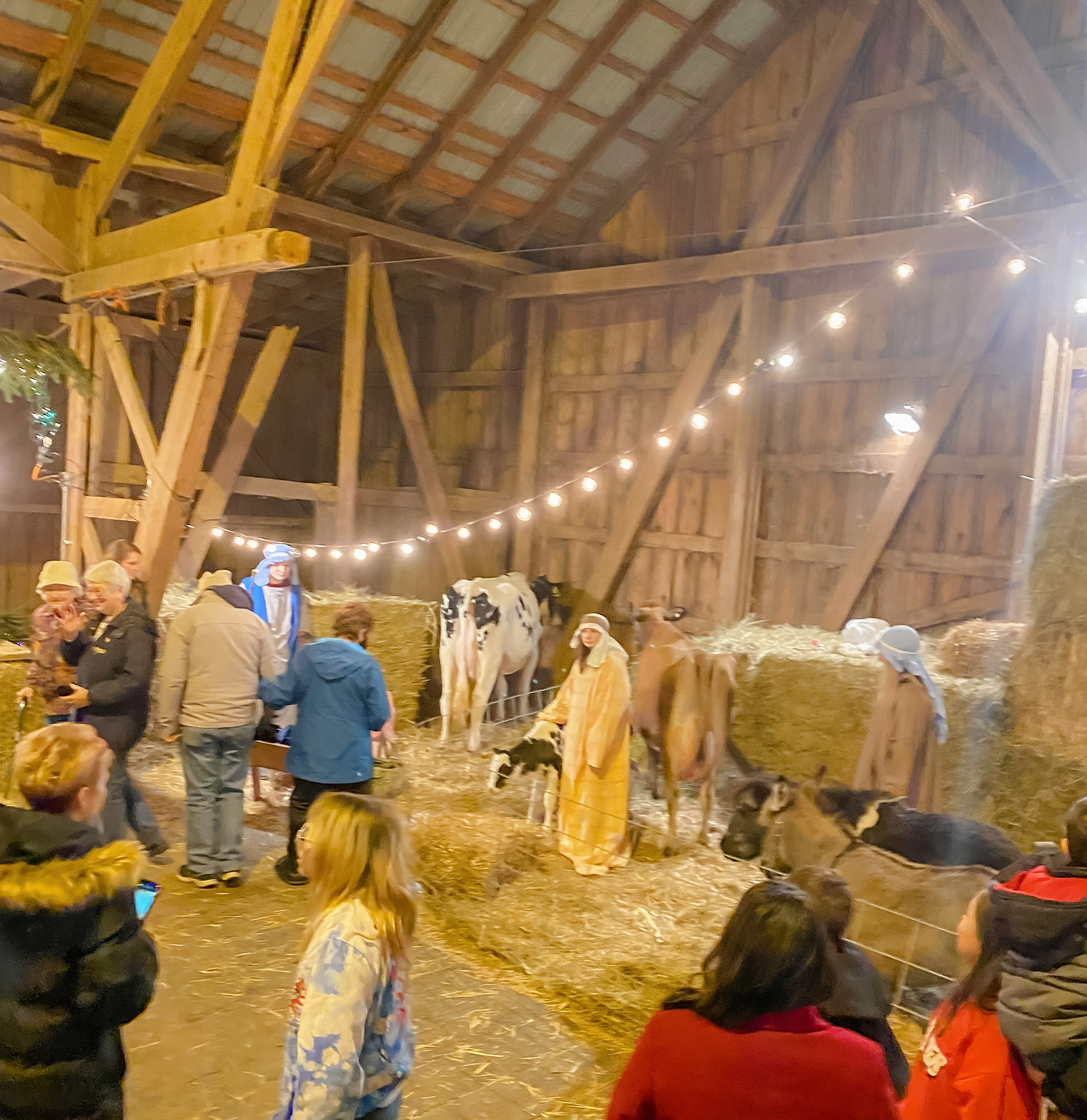
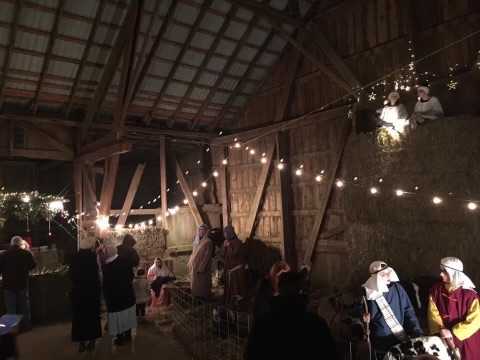
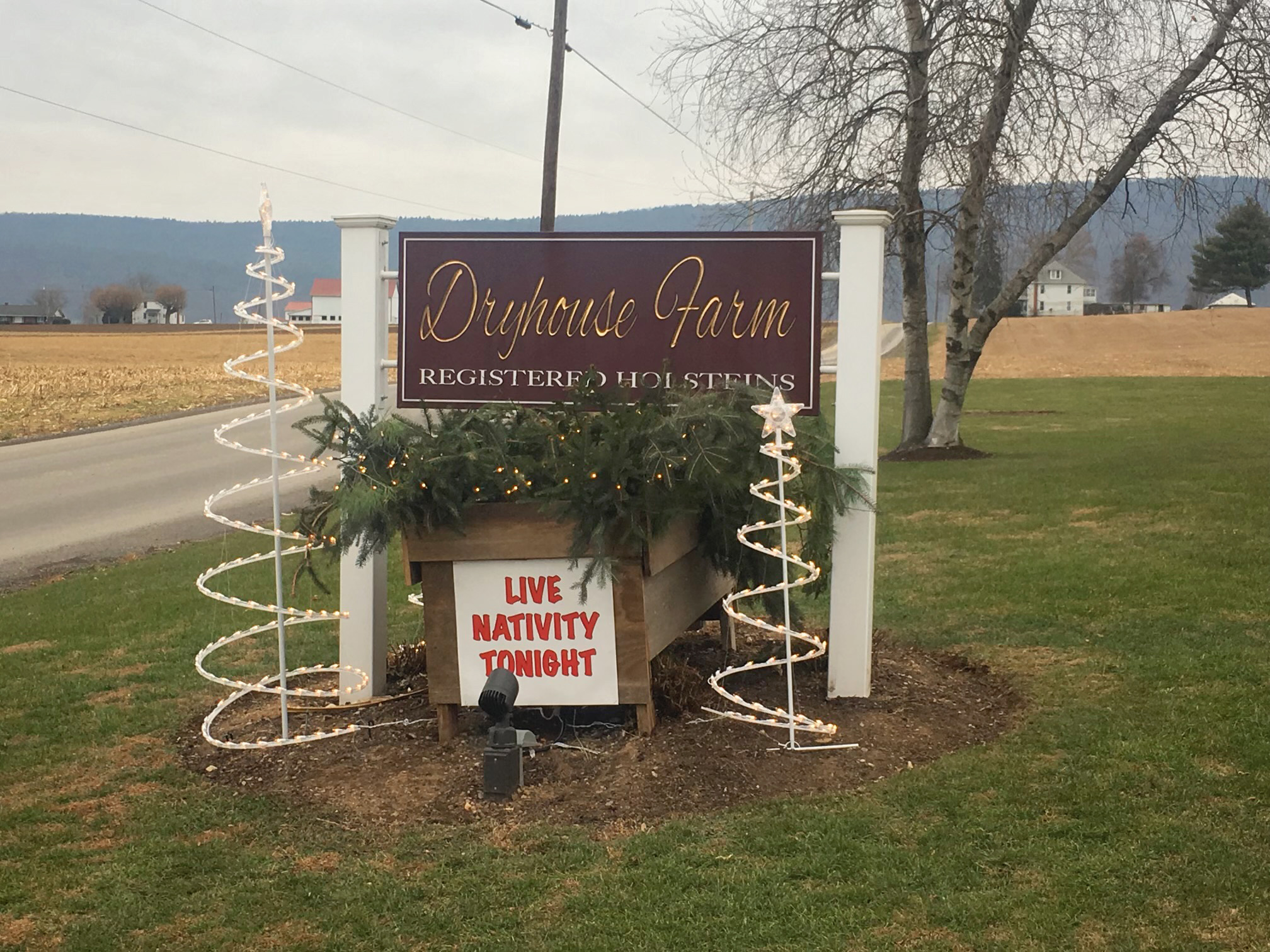
Live Nativity performed at Dryhouse Farm Dec. 22-23

The ‘realness’ draws crowds as Christmas, cows, farming, fellowship are shared. Yoder family has been providing this free community experiences for 7 years.

By Sherry Bunting, Farmshine, December 16, 2022

BELLEVILLE, Pa. – “As long as they keep coming, we’ll keep doing this,” says Mike Yoder about the Live Nativity in its seventh year at Dryhouse Farm near Belleville, Pennsylvania.

It’s always on the Thursday and Friday evenings before Christmas, with this year’s Live Nativity falling on December 22 and 23 leading right up to Christmas Eve and Christmas Day. The times both evenings are 5:00 to 8:00 p.m. (Update: Dec. 23 showing is canceled due to the storm on its way, Dec. 22 going on as planned)

“We like that we are bringing the public to the farm and have the chance to share part of our world with others,” says Mike in a Farmshine phone interview this week. “We also like that this is becoming part of the family Christmas traditions for many people. We get calls weeks and months ahead from people wanting to get the dates on their calendars.”

For Mike and Maria Yoder and their four children Natalie, Paul, Grant and Cade, the preparations are underway this week. They’ve started moving bales, sweeping and cleaning the bank barn, recruiting volunteers to take shifts being shepherds and cast, and there’s a lot of coordination with the refreshments – mainly cookies, hot cocoa and coffee, plus kettle corn this year.

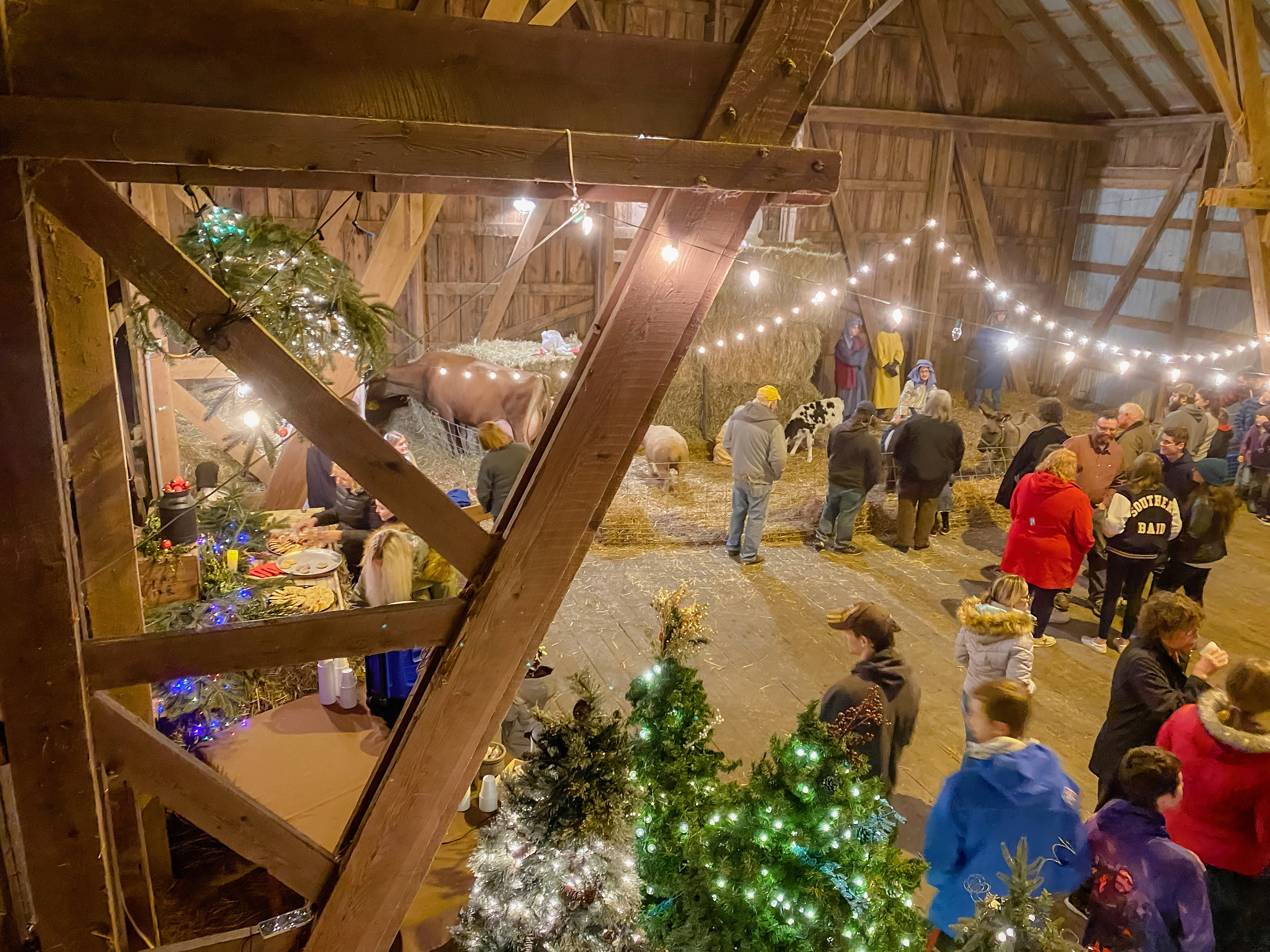
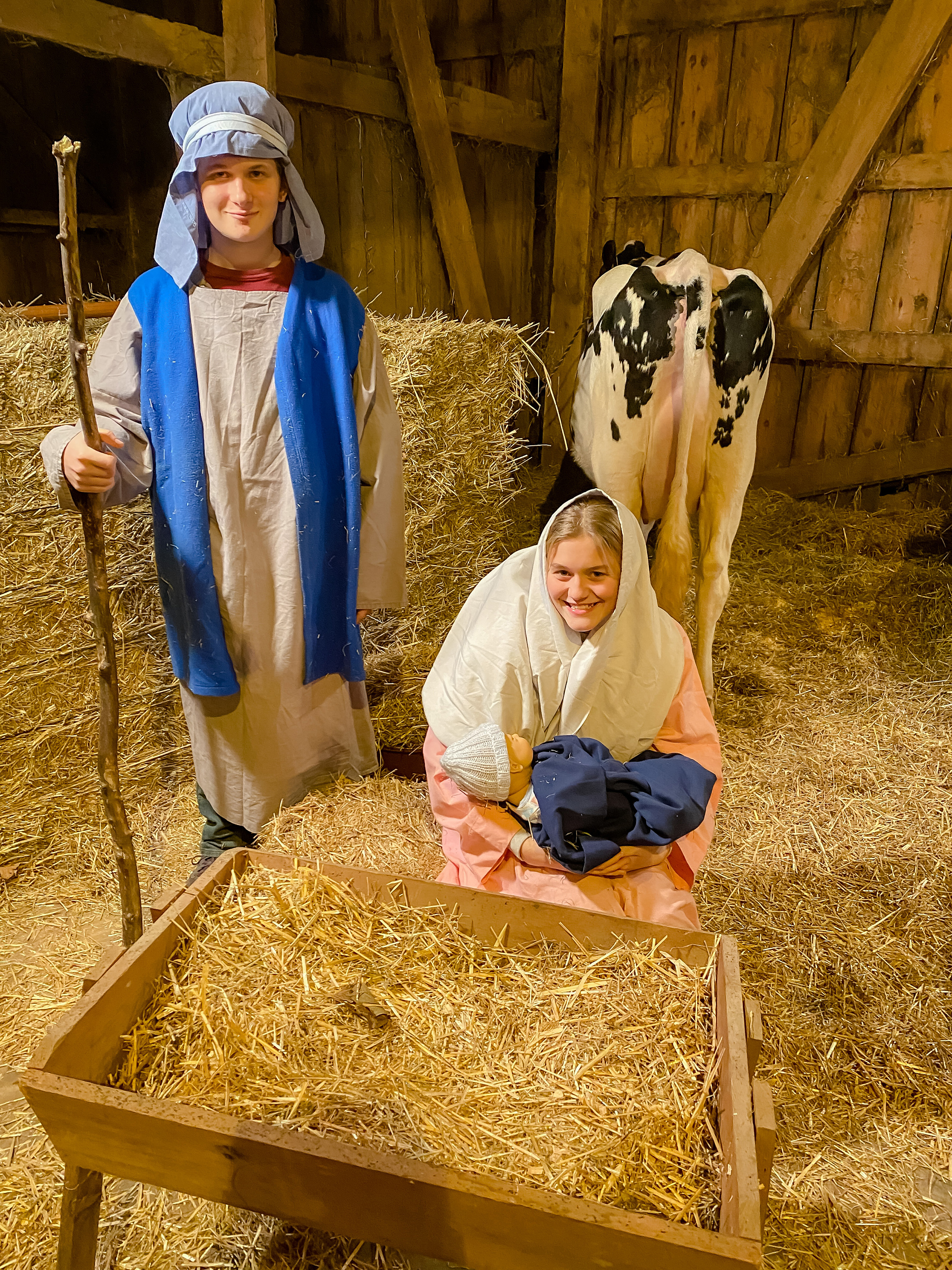
Mike makes a ‘show pack’ for the scene with a cow tied behind Mary and Joseph and several calves and the cast. They use a show cow that is accustomed to being handled on a show pack with crowds.

The main Nativity scene has a 3-foot wire fence around it, but people can reach in to pet the animals.

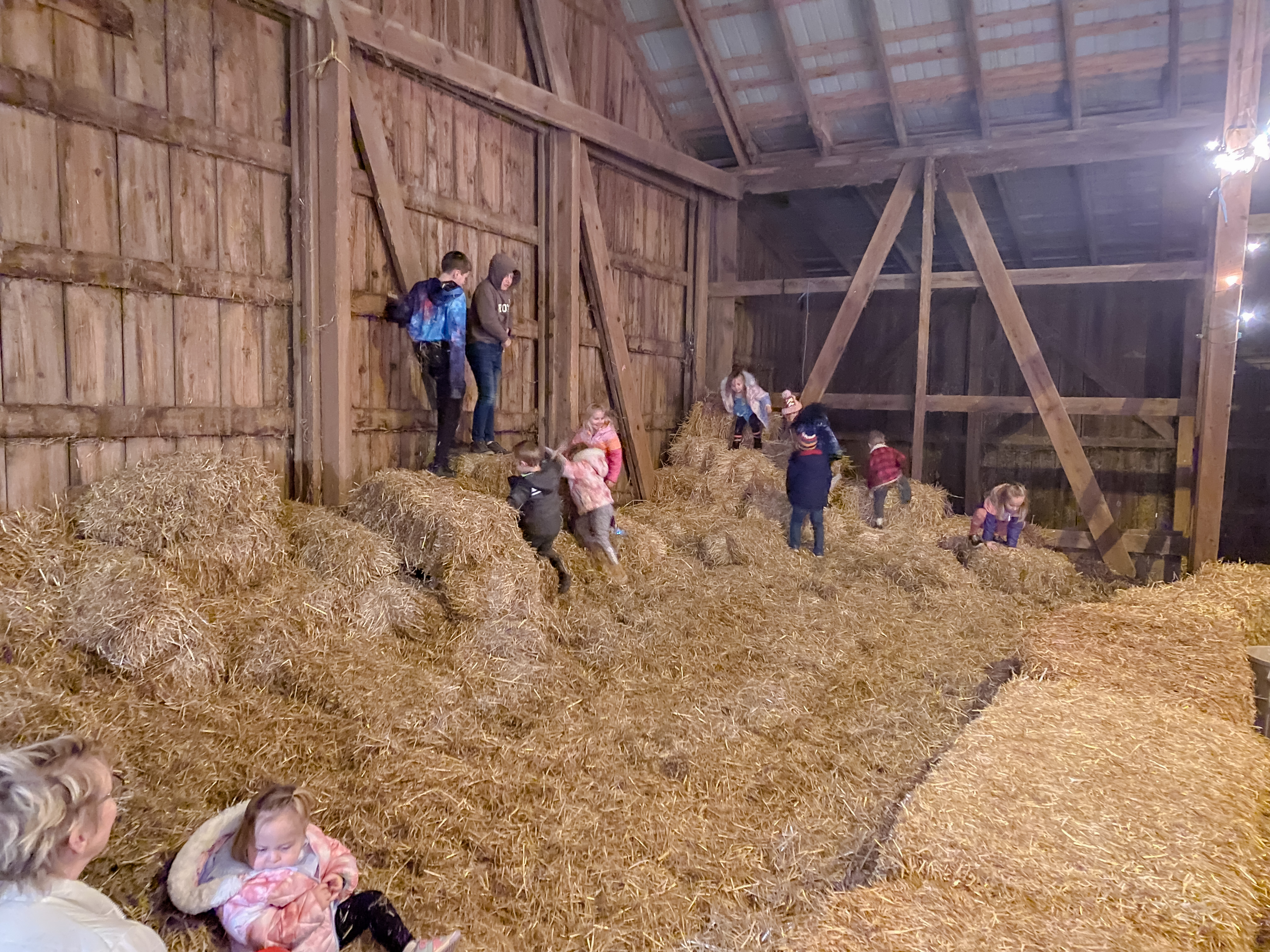
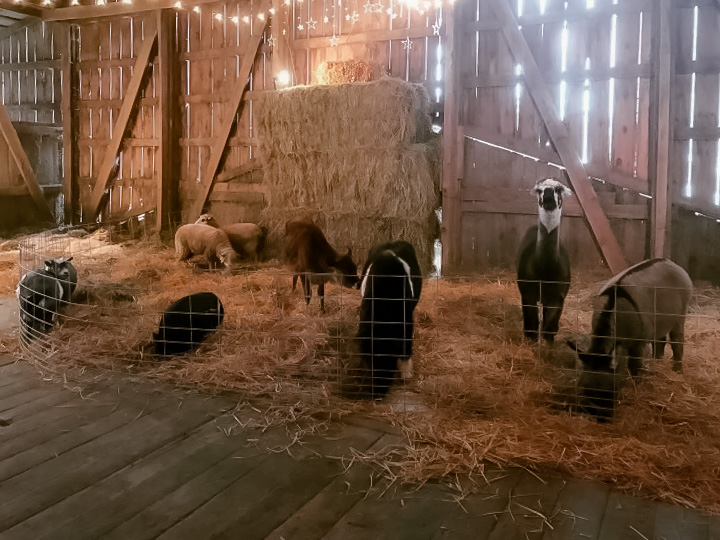
“We’ve added a petting area where kids actually get in with the animals, and we try to add some different animals every year,” says Mike, noting that last year, they had rabbits. “We also have a straw pit to play in.”

Christmas music plays in the background, some tables are set up for visiting, and the walk-through flow leads to refreshments at the welcome tent.

Of the nearly 700 people of all ages and backgrounds who attended last year, many were families with young children, and many come from the nearby retirement village and nursing home.

“The nursing home is close to us here, and we get a lot of older people from the cottages,” Mike confirms. “We have extended families coming together here, and we expect to have more of that this year. We have people come from two hours away, from southwest Pennsylvania, and we even had a family come down from New York to see it. We never know who is going to pop in.”

For the first few years, the Yoders advertised the Live Nativity in newspapers and on the radio, but now it is by word of mouth and through social media.

The event is free, and Mike says they firmly want to keep it that way.

“We have some that want to make donations, and in 2020, we gave those donations to the nursing staff at the local nursing home because we didn’t start this to charge for it,” he said.

What better celebration of the meaning of the season than with a Live Nativity — in a real barn on a real farm?

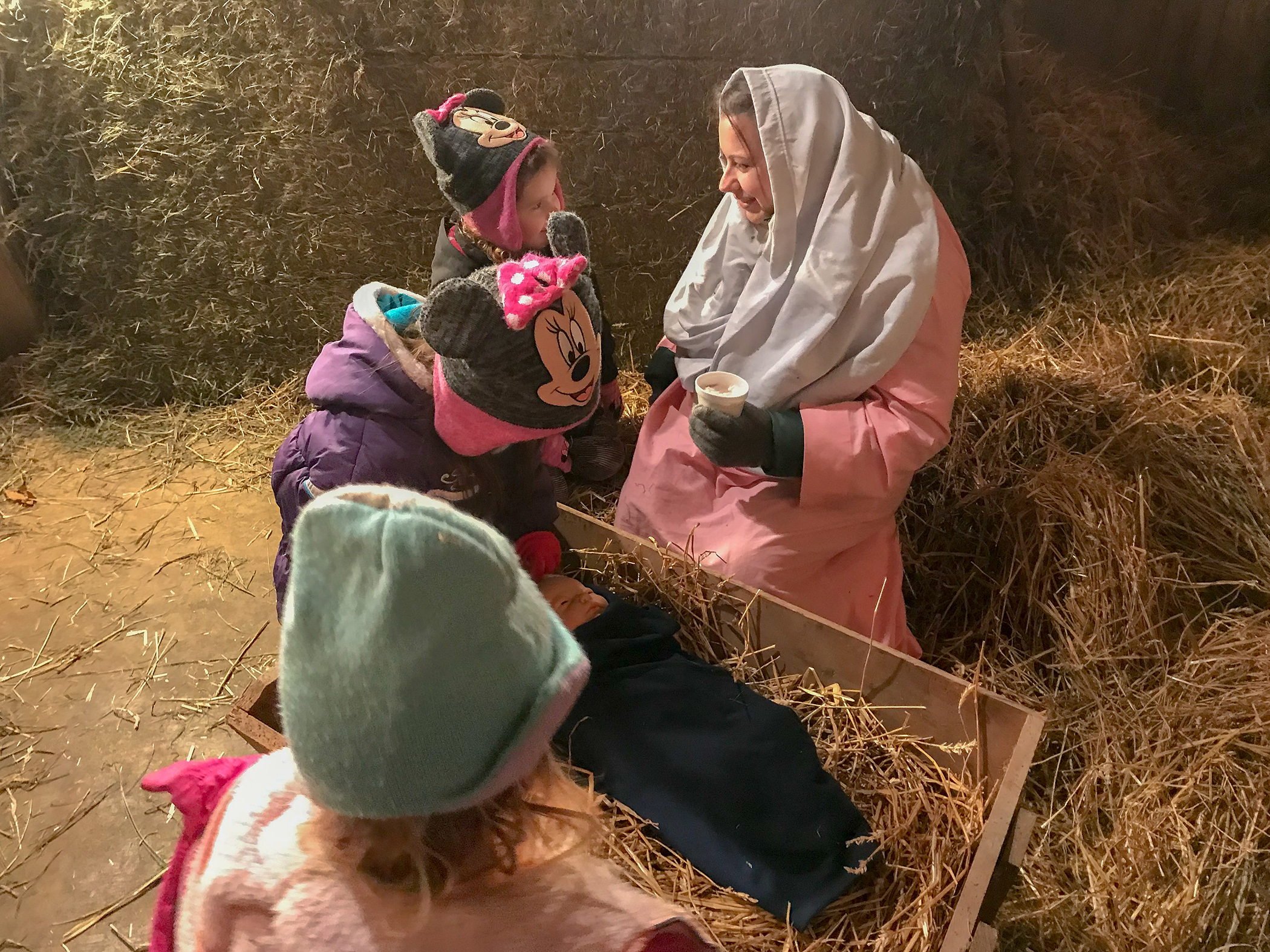
“It’s real for people in a barn. It’s cold, and there’s cobwebs, and there’s animals below us, and it smells like a barn, so it’s that realness,” says Mike.

People respond to this. It makes an impression. While the 190 milking and dry cows are housed in newer facilities, the youngstock are housed in the bank barn just below the event.

“The other part of this is the educational factor, getting people onto a farm,” Mike explains, “It’s amazing how many of these kids have never been up close with a cow.”

He makes another important observation, that the farm-to-consumer disconnect is not just an urban phenomenon, it’s within rural communities also.

“We don’t have big cities close to us,” Mike relates. “But even rural kids grow up without contact with cattle and other animals that we take for granted.”

While the family is busy running the dairy farm, and all four children play basketball at school, everyone knows “this is just what we do,” says Mike. “The kids’ friends often like to help and dress up, and we have people from our church wanting to help too.”

Everyone has a role and a job. The ‘angel’ sitting up high on stacked hay bales, for example, is the ‘counter’ to help keep track of attendance so they can plan each year for the growth in the number of people drawn in.

Why did the Yoders start doing the Live Nativity in 2016?

“At that time,” Mike recalls, “we had a donkey, a llama, some goats and a pony. Someone made a joke that we should do this, and that’s where it all began.”

The offhand suggestion got the wheels turning for Mike and Maria. They had the old bank barn where they have had events for church groups and the community. They thought, why not?

For the first couple years, they did the Live Nativity for just one night. As attendance grew, they added a second night.

During the Covid-19 pandemic in 2020, they did it as a drive-through, with stations set up in different themes around the farm, handing out cookies and hot chocolate as the cars went through. The first night was canceled that year due to a snowstorm blanketing the area with a foot of snow. But the next night, they were ready.

“We were surprised. We had 150 cars come through that one night. People were really looking for things to do that year,” Mike recalls.

In 2021, and again this year for 2022, they are back to the walk-through Live Nativity experience inside the bank barn.

The Yoders have been dairying here since they moved to Belleville in 2007, eventually taking over Dryhouse Farm for Ray and Lester Yoder (no relation), who were looking to transition out.

Mike and Maria worked for them for a year and rented the farm for four years. In 2013, they purchased the farm, having already purchased the original herd, which they grew to 190 cows. They also merchandise cattle and have sold bulls to A.I.

The Yoders bought into some good cow families and developed their Dryhouse-M prefix to keep their genetics separate from the original Dryhouse herd. There are several good cow families milking here, including one of cows they bought with the original herd that recently passed away at age 17. She was a 5E 93-point cow with numerous high scoring offspring on the farm today.

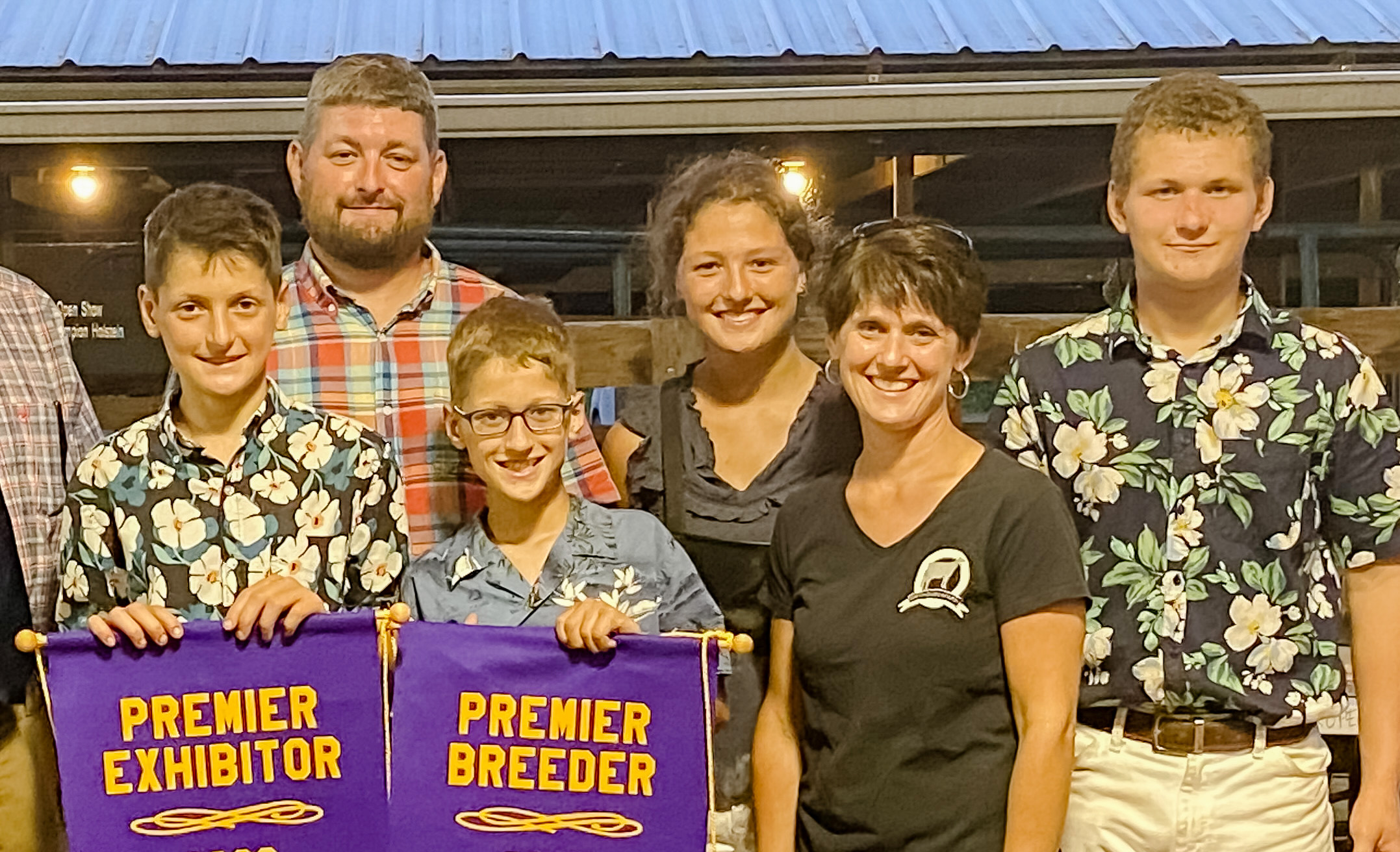
In addition to their registered Holsteins, the Yoders have gotten into some colored breeds as their children began showing. They go to the Mifflin County show, where they were premier breeder and exhibitor this year, and to the Central Pennsylvania Championship in Centre Hall, where they were premier exhibitor last year. They also show at Harrisburg every year, and in some years, they show at Louisville and Madison.

Aside from the Live Nativity at Christmastime, the Yoders have hosted other community and farm events.

This year, they had Mifflin County Farm Bureau’s third grade agriculture tour with 500 third graders on the farm all at once in September. They’ve hosted career events for the local school district, and they were a tour stop for the National Holstein Convention when it was in Pennsylvania in 2021.

-30-

COW TALK: Thoughts inspired by cows’ breath on cold morning

By Sherry Bunting, republished from Farmshine, November 18, 2022

These cows are wondering what’s going on. Five days ago, they enjoyed balmy 70-degree temps. This morning, they could see their own breath freezing in mid-air.

They’ve been listening to their farmer’s radio this week and heard that President Biden pledged to give $11.4 billion ANNUALLY to other countries for a climate transition. They heard that climate pledges were being made at COP27 that could make what is happening to some of their friends in Europe happen here in the U.S. to them too.

This got their attention because they’ve also been hearing how the methane in their burps is being overblown by a whopping 3 to 4 times its actual warming potential over 20 years.

(They could have told you that if they could talk).

Yep, they know they are getting a raw deal here. Even the world’s foremost authorities on what units of measure to use for methane agree that the GWP100 is overblowing the cow problem, whereas the GWP* they hear Dr. Frank Mitloehner talk about when their farmer has a zoom webinar airing within earshot is more accurate and gives them a chance to be the SOLUTION they know they are instead of the PROBLEM they know they are not.

But cows can’t talk, so they can’t stick up for themselves. Are we sticking up for them?

Bessie and her friends have heard that their farmer must pay 15 cents for every 100 pounds of milk they make to an organization in Chicago that is content to use the inflated unit, content to keep driving their net-zero talking points even though net-zero GHG is impossible because, well, because cows continue to breathe and burp, so getting the unit of measure correct may literally save their lives some day.

Even their tiny cow-sized brains are smart enough to know that inflating a problem to make a buck is not a good idea.

What is a good idea for the cows and their farmers, and for the world, is for the 15-cent-takers to change their narrative and talk about true warming potential and climate neutrality instead of net-zero, ad-nauseum.

One can sense these cows wish they could speak up to say: “Stop overblowing our burps please! It’s impolite!”

They might even say something like this: “Our ‘hot air’ is nothing compared to the steam rising off the loads of bull coming out of Washington, D.C. and COP27 in Egypt!”

These cows have also heard on their farmer’s radio station that the mid-term elections are still undecided as to what party will be in leadership of the People’s House. And yes, they’ll admit that over the past eight days, they’ve placed a few bets on the outcomes between mouthfuls of TMR at the feedbunk where they discuss current events.

They’ve even wondered if they should start a new political party of their own: the COW-MP party, which stands for Commonsense Organization of Whole Milk Producers. After all, some people think skim milk is their product. That one really gets them mooing.

This Thanksgiving, we’re thankful for our dairy farm families and the people of this industry who work hard every day to feed the world. But this year, we’re giving a special ode of gratitude to the bovine beauties, themselves, that make it all possible. Where would we be without the cows?

While the climate policy wonks, activists, even industry organizations perpetuate or allow this verbal abuse of our cows to continue, we’re thanking God for providing the essential irreplaceable cow.

We’re pretty sure He knew what He was doing a whole lot better than those in the ivory towers making policy, devising hoops for cows to jump through in order to exist and funding startups to make fake protein from fermentation vats in labs and factories under the mantra of saving the planet from the inflated overblown warming potential of our burping cows.

Even those of us with tiny cow-sized brains are smart enough to realize it’s really all about making money and controlling food.

Have a Happy Thanksgiving, and let’s think more about how we should be standing up for our cows.

Biden, Vilsack pledge “whole of government approach” in scripted White House Nutrition Conference that converged with Tufts ‘Food Compass’ and FDA’s ‘healthy labeling’ rule; Fed. Reg. comments due Feb. 16, 2023

By Sherry Bunting, updated from original publication in Farmshine, Sept. 30, 2022

WASHINGTON — Get ready for unscientific nutrition bullying. Announced more than a year ago, the White House Conference on Food, Nutrition and Health Wednesday, September 28 was cloaked in secrecy until the eve of the event, when the 44-page “Biden-Harris Administration National Strategy on Hunger, Nutrition, and Health” was released Tuesday, September 27 around Noon. 

By 5:00 p.m., the Conference agenda appeared in the inbox of registered participants, and during the overnight hours, the Biden Administration released a fact-sheet announcing $8 billion in “new commitments” from over 100 private businesses, local governments and philanthropies for what it calls a “transformational vision.”

Taking a page from the World Economic Forum’s (WEF) Davos-style approach to food transformation, the White House solicited pledges to address the five “pillars” in its playbook. 

Of note among them are a $500 million investment by Sysco (foodservice vendor), nearly $50 million by Danone, $250 million from a collaboration of the Rockefeller Foundation and the American Heart Association on a ‘food as medicine’ initiative, and an undisclosed amount for a collaboration between Environmental Working Group, the James Beard Foundation, the Plant Based Foods Association and the Independent Restaurant Coalition to prompt more plant-based alternative and vegan offerings in foodservice — to name a few.

Then, at 9:15 a.m., just 15 minutes before USDA Secretary Vilsack was set to open the Conference ahead of President Joe Biden’s remarks, the Food and Drug Administration (FDA) announced its “proposed updated definition of a ‘Healthy’ claim on food packages to help improve diet and reduce chronic disease.”

Presto: FDA provided the ‘teeth,’ describing its proposal as aligning directly with the Dietary Guidelines. For the proposed rule, click here and to submit a comment by Dec. 28, 2022, (now updated as comment period ends Feb. 16, 2023): click here

This morsel had been under development over the past four years after public hearings in 2018-19 were reported by Farmshine and then deliberations went silent – until now.

The flurry of activity appeared in scripted fashion within the 24-hours prior to the start of the White House Nutrition Conference convening stakeholders. The first such conference was over 50 years ago and had served as the launch pad for what are known today as the infamous Dietary Guidelines for Americans (DGAs).

A Senate nutrition hearing exactly one year ago in November 2021 paved the way for the September 2022 White House Nutrition Conference.

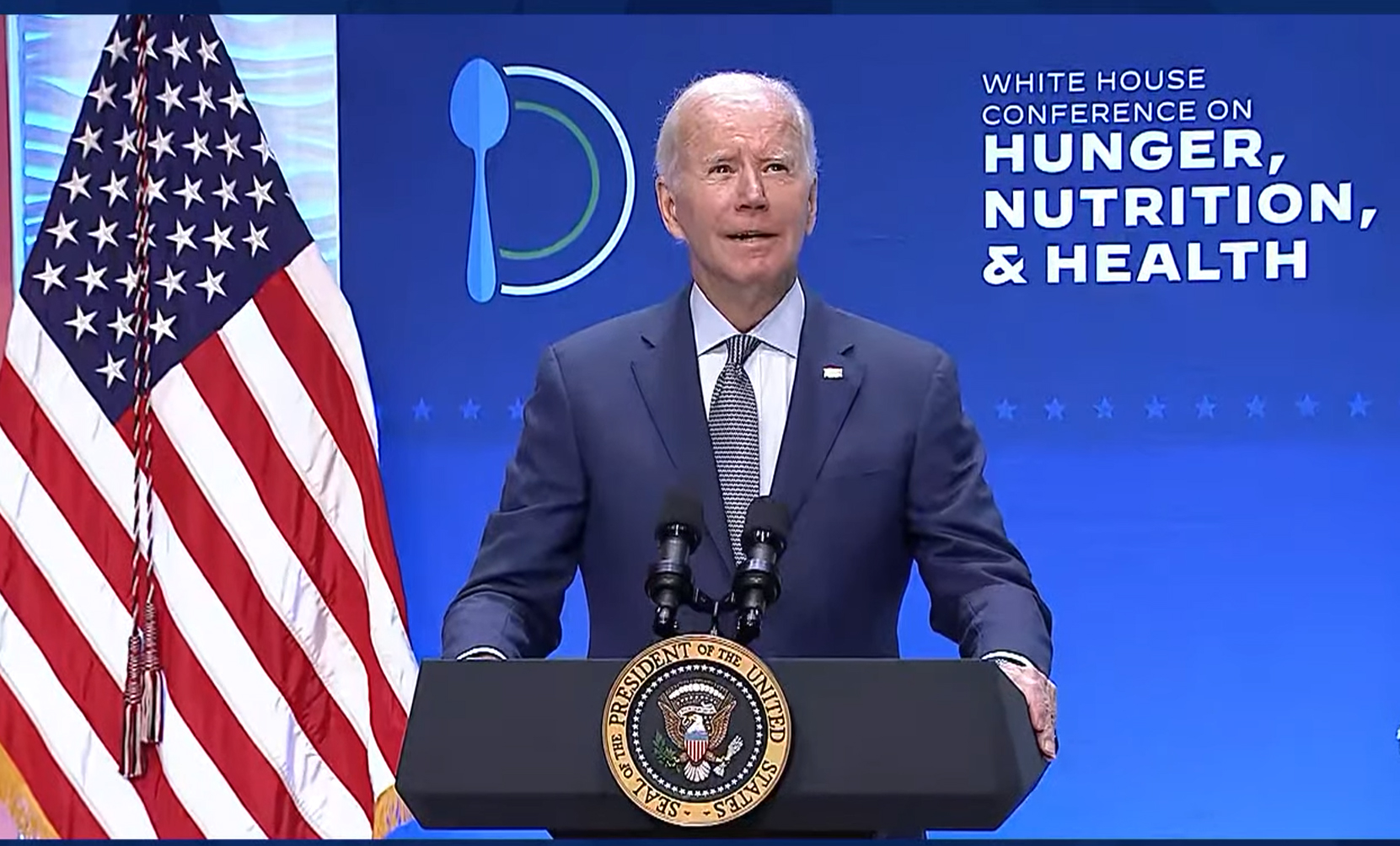
CAPTION: “We have to give families a tool to keep them healthy. People need to know what they should be eating, and the FDA is already using its authority around healthy labeling so you know what to eat,” said President Biden. White House Conference screen capture

The Conference and follow up actions, said President Biden on Sept. 28, are being devoted to “nourishing the soul of America so that no child goes to bed hungry and no parent dies of a disease that can be prevented. We can do big things,” he said about the stated 2030 goals of ending hunger, increasing healthy eating and physical activity, and reducing diet-related illnesses and other nutrition-related health inequities.

“But,” Biden declared: “We have to give families a tool to keep them healthy. People need to know what they should be eating, and the FDA is already using its authority around healthy labeling so you know what to eat.”

The President continued: “We can use these advances to do more to be a stronger and healthier nation, to achieve ambitious goals. We must take advantage of these opportunities when we have these children in a whole of government, whole of society approach. We need to think in ways we never thought before.”

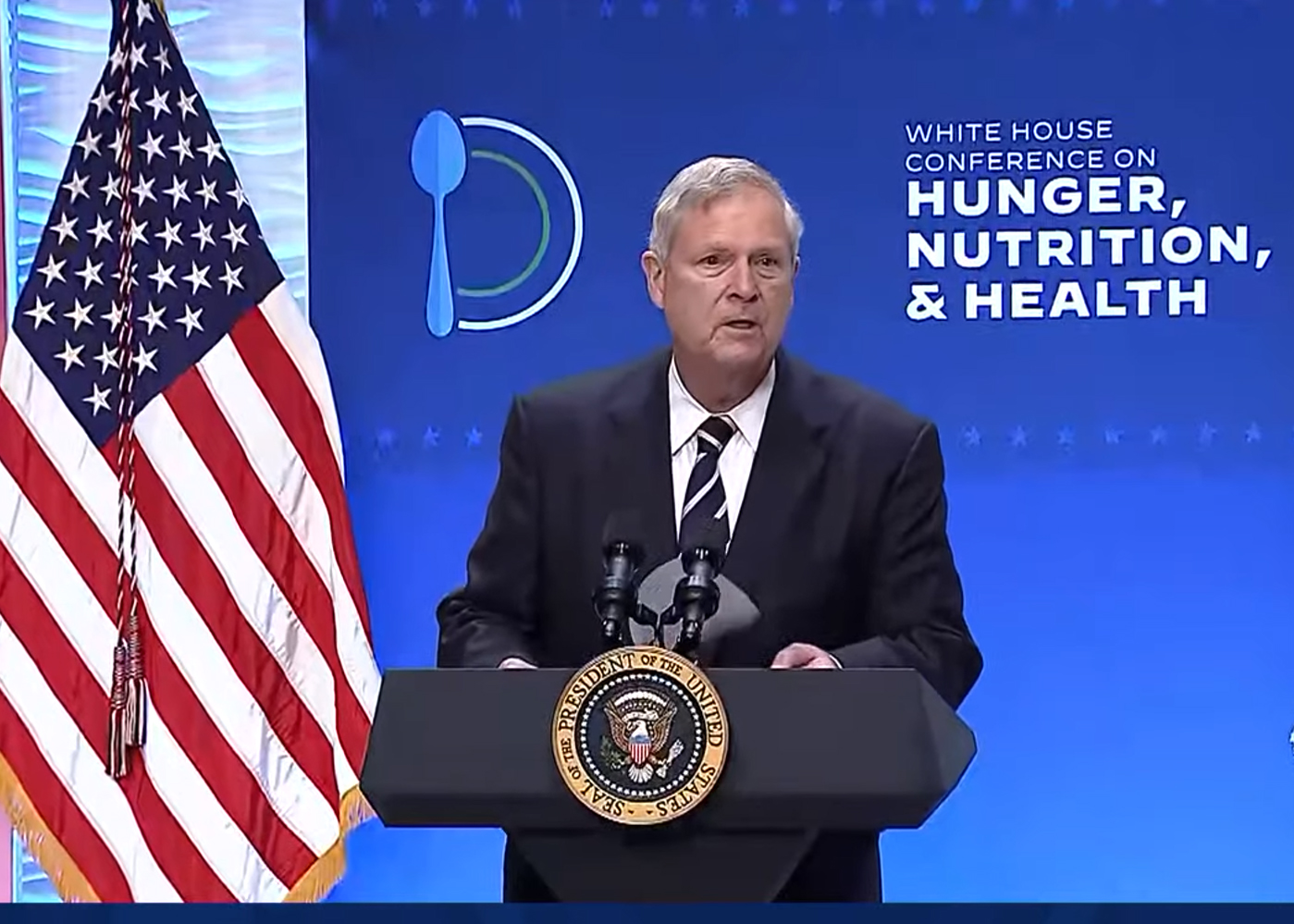
CAPTION: Ag Secretary Tom Vilsack told the White House Nutrition Conference crowd of more than 500 in-person and more than 6000 logged-in virtually that the Administration is looking to extend the child tax credits, provide more funds for more free school meals, and “take nutrition in a new direction using a whole of government approach that involves the entire federal family.” White House Conference screen capture

In his remarks ahead of the President, Ag Secretary Tom Vilsack stated that government programs feed 1 in 4 children. He and Biden both talked about expanding the child credit permanently. They talked about $2 billion in funding for food banks and schools, including $100 million for ‘incentives’ to make school meals healthier. They both noted funding to make free school meals available for 9 million additional children. A laundry-list of throwing money at a problem without re-evaluating the flawed guidelines that run the school meals and other USDA food programs despite preponderance of evidence that saturated fats are not the enemy.

There was talk of going “a new direction” but this is all process-based. There was no talk of reviewing the flawed Dietary Guidelines that helped get us here and that the Biden-Harris strategy puts so much emphasis on.

Parsing through the 44-page National Strategy, the bottom line is to expect more of the same drill-down on eliminating animal fats, only worse and with stiffer process, labeling and speech boundaries through FDA and the FTC.

We can expect nutrition bullying to commence — if we step outside of the still-vague but Dietary Guidelines-centered White House playbook. In fact, in addition to the FDA ‘Healthy’ label update, a small-print detail in the 44-page Strategy promises power and funding to the Federal Trade Commission (FTC) to scrutinize and penalize food marketing claims for being out-of-bounds on the Biden-Harris DGA-scripted nutrition field of play.

Vilsack noted the National Strategy’s approach is a “whole of government approach that involves the entire federal family.”

In preparation for the Conference, many have lamented the lack of transparency leading up to it. For months, the Conference website gave instructions on how to hold a ‘watch party,’ or a ‘satellite event,’ and how to rally support for nutrition and health ahead of time. But all of the necessary details were missing — until the day of the conference. 

Emailed invitations were sent to those who registered just three days before — requesting that they visit a web-portal and record an interview to provide input. There, people respond to White House questions and their faces are added to a streaming screen full of moving mouths — giving the appearance of broad input flowing in from Americans.

Made nervous by the lack of a published agenda or framework, over a dozen agricultural organizations had sent a letter to President Biden on September 8th asking for a “seat at the table.” Those organizations included American Farm Bureau and commodity groups for wheat, beef, sorghum, peanuts, canola, soybeans, barley, corn, sunflower, eggs and rice.

Dairy organizations were conspicuously absent from any of the pre-Conference letter-writing or other such public statements. But then, the dairy industry has its man Vilsack in play, and its DGA 3-a-day – so case-closed – can’t be bothered on the milkfat and whole milk issue.

On the agenda provided the day of the Conference, we found former DMI vice president of sustainability, Erin Fitzgerald — who now serves as CEO of the U.S. Farmers and Ranchers Alliance and who represented USFRA and referenced her boss at the dairy checkoff during a WEF panel in Davos earlier this year — leading a plenary session on “access to affordable foods.” Also, Chuck Conners of the National Association of Farmer Cooperatives led the plenary discussion on “empowering consumers to make healthy choices.”

(We learned after the Sept. Conference that National Milk Producers Federation and the National Dairy Council, funded by the mandatory dairy farmer checkoff, were invited to attend. They were represented, and they brought “student leaders” from GENYOUth. To read NMPF’s statement after the Conference, click here).

Key questions around “what are those healthy choices” to be compassed in tools and identified in FDA labeling went repeatedly unanswered as the discussions focused on approaches and processes, perhaps deeming the unsettled dietary science on fats to be settled science with no need for discussion.

Nutrition Coalition founder, advocate, author and investigative journalist Nina Teicholz has been writing about the Conference for weeks before it began, noting the lack of a pre-conference agenda and the refusal of the Administration to review the science on saturated fats ahead of this ‘landmark’ event.

She points out that the White House delegated Conference planning to the Dean of the Tufts Friedman School of Nutrition Science and Policy at Tufts University Professor Dariush Mozaffarian — developer of the Food Compass, which is a new method for rating and ranking foods in categories to be consumed frequently, modestly, and occasionally.

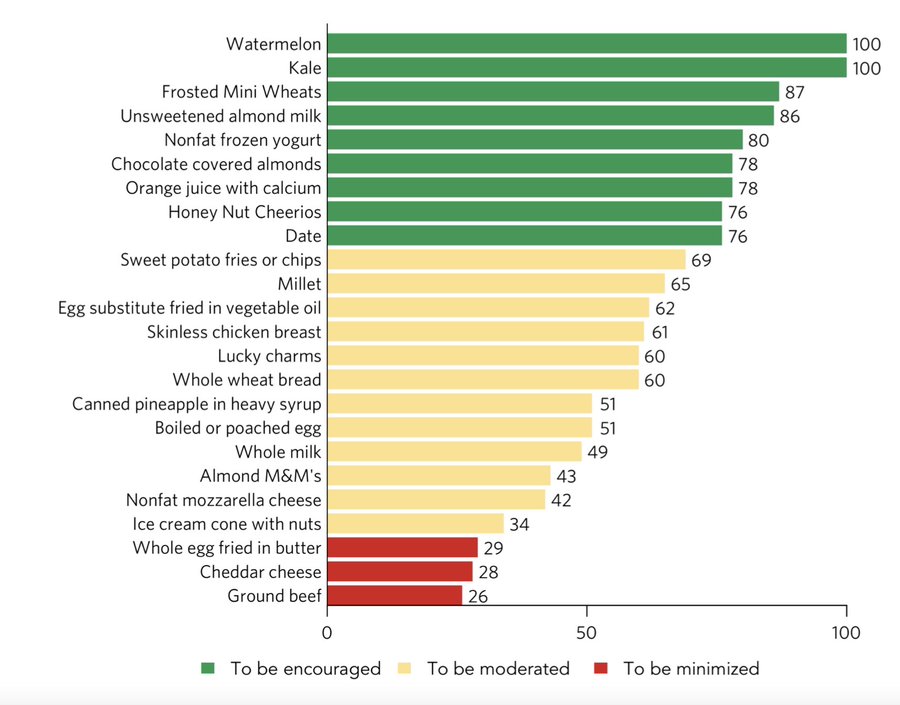
To understand what the Food Compass looks like — sugary cereals rank far ahead of the milk that goes in the bowl with them. And, nearly 70 brand-named cereals from General Mills, Kellogg’s, and Post are ranked twice as high as eggs cooked in butter! Alternative fake milk beverages, such as almond juice, rank ahead of skim milk and far ahead of whole milk. Potato chips (yes, potato chips) are an example of a food that ranks ahead of a simple hard-boiled egg and light-years ahead of whole milk, most cheeses and real beef.

In fact, the only cattle-derived product to get top sector ranking is plain non-fat yogurt. (Surprise: Danone was one of the Food Compass development sponsors). Meanwhile, most cheeses, whole milk, and beef ranked near or at the very bottom of the lowest categories.

Coincidentally, Mozaffarian’s department at Tufts also received a $10 million grant from USDA in November 2021 for a five-year project “to help develop cultivated meat” (aka lab-created meat) through assessment of consumer attitudes and development of K-12 curriculum.

Teicholz laments the lack of consideration by the White House, USDA, HHS and FDA as they ignore many reviews including the most recent state-of-the-art review on saturated fats, whose authors include five former members of the Dietary Guidelines Advisory Committee.

“These are the people who wrote the guidelines saying: ‘We got it wrong,’” writes Teicholz.

Their paper was published in the prestigious Journal of the American College of Cardiologists, whose Editor in Chief named it as one of the top 5 papers of the year. Science like this appears to be off the menu of the White House nutrition playbook.

The entire playbook hinges upon the main tenets of the current Dietary Guidelines for Americans even though the DGAs are being questioned by the scientific community… Even though the DGAs have screened out sound science on dietary animal fats and proteins for at least the past three cycles (15 years)… Even though the rates of American obesity and diet-related illnesses were mostly stable pre-DGA but have risen steadily since the DGA cycles began… And even though these consequences have risen dramatically among children and teens during the past decade since school meals, school milk and a la carte competing foods and beverages were further restricted to the low-fat levels of the DGAs.

What does the White House blame for this poor performance? The playbook cites the Covid pandemic food choices of Americans — stuck at home — for the deteriorated statistics. Unbelievable! These statistics have been deteriorating for decades, especially since 2012.

Looking over the playbook, it closely follows the pattern of FDA’s Multi-year Nutrition Innovation Strategy proceedings that have been quietly underway after public hearings in 2018-19 until the ‘Healthy’ label proposal was announced Sept. 28, 2022.

Appearing in the White House playbook is the proclamation that food and beverage packaging will move toward simpler nutrition guidance under FDA, that an easily recognizable ‘healthy symbol’ will be reserved for front-of-package labeling on those foods the government deems Americans should eat, and a potential ranking system for symbols will be developed for packaging of foods and beverages the federal government deems unhealthy.

This is all coincidentally similar to the Tufts Food Compass, and the substance behind these simplified ‘healthy’ (or not) symbols is a doubling-down on the low-fat DGAs as a primary base metric. Here is a deep dive into the Tufts Food Compass that Mozaffarian, the White House Nutrition Conference Chairman, had a critical role in developing to now be the formation of future food policy. Read the comprehensive analysis here

The National Strategy calls for even more adherence to the flawed DGAs among every sector of the economy beyond government feeding programs, schools, hospitals, and military diets to include foodservice offerings, supermarket layouts, online shopping algorithms, even licensing for all daycare or childcare providers and nutrition certification for these licensed childcare providers – not just those receiving government subsidies for food. 

This is so-called “stealth-health” at its best — or rather its worst.

The Biden Administration professes to be concerned about the 1 in 10 households experiencing food insecurity and the rise in diet-related diseases among the leading causes of death and disability in the U.S. The White House cites data showing 19 states have obesity prevalence at 35% or higher with 1 in 10 citizens having diabetes, 1 in 3 with cancer in their lifetime, and nearly 5 in 10 with high blood pressure. 

Yet, there is no pause for a comprehensive review of the very dietary guidance, the DGAs, that helped get us here. 

The National Strategy reveals how the Administration is assembling executive orders, legislative prompts, calls for action among food organizations, companies, agencies, academia and state and local governments to get everyone on the same page making Davos-style pledges and to conform to the federal playbook.

In the executive summary, the President writes: “Everyone has an important role to play in addressing these challenges: local, State, territory and Tribal governments; Congress; the private sector; civil society; agricultural workers; philanthropists; academics; and of course, the Federal Government.”

(Note Biden’s only reference to farmers or food producers is as “agricultural workers.”)

The playbook’s five pillars talk about improvement, integration, empowerment, support and enhancement. It coins phrases like ‘food as medicine’ and ‘prescriptions for food.’ Reading deeper, we see a launch pad for a new method of nutrition ranking and labeling with the primary factors listed as low-sodium, low-fat and reduced added sugars.

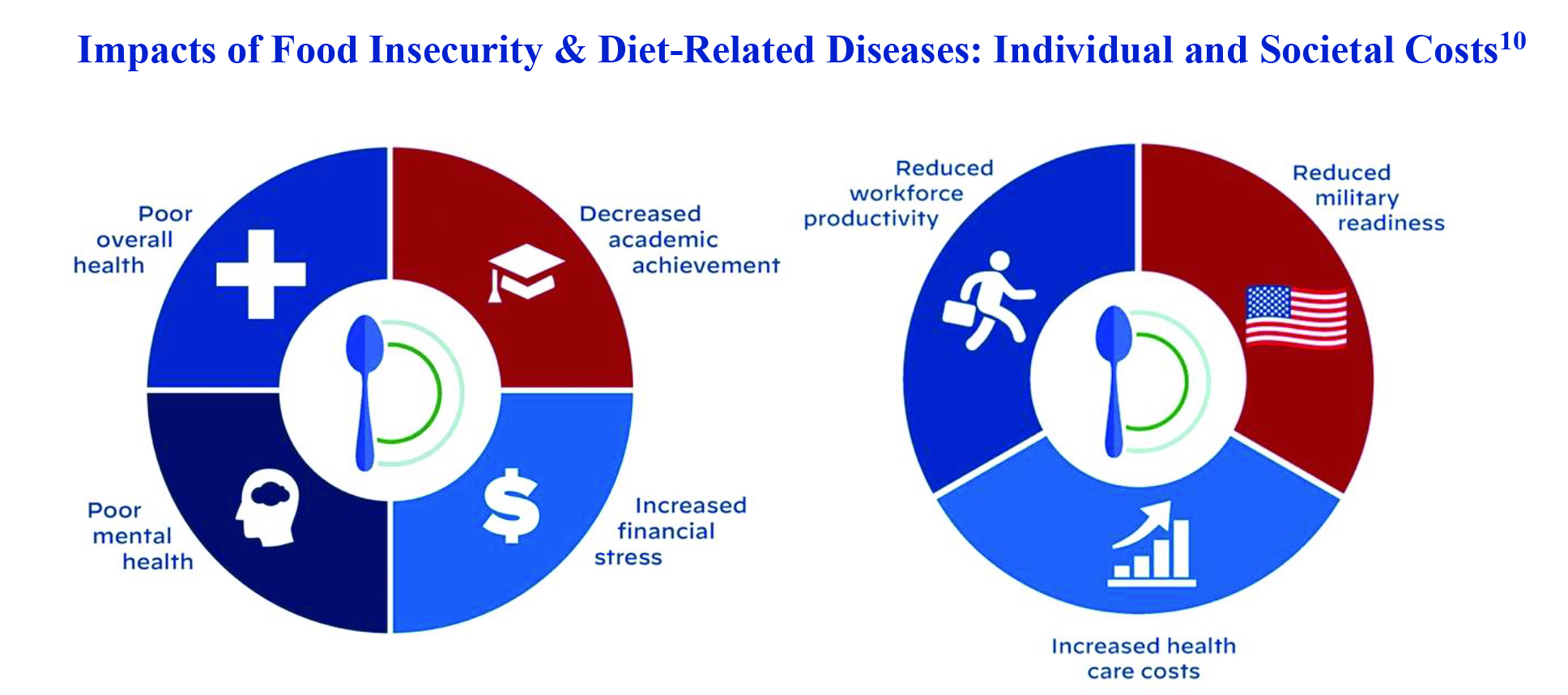
CAPTION: This diagram on page 6 of the 44-page Biden-Harris Nutrition Strategy, the White House ‘playbook,’ clearly identifies the very real concerns, but the pillars of this strategy double-down on perpetuating the problem by giving even more influence to the low-fat / high-carb Dietary Guidelines that many in the scientific community are questioning. The ‘playbook’ also increases the reach of the federal government into the diets of children in daycare and schools. 

The playbook’s diagrams show us the concerning impact of food insecurity and diet-related diseases in poor overall health, poor mental health, increased financial stress, decreased academic achievement, reduced workforce productivity, increased health care costs and reduced military readiness – but then doubles-down on the solution being more of the same low-fat / high-carb dietary path that got us here.

The White House playbook states that, “The vast majority of Americans do not eat enough vegetables, fruits or whole grains and eat too much saturated fat, sodium and added sugars.” But at the same time, on the saturated fat question, the data show per capita consumption of red meat has declined since the start of the DGAs, and milk consumption has substantially declined.

Americans are being called upon to “unify around a transformational vision,” said Biden. 

This vision includes more federal control of diets and nutrition education after failing miserably with the control it already possesses. There is no talk of revisiting the path we are on, just doubling-down on how to get more Americans onto that DGA path, to tell them what to eat, and to put the FDA stamp on ‘approved’ foods and beverages while having the FTC investigate health and nutrition claims that fall outside of the flawed DGAs.

Translation: Let the ‘nutrition bullying’ from the White House bully-pulpit begin. Some of us are ready to rumble.

-30-

Why I’m pulling the Republican lever Tuesday, without exception

By Sherry Bunting

America is in turmoil with so many distractions in our public discourse. By the time you read this editorial, we’ll be a few days away from what could be the most important midterm election in recent memory.

Our nation has gone through tough times of both unity and division throughout its mere 246-year history. It seems that never has it been to this point where we have trouble debating the issues, the policies, the future in a productive way without malice. Some things just can’t be said in the current political environment, and those who do, pay a steep price.

What’s missing is we don’t have healthy journalistic skepticism probing the current government mouthpiece like we did for the previous. More media sources today show an obvious disdain for their common reader, viewer, listener. Instead of bringing the news, providing analysis, asking probing questions and keeping that healthy skepticism toward government edicts, we have media sources playing the role of justifying, of taking the government talking points and coaxing everyone to tacitly believe them.

There is a staleness in the air that is difficult to pinpoint, but it is there. It is the resumption of an interrupted agenda.

In Pennsylvania, the constant barrage of negative ads about Mehmet Oz are hard to take.

The debate last week between Oz and Fetterman, the two candidates for U.S. Senate, was enlightening. I was impressed with Oz, where before I was lukewarm having supported someone else for the Republican nomination. But after hearing his responses on education, social security, medicare, foreign policy, energy, labor and immigration and looking into his background and positions on specific items such as whole milk choice in schools (he supports it), I posted on social media that my lukewarm vote would now be a proud vote for Oz for Senator.

My post was promptly seized-upon by a few ‘friends’ from other states putting me down personally in a condescending manner, instead of continuing a discussion on the actual issues and policies. A tough thing to do when Fetterman could not answer or explain his positions, and could only put words in his opponent’s mouth that contradicted the answers Oz gave to questions in a clear, concise and comprehensive manner.

It got to the point where my simple response to the social media attacks was to tell said ‘friends’ to worry about who they are voting for in their states and I’ll worry about who I vote for as a Senator that I feel represents me in my state.

Not good enough, because they are incredulous at the prospect that the Democrats may lose seats.

You see, we are at an inflection point where a global, corporate, collusion is rapidly underway, a freedom-undermining agenda — that is tied up with pretty words about planet-saving policies.

The train left the station slowly over the past few years. Some of us saw it moving, most of us didn’t worry too much about it. Now it’s careening down the track at a high rate of speed. A derailment is coming. The question is: Can the train be slowed down by a change in Congressional leadership to where the track can be evaluated for pitfalls laid in its path?

Under the current regime, it’s not possible to hold a discussion about the traps and pitfalls being laid around our nation’s food and energy sourcing without being called a climate-denier, a racist, a sexist, a fascist, or worse.

The fabric of independent farms and businesses across this land — those producing the essentials of life that allow America to remain a free country — is being ripped apart by the Economic, Social and Governance (ESG) goals of the world’s largest money managers investing in the biggest global corporations that all pledge to collude – in the name of saving the planet of course – to not only push left-wing policies without healthy debate, but also to undermine the ability of any competitor to continue operating.

At the current rate of speed that this train is traveling, it won’t be long before companies – eventually even farms and food producers – will be effectively shut out of commerce or shut out of access to capital if not meeting ESG goals, which include the contentious implementation of Scope 3 emissions-tracking downstream and upstream through entire supply chains.

Such supply chain configurations are in fact what a billion dollars in USDA spending is going toward developing in pilot programs, aimed at carving out the winners and losers not on competition for what is being produced but on an ESG scoring system that most of us don’t understand except for the few large insiders that have been planning it years before now.

If we continue down this track, consumers won’t be doing the choosing. The former DMI executive who spoke at Davos came right out and said it. Farmers are no longer marketing to consumers. Their new consumer is the investment sector, the money managers, the people behind the people who buy their commodities and secure their mortgages.

We even heard DMI CEO Barb O’Brien mention in a state of dairy report before she was promoted to CEO that the Net Zero Initiative is looking to attract investors to dairy, not so much to attract consumers to drink more milk or eat more dairy products.

At some point, as the left-leaning ‘woke’ elites have admitted publicly at Davos, ESG scoring will ultimately mean tracking individuals. Oh, it will be voluntary at first, with monetary incentives – no doubt. But at the end of the day, Big Brother wants to know everything you and I do, what we eat, where we source it, where we travel, and how we get there.

Food and energy. That’s what this is about. Under the guise of saving the planet, we are poised to give centralized global control over food and energy.

If we can gas up a car, we can go. If we are reliant on a charger or an electricity grid, a centralized control mechanism can come into play. If we are able to access diverse local and regional food sources and supply chains, we remain strong and tied to the farms taking care of the land, but if a global ESG target controls revenue and access to credit, centralized control of food is eminent.

A handful of Republican states have already issued legal challenges to the ESG investing on the basis that it runs counter to antitrust laws and creates anticompetitive behavior — holding some businesses hostage while others are flooded with investment – all to steer our paths on how we source the necessities of our economy, commerce, and life itself.

If America cannot sustain itself, we become pawns in a global game played at the highest levels by the biggest money managers. Republicans are looking at this issue. Democrats are on the train telling the rest of us, find a seat now, before it’s too late.

We see it already in education of our children — first dietary-control, followed by word-control, followed by thought-control.

There is so much competing information flying around from the extremes on the left and right, that we lose sight of the middle where the essence of logic and common sense can be found.

In fact, we’re so busy trying to figure out what is truth and what is gaslighting that we don’t see the real crisis. We can talk about crime and guns, viruses and vaccines, justice and freedom, while missing the point that the unprecedented level of turmoil clouds the transformation that is taking place and will continue to take place quietly in our food supply chain – that which we cannot live without.

From imported food sources to franken-food replacements and from centralized supply chains and foreign ownership of American farmland to policies that will impact the future viability of our nation’s farmers, the very backbone of freedom and security is at risk.

I don’t have full faith and confidence in either party — knowing what lies beneath the surface in this global transformation of food and energy and understanding the way it is being driven by money managers.

But one thing is for sure. I am voting Republican, across the board, for what might be the first time in my life that I didn’t pick and choose more independently.

Why? Because the Democrats are all-in for global transformation, telling us what they are doing, where we are going, how our dissent might be handled in the future… and for me, it appears to be a dangerous seat on a high-speed train without a clue about the real track we are on.

-30-

Fluid milk’s precarious future can’t be ignored

Class I is at a tipping point, will future FMMO strategies strengthen or exploit it?

“Probably some of you have never recently met an independently owned fluid milk bottler. We are the only prisoners in the Federal Order system. Everybody else can opt in or opt out. Even now… our cooperative competitors don’t have to pay their member producers a minimum price — but we do. I just ask that you take into consideration not just what we can get from Class I … We are on a 13-year losing streak that fluid milk consumption has declined on a total basis. We are at a tipping point,” said Farm Bureau member Chuck Turner, Turner Dairy Farms, a third generation independent milk bottler near Pittsburgh, Pa.

By Sherry Bunting, Farmshine, October 28, 2022

KANSAS CITY, Mo. — The precarious future of Class I fluid milk was an underlying concern expressed in different ways at the AFBF Federal Milk Pricing Forum in Kansas City recently. Some have written off the future of fresh fluid milk and have turned sights elsewhere. Others recognize federal orders don’t fulfill their purpose when fresh fluid milk doesn’t get to where the people are. And then there’s the wedge product — aseptic milk — in the mix as some changes have already been made to promote investment in it.

Since the federal orders are based on regulation of Class I fluid milk, its future is most definitely at the core of the Federal Milk Marketing Order (FMMO) discussion. 

A critical point made by panelists is that more money is needed to get fresh milk to consumers in high population areas. Also mentioned was the restoration of higher over-order premiums to farmers in milk-deficit areas to keep these areas from becoming even more deficit.

But at the same time, Class I sales are declining relative to a growing dairy pie of other class products, and the flurry of fluid milk plant closures near population areas has caused further disruption. 

On day three of the forum in Kansas City, Phil Plourd of Ever.Ag attributed most of the fluid milk sales decline to the fact that “milk lost its best friend – cereal.” When asked, he did acknowledge that about one-third of the problem facing fluid milk is rooted in the low-fat school milk requirement. He also pointed out how the entire food industry is changing, and he warned about the lab-created dairy proteins made in fermentation tanks that can be ‘turned on and off.’

Bottom line is the growth markets are in other products, he said. The declining fluid milk sector can no longer shoulder all of the responsibility for the federal order system. 

He showed a bar-graph depicting the decline in the share of total U.S. production participating in federal or state revenue sharing pools. Using estimates of California’s pre-federal order mandatory state order, the percentage of U.S. milk production that was pooled exceeded 80% in 2018. In November of 2018, California became a federal order. Pooled volume vs. total production fell to just over 70% in 2019, the first year the new Class I mover formula was implemented. In 2020, during the pandemic, pooled volume fell to just over 60% and ticked a few points lower to 60% in 2021.

Several panelists, including Calvin Covington, confirmed that cooperatives, especially DFA, own the majority of the fluid milk plants in the U.S. today. This evolution has only increased with plant closures over the past 18 months, and cooperatives have payment and pooling flexibilities not enjoyed by proprietary plants.

As the Class I sector consolidates to roughly 80% owned by cooperatives and the balance owned by grocery chains and independents, there is another problem with federal orders that is easily overlooked. Who is it regulating? It does not regulate what cooperatives pay their members, therefore, it is regulating a declining number of participants in a growing global industry.

A milk bottler from Pennsylvania used the open-microphone between panels to address this 800-pound gorilla in the room full of consensus-builders doing their level-best to ignore it.

“I am sort of an ‘odd duck’ here. Probably some of you have never recently met an independently owned fluid milk bottler. We are the only prisoners in the Federal Order system,” said Chuck Turner, a long-time Farm Bureau member and third-generation milk bottler from Pittsburgh.

“Everybody else can opt in or opt out. Even now, with recent developments, our cooperative competitors don’t have to pay their member producers a minimum price — but we do,” he confirmed.

Turner asked the room of consensus-builders to “take into consideration not just what we can get from Class I — but let’s think more about what we need to do to sell it. We are on a 13-year losing streak with Class I — 13 years that fluid milk consumption has declined on a total basis. We are at a tipping point,” said Turner.

While half of the forum’s table groupings agreed Class I differentials need to be increased, others wondered how much more money can be extracted from Class I without killing it?

Joe Wright, former president of Southeast Milk Inc., laid out the problem as a “downward spiral” — making it more difficult to attract milk to populated areas in the Southeast. He said it started with the Dean and Borden bankruptcies and continues with more plant closings announced every few months.

In the Southeast, said Wright, it’s to the point where school kids won’t get fresh milk in some areas because no one will bring it.

He noted that the over-order premiums in Florida have decreased by $1.50 per hundredweight. Some 30 years ago, it was $3.00. “We don’t have that now,” said Wright, noting this makes it difficult for farms to continue producing milk for the Class I market in the face of encroaching subdivisions and other pressures to sell.

“There are 9 million people just from Miami to Orlando,” said Wright. “But if we don’t do something soon, we’ll have no dairy farms left in Florida. Do we want the answer to be a push to aseptic milk? Total milk consumption was stable until 2010. That’s when the government gave us low-fat, low-taste milk in schools. Now, we’re going to start them with low-fat, low-taste, aseptic milk? That is going to kill fluid milk.”

He also noted that fluid milk sales are not helped when dairy shelves are empty, showing slide after slide of empty Walmart dairy cases in the same town in Florida in December – three years straight (pre-Covid, during Covid, and post-Covid). When he asked attendees if they have seen this in their own areas, many hands were raised.

He pointed out that when the fresh milk is completely missing on store shelves, it is the aseptic or ESL milk – and plant-based alternatives – that are available. This has a cumulative effect on fresh fluid milk sales.

Again, the topic of aseptic, shelf stable, warehoused milk was brought up with feelings of ambivalence as milk producers are both drawn to it as a hedging mechanism to even-out the supply and demand swings in areas like the Southeast, but on the other hand offended by the prospect that this product can be considered by bottling retailers like Kroger as an innovative “value added” growth category, while the original fresh fluid milk is treated like the Cinderella sister – a low-margin commodity non-growth category.

As more aseptic packaging comes on line, and as schools go without milk and stores short customers on the availability of fresh milk, a transition is being signaled toward packaged milk that is capable of moving farther without refrigeration cost — from anywhere to anywhere – right along with Coke or Pepsi for that matter.

“How do we fix the empty case syndrome that has gotten worse over the years? It’s all about being accountable,” said Wright, giving some history on how this was handled in the past and voicing his hope that having the Dean plants under DFA and Prairie Farms ownership could help.

“Can they push back on Walmart on stocking? I don’t know. There has to be margin in that relationship, but these are correctable problems that affect milk sales,” he said.

For its part, Kroger also closed a plant last year that was running half-full, according to Mike Brown, senior VP of Kroger’s dairy supply chain. 

Milk bottling is consolidating rapidly to run the remaining plants at or above capacity to capitalize on throughput and improve margin.

“The reality,” says Wright, “is we are seeing a downward spiral, and milk is not always available where the people are. The question is, what are we going to do about it?”

Brown noted that the Class I mover formula change, which was an agreement by IDFA and NMPF in the 2018 farm bill, was intended to make fluid milk pricing “more predictable.” This was deemed necessary to attract investment to make fluid milk “more durable and transportable.”

In short, the Class I change was done to attract investment in expensive aseptic packaging to make shelf-stable milk and milk-based high protein beverages. 

Going forward, said Brown: “Risk management is important and especially for specialty products such as extended shelf-life and aseptic milk, which are growing more than the plant-based beverages for Kroger. We have to be sure we nurture these new products because they are value-added growth markets for fluid milk.”

On the other hand, farmers in Kansas City voiced their concern for what happens to fresh fluid milk, that it matters for consumers and it matters for their dairy farms, and it also matters for the continuation of the federal orders. 

Aseptic milk is experiencing growth, but why? Is necessity the mother of invention or is the investment driving the necessity. 

After all, it is the regional and perishable nature of fresh fluid milk that led to the development of the federal orders in the 1930s. Aseptically-packaged and warehoused milk is not fresh enough — and may not be local enough — to be the product that helps extend the viability of the federal orders.