Covering Ag since 1981. The faces, places, markets and issues of dairy and livestock production. Hard-hitting topics, market updates and inspirational stories from the notebook of a veteran ag journalist. Contributing reporter for Farmshine since 1987; Editor of former Livestock Reporter 1981-1998; Before that I milked cows. @Agmoos on Twitter, @AgmoosInsight on FB #MilkMarketMoos
RONKS, Pa. – What better place to be on a chilly evening 12 days before Christmas than in a stable with cows as a family goes about their evening milking and feeding? How fitting to remind the public not just about where their milk comes from, but also the way the Lord Jesus entered this world as a baby, wrapped in a manger, in a stable, with cattle lowing His lullaby.
The second annual Christmas with the Cows at the Melvin Stoltzfoos farm was a big hit, drawing double the attendance of 380 people from six states to the 50-cow dairy in Ronks, Pennsylvania.
While many visitors came from all around Lancaster and nearby counties, many also came from other parts of the state as well as New Jersey; Long Island, New York; a few from Delaware and Maine; and an over-the-road trucker brought his family from Houston, Texas after seeing the signs.
Local attendees like Bridgette Zell of Nottingham said they saw the event posted on Facebook. She brought her two young boys to see what it was all about. Bridgette had the quote of the night as she stopped by the 97 Milk table, where GN Hursh of Ephrata and Nelson Martin of Robesonia were the volunteers handing out stickers, 6×6 cards, small magnets, and other informative goodies.
“I get so tired of people saying milk is not for humans,” she said. “When I was growing up, if any of us didn’t feel well or had something wrong, my mother would tell us: ‘Drink a glass of milk see how you feel!’”
One of her boys, Dylan, was thrilled to pet his first cow. He quickly learned the Jerseys were more curious to bring their noses right up to his hand. “This one must give chocolate milk!” he said about the brown cows, flashing a great big smile.
“Well, they are more curious than their black and white herd mates,” I responded while capturing his photo, “and their milk is richer in fat and protein, but we still have to add the chocolate.”
The whole event is a leisurely walk around the barn during chore time, culminating at a table with whole milk, chocolate milk and homemade Christmas cookies.
This was not a fancy event, but rather a time to simply take in the serenity while the Stoltzfoos family — from the littles on up — shared the blessing of their stable routines with the public.
“People ask me what do we get out of it? It’s really just seeing people have fun. Seeing people have fun with the cows is what we get out of it. Everyone I talked to was happy and in a good mood. People were tickled to have the opportunity to just be in a barn,” says Melvin.
And along the way, they learn something too. Upon entering, visitors are given a paper with fun facts about Agriculture and the nutrition of delicious whole milk, along with a welcome note with facts about the farm — names of the draft horses, facts about Holsteins and Jerseys in the herd, fun facts about cows and what they eat. Visitors also receive a thank you card with the Christmas story as told in Luke 2:11-16 and the Reason for the season as told in John 3:16-17.
Melvin and his family truly love doing this. They are already thinking about next year’s Christmas with the Cows, marked on the calendar for Dec. 12, 2025.
The host family’s youngest daughter is pleased to have the calf feeding responsibility.
Feeling blessed to be dairying, Melvin and his family want to share this gift with others — the quiet rhythms of milkers pulsating and cows munching, the soft sounds of their lowing, the nickers from the horse stalls, the rustling of calves at feeding time, the sight of clean, contented, cows in their stalls, placidly chewing their cuds as the family moves the milkers down the row, amid casual conversations answering any questions the visitors may have.
“It’s not about us,” says Melvin. “It’s about the cows. It’s about people having the opportunity to see the cows.”
The largest crowd came early, lined up right at the start of the evening milking at 4:30 p.m. Visitors continued to flow in steadily right up until the advertised ending time of 7:30 p.m. The family rented portable toilets and tower lights, placed outside. They cleaned and emptied the loafing pen to make way for the 97 Milk table and refreshments.
Half a dozen people from Sensenig’s Feed Mill in New Holland volunteered their time too. Nancy Sensenig manned the registration table, drawing people in with her ready smile and outgoing nature, while dairy nutritionists Kyle Sensenig, Steve Morris and Justin Brenneman answered questions about dairy cows and what they eat.
Other volunteers guided traffic to parking, and Mike Sensenig was encourager in chief – walking around all smiles throughout the evening, talking with visitors.
“Melvin does a really good job here, and we support this because it’s grassroots,” says Kyle. “We like to get behind grassroots efforts that are an outreach to our community and consumers.”
He observed a few repeat families who came out last year, but mostly, he shares: “We saw a lot of new faces tonight.”
When asked what tough questions he may have encountered, he says it was really a relaxed evening, people were here out of genuine curiosity to experience something new that dairy farmers see and do every day.
He did get questions about grass-fed dairies and took the opportunity to broaden that discussion to recognize not all feeding systems are the same. He shared that these cows were getting grasses in their feedstuffs, and that cows are superheroes, able to utilize a wide variety of feedstuffs to make nutrient dense milk.
“The important thing is we want to have healthy and content cows, and that’s really what drives every dairy farmer,” he relates.
As I walked through with a group of visitors from southern Lancaster and Chester counties, the conversation turned to A2 milk. Melvin talked about his own progress toward a herd now 75% A2 through the bulls he selects for breeding. In his quiet manner, he demonstrated the reassuring message about how dairy farmers are always looking to improve and put their best quality forward.
97 Milk is a 501(c)3 non-profit. Donations are tax deductible.
By Sherry Bunting, Farmshine, November 22, 2024
EPHRATA, Pa. – Farmshine readers are no-doubt aware of the work of the volunteers operating the 97 MILK education efforts. But awareness and thank you’s don’t pay the bills.
First of all, 97 MILK is a 501c3 non profit, meaning donations are tax deductible.
Secondly, 97 MILK is managed and operated by volunteers. Not a single person doing any of this great work is paid a dime or a nickel (not even a penny) for their time and only in some cases are personal expenses for projects reimbursed
97 MILK has made huge strides on literally a shoestring budget.
However, even the frugal cannot survive without donations because printers have to be paid for printing materials like the popular and eye-opening 6×6 cards.
Website hosts and programmers have to be paid to keep the platform up and running.
When whole milk isn’t donated for an event, it has to be purchased.
When dieticians or other experts are interviewed for a Q&A at the website or on social media platforms, they expect their expert time to be paid.
Boosting the best and most informative ad posts on facebook also comes at a cost.
The list goes on, and it doesn’t even cover the things 97 MILK wants to do that are expensive, like BILLBOARDS.
There’s a reason Nelson Troutman started this movement by painting a wrapped round bale, or BALEBOARD — because the billboards were too expensive, but wouldn’t it be nice to amplify the good work of 97 MILK with a few larger than life billboards?
These are tangible costs that surround the small but strong and dedicated army of 97 MILK volunteers.
When it comes to the content created, the daily social media posts, the educational printed materials, the interactions with followers to answer their questions on social media, the constant monitoring of social media conversations, along with the answering of emailed questions at the website question desk, the compiling of new information for the website designer to keep it refreshed, the staffing of booths at consumer-facing events, the painting of bales, the miles driven, time spent talking to consumers, time spent designing eye catching ads to show consumers, time spent actually communicating with consumers – that is all done by volunteers who take time away from their paid livelihoods to voluntarily promote whole milk education, often not even being reimbursed their personal costs for supplies.
We are in the season of Thanksgiving. A great way to show some gratitude to the hardworking 97 MILK volunteers is to help keep the boat afloat with a donation. Apart from a few regular givers, donations have not come into this volunteer effort for a long time, and the shoestring is baring thread, despite the important advances this educational effort has made for dairy farmers and the many agribusinesses that serve and depend on them.
A recent Dairy Foods Magazine website panel discussed the State of the Dairy Industry in 2024. One panelist observed that their monitoring data show a 30% increase in social media conversations about milk and dairy products. We can chalk some of that gain up to 97 MILK, posting six days a week and reaching hundreds of thousands of consumers every quarter, with many reacting and having conversations with 97 MILK volunteers — engaging directly.
The website, alone, is averaging 200 users per day, most of them new users. That’s a big number.
Total page views at 97milk.com were 11,000 over the past 30 days – another big number.
Facebook reached tens of thousands of people last week, without any paid ads, but reaches tens of thousands more with boosting. Of these numbers, the nationwide reach is broad. Nope, they don’t all come from Pennsylvania. The places with the highest views register as California and Texas, along with states all in between East to West and North to South.
Of the website interactions, the No. 1 draw is the Milk Facts section. Visitors to the website spend an average of 2 minutes and 40 seconds there. In today’s fast-paced digital world, that’s a long visit!
97 MILK is doing things right.
And guess what? Have you read the Oct. 16, 2024 Farmshine story about fluid milk trends? Do you read Market Moos keeping you up to date on the monthly estimated packaged fluid milk report by USDA?
Fluid milk sales are UP year-to-date over year ago, and have been trending this way since partway through last year. In fact, the long-term fluid milk sales downturn was slowed and flattened ever since 97 MILK was formed in February 2019. But in the past 18 months, it’s turning slightly higher. There is momentum now — enough that industry trade organizations and other farm publications are beginning to take notice.
This is spurred by the big increases in whole milk sales as one of the main categories turning the trend around when looking at the volume, not just the percentage of increase on a smaller volume category. Whole milk sales are up 21% since 2019 when 97 MILK was formed.
Consumers want to eat and drink more healthfully. They want to know about milk!
97 MILK has caught their attention, piqued their curiosity to learn more, and helped reveal the details about the nutrition in a glass of whole milk. Not to mention, the Whole Milk for Healthy Kids Act that passed the House of Representatives 330 to 99 last December got this far because of one thing: Whole Milk Education.
Whole milk bill champion, Representative G.T. Thompson, Chair of the House Ag Committee, said it best during a 97 MILK meeting attended by farmers in 2021, and he’s repeated similar statements at other meetings and panels where the subject of whole milk in schools comes up:
“Keep doing what you are doing with the well-designed combination of influencing, marketing and providing factual information. Keep up the education. It’s working,” said G.T.
I personally want to thank each and every person who has donated funds and / or donated their time to help keep this whole milk education movement going. Thank you 97 MILK for all you’ve done for America’s dairy farmers and consumers – and above all for America’s children!
So, what are you waiting for? Want 97 MILK to continue and do more? If so, go to https://www.97milk.com/donate/ and prove it, or mail your donation to 97 MILK, PO Box 87, Bird In Hand, PA 17505.
Standing with U.S. House Ag Committee Chairman, Glenn ‘G.T.’ Thompson are some of the volunteers who participated in the legislative staff briefing on G.T’s Whole Milk for Healthy Kids Act, including a June Dairy Month celebratory Whole Milk Bar at the Capitol in Washington on Tuesday, June 13. Congressman G.T. says he wants to reach 150 to 200 cosponsors before it comes to the House floor for a vote. Currently, there are 128 cosponsors representing 43 states (103 R’s and 25 D’s), and the Education and Workforce Committee recently passed H.R. 1147 in a bipartisan 26-13 vote. From left are Christine Ebersole, a school nurse in Blair County, Pa.; John Bates, executive director of The Nutrition Coalition; Nelson Troutman, a Berks County dairy farmer and 97 Milk Baleboard originator and his granddaughter Madalyn, the 2022-23 Lebanon County, Pa. Dairy Maid; Congressman G.T. Thompson (R-PA-15), the champion and prime sponsor of the Whole Milk for Healthy Kids Act; Sara Haag, the 2023-24 Berks County Dairy Princess; Krista Byler, a school foodservice director in Crawford County, Pa.; Sherry Bunting, Farmshine contributor and volunteer advocate for whole milk in schools. Photo credit: Maddison Stone
By Sherry Bunting, Farmshine, June 16, 2023 with June 23 update
WASHINGTON – “Wouldn’t it be great if we could unite the country with whole milk?” That question was posed by a fellow journalist in the Southeast, Julie Walker of Agrivoice, as I was updating her about the grassroots effort to bring milk education and the choice of whole milk to schools.
After the events of the past two weeks, my answer to that question is: Yes, I believe we can and we are… seeing the fruits of the labor of grassroots volunteers.
On Tuesday, June 13, the Grassroots Pennsylvania Dairy Advisory Committee and 97 Milk were part of a legislative staff briefing hosted by Congressman G.T. Thompson and his staff at the Longworth House office building on Capitol Hill in Washington. This had been planned weeks earlier, before Thompson’s bill – the Whole Milk for Healthy Kids Act, H.R. 1147 – passed the Education and Workforce Committee on June 6 in a bipartisan 26-13 vote.
This week, the identical bipartisan Senate companion bill was introduced on June 13 by prime sponsor Senator Roger Marshall, a Republican and medical doctor from Kansas and prime cosponsor Peter Welch, a Democrat from Vermont along with other bipartisan cosponsors.
Allow me to take you behind the scenes of the June 13 legislative staff briefing on Congressman Thompson’s House bill and why it gives me hope to see people rediscovering and uniting behind the effort to legalize whole milk in schools so children have true access to the most wholesome nutritional beverage, milk.
What becomes apparent is that children are not benefiting from milk’s nutrition when their choices at school are restricted to fat free and low fat. They should be able to choose whole milk and 2% milk that are currently banned by federal nutrition standards, and they should be able to continue to choose flavored milk, which USDA is considering restricting to only high school students.
“Milkfat was demonized as a part of the child nutrition standards, especially since 2010… and we’ve seen a lot of waste and unopened milk cartons at school cafeterias because (fat-free/low-fat milk) is not a great milk experience for kids. Meanwhile, we’ve seen a significant increase in childhood obesity. If they don’t have access to milk they like, they will drink something, and the alternatives won’t give them milk’s essential nutrients or be as satisfying,” said Rep. Thompson. “Everything has its own time, and I’m pleased that we’ve gotten to this point with the bill and appreciate the panel here today to share and answer the question: ‘Why whole milk in schools?’”
Two school professionals from the grassroots advisory group were on the panel: Krista Byler (second from left) of Spartanburg, foodservice director for Union City Area Schools and Christine Ebersole RN, BSN, CSN (left) of Martinsburg, school nurse at Williamsburg Community School District. They were joined by John Bates (second from right), executive director of the Nutrition Coalition, a nonprofit founded by Nina Teicholz, author of The Big Fat Surprise; as well as Paul Bleiberg (right) of National Milk Producers Federation.
Around 25 to 30 staff members working for Representatives and Senators from both parties attended for the entire briefing. That may not sound like a lot, but for this setting, and the constantly changing schedules during floor votes, hearings and meetings, it’s a big deal. The event was by invitation and targeted key legislative offices for an educational briefing on the bill.
It was Congressman Thompson’s idea to have a “whole milk bar,” so our crew brought 100 half pints of whole milk — unflavored, chocolate, strawberry and mocha — donated by the Lesher family of Way-Har Farms, Bernville, Pennsylvania. We added some full pints of flavored and unflavored milk picked up at two convenience stores on the way (Rutter’s and Clover) to be sure we had enough as we heard interest in the briefing was growing.
We baked fresh strawberry cheesecake cookies with butter and cream cheese, and brought a few other types of cookies, as well as cheese snacks and nuts, arranged a nice table, kept the milk iced cold (that was a fun challenge through security scanners).
We brought with us Berks County Dairy Princess Sara Haag and former Lebanon County Dairy Maid Madalyn Troutman. Ebersole brought her daughter Vanessa Wiand, an elementary school teacher.
Nelson Troutman (right) with our driver Frank Tomko
Berks County farmer and Drink Whole Milk 97% fat free Baleboard originator Nelson Troutman was part of our crew, and he made sure the van we rented for travel had several 97 Milk magnets for the ride.
I provide these details because here’s the deal: Each person in our crew is a volunteer among the many volunteers working on the whole milk in schools issue, not just in Pennsylvania, but in other states as well.
Sara and Madalyn handed out the 6×6 cards designed by Jackie Behr at 97 Milk that visually show what milk provides nutritionally. It’s an impressive piece. They also handed staffers a business card with a QR code (above) that they could scan to reach the online folder to a video created by students and technology teacher at Krista’s school as well as finding other important information about whole milk and the Whole Milk for Healthy Kids Act. On the table next to the whole milk bar was a one page handout with bullet points, and 97 Milk provided milk education tabletop displays.
As Congressman Thompson talked about “ruining a generation of milk drinkers with failed federal nutrition policy,” he praised the bipartisan support for H.R. 1147 and noted the 107 cosponsors in the House (as of June 13, the number as of June 23 is 128 and counting).
That’s a large number by historical standards, but Thompson wants to get to 150 cosponsors by the time the bill is officially reported to the House, which will be soon.
There is still time, and it is still important to keep contacting members of Congress to ask them to consider cosponsoring the Whole Milk for Healthy Kids Act in the House, and thank them if they already have signed on.
Ebersole shared with staffers her perspective as a nurse, what she observes, what milk nutrition means for children.
“I thought it would be interesting to compare BMI (Body Mass Index) screenings when whole milk was served in schools with the recent screening where students have been served only skim and 1% milk. The results of the comparison are striking (above). The overweight and obese categories for students in grades 7-12 in 2007-2008 school year was 39% with 60% in the proper BMI scale. In the year 2020-2021, after being served low fat milk during school hours, the overweight and obese categories were increased to 52% while the recommended range was decreased to 46%. That is a 13% increase over the past 13 years!” said Ebersole.
“While one cannot assume that the low fat milk alternatives are the only determining factors, they certainly did not have the intended outcome of reducing obesity in school age children,” she said.
Ebersole explained that, “Whole milk is a nutrient dense food and with its natural combination of protein, fats and carbohydrates, it is called Nature’s most nearly perfect food. Whole milk also provides satiety, which is stabilizing for blood sugar as well as feeling fuller longer thus decreasing food intake. Another important quality is that students prefer the taste of whole milk compared to the reduced fat and skim milk options.”
Byler talked about the trial at her school in the 2019-20 school year. She explained that the milkfat restrictions at school have led to a loss of school milk consumption with results that are far reaching.
“We are now hearing of very early onset osteoporosis and an increase in malnutrition and/or obesity. It is shameful that our youth cannot have a choice of a wholesome, nutritious product that is farm-to-table/farm-to-school,” said Byler. This, and the amount of milk wasted daily prompted the school trial.
She provided slides of the trial results and talked about how half of the students didn’t really know whole milk was not allowed. This means they didn’t know how good milk can be.
“The results of the trial were astounding. When offerings were expanded to include whole and 2% milk, the amount of wasted milk was reduced by 95% and we saw a 52% increase in students choosing milk,” said Byler, explaining that the student council did actual milk collection data as part of an environmental project.
She also shared results of her survey of the elementary school children showing that if this latest possible restriction on milk options for schoolchildren is approved by USDA, fewer than 25% of students currently taking and drinking the milk say they would continue taking milk and drinking it if flavored milk were not offered.
“That’s huge,” said Byler.
That means we would see even more reductions in milk consumption at school and more waste. This struck a chord because when Byler presented the 2019-20 trial where her school offered whole and 2% along with fat free and 1% milk, for trial purposes, we heard audible gasps among those attending the briefing when Byler shared the data on the reduction of wasted milk. ((The students also created a video about school milk, view it here.)
We also saw reactions while Ebersole was sharing her analysis of student BMI data over the past 13 years.
Both women concluded by sharing a heartfelt message about how important dairy farmers are to communities, how they care for their cattle and work to provide a high quality nutritious product, and what it means to them for children to be able to choose milk they love so they can benefit from the nutrition the milk provides.
“As the wife and granddaughter of proud Pennsylvania dairymen, I knew the decrease in milk we were ordering for schools would impact dairy families. I know firsthand about the dairy farmers we have lost,” said Byler. “What I know based on 18 years in school nutrition, raising two children and being part of two dairy families is that restricting milk offerings to our school children does not benefit our children or our dairies. It benefits big corporations who have exponential marketing power and are preying upon our youth.”
School nurse Christine Ebersole and her daughter Vanessa Wiand, an elementary teacher at the briefing.
Ebersole noted that, “Being born and raised on a dairy farm and having lived in the dairy community all my life, I can say I know something about the American Dairy Farmer. They are on call 365 days a year and 24 hours a day. They care about their animals and also care about their neighbors. When a tragedy happens like a fire, the neighbors come together. Dairy farmers work diligently to bring a wholesome natural food to us. Let’s do our part to support this industry by allowing students to have a choice of a delicious, nutritious whole food, whole milk,” she said.
For the Nutrition Coalition, John Bates explained they are a non-profit, non-partisan organization that seeks to improve health in America by ensuring that the public gets evidence-based nutritional advice. They emphasize good science, transparency, and methodology and receive no industry funding.
“When the Healthy, Hunger-Free Kids Act was enacted in 2010, milk became counted as part of that less than 10% of calories from saturated fat, when previously it had been in its own, separate beverage category,” said Bates.
He noted that the U.S. Dietary Guidelines that these rules for schools are based on “never reviewed studies on dietary fat specifically for children until 2020. Children have just been assumed to be like adults, but children are different: they need more protein for their growing bodies and more fat for their growing brains,” said Bates.
The Guidelines in 2020 cite a single clinical trial on school-aged children, ages 7-10 (“DISC,” funded by the NIH). It showed ‘Modestly’ lowered LDL-cholesterol, he explained. “Yet the study was not on a normal population. The expert USDA committee acknowledged this study could not reliably be generalized to a larger population
The bottom line, said Bates is that expert committees have found “insufficient evidence” to show that restricting saturated fats in childhood could prevent heart-disease or mortality in adulthood.
“In our view, a single trial on an atypical population is not enough to make population-wide guidelines to all American children,” he said.
Paul Bleiberg for National Milk Producers Federation focused his comments on the problems with underconsumption of dairy.
“Milk is the number one source of three of the four food nutrients of public health concern as identified by the DGA’s — calcium, vitamin D and potassium. Dairy delivers 7 of the 14 nutrients the American Academy of Pediatrics recommends for optimal brain development as well as nutrients vital for immune health and bone growth and development during a child’s school-aged years,” said Bleiberg.
“The 2020 DGA Committee found that 79% of 9 to 13 year olds fall short of recommended dairy intake and the data from MilkPEP show that students take less milk and throw away more milk at schools when they do not have options they like,” he added.
Before, after and during these four short presentations on whole milk choice in schools, staffers trickled in, gathered around the whole milk bar and had conversations.
In fact, when news began to spread through texts and emails that there were milk and cookies in room 1302 — more staffers came and went. Connections were made around good food and delicious, nutritious milk.
From congressional staff we heard appreciation and these words: informative, enlightening, authentic, delicious!
Those four words give me hope that we can unite with whole milk… for our children and our dairy farmers.
June 23 UPDATE: This was another good week for the Whole Milk for Healthy Kids Act in Washington, and here’s how you can help…
As of June 23, the bipartisan Whole Milk for Healthy Kids Act, H.R. 1147 grew the number of cosponsors to 128 including prime sponsor G.T. Thompson (103 Republicans, 25 Democrats). These cosponsors represent 43 states.
Texas tops the list with 13, followed by Pennsylvania 10, New York 8, California, Florida and Wisconsin at 7. Maine, Idaho, Iowa, North and South Dakota and Wyoming have fewer Representatives and their full delegations are on board. Wisconsin is nearly 100% with 7 of their 8 Representatives signed on.
The 43 states now represented are listed in the order of number of cosponsors vs. the total number of representatives for the respective states: Texas 13 of 36, Pennsylvania 10 of 17, New York 8 of 26, California 7 of 52, Wisconsin 7 of 8, Florida 7 of 28, Georgia 5 of 14, Indiana 4 of 9, Iowa 4 of 4, Michigan 4 of 13, Minnesota 4 of 8, North Carolina 4 of 14, Illinois 3 of 17, Virginia 3 of 11, Washington 3 of 10, Alabama 2 of 7, Arizona 2 of 9, Connecticut 2 of 5, Idaho 2 of 2, Kansas 2 of 4, Kentucky 2 of 6, Maine 2 of 2, Missouri 2 of 8, New Jersey 2 of 12, Ohio 2 of 15, Oklahoma 2 of 5, Oregon 2 of 6, South Carolina 2 of 7, Tennessee 2 of 9, Arkansas 1 of 4, Colorado 1 of 8, Hawaii 1 of 2, Louisiana 1 of 6, Maryland 1 of 8, Mississippi 1 of 4, Nebraska 1 of 3, Nevada 1 of 4, New Mexico 1 of 3, North Dakota 1 of 1, South Dakota 1 of 1, Utah 1 of 4, West Virginia 1 of 2, and Wyoming 1 of 1.
To reach all 50 states, here’s what we need in the East: Delaware, Massachusetts, New Hampshire, Rhode Island, and Vermont. In the West: Alaska and Montana. Is your state on the list? Is your Congressional Representative a cosponsor? Make the call! Go to this link to see the bill’s progress and cosponsors, and click “contact your member” on the right to find your Representative.
Call Senators too. On June 13, the bipartisan Senate companion bill, S.1957, was introduced by Senator Roger Marshall, a Republican and medical doctor from Kansas, along with prime cosponsor Peter Welch, a Democrat from Vermont. Also cosponsoring right out of the gate are Democratic Senators Kirsten Gillibrand of New York and John Fetterman of Pennsylvania; Independent Senator Angus King of Maine; and Republican Senators Ron Johnson of Wisconsin, Chuck Grassley of Iowa, Susan Collins of Maine, Cindy Hyde-Smith of Mississippi, and James Risch and Mike Crapo, both of Idaho. As of June 23, that’s 11 Senate sponsors from 9 states. Maine and Idaho have both of their respective Senators on board!
Good afternoon honorable Chairman, members of Congress, farmers, colleagues and friends. Thank you for this opportunity to make comments on the importance of the federal farm bill.
My name is Sherry Bunting. For 40 years, I have served as an ag journalist. Before that I milked cows. I am a volunteer resource person with the Grassroots PA Dairy Advisory Committee, which I am representing today. The grassroots committee works with the separate volunteer 97 Milk education effort that began when Berks County dairy farmer Nelson Troutman painted a round bale ‘Drink Whole Milk 97% Fat Free.’
Our main effort is to educate policymakers about the importance of children having the simple choice of whole milk in schools. We thank Congressman GT Thompson and the cosponsors of The Whole Milk for Healthy Kids Act in the last legislative session and hope to see it become reality in the next session.
We understand this does not fall within the farm bill; however, there are some intersections.
Bottomline:
We believe children should be able to choose nutrient dense whole milk that they will enjoy and therefore actually consume in school meals and other USDA-funded nutrition programs.
We believe farmers should be free to offer children the quality product they actually produce and be free to use their own mandatory promotion checkoff funds to promote what they produce: That would be the nutrient dense whole milk that is naturally 3.25 to 4.5% fat, mostly standardized at 3.25% fat – or virtually 97% fat free.
Under the Nutrition Education part of the Nutrition Title, we support language to exempt nutrient dense foods, like whole milk, from the arbitrary and outdated fat-limits imposed by the Dietary Guidelines for Americans (DGA).
We support a farm bill provision to untie the hands of the dairy checkoff program to come out from under these arbitrary fat-limits so farmers can promote the nutrient dense whole milk they produce.
The cafeteria where Pennsylvania state lawmakers and staff have lunch offers the choice of whole milk, whereas our children are federally prohibited from choosing whole or 2% milk at school where they have two meals a day, five days a week for three-quarters of the year.
Nutrition title
The nutrition title of the farm bill sends mixed messages. Are we nutritionally supporting families in need when the arbitrary fat-limits unfairly keep nutrient dense foods like whole and 2% milk out of schools and other programs like WIC for children over age 2?
Worse, USDA has proposed a new rule to reduce the amount of milk a mom can buy under WIC.
The administration’s new Hunger, Health and Nutrition Strategy goes even farther, using FDA authority to – as President Biden and Secretary Vilsack put it — “tell us what we should eat”. This is a chilling thought.
Under the proposed FDA Healthy Labeling rule, whole milk will qualify as nutrient dense but may not qualify for a healthy label because of these outdated fat-limits.
Meanwhile, we see the SNAP program puts few if any limits on sugary snacks and sodas with zero nutrients. We hear from our own school nurse committee member that it’s normal to see donuts with sugary sprinkles and fat-free flavored milk for school breakfast while nutrient dense whole milk is forbidden. How does this make sense?
Dairy policy
After more than 10 years of allowing only fat-free and 1% milk at schools, a generation of milk drinkers has been lost and milk consumption declined more rapidly.
The Class I pricing change in the 2018 farm bill was supposed to help fluid milk innovation while being farmer-neutral, but it made these trends worse. Over the past 4 years, we have seen the following:
1) More price risk put onto dairy farmers with a net loss of $941 million in Class I value over 4 years comparing the new Class I pricing formula to the old one, including $264 million in losses for 2022 losses, alone; (Backgrounder submitted)
2) Disruption in how risk management tools work so farmers have less confidence in using them;
3) More processors de-pooling milk, so just 60% of U.S. milk production participated in federal milk marketing orders in 2021,
4) Rapid increases in the number of competing highly processed ‘fake-milks’, and
5) A large number of fluid milk plant closures and rapid consolidation of the industry toward cow islands and milk deserts. (Some analysis from 2021 and 2022 can be found at these two links:
The Class I ‘mover’ formula should revert back to the ‘higher of’ at least until national hearings can explore the future of the milk pricing system and figure out what to do about farmer payment protections if more processors stop participating in federal orders. Only Class I fluid milk processors are required to be regulated under federal orders.
Dairy farmers appreciate and rely on farm bill programs like Dairy Margin Coverage, Dairy Revenue Protection and Livestock Gross Margin. However, these programs don’t make up for, nor do they function properly, if we don’t have transparent pricing and competitive markets.
Also, these margin programs do not consider rising fuel costs. Farmers pay transportation to bring inputs on the farm and to ship milk off the farm.
Sustainability
Moving ahead, we see sustainability targets as the next big consolidator. We have concerns about how methane is calculated and see an anti-cow bias that started with the anti-fat Dietary Guidelines, now moving into the way climate targets are discussed and measured. We encourage you to look at the work of Dr. Frank Mitloehner on how Global Warming Potential is incorrectly calculated for cattle.
We believe the farm bill should remain focused on conservation and innovation research and assistance. It should be voluntary and not tie needed farm programs to climate goals.
We believe farmers should get credit for what they are already doing, such as here in Pennsylvania, where farmers have long used cover cropping and conservation tillage practices.
Thank you for your work on developing a farm bill that recognizes our farmers as the environmental and economic backbone of America and to support farm vitality that will ensure our nation’s food security and freedom.
Respectfully submitted,
Sherry A. Bunting for Grassroots PA Dairy Advisory Committee / 97 Milk
Lifelong resident of Lancaster County, Pennsylvania; freelance writer and columnist, Farmshine; former school board director, Eastern Lancaster County School District; member North American Ag Journalists
“We have to get real. I want to drink fresh Pennsylvania milk. It’s long past time to stand up for our Pennsylvania dairy farmers who are producing it,” said Pennsylvania State Representative John Lawrence. He told the 300 dairy farmers attending Sensenig’s Feed Mill’s dairy conference about his package of three bills, including HB 2397, the Whole Milk for Pennsylvania Schools Act.
EAST EARL, Pa. – Pennsylvania State Representative John Lawrence (R-13th) has been working on behalf of dairy farmers in what has
seemed like the wilderness in the past decade — representing Chester County and part of Lancaster County. He’s glad to see, in recent years, more of his colleagues are recognizing the situation.
“Pennsylvania dairy farmers are struggling, and we have a decision to make if we want to drink milk produced on Pennsylvania farms,” he said, speaking to farmers attending the customer appreciation dairy conference and luncheon of Sensenig’s Feed Mill. The event drew around 300 to Shady Maple in eastern Lancaster County in early March.
Lawrence has a slate of three bills in the State House — HB 223 would provide tax incentives for dairy processing in the Commonwealth; HB 224 would provide authority to the Pa. Milk Marketing Board (PMMB) to make changes to account for where all of the state-mandated over-order premium goes, which is paid by Pennsylvania consumers on every gallon of milk they buy; and HB 2397 is the new bill he is introducing to be intentional about allowing whole milk in Pennsylvania schools.
The latter is numbered 2397 for a reason, he said. The last two digits of the bill number, 97, coincide with the popular and progressive grassroots 97 Milk education effort, sharing the benefits and facts about whole milk and dairy, virtually 97% fat free.
“Whole milk was outlawed 10 years ago by the federal government. This is towards the top of what I would call the ‘ludicrous list,’” Lawrence said.
Tired of waiting for the federal government to act to correct this situation for schoolchildren and for farmers, Lawrence says the idea for how to approach it at the state level came to him two months ago. It just occurred to him as he thought about the dilemma.
In fact, he thanks God for that inspiration — the inspiration to approach the bill from the state’s rights aspect of the U.S. Constitution.
“We have jurisdiction on this,” Lawrence explained.
When milk produced on Pennsylvania farms and processed in a Pennsylvania plant is purchased by a Pennsylvania school with Pennsylvania or local funds, then the federal government has no jurisdiction over what can be offered to students.
That’s the gist of it.
The federal government lays claim to interstate commerce, but if a school’s milk is supplied strictly through intrastate commerce (within-state commerce), then the milk offered to students comes under state jurisdiction, and the state can allow whole milk, according to Lawrence.
He said the bill is enjoying broad bipartisan support in the House and will be introduced officially very soon.
“We have a robust dairy industry in our Commonwealth. Pennsylvania milk delivered to Pennsylvania plants and offered for sale to Pennsylvania students paid for by state or local funds is intrastate commerce. Who regulates that? We do. The state does. So, the federal government has no say,” Lawrence related.
Under those conditions, “if a school wants to buy Pennsylvania whole milk, then they would have every right to do that and offer it to students,” Lawrence said. “If the federal government would try to withhold other funding from those schools because of it, then we go after them.”
Lawrence is counting on broad support in the State Assembly for the measure. By the amount of feedback he is getting from colleagues, organizations, schools and others, he believes it will pass.
“It’s time to take a stand for our dairy farmers,” he said. “We have lost a generation of milk drinkers getting skim milk and throwing it in the trash.” This bill — HB 2397 — would give Pennsylvania schools the opportunity to offer whole milk and it would support Pennsylvania’s dairy farms and processors at the same time.
As for HB 224 dealing with the PMMB over-order premium, Lawrence said it addresses transparency and accountability.
“Right now, every gallon of milk sold in Pennsylvania is assessed the over-order premium,” he said. “Pennsylvania consumers are paying this in the price of their milk. That money should all be coming back to you, the Pennsylvania farmers. This bill would account for that.”
He noted that this bill is also finding broad bipartisan support.
HB 223 is the third bill, and straightforward. Lawrence patterned it off the Keystone Opportunity Zones, using the tax credit idea for attracting new businesses and jobs to the Commonwealth.
“In this case it’s focused on dairy,” he said.
This bill would make those tax credits available to new processing on a large or small scale, including expansion of existing facilities and even on-farm processing.
The stipulation is the entity receiving the tax credits must source 75% of their milk supply to Pennsylvania farms.
“This way we create markets for dairy farms in the Commonwealth. We have to keep our farmers alive because we also have to eat,” Lawrence stated matter-of-factly. “We have to stop taking it for granted.
“We have a choice to make about where we will lay our priorities. We have to get real. I want to drink fresh Pennsylvania milk,” he said. “It’s long past time to stand up for our Pennsylvania dairy farmers who are producing it.” -30-
Advocating strongly for the Whole Milk for Pennsylvania Schools Act are (l-r) Bernie Morrissey, Ken Sensenig, Representative John Lawrence, Mike Sensenig, Devin Shirk and Kyle Sensenig.
Rep. John Lawrence (right) talked about the Whole Milk in Pennsylvania Schools Act, which will soon be formally introduced in the State House. He was joined by (l-r) Bernie Morrissey, chairman of the Grassroots PA Dairy Advisory Committee, Nelson Troutman, 97 Milk Baleboard originator, Kelly Bliss, Huntingdon Co. Dairy Princess, and Crystal Bomgardner, Pa. Alternate Dairy Princess from Lebanon Co. Photo credit: Linda Gilbert
Dairy farmers hear ‘whole’ story: The 97 Milk effort and Pa. State Rep. Lawrence’s new bill
By Sherry Bunting, published in Farmshine, Feb. 25, 2022
BERRYSBURG, Pa. — A bill will soon be introduced in the Pennsylvania State House that would allow Pennsylvania schools to offer the choice of whole milk. The author of the Whole Milk in Pennsylvania Schools Act is Rep. John Lawrence. He circulated a cosponsors letter a few weeks ago.
On Monday, Feb. 21, Lawrence talked about House Bill 2397 at an annual dairy day here at the Berrysburg Community Center in Dauphin County, Pa. The event, attended by over 100 producers and 30 vendors, was hosted by Great Creatures Veterinary Service as a customer appreciation luncheon and workshop.
Berks County dairy farmer Nelson Troutman — initiator of the ‘Drink Whole Milk 97% Fat Free Baleboards’ — was invited by veterinarian Dr. Joy Lenker to talk about the bale art and the progress of the whole milk education movement.
Bernie Morrissey, chairman of the Grassroots PA Dairy Advisory Committee, joined Troutman during his presentation, and they introduced Rep. Lawrence to share the good news about the Pennsylvania whole milk bill.
Lawrence, who represents parts of Lancaster and Chester counties, said he expects to officially introduce the bill with prime cosponsor Clint Owlett, representing Tioga County, when the Pennsylvania General Assembly returns to session in Harrisburg in a few weeks.
During a recent Farmshine phone interview, Lawrence confirmed that his cosponsor memo generated “good support” among colleagues and supportive responses from Pennsylvania Farm Bureau, several other farm organizations, some schools, and most importantly, from dairy farmers, who tell him they are “very grateful.”
Lawrence is concerned about dairy farmers across the state. He has been advocating for them for many years in the General Assembly. He has proposed several bills in the past on other issues related to the PMMB, over order premium distribution, and milk check transparency. Some that passed the House, did not get considered by the Senate before expiring.
“We have had some wins and some setbacks over the years,” said Lawrence. “But this whole milk bill is something I believe will get done. I think there is a lot of support for it and a lot of truth to what the farmers say — that they are losing a whole generation of milk drinkers. There are schools in Pennsylvania that want to provide this choice of whole milk for the kids.”
Lawrence said the bill is structured to deal with this as a state-level issue.
“We want the federal government to address this, to end their prohibition of whole milk in schools, but it has been quite a while now, and they are not addressing it… So we are going to see if we can address it for Pennsylvania,” he affirmed, adding that more details about the bill will be forthcoming when it is formally introduced.
In his cosponsor letter, Lawrence wrote that “due to federal regulations enacted under the Obama Administration, whole (3.25 %) and reduced fat (2%) milk are not served in schools today. Speak with any school cafeteria worker, and they will tell you students are not fans of skim milk. Speak with any dairy farmer in Pennsylvania, and they will tell you that this ill-fated federal directive of removing whole milk from schools is a top concern.”
He also cited studies about the amount of milk wasted at school.
In fact, the federal government did a before-and-after study comparing plate waste in 2011 vs. 2013 to gauge their 2012 ‘nutrition standards’ that reduced the allowable fat content in milk to fat-free or 1%, even for a la carte competing beverage options. This early USDA study showed an immediate 24% reduction in students selecting milk at school and a 22% increase in discarded milk among students who were served the required skimmed milks.
Subsequent studies show the situation has only worsened over the past decade.
Lawrence’s cosponsor letter explains the mechanics of the state’s interest under the tenth amendment of the U.S. Constitution.
The memo states: “In the near future, we will introduce the Whole Milk in Pennsylvania Schools Act. This legislation will ensure Pennsylvania students, at Pennsylvania schools, have the option to consume Pennsylvania whole and two percent reduced fat milk paid for with Pennsylvania tax dollars.”
Morrissey said this is welcome news for dairy farmers and the state’s dairy industry, not to mention for the schoolchildren.
He and Troutman were glad to be able to share the good news at the dairy day in Berrysburg.
Troutman showed the Channel 39 public television news video that aired two years ago featuring Troutman and Jackie Behr, marketing manager for the 97 Milk effort, as they explained how the movement got started and what was being accomplished at the start.
He updated attendees to where things are today as 97 Milk celebrated the start of its fourth year this month.
“There is so much to say, but we kept it light,” said Troutman in a phone interview. “I told them about the Pennsylvania Senate hearing back in June, how our committee testified about bringing back the choice of whole milk in schools. Senator Scavello (representing Monroe and Northampton counties) really liked the information on the 6 x 6 card Jackie Behr put together, telling what whole milk provides. I gave him one before the hearing, and he read it two times to be sure it was in the record.”
Troutman confessed he had no idea his painted round bale would lead to a milk education effort with a website, 97milk.com bringing increasing numbers of daily traffic, and social media platforms with monthly average reach of over 300,000 people, as well as some individual posts showing data reaching one million people. He thanks Behr and the 97 Milk board for that, and he thanks Farmshine for telling the story, so other farmers could get involved and bring their ideas.
“It is a team effort,” Troutman confirmed. This teamwork is helping get more cosponsors for the Whole Milk for Healthy Kids Act in Washington. The bipartisan bill was introduced in March 2021 by Rep. G.T. Thompson (R-PA) and Rep. Antonio Delgado (D-NY). It currently stands at 88 cosponsors from 31 states.
The teamwork also led to a 30,000-signature petition, multiple comment drives in USDA rulemaking, speaking engagements with ag and non-ag service groups, and a Pennsylvania school trial demonstrating a 52% increase in students selecting milk and a 95% reduction in discarded milk when students had the option of whole milk, with post-trial surveys showing whole milk was preferred 3 to 1 over low-fat 1% milk.
“I am a positive person, but after that Pa. Milk Marketing Board listening session in Lebanon three years ago, seeing we didn’t get anywhere on some things, I went home feeling like I lost my best cow. That’s the best I can describe it. I thought that listening session was going to break things open, but it didn’t,” Troutman told fellow farmers Monday. “I thought I had to do something, anything, so I painted a bale, and yes, well, this is what happened.”
He observed that one of the biggest things is how this movement is energizing dairy farmers, and agribusiness partners are joining in. There’s a renewed purpose.
“This opened people’s eyes. We finally have a way to promote whole milk, and that is spreading to other states, and we even hear from people in other countries,” Troutman said.
“It’s positive news. We need positive news, and the consumers, they want positive news too. They want to know about milk. We didn’t have a way to promote whole milk… until now. We lost a generation of milk drinkers, and we have to make up for that,” said Troutman. “I saw ADANE just did a webinar on whole fat dairy and mentioned the New Jersey Academy of Pediatrics and Nutrition. I didn’t get to watch it, but this is icing on the cake. We have to keep this going because we are finally starting to get somewhere, in the right direction.”
Nelson Troutman talks about the whole milk education effort and 97milk.com Photo submitted
USDA announced a ‘transitional standards’ rule on Feb. 4 for milk, whole grains, and sodium for school years 2022-2023 and 2023-2024. In short, the transitional standards are only in place while USDA works with stakeholders to strengthen meal standards through a new rulemaking for the longer term. The proposed rule for the longer-term is expected in fall 2022 and will be based on the Dietary Guidelines for Americans 2020-2025 — effective school year 2024-2025. A “gradual implementation” plan for the long-term standards will be developed by USDA based on ‘stakeholder input.’Read the transitional standards rule and comment here. Stay tuned for proposed long-term standards rule and comment period this fall. Even the American Association of School Superintendents (AASA) made a statement this week, believing the long-term standards will be ‘more stringent’ due to the Dietary Guidelines, and that “it is important to acknowledge that healthy meals are only healthy if students eat them.” That goes for the milk also. Milk consumption plummeted and waste skyrocketed since USDA’s 2012 fat-free/low-fat milk rules were set for both ‘served’ milk and competing a la carte offerings.
By Sherry Bunting, Updated (above) since published in Farmshine, Feb. 11, 2022
WASHINGTON — USDA announced ‘transitional’ nutrition standards on Friday, Feb. 4 that put low-fat 1% flavored milk back on the menu next school year, without the cumbersome waiver process. The announcement also delays the planned sodium reductions, helping the cheese side of school lunches.
National Milk Producers Federation (NMPF) and International Dairy Foods Association (IDFA) came out with hearty applause for the news, thanking Congressmen G.T. Thompson (R-Pa.), author of the Whole Milk for Healthy Kids Act, and Joe Courtney (D-Conn.), author of the School Milk Nutrition Act, for their leadership on this issue through the years, using words that treat this USDA announcement as though it’s a done-deal, and all is good to go.
But let’s hold our horses and examine the USDA announcement — described clearly as “transitional” based on schools “needing more time to adjust” post-pandemic.
USDA stated that future nutrition standards will be proposed in the fall of 2022 as part of the administration’s “Build Back Better with School Meals, input will be gathered, and those will be the standards that go into place beginning with the 2024-25 school year.
USDA also made it clear that these future long-term standards “will line up with the Dietary Guidelines” and input from schools and industry will be sought in “how to gradually implement them.”
In 2010, the Healthy Hunger Free Kids Act of Congress tied government food and nutrition programs, like school lunch, to the Dietary Guidelines. By 2012, under President Obama’s USDA — with Tom Vilsack at the helm then as now — had banned whole milk as an a la carte offering in the ‘Smart Snacks’ rules. At the same time, the Department required flavored milk to only be offered if it was fat-free and required unflavored milk to be either fat-free or low-fat 1%.
Milk sales plummeted and waste increased.
Then, the Trump-USDA in 2018, under Ag Secretary Sonny Perdue, “rolled back” some of the 2012 USDA standards, delaying the sodium rules and allowing low-fat 1% flavored milk to be offered through a waiver system at the state level. Some states, like Pennsylvania, made blanket waivers available, and many schools began offering low-fat 1% flavored milk over the next few years.
Then, a lawsuit took the Trump-era USDA to court for the rollbacks. The court ruled that the Trump-USDA did not use a proper public comment process before doing the rollbacks. So, beginning with the 2021-22 school year, the low-fat 1% flavored milk was again bumped out of school menus — except where waivers were sometimes granted for pandemic-related supply disruptions as justification for serving a higher fat milk.
Over the past year, USDA Food Nutrition Services has received comments about how to gradually implement nutrition standards to line up with the Dietary Guidelines on sodium, whole grains, and milkfat. Friday’s announcement on ‘transitional standards’ was accompanied by a detailed and lengthy rule that will be implemented July 1, 2022.
“USDA is giving schools time to transition from current, pandemic operations, toward more nutritious meals. In 2022, USDA will continue to prioritize supporting schools as they navigate the challenges of the pandemic and related operational issues,” the announcement said, adding that USDA “is also planning for the future by engaging with school meal stakeholders to establish long-term nutrition standards beginning in school year 2024-2025 that will be achievable.”
Ag Secretary Tom Vilsack was quoted in the announcement blaming the pandemic disruptions of the past two years for making schools “unprepared to fully meet those standards at this time” for milk, whole grains and sodium.
“These transitional standards are step one of a longer-term strategy to lean into the school meal programs as a crucial part of improving child health,” said Vilsack.
“Over the coming months and years, USDA will work closely with its school meal partners to develop the next iteration of nutrition requirements. We’ve got to find the right balance between standards that give our kids the best chance at a healthy future based on the latest nutrition science, and ensuring those standards are practical, built to last, and work for everyone,” Vilsack added.
The purpose of the “transitional” standards, according to the USDA announcement, is to “give schools clarity for the coming school years, allowing them to gradually transition from the extraordinary circumstances caused by the pandemic to normal program operations and meal standards that are consistent with the latest nutrition science, as required by law.”
Specifically, the transitional standards beginning with the 2022-23 school year are as follows:
1) Milk: Schools and childcare providers serving participants ages six and older may offer flavored low-fat (1%) milk in addition to nonfat flavored milk and nonfat or low-fat unflavored milk;
2) Whole Grains: At least 80% of the grains served in school lunch and breakfast each week must be whole grain-rich; and
3) Sodium:The weekly sodium limit for school lunch and breakfast will remain at the current level in SY 2022-2023. For school lunch only, there will be a 10% decrease in the limit in SY 2023-2024. (This affects school cheese).
The expressed linkage of long-term USDA nutrition standards to the anti-fat 2020-25 Dietary Guidelines was mentioned throughout the USDA announcement, giving an indication of where the school milk standards are headed, long-term.
That is, unless Congress acts to remove all doubt and make fuller fat milk — whole milk — a legal option for schools in the future.
For a true solution for the long-term, Congressional leadership is needed on the school milk issue.
“This is more than an organization, it is a movement, and I love that,” said Congressman Glenn ‘G.T.’ Thompson, speaking to dairy producers and enthusiasts at the 97 Milk meeting in Lancaster County, Pa.
By Sherry Bunting, previously published in Farmshine April 2021
EPHRATA, Pa. – “This organization is getting it done,” said U.S. Congressman Glenn “G.T.” Thompson (R-Pa.-15th). Thompson is the Republican leader of the U.S. House Agriculture Committee, and he gave the efforts of 97 Milk LLC and the Grassroots Pa. Dairy Advisory Committee two thumbs-up. Rep.
Thompson was a special guest addressing the group of mostly dairy farmers attending the 97 Milk reorganizational meeting at Mt. Airy Fire Hall near Ephrata, Pennsylvania, Tuesday, Apr. 6, 2021.
The groups’ efforts were formed in early 2019, after Berks County dairy farmer Nelson Troutman painted his first round bale with the words: “Drink Whole Milk 97% Fat Free”.
Nelson Troutman of Pennsylvania and Ann Diefendorf of New York talk ’round bale’ painting technique after the meeting — comparing notes.
At the 97milk.com and facebook page @97milk, are the words: “We believe… in supporting local dairy farmers. We believe we can make a difference by sharing facts, benefits, and the good taste of whole milk so consumers can make informed decisions.”
According to Congressman Thompson, the battle to improve milk demand and to legalize whole milk choice in schools has two fronts – legislative policy and milk messaging.
“97 Milk is leading the way in the nation on messaging. Going from bales and beyond, what you have done is just incredible,” the Congressman said. “Keep doing what you are doing with the well-designed combination of influencing, marketing and providing factual information.”
In fact, Rep. Thompson took home and now proudly displays a “Drink Whole Milk – School Lunch Choice – Citizens for Immune Boosting Nutrition” yard sign in his front yard.
Grassroots PA Dairy Advisory Committee chairman Bernie Morrissey has been printing and distributing hundreds of these yard signs with the donations of area agribusinesses, other organizations and individuals.
Rep. Thompson represents 24% of Pennsylvania’s land mass across 14 counties. Even before becoming the lead Republican in the U.S. House Agriculture Committee, dairy has always been a key farm focus for him, and bringing the choice of whole milk back to schools a key issue. As Ag Committee Ranking Member, he now also represents all of agriculture with responsiveness across the nation.
He reported that “progress is being made. But we are starting in the hole, not from a neutral position. We have lost a generation of milk drinkers since whole milk was demonized and removed from schools in 2010.”
His bill, the Whole Milk for Healthy Kids Act, could change that. H.R. 1861 is a bipartisan bill that has been reintroduced in this 2021-22 session of Congress with cosponsor Rep. Antonio Delgado, a Democrat from New York. The bill currently has 24 cosponsors.
In fact, among those attending the meeting in Pennsylvania was a contingent of folks from upstate New York looking to start a 97 Milk chapter there.
Also in attendance was David Lapp of Blessings of Hope. He confirmed that their partnership with 97 Milk was “a big success,” raising over $70,524 of which $16,000 remains for processing and buying milk. So far, those funds processed or purchased 45,000 gallons of whole milk for those in need, and over 20,000 packaged gallons were additionally donated during the pandemic.
Blessings of Hope was also involved in the Farmers to Families Food Box program through USDA, distributing a million gallons since May, of which Lapp said, 90% was whole milk!
GN Hursh, a Lancaster County dairy farmer and 97 Milk chairman, thanked everyone for doing their part to educate and promote whole milk. Referring to Berks County dairy farmer Nelson Troutman as “the seed” of the 97 Milk movement painting the first round bales with Drink Whole Milk 97% Fat Free, he asked Troutman to introduce the Congressman during the meeting — an honor Troutman put in the way only he can: “I never thought I would be introducing the Ranking Member of the House Ag Committee in ‘downtown’ Mt. Airy.”
That got a laugh from the group sitting in the rural town fire hall of northern Lancaster County.
The humble and persistent work of 97 Milk and the Grassroots PA Dairy Advisory Committee took root in southeast Pennsylvania, but is also being joined-in by dairy producers and supporters across the state and nation, noticed by dignitaries and officials in policy and legislative arenas and reaching every-day families and consumers across the nation and around the world.
The needle is being moved.
Marketing manager Jackie Behr said the key is to keep bringing ideas forward for the website, social media and events. She took the attendees through 97 Milk’s digital presence step by step and showed how the goal is to keep things fresh and keep bringing information and facts to the eyes of the growing traffic coming to the website.
Behr showed how the website and social media together give facts about whole milk, fun activities, recipes, and a personal connection of consumers to farmers.
“We always want to have new facts and something fun,” said Behr. “We rely on you to send us news articles and ideas that we can put on the website and post. We also rely on farmers to send in photos and thoughts and stories to keep it fresh.”
She reminded everyone that the website has a download section to download and print things, as well as a store to buy banners, t-shirts, hats and more. The store also has new items coming in to keep it fresh.
The Dairy Question Desk has been popular. “We want to be transparent and we want people asking questions,” said Behr.
While website visits are up, store purchases of promotional items and donations to 97 Milk are down. The 97 Milk board, including Behr, and others who assist at times with the social media work, as well as everyone doing events and other campaigns, are volunteers.
In the past 28 days, alone, the website had 1044 users and 2054 page views – 77% of them are new users. Businesses that have mentioned 97 Milk on their websites have driven traffic to 97milk.com as well.
This is something Behr wants more agribusinesses to consider. It’s an easy way to support the movement, just by putting a link to 97milk.com on a business website to support dairy farmers and milk education. This improves searchability for 97milk.com when people look for information about milk.
The top referral sites over the past year were Farmshine, FM Browns, Lotus Web Designs, R&J Dairy Consulting, Sauder Brothers, and Sensenig’s Feed Mill.
Social media data show that every age group is represented in the traffic, and followers are 60% women, 40% men, with over 400,000 people reached in the past 28 days. Some months the million-mark has been reached!
“This is all free advertising,” said Behr about the posts done six days a week. She said 97 Milk has not paid to “boost” any social media posts.
A good post about something people are interested in and don’t know about, attracts that wider reach, according to Behr.
Jackie Behr of R&J Dairy Consulting serves on the volunteer board of 97 Milk as marketing director. She talked about the impact and statistics showing how consumers are being reached through the 97milk.com website and social media platforms.
“We are making connections and keeping the message positive,” she said. “People are responding. Since the pandemic, we see opportunity in expanding our reach because people want to support local farms and small businesses. We are giving them the simple facts that they don’t know and aren’t getting anywhere els.”
It was reported during the meeting that whole milk sales nationwide were up 2.6% in 2020 and up 1% in 2019. Flavored whole milk was up over 8% in 2019 and off by 1% in 2020, perhaps as a function of offerings more than demand. It’s important to note that whole milk sales are the largest volume category and these are USDA volume statistics, and 2% reduced-fat milk is the second largest volume category.
On a value basis, other reports put the whole milk increase at more than 5% over two years. In addition 2% milk sales have gained, but whole milk is still number one for 2019 and 2020. In the Northeast Milk Marketing Area, 2% milk sales grew by 7%, while whole milk grew 2.6%.
In the heart of the area in Pennsylvania where the 97 Milk movement started, at least two large supermarket chains have confirmed a 10 to 14% increase in whole milk sales in 2020. This shows the potential a wider reach can have as the 97 Milk movement grows.
These gains in whole and 2% milk sales volume have helped stabilize the overall fluid milk volume decline that was steepest from 2010 through 2019, after the choice of whole milk was prohibited in schools.
While talking about his Whole Milk for Health Kids Act legislation, Thompson referenced this concern also, saying that the removal of whole milk from schools resulted in losing a whole generation of milk drinkers, and some of that generation are or will soon be raising the next generation.
Both he and Behr mentioned “ripple effects.” This is an opportunity where whole milk education can impact whether the ripple effect is positive or negative for farmers and families.
When asked about current Ag Secretary Tom Vilsack’s position on getting whole milk back in schools after Vilsack was Secretary when it was removed, Thompson explained that Congress should take most of that blame. The Healthy Hunger Free Kids Act was passed in 2010 when Speaker Pelosi was Speaker of the House. He said Michelle Obama had little to do with this move. He also noted that he has had discussions with Secretary Vilsack before he was confirmed by the Senate.
“The Secretary knows my priorities,” said Thompson. During his time bringing news from Washington, he touched on milk identity labeling, Federal Milk Marketing Order pricing, and other dairy-related policy, but focused on the issues around legalizing whole milk choice in schools.
He also explained that any legislation on school nutrition must come through the Education and Labor Committee.
Legalizing the choice of whole milk in schools is a federal and state issue across the country.
“I wish school nutrition legislation was in our Ag Committee jurisdiction. We would have fixed it by now. That’s something we can look into,” said Thompson, blaming bad science and those on the Dietary Guidelines for Americans (DGA) Committee with an agenda. He talked about working toward Congress having a way to approve DGAs, and his desire for hearings on the DGA process.
“To get things done and make them last, we have to work on both sides of the aisle,” the Congressman said, noting how tight the votes are between Democrats and Republicans in the House and Senate. Already, the list of cosponsors this session show interest among members of the Education and Labor committee.
Thompson also mentioned looking at other ways to legislatively approach the school beverage issue.
When asked what producers can do to help move the Whole Milk for Healthy Kids Act forward, Thompson said: “Keep doing what you are doing.”
In the business portion of the 97 Milk meeting April 6, chairman GN Hursh talked about how the group has navigated the pandemic to reach the public with the good news about whole milk.
Operated by volunteers and funded by donations and the 97milk.com store, 97 Milk accomplishes a lot with a little.
Treasurer Mahlon Stoltzfus reported income of $11,000 matching expenses of $11,000 and noted that donations have slowed even as progress in the group’s mission has increased.
Hursh asked producers to get involved. He noted that with all of the positive things happening, the key to keeping the momentum going is producer involvement.
Behr explained how important it is for dairy farmers to send in pictures and stories from their farms and ideas for social media posts.
For example, one idea that came from a farmer was to simply picture a red-cap gallon jug of whole milk and ask: “Reach for the red cap. Drink whole milk.” The post has been extremely popular and widely shared both times it was used.
From left are the 2019-20 97 Milk LLC board, GN Hursh, chairman; Lois Beyer, secretary; Mahlon Stoltzfus, treasurer; Jordan Zimmerman, campaign manager; Jackie Behr, marketing manager.
During the meeting, board elections were conducted. Remaining as chairman is Hursh of Ephrata, with Stoltzfus of Bird In Hand remaining as treasurer. Outgoing secretary is Lois Beiler of Lititz, and incoming secretary is Chris Landis, Stevens. Outgoing campaign coordinator is Jordan Zimmerman of East Earl, and incoming campaign manager is Mark Leid, New Holland. Jackie Behr of R&J Dairy Consulting will remain on the board as marketing manager.
“This effort is not about just one person. It’s everyone doing their part,” said Hursh.
“There are three parts to this organization: website and social media; promotional materials and events; and the third is the key that could be missing,” he said, passing around a mirror: You.
To donate to the 97 Milk efforts, visit 97milk.com/donate/ where there is a paypal option to donate online. Or mail donations to 97 Milk LLC, PO Box 87 Bird In Hand, PA 17505
Bernie Morrissey has boxes of signs getting a bit of a makeover, assembled and available – free – in the Morrissey Insurance vestibule at 890 North Reading Road, Ephrata, Pa., or by visiting Wenger’s of Myerstown or Sensenig’s Feed Mill, New Holland during business hours. “Take only what you will place. They are free,” says Morrissey.
EPHRATA, Pa. – Now that elections are over, and five more years of Dietary Guidelines were recently announced with the comment period concluded and thousands of comments disregarded — the Whole Milk – School Lunch Choice – Citizens for Immune Boosting Nutrition yard signs are getting a makeover.
The action word “Vote” on the campaign-style yard signs that began popping up last fall has been changed to “Drink”, but the message and reference to 97milk.com remain the same.
These are signs to make people aware of two things:
1) Whole milk is still not allowed as a school lunch choice under current federal rules, and
2) Whole milk is the best way to get Vitamin D and other immune boosting nutrition for children and elderly, whose diets are most controlled by the fat-free and low-fat rules of yet another round of 2020-25 Dietary Guidelines.
Retired agribusinessman Bernie Morrissey has changed 300 available signs printed with the financial sponsorship of Morrissey Insurance of Ephrata and Troy, Pa.; Sensenig’s Feed Mill, New Holland; and Wenger’s of Myerstown.
“Our main message is the same,” says Morrissey. “News reports increasingly mention vitamin D supporting the immune system in this time of coronavirus pandemic. Even national broadcasts bring on specialists citing research showing the vital role of vitamin D. The best way to get vitamin D is in whole milk, but our children are not permitted to choose whole milk at school. They can only choose fat-free and 1% low-fat milk, according to the federal government’s dietary rules.”
In fact, according to a recent health report aired on several major broadcasting networks, dozens of studies have identified the importance of vitamin D in relation to Covid-19. Even before the pandemic, the medical community identified vitamin D as a nutrient deficiency of concern among Americans.
A huge new study is underway to test causation between higher vitamin D levels and prevention of deaths due to Covid-19 after several smaller studies showed nine out of 10 deaths could have been prevented with adequate vitamin D levels.
Winter and spring are the seasons of concern with Covid-19, and it is the time when vitamin D deficiency is most prevalent, say health professionals in countless interviews.
Vitamin D is one of several fat-soluble vitamins in milk. Vitamin D occurs naturally in the milk fat at some level but is also fortified in milk — and has been for decades because of the longstanding concern about vitamin D deficiency and the importance of vitamin D in conjunction with calcium for strong bones and overall health.
A study at St. Michael’s hospital in Toronto, Canada, published in the American Journal of Clinical Nutrition in 2017, showed children who drank whole milk had up to three times higher absorbed levels of vitamin D compared with children drinking 1% low-fat milk. This study also showed that children drinking whole milk were leaner. They had 40% less risk of becoming overweight than children drinking low-fat milk.
Another study there showed children drinking only non-cow’s milk plant and nut alternatives, which are also fortified with added vitamin D, were twice as likely to be deficient in vitamin D. In fact, the pediatrician researchers stated that, “Among children who drank non-cow’s milk, every additional cup of non-cow’s milk was associated with a five percent drop in vitamin D levels per month.”
“What we are doing with the yard signs and Drink Whole Milk 97% Fat Free painted hay bales and banners and the efforts of the 97 Milk education group with their website and social media is all working. The yard signs focus on the nutritional message for our children and elderly that the Dietary Guidelines ignore, which is the immune boosting nutrition of whole milk,” says Morrissey, also pointing out the benefits of whole milk for maintaining a healthy weight and stabilizing metabolism.
“This is a slow process to get things changed in Washington and Harrisburg, but we’re working on it,” he adds, praising the combined efforts of the Grassroots PA Dairy Advisory Committee and 97 Milk, as well as all the many people and agribusinesses supporting both grassroots efforts initiated by dairy farmers.
Morrissey said the 300 Drink Whole Milk – School Lunch Choice – Citizens for Immune Boosting Nutrition – 97milk.com yard signs are available in the vestibule at Morrissey Insurance at 890 North Reading Road, Ephrata, Pa. Signs are also available at Sensenig’s Feed Mill, New Holland and Wenger’s of Myerstown during business hours.
“These yard signs are free because of the three businesses that paid for them – Morrissey, Sensenig’s and Wenger’s. Come and get them, but take only what you will place,” says Morrissey, wanting to be sure signs are put out for others to see, and learn and question and get involved.
Producers and other businesses wanting to sponsor the continued printing of more yard signs, or those with questions about how to participate from other areas, contact Bernie Morrissey from 9:00 a.m. to 9:00 p.m. at 610.693.6471.
Find even more good news about whole milk and dairy foods at 97milk.com
Dairy category sales are up, Whole milk is the star, up 14.5%
The Drink Whole Milk (virtually) 97% Fat Free dairy case stickers are up, and the “Whole Milk – School Lunch Choice – Citizens for Immune Boosting Nutrition” yard signs are being displayed at Redner’s Markets store locations. Bernie Morrissey (center) and Nelson Troutman (right) appreciate the way Redner’s and marketing director Eric White (left) are out in front as leaders in whole milk education.
By Sherry Bunting, Farmshine, December 18, 2020
SINKING SPRING, Pa. — “This is an easy message to sell, and sales of whole milk are way up,” said Eric White about the Drink Whole Milk (virtually) 97% Fat Free” grassroots milk education campaign.
White is director of marketing and communications for Redner’s Markets, headquartered in Reading, Pa. with 44 stores, 35 of them in central Pennsylvania, the balance in Maryland and Delaware.
He was not surprised by the grassroots marketing campaign for whole milk: The painted round bales started by Berks County dairy farmer Nelson Troutman, the banners promoted by retired agribusinessman Bernie Morrissey, and the social media and website promotion by 97 Milk.
When Morrissey visited him some months ago, White was eager to join in.
The “Drink Whole Milk (virtually) 97% Fat Free stickers” are up on dairy cases at Redner’s Markets locations, White had them made with the signature red type on white background. Clover Farms Dairy, the milk bottler in Reading that supplies milk to all Redner’s stores, indicates they will be changing the case strips to promote whole milk too.
White is also putting up the “Whole Milk – School Lunch Choice – Citizens for Immune Boosting Nutrition” yard signs in the store above the dairy case and on the grounds as well.
Both the grassroots stickers and the signs include the 97milk.com website where shoppers can get more information and milk education. The Redner’s Dairy cases also include the Choose PA Dairy signs, featuring photos of local farms, and the chocolate milk refuel signage from the national and regional checkoff programs.
During an interview at the dairy case in the Redner’s Sinking Spring store this week, the impact was clear: Whole milk in the jug is very much the star of the show.
In fact, the Redner’s brand, bottled by Clover, has always been whole milk. Whole milk is the only milk that gets the Redner’s name. It has always been that way, says White.
He confirmed their whole milk sales have increased dramatically. Yes, the Coronavirus pandemic has had some impact, he said: “But when I look at January through March numbers, that is how it was tracking even before the pandemic.
“I pulled the numbers, and we have seen a 14.5% increase in whole milk sales, alone, which is tremendous,” White confirmed. “The consumer message has changed, and we see people coming back to whole milk, knowing that they don’t need to drink the lower fat milk. We give our own kids whole milk at home now. It’s better for isotonic replenishment.”
Sales of whole milk at Redner’s 44 stores are up 14.5%. The entire dairy category sales are up and milk is the star, especially whole milk.
White also reported that sales for the entire dairy case are up.
“The whole dairy category is higher, with milk being the number one product selling from the dairy category, and whole milk the number one type of milk being sold,” he said.
White also sees how whole milk sales benefit local dairy farms. “There is a confluence in how these sales benefit local agriculture that we need to support more than ever. We are seeing the messages in the media. With digital and social media, the message spreads.”
“We want to thank Redner’s for being a leader,” said Morrissey. “They are pro-farmer, pro-education and pro-consumer. They are completely on the 97 Milk page of educating consumers about whole milk as immune boosting, like our sign says. Eric has been tremendous to work with. If every supermarket chain would start educating consumers about whole milk, we would see even more benefits for consumers and farmers. The secret is education, and Redner’s is the store that is out there in front of the pack, doing it.”
The Redner’s store brand, bottled by Clover Farms Dairy in Reading, Pa., has always been whole milk.
Eric White has been with Redner’s for 22 years. He notes that they have long partnered with Clover Farms Dairy for their milk. They feature Clover milk in all of their stores, along with other local name brands, and of course, the Redner’s brand — whole milk — is bottled by Clover.
“It’s not that hard to do this,” said White. “We are a local family-owned company, and supporting this message brings it full circle back to the local dairy farms that are the backbone.
“We can underestimate why we are in business, and it is only because of the farms producing the food,” he observed. “Dairy and agriculture are the backbone of everything here in central Pennsylvania. A lot of businesses are here because of dairy. We are here selling food and feeding people because of the farms.”
White notes that as Redner’s expands, they are also expanding the reach of the farms shipping to Clover. More distant store locations also feature brands local to those sites as well. In fact, it is Redner’s practice to work with local farms on in-season vegetables and fruits as well as year-round products like yogurt.
Morrissey agrees, he notes that the Morrissey Insurance business he founded in the 1980s is in multiple states and appreciates grocers with stores in multiple states supporting their local and regional farms. He stresses that one of the best ways to do that is to educate consumers about whole milk.
When Troutman started painting round bales with the “Drink Whole Milk (virtually) 97% Fat Free” message in December 2018, he said he never thought it would go so far.
“This is a dream come true to know all that has happened in the past two years — from the stores to the signs to the website and social media — and how the message has gone to other states and around the world,” said Troutman.
He added that, “When people work with you and work together, that’s the key.”
Troutman recalled a Pa. Milk Marketing Board listening session in Lebanon in December 2018. “I went home frustrated,” he reflected. “I looked around at what I had, and thought, I’ll paint a round bale with the message and put it out.”
The rest, as they say, is history — and it’s a history still in the making.
Morrissey recalls the first time he stopped in at Redner’s main office. “I didn’t know Eric at the time, and I didn’t have an appointment. He saw the banner I brought with me and was eager to talk with me.”
White had seen the message on round bales popping up around the area, and he was seeing the impact on Redner’s whole milk sales.
“The 97 Milk message was not much of a revelation to me because I always knew it. I drank whole milk growing up and through college. But my wife was convinced on fat-free. Now that we know drinking whole milk does not condemn us to a life of Lipitor — especially for our kids — she is buying whole milk for our family,” he says, adding that even their pediatrician recommended whole milk.
White points out that in today’s age of marketing and new products (not to mention government edicts for schools), there are a lot of opportunities for people to get off track in healthy eating — especially for children.
Morrissey, Troutman and White all agree that the beauty of the 97 Milk effort is how it has spread, and the beauty of social media is when the truth gets out, it spreads fast.
While not present for the interview, Gn Hursh, president of 97 Milk LLC, added his voice of appreciation for Redner’s. “Milk education is a win-win for everyone involved. The biggest winner is the consumer. Thanks to Redner’s for being part of the milk education team,” said Hursh.
“Without Redner’s, without Eric, we could not accomplish this,” added Morrissey. “Redner’s is the leader in educating the public and being very transparent about why whole milk sales are good for consumers and for farmers.”
The importance of whole milk to consumers is evident. During the height of the pandemic last spring, White said consumers showed how much it is a staple they rely on. Even during our interview Tuesday, Dec. 15, with the forecast calling for a record December snowstorm in the area for the next day, the dairy case was very busy with shoppers and constant re-stocking of milk, especially re-stocking the shelves with Redner’s Farm Fresh Vitamin D whole milk – in demand!

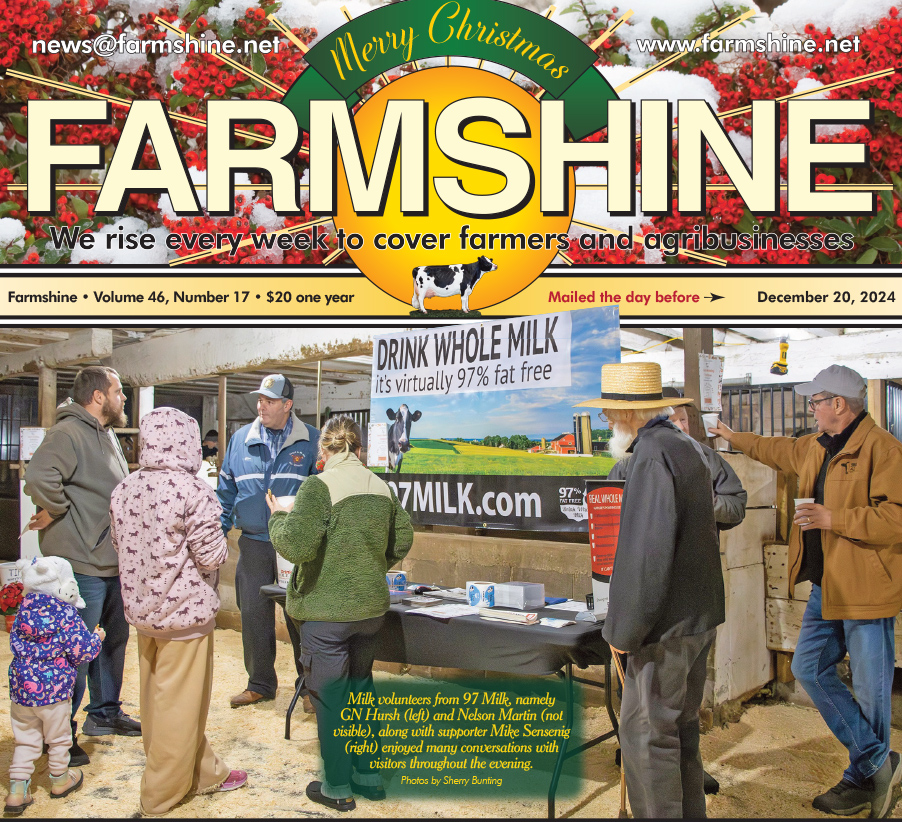
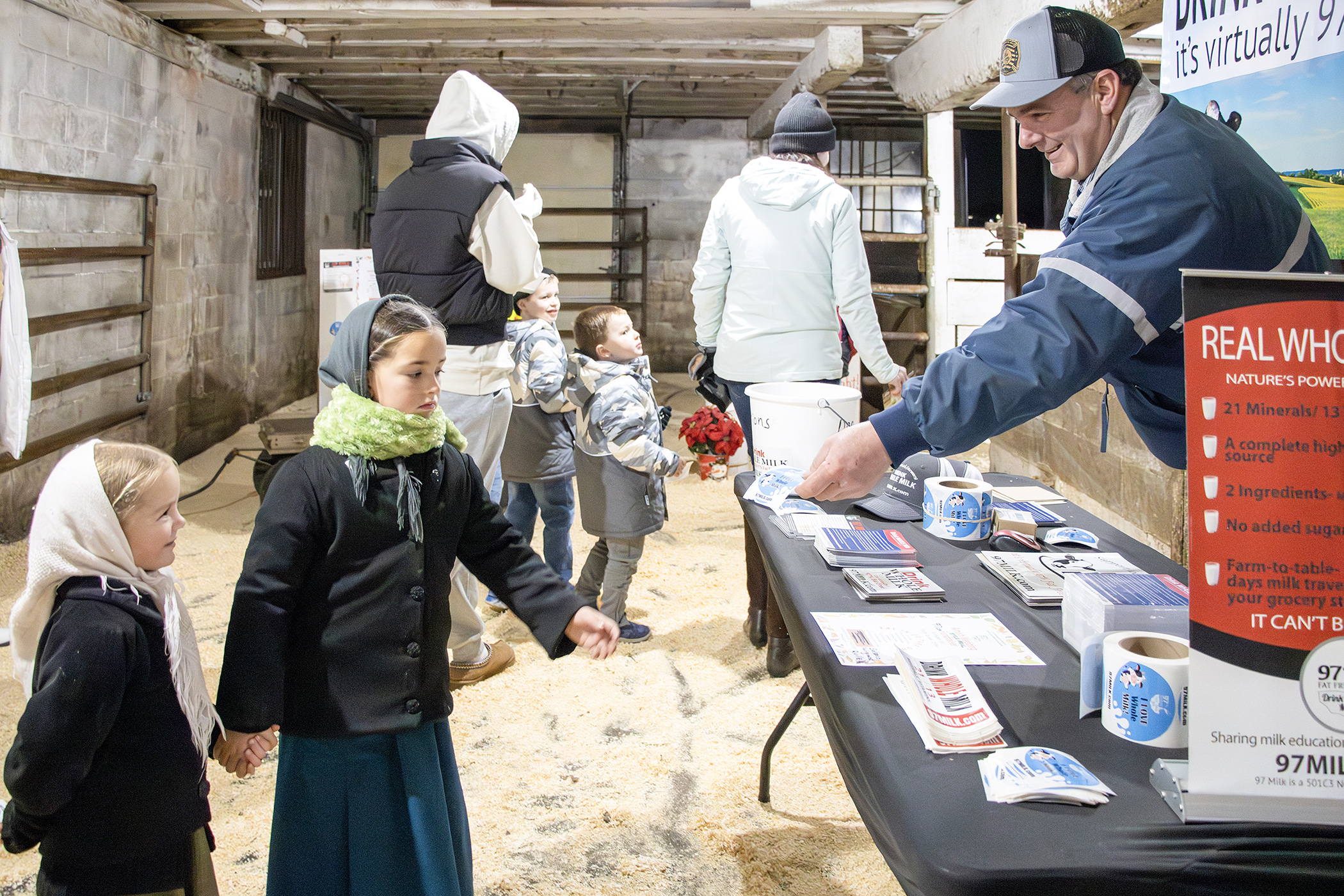
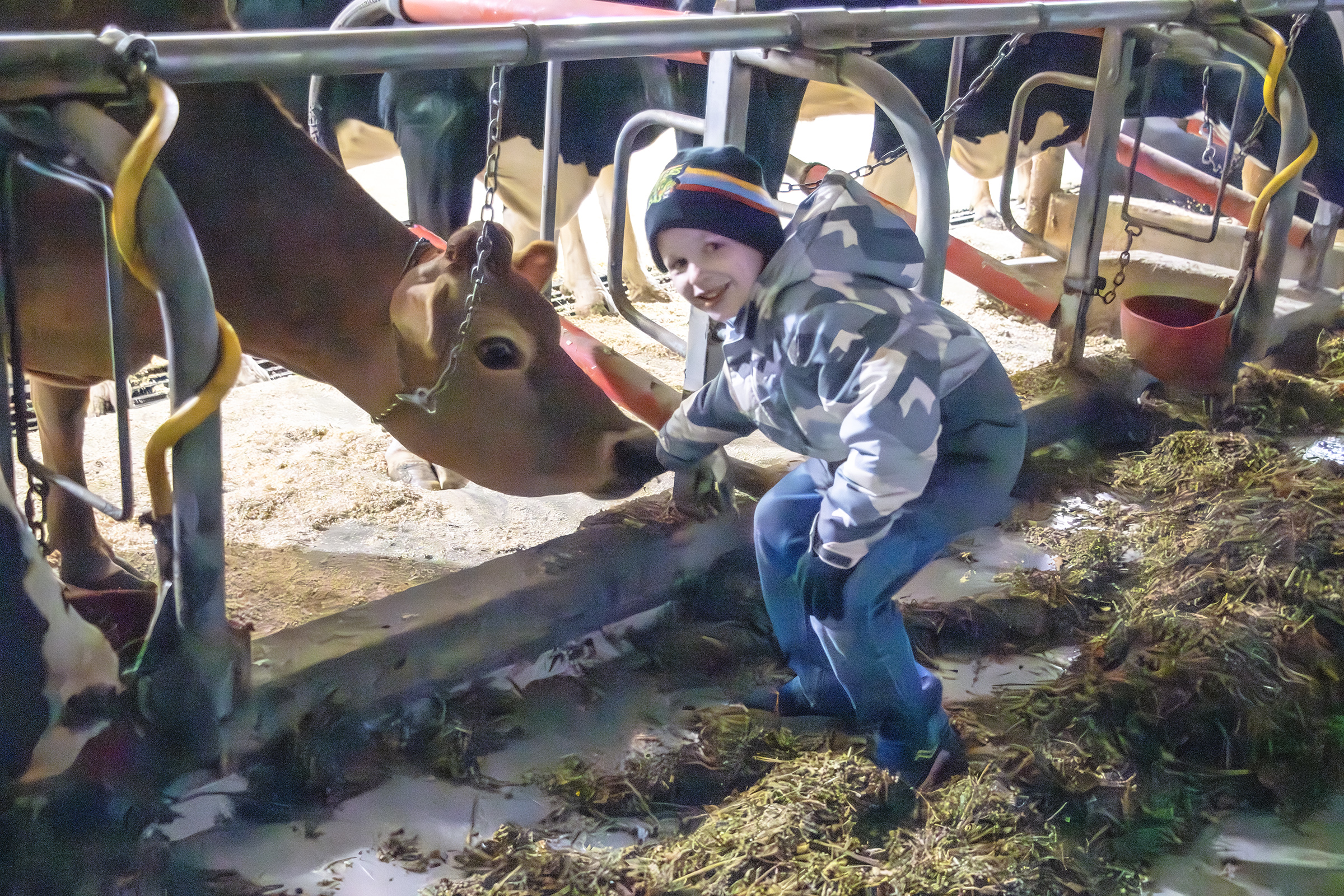
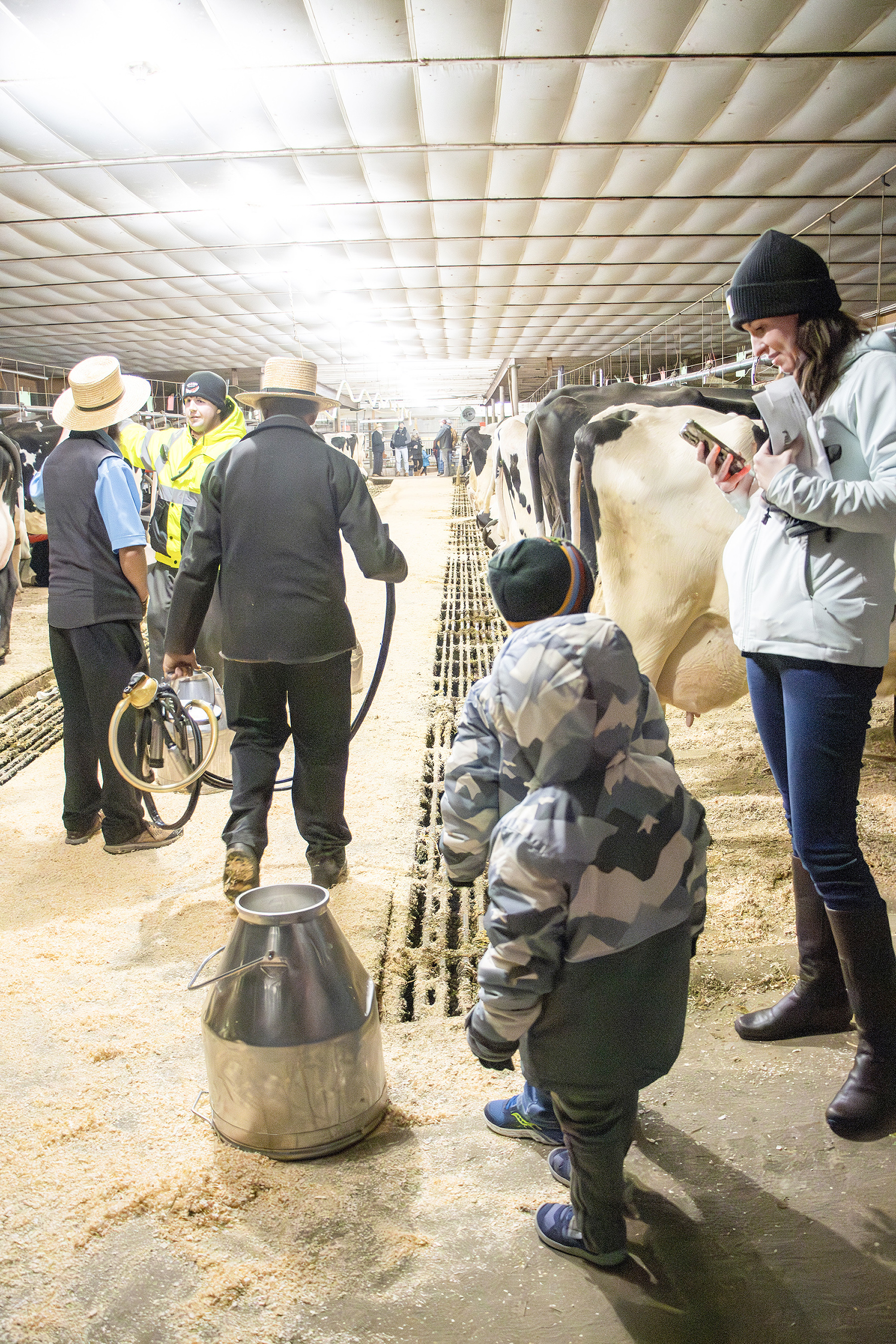
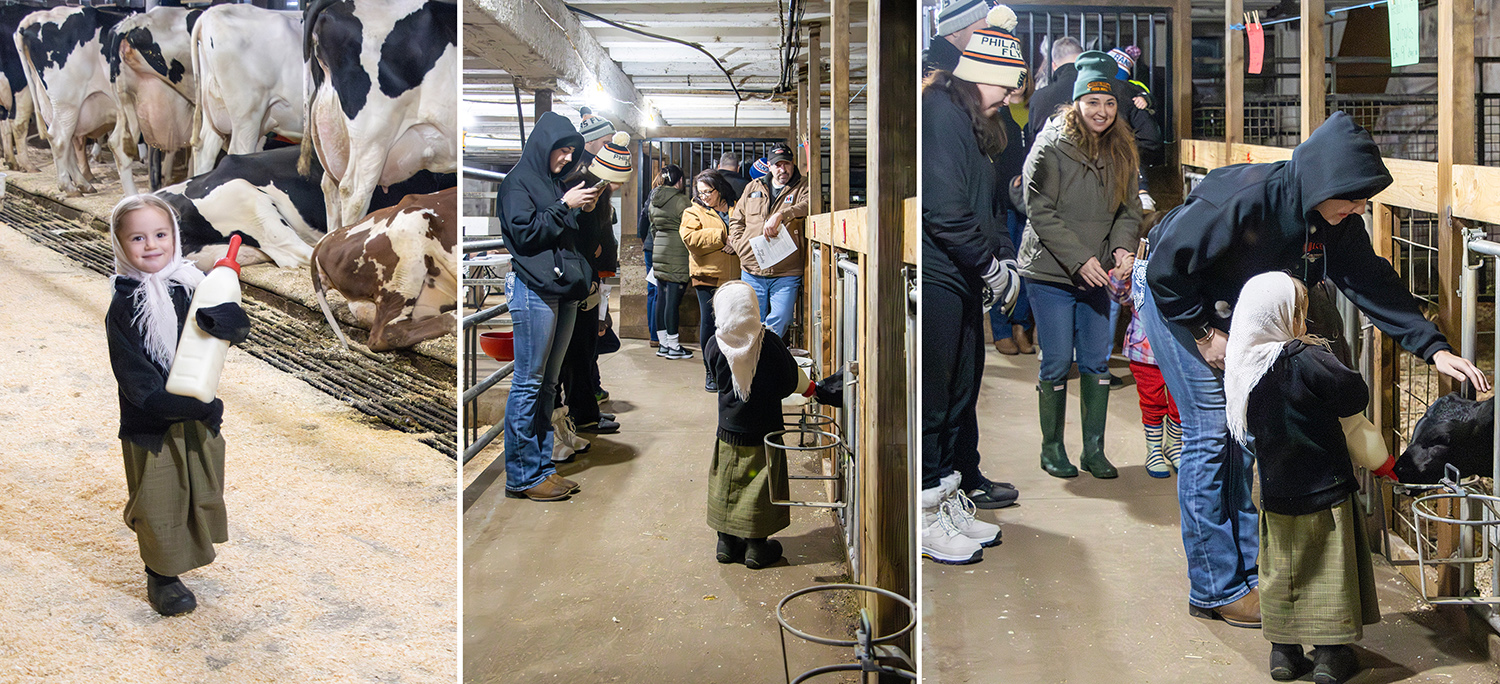
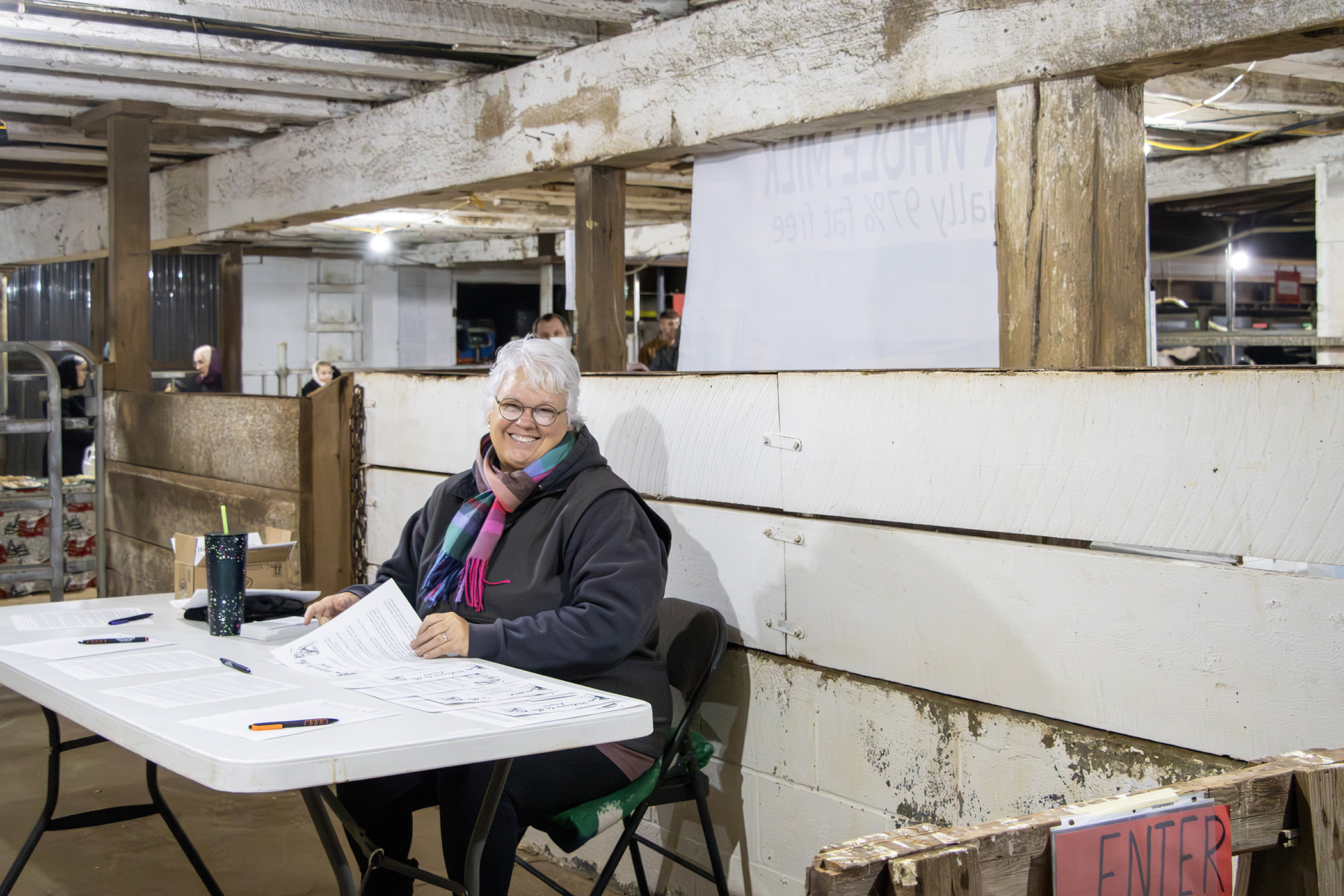
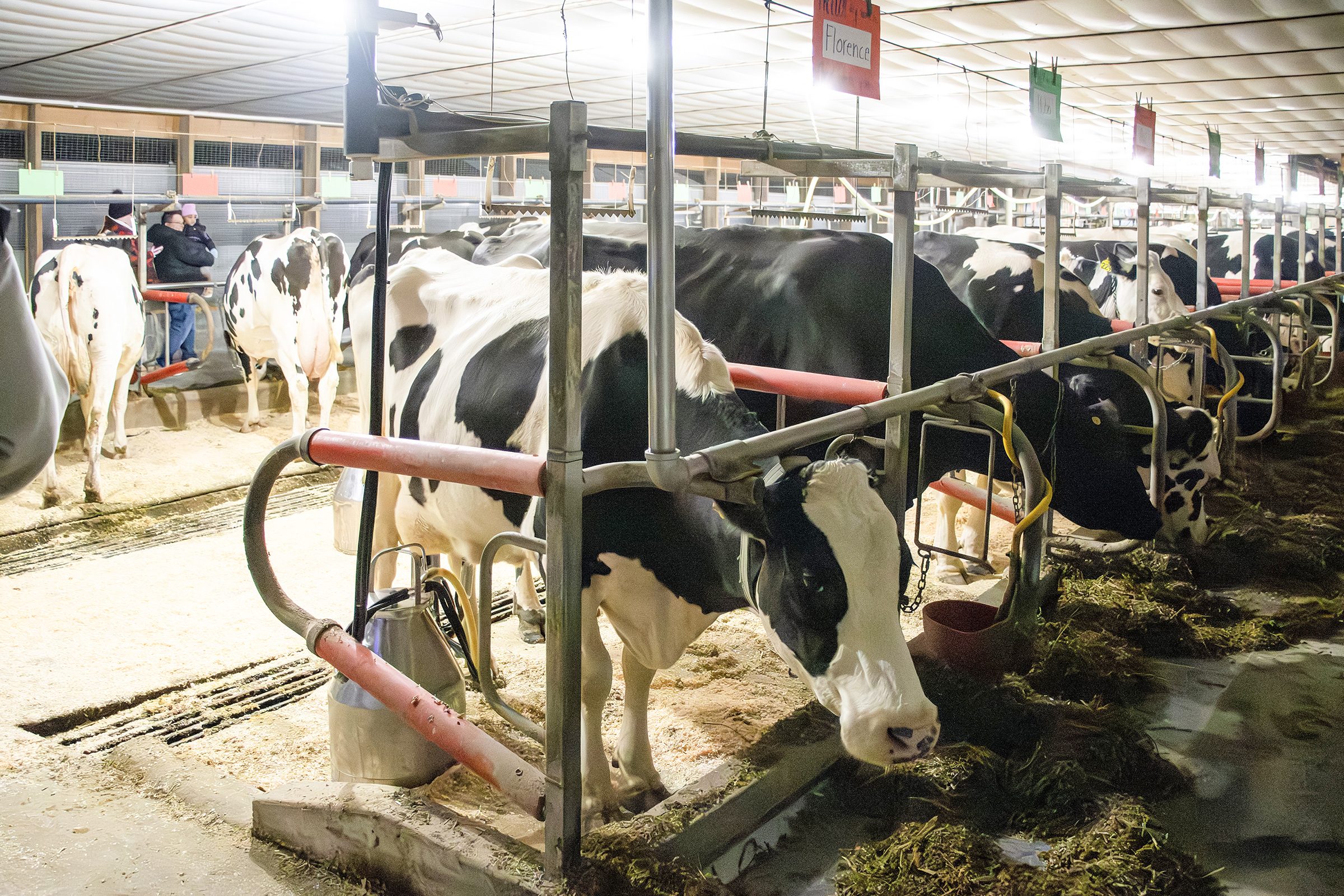
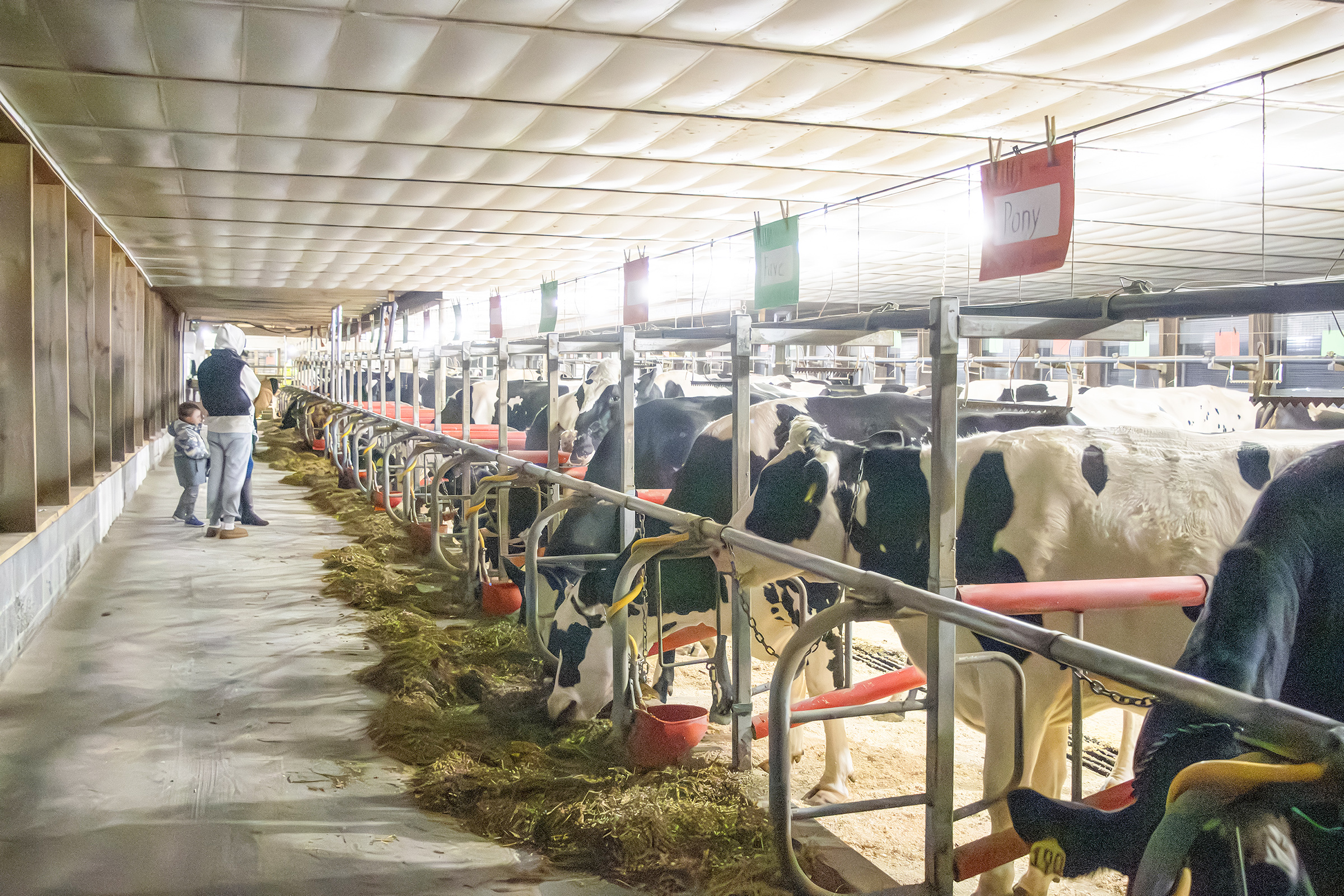
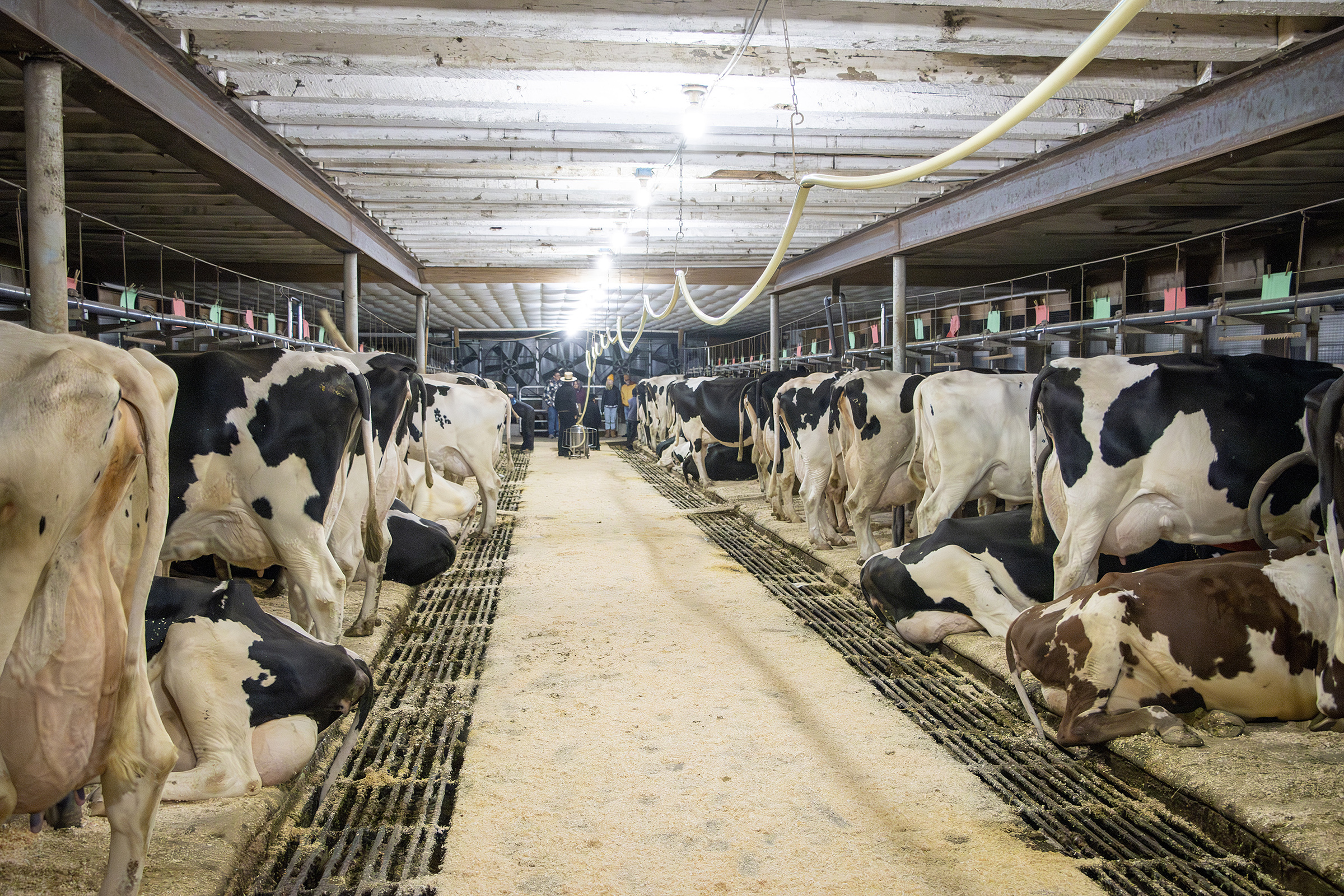
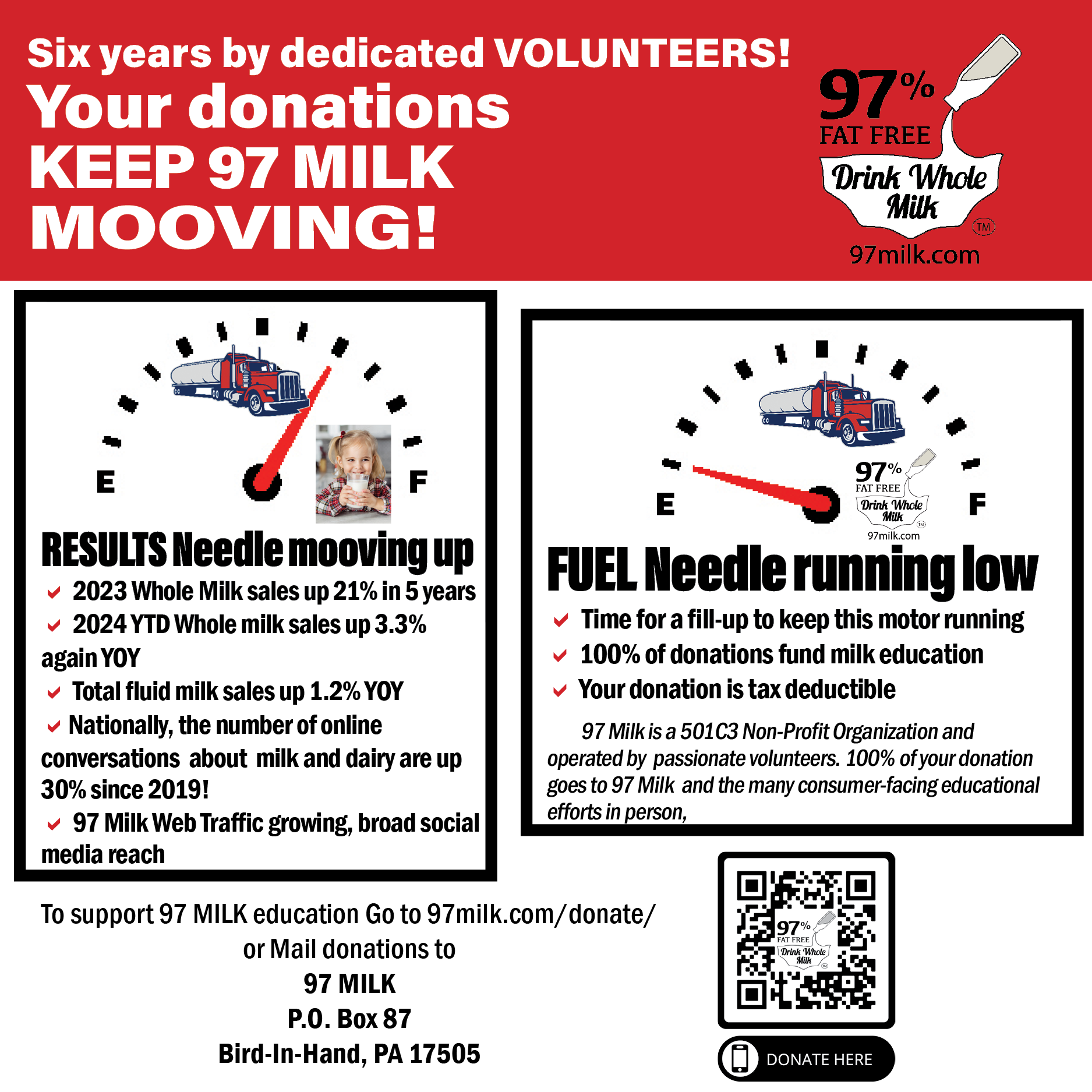
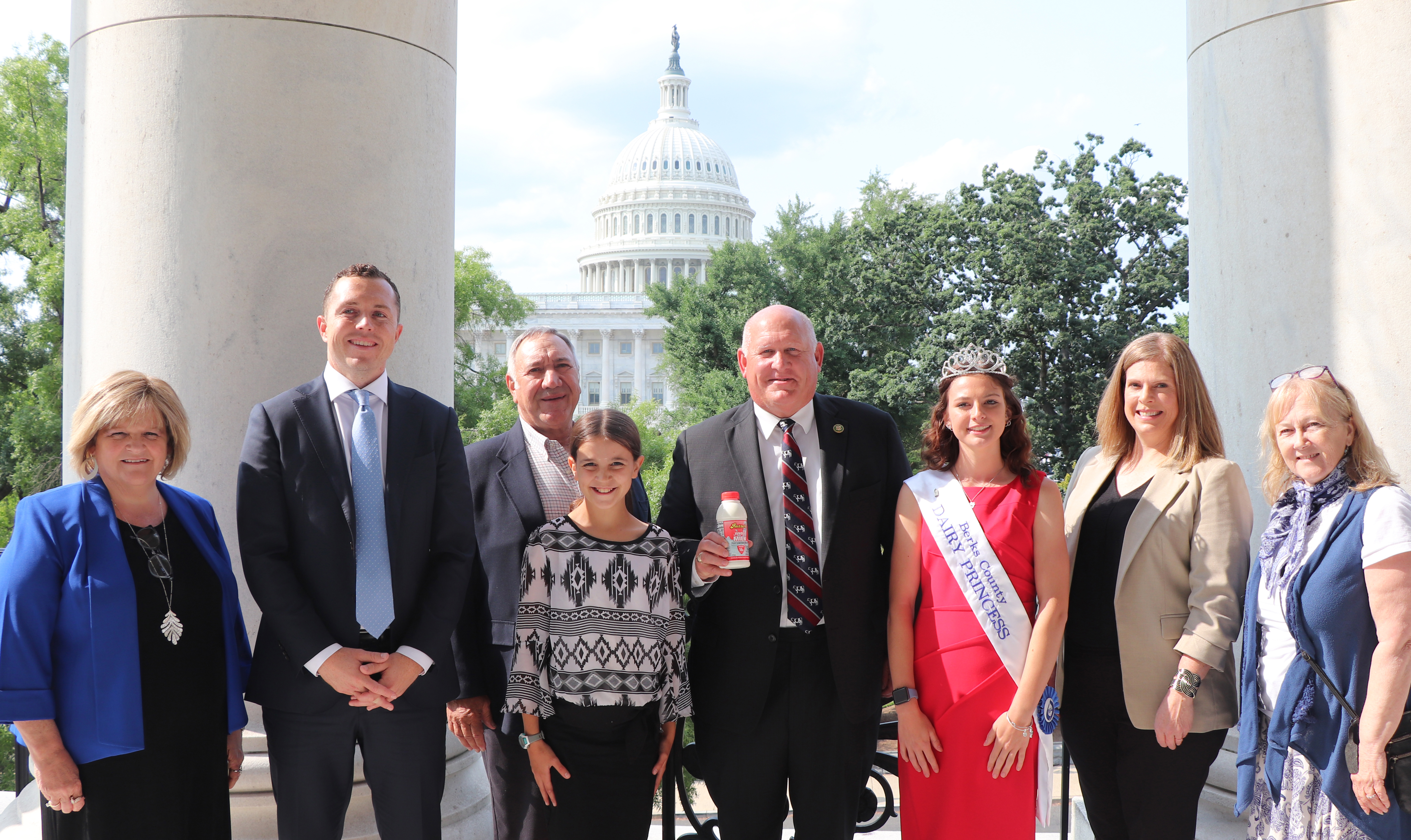
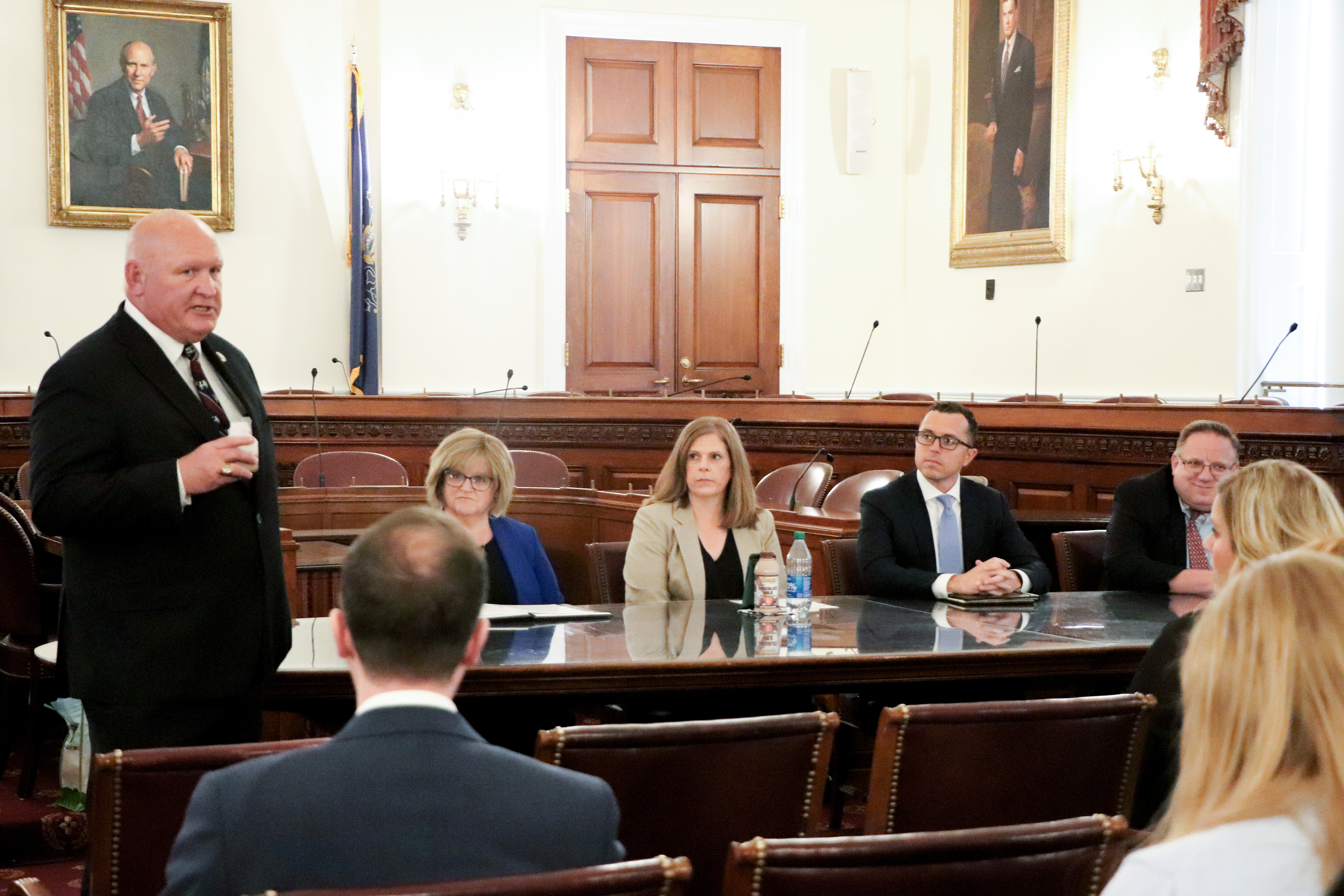

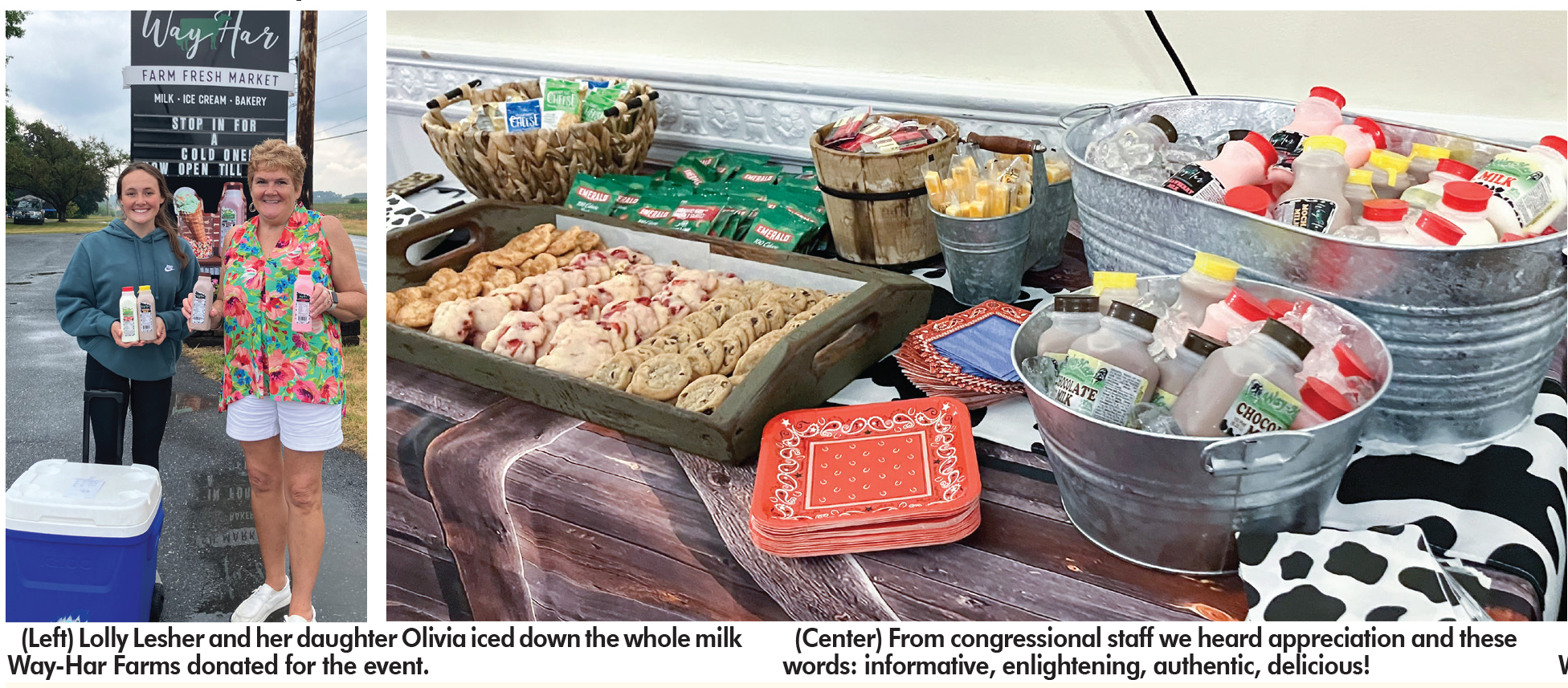
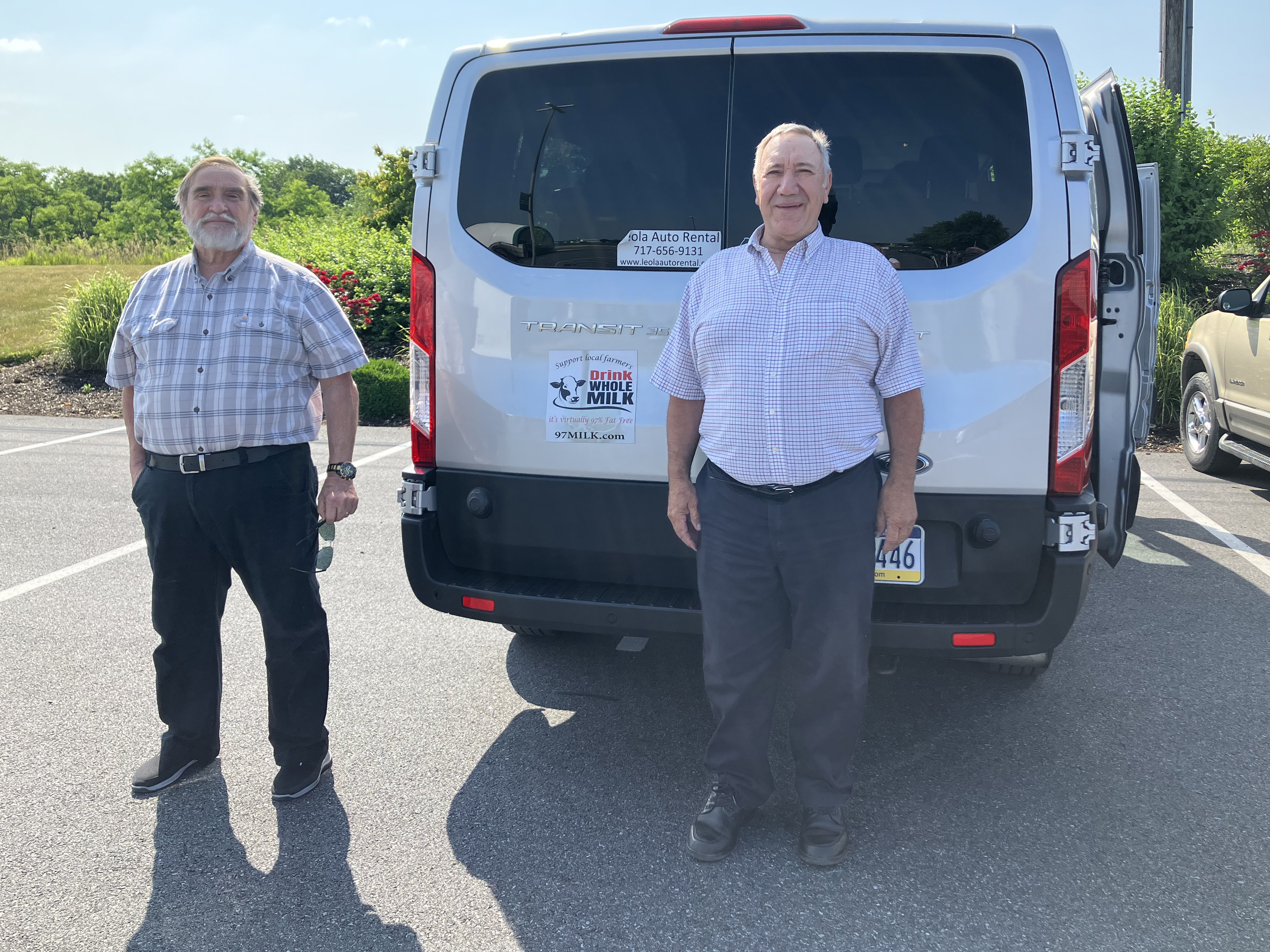

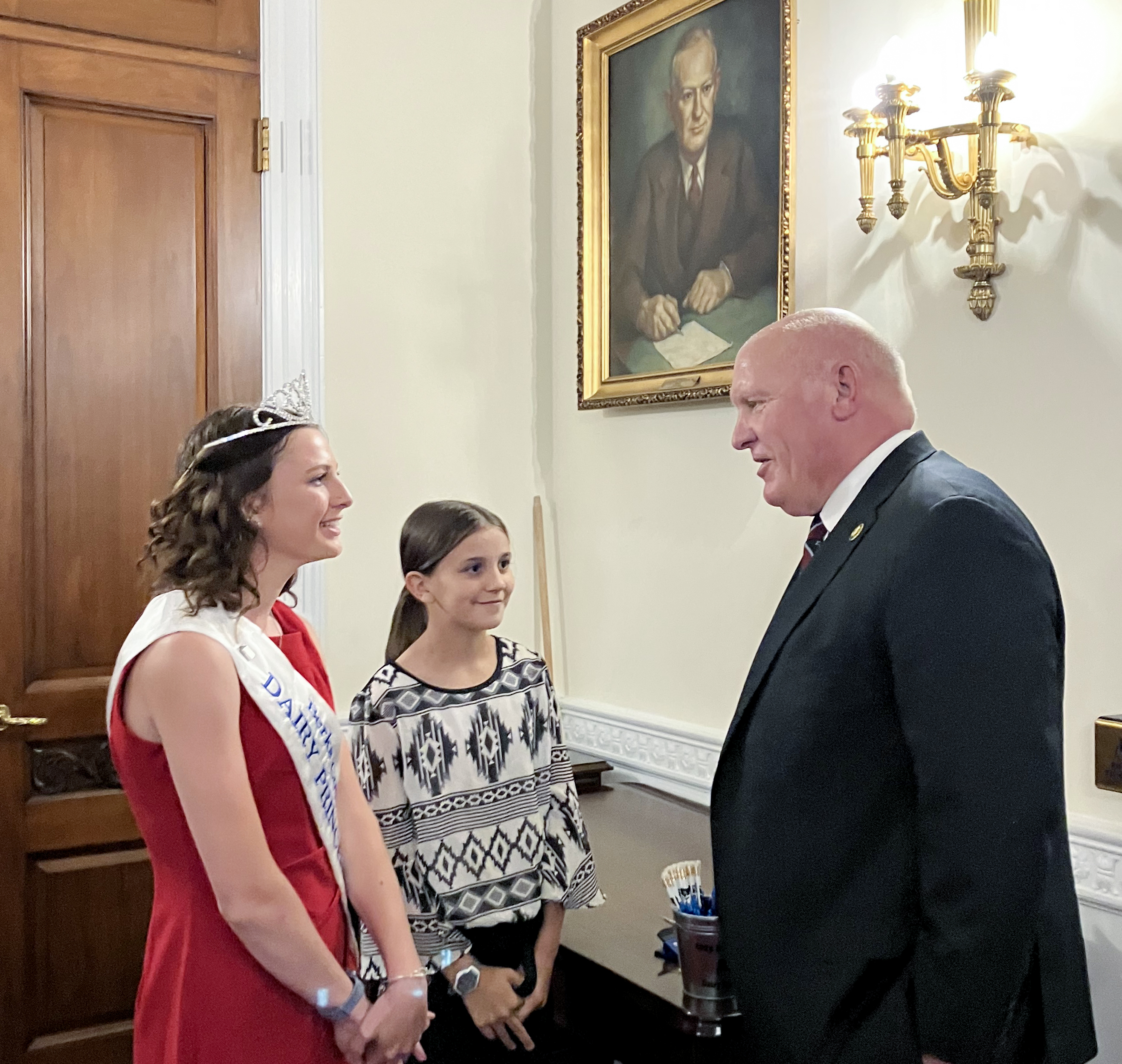
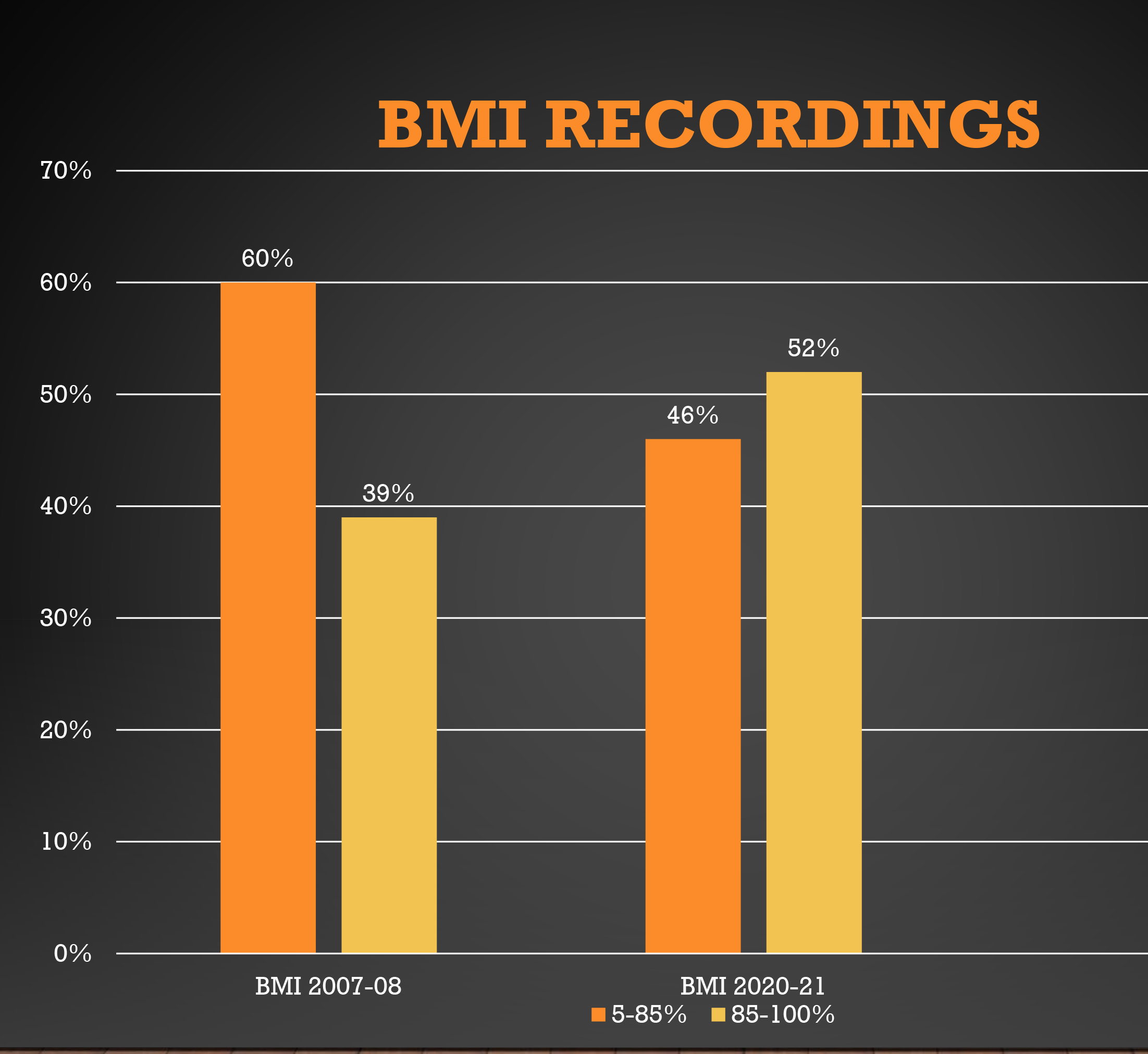
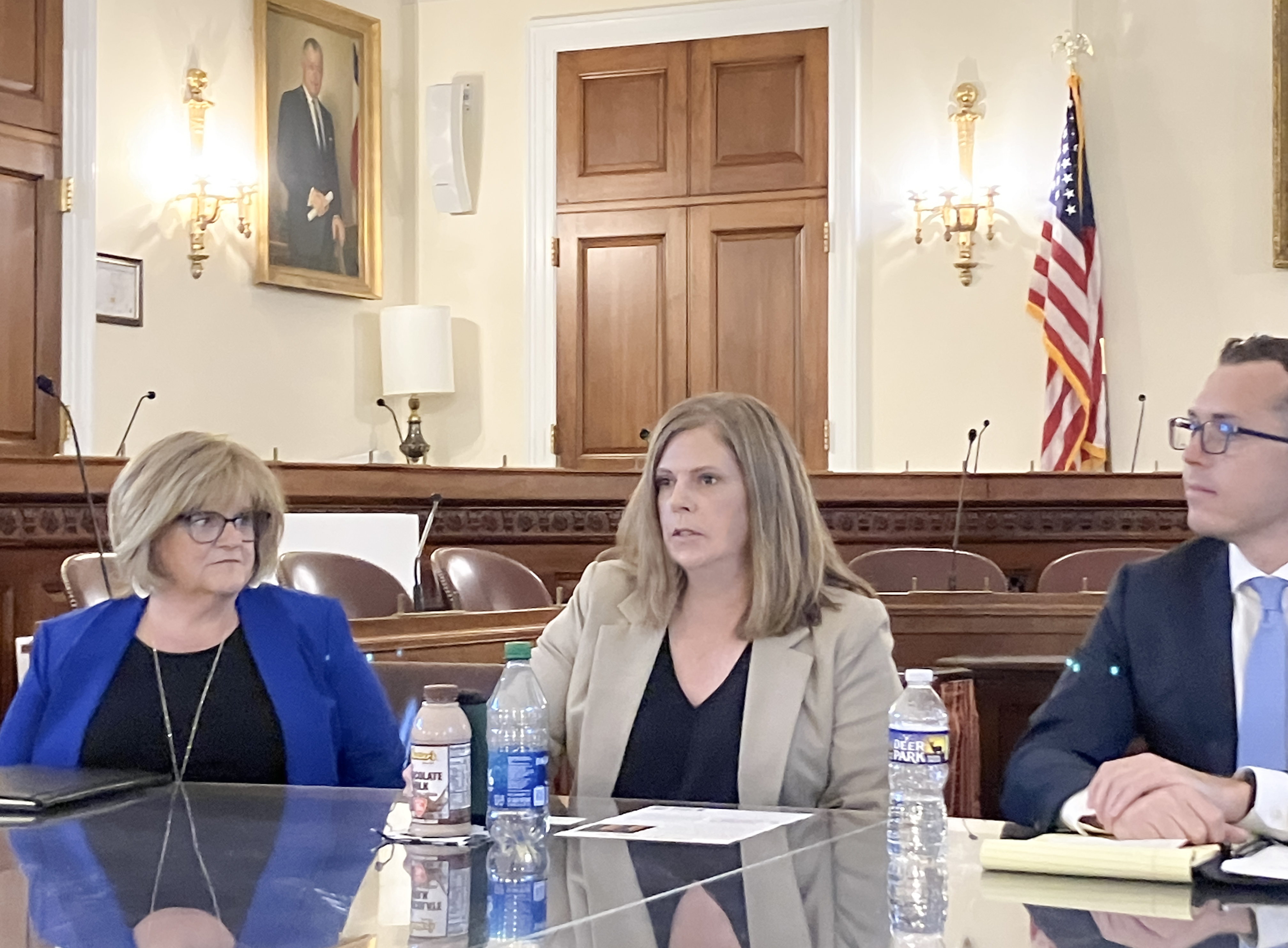

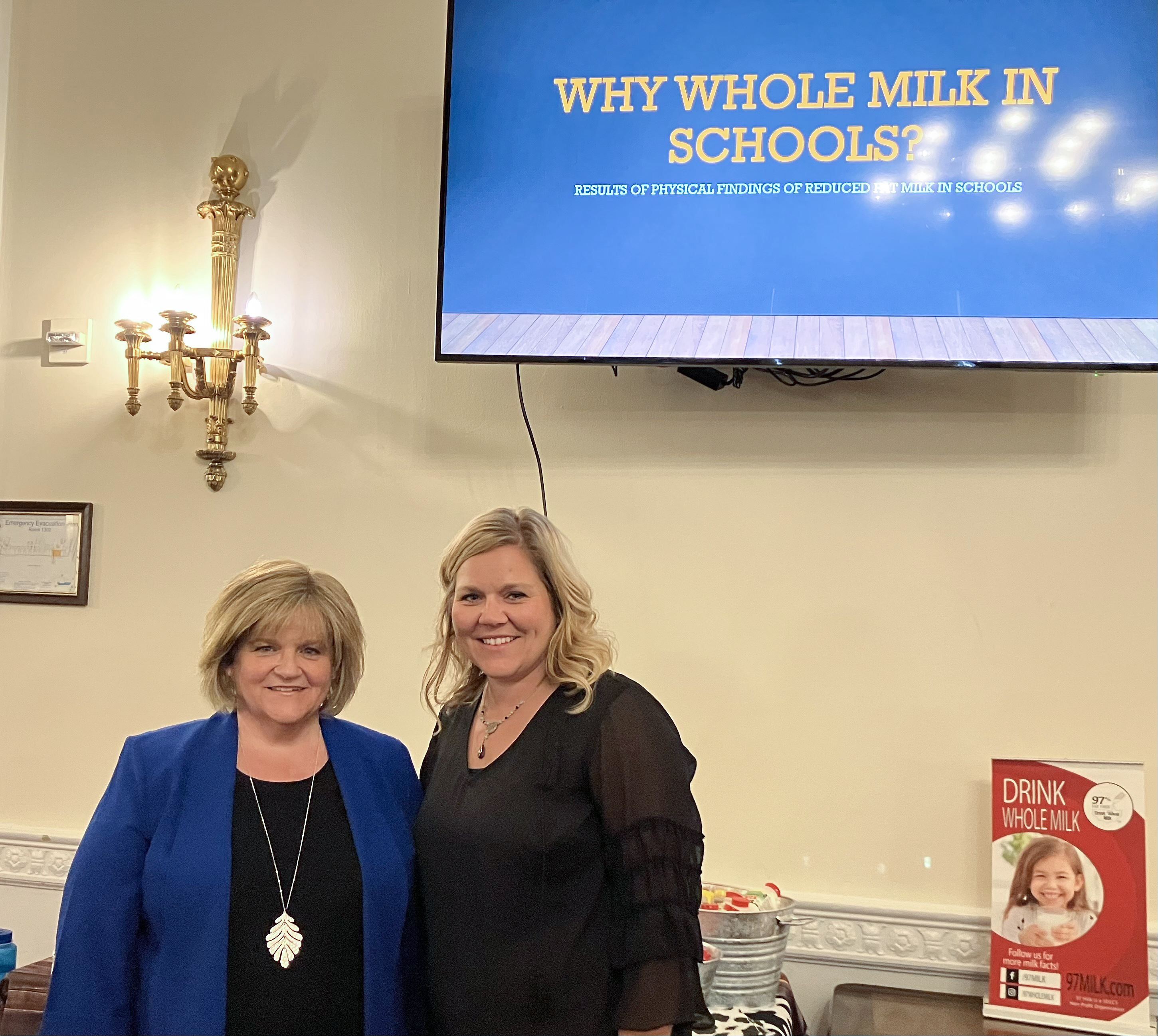
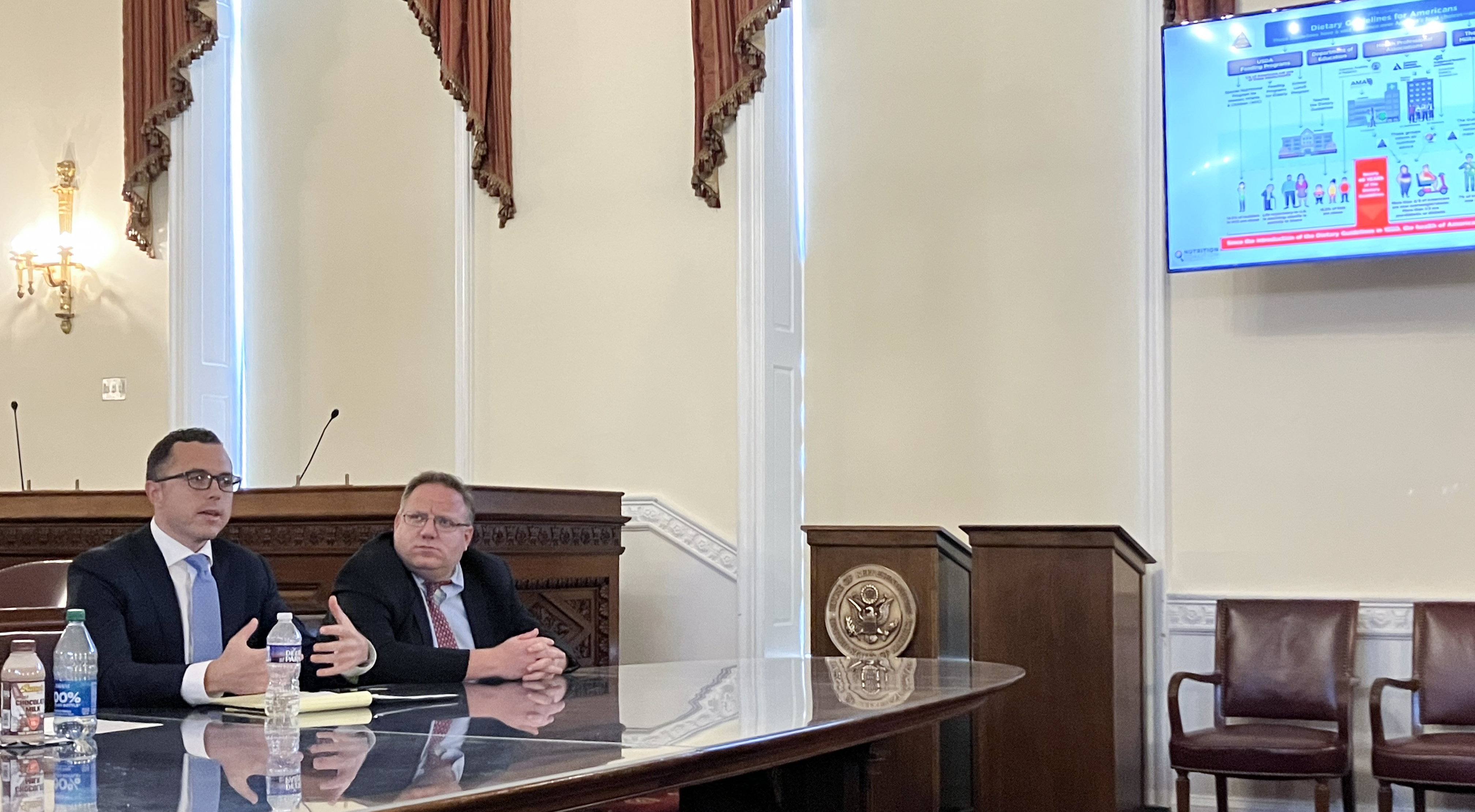
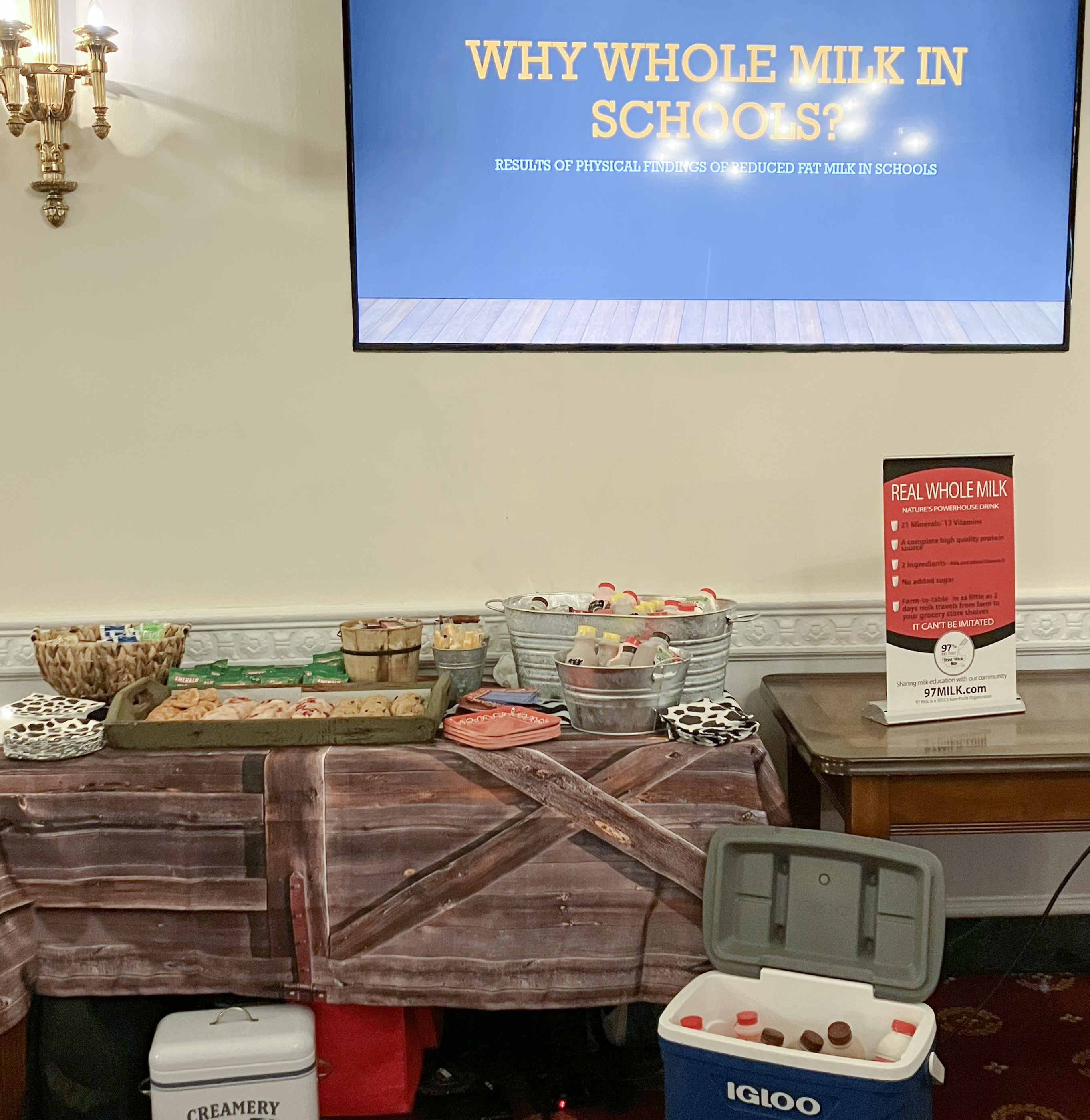
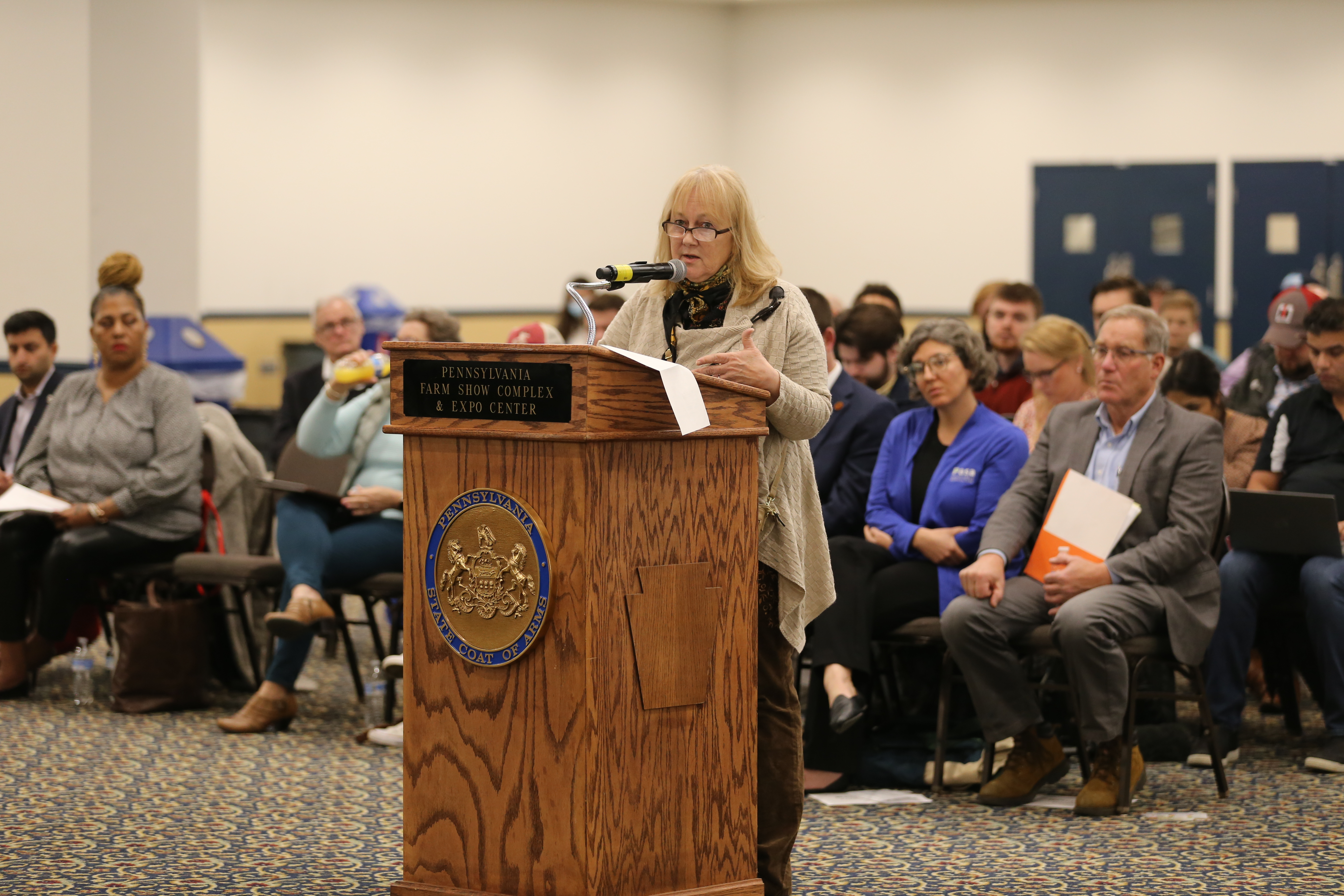
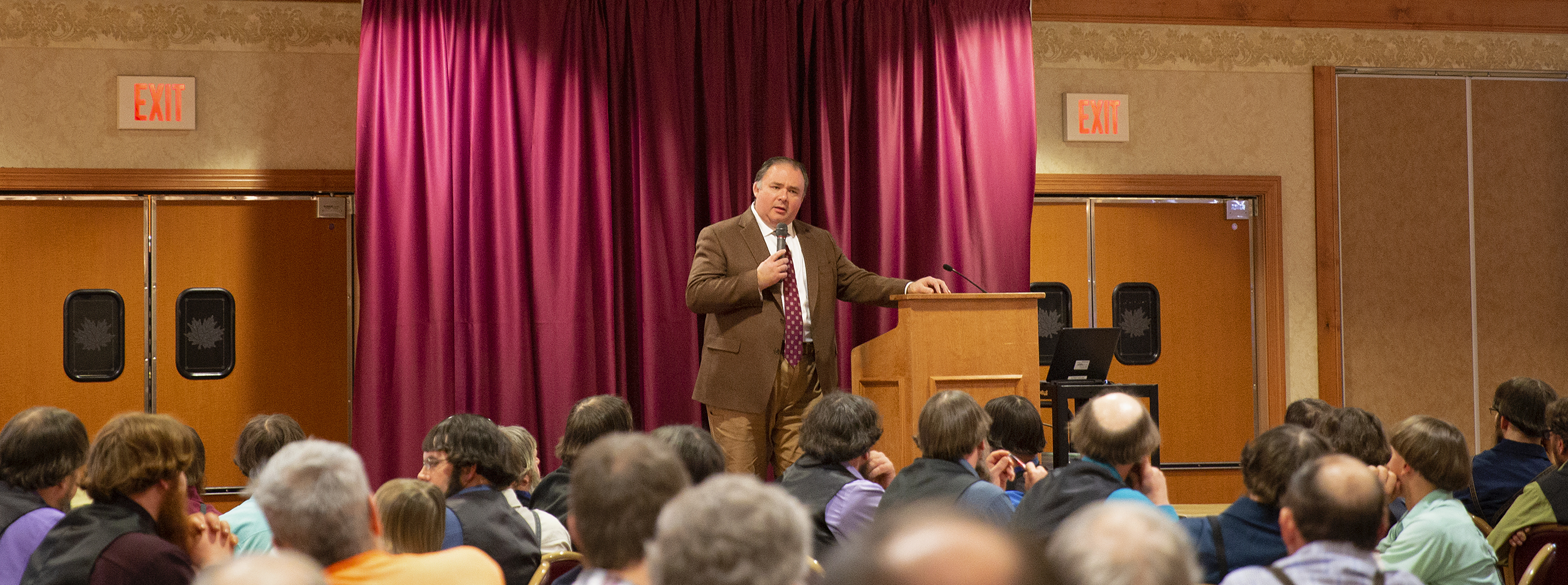
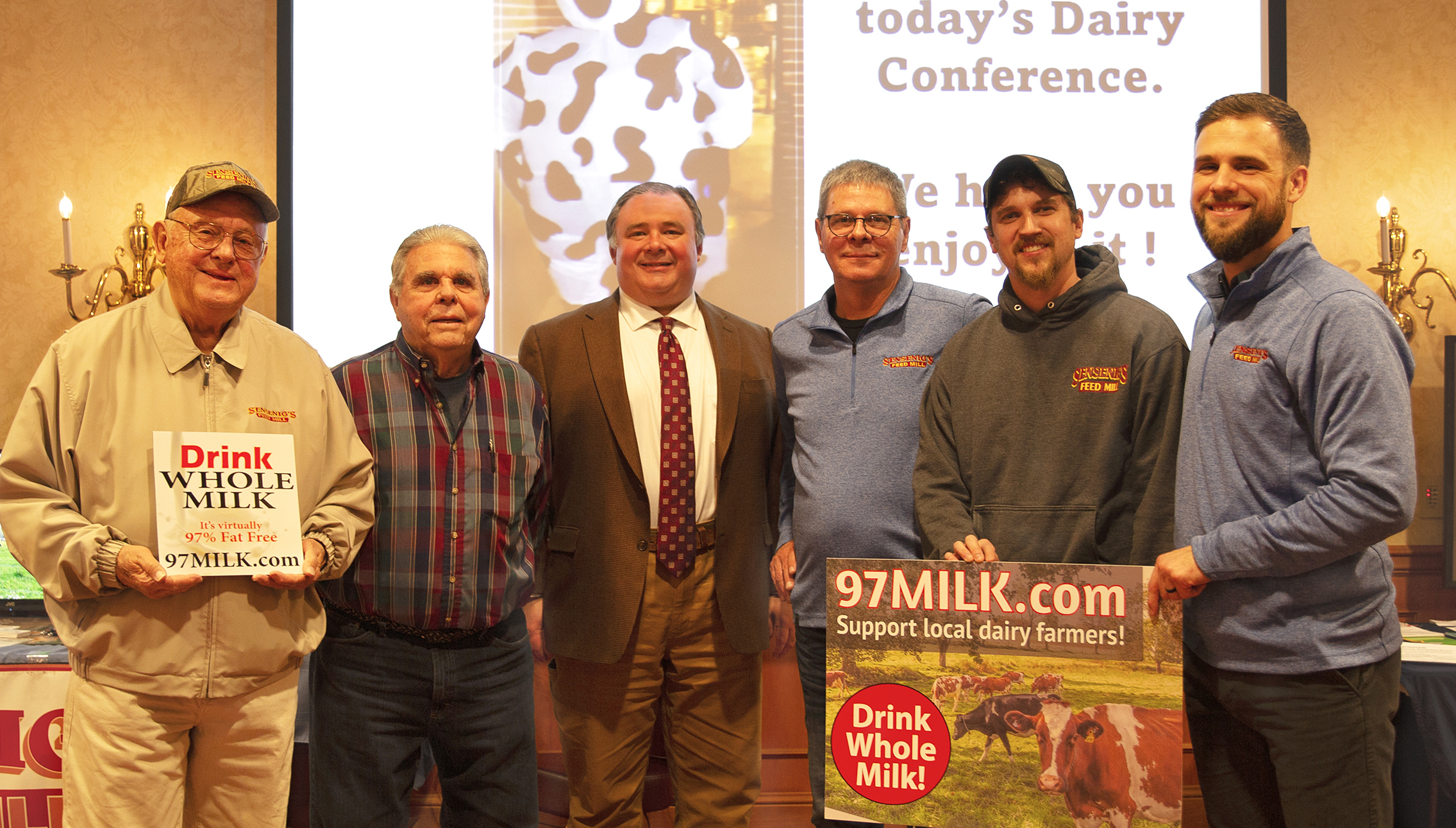
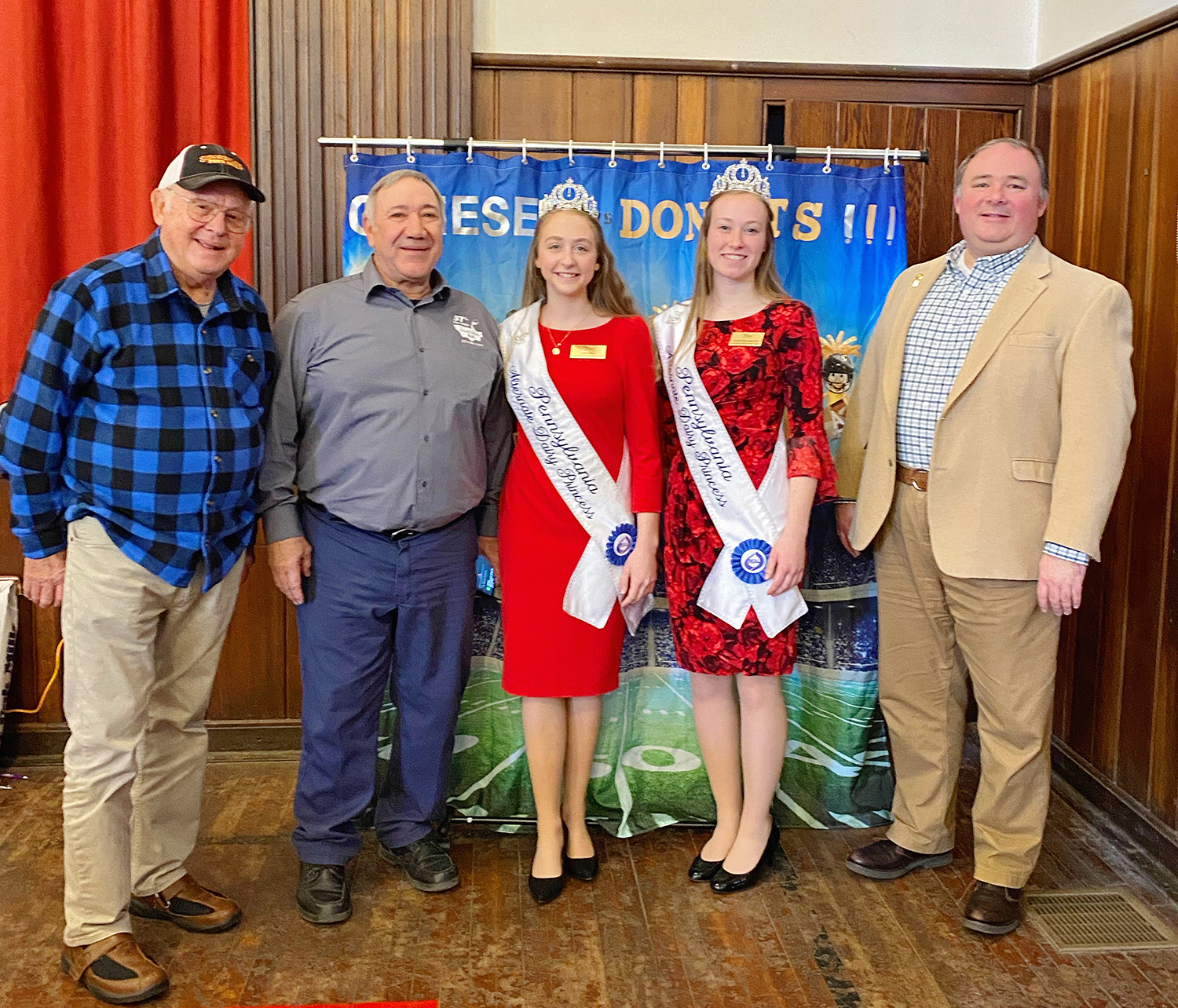
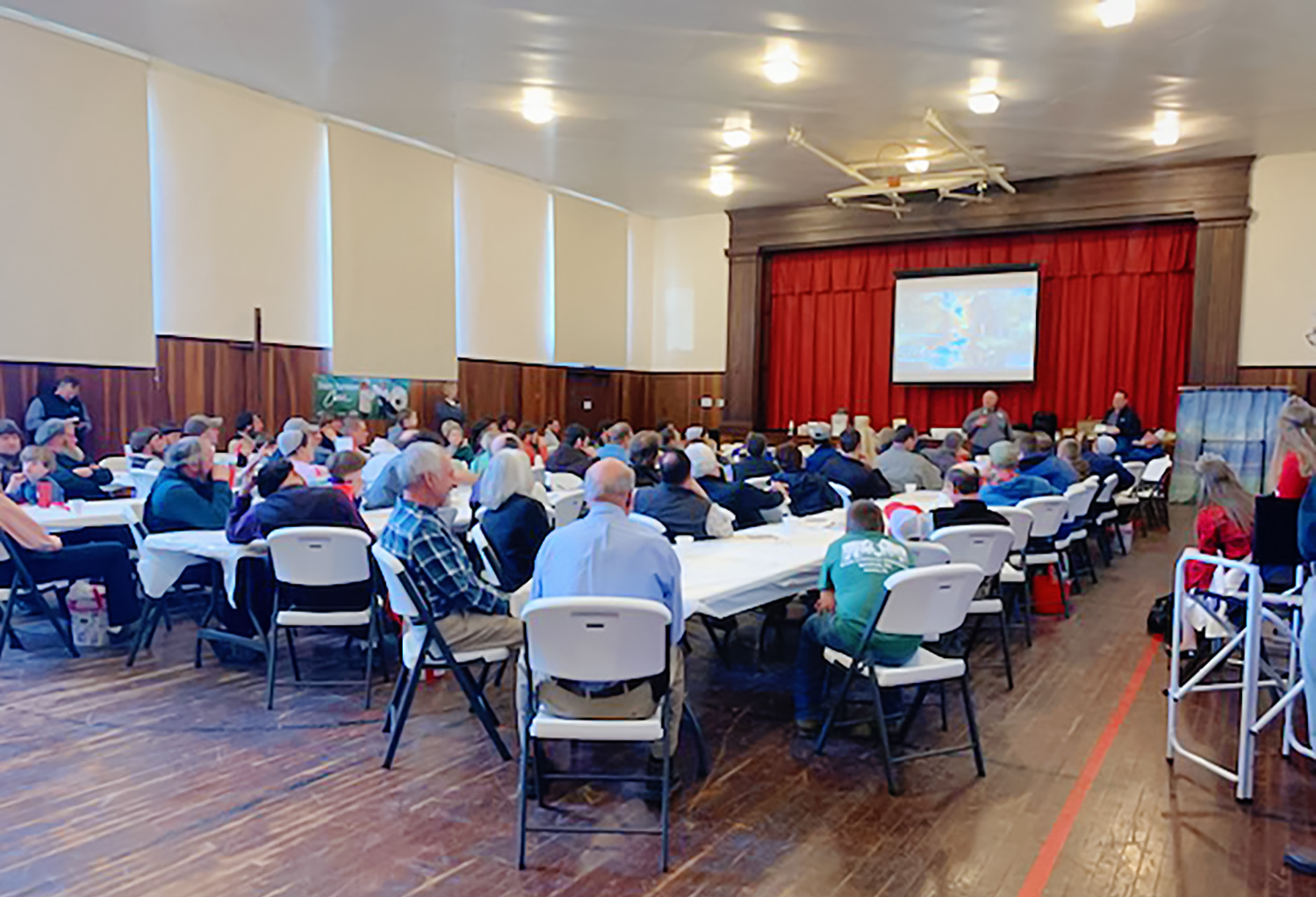
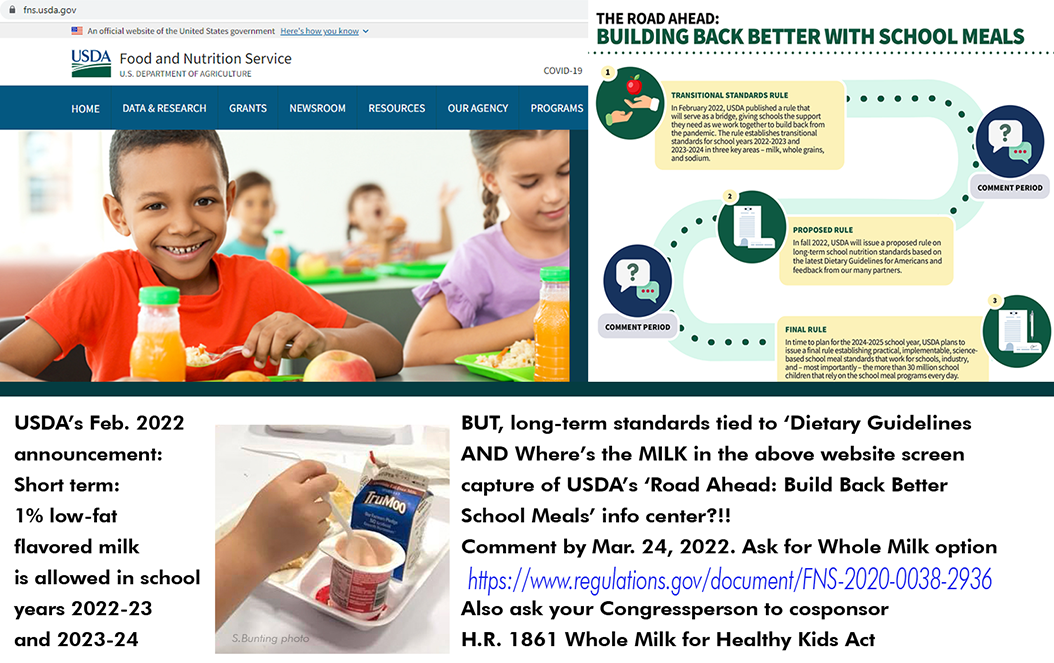
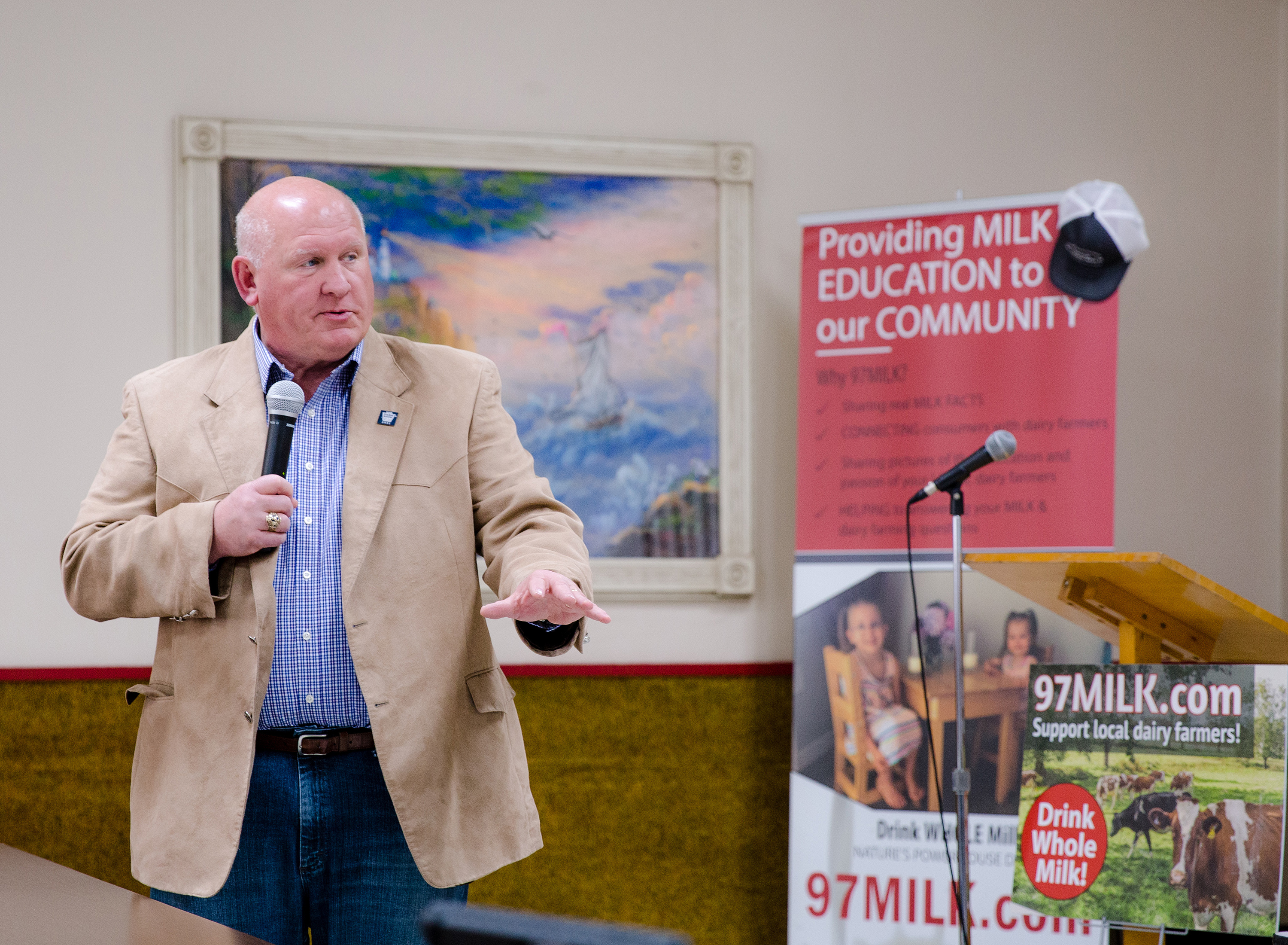
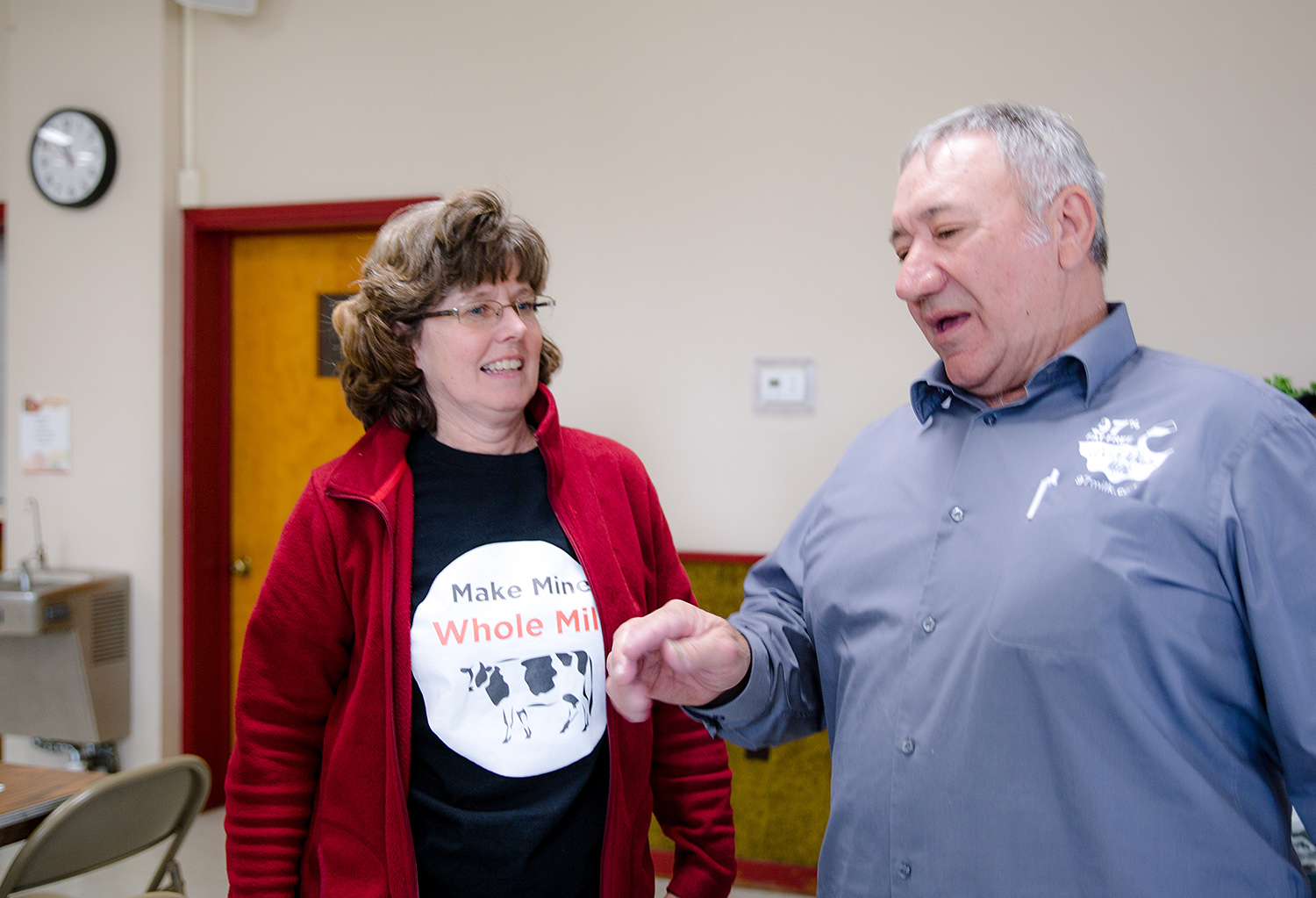
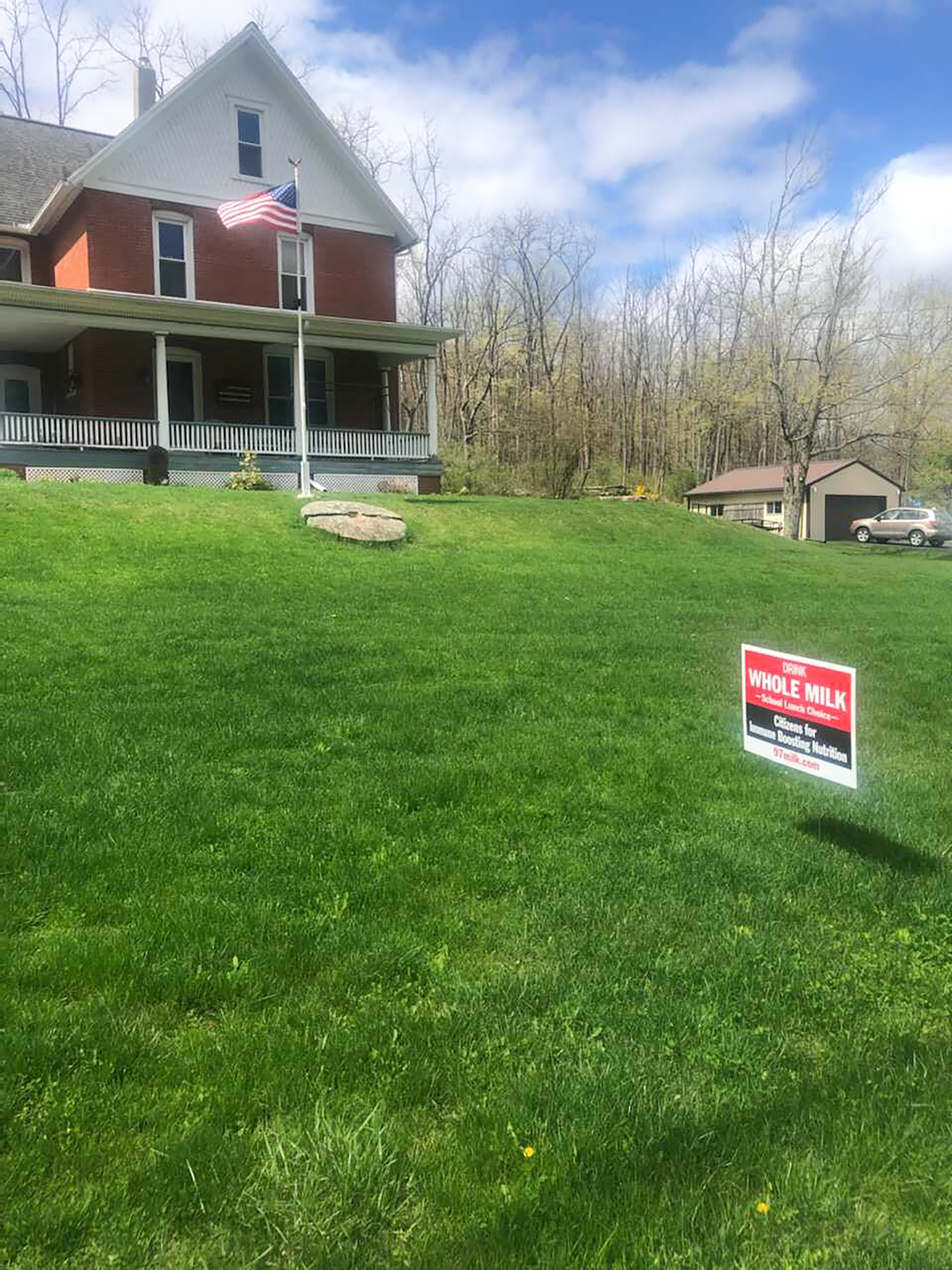
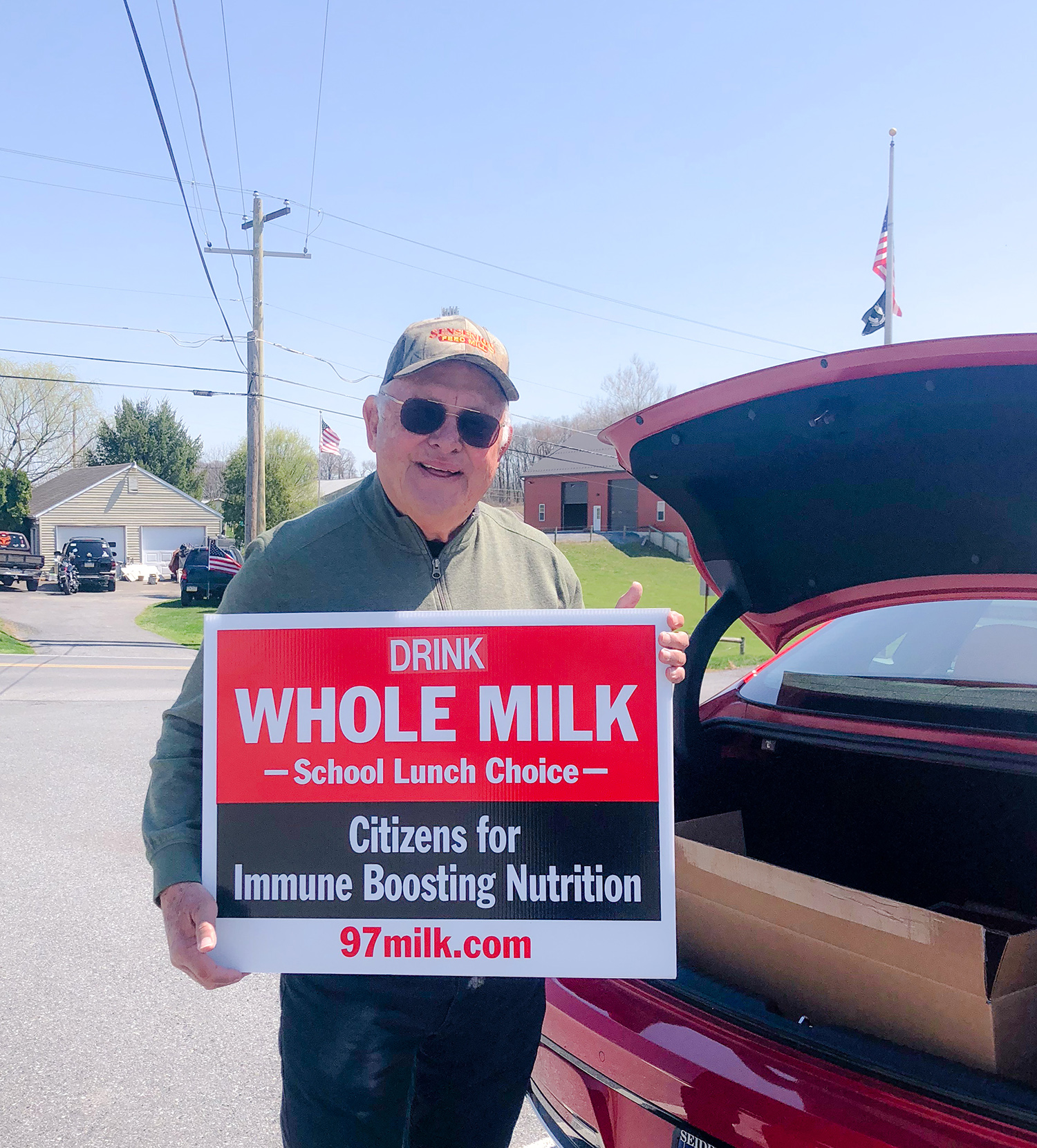
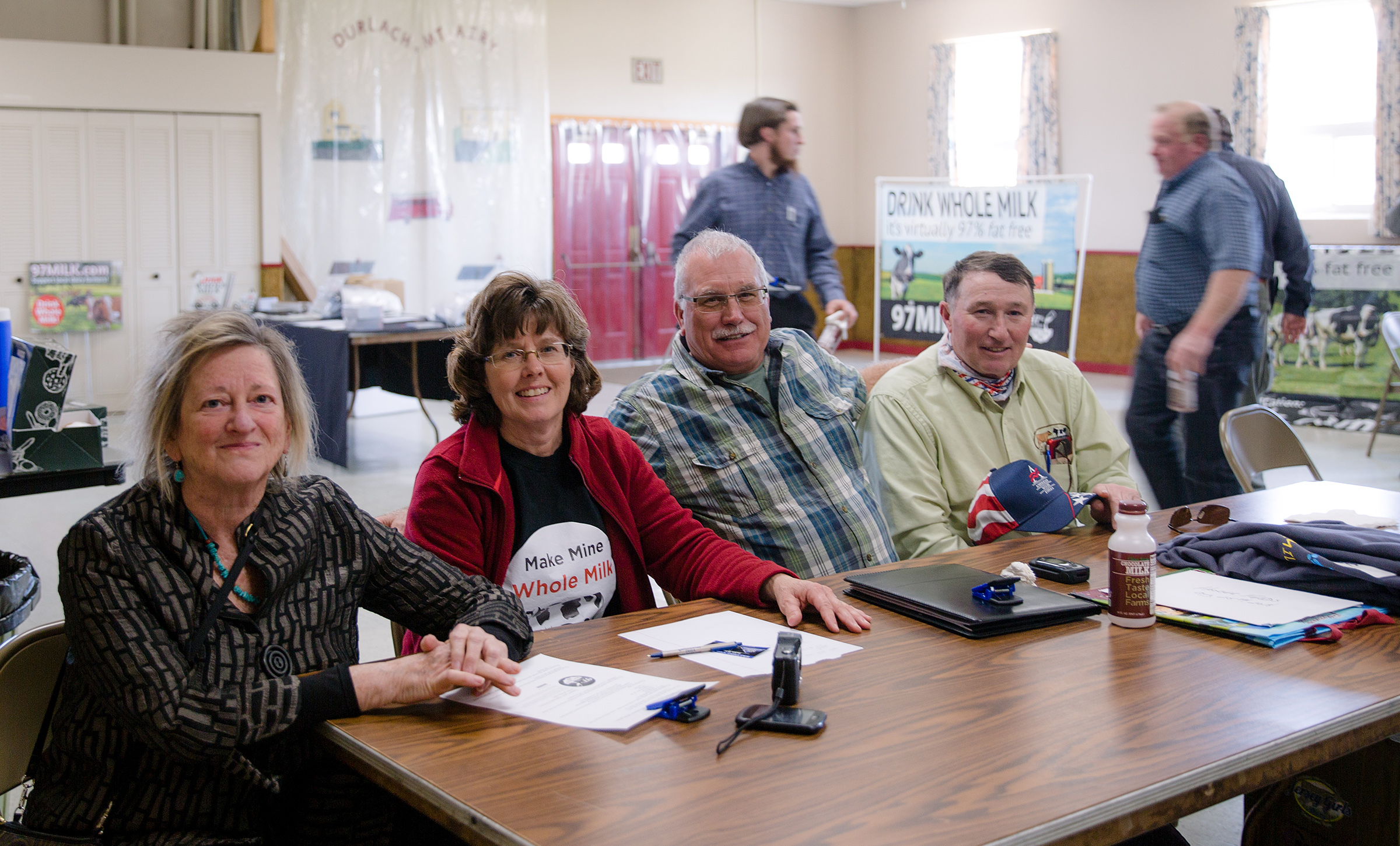
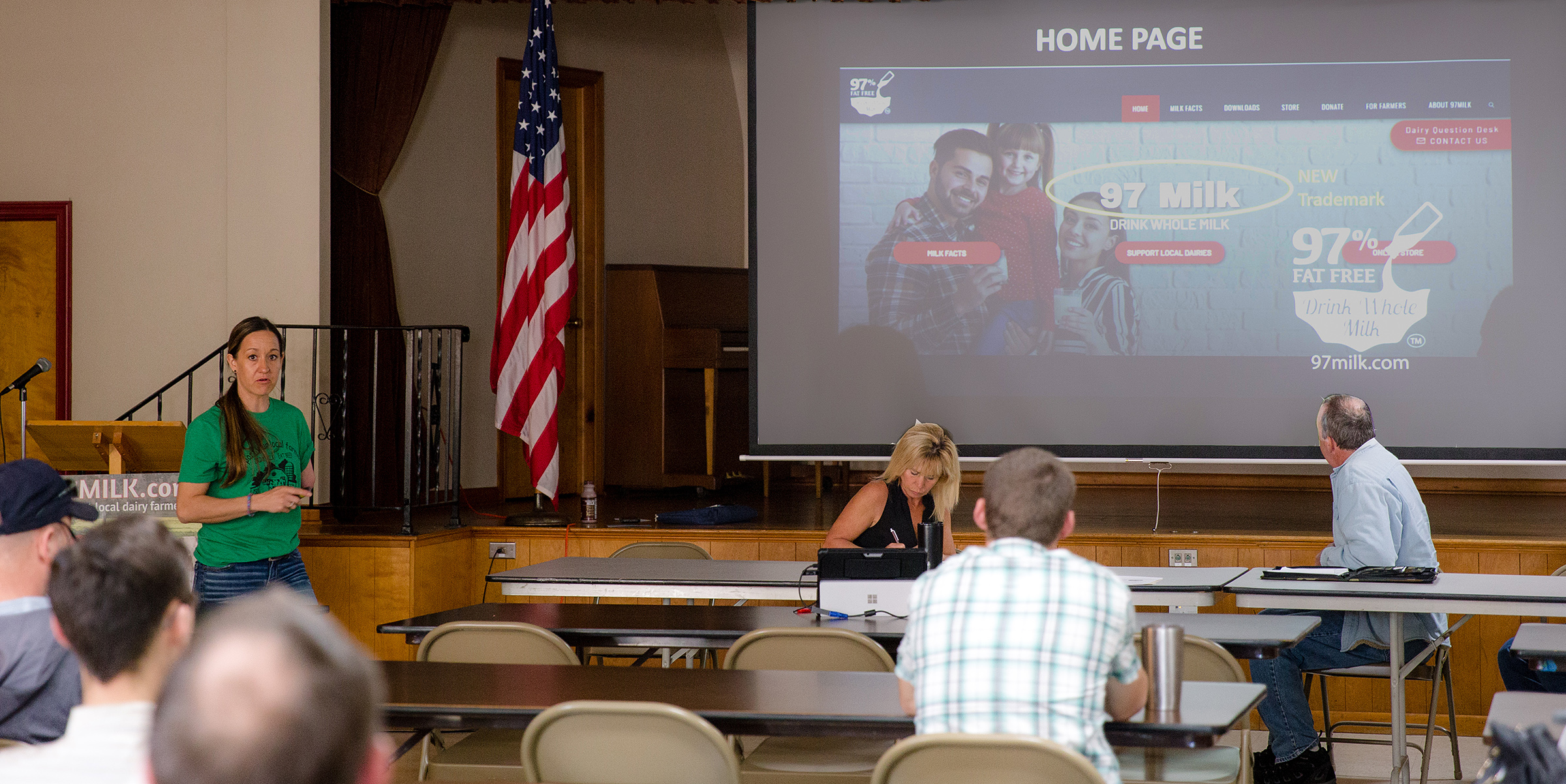
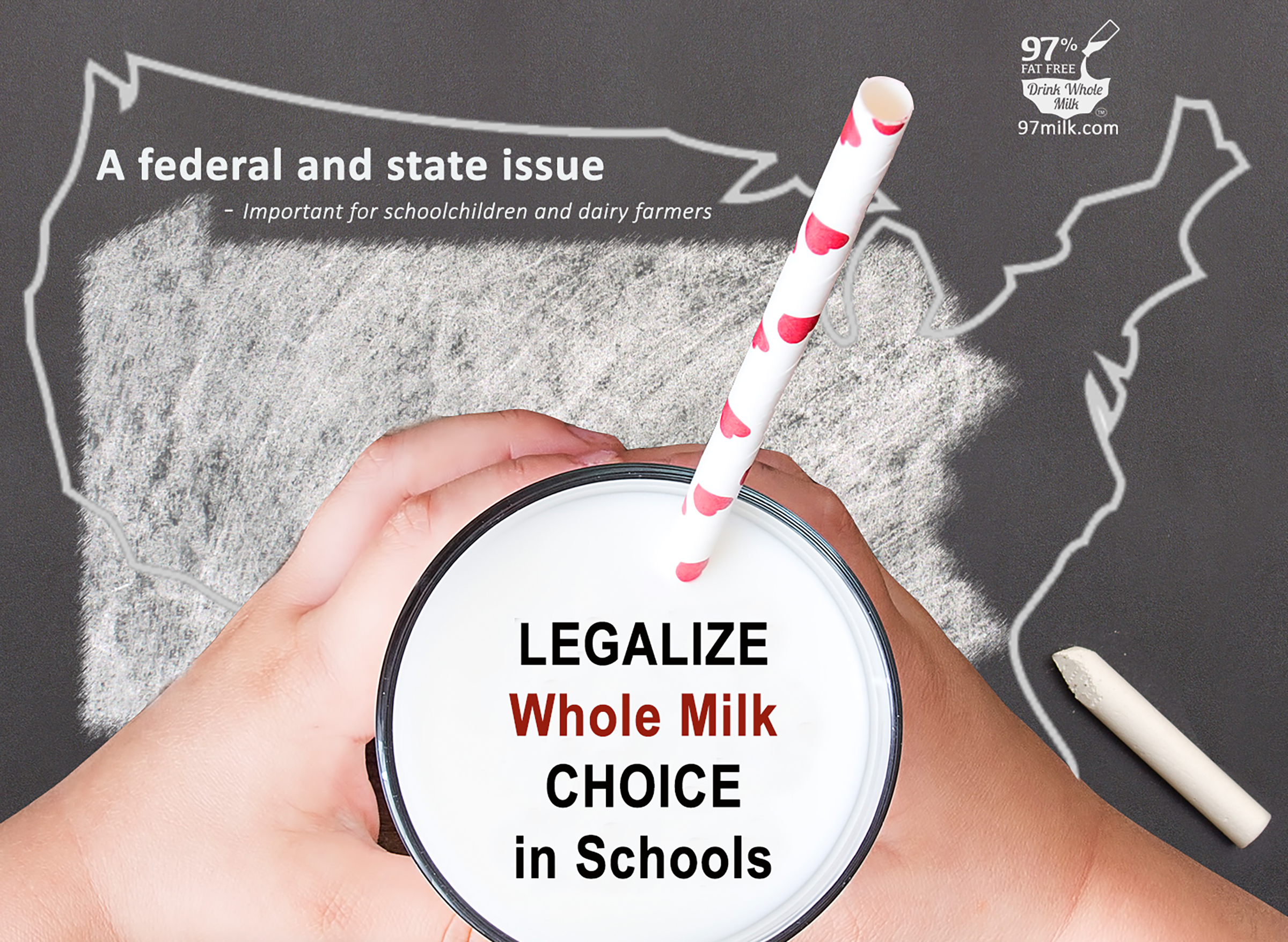
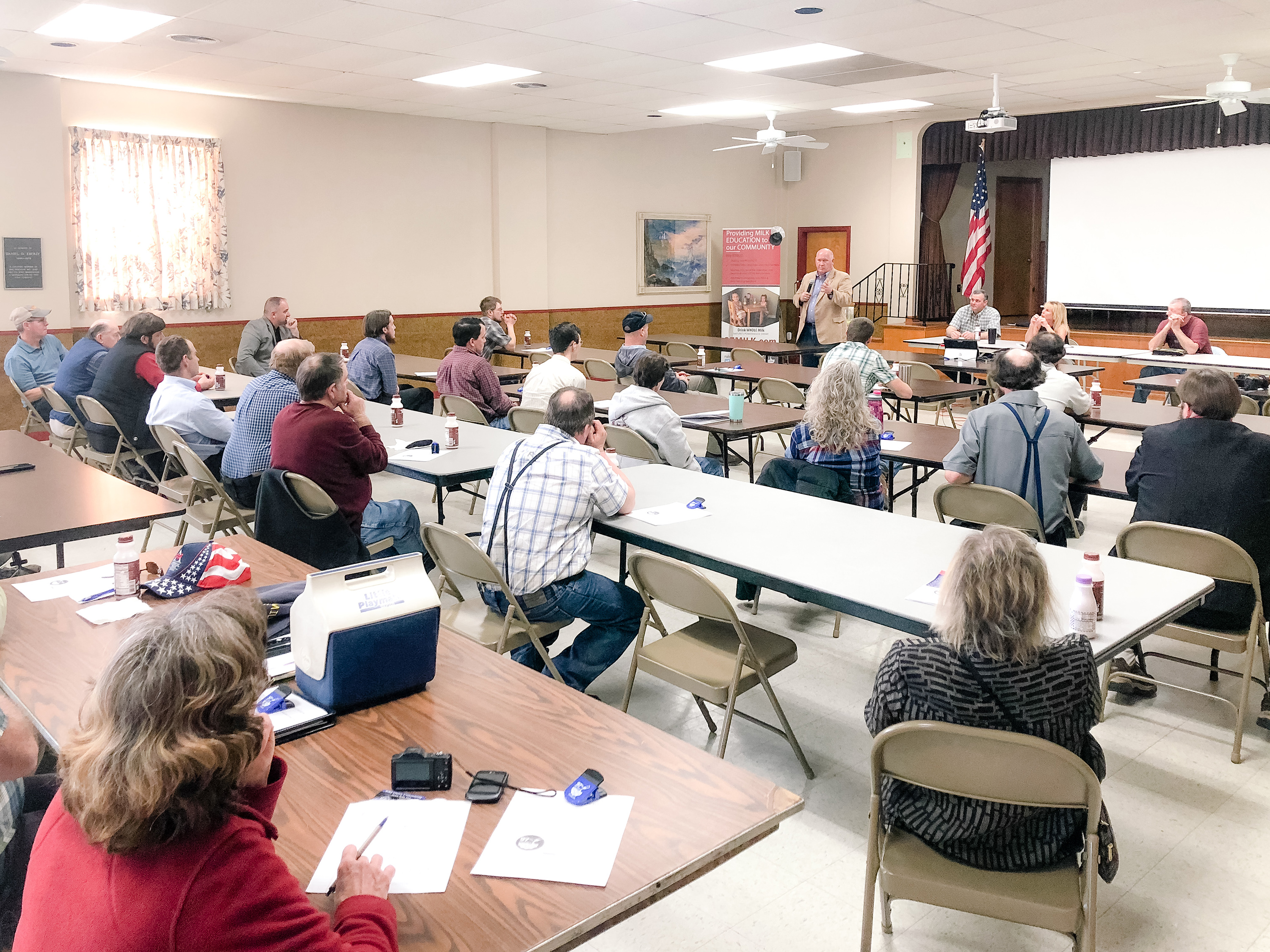
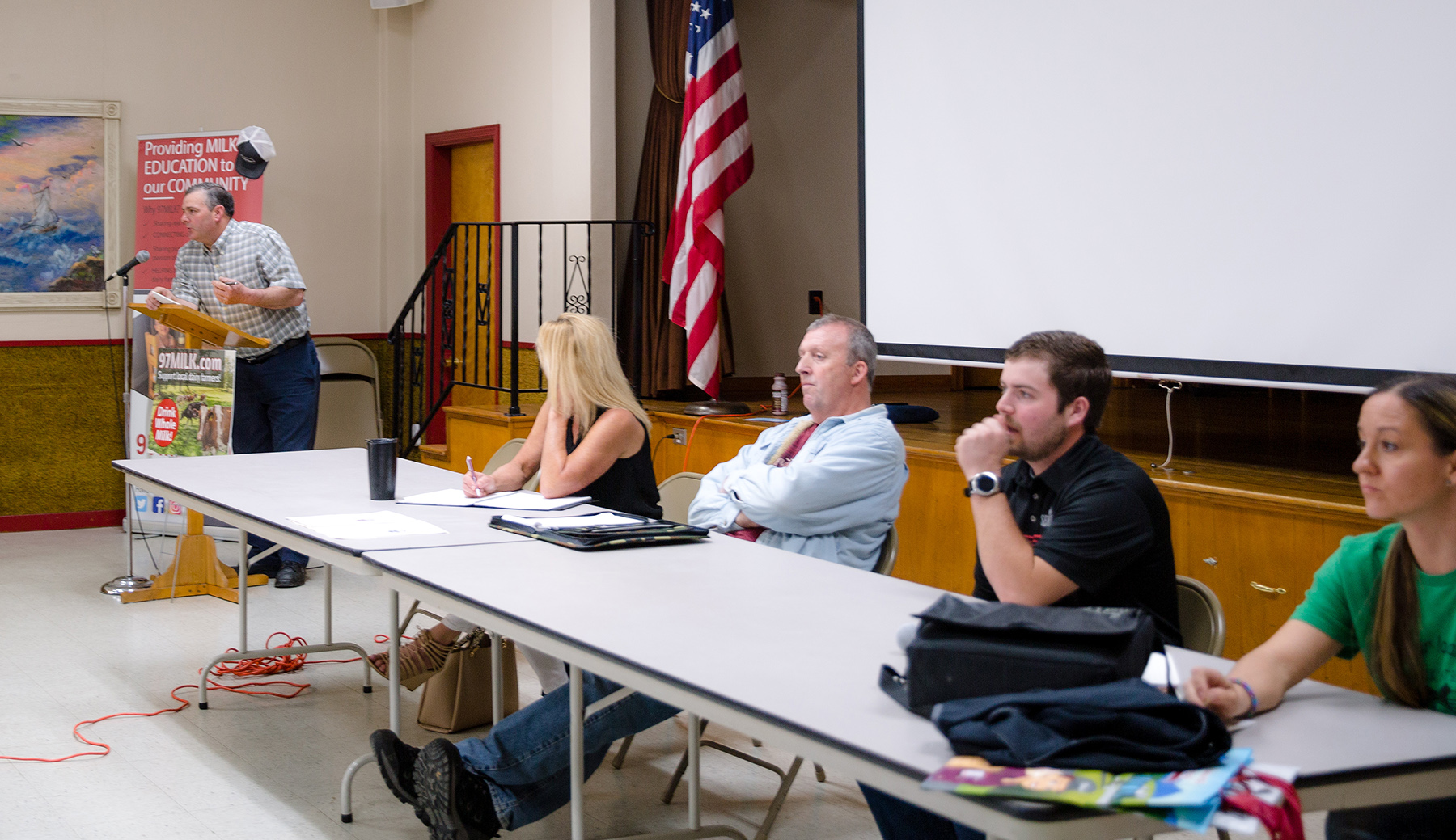
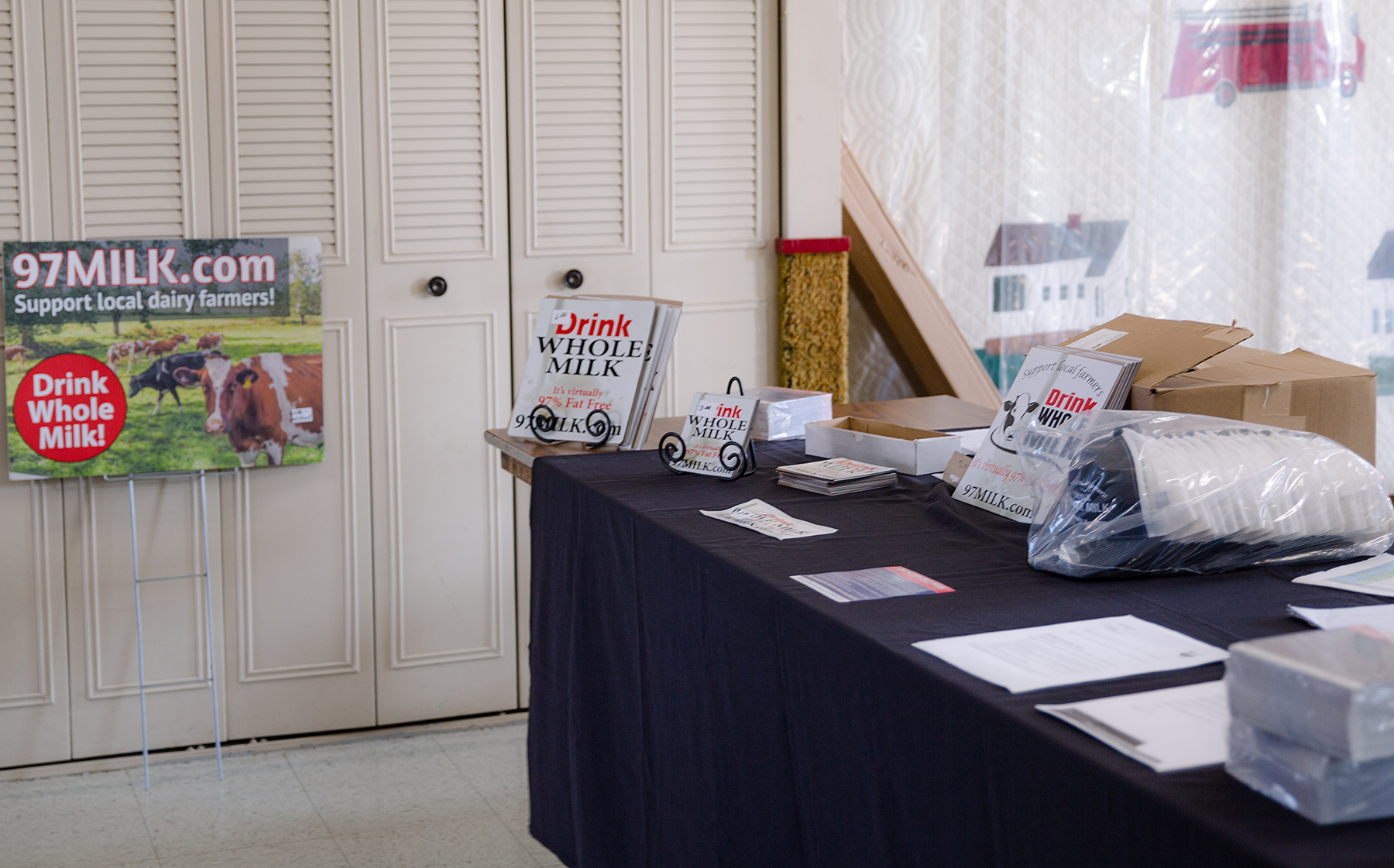
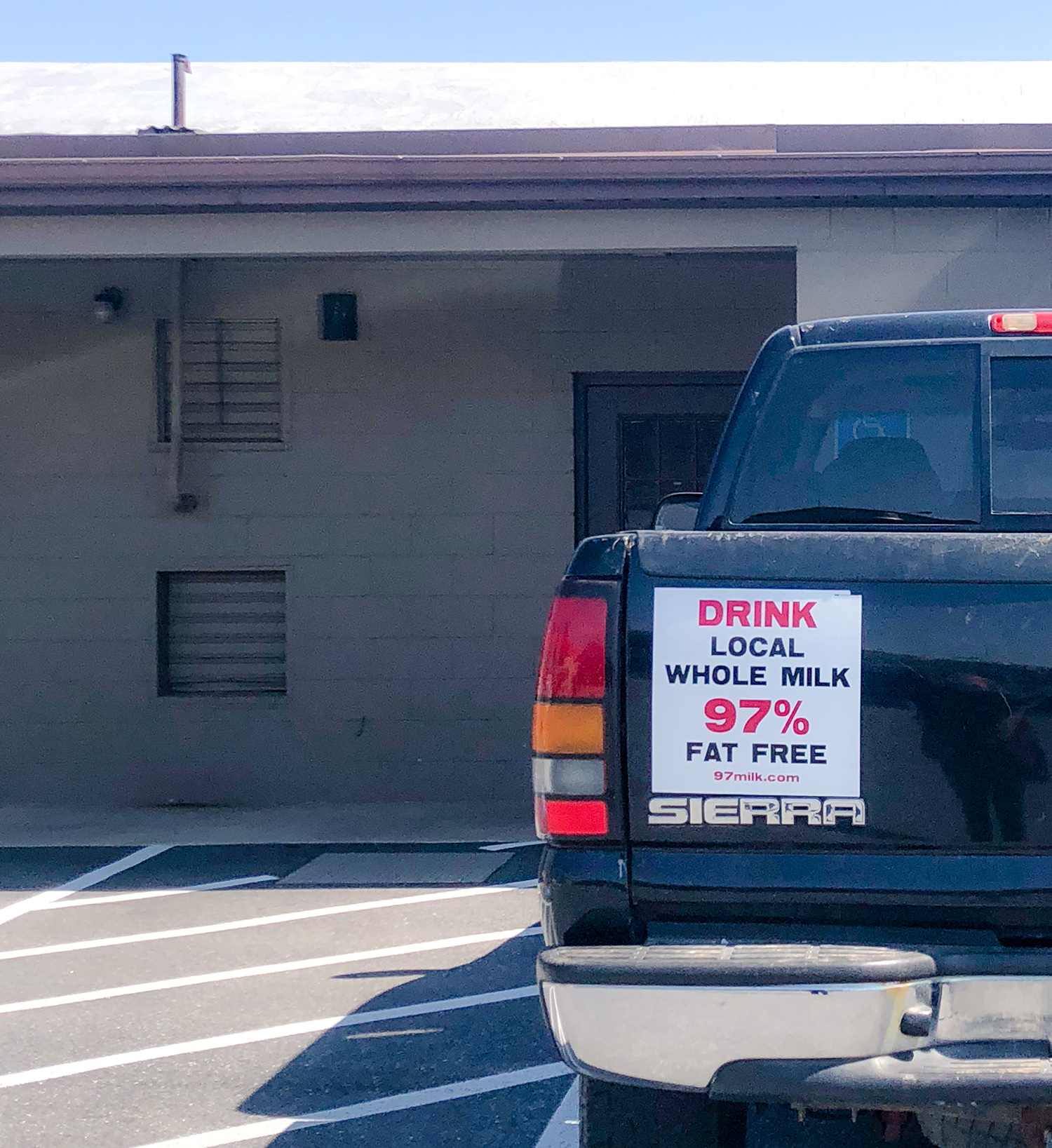
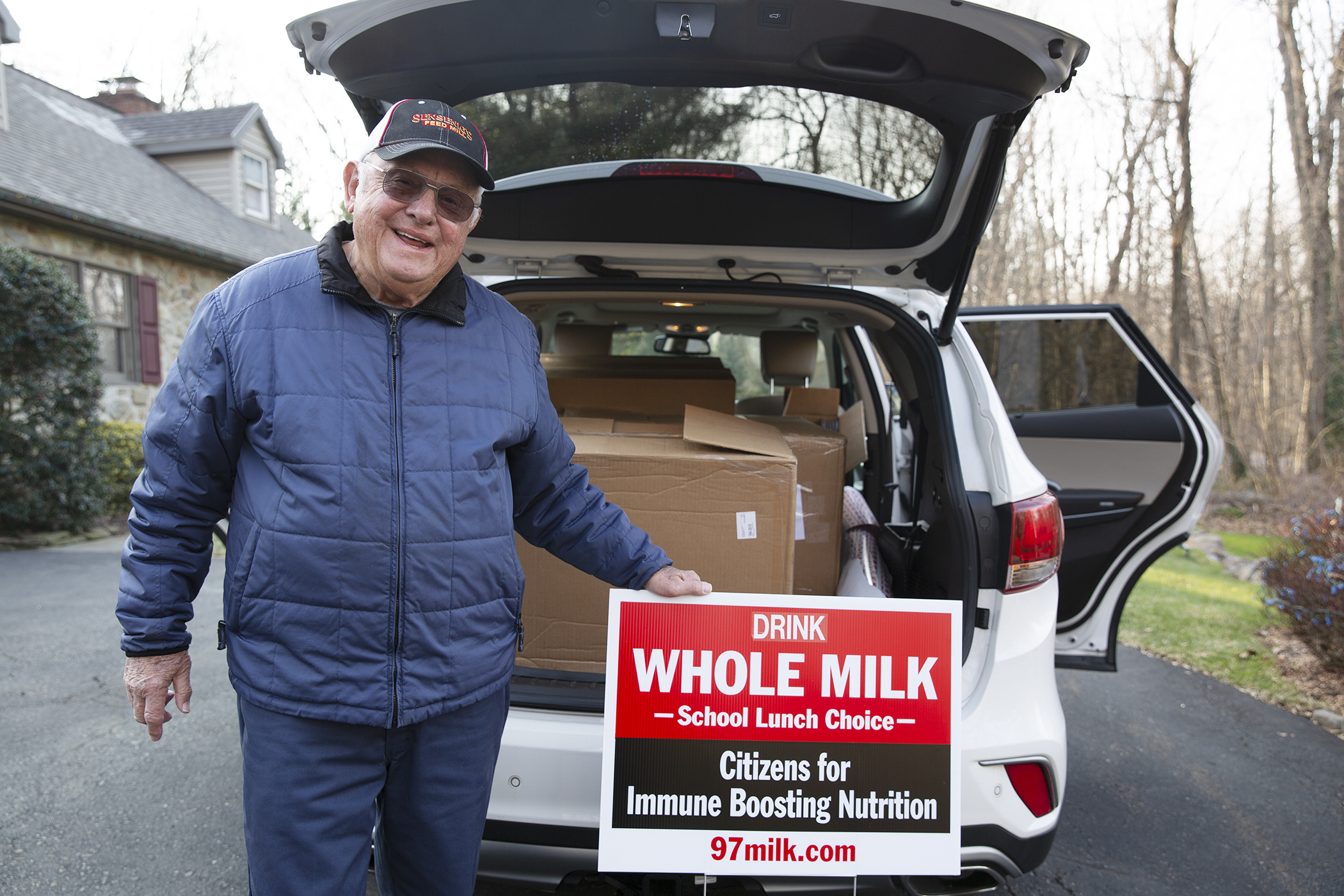
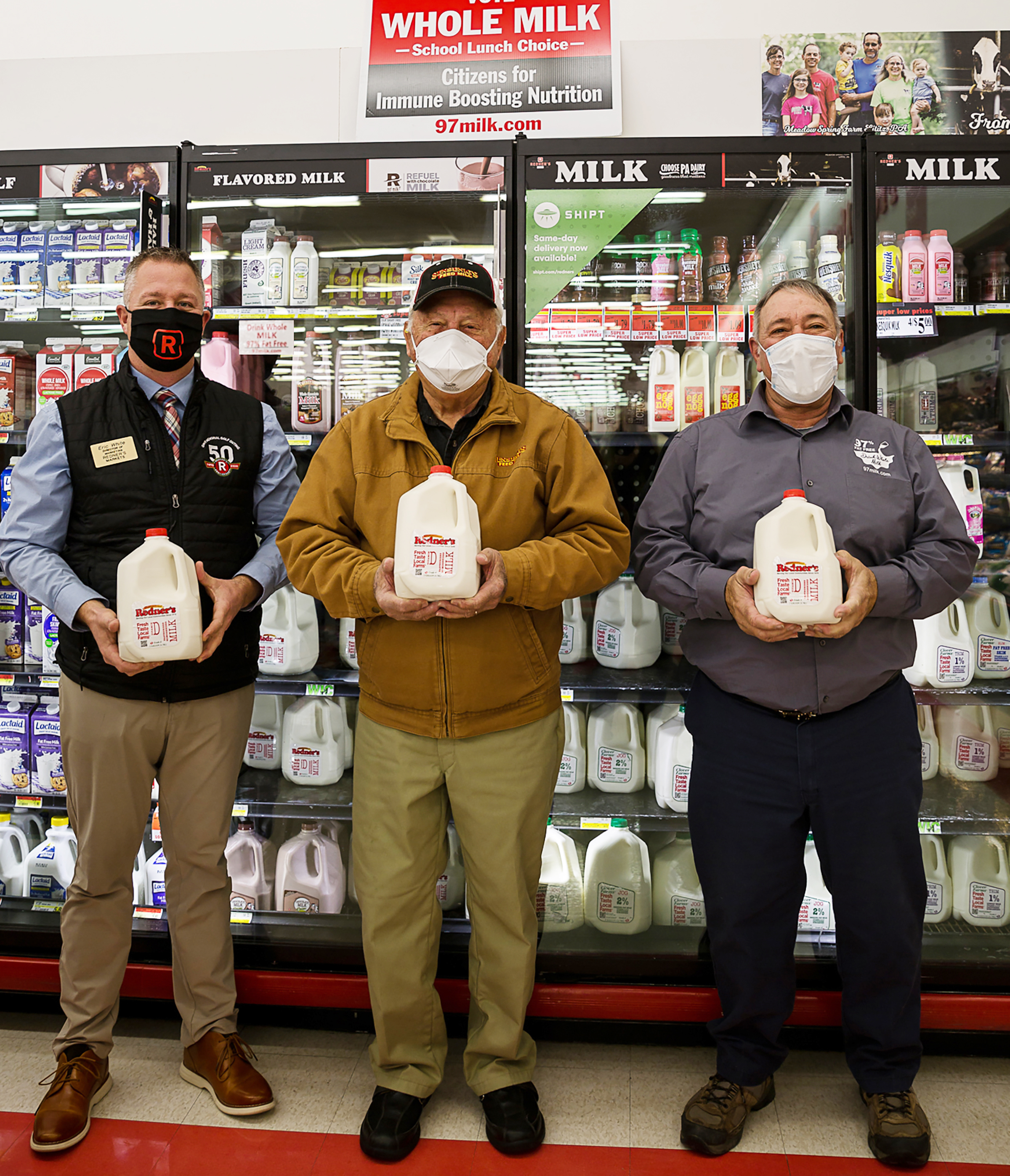
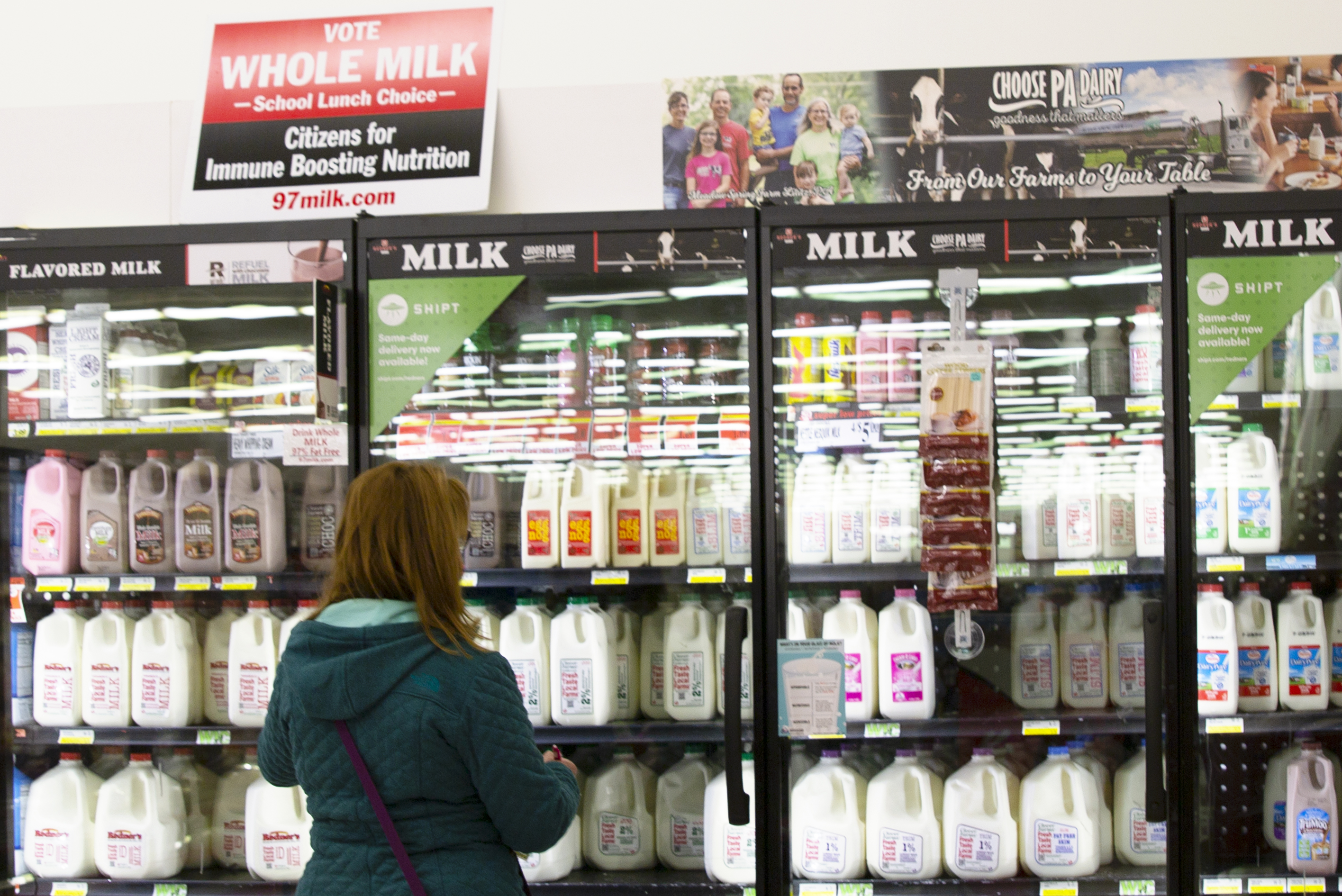
 Ag Moos