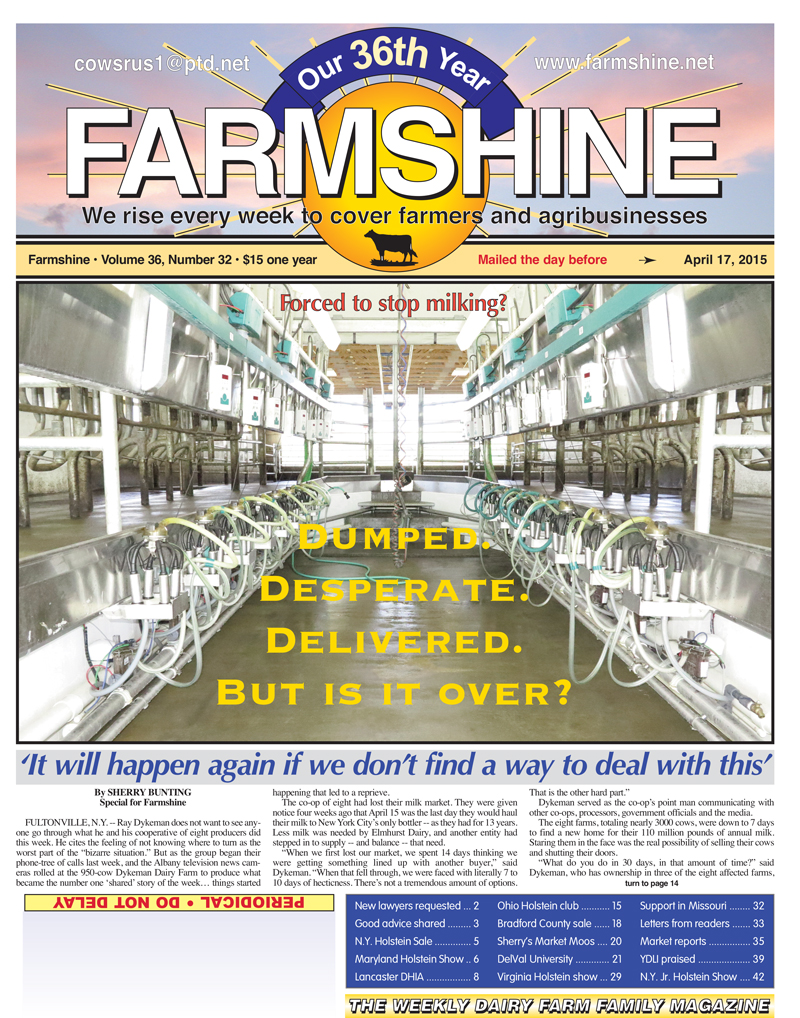
Dumped. Desperate. Delivered. But is it over?

‘It will happen again if we don’t find a way to deal with this.’

By Sherry Bunting, Farmshine, April 17, 2015 Cover-041715
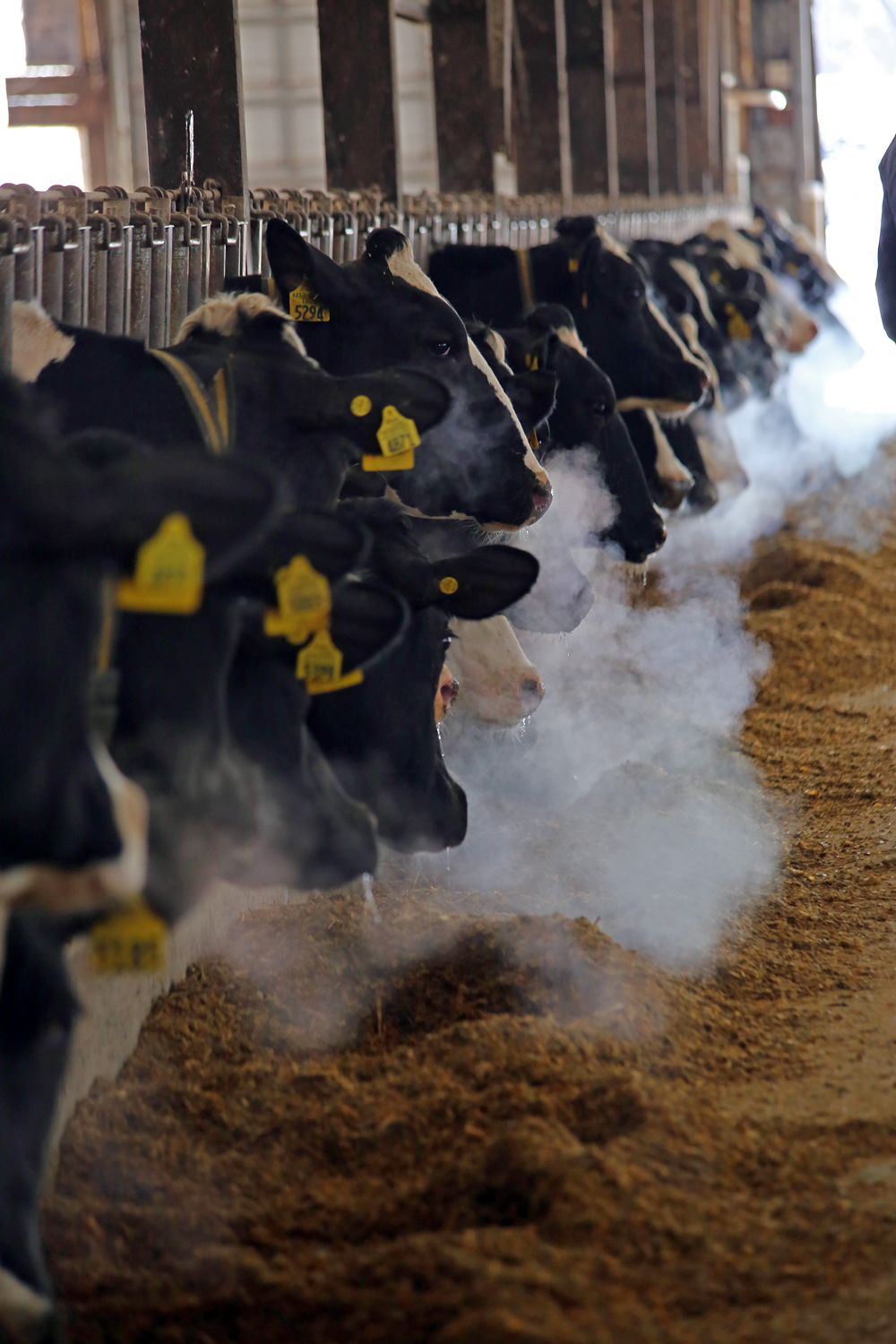
FULTONVILLE, N.Y. — Ray Dykeman does not want to see anyone go through what he and his cooperative of 8 producers did this week. He cites the feeling of not knowing where to turn as the worst part of the “bizarre situation.” But as the group began their phone-tree of calls last week, and the Albany television news cameras rolled at the 950-cow Dykeman Dairy Farm to produce what became the number one ‘shared’ story of the week… things started happening that led to a reprieve.

The co-op of 8 had lost their milk market. They were given notice 4 weeks ago that April 15 was the last day they would haul their milk to New York City’s only bottler — as they had for 13 years. Less milk was needed by Elmhurst Dairy, and another entity had stepped in to supply — and balance — that need.

“When we first lost our market, we spent 14 days thinking we were getting something lined up with another buyer,” said Dykeman. “When that fell through, we were faced with literally 7 to 10 days of hecticness. There’s not a tremendous amount of options. That is the other hard part.”

Dykeman served as the co-op’s point man communicating with other co-ops, processors, government officials and the media.

The 8 farms, totaling near 3000 cows, were down to 7 days to find a new home for their 110 million pounds of annual milk. Staring them in the face was the real possibility of selling their cows and shutting their doors.

“What do you do in 30 days, in that amount of time?” said Dykeman, who has ownership in 3 of the 8 affected farms, including the 500-cow Envision Dairy, Amsterdam, owned by a consortium of 23 people with expertise in different aspects of dairying and forage, along with young dairy startups from Cornell. Envision Dairy was accepted by another co-op 10 days before cutoff. That lightened the load a bit, but the rest of the milk was still a long way from home.

“Even today, our 42 employees are looking at me saying what are we doing Thursday?” said Dykeman in a Farmshine phone interview late Tuesday afternoon. “We are 24 hours away from having no home for our milk, and I still am not sure how to answer them.”

Hope and support…

But he had hope. Fellow dairy producers and community members were calling and emailing. People were reaching out. He had had countless meetings and secured two buyers to each take a little of the milk. On Tuesday afternoon, he was waiting for an answer from a third processor considering taking half.

By late that evening, that contract was signed for a 3-month reprieve in time to make the nightly television news.

“Trucking our milk to 3 different places will be new for us, but we are able to use the same hauler and we are accustomed to high trucking costs — having hauled milk into New York City for 13 years — so we are very happy,” said Dykeman with an audible sigh of relief.

“I hope, going forward, we don’t let this experience go by the wayside because I honestly believe if we do not come up with a plan for this area, it will happen again and be potentially devastating,” he quickly added. “Just look at the investment farmers have. All that we have put at risk.

“I would much rather have someone say to me: ‘We really need you to go out of business. You are not needed in New York anymore, and you have a year to get out,’ than to be told all of a sudden there’s no place to send my milk,” he said.

Dykeman stressed that they have “no animosity toward any of the companies.” This is business to business, they realize. But what amazed them was the amount of public support.

“Everyone worked so hard to find a home for this milk: Our representatives and senators, the Governor’s office, the New York Ag Commissioner, other co-ops and processors. Local people wanted to take the local milk. It was a very difficult situation in which to find a solution, but the people we have dealt with in this were very helpful.”

Dykeman could not say enough about Sen. Chuck Schumer. “He was kind enough without a scheduled meeting to meet with a couple farmers while in Johnstown for another reason,” he explained. “He and the Commissioner both called this morning to express their relief in how things turned out.”

No easy solutions…

The 3-month reprieve gives the co-op of now 7 farms the breathing time to secure an annual contract. And Dykeman feels certain there will be more discussion in the industry on how to handle these things better in the future.

“Farmers generally want to go back to being farmers,” Dykeman shared. “This is not what we do. This is one of the reasons we farm. We grew up on farms and this is what we want to do — not doing the kinds of things I’ve been doing for the past few weeks.”

Dykeman said the silver lining is “seeing your community respond and be very helpful. I can’t even calculate the number of emails and phone calls I’ve had. In fact, I’ve had 5 calls try to buzz through while on the phone with you today,” he said Tuesday. “People want to help. But there are no easy solutions and it will happen again if we don’t find a way to deal with this.”

One of the ideas being tossed around is to pair extra milk with efforts to supply food banks, or to ask the government how to use the “demand buying” in the Farm Bill to alleviate the supply pressure coming to roost on a region despite the fact that the “national average milk margin” is not even close yet to triggering the national government purchases for feeding programs.

Players and perspective…

In contacting the New York Department of Ag and Markets on their role and perspective, emailed questions were requested, and Dave Bullard, assistant public information officer provided this statement in response: “Ag and Markets is working with local elected officials, including Congressman Tonko and Assemblyman Santabarbara, to assist the farmers in finding alternative processors and manufacturers for the cooperative.  There is currently a surplus of milk due to strong production combined with lower sales as a result of reduced exports and a few other factors.  This supply/demand imbalance has created a very challenging situation for all producers and processors.”

Similarly, a request for an interview with DFA was met with a request for emailed questions. In asking what DFA would like to report in terms of taking on one of the farms in the Pennsylvania situation a few weeks ago and the New York situation currently while also gaining additional outlet for member milk in the process, the emailed response from DFA’s spokesperson was, that “Every milk marketing organization handles regional market dynamics differently.  One of the advantages of our cooperative system is that we work diligently to provide a secure market for our members’ milk.  Our goal is to market our members’ milk in the most efficient and cost-effective way as possible.  As we look to the future, the Northeast dairy industry is in an excellent position because of our proximity to major population hubs and our access to natural resources.”

Asked to define some of the biggest reasons for the oversupply of milk in the Northeast given that the Northeast has not grown by as wide a margin as the national average, DFA’s emailed response was: “For most of 2014 and into 2015, the Northeast marketplace has been in a challenging milk supply situation. Overall a generally weak demand and increased milk supply resulted in the need for additional milk movements around and beyond the Northeast. With plant closures (Farmland Dairies) and an overall weakening in demand from Class I and Class II customers, more milk than normal was placed in balancing facilities throughout our system and outside our geography. In the Northeast the loss of capacity in conjunction with the increase in supply resulted in the extra milk movements.”

Welcome to the squeeze chute…

When reviewing the larger decline in Northeast Class I utilizations versus the decline nationally — and seeing the effect as Eastern mailbox milk prices fall further behind their respective all-milk price while national average mailbox milk prices have atypically become higher than the all-milk price — it is obvious that the Northeast market is the new squeeze-chute when milk supplies nationally burgeon.

The yogurt-magnet that strengthened the confidence of Northeast dairy farmers over the past few years has led to small but steady increases in production, and then in 2014, New York increased by more than 2% to re-take from Idaho its former position as the #3 milk-producing state. Meanwhile the Northeast milkshed, as a whole, was up just under 2% in 2014 compared with the national increase of 2.7%, and has backed off in early 2015.

No reason to sour on yogurt…

Yogurt production is one of the primary fall-guys for the current supply/demand situation reversal of fortunes in the Northeast. But further analysis is less clear on that pointed finger. Yogurt production was 741 million pounds in New York State in 2013 and 692 million pounds in 2012. The 2014 figures for the state will not be available until late May. The 2012 and 2013 totals, however, show New York yogurt production used around 12% of New York’s growing milk supply in both years as both the yogurt and the milk production grew simultaneously.

On a national basis, however, the total U.S. yogurt production figures are available at this time, and yogurt production grew from 4.42 billion pounds nationally in 2012 to 4.65 bil. lbs in 2013 to 4.74 bil. lbs. in 2014.

Furthermore, the April 2 Dairy Products report indicated that nationwide plain and flavored fresh (not frozen) yogurt production was up in February by 7.2% over year ago and nearly 12% higher than for January.

Context and common denominators…

The yogurt industry is known to be highly secretive and competitive.

Interestingly, 2009 is the last year in which the USDA reported monthly yogurt production on a state-by-state basis. Since 2010, those monthly yogurt production figures are only available on a national basis. This reporting change coincides with the timing of when yogurt production began to rise in New York State; so now, when it counts, there are no free and public records of production by state until 6 months after a year ends. It’s not that way for other substantial dairy products, and prior to 2010, those figures were available monthly without having to pay hundreds of dollars for an insider yogurt market publication to read insider industry estimates and trends.

In April’s central New York situation, like western Pennsylvania in February, rumors fly about reasons for farms to be cut from the shipping rolls of processors and small co-ops. Some folks wonder about the milk quality of those producers, or they may believe producers were expecting to be paid more money. But that’s the thing with rumors, there is but a shred of quasi-truth.

While some producers may find themselves in this situation through nitpicking on an inspection report or somatic cell counts that are a little too far north of 200,000, others may find themselves in this situation for merely asking a higher pay price when milk is short, but then staying with their processor on a handshake without the requested pay increase during the short-milk times only to find themselves on the other side of that equation — losing their processor when milk becomes long.

The bottom line in talking to various folks who’ve been through this in Pennsylvania and New York, the common denominators are: 1) the lack of warning, 2) the inability to prepare or negotiate or help problem-solve in advance of being flatly cut off, and 3) the loss being driven, at least in part, by the independents and small co-ops’ lack of reliable access to balancing assets — either owned or simply a standby buyer that will take a little milk for cheese or butter or yogurt or powder as producers balance the diminished and diluted Class I demand.

Looking ahead…

“Everyone in the industry was helpful to us, and we want to continue to work with them on solutions for the future,” said Dykeman reflectively.

Running in the background is some loss of confidence as producers deal with permanent and temporary loss of markets. One of the producers who survived the western Pennsylvania cutoff in March said in a phone interview this week, “crazy things are happening and people are being let go. Everyone is afraid to invest. Some of us already invested in our operations and are on our toes about losing our markets, and then we go to a local meeting where the speaker from Elanco tells us we need to increase production with rbST even though we are clearly in a region where more processors are requiring affidavits not to use it and people are losing their markets because of too much milk.”

At the end of the day, from the outside looking in, it seems the good beef price and current status of processors wanting to label products rbST-free are two strong signals folks could pay attention to in stabilizing demand. It’s also important to gauge the market direction in planning phases of growth. That growth is necessary here to sustain the dairy infrastructure and make farms that are not quite as surrounded by other farms attractive as a pickup. However, the two market loss situations in Pennsylvania and New York illustrate vividly that size does not matter.

As long as the Federal Orders put all the marbles of high value, pooling and provisions into Class I while that is the milk class that is dwindling in sales, size won’t matter. When milk is long, the milk guns will continue to point East and all size farms are vulnerable in the business of dealing with the push of supply through the squeeze chute.

Look for more on the Northeast market situation in next week’s Farmshine.

-30-

PENNSYLVANIA – Feb. 2015

Got Milk! But nowhere to go…Cover-022715
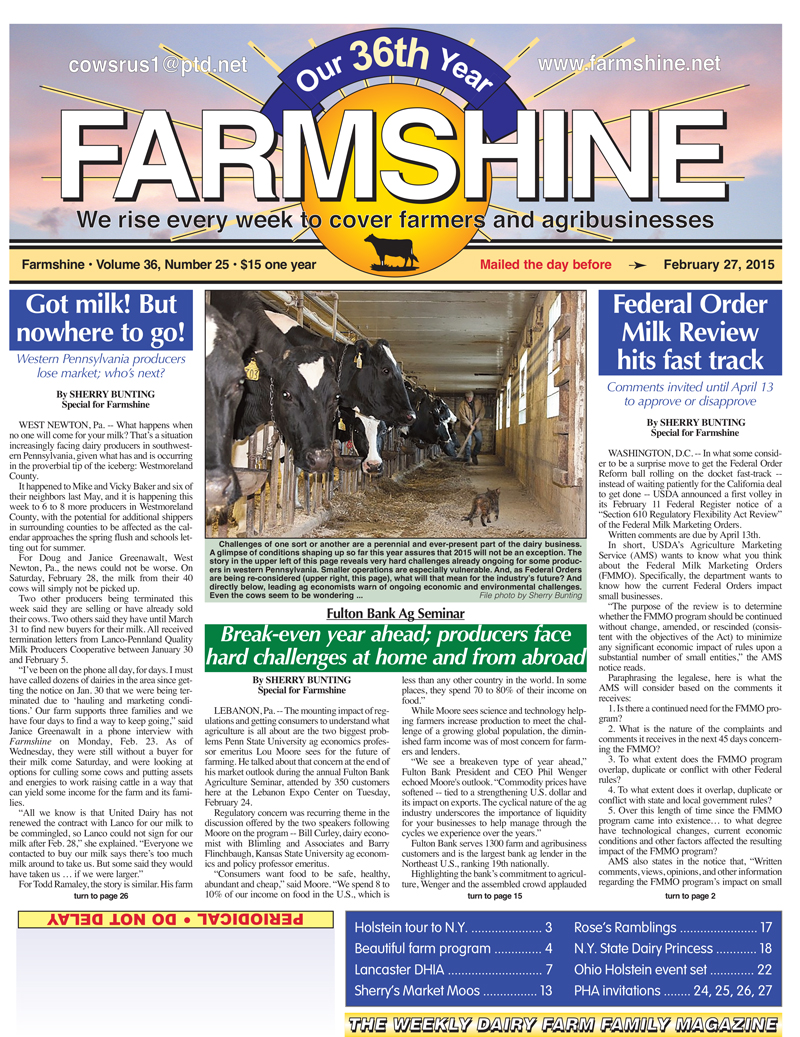
By Sherry Bunting, Farmshine, Feb. 27, 2015

WEST NEWTON, Pa. — What happens when no one will come for your milk? That’s a situation increasingly facing dairy producers in southwest Pennsylvania, given what has and is occurring in the proverbial tip of the iceberg: Westmoreland County.

It happened to Mike and Vicky Baker and six of their neighbors last May, and it is happening this week to 6 to 8 more producers in Westmoreland County, with the potential for additional shippers in surrounding counties to be affected as the calendar approaches the spring flush and schools letting out for summer.

For Doug and Janice Greenawalt, West Newton, Pa., the news could not be worse. On Saturday, February 28, the milk from their 40 cows will simply not be picked up.

Two other producers being terminated this week said they are selling or have already sold their cows. Two others said they have until March 31 to find new buyers for their milk. All received termination letters from Lanco-Pennland Quality Milk Producers Cooperative between January 30 and February 5.

“I’ve been on the phone all day, for days. I must have called dozens of dairies in the area since getting the notice on Jan. 30 that we were being terminated due to ‘hauling and marketing conditions.’ Our farm supports 3 families and we have 4 days to find a way to keep going,” said Janice Greenawalt in a phone interview with Farmshine Monday. As of Wednesday, they were still without a buyer for their milk come Saturday, and were looking at options for culling some cows and putting assets and energies to work raising cattle in a way that can yield some income for the farm and its families.

“All we know is that United Dairy has not renewed the contract with Lanco for our milk to be commingled, so Lanco could not sign for our milk after Feb. 28,” she explained. “Everyone we contacted to buy our milk says there’s too much milk around to take us. But some said they would have taken us … if we were larger.”

For Todd Ramaley, the story is similar. His farm is almost into Indiana County and about a 35 minutes’ drive (in a car not a milk truck) from the nearest Lanco shipper still shipping to Lanco. As of Tuesday, he said DFA was still looking at the possibility of taking the milk from his 40 cows “because it is really clean milk with SCC of 150,000.”

If his milk went to DFA, it would actually still go, physically, to the United Dairy, Inc. plant in Uniontown, several sources indicated, because United has a “swapping deal” with DFA, under which some of United’s milk goes to DFA’s plant in New Wilmington and some of DFA’s milk goes to United’s Uniontown plant.

When asked about the letters sent to six of its producers in Pennsylvania’s southwest corner, Lanco’s director of dairy operations Robert Morris explained how originally all the milk hauled by that hauler served Saputo Cheese in Hancock, Maryland.

“That plant closed in July,” he said. “But before that, those shippers ended up in our world when Saputo bought Jefferson Cheese. At that time, we were able to work an arrangement with United in Uniontown and hauler Wayne Harmon to commingle that milk on United’s independent routes. They were in charge of the Uniontown, Pa., Martins Ferry, Ohio and Charleston, West Virginia plants and would commingle some of our milk on the nearest truck.”

Morris noted the total milk of their six terminated farms is “roughly 250 to 275,000 pounds a month.”

According to Morris, United had apprised Lanco about losing a sizeable bottling contract through its system in January, and before cutting its own producers, would first stop receiving milk from outside sources. United set Feb. 28 as the last day they could commingle that milk. Lanco also received word through the St. Louis, Missouri milk broker that ran the commingling that United’s sizeable loss of sales would prohibit further commingling of Lanco milk in that region on their trucks.

Morris noted that Lanco is “still taking on new producers in areas where we have haulers close to our customer base,” and he noted the six producers they’ve let go are “small farms and out of our orbit, especially since Saputo closed the Hancock plant in July.

“Those farms were never charged the real cost of hauling their milk because United had picked up the trucking subsidy,” Morris stated. “With us losing the ability to commingle that milk, there is no way for us to haul it, or any market for us to send it to, where the hauling doesn’t eat up all the income.”

Requests from the affected producers to find a way to haul their milk for Lanco were denied.

Morris further explained that their milk from south of Williamsport, including Cambria County, Indiana County and Somerset County as well as Garrett County, Maryland — that had all flowed to Saputo in Hancock — is now going East to the Land O’Lakes plant in Carlisle. Some of it goes to Dairy Maid in Frederick, Md., and to HP Hood in Winchester, Va.

In areas where Lanco has hauling, they do commingle with the Maryland/Virginia co-op, but these fringe areas — like Westmoreland County — are an issue now without the Saputo cheese plant and considering the cut in volume needed by United at its Uniontown plant. Both Lanco and Maryland/Virginia have milk into Somerset County, plus Maryland/Virginia has milk in the Sugarcreek, Ohio region. The producers affected by the latest termination fall into a void — a pocket of milk between two higher-density dairy areas.

“We simply had too much milk at the Uniontown plant,” said Tom McCombs, milk procurement manager for United. “We had to cut back on the co-op milk, so we gave Lanco the notice.”

When probed further about the loss of Class I milk contracts, McCombs said that what United actually lost was its volume of sales that Save-A-Lot trucks would pick up at its Uniontown plant for their Pennsylvania warehouse “just down the road.”

“They did some redistricting with their stores, and that milk volume is now going to other warehouses,” he noted. This would include the warehouses served by United’s bottling plants in Ohio and West Virginia.

McCombs said the loss of volume going to the Save-A-Lot warehouse served by United’s Uniontown, Pa. plant leaves the company with the difficult task of deciding when and how to cut some of its own independent shippers that serve that plant as well.

“We have to make that decision in the next few days,” he said Monday. “It will be a tough situation to pick a load in an area that is not as flexible to get to our plants or other cheese plants.”

When asked about the milk swapping arrangement still ongoing with DFA, McCombs noted that, “We would not be accepting DFA milk, either, if we did not have the swapping agreement with DFA.”

He added that he expected the lost volume from the Save-A-Lot warehouse served by the Pennsylvania plant to come back in the fall “if things change.”

According to McCombs, United’s current 340 farms produce 36 million pounds of milk per month, and this total had increased by 850,000 pounds from December to January. “Our farms have not added cows, but they are producing a lot more milk per cow. It must be the good feed,” he said.

“Not only do we have more milk, but the Class I consumption is down. We have got to get milk back to consumers. The schools used to serve lowfat. Now they serve no-fat. They take the fat out of the milk, which takes the taste out of the milk, and people don’t want to drink it,” McCombs stressed, adding that the snow and low temperatures this winter are causing school closures. “We had five loads of school milk canceled and the balancing plants were all full. That snowballs on you.”

The Pennsylvania Department of Agriculture has received the quality records of the terminated farms, but not one of the producers has heard anything in terms of options from the state.

For shippers in Federal Orders 1 or 33, there are provisions for the market administrator to direct a cooperative to pick up the milk but be allowed to pass the full cost of marketing on to the producers. However, the shippers regulated under the Pa. Milk Marketing Board do not have those protections if their Class I market collapses.

That is what happened to Mike and Vicky Baker’s dairy and six others in the Westmoreland County region last May.

“We have a lot of independent processors in this western region,” she said in a phone interview Tuesday. She recounted her experience of losing their milk market last spring. In fact, her dairy and the others let go at that time were in the top seven for milk quality at the plant, and they lost their market anyway.

“We were able to get a good load of milk together at that time, so five of us are now with Land O’Lakes. It’s not cheap. We are paying $1.43/cwt in trucking costs,” she said.

The overarching problem, says Morris at Lanco, is that the Northeast and Mid-Atlantic market is “losing raw silo space” for weekends, holidays, and times of the year when Class I utilization is lowest. Add to this the 4% national decline in Class I sales to begin with, along with the reluctance of cheese plants to run at full capacity to build inventory, and the situation becomes one that producers throughout the region should be watching.

While some truckers report wait times at plants of 2 and 4 hours over the holidays, coop dispatchers note that was accomplished by dumping milk or just separating the cream and dumping the skim so that the trucks would not be waiting and so their turnaround times could be maximized on multiple routes.

Estimates of milk dumpage since last summer runs in the hundreds, but is anyone’s guess. DFA’s response to the question is to say it balances its member milk as it sees fit. Only certain types of milk dumping are reported to the Market Administrator, and that’s a story for another day.

For Todd Frescura, another of the six Lanco-terminated producers, the path forward will be different. He has talked with Horizon because there is demand for Organic milk that is reportedly in short supply. He is confident his fields will certify for three years of organic treatment due to the way his farm is operated for rotational grazing. But he will still have to wait one year for the herd to be certified.

“I guess I’ll cull the herd real hard, dry the cows I can, and maybe just milk 10 cows to feed calves for the neighbors and raise my heifers to be ready to produce organic milk in the future,” said Frescura.

But “going organic” is not an easy answer for most of the dairies affected now and in the future.

With the milk dumping last spring and summer and over the holidays, the concern is the independent bottlers will have a balancing problem once the spring flush hits and the schools let out in June.

Part of the problem is the reportedly large shipments of milk into Pennsylvania balancing plants from Michigan. DFA member-milk from Michigan takes precedence over non-coop milk, here, and DFA’s plants are full to the point where the cooperative is charging a 50-cent/cwt marketing fee. Land O’Lake’s fee also increased recently from 15 to 40 cents/cwt.

“My fear is that the producers losing a market this month are just the tip of the iceburg for what could happen in June,” Baker explains. “DFA has their own milk to fill their own plants.”

What will happen to the shippers for plants that are relying on 60 to 80% of their market in Class I? The verbal agreements bottlers have with DFA may not be good enough to carry their shippers through the loss of fluid sales at a time when balancing plants are full, production per cow is high and the schools are closed.

Baker notes that the annual Southwest Regional Dairy Days in Blairsville, Pa. next Thursday, March 5 will include a producer panel on this topic.

“We had already planned this on the agenda to talk about positioning our milk for the future,” said Baker. “But now we’re going to really talk about having good quality milk and how it may or may not matter in long run. Producers in that 40 to 50-cow and 100 to 130-cow range need to be aware of what they might have to do to make themselves more attractive.”

She said it matters beyond the farmgate because of the domino effect. “I am fearful for what this means for our infrastructure. As dairies leave, the service providers will have trouble staying for those that remain,” Baker noted. “Other pockets of milk in this state have more options than we have here because, here, we have an independent market, and DFA is the only balancer for that market, and DFA has more than enough of its own milk (from here and from beyond) to fill their plants.”

-30=
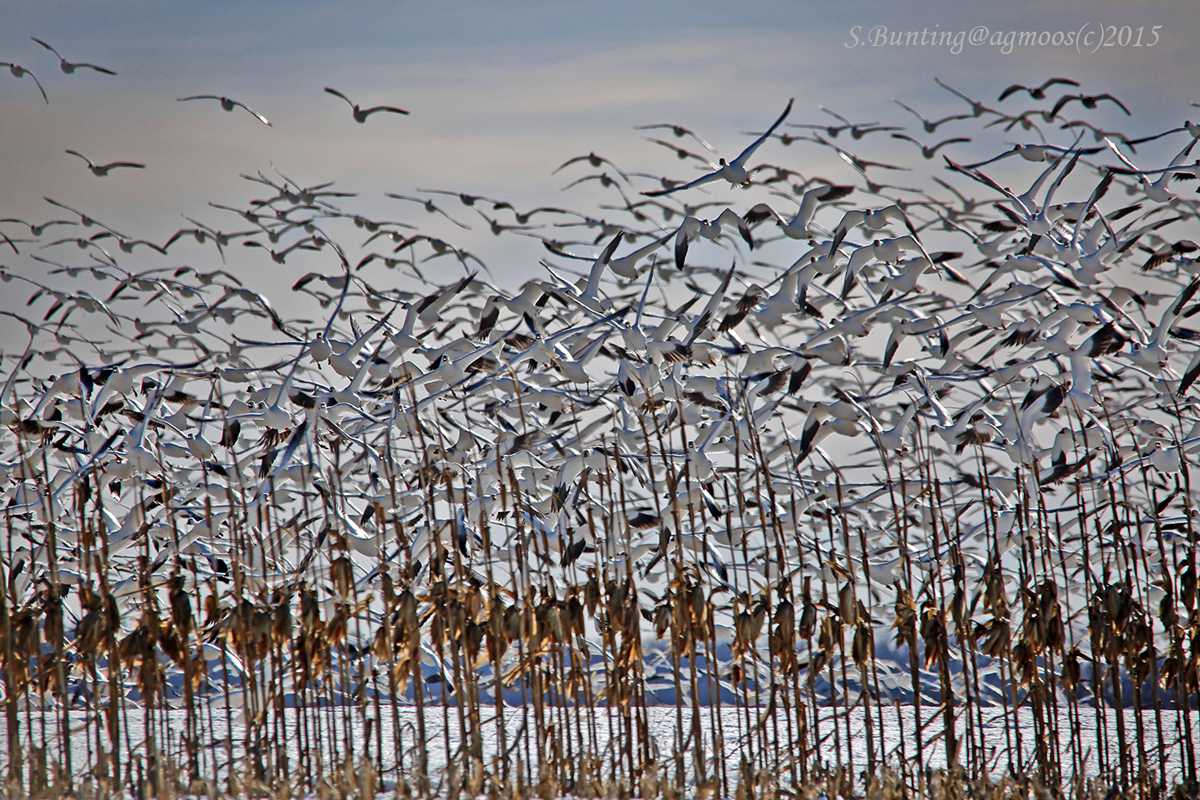
Breaking winter’s stillness. Better late than never.


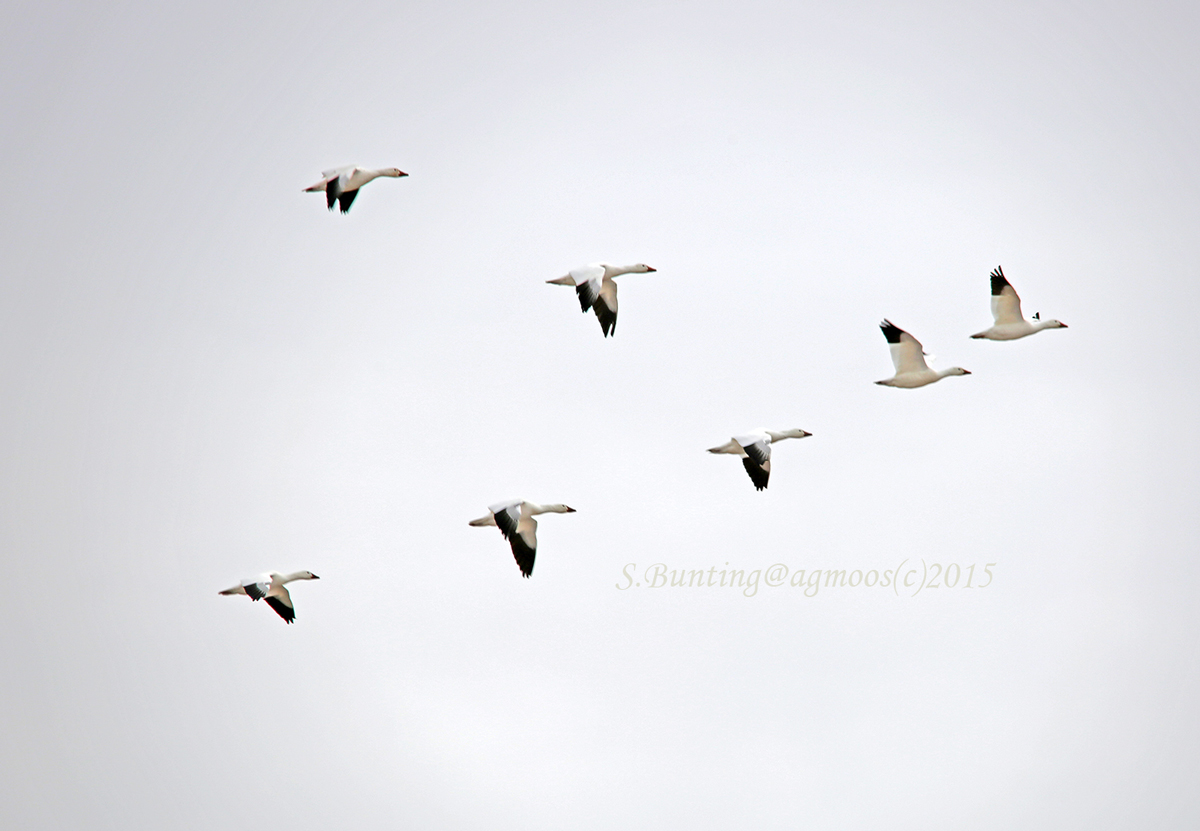
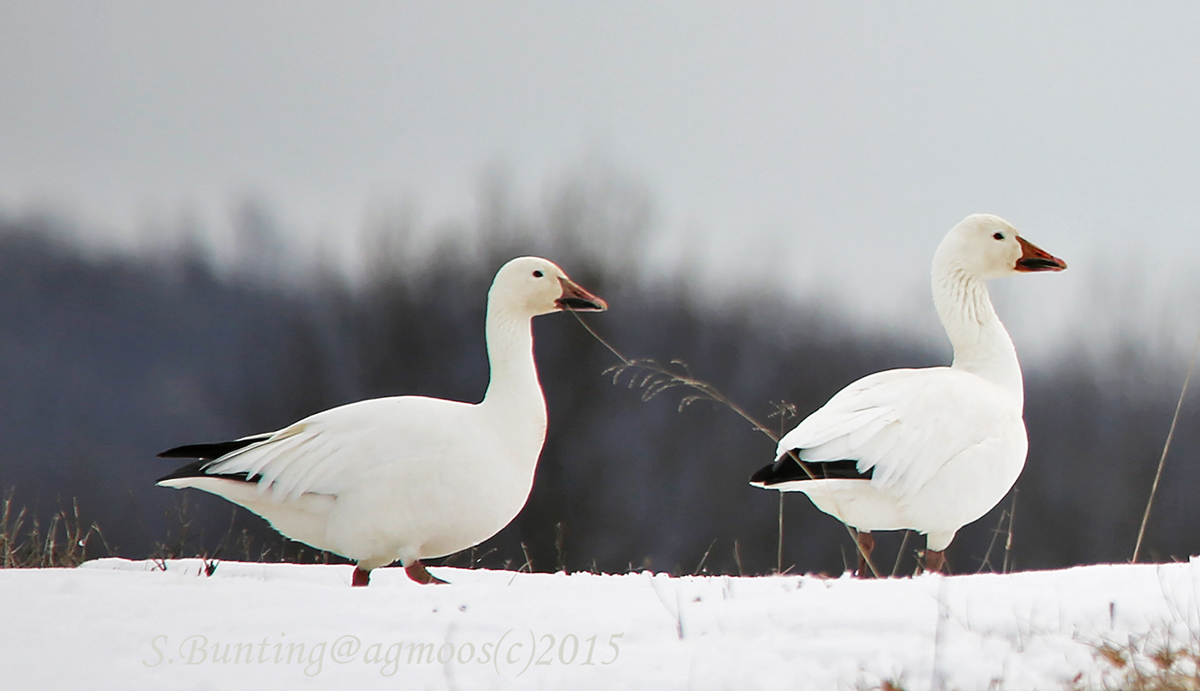
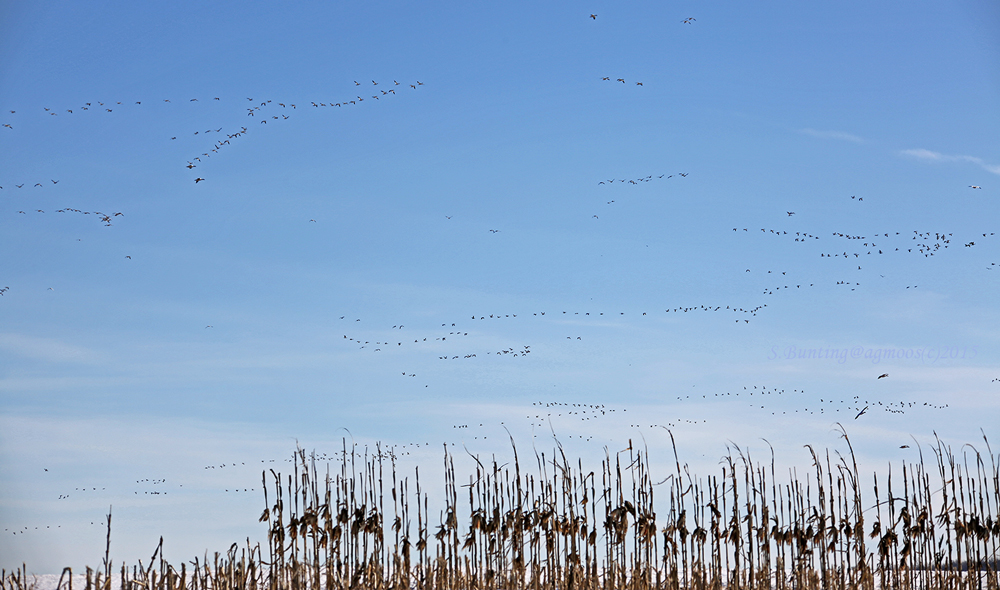
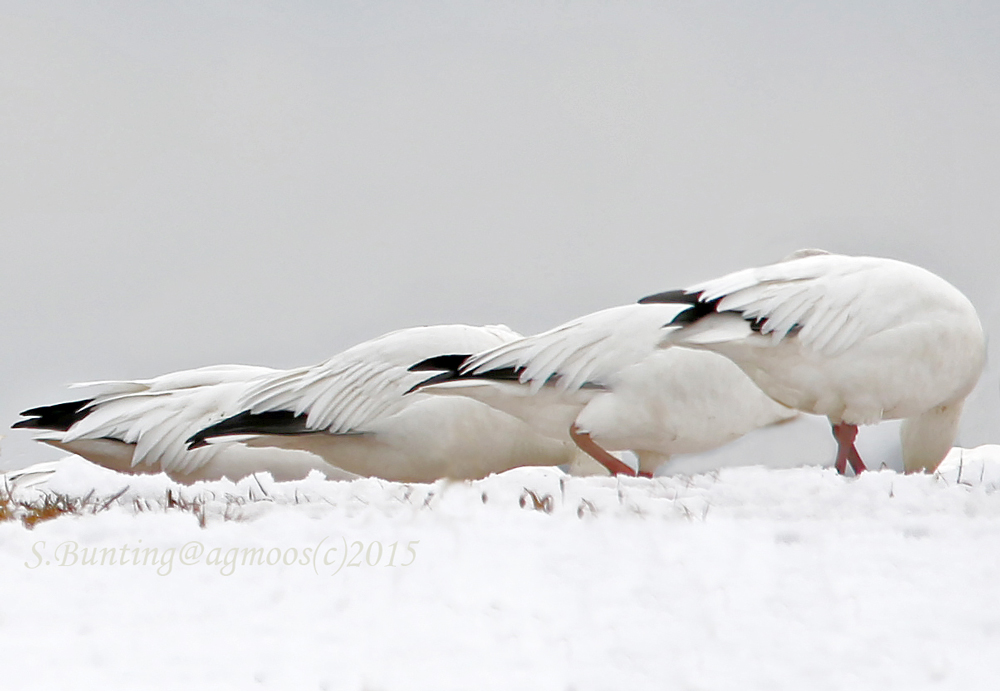
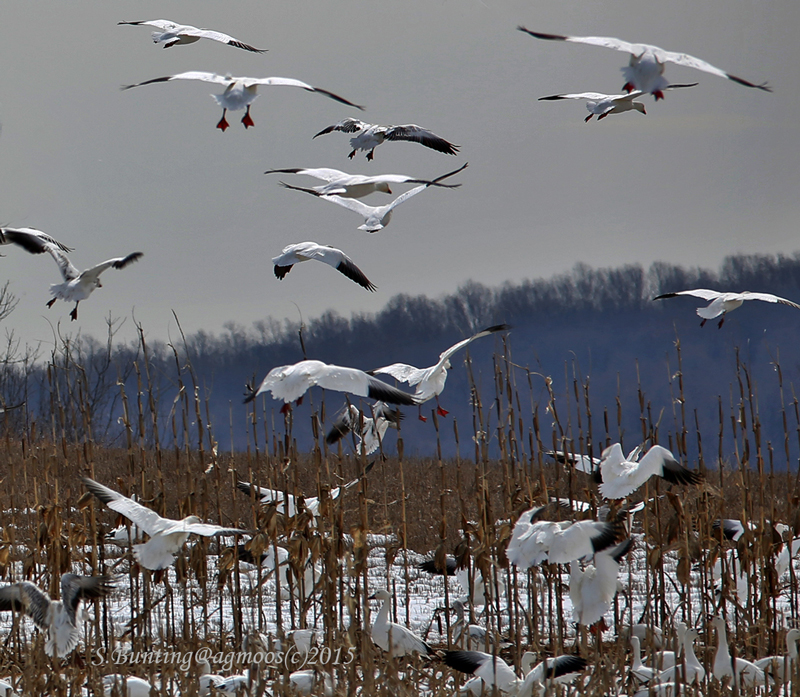
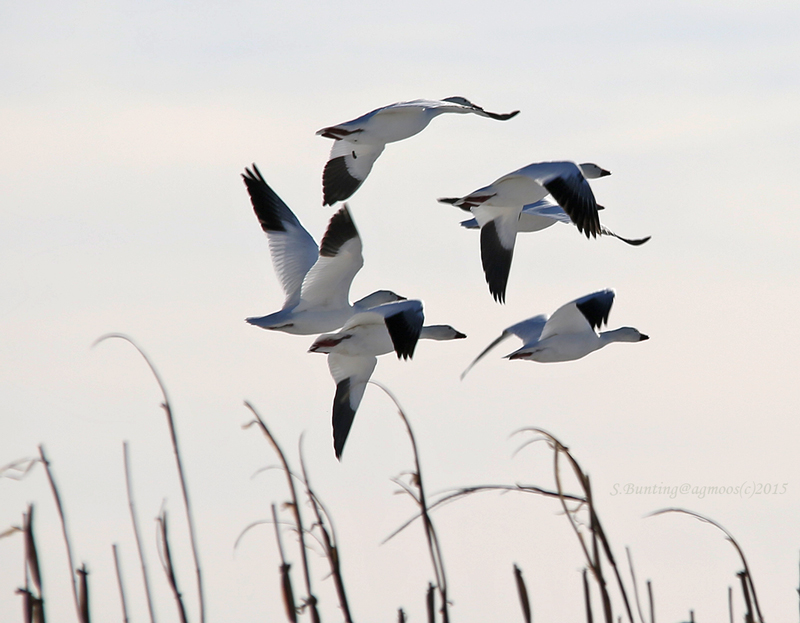
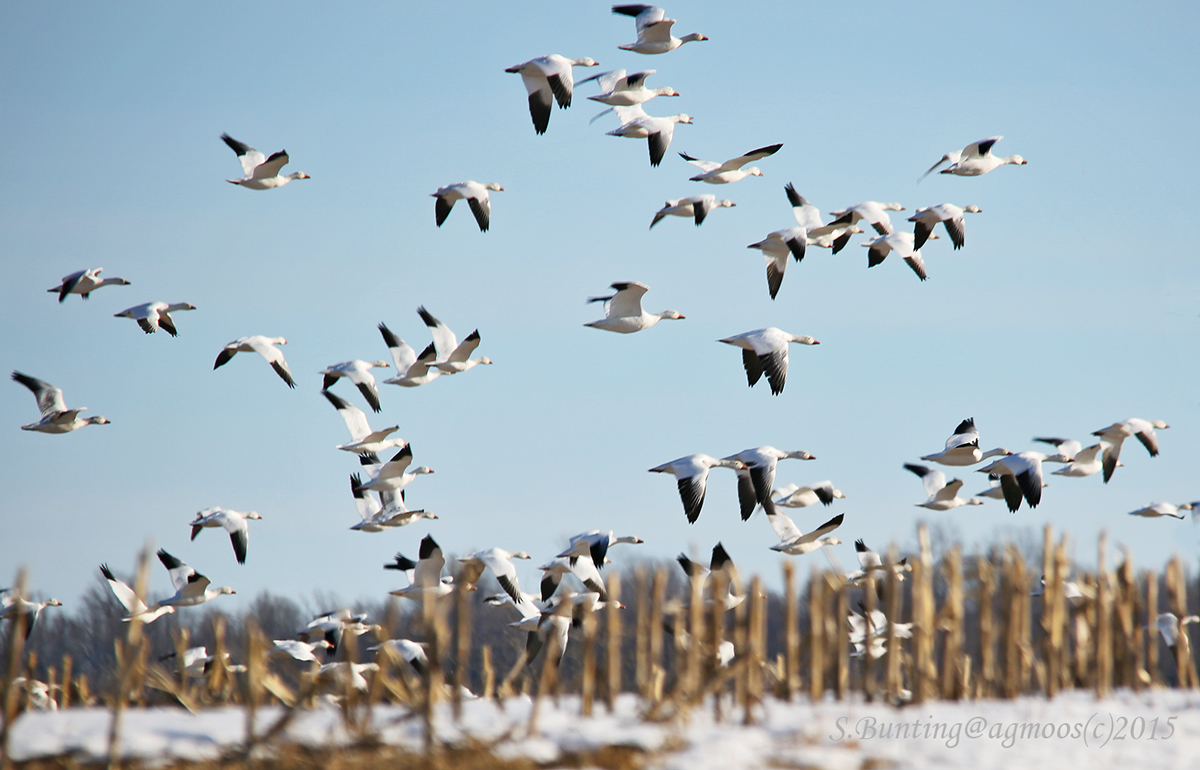
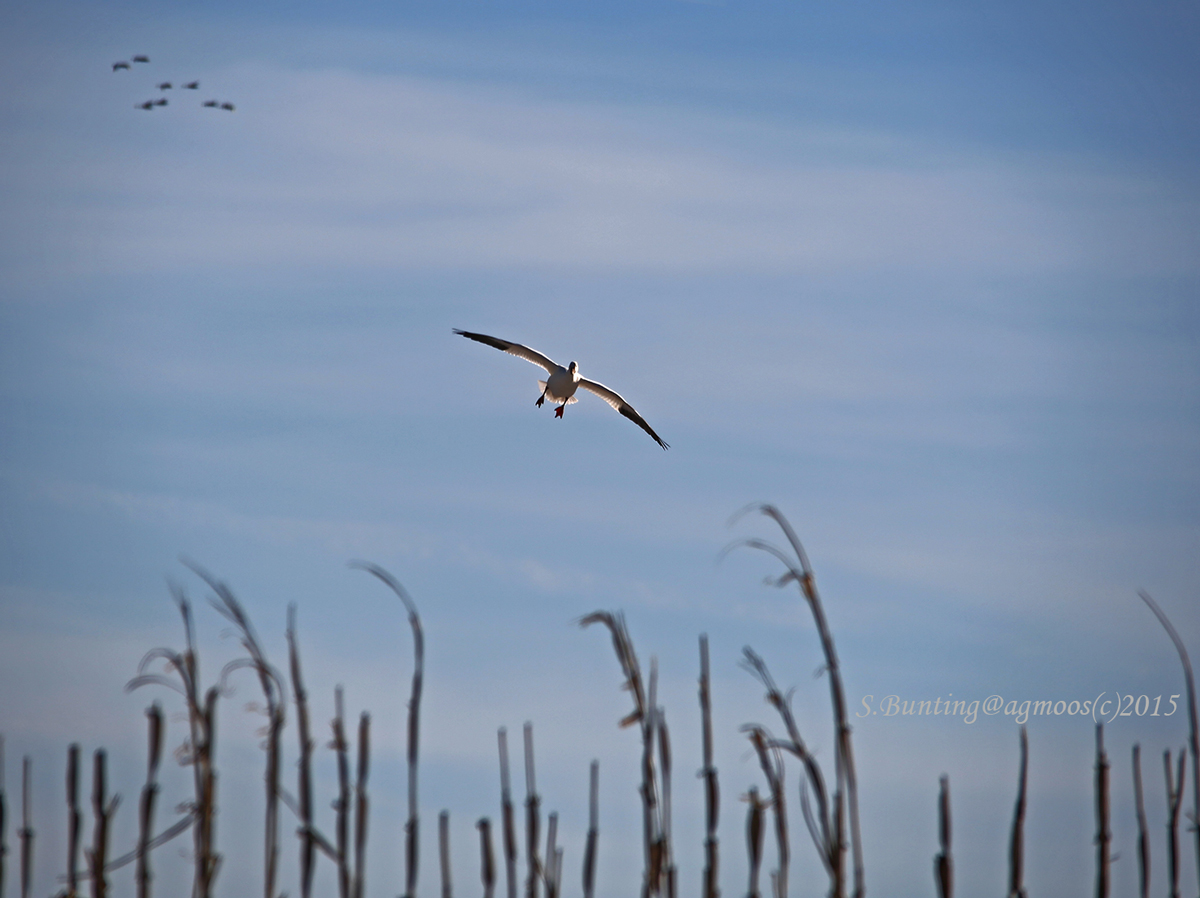
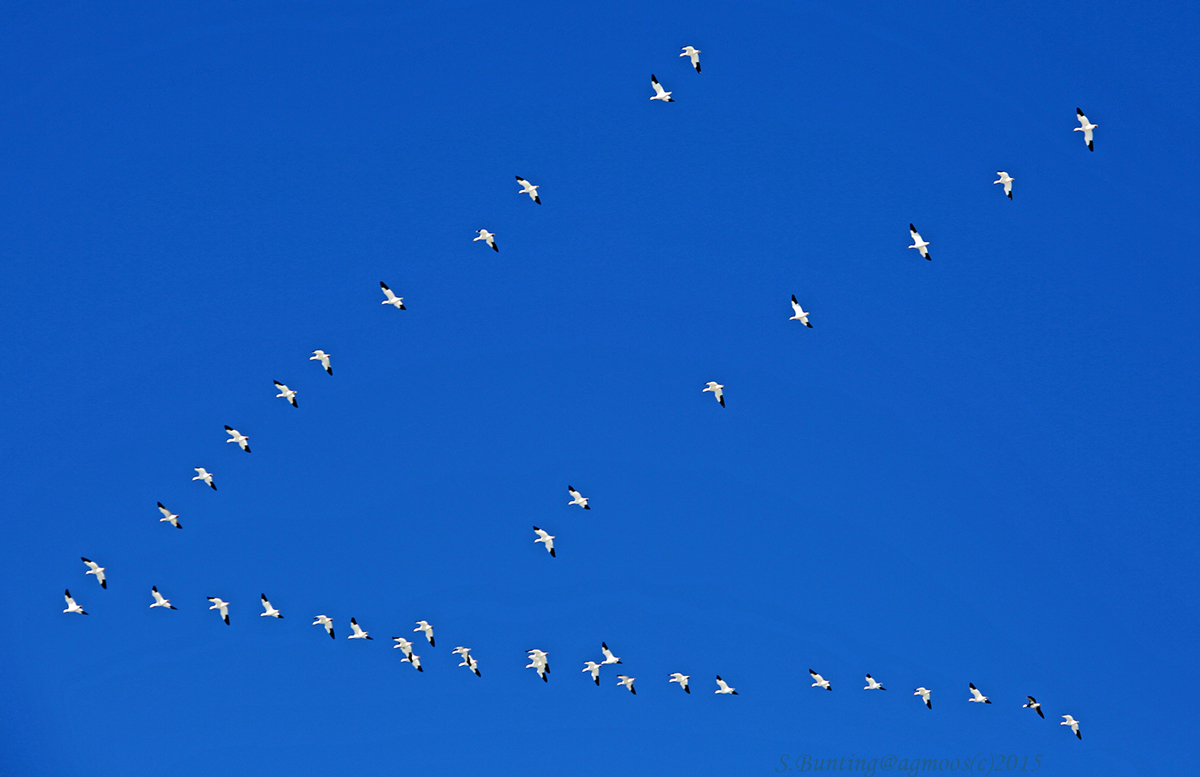
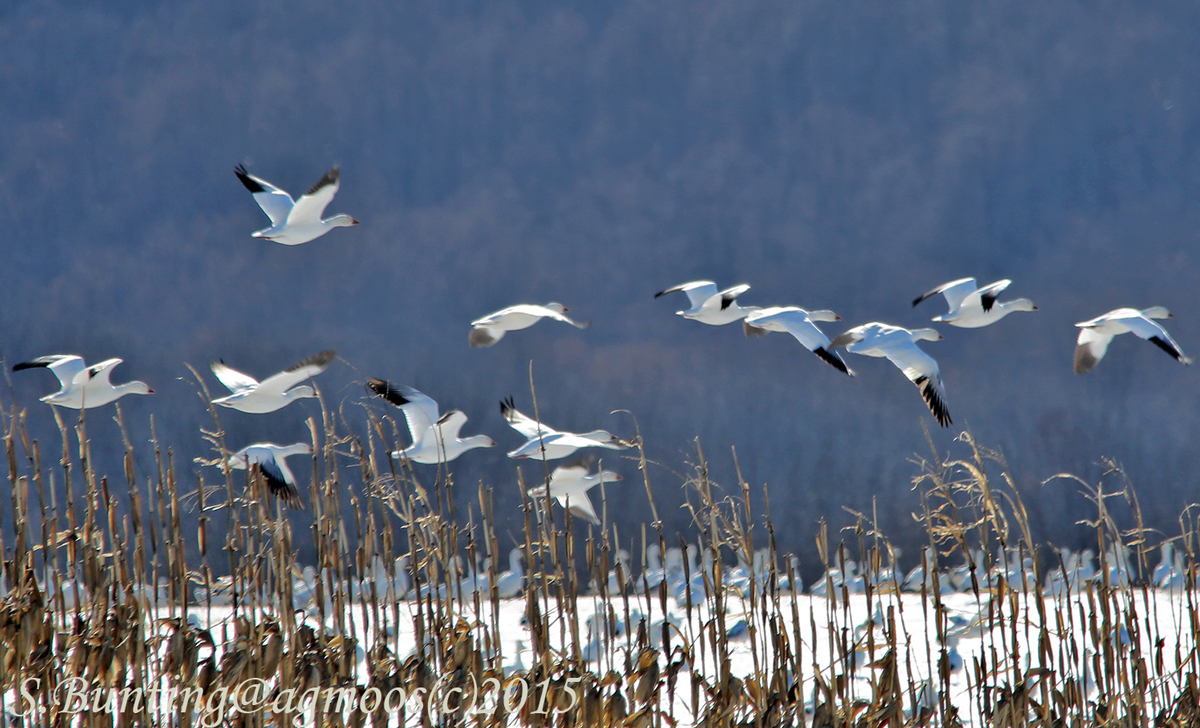
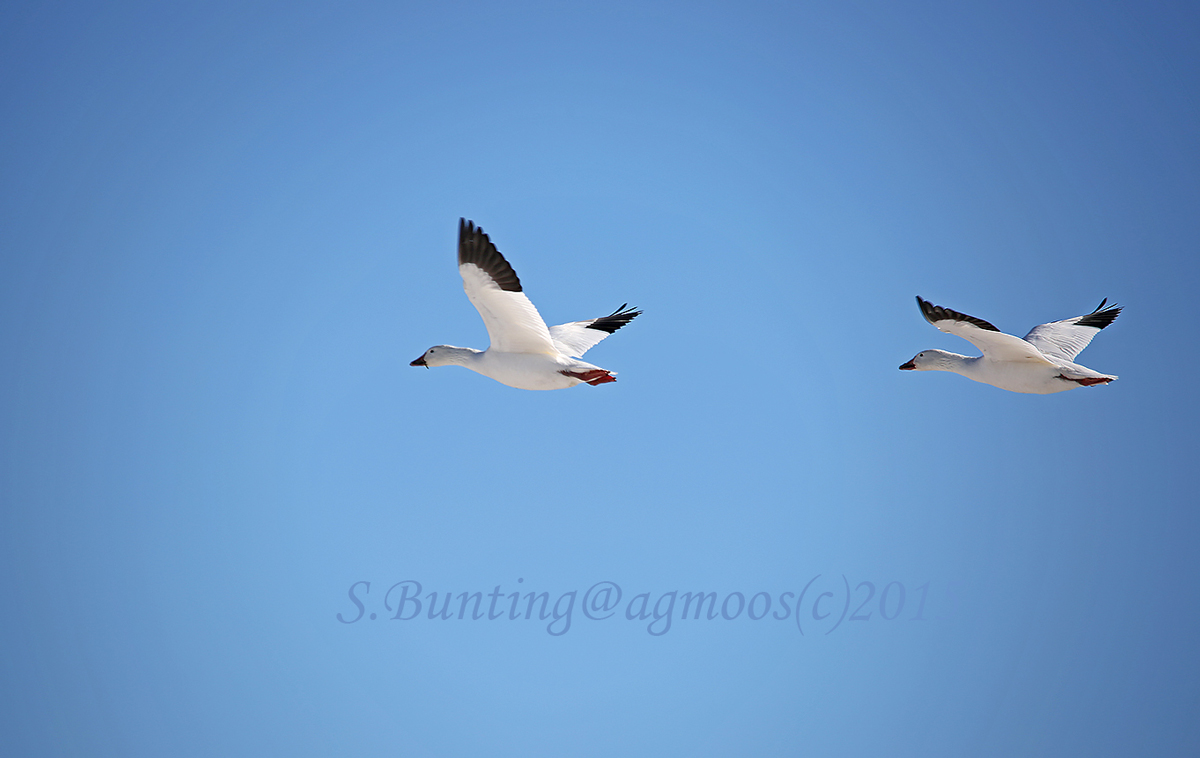
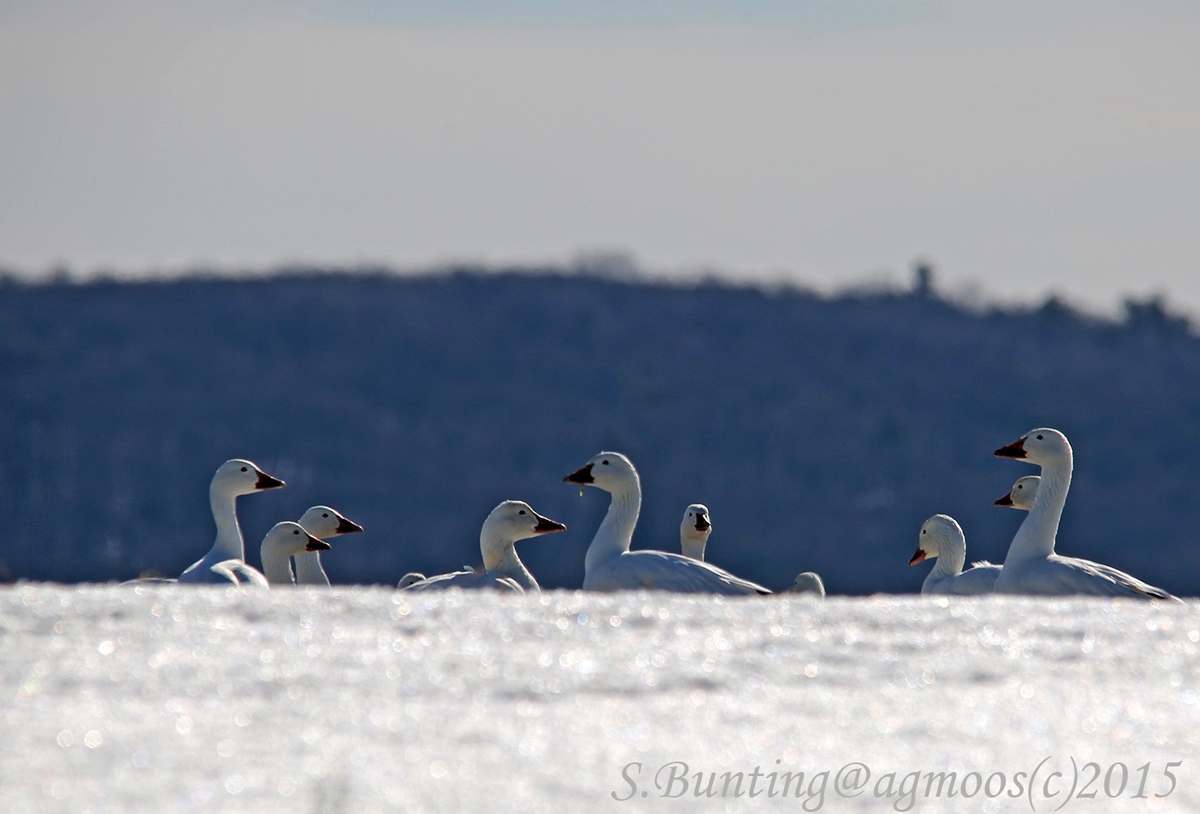
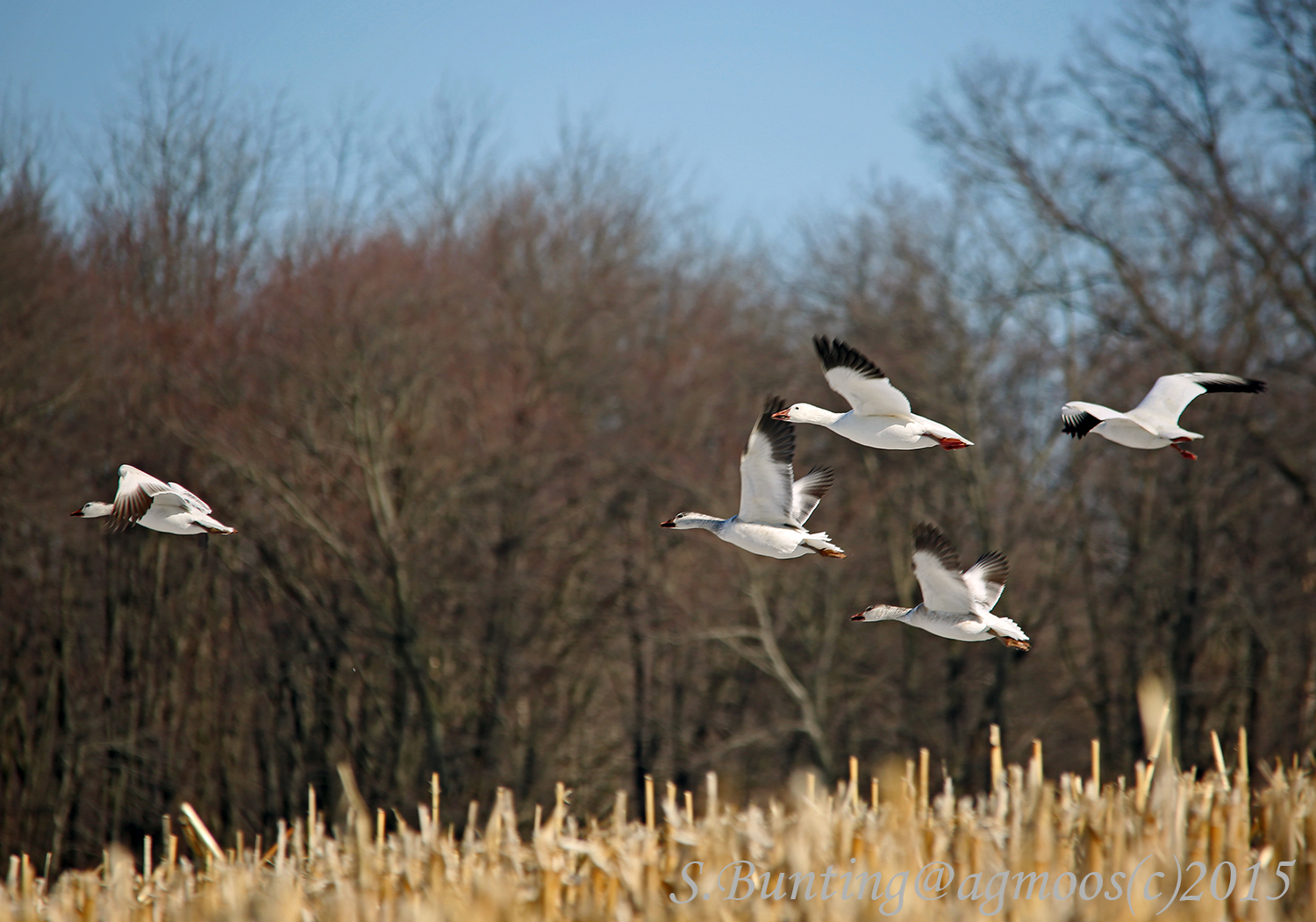
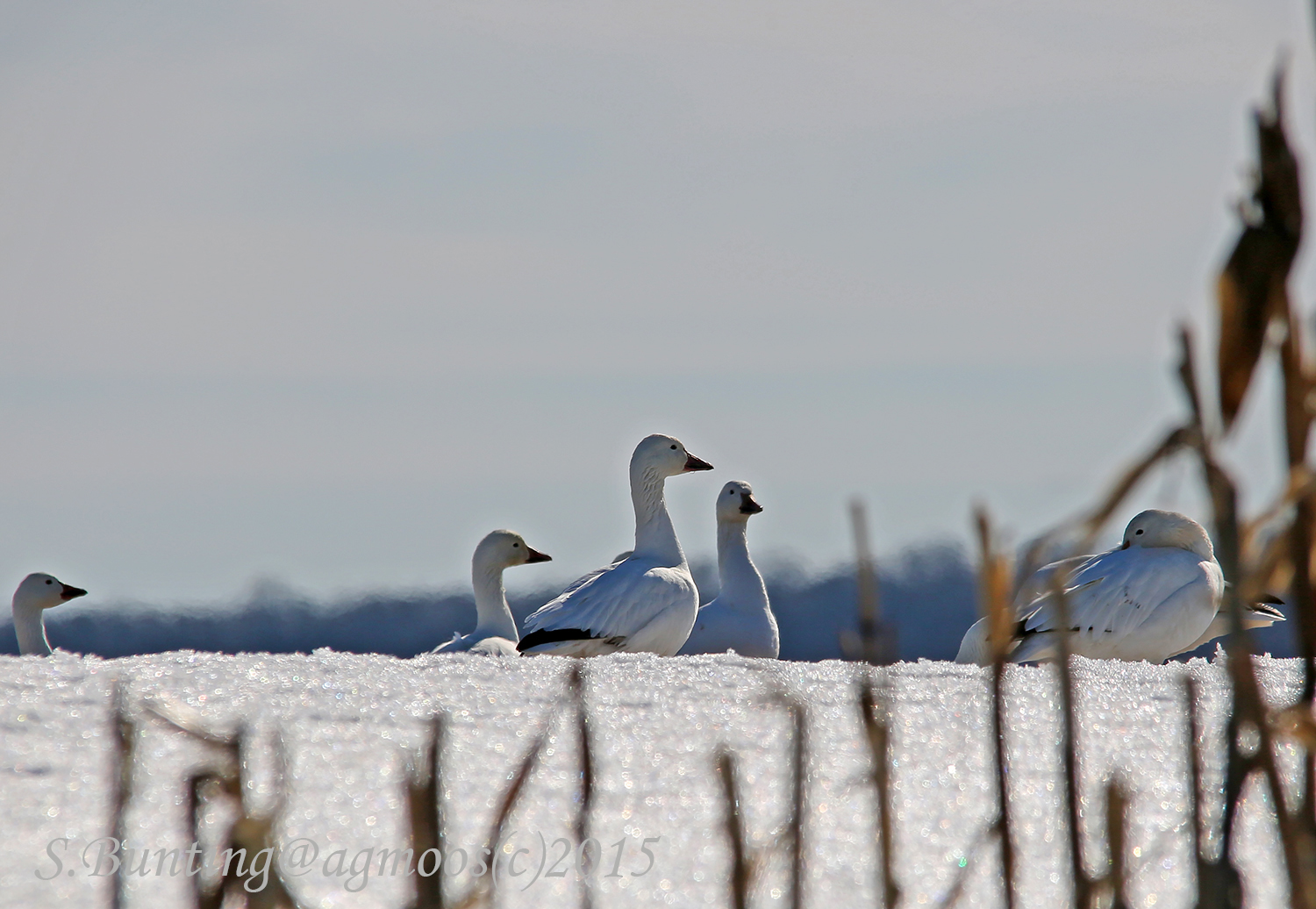
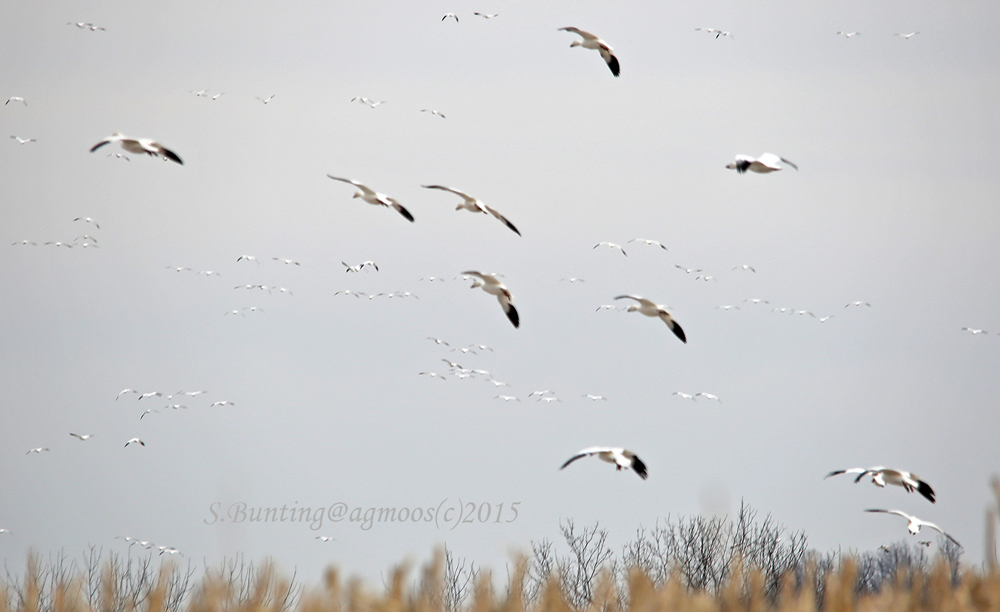
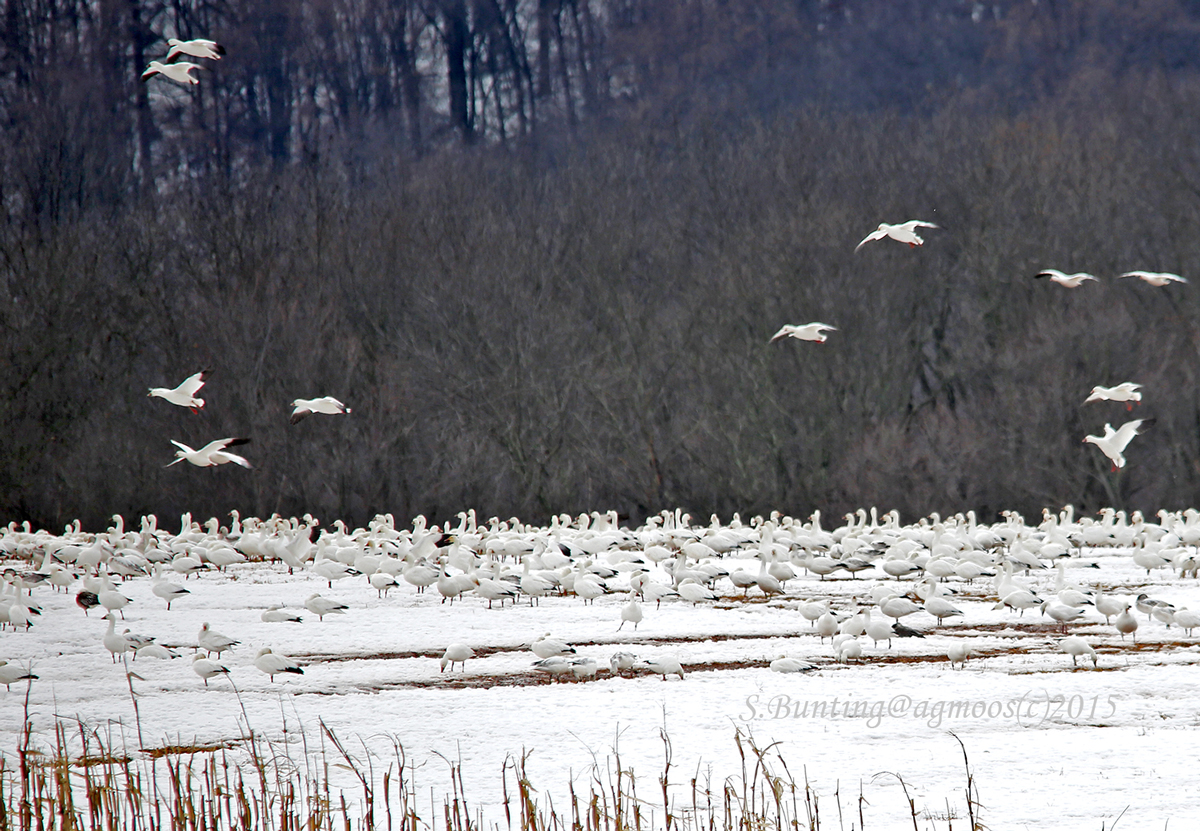
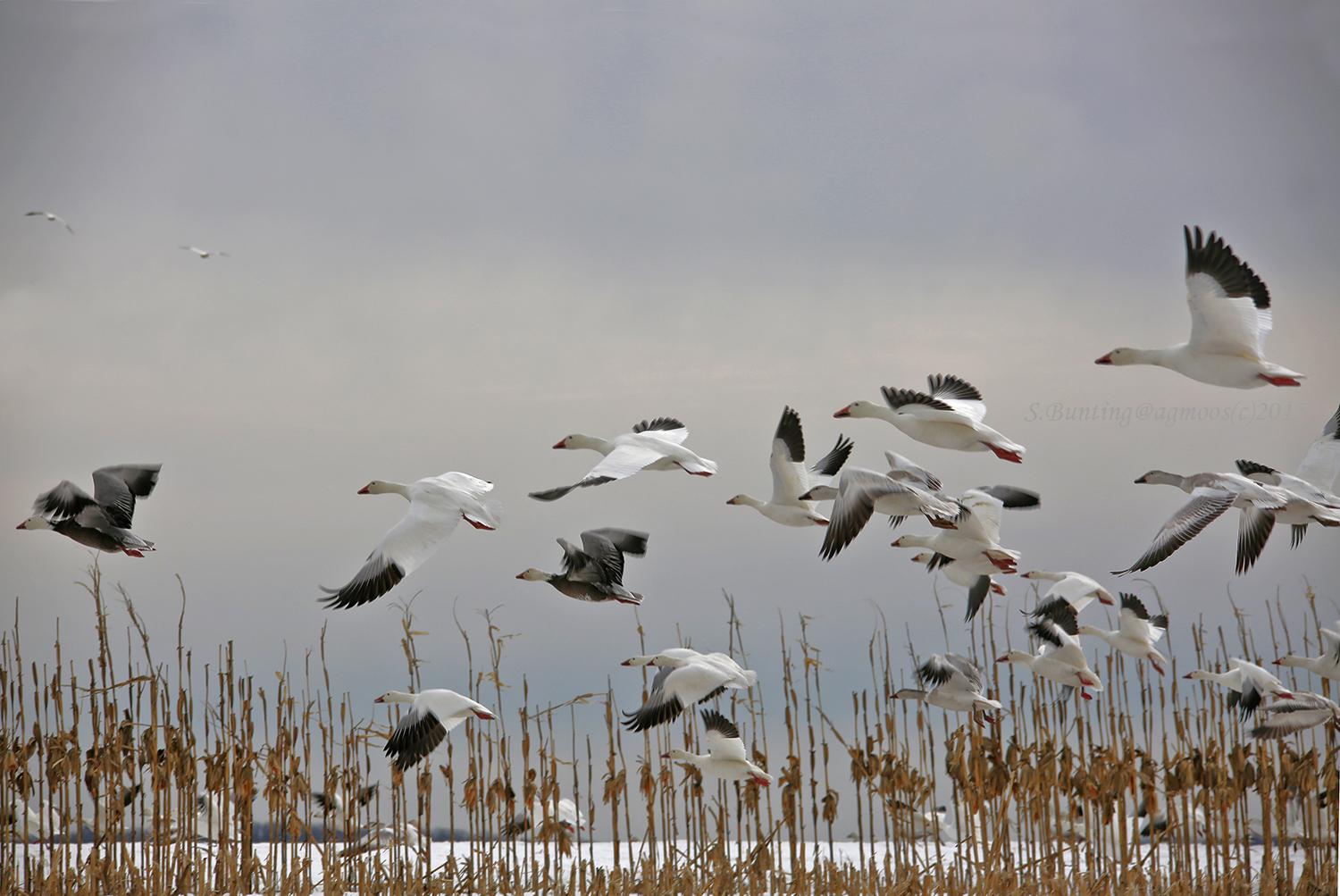
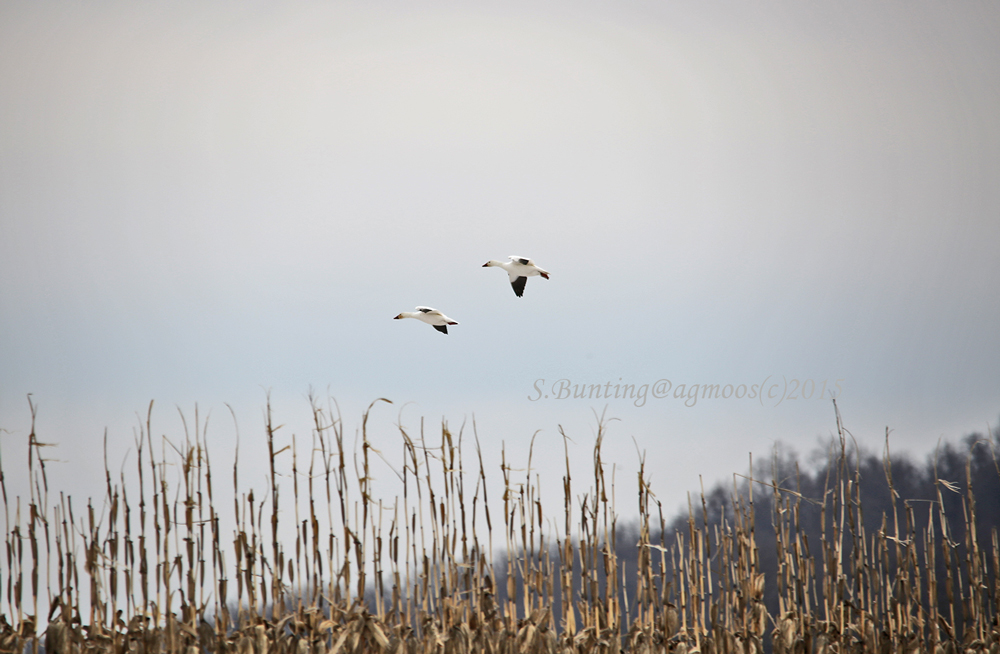
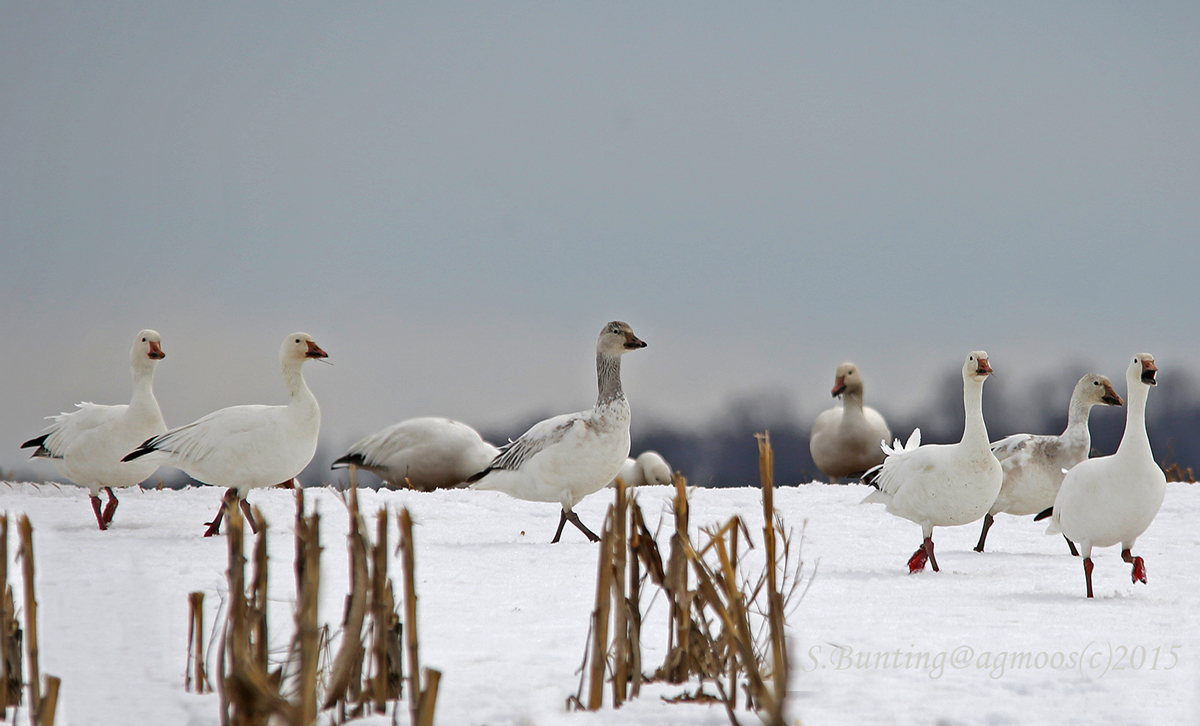
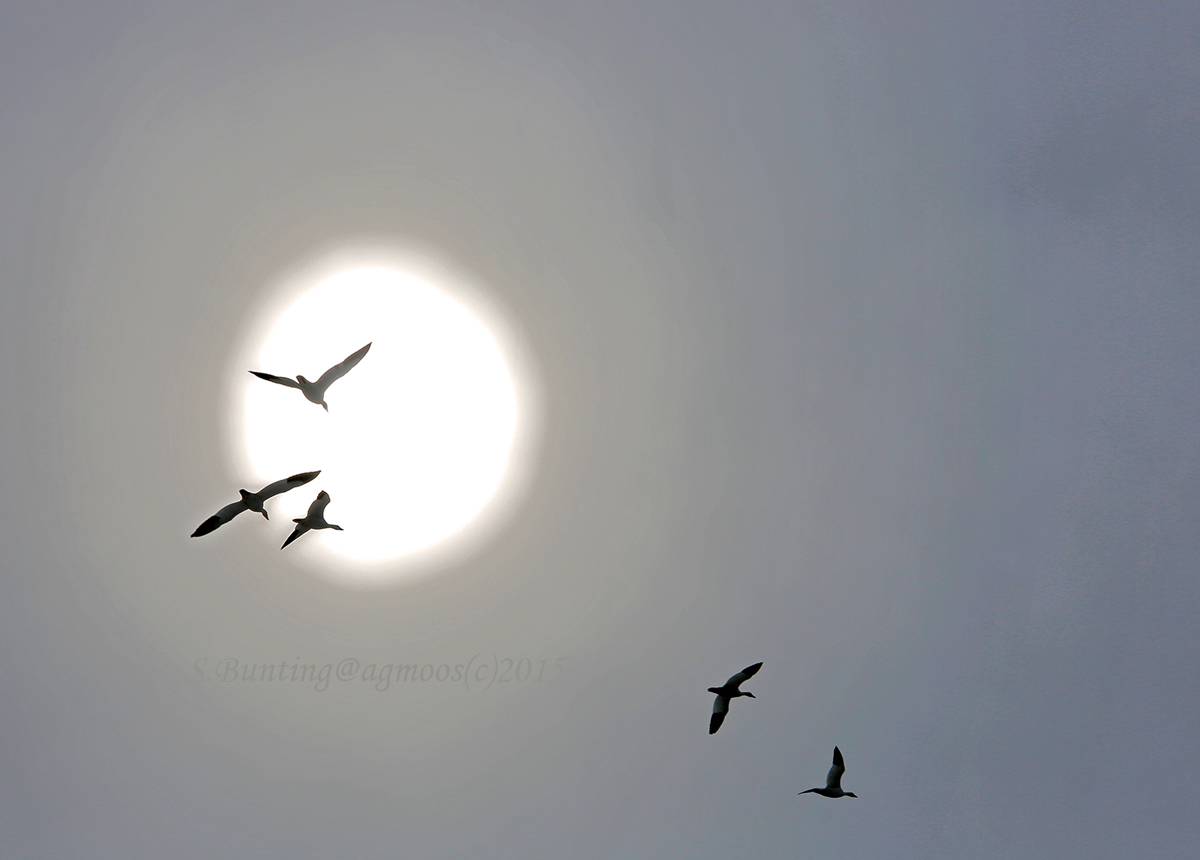
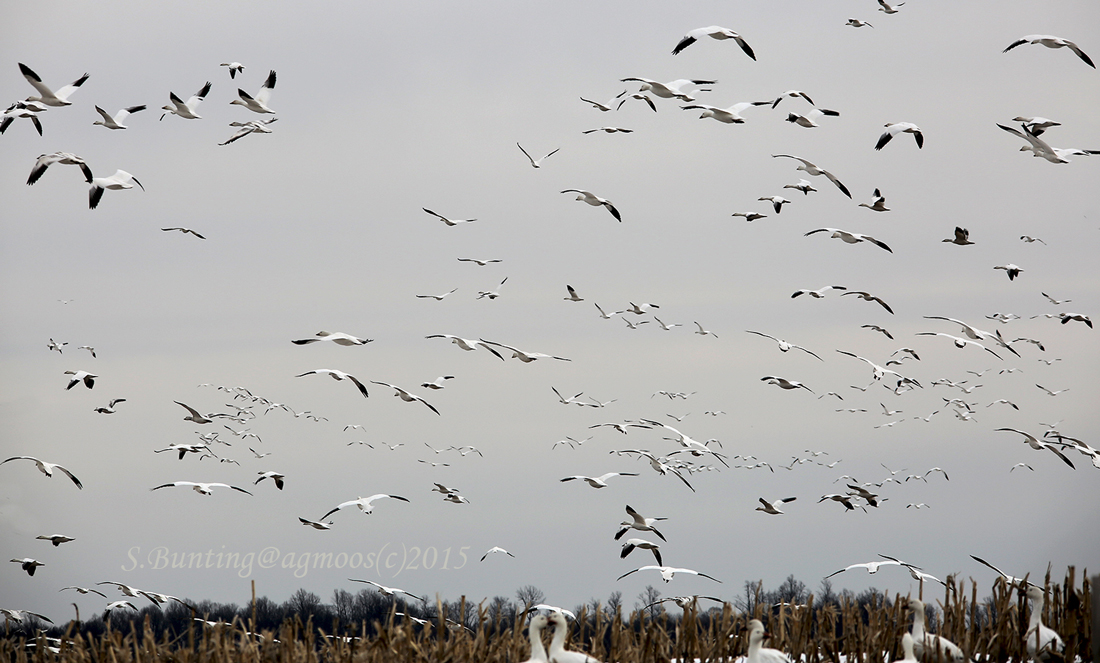
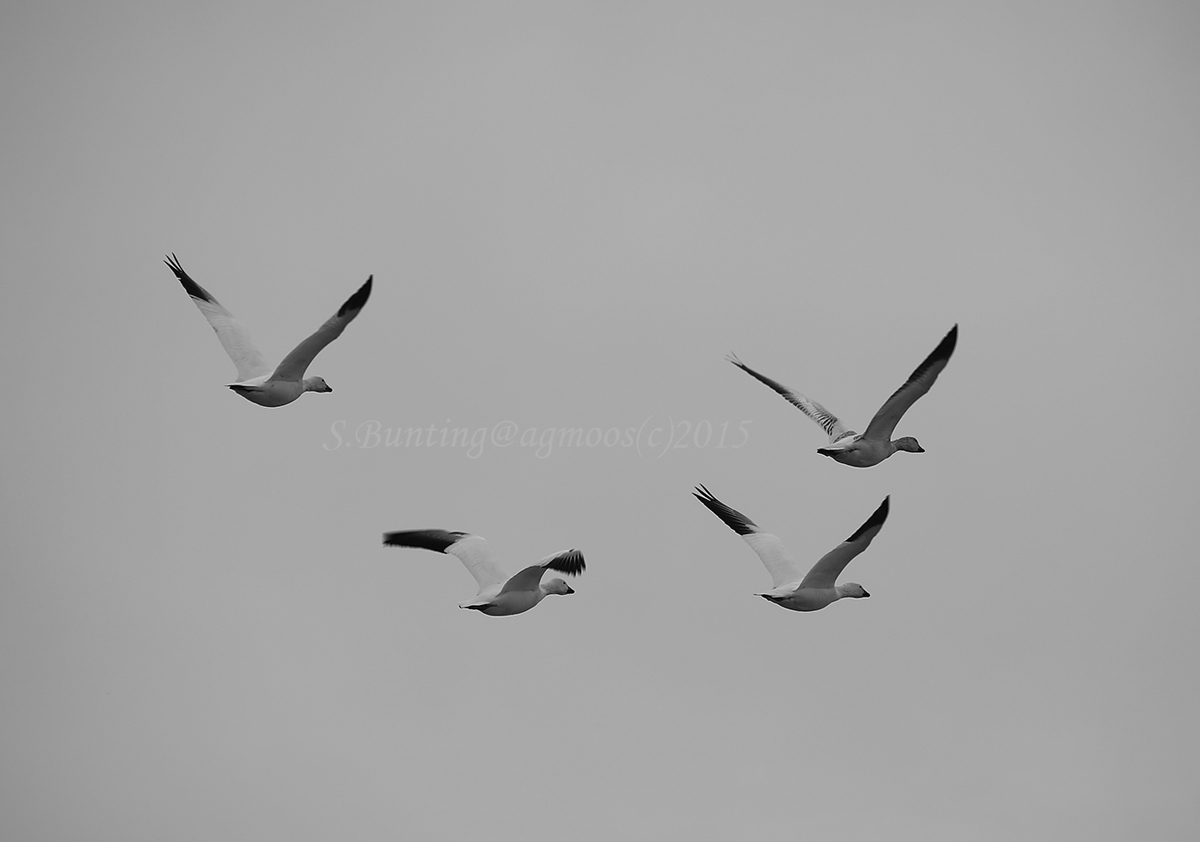
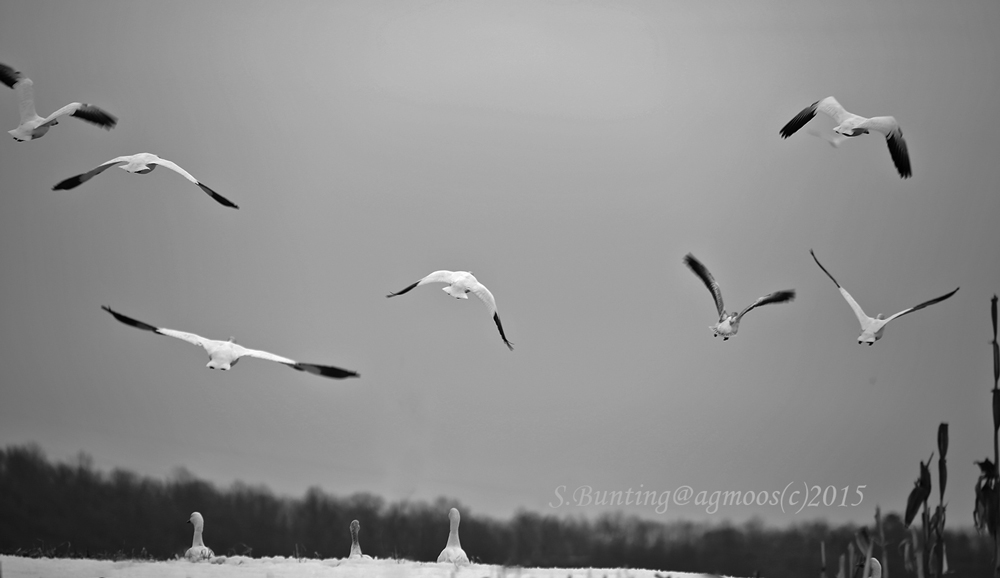
Breaking winter’s stillness with a cacophony of sound, a sea of white emerges over the hill, nearly blending with the remnant snow, as 75,000 (and counting) snow geese arrived March 10 -13, 2015 to the frozen tundra that is usually the lake at Middle Creek. Pushed from their normal roost on the lake by 15 inches of frozen cover on which ice-fishing continued this week, the annual harbingers of spring moved inland to the fields in various stages of snowmelt —  like waves to a beach.

aweb7822x

Typically they arrive in mid-February and stay through March 10 to 20 to refuel for the rest of their long trip.

This year and last, the longer and colder winters here delayed their arrival, and it will undoubtedly be brief.

These are the scenes of flocks arriving from points south in the afternoons of March 12 and March 13.

aweb8342

So glad I was to hear them, see them, feel them with my husband and our grandchildren before heading south and west, myself, for a 2-week business migration to farms and dairies.


As a child of March, the tundra swan and snow geese connect me to a new year through this annual rite of the not-yet-spring.

aweb8230


These migrations are another intangible benefactor of Growing the Land…


aweb7938

In the deep rural countryside and fringelands of urban development, farmers and ranchers sustain the land that sustains these beautiful migrating birds with open space and nourishment before the new crop season begins.

aweb8361

Wildlife management areas, alone, are not enough. Working farms and ranches provide the interconnectedness of the migration — growing the land these flocks require to heed anew the age-old call of the changing season.


Photos by Sherry Bunting

aweb8230

aweb8198 aweb7938 aweb7929 aweb7905 aweb7892 aweb7822x aweb7808 aweb7724 aweb7709 aweb7684 aweb7641 aweb7627 aweb8473 aweb8466 aweb8400 aweb8384 aweb8370 aweb8361 aweb8351 aweb8345 aweb8342 aweb8307 aweb8286 aweb8284


No ‘snow days’ on the farm

cows6781By Sherry Bunting, columnist, Register-Star, Feb. 21, 2015

There are no ‘snow days’ on the farm. “When it is this cold, the simple every day protocols become enduring days of work,” notes Cody Williams of Wil-Roc Dairy, Kinderhook, where 1500 Holstein dairy cows are milked and cared for.

“We change our teat dip when it’s this cold, for extra moisturizing to the skin,” Cody explains. “We also adjust the cow diets to keep our cows in a positive energy balance as they burn more energy to maintain themselves during weather extremes.”

Operating a dairy or livestock farm in the extreme cold is not for the faint of heart. Veteran beef producer Phil Trowbridge of Ghent observes: “We know how to take care of ourselves. We dress in layers and give each other breaks.”

Frozen pipes, pumps, waterers, and manure — as well as difficulty in starting equipment — are commonly reported concerns. When the snow piles up and the temperatures plummet, concerns turn to keeping rooftops clear of a too-heavy burden and being vigilant about the increased risk of fires.

In closed group discussions throughout social media, farmers exchange ideas and seek support from each other.

When the Polar Vortex gripped the northern half of the country in 2014, farmers were up to the challenge.

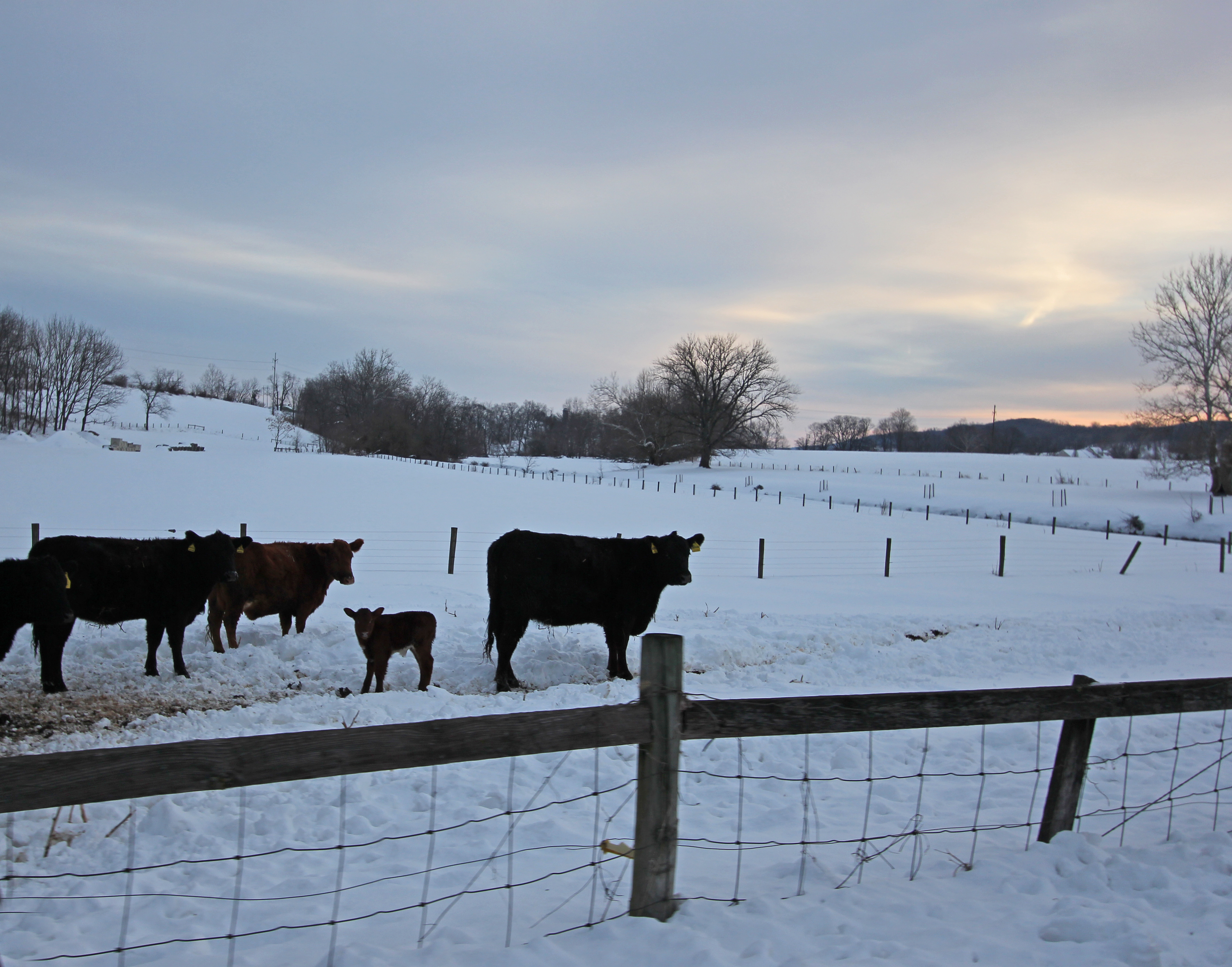
Last week the mercury hit -14 at Trowbridge Angus Farm, where it is calving season January through March. The family, and their over 300 beef breeding cows, were navigating two to three feet of snow cover.

Twenty miles away near Schodack Landing, temps of -11 went virtually unnoticed by the over 700 Jersey dairy cows at Dutch Hollow Farm. They are tucked away in their barns with retractable sidewall curtains that stay open more often than not for natural light and ventilation but remain closed when the wind chills get this low.

Cattle are cold weather animals, but they do not like wind or drafts. The difference between beef and dairy breeds is the way their centuries-old partnership with man has adapted through specialized breeding and care.

IMG_1939x

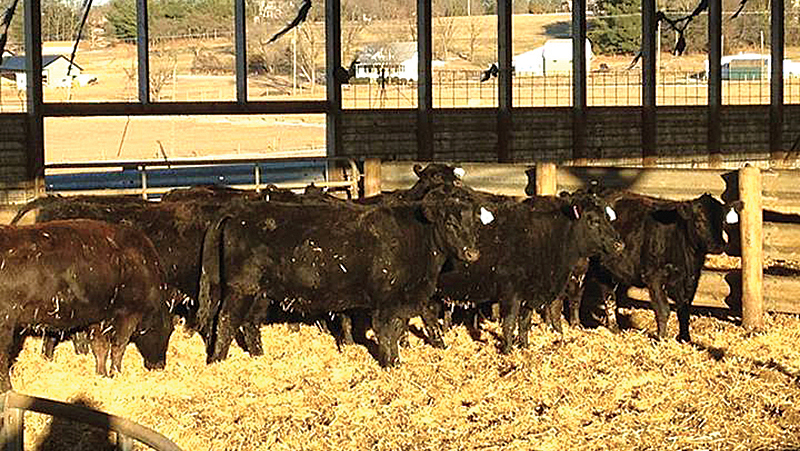
Beef breed cattle are kept outside pretty much year-round, coming into the barn only at calving time. Dairy cattle, on the other hand, are typically housed in barns year-round. While beef breed cattle spend more time foraging for their food and seeking the natural and provided windbreaks to lay down, dairy cattle in freestall barns will amble short distances inside from feedbunks and waterers to the deep-bedded stalls that are groomed for them two or three times a day while they are milking.

Dairy cows are accustomed to constant human handling from the time they are calves. 10986660_10206244497857081_5937924373439440151_oThey have a different temperament about the whole calving deal.They aren’t worried about predators and trust the humans they work beside day in and day out to care for them and their offspring.

Beef breeding cows, on the other hand, are more self-sufficient and protective of their young. They raise their offspring for the more hands-off life as a non-milking breeding animal or to spend 80% of their life foraging on pasture with the last 20% of their life in the beef fattening phase.

One thing in common: Both beef and dairy producers focus on the newborns immediately at birth to make sure each calf gets a warm start and enough colostrum for the passive transfer of immunity from its dam.

“When we get real cold weather like we have seen this winter, we spend more time in the calving barn at night. We pretty much sleep here with them when it’s this cold,” says beef producer Phil Trowbridge, who has had 50 calves born since January 1. “The main thing is to get those calves dried off and warmed up as soon as they are born, and to make sure they get enough colostrum. In two or three days, they’re old enough and strong enough to go outside.”

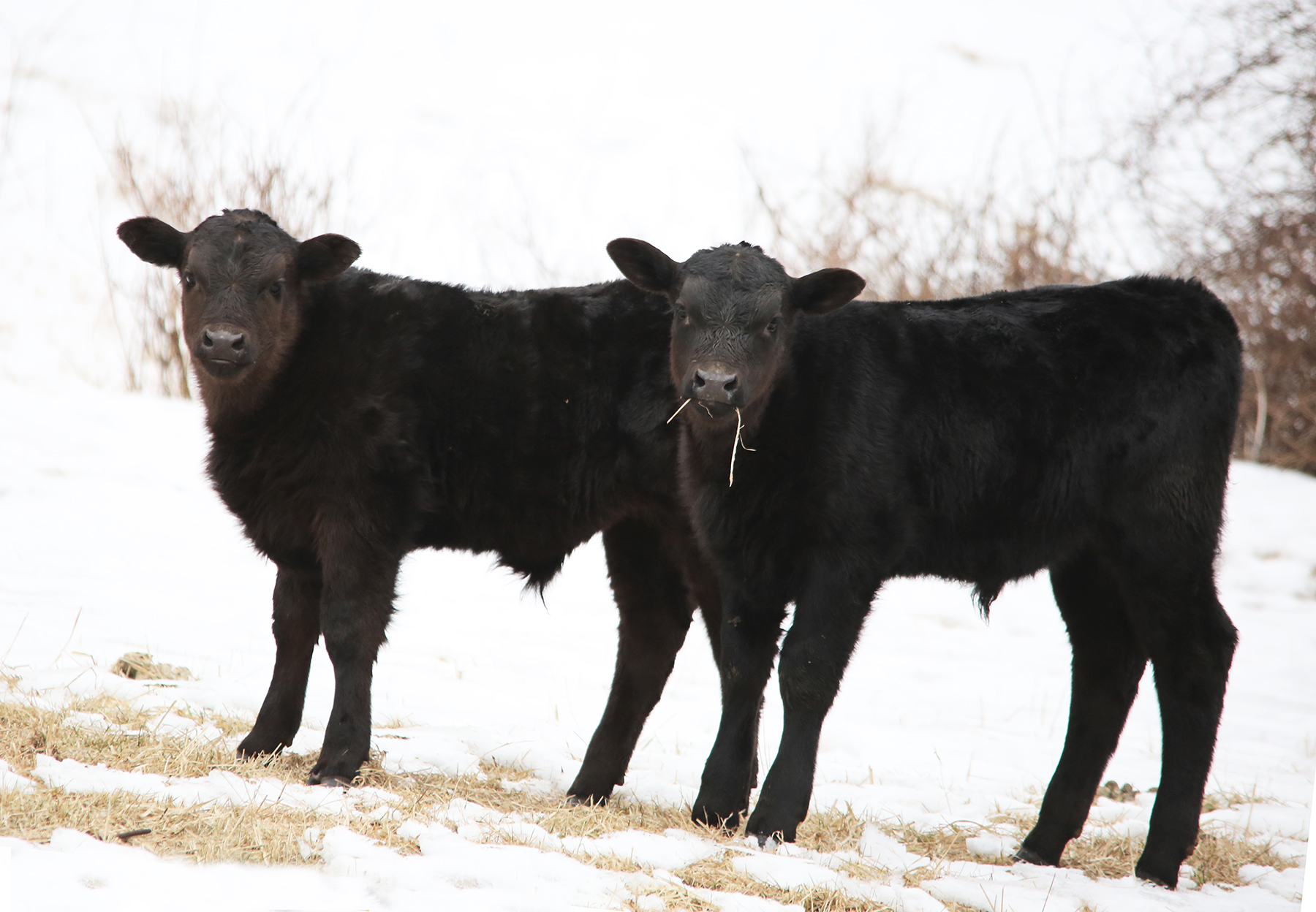
Not only are they prepared for cold weather, they frolic in it. “I took a video with my cell phone of the calves the other day when it was minus-11. We were putting out bedding for the cows, and saw those calves were feeling so good, they were just running through the snow,” Phil relates. “I like seeing that.”

calves

Stockpiled pasture grasses make a nice winter forage as cattle can push off a few inches or a foot of snow to graze it, and they do well getting around in the snow outdoors. But with over two feet of snow cover this winter, the Trowbridge family cuts trails to help the cattle conserve energy. They also put down extra bedding, more often, in the areas with windbreaks and feed more outdoor hay and supplement.

Meanwhile, on a dairy farm, the cows calve year-round. Calving pens are watched through video monitoring or by walk-throughs. The immediate newborn calf care continues through the first few weeks of life in the calf nursery or individual hutches. Newborns often get time in a heat box or wear calf jackets and sometimes earmuffs when it’s this cold, and they are fed more often for increased energy to maintain their temperature and to grow.

heated-box.jpg

Tricia Adams pictures one of the heated boxes for newborn calves at Hoffman Farms

“Taking care of the animals is pretty much routine. The feeding is very consistent day to day, and the freestalls are bedded twice a week,” says Paul Chittenden of Dutch Hollow
Farm.

“Clean and dry and plenty to eat are what we focus on — regardless of the weather,” he adds. “Cows always have dry sawdust with extra sawdust stored in the front of the stalls. This allows for plenty of dry bedding to stir around each time we groom the stalls when the cows go to the parlor for milking.”

webx073.jpg

Water is critical for drinking and cleaning, so lines are buried underground and drinking tubs are equipped with heaters.

“Cold weather management is really not too complicated,” explains bovine veterinarian and dairy farmer Dr. Tom Troxel. “Cows need to have plenty of feed and water, be out of the wind, and have a dry place to lay down. If they have these things, they can survive an awful lot.”

“No matter the weather, we have our jobs to do here,” notes Cody of Wil-Roc Dairy. “That is itself the reward. Getting our everyday tasks done and looking to see how the stressers of weather and other events can affect our system… That is how we keep improving how we do things all year long.”

Sherry Bunting is a member of North American Agriculture Journalists and has been covering beef and dairy production for 40 years. Before that, she milked cows and graded beef cattle for market reports. She can be reached at agrite2011@gmail.com

-30-

GL 022115-2

GL#23(photo-collage)

Dairy and beef cattle are adapted differently, but they all depend on their people for great care during the weather extremes we have seen here this winter. Farming is not for the faint of heart. Everyday tasks take longer to complete but it sure is rewarding to see cows thrive and calves frolic after a good start – regardless of the weather! Photos by Sherry Bunting, Tricia Adams and Evelyn Troutman.

‘Work hard. Save money. Be careful. Love the job.’

webR&J-190x

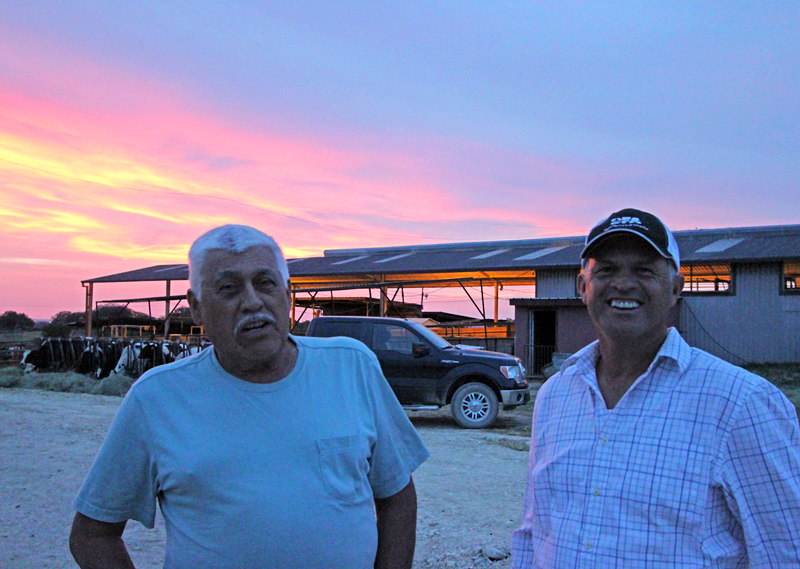
Hector Jimenez (right) and his uncle Arturo Rodriguez have been working together since the late 1970s. Two decades of saving as they worked on dairies in California led to them starting their own dairy near Dublin, Texas in 2004. In an interview last May at their R&J Dairy, they reflected on a decade of dairying on their own in Central Texas. Photo by Sherry Bunting

By Sherry Bunting, originally published in Farmshine and Texas Dairy & Ag Review during the summer of 2014

DUBLIN, Tex – The decade of 2004 to 2014 has been a volatile one for anyone starting out in the dairy business. For these two producers it took more than two decades of
work on other dairies in California to pave the way to be living their dream today in Central Texas. Hard work, disciplined saving, and hands-on management are the three keys Hector Jimenez and his uncle Arturo Rodriguez say brought them through 20-plus years of working for others and 10 years dairying on their own – including the 2009-13 era of tight to negative margins.webR&J-536

“We worked together since 1979 and always talked about one day having our own dairy,” Hector recalls. That day came in 2004 when Hector and Arturo bought a dairy near Dublin that had been vacant for a number of years after its previous owner moved west to where the dairy industry was expanding in the Panhandle.

They moved here from California with nothing, bought 110 cows and milked three months on a rented dairy, then partnered in their own R&J Dairy. They bought another 150 cows and took their time raising their own replacements to expand steadily through internal herd growth.

“WwebR&J-165e started with No. 1 and this calf, here, is No. 2869,” Hector smiles, pointing out a newborn heifer. Today their herd of 850 milking cows is 95% homebred. They produce an average of 75 pounds/cow/day and have achieve somatic cell counts at or below 200,000.

They are satisfied with the current size of their dairy as they build back their numbers after a few years of heavier culling rates while milk margins and feed costs were tight to negative. The recent memory of 2009-13 brings daily reminders of the importance of saving, working, and being cautious.

“We culled heavily because we needed that money to pay bills,” Hector relates. Today, the herd is 30% first-calf 2-year-olds.

Asked how they made it through those tough years, Hector’s wife Fabiola said: “We prayed.”

“And worked hard,” added Hector.

He and Arturo are hands-on managers. “My uncle is out here feeding cows at 4 a.m. and I start at 5 a.m.,” says Hector, who does all of the breeding. His day starts with cleaning the milk tank and the parlor, checking fresh cows, and starting the day’s breeding lineup.

“My husband is in love with what he does. He never complains. He and Arturo are always here – rain or shine, good or bad — that’s how we made it this far,” Fabiola adds.

She and Arturo’s wife Sylvia — and more recently Arturo’s daughter Christian — take care of all the calves at R&J Dairy.

webR&J-557x

Hector and Fabiola Jimenez (left) and Arturo Rodriguez (right) with his daughter Christian. Missing from photo are Hector and Fabiola’s grown children Clemente, Abel and Joann and Arturo’s wife Sylvia and son Arturo Stephen. Photo by Sherry Bunting

They employ 10 people, mainly milkers. They feel a sense of satisfaction in coming to the U.S. from Mexico in the mid-to-late 1970s, working hard, starting a new life here, including their own dairy business, raising children who are either interested in the dairy or working good jobs in the community, and now providing jobs for others in the community.

Halfway through their first decade in business together, Hector and Arturo hit the 2009 milk market train wreck followed by years of drought and surging feed prices. Cutting expenses was a big part of that picture from 2009-12, and the partners aren’t so fast to spend money now that dairy margins are good.

They have 220 acres and rent some additional property for growing coastal hay. That, and working with their nutritionist in feeding commodities like corn gluten, canola and cottonseed along with purchased corn silage — helps them manage feed costs.

They feed a dry cow ration and move the close-up cows and first calvewebR&J-125xxrs close to the house for observation. They also use Udder Comfort after each milking for a few days post-calving to reduce edema and improve recovery time.

The breeding program involves synchronization, but only for those cattle that are not showing heats. Hector and Arturo pick the bulls. “We look for high components – fat and protein – as well as calving ease,” Hector explains.

High components and high milk quality are two keys to making the most of their milk check in both high and low market times.

“The dairy business can be a tough business,” Arturo observes. “You have to enjoy it. I enjoy everything about it, getting up early, being out here. It’s all I’ve known since 1975.”

For the next generation of dairy producers dreaming of having their own dairies, Arturo has this advice: “Work hard, and sooner or later you will be rewarded,” he says. “Save money and invest in cows, but above all work hard. If it is work that you love, that won’t be hard.”

Those two-plus decades of hard work for other dairies have rewarded Hector and Arturo with more of the work they love, but now they do the work for their own dairy investment.

As these two partners have experienced over the past 10 years dairying on their own – “Even when you have your own business, the work doesn’t stop and in some ways you work even harder. You have to be here, work here, live here,” Arturo explains.

Hector agrees. “Even when I’m at the house, I’m thinking about the cows and wanting to see that they are okay. You have to like this job to do it well, and you have to like it even when you are losing money.”webR&J-151

It can be done, they say, “but you have to be careful. We had to spend money carefully,” Arturo noted. “We started this dairy during the good times in 2004. We’re still here, I think, because we were careful in the good times and the bad times. We watch every day how we feed, and when the times are tough, we cut out what is too expensive. When the going gets really tough, we shift our focus into survival mode, not to how much milk we can make.”

Cost of production at R&J Dairy runs almost $20.00/cwt at the moment (spring 2014), which includes all costs — everything. “It gets scary when milk prices fall to $16,” Arturo relates. “In 2009, the price fell below $12, and our cost of production at that time was $18. At one point we were losing $2000 per day here and borrowing to pay bills.”

He explains that they were fortunate to have built up some equity they could borrow on, and he estimates that another three months of milk prices as high as April’s may finally pay back what they lost in 2009.

“We try to stay ready for the next downturn,” the two men agree.

Arturo sees the new Margin Protection Program in the Farm Bill as something that will help dairy producers during future downturns. “It’s better insurance, better than the MILC program. When it gets tough in the dairy business, any help is nice to have.”

As for forward contracting, Hector and Arturo prefer to take on the risk. They believe that while the new insurance program will help and some folks have benefitted with forward contracting… nothing substitutes for hard work, saving during the good times, and close management and caution all the time.

The two partners worked day and night through the worst of 2009-10, and believe that is webR&J-572what got them through it. “We looked for those small daily victories,” Arturo reflects. “That’s what kept us going. We just kept thinking we would be okay — that if we worked hard, we would be rewarded for the years of suffering, and I guess we are seeing that right now.”

Moving forward… ‘We take care of their families and they take care of ours’

By Sherry Bunting, reprinted from Farmshine, November 21, 2014

NEW LONDON, Wis. — November is a many-faced month for agriculture. It’s the month we recognize women in agriculture. It’s the month we bring the sewebTank7962ason’s harvest to a close. It’s the month we are reminded to be thankful for God’s blessings.
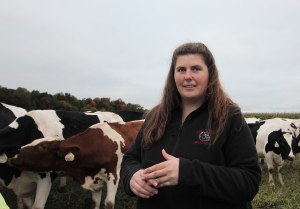
In September, I met a truly inspirational dairywoman who is quietly and methodically moving forward in the face of difficult odds. She and her two daughters exemplify a thankful heart as they care for their cows, which in turn care for them.

It was a downright cold, rainy central Wisconsin day as I was visiting farms ahead of the World Dairy Expo at the end of September. My lastwebTank8066 stop of the day was Milk-Flo Holsteins, New London, where Cathy Tank still does the 3 a.m. milking of her 150-cow dairy herd, and then works off the farm until supper time; so the appointed time to meet was toward evening. Her daughters were home from school and the hired man was busy pushing up feed for the cows.
What started as a typical family farm interview, soon turned into much more. By the time I left a few hours later, it was dark and one of the two ladies employed to milk the other two of the 3x milkings had arrived as Cathy’s daughters fed the chickens befowebTank8046re heading inside to do homework.

A former dairy queen of Wayne County, Wisconsin, Cathy Tank is a woman who not only works hard, she believes in working smart and using the right tool for a job.

She and her daughters Elizabeth, 15, and Rebecca, 11, love the dairy farm they are keeping going — and progressing — after losing husband and father Bob Tank to melanoma in 2009. It has been a journey, to say the least, and Cathy is quick to point out the way communities and extended family work together during harvest and in times of need.

“That’s what makes farm folk different,” she says. “A farmer can be having the worst day, ever, and would still stop and help pull another out of the ditch.”

“I am fortunate to have good help,” she adds. Working smart, means picking the jobs she can and can’t do. While she harvests her own haylage and works the ground to get it ready for planting, Cathy uses custom manure hauling and custom choppers for the corn silage harvest.

“They can do in a few hours what would take me weeks,” she says, adding that her brother helps her do most of the planting. That is something her father, Keith Knapp, helped her with over the past few years, but this spring she lost her Dad, too, in an accident.

Getting on the tractor is therapeutic, she says matter-of-factly. “It is refreshing work, and it reminds me to be thankful. I think about all of the things my Dad taught me how to do.”

While fieldwork is refreshing, what Cathy really loves is the cows. The dairy herd was her domain until six years ago. One year before Bob’s illness, they decided she would take a job off the farm. Today, she continues onward with both the job and the farm, and she’s set some pretty high goals for her cows with the focus on paying down debt. She would like to see her cows get over that 90 lbs/cow/day mark into 100-lb territory. “That’s a hard goal,” she says. But she’s already reached a few toughies.

She started 3x milking in February, and over the past two years, she made a focused effort to reduce somatic cell counts. Today, the herd averages 87 pounds/cow/day with 3.5 fat and 3.9 protein and SCC ranging 100 to 150,000.

The herd cleared $1 million in milk sales last year, which was a goal, reached, and Cathy says she has been able to reduce the farm’s debt by almost half. The milk from Milk-Flo goes to a cheese plant, and so the premiums for reducing SCC have really helped the bottom line.

While shifting the farm from pasture-based to more conventional in order to increase production and pay down debt, Cathy muses that maybe one day in the future, it webTank8077could return to more of a pasture-based system. She has already diversified a bit, adding pastured poultry and home-raised pork, beef and chicken. She and the girls sell their eggs at a local farmers’ market. The few steers on the farm are fed refusals from the milking herd and the chickens help keep some of the lawn areas mowed.

“We do what we can to not waste anything here. We are learning how to be more self-sufficient. You learn to be resourceful when you are on your own,” she says.

“We also try to do as much as we can without antibiotics,” explains Cathy, who grew up milking cows and has an Ag Education degree from the University of Wisconsin-River Falls. “We don’t sell the milk at the farmers’ market, but people who buy our eggs know we have cows, and we get those questions. We are trying to pay attention and be more preventive in how we manage the cows, so we don’t have as much need for treatments during lactation. This approach has helped us qualify for quality premiums and have a healthier herd.”

Cows are milked in a step-up parlor and housed in an open-front barn in freestalls. The farm includes 310 acres of forages for the 150-cow milking herd and young stock. Dry cows and older heifers are on pasture.

“I like color and variety,” says Cathy about the composition of the herd today, which is mainly Holstein but includes Brown Swiss crosses, Red & Whites, Linebacks,webTank8013 and Ayrshire crosses. She has hired a breeder but picks the bulls. The two biggest things she looks at are feet-and-legs and protein.
After two years in a row of poor forage in parts of the Upper Midwest, Cathy is thankful for this year’s good hay crop and the “jumbo corn” crop yielding over 23 tons of corn silage per acre, much of which was still ‘ripening’ in the field as the calendar headed into October.

She has put some thought into positioning the farm for alternate plans should the need arise. A few years ago, she installed a scrape alley and simple manure storage for the parlor holding area. This and the open-faced barn make the property suited to substantial heifer-raising if milking cows would ever get to be too much.

Elizabeth and Rebecca are the fourth generation on the farm. Cathy explained that Bob’s family has farmed here 100 years as of 2008, which was the year before he died.

“I’m just a steward,” she said. “I’m pretty interested in staying in this industry. I can’t imagine the farm without the cows.”

While she focuses on the areas of the farm where her efforts are most productive, she still enjoys the 3 a.m. milking. “I like getting up when it’s calm and you can see the stars,” she says as she looks around at the herd, noting her oldest cow is 15 years old. “It’s a good feeling to have dams, grand-dams and daughters in the barn here. We take care of their families and they take care of ours.”webTank8005

-30-

‘Hope’ travels west from Virginia

Photo caption:   40 bred heifers were donated, commingled, preg-checked, and readied for travel by the Rockingham Feeder Cattle Association. They left Virginia last Thursday, Feb. 6 from Rockingham Livestock for the first leg of their journey. With the freezing temperatures and sub-zero windchills in the East this winter, they’ll be ready for western living. The Heifers for South Dakota Project strives to make a difference delivering “Hope with the hide on” and operating by the tenets of Galations 6:10. Photo by Jessica Koontz

Photo caption: 40 bred heifers were donated, commingled, preg-checked, and readied for travel by the Rockingham Feeder Cattle Association. They left Virginia last Thursday, Feb. 6 from Rockingham Livestock for the first leg of their journey. With the freezing temperatures and sub-zero windchills in the East this winter, they’ll be ready for western living. The Heifers for South Dakota Project strives to make a difference delivering “Hope with the hide on” and operating by the tenets of Galations 6:10. Photo by Jessica Koontz

*** Hope is sometimes a fragile thing, yet it can be as durable as the land and the people who are sustained by it.  Heifers for South Dakota has a beautiful facebook page where stories of hope are told. Their latest post is about the recent delivery of the last of the heifers featured in the story below. One by one, people — and heifers — are making a difference.

By Sherry Bunting, Farmshine, Feb. 7, 2014

HARRISONBURG, Va. — Ever lay in bed at night and get hit with an idea? That’s what happened to Virginia cattleman Lynn Koontz of Spring Valley Farms, Harrisonburg, after hearing and reading about South Dakota ranchers devastated by Storm Atlas last October.

“I read about the number of cattle lost and about the Heifers for South Dakota project. I got to thinking how really blessed we’ve been the past two years here,” said Koontz in a phone interview with Farmshine this week. “We’ve had super crop years, marvelous corn and cattle prices. What better time for us to take advantage of good times to help ones who fell on hard times?”

He recalled how years ago, he and his dad had dry years, “and those boys out West would load hay on rail cars and ship it East,” said Koontz, wanting to return the favor.

So Koontz, who serves as president of Rockingham Feeder Cattle Association, talked to Ty Linger, founder of the Montana-based Heifers for South Dakota project.

“There’s some desperation out there, and they would take anything with a heart beat,” said Koontz. “But we wanted to give of our best. What they really need right now is pregnant bred animals because they need something that will put money in the pocket — this fall — right away.”

The window of opportunity was short because spring calving gets underway in both regions this month. In late December, Koontz put the word out to fellow cattlemen that he was organizing a western cattle drive of sorts. He and his children donated some of their own bred heifers and asked others to do the same.

Koontz received donations of 40 bred heifers and cash from more than a dozen cattlemen in Rockingham and Augusta counties, and local businesses gave toward transportation costs.

“People told me it couldn’t be done — moving heifers out there from the East,” he said. “But I’m a little stubborn and made up my mind to do it.”

He recalled the days when he and his father still had dairy cows — milking up to 120 before getting out of the dairy business. “We used to ship heifers from here to Florida all the time,” Koontz recalled. “I’m just glad we’re able to do this.”

The 40 heifers have been commingled by Koontz at his farm near Rockingham County Fairgrounds. They were preg-checked last week and readied for transport. At dawn on Thursday, Feb. 6, they’ll board a truck at Rockingham Livestock on the first leg of their journey with a stopover at Greenville Livestock near Hugo, Illinois on the way to South Dakota.

That stopover will break the trip into two 12- to 14-hour rides. Lifelong friends Clem and Doris Huber of Illinois — with whom Koontz stayed as a kid in the 4-H exchange program — helped him locate the place to yard the cattle just off the Interstate in Illinois.

“That was the deal maker,” said Koontz. “We can let those girls off for rest, hay and water.”

Bred heifer donations are a substantial investment in young ranchers hard-hit in the Black Hills region of South Dakota, Nebraska and Wyoming. To pay current values at auction ranging $2000 to $3000 due to the national beef herd being the smallest in over 60 years and sky-high cattle prices creating stiff buying competition, makes the donations by ranchers to ranchers through the Heifers for South Dakota project even more significant. The project specifically targets young ranchers to receive the donated cattle under the mantra: “Hope with the hide on.”

To-date, Heifers for South Dakota reports delivery of 714 head of cattle to 68 ranchers with 176 head of pledged cattle still yarded. They have also received about $265,000 in monetary donations to help with transportation costs and to purchase quality bred heifers for donation.

“Value of cattle delivered into the hands of those who are hurting is in excess of $1.25 million,” according to the project’s Facebook page.

While this is a drop in the bucket — in real economic terms — the hope these donations bring has been absolutely huge. For Koontz, it’s not the cattle losses he is focused on. It is the loss of young ranchers he is hoping to help prevent.

“Like somebody told me years ago, when there’s a barn fire, as long as the problem stays in the barn, you’re in good shape,” he said. “With Storm Atlas, the real loss is where we have a young family that has put everything they have into it to get started in ranching.”

Some of those young families lost it all in October just before they would have sold that calf crop, plus they lost the cows to have another calf crop this season. That’s potentially two years without income because the fall sale of the calf crop is the income for the whole next year.

“If we lose those young ranchers out of production agriculture, that’s when we incur the big loss — losing that young person out of farming,” said Koontz. “We can replace cattle, but we cannot replace that person back on the farm. If I had the ways and means, I’d be gathering up cattle until the first of April, but I’m just one person.”

Koontz and his wife Kim operate their cow-calf and cattle backgrounding operation, along with two broiler houses and crops. The participation in Heifers for South Dakota has been a family affair with son Bud and daughters Lacey, Katlyn, Jessica, Cindy and Vanessa all pitching in.

Koontz is working with cattlemen in other parts of the state to do a later round of open heifers for donation this summer. To learn more about Heifers for South Dakota, visit their website at http://helpforsouthdakota.com and “like” the “Heifers for S. Dakota” page on Facebook to see how ranchers are helping across the country.


A life lived in earnest

Tuesday was a day of significance with many shades to it. The much-debated 5-year Farm Bill got its final Congressional approval in Washington; the day was designated by American Cancer Society as World Cancer Awareness Day and Chevy developed its Purple Roads ad and “purple your profile” campaign to raise funds on facebook. Tuesday, Feb. 4, 2014 is also the day the world lost a good and courageous dairy farmer I was glad to call friend. Here are the thoughts I penned for this week’s Farmshine.

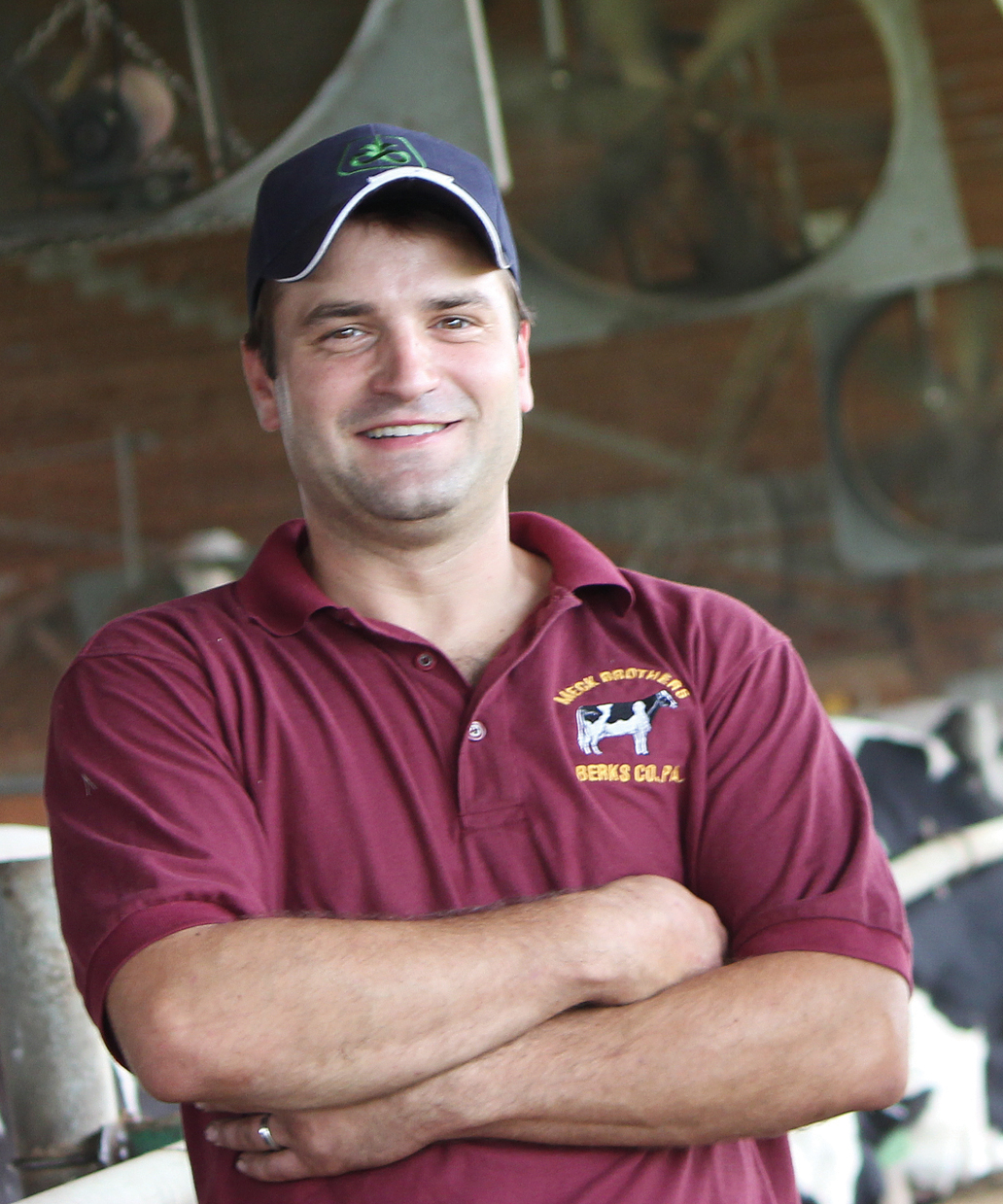
Zach Meck pictured here at Meck Brothers Dairy in Berks County, Pennsylvania in August of 2012

Zach Meck pictured here at Meck Brothers Dairy in Berks County, Pennsylvania in August of 2012

Zach Meck fought the fight, kept the faith

Zachary L. Meck, 33, of Womelsdorf, Pa., passed away Tuesday, Feb. 4 after a five-month battle with cancer. In the words of his wife Suzanne (Perdue) Meck, formerly of Whitehall, Md., “Zach saw a full healing as he was peacefully called to his heavenly home.” Over the past few months, she said, the couple felt the prayers and well wishes from around the world, and they were comforted to know so many people care.

In Zach, the world lost a good and courageous young dairyman. 2 Timothy 4:7 is the verse that comes to mind for a life gone too soon, loved by many and lived in earnest. Zach made a lasting impact on not just his family and friends, but also upon the future of the dairy industry he so loved and the solidarity he had with fellow dairymen, as well as the passion he had for the cow herd he and his brother Jeremy built up into a business through sheer determination.

It is not without notice that the next five year Farm Bill passed its final hurdle in the Senate on this same day. Zach had poured time and energy into being part of an effort to shape the future for young dairy farmers within the context of the Farm Bill’s dairy title.

Our paths crossed in 2009 when the dairy industry faced the most devastating milk prices ever endured. Zach and his brother Jeremy had built their Meck Brothers Dairy from scratch. They had started with the 4-H animals their late father Ronald bought them as youngsters growing up on their parents’ poultry farm in Lancaster County, Pa. They grew the herd in a rented barn — working all kinds of other jobs – then purchased and renovated a Berks County, Pa. farm they moved into during 2009.

Zach was not one to sit still. Sometimes it seemed he was going in multiple directions all at once. But his efforts were effective. In 2009, he was part of a group of dairymen meeting in two counties, which later became the grassroots beginnings of the Dairy Policy Action Coalition that spread beyond the borders of Pennsylvania as dairymen from various regions talked together about the future of their industry.

He also served as a Land O’Lakes delegate and ran a close race as runner up for a seat on the Land O’Lakes board in early 2013. Zach was a member of the Berks County Farm Bureau, Marion Grange, and Berks County Holstein Club. He graduated from Cocalico High School, where he was a member of FFA and was active in 4-H.

“We’ve been through a lot over the years,” wrote friend and mentor Nelson Troutman in a calendar-of-hope created for Zach in December. “Then came Suzanne, and when you made up your mind, I could tell. It was good. But with these health issues, try not to make sense of it all, it never will. Remember to always look forward and that you are not alone. Trust in the Lord with all your heart and lean not on your own understanding (Proverbs 3:5).” Wise words he heeded in his short time with his beloved Suzanne.

Having the privilege of writing a story about Meck Brothers Dairy in August of 2012, I could see the respect he and his brother Jeremy had for one another and their passion for what they worked to accomplish – with that edge of always pushing forward to do more to make the cows more comfortable, do more to tell the dairy story to the greater Berks community, do more to get the voice of the young farmer heard, do more to light a fire – even if only to send a smoke signal – that policies need to be changed to consider the context of the young farmer. Zach was impetuous, yet intuitive.

“It’s time to get the younger generation involved in the leadership of their cooperative,” Zach said during a summer of 2012 interview. “Our futures are at stake in the outcome of the decisions that are made. The mechanics of the market should be our focus. We should be looking out for our fellow dairy farmers around us. Large or small, we’re all important. We have to focus on creating opportunities and getting the mechanics of the market right.”

So we come back full circle to that verse, 2 Timothy 4:7: “I have fought the good fight, I have finished the race, I have kept the faith.” Yes, Zach, you surely have.

Born in Denver, Pa., Zach was the son of the late Ronald K. and Joyce (Stoltzfus) Meck. In addition to his wife Suzanne, Zach is survived by his mother Joyce, two brothers Matthew K., husband of Susan (St. Clair) Meck of Denver; Jeremy R. Meck of Womelsdorf; two nephews Jackson K. and Levi C. Meck of Denver; and his paternal grandmother Norma (Zimmerman) Meck of Lititz.

A visitation will be held on Friday, February 7 from 6:00 to 9:00 p.m. and on Saturday, February 8 from 9:00 to 11:00 a.m. at the Tulpehocken UCC Church, where services will be held at 11:00 Saturday.

Memorial contributions in Zach’s memory may be made to the American Cancer Society, P.O. Box 1274, Lebanon, PA 17042 or Vickie’s Angel Foundation, 511 Bridge St., New Cumberland, PA 17070.

###

How dairy farmers dealt with ‘Polar Vortex’

By Sherry Bunting, Farmshine, January 10, 2014

BROWNSTOWN, Pa. — While some of the photos posted by dairy farmers on their farm Facebook pages and Twitter were downright beautiful, others spoke volumes about the extreme challenges and dedication put forth to care for animals on farms this week during what is being called the “polar vortex.”

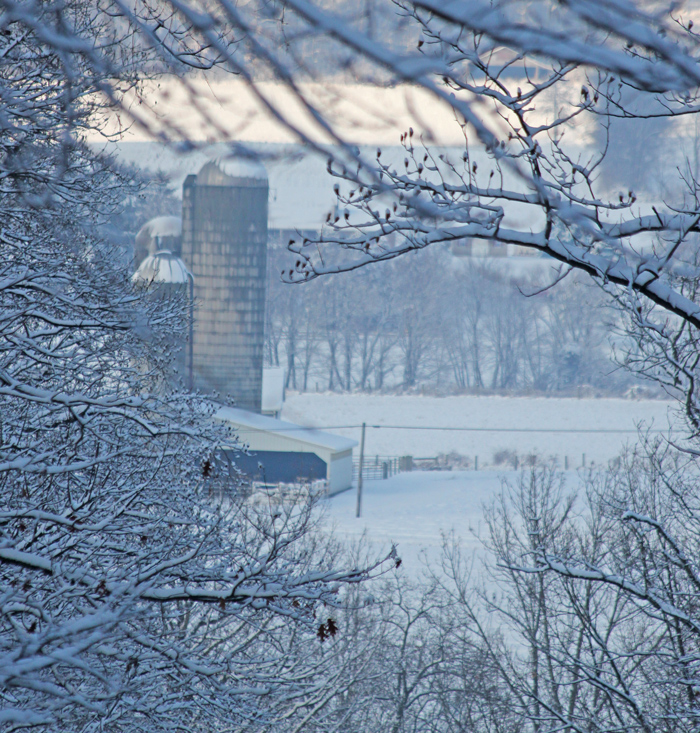
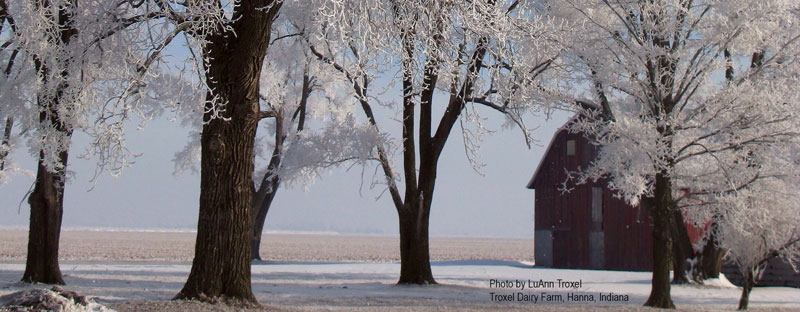
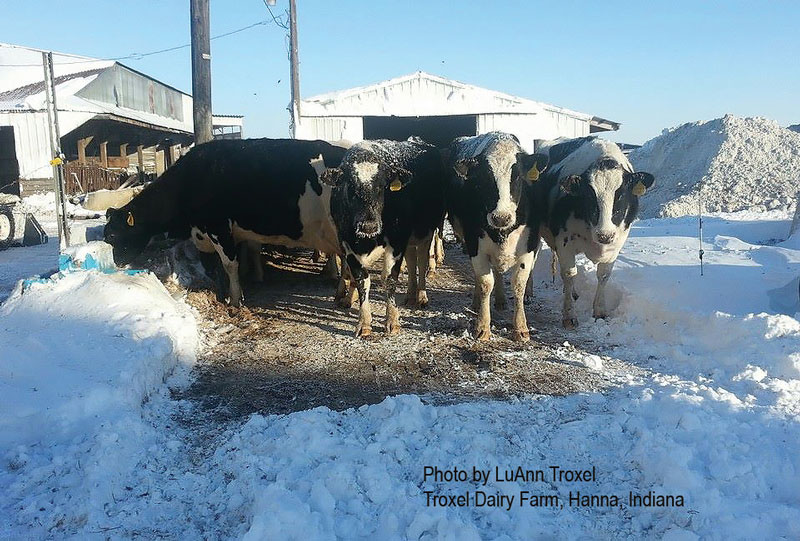
LuAnn Troxel captured this beautiful image at Troxel Dairy Farm. Behind the beauty was more snow and extreme temps.

LuAnn Troxel captured this beautiful image at Troxel Dairy Farm. Behind the beauty was more snow and extreme temps.

The extreme temperatures Tuesday and Wednesday were the talk of both the Pennsylvania Farm Show in Harrisburg and of farmers who were able to get away and attend the Keystone Farm Show in York, Pa. this week.

Frozen waterers, vacuum pumps, manure removal equipment and difficulty starting feeding equipment were the most commonly reported concerns shared by producers from New York, Pennsylvania, Maryland and Virginia who were able to get to the show in York.

Further North and West into the lake regions of the Upper Midwest, through Northern Indiana and Ohio into western New York and Northwest Pennsylvania, the “polar vortex” was amplified by the snow storm preceding it.

Thankfully, by the time you read this, warmer temperatures are forecast to prevail and bring relief to cattle and caretakers as well as equipment and transportation.

The mantra this week for farm families was to not only take care of their animals but to communicate what they were doing with their farm and non-farm “followers” on Facebook,

“There are no ‘snow days’ on the farm,” wrote Tricia Adams at her family’s Hoffman Farms page on Facebook. Three generations of the Hoffmans milk 700 cows near Shinglehouse, Potter County, Pennsylvania.

3 generations of the Hoffman family operate the 700-cow dairy.

3 generations of the Hoffman family operate the 700-cow dairy.

“The extreme weather makes us feel like we are surviving it and not thriving in it!” she said in an email interview Wednesday, reporting Tuesday’s low at Hoffman Farms was -18 with a high of -4. The mercury fi nally reaching a high of 12 degrees Wednesday. They are thankful to be spared the additional 3-feet of snow that fell just north of them in New York.

As for the polar temps and wind chills, “we run a heater in the parlor to help with frozen milkers but even that was icing up,” said Tricia, adding that the conditions for the cows in the freestall barns were “very slippery.”

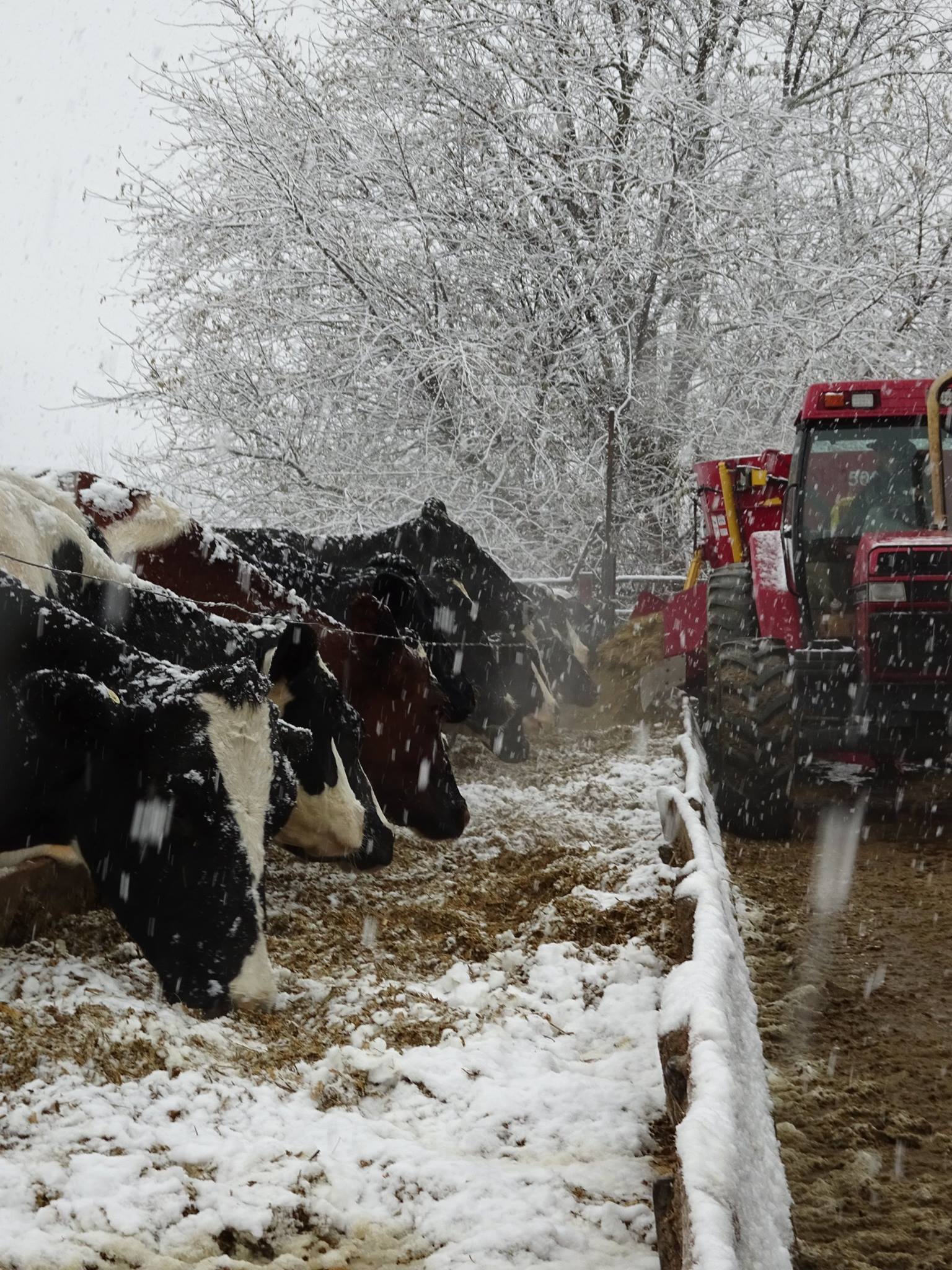
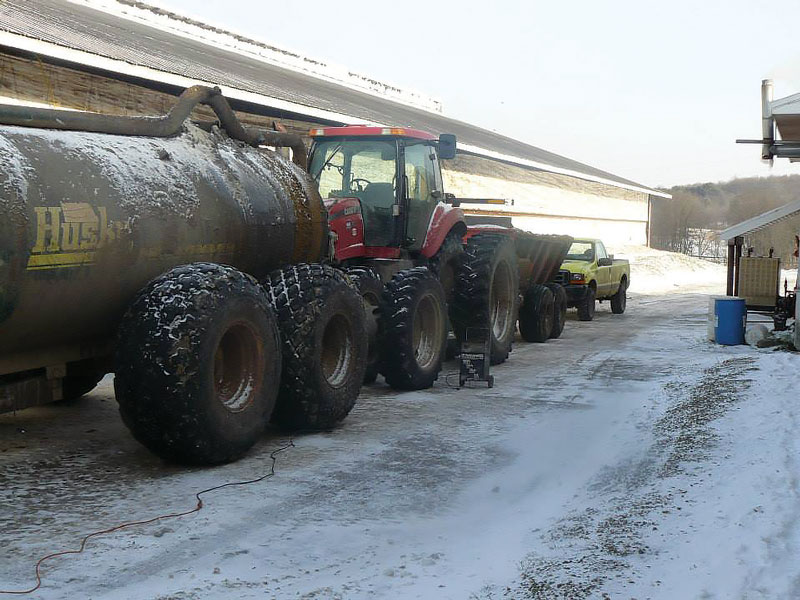
The Hoffmans, like other farmers dealing with these conditions, did their best to cope with frozen, caked manure in the walkways, barns and parlor — not to mention frozen waterers, feed mixers and tractors freezing up as the off-road diesel gummed up.

Starting equipment and dealing with manure were difficult in double-digit below zero weather, not to mention the wind chill.

Starting equipment and dealing with manure were difficult in double-digit below zero weather, not to mention the wind chill.

“We changed fuel fi lters and used additives to thin the fuel and keep our equipment running,” Tricia explained. “Winter is tough, and up here we are prepared for it; but when it gets this extreme, you know there is only so much you can prevent. What you can’t prevent you just have to deal with as it happens.”

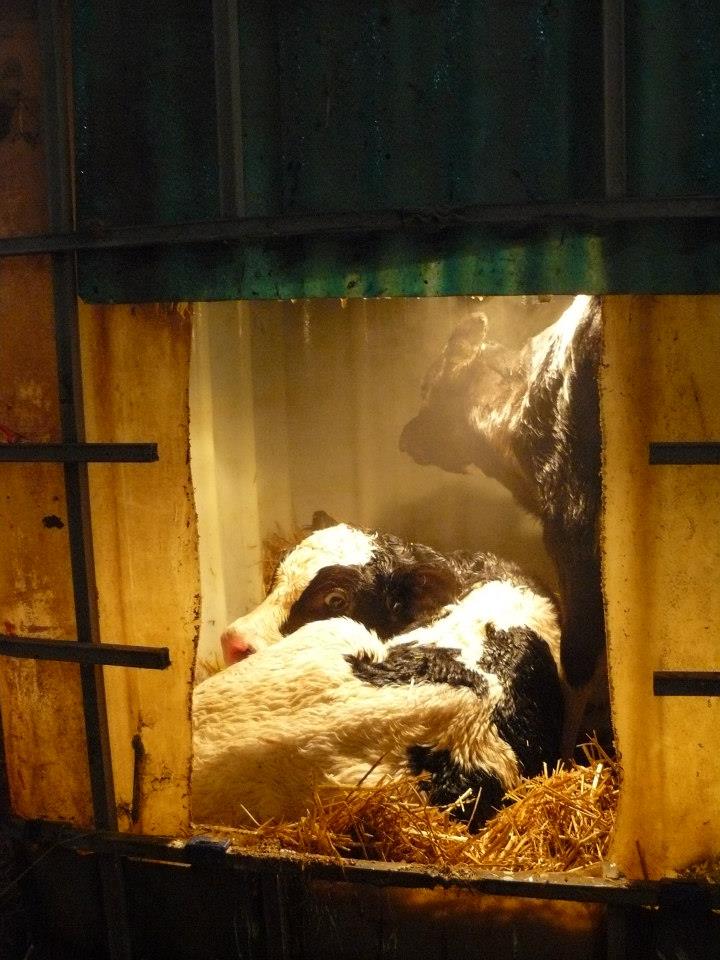
Much attention was paid to the especially important job of “tricky calvings.” At Hoffman Farms, Tricia used heated boxes for the newborn calves.

Tricia Adams pictures one of the heated boxes for newborn calves at Hoffman Farms

Tricia Adams pictures one of the heated boxes for newborn calves at Hoffman Farms

Over in Bradford County near Milan, Pa. Glenn and Robin Gorrell were thankful for the 45 degrees and rain over the weekend to melt the snow at their 600-cow dairy before the sub-zero temperatures arrived Tuesday.

Glenn reported temperatures ranging -10 to -20 depending on location in the hills or valleys.

“I think that we were lucky here and we are always happy the rest of our team helps get us through,” said Glenn in an email interview Wednesday.

“The wind was the killer. It can really drive the cold everywhere,” he said, adding that they had frozen pipes in the employee house for the first time ever.

“In the tie-stall barn we were like everybody else: Bowls on the west side were frozen. The milk house froze for the first time in years. We thought we had all the equipment ready with new fi lters and more fuel conditioner, but we were wrong,” he explained. “We needed to cut more with kerosene and put tarps around hoods of the loader tractor and feed mixer.”

The calves and youngstock at Gorrell Dairy got extra bedding and a little more grain to get them by.

“Robin always has calf jackets on them once it is below 50 degrees anyway,” Glenn reported. “We tried to double up feeding our heifers so we would have less equipment to start in the extreme cold.”

At Troxel Dairy Farm Laporte County, near Hanna, Indiana, conditions were quite severe, with extreme low temps in line with what farmers were seeing in northern Wisconsin and Minnesota this week.

Facebook followers commented that the cows must be “milking ice cream” as they read LuAnn Troxel’s posts about dairying in temps that had fallen to -12 and -17 with wind chills as low as -53 in northern Indiana on the heels of over 1-foot of snow.

The cows were "good sports" but after three days, the extreme cold wore think on man and beast.

The cows were “good sports” but after three days, the extreme cold wore think on man and beast.

Calling the cows “good sports,” LuAnn acknowledged how tough this week has been for man and beast. She and husband Tom and son Rudy, operate the 100-cow dairy.

“Cold weather management is really not too complicated,” said Tom Troxel, DVM, who in addition to the dairy farm has South County Veterinary practice.

“Cows need to have plenty of feed and water, be out of the wind, and have a dry place to lie down. If they have these things, they can survive an awful lot,” he explained in an email interview Wednesday.

“Calves need the same thing, including increased feed (calories),” Tom advised. “But sometimes the threat of scours keeps feeders from increasing milk to calves. There is no question that cold stress can cause younger animals to be more susceptible to scours and pneumonia, but careful monitoring and feeding electrolytes can help a lot.

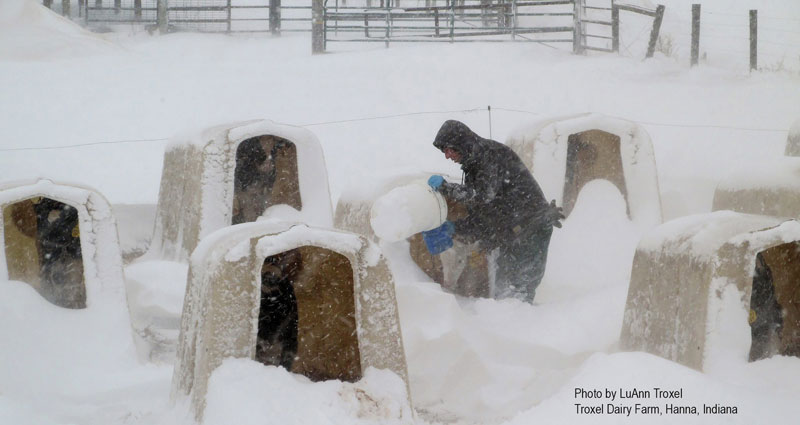
While it's tempting to do the bare minimum when temps are -17 with a -53 wind chill and there's 14 inches of snow on the ground, LuAnn was out feeding her calves at Troxel Dairy farm MORE frequently to keep up their energy reserves. Snow drifts also help insulate and inside the hutches they are cozy warm with fresh bedding.

While it’s tempting to do the bare minimum when temps are -17 with a -53 wind chill and there’s 14 inches of snow on the ground, LuAnn was out feeding her calves at Troxel Dairy farm MORE frequently to keep up their energy reserves. Snow drifts also help insulate and inside the hutches they are cozy warm with fresh bedding.

“It’s more important to increase feed to cold, young calves. Also, try hand feeding starter grain to young calves that are at least 2 days old,” he suggested.

As for cow nutrition during extreme cold, it comes down to “energy, energy, energy,” said dairy consultant Ray Kline, during an interview at the Keystone Farm Show in York, Pa. Wednesday. Ray has retired from the Agri-Basics team of nutritionists but is as passionate as ever about cattle nutrition.

“Feeding calves more often — 3 to 4 times a day — also helps because they do not have a rumen to heat them up,” he observed. “With the cows, the ration can be adjusted for higher energy, but without losing fiber. Cows normally eat more when it is cold, but a more dense ration also helps get more energy to them.”

He suggests picking out the “barometer cows” in the herd and watching them for Body Condition Score to know if ration adjustments to the whole herd are needed. Ray also urged dairymen to pay attention to waterers and keep them running.

“After an event like this, we can see it in the repro,” said Ray. “The cow will take care of herself first; so what she eats will go to maintaining herself through the severe weather.”

The seasoned dairy consultant also noted that “life spins its pattern back to years before.” While the “polar vortex” this week was new for some generations on the farm, others have experienced it before.

“If you look at history, we’ve had winters like this, but you have to go a long way back,” said Ray.

As for the milking equipment and transportation, Gib Martin, general manager of Mount Joy Farmers Cooperative in Pennsylvania noted that milk pickup and transport required more time and labor this week.

“We had some issues with tank compressors and one truck down, but no major interruptions in the flow of milk,” said Gib during an interview at Tuesday.

Ken Weber recommends using a heat lamp to keep compressors going for cooling the milk. Weber is retired from service calls but still works with BouMatic equipment. He suggests paying close attention to vacuum pumps outside.

“They are the last thing the dairyman uses to wash the pipe line and that moisture in there can cause them to freeze up,” he said during an interview at the Keystone Farm Show in York, Pa. Tuesday. “Just take a pipe wrench and work it back and forth to loosen it and consider using supplemental heat like a heat lamp to keep the pump warm.”

snowtrees

NY-FARM-TO-CITY FIRST! Telling Milk’s Story at “Just Food”

Image

My friend TAMMY GRAVES wrote the guest post for my FOODOGRAPHY blog today. It also made the cover of today’s Farmshine newspaper, telling how she and dairywomen Deb Windecker and Lorraine Lewandrowski of Herkimer County NY had the rare opportunity to present a 75-minute workshop telling milk’s story at the JUST FOOD CONFERENCE in New York City. Great Job Ladies!

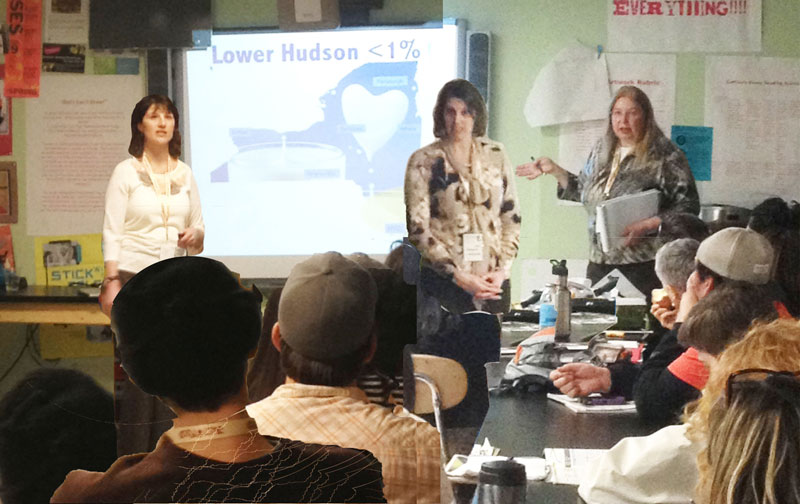
NEW YORK, N.Y. – For the first time, New York State dairy farmers were on the workshop list at the Just Food Conference March 29-30 in New York City. A 75-minute presentation entitled “Introduction to the New York Milk Shed” was prepared and offered by Herkimer County dairy farmers Lorraine Lewandrowski and Deb Windecker of Newport and Schuyler, respectively. Tammy Graves, a dairy farmer advocate from Otsego County also contributed by explaining the mutually dependent relationship between consumers and dairy farmers.

“We provided faces and stories about our milk for attendees. Many more conversations still need to occur, but it was a huge step in bridging the gap,” Deb Windecker reported. “So many people think there are antibiotics in our milk. We are pleased to report that we dispelled that myth by explaining the penalties and protocols that are in place at the farm, at the processing plant, and with our regulators, to ensure that never occurs.”

The presentation provided answers in four parts: 1) Where is dairy farming in New York State? 2) Why should you care about a Milk Shed and/or dairy farmers? 3) What does a dairy farmer do?  4) Why should you eat real dairy products?

Our message was “Milk is clean and safe. Milk is water. Milk means healthy cows. Milk is Local. Milk is a life’s work.”

Part One of the workshop for Just Food consumer advocates summarized the facts and included a visual overview of the NY Milk Shed: 5100 dairy farms, 610,000 cows, 113-cow average herd size. A pictorial tour of the milk regions (Lower Hudson, Upper Hudson, North Country, Mohawk Valley and Western New York) was the background for discussion. The discussion included a look at the diversity among NY dairy farms in terms of cow breeds, farm size by acreage, herd sizes and strengths and prominent resources by region.

Part Two illustrated the long-standing connection New York City has had with dairy farmers, highlighting the 1939 milk strike. As a result of the milk strike, then NYC Mayor Laguardia was an advocate and influencer for achieving adequate farm milk pricing at that time. Cheese pack boats, milk trains and today’s tractor trailers carrying 150,000 glasses of milk were mentioned. 

Additionally, Lewandrowski emphasized why the average New Yorker should be concerned about the state’s dairy farms.  A series of photos accompanied her points regarding economic development, food security, open space, watershed protection, floodplains, biodiversity, rural tradition, and the diversity of people working in New York’s dairy industry.

Part Three of the presentation evoked the most questions from attendees as it gave a micro-view of the cycle involving a dairy cow, a dairy farmer and soil. Growing seasons, equipment costs, feed storage were discussed, in addition to milking procedures and newborn calf care. 

Part Four explained that buying real dairy products translates to eating food that most closely mirrors the clean and safe milk that dairy farmers put into the milk truck. Attendees were very appreciative to learn that not all brands or types of cheese and Greek yogurt are created equal. 

“The experience provided us with invaluable insight to perspectives and beliefs of individuals that are keen on food topics,” the presenters reflected after the event. New York City residents who attended left with a better understanding.  One member of the audience approached the presenters about the possibility of chartering a bus to bring New York City food and farm-interested people to visit dairy farms upstate and to spend a day at the Fair.