Covering Ag since 1981. The faces, places, markets and issues of dairy and livestock production. Hard-hitting topics, market updates and inspirational stories from the notebook of a veteran ag journalist. Contributing reporter for Farmshine since 1987; Editor of former Livestock Reporter 1981-1998; Before that I milked cows. @Agmoos on Twitter, @AgmoosInsight on FB #MilkMarketMoos
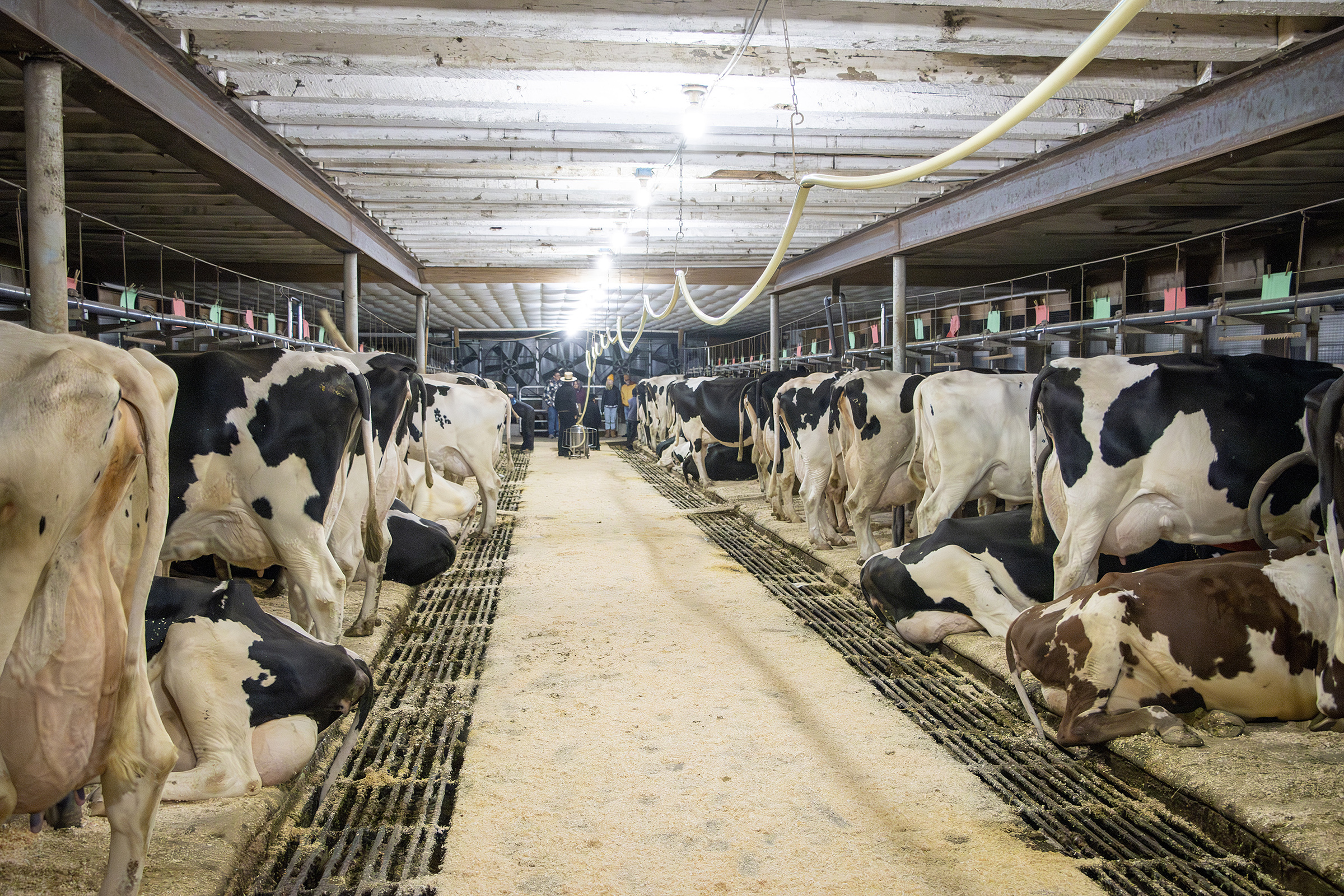
RONKS, Pa. – What better place to be on a chilly evening 12 days before Christmas than in a stable with cows as a family goes about their evening milking and feeding? How fitting to remind the public not just about where their milk comes from, but also the way the Lord Jesus entered this world as a baby, wrapped in a manger, in a stable, with cattle lowing His lullaby.
The second annual Christmas with the Cows at the Melvin Stoltzfoos farm was a big hit, drawing double the attendance of 380 people from six states to the 50-cow dairy in Ronks, Pennsylvania.
While many visitors came from all around Lancaster and nearby counties, many also came from other parts of the state as well as New Jersey; Long Island, New York; a few from Delaware and Maine; and an over-the-road trucker brought his family from Houston, Texas after seeing the signs.
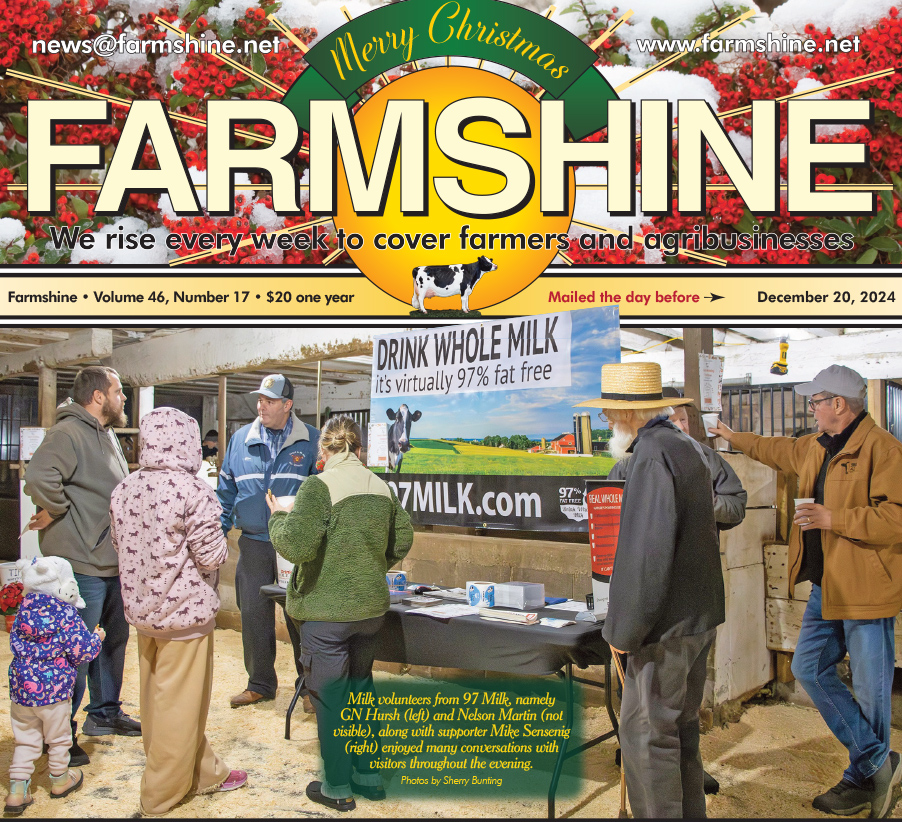
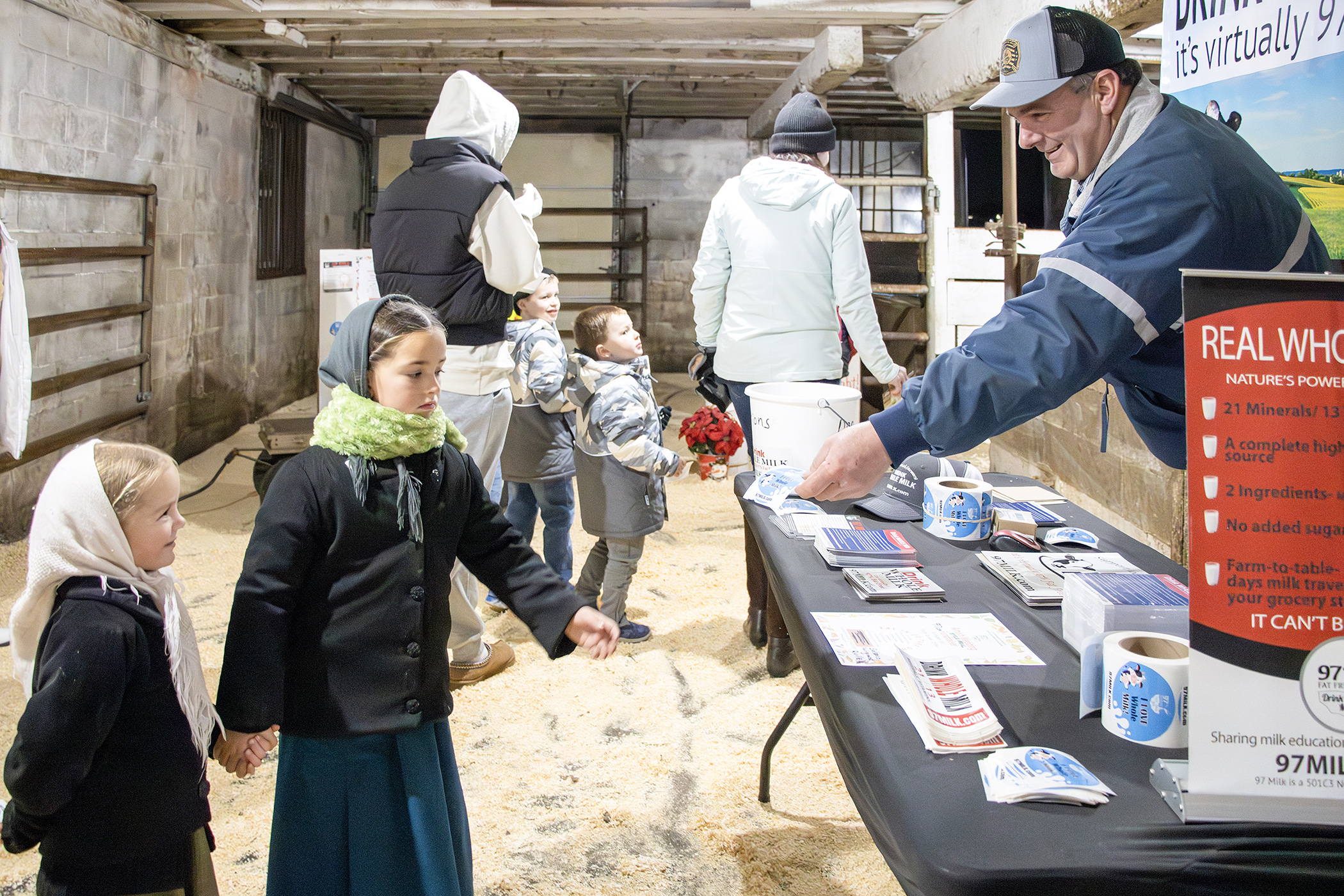
Local attendees like Bridgette Zell of Nottingham said they saw the event posted on Facebook. She brought her two young boys to see what it was all about. Bridgette had the quote of the night as she stopped by the 97 Milk table, where GN Hursh of Ephrata and Nelson Martin of Robesonia were the volunteers handing out stickers, 6×6 cards, small magnets, and other informative goodies.
“I get so tired of people saying milk is not for humans,” she said. “When I was growing up, if any of us didn’t feel well or had something wrong, my mother would tell us: ‘Drink a glass of milk see how you feel!’”
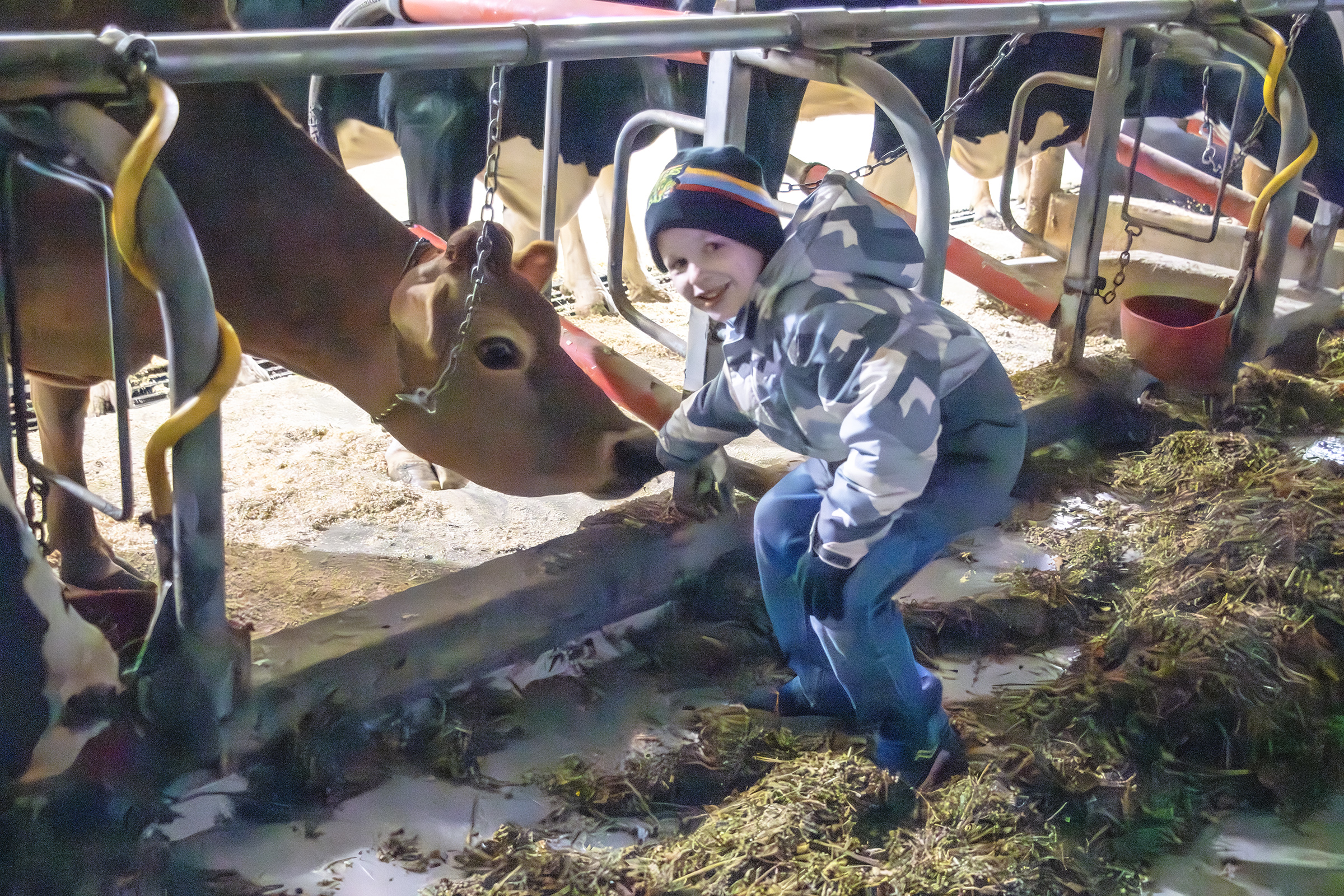
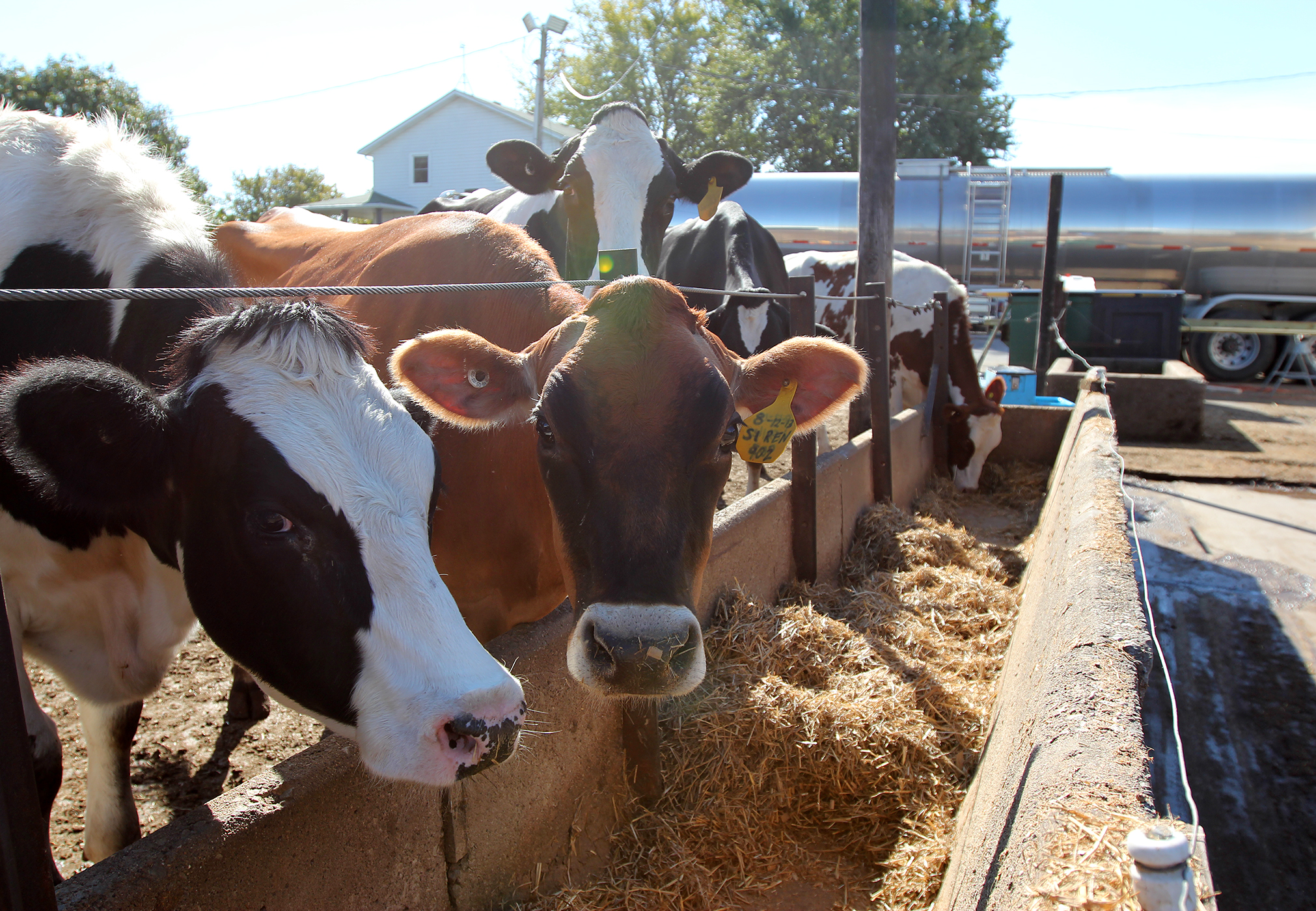
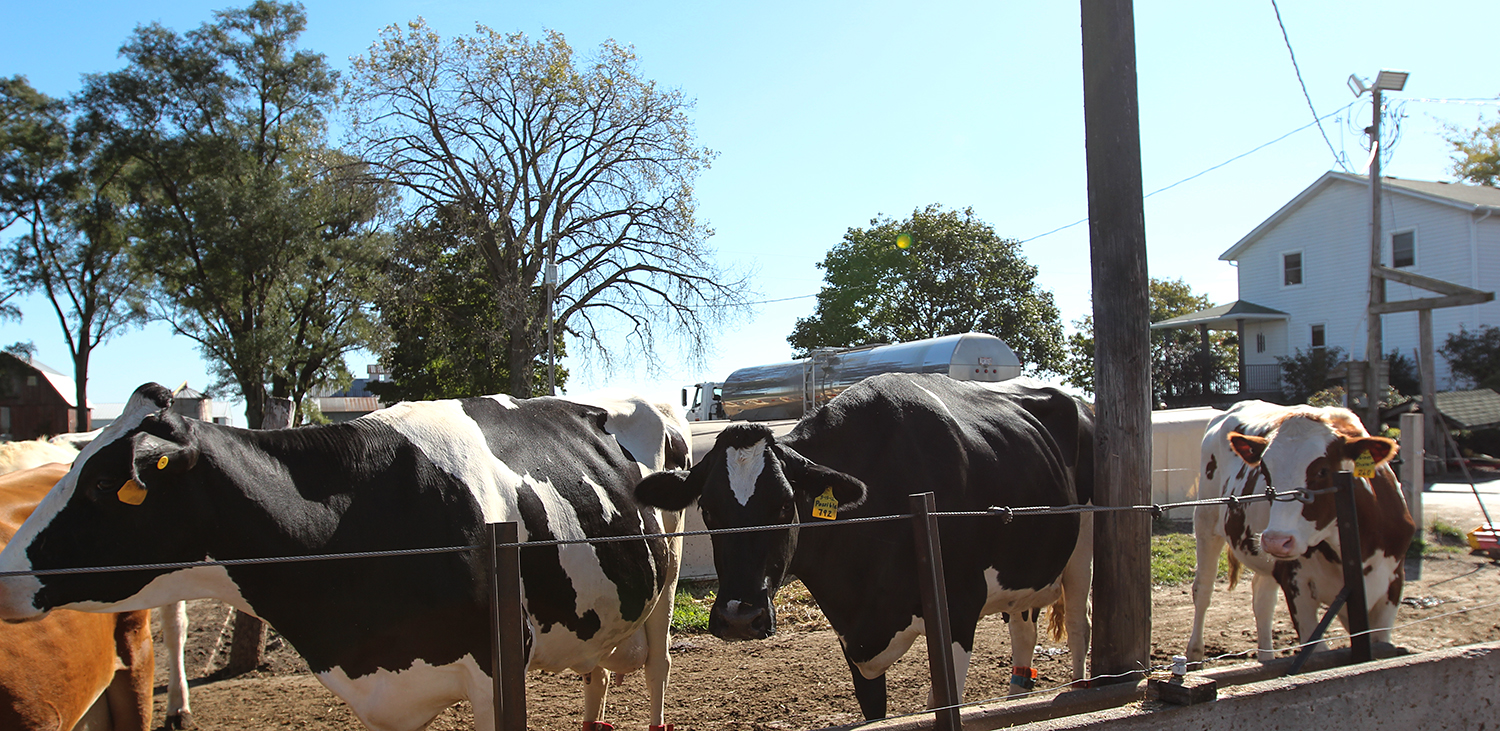
One of her boys, Dylan, was thrilled to pet his first cow. He quickly learned the Jerseys were more curious to bring their noses right up to his hand. “This one must give chocolate milk!” he said about the brown cows, flashing a great big smile.
“Well, they are more curious than their black and white herd mates,” I responded while capturing his photo, “and their milk is richer in fat and protein, but we still have to add the chocolate.”
The whole event is a leisurely walk around the barn during chore time, culminating at a table with whole milk, chocolate milk and homemade Christmas cookies.
This was not a fancy event, but rather a time to simply take in the serenity while the Stoltzfoos family — from the littles on up — shared the blessing of their stable routines with the public.
“People ask me what do we get out of it? It’s really just seeing people have fun. Seeing people have fun with the cows is what we get out of it. Everyone I talked to was happy and in a good mood. People were tickled to have the opportunity to just be in a barn,” says Melvin.
And along the way, they learn something too. Upon entering, visitors are given a paper with fun facts about Agriculture and the nutrition of delicious whole milk, along with a welcome note with facts about the farm — names of the draft horses, facts about Holsteins and Jerseys in the herd, fun facts about cows and what they eat. Visitors also receive a thank you card with the Christmas story as told in Luke 2:11-16 and the Reason for the season as told in John 3:16-17.
Melvin and his family truly love doing this. They are already thinking about next year’s Christmas with the Cows, marked on the calendar for Dec. 12, 2025.
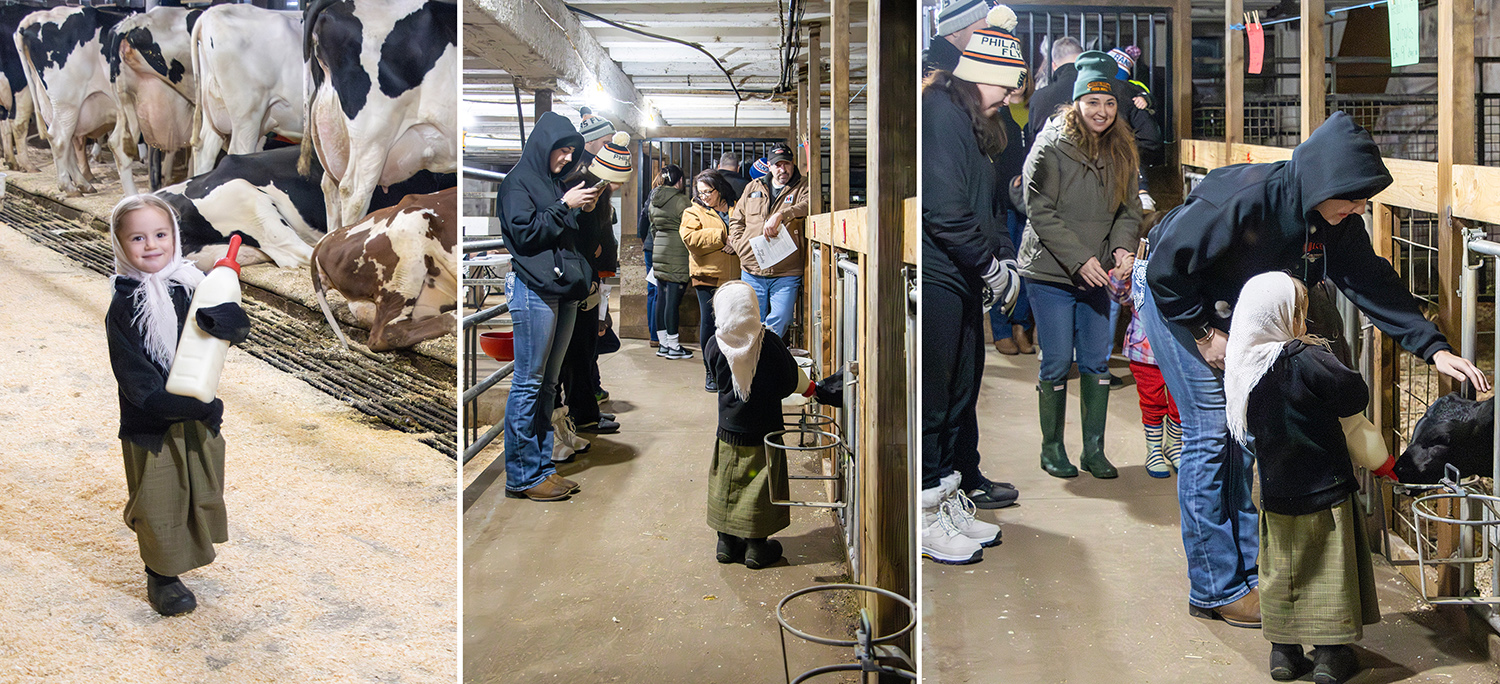
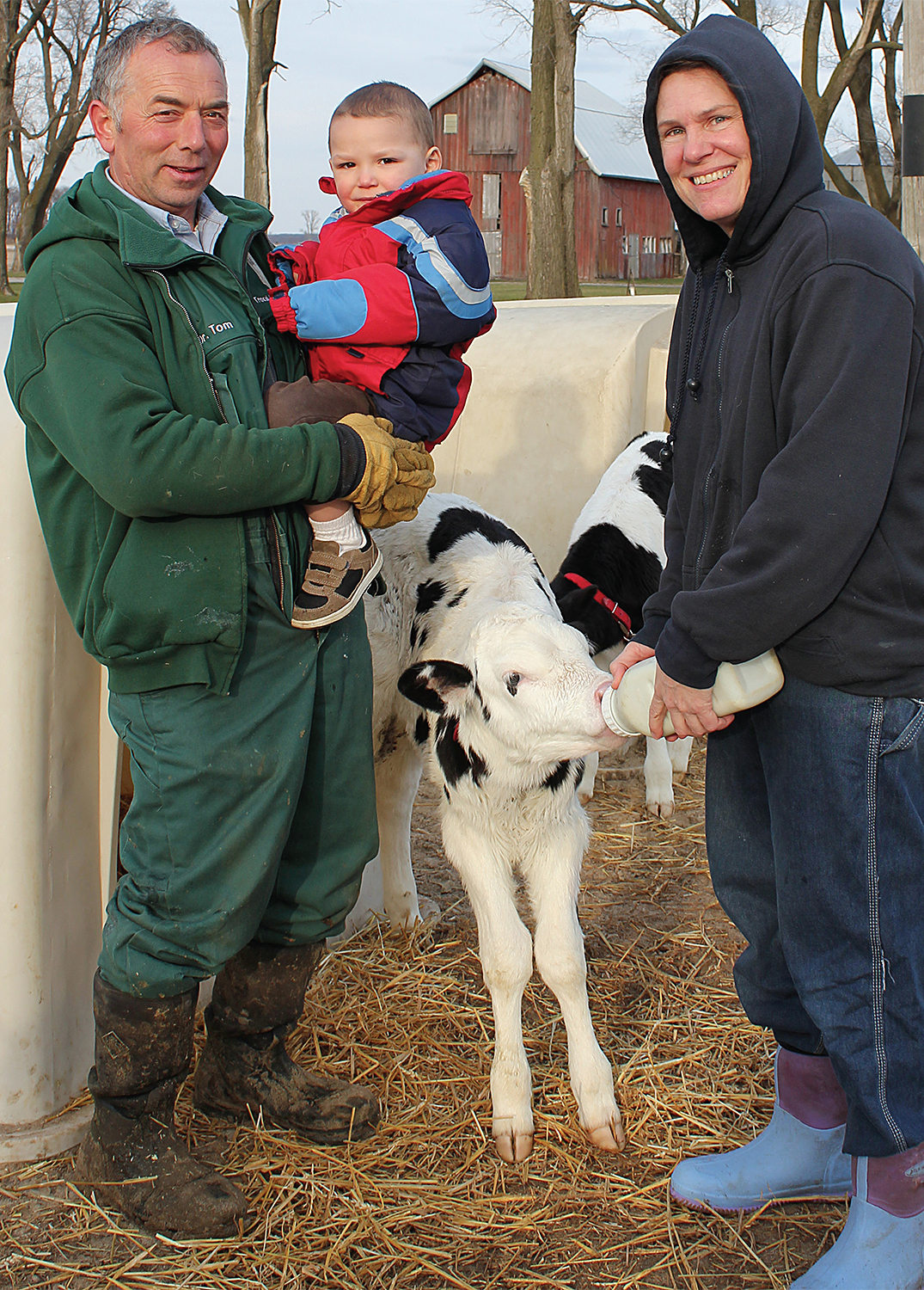
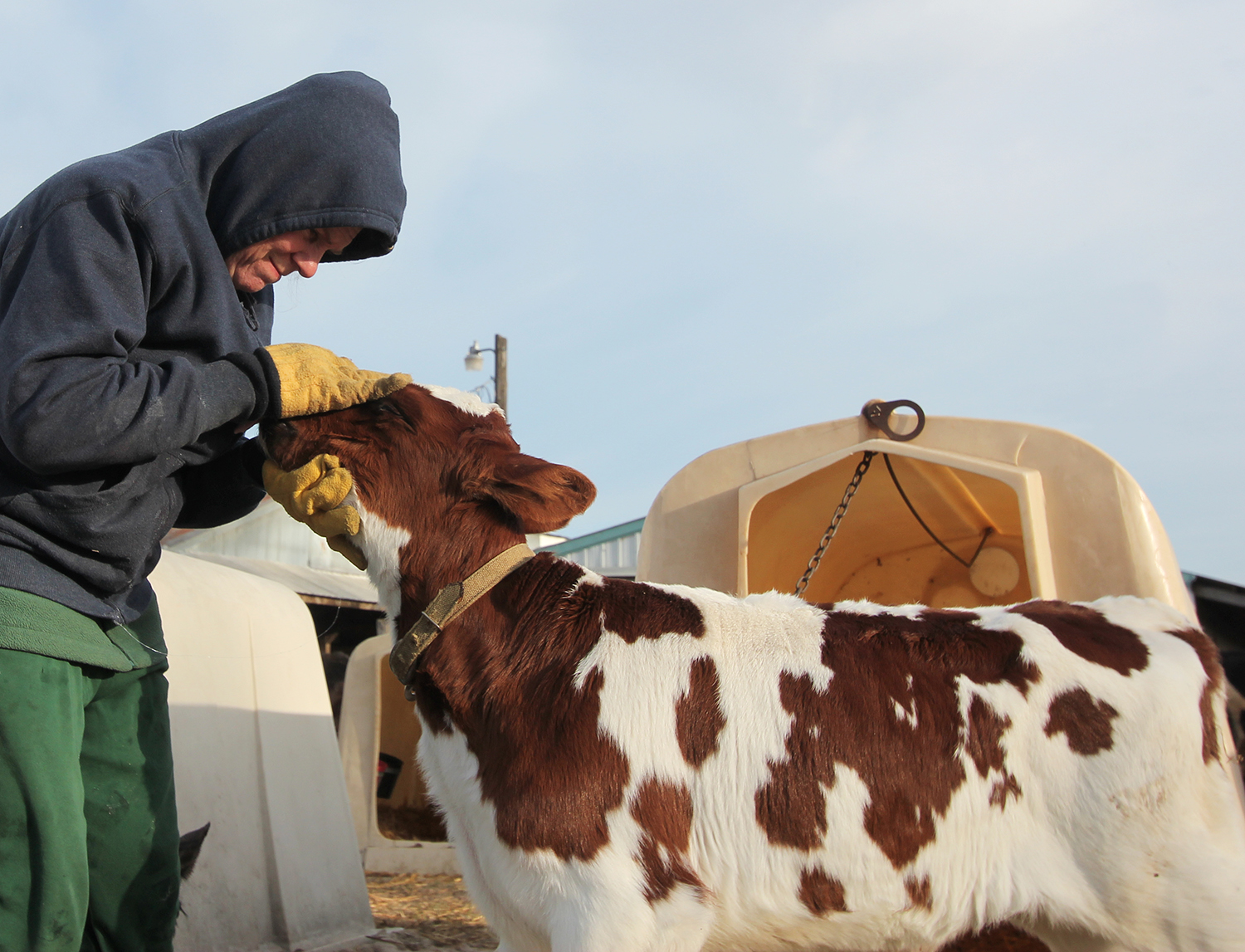
The host family’s youngest daughter is pleased to have the calf feeding responsibility.
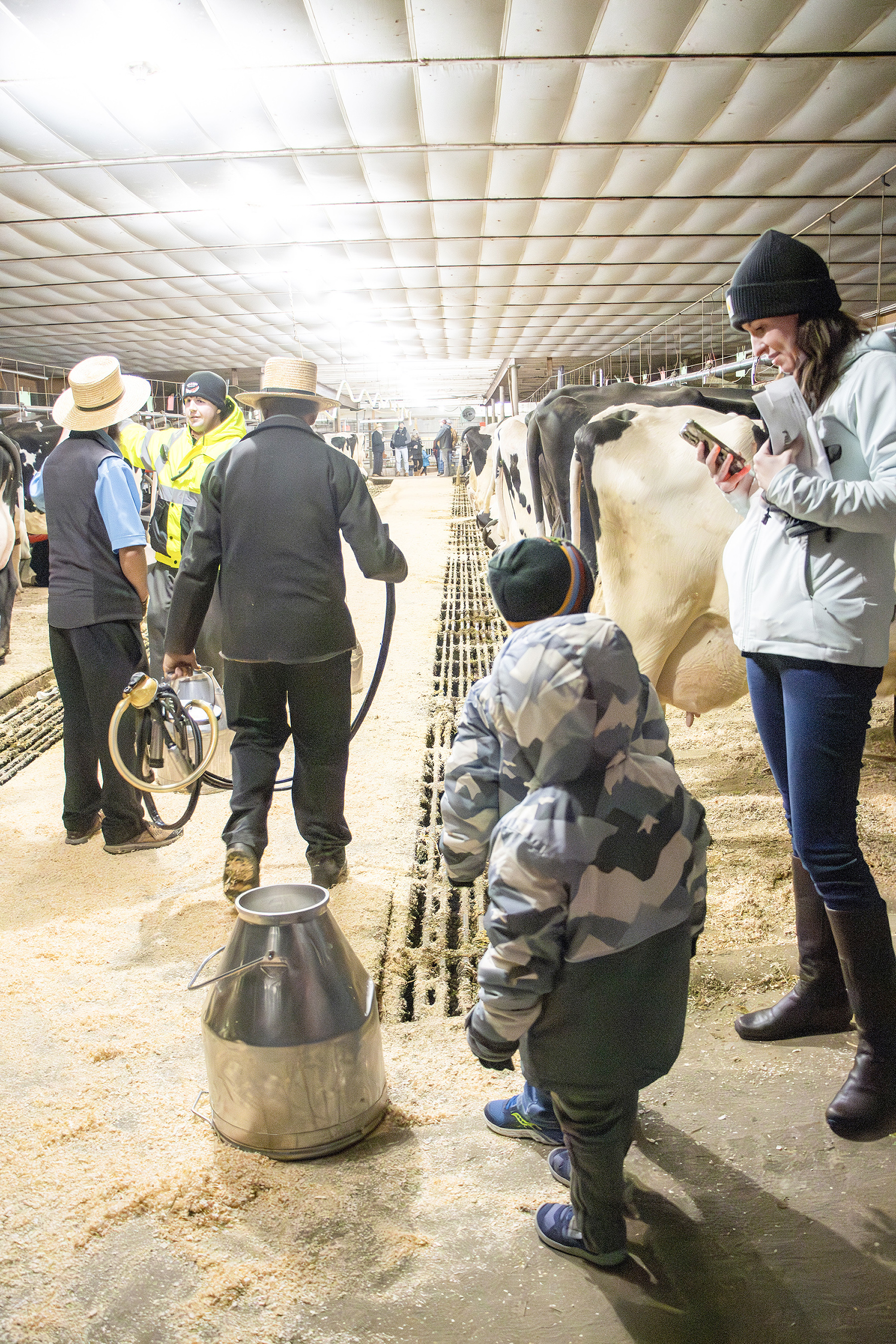
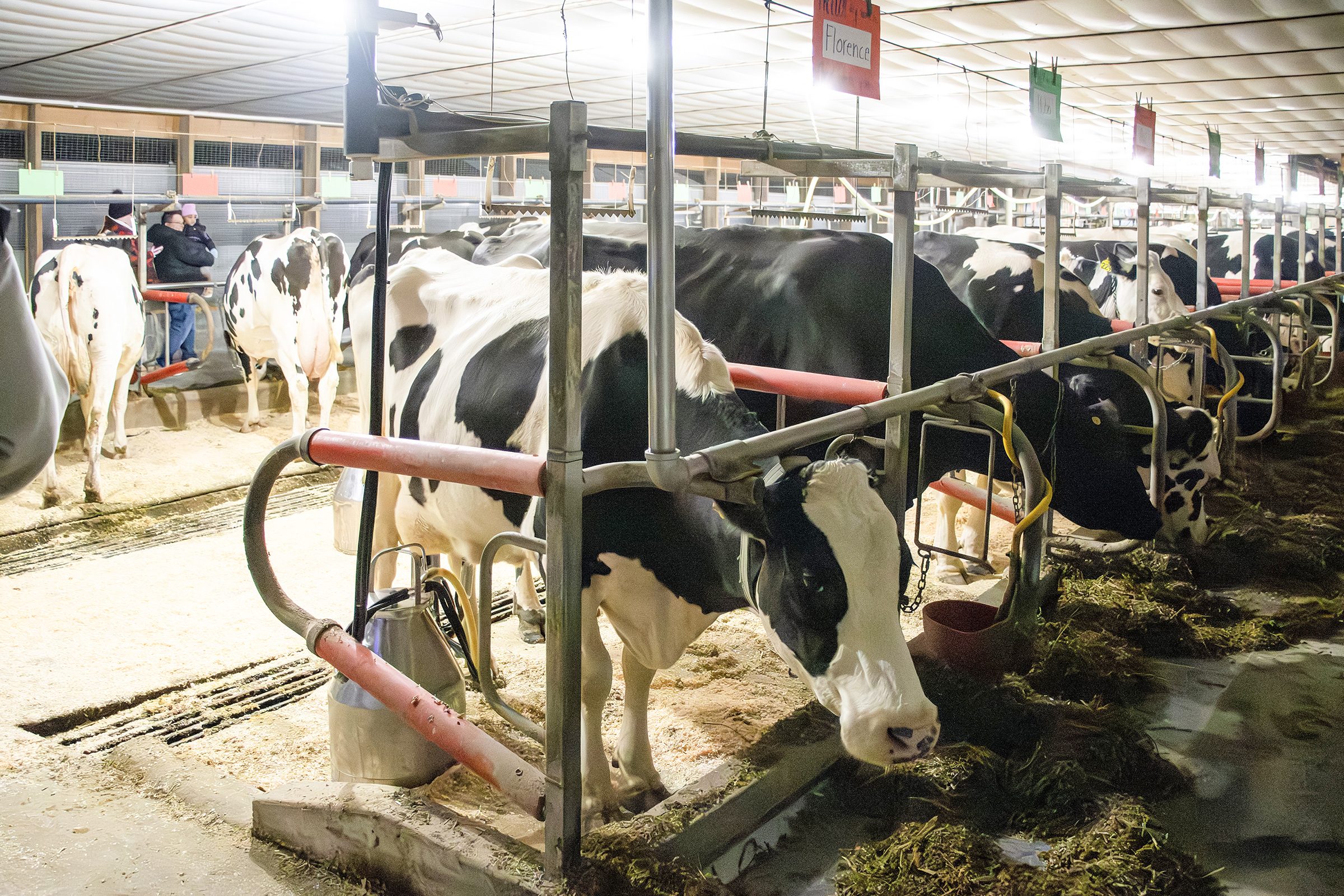
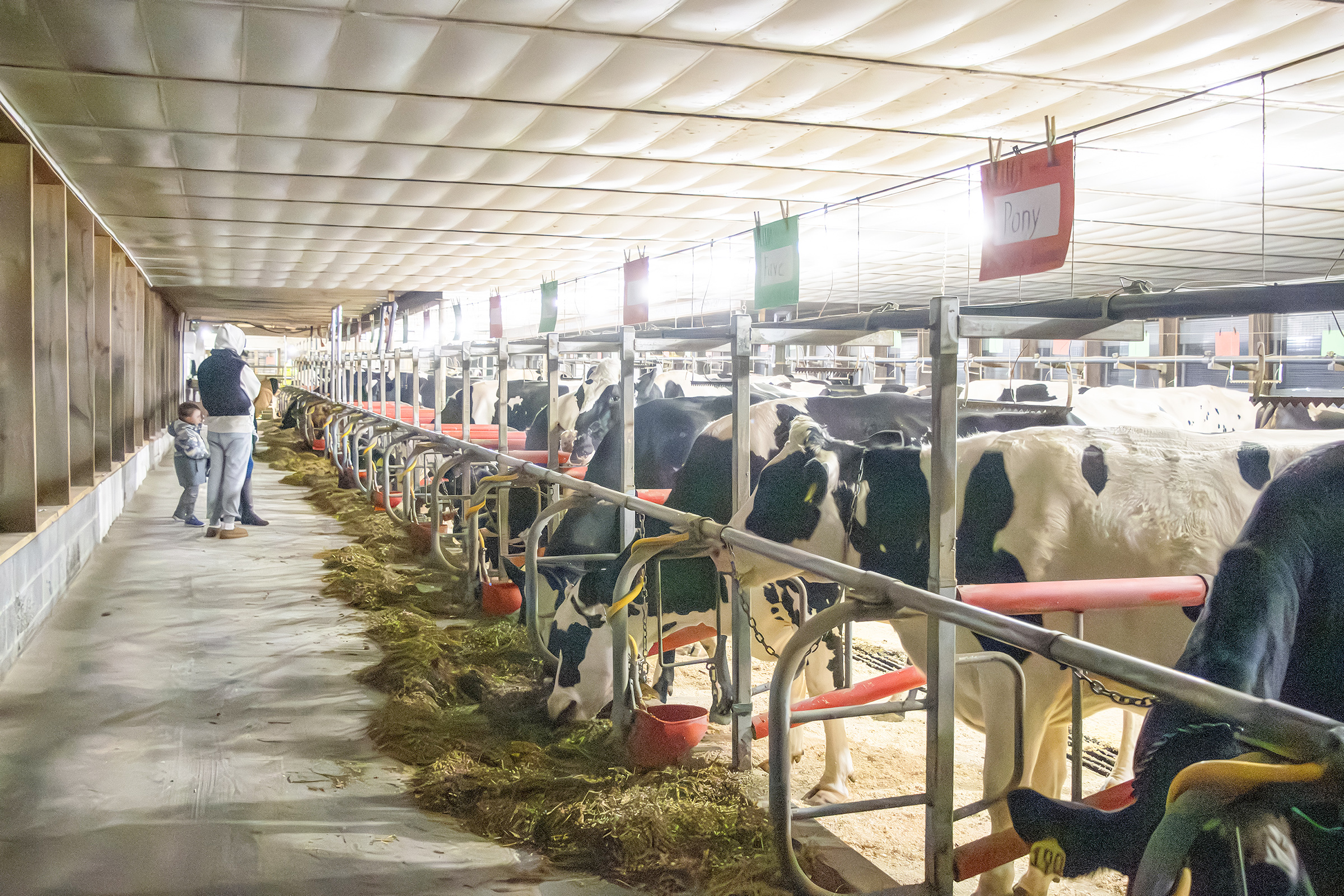
Feeling blessed to be dairying, Melvin and his family want to share this gift with others — the quiet rhythms of milkers pulsating and cows munching, the soft sounds of their lowing, the nickers from the horse stalls, the rustling of calves at feeding time, the sight of clean, contented, cows in their stalls, placidly chewing their cuds as the family moves the milkers down the row, amid casual conversations answering any questions the visitors may have.
“It’s not about us,” says Melvin. “It’s about the cows. It’s about people having the opportunity to see the cows.”
The largest crowd came early, lined up right at the start of the evening milking at 4:30 p.m. Visitors continued to flow in steadily right up until the advertised ending time of 7:30 p.m. The family rented portable toilets and tower lights, placed outside. They cleaned and emptied the loafing pen to make way for the 97 Milk table and refreshments.
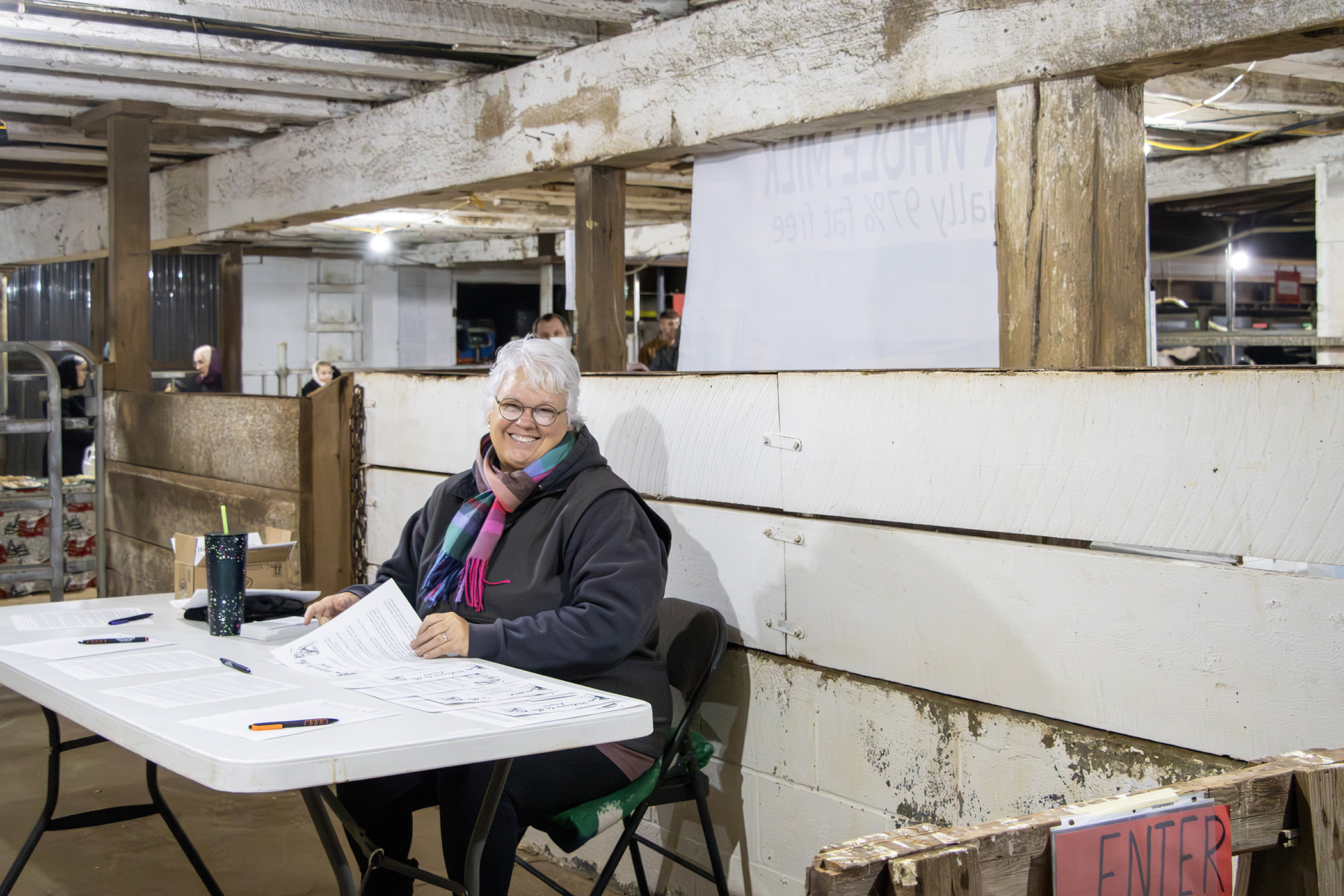
Half a dozen people from Sensenig’s Feed Mill in New Holland volunteered their time too. Nancy Sensenig manned the registration table, drawing people in with her ready smile and outgoing nature, while dairy nutritionists Kyle Sensenig, Steve Morris and Justin Brenneman answered questions about dairy cows and what they eat.
Other volunteers guided traffic to parking, and Mike Sensenig was encourager in chief – walking around all smiles throughout the evening, talking with visitors.
“Melvin does a really good job here, and we support this because it’s grassroots,” says Kyle. “We like to get behind grassroots efforts that are an outreach to our community and consumers.”
He observed a few repeat families who came out last year, but mostly, he shares: “We saw a lot of new faces tonight.”
When asked what tough questions he may have encountered, he says it was really a relaxed evening, people were here out of genuine curiosity to experience something new that dairy farmers see and do every day.
He did get questions about grass-fed dairies and took the opportunity to broaden that discussion to recognize not all feeding systems are the same. He shared that these cows were getting grasses in their feedstuffs, and that cows are superheroes, able to utilize a wide variety of feedstuffs to make nutrient dense milk.
“The important thing is we want to have healthy and content cows, and that’s really what drives every dairy farmer,” he relates.
As I walked through with a group of visitors from southern Lancaster and Chester counties, the conversation turned to A2 milk. Melvin talked about his own progress toward a herd now 75% A2 through the bulls he selects for breeding. In his quiet manner, he demonstrated the reassuring message about how dairy farmers are always looking to improve and put their best quality forward.
Texas detections point to wild migratory birds as source; Public risk remains low; Cows exhibit low appetite, reduced rumination, sharply reduced milk production
Symptoms of what officials are saying are the first ever detections of bird flu in dairy cows include a sharp drop in milk production, reduced appetite, reduced rumination, and colostrum-like milk appearance. As the investigation continues in the Texas Panhandle region, incl. Kansas and New Mexico, dairy producers are implementing advanced biosecurity measures. Texas Ag Commissioner Sid Miller cited “ongoing economic impacts to facilities as herds that are greatly impacted may lose up to 40% of their milk production for 7 to 10 days until symptoms subside. There is no threat to the public,” he said. S. Bunting file photo
By Sherry Bunting, Farmshine, March 29, 2024 (updated since print edition went to press)
WASHINGTON – Federal and state officials confirmed this week that highly pathogenic avian influenza (HPAI), otherwise known as bird flu, has been detected and deemed the culprit in the mystery illness “among primarily older (mid-lactation) dairy cows in Texas, Kansas, and New Mexico that is causing decreased lactation, low appetite, and other symptoms.”
USDA’s Animal and Plant Health Inspection Service (APHIS) believes “wild migratory birds to be the source of infection as viral testing and epidemiological efforts continue.”
In an email exchange with the APHIS press office on Wed., March 27, Farmshine asked if cow-to-cow transmission has been ruled out at this juncture.
They could not answer directly, but on background, gave this response that mirrored a portion of the March 25 APHIS press release:
“The testing from Texas shows consistency with the strain seen in wild birds. As the release shared, based on the findings, the detections in Texas appear to have been introduced by wild birds. Federal and state agencies are moving quickly to conduct additional testing for HPAI, as well as viral genome sequencing, so that we can better understand the situation, including characterization of the HPAI strain or strains associated with these detections.”
The answer appears to be that cow-to-cow transmission is not suspected as birds are the vector in what APHIS describes as a “rapidly evolving situation” and one in which they are continuing to investigate, working closely with the Food and Drug Administration (FDA), the Centers for Disease Control and Prevention (CDC), as well as state veterinary and public health officials.
Furthermore, if migratory wild birds are the source, then this could be a seasonal anomaly that may shift or dissipate soon.
Word spread quickly on Monday, March 25 as public announcements from federal and state agencies and industry organizations were released in rapid, near simultaneous succession within minutes of the USDA APHIS press release announcing that, “Unpasteurized, clinical samples of milk from sick cattle collected from two dairy farms in Kansas and one in Texas, as well as an oropharyngeal swab from another dairy in Texas have all tested positive for HPAI. Additional testing was initiated on Friday, March 22, and over the weekend, because farms have also reported finding deceased wild birds on their properties.”
Preliminary testing by the National Veterinary Services Laboratories further confirmed that, “No changes to the virus have been found that would make it more transmissible to humans, which would indicate that the current risk to the public remains low.”
Announcements from all corners of health and industry conveyed this main message: “At this stage, there is no concern about the safety of the commercial milk supply or that this circumstance poses a risk to consumer health. The commercial milk supply remains safe due to both federal animal health requirements and pasteurization.”
Bird flu (avian influenza) is a disease caused by a family of flu viruses primarily transmitted among birds.
According to USDA, there are two classifications, and the ‘high’ or ‘low’ pathogenic acronyms are based on the genetic sequence and the severity of disease caused in poultry: HPAI (high pathogenic, meaning it causes severe disease in poultry), which is found mostly in domestic poultry and LPAI (low pathogenic, meaning it causes no signs or few signs of disease in poultry), which is often seen in wild birds.
“It is too soon to predict if all of the recent reports of unexplained illnesses in dairy cattle in the U.S. are due to HPAI. Veterinarians and the dairy industry are working collaboratively with state and federal officials during the ongoing investigation,” noted the American Association of Bovine Practitioners in a March 25 press release
AABP reports that HPAI (H5N1) is most commonly found in birds and poultry with wild waterfowl as known carriers. According to the USDA, 48 states have had cases of HPAI in poultry and wild birds since the outbreak began in 2022. Over 82 million birds have been affected. There have also been reports of over 200 mammals diagnosed with the virus.
The samples from Texas and Kansas are the first confirmed detections of HPAI (H5N1) in cattle anywhere in the U.S. and only the second mammalian detection in Texas, the first being a skunk.
This marks the second detection in a ruminant animal in the U.S. The first was just a week prior, when HPAI was detected in a goat on a Minnesota farm where chickens and ducks had been quarantined for previous HPAI detection.
In a March 26 American Veterinary Medical Association newsletter, Dr. Brian Hoefs, Minnesota state veterinarian, noted that, “Thankfully, research to-date has shown mammals appear to be dead-end hosts, which means they’re unlikely to spread HPAI further.”
“Mammals, including cows, do not spread avian influenza — it requires birds as the vector of transmission, and it’s extremely rare for the virus to affect humans because most people will never have direct and prolonged contact with an infected bird, especially on a dairy farm,” a joint dairy industry statement by National Milk Producers Federation (NMPF), International Dairy Foods Association (IDFA), Dairy Management Inc (DMI), and U.S. Dairy Export Council (USDEC) reported on March 25.
Since early 2022, when HPAI was first confirmed in wild waterfowl in the Atlantic flyways and the first domestic poultry flocks were affected, APHIS has been tracking wild mammal detections in the U.S. The list includes skunks, racoon, red and gray fox, coyote, several types of bears, mountain lions, bobcats, fishers, opossums, martens, and harbor seals – all having in common their known contact with wild waterfowl and/or domestic poultry and/or their eggs.
The APHIS webpage devoted to avian influenza notes that, “Wild birds can be infected with HPAI and still show no signs of illness. They can carry the disease to new areas when migrating, potentially exposing domestic poultry to the virus.”
This is why APHIS conducts a wild bird surveillance program to provide early warning system for the introduction and distribution of avian influenza viruses of concern in the U.S., allowing APHIS and the poultry industry to take timely and rapid action to reduce the risk of spread to the poultry industry and other populations of concern.
For the U.S. poultry industry, HPAI detection in domestic flocks means implementing response programs for flock depopulation and geographic quarantine to prevent the spread because of the high mortality rate in domestic poultry and bird-to-bird transmission within a production setting. According to USDA, approximately 58 million birds were killed in such depopulations in the U.S. last year.
The current detection in cattle is different because there is no confirmation of cow-to-cow transmission, and according to AABP, “there have been no confirmed deaths in cattle due to this disease. Cattle appear to recover in two to three weeks with supportive care.”
“Unlike affected poultry, I foresee there will be no need to depopulate dairy herds. Cattle are expected to fully recover,” said Texas Agriculture Commissioner Sid Miller in a press statement March 25, noting that the Texas dairy industry contributes roughly $50 billion in state economic activity, ranking 4th in milk production nationwide in 2023, moving up to 3rd since the start of 2024.
Assuring consumers of rigorous safety measures already in place and soothing concerns about potential milk supply shortages, Commissioner Miller highlighted pasteurization and milk diversion protocols and the “limited number of affected herds.”
The required dumping of abnormal-appearing milk or milk from sick cows, as well as pasteurization as a fail-safe inactivation of bacterial and viral agents were stressed in the variety of press releases as normal public health safeguards already in place.
“There is no threat to the public, and there will be no supply shortages,” assured Commissioner Miller. “No contaminated milk is known to have entered the food chain; it has all been dumped. In the rare event that some affected milk enters the food chain, the pasteurization process will kill the virus.”
He also noted that, “Cattle impacted by HPAI exhibit flu-like symptoms including fever and a sharp reduction in milk production averaging between 10-30 pounds per cow throughout the herd.”
“On average about 10% of each affected herd appears to be impacted, with little to no associated mortality reported among the animals,” the USDA APHIS report stated, with declines in milk production described as “too limited to impact the supply and price of milk and dairy products.”
Yet in an AABP webinar March 22, before the HPAI strain was confirmed in the Texas and Kansas samples, the findings of veterinarians involved early-on over the past four to six weeks were described, and presenters were asked about the numbers of affected dairy cattle.
An effort is underway “to count them up, but the number is significant, and I’ll leave it at that,” said Dr. Brandon Treichler, DVM, who was joined by Dr. Alexis Thompson with Texas A&M Veterinary Medical Diagnostic Laboratory (TVMDL) in presenting AABP webinar information.
Treichler hails from a family dairy farm in eastern Pennsylvania and serves as a quality control veterinarian, primarily working with large dairies in West Texas and eastern New Mexico. He is active with AABP and National Mastitis Council.
Previously mentioned are the higher rates of culling in herds where an economic decision is made about affected cattle in mid-lactation, when their production is not regained after recovering to health.
Dr. Treichler talked about practitioner findings as “inclusion criteria,” and mentioned some herd to herd variations as well.
“The most consistent factors seen across herds include a decreased feed intake in the herd and at the same time less rumination… These cows are being sorted for us for changes in the milk, and (the facilities that have) conductivity available will see conductivity spike on a large number of cows, and then decreasing milk production across the herd, with individual cows seemingly more severely affected, going from a high production cow to dry or very nearly dry, very quickly. Some of those cows appear to have colostrum-like milk that is either thickened, or thickened with some discoloration,” he said.
According to Treichler, manure among the more severely affected cows is reported to range from dry or tacky to some diarrhea. Other signs that vary include fever, which is potentially attributable to the impact on the immune system from the metabolic disruption of being off-feed with reduced rumination.
In his March 25 press statement, Texas Ag Commissioner Miller cited “ongoing economic impacts to facilities as herds that are greatly impacted may lose up to 40% of their milk production for 7 to 10 days until symptoms subside. It is vital that dairy facilities nationwide practice heightened biosecurity measures to mitigate further spread.”
He advised dairies in the region “to use all standard biosecurity measures, including restricting access to essential personnel only, disinfecting all vehicles entering and leaving premises, isolating affected cattle, and destroying all contaminated milk. Additionally, it is important to clean and disinfect all livestock watering devices and isolate drinking water where it might be contaminated by waterfowl.”
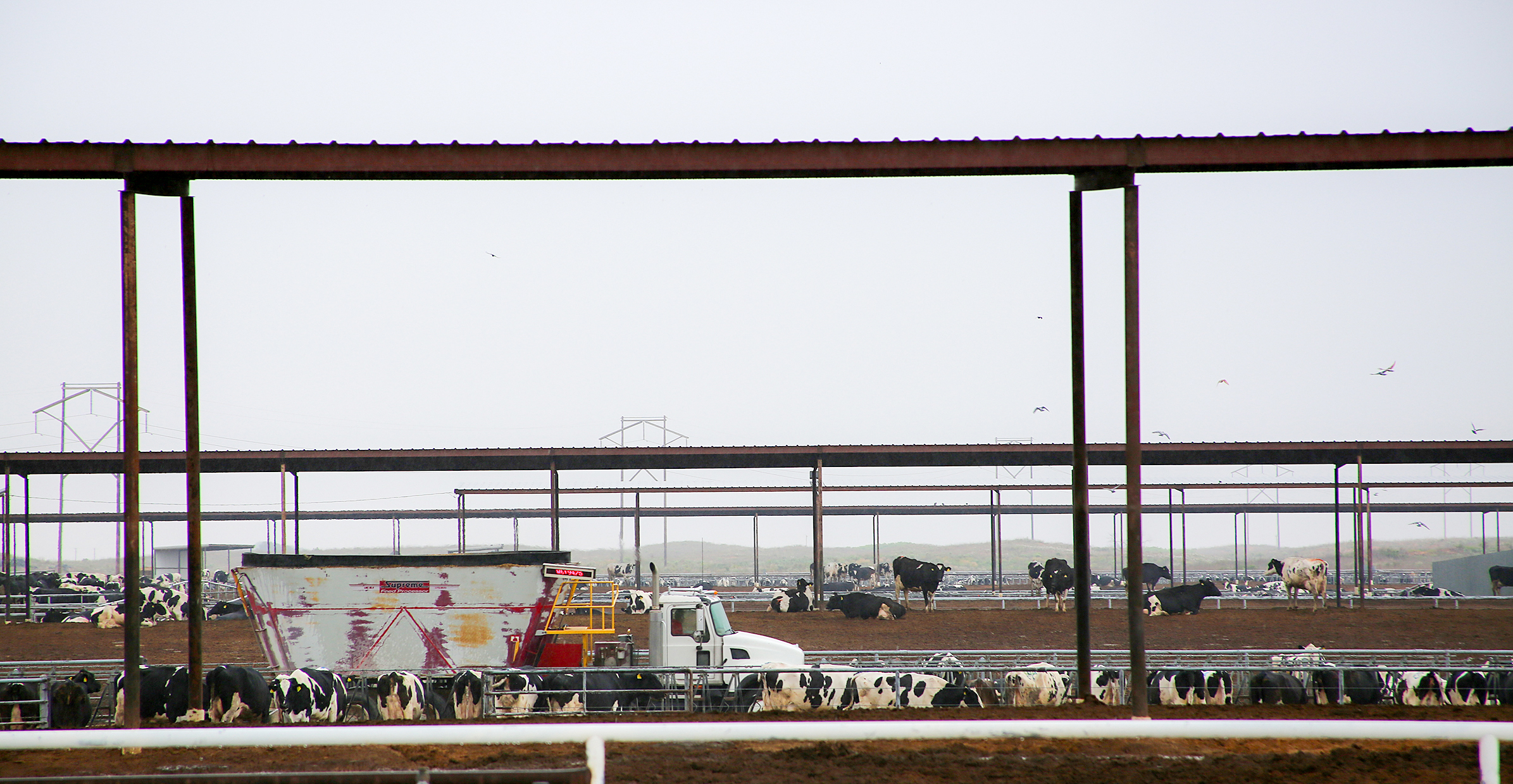
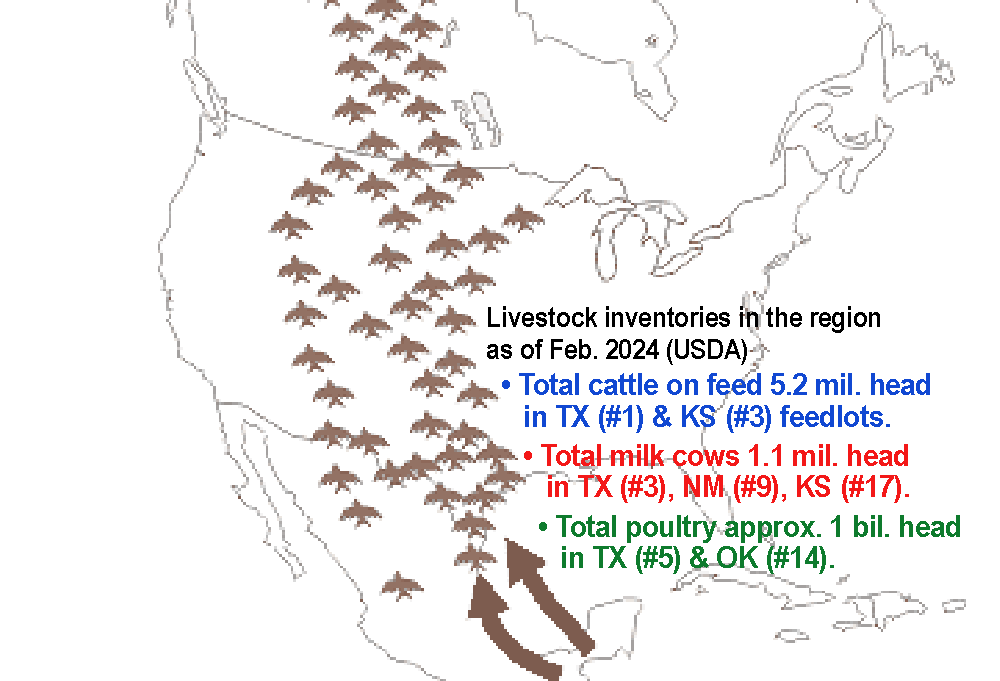
No affected beef cattle have been reported, only older primarily mid-lactation dairy cows. This is interesting, considering the fact that the number of cattle on feed — mostly in open lots similar to drylot dairies that are prevalent in the Panhandle region of the No. 1 cattle feeding state of Texas and No. 3 Kansas – far outweigh milk cow numbers by 5 to 1.
The region’s milk cows are most concentrated in and around the Panhandle of the No. 3 dairy state of Texas, No. 9 New Mexico and No. 17 Kansas portions of the Central Flyway for ‘migratory wild birds.’
Also within this zone are the country’s 5th and 14th largest poultry states of Texas and Oklahoma, respectively, totaling a combined nearly 1 billion head of poultry.
Farmshine asked APHIS and the Texas Animal Health Commission (TAHC) about the status of beef cattle monitoring, to which a TAHC spokesperson responded by email noting: “TAHC and Texas A&M TVMDL have, and continue to ask for, samples from affected and unaffected dairies to gather the full scope of the situation. The feedlot and beef cattle industry are monitoring and doing similar surveillance among their producers that many dairy operations have been conducting — not specifically screening, necessarily, but many are watching for clinical signs of illness that they can identify in the operation and keeping a close eye for abnormal health events among their herds.”
On other questions about whether there are any differences or commonalities in terms of external contributing factors among affected herds, the TAHC spokesperson stated “No dairy specific information could be provided related to type of facilities or other factors where HPAI was detected.”
Dairy industry organization statements point to the National Dairy Producer FARM Program (NDPFP) as the go-to for specific biosecurity, reporting, and recordkeeping measures that are urged on all U.S. dairy farms, including much emphasis being given to the safeguard of milk pasteurization.
“Dairy farmers have begun implementing enhanced biosecurity protocols on their farms, limiting the amount of traffic into and out of their properties and restricting visits to employees and essential personnel,” the NMPF-IDFA-DMI-USDEC joint statement noted.
They cite biosecurity resources, including reference manuals, prep guides, herd health plan protocol templates, animal movement logs, and people entry logs that dairies can use “to keep their cattle and dairy businesses safe.”
USDA APHIS encourages farmers and veterinarians, nationwide, to report cattle illnesses quickly so they can “monitor potential additional cases and minimize the impact to farmers, consumers and other animals.”
Industry announcements urge dairy farmers to immediately contact their veterinarians if they observe clinical signs in their herds that are consistent with this outbreak, such as a significant loss of animal appetite and rumination or an acute drop in milk production.
In turn, veterinarians who observe these clinical signs and have ruled out other diagnoses on a client’s farm should contact the state veterinarian and plan to submit a complete set of samples to be tested at a diagnostic laboratory.
Animals may also be reported to the APHIS toll-free number at 1-866-536-7593.
In Pennsylvania, where HPAI depopulations and quarantines have occurred over the past two years in the poultry industry, there have been no reported cattle affected. However, the state is monitoring the situation, and the Center for Dairy Excellence is conducting a conference call by zoom and telephone at Noon EDT on Wed., April 3 for dairy producers and dairy industry service providers, featuring state veterinarian Dr. Alex Hamberg and Penn State extension vet Dr. Hayley Springer.
By Sherry Bunting, Reprinted from Farmshine, January 5, 2018
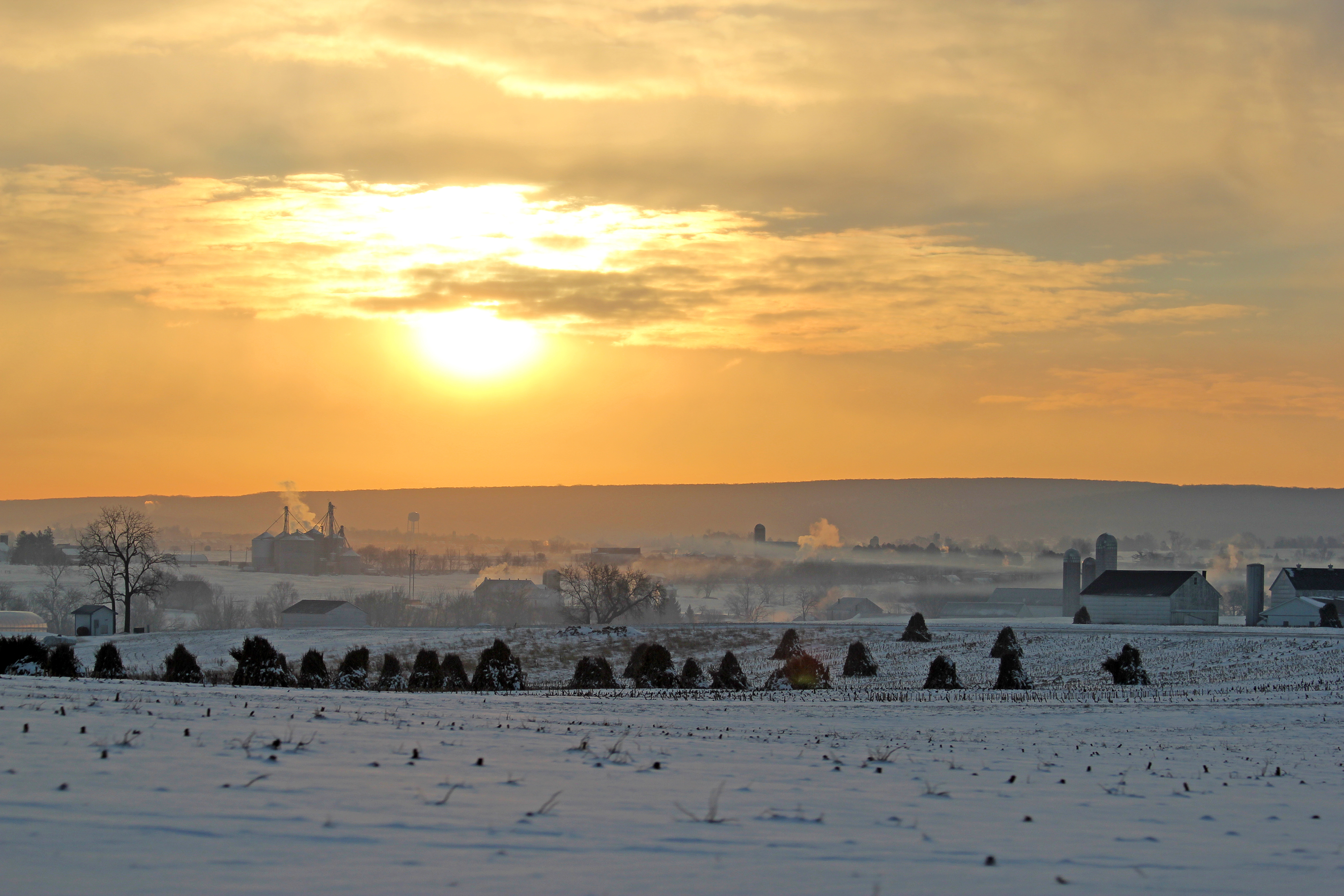
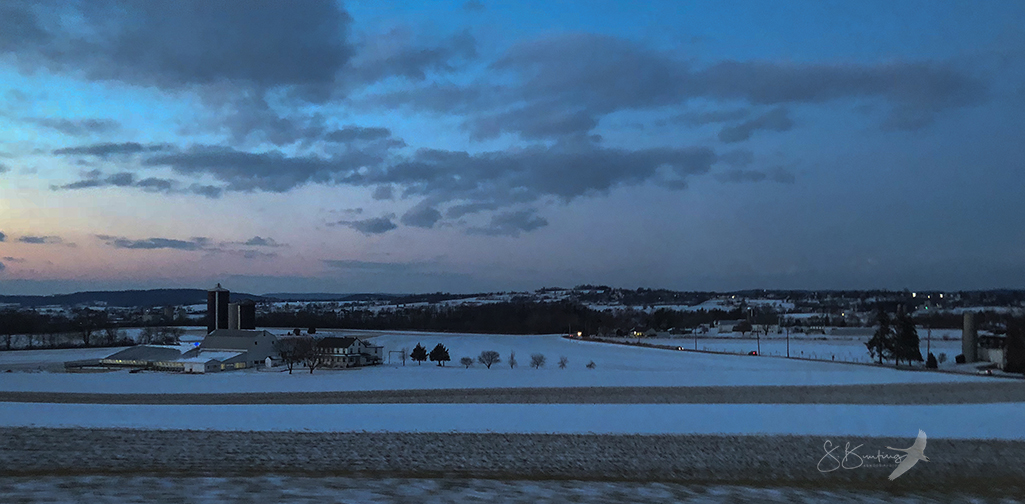
BROWNSTOWN, Pa. — Out with the old. In with the new. Record-smashing snowfalls and a relentless deep-freeze, that is what’s new as 2017 gave way to 2018 this week under a very bitter ‘wolf-moon’. The onslaught of extreme temps, high winds and heavy precipitation are taking their toll on dairy farms from New England to Georgia and from Pennsylvania to South Dakota.
In addition to bitter cold temperatures — persisting for four to five days with a one- to two-day ‘break’ at midweek — the next round of snowfall is already traveling up the coast and across the lakes ahead of another steep temperature plunge in the forecast.
Meanwhile, northwest Pennsylvania is still digging out of its record-breaking snowfall at Christmas, just ahead of the extreme drop in temps.
The Christmas Day lake-effect snowstorm lasted 48 hours and dumped a record-breaking 53 inches of snow in Erie, Pennsylvania, with additional snowfall two days later for a 4-day total of 63 inches. This eclipsed every snowfall record for the state of Pennsylvania, according to the National Weather Service.
The biggest problems being seen on dairy farms are from the bitter temperatures — ranging on the mechanical side from gummed up diesel fuel to the inability to move manure and problems keeping milking system vacuum pumps and compressors running.
On the animal side, cattle and youngstock losses are being reported as well as frostbite concerns. These types of concerns are mostly reported in the areas along the great lakes from upstate New York to Minnesota, where temperatures hit -15 to -30 – not including the wind chills.
Milk is still moving from farms to plants, but delays are indicated this midweek where transportation has been slowed by problems with diesel fuel.
In its fluid milk summary this week, USDA reported that frigid temperatures throughout the East have created hauling delays, and frozen pipes have created issues at dairy manufacturing plants. This has added to the supply-demand imbalance that lingers from the holiday period.
Everyone from plant operators to farmers to haulers are yearning for a return to normal schedules that may not normalize until after the second round of arctic blast comes and goes next week.
Impacts on milk production in the Northeast and Midwest are also beginning to show up in load counts, but the lack of normalcy in milk movement means production is still steady to ample for usage.
On farms, producers are dealing with frozen pipes, slippery floors, frozen accumulated manure creating uneven walking surfaces, and the fact that everything — including moving cows to and from the parlor — takes more time.
Producers need a break in the weather to thaw out, clean out, and get ready for the next round of arctic air to hit.
In closed group discussions throughout social media, farmers are exchanging ideas and seeking support from each other — to know they are not dealing with these hardships alone.
The extreme cold has also increased the risk of fires as producers pull out the stops to keep animals warm and power infrastructures are tested to the max. A dairy outside Little Falls, New York experienced a tragic fire last weekend, in which all 50 cows were lost.
At midweek, temperatures climbed briefly, but snow has begun falling in earnest along the southeast coast where snow is seldom seen, while the Northeast coast braces for blizzard conditions with more snow and high winds, followed by a plunge back into low temperatures.
It is not an understatement to say that dairy producers everywhere are dealing with weather extremes that are testing their collective resolve. Whether it is 17 degrees in Texas or -30 in western Minnesota, -15 in upstate New York and New England, -3 in Kentucky or -1 in Lancaster County, Pennsylvania, the extremes are beyond what each area is typically prepared for. Producers are taking advantage of any temporary warmth to prepare for the next plunge.
Frozen waterers, vacuum pumps, manure removal equipment and difficulty starting feeding equipment are most commonly reported concerns shared by producers across the country in facebook posts.
Some asked for prayers this week, hoping for a break in the weather; others rejoiced with humor when 30 degrees below zero became 15 degrees above at midweek, saying ‘break out the shorts.’
But this respite is short-lived before the next mercury dive Friday through Monday.
Winter is tough, and farmers are prepared for it, but this is extreme, and there is only so much that can be prevented. What does not get prevented, must be dealt with as it happens, and this is causing frustration and low morale as producers strive to get the work done while also fighting the feeling of failing the cows.
You are not failing. You are heroes. Please be careful out there.
Bottom line for the cattle, say veterinarians, is plenty of feed and water and to be out of the wind with a dry place to lie down. These basics enable cows to survive a lot.
Dairies truly are in survival mode, focused diligently on animal care and getting done what must be done and no more.
Keeping waterers from freezing and breaking ice out of waterers that are frozen is a never-ending job in these temperatures.
For calves, experts suggest increasing milk feeding and frequency since they do not have a rumen to heat them up. This will help calves stay warm and cope with the stress. But it’s difficult to do more when temps make everything take longer. Please be careful.
For cows, the mantra is energy and more energy. Rations can be adjusted to dense up that energy, without losing fiber. Cows normally eat more when it is cold, getting more energy into the cows helps.
From farmers to truckers to veterinarians to dairy system technicians and to all who are taking care of animals, equipment and transportation — we at Farmshine see and know how hard you work to keep things going. You have our ultimate respect and our prayers for safety during the bitter cold and we wish for a warming break in the weather to take hold soon.
-30-
From East to West and North to South, relentless frigid temperatures are making things difficult on dairy farms. Photos by Sherry Bunting
ATHENS, Tenn. — While the Governor of Tennessee seeks a presidential disaster declaration for five counties hit by fire and storm November 30th, communities continue to work through the daunting task of cleanup, assessments, recovery and rebuilding.
The Southeast drought that had persisted from summer through fall fueled fires across six states, most notably Tennessee’s Great Smokey Mountains.
In the overnight hours of November 30, the Smokey Mountain fires went rampant as 80 mph winds drove a firestorm that created eight new fires by the next morning.
The front of moisture that eventually carried enough rain to quell fires to 50% containment was preceded by a 40-mile line of tornadoes and high winds. Worst hit in these storms was the community of Athens, Tennessee, near the original Mayfield Dairy Farm.
That rain was the first substantial rain since mid-June, according to University of Tennessee extension reports. But it had its impact after the fires first engulfed Gatlinburg and Pigeon Forge.
Lives were lost, injuries sustained, and homes and businesses destroyed.
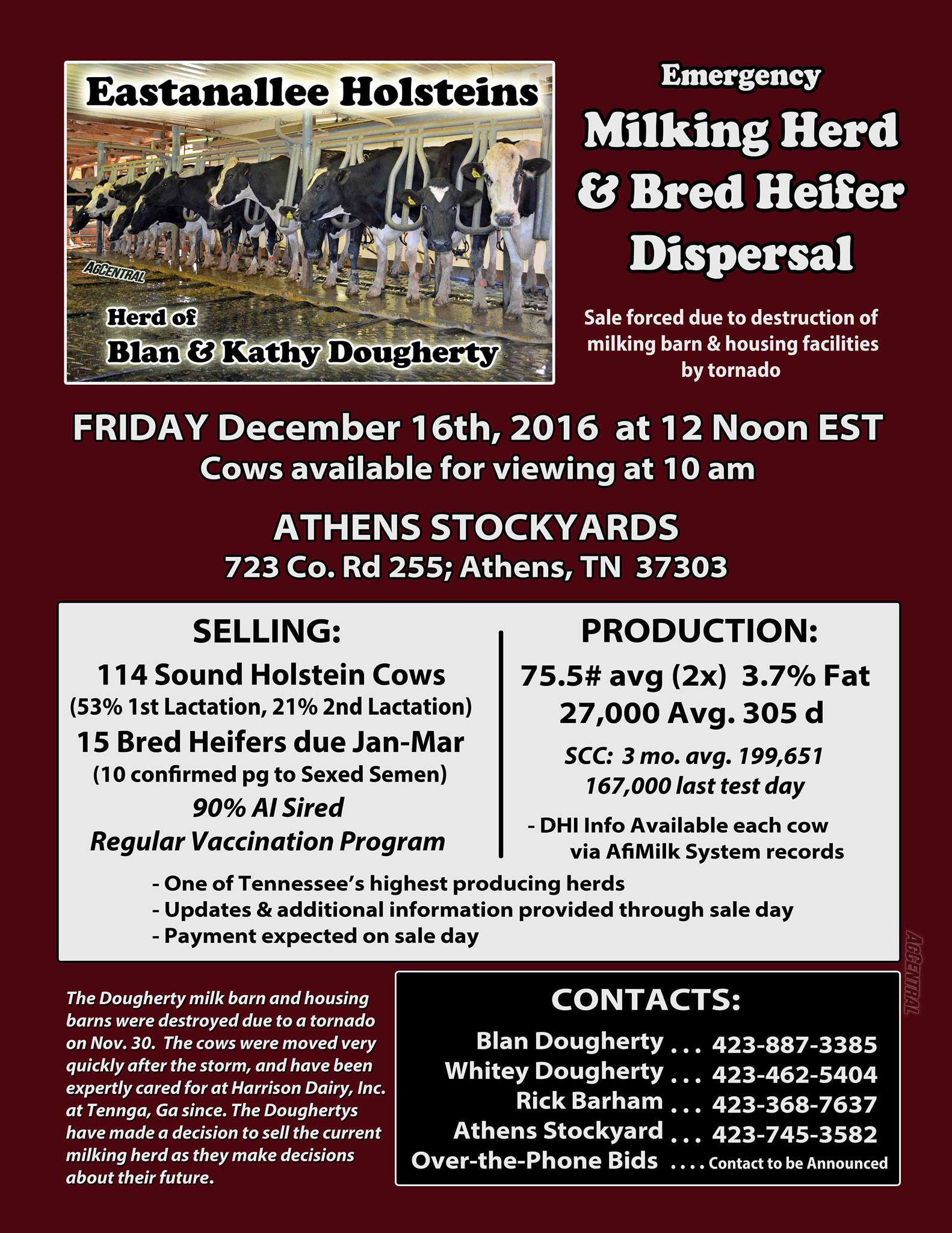
Among the losses, Eastanallee Dairy Farm, owned by Blan and Kathy Dougherty, sustained destruction of its barns and milking facilities. The local community came to their aid.
According to Julie Walker, AgriVoice, “a great group of folks with animal and farm experience got first things done first. It was obvious the milk barn, and housing and feeding facilities received the brunt of the hit, and cows were not going to be able to be milked. Unfortunately, six just-weaned calves were killed,” she explained in a e-news post. “Steve Harrison, a neighbor to the Doughertys, generously agreed to temporarily house the cows until some decisions about the herd’s future could be determined.”
Last week, the Doughertys decided to have an emergency milking herd and bred heifer dispersal sale set for tomorrow — Friday, December 16 at 12 Noon — at the Athens Stockyards with basically just time for word of mouth and digital/social media advertisement.
It is hard enough to contemplate a dispersal of a dairy herd, and even tougher to do so under these circumstances. The Eastanallee herd is among the highest producing herds in Tennessee. A total of 114 milk cows and 15 bred heifers due through March will be offered. They will keep the yearlings and young stock as they evaluate their future, which may or may not include milking once again.
There was a massive amount of property damage on their farmstead, and while their home was damaged, the Doughertys are thankful to have not lost their home, as have many of their neighbors nearby.
Getting ready for the sale, some culling has already taken place: cows with breeding problems, mobility problems, and low production have already been sold. Animals selling will be sound. A sale catalog has been created by Ag Central Co-op, click here to view it.
We wish the Doughertys well, and our thoughts and prayers remain with the Athens community and all affected in East Tennessee. Many are homeless and services are taxed after the wildfire / tornado disasters in the counties of Coffee, McMinn, Polk, Sequatchie and Sevier for which the Governor requested this week a presidential disaster declaration.
Below are some links to two of the wildfire and tornado relief efforts.
By Sherry Bunting, Farmshine, Oct. 14, 2016 (Photos by author except where noted)
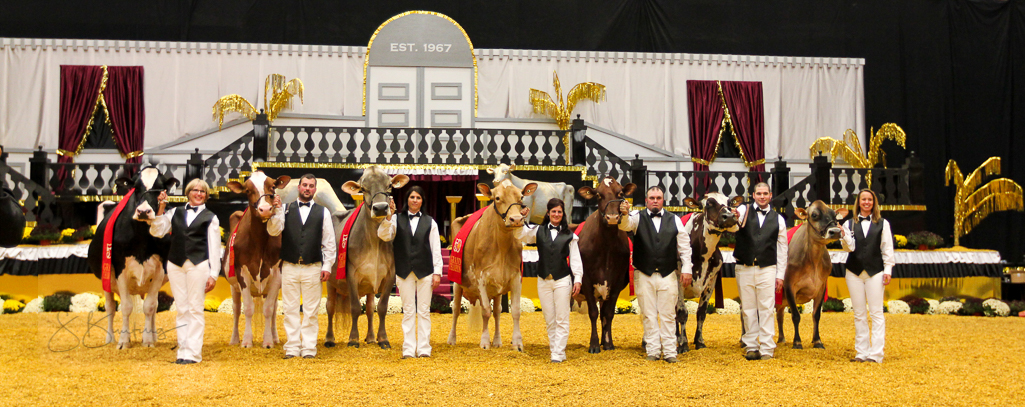
MADISON, Wis. — As the World Dairy Expo celebrated 50 years earlier this month, nostalgia could be found both in and out of the showring. For starters, the five days of shows for seven breeds yielded grand champions that were predominantly bred-and-owned, many with their breeder-owners at the halter.
In fact, six of seven open grands and four of seven junior grands were bred and owned. Let’s take them in alphabetical breed order!
Throughout the week, judges recognized how difficult it is to get to this show and win, and even more so to breed the animal and get her here and win. Exhibitors, judges and breeders, alike, point out in their own way that there is as much art as there is science to breeding a top cow… but also a bit of luck.
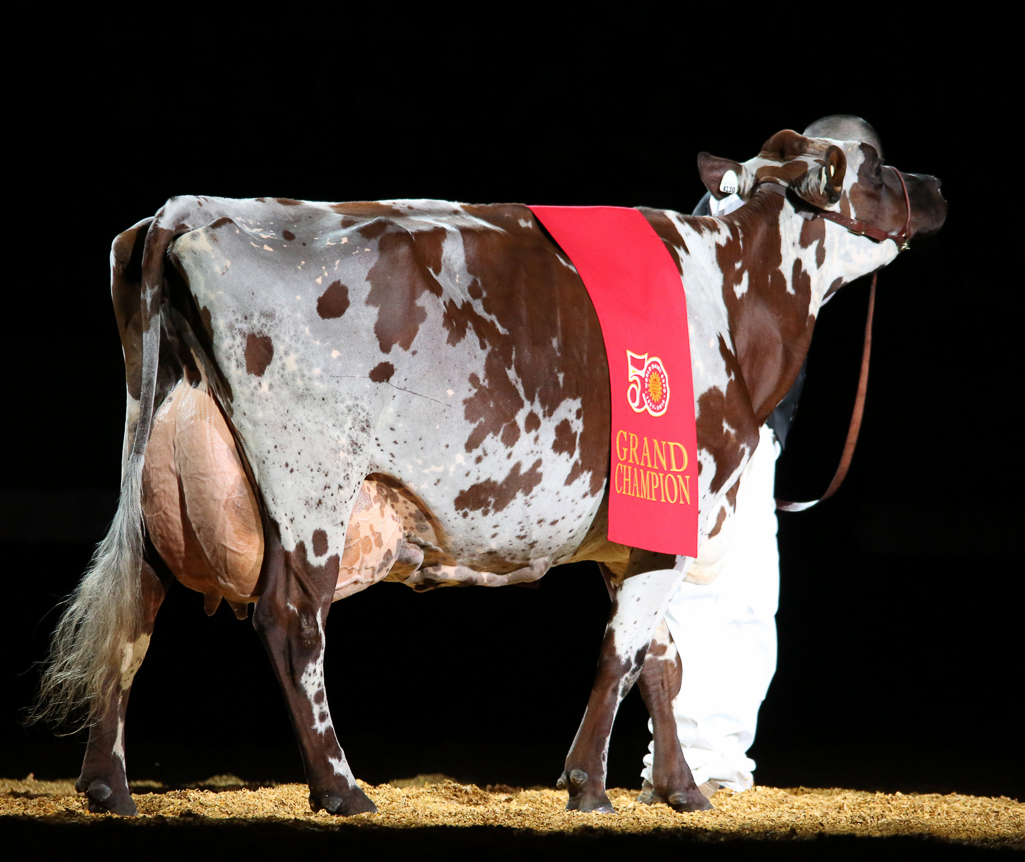
Take for example, the grand champion of the International Ayrshire Show: Margot Patagonie was bred, owned and exhibited by Expo first-timer Ferme Margot of Ste Perpétue, Quebec, Canada.
The striking thing about this grand champion is that not only did Ferme Margot breed the winning cow, they also bred her dam and her sire! What an achievement for the visiting World Ayrshire Conference to witness during their time in Madison, where they also saw the Expo’s largest Ayrshire show ever, with 321 entries, reportedly 60 more entries than the previous record.
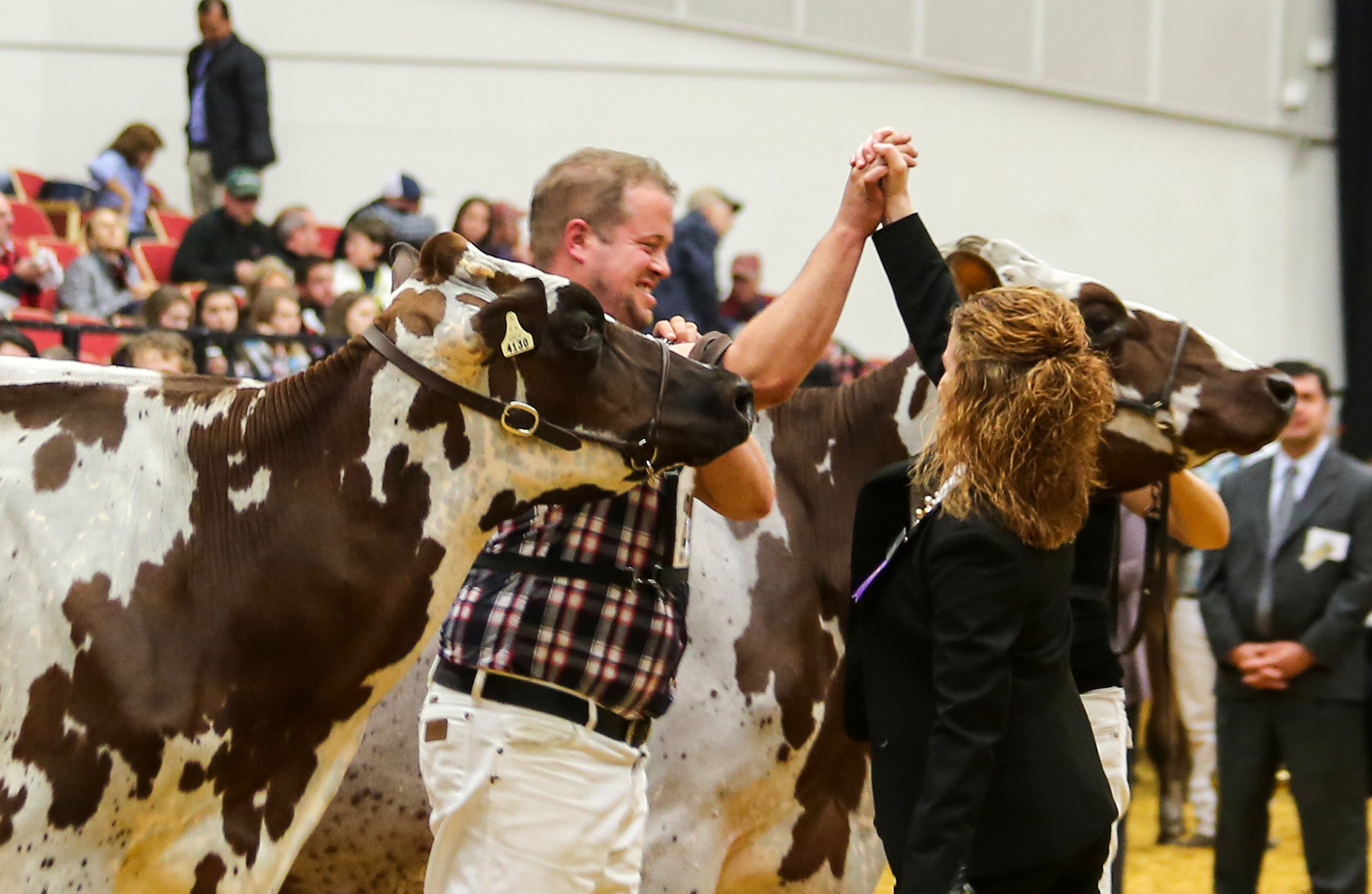
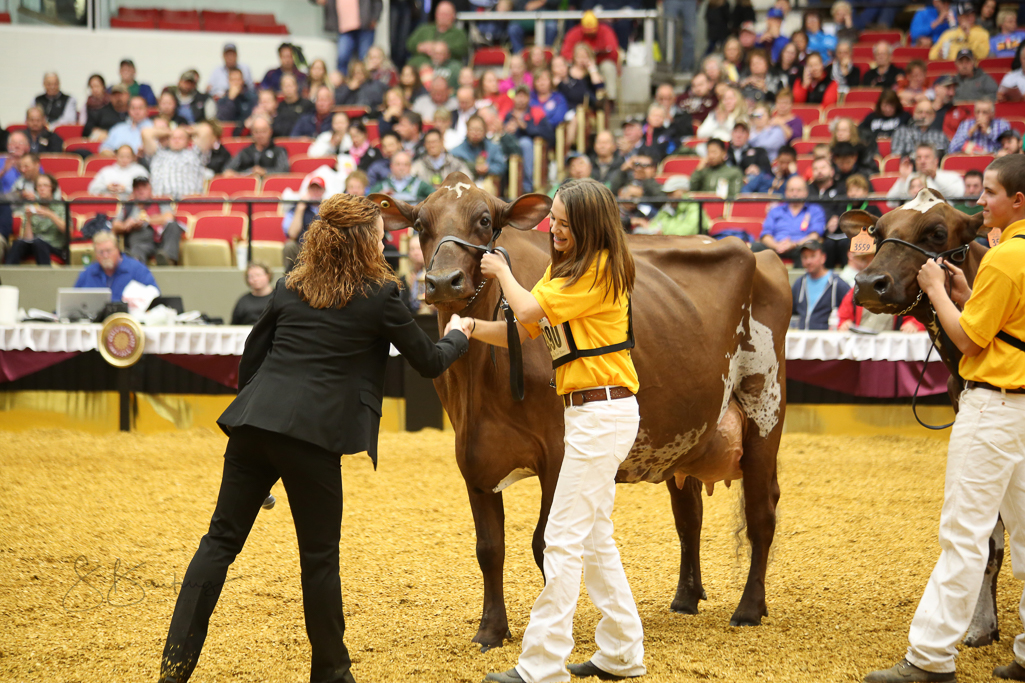
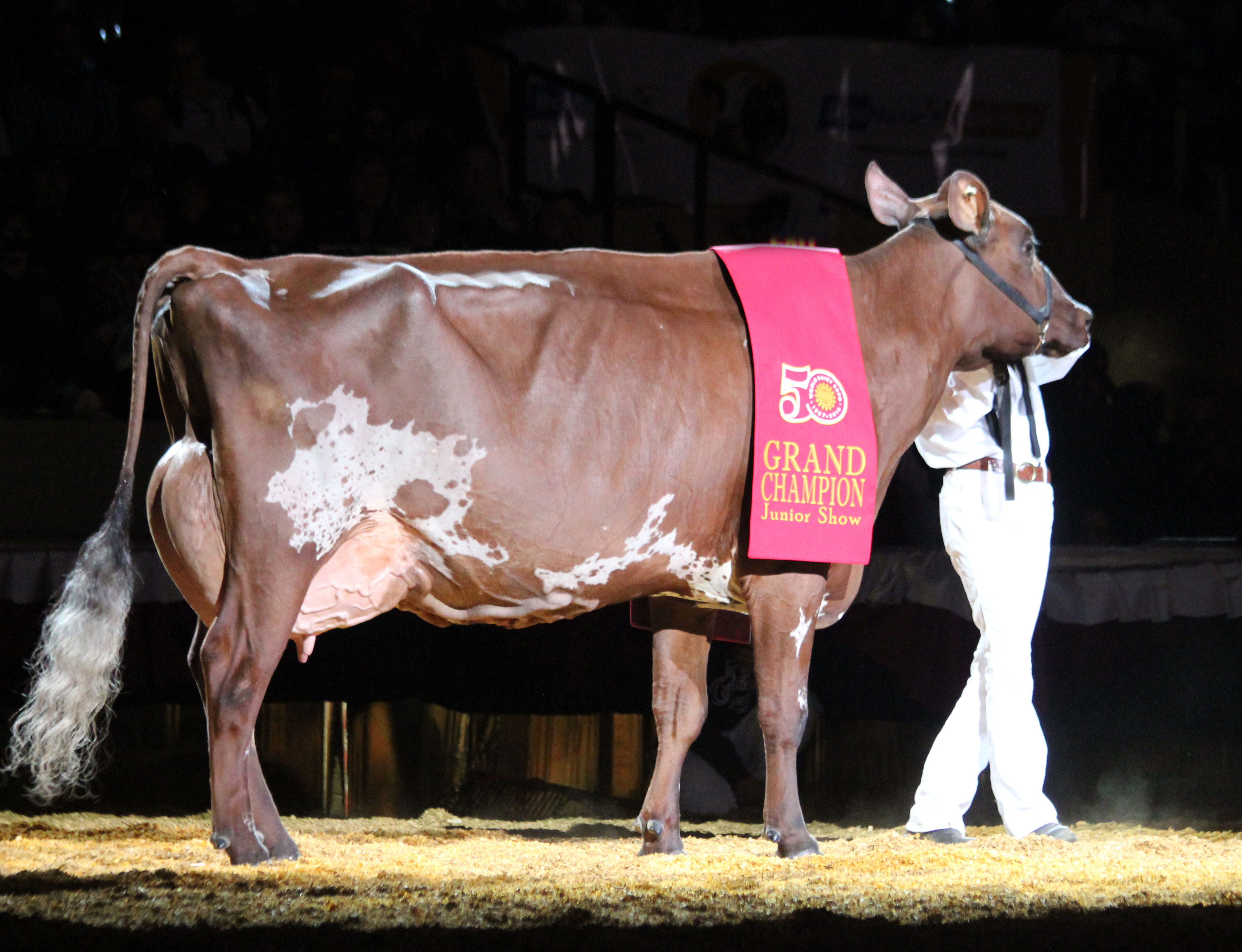
In the junior Ayrshire competition, Erin Curtis-Szalach of Cedarcut Farms, Cazenovia, New York, knabbed grand champion honors for the second straight year with her bred-and-owned Cedarcut Burdette Clove Colatta.
She also made a strong honorable mention grand champion and total performance winning in the Open Show where entries were up by 60.
In the Brown Swiss competition, which also topped previous records with 385 entries, both grand champions were repeat show-toppers as well as bred-and-owned with owners at the halter.
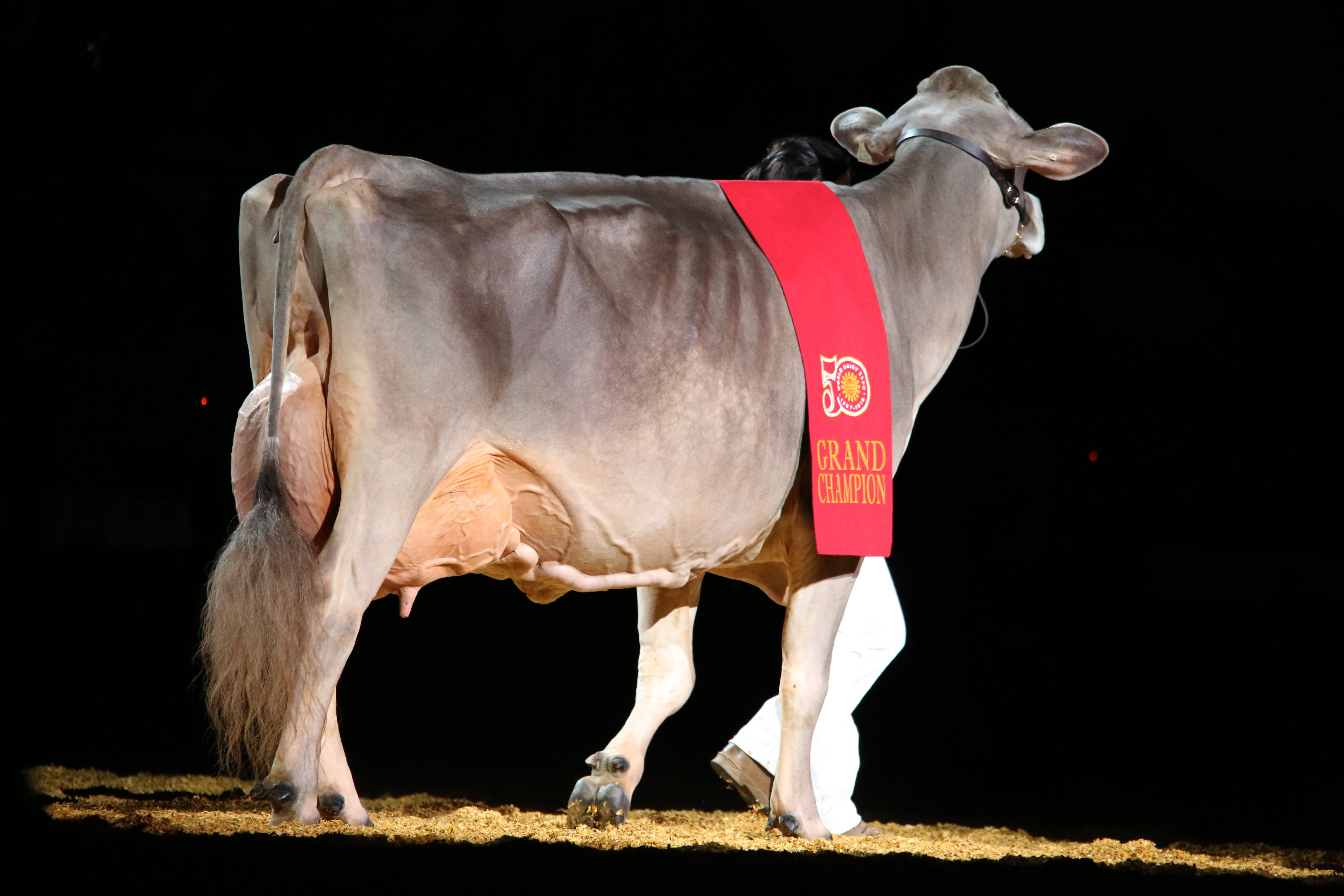
Brown Heaven Glenn Fantasy topped the open show with Josee Charron from Ferme Brown Heaven, Vercheres, Quebec at the halter.
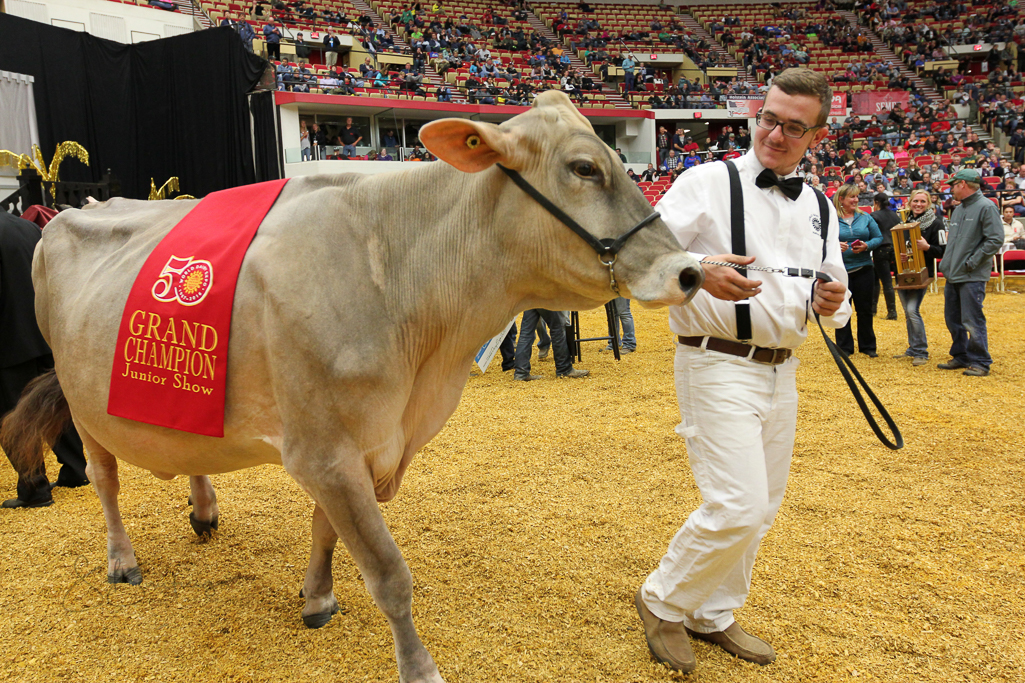
Kyle Barton, grandson of Ken Main of Elite Dairy, Copake, New York, earned the grand champion banner in junior competition for the second year with homebred Cutting Edge T Delilah (below).
She went on to be reserve supreme of the Junior Show, and she was reserve grand champion of the open Brown Swiss Show, second only to Fantasy (above).
Kyle and his older brother Mickey have done quite well over the years and their grandfather is pleased that they enjoy the cattle among their other activities.
Among the Guernseys, it was bred-and-owned Flambeau Manor Ro Lauren-ET to go grand in the Open Show. With Tracy Mitchell again at the halter, Lauren repeated her 2014 performance as grand champion for Gary and Steve Van Doorn of Flambeau Manor, Tony, Wisconsin.
Among the juniors, Austin and Landen Knapp of Epworth, Iowa threepeated with the homebred Knapps Regis Tambourine-ET. The Knapps are premier breeders.
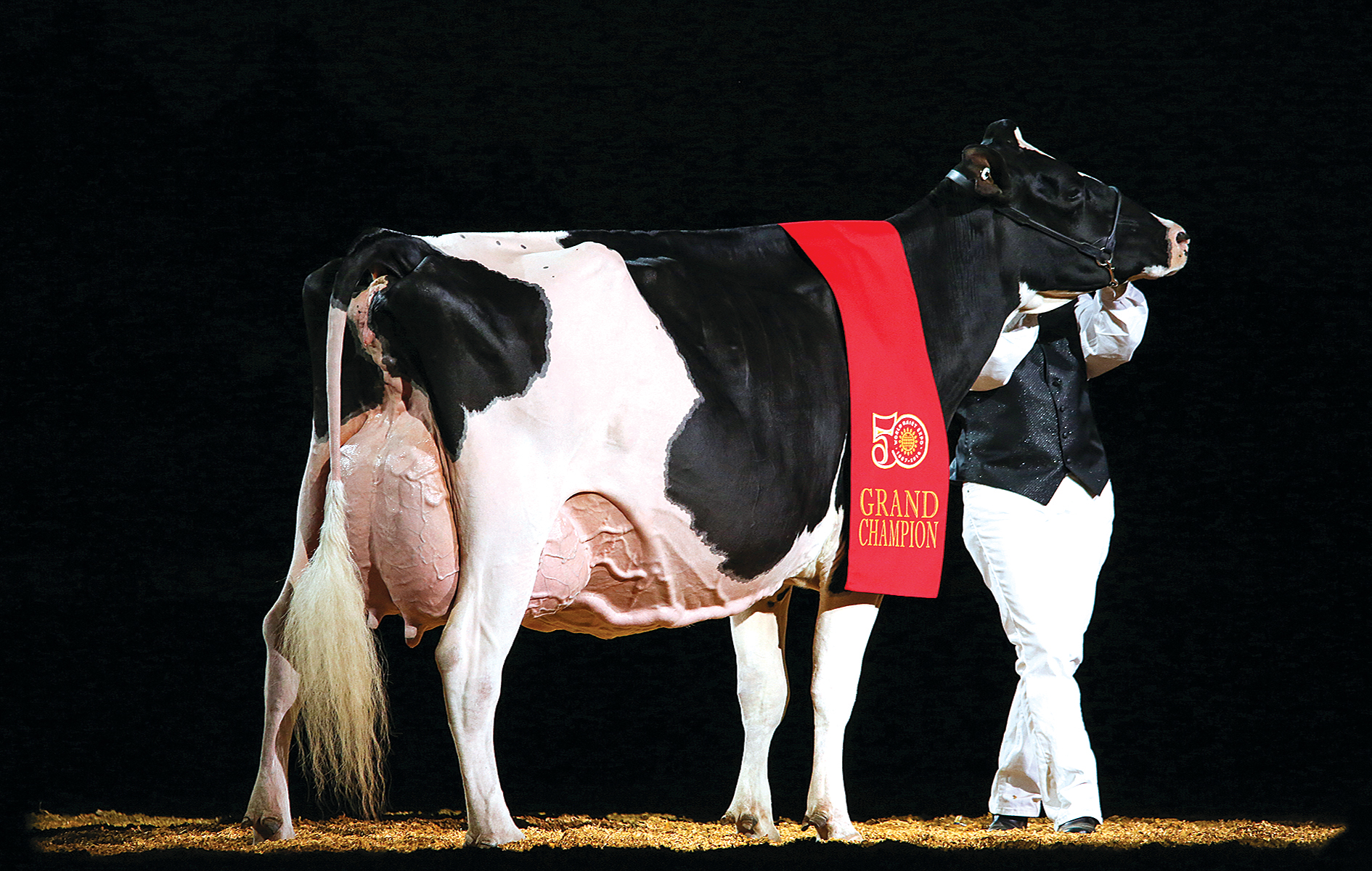
A large field of Holsteins narrowed down to grand champion Sheeknoll Durham Arrow. She impressed judge Pat Conroy as a cow that “lets you know she does not need to be pampered.” With Jeannette Sheehan at the halter, the aged cow moved through the ranks to achieve a storybook ending for her leadswoman, whose father Vernon Hupf — a lifelong farmer who attended every World Dairy Expo but this one as a spectator — had passed away in June.
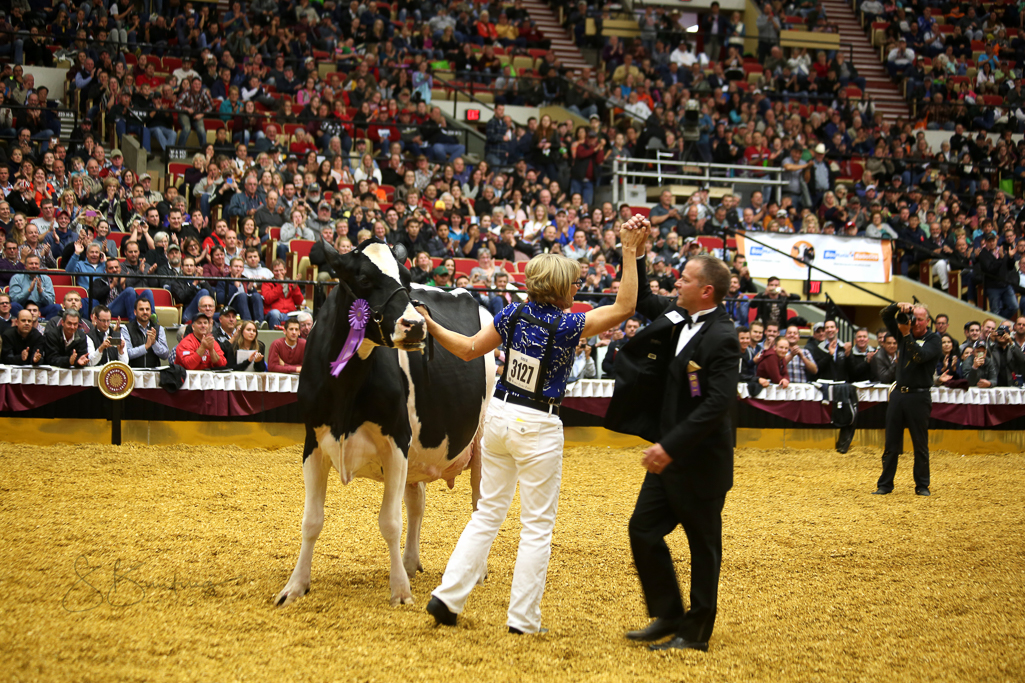
“To win the show that Dad idolized is just amazing,” said Jeannette after “Thomas” (as the cow is affectionately known to all after a grandson dubbed her as a calf in honor of Thomas the Train) went reserve supreme of the International Open Shows Saturday night.
“Each time the judge picked her out, I was surprised, but I didn’t have time to process what was happening. I was pretty much just trying to hang on to the cow. At one point it just felt like Dad was here, on my shoulder telling me what to do, right down to that look out of the corner of the eye.”
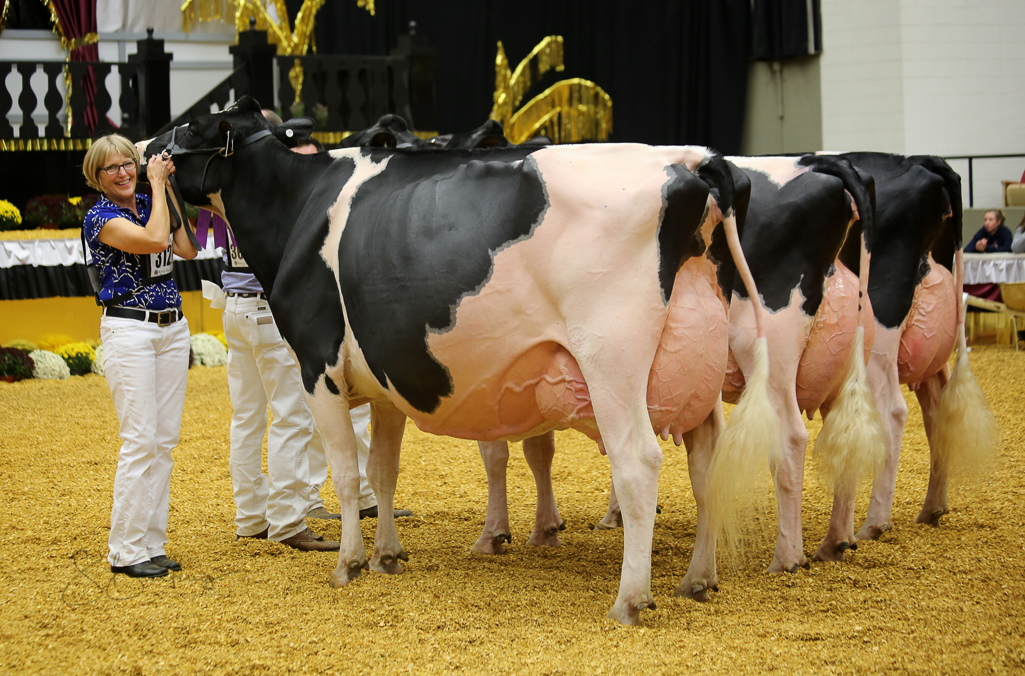
Not only did the Sheehan family have a winner, they did so with a bred and owned animal in a highly competitive Holstein show. “We are still a little stunned. You don’t come here with expectations because this show will humble you in a hurry,” Jeannette’s husband Robert added just after her reserve supreme honors were awarded Saturday evening. “The whole thing is unbelievable. We like to breed nice cows, the kind of cows we like to milk. Breeding is science and art with luck involved. The match has to work and every once in a while you get a cow like this.”
Thomas has shown a lot in the last 4 to 5 years. “This year she blossomed and matured into the kind of cow we thought she could be.” he added.
Robert and his brothers Jim and Jerome and their wives Karen, Mary and Jeannette are partners at Sheeknoll Farms, with the next generation also involved. They milk 300 cows at the farm in Rochester, Minnesota, and are known by their peers to treat them all like queens with great cow comfort and attention to detail. In fact, the mantra on their Facebook page says it all: “If we take care of the cows, they will take care of us.” They were thankful for the total team effort taking care of the EX 96 97MS Thomas in her grand journey to this surreal finish.
Sheeknoll Durham Arrow (aka Thomas) had an exciting path to her grand champion honors at the 50th World Dairy Expo, having won the 2016 Minnesota State Fair and other shows leading up to it.
Photo courtesy Randy Blodgett, Blodgett Communications
The Sheehan family, friends and Thomas’ fans watched as judge Pat Conroy and his associate Yan Jacobs placed Thomas first aged cow, best bred-and-owned, best udder, production cow, senior and grand champion, over a competitive field including last year’s supreme champion Katrysha and over this year’s reserve and honorable mention grand champions, the latter exhibited by Glamourview Farms of Walkersville, Maryland.
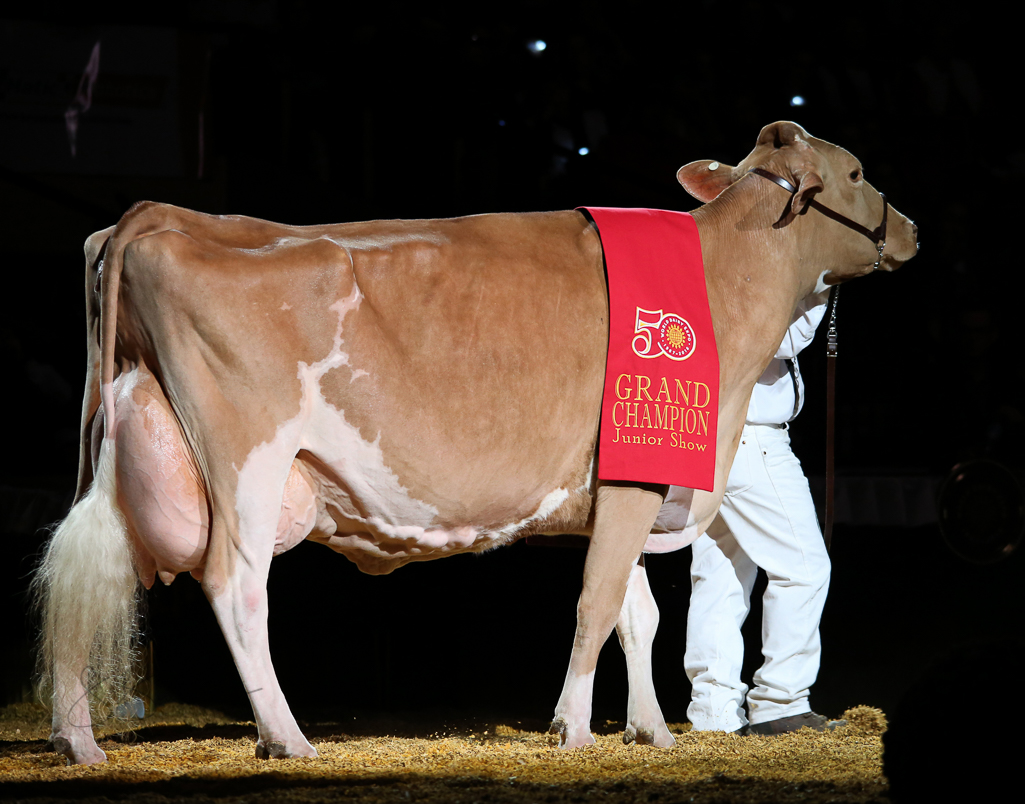
In the junior Jersey competition it was Cora and Cari of Darlington, Wisconsin. The homebred Red Rock View Cari was the grand champion Jersey of the Junior Show, with Cora Carpenter at the halter.
The Carpenter family was overjoyed to see their daughter and homebred Jersey do so well.
Earlier in the week, the grand champion Milking Shorthorn of the open show was Cates Ruben Tulsa-Time-EXP, bred, owned and exhibited by Peter Cate of Cornish Flats, New Hampshire for the second straight year.
The Milking Shorthorn Show at World Dairy Expo has grown and lasted into Wednesday evening, but was quite exciting.
In the International Red & White show, Pheasant Echo’s Turvy-Red-ET was grand champion with breeder-owner Kenny Stambaugh, Westminster, Maryland, at the halter.
When Kenny Stambaugh’s homebred Turvy was named grand champion of the International Red & White Show on Friday, his sister Crystal Edwards was there in person to celebrate. Most of the rest of the family could probably be heard hooting-and-hollering over a thousand miles away in Westminster, Maryland as they gathered around the television to watch Kenny show and be victorious in the online live-feed of the showring proceedings.
What they did next, as you might imagine, is figure out how to get everyone out there by the next afternoon to see Kenny and Turvy vie for supreme in the closing ceremonies Saturday evening.
By 9:00 p.m. Friday evening, they had secured a flight that got Kenny’s parents, siblings and spouses to Madison by 2:30 p.m. Saturday — just three hours before the closing ceremonies – to surprise Kenny, who had no idea they were coming out.
The Stambaugh family (photo by Sherry Bunting)
Kenny confessed he was pretty nervous in the ring, but it never showed because he had faith his cow stacked up pretty well against the competition.
When asked what gave Turvy the edge in a competitive Red & White class, Kenny and Crystal agreed: “It was her youthful udder and big frame,” said Kenny. Turby is classified EX-94 with a 96-point mammary system.
“She also walks on an awesome set of feet and legs,” Crystal added. “But after three calves at five years old, to have that youthful udder is pretty special.”
What makes the win even more special for the family is that Turvy’s dam was the Stambaugh family’s first homebred Red & White Holstein. To have a World Dairy Expo grand champion in a daughter of their first homebred Red & White just makes the win belong to everyone on the farm.
When Barney and Debbie Stambaugh started farming on their own in 1991, they purchased some Red & Whites and over the years bred them to some top black and white Holstein genetics, which yielded a red line within the herd.
“Dad had worked for Peace and Plenty as a kid, and that really sparked it in him,” Crystal recounted.
She describes the breeding philosophy at Pheasant Echo’s as one that allows them to have “a lot of old cows. We are fortunate that way,” she said. “Between the genetics and cattle care, we want cows that hang around, breed back and have productive life.”
The family sold an Armani heifer out of Turvy in the Apple Mania Sale and another out of this family at the National Red & White Convention Sale when that sale was hosted at the farm during the convention week in Maryland last summer.
Turvy had previously placed second in the junior competition at the 2014 World Dairy Expo and 7th in the open competition that year. “She has really come into her own,” said Crystal of the cow that likes to swish her tail.
“Nothing makes me happier than being able to come out and look at good cows when it’s time to milk,” said Kenny. “It sure makes it easier to get up at 3 a.m.,” Crystal added.
Kenny and Crystal agree that this will now be their favorite show memory. Prior to this win, it was the grand champion win at the 2014 All-American Dairy Show in Harrisburg.
But nothing tops winning at the 50th World Dairy Expo with a bred-and-owned cow, and being the leadsman at the halter to boot.
Kenny Stambaugh and his wife Nicole and homebred WDE grand champion Pheasant Echo’s Turvy-Red are flanked by parents Byron (“Barney”) and Debbie (right) and siblings and spouses from left, Bud Stambaugh, CJ and Tanya Miller and Dan and Crystal Edwards. Photo by Sherry Bunting as appeared on Cover of Farmshine Oct. 14, 2016
By Sherry Bunting (portions reprinted from Farmers Exchange 10/14/16 and portions reprinted from Farmshine 10/14/16)
HANNA, Ind. — Amid the difficult economics of dairy and beef production these days, many farm families are going through tough decisions about the future — along with uncertainty about the interest or ability their next generation may have for continuing the business. America’s dairy and livestock farms have raised generations of cattle that nourish our bodies, our rural economies and the land… not to mention raising generations of young people with the skills, work ethics and passion that take them far in their on-and-off-farm pursuits.
Herd dispersals are on the rise among family farms of all sizes. And while it is sad to see some of these farms mark an end to an era, there is reason for hope. The largest obstacle, in my view, is the current pricing systems and the concentration of power in a more vertically-integrated marketplace for both milk and beef. Consumers can help change this direction by caring where their food comes from and asking their grocers to identify country of origin as is done with fruits and vegetables — but that is a story for another day.
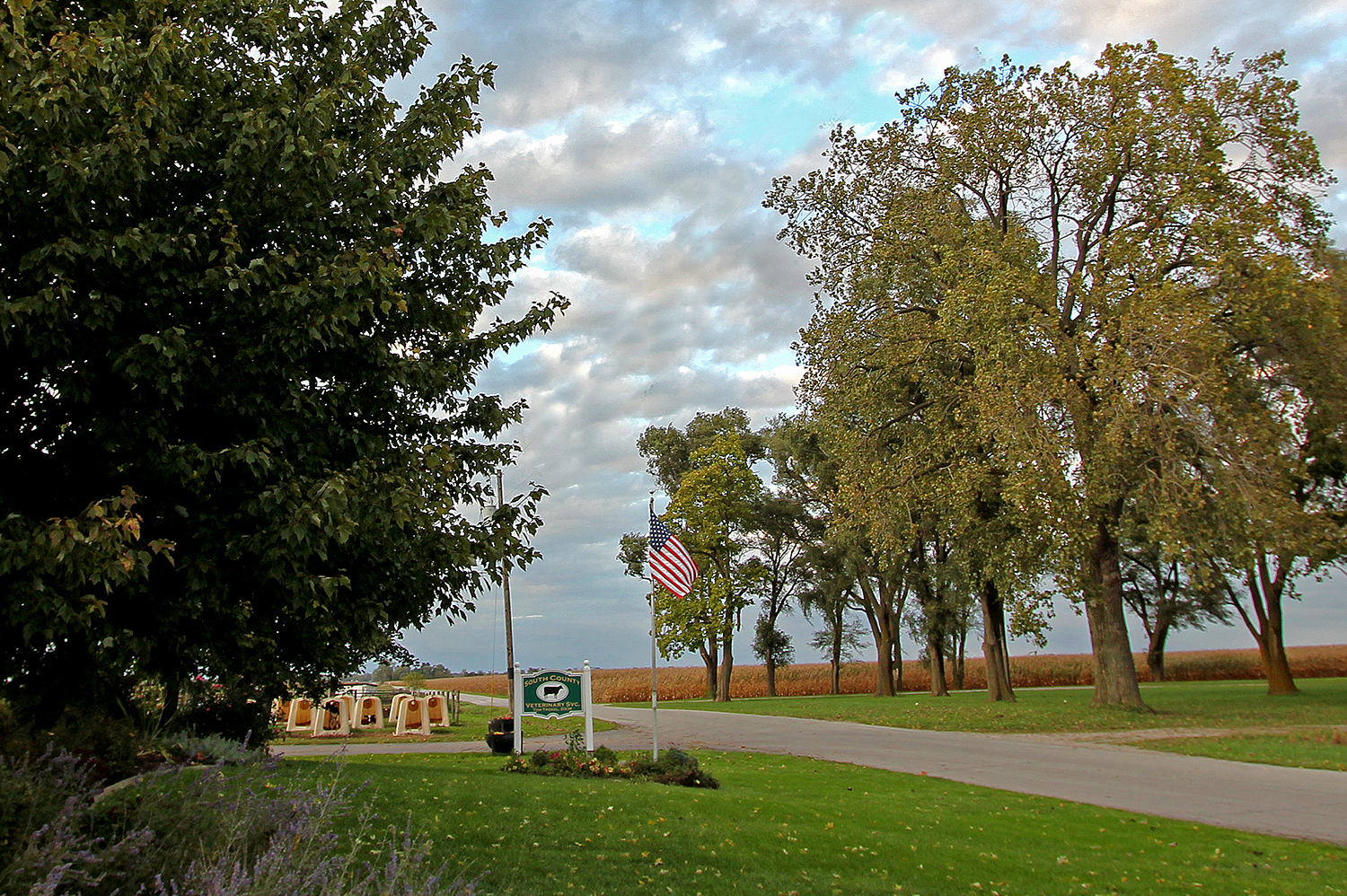
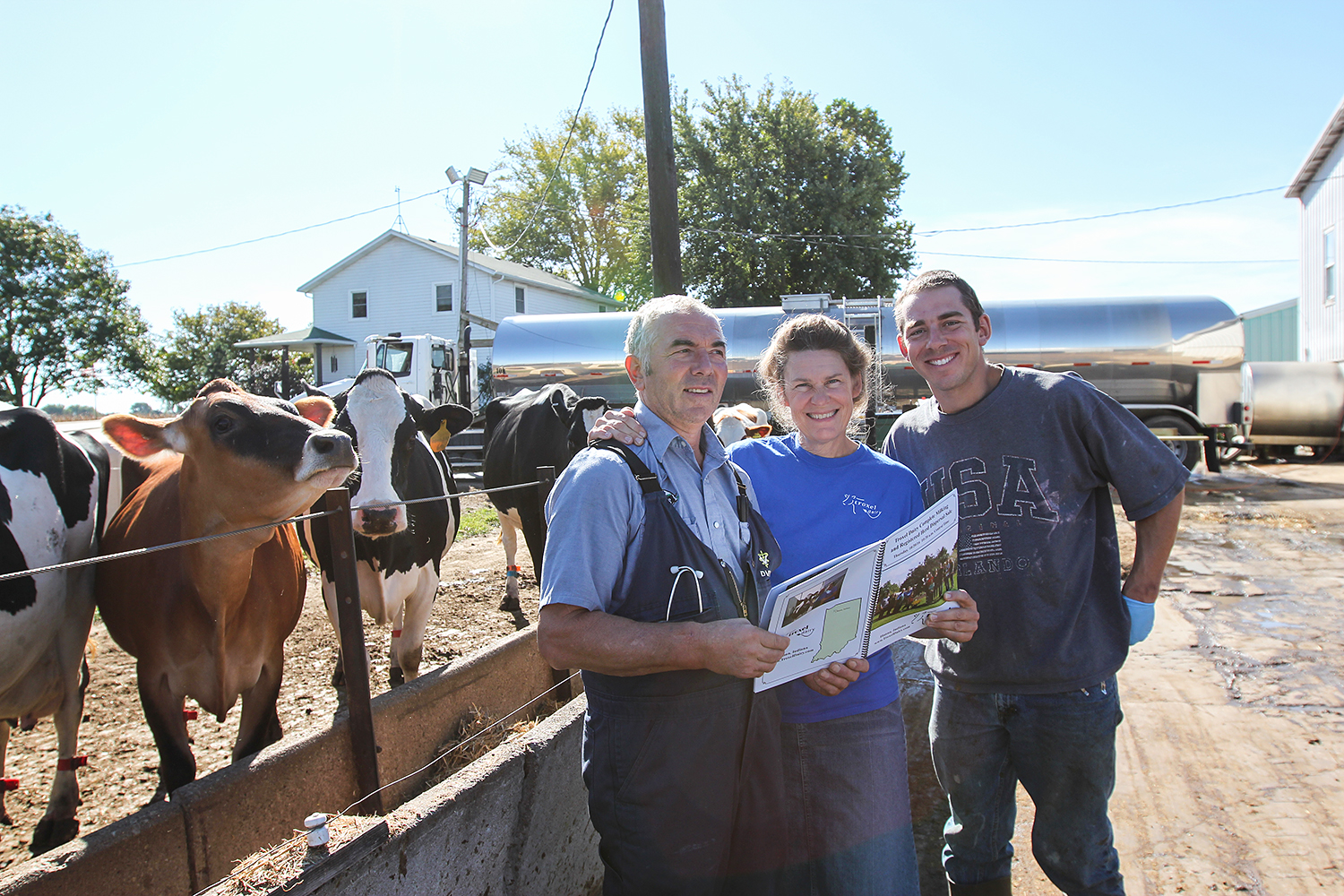
Today, I want readers to know about the Troxel Dairy Farm and their upcoming herd dispersal sale on Thursday, October 20th at 10:20 a.m. (10/20 and 10:20!) taking place at their farm at 17808 S 600 W, Hanna, Indiana.
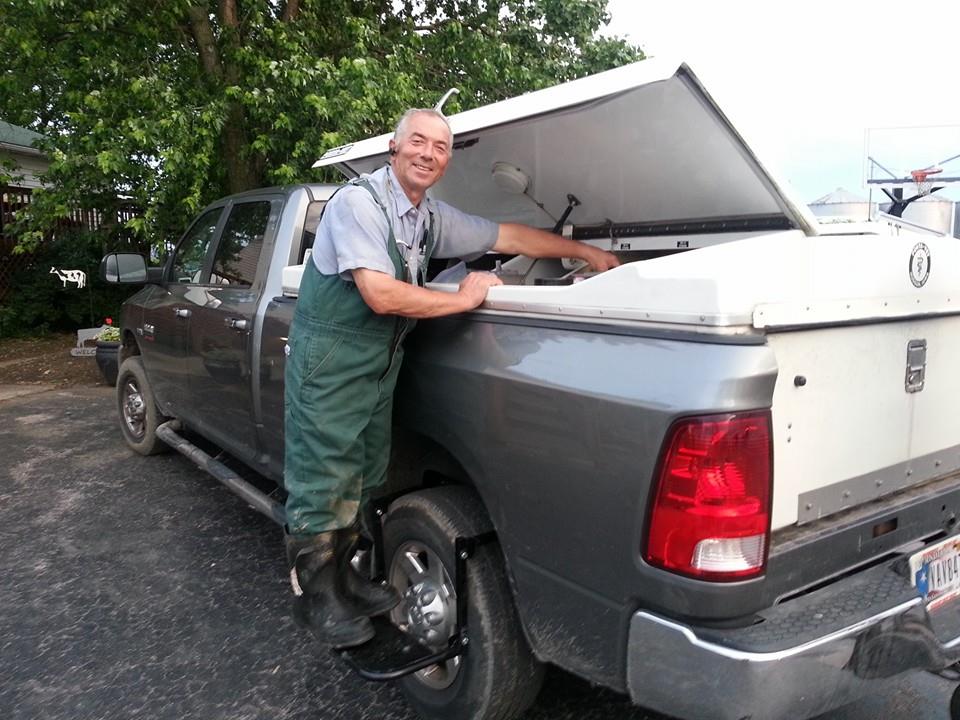
Having known Dr. Tom and LuAnn Troxel for several years and having benefited from their hospitality through all seasons of the year on trips West, I am always in awe of the morning pace at their farm, which is also homebase for Dr. Tom’s South County large animal veterinary practice. And I admire the joy they have that rises above these tough decisions.
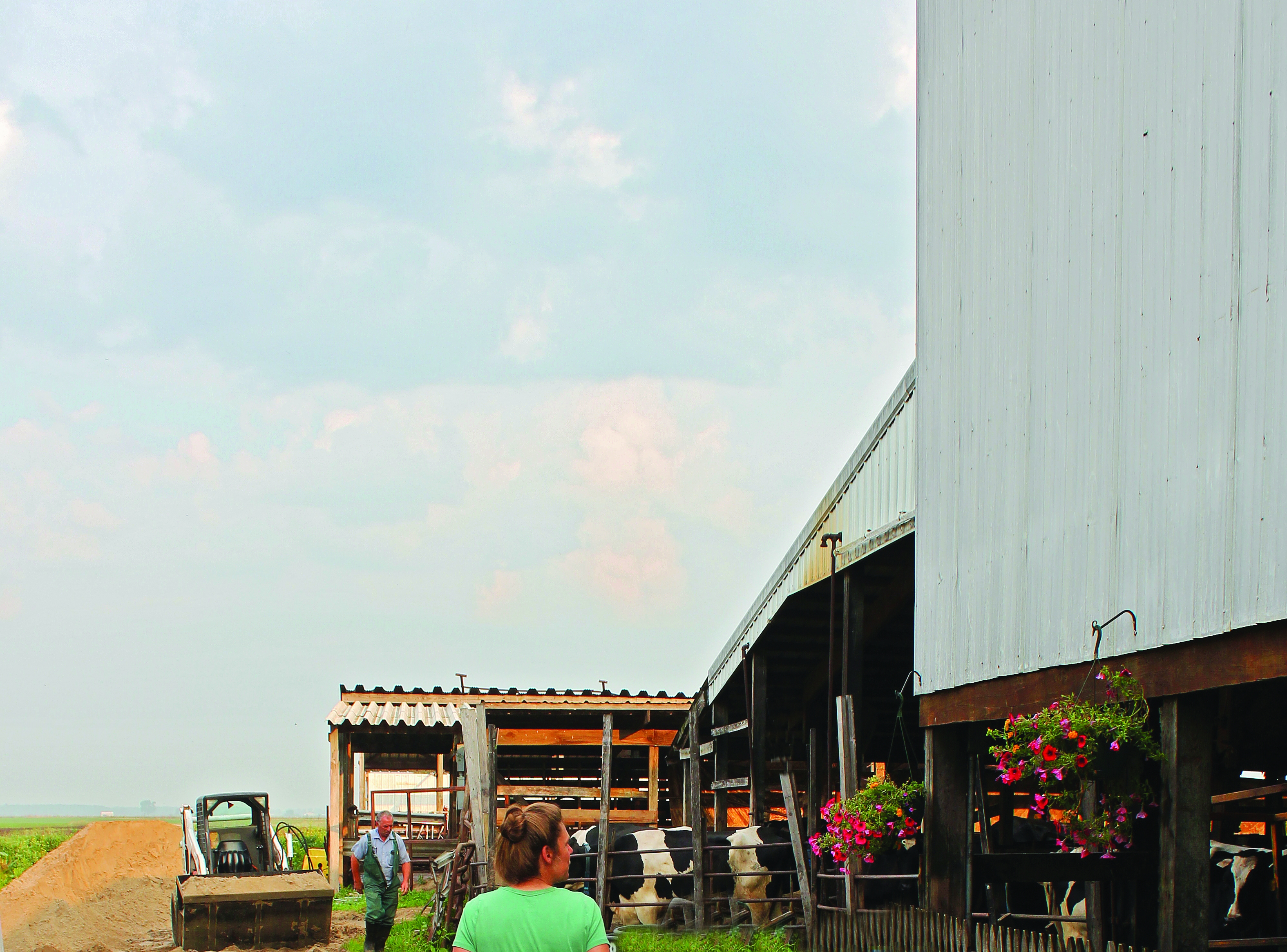
Mornings here have always kept me stepping as I would be out and about with my camera while Dr. Tom was busy in the milkhouse and cleaning pens or putting fresh bedding and feed out for the cows, LuAnn would be back and forth tending calves, answering vet calls, taking second rounds of coffee out to the barn, keeping a breakfast skillet moving forward… and so much more.
Busy mornings are to be expected when two busy people love what they do and when what they do is dairy farming alongside a large animal veterinary practice. Both can be demanding 24/7 jobs, and for 33 years of marriage, Dr. Tom Troxel has pulled double duty — wife LuAnn right there with him in the trenches and taking time to advocate for agriculture.
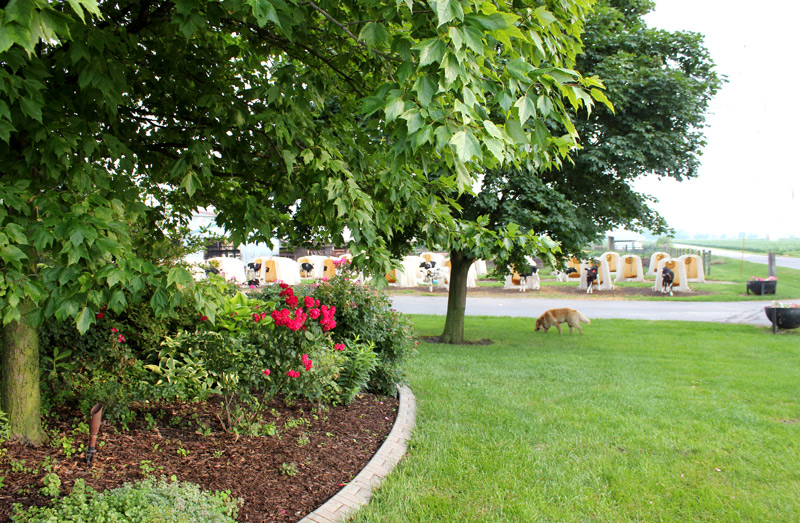
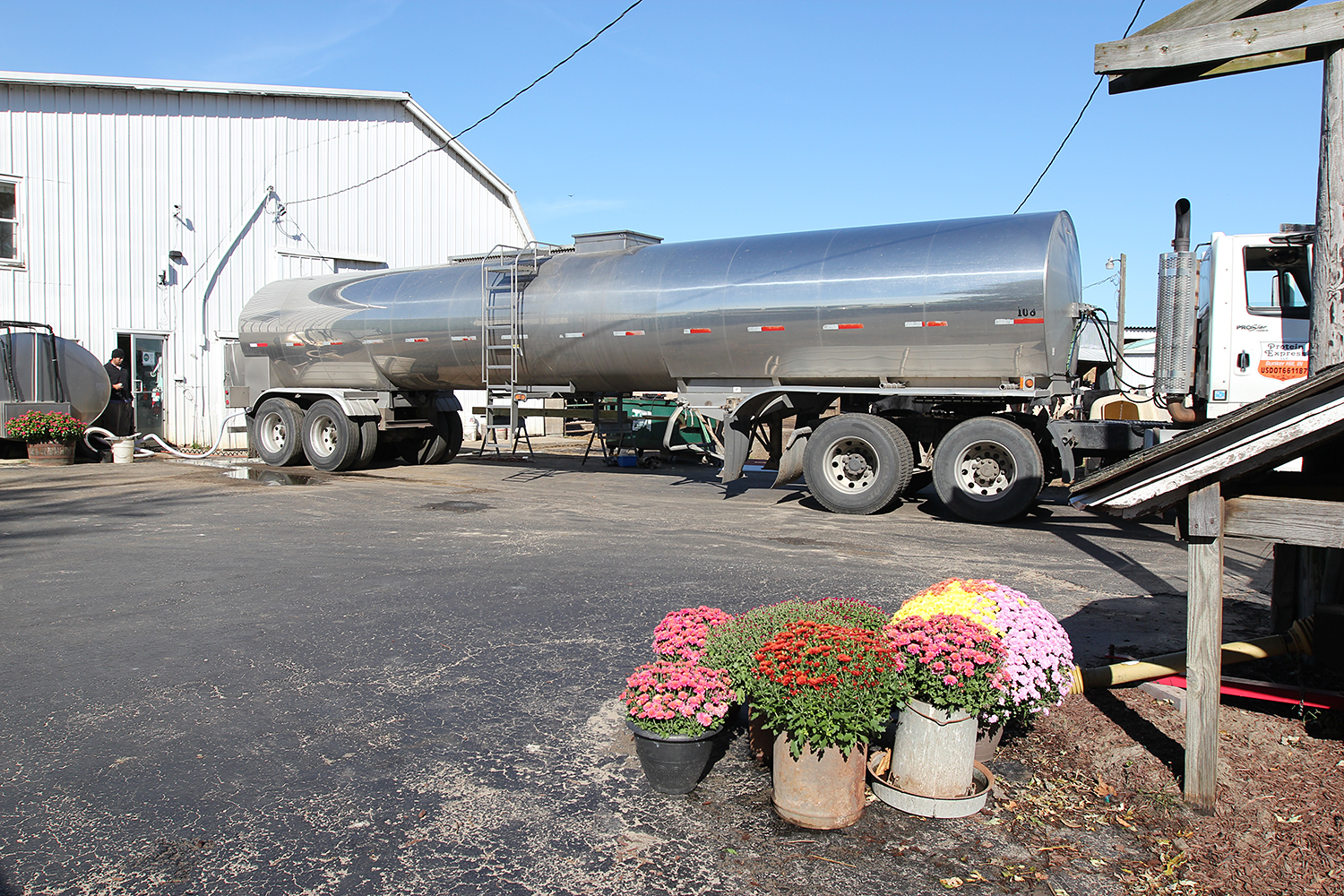
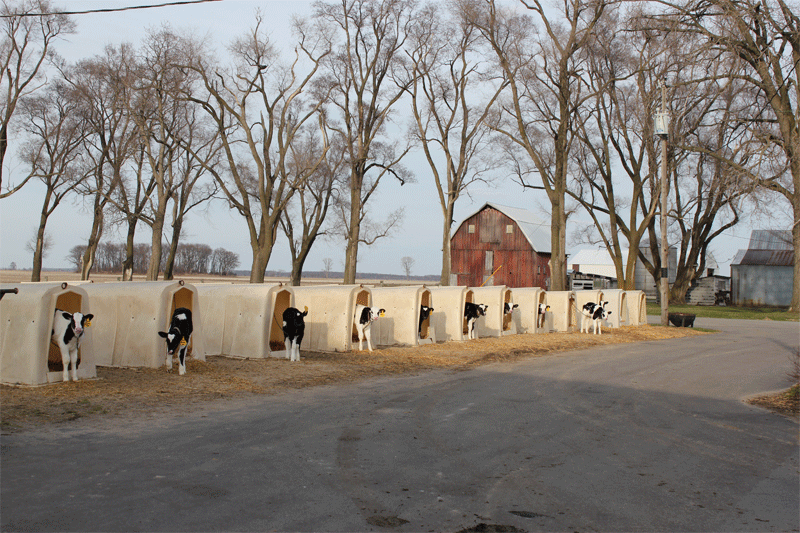
On this particular sunny autumn morning last week as we talked about the upcoming dispersal, veterinary customers stopped by for supplies, the milk truck backed into the lane for what will soon be the last daily pickup, workers made sale preparations, cows curiously spectated, while the resident peacocks strutted their stuff, adding their own brilliance to the splashes of color in LuAnn’s gardens that frame the cow pens, milk house and calf hutches.
LuAnn says she is thankful that after next week, Dr. Tom will have only one job to do.
The cows will be gone, but the South County Veterinary practice continues.
“Dairy isn’t something you just do, it is something that defines you,” said LuAnn during my visit last Monday morning, as she and Tom and son Rudy were finishing chores and preparing for the Oct. 20 complete dispersal of the milking and registered herd.
Her easy smile hid the uncertainty of the transition ahead. “Part of me is really sad, and part of me wonders about new opportunities we’ll find in this next phase.”
Tom confessed: “We’ll miss it. I’m kind of a workaholic so I’ll have to rethink things and find things to do that are more valuable than work.”
The sale plans were set into motion a year ago, when Tom and LuAnn knew that of their four sons — Rudy, Ned, Josh and Jackson — there would be no next generation to take the reins.
Rather than sell the herd immediately, they waited to calve-in some of the genetic progress Rudy made in his work with the herd over the past four years. This way they are able to sell animals of known value with genomic testing behind them and see some two-year-olds freshen and milk to get a glimpse of what would have been a great foundation herd for the future, that Rudy had developed — before passing the animals on to their new homes.
The Troxel Dairy herd dispersal is slated for 10:20 a.m. CDT on Thursday, October 20 at the farm. About 215 cattle will sell, including 113 cataloged cow and heifer lots, plus half-lot calves and embryos. Many are registered Holsteins, with solid genomic numbers, especially for productive life (PL), daughter pregnancy rate (DPR), somatic cell count (SCC), and milk components.
In fact, this milking herd of 140 cows produces high quality milk with somatic cell count consistently under 100,000. The current average is 75,000! Healthy animals and high quality milk have always been high priorities here.
“The genetic improvement has been quite something, considering that four years ago we had just one registered Holstein, and today we have 130 that are registered,” said Dr. Tom, crediting son Rudy’s skill and zeal for genetics. “With good genomic tests, these animals would have been a good foundation for the future, but now they can be a benefit to someone else.”
Rudy’s philosophy in transitioning the herd from grade to registered dovetailed with his parents’ longstanding emphasis on healthy cattle and preventive care. He bred not for show, but for working cattle “to exemplify the true working Holstein,” he explained the science-driven approach to breeding a true commercial cow. “We have rarely bred a cow under 1 or 2 in their DPR, and we have cattle at 5, 6, 7, even over 8 in productive life.”
While Rudy finds some satisfaction in having built a young herd with a few cow families that hold a lot of promise, he noted that around 30 of the registered animals are milking and over 75 are “the best that was yet to come.”
He points out the Ross cow they purchased from Clear Echo at the Summer Event Sale in Wisconsin in 2012. She is lot 13, with over 20 direct descendants selling, plus additional calves. The Dreamar cow is another he identifies as he thumbs through the catalog. She has nine direct descendents selling right along, plus embryos.
“Rudy took the (genetics) ball and ran with it,” said Tom with a smile.
With sale day fast approaching, LuAnn reflects on the decision to discontinue the dairy. “It was something that took weeks, even months to accept,” she said.
“We’ve ridden these cycles up and down for over 30 years,” the couple agreed. “We haven’t invested in new facilities. The dairy needs infrastructure and improvements. Our next generation made their family decisions not to buy the dairy farm.”
“We weren’t ready for the next generation,” Tom interjected. “Look around. We have lean to’s, not a new 21st Century building.”
Together they wondered, aloud, if investing in new facilities years ago may have produced a different outcome.
“We were so busy working and raising a family that we didn’t really take the time to plan that,” said LuAnn when asked what advice she might have for other farm families with next-generation uncertainty. “We always wanted our sons to make their own decisions on this. We love our four boys, their wives and their families and respect their decision to do what is best for their families.”
Planning for the next-generation is a challenge, “but I would recommend long term planning, not waiting like we did when it was too late for the planning to help,” she says.
Rudy, who graduated from Purdue with a degree in ag education, has taken an area sales manager position with Genex-CRI to follow the genetics path, which was seeded in junior high with his poultry projects and blossomed with his hand in the dairy herd over the past four years.
“This farm has been going since 1949 and has raised two families,” said Tom. His parents, Phil and Mary Troxel, started farming here almost 70 years ago. His mother was raised on a dairy farm and ahead of her time as a “dairy girl,” taking predominant care of the herd. Tom, one of eight children, was immersed in the farm early after his father suffered a stroke while he was still in high school.
Tom and LuAnn eventually took over the dairy after they married, and have operated both the dairy and Tom’s large animal practice here ever since.
Standing in the October sunshine discussing the upcoming sale, the curious cows walk right up and LuAnn reflects on the bond between a dairy producer and the cows. “I fed every one of these individually as calves,” she said, noting that while they can seem like children or grandchildren at times, “there’s a difference.”
“But you do spend more time with the cattle than the grandkids,” Tom interrupted, grinning at the reality of daily cattle care.
For years, the dairy has hosted media, consumer events, school field trips and trainings for vet tech students. (Below: On the left, LuAnn is constantly promoting and advocating for the dairy industry. Two years ago she snapped a photo of twin Jersey x Holstein heifers. Both heifers calved this past July. They and their calves will be sold in the Oct. 20 dispersal. On the right, Rudy shares information about dairy cows with local schoolchildren during a tour at the farm last fall. He will miss the farm and the cows, but is excited to get more involved in genetics as he takes a position with Genex-CRI.)
Both Dr. Tom and LuAnn have served on numerous boards over the years. In addition to serving as a past president of Indiana Dairy Producers (IDP) and currently on the board of the Dairy Girl Network (DGN), LuAnn also serves on the American Dairy Association-Indiana board — a position that will end when the milking ends, as has Tom’s former position on the Foremost Farms cooperative board.
While there may be fewer opportunities to be involved in organizations that promote dairy, the Troxels want to be involved wherever they can in the dairy industry they love. “The people in this industry are special. With few exceptions, dairy producers are honest, hardworking people who care about things other than themselves,” LuAnn points out.
“People say ‘it’s in your blood,’ and I guess that’s because dairying is systemic. It will be a little challenging to define who I am because everything from family relationships to daily routines to friendships and service have been within the context of the dairy farm. I’m not sure what it will be like, but I think it will be fine.”
The Oct. 20 dispersal is managed by Courtney Sales. The Troxels’ church will provide a delicious lunch, prepared with love, for a free will offering to benefit the Harvest Call Haiti Dairy Program.
All are welcome. For more information about the sale and the farm, and to see a catalog, visit www.troxeldairy.com.
*****
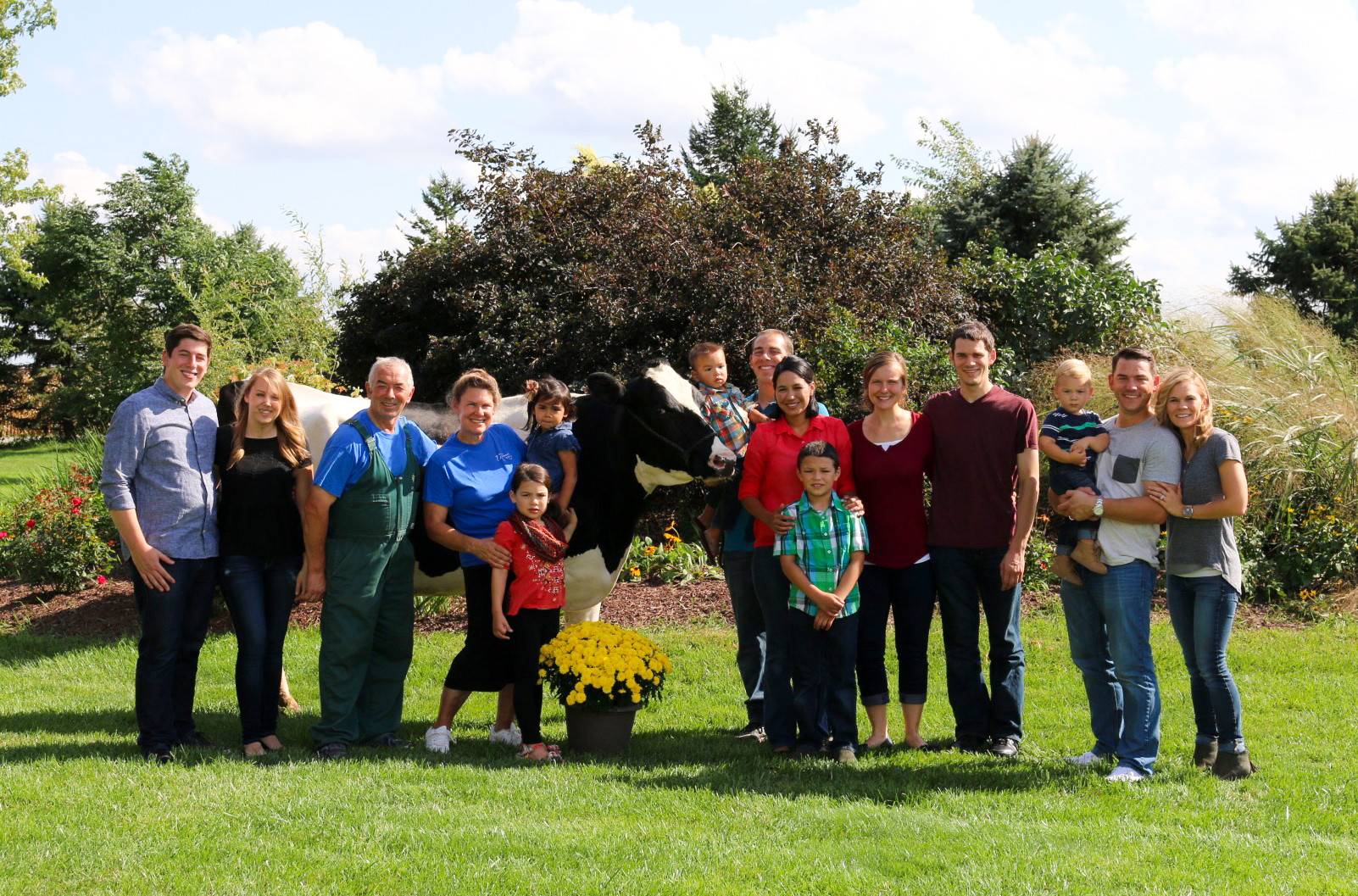
The Troxel family from left Jackson and Paige, Dr. Tom and LuAnn holding Olivia, Maryana, Rudy (holding Nolan) and Rosario, Nathan, Ned and Alyssa, Josh (holding Declan) and Chelsie. Photo by Chelsie Troxel

 By Sherry Bunting, Reprinted from Farmshine, January 5, 2018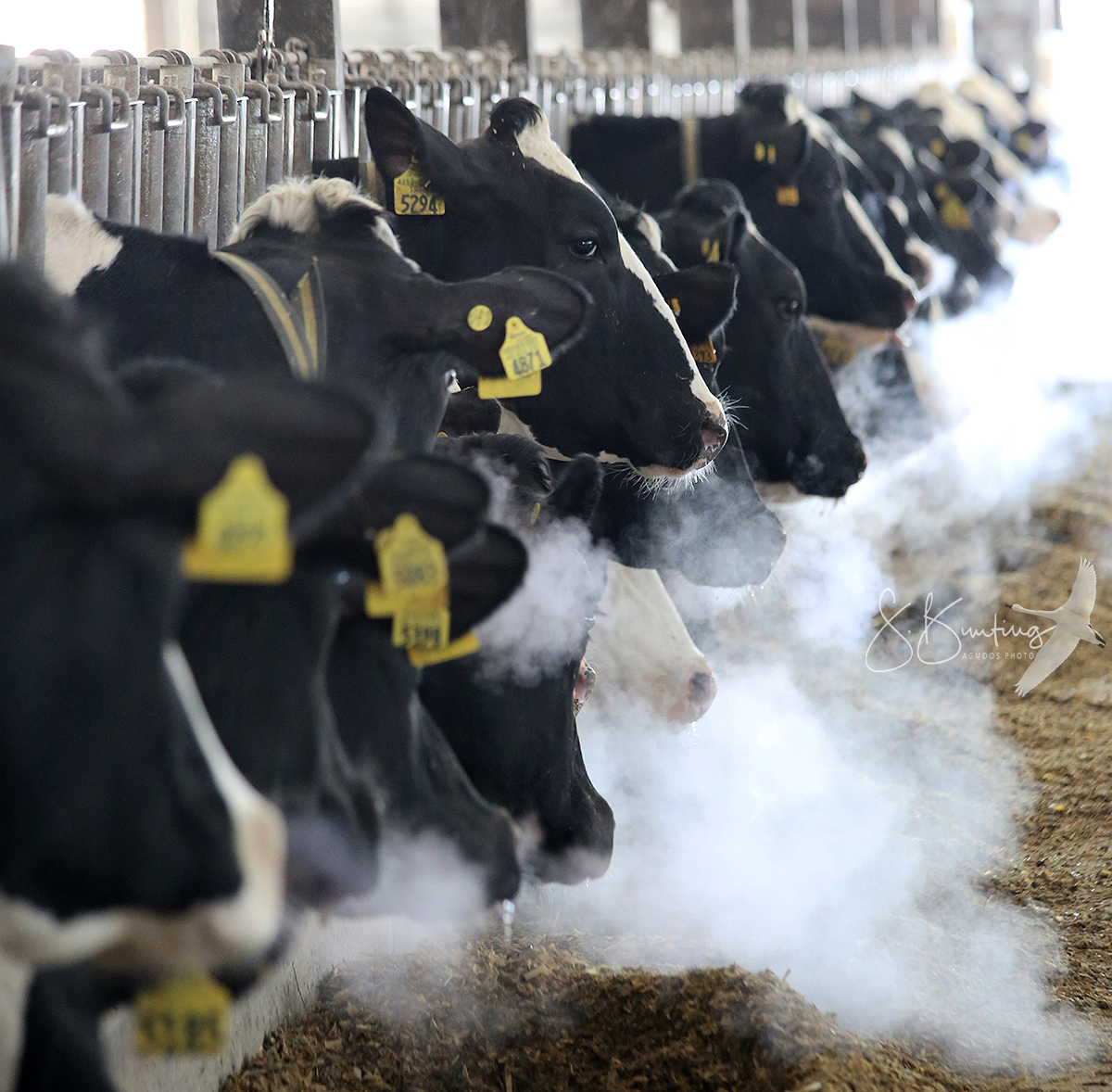
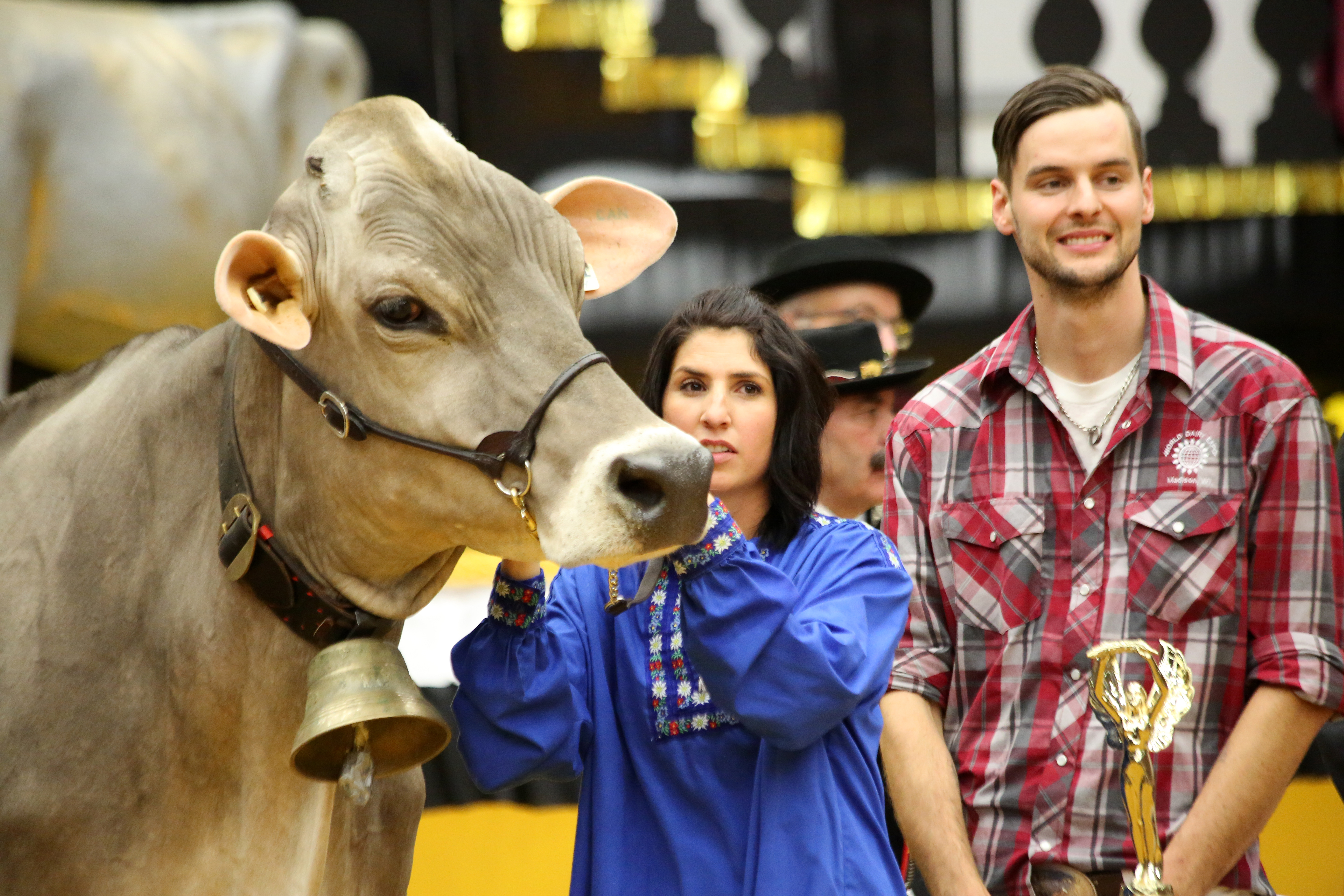 Brown Heaven Glenn Fantasy topped the open show with Josee Charron from Ferme Brown Heaven, Vercheres, Quebec at the halter.
 Kyle Barton, grandson of Ken Main of Elite Dairy, Copake, New York, earned the grand champion banner in junior competition for the second year with homebred Cutting Edge T Delilah (below).
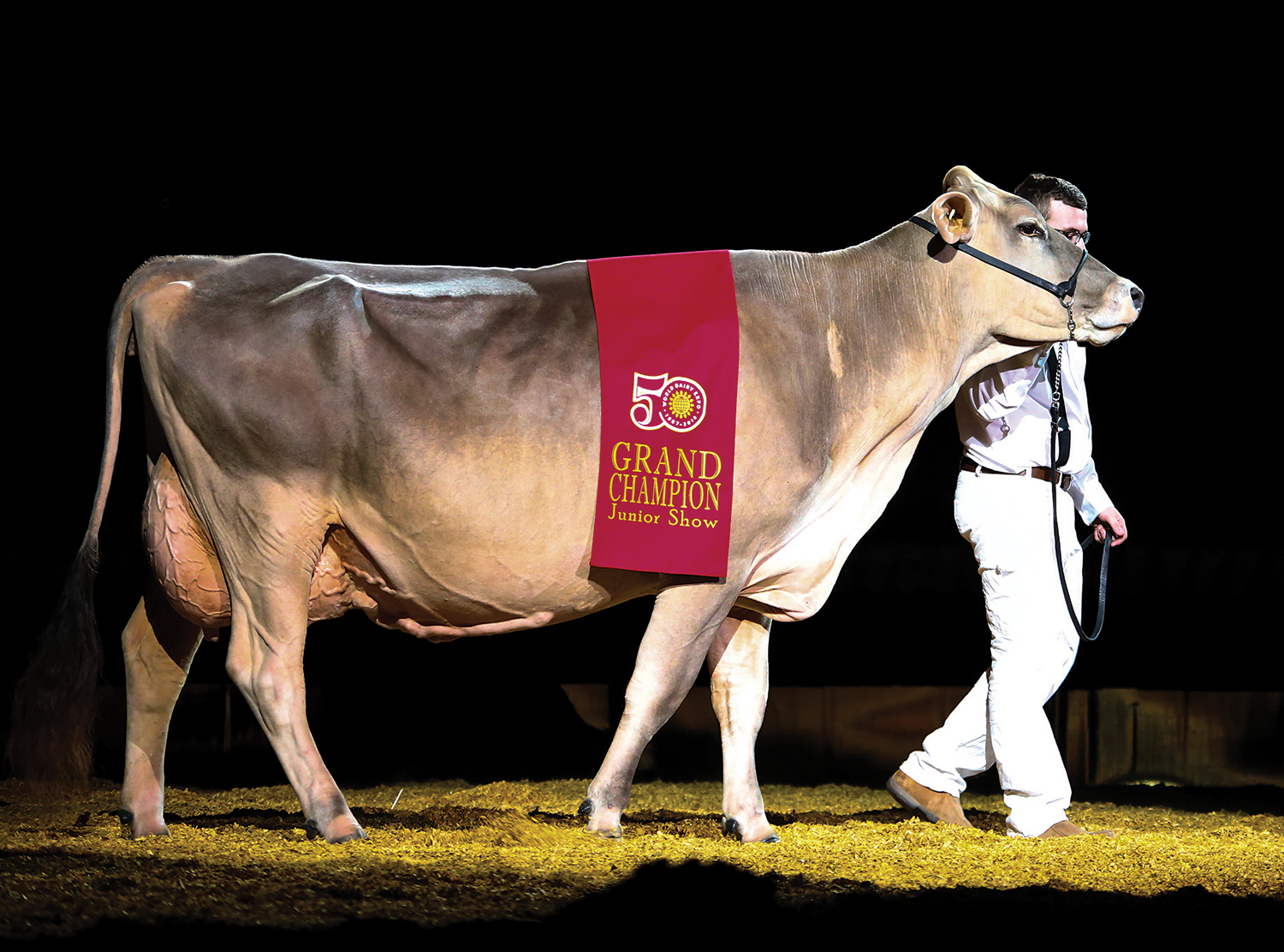 She went on to be reserve supreme of the Junior Show, and she was reserve grand champion of the open Brown Swiss Show, second only to Fantasy (above).
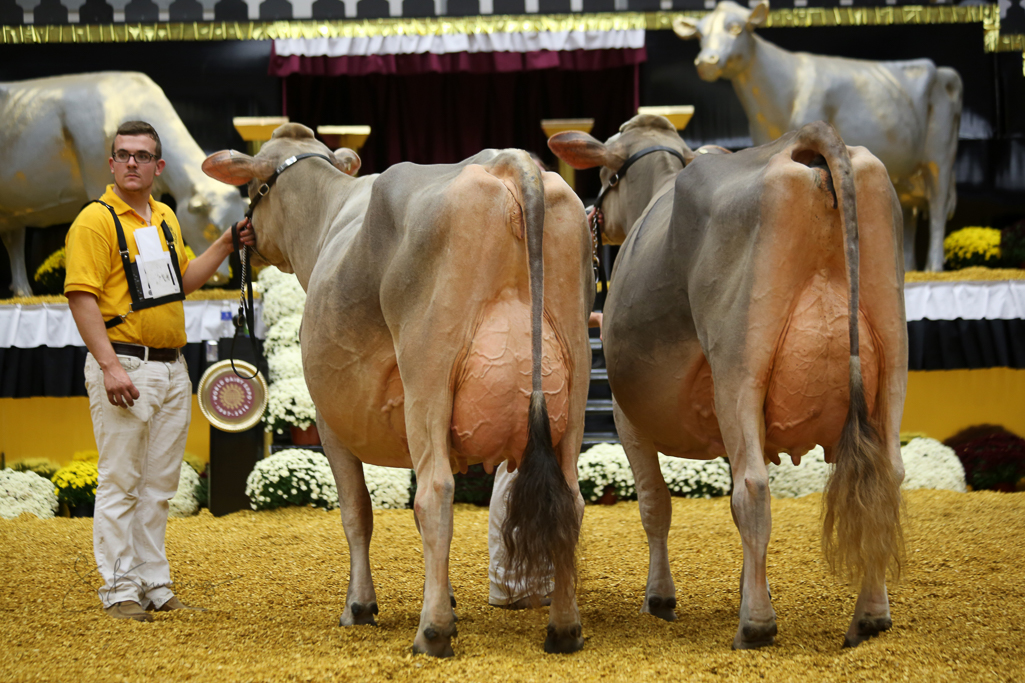 Kyle and his older brother Mickey have done quite well over the years and their grandfather is pleased that they enjoy the cattle among their other activities.
 Among the Guernseys, it was bred-and-owned Flambeau Manor Ro Lauren-ET to go grand in the Open Show. With Tracy Mitchell again at the halter, Lauren repeated her 2014 performance as grand champion for Gary and Steve Van Doorn of Flambeau Manor, Tony, Wisconsin.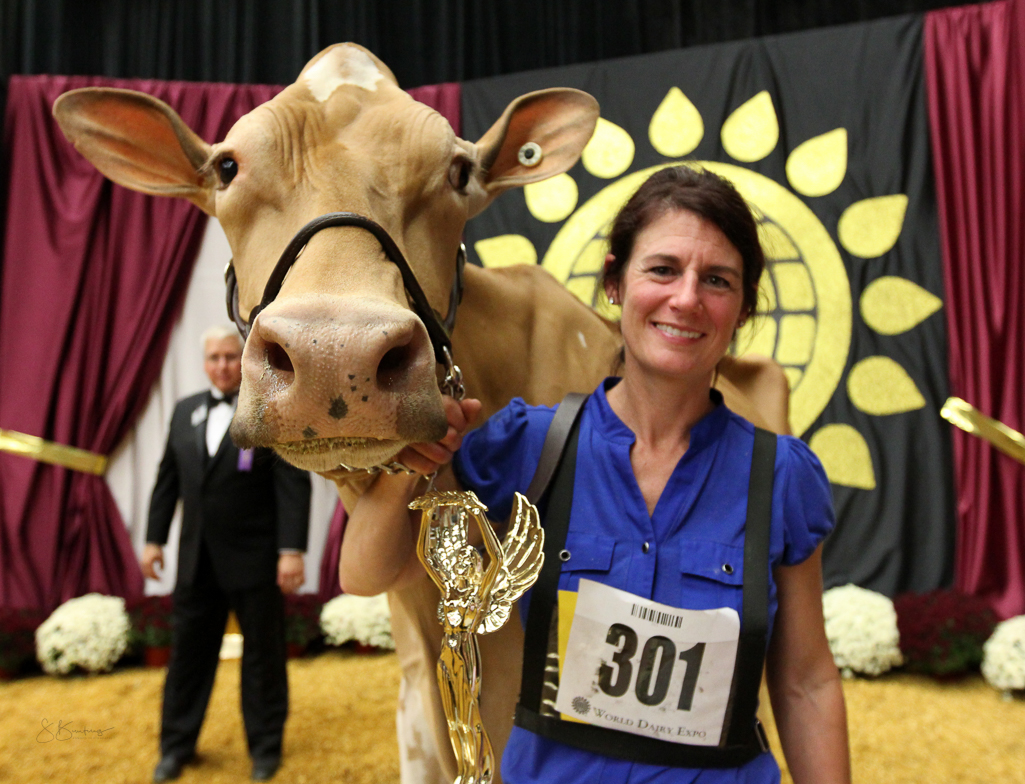
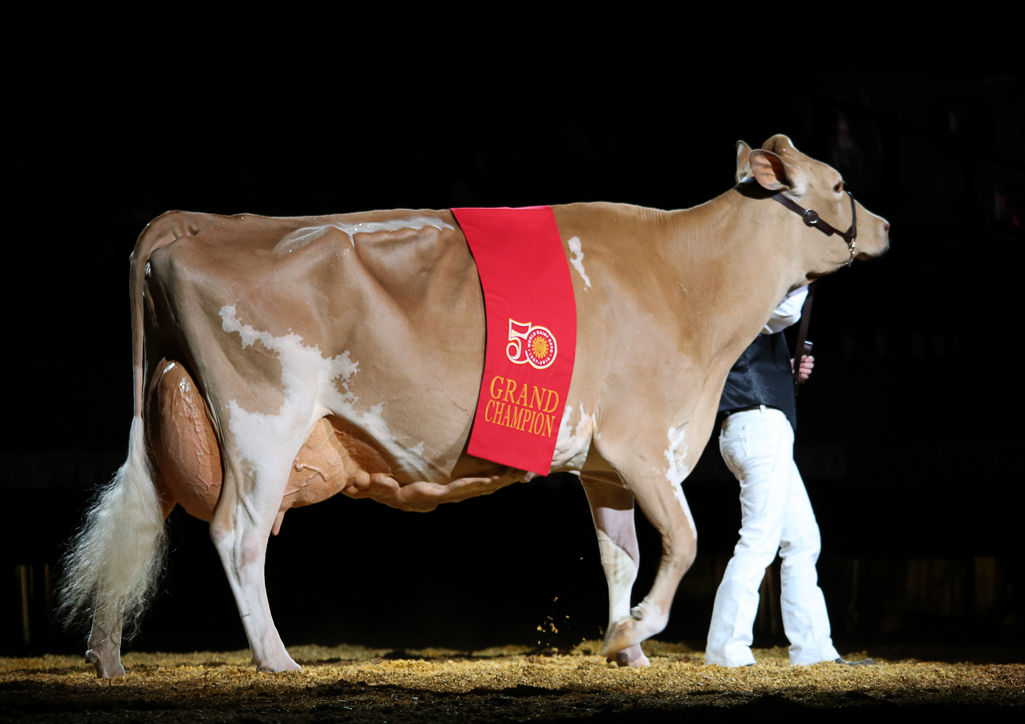 Among the juniors, Austin and Landen Knapp of Epworth, Iowa threepeated with the homebred Knapps Regis Tambourine-ET. The Knapps are premier breeders.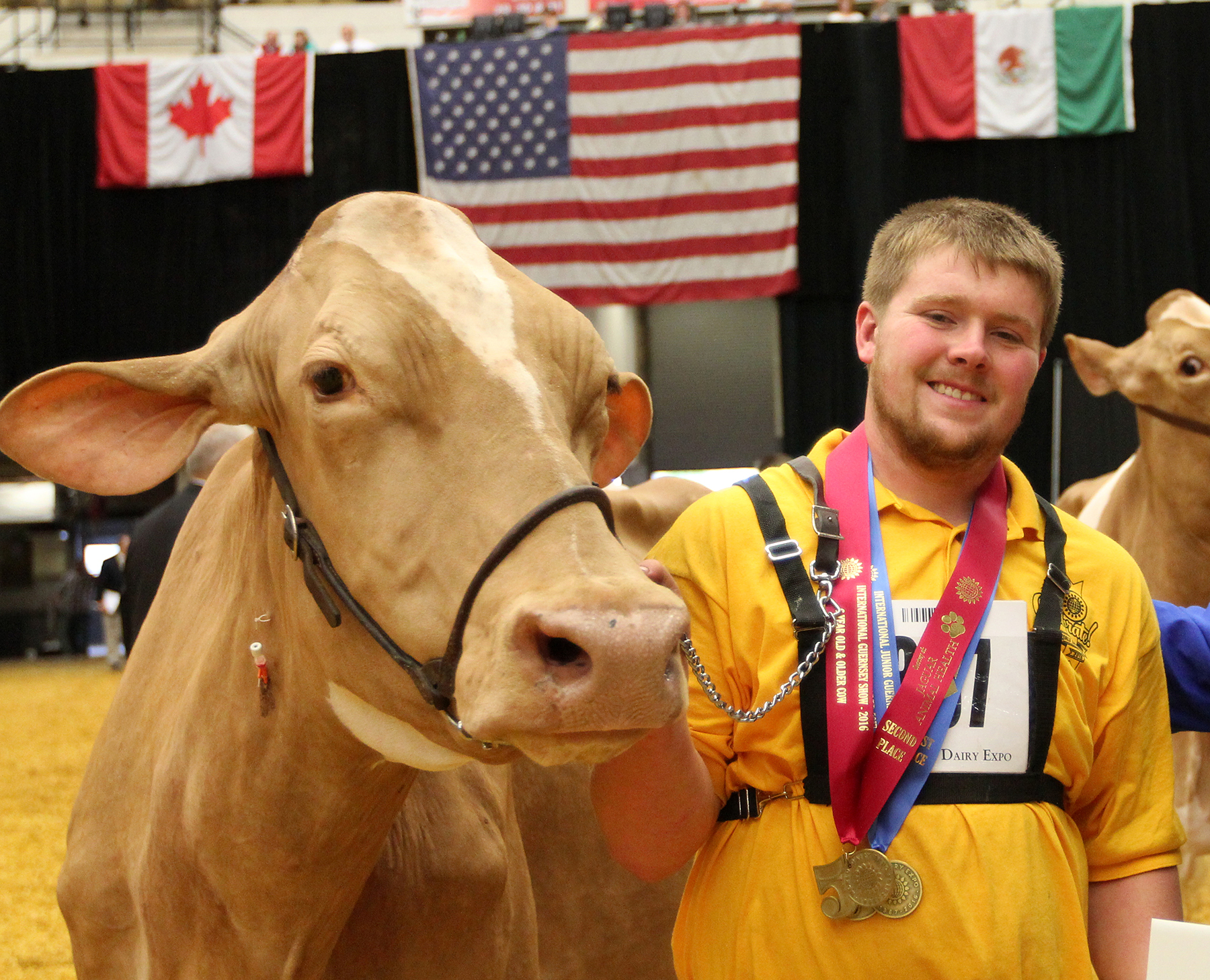
 A large field of Holsteins narrowed down to grand champion Sheeknoll Durham Arrow. She impressed judge Pat Conroy as a cow that “lets you know she does not need to be pampered.” With Jeannette Sheehan at the halter, the aged cow moved through the ranks to achieve a storybook ending for her leadswoman, whose father Vernon Hupf — a lifelong farmer who attended every World Dairy Expo but this one as a spectator — had passed away in June.
 “Each time the judge picked her out, I was surprised, but I didn’t have time to process what was happening. I was pretty much just trying to hang on to the cow. At one point it just felt like Dad was here, on my shoulder telling me what to do, right down to that look out of the corner of the eye.”
 Not only did the Sheehan family have a winner, they did so with a bred and owned animal in a highly competitive Holstein show. “We are still a little stunned. You don’t come here with expectations because this show will humble you in a hurry,” Jeannette’s husband Robert added just after her reserve supreme honors were awarded Saturday evening. “The whole thing is unbelievable. We like to breed nice cows, the kind of cows we like to milk. Breeding is science and art with luck involved. The match has to work and every once in a while you get a cow like this.”
 Sheeknoll Durham Arrow (aka Thomas) had an exciting path to her grand champion honors at the 50th World Dairy Expo, having won the 2016 Minnesota State Fair and other shows leading up to it.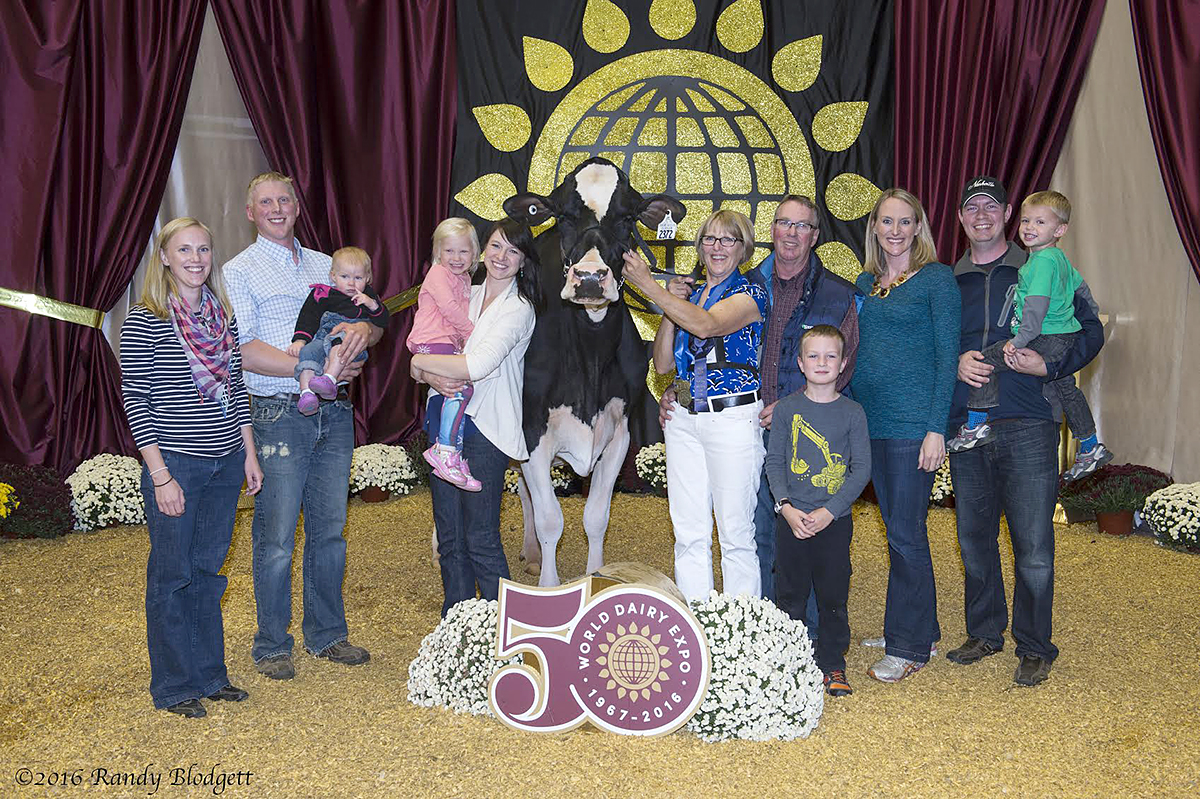
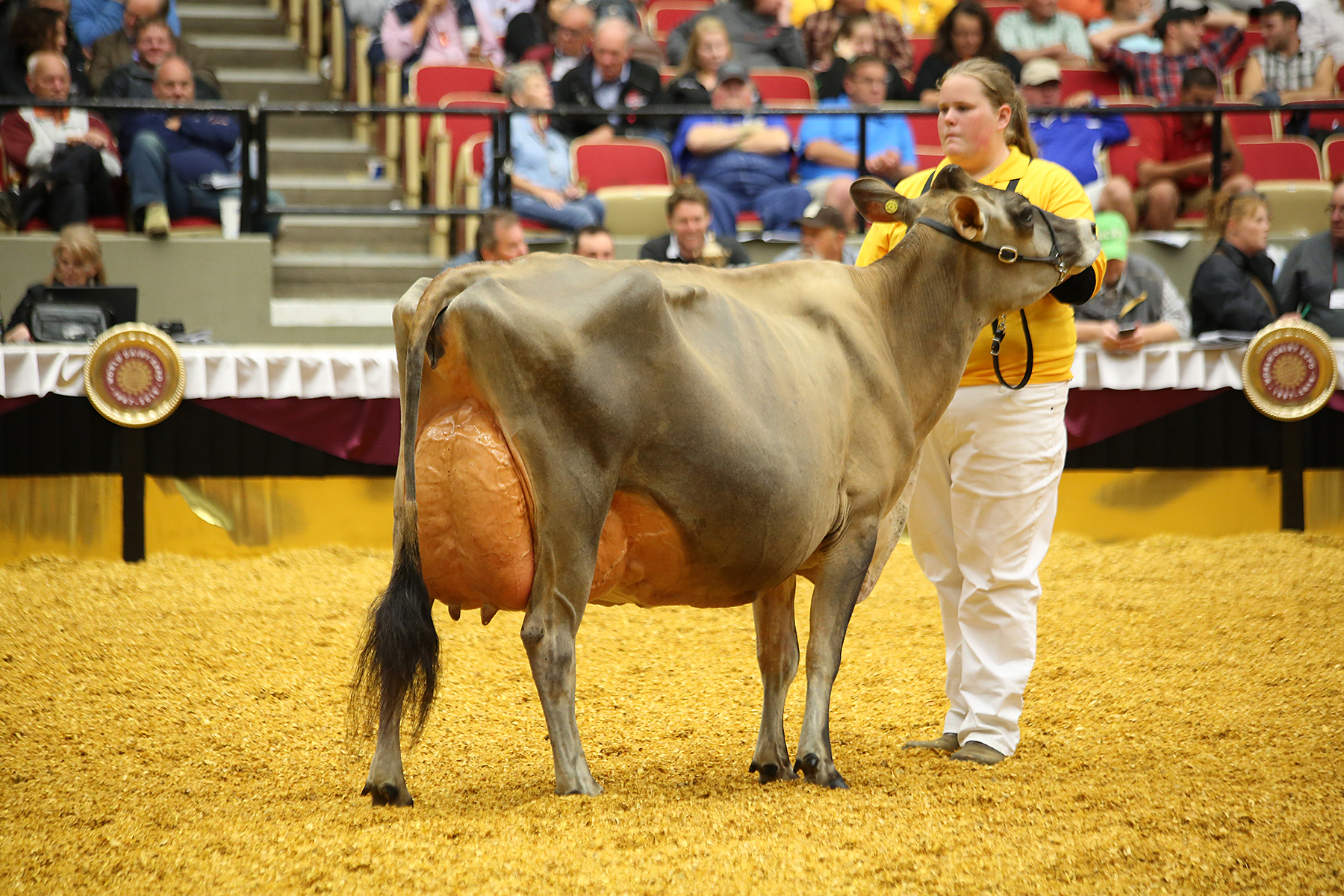 In the junior Jersey competition it was Cora and Cari of Darlington, Wisconsin. The homebred Red Rock View Cari was the grand champion Jersey of the Junior Show, with Cora Carpenter at the halter.
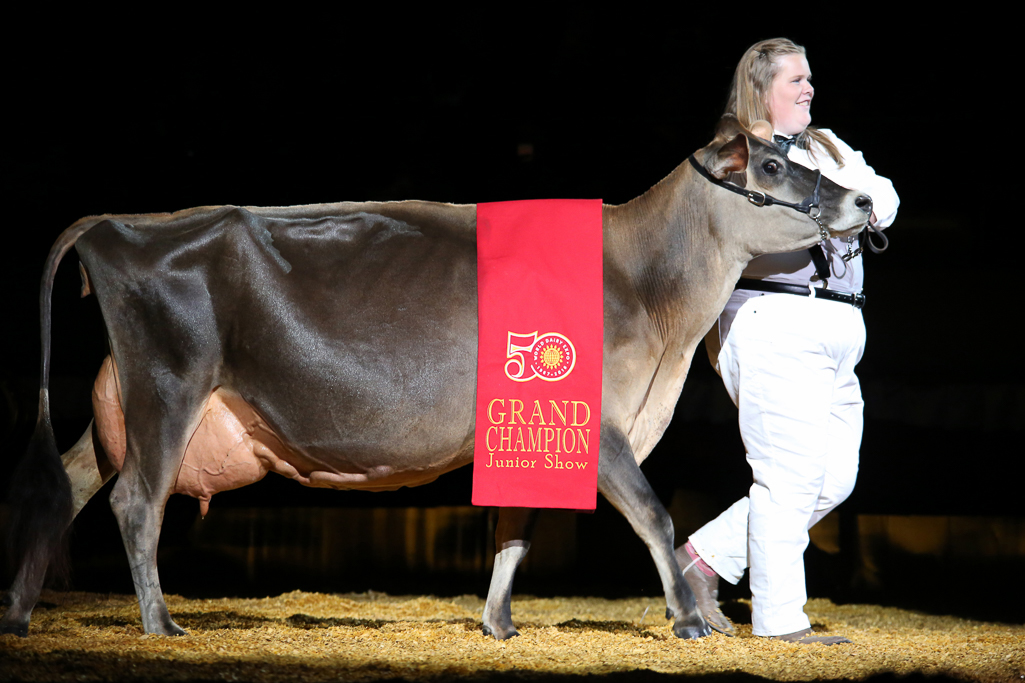 The Carpenter family was overjoyed to see their daughter and homebred Jersey do so well.
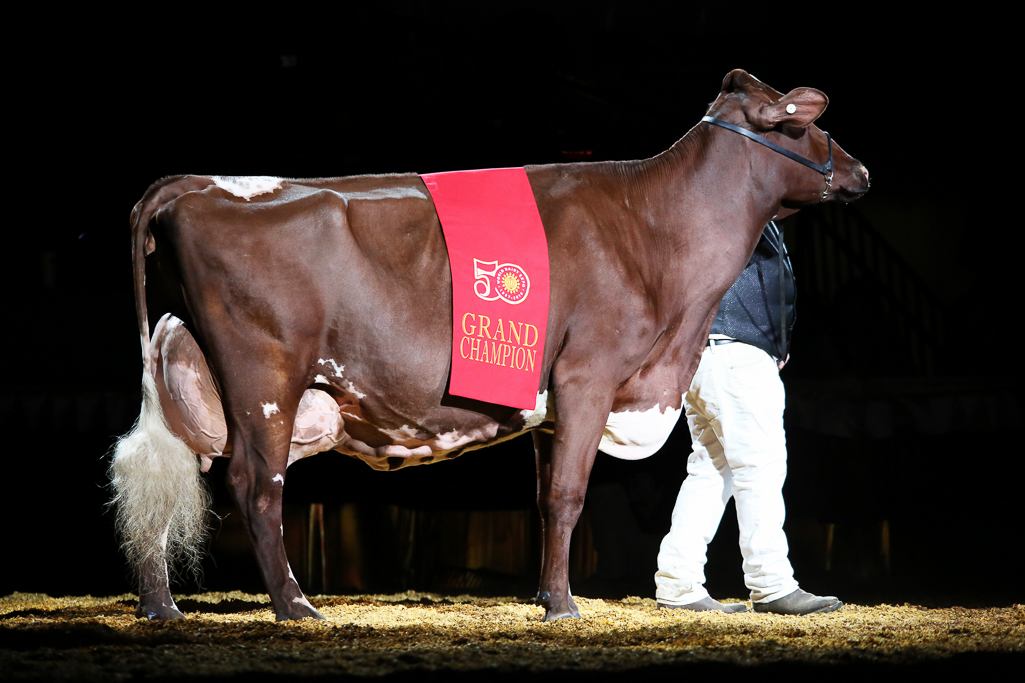 The Milking Shorthorn Show at World Dairy Expo has grown and lasted into Wednesday evening, but was quite exciting.
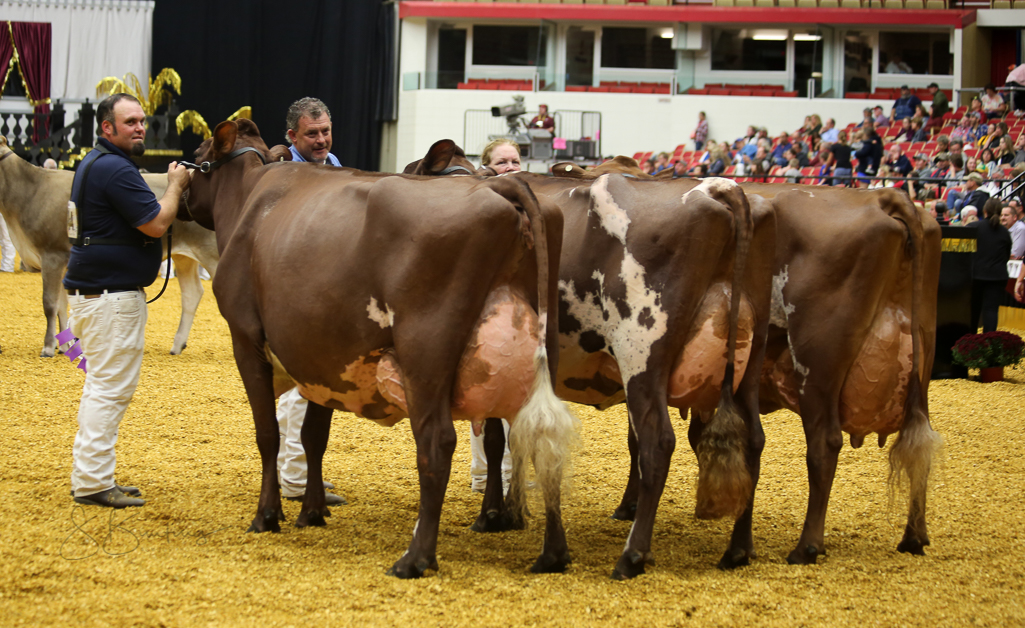 In the International Red & White show, Pheasant Echo’s Turvy-Red-ET was grand champion with breeder-owner Kenny Stambaugh, Westminster, Maryland, at the halter.
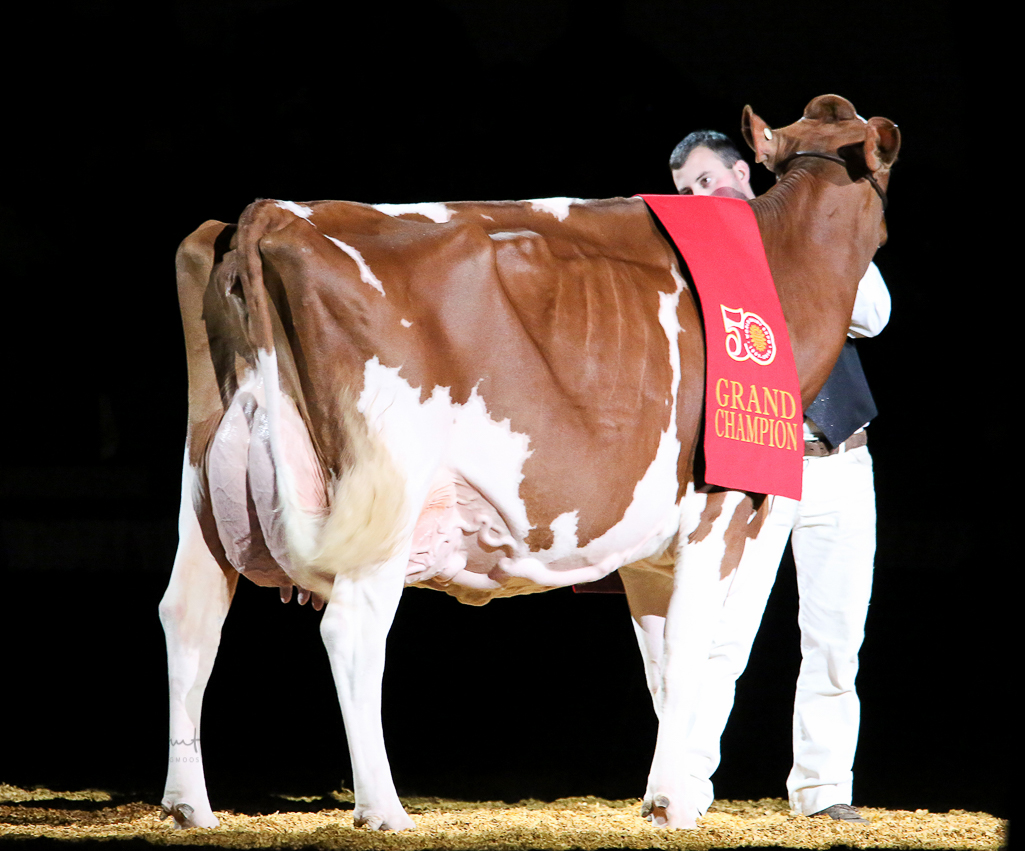 When Kenny Stambaugh’s homebred Turvy was named grand champion of the International Red & White Show on Friday, his sister Crystal Edwards was there in person to celebrate. Most of the rest of the family could probably be heard hooting-and-hollering over a thousand miles away in Westminster, Maryland as they gathered around the television to watch Kenny show and be victorious in the online live-feed of the showring proceedings.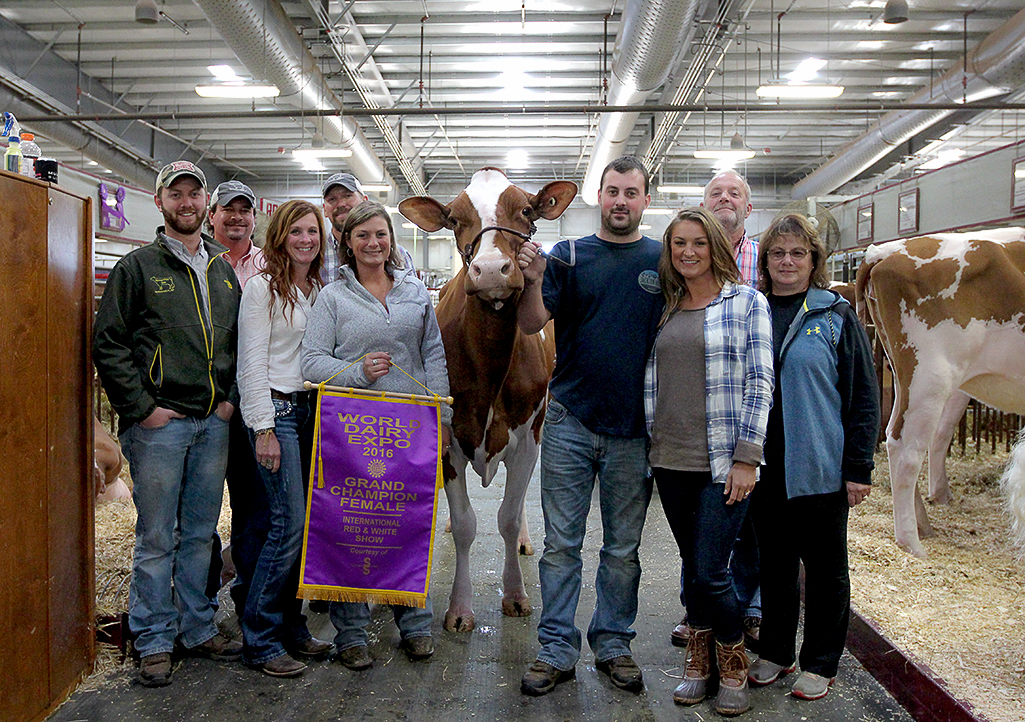
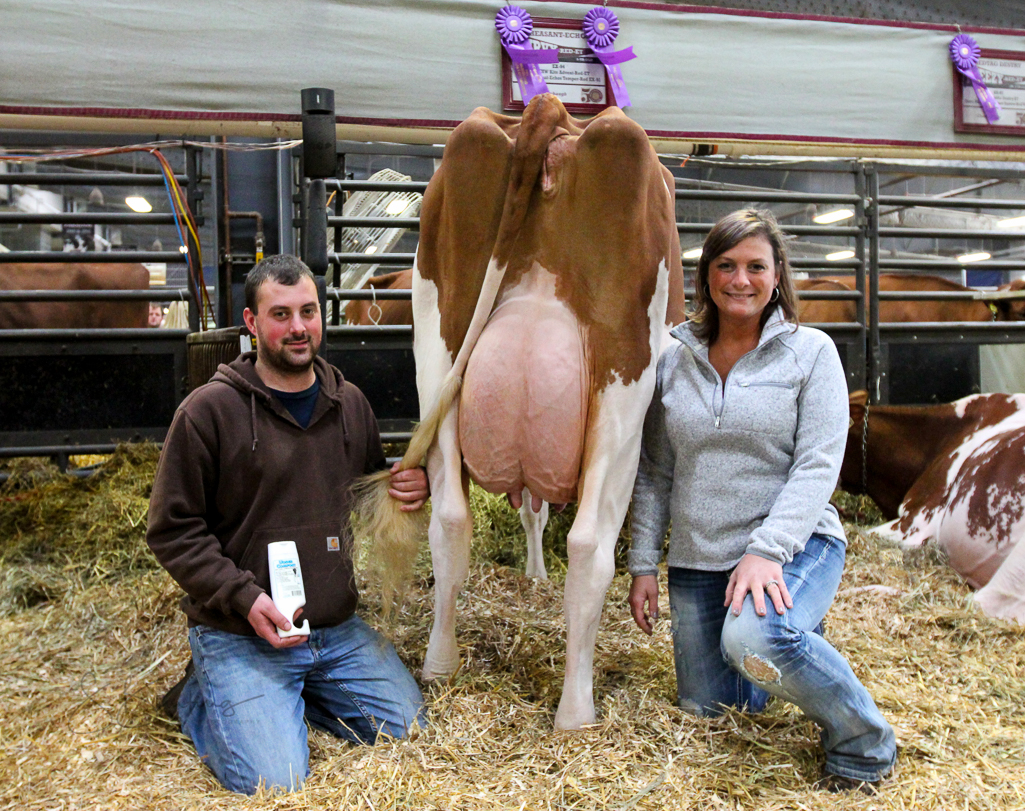 “She also walks on an awesome set of feet and legs,” Crystal added. “But after three calves at five years old, to have that youthful udder is pretty special.”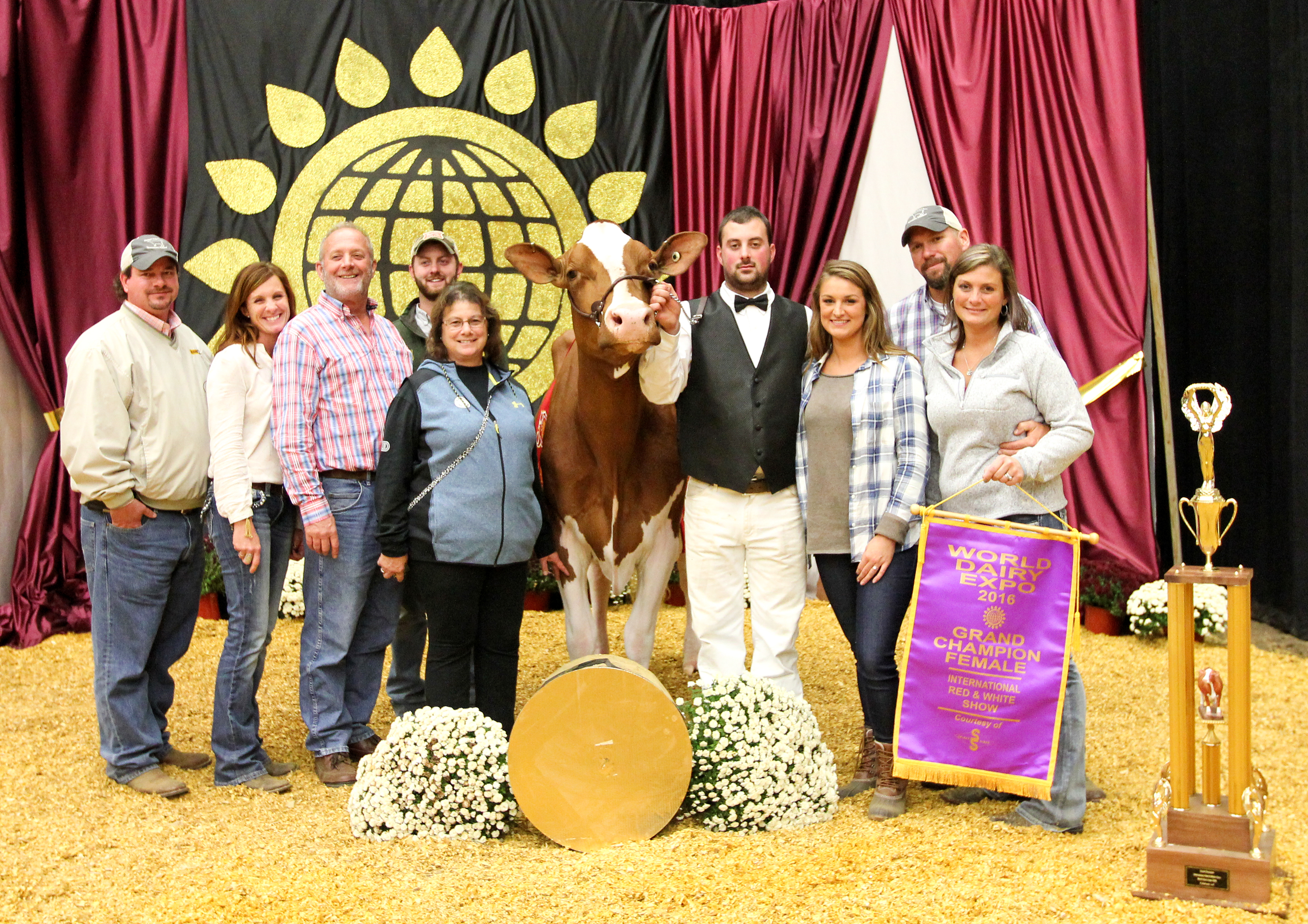




 Ag Moos