Covering Ag since 1981. The faces, places, markets and issues of dairy and livestock production. Hard-hitting topics, market updates and inspirational stories from the notebook of a veteran ag journalist. Contributing reporter for Farmshine since 1987; Editor of former Livestock Reporter 1981-1998; Before that I milked cows. @Agmoos on Twitter, @AgmoosInsight on FB #MilkMarketMoos
This was my first thought, when former President Donald Trump announced Senator J.D. Vance of Ohio as his running mate in the Republican campaign. (Vance is an early cosponsor of S. 1957, the Senate’s whole milk bill.)
Like others, I’ve been involved in the effort to bring the choice of whole milk back to schools for more than a decade. It’s about natural, simple goodness — to simply strip away the federal ban and allow hungry, learning children to be nourished by milk they will love.
Looking back at the years of this long fight, I realize that if it’s so painstakingly hard to get something so simple and so right accomplished for America’s children and farmers, we’ve got problems in this country.
With President Joe Biden now withdrawing from the campaign for a second term, and Vice President Kamala Harris as presumptive nominee launching her campaign this week in the Dairyland State, I’m reminded of where she stands on such things.
Harris is no friend to livestock agriculture. She was an original cosponsor of the Senate version of “The Green New Deal.” She has strong positions on climate change that may lead to harsher rules on methane emissions and water consumption in the dairy industry, while perhaps promoting methane digesters, which are not an equitable nor necessary solution. Cows are NOT the problem!
As a presidential candidate in 2019, in a CNN town hall, she was specifically asked: “Would you support changing the Dietary Guidelines to reduce red meat specifically to reduce emissions?”
“Yes, I would,” Harris replied, with a burst of laughter.
It’s not funny.
Earlier, she had said she “enjoys a cheeseburger from time to time,” but the balance to be struck is “what government can and should do around creating incentives, and then banning certain behaviors… that we will eat in a healthy way, and that we will be educated about the effect of our eating habits on our environment. We have to do a much better job at that, and the government has to do a much better job at that.”
Read those words again: “creating incentives and then banning certain behaviors.” In plain English, that means dangling the carrot and then showing us the stick.
As President Biden’s approval ratings fell, there were indications she would bring her side of the aisle to the table to negotiate a compromise to get the farm bill done this year.
Now that Biden has withdrawn from the race, and the pundits, media, and party organizers are breathless with excitement over Harris as presumptive nominee, it appears that the farm bill negotiations between the Committee-passed House version, the Republican Senate version and the Democrat Senate version have fallen apart.
House Ag Chair G.T. Thompson (R-Pa.) has called upon his colleagues to get to the table and do the work because a perfect storm is brewing in Rural America as net farm income is forecast to fall by 27% this year on top of the 19% decline last year.
Meanwhile, there is political upheaval everywhere we look. Seeing Vance picked as Trump’s running mate and knowing he was among the early cosponsors of Senate Bill 1957 – The Whole Milk for Healthy Kids Act – offers some hope.
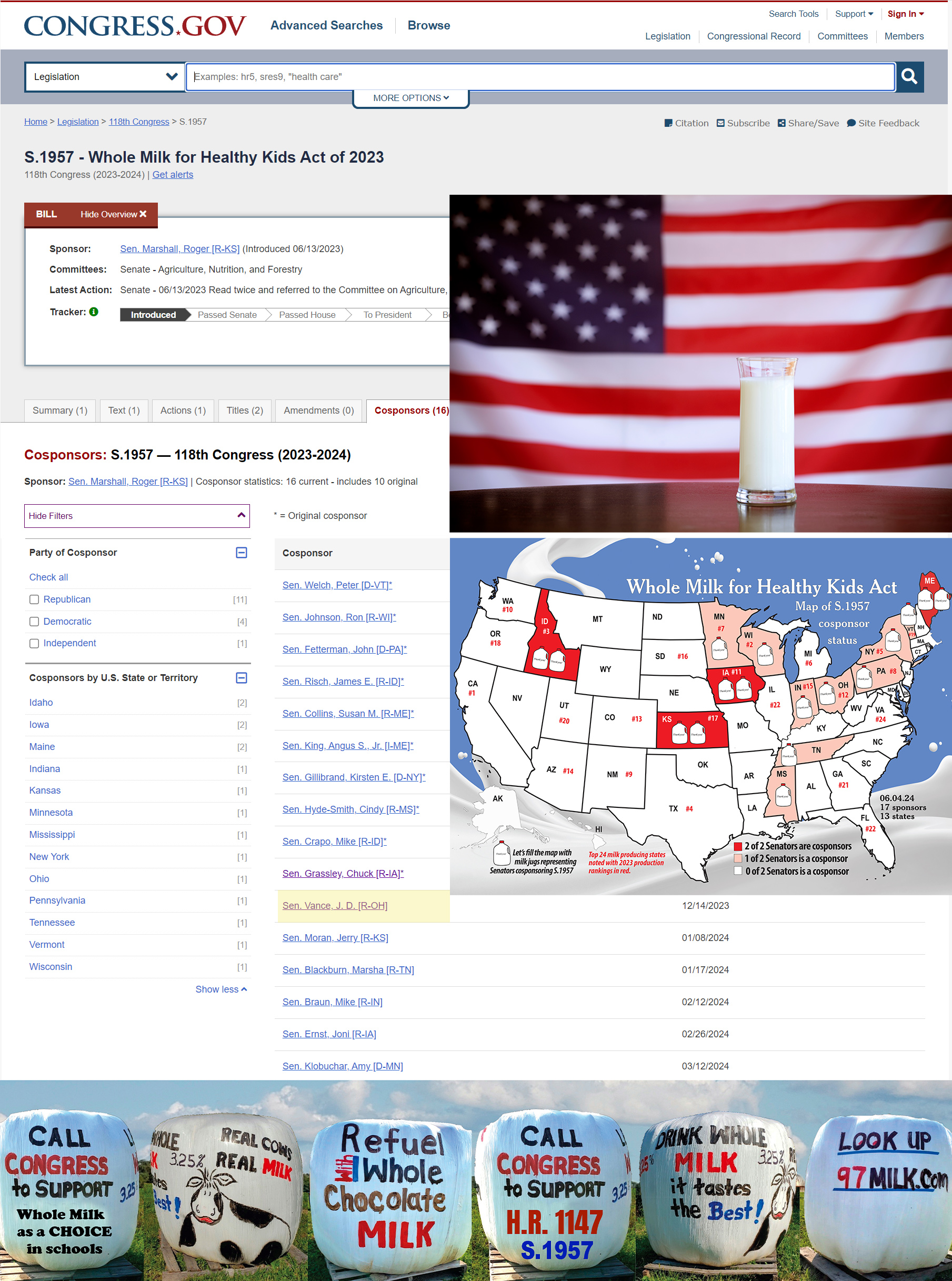
That bill — in true bipartisan spirit — was introduced in the U.S.Senate in June 2023 by Senator Dr. Roger Marshall (R-Kan.) with prime cosponsors Peter Welch (D-Vt.), Ron Johnson (R-Wis.), Kirsten Gillibrand (D-N.Y.), Chuck Grassley (R-Iowa), John Fetterman (D-Penna.), Mike Crapo and James Risch (R-Idaho), Susan Collins (R-Maine), Angus King (I-Maine), and Cindy Hyde-Smith (R-Miss.). The bill eventually earned cosponsorship from other Senators, including the influential Democrat from Minnesota, Amy Klobuchar.
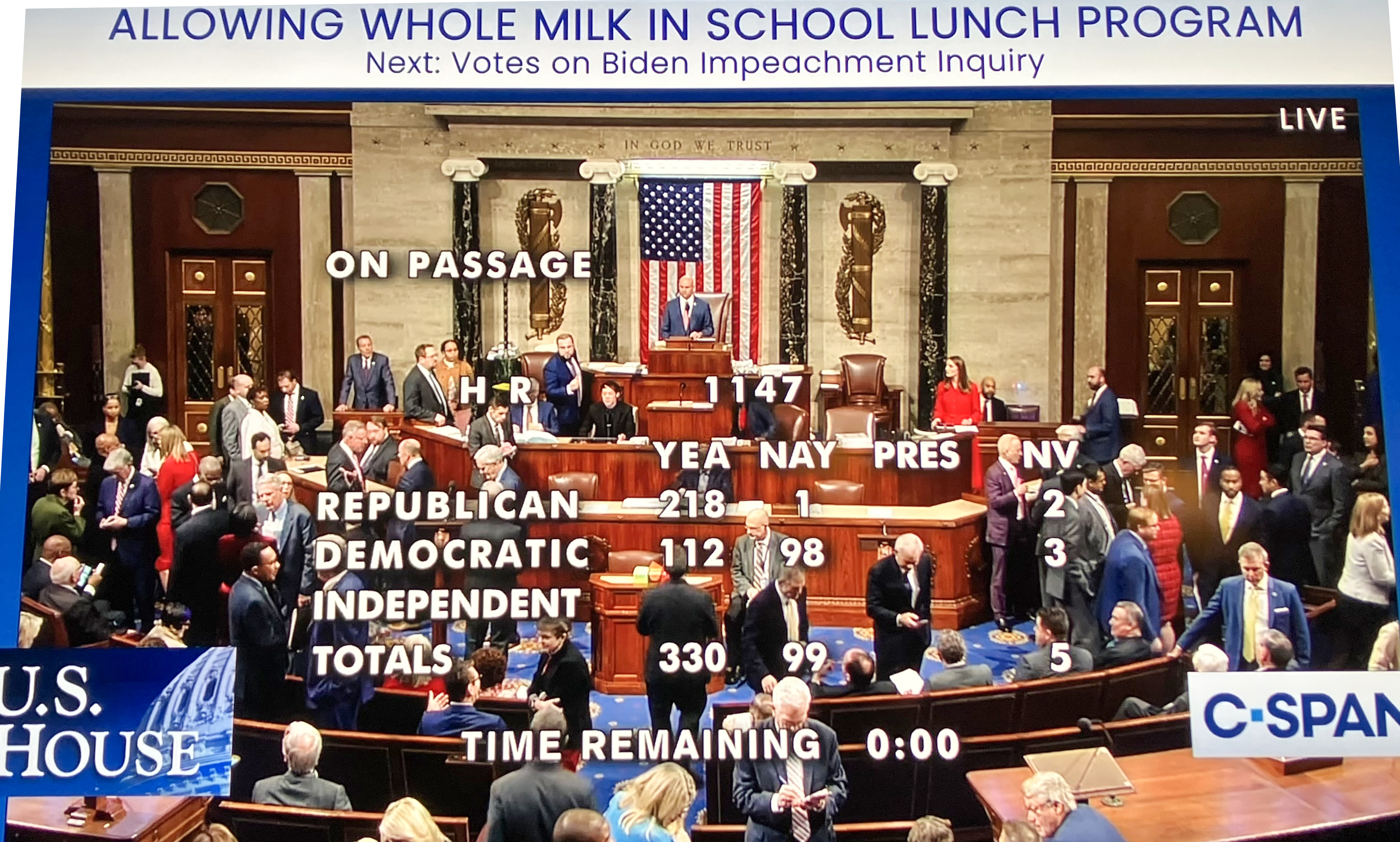
Vance signed on as cosponsor on December 14, 2023, one day after the U.S. House of Representatives had passed their version of the bill by an overwhelming bipartisan majority of 330 to 99.
The Senate bill 1957 is identical to the successful House whole milk bill H.R. 1147, which was authored by Pennsylvania’s own Representative GT Thompson.
GT is a man of courage, conviction, compassion, of humility and humanity. I’ve heard him say more than once: “God gave us two ears and only one mouth for a reason.”
He is a determined man, doing the work. He included whole milk bill in the House Committee-passed farm bill. He’s standing firm on his pledge to put the farm back in the farm bill. He is concerned about the financial crisis in agriculture on the horizon, and held a hearing July 23 with witnesses from agriculture and banking giving stark warnings.
Even though whole milk choice in schools seems like a minor issue in the grand scheme of things today, it is really a linchpin. If we could just get something with broad bipartisan support accomplished, this could lead to other steps on common ground.
As the whole milk choice remains hung up in the Senate, let’s pause to think about how ridiculous it is that we adults get to choose, but our growing children do not. For them, whole milk is banned at two meals a day, five days a week, three-quarters of the year at school. (The federal government, via USDA school lunch rules, only allows fat-free and 1% milk to be offered with the meal or even a la carte.)
Maybe the Harris ticket would like to ban food choice behaviors for adults as well.
We have Republicans and Democrats supporting whole milk choice in schools. Both parties say they care about our nation’s farmers and ranchers who feed us and are the backbone of our national security.
EAST EARL, Pa. — Year-to-date Whole Milk sales for the first two months of 2024 are up a whopping 5% year-over-year (YOY) at 2.57 million pounds. Even when adjusted for Leap Year, the average daily increase is a substantial 3% surge, compared with the past several years of steady 1% increases YOY.
Flavored whole milk sales, year-to-date (YTD) are up a whopping18.6% YOY. Adjusted for Leap Year, the increase is a substantial 14%.
As the number one volume category representing more than one-third of the fluid milk category since 2020, the recent surge in whole milk sales has been enough to reverse the decline in total packaged fluid milk sales in four of the past five months.
USDA tallied 2023’s total packaged fluid milk sales down by a smaller margin of 1.5% for the year compared with previous years of decline; however, October and November sales were up 1% and 0.3% YOY for the first time since the months of the Covid shutdown when families ate at home. December’s total packaged fluid milk sales trailed year-earlier, but January and February 2024 have come back strong.
USDA estimates total fluid milk sales were up 2.4% and 2.5% YOY for January and February, respectively. When adjusted for Leap Year, the February increase is a respectable 0.8%. Similarly, when we adjust the YTD total of 7.325 million pounds in total fluid milk sales to reflect the extra consumption day in February, this is also 0.8% higher on an average daily basis vs. year ago.
This is good news! Let’s keep this upward trend MOOVING in fluid milk sales, led by surging whole milk sales — thanks to volunteers spreading the good word.
Now, if we could just get the United States Senate off the sidelines and into cosponsoring S. 1957 Whole Milk for Healthy Kids, we could really gain some ground — and America’s kids would be free to choose milk they love at school where they receive 2 meals a day, 5 days a week, 3/4 of the year.
Thanks to the U.S. House of Representatives and the leadership of Congressman G.T. Thompson of Pennsylvania, the Whole Milk for Healthy Kids Act (H.R. 1147) passed the House on December 13, 2023 by an overwhelming bipartisan majority 330 to 99. If the U.S. Senate doesn’t have the opportunity to vote it through by December 31, 2024, we must start all over again in the next legislative session 2025-26!
Check out the map above to see how S. 1957 remains stalled for the past 60 days at just 17 sponsors from 13 states.
Where do your state’s U.S. Senators stand? Ask them! And think about their answers when going to the polls this fall. Elections have consequences.
Also consider asking your state senators and representatives to follow Tennessee’s lead and get a whole milk bill passed in your state and signed by your Governor.
Pennsylvania and New York State tried to be first, but leaders are afraid of USDA’s monetary penalties. Maybe the No. 8 and No. 5 milk producing states can be second and third in state whole milk bill passage.
Just think what would happen if more states passed bills that ALLOWED choice and sought creative language to let their schools choose to let children choose. Tennessee will make it available in bulk dispensers separate from the school lunch line. Pennsylvania sought to do it as a wholly in-state proposition.
Meanwhile, DMI sent a press release on April 29 touting their “checkoff-led pilot in Cincinnati schools that offered lactose-free chocolate milk increased milk consumption…” Specifically, the pilot schools experienced a 16% increase in milk consumption and a 7% higher meal participation, according to DMI.
(Of course, this lactose-free pilot was also fat-free per the USDA rules for milk at school built on the Dietary Guidelines that the dairy checkoff agreed to “advance” when the memorandum of understanding was signed between the USDA, National Dairy Council, GENYOUth and the NFL in 2010).
Remember, this reporter warned several years ago that checkoff and dairy industry leaders would wait until lactose-free shelf-stable milk was firmly entrenched in schools before pushing whole milk choice through. Senate Ag Chairwoman Debbie Stabenow is the main blockade this time around. She hails from the No. 6 milk producing state of Michigan, where the foundation fairlife plant is located, collecting milk from large producers in Michigan, Indiana and Ohio.
Wonder what consumption looks like when whole milk is offered as a choice. That’s right! A Grassroots PA Dairy Advisory Committee / 97 Milk trial in a school in northwestern Pennsylvania saw consumption grow 52% and waste decline 95%.
So, drink up Senators! Talk to your constituent Moms this Mother’s Day. Sales data and surveys both show what Moms think, and most don’t even realize the federal ban, the bait-and-switch their kids face at school where milk and dairy are concerned.
Then pour a tall cold glass of delicious, nutritious whole milk. It may just strengthen those political spines!
WASHINGTON — Wednesday, December 13th was a big day for dairy farmers and schoolchildren! After clearing the House Rules Committee Mon., Dec. 11, the Whole Milk for Healthy Kids Act, H.R. 1147, passed overwhelmingly in the U.S. House of Representatives.
The strong bipartisan 330 to 99 vote moves the choice of whole milk closer to school cafeterias across the nation with momentum for the next stop: the U.S. Senate, where S. 1957 has 12 bipartisan sponsors from 10 states – and more are needed.
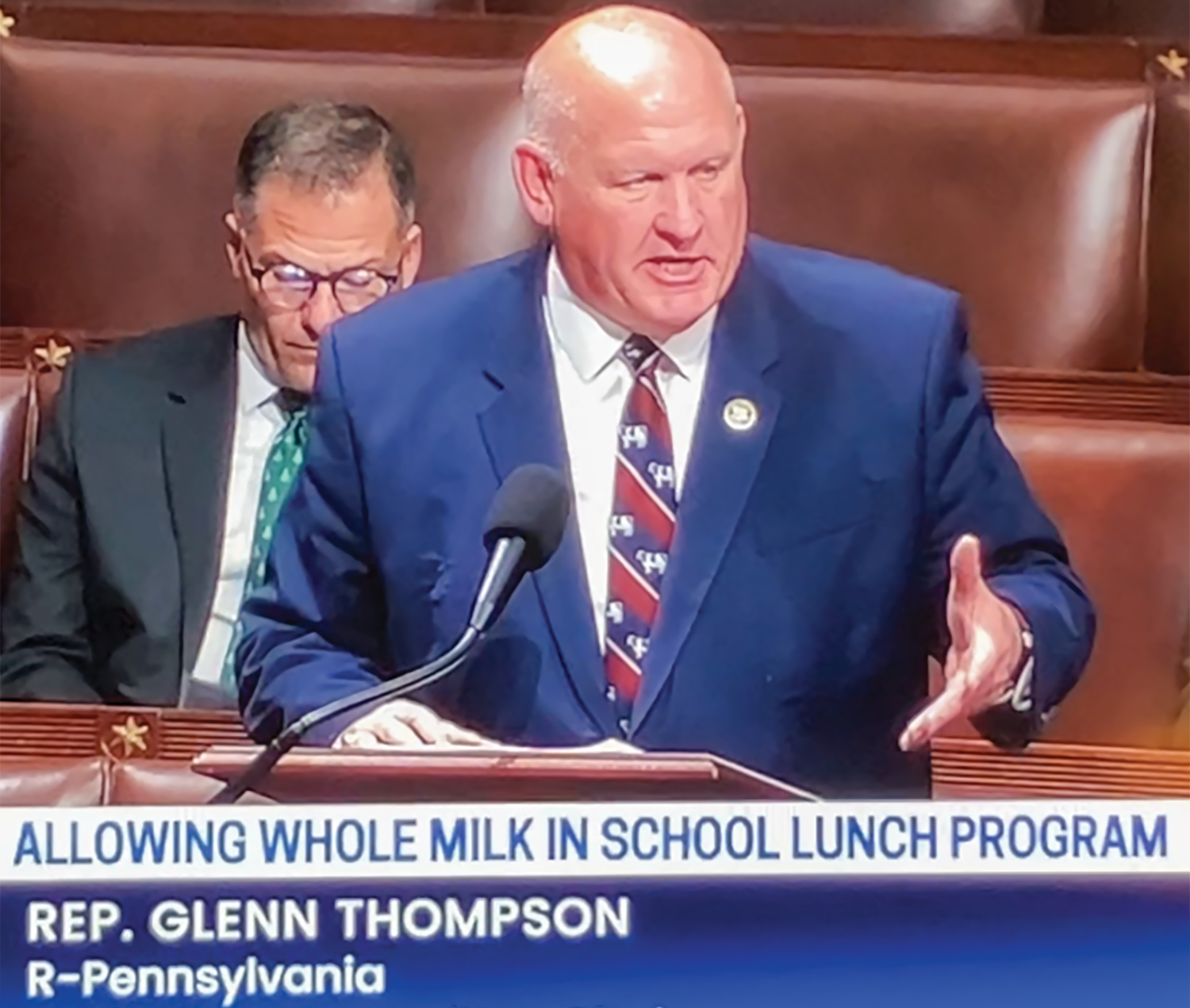
“Students across the nation deserve school lunches that are both enjoyable and nutritious, and this legislation achieves these goals,” said Whole Milk for Healthy Kids Act champion Glenn ‘G.T.’ Thompson (R-PA-15), Chairman of the House Agriculture Committee and senior member of the Education and Workforce Committee as he testified before the Rules Committee Monday.
“Milk is an essential building block for a well-rounded and balanced diet, offering 13 essential nutrients and numerous health benefits. However, outdated and out-of-touch federal regulations have imposed restrictions … Students are not able to access any of the milk’s essential nutrients if they won’t drink the milk being served to them. As we have seen over the last decade, there has been a steady decline in school milk consumption. This bill does not mandate anything. It gives schools, parents, and students the option of whole milk,” said Thompson.
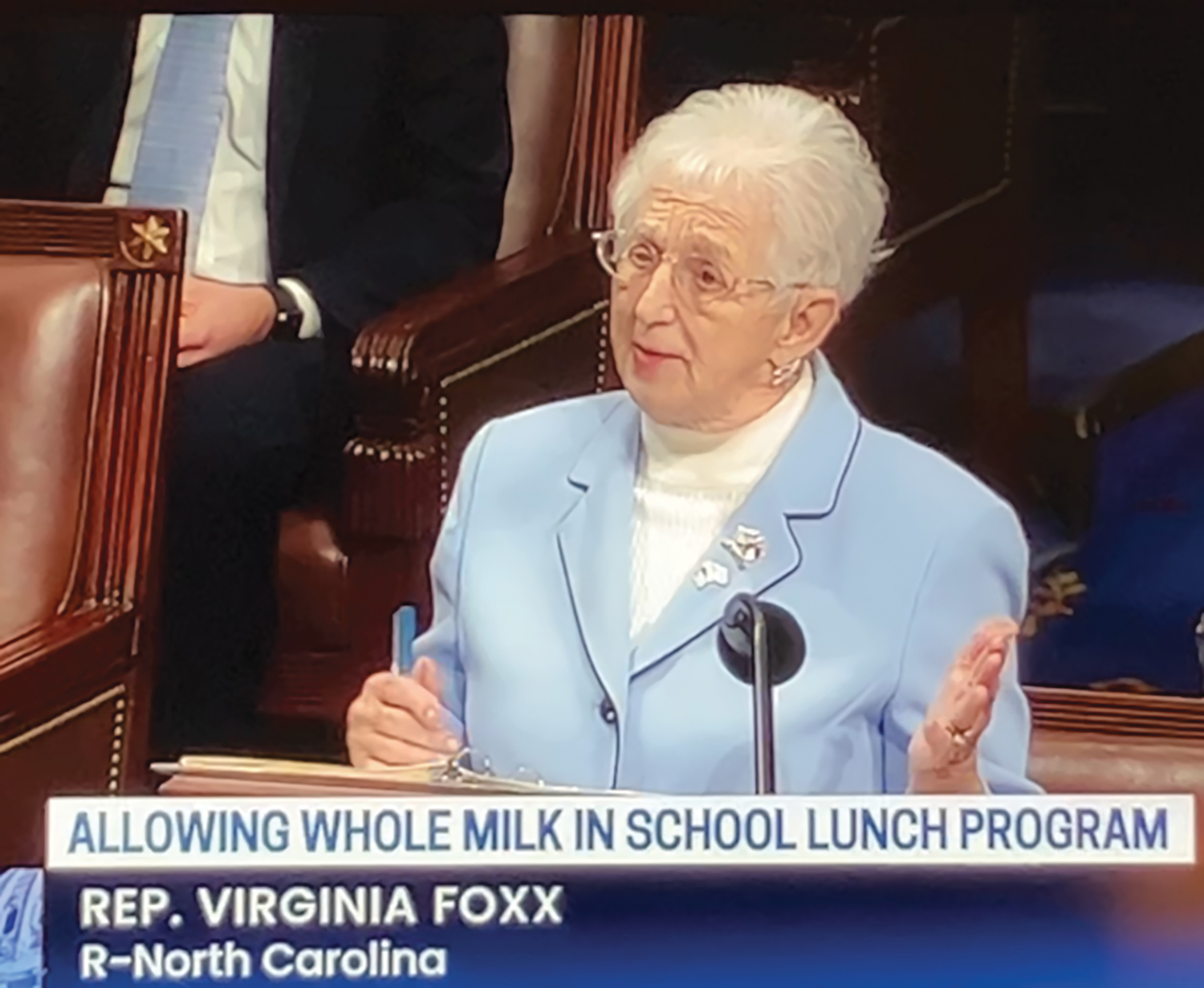
Education Committee Chairwoman Virginia Foxx (R-NC-5) was blunt on the House floor: “Whole milk isn’t just a beverage; it’s a vital source of nutrients essential for children’s growth. Denying access to its calcium, vitamin D, and protein threatens to inhibit their development. To the anti-milk advocates, I have one thing to ask of you: What do you have against milk? Let’s end this war on milk. Pass the bill!”
And they did. Resoundingly, the People’s House sent a strong message to the opposition that hung their hats on the flawed Dietary Guidelines for Americans (DGAs) as the end-all, be-all.
Education Committee Ranking Member Bobby Scott (D-VA-3rd) re-litigated his argument that was previously defeated in bipartisan Committee passage of H.R. 1147 in June. He kept referring to the DGAs. He insisted skim milk is the same as whole milk, nutritionally, but disregarded the roles of milkfat in key vitamin absorption and flavor to keep those nutrients from going down the drain.
Congress tied school meals closer to the DGAs in 2010, and the Obama-era USDA developed beverage rules in 2012 that banned whole milk — leading to the loss of a generation of milk drinkers and unprecedented increases in childhood obesity and diabetes — to the point where an April 2019 U.S. Senate hearing noted concern from U.S. military generals on fitness of recruits.
The Rules Committee asked why whole milk is being handled as a separate bill instead of within a Childhood Nutrition Reauthorization package. Thompson explained that the reauthorization has not occurred since the 2010 Healthy Hunger Free Kids Act created the issue.
“There is widespread bipartisan support in the Education and Workforce Committee, on the beverage part of this, milk in particular, because studies have shown the BMIs have gone up from what was a baseline prior to removing whole milk. Part of the urgency here is the significant impact that has had on the health of our youths,” he said.
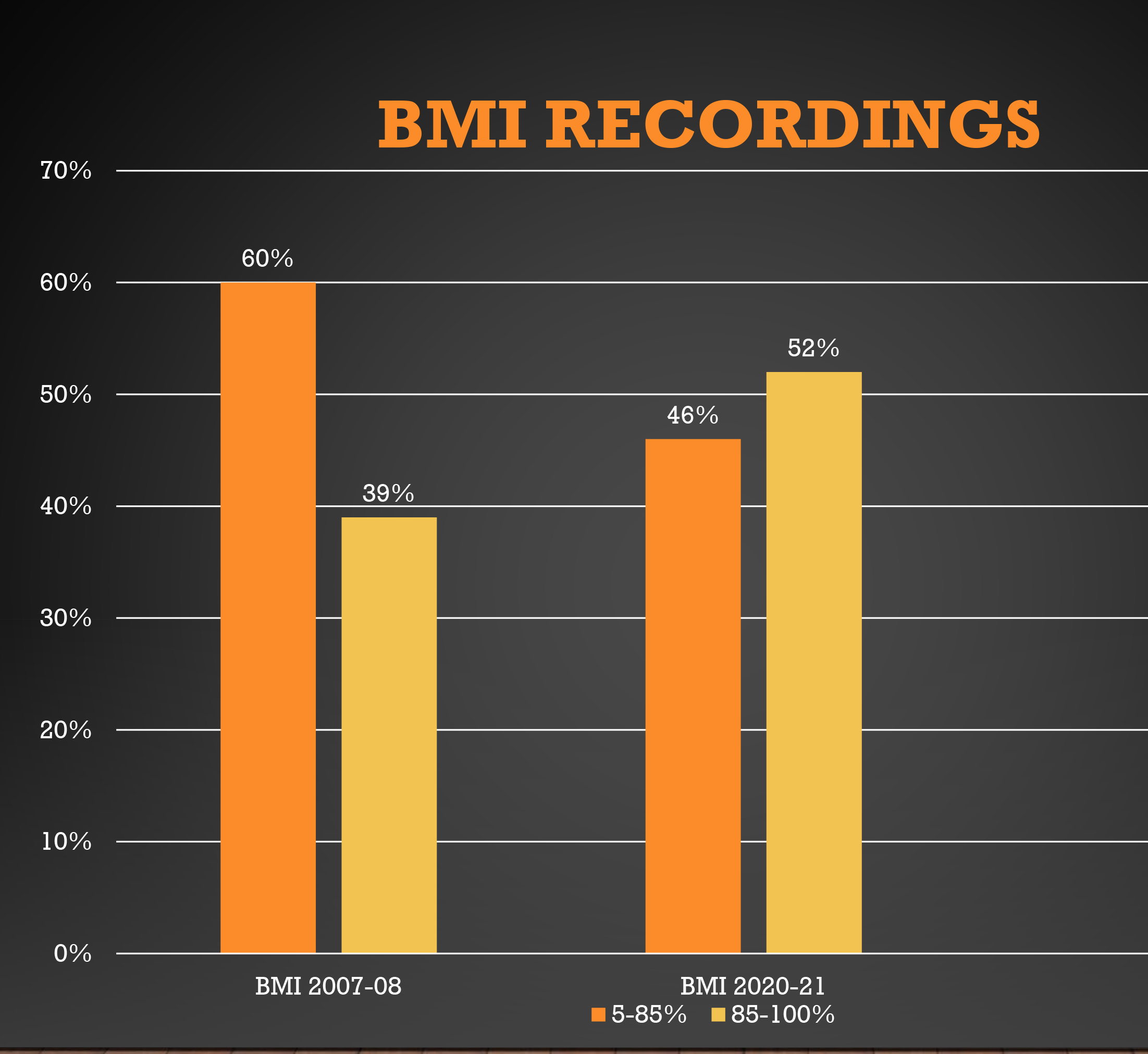
Thompson cited the case study analysis of annual body mass index (BMI) data aggregated by Christine Ebersole RN, BSN, CSN, a school nurse from Martinsburg, Pennsylvania. She shared her data on 7th to 12th graders in a 97 Milk / Grassroots Pennsylvania Dairy Advisory Committee education session in Washington in June 2023 and in a State Senate hearing in Harrisburg in 2021.
Her data showed the percentage of students in the overweight and obese categories, combined, grew from 39% in 2008 to 52% in 2021. This mirrors national trends demonstrating the anti-milkfat approach has not helped and may have harmed. The trends in fact have worsened ever since DGAs were created to infiltrate institutional feeding programs.
According to the latest National Survey of Children’s Health at the CDC website, the percentage of 10- to 17-year-olds with BMI in the obese category, alone, increased nationally from 15.4% in 2006 to 19.7% in 2018. In 1970 to 1980, it was 5%. This doubled eight years after the DGAs were born to 10% in 1988, then rose to 15.4% by 2006 after six years of USDA school lunch saturated fat caps were implemented, then stabilized at just over 15% from 2008 to 2012, then grew to 19.7% by 2018 — six years into the USDA ban on whole milk in schools.
The big milestone for whole milk in schools comes on the 5-year anniversary of Berks County, Pennsylvania dairyman Nelson Troutman placing his first painted roundbale “Drink Whole Milk (virtually) 97% Fat Free” in a pasture by a crossroads, which led to questions, publicity, and the creation of 97 Milk.
The 97 Milk educational organization has worked alongside the Grassroots Pennsylvania Dairy Advisory Committee on the legislative side. As a team, they continue to lead the charge for children to have the choice of whole milk once again at school. They are pleased to have worked with the Nutrition Coalition, founded by Nina Teicholz, author of Big Fat Surprise, and to see other national dairy and farm organizations join in support in recent years — from the American Dairy Coalition and Farm Bureau to National Milk Producers Federation and International Dairy Foods Association.
“We are grateful for this bill’s champion, the honorable G.T. Thompson. We thank him for not giving up,” said 97 Milk Baleboard originator Nelson Troutman in a Farmshine phone interview about the bill. “So many legislators get pounded from the top down, and they give up… and really, G.T. didn’t have a lot to gain out of this except helping the people. He did this for the kids, for the people, for the farmers. This is not a mandate. This is a choice, and I cannot emphasize the word choice enough.”
“The reason we got here is G.T.’s dedication to children having nutritious and delicious milk choices, and he brought it to the finish line in the House,” said Bernie Morrissey, chairman of the Grassroots PA Dairy Advisory Committee. “We have to keep working on the Senate, and 97 Milk has been a major part of educating people about this choice kids will have when the Whole Milk for Healthy Kids Act becomes law. The people on our grassroots committee and 97 Milk – we are a team. Our teams help each other. When you have a great team and teamwork, that’s how things get done.”
“This is a strong step in the right direction, and we have to keep going to our total destination,” said G.N. Hursh, Lancaster County, Pa. dairy farmer and chairman of 97 Milk. “We at 97 Milk totally support this bill. Whole milk choice in schools is clearly a national improvement for our future leaders. This is a win for good taste and excellent nutrition!”
Dale Hoffman and his daughter Tricia Adams, also members of the Grassroots Pennsylvania Dairy Advisory Committee expressed their gratitude. Three generations operate Hoffman Farms in Potter County, Pa.
“G.T. has really fought for this and put a lot of work into this. We appreciate what he has done in helping out the kids and the farmers,” said Dale in a phone interview. “When you look at the health situation, the trends have gone the other way without whole milk in the schools. Kids are dumping the milk, and you can’t blame them. They need those nutrients physically and mentally. Milk is one of nature’s most perfect foods. We produce it and grew up with it. Children should be able to choose it.”
Grassroots committee member Krista Byler, of Spartansburg, Pa. is a Union City school foodservice director and head chef. She said the Whole Milk for Healthy Kids Act “is huge for me because I have seen this from the startup, and I finally seeing movement in the school nutrition organizations. I see the whole picture coming together. I am amazed to see it reach this point that now students are much closer to having a milk choice that meets their nutritional needs,” she said.
Byler notes that the milk carton shortage affecting school districts this year has been a catalyst for support among her peers for the expansion of choices in milkfat levels.
“It’s sad to say, but as we struggle on the milk carton shortage, it forces people in my position to think outside the box and look at alternative service methods,” said Byler. “We are seeing students asking for other milkfat options, such as whole milk.”
She says she sees more of her peers today are excited about this bill and how it is worded in a way that makes it possible for them, as school foodservice directors, to implement — to actually offer whole milk as an option for students and not be financially penalized by the federal government for exceeding arbitrary and outdated fat percentages on the meal.
“I’m excited to be closer to having this choice to meet students’ needs in a way that is nutritious and that they find delicious. My students will be so excited,” said Byler. “When it becomes law, it will be a huge win for kids everywhere, and our waste will certainly go down.”
Look for more in Farmshine about this milestone, what’s next, and the three amendments that were offered and approved along with the bill. They are: 1) allowing school milk to be either organic or non-organic, 2) preventing school milk from Chinese state-owned enterprises, and 3) prohibiting USDA from doing its proposed elementary school ban on flavored milk.
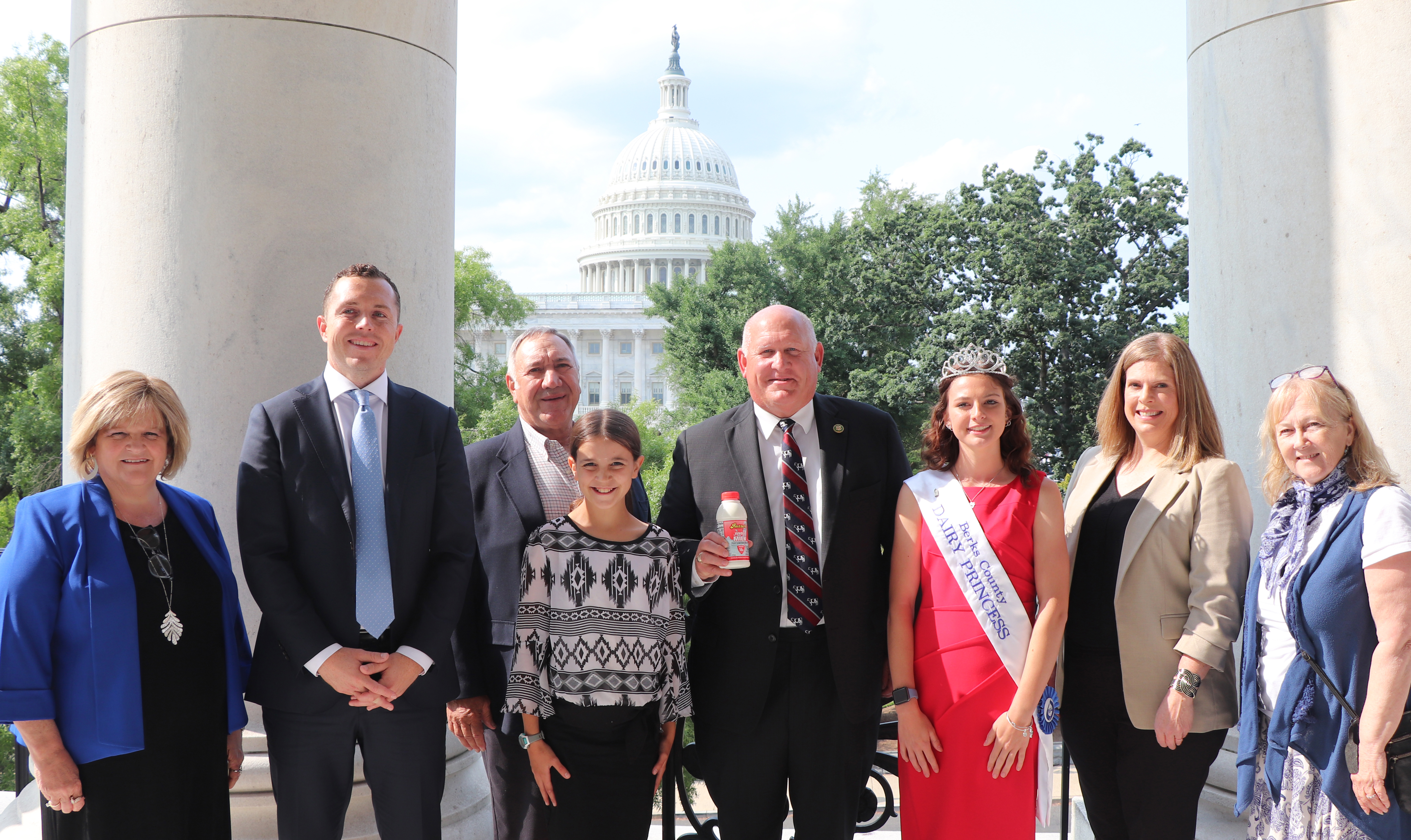
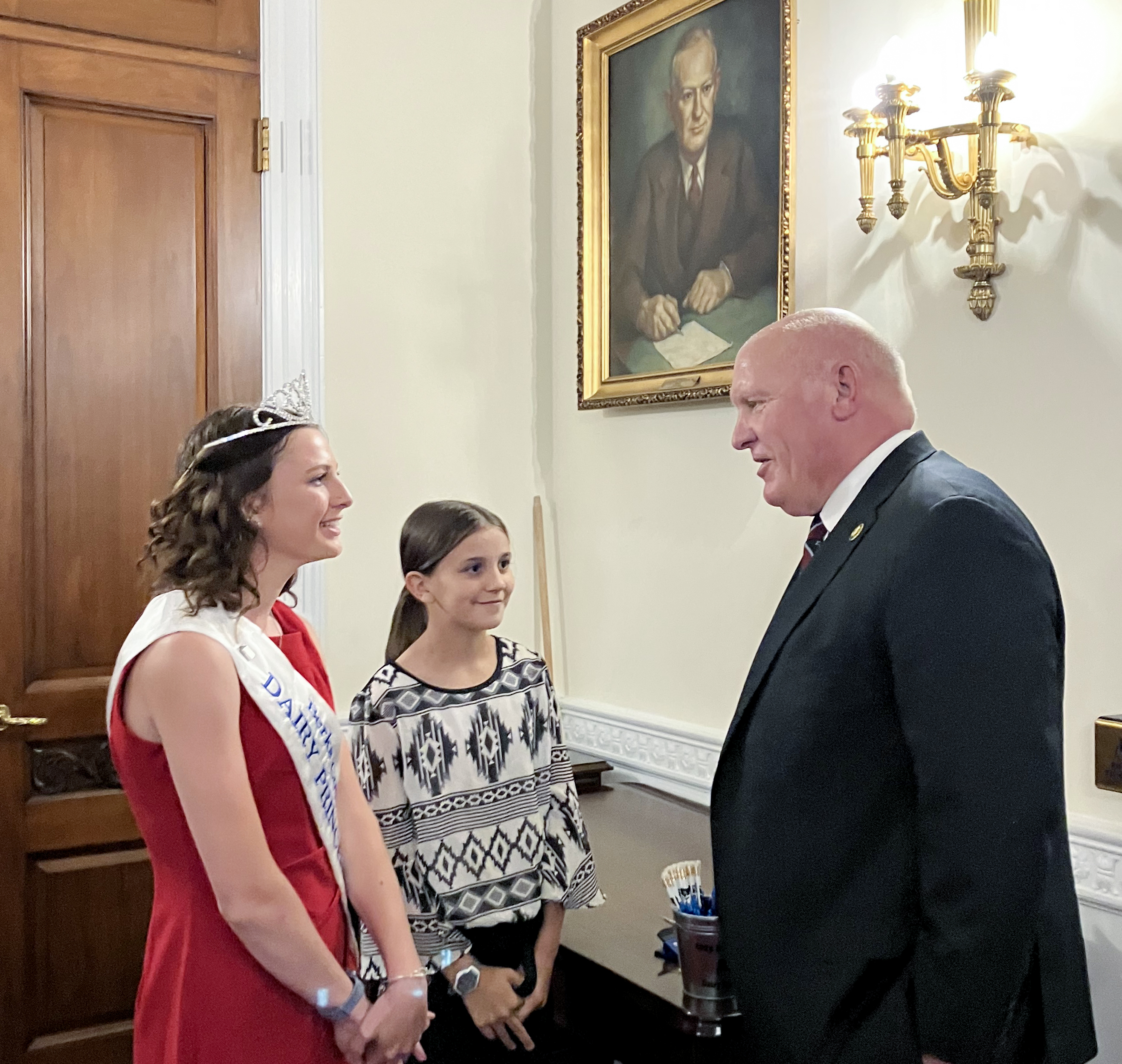
Standing with U.S. House Ag Committee Chairman, Glenn ‘G.T.’ Thompson are some of the volunteers who participated in the legislative staff briefing on G.T’s Whole Milk for Healthy Kids Act, including a June Dairy Month celebratory Whole Milk Bar at the Capitol in Washington on Tuesday, June 13. Congressman G.T. says he wants to reach 150 to 200 cosponsors before it comes to the House floor for a vote. Currently, there are 128 cosponsors representing 43 states (103 R’s and 25 D’s), and the Education and Workforce Committee recently passed H.R. 1147 in a bipartisan 26-13 vote. From left are Christine Ebersole, a school nurse in Blair County, Pa.; John Bates, executive director of The Nutrition Coalition; Nelson Troutman, a Berks County dairy farmer and 97 Milk Baleboard originator and his granddaughter Madalyn, the 2022-23 Lebanon County, Pa. Dairy Maid; Congressman G.T. Thompson (R-PA-15), the champion and prime sponsor of the Whole Milk for Healthy Kids Act; Sara Haag, the 2023-24 Berks County Dairy Princess; Krista Byler, a school foodservice director in Crawford County, Pa.; Sherry Bunting, Farmshine contributor and volunteer advocate for whole milk in schools. Photo credit: Maddison Stone
By Sherry Bunting, Farmshine, June 16, 2023 with June 23 update
WASHINGTON – “Wouldn’t it be great if we could unite the country with whole milk?” That question was posed by a fellow journalist in the Southeast, Julie Walker of Agrivoice, as I was updating her about the grassroots effort to bring milk education and the choice of whole milk to schools.
After the events of the past two weeks, my answer to that question is: Yes, I believe we can and we are… seeing the fruits of the labor of grassroots volunteers.
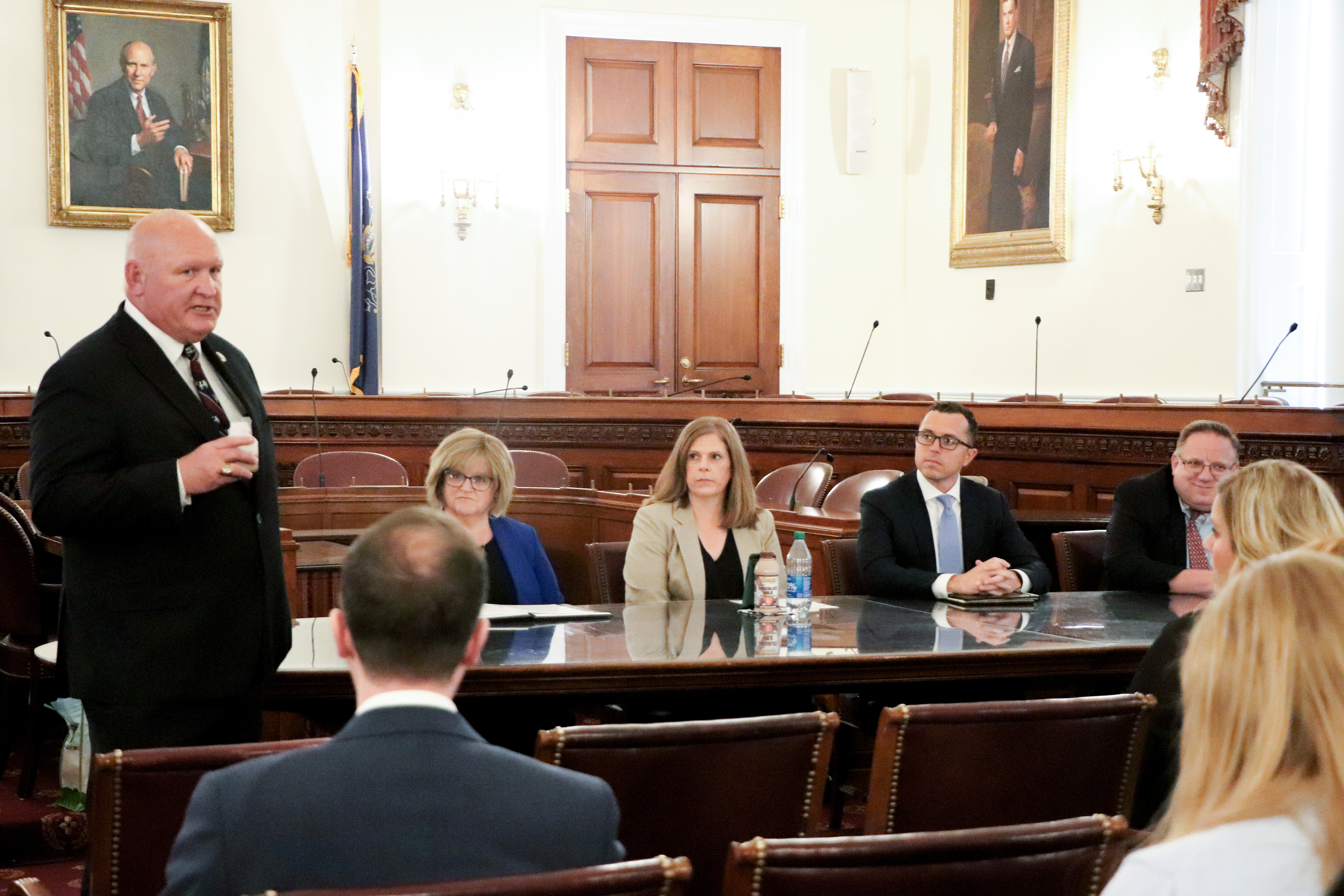
On Tuesday, June 13, the Grassroots Pennsylvania Dairy Advisory Committee and 97 Milk were part of a legislative staff briefing hosted by Congressman G.T. Thompson and his staff at the Longworth House office building on Capitol Hill in Washington. This had been planned weeks earlier, before Thompson’s bill – the Whole Milk for Healthy Kids Act, H.R. 1147 – passed the Education and Workforce Committee on June 6 in a bipartisan 26-13 vote.
This week, the identical bipartisan Senate companion bill was introduced on June 13 by prime sponsor Senator Roger Marshall, a Republican and medical doctor from Kansas and prime cosponsor Peter Welch, a Democrat from Vermont along with other bipartisan cosponsors.
Allow me to take you behind the scenes of the June 13 legislative staff briefing on Congressman Thompson’s House bill and why it gives me hope to see people rediscovering and uniting behind the effort to legalize whole milk in schools so children have true access to the most wholesome nutritional beverage, milk.
What becomes apparent is that children are not benefiting from milk’s nutrition when their choices at school are restricted to fat free and low fat. They should be able to choose whole milk and 2% milk that are currently banned by federal nutrition standards, and they should be able to continue to choose flavored milk, which USDA is considering restricting to only high school students.
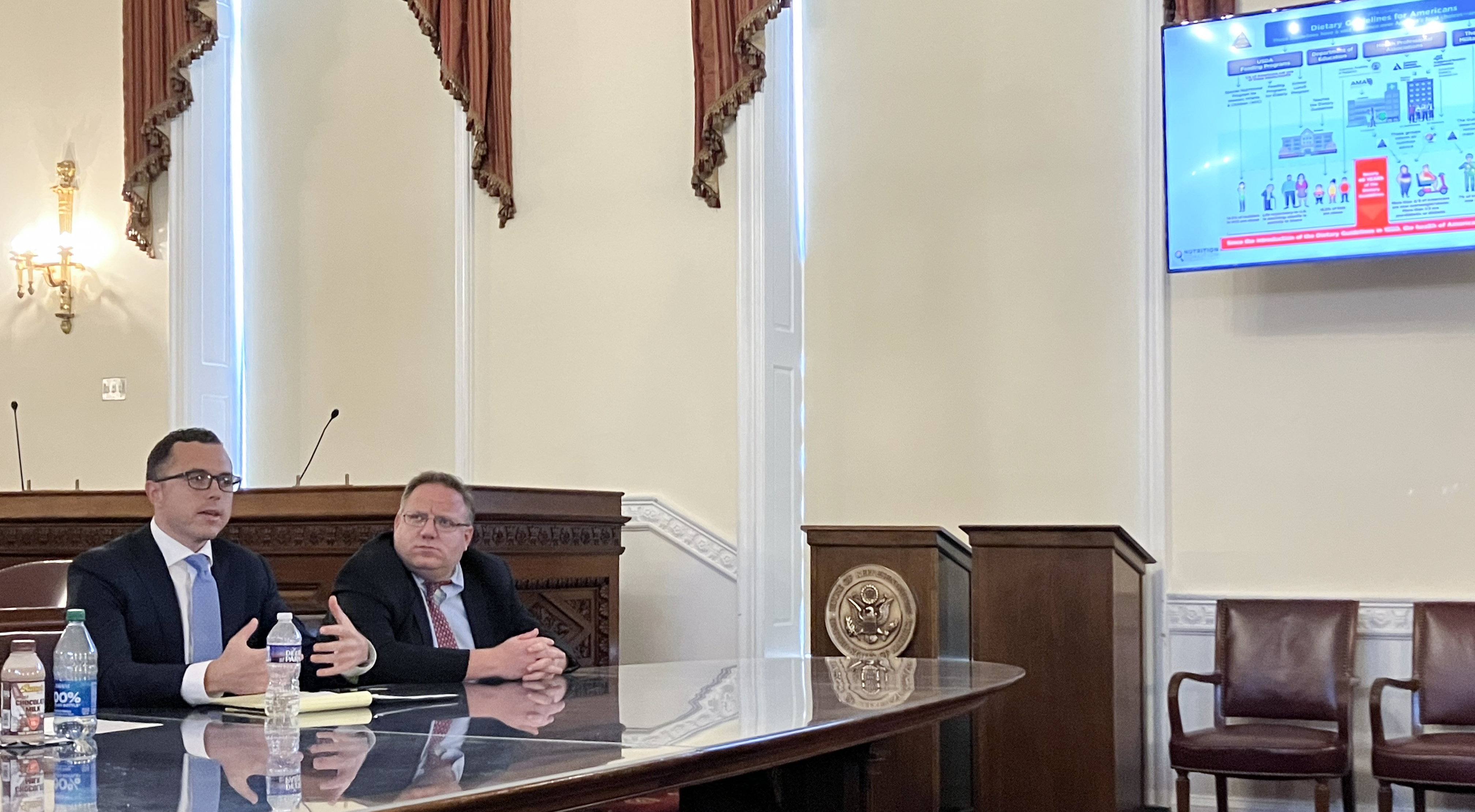
“Milkfat was demonized as a part of the child nutrition standards, especially since 2010… and we’ve seen a lot of waste and unopened milk cartons at school cafeterias because (fat-free/low-fat milk) is not a great milk experience for kids. Meanwhile, we’ve seen a significant increase in childhood obesity. If they don’t have access to milk they like, they will drink something, and the alternatives won’t give them milk’s essential nutrients or be as satisfying,” said Rep. Thompson. “Everything has its own time, and I’m pleased that we’ve gotten to this point with the bill and appreciate the panel here today to share and answer the question: ‘Why whole milk in schools?’”
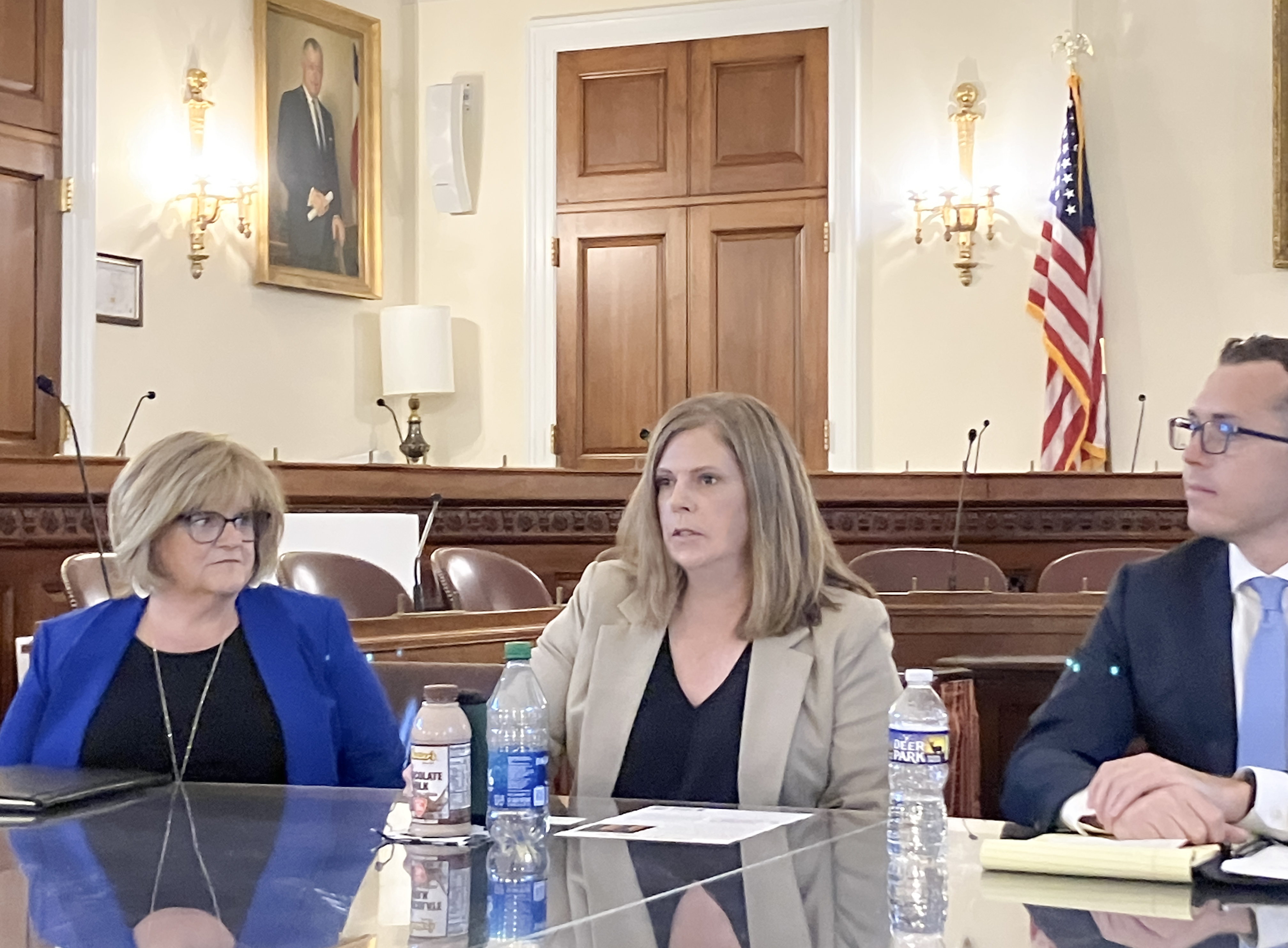
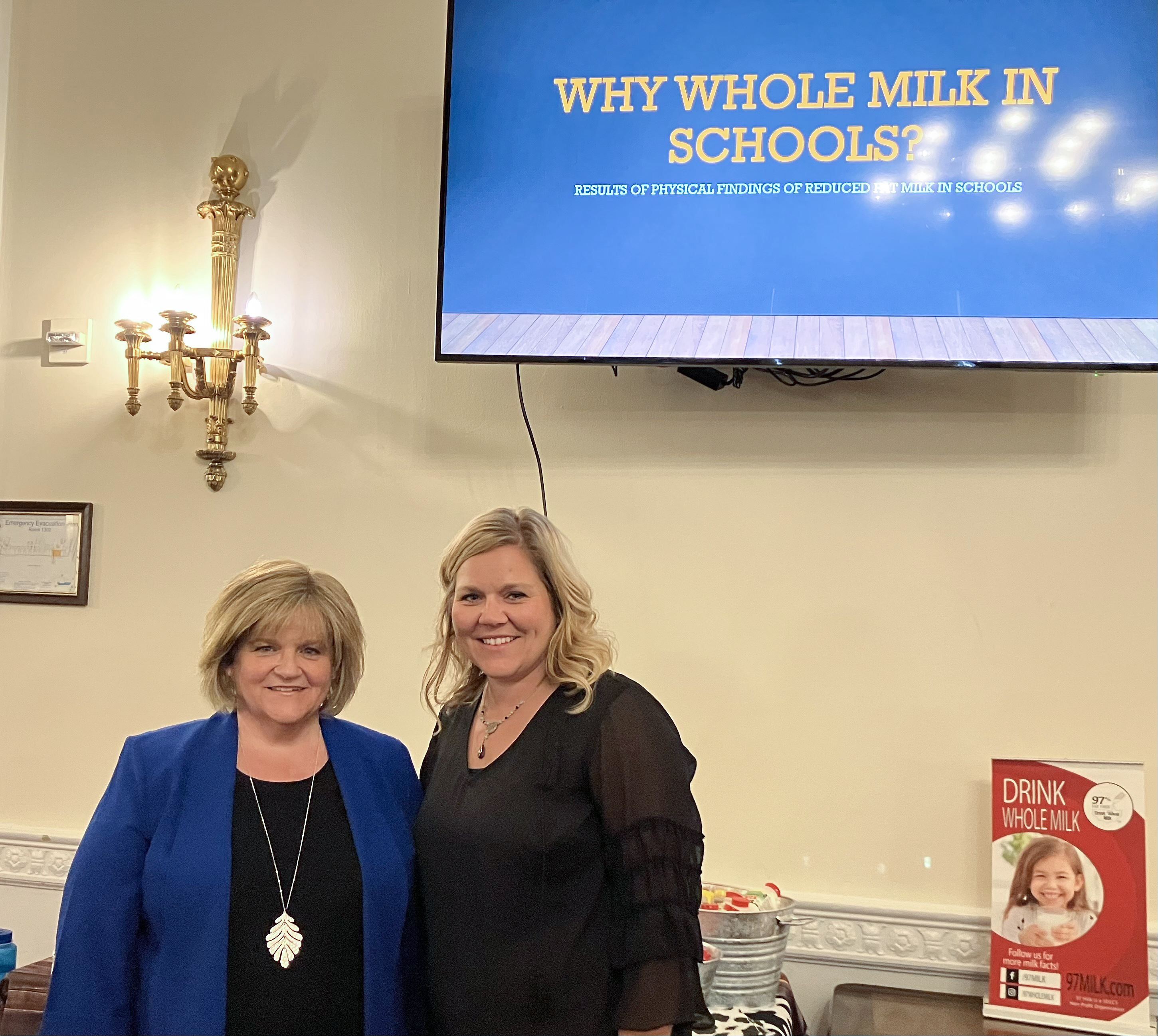
Two school professionals from the grassroots advisory group were on the panel: Krista Byler (second from left) of Spartanburg, foodservice director for Union City Area Schools and Christine Ebersole RN, BSN, CSN (left) of Martinsburg, school nurse at Williamsburg Community School District. They were joined by John Bates (second from right), executive director of the Nutrition Coalition, a nonprofit founded by Nina Teicholz, author of The Big Fat Surprise; as well as Paul Bleiberg (right) of National Milk Producers Federation.
Around 25 to 30 staff members working for Representatives and Senators from both parties attended for the entire briefing. That may not sound like a lot, but for this setting, and the constantly changing schedules during floor votes, hearings and meetings, it’s a big deal. The event was by invitation and targeted key legislative offices for an educational briefing on the bill.
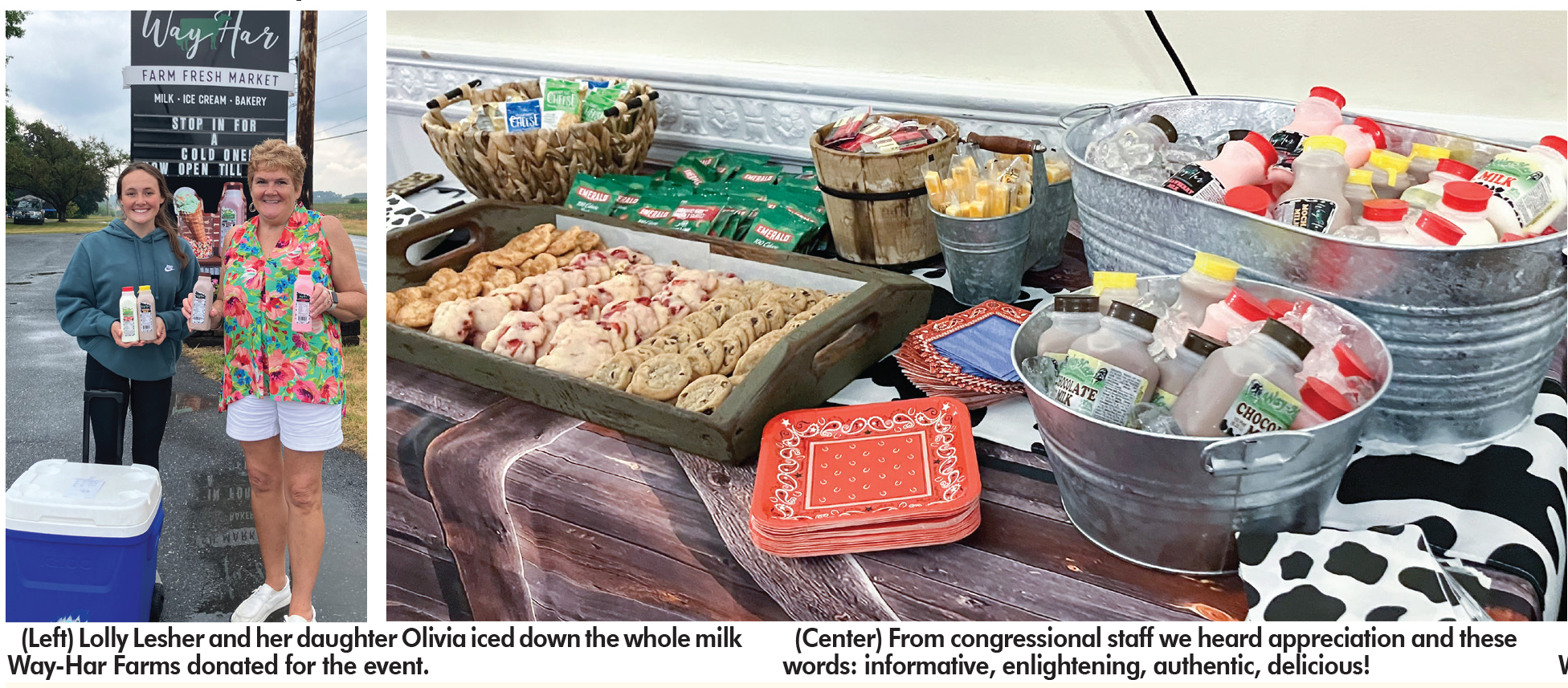
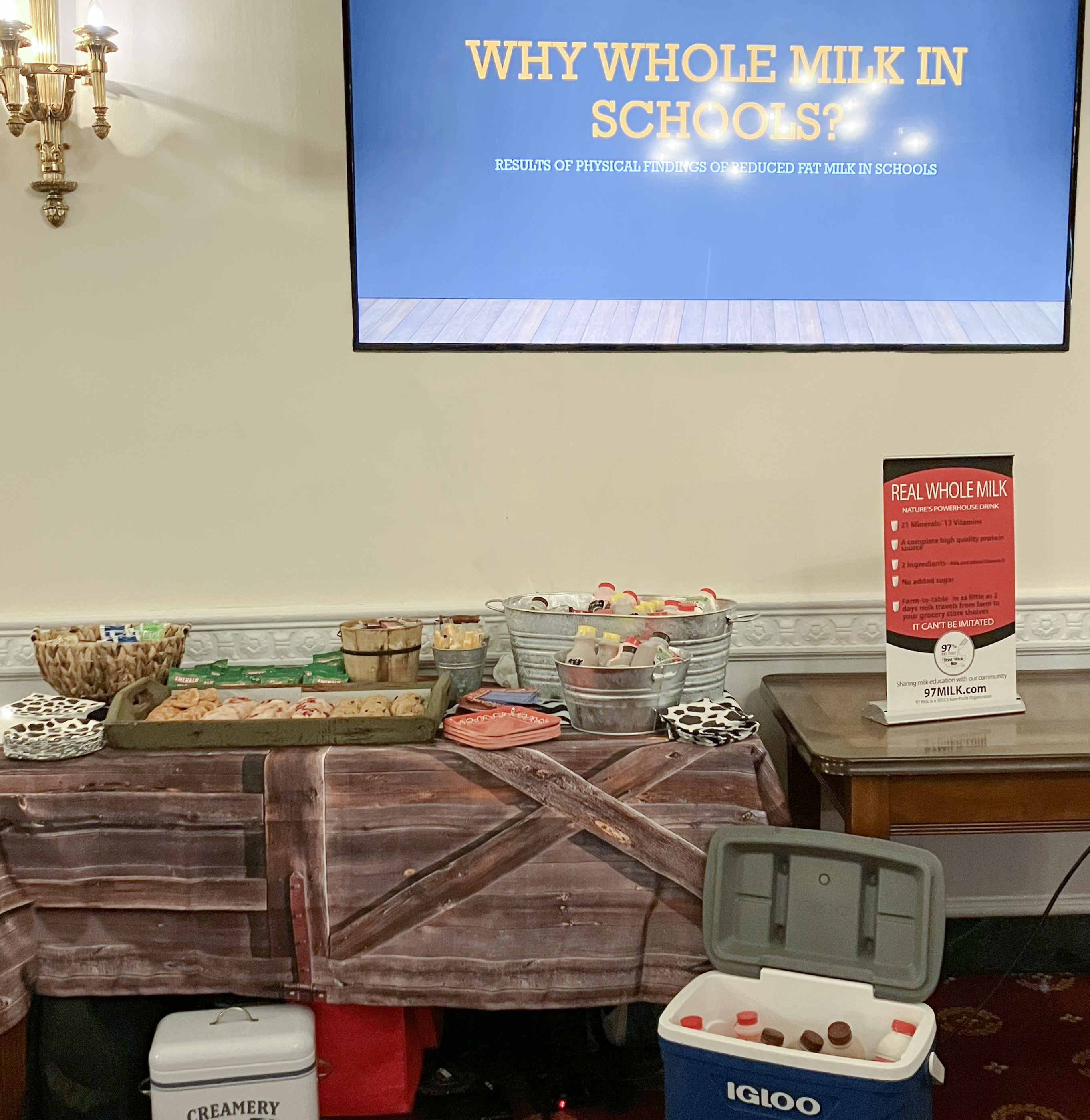
It was Congressman Thompson’s idea to have a “whole milk bar,” so our crew brought 100 half pints of whole milk — unflavored, chocolate, strawberry and mocha — donated by the Lesher family of Way-Har Farms, Bernville, Pennsylvania. We added some full pints of flavored and unflavored milk picked up at two convenience stores on the way (Rutter’s and Clover) to be sure we had enough as we heard interest in the briefing was growing.
We baked fresh strawberry cheesecake cookies with butter and cream cheese, and brought a few other types of cookies, as well as cheese snacks and nuts, arranged a nice table, kept the milk iced cold (that was a fun challenge through security scanners).
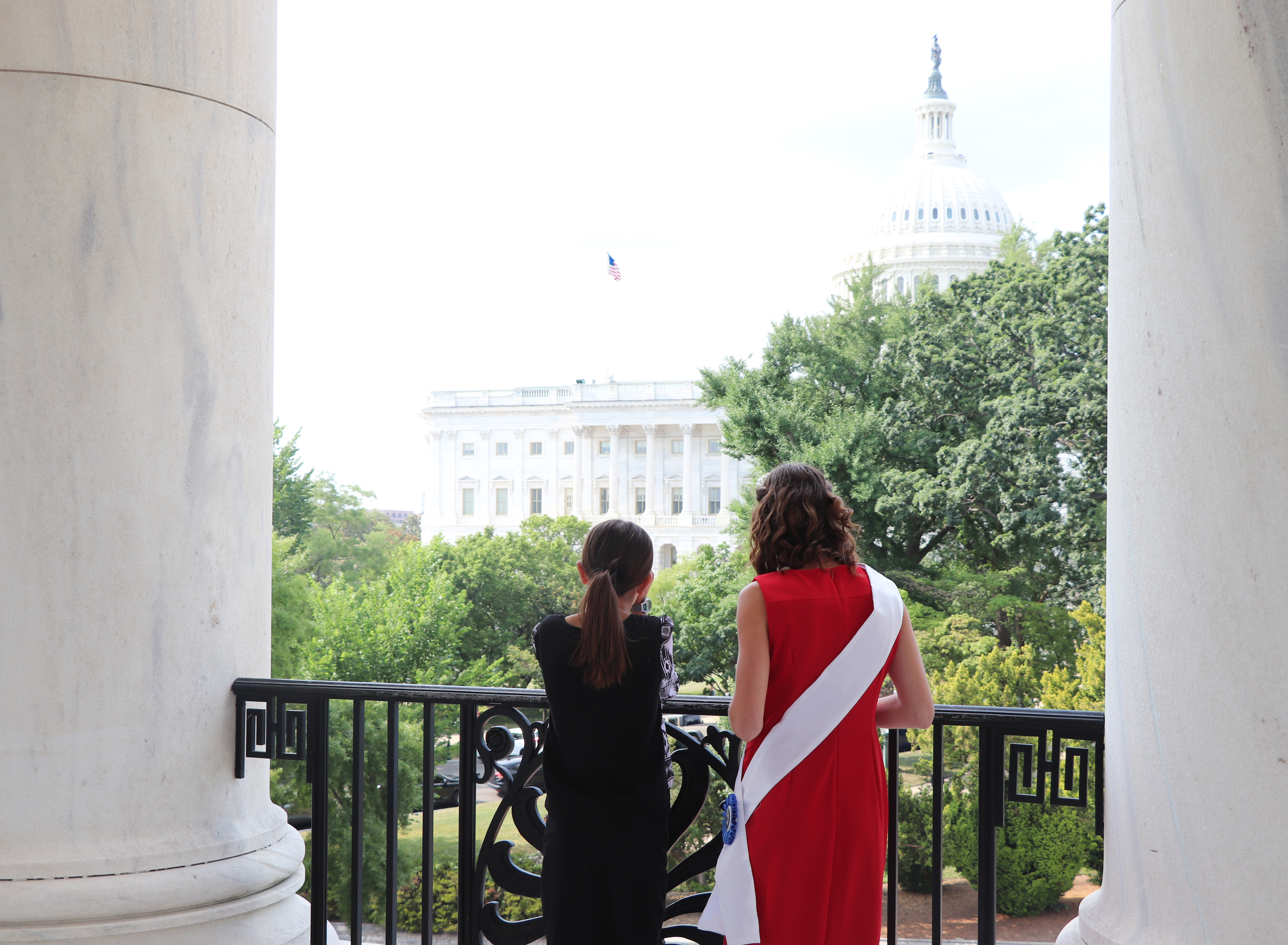
We brought with us Berks County Dairy Princess Sara Haag and former Lebanon County Dairy Maid Madalyn Troutman. Ebersole brought her daughter Vanessa Wiand, an elementary school teacher.
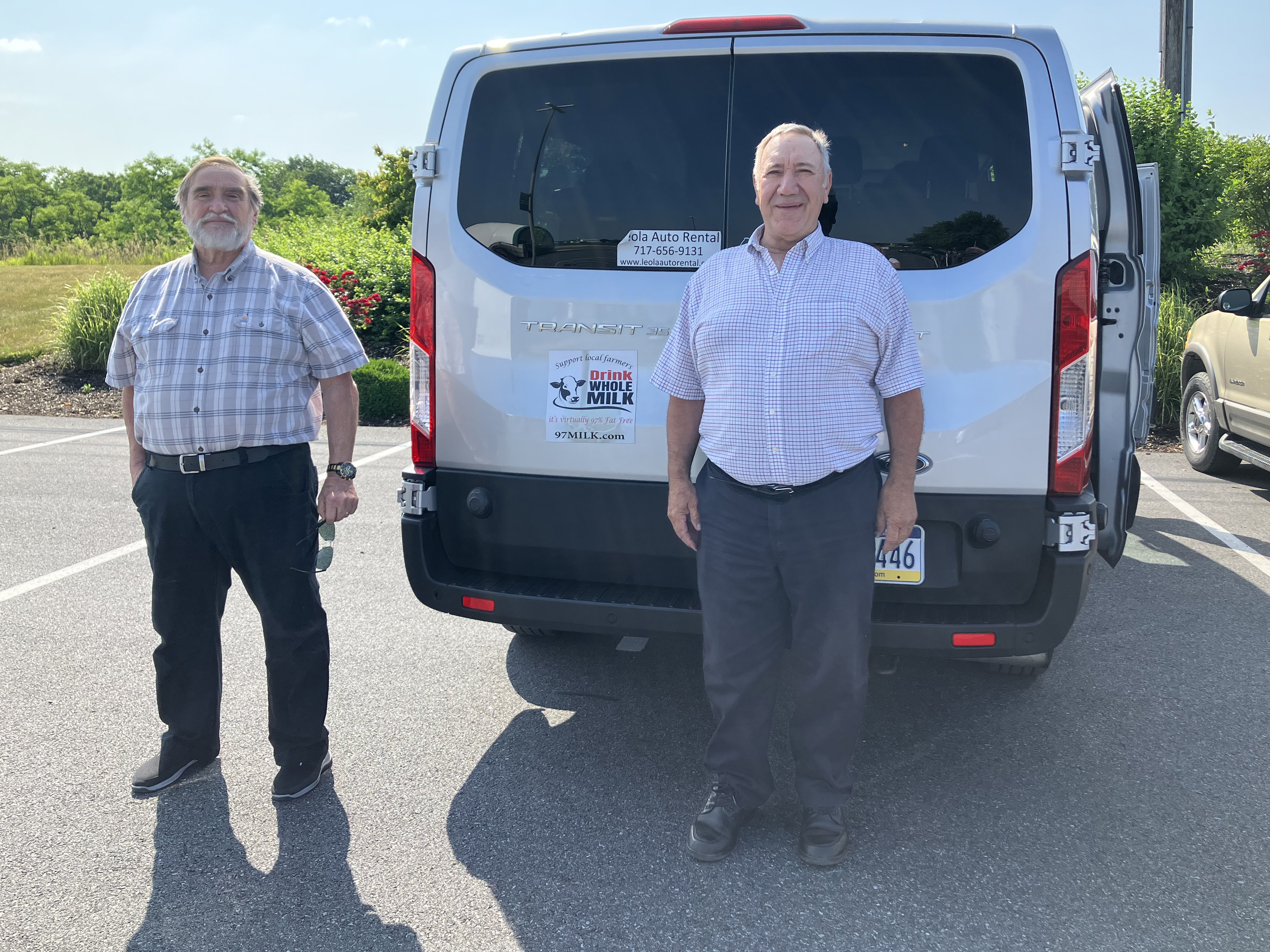
Nelson Troutman (right) with our driver Frank Tomko
Berks County farmer and Drink Whole Milk 97% fat free Baleboard originator Nelson Troutman was part of our crew, and he made sure the van we rented for travel had several 97 Milk magnets for the ride.
I provide these details because here’s the deal: Each person in our crew is a volunteer among the many volunteers working on the whole milk in schools issue, not just in Pennsylvania, but in other states as well.
Sara and Madalyn handed out the 6×6 cards designed by Jackie Behr at 97 Milk that visually show what milk provides nutritionally. It’s an impressive piece. They also handed staffers a business card with a QR code (above) that they could scan to reach the online folder to a video created by students and technology teacher at Krista’s school as well as finding other important information about whole milk and the Whole Milk for Healthy Kids Act. On the table next to the whole milk bar was a one page handout with bullet points, and 97 Milk provided milk education tabletop displays.
As Congressman Thompson talked about “ruining a generation of milk drinkers with failed federal nutrition policy,” he praised the bipartisan support for H.R. 1147 and noted the 107 cosponsors in the House (as of June 13, the number as of June 23 is 128 and counting).
That’s a large number by historical standards, but Thompson wants to get to 150 cosponsors by the time the bill is officially reported to the House, which will be soon.
There is still time, and it is still important to keep contacting members of Congress to ask them to consider cosponsoring the Whole Milk for Healthy Kids Act in the House, and thank them if they already have signed on.
Ebersole shared with staffers her perspective as a nurse, what she observes, what milk nutrition means for children.
“I thought it would be interesting to compare BMI (Body Mass Index) screenings when whole milk was served in schools with the recent screening where students have been served only skim and 1% milk. The results of the comparison are striking (above). The overweight and obese categories for students in grades 7-12 in 2007-2008 school year was 39% with 60% in the proper BMI scale. In the year 2020-2021, after being served low fat milk during school hours, the overweight and obese categories were increased to 52% while the recommended range was decreased to 46%. That is a 13% increase over the past 13 years!” said Ebersole.
“While one cannot assume that the low fat milk alternatives are the only determining factors, they certainly did not have the intended outcome of reducing obesity in school age children,” she said.
Ebersole explained that, “Whole milk is a nutrient dense food and with its natural combination of protein, fats and carbohydrates, it is called Nature’s most nearly perfect food. Whole milk also provides satiety, which is stabilizing for blood sugar as well as feeling fuller longer thus decreasing food intake. Another important quality is that students prefer the taste of whole milk compared to the reduced fat and skim milk options.”
Byler talked about the trial at her school in the 2019-20 school year. She explained that the milkfat restrictions at school have led to a loss of school milk consumption with results that are far reaching.
“We are now hearing of very early onset osteoporosis and an increase in malnutrition and/or obesity. It is shameful that our youth cannot have a choice of a wholesome, nutritious product that is farm-to-table/farm-to-school,” said Byler. This, and the amount of milk wasted daily prompted the school trial.
She provided slides of the trial results and talked about how half of the students didn’t really know whole milk was not allowed. This means they didn’t know how good milk can be.
“The results of the trial were astounding. When offerings were expanded to include whole and 2% milk, the amount of wasted milk was reduced by 95% and we saw a 52% increase in students choosing milk,” said Byler, explaining that the student council did actual milk collection data as part of an environmental project.
She also shared results of her survey of the elementary school children showing that if this latest possible restriction on milk options for schoolchildren is approved by USDA, fewer than 25% of students currently taking and drinking the milk say they would continue taking milk and drinking it if flavored milk were not offered.
“That’s huge,” said Byler.
That means we would see even more reductions in milk consumption at school and more waste. This struck a chord because when Byler presented the 2019-20 trial where her school offered whole and 2% along with fat free and 1% milk, for trial purposes, we heard audible gasps among those attending the briefing when Byler shared the data on the reduction of wasted milk. ((The students also created a video about school milk, view it here.)
We also saw reactions while Ebersole was sharing her analysis of student BMI data over the past 13 years.
Both women concluded by sharing a heartfelt message about how important dairy farmers are to communities, how they care for their cattle and work to provide a high quality nutritious product, and what it means to them for children to be able to choose milk they love so they can benefit from the nutrition the milk provides.
“As the wife and granddaughter of proud Pennsylvania dairymen, I knew the decrease in milk we were ordering for schools would impact dairy families. I know firsthand about the dairy farmers we have lost,” said Byler. “What I know based on 18 years in school nutrition, raising two children and being part of two dairy families is that restricting milk offerings to our school children does not benefit our children or our dairies. It benefits big corporations who have exponential marketing power and are preying upon our youth.”
School nurse Christine Ebersole and her daughter Vanessa Wiand, an elementary teacher at the briefing.
Ebersole noted that, “Being born and raised on a dairy farm and having lived in the dairy community all my life, I can say I know something about the American Dairy Farmer. They are on call 365 days a year and 24 hours a day. They care about their animals and also care about their neighbors. When a tragedy happens like a fire, the neighbors come together. Dairy farmers work diligently to bring a wholesome natural food to us. Let’s do our part to support this industry by allowing students to have a choice of a delicious, nutritious whole food, whole milk,” she said.
For the Nutrition Coalition, John Bates explained they are a non-profit, non-partisan organization that seeks to improve health in America by ensuring that the public gets evidence-based nutritional advice. They emphasize good science, transparency, and methodology and receive no industry funding.
“When the Healthy, Hunger-Free Kids Act was enacted in 2010, milk became counted as part of that less than 10% of calories from saturated fat, when previously it had been in its own, separate beverage category,” said Bates.
He noted that the U.S. Dietary Guidelines that these rules for schools are based on “never reviewed studies on dietary fat specifically for children until 2020. Children have just been assumed to be like adults, but children are different: they need more protein for their growing bodies and more fat for their growing brains,” said Bates.
The Guidelines in 2020 cite a single clinical trial on school-aged children, ages 7-10 (“DISC,” funded by the NIH). It showed ‘Modestly’ lowered LDL-cholesterol, he explained. “Yet the study was not on a normal population. The expert USDA committee acknowledged this study could not reliably be generalized to a larger population
The bottom line, said Bates is that expert committees have found “insufficient evidence” to show that restricting saturated fats in childhood could prevent heart-disease or mortality in adulthood.
“In our view, a single trial on an atypical population is not enough to make population-wide guidelines to all American children,” he said.
Paul Bleiberg for National Milk Producers Federation focused his comments on the problems with underconsumption of dairy.
“Milk is the number one source of three of the four food nutrients of public health concern as identified by the DGA’s — calcium, vitamin D and potassium. Dairy delivers 7 of the 14 nutrients the American Academy of Pediatrics recommends for optimal brain development as well as nutrients vital for immune health and bone growth and development during a child’s school-aged years,” said Bleiberg.
“The 2020 DGA Committee found that 79% of 9 to 13 year olds fall short of recommended dairy intake and the data from MilkPEP show that students take less milk and throw away more milk at schools when they do not have options they like,” he added.
Before, after and during these four short presentations on whole milk choice in schools, staffers trickled in, gathered around the whole milk bar and had conversations.
In fact, when news began to spread through texts and emails that there were milk and cookies in room 1302 — more staffers came and went. Connections were made around good food and delicious, nutritious milk.
From congressional staff we heard appreciation and these words: informative, enlightening, authentic, delicious!
Those four words give me hope that we can unite with whole milk… for our children and our dairy farmers.
June 23 UPDATE: This was another good week for the Whole Milk for Healthy Kids Act in Washington, and here’s how you can help…
As of June 23, the bipartisan Whole Milk for Healthy Kids Act, H.R. 1147 grew the number of cosponsors to 128 including prime sponsor G.T. Thompson (103 Republicans, 25 Democrats). These cosponsors represent 43 states.
Texas tops the list with 13, followed by Pennsylvania 10, New York 8, California, Florida and Wisconsin at 7. Maine, Idaho, Iowa, North and South Dakota and Wyoming have fewer Representatives and their full delegations are on board. Wisconsin is nearly 100% with 7 of their 8 Representatives signed on.
The 43 states now represented are listed in the order of number of cosponsors vs. the total number of representatives for the respective states: Texas 13 of 36, Pennsylvania 10 of 17, New York 8 of 26, California 7 of 52, Wisconsin 7 of 8, Florida 7 of 28, Georgia 5 of 14, Indiana 4 of 9, Iowa 4 of 4, Michigan 4 of 13, Minnesota 4 of 8, North Carolina 4 of 14, Illinois 3 of 17, Virginia 3 of 11, Washington 3 of 10, Alabama 2 of 7, Arizona 2 of 9, Connecticut 2 of 5, Idaho 2 of 2, Kansas 2 of 4, Kentucky 2 of 6, Maine 2 of 2, Missouri 2 of 8, New Jersey 2 of 12, Ohio 2 of 15, Oklahoma 2 of 5, Oregon 2 of 6, South Carolina 2 of 7, Tennessee 2 of 9, Arkansas 1 of 4, Colorado 1 of 8, Hawaii 1 of 2, Louisiana 1 of 6, Maryland 1 of 8, Mississippi 1 of 4, Nebraska 1 of 3, Nevada 1 of 4, New Mexico 1 of 3, North Dakota 1 of 1, South Dakota 1 of 1, Utah 1 of 4, West Virginia 1 of 2, and Wyoming 1 of 1.
To reach all 50 states, here’s what we need in the East: Delaware, Massachusetts, New Hampshire, Rhode Island, and Vermont. In the West: Alaska and Montana. Is your state on the list? Is your Congressional Representative a cosponsor? Make the call! Go to this link to see the bill’s progress and cosponsors, and click “contact your member” on the right to find your Representative.
Call Senators too. On June 13, the bipartisan Senate companion bill, S.1957, was introduced by Senator Roger Marshall, a Republican and medical doctor from Kansas, along with prime cosponsor Peter Welch, a Democrat from Vermont. Also cosponsoring right out of the gate are Democratic Senators Kirsten Gillibrand of New York and John Fetterman of Pennsylvania; Independent Senator Angus King of Maine; and Republican Senators Ron Johnson of Wisconsin, Chuck Grassley of Iowa, Susan Collins of Maine, Cindy Hyde-Smith of Mississippi, and James Risch and Mike Crapo, both of Idaho. As of June 23, that’s 11 Senate sponsors from 9 states. Maine and Idaho have both of their respective Senators on board!





 Ag Moos