‘Stop feeding us lies’ say protesters as Dietary Guidelines Committee unbelievably doubles down against animal fat, protein

Dietary Guidelines have most negatively impacted children and youth.

Dietary Guidelines Advisory Committee holds final meeting. Draft recommendations include: Reductions in total protein; Less protein from animals, more from plants; Dairy emphasis still low-fat, non-fat; Implementation recommendations include food supply leverage

By Sherry Bunting, Farmshine, October 25, 2024

WASHINGTON, D.C. – This week is National School Lunch Week, and on Oct. 22 while USDA Secretary Tom Vilsack kicked off the so-called “largest federal-led summit in support of healthy school meals” in Las Vegas, the 2025-30 Dietary Guidelines Advisory Committee (DGAC) met publicly by zoom to gamble away the nutrients children need for the development of their brains, bodies and long-term health.

This was the seventh and final meeting of the DGAC after 22 months of subcommittee meetings and periodic full committee meetings, yielding a draft “scientific report” that is increasingly vegetarian.

Its recommendations to USDA and HHS are to develop 2025-30 Guidelines that significantly decrease the role of nutrient dense animal foods, even though they spent the first hour of the 12-hour, two-day virtual meeting puzzling over how to solve the nutrient deficiencies in their analysis.

The recommendations merge the three current DGA patterns (Vegetarian, Mediterranean and Healthy U.S.) into one dietary pattern with a draft name of “Healthy Flex U.S. Diet.” The flexibility part, according to the DGAC discussion, is the ‘how much’ and ‘how to’, which relies on ‘food pattern modeling’ and more specific strategies on how to replace animal based foods with plant based foods. 

The DGAC aims to improve its poor performance on the under-consumed nutrients by “including more nutrient-dense plant-based meal and dietary recommendation options” in its advice for 2025-30 Dietary Guidelines. 

The draft advice aims to continue to “emphasize consumption of low-fat or non-fat dairy and unsaturated fats; limit consumption of red or processed meats and foods high in saturated fat; and limit foods like sweetened beverages.”

Some committee members raised the concern that further addressing one problem (fat, salt, and sugar) leads to other problems in other areas (under-consumption of key nutrients, over-consumption of carbohydrates, and impacts on metabolic health). 

In fact, a week before the DGAC met, the first ever Change the Dietary Guidelines protest drew hundreds of people to the nation’s capitol — with Nina Teicholz, author of Big Fat Surprise, as emcee. It was organized by Metabolic Revolution with the mission of asking the Administration to “STOP FEEDING US LIES.”

Nutrition Coalition photo

Meanwhile, in the DGAC meeting, at least one member at the end of the first day noted how animal foods, specifically mentioning dairy, have all of these essential nutrients and that the bioavailability of the nutrients is important.

This didn’t make much difference. On the question of saturated fat restrictions, the 2025-30 DGAC doubled-down. These restrictions began with the first edition in 1980, and the quantitative recommendation of “limit saturated fat intake to less than 10% of calories per day starting at age 2 and replacing it with unsaturated fat, particularly poly-unsaturated” began in 2005.

The Committee’s biggest justification was that, “This has been confirmed by several previous DGACs based on the relationship between saturated fat intake and cardiovascular disease risk.” Basically saying it has been previously decided, and “we’re sticking with it.” Essentially, all evidence to the contrary was again ignored.

The Committee stated that only 1 in 5 Americans implement this limitation; so, food replacement strategies, cultural diet pathways, and diet simulations were recommended to show how to get more nutrient density from plant sources. Pre-packaged and pre-portioned implementation strategies and plated combinations of plant-based meals are suggested as ways to ensure nutrients without the fat.

This high-level academic exercise means very little to everyday Americans making choices about food, but it could fundamentally change what is available to choose from — if the “systems science, implementation science, and behavioral science” the DGAC is also recommending pushes diets even more toward highly processed, pre-packaged, pre-portioned options designed by global food giants.

Bottomline: the DGAC will recommend to the USDA and HHS to further reduce animal-based protein consumption and to further increase plant-sourced consumption in the 2025-30 Guidelines, while continuing to limit dairy to non-fat and low-fat options.

For dairy, the DGAC is also recommending that USDA update nutrition composition and dairy reference guides to reflect what they say are ‘improved’ plant-milks, and to use ‘diet simulators’ to show Americans how to be more ‘flexible’ in replacing animal foods with plant foods.

The DGAC also changed the wording of its 2025-30 mission to “reduce the focus on chronic disease risk reduction, to instead focus more on promoting growth and development and improving the healthspan.”

These are key takeaways despite the Committee spending the first hour of the first day stupefied by the analysis showing — uniformly across all socio-economic and cultural demographics — children ages 5-19 had the nutritionally poorest diets in terms of under-consuming key nutrients at this most critical lifestage.

Even when they picked up their Health Equity Lens to look at the data, it was uniformly bad.
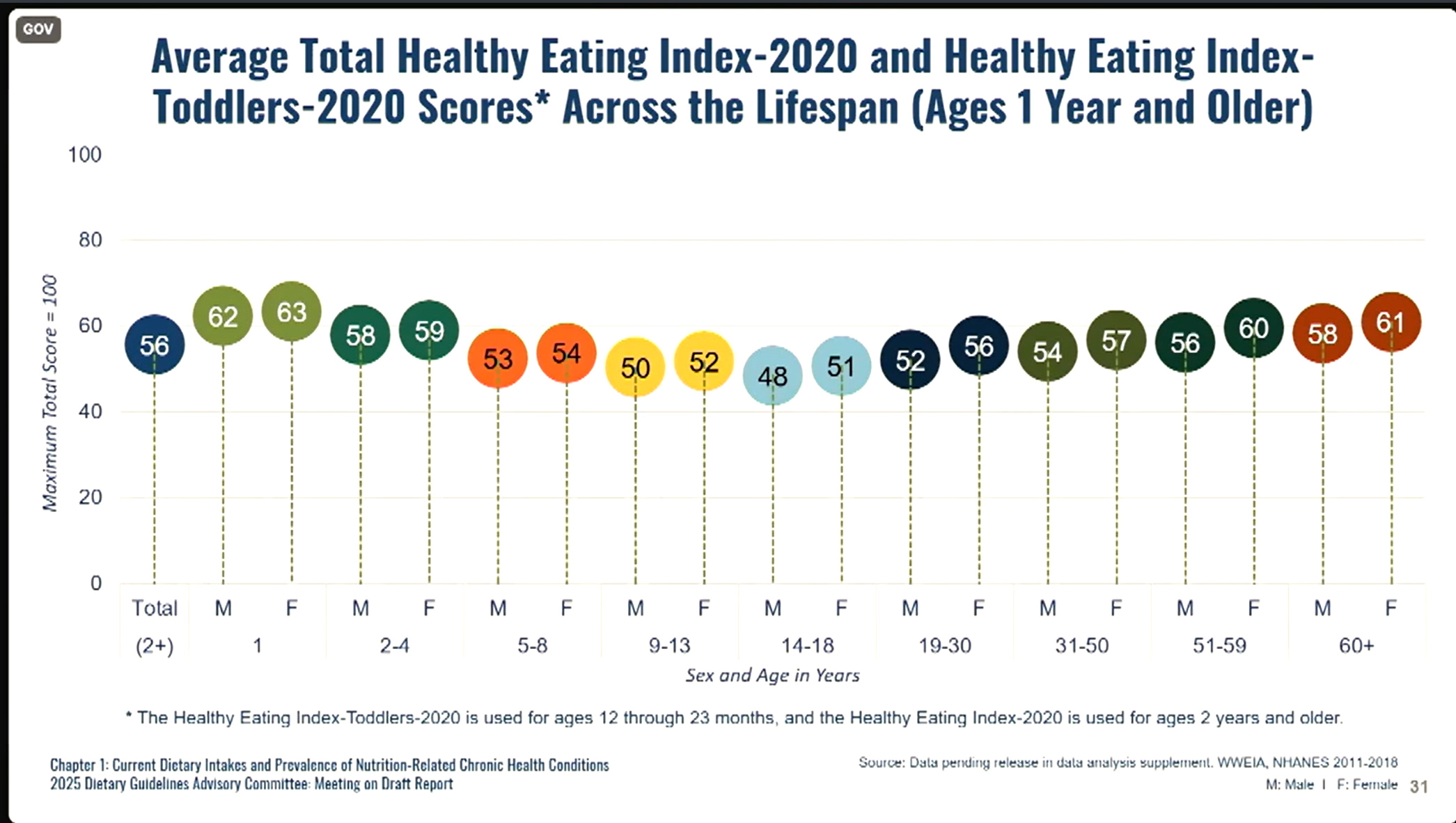
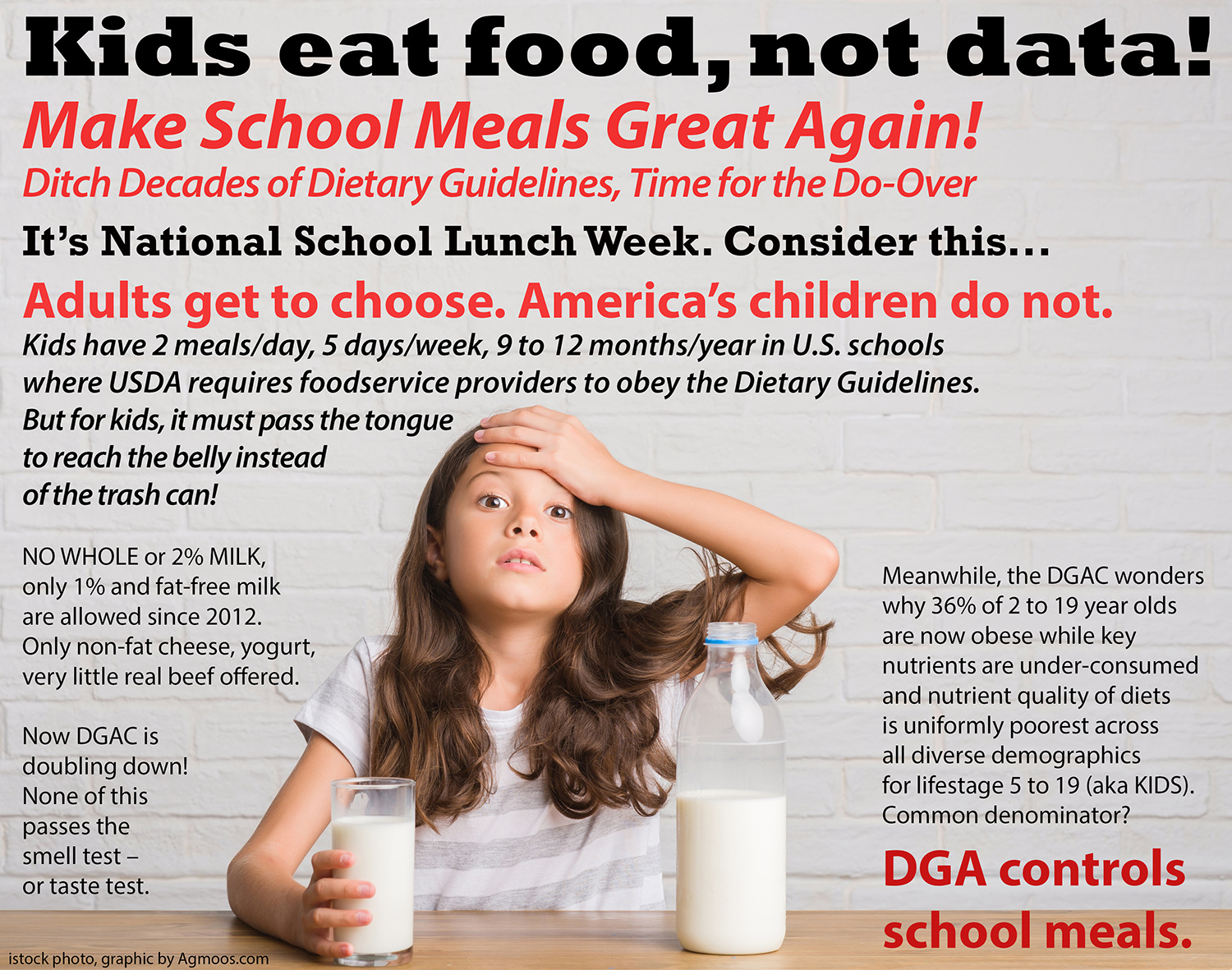
The DGAC could not understand why the healthy eating index showed such uniformly poor performance in the under-consumption of key nutrients, especially among children ages 5 to 19 across all populations. (Simple. It’s because the anti-fat DGAs are enforced at school meals twice a day, five days a week, most of the year for this life stage. Kids do not get to choose; adults do.) Oct. 21 screenshot DGAC meeting 

Their interpretation? I will paraphrase: Parents need help understanding how to feed their children.

My interpretation? The Dietary Guidelines are, themselves, the problem because they are used rigidly to formulate the meals that the age 5 to 19 lifestage (kids) are presented with twice a day, five days a week, nine to 12 months of the year – at school! The body will keep snacking until it gets the nutrients it seeks. 

“Obesity is a major public health issue, impacting 36% of children ages 2 through 19 years and 41% of adults ages 20 and older,” according to the DGAC.

However, by the end of the two days, the DGAC showed it would stay on the anti-fat path and give USDA and HHS the “expert” advice to double-down on saturated fat restrictions that have prevailed over the years while Americans become less healthy, more obese, with more chronic disease, at ever younger ages. Do they not wonder why this was not the situation pre-Guidelines? So much valuable research on saturated fat and health was again left off the table.
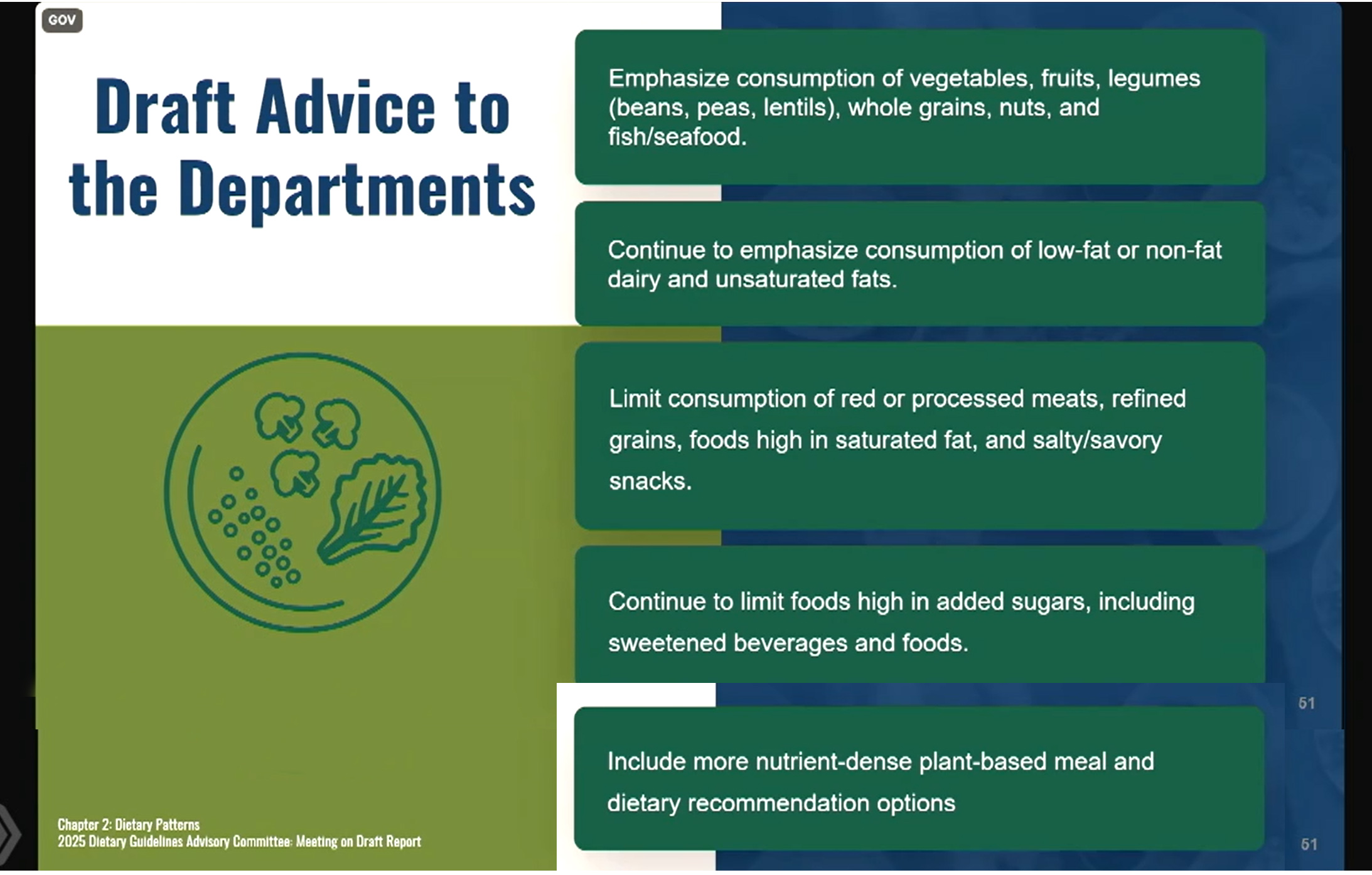
One of many draft advice slides for 2025-30 Dietary Guidelines emphasizing non-fat and low-fat dairy and unsaturated fats; addressing nutrient density by increasing plant-based meal options and decreasing animal-based. Oct. 21 DGAC meeting 

Impacts of the DGAC draft report on Dairy:

1) Dairy’s ‘place’ in the diet remains somewhat intact, but the committee advises things like not referring to soy milk as an “alternative” because it is part of the dairy grouping. They also are questioning if ‘Dairy’ is the right term for the Dairy group. The DGAC also will advise USDA to update nutrient composition and daily reference amounts to reflect the current state of nutrition art in “plant-milks” and to use diet simulations to show Americans how to be more flexible in replacing animal-based with plant-based.

2) Nonfat and low-fat dairy will continue to be the recommendation (3 milk cup equivalents), although they mentioned that there was not enough evidence to make this a strong conclusion for ages 2 through 5. Perhaps this leaves a door open for daycares and WIC to expand to 2% and whole fat milk up to age 5 instead of the current age 2, but schoolchildren are still out of luck. Dairy fat and butter were mentioned as being consumed mostly in processed foods.
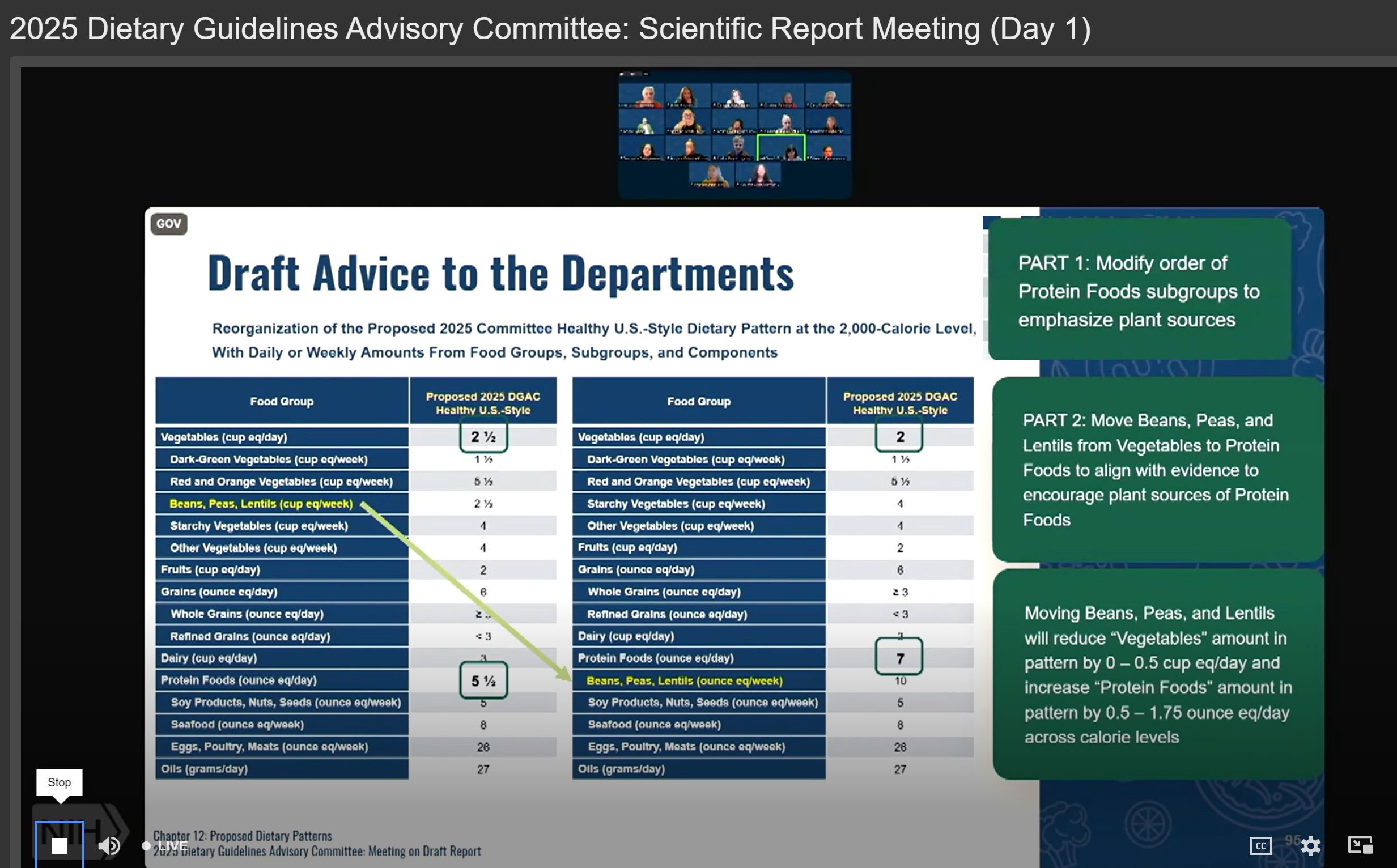
3) The Protein category has been flipped on its lid. The DGAC moved beans, peas and lentils from the vegetable category to the protein category and increased the daily quantities for beans, peas, lentils, seeds, soy, nuts, and fish, while reducing the allowance for meat, poultry and eggs. In fact, they will represent this visually by listing first in the protein category the plant sources, followed by fish, then eggs, then poultry, and lastly, red meat. The DGAC pointed to the dairy group as a source of protein that is not in the protein group, so protein level importance in plant-based comparisons can be reduced. (Several Committee members indicated their belief that Americans consume too much protein, so they wanted to show these crossovers differently.)

4) The additional considerations chapter is of particular concern for the future, advising USDA and HHS to: a) Encourage shifts to nutrient-dense plant-based meals; b) Put stricter limits on foods and beverages high in added sugars, sodium, and saturated fat; c) Use sugar limitations to exclude foods from the dietary pattern (with implications for flavored milk and dairy products); d) Make sodium reduction targets mandatory not voluntary (may impact the cheesemaking process for schools and other institutional feeding); e) Avoid referring to soy milk as “alternative”; Research name change for Protein group and determine if ‘Dairy’ is the right term for the Dairy group.

This draft report ends the DGAC’s work. In the coming days, it will be edited to reflect the discussion for submission as final recommendations to USDA and HHS.

A joint team of staff from both Departments will prepare this DGAC Scientific Report for posting at DietaryGuidelines.gov, along with data analysis, food pattern modeling and other supplemental documents. 

USDA and HHS will then open a new public comment period.

In 2025, the Secretaries of USDA and HHS (whoever they end up being), along with their joint team, will review the DGAC scientific report and the public comments to develop the actual 2025-30 Dietary Guidelines for Americans.

Expect these DGAs to continue most negatively impacting America’s schoolchildren and elderly in senior centers where meals must follow them.

However, it will have some impact on all of us if the Departments use the DGAC recommendation to implement food system science at the food supply level. We can already see what happens to choices for consumers and markets for farmers when the middlemen decide what can be put on grocery store shelves or in the dairy or meat case.

Not only did we not see a serious effort to address the need for more nutrient dense foods in the dietary pattern, the new pattern will double-down against saturated fat, along with salt and added sugar, and erode protein levels, while continuing to search for the missing nutrition profile of its increasingly vegetarian recommendations. 

None of this passes the smell test, and likely not the taste test. Kids eat food not data. Nutrients must pass the tongue to reach the belly. Look for more on that in terms of action next week from the Grassroots Pennsylvania Dairy Advisory Committee and 97 Milk.

***

Additional information:

In its report, The Nutrition Coalition notes: “The collective shift toward emphasizing more plant-based foods has lowered the quality and quantity of protein in our diets. It is time to pause and question whether these changes are endangering health in the U.S., especially among children and the elderly. Still, with plant-based advocates dominating the public comments, plant-based industries and interests lobbying the USDA, and plant-based proponents on the expert committee itself, we may see further reductions of this important macronutrient in the 2025 Dietary Guidelines.”

Nina Teicholz, Ph.D. explains that these draft recommendations “fly in the face of our knowledge that plant proteins are of lower quality than animal proteins. With the exception of soy, all plant proteins lack all the necessary amino acids to make muscle tissue (as well as perform other critical functions in the human body). Reducing the total amount of protein and replacing animal proteins with plant proteins are both harmful changes. These alterations will mean that anyone receiving USDA-funded meals, such as kids consuming school lunches, the women and infant children on the WIC program, and the elderly will receive fewer complete proteins. Also, reductions in meat, dairy and eggs are sure to exacerbate nutritional deficiencies in the guidelines, which currently fail to meet basic targets iron, vitamin D, vitamin E, choline, and folate. The Dietary Guidelines are already deficient in complete proteins. The erosion of protein in the guidelines has been happening for decades, as we wrote about in this post.”

-30-
Editorial: Momentum builds for whole milk in schools

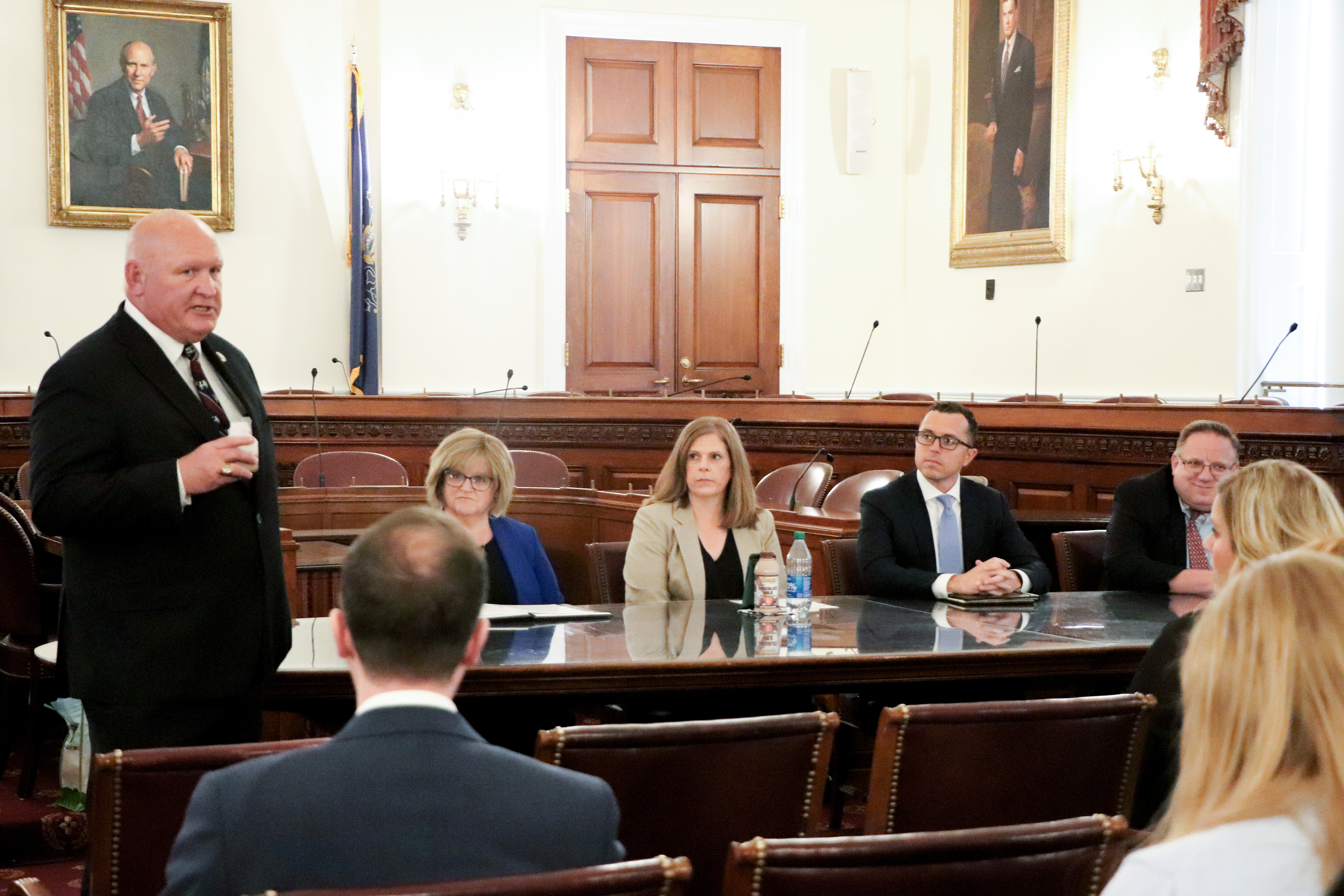
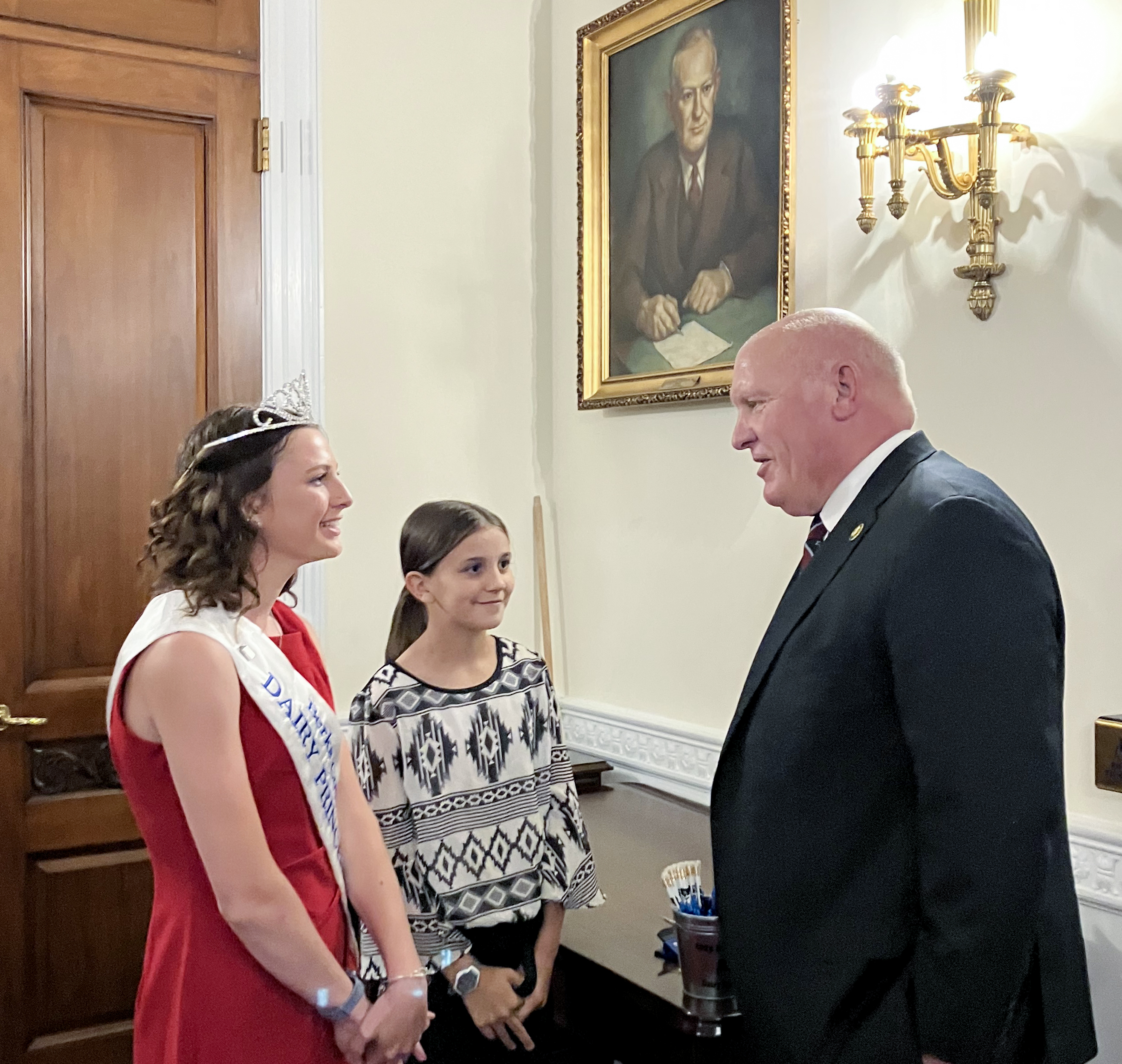
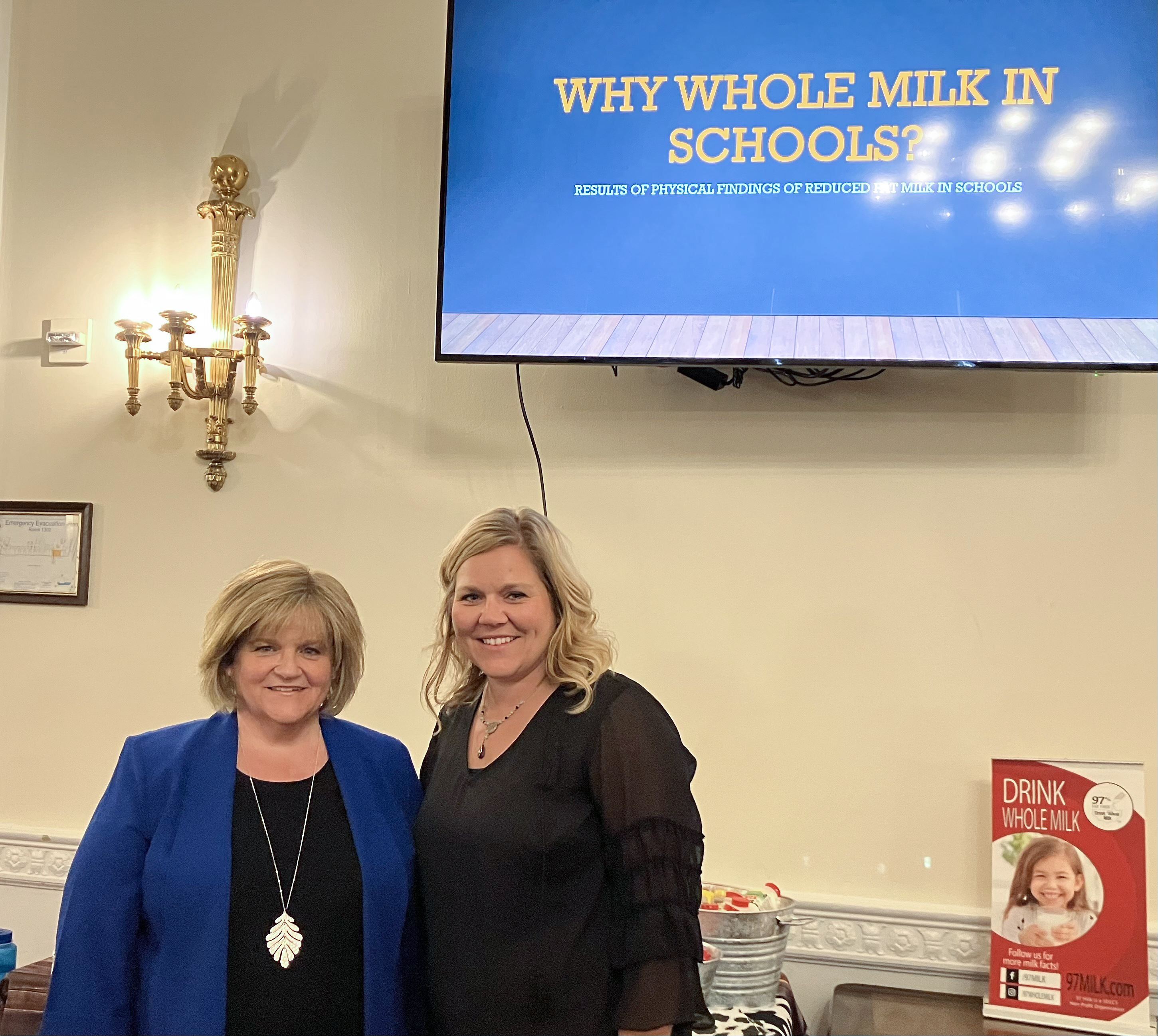
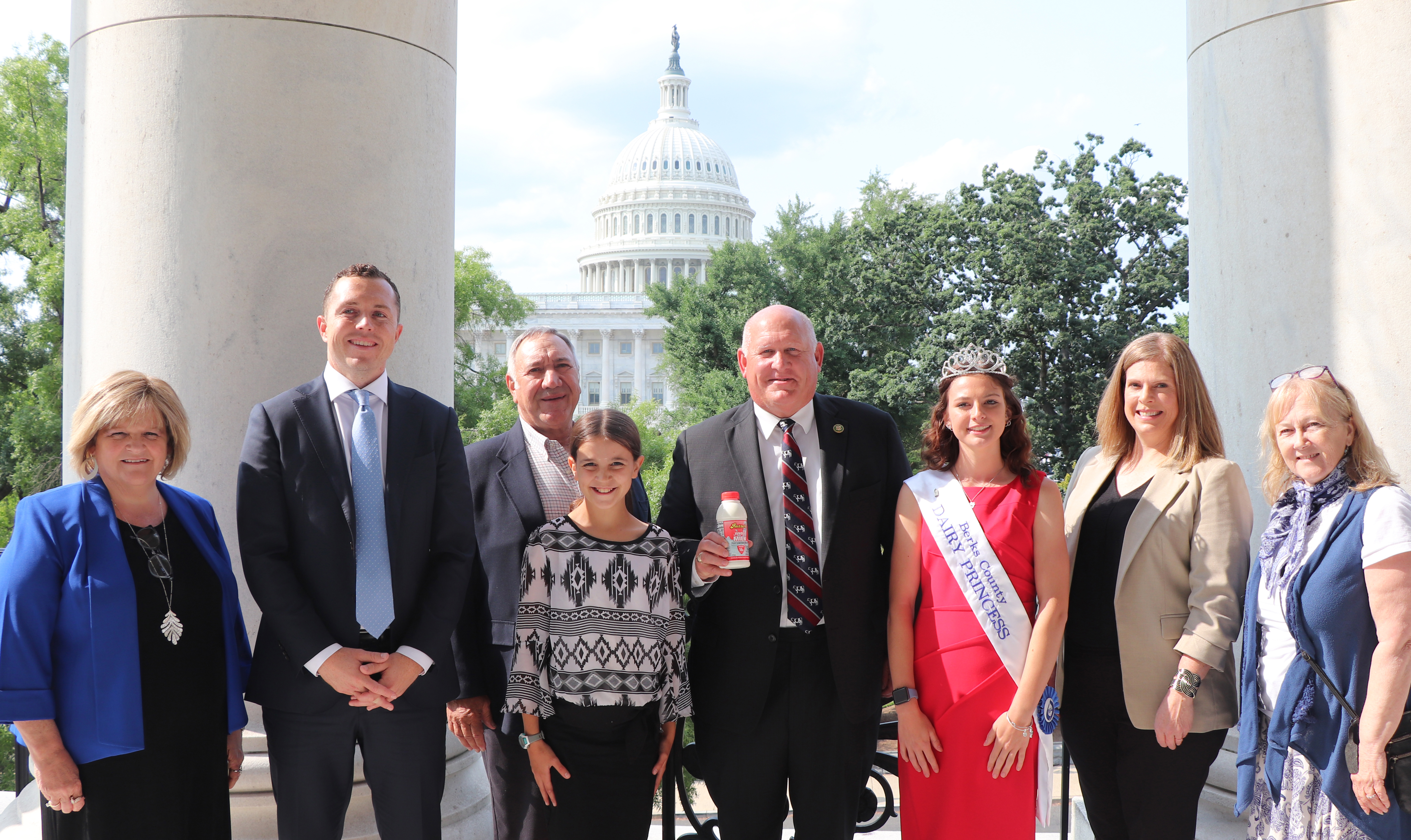
Standing with U.S. House Ag Committee Chairman, Glenn ‘G.T.’ Thompson are some of the volunteers who participated in the legislative staff briefing on G.T’s Whole Milk for Healthy Kids Act, including a June Dairy Month celebratory Whole Milk Bar at the Capitol in Washington on Tuesday, June 13. Congressman G.T. says he wants to reach 150 to 200 cosponsors before it comes to the House floor for a vote. Currently, there are 128 cosponsors representing 43 states (103 R’s and 25 D’s), and the Education and Workforce Committee recently passed H.R. 1147 in a bipartisan 26-13 vote. From left are Christine Ebersole, a school nurse in Blair County, Pa.; John Bates, executive director of The Nutrition Coalition; Nelson Troutman, a Berks County dairy farmer and 97 Milk Baleboard originator and his granddaughter Madalyn, the 2022-23 Lebanon County, Pa. Dairy Maid; Congressman G.T. Thompson (R-PA-15), the champion and prime sponsor of the Whole Milk for Healthy Kids Act; Sara Haag, the 2023-24 Berks County Dairy Princess; Krista Byler, a school foodservice director in Crawford County, Pa.; Sherry Bunting, Farmshine contributor and volunteer advocate for whole milk in schools. Photo credit: Maddison Stone

By Sherry Bunting, Farmshine, June 16, 2023 with June 23 update

WASHINGTON – “Wouldn’t it be great if we could unite the country with whole milk?” That question was posed by a fellow journalist in the Southeast, Julie Walker of Agrivoice, as I was updating her about the grassroots effort to bring milk education and the choice of whole milk to schools.

After the events of the past two weeks, my answer to that question is: Yes, I believe we can and we are… seeing the fruits of the labor of grassroots volunteers.

On Tuesday, June 13, the Grassroots Pennsylvania Dairy Advisory Committee and 97 Milk were part of a legislative staff briefing hosted by Congressman G.T. Thompson and his staff at the Longworth House office building on Capitol Hill in Washington. This had been planned weeks earlier, before Thompson’s bill – the Whole Milk for Healthy Kids Act, H.R. 1147 – passed the Education and Workforce Committee on June 6 in a bipartisan 26-13 vote.

This week, the identical bipartisan Senate companion bill was introduced on June 13 by prime sponsor Senator Roger Marshall, a Republican and medical doctor from Kansas and prime cosponsor Peter Welch, a Democrat from Vermont along with other bipartisan cosponsors.

Allow me to take you behind the scenes of the June 13 legislative staff briefing on Congressman Thompson’s House bill and why it gives me hope to see people rediscovering and uniting behind the effort to legalize whole milk in schools so children have true access to the most wholesome nutritional beverage, milk.

What becomes apparent is that children are not benefiting from milk’s nutrition when their choices at school are restricted to fat free and low fat. They should be able to choose whole milk and 2% milk that are currently banned by federal nutrition standards, and they should be able to continue to choose flavored milk, which USDA is considering restricting to only high school students.

“Milkfat was demonized as a part of the child nutrition standards, especially since 2010… and we’ve seen a lot of waste and unopened milk cartons at school cafeterias because (fat-free/low-fat milk) is not a great milk experience for kids. Meanwhile, we’ve seen a significant increase in childhood obesity. If they don’t have access to milk they like, they will drink something, and the alternatives won’t give them milk’s essential nutrients or be as satisfying,” said Rep. Thompson. “Everything has its own time, and I’m pleased that we’ve gotten to this point with the bill and appreciate the panel here today to share and answer the question: ‘Why whole milk in schools?’”

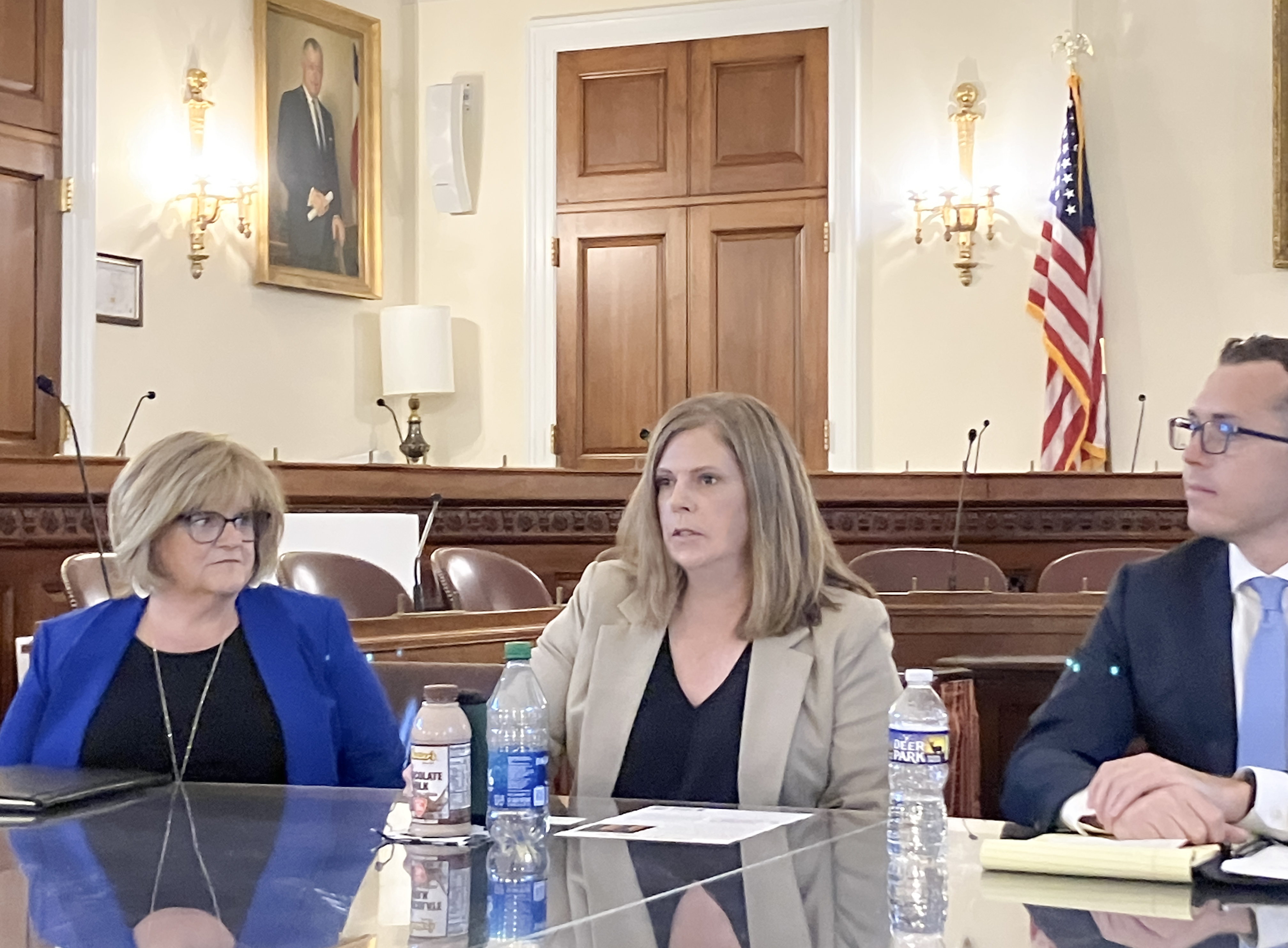
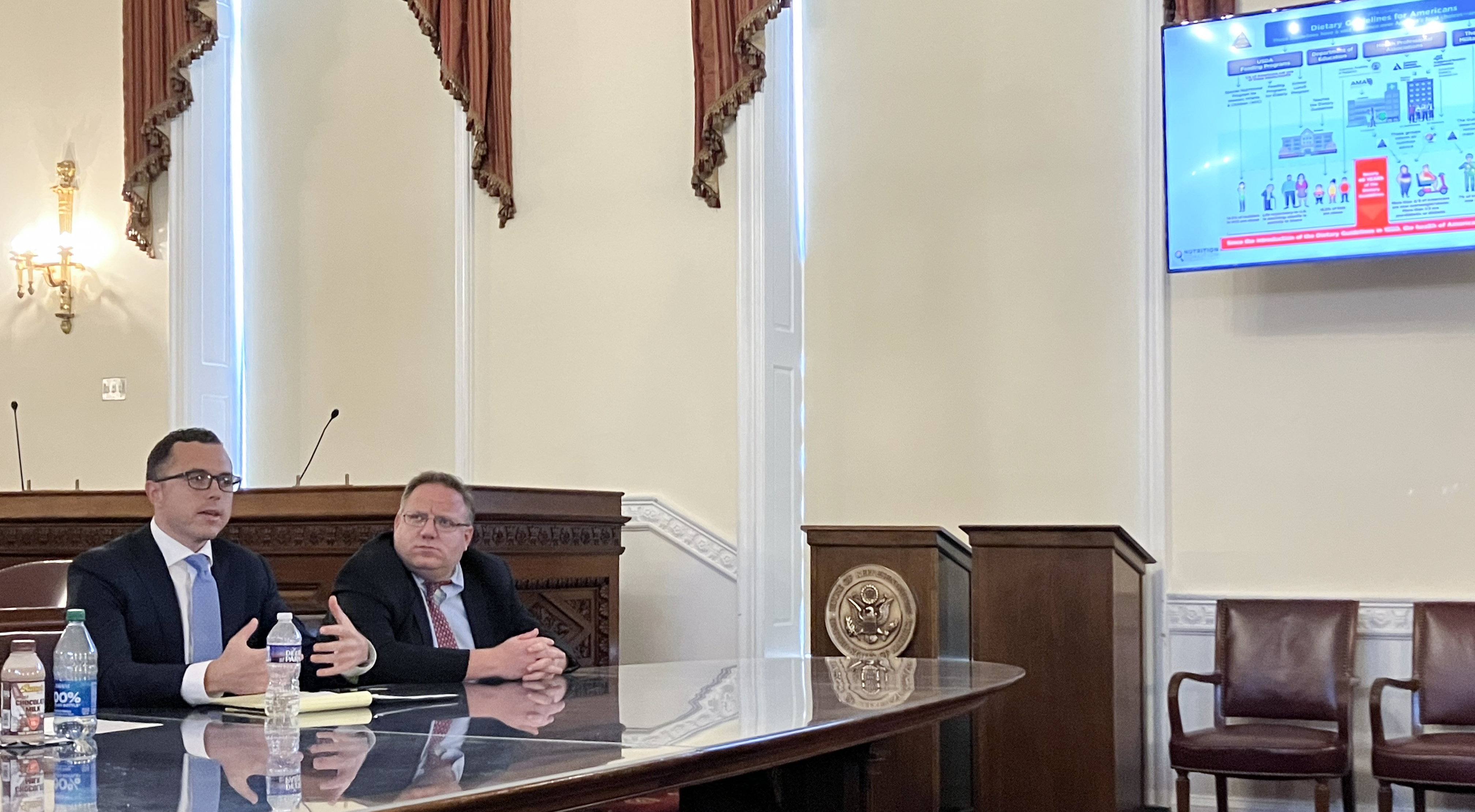
Two school professionals from the grassroots advisory group were on the panel: Krista Byler (second from left) of Spartanburg, foodservice director for Union City Area Schools and Christine Ebersole RN, BSN, CSN (left) of Martinsburg, school nurse at Williamsburg Community School District. They were joined by John Bates (second from right), executive director of the Nutrition Coalition, a nonprofit founded by Nina Teicholz, author of The Big Fat Surprise; as well as Paul Bleiberg (right) of National Milk Producers Federation.

Around 25 to 30 staff members working for Representatives and Senators from both parties attended for the entire briefing. That may not sound like a lot, but for this setting, and the constantly changing schedules during floor votes, hearings and meetings, it’s a big deal. The event was by invitation and targeted key legislative offices for an educational briefing on the bill.

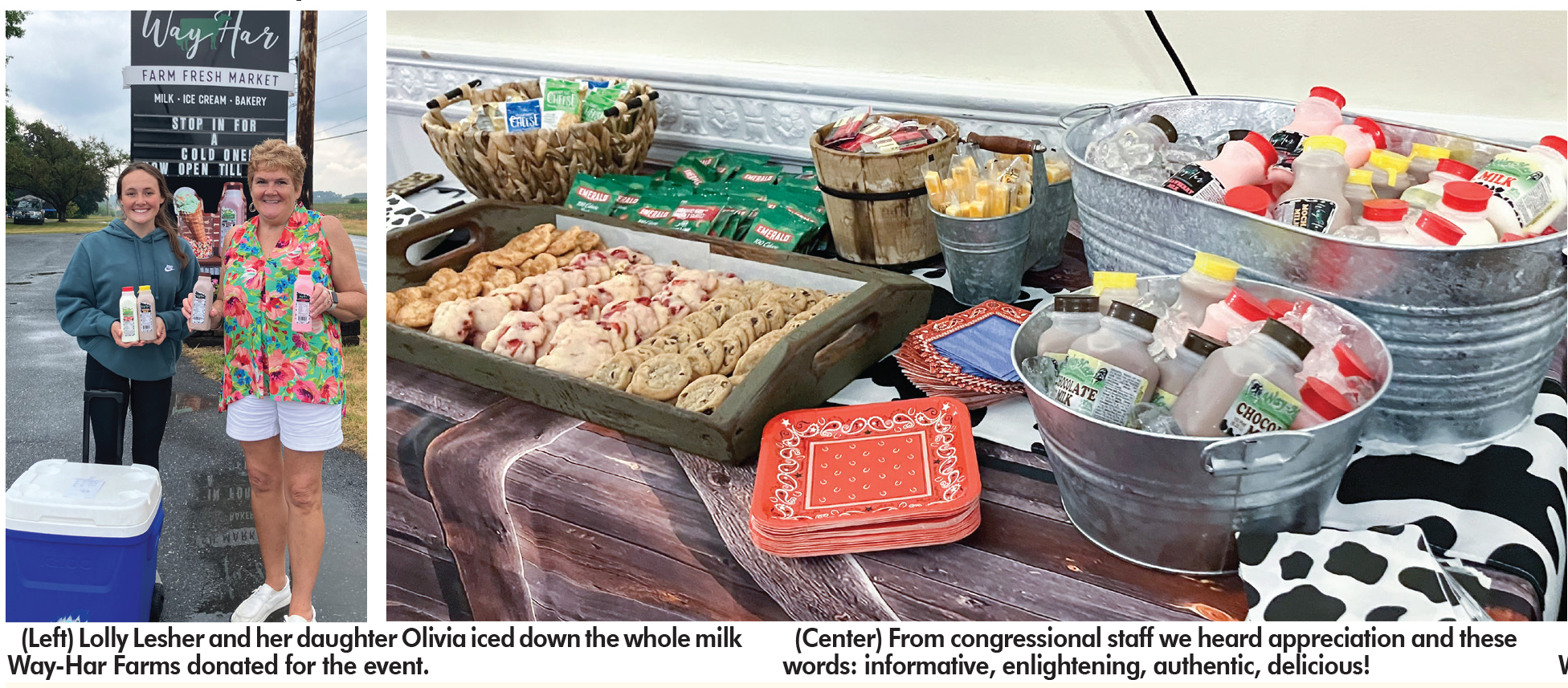
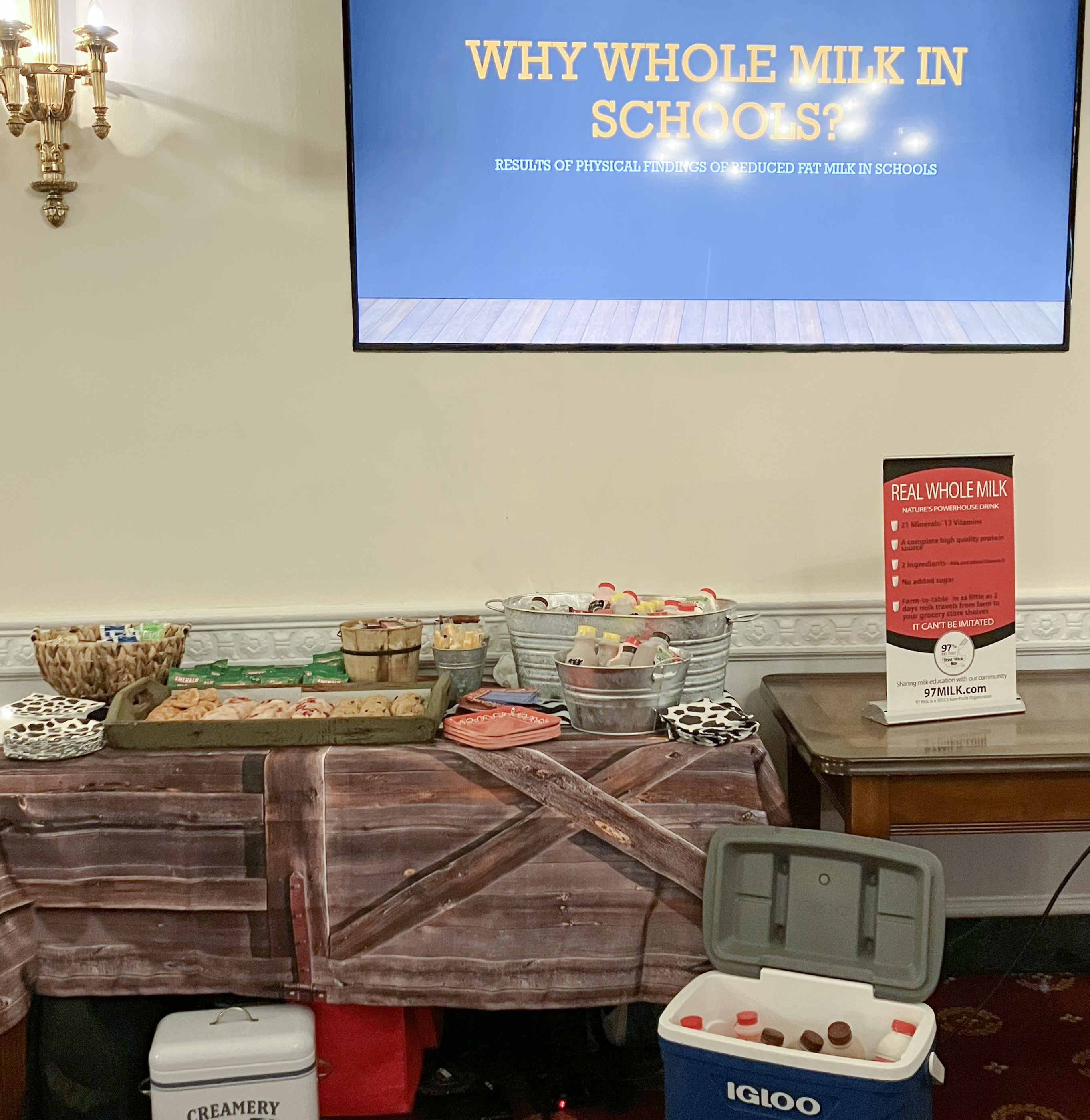
It was Congressman Thompson’s idea to have a “whole milk bar,” so our crew brought 100 half pints of whole milk — unflavored, chocolate, strawberry and mocha — donated by the Lesher family of Way-Har Farms, Bernville, Pennsylvania. We added some full pints of flavored and unflavored milk picked up at two convenience stores on the way (Rutter’s and Clover) to be sure we had enough as we heard interest in the briefing was growing.

We baked fresh strawberry cheesecake cookies with butter and cream cheese, and brought a few other types of cookies, as well as cheese snacks and nuts, arranged a nice table, kept the milk iced cold (that was a fun challenge through security scanners).

We brought with us Berks County Dairy Princess Sara Haag and former Lebanon County Dairy Maid Madalyn Troutman. Ebersole brought her daughter Vanessa Wiand, an elementary school teacher.

Nelson Troutman (right) with our driver Frank Tomko

Berks County farmer and Drink Whole Milk 97% fat free Baleboard originator Nelson Troutman was part of our crew, and he made sure the van we rented for travel had several 97 Milk magnets for the ride.

I provide these details because here’s the deal: Each person in our crew is a volunteer among the many volunteers working on the whole milk in schools issue, not just in Pennsylvania, but in other states as well.

Sara and Madalyn handed out the 6×6 cards designed by Jackie Behr at 97 Milk that visually show what milk provides nutritionally. It’s an impressive piece. They also handed staffers a business card with a QR code (above) that they could scan to reach the online folder to a video created by students and technology teacher at Krista’s school as well as finding other important information about whole milk and the Whole Milk for Healthy Kids Act. On the table next to the whole milk bar was a one page handout with bullet points, and 97 Milk provided milk education tabletop displays.

As Congressman Thompson talked about “ruining a generation of milk drinkers with failed federal nutrition policy,” he praised the bipartisan support for H.R. 1147 and noted the 107 cosponsors in the House (as of June 13, the number as of June 23 is 128 and counting).

That’s a large number by historical standards, but Thompson wants to get to 150 cosponsors by the time the bill is officially reported to the House, which will be soon.

There is still time, and it is still important to keep contacting members of Congress to ask them to consider cosponsoring the Whole Milk for Healthy Kids Act in the House, and thank them if they already have signed on.

Ebersole shared with staffers her perspective as a nurse, what she observes, what milk nutrition means for children.

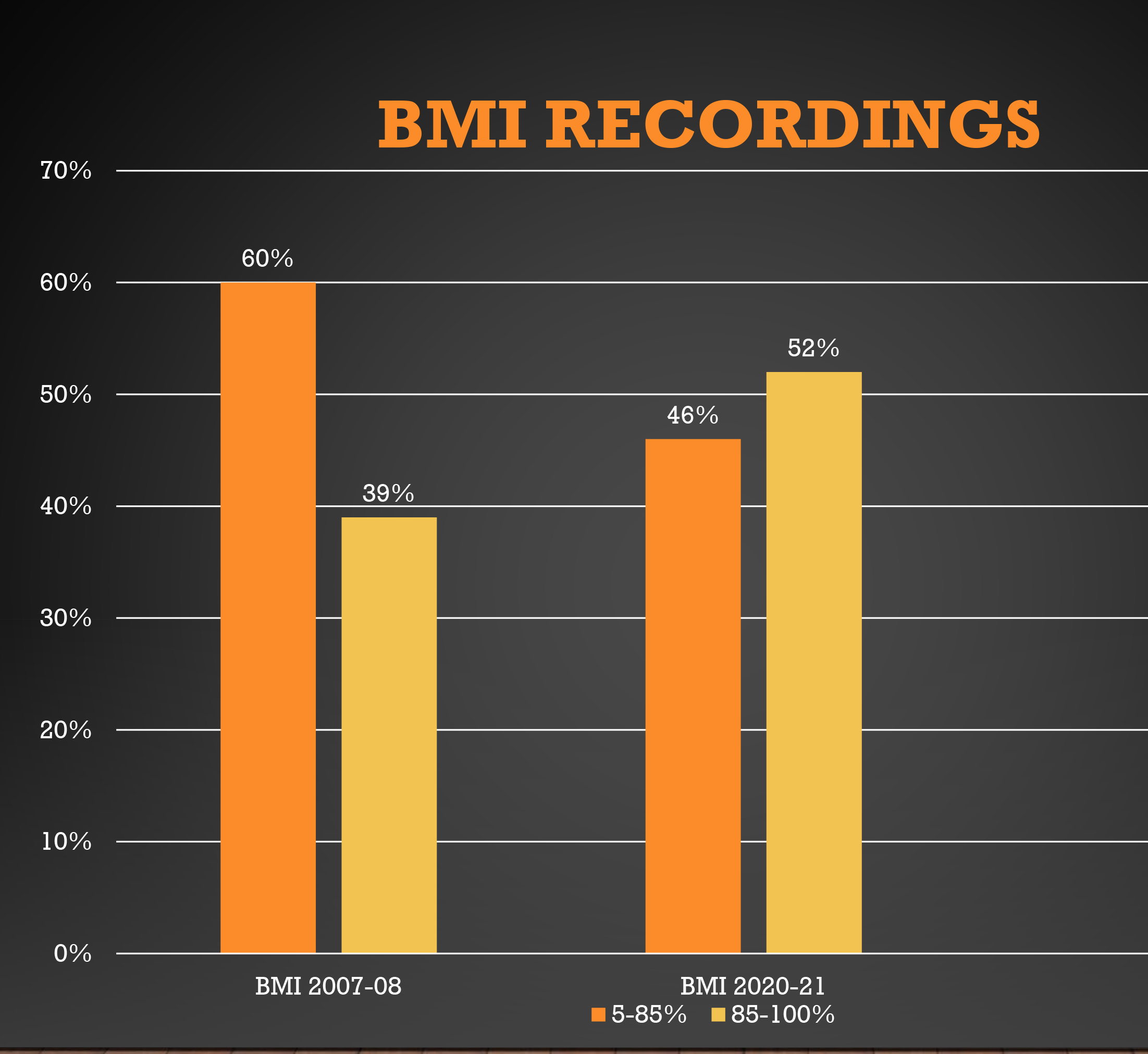
“I thought it would be interesting to compare BMI (Body Mass Index) screenings when whole milk was served in schools with the recent screening where students have been served only skim and 1% milk. The results of the comparison are striking (above). The overweight and obese categories for students in grades 7-12 in 2007-2008 school year was 39% with 60% in the proper BMI scale. In the year 2020-2021, after being served low fat milk during school hours, the overweight and obese categories were increased to 52% while the recommended range was decreased to 46%. That is a 13% increase over the past 13 years!” said Ebersole.

“While one cannot assume that the low fat milk alternatives are the only determining factors, they certainly did not have the intended outcome of reducing obesity in school age children,” she said.

Ebersole explained that, “Whole milk is a nutrient dense food and with its natural combination of protein, fats and carbohydrates, it is called Nature’s most nearly perfect food. Whole milk also provides satiety, which is stabilizing for blood sugar as well as feeling fuller longer thus decreasing food intake. Another important quality is that students prefer the taste of whole milk compared to the reduced fat and skim milk options.”

Byler talked about the trial at her school in the 2019-20 school year. She explained that the milkfat restrictions at school have led to a loss of school milk consumption with results that are far reaching.

“We are now hearing of very early onset osteoporosis and an increase in malnutrition and/or obesity. It is shameful that our youth cannot have a choice of a wholesome, nutritious product that is farm-to-table/farm-to-school,” said Byler. This, and the amount of milk wasted daily prompted the school trial.

She provided slides of the trial results and talked about how half of the students didn’t really know whole milk was not allowed. This means they didn’t know how good milk can be.

“The results of the trial were astounding. When offerings were expanded to include whole and 2% milk, the amount of wasted milk was reduced by 95% and we saw a 52% increase in students choosing milk,” said Byler, explaining that the student council did actual milk collection data as part of an environmental project.

She also shared results of her survey of the elementary school children showing that if this latest possible restriction on milk options for schoolchildren is approved by USDA, fewer than 25% of students currently taking and drinking the milk say they would continue taking milk and drinking it if flavored milk were not offered. 

“That’s huge,” said Byler.

That means we would see even more reductions in milk consumption at school and more waste. This struck a chord because when Byler presented the 2019-20 trial where her school offered whole and 2% along with fat free and 1% milk, for trial purposes, we heard audible gasps among those attending the briefing when Byler shared the data on the reduction of wasted milk. ((The students also created a video about school milk, view it here.)

We also saw reactions while Ebersole was sharing her analysis of student BMI data over the past 13 years.

Both women concluded by sharing a heartfelt message about how important dairy farmers are to communities, how they care for their cattle and work to provide a high quality nutritious product, and what it means to them for children to be able to choose milk they love so they can benefit from the nutrition the milk provides.

“As the wife and granddaughter of proud Pennsylvania dairymen, I knew the decrease in milk we were ordering for schools would impact dairy families. I know firsthand about the dairy farmers we have lost,” said Byler. “What I know based on 18 years in school nutrition, raising two children and being part of two dairy families is that restricting milk offerings to our school children does not benefit our children or our dairies. It benefits big corporations who have exponential marketing power and are preying upon our youth.”

School nurse Christine Ebersole and her daughter Vanessa Wiand, an elementary teacher at the briefing.

Ebersole noted that, “Being born and raised on a dairy farm and having lived in the dairy community all my life, I can say I know something about the American Dairy Farmer. They are on call 365 days a year and 24 hours a day.  They care about their animals and also care about their neighbors. When a tragedy happens like a fire, the neighbors come together. Dairy farmers work diligently to bring a wholesome natural food to us. Let’s do our part to support this industry by allowing students to have a choice of a delicious, nutritious whole food, whole milk,” she said.

For the Nutrition Coalition, John Bates explained they are a non-profit, non-partisan organization that seeks to improve health in America by ensuring that the public gets evidence-based nutritional advice. They emphasize good science, transparency, and methodology and receive no industry funding.

“When the Healthy, Hunger-Free Kids Act was enacted in 2010, milk became counted as part of that less than 10% of calories from saturated fat, when previously it had been in its own, separate beverage category,” said Bates.

He noted that the U.S. Dietary Guidelines that these rules for schools are based on “never reviewed studies on dietary fat specifically for children until 2020. Children have just been assumed to be like adults, but children are different: they need more protein for their growing bodies and more fat for their growing brains,” said Bates.

The Guidelines in 2020 cite a single clinical trial on school-aged children, ages 7-10 (“DISC,” funded by the NIH). It showed ‘Modestly’ lowered LDL-cholesterol, he explained. “Yet the study was not on a normal population. The expert USDA committee acknowledged this study could not reliably be generalized to a larger population

The bottom line, said Bates is that expert committees have found “insufficient evidence” to show that restricting saturated fats in childhood could prevent heart-disease or mortality in adulthood.

“In our view, a single trial on an atypical population is not enough to make population-wide guidelines to all American children,” he said.

Paul Bleiberg for National Milk Producers Federation focused his comments on the problems with underconsumption of dairy.

“Milk is the number one source of three of the four food nutrients of public health concern as identified by the DGA’s — calcium, vitamin D and potassium. Dairy delivers 7 of the 14 nutrients the American Academy of Pediatrics recommends for optimal brain development as well as nutrients vital for immune health and bone growth and development during a child’s school-aged years,” said Bleiberg. 

“The 2020 DGA Committee found that 79% of 9 to 13 year olds fall short of recommended dairy intake and the data from MilkPEP show that students take less milk and throw away more milk at schools when they do not have options they like,” he added.

Before, after and during these four short presentations on whole milk choice in schools, staffers trickled in, gathered around the whole milk bar and had conversations.

In fact, when news began to spread through texts and emails that there were milk and cookies in room 1302 — more staffers came and went. Connections were made around good food and delicious, nutritious milk.

From congressional staff we heard appreciation and these words: informative, enlightening, authentic, delicious!

Those four words give me hope that we can unite with whole milk… for our children and our dairy farmers.

June 23 UPDATE: This was another good week for the Whole Milk for Healthy Kids Act in Washington, and here’s how you can help…

As of June 23, the bipartisan Whole Milk for Healthy Kids Act, H.R. 1147 grew the number of cosponsors to 128 including prime sponsor G.T. Thompson (103 Republicans, 25 Democrats). These cosponsors represent 43 states.

Texas tops the list with 13, followed by Pennsylvania 10, New York 8, California, Florida and Wisconsin at 7. Maine, Idaho, Iowa, North and South Dakota and Wyoming have fewer Representatives and their full delegations are on board. Wisconsin is nearly 100% with 7 of their 8 Representatives signed on.

The 43 states now represented are listed in the order of number of cosponsors vs. the total number of representatives for the respective states: Texas 13 of 36, Pennsylvania 10 of 17, New York 8 of 26, California 7 of 52, Wisconsin 7 of 8, Florida 7 of 28, Georgia 5 of 14, Indiana 4 of 9, Iowa 4 of 4, Michigan 4 of 13, Minnesota 4 of 8, North Carolina 4 of 14, Illinois 3 of 17, Virginia 3 of 11, Washington 3 of 10, Alabama 2 of 7, Arizona 2 of 9, Connecticut 2 of 5, Idaho 2 of 2, Kansas 2 of 4, Kentucky 2 of 6, Maine 2 of 2, Missouri 2 of 8, New Jersey 2 of 12, Ohio 2 of 15, Oklahoma 2 of 5, Oregon 2 of 6, South Carolina 2 of 7, Tennessee 2 of 9, Arkansas 1 of 4, Colorado 1 of 8, Hawaii 1 of 2, Louisiana 1 of 6, Maryland 1 of 8, Mississippi 1 of 4, Nebraska 1 of 3, Nevada 1 of 4, New Mexico 1 of 3, North Dakota 1 of 1, South Dakota 1 of 1, Utah 1 of 4, West Virginia 1 of 2, and Wyoming 1 of 1.

To reach all 50 states, here’s what we need in the East: Delaware, Massachusetts, New Hampshire, Rhode Island, and Vermont. In the West: Alaska and Montana. Is your state on the list? Is your Congressional Representative a cosponsor? Make the call! Go to this link to see the bill’s progress and cosponsors, and click “contact your member” on the right to find your Representative.

Call Senators too. On June 13, the bipartisan Senate companion bill, S.1957, was introduced by Senator Roger Marshall, a Republican and medical doctor from Kansas, along with prime cosponsor Peter Welch, a Democrat from Vermont. Also cosponsoring right out of the gate are Democratic Senators Kirsten Gillibrand of New York and John Fetterman of Pennsylvania; Independent Senator Angus King of Maine; and Republican Senators Ron Johnson of Wisconsin, Chuck Grassley of Iowa, Susan Collins of Maine, Cindy Hyde-Smith of Mississippi, and James Risch and Mike Crapo, both of Idaho. As of June 23, that’s 11 Senate sponsors from 9 states. Maine and Idaho have both of their respective Senators on board!

-30-

Dietary Guidelines catastrophe not understood by most

A15_32PG_FSN_06_26_20.indd

— Get involved by sending or phoning a comment to YOUR members of Congress and the Secretaries of Agriculture (USDA) and Health and Human Services (HHS) at this link https://www.nutritioncoalition.us/take-action/

By Sherry Bunting, Farmshine, June 26, 2020

WASHINGTON, D.C. — After months of warning about flaws in the 2020 Dietary Guidelines Advisory Committee process, the June 17th  final meeting of the 2020 Dietary Guidelines Advisory Committee (DGAC) unveiled their draft recommendations, which will become their official report at the end of this month for submission to USDA and HHS. That’s when their work will be turned into the official 2020-25 Dietary Guidelines in mid-July for public comment and implementation.

However, the DGAC process and flaws exposed in the weeks leading up to their final meeting — as well as during the final meeting itself — are prompting outrage and actionby various groups and citizens, but little media attention.

On the very same day, a separate panel of scientists published their state-of-the art review “Saturated Fats and Health: A Reassessment and Proposal for Food-based Recommendations” in the Journal of the American College of Cardiology. (Not to mention 20 review papers cited by the Nutrition Coalition.)

So far, media coverage of that has also been scant. Understandably, mainstream media are busy these days with pandemic and protests. But they also don’t seem to understand that these are not just “recommendations.” These Guidelines increasingly control the most vulnerable citizens in our county — children and families in need. The DGAC readily admits that its approved food patterns do NOT come close to meeting the nutrient needs. This shortcoming includes nutrients of concern identified by physicians.

Perhaps more disappointing is the lack of attention the farm and food media have given this whole deal. Where are their voices?

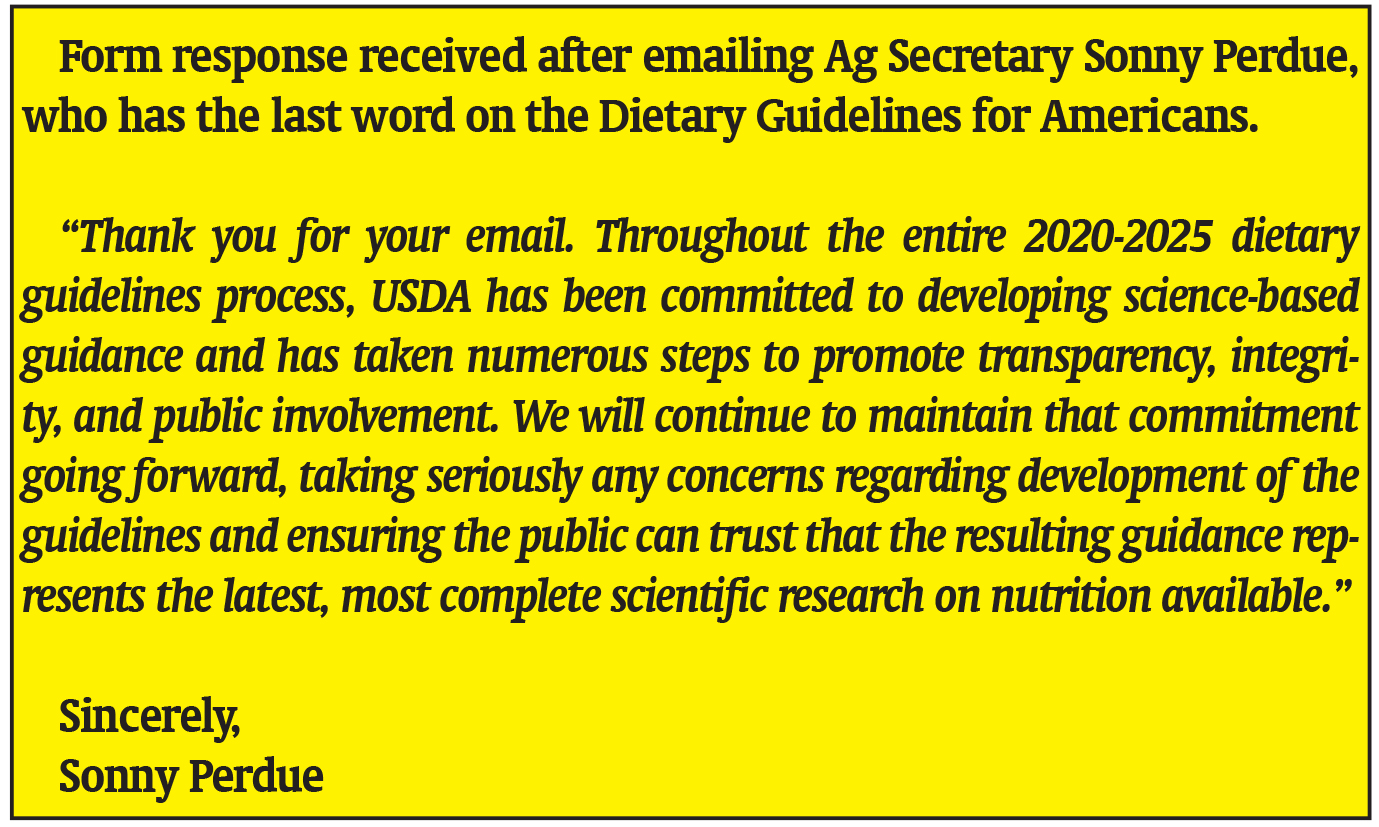
As emails are sent to USDA Secretary Sonny Perdue and HHS Secretary Alex Azar to delay the progress of the final DGAC report due to a number of unsettling factors, form letter “we are committed” responses are what is received.

First and foremost, the DGAC did not follow the Congressional mandate to include the most recent studies on questions about saturated fats. In fact the Committee did not include any key pieces of research conducted prior to 2010 and after 2016.

With cherry-picked studies, their recommendations keep government agencies in place as anti-fat overlords, even recommending reductions in allowable saturated fats as a percentage of calories from 10% (official recommendation) down to 7 or 8% (the committee’s preference) and pushing this agenda onto children under two years of age that up until now could still drink whole milk and eat the animal products that provide the nutrients the government-favored diets do not provide.

Second, the DGAC was found by a Corporate Accountability study to be “subject to undue industry influence that can jeopardize the health of all Americans — especially Black, Indigenous, people of color both during a pandemic and the mounting diet-related disease crisis.”

The corporate accountability brief makes the case that, “It’s time public health policies were set by independent public health professionals, not food and beverage corporations.”

Third, one or more members of the 2020 DGAC have anonymously blown the whistle on the process as being rushed, and lacking scientific rigor. And over 300 doctors and medical professionals have written to urge a delay to investigate these claims.

Fourth, the National Academy of Sciences, Engineering and Medicine has called for a redesign of the process, citing flaws in the criteria for screening research for consideration.

Fifth, the recommendations in a separate panel’s scientific review published in the Journal of the American College of Cardiology demonstrate that important food interactions have been ignored as well as the different biologic effects of saturated fatty acids in whole foods vs. processed foods.

Throughout the DGAC final meeting last Wednesday, the committee could not determine what foods were included and excluded in their own references to red meat, lean meat, and processed meat in different subcommittee reports and research findings. Ditto for milk (was it whole or lowfat?) and for enriched / refined grains and carbohydrates.

While the DGAC said it wanted people to focus on foods, not formulas, the report solidifies a continuation, or lowering of the current saturated fat “formula” applied to institutional feeding such as schools and daycares as well as foodservice menu-boarding.

In short, despite the fact that several foods that are relatively rich in saturated fatty acids — such as whole milk, full-fat dairy, dark chocolate and unprocessed meat — remain on the “avoid” list for the 2020-25 DGAC report, the separate panel of scientists point out the mounting evidence to the contrary — that these foods are not associated with increased cardiovascular disease or diabetes risk.

“There is no robust evidence that current population-wide arbitrary upper limits on saturated fat consumption in the US will prevent cardiovascular disease or reduce mortality,” the JACC paper states.

Quite simply, the DGAC did not follow its Congressional mandate, was not selected to include independent experts open to revisiting these long-held beliefs, and did not include important timely research to answer some of the most important questions.

At one point in last Wednesday’s meeting, it was obvious that some on the committee were frustrated by the inability of the approved diets to provide essential nutrients the medical community lists as nutrients of concern. And at one point, a mention of nutrient-dense foods containing saturated fats had one member of the unbalanced DGAC saturated fat subcommittee alluding to “new foods that are coming” as though a magic wand will fix these issues.

There it is. Without the saturated fat restrictions, and now reintroduction of cholesterol caps, how will billionaire investors in Impossible Meats, Beyond Meat, Perfect Day fake dairy proteins. and the like. get their products off the ground?

There are only two ways these silicon valley food technology investors will get a return on their investments: That is to use the anti-fat Dietary Guidelines and so-called “sustainability” benchmarks to reduce dairy and livestock production and consumption to make way for their fake food.

— Additional information: According to the Nutrition Coalition, the JACC paper comes after the group of scientists attended a workshop, “Saturated Fats: A Food or Nutrient Approach?” in February. Members of that workshop wrote a consensus statement, submitted two formal public comments to USDA, and sent a letter to the Secretaries of U.S. Departments of Agriculture and Health and Human Services (USDA-HHS) on their findings which concluded that limits on saturated fats are not justified and should be re-examined. The USDA-HHS have not yet replied to their letter.

— Get involved by sending or phoning a comment to YOUR members of Congress and the Secretaries of Agriculture (USDA) and Health and Human Services (HHS) at this link https://www.nutritioncoalition.us/take-action/

-30-

Call to action: Feds ignore science on saturated fats, poised to tighten restrictions in 2020-25 guidelines

Where is our dairy industry? No time to waste!

dga2

By Sherry Bunting, Farmshine, April 3, 2020

 WASHINGTON, D.C. — While Congress, USDA and HHS are all consumed by the health concerns of the COVID-19 pandemic, the Dietary Guidelines Advisory Committee is moving forward full-steam-ahead with what looks like more restrictions on saturated fats to be announced in May. Meanwhile, dairy leadership organizations sit on the sidelines, just letting it happen.

According to the Nutrition Coalition, and this reporter’s own following of the DGA Committee process, the process has been flawed from beginning and has reached a critical juncture. There is an urgent need for the public to pay attention and get involved.

Many had hoped the Committee would review and include the sound science and revelations about the flaws in the saturated fat limits in the current dietary guidelines to remove those restrictions or improve them in the 2020-25 guidelines. But the opposite is occurring.

As reported previously in Farmshine, some of the very best and most rigorous science on saturated fats and in relation to dairy fats vs. cardiovascular disease have been excluded from the review process from the very beginning.

Unfortunately, the process that began in 2019 is poised to move Americans even further down the wrong road with even more restrictive fat rules that will govern and inform all institutional feeding and which heavily influence the foodservice industry. Even worse, farmer checkoff funds are forced, by USDA, to help promote these unhealthy guidelines.

While National Milk Producers Federation, International Dairy Foods Association, Dairy Management Inc., and other industry organizations are silent, the Nutrition Coalition, founded by Nina Teicholz, author of The Big Fat Surprise, is sounding the alarm.

“We need your help to ensure that the federal government not continue to ignore large, government-funded rigorous clinical trials — the “gold standard” of evidence — that could reverse decades of misguided nutrition policy on the subject of saturated fats,” writes Teicholz in a recent communication.

She’s right. From the beginning, the DGA Committee was formed, and the research pre-screened by USDA, in such a way that many of the best studies and minds have been excluded.

Processed With Darkroom

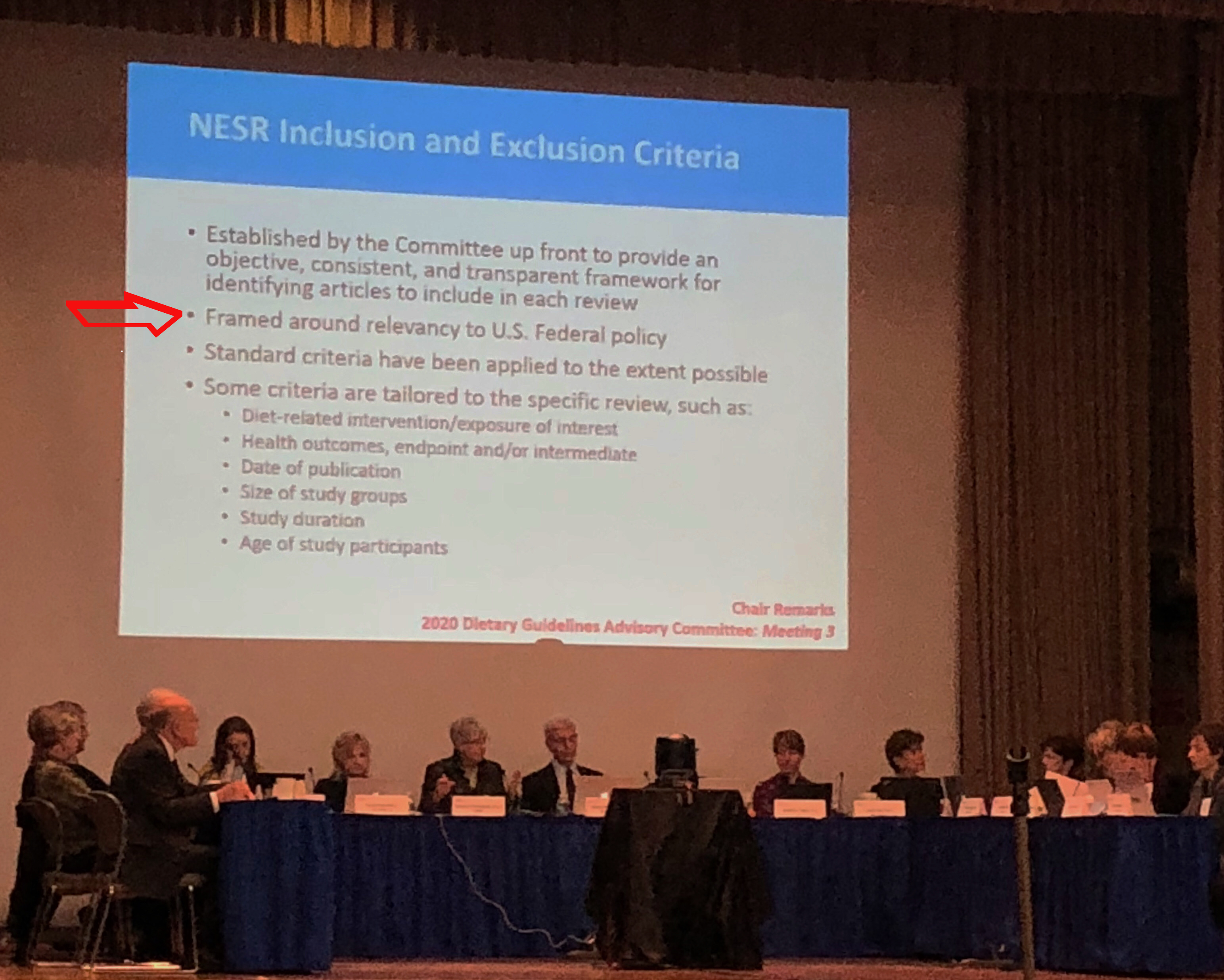
Part of the screening process used by USDA for science that will be included or excluded from Dietary Guidelines Advisory Committee consideration is this curious item shown above: “Framed around relevancy to U.S. Federal  Policy”. Committee members in October asked for more information on this research screening criteria. USDA explained it to them and those watching that this refers to including only the research that “aligns with current federal policy.”

Interestingly, one of the criteria for screening the research the Committee can consider is that it must “align with current federal policy.”

This dooms the entire process to a slanted view that is entrenched in the flawed bureacracy right from the start!

During the recent meeting of the DGA Committee in March — the last such meeting before release of the 2020 Dietary Guidelines for Americans (DGA) in May or June 2020 — the Committee failed to consider any of this evidence on saturated fat.

Instead, the committee announced it had found the link between saturated-fats consumption and cardiovascular disease to be “strong,” for both children and adults.

In fact, the committee recently proposed lowering the caps on saturated fat even further, from the current 10% of calories down to 7%!

“These conclusions ignore the entire last decade of science, during which a growing number of scientists have concluded that the caps on saturated fats are not supported by the science,” Teicholz points out.

She cites the work of a group of leading scientists who have reviewed the research on saturated-fats and released a consensus statement.

“Scientists are concluding that the most rigorous and current science fails to support a continuation of caps on saturated fats,” writes Teicholz. “So, why is the current DGA Committee — yet again — simply rubber-stamping the status quo and ignoring the science?”

The Nutrition Coalition is working fervently to expose the flaws in the process the DGA Committee is using under the USDA Food Nutrition Services umbrella. This in turn is what is used by USDA and HHS to govern what Americans eat.

These are not just “guidelines”, these are edicts to which everything from school lunches to military provisions are tied.

In fact, even farmers are tied to these guidelines as the dairy checkoff program leaders maintain they cannot promote whole milk because they are governed by USDA to stick to the guidelines, forcing farmers to mandatorily fund this completely flawed and unscientific “government speech.”

Americans deserve a recommendation on dietary saturated fat that is based on the most current and rigorous science available, and the Nutrition Coalition is issuing a call to action for Americans to join them in calling on the 2020 DGA Committee to critically review the most up-to-date evidence and modify its position on saturated fats accordingly.

“When we refer to “rigorous science,” we mean the data from well-controlled, randomized, clinical trials—the type of evidence that can demonstrate cause and effect,” writes Teicholz. “These trials were conducted on some 75,000 people addressing the question: do saturated fats cause heart disease? The results are that fats have no effect on cardiovascular or total mortality. This evidence has never been directly reviewed by any DGA committee.

“Ignoring evidence in order to preserve the status-quo is not acceptable,” she continues. “It’s not good policy, and it has not been good for the health of the American people. With the next iteration of the guidelines, your help is more crucial than ever to ensure that the USDA critically review the most up-to-date evidence and modify the government’s position on saturated fats to reflect the science accurately.”

Meanwhile, the dairy industry leaders continue to drag their collective feet.

As reported in Farmshine over the past few years, the call to action and support for healthy recommendations that consider the science on saturated fats and the goodness of whole milk, for example, has been largely pursued by grassroots efforts while industry organizations either fall in lockstep with the guidelines or stay neutral on the sidelines.

Once again, it will be up to the grassroots to get involved, for the public to be aware and get involved, for the Congress to be contacted, informed and involved.

How many times have we heard industry leaders shrug their shoulders and say “it all hinges on the Dietary Guidelines”?

dga1

When presented at the October DGA meeting with the first 12,000 names on the “Bring the choice of Whole Milk Back to Schools” petition (now numbering close to 30,000 online and by mail), Brandon Lipps, USDA Deputy Under Secretary of Food Nutrition Services, gave this response: “We have to see the science start coming together and be sure to bring everyone in… into the process.” Now it appears the Dietary Guidelines that control food at school, daycare, work settings, military, and many other foodservice and institutional feeding settings will be even MORE restrictive allowing even LESS of the healthy fat we — especially our children — need. The fat we eat is not the fat we get! Why is USDA moving us further in the wrong direction and excluding the science on this?! Act now. There are links in this article to speak out. Sign the Whole Milk in Schools petition also!

If there is even a chance that our children can have whole milk and healthy meals at school, that farmers can use their mandatory checkoff to promote the true healthfulness of whole milk and full-fat dairy foods, this biased process of DGA Committee guidelines has got to be challenged in a big way.

Here’s how you can help.

Contact your Senators and Representatives in Congress with a simple message. Ask them to please ensure that USDA is not ignoring the science on saturated fats.

Below is a message that the Nutrition Coalition suggests, which you or your organization can adapt and share with others in communicating with members of Congress:

Please urge the agencies in charge of the Dietary Guidelines for Americans (DGA), the USDA and HHS, to stop ignoring large clinical trials-the “gold standard” of evidence – that could reverse decades of misguided caps on saturated fats.

Shockingly, none of this evidence has ever been reviewed by any expert committee overseeing the science for the Guidelines. In fact, the current committee is pushing to lower the caps even further.

This is extremely alarming given that a growing number of prominent nutrition scientists have concluded the evidence shows that saturated fats have no effect on cardiovascular or total mortality. In fact, a recent panel of leading scientists reviewed the data and in a groundbreaking consensus statement, soon to be published in a medical journal, found that the science fails to support a continuation limits on saturated fats.

The current DGA committee appears to be one-sided and biased on this issue.

Please urge the USDA to stop ignoring the science and give serious consideration to lifting the caps on saturated fat for the upcoming 2020 DGA.

An easy way to do this online is available at this “take action” link https://www.nutritioncoalition.us/take-action

Or find the name and contact information for your Senators and Representative at this link and contact them that way https://www.govtrack.us/congress/members

Also, comment at the Federal Register docket for the DGA Committee by May 15, 2020. The sooner, the better, because the committee is expected to make its recommendations in May. Submit a comment to the Dietary Guidelines Advisory Committee here https://www.regulations.gov/docket?D=FNS-2019-0001

Also take this opportunity to sign this petition to “Bring the Choice of Whole Milk Back to Schools” at https://www.change.org/p/bring-whole-milk-back-to-schools

-30-

There’s a war to win for our health and our dairy producers

NinaTeicholz0181Learn, then comment! Deadline: March 30!

By Sherry Bunting, Farmshine March 2, 2018

STATE COLLEGE, Pa. – Never did Nina Teicholz envision herself talking about nutrition to groups of dairy and livestock producers and hearing how important it was to them to hear that the work they care deeply about and the product they produce is good, great, healthy, in its full-fat form after decades of being maligned by flawed advice for a low fat or fat free diet.

Nina Teicholz-27“Not only has this advice been bad for people, it is especially bad for children,” said Teicholz as she told her story of a decade of investigation met by intimidation uncovering stories of a scientist who bullied others who had alternative hypotheses and a powerful nutrition elite still controlling the food supply through their grip on Dietary Guidelines.
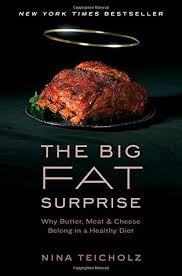
The author of New York Times best seller The Big Fat Surprise has not only challenged but also disproved the anti-fat dogma of 40 years and revealed the politics that have overshadowed the science in the confusing world of diets and nutrition.

In fact, she says, the power of an elite class of experts who control nutrition guidelines that in turn control the food supply is still strong and very tough to overcome – even when the evidence is not on their side.

imagesTeicholz’s Big Fat Surprise has had a ripple effect in the food industry among consumers since 2014,but the dietary elites have challenged her each step of the way.

And there’s a lot of war left to be fought for what is right.

This is especially true when it comes to the milk the USDA prohibits from being served in the National School Lunch program or through Women, Infants and Children (WIC) programs.

The intimidation that Teicholz and others have endured shows just how much is at stake and just how tough the politics are in trumping the science. With a steady drumbeat of proof, one would think the bad advice could be easily overturned, but the work is hard and it needs to continue, Teicholz indicates.

(Not only are the flawed guidelines affecting health, but also reverberating in their economic effects on family farms across the country, in part aided by the dairy industry accepting a role in working alongside former first lady Michelle Obama when it came to school meals, allowing her to deal the final blow to milk in school, while accepted yogurt on the plate as a compromise.)

Nina Teicholz kicked off the 2018 Pennsylvania Dairy Summit last Wednesday, Feb. 21 here in State College, treating nearly 500 dairy producers and industry representatives to an inside look at her 10 years of investigative journalism on this topic that began when her editor assigned her a piece on defining trans fats.

Little did she know then where this would lead her today. Who would have thought that the former vegetarian from Berkley, California and New York City would end up uncovering what may be the biggest nutritional tragedy done to consumers and dairy and livestock producers, worldwide.

She told Summit attendees that she began to suspect a problem when her initial inquiries started revealing a pattern of resistance.

“That’s where my deep dive into the world of fats began,” said Teicholz. “The fats we obsess about that have made us all crazy over what kind to eat and how much.”

She started hearing about scientists getting “visits” and papers being yanked from scientific journals. She started feeling the intimidation, herself, as she widened her investigative scope, reading scientific papers and seeking interviews with scientific experts at some of America’s most trusted universities and institutions.

“I would be interviewing scientists at top universities and they would hang up on me,” Teicholz revealed. “I thought, am I investigating the mob? What’s going on?”

Her deep dive into fats took her through a decade of work reading thousands of scientific papers and doing hundreds of interviews to write a book investigating the research on all fats in the diet.

“Every idea has a beginning, like an acorn to a tree,” said Teicholz, “and this had its beginning when President Eisenhower had a heart attack. This is when the concern about heart disease rose out of nowhere to be labeled the nation’s leading killer.”

Many ideas of causes were initially looked at, and then University of Minnesota physiology scientist Ancel Keys posited the cholesterol theory, that like hot oil down a cold stove pipe, would clog arteries and cause heart attacks.

Through her research, Teicholz discovered that so in love was Keys with his own theory that colleagues described his approach to the work of others as “bullying.”

“They described him as very charismatic and able to debate an idea to death. And, yes, a bully,” she said. “Once he was able to get his idea implemented into the American Heart Association, it was on.”

By 1960 he was on the nutrition committee and by 1961, “that acorn had grown into a giant oak tree of the advice leading to what we have today. The world transitioned from saturated to unsaturated fats,” said Teicholz. “But rarely do checks for common sense happen in the world of nutrition. Keys became ‘Mr. Cholesterol’ on the cover of Time Magazine with just one study.”

This study was not a randomized controlled study, but rather a series of contacts in seven countries relating diets to disease in middle-aged men.

Teicholz spent six months studying the Keys’ study. While it involved seven countries, the study looked only at the diets of middle-aged men and created this “big bang” theory. His study had been funded by the National Institutes of Health (NIH).

“But what happened is that Keys already had his idea. He loved his idea, and he set out to find what he found,” said Teicholz.

She outlined the numerous problems with the Keys study. It did not include countries with high consumption of fats and low rates of heart disease, which would have destroyed his hypothesis. He went to countries that were ravaged by war, not the countries that were eating well.

“And his star subjects were on the island of Crete, mainly hard-working peasants he worked with for three months one of which was during Lent, where he clearly undercounted the amount of fat these people ate,” Teicholz observed.

What was mind-boggling for Teicholz as she went through the record is that absolutely none of this theory — or the 40 years of advice that followed — is based on randomized controlled clinical trials.

“The government and the American Heart Association understood the evidence was weak, so the NIH funded a study to follow people through their death to set out to prove Keys’ theory this way,” she said.

Meanwhile it was being treated as gospel.

After more than a decade and following 75,655 men and women for one to 12 years, some of them with controlled in-patient diets, “The results showed no effect of saturated fats on cardiac mortality or total mortality!”

In fact, there was no effect whether subjects consumed 18% of their dietary calories in fat or 6%.

At the same time, Teicholz reports that people in the study, who had replaced fats with soy and margarine, had higher rates of cancer.

So, by this time in the presentation, it’s hard to keep the hair from standing up on your neck, and Teicholz asks the question: Why is this advice still around? Why is it still controlling food programs and markets?

“The politics explain so much more than the science,” she said. There is a small group of nutrition aristocrats controlling who they invite to lead panels or grant appearances, and they sit on editorial boards of medical journals and control these institutions.

“This is still true today,” said Teicholz, noting how an invitation for her to join a panel at an international conference was later withdrawn because the other people on the panel were key members of the U.S. Dietary Guidelines committee.

“This relative small (but obviously powerful) group does not include critics. They are the reason why we still have these ideas even if they are wrong,” said Teicholz.

An educated writer and scientist herself, Teicholz understands that scientists are trained to discover for themselves, but selective bias crept into nutrition the moment Ancel Keys at the University of Minnesota, fell in love with his own hypothesis.

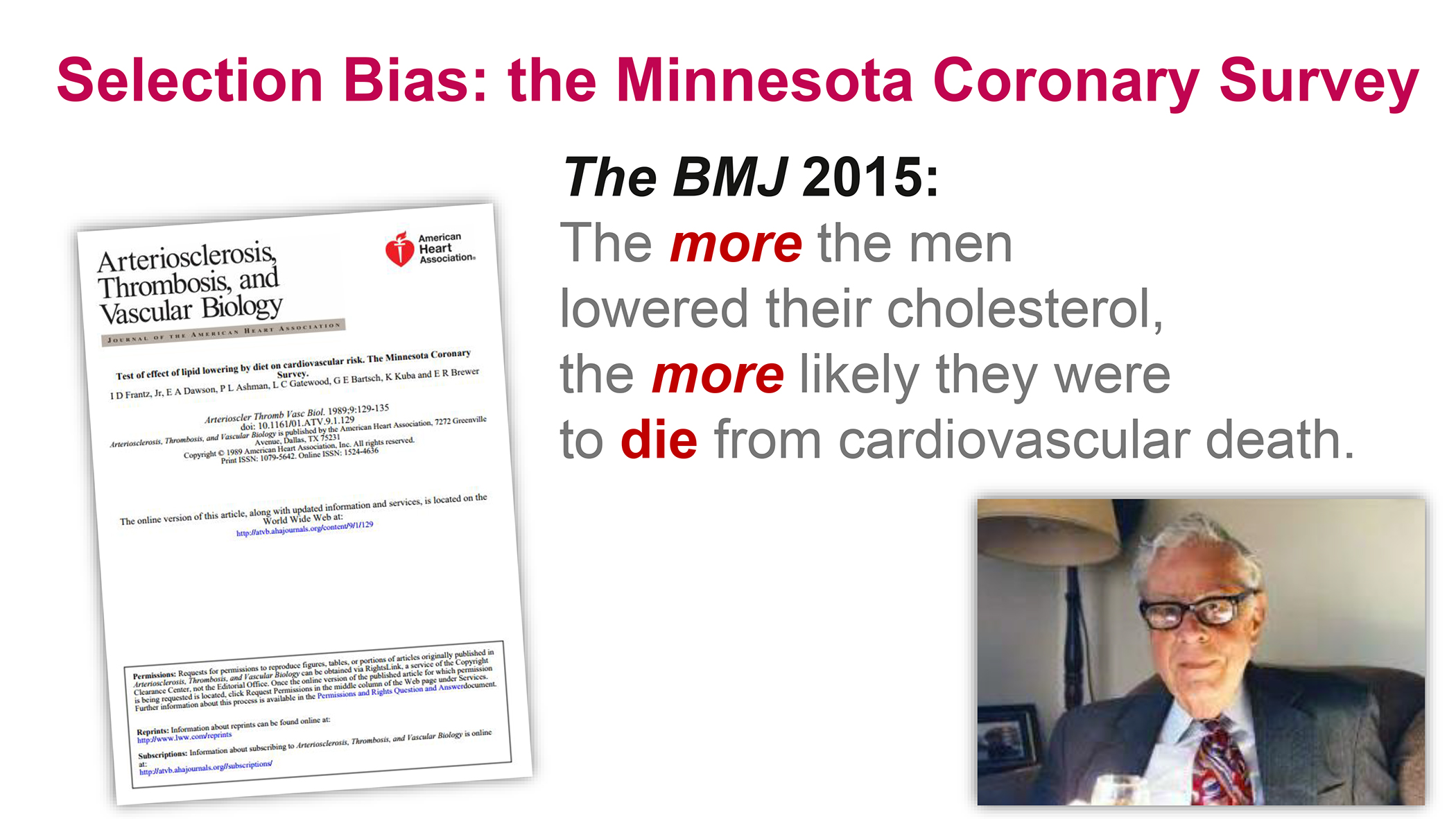
Nina Teicholz-25A colleague of Keys had done research with 5000 people around the same time, but it didn’t see the light of day. This Minnesota Coronary Survey found no difference from fat in the diet between treatment and control. It is the biggest and most well controlled study of its time but was not published for 16 years!
Teicholz explained further that when the competing research was ultimately published, long after the Keys hyposthesis had grown into an oak with roots, it was only published in an out-of-the-way journal.

Meanwhile, it was the 1980s and Senator George McGovern initiated the Dietary Goals report, written by staffers with no background in nutrition, some of them vegans. This formed the basis for the food pyramid.

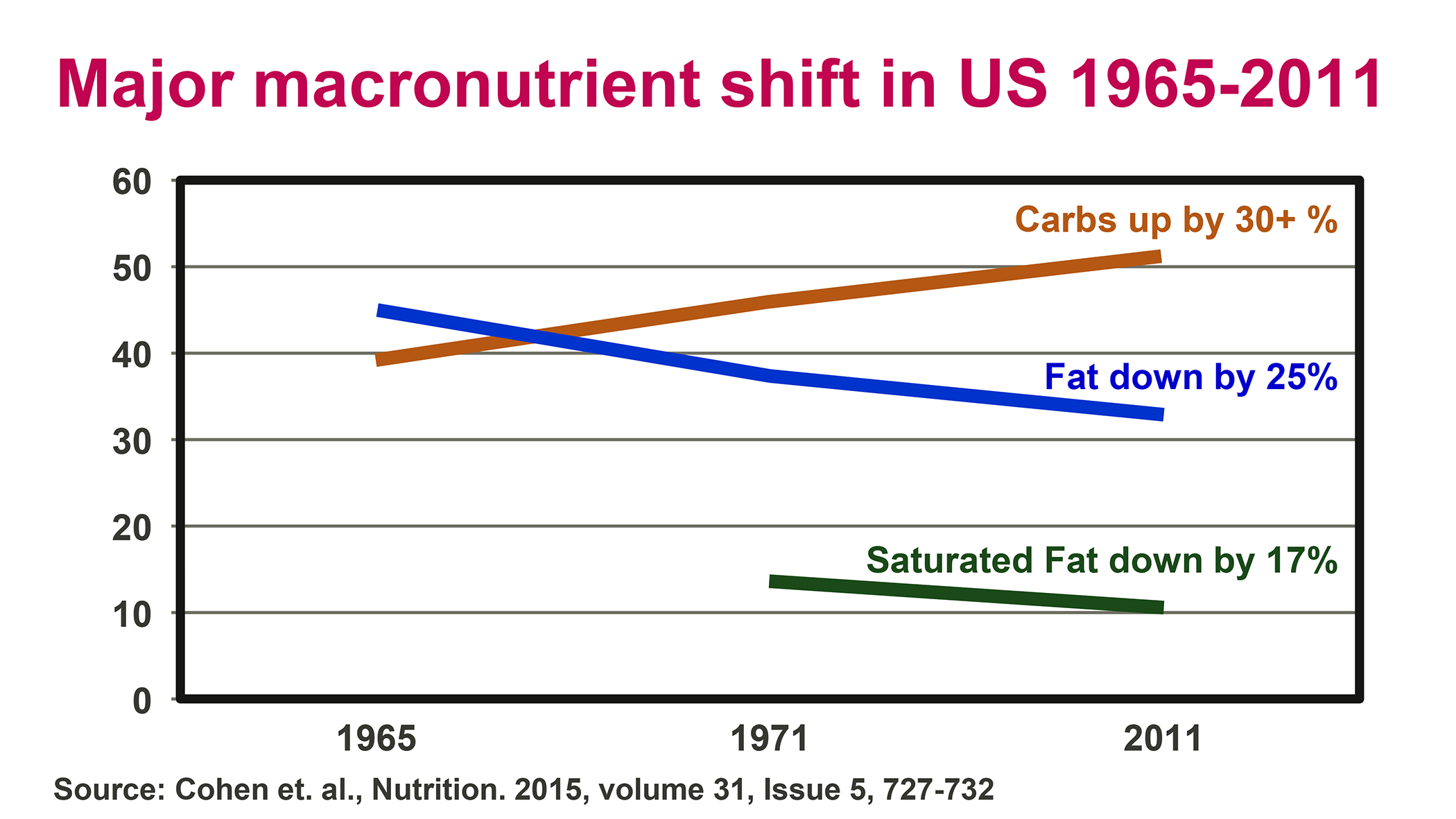
From that point forward, Teicholz showed graphs of the increase in obesity and diabetes. But as a science-minded journalist, she reminded her audience that the graph, by itself, didn’t show causation. However, other studies have proved causation, and she shared those as well.

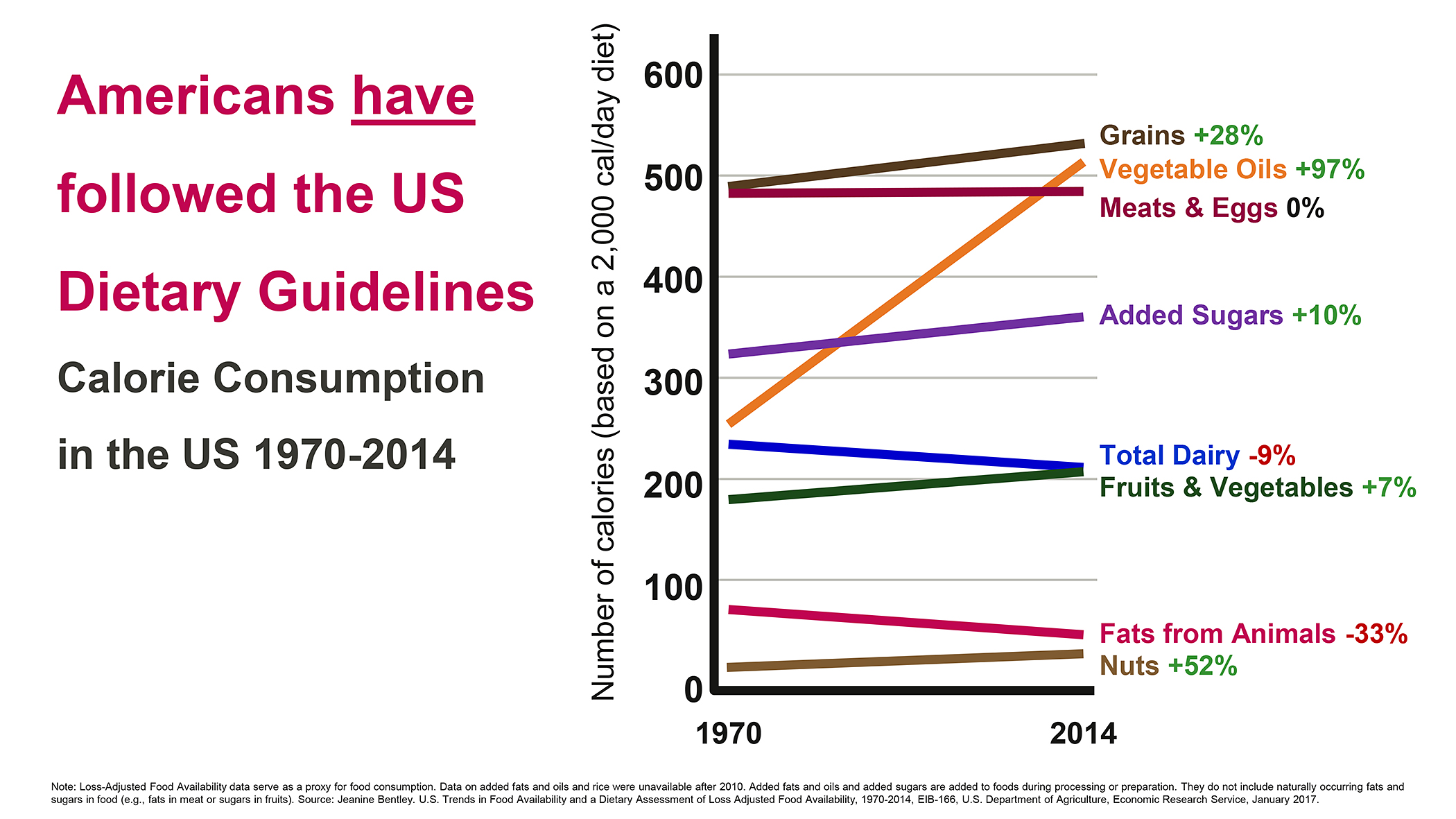
In fact, studies have been showing that Americans really have been following the flawed dietary guidelines and that while consumption of full fat dairy is down, and pounds of fruits and vegetables up 20 and 30%, along with grains and cereals up 30%, obesity and diabetes has risen exponentially.

Nina Teicholz-29“We follow the guidelines and eat more calories, but all of those extra calories are coming from the increase in carbs,” said Teicholz.
So the third rail some say we dare not touch is that the hallmark recommendation of 60 minutes of exercise — meant to accompany the promotion of a low fat diet – was touched by Teicholz during her presentation.

The kicker is that Americans are not getting fat because they don’t exercise enough, she said. Not one study could show where this 60-minutes of exercise and a lowfat diet actually helped.

Nina Teicholz-30“We cannot exercise ourselves out of a bad diet,” said Teicholz. “Is it our own fault or is it the advice we have been given? I’m here to tell you that saturated fats do not cause cardiovascular death, and Canada is already working to remove the percent of fat requirement from their guidelines.”

In fact, Teicholz cited the work of Salin Ysuf, a leading cardiology specialist. His work showed that patients who ate the least amounts of fat had the highest risk of stroke and those who ate more, lived longer.

“We are in the midst of a paradigm change,” she said. “Cholesterol in the diet has not been proven to increase blood cholesterol. Eating egg whites instead of eggs has accomplished nothing.”

In a small step in 2013, the American Heart Association dropped its caps on cholesterol and this also occurred in the 2015 Dietary Guidelines. However, the recognition that a low fat diet doesn’t work has not made it to the dietary guidelines elite, and the next cycle to change them doesn’t happen until 2020.

“Fat is not making you fat,” said Teicholz. “It’s like a tragic horror movie. The truth is the fat we eat is not the fat we get.”

So what does cause disease? Teicholz explained the carb insulin hypothesis, where carbs become like glue in the bloodstream, and the body has to secrete insulin, a hormone, so the body socks this away as fat. She explained that not all carbs have the same effect and that gaining and losing weight also has a hormonal aspect being found as a key culprit in obesity and diabetes.

“There is a growing drumbeat of positive research coming out showing that whole dairy, full fat dairy, is good for cardio risk factors and that there should be no caps on cholesterol in the diet; however, the caps on saturated fat remain,” she said.

The reason the Dietary Guidelines are so powerful is that they control so much of what we think about what we are eating, according to Teicholz. She noted that soy milk has been allowed as a replacement for dairy milk in the Dietary Guidelines.

This is huge because these guidelines dictate what schools can serve, the WIC program and so many other aspects of nutrition where the government is involved.

“The Dietary Guidelines for Americans have huge control over the food supply, and trying to change them is so difficult because those in charge are so incredibly powerful,” said Teicholz.

This is why she has initiated the Nutrition Coalition to fight for our diets. Her aim is to have evidence-based Dietary Guidelines, and to see an end to the promotion of 60 minutes of exercise and a low fat, low sodium diet as what’s good for our children.

“This advice has not worked for people, and especially not for kids,” said Teicholz. At best, the 60 minutes of exercise is disingenuous when accompanied by low fat, high carb dietary advice, and at worst, the promotion of low fat and fat free is harmful.

Alas, her attempts so far, including a piece in a British medical journal about changing the flawed Dietary Guidelines was met with a petition signed by 180 nutrition aristocrats on the Dietary Guidelines committee, who demanded a retraction of Teicholz’s paper.

“It took them a year to put it out, but the BMC did their review and stood up strong for my paper,” she said. “This shows us just how much is at stake and how tough the politics are in this field of nutrition.”

Learn more about Teicholz’s work and the Nutrition Coalition she founded as well as how to comment by March 30, 2018 on issues to review in the Dietary Guidelines Advisory Committee’s next 5-year review for the 2020-2025 guidelines.
-30-

To read other agmoos articles / columns authored by Sherry Bunting on the School lunch program and dietary guidelines from the past several years, here is a link: https://agmoos.com/2015/04/24/nutrition-politics-kids-and-cattle-caught-in-the-crossfire/

About Nina Teicholz: Nina is an investigative journalist and author of the International (and New York Times) bestseller, The Big Fat Surprise (Simon & Schuster). The Economist named it No. 1 science book of 2014, and it was also named a 2014 *Best Book* by the Wall Street Journal, Forbes, Mother Jones, and Library Journal. The Big Fat Surprise has upended the conventional wisdom on dietary fat and challenged the very core of our nutrition policy. A review of the book in the American Journal of Clinical Nutrition said, “This book should be read by every nutritional science professional.”

Before taking a deep dive into researching nutrition science for nearly a decade, Teicholz was a reporter for National Public Radio and also contributed to many publications, including the Wall Street Journal, New York Times, Washington Post, The New Yorker, and The Economist. She attended Yale and Stanford where she studied biology and majored in American Studies. She has a master’s degree from Oxford University and resides in New York City.