Covering Ag since 1981. The faces, places, markets and issues of dairy and livestock production. Hard-hitting topics, market updates and inspirational stories from the notebook of a veteran ag journalist. Contributing reporter for Farmshine since 1987; Editor of former Livestock Reporter 1981-1998; Before that I milked cows. @Agmoos on Twitter, @AgmoosInsight on FB #MilkMarketMoos
HARRISBURG, Pa. – The legal battle continues for NoBull Solutions LLC partners Rusty Herr of Lancaster County and Ethan Wentworth of York County. Both Pennsylvania men have been jailed in their respective county prisons since April 10 and 11, respectively.
They were arrested for contempt of court after failing to respond to a May 2023 contempt order and failing to comply with a 2021 investigative subpoena seeking the name and address of NoBull’s custodian of records as well as the names and addresses of all members, managers, and other persons who direct its activities, according to the recently unsealed docket 325-MD-2021.
Herr and Wentworth will have served their 30-day commitments by this weekend (May 10 and 11, 2024).
According to counsel Robert Barnes, Esq. of Barnes Law LLP, a Petition for Writ of Habeas Corpus has been filed with the Pennsylvania Supreme Court after a Commonwealth Court Judge denied their motion for immediate release and unsealed the docket in two separate actions on April 29, 2024.
Barnes maintains that certain procedures must be followed in a civil contempt action.
“To our knowledge those were not followed here. Wentworth and Herr were not given an opportunity to purge contempt in order to secure their release from prison – an essential requirement of civil contempt, which makes this de facto criminal contempt – a violation of Pennsylvania law,” Barnes states in an email response to Farmshine.
Even though the 30-day sentences will have been completed as they wait for the State Supreme Court to hear their appeal, Barnes says his office will “pursue the appeal to restore proper jurisdictional basis and to force the state agencies to adhere to the Pennsylvania Constitution and the Administrative Procedures Act.”
Former Pennsylvania Department of Agriculture counsel and current staff attorney with the Penn State Center for Agricultural and Shale Law Brooke Duer, Esq. told WPMT-Fox43 that the now unsealed docket shows the “civil processes for contempt are all there and were followed.”
The April arrests stemmed from prior actions by the State Board of Veterinary Medicine, which led to a Feb. 2020 complaint filed by the Pennsylvania Veterinary Medical Association (PVMA) one month before the Covid shutdown.
The PVMA alleged that Herr and Wentworth continued practicing veterinary medicine by ultrasounding other farmers’ cows in connection with NoBull’s breeding management service. PVMA asked for contempt charges through Commonwealth Court as part of that 2020 complaint.
The Department of State initiated its investigation in early 2021, issuing a subpoena order for the names and addresses of custodian of records and all parties involved in or directing activities in the business.
Both men failed to comply with the subpoena or to challenge it, according to the now unsealed docket.
“Some of us thought this had more-or-less gone away,” said Duer in the televised interview on May 2. “So, it’s kind of surprising. All of a sudden it’s back on again?”
Duer said there is no evidence that the men responded in any way or represented themselves since 2021.
(Prior dockets show they did represent themselves in prior State Vet Board actions, Herr in 2010 while he was still milking his own dairy herd, and Wentworth in 2018 while he was employed as an AI technician by Select Sires.)
“They had not only a few opportunities to come forward and prevent this kind of an outcome, but those opportunities were multiple…,” said Duer.
According to the unsealed documents, a Commonwealth Court judge signed “Orders to Commit” on October 6, 2023, which resulted in the April 2024 arrests.
The more immediate question is: Were they given the opportunity to purge the contempt at the time of arrest and incarceration, as would appear to be the process with civil contempt, according to an ACLU – Pennsylvania guide to contempt proceedings.
The deeper questions center around the future: What will happen next in terms of a level playing field for smaller farms looking to gain the benefits of integrating ultrasound into breeding management, but are not large enough to have employees trained to do it or vet practices willing to station their vet techs at small farms to do it.
Of the NoBull customers who have contacted this reporter, nearly 90% want this integration, while they still intend to maintain their veterinary relationships through regular herd checks.
The Department of State says veterinary medical practice is further defined by the State Vet Board through adjudications.
The PVMA says a pregnant / not pregnant ‘diagnosis’ is a food safety concern because the not-pregnant diagnosis can involve recommendations for hormone treatments, or recommendations for culling open cows for the beef market.
PVMA also maintains that pregnancy diagnosis “by any mode or method” is veterinary practice. Yet blood and milk sample testing for pregnancy by other companies has been used and celebrated in Pennsylvania since at least 2015.
Several dairy trade magazines have published articles over the past 12 years about the differences in the laws between states and the trend toward laypersons doing ultrasound as the machines are widely available, and the technology has improved. A 2007 USDA survey of (larger) dairies in the West showed that nearly one-third (31.7%) of those performing pregnancy diagnosis used someone other than a veterinarian via ultrasound for breeding purposes. That was 17 years ago.
At least one Pennsylvania dairy producer reports that a veterinary practice places vet techs as employees on larger farms for training, and they do those ultrasounds to provide timely information between herd checks at a discount.
A January 2024 Progressive Dairy articleby a Genex consultant examined how integrating ultrasound with breeding management is revolutionizing reproduction on U.S. dairies that are faced with the need for swift information to make economic decisions in a highly competitive, tight-margin dairy business.
Small dairy farmers continue to contact this reporter wondering what they can do about this. “How can we help?” they ask.
Virtually all of them continue their relationships with their veterinarians for regular monthly herd checks, in addition to having NoBull do ultrasound in connection with breeding service to achieve those same efficiencies in between.
HARRISBURG, Pa. — It has been three weeks since Rusty Herr and Ethan Wentworth of NoBull Solutions, LLC were arrested on April 10 and 11 and separately incarcerated in Lancaster and York County Prisons — their respective counties of residence in Pennsylvania.
A motion for immediate release has been heard and denied by the Commonwealth Court of Pennsylvania.
“The Commonwealth Court failed to correct their error, so we are taking the case directly to the Supreme Court,” said Robert Barnes, Esq. in a Farmshine interview after the decision.
Judge Michael Wojcik also unsealed the docket in a separate decision.
He heard oral arguments for the motion filed by Barnes Law LLP on behalf of Herr and Wentworth as well as the answer to this request by the Department of State (DOS) Bureau of Professional and Occupational Affairs (BPOA) on April 29, 2024, at 1:30 p.m. via WebEx video conferencing.
According to the docket 325-MD-2021, the BPOA opposed the motion, stating that on May 16, 2023, the court had adjudicated NoBull Solutions in contempt of a previous order dated Nov. 30, 2021, related to enforcement of an investigative subpoena, with conditions for NoBull to purge its contempt through a monetary civil penalty, and that failure to purge may result in issuance of a warrant for their arrest and incarceration.
NoBull Solutions did not show cause why they should not be held in contempt on Nov. 30, 2021, did not appear or comply, and on May 16, 2023, the enforcement order was made absolute requiring NoBull to “purge its contempt,” including providing the BPOA with the name and address of its custodian of records as well as the names and addresses of all members, managers, and other persons who direct its activities.
“At no point during these proceedings has Mr. Wentworth and Mr. Herr challenged BPOA’s allegations that they are the principal members of NoBull Solutions and are directing its activities or made any attempt to purge the Court’s finding of contempt,” the docket reads.
The bottomline here is that Herr and Wentworth are making a stand for the right to assist farms in reproductive management. Through the 15 phone calls from customers, it’s clear they believe ultrasound makes breeding service more effective and efficient for their small farms that are not in a position to be blessed by the law’s exception for hired employees doing this work on larger farms.
Dairy farmers have continued to call into this reporter, explaining that both men, and NoBull collectively, help them be better managers and learn to do more breeding work on their own, even when it means they are purchasing fewer services from NoBull.
Fully 12 of the 15 calls to-date affirmed they maintain a relationship and regular herd checks with their licensed veterinarians and gave clear examples of how the use of ultrasound with breeding service through NoBull had minimized their waste of costly semen, improved their knowledge, and provided information they needed for timely breeding and culling decisions made on the farm in between regular herd checks.
At issue for Herr and Wentworth, according to Barnes Law, are the Constitutional rights in the handling of the contempt enforcement. With the docket unsealed, a paper trail – including the state’s request for a default judgment that had been denied in 2021 – have been unsealed.
The initiation of these previously sealed contempt proceedings began in 2021, 18 months after the 2020 Pennsylvania Veterinary Medical Association complaint that had requested contempt charges be pursued by the DOS, alleging both men as principals in NoBull Solutions LLC were continuing to practice veterinary medicine without a license, continuing to do and direct ultrasounding of livestock in connection with their breeding and reproductive management services.
At this juncture, it appears that Herr and Wentworth will either have their appeal for immediate release heard by the State Supreme Court or serve out their 30 days, whichever happens first.
Then, the real work may begin. Is there a middle ground for these services in conjunction with breeding? Is the assistance providing a level playing field in a low-margin, highly competitive dairy industry where scale affords some farms the avenues to accomplish these services via employees who are proficient in ultrasound vs. smaller farms paying an independent technician for the same.
Since the Department of State maintained in a prior interview that State Veterinary Board adjudications clarify the law with the authority granted them by the legislature, and that the legislature is the body to consult for the exceptions, there’s much here to wade through from the State Capitol to the Administrative Boards and Offices to the Commonwealth Court.
Pictured are (l-r) Ben Masemore, Ethan Wentworth and Rusty Herr at their NoBull Sires booth during the World Dairy Expo. Today, Masemore is fielding calls from dairy farmers across Pennsylvania and the nation as Herr and Wentworth have been jailed for ultrasounding cows they do not own and making diagnoses without a veterinary license as part of their NoBull Solutions LLC breeding services. They have not seen a judge, had no due process, were denied bail, and were arrested by local law enforcement in the respective counties in which they live for contempt of court after ignoring a 2010 and 2018 cease and desist order from the State Board of Veterinary Medicine having not been able to present a defense. Barnes Law LLP has accepted the case, and Robert Barnes says the arrest warrants did not come from a court — a bureaucratic veterinary board is not a court. Funds have been set up to accept donations for their legal defense to get them home to their families, their animals, and the dairy farmers they serve. Photo provided
By Sherry Bunting, a developing story special for Farmshine in mailboxes and online at Farmshine.net, April 19, 2024 edition
CHRISTIANA, Pa. — In a move that has shocked members of the local and distant dairy farming community this week, word spread of the Pennsylvania State Veterinary Board’s action through the Department of State, Professional Compliance Office, executing a “contempt of court” order through local law enforcement when none of these agencies are actual courts.
Rusty Herr of Christiana and Ethan Wentworth of Airville have been in prison since their arrest last week, without seeing a judge, without due process, and being denied bail… for what?
For ultrasounding dairy cows and horses – without a veterinary license — as part of their NoBull Solutions breeding service. (Imprisoned ultimately on contempt of court).
They are two of the three men that were named in the State Vet Board’s cease-and-desist orders as recently as 2018 and 2020.
With this enforcement, the state is essentially considering pregnancy a disease even though federal courts have found, in humans, pregnancy is a condition, not a disease, and even though the Veterinary Medicine Practice Act in Pennsylvania does not mention pregnancy, but latitude is given to the State Board. No definition of diagnosis nor mention of pregnancy or ultrasound appears in the Board Regulations.
According to the nationally-known Barnes Law LLP, serving as the NoBull legal defense team hired April 17, one week after their arrests, “Pregnancy is not a disease. Pregnancy is not an illness. Likewise, confirming pregnancy or successful reproduction is not a diagnosis. Medicinal definitions are clear: Identification of disease is termed diagnosis, the solution design is called treatment planning, and treatment where appropriate is then implemented as the solution.”
In addition, there are dozens of known technicians using ultrasound with livestock in conjunction with reproductive services in the state of Pennsylvania. Yet for this, Herr and Wentworth are being kept away from their families, already imprisoned for one week, and have been told they will be in jail for 30 days.
Furthermore, the circumstances of their arrests are troubling.
Wentworth was told to go to the Courthouse (in York) on the morning of April 10 to pay a fine. He was told he would see a judge. Instead, he was arrested, and seven days later has still not seen a judge, according to friend and associate Ben Masemore, a dairy farmer associated with a sister business NoBull Sires LLC.
Herr was arrested the very next morning, April 11, at 6:30 a.m. at his home in Christiana. He was handcuffed and taken away in front of his wife and children, says Masemore in a Farmshine phone interview.
The new lead attorney for the Herr/Wentworth and NoBull Solutions defense, Robert Barnes, Esquire, even makes the case that the arrest warrants were not “facially valid” because they did not come from a court.
“There is no actual court on it. It is not a court document. Some bureaucratic official sent it to a prothonotary (court clerk), and now these people are sitting in prison because high ranking state bureaucrats have conspired with incompetent local sheriffs to illegally and unlawfully imprison them,” says Barnes.
This amounts to “some rogue officer and agency in Pennsylvania deciding ‘we want to arrest and imprison people whenever we want, with no limitations.’ The statute doesn’t authorize it. The Constitution of Pennsylvania doesn’t authorize it. In fact, it violates both the State and Federal Constitutions,” Barnes explains in his April 17 Viva Locals podcast about the case.
He adds that they must think “These are just some ordinary folks helping the Amish and (that they) can get away with it. Maybe they thought they were Amish, and they’d never sue.”
Barnes further notes that, “Somebody at the (state vet board) got the idea to create something that calls itself ‘arrest warrant,’ make it look like it came from a local court, create a docket number at the top, refer to (their) board’s activities as ‘The Court,’ call it ‘contempt,’ and have these people ordered arrested interminably in prison.”
Robert Barnes, Esq. of Barnes Law LLP has taken the NoBull Solutions Defense case, vowing to get justice for Ethan and Rusty and their families. He talked about it on his Viva Locals podcast April 17, saying “a whole bunch of folks are about to get sued” and citing unlawful detainment and civil rights precedents, among others. Screen capture by Sherry Bunting
In fact, visiting the Pennsylvania Veterinary Medical Association (PaVMA) website under “advocacy,” Farmshine has learned that the contempt-of-court charge was the suggestion made in the PaVMA’s recent complaint it filed on Herr and Wentworth for ignoring previous fines and cease-and-desist orders from the State Veterinary Board.
Farmshine has learned that these fines were ignored on advice of their former attorney, so as not to admit guilt. After all, why should Herr and Wentworth admit guilt for actions that have become commonplace and are open to interpretation of the state’s vague and archaic veterinary law in regard to defining ‘diagnosis’ — especially since pregnancy is not a disease to be diagnosed, but rather a condition to be observed?
There is also the issue of targeted enforcement.
The State Vet Board was prompted to act in the first place by PaVMA filing a complaint seeking to specifically target “three individuals” with fines and cease-and-desist orders for “illegal practice of veterinary medicine by unlicensed individuals.”
These original orders specifically named them as individuals employed with NoBull Solutions LLC and its “all encompassing reproductive management for dairy farms.”
The “documentary evidence” in the official PaVMA complaint was in the form of two pages of Facebook posts that “show non-veterinarians using ultrasounds and making diagnoses.”
Again, what are we talking about here? Ultrasounding cows in conjunction with breeding service — something dozens of proficient ultrasound machine users and breeding technicians do with cattle, horses, and other livestock across the state and around the country.
What is the difference between “diagnosis of pregnancy” through ultrasound vs. blood test and milk samples offered by companies in the area?
In today’s times, we have breeding technicians using ultrasound in conjunction with pregnancy and reproductive observation that are the lifeblood of a dairy farm. We have hoof trimmers providing essential services that involve observation and treatment of hoof and foot problems, but the state vet law only specifically exempts equine farriers. We have nutritionists body scoring cows for herd nutritional and health status observation and advice. We have FARM program auditors scoring hocks, scoring lameness, scoring body condition and other potential veterinary diagnoses that are referred to as observation.
But somehow, observing pregnancy and reproductive performance through ultrasound is illegal without a veterinary license? All of these examples – including repro ultrasound — show how it takes a village to run a dairy farm these days. How many times do we go to meetings and hear experts tell farmers to get outside eyes observing the cattle on their farms?
Farmers, themselves, wear many hats. They observe, diagnose, and treat many conditions in their own herds. The law recognizes a farmer’s ability to diagnose and treat their own animals and to allow their hired employees to do it for them.
With this action, the state is basically saying small and mid-sized farms cannot pay for the services of others, not being large enough to hire full-time staff to do it.
This reporter received phone calls from half a dozen farmers, many of them Amish dairy farmers, while completing this report on April 17. One farmer from eastern Lancaster County said “hundreds of farmers in the county don’t know where they would be without Rusty Herr.”
Another from Oxford explained how much Herr has taught him about his livestock, so much more than a veterinarian would have time to teach. He noted Herr’s “calm personality and precise work,” and how others, including himself, are “now being impacted by not having him on their farms” while he is in jail.
Another from Quarryville said Herr and Wentworth “are keenly missed. They are great people who did a great job and provided great service. This is affecting my dairy farm. I have appreciated how they walked into my barn and did their utmost to help me out with dairy breeding decisions.”
Pennsylvania, with a small average herd size of 95 cows, has lost 46% of its dairy farms in the five years between the 2017 and 2022 Census of Agriculture. More dairy exits have occurred in 2023 and so far in 2024. Total herd dispersals have become commonplace as the low margins in dairy are a barrier for many farms to continue into the next generation.
How can farm families survive amid rapid consolidation of this industry, if there is not a level playing field? The very largest mega dairy operations in this country can hire full-time staff veterinarians, nutritionists, and technicians as employees and receive the blessing of the law, while small to mid-sized farms stand to lose the service of good people hired independently?
As for the PaVMA complaint that started all of this by citing state veterinary law, that law makes no mention of ultrasound or pregnancy.
It’s important to note that the PaVMA stepped up its drive to get targeted action from the state. According to a February 21 post at the PaVMA website, the organization listed the ultrasound concern as an advocacy position under the heading “Illegal Practice of Veterinary Medicine.”
In the post (see screenshot below), PaVMA states that it “has received many reports of bovine technicians engaging in the practice of veterinary medicine without a license, specifically performing ultrasounds and issuing diagnoses. In the past, the state of Pennsylvania fined three individuals and ordered them to cease and desist their activities. We have received reports that some of these individuals have not stopped and flagrantly promote their use of ultrasounds on Facebook. We have filed a complaint with the Department of State, Professional Compliance Office.”
The organization called its members to action, providing downloadable blank forms and instructions as follows: “We encourage all PVMA Members who have knowledge of these activities to also file complaints. A complaint form and copies of the cease-and-desist orders are available for download. Please reference the docket and case numbers in your complaint. The docket and case number are located on each cease-and-desist order. After filing a complaint, please email us at Membership@PaVMA.org and let us know so we can keep track of our members who have joined us in making the state aware of this problem.”
Screen capture by Sherry Bunting
Parallels can be drawn to other points in the long and legendary history of dairy cattle reproductive progress, whereby the establishment have used interpretations of archaic and vague laws to target progressive individuals, who were helping dairy farmers improve their herds.
One such case was in Canada in the 1980s, as chronicled by Holstein International. The article entitled “Allowing great sires to go everywhere” in the March 2021 edition makes this point:
“Unfortunately, disruption in any established industry does not come without controversy, and in 1987 a charge was made against Transfer Genetics (and its owner) by the Ontario Government for the illegal delivery of semen. The law from the 1950s required semen to be delivered by a licensed Ontario A.I. centre. A fine for this ‘violation’ was suggested, but a guilty plea would delegitimize Transfer Genetics forever. In July 1987 Transfer Genetics was charged – resulting in the closure of Transfer Genetics’ semen distribution.”
After setting up opportunities for farmers to learn to breed their own cows and enduring more than a year fighting this battle, the case was won for farmers, and the achievements for modern-day genetics are well-documented.
Instead of giving in to the intimidation, this entrepreneur, with the help of others in the dairy community, persevered, and the results of those early matings of well-bred Canadian cow families to top U.S. sires of the 1980s have produced legendary lines looked to today.
If that entrepreneur, who went on to be recognized as 2022 World Dairy Expo International Person of the Year, had simply paid his fine in 1987, stopped ruffling feathers, and gone back to the sidelines, who knows what the impact would have been?
Where the similarities are to this Pennsylvania case is that he also chose not to pay fines levied on him and his company by the government as this would “delegitimize (his business) forever.” The rest, as they say, is history.
In the case of Herr and Wentworth using ultrasound, their friend Masemore notes: “There is no guilt because this is an antiquated, vague law. The reality is that times change. Anyone, anywhere, today can buy an ultrasound machine and become extremely proficient in it. This is very commonplace. There are at least 15 to 20 individuals in this state using ultrasound without a vet license. I have dozens of friends, nationwide, that I know personally, who have ultrasound machines. It is a common thing on farms.
“Rusty has a winsome personality and is a man of humility, who is a servant, a hero to farmers as long as I’ve known him,” Masemore observes, adding that dairy farmers in Pennsylvania and around the country have flooded his phone over the past seven days for information on Herr and Wentworth, while their wives worked to retain another attorney. “The phone calls I have received from distraught farmers are overwhelming.”
These calls, he says, show appreciation for the breeding services of these two now-incarcerated men, who are being kept from their families, their animals, and their livelihoods.
Members of the close-knit dairy community in Southeast and Southcentral Pennsylvania — and across the state and nation, in fact — are expressing concern, and a desire to help.
Farmshine’s calls and emails to the offices of the York and Lancaster County District Attorneys have not yet been returned. Messages left for the State Veterinary Board and PaVMA have also not yet been returned.
NoBull Defense Funds have been set up at two local banks with checks payable to the wives of the two men, as noted below, for donations to assist with their legal defense to get them home to their families, their animals, and the dairy farmers they serve.
Cash donations are discouraged, and all monies unused for bail and/or legal fees will be returned to donors on a percentage basis. Please note in the memo line of the check ‘NoBull Defense Fund.’
The first is at Univest Bank. Checks should be made payable to Heather Herr and mailed to Univest, 1135 Georgetown Rd., Suite 200, Christiana, PA 17509.
The second is at People’s Bank. Checks should be made payable to Gabrielle Wentworth and mailed to People’s Bank, Brogue Financial Center, 2510 Delta Rd., Brogue, PA 17309.
CDC confirms one worker in Texas recovered with mild symptoms; Cow-to-cow transmission ‘cannot be ruled out’, biosecurity paramount
By Sherry Bunting, for Farmshine’s April 5, 2024 edition
WASHINGTON — Detections of highly pathogenic avian influenza in dairy cows — HPAI A(H5N1) — have expanded to 13 herds in 6 states as of Wednesday, April 3: Texas (7), Kansas (2), Michigan (1), New Mexico (1), Idaho (1), and Ohio (1).
Some states, including but not limited to Nebraska, Idaho and Utah have begun issuing import permit requirements for cattle and/or restrictions on non-terminal and/or breeding cattle coming from specific areas. These instructions are available from state authorities, not USDA APHIS.
In addition, the CDC reported April 1 that a worker on a Texas Panhandle dairy, where HPAI was detected, has tested positive with mild flu symptoms, mainly conjunctivitis (pinkeye), and has recovered. The only other human case in the U.S. was a poultry farm worker in Colorado in 2022.
CDC ‘current situation’ screen capture April 3, 2024 at 4:30 pm ET
According to the CDC, their “human health risk assessment for the general public remains low. There continues to be no concern that this circumstance poses a risk to consumer health, or that it affects the safety of the commercial milk supply because products are pasteurized before entering the market,” and milk from infected animals is to be discarded.
New detections of the virus have not changed the primary belief that HPAI A(H5N1) is ‘seeded’ by migratory wild birds (emphasis on waterfowl and by association, vultures).
Cow-to-cow transmission questioned
Complicating the question of potential cow-to-cow transmission, it was reported that the two confirmed herds in Idaho and Michigan had recently received cattle from other states where HPAI A(H5N1) was detected.
APHIS officials stated on March 29 that, “Spread of symptoms among the Michigan herd also indicates that HPAI transmission between cattle cannot be ruled out; USDA and partners continue to monitor this closely and have advised veterinarians and producers to practice good biosecurity.”
During the April 3 Center for Dairy Excellence (CDE) industry call attended virtually by 189 people – the first such call to occur weekly on Wednesdays at Noon – the Pennsylvania State Veterinarian Dr. Alex Hamberg was asked: How is it being transferred?
Just minutes before the call, Dr. Hamberg had received word that a western Ohio dairy herd had tested positive, which he said “is a little too close for comfort.”
Still, his overall calm and practical demeanor comes from having dealt with Pennsylvania’s poultry industry that is well-acquainted with avian influenza at times through history since the early 1990s, and most recently in 2022-23.
“We’re operating under the bird-to-cow, largely waterfowl, migrating ducks and geese, and focusing on using biosecurity measures to keep them away from cattle,” said Dr. Hamberg. “They excrete virus in large amounts.”
He talked about the poultry farm pattern in Pennsylvania in 2022-23, which also suggests wild bird to farm transmission vs. farm-to-farm spread.
“There is some evidence that could suggest this could be cattle-to-cattle, but this would be novel and relatively new to the world,” said Hamberg, airing his doubts. “As we build a better picture of what it looks like and how it moves through a population, we can do more to protect our cattle. Either way, brush up your biosecurity plans.”
On transfer to people, Hamberg said: “What we know with this virus – as seen in birds – it can infect people, but rarely. Several dozen have been infected worldwide (over time), but what we don’t see is person-to-person transmission or concern for consumers.”
He noted that the Texas dairy employee confirmed positive this week makes two farm workers in history: “one from cattle and one from poultry.”
Wild waterfowl still the focus
The investigation so far has looked at a wide variety of data and didn’t find any common links, other than wild migratory waterfowl, said Dr. Hamberg, and it’s the same strain of the virus in these waterfowl in the Pacific and Central Flyways.
He also noted that the poultry industry’s experience has been that songbirds and starlings “are not effective transmitters. We’re focused on waterfowl.”
Dr. Hamberg advised:
1) Keep a close eye on your cattle,
2) Ramp up your biosecurity,
3) Keep wild waterfowl away from ponds and standing water,
4) Keep cattle fenced off from water where wild waterfowl congregate,
5) Keep outdoor waterers clean and free of wild waterfowl,
6) Clean up roadkill and manage mortalities.
Penn State extension veterinarian Dr. Hayley Springer also mentioned roping off areas where wild bird feces proliferate to keep tractors from running through it between feed commodities and barn entry.
“There is no definitive evidence that this can move from cow to farm birds or vice versa, but still work on biosecurity to keep those populations separate on the farm,” said Hamberg. “If we get a case in cattle in Pennsylvania, we would quarantine that farm, with a minimum set of standards to ensure movement on and off farm does not cause increased risk to other farms in the community.”
For example, a quarantine may mean milk off farm might be permitted to go to a specific plant following specific biosecurity restrictions such as last stop on a run for the milk truck or feed truck – things of that nature. A quarantine would permit milk off the farm only for pasteurization. Such permits would be case by case IF a dairy herd in Pennsylvania would have detected HPAI A(H5N1).
Bottomline, said Hamberg, this virus deemed to be affecting cows is “remarkably unremarkable, and there is no evidence that it has become mammalian-adaptive,” he said. “Usually when we see spillover events, the transmission between animals tends to be very poor. There is no specific mutation identified in this strain to be mammalian adapted, and it is still unclear what that looks like going forward.”
Hamberg said department guidelines for cattle movement and biosecurity would be forthcoming for Pennsylvania and to find them at www.centerfordairyexcellence.com along with other resources, including advice from Dr. Hayley Springer, who gave practical tips for minimizing waterfowl risk on dairy farms.
Two days earlier, in the April 1 webinar put on by NMPF and attended virtually by around 1000 people, veterinarians noted that while HPAI is believed to be introduced by migratory wild birds, veterinarians do not yet understand the mode by which it entered dairy cattle systems for the first time in history, nor do they know how it may or may not be transferred between cows. (Listen to NMPF’s Jamie Jonkers who moderated the webinar discuss it on a podcast March 28.)
Investigations look for multiple ‘pathways’
It’s important to note that veterinarians are operating off the premise that they want to understand the entirety of the situation to be sure other pathways are not involved in the underlying illness in dairy cows causing decreased lactation, low appetite, and other clinical signs.
Toward that end, federal and state agencies continue to conduct additional testing in swabs from sick animals and in unpasteurized clinical milk samples from sick animals, as well as viral genome sequencing, to assess whether HPAI or another unrelated disease may be underlying any symptoms.
Dr. Mark Lyons, National Incident Health Coordination Director at USDA’s Ruminant Health Center, noted on the NMPF webinar that while HPAI A(H5N1) has been detected through the sampling, he suggested that it might not be the only disease or factor at play.
“I don’t think we have a clear picture to say that HPAI is causing the illness we’re seeing displayed in these cattle. I think there’s still a chance that we might be seeing multiple different pathways playing out,” said Lyons, adding that additional sampling needs to be done with the expertise of producers, industry persons, and veterinarians.
Because lateral transmission has been recognized, but the mode of transmission is unknown, biosecurity measures are the most proactive approach producers and industry personnel should be focusing on to protect herds, said Lyons.
When asked if the disease is being found in non-lactating animals, Lyons said that he was unsure of how much testing, if any, had been done on non-lactating cattle because it has been lactating animals that have exhibited clinical signs.
On movement and biosecurity
While Dr. Lyons said USDA has no plans to ban or restrict cattle movement at this time, it is recommended to limit movements as much as possible and to test any animals destined for movement to be sure they are clear of HPAI at the time of movement. Animals moved should be quarantined.
USDA and its partners are now advising veterinarians and producers to:
1) Practice good biosecurity,
2) Test animals before necessary movements,
3) Minimize animal movements, and
4) Isolate sick (and new) cattle from the herd.
In the NMPF webinar, veterinarians said the focus of biosecurity should be protecting the dairy, preventing exposure to cattle and calves, and precautions for caretakers and veterinarians, including:
1) Manage birds and wildlife on the dairy,
2) Delay or stop movement of animals,
3) Quarantine animals for 21 days because the incubation period is unknown,
4) Clean and disinfect trailers and equipment,
5) Delay or stop non-essential visitors,
6) Those who do come into the operation should wash hands, change clothes, clean boots, or use disposable boots,
7) Any equipment coming onto the farm should be disinfected before entering,
8) In “abundance of caution”, on farms where HPAI A(H5N1) has been confirmed or is suspected, milk intended to be fed to calves or other livestock (including pets) should be pasteurized or otherwise heat-treated,
9) The recommendation for caretakers and veterinarians working with confirmed or suspected animals is to wear gloves, N95 masks, eye protection and monitor themselves for respiratory or flu-like symptoms.
When asked about the safety of infected cows destined to be culled, Dr. Lyons said cows exhibiting signs should not be sent to slaughter. He noted that, “in an abundance of caution,” milk samples should be used to screen animals from affected herds before moving a cow to slaughter, whether or not signs are being shown.
With the strength of the federal meat inspection process, “we have no reason to believe the meat would be unsafe, and we have not found any virus presence in meat tissue. But, out of extreme caution, we want to do testing or limits. There are already parameters and buffers in place not to send sick animals into the slaughter system,” said Lyons.
Experiences on affected dairies
APHIS reports that affected animals have recovered after isolation with little to no associated mortality reported.
Dr. Brandon Treichler, quality control veterinarian for Select Milk Producers has witnessed infected herds and has been in contact with others dealing with the disease firsthand. During the NMPF webinar, he shared the signs and symptoms of what they have experienced.
Initial signs are consistent among all the herds. Farms that have the monitoring capability to test conductivity in overall milk will see a spike because of the immune response occurring, he said.
Initially cows rapidly go off feed, stop ruminating or stop showing signs of chewing their cud, and their milk production is suddenly gone, he explained, noting that what milk they do have is thick and resembles colostrum. Not all four quarters are always affected this way, which is a curious finding in how the disease presents.
Other symptoms vary. Some cows have firm, “tacky” manure, which could be a secondary issue from dehydration or cows not being able to regulate fluid. Other cows exhibit systems of diarrhea. Various respiratory symptoms have been reported with the most common being clear nasal discharge and increased respiratory rate. Fevers have been reported in some herds while others have not.
Secondary infections are also coming in behind the original HPAI A(H5N1), perhaps accounting for variability in reported symptoms.
Most severe cases are shown in older and mid-lactation cows, with some severe cases happening in first lactation or in fresh cows. There has been very little evidence of it impacting dry cows or young stock.
“That’s not to say they aren’t being affected, but the most obvious signs are decreased rumination and loss of milk production, so the signs might not be observed in non-lactating animals,” said Treichler.
This could also be why it doesn’t seem to be affecting beef animals whether cow/calf or feedlot. “It’s not to say they aren’t being affected at all, but it’s hard to see these severe cases in these (non-lactating) groups,” he said.
“When people are talking about the 10-20% of the herd involved they’re talking about these severe cases. My personal clinical impression is that much of the lactating herd is impacted by this because when you look at things like rumination and milk production, they’re down overall on a herd level,” said Treichler. “At some point most of the cows in the herd are being impacted by this, so you’ll have mostly subclinical cows.”
The reported production loss estimates range from 4 to 20 pounds/cow/day to 10 to 30 pounds/cow/day.
The worst of the cases appear to be within the first week of the outbreak. Affected cows begin to go back on feed within a few days, and herds go back to pre-infection milk production and SCC levels within a month of the initial outbreak. Some cows will recover, but there are some that will not recover, especially if secondary infections follow.
While cows might show clinical signs of mastitis or abnormal milk, it is not a mastitis pathogen that can be treated traditionally. It does not respond to antibiotics.
Additionally, abortions are being observed in herds that have been through the process, probably not due to the virus, but most likely from high fever in the immune response or metabolic stress that the cows went through. Future fertility or cyclicity problems could be expected.
“Please don’t hesitate to report to your veterinarian. I know it’s scary, but it will help the whole industry if we can find out about it and learn from each case,” said Treichler.
Responding to a question about what treatment plans are working for sick cows, Dr. Treichler said supportive care includes keeping them hydrated and treating any obvious symptoms from secondary issues, and treating for fever if there is fever.
There is much yet to learn in this rapidly evolving situation. Biosecurity efforts are the best course to follow as more testing and epidemiological study is underway to understand all that is a part of it.
EAST EARL, Pa. — The status of the Whole Milk for Healthy Kids Act, S. 1957, has 17 Senate sponsors from 13 states, including 12 Republicans, 4 Democrats, and 1 Independent.
Even though both NMPF and IDFA have shown support for the measure, a bit of resignation can be sensed — riding the overwhelming House vote as enough progress for one legislative session. After taking bows for the performance of the bill in the House, representatives of both NMPF and IDFA – while speaking at winter meetings – have indicated a prevailing view that Senate opposition to S. 1957, is a big barrier.
They say they are working to get the science in front of the Dietary Guidelines Committee, which has been tried before – over and over.
The DGA committee operates under a USDA that does not want whole milk options in schools or SNAP or WIC. This same USDA is proposing to remove chocolate milk options from schools, except for senior high students, and is proposing to reduce WIC milk by 3 gallons per recipient per month. This same USDA projects 20 billion more pounds of milk will be produced in the U.S. by 2030, according to IDFA CEO Michael Dykes, presenting future trends at the Georgia Dairy Conference in Savannah.
Seeds of doubt about the whole milk bill are being sown among farmers. Some asked me recently if their co-ops will lose money on the deal.
This week we look at the second C: ‘Consternation’ — a fancy word for fear.
“What will they do with all of our skim?” farmers asked me at a recent event. Is this something they are hearing from a milk buyer or inspector?
Here are some facts: Whole milk sales move the skim with the fat — leaving some of the fat through standardization, but not leaving any skim. Therefore, an increase in whole milk sales does not burden the skim milk market.
Surely, the practice of holding schoolchildren hostage to drinking the byproduct skim of butter and cream product manufacturing is a poor business model if we care about childhood nutrition, health, and future milk sales.
Furthermore, the market for skim milk powder and nonfat dry milk is running strong as inventories are at multi-year lows in the U.S. and globally.
Cheese production, on the other hand, is what is cranking up, and it has been the market dog for 18 months. Like whole milk sales, cheesemaking uses both fat and skim. But cheesemaking leaves byproduct lactose and whey, and it can leave some residual fat depending on the ratios per cheese type.
Things are pretty bad for farmers right now in cheesemilk country. Some tough discussions are being had around kitchen tables. The 2022 Ag Census released last week showed the dire straits for farmers nationwide over the last five years as the number of U.S. dairy farms declined below 25,000, down a whopping 40% since 2017.
Wouldn’t an increase in whole milk sales through the school milk channels help pull some milk away from rampant excess cheese production that is currently depressing the Class III milk price, leading to price divergence and market dysfunction?
While there is no one data source to specifically document the percentage of the milk supply that is sold to schools, the estimates run from 6 to 7% of total fluid milk sales (Jim Mulhern, NMPF, 2019), to 8% of the U.S. milk supply (Michael Dykes, IDFA, 2023), to 9.75% of total fluid milk sales (Calvin Covington, independent analysis, 2024).
If even half of these sales became whole milk sales, it could modestly positively impact the amount of excess cheese being made even as processors say they plan to make more cheese because people eat more of their milk than are drinking it. (Fig. 1)
Meanwhile, the cheese price is under so much downward price pressure that there is a $2 to $4 divergence of Class IV over Class III causing farmers to lose money under the ‘averaging’ formula for Class I milk. In many parts of the country, farmers lose additional money when the milk that is used in Classes II and IV is depooled out of FMMOs.
Without the ‘higher of’ pricing mechanism that was in place from the year 2000 until May 2019, Class I can fall below the higher manufacturing price, removing incentive to pool, which leaves pooled producers with smaller payments for their milk and leaves the decision about what to pay depooled farmers up to the processors after they’ve succeeded in reducing the benchmark minimum by depooling.
Ultrafiltered (UF) milk represents 2.4% of fluid milk market share, having grown by more than 10% per year for four years with sales up 7.7% in 2023 vs. 2022, according to Circana-tracked market data shared by Dykes.
UF milk is also cheese-vat-ready-milk with capability to remove not just the lactose but also the whey as permeate at the front end for use in distilleries that are now funneling lactose into ethanol production in Michigan and whey into alcoholic beverages in Michigan and Minnesota.
Processors want farmers to do “a tradeoff” to decide how much revenue comes to their milk checks and how much goes to processing investments for the future. The future is being dictated by where we are in fluid milk consumption relative to cheese production.
This is one reason IDFA and Wisconsin Cheesemakers, as well as NMPF, had proposals asking USDA to increase the processor credits (make allowances) that are embedded in the dairy product price formulas. IDFA and Milk Innovation Group also put forward other proposals to further reduce regulated minimum prices.
We wonder with these new processing investments, how is it that the make allowances are too small? Only bulk butter, nonfat dry milk, dry whey, 40-lb block Cheddar and 500-lb barrel cheese (yellow not white) are surveyed for the circular class and component price formulas. Everything else that doesn’t meet CME spec for these specific product exchanges is excluded.
This means the costs to make innovative new products and even many bulk commodity-style products, such as bulk mozzarella, unsalted butter, whey protein concentrate and skim milk powder, can be passed on to consumers without being factored back into the FMMO regulated minimum prices paid to farmers.
If market principles are applied, processors wanting to encourage more milk production, to make more cheese, would pay more for the milk – not less. But when the margin can be assured with a make allowance that yields a return on investment, all bets are off. Cheese gets made for the ‘make’ not the market.
We saw processors petition USDA in the recent Federal Milk Marketing Order hearing to reduce the minimum prices in multiple ways so they can have the ability to pay market premiums to attract new milk. This would be value coming out of the regulated FMMO minimum price benchmark for all farmers to get added back in by the processors wherever they want to direct it.
Cheese is in demand globally, and the U.S. dairy industry is investing to meet this. Dykes told Georgia producers that processors want to grow and producers want to grow. He wasn’t wondering what to do with all of the skim when he asked: “Where will the milk come from for the over $7 billion in new processing investments that will be coming online in the next two to three years?”
This is happening, said Dykes, “due to market changes from fluid milk to more cheese production (Fig. 1). There’s a lot of cheese in those plans. With over $7 billion in investment… These are going to be efficient plants. You’re going to see consolidation. If you are part of a co-op, you’re going to decide how much (revenue) comes in through your milk check and how much goes into investment in processing for the long-run, for the future. That’s the debate your boards of directors will have.”
Even the planned new fluid milk processing capacity is largely ultra-filtered, aseptic and extended shelf life, according to Dykes.
“That’s the direction we are moving,” he said. “We are seeing that move because as we think about schools, are we still going to be able to send that truck driver 20 miles in any direction with 3 or 4 cases of milk 5 days a week? Or do we do that with aseptic so they can store it and put it in the refrigerator one night before, and get some economies of scale out of that, and maybe bring some margin back to the business?”
As the Class III milk price continues to be the market dog, we don’t see milk moving from Class III manufacturing to Class IV, perhaps because of the dairy processing shifts that have been led by reduced fluid milk consumption.
Allowing schoolchildren to have the choice of whole milk at school is about nutrition, healthy choices, future milk consumers, and the relevance of fresh fluid milk produced by local family farms in communities across the country. Having a home for skim does not appear to be the primary factor affecting milk prices where Class III is dragging things down.
Bottomline, dairy farmers should have no consternation (fear) over what processors are going to do with “all of that skim” once they are (hopefully) allowed to offer schoolchildren milk with more fat.
Next time, we’ll address the third ‘C’ – Competition – If kids are offered whole milk in schools, will it reduce the butterfat supply and impact the industry’s cheese-centered future?
A final note, just in case the question about ‘what to do with all that skim’ still bothers anyone… What’s wrong with animal feed markets for skim milk powder? Protein is valuable in animal health, there are livestock to feed, and people spend major bucks on their pets too. Did you know dog treats made with nonfat dry milk powder, flour and grated cheese are a thing?
That idea got a good laugh from those farmers when I suggested it.
However, Cornell dairy economist Dr. Chris Wolf noted recently how China’s purchases are what drive global skim milk powder and whey protein prices, and that much of that market for both is to feed… you guessed it… Pigs.
Opening the Feb. 14th House Ag Committee hearing with USDA Secretary Tom Vilsack, Committee Chairman G.T. Thompson of Pennsylvania said the clear message he has heard as he has traveled across the country on farm bill listening sessions is that, “Agriculture needs government to work for them, not against them.”
Vilsack was pressed at least 8 times by 8 different members of the Committee for clarity and details on the Climate Smart deal. Representatives wanted an update on how the billions of dollars in Inflation Reduction Act (IRA) funds for conservation programs and Climate Smart Partnerships are making it directly to farmers.
Rep. Mary Miller of Illinois went so far to say the climate cult is a scam and pointed to what is happening in Europe, airing her concerns about incentives for solar panels on good farmland pricing farms out of rented acres. She expressed concern about getting farmers reliant on “environmental payments” instead of a food system that allows farms to succeed producing food, and she wondered about being beholden to the global climate-cult, which means (I’m paraphrasing) she is concerned about the stick that follows the climate-smart carrot.
While the purpose of these conservation and Climate-Smart IRA funds, said Vilsack, is to ‘get money to farmers,’ his update acknowledged that, “There’s a lot of work to do. We’re assisting and guiding (farmers) into participating,” he said.
“We’ve increased the number of people working at NRCS (1500 new hires, total 4000 new hires planned). We’ve entered into cooperative agreements so we have a broader reach (hire estimated 3000 technical staff through conservation partners), so that those who might not be able to understand that they qualify for the program are finding out,” Vilsack explained, noting that this is necessary in order to actually implement the Inflation Reduction Act.
(Translation: Money hasn’t gone directly to farmers so much as it has gone to program infrastructure, such as more USDA staff, partnership staff, and developing the herding routines to get farmers ‘guided’ on board for Climate Smart data collection and monitoring. In contrast, the IRA funds going to traditional and oversubscribed conservation program EQIP have largely been obligated to farmers at this point.)
“Roughly 85 to 88% of farmers in this country today require off farm income to be able to keep the farm. It’s about people who love what they’re doing and frankly want to do more of it, but they don’t have the income streams to support it, so they have to have an off farm job,” said Vilsack, defending the deal.
“To me, the key here is to create opportunities for that farm to generate more revenue,” he added.
Rep. Marie Gluesenkamp Perez of Washington State made the point that, “Farmers should not have to rely on value added ventures to survive, like agro-tourism or solar panel installations. These are ventures in their own right and should not be necessary for farmers to continue and pass on their farms to the next generation,” she said.
Rep. Doug LaMalfa of California pushed the point that farmers like the traditional conservation programs, like EQIP, but the IRA-funded Climate-Smart Partnerships deal for “tying up carbon is going to require them to jump through hoops,” he said, noting that no-till and cover crops aren’t possible on some types of farms, like rice production.
Vilsack countered: “It’s voluntary. It gives us the opportunity to figure out what works and what doesn’t work, and it doesn’t necessarily put people at a competitive disadvantage.”
He maintains that these projects “do not require farms to go through hoops and in some cases, it’s actually paying them for what they’re already doing.
“The idea here is to measure, monitor and verify the results so that we know what works and what doesn’t work, so that we don’t invest in what doesn’t work,” said Vilsack.
Congresswoman Abigail Spanberger of Virginia gave the example of a farmer in her district doing no-till and cover crops. Vilsack nodded and replied: “There is an opportunity, potentially, for that farm to qualify for ecosystem market payments. So, now, instead of just a crop, they’re going to get an environmental payment.”
That’s the carrot, where are they hiding the stick?
40% decline and a loss of 15,866 dairy farms in 5 years.
The number of dairy farms in the U.S. declined by 40%. That’s 4 in 10 dairies lost over 5 years. The 2022 Census of Agriculture Report released Tues., Feb. 13 held a bit of a surprise not seen on available summaries. Clicking through the ‘quick stats’, we learn that the number of dairy farms with milk sales on December 31, 2022 totaled 24,082, and the number of farms with milk sales but no milk cows or calves in inventory at the end of 2022 was 388 for a total 24,470 dairy farms with milk sales in the U.S. at the end of 2022.
It’s also 3,462 fewer dairy farms than the 27,932 licensed dairies reported as an average number for 2022 last February as part of the January 2023 milk production report.
(Note: The 2023 annual average dairy data that was included in the January 2024 Monthly Milk Production Report Feb. 21 pegged the average number of licensed dairies in the U.S. in 2023 at 26,290, down 6% from the annual report filed for 2022. The Census and NASS Milk Production Reports count some types of multi-site dairies under the same ownership differently. By the way, USDA revised the entire 2023 year of production lower yet for the fourth time, now revising 11 of the 12 months of prior data reported for milk production, cattle numbers, and output per cow. We questioned the figures all last year, asking where the cattle were coming from, pointing to cattle inventory numbers on heifer replacements a year ago indicating a shortage of freshening 2-year-olds, etc., and pointing to the substantial increase in Whole Milk Powder Imports into the U.S. and other factors USDA may have left unaccounted for in prior estimations.)
In Pennsylvania, dairy farm numbers declined from 6,914 on Dec. 31, 2017 to 4,027 on Dec. 31, 2022, that’s a 42% decline over 5 years. It’s also 973 short of the average number of licensed dairies reported by USDA NASS for the 2022 year.
The 2022 Census of Ag also shows that of the 24,470 farms with milk sales, 3,439 accounted for 59% of milk sales and 1012 accounted for 46%. This compares with the 2017 Census, which reported 3819 farms accounted for 55% of milk sales and 793 farms accounted for 43%.
We will dig into the national and state by state 2022 Census data relative to dairy in a future report.
In agriculture, overall, the 2022 Census of Ag shows a loss of 142,000 farms (down 7%) and a loss 20 million farm acres (down 3%) in the past 5 years.
Between 2017 and 2022, the number of U.S. agricultural producers held steady at 3.4 million, while the number of farms continued to decline at 1.9 million covering 880.1 million acres that generated food, fiber and fuel. Average age of farmers was up at 58 years. But the number of beginning farmers (over 1 million), increased also, according to the Report.
The number of small and mid-sized farms across all commodities declined between 2017 and 2022. Large (sales $1-5 million) and very large farms (sales of $5 million or more) increased in number. The 105,384 farms in those top two categories (sales of $1 million or more) represented fewer than 6% of all U.S. farms and sold more than 75% of all agricultural products. The largest farming operations and a small number of states accounted for the majority of agricultural production and sales.
The overall value of agricultural production and income increased between 2017 and 2022, according to the Ag Census. 2022 was a high year in agricultural price cycles, and government payments were still part of the economic calculus through prior CFAP and Pandemic Assistance. Milk made it into the top 5 commodities (at No. 5). Combined, the top 5 — accounted for two-thirds of the value of all agricultural production.
The value of crop production was $281 billion, up 45% in 2022 vs. 2017, while the value of livestock production (including dairy) was $262 billion, up 35% over the same period.
Shrinkflation this, shrinkflation that
The January Consumer Price Index (CPI) released Tues., Feb. 13 increased 0.3% on a seasonally adjusted basis. Over the last 12 months, the all items index increased 3.1% before seasonal adjustment. The food index, up 0.4% in January, increased 2.6% over the last 12 months. The food at home index was up 0.4% in January, and up 1.2% over 12 months, while the food away from home index rose 0.5% over the month and 5.1% over 12 months. The dairy and related products index is up 0.2% in January, down 1.1% over 12 months.
In contrast, the energy index fell 0.9% over the month, down 4.6% on the year due mainly to the decline in the gasoline index.
The Biden Administration announced intentions to investigate supermarkets for over-charging as the food index has not followed energy lower. What further complicates the food inflation indexes is that food commodities like milk and eggs have moderated while processed consumer packaged goods continue to inflate.
Another ripple is captured in the new term coined by food, ag, and business analysts — “shrinkflation” — meaning smaller packages, same price.
For farmers, shrinkflation is a good way to describe what is happening to milk margins. Yes the central feed and energy costs are moderating, but many other fixed and adjustable costs — from interest rates and insurance to supplies and services — continue to move higher, shrinkflating profit margins.
Meanwhile, the Census of Ag data showed big gains for farm revenue and net income in 2022 vs. 2017, but this unique comparison does not factor in the margin-squeeze in 2023, nor the impact of losing the last of the CFAP and Covid pandemic assistance payments that were still trickling into 2022.
In the dairy sector, the milk markets send mixed messages as the Class IV milk price sits $4 above Class III, with cheese being the market dog for the past 12 months. Yet milk is not moving from Class III manufacturing (cheese/whey) to Class IV (butter/powder). Why? New Class III manufacturing capacity has come online and will continue, needing to run full to turn a profit.
At the recent Pennsylvania Dairy Summit in a presentation about navigating the future, Phil Plourde of Ever.Ag highlighted the critical importance of exports to the industry. “Export or perish!” he said, focusing the admonition on the opportunities to export more cheese, including mozzarella.
IDFA CEO Michael Dykes in a presentation in January, issued the challenge to producers to fill the production gap that $7 billion in planned processing investments will bring online in the next three to five years.
Meanwhile, U.S. dairy farmers are seeing price pressure from a buildup of cheese via lackluster exports suffering from what are seen as inadequate trade policies and lack of new trade agreements.
Reflecting on the recently concluded FMMO hearing of 21 milk pricing proposals — some of which seek to reduce regulated minimum milk prices — we see processors are focused on a shrinkflated milk pricing system, shrink prices and inflate capacity because growth has got to happen.
They say USDA sets the regulated minimum prices too high, which must be reduced to ‘market clearing’ levels so they can have the freedom and band width to then be able to pay market premiums to their farmers.
On the eve of the Pennsylvania Dairy Summit Feb. 6, Cornell economist Dr. Chris Wolf talked about the recent FMMO hearing, noting that, “Regulated minimum prices are the whole deal right now. Premiums are gone.”
He showed charts tracking the difference between the All Milk price and Mailbox price (above), progressively negative since 2015, reflecting higher transportation costs and evaporation of over-order premiums, not to mention milk check assessments, marketing adjustments, balancing fees.
If regulated minimum prices are reduced, will processors voluntarily fill that gap by paying more premiums so producers have the financial wherewithal to fill the production gap?
Things are pretty bad for farmers right now in the milk markets that are based on cheese, where capacity has ramped up in the Central U.S., and where tough discussions are being had around kitchen tables about operating margins and the future.
Milk futures move lower
Milk futures were unevenly lower this week, with most of the downward pressure on first-half 2024 contracts for both Class III and IV milk. The spread between Class III and IV milk — according to this week’s CME futures markets continues to be range between $2.20 and $4.00 per cwt in every single month of 2024, well above the $1.48 mark where the ‘averaging’ formula is a loser for orderly marketing compared with the ‘higher of.’ On the close Wed., Feb. 14, Class III milk futures for the next 12 months averaged $17.91, down 10 cents from the previous Wednesday. Class IV milk contracts average was $20.57 — down 7 cents.
Back on the see-saw
The daily CME spot market for dairy products was mixed and mostly lower this week, except dry whey was higher and barrel cheese fully steady. Spot butter was pegged at $2.7175/lb, down a nickel from a week ago with zero loads trading. Grade A nonfat dry milk was $1.18/lb, down 4 cents with a single load changing hands. On the Class III side, 40-lb block Cheddar gave up 7 cents in Wednesday’s session, alone, when declining bids with no trades left the spot price pegged at $1.5150/lb, down 11 cents from the previous week. Barrel trade had moved higher earlier in the week, but a 2-penny loss Wednesday left the spot price firm on the week at $1.5750/lb with 2 loads trading. Dry whey at 52 cents/lb was 3 cents higher than a week ago with no trades.
From whole milk in schools to farm bill to climate-warped food transformation,scientists and lawmakers are getting busy, farmers need to get busy too
In the global anti-animal assault, real science must lock horns with political science and defend American farmers — the climate superheroes that form the basis of our national security. Photo by Sherry Bunting
By Sherry Bunting, Farmshine, Jan. 5, 2024
EAST EARL, Pa. – It’s a New Year, and we have new hope on several fronts that are all linked together, in my analysis.
Top 2023 headlines for dairy farmers revolved around dairy markets that underperformed, successes and challenges in the quest to get Whole Milk choice back in schools, a plethora of draft USDA and FDA proposals that dilute real dairy, farm losses and governmental hearings on federal milk pricing, negotiations and extensions for the farm bill, and acceleration of ‘climate-smart’ positives and negatives buckling down for business in an area where political science is trumping real science on the rollercoaster ride ahead.
All of these headlines are inextricably linked. There is a global anti-animal assault underway, but people are wising up to the not-so-hidden agenda that is grounded in climate transitions and food transformation that give more power and control over food to global corporations while diminishing what little power farmers have in Rural America where our national security is at risk.
Real science locks horns with political science
As we head into 2024, a bit of good news is emerging as scientists are mobilizing to defend the nutritional, environmental and social honor of livestock — especially the much-maligned cow.
After an international summit of scientists in October 2022, work has been underway to bring together an international pact.
Dubbed the Dublin Declaration of Scientists, experts around the world have authored and are getting colleagues to sign-on to this document that calls for governments, companies, and NGOs to stop ignoring important scientific arguments when pushing their anti-animal agendas in the name of climate, transformation, and the Global Methane Pledge.
To date, nearly 1200 scientists have signed the Dublin Declaration, aimed foremost at the Irish government’s proposal to slaughter cows to meet methane targets. The Dublin Declaration represents the work of scientists across the globe for a global audience beyond Ireland.
Here in the U.S., we are sitting on the cusp of Scope 3 emissions targets of global milk buyers that have been hastily formulated based on the science of greed, not the science of greenhouse gas emissions. It’s time for the dairy organizations and land grant universities that represent, serve and rely on farmers to drink up on their milk and strengthen their spines.
Farmshine has brought readers the news about what has been happening in Europe, such as in the Netherlands and Ireland, regarding proposed farm seizures and cow slaughter, and the response of farmers there has been to challenge the political establishment.
The U.S. is not far behind. At COP28 recently, American cattle industries were criticized, and even Congressional Ag Leaders are miffed by what they heard.
Still, some of our dairy organizations brag about being at COP26, 27, 28 and taking part. Even the dairy farmers’ own checkoff program is caught flat-footed. They’ve already caved to the Danone’s, the Nestles, the Unilevers, and such.
In fact, DMI’s yearend review touted its increase in U.S. Dairy Stewardship Commitment adopters to 39 companies representing 75% of the milk supply with membership in the Dairy Sustainability Alliance standing at 200 member companies and organizations. But what are they doing with those relationships to STAND UP ON SCIENCE FOR THE COWS?
The Stewardship Commitment includes DMI’s Net-Zero Initiative, where the cyclical short-lived nature of methane and the role of cattle in the carbon cycle is still not appropriately accounted for and is one of the points made in the Dublin Declaration of Scientists.
In the U.S. dairy industry, the trend on GHG revolves around DMI’s Innovation Center for U.S. Dairy, which placates large multinational corporations in the development of voluntary programs, telling farmers they are in control with their organizations as a sort of gatekeeper. That is, until those programs become mandatorily enforced by those milk buying corporations, while the science on methane and the cow’s role in the carbon cycle as well as U.S. data vs. global data continue to be ignored when they are sitting in the midst of UN Food Transformation Summits, COP26, 27 and 28, and the WEF at Davos.
In fact, during the annual meeting webinar of American Dairy Coalition in December, U.S. House Ag Chairman G.T. Thompson of Pennsylvania was asked his thoughts on some of the statements that came out of COP28 recently criticizing American dairy and livestock consumption.
“My first response was to find it laughable because it really shows you the difference between political science and real science,” he said. “It’s sad when people are so illiterate about the industry that provides food and fiber that they don’t understand how livestock contribute to carbon sequestration.
“We have a real battle,” Thompson said, adding that those putting out such statements criticizing American livestock “don’t even know which end the methane comes from. The world needs more U.S. farmers and less UN if we want a better world. The facts and the science are on our side. Let’s not let the other side control the narrative.”
Bottomline for Thompson is this: “The American farmers are climate heroes sequestering 10% more carbon that we emit. No one does it better anywhere in the world. Let’s be speaking up and speaking out. We can push it back with the facts and the science. I would encourage each of us to do that and become effective just telling that story,”
In the same ADC webinar in December, Trey Forsythe, professional staff for Senate Ag Committee Ranking Member John Boozman of Arkansas agreed.
“The language coming out of COP28, a likely European-led effort, shows what we are up against from people with no background on the role of dairy and livestock. We have to keep beating that drum on the efficiency of U.S. dairy and livestock farms,” he said.
In the same accord, scientists are getting busy, and we all need to get more involved.
In a dynamic white paper released last year, scientists made 10 critical arguments on this topic of livestock greenhouse gas emissions (GHG). Here’s what the scientists behind the Dublin Declaration are saying and why it’s so important for our land grant university scientists to sign on.
“Livestock agriculture creates GHG emissions, which is a serious challenge for future food systems. However, arguing that climate change mitigation requires a radical dietary transition to either veganism or vegetarianism, or the restriction of meat and dairy consumption to very small amounts is overly simplistic and possibly counterproductive,” the scientists wrote in a recent description of the Dublin Declaration.
“Such reasoning overlooks that dietary change has only a modest impact on fossil fuel-intensive lifestyle budgets, that enteric methane is part of a natural carbon cycle and has different global warming kinetics than CO2, that the rewilding of agricultural land would generate its own emissions and that afforestation comes with many limitations, that global data should not be generalized to evaluate local contexts, that there are still ample opportunities to improve livestock efficiency, that livestock not only emit but also sequester carbon, and that foods should be compared based on nutritional value. Such calls for nuance are often ignored by those arguing for a shift to plant-based diets,” they continued, listing these 10 Arguments with scientific explanations for each one.
Here is how the growing number of international scientists, including Dr. Frank Mitloehner of UC-Davis, situate the problem:
Argument 1 – Global data should not be used to evaluate local contexts
Argument 2 – Further mitigation is possible and ongoing
Argument 3 – Only a relatively small gain can be obtained from restricting animal source foods
Argument 4 – Dietary focus distracts from more impactful interventions
Argument 5 – Nutritional quality should not be overlooked when comparing foods
Argument 6 – Co-product benefits of livestock agriculture should be accounted for
Argument 7 – Livestock farming also sequesters carbon, partially offsetting its emissions
Argument 8 – Rewilding comes with its own climate impact
Argument 9 – Large-scale afforestation of grasslands is not a panacea
Argument 10 – Methane should be evaluated differently than CO2
These arguments take nothing away from the technologies that are being developed to help dairy and livestock producers further reduce emissions and sequester carbon. Technology has a role in amplifying the cow’s position as a solution, not to cure a problem she does not have! And farmers deserve to get credit for what they’ve already achieved.
Farm, food, and national security interdependent
The 2018 Farm Bill was extended for another year at the end of 2023, but the urgency to complete a new one continues as a big priority for House Ag Committee Chairman G.T. Thompson. In the recent ADC annual meeting webinar, he said: “You don’t want us writing farm bill legislation — or any legislation — just listening to voices inside the Beltway in Washington. It would not work out well.”
He thanked and encouraged farmers for being part of the process, saying there’s more to do.
“We’re building this farm bill listening to your voices, the voices of those who produce, those who process, and those who consume — all around the country,” said Thompson, noting nearly 40 states were visited for nearly 80 listening sessions over 2.5 years on the House side.
“This farm bill is about farm security. It’s about food security. And it’s about national security – all three of those are interdependent,” he added.
The extension and funding of the current farm bill for another year — while Congress works on the new one — means programs like Dairy Margin Coverage will continue for 2024, but the enrollment announcement has not yet been made by USDA.
In past years, the enrollment began in October of the previous year and ended at the end of January for that program year. When DMC first replaced the precursor MPP, enrollment was announced late and continued into March of the first program year (2019). At that time, farms could sign up for five years through 2023 or do it annually.
In 2023, DMC paid out a total of $1.27 billion in DMC payments for the first 10 months of the year.
Chairman Thompson noted that effective farm policy is the key, and the extension means no disruptions, he said: “We attached good data for dairy with policy changes, including for DMC, and some positive changes for the nutrition title within the debt ceiling discussion.”
On DMC, the supplemental production history was added in the legislation extending the current farm bill that was signed by the President at the end of November.
“It provides our dairy farmers the certainty that their additional production will be covered moving forward,” Thompson confirmed, adding that they are looking at moving up the tier one cap to be more reflective of the industry.
The farm bill is also being crafted to use no new tax dollars by reworking priorities, looking at the Inflation Reduction Act (IRA) funds, administrative funds and shoring up funds from the Commodity Credit Corporation (CCC) priorities to secure the farm bill baseline for the future.
The $20 billion in IRA funds being thrown about for conservation and environmental programs as well as ‘climate-smart’ grants is already down to $15 billion without spending a dime because of how it is designed to phase down and go away in 2031 and the fact that USDA is believed to not have the authority to keep these funds outside of the farm bill, Thompson explained. Negotiations are considering bringing this into the farm bill baseline so that it is there – and used for farmers – now and in the future.
“(The IRA) is not a victory if agriculture does not get the full benefit of these dollars. We can make that happen in this farm bill,” said Thompson. “Reinvesting the IRA dollars into the farm bill baseline will allow us to perpetually fund conservation in the future.”
Conservation programs are historically oversubscribed and underfunded.
Thompson expects crafting and advancing of the next farm bill to continue in earnest. He hopes to have a chairman’s mark of the bill released by the end of January and have it before the House by the end of February. Much of this timeline depends on House leadership, and the Senate has its own time frame, said Thompson.
He urged dairy farmers to spread the word to their members of Congress that farm security and food security are national security.
He also noted that the nutrition title had some of its toughest elements ironed out during the continuing resolution process in which the farm bill was extended.
“I’ve managed this in such a way that we’ve accomplished already the hard things in that title,” said Thompson.
Deploying dairy farmers on legislative efforts
“Passage of the Whole Milk for Healthy Kids Act is good for kids good for the dairy industry, and good for the economy. It simply restores the option, the choice, of whole milk and flavored whole milk, and holds harmless our hardworking school cafeteria folks by making sure the milkfat does not count toward the meal recipe limitations,” Thompson reported.
He wanted well over 300 votes for H.R. 1147 in the House to send a strong message to the Senate. On Dec. 13, the House gave him 330 ‘yes’ votes for Whole Milk for Healthy Kids.
“I would like to deploy you now on the Senate. The bill in the Senate (S. 1957) has the same language and it is tri-partisan with Republican Senator Roger Marshall, a medical doctor, Democrat Peter Welch and Independent Angus King as original sponsors,” said Thompson to dairy farmers gathered virtually for the ADC annual meeting webinar.
“There are other co-sponsors as well (12), and from my state of Pennsylvania, Senator John Fetterman is a cosponsor. Our other Senator (Bob Casey, Jr.) has not cosponsored and seems to be in opposition to it,” he said. “We need you to weigh in with your senators that this is about nutrition and health of our kids and the health of our rural communities. You are in a good position to tell the story of what happened in 2010 when fat was taken out of the milk in schools.”
Thompson noted that, “As you are doing that, you are developing relationships that will help us in the farm bill also. On the farm bill, talk about return on investment, the number of jobs and economic activity and taxes from agribusinesses, about the food security and national security and environmental benefits, science, technology and innovation in agriculture,” he said.
“Less than 1.75% of what we spend nationally is the farm bill. That’s a big return on investment, again, for food security and national security.”
Questioned about the milk labeling bill of Pennsylvania Congressman John Joyce, a doctor, Thompson said it is a strong bill. He confessed his dismay with USDA caving on this question and called FDA “a problem child” on milk labeling.
“This bill is not self-serving for dairy. This is about consumers having the information to make proper decisions on their nutrition,” he said.
New owner is global giant with $47 billion portfolio
By Sherry Bunting, Farmshine, Jan. 5, 2024
PARIS — On the first day of 2024, another brand of fluid milk was sold to a private equity firm.
This time was no surprise: Paris, France-based Danone announced on Jan.1st its agreement to sell organic dairy businesses, including flagship Horizon Organic, to Platinum Equity, based in Los Angeles, California.
The sale is said to be part of the Renew Danone Strategy announced in March 2022 and is mentioned in Danone’s 2023 Climate Transition Plan.
Danone graphs its “Impact Journey” this way in its 2023 “Climate Transition Plan,” which includes reducing methane emissions by 30% by 2030, aligning with the Global Methane Pledge, and achieving Net-Zero emissions by 2050 as the global giant says it will “continue to transform the food system.” (Web image from Danone Climate Transition Plan)
The company reported its organic dairy sector represented approximately 3% of its global revenues in 2022 and had a “dilutive impact” on sales growth and operating margin.
But mainly, said CEO Antoine de Saint-Affrique, the organic dairy business “fell outside our priority growth areas of focus,” he said, reiterating his very words to investors a year ago when he first announced “eyeing sale” of Horizon Organic and Wallaby.
Terms of sale were not disclosed, but Danone will retain a non-consolidated minority stake in the business, executives said. The closing of the transaction is subject to customary conditions and regulatory approvals.
“Today marks an important milestone in delivering this (Renew Danone) commitment while giving the Horizon Organic and Wallaby businesses the opportunity to thrive under new leadership. This sale, once completed, will allow us to concentrate further on our current portfolio of strong, health-focused brands and reinvest in our growth priorities,” said de Saint-Affrique.
According to Platinum Equity’s New Year’s Day announcement of the acquisition, Horizon Organic is deemed the largest organic fluid milk company in the world and the first brand of organic milk available coast to coast in the United States. It has since grown to include organic creamers, yogurt, cheese and butter.
Platinum Equity Co-President Louis Samson said the acquisition will “build on that legacy and support Horizon Organic’s growth as a standalone company.”
Horizon Organic became the first public organic food company in 1994 and was purchased by Dean Foods in 2004, where it became part of WhiteWave holdings alongside International Delight, Silk and other fake-milk brands. A 2012 spin-off separated WhiteWave from Dean, taking former Dean CEO Gregg Engles with it as the WhiteWave CEO. In April of 2017, Danone purchased WhiteWave, and Engles continued as a current Danone S.A. board member.
Wallaby is an Australian-style organic yogurt found mostly in natural food stores as well as the Whole Foods chain throughout the U.S.
Platinum Equity estimates that the total U.S. dairy category is valued at $68 billion in sales with fluid milk comprising approximately $17 billion of that total. Of that $17 billion in packaged fluid milk sales, organic milk sales comprised 6.7% of the volume for the first 10 months of 2023, according to the most recent USDA Monthly Packaged Fluid Milk Sales Report.
Meanwhile, Danone has launched full-force into expanding the fake side of its 2017 WhiteWave purchase, adding products and launching new brands of plant-based and AI-engineered biological concoctions of fake-milk, fake-yogurt, fake-cheese, and other fake-dairy products in its quest for so-called “Climate Transition” and “Food Transformation.”
The sale of Horizon to a global private equity firm that specializes in mergers and acquisitions also comes on the heels of Danone’s December 2021 decision to end contracts with all of its New England and eastern New York dairy farms after sourcing milk from larger organic farms to the west and south.
After the sale of Horizon Organic is completed, Danone will be able to completely withdraw from Federal Milk Marketing Orders (FMMO) to do Cost Performance Model (CPM) pricing with a much smaller number of dairy farms, just like with other ingredient sources. Only Class I fluid milk sales are required to participate in FMMOs, and the sale of Horizon Organic to Platinum Equity ends Class I milk sales for Danone because the rest of their former WhiteWave beverage holdings are plant-based.
While Danone moves on to grow its fake-dairy business, owning the largest plant-based manufacturing facility in the world located in northern Pennsylvania and launching new plant-based alternatives to disrupt the dairy case, the Managing Director of Horizon Organic’s new owner, Adam Cooper, sees organic and value-added products as the “premium offerings” that are “driving growth in the dairy milk category.
“Horizon Organic is a pioneer of that segment and is in position to continue capitalizing on and accelerating the trend,” said Cooper.
Platinum Equity has completed more than 450 acquisitions over the past 28 years, and today operates about 50 global businesses that have been shaken loose from larger corporate entities. The global firm’s current $47 billion portfolio includes a few other companies in the food and beverage sector, such as biscuits, wine, seafood, packaged meat and bakery products, and food ingredients distribution.
“We are excited about Horizon Organic’s potential as an independent business with a renewed sense of focus and a commitment to investing in its success,” said Cooper. “We look forward to partnering with Horizon Organic’s management team to ensure a seamless transition and chart a path for continued growth and expansion.”
Already deemed a “component stock of leading sustainability indexes,” Danone’s ambitions are entrenched with ESG investors, the Global Methane Pledge, Climate Transition, Food Transformation and aspirations to be the publicly-traded global company that is B-Corp certified at the global level in 2025. (Danone is already B-Corp certified in the U.S.)
Over the past seven years, Danone North America has moved toward branding its ‘sustainability’ as increasingly plant-based.
In 2022, Danone North America received a $70 million USDA Climate-Smart grant, which the company says will be used to: 1) reduce methane emissions for dairy through innovative manure management, 2) create infrastructure to sustainably grow and trace U.S. food-grade oats and soybeans, and 3) build processing for traceable organic soy.
During the White House Conference on Hunger, Nutrition and Health in September 2022, Danone announced a $22 million investment by 2030 to improve access to, and availability of, “nutritious and health-promoting foods,” the bulk of these funds will be used to “educate consumers and healthcare providers” (aka, marketing).
Shortly thereafter, the FDA Milk Labeling Proposed Rule hit the Federal Register for comment requiring only voluntary compliance for nutrition comparisons on labels of fake-milk using the term ‘milk.’ This rule has not been finalized as FDA continues to look the other way when it comes to milk and dairy label standards of identity abuses.
(Rest assured, Danone’s big goal is to become ‘net zero’ by 2050 by transforming food. Sound familiar?)
DANONE FOOD TRANSFORMATION TIMELINE
July 2016, Danone launched the Dannon Pledge for non-GMO verified, positioning its conventional milk supply around a concept of ‘almost-organic.’
Apr. 2017, Danone purchased the Dean WhiteWave spinoff, which included Horizon Organic and Silk, So Delicious, and Alpro plant-based brands. The DOJ Antitrust Division required Danone to simultaneously divest its Stonyfield Farms subsidiary.
Apr. 2018, Danone quietly notified smaller Horizon Organic dairy farms in the western states that their future contracts would not be renewed amid a glut of organic milk and differences in how USDA’s organic livestock origin rules were being applied. Some of these producers were offered conventional non-GMO milk contracts using Danone’s proprietary Cost Performance Model (CPM). Some found other markets, and many exited the business. According to Danone’s 2021 Regenerative Agriculture Report, more than half of all U.S. milk collected by Danone now comes from farms with CPM contracts.
Feb. 2019, Danone completed construction of the world’s largest plant-based yogurt factory in Dubois, Pennsylvania, where other non-dairy lookalike products are also made.
Feb. 2020, Danone told investors the rising global temperature is a business opportunity, and the company would accelerate food transformation with climate at the core of its growth strategy.
Oct. 2020, Danone announced its partnership with a bioscience startup to use artificial intelligence to explore new formulations to improve taste and texture of plant-based dairy alternatives.
Jan. 2021, Danone’s So Delicious launched its first plant-based cheese and Danone S.A. was acknowledged as the largest plant-based company in the world with 10% of total sales coming from plant-based dairy alternatives. The company told investors it would grow this with further acquisitions and a “plant-based acceleration unit.”
Apr. 2021, Danone and the EAT Lancet Commission announced a strategic partnership to promote a so-called “healthier and more sustainable food system by driving a change to planetary diets.” Danone pledged to use its ‘One Planet. One Health’ framework to “accelerate this food revolution.”
July 2021, Danone announced three new plant-based fake-milk launches for 2022, along with a list of other lookalikes. During the July 2021 earnings call, Danone executives identified the U.S. as a “key plant-based market,” but noted 60% of U.S. consumers are not in the category because of product taste and texture. They announced a plan to win them over “with new dairy-like technology under Silk NextMilk, under So Delicious Wondermilk and under Alpro Not Milk.”
Aug. 2021, Danone sent letters notifying all 89 of its organic dairy farms in New England and eastern New York that their milk contracts would be terminated in 12 months’ time. Later, under pressure from organic groups, officials and consumers, Danone agreed to a Feb. 2023 extension.
Jan. 2022, Danone launched the three new fake-milks: NextMilk, Wondermilk, and Not Milk.
(Interestingly, the Silk NextMilk Whole Fat has 6 grams of saturated fat from processed coconut and seed oils. That’s more saturated fat per serving than Real Whole Dairy Milk naturally from cows. Danone’s Silk NextMilk is packaged in red and white cartons with the words ‘Whole Fat’ appearing directly under the brand name to mimic the Whole Milk appearance. Interestingly, the FDA’s proposed healthy labeling rule sets a tougher threshold for saturated fat in dairy products compared to saturated fats from plant-sources.)
Mar. 2022, Danone described its Horizon Organic and “traditional dairy” holdings as “troubled offerings,” telling investors: “There are no sacred cows,” as they “keep pruning” the portfolio to “boost growth” and “distance” the company from “underperformance”… by investing more in “winning products” and selling existing brands or buying new ones.
May 2022, Danone launched its “Dairy & Plants Blend” baby formula (60% plant-based, 40% dairy) “to expose children to food tastes early in life that can help shape their future food preferences… while shifting toward plant-rich diets and embracing alternative sources of protein to help reduce carbon emissions.”
Sept. 2022, Danone joined the White House Conference on Hunger, Nutrition, and Health to announce a $22 million ‘nutrition and health’ investment by 2030 with $15 of the $22 mil. Earmarked “to further nutrition education for consumers and healthcare providers.” (Sounds like marketing). This includes Danone’s new pledge to increase the nutrient density of its plant-based beverages.
Sept. 2022 — Danone was part of a team that was awarded a $70 million USDA Climate Smart grant for projects that include: 1) Reducing methane emissions for dairy through innovative manure management, 2) Creating the infrastructure to sustainably grow and trace U.S. food-grade oats and soybeans, 3) Building processing for traceable organic soy.
Oct. 2022, Danone announced it would use artificial intelligence through its bioscience partner BrightSeed, to reformulate over 70% of its plant-based fake-milk alternatives to reduce added sugars and increase nutrient density. At the same time, it allocated $15 million to “partner with retailers on healthy eating education” and $7 million to partner with community-based programs that provide nutritious foods.
(Timing is everything: Danone is among the financial supporters of the infamous Tufts University Food Compass, launched recently into the federal nutrition policy arena through the Biden-Harris Hunger, Health and Nutrition Strategy and the FDA proposed rule on “healthy labeling.” The Food Compass nutrition profiling algorithm rates nonfat dairy yogurt high as an encouraged food, along with plant-based fake-milks; but real milk and cheese are rated lower as foods to moderate or discourage. More artificial intelligence, to be sure.)
Jan. 2023, Danone announced it was looking for a buyer for Horizon Organic, saying it fell outside of their growth areas of focus.
Feb. 2023, Contract extensions ended for terminated Horizon Organic dairy farms in the Northeast. Some have gone out of business. Others have gone to Stonyfield or Organic Valley, which eventually agreed to take on the remaining Northeast farms facing Horizon termination, along with 40 organic dairies cut last year by Maple Hill in New York.
Mar. 2023, Danone launched a fake-milk-mustache campaign for its Silk NextMilk brand using children, nieces, and nephews of three original real-milk-mustache celebrities to twist the knife.
Apr. 2023, Danone launched an organic alternative beverage: ‘So Delicious Organic Oatmilk’ in ‘original’ and ‘extra creamy.’
May 2023, Danone launched So Delicious Dairy-Free Yogurt
Jan. 2024, Danone announced its agreement to sell organic dairy businesses — Horizon Organic fluid milk and Wallaby yogurt to Platinum Equity.
AUTHOR’S NOTE: National Wildlife Refuge designations and land protection plans are long-simmering recipes, so it’s important to keep eyes on the pot while the heat is presumed to be turned down. Will a watched pot boil?One thing to keep in mind is to look overseas at the Netherlands, where the government, thrown this week into disarray to where the farmer-citizen party may gain strength, has been using climate-based targets to begin pushing buyout or closure of an estimated 3000 farms. Dutch farms have been zoned for a range of production-cuts from 15 to 90% with options to sell their land to the government. The Dutch farms identified for the largest production cuts of 75 to 90% would obviously be economically unsustainable and therefore more apt to sell. These are the farms that are located closest to EU Nature Preserves that were designated decades ago. When I spoke with a Dutch dairy farmer last year about this, he explained that the nature they have has been built, improved, by the farmers, but those close to the network of EU preserves are in the current crosshairs. Yes, these are long-simmering recipes. Here in the U.S., Northwest Pennsylvanians are being told it will take decades to complete a land protection plan if a French Creek National Wildlife Refuge is eventually designated for the watershed by the U.S. Fish and Wildlife Service Director. They are told that farming can continue, that they want to ‘help’ local conservancy efforts and that only willing sellers would be pursued. That’s not how it went when the Erie Refuge was completed at the center of the French Creek watershedin the 1970s. Some saw farmland fall to eminent domain two decades after that Refuge was established. Bottomline: Keep an eye on the pot, even if doing so draws accusations of claiming a tepid pot is about to boil. Every cook knows what happens when looking away. Here’s an update since the meeting between elected officials and the U.S. Fish and Wildlife Service.
MEADVILLE, Pa. – The U.S. Fish and Wildlife Service (USFWS) has “committed to a ‘pause’ and will draft a new proposal that could potentially limit the size and scope of a National Wildlife Refuge in the French Creek watershed,” according to a press release from Congressman Mike Kelly’s office.
Congressman Kelly and elected officials from affected counties met on July 6 at the Crawford County Courthouse in Meadville to discuss the proposed Refuge with USFWS representatives Vicki Muller, the project manager, and Mark Maghini, a realty chief.
This comes after the ‘public scoping’ phase where opposition and concerns were raised by farmers, members of Congress, county leaders, local residents, as well as questions about its necessity being raised by those involved in local land trusts and conservation efforts already operating in the watershed.
The ‘planned Refuge’ would create new federal ownership and oversight of lands in the watershed of nearly 800,000 acres along the 117-mile French Creek through portions of Crawford, Erie, Mercer and Venango counties, Pennsylvania and Chautauqua County, New York.
According to Congressman Kelly’s office, the USFWS acknowledged it did not properly engage and inform the communities of impact and will include elected officials in future planning.
“A pause on the proposed French Creek National Wildlife Refuge is absolutely necessary. Officials from the U.S. Fish and Wildlife Service have told us there is no official plan or size for this refuge, and I believe that’s exactly the problem — this has been a solution in search of a problem with farmers and landowners caught in the middle. The federal government does not need to have control of French Creek,” said Rep. Kelly in the statement.
“We all support a healthy and vibrant French Creek, but I believe local conservation efforts are already accomplishing what the USFWS is trying to do,” he noted.
Nothing to see here. Just go about your business…
Meanwhile, Maghini, the realty chief (land acquirer) for the Northeast region of the Fish and Wildlife Service indicated in an email to the Meadville Tribune that there is “no proposal,” pointing to a June 4 update at the special webpage for the project with these words highlighted in bold type.
He insists that the goal of the meetings and input-gathering this spring was to “identify whether there’s a role USFWS can play in the French Creek watershed.”
However, the agency’s own documents at the site show it already has a plan and has identified the next steps, which indicate it is already in the process of evaluating those public comments to develop a final proposal, which had a summer 2023 timeline.
Specifically, the “Schedule for Establishing the Proposed French Creek National Wildlife Refuge” on the second page of the May 9 FAQ document at the project webpage, is as follows:
1) Develop draft Land Protection Plan (LPP) and Environmental Assessment (EA) in the Spring of 2023;
2) Conduct public review and comment on proposal in the Spring of 2023; and
3) Evaluate the comments and develop the final plan for approval in the summer of 2023.
The customary procedure is for comments from the public scoping phase to be used when USFWS develops a land protection plan and environmental assessment. The ‘pause’ may extend this schedule to allow more time for the agency to evaluate the comments it received and to include elected officials in its planning.
Whenever a final plan is developed, the public then has 45 days to review and comment before it is ultimately left to the USFWS director, who has the sole authority to approve or disapprove a plan, according to the agency’s FAQ.
Residents tell Farmshine they hope a new draft provides more detail and a much smaller scope, but they also hope the ‘pause’ allows time for more public input on whether or not the Refuge designation is even needed.
The designation of the French Creek as 2022 River of the Year by Pennsylvania Organization for Watersheds and Rivers came largely due to the success of the existing local conservation efforts in promoting the health and biodiversity of French Creek in the first place, they say.
This brings the feeling that one can farm for generations, keep the working lands clean and natural, and then find out this can lead to being more, not less, vulnerable to having a Refuge designation with potential impacts for the future.
Pennsylvania Farm Bureau legislative director Nick Mobilia said as much to the Corry Journal: “I feel we have presented our issues with the refuge as positively as we can. We asked what USFWS thought was wrong with the waterway — they did not have any areas of concern.
“We as a local collective maintain French Creek and take pride in it — of course we are going to fight for it to be left as it is,” he said. “I think this was realized on (July 6) and (USFWS) will walk away from French Creek and focus on waterways that do need the government’s help.”
Will USFWS walk away? Doubtful.
Maghini, the USFWS realty chief for the region told the Meadville Tribune Friday (July 7) that the agency “looks forward to working with local officials once a plan that incorporates local feedback already collected has been prepared.”
Interestingly, the title of the FAQ document on the project webpage refers to the project as a “Proposal to Expand Refuge Lands in the French Creek Watershed.”
This reference to “expansion” is significant. At the center of the land protection plan “areas of interest” on the USFWS conceptual map (above) lies the already existing Erie National Wildlife Refuge (shaded pink within the green). Previously managed by Muller, the existing Erie National Refuge encompasses 8,777 acres of the 798,000-acre French Creek watershed.
At public meetings this spring, a farmer recalled his family’s farmlands eventually falling into eminent domain in the 1970s – more than a decade after private lands within what is today the Erie National Wildlife Refuge were originally designated by the USFWS in the late 1950s.
According to local newspaper accounts, Muller responded by telling the crowd that the USFWS “doesn’t do that anymore.”
The other significant aspect of ‘expanding’ an existing refuge vs. declaring a new one is that the Inflation Reduction Act provided climate resiliency and biodiversity funds for 2023 through 2026, including more than $121 million to the USFWS for restoration, rebuilding and expansion of existing wildlife refuges and $125 million for endangered species recovery.
The latter identifies 32 initial plant and animal species to be recovered “wherever found.” One, for example, is the snufflebox mussel with one area shown on its map as the French Creek watershed.
Will the public get more input? Will it help?
USFWS documents explain that when land protection plans are drafted and approved, they include land acquisition timelines that follow a “Landscape Conservation Design to ensure actions contribute to the landscape-level vision.”
Will a ‘pause’ give farmers, landowners and communities more say in the vision for their landscape, one they want to retain locally? Will the USFWS commitment to include elected officials in the planning happen before or after the new draft is presented?
Revamped ‘live text’ at the special webpage for the proposal notes that the USFWS review of public comments in April and May boil down to the following beliefs held by residents that USFWS says it agrees with:
1) Residents have a deep affection for French Creek;
2) They believe maintaining use of prime agricultural lands is important;
3) They value the rural character of the watershed and want to ensure its persistence; and
4) They value local land trusts within the community and trust them in their land protection efforts.
USFWS states further that a National Refuge designation is what authorizes the agency to pursue the land acquisitions from willing sellers and that it does not detail how USFWS would manage the lands it acquires through fee-title or easement.
USFWS also states that it does not fund local conservation efforts because it must show a dollar of federally-acquired land for every federal dollar it spends.
However, within this two-page “Proposal to Expand Refuge Lands,” the agency lists goals for “new refuge lands” (beyond the existing Erie National Refuge) that would allow the agency to “protect and manage the French Creek and its tributaries and wetlands.”
It also purports to “help” local conservancies by adding federal acquisitions to local acquisitions since none of these entities have access to unlimited funds. The only way it can “help” is to federally acquire land.
The U.S. Fish and Wildlife Service is a Bureau within the U.S. Department of Interior that operates in a quasi-independent fashion, having federal authority to establish and manage protected lands within its National Wildlife Refuge System, and to complete approved land protection plans over subsequent years, through its Land Acquisition and Realty division.
According to that division’s section of the USFWS website, funding for land acquisition comes from the Migratory Bird Conservation Fund through federal Duck Stamps and import duties on arms and ammunition as well as through the Land and Water Conservation Fund from offshore oil and gas leases.
In 2021, at the start of the Biden Administration, the USFWS updated its “Climate Adaptation Strategy” to be a framework that is part of the Administration’s “U.S. Climate Resilience Toolkit.”
Several documents available at the USFWS website explain that this toolkit has now equipped USFWS to “take immediate action to build ecosystem resilience in the face of climate challenges.”
As noted in the previous Farmshine articles, this is a process that moves at a snail’s pace — with or without a ‘pause.’
The ‘pause’ is expected to move the project from the front-burner to the back-burner — for now — amid the public heat surrounding it, but this doesn’t mean it is off the stove.
National Wildlife Refuge designations and land protection plans are long-simmering recipes, so it’s important to keep eyes on the pot while the heat is presumed to be turned down. Does a watched pot boil?
PREVIEW – By Sherry Bunting, Farmshine, June 30, 2023
WATTSBURG, Pa. — Kevin and Amanda Bush are fourth generation dairy farmerswith their children Ava, 17, Clara, 6, Jarrett, 5, Georgia, 1, and 110 milk cows. On an early June day, unseasonably cold even for Erie County, Pennsylvania, a visit to the Bush Family Farm shed light on farmers’ concerns about a U.S. Fish and Wildlife Service proposal to designate 798,000 acres of French Creek watershed as a National Wildlife Refuge. Potential land acquisitions could begin a year from now if approved by the USFWS Director later this summer. Mark Muir from Erie County Farm Bureau, who raises hay and livestock, and Brian Young, whose extended family operates a nearby seventh generation farm were part of the discussion of the proposed protection area that would stretch 117 miles from Chautauqua County, New York south through Erie, Crawford, Mercer and Venango counties, Pennsylvania. The region is home to farms and other businesses that are the lifeblood of rural towns and counties. They use conservation practices and a lot of grazing and haying, with a vested interest and pride in their stewardship and relationships with existing conservation efforts.
On a map showing land protection ‘areas of interest,’ whole farms are included, not just setbacks (see map in main story below). This includes many dairy farms ranging from small herds managed by young next-generation farm families, like the Bushes, to larger farms with multiple generations of families involved. USFWS wants to purchase land or use permanent easements for whole farms. ‘You can still farm it,’ they say. But when specific questions were brought to an April meeting, the locals came away with very few answers. They anticipate another meeting in July.
Why are farmers concerned? They fear future use of eminent domain and farming restrictions as dominos start to fall. A National Refuge designation with Land Protection Plan, is perpetual. They fear the loss of rented ground to feed their cows. They worry about their towns and counties. They want to know the minimum goals of the project so they can have an intelligent conversation with USFWS. They have asked for scientific studies to be shared that show how the freshwater mussel population and other aquatic life are actually doing today vs. 10, 20, 30 years ago.
It feels like the start of what could become a gradual 30 x 30 land grab. Surely, if this was happening in agricultural communities of southeastern Pennsylvania along the Susquehanna River in the Chesapeake Bay watershed, instead of northwestern Pennsylvania in the French Creek watershed, there would be much more attention paid. See main story below as published in July 7, 2023 Farmshine, and stay tuned as we follow this developing story.
They say National Refuge for mussels will move at snail’s pace, but farmers see muddied water ahead
MAIN STORY – By Sherry Bunting, Farmshine, July 7, 2023
WATTSBURG, Pa. — The rural French Creek watershed is in the sights of the U.S. Fish and Wildlife Service for a proposed National Wildlife Refuge that could span nearly 800,000 acres, stretching 117 miles from the headwaters in Chautauqua County, New York across the Pennsylvania border through Erie, Crawford, Venango and Mercer counties.
Meetings this spring in Meadville and Edinboro were part of the ‘public scoping’ phase. They were packed with citizens and fraught with questions, deep concern and objections.
An initial public comment period ended May 19.
From the Southwest corner of New York through the Northwest corner of Pennsylvania, the French Creek river and watershed runs through rural communities where farming is the lifeblood. If this potential land-grab were happening in southeastern Pennsylvania in the Chesapeake Bay watershed, more attention would be paid to the concerns of the farmers and communities.
Vicki Muller, the proposed Refuge’s project manager, told local television station FOX-66 that the U.S. Fish and Wildlife Service (USFWS) is “looking to protect and preserve more wildlife habitat within the French Creek watershed, so this plan is just the beginning stages of that.”
Mentioned were freshwater mussel species, said to be the only populations east of the Mississippi, along with several species of fish, wetlands, and migratory waterfowl.
Land acquisitions are about a year away, Muller confirmed.
Farmers and other community members, along with managers of existing conservation efforts, say federal land acquisition is not necessary to meet environmental goals because those who are living, working, farming in the region already work with local conservationists to manage the land in ways that have been recognized for success.
French Creek was named Pennsylvania’s “River of the Year” in 2022.
Opponents of the Refuge argue that its designation could place federal regulation on private landowners for perpetuity. They say an accompanying Land Protection Plan (LPP) could take properties and money off local tax rolls, move land ownership away from local residents, and take products generated on the farmland away from local communities, weakening the region’s economy and food security.
To top it off, USFWS could offer no evidence that this would improve — at all — the status of French Creek and its aquatic life, nor any evidence that either are in trouble.
USFWS is currently in the process of reviewing public comments and stakeholder feedback and is developing a final plan for approval by the USFWS Director later this summer, according to a Q&A document at the webpage devoted specifically to the French Creek proposal at https://www.fws.gov/project/evaluating-new-refuge-lands-french-creek-watershed.
A June 4 ‘Public Scoping Recap’ is also provided at this webpage, stating the proposal is not yet an official proposal because it is still in the ‘public scope and biological environmental assessment’ phase.
The webpage indicates that the framework would be built after they get the buy-in, after they get the National Refuge designation and LPP approved, and after they complete the biological environmental assessment. That’s when officials say they can answer the probing questions of locals about environmental and land acquisition goals.
Isn’t that putting the cart before the horse?
One of the strategies being used here is to protract the conversation and soothe public concern with assurances that the Refuge to save mussels will move at a snail’s pace.
Essentially USWFS is looking to designate land now for decades of acquisition and that it will answer specific questions as the process moves forward working collaboratively to refine the plan after the designation and plan are approved.
Such circular talk makes farmers and landowners skeptical, uneasy.
Within the “land protection areas of interest” on the ambitious map, there are both small and larger farms, many of them dairy farms as well as beef cattle, crop and produce growers.
“I started looking at the map, and I see I am an area of interest. Everything I own is an area of interest,” said Mark Troyer, a potato, corn and wheat grower, in an on-camera interview during the Edinboro meeting. “I think we can work and live hand-in-hand (with wildlife) and have been doing a great effort. We’ve already been doing a great job.”
Concerns about eminent domain were specifically raised. Muller stated this will not happen.
Landowners are not convinced. They want to know the endgame.
They want to know what happens once there is an approved LPP with specified land acquisition timelines. What happens to their farms if they are eventually surrounded by acquired land? What happens to the farms outside of the areas of interest that will find themselves next to a National Refuge? What is the ultimate land acquisition goal?
What are the actual environmental goals, and why does the federal government need to acquire the land to meet those undisclosed goals, instead of supporting existing local conservation efforts that show measurable success?
They share the concern that once the designation and LPP are approved, this could take on a life of its own… forever.
A pristine view across the road from the Bush Family Farm. Behind the trees is French Creek. The Bushes wonder why land acquisitions are needed. Farms throughout the watershed do a good job. They wonder what will happen to their farm if there are willing sellers up and down the road from them…
According to the USFWS Q&A, the land protection plan will take decades to complete as the number of willing sellers and the availability of funding will determine the timeline.
With that in mind, U.S. Congressmen Mike Kelly (R-Pa.) and Nick Langworthy (R-N.Y.), whose congressional districts cover the “areas of interest” in the draft proposal, along with U.S. House Ag Committee Chairman Glenn ‘G.T.’ Thompson (R-Pa.), led a letter calling on the USFWS to reconsider federal designations on private land.
In the letter, the members of Congress recognize that a healthy, vibrant ecosystem along French Creek must continue to be protected, but also that local farmers and residents are better suited than Washington bureaucrats hundreds of miles away to dictate how this land is best protected.
Mark Muir with the Erie County Farm Bureau grows hay and raises livestock in the area. He has been involved in the meetings, asking questions at the front end of this proposal.
Farmshine met in June with Muir at the Bush Family Farm outside of Wattsburg in Erie County. He was joined by Kevin and Amanda Bush as well as Brian Young, whose extended family operates a nearby 7th generation farm.
The Bush farm has been in the family since 1939. French Creek borders it, surrounded by grasses across the road from the dairy barn and hillside grazing paddocks. The Bushes also rent crop ground in the watershed.
They and others are concerned that once a final plan is developed and approved later this summer, land acquisitions from willing sellers could eventually morph into a land-grab that won’t stop until all of the “areas of interest” are federally owned or controlled by the USFWS.
The designation of the land as a National Wildlife Refuge and the approval of an LPP would be the first concrete steps.
“We are told there is nothing set in concrete yet,” says Muir, “But we had many questions they couldn’t answer at the meetings. We tried to talk to them about farm BMPs (best management practices), but they didn’t understand the concept.”
Because the USFWS is still in the ‘public scoping, comment review and final development’ phase,’ officials won’t engage in land use questions or what-if scenarios. They don’t answer questions that help farmers understand the ultimate impact because they say that completion of the Refuge would be “decades away.”
“Decades away” is really tomorrow for most farmers who continually look ahead at their operations and land use, making plans for future generations.
Mark Muir (right) and Brian Young stand across the road from Bush Family Farm by a section of French Creek that runs parallel. This is just one small part of what could be a massive target for federal land acquisitions and easements if the watershed is designated a National Refuge.
“At the end of the day,” says Young, “Fish and Wildlife can target any wildlife and the ecosystem areas that an environmental assessment deems necessary. They are not like the BLM or NRCS. The USFWS is comparatively small and does not have the cross-correlation to agriculture.”
Furthermore, land acquisitions are funded by duck stamp sales, land access fees, and other sources of revenue that make USFWS less reliant on tax dollars to use their authority. In other words, Congressional oversight — from an appropriations standpoint — is lacking.
If a final plan and Refuge designation are approved, the gradual creep of land acquisitions would begin, giving USFWS oversight of current working lands that could affect the fate of farming in the region, in particular dairy and beef cattle.
Without data and without answers, this becomes “a slippery slope with no guard rails,” says Muir. “We want to be objective about it, and to have those conversations at a July meeting. We need certain information to have a meaningful conversation so we can see if and where we might be able to work together.”
Meanwhile, Kevin and Amanda and their four children milk 110 cows and raise their youngstock. They are a small family dairy on land that the Bush family has been farming for 85 years.
There is not only a legacy here, but also progress as they have implemented many BMPs, just as other farms have throughout the region.
Muir notes that NRCS funding, and other cost-shares, don’t seem to flow as much in the Northwest direction of the state.
He says BMPs on farms could improve even more with cost-sharing and a productive dialog, which is preferable to a multi-decade federal plan to acquire the land.
“If this is supposed to be to save the freshwater mussels, and they have these dollars to spend, why not try other approaches first?” Amanda wonders, adding that they could promote BMPs that farms can do even better than what they are already doing, and cost-share some of that. “It would go a lot farther instead of designating a Refuge, buying up land, and disrupting family farms, local towns and their economies.”
“We do no-till and minimum tillage here. We do cover crops wherever we can, and we are working now already with the County Conservation District,” Kevin adds.
Bottom line, these and other young farmers want to continue farming and producing food for their communities. They are part of these rural communities where cows and crops, grazing and haymaking, youth programs and showing at the county fair are part of the fabric.
Maybe it’s more important to identify the rural community fabric that is at stake — the younger generations who want to continue. As farm families of all sizes, they are accustomed to working with USDA, NRCS, county conservation districts, local conservation efforts that all have connections to agriculture, so they speak the same language.
But when Fish and Wildlife makes its entrance with a draft proposal for a National Refuge of immense proportions across so many miles, acres and counties — having no crossties to agriculture — that’s a scary place for any farm family to be, and it can lay threadbare the fabric of the communities beyond the farms.
To be continued
AUTHOR’S NOTE: A USFWS National Refuge designation and Land Protection Plan includes acquisition timelines and a “Landscape Conservation Design” to “ensure actions contribute to the landscape-level vision,” according to USFWS documents. USFWS is a Bureau within the Department of Interior and operates in a quasi-independent fashion, having federal administrative authority to establish and manage such refuges and complete them over time with its own sources of funding. In 2021, at the start of the new Administration, the USFWS updated its “Climate Adaptation Strategy” to be a framework that is part of the Administration’s “U.S. Climate Resilience Toolkit,” equipping USFWS to “take immediate action to build ecosystem resilience in the face of climate challenges.” (One thing to keep in mind is to look overseas at the Netherlands, where the climate-based land-grab is in full swing. Farms have been ordered to cut from 15 to 90% of their production or sell their farms to the government. The farms identified for 75 to 90% production cuts to be economically unsustainable are those that are closest to the EU Nature Preserves designated decades ago.)


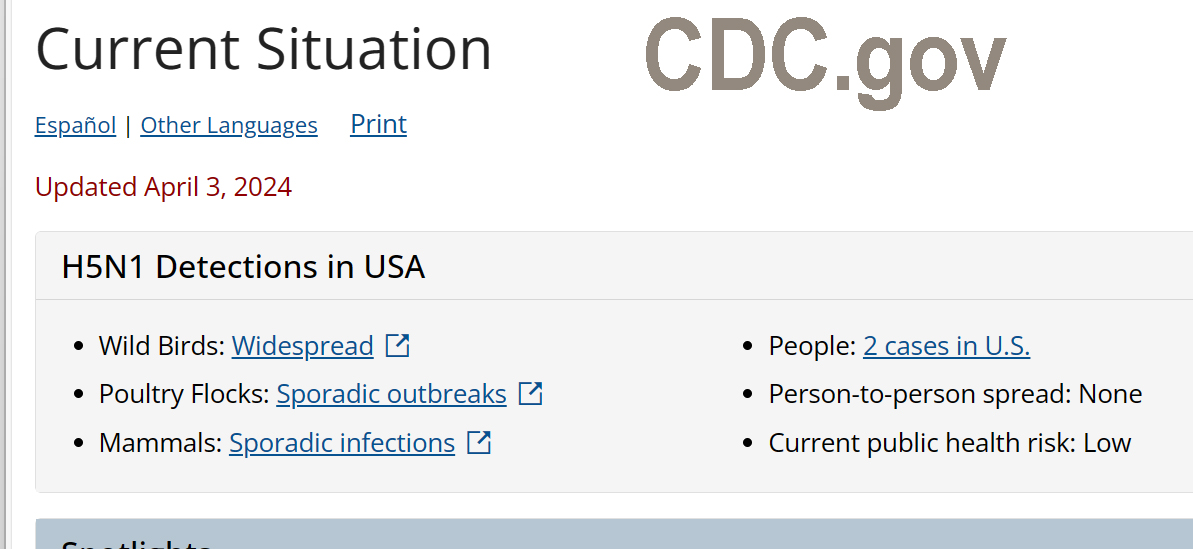

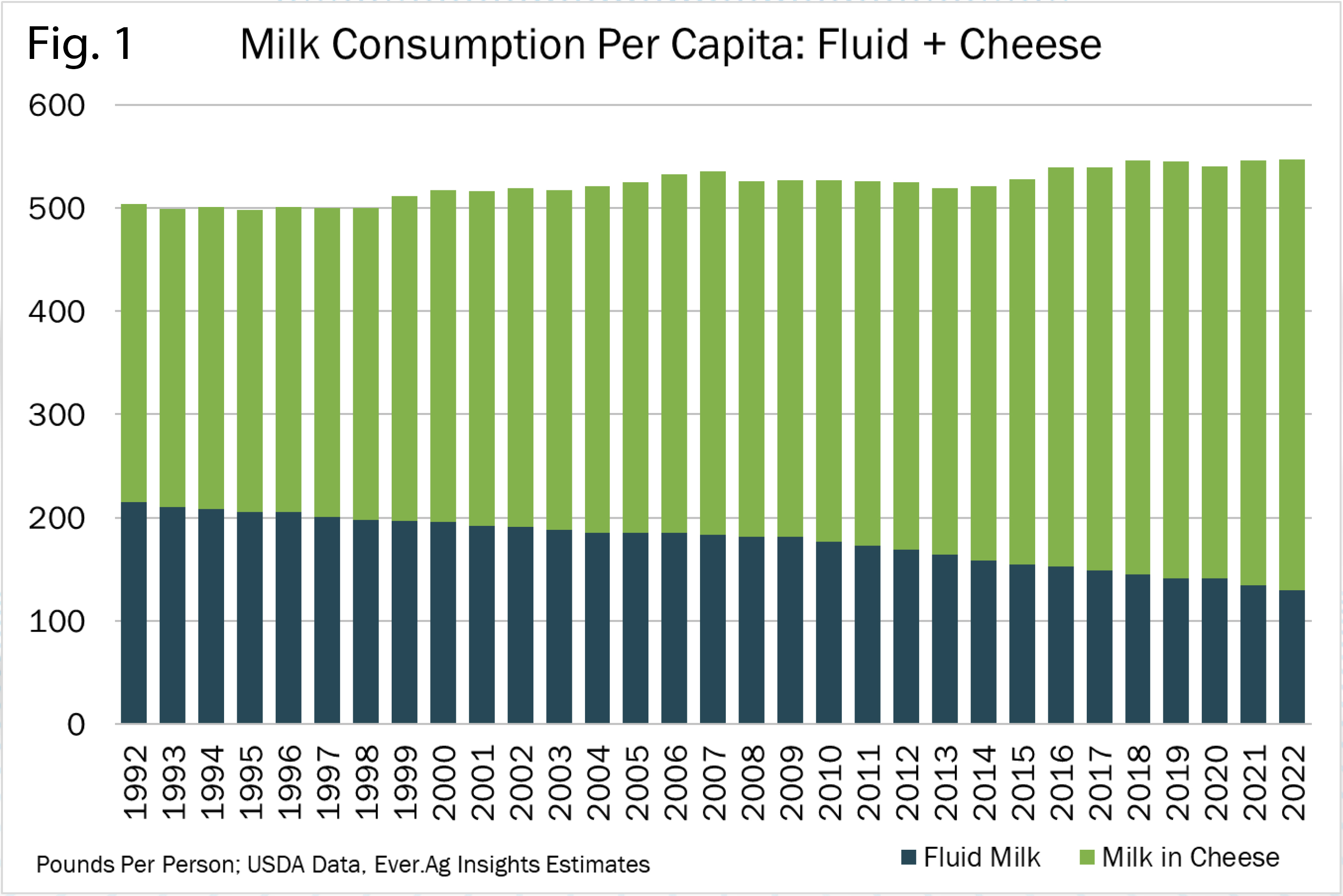

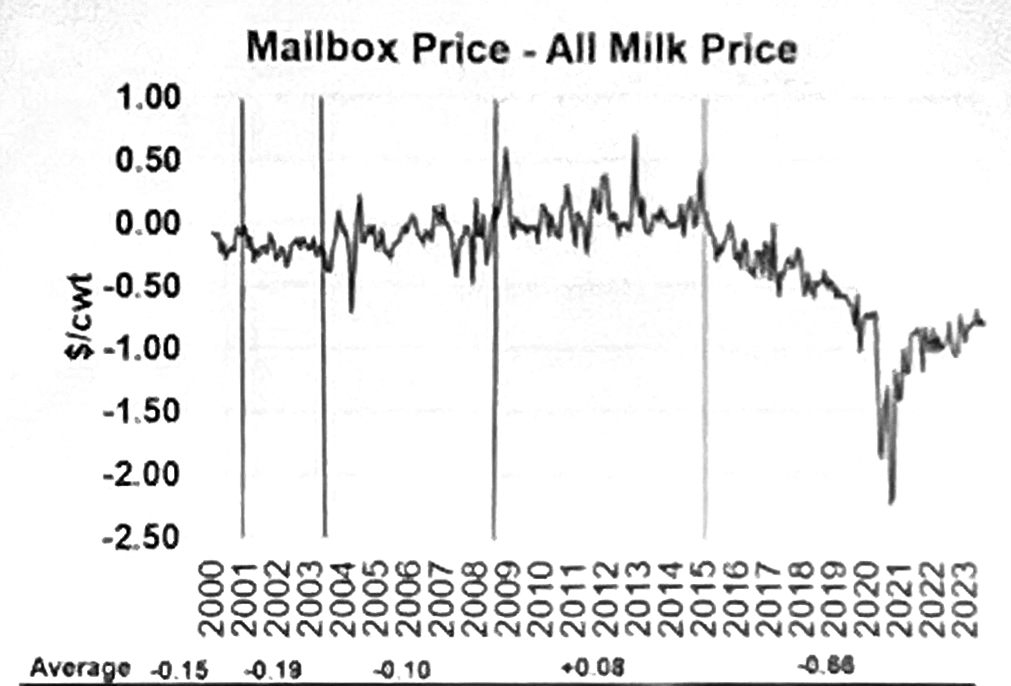

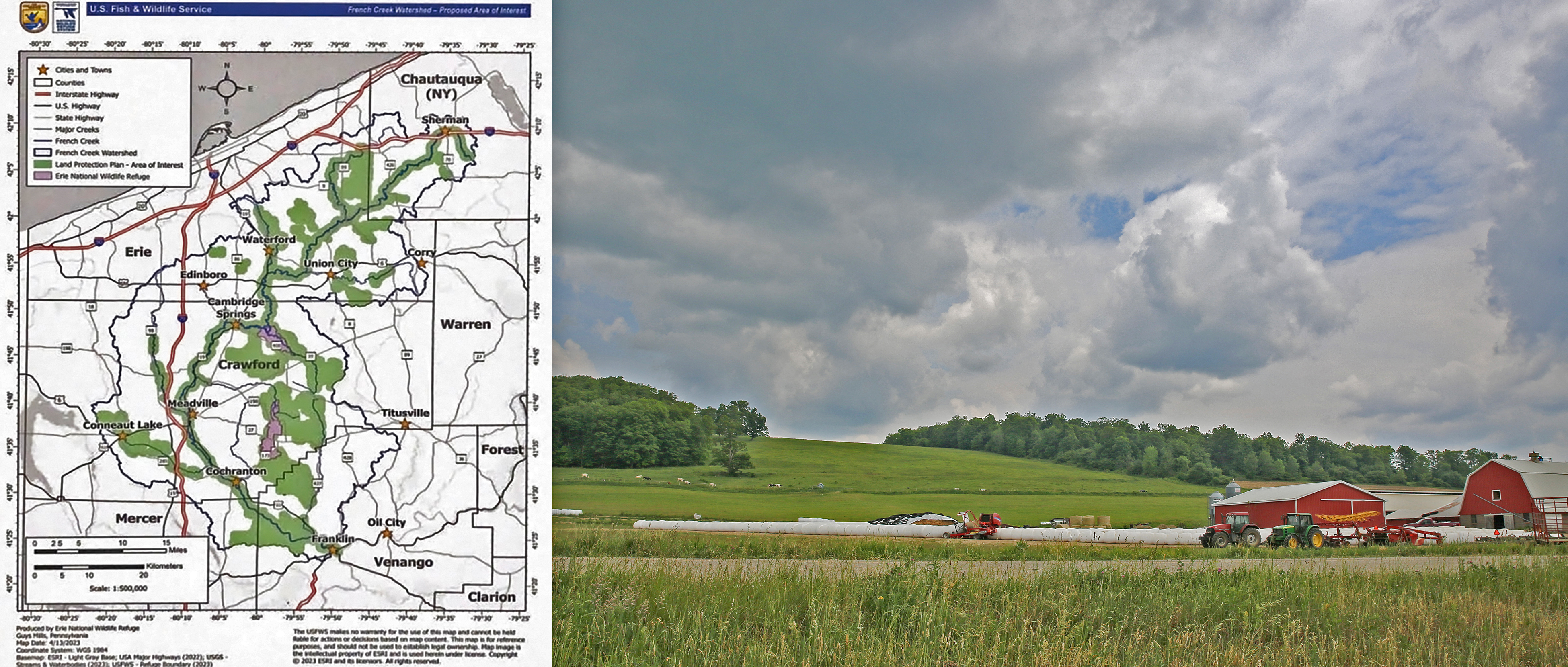
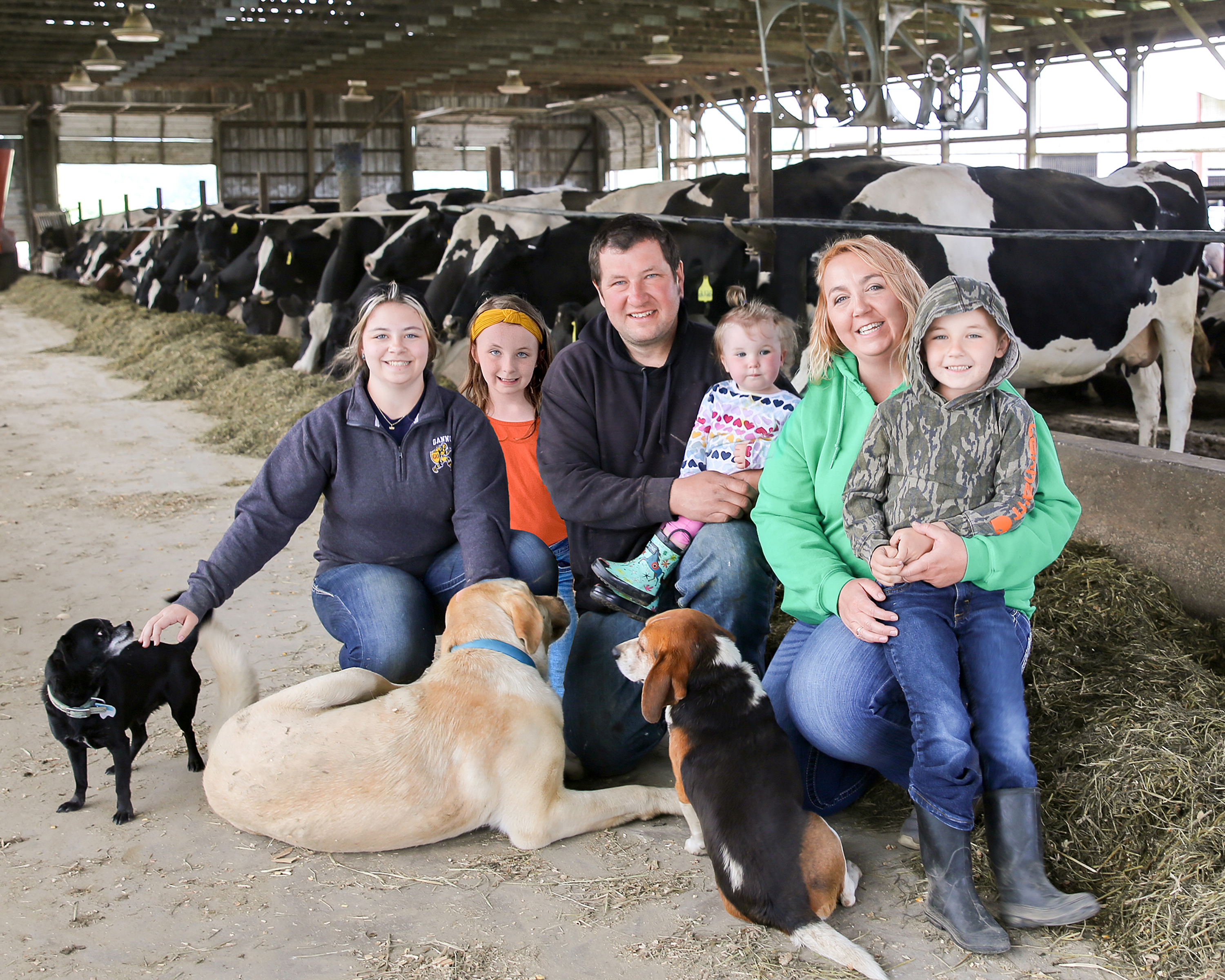

 Ag Moos