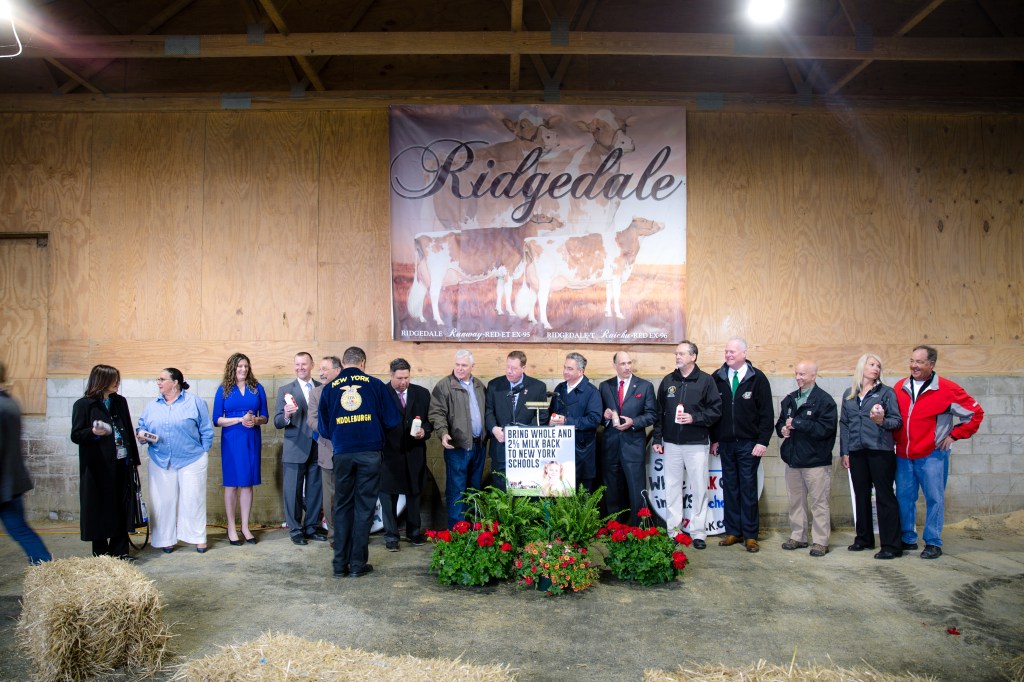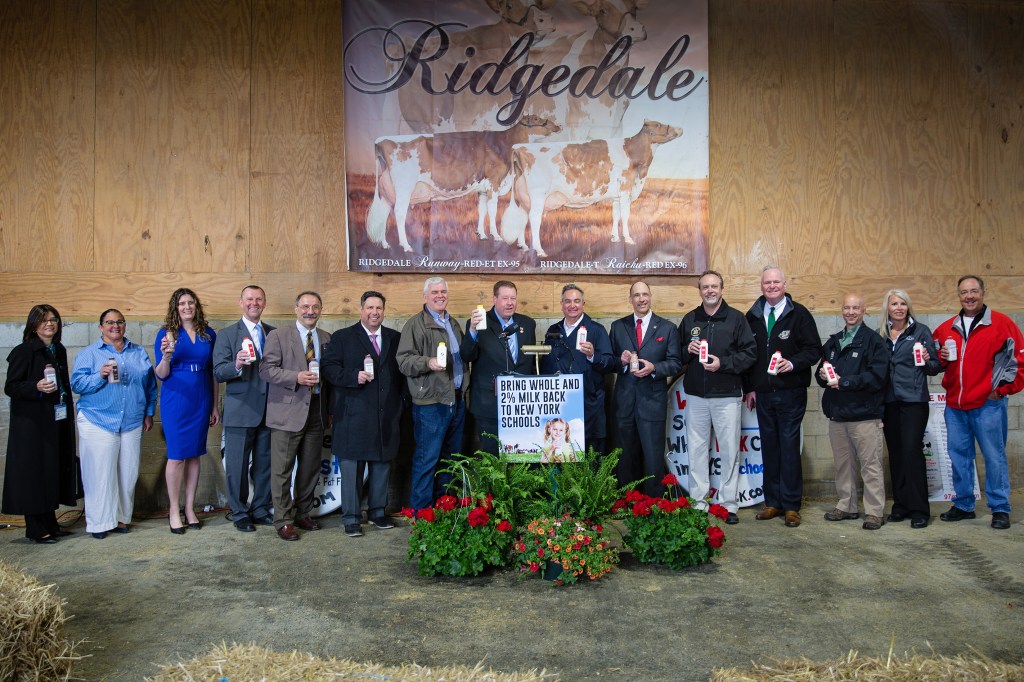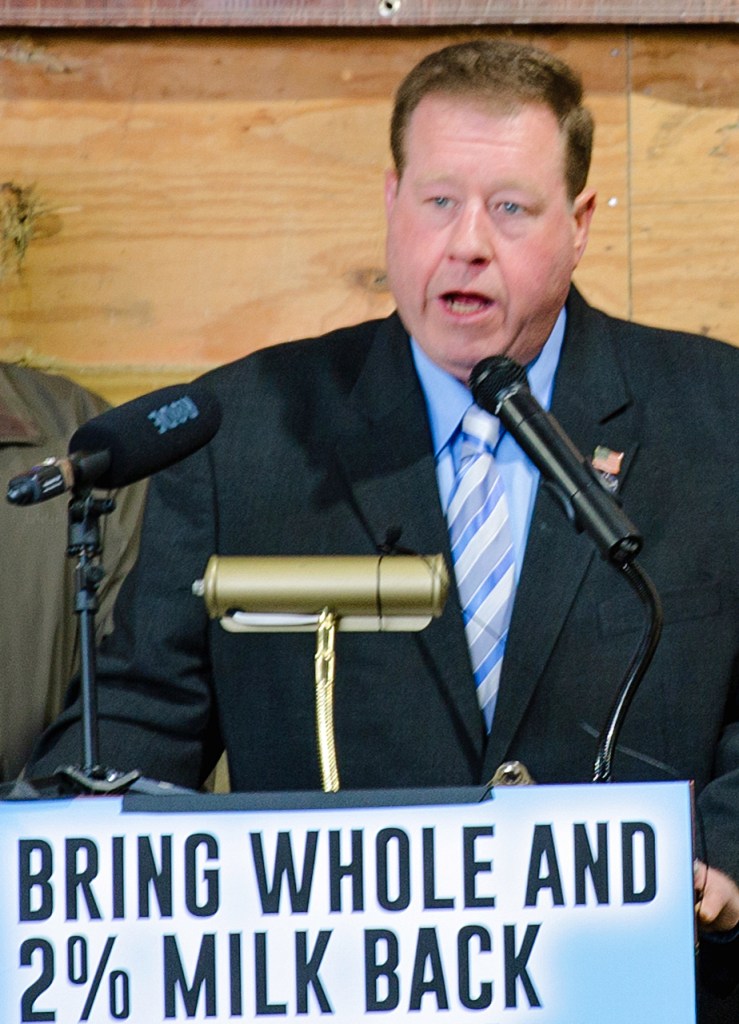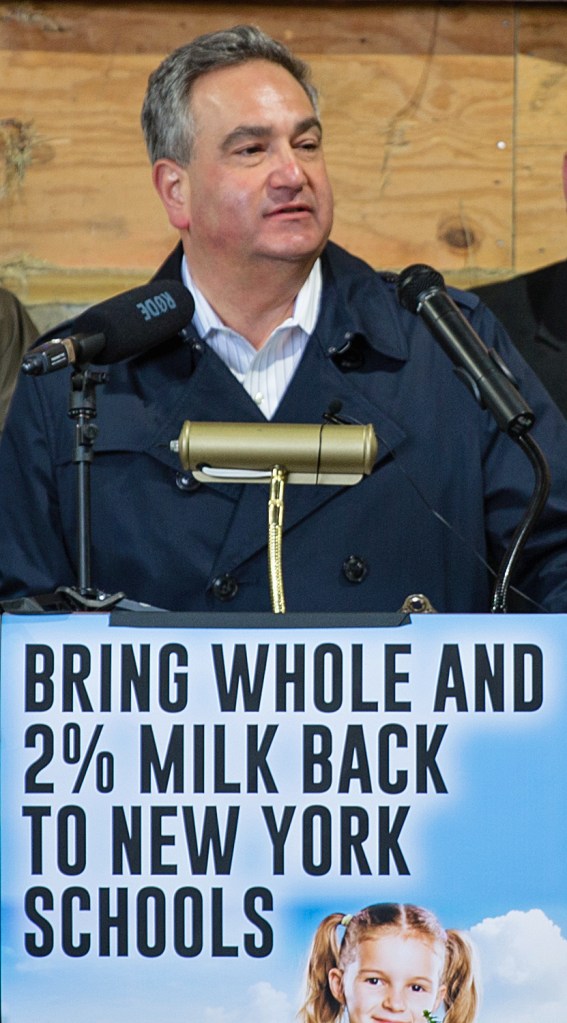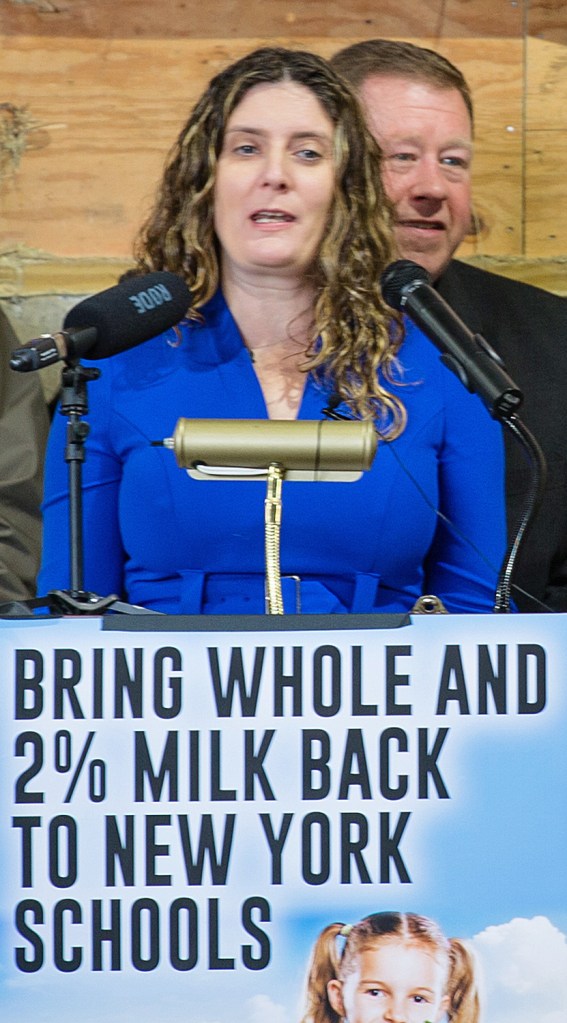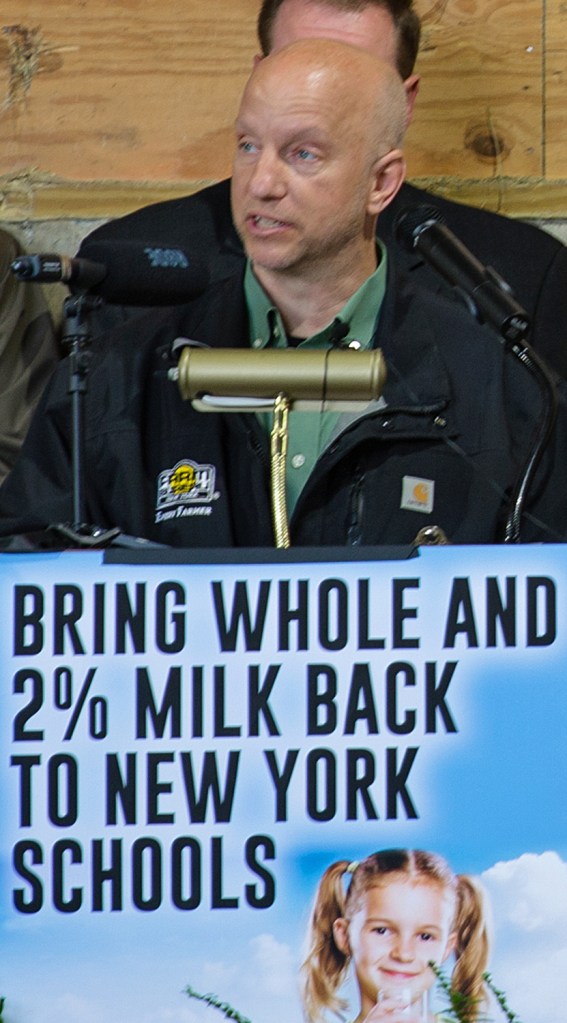
AFBF milk pricing forum draws 200 stakeholders to KC, some consensus gained, high priority given to return Class I ‘mover’ to ‘higher of’ formula

By Sherry Bunting, Farmshine, October 21, 2022

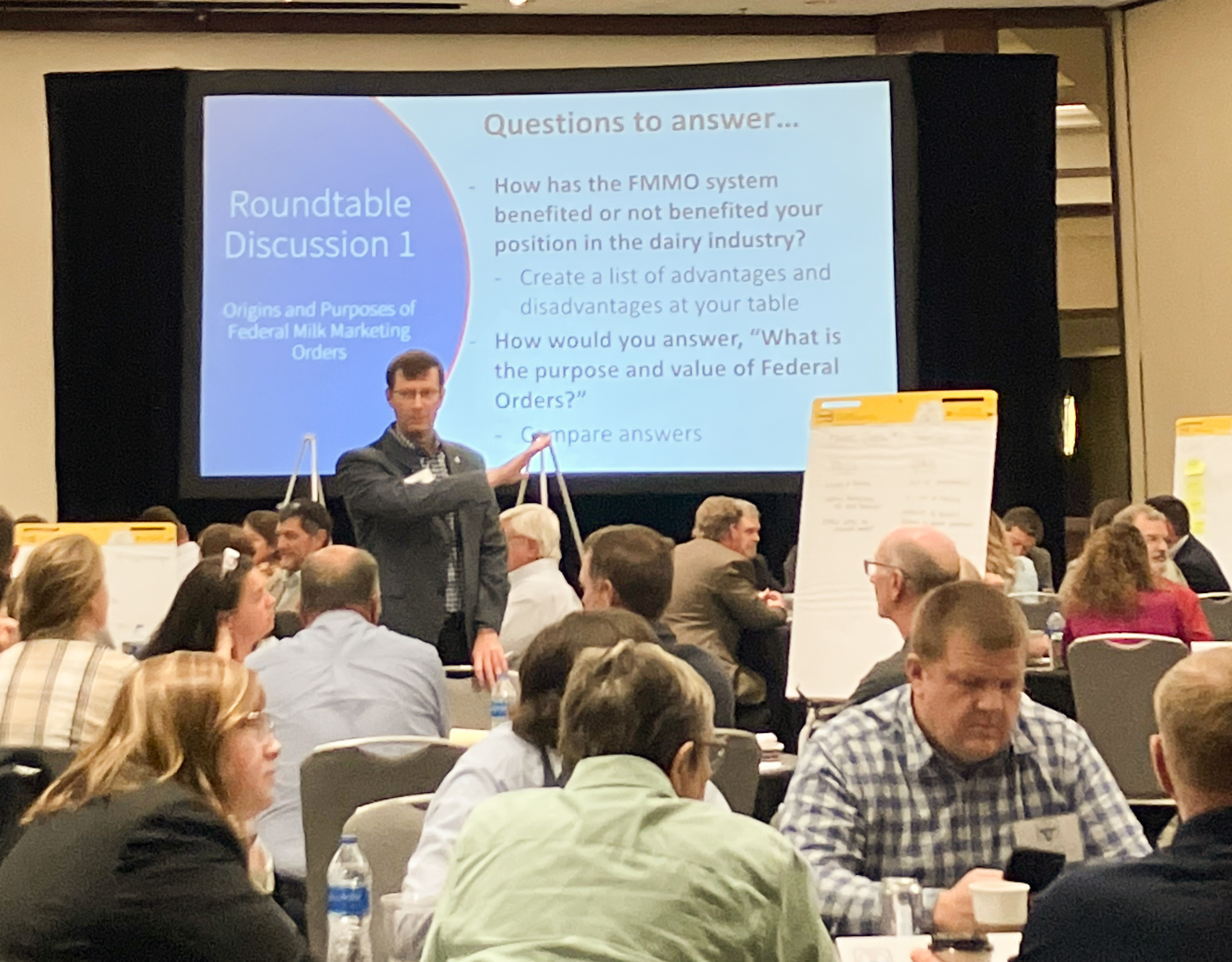
KANSAS CITY, Mo. — It was intense, productive, enlightening, and at times a bit emotional. And, yes, there was consensus on some key points during the American Farm Bureau Federation (AFBF) Federal Milk Marketing Order (FMMO) Forum in Kansas City last weekend (Oct. 14-16).

The event was a first of its kind meeting of the minds from across the dairy landscape, involving mostly dairy farmers, but also other industry stakeholders. It was planned by a 12-member committee representing state Farm Bureaus from coast-to-coast, working with AFBF economist Danny Munch.

Farm Bureau president Zippy Duvall kicked things off Friday afternoon, urging attendees to get something done for the future of the dairy industry, to stay cool, leave friendly, and set a pattern for continuing conversations.

“We have the people in this room who I hope can come up with guiding principles,” said Duvall, noting that a meeting like this is something he has dreamed about for years, even prayed for. He talked about his background as a former dairy farmer and assured attendees that milk pricing is a topic he is very interested in.

He challenged the group to come at it with “an open mind. The answers are sitting in this room, not on Capitol Hill. There are some geniuses in this room, people who really understand this system,” said Duvall.
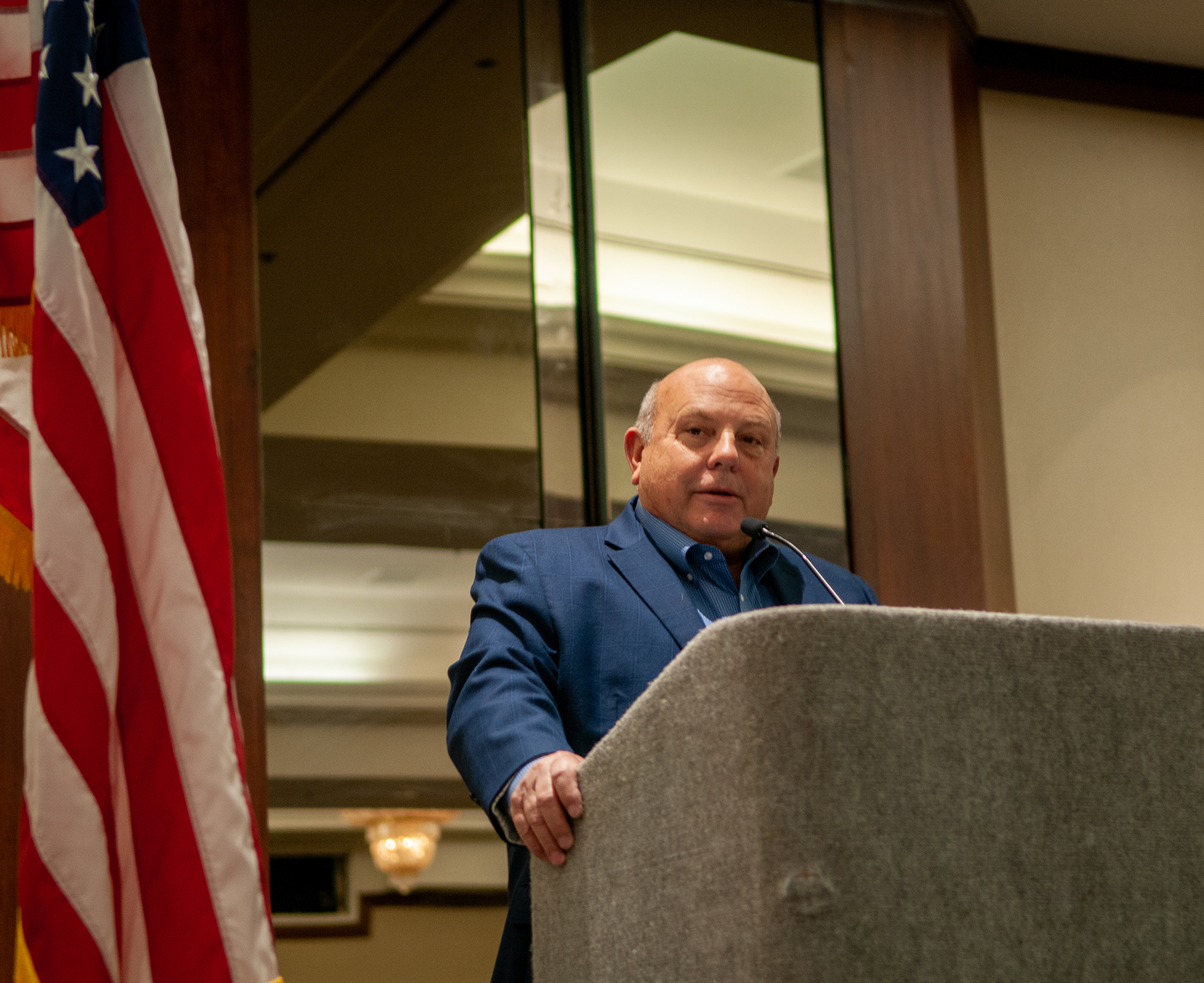
“We all have ideas, and we can lend an ear to other ideas. We learn a lot if we listen to each other,” he said, noting a few of the existing Farm Bureau dairy policy principles: that FMMOs should be market oriented, with better price discovery. They should be fair and transparent, and farmers should be able to understand and compare milk checks.

Hearings not legislation

Duvall noted AFBF agrees with NMPF that future FMMO changes should go through the normal USDA hearing process, not through Congressional legislation. By Sunday, this seemed to be a point of consensus, along with the recognition that FMMOs need updating, but they are still vital for farmers and the industry. 

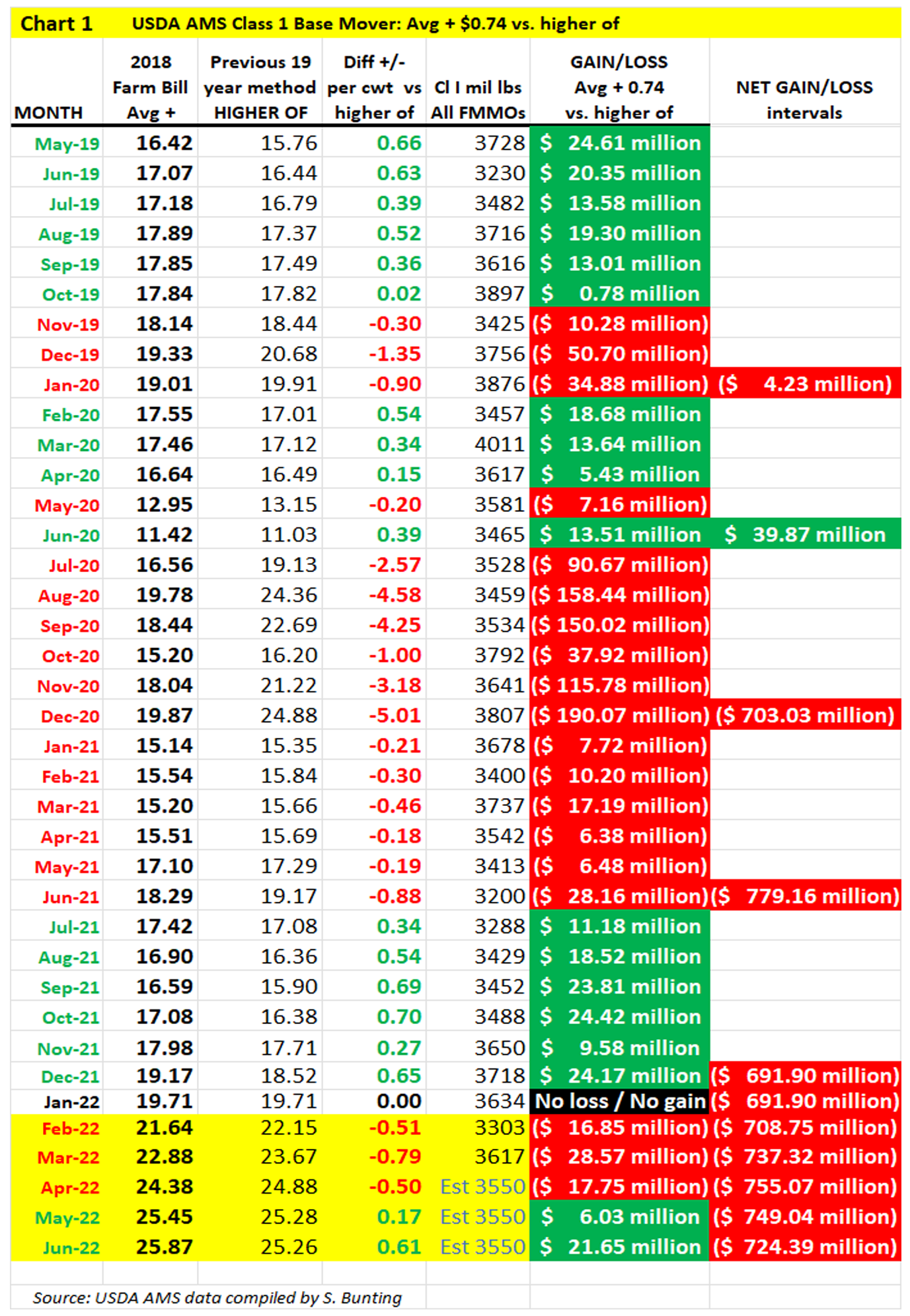
On the Class I ‘mover,’ specifically, Munch noted Farm Bureau already adopted the recommendation through its county, state and national grassroots process to return to the ‘higher of’ — plus 74 cents. The addition of the 74 cents is to make up for the unlimited losses incurred over the past four years.

For NMPF’s part, chief economist Peter Vitaliano and consultant Jim Sleper laid out a series of updates the economic committee’s task force is recommending to the NMPF board, which will vote at the annual meeting at the end of October.

These recommendations include going back to the simple ‘higher of’ for the Class I ‘mover,’ updating make allowances and yield factors, doing a pricing-surface study to update Class I differentials, making changes in the end-product pricing survey to allow dry whey price reporting of sales up to 45 days earlier, not 30 days, and eliminating the 500-pound barrel cheese sales from the Class III cheese price formula to base it only on the block cheese.

Intense, informative, valuable

The three days were intense, covering a lot of information, and were shepherded by expert panels and ‘cat herder in chief’ Roger Cryan, AFBF’s chief economist since October 2021.

Munch served as the emcee — akin to the ghost of milk pricing Past (Friday), Present (Saturday) and Future (Sunday). He introduced the various panels and provided economic snapshots and questions for the 25 breakout tables to discuss, decide and deliver.

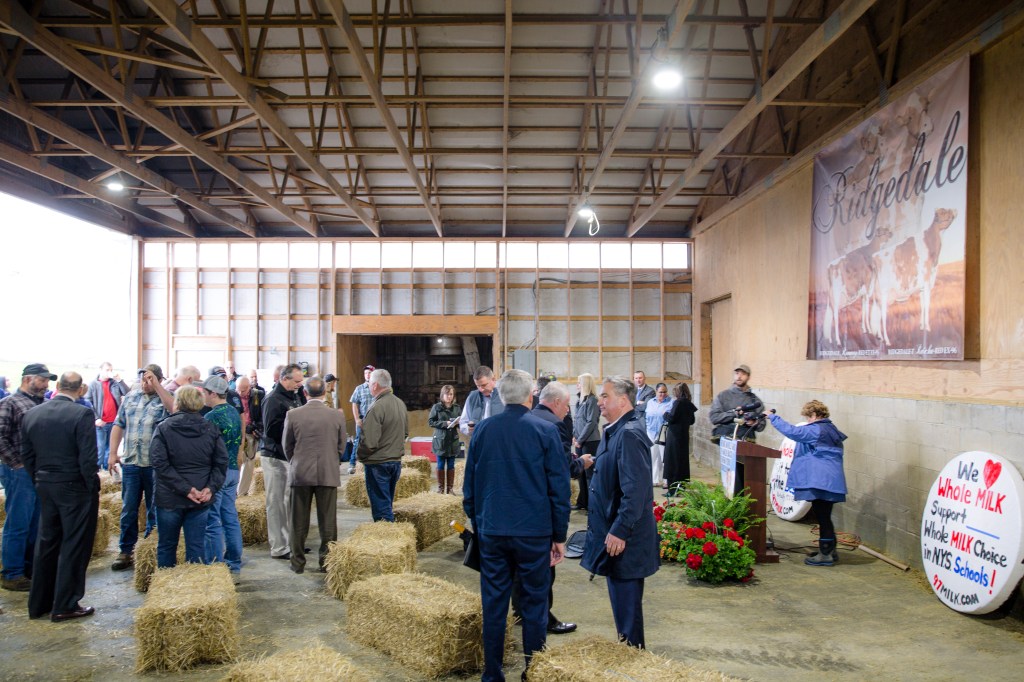
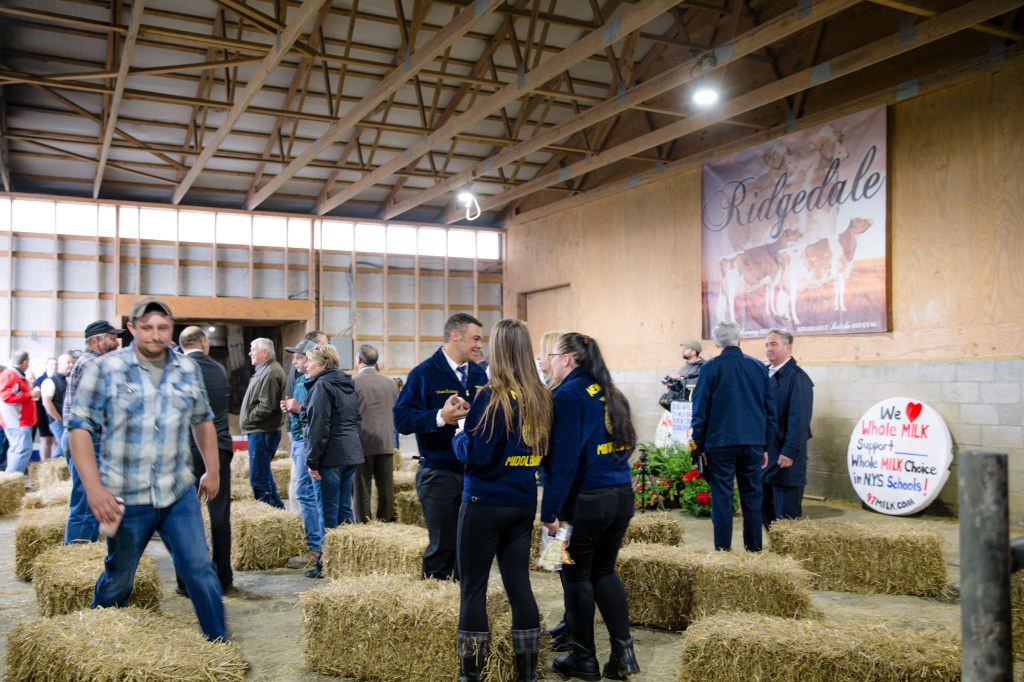
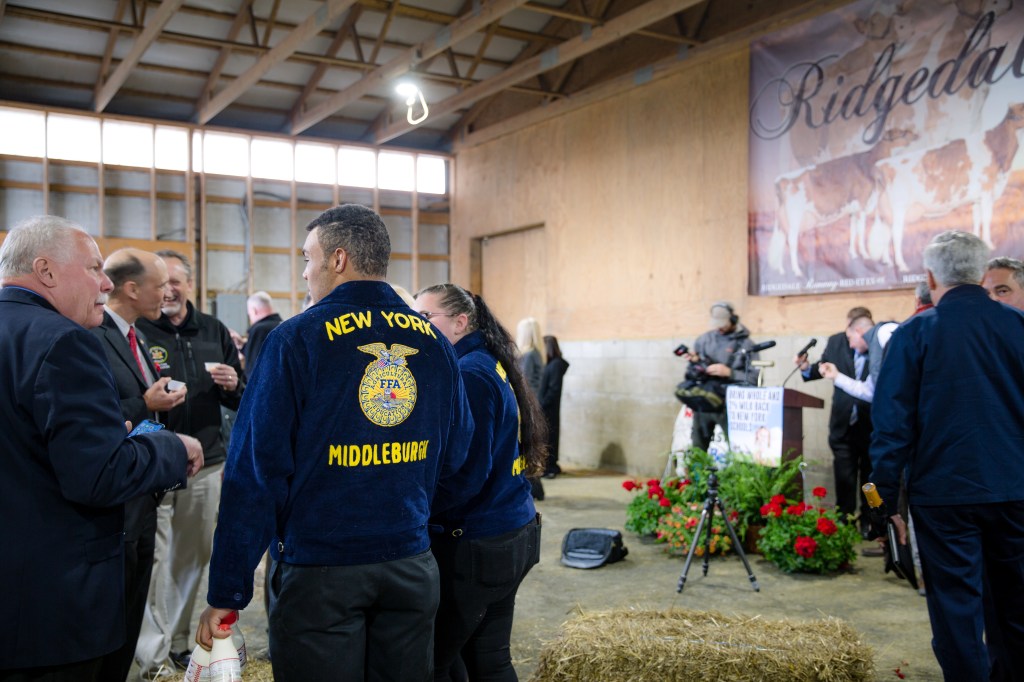
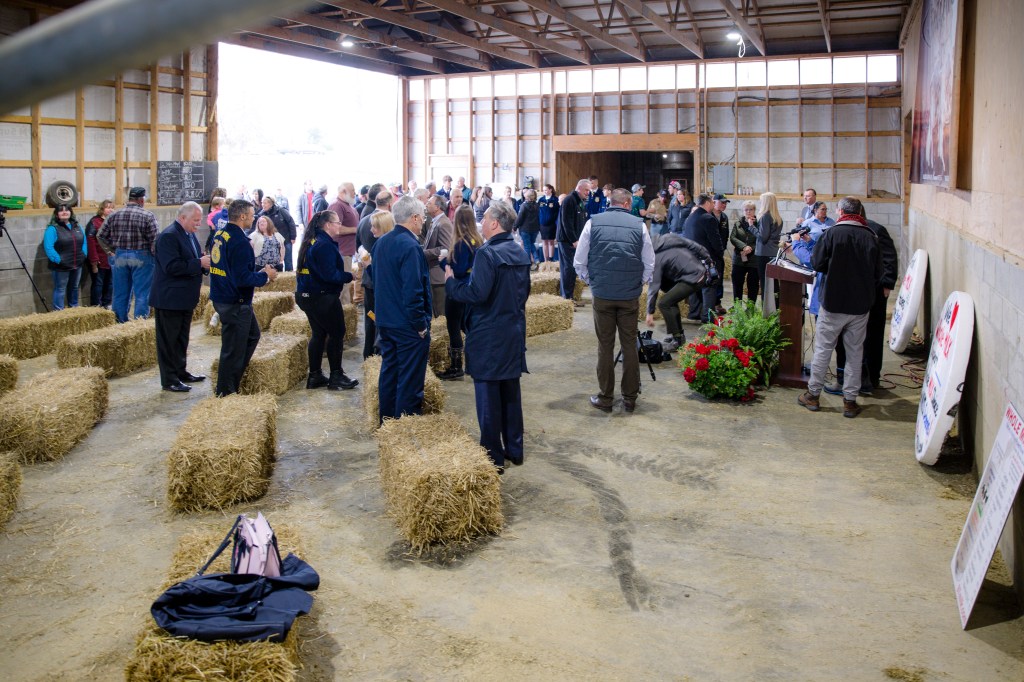
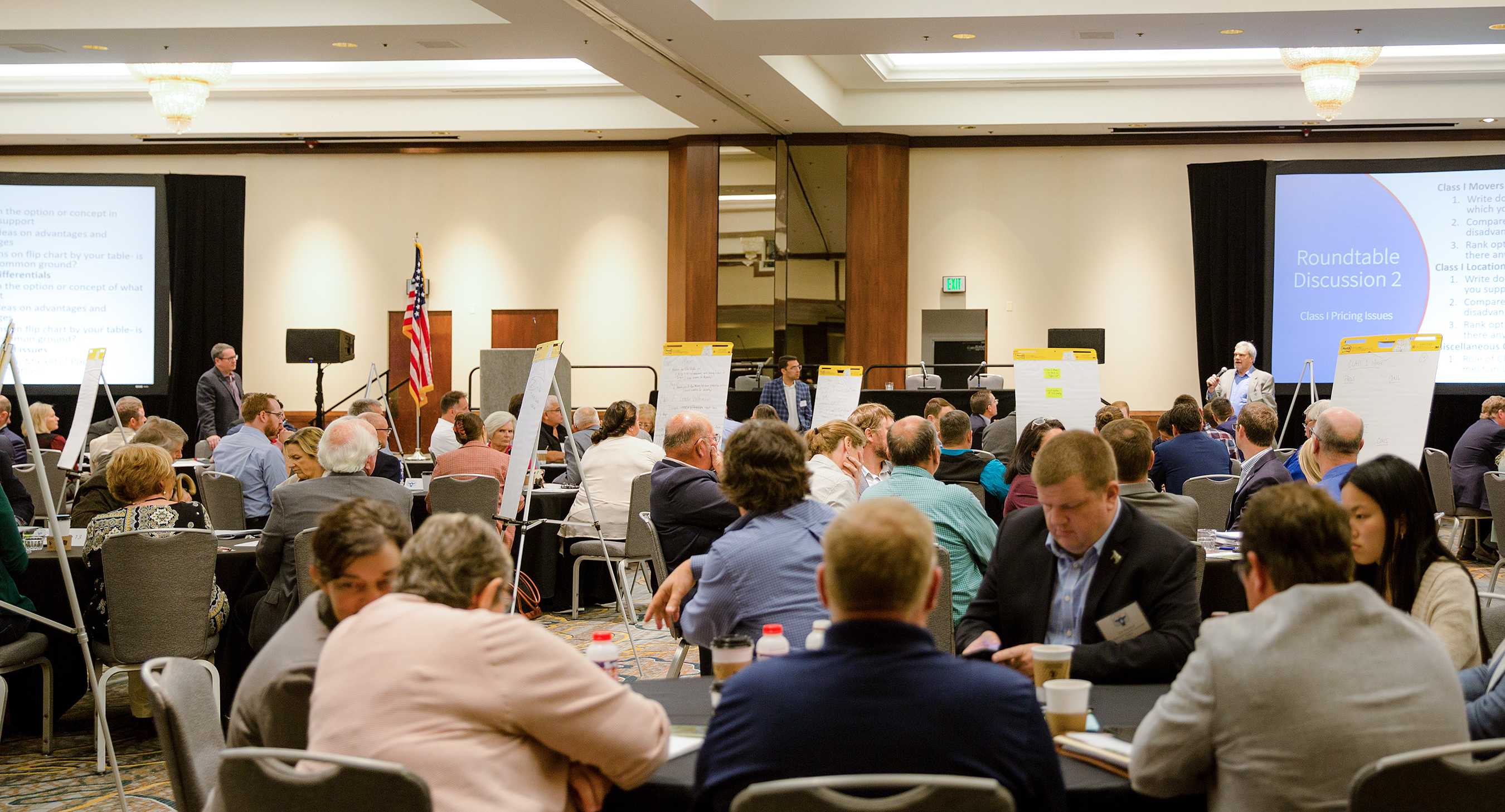
Meeting organizers reshuffled the deck of 200 attendees from 36 states and representing nearly 150 state and national producer organizations, Farm Bureau chapters, regulatory agencies, farms, co-ops, processors, financial and risk management firms, and university extension educators.

Attendees were assigned tables with a number on the back of each name tag. The goal was to mix the table-groupings for varied geographic and industry perspectives. Each table was equipped with its own large flip tablet mounted on an easel. 

According to Munch, Farm Bureau will scan and collate the information from all of the large tablets and issue a preliminary report to attendees followed by a public report later this year.

On Sunday, the open microphone was lively and most tables reported from their flip tablets. Overwhelmingly, attendees said they found value in the meeting and appreciated the platform. They reported a desire to keep the conversations going, to do this again, not just every 20 years, and not just in response to a problem, but to be forward-looking with the many challenges on the dairy horizon.

Platform for next big issue

For example, Gretl Schlatter, an Ohio dairy producer on the board of American Dairy Coalition (ADC) noted that only Class I milk is mandated to participate in FMMOs, and that today, the FMMOs are weakened with only 60% of U.S. milk production participating in the revenue-sharing pools.

“Where will we be in five years? We do not want to give up on fluid milk – our nutrition powerhouse,” she said. “The issue now is federal milk pricing but the next one coming — fast — is the sustainability benchmarks, the climate scores. We need to keep meeting like this as an industry, keep talking to each other, and get ready for the next big thing affecting our farms and family businesses.”
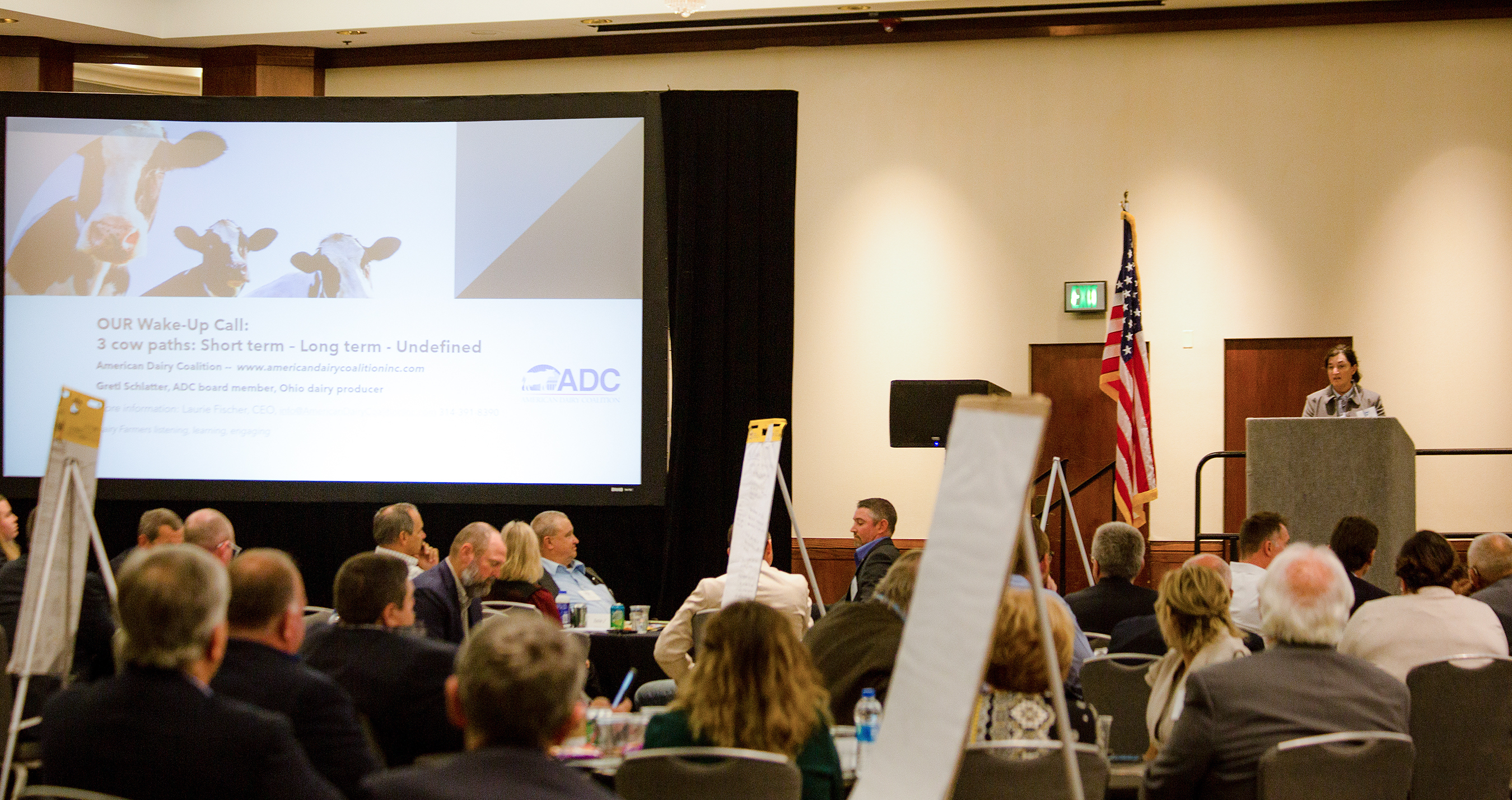
This was touched upon by Duvall and others, but Cryan reminded everyone that, “Federal Orders are complicated enough without adding the sustainability discussion to it.”

Duvall reminded attendees that this meeting was Farm Bureau’s response to the words of Ag Secretary Tom Vilsack last year, when he said there would be no USDA hearing until the dairy industry reaches some “consensus” on solutions.

This set into motion an already dairy-active Farm Bureau that had formed its own task force, responding to grassroots dairy policy coming up from the county and state levels to national through AFBF’s grassroots process.

In fact, NMPF’s Vitaliano, noted that, “having Roger Cryan at Farm Bureau makes it easier to do this,” to partner on formulating dairy policy because of his background. Prior to coming to Farm Bureau a year ago, Cryan was an economist for NMPF and then for USDA AMS Dairy Programs.

The first hour of the first day included a recorded message from Secretary Vilsack and an in-person presentation by Gloria Montano Green, USDA deputy undersecretary for Farm Production and Conservation.

They encouraged attendees to work together and told them what the Biden-Harris administration has done and is doing for dairy. Primarily, they went through a list of funding and assistance, including the improved Dairy Margin Coverage, the PMVAP payments, Dairy Revenue Protection, Livestock Gross Margin, dairy innovation hub grants and the recent funding for conservation and climate projects that includes 17 funded pilots involving dairy. 

They told attendees that the dairy industry is “far ahead” on climate and conservation because it has been involved in these discussions and is already mapping that landscape.

Dana Coale, deputy administrator of USDA AMS Dairy Programs, took attendees through the FMMO parameters. She engaged with the largely dairy farmer crowd in a frank discussion of what Federal Orders can and cannot do. The headline here is that this current time period before a hearing is a time when she and her staff can talk freely and give opinions. Once a hearing process begins, she and her staff are subject to restrictions on ex parte communications.

Consensus to go back to ‘higher of’ formula

If there was one FMMO “fix” that achieved a clear consensus and was given priority, it was support for going back to the Class I ‘mover’ formula using the ‘higher of’ Class III or IV skim price instead of the current average plus 74 cents method that was changed in the 2018 farm bill.

Since implementation in May 2019 through October 2022, the new method will have cost dairy farmers $868 million in net reduced Class I revenue, which further erodes the mandatory Class I contribution to the uniform pricing among the 11 Federal Milk Marketing Orders (FMMO), setting off a domino effect that has led to massive de-pooling of milk from FMMOs and decreased Federal Order participation.
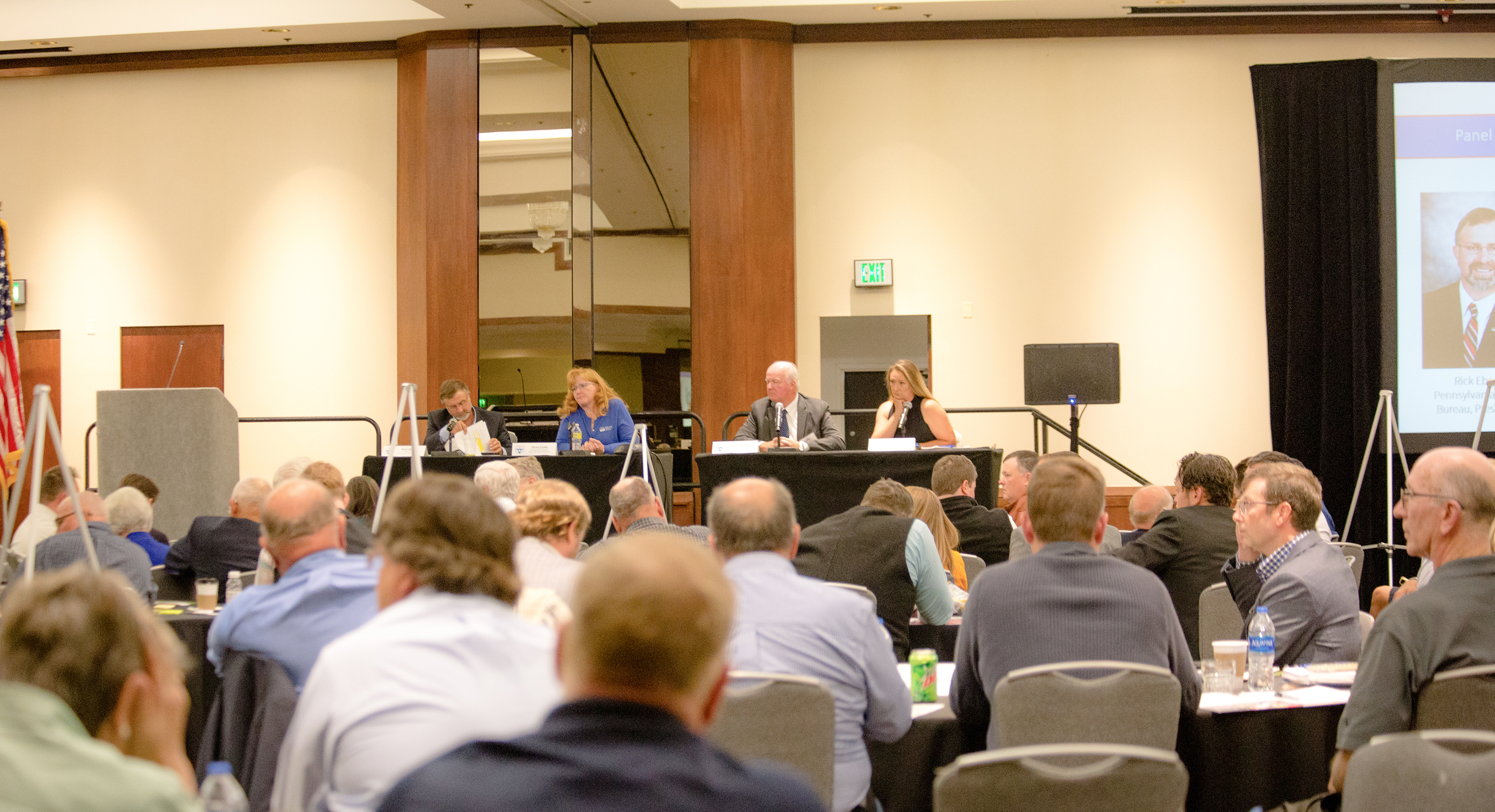
Pa. Farm Bureau presiden Rick Ebert (left), moderated the first panel Friday afternoon (l-r) Dana Coale, deputy administrator USDA AMS Dairy Programs; Calvin Covington, CEO emeritus, Southeast Milk; Anja Raudabaugh, CEO Western United Dairies. After this panel, during the first open-microphone and roundtable breakout, attendees were urged not to leave their flip tablets blank. “Groups with blank boards will have to drink the almond juice in the back,” said AFBF economist Danny Munch, taking note of the hotel offering and to have real milk on-site — provided Saturday and Sunday by Hiland Dairy.

During his presentation Friday, retired Southeast Milk CEO, Calvin Covington, said dairy farmers lost $69 million in revenue for the first 8 months of post-Covid 2022, alone. That figure will rise to an estimated $200 million when September and October Class I milk pounds are tallied. 

Noting NMPF’s task force recommends the board approve petitioning USDA to go back to the ‘higher of,’ Vitaliano cited “asymmetric risk” as the reason.

This risk scenario was also explained by others. ADC’s Schlatter, for example, noted the current averaging formula “caps the upside at 74 cents, but the downside is unlimited.”

Vitaliano noted that whenever there is a ‘black swan’ event or new and different market factors, this downside risk becomes unacceptable for farmers, and he indicated these market events that create wide spreads in manufacturing classes are likely to continue into the future.

Dr. Marin Bozic, University of Minnesota assistant professor of applied economics, observed the way this downside ‘basis’ risk becomes unmanageable via new and traditional risk management tools. In his futuristic talk on Sunday, producers asked questions, to which he responded that, “Yes, farmers show me that they can’t use the Dairy Revenue Protection because of this basis risk.”

Bozic is also founder and CEO of Bozic LLC developing and maintaining the intellectual property for risk management programs like DRP. 

He also spoke about the concerns of the Midwest as FMMO participation declines. 

Presenting his own ideas and separately the ideas of Edge Dairy Farmer Cooperativ, Bozic said Edge is seeking a consensus to support two or three lines in the upcoming farm bill to simply “enable” FMMO hearings to introduce flexibility on an Order by Order basis, so that uniform benefits can be shared instead of a uniform price. Flexibility, they believe, would enable new ‘uniform benefits’ discussion that can help maintain or encourage FMMO participation in marketing areas with low Class I utilization.

Early in the Class I formula loss scenario of 2020-21, Edge had suggested a new Class III-plus formula to determine the ‘mover.’ Bozic said that “the idea of returning to the ‘higher of’ is not a deal breaker for Edge in the short-term.”

Even Mike Brown, senior supply chain manager for Kroger, unofficially indicated IDFA “could be open to the idea” of reverting back to that previous ‘higher of’ formula. As dairy supply chain manager on everything from Kroger’s milk plants to its new dairy beverages, cheese procurement, and so forth, Brown was asked if the averaging formula allowed him to ‘hedge’ fluid milk to manage risk as a processor.

The answer? Not really. Brown said there are ways for processors to manage risk under the ‘higher of’ formula also, but that they haven’t done any hedging under the averaging formula with fresh fluid milk – and very little risk management with their new aseptically packaged, shelf-stable milks and high protein drinks.

Incidentally, he said, the aseptic, ultrafiltered, shelf-stable dairy beverage category “is growing faster than plant-based” in their retail sales.

This exchange and other discussions suggested the averaging formula may have been geared more toward price stability that would encourage processors to invest in expensive aseptic, ultrafiltered and shelf-stable milk-based beverage technologies that result in a storable product needing risk management. 

Fresh fluid milk is already advance-priced and quite perishable with a fast turnaround. Aseptic, ultrafiltered and shelf-stable products, on the other hand, can be packaged under one set of raw milk pricing conditions and sold to retail or consumers up to nine months later under another set of raw milk pricing conditions.

Frankly, it appears that the consumer-packaged goods companies (CPGs) may be driving such shifts, just as we heard from Phil Plourde of Blimling/Ever.Ag that CPGs are “all-in” on the climate scoring — the next big thing on the dairy challenge list.

Tacking de-pooling – regional or national?

Attendees came back to the specific concern about de-pooling, which Vitaliano and Cryan both described as an issue to be handled regionally and not through a national hearing.

This did not seem to satisfy some who raised the concern. Toward the conclusion Sunday, Cryan explained it this way: 

“De-pooling is a national issue in principle but a regional issue in detail. Every region will have different ideas, needs and situations. If there is consensus (on pooling rules) in a region, then changes could move forward quickly,” he said.

Make allowances are sticky wicket

Attendees appeared to agree that make allowances should be addressed or evaluated through a hearing, but ideas on how to handle this sticky-wicket varied.

Attendees questioned panelists, pointing out that if a farmer’s profit margin on milk is only around $1.00 per hundredweight, then raising make allowances an estimated $1.00 per hundredweight is going to be a tough pill to swallow.

Vitaliano said NMPF is commissioning an economic study with their go-to third-party economist Scott Brown at University of Missouri to show the actual milk check impact of raising make allowances that are embedded into the end-product pricing formulas for the four main products: cheddar, butter, nonfat dry milk and dry whey. 

He said the discussions about make allowances as a cost to farmers are “purely arithmetic” but that the “true impact” is not a straight math calculation. Instead, he said, when make allowances are set appropriately, dairy producers ultimately benefit, so in his opinion, it’s not a penny for penny subtraction.

Several other panelists and attendees observed that processors and cooperatives have been creating their own ‘make allowances’ through assessments, loss of premiums, and other milk check adjustments.
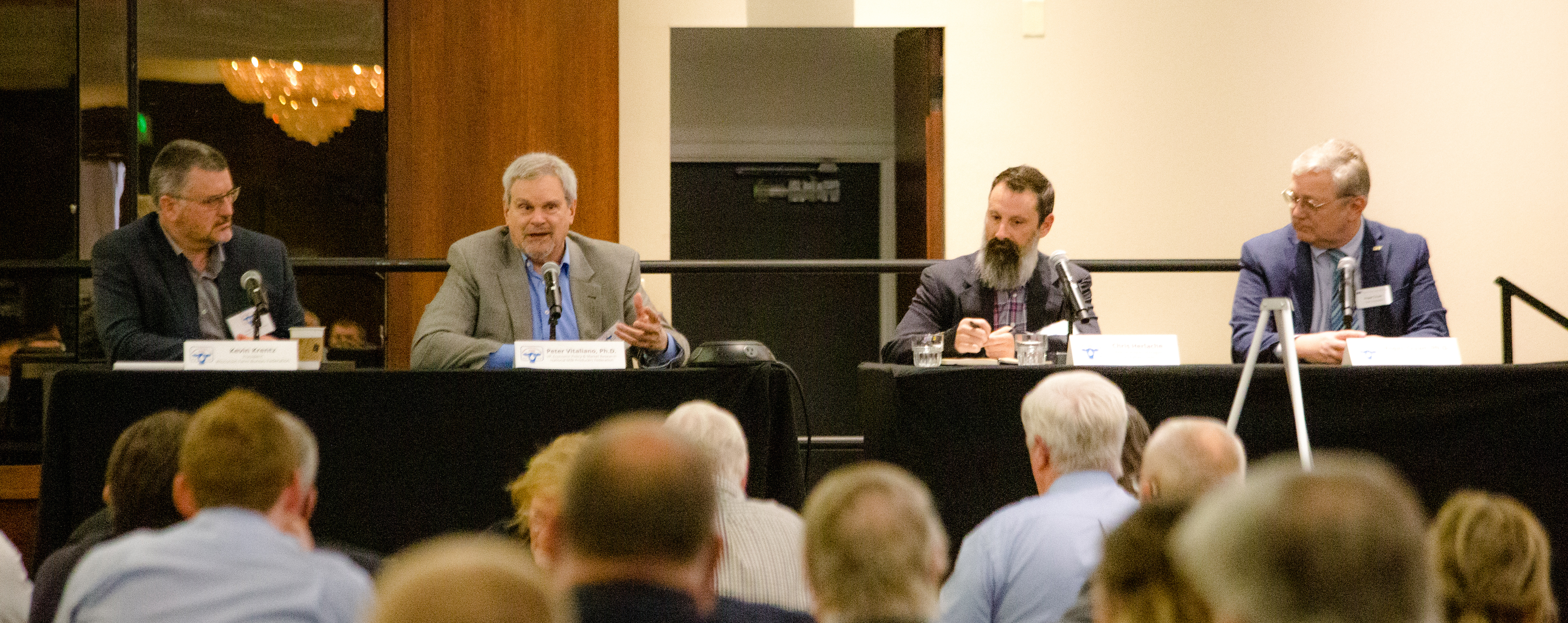
The Saturday afternoon panel of (l-r) Kevin Krentz, Peter Vitaliano, Chris Herlache, and Roger Cryan dove into Class III and IV pricing topics including make allowance formulations and structures.

Vitaliano stressed that when make allowances are set properly, the industry is stronger and better able to compensate producers. Initially, he said, raising make allowances would have a negative impact on expansion, which in turn would have a positive impact on producer prices.

When asked if raising make allowances would mean lost premiums would return to farmer milk checks, he responded by saying “that depends, and it won’t happen right away.”

In other words, raising make allowances will be painful in the short term, but in the long-term (to paraphrase) that pain leads to gain. 

Some panelists and attendees referenced an idea of “phasing in” a future raise in make allowances.

Others wondered why it is necessary with the amount of innovation happening in the 15 years since they were last raised as processors make a wider variety of dairy products – not just those bulk items that are surveyed for end-product pricing formulas.

One idea suggested by a Wisconsin dairy producer was to tie make allowance increases to plant size — much the same way that dairy farmers are only assisted up to a production cap of 5 million annual milk pounds. Cryan said he heard a similar proposal previously to use a graduated scale for make allowance increases according to plant size and presumably age.

This is the crux of the make allowance issue because the new state of the art plants produce many types of products, both commodity and value-added; whereas some of the smaller and older plants that are still vital to the dairy industry are more apt to specialize in producing a bulk commodity with a more limited foray into value-added non-surveyed products.

Modified bloc voting?

While there appeared to be consensus that changes to the FMMOs should be done by USDA petition through the administrative hearing process, not through Congressional legislation, some of the discussion at tables and the open-microphone noted the importance of a producer vote after hearings and USDA final decisions. Many felt farmers should have an individual vote on FMMO changes. 

Currently, cooperatives bloc vote for their members to assure that FMMOs are not ended inadvertently by lack of producer interest in following-through on a vote. 

One compromise suggested by Bozic was to have a preliminary non-binding vote by individual producers, followed by the binding vote done in its usual way.

This, he said, would at least increase accountability and transparency in the FMMO voting process and bring producer engagement into the FMMO hearing process. To be continued

-30-
Dairy checkoff is ‘negotiating’ your future: Train wreck ahead. Stop the train. Correct the track. (DMI Net Zero – Part One)

By Sherry Bunting, Farmshine, Sept. 16, 2022

Dairy farmers are being used without regard. Their future ability to operate is right now being negotiated, and they are paying those negotiators through their 15-cents-per-hundredweight mandatory checkoff with no idea how the negotiations will ultimately affect their businesses and way of life.

Inflated baselines and an inflated methane CO2 equivalent assigned to cows is setting the stage for a head-on collision, a train wreck on the misaligned track laid by DMI’s Innovation Center for U.S. Dairy.

In fact, the Net Zero Initiative has been designed to help everyone but the dairy farmer. It sets up a methane money game for carbon traders at the expense of those dairy farms that have long been environmentally conscious with no-till, cover crops, grazing, and other practices already on their farms.

Such farms will be of no use in what is shaping up to be a focus on harvesting reductions, not attaining neutrality, in DMI’s Net Zero Initiative (NZI).

Small and mid-sized dairy farms that are already at or near carbon-neutral could show smaller reductions for the industry to harvest. 

Conversely, the largest dairies installing the newest biogas systems are realizing even this route could become a dead-end because the credits are signed over and sold for big bucks, a few bucks get kicked back to the dairy, but the methane capture becomes the property of other industries outside of the dairy supply chain.

If the industry does not act now to stop the NZI train for a period of re-examination, adjustment and correction, then the current trajectory may actually move food companies clamoring for reductions ever closer to alternatives and analogs that boast their climate claims solely on the fact that they are produced without cows.

This is a big money game that is operating off the backs of our cows, and the checkoff has been at best complicit as a driver.

RNG (renewable natural gas) operators are signing up large (3000+ cows) dairies left and right for digesters and covered lagoons to capture methane piped to clustered scrubbing facilities to be turned into renewable fuel for vehicles or electricity generation. Meanwhile dairy protein analogs are being created without cows by ‘precision fermentation’ startups partnering with the largest global dairy companies.

In turn, millions if not billions of dollars in carbon credits are generated while farmers and their milk buyers will be left figuring out how to show their reductions when they are left holding the inflated methane bag.

Six organizations, four of them non-profits under the DMI umbrella, officially launched the Net Zero Intitiative (NZI) in the fall of 2019, five months after Ag Secretary Tom Vilsack made headlines talking about it in a Senate hearing while he was pulling down a million-dollar salary as a DMI executive in 2018.

NZI is the proclaimed vehicle for negotiating the terms for U.S. Dairy to continue, terms based on showing carbon reductions that many family farms may find difficult to meet — especially if the farm is already at or close to carbon neutral.

As DMI’s sustainability negotiators data-collect all previous reductions into farm-by-farm comprehensive baseline estimates, where will those farms find new reductions? 

According to DMI staff, over 2000 dairy farms have already gone through their environmental stewardship review via the FARM program to establish their “comprehensive estimates.”

The six organizations, four of them filing IRS 990s under the national dairy checkoff, that launched NZI are: Dairy Management Inc. (DMI), Innovation Center for U.S. Dairy, U.S. Dairy Export Council (USDEC) and Newtrient, along with the other two organizations being National Milk Producers Federation (NMPF), and International Dairy Foods Association (IDFA).

They have collectively bought-into the global definition that inflates the CO2 equivalent used for methane, effectively committing the cow to perpetual GHG purgatory. 

Because the NZI structure is based on continually showing GHG reductions, no farm is insulated with a get-out-of-jail-free-key — not even the largest farms with the most advanced biogas systems.

Why haven’t checkoff funds been used to defend the cow – to get the numbers right, to get the current practices farmers have invested in counted toward reductions not baselines, and to get the methane CO2 equivalent correct — instead of giving in to this notion that feels an awful lot like ‘cows are bad and we are committed to making them better?’

Perhaps it was ignored or embraced because this inflated methane CO2 equivalent gives the suite of tech tools being assembled by DMI’s Newtrient a bigger runway to show reductions — a money maker for the RNG biogas companies and others that will in many cases end up owning the carbon credits after paying the farmer a nominal fee. 

Carbon trading rose 164% last year to $851 billion, according to a Reuters January 2022 report. A big chunk of this is coming from the methane capture and fossil fuel replacement of RNG biogas projects, mostly in California but popping up elsewhere at a rapid rate and mostly traded on the California exchange.

Farmers are getting some money for these projects, but they don’t own the carbon credits once they are sold or signed over. When they are sold outside of the dairy supply chain, this reduction becomes someone else’s property, so it is no longer part of the dairy farm’s footprint nor the footprint of their milk buyer. 

Likewise, this inflated methane equivalent — along with the emphasis on reductions, not neutrality — has some processors wondering if they’ll be able to come up with the Scope 3 reductions they need in ESG scoring.

They are facing upstream pressure from retailers and consumer packaged goods (CPG) companies as well as asset managers to show reductions, and they have counted on big numbers from their Scope 3 suppliers, the dairy farms.

The problem for dairy processors and dairy farmers comes down to the central definitions of methane equivalent and carbon asset ownership — the rights of farmers to own their past, present and future reductions, whether or not they’ve signed them over as offsets to a milk buyer or a project investor and whether or not they’ve sold the resulting credits on a carbon exchange, and whether or not they’ve installed new practices that are now part of a baseline but represent a new investment every year as they operate their businesses.

Back in June, the American Dairy Coalition added this concern to their list of federal milk pricing priorities because of the impact this climate and carbon tracking will have on milk buying and selling relationships and contracts — and the lack of clarity or fairness in this deal for essential food producers at the origination point that is closest to nature, the farm. 

ADC worded their “carbon asset ownership” priority this way: “No matter where a dairy farm’s milk is processed, that farm should be able to retain 100% ownership at all times of its earned and achieved carbon assets, even if this information is shared with milk buyers to describe the resulting products that are made from the milk.”

For its part, IDFA took a swing last Friday, going one step farther to recommend global accounting methods that would allow the dairy supply chain (farmers and processors) to retain carbon credits even if they are sold on a carbon exchange or signed over to an asset company that invested in an on-farm technology. 

IDFA executives penned the Sept. 9 opinion piece in Agri-Pulse laying out the concerns of their members who are starting to realize the future consequences of the rapid and inflated monetization of methane — and the race to sell carbon credits — leaving dairy processors unable to get those credits they were counting on from the farms that supply them with milk, while at the same time being stuck facing the cow’s inflated methane CO2 equivalent in their downstream Scope 3 even while they try to get reductions in their own controlled areas of Scopes 1 and 2.

When dairy farms no longer own their reduction or cannot show a large reduction because they are already virtually neutral, processors become concerned about how they will gain the Scope 3 reductions that are part of the ESG scoring the large retailers and global food companies are pushing. 

All of this has come down through the non-governmental organizations like World Wildlife Fund (WWF), investment and asset management sector via the World Economic Forum (WEF), the global corporate structures through the Sustainability Roundtable and through government entities via the United Nations Agenda 2030. DMI has been at those tables for at least 14 years.

“It is becoming clearer every day that the global accounting standards underpinning GHG measurement and reporting are biased against the very people making the (GHG) reductions,” the IDFA executives wrote in their opinion.

In other words, while some farmers are beginning to profit from GHG-reducing practices that are turned into offsets and traded on the carbon markets, the system is tilted against them because it leaves them without the offsets they traded and leaves them in a position of having to continually reduce in order to secure a position in the value chain.

IDFA points out that under the current rules, once the offset is sold outside of the value chain as a carbon credit – it is gone. The current GHG accounting system says only the buyer of that reduction can claim ownership.

Those farms can no longer claim their own reduction, and it means the company buying milk or other commodities from a producer cannot integrate the reduction into the description of their final product.

This weakens U.S. Dairy, the IDFA opinion states, and it makes dairy farmers less competitive sources of pledge-meeting carbon reductions for retailers and manufacturers – setting real dairy up for fake dairy dilution with the inclusion of whey proteins and other pieces of milk that are being produced in fermentation vats by genetically modified yeast, fungi and bacteria, as well as other analogs.

A bigger problem not mentioned in the IDFA opinion may be the inflated baselines that leave farms that have implemented best practices years ago positioned to show smaller reductions.

While the American Farm Bureau earlier this year lobbied against proposed SEC accounting intrusions for quantifying ESG scoring, it has been silent on the issue of carbon asset ownership for food producers. AFBF has also said little about the recently signed climate bill (Inflation Reduction Act).

National Milk Producers Federation, on the other hand, as reported last week, sang its praises for being right in line with where the industry’s Net Zero Initiative is going.

DMI voices its pride to have been leading the way, positioning its Innovation Center as founded by dairy farmers. They have conceded that dairy farms impact the environment and launched NZI as a collective pledge to reduce that impact.

In other words, DMI submitted to the idea that cows impact the environment, but never fear, through NZI, the Innovation Center and Newtrient, farmers will make them better, and turn them into a climate solution.

This is a fool’s errand given the inflated methane equivalent and the movement of carbon reductions to entities outside of the dairy supply chain such as paper mills, bitcoin miners, and the fossil fuel industry.

Did dairy farmers have a say in any of this? Not really. They were kept in the dark as this was developed over the past decade or more, and the boards representing them on the six organizations that launched NZI (four of them under the checkoff umbrella) have been duped.

Farmers are largely unaware of the NZI train, and their silence as it runs down the track becomes a further signal to the industry and to the government that they approve of the track they are on.

As the industry sits at this crossing, the Net Zero train full of dairy farmer passengers is barreling high speed down the track DMI has laid.

This train must be stopped because the future-bound track needs to be re-examined, adjusted and re-aligned so that the passengers are not ejected by the train wreck – the accelerated consolidator — that lies ahead.

Fundamentals must be vigorously revisited. Every passenger on that train, every dairy farm, must be recognized as an essential food producer, get credit for their prior investment in current practices, and be able to retain ownership of their carbon assets as part of their farm’s footprint — even if these assets have been provided, sold or signed over as offsets to milk buyers or project investors or traders on an exchange.

Furthermore, this train – built with farmer dollars – should protect the so-called founding farmers from being denied a market based on the size of their GHG reductions. If a carbon neutral farm can’t show reductions to its milk buyer, will that buyer look for other downstream vendors who can fulfill their Scope 3 reduction needs?

Will those vendors be other farms with larger perceived GHG reductions or will they be alternative analogs created without cows?

Nestle announced this week it is partnering with Perfect Day toward that end. In fact, the proliferation of plant-based, cell cultured, DNA-altered microbe excrement analogs for dairy protein and other elements are entering the market on big GHG reduction claims based on being made without the cow and the inflated methane CO2 equivalent she has been assigned!

The current standard for methane CO2 equivalency is inflated by orders of magnitude. Dr. Frank Mitloehner has addressed this repeatedly and other researchers back his view with efforts to change it.

As Mitloehner and others point out, climate neutrality should be the goal, not net-zero. Furthermore, the current methane CO2 equivalent is calculated based only on the much greater warming effect of methane vs. CO2. However, the current calculation does not account for the fact that methane is short-lived in Earth’s atmosphere — about 10 years compared with 100 to 100 years for CO2 and other GHG. It also does not account for the cow’s role in the biogenic carbon cycle.

Remember, DMI and company have ignored or embraced this definition. At the same time, the Innovation Center’s data collection of progressive accomplishments are included in the baselines from which new reductions (opportunities) must be found.

These two trains run in opposite directions for a future head-on collision on a mis-aligned track. 

The bigger the perceived GHG problem, the bigger the reduction through technology, and the bigger the monetization of that reduction outside of the dairy supply chain. At the same time, this creates an even bigger problem for farms that are unable to participate in biogas projects, farms that don’t fit the Innovation Center’s 3500-cow-dairy-as-solution template, farms that may be carbon neutral or close to it already.

DMI and company have played fast and loose with the truth. 

Farmshine readers will recall the glaring error reported more than a year ago in the white paper written by WWF for DMI. It showcased these biogas projects and the 3500-cow dairy template it proclaimed could be Net Zero in five years, not 30. 

That paper inflated U.S. Dairy’s total GHG footprint by an order of magnitude! A Pennsylvania dairy farmer brought the error to Farmshine’s attention. In turn, the magnitude of the error was confirmed by Dr. Mitloehner who then contacted DMI. A corrected copy of the white paper magically replaced all internet files with no discussion from DMI or WWF. That number was changed, but all of the assumptions in the paper were left as-is.

Put simply: DMI does not appear to be concerned about inflating the size of dairy’s perceived GHG problem. The bigger the perceived problem, the bigger the reduction that can be monetized, but that is now happening outside of the dairy supply chain. 

-30-
Vilsack is de facto architect as Climate Bill dovetails with DMI Net Zero

Methane tax exempts agriculture, for now… Meanwhile the energy sector impact will affect farm cost of production

By Sherry Bunting, Farmshine, Sept. 9, 2022

WASHINGTON — Make no mistake about it, the dairy industry via DMI’s Innovation Center for U.S. Dairy — is and has been moving toward a future that rank-and-file dairy farmers have had no real voice in and in many cases are just waking up to.

From the annual World Economic Forum (WEF) meetings at Davos to the UN COP26, high-ranking DMI staff have been at the table

In fact, the current U.S. Ag Secretary Tom Vilsack, who President Biden credited for writing the agricultural piece of his Build Back Better campaign platform (same tagline used by the WEF), was the first to announce a Net Zero Initiative during a Senate climate hearing in June of 2019 while he was at the time the highest paid dairy checkoff executive at DMI before round-two as Ag Secretary.

When news of DMI’s Net Zero Initiative spread, farmers were told this would be voluntary, and that DMI was making sure companies understood that it has to be profitable for the farms.

But it is rapidly becoming apparent that requests for on-farm data from milk buyers and co-ops, guidelines for environmental practices under the FARM program are voluntarily mandatory through the member co-ops of National Milk Producers Federation (NMPF) and the privately owned plants that join the alliance and pledge get on board the Net Zero train.

All of this dovetails neatly with the Inflation Reduction Act (IRA) passed by Congress and signed by President Biden in August. Loosely referred to as ‘the climate bill’, NMPF is “thumbs up” on the deal, calling it “a milestone for dairy” as the industry “moves forward.”

(Others in-the-know who wish to remain anonymous call these billions a ‘slush fund’ for Secretary Vilsack.)

During the past 12 to 14 years, DMI has portrayed itself as representing U.S. dairy farmers (because after all, every U.S. dairy farmer pays into DMI, mandatorily by law of course). All the while plotting, planning, partnering and aligning with World Wildlife Fund using the middle of the supply chain as the leverage point to move consumers and farmers to where they want them to go.

They are proud to be working to “get you money” for what you are doing for the environment.

What we hear now is the manure technology and sustainability that checkoff dollars are used to promote brings new income streams to the dairy farm so they are less reliant on the volatile milk price. 

We are told that dairy farmers will make money from manure, from farming the carbon markets, perhaps even farming new climate-related USDA programs some of the $20 billion “for agriculture” will be spent on. 

According to NMPF, this is right in line with where the dairy industry is moving and “supports” the industry’s Net Zero Initiative and “other pledges.”

What pledges?

Did you, Mr. and Mrs. Dairy Producer pledge to do something or agree on the value and cost?

The government is making these pledges in global treaties. The industry as a collective whole through this DMI Innovation Center is making pledges to the investment bankers and global companies who are driving the monetization of climate through ESG — Environmental, Social and Governmental benchmarks.

This all has a very “contractual” feel to it – something that must be measured and recorded and monitored and reported, something that includes various scopes from the center point of one’s business to all of its downstream vendors.

There has been little if any open discussion of parameters, of value, of costs and of consequences. 

There has been little if any democratic process to determine pledge participation. This ESG-driven change is happening at a quickening pace all while most of us don’t know what the acronym stands for, what it means, what it entails, how it is measured, what is its value, who will profit from it, what it will truly accomplish, and how much consolidation it will create of the already consolidating market power in food and energy.

Control of carbon is what we are talking about here, and that means control of life itself.

University of Minnesota economist Marin Bozic mentioned this concern when questioned by members of the House Ag Committee at the farm bill dairy hearing in June.

Processors talked about the ESGs and the downstream impacts of businesses dealing with “Scope 3”. Members of Congress wanted to understand the impact on family farms, and Bozic was asked for his observations.

“In solving the climate, we should not allow the pace of consolidation to pick up in the dairy industry,” he responded.

“Congress should look to the industry for advice on how to make sure smaller family farms are not left behind in implementing the (sustainability) requirements they will need to meet to remain in business. Some of these technologies work better when you have more animals to spread fixed costs over more (cattle),” Bozic observed.

When this question came up a third time in Bozic’s direction, he took another swing, encouraging the House Ag Committee to “help the smaller farms meet these standards that the processors will require over the next 5 to 7 years as far as sustainability. It may be more difficult for some of them to meet that, and I would hate to see increased consolidation pace because of the sustainability standards.”

Does the IRA package do that? A deeper dive is required to fully answer that question. So far, there hasn’t been much open discussion about how these ‘standards’ will affect the farms and how much of these funds go to support vs. monitoring.

Industry insiders from processing to marketing have complained anonymously that they are concerned about what the retailers are expecting, what the largest processors are moving toward.

Some of it seems illogical and counter-productive, they say. All of it is being decided in boardrooms and back hallways – not in an open forum, not in a democracy.

Take for example NMPF’s proclamation that the IRA (climate bill) now signed into law is good for the industry, that the methane tax it includes is harmless and will not affect farmers.

Really? What parallel universe are industry executives living in?

Farms – especially dairy farms – are some of the biggest downstream users of fuel and fertilizer producing nutrient-dense food. If those companies are taxed for methane emissions, with graduated scales based on meeting pledges, farmers downstream from that will be incorporated into these pledged targets.

Who among us believes this won’t affect fuel and energy costs on the dairy farm? How will this impact decisions made about milk transportation, even though farmers pay for the hauling of their milk, ultimately. What are the downstream impacts of this tax? 

Congressional staffers admit the downstream impacts have yet to be calculated, but it has been passed into law.

There’s an even bigger question lurking in the smoke from that backroom where deals are made.

Reading through the Congressional Research Service explanation of the IRA package it’s clear that whether the methane tax does or does not pertain to agriculture is – well – unclear, and highly subjective.

There is zero language to ‘carve out’ an exemption for agriculture and food production. What the language does say is that the methane tax applies to fuel and energy sourced methane emissions because these industries are already required to be monitored for these emissions, and to report them.

Surprise.

Some of the $20 billion in the IRA “for agriculture” will go to EPA and USDA to ‘support’ methane reducing practices – but also to monitor them and develop reporting consistency.

Once measuring, monitoring and reporting of methane emissions occurs consistently in agriculture, it is a small step by a future President or EPA head to slip agricultural methane emissions into the scope of the now passed-into-law methane tax.

Again, no carve-out language in that bill, no specifically mentioned exemption for agriculture or for cattle.

However, interest is growing as a hearing in the Senate Committee on Environment and Public Works Sept. 7 dug into this a bit.

Scott VanderHal, American Farm Bureau Federation vice president was among those testifying Wednesday. The hearing pertained to a series of ‘protective’ bills for everything from livestock to motorsports in terms of the Clean Air Act through which emissions monitoring and reporting falls.

Interest is now even higher for bills like S. 1475 to protect livestock operations from permits being granted based on emissions. This now takes on a whole new meaning when contemplating a methane tax in the IRA package that is – for now – limited to industries that are monitored and required to report.

Expect to see stepped up interest from Farm Bureau as the methane tax falls into EPA’s warm embrace.

In conversations with congressional staffers, it’s also clear that new leadership in Washington, a new Congress, a new President, can make some changes to executive orders that have come to pass under the current administration, but changing the laws that have passed in this Congress will be more difficult.

However, the scope of the implementation process for the IRA funding (2023-26) will be greatly influenced by the 2023 Farm Bill reauthorization. Those funds will not have been spent yet, and can be rescinded or reallocated by Congress to other areas within the 2023 Farm Bill.

These laws are open to interpretation, so the executive branch has the power to take things in a positive or negative direction where agriculture is concerned.

What does all of this mean for dairy farmers?

First, it is possible that a portion of the $20 billion for agriculture and the environment will fund good programs that are positive for farmers and the environment. But at the same time, look at where the emphasis has been on the part of NMPF and the Innovation Center for U.S. Dairy under DMI’s umbrella. 

The emphasis is on revenue streams for dairy farms from something other than milk. The emphasis is on digesters and renewable energy. The emphasis can also be on regenerative agriculture, but this is an area that doesn’t produce much profit for others, so will it gain traction?

What happens when these government billions and industry / checkoff pledges become embedded at the farm level? What happens to the farms of the small to mid-sized scale under 3000 cows that are not going to be able to capitalize on the California goldrush to RNG fuels from methane digesters?

As good as digester technology can be in the situations where it provides positives – it is not the panacea, and it leaves most of today’s dairy producers on the sidelines from a revenue standpoint, while setting a standards bar that they may or may not be able to reached by other means – and should they have to honor these pledges they did not make?

In many cases, obtaining a milk market may rely upon participation in these pledges, which means small to mid-sized processors outside of the 800-lb gorilla are beginning to sit up and take notice too.

Yes. This most definitely impacts dairy. The industry via DMI and NMPF and their partners say dairy is moving forward to embrace the Vilsack ‘slush fund’ the Congress and President Biden have made available. They call it a partnership.

Instead of government rules, you, Mr. and Mrs. Dairy Producer are getting government help, support and partnership. You are getting a government that sees the value in what you are doing and will pay you for it. 

That’s what we are being told, but we aren’t being told about the monitoring and reporting and the consequences thereafter.

NMPF says the $20 billion for agriculture in the IRA will assist and support and partner with farmers to value their sustainability. That is all well and good until the carrot transforms into a stick. It all depends on where the drivers of the pledges are going.

Can we please have an open discussion of the pledges before making them?

My advice for farmers? Do what is good and right for your farm, for your community, your animals, the environment around you, within your means, and yes, government programs that help cost-share a beneficial practice are a good thing, a win-win.

But when the talk turns into pledges and deadlines and terms that sound contractual, beware. 

When asked for proprietary information about your farm, ask the asker how it will be used and what its value is. Ask for this in writing. Don’t sign anything without taking time to understand it or have an attorney perhaps review it.

When you are asked tough questions about your farm, ask the questioner tough questions about why they want to know.

Be polite, engage in a discussion, and make them explain it. Then tell them you’ll want to think it over. 

President Ronald Reagan said it best. “The top nine most terrifying words in the English Language are: I’m from the government, and I’m here to help.”

As much as we may want to believe the collective “they” are here to help, take nothing for granted.

-30-
Net loss to farmers now $824 mil. over 41 months as change to Class I formula costs farmers $132 mil. so far in 2022

By Sherry Bunting, Farmshine, August 26, 2022

WASHINGTON —  Against the backdrop of declining fluid milk sales, declining Federal Milk Marketing Order (FMMO) participation, coinciding with the accelerated pace of plant mergers, acquisitions and closures in the fluid milk sector, farm bill milk pricing reform discussions are bubbling up.

The two main issues are the negative impact from the Class I price formula change in the last farm bill, and how to ‘fix it,’ as well as how to handle or update processor ‘make allowances’ that are embedded within the Class III and IV price formulas. 

Other issues are also surfacing regarding the pricing, marketing, and contracting of milk within and outside of FMMOs as historical pricing relationships become more dysfunctional — in part because of the Class I change. 

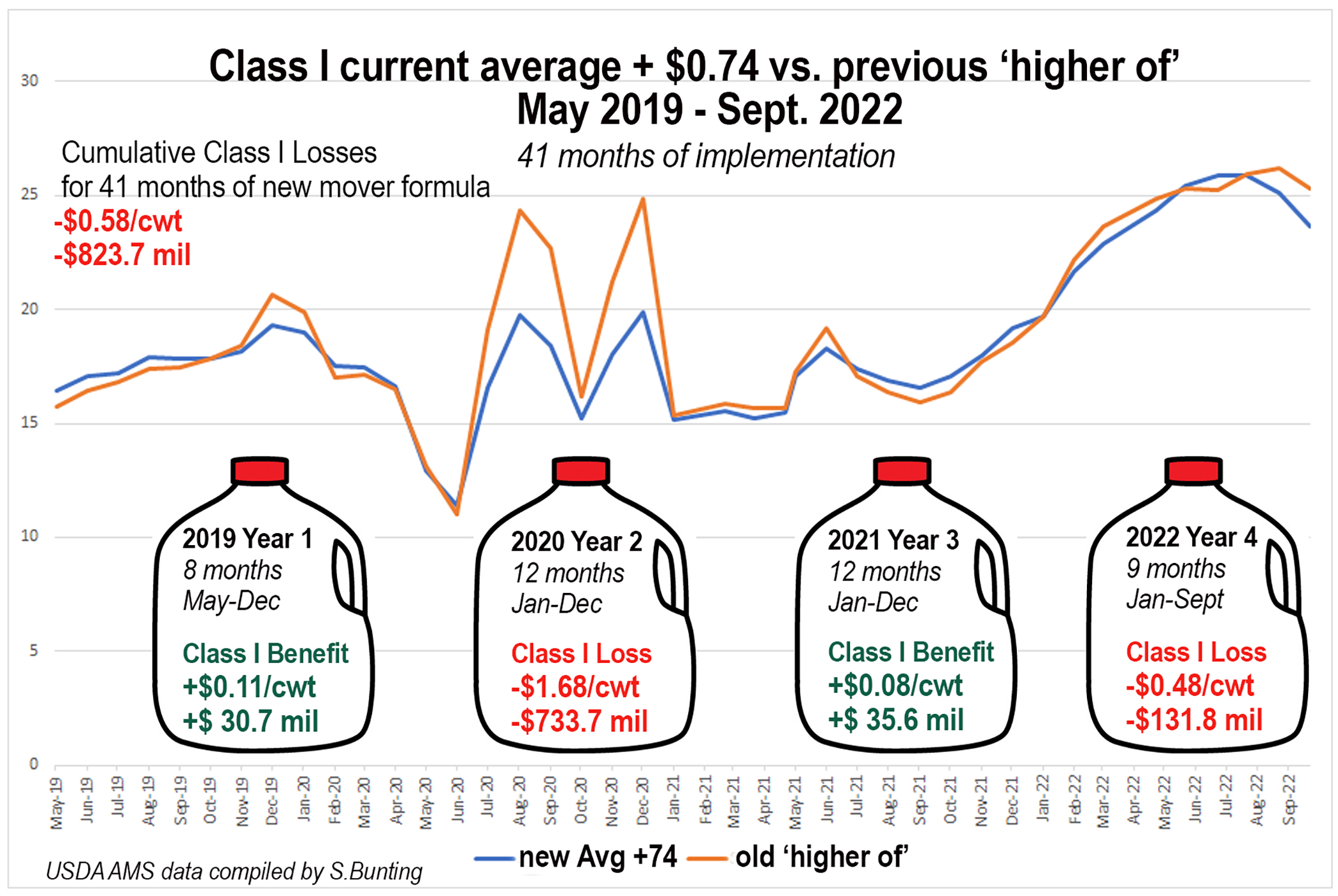
The change in the Class I price mover formula was made in the 2018 farm bill and implemented in May 2019. It has cost dairy farmers an estimated $132 million in lost revenue so far in 2022 — increasing the accumulated net loss to $824 million over these 41 months that the new average-plus-74-cents method has replaced 19 years of using the vetted ‘higher of’ formula. 

The change was made by Congress in the last farm bill in the belief that this averaging method would allow processors, retailers and non-traditional milk beverage companies to manage their price risk through hedging while expecting the change to be revenue-neutral to farmers. No hearings or referendums were conducted for this change.

Instead of being revenue-neutral for farmers, the new method has significantly shaved off the tops of the price peaks (graph) and only minimally softened the depth of the price valleys, while returning net lower proceeds to farmers and disrupting pricing relationships to cause further farm mailbox milk check losses in reduced or negative producer price differentials (PPD), reduced FMMO participation (de-pooling) as well as disruption in the way purchased price risk management tools perform against these losses.

In 2022, we are seeing this Class I ‘averaging’ method produce even more concerning results. It is now undervaluing Class I in a way that increases the depth of the valley the milk markets have entered in the past few months (graph), and as the Class IV milk price turned substantially higher this week against a flat-to-lower Class III price, the extent of the market improvement will be shaved in the blend price by the impact on Class I from what is now a $2 to $5 gap between Class III and Class IV milk futures through at least November.

During the height of the Covid pandemic in 2020, the most glaring flaw in the Class I formula change was revealed. Tracking the gains and losses over these 41 months, it’s easy to see the problem. This new formula puts a 74-cents-per-cwt ceiling on how much farmers can benefit from the change, but it fails to put a floor on how much farmers can lose from the change.

The bottomless pit was sorely tested in the second half of 2020, when the Class III and IV prices diverged by as much as $10, creating Class I value losses under the new formula as high as $5.00/cwt.

The bottomless pit is being tested again in 2022. The most recent Class I mover announcements for August and September are undervalued by $1.04 and $1.69, respectively, as Class IV and III have diverged by as much as $4 this year.

In fact, 6 of the first 9 months of 2022 have had a lower Class I milk price as compared to the previous formula. The September 2022 advance Class I mover announced at $23.82 last week would have been $25.31 under the previous ‘higher of’ formula. 

This is the largest loss in value between the two methods since December 2020, when pandemic disruptions and government cheese purchases were blamed for the poor functionality of the new Class I formula.

No such blame can be attributed for the 2022 mover price failure that will have cost farmers $132 million in the first 9 months of 2022 on Class I value, alone, as well as leading to further impacts from reduced or negative PPDs and de-pooling.

The graph tells the story. The pandemic was blamed for 2020’s largest annual formula-based loss of $733 million. This came out to an average loss of $1.68/cwt on all Class I milk shipped in 2020.

These losses continued into the first half of 2021, followed by six months of gains. In 2021, the net gain for the year was $35 million, or 8 cents/cwt., making only a small dent in recovering those prior losses.

Gains from the averaging formula were expected to continue into 2022, but instead, Class IV diverged higher than Class III in most months by more than the $1.48 threshold. Only 2 months in 2022 have shown modest Class I mover gains under the new formula, with the other 7 months racking up increasingly significant value losses – a situation that is expected to continue at least until November, based on current futures markets.

Bottomline, the months of limited gains are not capable of making up for the months of limitless loss, and now the hole is being dug deeper. 

True, USDA made pandemic volatility payments to account for some of the 2020 FMMO class price relationship losses. Those payments were calculated by AMS staff working with milk co-ops and handlers using FMMO payment data.

However, USDA only intended to cover up to $350 million of what are now $824 million in cumulative losses attributed directly to the formula change.

Furthermore, USDA capped the amount of compensation an individual farm could receive, even though there was no cap on the amount the new formula may have cost that farm, especially if it led to reduced or negative PPDs, de-pooling, and as a result, negatively impacted the performance price risk management tools the farm may have purchased.

The estimated $824 million net loss over 41 months equates to an estimated average of 58 cents/cwt loss on every hundredweight of Class I milk shipped in those 41 months.

Using the national average FMMO Class I utilization of 28%, this value loss translates to an average loss to the blend price of 16 cents/cwt for all milk shipped over the 41 months, but some FMMOs have seen steeper impacts where Class I utilization is greater.

This 16-cent average impact on blend price may not sound like much, but over a 41-month period it has hit mailbox milk prices in large chunks of losses and smaller pieces of gains, which impact cash flow and performance of risk management in a domino effect.

The 2022 divergence has been different from 2020 because this year it is Class IV that has been higher than Class III. During the pandemic, it was the other way around.

Because cheese milk is such a driver of dairy sales nationwide, the FMMO class and component pricing is set up so that protein is paid to farmers in the first advance check based on the higher method for valuation of protein in Class III. Meanwhile, other class processors pay into the pool using a lower protein valuation method, so the differences are adjusted based on utilization in the second monthly milk check.

This means when Class III is substantially higher than Class IV, as was the case in 2020-21, there is even more incentive for manufacturers to de-pool milk out of FMMOs compared to when Class IV is higher than Class III.

The PPD, in fact, is defined mathematically as Class III price minus the FMMO statistical uniform blend. Usually that number is positive. In the last half of 2020 and first half of 2021, it was negative for all 7 multiple component pricing FMMOs, while the 4 fat/skim Orders saw skim price eroded by the variance.

Now, the situation is different because Class III has been the lowest priced class in all but one month so far in 2022. The milk being de-pooled — significantly in some orders and less so in others — is the higher-priced Class II and IV milk. The Class II price has surpassed the Class I mover in every settled month of 2022 so far — January through July — and the Class IV price also surpassed the Class I mover in 2 of those 7 months. 

-30-
Are we moving toward cow islands and milk deserts?

Opinion/Analysis

By Sherry Bunting, Farmshine (combined 2 part series Aug. 12 and 19, 2022)

In Class I utilization markets, the landscape is rapidly shifting, and we should pay attention, lest we end up with ‘cow islands’ and ‘milk deserts.’

Farmshine readers may recall in November 2019, I wrote in the Market Moos column about comments made Nov. 5 by Randy Mooney, chairman of both the DFA and NMPF boards during the annual convention in New Orleans of National Milk Producers Federation together with the two checkoff boards — National Dairy Board and United Dairy Industry Association. 

Mooney gave a glimpse of the future in his speech that was podcast. (Listen here at 13:37 minutes). He said he had been “looking at a map,” seeing “plants on top of plants,” and he urged the dairy industry to “collectively consolidate,” to target limited resources “toward those plants that are capable of making the new and innovative products.”

One week later, Dean Foods (Southern Foods Group LLC) filed for bankruptcy as talks between Dean and DFA about a DFA purchase were already underway. It was the first domino right on the heels of Mooney’s comments, followed by Borden filing Chapter 11 two months later in January, and followed by three-years of fresh fluid milk plant closings and changes in ownership against the backdrop of declining fluid milk sales and an influx of new dairy-based beverage innovations, ultrafiltered and shelf-stable milk, as well as lookalike alternatives and blends.

The map today looks a lot different from the one described by Mooney in November 2019 when he urged the industry to “collectively consolidate.” The simultaneous investments in extended shelf-life (ESL) and aseptic packaging are also a sign of the direction of ‘innovation’ Mooney may have been referring to.

Two months prior to Mooney issuing that challenge, I was covering a September 2019 industry meeting in Harrisburg, Pennsylvania, where dairy checkoff presenters made it clear that the emphasis of the future is on launching innovative new beverages and dairy-‘based’ products.

Here is an excerpt from my opinion/analysis of the discussion at that time:

“While we are told that consumers are ditching the gallon jug (although it is still by far the largest sector of sales), and we are told consumers are looking for these new products; at the same time, we are also told that it is the dairy checkoff’s innovation and revitalization strategy to ‘work with industry partners to move consumers away from the habit of reaching for the jug and toward looking for these new and innovative products’ that checkoff dollars are launching.”

These strategy revelations foreshadowed where the fluid milk markets appear to be heading today, and this is also obvious from recent Farmshine articles showing the shifting landscape in cow, farm, and milk production numbers.

When viewing the picture of the map that is emerging, big questions come to mind:

Are today’s Class I milk markets under threat of becoming ‘milk deserts’ as the dairy industry consolidates into ‘cow islands’?

Would dairy farmers benefit from less regulation of Class I pricing in the future so producers outside of the “collectively consolidating” major-player-complex are freer to seek strategies and alliances of their own, to carve out market spaces with consumers desiring and rediscovering fresh and local, to put their checkoff dollars toward promotion that helps their farms remain viable and keeps their regions from becoming milk deserts? 

What role is the industry’s Net Zero Initiative playing behind the scenes, the monitoring, scoring, tracking of carbon, the way energy intensity may be viewed for transportation and refrigeration and other factors in Scope 1, 2 and 3 ESG (Environment, Social, Governance) scores? 

Shelf-stable milk may provide solutions for some emerging (or are they self-inflicted?) milk access and distribution dilemmas, and maybe one view of ESG scoring favors it? But ultimately it also means milk can come from cow islands to milk deserts — from anywhere, to anywhere.

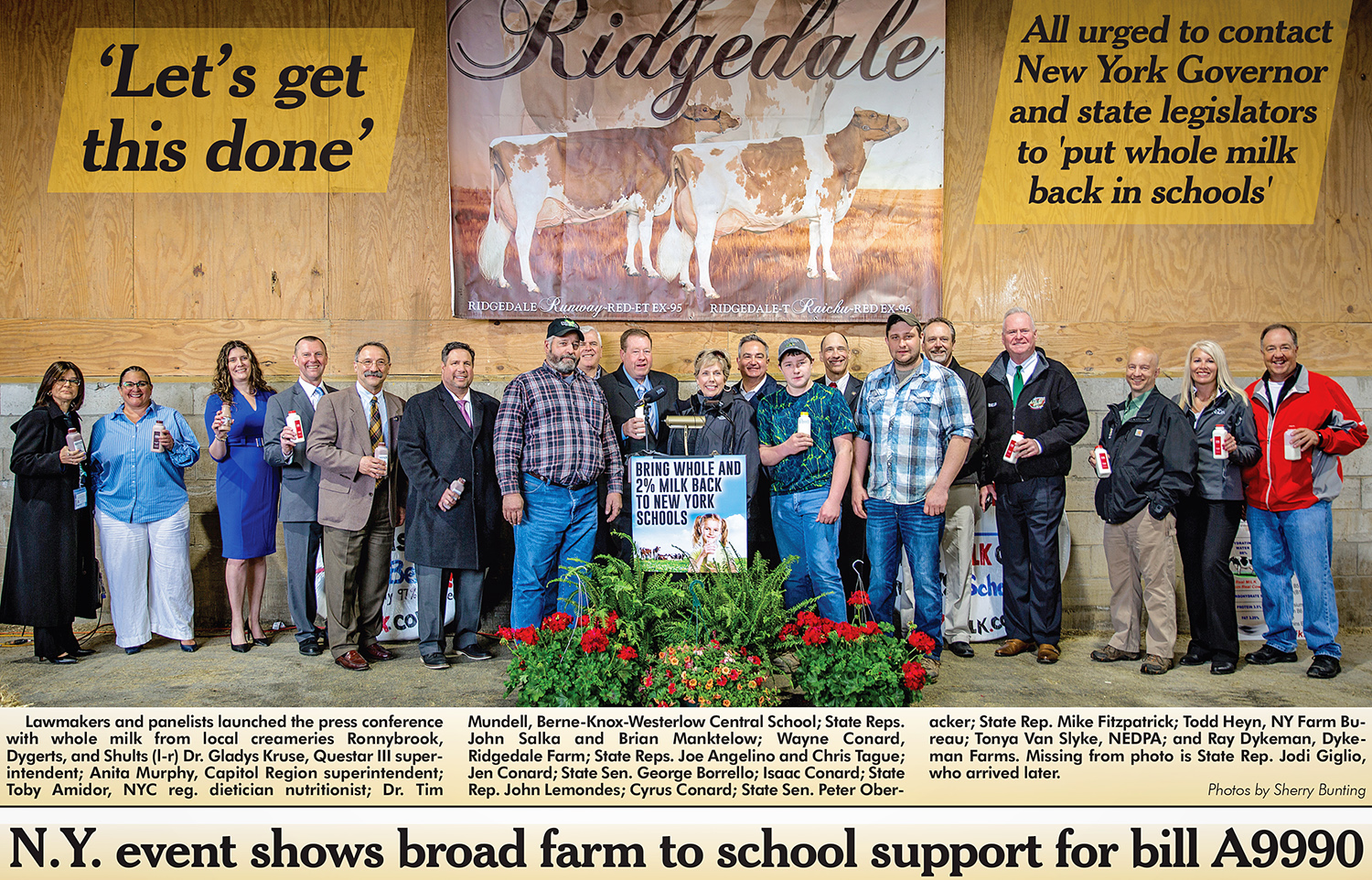
It also becomes clearer why the whole milk bill is having so much trouble moving forward. The industry machine gives lip-service support to the notion of whole milk in schools, but the reality is, the industry is chasing other lanes on this highway to ‘improve’ the school milk ‘experience’ and ensure milk ‘access’ through innovations that at the same time pave the road from the ‘cow islands’ to the ‘milk deserts.’ 

It is now clearer — to me — why the Class I mover formula is such a hotly debated topic. 

If major industry-driving consolidators are looking to transition away from turning over cow to consumer fresh, local/regional milk supplies by turning toward beverage stockpiles that can sit in a warehouse ‘Coca-Cola-style’ at ambient temperatures for six to 12 months, it’s no wonder the consolidators want the ‘higher of’ formula to stay buried. What a subversion that was in the 2018 Farm Bill.

In fact, if the industry is pursuing a transition from fresh, fluid milk to a more emphasis on shelf-stable aseptic milk, such a transition would, in effect, turn the federal milk marketing orders’ purpose and structure — that is tied to Class I fresh fluid milk — completely upside down.

Landscape change has been in motion for years, but let’s look at the past 6 years — Dean had already closed multiple plants and cut producers in the face of Walmart opening it’s own milk bottling plant in Spring 2018. The Class I ‘mover’ formula for pricing fluid milk — the only milk class required to participate in Federal Milk Marketing Orders — was changed in the 2018 Farm Bill that went into effect Sept. 2018. The new Class I mover formula was implemented by USDA in May 2019, resulting in net losses to dairy farmers on their payments for Class I of well over $750 million across 43 months since then.

(Side note: Under the formula change, $436 million of Class I value stayed in processor pockets from May 2019 through October 2019, alone. DFA purchased 44 Dean Foods plants in May 2019 and became by far the largest Class I processor at that time.)

These and other landscape changes were already in motion when Mooney spoke on Nov. 5, 2019 at the convention of NMPF, NDB and UDIA describing the milk map and seeing plants on top of plants and issuing the challenge to “collectively consolidate” to target resources to those plants that can make the innovative new products. 

One week later, Nov. 12, 2019, Dean Foods filed for bankruptcy protection to reorganize and sell assets (mainly to DFA).

Since 2019, this and other major changes have occurred as consolidation of Class I milk markets tightens substantially around high population swaths, leaving in wake the new concerns about milk access that spur the movement toward ESL and aseptic milk. A chain reaction.

What does Mooney’s map look like today after his 2019 call for “collective consolidation” and the targeting of investments to plants that can make the innovative products, the plants that DMI fluid milk revitalization head Paul Ziemnisky told farmers in a 2021 conference call were going to need to be “dual-purpose” — taking in all sorts of ingredients, making all sorts of beverages and products, blending, ultrafiltering, and, we see it now, aseptically packaging?

In addition to the base of Class I processing it already owned a decade ago, the string of DFA mergers has been massive. The most recent acquisitions, along with exits by competitors, essentially funnel even more of the market around key population centers to DFA with its collective consolidation strategy and investments in ESL and aseptic packaging.

The South —

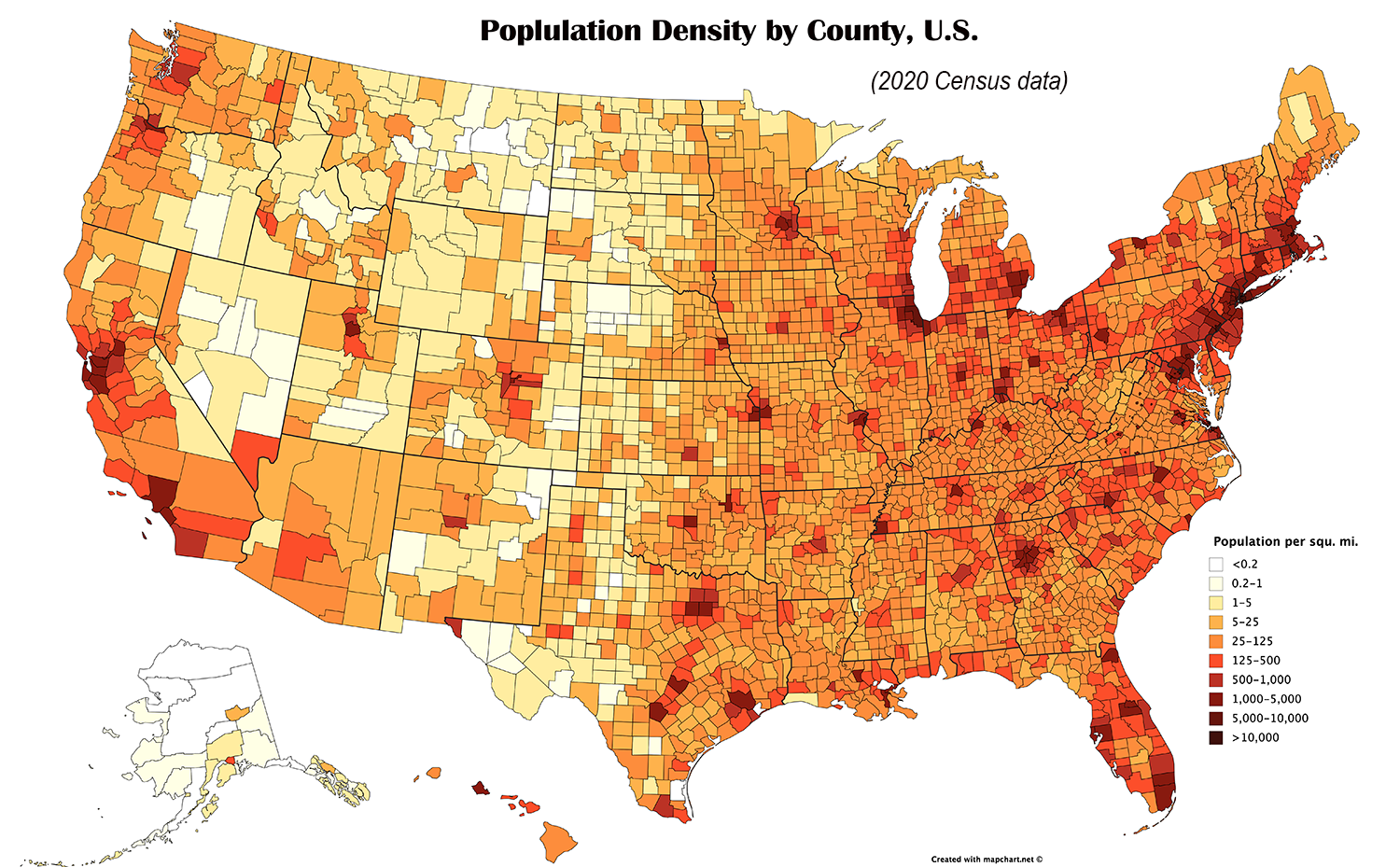
The 14 Southeast states (Maryland to Florida and west to Arkansas) have 29% of the U.S. population. If you include Texas and Missouri crossover milk flows, we are talking about 37% of the U.S. population. 

The major players in the greater Southeast fluid milk market include DFA enlarged by its Dean purchases, Kroger supplied by Select and DFA, Prairie Farms with its own plants, DFA and Prairie Farms with joint ownership of Hiland Dairy plants, Publix supermarkets with its own plants, an uncertain future for four remaining Borden plants in the region as Borden has exited even the retail market in some of these states, and a handful of other fluid milk processors. 

In Texas, alone, DFA now owns or jointly owns a huge swath of the fluid milk processing plants, having purchased all Dean assets in the Lone Star State in the May 2020 bankruptcy sale and now positioned to gain joint ownership of all Borden Texas holdings through the announced sale to Hiland Dairy

The Midwest — 

Just looking at the greater Chicago, Milwaukee, Green Bay metropolis, the population totals are a lake-clustered 6% of U.S. population. Given the recent closure by Borden of the former Dean plants in Chemung, Illinois and De Pere, Wisconsin, this market is in flux with DFA owning various supply plants including a former Dean plant in Illinois and one in Iowa with Prairie Farms having purchased several of the Dean plants serving the region.

In the Mideast, there is Coca Cola with fairlife, Walmart and Kroger among the supermarkets with their own processing, and DFA owning two former Dean plants in Ohio, two in Indiana, two in Michigan, and a handful of other bottlers. 

In the West: DFA owns a former Dean plant in New Mexico, two in Colorado, two in Montana, one in Idaho, two in Utah, one in Nevada and one in California, as well as other plants, of course. 

The Northeast —

This brings us to the Northeast from Pennsylvania to Maine, where 18% of the U.S. population lives, and where consolidation of Class I markets, especially around the major Boston-NYC-Philadelphia metropolis have consolidated rapidly against the backdrop of declining fluid milk sales and a big push by non-dairy alternative beverage launches from former and current dairy processors.

DFA owns two former Dean plants in Massachusetts, one in New York, all four in Pennsylvania, one in New Jersey. The 2019 merger with St. Alban’s solidified additional New England fluid milk market under DFA. In 2013, DFA had purchased the Dairy Maid plant from the Rona family in Maryland; in 2014, the prominent Oakhurst plant in Maine; and in 2017, the Cumberland Dairy plant in South Jersey.

More recently, DFA struck a 2021 deal with Wakefern Foods to supply their Bowl and Basket and other milk, dairy, and non-dairy brands for the various supermarket chains and convenience stores under the Wakefern umbrella covering the greater New York City metropolis into New Jersey and eastern Pennsylvania. This milk had previously been supplied by independent farms, processed at Wakefern’s own iconic Readington Farms plant in North Jersey, which Wakefern subsequently closed in January 2022.

The long and twisted tale begs additional questions:

As Borden has dwindled in short order from 14 plants to five serving the most populous region of the U.S. – the Southland — what will happen with the remaining five plants in Ohio, Kentucky, Georgia, Louisiana, and Florida? What will become of Elsie the Cow and Borden’s iconic brands and new products?

What percentage of the “collectively consolidated” U.S. fluid milk market does DFA now completely or partially own and/or control?

Will the “collective consolidation” in the form of closures, sales and mergers continue to push shelf-stable ESL and aseptic milk into Class I retail markets and especially schools… and will consumers, especially kids, like this milk and drink it?

What role are rising energy prices, climate ESG-scoring and net-zero pledges and proclamations playing in the plant closures and shifts toward fewer school and retail milk deliveries, less refrigeration, more forward thrust for shelf-stable and lactose-free milk, as well as innovations into evermore non-dairy launches and so-called flexitarian blending and pairing?

Looking ahead at how not only governments around the world, but also corporations, creditors and investors are positioning for climate/carbon tracking, ESG scoring and the so-called Great Reset, the Net Zero economy, there’s little doubt that these factors are driving the direction of fluid milk “innovation” over the 12 years that DMI’s Innovation Center has coordinated the so-called ‘fluid milk revitalization’ initiative — at the same time developing the FARM program and the Net Zero Initiative.

The unloading of nine Borden plants in five months under Gregg Engles, the CEO of “New Borden” and former CEO of “Old Dean” is also not surprising. Engles is referred to in chronicles of dairy history not only as “the great consolidator” but also as “industry transformer.”

In addition to being CEO of Borden, Engles is chairman and managing partner of one of the two private equity investment firms that purchased the Borden assets in bankruptcy in June 2020. Investment firms fancy themselves at the forefront of ESG scoring.

Engles is also one of only two U.S. members of the Danone board of directors. Danone, owner of former Dean’s WhiteWave, including Silk plant-based and Horizon Organic milk, has positioned itself in the forefront on 2030 ESG goals, according to its 2019 ‘one planet, one health’ template that has also driven consolidation and market loss in the Northeast. 

Not only is Danone dumping clusters of its Horizon milk-supplying organic family dairy farms, it continues to heavily invest in non-dairy processing, branding, launching and marketing of alternative lookalike dairy products and beverages, including Next Milk, Not Milk and Wondermilk. 

There is plenty of food-for-thought to chew on here from the positives to the negatives of innovation, consolidation, and climate ESGs hitting full-throttle in tandem. These issues require forward-looking discussion so dairy farmers in areas with substantial reliance on Class I fluid milk sales can navigate the road ahead and examine all lanes on this highway that appears to be leading to cow islands and milk deserts.

-30-
Dairyman sees Wagyu as ideal beef cross

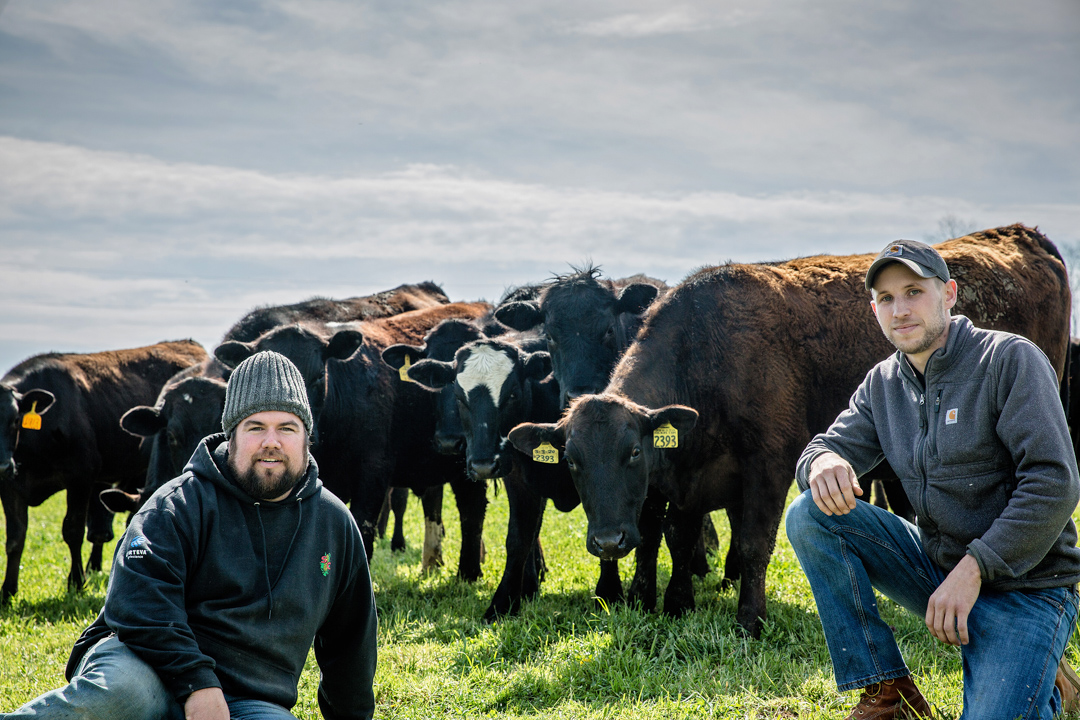
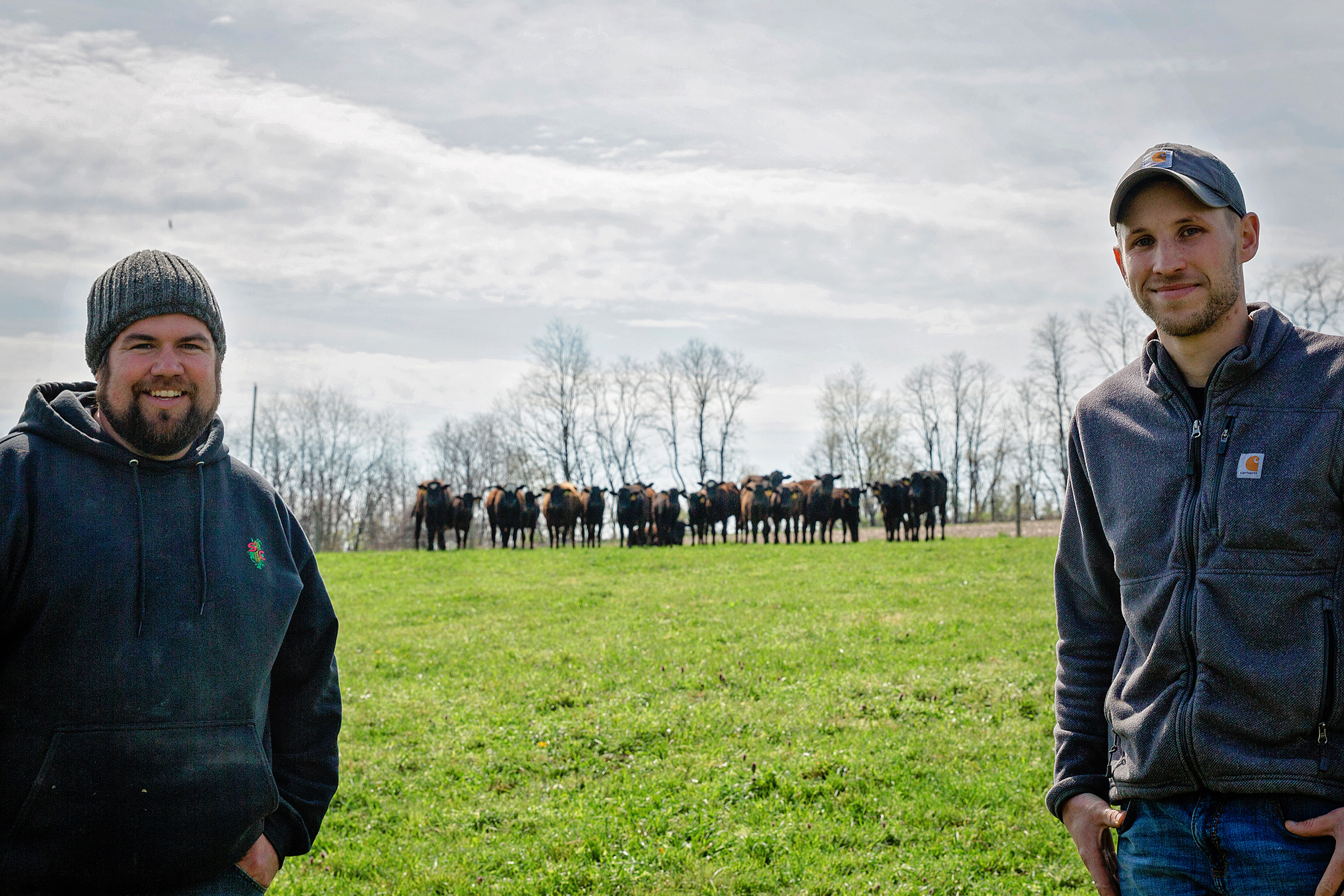
No high energy diet, the key with this breed is to take your time,’ says Adam light (left). He and his cousin Ben (right) are partners in Lightning Cattle Company, Lebanon County, Pennsylvania. They raise Wagyu x Holstein crossbred cattle for direct beef sales. They say the full-blooded Wagyu and dairy crossbreds are quite docile. They leave the heifer barn at Adam’s dairy weighing around 500 pounds, come here to Ben’s father’s farm on grass and supplemental forage until 900 pounds, then finish back at Adam’s dairy to final liveweight 1450 to 1500 pounds. This is Part 2 of a Beef on Dairy series. To read the May 13 edition’s PART ONE, CLICK HERE. Photos and story by Sherry Bunting, Farmshine, May 20, 2022.

MYERSTOWN, Pa. — No, they don’t get massages, and they aren’t fed beer as the stories go about the intimate care of the Wagyu in Japan. 

However, at Spotlight Holsteins in Lebanon County, Pennsylvania, Wagyu is the beef-on-dairy crossbreeding fit, and the cattle are given the time they need to produce the outstanding beef characteristics the Wagyu are known for — doing so on a lower energy diet.

The whole thing started before 2020, the year Adam Light sold his 100-cow registered Holstein tiestall dairy herd in Jonestown and purchased the 240-cow robotic dairy farm and herd from Ralph Moyer in nearby Myerstown (above).

Today, Adam and his cousin Ben Light, a landscaper, are partners in Lightning Cattle Company.

They started with three Wagyu, two bulls and a heifer, purchased from the September 2018 dispersal through Hosking of the late Donald ‘Doc’ Sherwood’s Empire State herd he had bred over 17 years from imported genetics near Binghamton, New York. Doc Sherwood retired that year, and he and his herd were profiled in Farmshine (here)

Adam and Ben brought their investment home and had Zimmerman Custom Freezing collect the bulls. They also flushed the heifer for embryos.

Not only did they begin using those straws of Wagyu on some of Adam’s dairy cows, they also began making some available to other dairy farmers in return for first-dibs to buy the offspring, and they began leasing bulls to farms with beef cow-calf herds.

Today, they have two full-blooded Wagyu bulls, two full-blooded females, plus 34 crossbred animals in various stages of beef production, and they have sold almost a dozen finished beef.

“The key with this breed is to take your time. They need protein to grow, but on the energy side, they don’t need a whole lot. There’s no high energy diet in this. It’s really quite simple. Whatever the dairy heifers get is what the Wagyu crossbreds get, which is a kind of lower energy feed,” Adam explains.

The calves start in the nursery barn at his dairy, grouped with replacement heifers on automated Urban CalfMom feeders, where milk intakes can be customized. They also receive the same calf starter, calf grower and hay.

When they reach 400 to 500 pounds, the crossbreds are moved to Ben’s father’s crop and poultry farm near Jonestown, which is also home-base for Ben’s landscaping company.

There they become Ben’s responsibility until they reach 900 pounds on pasture with some supplemental forage as needed.

At around 900 pounds, the cattle come back to Adam’s dairy, where they are housed and fed the same mostly forage diet on the same steady growth plane of nutrition as the breeding age and bred heifers. 

They finish at 1450 to 1500 pounds at about 26 months of age and are sold as beef quarters, halves and wholes from pre-orders, with the buyers paying the custom butcher for processing.

Like the Wagyu breed, Holsteins are slower to finish out. The difference is a straight Holstein needs a push with a high-energy diet to reach a higher quality grade, whereas the Wagyu crossbreds do it on lower energy feed.

“You really want to raise them 26 months, that’s longer than for other crossbreds. For us, it’s not a problem because we have the facilities, and we can feed them economically — right with our dairy animals — and have a more valuable beef animal at the end,” Adam explains.

After those initial years of lead time, Lightning Cattle Co. sold nine animals for beef in 2021. They expect to sell 10 in 2022, which should put them even on their original investment and the cost to make embryos to keep their Wagyu seed stock rolling forward, and they project to double the number sold in 2023 based on calves started in 2021.

What they sell is known as American Wagyu beef — mostly F1 Wagyu x Holstein with a few Wagyu x Angus and Wagyu x Jersey. 

Having access to the crossbred calves from the dairy and beef herds that are using their Wagyu genetics helps ensure they can expand beef sales as demand grows, without tying up Adam’s dairy herd to make more crossbreds.

On his own cows, Adam turns to Wagyu after giving a cow two or three chances with Holstein. He’ll modify that decision based on visual appraisal and milk production, with an eye for the number and type of cows he needs and wants dairy replacements out of.

“They settle fast with Wagyu. The difference is evident under a microscope,” Adam reports.

Why Wagyu? Adam recalls his grandfather had some back in the early 2000’s. Half a dozen Wagyu cows and a bull were payment on a debt, which he added to the beef herd on his crop and livestock farm.

“No one really knew what they were back then,” Adam recalls, noting they aren’t beef show animals on-the-hoof. The outstanding meat characteristics are only seen on-the-rail as the flecks of fat are distributed evenly throughout the lean.

Almost 20 years later, Adam did the research. He learned about the breed from Japan, where there are different grades, names and regional identifiers for specific lines, and their tenderness transmissibility.

“The dairy industry was pretty ugly, and we were getting a bill instead of a check for our bull calves. Heifers weren’t worth much either, so we wanted to make a valuable animal to offset when other parts of the dairy industry are ugly,” Adam reflects back to 2018.

Wagyu won’t ring bells for average daily gain or fast finishing. While there are feedlots on the West Coast specifically dedicated to finishing F1 Wagyu dairy crosses, it’s different in the East and Midwest where they are mostly marketed into niche direct sales to consumers and restaurants.

Adam sees the Wagyu as a good fit for his dairy because he can optimize the assets he already has and feed them right with his heifers, instead of raising more heifers than his dairy needs. 

“We’ve had different repeat customers tell us the big thing they noticed is the roasts are so much better, with no dry spots,” Adam relates. “I didn’t think there could be that much difference, but there really is, and it seems the Wagyu x Holstein is a great cross for that.”

Even in Japan, the dairy cross is sought as an economical option of their preferred beef — owing to this compatibility. Holsteins deposit marbling in a manner similar to Wagyu — but the Wagyu genetics put the quality into overdrive.

Selling by halves and quarters is less work than selling by beef cuts. Buyers are getting a range of items with some options to customize how they get their portion processed. They can do a simple cut-and-grind or ask for special order items such as bologna.

Lightning Cattle Co. has been approached by restaurants in the area, but to serve them, Adam and Ben would need to use a USDA-inspected plant, not a state-inspected custom butcher. USDA plants are few and far between and booked well into the future.

“We’ve had no issue selling the meat, and we’ve not done any advertising,” Ben notes. “We figured if we advertised too much, we might not be able to meet the demand. We’re taking it step by step.”

To price the quarters and halves, Adam believes in being fair and reasonable.

“We go off what the steers are selling for at the New Holland auction,” he says. 

They look at the Choice and Prime steer price (not the dairy beef) and add a little to that for the Wagyu influence. The customer pays the liveweight price and the butcher’s fee. 

Adam and Ben help buyers understand what they are getting and their cost per pound of cut-and-wrapped beef by converting it on a dressed basis for an informational estimate. 

“It’s tough to create a market that doesn’t exist, but that’s what we’ve had to do,” Ben adds.

This is another reason the Lights have taken it step by step, giving themselves some growing room by spreading seed stock to other dairy farms for access to more calves.

Last fall (2021), they started their biggest group of crossbred calves that will finish out in 2023, double the number for 2022.

They have begun thinking about setting up a facebook page and had Lightning Cattle Co. T-shirts made, but they are still a bit cautious about advertising to be sure demand doesn’t get too far ahead of cattle coming up through.

The cousins like working with cattle, and they take pride in selling a finished product to others in their community. This also gives them opportunities for conversations with consumers about beef, dairy, and farming in general.

“Some people have heard of Wagyu beef from Japan. Some have heard you could pay $200 for a fancy 12-ounce steak, and some people don’t know much about it at all,” says Ben about the learning curve and the way crossbreeding makes this beef more economically accessible.

“What people really like is the idea of buying beef from farms, and that gets them interested in trying it,” he adds.

That’s the window of opportunity for the quality of the beef to sell itself into the future.

“It has been fun,” Adam admits. “It’s something different, and we don’t know where it will take us.”

-30-
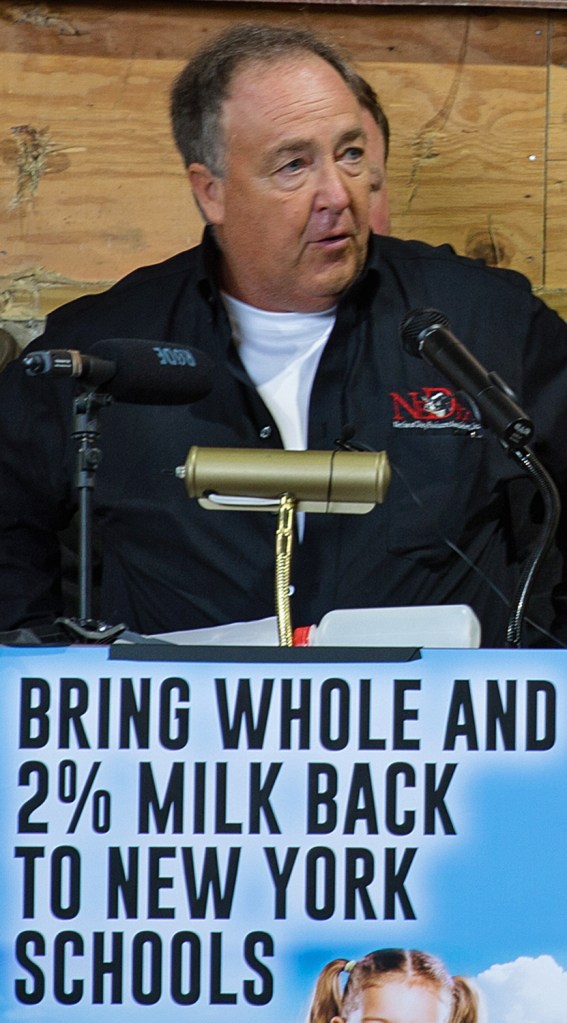
MILK MARKET MOOS — May 18-25, 2022

Market Moos is a weekly column in Farmshine by Sherry Bunting

US Apr. milk output off 1%, Georgia surpasses Florida

In its May 18 report, USDA pegged total U.S. milk production at 19.2 billion pounds — down 1% from a year ago. The report tallied 9.4 million milk cows on U.S. farms reflecting a 98,000-head decrease (-1%) from a year ago, with output per cow unchanged.

Among the 24 monthly-reporting states, output per cow fell 0.1%, and cow numbers were off 78,000 (-1.1%), pushing production 0.9% below year ago in those major states.

USDA’s May 18 GAIN report noted an even larger pull-back in Australia’s 2022 output, forecast to be down more than 4% for the year, and New Zealand’s first quarter milk production is reported to be running 6% below year ago and the lowest level since 2013. 

Milk collection in the European Union is also running behind first quarter 2021 by a smaller degree, down 0.3%, according to an EU milk situation report delivered in Brussels last week. And, milk deliveries are reported to be 4% below year ago in Great Britain for the first quarter of 2022 — 3.3% below year ago in Ireland in March.

Throughout the world, these reports note that farmers are exiting the dairy industry. “The slump in milk production (in Australia) is largely due to farmers continuing to exit the dairy industry through farm sales, and some dairy farms partially or fully transitioning to less labor-intensive beef cattle production,” the GAIN report said.

In the U.S., the national impact of this trend is being buffered by the large production growth in places like Texas and South Dakota offsetting reduced production almost everywhere else.

In addition to the U.S. milking 98,000 fewer cows in April compared with a year ago, dramatic movements of cows out of some regions and into others is occurring. Notable shifts are also occurring within regions. (See chart above)

One region — the Mideast — that had been growing rapidly is now going through a substantial pull-back. The Mideast lost 35,000 cows and 68 million pounds of monthly milk production in April compared with a year ago. That is a collective 3.6% year-over-year decline broken down as -3.4% in No. 6 Michigan, -3.8% in No. 12 Ohio and -4.1% in No. 15 Indiana. Technically, western Pennsylvania is included in the Mideast when we look at the Federal Milk Marketing Order map, and the Keystone state, as a whole, recorded a 2.2% decline in milk production in April.

The Northeast and Midatlantic region lost 15,000 cows and 31 million pounds (-1.3%) of milk production with most of the decline coming from No. 8 Pennsylvania, down 8,000 cows and 2.2% in milk output vs. year ago while No. 5 New York (-0.8%) and No. 19 Vermont (-0.9%) were just under the national average.

In the Southeast region, the big news is Georgia’s milk production outpaced Florida for the first time, moving the relative 24-state newbie into 21st place and Florida to 22nd. Georgia and Florida were dead-even in March.

Georgia’s 12.1% year-over-year milk increase in April eclipsed Florida’s 12.1% year-over-year decline, with Georgia producing 1 million more pounds of milk with 7,000 fewer cows compared to Florida. Georgia producers milked 91,000 cows in April — up 9,000 head from a year ago. Florida producers milked 98,000 cows in April — down 12,000 head from a year ago.

As noted last month, Texas surpassed Idaho in March as the No. 3 milk-producing state. However, even the 4.7% increase in year-over-year April production in Texas (up 63 million pounds) could not overcome the 12.9% decline in No. 9 New Mexico’s production (down 92 million pounds), for a net 1.4% loss of 29 million pounds of milk from the Southwest region.

Regions holding steady-ish — lower by less than the national average — are the Upper Midwest down 10,000 cows and -0.4% in milk output and the Mountain States / High Desert down 3,000 cows and -0.3% in production, with No. 4 Idaho unchanged in both cow numbers and production vs. year ago.

In the Upper Midwest, No. 2 Wisconsin was almost steady as production was down just 0.1% with 1,000 fewer cows in April, while No. 7 Minnesota milked 9,000 fewer cows and made 1.4% less milk than a year ago in April.

The West Coast showed a net-loss of 1% just like the U.S. average: No. 1 California had -0.6% production (but milked 2,000 more cows), and the 2.7% production increase in No. 18 Oregon was not enough to make up for the 5.4% loss in No. 10 Washington State.

The Central U.S. was the only region to see a net gain — owing to a 0.9% increase in No. 11 Iowa and the whopping 16.7% (48 million pound) increase in milk production in No. 17 South Dakota, where cow numbers are up by 25,000 head. South Dakota is nipping at the heels of No. 16 Kansas (-2.2%), despite Kansas overtly seeking dairies to fill expanded processing there according to dairy market podcast advertising messages at the International Dairy Foods Association website. Elsewhere in the Central U.S., in addition to production losses in Kansas, declines were also recorded to the east for No. 23 Illinois (-3.8%) and to the west for No. 13 Colorado (-1.1%).

All of this bears note as farmers face escalating costs and milk futures are hesitatingly recovering the past three weeks of losses but under market conditions that are again creating divergence between Class III and IV that could create producer price differentials (PPDs). When milk is de-pooled from Federal Orders in these circumstances, we see inequitable distribution of losses and of value that can contribute even faster to the way the milk production map is changing.

At the same time, the USDA World Agricultural Supply and Demand Estimates for May highlighted an expected increase in fat-basis exports as the world is tight on butterfat, but a decline in skim-basis exports, which could change if China resumes its earlier level of milk powder imports. 

On the flip side, the WASDE report forecasts 2022 U.S. dairy imports to run well ahead of previous years’ on both a fat- and skim-solids basis. The WASDE report stated this increase in dairy imports will be boosted by larger than expected importation of products that contain dairy.

WASDE: 2022 imports up

According to the World Agricultural Supply and Demand Estimates (WASDE) last week, the 2022 All Milk price is forecast to average $25.75, down a nickel from April’s forecast.

The May WASDE raised the 2022 milk production forecast on what it says are higher milk cow inventories more than offsetting slower growth in milk per cow. But it is important to realize the April milk production report this week (as reported above) showed otherwise.

Cheese and butter price forecasts are raised from the previous month’s report on strong demand, but non-fat dry milk and whey prices are lowered. The Class III price is unchanged and Class IV is lowered.

Some are suggesting that higher retail prices for butter and cheese and other dairy products are negatively affecting demand and that the food industry can shift from butter to oils. However, recent reports from many sources indicate the global supplies of food oils and butter substitutes are also in reduced supply and rising in price at wholesale and retail levels.

Biden orders Operation Fly Formula via Dept. of Defense

Operation Fly Formula was ordered by President Biden invoking the Defense Production Act on Wed., May 18, sending military planes abroad to bring infant formula home to America’s babies, especially the specialty hypo-allergenic formulas for babies with allergies to milk or special health needs. Parents currently face 45 to 60% out-of-stock shortages in infant formula and two military cargo plane loads of hypoallergenic specialty formula have arrived from Europe and the UK over the past 7 days.

Spot out-of-stock undercurrents in baby formula and specialized milk-based meal replacements have been mentioned in this column several times over the past few months, but the situation has worsened. The USDA announced WIC vouchers allowing participants to buy brands other than sanctioned low-bidders.

By Thurs., May 19, the American Academy of Pediatrics had issued a statement telling parents it is safe to switch to whole cow’s milk for babies over 6 months of age that are not on “special” formula, making sure they are consuming other iron-rich foods or talking to their own pediatricians about supplemental iron.

Discussion is rampant through social media about goat milk as a substitute for formula. There’s something to this because goat’s milk is A2A2 in its protein composition, as is sheep’s milk and human milk. There are A2A2 cow’s milk brands available now also. Parents are urged not to switch to plant-based beverages that do not have the nutrition of whole milk and to be cautioned that lactose free milks may not have sufficient carbohydrate for electrolyte balance since the lactose IS the carbohydrate in milk.

The FDA also struck a deal to get the Abbott plant back up and going by June 4 after product recalls and a plant closure related to bacteria tests occurred in February, in part because of a whistleblower’s report that was delayed for months by a “mail room disruption” according to FDA.

‘Confusion is real’

Anxiously waiting for the expected FDA decision on label standards of identity for milk and dairy, NMPF reported this recent exchange between FDA Commissioner Robert Califf and U.S. Senator Tammy Baldwin of Wisconsin at a recent Ag Appropriations Subcommittee hearing. Baldwin chairs the Senate subcommittee that sets spending levels for FDA. Baldwin asked the Commissioner for his thoughts on how plant-based beverages masquerading as dairy products should be labeled. His response noted that when people think about dairy vs. plant-based beverages, they “are not very equipped to deal with what’s the nutritional value” of the products. Yes, the confusion is real.

Milk futures flip higher, Class III and IV diverge

Green ink the past two weeks replaced three weeks of red ink as milk futures posted back to back gains despite some waffling on the Class III side due to a report this week showing record natural cheese inventories. By Wednesday, May 25, the Class III contract average for the next 12 months was 25-cents higher than the previous week and fully steady compared with the end of April at $22.96. The Class IV milk futures went roaring $1 to $1.50, spots $2 higher — tripling the spread between the two. On the close Wed., May 25, Class IV contracts for the next 12 months averaged $24.05 — up $1.03 from a week ago and 60 cents higher than the end of April. Class IV continues to top Class III, with the average divergence now at $1.10. Aug. through Nov. contracts on the CME futures board now diverge by more than the $1.48 threshold that suppresses the Class I mover value under the new averaging formula.

Dairy products rally higher

CME spot cash dairy product markets have reversed course to move higher for two consecutive weeks, capped by a strong rally on Class IV products (butter and nonfat dry milk) driven by a 22% decline in butter inventories. Compared with the end of April, the May 25 daily spot prices for the four commodities used in federal milk order pricing are: Butter up 28 cents at $2.89/lb after 12 consecutive days of gaining more than 2-pennies per day in active trade volume; Nonfat dry milk up 13 cents at $1.84/lb; Cheese steady compared with a month ago at $2.30/lb, Dry whey firming up the 8-cent loss at 50 cents.

April blend up $1-1.50

The April uniform prices across the 11 Federal Milk Marketing Orders (FMMOs) moved $1 to $1.50 higher, with the Upper Midwest closer to $2 higher than previous month. This is the 6th straight month of gains, reported as follows:

  • FMMO 1 (Northeast) SUP $26.07 PPD +$1.65
  • FMMO 33 (Mideast) SUP $24.91 PPD +$0.49
  • FMMO 32 (Central) SUP $24.65 PPD +$0.23
  • FMMO 30 (Upper Midwest) SUP $24.55 PPD +$0.13
  • FMMO 126 (Southwest) SUP $25.43 PPD +$1.01
  • FMMO 124 (Pacific Northwest) SUP $24.79 PPD +$0.37
  • FMMO 51 (California) SUP $25.08 PPD +$0.66
  • FMMO 131 (Arizona) uniform price $25.52
  • FMMO 5 (Appalachian) uniform price $27.17
  • FMMO 7 (Southeast) uniform price $27.35
  • FMMO 6 (Florida) uniform price $29.13

June Class I ‘mover’ $25.87

The June Class I base price, or ‘mover’, was announced Wed., May 18 at $25.87. This is 42 cents higher than the May Class I ‘mover’ and $7.58 higher than a year ago. This marks the 9th consecutive month of Class I mover gains.

The June 2022 Class I mover is 61 cents higher under the current average-plus formula than it would have been using the previous ‘higher of’ for the second consecutive month after being a loss under the averaging formula for the previous four consecutive months. In 2022, alone, the average-plus Class I mover formula produced no difference in January and was 51 cents below the ‘higher of’ method for February, 79 cents lower for March and 50 cents lower for April before turning 17 cents higher in May and now 61 cents higher for June.
Since implementation in May 2019, the new formula has been negative more months than positive (18 of 38 months) for a net loss in Class I value of over $725 million from May 2019 through June 2022.

NY launches state bills to put whole milk option back in schools, joins PA in tackling federal prohibition

‘Let’s get this done’All urged to contact New York Governor and state legislators to ‘put whole milk back in schools’

By Sherry Bunting, Farmshine, May 6, 2022

SHARON SPRINGS, N.Y. — It was a rainy, dreary Monday (May 2), but dairy nutrition advocacy was bright and sunny in the feed room at Ridgedale Farm. The Conard family hosted a press conference supporting New York State legislation to bring whole and 2% milk back to schools.

Patterned after the Pennsylvania bill that has already passed the state House and is expected to be voted on in the Senate this month, the New York bill would support schools in their desire to offer more milk options, including whole and 2% milk produced on New York farms. The bill includes provisions for the Commissioner of Education to notify school superintendents about the flexibility as well as for the State Attorney General to file civil suits on behalf of schools if the federal government withholds other-than-milk funding.

While some media outlets continue to point to the superiority of federal regulations, there is a groundswell of state lawmakers saying “enough is enough” when it comes to the children and the farmers being victims of regs based on false narratives that push young people away from the very nutrition they need, and the very nutrients the Dietary Guidelines committee admitted their government-sanctioned dietary patterns are not providing.

The movement to have state legislatures get involved is not – as some would say – ‘political theater.’ No, this is the reality of where ‘we the people’ get a voice in the very sustenance of farms, food, and future generations. 

In Pennsylvania, it began with U.S. Congressman G.T. Thompson (Dist. 15) with H.R. 1861 as well as State Rep. John Lawrence (Dist. 13) with HB 2397. In New York State, it began with Congressman Antonio Delgado (Dist. 19) a prime cosponsor of H.R. 1861 and Assemblyman Chris Tague (Dist. 102) introducing A9990 with 25 cosponsors. Within a week of Tague’s bill, State Senator George Borrello (Dist. 57) sponsored S8999 with cosponsor Peter Oberacker (Dist. 51).

The New York legislation has been referred to each chamber’s Education Committee. Tague and Borrello are Ranking Members of each chamber’s Agriculture Committee.

Tague and Borrello were joined Monday by other supporting lawmakers, government officials, nutrition and education experts, dairy farmers, FFA members, school superintendents, town mayors, school principals, discussing why it is so important and urging a public groundswell to contact all NYS lawmakers and the Governor’s office in support.

“We are going to get whole milk back in schools. We’re dispelling the myths propagated by many over the years,” said Tague.

“I ask every one of you to spread the word — to your friends, to your family, to your neighbors, even your enemies. Ask them to join us. Call, email and text every single member of the New York State legislature. Tell them: ‘Put whole milk back in our schools!” he exclaimed.

“Then call Governor Hochul and tell Kathy we want whole milk back in our schools,” Tague explained that the bill must go through committee, then to the floor, then get voted on, and then it would go to the Governor.

“Government and misinformed people need to stop biting the hand that feeds them,” he added. “We cannot live without good nutritious foods. No farms, no food. How does a young person today make a go at it? Farmers are not only ‘price takers,’ they take everything else that comes at them. There’s never anybody that stands up for them. That ends today. We’re here to stand up for you.”

Senator Borrello reflected on the problem, which he said is “based on false narratives. A long time ago, they convinced us that taking skimmed milk and pouring it on high sugar, no fat, breakfast cereal was somehow a good breakfast choice for kids, and they’ve taken whole milk out of our schools. The result has been more waste, it ends up in the garbage. And what have we told our kids to do? It’s okay to have energy drinks and other things that just aren’t good for your health. We’ve also seen a dramatic rise in obesity rates.”

The data for these dietary patterns just is not there, said Borrello.

“Now we know that having fat in the diet is not only good for kids, it helps with their growth, and the kids that do drink whole milk actually end up with less obesity. The science had changed, but unfortunately, our government has not,” he said. “We should give the children the choice. But most importantly, we should recognize this is a good choice. That’s why this is an important bill. Most people don’t understand, that even whole milk is 97% fat free.”

Borrello observed these current dietary rules have further impact, that they are “the beginning of the push to take us away from products like milk, that want to push us toward things like almond beverage, which is not milk, and other things. That’s the real agenda here. Let’s understand that whole milk is nutritious. It feeds your brain. It feeds your body. It is probably one of the best, most nutritious drinks that you can have. But instead of serving that, they want to push these artificially created products onto our children and tell them that’s okay,” he said.

“We need to give them this (whole milk) choice because it is the right thing to do and because it is also good for agriculture, the most important and largest industry in New York State. People forget that. We are here today from all points of the state standing united to say this is the right time to bring back whole milk into our schools,” Borrello stressed.

Nutrition expert agreed

Toby Amidor, registered dietitian, nutrition expert, food safety consultant, instructor, speaker and author in New York City, drove out from Brooklyn to give her thoughts on the bill and whole milk misconceptions.

She confirmed the 2020-25 Dietary Guidelines for Americans “pinpoint three under-consumed nutrients that are found in milk, that people of all ages, including school age children, adolescent children, even toddlers, they don’t get enough of,” said Amidor.

“Those nutrients are calcium, vitamin D and potassium. Milk is a vehicle that you can get all of this nourishment into children in order to grow and thrive like we want them to. It’s an important thing to give them a choice. Choose (the milk) you want,” she explained.

Amidor was joined by various school system superintendents noting the key concern of student access to nutrition.

“School is where many children get their nourishment. So that’s where you want to give them these choices,” said Amidor. “It’s okay to have the fat in milk… it’s a nourishing drink, the fat increases the palatability of that nourishment – more power to it!”

School officials were blunt

“We have a large food service system and are highly focused on farm-to-school initiatives. Milk is one of those,” said Anita Murphy, Capitol Region Board of Cooperative Educational Services (BOCES) superintendent, representing 24 districts and 80,000 schoolchildren across four NYS counties.

“On a personal level, I don’t drink skim milk. If that’s the only thing there, I pass,” said Murphy. “I think that’s what happens with our children. If you walk into our cafeterias, what you will see is kids passing on milk. A lot of these kids eat two meals a day at school, and that’s it. That’s what they get, so if we don’t give them those things that they need and that they want that are good for them, we are making a mistake. We are willing to lend any support you need to get this done.”

Representing 22 school districts and more than 30,000 students, Dr. Gladys Kruse, Questar III BOCES district superintendent concurred. She thanked the lawmakers for their efforts.

“We need more children to drink milk to get the nutrition they need. We know some of our students get two of their meals a day at our schools. When we hear students throwing away their lunch or their milk, or we hear of farmers having to dump the milk they cannot sell, it is time to reevaluate and reconsider the options and the policies. This legislation is a welcome step in expanding the availability and consumption of milk locally and across the state,” said Dr. Kruse.

Thanking Tague for his leadership, Kruse stated the bill would “provide the flexibility to have more milk options available to our students. This includes whole milk and 2% milk produced here and across the state. From our first beverage as a child to a staple in our daily school lunches, milk is fuel of our young people’s growth and development.”

From the Berne-Knox-Westerlo Central School District, superintendent Dr. Tim Mundell talked about partnership and collaboration, calling the day’s event a great example of that.

“The passage of this bill would help us bring local whole milk to our students, viable nutrition and real value,” said Mundell noting the need for flexibility. “Students get two meals a day from us. Many of our students live in very isolated and rural areas and access to nutritional foods, like whole milk… for their health and well-being, it’s scarce, and it’s scary.”

“When we put kids at the center of all of our decisions and all of our advocacy, great things happen, and the decisions are easy. This (should be) a very easy decision,” he said.

Mundell also observed the losses in enrollments and economic opportunity throughout rural regions of the state. He said FFA leadership learning is so important, and when students are able to see agriculture economically thriving, it gets their minds thinking about life and options after high school.

“Passage of this bill will enhance the capacity of all rural areas in New York State to re-engage in economic development. We are on board for collaboration in making this economic activity happen,” he said.

From the dairy farmer perspective, Ray Dykeman of Dykeman and Sons, Fultonville admitted that farmers prefer being in the field or with the cows and doing the work producing nutritious food, but, he stressed that this advocacy is vital for the future.

“This bill is extremely important for the kids in school (and) for the dairy farmers in the area,” said Dykeman with appreciation to the Conard family and their “beautiful cows” as hosts.

He challenged people to compare whole milk’s label to most other beverage options, “if you can even pronounce half of the ingredients that were made in a laboratory. We were using milk products as many as 10,000 years ago. Why not trust the cow, probably one of the most perfect animals in the world?”

Dykeman also thanked the lawmakers for taking on this issue to bring whole milk back to schools at a time when dairy farms are challenged. “This legislation will support our hard working dairy farm family businesses and get more milk into New York schools. This is very encouraging. Agriculture is our number one industry, and milk is our number one commodity.”

Among the panel of speakers, the New York Farm Bureau and the Northeast Dairy Producers Association (NEDPA), based in Geneseo, were represented. Behind the scenes and joined by 30 other farmers in the Ridgedale feed room were grassroots whole milk promoters Duane Spaulding and Ann Diefendorf. They brought the 97 Milk messages and signage used prominently throughout the event.

In fact, Tague thanked the grassroots efforts of farmers, of 97 Milk, and even mentioned Milk Baleboard originator Nelson Troutman in his opening remarks.

For Farm Bureau, Todd Heyn noted their “long advocacy for the return of whole milk to schools, giving districts the ability to provide this healthy and nutritious dairy product to school kids.”

Heyn reported the bill would “provide additional markets for whole milk, a Class I dairy product that earns dairy farmers a higher price.” 

Heyn said this would support New York dairy farmers and raise awareness to find a workable solution at the national level, explaining that Farm Bureau is formally asking USDA to “follow the science around nutrition and revise the school nutrition guidelines for dairy products in the school lunch programs.”

The energy was really high by the time NEDPA executive director Tonya Van Slyke got to the podium. She talked about dairy farmers are part of a global economy but take pride in what they do locally… especially in schools.

While Tague and Borrello held the sign taken from images at 97milk.com touting all the benefits of whole milk, Van Slyke — a mother and dairy farmer — recalled walking intop the school cafeteria and being asked by the director: “’Dairy farmer, how did you let this happen? Why are they taking the healthy fat away from my babies?’ Nutrition helps them have good brain power.”

As she turned to Tague and thanked him and his colleagues, Van Slyke said: “Let’s get this done,” and the room erupted in echoes and applause.

Tague, a former dairy farmer himself, noted he had actually milked a famous cow in the very barn where the event was held Monday. He worked years ago for Wayne Conard and his father Willis. He made a direct appeal to the farmers, encouraging farmers everywhere to get into the game.

“We have a lot of work to do. This press conference today is just the beginning… the squeaky wheel gets the grease. Sometimes as farmers, we are too proud and too busy to let our voices be heard,” he said. “But folks, it ends today. We’ve got to get up and scream it. We’ve got to make them hear us that enough is enough. 

“Let’s leave here today with one thing in mind: Whole Milk back in our schools!”

-30-

A re-positioning of agriculture? Kohl tells farmers: ‘Get focused in an unfocused world’

By Sherry Bunting

EAST EARL, Pa. — While he sees a storm on the horizon via high inflation, rising interest rates, global unrest, Dr. David Kohl is positive on agriculture, believing agriculture is “in position for a re-positioning” and advising farmers to “get focused in an unfocused world.”

He sees the resources provided by farms with dairy, livestock and poultry will become more critical. He sees agriculture as the next big mover, the answer — if farmers are free to be creative, manage their businesses with intensity, and drive the bus. He said transparency is becoming more important for consumers, as well as for farmers.

The Virginia Tech professor emeritus engages audiences in lively discussions of economics and financial management. He also co-owns a dairy farm and creamery in Virginia, so he sees trends on a macro and micro level. He spoke recently at the Univest Bank meeting attended by 300 farmers in southeastern Pennsylvania.

“We’re already doing a good job in agriculture. We just need to be driving the train, rather than letting it run over us. If we have a food and fertilizer shortage, the importance of a safe food and fiber source will have even greater value, and we can market that,” said Kohl.

Sizing up the uncertain times ahead, Kohl urged farmers to get focused, think creatively, be innovative, be right on top of their business numbers, plan and prioritize, set goals, and work with a team of advisors.

U.S. agriculture has strategic advantages. It’s in the lifestyle, the work ethic, the soil. Kohl noted that in China, for example, there is real concern about food in the future because 23% of China’s soils have built-up metal toxicity that is unhealthy for plants and animals.

One of the most critical advantages U.S. farmers have is “return on relationship” – or ROR.

“This is a community that gives back. Too often what we see in the world is people just taking instead of giving back. That’s your advantage. You give back,” he told farmers.

On the geopolitical front, fueled by oil, Kohl observed the U.S. has “played right into the hands of OPEC and Mr. Putin. Think about it, 21 years ago, we had 9-11. The towers went down in New York City, Somerset, Pa. and the Pentagon. We said we’re going to become energy independent in 25 years, and we did it in 10. We became the number-one energy producer in the world,” he said.

The U.S. is now divesting its fossil fuels, talking about going to ‘green energy.’

“This has created a lot of instability, and 8 out of every 10 dollars you spend on your farm is connected in some way to energy,” said Kohl, adding that consumer buying behavior is also connected to energy.

“Now it’s going to be China and India — they’re going to be getting the cheap oil while we’re paying the higher price,” he said. “You’re going to have to think innovatively about what you’re going to do with that.”

The fallout from the Russian invasion of Ukraine is something that is not going away overnight. “It’s going to require a lot of management intensity. We can make it through, but we’re going to have to step-up our game plan,” he said.

Warning of recession on the backside of inflation through “demand destruction,” Kohl said every recession – except for one – was caused by an oil market shock.

When oil prices go up, people start questioning their trips. Consumers start questioning everything they buy. They start cutting back.

“These movies play over and over again because we don’t teach history, and so we’re doomed to repeat the mistakes,” Kohl declared, drawing parallels to the 1970s, when the Soviet Union said it needed wheat.

“Communist countries create these economic bubbles because they’re authoritarian, and then, all of a sudden, those markets disappear, and the American farmer is left hurting,” said Kohl. “The market can be given and taken away, and you have to be careful.”

In the 1970s, land values were spiking, and there was political and military uncertainty. The same thing is going on today, he asserted.  

“We had a very stagnant economy that was inflating, and wages weren’t keeping up with inflation. The same thing is happening now,” he said, noting inflation hit 8.5 on April 12th – the highest since 1981 when this similar pattern of events in the economy were precipitated by high energy costs and geopolitical factors and uncertainties.

What moved the U.S. forward then? The development of computer technology and the information age “brought us forward to years of wealth,” Kohl reflected.

What is going to be the ‘big mover’ this time? “Agriculture is one of the answers,” he said.

In the face of skyrocketing fertilizer price and tight availability (which he said will likely be as bad or worse next spring)… “Never has there been a time when manure was so valuable as it is today,” said Kohl, noting the “very real potential” for this to increase into the future as global impacts increase food insecurity.

“We have the solution right here,” said Kohl. “We can adjust to more manure, to poultry litter, to putting biologicals on the soil. We’re going to have to think outside the box, but we’ve got the resources right here to take care of it.”

On the labor front, Kohl noted that the current shortage of workers has every major company in the U.S. working on automation.

“Where we have people shortages now, we will have job shortages later because companies will automate,” he said.

Rising energy costs further complicate this picture as companies try to get back in the groove of work.

Supply chain disruptions will be dominant for the foreseeable future as 40% of China’s manufacturing is in cities that are locked down right now for the COVID variant, Kohl noted.

This is creating supply chain problems now, and when delayed shipments go out later, ports will be overcrowded again.

On the flip side, as China’s economy slows down because of being shut down, this also slows down oil price advances.

Regulations have also played into the issue. Kohl hears from truckers. They tell him they are retiring in droves due to so many additional regulations put on them by federal and state governments. This is leaving a shortage of truck drivers.

Everything stems back to the COVID pandemic. Prior to the pandemic, the U.S. had charted its longest monthly economic expansion in history, according to Kohl.

“Now, consumer confidence – which had been in the low-70s – is in the high-50s, showing our consumer is losing confidence, and that is what drives 70% of the U.S. economy,” said Kohl.

Another indicator Kohl looks at – and it is tied to interest rates – is the housing market. “That’s starting to crack in certain parts of the country,” he said. “We had wealth moving, cash coming out of New York and New Jersey bringing money to other parts of the country. Eventually, the shell game stops.”

Kohl also looks at the price of copper. “It’s still strong, and China is stockpiling it because they are anticipating an economic slowdown.”

So, what should farmers get ready for?

“Get ready for the economic flip,” said Kohl, “that 12- to 24-month period where your costs went up, but the costs don’t correct as fast as your price does.”

That’s what happens when inflation gives way to recession, so be aware and prepared.

Working lines of credit are getting higher right now, so when federal and state regulators all of a sudden want banks to tighten up on credit, that creates some fallout.

Whether talking about a country, a business, or a home budget, financial liquidity and the ability to generate cash is the pressure point. “Russia and China are having that problem right now,” Kohl observed.

As for Americans, “52% are living paycheck to paycheck with an average cash reserve for 13 days,” he related. “The ability to generate cash is your perseverance. Your perseverance is the thing that is going to be very very critical.”

Kohl offered business strategies to key-in on.

Position for a quick pivot to cash

“Working capital is queen on the chessboard,” said Kohl. Working capital and the ability to pivot quickly to cash and to manage debt service will be increasingly important. Cash earns flexibility.

Do cash flows and overestimate costs

Kohl said cash flows are 80% of a business plan. “You have to think about production, marketing, finance, to know your cost of production. This helps you visualize your operation,” he said, urging farmers to overestimate by a minimum of 25% in today’s inflationary time so there are better odds of good decisions. In times like this, bad decisions can be compounded.

Planning is essential

“Manage the controllables, and manage around the uncontrollables,” said Kohl. “We can’t manage what comes out of D.C., Moscow and Beijing. We can focus on the things that we can control. That’s where patience and perseverance comes in. Spend 5 to 10% of your time on planning. It’s that important.”

Just like the basketball player planning and training to spend 95% of his game time without the ball in his hands, Kohl said: “It’s the things you’re doing when the ball is NOT in your hands that help you to do something important when you get the ball.”

Work with a team of advisers.

He urged farmers to bring together a team of advisors if they don’t already do this. “Get your crop consultant, livestock consultant, lender together. Another set of ears and eyes is very important to keep you focused,” said Kohl. “Technology gets us unfocused. This is an unfocused world. Get focused in an unfocused world.”

Set goals

“Write down your goals,” he added. “This leads to better mental health and improved earnings.”

Prioritize the priorities

Life on the farm and managing the farm business can feel like a constant state of competing priorities. Kohl urged farmers to practice the art of “prioritizing your priorities.”

In other words, avoid overscheduling, and strive to achieve a work/life balance. “The best crop you’ll ever raise will be your children and grandchildren, your interactions with young people,” he said.

Kohl also urged farmers to take care of themselves, to make time each day for prayer or meditation, pay attention to diet and exercise, get enough sleep, and have a support network. 

-30-

I am thankful for the folks who push for whole milk choice

And I am thankful, perhaps most of all, for the strong and stubborn big heart of retired agribusinessman and dairy advocate Bernie Morrissey.

By Sherry Bunting, Farmshine Editorial, April 15, 2022

Among the dairy bills moving in the Pennsylvania House and Senate, one rising to the top is the Whole Milk for Pennsylvania Schools Act

What appears to be a fast rise has really been the product of a long and exhausting process for those who have worked on and reported on the issue of school milk and school meals over the past 10 to 15 years.

Six years ago, the issue began heating up, and U.S. Congressman G.T. Thompson (R-15th) introduced his Whole Milk for Healthy Kids Act for the first time. Two legislative sessions later, that bill, H.R. 1861, still awaits action by the House Committee on Education and Labor, having 93 cosponsors from 32 states as of April 13.

A little over three years ago, a grassroots whole milk education movement was launched by volunteers and donations after Berks County dairy farmer Nelson Troutman painted a round bale, which led to the formation of the Grassroots PA Dairy Advisory Committee and 97 Milk LLC.

The painstaking process of working to pry federal bureacrats’ hands off the allowable school milk offerings for children has been ongoing and exhausting.

Now there is the Pennsylvania State bill, HB 2397 Whole Milk for Pennsylvania Schools, authored by State Representative John Lawrence, introduced with 36 cosponsors on March 17 and passed by the State House on April 13.

The progress would not be happening without volunteers — especially the tireless efforts of Bernie Morrissey. At 85, he doesn’t have to be doing any of this. He has shown that he cares about the future for dairy farmers in Pennsylvania, and as a grandfather and great-grandfather, he cares about school milk choices. He has continually worked to get the word out about the whole milk prohibition issue.

USDA’s own pre- and post-prohibition survey showed the significant decrease in students selecting milk and the increased throwing away of milk served — in just the very first year (2012) of the complete restriction of milk choices to be only fat-free or 1% low-fat. More recent studies show it has only gotten worse.

Dairy farmers have lost a generation of milk drinkers, and Class I fluid milk sales have declined even more dramatically since the federal ban.

In the pages of Farmshine, we’ve brought you the news each step of the way. The Dietary Guidelines debacle has been covered for over 10 years. The Congressional bills have been covered. The findings of investigative science journalist Nina Teicholz have been covered, and so much more.

Since Dec. 2018, Farmshine has covered the emerging story of Nelson’s painted round bale, how it got noticed and how that led to questions from neighbors, how more bales were painted, how Bernie took it to another level making banners and yard signs, paying to print some up and distributing them and asking other agribusiness leaders to do the same, and how folks in other states are making an impact also in the movement to get the message out of the pasture and onto buildings and by roads everywhere they can.

We’ve reported on Bernie’s efforts to do political fundraisers at the grassroots level — giving farmers and agribusiness leaders opportunities to join him in supporting lawmakers who care about these issues.

We’ve reported on the major ‘Bring Whole Milk Back to School’ petition drives (30,000 strong), visits with lawmakers, the progress of the 97 Milk education effort, and so forth.

All along the way, there have been fence-straddling skeptics parsing their words. Just one example came recently after Nelson received the Pennsylvania Dairy Innovator Award during the Dairy Summit in February. That evening, one state official said to me that he “never had a problem” with the whole milk signs, but he was quick to add that he didn’t like the way the painted bales and signs only promoted whole milk, when all milk should be promoted.

Yes, all milk should be promoted, but let’s face facts here. For the past 10 to 15 years, the mandatory dairy checkoff promotion programs have not promoted whole milk. They have repeatedly used the terminology “fat-free and low-fat milk” — in lockstep with USDA bureaucrats. They even promoted the launch of blended products where real milk and plant-based fakes were combined to make what was called a “purely perfect blend.” 

“Three-a-day low-fat and fat-free” has been the mantra. 

Some dairy princesses have even confessed being afraid to tout whole milk, others have pushed the boundaries. Some have picked up the 97 Milk vehicle magnets for their personal vehicles while towing-the-line on the fat-free / low-fat wording in their “official” capacity as princesses. 

Let’s face it, the industry has used farmers’ own mandatorily-paid checkoff funds to drill USDA’s low-fat and fat-free milk message into the minds of consumers.

Someone had to start thinking outside the box if a solution to this issue was ever going to get outside the box.

Volunteers have now taken up the slack to promote whole milk, and they are moving the needle. In fact, the whole milk movement is so successful even Danone’s new fake brand – NextMilk — is trying to capitalize by using whole milk’s signature red and white cartons and placing “whole fat” above the brand name. What does that tell us?

Now, as the Whole Milk in Schools bill gains ground in the state of Pennsylvania, we see some who are trying to pour cold water on the passion and progress by suggesting that the state bill, which uses the PA Preferred framework to assert state’s rights, could lead to retaliation by other states to try harming demand for Pennsylvania-produced milk.

This is intimidation. Bullying. We see the same argument every time efforts are made to close loopholes that keep the state-mandated Pennsylvania over-order premium from getting to Pennsylvania dairy farms as the law intended. We hear that Pennsylvania milk will be discriminated against if co-ops and processors can’t continue dipping into the premium cookie jar. 

Now, it appears the same intimidation angle is being applied to HB 2397, which defines the option of whole milk in schools as pertaining to milk that is paid for with Pennsylvania or local funds and produced by cows milked on Pennsylvania farms. The bill has no choice but to use the PA Preferred framework because it is defining a role for state action on a federal prohibition.

Remember the June 2021 Pa. Senate Majority Policy Committee hearing on ending the federal prohibition of whole milk in schools? At the end of that hearing, State Senators in attendance were interested in doing statewide school milk trials like the one done temporarily at two school districts in Pennsylvania two years ago “under the radar.” (In one trial offering all fat levels of milk, whole milk was preferred by students 3 to 1; student selection of milk increased 52% and the amount of discarded ‘served’ milk declined by 95%!)

Key lawmakers began to show stronger interest in finding a way to give schools this option and have them collect data about student consumption and not get penalized by USDA and the Dept. of Education in the process. HB 2397 does that!

A major reason why interest is surging for this bill is because more people are coming to the realization that this prohibition exists. Prior to the 97 Milk education effort, most parents, citizens, even lawmakers, did not realize whole milk is outright banned in schools, even banned as an a la carte beverage! That goes for 2% reduced fat milk also, by the way. 

HB 2397 is about choice. There is no mandate here. None, whatsoever. Just freedom for students to make a healthful choice that they are presently denied.

The Commonwealth of Pennsylvania has a state’s interest on two critical fronts: 1) Dairy farming is essential to our economy and 2) The health of our children and freedom of choice are of the utmost importance. Students receive two out of three meals at school during a majority of the year.

Shouldn’t states and schools and parents decide milk choices instead of federal bureaucrats? Shouldn’t children get to choose the best milk our farmers produce if that’s what they’ll drink and love and benefit from? Why should they be forced to choose only the industry’s leftover skim?

Bottom line, these are times to be bold and brave.

These bills are for the children and for the farmers.

As a mother and grandmother, and dairy enthusiast, I am thankful for all who are working to move these bills forward. I am thankful for the opportunity to work with so many people who care about this issue. I am thankful for the work of 97 Milk and the Grassroots PA Dairy Advisory Committee. I am thankful for the support of the Pa. Farm Bureau, Pa. Dairymen’s Association, Pa. Farmers Union, and other organizations supporting the Whole Milk in Pennsylvania Schools Act.

I am thankful for the agribusiness leaders making contributions to help farmers and other whole milk education volunteers get the message and milk facts out there. I am thankful for the 30,000 people who signed online and mailed in petitions on this issue two and three years ago. 

I am thankful for Pennsylvania lawmakers who are being bold and leading — bringing their colleagues along in a bipartisan way so that more states can be encouraged to do the same.

I am thankful for all who are standing up for our dairy farmers and our children. 

And I am thankful, perhaps most of all, for the strong and stubborn big heart of retired agribusinessman and dairy advocate Bernie Morrissey. He continually looks for every possible avenue to help dairy farmers be at the table to speak up about the policies that affect their futures. He knows what it means to them, and to children, to someday — hopefully soon — have the choice of whole milk in schools.

 -30-