Reinventing milk… promotion

MilkMarketMoosHeader070914.jpg

Reprinted from FARMSHINE, April 8, 2016

Fewer Americans eat breakfast today, adding to the milk consumption woes created when families stopped eating sit-down dinners, for the most part. Both were the staples of commodity fluid milk consumption that have been diminishing over the past two generations and four decades to where we are today.

Forecasters say it will only get worse. They are projecting continued declines in ‘white milk’ consumption while consumption of milk alternatives is predicted to increase dramatically through 2021.

A major reason is that the majority of urban consumers — up to 90% — do not view white milk (aka Vit. D whole milk) as a protein drink, when clearly it is the original, the natural protein drink.

But what is DMI working on? Alternatives. Checkoff dollars continue to flow through DMI to alternatives milks. Yes they are dairy products, but they are further processed, as in the case of Fairlife, which is ultrafiltered, for example.

I have had dairymen involved in these boards excitedly tell me: “We finally have a product consumers want!”

If they are referring to Fairlife, that may be true for consumers we’ve lost to Muscle Milk (which does contain some whey) or Almondmilk (which is the equivalent of eating an almond and chasing it with water full of thickeners, sugar and chemically added calcium and vitamins.)

But I find myself confused. Isn’t dairy promotion supposed to promote what contributes most to the dairy farmer’s milk check? I mean, it is the dairy farmer’s money, is it not?

As long as the Federal Order milk pricing scheme puts the value on Class I utilization, then the milk checkoff organizations should be most diligently promoting regular, straight-from-the-cow (pasteurized of course and maybe even flavored) milk as the healthy high-protein beverage it is, naturally, because I’m sorry to tell you friends, consumers just don’t know this information.

Milk: The protein drink that’s right under our noses and costs a lot less than fancy packaged and advertised alternatives — some of them complete frauds in that they are not even milk!

Why is it that milk alternatives can claim all sorts of things, but milk is not even allowed to advertise itself as 96.5% fat free! Why can’t the milk bottle say “8 times more protein than almondmilk per 8 oz serving!”

Why can’t it say: “Want Protein? Get Milk!”

Do we really need Coca Cola to revolutionize our branding? Or should dairy farmers take the bull by the horns and demand great packaging, savvy catch phrases, eye-catching point-of-purchase education, head-on comparisons to the fraudulent beverages that so wish to be milk that they call themselves milk.

No, USDA does not allow dairy farmers to promote their product comparatively with those other commodities that have stolen some of their market share by stealing the name milk. You dairy folks must play nice of course!

That’s hardly fair since dairymilk is losing market share. If you can’t defend your own market turf with your own collected monies, then what’s the point of collecting the money? All of these joint partnerships to sell cheese on pizza and mixes through frappes at McDonalds might move some more milk, but the value is in the Class I fluid milk, so unless we’re going to change the complicated milk pricing formula and glean more value and a guaranteed minimum for the manufacturing milk via its products, then we might just as well use the money to buy-back our own fluid milk and donate it to the poor to keep the demand for Class I tight vs. the supply.

Or put the money in a kitty to develop better fluid milk labels. Make them cool and splashy with P-R-O-T-E-I-N in large letters.

Milk: The original protein drink!

Milk: Protein drink of champions!

Milk: Why pay more? We’ve got what your looking for!

I could go on all day.

If the growth of our Class I milk markets rely on the USDA school lunch program, then we’re sunk and USDA is once again to blame for this dismal failure by tying the hands of school districts who want to serve 2% and whole milk.

Analysts say that the strong growth in the milk markets of emerging countries like Chile is attributed to their school milk programs.

In the U.S., milk is stigmatized as a “commodity.” We sure don’t help that with plain white bottles and lackluster graphics.

Milk alternatives such as soymilk and almondmilk (aren’t they so tricky in creating their own new words by paring their commodity to the word milk as one word) are increasingly viewed as ‘fashionable drinks’ and a more health-conscious choice compared to white milk.

Let’s reverse this trend by making dairymilk fashionable again!

Let’s call it dairymilk (a tricky combined word!) and come up with a new standard of identity that allows us to say 96.5% fat free instead of “whole.”

Maybe even come up with a standard for protein and say to call it dairymilk it must meet that protein standard and then colorfully package and protein-promote the heck out of it.

Analysts say that consumers like innovation in their drinks and they are finding “innovation” in the “newer milk categories” which are so much more attractive than the “mature” white milk category.

Okay then, let’s give the consumer what they want. Great tasting real milk but let’s reinvent the packaging and the promotion and the name… not the beverage itself.

Just think how much money we can save on fancy equipment if all we have to do is reinvent the promotion of milk, not reinvent the milk itself. After all, it is nature’s most nearly perfect food.

Maybe instead of fighting each other for Class I sales by moving milk all over to get the best price and utilization (see chart on page 13 showing that picture for the beleagured Northeast Order)… we should be fighting, instead, together, to save our beverage from its continued depreciation at the hands of internal politics, external politics, USDA rules upon rules, fraudulent not-milk-milks whom regulators ignore and even patronize, and other assorted casts of characters.

‘This is the best area. We never felt alone.’

In Lancaster County, Pennsylvania, we just don’t get emergency texts on our cell phones saying “Tornado warning in this area. Take shelter now.” But in February, we did. An EF 2 tornado traveled 6 miles in eastern Lancaster County. No one was injured, and the community pulled together and set to the task of rebuilding just 8 miles from my home. 


‘This is the best area. We never felt alone’

With livelihood gone, Ebys thankful as they face major rebuilding after tornado
(Reprinted from Farmshine March 4 and 11, 2016)


SALISBURY TOWNSHIP, Pa. — With little more than a 10-minute warning for those with cell phones, the tornado had struck eastern Lancaster County after dark last Wednesday (Feb. 24). Of all the folks interviewed in the days after, no one saw it. But many felt its fury.

Corrie Eby was just trying to put her two-year-old daughter to bed. Her husband James was in Paradise at a church event with their two older daughters. Her mother-in-law called from the house next door and said she had just heard the warning. Corrie called her husband as she and her daughter headed for the basement. They spoke briefly and then lost contact.

Minutes later, she heard the roar and felt the wind rip as though right through the house above them. It lasted but a few seconds, she said: “Then complete silence. The power was out. It was absolute dark and so still.”

The house had been spared except for some damage to the slate roof. She called her husband.

“I told him something has happened. This is not normal,” Corrie recalled a week later.
wtornado01

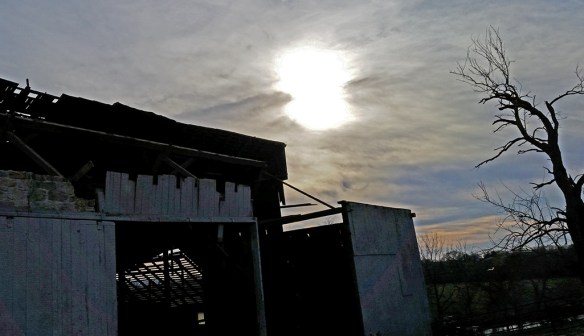
Indeed, it wasn’t. She saw the row of pines, separating their home from James’ parents’ home, was gone. She heard the generator going in the chicken houses on the hill so she didn’t give that a thought. She saw a stone’s throw from the house that the garage, shed and huge portions of the 200-year-old bank barn were gone, gates were flung everywhere and the door of the barn was crumpled-in like tin foil.

“The cows were all safe and sound, so I rigged some gates for them,” she said.

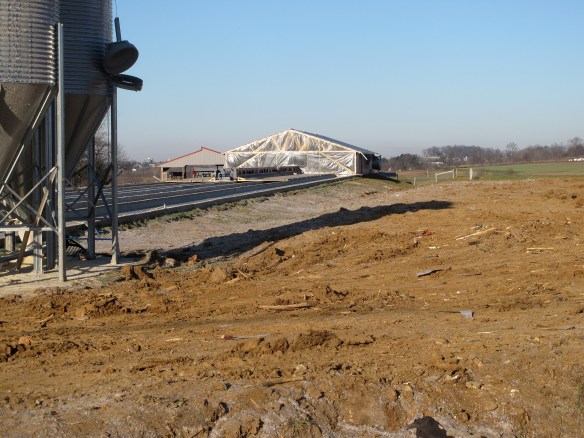
James was on his way home and received a call from the White Horse Fire Co. that his chicken houses were gone, destroyed. They were the home for the couple’s 35,000 organic cage-free layer hens — their sole source of income, apart from the small beef cow/calf herd of which all 25 cows survived.

By the time James got home, people were arriving by the dozens. “We easily had 200 people here that night,” he recalls. “Emergency management said it was too dangerous to go into what was left standing of the second chicken house until it could be evaluated in the morning.”

At first light, emergency management folks and the team from Heritage evaluated the surviving and injured poultry and set about the trying task of humanely euthanizing them.

“People just kept showing up that morning by the van loads. We had 300 people here, an incredible outpouring from friends and family, and people we never met before,” he said.

“Before we could even assess what we needed or grasp what was happening, people brought large equipment. Dumpsters came and went,” Corrie added. “The organization was phenomenal, incredible. By day two, the area was completely cleared of rubble.”
tornado(provided)01.jpg

A roller-coaster of emotion followed. Going into the weekend, the couple was invigorated. But on Monday morning, reality struck.

Their layer hens were gone, and their income along with them. A new flock at the hatchery was already tagged for them for June delivery in the normal turnover of layer flocks, so they realize they now have a narrow window to rebuild the two houses and see the difficulty of getting the building scheduled into that window. If they miss the June rebuilding date, it could be months before another flock could be scheduled for them.

One of the two chicken barns lost was built in the 1980s when James’ father Dennis operated the farm, and the other barn would have been one year old in April. Both are completely gone, except for the egg-packing house at the far end.

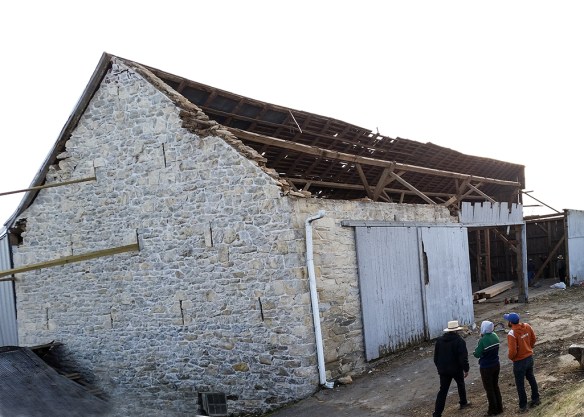
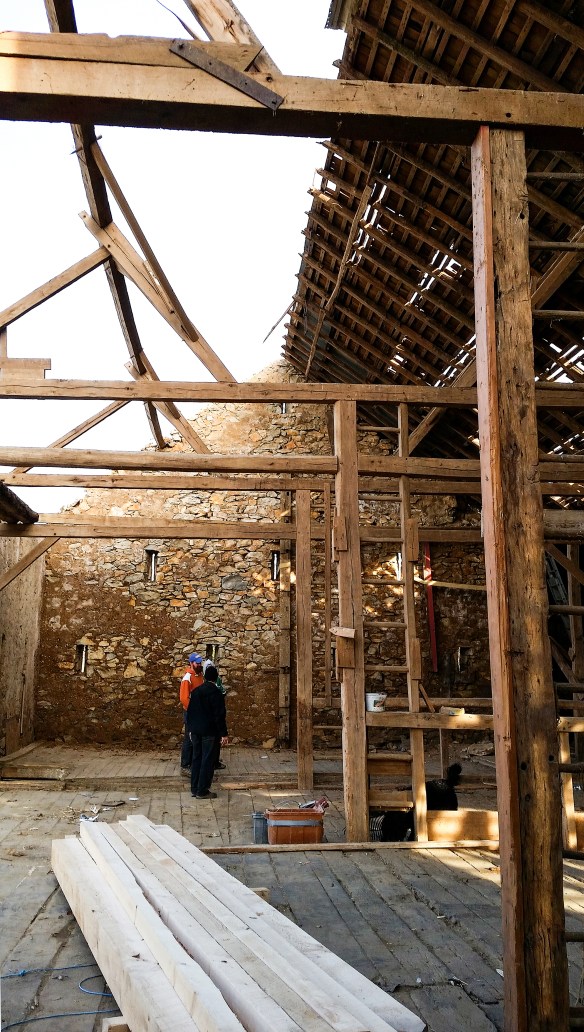
And then there is the bank barn. The stone end wall and part of the rock side wall, mortared with horse-hair plaster from over 200 years ago, still stands, but it took a major hit with much of the surrounding wood structure gone or damaged. The farm has been in the Eby family five generations. The barn houses their small herd of cattle and their hay. It has stood the test of time and is the spot where James and Corrie celebrated their marriage.
wtornado02.jpg

On day five after the storm, a builder, stone experts and an architect were on hand working to secure the stone wall before arrangements could be made to set new rafters and restore it.

“A lot of people have backed us this week. We never felt alone in this,” the Ebys agreed.

Sharing the thoughts of many who have worked in this community and volunteered all week to restore its homes, barns, and schools, Chris Stoltzfus of White Horse Construction noted, “This is so much bigger than any one of us are. It’s good to be part of something bigger and think beyond ourselves.”

He and his crew had worked on another damage site before coming to the Eby farm on day four to work on outbuildings and the stone bank barn. Like other contractors, he had been out all week and into a second week doing this work in the tornado-stricken community.

 Stoltzfus tells of the professional network of suppliers also opening up their schedules. For example, “Rigidply Rafters got trusses to us in less than 24 hours, and the concrete and stone companies offered special pricing and kept drivers on staff to help,” he said. “AJ Bolenski suppled us with dumpsters, not free, but this took extra staffing. And Lowes gave us a 10% discount and prioritized delivery.

“The real heroes are the ones doing all the work and those behind the scenes, including the ladies at the fire hall with the food, the office staff and my wife Kate,” Stoltzfus added.

Stoltzfus and others on-site at the Eby farm Tuesday, said it was the hardest hit from an economic standpoint. When work begins on the chicken houses — once the Ebys secure a poultry house builder who can schedule it — skilled volunteer crews from the community and beyond will be coordinated to move the process along and make the deadline for the June flock. They hope to avoid going more than three months without income.
tornado2733.jpg

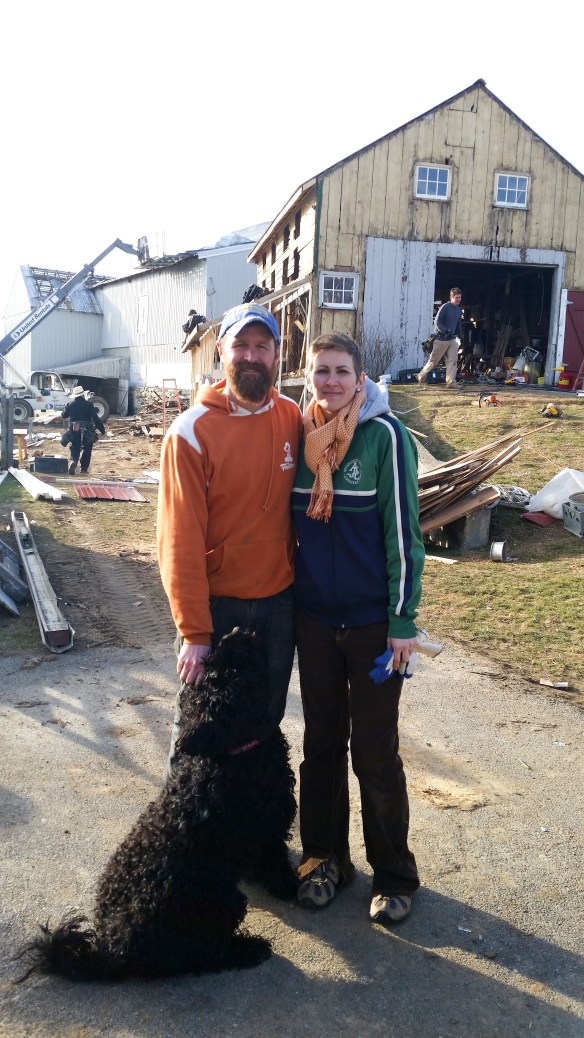
At the same, time, they realize, “We are so blessed no one was hurt and that our home is still standing,” the couple said. “As for the outpouring of this community, we can’t describe fully how thankful we are. We live in the best area. This has proven to be true.”
tornado1237.jpg

A friend of the family has up an Eby Tornado Restoration Fund at https://www.gofundme.com/rrr93ns8. Over $8000 has been raised toward the goal within the first 10 days.

-30-

‘Tornado seemed to find its own path of least resistance’

Community recovers, rebuilds in week after Lancaster County tornado

WHITE HORSE, Pa. — It was 7:22 p.m. last Wednesday evening (Feb. 24) when cell phone alerts warned residents in eastern Lancaster County from Gap to Caernarvon to New Holland and Terre Hill: “Take shelter now.”

The EF 2 tornado touched down just 10 minutes later, along a 6-mile stretch on both sides of Rte. 340 by the Pequea Creek, producing winds over 100 mph and doing an estimated $8 million in damage to barns, sheds, homes, and schools of this largely Amish community of farmers and craftsmen, including the loss of two-chicken houses and 35,000 hens at the non-Amish of James and Corrie Eby.
tornado(provided)05.jpg

Miraculously, not a single person was injured — even more so, considering that in a barn just across the road from the one-room schoolhouse that had been completely blown away, 150 youth were holding a benefit auction. There was no time for them to do anything but wait it out. They described feeling as though the wind lifted the roof six inches from the rafters above them without removing it. The 100-foot wide tornado veered just northeast of the barn to level the empty schoolhouse and proceed through a windbreak of trees, missing a house on the hill and diminishing in its fury just shy of the Wanner farm in Narvon.

“The tornado seemed to find its own path of least resistance,” said Melvin King of White Horse Machine, a longstanding volunteer with the White Horse Fire Co. “It could have been so much worse.”

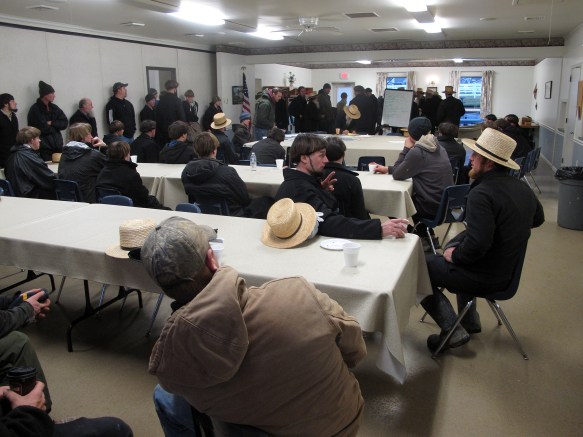
Much of the damage along the tornado’s path lay immediately west of the fire hall. Traveling the area on day four after the storm, it was unbelievable what had been accomplished with a little organization from the fire hall and the community’s storm recovery committee, combined with the downright amazing outpouring of volunteer crews within the extended community, as well as skilled crews coming in from more than 100 miles away.

On the night of the storm, White Horse Fire Co. was busy responding to calls, checking for injuries, helping those whose homes were impacted find refuge, and securing the safety of the situation.
tornado(provided)08.jpg

By 7:30 the next morning, over 150 people and 10 to 12 contractors showed up with their trucks, tools and skills at the fire hall, instead of going to their jobs. The efforts gradually bridged over to the community via the White Horse Storm Recovery Committee.

By days two and three, there were over 500 volunteers on one major-damage site and 300 on another. And there was plenty of food all week, donated by the area’s restaurants and grocers too numerous to name.

“Each day, every morning, people just walked in to the fire hall to help,” King recounted.

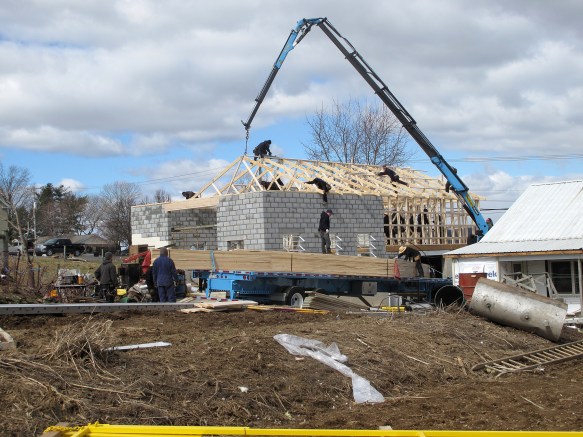
They brought vehicles, equipment, backhoes, track hoes, and contractors secured a steady flow of dumpsters. Skilled craftsmen made outbuildings at their shops and brought them to the locations sustaining losses. Taxi drivers and shuttle vans showed up donating a day of service picking up volunteers and moving them between damage sites.
tornado(provided)03.jpg

There were seven primary damage sites and a total of approximately 35 properties sustaining a range of minor to severe damage. A firefighter was assigned to each of the seven primary sites to maintain radio communications because the first priority was to secure the safety of workers as they cleared debris and evaluated and stabilized buildings.

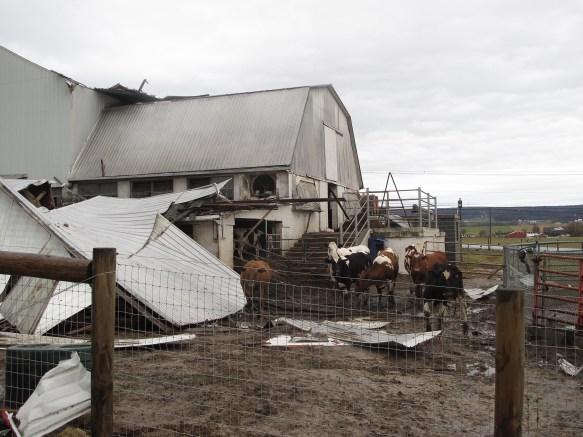
Of the dairy farms affected, it is reported that cows were able to be milked pretty much on schedule. While the tornado lifted and scattered the second story on several bank barns, the tie-stalls below were largely spared.
tornado(provided)06.jpg

As for the rest of the largely Amish community, most were unaware of the broadcasts on local television until the national news media began to show up. They were amazed by how the outside world would be so generous to come help. People were calling the fire hall and visiting the White Horse Fire Co. website looking for ways to donate money, services, food. The fire company created a link on their website where visitors could link up with the Mennonite Disaster Service, based in Lititz, Pa.

A committee was formed for the White Horse Tornado Relief Fund so that donations there go to the folks who are facing true hardship. Once those needs are satisfied, any potential remaining funds will go to victims of other storms elsewhere through the Mennonite Disaster Service.

For those wanting to donate to the Tornado Relief Fund for Salisbury Township and the village of White Horse, donations are being received by the Mennonite Disaster Service, 583 Airport Road, Lititz, Pa. 17543. Checks should be made payable to Mennonite Disaster Service while noting “Lancaster County Tornado” in the memo line.

Skilled crews who want to be involved in current and future restoration from the impact of the tornado in Lancaster County, can contact the White Horse storm recovery committee via the fire company at whitehorsefire.org.
 

tornado3753

tornado3749

wtornado4522

-30-


CAPTIONS:


Tornado(provided)05 and/or Tornado(provided)07

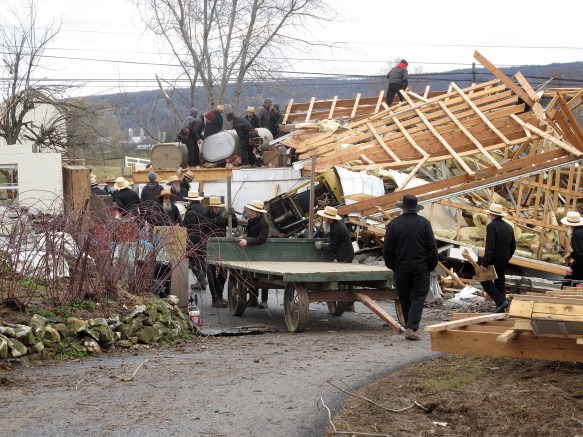
The scene 12 hours after the tornado at 7:30 the next morning as crews arrived to begin cleanup before restoring dairy buildings on this Amish dairy farm. Photos by Jim Landis

Tornado(provided)02 and/or Tornado(provided)03

One of seven major-damage sites, this was the scene on day three as rebuilding of dairy barns was nearing completion. Photo by Jim Landis

Tornado(provided)08 and/or Tornado(provided)04

Volunteer crews met every morning at the White Horse Fire Co. and at the end of some work days to coordinate community restoration efforts. Photo by Jim Landis

Tornado2342

Over 150 youth were in the red barn at right when the tornado came through and completely blew away the one-room schoolhouse across the road. At the far left behind the trees, the rebuilt schoolhouse awaits windows and paint on day four. Photo by Sherry Bunting

Tornado3754

Another Amish dairy and heifer barn in the restoration process on day four after the tornado. Photo by Sherry Bunting


Tornado(provided)01

Within two days, all of the rubble was removed from the site of the two large chicken houses, that were home to 35,000 organic layers and the sole source of income for the Eby family. Photo by Jim Landis

Tornado3748

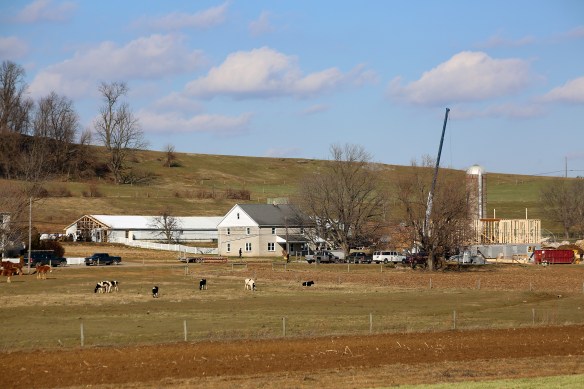
From the road above, the path of the tornado crossed the Pequea Creek to destroy outbuildings and damage a 200-year-old stone barn at the Eby farm before continuing up the hill to destroy both chicken houses that once stood a bit left of the center of this photo to the right of the small red egg-packing house that still stands. From there, the tornado continued onto the next few farms, including several Amish dairies before damaging a one room schoolhouse and barn, pushing debris into a portion of the roof of the Pequea Evangelical Congregational Church, where it crossed Rte 340 and continued northeast through the cemetary of the Pequea Presbyterian Church and across Meadville Road where it leveled another one-room schoolhouse before stalling in the windbreak where trees four days later showed the remnants of barn siding, insulation, and other telltale signs of debris from three to five miles away. Photo by Sherry Bunting

Tornado2024 and/or Tornado 2733 and/or Tornado3949

In addition to the chicken houses and some outbuilding losses, the Ebys are trying to restore the portion of the 200-year-old stone barn that still stands. Photos by Sherry Bunting

 Tornado1235

James and Corrie Eby say they have not been alone in this. They are thankful for the outpouring of the community even as the reality hit them Monday that their livelihood is gone. One of the two chicken houses lost in the tornado was not quite one year old and a new flock would be coming from Heritage in June, so they have precious little time to get them rebuilt. Photo by Sherry Bunting


 

Day 12: Goliath aftermath: ‘We appreciate the prayers… they are helping’

“This is an animal story and a human story, and the most heartwarming part in this cold winter storm is that while Mother Nature strikes, and is relentless, the human spirit and hard work of people coming together to help each other, prevails.” In this space, I had planned to write Day 12 about random acts of kindness through the holidays. Telling this story seemed most appropriate as the human spirit prevails this week in the aftermath of Winter Storm Goliath’s 48-hour pounding Dec. 26-28 in the heart of the West Texas and eastern New Mexico dairy and beef region, bringing devastating losses…

NewMexico-Goliath02 (1)

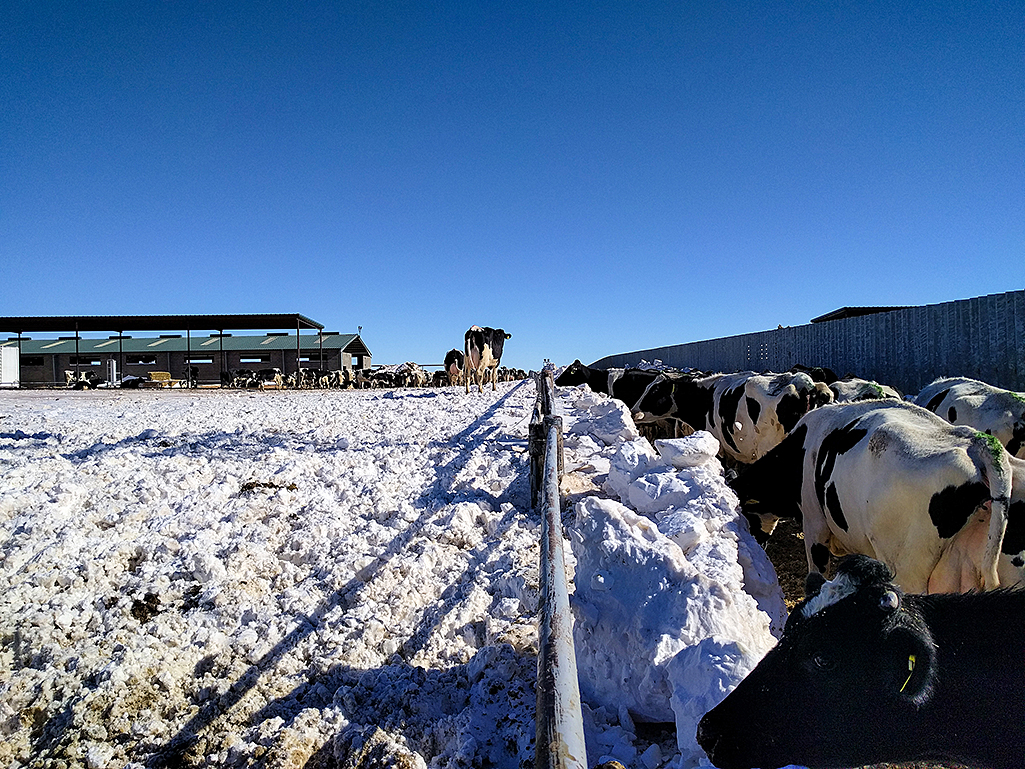
Tio Ford sent this photo two days after the storm as the dig-out was underway at his Clover Knolls Dairy, Texico, New Mexico. You can see the packed snow drifts are up to the top of corral fences. Feedlanes and alleyways were a priority Monday to get animals fed and to the parlor (left) after most cows went 30+ hours without milking.

By Sherry Bunting, Reprinted from Farmshine, January 1, 2016

CLOVIS, N.M. — Last weekend’s record-breaking blizzard in the Southwest wasn’t on anyone’s radar. It was 60 degrees with no winter in sight just a few days before Storm Goliath pounded its way through the southern High Plains. Breaking records as a 100-year storm, the combination of sustained high winds driving fine powdery snow — and the sheer 48-hour duration of the storm — conspired to bring devastating losses to the West Texas and Eastern New Mexico dairy region with early estimates that 5% of the region’s 420,000 dairy cows may have perished and double that percentage in losses of youngstock.

“We heard a monster storm was coming, and we were prepared for a foot or two of snow. That can happen, but no one could envision this type of disaster with high winds coming straight from the North to pile it all up around every structure,” said Dr. Robert Hagevoort of the New Mexico State University dairy extension in a phone interview with Farmshine Wednesday.

The 5% — or 20,000 head — loss figure on milk cows is “a place to start,” he said. “We are trying to be conservative, but it will be hard to know the true count until the region is completely dug-out and losses are tallied. Our first concern is getting the survivors fed and back in their corrals and the milking parlor.”

All of Eastern New Mexico and West Texas south of the Panhandle was hard hit, and the storm center appeared to be directly over the region from Roswell to Clovis to Plainview. While Hagevoort has heard from producers having lost 100 to 200 cows, two producers contacted by Farmshine in Portales and Texico report losses of 40 to 50 head, including the losses of hay barns and untold numbers of young stock.

TioFord5950“We lost some cows, but we have heard of herds losing 5 to 10% of their milking cows,” noted Tio Ford of Clover Knolls Dairy, Texico, New Mexico in an email response Wednesday. “People who had beef cattle on wheat pasture were really hit hard, and we uncovered quite a few deads while trying to clear 10-foot-plus drifts off the roads.” Ford’s family has been rooted in New Mexico for over 100 years. His wife Chyanne’s grandfather left the cold winters of northwestern Pennsylvania for the dryland farming and drylot dairying of eastern New Mexico in the 1950s. Her parents Doug and Irene Handy have Do-Rene Dairy in Clovis.

“The wind came from the North and everything on our dairies in this region faces south. The commodity sheds, parlors, calf hutches – all face south in the winter, so the south side of every structure was snowed in,” said Hagevoort. “The blizzard hit with the snow blowing and everything settling on the south side of every structure, snowing-in the hutches with calves inside and forcing dairies to quit milking because of the 8, 10, 12-foot drifts piling up on the south side entrances to the parlors. They couldn’t see to bring cows in.”

As the alleyways and feed lanes filled with deep drifts of wind-driven packed snow, everything came to a standstill.

The visibility became so bad that for most of those 48 hours “no one could do anything. You couldn’t see two feet beyond the hood of the truck,” he added.

The poor visibility was so dangerous that producers became lost on their own dairies. The one to two feet of snow would not be a problem, if it fell straight down, but the winds created drifts up to 12 feet high and packed so tight that cattle simply walked over corral fences and kept walking, becoming lost and disoriented. Some were buried by the driven snow.

Winter Storm Goliath began Saturday and continued “relentless” through Monday morning with sustained winds over 50 mph and gusts above 82 mph in the first 24 hours. On the second day, sustained winds of 40 mph were recorded with gusts above 65 mph.

“One to two feet of snow, we can handle that if it falls normally like wet snow, but not this fine powdery dust snow driven by high winds,” Hagevoort explained. “We still have four-foot drifts around houses in town that is packed in there heavy and the much higher drifts in the countryside require heavy equipment to dig out.”

A state of emergency was declared for both West Texas and Eastern New Mexico as major roads were closed for two to three days. Even two days after the storm, some country roads were still impenetrable with the kind of snow that blades on trucks can’t move.

“When the winds died down Monday morning and the sun came out, people could see what was going on,” said Hagevoort. “Cattle have walked everywhere, and people are still out finding them. They are digging the snow out of corrals to get surviving cattle back in and fed. There are these massive amounts of snow to move, and dairies have 3 to 4 loaders going 24/7 — digging out calves and moving cows back in and feeding and at some point milking again. The sheer manpower required is massive.”

NewMexico-Goliath01Milk haulers were also among the stranded, and Matthew Cook, a milk hauler from Kansas confirms that he was one in the line of trucks stranded for three days at Southwest Cheese near Clovis. “The roads were all closed, and the wind and blowing snow was out-of-control, so I pretty much hung out in my truck. Most of us knew it was coming so we had food and drink and plenty of fuel,” he said in an email Wednesday, confirming the plant was open again.

Reports indicate not much milk has been processed early this week and in addition to the long stretch of 36 to 40 hours when dairies were unable to milk, some milk in the region also needed to be dumped as trucks could not get out with it.

Hagevoort observed that folks are starting to get back to something remotely resembling normal by Wednesday and the focus on day-old calves and milk cows was shifting to the older young stock and dry cow pens.

In the early going, the Department of Transportation and other state agencies put a call out for large equipment as they are equipped for the occasional four to six-inch snows of the region.

“The focus was on people rescue missions on Monday. Dairymen were digging out dairies and their roads back to the main road in the hope at some point the main roads would be clear and they could meet somewhere,” said Hagevoort.

Dairymen and feedlot operators used their large loaders to help uncover cars with stranded motorists stuck 20 hours or more under the snow.

“It was a really rough weekend. They said we got between 8 and 12 inches of snow here, but I’m not sure how they came up with those amounts because the wind was gusting up to 82 mph,” Ford noted. His 3000-cow New Mexico dairy sits right on the Texas border. “We were stuck at the dairy with a skeleton crew for 36 hours before we were able to get replacements. Every dairy, feedlot, or farmer with a big tractor or loader had them out trying to clear the roads.”

Hagevoort4838 (1)Hagevoort noted that, “This is an animal story and a human story, and the most heartwarming part in this cold storm is that while Mother Nature strikes and is relentless, the human spirit and hard work of people coming together to help each other, prevails.”

Dairymen are not usually an emotional lot. They focus on the business and the work and the challenges, but the emotion is raw at the loss of these animals and the sheer devastation. Amid the heartbreak of the losses, producers have no time to dwell as they put one foot in front of the other to dig out and tend cattle and keep their employees safe as everyone works together to find the lost, feed and tend to the survivors, and get the dairies operating again.

While the USDA FSA livestock indemnity program exists as part of the last Farm Bill, it is capped, so Hagevoort says it will be difficult if the large number of losses exceeds the financial compensation available through the indemnity programs.

While size doesn’t matter in terms of the impact of Goliath’s relentless strike, larger dairies may be affected by the caps in terms of receiving compensation proportional to their levels of loss. Officials urge dairy producers to document everything to sort out the help that may be available in the future.

NewMexico-Goliath03 (1)Dairies will continue to work around the huge drifts that won’t melt any time soon as the first priority is locating and securing their animals as they dig out alleys, feed lanes and corrals.

“We can look ahead at how to mobilize resources more rapidly in the future, or how to be safer in situations like this, but the truth is… no two storms are ever the same. This one packed an uncommon combination and longtime residents say they’ve never seen anything like it,” said Hagevoort.

With temps in the teens and 20s and night time wind chills down to -18 at night during the height of the storm, there will be sick cattle and frostbite issues to deal with going forward.

Producers also reported not being able to milk cows for 36 to 40 hours, and that will also impact health and production going forward.

“The cattle have seen a lot of stress,” said Hagevoort. “But we will work through it. It’s a tough thing in times like this where the milk price is below where it needs to be.”

But just like in Dallas, where Goliath spawned tornados and floods, the remarkable human spirit prevails.

“People come together,” said Hagevoort. “On our dairies here, the employees stayed working two to three shifts and owners worked untold hours with them and cooked meals and washed clothes to keep them going. The combination of family farms with employees and owners working together to make it through a challenge like this… That’s the real story.”

NewMexico-Goliath04While the final tally is likely to show young stock losses to be twice that of the estimated 20,000 milk cows lost across the region, Hagevoort noted remarkable stories coming in about calves being found under 6-feet of snow — alive in their hutches.

“This is an incredible story of farmers taking care of the animals they are entrusted with, despite the fury Mother Nature sometimes unexpectedly unleashes,” read a post on Wednesday at the New Mexico State University Dairy Extension’s Facebook page.

On Monday, Tara Vander Dussen of Rajen Dairy with three facilities totaling 10,000 cows in the region wrote a post on her public Facebook page telling consumers and animal activists: “I wish you understood how much we care about our cows. I wish you knew that my husband, brothers, dads, uncles, family and friends got up this morning at 2:00 a.m. to go to the dairy in a blizzard with 65 mph winds, -16°F wind chill, lightning and 6-feet snow drifts. They had to leave their families and children (some families had no power) so our cows could have food and water. They went out to take care of our cows the best that they can. And they did this after working a full day on Christmas Eve and Christmas! They do all of this because they care about the health and safety of every animal on our family farm! I wish you knew.”

Two days and nearly 20,000 shares later, Vander Dussen started a New Mexico Milkmaid blog to communicate further on this topic.

All told, Goliath’s effect stretched across much of the U.S midsection. The massive storm included heavy rain, floods and tornados on the severe side and blizzards with snow and driving winds on the wintry side with ice storms in the middle around the center of Oklahoma.

The rains have put southwest totals ranging 50 to 150% above normal. Cold and muddy conditions are also impacting the beef and dairy operators from the Southern Plains through the Midwest Corn Belt.

BenSmith4577 (1)“It was a storm I can’t put into words or ever experienced,” said Ben Smith of Arrowhead Dairy, Clovis, N.M.” We have a lot of snow digging out still to do and a lot of cleanup to do as well. We have been milking and feeding again for two days, so that part is good.” When asked what people can do to help, producers say “the prayers are appreciated… and they are helping. -30-


FarmshineSee the original story in the January 1, 2016 edition of Farmshine 


CAPTIONS

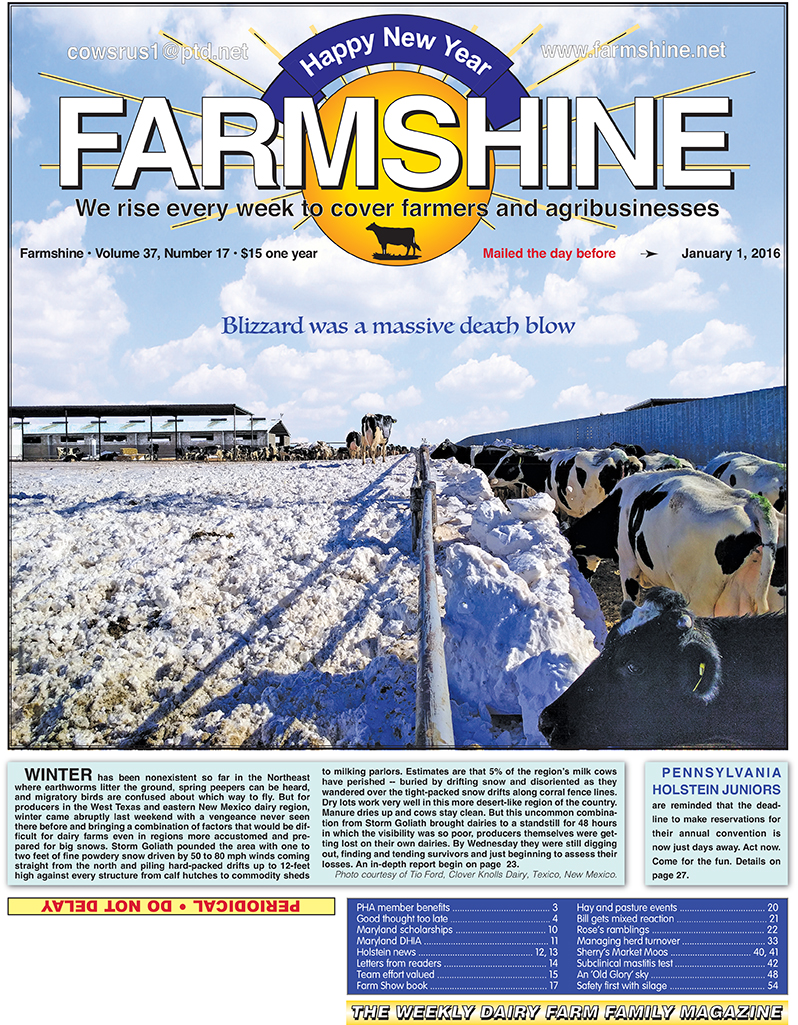
Winter has been nonexistent so far in the Northeast where earthworms litter the ground, spring peepers can be heard, and migratory birds are confused about which way to fly. But for producers in the West Texas and eastern New Mexico dairy region, winter came abruptly last weekend with a vengeance never seen there before and bringing a combination of factors that would be difficult for dairy farms even in regions more accustomed and prepared for big snows. Storm Goliath pounded the area with one to two feet of fine powdery snow driven by 50 to 80 mph winds coming straight from the north and piling hard-packed drifts up to 12-feet high against every structure from calf hutches to commodity sheds to milking parlors. Estimates are that 5% of the region’s milk cows have perished — buried by drifting snow and disoriented as they wandered over the tight-packed snow drifts along corral fence lines. Dry lots work very well in this more desert-like region of the country. Manure dries up and cows stay clean. But this uncommon combination from Storm Goliath brought dairies to a standstill for 48 hours in which the visibility was so poor, producers themselves were getting lost on their own dairies. By Wednesday they were still digging out, finding and tending survivors and just beginning to assess their losses. Photo courtesy of Tio Ford, Clover Knolls Dairy, Texico, New Mexico.

A line of milk trucks was stranded for three days at Southwest Cheese, Clovis, New Mexico, and throughout the region dairies dumped to days of milk with many unable to milk cows for 36 to 40 hours. Photo courtesy of milk hauler Matthew Cook.

In New Mexico and West Texas, the humidity is very low and dry lots are the way dairy cattle are kept. Loaders are needed to dig through the 8 to 12-feet tightly packed drifts that have piled up in corrals, feed lanes and against the south side of every structure from fences to parlors to calf hutches. Photo courtesy of University of New Mexico Extension.

Finding and feeding young calves and milk cows was priority one when the storm ended Monday morning. Calves had been buried in hutches under 6-feet of snow pack, but stories are coming in that a surprising number are being found alive. Officials estimate a 10% loss of young stock throughout the eastern New Mexico and West Texas dairy region from Storm Goliath. Photo courtesy of University of New Mexico Extension.

Dairy Carrie also blogged on this with stories from four dairies here

Day 11: In the hope and restoration business

12 Days of Christmas… with a twist

Day 11: “He was born in a stable, the Lamb of God, and laid in a manger with shepherds the first to see Him. Understanding the significance of Jesus’ birth will be part of The Star Barn’s future… God is into resurrection and restoration, and that’s what we’re going to do in order to use these buildings to be shared with others.”– David Abel.   Read on to learn how restoration and hope bring together The Star Barn, Ironstone Ranch and Brittany’s Hope

By Sherry Bunting, Reprinted from Farmshine, December 5, 2015

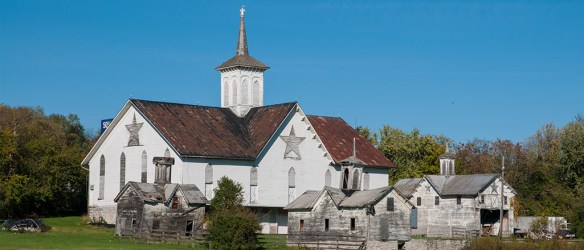
ELIZABETHTOWN, Pa. — If you’ve traveled from anywhere in the U.S. to the Farm Show Complex in Harrisburg, Pennsylvania, you’ve no doubt passed The Star Barn — one of the most painted and photographed barns in the U.S. This historic landmark has languished and deteriorated for years in a quest for funds for a proper restoration of the icon from the 1800s.

homebanner2

Enter David and Tierney Abel of nearby DAS Companies Inc. who have purchased The Star Barn and will use their own money — no grants or tax dollars — to restore it all, after first moving it to their Ironstone Ranch, 10 miles away as the crow flies in Elizabethtown, Pa.

Ironstone0199x

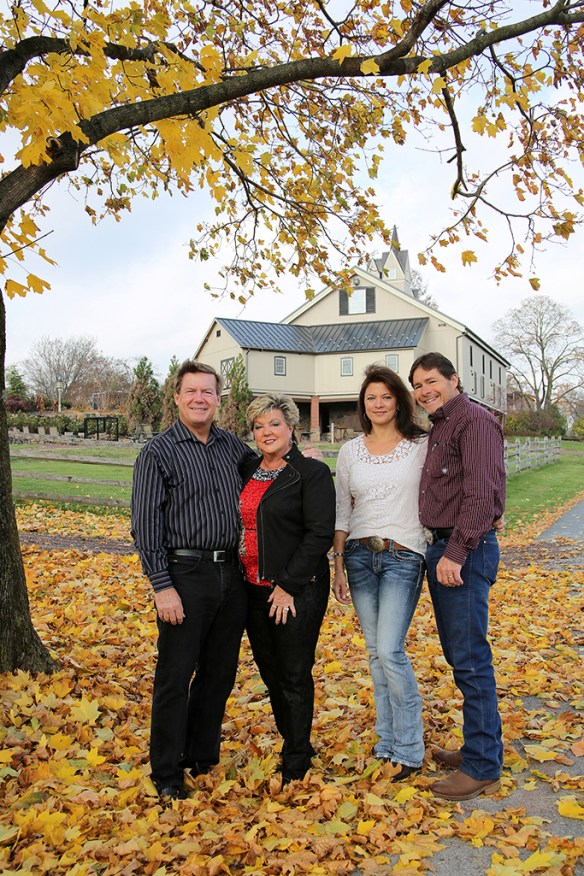
David and Tierney Abel (left) and Mark and Jamie Shoemaker

The former dairy farm, turned fruit farm, turned Christmas tree farm, is now an “events with a purpose” reception venue that will be the new home for all nine buildings of the original John Motter Star Barn — including a rebirthed replica of the original farm house, pond and springhouse that were removed in the early 1970s when Route 283 was built right through the property on which they sat.

My connection to this story began when our middle son Ryan Bunting married our new daughter-in-law Vanessa Rice — daughter of Vernon and Jeanette Rice of Strasburg — at Ironstone Ranch on October 12, 2015. The bride and her attendants prepared for the big event in the original 1812 farmhouse the Abels first restored on the 150-acre farm.

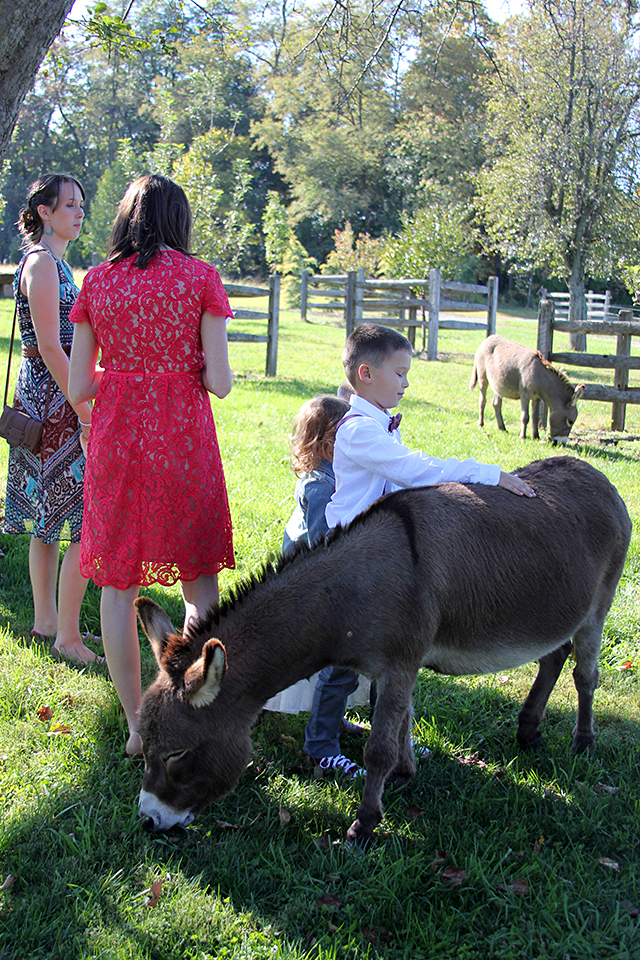
The wedding was in the orchard with two roaming miniature donkeys photo-bombing the ceremony. IMG_0730xAnd the reception was held in the beautifully restored 1860 pine and brick barn original to the premises. While in the orchard doing family portraits between the wedding and reception, I learned from my 95-year-old grandmother Dorothy Jacobs, who still lives just across the street from the Ironstone Ranch at the edge of town, that my grandfather Bernard “Ace” Jacobs, a friend of an earlier owner, hunted there every year. Yes, it’s a small world.

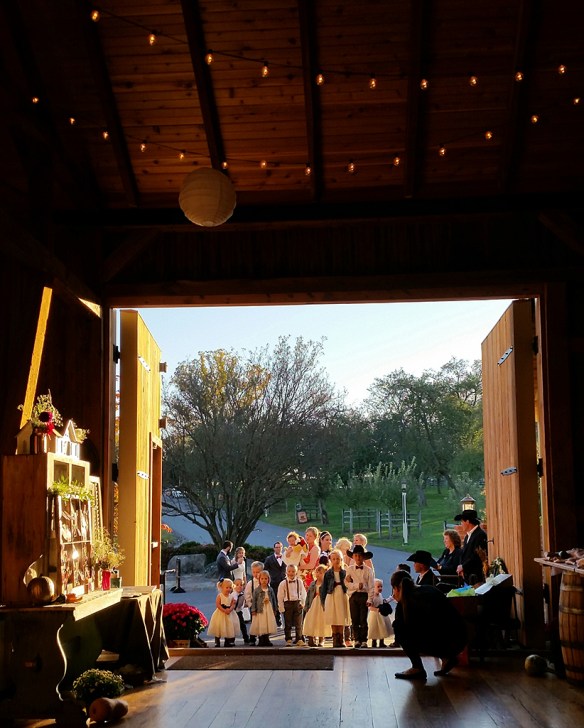
As the wedding party, which included 12 children — the largest number of children ever in the four years of 80 weddings per year at Ironstone — prepared for their grand entrance, the farm’s manager Mark Shoemaker told wedding guests about Ironstone Ranch and its mission.

ironstone4235x

Children are at the center of Brittany’s Hope Foundation, which receives all net profits from Ironstone Ranch. These 12 children in the Bunting-Rice wedding party in October received the royal treatment from the folks who run the reception venue and ranch. In fact, chief operating officer Mark Shoemaker handed a cowboy hat to Connor Messner, 6, (my grandson) for instant confidence as he escorted Lydia Rice, 8, as the lead-off pair in the reception at the 1860 pine barn restored on the premises.

With a skeleton crew of seven full time and two part time employees, a stable of carriage and pleasure-riding horses, a few Longhorn cattle and the mascot miniature donkeys along with 250 acres of grazing, hay ground and wooded riding paths, 100% of the net profits from weddings, corporate events, and other meetings and entertainment are funneled into Brittany’s Hope Foundation.

Ironstone0189x

Named for the daughter the Abels lost in a car accident 16 years ago, Brittany’s Hope facilitates adoptions of primarily special needs children from around the world and also funds orphanages in many locations, especially Viet Nam, Kenya and Ethiopia. To-date, Brittany’s Hope has facilitated over 900 adoptions. David and Tierney, themselves, have 17 children in their blended family, 12 of them adopted.

So what has this to do with The Star Barn? Plenty.

“My wife saw The Star Barn and reached out to the preservationists,” said David. “We’ve evolved into barn chasers. I thought, if this goes through (buying The Star Barn), God definitely has a plan for it.”

There were plenty of hoops to jump through from the purchase and permits to the logistics of moving, and even getting permission to keep The Star Barn on the historical registry at its new location.

Ironstone0211x

The Ironstone Ranch is currently completing the restoration of an old 1812 barn moved there from nearby Bainbridge.


At the DAS Company warehouse, home of Stewardship Missions a few miles away, the dismantled iconic 65-feet-tall, post-and-beam 1819 antique barn with its Cathedral architecture that sat for centuries along what is now Fruitville Pike near downtown Lancaster, lies bound in cataloged clusters under a coverall waiting its turn for restoration at Ironstone Ranch.

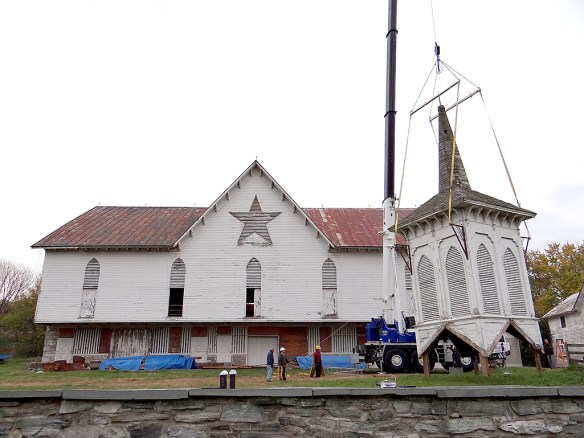
But the focus right now is The Star Barn. The work to bring the 9-building complex to its new home for restoration began October 27, when the cupolas came down, the main cupola weighing 13,900 pounds! They are being restored to their former glory, with the main cupola expected to take 18 months, including hand-forging of new weather vanes as they were in the 1800s by craftsmen in Rhode Island.

StarBarn01x

This 13,500-lb cupola is the distinctive main cupola of The Star Barn and will take 18 months to restore, including the hand-forged weather vanes being recreated in Rhode Island to their original 1800s design.

Later this year or early in 2016, the barn itself will be moved to Ironstone Ranch. Piece by piece, it will be taken down and cataloged, then pegged together and raised manually with gin poles just as they did in the 1800s. Tickets for this event are expected to be available on a limited basis for those who want to see The Star Barn raising.

This story gets even more interesting.

David Abel explains how The Star Barn cupolas have the fleur-de-lis pattern, representing the Trinity and the sovereignty of God over every building. Furthermore, the stars on the barn were placed there as a sign of hope for the nation after the Civil War.

“God is into resurrection and restoration, and that’s what we’re going to do in order to use these buildings to be shared with others,” he said.

The nine buildings of The Star Barn complex will be placed as in their original setting with the three-fold purpose of being a working farm, an event venue raising funds for Brittany’s Hope, and a living parable for visitors to visualize many of the agriculture-based parables of Jesus.

“He was born in a stable, the Lamb of God, and laid in a manger with shepherds the first to see Him. Understanding the significance of Jesus’ birth will be part of The Star Barn’s future,” David explained. “Shepherds would know when a lamb is born. The living parables will help people understand why shepherds know and search for the Lamb. There are a vast number of parables, and we are compiling them all. So often, Jesus used agriculture to teach us God’s beautiful truths. We want to bring that to life, and The Star Barn will be a key part of that.”

It will include a thrashing floor, oxen, sheep and goats, a vineyard and 1800 time-period antique farming equipment the Abels have begun to accumulate for working the land.

“People will see in the thrashing floor the separation of wheat and chaff. In the vineyard, they will see the unpruned vine growing wild and beautiful onto itself with no fruit, and by contrast, the vine pruned by the Master’s hand beside it bearing fruit,” David explained. “We’re doing this for a purpose. People will come to see it and learn why Jesus used farming, trees, stones, vines, livestock, in His parables. We can share this gift and tell the story. Everything we do with the restorations must be God-honoring.”

Not to mention, when all the barns they are in the midst of restoring are completed, Ironstone Ranch will become a destination where visitors can see 1800s German agriculture practices and architecture with historical and biblical significance.

The Abels anticipate the process of restoring the entire Star Barn complex to take two years, including the re-creation of the original pond, farmhouse and springhouse. For these portions of the complex, they will use pictures and time-period catalogs to make replicas of the original structures. The house will become a 12-bedroom structure to provide lodging for special events.

Mark Shoemaker and his wife Jamie once operated a hay and horse farm in Schuylkill County. Today, they manage theIronstone Ranch.

“When Mark and Jamie came into our life, they made it their goal to make the property beautiful. It’s ours to share with others. God put us together and they’ve put their heart and soul into this,” said Tierney.

“God is weaving a tapestry here,” David added as they talked about their plans for the ranch, the Star Barn and Brittany’s Hope. While the Ironstone Ranch is set up as a for-profit corporation, all profit after operating costs goes to the non-profit Brittany’s Hope Foundation, created in January 2000 for the purpose of advocating for orphaned special needs children longing for the love of a family.

In starting Brittany’s Hope, the Abels reflected on their daughter’s dream of helping children with special needs “come home to loving families.”

“Out of death, comes life,” said Tierney. “The gift of Brittany’s life has not ended. Through this foundation, she touches so many lives.”

And there’s more in store…

At the 100th Pennsylvania Farm Show in January, Ironstone Ranch will have a booth near the butter sculpture where they will display The Star Barn 1/12th scale model layout for the “living parables” farm.

“God gives each of us gifts, and one of David’s is vision,” said Tierney.

“We see what can be accomplished when we cooperate with God in the unfolding of His vision as it grows and is unveiled and then confirmed by circumstances and people along the way,” David added with a smile. “We’re just walking out the vision He has for us here.”

David Abel started DAS Companies in the late 1970s with $200 selling stereos and CB’s at Lancaster County’s Roots and Green Dragon markets from the back of his father’s station wagon and the garage of his grandmother’s home. Today, DAS Companies is a global supply chain with many lines of products in truck stops all over the country. The business fuels the stewardship and mission they have undertaken.

Ironstone1105x

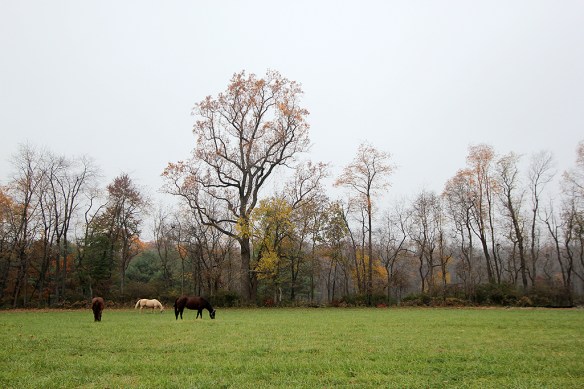
Horses graze in mid-November at Ironstone Ranch. This hayground will become the new home for all 9 buildings of the original Star Barn. It will remain on the National Registry of Historic Places at its new location, which has its own historical significance. During the Civil War, this was a staging area for troops, and after the war, the Liberty Bell traversed the land on its way back to Philadelphia from Harrisburg, as did President Lincoln’s funeral train as it passed between the two cities.

Ironstone1100xMichael Kleinhans, project manager, talks about The Star Barn’s future at Ironstone Ranch and the booth near the butter sculpture at the 100th Pa. Farm Show in January where a scale model of the plans for the 9-building Star Barn relocation, restoration and “living parables” farm will be on display. Photo by Sherry Bunting
A Christmas event at Ironstone December 5 raised thousands for Brittany’s Hope and the Water Street Rescue Mission. Stay tuned for more on The Star Barn from the 100th Farm Show in January.

Day 7: Farm Toys for Tots

12 days of Christmas… with a twist.

Day 7:  The outstanding generosity of hundreds of farmers and ag folks inspired the first ever Farm Toys for Tots (purchasing farm toys and delivering them to Toys for Tots.)

santa2015-12-21 14.54.26 (1)

Santa comes in all shapes and sizes. For 70 years, Santa has come for up to 7 million children via the Marine Corps-sponsored Toys for Tots. This year, hundreds of farmers made sure trucks, tractors and other farm toys will be under some of those Christmas trees via Farm Toys for Tots.

With a GoFundMe campaign, they raised $7,025 and enlisted the help of 21 volunteer elves to deliver the purchased Farm Toys to Toys for Tots locations in more than 20 states “from sea to shining sea.”

The GoFundMe campaign for Farm Toys for Tots is completed for 2015. Organizer Diana Prichard tells the whole story … how it began, how it evolved, and gives all the stats at her “Righteous Bacon” blog right here !

Meanwhile, with 4 days ’til Christmas, the TOYS FOR TOTS Foundation could still use donations as they bring toys to 7 million children annually.

TOYS FOR TOTS is a program run by the United States Marine Corps Reserve which distributes toys to children whose parents cannot afford to buy them gifts for Christmas. The program was founded in 1947 by reservist Major Bill Hendricks. The Marine Toys for Tots Foundation, a 501(c)(3) not-for-profit public charity located in Triangle, Virginia, serves to fund, raise funds for, and support the program.

FARM TOYS FOR TOTS: Plans are being made to continue the campaign to bring Farm Toys to Toys for Tots annually!


Day 6: Purpose-driven bond is Feeding America

12 days of Christmas… with a twist.

Day 6:  Food banks say the most requested and least available item is fresh milk. Dairy producers have set out to change that, just as the North American Meat Institute ‘meating the need’ partnership provides fresh meat and poultry, and produce growers donate 800 million pounds of fresh fruits and vegetables annually — along with canned and boxed donations from many citizen sources — provide 3 billion meals to the 46.5 million Americans (including 12 million children) who face hunger and rely on the Feeding America Food Bank system. Farmers and ranchers have a purpose-driven bond with their land and animals, and thank God they do. Look for links in this blog post to help!

flag9770

By Sherry Bunting

Nothing against a plate of cucumbers, but there is something intangibly dynamic about this relationship-of-purpose between man and beast. It is a purpose-driven bond, and on farms and ranches, it is a working relationship.

HELT-26w

Farms have had to expand over the years to survive with multiple generations operating larger farms together. But size doesn’t matter when it comes to the principles of caring for land and animals. Farmers and veterinarians use today’s advances to make the purpose-driven life of animals ever better.

What it comes down to is how we look at animals as a culture — the acceptance of animals as being useful to man, and of our role to protect and foster those animals in their service to man.

Beyond caring for the cows, farmers also care about their consumers and are the first to donate the fruits of their labor to the disadvantaged among us. Simply put: Farmers don’t like to see hunger. They constantly improve their practices to efficiently produce wholesome food that is affordable.

But hunger persists in America. Over 46 million Americans, including 12 million children rely on Feeding America food bank donations each year. Milk is one of the most requested and least donated items.

Leave it to farmers to pool their resources to help change that.

At the upcoming Pennsylvania Farm Show, a milk can for donations will be placed near the famous Pa. Dairyman’s milkshake stand for visitors to join with the companies and producers that are helping to “Fill a glass with hope.” In order to provide fresh milk, the cost of transport, refrigeration and distribution to families who rely on the Food Bank are part of what it takes. Those donations help move more milk to more food insecure families. Each dollar donated provides 8 servings of milk to a neighbor facing hunger. This has been going for one year, and to-date, 850,000 servings of milk have been donated.

Nationally, dairy producers are instrumental in the Great American Milk Drive to get milk to food banks. In its two years (and growing) more than 625,000 gallons (over 10 million servings) of milk have been delivered to families across the country through The Great American Milk Drive food bank donations. Meat and poultry producers also channel surplus to Food Banks as do produce growers, orchards — you name it. Farm folk pitch in because hunger is something they do not like to see.

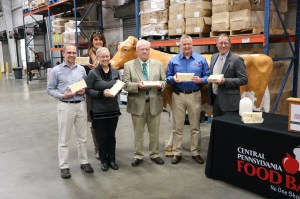
All-AmericanCheeseForFoodBank50076

Another Food Bank drive in Pennsylvania began during the All-American Dairy Show last September, 12,000 gallons of milk (nearly 100,000 pounds) were harvested from cows during their stay at the show. Through the efforts of the show and the Pennsylvania Dairymens Association this milk was turned into four tons of mild, creamy Farmers Cheese and provided to the Central Pennsylvania Food Bank.

Out of the purpose-driven circle-of-life bond between man and animal comes the ability to feed a family and the families of countless others throughout the economy.

Out of this purpose-driven relationship comes a youngster’s first foray into animal care in the calf barn at home or cleaning up after livestock at the county fair.

Out of this purpose-driven relationship comes respect, responsibility, accomplishment and passion instilled in new generations.

Out of this purpose-driven relationship comes life-sustaining food worthy of our respect — not to be taken for granted.

Wherever you are reading this today, consider joining the farmers in their effort to bring fresh food to Food Banks. Check out The Great American Milk Drive, and check out Feeding America to give the gift of holiday meals.

Day 2: Nightly event raises charitable funds while making ag ‘cool’

12 days of Christmas… with a twist.

Day 2:  After interviewing Neil Messick two weeks ago for a Farmshine story about this deal running nightly at Messick’s Farm Equipment Dec. 4 through 28, we decided to check it out tonight with the grandchildren! Two thumbs up!

tractor-rowx

Sneak peek in ‘tractor row’. Photo by Neil Messick

By Sherry Bunting, Dec. 4, 2015 Farmshine

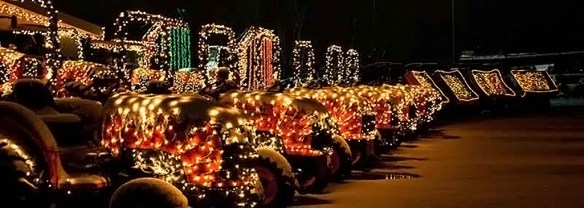
ELIZABETHTOWN, Pa. — Whether or not a new tractor is under your Christmas tree, what farmer wouldn’t love to see a 30-tractor Christmas light show, and then some?

At Messick’s Farm Equipment in Elizabethtown, Lancaster County, Pa., 20 years of light displays along Route 283 gradually became more animated as Neil Messick, marketing and IT manager, and younger brothers Kevin and Lucas began collecting the things they might need to do something grand.

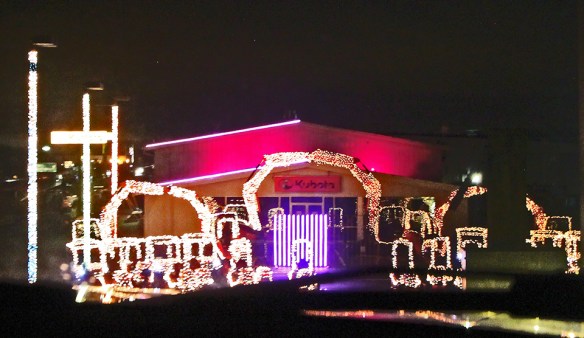
And grand it is. Since 2013, Messick’s, in conjunction with Kubota Tractor, has presented a massive animated Christmas light show set to music and viewable from their parking lot nightly between December 4 and 28.

Even better, the 20-minute program receives donations from viewers and has raised in its first two years a total $50,000 for charities that help local families.

“We obviously enjoy this, or we wouldn’t be doing it,” Neil said in a phone interview with Farmshine this week as the program is ready to kick off Friday. “What has been surprising is the sheer amount of donations. To raise $25,000 a year doing something we enjoy, just shows the giving spirit.”

While many of the visitors are local, it is surprising how far some will drive to see it. Last year’s inclement weather kept viewing traffic to 3500 cars and a dozen buses over the 24 days. Neil anticipates more will come this year, and hopes to raise $35,000 for charities.

Lights and technology are Neil’s “thing” while Kevin and Lucas work with the music and the sequencing.

“It’s something they work on at home at night,” says Neil. “We start in the summer and have the program planned three to four months in advance.”
An estimated 150 man hours of sequencing are involved and another 150 man hours of set up and tear-down. In addition, three to four staff members work nightly with parking, collecting donations and handing out flyers to cars, which can wait in line for up to two hours at the peak of the season.
New this year is the music (Sauniks Carol of the Bells), as well as the use of red-green-blue flood lights to mix the colors and make them more brilliant. Also new is a 44-foot air-operated tower that makes the giant Christmas tree and star move.
lightsIMG_1153

The view from our windshield (wipers included). Four separate sets of carols by digitized orchestra. Great sound via channel 89.1 on the radio dial

Together, Kubota Tractor and Messick’s pay the cost of the display, which includes 30 lit-up Kubota tractors, many of them having animated parts to play in the show.

“This is the combination of everything we love. We enjoy Christmas time and the lights (and of course tractors). We combine these things to make agriculture cool and engage our community in this way,” Neil explained.

Viewed from the upper and lower parking lots, visitors set their car radios to channel 89.1 for the music with which the light show is synchronized.

Click here to see a video preview

The 20-minute display runs from 6:30 to 9 p.m. during the first seven days Dec. 4 to 10 and from 6:30 to 10 p.m. from Dec 11 to 28. For more information on viewing, including a map, visit http://www.messicks.com/2015-light-show

Donations to support the charities are collected at the end of the show. 100% of donations go to support needs of local families through Habitat for Humanity, Community Cupboard of Elizabethtown, Paxton Ministries, Water Street Ministries and Mennonite Disaster Service.

To view what is arguably the largest tractor light display of its kind synchronized to Christmas music, enter the parking lot from Mertz Road off the Rheems/Elizabethtown exit of Rte. 283, and be prepared to wait. Lines can be 90 minutes in the 10-days before Christmas, with lighter crowds generally in the first week of the display.

-30-


Ode to long days, warm sunshine, thoughts, images

daisies

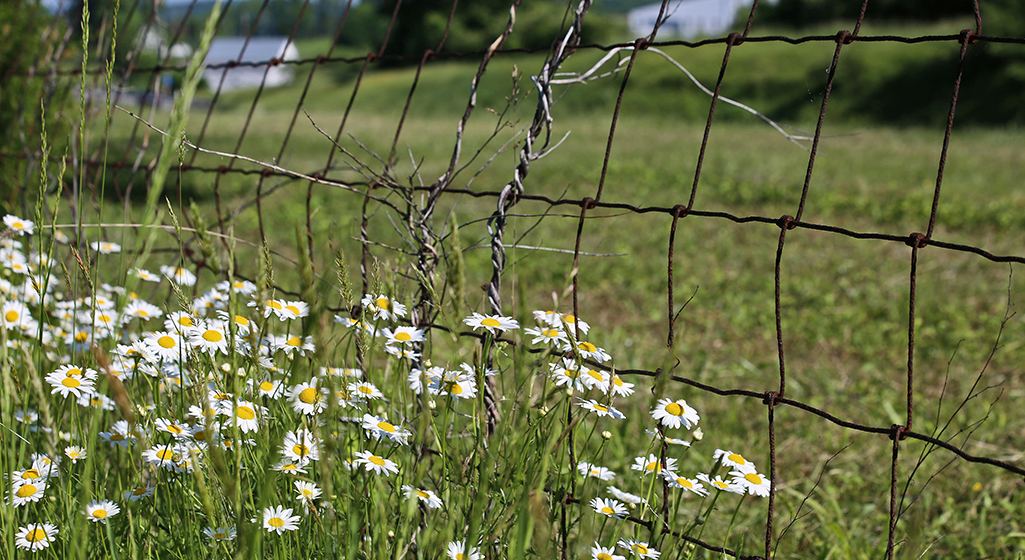
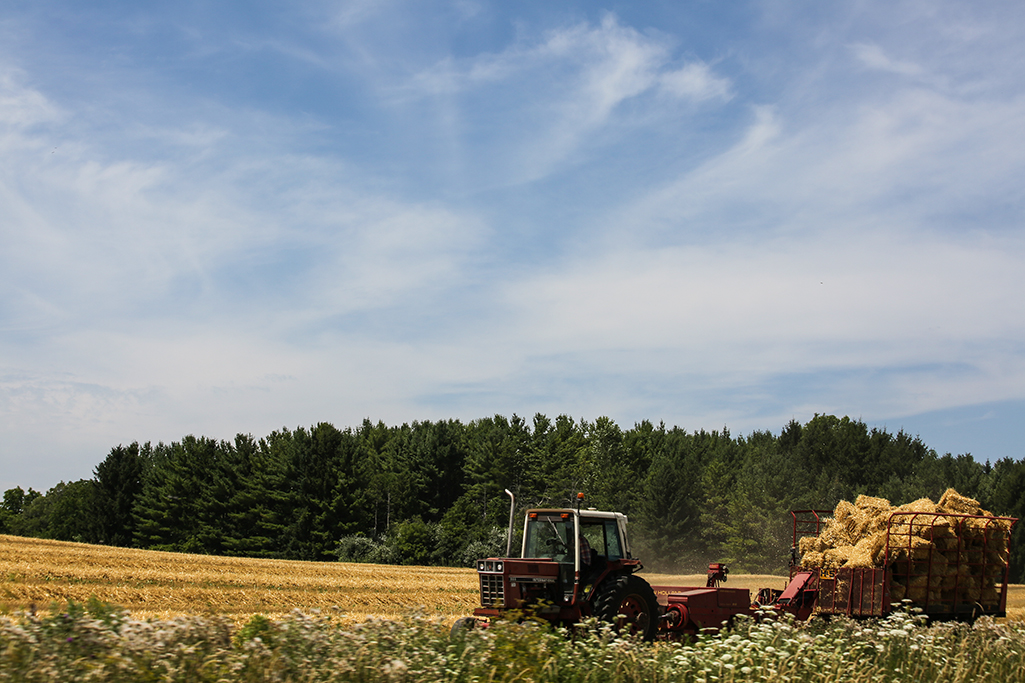
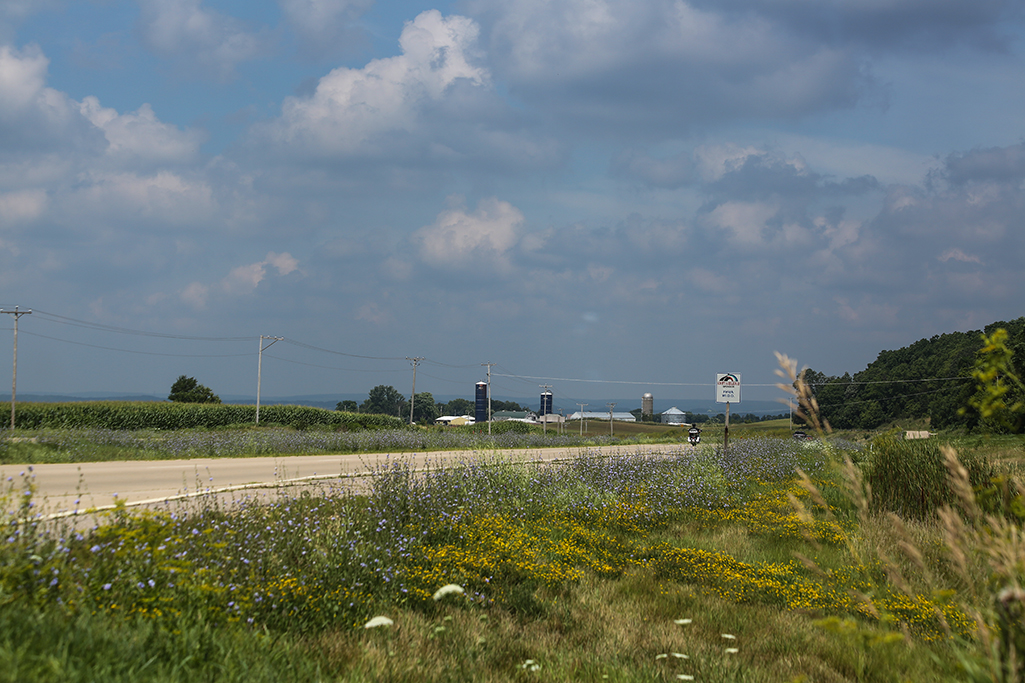
As I sort photos for a newspaper story… it seems a good time to share the random thoughts and images recorded while driving through America’s Heartland from deadline to deadline the last few summers. Much of it, the things I see, but don’t have time to stop for picturing, as I’m always running late for the next deadline. Feel the copious doses of Vitamin D, long days, warm sunshine, rural lands… 

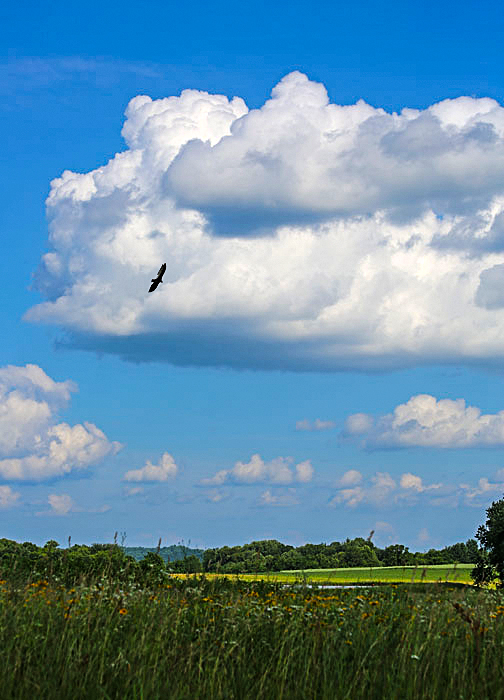
Birds of flight soar between tufts of congregating clouds. Snowy white egrets glow sunset silver above crystal blue lakes… Appearing out of nowhere, they punctuate the landscape and reflect the vivid sky.

thingsyousee100

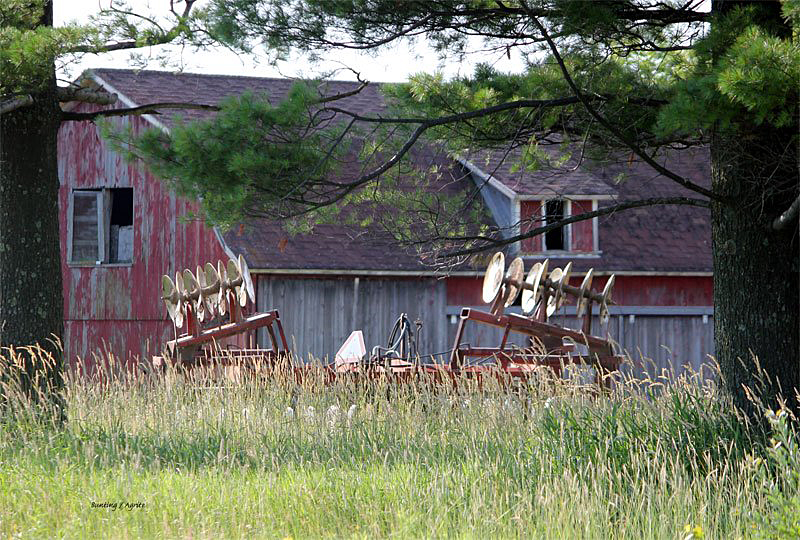
Working metal parked by barns take on the rust red hue.

thingsyousee82

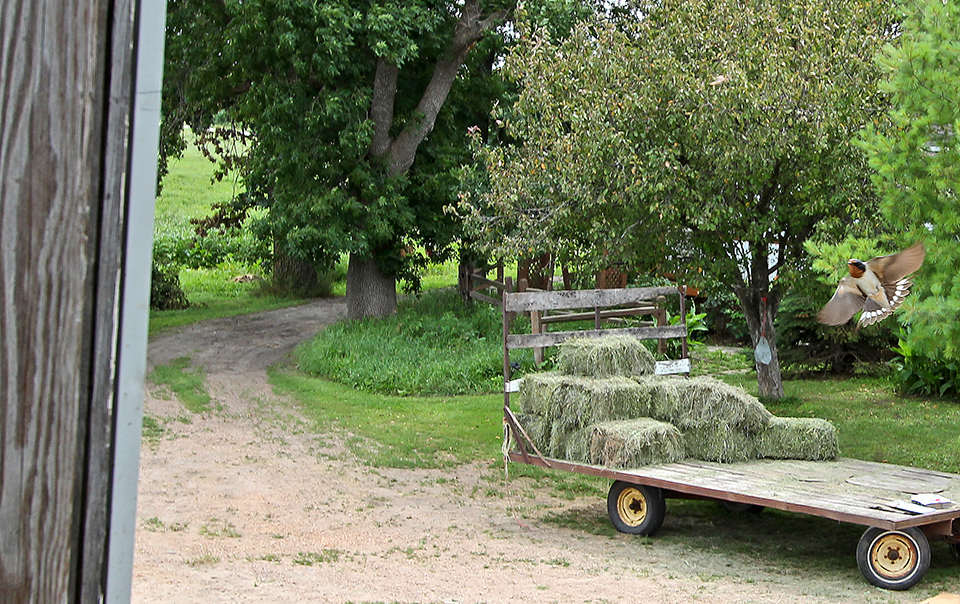
Birds dance atop fields of corn … a burst of orange Tanager, brilliant Blue Bird, the acrobatic, ever-present Swallows, A woodpecker’s crisp white-wing slices  the air…

thingsyousee5752

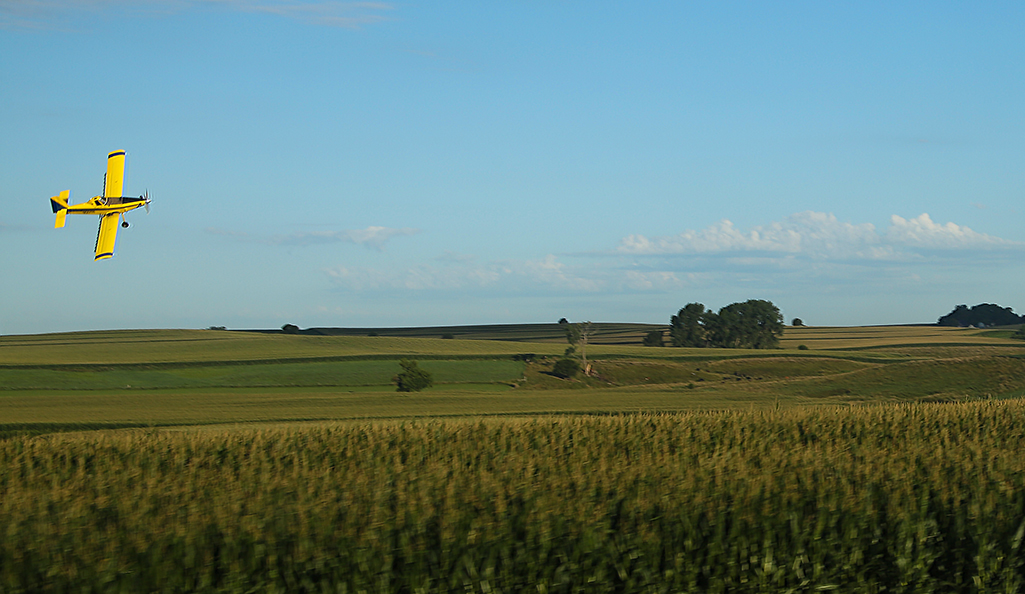
and swallow-like … the sweeps and turns of the yellow crop-duster — left side, right side. Now you see him. Now you don’t.

thingsyousee14

Sunlight plays off green waves of midseason soybean.

Corn, gold-fringe tasseled under the brilliant moon.

thingsyousee35

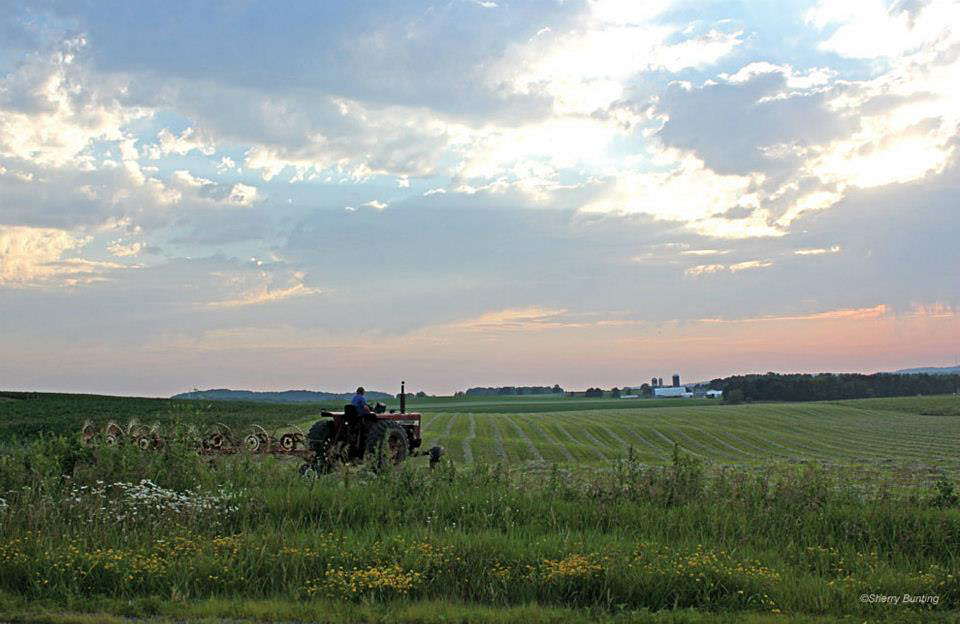
Tractors on a mission up and down the road… Everyone waves.

thingsyousee19

From Wisconsin to the Buffalo Ridge of Minnesota to Sioux Country and the Western Skies Scenic Byway…

thingsyousee25


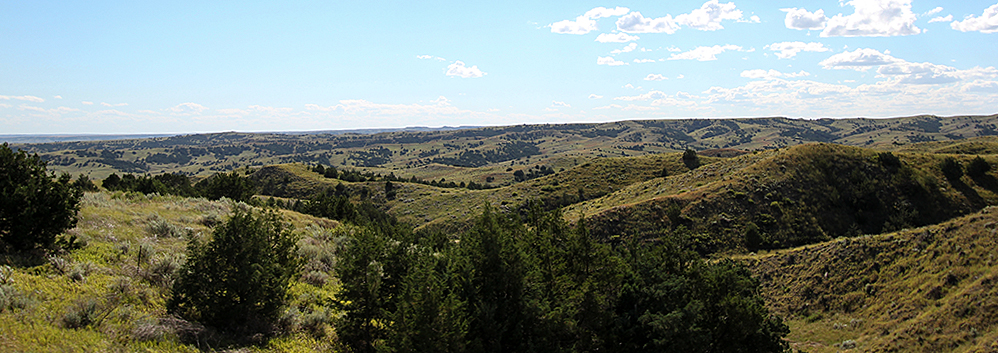
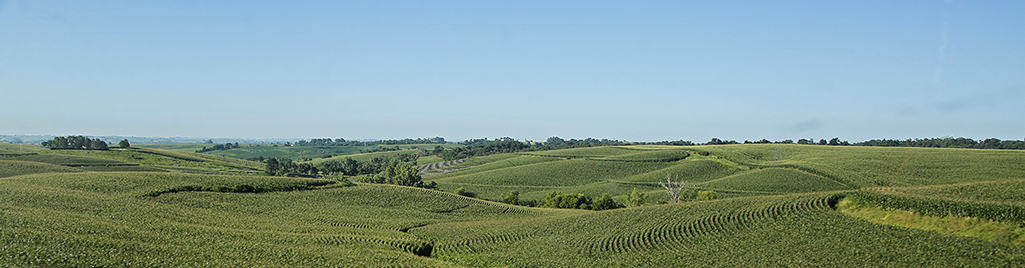
Rolling, potholed landscape almost like that of the Dakotas — where wheatgrass shimmers silvery and sage brushes gold the green sheen dotted by low cedars. But in western Iowa, gentler are the dips melding to the flat, allowing crops to be planted in organized rows that curve to the contours of the land.

thingsyousee87

thingsyousee13

Proud large Hawk atop a Green Barn. No time to stop.

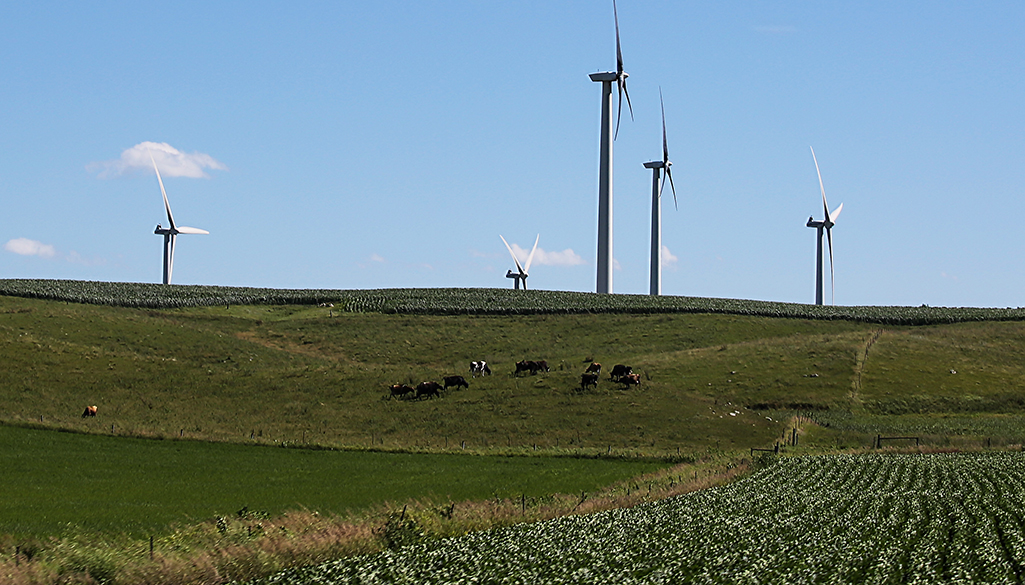
Cattle graze juxtaposed with large wind turbines of the Buffalo Ridge in Minnesota.

thingsyousee16

Rising tall and metallic from the carpet of green… grain elevators every 20 or 30 miles.

Lines of tractors and implements in a rainbowed density of reds, orange, greens and golds.

thingsyousee81

Small towns fringed with angularly parked pickup trucks – clods of dirt between treads as the creases of hard working hands at the wheel.

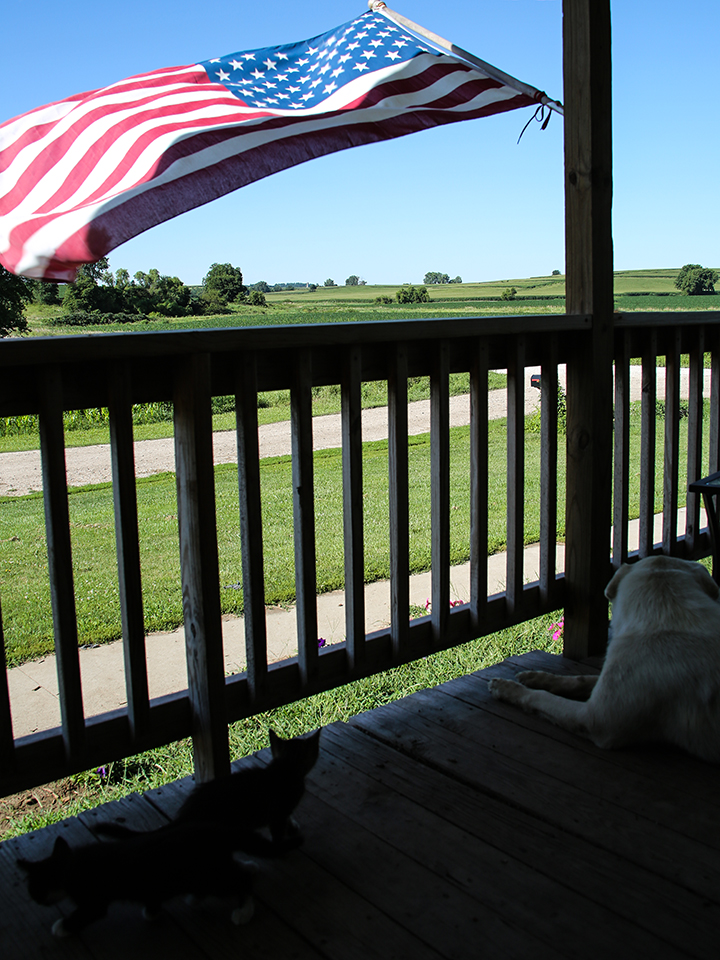
Flags diffuse light on front porches… proud fabric flies in the midst of cornfields, lining small town streets, atop grain elevators and silos.

thingsyousee12

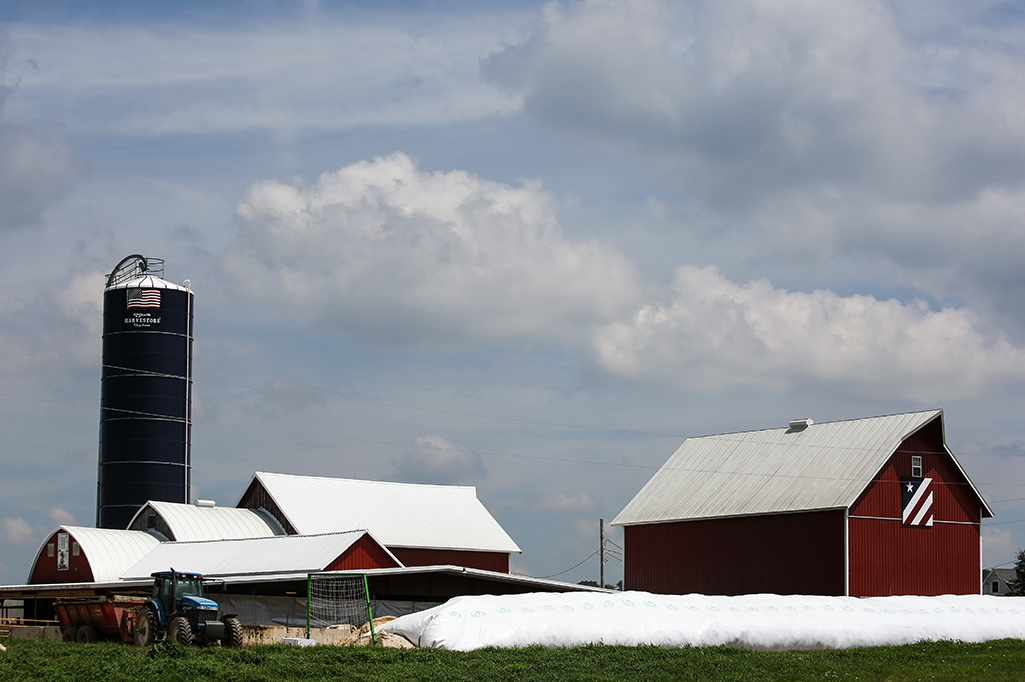
Synergy: old barns juxtaposed with new. Wood, weathered by age, what stories have they seen, will they tell?

flag barn thingsyousee222

thingsyousee80

thingsyousee86

thingsyousee83

thingsyousee85

thingsyousee7

thingsyousee11

thingsyousee26

An old man’s grave from the 1800’s, buried right where he fell walking home from church… a family farming there now farms around the odd space each season.

From the pushed up earth to the flats where one imagines torrents of water resting to round sharp edges into mounds that become smaller as they come together in a swath that eventually lay across miles so flat as to suggest no horizon.

Radio on. Squawking the town’s happenings: a Saturday night fire hall dinner. The local softball standings. A community parade. Radio commentary so thick with farm talk and market reports, suggesting an area, an era, insulated from the coldness of an outside world depending on them for sustenance.

thingsyousee21

Delicate hues soften weathered wood.

thingsyousee20

thingsyousee84

Sandpipers and plover find morsels of grain amid a stiffened manure lagoon.

Two white ducks peer into a farm shop door. Two pigs laying on the concrete stare back… and the chorus that accompanies the leisurely standoff.

A sun-bleached road like ribbon punched through rain-fed emerald green soybeans disappears into another sea foam green of a grassy knoll, meeting the blended hues of the evening’s summer sky.

thingsyousee6

thingsyousee9

thingsyousee212038718_10208305567380955_984244853511889997_o (1).jpg

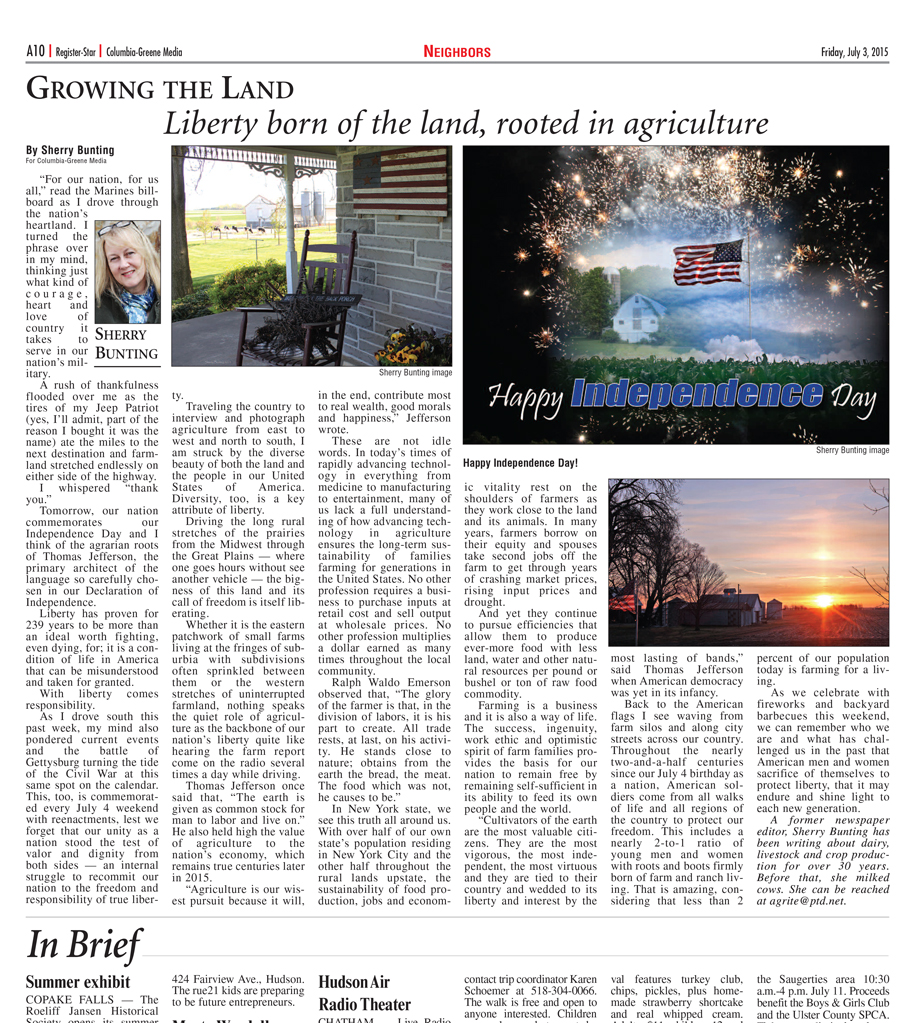
Liberty born of the land, rooted in agriculture

By Sherry Bunting (Growing the Land in July 3, 2015 Register-Star)

“For our nation, for us all,” read the Marines billboard as I drove through the nation’s heartland. I turned the phrase over in my mind, thinking just what kind of courage, heart, and love of country it takes to serve in our nation’s military.

A rush of thankfulness flooded over me as the tires of my Jeep Patriot (yes, I’ll admit, part west-texas-sunsetof the reason I bought it was the name) ate the miles to the next destination,
and farmland stretched endlessly on either side of the highway.

I whispered ‘thank you.’

Tomorrow, our nation commemorates our Independence Day, and I think of the agraweb063A8492rian roots of Thomas Jefferson, the primary architect of the language so carefully chosen in our Declaration of Independence.

Liberty has proven for 239 years to be more than an ideal worth fighting — even dying — for, it is a condition of life in America that can be misunderstood and taken for granted.

With liberty, comes responsibility.WestPA7331

As I drove South this past week, my mind also pondered current events and the battle of Gettysburg turning the tide of the Civil War at this same spot on the calendar. This too is commemorated every July 4th weekend with re-enactments, lest we forget that our unity as a nation stood the test of valor and dignity from both sides — an internal struggle to recommit our nation to the freedom and responsibility of true liberty.063A1117xx

Traveling the country to interview and photograph agriculture from East to West and North to South, I am struck by the diverse beauty of both the land and the people in our United States of America. Diversity, too, is a key attribute of liberty.

Roundup7357x

Driving the long rural stretches of the prairies from the Midwest through the Great Plains — where one can go hours without see another vehicle — the bigness of this land and its call of freedom is, itself, liberating.

Whether it is the eastern patchwork of small farms living at the fringes of suburbia with subdivisions often sprinkled between them or the King6373western stretches of uninterrupted farmland — nothing speaks the quiet role of agriculture as the backbone of our nation’s liberty quite like hearing the farm report come on the radio several times a day while driving.

wElmFarms(IL)9570

Thomas Jefferson once said that, “The earth is given as common stock for man to labor and live on.” He also held high the value of agriculture to the nation’s economy, which remains true centuries later in 2015.

“Agriculture is our wisest pursuit because it will, in the end, contribute most to real wealth, good morals and happiness,” Jefferson wrote.

wfinke9634

These are not idle words. In today’s times of rapidly advancing technology in everything from medicine to manufacturing to entertainment, many of us lack a full understanding of how advancing technology in agriculture ensures the long term sustainability of families farming for generations in the U.S. No other profession requires a business to purchase inputs at retail cost and sell output at wholesale prices. No other profession multiplies a dollar earned as many times throughout the local community.

063A6426xxx

Ralph Waldo Emerson observed: “The glory of the farmer is that, in the division of labors, it is his part to create. All trade rests, at last, on his activity. He stands close to nature; obtains from the earth the bread, the meat. The food which was not, he causes to be.”

In the East, we see this truth all around us. With over half of the New York State population residing in New York City and the other half throughout the rural lands upstate, the sustainability of food production, jobs and economic vitality rest on the shoulders of farmers as they work close to the land and its animals. In many years, farmers borrow on their equity and spouses take second jobs off the farm to get through years of crashing market prices, rising input prices and drought.

chitt-alto-

And yet, they continue to pursue efficiencies that allow them to produce ever-more food with less land, water and other natural resources per pound or bushel or ton of raw food commodity.

ElmFarms9596xx

Farming is a business, and it is also a way of life. The success, ingenuity, work ethic and optimistic spirit of farm families provides the basis for our nation to remain free by remaining self-sufficient in its ability to feed its own people and the world.

“Cultivators of the earth are the most valuable citizens. They are the most vigorous, the most independent, the most virtuous and they are tied to their country and wedded to its liberty and interest by the most lasting of bands,” said Thomas Jefferson when American democracy was yet in its infancy.

flag5

Back to the American flags I see waving from farm silos and along city streets across our country…  Throughout the nearly two-and-a-half centuries since our July 4th birthday as a nation, American soldiers come from all walks of life and all regions of the country to protect our freedom. This includes a nearly 2-to-1 ratio of young men and women with roots and boots firmly born of farm and ranch living. That is amazing, considering that less than two percent of our population today is farming for a living.

flage

As we celebrate with fireworks and backyard barbecues this weekend, we can remember who we are and what has challenged us in the past that American men and women sacrifice of themselves to protect liberty, that it may endure and shine light to each new generation.

A former newspaper editor, Sherry Bunting has been writing about dairy, livestock and crop production for over 30 years. Before that, she milked cows. She can be reached at agrite@ptd.net.

cropped-cropped-flag-4323.jpg
-30-

RegisterStar070315web

PHOTO CAPTION: Happy Independence Day! Sherry Bunting image.

NUTRITION POLITICS: Kids and cattle caught in the crossfire

GROWING THE LAND: Nutrition Politics: Let them eat cake!

April 2, 2015 Hudson Valley Register-Star

Seems like an April Fools’ joke, but I am sorry to say it is not. Like the ill-fated Marie
Antoinette in her final words, the federal government lacks understanding for the nutritional realities of the masses as it turns the simple act of providing a nutritious lunch to schoolchildren into an exercise in frustration.

Kids buy Twinkies instead of lunch. Or they pack. Some go hungry.

For 40-plus years, the concept of a “heart healthy diet” has been unchallenged even though it was implemented based on a set of hypotheses created from epidemiological studies on middle-aged men. No study of impacts on women and children. No clinical trials on anyone.

As noted in this column on Jan. 27, schoolchildren have been eating the equivalent of a heart patient’s diet since the mid-1990s as the fat percentage was tightly controlled even though the sugar was not. Then, the government cut the calorie totals realizing the fat that was removed was replaced with sugar to meet the calorie requirements of a growing child.

What have we to show for it? Rising levels of obesity and diabetes, particularly among children.

It is about to get worse, but there is still time to be heard. The Dietary Guidelines Advisory Committee — charged with making recommendations every five years — has now
stepped beyond its nutritional realm to consider the “environmental impacts” of foods.

From the frying pan into the fire we go.1538850_10203867018139998_98482634260761802_n

In this column on Feb. 8, we looked at the National School Lunch Program and the Dietary Guidelines just as the five-year Advisory Committee submitted its Advisory Report to the Secretaries of the U.S. Department of Health and Human Services and the U.S. Department of Agriculture.

The Committee states that “The purpose of the Advisory Report is to inform the federal government of current scientific evidence on topics related to diet, nutrition and health. It provides the federal government with a foundation for developing national nutrition policy.”

However, the Advisory Report constructs and reinforces further reductions in its guidelines on the consumption of red meat and whole dairy fat such as butter and whole milk by using these so-called “sustainability factors.”

This area of science is even more subjective than the past four decades of nutrition science have proved to be. Just when the truth is coming out that decades of nutrition policies are based on hypotheses steering unwary consumers away from healthy fat and into the arms of carbohydrates, suddenly “sustainability” emerges to perpetuate the lie.

New York Times bestseller “The Big Fat Surprise” delves deeply into this subject. Author Nina Teicholz, an investigative food reporter, compiled nine years of research covering thousands of studies and many interviews with nutrition scientists to discover this April Fools’ joke has already had too-long a run and with unintended consequences for Americans.

As noted by Anne Burkholder, a rancher and blogger (Feedyard Foodie), who wrotGL 1847 (1)
e after reading Teicholz’s book: “The diet-heart hypothesis (coined by a biologist Ancel Keys in the early 1960s) proclaimed that a low fat and high carbohydrate diet provided the basis for good health. Although not proved through clinical trials, the hypothesis gained support from the federal government and provided the basis for mainstream dietary advice during the ensuing decades.

“…The culture of the American diet has shifted dramatically. According to USDA, the consumption of grains (41 percent), vegetables (23 percent) and fruits (13 percent) rose significantly from 1970-2005 while red meat (-22 percent), milk (-33 percent) and eggs (-17 percent) fell dramatically. Overall carbohydrate intake for Americans rose with low fat starches and vegetable oil took the place of animal protein and fat in the diet. Animal protein lovers shifted from beef to chicken and many traded whole fat dairy for skim milk and margarine thereby forsaking nutrition density for lower saturated fat options,” Burkholder writes. “All of this occurred during a time in the United States when obesity rates more than doubled (15-32 percent), the prevalence of heart failure, cancer and stroke all increased and the rate of diabetes increased from less than 1 percent to 11 percent.”

Here are just some of the conclusions Teicholz highlights in “The Big Fat Surprise” after nearly a decade of research:

1. Causal associations between red meat consumption and heart disease are minimal.

2. The HDL (good cholesterol) is increased by the saturated fat found in animal protein.

3. Animal fat is nutrient dense, packing protein, energy and essential vitamins and minerals — plus helping the vitamins and minerals of other foods eaten together to be better absorbed by the human body.

4. There are no health studies to learn the effect on health of liquid vegetable oils. We do know that the process of solidifying vegetable oils creates the very unhealthy transfats. Butter and red meat do not contain these transfats.

5. Insulin levels are elevated by constant carb consumption, not by animal fat and protein. Furthermore, as insulin levels are raised, the body is less able to digest its own stored fat created by — you guessed it — carbs!

Our children have been and will apparently continue to be test subjects for nutrition GL kids-cowspolitics. The simple act of providing a nutritious school lunch will become even more
complicated if the Advisory Report is accepted and used by the U.S. Department of Health and Human Services and U.S. Department of Agriculture secretaries in the food programs they administer.

Published in the Federal Register (Vol. 80, No. 35) on Feb. 23, the public comment period was recently extended to May 8. After that, the secretaries will jointly release the official Dietary Guidelines for Americans 2015.

A quick perusal of comments already logged shows that two parts of the Report are garnering attention:

1. There is an overwhelming support for the recommendation to reduce the amount of added sugar in the diet. My only question is: What took them so long?

2. There is an overwhelming lack of support for the recommendation to reduce even more the role of saturated fats — red meat and whole dairy fat — in the diet.

Some children may forego the school lunch and pack a nutritious replacement. But what about the child in poverty? Their options are limited to taking what the federal government dishes out, literally.

To comment on proposed Dietary Guidelines by May 8, visit www.health.gov/dietaryguidelines/dga2015/comments/. It is easy to do electronically.


GROWING THE LAND: Kids and cattle caught in the crossfire 

Feb. 8, 2015  Hudson Valley Register Star

Kids and cattle are caught in the crossfire of nutrition politics, and it may get worse. GL 0263Two weeks ago we talked about the changes over the years in the federal Dietary Guidelines for Americans and their direct influence on the National School Lunch Prog
ram. This week we look at how the simple act of providing a nutritious school lunch could become even more complicated.

What I have gleaned from reader comments is a high level of frustration about the current status of the National School Lunch Program limiting the caloric intake and food choices of growing children. Now, the next twist in the nutrition-noodle may not even be nutrition-based.

The Department of Health and Human Services (HHS) is the deciding agency for new “Dietary Guidelines for Americans” expected to be released soon. The HHS Secretaries are deliberating the recent report from their Dietary Guidelines Advisory Committee, which held meetings for months.

When the new Guidelines are officially published in the Federal Register, a second round of comments will open. I’ll let you know when and how to comment when the time comes.

For now, let’s look at a few concerns with the committee’s report.

1) It is worth noting that back when we had a Food Pyramid, physical exercise was Boilermaker6929visually highlighted, where today it is notably absent from the MyPlate diagram.

2) More troubling this time around, is the fact that the committee is not just focusing on new information about healthful eating, they have incorporated so-called “sustainability”
factors or environmental impacts of various foods — namely lean meats. This opens a whole can of worms that — quite frankly — have nothing to do with nutrition!

3) Furthermore, some of the science the committee used to come up with thewWill-Feed3983 idea of eliminating lean meat from its so-called “healthy eating pattern” is quite controversial and involves a United Nations study that has since been refuted.That study had suggested meat production contributes more to climate change than transportation.

Scientists have come forward in droves with counter-studies showing the greatly reduced carbon footprint of agriculture, particularly animal agriculture. The whole lifecycle of beef and dairy cattle needs to be considered when formulating environmental impacts.

While the dietary gurus in Washington debate the merits of meat and whole-fat milk, let’s look at this term “sustainability” and what dairy and livestock producers actually care about and accomplish for their land, animals — and us!

Regarding potential replacement of a “healthy eating pattern” in favor of a “sustainable eating pattern,” there are several concerns.

1. If red meat and full-fat dairy are not considered a component in a healthy eating pattern, students will increasingly see this nutrient dense protein source removed from their diets and replaced with foods that are less nutrient dense.

2. Since these guidelines affect the most nutritionally at-risk children through their effects on the school lunch program, WIC and food stamps, the impact of the dietary guidelines would fall mostly on those children who are already on the hunger-side of the nutrition equation.

3. How can the committee recommend a “sustainable dietary pattern” when mothers, doctors, scientists, and all manner of experts can’t even agree on what “sustainable” actually means? Let’s stick to nutrition. Defining that is a tall-enough order.

Scientist, cancer survivor and new mom Dr. Jude Capper covers this topic best. She points out that, “With the world population officially hitting 7 billion people earlier this year and projected to reach 9.5 billion by 2050, farmers and ranchers must continue to find ways to sustainably feed a growing world population using fewer natural resources.”

She notes the many improvements to the way cattle are raised and fed in the United States between 1977 and 2007 that have yielded 13 percent more total beef from 30 percent fewer animals. More beef from fewer animals maximizes resources like land and water while providing essential nutrients for the human diet. U.S. cattlemen raise 20 percent of the world’s beef with 7 percent of the world’s cattle.

Capper’s research in the Journal of Animal Science shows that beef’s environmental footprint is shrinking. Each pound of beef raised in 2007 (compared to 1977) used 19 percent less feed; 33 percent less land; 12 percent less water; and 9 percent less fossil fuel energy. Significant gains have been made in the seven years since the data was collected for this report.IMG_2657

What is discouraging to cattle producers — be they beef or dairy — is the lack of understanding for how cattle are raised and fed. They utilize feedstuffs we humans cannot digest and turn that into meat and milk, which are nutrient-dense sources of proteins, minerals and vitamins.

Some of their lifecycle is spent on grass or eating a mostly grass / hay diet and some of their lifecycle is spent eating a more concentrated diet at certain stages. Feedlot beef wky3327

cattle start out as calves on grass. Even in the feedlot, today’s rations — especially in the east and near food processing centers — utilize bakery waste, over cooked potato chips, wilted produce and the like that would otherwise end up in a landfill. Incorporated into cattle diets along with traditional feedstuffs, these foods provide protein and energy for the animals without sole reliance on corn. In addition, when corn is fed, the whole plant is used.

Farmers are thrifty. They don’t like to waste a thing. They understand the balance of working with nature because it is not just the vocation, but also the very life they have chosen working with their animals and the land.

I can’t think of any other reason why someone would work this hard and put their entire livelihood and all of their capital at risk to the swings of the marketplace other than they are passionate about producing food and using science and ingenuity to work with

Mother Nature in preserving a sustainable balance for all of God’s creatures — the 2-legged and the 4-legged.

Send me your questions and look for part three when the official new guidelines are posted in the Federal Register for public comment. Email agrite@ptd.net.10256404_10204082794934283_4627952695489572277_o


GROWING THE LAND: How did school lunch get so complicated        

Jan. 27, 2015 Hudson Valley Register-Star

Are you satisfied with your school lunches? Do your children eat them? Do they come home so hungry they binge out of the snack drawer?

The National School Lunch Program and the Dietary Guidelines for Americans are lightning rods for the latest nutritional ideas — none of which seem to be working particularly well because we’ve gotten so far from the basics, and yet both childhood hunger and childhood obesity are on the rise.

Now it seems there will be another twist in the nutrition-noodle. Recent food studies and “The Big Fat Surprise,” a best seller by Nina Teicholz, reveals the truth about the healthfulness of natural fats in whole milk, butter, beef, ice cream, etc. Teicholz was profiled on “Live! with Kelly and Michael” last week, where she described the “nasty nutrition politics” that continually shape these programs.

In response to these animal-protein-friendly nutritional revelations, the environmental webfeed9297nail-biters (under the influence of refuted studies) are “concerned” about what they see as the effect of dairy and beef production on climate change. According to news reports last week, these groups would like the government to take their version of the facts and tweak new-again the nutrition guidelines. This means yet another lunchroom brawl will soon be coming to a school cafeteria near you where the already burdensome and counterproductive rules for lunch menu planning have lunch ladies and foodservice directors — not to mention kids and parents — tearing their hair out.

How did we let serving a decent healthy meal to schoolchildren become so complicated? Why don’t schools take their cafeterias back? One reason is the federal government ties its financial support for literacy programs (extra teachers and tutors) in schools to the number of students enrolled in the free and reduced lunch program as monitored by — you guessed it — the federal government. Oh what a complex web we weave when all we set out to do is healthfully eat!

The government’s interest in the school lunch program got its first foothold during World War II when more women joined the workforce as part of the war effort. The emphasis at that time was to provide a hot meal with plenty of protein, calories for energy and the healthy fat necessary for brain development and satiety — a fancy word for no hunger pains during the end of the day math class!

My generation grew up with the “eat all things in moderation” mantra. Lunches were a bit repetitive, but they were good, honest meals and we ate them. We learned about the four food groups, and we ran and played and worked outside ‘til dusk.

My children’s generation grew up in the “food pyramid” days, spelling out the servings deal differently. Then, in the 1990s, the school lunch program went through a major metamorphosis that paralleled the “low fat” offerings in nearly every product category at the supermarket. What the 90s gave us was less fat and more carbs, and a lot of guilt. I would say those three things are actually ingredients for obesity.

By the late 1990s, the government came out with the nutrient standards for menu planning, and school districts across the country bought the software and began to submit their menus for approval. I was editor of a farm publication at the time and served as an elected director on a local school board. I interviewed not only our own district’s foodservice director but others as well, and I visited one of the schools that had piloted the program for USDA.

“Schoolchildren were being relegated to the equivalent of a heart patient’s diet,” explained the foodservice director who was piloting the program in 1997. The calorie thresholds were unchanged, but the government began regulating the percentage of those calories that could come from fat. There were no regulations yet for sugar or carbohydrates. And yes, as always, the goal was to get kids to eat more veggies and fruits and fiber. We might take a lesson from France in that department. They require lunches to be made from fresh ingredients, but they aren’t afraid to deep-fry some broccoli or soak a healthy vegetable dish in yummy cheese — real, of course.

The new fat rules forced foodservice folks to put imitation cheese product on their once delicious pizza. Ground turkey replaced beef in spaghetti and tacos. Rolls were served without butter. All milk was reduced to nonfat or 1 percent so the amount of chocolate milk consumed increased. (Whole milk is much more flavorful than nonfat, and it is just 3.25 to 3.5 percent fat!

As fat was reduced, so were calories and flavor. To get back up to the number of calories required, “we just served a bigger brownie, for example,” that foodservice director recounted. Of course, they used applesauce to replace the shortening in making such desserts. But still, no requirement on sugar and carbs.

“Two elements give food flavor: fats and sugars. When you pull one out, chances are the other is added,” the wise foodservice director observed. Whether natural or added, sugars and fats provide flavor, but what most people don’t think about is: The fat in real foods — such as beef and butter and cheese — is accompanied by a nutrient dense protein source that naturally supplies vitamins and minerals and helps kids feel satiated, not hungry or hyper, so they can concentrate and learn. Healthy fats are known to be good for brain development.

Fast forward to the decade of the 2010’s. More tinkering! The food pyramid became the plate showing portions of different food types, and we are now in a time when school menus are regulated in the number of calories that can be served using arbitrary, across the board calculations.

Caught in the crossfire are kids and cattle. We’ll continue this topic in the next edition of “Growing the Land,” so send me your questions about nutrition standards, new information on healthy fats, school lunch programs, and the real-deal on the carbon footprint and environmental contributions of today’s dairy and beef cattle. Email agrite@ptd.net.