Good news may trump bad nutrition policies

Editorial Analysis: Tumultuous 2024 spills over into 2025 – Part One

By Sherry Bunting, Farmshine, January 3, 2025

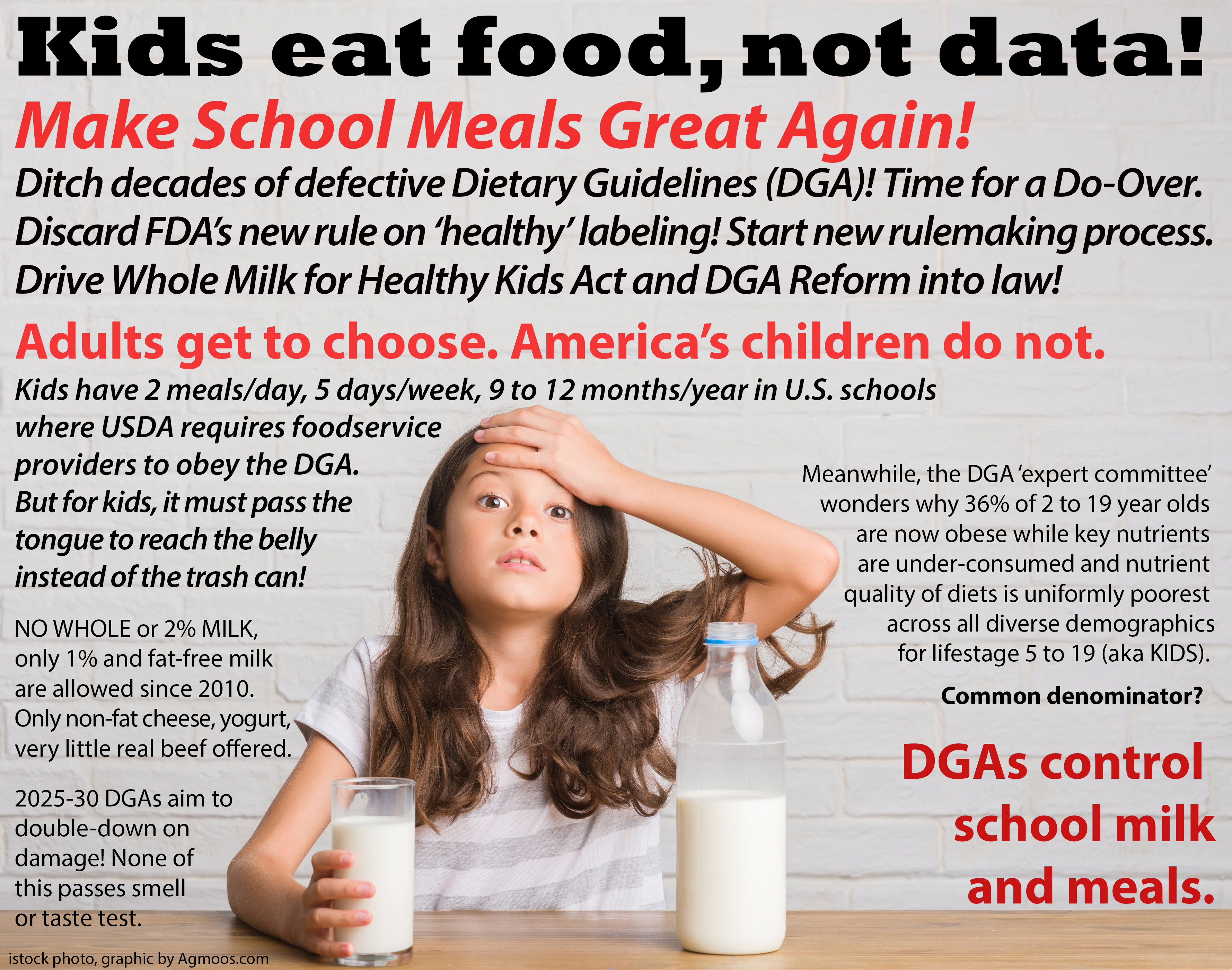
EAST EARL, Pa. – Year 2024 was tumultuous, and 2025 is shaping up to be equally, if not more so. Spilling over from 2024 into 2025 are these three areas of potential for good news to trump bad nutrition policies that are having negative impacts on dairy farmers and consumers.

Farm bill and whole milk bill

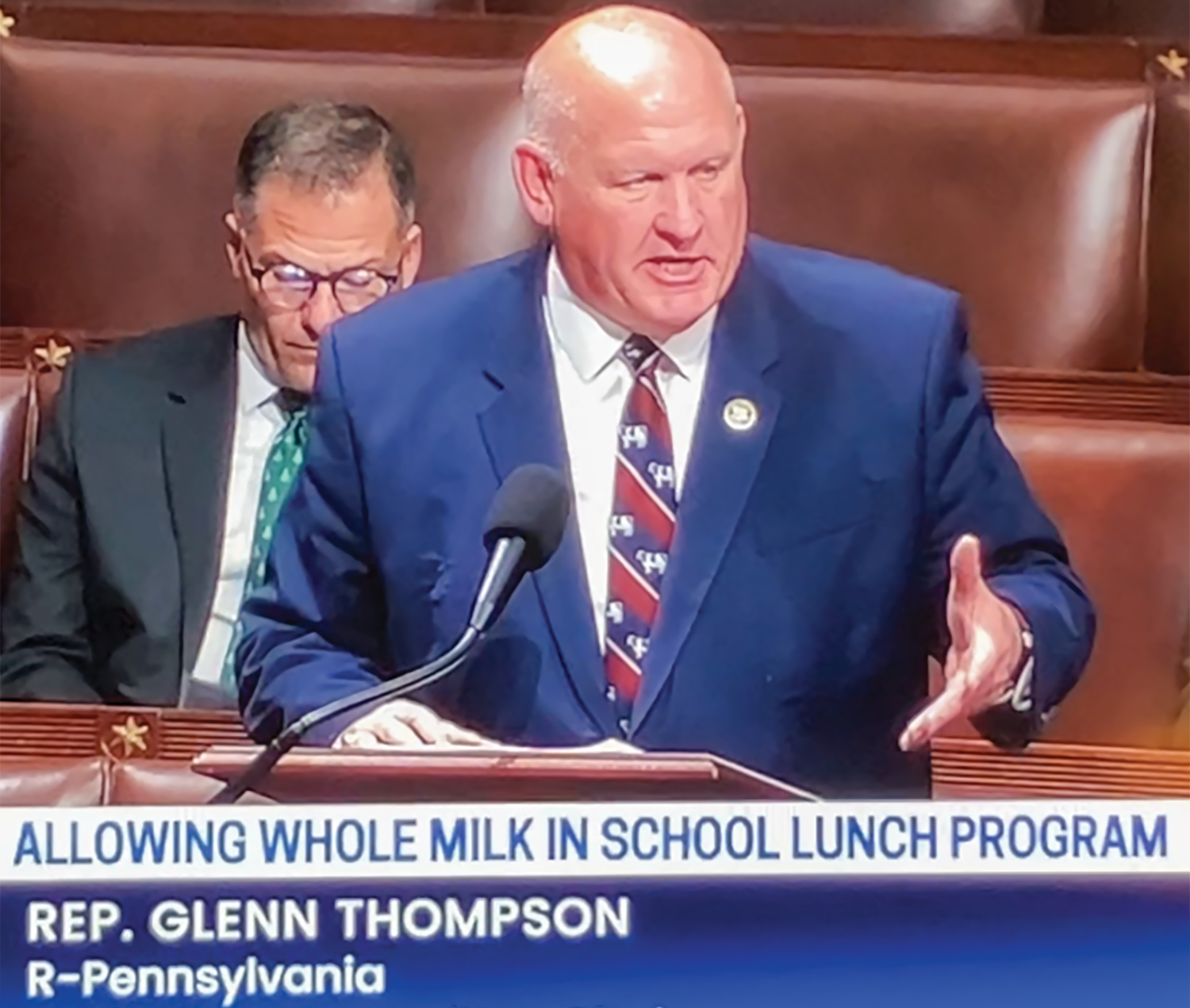
Both the farm bill and the whole milk bill showed promise at the start of 2024. No one championed the two pieces of legislation more than House Ag Committee Chairman Glenn ‘GT’ Thompson (R-15th-Pa.). He even found a way to tie them together — on the House side.

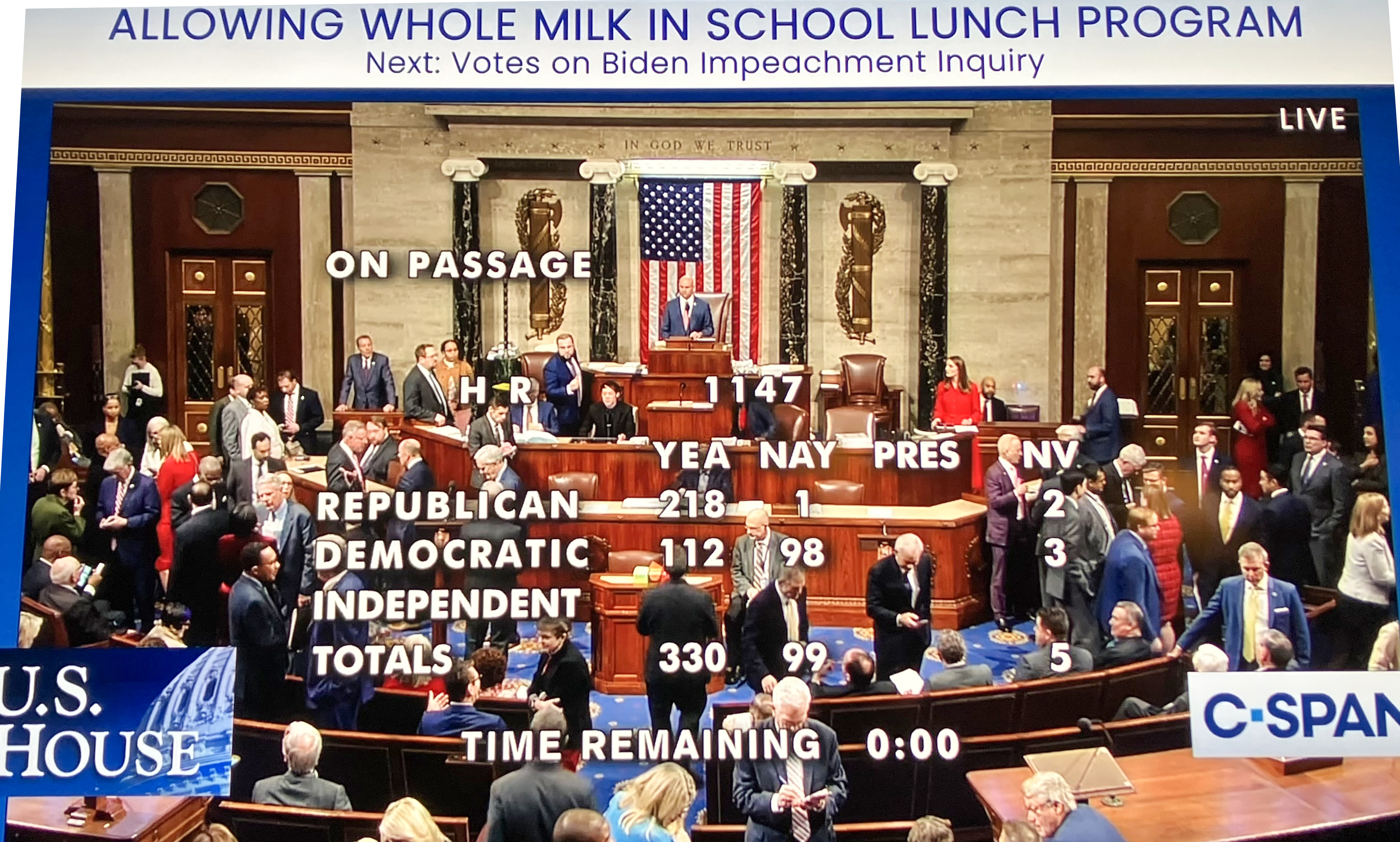
The Whole Milk for Healthy Kids Act made it farther than it ever has in the four legislative sessions in which Thompson introduced it over the past 8 to 10 years. It reached the U.S. House floor for the first time! But even the overwhelming bipartisan House vote to approve it 330 to 99 at the end of 2023 was not enough to seal the deal in 2024.

That’s because over in the U.S. Senate, then Ag Committee Chairwoman Debbie Stabenow (D-Mich.) blocked it from consideration — despite over half her committee signing on as cosponsors.

GT Thompson, found a workaround to include it in the House farm bill, which passed his Ag Committee on a bipartisan vote in May. The language was also part of the Senate Republicans’ draft farm bill under Ranking Member John Boozman (R-Ark.)

It too fell victim to Stabenow dragging her feet in the Senate. By the time the Ag Chairwoman released a full-text version of the Senate Democrats’ farm bill, little more than 30 days remained in the 2023-24 legislative session.

Key sticking points were the House focus on dollars for the farm side of the five-year package. It put the extra USDA-approved Thrifty Food Plan funding into the overall baseline for SNAP dollars and brought Inflation Reduction Act climate-smart funds under the farm bill umbrella while removing the methane mandates to allow states and regions to prioritize other conservation goals, like the popular and oversubscribed EQIP program.

Attempts to broker a farm bill deal failed, and on Dec. 20, another one-year extension of the current 2018 farm bill was passed in the continuing resolution that keeps the government funded into the first part of 2025, without amendments for things like whole milk in schools. However, Congress did manage to provide $110 billion of disaster relief for 2022-24 hurricanes, wildfires, and other events. Of this, roughly $25 billion will go to affected farmers and ranchers, plus another $10 billion in economic disaster relief for agriculture.

Looking ahead, there is good news for the farm bill and whole milk bill in the new 2025-26 legislative session. The House Ag Committee will continue under Rep. GT Thompson’s leadership as Chairman. On the Senate side, whole milk friendly Boozman will chair the Ag Committee. With Stabenow retiring, Sen. Amy Klobuchar (D-Minn.) will serve as Ranking Member, and she previously signed on as a Whole Milk for Healthy Kids Act cosponsor in March 2024.

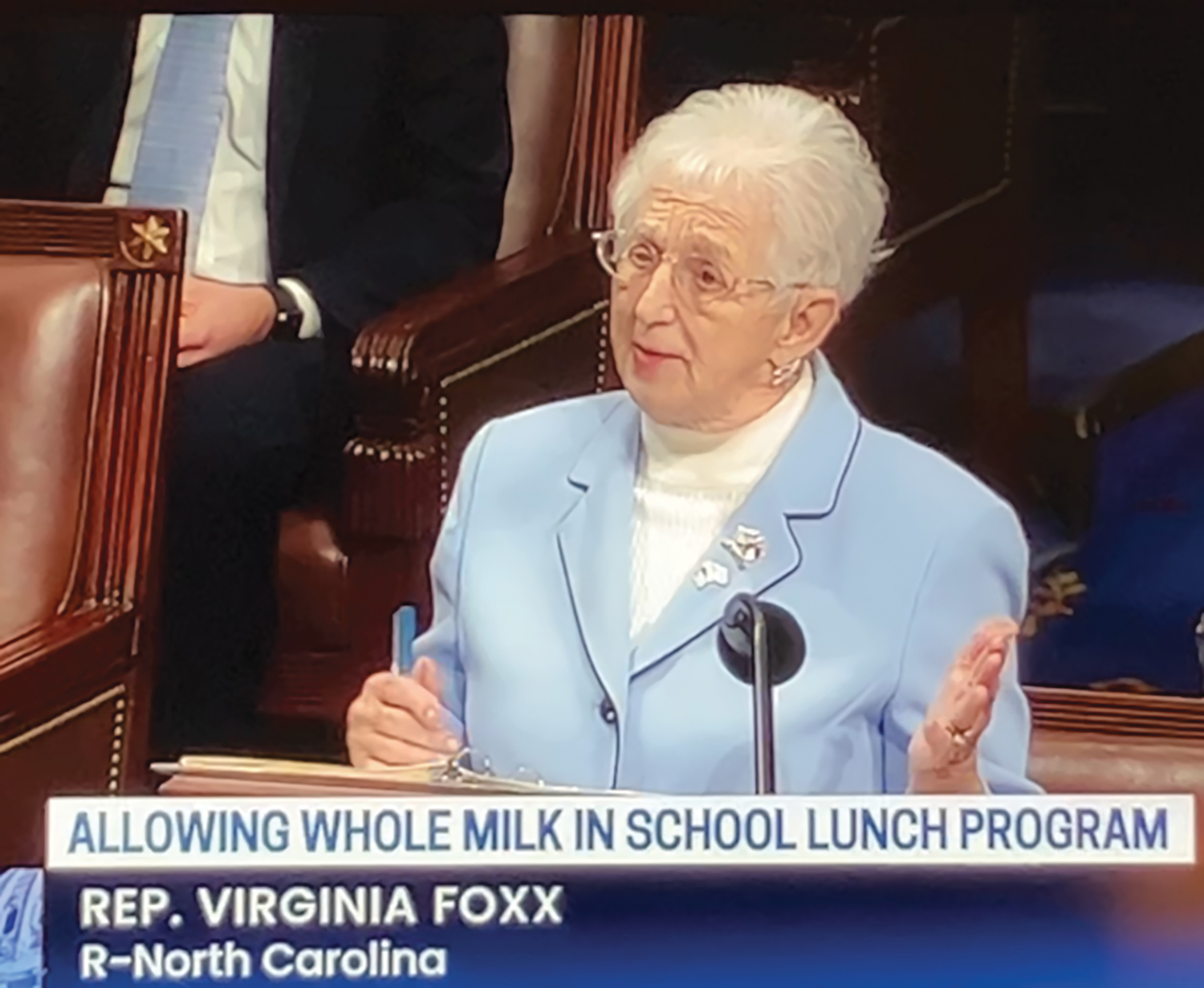
The whole milk bill will have to start over again in the Education and Workforce Committee with another vote on the House floor. It was enthusiastically supported by prior Education Committee Chairwoman Virginia Foxx (R-5th-N.C.). Her years of chairing this committee have expired, but the good news is Rep. Tim Walberg (R-5th-Mich.) will step in, and he was an early cosponsor of the Whole Milk for Healthy Kids Act in the 2021-22 and 2023-24 legislative sessions.

New Dietary Guidelines

The 2025-30 Dietary Guidelines Advisory Committee (DGAC) submitted its ‘Scientific Report’ to the outgoing USDA and HHS Secretaries on Dec. 19, 2024 — just 40 days before they head out the door to be replaced by incoming Trump appointees.

The Report is the guidance of the so-called ‘expert committee’ that reviews evidence and makes recommendations for the Secretaries of USDA and HHS to formalize into the 2025-30 Dietary Guidelines for Americans (DGAs). This process occurs every five years.

The DGAs are used in all USDA feeding programs, including school lunch, childhood daycare, and eldercare institutional feeding, as well as military mess halls. They also inform food offerings in many other controlled settings. 

The bad news is the Report has gone from being increasingly pro-plants over the past nine cycles to being outright anti-animal in this 10th cycle.

The good news is that dairy keeps its special spot on the so-called ‘My Plate.’ The bad news is that despite acknowledging evidence about the benefits of milkfat in nutrient dense milk and dairy foods, the DGAC rated the evidence as ‘limited’ – largely because USDA screened much of it out of the review process.

In the section on under-consumed nutrients of public health concern, especially for children and elders, the DGAC noted that whole and 2% milk were top sources of three of the four: Vit. D, calcium and potassium. Even this was not enough to persuade them to loosen the anti-fat grip that governs milk in schools, daycares and eldercare.

The DGAC states in its Report that their ‘limited access’ to research showing positive relationships between higher fat dairy and health outcomes was “too limited to change the Guidelines.”

They even doubled-down on the beverage category by recommending against flavor-sweetened fat-free and low-fat milk and that water be pushed as the primary beverage. 

In the Report, the DGAC also doubled-down on saturated fat with recommendations to “reduce butter, processed and unprocessed red meat, and dairy for replacement with a wide range of plant-based food sources, including plant-based protein foods, whole grains, vegetables, vegetable (seed) oils and spreads.”

This opens the door for more non-dairy substitutes beyond soy-milk, which is already allowed in the dairy category. In fact, the Report looks ahead to future cycles changing the name of the dairy category to broaden what qualifies as makers of new dairy alternatives improve their nutrition profiles via ultra-processing. At the same time, the DGAC punted the ball on the question they were given about “ultraprocessed” foods and beverages, stating they didn’t have access to enough evidence on health outcomes to answer that question. (The next HHS Secretary might have something to say about that.)

Other animal-based foods such as meat and eggs took a big hit this cycle. The 2025-30 Report uses stronger methods for discouraging consumption. They recommend moving peas, beans and lentils out of the vegetable category and into the protein category and listing them FIRST, followed by nuts and seeds, followed by seafood, then eggs, and lastly meat.

Once again ‘red meat’ is mentioned throughout the report as being lumped in with ‘processed meat’ even though not one stitch of research about negative health relationships with processed meats included any unprocessed red meat in the studies! Clearly, consumption of whole, healthy foods from cattle is in the crosshairs. This 10th edition of the Scientific Report just continues the trend. 

As in past cycles, a whole core of research on the neutral to beneficial relationships between consumption of saturated fat in high-protein, nutrient-dense foods was screened out of the DGAC’s review process by current Ag Secretary Vilsack’s USDA.

This Report essentially sets the stage for ultra-processed plant-based and bioengineered alternative proteins to play a larger role in the institutional meal preps of American schools, daycares, eldercare, and military.

But here’s the good news! The DGAC was late in finishing its 2025-30 Scientific Report!

The law requires a 60-day public comment period before USDA and HHS formulate the actual Guidelines for 2025-30. This mandatory comment period ends Feb. 10, 2025. Comments can be made at the Federal Register link at https://www.regulations.gov/document/HHS-OASH-2024-0017-0001

By the time the comment period ends, Vilsack and company will have left town. Let’s hope Senators confirm Trump appointees before the public comment period ends on Feb. 10 so their eyes are on this before the bureaucracy finishes the job.

This is a golden opportunity for the dairy and livestock sectors, along with health and nutrition professionals and health-conscious citizens to weigh-in. (Look for ways to participate in a future Farmshine.)

Meanwhile, commenters can remind the incoming Secretaries of how flawed the DGA process has become; how Americans, especially children, have become increasingly obese with increasing rates of chronic illness and underconsumption of key fat-soluble nutrients during the decades of the DGA’s increasingly restrictive anti-fat, anti-animal dogma.

Commenters should point out the fact that the Committee was not provided with all of the evidence on saturated fat. This is a message that is likely to land well with USDA Secretary designate Brooke Rollins and HHS Secretary designate Robert F. Kennedy Jr. In fact, RFK Jr. is on record opposing the low-fat dictates and has said nutrition will be among his first priorities, if he is confirmed by the Senate for the HHS post.

FDA’s final rule on ‘healthy’ labeling

In the mad rush at the end of 2024, the FDA released its final rule about using the term “healthy” on the label of foods and beverages.

This process was outlined in the White House National Strategy on Hunger, Nutrition and Health. FDA’s preliminary ‘healthy’ labeling rule was released on Sept. 28, 2022, on the first day of the first White House Nutrition Conference since the 1980s.

At that Conference, Ag Secretary Vilsack said: “The National Strategy’s approach is a whole of government approach that involves the entire federal family.” And President Biden said: “We have to give families a tool to keep them healthy. People need to know what they should be eating, and the FDA is using its authority around healthy labeling so you know what to eat.”

In short, the FDA’s role here is to restrict healthy label claims to foods and beverages that meet its criteria and allow them to also use a new FDA ‘healthy’ symbol that is still under development.

“Nutrient-dense foods that are encouraged by the Dietary Guidelines – vegetables, fruits, whole grains, fat-free and low-fat dairy, lean game meat, seafood, eggs, beans, peas, lentils, nuts, and seeds – with no added ingredients except for water, automatically qualify for the ‘healthy’ claim because of their nutrient profile and positive contribution to an overall healthy diet,” the FDA final rule states.

No surprise that whole milk (3.25% fat) will not qualify, nor will real full fat cheeses, yogurts, and other dairy foods that are not fat-free or low-fat (1%). Natural, unprocessed beef, pork and poultry are off the ‘healthy’ list too.

Specifically, the FDA’s final rule states: “To meet the updated criteria for the ‘healthy’ claim, a food product must: 1) contain a certain amount of food from at least one of the food groups or subgroups (such as fruit, vegetables, grains, fat-free and low-fat dairy and protein foods) as recommended by the Dietary Guidelines for Americans, and 2) meet specific limits for added sugars, saturated fat, and sodium. 

The fat and sodium criteria are a double-whammy against most real dairy cheeses. A single 1-oz slice of American, Swiss, or Cheddar won’t make the cut on saturated fat or sodium; even part-skim Mozzarella is slightly over the limit. Furthermore, low-fat, high-protein cottage cheese barely makes the cut on saturated fat, but far exceeds the new limit on sodium. Likewise, a typical yogurt cup only qualifies if it is low-fat or non-fat, and fruited yogurts must steer clear of added sugars.

Dairy can’t win in this labeling scheme unless products are made with virtually no saturated fat and far less sodium. To sell flavorless cardboard and chalk water that fails to deliver key fat-soluble nutrients, products will undergo more ultra-processing, and Americans will consume more artificial sweeteners.

Under dairy products, FDA’s final rule for ‘healthy’ label claims states: 1) Must contain a minimum of 2/3 cup food group equivalent of dairy, which includes soy; and 2) Each serving must have under 2.5 g of added sugar, under 230 mg sodium, and under 2 g saturated fat.

This means even a serving size of exactly 2/3 cup (6 oz) of 2% milk might barely squeak by, and a full cup (8 oz) of 1% or fat-free milk would be – you guessed it – ‘healthy’. Flavoring the fat-free and low-fat milk will not qualify, except by using artificial sweeteners to stay within added sugar limits.

Under protein foods, the FDA is even more restrictive. The only protein foods listed in the ‘healthy’ labeling final rule are: game meat, seafood, eggs, beans, peas, lentils, seeds, nuts, and soy products. Furthermore, these options must meet the criteria of less than 1 g added sugars, less than 230 mg sodium and less than 1 to 2 g saturated fat.

But here’s the good news! This FDA final rule (21 CFR Part 101, RIN 0910-AI13) falls under the Department of Health and Human Services (HHS). It’s not likely to sit well with HHS Secretary designate RFK Jr. The rule becomes effective Feb. 25, 2025. The compliance date is three years later, so there is hope of requesting HHS initiate a new rulemaking process under new HHS leadership.

Bottom line is all three of these bad nutrition policies impact consumer health and dairy farm economic health and are rooted in the flawed Dietary Guidelines process.

There is good news on that front in Congress as well. House Ag Committee Chairman GT Thompson included DGA reform and oversight in the farm bill that had passed his Committee in the 2023-24 legislative session. It is critical that this issue be part of the new farm bill that moves forward in the 2025-26 legislative session.

Part II in a future Farmshine will look at the tumultuous 2024 dairy markets and margins spilling over into 2025.

-30-
House passes Whole Milk for Healthy Kids 330-99!

Education Chair Virginia Foxx: ‘Let’s end the war on milk. Pass the bill!’

Ag Chair G.T. Thompson praised as champion who doesn’t give up

Bill mooves on to U.S. Senate

By Sherry Bunting, Farmshine, December 15, 2023

WASHINGTON — Wednesday, December 13th was a big day for dairy farmers and schoolchildren! After clearing the House Rules Committee Mon., Dec. 11, the Whole Milk for Healthy Kids Act, H.R. 1147, passed overwhelmingly in the U.S. House of Representatives.

The strong bipartisan 330 to 99 vote moves the choice of whole milk closer to school cafeterias across the nation with momentum for the next stop: the U.S. Senate, where S. 1957 has 12 bipartisan sponsors from 10 states – and more are needed.

“Students across the nation deserve school lunches that are both enjoyable and nutritious, and this legislation achieves these goals,” said Whole Milk for Healthy Kids Act champion Glenn ‘G.T.’ Thompson (R-PA-15), Chairman of the House Agriculture Committee and senior member of the Education and Workforce Committee as he testified before the Rules Committee Monday.

“Milk is an essential building block for a well-rounded and balanced diet, offering 13 essential nutrients and numerous health benefits. However, outdated and out-of-touch federal regulations have imposed restrictions … Students are not able to access any of the milk’s essential nutrients if they won’t drink the milk being served to them. As we have seen over the last decade, there has been a steady decline in school milk consumption. This bill does not mandate anything. It gives schools, parents, and students the option of whole milk,” said Thompson.

Education Committee Chairwoman Virginia Foxx (R-NC-5) was blunt on the House floor: “Whole milk isn’t just a beverage; it’s a vital source of nutrients essential for children’s growth. Denying access to its calcium, vitamin D, and protein threatens to inhibit their development. To the anti-milk advocates, I have one thing to ask of you: What do you have against milk? Let’s end this war on milk. Pass the bill!”

And they did. Resoundingly, the People’s House sent a strong message to the opposition that hung their hats on the flawed Dietary Guidelines for Americans (DGAs) as the end-all, be-all.

Education Committee Ranking Member Bobby Scott (D-VA-3rd) re-litigated his argument that was previously defeated in bipartisan Committee passage of H.R. 1147 in June. He kept referring to the DGAs. He insisted skim milk is the same as whole milk, nutritionally, but disregarded the roles of milkfat in key vitamin absorption and flavor to keep those nutrients from going down the drain.

Congress tied school meals closer to the DGAs in 2010, and the Obama-era USDA developed beverage rules in 2012 that banned whole milk — leading to the loss of a generation of milk drinkers and unprecedented increases in childhood obesity and diabetes — to the point where an April 2019 U.S. Senate hearing noted concern from U.S. military generals on fitness of recruits.

The Rules Committee asked why whole milk is being handled as a separate bill instead of within a Childhood Nutrition Reauthorization package. Thompson explained that the reauthorization has not occurred since the 2010 Healthy Hunger Free Kids Act created the issue.

“There is widespread bipartisan support in the Education and Workforce Committee, on the beverage part of this, milk in particular, because studies have shown the BMIs have gone up from what was a baseline prior to removing whole milk. Part of the urgency here is the significant impact that has had on the health of our youths,” he said.

Thompson cited the case study analysis of annual body mass index (BMI) data aggregated by Christine Ebersole RN, BSN, CSN, a school nurse from Martinsburg, Pennsylvania. She shared her data on 7th to 12th graders in a 97 Milk / Grassroots Pennsylvania Dairy Advisory Committee education session in Washington in June 2023 and in a State Senate hearing in Harrisburg in 2021

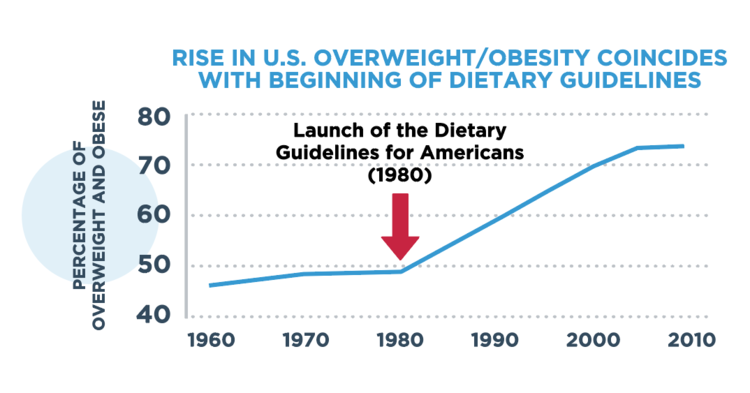
Her data showed the percentage of students in the overweight and obese categories, combined, grew from 39% in 2008 to 52% in 2021. This mirrors national trends demonstrating the anti-milkfat approach has not helped and may have harmed. The trends in fact have worsened ever since DGAs were created to infiltrate institutional feeding programs.

According to the latest National Survey of Children’s Health at the CDC website, the percentage of 10- to 17-year-olds with BMI in the obese category, alone, increased nationally from 15.4% in 2006 to 19.7% in 2018. In 1970 to 1980, it was 5%. This doubled eight years after the DGAs were born to 10% in 1988, then rose to 15.4% by 2006 after six years of USDA school lunch saturated fat caps were implemented, then stabilized at just over 15% from 2008 to 2012, then grew to 19.7% by 2018 — six years into the USDA ban on whole milk in schools.

The big milestone for whole milk in schools comes on the 5-year anniversary of Berks County, Pennsylvania dairyman Nelson Troutman placing his first painted roundbale “Drink Whole Milk (virtually) 97% Fat Free” in a pasture by a crossroads, which led to questions, publicity, and the creation of 97 Milk.

The 97 Milk educational organization has worked alongside the Grassroots Pennsylvania Dairy Advisory Committee on the legislative side. As a team, they continue to lead the charge for children to have the choice of whole milk once again at school. They are pleased to have worked with the Nutrition Coalition, founded by Nina Teicholz, author of Big Fat Surprise, and to see other national dairy and farm organizations join in support in recent years — from the American Dairy Coalition and Farm Bureau to National Milk Producers Federation and International Dairy Foods Association.

“We are grateful for this bill’s champion, the honorable G.T. Thompson. We thank him for not giving up,” said 97 Milk Baleboard originator Nelson Troutman in a Farmshine phone interview about the bill. “So many legislators get pounded from the top down, and they give up… and really, G.T. didn’t have a lot to gain out of this except helping the people. He did this for the kids, for the people, for the farmers. This is not a mandate. This is a choice, and I cannot emphasize the word choice enough.”

“The reason we got here is G.T.’s dedication to children having nutritious and delicious milk choices, and he brought it to the finish line in the House,” said Bernie Morrissey, chairman of the Grassroots PA Dairy Advisory Committee. “We have to keep working on the Senate, and 97 Milk has been a major part of educating people about this choice kids will have when the Whole Milk for Healthy Kids Act becomes law. The people on our grassroots committee and 97 Milk – we are a team. Our teams help each other. When you have a great team and teamwork, that’s how things get done.”

“This is a strong step in the right direction, and we have to keep going to our total destination,” said G.N. Hursh, Lancaster County, Pa. dairy farmer and chairman of 97 Milk. “We at 97 Milk totally support this bill. Whole milk choice in schools is clearly a national improvement for our future leaders. This is a win for good taste and excellent nutrition!”

Dale Hoffman and his daughter Tricia Adams, also members of the Grassroots Pennsylvania Dairy Advisory Committee expressed their gratitude. Three generations operate Hoffman Farms in Potter County, Pa.

“G.T. has really fought for this and put a lot of work into this. We appreciate what he has done in helping out the kids and the farmers,” said Dale in a phone interview. “When you look at the health situation, the trends have gone the other way without whole milk in the schools. Kids are dumping the milk, and you can’t blame them. They need those nutrients physically and mentally. Milk is one of nature’s most perfect foods. We produce it and grew up with it. Children should be able to choose it.”

Grassroots committee member Krista Byler, of Spartansburg, Pa. is a Union City school foodservice director and head chef. She said the Whole Milk for Healthy Kids Act “is huge for me because I have seen this from the startup, and I finally seeing movement in the school nutrition organizations. I see the whole picture coming together. I am amazed to see it reach this point that now students are much closer to having a milk choice that meets their nutritional needs,” she said.

Byler notes that the milk carton shortage affecting school districts this year has been a catalyst for support among her peers for the expansion of choices in milkfat levels.

“It’s sad to say, but as we struggle on the milk carton shortage, it forces people in my position to think outside the box and look at alternative service methods,” said Byler. “We are seeing students asking for other milkfat options, such as whole milk.”

She says she sees more of her peers today are excited about this bill and how it is worded in a way that makes it possible for them, as school foodservice directors, to implement — to actually offer whole milk as an option for students and not be financially penalized by the federal government for exceeding arbitrary and outdated fat percentages on the meal.

“I’m excited to be closer to having this choice to meet students’ needs in a way that is nutritious and that they find delicious. My students will be so excited,” said Byler. “When it becomes law, it will be a huge win for kids everywhere, and our waste will certainly go down.”

Look for more in Farmshine about this milestone, what’s next, and the three amendments that were offered and approved along with the bill. They are: 1) allowing school milk to be either organic or non-organic, 2) preventing school milk from Chinese state-owned enterprises, and 3) prohibiting USDA from doing its proposed elementary school ban on flavored milk.

Dear Secretary Vilsack, please extend Dietary Guidelines public comment past May 16 and open saturated fat limits for course-correction review!

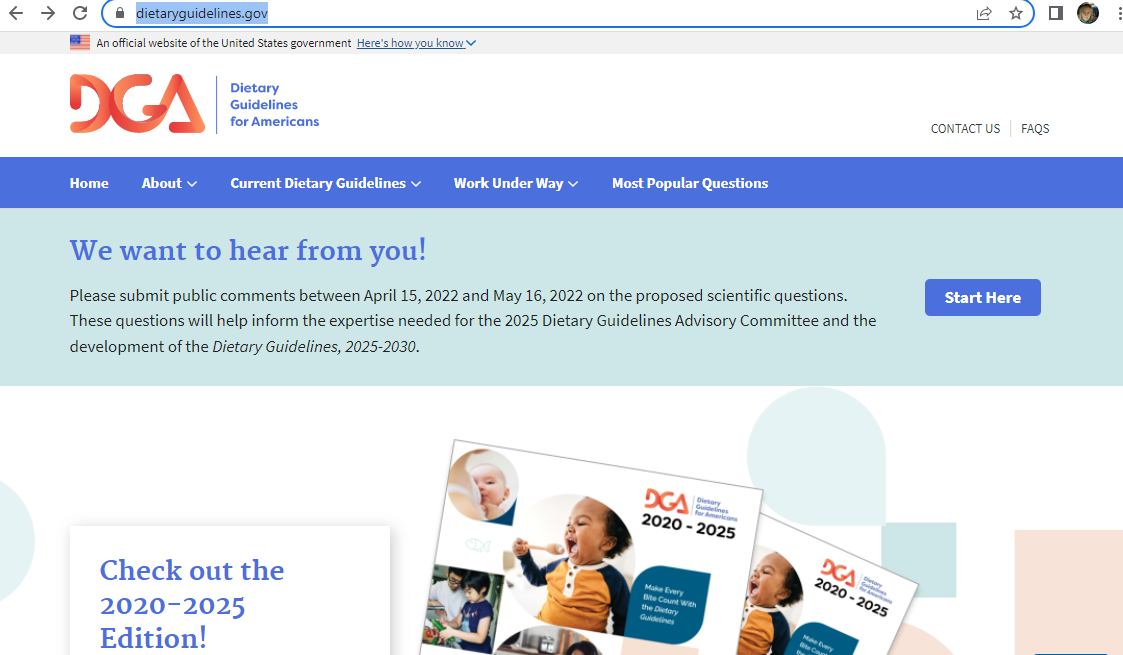
Screen capture from https://www.dietaryguidelines.gov/

‘Preponderance of evidence’ screams for a Dietary Guidelines course-correction to expand flexibility and increase, not reduce, saturated fat limits as well as to examine the nutrient deficiencies of currently approved dietary patterns in all life stages, and to examine the effects of these overly-prescriptive one-size-fits-all patterns on vulnerable populations in government feeding situations such as children obtaining most of their nourishment at school where DGAs rule.

Editorial opinion by Sherry Bunting, Farmshine, May 6, 2022

Recently, USDA and HHS launched the 2025-30 cycle of the Dietary Guidelines for Americans (DGA). Trouble is, the first and undeniably most important part of the process that will shape WHAT can be amended and the research-screening process for doing so are the “scientific questions” to be examined.

A paltry 30-day public comment period about these already-prepared questions was announced April 15 and expires May 16, 2022.

By the time you read this, there will be fewer than 10 days to comment. To read the USDA HHS proposed scientific questions, click here and to submit a comment to the docket, click here

In addition to the links above, comments can be mailed to Janet M. de Jesus, MS, RD, Office of Disease Prevention and Health Promotion (ODPHP) Office of the Assistant
Secretary for Health (OASH), HHS; 1101 Wootton Parkway, Suite 420; Rockville, MD 20852. Be sure to reference HHSOASH-2022-0005-0001 on the submission.

Lack of time to comment on the questions is not the only problem with the 2025-30 DGA launch. The commenting instructions state: “HHS and USDA will consider all public comments posted to Regulations.gov in relation to the specified criteria. Comments will be used to prioritize the scientific questions to be examined.”

These instructions do not leave much opening to amend the already-prepared scientific questions.

I encourage others to join me in requesting an extension of this comment period to 90 days and to open the process into a course-correcting complete re-evaluation of saturated fat limits — to drive home the point that the “preponderance of evidence” screams for higher, more flexible, saturated fat limits (especially for children), to review the science on saturated fat consumption at all life stages on not only cardiovascular health, but also weight management and diabetes, cognitive health, and other areas, including how current saturated fat limits affect under-consumption of essential nutrients, how these limits affect school meal patterns where most children receive most of their nourishment most of the year — considering the 2020-25 DGA Committee admitted the three government sanctioned dietary patterns are deficient in key nutrients of concern for all age groups.

Join me in asking USDA and HHS to educate the public about the true impact of the DGAs on our most vulnerable populations (children and the elderly) and to avoid prescriptive one-size-fits-all dietary patterns.

People don’t seem to pay much attention to the DGA process because there has been no full disclosure of the true impacts of these so-called “guidelines.” People say, oh, they’re “just guidelines.” Maybe that’s true for you and I, but what about the children? What about the elderly? They are under the ruthless thumb of USDA HHS DGA implementation in feeding programs for America’s most vulnerable ages and demographics.

The ink is barely dry on the 2020-25 DGAs, leaving many to believe there is plenty of time to comment on the next round — later — when the process is fully underway. After all, USDA reminds us this is a five-step process, and they are “committed” to providing plenty of opportunities to be heard.

Wrong. This first step is in many ways the most important for public comment because it shapes how the other four steps unfold. It shapes what research will be screened in and out of the process. It shapes what areas of the DGAs can be amended and specific criteria for how they can be amended — no matter how earthshaking a dietary revelation.

This first step also shapes how your future comments will be considered. For example, many comments, even research in the screening process, will be ignored as this 2025-30 DGA cycle unfolds when it is deemed to fall outside of the specific criteria set in the scientific questions of step-one — right now — for this 2025-30 cycle.

USDA and HHS have already formulated the 2025-30 “scientific questions,” leaving most of the failed guidelines ‘base’ pretty much moving forward — as-is.

One area the Departments announced will run parallel is on ‘planetary diets.’

The USDA HHS announcement notes that the 2025-30 DGAs won’t incorporate DIRECTLY any ‘climate-related’ dietary recommendations, stating: “Sustainability and the complex relationship between nutrition and climate change is an important, cross-cutting, high priority topic that also requires specific expertise. HHS and USDA will address this topic separate from the Committee’s process to inform work across the Departments.”

That’s about as clear as mud. In this statement, USDA seems to tie nutrition and climate change together with the term “cross-cutting,” and describes the “relationship” as a “high priority topic,” assuring us that USDA and HHS will handle this separately and then “inform.”

After looking through the scientific questions in the areas of systematic review and dietary patterns, below is my citizen’s comment: 

————————–

Dear Secretary Vilsack:

To use the phrase you used repeatedly in a Congressional hearing about the 2015-20 Dietary Guidelines, the ‘preponderance of evidence’ on saturated fat limits for all ages — and for children and adolescents in particular — should be up for a complete re-evaluation in the 2025-30 DGAs.

Study after study show our government-sanctioned dietary patterns are failing our children who receive most of their nourishment at school under the thumb of USDA-HHS Dietary Guidelines. USDA even threatens to financially penalize any school that dares make nutritious, wholesome, satiating, healthful whole milk available — even for students to buy from a vending machine run by an FFA chapter seeking to raise funds for agriculture programs, simply because the calories and percent of calories from saturated fat in that nutrient-dense superior beverage exceed your arbitrary, unscientific DGA limit.

But that’s okay, say the HHS USDA DGA, just have a Mountain Dew Kickstart or a sugar-free Gatorade Zero. PepsiCo thanks you, dear USDA, for caring about the profitability of the Smart Snacks empire they and others have built on your say-so, while children become fatter, sicker and sadder and under-consume key nutrients for health and brain power.

Meanwhile, farmers wonder what on earth they can do to get the nutritious, natural, beautiful, local whole milk product they produce to the children in need of nourishment at school, while doctors bemoan under-consumption of nutrients of concern like calcium, vitamin D and potassium (abundant in milk, better absorbed with the fat).

Even the 2020-25 DGA Committee admitted that all three dietary patterns leave all age groups deficient in key nutrients. That’s okay, just get in line for our vitamin pills, right?

It’s even more concerning to see the diets in reality are even worse than they are on paper, if that’s possible, as students pass-over the obligatory skimmed milk in favor of big-brand junk drinks devoid of nutrition, or they take the skimmed milk and toss it into the trash.

USDA’s own study in 2013 showed that in the first year after the Smart Snacks regulations tied competing beverages to the DGAs — outright prohibiting whole milk and 2% milk from schools — student selection of milk fell 24%, and the amount of milk discarded by students increased by 22%. Other studies since 2012 show milk is among the most frequently discarded items at schools. World Wildlife Fund issued a report saying one way to reduce this waste is to educate schools on the fact that they are not forced to serve milk, they can offer it and educate students not to take the milk if they aren’t going to drink it.

What does that solve? It still leaves children and youth without the nourishment USDA touts in the school lunch program on paper even as the school meal situation has become an increasingly restrictive maze of fat limits and thresholds that schools give up managing it and leave it to the ‘Big Daddy’ institutional foodservice corporations with their pre-packaged, highly-processed deals that come with ‘USDA compliance guarantees.’

Why is the Biden Administration fast-tracking this agenda? There are four bipartisan bills before Congress dealing with school milk and others dealing with childhood nutrition. There are bills about allowing whole milk in schools at the state level in Pennsylvania and New York, with lawmakers in at least two other states watching closely to perhaps do the same.

The Whole Milk for Healthy Kids Act to repeal your whole milk prohibition has 93 cosponsors in 32 states. City schools, rural schools, town mayors, boards, teachers, parents, coaches, dieticians, doctors, nurses, farmers — people from all walks of life — and, yes, food and nutrition scientists are increasingly appalled at the school milk and school lunch issues — all under the thumb of the DGAs.

The DGAs are designed in a way that each 5-year cycle builds on the one before it — since 1990! The scientific questions are formulated to keep moving that way instead of looking back and re-evaluating or re-examining nutritional aspects USDA considers ‘settled science.’

In reality, however, there is nothing settled about the DGA ‘science’ on saturated fat. This build-upon process is flawed.

In fact the ‘preponderance of evidence’ would tell us the process should be opened up for a more thorough and reflective review, toward more flexible saturated fat limits — especially to expand overly-restrictive saturated fat limits that are creating concerns for children and youth and, in effect, keep nutrient-dense whole milk and 2% milk, as well as full-fat dairy products out of schools. By these standards, the DGAs actually embrace artificially-created highly processed beverages and foods — even Impossible Burger over Real Beef.

The preponderance of evidence is undeniable. The DGA saturated fat limits are a straight-jacket for schools, imprisoning children into poor nutritional health outcomes that can stay with them the rest of their lives and may affect their abilities to learn. Our future as a nation, the health of our children, the economic standing of our food producers, our nation’s food security, our national security itself are all rooted in these DGAs that are still centered on false narratives about saturated fat that the preponderance of evidence has disproven.

Please extend this comment period to 90 days and expand the input considerations and the process, especially as relates to saturated fat limits for all life stages and evaluate the current patterns for under-consumption of nutrients of concern for all life stages. Simply amending a failed base product is unproductive at best and creates more negative health consequences at worst. We need a DGA course correction, a re-do, rigorous scientific debate, acknowledgment that the science is not settled against fat with the preponderance of evidence moving toward the healthfulness of dietary fat.

Finally, we need a Dietary Guidelines product that serves more broadly as just that — guidelines — not a prescriptive one-size-fits-all straight-jacket that obviously is failing the majority of Americans.

Public discussion about the process is needed in a more open, thoughtful, comprehensive manner before the 2025-30 DGAs get underway.

-30-

One-sided bias evident as DGAC edges fat ‘caps’ lower, even our toddlers aren’t safe

Over 500 pages, 250,000 reports screened-out, nutrient deficiencies ignored, and now toddler food patterns included

IMG-8568By Sherry Bunting, Farmshine, June 19, 2020 edition
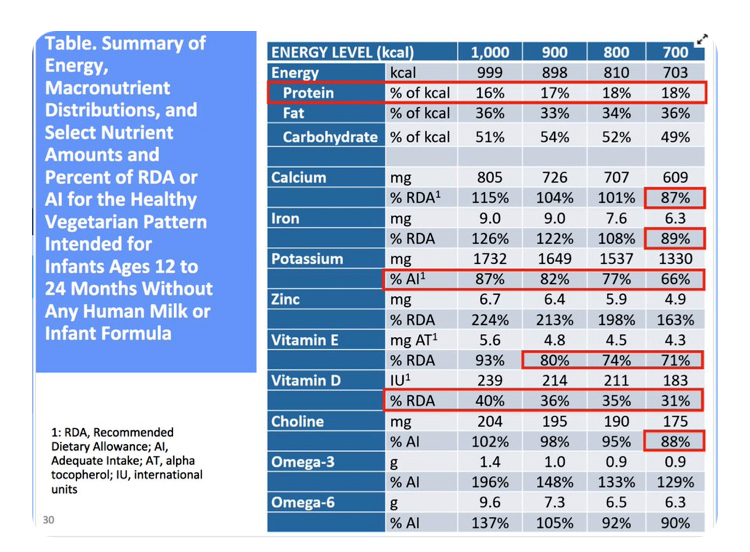
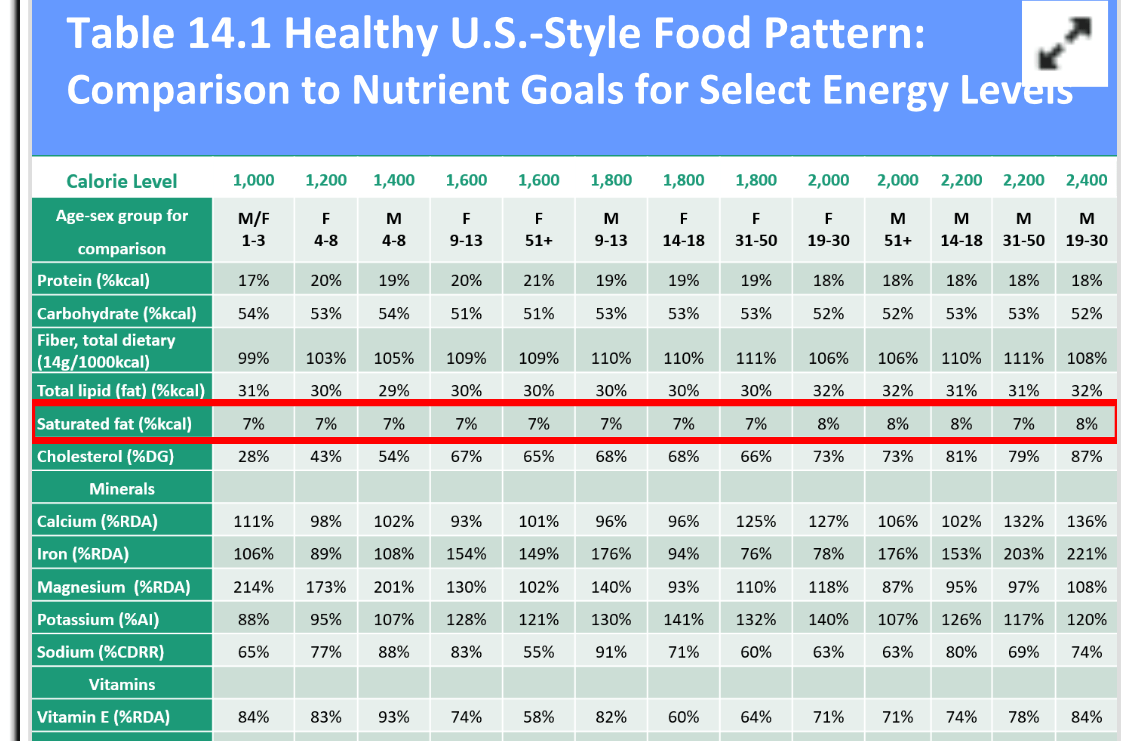
WASHINGTON, D.C. — The big news from the final Dietary Guidelines Advisory Committee (DGAC) meeting in which they presented their 500-plus page report Wednesday, June 17, is that the current saturated fat caps — at less than 10% of calories — will stand. But at the same time, the saturated fat subcommittee detailed its true recommendations, pegging saturated fat levels to be at 7 to 8% of calories, and these charts are the ones that will likely be forced on schools and daycares and nursing homes and military diets. (More detail on this to come.)

After 7 hours of subcomittee presentations, in an online virtual format, covering all facets of the 2020-25 DGAC ‘expert’ report, it was hard to choose which of the many eyebrow-raising moments was most concerning. In fact, DGAC comments were at times actually humorous, if this was not such a serious matter.

Perhaps it was the moment when the subcommittee handling the saturated fat questions decided to go backwards from 2015. Not only are they edging the saturated fat caps lower in their forward-looking recommendations, they want to bring cholesterol caps back into the mix. That’s right folks, we’re going back to cholesterol caps “because humans have no need for dietary cholesterol,” they declared matter of factly.

That’s the mentality. No need for cholesterol, which is essential for every single cell in the body and especially important in hormone synthesis, not to mention brain function. But, then again, the DGAC never was happy about giving up those cholesterol caps in 2015, especially since the anti-animal agenda of noted DGAC vegetarian leanings have found they need more than saturated fat caps to hang their hats on — especially since the 2020 DGAC included toddler food patterns in their report for the first time.

That discussion was also perplexing. No less than a full hour was spent going through every diet formulation the subcommittee could conjure up in order to get toddler food patterns closer to a “healthy vegetarian diet”, the one of three currently government-approved dietary patterns favored by the DGAC, now being recommended for children UNDER 2 years of age.

Each combination of foods they walked through (because the new way of presenting these patterns is to have actual foods listed to avoid) had them facing a big dilemma. Within the amount of calories a toddler will consume, there was no way to deliver the nutrients they need for life without more animal protein foods. In each case, the toddler patterns did not provide all the essential nutrients needed for brain development, growth, and health.

Iron was just one of them. When it was pointed out by one DGAC member that animal protein delivers absorbable iron — critical for toddlers — unlike a handy-dandy supplement pill, vegan-leaning Linda Van Horn from the saturated fat committee chimed in with a bizarre comment. She said it was not a concern because research she couldn’t put her fingers on at that moment suggests vegetarian adults have the ability to absorb more iron from supplements and other foods, so, she said, “kids of vegetarian parents could have this ‘accelerated absorption’ capability from their parents.”

Inherited vegetarian genetics? Eye-roll.

Another committee member politely suggested that, yes, there is research showing vegetarians absorb more iron from supplements and other food sources “because they are deficient in iron in the first place.”

66686

DGAC says healthy vegetarian pattern for toddlers is good to go even though it doesn’t meet their needs for essential nutrients for life. No solution was given by DGAC for this problem. Sadly, in fact, children in schools and daycares were referenced as a group that can “adhere” to the diets  due to government p.

Unfazed, the committee ignored any attempt at logic on the many questions of these diets missing quite a few “nutrients of concern.” They simply moved on… next slide.

Throughout the discussions of dietary patterns, saturated fat caps, and such, the “nutrients of concern” not being met in the food patterns — mainly fat soluble vitamins like D and A found naturally and more absorbable in whole milk vs. fat free and low fat dairy, for example — they just kept moving on in their direction away from animal foods, comforted by their cherry-picked research.  It wasn’t just vitamins D and A and iron, but also iodine, choline, B12 (in adults), potassium, and more. Throughout the daylong presentations, this problem with nutrients not being met kept cropping up for each “life stage” the DGAC was addressing. What was new this time was the addition of food patterns for pregnant and lactating women and children from birth to 24 months of age.

In a more detailed look at the report next week, a few ‘good news’ points for dairy as a food category can be shared, but this underlying avoidance of saturated fat put all things dairy squarely in the fat-free and low-fat zone, and the new and stricter recommendations for added sugars and beverage calories were another concern for children and the dairy sector. Yep, you guessed it. Coke and Pepsico will be happy as their high fructose corn syrup mixed with artificial sweetener concoctions will be looked upon favorably vs. nutrient-dense chocolate milk. (More on that next week.)

Other mentally exhausting moments occurred when subcommittees made recommendations based on limited evidence, or conversely, graded evidence as strong when it was based purely on observational studies. When these concerns were brought up, the answer was to point at the work of the 2015 DGAC that considered “so many more studies” and that the DGAC had decided at the outset to “build on the 2015 report” — more or less picking up where they left off — when it came to the question of dietary fats.

That was the ‘magic wand’ applied throughout the day.

In fact, as Nina Teicholz, author of Big Fat Surprise and founder of the Nutrition Coalition, pointed out in her blow-by-blow twitter feed throughout the day, the movement to subtly edge saturated fat caps lower happened on the very day that a major new review was published on saturated fats to the contrary. The authors of that report — unconsidered by the DGAC of course — included the chair and another member of the former 2005 DGAC.

“Their findings are quite opposite of those by the current one-sided 2020 DGAC,” wrote Teicholz.

Another eyebrow-raising moment came when the committee debated how to “harmonize” the food listings on their charts taken from studies where they had different meanings or included different foods.

Dairy was one example. Whole milk bad, fat-free good, and yet ‘milk’ as an entity showed up with so many positive influences in combined research charts (including cardiovascular disease, all cause mortality, obesity, type 2 diabetes, immune status and more). But the committee didn’t know which milk was in the study, and that distinction is important!

Similarly, they lumped red meat and processed meat together on one chart (the negatives), and then on another chart showing positives, they listed ‘lean meat’ but said they didn’t know if that category included lean red meat or just poultry and fish — even though the same chart had separated poultry and fish into their own categories!

It all seemed like nonsense the DGAC should have taken time to figure out before rushing their report to print.

Even though a letter signed by nearly 300 doctors and medical professionals, letters from dietician groups, letters from members of Congress and others had requested a delay, the DGAC was in a hurry to do the June 17 presentation. In fact, when registering to participate in the presentation online, a note was sent back stating that “this is only a draft and it will have a comment period.”

Trouble is, the expert report is now out, and it’s going to be difficult to put that jack back in the box with a 30-day or 60-day comment period after USDA and HHS formalize it — because so much science was excluded from the beginning. A do-over with a new committee is needed.

This committee took time Wednesday to explain the litany of poor reasons why favorable fat studies were excluded from their cadre. The federal staff that screened for each subcommittee went through a total of 270,000 reports and whittled it down to 1500 on all pertinent questions for this DGAC cycle. That is a story in itself because rigorous evidence was ignored in favor of “associated” studies.

Another concerning moment came early in the day’s presentations when committee members talked about promoting federal diet-tracking, biomarkers and monitoring. Americans will love that kind of intrusion. And in the course of the behavioral recommendations they made, the schoolchildren were their go-to for such monitoring. A captive group of guinea pigs!

But perhaps it was the concluding remarks Wednesday evening at 7:30 p.m. as the daylong meeting came to a close that really stood out. Chairwoman Barbara Schneeman, Ph.D. talked about the enormous task the DGAC had completed over the past 15 months. She said the committee would put its report in final form over the next two weeks, present it to USDA and HHS by the end of June and then USDA and HHS would “formulate it” into recommendations that can be posted for public comment by July 15 and they would be a done deal for implementation by the end of 2020 for the next five years.

Schneeman also went on to talk about how the government nutrition programs needed to be working on how to get more Americans “adhering to these diets”, with emphasis on restricting fat, added sugars and salt while still maintaining positive energy balance and meeting nutrient needs even though the DGAC had not even the slightest answer for the dilemma of meeting nutritient targets with these patterns and recommendations, especially for children.

The clincher. Schneeman pointed out how the COVID-19 pandemic shows just how much the current state of chronic dietary-related diseases put certain populations in the most vulnerable position for infectious diseases like Coronavirus.

But that’s okay, the reason we have an obesity and diabetes epidemic as well as other chronic conditions is because, she said “Americans have never followed our dietary guidelines.”

Begging to differ with their federal statistics, the record is clear that per-capita consumption has declined among the foods DGAC set out over the years to have Americans increasingly avoid. These chronic conditions have worsened with each 5-year cycle moving us further in the fat-free and low-fat direction. So much so, that many of us don’t even realize how we are impacted, and especially how our children are impacted. Now, even the toddlers won’t be safe.

Get involved by sending or phoning a comment to YOUR members of Congress and the Secretaries of Agriculture (USDA) and Health and Human Services (HHS) at this link https://www.nutritioncoalition.us/take-action/

Look for more details in part two.

Past articles on this blog about the DGAC process are listed below

Dietary Guidelines Committee must be stopped… 

Call to action: Feds ignore science on saturated fats… 

Dairy advisory committee formed… 

There is a war to win for our farmers and our children… 

Nutrition politics: Kids and cattle caught in crossfire… 

Dietary Guidelines Committee must be stopped, its flawed upcoming report excludes rigorous fat studies

ThenAndNow_DGAs_web

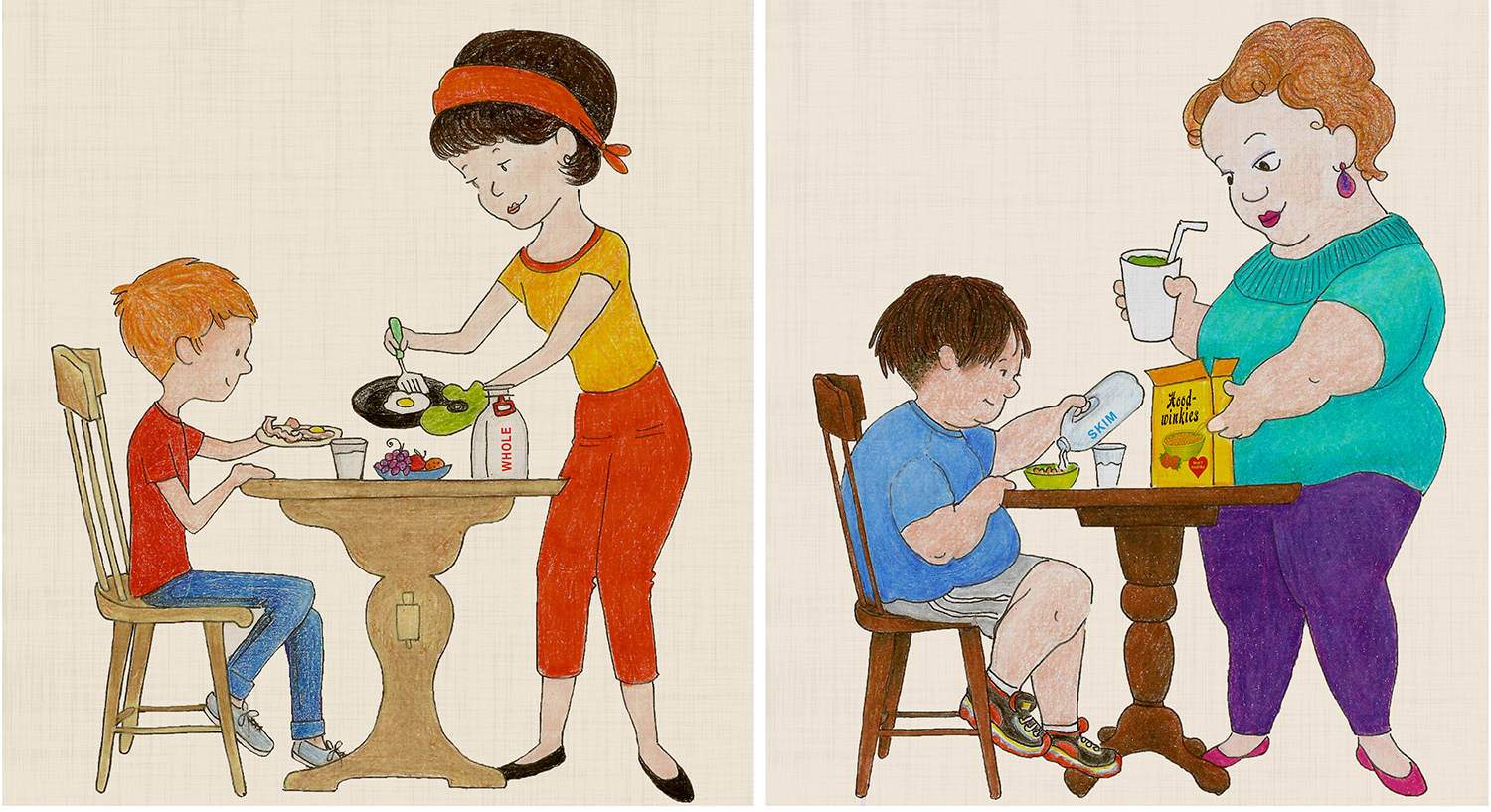
Drawings by Heidi Krieg Styer as published on Farmshine cover, June 12, 2020 edition

By Sherry Bunting, Farmshine, June 12, 2020

WASHINGTON, D.C. — As we have reported for several years now, there is this thing called the Dietary Guidelines for Americans that most people think is simply government guidance of how Americans should eat to be healthy, and that we can take – or leave – that advice based on our own choices and understanding of the science.

Wrong!

The Dietary Guidelines for Americans increasingly control our choices in ways subtle and obvious, especially where our children are concerned and especially where the poorest among us are concerned.

They began in the 1980s and are updated every five years by a Dietary Guidelines Advisory Committee. Since 2000, these Guidelines have become more restrictive, and in 2010 — under the Obama administration with Ag Secretary Tom Vilsack implementing measures to ban whole milk in schools and then lobbying for the bill, Congress took the step that linked the guidelines more closely than ever to our schoolchildren through the Healthy Hunger-Free Kids Act. The bill is anything but what its name implies.

At the same time, Americans have continued to grow fatter, sicker and sadder as the limits on saturated fat have grown stricter and the federal control more pervasive.

dga2

Most of the ‘experts’ on the DGA Committee are free to choose their own meal pattern. Our schoolchildren, our poor, our chronically ill, our elderly, our military, our economically and nutritionally at-risk persons — their dietary choices are controlled by the DGA. According to the CDC, these are the demographic populations dealing with the most pervasive rise in obesity, diabetes and other chronic illnesses many scientists believe are rooted in the DGAs.

For 40 years, the advice coming from the Dietary Guidelines Advisory Committee every five years, and then virtually rubber-stamped by the Secretaries of Agriculture and Health and Human Services, has led Americans down an unhealthy road. The Committee pushes vegetarian eating patterns, high carb / low fat dogma, and increasingly strict saturated fat restrictions despite sound science to the contrary.

The process needs reform, according to the Academies of Sciences.

The 2020-25 Dietary Guidelines draft will be released next Wednesday, June 17 by the current Dietary Guidelines Advisory Committee (DGAC), and as the Nutrition Coalition and others have been warning, this draft is bad for Americans, bad for our children, and bad for our dairy and livestock producers.

What’s more, this draft is based on the deliberations of a committee that excluded rigorous studies showing the saturated fat in milk and dairy products is actually GOOD for us, especially for our children, and that it has little if any negative effect on cardiovascular health and all-cause mortality, with positive effect on Type II diabetes, obesity, cognition, brain function and mood.

Quite literally, the DGAC, Secretaries of Ag and HHS (even Congress and past and present administrations) — in their infinite wisdom and refusal to turn this Titanic away from the iceberg – are happy to watch American health sink, and the survival of our farmers and ranchers to sink right along with it.

If ever there was a time for action (and believe me, this chorus I’ve sung quite a few times since the year 2000), it is now!

Contact your Senators and Representatives in Washington and ask them to urge Secretaries Perdue and Azar to delay this DGAC report until all of the science is considered.

It is unconscionable that USDA – through its strange screening process that includes “conformance to current federal policy” implemented by department interns – was the first layer prohibiting rigorous science from the DGAC work over the past year.

It is even more deleterious that the DGAC further refined the science included in the saturated fat questions to illogical parameters that no other DGAC subcommittee used for its screening process.

Americans are smart. They are choosing whole milk and full-fat dairy products because they are learning about the science that was buried and suppressed over the past 40 years as well as the new studies surfacing.

But that’s only good for the wealthy adults among us. Children are ruled by DGAC decisions, thanks to Congress. Those suffering poor health are ruled by DGAC decisions because medical professionals tend to regurgitate them.

Families in need are perhaps MOST controlled by DGAC decisions because they rely on government feeding programs that must meet these fat-restricting Dietary Guidelines, but are issued SNAP cards that allow them to buy soda and cheap snacks full of carbohydrates that do nothing nutritionally for them.

Amid the COVID-19 crisis, how many times have we heard that the obesity and diabetes in our population, especially the poor, increases how harmful this virus is to certain populations, demographically? With these guidelines governing USDA feeding programs, it’s no wonder.

Shameful!

Not to mention, a year ago, military generals crafted a letter to Congress over their concerns about recruits being too obese or unhealthy to serve. Yes, the military is another sector of government-feeding that is tied to the flawed Dietary Guidelines for Americans.

So, big deal, my family can still choose. Right? For many families, those choices are made for them when dining out as restaurants increasingly document calories, saturated fat and other information on menus. This is required by the federal government for chain restaurants of a certain size. More of these restaurants admit to using “stealth health” to make adjustments to meals to show that they are meeting – you guessed it – the Dietary Guidelines.

In fact, the Food and Drug Administration (FDA) began its multi-year Nutrition Innovation Strategy, whereby it is seeking to “modernize” standards of identity to “achieve nutritional goals.” FDA also is designing a “good for you” symbol that foods will only get if they meet the criteria being developed. The agency in its meetings over the past year, cited reduced consumption of fat and salt as primary nutritional goals, and have made statements such as “American consume too much protein.” The FDA’s “modernization” of food labeling and standards of identity will certainly move forward under the good ‘ole Dietary Guidelines.

Meanwhile, when it comes to the simple “choice” of whole milk or even 2% in schools and daycares for children over two years of age, these wholesome products are outright banned because of the Dietary Guidelines. In fact, not only does the government require non-fat and 1% milk to be served, cheese and yogurt are also limited to low- and non-fat.

When fat is removed from the diet, carbs and sugars replace it, and foods are not consumed that bring tons of nutrients and vitamins to the table.

Here we are at a crossroads in our nation’s health. Obesity and diabetes are reaching epidemic proportions in our children. Iron, iodine, calcium, and certain vitamins, especially fat-soluble vitamins found in whole fat dairy and meats are nutrients of concern. Doctors are finding Americans, especially children and teens, are deficient in these nutrients when low-fat Dietary Guidelines rule the plate.

The only thing that can possibly turn the Titanic as it is already crashing on the iceberg is a groundswell of letters, phone calls, emails and faxes to members of Congress, Secretary of Agriculture Sonny Perdue, Secretary of Health and Human Services Alex Azar, even the President of the United States.

Sheer numbers are needed. To-date, medical and health professionals, scientists, teachers, parents, citizens have commented on the DGAC docket. Many have written letters and opinions, forwarded research that has been excluded, pointed out the flaws in research that was included.

Now Congress needs to hear from their constituents. There’s a war to win for our health and our farmers.

Concerned citizens have met with members of Congress over the past year on issues such as whole milk in schools, and yet the Whole Milk for Healthy Kids Act, House bill 832, and Milk in Lunches for Kids Act, Senate Bill 1810, have stalled at 41 and 3 cosponsors, respectively, which is where they were in October when I went to Washington with the first 10,000 of the 30,000 names on the Whole Milk Choice in Schools petition.

There are heavy hitters on the other side of this fat discussion. Never mind the animal and climate activists with their facts all jumbled up, there are huge investments in the future of food by powerful people who want to see the Dietary Guidelines continue the current path.

Processed With Darkroom

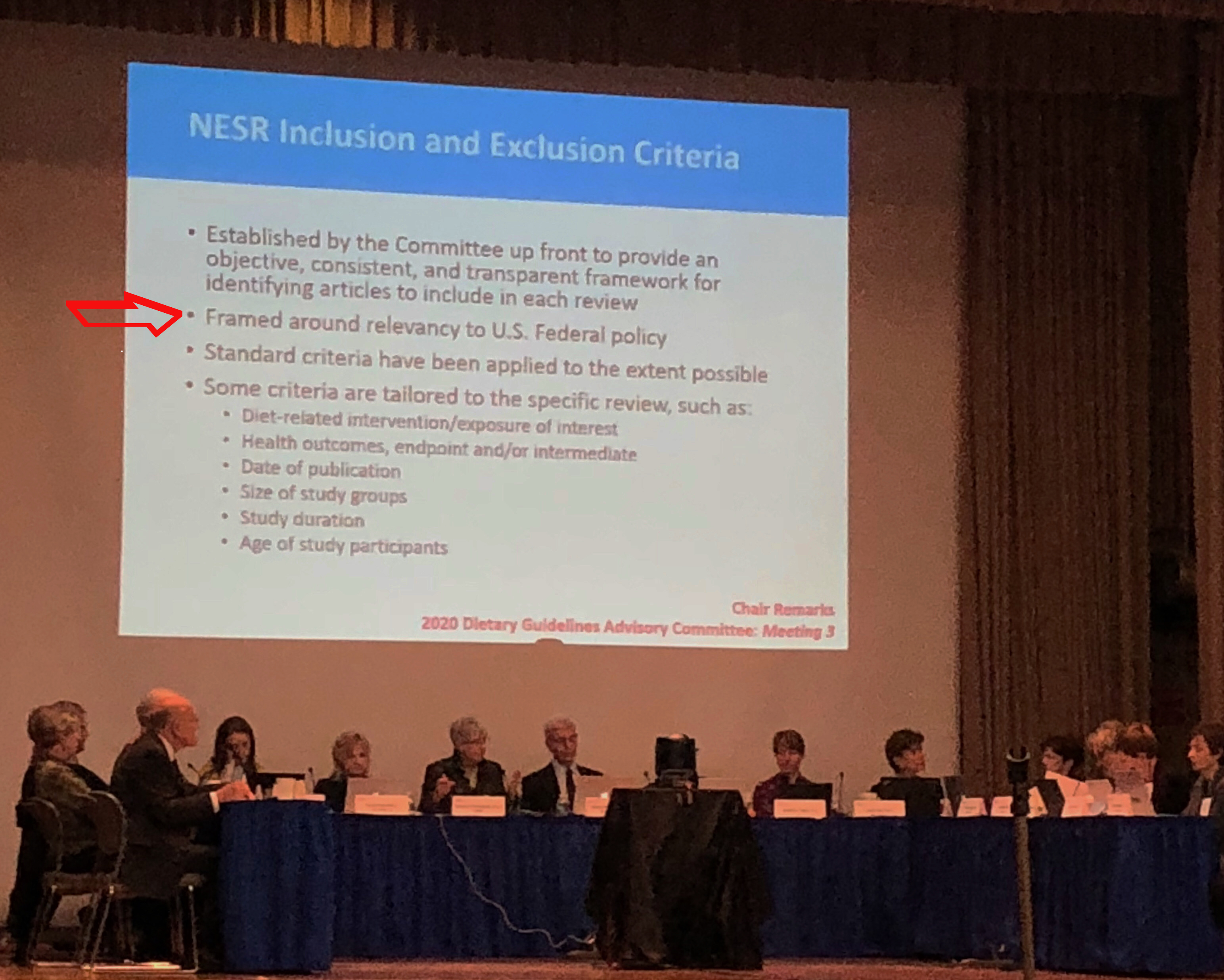
Part of the screening process used by USDA for science that will be included or excluded from Dietary Guidelines Advisory Committee consideration is this curious item shown above: “Framed around relevancy to U.S. Federal  Policy”. Committee members in October asked for more information on this research screening criteria. USDA explained it to them and those watching that this refers to including only the research that “aligns with current federal policy.”

While I was in Washington in October, my eyes were opened. I sat in on the DGAC meeting and wrote about it in Farmshine. There, I learned that one of the screening criteria by USDA for determining what science was “in” or “out” of the DGAC process is this strange point: “relevancy to U.S. federal policy.” When a question was asked by a member of the committee about that point, it was explained as “research inclusion that conforms or aligns with current federal policy”.

That, my friends, is the unelected bureaucracy feeding itself and pretending to have the scientific basis to use diet to achieve other goals.

I visited Senator Bob Casey (D-Pa.) that day and asked his staffer why Sen. Casey would not support Senator Pat Toomey’s (R-Pa.) Milk in Lunches for Schools bill.

The response? “We (Congress) are not a scientific body. We have a process for that, the Dietary Guidelines.”

Yep. There it is again.

When pressed further, asking how citizens – constituents — can redress their concerns with ELECTED officials if that committee stands in the way, I was surprised to hear the staffer note that National Milk Producers Federation (NMPF) did not support Sen. Toomey’s bill. I had identified myself as a member of the Grassroots PA Dairy Advisory Committee but also as a mother, grandmother and former school board director, but the answer I was given honed-in on my “dairy” reference.

I was told by the Casey staffer that NMPF did not support Toomey’s Senate bill on whole milk because it included language that would not just allow the choice of whole milk, but would also exempt school milk choices from the “10% calories from saturated fat limit.”

Later, I contacted NMPF and spoke with one of their lobbyists who confirmed that NMPF did not support the Toomey bill language. They did not want that exemption for milk because they said they believed “we can win the fat argument.”

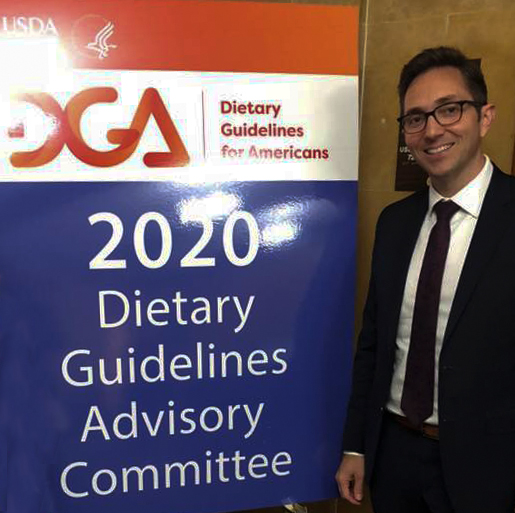
dga1Meanwhile, on the day of my trip to Washington in October, as I posted a photo on facebook of USDA Food and Nutrition Services undersecretary Brandon Lipps in front of the Dietary Guidelines sign at the DGAC meeting in the USDA building, I recalled his words to me, that the department loves milk, but that the “science” needs to come together, and that the industry needs to be on the same page. (I had just handed him his copy of the first 10,000 signatures on the whole milk in schools petition)

Mr. Undersecretary, how can “the science” come together when your USDA interns and DGAC members left a lot of the good science on the cutting room floor and effectively screened it out of the “coming together” process these 5-year DGAC cycles are intended to address?

As I walked out of the USDA building to meet with legislators on that day in October 2019, I noticed a post on my facebook newsfeed from Hoard’s Dairyman quoting DMI CEO Tom Gallagher as follows:  “Now, we’re not sure if it will be in this go-around with the Dietary Guidelines for Americans . . . but I believe by the next Dietary Guidelines we will get the fat story reversed,” said Gallagher. “That opens up the door to whole milk products and other dairy products in schools, which would be a big plus.”

Already in October, when the DGAC process was near its beginning, the top national dairy checkoff leader was publicly admitting defeat. Or, was he actually telegraphing the wishes of DMI “partners” to USDA, another partner, that they’d prefer to keep stalling it.

In this quote, Gallagher makes it look like DMI supports whole milk in schools, while at the same time stalling a change in policy and conceding to a defeat in 2020 before the game got off the ground — while diverting everyone’s attention to 2025.

Back in 2014-15, I was involved in that DGAC cycle, writing several columns for a metropolitan newspaper. Same story, different year. You’ll find lots of background here.

At the time, I asked checkoff leaders at a dairy meeting why they weren’t involved in turning this around on saturated fat and why were they not more vocal in the guidelines process. I was told in 2015, that they were working on it for 2020.

Stall, delay, stall.

Our kids and our farmers don’t have 5 more years to get 40 years of wrong and 10 years of really-really-wrong, right.

This week, I was pleased to see Bob Gray who has represented the Northeast Council of Dairy Cooperatives sent out a memo to industry colleagues citing what Nina Teicholz and the Nutrition Coalition have been sounding the alarm about. He urged people to contact members of Congress and ask them to get a delay in the release of the DGAC 2020-25 report, to keep it from being released next Wednesday, and to keep it off the table until the science that was excluded is considered.

Unfortunately, at other levels of industry involvement, the response is a shrug.

For example, two weeks ago, I heard from a dairy farmer who contacted her regional dairy checkoff organization and asked for help distributing whole milk gallons to families in need at her local school during lunch pickup.

“You can’t do that,” she was told. “It’s not allowed.”

Unfazed, she contacted the school and the processor anyway, on her own, and both were enthusiastic about making her idea happen. She and her husband purchased the whole milk with their own money – 200 gallons of it – and they stood beside the school foodservice folks and gave it to families driving through picking up school lunches.

Additionally, ADA Northeast is a regional checkoff organization that has indicated to dairy farmers that their taste tests in cities show children don’t really notice the difference between whole milk and 1% low-fat milk, and that consumption of milk did not increase when whole milk was offered, but that consumption did increase when 1% chocolate milk was offered instead of just non-fat chocolate milk.

For the industry – it’s all about the 1% milk in schools. In fact, if the DGAC report is released next Wednesday and gets on its way to USDA / HHS approval, 1% milk will be kissed goodbye in schools as well because the DGAC is doubling-down on saturated fat levels, not loosening them.

Meanwhile, a high school / middle school trial in western Pennsylvania would put these checkoff findings to shame. Teenagers given the choice of whole milk this school year favored whole milk three to one over 1% low-fat milk. The milk choices were put in front of them with no information, and within a short time, they figured it out on their own. Within five months of students having this choice of whole milk, teenagers were consuming 65% more milk and the amount of milk being discarded fell by 95%.

On every level – nutrition, satiety, sustainability, environment – you name it, that’s a win. A win that schools and children will not get to realize if the DGAC issues its 2020-25 report doubling-down on saturated fat.

This Dietary Guidelines scandal has many players and parties involved – and it’s obvious by now this has nothing whatsoever to do with “the science.”

Contact your Senators and Representatives as soon as possible before Wed., June 17 and ask them to urge Sec. Perdue and Sec. Azar to delay the DGAC report and to send the committee back to the drawing board to include the science they left out.

If you don’t know who represents you in Washington, use this link to plug in your home address at this link to find out: 

Also, register your comment with Secretaries Perdue and Azar here

Let’s get this Titanic turned around. We don’t have 5 more years to waste. Who’s with me?

-30-

Call to action: Feds ignore science on saturated fats, poised to tighten restrictions in 2020-25 guidelines

Where is our dairy industry? No time to waste!

dga2

By Sherry Bunting, Farmshine, April 3, 2020

 WASHINGTON, D.C. — While Congress, USDA and HHS are all consumed by the health concerns of the COVID-19 pandemic, the Dietary Guidelines Advisory Committee is moving forward full-steam-ahead with what looks like more restrictions on saturated fats to be announced in May. Meanwhile, dairy leadership organizations sit on the sidelines, just letting it happen.

According to the Nutrition Coalition, and this reporter’s own following of the DGA Committee process, the process has been flawed from beginning and has reached a critical juncture. There is an urgent need for the public to pay attention and get involved.

Many had hoped the Committee would review and include the sound science and revelations about the flaws in the saturated fat limits in the current dietary guidelines to remove those restrictions or improve them in the 2020-25 guidelines. But the opposite is occurring.

As reported previously in Farmshine, some of the very best and most rigorous science on saturated fats and in relation to dairy fats vs. cardiovascular disease have been excluded from the review process from the very beginning.

Unfortunately, the process that began in 2019 is poised to move Americans even further down the wrong road with even more restrictive fat rules that will govern and inform all institutional feeding and which heavily influence the foodservice industry. Even worse, farmer checkoff funds are forced, by USDA, to help promote these unhealthy guidelines.

While National Milk Producers Federation, International Dairy Foods Association, Dairy Management Inc., and other industry organizations are silent, the Nutrition Coalition, founded by Nina Teicholz, author of The Big Fat Surprise, is sounding the alarm.

“We need your help to ensure that the federal government not continue to ignore large, government-funded rigorous clinical trials — the “gold standard” of evidence — that could reverse decades of misguided nutrition policy on the subject of saturated fats,” writes Teicholz in a recent communication.

She’s right. From the beginning, the DGA Committee was formed, and the research pre-screened by USDA, in such a way that many of the best studies and minds have been excluded.

Processed With Darkroom

Part of the screening process used by USDA for science that will be included or excluded from Dietary Guidelines Advisory Committee consideration is this curious item shown above: “Framed around relevancy to U.S. Federal  Policy”. Committee members in October asked for more information on this research screening criteria. USDA explained it to them and those watching that this refers to including only the research that “aligns with current federal policy.”

Interestingly, one of the criteria for screening the research the Committee can consider is that it must “align with current federal policy.”

This dooms the entire process to a slanted view that is entrenched in the flawed bureacracy right from the start!

During the recent meeting of the DGA Committee in March — the last such meeting before release of the 2020 Dietary Guidelines for Americans (DGA) in May or June 2020 — the Committee failed to consider any of this evidence on saturated fat.

Instead, the committee announced it had found the link between saturated-fats consumption and cardiovascular disease to be “strong,” for both children and adults.

In fact, the committee recently proposed lowering the caps on saturated fat even further, from the current 10% of calories down to 7%!

“These conclusions ignore the entire last decade of science, during which a growing number of scientists have concluded that the caps on saturated fats are not supported by the science,” Teicholz points out.

She cites the work of a group of leading scientists who have reviewed the research on saturated-fats and released a consensus statement.

“Scientists are concluding that the most rigorous and current science fails to support a continuation of caps on saturated fats,” writes Teicholz. “So, why is the current DGA Committee — yet again — simply rubber-stamping the status quo and ignoring the science?”

The Nutrition Coalition is working fervently to expose the flaws in the process the DGA Committee is using under the USDA Food Nutrition Services umbrella. This in turn is what is used by USDA and HHS to govern what Americans eat.

These are not just “guidelines”, these are edicts to which everything from school lunches to military provisions are tied.

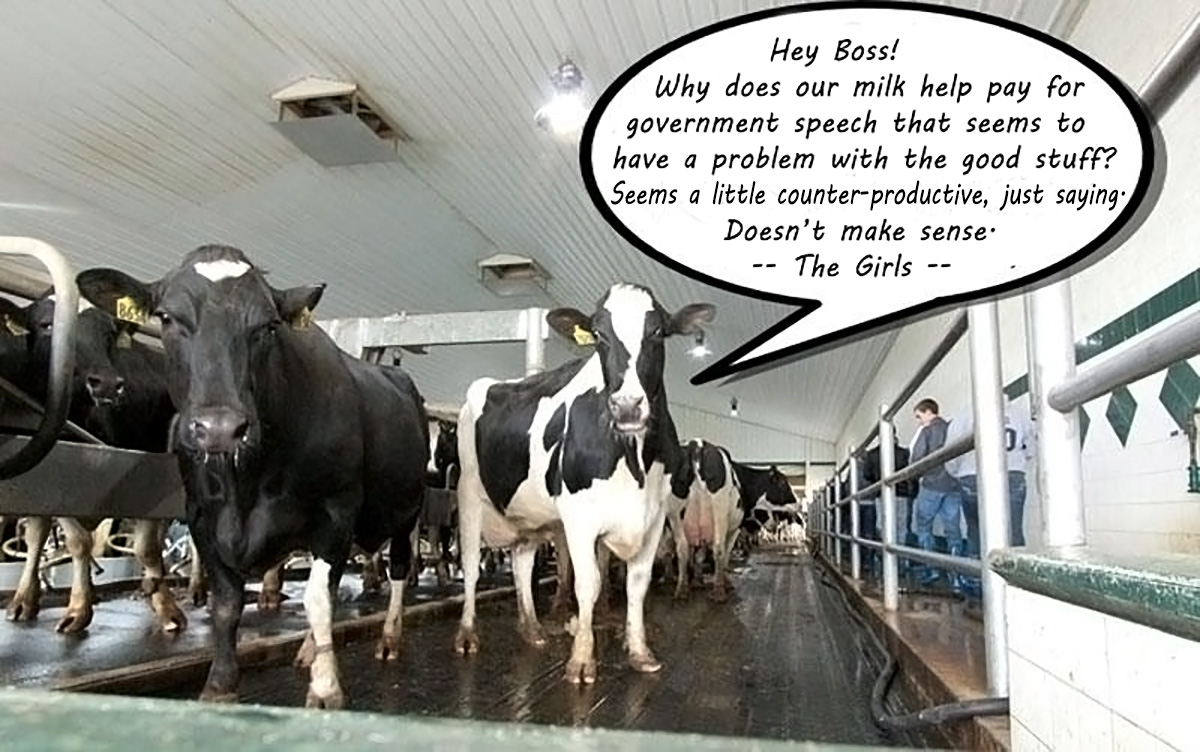
In fact, even farmers are tied to these guidelines as the dairy checkoff program leaders maintain they cannot promote whole milk because they are governed by USDA to stick to the guidelines, forcing farmers to mandatorily fund this completely flawed and unscientific “government speech.”

Americans deserve a recommendation on dietary saturated fat that is based on the most current and rigorous science available, and the Nutrition Coalition is issuing a call to action for Americans to join them in calling on the 2020 DGA Committee to critically review the most up-to-date evidence and modify its position on saturated fats accordingly.

“When we refer to “rigorous science,” we mean the data from well-controlled, randomized, clinical trials—the type of evidence that can demonstrate cause and effect,” writes Teicholz. “These trials were conducted on some 75,000 people addressing the question: do saturated fats cause heart disease? The results are that fats have no effect on cardiovascular or total mortality. This evidence has never been directly reviewed by any DGA committee.

“Ignoring evidence in order to preserve the status-quo is not acceptable,” she continues. “It’s not good policy, and it has not been good for the health of the American people. With the next iteration of the guidelines, your help is more crucial than ever to ensure that the USDA critically review the most up-to-date evidence and modify the government’s position on saturated fats to reflect the science accurately.”

Meanwhile, the dairy industry leaders continue to drag their collective feet.

As reported in Farmshine over the past few years, the call to action and support for healthy recommendations that consider the science on saturated fats and the goodness of whole milk, for example, has been largely pursued by grassroots efforts while industry organizations either fall in lockstep with the guidelines or stay neutral on the sidelines.

Once again, it will be up to the grassroots to get involved, for the public to be aware and get involved, for the Congress to be contacted, informed and involved.

How many times have we heard industry leaders shrug their shoulders and say “it all hinges on the Dietary Guidelines”?

dga1

When presented at the October DGA meeting with the first 12,000 names on the “Bring the choice of Whole Milk Back to Schools” petition (now numbering close to 30,000 online and by mail), Brandon Lipps, USDA Deputy Under Secretary of Food Nutrition Services, gave this response: “We have to see the science start coming together and be sure to bring everyone in… into the process.” Now it appears the Dietary Guidelines that control food at school, daycare, work settings, military, and many other foodservice and institutional feeding settings will be even MORE restrictive allowing even LESS of the healthy fat we — especially our children — need. The fat we eat is not the fat we get! Why is USDA moving us further in the wrong direction and excluding the science on this?! Act now. There are links in this article to speak out. Sign the Whole Milk in Schools petition also!

If there is even a chance that our children can have whole milk and healthy meals at school, that farmers can use their mandatory checkoff to promote the true healthfulness of whole milk and full-fat dairy foods, this biased process of DGA Committee guidelines has got to be challenged in a big way.

Here’s how you can help.

Contact your Senators and Representatives in Congress with a simple message. Ask them to please ensure that USDA is not ignoring the science on saturated fats.

Below is a message that the Nutrition Coalition suggests, which you or your organization can adapt and share with others in communicating with members of Congress:

Please urge the agencies in charge of the Dietary Guidelines for Americans (DGA), the USDA and HHS, to stop ignoring large clinical trials-the “gold standard” of evidence – that could reverse decades of misguided caps on saturated fats.

Shockingly, none of this evidence has ever been reviewed by any expert committee overseeing the science for the Guidelines. In fact, the current committee is pushing to lower the caps even further.

This is extremely alarming given that a growing number of prominent nutrition scientists have concluded the evidence shows that saturated fats have no effect on cardiovascular or total mortality. In fact, a recent panel of leading scientists reviewed the data and in a groundbreaking consensus statement, soon to be published in a medical journal, found that the science fails to support a continuation limits on saturated fats.

The current DGA committee appears to be one-sided and biased on this issue.

Please urge the USDA to stop ignoring the science and give serious consideration to lifting the caps on saturated fat for the upcoming 2020 DGA.

An easy way to do this online is available at this “take action” link https://www.nutritioncoalition.us/take-action

Or find the name and contact information for your Senators and Representative at this link and contact them that way https://www.govtrack.us/congress/members

Also, comment at the Federal Register docket for the DGA Committee by May 15, 2020. The sooner, the better, because the committee is expected to make its recommendations in May. Submit a comment to the Dietary Guidelines Advisory Committee here https://www.regulations.gov/docket?D=FNS-2019-0001

Also take this opportunity to sign this petition to “Bring the Choice of Whole Milk Back to Schools” at https://www.change.org/p/bring-whole-milk-back-to-schools

-30-

Child nutrition reauthorization sparked in D.C.

Military insights suggest backtracking, but disappointing answers given on school lunch and milk fat

By Sherry Bunting, Farmshine, April 26, 2019

WASHINGTON, D.C. — The last time a childhood nutrition authorization was passed by Congress was in 2010: The Healthy Hunger-Free Kids Act. A decade later, the Senate Ag Committee held a hearing last Wednesday (April 10) on perspectives in childhood nutrition. 

Chairman Pat Roberts (R-Kan.) said this is the first step in the reauthorization of the $30 billion in mandatory and discretionary childhood nutrition programs he wants examined and passed this year.

The hearing panels included representatives of federal agencies, state and community food programs, and the national childhood health program.

Most of the discussion centered on ways to streamline programs, increase enrollment that has been declining since 2010, and provide more flexibility.

There were a few eye-opening highlights and some discussion related to milk.

Chairman Roberts said in his opening statement: “One size fits all does not work for all.

Ranking Member Debbie Stabenow (D-Mich.) stated that, “Whether it’s a mother getting enough calcium to insure healthy bones for her baby, or making sure a 10-year-old isn’t fighting hunger pains in math class, child nutrition is about building a stronger future. It’s also important to our national security.”

Stabenow then revealed how and why the National School Lunch Program began 80 years ago, and what the concerns are today — two decades after the saturated fat limitations were introduced and a decade after the last reauthorization under the leadership of President Obama and Secretary Vilsack, when the screws were further tightened on milk choices and other aspects in 2009-10.

“Interestingly, the National School Lunch program was created in the 1940s because General Lewis Hershey came before Congress to explain that recruits were being rejected due to malnutrition,” said Stabenow. 

Sen. Debbie Stabenow (D-Mich.)

“Today, over 750 retired Generals, and other military leaders, are sounding alarm bells again, this time because young adults are too overweight to serve,” she stated. “With 14% of children as young as 2 showing signs of obesity, we have to address this issue early and everywhere.”

That said, Sen. Stabenow touted the “tremendous progress in the past 20 years in schools and daycares. It is vital to move forward, not backward,” she stated, while in her next breath saying that “obesity in adolescents continues to rise while over 12 million kids do not have enough to eat.”

She touted the need for greater enrollment in the National School Lunch Program so kids can have access to that “better” lunch, breakfast, after school snacks and even supper. She talked about a “veggie van” driving out into communities. She cited the Women Infant and Children (WIC) program as critical to first stages of life.

But when her opening statement was said-and-done, Sen. Stabenow again touted “the progress made in 2010” and said several times “we don’t want to backtrack while streamlining these programs.”

Sen. Bob Casey (D-Pa.)

Toward the end of the session, Senator Bob Casey (D-Pa.) brought up “the science of milk” and addressed his question specifically to Dr. Olanrewaju Falusi, a pediatrician who is director of the Children’s National Health System in Washington, D.C.

It was not surprising that the most important question of the day got the most disappointing and predictable answer. 

After hearing Dr. Falusi present her comments about how early childhood diets are responsible for critical programming of lifelong metabolism, brain development, and educational outcomes, Sen. Casey addressed Dr. Falusi as follows:

“There’s been much discussion in Pennsylvania about the ability of schools to serve whole milk to students. What does ‘the science’ say about the appropriate levels of whole milk consumption?” the Democratic Senator from Pennsylvania asked.


Dr. Olanrewaju Falusi, a pediatrician who is director of the Children’s National Health System in Washington, D.C.

Predictably, Dr. Falusi replied: “As a pediatrician, I recommend to my patients that they drink water or low-fat or fat-free milk. We know that milk has many benefits from protein and calcium and Vitamin D. We also know, though, that lower fat and lower sugar in diets are healthier for children.”

Dr. Falusi continued matter-of-factly: “What we would admonish, from the American Academy of Pediatrics, is that the standards for school nutrition programs — including the type of milk served — really be based on the science, and the science is that lower fat and lower sugar are what we should be advocating for children. And we do encourage the USDA to rely on the nutrition experts and to look at a number of studies for those guidelines.”

Senator Deb Fischer (R-Neb.) asked about students turning to competitive foods when the school lunch does not appeal or satisfy. She addressed her concern to USDA Acting Deputy Under Secretary for Food, Nutrition and Consumer Services, Brandon Lipps.

Lipps replied that the government seeks a balance between the school lunch and “competing foods” allowed on campus. He also noted they are “looking to see that kids are not leaving the school lunch line to buy competitive foods elsewhere on campus. But we’re not making the schools or states be the food police.”

Sen. Fischer asked: What are the foodservice professionals telling you? Are kids eating the school lunches?


Brandon Lipps, USDA Acting Deputy Under Secretary for Food, Nutrition and Consumer Services

Lipps replied that the “schools are very positive on the flexibilities in the final rule… It’s not a major change, just a comfort in long-term planning. Schools have to buy a long way out to plan their menus in the way that we require them to do. So they’re glad to have finality on the flexibility” (for example, they have flexibility to serve 1% flavored milk instead of only fat-free).

In response to the suggestion that the nutrition standards are “no good.” Lipps stated that, “We put in a calorie limit in 2009, and if the kids don’t eat half the food on their plate, and if they are getting half of the maximum calories that we provide them, if that’s happening, then that’s a problem.”

USDA is monitoring this, said Lipps: “As you know, the same is true, particularly with milk and the nutrients that it provides, so we are going to continue to listen and see if further flexibility is needed on that front.” 

Repeatedly, the 2010 Healthy Hunger-Free Kids Act was cited for making “historic changes” that led to “greater consumption of fruits, vegetables and whole grains as encouraged by USDA.” But at the same time, panelists repeatedly said fewer eligible families and children use the programs today compared with before 2010, and that obesity and diabetes and hunger are rising in our youth.  

When asked by Sen. Joni Ernst (R-Iowa) about school waste related to the 2010 changes, USDA Under Secretary Lipp said flexibility in the final rule on whole grains, sodium and 1% low-fat flavored milk went a long way toward changing that.

“I don’t think we have anyone telling us we need a major change in the nutrition meal pattern requirements for the school meal, but they do want flexibility,” said Lipp.

Sen. Ernst also noted the concerns about portion sizes being the same for a first-grader as an eighth-grader. “School foodservice professionals say they want the flexibility to vary it,” she said. “Right now, booster clubs are bringing in food for athletes who are not getting enough. And with mandated portions and mandated nutrition requirements, we are seeing a lot of food waste, what can USDA do?”

Lipp replied that USDA will continue to “look and listen.”

Josh Mathismeier, Director of Nutritional Services for Kansas City public schools and Mike Halligan, CEO of God’s Pantry Food Banks, based in Lexington, Kentucky, said participation would increase if they could take the food to the people instead of forcing the people to congregate to access the food.

Some states have actually hired market research firms to do focus groups with eligible families to learn how to increase their enrollment.

-30-

Should dairy farmers be forced to fund ‘government speech’?

Dietary Guidelines among the factors plunging us deeper.

By Sherry Bunting, Farmshine, Friday, March 15, 2019

Many are confused about what the dairy checkoff organizations can and can’t do. There is nothing in the Order that says the checkoff programs must promote according to the USDA Dietary Guidelines.

So where did this idea come from and how does it look today and what might it look like tomorrow?

To stave off challenges brought by folks questioning the government’s authority to require farmers to fund private speech, USDA defended the checkoff programs as “government speech,” which is a protected form of speech. This was explained in more detail in part 6 of the GENYOUth series in the February 22, 2019 edition of Farmshine.

Here’s why it matters. Government speech on dietary concerns has become increasingly restrictive, and by the looks of the recently-named USDA Dietary Guidelines Advisory Committee, it could get worse.

With so much control by USDA, how will dairy farmers fully defend their position — even when rigorous science is on their side? They can’t count on government speech because rigorous science is all too often ignored by government bureaucracies and the advisory committees with links to foundations and corporations that have other ideas for that money.

The proof is in the long trend of using mandatory farmer funds to promote the low-fat / fat-free government speech that has become their own undoing, not to mention detrimental to health, especially for our children.

Here’s a glimpse of where we are headed with this dairy-farmer-funded government speech.

Separation of Church and State, for example, seems to apply only when convenient for politicians. Could a religious doctrine of animal rights and vegan diets become even more embedded into the government Dietary Guidelines that dairy farmers are forced to promote?

I was told by more than a few people that Ag Secretary Sonny Perdue is a scientist and would not allow this to happen to his formation of the current committee, but the composition of this Dietary Guidelines Committee takes us further down this wrong road.

In fact, could the U.S. guidelines be on the brink of cowtowing even more toward the Adventist-funded EAT Lancet Global Food Transformation Agenda?

Some scoff, saying not to take this report seriously because it’s not gaining traction.

Unfortunately, they are not paying attention. This track has been laid and the wheels are in motion, and plenty of bargains with the devil have been made behind closed doors.

Our dietary choices are poised to be further corrupted. Just writing about these topics makes my blood boil and causes me to second-guess my own sanity. 

But folks, this is real. 

We can be proactive, or we can sit with our heads in the sand and be run over. This is happening, and our own leaders don’t want us to see it, hear it or speak of it. 

People can criticize the series of articles on this topic all they want, but the truth is that alliances formed — most notably over the past 10 years — are poised to plunge us even further into dietary guidelines, labeling, look-alikes and standards that have the potential to remove even more animal-based dietary choices from Americans — especially our children. 

As an ag journalist, I’m appalled. 

As a grandmother, watching the effect it is having and will have on our children, I am angry. 

What I see coming is a dietary future that will be a mix of fake proteins, grains, legumes, vitamin/pharmaceutical cocktails and high fructose corn syrup fashioned into whatever you want it to be or taste like from your 3-D printer.(Even the venerable Dr. Kohl talked about it at a farmer meeting and how much this “spooks” him out.)

In the beginning, these 3-D printer options may use dairy or meat proteins, but they are set up for not just plant-based proteins, and what some in the industry call “dairy-based” proteins. What does ‘dairy-based’ mean? (more on that later). The 3-D printer technology is the handmaiden of the gene-edited cell cultured fake-meat proteins and the gene-altered yeast sourced by USDA to a company growing them (with the commercial assistance of ADM) in fermentation vats to produce fake-dairy protein without the cow.

Here’s the deal: The co-author of the 2013 report favoring epidemiological studies of the vegan/vegetarian Adventist communities vs. rigorous scientific evidence was put on the USDA Dietary Guidelines Advisory Committee in the capacity of weighing the scientific credibility of evidence to be considered by the committee in shaping the 2020-25 guidelines.

His name is Dr. Joan Sabate, and he was placed on the committee in this role instead of Stanford professor John Ioannidis — despite over 1000 letters supporting Ioannidis being sent to Ag Secretary Sonny Perdue by the public that included medical doctors, dieticians, veterinarians and other experts, including specialists in oncology, heart disease and endocrinology (diabetes, etc).

Not only is Sabate Chair of the Nutrition Department at the Seventh Day Adventist institution, Loma Linda University, he also constructed the vegan food pyramid and co-authored a book on Adventist doctrine for global change, called “The Global Influence of the Seventh Day Adventist Church on Diet” where this playbook is well laid out.

It’s pretty clear that Sabate has been given an influential position and has spent his career promoting a religious-dietary-doctrine with undue influence now in a government dietary advisory capacity.

Also, an article co-authored by Sabate in 2011 talked of how the Adventists praised the 2010 dietary guidelines that took the destruction of school lunch under the Obama / Vilsack administration to new lows. That report said the 2010 Guidelines “confirmed” the findings of Sabate’s predecessor at Loma Linda University.

Last Friday, while doing a Rural Route Radio show as a guest of Trent Loos, I learned from him a piece I did not know — that the Wellcome Trust, which wrote the check for the EAT Lancet Commission, is the trust of Henry Wellcome. He passed away in the 1930s, and was the founder of what is today a Big Pharma player.

Remove whole milk, full-fat dairy and red meat from our diets and we’ll all need more drugs for a panacea of ills. Yes, the EAT Lancet report calls for just a little over one ounce of meat per day, the equivalent of one 8-oz cup of milk per day and 1 and ½ eggs per week. See the picture?

Our kids are already drinking fat free or 1% milk in school, eating fake butter, skim processed cheese, non-fat yogurt (if you can call it yogurt) and a host of other real-food-replacements when they should receive the best nature has to offer.

Yes, there it is: The religious doctrine. Mr. Wellcome was an avid Adventist, and his legacy lives on through the EAT forum and initiatives that have pulled-in not only governments across the globe (through their respective bureaucracies setting diet standards) but also 41 major corporations that are poised to profit — including the Edelman PR and marketing firm,which provided their Amsterdam account director to that effort until she went to work for the World Business Council for Sustainable Development and its EAT FReSH Initiative the very month that the EAT Lancet report was released (as detailed in part 8 in last week’s Farmshine).

Yes, Edelman is the same PR and Marketing firm that has worked for dairy checkoff for 20 years and increasingly in the past 10 years and was instrumental in the GENYOUth formation (2010), a non-profit with a pretty face that is also tied in with the Clinton Foundation of the same persuasion, and the Obama / Vilsack administration’s heavy hit to school milk and the school lunch program parameters, which also happened in 2010.

This really is one big thing connected, moving gradually to where we are today amid several key converging factors.

Call me “negative” or “unhinged” or whatever name you have for this investigative reporting, that is your choice. Meanwhile, some of our own organizations are tied in, and it is disturbing. 

The dairy and beef checkoff organizations — whose budgets are funded mandatorily by the farmers and ranchers whose livelihoods and contributions to human and planetary health are in jeopardy — have aligned on the sustainability side with the noted anti-animal organization World Wildlife Fund (WWF). This is detailed on website documents and power point slides bearing the WWF emblem.

The template is set for a sustainability footprint that is focused on streamlining the food industry with rapid consolidation to get the WWF stamp of approval for the largest and most vertically integrated animal food producers.

Recently, other organizations that challenge these institutions have put farmers on a new HSUS ag-advisory board to try to influence that particular anti-animal organization to get a similar stamp of approval for small farms and regional food supplies. 

Meanwhile, the anti-animal heavy-hitters are laughing all the way to the bank as their strategy as kindred NGOs is to divide and conquer — while raking in hundreds of millions of dollars. Their strategy is working because there is division. Not because I’m writing about it, but because none of our organizations and institutions have the backbone to stand up for what’s right.

The mode of operation is to work quietly through alliances and advisory boards and non-profits — to paint a pretty face on these alliances, hoping to come out of the internal fray with a few crumbs for a surviving streamlined industry.

If you dare question these alliances or dig into them, you are attacked.

You must remain politically correct at all costs! Don’t touch the third rail! Shame on anyone who dare question! If you question, dig, report, enlighten (all while said organizations refuse to answer interview questions), then you are “negative”, “unhinged”, “divisive”, “harming farmers” and a journalist who has “an agenda” or is just trying to “sell newspapers.”

Not in the least. I would much rather be spending all of my time writing the positive stories, and I have quite a few lined up! But I can’t discard the concern for the people whose stories I’ve written as I watch one after another sell their cows and/or their farms, and as I’m deeply concerned for the health and well-being of our children.

It’s time for Congress to revisit the law authorizing the dairy checkoff. I don’t say this lightly. The dairy checkoff budget dwarfs all others at $350 million a year. That’s a huge budget of dairy farmer funding under increasingly detrimental USDA control.

Maybe government speech is “protected” under the law, but the law  should no longer require dairy farmers to pay for it.

-30-

How do we unwind a trend that demonizes and suppresses a food group?

NESAWG(Philly)3890.jpg

A dairy panel with Mike Eby, Nina Teicholz (center), Lorraine Lewandrowski and John King (not pictured) was eye-opening to food-interested people at the 25th NESAWG conference in Philadelphia. Minds were opened as food policy influencers report weeks later some are reading Teicholz’s book The Big Fat Surprise, and it is changing their thinkingAllied Milk Producers helped sponsor this panel. Stay tuned. 

JUNK NUTRITION SCIENCE STILL RULES DIETARY GUIDELINES

25th NESAWG brings dairy to table in Philadelphia 

By Sherry Bunting, Farmshine, December 14, 2018

PHILADELPHIA, Pa. — Justice, power, influence… Balance. How do people unwind a trend that demonizes and suppresses a food group?

How do Americans have faith in an increasingly globalized food system that gives them choices, but behind the scenes, makes choices for them?

How do urban and rural people connect?

These questions and more were addressed as hundreds of food-interested people from all backgrounds and walks of life gathered for two days in center-city Philadelphia recently for the 25th Northeast Sustainable Agriculture Working Group (NESAWG) conference.

webNESAWG9725

Lorraine Lewandrowski (left), a central New York dairy farmer and attorney, talks with Niaz Dorry of NFFC. Dorry spoke on the opening panel about her 67,000-mile tour of rural America, urging others to “meet the farmers where they are.” Lewandrowski spoke about the ecology of rainfed grasslands in the Northeast and the struggle of family dairy farms throughout this landscape.

For Niaz Dorry of the National Family Farm Coalition (NFFC), the answer is simple: “Get out into the countryside and meet the farmers — where they are,” she said, during the opening panel of the conference as she talked of her recently completed America the Bountiful tour, driving over 67,000 miles of countryside — coast to coast.

Dorry also touched on the dairy crisis. “Go and experience their grief with them. Be with them at milking on Tuesday and see them sell a portion of their cows on Wednesday — just to make payroll.”

Pennsylvania Secretary of Agriculture, Russell Redding echoed this theme during the lunch address as he said agriculture is “zipcode-neutral,” that we need to forge “a more perfect union in our food system” but that the future lies in “differentiating” agriculture here.

NESAWG(Philly)9757-Redding

“We see our future — and our long-term investments in Pennsylvania — driven by differentiation…” said Pennsylvania Ag Secretary Russ Redding.

“It’s nice to be with folks who understand the power of food to change lives,” said Redding as he mentioned rooftop gardens, urban brownfields and Pennsylvania’s rank as number two in the nation for organic sales.

“We see our future — and our long-term investments in Pennsylvania — driven by differentiation, by being able to grow and produce and market organic agriculture,” said Sec. Redding.

With the NESAWG goal to “cultivate a transformative food system,” panels and breakouts covered topics from building networks and insuring equity among sectors to understanding urban food trends and ways to position Northeast agriculture within the power grid that ordains the direction of mainstream food production, processing and distribution today.

A breakout session on building “farm-to-school” hubs, for example, gave attendees insight for getting more fresh, local foods into school meals. Presenters talked about obstacles, and how they are navigated, about martialing available resources, identifying networks, working in collaboration with others, piloting ideas and growing them. Farm-to-School began in 2007, and it is growing.

Another breakout brought a panel of dairy producers to share with urban neighbors the crisis on Northeast dairy farms. The panel featured the work of dairy producers Jonathan and Claudia Haar of West Edmeston, New York, who spoke about consolidation that has been underway for decades in dairy.

But it was an afternoon panel — Milk Economies, Ecology and Diet — that put dairy and livestock producers squarely in the realm of hope for a re-wind.

Keynoting this panel was Nina Teicholz, author of The Big Fat Surprise and founder of The Nutrition Coalition. She covered the history of current government Dietary Guidelines and how rigorous studies have been ignored for decades because they don’t “fit” the narrative on saturated fats and cholesterol.

She was joined by dairy farmer and attorney Lorraine Lewandrowski of Herkimer County, New York, who spoke on dairy ecology and how the rainfed grasslands and croplands of Northeast dairy farms are a haven to wildlife, especially important species of birds and butterflies and pollinators.

They were joined by Mike Eby and John King of Lancaster County, Pennsylvania, representing National Dairy Producers Organization and Allied Milk Producers. The two men spoke on the dairy economy and what is happening on family dairy farms, struggling to remain viable.

“The land is most important to us,” said Lewandrowski about her deep love of Honey Hill, where her family has farmed for four generations. While, she is an attorney in town with farmers among her clients, she also helps her brother with the farm and her sister with her large animal veterinary practice.

Lewandrowski is known as @NYFarmer to her over 26,000 followers on Twitter — generating over 75,000 interactions from nearly a quarter-million tweets in the past 10 years!

She described a reverence for the land and its wildlife — cohabitating with a rich agricultural heritage and sense of rural community that exists within an afternoon’s drive of New York City.

“We have land that is rich in water,” she said with a nod to a dairy industry consolidating into regions that rely on irrigation.

“Our lands are rainfed: 21 million gallons of water run through our farm with an inch of rainfall,” she said. “Our farms are diverse across this landscape. But our farmers are going out of business in this economy. So many of these farms are then turned into urban sprawl. What will become of the people, the land and its wildlife?”

Lewandrowski talked about identifying bird species on their farm, of the crops and pasture in dairy operations, and the economic hardships she sees firsthand. She shared her vision of Northeast rural lands and what they bring to urban tables and communities.

Introducing Teicholz to an audience primarily of urban people, Lewandrowski shared how dairy farmers feel — working hard to produce healthy food, and then contending with poor prices driven by regulations that suppress its value.

“I didn’t know why our food is not considered good and healthy. Nina’s book gave me hope,” she said. “We are fighting for our land, and yet the vegans are so mean. When our farmers go out of business, they cheer on social media. They cheer when our families lose everything. But the land and wildlife lose also, and the vegans cheer.”

Teicholz traced the history of her 10-year investigation that led to The Big Fat Surprise: Why Butter, Meat, and Cheese Belong in a Healthy Diet. It started with a newspaper assignment on dietary fat.

NESAWG(Philly)9769

Nina Teicholz explains the revelations of a decade of investigation leading to The Big Fat Surprise. In the 5 years since publishing, farmers seek her out to thank her. She says she never realized how it must feel to be a dairy or meat producer — producing a healthy product while being told it is not healthy and seeing your livelihood pushed down by faulty dietary controls.

“Before I knew it, I had taken this huge deep-dive into fats and realized we have gotten it all completely wrong,” said Teicholz, a former vegetarian for 25 years before her research.

“I’m here to speak today because I found Lorraine’s twitter account and fell in love with her photos and stories from the dairy farm,” said Teicholz. In the nearly five years since her book was published, awareness of ignored science has been raised.

A California native, living in New York City, Teicholz described herself as an urban person and how surprised she was to hear the stories from farmers about how her book and her work gives them hope.

“It breaks my heart to now realize that — after all this time — the dairy farmers and meat producers have been led to feel that there is something wrong with the food they are producing, and to see how vegans go after these farmers, and now after me too,” Teicholz related.

“How did we come to believe these things that led to the decline in foods like whole milk, and have pushed down the producer?” Teicholz traced the history of dietary caps to the theory of one researcher — Ancel Keys from the University of Minnesota.

“Concern about heart disease in the 1960s led to many theories. The diet-heart hypothesis of Ancel Keys was just one theory, but he was unshakably confident in his own beliefs, and he was considered arrogant, even by his friends,” said Tiecholz.

“When the American Heart Association nutrition committee first supported Keys’ recommendations — even though the scientific evidence was very weak — that was the little acorn that grew into the giant oak, and it’s why we are where we are today,” she explained.

Methodically, Teicholz took her audience through the science that was used to support Keys’ theory, as well as the many more rigorous studies that were buried for decades.

In fact, some of the very research by the National Institute of Health (NIH) that had set out to prove causation for Keys’ theory was buried in the NIH basement because “the results were so disappointing to that theory.”

The studies that did not validate Keys’ theory — that fat in the diet is the cause of heart disease, obesity and other diseases — were suppressed, along with the studies that outright refuted his theory. A steady drumbeat of science — both new and exposed from those earlier times — shows a reverse association and causation.

48329399_2290819234570553_8398919649542012928_n.pngIn fact, since the Dietary Guidelines capped saturated fat in the 1980s — becoming progressively more restrictive in requiring lowfat / high carb diets — the data show the association, that Americans have become more obese, with higher rates of diabetes and heart disease.
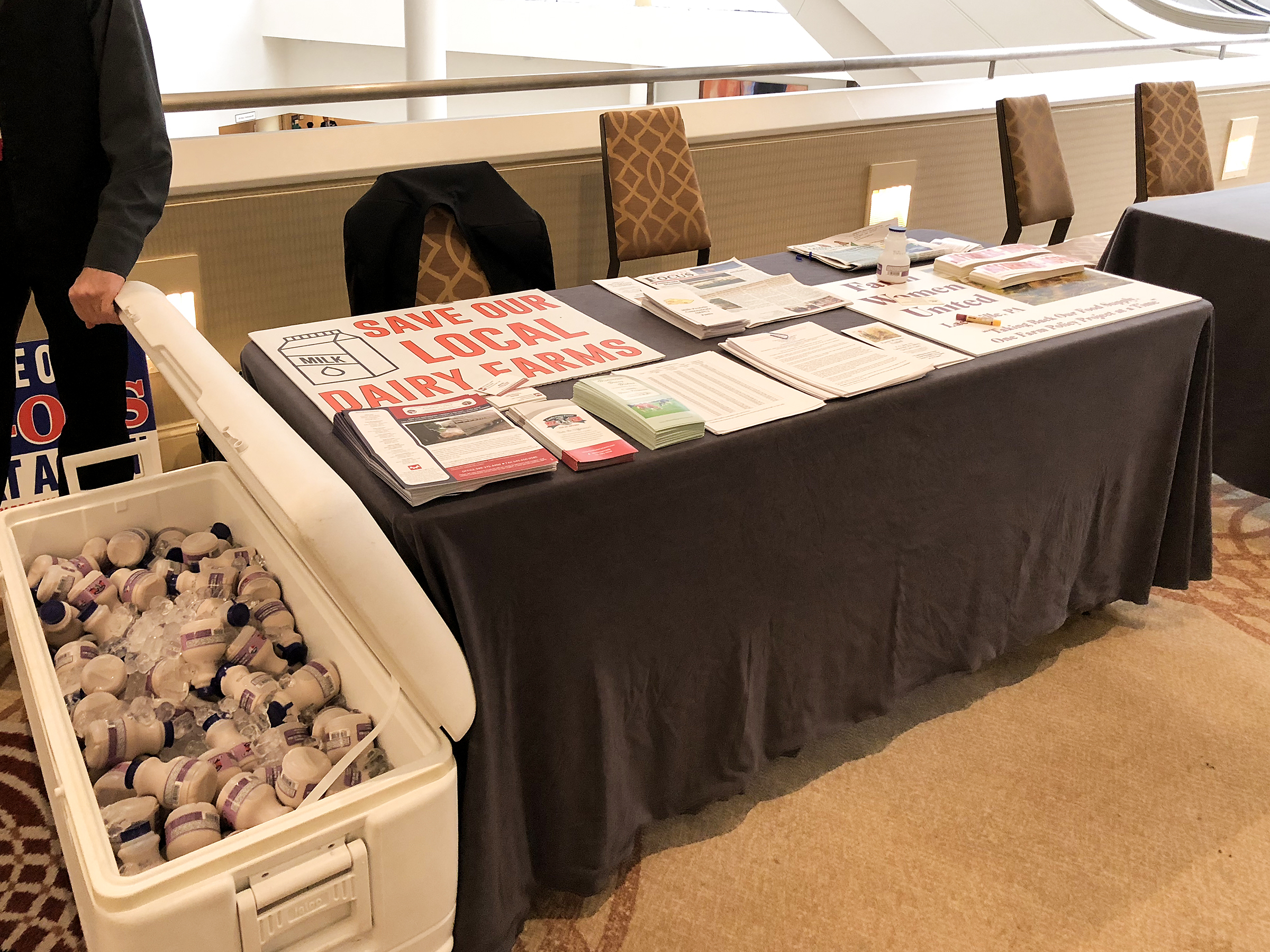

“It feels like the battle is endless,” John King said as he spoke of the real struggle on dairy farms and of selling his dairy herd in 2015. “But it is rewarding and encouraging to see what people are doing to expose the truth now.”

King posed the question: “Do urban communities really care about rural communities? If not, then we are done. Our food will come from somewhere else and the system will be globalized.

“As farmers, we care about what we produce, and we care about our animals,” he said. “What happens to us on our farms trickles down to the urban areas. It’s an uphill battle to try to go against the status quo, and we need urban communities to care if we are going to be successful. It comes down to whether urban and rural care about each other. Do we care about our neighbors?”

Teicholz sees the U.S. being in the midst of a paradigm shift. However, it is taking time for the Dietary Guidelines Advisory Committee to change and open up to the science. She noted that in the 2015-2020 guidelines, the caps were removed for cholesterol, but they were kept in place for saturated fat.

“The cholesterol we consume has nothing to do with blood cholesterol,” said Teicholz. “The body produces cholesterol, and if we eat fat, our body makes less of it. It is the science that remains buried that needs to continue to surface. People need to know that the fat you eat is not the fat you get.”

She cited studies showing the healthfulness of full-fat dairy, that drinking whole milk and consuming the healthy fats in butter, beef, bacon and cheese are the fastest ways to increase the HDL ‘good’ cholesterol in the bloodstream.

It is the saturated fat caps in the current guidelines that are the reason whole milk, real butter, beef, and 100% real cheese are not served in schools today, said Teicholz. She showed attendees how these recommendations drive the food supply.

“The recommendations are allowing children to have whole milk only for the first two years of life, after that, at age one or two, children on skim milk,” she said. “The recommendations drive what we eat whether we realize it or not.”

She showed how the current flawed Dietary Guidelines drive the diets of the military, school children, daycare centers, WIC programs, hospitals, prisons, retirement villages. And these recommendations are downloaded by foodservice and healthcare: physicians, dieticians, nutrition services, foodservice menu guides. They are driving how dairy and meat products are presented in restaurants, fast food chains and other menus of choice. They are driving the current FDA nutrition innovation strategy that is working on a symbol for “healthy” and looking at modernizing standards of identity to accomplish these nutritional goals that focus on lowfat / high carb diets.

“Meanwhile, it is the unsaturated fats, the new products in the food supply, that are negatively affecting us and those are all there… in the USDA feeding programs,” Teicholz pointed out.

Others in the panel discussion pointed to an anti-animal view, that cattle are bad for the planet in terms of climate change. These views perpetuate the current dietary guidelines. In fact, in 2015, the Dietary Guidelines Advisory Committee attempted to introduce “sustainability” guidelines on what they deemed “healthy” for the planet into these guidelines, officially.

This is the ecology side that Lewandrowski addressed, showing urban food influencers how the concept of sustainability is being overtaken and systemized and how Northeast dairy farmers have a great story to tell that is being ignored, drowned-out.

“We have to think about how the shifts are occurring in the food system and manage those shifts. We can work together and make change happen,” said Mike Eby, articulating the message of National Dairy Producers Organization (NDPO), seeking to work with the system to manage farmers’ interests.

Allied Milk Producers helped sponsor this dairy panel, and Eby said that whether it is milk promotion through Allied, membership in NDPO, or supporting the buying and donating of dairy products through Dairy Pricing Association (DPA), it is important for people to participate.

NESAWG(Philly)9741.jpg

Mike Eby and John King brought Allied Milk Producers materials — and plenty of milk — to the NESAWG conference in Philadelphia. Amos Zimmerman also had a booth for Dairy Pricing Association.

He gave examples of how Allied and DPA — funded by farmers — are reaching out to consumers, schools, urban communities with donations of product and a positive message.

“We need more people to get involved to fix these issues, and to create a system that supports its producers and stabilizes prices,” said Eby.

“We need to reach out and work together as urban and rural communities,” added Lewandrowski.


NESAWG(Philly)3802.jpg

Hundreds of food-interested people from all backgrounds and walks of life attended the 25th Northeast Sustainable Agriculture Working Group conference in Philadelphia, where networking from urban to rural looked at regional solutions.

NESAWG9779

NESAWG9729

NESAWG9748.jpg

webNESAWG9759


What will become of, us?

sunsetbarn.jpgGovernment’s cozy relationship with dairy lobby is problem no. 1

By Sherry Bunting, reprinted from Farmshine, October 19, 2018

These are tough times. The strain of a fourth year of flat-lined milk prices is wearing thin on dairy farmers and those who serve them.

And the folks inside the Beltway don’t get it.

Wait, maybe they do.

The Farm Bill has yet to be passed, the mid-term elections are over… and the question continues to be asked: What can be done about the fact that family dairy farms are dropping like flies?

This question has been asked and answered for the better part of three years and the whole decade before that… and still we find ourselves repeating the same words falling on the same deaf ears, pleasant nods, and ‘sincere’ handshakes.

Where does Washington go for the answers? The dairy lobby. In fact, members of Congress will say that nothing gets done without getting National Milk Producers Federation on board.

What’s the deal for the future? A better ‘welfare’ program for small farms to window-dress the rapid and deliberate consolidation that is running rough-shod over their markets and using the Federal Order and other regulated pricing mechanisms to do it.

For years, a decade or more, grassroots dairy farmers have told their legislators to please work on repairing the damage government has already done to dairy farming.

They’ve pleaded with those inside the Beltway to heed the truth on the decades of flawed dietary guidelines and to right the wrongs in our nation’s school lunch program and other institutional feeding programs that are forced to follow these flawed guidelines.

But alas, instead of real change, we get more of the same, while the dairy lobby cheers and applauds over a tiny change allowing schools to serve 1% lowfat flavored milk instead of the prior Obama-era mandate of fat-free.

Meanwhile, nothing changes for regular milk in schools. It’s been fat-free and 1% for a decade now, and we have lost a generation of milk drinkers and stand to lose even more, and all the while our school kids fight increased obesity and diabetes rates, and we wonder, why?

Heck, you can’t even sell whole milk as a fundraiser during school hours, and you can’t give it away to schoolchildren during school hours due to these dietary rules that –according to those who have done a decade of scientific investigation of the research –show are actually not healthy rules for our children in the first place.

Plus, we have the FDA, having looked the other way for more than 10 years, now talking about milk’s standard of identity within a greater framework of “modernizing” standards of identity to “accomplish nutritional goals” — goals that are guided by flawed government dietary guidelines.

Instead of acknowledging the past wrong and immediately setting it right, the FDA adds comment period after comment period to try to read the minds of consumers. They want to know if consumers understand what they are buying when they buy fake milk.

The short answer? survey after survey shows that an overwhelming majority of consumers are, in fact, confused about the nutritional differences between real milk and the imposters — some consumers even believe there is milk in the not-milk ‘milk’.

Meanwhile, more time passes. Farmers are asked to wait. Be patient, while more damage is done by counterfeit claims that steal market share from dairy milk’s rightful place.

And then there’s the regulated milk pricing. What are the odds that any member of Congress will heed the past 10 years of requests for a national hearing now that California has enthusiastically joined the Federal Orders? That was the death nell of more of the same.

“It’s a free market,” say the legislators, regulators and market pundits.

“It’s a global market,” they add further.

No folks. It is a regulated market, and believe me when I tell you, the USDA and the major national footprint cooperatives operate this regulated market in lockstep.

Processors can’t access the administrative hearing process, unless they are cooperative-owned processors.

Farmers can’t access the administrative hearing process, except through their cooperatives.

Ditto on the above when it comes to voting. Bloc voting on behalf of farmers by their cooperative leadership seals every deal.

At a meeting a few months ago in the Southeast with USDA administrators that was intended to talk about multiple component pricing, farmers brought forward their grievances about bloc voting and their concerns about how milk is qualified on their Orders to share in their pool dollars.

What was USDA’s official response? The same response we hear over and over from legislators. “You vote for your co-op boards and they vote for Federal Orders.”

The Federal Orders were implemented in the 1930’s to keep milk available to consumers, to keep producers from being run-over. Today, these Orders are used to move milk from expanding consolidation areas to regions that have small and mid-sized family and multi-generational dairy farms located near consumer populations and competitive markets.

This is not a size thing. This is not small vs. big thing. This is structural change thing that is happening in the dairy industry at an increasingly rapid rate while the lifeblood is sucked right out of our culture of dairy farming.

troxel-sale-2The storm is brewing. Since the beginning of this year, the financial experts have told us that one-third of producers are selling out or contemplating an exit from dairy, that another one-third are not sure where they even stand, and that another one-third are moving forward with plans for expansion within consolidating industry structures.
The thought occurs to me: When the other two-thirds of producers are gone, what will become of that one-third that is still moving forward expanding, undeterred? What will become of the fabric from which their progress emerged? What will become of the next generation with hands-on experience, passion and love of dairy? Who will be raised on a dairy farm in the future? What contributions will be lost when dairy becomes only a business and no longer a business that is also a lifestyle? Who will be the support businesses? How will our communities change? Will all of our dairies in the future be academically run? What will become of our cow sense, our deep roots, our sense of community?

What will become of, us?

GL 4736For years we have heard “there’s a place for every size dairy in this industry.” That phrase is how we get small and mid-sized farms to advocate with consumers about modern farming so they will accept a more consolidated dairy farming picture.

Now that we are reaching this point, will we hear the large consolidating integrators say the same in reverse? Will they slow down, push pause, and realize there IS a place for the diversity of farms that make this industry the shining star it is and could be?

While at World Dairy Expo in Madison, Wisconsin in October, the strain of now a fourth year of low prices was evident. Attendance “felt” lower even if the official numbers don’t totally reflect it.

Show entries were down. Traffic among trade show exhibitors was interesting and steady, but ‘off’ and ‘different.’

Dairy farmers are struggling. Large, small, and in between, these times are tough, and clear answers are elusive.

Dairy farmers remain paralyzed by three things:

1) the inability to have an effect on their circumstances or seat at the decision table;

2) lack of understanding of an incredibly complex regulated market; and

3) the innate desire to trust the establishment that handles their milk because they are too busy milking, managing and caring for cows, not to mention the land, to handle the milk marketing themselves.

Just think about this for a moment. In the past four years, National Milk Producers Federation has created and implemented the F.A.R.M. program where someone can come in and put you on a list for a subjective heifer bedding evaluation, where more is being not asked, but demanded, while at the same time, the pay price from which to do more is declining.

The milk checkoff programs continue to focus on partnerships. All kinds of efforts emerge to give away milk and dairy, and meanwhile supermarket wars by large integrating retailers push milk further into a commodity corner from which all imposters can brand their ‘more than’ and ‘less than’ marketing claims.

What we learned at some of the seminars at World Dairy Expo is that nothing will change in the milk pricing system, that it’s a free market, a global market, and that the best Congress can do is improve the margin protection program and other insurance options so farmers have the tools to deal with it.

I’m here to tell you that as long as this remains true, no farmer should be ashamed to use these tools even if it means receiving taxpayer dollars because it is the government’s actions and inaction over a decade or more that have created the problems in milk pricing and marketing today, and furthermore, the government shows no sign of wanting to let go of its stranglehold on dietary guidelines, how it enforces dairy’s standard of identity in fraudulent labeling, nor how it conspires with the dairy lobby — made up of the nation’s largest cooperatives — to regulate pricing in a way that further consolidates the dairy industry.

And by the way, all of the rhetoric on trade and NAFTA and Canada’s supply management system and Class 7 pricing has been nothing more than a smokescreen.

wGDC18-Day1-56Trade is important, but again, we have reached a point where 2018 is seeing the demise of dairy farms at rapid rates while exports continue to set new records. As of Oct. 5, 2018, U.S. dairy exports for the first 8 months of the year (Jan-Aug) accounted for a record-setting 16.6% of milk production on a solids basis. That’s the largest ever percentage of the largest ever milk production total – more of the more – in the history of the U.S. dairy industry’s recordkeeping.

In fact, traders will be the first to tell you that “more exports” don’t translate into “better farm milk prices” because the export markets are largely commodity clearing markets and they are fueling expansion of commodity processing in areas of the U.S. where it is easiest to export to Asia and Mexico. A global supply-chain is in the works.

The exports, in fact, are diluting the Federal Order pricing at the same rapid rate as declines in consumer fluid milk consumption, putting severe pressure on eastern markets in particular.

Meanwhile, the eastern milk markets are extremely tight on milk. This information is sourced to cooperative managers and the independent USDA Dairy Market News. Plants are seeking milk and not receiving it. Trucker shortages are complicating the problem. State regulated pricing mechanisms, such as in Pennsylvania, still interfere, making milk cheaper to bring in than to use what is here. In some Federal Orders to the south, this is also the case because of how their pools are administrated.

We are seeing the vicious circle of self-fulfilling prophecies. Producers who want to operate 50 cow, 100 cow, 300 cow, 500 cow, 1000 cow, 1500 cow dairy farms in the eastern U.S. within a day’s drive of the largest population are in jeopardy. They have lost their location advantage but continue to deal with the disadvantages. As milk tightens they are not seeing their premiums return, instead some farmers report getting docked by their co-ops for not making enough milk, or they are socked with incredible hauling rates because their milk was hauled out while other milk was hauled in.

What can Congress do? Hold that national hearing on milk pricing. Give farmers a seat at the table apart from the company-store. Learn what is happening. See government’s role in it.

Dear Congress, if you really want to know what to do, look in the mirror.

Before it’s too late, please right the fundamental wrongs government has done to our dairy consumers and dairy farmers as it controls what fat level of milk kids are permitted to drink at school, how milk is priced, how milk is marketed and how milk is allowed to be advertised and promoted with farmers’ own money – while at the same time still turning a blind eye and deaf ear to loss-leading supermarket wars that operate off the backs of farmers and the processing industry’s pillaging of milk’s market share with nondairy imposters.

-30-

ReplyForward