Covering Ag since 1981. The faces, places, markets and issues of dairy and livestock production. Hard-hitting topics, market updates and inspirational stories from the notebook of a veteran ag journalist. Contributing reporter for Farmshine since 1987; Editor of former Livestock Reporter 1981-1998; Before that I milked cows. @Agmoos on Twitter, @AgmoosInsight on FB #MilkMarketMoos
EAST EARL, Pa. – In December, the House passed Congressman G.T. Thompson’s Whole Milk for Healthy Kids Act, H.R. 1147. This is a major milestone for this bill, which passed in the U.S. House of Representatives by an overwhelming bipartisan 330 to 99 vote.
Pictured are a few of the members of the Grassroots Pennsylvania Dairy Advisory Committee and others who joined them for a staff briefing at the Capitol last summer. The focus now is on the U.S. Senate. From left are Christine Ebersole, school nurse in Blair County, Pa.; John Bates, then executive director of The Nutrition Coalition; Nelson Troutman, Berks County dairy farmer and his granddaughter Madelyn, 2022-23 Lebanon County Dairy Maid; Congressman G.T. Thompson (R-PA-15), the champion and prime House sponsor of the Whole Milk for Healthy Kids Act; Sara Haag, 2023-24 Berks County Dairy Princess; Krista Byler, school foodservice director in Crawford County, Pa.; and Sherry Bunting, Farmshine contributor and volunteer advocate for whole milk in schools. Photo courtesy Maddison Stone
“The next stop is the Senate, and we are going to have to work hard to get the Senate bill (S. 1957) to the floor and passed. In Pennsylvania, we need to work on our Senator Bob Casey. We already have Senator John Fetterman as a cosponsor of the bill, but we need Senator Casey also,” says Nelson Troutman, Berks County farmer and originator of the Drink Whole Milk 97% Fat Free baleboards that led to the 97 Milk effort and 97milk.com
“We also need more Senators to cosponsor S. 1957 from across the country,” adds Bernie Morrissey, retired agriculture advocate from Robesonia, Pa. “We need dairy farmers, agribusinesses, organizations and citizens all across the country to reach out to their Senators to cosponsor this bill.”
The Senate bill has 14 cosponsors from 11 states as of January 20th. They include Republicans, Democrats and an Independent as follows: both Dr. Roger Marshall (prime sponsor) and Jerry Moran of Kansas, Peter Welch (prime cosponsor) of Vermont, Ron Johnson of Wisconsin, John Fetterman of Pennsylvania, both James Risch and Mike Crapo of Idaho, both Susan Collins and Angus King of Maine, Kirsten Gillibrand of New York, Cindy Hyde-Smith of Mississippi, Chuck Grassley of Iowa, J.D. Vance of Ohio, and Marsha Blackburn of Tennessee.
“Every state has two United States Senators. We want every dairy farmer, every organization and business calling their two Senators. If they are already a cosponsor, thank them. If they are not a cosponsor, please write to them, and use our sample letter (or the template at the end of this article),” Bernie explains.
(Find the Washington addresses and phone numbers for your state’s Senators at https://www.senate.gov/ – Click the icon in the top left corner, select your state from drop-down menu to see how to contact them. Go to the end of this article to learn about email options. Some additional resources can be found in a folder at https://qrco.de/WholeMilk-Info )
“We have written to Senator Casey (see letter at top) to let him know how important this is to us, to the children of Pennsylvania, and to the dairy farmers. We need more people, organizations, and businesses to write to him also. If this doesn’t work, it will be our own fault for not getting involved,” he stresses, adding that constituent phone calls and visits are also welcome.
“We must also contact Senate Ag Committee Chairwoman Debbie Stabenow of Michigan. It is important that she knows how vital this bill is to come through her committee to the Senate floor,” Bernie notes. (The call-in notice below was published in the Jan. 5 Farmshine).
The Grassroots Pennsylvania Dairy Advisory Committee asks organizations and agribusinesses to use the sample letter on this page as-is or tailor it to their state’s Senators and also send it out to all their members or customers asking them to each sign it and send it to their two Senators as well.
“Let us know if you did this,” Bernie continues. “We want to know: Did YOU contact your TWO?” (Email Sherry Bunting at agrite2011@gmail.com or text or call 717.587.3706 to confirm you contacted your two.)
“After all,” Bernie observes: “If the dairy farmer’s next generation of consumers – the children — cannot choose milk they will love, what is your future as a dairy farmer? And what is their future as tomorrow’s leaders?”
“Whole milk is nutritious and delicious. Science supports this choice. It’s up to each one of us to get it done.”
-30-
To email your Senators directly, go to https://democracy.io/ – type in your own address, city and zip code, click submit. Your two Senators and one Representative will show up with red checkmarks. Click ‘Write to them,’ and on the next screen compose the body of your letter. First, say who you are and where you live/work/farm and mention if you have children or grandchildren in school, if you wish. Sample text about cosponsoring S. 1957 can then be copied and pasted from the template below:
———————————————————————————————————————-
Dear Senator,
I write to ask you to stand up for our children, parents, schools and dairy farmers by cosponsoring S. 1957, the Whole Milk for Healthy Kids Act, to bring back the choice of Whole Milk in schools. This bill is not a mandate, it is about choice, so students can have the delicious Whole Milk option to benefit nutritionally from milk they will love. The House passed H.R. 1147 in a bipartisan 330 to 99 vote in December. We hope you will soon add your name to the list of Senate cosponsors for S. 1957.
It is vital to have this choice. Whole milk is standardized at 3.25% fat (3.5% in Calif.). Systematic reviews of the scientific literature show milkfat should no longer be demonized by federal policies, especially for children.
Currently, 95% of U.S. schools are in the National School Lunch Program, which in 2012 made rules via the Healthy Hunger-Free Kids Act requiring only fat-free and low-fat (1%) milk be available to students during school hours. Since then, student milk consumption has declined drastically, and milk has become a most frequently discarded item. A 2021 survey showed 78% of parents choose whole or 2% milk for their families, but these options are restricted from their children at school, where they receive two meals a day, five days a week, three-quarters of the year. A 2019 trial at a PA school showed milk consumption increased by 52% and waste volume decreased by 95% when offerings were expanded to include Whole and 2% milk. More students chose milk, and fewer students threw away milk. That’s a win for kids, dairy farmers and the environment.
This is a critical time to provide what milk delivers — complete protein and 13 essential nutrients. When students aren’t drinking milk offered at school, they don’t receive its nutrition. In fact, the DGA Committee in 2020 admitted their recommended dietary patterns lack enough key nutrients, including three of the four nutrients of public health concern that milk provides: potassium, calcium, and Vitamin D, which is fat soluble.
Thank you in advance for helping bring the delicious option of Whole Milk back to school lunch and breakfast by cosponsoring S. 1957.
From whole milk in schools to farm bill to climate-warped food transformation,scientists and lawmakers are getting busy, farmers need to get busy too
In the global anti-animal assault, real science must lock horns with political science and defend American farmers — the climate superheroes that form the basis of our national security. Photo by Sherry Bunting
By Sherry Bunting, Farmshine, Jan. 5, 2024
EAST EARL, Pa. – It’s a New Year, and we have new hope on several fronts that are all linked together, in my analysis.
Top 2023 headlines for dairy farmers revolved around dairy markets that underperformed, successes and challenges in the quest to get Whole Milk choice back in schools, a plethora of draft USDA and FDA proposals that dilute real dairy, farm losses and governmental hearings on federal milk pricing, negotiations and extensions for the farm bill, and acceleration of ‘climate-smart’ positives and negatives buckling down for business in an area where political science is trumping real science on the rollercoaster ride ahead.
All of these headlines are inextricably linked. There is a global anti-animal assault underway, but people are wising up to the not-so-hidden agenda that is grounded in climate transitions and food transformation that give more power and control over food to global corporations while diminishing what little power farmers have in Rural America where our national security is at risk.
Real science locks horns with political science
As we head into 2024, a bit of good news is emerging as scientists are mobilizing to defend the nutritional, environmental and social honor of livestock — especially the much-maligned cow.
After an international summit of scientists in October 2022, work has been underway to bring together an international pact.
Dubbed the Dublin Declaration of Scientists, experts around the world have authored and are getting colleagues to sign-on to this document that calls for governments, companies, and NGOs to stop ignoring important scientific arguments when pushing their anti-animal agendas in the name of climate, transformation, and the Global Methane Pledge.
To date, nearly 1200 scientists have signed the Dublin Declaration, aimed foremost at the Irish government’s proposal to slaughter cows to meet methane targets. The Dublin Declaration represents the work of scientists across the globe for a global audience beyond Ireland.
Here in the U.S., we are sitting on the cusp of Scope 3 emissions targets of global milk buyers that have been hastily formulated based on the science of greed, not the science of greenhouse gas emissions. It’s time for the dairy organizations and land grant universities that represent, serve and rely on farmers to drink up on their milk and strengthen their spines.
Farmshine has brought readers the news about what has been happening in Europe, such as in the Netherlands and Ireland, regarding proposed farm seizures and cow slaughter, and the response of farmers there has been to challenge the political establishment.
The U.S. is not far behind. At COP28 recently, American cattle industries were criticized, and even Congressional Ag Leaders are miffed by what they heard.
Still, some of our dairy organizations brag about being at COP26, 27, 28 and taking part. Even the dairy farmers’ own checkoff program is caught flat-footed. They’ve already caved to the Danone’s, the Nestles, the Unilevers, and such.
In fact, DMI’s yearend review touted its increase in U.S. Dairy Stewardship Commitment adopters to 39 companies representing 75% of the milk supply with membership in the Dairy Sustainability Alliance standing at 200 member companies and organizations. But what are they doing with those relationships to STAND UP ON SCIENCE FOR THE COWS?
The Stewardship Commitment includes DMI’s Net-Zero Initiative, where the cyclical short-lived nature of methane and the role of cattle in the carbon cycle is still not appropriately accounted for and is one of the points made in the Dublin Declaration of Scientists.
In the U.S. dairy industry, the trend on GHG revolves around DMI’s Innovation Center for U.S. Dairy, which placates large multinational corporations in the development of voluntary programs, telling farmers they are in control with their organizations as a sort of gatekeeper. That is, until those programs become mandatorily enforced by those milk buying corporations, while the science on methane and the cow’s role in the carbon cycle as well as U.S. data vs. global data continue to be ignored when they are sitting in the midst of UN Food Transformation Summits, COP26, 27 and 28, and the WEF at Davos.
In fact, during the annual meeting webinar of American Dairy Coalition in December, U.S. House Ag Chairman G.T. Thompson of Pennsylvania was asked his thoughts on some of the statements that came out of COP28 recently criticizing American dairy and livestock consumption.
“My first response was to find it laughable because it really shows you the difference between political science and real science,” he said. “It’s sad when people are so illiterate about the industry that provides food and fiber that they don’t understand how livestock contribute to carbon sequestration.
“We have a real battle,” Thompson said, adding that those putting out such statements criticizing American livestock “don’t even know which end the methane comes from. The world needs more U.S. farmers and less UN if we want a better world. The facts and the science are on our side. Let’s not let the other side control the narrative.”
Bottomline for Thompson is this: “The American farmers are climate heroes sequestering 10% more carbon that we emit. No one does it better anywhere in the world. Let’s be speaking up and speaking out. We can push it back with the facts and the science. I would encourage each of us to do that and become effective just telling that story,”
In the same ADC webinar in December, Trey Forsythe, professional staff for Senate Ag Committee Ranking Member John Boozman of Arkansas agreed.
“The language coming out of COP28, a likely European-led effort, shows what we are up against from people with no background on the role of dairy and livestock. We have to keep beating that drum on the efficiency of U.S. dairy and livestock farms,” he said.
In the same accord, scientists are getting busy, and we all need to get more involved.
In a dynamic white paper released last year, scientists made 10 critical arguments on this topic of livestock greenhouse gas emissions (GHG). Here’s what the scientists behind the Dublin Declaration are saying and why it’s so important for our land grant university scientists to sign on.
“Livestock agriculture creates GHG emissions, which is a serious challenge for future food systems. However, arguing that climate change mitigation requires a radical dietary transition to either veganism or vegetarianism, or the restriction of meat and dairy consumption to very small amounts is overly simplistic and possibly counterproductive,” the scientists wrote in a recent description of the Dublin Declaration.
“Such reasoning overlooks that dietary change has only a modest impact on fossil fuel-intensive lifestyle budgets, that enteric methane is part of a natural carbon cycle and has different global warming kinetics than CO2, that the rewilding of agricultural land would generate its own emissions and that afforestation comes with many limitations, that global data should not be generalized to evaluate local contexts, that there are still ample opportunities to improve livestock efficiency, that livestock not only emit but also sequester carbon, and that foods should be compared based on nutritional value. Such calls for nuance are often ignored by those arguing for a shift to plant-based diets,” they continued, listing these 10 Arguments with scientific explanations for each one.
Here is how the growing number of international scientists, including Dr. Frank Mitloehner of UC-Davis, situate the problem:
Argument 1 – Global data should not be used to evaluate local contexts
Argument 2 – Further mitigation is possible and ongoing
Argument 3 – Only a relatively small gain can be obtained from restricting animal source foods
Argument 4 – Dietary focus distracts from more impactful interventions
Argument 5 – Nutritional quality should not be overlooked when comparing foods
Argument 6 – Co-product benefits of livestock agriculture should be accounted for
Argument 7 – Livestock farming also sequesters carbon, partially offsetting its emissions
Argument 8 – Rewilding comes with its own climate impact
Argument 9 – Large-scale afforestation of grasslands is not a panacea
Argument 10 – Methane should be evaluated differently than CO2
These arguments take nothing away from the technologies that are being developed to help dairy and livestock producers further reduce emissions and sequester carbon. Technology has a role in amplifying the cow’s position as a solution, not to cure a problem she does not have! And farmers deserve to get credit for what they’ve already achieved.
Farm, food, and national security interdependent
The 2018 Farm Bill was extended for another year at the end of 2023, but the urgency to complete a new one continues as a big priority for House Ag Committee Chairman G.T. Thompson. In the recent ADC annual meeting webinar, he said: “You don’t want us writing farm bill legislation — or any legislation — just listening to voices inside the Beltway in Washington. It would not work out well.”
He thanked and encouraged farmers for being part of the process, saying there’s more to do.
“We’re building this farm bill listening to your voices, the voices of those who produce, those who process, and those who consume — all around the country,” said Thompson, noting nearly 40 states were visited for nearly 80 listening sessions over 2.5 years on the House side.
“This farm bill is about farm security. It’s about food security. And it’s about national security – all three of those are interdependent,” he added.
The extension and funding of the current farm bill for another year — while Congress works on the new one — means programs like Dairy Margin Coverage will continue for 2024, but the enrollment announcement has not yet been made by USDA.
In past years, the enrollment began in October of the previous year and ended at the end of January for that program year. When DMC first replaced the precursor MPP, enrollment was announced late and continued into March of the first program year (2019). At that time, farms could sign up for five years through 2023 or do it annually.
In 2023, DMC paid out a total of $1.27 billion in DMC payments for the first 10 months of the year.
Chairman Thompson noted that effective farm policy is the key, and the extension means no disruptions, he said: “We attached good data for dairy with policy changes, including for DMC, and some positive changes for the nutrition title within the debt ceiling discussion.”
On DMC, the supplemental production history was added in the legislation extending the current farm bill that was signed by the President at the end of November.
“It provides our dairy farmers the certainty that their additional production will be covered moving forward,” Thompson confirmed, adding that they are looking at moving up the tier one cap to be more reflective of the industry.
The farm bill is also being crafted to use no new tax dollars by reworking priorities, looking at the Inflation Reduction Act (IRA) funds, administrative funds and shoring up funds from the Commodity Credit Corporation (CCC) priorities to secure the farm bill baseline for the future.
The $20 billion in IRA funds being thrown about for conservation and environmental programs as well as ‘climate-smart’ grants is already down to $15 billion without spending a dime because of how it is designed to phase down and go away in 2031 and the fact that USDA is believed to not have the authority to keep these funds outside of the farm bill, Thompson explained. Negotiations are considering bringing this into the farm bill baseline so that it is there – and used for farmers – now and in the future.
“(The IRA) is not a victory if agriculture does not get the full benefit of these dollars. We can make that happen in this farm bill,” said Thompson. “Reinvesting the IRA dollars into the farm bill baseline will allow us to perpetually fund conservation in the future.”
Conservation programs are historically oversubscribed and underfunded.
Thompson expects crafting and advancing of the next farm bill to continue in earnest. He hopes to have a chairman’s mark of the bill released by the end of January and have it before the House by the end of February. Much of this timeline depends on House leadership, and the Senate has its own time frame, said Thompson.
He urged dairy farmers to spread the word to their members of Congress that farm security and food security are national security.
He also noted that the nutrition title had some of its toughest elements ironed out during the continuing resolution process in which the farm bill was extended.
“I’ve managed this in such a way that we’ve accomplished already the hard things in that title,” said Thompson.
Deploying dairy farmers on legislative efforts
“Passage of the Whole Milk for Healthy Kids Act is good for kids good for the dairy industry, and good for the economy. It simply restores the option, the choice, of whole milk and flavored whole milk, and holds harmless our hardworking school cafeteria folks by making sure the milkfat does not count toward the meal recipe limitations,” Thompson reported.
He wanted well over 300 votes for H.R. 1147 in the House to send a strong message to the Senate. On Dec. 13, the House gave him 330 ‘yes’ votes for Whole Milk for Healthy Kids.
“I would like to deploy you now on the Senate. The bill in the Senate (S. 1957) has the same language and it is tri-partisan with Republican Senator Roger Marshall, a medical doctor, Democrat Peter Welch and Independent Angus King as original sponsors,” said Thompson to dairy farmers gathered virtually for the ADC annual meeting webinar.
“There are other co-sponsors as well (12), and from my state of Pennsylvania, Senator John Fetterman is a cosponsor. Our other Senator (Bob Casey, Jr.) has not cosponsored and seems to be in opposition to it,” he said. “We need you to weigh in with your senators that this is about nutrition and health of our kids and the health of our rural communities. You are in a good position to tell the story of what happened in 2010 when fat was taken out of the milk in schools.”
Thompson noted that, “As you are doing that, you are developing relationships that will help us in the farm bill also. On the farm bill, talk about return on investment, the number of jobs and economic activity and taxes from agribusinesses, about the food security and national security and environmental benefits, science, technology and innovation in agriculture,” he said.
“Less than 1.75% of what we spend nationally is the farm bill. That’s a big return on investment, again, for food security and national security.”
Questioned about the milk labeling bill of Pennsylvania Congressman John Joyce, a doctor, Thompson said it is a strong bill. He confessed his dismay with USDA caving on this question and called FDA “a problem child” on milk labeling.
“This bill is not self-serving for dairy. This is about consumers having the information to make proper decisions on their nutrition,” he said.
Thompson: ‘This is a win for children and dairy farmers, but we’re not done’
“This policy has cheated our children and has led to economic demise in Rural America as we’ve seen a loss of dairy farms and small businesses that are in that supply chain. It’s time to reverse the mistake that was made in 2010. We need to follow real science, not political science. I question the process of the Dietary Guidelines Advisory Committee. These are unelected bureaucrats, and there’s no oversight. This is our chance to actually do something positive in that process to say ‘hey we’re watching what you’re doing. We’re looking over your shoulder,’” said Rep. GT Thompson (R-PA-15). In a bipartisan 26 to 13 vote, the Committee on Education and Workforce passed Thompson’s motion to report the Whole Milk for Healthy Kids Act, H.R. 1147, to the House of Representatives with recommendation of passage. On the Republican side, 21 voted yes and 4 were absent. On the Democratic side, 5 voted yes, 13 no, and 3 were absent. The next step is getting the bill on the calendar for a vote on the House floor.
WASHINGTON — The Whole Milk for Healthy Kids Act, H.R. 1147, reached a major milestone this week, passing mark-up in the U.S. House Committee on Education and Workforce.
Dairy farmers could not have asked for a better way to kick off June Dairy Month as the committee discussion exposed the sides of this issue, and Congressman Glenn ‘GT’ Thompson, the Republican from Pennsylvania and the bill’s prime sponsor, laid out the case for children to have true access to the most nutritional beverage — milk.
In the end, the Education Committee on Tuesday, June 6 approved the bill in a bipartisan 26 to 13 vote.
(Cross-section highlights of Education and Workforce Committee discussion and vote.)
Now that it is recommended by the House Education and Workforce Committee, the next step is scheduling of the vote on the House floor.
This is the first time in three legislative sessions that the bill to restore the choice of whole and 2% unflavored and flavored milk in schools has made it this far in the legislative process.
“This is a win for children and dairy farmers, but we’re not done. I took a deep breath to see this satisfying outcome in this first stage and another deep breath as we move to the next stage to get it onto the House calendar,” said Rep. Thompson in a Farmshine interview after committee passage.
A further breath of bipartisan fresh air also came from Rep. Jahana Hayes, a Democrat and educator from Connecticut. She rose in support of the bill, quoting from the Dietary Guidelines 2020-25 report and from USDA, giving statistics about what is offered and what is consumed in recommended dairy intake, especially for children ages 2 to 18.
“I have belabored this point that children receive a huge amount of their daily nutrition at schools. Also, the school meal programs are a significant source of milk and dairy for kids,” said Hayes.
“But the part that sticks for me is that none of this matters if kids aren’t drinking the milk. We can have as much data and statistics on what kids need as dietary dairy intake, but if they’re not drinking it, then it’s all for naught,” she stressed. “We’ve seen students take less milk and throw away more milk when they don’t like the way it tastes.
“I support this amendment. I drink whole milk. My kids drink whole milk. We like it,” Hayes asserted.
Chairwoman Virginia Foxx, a Republican from North Carolina said the debate over whole milk “takes the cake.”
She talked about how previous recommendations have been “walked back,” and she bemoaned the fact that there are “no checks and balances” over the Dietary Guidelines process of making these recommendations.
“I was shocked last year when I learned that whole milk has only 3.5% fat content, when we are saying to students: ‘drink skim milk or 1% milk,” the Chairwoman said.
“Surely-to-goodness, that kind of fat content is not doing the damage that some people are saying. This Dietary Guidelines Advisory Committee is just a small group of unelected, appointed people, and we want to turn children’s lives over to groups like this? We should be dealing with this,” she added.
The bill’s champion, Rep. GT Thompson is a senior member of the Education Committee, and chairs the Agriculture Committee.
Thompson said he is discussing the next stage with the House Majority Leader to schedule the legislation for a vote on the House floor.
“The bill had 106 bipartisan cosponsors supporting it from 39 states — before this committee vote — and we can build on that,” said Thompson. (As of June 16, there are 110 from 40 states).
This cosponsor list includes 22 members of the Education Committee. It also includes bipartisan cosponsors from the Agriculture Committee. It includes prime cosponsor Rep. Kim Schrier, a pediatrician from Washington State, and numerous members of Congress who are doctors, educators, parents. It has garnered the support of schools, students, parents and families throughout America who will benefit, according to Thompson.
His staff reports that more cosponsors continue notifying their office to sign on to the bill.
“This has been a really grassroots effort. Dairy farmers, the dairy industry, all of the rural businesses who provide inputs, the folks in the schools, the parents… we’ve had great support for this bill, and all of that helps,” said Thompson with a tip of the hat to the grassroots 97 Milk effort.
In fact, while speaking on his bill, Thompson mentioned “how this policy has negatively impacted the economy in Rural America. This (federal prohibition of whole milk in schools) negatively impacts kids and dairy farmers, and it’s time to turn that around.”
The Whole Milk for Healthy Kids Act allows the 95% of schools that are participating in the school lunch program to serve all varieties of flavored and unflavored milk, including whole milk. Thompson amended the bill from previous renditions to make minor technical changes that will help ensure foodservice workers have the flexibility they need in serving the students whole milk.
“Some Democrats on the committee spoke in opposition to the bill, using the same outdated science, but in the end, the committee vote to approve it was bipartisan,” said Thompson.
During the committee discussion, he told his colleagues that he is focused on “listening to the school professionals who serve students every day and parents who are concerned about the lack of options.
“We need to follow real science, not political science. It’s time that we push back on the notion that federal bureaucrats know what’s best for students. Although there is more work to be done on school nutrition, this bill gives students access to the milk they want and need. The bottomline is the Whole Milk for Healthy Kids Act is all about ensuring students have the necessary nutrients to learn and grow,” he said.
Thompson was quick to point out that, “We’re not force-feeding anybody anything. We’re providing children options so we don’t turn them over to less healthy beverages.
“We’ve really ruined an entire generation of milk drinkers and have cheated them out of access to the most nutritional beverage. I appreciate the comments that there is nutrition also in 1% milk, but even that’s because of the milkfat, the vehicle that delivers the nutrition,” he explained.
This bill “will improve the nutritional status of our children going forward. If we give them a good milk experience … I would argue we will see a reduction in childhood obesity,” he said, pointing to studies showing whole milk to be an effective drink weight management because of how satisfying it is.
To his colleagues citing ‘the science’, Thompson was tactful but blunt: “I agree we ought to do things with data and science, I just question the process of the Dietary Guidelines Advisory Committee. They’re completely appointed. These are unelected bureaucrats, and there’s no oversight. This is our chance to actually do something positive in that process to say ‘hey we’re watching what you’re doing. We’re looking over your shoulder.’”
Chairwoman Foxx reminded her committee that, “This is a choice. Instead of having bureacrats tell us what to do… we give a choice and not let someone else run our lives.”
At the start of the discussion, she explained the Whole Milk for Healthy Kids Act as “empowering food service providers and parents to make decisions on the health and welfare of children.”
Ranking Member Bobby Scott (D-VA-3, right) and Rep. Jamaal Bowman (D-NY-16) read from a letter of opposition to the whole milk bill from the Physician’s Committee for Responsible Medicine (PCRM). According to Guidestar, PCRM describes its vision as “creating a healthier world through a new emphasis on plant-based nutrition and scientific research conducted without using animals. ” In 2010, Newsweek and New York Times articles identified PCRM links to extreme animal rights organizations such as PETA.
Ranking member Bobby Scott, a Democrat from Virginia, was one of four Democrats voicing opposition, saying H.R. 1147 is “an attempt to legislate nutrition standards and disregard evidence-based recommendations made by the Dietary Guidelines for America.” He said the bill would allow schools to “violate current science-based standards.
“If it was consistent with science, we wouldn’t be here. The science-based committees would have already done this,” he said, also objecting to considering the bill outside of doing a comprehensive childhood nutrition reauthorization.
The last childhood nutrition reauthorization by Congress was the 2010 Healthy Hunger Free Kids Act, which tied schools more closely to the saturated fat restrictions of the Dietary Guidelines in the first place.
Scott noted the American Heart Association, Association of Nutrition and Dietetics, Center for Science in the Public Interest have “expressed concerns for this bill.” But mostly, he quoted from a letter of opposition from the Physicians Committee for Responsible Medicine. (PCRM is a known animal rights group tied to PETA.)
Rebutting Scott’s assertions in his characteristic calm and methodical manner, Congressman Thompson said he appreciated the recognition of science but that, “we don’t always get it right, and that’s what we’ve found with the Dietary Guidelines process.
“You reference the Dietary Guidelines Committee, but the most recent Dietary Guidelines reported that more than two-thirds of school age children FAIL to meet the recommended level of dairy consumption, and a big part of that is, quite frankly, we gave them since 2010 an awful milk experience,” said Thompson.
“We’re talking about 3.5% milkfat. I was here for that 2010 debate. It’s been proven since then that it was bad science. The most recent science I referenced and our practioners, the American Academy of Pediatrics, have stated that dairy plays an important role in the diet of children, and it’s the leading food source for three of the four nutrients of public health concern — calcium, vitamin D and potassium,” said Thompson, providing 15 academic studies for the record on full fat dairy.
As members of Congress, “we visit our schools and spend time in the lunch line, and we see the waste and the unopened half-pint milk containers that are discarded. Quite frankly, we’ve been contributing to childhood obesity because … children are going to drink some type of beverage, and the substitutes have been high sugar beverages that do not have healthy outcomes,” said Thompson.
“This policy has cheated our children… and has led to economic demise in Rural America as we’ve seen a loss of dairy farms, dairy herds and small businesses that are in that supply chain. It’s time to reverse the mistake that was made in 2010,” he stressed.
Rep. Jamaal Bowman, a Democrat from New York agreed that the meals at school are for some kids the most important that they receive, and he said these meals should be consistent with the “latest science on nutrition.”
However, he maintained that the Dietary Guidelines for Americans (DGAs) are “based on up-to-date science” and said “allowing whole milk to be served to children contradicts those recommendations.”
Rep. Bowman called the bill an “inappropriate attempt to legislate nutrition standards,” but he failed to acknowledge the shortcomings observed by other independent scientific bodies calling into question the research screening methods used in the DGA process, the make-up of the DGA committee, and the predetermined questions that form the boundaries for what “up-to-date research” will be included as “relevant” to the predetermined questions in each 5-year DGA cycle.
Bowman quoted extensively from the PCRM letter, which stated that “full fat milk is both unnecessary and harmful to children’s health.” Reading from the PCRM letter, Bowman said “early signs of heart disease, high total and LDL cholesterol and other indicators of impending cardiovascular disease are appearing in children with increasing frequency.”
(If that’s the case, then how can whole milk be blamed? How can saturated fat be blamed? Whole milk is nonexistent at school, and saturated fat is limited to less than 10% of calories in school meals since 2010. Children receive one, two, or even three meals a day, five days a week for at least three-quarters of the year at school. If the poor health outcomes the PCRM letter identifies are rising, doesn’t that tell us something about the scientific validity of the DGA recommendations? The PCRM’s own letter hits that nail on the head with its own statistics. PCRM calls “whole dairy milk a troubling source of saturated fat.” And yet, kids have not been allowed to have whole milk or 2%, and in some cases not even 1% fat milk, for the past 13 years during two meals a day, five days a week, most of the year!)
Here’s an eye-opener: Quoting again from PCRM, Bowman said lactose intolerance among communities that have been impacted by “historic racism” and “health inequities” are those less likely to be able to see a doctor for the doctor’s note to have dairy substitutes at school. The letter even mentioned children needing ‘climate friendly’ beverages.
The roots of the anti-whole-milk agenda are clear in terms of encouraging more “non-dairy substitutes” for children in schools.
Rep. Alma Adams, a Democrat from North Carolina said the bill sets a “dangerous precedent” that takes the years of building nutrition programs backward, noting this would cause poor health outcomes. (But the poor outcomes were said to be already happening by those opposing the whole milk bill. This is occurring while whole milk is prohibited.)
During the committee markup, Thompson said he is proud of the number of cosponsors to-date and the broad and bipartisan support for the whole milk bill.
“My legislation supports students and dairy farmers across America,” he explained. “Milk is an essential building block for a well-rounded and balanced diet offering 13 essential nutrients and numerous health benefits. However, out of touch federal regulations have imposed dietary restrictions on the types of milk that students have access to in school meals… limited to fat free and low-fat milk since 2010. For our children to excel in the classroom and beyond, they must have access to more nutritious options they enjoy.”
Thompson also stressed that the situation could become worse if the Whole Milk for Healthy Kids Act is not enacted into law.
“The USDA’s latest proposed guidelines could roll back options even further by restricting flavored milk only to high school students and counting milk fat against weekly saturated fat allowances,” he said, giving several reasons why these top-down regulations are harmful to students and school districts that are forced to comply.
“First, we have seen students opt out (from milk) altogether,” said Thompson. “Let’s face it, the only way to benefit from milk’s essential nutrients is to consume it, and when students turn away from milk, they often opt for far less healthy alternatives.”
Thompson noted that these regulations also “perpetuate baseless claims that milk is bad for kids, but research has shown time and time again that whole and 2% milk are not responsible for childhood obesity and other health concerns. In fact, these beverages are so nutritious that research consistently shows positive health outcomes for children who consume milk.”
Referencing the 15 academic studies submitted from researchers across the country and around the world, Thompson asserted that, “These studies, and there are more, show that full fat dairy foods have no association with high blood pressure, cardiovascular disease, type II diabetes, obesity or cholesterol. In fact, several show full fat foods helped improve or lower negative health outcomes for children who drank more full fat dairy beverages.”
He also added to the record several letters of support, including a letter from the Nutrition Coalition (founded by science journalist Nina Teicholz, author of the Big Fat Surprise), the International Dairy Foods Association, the Northeast Dairy Foods Association, and a coalition of dairy producers from across the country.
He said the bill has the support of schools and families across the country.
This is evident by the tens of thousands of citizen petition signatures over the past few years and a 2021 IDFA survey of parents showing 78% find whole or 2% milk healthier for their families. Trouble is, their kids can’t get it at school where most of their meals are consumed.
WASHINGTON D.C. — The Food and Drug Administration (FDA) launched a new “rumor control” webpage on May 16, described as the hub to stop what the FDA calls “false, inaccurate, or misleading health information” that is “negatively impacting the public’s health.”
How does FDA define misinformation? “It’s information, spread intentionally and unintentionally, that is false, inaccurate, or misleading according to the best available evidence at the time,” the announcement explains.
Who decides what is the best available evidence at the time? An info-graphic recommends checking sources and cross-referencing the information with reliable sources.
What is a reliable source? FDA describes it in one section as “the federal government and its partners” and describes it in another section as “a non-profit fact-checking source or government resource.”
A video narrator at FDA rumor-control explains the next step is to read beyond the headlines on the internet for context and to “understand the purpose of the post.”
Scrolling to the bottom of the landing page are instructions to report misinformation.
“We face the challenge of an overabundance of information related to our public health. Some of this information may be false and potentially harmful,” the FDA rumor control webpage states. “If you see content online that you believe to be false or misleading, you can report it to the applicable platform.”
These words are followed by icons to click for administrators at Twitter, Facebook, TikTok, Instagram, LinkedIn, YouTube, and WhatsApp.
FDA has posted to this hub its ‘fact documents’ on several hot topics such as vaccines, dietary supplements, and sunscreen, stating that more topics will be added in the future.
Will nutrition become one of them, now that the Administration has placed a priority on FDA’s role as purveyors of the Dietary Guidelines as gospel?
Case in point, just three weeks prior to launching the rumor-control hub, the FDA announced it is “prioritizing nutrition initiatives to ensure people in the U.S. have greater access to healthier foods and nutrition information to identify healthier choices more easily… to improve eating patterns and, as a result, improve everyone’s health and wellness.”
“People need to know what they should be eating, and the FDA is already using its authority around healthy labeling, so you know what to eat,” said the President during the White House Conference where the Biden-Harris National Strategy was unveiled in September 2022.
The FDA proposed rule on ‘healthy labeling’ came out on the same day. Comments ended months ago but the final rule has not yet been published in the Federal Register.
The FDA nutrition initiatives are being pursued “to help accelerate efforts to empower consumers with information and create a healthier food supply.”
According to the FDA news release, the federal government currently believes obesity and chronic diet-related diseases are on the rise because American eating patterns are not aligning with the federal Dietary Guidelines. The press release states that most people consume too much saturated fat, sodium and added sugar, and the FDA nutrition initiatives aim to correct this.
FDA’s nutrition priorities in progress, include:
1) Developing an updated definition and a voluntary symbol for the ‘healthy’ nutrient content claim, front-of-package labeling, dietary guidance statements and e-commerce labeling, and
2) Supporting innovation by changing standards of identity such as labeling requirements for plant-based foods.
In addition to issuing its controversial plant-based milk labeling rule earlier this year, which would allow the pattern of fake milk proliferation to simply continue, the FDA in the first four months of 2023 sent letters of ‘no objection’ to three companies in their respective requests for GRAS (generally regarded as safe) status for cellular lab-created meat.
Several ferrmentation-vat dairy protein analog makers — including Perfect Day with its genetically-altered yeast excrement posing as dairy protein — received their ‘no objection’ to GRAS letters from FDA in 2020.
As reported in Farmshine over the past several years, the FDA has been on its “multi-year nutrition innovation strategy” since 2018. However, the pace has accelerated since September 12, 2022, when Executive Order 14081 was signed by President Biden just 10 days before the White House Conference on Hunger, Nutrition and Health.
Entitled Advancing Biotechnology and Biomanufacturing Innovation for a Sustainable, Safe and Secure American Bioeconomy, the Presidential EO 14081 states: “For biotechnology and biomanufacturing to help us achieve our societal goals, the United States needs to invest in… and develop genetic engineering technologies and techniques to be able to write circuitry for cells and predictably program biology in the same way in which we write software and program computers; unlock the power of biological data, including through computing tools and artificial intelligence; and advance the science of scale‑up production while reducing the obstacles for commercialization so that innovative technologies and products can reach markets faster.”
(AUTHOR’S NOTE: All roads lead back to the umbrella of the Dietary Guidelines. The current DGA Committee began meeting recently in the process of formulating the 2025-30 DGAs. Entrenched in four decades of low-fat dogma, the USDA and HHS, along with the 2010, 2015 and 2020 DGA Committees, repeatedly left out of the discussion dozens of scientific papers, even research by the National Institutes of Health, that showed the neutral to beneficial impact of saturated fats on human health and the positive role of nutrient dense foods that are high in protein and essential nutrients but also contain saturated fat such as whole milk, full-fat dairy, and unprocessed red meat. Given the fact that childhood obesity and chronic diet-related disease incidence are rising rapidly, an objective fact-checker could easily determine that the Dietary Guidelines, themselves, are health misinformation. Clearly, children are the sector of the population whose eating patterns closely align with the Dietary Guidelines since 2010. They don’t have a choice. Most children today eat two meals a day, five days a week, three quarters of the year at school where the Dietary Guidelines rule with an iron hand. Let’s not forget the 2020 DGA Committee admitted that all of the DGA eating patterns came up short in essential nutrients found in animal foods, but when a committee member warned of this on final public reading, the saturated fat subcommittee chair mentioned taking vitamin pills and noted ‘new designer foods are coming.’)
After his whole milk in schools amendment failed on a committee-level party-line vote in August, G.T. Thompson said he’s not giving up, but that a change in leadership is needed to get this done. “Current leadership has an anti-kid, anti-dairy bias. This has become all politics with no logic,” he said. Bills that would end federal prohibition of whole milk in schools are before the United States Congress and in the Pennsylvania and New York state legislatures. In the U.S. House there are 95 cosponsors. In the Pennsylvania House, it was passed almost unanimously, but the PA Senate refuses to run it because of lunch money scare tactics. Proponents of the various whole milk bills say Democrat party leaders oppose this common sense measure. Some Democrat lawmakers have signed on along with the Republicans as cosponsors; however, as the fight to include it as an amendment in childhood nutrition reauthorization proved — the Democratic leadership has another agenda for America’s foods and beverages and has therefore halted any movement of this measure to end federal prohibition of whole milk in schools and in daycares and in WIC. This bill is simply about allowing a choice that would be healthy for America’s children and rural economy. The evidence is overwhelming that the Dietary Guidelines and Healthy Hunger Free Kids Act got it wrong. Our children and farmers are paying the price for this mistake. Those in charge don’t seem to care about science, freedom of choice, nor petitions signed by tens of thousands of people.
By Sherry Bunting, Farmshine, August 5, 2022
WASHINGTON, D.C. — An attempt by Congressman Glenn “G.T.” Thompson (R-Pa.) to get his Whole Milk for Healthy Kids bill attached as part of an amendment to the Childhood Nutrition Reauthorization package failed last week despite the bill having nearly 100 cosponsors, including both Republicans and Democrats.
Joining him in introducing the amendment during the Committee’s markup of the Democrat’s child nutrition reauthorization were Representatives Elise Stefanik (R-N.Y.), Fred Keller (R-Pa.) and Russ Fulcher (R-Idaho).
“Unfortunately, the Democrats folded on us, and the amendment was defeated,” said Thompson in a Farmshine phone interview Tuesday (Aug. 2). The amendment also included language that would have allowed whole milk for mothers and children over age 2 enrolled in the WIC program.
“The current leadership has an anti-kid, anti-dairy bias, that’s my interpretation,” Thompson said. “Our whole milk provisions are good for youth and their physical and cognitive well-being. It’s also good for rural America.”
Thompson said his effort as a member of the House Committee on Education and Labor was to include the substance of two bills related to whole milk in the huge reauthorization package. Child nutrition reauthorization is normally a five-year cycle, but it has not been updated in over a decade since the Healthy Hunger Free Kids Act passed under a Democrat majority in 2010 to double-down on anti-fat policies in all government feeding programs, including schools.
“We wanted moms and children to get access to the best milk, but this has become all politics with no logic,” he said.
The Committee moved the child nutrition package forward last week without the whole milk provisions. That package will now go to the full House for a vote.
Thompson said its fate is uncertain, that it is likely to pass the House, although the margins are tighter there, he explained.
However, he believes the child nutrition package will be “dead on arrival” in the Senate where it likely will not receive the 60 votes needed to pass.
If that happens, then the task of writing it would begin again in the next legislative session (2023-24).
“Our best hope (of getting the whole milk provisions for schools and WIC) is for Republicans to take back the majority in November,” said Thompson, explaining that he is already working with Ranking Member Virginia Foxx, a Republican from North Carolina. “She understands the issue and knows this is one of my top priorities.”
If Republicans gain a House majority in the midterm elections, Foxx is a likely candidate for chair of Education and Workforce, and Thompson would be a senior member of that committee as well as being a likely candidate for chair of the House Agriculture Committee, where he is currently the Ranking Member.
In fact, he said he is “very positive” about being successful getting Whole Milk for Healthy Kids out of committee under Republican leadership and is already working hard to ensure its success out of the full House, pending who is in leadership after the midterms.
Thompson said he is also working on allies in the Senate.
Up until now, it has been the outgoing Senator from Pennsylvania – Pat Toomey – who has “carried the milk” on this issue with companion legislation in the Senate.
“His bill impressed me in how he and his team thought through the issue on fat limits that are imposed on our nutrition professionals in schools,” said Thompson, taking note for future reintroductions of his bill.
On the House side, the Childhood Nutrition Reauthorization originates in the Education and Workforce Committee, but in the Senate the package originates in the Agriculture Committee.
Thompson notes that if the Republicans have a majority in the Senate, the current Ranking Member of the Ag Committee, John Boozman of Arkansas, is a likely candidate for chair. Boozman, who previously served in the U.S. House and was a mentor to Thompson. Today, they are the Ag Ranking Members in the two chambers and work closely on issues important to farmers and ranchers.
Back in 2018, when Thompson was asked at a farm meeting why his first introduction of the Whole Milk for Healthy Kids did not pass when Republicans did have a majority in the House and Senate in the 2017-18 legislative session, Thompson noted that National Milk Producers Federation, at that particular time, supported a more gradual shift to first codify the permission for 1% flavored milk then work up to the whole milk provision.
When asked the question again after his amendment failed, he reflected, noting that in the 2017-18 legislative session, the school milk issue was not well-understood in either chamber of Congress. Then Secretary of Agriculture had made an executive decision to provide flexibility for schools to serve 1% flavored milk instead of limiting it to fat-free. But a bill to codify that change into law has also failed to pass in its three attempts as well.
It’s not hard to believe that members of Congress do not understand this issue — given the fact that it has taken many years and much grassroots education effort to open even the eyes of parents to the school milk issue. Today, many parents are still unaware that their children over age two at 75% of daycares and 95% of schools (any that receive any federal dollars) do not have the option of drinking whole and 2% milk. Their only milk options by federal prohibition are 1% and fat-free. People just don’t believe it to be true and figure the problem kids have with milk at school is because it’s not chilled enough or comes in a hard to open carton.
In the current effort to get whole milk provisions into the child nutrition reauthorization, however, Thompson confirmed that in addition to the Grassroots PA Dairy Advisory Committee and 97 Milk effort — “all major dairy organizations were working on this.”
Put simply, said Thompson, if the Republicans gain a majority in November, they are likely to be the ones who will write the next child nutrition package. As the one written recently by the Democrats is headed to the full House and has a tough-go in the Senate, Thompson said even if it does pass, targeted legislative fixes could be achieved in the next legislative session, pending a change in leadership.
“My goal is to work hard. The package that is going to the House now under the Democrats not only does not include whole milk provisions, it continues to micromanage school nutrition professionals who are the ones who know the kids the best and are in the best position to know how to help them eat in a healthy way,” said Thompson.
“Under the current (Healthy Hunger Free Kids Act of 2010) and this update — if it passes — kids aren’t eating the lunches. If they are not eating the meals (or drinking the milk), then it is not nutritious,” he added.-30-
Therese O’Sullivan, professor of nutrition and dietetics at Edith Cowan University in western Australia shared results from the Milky Way Study, answering the question: “Should our children be consuming reduced fat or whole fat dairy products?” The short answer, according to the evidence: “Let them choose!” IDF Symposium screen capture
Other countries are taking note, when will the U.S. get it right?
By Sherry Bunting
BRUSSELS — A new double-blind randomized study of children consuming whole fat vs. low fat milk and dairy reinforces the already accumulated evidence that the choice should be allowed, especially for children, according to Professor Therese O’Sullivan in nutrition and dietetics at the Edith Cowan University in western Australia.
“The Milky Way Study suggests healthy children can safely consume whole fat dairy without concern. Future dietary guidelines can and should recommend either whole or reduced fat dairy,” O’Sullivan confirmed as she presented the study’s results during the Nutrition and Health Symposium organized by the International Dairy Federation in Brussels, Belgium last Thursday (May 12).
The virtual event was attended by over 200 nutrition and health professionals from all over the world. They heard from eight experts and two moderators from various regions of the world, focusing on the role dairy plays across life stages. The first five sessions of the daylong event focused on the role of dairy in maternal diets and for children and teens. The last half focused on aging adults.
The Milky Way Study is deemed the first ‘direct dairy intervention’ study, and it supports the already accumulating evidence that children should be able to choose whole fat milk and dairy as there is no scientific or health reason not to let them choose, O’Sullivan indicated.
The study was costly and time intensive as a double-blind randomized intervention in which the whole fat dairy group consumed more milkfat during the study than their normal consumption had been before the study, and the low fat dairy group consumed less.
Continual testing during the study period showed no statistical differences in key health and nutrition biomarkers except the whole fat milk group’s BMI percentile declined during the study period. This is a key result because this is the first “intervention” study to test “causation” in what the already accumulated evidence shows.
The push by dietary guidelines to limit milkfat in countries like the U.S. and Australia was mentioned during panel discussion in relation to the Milky Way Study, supporting studies, and meta-analysis, with experts noting these guidelines need revisited.
“There is no evidence to suggest that moving to low fat dairy helps,” O’Sullivan said, noting there were no significant differences between the whole fat and low fat study groups when it came to the children’s daily caloric intake, blood pressures, blood cholesterol and lipids, cardiometabolic disease — or any other measure.
However, O’Sullivan did observe a slight trend toward a reduction in BMI (body mass index) percentile in the study group consuming whole fat milk and dairy vs. low-fat milk and dairy.
As the primary researcher on the Milky Way Study, O’Sullivan found it interesting that the daily calorie intakes of both groups were equal, even though the group of children consuming whole fat milk and dairy were getting more calories in their dairy servings because the fat was left in.
“This showed us that as the calories came out of milk in the low fat group, the kids replaced those calories with something else,” O’Sullivan reported.
The sodium intakes were also higher in the low-fat milk group, suggesting the “replacement calories” came from snacks.
O’Sullivan noted that another “very interesting finding was that we didn’t see any improvement in blood lipids in the low fat group that we would expect to see based on the theory of saturated fat increasing lipids,” she said.
Bottom line, she noted: “Whole milk and dairy had a neutral or beneficial effect on cardiovascular (biomarkers) with no difference in lipids, and a small decrease in LDL (bad cholesterol) in the whole fat dairy group.”
She also observed that as the calories came out of the milk in the low fat group, the children were coming up in their consumption of other foods that – depending on their choices — could have an impact on lipid profiles.
(This basically supports the tenet that whole fat milk and dairy is satiating, satisfying, and because it is nutrient dense, children may be less likely to keep ‘searching’ for needed nutrition via salty, sweet and high-carb snacks. The Milky Way study supports what many have long said should be changed in dietary guidelines to increase and make more flexible the saturated fat limits and return the choice of whole fat milk and dairy to schools and daycare centers.)
“High fat dairy foods are not detrimentally affecting adults, children or adolescents,” said O’Sullivan in discussing supporting research and meta-analysis. She noted that her three-month Milky Way Study could be repeated for 12 months for more data, but that it is in line with other evidence.
During the panel discussion, nutrition experts talked about some of the issues in vegan / vegetarian dietary patterns, noting that even when given vitamin and mineral supplements, studies show children and teens could not get their levels where they needed to be in many cases, especially true for B12 and calcium, key nutrients found in milk.
One attendee asked why saturated fats are always ‘the bad guys’ in the dietary guidelines, wondering if there was any associated health risk effect in going from the whole fat to the low fat in the first place.
“Similar to other studies, we saw the kids were good at regulating their food intake to appetite and as we take away the fat, they replace it with something else for the calories to be the same,” O’Sullivan replied. “In one group, they ate more tortillas, in another we noticed sodium intakes went up, suggesting they ate more snack foods (when the fat was removed from the milk and dairy).”
She reminded attendees that there are also other types of fats in milk, including Omega 3 fatty acids.
“Kids do not have much Omega 3 in their diets because they are not as likely to be eating oily fish,” said O’Sullivan. “In the low fat group (in the Milky Way Study), when Omega 3 status went low, they were not replacing it.”
This means the whole fat milk group had an advantage in maintaining Omega 3 status also.
O’Sullivan explained that researchers looked at the membranes of the red blood cells and saw the long chain fats were also down, so if they stayed on that (low fat) diet, and did not have increased Omega somewhere else in the diet, “they may have a health impact down the line.”
An attendee from India noted their government is planning to introduce milk into the supplemental feeding programs for children, with milk programs in schools, beginning with elementary schools.
Increasingly, the global focus is on milk in schools, and this means the type of milk recommended by government dietary guidance is so important.
Attendees also wanted to know “How much saturated fat would be recommended daily for children?”
(In the U.S., schools, daycares and other institutional settings are required to keep calories from saturated fat below 10% of total calories of the meal with the milk included, and of the milk as a competing a la carte beverage, with no attention paid to nutrient density.)
O’Sullivan indicated the answer lies in looking more at the food source of the saturated fat and the level of nutrients accompanying it.
“We need food-focused dietary guidelines,” she said, noting the evidence shows it’s important to change the focus from ‘dietary’ saturated fat ‘levels’ to looking at “the whole food matrix, the overall matrix of the food and the nutrients when the saturated fat is contained in that matrix.”
Good nutrition is key for health and wellbeing throughout life and can help us live our lives to the fullest, said Symposium organizers. They noted that dairy products are nutrient-rich and are a source of protein, B vitamins, iodine, calcium, phosphorus, vitamin A, zinc and potassium – making them an excellent choice for nutritional needs at all ages and stages of life. The unique combination of nutrients and bioactive factors, and how they interact with each other in the dairy matrix, combine to produce the overall effect on health.
In fact, during panel discussion, some noted there is so much emphasis now on maternal nutrition and the first 1000 days of life, whereas not enough attention has been paid to children and teens.
“Intervention is required in the three later phases: middle childhood (5-9 years), when infection and malnutrition constrain growth; adolescent growth spurt (10-14 years) and the adolescent phase of growth, brain maturation and consolidation (15-19 years) if a child is to achieve his full potential as an adult – an important but often overlooked area being the diet”, noted Professor Seema Puri from Delhi University, India.
Professor Lisanne Du Plessis from Stellenbosch University, South Africa explained that food-based dietary guidelines are a key way to provide healthy eating guidance in every life stage.
However, she said, only a few countries such as South Africa, Kenya and Nigeria have guidelines tailored to the specific nutritional needs of children.
In fact, this was a glaring concern in the Australian and U.S. guidelines — given the emphasis on avoiding milkfat leaving children and teens missing out on the key nutrients if they didn’t consume the required low-fat and fat-free products.
Talking about what type of milk children can and should drink seemed like a basic area of discussion that needs intervention.
“Changing to reduced-fat dairy does not result in improvements to markers of adiposity (high body mass index) or cardiometabolic disease risk in healthy children,” O’Sullivan stated.
Contrary to popular belief, she said, “there are no additional health benefits to consuming low-fat or fat-free dairy for children.”
Not only did conclusions from the Milky Way Study back this up, but also comparisons to other supporting evidence were shared.
‘Preponderance of evidence’ screams for a Dietary Guidelines course-correction to expand flexibility and increase, not reduce, saturated fat limits as well as to examine the nutrient deficiencies of currently approved dietary patterns in all life stages, and to examine the effects of these overly-prescriptive one-size-fits-all patterns on vulnerable populations in government feeding situations such as children obtaining most of their nourishment at school where DGAs rule.
Editorial opinion by Sherry Bunting, Farmshine, May 6, 2022
Recently, USDA and HHS launched the 2025-30 cycle of the Dietary Guidelines for Americans (DGA). Trouble is, the first and undeniably most important part of the process that will shape WHAT can be amended and the research-screening process for doing so are the “scientific questions” to be examined.
A paltry 30-day public comment period about these already-prepared questions was announced April 15 and expires May 16, 2022.
By the time you read this, there will be fewer than 10 days to comment. To read the USDA HHS proposed scientific questions, click here and to submit a comment to the docket, click here
In addition to the links above, comments can be mailed to Janet M. de Jesus, MS, RD, Office of Disease Prevention and Health Promotion (ODPHP) Office of the Assistant Secretary for Health (OASH), HHS; 1101 Wootton Parkway, Suite 420; Rockville, MD 20852. Be sure to reference HHSOASH-2022-0005-0001 on the submission.
Lack of time to comment on the questions is not the only problem with the 2025-30 DGA launch. The commenting instructions state: “HHS and USDA will consider all public comments posted to Regulations.gov in relation to the specified criteria. Comments will be used to prioritize the scientific questions to be examined.”
These instructions do not leave much opening to amend the already-prepared scientific questions.
I encourage others to join me in requesting an extension of this comment period to 90 days and to open the process into a course-correcting complete re-evaluation of saturated fat limits — to drive home the point that the “preponderance of evidence” screams for higher, more flexible, saturated fat limits (especially for children), to review the science on saturated fat consumption at all life stages on not only cardiovascular health, but also weight management and diabetes, cognitive health, and other areas, including how current saturated fat limits affect under-consumption of essential nutrients, how these limits affect school meal patterns where most children receive most of their nourishment most of the year — considering the 2020-25 DGA Committee admitted the three government sanctioned dietary patterns are deficient in key nutrients of concern for all age groups.
Join me in asking USDA and HHS to educate the public about the true impact of the DGAs on our most vulnerable populations (children and the elderly) and to avoid prescriptive one-size-fits-all dietary patterns.
People don’t seem to pay much attention to the DGA process because there has been no full disclosure of the true impacts of these so-called “guidelines.” People say, oh, they’re “just guidelines.” Maybe that’s true for you and I, but what about the children? What about the elderly? They are under the ruthless thumb of USDA HHS DGA implementation in feeding programs for America’s most vulnerable ages and demographics.
The ink is barely dry on the 2020-25 DGAs, leaving many to believe there is plenty of time to comment on the next round — later — when the process is fully underway. After all, USDA reminds us this is a five-step process, and they are “committed” to providing plenty of opportunities to be heard.
Wrong. This first step is in many ways the most important for public comment because it shapes how the other four steps unfold. It shapes what research will be screened in and out of the process. It shapes what areas of the DGAs can be amended and specific criteria for how they can be amended — no matter how earthshaking a dietary revelation.
This first step also shapes how your future comments will be considered. For example, many comments, even research in the screening process, will be ignored as this 2025-30 DGA cycle unfolds when it is deemed to fall outside of the specific criteria set in the scientific questions of step-one — right now — for this 2025-30 cycle.
USDA and HHS have already formulated the 2025-30 “scientific questions,” leaving most of the failed guidelines ‘base’ pretty much moving forward — as-is.
One area the Departments announced will run parallel is on ‘planetary diets.’
The USDA HHS announcement notes that the 2025-30 DGAs won’t incorporate DIRECTLY any ‘climate-related’ dietary recommendations, stating: “Sustainability and the complex relationship between nutrition and climate change is an important, cross-cutting, high priority topic that also requires specific expertise. HHS and USDA will address this topic separate from the Committee’s process to inform work across the Departments.”
That’s about as clear as mud. In this statement, USDA seems to tie nutrition and climate change together with the term “cross-cutting,” and describes the “relationship” as a “high priority topic,” assuring us that USDA and HHS will handle this separately and then “inform.”
After looking through the scientific questions in the areas of systematic review and dietary patterns, below is my citizen’s comment:
————————–
Dear Secretary Vilsack:
To use the phrase you used repeatedly in a Congressional hearing about the 2015-20 Dietary Guidelines, the ‘preponderance of evidence’ on saturated fat limits for all ages — and for children and adolescents in particular — should be up for a complete re-evaluation in the 2025-30 DGAs.
Study after study show our government-sanctioned dietary patterns are failing our children who receive most of their nourishment at school under the thumb of USDA-HHS Dietary Guidelines. USDA even threatens to financially penalize any school that dares make nutritious, wholesome, satiating, healthful whole milk available — even for students to buy from a vending machine run by an FFA chapter seeking to raise funds for agriculture programs, simply because the calories and percent of calories from saturated fat in that nutrient-dense superior beverage exceed your arbitrary, unscientific DGA limit.
But that’s okay, say the HHS USDA DGA, just have a Mountain Dew Kickstart or a sugar-free Gatorade Zero. PepsiCo thanks you, dear USDA, for caring about the profitability of the Smart Snacks empire they and others have built on your say-so, while children become fatter, sicker and sadder and under-consume key nutrients for health and brain power.
Meanwhile, farmers wonder what on earth they can do to get the nutritious, natural, beautiful, local whole milk product they produce to the children in need of nourishment at school, while doctors bemoan under-consumption of nutrients of concern like calcium, vitamin D and potassium (abundant in milk, better absorbed with the fat).
Even the 2020-25 DGA Committee admitted that all three dietary patterns leave all age groups deficient in key nutrients. That’s okay, just get in line for our vitamin pills, right?
It’s even more concerning to see the diets in reality are even worse than they are on paper, if that’s possible, as students pass-over the obligatory skimmed milk in favor of big-brand junk drinks devoid of nutrition, or they take the skimmed milk and toss it into the trash.
USDA’s own study in 2013 showed that in the first year after the Smart Snacks regulations tied competing beverages to the DGAs — outright prohibiting whole milk and 2% milk from schools — student selection of milk fell 24%, and the amount of milk discarded by students increased by 22%. Other studies since 2012 show milk is among the most frequently discarded items at schools. World Wildlife Fund issued a report saying one way to reduce this waste is to educate schools on the fact that they are not forced to serve milk, they can offer it and educate students not to take the milk if they aren’t going to drink it.
What does that solve? It still leaves children and youth without the nourishment USDA touts in the school lunch program on paper even as the school meal situation has become an increasingly restrictive maze of fat limits and thresholds that schools give up managing it and leave it to the ‘Big Daddy’ institutional foodservice corporations with their pre-packaged, highly-processed deals that come with ‘USDA compliance guarantees.’
Why is the Biden Administration fast-tracking this agenda? There are four bipartisan bills before Congress dealing with school milk and others dealing with childhood nutrition. There are bills about allowing whole milk in schools at the state level in Pennsylvania and New York, with lawmakers in at least two other states watching closely to perhaps do the same.
The Whole Milk for Healthy Kids Act to repeal your whole milk prohibition has 93 cosponsors in 32 states. City schools, rural schools, town mayors, boards, teachers, parents, coaches, dieticians, doctors, nurses, farmers — people from all walks of life — and, yes, food and nutrition scientists are increasingly appalled at the school milk and school lunch issues — all under the thumb of the DGAs.
The DGAs are designed in a way that each 5-year cycle builds on the one before it — since 1990! The scientific questions are formulated to keep moving that way instead of looking back and re-evaluating or re-examining nutritional aspects USDA considers ‘settled science.’
In reality, however, there is nothing settled about the DGA ‘science’ on saturated fat. This build-upon process is flawed.
In fact the ‘preponderance of evidence’ would tell us the process should be opened up for a more thorough and reflective review, toward more flexible saturated fat limits — especially to expand overly-restrictive saturated fat limits that are creating concerns for children and youth and, in effect, keep nutrient-dense whole milk and 2% milk, as well as full-fat dairy products out of schools. By these standards, the DGAs actually embrace artificially-created highly processed beverages and foods — even Impossible Burger over Real Beef.
The preponderance of evidence is undeniable. The DGA saturated fat limits are a straight-jacket for schools, imprisoning children into poor nutritional health outcomes that can stay with them the rest of their lives and may affect their abilities to learn. Our future as a nation, the health of our children, the economic standing of our food producers, our nation’s food security, our national security itself are all rooted in these DGAs that are still centered on false narratives about saturated fat that the preponderance of evidence has disproven.
Please extend this comment period to 90 days and expand the input considerations and the process, especially as relates to saturated fat limits for all life stages and evaluate the current patterns for under-consumption of nutrients of concern for all life stages. Simply amending a failed base product is unproductive at best and creates more negative health consequences at worst. We need a DGA course correction, a re-do, rigorous scientific debate, acknowledgment that the science is not settled against fat with the preponderance of evidence moving toward the healthfulness of dietary fat.
Finally, we need a Dietary Guidelines product that serves more broadly as just that — guidelines — not a prescriptive one-size-fits-all straight-jacket that obviously is failing the majority of Americans.
Public discussion about the process is needed in a more open, thoughtful, comprehensive manner before the 2025-30 DGAs get underway.
FARMSHINE EDITOR’S NOTE: There is nothing simple about school milk today. Now there are three federal bills pending. One would legalize the options of whole and 2% flavored and unflavored milk in schools, one would restore just the 1% low-fat flavored milk option in schools, and now a third bill, a new one, would mandate that all schools offer at least one low-fat (1%) flavored milk option. At the state level in Pennsylvania, there’s also a whole milk in schools bill that recently passed the State House in a near-unanimous vote and is being considered by the State Senate as reported last week in Farmshine. Furthermore, a New York State Assemblyman has introduced a bill similar to the PA bill in the NY legislature. This week, however, the spotlight is on New York City schools as Mayor Eric Adams had proposed elimination of all flavored milk options.
Istock Photo (PC Yobro10)
By Sherry Bunting, published in Farmshine, April 22, 2022
NEW YORK CITY — A proposed chocolate milk ban appears to be on hold in New York City schools. The April 17 New York Post reported NYC Mayor Eric Adams has “backed off” on his system-wide chocolate milk ban, while seeking USDA’s blessing to offer non-dairy alternatives.
The article cited a letter from the mayor to USDA, noting Adams will leave the flavored milk option up to the individual NYC schools — “for now.”
Adams, who publicly follows a ‘mostly vegan’ lifestyle, who launched Vegan-Friday in NYC schools in February, and who sought to ban flavored milk in schools during his previous tenure as Brooklyn borough president, now says he is holding off on the chocolate milk ban and is seeking more input on school food and beverage options, overall.
The International Dairy Foods Association (IDFA) applauded the news in a press release Tuesday (April 19).
“The USDA school meal standards and the federal Dietary Guidelines for Americans both support serving low-fat (1%) flavored milk in schools,” the IDFA statement reads. It also pointed out that flavored milk processed for schools today contains 50% less added sugar and fewer calories than 10 years ago, so it meets Mayor Adams’ plan for school beverages to be under 130 calories.
National Milk Producers Federation (NMPF) also issued a statement thanking in particular U.S. Representatives Antonio Delgado (D-NY) and Elise Stefanik (R-NY) “for their advocacy in support of continued flexibility for schools to serve children healthy milk and dairy products that benefit their growth and development.”
Mayor Adams’ pause on the flavored milk ban came after nine of New York’s 27 members of the U.S. Congress signed a bipartisan letter in March urging him not to implement the ban. The letter was initiated by U.S. Congressman Antonio Delgado, a New York Democrat who is the prime cosponsor of Pennsylvania Republican Congressman G.T. Thompson’s Whole Milk for Healthy Kids Act, H.R. 1861.
In the letter, the lawmakers noted that two-thirds of current school milk sales nationwide are low-fat (1%) flavored milk. In NYC, all flavored milk is currently fat-free. The lawmakers noted that the proposed flavored milk ban would go against the mayor’s stated goals of improving childhood nutrition and health.
“As members representing both rural and urban communities, we are committed to supporting the dairy farmers, producers and agriculture partners across New York, while also ensuring that children in NYC schools have access to critical, life-enhancing nutrients. Unfortunately, for many NYC families, the meals children receive in schools are their only source of many recommended nutrients,” the bipartisan letter stated.
The letter also pointed out that members of Congress from New York and across the country are supporting expanding — not restricting — the access to milk and flavored milk choices in schools. The letter mentioned the bipartisan Whole Milk for Healthy Kids Act (H.R. 1861 with 93 cosponsors from 32 states) and the bipartisan School Milk Nutrition Act (H.R. 4635 with 44 cosponsors from 21 states).
H.R. 1861 would end the federal prohibition of flavored and unflavored whole and 2% milk in schools. H.R. 4635 would simply restore by statute the option of low-fat 1% flavored milk so it can’t be restricted to fat-free by USDA edict.
“Both (bills) expand flavored milk options in school lunchrooms and have received support from members of the New York Congressional delegation on both sides of the aisle. We strongly urge you to continue offering children the choice of flavored milk each and every day in New York City schools,” NY members of Congress conveyed to Mayor Adams in the letter.
New York Republican Congresswoman Elise Stefanik also introduced the lastest federal school milk bill, H.R. 7070, the Protecting School Milk Choices Act. The ink isn’t even dry on this one, which has three cosponsors from Long Island, western New York State and Iowa. It would require, not simply allow, schools to offer at least one low-fat (1%) flavored milk option.
“A silent crisis is gripping our nation’s schoolchildren. In a typical school year, more than 30 million students of all ages rely on school breakfast and lunch for their daily recommended intake of critical nutrients,” wrote Keith Ayoob in an April 11 New York Daily News editorial. The associate professor emeritus at the Albert Einstein College of Medicine in the Bronx served over 30 years as director of the nutrition clinic for the Children’s Evaluation and Rehabilitation Center.
“As a clinician working with mostlylow-income, minority families for more than 30 years, I’ve taken thousands of dietary histories on children. I can tell you that for many, a school meal is by far the healthiest meal they will consume on any given day. For some kids, sadly, these are their only meals,” Ayoob stated.
He reported that more than 60% of children and teens are not meeting their needs for calcium, vitamin D and potassium, which are three of four ‘nutrients of concern,’ and that eliminating flavored milk from NYC school meals would cause childhood nutrition to further deteriorate.
Yes, children should not eat excess added sugar, wrote Ayoob, but “small amounts can be useful… to drive the consumption of nutrient-rich and under-consumed foods.” He cited flavored milk and yogurt as two examples of how to beneficially “spend the few added sugar calories.”
The Richard B. Russell National School Lunch Act of 1946 has long upheld milk’s unique nutritional package, allowing substitution only if it is “nutritionally equivalent to fluid milk and meets nutritional standards established by the Secretary, which shall, among other requirements, include fortification of calcium, protein, vitamin A and vitamin D to levels found in cow’s milk for students who cannot consume fluid milk because of a medical or other special dietary need…”
In addition, there is a section of this law that prohibits restriction of milk sales in schools. It states: “A school that participates in the school lunch program under this Act shall not directly or indirectly restrict the sale or marketing of fluid milk products by the school (or by a person approved by the school) at any time or any place — (i) on the school premises; or (ii) at any school-sponsored event.”
In its press release thanking parents, physicians, dieticians and members of Congress for speaking up, IDFA cited the results of a Morning Consult survey it had commissioned.
The survey found 90% of New York City voters with children in public schools and 85% of parents nationwide supported offering the option of low-fat (1%) flavored milk in school meals. This means parents don’t want a ban on flavored milk, and they don’t want their children’s flavored milk choices restricted to fat-free.
As reported in the March 11 Farmshine, this survey also found that 58% of NYC parents and 78% of parents nationwide selected as most nutritious the whole milk and reduced-fat (2%) milk options that are currently prohibited in schools by the federal government, whereas only 24% of NYC parents and 18% of parents nationwide selected the low-fat (1%) and fat-free milk options that are currently allowed in schools.
In fact, when asked what milk they “selected” as “most nutritious for them and their families,” the top pick of parents was whole milk at 34% of NYC parents and 43% nationwide; followed by reduced-fat (2%) milk at 24% and 35%; low-fat (1%) milk at 12% and 11%; and fat-free milk at 12% and 7%.
Among NYC parents, 9% selected ‘other,’ and 9% were unsure or had no opinion. Among parents, nationwide, 3% selected ‘other,’ and 1% were unsure or had no opinion.
Why do parental choices matter? Because children consume two out of three meals a day at school for a majority of the year.
How did we get here?
The Congress under a Democrat majority in 2010 passed the Healthy Hunger Free Kids Act that called for aligning government feeding programs, like school lunch, even more closely to the Dietary Guidelines for Americans (DGAs).
Then, in 2012, the Obama-Vilsack USDA promulgated rules to outright ban whole and 2% reduced-fat unflavored and flavored milk as well as 1% low-fat flavored milk as “competing beverages” across all schools. USDA documents note that this move was based on information from an industry school wellness program that had touted three-a-day fat-free and low-fat dairy, reporting those schools that had voluntarily restricted the higher fat milk options were doing better in meeting the constraints of the Dietary Guidelines.
Never mind the fact that the Dietary Guidelines Advisory committees admit their espoused fat-restrictive dietary patterns leave all age groups deficient in key nutrients of concern.
During the first school year of the USDA whole and 2% milk prohibition (2012-13), which also saw all flavored milk restricted to fat-free status, USDA’s own study showed student selection of milk declined by 24%, and milk waste in schools increased 22% across two categories. That’s a double-whammy.
In 2017, the Trump-Perdue USDA provided regulatory flexibility to schools, allowing them to offer low-fat 1% flavored milk through a waiver process. This flexibility was reversed in 2021 by a court decision noting USDA erred by not providing adequate public comment before providing the new flexibilities on milk, sodium and whole grains.
With the Coronavirus pandemic emerging in 2020, closing schools and creating supply chain challenges, USDA had implemented emergency flexibilities for school offerings.
Recently, the Biden-Vilsack USDA announced a transitional final rule for the 2022-23 and 2023-24 school years. In this rule, USDA recognized that post-pandemic schools “need more time to prepare” to meet the DGAs on fat (milk), sodium and whole grains.
According to USDA, the Department is reviewing thousands of stakeholder comments received in March 2022 and expects to release updated child nutrition program standards in July 2022, which would then become effective for the 2024-25 school year and beyond.
USDA also announced on Friday (April 15) the opening of the next 5-year Dietary Guidelines cycle with a brief 30-day public comment period ending May 16 to weigh-in on proposed scientific questions that will guide the entire 2025-30 DGA process. Stay tuned.
What appears to be a fast rise has really been the product of a long and exhausting process for those who have worked on and reported on the issue of school milk and school meals over the past 10 to 15 years.
Six years ago, the issue began heating up, and U.S. Congressman G.T. Thompson (R-15th) introduced his Whole Milk for Healthy Kids Act for the first time. Two legislative sessions later, that bill, H.R. 1861, still awaits action by the House Committee on Education and Labor, having 93 cosponsors from 32 states as of April 13.
A little over three years ago, a grassroots whole milk education movement was launched by volunteers and donations after Berks County dairy farmer Nelson Troutman painted a round bale, which led to the formation of the Grassroots PA Dairy Advisory Committee and 97 Milk LLC.
The painstaking process of working to pry federal bureacrats’ hands off the allowable school milk offerings for children has been ongoing and exhausting.
The progress would not be happening without volunteers — especially the tireless efforts of Bernie Morrissey. At 85, he doesn’t have to be doing any of this. He has shown that he cares about the future for dairy farmers in Pennsylvania, and as a grandfather and great-grandfather, he cares about school milk choices. He has continually worked to get the word out about the whole milk prohibition issue.
USDA’s own pre- and post-prohibition survey showed the significant decrease in students selecting milk and the increased throwing away of milk served — in just the very first year (2012) of the complete restriction of milk choices to be only fat-free or 1% low-fat. More recent studies show it has only gotten worse.
Dairy farmers have lost a generation of milk drinkers, and Class I fluid milk sales have declined even more dramatically since the federal ban.
In the pages of Farmshine, we’ve brought you the news each step of the way. The Dietary Guidelines debacle has been covered for over 10 years. The Congressional bills have been covered. The findings of investigative science journalist Nina Teicholz have been covered, and so much more.
Since Dec. 2018, Farmshine has covered the emerging story of Nelson’s painted round bale, how it got noticed and how that led to questions from neighbors, how more bales were painted, how Bernie took it to another level making banners and yard signs, paying to print some up and distributing them and asking other agribusiness leaders to do the same, and how folks in other states are making an impact also in the movement to get the message out of the pasture and onto buildings and by roads everywhere they can.
We’ve reported on Bernie’s efforts to do political fundraisers at the grassroots level — giving farmers and agribusiness leaders opportunities to join him in supporting lawmakers who care about these issues.
We’ve reported on the major ‘Bring Whole Milk Back to School’ petition drives (30,000 strong), visits with lawmakers, the progress of the 97 Milk education effort, and so forth.
All along the way, there have been fence-straddling skeptics parsing their words. Just one example came recently after Nelson received the Pennsylvania Dairy Innovator Award during the Dairy Summit in February. That evening, one state official said to me that he “never had a problem” with the whole milk signs, but he was quick to add that he didn’t like the way the painted bales and signs only promoted whole milk, when all milk should be promoted.
Yes, all milk should be promoted, but let’s face facts here. For the past 10 to 15 years, the mandatory dairy checkoff promotion programs have not promoted whole milk. They have repeatedly used the terminology “fat-free and low-fat milk” — in lockstep with USDA bureaucrats. They even promoted the launch of blended products where real milk and plant-based fakes were combined to make what was called a “purely perfect blend.”
“Three-a-day low-fat and fat-free” has been the mantra.
Some dairy princesses have even confessed being afraid to tout whole milk, others have pushed the boundaries. Some have picked up the 97 Milk vehicle magnets for their personal vehicles while towing-the-line on the fat-free / low-fat wording in their “official” capacity as princesses.
Let’s face it, the industry has used farmers’ own mandatorily-paid checkoff funds to drill USDA’s low-fat and fat-free milk message into the minds of consumers.
Someone had to start thinking outside the box if a solution to this issue was ever going to get outside the box.
Volunteers have now taken up the slack to promote whole milk, and they are moving the needle. In fact, the whole milk movement is so successful even Danone’s new fake brand – NextMilk — is trying to capitalize by using whole milk’s signature red and white cartons and placing “whole fat” above the brand name. What does that tell us?
Now, as the Whole Milk in Schools bill gains ground in the state of Pennsylvania, we see some who are trying to pour cold water on the passion and progress by suggesting that the state bill, which uses the PA Preferred framework to assert state’s rights, could lead to retaliation by other states to try harming demand for Pennsylvania-produced milk.
This is intimidation. Bullying. We see the same argument every time efforts are made to close loopholes that keep the state-mandated Pennsylvania over-order premium from getting to Pennsylvania dairy farms as the law intended. We hear that Pennsylvania milk will be discriminated against if co-ops and processors can’t continue dipping into the premium cookie jar.
Now, it appears the same intimidation angle is being applied to HB 2397, which defines the option of whole milk in schools as pertaining to milk that is paid for with Pennsylvania or local funds and produced by cows milked on Pennsylvania farms. The bill has no choice but to use the PA Preferred framework because it is defining a role for state action on a federal prohibition.
Remember the June 2021 Pa. Senate Majority Policy Committee hearing on ending the federal prohibition of whole milk in schools? At the end of that hearing, State Senators in attendance were interested in doing statewide school milk trials like the one done temporarily at two school districts in Pennsylvania two years ago “under the radar.” (In one trial offering all fat levels of milk, whole milk was preferred by students 3 to 1; student selection of milk increased 52% and the amount of discarded ‘served’ milk declined by 95%!)
Key lawmakers began to show stronger interest in finding a way to give schools this option and have them collect data about student consumption and not get penalized by USDA and the Dept. of Education in the process. HB 2397 does that!
A major reason why interest is surging for this bill is because more people are coming to the realization that this prohibition exists. Prior to the 97 Milk education effort, most parents, citizens, even lawmakers, did not realize whole milk is outright banned in schools, even banned as an a la carte beverage! That goes for 2% reduced fat milk also, by the way.
HB 2397 is about choice. There is no mandate here. None, whatsoever. Just freedom for students to make a healthful choice that they are presently denied.
The Commonwealth of Pennsylvania has a state’s interest on two critical fronts: 1) Dairy farming is essential to our economy and 2) The health of our children and freedom of choice are of the utmost importance. Students receive two out of three meals at school during a majority of the year.
Shouldn’t states and schools and parents decide milk choices instead of federal bureaucrats? Shouldn’t children get to choose the best milk our farmers produce if that’s what they’ll drink and love and benefit from? Why should they be forced to choose only the industry’s leftover skim?
Bottom line, these are times to be bold and brave.
These bills are for the children and for the farmers.
As a mother and grandmother, and dairy enthusiast, I am thankful for all who are working to move these bills forward. I am thankful for the opportunity to work with so many people who care about this issue. I am thankful for the work of 97 Milk and the Grassroots PA Dairy Advisory Committee. I am thankful for the support of the Pa. Farm Bureau, Pa. Dairymen’s Association, Pa. Farmers Union, and other organizations supporting the Whole Milk in Pennsylvania Schools Act.
I am thankful for the agribusiness leaders making contributions to help farmers and other whole milk education volunteers get the message and milk facts out there. I am thankful for the 30,000 people who signed online and mailed in petitions on this issue two and three years ago.
I am thankful for Pennsylvania lawmakers who are being bold and leading — bringing their colleagues along in a bipartisan way so that more states can be encouraged to do the same.
I am thankful for all who are standing up for our dairy farmers and our children.
And I am thankful, perhaps most of all, for the strong and stubborn big heart of retired agribusinessman and dairy advocate Bernie Morrissey. He continually looks for every possible avenue to help dairy farmers be at the table to speak up about the policies that affect their futures. He knows what it means to them, and to children, to someday — hopefully soon — have the choice of whole milk in schools.
Photo credit (Top) USDA FNS website screen capture from https://www.fns.usda.gov/building-back-better-school-meals and (bottom) fat-free flavored milk and fat-free yogurt on a local school lunch tray. Screen capture and lunch tray photo S.Bunting
By Sherry Bunting, published Farmshine, Feb. 18, 2022
WASHINGTON — As reported in the Feb. 11 Farmshine, USDA announced a ‘transitional standards’ rule on Feb. 4 for milk, whole grains, and sodium for school years 2022-2023 and 2023-2024.
The transitional standards are only in place while USDA works with stakeholders on long-term meal standards through a new rulemaking.
The proposed rule for the longer-term is expected to come from USDA in fall 2022 and will become effective in school year 2024-25. It will be based on the Dietary Guidelines for Americans 2020-2025, but USDA says it is conducting a public comment and review process related to the standards and to the “gradual implementation” plan it will develop based in part on stakeholder input.
In the official transitional standards rule, USDA notes that full implementation of its 2012 meal pattern requirements for milk, grains and sodium have been delayed at intervals due to legislative and administrative actions. “Through multiple annual appropriations bills, Congress directed USDA to provide flexibility for these specific requirements.”
Now is the time to comment before March 24, 2022 and to call for an end to the prohibition of whole milk in schools. Request that USDA restore the choice of whole milk in schools by commenting at the online rulemaking portal https://www.regulations.gov/commenton/FNS-2020-0038-2936
Comments and questions can also be sent to: Tina Namian, Chief, School Programs Branch, Policy and Program Development Division—4th Floor, Food and Nutrition Service, 1320 Braddock Place, Alexandria, VA 22314; telephone: 703-305-2590. Include FNS-2020-0038-2936 in your correspondence.
In a rare move Feb. 7, the American Association of School Superintendents (AASA) made a public media statement on the transitional standards — pointing out their concern that the long-term standards will be ‘more stringent’ due to the restrictive Dietary Guidelines that were approved by USDA and HHS in 2020.
The Association of School Superintendents stated: “It is important to acknowledge that healthy meals are only healthy if students eat them.”
Agreed! This applies to the milk also. Students miss out on 21 minerals, 13 vitamins, complete high quality protein, a healthy matrix of fat and several nutrients of concern when they don’t actually consume the milk offered or served at school. Those nutrients ‘on paper’ are then not realized. Many key nutrients of concern are also fat-soluble. A study at St. Michael’s Children Hospital, Toronto, showed children consuming whole milk had 2.5 to 3x the Vit. D absorption compared with those consuming low-fat milk, and they were at 40% less risk of becoming overweight! Details were presented in a June 2021 hearing in the Pennsylvania Senate, listen here
Milk consumption plummeted and waste skyrocketed since USDA’s 2012 fat-free/low-fat milk rules were set for both ‘served’ milk and competing a la carte offerings. Studies by USDA and others show milk is now one of the most discarded items at school. In fact, USDA did a plate waste study comparing 2011 to 2013 (pre-/ and post-change) They focused on fruits and vegetables, but saw milk decrease significantly, waiving it off as though it were due to an “unrelated policy change.” Technically, it was the smart snacks rules for beverages and it WAS related to the 2012 standards as both were implemented together.
See the losses in Tables 2 through 4 below in ‘selection’ and ‘consumption’ of milk from the USDA study reflecting a 24% reduction in student selection of milk (offer vs. serve) after the 2012 fat-free/low-fat implementation and 10 to 12% reduction in consumption among those students being ‘served’ or selecting the restricted fat-free/low-fat white milk option or fat-free flavored milk option. That’s a double whammy for childhood nutrition and for dairy farm viability. Since 2012, at least one generation of future milk drinkers has been lost.
Charts above are from a USDA study published in 2015 to assess school meal selection, consumption, and waste before and after implementation of the new school meal standards in 2012. Those standards impacted a la carte offerings as well as beverages, not just served meals. The method for the USDA study was: Plate waste data were collected in four schools in an urban, low-income school district. Logistic regression and mixed-model ANOVA were used to estimate the differences in selection and consumption of school meals before (fall 2011) and after implementation (fall 2012) of the new standards among 1030 elementary and middle school children. Analyses were conducted in 2013. The authors note that prior to the full implementation of new nutrition standards in 2012, a variety of fat levels of milk were offered to students and no restriction upon flavored milks. See the report here—– Additionally, a PA school trial offering all fat percentages, including whole milk, revealed a 52% increase in selection of milk and 95% reduction in discarded milk, netting a 65% increase in consumption of milk in 2019.

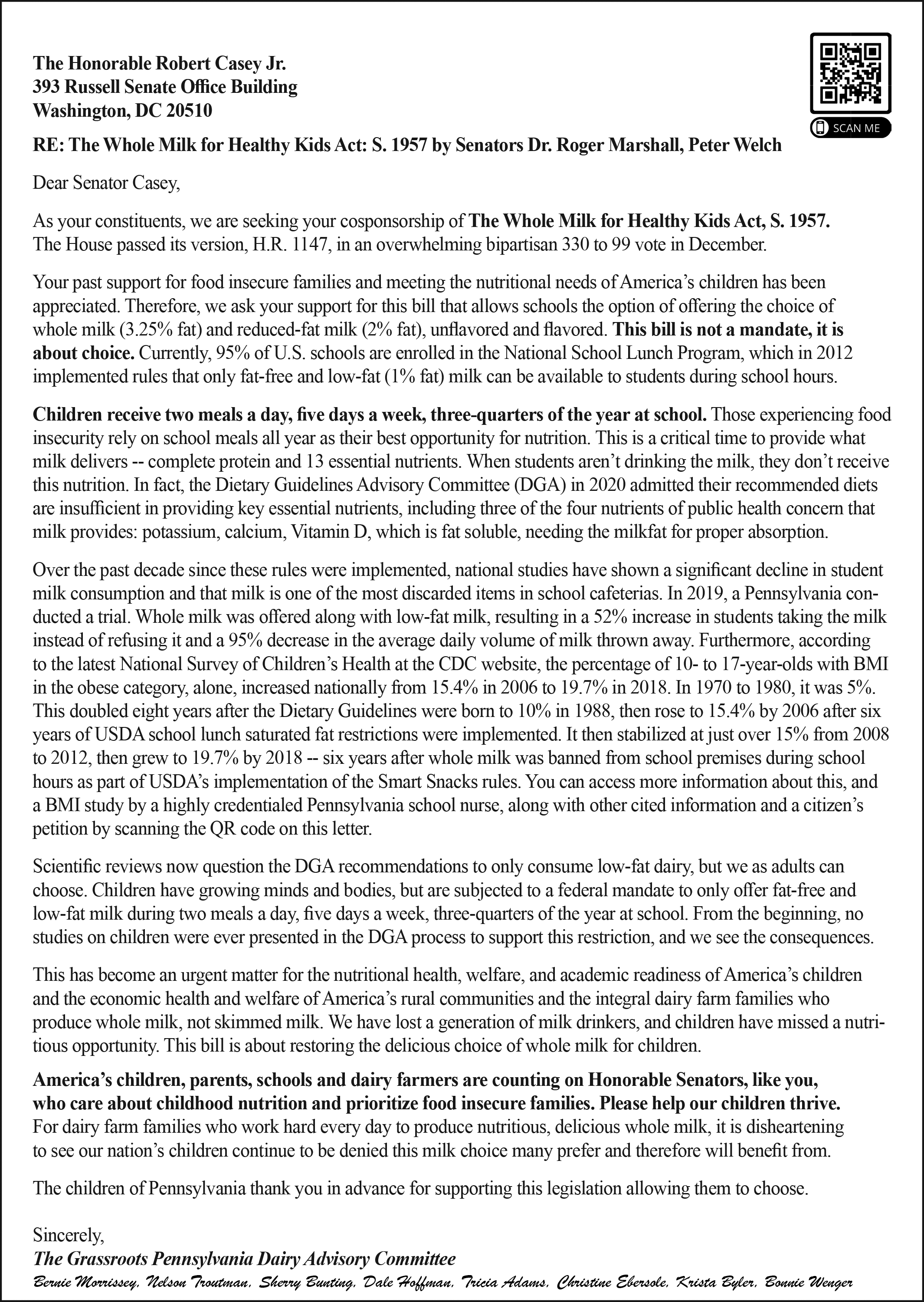
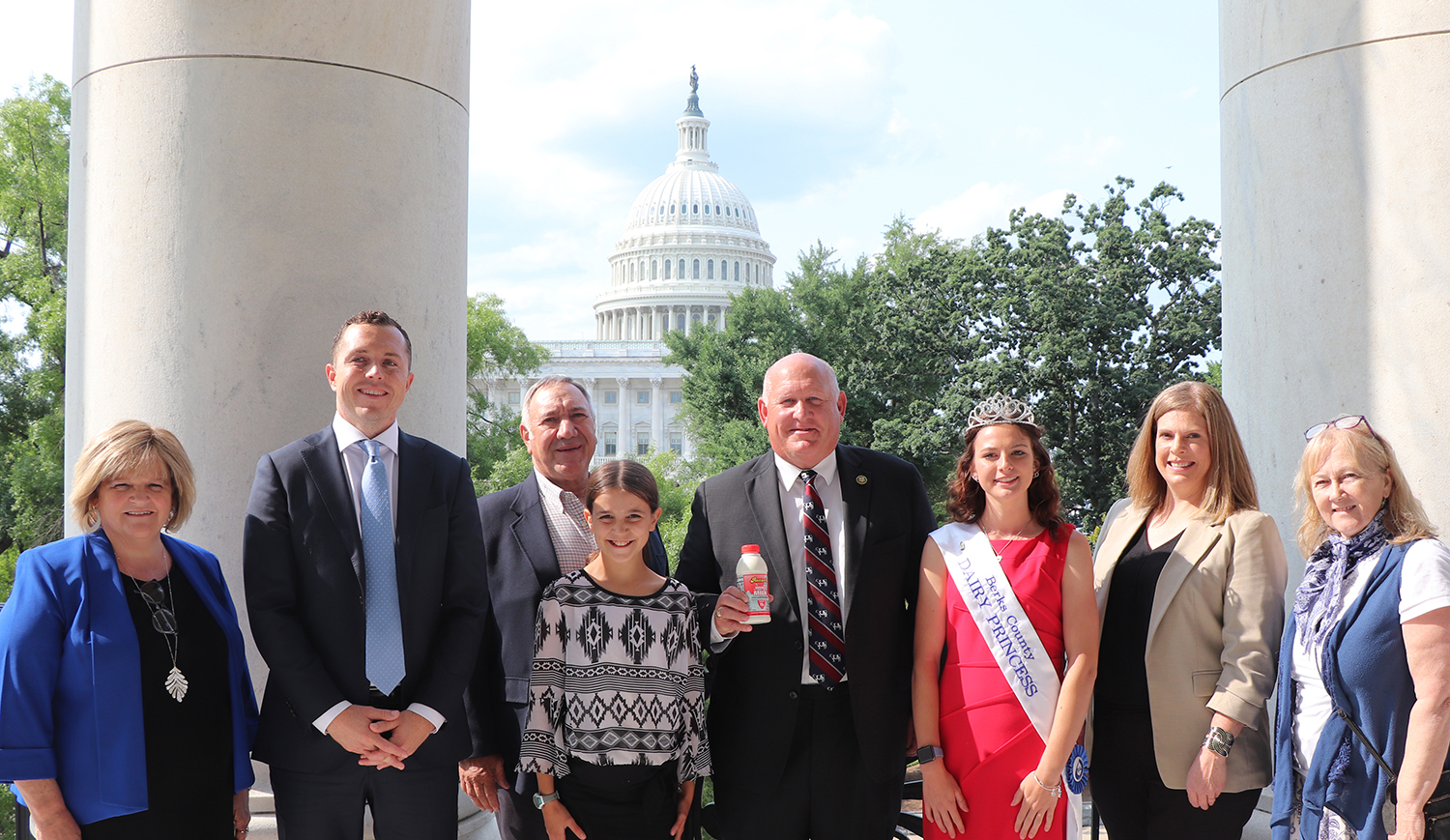

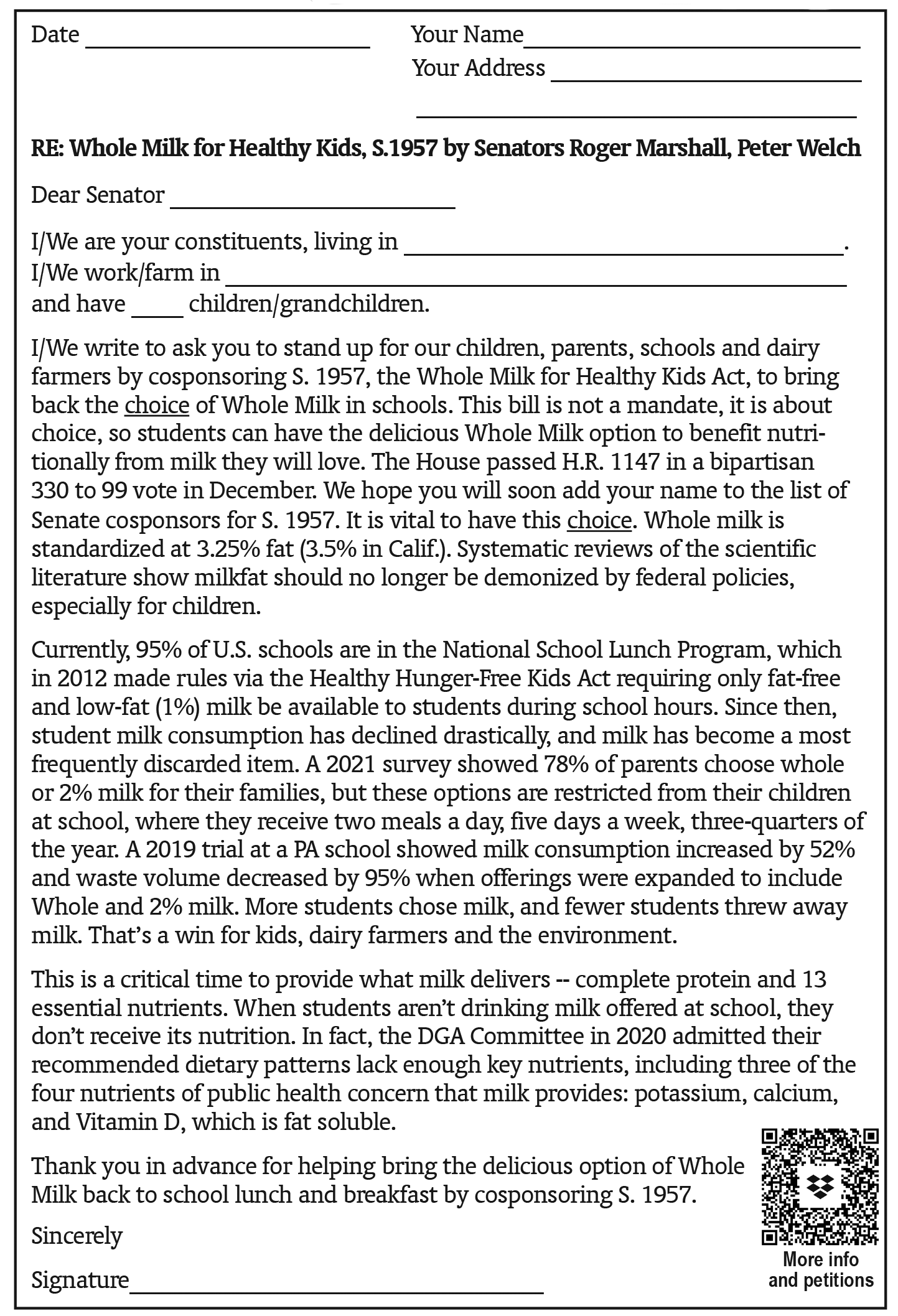
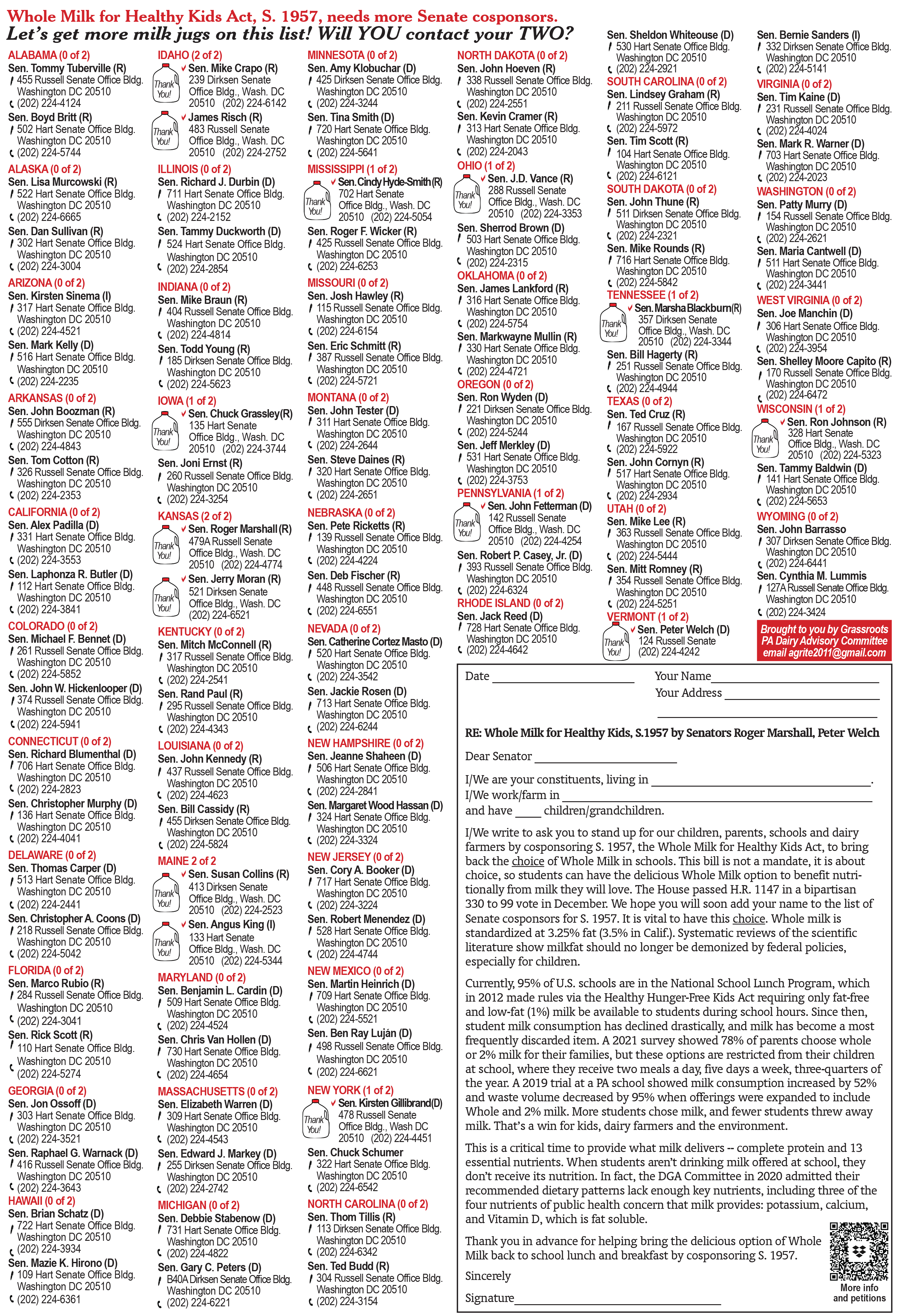

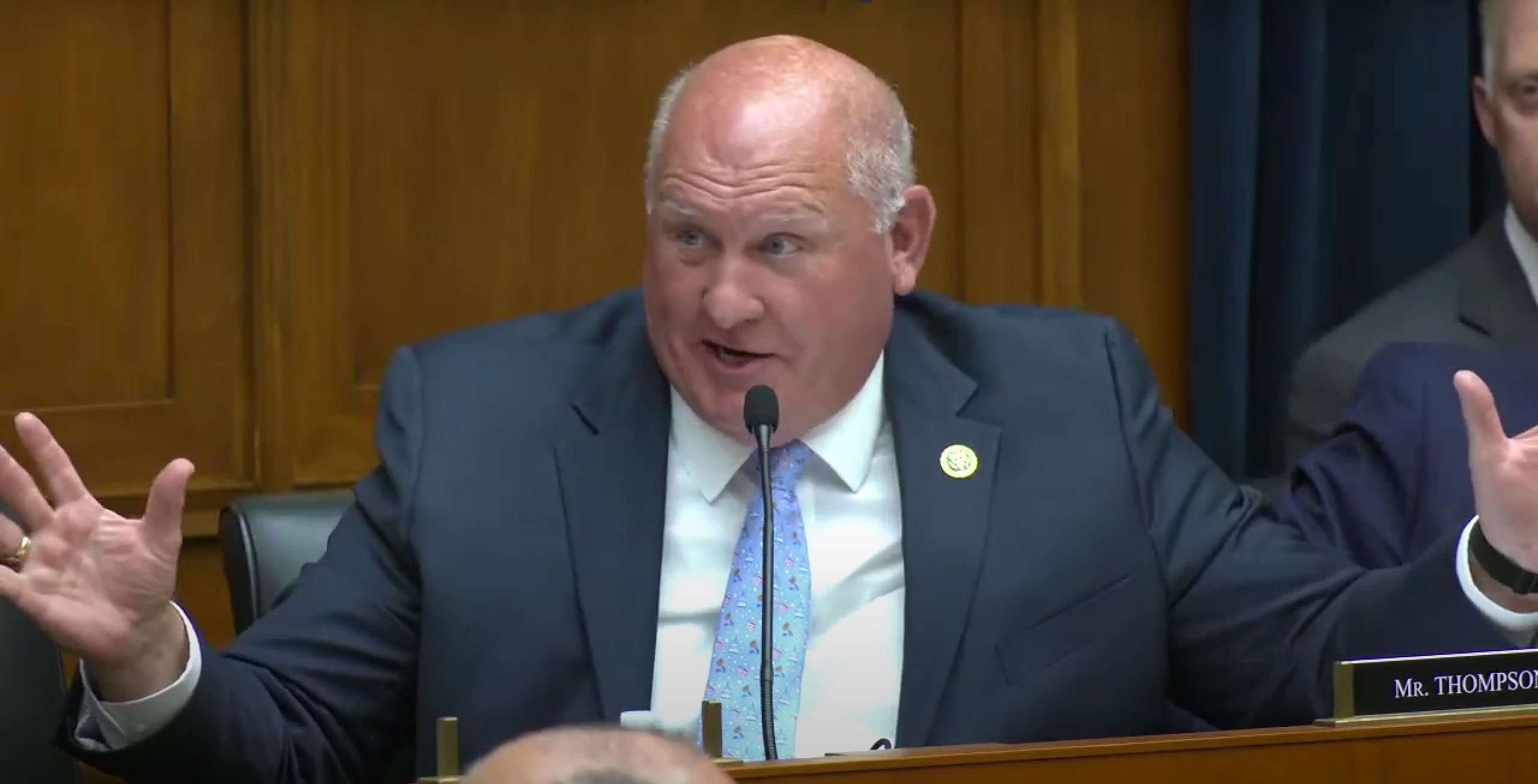
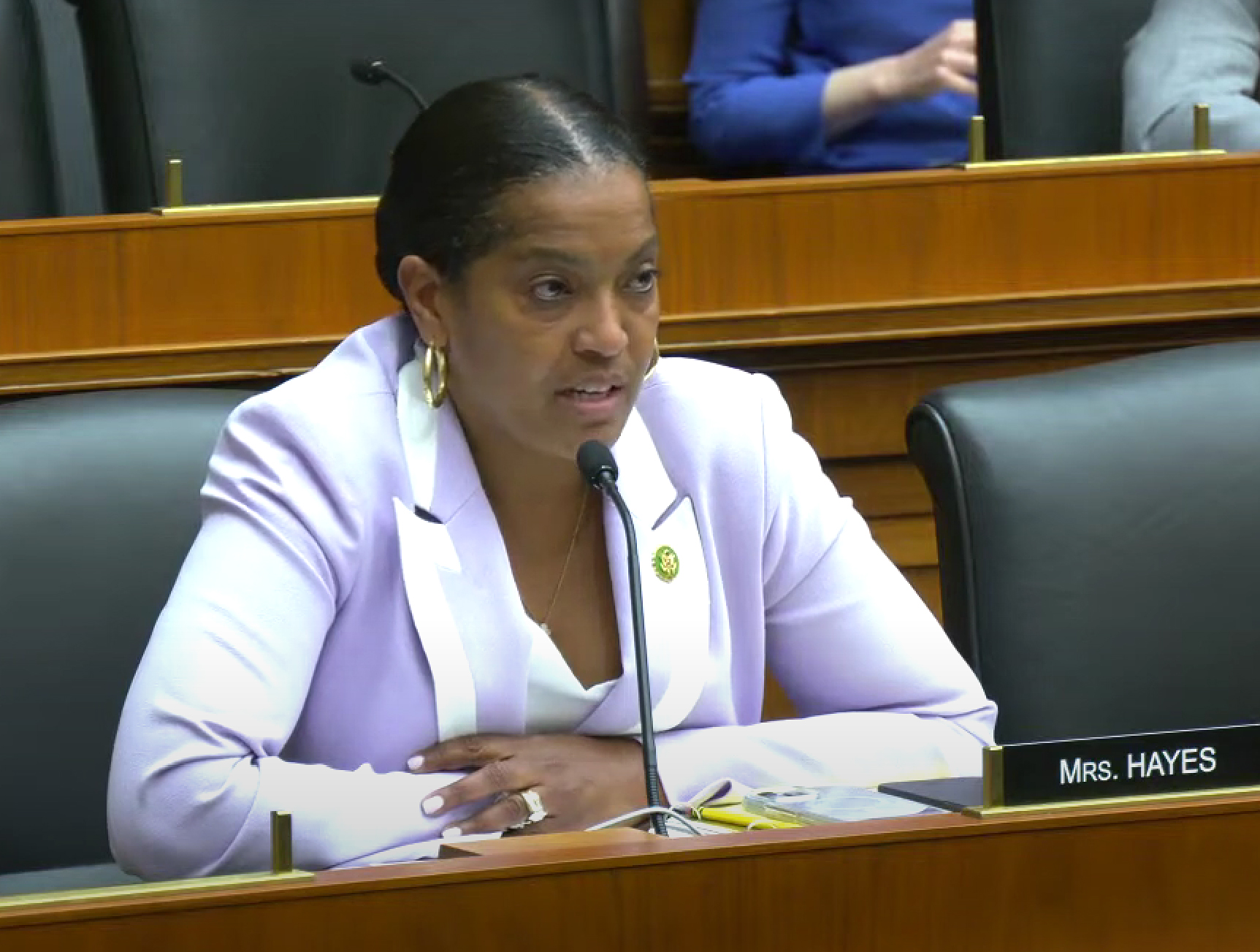
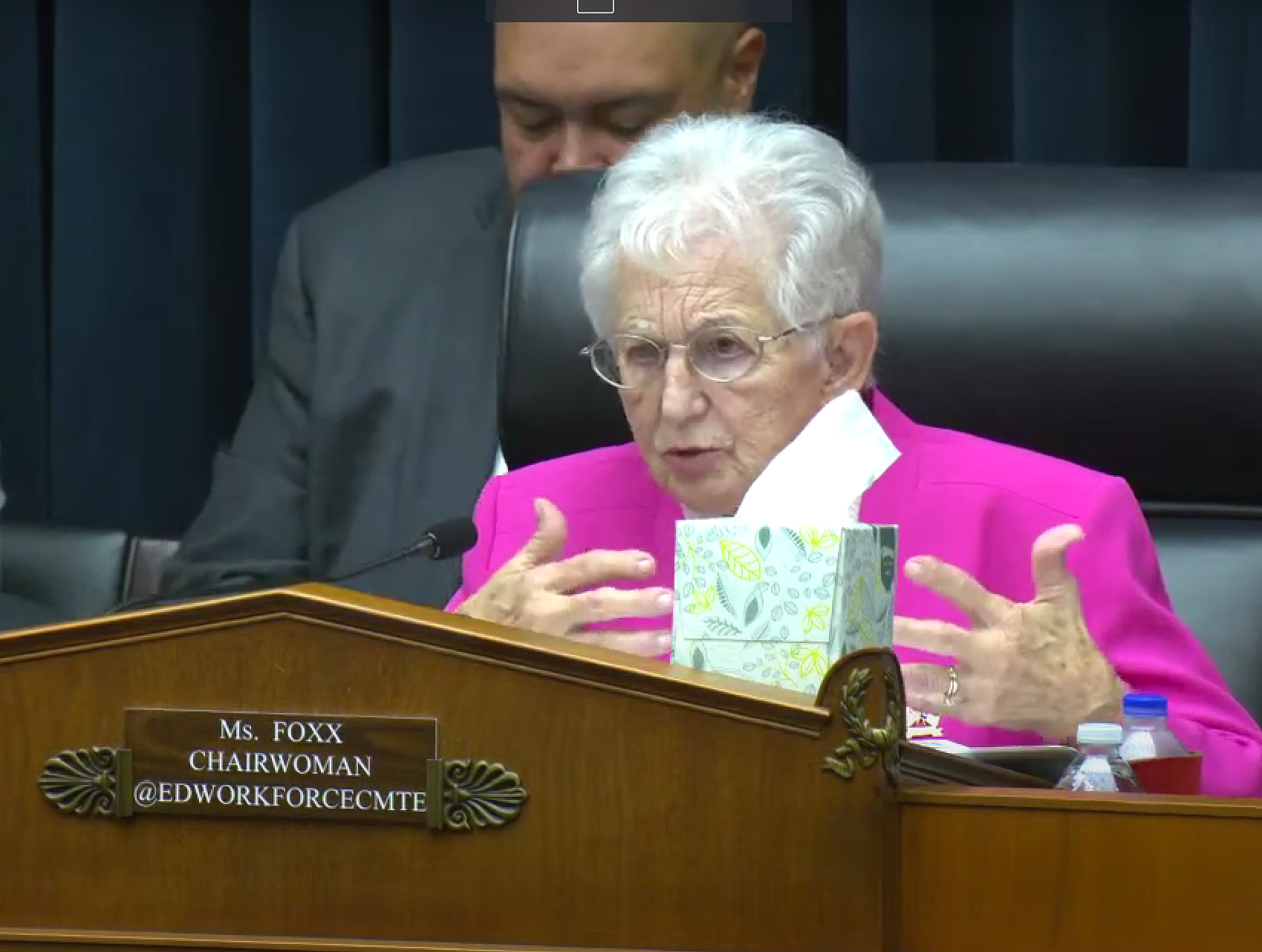

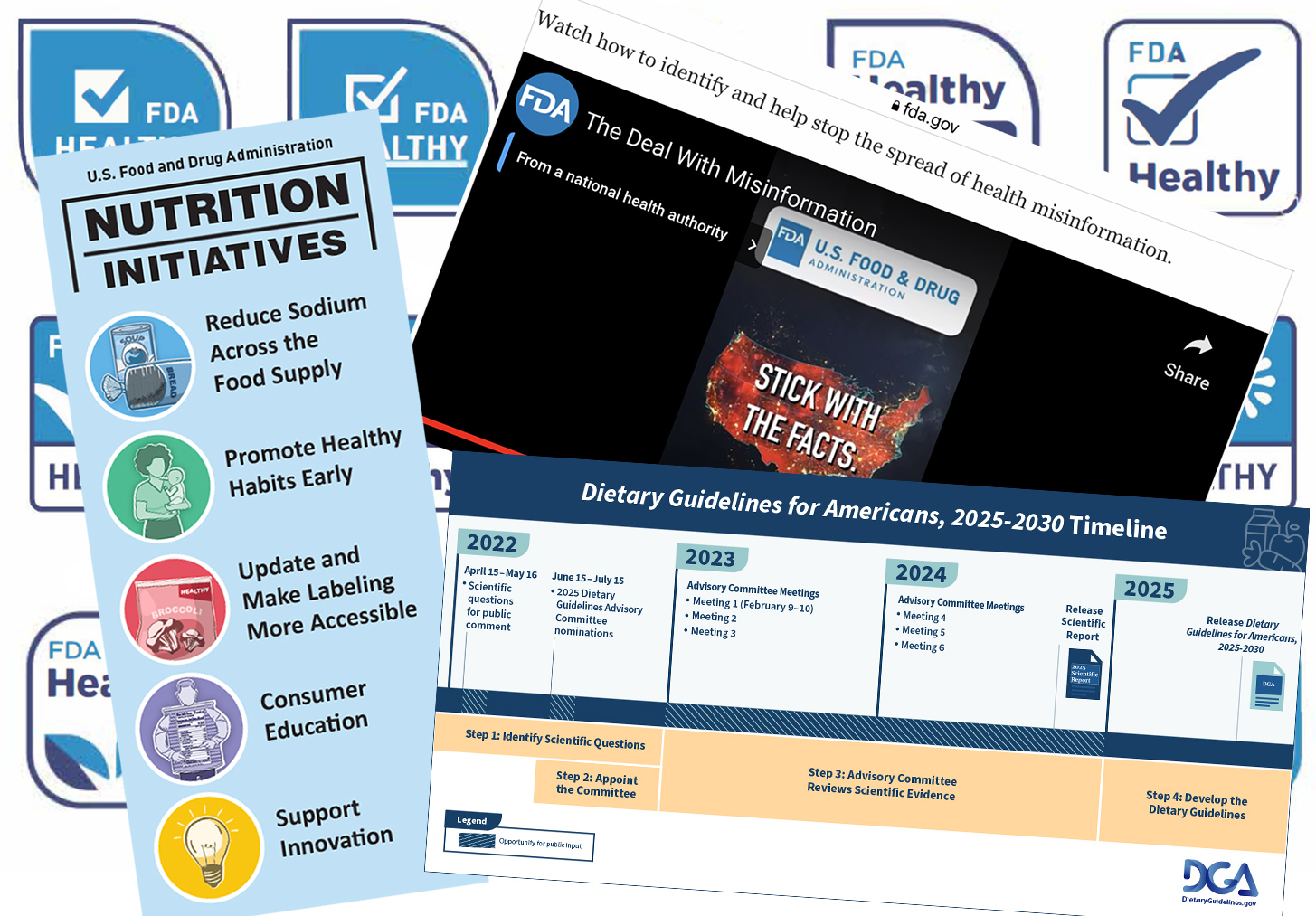
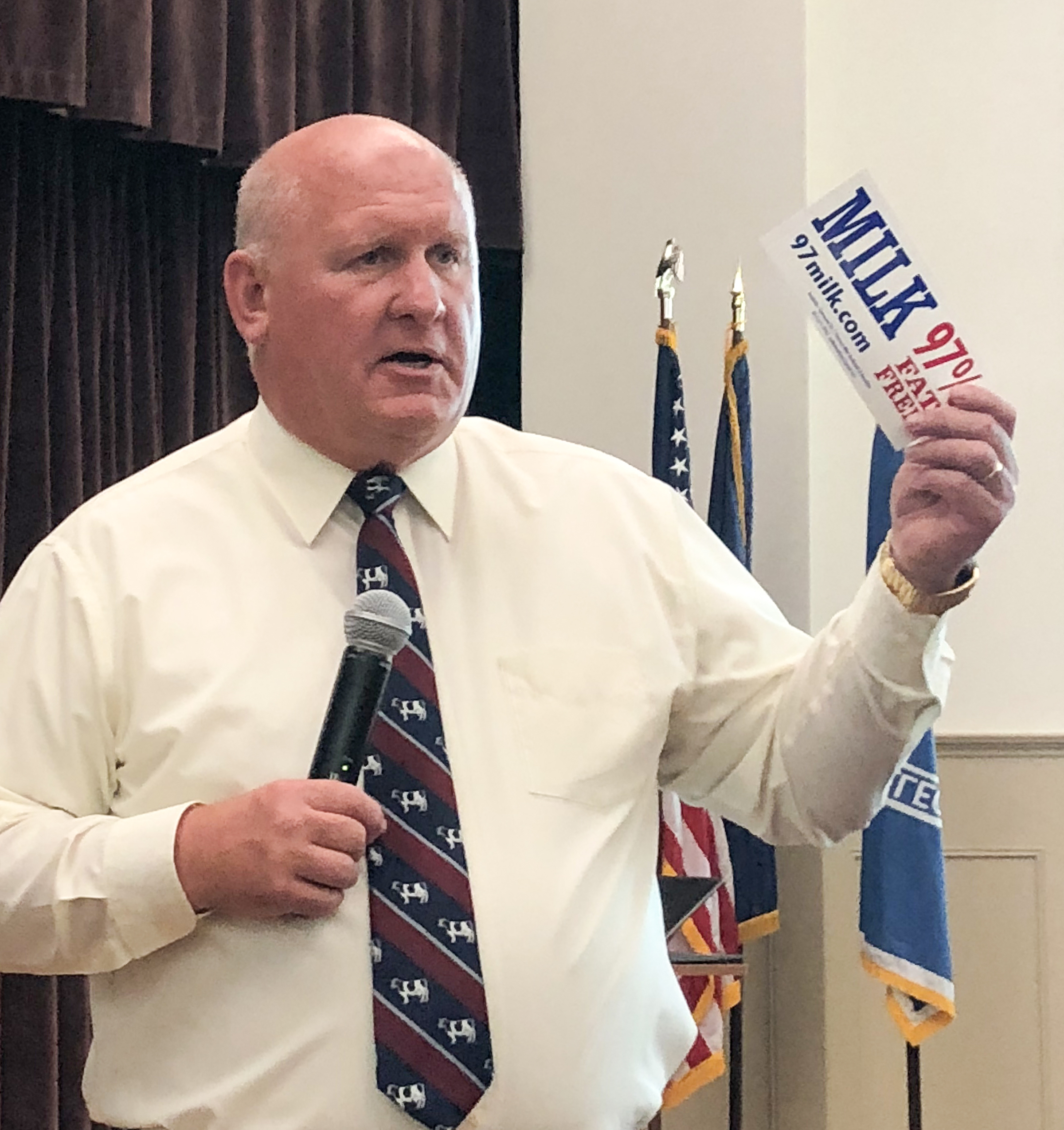
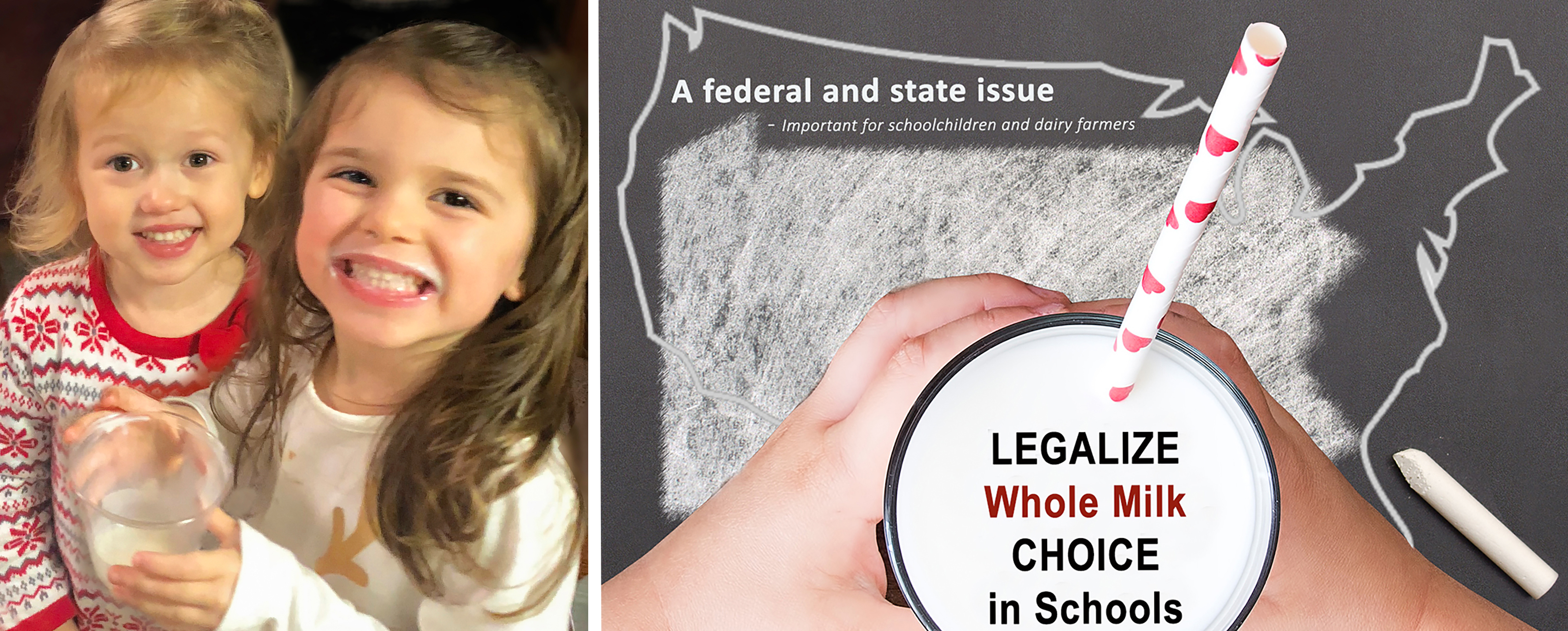
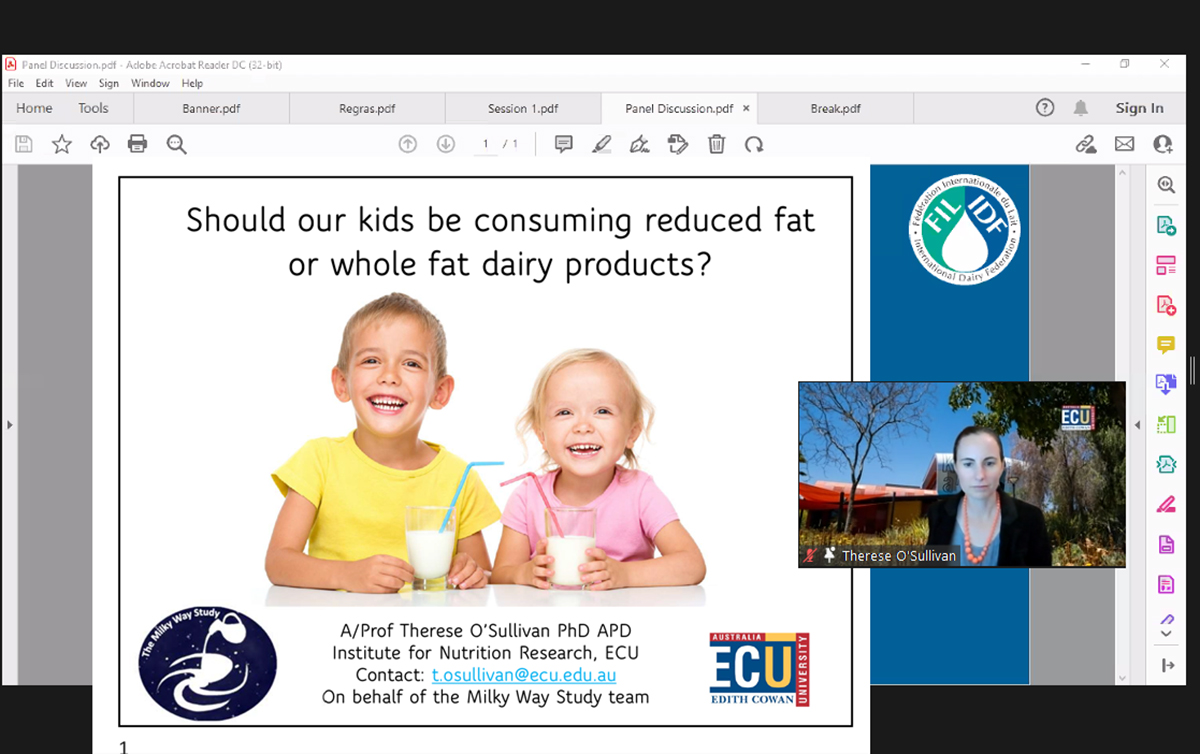
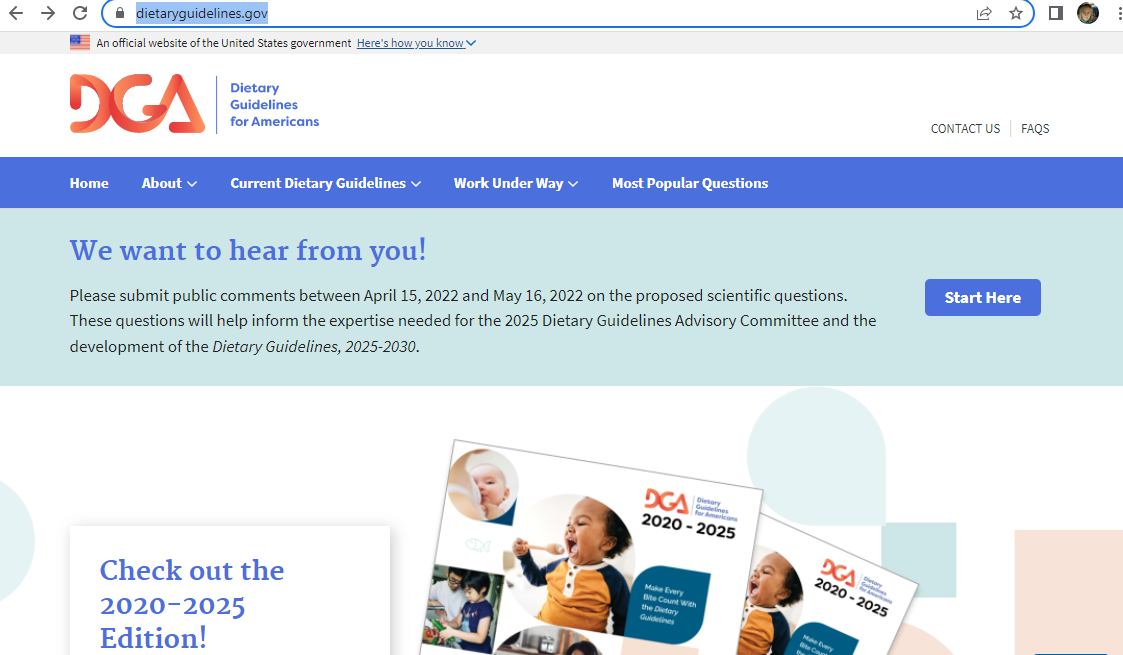

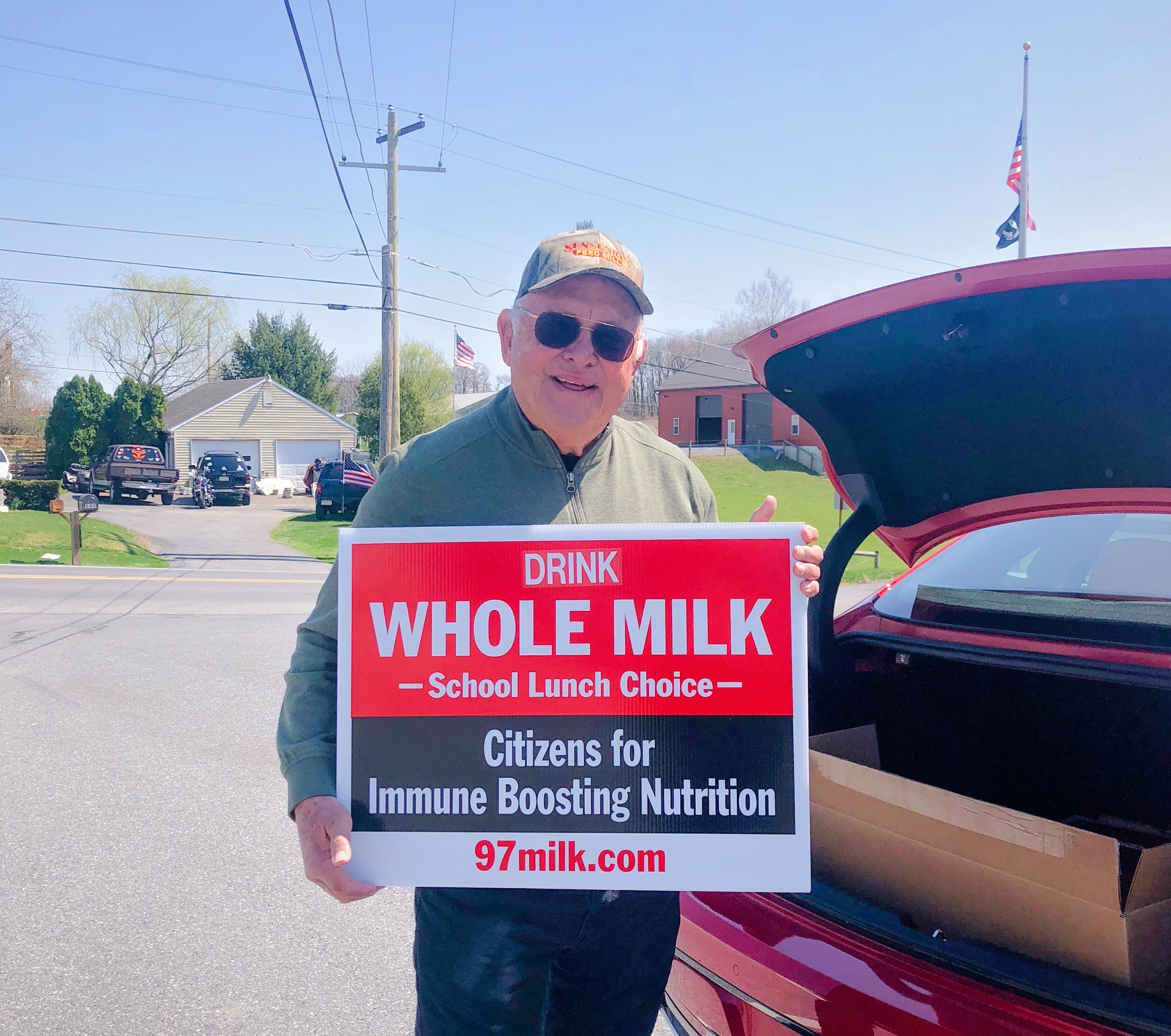

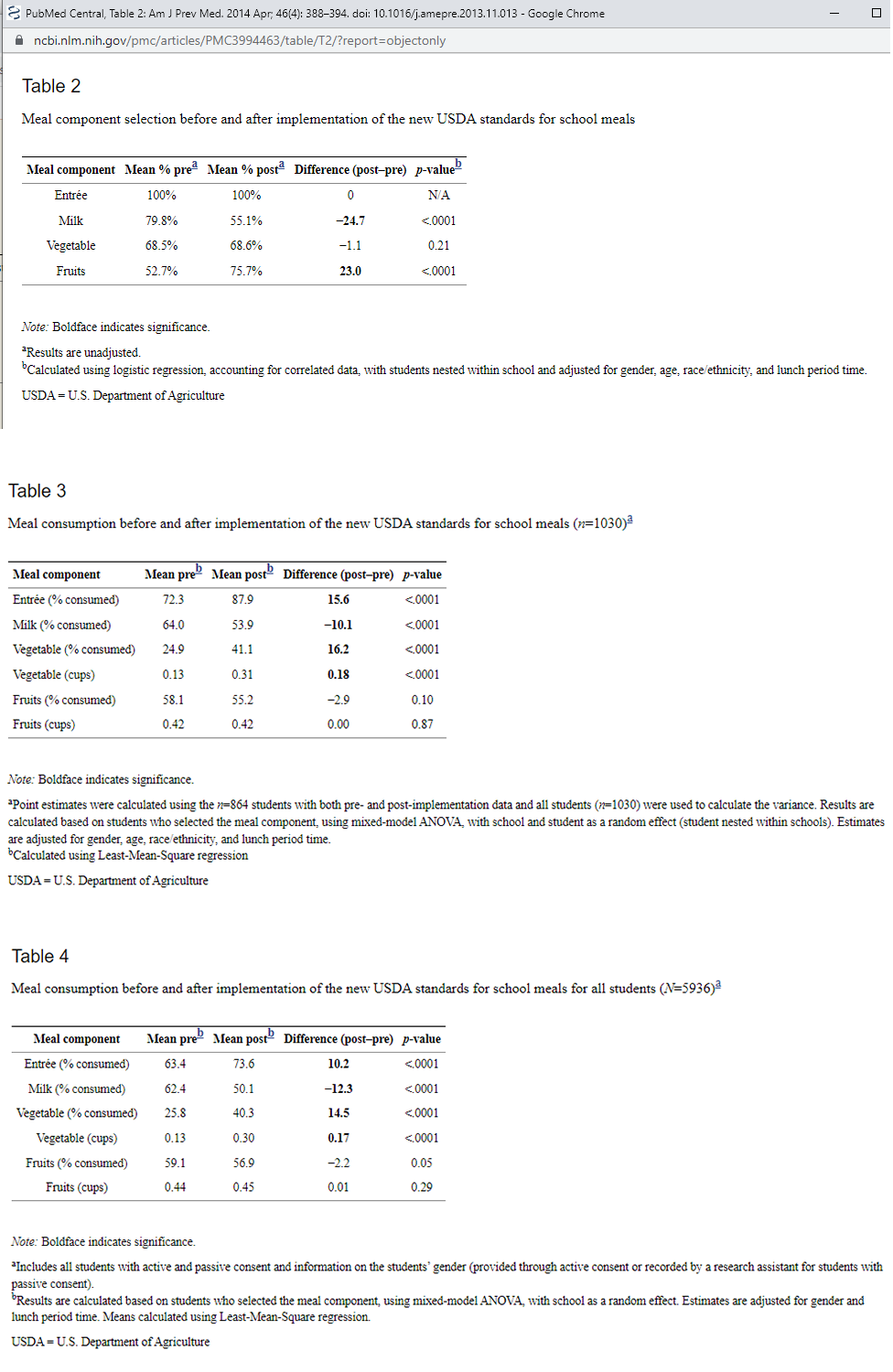
 Ag Moos