Damage to dairy buildings, but people safe, livestock losses minimal. Processing and distribution channels challenged. Biggest issues: Power. Fuel. Communications.
By Sherry Bunting, Farmshine, Friday, Sept. 15, 2017 (Photos courtesy of the dairies)
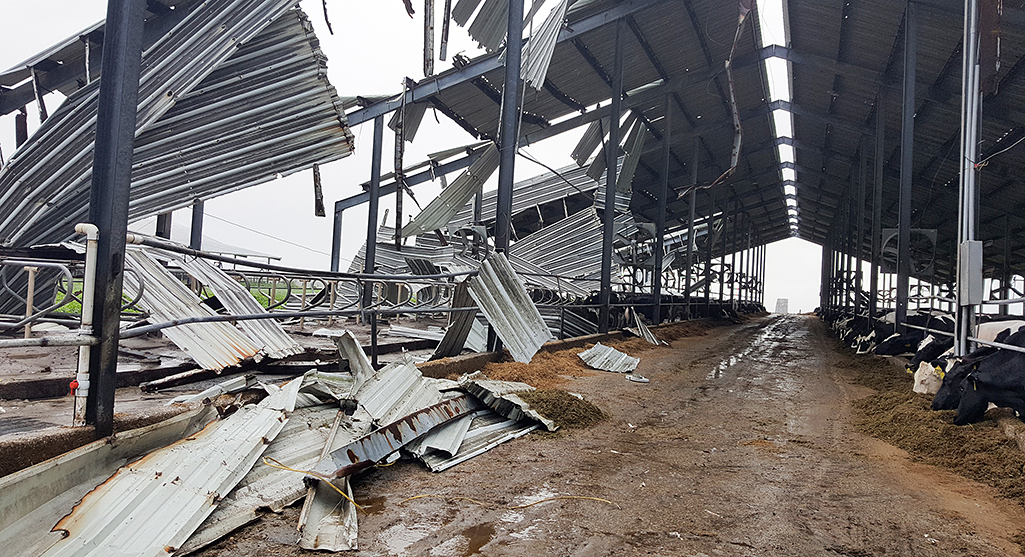
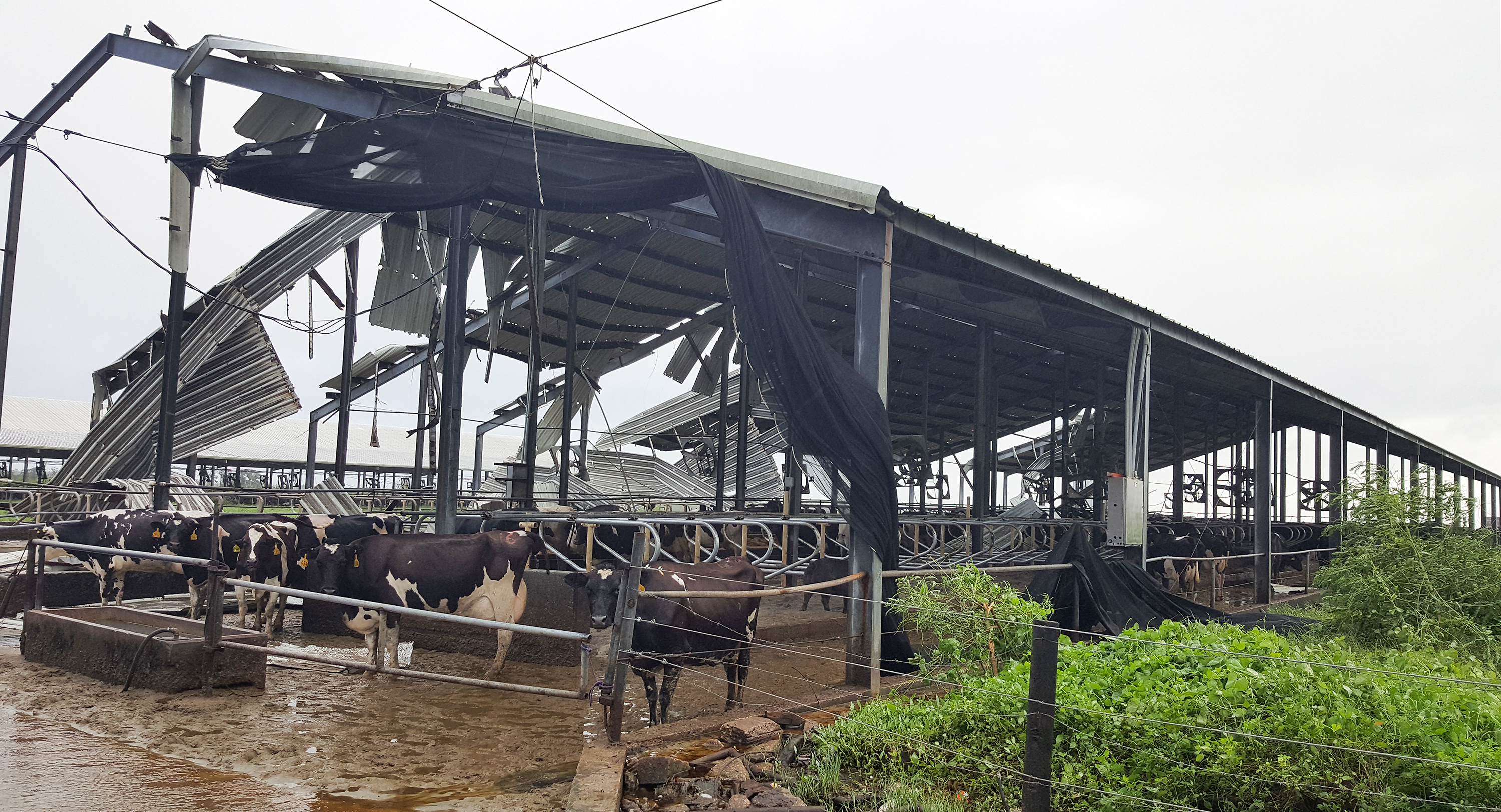
FLORIDA – “Four freestall barns are damaged, one completely collapsed, but amazingly not one cow was hurt. God had his hands on us,” said Jerry Dakin in a Farmshine phone interview Tuesday morning, 36 hours after Hurricane Irma hit Dakin Dairy, Myakka City, Florida, just 20 miles east of Sarasota as the eye wall nudged inland after traveling up the west coast of Florida to continue its trek up the center of the state. The more than 300-mile-wide hurricane — packing winds in excess of 100 mph — produced widespread damage as well as loss of power to over 5 million homes and businesses across the entire state of Florida and into Georgia and South Carolina.
The reports are still rolling in and the stories we heard are similar in the South — from the Rucks family of the Milking R in Okeechobee and Dakin Dairy in Manatee County, east to the Wrights in Hardee County — and north — at Alliance Dairies and North Florida Holsteins in Gilchrist County — all the way to Hillcrest Farms Inc. near Augusta, Georgia.
Dairy producers were in high gear preparing for Hurricane Irma last week, and while it appears that dairy buildings have sustained substantial damage throughout the Sunshine State and beyond, producers are counting their blessings in Irma’s wake: People are okay, livestock losses are minimal, second crop corn silage largely held its ground.
The most pressing concern in rural areas is the same as in urban — no power, limited supplies of fuel, spotty communication capabilities and a breakdown in the normal processing and distribution channels for food and other necessities, which means, for dairy farmers, where to go with the milk?
Of the four dairies interviewed early this week across a 250-mile stretch from South Florida to North ranging 1200 to 10,000 cattle and representing over 25,000 cows, just four animals were lost — a milk cow euthanized for injuries at one farm and three young heifers at another were found quite possibly hit by lightning or electrical shock. Among the social media posts of additional farms throughout the region were similar stories and responses of appreciation for the prayers and encouragement of others while focusing the first 24 to 36 hours post-Irma on getting generators going and getting cattle fed and milked and watered and then settling in to sort, evaluate and prioritize additional special needs.
Perhaps most important, however, are the stories of encouragement. Dakin said he spoke with fellow dairymen in a show of support before the storm and that it has been the encouragement of others “even folks from up north texting us and letting us know they are praying for us” that has gotten them through it.
“I have an unbelievable team of employees,” said Dakins of the over 60 employees who work for the dairy he built in 2001 and the dairy plant and store that were added in 2009. “I am only one man, but it is this team of family and employees that is getting things done.”
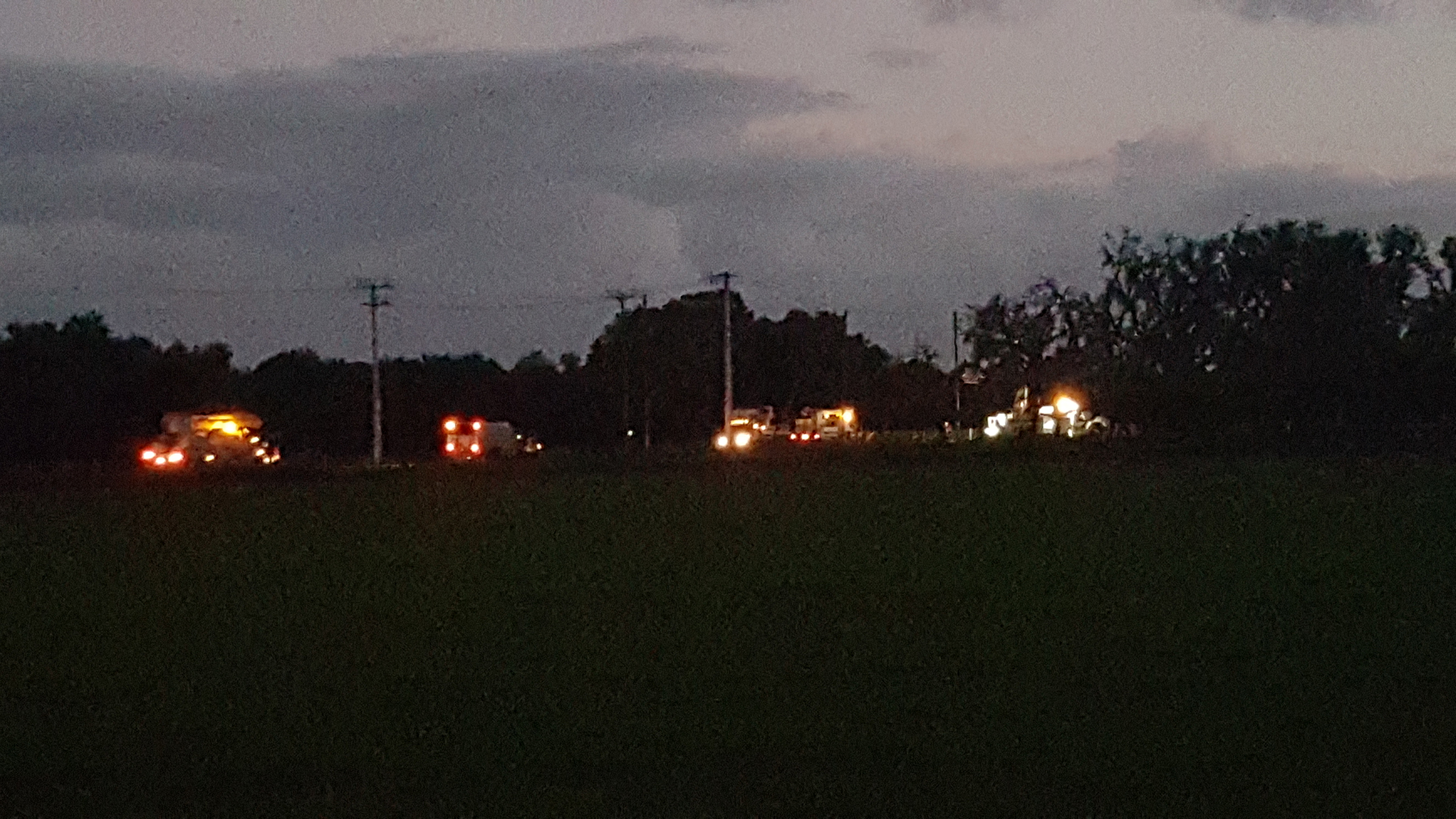
Dakin was feeling fortunate Tuesday morning after the cavalry arrived Monday night — five utility trucks got the dairy, and its milk plant and store, back on the power grid. Since then, the plant has worked overtime separating and pasteurizing milk for multiple cooperatives. In some cases, the skim is being dumped because milk channels are backed up due to plant, supermarket and school closures and other infrastructure issues.
“It’s a big deal to have our plant processing because we are able to unload tankers and get them back to farms,” he explains that they are processing 20 more loads than normal since the storm. “When it comes to a disaster like this, we’re all in this together.”
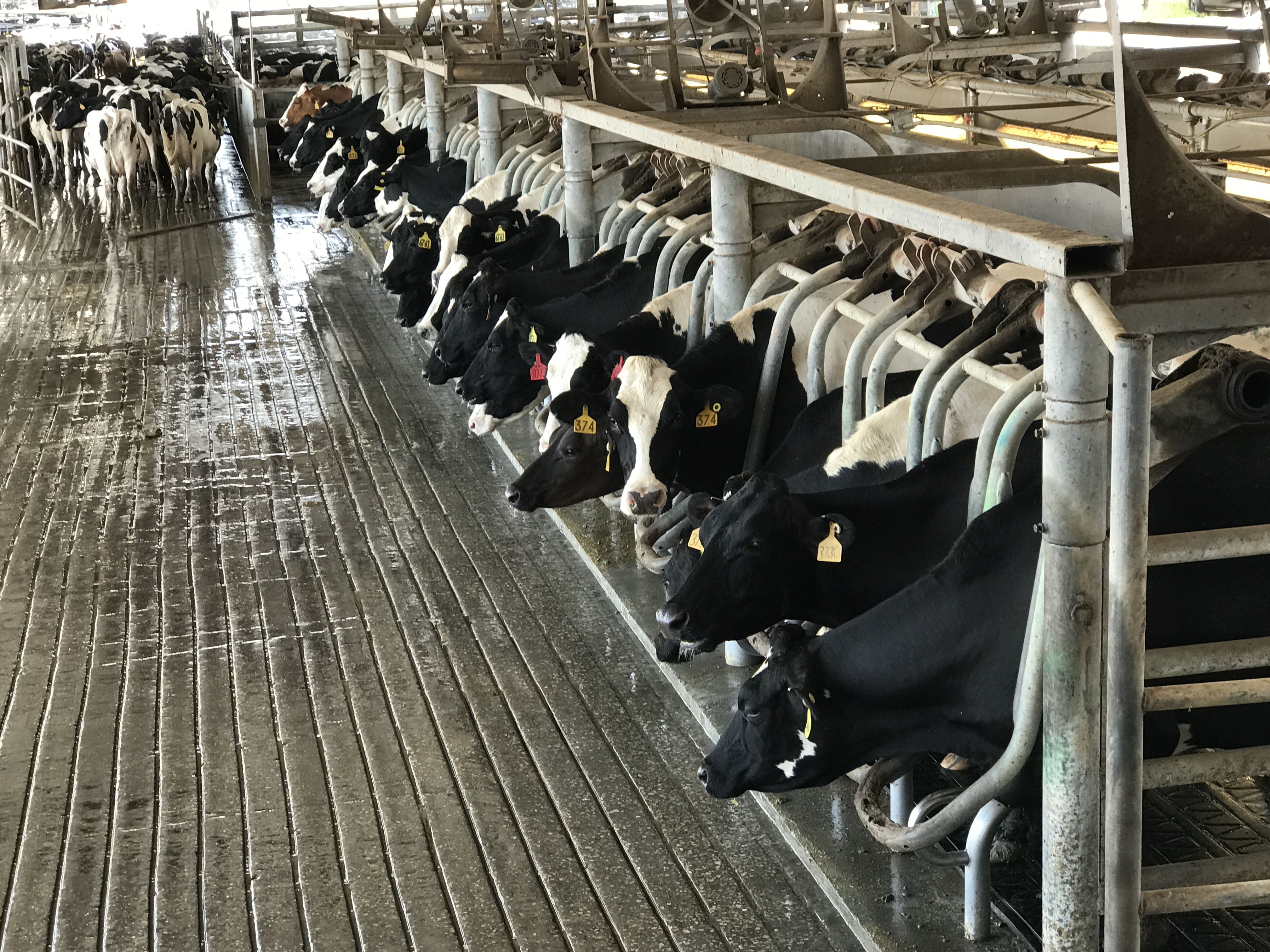
They milked their own 2200 cows at 6 p.m. Sunday evening ahead of the storm, and then shut everything down, planning ahead to skip the night milking. They had boarded things up, pushed 1200 dry cows and heifers two miles away from buildings into pastures with wooded windbreaks, and parked large equipment all around the house where 25 family and crew hunkered down “like we were going to war.”
“We were so boarded up that we didn’t feel the true impact, until we opened a door, and it was wild. I decided not to walk outside, to stay calm, pray and rest because I knew there was nothing I could do during the storm and there would be a lot to do when the storm was over,” Dakin recounted.
The storm hit with all its fury at 10 p.m. Sunday evening. By 3:00 a.m. Monday morning, the winds were still blowing, but the core, or eye wall, had passed.
“I didn’t want to walk out of the house, scared about what I was going to see, but I knew I had to face it,” Dakin recounted. “I went straight for the barns, and I saw the buildings down and the cattle out where the gates were knocked down by the collapsed building. Cows were standing in the holding pen bellowing.”
He cranked up the generator and got help and got to milking. He had already pulled grain concentrates from the ration in the days leading up to the storm to slow milk production, but even so, the pumps could not keep up with the initial milk flow after missing the night milking. “We couldn’t milk them fast enough,” Dakin related, adding that this is the first hurricane his farm has ever seen and that his brothers’ farms in the county were having similar experiences for the first time.
Northeast of Dakin, about 50 miles as the crow flies, Joe Wright was hunkered down at his dairy in Zolfo Springs. He was in the same closet in the same concrete building he took refuge in at the dairy during Hurricane Charley 13 years ago. Of the four hurricanes his farm has weathered, three were in 2004. Irma, the fourth, was second only to Charley in terms of its impact on Wright’s dairy, but he says Irma is the worst in its broad impact on his state and the region’s dairy industry.
Wright looked at the Weather Channel “spaghetti models” ahead of the storm and had a feeling it would track up the nearby Peace River, like Charley, so he didn’t let his guard down when he heard it was heading in a northwesterly direction. True enough. Once the eye wall got close to St. Petersburg, it’s northwest track bent east, putting the edge of the eye wall near Wright’s dairy. The structural damage to buildings tells the tale.
“Right now we are just milking and feeding and trying to return to some normalcy to begin evaluating cows,” he said, explaining that in 2004, they lost cows. The barn fell in on them when Charley came through. Since then, they have converted to modified grazing and so one of the things they did ahead of Irma was to intentionally push the cows out of the barns and lock them out and away from the buildings.
“We thought they would be better off in pasture, and it appears so because the roofs and ends of our freestall barns were just ripped off by Irma,” Wright said Tuesday from his son’s cell phone as they drove 100 miles for a backup generator after their primary generator sustained voltage issues that were impacting pumps and motors on the farm. Fielding a call from a roofer on his own phone, Wright said another pressing concern is getting a roof over the milking parlor, and if possible, the cattle working areas. “The rest of it will wait for winter.”
Confessing he hasn’t slept, really, since Friday or Saturday night and hasn’t been to his home 10 miles from the dairy, Wright shared that, three big oak trees were down at home that he couldn’t deal with. “My neighbors in town know what we’re up against with the dairy,” he said. “They came and cut them up and hauled them away. It’s hard for me to explain what that means. It’s uplifting.”
At Dakin Dairy, the milk cows had remained in the freestall barns, and survived. Dakin observed how difficult it had been to move 2200 cows from the barn to the milking parlor as the storm was within four hours of reaching them. They milked quickly and cows literally wanted to run back to their barns.
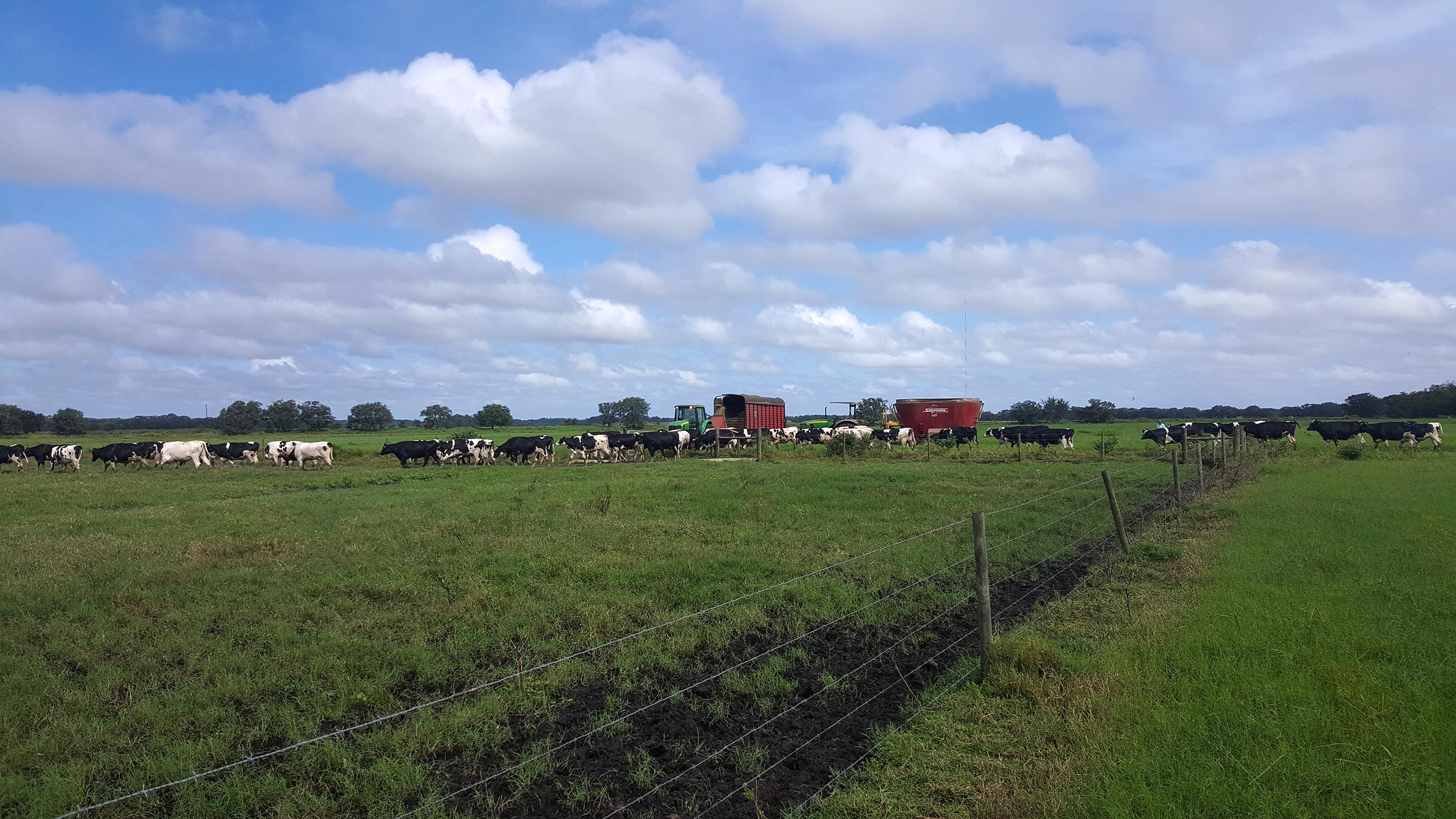
Like Wright, Dakin did make the decision to move his pasture cattle away from buildings, and apart from clearing sheet metal and removing safety hazards around the collapsed areas of the barns, rebuilding will be put off until winter.
“We’ve got a month and a half yet of the real hot weather,” said Dakin. “If anyone is looking for construction work in sunny Florida this winter, we’ll have it.”
Another 180 miles north in Trenton and Bell, the Sunshine State’s two largest herds – Alliance Dairies and North Florida Holsteins – were also in line for hurricane force winds. By the time the eye had traveled inland those nearly 200 miles, Irma had been downgraded to a Category 1 hurricane but still packed high winds, spin-off tornadoes and significant rainfall on the back edge.
“We survived it pretty well and have enough generator power to milk cows, cool milk and pump water. We’ve been able to keep enough manpower to get things done,” said Don Bennink of North Florida Holsteins in a phone interview Monday night from the darkness of his home without power. He was thankful to be just four hours behind in the milking schedule after hearing of others being as much as a full day behind and said all of the generator power is devoted to the dairy. His home can do without power for now.
“We got hit, but south Florida got nailed,” said Bennink. He had spent the days leading up to the storm making sure the generators were backed up and operable, having extra feed and fuel delivered and double checking everything he could think of.
“The worst of the storm, for us, was from 1:00 a.m. to 6:00 a.m. Monday morning,” he said. “We shut down when it got bad and restarted Monday afternoon. We had a crew here because we provided shelter for a lot of our people.”
The dairy’s office, where the former milking parlor had previously stood, was sturdy, and 50 people, including employees and their families, weathered the storm there with provisions while the winds blew roofs and debris.
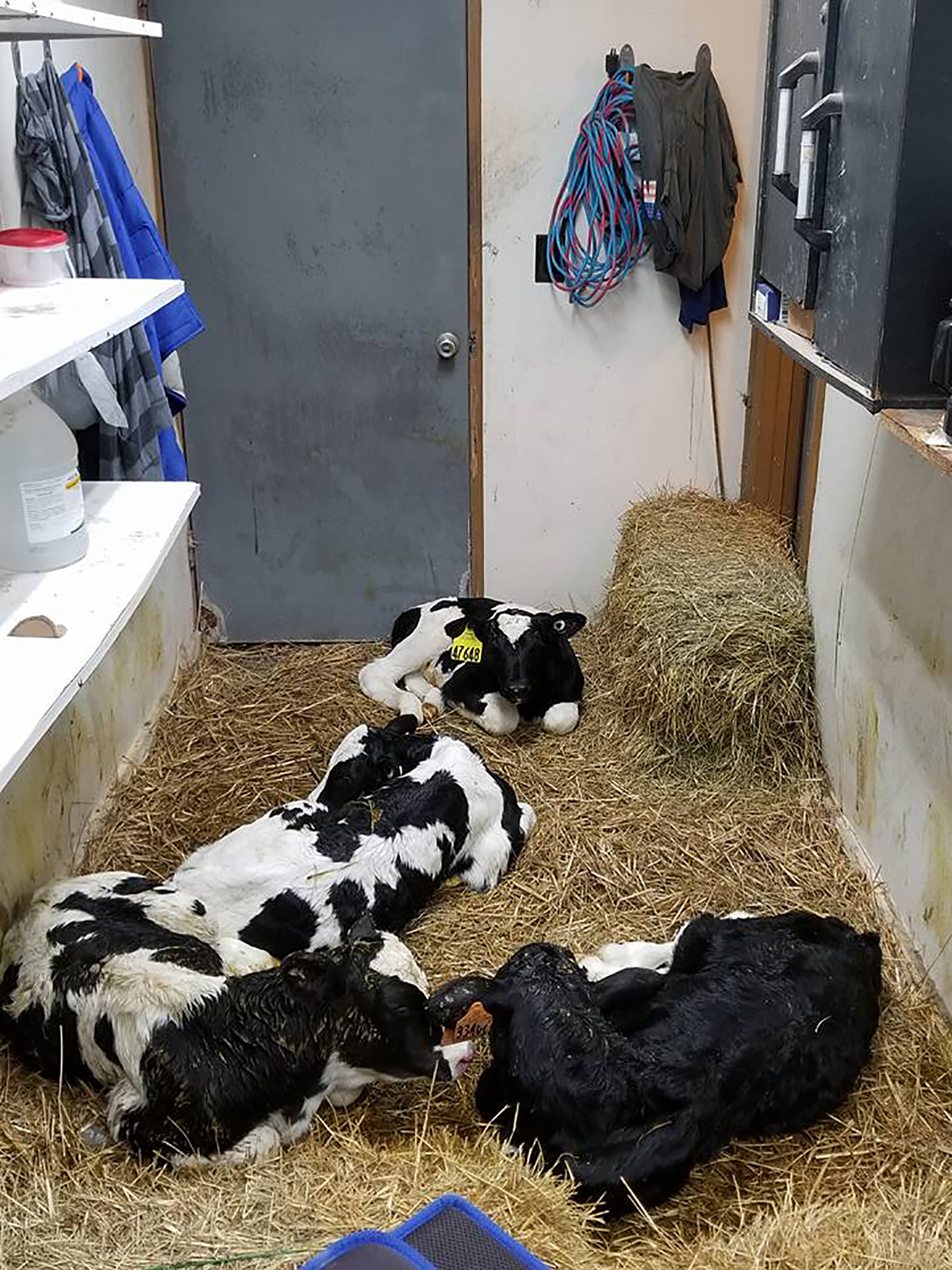
Newborn calves at the time of the storm were stowed safely in the herdsman’s office near the calving area.
The storm had its impact. While the tunnel-ventilated barns for the milk cows are intact, the large tunnel fans were ripped apart. The estimated 20 inches of rain that fell in a short time at North Florida Holsteins created substantial flooding in the heifer yards.
“We expected this much wind, or more,” said Bennink, “But we did not expect this much water.”
Like the incidental reports from other dairies on social media that had found a few individual animal losses, Bennink said of the 10,000 head of cattle at North Florida Holsteins, three calves were lost.
He was counting his blessings Monday evening, and thankful for his “reliable people.”
Just west of Bell in Trenton, Florida, Jan Henderson at Alliance Dairies had spent the days leading up to the storm pleading with fuel suppliers to get fuel to them. “We wanted our tanks full for gasoline and diesel, and we even filled our choppers so we could siphon if needed,” she said in a phone interview Tuesday. Being responsible for over 10,000 cattle between the main dairy and two grazing operations at other locations, Henderson relied on her managers, quarterbacked plays they had run through and filled in hands-on wherever she was needed.
“We tested our generators to operate under load and made sure our mobile generators were working. We had multiple meetings with our managers on the course of action to make sure cows get milked and fed and youngstock get watered and fed,” she explained.
Before the storm, Henderson was in people prep mode, bringing in plenty of food and energy drinks for employees. Once the storm hit, she was communicating with managers and filling in the gaps on shifts bringing cows to the parlor.
“We are very blessed that Irma weakened from its earlier strength, and we had already determined we would go to 2x milking the day of the storm. We kept going until 6 p.m. when everyone needed to be wherever they were going to shelter,” she said, noting that Saturday’s crew was smaller than normal, and managers from all areas of the farming enterprise helped cover milking shifts — hunkering down at the dairy.
Two days after the storm, one of their grazing dairies has power and the other is still waiting. Alliance Dairies, where 5200 cows are milked, is expected to be without power until next week.
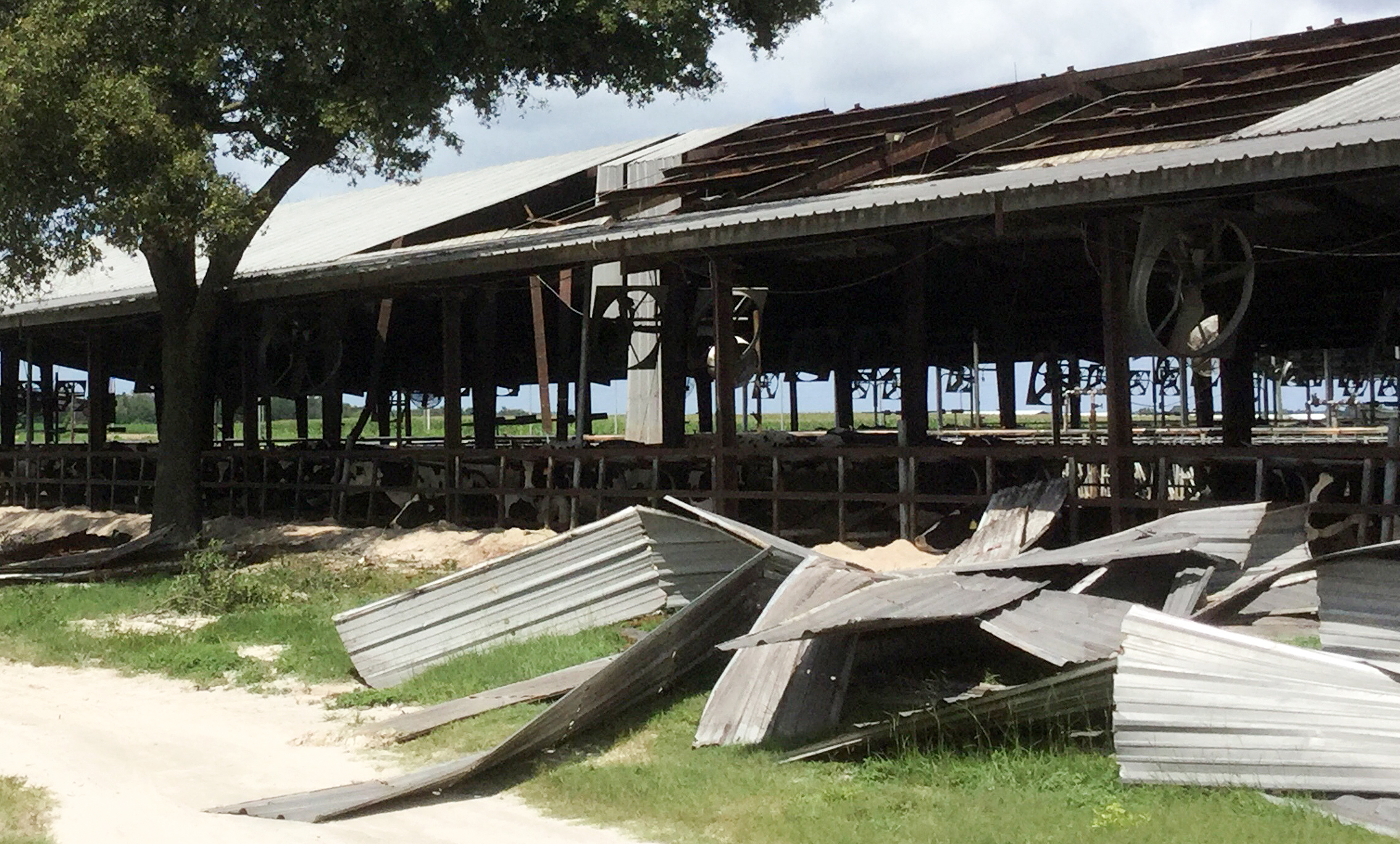
“We are able to milk and cool milk, and we can provide water, but we are not able to operate our fans,” said Henderson. “It was cool and comfortable the day after the storm, but the heat and humidity is returning.”
“We have very committed people here, and I am awestruck by what our people have been able to do,” said Henderson.
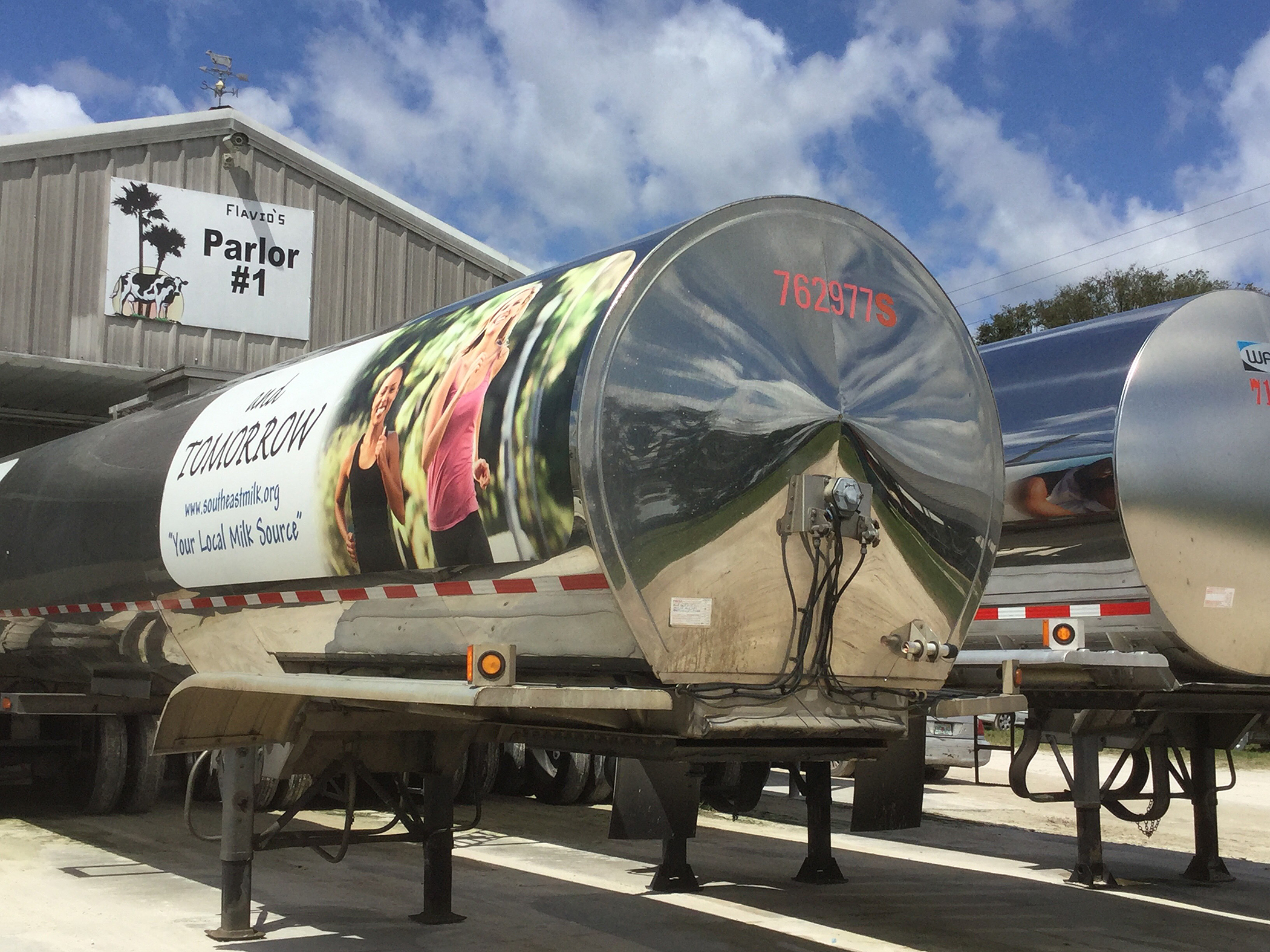
Like most dairies in Florida right now, they have milk accumulating on trailers with 10 full trailers sitting as of Tuesday morning. One of the grazing dairies was completely full when two milk trucks pulled in, one without a trailer and the other with an empty trailer just in time on Tuesday morning.
While most of the plants are closed and reopening on differing schedules, Henderson notes the power outages and evacuations mean that, “There are 6 million fewer people drinking milk right now, so processors are not feeling the need to process milk.”
Bennink also noted that as processors have been closed with two to three days of milk in silos, milk is also backing up on farms with no place to go.
“It will go from one extreme to the other. When they start needing milk again, they won’t be able to get it fast enough, but we can’t just hold it for them. They will want fresh milk,” he explained, adding that while the coop management is doing a “fantastic job” handling this difficult situation, there will be milk dumped in Florida.
“There’s a lot of milk out there (nationally), and we don’t have the over-order premiums we used to have here, so we’re not going to get sympathy from our customers over the costs our cooperative has to bear to deal with the situation,” Wright observes, adding that in addition to fuel shortages, milk transportation is also hampered by availability of trailers and the ability to wash them down.
More will be known in the coming week, but the Southeast dairy producers will bear the brunt of the costs of handling these issues and it’s unclear what insurances may or may not cover such market conditions that are exacerbated by a natural disaster.
Fuel shortages, plant closures, power outages and evacuations have changed the dynamics in the region.”
Dakin’s plant and a Dean’s plant are currently operating. Some plants are flooded, others have generator problems and some are light on staff to operate. Supermarkets are also having refrigeration and power generation issues.
Restoration of power and fuel to the area will go a long way to immediate needs in this recovery.
Notes Henderson: “You prepare for the worst and hope for the best, and we certainly got a little of both. It was bad enough, but if it had not weakened from earlier forecasts, I don’t want to think about what we might be seeing.”
Wright observes the basics: “If we have feed, fuel and a generator, we can get through this. If we get power, we can do a lot of this cleanup. But without power, it wears on you, and it’s tough on the equipment with the voltages.”
Bennink said it will be a long while for the state of Florida to pick up the pieces, and yet he was feeling fortunate to have his people around and to be able to provide food and shelter during the storm. “One hand washes the other,” he said.
Adds Dakin: “Prayers lifted us up. It is amazing to hear from people in so many other states and to know they have been praying for us down here.”
-30-


 Ag Moos