Good news may trump bad nutrition policies

Editorial Analysis: Tumultuous 2024 spills over into 2025 – Part One

By Sherry Bunting, Farmshine, January 3, 2025

EAST EARL, Pa. – Year 2024 was tumultuous, and 2025 is shaping up to be equally, if not more so. Spilling over from 2024 into 2025 are these three areas of potential for good news to trump bad nutrition policies that are having negative impacts on dairy farmers and consumers.

Farm bill and whole milk bill

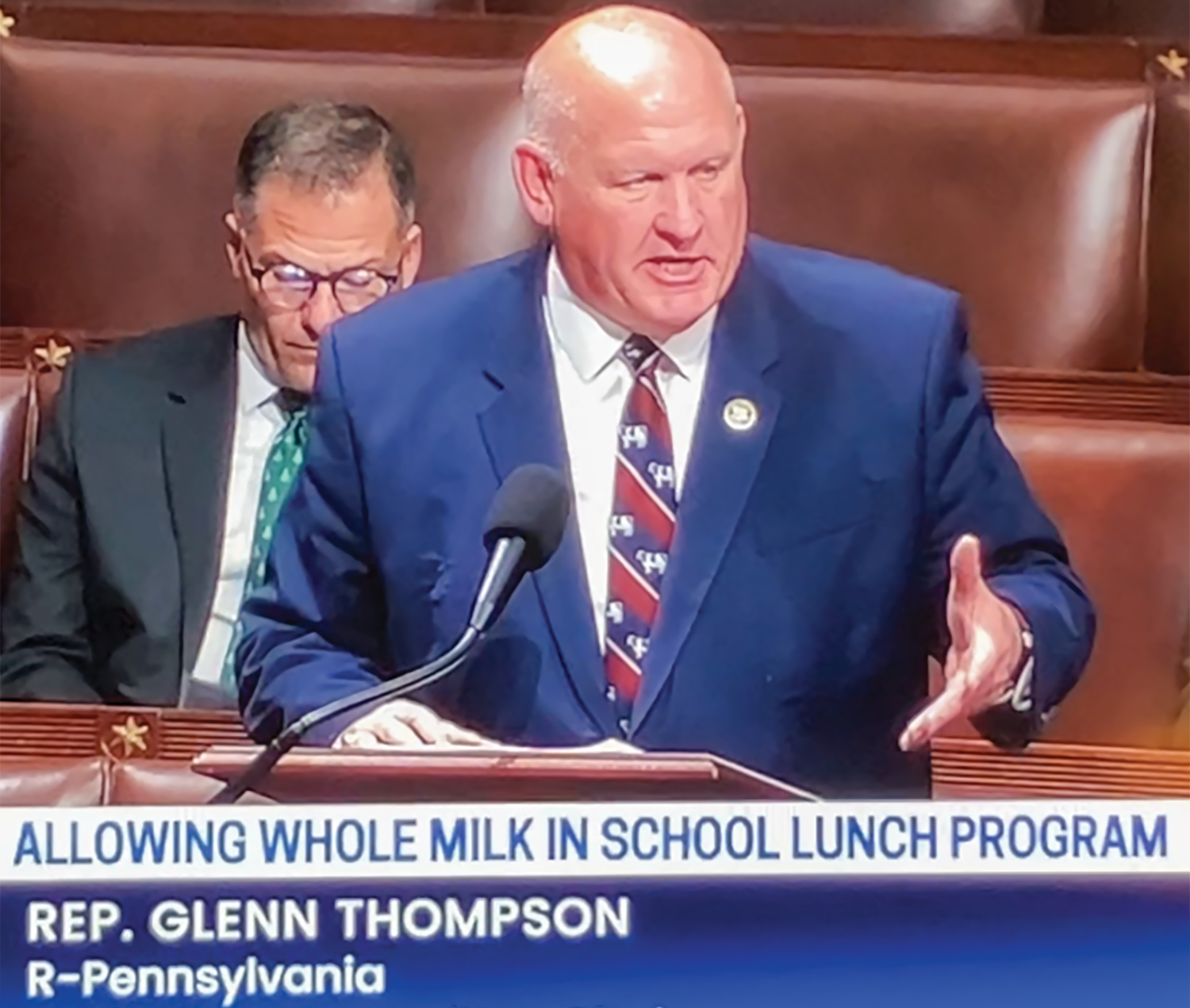
Both the farm bill and the whole milk bill showed promise at the start of 2024. No one championed the two pieces of legislation more than House Ag Committee Chairman Glenn ‘GT’ Thompson (R-15th-Pa.). He even found a way to tie them together — on the House side.

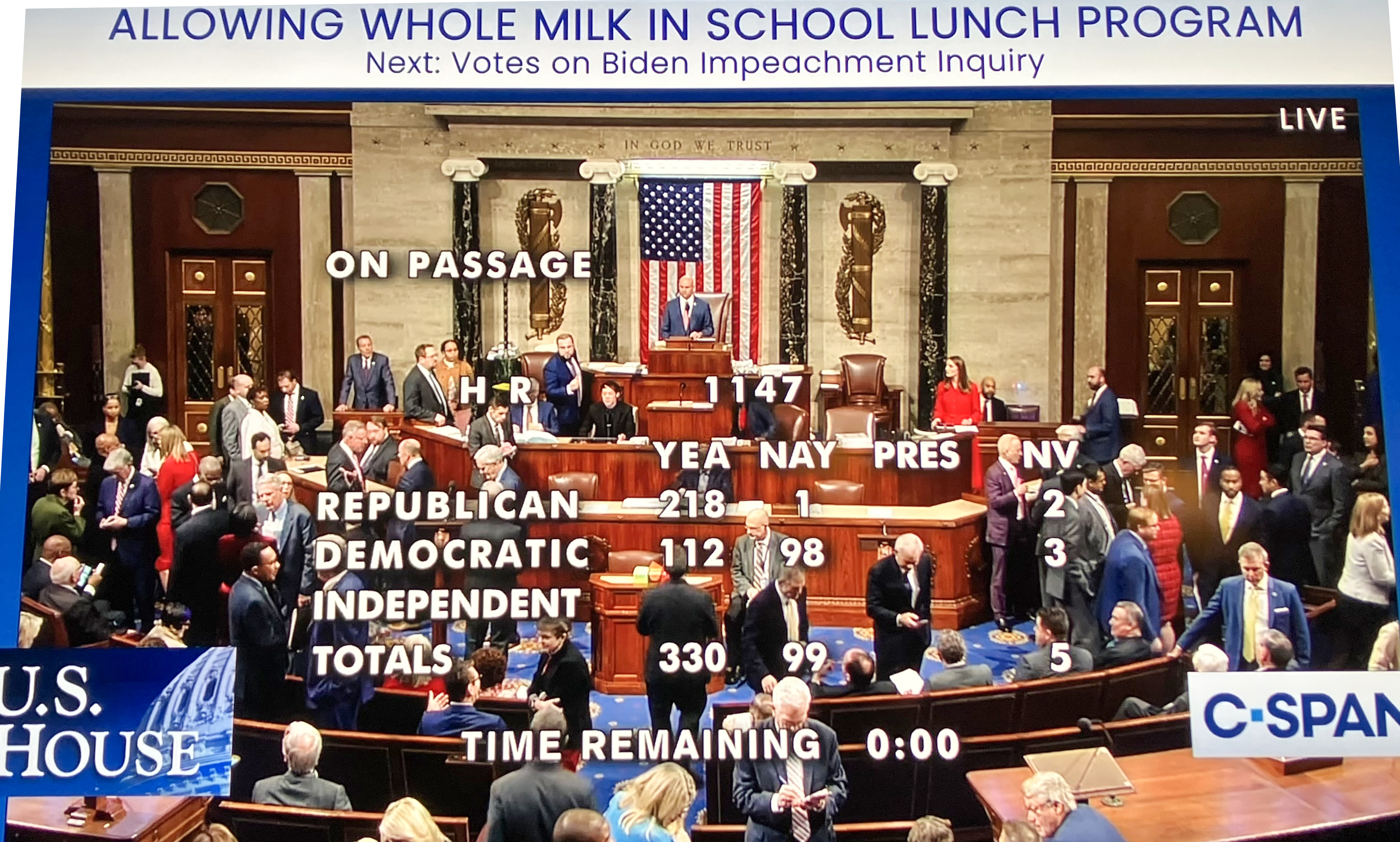
The Whole Milk for Healthy Kids Act made it farther than it ever has in the four legislative sessions in which Thompson introduced it over the past 8 to 10 years. It reached the U.S. House floor for the first time! But even the overwhelming bipartisan House vote to approve it 330 to 99 at the end of 2023 was not enough to seal the deal in 2024.

That’s because over in the U.S. Senate, then Ag Committee Chairwoman Debbie Stabenow (D-Mich.) blocked it from consideration — despite over half her committee signing on as cosponsors.

GT Thompson, found a workaround to include it in the House farm bill, which passed his Ag Committee on a bipartisan vote in May. The language was also part of the Senate Republicans’ draft farm bill under Ranking Member John Boozman (R-Ark.)

It too fell victim to Stabenow dragging her feet in the Senate. By the time the Ag Chairwoman released a full-text version of the Senate Democrats’ farm bill, little more than 30 days remained in the 2023-24 legislative session.

Key sticking points were the House focus on dollars for the farm side of the five-year package. It put the extra USDA-approved Thrifty Food Plan funding into the overall baseline for SNAP dollars and brought Inflation Reduction Act climate-smart funds under the farm bill umbrella while removing the methane mandates to allow states and regions to prioritize other conservation goals, like the popular and oversubscribed EQIP program.

Attempts to broker a farm bill deal failed, and on Dec. 20, another one-year extension of the current 2018 farm bill was passed in the continuing resolution that keeps the government funded into the first part of 2025, without amendments for things like whole milk in schools. However, Congress did manage to provide $110 billion of disaster relief for 2022-24 hurricanes, wildfires, and other events. Of this, roughly $25 billion will go to affected farmers and ranchers, plus another $10 billion in economic disaster relief for agriculture.

Looking ahead, there is good news for the farm bill and whole milk bill in the new 2025-26 legislative session. The House Ag Committee will continue under Rep. GT Thompson’s leadership as Chairman. On the Senate side, whole milk friendly Boozman will chair the Ag Committee. With Stabenow retiring, Sen. Amy Klobuchar (D-Minn.) will serve as Ranking Member, and she previously signed on as a Whole Milk for Healthy Kids Act cosponsor in March 2024.

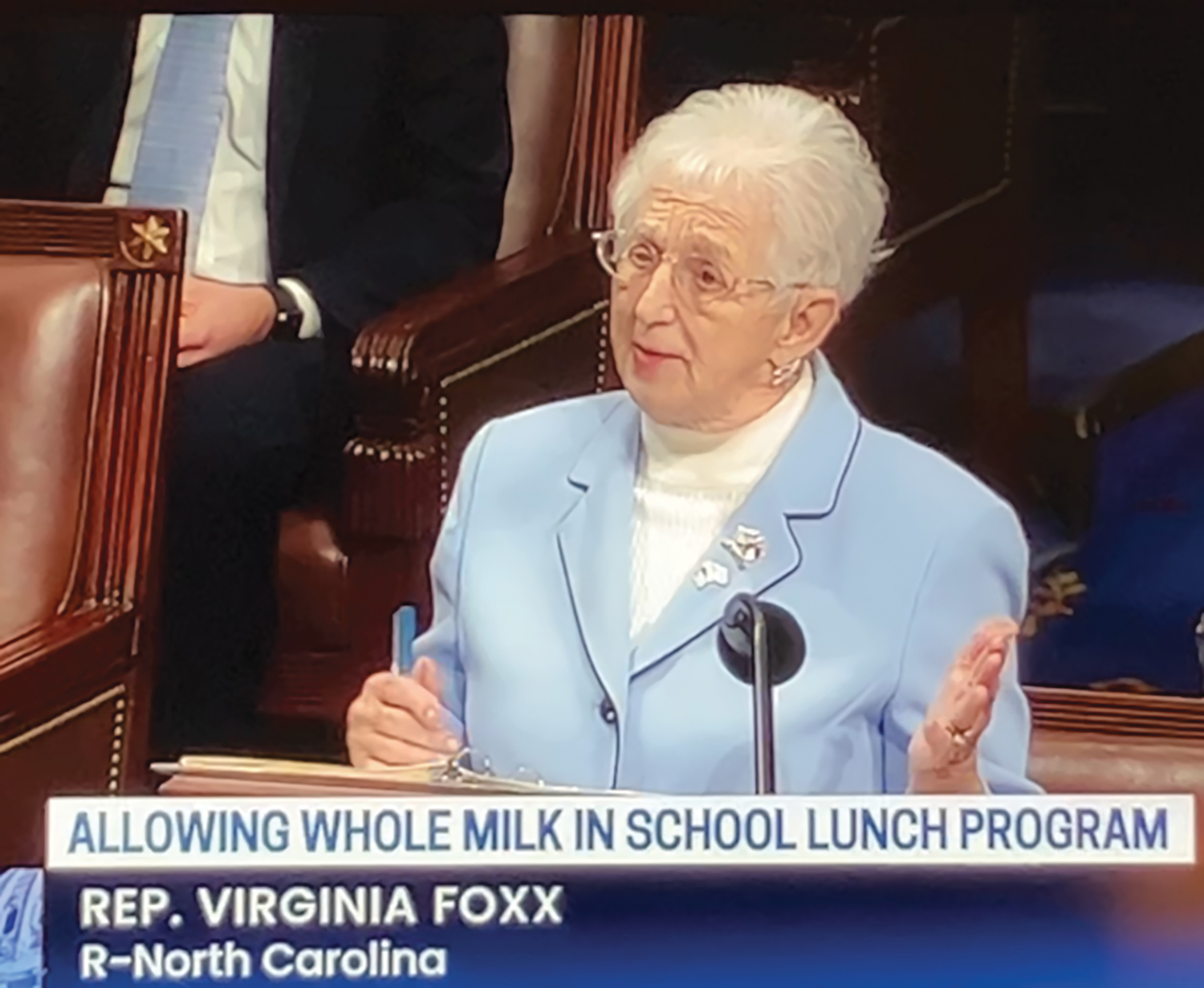
The whole milk bill will have to start over again in the Education and Workforce Committee with another vote on the House floor. It was enthusiastically supported by prior Education Committee Chairwoman Virginia Foxx (R-5th-N.C.). Her years of chairing this committee have expired, but the good news is Rep. Tim Walberg (R-5th-Mich.) will step in, and he was an early cosponsor of the Whole Milk for Healthy Kids Act in the 2021-22 and 2023-24 legislative sessions.

New Dietary Guidelines

The 2025-30 Dietary Guidelines Advisory Committee (DGAC) submitted its ‘Scientific Report’ to the outgoing USDA and HHS Secretaries on Dec. 19, 2024 — just 40 days before they head out the door to be replaced by incoming Trump appointees.

The Report is the guidance of the so-called ‘expert committee’ that reviews evidence and makes recommendations for the Secretaries of USDA and HHS to formalize into the 2025-30 Dietary Guidelines for Americans (DGAs). This process occurs every five years.

The DGAs are used in all USDA feeding programs, including school lunch, childhood daycare, and eldercare institutional feeding, as well as military mess halls. They also inform food offerings in many other controlled settings. 

The bad news is the Report has gone from being increasingly pro-plants over the past nine cycles to being outright anti-animal in this 10th cycle.

The good news is that dairy keeps its special spot on the so-called ‘My Plate.’ The bad news is that despite acknowledging evidence about the benefits of milkfat in nutrient dense milk and dairy foods, the DGAC rated the evidence as ‘limited’ – largely because USDA screened much of it out of the review process.

In the section on under-consumed nutrients of public health concern, especially for children and elders, the DGAC noted that whole and 2% milk were top sources of three of the four: Vit. D, calcium and potassium. Even this was not enough to persuade them to loosen the anti-fat grip that governs milk in schools, daycares and eldercare.

The DGAC states in its Report that their ‘limited access’ to research showing positive relationships between higher fat dairy and health outcomes was “too limited to change the Guidelines.”

They even doubled-down on the beverage category by recommending against flavor-sweetened fat-free and low-fat milk and that water be pushed as the primary beverage. 

In the Report, the DGAC also doubled-down on saturated fat with recommendations to “reduce butter, processed and unprocessed red meat, and dairy for replacement with a wide range of plant-based food sources, including plant-based protein foods, whole grains, vegetables, vegetable (seed) oils and spreads.”

This opens the door for more non-dairy substitutes beyond soy-milk, which is already allowed in the dairy category. In fact, the Report looks ahead to future cycles changing the name of the dairy category to broaden what qualifies as makers of new dairy alternatives improve their nutrition profiles via ultra-processing. At the same time, the DGAC punted the ball on the question they were given about “ultraprocessed” foods and beverages, stating they didn’t have access to enough evidence on health outcomes to answer that question. (The next HHS Secretary might have something to say about that.)

Other animal-based foods such as meat and eggs took a big hit this cycle. The 2025-30 Report uses stronger methods for discouraging consumption. They recommend moving peas, beans and lentils out of the vegetable category and into the protein category and listing them FIRST, followed by nuts and seeds, followed by seafood, then eggs, and lastly meat.

Once again ‘red meat’ is mentioned throughout the report as being lumped in with ‘processed meat’ even though not one stitch of research about negative health relationships with processed meats included any unprocessed red meat in the studies! Clearly, consumption of whole, healthy foods from cattle is in the crosshairs. This 10th edition of the Scientific Report just continues the trend. 

As in past cycles, a whole core of research on the neutral to beneficial relationships between consumption of saturated fat in high-protein, nutrient-dense foods was screened out of the DGAC’s review process by current Ag Secretary Vilsack’s USDA.

This Report essentially sets the stage for ultra-processed plant-based and bioengineered alternative proteins to play a larger role in the institutional meal preps of American schools, daycares, eldercare, and military.

But here’s the good news! The DGAC was late in finishing its 2025-30 Scientific Report!

The law requires a 60-day public comment period before USDA and HHS formulate the actual Guidelines for 2025-30. This mandatory comment period ends Feb. 10, 2025. Comments can be made at the Federal Register link at https://www.regulations.gov/document/HHS-OASH-2024-0017-0001

By the time the comment period ends, Vilsack and company will have left town. Let’s hope Senators confirm Trump appointees before the public comment period ends on Feb. 10 so their eyes are on this before the bureaucracy finishes the job.

This is a golden opportunity for the dairy and livestock sectors, along with health and nutrition professionals and health-conscious citizens to weigh-in. (Look for ways to participate in a future Farmshine.)

Meanwhile, commenters can remind the incoming Secretaries of how flawed the DGA process has become; how Americans, especially children, have become increasingly obese with increasing rates of chronic illness and underconsumption of key fat-soluble nutrients during the decades of the DGA’s increasingly restrictive anti-fat, anti-animal dogma.

Commenters should point out the fact that the Committee was not provided with all of the evidence on saturated fat. This is a message that is likely to land well with USDA Secretary designate Brooke Rollins and HHS Secretary designate Robert F. Kennedy Jr. In fact, RFK Jr. is on record opposing the low-fat dictates and has said nutrition will be among his first priorities, if he is confirmed by the Senate for the HHS post.

FDA’s final rule on ‘healthy’ labeling

In the mad rush at the end of 2024, the FDA released its final rule about using the term “healthy” on the label of foods and beverages.

This process was outlined in the White House National Strategy on Hunger, Nutrition and Health. FDA’s preliminary ‘healthy’ labeling rule was released on Sept. 28, 2022, on the first day of the first White House Nutrition Conference since the 1980s.

At that Conference, Ag Secretary Vilsack said: “The National Strategy’s approach is a whole of government approach that involves the entire federal family.” And President Biden said: “We have to give families a tool to keep them healthy. People need to know what they should be eating, and the FDA is using its authority around healthy labeling so you know what to eat.”

In short, the FDA’s role here is to restrict healthy label claims to foods and beverages that meet its criteria and allow them to also use a new FDA ‘healthy’ symbol that is still under development.

“Nutrient-dense foods that are encouraged by the Dietary Guidelines – vegetables, fruits, whole grains, fat-free and low-fat dairy, lean game meat, seafood, eggs, beans, peas, lentils, nuts, and seeds – with no added ingredients except for water, automatically qualify for the ‘healthy’ claim because of their nutrient profile and positive contribution to an overall healthy diet,” the FDA final rule states.

No surprise that whole milk (3.25% fat) will not qualify, nor will real full fat cheeses, yogurts, and other dairy foods that are not fat-free or low-fat (1%). Natural, unprocessed beef, pork and poultry are off the ‘healthy’ list too.

Specifically, the FDA’s final rule states: “To meet the updated criteria for the ‘healthy’ claim, a food product must: 1) contain a certain amount of food from at least one of the food groups or subgroups (such as fruit, vegetables, grains, fat-free and low-fat dairy and protein foods) as recommended by the Dietary Guidelines for Americans, and 2) meet specific limits for added sugars, saturated fat, and sodium. 

The fat and sodium criteria are a double-whammy against most real dairy cheeses. A single 1-oz slice of American, Swiss, or Cheddar won’t make the cut on saturated fat or sodium; even part-skim Mozzarella is slightly over the limit. Furthermore, low-fat, high-protein cottage cheese barely makes the cut on saturated fat, but far exceeds the new limit on sodium. Likewise, a typical yogurt cup only qualifies if it is low-fat or non-fat, and fruited yogurts must steer clear of added sugars.

Dairy can’t win in this labeling scheme unless products are made with virtually no saturated fat and far less sodium. To sell flavorless cardboard and chalk water that fails to deliver key fat-soluble nutrients, products will undergo more ultra-processing, and Americans will consume more artificial sweeteners.

Under dairy products, FDA’s final rule for ‘healthy’ label claims states: 1) Must contain a minimum of 2/3 cup food group equivalent of dairy, which includes soy; and 2) Each serving must have under 2.5 g of added sugar, under 230 mg sodium, and under 2 g saturated fat.

This means even a serving size of exactly 2/3 cup (6 oz) of 2% milk might barely squeak by, and a full cup (8 oz) of 1% or fat-free milk would be – you guessed it – ‘healthy’. Flavoring the fat-free and low-fat milk will not qualify, except by using artificial sweeteners to stay within added sugar limits.

Under protein foods, the FDA is even more restrictive. The only protein foods listed in the ‘healthy’ labeling final rule are: game meat, seafood, eggs, beans, peas, lentils, seeds, nuts, and soy products. Furthermore, these options must meet the criteria of less than 1 g added sugars, less than 230 mg sodium and less than 1 to 2 g saturated fat.

But here’s the good news! This FDA final rule (21 CFR Part 101, RIN 0910-AI13) falls under the Department of Health and Human Services (HHS). It’s not likely to sit well with HHS Secretary designate RFK Jr. The rule becomes effective Feb. 25, 2025. The compliance date is three years later, so there is hope of requesting HHS initiate a new rulemaking process under new HHS leadership.

Bottom line is all three of these bad nutrition policies impact consumer health and dairy farm economic health and are rooted in the flawed Dietary Guidelines process.

There is good news on that front in Congress as well. House Ag Committee Chairman GT Thompson included DGA reform and oversight in the farm bill that had passed his Committee in the 2023-24 legislative session. It is critical that this issue be part of the new farm bill that moves forward in the 2025-26 legislative session.

Part II in a future Farmshine will look at the tumultuous 2024 dairy markets and margins spilling over into 2025.

-30-
While fakes campaign to BE ‘milk’, dairy checkoff aims to REINVENT milk. New ‘milk beverage platform’ deemed ultrafiltered, ESL, shelf-stable

As new milk beverage platform is developed, it sounds to me like people want the many attributes fresh whole unfooled-around-with fluid milk already delivers. It checks all the boxes! Maybe children just need to be allowed to have whole milk at school and daycare where they eat most of their meals, and maybe new generations of adults need the education about why and how the dairy protein and natural nutrition in real milk beat the imposters, hands down.

By Sherry Bunting, republished from March 2023 editions of Farmshine

SAVANNAH, Ga. — Dairy checkoff-funded researchers say a new milk beverage platform is being developed to provide “the keys to the kingdom.”

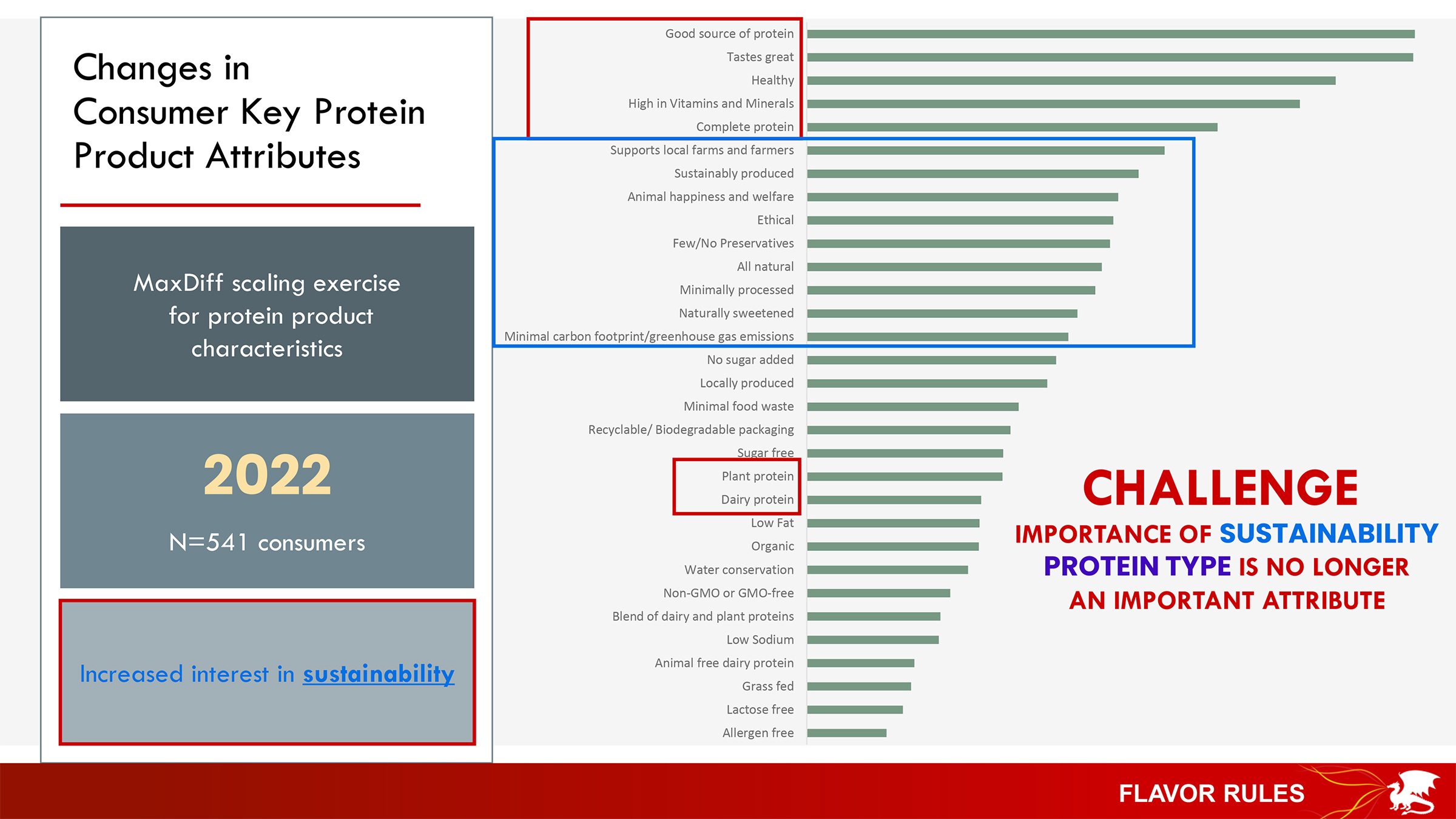
Their consumer studies show people want clean labels, and at the same time they want more attributes. On the one hand, they want energy and protein. On yet anotherhand, they want indulgent creaminess. 

Consumers also want flavor, but they want less sugar. They want sweeteners, but not artificial sweeteners. They want thickness without the thickeners. They do not want gums or gels, but they are okay with fibers and starches. 

Some consumers want higher protein products. Others want everyday nutrition that is reasonably priced. 

These are some of the highlights that were shared back in January 2023 during the Georgia Dairy Conference in Savannah. There, Dr. MaryAnne Drake, professor of food science at North Carolina State University and director of the Southeast Dairy Foods Research Center talked about the fluid milk innovation work funded through DMI.

The ‘new milk beverage platform’ leverages different processing applications for flavor and functionality around dairy protein, based on global protein trends in a rapidly growing nutritional drink market.

ESL shelf-stable milk: key to kingdom?

“We are after a shelf-stable milk that tastes great and meets our consumer’s sensory needs and our industry’s sustainability needs,” said Drake about the work of the four university research centers, including North Carolina State and Cornell, that are drilling into milk’s elements to sift, sort, and test different combinations, as part of the checkoff-funded Innovation Center for U.S. Dairy, under the DMI umbrella.

Through processes like membrane technology, ultrafiltration, and aseptic packaging, the physical, nutritional and sensory elements of milk are being isolated at a molecular level to create beverages that aim to deliver this broad list of what consumers say they are looking for. 

At the same time, researchers are using interpretive surveys to understand how consumer desires actually translate into purchases, and then work with processors to build relationships with retailers to get these new beverage products into stores.

Reinventing milk

What does all of this mean? Reinventing milk by focusing on the domains in which real milk has a clear advantage for consumers among so many plant-based and now cell-based options. 

For example, said Drake: “Consumers want to know from a credible source what the immune-boosting elements are in milk, not what we have added. They tell us they want to know the science. That’s new.” 

Drake explained that the findings from their interpretive surveys represent a huge and divergent set of innovations to sort through and capitalize on as part of a new strategy.

“Consumers don’t see the perceived value of animal protein vs. plant protein, so we had them graph what they want and don’t want, what they know and don’t know,” she said, adding that consumers gave the slight edge to plant protein over dairy protein. They rated the top three protein categories as plant protein, whey protein, and milk protein — in that order. (A large percentage believed whey protein is plant protein.)

As their familiarity with the differences between plant and animal protein increased, their liking of dairy protein increased, the researchers learned.

In other words, consumers do not know the science about the nutritional differences between plant and animal protein, and if they knew the differences, they would rank milk protein as number one. 

Clearly, this is a failure in consumer education and messaging. Isn’t that the domain of the dairy checkoff?

New strategy

Drake indicated that educating consumers about dairy protein as a ‘complete protein’ is one thing that can help. However, she said, the functionality around dairy protein is the innovation strategy that is being pursued by the industry.

“The number one label claim consumers are looking for in a protein beverage is ‘naturally sweetened.’ We own that, and this is where we can deliver,” Drake declared.

“We own protein functionality. We understand the process parameters that impact flavor and functionality, and we can leverage this over plant proteins on this platform,” she said.

Bottom line: The surveys and flavor panels showed that consumers want “desirable flavor, texture and appearance. They want a protein drink that is nutritious, naturally sweetened, and has a clean label with simple ingredients,” said Drake. 

“They also want education, messaging and positioning, and they are looking at sustainability,” she added.

“We are working on what does clean label mean? It’s not what we think it is,” Drake reported. “It’s costing us sales if what they actually want is not on the shelf. We have the opportunity to deliver what consumers still want. We just have to find those things they want — that we have — and be more strategic in how we deliver them.”

Food technology and engineering was a big part of the picture painted for attendees that day.

Diversify processing

Producers were urged to challenge the status quo and to not just add processing, but to diversify it. They were also reminded that the 10 southeastern states had lost eight fluid milk plants in the previous roughly two-year period (2020-22).

During his annual market outlook that year, retired co-op executive Calvin Covington hit the nail on the head with this reminder, saying “that’s done some damage. The major challenge for milk markets in the Southeast is we need more of them,” he said. “A lot of the fluid milk products that are sold in the Southeast are not processed here. If we are going to have a viable dairy industry in the Southeast, we need growing and stable markets for milk produced in the Southeast.”

Covington also differentiated the trends for domestic and export demand, showing that both lagged their respective 5-year-average annual growth in 2022, with domestic demand growing by just 0.5%, while exports grew by 3.5%.

Keeping in mind as exports are expected to top 20% of U.S. milk production on a total solids basis in the next two years and fluid milk sales as a percentage of total milk production have fallen to just under 20%, seismic shifts are already occurring in the heavily fluid milk market of the Southeast.

Transformation brings investors

Geri Berdak, CEO of Dairy Alliance, the Southeast regional checkoff organization, talked about “creating a path forward” with objectives centered on driving milk volume, increasing dairy’s reputation and transforming dairy while building checkoff support.

She said transformation is necessary to “identify high-growth opportunities and stimulate outside investment, technology and innovation.”

The need for processing is big as plants are closing in response to declining fluid milk demand, leaving the the need for more diverse processing assets.

Exports drive innovation

“The biggest thing exports do is to drive value and innovation,” said Patti Smith, a food technology specialist and CEO of DairyAmerica, now wholly-owned by California Dairies Inc. (CDI) milk cooperative. Earlier in her career, Smith held a leadership position with Fonterra and has served at board and officer levels with IDFA and USDEC.

“Exports are a lot more than powder today. Our biggest item is still excess powder,” she said. “But we also export many other products — even UHT (ultra high temperature) and ESL (extended shelf life) fluid milk and cream.”

What Smith sees into the future are “opportunities for the right products and the right product configurations. We have the opportunities to capitalize on them and the technologies to grow them.”

Smith said the biggest benefit of exports to-date is to have a home for milk that grows the dairy industry without relying on core domestic demand for that growth, but that U.S. dairy processing infrastructure is not quite reflective of the new export era.

“We need to make our industry world renown, through a strategic plan that the whole industry will work on together, with digitized supply chains and infrastructure for growth that is reliable and can be consistently demonstrated, and that includes shipping,” said Smith, citing the Innovation Center for U.S. Dairy as the nexus, where the industry’s “strategic plan” for global trade is being built.

Developing ‘new milk beverage platform’

Emanating from the DMI-founded and checkoff-funded Innovation Center for U.S. Dairy is the marketing and promotion arm of new product alliances and the National Dairy Research arm through several universities looking to essentially create a milk beverage platform by drilling into milk’s elements, sifting, sorting and testing different combinations.

Dr. Drake said the new milk beverage platform holds the “keys to the kingdom” as global protein trends were valued at $38.5 million in 2020 and projected to grow. Meanwhile, the nutritional drink markets are growing steadily, with 42% of consumers eating healthy as a higher priority since Covid, and the number of conversations about protein (95% positive) steadily flowing across social media platforms. 

Those keys, she said, are membrane technology, ultrafiltration, aseptic packaging and research exploring all of the physical, nutritional and sensory elements of milk at the molecular level to bottle up what consumers say they are looking for, while also gauging through interpretive surveys how this translates to purchases, and then working with processors to build relationships with retailers to get new products into stores.

Drake shared details about the roadmap to play to dairy’s strengths through nutrition, education, capitalizing on calming and immune benefits and using dairy protein functionality to limit added ingredients in beverages to satisfy the clean label trend.

She talked about how elements like fat, protein and lactose at different levels impact milk’s flavor and appearance: “We want to determine the impact of ultrafiltration levels for different concentrations of fat and protein for different sensory or physical experiences.”

She talked about ultrafiltration in conjunction with aseptic packaging for shelf-stable storage using an elaborate diagram of processes.

Bottomline, she said: “The chemistry of these (aseptic) milks is different.”

She described consumer flavor panels where shelf-stable and fresh fluid milk were served cold and compared. The flavor panels evaluated two different storage temperatures for the shelf-stable milk.

The North Carolina researchers worked with their Northeast Dairy Foods Research counterpart at Cornell and with Byrne Dairy, running grad students from North Carolina to Syracuse, New York when batches were available for study. (The Southeast and Northeast as well as Midwest and California Dairy Foods Research Centers all receive funding from checkoff and other sources.)

‘Training consumers’

“Consumer panels still liked the HTST (fresh fluid) milk best overall, but in 14-day and 6-month follow up, we found we can train them,” said Drake, reporting the two best storage temperature options for aseptic milk saw longer-term increase in acceptance.

HTST is the acronym for High Temperature Short Time pasteurization that is basically commodity fresh fluid milk vs. ‘value added’ UHT (ultra high temperature) and ESL (extended shelf life) as well as aseptically-packaged, which is milk processed for longer shelf life and then bottled in a special sterile process and package to last months without refrigeration, but will taste best served cold.

Schools are the gateway

“For 25 years, consumers have not liked aseptic milk,” said Drake, “but we are changing that. Consumers may not like it or want it, yet, but it is great for schools.”

She reported the practical applications to come up with “great tasting school lunch milk that contains no lactose (no natural sugar).” Another practical application is to  “determine the impact of storage temperature of 1% aseptic milk on physical and sensory properties.”

This partially checkoff-funded research is also working on “changing the chocolate milk formula to have zero sugar,” she said. “When we think about school milk, the question is how to get the sugar out of it. We want a chocolate milk that tastes great and new government standards on low- or no-added-sugars. Right now, chocolate milk has 8.5 grams of added sugar and 12 grams of natural sugar (lactose).”

In addition to ultrafiltration removing natural sugar, or lactose, they are exploring “non-nutritive” sweeteners like monk fruit and stevia. Additionally, they are looking at “lactose-hydrolized” to boost the flavor profile at much lower levels of sugars or other sweetener.

Whether talking about consumers or children, parents, and schools, the milk beverage platform is tricky “They want to know from a credible source what the immune-boosting elements are in milk, not what we have added. They tell us they want to know the science. That’s new.

“We have a huge and divergent set of innovations to sort through,” said Drake. 

-30-

Whole milk sales surge as Senate bill for schools remains blocked

By Sherry Bunting, Farmshine, May 10, 2024

EAST EARL, Pa. — Year-to-date Whole Milk sales for the first two months of 2024 are up a whopping 5% year-over-year (YOY) at 2.57 million pounds. Even when adjusted for Leap Year, the average daily increase is a substantial 3% surge, compared with the past several years of steady 1% increases YOY.

Flavored whole milk sales, year-to-date (YTD) are up a whopping18.6% YOY. Adjusted for Leap Year, the increase is a substantial 14%.

As the number one volume category representing more than one-third of the fluid milk category since 2020, the recent surge in whole milk sales has been enough to reverse the decline in total packaged fluid milk sales in four of the past five months.

USDA tallied 2023’s total packaged fluid milk sales down by a smaller margin of 1.5% for the year compared with previous years of decline; however, October and November sales were up 1% and 0.3% YOY for the first time since the months of the Covid shutdown when families ate at home. December’s total packaged fluid milk sales trailed year-earlier, but January and February 2024 have come back strong.

USDA estimates total fluid milk sales were up 2.4% and 2.5% YOY for January and February, respectively. When adjusted for Leap Year, the February increase is a respectable 0.8%. Similarly, when we adjust the YTD total of 7.325 million pounds in total fluid milk sales to reflect the extra consumption day in February, this is also 0.8% higher on an average daily basis vs. year ago.

This is good news! Let’s keep this upward trend MOOVING in fluid milk sales, led by surging whole milk sales — thanks to volunteers spreading the good word.

Now, if we could just get the United States Senate off the sidelines and into cosponsoring S. 1957 Whole Milk for Healthy Kids, we could really gain some ground — and America’s kids would be free to choose milk they love at school where they receive 2 meals a day, 5 days a week, 3/4 of the year. 

Thanks to the U.S. House of Representatives and the leadership of Congressman G.T. Thompson of Pennsylvania, the Whole Milk for Healthy Kids Act (H.R. 1147) passed the House on December 13, 2023 by an overwhelming bipartisan majority 330 to 99. If the U.S. Senate doesn’t have the opportunity to vote it through by December 31, 2024, we must start all over again in the next legislative session 2025-26!

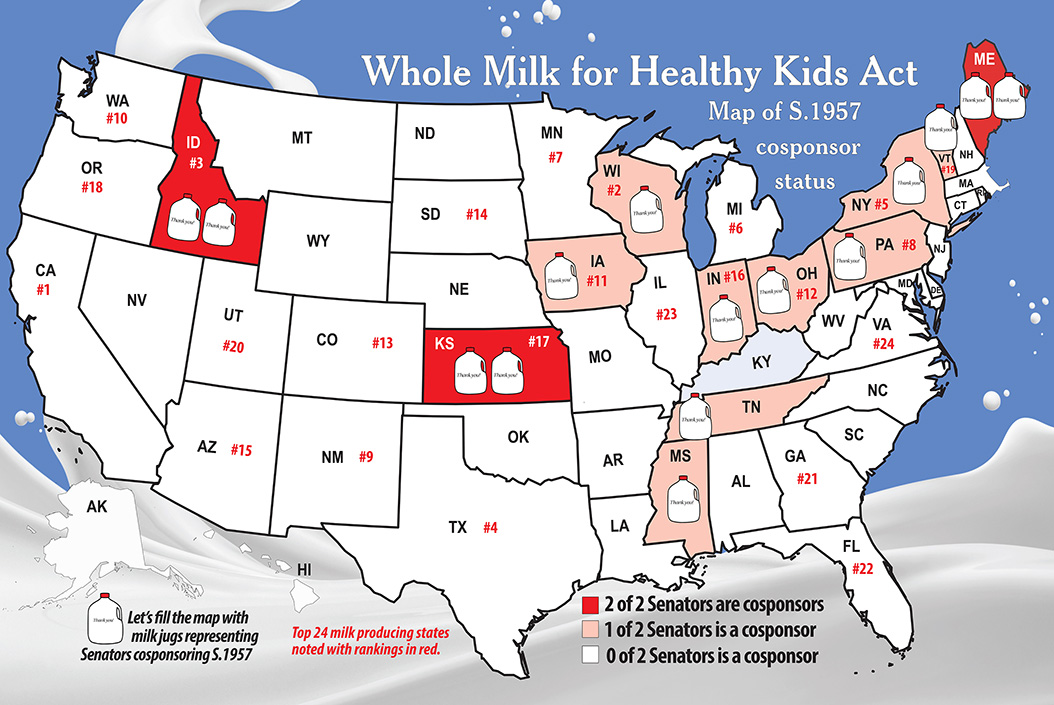
Check out the map above to see how S. 1957 remains stalled for the past 60 days at just 17 sponsors from 13 states. 

Where do your state’s U.S. Senators stand? Ask them! And think about their answers when going to the polls this fall. Elections have consequences. 

Also consider asking your state senators and representatives to follow Tennessee’s lead and get a whole milk bill passed in your state and signed by your Governor. 

Pennsylvania and New York State tried to be first, but leaders are afraid of USDA’s monetary penalties. Maybe the No. 8 and No. 5 milk producing states can be second and third in state whole milk bill passage.

Just think what would happen if more states passed bills that ALLOWED choice and sought creative language to let their schools choose to let children choose. Tennessee will make it available in bulk dispensers separate from the school lunch line. Pennsylvania sought to do it as a wholly in-state proposition. 

Meanwhile, DMI sent a press release on April 29 touting their “checkoff-led pilot in Cincinnati schools that offered lactose-free chocolate milk increased milk consumption…” Specifically, the pilot schools experienced a 16% increase in milk consumption and a 7% higher meal participation, according to DMI. 

(Of course, this lactose-free pilot was also fat-free per the USDA rules for milk at school built on the Dietary Guidelines that the dairy checkoff agreed to “advance” when the memorandum of understanding was signed between the USDA, National Dairy Council, GENYOUth and the NFL in 2010).

Remember, this reporter warned several years ago that checkoff and dairy industry leaders would wait until lactose-free shelf-stable milk was firmly entrenched in schools before pushing whole milk choice through. Senate Ag Chairwoman Debbie Stabenow is the main blockade this time around. She hails from the No. 6 milk producing state of Michigan, where the foundation fairlife plant is located, collecting milk from large producers in Michigan, Indiana and Ohio.

Wonder what consumption looks like when whole milk is offered as a choice. That’s right! A Grassroots PA Dairy Advisory Committee / 97 Milk trial in a school in northwestern Pennsylvania saw consumption grow 52% and waste decline 95%.

So, drink up Senators! Talk to your constituent Moms this Mother’s Day. Sales data and surveys both show what Moms think, and most don’t even realize the federal ban, the bait-and-switch their kids face at school where milk and dairy are concerned.

Then pour a tall cold glass of delicious, nutritious whole milk. It may just strengthen those political spines!

-30- 

Seeds of doubt being sown, Part III: Will it reduce butterfat supply and impact industry’s cheese-focused future?

By Sherry Bunting, Farmshine, March 1, 2024

EAST EARL, Pa. — As seeds of doubt are being sown internally within the dairy industry about whole milk in schools, we have discussed Confusion (will it help milk prices?) and Consternation (unfounded fear about what will processors do with ‘all that skim?’)

This week, we look at the third C: ‘Competition’: If schoolchildren are offered whole milk, will it significantly impact butterfat supplies, raise butter prices, and compete with the industry’s cheap milk cheese-focused future?

Every winter conference for the past few years has had at least one speaker telling dairy farmers that fluid milk sales are declining because Americans are eating more of their milk instead of drinking it. 

Fair enough. Cheese is the future, and the industry wants to make more of it. Lots more of it. So much more cheese, in fact, that inventory is growing. Analysts at conferences put up slides with the words “Export or perish!” in large font. 

Yes, U.S. Dairy wants to export more cheese, including mozzarella. U.S. Dairy wants to export more butter and cream products. U.S. Dairy wants to export more of the higher-value products. (And we want to sell more cream to the upscale coffee houses and downscale McCafe drinks we adults get to choose while junior sips a paltry half-pint of fat-free chocolate milk, sugar water, in the back seat. What’s wrong with us?)

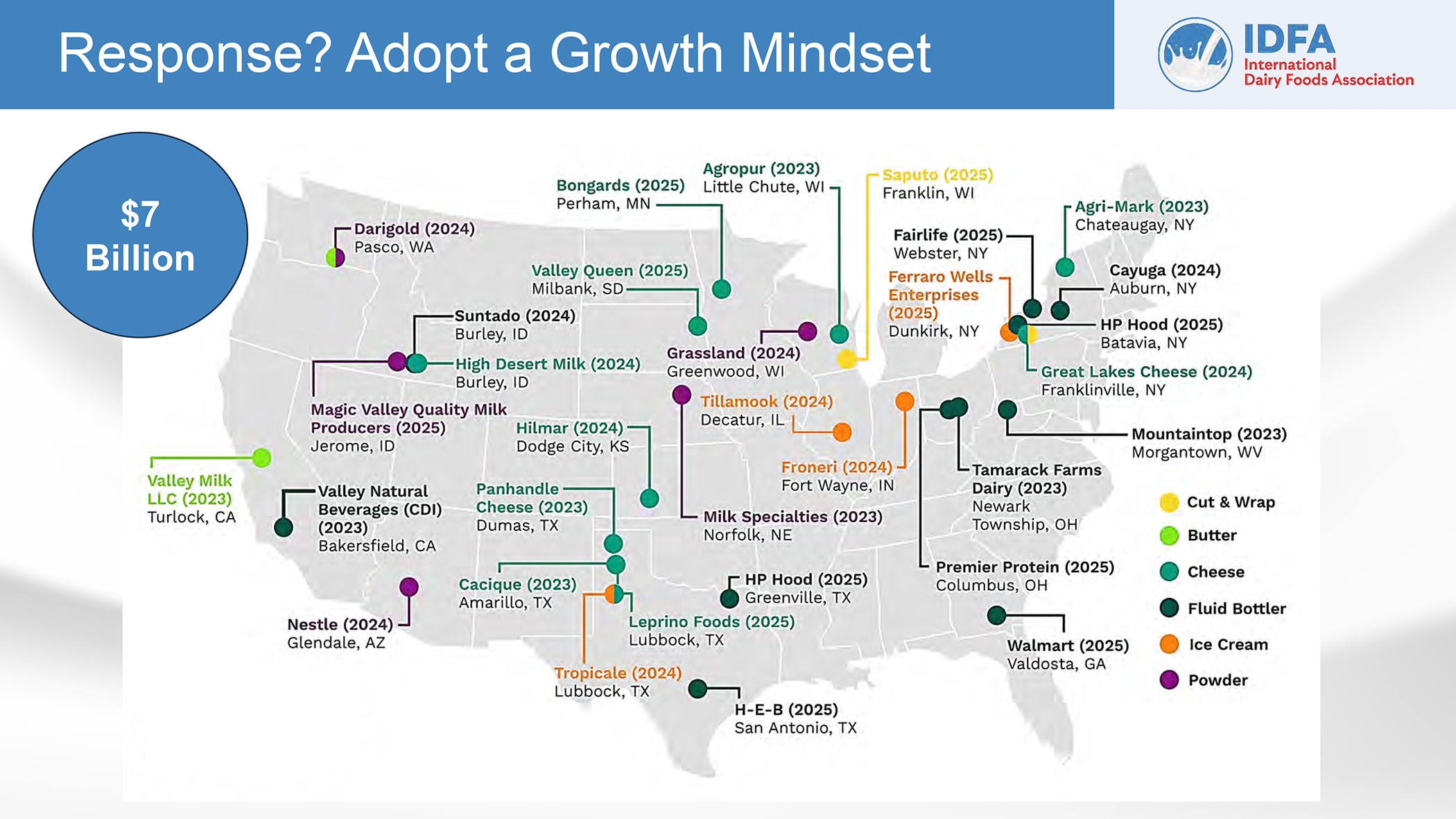
This map shows the over $7 billion in new processing coming online between now and 2026. “There’s a lot of cheese on this map,” said IDFA CEO Michael Dykes, presenting at the Georgia Dairy Conference. This slide has also been popping up in other industry conference speaker powerpoint decks this meeting season. IDFA data

The industry also wants to take milk down to its molecular level – to turn the jug of milk into ingredients at the start — to make new function-targeted products for the beverage space outside of Class I parameters within an increasingly Class III dominated processing infrastructure.

Toward that end, new processing capacity won’t convert milk to traditional products, leaving elements to be marketed as ingredients. Instead, these new state-of-the-art cheese and ingredient plants start by taking milk apart to the ingredients-level to be used in making health beverages, bars, and other products, as well as to make cheese. 

At the Georgia Dairy Conference in January, IDFA CEO Michael Dykes mentioned IDFA’s support for the Whole Milk for Healthy Kids Act, giving attendees a QR code to weigh-in with their Senators. 

Later in his presentation, he noted that a shift to more fat in school milk would make a 3% impact on the butter supply.

“I’m a believer that the markets work, when you take it one place, you make a difference and change it someplace else. Those are the things we can work through,” said Dykes.

So, we reached out to Calvin Covington, a former cooperative CEO who is intimately familiar with component pricing as it became part of the Federal Milk Marketing Order (FMMO) system over 20 years ago. We asked his thoughts on how increasing fat in the school milk supply would impact butter. 

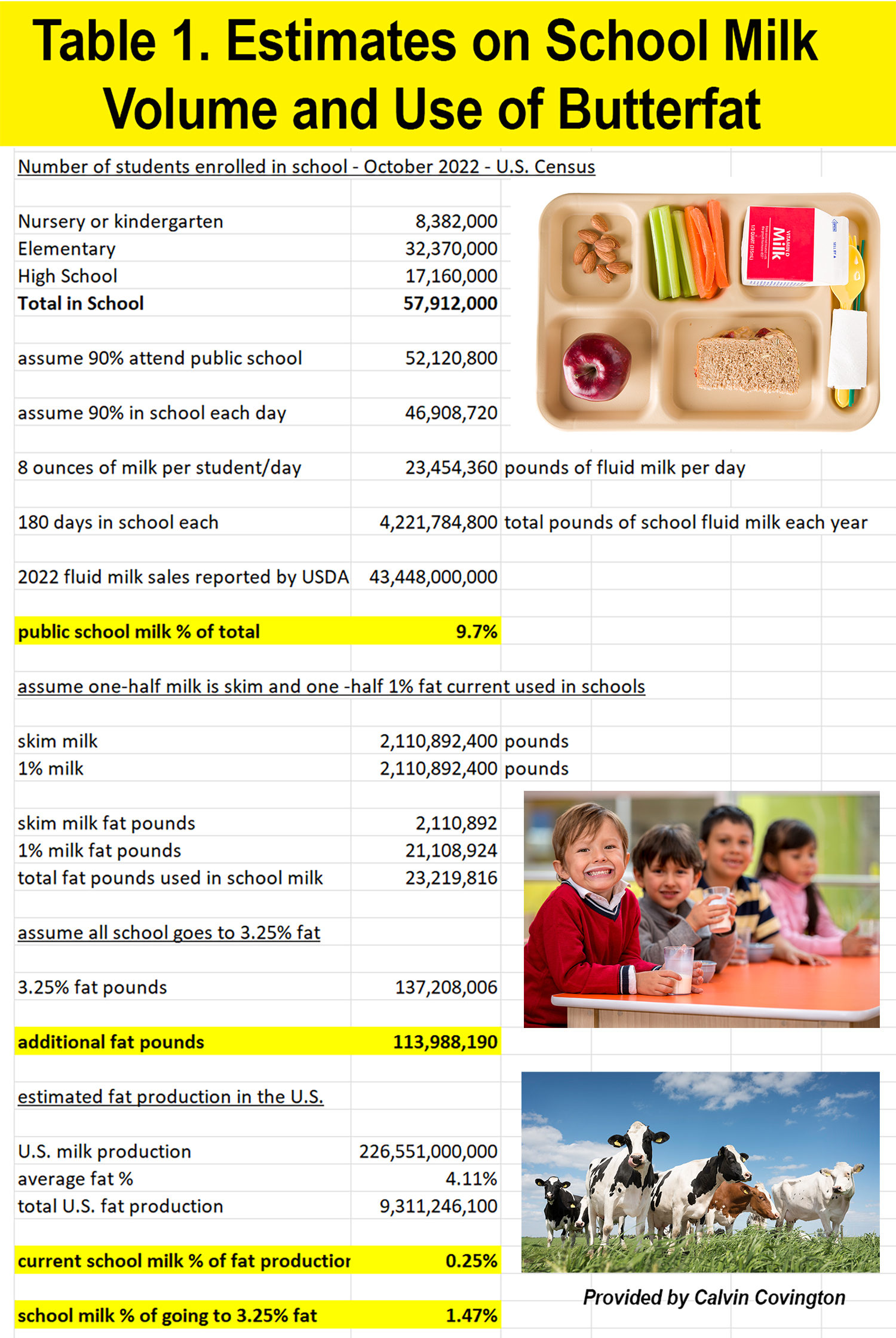
“Increased Cheddar cheese production has used millions and millions of pounds of butterfat. No one complains about this. Doesn’t the dairy industry want to increase demand for all milk components?” he replied and sent forth his own calculations, providing a spreadsheet showing his estimates of milk used in schools and the additional fat that would be needed for all of that milk to go completely to 3.25% (whole) milk.

Covington ran the numbers, moving methodically through assumptions on Table 1 to conclude the impact of shifting from a school milk fat percentage of 0.5% (half fat-free and half 1%) all the way to 3.25% (whole milk) would have a small impact on the butterfat supply — raising the school milk’s usage of butterfat from 0.25% of total butterfat production at the current national average fat test of 4.11% to being 1.47% of total butterfat production at the average 4.11% fat test.

Using the identified assumptions, Table 1 shows estimates on school milk volume and use of butterfat under today’s fat-free and 1% low-fat milk requirement compared with a scenario in which all school milk pounds were at 3.25% fat as standardized whole milk. Provided by Calvin Covington

He estimates public schools use 9.72% of all fluid milk, and for the purpose of the spreadsheet exercise, he assumed that half of those school milk sales are currently fat-free and half are 1%. If that is the case, then going to 3.25% (whole) milk for all pounds of school milk sales, the additional fat that would be needed is almost 114 million pounds, he reports.

“This should be a non-issue,” Covington concludes, using estimates that are based on all of those school milk pounds moving to 3.25% fat. 

The more likely scenario, however, is that schools would implement a more gradual increase in fat percentage. If it mirrored the national average for fluid milk sales at 2% fat, the increase would be smaller initially. Using Covington’s chart and assumptions, the additional fat that would be needed if school milk fat content averaged 2% is closer to 84 million pounds, going from using 0.25% of total fat production to 0.9% of total fat production.

Not all schools will choose to offer all milk at 3.25%. Some may offer 2% milk, which has also been banned since 2010 and would be given regulatory relief under the Whole Milk for Healthy Kids Act. 

Even if 3.25% fat milk is universally offered, some schoolchildren will continue to choose low-fat milk, as they did in the Pennsylvania trial, where the preference was 3 to 1 for whole 3.25% over low-fat 1%.

While a potentially higher fat content in school milk is being scrutinized for its impact on butter and butterfat, the impact of aggressive increases in cheese production is ignored. This speaks a bit to industry priorities.

“As butter and cheese consumption increase, processors do not argue against the increase because utilizing more fat would increase the fat price,” Covington observes, wondering why anyone would be concerned about the impact on butterfat supply if children get to choose whole milk while not being concerned about the impact on butterfat supply in any other sector.

“An increase in fluid milk sales, in schools, or anywhere, benefits all dairy farmers. With all things being equal, it would shift milk from Class III and IV to Class I, which is a (normally) higher milk price,” Covington explains. “If Class III or IV need more milk to replace the loss to Class I, more money would need to be paid by Class III and IV milk buyers, again, helping dairy farmers.”

So, what is the current status of butterfat production and usage? 

The national butterfat average is 4.11%. A decade ago, it was 3.69. From 2011 to 2022, total butterfat pounds produced on farms in the U.S. grew by 2 billion pounds from 7.3 billion to 9.3 billion. That’s a butterfat volume response to a price signaling demand.

Where’s it all going? Around 20% goes to butter production, 8% to ice cream and frozen desserts, 10% in fluid milk sales, and close to 50% is used in cheese production. And then there is this growing market for cream used in coffee drinks.

Meanwhile, dairy producers out West report receiving a letter from a large cheese plant, putting in a new base program at 1.5% over base. 

Another producer in an unregulated state in the West reported receiving a letter from his cheese plant stating they will reduce the butterfat multiple in their cheese milk payment, beginning April 1. The reason, according to the letter, is the farms are making too much butterfat, and the plant is having to buy condensed solids (skim) to pair with the additional fat or sell the extra fat as excess sweet cream at a loss.

During the FMMO hearing, fluid milk bottlers complained that the higher fat and component levels in milk today are more costly for them to deal with, that they must move the excess cream at a loss, and they have to clean the separator more often because of ‘sludge’ buildup. (I kid you not, one witness called it ‘sludge.’)

Processors have petitioned USDA with multiple proposals to get regulated minimum prices down to their definition of a ‘market clearing’ level that then allows them to add market premiums to attract new milk. Read that sentence again.

Who would be paying those premiums to grow milk supply? Not the processors. It would be revenue coming out of the regulated minimum price benchmarks for all farmers, including farmers that are not growing, to then get added back in by the processors wherever they want to direct growth.

Cheap milk is the name of the game, while at the same time, dairy farmers are being challenged to grow to meet the future ‘demand gap’ to fill $7 billion in new processing investments that will become operational over the next few years.

Dairy analysts tell how milk production expansion to meet this investment will not be as easy to do and will take longer than in the past because of the shortage in replacement heifers. 

We’re at a standoff, so to speak. 

Dairy producers have bred beef-on-dairy to bring margin back to their farms after 10 years of dairy margin compression. This strategy has been a good hedge against overproduction of milk in the era of sexed-semen, and it has helped protect farm balance sheets by reinforcing the value of the cattle as collateral.

So, what tool will be used now to drive consolidation and growth in dairy? Dykes told Georgia producers that, “Sustainability will be one of the biggest drivers of consolidation we’ve seen in a generation. Why? Because it’s going to take investment, and it’s going to take scale. We need to figure it out, to measure it, verify it, account for it, not double count it. We’re going to need investments to make sure we have the infrastructure.”

He said sustainability will become the gateway for exports where countries have mandates and carbon taxes for purchased ag products.

So, here we are back at the question about milk supply, butterfat supply, skim supply and school milk. Wouldn’t whole milk sales to schools offer a much-needed tug on the demand side to help shift some milk away from this runaway, market-depressing, buildup of excess cheese production that elicits the powerpoint headline: ‘Export or perish?’ 

Just think, if the fluid milk sales to schools increased as they did in the Pennsylvania trial by 52%, or even half that, by 25% as more kids choose milk instead of refusing it, market principles could work — gaining something in one place to affect it someplace else. 

Meanwhile, the industry can do some soul-searching and adapting amid the double-speak. If more milk, fat and components are needed, then farmers need to be able to make a living milking cows and producing fat and components.

Is the problem not enough milk? Or too much milk? Not enough fat? Or too much fat? Not enough skim? Or too much skim? Or is the problem rooted in making sure milk can be bought cheap and that farmers are forced to find revenue in other ways, such as carbon monitoring?

Let’s get it straight please.

On the horizon, we see: Checkoff-funded fluid milk innovations for new beverages that identify and separate specific milk molecules for specific benefits (sleep drinks, energy drinks, immune function drinks, specific protein type drinks)? More on that in Milk Molecules Initiative Part I and Part II

-30-

Seeds of doubt being sown, Part One, Confusion: ‘Will this bill really improve milk prices?”

By Sherry Bunting, Farmshine, Feb. 16, 2024

EAST EARL, Pa. — While decades of scientific debate in terms of childhood health and nutrition is the curtain opponents hide behind, the anti-animal agenda is the top hurdle for the Whole Milk for Healthy Kids Act in the Senate.

Senator Roger Marshall (R-Kan.) is the prime sponsor of the Senate bill, and he is a medical doctor in obstetrics and is taking a beating from billboards sponsored by Physicians Committee for Responsible Medicine (PCRM) in his home state of Kansas. PCRM is a known arm of PETA. This tells us quite a bit, doesn’t it?

Meanwhile, the top 3 C’s facing the bill within the dairy industry, itself, need to be addressed. 

1) Confusion… Will it really improve milk prices? Addressed in this article

2) Consternation (fear)… What will processors do with “all of that skim”? Addressed in Part II here

3) Competition… Will it reduce the butterfat supply and affect the ramp up in cheese manufacturing or other dairy products? Addressed in Part III here

Plus…. the Checkoff Commitments… Will it interfere with checkoff-funded Milk Molecules Initiative for new beverages that identify and separate specific milk molecules for specific benefits (sleep drinks, energy drinks, immune function drinks, specific protein type drinks)? 

All of these questions are quietly floating around and sowing seeds of doubt, leading to analysis-paralysis, while the industry focus is on innovation and exports, not on fresh milk, or a healthy next generation of U.S. milk consumers.

All of these questions will be answered one at a time over the next several weeks, starting with the first “C”: Confusion.

“Will this bill really improve our milk prices?” was the question I was asked by a few farmers at a recent farm show. My response was to ask them if they are concerned about kids having healthy milk options they enjoy and if they are concerned about seeing further erosion of fluid milk sales, and losing another generation of milk drinkers?

I reached out to Calvin Covington, former milk cooperative CEO in the fluid milk markets of the Southeast and a primary architect of pricing milk by component yield even before Order Reform during his years with American Jersey Cattle Breeders.

Covington ran the numbers using 2023 average prices, and calculating pounds of milk, fat, and skim, utilization, and values, which yield a gross value of a hundredweight of milk being used for fluid processing at different fat levels. 

“At a $3.00 Class I differential, a hundredweight of milk going for 3.25 fluid milk (whole milk as standardized), returns an additional 25 cents per hundredweight over skim milk,” Covington writes, noting that the difference will change based on different Class I differentials.

Even in the counties with small or zero location differentials on the map, the base differential of $1.60 per hundredweight is still included, which means at least a 13 cents per hundredweight difference.

Previously, Covington has noted in presentations that milk prices improve as the average fat level of total fluid milk sales increases. The current average of all sales, nationwide, stands at 2%. A few years ago, it was below 2%. A fractional change in either direction influences Federal Milk Marketing Order blend prices.

Fluid milk demand also plays a role in manufacturing class prices, affecting farmers in regions where prices are based almost exclusively on cheese. 

That’s especially true right now as cheese production has been exploding, and the Class III milk price has been imploding, creating a wide spread below Class IV and pushing FMMO blend prices lower as milk is not moving out of Class III to the higher value Class IV. But the Federal Milk Marketing Law gives Class I dibs to attract milk. So Class I demand is relevant for cheese milk pricing too.

As whole milk sales have increased year-over-year, whole milk became the largest category of fluid milk sales in 2021. It is a bright spot in the fluid milk category.

In 2023, gains in whole milk sales and in lactose-free milk sales are credited with boosting the entire fluid milk category for year-over-year gains in back-to-back months of October and November. This helped flatten the year-to-date loss-curve on total fluid milk sales that had been running 2 to 4% lower year-over-year to be just 1.5% lower cumulatively at year end compared with 2022, according to USDA’s December estimated packaged fluid milk sales report, released in mid-February.

Still, there is ground to make up, as fluid milk sales volume in 2023 is 7.8% lower than pre-Covid 2019, when volume totaled 46.24 billion pounds, down 1.8% from 2018. Then, during pandemic lockdowns, milk sales stabilized, putting the total at 46.2 billion pounds for 2020, virtually unchanged from 2019. In 2021, fluid milk sales volume declined 4.1% to 44.3 billion pounds, followed by a 2.4% decrease in 2022 to 43.3 billion pounds, and now a 1.5% decline in 2023 at 42.6 billion pounds.

NMPF chart, Circana Inc. full-year 2023 data

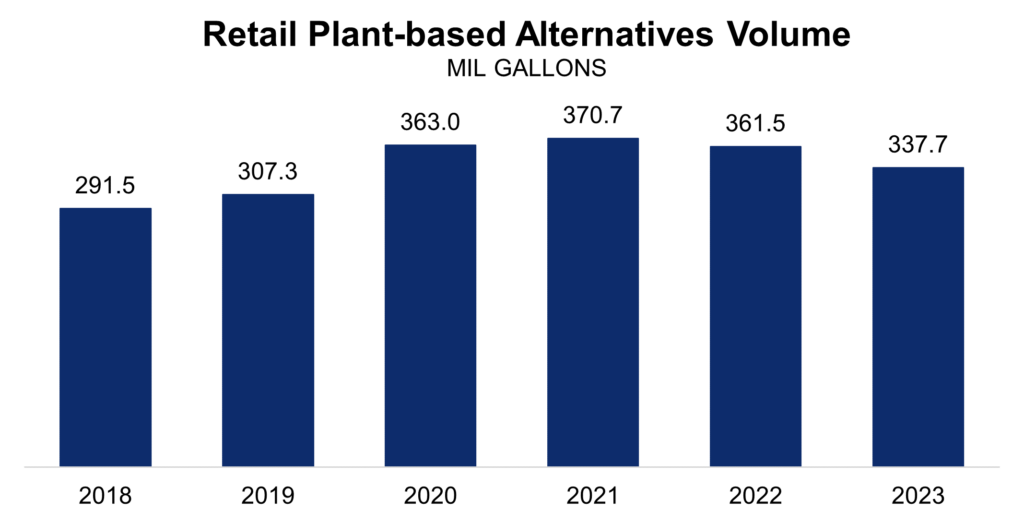
Meanwhile, the big news reported recently is that plant-based fake-milk beverages saw sales decline by 6.6% in 2023, the second straight year of declines and the smallest sales since 2019, according to data from Circana Inc reported recently. 

Real dairy milk sales volume of 42.6 billion pounds in 2023 is not only a much larger category than the lookalikes at 337.7 million pounds, real dairy milk outperformed lookalikes on a trend basis in 2023 — down just 1.5% vs. plant-based being down 6.6%.

By comparison, plant-based beverage sales volume in 2023 was a fraction of 1% (0.8%) the size of real milk sales volume.

Whole milk education and awareness have helped drive this result. Consumers are paying attention to food science, even if the Dietary Guidelines Advisory Committee, USDA (and FDA on labeling) continue to ignore it. Still, more education and freedom for children to enjoy milk is needed. The concern is that even though it is a smaller percentage loss, the 1.5% sales volume loss in the real milk category in 2023 represented 644 million pounds; whereas a 6.6% sales volume loss in plant-based beverages in 2023 represented 24 million pounds.

Speaking with a local milk bottler and ice cream maker recently – a producer handler – I learned he focuses on how his cows are fed to maintain their rolling average 5% butterfat during the summertime to make ice cream and satisfy consumer demand for whole milk. Their whole milk sales have skyrocketed, and this in turn, to the delight of the grocery store they are in, has helped boost sales of all fluid milk as a category in that store.

This has him thinking of doing a 5% butterfat, non-standardized, maybe even cream top, full-fat milk in glass bottles for the store. The store displays a 97 Milk banner at the entrance and 97milk.com website stickers at the dairy case.

Speaking with a manager at a different grocery store chain with stores in Pennsylvania and surrounding states, I learned their sales of whole milk have also increased by leaps and bounds in the past several years, boosting the entire fluid milk category by 14% at their stores throughout the region. They include the 97milk.com website and information in their sales circulars to their shoppers.

As for the schools — If even half of the schools offered a mix of milkfat choices as the Whole Milk for Healthy Kids Act would allow them to do, the amount of butterfat sold as Class I would increase. This would improve the fat side of the fat/skim pricing in the three Southeast Orders and Arizona. It would also help the Federal Order pool dollars reach after actual components are paid first in Multiple Component Pricing Orders everywhere else.

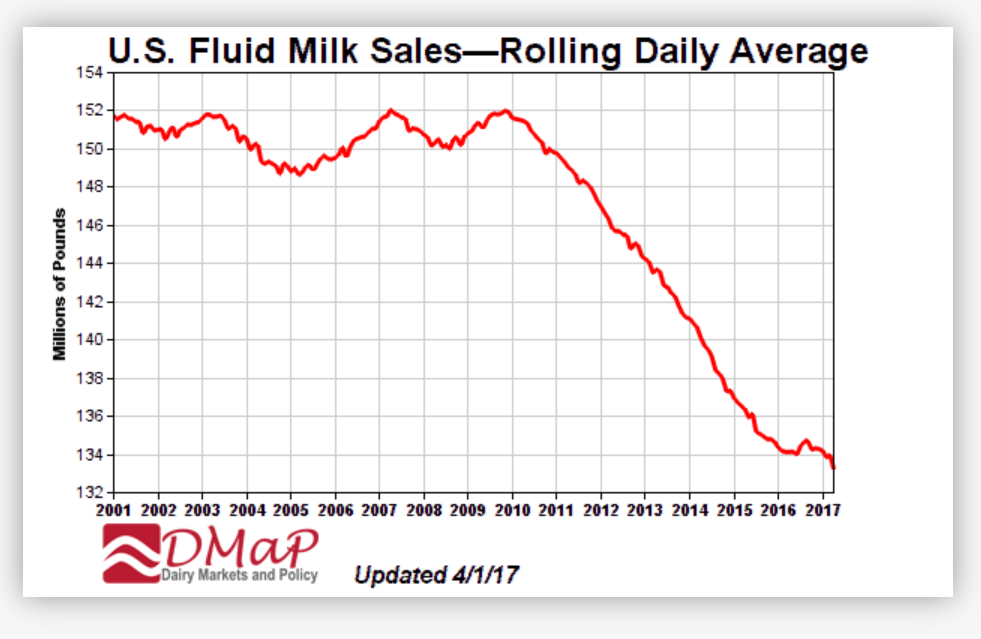
Total Class I fluid milk sales have dropped like a rock since Congress passed the Healthy Hunger Free Kids Act in 2010, which removed whole and 2% milk options from school meals, followed by USDA in 2012 further banning whole and 2% milk as a la carte or vending machine ‘competing beverage’ options in the Department’s Smart Snacks regulations.

Look at the graph above. It was shared as part of Dr. Mark Stephenson’s testimony in the recent USDA FMMO milk pricing hearing.

Improved total sales of school milk hold potential to increase total Class I fluid milk sales. A Pennsylvania school trial in 2019 showed a 52% increase in milk sales when whole and 2% milk options were offered. Students showed a 3 to 1 preference for whole milk over the 1% milk option.

When their options were expanded, more students chose milk instead of refusing it. Students were able to choose, and some of them continued to choose low-fat, and that’s okay! The Whole Milk for Healthy Kids Act is about choice.

A conservative estimate of a 25% increase in school milk sales can be anticipated if Whole Milk for Healthy Kids gets over the finish line in the Senate after its overwhelming passage in December in the House. That is half of the increase seen in the Pennsylvania school trial. If realized, a 25% increase in school milk sales equates to a little over one billion pounds of additional annual milk sales, which could raise the entire Class I fluid milk category by a little more than 2%.

This is based on the fact that kids aren’t just throwing away milk at school. Some are refusing to take the milk they are offered with school meals. This means sales are being lost.

Fluid milk sales declines will only get worse if USDA implements one of two draft proposals the Department announced a year ago. One would eliminate flavored milk from elementary and middle schools altogether. The other would require added sugar levels to be reduced dramatically in flavored milk at school. It’s widely known that when milkfat is retained in making chocolate milk, less added sugar is needed! 

Demand for whole milk is beneficial on both the milk fat and skim sides of the equation because whole milk sales move the nearly-complete product – the skim with the fat — leaving some of the fat through standardization, but not leaving any skim.

The result of these options in schools could be even better depending on how many schools choose to exercise these options.

If the industry doesn’t supply what consumers demand, sales are lost. Schoolchildren are already the dairy industry’s consumers, and they will hold the purse strings in the future.

Just as the Dietary Guidelines Committee and USDA continue to ignore science on milkfat, we are all ignoring our nation’s schoolchildren and what they are telling us about why they are turning away from nutrient-dense milk at a time when the nutrients milk delivers – that we may think they are receiving — have never been more important.

When the Pennsylvania school trial ended after one school year, a 95% reduction in the average daily volume of discarded milk was recorded. The school Student Council did an environmental project to measure this by measuring the volume of milk thrown away in unopened and partly consumed half-pint containers.

Shouldn’t we be listening to what the young people are telling us? They are our future, after all.

In the next part of this series, we’ll address the question: “What are the processors going to do with all of that skim?” Oh my!

In the meantime, consider this: Fresh fluid milk is the most notably locally-produced dairy product maintaining dairy farm relevance in regions and communities across America. What will the dairy industry look like five years from now, even one year from now? Maybe we should be asking the schoolchildren to answer that question.

As of Feb. 14, 2024, the Whole Milk for Healthy Kids Act, S. 1957, has 15 sponsors from 12 states as illustrated on this map. Graphic by Sherry Bunting

Letter-writing campaign launched by grassroots group seeking U.S. Senate cosponsors for Whole Milk for Healthy Kids Act

‘Will you write to your two?

By Sherry Bunting, Farmshine, January 12, 2024

EAST EARL, Pa. – In December, the House passed Congressman G.T. Thompson’s Whole Milk for Healthy Kids Act, H.R. 1147. This is a major milestone for this bill, which passed in the U.S. House of Representatives by an overwhelming bipartisan 330 to 99 vote.

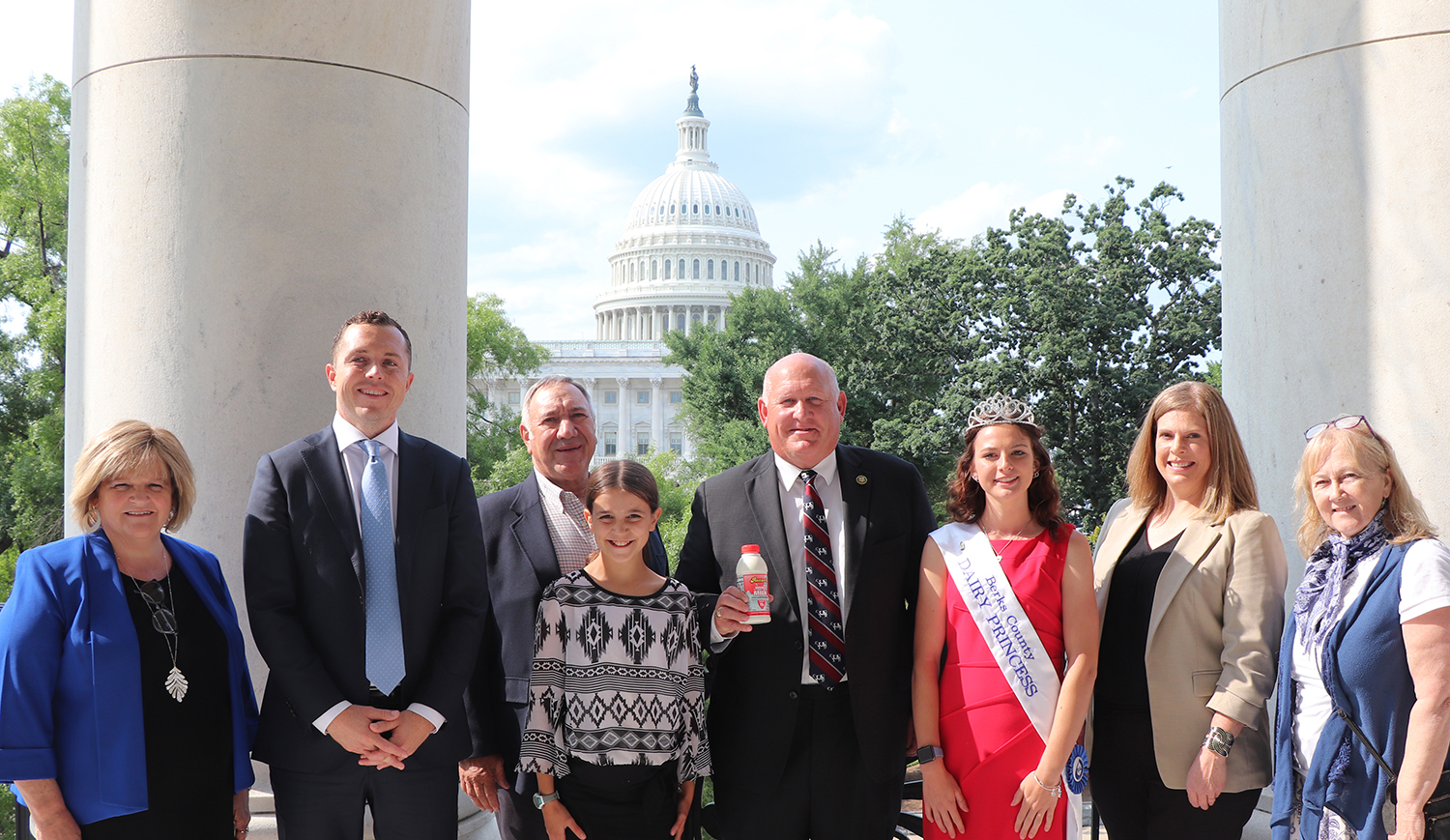
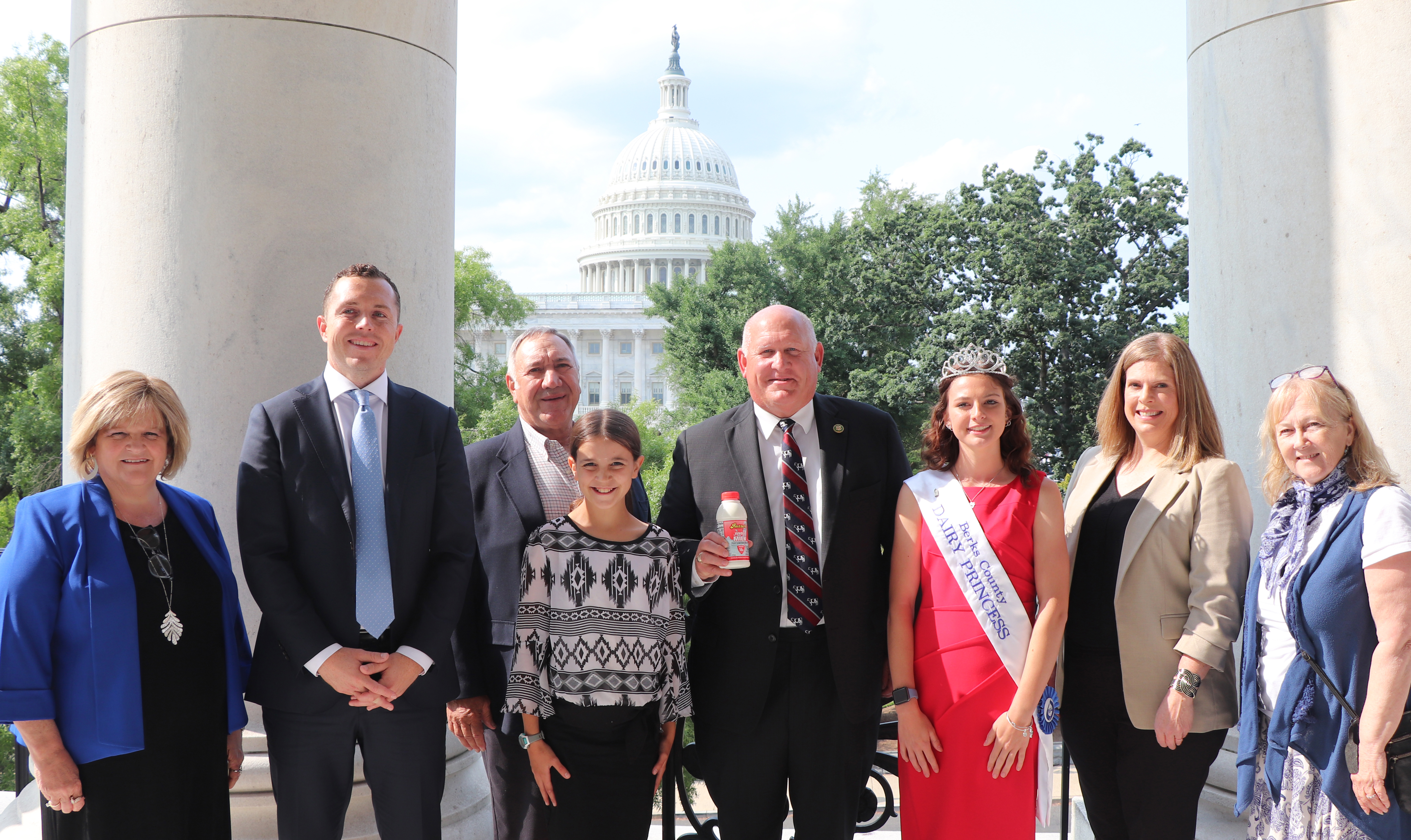
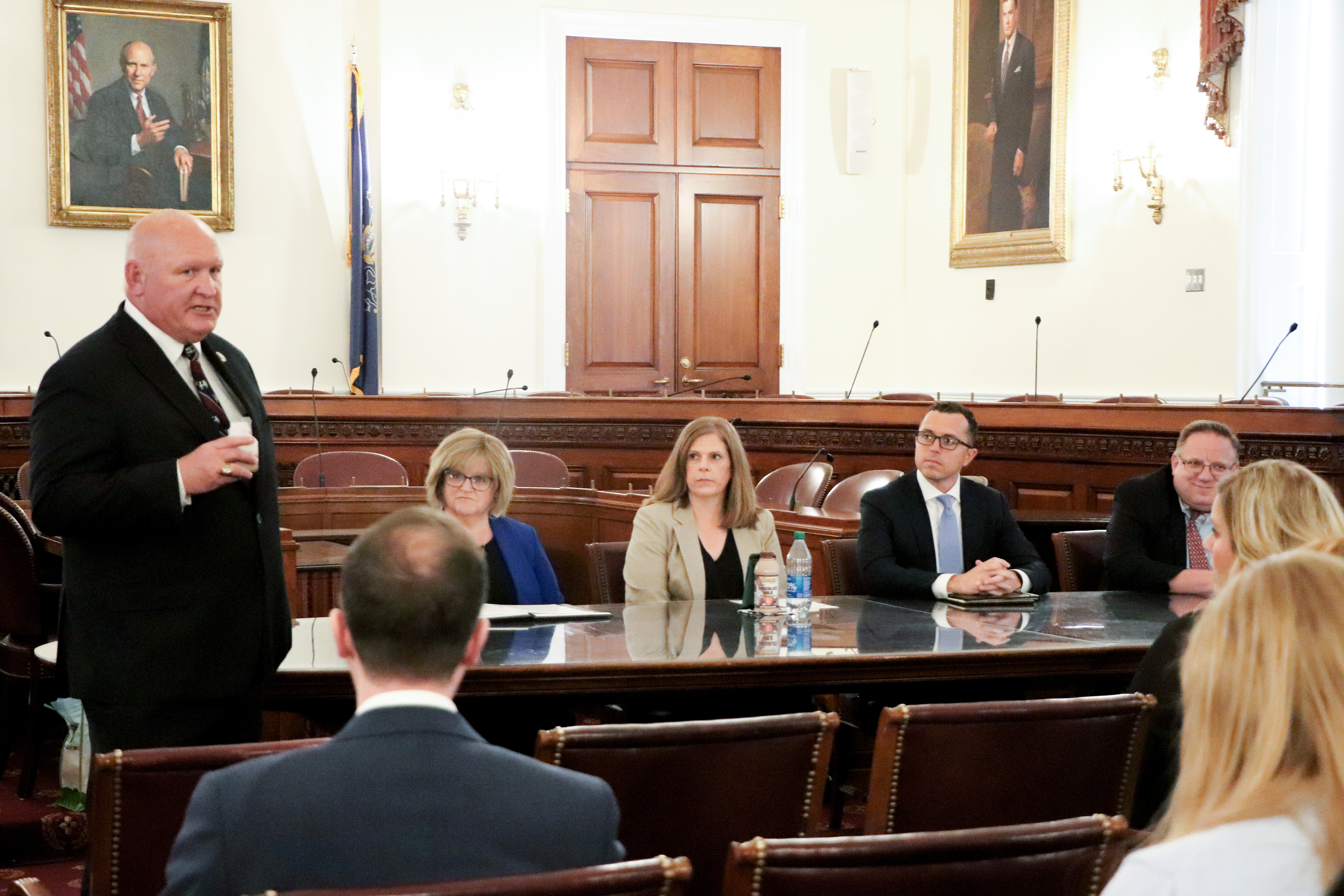
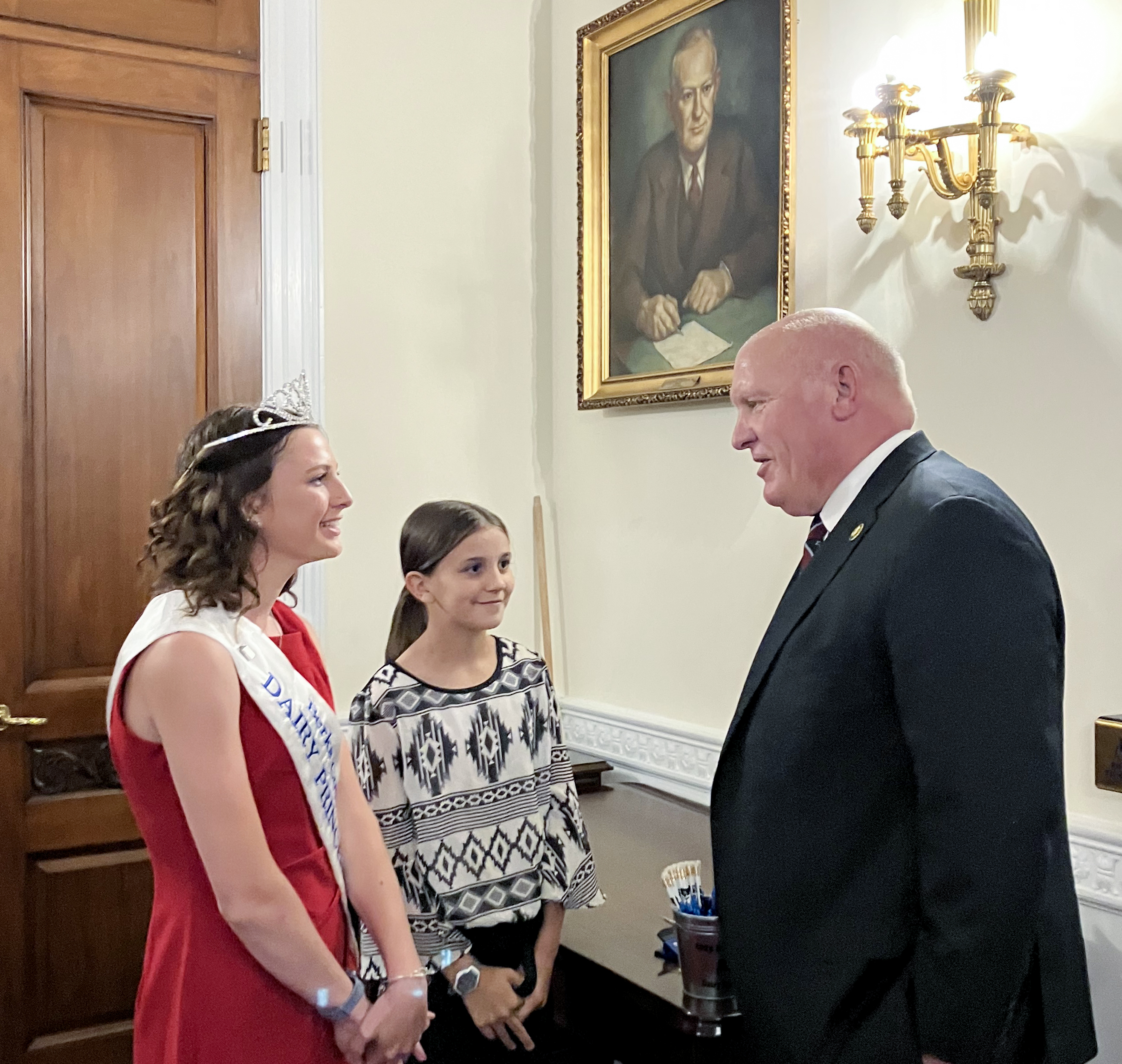
Pictured are a few of the members of the Grassroots Pennsylvania Dairy Advisory Committee and others who joined them for a staff briefing at the Capitol last summer. The focus now is on the U.S. Senate. From left are Christine Ebersole, school nurse in Blair County, Pa.; John Bates, then executive director of The Nutrition Coalition; Nelson Troutman, Berks County dairy farmer and his granddaughter Madelyn, 2022-23 Lebanon County Dairy Maid; Congressman G.T. Thompson (R-PA-15), the champion and prime House sponsor of the Whole Milk for Healthy Kids Act; Sara Haag, 2023-24 Berks County Dairy Princess; Krista Byler, school foodservice director in Crawford County, Pa.; and Sherry Bunting, Farmshine contributor and volunteer advocate for whole milk in schools. Photo courtesy Maddison Stone

“The next stop is the Senate, and we are going to have to work hard to get the Senate bill (S. 1957) to the floor and passed. In Pennsylvania, we need to work on our Senator Bob Casey. We already have Senator John Fetterman as a cosponsor of the bill, but we need Senator Casey also,” says Nelson Troutman, Berks County farmer and originator of the Drink Whole Milk 97% Fat Free baleboards that led to the 97 Milk effort and 97milk.com

“We also need more Senators to cosponsor S. 1957 from across the country,” adds Bernie Morrissey, retired agriculture advocate from Robesonia, Pa. “We need dairy farmers, agribusinesses, organizations and citizens all across the country to reach out to their Senators to cosponsor this bill.”

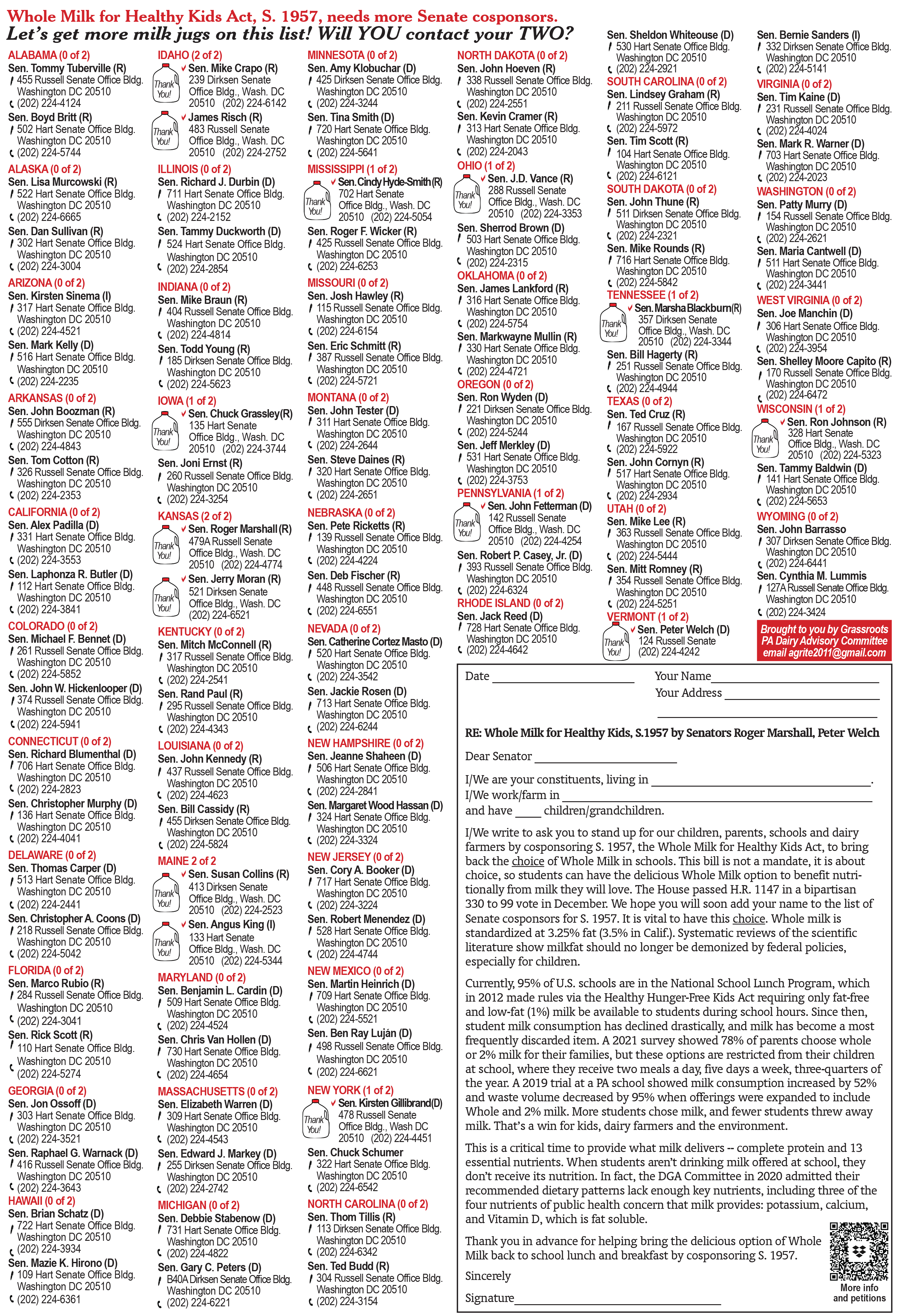
The Senate bill has 14 cosponsors from 11 states as of January 20th. They include Republicans, Democrats and an Independent as follows: both Dr. Roger Marshall (prime sponsor) and Jerry Moran of Kansas, Peter Welch (prime cosponsor) of Vermont, Ron Johnson of Wisconsin, John Fetterman of Pennsylvania, both James Risch and Mike Crapo of Idaho, both Susan Collins and Angus King of Maine, Kirsten Gillibrand of New York, Cindy Hyde-Smith of Mississippi, Chuck Grassley of Iowa, J.D. Vance of Ohio, and Marsha Blackburn of Tennessee.

“Every state has two United States Senators. We want every dairy farmer, every organization and business calling their two Senators. If they are already a cosponsor, thank them. If they are not a cosponsor, please write to them, and use our sample letter (or the template at the end of this article),” Bernie explains.

(Find the Washington addresses and phone numbers for your state’s Senators at https://www.senate.gov/ – Click the icon in the top left corner, select your state from drop-down menu to see how to contact them. Go to the end of this article to learn about email options. Some additional resources can be found in a folder at https://qrco.de/WholeMilk-Info )

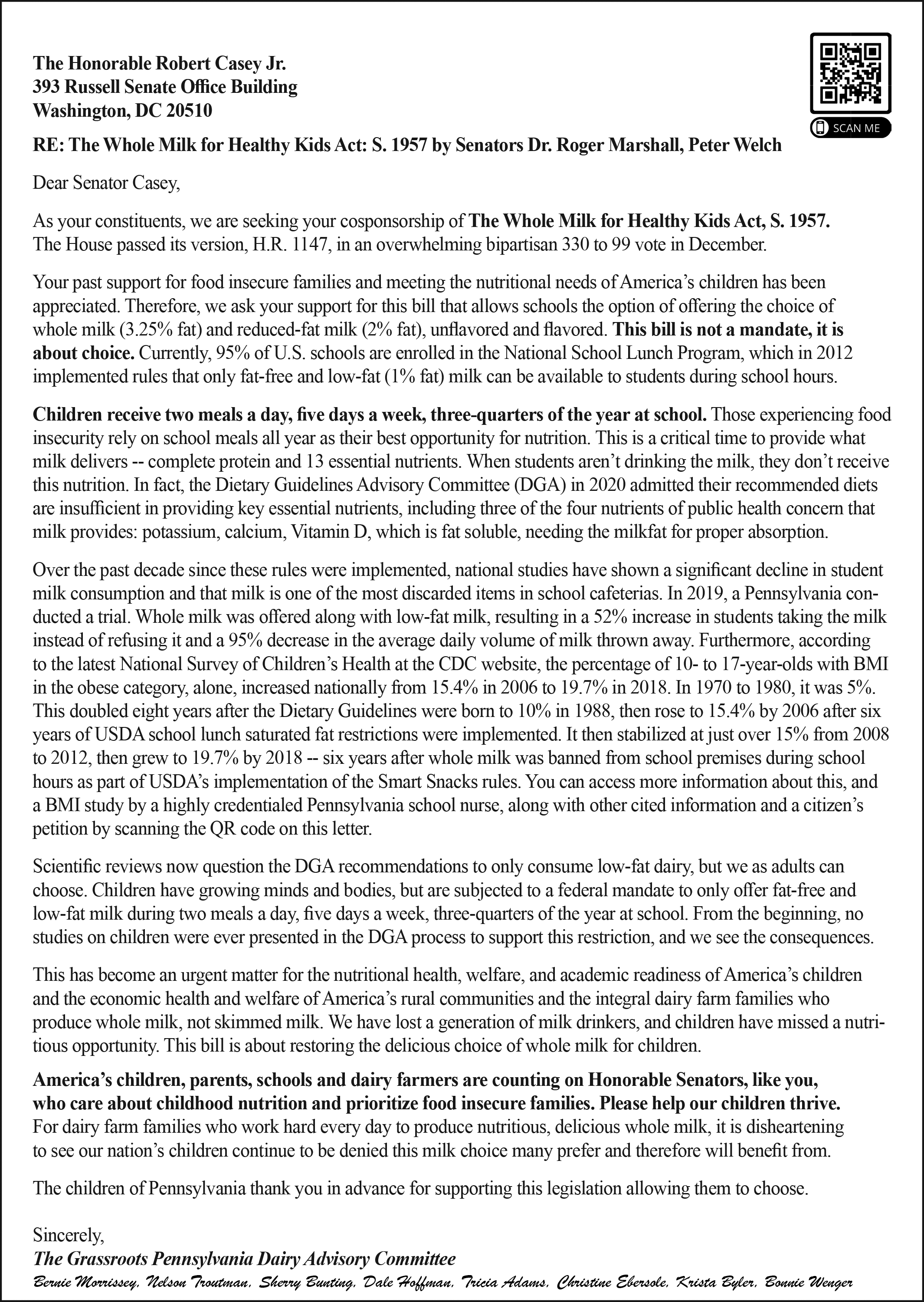
“We have written to Senator Casey (see letter at top) to let him know how important this is to us, to the children of Pennsylvania, and to the dairy farmers. We need more people, organizations, and businesses to write to him also. If this doesn’t work, it will be our own fault for not getting involved,” he stresses, adding that constituent phone calls and visits are also welcome.

“We must also contact Senate Ag Committee Chairwoman Debbie Stabenow of Michigan. It is important that she knows how vital this bill is to come through her committee to the Senate floor,” Bernie notes. (The call-in notice below was published in the Jan. 5 Farmshine).

The Grassroots Pennsylvania Dairy Advisory Committee asks organizations and agribusinesses to use the sample letter on this page as-is or tailor it to their state’s Senators and also send it out to all their members or customers asking them to each sign it and send it to their two Senators as well.

“Let us know if you did this,” Bernie continues. “We want to know: Did YOU contact your TWO?” (Email Sherry Bunting at agrite2011@gmail.com or text or call 717.587.3706 to confirm you contacted your two.)

“After all,” Bernie observes: “If the dairy farmer’s next generation of consumers – the children — cannot choose milk they will love, what is your future as a dairy farmer? And what is their future as tomorrow’s leaders?”

“Whole milk is nutritious and delicious. Science supports this choice. It’s up to each one of us to get it done.”

-30-

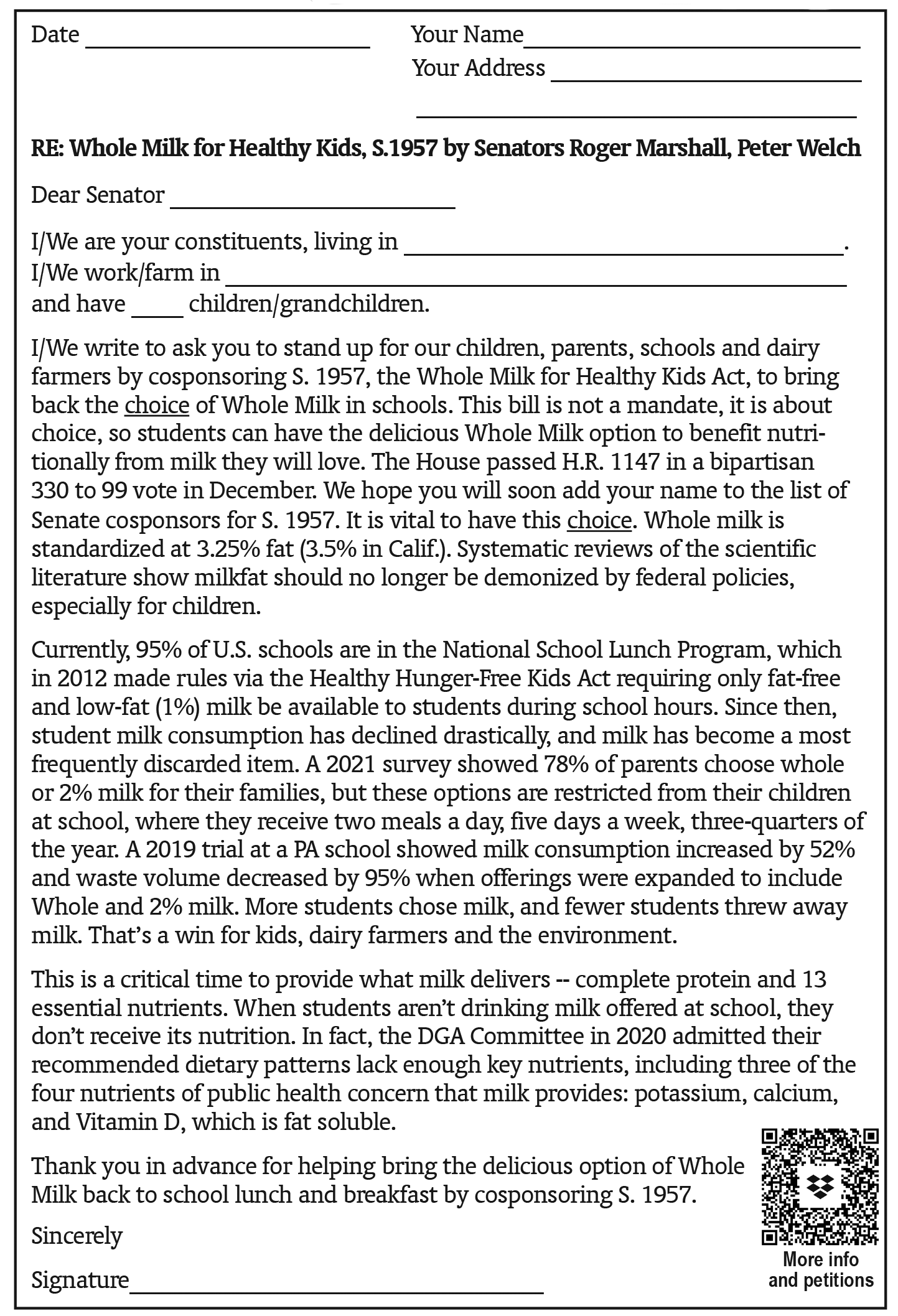
To email your Senators directly, go to https://democracy.io/  – type in your own address, city and zip code, click submit. Your two Senators and one Representative will show up with red checkmarks. Click ‘Write to them,’ and on the next screen compose the body of your letter. First, say who you are and where you live/work/farm and mention if you have children or grandchildren in school, if you wish. Sample text about cosponsoring S. 1957 can then be copied and pasted from the template below:

———————————————————————————————————————-

Dear Senator,

I write to ask you to stand up for our children, parents, schools and dairy farmers by cosponsoring S. 1957, the Whole Milk for Healthy Kids Act, to bring back the choice of Whole Milk in schools. This bill is not a mandate, it is about choice, so students can have the delicious Whole Milk option to benefit nutritionally from milk they will love. The House passed H.R. 1147 in a bipartisan 330 to 99 vote in December. We hope you will soon add your name to the list of Senate cosponsors for S. 1957.

It is vital to have this choice. Whole milk is standardized at 3.25% fat (3.5% in Calif.). Systematic reviews of the scientific literature show milkfat should no longer be demonized by federal policies,
especially for children.

Currently, 95% of U.S. schools are in the National School Lunch Program, which in 2012 made rules via the Healthy Hunger-Free Kids Act requiring only fat-free and low-fat (1%) milk be available to students during school hours. Since then, student milk consumption has declined drastically, and milk has become a most frequently discarded item. A 2021 survey showed 78% of parents choose whole or 2% milk for their families, but these options are restricted from their children at school, where they receive two meals a day, five days a week, three-quarters of the year. A 2019 trial at a PA school showed milk consumption increased by 52% and waste volume decreased by 95% when offerings were expanded to include Whole and 2% milk. More students chose milk, and fewer students threw away milk. That’s a win for kids, dairy farmers and the environment.

This is a critical time to provide what milk delivers — complete protein and 13
essential nutrients. When students aren’t drinking milk offered at school, they don’t receive its nutrition. In fact, the DGA Committee in 2020 admitted their
recommended dietary patterns lack enough key nutrients, including three of the four nutrients of public health concern that milk provides: potassium, calcium, and Vitamin D, which is fat soluble.

Thank you in advance for helping bring the delicious option of Whole Milk back to school lunch and breakfast by cosponsoring S. 1957.

Sincerely

————————————————————————————————————————–

‘Twas the Day Before Recess: How Senator Grinch from Michigan blocked Santa’s Whole Milk delivery… for now.

Even Dr. Seuss’s Grinch had a change of heart. So let’s get to work calling our Senators in Every-Who-Ville!

The House of Representatives overwhelmingly passed H.R. 1147, The Whole Milk for Healthy Kids Act 330-99 on Dec. 13. Senator Roger Marshall (R-Kan.) put forward a unanimous consent motion for a Senate vote on Dec. 14 in the hopes of delivering the Whole Milk bill to the President’s desk for Christmas, but this motion was blocked by Senator Debbie Stabenow (D-Mich.). Marshall has an identical Senate Bill S. 1957 referred to the Senate Ag Committee of which he is a member and she is the chair. That bill has 12 total sponsors from 10 states. We need more. Make your lists and check them twice, Call and find out if YOUR Senators will be naughty or nice!

By Sherry Bunting, Farmshine, December 22, 2023

‘Twas the day before Recess

And all through THE HOUSE,

The Representatives were stirring,

Some as if they saw a mouse.

The amendments had been laid

By the Speaker’s desk with great care

In hopes that healthy choices

Of Whole Milk for kids would be there.

The bipartisan support was nestled

All snug in cosponsorship,

While opponents spoke of ‘experts’

And hurled their ‘expert’ admonishments.

Opposers, few, with empty platitudes

And supporters, many, full of truth

Had just settled in for 

A long hour of dispute.

Then what to my wondering eyes

And ears should appear?

But the words, and the vote 

We had — for so long — waited to hear.

Whole Milk for Healthy Kids 

Won the House vote

Three Hundred Thirty to Ninety-Nine,

But when a whole-milk-drinking Doctor 

From Kansas over in the Senate began to opine

It was Senator Grinch from Michigan 

Who crushed his bill sweetly on the vine.

“My esteemed colleague is making me hungry,”  

Said Senator Grinch with a sugary smile.

“He’s reminding me of growing up with 

Cookies and milk,” she giggled all the while.

“I grew up with a family of dairy farmers,” 

Said Senator Grinch, Chairwoman of Ag.

“I certainly support milk and the dairy industry,” 

She said, tucking the Kansan’s milk bill into her bag.

“This is an important conversation 

To have and continue having,” she grinned,

Putting it to bed.

… But Senator Grinch, we must tell you

This conversation, for 10 long years,

We have had and have had and have had!

Make no mistake, 

The smiling Senator Grinch did say

She fully supports healthy options for kids 

And lauded milk and dairy that day.

“But one thing is clear,” she said,

As her eyes began to narrow and jaw firmly set.

“Those school standards for children, 

They are and should continue on dietary science to be set.”

But wait, what else to my wondering 

Eyes and ears did appear?

A recorded memory of Villain Vilsack 

In 2015 (at a House hearing to be clear.)

“I wish there were scientific facts, 

But this is about well-informed opinions”

That’s how we do Dietary Guidelines, my dear.

He talked of preponderance 

Of evidence and such.

He said: ‘Oh no’ we can’t include 

Diets that treat obesity so much.

He said: “These Guidelines are not 

What you shall, but what you should,

These guidelines,” he said,  

“Are something we think is good

For you to consider, but yes, 

People will make choices too.”

You can choose. I can choose,

That’s true, you see,

Unless you are a child in school 

Eating meals two of three

Each day of each week 

Nine months or more each year.

If you are that child, 

Then no choices for you, my dear.

But don’t fret and don’t fear!

You may choose low-fat 

And fat-free, 

And a plethora of drinks 

Sweetened artificially. 

Your choice can be fruity, fizzy 

And caffeinated too! 

You can choose what you want

If federal bureaucrats agree with you!

So pop-tarts, chips, cookies, 

Doritos, donuts, go ahead!

But whole milk for kids, 

Government bureacrats want 

That deal to be dead!

As Senator Grinch from Michigan 

Reminded us all that day,

She grew up in a family of dairy farmers, 

And supports you all to say

Milk is good and is great, to be sure

But Guidelines ARE supreme

And children must obey!

“We should not be supporting 

Individual food products 

That are in our states,” 

The Michigan Grinchwoman of Ag

Did scold with a finger wag.

But isn’t Michigan the #5 MILK State?

I wondered aloud, 

Then I remembered their specialties 

Are ultrafiltered, shelf-stable, dairy-based 

With big cheese and ingredient plants

Making them proud.

Did Senator Grinch read the bill?

Did she look at the evidence?

Talk to schools, parents or kids, if you will?

She could not have done her homework

Of that I am sure,

Because she said, smiling sweetly,

Just have those conversations some more.

And so she went on about USDA, 

Dietary Guidelines and Such.

They are the experts, 

And heed them we MUST

‘They are THE EXPERTS’ 

And they are meeting RIGHT NOW 

To decide for 2025-30 what is best 

In Any-Who-Ville and how!

With the sweetness of honey, 

The Ag Grinchwoman did say

All these things as she blocked 

The Senate’s Whole Milk vote that day.

So now it’s up to us.

We need more cosponsors to enter the fray.

We need them from Every-Who-Ville 

That has a Senator today.

We need cosponsors from North 

And from South, East and West.

We need them to care that children, 

Parents and schools can choose best.

We need them to talk to Senator Grinch 

From Michigan

As only another Senator 

In the Senate really can.

We need them to smile sweetly and say,

Shouldn’t children be offered milk

They will drink and not throw away?

We hope as Congress return

To Every-Who-Ville this holiday

That they consider the children 

All around them at school and at play,

That they consider their health,

For which whole milk doth provide

Flavor and nutrition, and that they strive

To do better by signing onto this bill right away

The Whole Milk for Healthy Kids Act,

Senate Bill S. 1957 by the way.

And that perhaps, just maybe, 

We hope and we pray,

Senator Grinch from Michigan’s heart

Can grow 10 sizes – or more – this holiday.

-30-

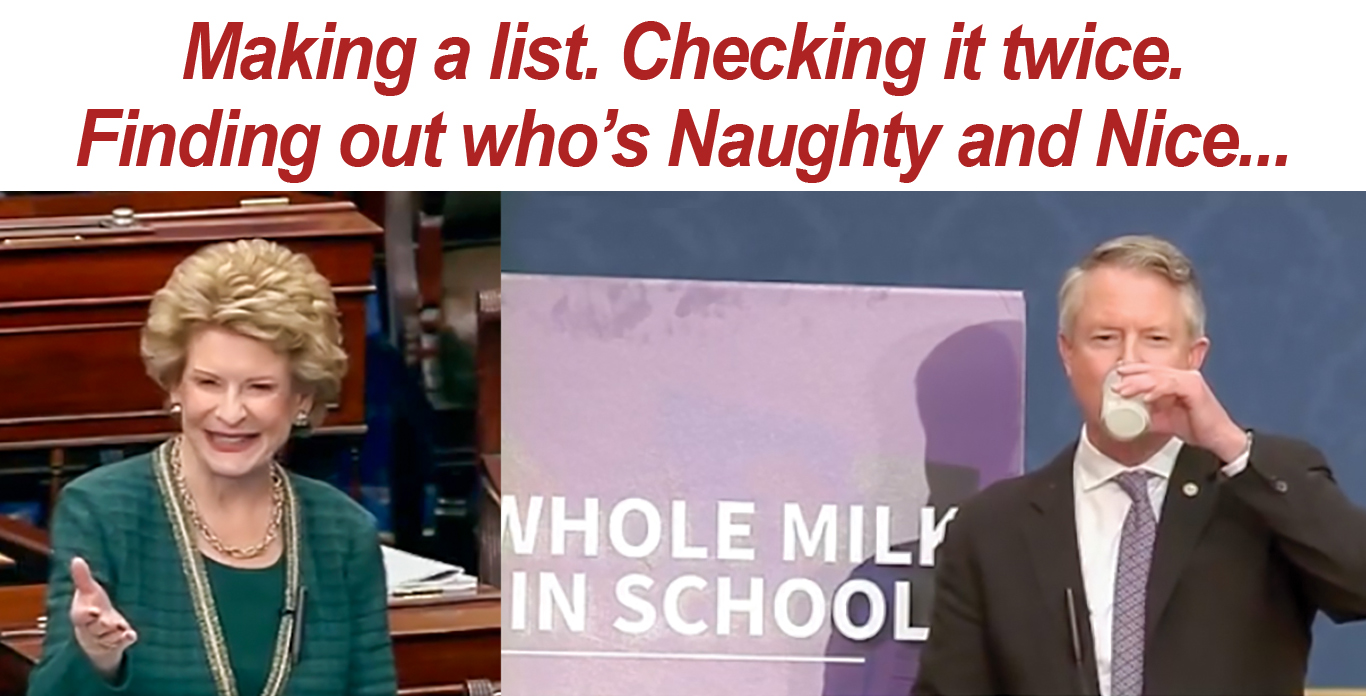
PHOTO CAPTION: Senator Debbie Stabenow, the Democrat from Michigan who chairs the Agriculture Committee on the Senate side, was certainly all smiles and pleasant as she shut the door on what Senator Roger Marshall, the Republican from Kansas, called “a slam-dunk for American families.” Marshall is a medical doctor, an obstetrician, and member of the Senate Ag Committee. He chugged a glass of whole milk on the Senate floor last Thursday, Dec. 14, before introducing his unanimous consent motion to put the House Whole Milk for Healthy Kids Act to a Senate vote the day after it had passed the House of Representatives in an overwhelming 330 to 99 count.

Let’s make our (Senate) lists and check them twice. We need to find out who’s naughty and nice. As Senator Marshall put it, this bill could have been on the President’s desk this week and delivered to farmers and schoolchildren by Christmas. But that special Santa delivery was ultimately blocked by Chairwoman Stabenow. Current sponsors of the Senate’s identical bill, S. 1957 include Senator Marshall, along with Senators Peter Welch (D) of Vermont, Susan Collins (R) and Angus King (I) of Maine, Kirsten Gillibrand (D) of New York, John Fetterman (D) of Pennsylvania, Cindy Hyde-Smith (R) of Mississippi, Ron Johnson (R) of Wisconsin, James Risch (R) and Mike Crapo (R) of Idaho, Chuck Grassley (R) of Iowa, and just this week a new cosponsor signed on, Jim Vance (R) of Ohio.

We need many Senate cosponsors to sign on, especially members of the Senate Ag Committee, and we need Senators motivated to speak with Chairwoman Stabenow, to ask her to please stop putting the agenda of Washington bureaucrats above the health and welfare of America’s children. Let’s keep this momentum going. Call the two U.S. Senators who represent your state and find out if they are naughty or nice. If they need more information, visit 97milk.com and download the handout Why Whole Milk.

If your Senators are already signed on to S. 1957, thank them. If they have not signed on, ask them to consider this level of support for the bill so that it goes to the floor to allow children to choose  milk they will love and consume instead of throwing it away — so the options of whole and 2% milk can be offered by schools instead of only fat-free and 1% low-fat milk. This is about health, nutrition, learning readiness, and the future. C-Span screen capture graphic by Sherry Bunting

House passes Whole Milk for Healthy Kids 330-99!

Education Chair Virginia Foxx: ‘Let’s end the war on milk. Pass the bill!’

Ag Chair G.T. Thompson praised as champion who doesn’t give up

Bill mooves on to U.S. Senate

By Sherry Bunting, Farmshine, December 15, 2023

WASHINGTON — Wednesday, December 13th was a big day for dairy farmers and schoolchildren! After clearing the House Rules Committee Mon., Dec. 11, the Whole Milk for Healthy Kids Act, H.R. 1147, passed overwhelmingly in the U.S. House of Representatives.

The strong bipartisan 330 to 99 vote moves the choice of whole milk closer to school cafeterias across the nation with momentum for the next stop: the U.S. Senate, where S. 1957 has 12 bipartisan sponsors from 10 states – and more are needed.

“Students across the nation deserve school lunches that are both enjoyable and nutritious, and this legislation achieves these goals,” said Whole Milk for Healthy Kids Act champion Glenn ‘G.T.’ Thompson (R-PA-15), Chairman of the House Agriculture Committee and senior member of the Education and Workforce Committee as he testified before the Rules Committee Monday.

“Milk is an essential building block for a well-rounded and balanced diet, offering 13 essential nutrients and numerous health benefits. However, outdated and out-of-touch federal regulations have imposed restrictions … Students are not able to access any of the milk’s essential nutrients if they won’t drink the milk being served to them. As we have seen over the last decade, there has been a steady decline in school milk consumption. This bill does not mandate anything. It gives schools, parents, and students the option of whole milk,” said Thompson.

Education Committee Chairwoman Virginia Foxx (R-NC-5) was blunt on the House floor: “Whole milk isn’t just a beverage; it’s a vital source of nutrients essential for children’s growth. Denying access to its calcium, vitamin D, and protein threatens to inhibit their development. To the anti-milk advocates, I have one thing to ask of you: What do you have against milk? Let’s end this war on milk. Pass the bill!”

And they did. Resoundingly, the People’s House sent a strong message to the opposition that hung their hats on the flawed Dietary Guidelines for Americans (DGAs) as the end-all, be-all.

Education Committee Ranking Member Bobby Scott (D-VA-3rd) re-litigated his argument that was previously defeated in bipartisan Committee passage of H.R. 1147 in June. He kept referring to the DGAs. He insisted skim milk is the same as whole milk, nutritionally, but disregarded the roles of milkfat in key vitamin absorption and flavor to keep those nutrients from going down the drain.

Congress tied school meals closer to the DGAs in 2010, and the Obama-era USDA developed beverage rules in 2012 that banned whole milk — leading to the loss of a generation of milk drinkers and unprecedented increases in childhood obesity and diabetes — to the point where an April 2019 U.S. Senate hearing noted concern from U.S. military generals on fitness of recruits.

The Rules Committee asked why whole milk is being handled as a separate bill instead of within a Childhood Nutrition Reauthorization package. Thompson explained that the reauthorization has not occurred since the 2010 Healthy Hunger Free Kids Act created the issue.

“There is widespread bipartisan support in the Education and Workforce Committee, on the beverage part of this, milk in particular, because studies have shown the BMIs have gone up from what was a baseline prior to removing whole milk. Part of the urgency here is the significant impact that has had on the health of our youths,” he said.

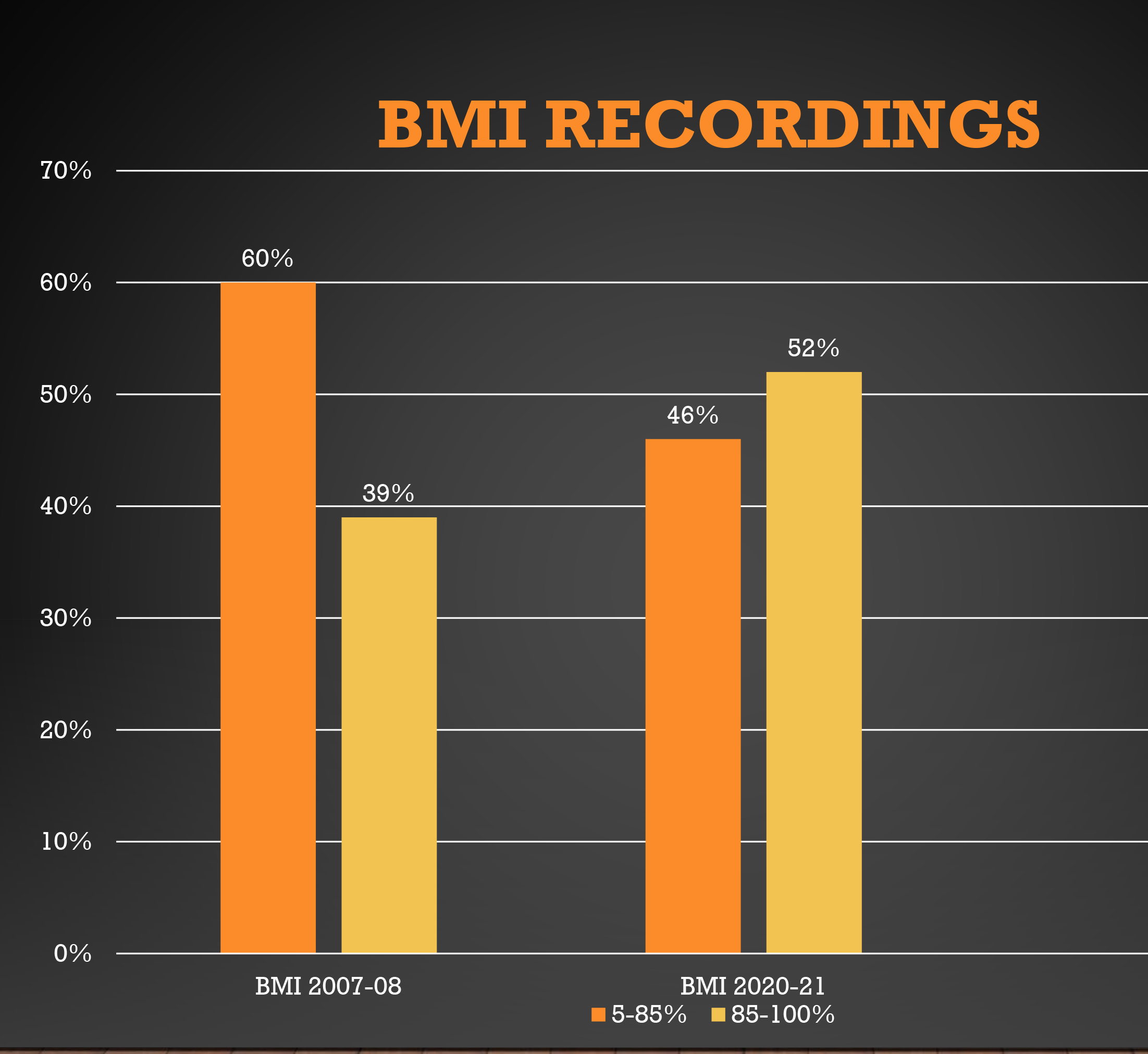
Thompson cited the case study analysis of annual body mass index (BMI) data aggregated by Christine Ebersole RN, BSN, CSN, a school nurse from Martinsburg, Pennsylvania. She shared her data on 7th to 12th graders in a 97 Milk / Grassroots Pennsylvania Dairy Advisory Committee education session in Washington in June 2023 and in a State Senate hearing in Harrisburg in 2021

Her data showed the percentage of students in the overweight and obese categories, combined, grew from 39% in 2008 to 52% in 2021. This mirrors national trends demonstrating the anti-milkfat approach has not helped and may have harmed. The trends in fact have worsened ever since DGAs were created to infiltrate institutional feeding programs.

According to the latest National Survey of Children’s Health at the CDC website, the percentage of 10- to 17-year-olds with BMI in the obese category, alone, increased nationally from 15.4% in 2006 to 19.7% in 2018. In 1970 to 1980, it was 5%. This doubled eight years after the DGAs were born to 10% in 1988, then rose to 15.4% by 2006 after six years of USDA school lunch saturated fat caps were implemented, then stabilized at just over 15% from 2008 to 2012, then grew to 19.7% by 2018 — six years into the USDA ban on whole milk in schools.

The big milestone for whole milk in schools comes on the 5-year anniversary of Berks County, Pennsylvania dairyman Nelson Troutman placing his first painted roundbale “Drink Whole Milk (virtually) 97% Fat Free” in a pasture by a crossroads, which led to questions, publicity, and the creation of 97 Milk.

The 97 Milk educational organization has worked alongside the Grassroots Pennsylvania Dairy Advisory Committee on the legislative side. As a team, they continue to lead the charge for children to have the choice of whole milk once again at school. They are pleased to have worked with the Nutrition Coalition, founded by Nina Teicholz, author of Big Fat Surprise, and to see other national dairy and farm organizations join in support in recent years — from the American Dairy Coalition and Farm Bureau to National Milk Producers Federation and International Dairy Foods Association.

“We are grateful for this bill’s champion, the honorable G.T. Thompson. We thank him for not giving up,” said 97 Milk Baleboard originator Nelson Troutman in a Farmshine phone interview about the bill. “So many legislators get pounded from the top down, and they give up… and really, G.T. didn’t have a lot to gain out of this except helping the people. He did this for the kids, for the people, for the farmers. This is not a mandate. This is a choice, and I cannot emphasize the word choice enough.”

“The reason we got here is G.T.’s dedication to children having nutritious and delicious milk choices, and he brought it to the finish line in the House,” said Bernie Morrissey, chairman of the Grassroots PA Dairy Advisory Committee. “We have to keep working on the Senate, and 97 Milk has been a major part of educating people about this choice kids will have when the Whole Milk for Healthy Kids Act becomes law. The people on our grassroots committee and 97 Milk – we are a team. Our teams help each other. When you have a great team and teamwork, that’s how things get done.”

“This is a strong step in the right direction, and we have to keep going to our total destination,” said G.N. Hursh, Lancaster County, Pa. dairy farmer and chairman of 97 Milk. “We at 97 Milk totally support this bill. Whole milk choice in schools is clearly a national improvement for our future leaders. This is a win for good taste and excellent nutrition!”

Dale Hoffman and his daughter Tricia Adams, also members of the Grassroots Pennsylvania Dairy Advisory Committee expressed their gratitude. Three generations operate Hoffman Farms in Potter County, Pa.

“G.T. has really fought for this and put a lot of work into this. We appreciate what he has done in helping out the kids and the farmers,” said Dale in a phone interview. “When you look at the health situation, the trends have gone the other way without whole milk in the schools. Kids are dumping the milk, and you can’t blame them. They need those nutrients physically and mentally. Milk is one of nature’s most perfect foods. We produce it and grew up with it. Children should be able to choose it.”

Grassroots committee member Krista Byler, of Spartansburg, Pa. is a Union City school foodservice director and head chef. She said the Whole Milk for Healthy Kids Act “is huge for me because I have seen this from the startup, and I finally seeing movement in the school nutrition organizations. I see the whole picture coming together. I am amazed to see it reach this point that now students are much closer to having a milk choice that meets their nutritional needs,” she said.

Byler notes that the milk carton shortage affecting school districts this year has been a catalyst for support among her peers for the expansion of choices in milkfat levels.

“It’s sad to say, but as we struggle on the milk carton shortage, it forces people in my position to think outside the box and look at alternative service methods,” said Byler. “We are seeing students asking for other milkfat options, such as whole milk.”

She says she sees more of her peers today are excited about this bill and how it is worded in a way that makes it possible for them, as school foodservice directors, to implement — to actually offer whole milk as an option for students and not be financially penalized by the federal government for exceeding arbitrary and outdated fat percentages on the meal.

“I’m excited to be closer to having this choice to meet students’ needs in a way that is nutritious and that they find delicious. My students will be so excited,” said Byler. “When it becomes law, it will be a huge win for kids everywhere, and our waste will certainly go down.”

Look for more in Farmshine about this milestone, what’s next, and the three amendments that were offered and approved along with the bill. They are: 1) allowing school milk to be either organic or non-organic, 2) preventing school milk from Chinese state-owned enterprises, and 3) prohibiting USDA from doing its proposed elementary school ban on flavored milk.

Government is the problem, cows are the solution

By Sherry Bunting, Farmshine, September 29, 2023

WASHINGTON – Several important amendments aimed at limiting USDA and FDA powers in the administration’s climate agenda, nutrition mandates, even an amendment on checkoff transparency, peppered the hotly debated FY2024 Ag Appropriations bill in an overnight marathon at the end of September as House of Representatives worked to avoid a government shut-down Oct. 1.

Some amendments passed and others failed.

Perhaps most notable was the Spartz Amendment (76) related to commodity checkoff transparency. It passed on a voice vote in the near midnight hour Sept. 26, but a recorded vote was requested by the opposition, and it was soundly defeated 326 to 72 in the late afternoon on Wednesday.

Here’s what we’ve learned from C-SPAN coverage and other sources about key agricultural amendments that are included and excluded.

The defeated Spartz Amendment would have prohibited use of taxpayer funds to carry out, administer or oversee the 22 commodity checkoff programs.

Other amendments that succeeded would prohibit USDA’s use of the appropriated funds to carry out the administration’s “climate agenda” via a long list of executive orders. Some amendments that passed prohibit USDA’s use of appropriated funds to enforce certain school meal rules, such as a proposed to ban chocolate milk in elementary schools and the current 14-year ban on whole milk at all grade levels.

A half-dozen amendments targeted specific USDA and FDA bureaucrat’s salaries by using the Holman Rule to cut down to $1 the salaries of, for example, the USDA Food Nutrition Services deputy under secretary for her role in expanding SNAP eligibilities beyond congressional intent and in expanding USDA diet-police tactics in schools by implementing the whole milk ban from a la carte offerings in 2012.

On the failure side, in addition to the Spartz amendment, another amendment offered by Wyoming Congresswoman Harriet Hageman would have undone the USDA mandate for electronic cattle identification. It would have left the funding in place for farmers and ranchers wanting to use the electronic ID (EID) system, but would have removed the mandate language.

Said Hageman: “Ireland required this. Today, a year later, there are untold numbers of reports they must fill out for the government, and Ireland now is considering killing off 1.3 million head of cattle to reach their ‘climate targets.’ Their EID mandate will help them carry out this slaughter.”

She said mandatory EID “will cost ranchers millions in compliance cost, causing smaller farms to sell out and accelerating vertical integration so the farmers and ranchers will be nothing but serfs. This is supported primarily by the four big packers — two of which are owned by Brazil and by China.

In opposition to the EID amendment, Chairman of the House Ag Committee, Glenn G.T. Thompson (R-Pa.), said technology and innovation are needed to protect livestock agriculture from disease outbreaks.

On the Spartz checkoff amendment, Thompson said the place to handle this is in the farm bill, not appropriations.

In defense of her approps amendment, Indiana Congresswoman Victoria Spartz said: “I am a farmer, and my cosponsor is a farmer, and we want to stand with the farmers.

“Farmers used to pay a checkoff voluntarily to promote the commodities. Then Congress made it mandatory, and there is no transparency,” she said. “If you are going to force farmers to pay the money, they should know where their money goes. Do they promote commodities? Or do they promote very wealthy jobs?”

She explained further that her amendment had two parts. One calls for checkoff transparency language in the farm bill. The other sought to be included in the Ag Appropriations, simply stating that no taxpayer funds can be used to carry out or oversee checkoff programs.

“It’s a simple amendment, but the special interests have gone on the attack saying: ‘How can Congress ask us what we’re doing with the money?’” said Spartz. “Now it has become imperative since they are now lobbying with this money against this amendment and against transparency.

“They say they aren’t using taxpayer money… So, just clarify this to Congress — that no taxpayer dollars are going to these boards that who knows where they spend the money,” she explained.

Cosponsoring the amendment, Rep. Tom Massie of Kentucky said: “This program has gone rotten and no longer serves farmers. In fact, we just sent a bipartisan letter to Secretary Vilsack reminding him that the USDA is required to report annually to Congress on the disbursement of these funds and show a third-party audit of their effectiveness.”

Massie noted that these reports to Congress have not been filed since 2018 for dairy, during which time dairy farmers paid over $1 billion, and more than 6000 have gone out of business.

Thompson stressed that the debate on checkoff transparency “should be reserved for the farm bill, not appropriations.” He said taxpayer funds are not being used in checkoff programs nor to oversee them.

Thompson expressed caution that some recent challenges to checkoff programs can be a veiled attack by animal rights groups that see this as an opportunity to weaken livestock agriculture. He said the farm bill is the place, “where conversations are already occurring, to improve these programs, to refine them, and to make them more transparent. I see the farm bill process as the appropriate path forward for achieving this transparency.”

“They should already want to be transparent to show this great thing they do for farmers,” Spartz countered. “But they are serving large monopolies, contributing to more consolidation so the little guy cannot survive.”

Spartz noted that Congress should “not be afraid to challenge these programs… to be the lobby for the people.”

For the three days leading up to the vote on the Spartz amendment, many agricultural groups with close ties and joint programs with commodity checkoff organizations amassed a barrage of lobbying efforts in opposition.

National Milk Producers Federation and National Cattlemen’s Beef Association spearheaded these efforts, including a letter signed by 130 organizations, saying that the Spartz amendment “unfairly targeted ‘producer-led’ checkoff programs that only use funds collected from proceeds of sale of these commodities – not taxpayer funds.

Here’s how I see it… If that premise is true, then what are the lobbyists opposing it so afraid of? No foul, no harm, right?

Perhaps they are afraid of the auditing that may be required to prove to Congress that no taxpayer funds are used to carry out checkoff programs. In fact, at the 11th hour, the Ag Environmental Coalition signed on to the letter opposing the Spartz amendment that was sent broadly to congressional offices urging a ‘no’ vote.

Could it be that taxpayer funds in the USDA coffers are being coughed up to further so-called ‘net-zero’ pathways initiated by the national dairy checkoff via DMI and its various tentacles?

It was USDA Secretary Vilsack, himself, who was first to announce Dairy Net Zero while testifying to the U.S. Senate in 2019 — asking them to fund Net Zero pilot programs. At that time, he was employed by checkoff, pulling down a million dollar salary via checkoff.

Now, Net Zero is the centerpiece of DMI’s “U.S. Dairy transformation” and the USDA ‘climate agenda’.

In fact, during a debate on an amendment offered by Florida Congresswoman, Kat Cammack, she cited a recent report citing Vilsack’s coordination with Arabella Advisors, a Soros-funded group, on “transforming the U.S. food system.”

She said the U.S. “can’t produce and process food for this country and abroad if we can’t rely on fuel and food systems not to be hijacked by the extremest climate agenda” and noted “many of these radical things do more harm than good to our environment. Our farmers and ranchers are the best in the world, and this amendment prevents the Biden administration from pushing its climate initiatives. It safeguards farmers and ranchers from these misguided policies.”

Could there be some blurred lines between taxpayer and checkoff funds piled into the climate-smart wheel-of-fortune?

Is there some leakage of taxpayer funds into certain checkoff industry structures and pre-competitive proprietary partnerships that create winners and losers among farms, among processors, among regions?

Certainly, Secretary Vilsack’s salary has been drawn from two pockets over the past 15 years (taxpayer, then checkoff, then taxpayer). This raises eyebrows as do the shared pathways to the same destination (net-zero) being paved with funds from both pockets. Each may fund a different track, but moving in unison to the same destination: putting the cow in the loser column so that Big Food and Big Tech can collect Big Money with the tools to move her over to the winner column (temporarily, folks, because cows don’t stop belching).

The way I see it, DMI and its many tentacles have charted a path for dairy that deems the cow a loser while developing the pathway to be her savior — to turn her into a winner and then tell her story. They promote the RNG projects, feed additives and sustainability practices that reduce her natural methane emissions, but forget to promote the fact that

With or without these pathways to Net Zero, the cow is already a winner! Cows are not the problem! A cow’s global warming potential (GWP) is not new, it is a constantly recycled baseline in a natural biochemical cycle that is as old as life itself. Math matters here!

Meanwhile, some of the checkoff-promoted tools deemed to make her loser-methane a “winner” will actually consolidate the dairy industry even more rapidly.

Large new production sites hinge on huge Renewable Natural Gas (RNG) projects that hinge on lucrative renewable fuel credits. Each permit recorded over the past two years and forward for the next five equals 2500 to 10,000 cows in expansions and new dairy sites.

These operations are less dependent on the level of the milk price to cash-flow, and they are bound by contracts to milk large numbers of cows to produce quantities of methane to then offset via RNG production to then generate credits for the exchanges.

At the federal milk pricing hearing in Indiana, we have heard processors lament that the FMMO minimum prices are too high. They’ve said the proof is the negative premiums and dumped milk this summer.

Are they really looking at getting the milk price minimums low enough that they can pay for those large new and expanded farm methane credits for their own scope 3 portfolios? Some processor testimony has mentioned sustainability costs in the make allowance part of the FMMO hearing. Do they want to weaken FMMO uniform pricing so they can cut farms that don’t measure up and use creative methane math to buy credits from others via milk premiums built on lower FMMO minimum prices?

We even have a global processor in New York State already doing a ‘pilot’ right now to monitor methane by analyzing their shippers’ Dairy One milk test data to benchmark farm methane emissions and make “recommendations.”

There’s a lot of money to be made by keeping cows in the loser column, and then building the consolidated pathways to move her into the Net Zero winner column.

Unfortunately, the math doesn’t add up, and the real losers will be our beloved cows – foster mothers of the human race — and our children and grandchildren who are already deprived of the very best our cows have to offer during 2 meals a day, 5 days a week, 9 months a year at school.

Farmshine editor and publisher Dieter Krieg hit the nail on the head in his editorial in the September 22 edition. The anti-animal agenda is real, and that fox is has been inside our henhouse with an agenda that began in 1995 when DMI was created to manage both halves of the checkoff structure, and it has become more obvious since 2008, when the Innovation Center for U.S. Dairy was created. This is also the year the whole milk ban train started rolling and DMI began conspiring with USDA to “advance the dietary guidelines” via a memorandum of understanding that initiated GENYOUth.

We’ve reported extensively on the murky methane math, the ten-fold typographical errors, the worsening dietary guidelines that ignore science, and the progressively more restrictive fat rules for school meals that are now morphing to anti-cow climate considerations.

More recently, we’ve reported on how the bubble-up in milk production in the Central U.S. that led to dumping of milk and unforeseen disastrous prices this summer was largely fueled by new RNG projects like are promoted by checkoff to help our very-bad, no-good cows become good for the planet.

The misappropriation of math and science has been staggering. Government is the problem, not the solution. Cows are the solution, not the problem. Newsflash: cows are already good for the planet, and they provide us with optimum natural nutrition we enjoy.

Editorial: Momentum builds for whole milk in schools

Standing with U.S. House Ag Committee Chairman, Glenn ‘G.T.’ Thompson are some of the volunteers who participated in the legislative staff briefing on G.T’s Whole Milk for Healthy Kids Act, including a June Dairy Month celebratory Whole Milk Bar at the Capitol in Washington on Tuesday, June 13. Congressman G.T. says he wants to reach 150 to 200 cosponsors before it comes to the House floor for a vote. Currently, there are 128 cosponsors representing 43 states (103 R’s and 25 D’s), and the Education and Workforce Committee recently passed H.R. 1147 in a bipartisan 26-13 vote. From left are Christine Ebersole, a school nurse in Blair County, Pa.; John Bates, executive director of The Nutrition Coalition; Nelson Troutman, a Berks County dairy farmer and 97 Milk Baleboard originator and his granddaughter Madalyn, the 2022-23 Lebanon County, Pa. Dairy Maid; Congressman G.T. Thompson (R-PA-15), the champion and prime sponsor of the Whole Milk for Healthy Kids Act; Sara Haag, the 2023-24 Berks County Dairy Princess; Krista Byler, a school foodservice director in Crawford County, Pa.; Sherry Bunting, Farmshine contributor and volunteer advocate for whole milk in schools. Photo credit: Maddison Stone

By Sherry Bunting, Farmshine, June 16, 2023 with June 23 update

WASHINGTON – “Wouldn’t it be great if we could unite the country with whole milk?” That question was posed by a fellow journalist in the Southeast, Julie Walker of Agrivoice, as I was updating her about the grassroots effort to bring milk education and the choice of whole milk to schools.

After the events of the past two weeks, my answer to that question is: Yes, I believe we can and we are… seeing the fruits of the labor of grassroots volunteers.

On Tuesday, June 13, the Grassroots Pennsylvania Dairy Advisory Committee and 97 Milk were part of a legislative staff briefing hosted by Congressman G.T. Thompson and his staff at the Longworth House office building on Capitol Hill in Washington. This had been planned weeks earlier, before Thompson’s bill – the Whole Milk for Healthy Kids Act, H.R. 1147 – passed the Education and Workforce Committee on June 6 in a bipartisan 26-13 vote.

This week, the identical bipartisan Senate companion bill was introduced on June 13 by prime sponsor Senator Roger Marshall, a Republican and medical doctor from Kansas and prime cosponsor Peter Welch, a Democrat from Vermont along with other bipartisan cosponsors.

Allow me to take you behind the scenes of the June 13 legislative staff briefing on Congressman Thompson’s House bill and why it gives me hope to see people rediscovering and uniting behind the effort to legalize whole milk in schools so children have true access to the most wholesome nutritional beverage, milk.

What becomes apparent is that children are not benefiting from milk’s nutrition when their choices at school are restricted to fat free and low fat. They should be able to choose whole milk and 2% milk that are currently banned by federal nutrition standards, and they should be able to continue to choose flavored milk, which USDA is considering restricting to only high school students.

“Milkfat was demonized as a part of the child nutrition standards, especially since 2010… and we’ve seen a lot of waste and unopened milk cartons at school cafeterias because (fat-free/low-fat milk) is not a great milk experience for kids. Meanwhile, we’ve seen a significant increase in childhood obesity. If they don’t have access to milk they like, they will drink something, and the alternatives won’t give them milk’s essential nutrients or be as satisfying,” said Rep. Thompson. “Everything has its own time, and I’m pleased that we’ve gotten to this point with the bill and appreciate the panel here today to share and answer the question: ‘Why whole milk in schools?’”

Two school professionals from the grassroots advisory group were on the panel: Krista Byler (second from left) of Spartanburg, foodservice director for Union City Area Schools and Christine Ebersole RN, BSN, CSN (left) of Martinsburg, school nurse at Williamsburg Community School District. They were joined by John Bates (second from right), executive director of the Nutrition Coalition, a nonprofit founded by Nina Teicholz, author of The Big Fat Surprise; as well as Paul Bleiberg (right) of National Milk Producers Federation.

Around 25 to 30 staff members working for Representatives and Senators from both parties attended for the entire briefing. That may not sound like a lot, but for this setting, and the constantly changing schedules during floor votes, hearings and meetings, it’s a big deal. The event was by invitation and targeted key legislative offices for an educational briefing on the bill.

It was Congressman Thompson’s idea to have a “whole milk bar,” so our crew brought 100 half pints of whole milk — unflavored, chocolate, strawberry and mocha — donated by the Lesher family of Way-Har Farms, Bernville, Pennsylvania. We added some full pints of flavored and unflavored milk picked up at two convenience stores on the way (Rutter’s and Clover) to be sure we had enough as we heard interest in the briefing was growing.

We baked fresh strawberry cheesecake cookies with butter and cream cheese, and brought a few other types of cookies, as well as cheese snacks and nuts, arranged a nice table, kept the milk iced cold (that was a fun challenge through security scanners).

We brought with us Berks County Dairy Princess Sara Haag and former Lebanon County Dairy Maid Madalyn Troutman. Ebersole brought her daughter Vanessa Wiand, an elementary school teacher.

Nelson Troutman (right) with our driver Frank Tomko

Berks County farmer and Drink Whole Milk 97% fat free Baleboard originator Nelson Troutman was part of our crew, and he made sure the van we rented for travel had several 97 Milk magnets for the ride.

I provide these details because here’s the deal: Each person in our crew is a volunteer among the many volunteers working on the whole milk in schools issue, not just in Pennsylvania, but in other states as well.

Sara and Madalyn handed out the 6×6 cards designed by Jackie Behr at 97 Milk that visually show what milk provides nutritionally. It’s an impressive piece. They also handed staffers a business card with a QR code (above) that they could scan to reach the online folder to a video created by students and technology teacher at Krista’s school as well as finding other important information about whole milk and the Whole Milk for Healthy Kids Act. On the table next to the whole milk bar was a one page handout with bullet points, and 97 Milk provided milk education tabletop displays.

As Congressman Thompson talked about “ruining a generation of milk drinkers with failed federal nutrition policy,” he praised the bipartisan support for H.R. 1147 and noted the 107 cosponsors in the House (as of June 13, the number as of June 23 is 128 and counting).

That’s a large number by historical standards, but Thompson wants to get to 150 cosponsors by the time the bill is officially reported to the House, which will be soon.

There is still time, and it is still important to keep contacting members of Congress to ask them to consider cosponsoring the Whole Milk for Healthy Kids Act in the House, and thank them if they already have signed on.

Ebersole shared with staffers her perspective as a nurse, what she observes, what milk nutrition means for children.

“I thought it would be interesting to compare BMI (Body Mass Index) screenings when whole milk was served in schools with the recent screening where students have been served only skim and 1% milk. The results of the comparison are striking (above). The overweight and obese categories for students in grades 7-12 in 2007-2008 school year was 39% with 60% in the proper BMI scale. In the year 2020-2021, after being served low fat milk during school hours, the overweight and obese categories were increased to 52% while the recommended range was decreased to 46%. That is a 13% increase over the past 13 years!” said Ebersole.

“While one cannot assume that the low fat milk alternatives are the only determining factors, they certainly did not have the intended outcome of reducing obesity in school age children,” she said.

Ebersole explained that, “Whole milk is a nutrient dense food and with its natural combination of protein, fats and carbohydrates, it is called Nature’s most nearly perfect food. Whole milk also provides satiety, which is stabilizing for blood sugar as well as feeling fuller longer thus decreasing food intake. Another important quality is that students prefer the taste of whole milk compared to the reduced fat and skim milk options.”

Byler talked about the trial at her school in the 2019-20 school year. She explained that the milkfat restrictions at school have led to a loss of school milk consumption with results that are far reaching.

“We are now hearing of very early onset osteoporosis and an increase in malnutrition and/or obesity. It is shameful that our youth cannot have a choice of a wholesome, nutritious product that is farm-to-table/farm-to-school,” said Byler. This, and the amount of milk wasted daily prompted the school trial.

She provided slides of the trial results and talked about how half of the students didn’t really know whole milk was not allowed. This means they didn’t know how good milk can be.

“The results of the trial were astounding. When offerings were expanded to include whole and 2% milk, the amount of wasted milk was reduced by 95% and we saw a 52% increase in students choosing milk,” said Byler, explaining that the student council did actual milk collection data as part of an environmental project.

She also shared results of her survey of the elementary school children showing that if this latest possible restriction on milk options for schoolchildren is approved by USDA, fewer than 25% of students currently taking and drinking the milk say they would continue taking milk and drinking it if flavored milk were not offered. 

“That’s huge,” said Byler.

That means we would see even more reductions in milk consumption at school and more waste. This struck a chord because when Byler presented the 2019-20 trial where her school offered whole and 2% along with fat free and 1% milk, for trial purposes, we heard audible gasps among those attending the briefing when Byler shared the data on the reduction of wasted milk. ((The students also created a video about school milk, view it here.)

We also saw reactions while Ebersole was sharing her analysis of student BMI data over the past 13 years.

Both women concluded by sharing a heartfelt message about how important dairy farmers are to communities, how they care for their cattle and work to provide a high quality nutritious product, and what it means to them for children to be able to choose milk they love so they can benefit from the nutrition the milk provides.

“As the wife and granddaughter of proud Pennsylvania dairymen, I knew the decrease in milk we were ordering for schools would impact dairy families. I know firsthand about the dairy farmers we have lost,” said Byler. “What I know based on 18 years in school nutrition, raising two children and being part of two dairy families is that restricting milk offerings to our school children does not benefit our children or our dairies. It benefits big corporations who have exponential marketing power and are preying upon our youth.”

School nurse Christine Ebersole and her daughter Vanessa Wiand, an elementary teacher at the briefing.

Ebersole noted that, “Being born and raised on a dairy farm and having lived in the dairy community all my life, I can say I know something about the American Dairy Farmer. They are on call 365 days a year and 24 hours a day.  They care about their animals and also care about their neighbors. When a tragedy happens like a fire, the neighbors come together. Dairy farmers work diligently to bring a wholesome natural food to us. Let’s do our part to support this industry by allowing students to have a choice of a delicious, nutritious whole food, whole milk,” she said.

For the Nutrition Coalition, John Bates explained they are a non-profit, non-partisan organization that seeks to improve health in America by ensuring that the public gets evidence-based nutritional advice. They emphasize good science, transparency, and methodology and receive no industry funding.

“When the Healthy, Hunger-Free Kids Act was enacted in 2010, milk became counted as part of that less than 10% of calories from saturated fat, when previously it had been in its own, separate beverage category,” said Bates.

He noted that the U.S. Dietary Guidelines that these rules for schools are based on “never reviewed studies on dietary fat specifically for children until 2020. Children have just been assumed to be like adults, but children are different: they need more protein for their growing bodies and more fat for their growing brains,” said Bates.

The Guidelines in 2020 cite a single clinical trial on school-aged children, ages 7-10 (“DISC,” funded by the NIH). It showed ‘Modestly’ lowered LDL-cholesterol, he explained. “Yet the study was not on a normal population. The expert USDA committee acknowledged this study could not reliably be generalized to a larger population

The bottom line, said Bates is that expert committees have found “insufficient evidence” to show that restricting saturated fats in childhood could prevent heart-disease or mortality in adulthood.

“In our view, a single trial on an atypical population is not enough to make population-wide guidelines to all American children,” he said.

Paul Bleiberg for National Milk Producers Federation focused his comments on the problems with underconsumption of dairy.

“Milk is the number one source of three of the four food nutrients of public health concern as identified by the DGA’s — calcium, vitamin D and potassium. Dairy delivers 7 of the 14 nutrients the American Academy of Pediatrics recommends for optimal brain development as well as nutrients vital for immune health and bone growth and development during a child’s school-aged years,” said Bleiberg. 

“The 2020 DGA Committee found that 79% of 9 to 13 year olds fall short of recommended dairy intake and the data from MilkPEP show that students take less milk and throw away more milk at schools when they do not have options they like,” he added.

Before, after and during these four short presentations on whole milk choice in schools, staffers trickled in, gathered around the whole milk bar and had conversations.

In fact, when news began to spread through texts and emails that there were milk and cookies in room 1302 — more staffers came and went. Connections were made around good food and delicious, nutritious milk.

From congressional staff we heard appreciation and these words: informative, enlightening, authentic, delicious!

Those four words give me hope that we can unite with whole milk… for our children and our dairy farmers.

June 23 UPDATE: This was another good week for the Whole Milk for Healthy Kids Act in Washington, and here’s how you can help…

As of June 23, the bipartisan Whole Milk for Healthy Kids Act, H.R. 1147 grew the number of cosponsors to 128 including prime sponsor G.T. Thompson (103 Republicans, 25 Democrats). These cosponsors represent 43 states.

Texas tops the list with 13, followed by Pennsylvania 10, New York 8, California, Florida and Wisconsin at 7. Maine, Idaho, Iowa, North and South Dakota and Wyoming have fewer Representatives and their full delegations are on board. Wisconsin is nearly 100% with 7 of their 8 Representatives signed on.

The 43 states now represented are listed in the order of number of cosponsors vs. the total number of representatives for the respective states: Texas 13 of 36, Pennsylvania 10 of 17, New York 8 of 26, California 7 of 52, Wisconsin 7 of 8, Florida 7 of 28, Georgia 5 of 14, Indiana 4 of 9, Iowa 4 of 4, Michigan 4 of 13, Minnesota 4 of 8, North Carolina 4 of 14, Illinois 3 of 17, Virginia 3 of 11, Washington 3 of 10, Alabama 2 of 7, Arizona 2 of 9, Connecticut 2 of 5, Idaho 2 of 2, Kansas 2 of 4, Kentucky 2 of 6, Maine 2 of 2, Missouri 2 of 8, New Jersey 2 of 12, Ohio 2 of 15, Oklahoma 2 of 5, Oregon 2 of 6, South Carolina 2 of 7, Tennessee 2 of 9, Arkansas 1 of 4, Colorado 1 of 8, Hawaii 1 of 2, Louisiana 1 of 6, Maryland 1 of 8, Mississippi 1 of 4, Nebraska 1 of 3, Nevada 1 of 4, New Mexico 1 of 3, North Dakota 1 of 1, South Dakota 1 of 1, Utah 1 of 4, West Virginia 1 of 2, and Wyoming 1 of 1.

To reach all 50 states, here’s what we need in the East: Delaware, Massachusetts, New Hampshire, Rhode Island, and Vermont. In the West: Alaska and Montana. Is your state on the list? Is your Congressional Representative a cosponsor? Make the call! Go to this link to see the bill’s progress and cosponsors, and click “contact your member” on the right to find your Representative.

Call Senators too. On June 13, the bipartisan Senate companion bill, S.1957, was introduced by Senator Roger Marshall, a Republican and medical doctor from Kansas, along with prime cosponsor Peter Welch, a Democrat from Vermont. Also cosponsoring right out of the gate are Democratic Senators Kirsten Gillibrand of New York and John Fetterman of Pennsylvania; Independent Senator Angus King of Maine; and Republican Senators Ron Johnson of Wisconsin, Chuck Grassley of Iowa, Susan Collins of Maine, Cindy Hyde-Smith of Mississippi, and James Risch and Mike Crapo, both of Idaho. As of June 23, that’s 11 Senate sponsors from 9 states. Maine and Idaho have both of their respective Senators on board!

-30-