While fakes campaign to BE ‘milk’, dairy checkoff aims to REINVENT milk. New ‘milk beverage platform’ deemed ultrafiltered, ESL, shelf-stable

As new milk beverage platform is developed, it sounds to me like people want the many attributes fresh whole unfooled-around-with fluid milk already delivers. It checks all the boxes! Maybe children just need to be allowed to have whole milk at school and daycare where they eat most of their meals, and maybe new generations of adults need the education about why and how the dairy protein and natural nutrition in real milk beat the imposters, hands down.

By Sherry Bunting, republished from March 2023 editions of Farmshine

SAVANNAH, Ga. — Dairy checkoff-funded researchers say a new milk beverage platform is being developed to provide “the keys to the kingdom.”

Their consumer studies show people want clean labels, and at the same time they want more attributes. On the one hand, they want energy and protein. On yet anotherhand, they want indulgent creaminess. 

Consumers also want flavor, but they want less sugar. They want sweeteners, but not artificial sweeteners. They want thickness without the thickeners. They do not want gums or gels, but they are okay with fibers and starches. 

Some consumers want higher protein products. Others want everyday nutrition that is reasonably priced. 

These are some of the highlights that were shared back in January 2023 during the Georgia Dairy Conference in Savannah. There, Dr. MaryAnne Drake, professor of food science at North Carolina State University and director of the Southeast Dairy Foods Research Center talked about the fluid milk innovation work funded through DMI.

The ‘new milk beverage platform’ leverages different processing applications for flavor and functionality around dairy protein, based on global protein trends in a rapidly growing nutritional drink market.

ESL shelf-stable milk: key to kingdom?

“We are after a shelf-stable milk that tastes great and meets our consumer’s sensory needs and our industry’s sustainability needs,” said Drake about the work of the four university research centers, including North Carolina State and Cornell, that are drilling into milk’s elements to sift, sort, and test different combinations, as part of the checkoff-funded Innovation Center for U.S. Dairy, under the DMI umbrella.

Through processes like membrane technology, ultrafiltration, and aseptic packaging, the physical, nutritional and sensory elements of milk are being isolated at a molecular level to create beverages that aim to deliver this broad list of what consumers say they are looking for. 

At the same time, researchers are using interpretive surveys to understand how consumer desires actually translate into purchases, and then work with processors to build relationships with retailers to get these new beverage products into stores.

Reinventing milk

What does all of this mean? Reinventing milk by focusing on the domains in which real milk has a clear advantage for consumers among so many plant-based and now cell-based options. 

For example, said Drake: “Consumers want to know from a credible source what the immune-boosting elements are in milk, not what we have added. They tell us they want to know the science. That’s new.” 

Drake explained that the findings from their interpretive surveys represent a huge and divergent set of innovations to sort through and capitalize on as part of a new strategy.

“Consumers don’t see the perceived value of animal protein vs. plant protein, so we had them graph what they want and don’t want, what they know and don’t know,” she said, adding that consumers gave the slight edge to plant protein over dairy protein. They rated the top three protein categories as plant protein, whey protein, and milk protein — in that order. (A large percentage believed whey protein is plant protein.)

As their familiarity with the differences between plant and animal protein increased, their liking of dairy protein increased, the researchers learned.

In other words, consumers do not know the science about the nutritional differences between plant and animal protein, and if they knew the differences, they would rank milk protein as number one. 

Clearly, this is a failure in consumer education and messaging. Isn’t that the domain of the dairy checkoff?

New strategy

Drake indicated that educating consumers about dairy protein as a ‘complete protein’ is one thing that can help. However, she said, the functionality around dairy protein is the innovation strategy that is being pursued by the industry.

“The number one label claim consumers are looking for in a protein beverage is ‘naturally sweetened.’ We own that, and this is where we can deliver,” Drake declared.

“We own protein functionality. We understand the process parameters that impact flavor and functionality, and we can leverage this over plant proteins on this platform,” she said.
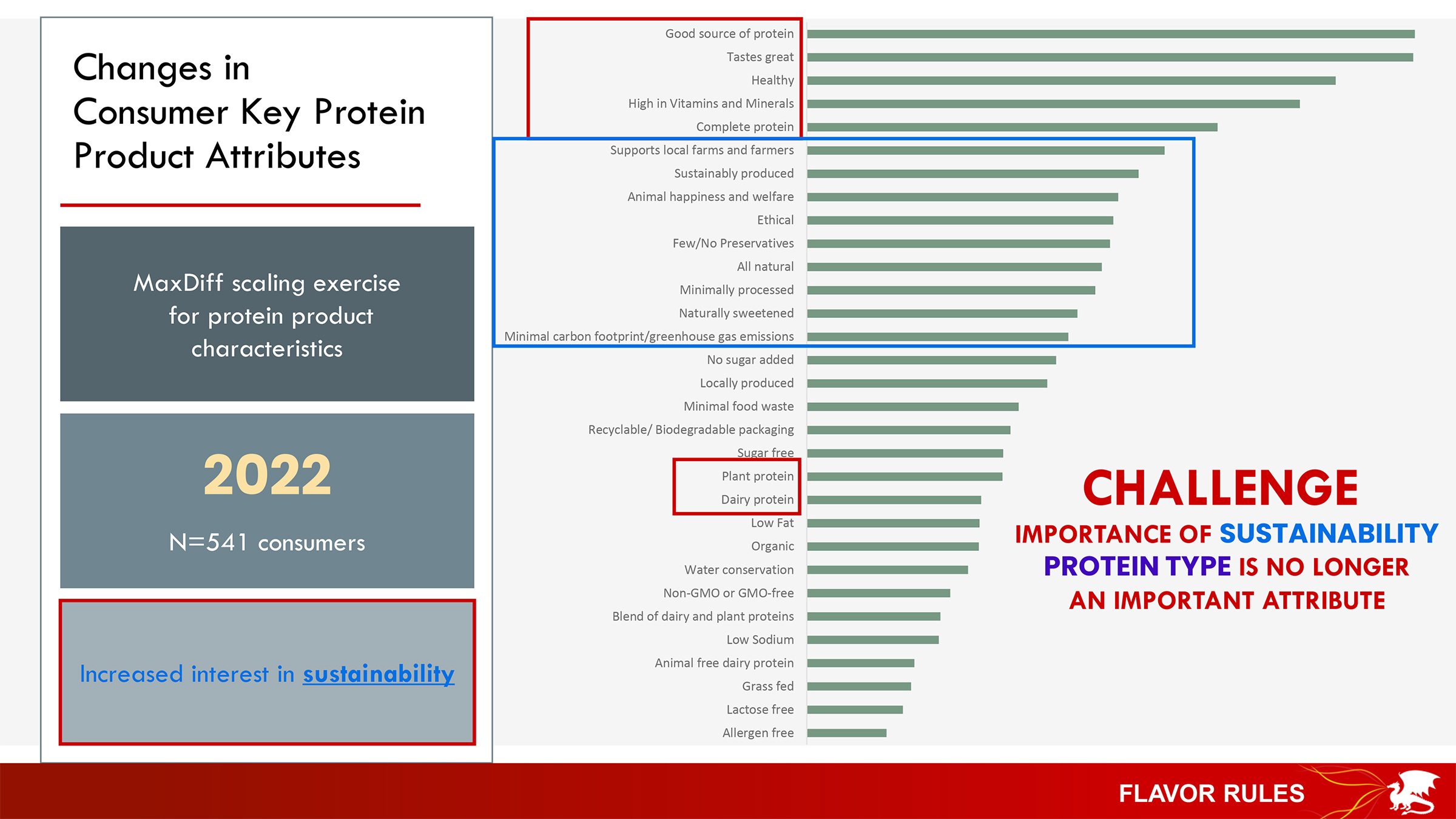
Bottom line: The surveys and flavor panels showed that consumers want “desirable flavor, texture and appearance. They want a protein drink that is nutritious, naturally sweetened, and has a clean label with simple ingredients,” said Drake. 

“They also want education, messaging and positioning, and they are looking at sustainability,” she added.

“We are working on what does clean label mean? It’s not what we think it is,” Drake reported. “It’s costing us sales if what they actually want is not on the shelf. We have the opportunity to deliver what consumers still want. We just have to find those things they want — that we have — and be more strategic in how we deliver them.”

Food technology and engineering was a big part of the picture painted for attendees that day.

Diversify processing

Producers were urged to challenge the status quo and to not just add processing, but to diversify it. They were also reminded that the 10 southeastern states had lost eight fluid milk plants in the previous roughly two-year period (2020-22).

During his annual market outlook that year, retired co-op executive Calvin Covington hit the nail on the head with this reminder, saying “that’s done some damage. The major challenge for milk markets in the Southeast is we need more of them,” he said. “A lot of the fluid milk products that are sold in the Southeast are not processed here. If we are going to have a viable dairy industry in the Southeast, we need growing and stable markets for milk produced in the Southeast.”

Covington also differentiated the trends for domestic and export demand, showing that both lagged their respective 5-year-average annual growth in 2022, with domestic demand growing by just 0.5%, while exports grew by 3.5%.

Keeping in mind as exports are expected to top 20% of U.S. milk production on a total solids basis in the next two years and fluid milk sales as a percentage of total milk production have fallen to just under 20%, seismic shifts are already occurring in the heavily fluid milk market of the Southeast.

Transformation brings investors

Geri Berdak, CEO of Dairy Alliance, the Southeast regional checkoff organization, talked about “creating a path forward” with objectives centered on driving milk volume, increasing dairy’s reputation and transforming dairy while building checkoff support.

She said transformation is necessary to “identify high-growth opportunities and stimulate outside investment, technology and innovation.”

The need for processing is big as plants are closing in response to declining fluid milk demand, leaving the the need for more diverse processing assets.

Exports drive innovation

“The biggest thing exports do is to drive value and innovation,” said Patti Smith, a food technology specialist and CEO of DairyAmerica, now wholly-owned by California Dairies Inc. (CDI) milk cooperative. Earlier in her career, Smith held a leadership position with Fonterra and has served at board and officer levels with IDFA and USDEC.

“Exports are a lot more than powder today. Our biggest item is still excess powder,” she said. “But we also export many other products — even UHT (ultra high temperature) and ESL (extended shelf life) fluid milk and cream.”

What Smith sees into the future are “opportunities for the right products and the right product configurations. We have the opportunities to capitalize on them and the technologies to grow them.”

Smith said the biggest benefit of exports to-date is to have a home for milk that grows the dairy industry without relying on core domestic demand for that growth, but that U.S. dairy processing infrastructure is not quite reflective of the new export era.

“We need to make our industry world renown, through a strategic plan that the whole industry will work on together, with digitized supply chains and infrastructure for growth that is reliable and can be consistently demonstrated, and that includes shipping,” said Smith, citing the Innovation Center for U.S. Dairy as the nexus, where the industry’s “strategic plan” for global trade is being built.

Developing ‘new milk beverage platform’

Emanating from the DMI-founded and checkoff-funded Innovation Center for U.S. Dairy is the marketing and promotion arm of new product alliances and the National Dairy Research arm through several universities looking to essentially create a milk beverage platform by drilling into milk’s elements, sifting, sorting and testing different combinations.

Dr. Drake said the new milk beverage platform holds the “keys to the kingdom” as global protein trends were valued at $38.5 million in 2020 and projected to grow. Meanwhile, the nutritional drink markets are growing steadily, with 42% of consumers eating healthy as a higher priority since Covid, and the number of conversations about protein (95% positive) steadily flowing across social media platforms. 

Those keys, she said, are membrane technology, ultrafiltration, aseptic packaging and research exploring all of the physical, nutritional and sensory elements of milk at the molecular level to bottle up what consumers say they are looking for, while also gauging through interpretive surveys how this translates to purchases, and then working with processors to build relationships with retailers to get new products into stores.

Drake shared details about the roadmap to play to dairy’s strengths through nutrition, education, capitalizing on calming and immune benefits and using dairy protein functionality to limit added ingredients in beverages to satisfy the clean label trend.

She talked about how elements like fat, protein and lactose at different levels impact milk’s flavor and appearance: “We want to determine the impact of ultrafiltration levels for different concentrations of fat and protein for different sensory or physical experiences.”

She talked about ultrafiltration in conjunction with aseptic packaging for shelf-stable storage using an elaborate diagram of processes.
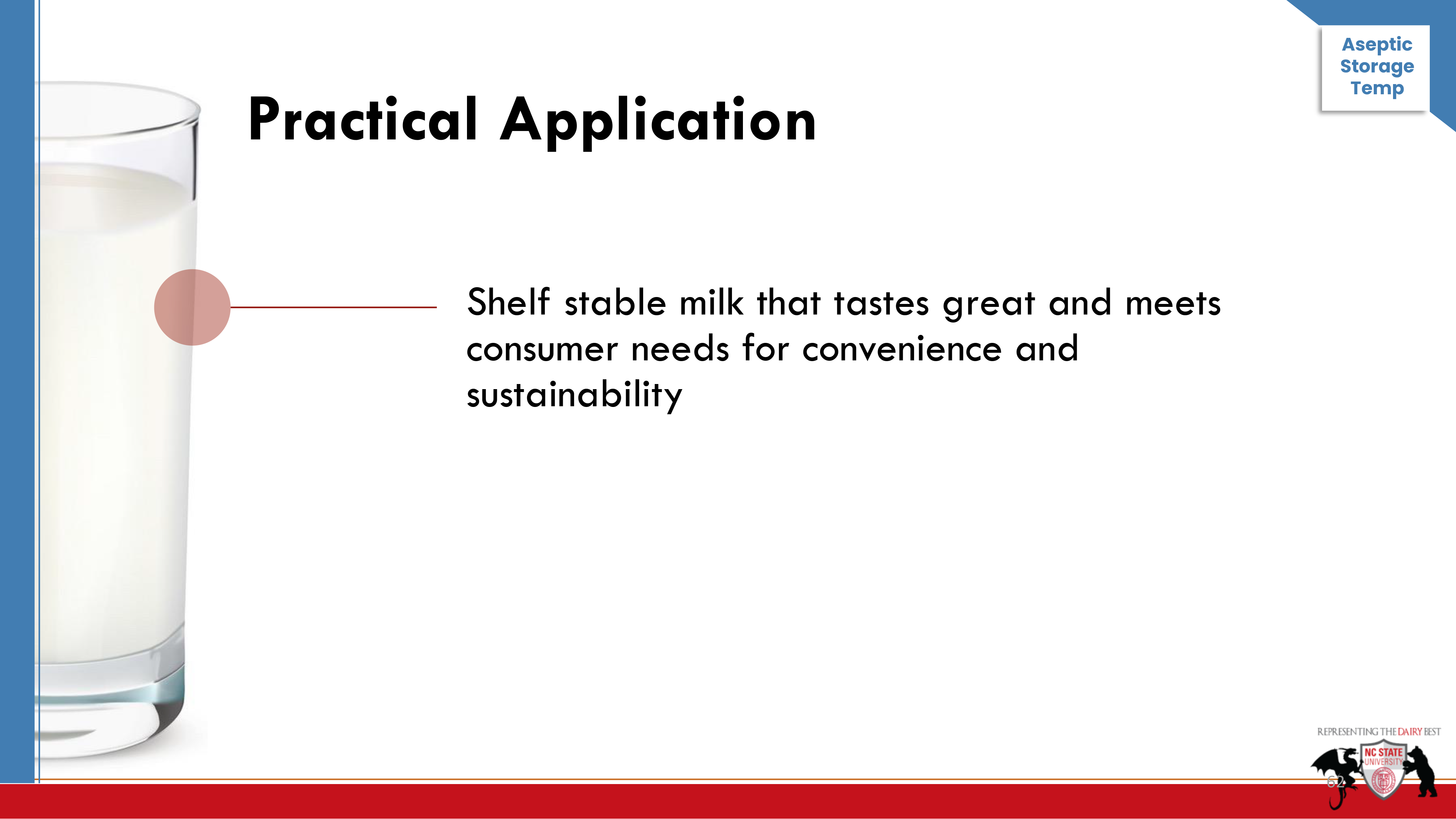
Bottomline, she said: “The chemistry of these (aseptic) milks is different.”

She described consumer flavor panels where shelf-stable and fresh fluid milk were served cold and compared. The flavor panels evaluated two different storage temperatures for the shelf-stable milk.

The North Carolina researchers worked with their Northeast Dairy Foods Research counterpart at Cornell and with Byrne Dairy, running grad students from North Carolina to Syracuse, New York when batches were available for study. (The Southeast and Northeast as well as Midwest and California Dairy Foods Research Centers all receive funding from checkoff and other sources.)

‘Training consumers’

“Consumer panels still liked the HTST (fresh fluid) milk best overall, but in 14-day and 6-month follow up, we found we can train them,” said Drake, reporting the two best storage temperature options for aseptic milk saw longer-term increase in acceptance.

HTST is the acronym for High Temperature Short Time pasteurization that is basically commodity fresh fluid milk vs. ‘value added’ UHT (ultra high temperature) and ESL (extended shelf life) as well as aseptically-packaged, which is milk processed for longer shelf life and then bottled in a special sterile process and package to last months without refrigeration, but will taste best served cold.

Schools are the gateway

“For 25 years, consumers have not liked aseptic milk,” said Drake, “but we are changing that. Consumers may not like it or want it, yet, but it is great for schools.”

She reported the practical applications to come up with “great tasting school lunch milk that contains no lactose (no natural sugar).” Another practical application is to  “determine the impact of storage temperature of 1% aseptic milk on physical and sensory properties.”

This partially checkoff-funded research is also working on “changing the chocolate milk formula to have zero sugar,” she said. “When we think about school milk, the question is how to get the sugar out of it. We want a chocolate milk that tastes great and new government standards on low- or no-added-sugars. Right now, chocolate milk has 8.5 grams of added sugar and 12 grams of natural sugar (lactose).”

In addition to ultrafiltration removing natural sugar, or lactose, they are exploring “non-nutritive” sweeteners like monk fruit and stevia. Additionally, they are looking at “lactose-hydrolized” to boost the flavor profile at much lower levels of sugars or other sweetener.

Whether talking about consumers or children, parents, and schools, the milk beverage platform is tricky “They want to know from a credible source what the immune-boosting elements are in milk, not what we have added. They tell us they want to know the science. That’s new.

“We have a huge and divergent set of innovations to sort through,” said Drake. 

-30-
‘Good for me, good for the planet?’ GENYOUth drives ‘future of food’ to make future ‘Greta Thunbergs’ of our kids

By Sherry Bunting, Farmshine, May 29, 2020

BROWNSTOWN, Pa. — Two checkoff-funded vehicles are refining the “U.S. Dairy” machine. They are GENYOUth and the FARM program under the Innovation Center for U.S. Dairy (“U.S. Dairy” for short), with a board representing food supply chain stakeholders and NGO’s like World Wildlife Fund.

It has been 12 years since the formation of these checkoff-funded organizations and programs under the umbrella of DMI (Dairy Management Inc).

How many times have we heard that consumers are driving FARM program requirements? Are they?

How many times have we heard that today’s young people – Generation Z – are agents for change, that they are socially and environmentally attentive in their food choices, that they are concerned about the impact of agriculture on climate and the environment? Are they?

The next wave for FARM will be environmental requirements to fulfill a new “sustainability” platform from U.S. Dairy’s Sustainability Alliance.

And the next frontier for GENYOUth is to use our nation’s schoolchildren and the climate change conversation as leverage for an emerging industry vision for the “future of food.”

In fact, it looks like they want to make future ‘Greta Thunbergs’ out of our school kids. (Thunberg is the teenage vegan anti-animal climate change activist from Sweden who was recognized as person of the year.)

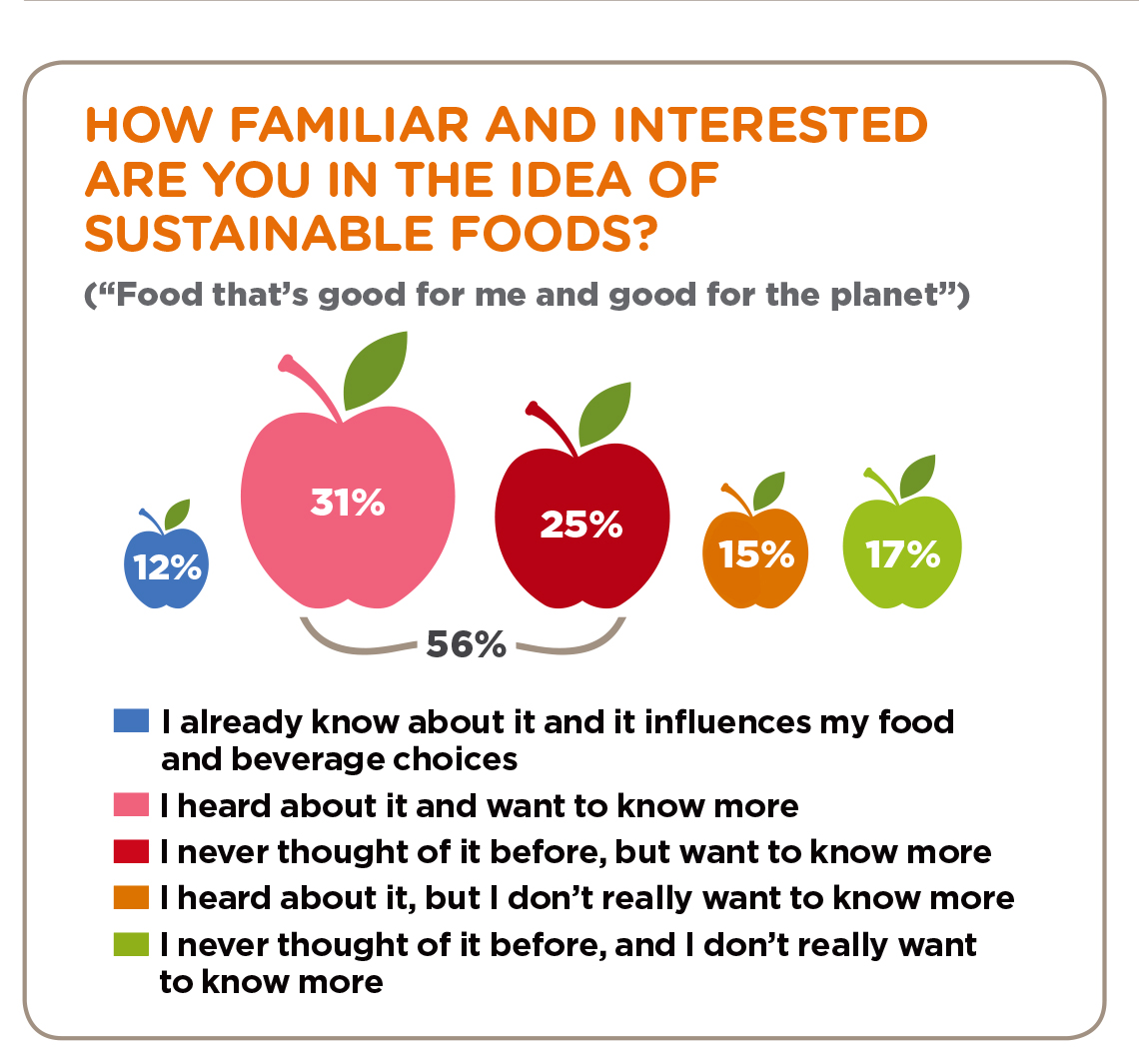
GENYOUth_Edelman_Survey (1)
According to a checkoff-funded survey of 13 to 18 year olds via GENYOUth and Edelman Insights, 56% of teenagers said they have heard of the idea of “sustainable foods” or never really thought about the idea of “sustainable foods” and in saying so, also checked the box that they want to know more. The “want to know more” is what GENYOUth is hanging its hat on to drive new education and influence shifts from food choices that taste good and contribute to personal health to food choices that demonstrate the ‘good for me, good for the planet’ mantra — a self-fulfilling prophecy of food and dairy system transformation DMI food partners want children to lead.  — Source GENYOUth Insights Spring 2020 

GENYOUth’s tagline is “Exercise your influence,” and in the Spring 2020 edition of GENYOUth Insights — the organization’s newsletter to schools and “partners” — the main article under the headline “Youth and the future of food” connects the dots.

GENYOUth used funding from DMI and Midwest Dairy, under the guidance of Edelman Intelligence, to do a survey of teenagers about their food choices.

EAT_FReSH (2)

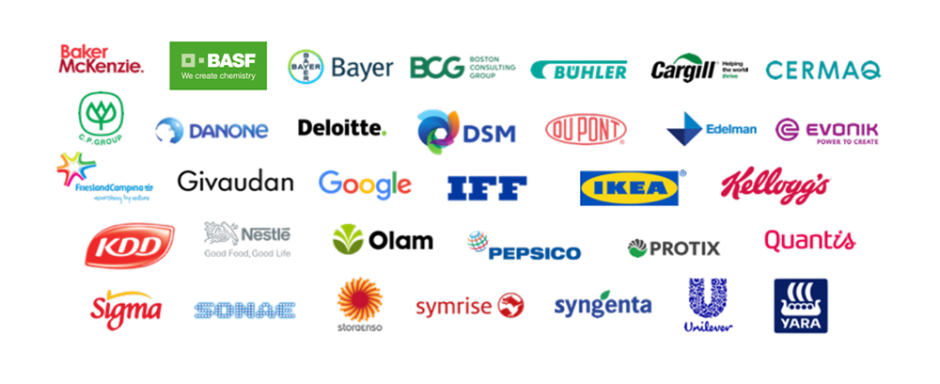
There are 30 primary companies set on transforming the food system through the Food Reform for Sustainability and Health (FReSH) initiative that is now linked to the EAT Lancet ‘planetary health diets’. Many of these companies are moving into plant-based and lab-cultured alternatives for animal protein.  — Source EATforum.org

Known for its “purpose-driven marketing,” Edelman is the global communications  that receives $15 to $17 million a year in checkoff funds from DMI for contract services. Richard Edelman, himself, is a key member of the GENYOUth board of directors. Many of the global companies getting involved in the EAT Forums, such as PepsiCo and Danone, are Edelman clients. Edelman also ‘loaned’ personnel to work with the EAT foundation from Sweden that launched the now infamous EAT Lancet report, and EAT FReSH (Food Reform for Sustainability and Health) Forums last year preaching “planetary boundary diets” that represent huge reductions in consumption of meat, milk and dairy products.

The minds of children are the next frontier. In fact, this is something Edelman identified in that pivotal year of change for DMI. That year, 2008, Edelman launched its “Edelman Food and Nutrition Advisory Panel” staffed by “globally known food and nutrition experts,” who “provide strategic counsel to the firm’s food and nutrition staff in the areas of obesity, food ethics, food policy, functional foods, health claims and nutrition communications,” according to the Holmes Report.

Among those Edelman panel members were past Dietary Guidelines Advisory Committee members as well as a later appointee to the 2015 Dietary Guidelines Advisory Committee.

Fast forward to 2020, the recent GENYOUth newsletter article states in large bold type that, “What youth know, care about and do might make or break the future for healthy, sustainable food and food systems… The future of sustainability – which includes the future of food and food systems – will benefit from youth leadership and voice.”

The GENYOUth Insights article identifies the problem as revealed by the Edelman-guided checkoff-funded survey: “Youth are twice as likely to think about the (personal) healthfulness of their food over its environmental impact,” and the GENYOUth newsletter bemoans this finding needing action because “teens aren’t thinking too much about the connection between food and the health of the planet.”

IMPORTANT_Surveys (1)

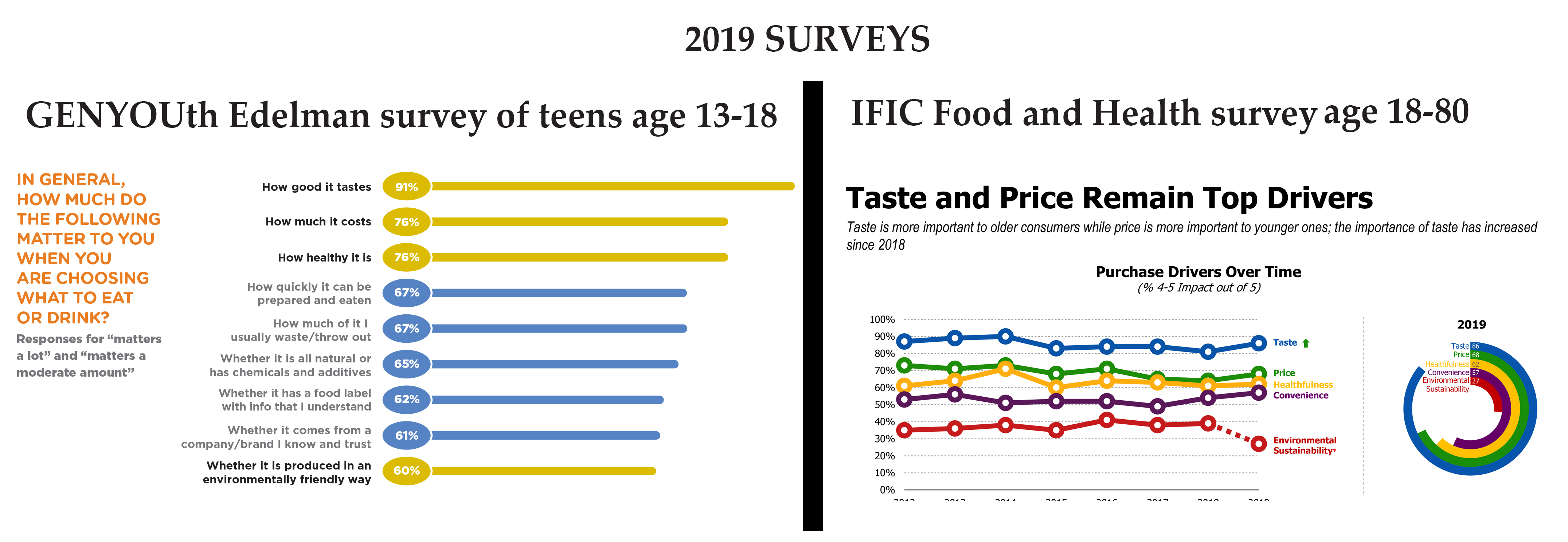
The GENYOUth / Edelman survey (left) of teens 13 to 18 shows pretty much the same trends as the International Food Information Council (IFIC) 2019 Food and Health Survey (right) of 18 to 80 year olds. Environmental impact is just not the food-purchase driver that global food companies want it to be in order to complete their transformation of global food systems. — Sources GENYOUth Insights Spring 2020 and IFIC 2019 Food and Health Survey at foodinsights.org 

Specifically, 65% of youth surveyed said they regularly think about how healthy or nutritious their food is, but only 33% regularly think about whether the food they eat has an impact on the environment.

In fact, when it came to actual food and beverage choices, a whopping 91% of teens said they think about taste, followed by cost (76%), followed by how personally healthy it is (76%). Whether or not the food is produced in an “environmentally friendly” manner was far behind at 60%. (Teens did say “package recycling” ranked high on their list of considerations.)

What’s wrong with teenagers choosing foods and beverages based on taste, cost and personal health? From this reporter’s perspective, those are logical choice factors for maturing young people. Incidentally, those are criteria that bode well for milk and dairy products.

But GENYOUth and friends want to guide teens to make food and beverage choices based on real or perceived “impact on environment.” This opens the door for partnering food companies to do “social purpose-driven marketing” and for organizations like WWF to further influence them.

This would seem to fall in line with the direction of the next round of Dietary Guidelines, which in 2010 became tied more closely to institutional feeding in schools and daycares through USDA administrative rules and the Healthy Hunger-Free Kids Act.

For the 2020 Guidelines, the Committee has ignored good research on saturated fat that was screened out of the process by USDA, and they released a draft report this week that further reduces the recommended level of saturated fat in the diets of children over age 2 and adults.

Back in the last cycle of Dietary Guidelines (2015), the committee attempted to use anti-cattle “sustainability” and “planetary health” as criteria in meal pattern recommendations. At the time, the “sustainability” requirement was directed toward reducing beef (cattle) consumption. The dairy industry was silent, while other animal protein sectors became vocal. One thing to remember is that whatever happens to beef will eventually happen to dairy because cattle are most definitely in the “planetary” crosshairs of anti-animal activists.

The “sustainability” language and framework were ultimately removed from the 2015-2020 Dietary Guidelines, but fat is still the tool.

Back to the Spring 2020 GENYOUth Insights article, a new tagline has been coined: “good for me, good for the planet.”

The walk down the slippery slope begins. GENYOUth and friends, including USDA, want today’s teens to place more decision-making emphasis on the impact of food on the environment. In the Insights article, GENYOUth points out to its partnering companies and schools that kids don’t care enough about the environmental impact of the food they choose to eat.

This is where  FARM requirements and checkoff promotion are headed – toward social purpose-driven marketing as defined by the various supply chain partners that have people on these checkoff-influencing boards. The plan is to indoctrinate schoolchildren on sustainable food choices, then adapt what farms have to do to meet new consumer-driven criteria.

Yes, GENYOUth spent 12 years bringing big business into the schools through its non-profit foundation status. During that time, USDA, mainly 2010-2016 under Secretary Vilsack, has tightened the way Dietary Guidelines are tied to school food, NFL has marketed football through FUTP60 (while receiving $5 to $7 million annually from DMI), the NFL’s longstanding beverage partner PepsiCo received the 2018 GENYOUth Vanguard award and has created one of the largest K-12 foodservice companies in the U.S. Meanwhile, the dairy farmers – who started it all and fund the majority of GENYOUth through DMI – are stuck promoting fat-free and 1% milk, fat free yogurt and fat free cheese.

As reported recently in Farmshine, the partnership with DMI also gave Domino’s access to a whole new $63 million a year business making Dietary-Guidelines-correct cheese pizza for schools.

Through GENYOUth, America’s young people are being “led” into their ordained role as “agents of change” to lead the “future of food.”

The GENYOUth Insights article focuses on two examples of climate activism – holding them up as examples of how young people can and should be energized.

First, they reference the recently released report “A Future for the World’s Children?” produced by the World Health Organization (WHO), UNICEF and The Lancet. Think of this as the youth-version of the now infamous 2019 EAT Lancet report where new “planetary boundary” diets, depleted of animal protein, are recommended for human and planetary “health.”

We’ll call this report “EAT Lancet Junior”, and in GENYOUth’s own description, this report “reinforces the importance of placing children at the heart of United Nations Sustainable Development Goals.”

DMI has been actively working to incorporate these U.N. SDGs into “U.S. Dairy’s” sustainability framework and Net Zero emissions benchmark. This work also began over a decade ago when the Innovation Center for U.S. Dairy was formed and GENYOUth was founded and the FARM program was under initial development.

Lead the children through confirmation bias, get them to become energized activists, respond with a “U.S. Dairy” plan that aligns with that activism, and implement it through the FARM program – further refining who can and can’t be part of “U.S. Dairy” in the future.

Microsoft PowerPoint - Mike McCloskey.pptx

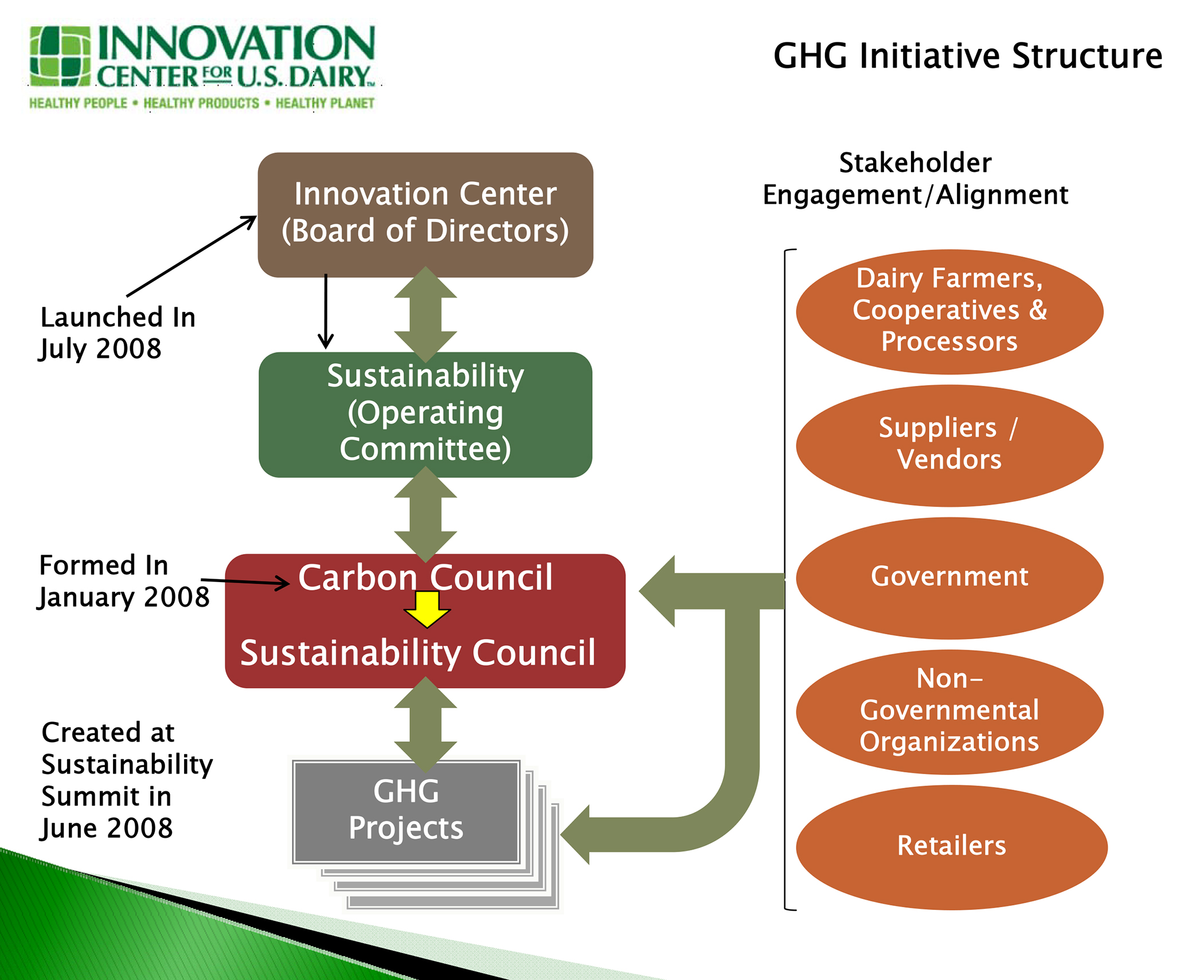
Under “Non-governmental organizations”, the NGO on this flowchart for U.S. Dairy is World Wildlife Fund (WWF).  Brent Loken is WWF’s lead scientist today.  Previously, Brent worked for EAT, the science-based global platform for food system transformation. He was a lead author on the EAT-Lancet report on Food, Planet, Health and is currently working on the roadmaps for how nations will meet GHG goals through changes in food and agriculture.     — Sources farmfoundation.org and worldwildlife.org

DMI knows full well that not all farms will be able to meet the criteria that are coming. In fact, according to a news release from PDPW covering the virtual presentation by Dr. Mike McCloskey, a key member of the U.S. Dairy Sustainability Council, acknowledged this fact.

Meanwhile, GENYOUth quotes from the “EAT Lancet Junior” report, asserting that, “Sustainability is for and about the next generation… We must find better ways to amplify children’s voices and skills for the planet’s healthy future.”

In its Edelman Intelligence survey of teenagers, GENYOUth reveals what it calls the “surprising disconnects and opportunities for stakeholders throughout the food ecosystem to do more to help ensure youth can lead, act and choose wisely in today’s food environment.”

When it comes to this idea of  ‘food that is good for me, good for the planet,’ teens said they currently rely on their families for most of this information and that they trust farmers for information.

But GENYOUth would like to move schools and food companies into this knowledge building arena – using farmers to ‘tell the story’ and teaching kids how to make ‘good for me, good for the planet’ food and beverage choices.

GENYOUth makes the case in its newsletter that now is the time to move toward ‘good for me, good for the planet’ food choice training of youth, which they say “aligns with a growing interest and sense of urgency among the food industry, farmers and others about the future of food and sustainability.”

So far this plan seems like one in which dairy farmers are helping steer the conversation and future choices, right?

Until we read deeper.

“How can the food industry and farmers become helpful and effective messengers around sustainable nutrition information to support youth?” And “How can schools play a bigger role?” These are two questions GENYOUth asks in its spring newsletter.

The answers, according to GENYOUth, are to see schools and food-related sectors become supporters that engage and inform young people about what foods and beverages are ‘good for me, good for the planet.’

Bottom line? The path to the future of food is one that moves the next generation away from prioritizing personal health, cost and flavor to put more emphasis on the importance of how food impacts communities, animals and the planet. DMI executive and former Ag Secretary Tom Vilsack said as much to the Senate Ag Committee a year ago when he asked Congress to help fund the pilot programs on farms that will get dairy where they believe it needs to be.

It’s not hard to understand why DMI is so slow to want to “educate” consumers about dairy products from a nutrition or comfort-food standpoint and why it is putting its checkoff bets on “sustainability” and “animal care.” Promotion of nutrition puts all dairy farmers on a level playing field. Promotion and implementation of sustainability requirements is a method for refining the U.S. Dairy machine.

GENYOUth says it wants young people to tackle the tradeoffs between health and environment and between taste and environment. They want schools and food companies to reinforce the concept that, “We all must take part in helping to sustain a fragile planet.”

We already see this beginning in our schools. A recent Scholastic Weekly Reader made headlines on social media when fake hamburger was touted as “the meat that could save the planet.” We see it in the vested plans of multi-national companies that are moving toward these products and marketing.

But it was the next part of the GENYOUth spring newsletter that was really shocking. Being held up as the example of youth leadership was Greta Thunberg, the teenage vegan anti-animal climate activist from Sweden, the country from which the EAT Lancet report on new planetary diets originated in 2019.

Don’t forget, the EAT Forum has the backing and participation of most of the top multi-national food companies including the top dairy product companies, as well as NGOs like WWF, and the dairy checkoff’s PR firm Edelman.

According to the GENYOUth newsletter: “We all must take part in helping to sustain a fragile planet. The astonishing power of aware, engaged, passionate youth is being brought home to us daily. As a remarkable example, look no further than Swedish teenager Greta Thunberg as the face of the climate-change movement.

“Aware, informed and engaged youth can be a powerful force for the movement toward food that’s ‘good for me and good for the planet,’” the GENYOUth newsletter continues.

Yes, alongside dairy farmer mandatory checkoff funds that launched and are maintaining GENYOUth administratively are the token funds of so-called “thought leaders” — large multi-national food corporations, sleep companies (because USDA is now interested in sleep studies on kids), technology companies, advertising and marketing companies, as well as celebrities and investor philanthropists.

In the name of breakfast cart donations, they are all riding the GENYOUth school bus to make future Greta Thunbergs of our kids.

-30-

Dear Trump and Trudeau: The dairy debacle doesn’t have to be this way

canada-us-cowDairy epicenter of trade friction between leaders

By Sherry Bunting

originally published in Farmshine, June 15, 2018

QUEBEC — Dairy remains at the epicenter of a trade dispute between the U.S. and Canada.

President Donald Trump and his team have been busy renegotiating NAFTA and looking at the TPP, and while progress was being made in many areas, dairy has become a sticking point that has led to friction and word-volleys between President Trump and Canadian Prime Minister Justin Trudeau in the aftermath of the G7 meeting in Quebec in June.

Headlines after the G7 upset proclaimed that the U.S. is demanding an end to Canada’s dairy supply management system. Actually, President Trump is more specifically seeking an end to the 270% tariffs paid on U.S. dairy exports to Canada.

While the tariffs are much smaller on dairy exports that fall within Canada’s quota of 10% of their domestic production, these tariffs rise exponentially to as much as 313% on dairy exports to Canada beyond the import quota amounts.

On the U.S. side of the import/export coin, import license figures show that DFA holds much of the fluid milk import quota exported to the U.S. from Canada. Many other companies also import dairy products from Canada; however, the value of U.S. dairy imports from Canada is just 20% of the value of dairy the U.S. annually exports to Canada.

In other words, the U.S. exports five times the amount of dairy products to Canada that Canada exports to the U.S. (on a value, not volume, basis) even though Canadian tariffs are high, and U.S. tariffs are low.

Who is advising the President on dairy? National Milk Producers Federation? Dairy processing interests in Wisconsin (Speaker Paul Ryan’s home state) and New York (Senate Minority Leader Chuck Schumer’s home state)? Those two states had been selling ultrafiltered milk north of the border through a loophole that ended two years ago when Canada began its Class 7 pricing for milk destined to be used in products that are exported. This allowed expansion of Canadian quota to fill the growing demand for milkfat in domestic products by providing an off-valve to be competitive exporting the skim milk that rides along with that milkfat.

The issue arises from, first, the loss of a market for U.S. ultrafiltered dairy protein to Canadian manufacturers of cheese and other dairy products, which for several years has been exported to Canada — without tariffs — because it wasn’t a product defined in the tariff schedule.

What changed? Canada added its new Class 7, which allows Canadian processors to purchase milk  (skim) from Canadian farms at lower prices when it is used to offset the increase in butterfat demand (the other part of the milk) sold into their domestic market where pricing is governed by producer-run milk marketing boards to support the country’s milk production quota system.

Canada has allowed farms to increase milk production quotas by 4 to 6% annually over the past four years due to greater domestic demand for butterfat. This leaves more skim floating around to be absorbed in their relatively ‘closed’ dairy market.

The new Class 7, in Canada, allows processors to make skim milk powder — and other dairy protein ingredients — at much lower costs to be able to then export the excess at prices below the global market, because the majority of the producer pricing is still based on the stability of milk supply quotas set by domestic use on a milkfat basis. In spite of this, Canada exports less than 5% of the world’s skim milk powder but does export a modest amount of “food prep” products containing dairy.

The loss of an export market for U.S. ultrafiltered milk solids going to Canada is not the biggest concern. The growing U.S. concern is that the Canadian Class 7 pricing scheme has provided the means for Canada to sell increasing amounts of skim solids to Mexico, which is currently the number-one export destination for U.S. skim milk powder, and that this can increase as quotas expand, at the same time reducing the need for butterfat imports from the U.S. (Canada recently showed a sign of good faith by reducing quota by 3% this year even though quota is based on butterfat demand that is increasing. They are trying to manage the skim portion without exporting more than what they are supposed to in their supply-managed system).

Trudeau knows that his party will lose support from Quebec if he does not stand firm on the supply-managed system for dairy. Moreover, this system has been in place for over 60 years, and what makes it work is the protection from imports via high tariffs.

Does the U.S. have the right to demand our ally and trading partner, Canada, give up its dairy supply management system? And if they did give it up through a transitional process over 10 years, could they not become an even more competitive force on global markets?

Multi-national dairy processors have long sought an end to Canada’s dairy supply management system because their growth in Canada is limited by the fact that they must apply for processing quota — allotted for processors to make dairy products only in amounts that reflect Canada’s domestic supply and demand.

Canadian companies — like Saputo and Agropur — in fact, have expanded processing capacity in the U.S., in order to produce dairy products with U.S. milk for the U.S. and global markets.

That said, is it really smart for the U.S. to demand that Canada end its supply-managed dairy system?

When we say “America first” in trade, should we not expect Canada to reply with “Canada first” as they negotiate?

The point here is two-fold. First, the U.S. could learn something by evaluating how Canada is using its new export (Class 7) to price its “growth” milk, mainly the skim milk that rides along with the increased demand for milkfat.

As consumers learn the truth about full fat dairy, both here and around the world, more milk is needed to supply the increased demand for fat, while not all of the skim is in equally high demand until more processing innovations are in place.

This is a new dairy market development both nations must deal with in their respective systems that were designed to accommodate the past 40-years of flawed lowfat diet dogma.

Instead of simply pointing fingers at Canada, should the U.S. not be analyzing its own government-controlled pricing fixtures? After all, the relationship between USDA and NMPF is a tight one. Not only do their economists float from one entity to the other in their careers, the two jointly control the Federal Order rulemaking process from how petitions are submitted to how hearings are administrated to how NMPF member-cooperatives bloc-vote for their farmer member-owners.

We could benefit from better negotiations with our friend to the North, but now we have gotten into a spitting-match over a system that Canada’s dairy farmers have invested millions into and where most seem to oppose dismantling.

Yet Canada has found a way to participate in the global dairy market by making a pricing loophole to gain export sales for their dairy proteins while ending a loophole the U.S. dairy industry was previously exploiting by exporting ultrafiltered milk to Canada — a double-whammy for the U.S.

The U.S. and Canada have a long alliance on many fronts as nations, and also within dairy. One has only to attend the World Dairy Expo in Madison, Wisconsin and other dairy events and exchanges to see a legacy of competitive camaraderie between our nations.

Let’s not allow the agendas of multi-national dairy processors to drive a wedge.

Is the strong rhetoric surrounding this dairy dispute — and the demands about ending Canada’s supply management — just President Trump’s negotiating tactic of laying the whole game on the table before figuring out how to arrange the pieces in a way that both nations can accept?

If I had Trump’s ear on this issue, I would caution him about hidden agendas among those advising him on dairy.

I would ask him to spend time on a dairy farm, with a room full of dairy farmers, to understand that, yes, all is fair in business as they each seek markets and growth opportunities, but that most U.S. producers do not want to prop themselves up by tearing down their neighbors. There are far deeper problems in the U.S. dairy industry at the moment.

I would ask Trump to stand firm on explaining that Canada can’t have it both ways — with supply-managed dairy production and import tariffs on one side, plus selling their Class-7 priced milk powder at globally low prices to obtain new export markets for their excess on the other.

I would ask both leaders to grapple with their nation’s  respective choices: The U.S. has already chosen a global pathway for agriculture and dairy. Canada has chosen a domestic pathway with supply management. We can either compromise and work together to develop a hybrid approach, or we can each accept the consequences of the respective choices our nations have made in this regard.

The U.S. could put tariffs on Canadian milk and dairy products, and develop an export class for pricing our own excess growth milk to compete globally while stabilizing domestic-use prices — similar to Canada’s new construct — or we can convince our neighbors to limit their growth, within their supply-managed system, so as not to continue expanding via the Class 7 export pricing in a way that intrudes on the dairy export markets we have cultivated in other countries, such as Mexico.

A similar spitting-match between our countries ended the U.S. Country of Origin Labeling (COOL) for beef and pork. That was merely a labeling attempt to identify U.S. produced meat from conception to consumption so that U.S. consumers could choose to support U.S. farmers and ranchers. Canada was among the nations that had taken the U.S. to WTO court a few years ago, and the result was that the U.S. Congress ended COOL to avoid fines, and this has hurt U.S. beef producers.

President Trump has said recently that the U.S. is not planning to pull out of the WTO, but it does want treatment that is more fair.

Now, here we go again, with the shoe on the other foot. This time, Canada’s sacred cow — supply managed dairy and high import tariffs — are being questioned. But in reality, the Class 7 pricing policy is the more pragmatic concern.

Instead of both nations trying to have it both ways while our leaders volley back and forth in a spitting-match on tariffs and mandates and the like — maybe we could all concentrate on negotiating outcomes that are focused on the farming side and not so much the multi-national processing side — to make farming great again.

After all, as go our farmers, so go our nations.

Author’s July 14 update: It was reported within the past 10 days that Quebec, Canada’s largest dairy-producing province, may be softening its stance to reconsider the Class 7 milk price policy to ease tensions between the U.S. and Canada. Bloomberg News reported that Quebec Premier Philippe Couillard met with U.S. Ag Secretary Sonny Perdue, noting that the Class 7 pricing policy is the main sticking point — not Canada’s supply management system of domestic milk quotas and import tariffs. In a recent televised interview, Secretary Perdue said: “The U.S. is not about trying to get Canada to ditch its supply management system…” He explained that if Canada is going to have a supply management system, “you’ve got to manage the supply, and not over-produce and not over-quota to where you dump milk solids on the world market and depress prices for our producers.” The Canadian Class 7 export pricing — in place for the past 18 months — has facilitated the export of excess milk proteins while blocking most dairy product imports. The U.S. is not alone in this concern as other countries are also affected by the movement of the lower-priced Canadian skim milk powder (SMP) to markets served by nations that do not have a supply-managed system and which do not place extremely high tariffs on dairy imports. For the first four months of 2018, Canada has doubled its SMP exports compared with year ago and by 95% over the levels prior to the 2017 start of the Class 7 pricing, which allows milk to be priced much lower when used for products that are exported, and this is doable when the main portion of Canadian farm milk pricing is stable and higher because it is matched to their domestic usage on a milkfat basis.