Unknown's avatar

About Agmoos

I am a journalist writing primarily about agriculture for various newspapers over the past 30 years...and before that, I milked cows and tended calves and heifers. I am also a mother and grandmother with three grown children: A teacher, restaurateur and homemaker. Our two sons and one daughter all like to cook and they are food conscious... not paranoid. My "foodographic" Agmoos blog is a place to find stories and photos of the people and places behind the food we eat and for commentary and analysis on food, farm and marketing issues facing producers and consumers.

Editorial: Momentum builds for whole milk in schools

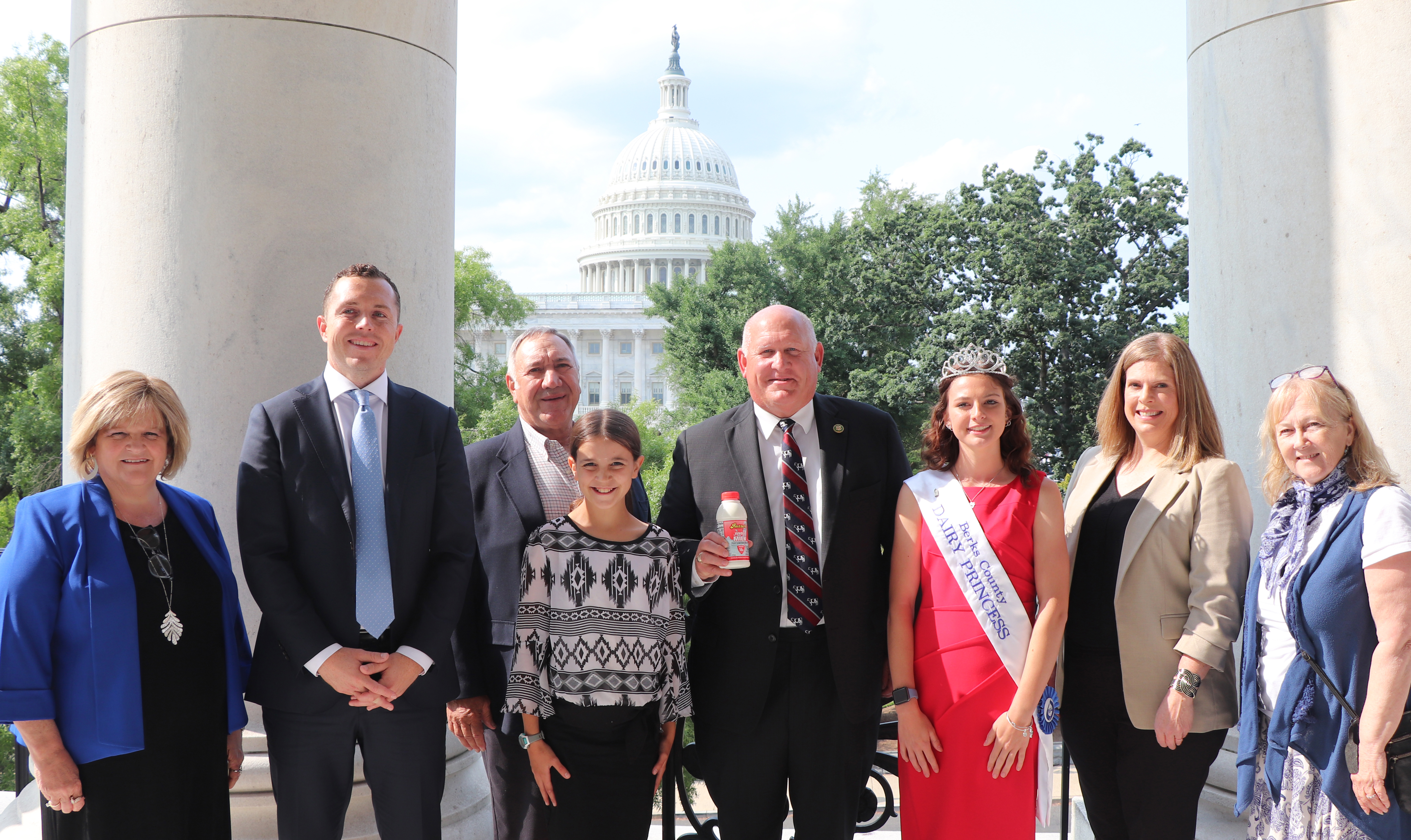
Standing with U.S. House Ag Committee Chairman, Glenn ‘G.T.’ Thompson are some of the volunteers who participated in the legislative staff briefing on G.T’s Whole Milk for Healthy Kids Act, including a June Dairy Month celebratory Whole Milk Bar at the Capitol in Washington on Tuesday, June 13. Congressman G.T. says he wants to reach 150 to 200 cosponsors before it comes to the House floor for a vote. Currently, there are 128 cosponsors representing 43 states (103 R’s and 25 D’s), and the Education and Workforce Committee recently passed H.R. 1147 in a bipartisan 26-13 vote. From left are Christine Ebersole, a school nurse in Blair County, Pa.; John Bates, executive director of The Nutrition Coalition; Nelson Troutman, a Berks County dairy farmer and 97 Milk Baleboard originator and his granddaughter Madalyn, the 2022-23 Lebanon County, Pa. Dairy Maid; Congressman G.T. Thompson (R-PA-15), the champion and prime sponsor of the Whole Milk for Healthy Kids Act; Sara Haag, the 2023-24 Berks County Dairy Princess; Krista Byler, a school foodservice director in Crawford County, Pa.; Sherry Bunting, Farmshine contributor and volunteer advocate for whole milk in schools. Photo credit: Maddison Stone

By Sherry Bunting, Farmshine, June 16, 2023 with June 23 update

WASHINGTON – “Wouldn’t it be great if we could unite the country with whole milk?” That question was posed by a fellow journalist in the Southeast, Julie Walker of Agrivoice, as I was updating her about the grassroots effort to bring milk education and the choice of whole milk to schools.

After the events of the past two weeks, my answer to that question is: Yes, I believe we can and we are… seeing the fruits of the labor of grassroots volunteers.

On Tuesday, June 13, the Grassroots Pennsylvania Dairy Advisory Committee and 97 Milk were part of a legislative staff briefing hosted by Congressman G.T. Thompson and his staff at the Longworth House office building on Capitol Hill in Washington. This had been planned weeks earlier, before Thompson’s bill – the Whole Milk for Healthy Kids Act, H.R. 1147 – passed the Education and Workforce Committee on June 6 in a bipartisan 26-13 vote.

This week, the identical bipartisan Senate companion bill was introduced on June 13 by prime sponsor Senator Roger Marshall, a Republican and medical doctor from Kansas and prime cosponsor Peter Welch, a Democrat from Vermont along with other bipartisan cosponsors.

Allow me to take you behind the scenes of the June 13 legislative staff briefing on Congressman Thompson’s House bill and why it gives me hope to see people rediscovering and uniting behind the effort to legalize whole milk in schools so children have true access to the most wholesome nutritional beverage, milk.

What becomes apparent is that children are not benefiting from milk’s nutrition when their choices at school are restricted to fat free and low fat. They should be able to choose whole milk and 2% milk that are currently banned by federal nutrition standards, and they should be able to continue to choose flavored milk, which USDA is considering restricting to only high school students.
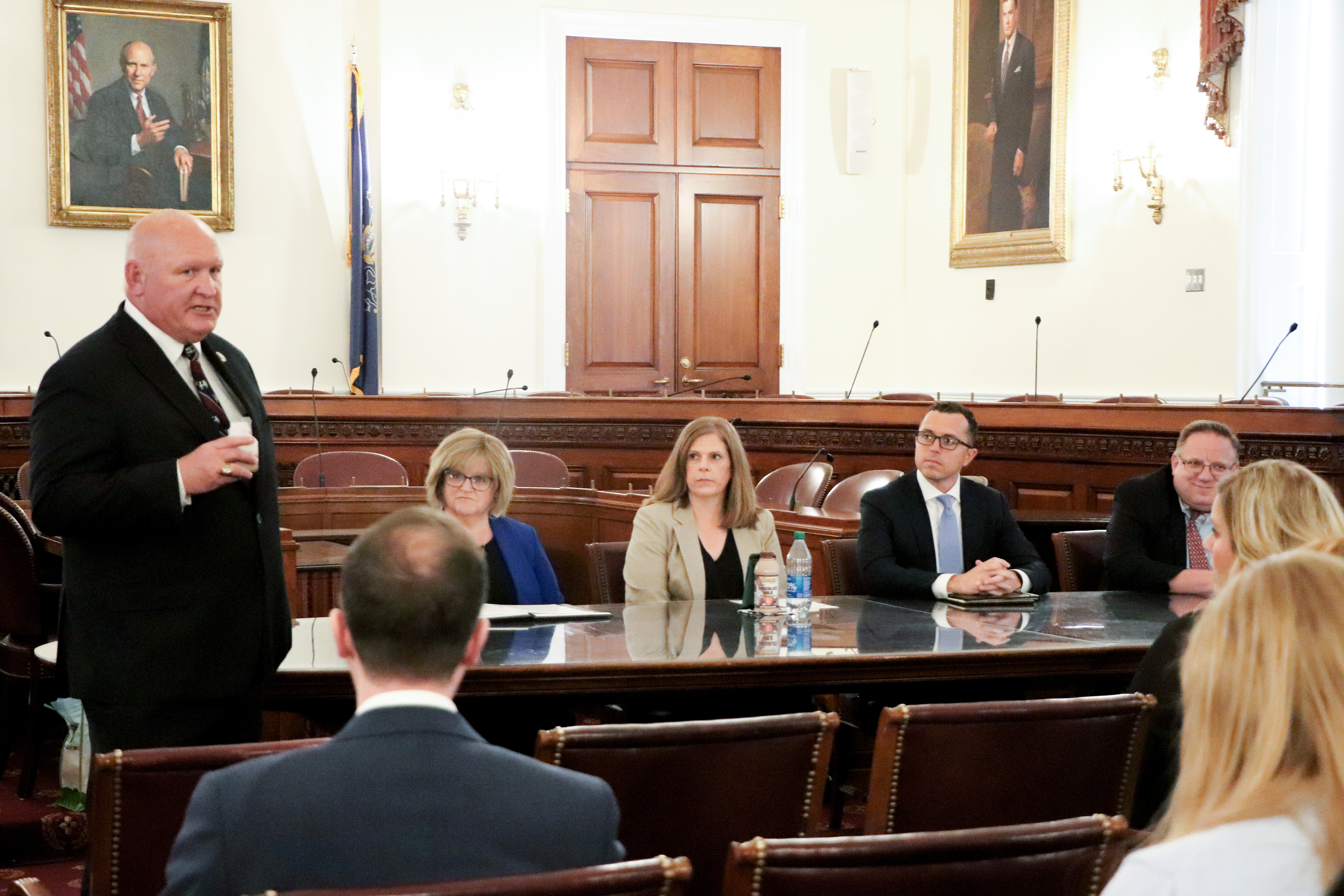
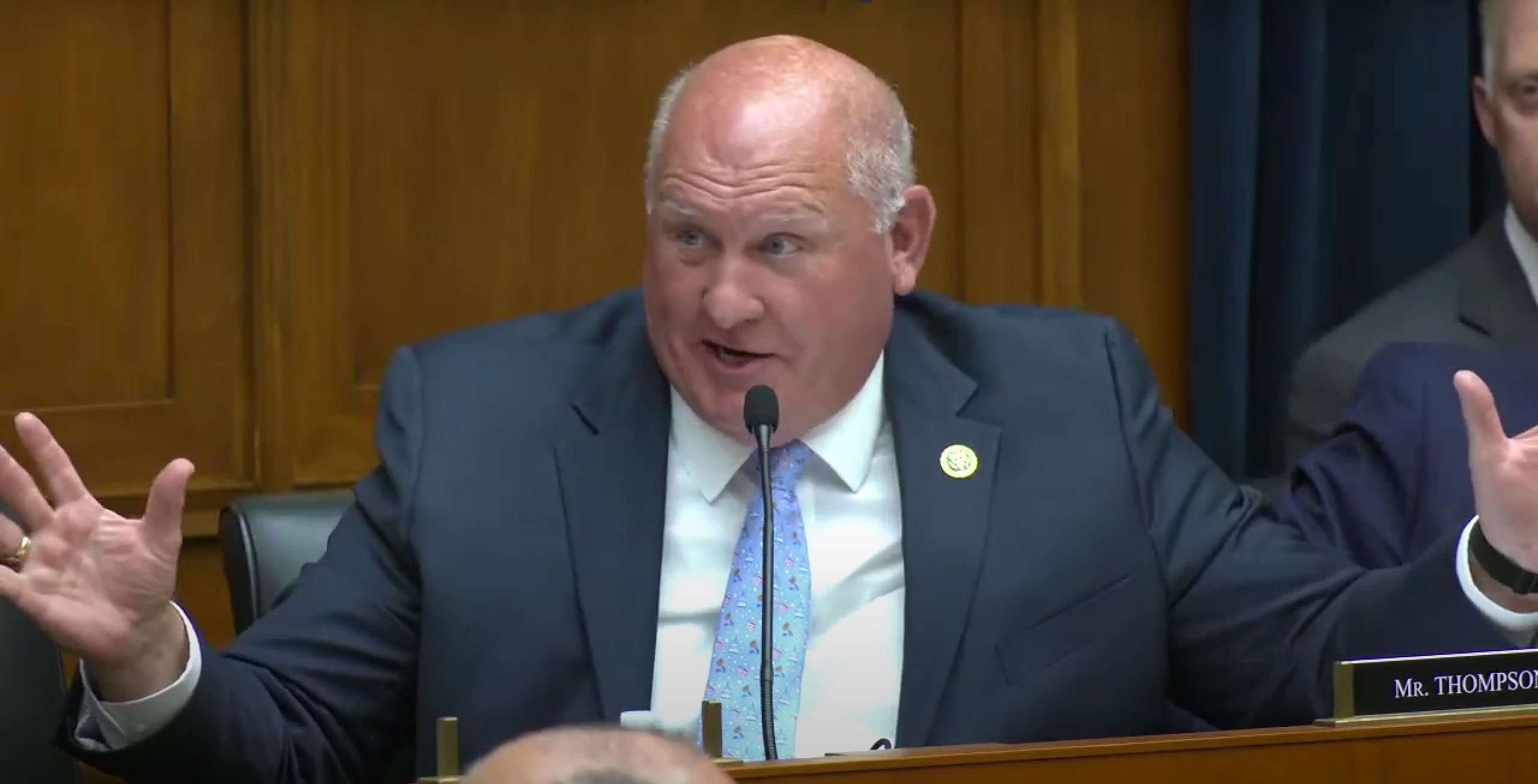
“Milkfat was demonized as a part of the child nutrition standards, especially since 2010… and we’ve seen a lot of waste and unopened milk cartons at school cafeterias because (fat-free/low-fat milk) is not a great milk experience for kids. Meanwhile, we’ve seen a significant increase in childhood obesity. If they don’t have access to milk they like, they will drink something, and the alternatives won’t give them milk’s essential nutrients or be as satisfying,” said Rep. Thompson. “Everything has its own time, and I’m pleased that we’ve gotten to this point with the bill and appreciate the panel here today to share and answer the question: ‘Why whole milk in schools?’”

Two school professionals from the grassroots advisory group were on the panel: Krista Byler (second from left) of Spartanburg, foodservice director for Union City Area Schools and Christine Ebersole RN, BSN, CSN (left) of Martinsburg, school nurse at Williamsburg Community School District. They were joined by John Bates (second from right), executive director of the Nutrition Coalition, a nonprofit founded by Nina Teicholz, author of The Big Fat Surprise; as well as Paul Bleiberg (right) of National Milk Producers Federation.

Around 25 to 30 staff members working for Representatives and Senators from both parties attended for the entire briefing. That may not sound like a lot, but for this setting, and the constantly changing schedules during floor votes, hearings and meetings, it’s a big deal. The event was by invitation and targeted key legislative offices for an educational briefing on the bill.
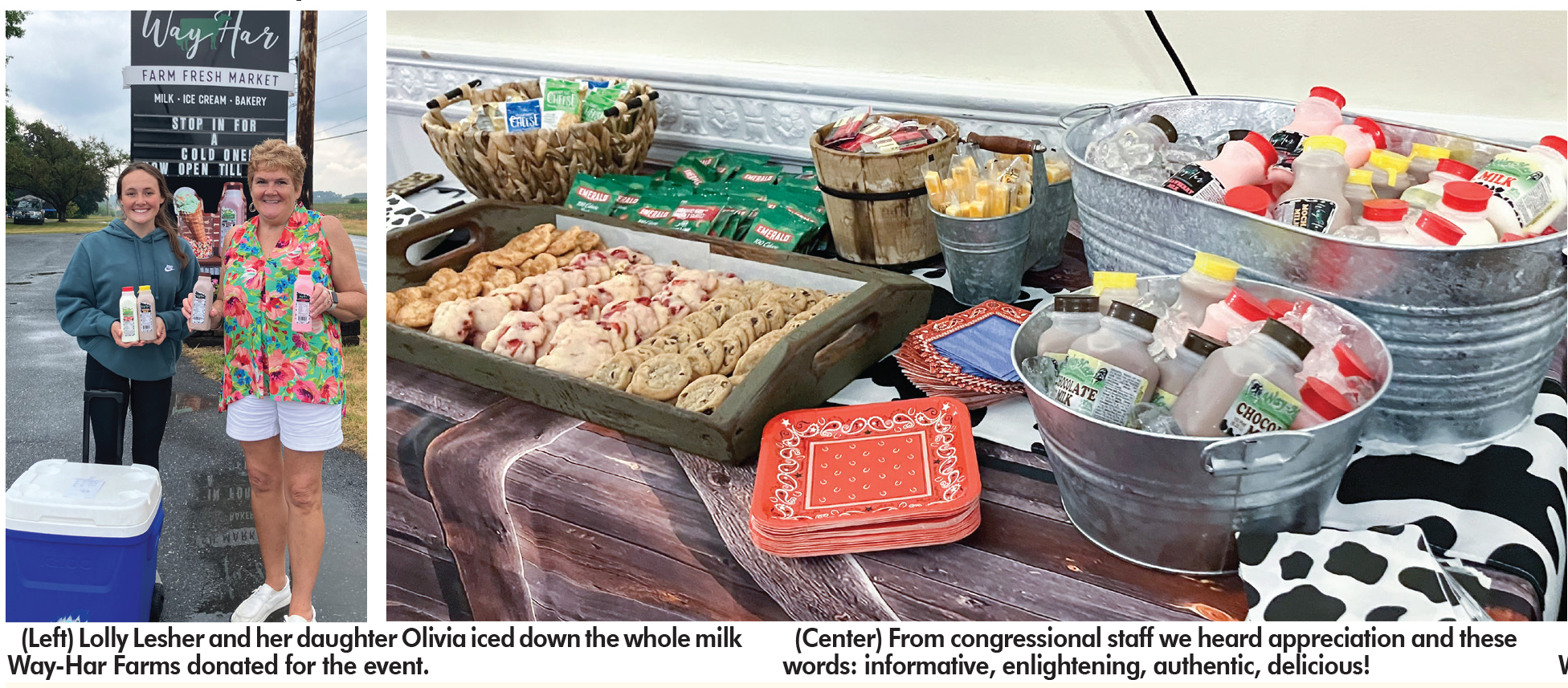
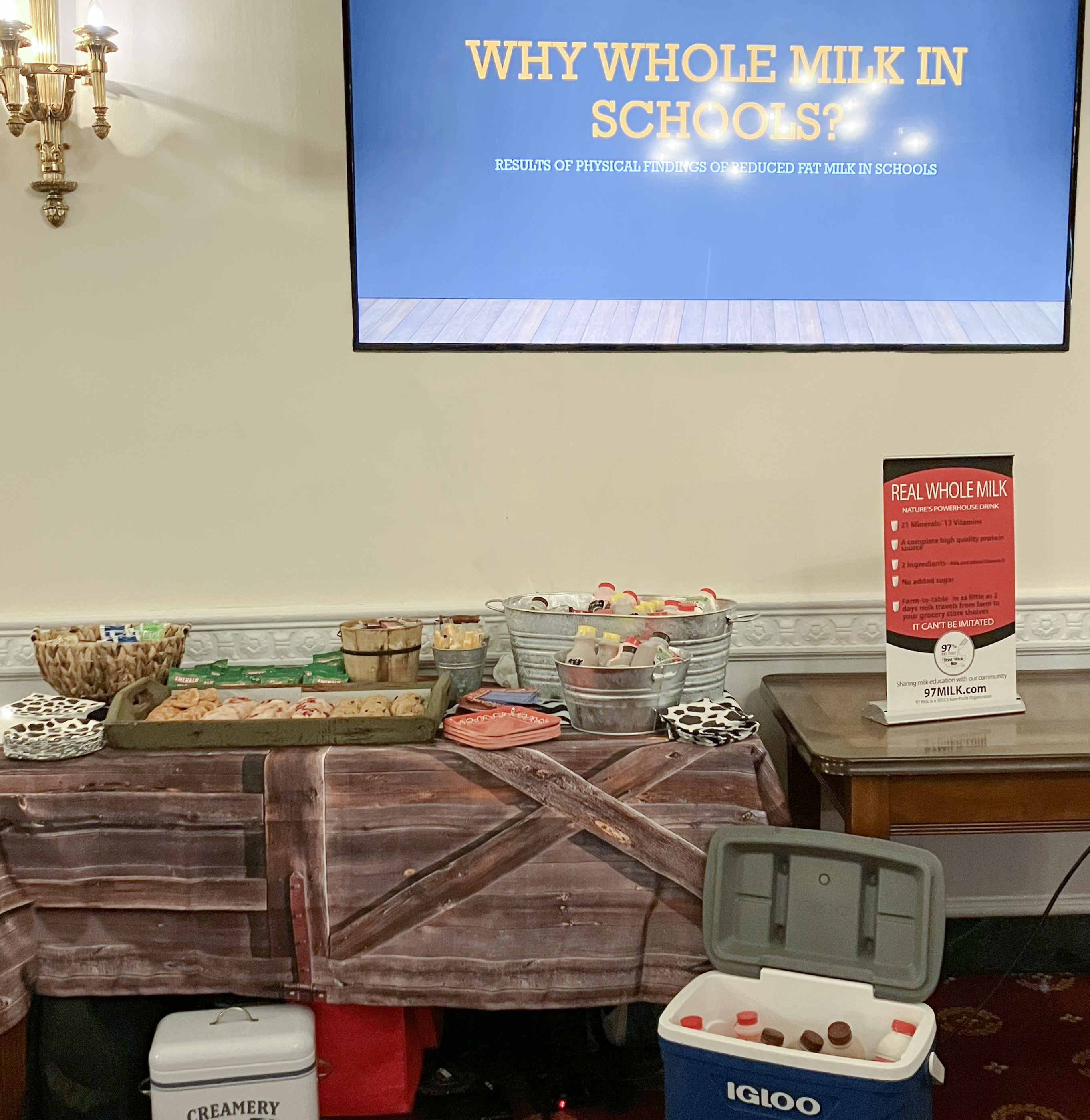
It was Congressman Thompson’s idea to have a “whole milk bar,” so our crew brought 100 half pints of whole milk — unflavored, chocolate, strawberry and mocha — donated by the Lesher family of Way-Har Farms, Bernville, Pennsylvania. We added some full pints of flavored and unflavored milk picked up at two convenience stores on the way (Rutter’s and Clover) to be sure we had enough as we heard interest in the briefing was growing.

We baked fresh strawberry cheesecake cookies with butter and cream cheese, and brought a few other types of cookies, as well as cheese snacks and nuts, arranged a nice table, kept the milk iced cold (that was a fun challenge through security scanners).

We brought with us Berks County Dairy Princess Sara Haag and former Lebanon County Dairy Maid Madalyn Troutman. Ebersole brought her daughter Vanessa Wiand, an elementary school teacher.
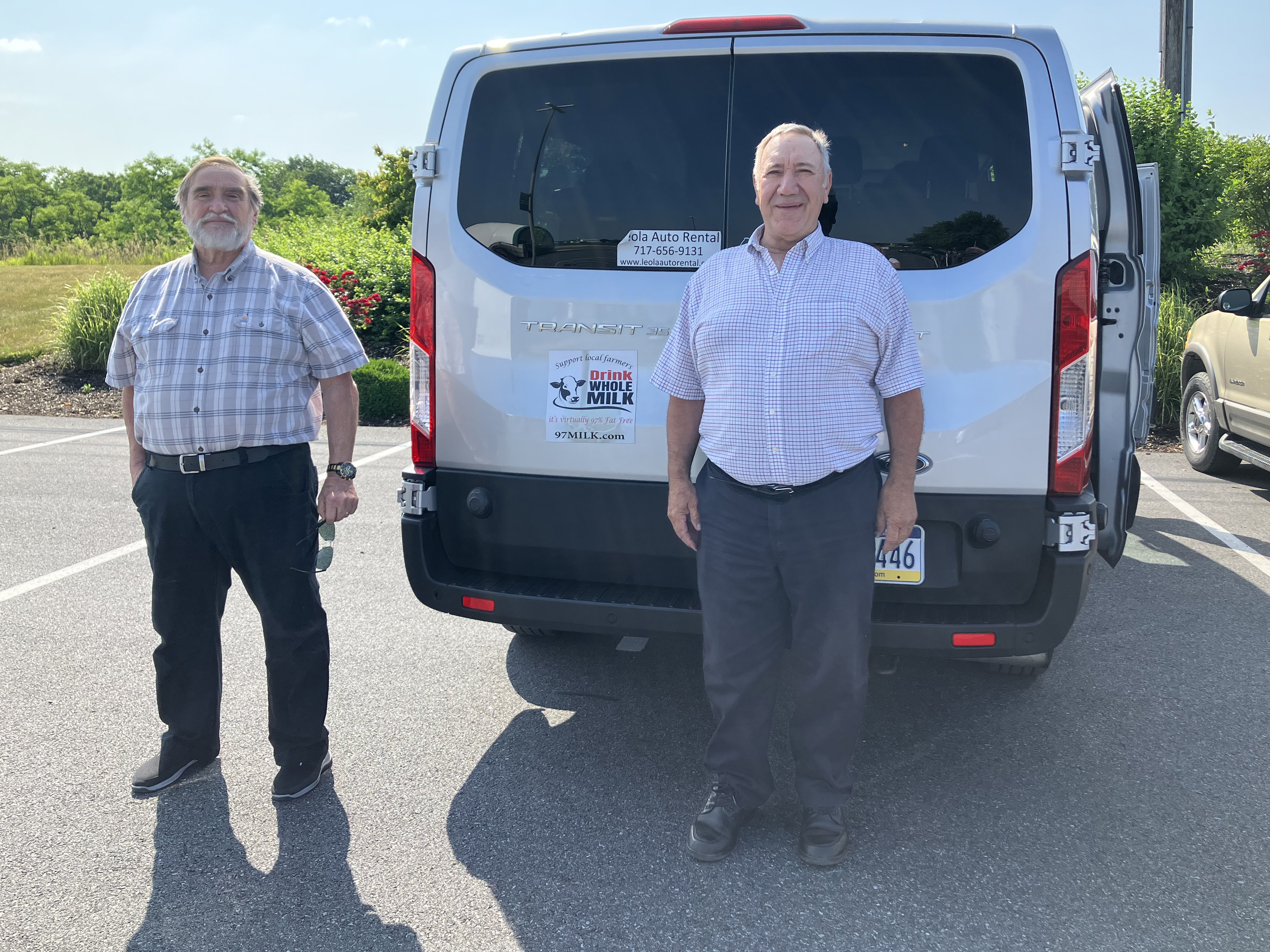
Nelson Troutman (right) with our driver Frank Tomko

Berks County farmer and Drink Whole Milk 97% fat free Baleboard originator Nelson Troutman was part of our crew, and he made sure the van we rented for travel had several 97 Milk magnets for the ride.

I provide these details because here’s the deal: Each person in our crew is a volunteer among the many volunteers working on the whole milk in schools issue, not just in Pennsylvania, but in other states as well.

Sara and Madalyn handed out the 6×6 cards designed by Jackie Behr at 97 Milk that visually show what milk provides nutritionally. It’s an impressive piece. They also handed staffers a business card with a QR code (above) that they could scan to reach the online folder to a video created by students and technology teacher at Krista’s school as well as finding other important information about whole milk and the Whole Milk for Healthy Kids Act. On the table next to the whole milk bar was a one page handout with bullet points, and 97 Milk provided milk education tabletop displays.
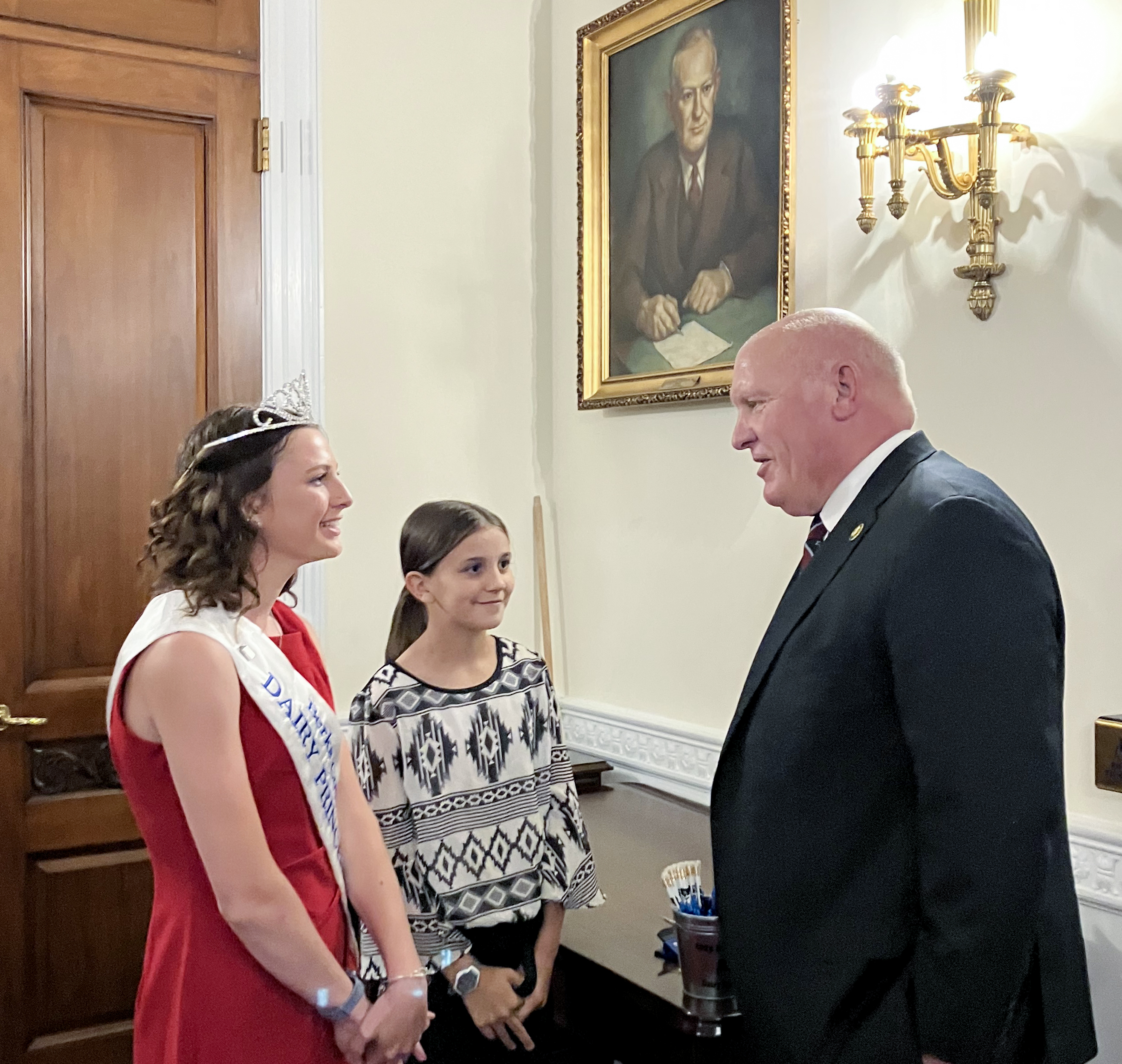
As Congressman Thompson talked about “ruining a generation of milk drinkers with failed federal nutrition policy,” he praised the bipartisan support for H.R. 1147 and noted the 107 cosponsors in the House (as of June 13, the number as of June 23 is 128 and counting).

That’s a large number by historical standards, but Thompson wants to get to 150 cosponsors by the time the bill is officially reported to the House, which will be soon.

There is still time, and it is still important to keep contacting members of Congress to ask them to consider cosponsoring the Whole Milk for Healthy Kids Act in the House, and thank them if they already have signed on.

Ebersole shared with staffers her perspective as a nurse, what she observes, what milk nutrition means for children.
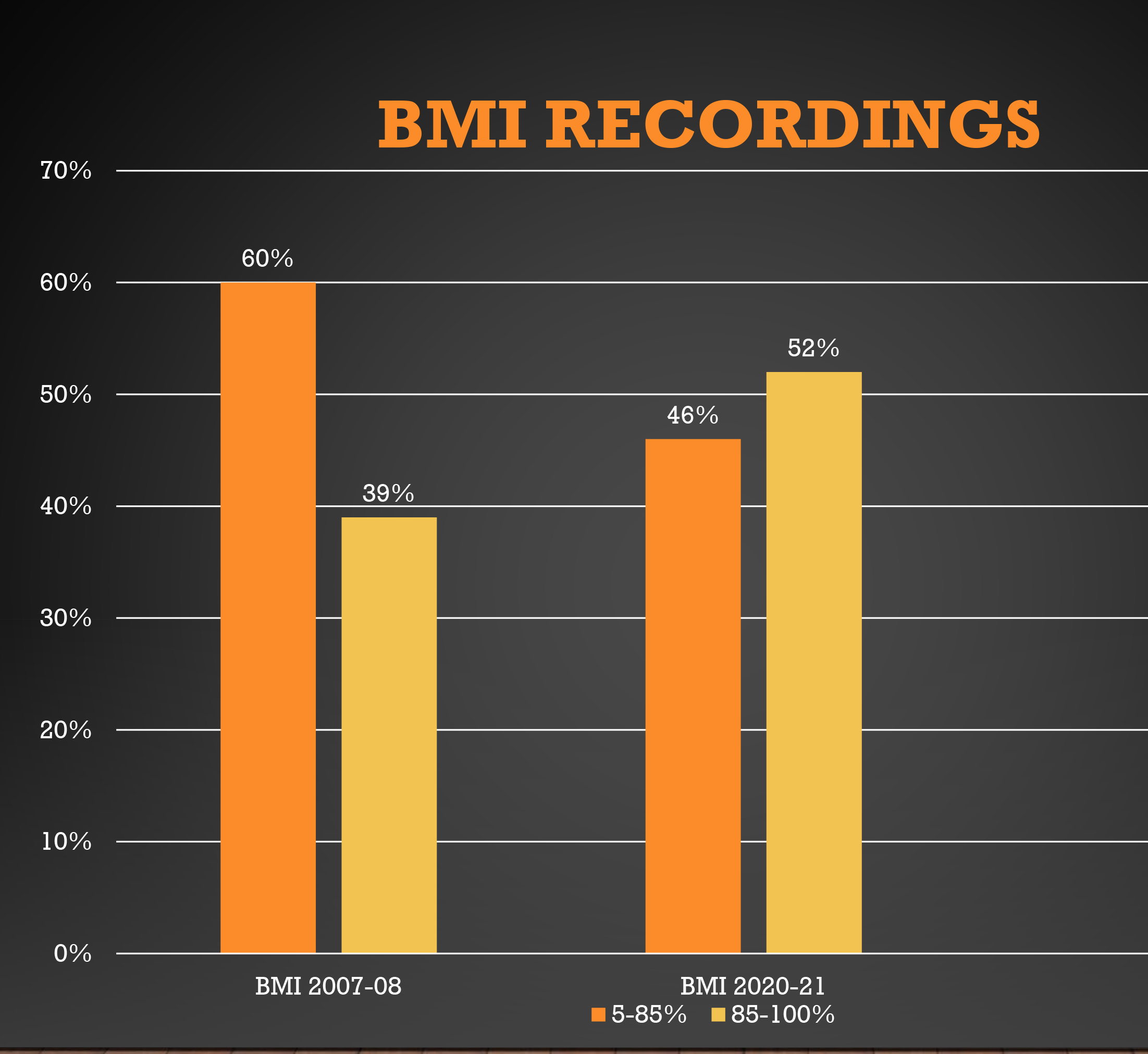
“I thought it would be interesting to compare BMI (Body Mass Index) screenings when whole milk was served in schools with the recent screening where students have been served only skim and 1% milk. The results of the comparison are striking (above). The overweight and obese categories for students in grades 7-12 in 2007-2008 school year was 39% with 60% in the proper BMI scale. In the year 2020-2021, after being served low fat milk during school hours, the overweight and obese categories were increased to 52% while the recommended range was decreased to 46%. That is a 13% increase over the past 13 years!” said Ebersole.

“While one cannot assume that the low fat milk alternatives are the only determining factors, they certainly did not have the intended outcome of reducing obesity in school age children,” she said.

Ebersole explained that, “Whole milk is a nutrient dense food and with its natural combination of protein, fats and carbohydrates, it is called Nature’s most nearly perfect food. Whole milk also provides satiety, which is stabilizing for blood sugar as well as feeling fuller longer thus decreasing food intake. Another important quality is that students prefer the taste of whole milk compared to the reduced fat and skim milk options.”
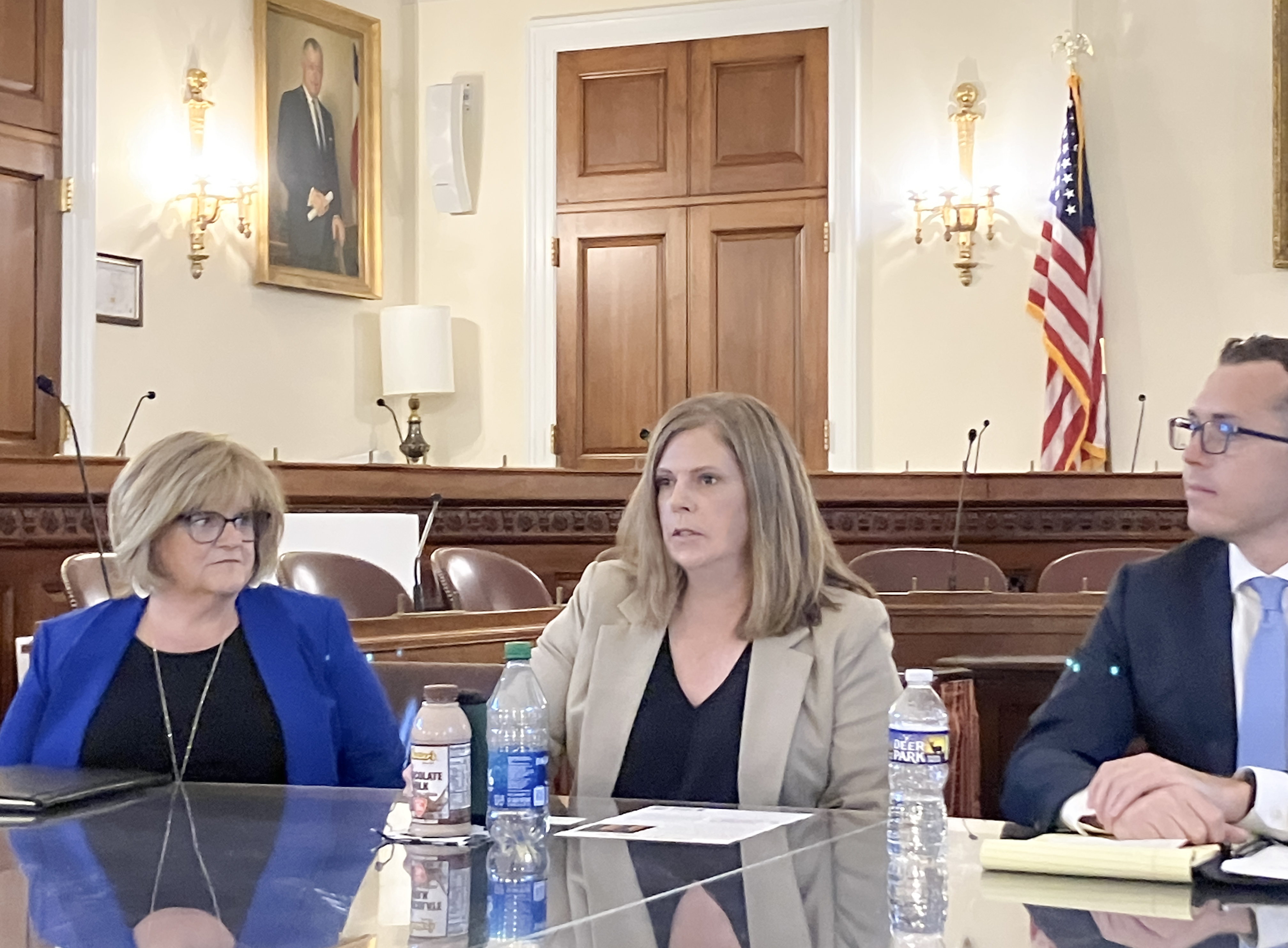
Byler talked about the trial at her school in the 2019-20 school year. She explained that the milkfat restrictions at school have led to a loss of school milk consumption with results that are far reaching.

“We are now hearing of very early onset osteoporosis and an increase in malnutrition and/or obesity. It is shameful that our youth cannot have a choice of a wholesome, nutritious product that is farm-to-table/farm-to-school,” said Byler. This, and the amount of milk wasted daily prompted the school trial.

She provided slides of the trial results and talked about how half of the students didn’t really know whole milk was not allowed. This means they didn’t know how good milk can be.

“The results of the trial were astounding. When offerings were expanded to include whole and 2% milk, the amount of wasted milk was reduced by 95% and we saw a 52% increase in students choosing milk,” said Byler, explaining that the student council did actual milk collection data as part of an environmental project.

She also shared results of her survey of the elementary school children showing that if this latest possible restriction on milk options for schoolchildren is approved by USDA, fewer than 25% of students currently taking and drinking the milk say they would continue taking milk and drinking it if flavored milk were not offered. 

“That’s huge,” said Byler.

That means we would see even more reductions in milk consumption at school and more waste. This struck a chord because when Byler presented the 2019-20 trial where her school offered whole and 2% along with fat free and 1% milk, for trial purposes, we heard audible gasps among those attending the briefing when Byler shared the data on the reduction of wasted milk. ((The students also created a video about school milk, view it here.)

We also saw reactions while Ebersole was sharing her analysis of student BMI data over the past 13 years.

Both women concluded by sharing a heartfelt message about how important dairy farmers are to communities, how they care for their cattle and work to provide a high quality nutritious product, and what it means to them for children to be able to choose milk they love so they can benefit from the nutrition the milk provides.

“As the wife and granddaughter of proud Pennsylvania dairymen, I knew the decrease in milk we were ordering for schools would impact dairy families. I know firsthand about the dairy farmers we have lost,” said Byler. “What I know based on 18 years in school nutrition, raising two children and being part of two dairy families is that restricting milk offerings to our school children does not benefit our children or our dairies. It benefits big corporations who have exponential marketing power and are preying upon our youth.”
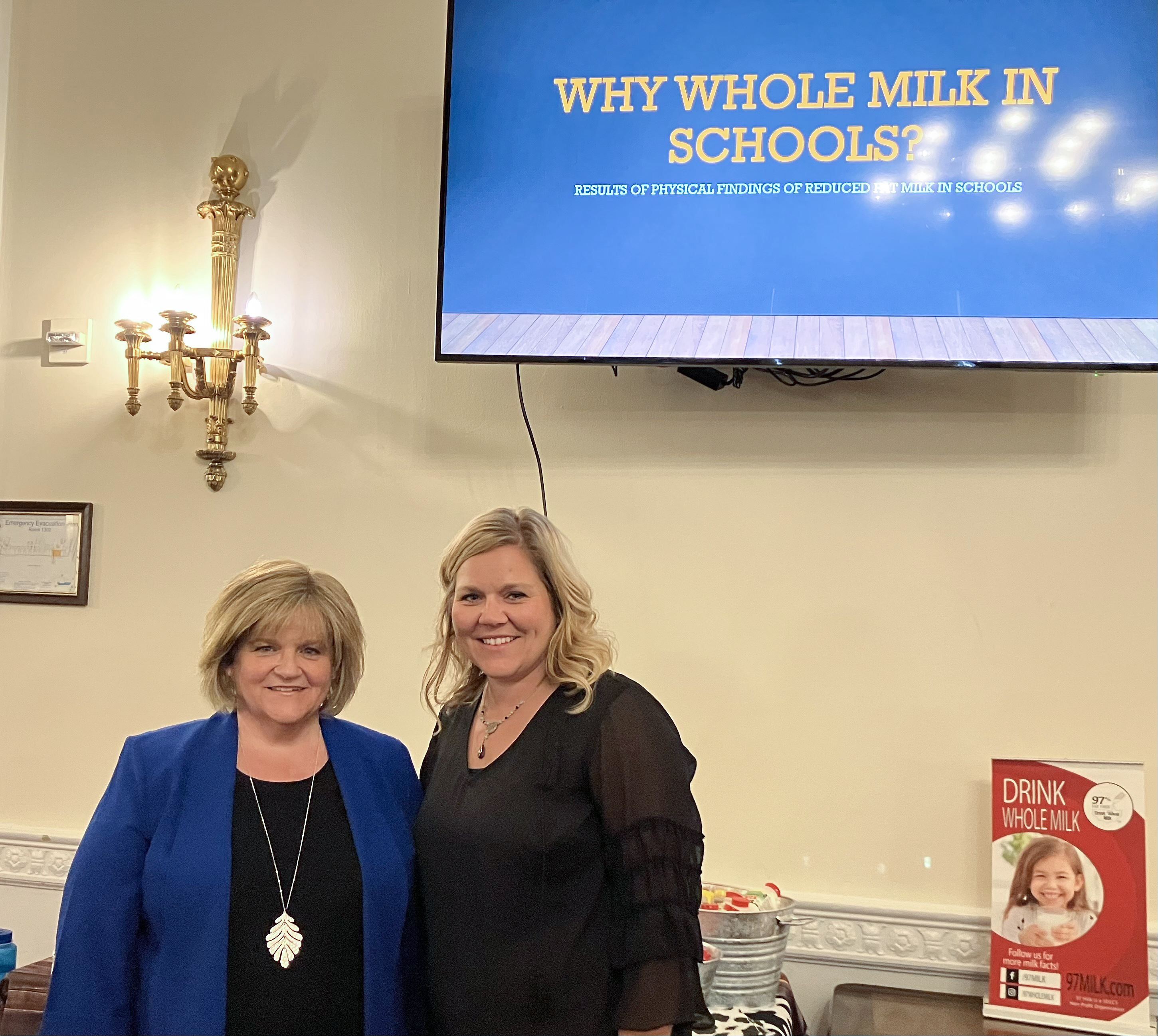
School nurse Christine Ebersole and her daughter Vanessa Wiand, an elementary teacher at the briefing.

Ebersole noted that, “Being born and raised on a dairy farm and having lived in the dairy community all my life, I can say I know something about the American Dairy Farmer. They are on call 365 days a year and 24 hours a day.  They care about their animals and also care about their neighbors. When a tragedy happens like a fire, the neighbors come together. Dairy farmers work diligently to bring a wholesome natural food to us. Let’s do our part to support this industry by allowing students to have a choice of a delicious, nutritious whole food, whole milk,” she said.

For the Nutrition Coalition, John Bates explained they are a non-profit, non-partisan organization that seeks to improve health in America by ensuring that the public gets evidence-based nutritional advice. They emphasize good science, transparency, and methodology and receive no industry funding.

“When the Healthy, Hunger-Free Kids Act was enacted in 2010, milk became counted as part of that less than 10% of calories from saturated fat, when previously it had been in its own, separate beverage category,” said Bates.

He noted that the U.S. Dietary Guidelines that these rules for schools are based on “never reviewed studies on dietary fat specifically for children until 2020. Children have just been assumed to be like adults, but children are different: they need more protein for their growing bodies and more fat for their growing brains,” said Bates.
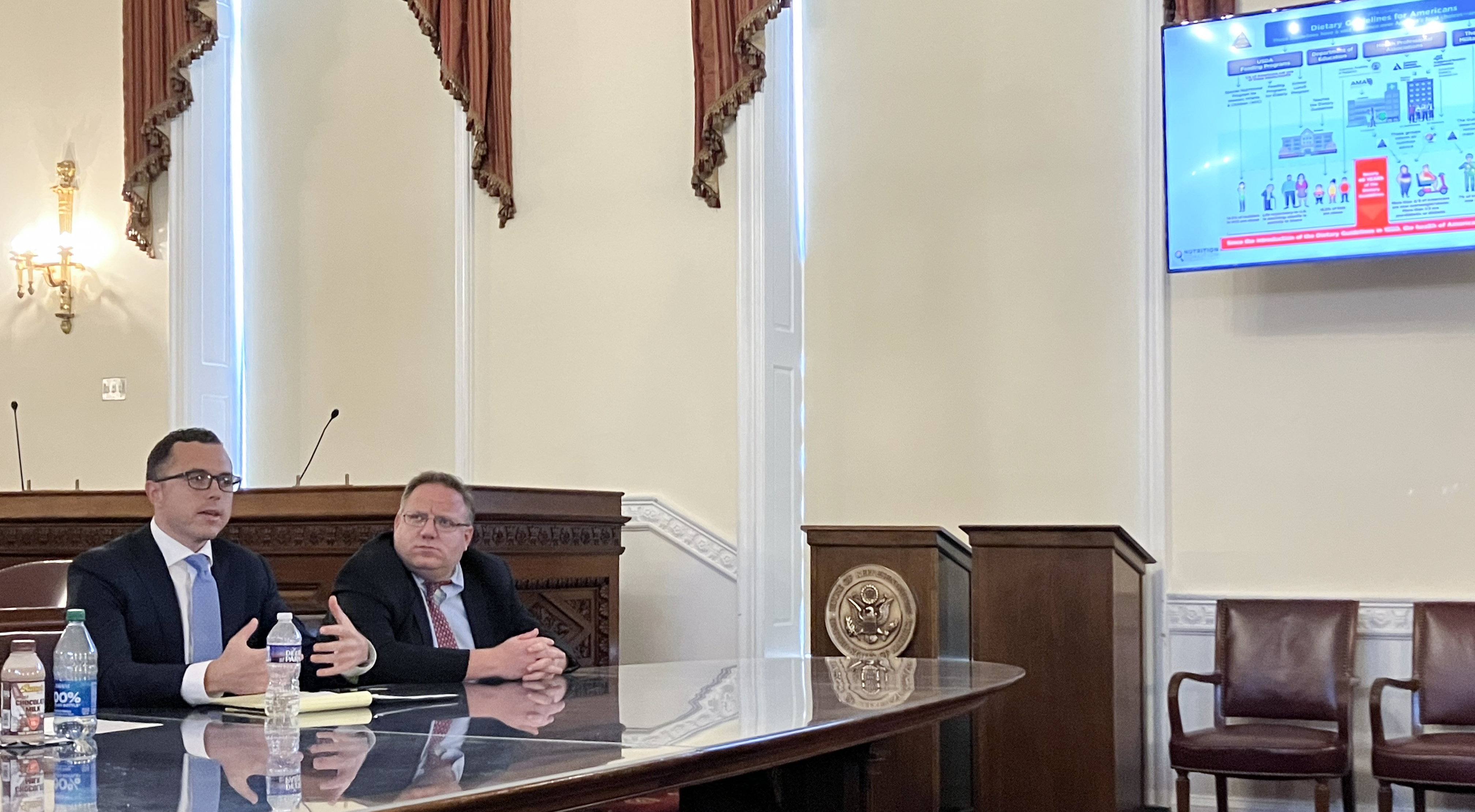
The Guidelines in 2020 cite a single clinical trial on school-aged children, ages 7-10 (“DISC,” funded by the NIH). It showed ‘Modestly’ lowered LDL-cholesterol, he explained. “Yet the study was not on a normal population. The expert USDA committee acknowledged this study could not reliably be generalized to a larger population

The bottom line, said Bates is that expert committees have found “insufficient evidence” to show that restricting saturated fats in childhood could prevent heart-disease or mortality in adulthood.

“In our view, a single trial on an atypical population is not enough to make population-wide guidelines to all American children,” he said.

Paul Bleiberg for National Milk Producers Federation focused his comments on the problems with underconsumption of dairy.

“Milk is the number one source of three of the four food nutrients of public health concern as identified by the DGA’s — calcium, vitamin D and potassium. Dairy delivers 7 of the 14 nutrients the American Academy of Pediatrics recommends for optimal brain development as well as nutrients vital for immune health and bone growth and development during a child’s school-aged years,” said Bleiberg. 

“The 2020 DGA Committee found that 79% of 9 to 13 year olds fall short of recommended dairy intake and the data from MilkPEP show that students take less milk and throw away more milk at schools when they do not have options they like,” he added.

Before, after and during these four short presentations on whole milk choice in schools, staffers trickled in, gathered around the whole milk bar and had conversations.

In fact, when news began to spread through texts and emails that there were milk and cookies in room 1302 — more staffers came and went. Connections were made around good food and delicious, nutritious milk.

From congressional staff we heard appreciation and these words: informative, enlightening, authentic, delicious!

Those four words give me hope that we can unite with whole milk… for our children and our dairy farmers.
June 23 UPDATE: This was another good week for the Whole Milk for Healthy Kids Act in Washington, and here’s how you can help…

As of June 23, the bipartisan Whole Milk for Healthy Kids Act, H.R. 1147 grew the number of cosponsors to 128 including prime sponsor G.T. Thompson (103 Republicans, 25 Democrats). These cosponsors represent 43 states.

Texas tops the list with 13, followed by Pennsylvania 10, New York 8, California, Florida and Wisconsin at 7. Maine, Idaho, Iowa, North and South Dakota and Wyoming have fewer Representatives and their full delegations are on board. Wisconsin is nearly 100% with 7 of their 8 Representatives signed on.

The 43 states now represented are listed in the order of number of cosponsors vs. the total number of representatives for the respective states: Texas 13 of 36, Pennsylvania 10 of 17, New York 8 of 26, California 7 of 52, Wisconsin 7 of 8, Florida 7 of 28, Georgia 5 of 14, Indiana 4 of 9, Iowa 4 of 4, Michigan 4 of 13, Minnesota 4 of 8, North Carolina 4 of 14, Illinois 3 of 17, Virginia 3 of 11, Washington 3 of 10, Alabama 2 of 7, Arizona 2 of 9, Connecticut 2 of 5, Idaho 2 of 2, Kansas 2 of 4, Kentucky 2 of 6, Maine 2 of 2, Missouri 2 of 8, New Jersey 2 of 12, Ohio 2 of 15, Oklahoma 2 of 5, Oregon 2 of 6, South Carolina 2 of 7, Tennessee 2 of 9, Arkansas 1 of 4, Colorado 1 of 8, Hawaii 1 of 2, Louisiana 1 of 6, Maryland 1 of 8, Mississippi 1 of 4, Nebraska 1 of 3, Nevada 1 of 4, New Mexico 1 of 3, North Dakota 1 of 1, South Dakota 1 of 1, Utah 1 of 4, West Virginia 1 of 2, and Wyoming 1 of 1.

To reach all 50 states, here’s what we need in the East: Delaware, Massachusetts, New Hampshire, Rhode Island, and Vermont. In the West: Alaska and Montana. Is your state on the list? Is your Congressional Representative a cosponsor? Make the call! Go to this link to see the bill’s progress and cosponsors, and click “contact your member” on the right to find your Representative.

Call Senators too. On June 13, the bipartisan Senate companion bill, S.1957, was introduced by Senator Roger Marshall, a Republican and medical doctor from Kansas, along with prime cosponsor Peter Welch, a Democrat from Vermont. Also cosponsoring right out of the gate are Democratic Senators Kirsten Gillibrand of New York and John Fetterman of Pennsylvania; Independent Senator Angus King of Maine; and Republican Senators Ron Johnson of Wisconsin, Chuck Grassley of Iowa, Susan Collins of Maine, Cindy Hyde-Smith of Mississippi, and James Risch and Mike Crapo, both of Idaho. As of June 23, that’s 11 Senate sponsors from 9 states. Maine and Idaho have both of their respective Senators on board!

-30-
Congressman G.T. Thompson’s Whole Milk for Healthy Kids Act approved 26-13 by House Education Committee

Thompson: ‘This is a win for children and dairy farmers, but we’re not done’

“This policy has cheated our children and has led to economic demise in Rural America as we’ve seen a loss of dairy farms and small businesses that are in that supply chain. It’s time to reverse the mistake that was made in 2010. We need to follow real science, not political science. I question the process of the Dietary Guidelines Advisory Committee. These are unelected bureaucrats, and there’s no oversight. This is our chance to actually do something positive in that process to say ‘hey we’re watching what you’re doing. We’re looking over your shoulder,’” said Rep. GT Thompson (R-PA-15). In a bipartisan 26 to 13 vote, the Committee on Education and Workforce passed Thompson’s motion to report the Whole Milk for Healthy Kids Act, H.R. 1147, to the House of Representatives with recommendation of passage. On the Republican side, 21 voted yes and 4 were absent. On the Democratic side, 5 voted yes, 13 no, and 3 were absent. The next step is getting the bill on the calendar for a vote on the House floor.

By Sherry Bunting, Farmshine, June 9, 2023

WASHINGTON — The Whole Milk for Healthy Kids Act, H.R. 1147, reached a major milestone this week, passing mark-up in the U.S. House Committee on Education and Workforce.

Dairy farmers could not have asked for a better way to kick off June Dairy Month as the committee discussion exposed the sides of this issue, and Congressman Glenn ‘GT’ Thompson, the Republican from Pennsylvania and the bill’s prime sponsor, laid out the case for children to have true access to the most nutritional beverage — milk.

In the end, the Education Committee on Tuesday, June 6 approved the bill in a bipartisan 26 to 13 vote. 

(Cross-section highlights of Education and Workforce Committee discussion and vote.)

Now that it is recommended by the House Education and Workforce Committee, the next step is scheduling of the vote on the House floor.

This is the first time in three legislative sessions that the bill to restore the choice of whole and 2% unflavored and flavored milk in schools has made it this far in the legislative process.

“This is a win for children and dairy farmers, but we’re not done. I took a deep breath to see this satisfying outcome in this first stage and another deep breath as we move to the next stage to get it onto the House calendar,” said Rep. Thompson in a Farmshine interview after committee passage.

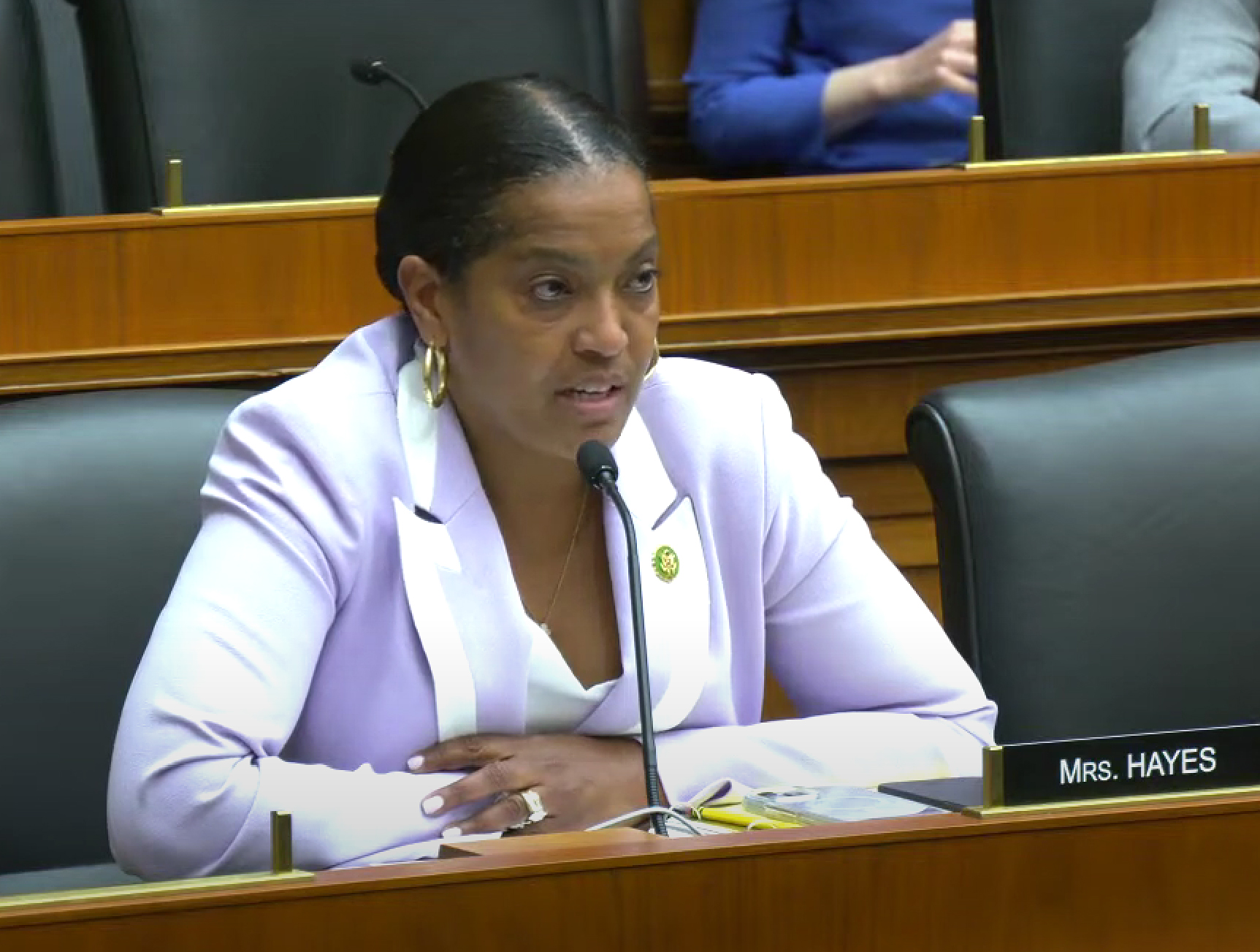
A further breath of bipartisan fresh air also came from Rep. Jahana Hayes, a Democrat and educator from Connecticut. She rose in support of the bill, quoting from the Dietary Guidelines 2020-25 report and from USDA, giving statistics about what is offered and what is consumed in recommended dairy intake, especially for children ages 2 to 18.

“I have belabored this point that children receive a huge amount of their daily nutrition at schools. Also, the school meal programs are a significant source of milk and dairy for kids,” said Hayes.

“But the part that sticks for me is that none of this matters if kids aren’t drinking the milk. We can have as much data and statistics on what kids need as dietary dairy intake, but if they’re not drinking it, then it’s all for naught,” she stressed. “We’ve seen students take less milk and throw away more milk when they don’t like the way it tastes.

“I support this amendment. I drink whole milk. My kids drink whole milk. We like it,” Hayes asserted.

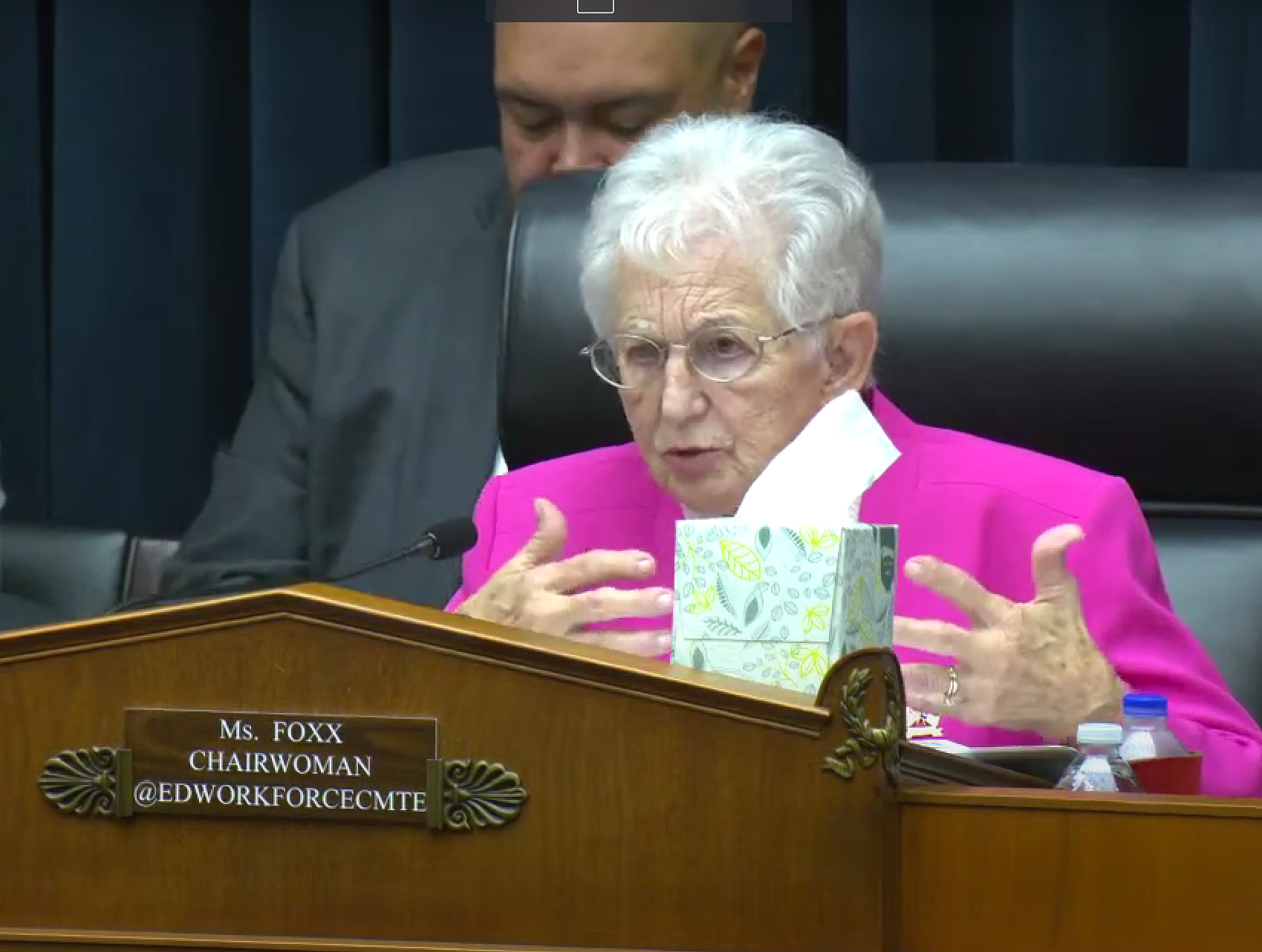
Chairwoman Virginia Foxx, a Republican from North Carolina said the debate over whole milk “takes the cake.” 

She talked about how previous recommendations have been “walked back,” and she bemoaned the fact that there are “no checks and balances” over the Dietary Guidelines process of making these recommendations.

“I was shocked last year when I learned that whole milk has only 3.5% fat content, when we are saying to students: ‘drink skim milk or 1% milk,” the Chairwoman said. 

“Surely-to-goodness, that kind of fat content is not doing the damage that some people are saying. This Dietary Guidelines Advisory Committee is just a small group of unelected, appointed people, and we want to turn children’s lives over to groups like this? We should be dealing with this,” she added.

The bill’s champion, Rep. GT Thompson is a senior member of the Education Committee, and chairs the Agriculture Committee. 

Thompson said he is discussing the next stage with the House Majority Leader to schedule the legislation for a vote on the House floor.

“The bill had 106 bipartisan cosponsors supporting it from 39 states — before this committee vote — and we can build on that,” said Thompson. (As of June 16, there are 110 from 40 states).

This cosponsor list includes 22 members of the Education Committee. It also includes bipartisan cosponsors from the Agriculture Committee. It includes prime cosponsor Rep. Kim Schrier, a pediatrician from Washington State, and numerous members of Congress who are doctors, educators, parents. It has garnered the support of schools, students, parents and families throughout America who will benefit, according to Thompson.

His staff reports that more cosponsors continue notifying their office to sign on to the bill.

“This has been a really grassroots effort. Dairy farmers, the dairy industry, all of the rural businesses who provide inputs, the folks in the schools, the parents… we’ve had great support for this bill, and all of that helps,” said Thompson with a tip of the hat to the grassroots 97 Milk effort.

In fact, while speaking on his bill, Thompson mentioned “how this policy has negatively impacted the economy in Rural America. This (federal prohibition of whole milk in schools) negatively impacts kids and dairy farmers, and it’s time to turn that around.”

The Whole Milk for Healthy Kids Act allows the 95% of schools that are participating in the school lunch program to serve all varieties of flavored and unflavored milk, including whole milk. Thompson amended the bill from previous renditions to make minor technical changes that will help ensure foodservice workers have the flexibility they need in serving the students whole milk.

“Some Democrats on the committee spoke in opposition to the bill, using the same outdated science, but in the end, the committee vote to approve it was bipartisan,” said Thompson. 

During the committee discussion, he told his colleagues that he is focused on “listening to the school professionals who serve students every day and parents who are concerned about the lack of options.

“We need to follow real science, not political science. It’s time that we push back on the notion that federal bureaucrats know what’s best for students. Although there is more work to be done on school nutrition, this bill gives students access to the milk they want and need. The bottomline is the Whole Milk for Healthy Kids Act is all about ensuring students have the necessary nutrients to learn and grow,” he said.

Thompson was quick to point out that, “We’re not force-feeding anybody anything. We’re providing children options so we don’t turn them over to less healthy beverages.

“We’ve really ruined an entire generation of milk drinkers and have cheated them out of access to the most nutritional beverage. I appreciate the comments that there is nutrition also in 1% milk, but even that’s because of the milkfat, the vehicle that delivers the nutrition,” he explained.

This bill “will improve the nutritional status of our children going forward. If we give them a good milk experience …  I would argue we will see a reduction in childhood obesity,” he said, pointing to studies showing whole milk to be an effective drink weight management because of how satisfying it is.

To his colleagues citing ‘the science’, Thompson was tactful but blunt: “I agree we ought to do things with data and science, I just question the process of the Dietary Guidelines Advisory Committee. They’re completely appointed. These are unelected bureaucrats, and there’s no oversight. This is our chance to actually do something positive in that process to say ‘hey we’re watching what you’re doing. We’re looking over your shoulder.’”

Chairwoman Foxx reminded her committee that, “This is a choice. Instead of having bureacrats tell us what to do… we give a choice and not let someone else run our lives.”

At the start of the discussion, she explained the Whole Milk for Healthy Kids Act as “empowering food service providers and parents to make decisions on the health and welfare of children.”

Ranking Member Bobby Scott (D-VA-3, right) and Rep. Jamaal Bowman (D-NY-16) read from a letter of opposition to the whole milk bill from the Physician’s Committee for Responsible Medicine (PCRM). According to Guidestar, PCRM describes its vision as “creating a healthier world through a new emphasis on plant-based nutrition and scientific research conducted without using animals. ” In 2010, Newsweek and New York Times articles identified PCRM links to extreme animal rights organizations such as PETA. 

Ranking member Bobby Scott, a Democrat from Virginia, was one of four Democrats voicing opposition, saying H.R. 1147 is “an attempt to legislate nutrition standards and disregard evidence-based recommendations made by the Dietary Guidelines for America.” He said the bill would allow schools to “violate current science-based standards. 

“If it was consistent with science, we wouldn’t be here. The science-based committees would have already done this,” he said, also objecting to considering the bill outside of doing a comprehensive childhood nutrition reauthorization.

The last childhood nutrition reauthorization by Congress was the 2010 Healthy Hunger Free Kids Act, which tied schools more closely to the saturated fat restrictions of the Dietary Guidelines in the first place.

Scott noted the American Heart Association, Association of Nutrition and Dietetics, Center for Science in the Public Interest have “expressed concerns for this bill.” But mostly, he quoted from a letter of opposition from the Physicians Committee for Responsible Medicine. (PCRM is a known animal rights group tied to PETA.)

Rebutting Scott’s assertions in his characteristic calm and methodical manner, Congressman Thompson said he appreciated the recognition of science but that, “we don’t always get it right, and that’s what we’ve found with the Dietary Guidelines process. 

“You reference the Dietary Guidelines Committee, but the most recent Dietary Guidelines reported that more than two-thirds of school age children FAIL to meet the recommended level of dairy consumption, and a big part of that is, quite frankly, we gave them since 2010 an awful milk experience,” said Thompson.

“We’re talking about 3.5% milkfat. I was here for that 2010 debate. It’s been proven since then that it was bad science. The most recent science I referenced and our practioners, the American Academy of Pediatrics, have stated that dairy plays an important role in the diet of children, and it’s the leading food source for three of the four nutrients of public health concern — calcium, vitamin D and potassium,” said Thompson, providing 15 academic studies for the record on full fat dairy.

As members of Congress, “we visit our schools and spend time in the lunch line, and we see the waste and the unopened half-pint milk containers that are discarded. Quite frankly, we’ve been contributing to childhood obesity because … children are going to drink some type of beverage, and the substitutes have been high sugar beverages that do not have healthy outcomes,” said Thompson.

“This policy has cheated our children… and has led to economic demise in Rural America as we’ve seen a loss of dairy farms, dairy herds and small businesses that are in that supply chain. It’s time to reverse the mistake that was made in 2010,” he stressed.

Rep. Jamaal Bowman, a Democrat from New York agreed that the meals at school are for some kids the most important that they receive, and he said these meals should be consistent with the “latest science on nutrition.” 

However, he maintained that the Dietary Guidelines for Americans (DGAs) are “based on up-to-date science” and said “allowing whole milk to be served to children contradicts those recommendations.”

Rep. Bowman called the bill an “inappropriate attempt to legislate nutrition standards,” but he failed to acknowledge the shortcomings observed by other independent scientific bodies calling into question the research screening methods used in the DGA process, the make-up of the DGA committee, and the predetermined questions that form the boundaries for what “up-to-date research” will be included as “relevant” to the predetermined questions in each 5-year DGA cycle.

Bowman quoted extensively from the PCRM letter, which stated that “full fat milk is both unnecessary and harmful to children’s health.” Reading from the PCRM letter, Bowman said “early signs of heart disease, high total and LDL cholesterol and other indicators of impending cardiovascular disease are appearing in children with increasing frequency.”

(If that’s the case, then how can whole milk be blamed? How can saturated fat be blamed? Whole milk is nonexistent at school, and saturated fat is limited to less than 10% of calories in school meals since 2010. Children receive one, two, or even three meals a day, five days a week for at least three-quarters of the year at school. If the poor health outcomes the PCRM letter identifies are rising, doesn’t that tell us something about the scientific validity of the DGA recommendations? The PCRM’s own letter hits that nail on the head with its own statistics. PCRM calls “whole dairy milk a troubling source of saturated fat.” And yet, kids have not been allowed to have whole milk or 2%, and in some cases not even 1% fat milk, for the past 13 years during two meals a day, five days a week, most of the year!)

Here’s an eye-opener: Quoting again from PCRM, Bowman said lactose intolerance among communities that have been impacted by “historic racism” and “health inequities” are those less likely to be able to see a doctor for the doctor’s note to have dairy substitutes at school. The letter even mentioned children needing ‘climate friendly’ beverages. 

The roots of the anti-whole-milk agenda are clear in terms of encouraging more “non-dairy substitutes” for children in schools.

Rep. Alma Adams, a Democrat from North Carolina said the bill sets a “dangerous precedent” that takes the years of building nutrition programs backward, noting this would cause poor health outcomes. (But the poor outcomes were said to be already happening by those opposing the whole milk bill. This is occurring while whole milk is prohibited.)

During the committee markup, Thompson said he is proud of the number of cosponsors to-date and the broad and bipartisan support for the whole milk bill. 

“My legislation supports students and dairy farmers across America,” he explained.  “Milk is an essential building block for a well-rounded and balanced diet offering 13 essential nutrients and numerous health benefits. However, out of touch federal regulations have imposed dietary restrictions on the types of milk that students have access to in school meals… limited to fat free and low-fat milk since 2010. For our children to excel in the classroom and beyond, they must have access to more nutritious options they enjoy.”

Thompson  also stressed that the situation could become worse if the Whole Milk for Healthy Kids Act is not enacted into law. 

“The USDA’s latest proposed guidelines could roll back options even further by restricting flavored milk only to high school students and counting milk fat against weekly saturated fat allowances,” he said, giving several reasons why these top-down regulations are harmful to students and school districts that are forced to comply.

“First, we have seen students opt out (from milk) altogether,” said Thompson. “Let’s face it, the only way to benefit from milk’s essential nutrients is to consume it, and when students turn away from milk, they often opt for far less healthy alternatives.”

Thompson noted that these regulations also “perpetuate baseless claims that milk is bad for kids, but research has shown time and time again that whole and 2% milk are not responsible for childhood obesity and other health concerns. In fact, these beverages are so nutritious that research consistently shows positive health outcomes for children who consume milk.”

Referencing the 15 academic studies submitted from researchers across the country and around the world, Thompson asserted that, “These studies, and there are more, show that full fat dairy foods have no association with high blood pressure, cardiovascular disease, type II diabetes, obesity or cholesterol. In fact, several show full fat foods helped improve or lower negative health outcomes for children who drank more full fat dairy beverages.”

He also added to the record several letters of support, including a letter from the Nutrition Coalition (founded by science journalist Nina Teicholz, author of the Big Fat Surprise), the International Dairy Foods Association, the Northeast Dairy Foods Association, and a coalition of dairy producers from across the country. 

He said the bill has the support of schools and families across the country. 

This is evident by the tens of thousands of citizen petition signatures over the past few years and a 2021 IDFA survey of parents showing 78% find whole or 2% milk healthier for their families. Trouble is, their kids can’t get it at school where most of their meals are consumed.

-30-

Congress passed joint resolution in March to block WOTUS, now Supreme Court sides with farmers on EPA overreach

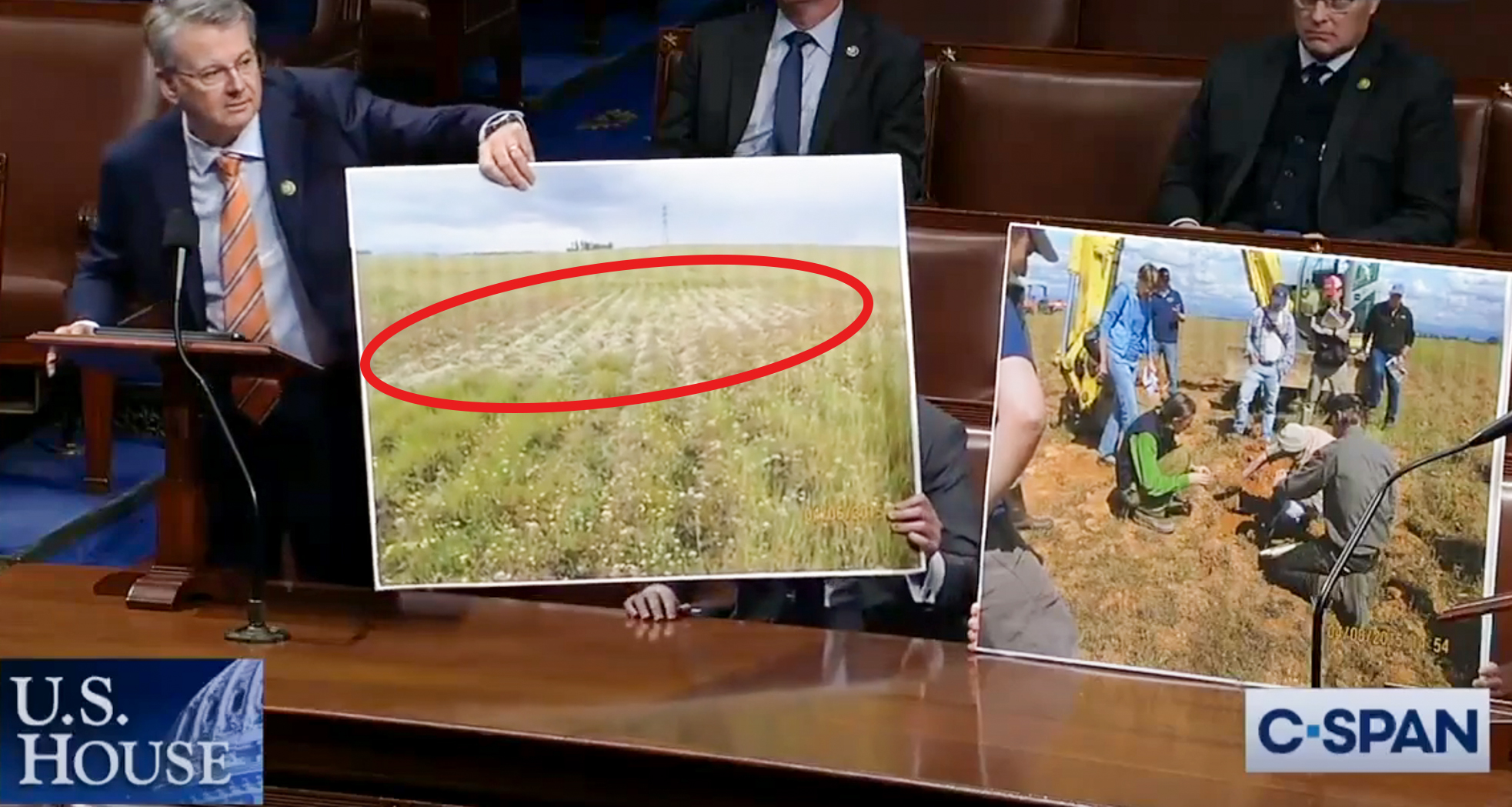
The Supreme Court ruled May 25 to overturn the Obama-Biden administrations’ broad WOTUS definition. Earlier, in March, Congress approved a joint resolution to block the Biden WOTUS definition brought back after the previous administration made commonsense changes and clarifications. In March, asking members to ‘squint,’ freshman Congressman John Duarte, a farmer from California, provided some show-and-tell on the Biden EPA’s WOTUS rule. His 5-year battle (2013-2017) with the EPA and Army Corps of Engineers boiled down to small depressions being considered ‘jurisdictional wetlands’. Screen capture from C-Span live coverage has been enhanced by Sherry Bunting with a red circle showing the so-called ‘jurisdictional wetland.’  Duarte noted that all of the surrounding grassy area in this photo would also be considered ‘jurisdictional wetland’ under the Biden EPA’s WOTUS rule.

Chairman Thompson cites ‘EPA’s appetite for power’; Rep. Duarte tells of his farm’s 5-year battle 

By Sherry Bunting, original story published in Farmshine, March 16, 2023

UPDATE 2023 – On May 25, 2023, All nine justices agreed to overturn the 9th Circuit Court of Appeals’ ruling that endorsed the Biden administration’s broad definition of waters of the United States, or WOTUS, the term for what falls under federal enforcement of the Clean Water Act. The EPA’s WOTUS regulations redefined what land and water is subject to federal requirements under the 1972 Clean Water Act. While the law references “navigable waters,” conflicting agency guidance and confusion in the courts led to new regulations aimed at clarifying the scope of the law. During the Obama and Biden administrations, the EPA exploited that confusion to significantly expand the reach of the federal law.

“If the EPA had its way, nearly 97 percent of land in Iowa would be subject to onerous federal red tape. You’d have to get permission from Uncle Sam before moving dirt on your own land under this administration’s WOTUS regulations. Farmers could’ve faced steep fines if water pooled in a ditch after a rainstorm because of the EPA’s far-reaching rules. Thankfully, the Supreme Court saw through this federal overreach and unanimously determined that it violated the Clean Water Act.  After years of uncertainty, today’s Supreme Court decision is a victory for farmers, builders, landowners and common sense,” Iowa Senator Chuck Grassley said.

See below some of the background presented in the United States House of Representatives in March.

WASHINGTON — In mid-March, the U.S. House of Representatives passed a Joint Resolution — H.J. Res. 27 – expressing Congressional disapproval of the Biden EPA’s Waters of the United States (WOTUS) rule.

This resolution of disapproval had 170 Republican cosponsors from 42 states and was passed by the House 227 to 198 under the Congressional Review Act on Thursday, March 9.  Nine Democrats voted for the resolution, including members of the House Agriculture Committee such as ranking member David Scott of Georgia.

The Senate also voted for the joint resolution, which was later vetoed by President Biden.

Prior to House passage, Republican members of the House Ag Committee called out the flawed WOTUS rule, stating that the Biden EPA undid the reasonable clarifications that were made under the previous administration.

“Make no mistake about it, this rule isn’t about clean water. It’s about the Biden EPA’s appetite for power,” said Ag Committee Chairman Glenn ‘G.T.’ Thompson of Pennsylvania prior to passage of the resolution seeking to block it. “America’s farmers, ranchers, and landowners deserve a WOTUS definition that is fair to agriculture and maintains the historical reach of the Clean Water Act—neither of which is accomplished by the Biden Administration’s flawed rule.”

Numerous members spoke to the resolution on the House floor, including the freshman Congressman from the 13th district of California, John Duarte.

As a farmer, Duarte’s 5-year battle with the EPA over plowing through an area that ‘could’ become a puddle a rainstorm is well documented and was reported in several Farmshine articles throughout 2017. 

Duarte ultimately settled his case to save the family business after fighting the EPA and the Army Corps of Engineers as long as he could under government threat seeking tens of millions of dollars in so-called ‘reparations.’

His settlement admitted no guilt and left an uncertain precedent for agriculture when WOTUS rules are unclear and subjective as in the Obama and now Biden EPA rules.

“The Supreme Court has been dealing with this for years, and if we don’t get it right here (in the legislature), and keep the agencies honest, we are going to have a real food shortage on our hands,” said Duarte.

“I am a farmer who was prosecuted under the Clean Waters Act for growing wheat in a wheat field that had been planted to wheat many times before,” he explained, asking members to squint to see the little light spot in the field on an enlarged photo poster he brought with him. “This is ‘a jurisdictional wetland’ under some definitions of the Clean Water Act — not a navigable water. There are no frogs, no fish, no storks, no egrets — and no water,” he said.

Wheat had been planted in this field many times, and it was grassland just prior to Duarte’s tillage to replant it to wheat.

“The surrounding grasslands — all the surrounding grasslands here (in the photo) — are ‘jurisdictional wetlands’ under the Biden (WOTUS) rule. They prosecuted me as a farmer for growing wheat in a wheat field that had been planted to wheat many, many times before, and they threatened me with fines of $2.8 million and reparations of up to $40 million for tilling through 22 acres of ‘wetlands’ such as this,” said Duarte of the federal case brought against him during the Obama administration.

“This is what we are talking about. This is the land grab. This is the authority. This is the threat to the American food system that we’re talking about,” Duarte declared.

On a second poster, he showed the investigative team and equipment, paid for by taxpayers through the Department of Justice, sitting in a 3-foot hole investigating his 3 to 7 inch tillage to a ‘vernal pool.’

The 10 government investigators were on his property for 10 days and issued a report that cost over $1 million. Some of the so-called ‘wetlands’, the ‘vernal pools,’ – devoid of water – were 16 square feet, the size of a card table.

“How is that a jurisdictional wetland? This (rule) is a direct attack on our farming and our food supply,” said Duarte.

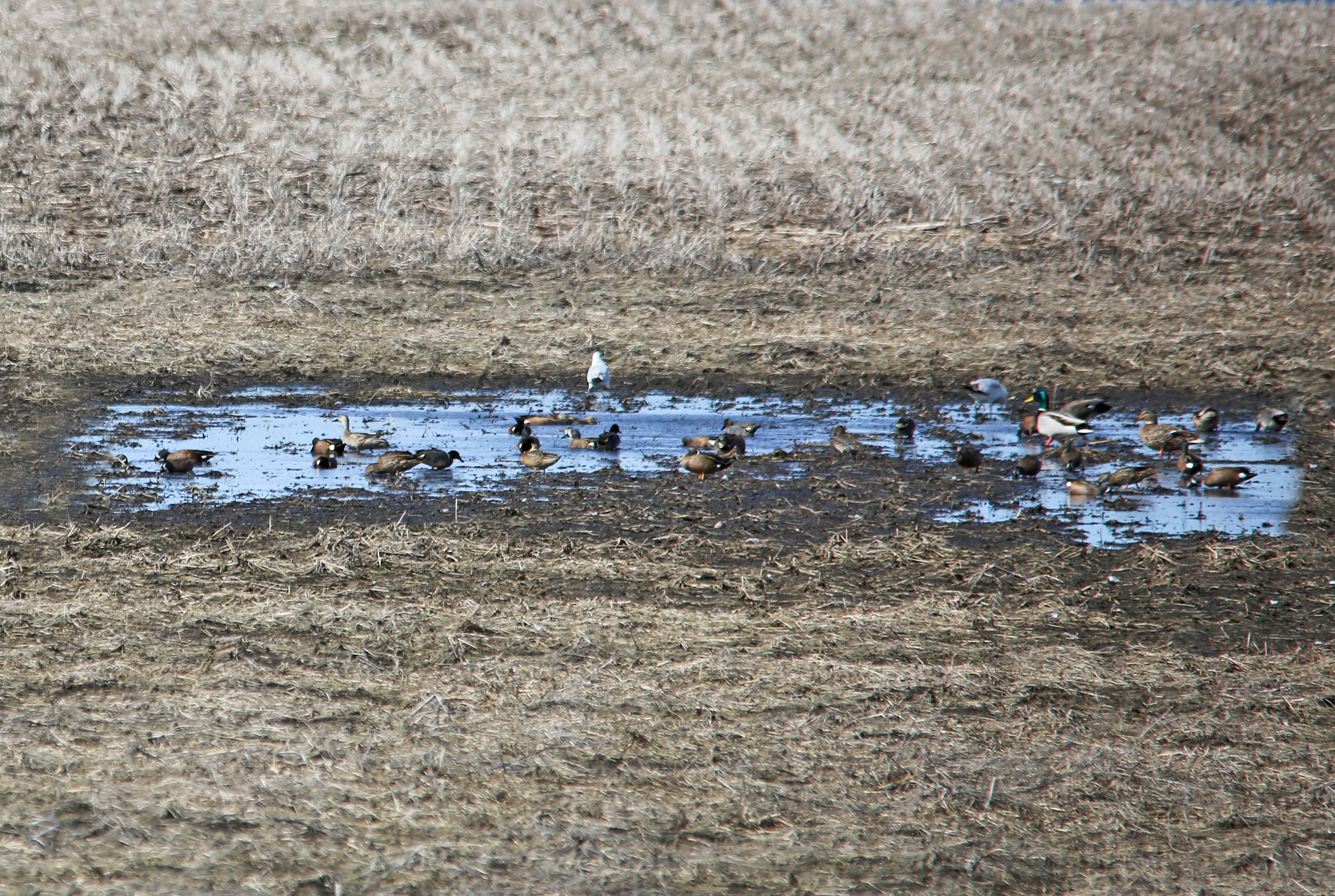
We see them in the East and Midwest also in the spring, and by summer they are mud or dirt spots in a crop field — depending, of course, on the amount of precipitation over winter through March. Pictured here are a variety of wading ducks and gulls taking to such late March puddles on a depression in a Midwest crop field, similar to the area in question in the Duarte case in California. Is this a “navigable” waters or “jurisdictional wetlands” as the 1972 Clean Water Act of Congress specified? Is this a Waters of the United States (WOTUS)? On May 25, 2023, the Supreme Court said: No. It is not. The EPA has overreached. Photo by Sherry Bunting

-30-

Understanding the factors as action on FMMO ‘modernization’ unfolds

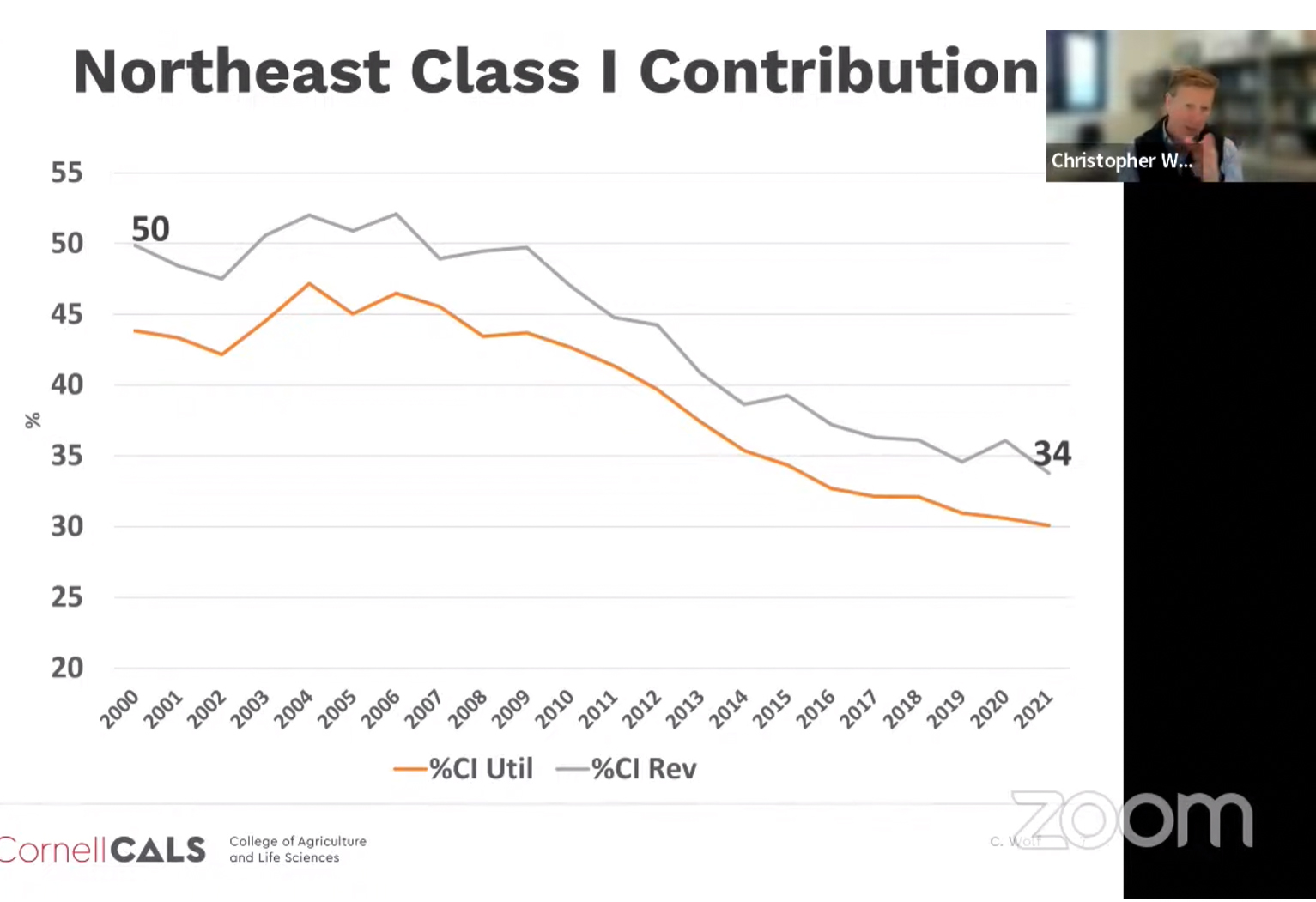
Using the Northeast as an example of a multiple component pricing Federal Milk Marketing Order that still has significant Class I utilization, Dr. Chris Wolf showed how long-term trends and other factors have reduced the Class I utilization and Class I revenue from 50% in 2000 to 34% in 2021 in FMMO 1. The most dramatic part of this decline occurred after 2010 — leaving not enough money to go around with less Class I value in the pool. FMMOs were structured for Class I fluid markets not for the dairy product and export markets where growth is occurring today. Screen capture from Center for Dairy Excellence Protecting Your Profits webinar with CDE’s Zach Myers and his guest Dr. Chris Wolf, Cornell University dairy economist.

By Sherry Bunting

WASHINGTON – There are irons in two fires when it comes to federal milk pricing and dairy policy. One is to do modernization through the Federal Milk Marketing Order (FMMO) hearing petition process. The other is to make some adjustments or seek authorizing language through the dairy title of the 2023 Farm Bill.

On the farm bill front, the May 12 CBO baseline score shows this could be the first trillion-dollar farm bill. Food assistance programs, like SNAP, are eating into the capacity to do other things, say top-level staff for the Senate Ag Committee. 

For dairy and livestock, the Dairy Margin Coverage (DMC) baseline now includes $1 billion in additional outlays projected over the 10-years, while livestock disaster outlays have doubled – even without making any changes in these programs that some are suggesting.

Still, farmers and organizations that represent them are seeking some expansion for the DMC, livestock disaster, and other programs and safety nets, and some are seeking language to instruct the Secretary to do hearings on the Class I ‘mover’, or to expand the flexibility of the scope of a hearing, or to require mandatory reporting germaine to things like raising make allowances. 

The jury is out on whether a farm bill gets done by September 2023 after the May 12 baseline was announced by CBO in the current political environment, but members of the House and Senate Ag Committees and their chairpersons are gathering information in earnest toward that goal.

On the FMMO hearing front, as previously reported in Farmshine, the USDA responded April 28 to the March 30 petitions from two processor organizations by asking for more information instead of granting or denying a hearing on their make allowance update request.

The two petitions from International Dairy Foods Association (IDFA) and Wisconsin Cheese Makers Association (WCMA) both requested a hearing focused exclusively on updating the ‘make allowances’, which are processor credits that are subtracted from the wholesale end-product prices used to derive farm level milk class and component prices.

Make allowances were last updated in 2008 using 2006 plant cost data.

Four days later on May 2, the National Milk Producers Federation (NMPF) submitted its petition seeking an FMMO hearing on a range of national amendments.

NMPF is petitioning USDA for a hearing on these five items:

1.     Increase make allowances in the component price formulas to the following levels: Butter   $0.21 per pound, Nonfat dry milk $0.21 per pound, Cheese  $0.24 per pound, Dry Whey $0.23 per pound 

2.     Discontinue use of barrel cheese in the protein component price formula

3.     Return to the “higher-of” Class I mover

4.     Update the milk component factors for protein, other solids, and nonfat solids in the Class III and Class IV skim milk price formulas

5.     Update the Class I differential pricing surface throughout the U.S.

Not noted within this list is a point that NMPF’s board approved on the legislative front, and that is to seek language in the 2023 farm bill directing USDA to do periodic mandatory and audited plant cost surveys instead of voluntary surveys for future hearings on make allowances.

The American Farm Bureau Federation took a positive approach in their response letter to USDA, showing support for the fact that NMPF’s petition is comprehensive and includes areas of strong consensus among farmers such as returning the Class I mover to the ‘higher of.’

However, AFBF president Zippy Duvall also points out in the response letter that the Secretary of Agriculture already has the authority under the Agricultural Marketing Agreement Act to require processors to provide information relevant to FMMO pricing. This could include mandatory surveys of plant cost data when used to determine the processor credit, or make allowance, in the pricing formulas.

It is Farm Bureau’s position that make allowances should only be updated based on mandatory and audited plant cost surveys.

This leaves a bit of a loophole in the discussion about how to acquire the data to make current or future updates. The Secretary may have the authority to require data from plants that participate in FMMOs. However, it is unclear if the Secretary has this authority to require cost data from plants that do not participate in the FMMOs.

The end-product pricing formulas are based on wholesale prices that are collected mandatorily by USDA AMS on a weekly basis through the Livestock Mandatory Reporting Act on only those products that are used in FMMO formulas. This includes butter, nonfat dry milk, dry whey and 40-lb block and 500-lb barrel cheddar cheese.

The USDA AMS weekly National Dairy Product Sales Report surveys 168 plants for this price data. Therefore, if make allowances are updated as processor credits against those prices, then all 168 plants should have to report their costs, and only the costs that pertain to those specific products, whether or not they participate in FMMOs. In a recent voluntary cost survey, more than 70% of those plants did not report their cost data.

During a Center for Dairy Excellence Protect Your Profits zoom call recently, risk management educator Zach Myers had as his guest Cornell dairy economist Dr. Chris Wolf to talk about the FMMO reform process and background from an economist’s perspective.

Dr. Wolf gave some important and relevant background and statistics.

The FMMOs have been around for 85 years and were created because of disorderly milk marketing conditions. Their primary function is to make markets function “smoothly” with a second stated objective to provide price stability.

“If we were to re-do them today, I would say price adequacy should be addressed,” Wolf opined, noting that “we have times that the milk prices are very stable, but not very adequate.”

Other stated objectives of FMMOs are to assure adequate and wholesome supplies of fluid milk and equitable pricing to farmers.

“These things are still important today,” Wolf suggests, adding that the auditing, certification and a certain level of market information that is provided by the FMMOs benefits all participants and contributes to the public good.

He explained that FMMOs are changing.

“The primary sources of dissatisfaction with FMMOs in recent years arise because there is not enough money to go around, and some of this is related to the longer-term trends (in Class I sales),” Wolf explains.

He showed that while per capita dairy consumption has been increasing roughly three pounds per person per year, the decline in Class I fluid milk is the underlying factor.

“It really is startling how much of that decline (in Class I) in most areas really happened since 2010,” Wolf illustrated with graphs.

Not only did per-capita fluid milk sales decline more rapidly since 2010 than the already long-term decline charted since 1980, but population growth in the U.S. also stalled — so the total Class I sales have been hit with a double-whammy.

“This relates back to where the value is in the Orders, with most of the decline in the past 20 years occurring in that second half, — since 2010,” he explains.

(The Healthy Hunger Free Kids Act of 2010 was the precursor to USDA removing whole and 2% unflavored and flavored milk from schools and requiring flavored milk to be fat-free. Today, USDA has a proposed rule that could eliminate flavored milk until grade 9 as reported previously in Farmshine).

Because Class I has to participate in FMMOs, the FMMOs were “intentionally structured” in a way that the Class I revenue has always tended to be the highest class price because the FMMOs are in place to structure the fluid milk market, and so Class I accounted for at least 50% of the pool revenue – until 2010.

“We finished 2021 at 34% (down from 50%),” Wolf notes. “So there’s not enough money to go around with less (Class I) value in there.”

What changed? Wolf notes some of the long-term trends.

“First, exports are now 18% of U.S. milk solids production when it used to be that the U.S. exported about 5%… Milk beverage consumption is down while cheese, butter and yogurt are all up. We are still importing 4 to 5%, but as a large net-exporter now,” he says, “The U.S. is basing bulk commodity product prices off the world market. This introduces more outlet for milk but brings back the issues that come with international price-setting, overall,” he explains.

Another change, according to Wolf, is the level of consolidation at every level of the supply chain.

Wolf went over some of the make allowance data based on existing voluntary surveys as well as a prior California state order audited survey. He showed there is a wide range in costs between older and smaller plants vs. larger and newer plants. When determining where to set make allowances – as an ‘average’ or at a percentile of this wide range — there are regional impacts to consider, he suggests.

Wolf also took webinar attendees through the steps of a hearing that can take at least a year or more to complete and he dug into the make allowances from an economic perspective and some of the other pieces of potential reform. Over the next few weeks, we’ll continue to examine them in this series.

The Center for Dairy Excellence Protecting Your Profits webinar with Zach Myers and Dr. Chris Wolf can be heard as a podcast at https://www.centerfordairyexcellence.org/pyp/ or viewed on YouTube at https://www.youtube.com/watch?v=YEMDA4iWyNw

Under the DMI umbrella: Fonterra CEO to chair Global Dairy Platform, Danone sustainability strategist to join GDP operating committee

Global Dairy Platform launched Pathways to Dairy Net Zero Initiative in September 2021, one year after DMI’s Innovation Center for U.S. Dairy launched the Dairy Net Zero Initiative (NZI) in October 2020 (A year prior to that in 2019, the current and former Ag Secretary Tom Vilsack testified to the Senate Ag Committee as a dairy-checkoff executive, serving then as president of the U.S. Dairy Export Council, and he foretold the nuts and bolts of the not-yet launched Dairy Net Zero Initiative and asked Congress to fund pilot farms. GDP has governance in and manages the Dairy Sustainability Framework that underpins what U.S. farmers, and their cows, will have to live up to — including how livestock methane is calculated, mitigated and monitored, which may be based on inaccurate math and science in terms of CO2 equivalents.

By Sherry Bunting, Farmshine, Friday, May 5, 2023

ROSEMONT, Ill. — Fonterra CEO Miles Hurrell has been named the new board chairman of the Global Dairy Platform (GDP), a non-profit industry association representing the international dairy sector. A portion of its revenue is from membership dues, but also from the 7.5-cents per hundredweight equivalent checkoff on U.S. dairy imports as well as grants for research and program services from Dairy Management Inc (DMI).

Fonterra’s Hurrell will replace Hein Schumacher, who is leaving his position as CEO of Royal FrieslandCampina to become CEO of Unilever.

In the April 26 news release, Hurrell cites Schumacher’s leadership in “accelerating climate action via the ground-breaking Pathways to Dairy Net Zero Initiative.” 

Announced in the same release is the appointment to the GDP operational committee of French multinational Danone’s senior vice president of sustainability strategy.

According to its 501(c)6 non-profit tax filings, “GDP is a pre-competitive collaboration,” and its governance groups — the board and the operational committee — “manage a ‘Dairy Sustainability Framework’ to unify the approach being taken by dairy organizations to the broad challenges of sustainability from environmental, social, and economic perspectives.”

The Dairy Sustainability Framework is part of the Dairy Sustainability Alliance of the Innovation Center for U.S. Dairy, another non-profit founded and funded by dairy checkoff organizations under the DMI umbrella. The Innovation Center sets U.S. Dairy Stewardship Commitments that are implemented through the FARM program and reviewed every three to five years to show U.S. dairy is, according to its website, “moving the needle toward achieving the Sustainable Development Goals (SDGs) of the United Nations.”

DMI, its Innovation Center, Dairy Sustainability Alliance, Dairy Sustainability Framework, and U.S. Dairy Stewardship Commitments are all located at Suite 900, 10255 W Higgins Road, Rosemont, Illinois, and the Global Dairy Platform (GDP) address of record is Suite 820 at the same street address.

Along with New Zealand’s Fonterra, CEOs from these top-15 dairy multinationals serve on the GDP Board: Dairy Farmers of America (DFA), headquartered in Kansas; Arla Foods, headquartered in Denmark; Leprino, headquartered in Colorado; China’s Mengniu Dairy Company; Moringa Milk Industry, headquartered in Japan; Royal FrieslandCampina, headquartered in the Netherlands, and Saputo, headquartered in Canada.

Along with the board of directors, the GDP operational committee provides governance and includes sustainability executives for Arla, DFA, Fonterra, Land O’Lakes, Meiji Holdings and FrieslandCampina.

In a separate April 2023 bulletin, GDP announced the May 1, 2023 retirement of Dr. Greg Miller from his position as research lead for GDP since its inception. Known as ‘Dr. Dairy’, Miller has served as the chief science officer for the National Dairy Council for nearly 32 years and as executive vice president of research, regulatory and scientific affairs for DMI. Miller will continue as a member of the UN Food and Agriculture Organization Scientific Advisory Committee.

Key paid staff for GDP is Donald Moore, the executive director since 2010. Before that, he was a Fonterra senior executive in business development and ingredients marketing for 20 years.

Moore also serves as chairman of the governance group for the Dairy Sustainability Framework since its inception in 2013.

With Fonterra’s CEO as the new board chairman of the GDP, and with a former Fonterra senior executive serving 13 years to-date as the executive director of the GDP and the chair of the governance group for the Dairy Sustainability Framework, it’s worth noting that Fonterra announced six months ago its new start-up company for alternative dairy ingredients. According to the October 2022 press release, Fonterra has partnered with Royal DSM, a Dutch company, in creating this start-up “to accelerate the development and commercialization of (animal-free) fermentation-derived proteins with dairy-like properties.” 

With Danone’s senior vice president of sustainability strategy now appointed to the GDP operational committee, it’s worth noting that in October 2022, Danone announced it would use artificial intelligence to reformulate 70% of its plant-based fake-milk products. This followed the 2021 earnings call where Danone executives outlined new fake-milk and dairy product launches with plans to use “new dairy-like technology” to “win over” the 60% of U.S. consumers not in the plant-based category because of taste and texture. The Danone executives told shareholders their Renew strategy identifies the U.S. as a “key plant-based market.” In January 2023, Danone announced it is eyeing sale of Horizon Organic, saying it falls outside of their key areas of focus.

Global Dairy Platform (GDP) was formed in 2006 as an alliance, according to its website. Its tax filings confirm incorporation as a 501(c)6 non-profit in 2012 and its address of record at Suite 820 at 10255 W Higgins Road, Rosemont, IL 60018.

According to the GDP’s most recent IRS 990s that are publicly available for 2017 through 2019, the years when former DFA CEO Rick Smith was its chairman, GDP had revenues between $3.7 and $4.2 million annually. This increased to $4.7 million in 2020, according to an available summary of the IRS 990 for that year.

The tax returns show approximately $1 million in GDP revenue came from membership dues and approximately $2.7 million annually from granted program services and research funds (checkoff). 

The GDP revenue also included approximately $500,000 in ‘import assessments.’ The 7.5-cent import checkoff, which was implemented in 2011 amid formation of the Innovation Center and its resulting alliances and frameworks.

GDP’s executive director Donald Moore is paid a salary package of nearly $600,000 annually. The top three independent contractors in 2018-19 included DMI receiving over $800,000 annually for program services and administration; Massey University in New Zealand $451,000; Emerging Ag in Calgary, Alberta, Canada $600,000 (for UN access), and Lindsey Consulting, in the UK nearly $300,000 with Brian Lindsey serving as the GDP’s sustainability lead.

According to GDP, its membership consists of more than 95 corporations, companies, associations, scientific bodies, and other partners, with operations in more than 150 countries, collectively accounting for approximately one-third of global milk supplies.

DMI manages the national nickel from the 15 cents per hundredweight checkoff deducted from U.S. milk checks for research, education, and promotion. DMI also manages the unified marketing plan many state and regional checkoff organizations contribute toward, and DMI manages the 7.5 cents per hundredweight equivalent import checkoff, handed off to the GDP.

DMI states in its 501(c)6 non-profit tax filing that it is “investing dairy producer checkoff funds in strategic, coordinated marketing programs designed to increase consumption of U.S. dairy products domestically and internationally.”

The Innovation Center for U.S. Dairy was initiated in 2008, but according to its tax filings, was incorporated as a 501(c)6 non-profit in 2012 under the name: The Dairy Center for Strategic Innovation and Collaboration Inc., doing business as Innovation Center for U.S. Dairy.

In 2017, DMI trademarked the names ‘Innovation Center for U.S. Dairy’ and ‘Dairy Sustainability Alliance.’

Leprino CEO Mike Durkin was elected chairman of the board of the Innovation Center in January 2023.

-30-

AUTHOR’S NOTE: Why do these connections matter? Because the UN Food and Agriculture Organization is getting ready to make a decision about how livestock methane is calculated using GWP100, a 30 year old measure that the Intergovernmental Panel on Climate Change even agreed overblows the problem by 3 to 4 times, or GWP*, which includes not just the sources but also the natural sinks for methane as a short-lived greenhouse gas. Dr. Frank Mitloehner has written about this, and Farmshine readers have read my many articles about the differences between the calculations and what they mean for our cows in the future. The Global Dairy Platform put out a bulletin a few months ago and pinned it to their website exploring the differences in these calculations, saying that “GWP* is not appropriate as a benchmarking tool at less than a global level.” This is concerning because it means that global dairy multinationals have oversight through dairy checkoff non-profits and alliances into formulating and deciding what U.S. dairy farmers — and their cows — will be expected to live up to, even when the science behind the decision is highly debatable. As we now know, even scientists are becoming frustrated. It’s important to know that multinational companies investing in competing animal-free fermentation-produced DNA-altered dairy-like ingredients are in leadership positions in these collaborations.

FDA launches ‘rumor control’ hub, will this eventually include its ‘nutrition initiatives’?

By Sherry Bunting, Farmshine, May 19, 2023

WASHINGTON D.C. — The Food and Drug Administration (FDA) launched a new “rumor control” webpage on May 16, described as the hub to stop what the FDA calls “false, inaccurate, or misleading health information” that is “negatively impacting the public’s health.” 

How does FDA define misinformation? “It’s information, spread intentionally and unintentionally, that is false, inaccurate, or misleading according to the best available evidence at the time,” the announcement explains.

Who decides what is the best available evidence at the time? An info-graphic recommends checking sources and cross-referencing the information with reliable sources.

What is a reliable source? FDA describes it in one section as “the federal government and its partners” and describes it in another section as “a non-profit fact-checking source or government resource.”

A video narrator at FDA rumor-control explains the next step is to read beyond the headlines on the internet for context and to “understand the purpose of the post.” 

Scrolling to the bottom of the landing page are instructions to report misinformation.

“We face the challenge of an overabundance of information related to our public health. Some of this information may be false and potentially harmful,” the FDA rumor control webpage states. “If you see content online that you believe to be false or misleading, you can report it to the applicable platform.” 

These words are followed by icons to click for administrators at Twitter, Facebook, TikTok, Instagram, LinkedIn, YouTube, and WhatsApp.

FDA has posted to this hub its ‘fact documents’ on several hot topics such as vaccines, dietary supplements, and sunscreen, stating that more topics will be added in the future.

Will nutrition become one of them, now that the Administration has placed a priority on FDA’s role as purveyors of the Dietary Guidelines as gospel?

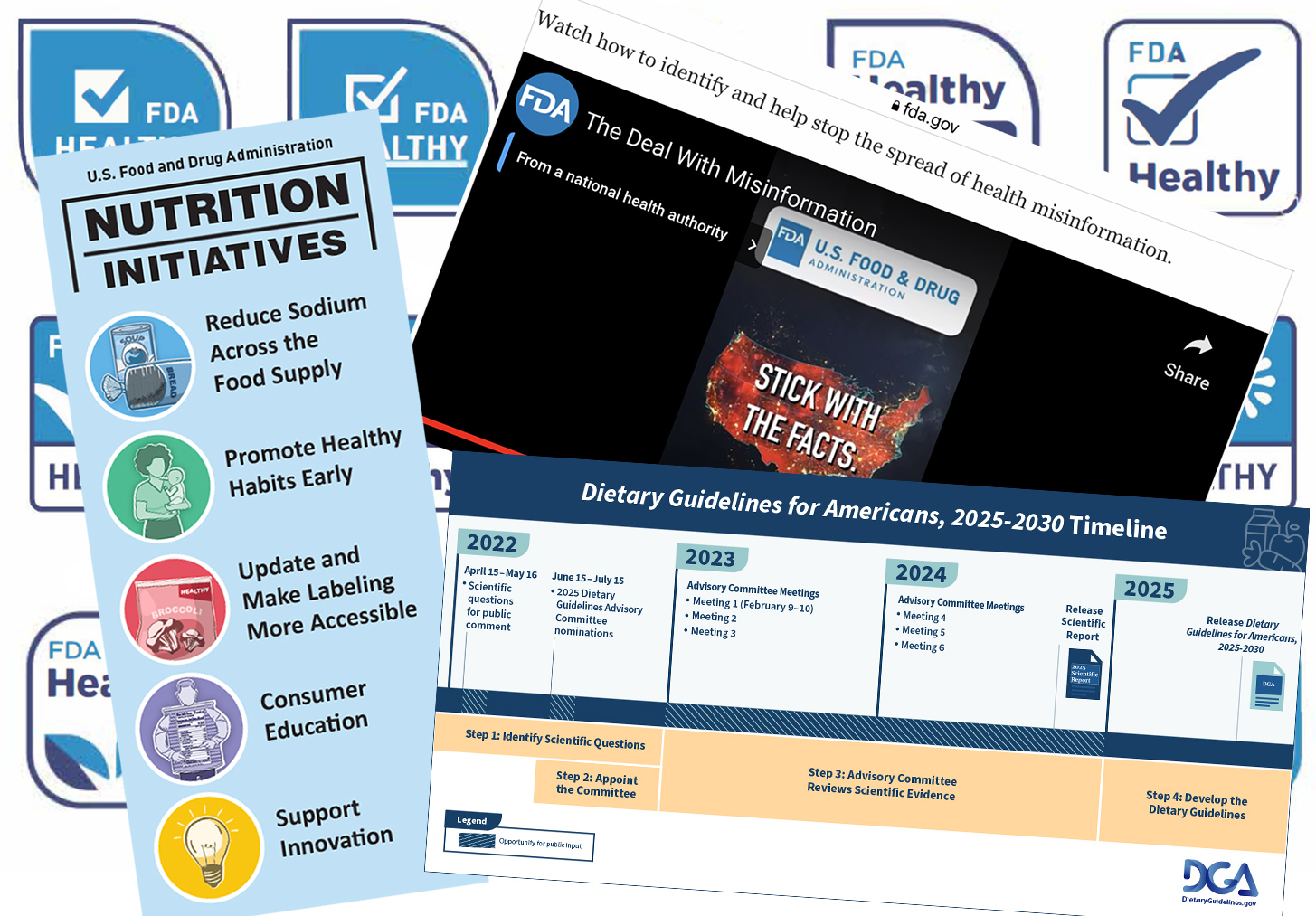
Case in point, just three weeks prior to launching the rumor-control hub, the FDA announced it is “prioritizing nutrition initiatives to ensure people in the U.S. have greater access to healthier foods and nutrition information to identify healthier choices more easily… to improve eating patterns and, as a result, improve everyone’s health and wellness.”

These FDA initiatives came out of the “whole of government approach” pledged by President Biden and Ag Secretary Vilsack in the White House Strategy on Hunger, Nutrition and Health.

“People need to know what they should be eating, and the FDA is already using its authority around healthy labeling, so you know what to eat,” said the President during the White House Conference where the Biden-Harris National Strategy was unveiled in September 2022. 

The FDA proposed rule on ‘healthy labeling’ came out on the same day. Comments ended months ago but the final rule has not yet been published in the Federal Register.

The FDA nutrition initiatives are being pursued “to help accelerate efforts to empower consumers with information and create a healthier food supply.”

According to the FDA news release, the federal government currently believes obesity and chronic diet-related diseases are on the rise because American eating patterns are not aligning with the federal Dietary Guidelines. The press release states that most people consume too much saturated fat, sodium and added sugar, and the FDA nutrition initiatives aim to correct this.

FDA’s nutrition priorities in progress, include:

1)    Developing an updated definition and a voluntary symbol for the ‘healthy’ nutrient content claim, front-of-package labeling, dietary guidance statements and e-commerce labeling, and

2)    Supporting innovation by changing standards of identity such as labeling requirements for plant-based foods.

In addition to issuing its controversial plant-based milk labeling rule earlier this year, which would allow the pattern of fake milk proliferation to simply continue, the FDA in the first four months of 2023 sent letters of ‘no objection’ to three companies in their respective requests for GRAS (generally regarded as safe) status for cellular lab-created meat. 

Several ferrmentation-vat dairy protein analog makers — including Perfect Day with its genetically-altered yeast excrement posing as dairy protein — received their ‘no objection’ to GRAS letters from FDA in 2020.

As reported in Farmshine over the past several years, the FDA has been on its “multi-year nutrition innovation strategy” since 2018. However, the pace has accelerated since September 12, 2022, when Executive Order 14081 was signed by President Biden just 10 days before the White House Conference on Hunger, Nutrition and Health.

Entitled Advancing Biotechnology and Biomanufacturing Innovation for a Sustainable, Safe and Secure American Bioeconomy, the Presidential EO 14081 states: “For biotechnology and biomanufacturing to help us achieve our societal goals, the United States needs to invest in… and develop genetic engineering technologies and techniques to be able to write circuitry for cells and predictably program biology in the same way in which we write software and program computers; unlock the power of biological data, including through computing tools and artificial intelligence; and advance the science of scale‑up production while reducing the obstacles for commercialization so that innovative technologies and products can reach markets faster.”

(AUTHOR’S NOTE: All roads lead back to the umbrella of the Dietary Guidelines. The current DGA Committee began meeting recently in the process of formulating the 2025-30 DGAs. Entrenched in four decades of low-fat dogma, the USDA and HHS, along with the 2010, 2015 and 2020 DGA Committees, repeatedly left out of the discussion dozens of scientific papers, even research by the National Institutes of Health, that showed the neutral to beneficial impact of saturated fats on human health and the positive role of nutrient dense foods that are high in protein and essential nutrients but also contain saturated fat such as whole milk, full-fat dairy, and unprocessed red meat. Given the fact that childhood obesity and chronic diet-related disease incidence are rising rapidly, an objective fact-checker could easily determine that the Dietary Guidelines, themselves, are health misinformation. Clearly, children are the sector of the population whose eating patterns closely align with the Dietary Guidelines since 2010. They don’t have a choice. Most children today eat two meals a day, five days a week, three quarters of the year at school where the Dietary Guidelines rule with an iron hand. Let’s not forget the 2020 DGA Committee admitted that all of the DGA eating patterns came up short in essential nutrients found in animal foods, but when a committee member warned of this on final public reading, the saturated fat subcommittee chair mentioned taking vitamin pills and noted ‘new designer foods are coming.’)

Coca-Cola gives New York the nod for new fairlife milk plant

Officials say it will be Northeast’s largest milk plant, using 5 million pounds of ‘locally sourced’ milk per day

By Sherry Bunting, published in Farmshine, May 12, 2023

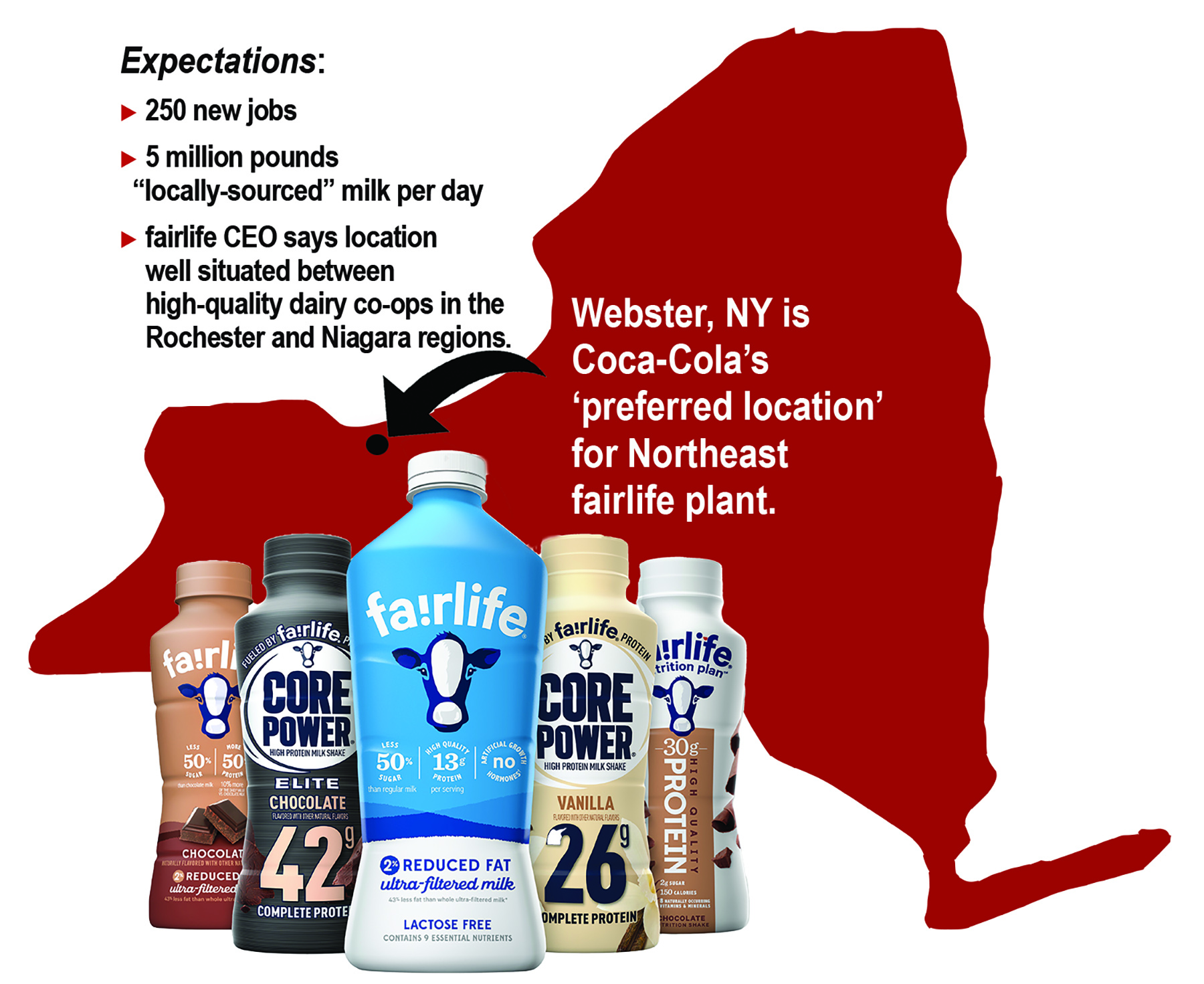
WEBSTER, N.Y. – New York got the nod this week as the “preferred location” where The Coca-Cola Company will build its new fairlife ultrafiltered milk processing plant in the Northeast.

New York State Governor Kathy Hochul made the announcement Tuesday (May 9) that the company selected a site in Webster, Monroe County, New York for the $650 million project, expected to break ground this fall and be operational by the fourth quarter of 2025, pending final due diligence and appropriate approvals.

The 745,000 square-foot facility is expected to create up to 250 new jobs and “utilize an estimated 5 million pounds of locally sourced milk per day, making it the largest dairy plant in the Northeast,” the NYS Governor’s announcement stated.

Founded in 2012 through a “strategic partnership” between Select Milk Producers cooperative and Coca-Cola, with early grants from Dairy Management Inc (checkoff), fairlife is now wholly-owned by Coca-Cola since 2020.

Calling the fairlife project a “major opportunity for New York,” Gov. Hochul said it will “drive economic impact, particularly in the Finger Lakes,” and it will “position New York to regain its spot as the 3rd largest producer of milk in the U.S.”

“The Town of Webster is well situated between high-quality dairy cooperatives in the Rochester and Niagara regions, with a surrounding workforce that has the relevant manufacturing and food and beverage experience, making it the ideal location for fairlife’s expansion,” said fairlife CEO Tim Doelman in a statement at the company’s website.

He noted the new facility will allow the company to “significantly increase capacity and deliver fairlife to more households.”

Empire State Development (ESD) is providing up to $21 million in assistance for the fairlife project through the performance-based Excelsior Jobs Tax Credit Program in exchange for the job creation commitments.

Monroe County Industrial Development Authority (IDA) is expected to apply to the ESD for a separate $20 million Capital Grant, to provide adequate power and infrastructure services to the site. Also collaborating on the project are the Town of Webster, Rochester Gas and Electric and Greater Rochester Enterprise, and NYS Ag and Markets.

ESD Commissioner Hope Knight highlighted Upstate New York’s farm and dairy infrastructure, and Assemblyman Brian Manktelow observed the increased demand for local dairy production and transportation would be additional economic benefits on top of the creation of in-facility jobs.

NYS Ag Commissioner Richard Ball said the decision “highlights the excellence of our dairy community whose farmers will be supplying the milk.”

New York Farm Bureau president David Fisher, a dairy farmer, said the news “is needed for the long-term success of our dairy farms.” He noted the state has 3500 dairy farms, milking 620,000 cows and producing over 15 billion pounds of milk annually with “abundant resources, good land, access to water, and innovative farmers.”

“We were in tough competition with other states,” said New York Gov. Hochul, noting her own heritage coming from a family of dairy farmers in Ireland.

One of the states competing for selection was Pennsylvania.

“While the outcome of this selection is not what we hoped, the Shapiro Administration remains strongly committed to supporting Pennsylvania’s dairy industry and attracting processors to grow here,” said Pennsylvania Ag Secretary Russell Redding in an email response to Farmshine questions Wednesday (May 10).

Redding noted that Gov. Shapiro and teams across agencies were engaged in this project “allowing us to meet fairlife’s criteria for tax climate, resources, utilities, permitting, and incentives.” He reported that Pennsylvania currently makes $15 million in tax credits available annually for dairy manufacturing companies to expand processing in the Commonwealth.

“Just as we were nationally competitive for this project, we plan to be in the running for other selections of this type,” Redding added, thanking all industry and government entities who work on these coordinated efforts to welcome businesses and support agriculture.

When asked specifically about the whether or not Pennsylvania’s state-mandated Class I fluid milk over-order premium (OOP) played any role in the outcome, Redding stated: “The OOP was not a factor.”

The fairlife line includes Class I fluid milk products as well as dairy beverages that fall outside of the Class I criteria into manufacturing milk classes. The company offers a range of products including fairlife ultrafiltered milk, Core Power protein shakes, and fairlife Nutrition Plan  meal replacement shakes.

The fairlife products are made through an ultrafiltration process that removes lactose and condenses other solids to raise the protein content while lowering the natural sugar (lactose) content. For flavored beverages, this means more sugar and other sweeteners can be added because the natural sugar content is lower.

According to the New York Governor’s press announcement, this ultrafiltration process “gives milk a longer shelf life.” 

All fairlife products carry the UHT mark for ultra high temperature pasteurization, which also increases shelf-life. Some of the flavored fairlife products, such as YUP and CorePower are already offered as shelf-stable beverages in supermarkets and online, so it is unclear whether aseptic packaging will extend to all fairlife milk and beverage products in the future.

Other leaders from the collaborating New York State agencies and organizations highlighted the project expands their goal of positioning New York as a hub for attracting technology and innovation in food and beverage manufacturing.

In fact, the Governor’s press announcement stated that, “The research for fairlife’s branded milk process (ultrafiltration) originated at Cornell University over a decade ago.”

However, the story told by fairlife co-founders Mike and Sue McCloskey, as recently as the 2020 Pennsylvania Dairy Summit, and in earlier meetings, presentations, and published interviews, is that they discovered the reverse osmosis and membrane filtration process when dealing with a well issue on their former dairy in New Mexico.

After seeing what this filtration did for separating minerals in the water to make it more palatable to the cows, they started tinkering with filtration for milk, the story goes.

Select Milk Producers (SMP), also founded by the McCloskeys, then began using reverse osmosis and ultrafiltration as early as 1995 to reduce the water when moving loads of milk to cheese plants. At the same time, they began their high protein, low sugar milk proposition by partnering first with H-E-B supermarkets across the Southwest under the Mootopia brand in 1996 – a precursor to what is fairlife today.

Sue McCloskey explained to Pennsylvania producers at the 2020 Summit that they saw other protein drinks in the market they could compete with by concentrating the protein in the milk. 

She said this means that the raw milk going into the ultrafiltration process must be very low in somatic cell counts because the process separates some solids, like lactose, while concentrating other solids.

Products in the fairlife line are currently made at the original SMP ultrafiltration plants in Dexter, New Mexico and Coopersville, Michigan. Newer plants opened in Goodyear, Arizona in 2021 and Petersborough, Ontatio, Canada in late 2020. The latter sources all of its milk from Canadian farms for the Canadian consumer market.

Ultrafiltration is employed by other dairy companies, such as Cayuga Milk Ingredients (CMI) using proprietary European technology to produce unique liquid and dry milk and dairy ingredients for sale in the U.S. and internationally. 

Also located in the Finger Lakes Region of New York in the town of Auburn, CMI announced its own expansion last year to break ground this spring on a second facility that will have aseptic packaging capabilities for manufacturing a range of shelf-stable fluid milk, filtered milk, and dairy-based beverage products.

-30-

My thoughts on the ABC’s of PA’s state-mandated OOP

By Sherry Bunting, published in Farmshine, May 5, 2023

The purpose of Pennsylvania’s 1930s Milk Marketing Law was to regulate and support the Commonwealth’s dairy industry. Today, it continues to set a retail minimum price for milk through the Pennsylvania Milk Marketing Board (PMMB) while most other states have zero protection against supermarkets using milk as a loss-leader to attract shoppers. 

To me, that’s the real problem. Nationwide, consumers don’t know or appreciate the true value of milk after years of rampant and extreme loss-leading. I’m not talking about random sales to clear inventory, I’m talking about day-in-day-out well-below-cost prices as a retail business model.

Supermarkets chains have gotten into doing their own milk bottling or refuse to pay for services or quality as a way to avoid eating all of the cost of their own decisions to knock the price of milk back several dollars per gallon. They know milk is in 95% of shopping baskets. It’s a staple. If their store brand is the cheapest around, they’ll get your business and sell other high margin items at the same time.

Dairy farmers and milk bottlers, quite frankly, should not be on the hook for that. Period. But indirectly they are.

At the federal level, no one wants to address this because USDA also benefits when it comes to buying cheap (skimmed) milk for food programs like school lunch, where they also reimburse Impossible not-burger, nacho chips and pop-tarts — but not whole milk, only skimmed.

Is it any wonder consumers balk at spending $5 for a gallon of milk in Pennsylvania but will pay $1.50 for a cup of water, even more for a cup of water with artificial additives? 

Is it any wonder consumers don’t think of milk’s nutritional value next to other protein and vitamin drinks? Intrinsically, the higher margin drinks are perceived as more valuable because the price is higher. Milk is perceived as worth less than water!

This makes Pennsylvania a sitting duck in a national, no, a global market. Why? Because Pennsylvania sets a minimum retail and wholesale milk price each month.

Pennsylvania’s Milk Marketing Law prevents supermarkets from selling milk under the monthly announced state-minimum price. The over-order premium (OOP) portion of this price was intended to help Pennsylvania farmers. The Milk Marketing Law already gives the retailers and bottlers a 2.5 to 3.5% profit margin over average industry costs within that set minimum-price buildup.

The OOP is currently set by the PMMB at $1.00 per hundred pounds of milk plus a 44-cent per hundredweight fuel adjuster. This come out to 13 cents per gallon paid within the state minimum retail price that is meant to be the farmer’s over-order premium (OOP).

A variety of loopholes have diminished how much of the state-mandated OOP gets back to Pennsylvania dairy farmers as intended by the law. It has encouraged interesting business models that involve more out-of-state milk coming in to displace Pennsylvania milk in some Pennsylvania stores (and some creative accounting for sure).

Whether in tankers or packages, more out-of-state milk is competing with an unfair advantage when the built-in OOP is either collected and not paid to farmers or remains completely undocumented — floating around and up for grabs by the supply chain.

Senate Ag Minority Chair Judy Schwank had an interesting exchange with Chuck Turner of Turner Dairy near Pittsburgh during the recent Senate Ag hearing on the matter. She asked whether or not the aseptically processed, shelf-stable milk, which she buys, has the OOP built into its price.

Good question.

Turner explained that for the members of the Pennsylvania Association of Milk Dealers, the OOP is factored in as a cost that they incur when they procure milk within the state and then return this OOP to their Pennsylvania farmers based on their sales of Class I fluid milk products within the state.

On the other hand, when a Nestle or some other company, like fairlife, makes a shelf-stable flavored milk that ends up in a retail dairy case in Pennsylvania, the OOP doesn’t enter into their thought process on these products coming most likely from Indiana (and New York), he said. To his mind, that means it does not “collect” OOP.

In reality, such out-of-state packaged fluid milk products that fall into the Class I fluid milk category are ‘collecting’ the OOP — even ultrafiltered and aseptically packaged milk. These products compete for Pennsylvania consumer dollars. Whether out-of-state fluid milk products are unflavored or flavored, fresh or shelf-stable, they are part of the unknown number Schwank said the Senate Ag Committee needs to know.

It doesn’t matter if the milk is sold above state-minimum price, the OOP is in there.

Take for example the fresh fluid milk brands that are bottled in Pennsylvania — that are not shelf-stable – but are priced on supermarket shelves above the state minimum retail price.

This happens when stores like Walmart and Costco want to differentiate their private label store brands as the lowest-price. What do they do? They put other brands higher.

Since supermarkets in Pennsylvania cannot go below the state’s minimum price to “loss-lead” with their in-house private label, they bump-up the price on competing name brands instead.

In some cases, this pressures sales volume even lower for name brands that are produced, processed and sold in Pennsylvania, reducing the OOP that goes back to the Pennsylvania farms. At the same time, some of the private-label store brands sold at state-minimum fall into the category of breaking the chain of produced, processed and sold in Pennsylvania, which affords them the ability to keep the farmer’s OOP.

Here’s my bottom line from the recent Pennsylvania Senate Ag hearing on the OOP:

For 15 years grassroots dairy producer groups have been grappling with the concerns shared at the hearing, and how the OOP may be affecting the use of Pennsylvania-produced milk in Pennsylvania consumer markets. The embarrassment of not knowing definitively how much fluid milk is sold in the state and how much premium is stranded off-record or on-record has been the subject of meetings, hearings, estimates, emotion, stonewalling and bickering for over 15 years!

Attempts have been made by lawmakers like former State Senator Mike Brubaker and current State Representative John Lawrence repeatedly putting forward bills that would have penetrated the armor surrounding this issue.

Now, in the past 12 to 18 months, we have the Pennsylvania Farm Bureau on high-alert, the Department of Agriculture now is involved and has come up with a plan. 

The CDE and PDMP are studying the issues around the premium and the obstacles to processing investment with the help of a Cornell economist. 

And the Senate Ag Chairman and Minority Chair offered their data-driven bills last session and will offer them again, because, of course, they are paralyzed by still needing that data they’ve been needing for 15 years!

Now, as the fluid milk market is in steep decline over the past 15 years (ironically the same 15 years in which whole milk and 2% milk have been federally prohibited as choices in schools and daycares)…

Now as most of the milk bottling assets, nationally, are owned by cooperatives and most of the rest by retailers…

Now as fluid milk plants are closing to the south and the west, while Pennsylvania has managed to hold on to a core of independent bottlers…

Now as the state courts the favor of Coca-Cola / fairlife or other new processors to invest in Pennsylvania … (Coca-Cola announced May 9 that New York will get the new plant).

Now as everyone is sitting up noticing that the tens of millions of Pennsylvania-paid ‘stranded’ OOP annually over the past 15-plus years may have been fueling growth beyond Pennsylvania’s borders while Pennsylvania’s own farms have been stagnated by more stringent supply management programs due to lack of processing capacity…

Here we are, back to the question of needing the data. Senators were interested in doing something, but Chairman Elder Vogel, said threading the needle will be difficult, and Minority Chair Schwank said “we have to have the data.”

Pennsylvania is enduring erosion on one hand in part because of the OOP and/or the minimum pricing, while on the other hand, these structures are believed by some to provide a stabilizing effect for the Class I bottlers that remain.

And so, the cats keep chasing their tails around the milk bowl!

Meanwhile, more producers have strived to get some of their milk outside of this game by selling it raw – an entirely separate market. The PMMB reached out to a number of them last year telling them they had to be licensed and do monthly reports, then backed off a bit for the time being. They are not the problem. Their milk is not pasteurized, and it is not part of the system in Federal Milk Marketing Orders either.

My biggest questions after the recent hearing, after 15 years of following this and for a time helping farmers who were involved in seeking changes more than a decade ago: Where would we be today if in any of the prior legislative bills, meetings, hearings, plans, would have moved forward in some fashion? 

And yes, this too is related: Where would we be today if whole milk had not been removed from schools?

One thing is clear on the first question, we would by now have solved the math equation of A + B = C instead of estimating, stonewalling, bickering…

On the second question? We might be selling more milk.

Read Part One and Part Two of the PA Senate Ag Hearing about the ABC’s of the OOP here and here

-30-

Part Two: Digging into the PA Senate Ag hearing on the PMMB over-order premium

By Sherry Bunting, Farmshine, May 5, 2023

HARRISBURG, Pa. — As reported in Part One, published in Farmshine’s April 28th edition, the Pennsylvania Senate Agriculture Committee held a three-hour hearing on April 25 about the state’s mandated Class I milk over-order premium (OOP), which is part of the state’s minimum milk price per gallon set by the Pennsylvania Milk Marketing Board (PMMB).

Agriculture Secretary Russell Redding offered this equation to describe what is known and unknown about the estimated $30 million or more in annual OOP paid by Pennsylvania consumers: A+B=C.

‘A’ was confirmed by PMMB auditor supervisor Gary Golsovich to be $23.6 million collected by processors in 2022. But, he said, only $14.5 million of this collected OOP was documented as paid to Pennsylvania farms for milk that could demonstrate all three criteria: produced, processed and sold in Pennsylvania.

Golsovich gave an example: A processor sourcing 50% of its milk from Pennsylvania farms with 50% of its sales being consummated in Pennsylvania only has the obligation to pay 25% of the OOP to the Pennsylvania farms. This was something the PMMB tried to change 10 years ago, seeking to require processors to pay up to the percentage of in-state sales that matched in-state sources, but a constitutional interstate commerce challenge in the courts caused the state to back down.

‘B’, said Redding, is the additional $5 to $10 million in OOP that is paid by Pennsylvania consumers but is presently unaccounted for. Examples are packaged milk from out-of-state and other cross-border transactions. Legislation such as Senate Bills 840 and 841 from last session would capture this information, and Senate Ag Chairman Elder Vogel Jr. and Minority Chair Judy Schwank said they intend to re-introduce these bills in the current legislative session.

He estimates the total ‘C’ would be around $30 million, or more, but last year less than half that amount was paid to the intended beneficiaries: Pennsylvania farms.

The only way to fix the leakage, said the Secretary, is to “break the chain,” to remove the OOP from the minimum price and make it a fee collected at retail and remitted to the Department of Revenue into a designated fund. This would also require legislation.

“Pennsylvania has a system that is like no other,” said PMMB Chairman Rob Barley, a farmer in Lancaster and York counties. “The system worked well when people were drinking a lot of milk produced by Pennsylvania dairy producers. That’s changing. The system needs an adjustment.”

When the Senate Ag Chairman pressed the PMMB Chairman for specific ideas, Barley said the Secretary’s proposal, “while not ideal, is probably the only way to do it.”

He mentioned the potential for a tiered or scaled system where smaller farms could receive more and larger farms less, much like the federal Dairy Margin Coverage has a tiered program based on annual milk production history. 

“We want to work with the legislature on this — to benefit everyone,” said Barley.

The consumer member of the PMMB board, Kristi Kassimer Harper from Fayette County, noted examples in her area of western Pennsylvania, where the OOP works among a variety of independent bottlers that buy Pennsylvania milk, process it in Pennsylvania and sell most of it in Pennsylvania.

She cited studies by St. Joseph’s University indicating consumers don’t give much thought to where their milk comes from, but a survey of Pennsylvania consumers showed that two-thirds would pay a 10-cent premium if the premium gets back to the farmers. (They are already paying a 13-cent OOP plus fuel adjuster embedded in the milk price, but less than half of it is getting back Pennsylvania farms.)

In his back-and-forth discussion with Vogel, Barley said a formula could be developed that would prioritize producers that are currently serving the Class I fluid milk market, using a graduated scale. This idea turned Chairman Vogel’s head. He said it’s the first time he’s heard this approach mentioned.

Something like this would address the concerns of milk dealers who are currently upholding the spirit of the law and the testimony from the State Grange, urging caution about diluting the meaningful amount of OOP 15 to 20% of Pennsylvania farms currently receive.

“Consumers are already paying this, it’s not a tax, but if we collected it from Pennsylvania retailers as a fee and put it in a restricted fund, we can avoid the constitutional issues with interstate commerce,” said Senator Gene Yaw. “We do this all the time, collect funds and put it toward programs we want to support. In this case, the people are already paying it, and if the money is in one place, we can audit it.”

The “mechanics” of how to distribute it, he said, can be worked out with the Board and the industry. But at the same time, Yaw and other Senators said they want to help more of the state’s farmers access what was intended for them, without harming those already receiving some.

Meanwhile, the Department of Agriculture’s plan mentions ‘uniform distribution,’ as do the policy points endorsed by Pennsylvania Farm Bureau.

PMMB board member Jim Van Blarcom, a farmer from Bradford County, stated that in his nine years on the Board, he has heard the concerns of producers across the state. He noted the geographic and generational diversity of the PMMB Board, and their ability to understand how different parts of the state have different experiences with the OOP. 

“The OOP was put in place to help dairymen recoup some costs,” said Van Blarcom, explaining to lawmakers that the Milk Marketing Law already has built into it a 2.5 to 3.5% profit margin for bottlers and retailers. “Since then, the industry has changed, making it outdated and less effective. As a board member, it is getting more difficult to weigh the benefits for the farmers who receive a useful OOP vs. farmers who receive very little to none. When consumers pay a mandated 8 to 12 cents on every gallon of milk sold, this becomes a large sum of money, of which some is unaccounted for.

“During my time on the Board, I have heard over and over about the tanker loads of New York milk coming in and displacing Pennsylvania farmers’ milk. The primary reason these companies do this is they can take advantage of the OOP… We are essentially encouraging this to happen,” he explained.

Recounting testimony at a Board hearing from a dairy farmer milking 90 cows, he said the amount of OOP that farm received wass equivalent to one bag of milk replacer a month.

“I don’t believe one bag of calf feed keeps that farmer in business, but rather his tenacity and commitment to the family farm,” said Van Blarcom.

He also recounted testimony at a Board hearing from Pennsylvania Representative John Lawrence, who cited the accurate accounting on mandated fees for alcohol and fuel.

“This is not happening with the mandated milk OOP. It will continue to become more difficult to defend as a program with funds that are not accurately accounted for and not fairly distributed,” Van Blarcom asserted, adding that consumers will also “become more aware of the unfairness to themselves.”

Meanwhile, when laying out the Department of Agriculture’s plan, the Secretary talked about “a collective investment in PA Dairy,” such as using some of these funds to invest in processing.

Andy Bollinger, a Lancaster County dairy farmer testifying for PDMP said the organization has not taken a position on reforming the OOP because they want to see the facts and the results of a study they are working on with a third-party economist.

Zach Myers from the Center for Dairy Excellence also mentioned a study CDE is involved in to understand the obstacles to processing investment within the state. He cited the impact on farms from supply management programs placed on them based on processing capacity.

“We come to you and ask for investments,” Secretary Redding told lawmakers. “Here’s one that’s already done in the marketplace, and we’re failing to bring those dollars back specifically to reinvest in PA Dairy.”

-30-

Little bit new, little bit Dé-jà vu – PA Senate Ag hearing digs into ABC’s of milk OOP

Data and reform needed, but is Secretary eyeing portion of estimated $30 million-plus for ‘dairy reinvestment’?

By Sherry Bunting, Farmshine, April 27, 2023

HARRISBURG, Pa. – Little bit new, little bit Dé·jà vu. (That’s French for ‘the feeling of having experienced this situation before.’) 

Those first thoughts came to mind listening to the Pennsylvania Senate Ag Committee’s hearing Tuesday (April 25) on reforming the state’s mandated over-order premium (OOP) that is part of the state’s minimum wholesale and retail milk prices, set by the Pennsylvania Milk Marketing Board (PMMB).

Ag Secretary Russell Redding laid out for state lawmakers the Department of Agriculture’s plan to seek reforms that: 1) uniformly and fairly distribute the OOP, 2) ensure the amounts charged to Pennsylvania consumers substantially equal amounts distributed back to farmers, and 3) uses a distribution system that does not have incentives to avoid paying Pennsylvania producers by selling milk from across state lines.

He said the Department is a “reluctant participant” but sees the need to make the “collective case” for the “composite of Pennsylvania Dairy.”

“We believe there are inequities, and we see division and growing farmer mistrust,” said Redding. “We knew there were data gaps in our petition last year… Think about the OOP as an equation: A + B = C.

“What we know today is that of the $23.6 million in OOP collected by processors in 2022, $14 million was required to go back to farmers. That’s A. 

“B is generated in the marketplace but not collected,” he explained. “Our belief is that this is another $5 to $10 million (annually). 

“C is the total that we believe is in the neighborhood of $28.6 to $33 million. The question is, what do we do about it?” he asked.

He answered to say the only way to fix this is to change the system and begin removing the OOP from the minimum price buildup and instead have the PMMB establish a retail-based premium, collected at that point of sale and remitted to the Department of Revenue into a designated fund.

This would require the legislation.

“The General Assembly could then appropriate direct payments to producers and to reinvestment in dairy processing,” said Redding.

The Secretary called it an “embarrassment that we don’t have this number (B)” to complete the A + B = C equation, but as he talked about the PDA’s plan, we heard articulated for the first time this idea that once numbers can be put to the equation and legislative authority for the Board to devise a formula, the OOP could become a “milk tax.” 

The difference being that many consumers don’t know they are already paying the OOP, but when pulled out of the minimum price buildup, it becomes a known quantity.

“We trust the state to do this with liquor, cigarettes and liquid fuel. The legislature could decide how these funds would be used, and a portion could be used to help processors invest or reinvest,” said Redding.

In fact, Zach Myers for the Center for Dairy Excellence said a study is underway to assess the obstacles that are preventing processing investment and reinvestment in Pennsylvania.

PMMB Chairman Rob Barley noted that, “It’s certainly time to evaluate how the OOP dollars get back to farmers and not pick winners and losers. The over $800 million that has gone back to dairy farmers since 1988, especially when the majority of it did, no doubt made a positive difference, but that is changing,” he said. “Fluid milk sales have dropped in half (since then), and it is difficult to account for the dollars with the current tools that we as a Board have.”

Barley noted that if the process moves forward to reform the structure, perhaps other products could be eventually added.

“Right now we don’t have the authority to do any of this. Going back to the 1988 testimony, the primary reason the over-order premium was added (to Class I) is that was the practical point, that was the mechanism already in place for fluid milk. There is no such system for other classes, and Class I is also more of a localized product, which I think is still true today,” Barley explained.

Going forward, he said, the choices for the Board are “to get rid of what we have, which is a choice many are not in favor of, or to have legislation to change the OOP without violating interstate commerce, or to develop a new system that strengthens the Pennsylvania dairy industry to benefit all sectors.”

Redding stressed the point that, “This is all about the dairy farmer, how do we incentivize what we need? Keeping our eye on the farmer and understanding we can do something extraordinary here, we have this opportunity to extract this premium from the marketplace and get (the OOP) back to farmers and for the purposes of reinvestment…”

That’s the New. Now for the Dé·jà vu…

The next thought to emerge in this reporter’s mind after hearing the new twist on OOP as ‘milk tax’ and a portion for ‘reinvestment’ was this: Everyone is at the table now, sitting up, alert, paying attention, and offering solutions after 15-plus years of meetings, hearings and discussions. But the same bottomline emerges: everyone still wants a dip of the farmer’s elusive cream.

Not 15 minutes later, after PMMB board member Jim Van Blarcom testified, his Senator Gene Yaw of the northern tier counties shared a similar thought about how this may be already happening within the minimum price buildup in a rapidly changing industry.

“We made this so complicated and there are too many fingers in this pie, frankly,” said Yaw, asking whether processors get any of this money, now.

PMMB auditor supervisor Gary Gojsovich answered that the OOP is currently collected by processors through their sales, and they pay it back to Pennsylvania producers only when the milk is produced, processed and sold in Pennsylvania, all three must apply.

“In the simplest terms, it sounds like we need to change how the premium is collected and the point of where it is collected,” Senator Yaw responded.

Senator Judy Schwank representing parts of Berks County said: “We need the data. We have to have the data.”

So, we are back to the data. 

The Secretary called it an “embarrassment that we don’t have this number.”

Chairman Elder Vogel and ranking member Schwank said they plan to reintroduce their bills that did not move forward in the last legislative session that would give PMMB authority to license distributors, a move that would account for all packaged milk sales coming into Pennsylvania from out-of-state and other cross-border transactions, which ‘strand premiums.’

A quick history

For decades, there have been meetings and hearings and discussions about the future of the Pennsylvania Milk Marketing Law and the PMMB that sets minimum wholesale and retail milk prices. The law dates back to the 1930s, but the mandated OOP was introduced to the existing structure during a year of drought and high feed prices in 1988.

At that time, the state’s OOP was set by the Board at $1.05 per hundredweight (9 cents per gallon). Today it is $1.00 plus a 50-cents per hundredweight fuel adjuster (combined is 13 cents per gallon). 

At intervals before 2018, the OOP was as high as $3.00 plus a fuel adjuster (over 26 cents per gallon). In 2017, it was nearly $2.00 (17 cents per gallon), but was abruptly cut in half in December of 2017 due to the pressure of out-of-state milk — a harbinger of things to come just four months before Dean Foods announced it was ending contracts with 130 dairy farms in 8 states, 42 of them in Pennsylvania and five months before the startup of the Walmart bottling plant in Indiana.

Also included in the minimum resale and retail milk price buildups are the Federal Order price benchmarks, which vary geographically because Pennsylvania is split between two different Federal Orders. To this minimum federal benchmark price, the OOP is added, translating now to about 13 cents per gallon. 

Also added are the average cost recovery amounts for bottlers and retailers as determined by annual hearings for each area of the state, along with adding the 2.5 to 3.5% profit margin the Milk Marketing Law guarantees milk bottlers and retailers on top of the average cost recovery.

What has come under fire, especially since 2009, is the producer OOP, how it is collected and passed back to farmers, how some of it is stranded and how the changing dairy industry has impacted the real and perceived equity of the distribution of these funds.

Lawmakers made it clear that they look at this as two distinctly separate things, the collection is one issue, and the distribution quite another.

Among those testifying, the amount of the current OOP at $1.50 including fuel adjuster that is received on their farms ranged from 6 cents to 50 cents.

The bottomline is for all of the PMMB’s efforts to expand communication and transparency with the tools available, even board member Van Blarcom conceded that it is becoming more difficult to justify the OOP to his peers.

For his part, Matt Espenshade, a Lancaster County dairy farmer representing the State Grange, told lawmakers that producers and cooperatives that are ‘in’ the Class I market take risks and have requirements other class markets do not experience. 

He cautioned against reforms that would dilute the premium for the 15 to 20% of state farmers currently receiving a meaningful amount because they have costs and risks associated with that reward.

Johnny Painter, a Tioga County dairy farmer testifying for the Pennsylvania Farm Bureau advocated for a uniform distribution of the OOP in reforms that would have the state collect it all. He said farmers in all classes of milk have the same quality standards to meet. 

When pressed by Senator Schwank on why PFB made policy to end the OOP, Painter said it was a tactic to get the dialog started.

Troye Cooper for the Pennsylvania Association of Dairy Cooperatives and a member services director for Maryland and Virginia Cooperative said those receiving very little OOP are part of the 3500 Pennsylvania dairy farms shipping milk through cooperatives that perform essential “balancing” services for the fluid milk market. As coop members, they share in the cost of that.

However, what remained unspoken in his testimony is that the current minimum wholesale and retail milk price buildups now include a roughly 25-cent ‘co-op procurement cost’ for these balancing services along with the requirement that cooperatives list on member milk checks how much of the producer OOP was included. 

Representing the Pennsylvania Association of Milk Dealers, Chuck Turner of Turner Dairy near Pittsburgh, pointed out that fluid milk sales are declining, and other class products are increasing. He asked how bottlers can continue cutting checks to the Federal Orders to bring up the payments for other class milk while reducing the payments to their own shippers when their own fluid milk market volumes are shrinking.

“The fluid milk business is in tough shape. Sales volume has trended downward for 13 years by more than 20%. That’s 1 gallon in 5 lost, 1 plant in 5 closed. It can’t bear the burden for the other classes. It seems particularly unfair with sales growing in the other categories,” said Turner, noting that plants outside of Pennsylvania have been closing “at an astonishing rate.” 

He said the number of independent milk processors in the U.S. fell from 69% to 44% in 2020, whereas in Pennsylvania, independent bottlers still represent 62% of the fluid milk, and he credited the PMMB system for that difference.

Myers noted that Pennsylvania is the state with the second most dairy farms and the fourth smallest average herd size, with production costs that are higher than in some neighboring states. 

He cited loss of market premiums, including quality premiums, the impacts of other price erosion such as Federal Order make allowances that a potential hearing could further degrade. 

Compared to the U.S. All-Milk price published monthly by USDA, Myers noted the Pennsylvania All-Milk price used to be higher than the U.S. average, but this gap has narrowed significantly in the past 15 years.

“It was $1.73 per hundredweight from 2008 to 2012, averaged $1.29 from 2013 to 2017, and in the last five years, it has narrowed to just 49 cents, on average,” said Myers.

In fact, during the pandemic in 2020-21, the Pennsylvania All-Milk price averaged 18 cents less than the U.S. All-Milk price, according to Myers.

“There are several factors for this narrowing, but it’s safe to say it can’t be fixed by increasing the premiums,” said Myers, noting that 80% of the milk produced in Pennsylvania is marketed through cooperatives, and there are cooperative base programs limiting expansion on Pennsylvania farms.

These coop base programs and penalties affect the dairy farms and are in part tied to the limits in processing capacity.

Meanwhile, there were several references by testifiers citing milk coming from New York into Central Pennsylvania for processing and sale and displacing milk produced in that area. The OOP, of course, stays with that retailer, processor and/or cooperative as part of their business model to expand their state’s markets into Pennsylvania so their producers can grow.

“When that premium goes back to New York, that’s exactly what is playing out, and it feels like an injustice to be asking our consumers to pay it without regard to that investment,” said Redding. “We want to capture that premium and put it back into our Pennsylvania dairy farmers.”

The problem, said Barley, is the PMMB can’t just “grab that money and give it to Pennsylvania farmers if the milk is not produced, processed and sold in-state without being challenged in court as in the past on the grounds of violating the interstate commerce clause.”

Senator Yaw interjected that, “If the milk is sold here, we should give the premium back to our farmers. If the milk came from New York, those farmers should not benefit from what we are doing to support Pennsylvania farmers.”

Redding said lawmakers “do not have to wait for the data. The bill on licensing distributors could go forward along with a bill to set up a structured system, assuming the amount to be around $30 million, and we believe it to be higher, to decide how to distribute that revenue.”

Redding said his fear is that as the frustration undertow grows, Pennsylvania will lose this premium without action.

He pointed out that his committee “kept its promise” to get everyone around the table to hear ideas, but that it will be “difficult to thread this needle and it will require collaboration.”

Ranking member Schwank said everything hinges on getting the data that is needed to know how to proceed.

Click to read Part Two.

-30-