How will fake milk, fake meat be labeled and regulated?

Say, what? New twist on standards of identity: How will fake milk and fake meat be labeled and regulated?
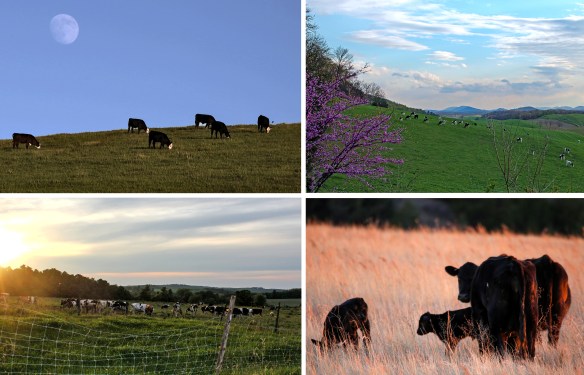
cows.jpg

In a time when many people have lost their connection to the values and sustainability of the circle of life, cattle have been getting an undeserved bad rap on everything from diet to environment to compassion. On all three counts, the anti-animal agenda lies behind the false narrative that is leading us down a dishonest path to more fake concoctions of ill-fated science fueling profits at the expense of our physical and emotional health and the health of the planet. Fake meat and fake milk are funded by billionaires, genetically engineered by USDA, initiated as the brain children of Silicon Valley techies, with partnership from the biggest names in corporate agriculture. Noble goals of ending hunger are the defense, but it’s difficult to believe that when we have surplus dairy and meat protein produced naturally with the real problem of hunger coming down to distribution and waste. This so-called solution has the potential to quietly dictate food choices, markets and livelihoods.

By Sherry Bunting, updated since first published in Farmshine, November 21, 2018

WASHINGTON, D.C. –  “Dairy reinvented: Sustainable. Kind. Delicious,” is the tagline of Perfect Day’s website.

“Better meat, better world” are the words that jump from the Memphis Meats website.

To be more specific, Perfect Day’s mission is to “create a better way to make dairy protein, the same nutritious protein found in cow’s milk…without the help of a single cow.”

Meanwhile, at Memphis Meats, their mission is “To bring delicious and healthy meat to your table by harvesting it from cells instead of animals… feel good about how it’s made because we strive to make it better for you… and the world.”

On the fake meat side, Memphis Meats received Series A funding from four sources in August 2017: venture capitalist DFJ, billionaire investors Bill Gates and Richard Branson, and Cargill. In January of 2018, Tyson came on board as an investor.

On the fake dairy side, Perfect Day received its Series A funding from Singapore and Hong Kong venture capital and investment companies that have relationships with some of the largest food and beverage companies and brands in the world, according to a company news release. In addition, Continental Grain was part of the early investment, and in November 2018, Perfect Day announced a partnership with Archer Daniels Midland (ADM).

The big question, at present, is how will these proteins be regulated and labeled?

The discussion is converging with FDA’s nutrition innovation strategy and modernization of standards of identity (especially dairy standards of identity), along with parallel hearings and comment periods on how to regulate and label the ‘meat’ version of lab-created cellular proteins.

Make no mistake about it folks: Both of these processes involve genetic engineering start-to-finish.

Perfect Day (fake milk protein), for example, sources yeast from USDA research labs that has been “genetically-altered” to include bovine protein stimulators and synthesizers.

Memphis Meats (fake meat) uses animal cells, mainly bovine and poultry, from cell banks that have been edited to grow only desired muscle cells — separate from their whole-animal source.

The fake dairy protein would be the end-product of the fermentation of the genetically-altered yeast, while the fake meat protein would be the protein blobs that grow from the genetically-edited cells, using neonatal bovine serum — or a plant chemical substitute that is under development — as a growth “on” button.

Both systems would require energy feed sources, using a sugar and/or starch substrate to feed the growth.

Both processes would produce waste streams.

The dairy version are grown in fermentation vats. The meat version in bioreactor towers.

While opinions vary on how quickly these technologies can scale, it is clear that the technologies are well-funded, and that agriculture’s top-tier food supply-chain processors and distributors are partnering.

We must continue to let FDA and USDA know what farmers and consumers — the two ends of the supply chain that need to be talking to each other — feel about the potential of these technologies to create captive-supply market control using interchangeable proteins in common manufactured dairy products or as protein enhancements for plant-based beverages, as well as to stretch boneless beef and poultry products with fake counterparts, namely as ground beef, hamburger, meatballs and chicken tenders and nuggets.

In a press release Friday, November 16, the U.S. Food and Drug Administration (FDA) and U.S. Department of Agriculture (USDA) announced that they will “jointly oversee the production of cell-cultured food products derived from livestock and poultry.”

There has been no similar FDA PMO-regultory process established for the fake milk proteins.

USDA and FDA had a public meeting in July and October to discuss the use of bovine and poultry “cell lines” to develop these cell-cultured, lab-created foods.

In fact, meat industry stakeholders shared their perspectives on the regulation that is needed to “foster these innovative food products and maintain the highest standards of public health,” said FDA commissioner Scott Gottlieb in an official FDA statement in November.

USDA and FDA announced their “agreement on a joint regulatory framework wherein FDA oversees cell collection, cell banks and cell growth and differentiation. A transition from FDA to USDA oversight will occur during the cell harvest stage. USDA will then oversee the production and labeling of food products derived from the cells of livestock and poultry.”

As FDA and USDA are “actively refining the technical details of the framework,” some of the aspects of the framework are said to include robust collaboration and information-sharing between the two agencies to allow each to carry out our respective roles.

The well-funded startups and their lobbying organization Good Food Institute (a misnomer in this author’s opinion) had pushed for FDA to control labeling and inspection knowing that if USDA were in charge, their efforts to scale production would be slowed.

In view of this joint approach between FDA and USDA, the original public comment period about cell-cultured ‘meat’ had been extended to December 26, 2018. Comments can be seen at the FDA docket at https://www.regulations.gov/document?D=FSIS-2018-0036-0001  and there are thoughts that this comment period could be extended again as has the dairy standards of identity comment period.

Meanwhile, on the lab-created ‘dairy’ protein front, Perfect Day, a Silicon-Valley startup, announced in a press release in November that it has formed a partnership with ADM, an agricultural processor and food ingredient provider with a mission of plant-to-plate collaboration throughout the food industry.

In fact, ADM will provide facilities for scaling this technology as part of the deal.

This partnership is billed as “teaming up” to begin supplying “the world’s first animal-free dairy proteins to the food industry in 2019,” according to Perfect Day.

“Animal-free dairy proteins will not only offer consumers the option to have a lactose-free, animal-free alternative to conventional animal-based dairy, but also provide a portfolio of nutritious and functional, high-purity proteins with similar taste and nutrition profile of dairy proteins for a wide range of food and beverage applications,” Perfect Day said in their press release.

Meanwhile, the FDA has extended — yet again — its invitation for information specifically on “the use of names of dairy foods in the labeling of plant-based products.” So far, 10,043 comments (as of December 28, 2018) have been received on this docket. To comment by the new deadline of January 28, 2019, go to the docket online at https://www.regulations.gov/docket?D=FDA-2018-N-3522.

Dairy checkoff-funded DMI completed a survey of consumers recently showing that 73% are confused about the differences in nutrition between real dairy milk and plant-based alternatives calling themselves ‘milk.’

Other surveys show that more than half of U.S. consumers want healthy foods with ‘clean’ labels having few ingredients and limited or no processing.

It would seem that these findings, among others, would indicate clearly to FDA and USDA that consumers want no more monkey-business when it comes to their food, that they want to see clarity in the enforcement of milk and dairy standards of identity, and that they want to be informed about look-alike ingredients made in laboratories instead of in the time-honored land-and-animal care-taking profession of dairy and livestock farmers and ranchers.

One thing to keep in mind when commenting is to highlight the fact that over half of U.S. consumers want food that does not have a long list of additives and that is minimally processed.

That, on top of nutritional differences and new unproven processes, are enough reason to aggressively label any food containing either the fake dairy or fake meat protein because standards of identity are in place not just for health and safety but also to prevent fraudulent misleading of consumers.

Consumers should know what they are buying and be able to choose food based on their beliefs about what is a better world, not someone else defining what is kind and good and sustainable for them and not using the government’s currently flawed dietary guidelines to decide for consumers what is deemed “healthy.”

Let FDA and USDA know that we as consumers and farmers want clear labeling if these technologies are going to scale into our food system. We want the fake versions to have all of the inspection rigor that real dairy and meat proteins are subjected to.

Above all, we do not want the government quietly removing — via its one-size-fits-all nutrition innovation strategy — our ability to choose foods and production methods with which we want to nourish our bodies and on which we wish to spend our hard-earned money.

This may come down to a battle between fake animal protein ingredients funded by billionaires aligned with Silicon Valley startups and partnered by the biggest names in corporate agriculture vs. a collaboration between individual farmers and ranchers who are the backbone of our nation, the stewards of land and livestock, along with the public at-large, the consumers who are confused by the lines that are blurring.

Now, more than ever, both ends of the supply chain — farmers / ranchers and consumers — need to engage with each other directly — and not through the industry-scripted mouthpieces.

Stay tuned.

-30-
How do we unwind a trend that demonizes and suppresses a food group?

NESAWG(Philly)3890.jpg

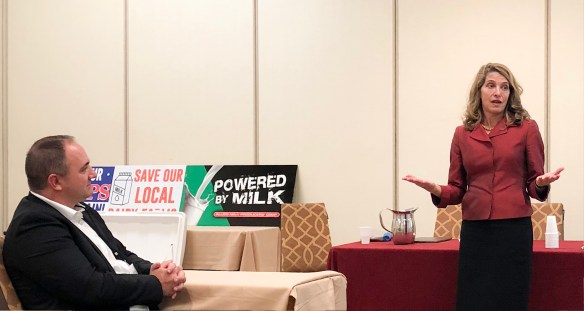
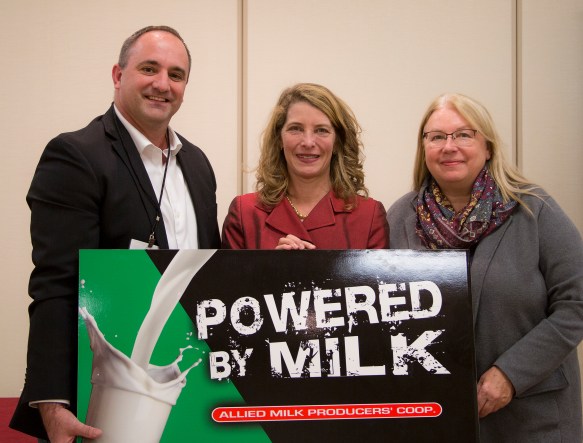
A dairy panel with Mike Eby, Nina Teicholz (center), Lorraine Lewandrowski and John King (not pictured) was eye-opening to food-interested people at the 25th NESAWG conference in Philadelphia. Minds were opened as food policy influencers report weeks later some are reading Teicholz’s book The Big Fat Surprise, and it is changing their thinkingAllied Milk Producers helped sponsor this panel. Stay tuned. 

JUNK NUTRITION SCIENCE STILL RULES DIETARY GUIDELINES

25th NESAWG brings dairy to table in Philadelphia 

By Sherry Bunting, Farmshine, December 14, 2018

PHILADELPHIA, Pa. — Justice, power, influence… Balance. How do people unwind a trend that demonizes and suppresses a food group?

How do Americans have faith in an increasingly globalized food system that gives them choices, but behind the scenes, makes choices for them?

How do urban and rural people connect?

These questions and more were addressed as hundreds of food-interested people from all backgrounds and walks of life gathered for two days in center-city Philadelphia recently for the 25th Northeast Sustainable Agriculture Working Group (NESAWG) conference.

webNESAWG9725

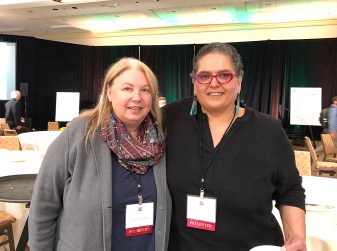
Lorraine Lewandrowski (left), a central New York dairy farmer and attorney, talks with Niaz Dorry of NFFC. Dorry spoke on the opening panel about her 67,000-mile tour of rural America, urging others to “meet the farmers where they are.” Lewandrowski spoke about the ecology of rainfed grasslands in the Northeast and the struggle of family dairy farms throughout this landscape.

For Niaz Dorry of the National Family Farm Coalition (NFFC), the answer is simple: “Get out into the countryside and meet the farmers — where they are,” she said, during the opening panel of the conference as she talked of her recently completed America the Bountiful tour, driving over 67,000 miles of countryside — coast to coast.

Dorry also touched on the dairy crisis. “Go and experience their grief with them. Be with them at milking on Tuesday and see them sell a portion of their cows on Wednesday — just to make payroll.”

Pennsylvania Secretary of Agriculture, Russell Redding echoed this theme during the lunch address as he said agriculture is “zipcode-neutral,” that we need to forge “a more perfect union in our food system” but that the future lies in “differentiating” agriculture here.

NESAWG(Philly)9757-Redding

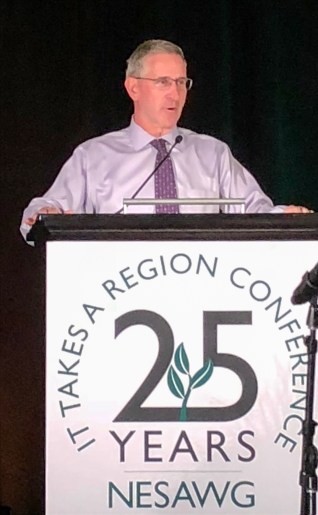
“We see our future — and our long-term investments in Pennsylvania — driven by differentiation…” said Pennsylvania Ag Secretary Russ Redding.

“It’s nice to be with folks who understand the power of food to change lives,” said Redding as he mentioned rooftop gardens, urban brownfields and Pennsylvania’s rank as number two in the nation for organic sales.

“We see our future — and our long-term investments in Pennsylvania — driven by differentiation, by being able to grow and produce and market organic agriculture,” said Sec. Redding.

With the NESAWG goal to “cultivate a transformative food system,” panels and breakouts covered topics from building networks and insuring equity among sectors to understanding urban food trends and ways to position Northeast agriculture within the power grid that ordains the direction of mainstream food production, processing and distribution today.

A breakout session on building “farm-to-school” hubs, for example, gave attendees insight for getting more fresh, local foods into school meals. Presenters talked about obstacles, and how they are navigated, about martialing available resources, identifying networks, working in collaboration with others, piloting ideas and growing them. Farm-to-School began in 2007, and it is growing.

Another breakout brought a panel of dairy producers to share with urban neighbors the crisis on Northeast dairy farms. The panel featured the work of dairy producers Jonathan and Claudia Haar of West Edmeston, New York, who spoke about consolidation that has been underway for decades in dairy.

But it was an afternoon panel — Milk Economies, Ecology and Diet — that put dairy and livestock producers squarely in the realm of hope for a re-wind.

Keynoting this panel was Nina Teicholz, author of The Big Fat Surprise and founder of The Nutrition Coalition. She covered the history of current government Dietary Guidelines and how rigorous studies have been ignored for decades because they don’t “fit” the narrative on saturated fats and cholesterol.

She was joined by dairy farmer and attorney Lorraine Lewandrowski of Herkimer County, New York, who spoke on dairy ecology and how the rainfed grasslands and croplands of Northeast dairy farms are a haven to wildlife, especially important species of birds and butterflies and pollinators.

They were joined by Mike Eby and John King of Lancaster County, Pennsylvania, representing National Dairy Producers Organization and Allied Milk Producers. The two men spoke on the dairy economy and what is happening on family dairy farms, struggling to remain viable.

“The land is most important to us,” said Lewandrowski about her deep love of Honey Hill, where her family has farmed for four generations. While, she is an attorney in town with farmers among her clients, she also helps her brother with the farm and her sister with her large animal veterinary practice.

Lewandrowski is known as @NYFarmer to her over 26,000 followers on Twitter — generating over 75,000 interactions from nearly a quarter-million tweets in the past 10 years!

She described a reverence for the land and its wildlife — cohabitating with a rich agricultural heritage and sense of rural community that exists within an afternoon’s drive of New York City.

“We have land that is rich in water,” she said with a nod to a dairy industry consolidating into regions that rely on irrigation.

“Our lands are rainfed: 21 million gallons of water run through our farm with an inch of rainfall,” she said. “Our farms are diverse across this landscape. But our farmers are going out of business in this economy. So many of these farms are then turned into urban sprawl. What will become of the people, the land and its wildlife?”

Lewandrowski talked about identifying bird species on their farm, of the crops and pasture in dairy operations, and the economic hardships she sees firsthand. She shared her vision of Northeast rural lands and what they bring to urban tables and communities.

Introducing Teicholz to an audience primarily of urban people, Lewandrowski shared how dairy farmers feel — working hard to produce healthy food, and then contending with poor prices driven by regulations that suppress its value.

“I didn’t know why our food is not considered good and healthy. Nina’s book gave me hope,” she said. “We are fighting for our land, and yet the vegans are so mean. When our farmers go out of business, they cheer on social media. They cheer when our families lose everything. But the land and wildlife lose also, and the vegans cheer.”

Teicholz traced the history of her 10-year investigation that led to The Big Fat Surprise: Why Butter, Meat, and Cheese Belong in a Healthy Diet. It started with a newspaper assignment on dietary fat.

NESAWG(Philly)9769

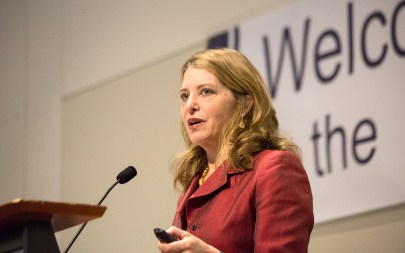
Nina Teicholz explains the revelations of a decade of investigation leading to The Big Fat Surprise. In the 5 years since publishing, farmers seek her out to thank her. She says she never realized how it must feel to be a dairy or meat producer — producing a healthy product while being told it is not healthy and seeing your livelihood pushed down by faulty dietary controls.

“Before I knew it, I had taken this huge deep-dive into fats and realized we have gotten it all completely wrong,” said Teicholz, a former vegetarian for 25 years before her research.

“I’m here to speak today because I found Lorraine’s twitter account and fell in love with her photos and stories from the dairy farm,” said Teicholz. In the nearly five years since her book was published, awareness of ignored science has been raised.

A California native, living in New York City, Teicholz described herself as an urban person and how surprised she was to hear the stories from farmers about how her book and her work gives them hope.

“It breaks my heart to now realize that — after all this time — the dairy farmers and meat producers have been led to feel that there is something wrong with the food they are producing, and to see how vegans go after these farmers, and now after me too,” Teicholz related.

“How did we come to believe these things that led to the decline in foods like whole milk, and have pushed down the producer?” Teicholz traced the history of dietary caps to the theory of one researcher — Ancel Keys from the University of Minnesota.

“Concern about heart disease in the 1960s led to many theories. The diet-heart hypothesis of Ancel Keys was just one theory, but he was unshakably confident in his own beliefs, and he was considered arrogant, even by his friends,” said Tiecholz.

“When the American Heart Association nutrition committee first supported Keys’ recommendations — even though the scientific evidence was very weak — that was the little acorn that grew into the giant oak, and it’s why we are where we are today,” she explained.

Methodically, Teicholz took her audience through the science that was used to support Keys’ theory, as well as the many more rigorous studies that were buried for decades.

In fact, some of the very research by the National Institute of Health (NIH) that had set out to prove causation for Keys’ theory was buried in the NIH basement because “the results were so disappointing to that theory.”

The studies that did not validate Keys’ theory — that fat in the diet is the cause of heart disease, obesity and other diseases — were suppressed, along with the studies that outright refuted his theory. A steady drumbeat of science — both new and exposed from those earlier times — shows a reverse association and causation.

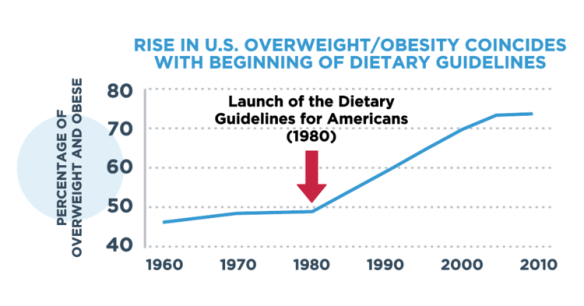
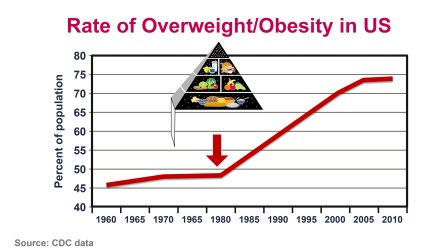
48329399_2290819234570553_8398919649542012928_n.pngIn fact, since the Dietary Guidelines capped saturated fat in the 1980s — becoming progressively more restrictive in requiring lowfat / high carb diets — the data show the association, that Americans have become more obese, with higher rates of diabetes and heart disease.

“It feels like the battle is endless,” John King said as he spoke of the real struggle on dairy farms and of selling his dairy herd in 2015. “But it is rewarding and encouraging to see what people are doing to expose the truth now.”

King posed the question: “Do urban communities really care about rural communities? If not, then we are done. Our food will come from somewhere else and the system will be globalized.

“As farmers, we care about what we produce, and we care about our animals,” he said. “What happens to us on our farms trickles down to the urban areas. It’s an uphill battle to try to go against the status quo, and we need urban communities to care if we are going to be successful. It comes down to whether urban and rural care about each other. Do we care about our neighbors?”

Teicholz sees the U.S. being in the midst of a paradigm shift. However, it is taking time for the Dietary Guidelines Advisory Committee to change and open up to the science. She noted that in the 2015-2020 guidelines, the caps were removed for cholesterol, but they were kept in place for saturated fat.

“The cholesterol we consume has nothing to do with blood cholesterol,” said Teicholz. “The body produces cholesterol, and if we eat fat, our body makes less of it. It is the science that remains buried that needs to continue to surface. People need to know that the fat you eat is not the fat you get.”

She cited studies showing the healthfulness of full-fat dairy, that drinking whole milk and consuming the healthy fats in butter, beef, bacon and cheese are the fastest ways to increase the HDL ‘good’ cholesterol in the bloodstream.

It is the saturated fat caps in the current guidelines that are the reason whole milk, real butter, beef, and 100% real cheese are not served in schools today, said Teicholz. She showed attendees how these recommendations drive the food supply.

“The recommendations are allowing children to have whole milk only for the first two years of life, after that, at age one or two, children on skim milk,” she said. “The recommendations drive what we eat whether we realize it or not.”

She showed how the current flawed Dietary Guidelines drive the diets of the military, school children, daycare centers, WIC programs, hospitals, prisons, retirement villages. And these recommendations are downloaded by foodservice and healthcare: physicians, dieticians, nutrition services, foodservice menu guides. They are driving how dairy and meat products are presented in restaurants, fast food chains and other menus of choice. They are driving the current FDA nutrition innovation strategy that is working on a symbol for “healthy” and looking at modernizing standards of identity to accomplish these nutritional goals that focus on lowfat / high carb diets.

“Meanwhile, it is the unsaturated fats, the new products in the food supply, that are negatively affecting us and those are all there… in the USDA feeding programs,” Teicholz pointed out.

Others in the panel discussion pointed to an anti-animal view, that cattle are bad for the planet in terms of climate change. These views perpetuate the current dietary guidelines. In fact, in 2015, the Dietary Guidelines Advisory Committee attempted to introduce “sustainability” guidelines on what they deemed “healthy” for the planet into these guidelines, officially.

This is the ecology side that Lewandrowski addressed, showing urban food influencers how the concept of sustainability is being overtaken and systemized and how Northeast dairy farmers have a great story to tell that is being ignored, drowned-out.

“We have to think about how the shifts are occurring in the food system and manage those shifts. We can work together and make change happen,” said Mike Eby, articulating the message of National Dairy Producers Organization (NDPO), seeking to work with the system to manage farmers’ interests.

Allied Milk Producers helped sponsor this dairy panel, and Eby said that whether it is milk promotion through Allied, membership in NDPO, or supporting the buying and donating of dairy products through Dairy Pricing Association (DPA), it is important for people to participate.

NESAWG(Philly)9741.jpg

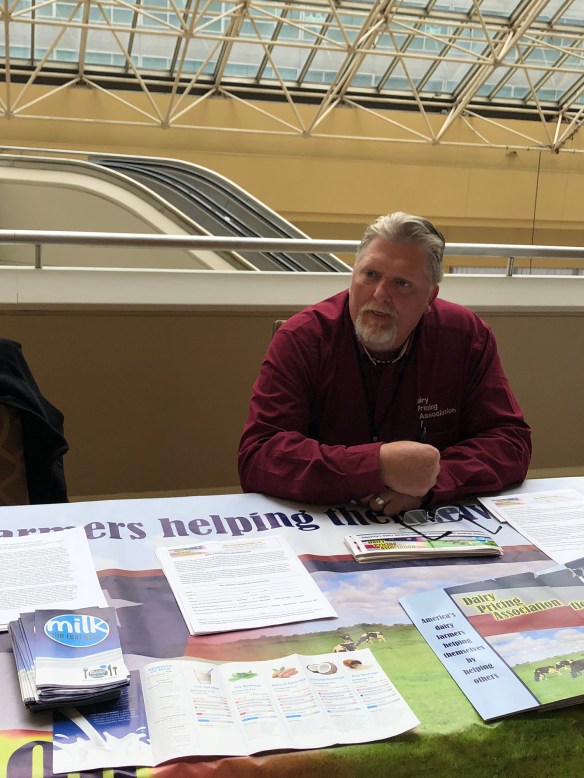
Mike Eby and John King brought Allied Milk Producers materials — and plenty of milk — to the NESAWG conference in Philadelphia. Amos Zimmerman also had a booth for Dairy Pricing Association.

He gave examples of how Allied and DPA — funded by farmers — are reaching out to consumers, schools, urban communities with donations of product and a positive message.

“We need more people to get involved to fix these issues, and to create a system that supports its producers and stabilizes prices,” said Eby.

“We need to reach out and work together as urban and rural communities,” added Lewandrowski.


NESAWG(Philly)3802.jpg

Hundreds of food-interested people from all backgrounds and walks of life attended the 25th Northeast Sustainable Agriculture Working Group conference in Philadelphia, where networking from urban to rural looked at regional solutions.

NESAWG9779

NESAWG9729

NESAWG9748.jpg

webNESAWG9759


FDA admits almonds don’t lactate, but here’s the rest of the story…

CowFace.jpg

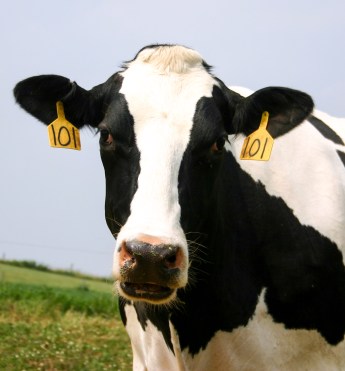
They’re even taking her ‘moo!’ Investor-heavy high-tech startup companies are (with USDA’s help) taking her DNA to give food-grade yeast her protein-producing ability in a fermentation process to make “animal-free milk and dairy.” They’re editing her cells to grow muscle blobs in bioreactors for “animal-free boneless beef” and using her unborn bovine fetal serum as the culture media for the so-called ‘clean’ ‘animal-free’ cell-cultured meat growth. And they are taking her “moo” with website invitations to “join the ‘Moo’-vement or to get ‘moo-ving’ for all the dairy you love with none of the cows.” Meanwhile, FDA is poised — in a multi-year nutrition innovation strategy — to expand standards of identity for milk/dairy and meat/beef to accomplish nutrition innovation goals that, themselves, are being questioned and in the end may give these companies the license to steal. Photo by Sherry Bunting

FDA nutrition innovation strategy poised to ‘modernize’ how milk, beef defined as high-tech labs make cow-less versions of both

By Sherry Bunting for Farmshine, July 27, 2018

WASHINGTON, D.C. — As President Ronald Reagan famously said: “The nine most terrifying words in the English language are: I’m from the government and I’m here to help.”

Last week’s news that the Food and Drug Administration (FDA) will “help” the situation of imitation milk labels was followed by specifics from FDA Commissioner Scott Gottlieb.

He revealed in a live interview with Politico: “An almond doesn’t lactate, I will confess.”

Now there’s the sound bite everyone wants to hear, and the media and social media worlds went wild. But what does it really mean? Here’s the rest of the story and how to get involved.

Gottlieb said publicly that FDA plans to start gathering public comments before taking next steps in “redefining the rules for milk products”.

What he didn’t say in the Politico Pro Summit on July 17 is that FDA has already published a hearing and comment notice in the June 27, 2018 Federal Register for a July 26 hearing that covers three topics related to “modernizing” standards of identity, and the comment period ending August 27, 2018.

Will the government’s offer to ‘help’, in this case, result in more dishonesty and skulduggery, tricking consumers into eating what they may not otherwise choose and allowing investor-heavy startup companies to steal from farmers and ranchers, not only the identity of the products they produce, but also the very commodity-promoting checkoff dollars the government mandates they pay?

FDA already has a standard of identity for milk, and almost 100 dairy products, that it has chosen to ignore for more than a decade on any product except actual dairy milk.

Here’s the rub… If real dairy milk does not have added Vitamin D (when fat is removed Vit D is added to bring it back to full-fat levels of Vit. D), it can be deemed “mislabeled” by FDA and unable to call itself MILK.

But, if there are almonds and soybeans in your milking parlor — by all means, have at it,  label it milk — with or without Vit. D — not to mention without real milk’s levels of protein, quality amino acid profile and 9 essential nutrients.

You see, the standard of identity for milk is enforced when it comes from a cow, but not when it comes from a plant. And yet, because there is a standard of identity for milk — a nutritional and functional expectation — the plant-based knock-offs get to hijack that profile without being held to it and can selectively market from it with ‘more xxx’ or ‘free of xxx’ statements without stipulating what they are deficient in. (Example: Almond milk labels should say “88% less protein” if they are going to differentiate from the standard of identity they are hijacking).

By its own admission, FDA has maintained a non-enforcement posture on plant-based imitation beverages. Described as “enforcement discretion,” FDA has looked the other way and the dairy foods industry was either asleep at the wheel or developing imitations on the side, while these imposters were flooding the dairy case.

Meanwhile the companies investing in the imitations were free to do their market development and consumer confusion while securing space in the dairy case.

The timing of Gottlieb’s comments last week is even worse, given FDA’s launch of a multi-year nutrition innovation review as part of the agency’s nutrition innovation strategy revealed in March that seeks to expand standards of identity for products like milk and meat.

FDA meetings are happening quickly and quietly in various areas of imitation animal protein labeling and regulation. Yes, they are public meetings, but no one really knows about them.

Milk and dairy products have already been on the receiving end of identity-theft for more than a decade, and now that griddle is heating up to pancake both dairy farmers and ranchers (cattle are the target) with new plant-based mixtures, but even more horrifying are the genetically-edited cellular protein blobs or white-substance-exuding yeast grown in bioreactors yearning to be beef and milk.

There are new identity-thieves lurking about and guess what? USDA — the government — is the source of the bovine gene-edited cells and bovine gene-sequenced yeast in the heavily-investor-funded tech food startup companies that are the real focus of FDA’s recent moves.

With patents in hand — and funding from their big investors to scale up manufacturing — they seeking regulatory and labeling authority under FDA to be meat/beef and milk/dairy — without the cows.

FDA had a hearing on cell-cultured proteins July 12, and comments on regulation and labeling for this are due September 25.

A hearing on standards of identity was held by FDA on July 26 (after Farmshine press time), and comments are due August 27. (Look for more on this in next week’s Farmshine).

Dairy and beef producers need to become actively engaged in these moves by FDA because the main organizations that represent them — National Milk Producers Federation and National Cattlemen’s Beef Association — are on record stating these cell-cultured products should be subject to regulation under USDA like real meat and dairy. They are mainly seeking a level playing field in the marketplace, not opposing their classification as meat, milk, dairy.

(NMPF is vigorously defending milk’s standard of identity against plant-based imitations on nutritional grounds, but seeking a level playing field on the cell-cultured proteins).

Trust me, food and dairy manufacturing companies and investors have already hired the best and the brightest and are already involved in this FDA process — cheering for the other team.

Here’s an example: Perfect Day ‘animal-free milk’ is on the market after receiving its patent in February and raising $24.7 million in first-round startup funding from investors to scale-up manufacturing.

This company has a business-to-business (B2B) model, according to an interview with Reuters, and is already working with some of the world’s largest dairy food and beverage manufacturers. Its website states that the product is just like milk in terms of proteins, but without the cholesterol, saturated fats, lactose, and environmental impact of cattle. Just think what this portends for the dumping of even more fat-free real milk from the market.

In fact, a primary foreign investor indicated support for the Perfect Day (fake milk) startup because it aligns with United Nations Sustainability Goals for 2030. (There’s that S-word again. I hope we are paying attention to how the S-word and cattle are getting along these days). Continental Grain is a big investor in both the Memphis Meats (fake meat) and Perfect Day (fake milk) startups, while Cargill and Tyson are investors in the Memphis Meats startup.

These high-tech food sciences are attracting big high-tech investors at a rapid rate because they are viewed as “disruptor technologies,” and their websites and promotional materials hold nothing back. Milk, meat, beef, dairy – no words are off limits in their branding and marketing.

In effect, while the government forces dairy and beef producers to pay a checkoff tax for promotion of their commodities, beef and dairy — and the names of products associated with those commodities — the government is looking the other way or now potentially encouraging more identity-theft as techies enter the food space to market proteins using the dairy and beef profiles and images, without paying one dime.

As for Perfect Day, this fake-milk is made by genetically altering food-grade yeast, taking DNA from a cow and sharing its protein-producing qualities with the yeast. (Sourced from the USDA, the genetically-altered yeast are cultivated to produce ‘dairy’ protein).

This process results in a microbe that is combined with a sugar substrate (food for the microbe) to feed, grow and exude in a fermentation process the company says is like “craft-beer-style-brewing,” producing protein “building blocks” for making dairy milk, yogurt and cheese. Perfect Day’s website says: “Dairy reinvented: Sustainable. Kind. Delicious.”

The end game is to provide a ‘base dairy’ protein that looks and tastes like milk, for inclusion in manufactured dairy products like cheese, ice cream, pizza, yogurt, and to work “synergistically” with the dairy foods industry as — according to the website — “a complement to cow-based milk that takes some of the stress away from the factory-farming system, rather than replace dairy cows entirely.”

fake-meat.jpg

Enter a caption

Memphis Meats and other companies on the fake meat side are doing similar things with cell-culturing to grow cellular protein blobs in laboratory bioreactors.

In each case, the ultimate goal is to decrease the need for cattle — be they dairy or beef bovines.

Think about this for a moment. Even at a 1 to 3% inclusion rate in common dairy foods or ground beef, these lab-cultured proteins and genetically-altered yeast give processors even more control over supply, demand and pricing of milk as well as boneless beef, and if standards of identity allow this, or if FDA enforcement discretion looks the other way – consumers will never know the integrity of their food has been changed.

If FDA modernizes its standards of identity to accomplish the goals as outlined by Commissioner Gottlieb — including a reduction in saturated fat consumption despite revelations that saturated fats are healthful not harmful — it is entirely possible that FDA’s new guidance could allow these protein “innovations” in standardized dairy and meat products, without being considered mislabeled and with no indication to consumers.

Gottlieb has already established FDA’s desire to accomplish certain nutritional goals by spurring innovation with more “flexible” standards of identity.

Ahead of the July 26 hearing, FDA published its intention to cover three aspects in the standards of identity discussion: 1) Protecting consumers against economic adulteration; 2) Maintaining the basic nature, essential characteristics, and nutritional integrity of food; and 3) Promoting industry innovation and providing flexibility to encourage manufacturers to produce more healthful foods.

FDA’s Federal Register notice also says the following: “Our intent is that modernizing standards of identity to improve the nutrition and healthfulness of standardized foods will promote honest and fair dealing in the interest of consumers and achieve the goals of the Nutrition Innovation Strategy.”

How can FDA pursue this course in the face of what has been revealed in the past three to four years? It appears that bringing these B2B products to market, along with the FDA nutritional innovation strategy, are happening ahead of the battleground brewing for the next round of Dietary Guidelines.

It appears they want to modernize standards of identity for dairy within less than one year, to get them in place before the current flawed dietary guidelines are challenged in the 2020 cycle, which begins in earnest in 2019.

Numerous investigations and scientific reports and studies show that the saturated fat avoidance of more than 30 years was not only never proven to be healthful, it is now shown to be harmful. And the rhetoric from the United Nations and various Sustainability projects continues to focus on cattle as being bad for the planet, despite evidence to the contrary.

FDA wants comments that specifically talk about how the agency can use standards of identity to encourage the production of more healthful foods, to take into consideration technology, nutrition science and marketing trends, and to assess what consumers expect these standards to tell them.

Is FDA about to help the food industry blur the lines of food integrity to trick people into eating according to USDA/HHS flawed set of dietary guidelines (and UN environmental sustainability assumptions)?

That would be the ultimate dishonesty, and much worse than the 10-plus years of ignoring dairy identity theft already happening daily in the supermarket dairy case. Expanding the standard of identity, depending upon how it is accomplished, would give large, powerful, multinational food corporations a true license to steal.

Last week, the American Dairy Coalition (ADC) launched a “Protecting Milk Integrity Initiative” to advocate for the proper use of federally standardized terms established for the word “milk” on product labels. ADC is a coalition of dairy, ag and livestock producers, and they are devoting a branch of their organization to work specifically on “providing clarity and consistency for consumers across the nation,” the organization said in a July 17 news release.

ADC is getting the word out that it believes the dairy industry must speak up to ensure the FDA understands how important it is, not only for the current standard of identity for milk and dairy products to be upheld, but for it to be fully enforced — restricting the use of the word “milk” on all future plant-based or alternative product labels.

They point out that the price of milk continues to decline while sales of plant-based alternatives are up 61% over the past five years with projections of more market share gains in the future.

Don’t be fooled by FDA’s admission that almonds don’t lactate. Instead of the enforcement of milk’s standard of identity that dairy farmers have been waiting for, FDA has already quietly launched its process for modernizing standards of identity to achieve specific (and flawed) nutritional goals.

To comment on Docket No. FDA-2018-N-2381 for “FDA’s Comprehensive, Multi-Year Nutrition Innovation Strategy,” due August 27, 2018, use the docket portal at https://www.regulations.gov/docket?D=FDA-2018-N-2381.

To comment on Docket No. FDA-2018-N-2155 for “Foods Produced Using Animal Cell Culture Technology, due September 25, 2018, use the docket portal at https://www.regulations.gov/docket?D=FDA-2018-N-2155 .

To mail comments for either one, reference the appropriate docket name and number in your letter and mail to: Dockets Management Staff (HFA-305), Food and Drug Administration, 5630 Fishers Lane, Rm. 1061, Rockville, MD 20852

In addition to commenting, a petition has been developed by the American Dairy Coalition’s Protecting Milk Integrity Initiative, and signatures are being collected to submit with public comments. ADC is also taking donations to raise funds to fight this cause.

More information about Protecting Milk Integrity Initiative, visit American Dairy Coalition

To learn more about the July 12 FDA cellular protein hearing (fake meat) and July 26 standards of identity hearing (fake milk), stay tuned to future editions of Farmshine for full reports ahead of the deadlines for commenting to FDA on both.

-30-

CAPTIONS

FAKE MEAT and FAKE MILK

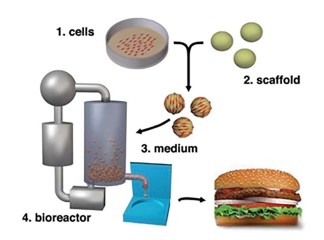
New Harvest and Memphis Meats testifed to FDA on July 12 that cell-cultured ‘meats’ are inevitable. They showed diagrams of how gene-edited bovine DNA and culture media are combined in bioreactors to make cellular blobs they want to call ‘boneless beef’ — without the cow. Similar diagrams can be found for Perfect Day and their phrase: ‘all the dairy you love with none of the cows’ at their website perfectdayfoods.com. Screenshot of materials displayed during FDA hearing by Sherry Bunting

There’s a war to win for our health and our dairy producers

NinaTeicholz0181Learn, then comment! Deadline: March 30!
By Sherry Bunting, Farmshine March 2, 2018

STATE COLLEGE, Pa. – Never did Nina Teicholz envision herself talking about nutrition to groups of dairy and livestock producers and hearing how important it was to them to hear that the work they care deeply about and the product they produce is good, great, healthy, in its full-fat form after decades of being maligned by flawed advice for a low fat or fat free diet.

Nina Teicholz-27“Not only has this advice been bad for people, it is especially bad for children,” said Teicholz as she told her story of a decade of investigation met by intimidation uncovering stories of a scientist who bullied others who had alternative hypotheses and a powerful nutrition elite still controlling the food supply through their grip on Dietary Guidelines.
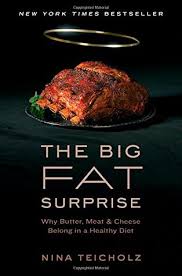
The author of New York Times best seller The Big Fat Surprise has not only challenged but also disproved the anti-fat dogma of 40 years and revealed the politics that have overshadowed the science in the confusing world of diets and nutrition.

In fact, she says, the power of an elite class of experts who control nutrition guidelines that in turn control the food supply is still strong and very tough to overcome – even when the evidence is not on their side.

imagesTeicholz’s Big Fat Surprise has had a ripple effect in the food industry among consumers since 2014,but the dietary elites have challenged her each step of the way.

And there’s a lot of war left to be fought for what is right.

This is especially true when it comes to the milk the USDA prohibits from being served in the National School Lunch program or through Women, Infants and Children (WIC) programs.

The intimidation that Teicholz and others have endured shows just how much is at stake and just how tough the politics are in trumping the science. With a steady drumbeat of proof, one would think the bad advice could be easily overturned, but the work is hard and it needs to continue, Teicholz indicates.

(Not only are the flawed guidelines affecting health, but also reverberating in their economic effects on family farms across the country, in part aided by the dairy industry accepting a role in working alongside former first lady Michelle Obama when it came to school meals, allowing her to deal the final blow to milk in school, while accepted yogurt on the plate as a compromise.)

Nina Teicholz kicked off the 2018 Pennsylvania Dairy Summit last Wednesday, Feb. 21 here in State College, treating nearly 500 dairy producers and industry representatives to an inside look at her 10 years of investigative journalism on this topic that began when her editor assigned her a piece on defining trans fats.

Little did she know then where this would lead her today. Who would have thought that the former vegetarian from Berkley, California and New York City would end up uncovering what may be the biggest nutritional tragedy done to consumers and dairy and livestock producers, worldwide.

She told Summit attendees that she began to suspect a problem when her initial inquiries started revealing a pattern of resistance.

“That’s where my deep dive into the world of fats began,” said Teicholz. “The fats we obsess about that have made us all crazy over what kind to eat and how much.”

She started hearing about scientists getting “visits” and papers being yanked from scientific journals. She started feeling the intimidation, herself, as she widened her investigative scope, reading scientific papers and seeking interviews with scientific experts at some of America’s most trusted universities and institutions.

“I would be interviewing scientists at top universities and they would hang up on me,” Teicholz revealed. “I thought, am I investigating the mob? What’s going on?”

Her deep dive into fats took her through a decade of work reading thousands of scientific papers and doing hundreds of interviews to write a book investigating the research on all fats in the diet.

“Every idea has a beginning, like an acorn to a tree,” said Teicholz, “and this had its beginning when President Eisenhower had a heart attack. This is when the concern about heart disease rose out of nowhere to be labeled the nation’s leading killer.”

Many ideas of causes were initially looked at, and then University of Minnesota physiology scientist Ancel Keys posited the cholesterol theory, that like hot oil down a cold stove pipe, would clog arteries and cause heart attacks.

Through her research, Teicholz discovered that so in love was Keys with his own theory that colleagues described his approach to the work of others as “bullying.”

“They described him as very charismatic and able to debate an idea to death. And, yes, a bully,” she said. “Once he was able to get his idea implemented into the American Heart Association, it was on.”

By 1960 he was on the nutrition committee and by 1961, “that acorn had grown into a giant oak tree of the advice leading to what we have today. The world transitioned from saturated to unsaturated fats,” said Teicholz. “But rarely do checks for common sense happen in the world of nutrition. Keys became ‘Mr. Cholesterol’ on the cover of Time Magazine with just one study.”

This study was not a randomized controlled study, but rather a series of contacts in seven countries relating diets to disease in middle-aged men.

Teicholz spent six months studying the Keys’ study. While it involved seven countries, the study looked only at the diets of middle-aged men and created this “big bang” theory. His study had been funded by the National Institutes of Health (NIH).

“But what happened is that Keys already had his idea. He loved his idea, and he set out to find what he found,” said Teicholz.

She outlined the numerous problems with the Keys study. It did not include countries with high consumption of fats and low rates of heart disease, which would have destroyed his hypothesis. He went to countries that were ravaged by war, not the countries that were eating well.

“And his star subjects were on the island of Crete, mainly hard-working peasants he worked with for three months one of which was during Lent, where he clearly undercounted the amount of fat these people ate,” Teicholz observed.

What was mind-boggling for Teicholz as she went through the record is that absolutely none of this theory — or the 40 years of advice that followed — is based on randomized controlled clinical trials.

“The government and the American Heart Association understood the evidence was weak, so the NIH funded a study to follow people through their death to set out to prove Keys’ theory this way,” she said.

Meanwhile it was being treated as gospel.

After more than a decade and following 75,655 men and women for one to 12 years, some of them with controlled in-patient diets, “The results showed no effect of saturated fats on cardiac mortality or total mortality!”

In fact, there was no effect whether subjects consumed 18% of their dietary calories in fat or 6%.

At the same time, Teicholz reports that people in the study, who had replaced fats with soy and margarine, had higher rates of cancer.

So, by this time in the presentation, it’s hard to keep the hair from standing up on your neck, and Teicholz asks the question: Why is this advice still around? Why is it still controlling food programs and markets?

“The politics explain so much more than the science,” she said. There is a small group of nutrition aristocrats controlling who they invite to lead panels or grant appearances, and they sit on editorial boards of medical journals and control these institutions.

“This is still true today,” said Teicholz, noting how an invitation for her to join a panel at an international conference was later withdrawn because the other people on the panel were key members of the U.S. Dietary Guidelines committee.

“This relative small (but obviously powerful) group does not include critics. They are the reason why we still have these ideas even if they are wrong,” said Teicholz.

An educated writer and scientist herself, Teicholz understands that scientists are trained to discover for themselves, but selective bias crept into nutrition the moment Ancel Keys at the University of Minnesota, fell in love with his own hypothesis.

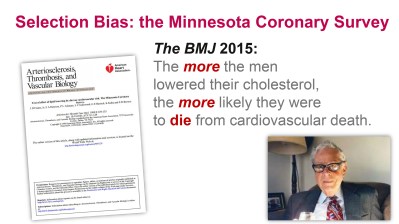
Nina Teicholz-25A colleague of Keys had done research with 5000 people around the same time, but it didn’t see the light of day. This Minnesota Coronary Survey found no difference from fat in the diet between treatment and control. It is the biggest and most well controlled study of its time but was not published for 16 years!
Teicholz explained further that when the competing research was ultimately published, long after the Keys hyposthesis had grown into an oak with roots, it was only published in an out-of-the-way journal.

Meanwhile, it was the 1980s and Senator George McGovern initiated the Dietary Goals report, written by staffers with no background in nutrition, some of them vegans. This formed the basis for the food pyramid.

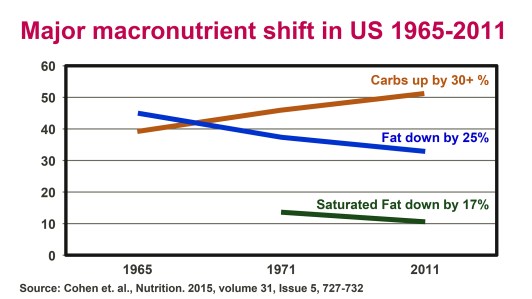
From that point forward, Teicholz showed graphs of the increase in obesity and diabetes. But as a science-minded journalist, she reminded her audience that the graph, by itself, didn’t show causation. However, other studies have proved causation, and she shared those as well.

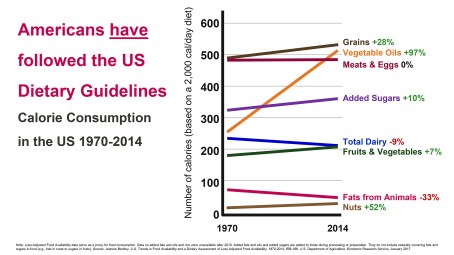
In fact, studies have been showing that Americans really have been following the flawed dietary guidelines and that while consumption of full fat dairy is down, and pounds of fruits and vegetables up 20 and 30%, along with grains and cereals up 30%, obesity and diabetes has risen exponentially.

Nina Teicholz-29“We follow the guidelines and eat more calories, but all of those extra calories are coming from the increase in carbs,” said Teicholz.
So the third rail some say we dare not touch is that the hallmark recommendation of 60 minutes of exercise — meant to accompany the promotion of a low fat diet – was touched by Teicholz during her presentation.

The kicker is that Americans are not getting fat because they don’t exercise enough, she said. Not one study could show where this 60-minutes of exercise and a lowfat diet actually helped.

Nina Teicholz-30“We cannot exercise ourselves out of a bad diet,” said Teicholz. “Is it our own fault or is it the advice we have been given? I’m here to tell you that saturated fats do not cause cardiovascular death, and Canada is already working to remove the percent of fat requirement from their guidelines.”
In fact, Teicholz cited the work of Salin Ysuf, a leading cardiology specialist. His work showed that patients who ate the least amounts of fat had the highest risk of stroke and those who ate more, lived longer.

“We are in the midst of a paradigm change,” she said. “Cholesterol in the diet has not been proven to increase blood cholesterol. Eating egg whites instead of eggs has accomplished nothing.”

In a small step in 2013, the American Heart Association dropped its caps on cholesterol and this also occurred in the 2015 Dietary Guidelines. However, the recognition that a low fat diet doesn’t work has not made it to the dietary guidelines elite, and the next cycle to change them doesn’t happen until 2020.

“Fat is not making you fat,” said Teicholz. “It’s like a tragic horror movie. The truth is the fat we eat is not the fat we get.”

So what does cause disease? Teicholz explained the carb insulin hypothesis, where carbs become like glue in the bloodstream, and the body has to secrete insulin, a hormone, so the body socks this away as fat. She explained that not all carbs have the same effect and that gaining and losing weight also has a hormonal aspect being found as a key culprit in obesity and diabetes.

“There is a growing drumbeat of positive research coming out showing that whole dairy, full fat dairy, is good for cardio risk factors and that there should be no caps on cholesterol in the diet; however, the caps on saturated fat remain,” she said.

The reason the Dietary Guidelines are so powerful is that they control so much of what we think about what we are eating, according to Teicholz. She noted that soy milk has been allowed as a replacement for dairy milk in the Dietary Guidelines.

This is huge because these guidelines dictate what schools can serve, the WIC program and so many other aspects of nutrition where the government is involved.

“The Dietary Guidelines for Americans have huge control over the food supply, and trying to change them is so difficult because those in charge are so incredibly powerful,” said Teicholz.

This is why she has initiated the Nutrition Coalition to fight for our diets. Her aim is to have evidence-based Dietary Guidelines, and to see an end to the promotion of 60 minutes of exercise and a low fat, low sodium diet as what’s good for our children.

“This advice has not worked for people, and especially not for kids,” said Teicholz. At best, the 60 minutes of exercise is disingenuous when accompanied by low fat, high carb dietary advice, and at worst, the promotion of low fat and fat free is harmful.

Alas, her attempts so far, including a piece in a British medical journal about changing the flawed Dietary Guidelines was met with a petition signed by 180 nutrition aristocrats on the Dietary Guidelines committee, who demanded a retraction of Teicholz’s paper.

“It took them a year to put it out, but the BMC did their review and stood up strong for my paper,” she said. “This shows us just how much is at stake and how tough the politics are in this field of nutrition.”

Learn more about Teicholz’s work and the Nutrition Coalition she founded as well as how to comment by March 30, 2018 on issues to review in the Dietary Guidelines Advisory Committee’s next 5-year review for the 2020-2025 guidelines.
-30-

To read other agmoos articles / columns authored by Sherry Bunting on the School lunch program and dietary guidelines from the past several years, here is a link: https://agmoos.com/2015/04/24/nutrition-politics-kids-and-cattle-caught-in-the-crossfire/

About Nina Teicholz: Nina is an investigative journalist and author of the International (and New York Times) bestseller, The Big Fat Surprise (Simon & Schuster). The Economist named it No. 1 science book of 2014, and it was also named a 2014 *Best Book* by the Wall Street Journal, Forbes, Mother Jones, and Library Journal. The Big Fat Surprise has upended the conventional wisdom on dietary fat and challenged the very core of our nutrition policy. A review of the book in the American Journal of Clinical Nutrition said, “This book should be read by every nutritional science professional.”

Before taking a deep dive into researching nutrition science for nearly a decade, Teicholz was a reporter for National Public Radio and also contributed to many publications, including the Wall Street Journal, New York Times, Washington Post, The New Yorker, and The Economist. She attended Yale and Stanford where she studied biology and majored in American Studies. She has a master’s degree from Oxford University and resides in New York City.


A world without cattle?

GL45-Earth Day(Bunting).jpgCaption: The health of the dairy and livestock economies are harbingers of the economic health of rural America … and of the planet itself. Here’s some food for thought as we celebrate Earth Day and as climate change discussions are in the news and as researchers increasingly uncover proof that dietary animal protein and fat are healthy for the planet and its people.

By Sherry Bunting, published April 22 Register-Star (Greene Media)

A world without cattle… would be no world at all.

How many of us still believe the long refuted 2006 United Nations Food and Agriculture Organization (FAO) report, which stated that 18 percent of all greenhouse gas emissions, worldwide, come from livestock, and mostly from cattle?

This number continues to show up in climate-change policy discussion even though it has been thoroughly refuted and dismissed by climate-change experts and biologists, worldwide.

A more complete 2006 study, by the top global-warming evaluators, the Intergovernmental Panel on Climate Change, stated that the greenhouse gas emissions from all of agriculture, worldwide, is just 10 to 12 percent. This includes not only livestock emissions, but also those from tractors, tillage, and production of petroleum based fertilizers, pesticides and herbicides.

Hence, the UN Environmental Program disputed the UN FAO assertion to state the percentage of emissions from total agriculture, worldwide, is just 11%, and that cattle — as a portion of that total — are responsible for a tiny percentage of that 11%. While cattle contribute a little over 2% of the methane gas via their digestive system as ruminants (like deer, elk, bison, antelope, sheep and goats), they also groom grasslands that cover over one-quarter of the Earth’s total land base, and in so doing, they facilitate removal of carbon dioxide from the atmosphere to be tied up in renewable grazing plant material above and below the ground — just like forests do!

Think about this for a moment. The UN Environmental Program and the Intergovernmental Panel on Climate Change are in agreement that cattle and other livestock are not the problem the anti-meat and anti-animal-ag folks would have us believe. In fact, they are in many ways a major solution.

Think about the fact that man’s most necessary endeavor on planet Earth — the ongoing production of food — comes from the agriculture sector that in total accounts for just 11 percent of emissions!

Why, then, are major environmental groups and anti-animal groups so fixated on agriculture, particularly animal agriculture, when it comes to telling consumers to eat less meat and dairy as a beneficial way to help the planet? Why, then, has the U.S. Dietary Guidelines Council pushed that agenda in its preliminary report to the U.S. Departments of Agriculture and Health and Human Services, that somehow the Earth will be better sustained if we eat less meat?

They ignore the sound science of the benefits livestock provide to the Earth. In fact, it is no exaggeration to say what Nicolette Niman has written in her widely acclaimed book “Defending Beef” that, “Cattle are necessary to the restoration and future health of the planet and its people.”

Niman is a trained biologist and former environmental attorney as well as the wife of rancher Bill Niman. She has gathered the data to overturn the myths that continue to persist falsely in the climate-change debate, and her book is loaded with indisputable facts and figures that debunk the “sacred cows” of the anti-animal agenda:

  • Eating meat causes world hunger. Not true. In fact, livestock are not only a nutrient dense food source replacing much more acreage of vegetation for the same nutritive value, livestock are deemed a “critical food” that provides “critical cash” for one billion of the planet’s poorest people — many of whom live where plant crops cannot be grown.
  • Eating meat causes deforestation. Not true. Forests, especially in Brazil, are cleared primarily for soybean production. Approximately 85 percent of the global soybean supply is crushed resulting in soybean oil used to make soy products for human consumption and byproduct soybean meal for animal consumption. A two-fer.
  • Eating meat, eggs and full-fat dairy products are the cause of cardiovascular disease. Not true. Researchers are re-looking at this failed advice that has shaped 40-years of American dietary policy. Its source was the 1953 Keys study, which actually showed no causative link! Meanwhile, excessive dietary carbohydrates have replaced fats in the diet, which turn to more dangerous forms of fat as we metabolize them than if we had consumed the natural saturated fats themselves. When healthy fats from nutrient-dense animal proteins are removed from the diet, additional sugars and carbs are added and these have led us down the road to increased body mass and diabetes.
  • Cattle overgrazing has ruined the western prairies. Not true. While improper grazing can have a localized detrimental effect, the larger issue is the pervasive negative effect that is largely coming from not grazing enough cattle. Higher stocking densities that are rotated actually improve the health of grasslands. Large herds provide the activity that loosens, aerates and disperses moisture along with the nutrients the cattle return to the soil — for more vigorous grass growth and soil retention — much as 30 million buffalo and antelope groomed the prairies two centuries ago. Meanwhile, the Bureau of Land Management has favored controlled burns over grazing and is taking away land rights our federal government once shared with ranchers. BLM reductions in allowable stocking densities have initiated a land-grabbing cycle of ranchers losing their land and livelihoods while the land is robbed of its benefits.

The anti-animal agenda continues — groundless, yet powerful. Rural economies, farm families, consumers and the Earth pay the price.

The majority of the lifecycle of supermarket beef and dairy products is rooted in grooming the grasslands and forage croplands that are vital to the Earth and its atmosphere. In addition, farmers and ranchers reduce tillage by planting winter cattle forage to hold soil in place, improve its organic matter and moisture-holding capacity, provide habitat for wildlife while providing temporary weed canopy between major crop plantings. Not only do cattle eat these harvested winter forages, they dine on crop residues and a host of other food byproducts that would otherwise go to waste.

Our planet needs livestock and the farmers and ranchers who care for them. They not only feed us — with more high quality dietary protein with all of the necessary amino acids, calcium, zinc, iron and other nutrients per serving than plant-based sources alone — they also feed the planet by providing necessary environmental benefits.

Enjoy your meat and dairy products without fear — certainly without guilt — and with gratefulness and appreciation for the gift of life given by the animals and because of the hard work and care they have been given by the men and women who work daily caring for the land and its animals. This Earth Day, we are grateful for the circle of life and the farmers and ranchers and their cattle, which sustain our existence, our economies, and our environment.

A former newspaper editor, Sherry Bunting has been writing about dairy, livestock and crop production for over 30 years. Before that, she milked cows. She can be reached at agrite2011@gmail.com

Learn more about the latest research to measure emissions due to the dairy and livestock industries.

-30-

Images by Sherry Bunting

Reinventing milk… promotion

MilkMarketMoosHeader070914.jpg

Reprinted from FARMSHINE, April 8, 2016

Fewer Americans eat breakfast today, adding to the milk consumption woes created when families stopped eating sit-down dinners, for the most part. Both were the staples of commodity fluid milk consumption that have been diminishing over the past two generations and four decades to where we are today.

Forecasters say it will only get worse. They are projecting continued declines in ‘white milk’ consumption while consumption of milk alternatives is predicted to increase dramatically through 2021.

A major reason is that the majority of urban consumers — up to 90% — do not view white milk (aka Vit. D whole milk) as a protein drink, when clearly it is the original, the natural protein drink.

But what is DMI working on? Alternatives. Checkoff dollars continue to flow through DMI to alternatives milks. Yes they are dairy products, but they are further processed, as in the case of Fairlife, which is ultrafiltered, for example.

I have had dairymen involved in these boards excitedly tell me: “We finally have a product consumers want!”

If they are referring to Fairlife, that may be true for consumers we’ve lost to Muscle Milk (which does contain some whey) or Almondmilk (which is the equivalent of eating an almond and chasing it with water full of thickeners, sugar and chemically added calcium and vitamins.)

But I find myself confused. Isn’t dairy promotion supposed to promote what contributes most to the dairy farmer’s milk check? I mean, it is the dairy farmer’s money, is it not?

As long as the Federal Order milk pricing scheme puts the value on Class I utilization, then the milk checkoff organizations should be most diligently promoting regular, straight-from-the-cow (pasteurized of course and maybe even flavored) milk as the healthy high-protein beverage it is, naturally, because I’m sorry to tell you friends, consumers just don’t know this information.

Milk: The protein drink that’s right under our noses and costs a lot less than fancy packaged and advertised alternatives — some of them complete frauds in that they are not even milk!

Why is it that milk alternatives can claim all sorts of things, but milk is not even allowed to advertise itself as 96.5% fat free! Why can’t the milk bottle say “8 times more protein than almondmilk per 8 oz serving!”

Why can’t it say: “Want Protein? Get Milk!”

Do we really need Coca Cola to revolutionize our branding? Or should dairy farmers take the bull by the horns and demand great packaging, savvy catch phrases, eye-catching point-of-purchase education, head-on comparisons to the fraudulent beverages that so wish to be milk that they call themselves milk.

No, USDA does not allow dairy farmers to promote their product comparatively with those other commodities that have stolen some of their market share by stealing the name milk. You dairy folks must play nice of course!

That’s hardly fair since dairymilk is losing market share. If you can’t defend your own market turf with your own collected monies, then what’s the point of collecting the money? All of these joint partnerships to sell cheese on pizza and mixes through frappes at McDonalds might move some more milk, but the value is in the Class I fluid milk, so unless we’re going to change the complicated milk pricing formula and glean more value and a guaranteed minimum for the manufacturing milk via its products, then we might just as well use the money to buy-back our own fluid milk and donate it to the poor to keep the demand for Class I tight vs. the supply.

Or put the money in a kitty to develop better fluid milk labels. Make them cool and splashy with P-R-O-T-E-I-N in large letters.

Milk: The original protein drink!

Milk: Protein drink of champions!

Milk: Why pay more? We’ve got what your looking for!

I could go on all day.

If the growth of our Class I milk markets rely on the USDA school lunch program, then we’re sunk and USDA is once again to blame for this dismal failure by tying the hands of school districts who want to serve 2% and whole milk.

Analysts say that the strong growth in the milk markets of emerging countries like Chile is attributed to their school milk programs.

In the U.S., milk is stigmatized as a “commodity.” We sure don’t help that with plain white bottles and lackluster graphics.

Milk alternatives such as soymilk and almondmilk (aren’t they so tricky in creating their own new words by paring their commodity to the word milk as one word) are increasingly viewed as ‘fashionable drinks’ and a more health-conscious choice compared to white milk.

Let’s reverse this trend by making dairymilk fashionable again!

Let’s call it dairymilk (a tricky combined word!) and come up with a new standard of identity that allows us to say 96.5% fat free instead of “whole.”

Maybe even come up with a standard for protein and say to call it dairymilk it must meet that protein standard and then colorfully package and protein-promote the heck out of it.

Analysts say that consumers like innovation in their drinks and they are finding “innovation” in the “newer milk categories” which are so much more attractive than the “mature” white milk category.

Okay then, let’s give the consumer what they want. Great tasting real milk but let’s reinvent the packaging and the promotion and the name… not the beverage itself.

Just think how much money we can save on fancy equipment if all we have to do is reinvent the promotion of milk, not reinvent the milk itself. After all, it is nature’s most nearly perfect food.

Maybe instead of fighting each other for Class I sales by moving milk all over to get the best price and utilization (see chart on page 13 showing that picture for the beleagured Northeast Order)… we should be fighting, instead, together, to save our beverage from its continued depreciation at the hands of internal politics, external politics, USDA rules upon rules, fraudulent not-milk-milks whom regulators ignore and even patronize, and other assorted casts of characters.

NUTRITION POLITICS: Kids and cattle caught in the crossfire

GROWING THE LAND: Nutrition Politics: Let them eat cake!

April 2, 2015 Hudson Valley Register-Star

Seems like an April Fools’ joke, but I am sorry to say it is not. Like the ill-fated Marie
Antoinette in her final words, the federal government lacks understanding for the nutritional realities of the masses as it turns the simple act of providing a nutritious lunch to schoolchildren into an exercise in frustration.

Kids buy Twinkies instead of lunch. Or they pack. Some go hungry.

For 40-plus years, the concept of a “heart healthy diet” has been unchallenged even though it was implemented based on a set of hypotheses created from epidemiological studies on middle-aged men. No study of impacts on women and children. No clinical trials on anyone.

As noted in this column on Jan. 27, schoolchildren have been eating the equivalent of a heart patient’s diet since the mid-1990s as the fat percentage was tightly controlled even though the sugar was not. Then, the government cut the calorie totals realizing the fat that was removed was replaced with sugar to meet the calorie requirements of a growing child.

What have we to show for it? Rising levels of obesity and diabetes, particularly among children.

It is about to get worse, but there is still time to be heard. The Dietary Guidelines Advisory Committee — charged with making recommendations every five years — has now
stepped beyond its nutritional realm to consider the “environmental impacts” of foods.

From the frying pan into the fire we go.1538850_10203867018139998_98482634260761802_n

In this column on Feb. 8, we looked at the National School Lunch Program and the Dietary Guidelines just as the five-year Advisory Committee submitted its Advisory Report to the Secretaries of the U.S. Department of Health and Human Services and the U.S. Department of Agriculture.

The Committee states that “The purpose of the Advisory Report is to inform the federal government of current scientific evidence on topics related to diet, nutrition and health. It provides the federal government with a foundation for developing national nutrition policy.”

However, the Advisory Report constructs and reinforces further reductions in its guidelines on the consumption of red meat and whole dairy fat such as butter and whole milk by using these so-called “sustainability factors.”

This area of science is even more subjective than the past four decades of nutrition science have proved to be. Just when the truth is coming out that decades of nutrition policies are based on hypotheses steering unwary consumers away from healthy fat and into the arms of carbohydrates, suddenly “sustainability” emerges to perpetuate the lie.

New York Times bestseller “The Big Fat Surprise” delves deeply into this subject. Author Nina Teicholz, an investigative food reporter, compiled nine years of research covering thousands of studies and many interviews with nutrition scientists to discover this April Fools’ joke has already had too-long a run and with unintended consequences for Americans.

As noted by Anne Burkholder, a rancher and blogger (Feedyard Foodie), who wrotGL 1847 (1)
e after reading Teicholz’s book: “The diet-heart hypothesis (coined by a biologist Ancel Keys in the early 1960s) proclaimed that a low fat and high carbohydrate diet provided the basis for good health. Although not proved through clinical trials, the hypothesis gained support from the federal government and provided the basis for mainstream dietary advice during the ensuing decades.

“…The culture of the American diet has shifted dramatically. According to USDA, the consumption of grains (41 percent), vegetables (23 percent) and fruits (13 percent) rose significantly from 1970-2005 while red meat (-22 percent), milk (-33 percent) and eggs (-17 percent) fell dramatically. Overall carbohydrate intake for Americans rose with low fat starches and vegetable oil took the place of animal protein and fat in the diet. Animal protein lovers shifted from beef to chicken and many traded whole fat dairy for skim milk and margarine thereby forsaking nutrition density for lower saturated fat options,” Burkholder writes. “All of this occurred during a time in the United States when obesity rates more than doubled (15-32 percent), the prevalence of heart failure, cancer and stroke all increased and the rate of diabetes increased from less than 1 percent to 11 percent.”

Here are just some of the conclusions Teicholz highlights in “The Big Fat Surprise” after nearly a decade of research:

1. Causal associations between red meat consumption and heart disease are minimal.

2. The HDL (good cholesterol) is increased by the saturated fat found in animal protein.

3. Animal fat is nutrient dense, packing protein, energy and essential vitamins and minerals — plus helping the vitamins and minerals of other foods eaten together to be better absorbed by the human body.

4. There are no health studies to learn the effect on health of liquid vegetable oils. We do know that the process of solidifying vegetable oils creates the very unhealthy transfats. Butter and red meat do not contain these transfats.

5. Insulin levels are elevated by constant carb consumption, not by animal fat and protein. Furthermore, as insulin levels are raised, the body is less able to digest its own stored fat created by — you guessed it — carbs!

Our children have been and will apparently continue to be test subjects for nutrition GL kids-cowspolitics. The simple act of providing a nutritious school lunch will become even more
complicated if the Advisory Report is accepted and used by the U.S. Department of Health and Human Services and U.S. Department of Agriculture secretaries in the food programs they administer.

Published in the Federal Register (Vol. 80, No. 35) on Feb. 23, the public comment period was recently extended to May 8. After that, the secretaries will jointly release the official Dietary Guidelines for Americans 2015.

A quick perusal of comments already logged shows that two parts of the Report are garnering attention:

1. There is an overwhelming support for the recommendation to reduce the amount of added sugar in the diet. My only question is: What took them so long?

2. There is an overwhelming lack of support for the recommendation to reduce even more the role of saturated fats — red meat and whole dairy fat — in the diet.

Some children may forego the school lunch and pack a nutritious replacement. But what about the child in poverty? Their options are limited to taking what the federal government dishes out, literally.

To comment on proposed Dietary Guidelines by May 8, visit www.health.gov/dietaryguidelines/dga2015/comments/. It is easy to do electronically.


GROWING THE LAND: Kids and cattle caught in the crossfire 

Feb. 8, 2015  Hudson Valley Register Star

Kids and cattle are caught in the crossfire of nutrition politics, and it may get worse. GL 0263Two weeks ago we talked about the changes over the years in the federal Dietary Guidelines for Americans and their direct influence on the National School Lunch Prog
ram. This week we look at how the simple act of providing a nutritious school lunch could become even more complicated.

What I have gleaned from reader comments is a high level of frustration about the current status of the National School Lunch Program limiting the caloric intake and food choices of growing children. Now, the next twist in the nutrition-noodle may not even be nutrition-based.

The Department of Health and Human Services (HHS) is the deciding agency for new “Dietary Guidelines for Americans” expected to be released soon. The HHS Secretaries are deliberating the recent report from their Dietary Guidelines Advisory Committee, which held meetings for months.

When the new Guidelines are officially published in the Federal Register, a second round of comments will open. I’ll let you know when and how to comment when the time comes.

For now, let’s look at a few concerns with the committee’s report.

1) It is worth noting that back when we had a Food Pyramid, physical exercise was Boilermaker6929visually highlighted, where today it is notably absent from the MyPlate diagram.

2) More troubling this time around, is the fact that the committee is not just focusing on new information about healthful eating, they have incorporated so-called “sustainability”
factors or environmental impacts of various foods — namely lean meats. This opens a whole can of worms that — quite frankly — have nothing to do with nutrition!

3) Furthermore, some of the science the committee used to come up with thewWill-Feed3983 idea of eliminating lean meat from its so-called “healthy eating pattern” is quite controversial and involves a United Nations study that has since been refuted.That study had suggested meat production contributes more to climate change than transportation.

Scientists have come forward in droves with counter-studies showing the greatly reduced carbon footprint of agriculture, particularly animal agriculture. The whole lifecycle of beef and dairy cattle needs to be considered when formulating environmental impacts.

While the dietary gurus in Washington debate the merits of meat and whole-fat milk, let’s look at this term “sustainability” and what dairy and livestock producers actually care about and accomplish for their land, animals — and us!

Regarding potential replacement of a “healthy eating pattern” in favor of a “sustainable eating pattern,” there are several concerns.

1. If red meat and full-fat dairy are not considered a component in a healthy eating pattern, students will increasingly see this nutrient dense protein source removed from their diets and replaced with foods that are less nutrient dense.

2. Since these guidelines affect the most nutritionally at-risk children through their effects on the school lunch program, WIC and food stamps, the impact of the dietary guidelines would fall mostly on those children who are already on the hunger-side of the nutrition equation.

3. How can the committee recommend a “sustainable dietary pattern” when mothers, doctors, scientists, and all manner of experts can’t even agree on what “sustainable” actually means? Let’s stick to nutrition. Defining that is a tall-enough order.

Scientist, cancer survivor and new mom Dr. Jude Capper covers this topic best. She points out that, “With the world population officially hitting 7 billion people earlier this year and projected to reach 9.5 billion by 2050, farmers and ranchers must continue to find ways to sustainably feed a growing world population using fewer natural resources.”

She notes the many improvements to the way cattle are raised and fed in the United States between 1977 and 2007 that have yielded 13 percent more total beef from 30 percent fewer animals. More beef from fewer animals maximizes resources like land and water while providing essential nutrients for the human diet. U.S. cattlemen raise 20 percent of the world’s beef with 7 percent of the world’s cattle.

Capper’s research in the Journal of Animal Science shows that beef’s environmental footprint is shrinking. Each pound of beef raised in 2007 (compared to 1977) used 19 percent less feed; 33 percent less land; 12 percent less water; and 9 percent less fossil fuel energy. Significant gains have been made in the seven years since the data was collected for this report.IMG_2657

What is discouraging to cattle producers — be they beef or dairy — is the lack of understanding for how cattle are raised and fed. They utilize feedstuffs we humans cannot digest and turn that into meat and milk, which are nutrient-dense sources of proteins, minerals and vitamins.

Some of their lifecycle is spent on grass or eating a mostly grass / hay diet and some of their lifecycle is spent eating a more concentrated diet at certain stages. Feedlot beef wky3327

cattle start out as calves on grass. Even in the feedlot, today’s rations — especially in the east and near food processing centers — utilize bakery waste, over cooked potato chips, wilted produce and the like that would otherwise end up in a landfill. Incorporated into cattle diets along with traditional feedstuffs, these foods provide protein and energy for the animals without sole reliance on corn. In addition, when corn is fed, the whole plant is used.

Farmers are thrifty. They don’t like to waste a thing. They understand the balance of working with nature because it is not just the vocation, but also the very life they have chosen working with their animals and the land.

I can’t think of any other reason why someone would work this hard and put their entire livelihood and all of their capital at risk to the swings of the marketplace other than they are passionate about producing food and using science and ingenuity to work with

Mother Nature in preserving a sustainable balance for all of God’s creatures — the 2-legged and the 4-legged.

Send me your questions and look for part three when the official new guidelines are posted in the Federal Register for public comment. Email agrite@ptd.net.10256404_10204082794934283_4627952695489572277_o


GROWING THE LAND: How did school lunch get so complicated        

Jan. 27, 2015 Hudson Valley Register-Star

Are you satisfied with your school lunches? Do your children eat them? Do they come home so hungry they binge out of the snack drawer?

The National School Lunch Program and the Dietary Guidelines for Americans are lightning rods for the latest nutritional ideas — none of which seem to be working particularly well because we’ve gotten so far from the basics, and yet both childhood hunger and childhood obesity are on the rise.

Now it seems there will be another twist in the nutrition-noodle. Recent food studies and “The Big Fat Surprise,” a best seller by Nina Teicholz, reveals the truth about the healthfulness of natural fats in whole milk, butter, beef, ice cream, etc. Teicholz was profiled on “Live! with Kelly and Michael” last week, where she described the “nasty nutrition politics” that continually shape these programs.

In response to these animal-protein-friendly nutritional revelations, the environmental webfeed9297nail-biters (under the influence of refuted studies) are “concerned” about what they see as the effect of dairy and beef production on climate change. According to news reports last week, these groups would like the government to take their version of the facts and tweak new-again the nutrition guidelines. This means yet another lunchroom brawl will soon be coming to a school cafeteria near you where the already burdensome and counterproductive rules for lunch menu planning have lunch ladies and foodservice directors — not to mention kids and parents — tearing their hair out.

How did we let serving a decent healthy meal to schoolchildren become so complicated? Why don’t schools take their cafeterias back? One reason is the federal government ties its financial support for literacy programs (extra teachers and tutors) in schools to the number of students enrolled in the free and reduced lunch program as monitored by — you guessed it — the federal government. Oh what a complex web we weave when all we set out to do is healthfully eat!

The government’s interest in the school lunch program got its first foothold during World War II when more women joined the workforce as part of the war effort. The emphasis at that time was to provide a hot meal with plenty of protein, calories for energy and the healthy fat necessary for brain development and satiety — a fancy word for no hunger pains during the end of the day math class!

My generation grew up with the “eat all things in moderation” mantra. Lunches were a bit repetitive, but they were good, honest meals and we ate them. We learned about the four food groups, and we ran and played and worked outside ‘til dusk.

My children’s generation grew up in the “food pyramid” days, spelling out the servings deal differently. Then, in the 1990s, the school lunch program went through a major metamorphosis that paralleled the “low fat” offerings in nearly every product category at the supermarket. What the 90s gave us was less fat and more carbs, and a lot of guilt. I would say those three things are actually ingredients for obesity.

By the late 1990s, the government came out with the nutrient standards for menu planning, and school districts across the country bought the software and began to submit their menus for approval. I was editor of a farm publication at the time and served as an elected director on a local school board. I interviewed not only our own district’s foodservice director but others as well, and I visited one of the schools that had piloted the program for USDA.

“Schoolchildren were being relegated to the equivalent of a heart patient’s diet,” explained the foodservice director who was piloting the program in 1997. The calorie thresholds were unchanged, but the government began regulating the percentage of those calories that could come from fat. There were no regulations yet for sugar or carbohydrates. And yes, as always, the goal was to get kids to eat more veggies and fruits and fiber. We might take a lesson from France in that department. They require lunches to be made from fresh ingredients, but they aren’t afraid to deep-fry some broccoli or soak a healthy vegetable dish in yummy cheese — real, of course.

The new fat rules forced foodservice folks to put imitation cheese product on their once delicious pizza. Ground turkey replaced beef in spaghetti and tacos. Rolls were served without butter. All milk was reduced to nonfat or 1 percent so the amount of chocolate milk consumed increased. (Whole milk is much more flavorful than nonfat, and it is just 3.25 to 3.5 percent fat!

As fat was reduced, so were calories and flavor. To get back up to the number of calories required, “we just served a bigger brownie, for example,” that foodservice director recounted. Of course, they used applesauce to replace the shortening in making such desserts. But still, no requirement on sugar and carbs.

“Two elements give food flavor: fats and sugars. When you pull one out, chances are the other is added,” the wise foodservice director observed. Whether natural or added, sugars and fats provide flavor, but what most people don’t think about is: The fat in real foods — such as beef and butter and cheese — is accompanied by a nutrient dense protein source that naturally supplies vitamins and minerals and helps kids feel satiated, not hungry or hyper, so they can concentrate and learn. Healthy fats are known to be good for brain development.

Fast forward to the decade of the 2010’s. More tinkering! The food pyramid became the plate showing portions of different food types, and we are now in a time when school menus are regulated in the number of calories that can be served using arbitrary, across the board calculations.

Caught in the crossfire are kids and cattle. We’ll continue this topic in the next edition of “Growing the Land,” so send me your questions about nutrition standards, new information on healthy fats, school lunch programs, and the real-deal on the carbon footprint and environmental contributions of today’s dairy and beef cattle. Email agrite@ptd.net.