Feb. 16, 2024 Milk Market Moos in Farmshine: SHRINKFLATING DAIRY — steep loss of dairy farms, down 40%, and much, much more

By Sherry Bunting, Farmshine Weekly Column

Carrot… and stick?

Opening the Feb. 14th House Ag Committee hearing with USDA Secretary Tom Vilsack, Committee Chairman G.T. Thompson of Pennsylvania said the clear message he has heard as he has traveled across the country on farm bill listening sessions is that, “Agriculture needs government to work for them, not against them.”

Vilsack was pressed at least 8 times by 8 different members of the Committee for clarity and details on the Climate Smart deal. Representatives wanted an update on how the billions of dollars in Inflation Reduction Act (IRA) funds for conservation programs and Climate Smart Partnerships are making it directly to farmers.

Rep. Mary Miller of Illinois went so far to say the climate cult is a scam and pointed to what is happening in Europe, airing her concerns about incentives for solar panels on good farmland pricing farms out of rented acres. She expressed concern about getting farmers reliant on “environmental payments” instead of a food system that allows farms to succeed producing food, and she wondered about being beholden to the global climate-cult, which means (I’m paraphrasing) she is concerned about the stick that follows the climate-smart carrot.

While the purpose of these conservation and Climate-Smart IRA funds, said Vilsack, is to ‘get money to farmers,’ his update acknowledged that, “There’s a lot of work to do. We’re assisting and guiding (farmers) into participating,” he said.

“We’ve increased the number of people working at NRCS (1500 new hires, total 4000 new hires planned). We’ve entered into cooperative agreements so we have a broader reach (hire estimated 3000 technical staff through conservation partners), so that those who might not be able to understand that they qualify for the program are finding out,” Vilsack explained, noting that this is necessary in order to actually implement the Inflation Reduction Act.

(Translation: Money hasn’t gone directly to farmers so much as it has gone to program infrastructure, such as more USDA staff, partnership staff, and developing the herding routines to get farmers ‘guided’ on board for Climate Smart data collection and monitoring. In contrast, the IRA funds going to traditional and oversubscribed conservation program EQIP have largely been obligated to farmers at this point.)

“Roughly 85 to 88% of farmers in this country today require off farm income to be able to keep the farm. It’s about people who love what they’re doing and frankly want to do more of it, but they don’t have the income streams to support it, so they have to have an off farm job,” said Vilsack, defending the deal.

“To me, the key here is to create opportunities for that farm to generate more revenue,” he added.

Rep. Marie Gluesenkamp Perez of Washington State made the point that, “Farmers should not have to rely on value added ventures to survive, like agro-tourism or solar panel installations. These are ventures in their own right and should not be necessary for farmers to continue and pass on their farms to the next generation,” she said.

Rep. Doug LaMalfa of California pushed the point that farmers like the traditional conservation programs, like EQIP, but the IRA-funded Climate-Smart Partnerships deal for “tying up carbon is going to require them to jump through hoops,” he said, noting that no-till and cover crops aren’t possible on some types of farms, like rice production.

Vilsack countered: “It’s voluntary. It gives us the opportunity to figure out what works and what doesn’t work, and it doesn’t necessarily put people at a competitive disadvantage.”

He maintains that these projects “do not require farms to go through hoops and in some cases, it’s actually paying them for what they’re already doing.

“The idea here is to measure, monitor and verify the results so that we know what works and what doesn’t work, so that we don’t invest in what doesn’t work,” said Vilsack.

Congresswoman Abigail Spanberger of Virginia gave the example of a farmer in her district doing no-till and cover crops. Vilsack nodded and replied: “There is an opportunity, potentially, for that farm to qualify for ecosystem market payments. So, now, instead of just a crop, they’re going to get an environmental payment.”

That’s the carrot, where are they hiding the stick?

40% decline and a loss of 15,866 dairy farms in 5 years.

The number of dairy farms in the U.S. declined by 40%. That’s 4 in 10 dairies lost over 5 years. The 2022 Census of Agriculture Report released Tues., Feb. 13 held a bit of a surprise not seen on available summaries. Clicking through the ‘quick stats’, we learn that the number of dairy farms with milk sales on December 31, 2022 totaled 24,082, and the number of farms with milk sales but no milk cows or calves in inventory at the end of 2022 was 388 for a total 24,470 dairy farms with milk sales in the U.S. at the end of 2022.

It’s also 3,462 fewer dairy farms than the 27,932 licensed dairies reported as an average number for 2022 last February as part of the January 2023 milk production report.

(Note: The 2023 annual average dairy data that was included in the January 2024 Monthly Milk Production Report Feb. 21 pegged the average number of licensed dairies in the U.S. in 2023 at 26,290, down 6% from the annual report filed for 2022. The Census and NASS Milk Production Reports count some types of multi-site dairies under the same ownership differently. By the way, USDA revised the entire 2023 year of production lower yet for the fourth time, now revising 11 of the 12 months of prior data reported for milk production, cattle numbers, and output per cow. We questioned the figures all last year, asking where the cattle were coming from, pointing to cattle inventory numbers on heifer replacements a year ago indicating a shortage of freshening 2-year-olds, etc., and pointing to the substantial increase in Whole Milk Powder Imports into the U.S. and other factors USDA may have left unaccounted for in prior estimations.)

In Pennsylvania, dairy farm numbers declined from 6,914 on Dec. 31, 2017 to 4,027 on Dec. 31, 2022, that’s a 42% decline over 5 years. It’s also 973 short of the average number of licensed dairies reported by USDA NASS for the 2022 year.

The 2022 Census of Ag also shows that of the 24,470 farms with milk sales, 3,439 accounted for 59% of milk sales and 1012 accounted for 46%. This compares with the 2017 Census, which reported 3819 farms accounted for 55% of milk sales and 793 farms accounted for 43%.

We will dig into the national and state by state 2022 Census data relative to dairy in a future report.

In agriculture, overall, the 2022 Census of Ag shows a loss of 142,000 farms (down 7%) and a loss 20 million farm acres (down 3%) in the past 5 years.

Between 2017 and 2022, the number of U.S. agricultural producers held steady at 3.4 million, while the number of farms continued to decline at 1.9 million covering 880.1 million acres that generated food, fiber and fuel. Average age of farmers was up at 58 years. But the number of beginning farmers (over 1 million), increased also, according to the Report.

The number of small and mid-sized farms across all commodities declined between 2017 and 2022. Large (sales $1-5 million) and very large farms (sales of $5 million or more) increased in number. The 105,384 farms in those top two categories (sales of $1 million or more) represented fewer than 6% of all U.S. farms and sold more than 75% of all agricultural products. The largest farming operations and a small number of states accounted for the majority of agricultural production and sales.

The overall value of agricultural production and income increased between 2017 and 2022, according to the Ag Census. 2022 was a high year in agricultural price cycles, and government payments were still part of the economic calculus through prior CFAP and Pandemic Assistance. Milk made it into the top 5 commodities (at No. 5). Combined, the top 5 — accounted for two-thirds of the value of all agricultural production.

The value of crop production was $281 billion, up 45% in 2022 vs. 2017, while the value of livestock production (including dairy) was $262 billion, up 35% over the same period.

Shrinkflation this, shrinkflation that

The January Consumer Price Index (CPI) released Tues., Feb. 13 increased 0.3% on a seasonally adjusted basis. Over the last 12 months, the all items index increased 3.1% before seasonal adjustment. The food index, up 0.4% in January, increased 2.6% over the last 12 months. The food at home index was up 0.4% in January, and up 1.2% over 12 months, while the food away from home index rose 0.5% over the month and 5.1% over 12 months. The dairy and related products index is up 0.2% in January, down 1.1% over 12 months.

In contrast, the energy index fell 0.9% over the month, down 4.6% on the year due mainly to the decline in the gasoline index.

The Biden Administration announced intentions to investigate supermarkets for over-charging as the food index has not followed energy lower. What further complicates the food inflation indexes is that food commodities like milk and eggs have moderated while processed consumer packaged goods continue to inflate.

Another ripple is captured in the new term coined by food, ag, and business analysts — “shrinkflation” — meaning smaller packages, same price.

For farmers, shrinkflation is a good way to describe what is happening to milk margins. Yes the central feed and energy costs are moderating, but many other fixed and adjustable costs — from interest rates and insurance to supplies and services — continue to move higher, shrinkflating profit margins.

Meanwhile, the Census of Ag data showed big gains for farm revenue and net income in 2022 vs. 2017, but this unique comparison does not factor in the margin-squeeze in 2023, nor the impact of losing the last of the CFAP and Covid pandemic assistance payments that were still trickling into 2022.

In the dairy sector, the milk markets send mixed messages as the Class IV milk price sits $4 above Class III, with cheese being the market dog for the past 12 months. Yet milk is not moving from Class III manufacturing (cheese/whey) to Class IV (butter/powder). Why? New Class III manufacturing capacity has come online and will continue, needing to run full to turn a profit.

At the recent Pennsylvania Dairy Summit in a presentation about navigating the future, Phil Plourde of Ever.Ag highlighted the critical importance of exports to the industry. “Export or perish!” he said, focusing the admonition on the opportunities to export more cheese, including mozzarella.

IDFA CEO Michael Dykes in a presentation in January, issued the challenge to producers to fill the production gap that $7 billion in planned processing investments will bring online in the next three to five years.

Meanwhile, U.S. dairy farmers are seeing price pressure from a buildup of cheese via lackluster exports suffering from what are seen as inadequate trade policies and lack of new trade agreements.

Reflecting on the recently concluded FMMO hearing of 21 milk pricing proposals — some of which seek to reduce regulated minimum milk prices — we see processors are focused on a shrinkflated milk pricing system, shrink prices and inflate capacity because growth has got to happen.

They say USDA sets the regulated minimum prices too high, which must be reduced to ‘market clearing’ levels so they can have the freedom and band width to then be able to pay market premiums to their farmers.

On the eve of the Pennsylvania Dairy Summit Feb. 6, Cornell economist Dr. Chris Wolf talked about the recent FMMO hearing, noting that, “Regulated minimum prices are the whole deal right now. Premiums are gone.”
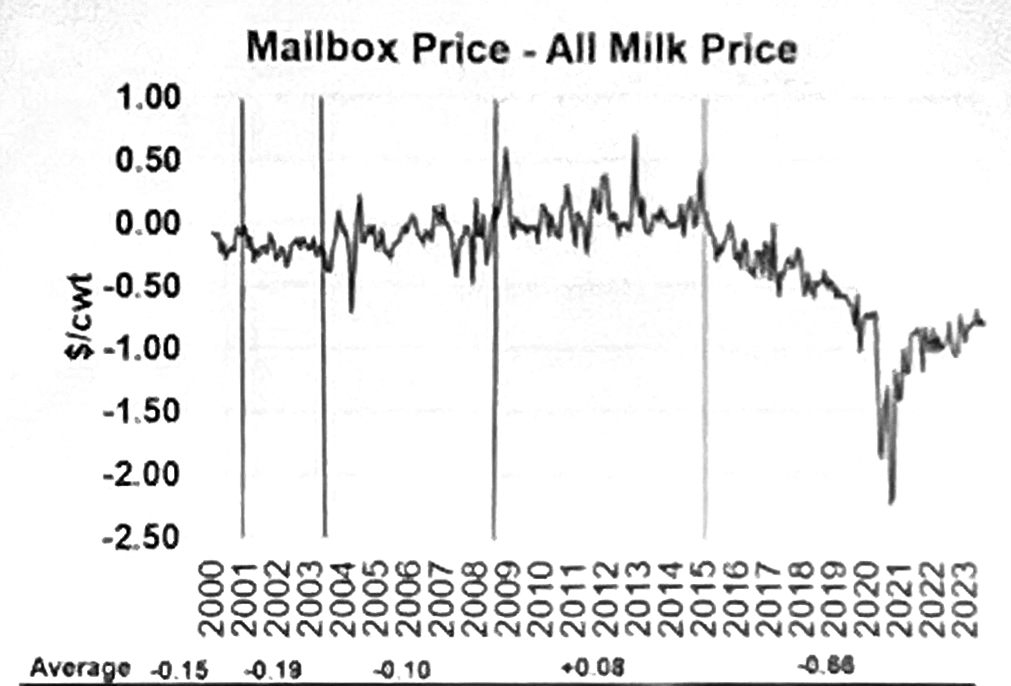
He showed charts tracking the difference between the All Milk price and Mailbox price (above), progressively negative since 2015, reflecting higher transportation costs and evaporation of over-order premiums, not to mention milk check assessments, marketing adjustments, balancing fees.

If regulated minimum prices are reduced, will processors voluntarily fill that gap by paying more premiums so producers have the financial wherewithal to fill the production gap?

Things are pretty bad for farmers right now in the milk markets that are based on cheese, where capacity has ramped up in the Central U.S., and where tough discussions are being had around kitchen tables about operating margins and the future.

Milk futures move lower

Milk futures were unevenly lower this week, with most of the downward pressure on first-half 2024 contracts for both Class III and IV milk. The spread between Class III and IV milk — according to this week’s CME futures markets continues to be range between $2.20 and $4.00 per cwt in every single month of 2024, well above the $1.48 mark where the ‘averaging’ formula is a loser for orderly marketing compared with the ‘higher of.’ On the close Wed., Feb. 14, Class III milk futures for the next 12 months averaged $17.91, down 10 cents from the previous Wednesday. Class IV milk contracts average was $20.57 — down 7 cents.

Back on the see-saw

The daily CME spot market for dairy products was mixed and mostly lower this week, except dry whey was higher and barrel cheese fully steady. Spot butter was pegged at $2.7175/lb, down a nickel from a week ago with zero loads trading. Grade A nonfat dry milk was $1.18/lb, down 4 cents with a single load changing hands. On the Class III side, 40-lb block Cheddar gave up 7 cents in Wednesday’s session, alone, when declining bids with no trades left the spot price pegged at $1.5150/lb, down 11 cents from the previous week. Barrel trade had moved higher earlier in the week, but a 2-penny loss Wednesday left the spot price firm on the week at $1.5750/lb with 2 loads trading. Dry whey at 52 cents/lb was 3 cents higher than a week ago with no trades.

-30-
Editorial: Momentum builds for whole milk in schools

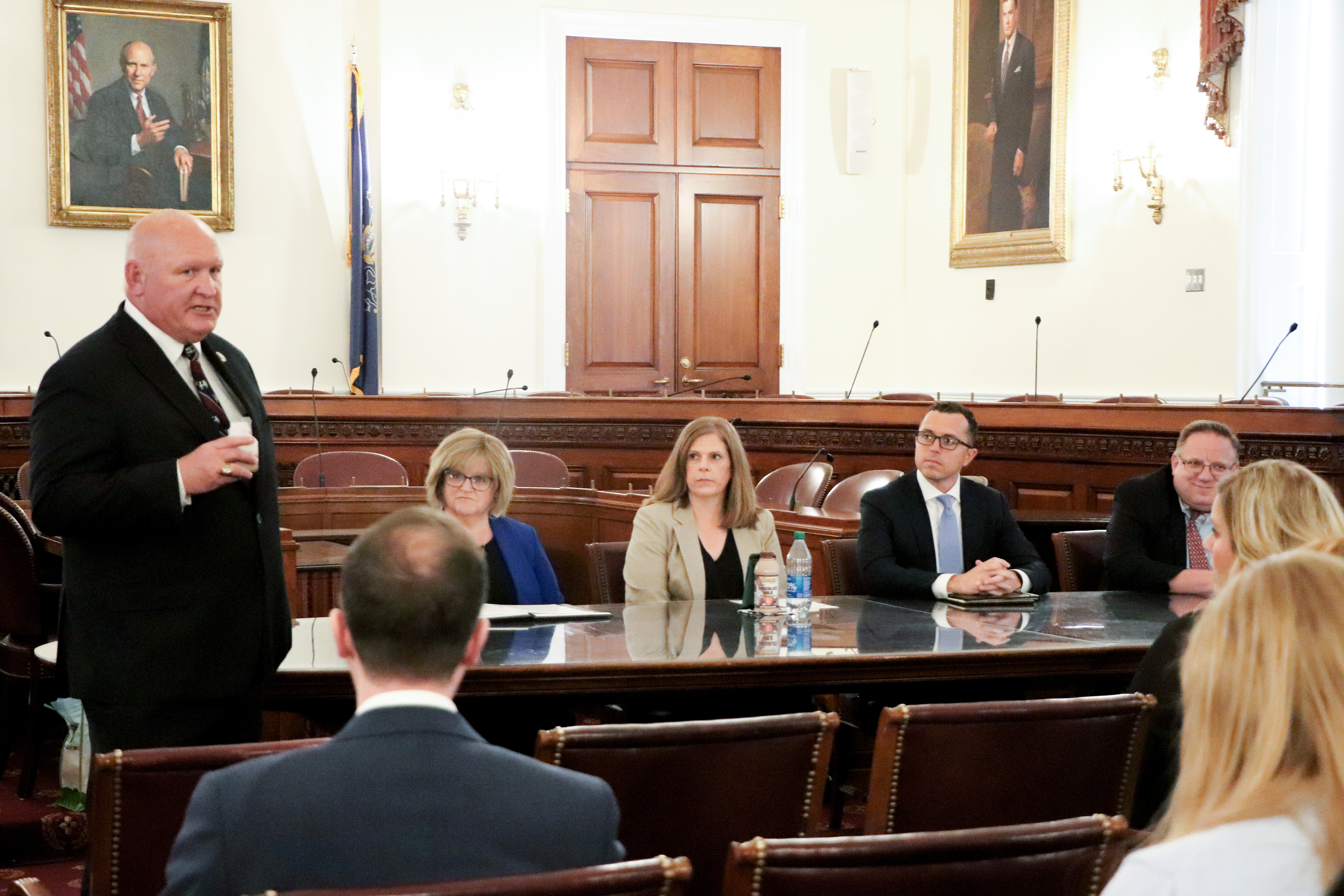
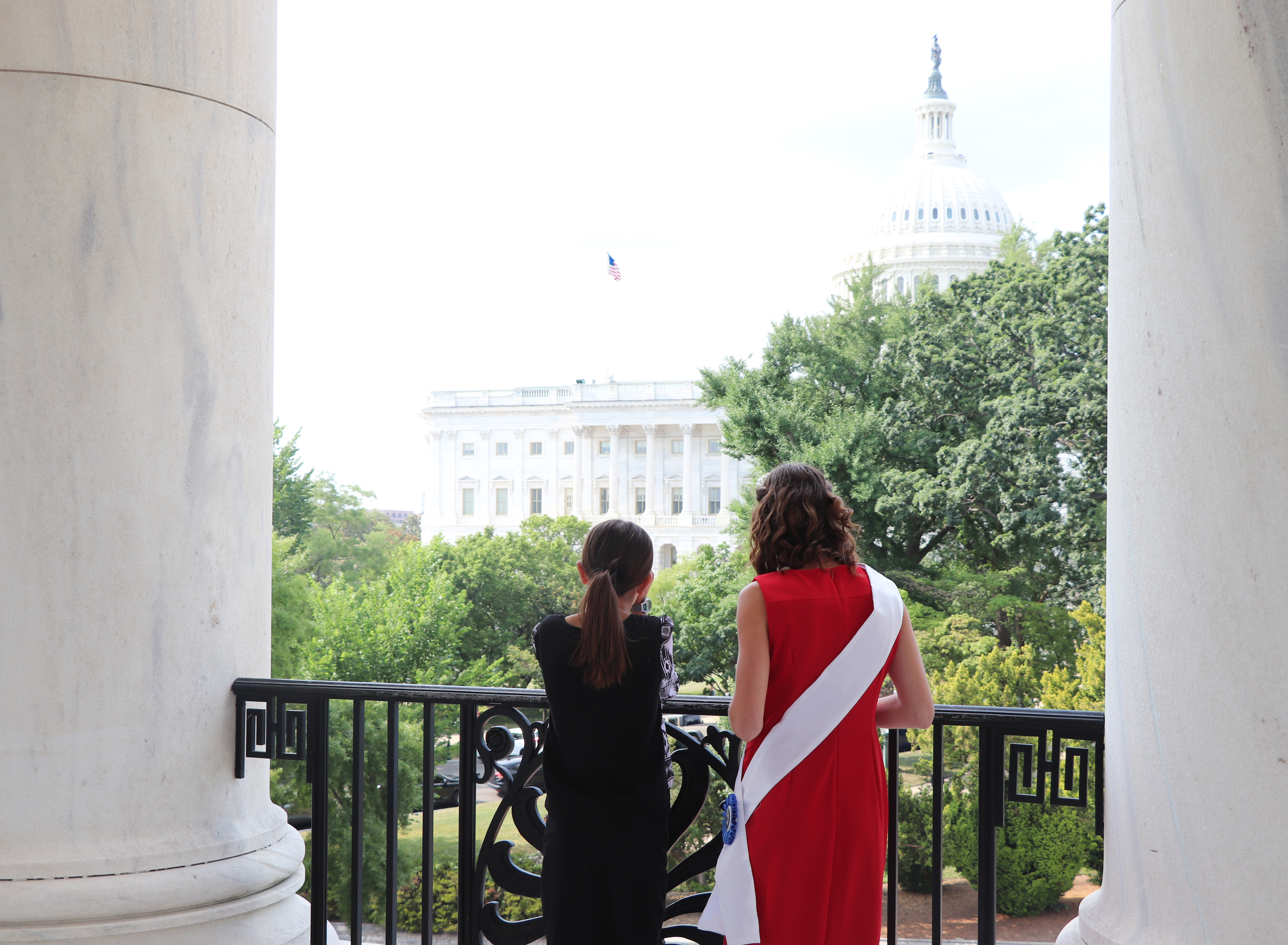
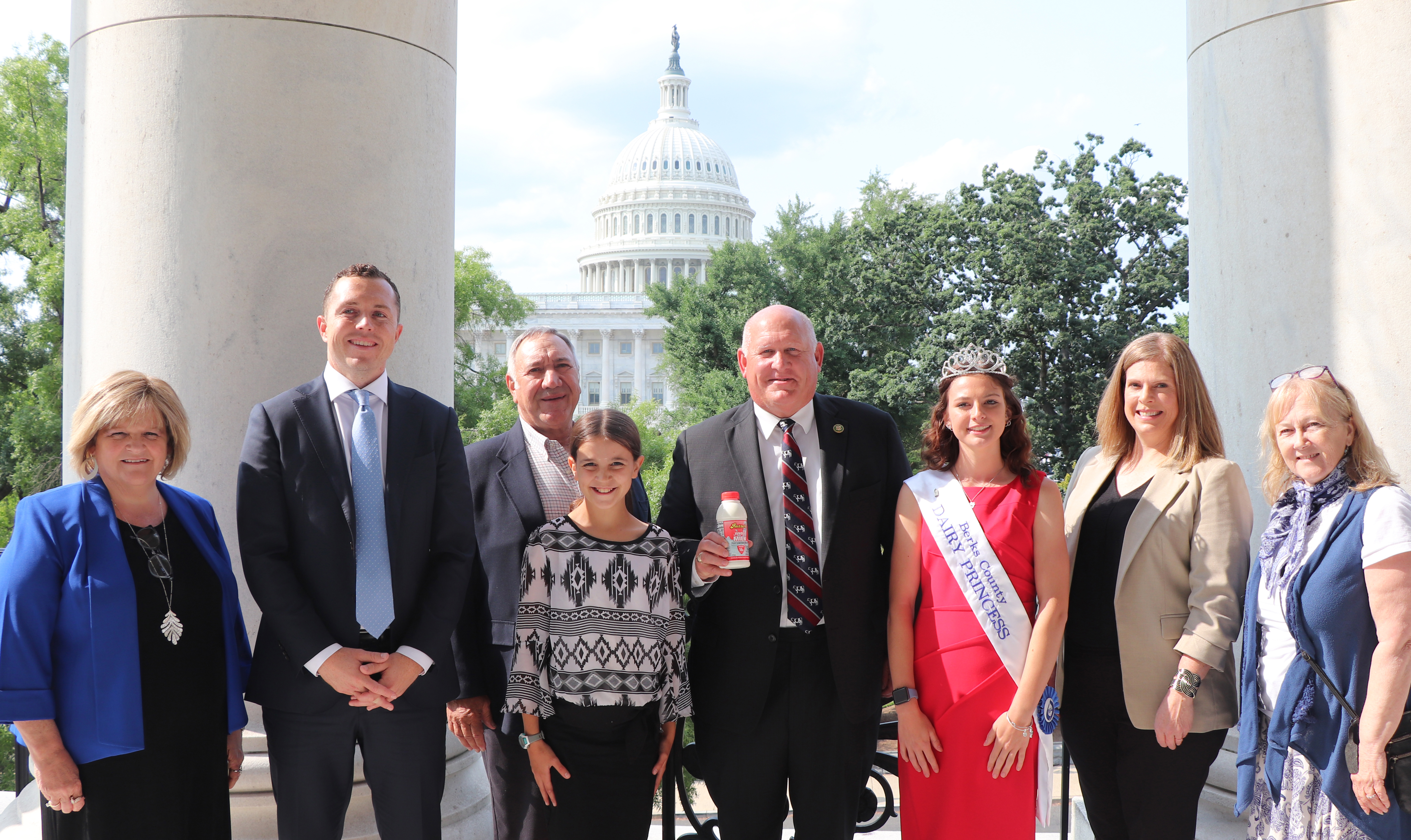
Standing with U.S. House Ag Committee Chairman, Glenn ‘G.T.’ Thompson are some of the volunteers who participated in the legislative staff briefing on G.T’s Whole Milk for Healthy Kids Act, including a June Dairy Month celebratory Whole Milk Bar at the Capitol in Washington on Tuesday, June 13. Congressman G.T. says he wants to reach 150 to 200 cosponsors before it comes to the House floor for a vote. Currently, there are 128 cosponsors representing 43 states (103 R’s and 25 D’s), and the Education and Workforce Committee recently passed H.R. 1147 in a bipartisan 26-13 vote. From left are Christine Ebersole, a school nurse in Blair County, Pa.; John Bates, executive director of The Nutrition Coalition; Nelson Troutman, a Berks County dairy farmer and 97 Milk Baleboard originator and his granddaughter Madalyn, the 2022-23 Lebanon County, Pa. Dairy Maid; Congressman G.T. Thompson (R-PA-15), the champion and prime sponsor of the Whole Milk for Healthy Kids Act; Sara Haag, the 2023-24 Berks County Dairy Princess; Krista Byler, a school foodservice director in Crawford County, Pa.; Sherry Bunting, Farmshine contributor and volunteer advocate for whole milk in schools. Photo credit: Maddison Stone

By Sherry Bunting, Farmshine, June 16, 2023 with June 23 update

WASHINGTON – “Wouldn’t it be great if we could unite the country with whole milk?” That question was posed by a fellow journalist in the Southeast, Julie Walker of Agrivoice, as I was updating her about the grassroots effort to bring milk education and the choice of whole milk to schools.

After the events of the past two weeks, my answer to that question is: Yes, I believe we can and we are… seeing the fruits of the labor of grassroots volunteers.

On Tuesday, June 13, the Grassroots Pennsylvania Dairy Advisory Committee and 97 Milk were part of a legislative staff briefing hosted by Congressman G.T. Thompson and his staff at the Longworth House office building on Capitol Hill in Washington. This had been planned weeks earlier, before Thompson’s bill – the Whole Milk for Healthy Kids Act, H.R. 1147 – passed the Education and Workforce Committee on June 6 in a bipartisan 26-13 vote.

This week, the identical bipartisan Senate companion bill was introduced on June 13 by prime sponsor Senator Roger Marshall, a Republican and medical doctor from Kansas and prime cosponsor Peter Welch, a Democrat from Vermont along with other bipartisan cosponsors.

Allow me to take you behind the scenes of the June 13 legislative staff briefing on Congressman Thompson’s House bill and why it gives me hope to see people rediscovering and uniting behind the effort to legalize whole milk in schools so children have true access to the most wholesome nutritional beverage, milk.

What becomes apparent is that children are not benefiting from milk’s nutrition when their choices at school are restricted to fat free and low fat. They should be able to choose whole milk and 2% milk that are currently banned by federal nutrition standards, and they should be able to continue to choose flavored milk, which USDA is considering restricting to only high school students.

“Milkfat was demonized as a part of the child nutrition standards, especially since 2010… and we’ve seen a lot of waste and unopened milk cartons at school cafeterias because (fat-free/low-fat milk) is not a great milk experience for kids. Meanwhile, we’ve seen a significant increase in childhood obesity. If they don’t have access to milk they like, they will drink something, and the alternatives won’t give them milk’s essential nutrients or be as satisfying,” said Rep. Thompson. “Everything has its own time, and I’m pleased that we’ve gotten to this point with the bill and appreciate the panel here today to share and answer the question: ‘Why whole milk in schools?’”

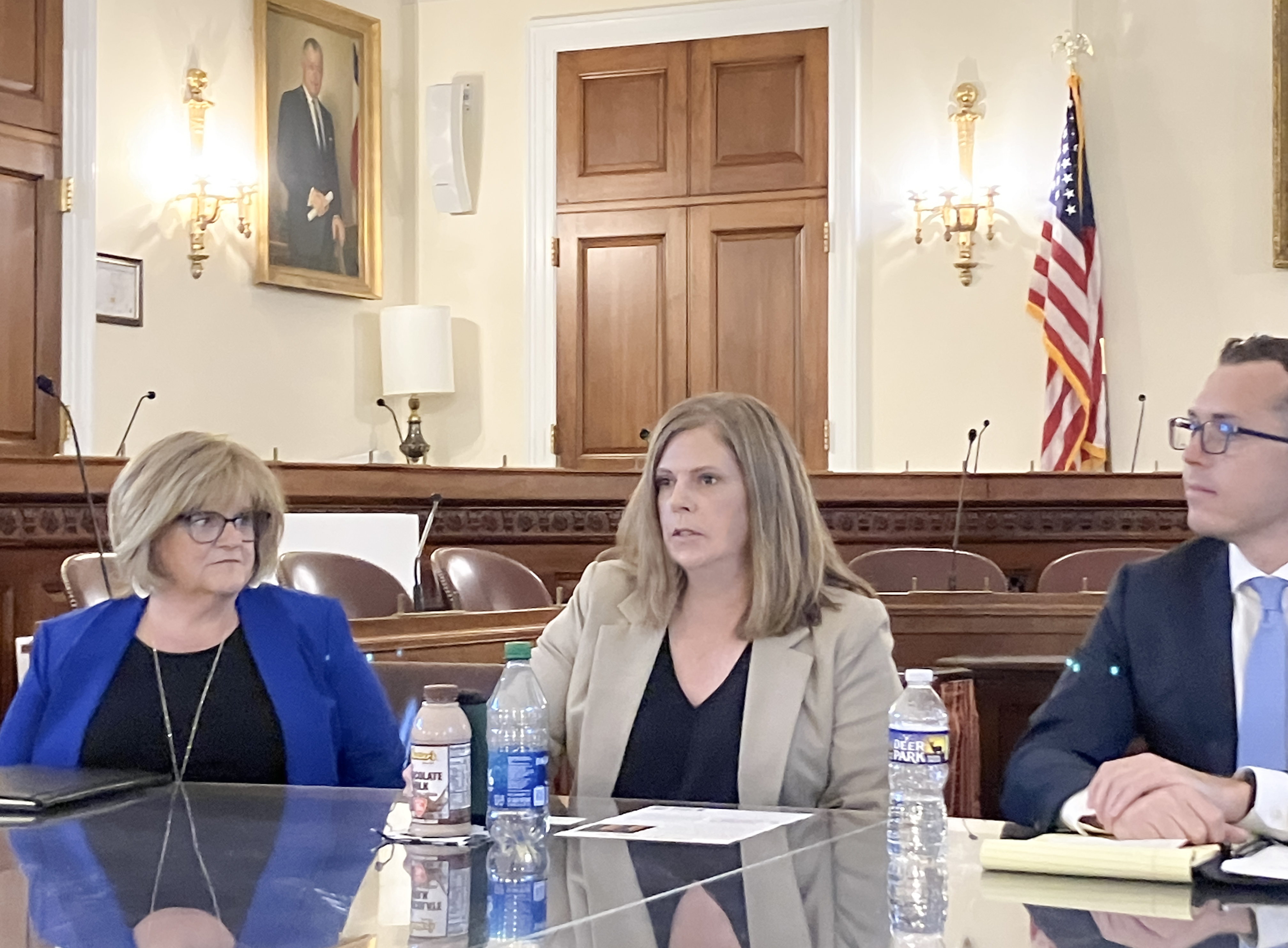
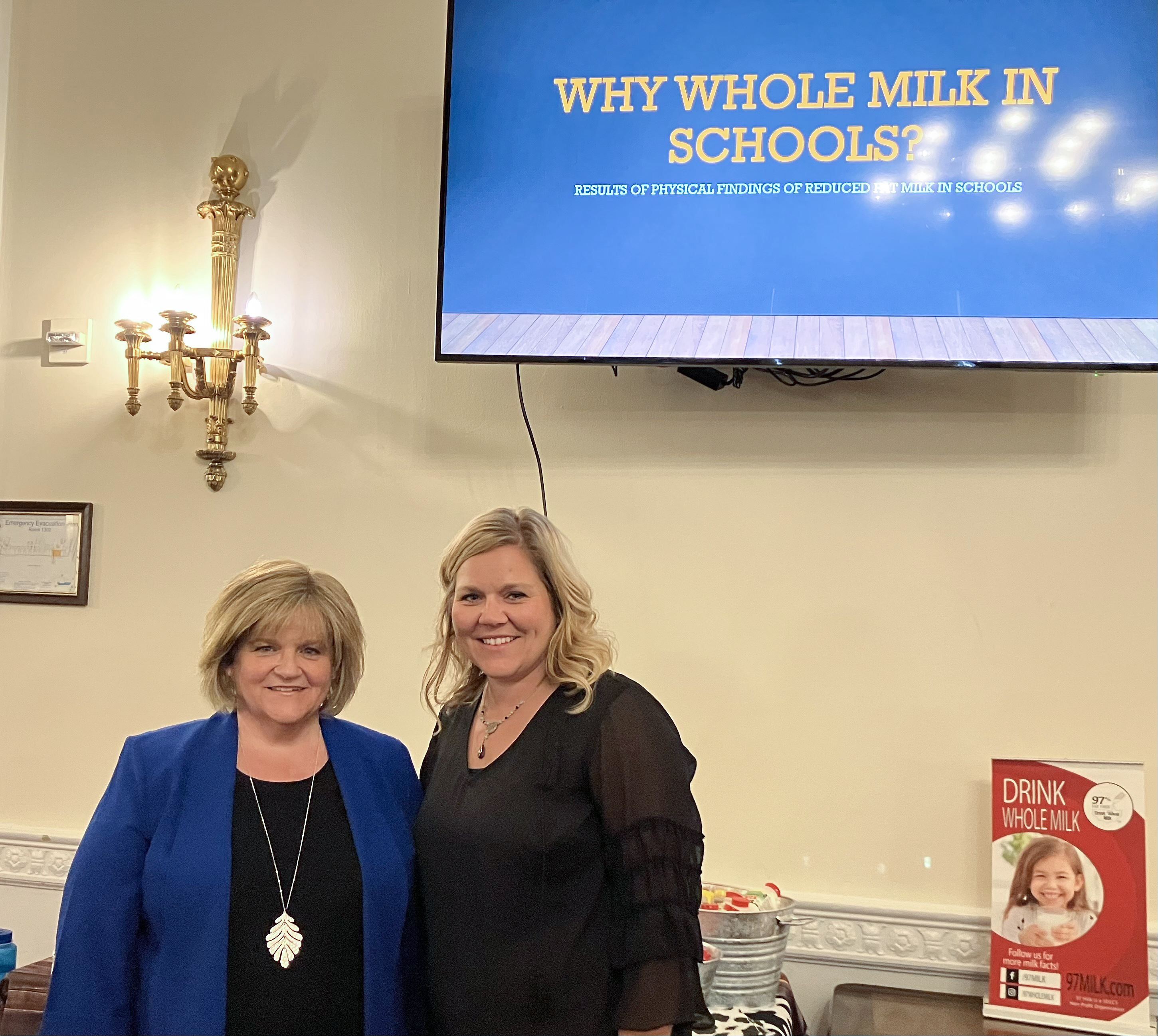
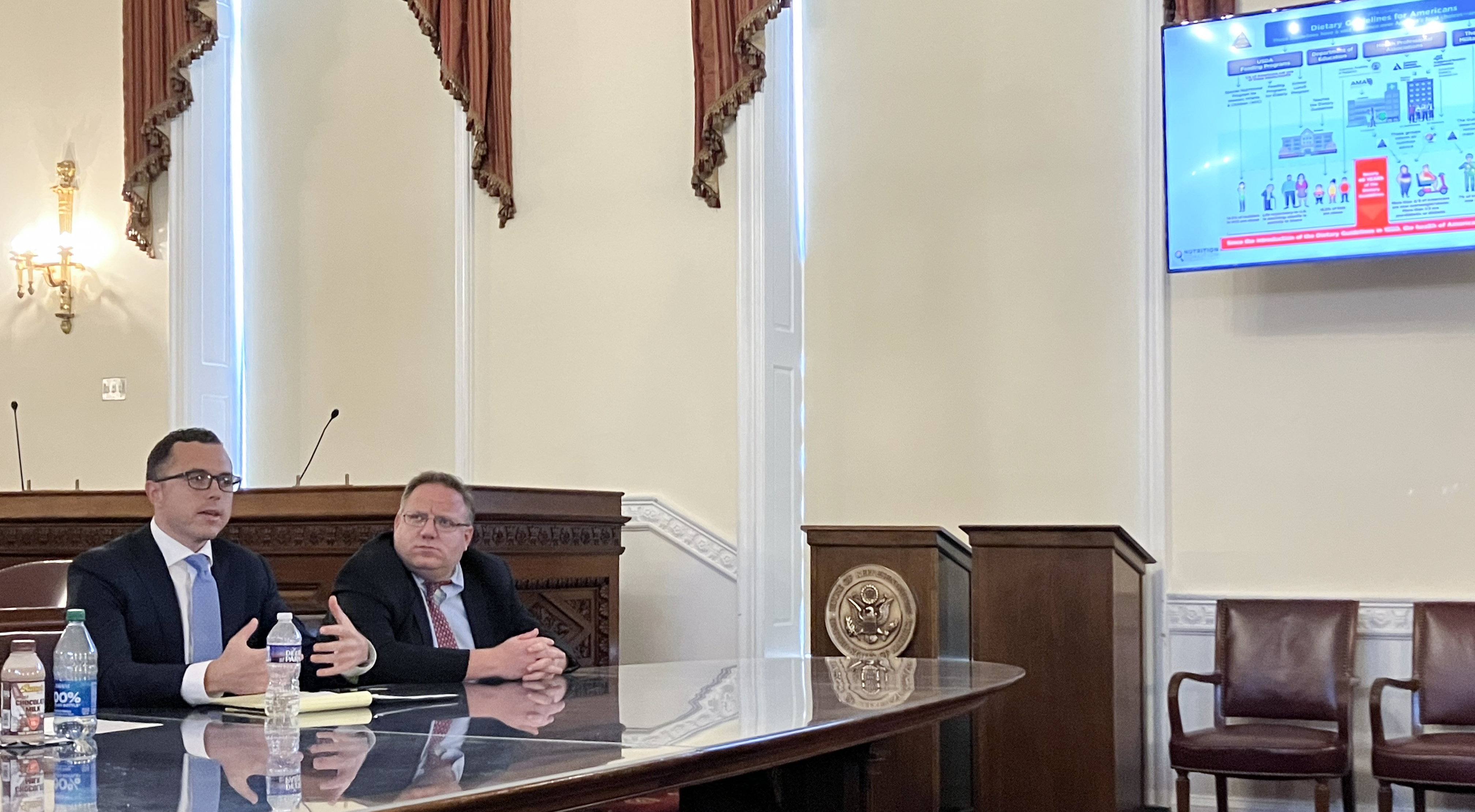
Two school professionals from the grassroots advisory group were on the panel: Krista Byler (second from left) of Spartanburg, foodservice director for Union City Area Schools and Christine Ebersole RN, BSN, CSN (left) of Martinsburg, school nurse at Williamsburg Community School District. They were joined by John Bates (second from right), executive director of the Nutrition Coalition, a nonprofit founded by Nina Teicholz, author of The Big Fat Surprise; as well as Paul Bleiberg (right) of National Milk Producers Federation.

Around 25 to 30 staff members working for Representatives and Senators from both parties attended for the entire briefing. That may not sound like a lot, but for this setting, and the constantly changing schedules during floor votes, hearings and meetings, it’s a big deal. The event was by invitation and targeted key legislative offices for an educational briefing on the bill.

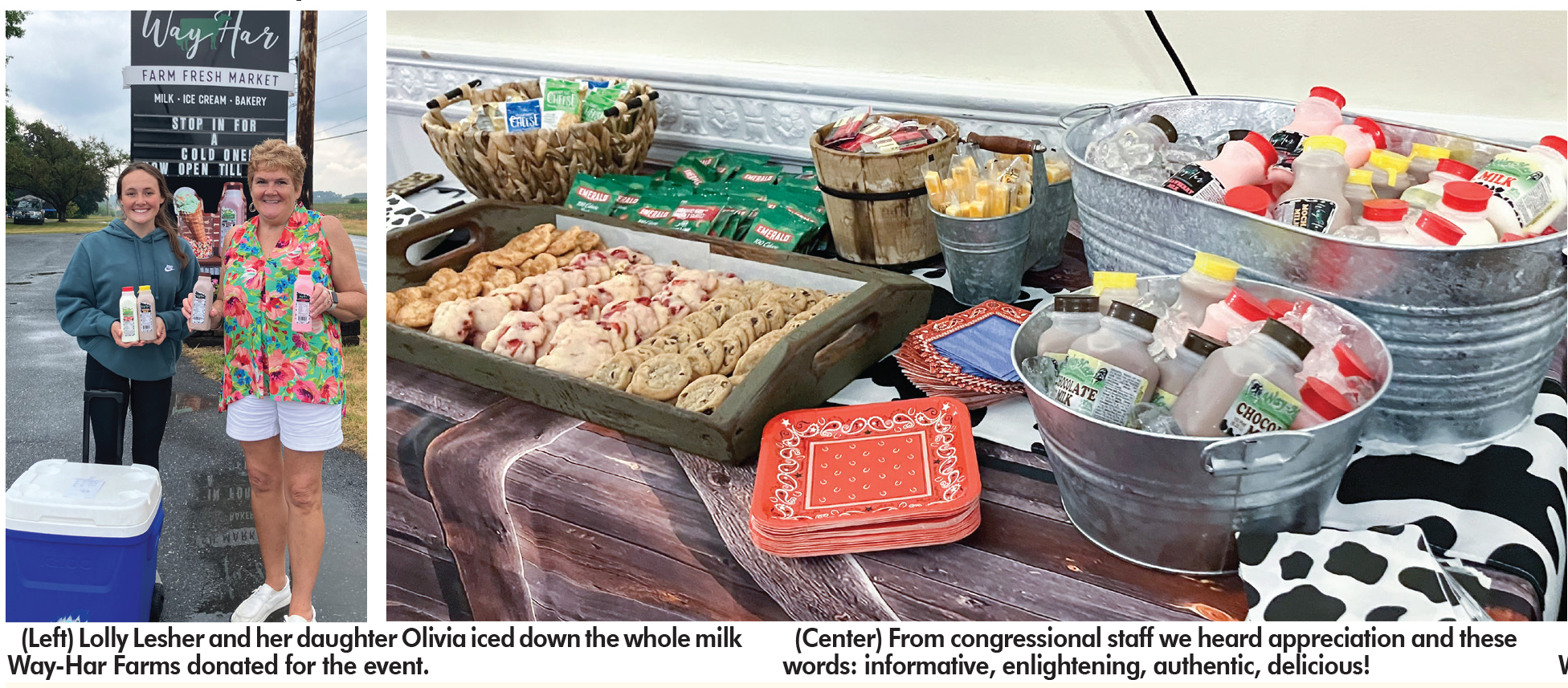
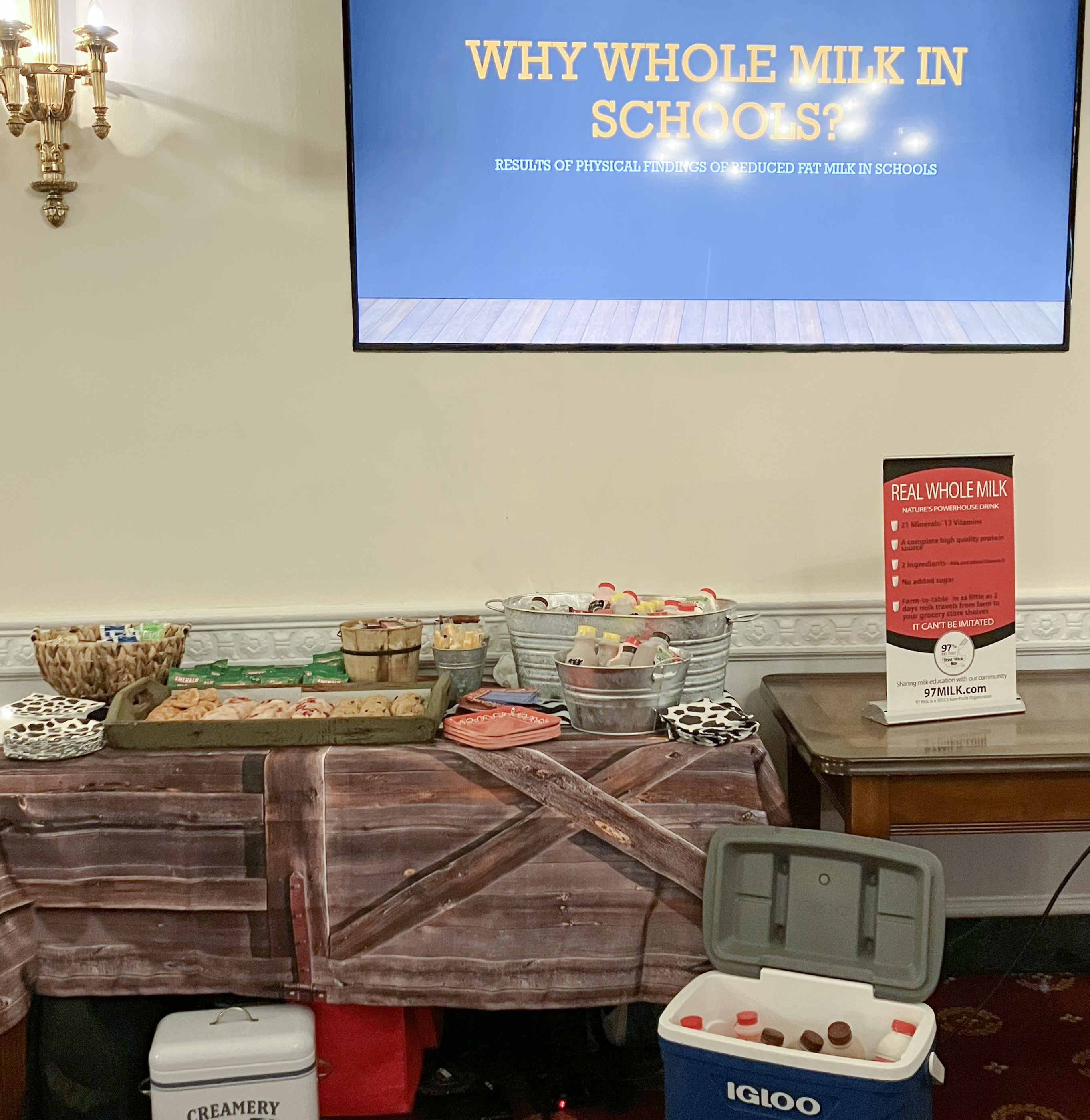
It was Congressman Thompson’s idea to have a “whole milk bar,” so our crew brought 100 half pints of whole milk — unflavored, chocolate, strawberry and mocha — donated by the Lesher family of Way-Har Farms, Bernville, Pennsylvania. We added some full pints of flavored and unflavored milk picked up at two convenience stores on the way (Rutter’s and Clover) to be sure we had enough as we heard interest in the briefing was growing.

We baked fresh strawberry cheesecake cookies with butter and cream cheese, and brought a few other types of cookies, as well as cheese snacks and nuts, arranged a nice table, kept the milk iced cold (that was a fun challenge through security scanners).

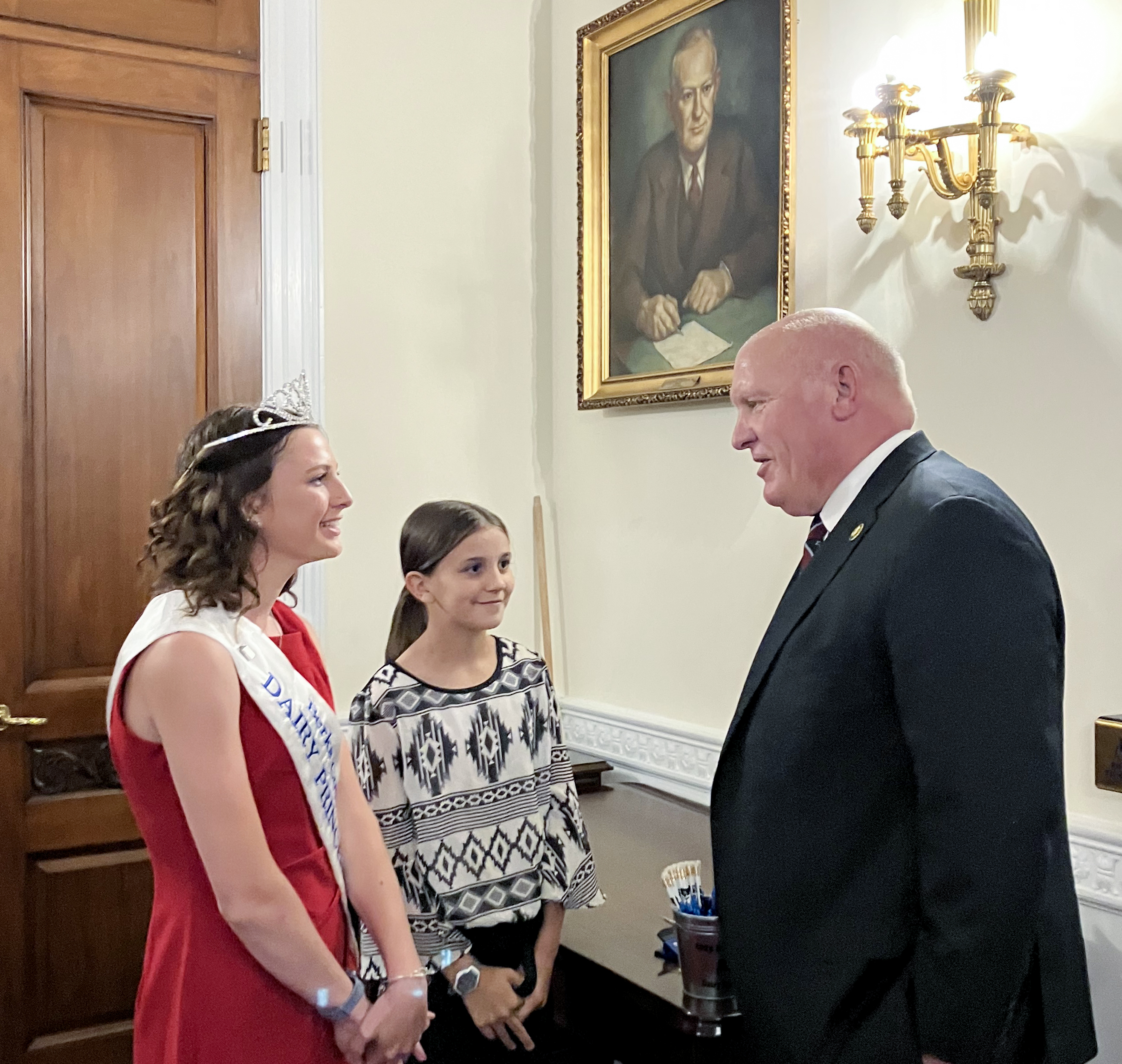
We brought with us Berks County Dairy Princess Sara Haag and former Lebanon County Dairy Maid Madalyn Troutman. Ebersole brought her daughter Vanessa Wiand, an elementary school teacher.

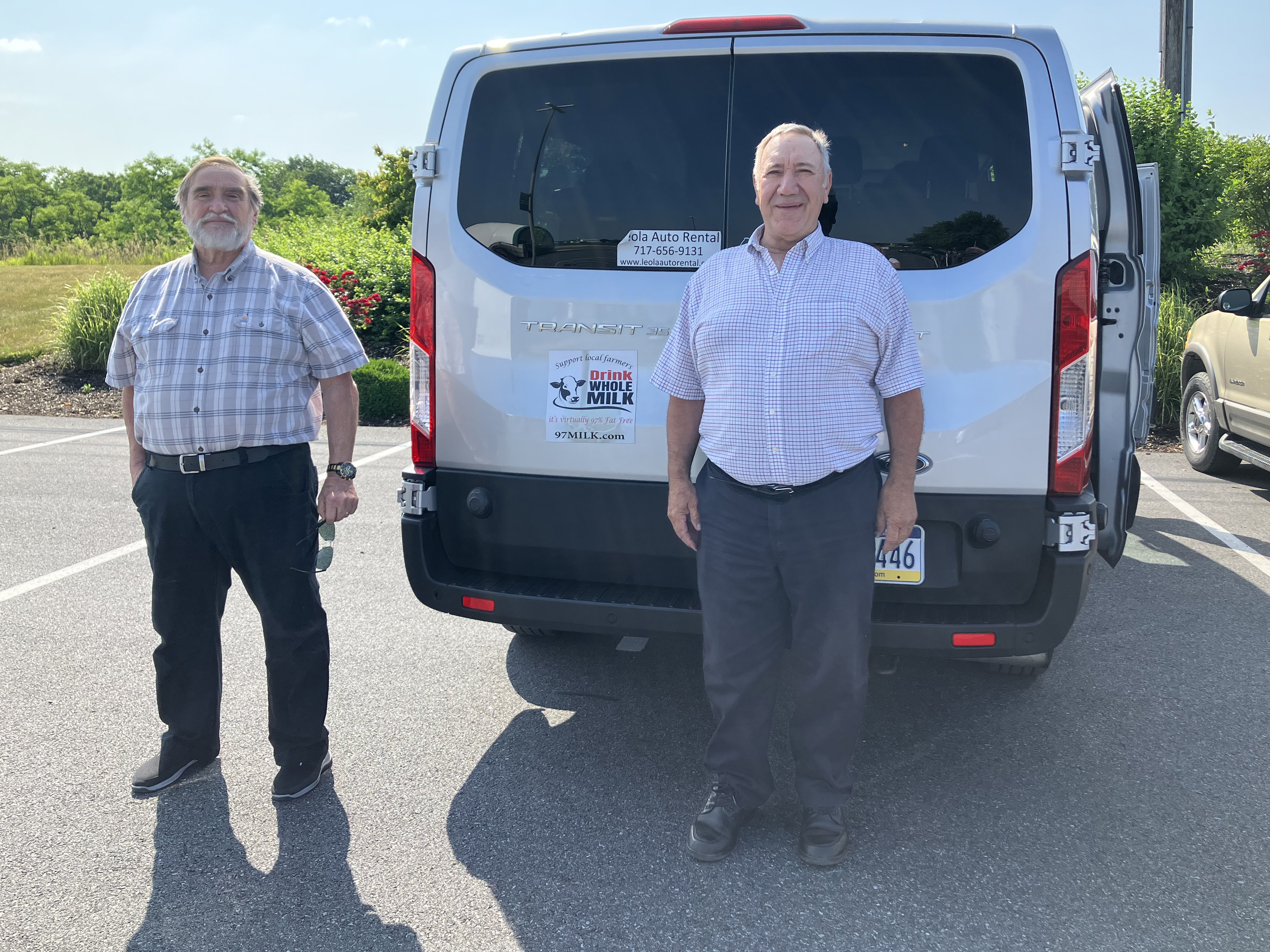
Nelson Troutman (right) with our driver Frank Tomko

Berks County farmer and Drink Whole Milk 97% fat free Baleboard originator Nelson Troutman was part of our crew, and he made sure the van we rented for travel had several 97 Milk magnets for the ride.

I provide these details because here’s the deal: Each person in our crew is a volunteer among the many volunteers working on the whole milk in schools issue, not just in Pennsylvania, but in other states as well.

Sara and Madalyn handed out the 6×6 cards designed by Jackie Behr at 97 Milk that visually show what milk provides nutritionally. It’s an impressive piece. They also handed staffers a business card with a QR code (above) that they could scan to reach the online folder to a video created by students and technology teacher at Krista’s school as well as finding other important information about whole milk and the Whole Milk for Healthy Kids Act. On the table next to the whole milk bar was a one page handout with bullet points, and 97 Milk provided milk education tabletop displays.

As Congressman Thompson talked about “ruining a generation of milk drinkers with failed federal nutrition policy,” he praised the bipartisan support for H.R. 1147 and noted the 107 cosponsors in the House (as of June 13, the number as of June 23 is 128 and counting).

That’s a large number by historical standards, but Thompson wants to get to 150 cosponsors by the time the bill is officially reported to the House, which will be soon.

There is still time, and it is still important to keep contacting members of Congress to ask them to consider cosponsoring the Whole Milk for Healthy Kids Act in the House, and thank them if they already have signed on.

Ebersole shared with staffers her perspective as a nurse, what she observes, what milk nutrition means for children.

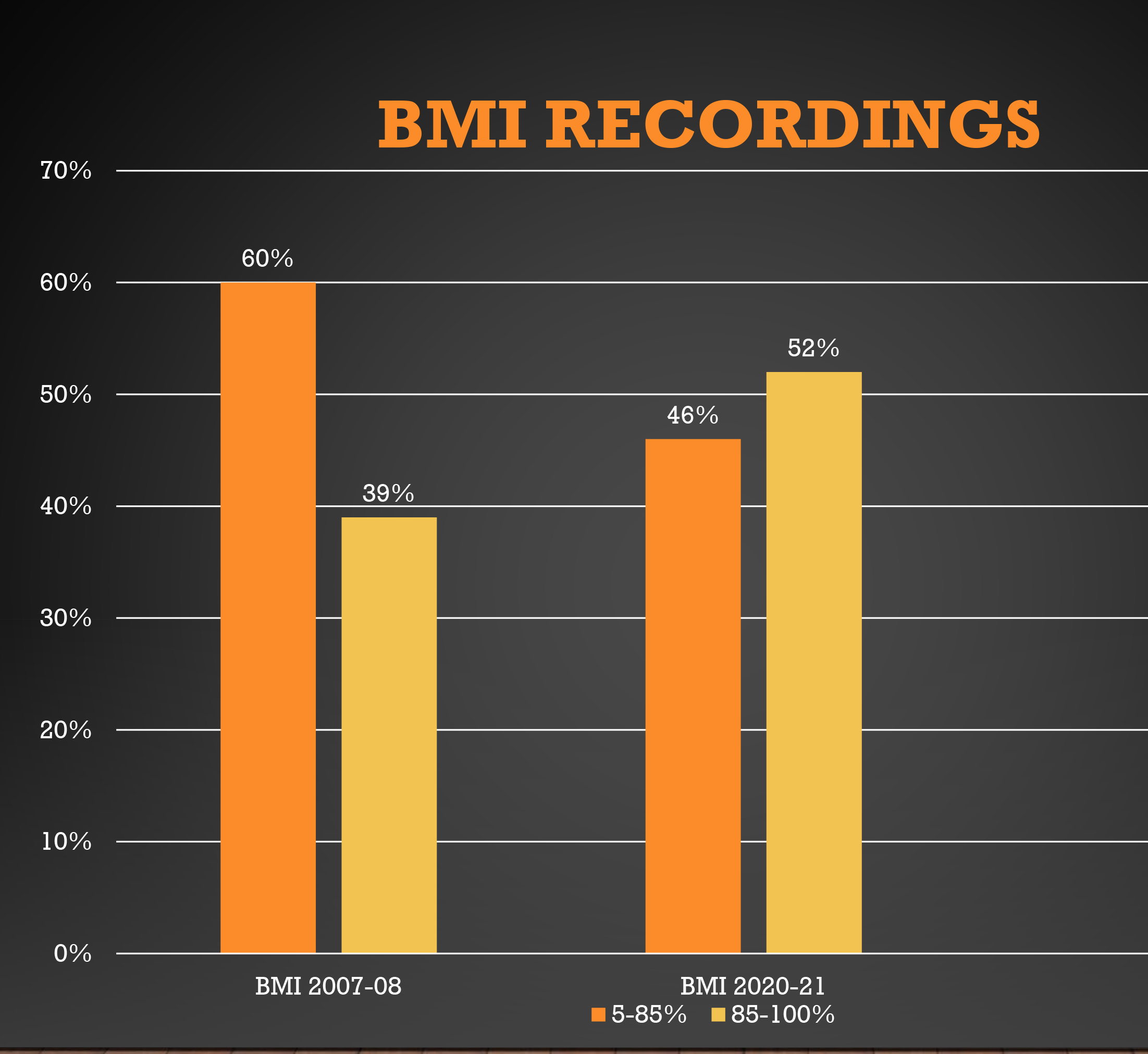
“I thought it would be interesting to compare BMI (Body Mass Index) screenings when whole milk was served in schools with the recent screening where students have been served only skim and 1% milk. The results of the comparison are striking (above). The overweight and obese categories for students in grades 7-12 in 2007-2008 school year was 39% with 60% in the proper BMI scale. In the year 2020-2021, after being served low fat milk during school hours, the overweight and obese categories were increased to 52% while the recommended range was decreased to 46%. That is a 13% increase over the past 13 years!” said Ebersole.

“While one cannot assume that the low fat milk alternatives are the only determining factors, they certainly did not have the intended outcome of reducing obesity in school age children,” she said.

Ebersole explained that, “Whole milk is a nutrient dense food and with its natural combination of protein, fats and carbohydrates, it is called Nature’s most nearly perfect food. Whole milk also provides satiety, which is stabilizing for blood sugar as well as feeling fuller longer thus decreasing food intake. Another important quality is that students prefer the taste of whole milk compared to the reduced fat and skim milk options.”

Byler talked about the trial at her school in the 2019-20 school year. She explained that the milkfat restrictions at school have led to a loss of school milk consumption with results that are far reaching.

“We are now hearing of very early onset osteoporosis and an increase in malnutrition and/or obesity. It is shameful that our youth cannot have a choice of a wholesome, nutritious product that is farm-to-table/farm-to-school,” said Byler. This, and the amount of milk wasted daily prompted the school trial.

She provided slides of the trial results and talked about how half of the students didn’t really know whole milk was not allowed. This means they didn’t know how good milk can be.

“The results of the trial were astounding. When offerings were expanded to include whole and 2% milk, the amount of wasted milk was reduced by 95% and we saw a 52% increase in students choosing milk,” said Byler, explaining that the student council did actual milk collection data as part of an environmental project.

She also shared results of her survey of the elementary school children showing that if this latest possible restriction on milk options for schoolchildren is approved by USDA, fewer than 25% of students currently taking and drinking the milk say they would continue taking milk and drinking it if flavored milk were not offered. 

“That’s huge,” said Byler.

That means we would see even more reductions in milk consumption at school and more waste. This struck a chord because when Byler presented the 2019-20 trial where her school offered whole and 2% along with fat free and 1% milk, for trial purposes, we heard audible gasps among those attending the briefing when Byler shared the data on the reduction of wasted milk. ((The students also created a video about school milk, view it here.)

We also saw reactions while Ebersole was sharing her analysis of student BMI data over the past 13 years.

Both women concluded by sharing a heartfelt message about how important dairy farmers are to communities, how they care for their cattle and work to provide a high quality nutritious product, and what it means to them for children to be able to choose milk they love so they can benefit from the nutrition the milk provides.

“As the wife and granddaughter of proud Pennsylvania dairymen, I knew the decrease in milk we were ordering for schools would impact dairy families. I know firsthand about the dairy farmers we have lost,” said Byler. “What I know based on 18 years in school nutrition, raising two children and being part of two dairy families is that restricting milk offerings to our school children does not benefit our children or our dairies. It benefits big corporations who have exponential marketing power and are preying upon our youth.”

School nurse Christine Ebersole and her daughter Vanessa Wiand, an elementary teacher at the briefing.

Ebersole noted that, “Being born and raised on a dairy farm and having lived in the dairy community all my life, I can say I know something about the American Dairy Farmer. They are on call 365 days a year and 24 hours a day.  They care about their animals and also care about their neighbors. When a tragedy happens like a fire, the neighbors come together. Dairy farmers work diligently to bring a wholesome natural food to us. Let’s do our part to support this industry by allowing students to have a choice of a delicious, nutritious whole food, whole milk,” she said.

For the Nutrition Coalition, John Bates explained they are a non-profit, non-partisan organization that seeks to improve health in America by ensuring that the public gets evidence-based nutritional advice. They emphasize good science, transparency, and methodology and receive no industry funding.

“When the Healthy, Hunger-Free Kids Act was enacted in 2010, milk became counted as part of that less than 10% of calories from saturated fat, when previously it had been in its own, separate beverage category,” said Bates.

He noted that the U.S. Dietary Guidelines that these rules for schools are based on “never reviewed studies on dietary fat specifically for children until 2020. Children have just been assumed to be like adults, but children are different: they need more protein for their growing bodies and more fat for their growing brains,” said Bates.

The Guidelines in 2020 cite a single clinical trial on school-aged children, ages 7-10 (“DISC,” funded by the NIH). It showed ‘Modestly’ lowered LDL-cholesterol, he explained. “Yet the study was not on a normal population. The expert USDA committee acknowledged this study could not reliably be generalized to a larger population

The bottom line, said Bates is that expert committees have found “insufficient evidence” to show that restricting saturated fats in childhood could prevent heart-disease or mortality in adulthood.

“In our view, a single trial on an atypical population is not enough to make population-wide guidelines to all American children,” he said.

Paul Bleiberg for National Milk Producers Federation focused his comments on the problems with underconsumption of dairy.

“Milk is the number one source of three of the four food nutrients of public health concern as identified by the DGA’s — calcium, vitamin D and potassium. Dairy delivers 7 of the 14 nutrients the American Academy of Pediatrics recommends for optimal brain development as well as nutrients vital for immune health and bone growth and development during a child’s school-aged years,” said Bleiberg. 

“The 2020 DGA Committee found that 79% of 9 to 13 year olds fall short of recommended dairy intake and the data from MilkPEP show that students take less milk and throw away more milk at schools when they do not have options they like,” he added.

Before, after and during these four short presentations on whole milk choice in schools, staffers trickled in, gathered around the whole milk bar and had conversations.

In fact, when news began to spread through texts and emails that there were milk and cookies in room 1302 — more staffers came and went. Connections were made around good food and delicious, nutritious milk.

From congressional staff we heard appreciation and these words: informative, enlightening, authentic, delicious!

Those four words give me hope that we can unite with whole milk… for our children and our dairy farmers.

June 23 UPDATE: This was another good week for the Whole Milk for Healthy Kids Act in Washington, and here’s how you can help…

As of June 23, the bipartisan Whole Milk for Healthy Kids Act, H.R. 1147 grew the number of cosponsors to 128 including prime sponsor G.T. Thompson (103 Republicans, 25 Democrats). These cosponsors represent 43 states.

Texas tops the list with 13, followed by Pennsylvania 10, New York 8, California, Florida and Wisconsin at 7. Maine, Idaho, Iowa, North and South Dakota and Wyoming have fewer Representatives and their full delegations are on board. Wisconsin is nearly 100% with 7 of their 8 Representatives signed on.

The 43 states now represented are listed in the order of number of cosponsors vs. the total number of representatives for the respective states: Texas 13 of 36, Pennsylvania 10 of 17, New York 8 of 26, California 7 of 52, Wisconsin 7 of 8, Florida 7 of 28, Georgia 5 of 14, Indiana 4 of 9, Iowa 4 of 4, Michigan 4 of 13, Minnesota 4 of 8, North Carolina 4 of 14, Illinois 3 of 17, Virginia 3 of 11, Washington 3 of 10, Alabama 2 of 7, Arizona 2 of 9, Connecticut 2 of 5, Idaho 2 of 2, Kansas 2 of 4, Kentucky 2 of 6, Maine 2 of 2, Missouri 2 of 8, New Jersey 2 of 12, Ohio 2 of 15, Oklahoma 2 of 5, Oregon 2 of 6, South Carolina 2 of 7, Tennessee 2 of 9, Arkansas 1 of 4, Colorado 1 of 8, Hawaii 1 of 2, Louisiana 1 of 6, Maryland 1 of 8, Mississippi 1 of 4, Nebraska 1 of 3, Nevada 1 of 4, New Mexico 1 of 3, North Dakota 1 of 1, South Dakota 1 of 1, Utah 1 of 4, West Virginia 1 of 2, and Wyoming 1 of 1.

To reach all 50 states, here’s what we need in the East: Delaware, Massachusetts, New Hampshire, Rhode Island, and Vermont. In the West: Alaska and Montana. Is your state on the list? Is your Congressional Representative a cosponsor? Make the call! Go to this link to see the bill’s progress and cosponsors, and click “contact your member” on the right to find your Representative.

Call Senators too. On June 13, the bipartisan Senate companion bill, S.1957, was introduced by Senator Roger Marshall, a Republican and medical doctor from Kansas, along with prime cosponsor Peter Welch, a Democrat from Vermont. Also cosponsoring right out of the gate are Democratic Senators Kirsten Gillibrand of New York and John Fetterman of Pennsylvania; Independent Senator Angus King of Maine; and Republican Senators Ron Johnson of Wisconsin, Chuck Grassley of Iowa, Susan Collins of Maine, Cindy Hyde-Smith of Mississippi, and James Risch and Mike Crapo, both of Idaho. As of June 23, that’s 11 Senate sponsors from 9 states. Maine and Idaho have both of their respective Senators on board!

-30-

Our farmers are the thin green line between us and a ‘Holodomor’ – Let’s not forget it!

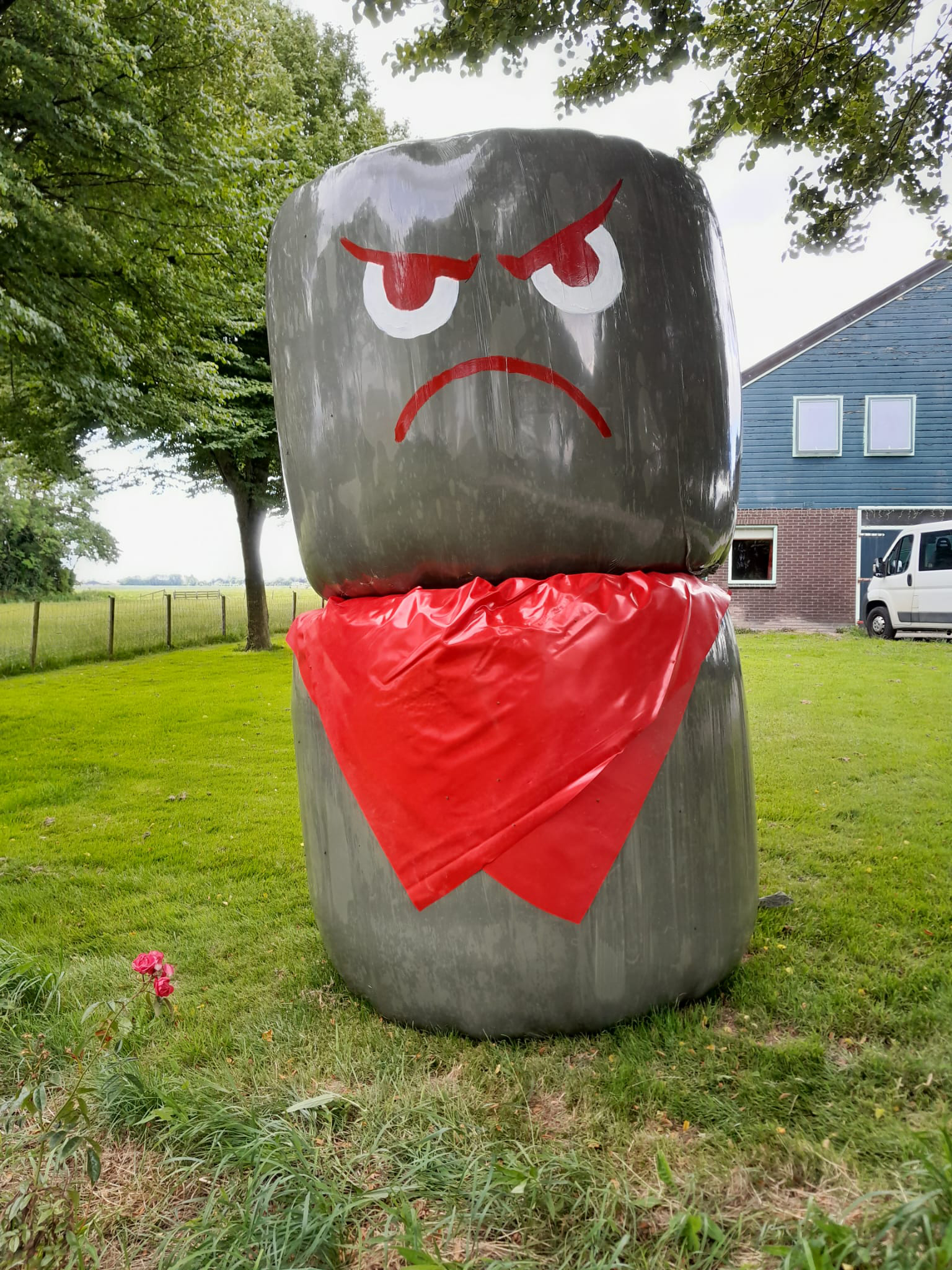
Bale art in Holland has a message. Displays like this are a ‘public-friendly’ way to protest the nitrogen (emissions) policy, and the red handkerchief has become the sign of support for farmer resistance.

By Sherry Bunting, Farmshine, July 22, 2022

The pain is necessary. The transition is unavoidable. The climate pledges are urgent. Race to zero. Net Zero Economy. Sustainable Nitrogen Management. Climate Champions, and on and on. 

These are just some of the pages and phrases at the United Nations Environmental Program (UNEP) website where resolutions are adopted, targets are pledged, sustainable development goals (SDGs) are constructed and updated, and Environment, Social, Governance (ESG) scoring is discussed for countries, cities, corporations, lenders, investors, institutions, states, provinces, networks, alliances, even individuals.

Dairy farmers are being asked to provide more and more of their business operations data, field agronomy, feed and energy purchases, inputs, output, upstream, downstream — a virtual farm blueprint.

While it is important that farmers have a baseline to know where they are and gauge where they are going, it is also critical that such details do not provide a centralizing entity the ability to map them into zones where requirements are passed down by milk buyers, government agencies, industry programs, or lenders deciding farmers in Zone A will be held to one standard while farmers in Zone B are held to another. 

Meanwhile, even the most aggressive standard is so trivial in the big picture that it is offset virtually overnight by unrestrained pollution in countries like China where no one is minding the store.

Sound familiar? Look at The Netherlands.

Activist NGOs have struck deals with everyone from the billionaire globalists, activist politicians, industry organizations, corporations and investors to create the world they envision and have invested in for a future return.

They use marketing platforms, global PR firms, thought-leadership networks, pre-competitive alliances, pseudo-foundations and even align with government agencies to flesh out the details and drive the bus.

As producers and consumers, it feels like we are along for the ride.

For example, Changing Markets Foundation, an offshoot of World Wildlife Fund, partners with NGOs to “leverage market forces to drive rapid and self-reinforcing change towards a more sustainable economy.”

It was formed to accelerate this transition.

Just this week Changing Markets published a study taking aim at dairy – warning investors to take a more active role in improving the dairy and meat sector’s “climate impact” by asking these companies, the processors, to disclose their emissions and investments and cut methane and other pollutants.

In other words, the NGOs, through a ‘marketing’ foundation, prods investors to push your milk buyers, lenders and vendors to obtain and track for them your information.

These NGOs and foundations are driving this bus a little too fast, and it needs to slow down. They take countries (like Holland) to court to hold up infrastructure projects, using their own pledged targets against them and forcing a faster timetable to gain the offsets needed for the stalled projects.

They publish self-fulfilling studies, surveys and warnings prodding investors to reach back into the dairy and meat sector and take a more active role in getting more reporting of downstream methane emissions (your farm).

They warn dairy and meat processors that if they don’t get this information and cough it up, investor confidence will be harmed and their assets could be stranded, resulting in large economic losses.

They salivate with anticipation, waiting for land purchase packages that they, as NGOs, can poorly manage as contractors alongside the purchasing government entities.

Let this sink in. The investor class is being deemed the farmer’s new customer – not the consumers whom our farmers are proud to feed and proud to show the truly valuable practices they use in caring for the land, practices that are often not very well monetized – like cover crops, for example.

If a country like the Netherlands with a progressive agriculture industry finds itself in the position that it can’t build or do infrastructure projects without first decreasing nitrogen emissions on the backs of farmers, where do we go from here with the fuzzy math being done on all greenhouse gases in the sidebars of highly-capitalized alternative meat and dairy lookalikes that are lining up — ready to burst on the scene to grab a foothold for investor returns?

The Changing Markets report, in fact, makes the claim that 37% of global GHG comes from food production and attributes most of this to meat and dairy — certainly embellishing the issue in this disingenuous phrasing and fuzzy math.

If farmers can’t be paid for the simplest of constructive practices that produce food for people — while at the same time being restorative to the land, why should billionaires and governments be able to come in and buy their land, plant trees, re-wild to scrub brush or half-hearted grassland status and get an offset?

None of what is happening makes sense unless we step back and recall what we know about the World Economic Forum’s Great Reset, Food Transformation, Net Zero Economy and the realities of so-called ESGs. This has been a process and most of us have only had glimpses of it to connect the dots.

I recall conversations over the years of my journalism career with a most respected ag economics professor, the late Lou Moore at Penn State. He worked with farmers and his peers in former Soviet countries after the breakup of the Soviet Union. He would tell the stories from Ukraine, described to him as handed down through generations of the period of terror and famine known as the Holodomor when the Soviets collectivized the farms of the Ukraine under communism – resulting in the starvation and death of 10 million or more in a transition.

Bottomline: Agenda 2030 has been under construction for some time now, and ‘climate urgency’ is being used today to target farming and food production, not just energy and fuel.

Our industry organizations keep telling us the public, consumers, are driving where this is going, that it is science based, and yet key questions at the farm level still can’t be answered.

At the regional levels, we see authentic models of conservation groups partnering with dairy farms and cooperatives to access grants for meaningful improvements that make financial and environmental sense but may not show up just so on a global NGO’s master sheet. 

There are ideas being generated to give companies of all sizes a way to be ‘climate champions’ by investing in Farm Bill conservation programs that really work. Congressman G.T. Thompson mentioned this recently at a farm meeting.

Let’s do the work that accomplishes what’s real and equitable for our farmers and hold off just yet providing too much detailed information.

We know NGOs and governments have set targets to protect 30% of the earth’s surface as non-working lands by 2030 and 50% by 2050. This boils down in the targets at the U.S. level as well.

Let’s be sure we don’t give away the farm.

The strength and diversity of our farmers is so important. You, our farmers worldwide, are the thin green line between us and a Holodomor.

-30-

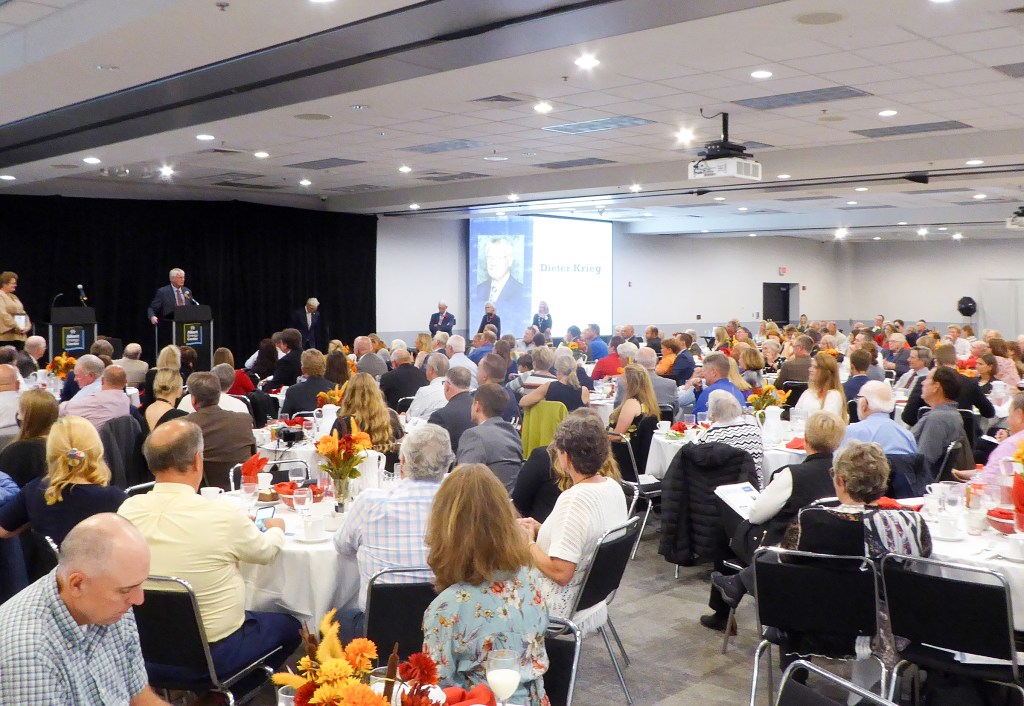
National Dairy Shrine 2021 Pioneer Dieter Krieg, ‘a trailblazer with energy, enthusiasm, dedication’

By Sherry Bunting, Farmshine, October 8, 2021

MADISON, Wis. – “It is impossible to overstate the impact Dieter Krieg and Farmshine have had on the dairy industry in 42 years visiting dairy farms and dairy events across the United States. His interviews with top dairymen and dairy leaders have implanted ideas of change to almost all his readers at one time or another over the years,” writes Carl Brown of F.M. Brown Sons, who nominated Dieter for the National Dairy Shrine Hall of Fame Pioneer Leader award.

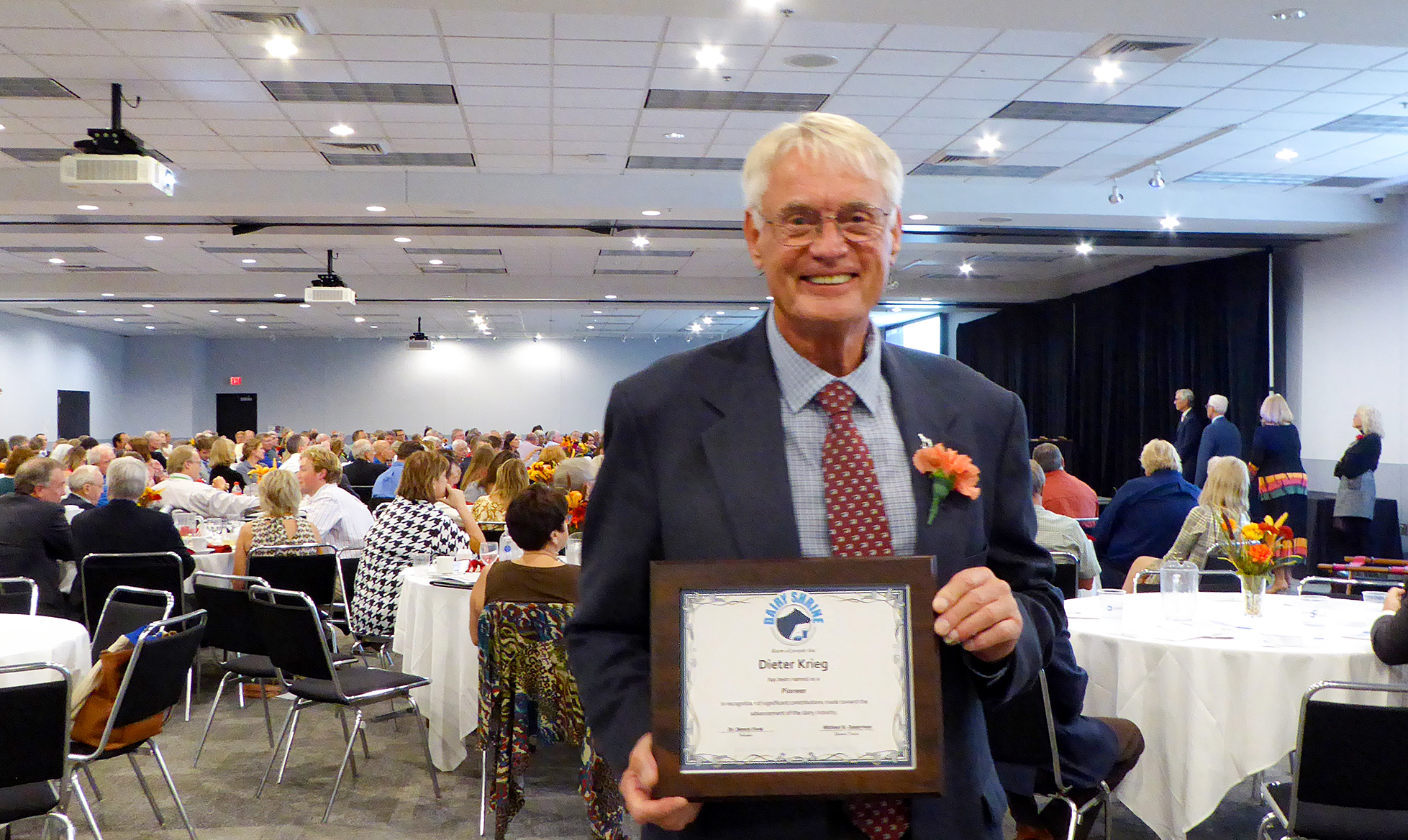
On Sept. 30 at the National Dairy Shrine (NDS) dinner, Dieter was one of four 2021 Pioneers to be recognized.

Dieter Krieg

“Dieter has been a trailblazer in dairy journalism and occupies a special place in supporting and educating dairy producers and youth. I personally realized the impact that Farmshine was having during one of our Dairy Science Club spring trips,” writes Dale Olver, Penn State Dairy and Animal Science assistant teaching professor in a letter of recommendation.

“Our group traveled to Arizona to visit some of the leading dairies in that state. One producer wanted to know (the students’) opinions about a recent article published in Farmshine. It was at that point that our students gained a perspective that this publication was not just reaching dairy producers in Pennsylvania but had begun to develop a much broader following,” Olver states.

Yes, Dieter is known for thought-provoking editorials. A free press is not something he takes for granted, having been 10 years old when his family left communist East Germany for liberty in the United States.

Olver notes that, “Dieter is a humble, caring man who does not seek attention, although he readily provides publicity to others.”

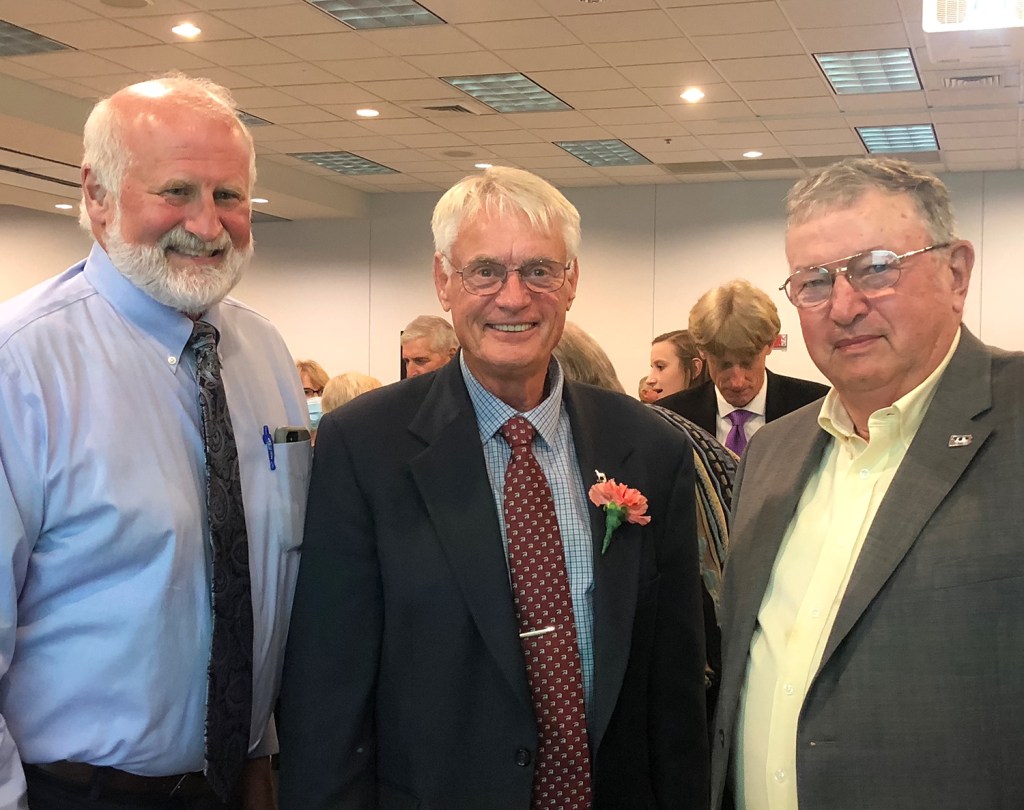
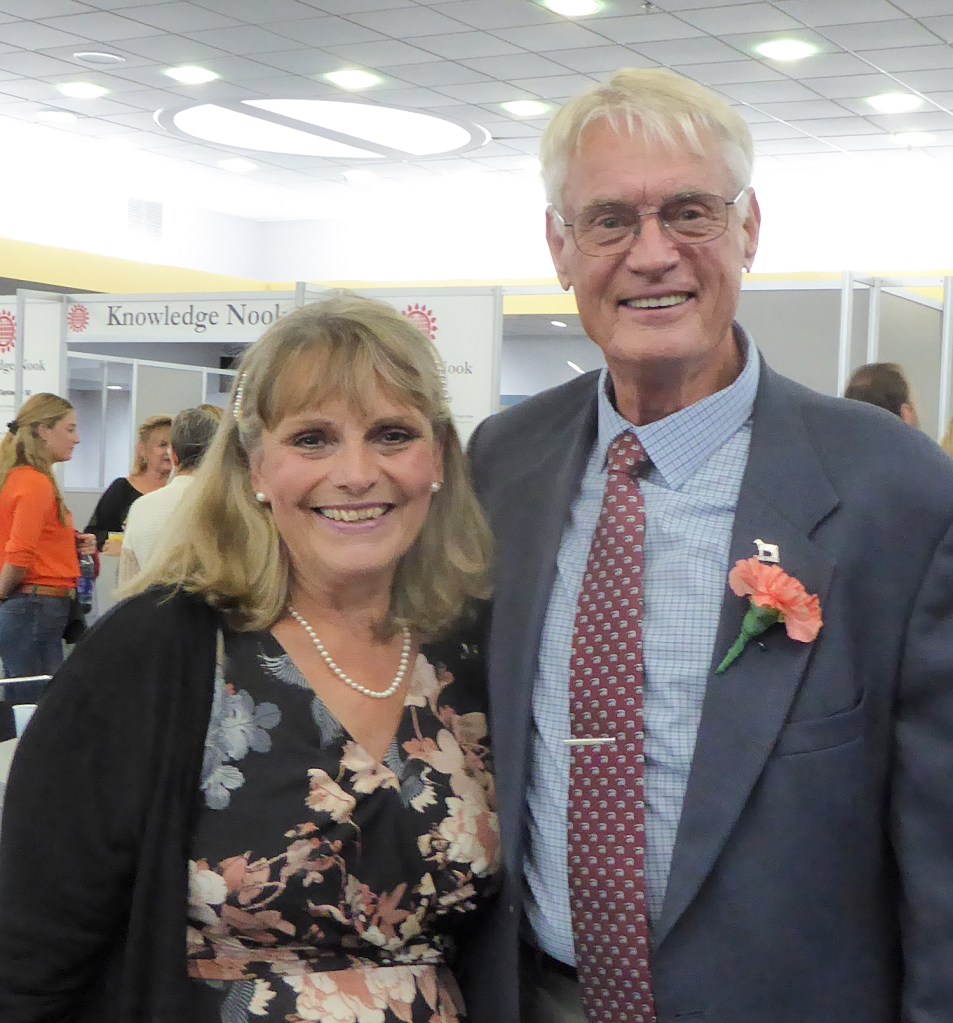
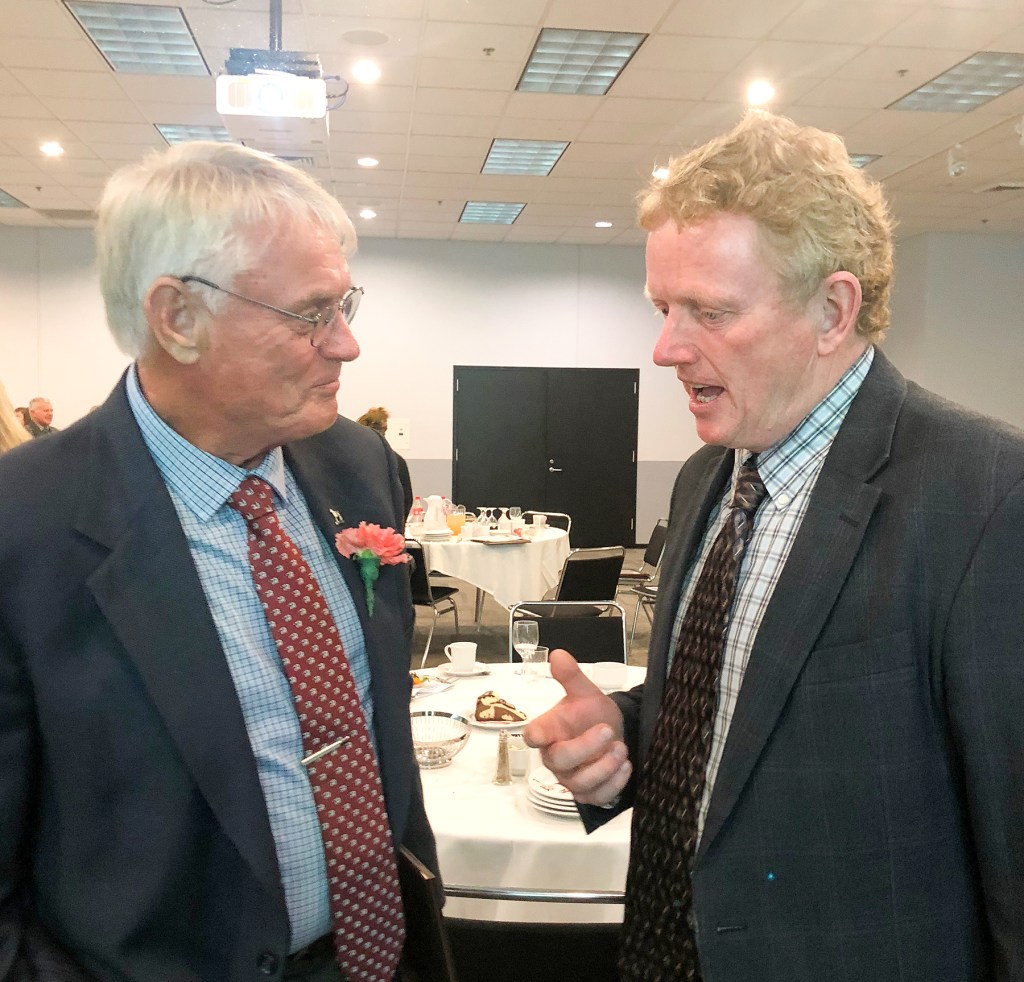
Surprise! There are more pictures and publicity on these two pages than Dieter may be comfortable with, but each one illustrates a connection that can be multiplied many times over — stretching far beyond the few examples here from the NDS awards dinner.
In fact, if you ask him what he has enjoyed most as a publisher, Dieter will tell you it’s the people.

Ever since the June NDS announcement of the 2021 Pioneer recognition, we have been hearing from some of those people — readers, producers, advertisers, colleagues, and former interns who credit Dieter as a mentor, “taking a chance” on them, “giving them a start” that blossomed into careers today that continue that network, touching the lives of others in the dairy industry.

The response has been so overwhelming, we can only capture the essence of so many responses.

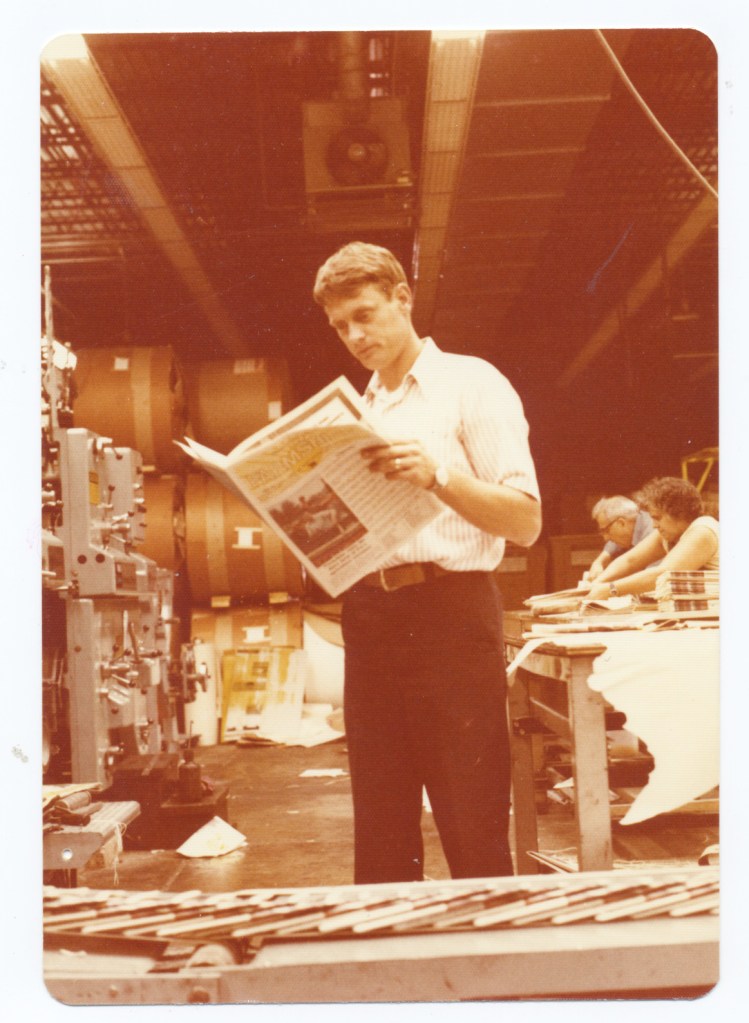
Whether the first Farmshine off the press in September 1979 (right) or one of the most recent ‘favorite covers’ 42 years later in September 2021 (left), Dieter Krieg has been publishing the dairy news to Farmshine subscribers across Pennsylvania, across the United States and even in other countries 51 weeks a year. That’s 2,142 weeks, and it doesn’t get old. In that time, he has touched the lives of many as they have touched his. From the chronicles of Rudolph, his famed Oldsmobile driven over 730,000 miles to the most memorable April Fools’, and from the big stories and thought-provoking editorials to the weekly DHIA’s and announcements, Dieter has established a relationship with thousands of readers who look forward to Farmshine every week. The staff and contributors to Farmshine each week are grateful, and we echo what Dieter said in his award acceptance speech that the readers are to be thanked for helping make Farmshine what it is. After all, it’s about cows and farming, but it’s really about the people.

From the paper paste-up and wax-board days to the digital era, Dieter continues Farmshine’s mission of rising each week to cover farming and agribusiness as the first and likely only weekly dairy-focused newspaper with over 13,000 subscribers nationwide.

In his letter of recommendation, former Pennsylvania Holstein Association executive director Ken Raney explains that, “Dieter has ‘done it all’ for Farmshine, he is the editor, feature writer, advertising manager, layout, etc., as the paper has grown. His personal approach to stories has created friendships all over the world. Farmshine not only has current dairy information but features successful dairymen of all types, so readers can garner new ideas.”

Ken also describes Dieter as we know him, “an unassuming enthusiast who welcomes ideas, looks for innovative ways to share the dairy industry story and has been a leader in print media, before many publications of this type were available.”

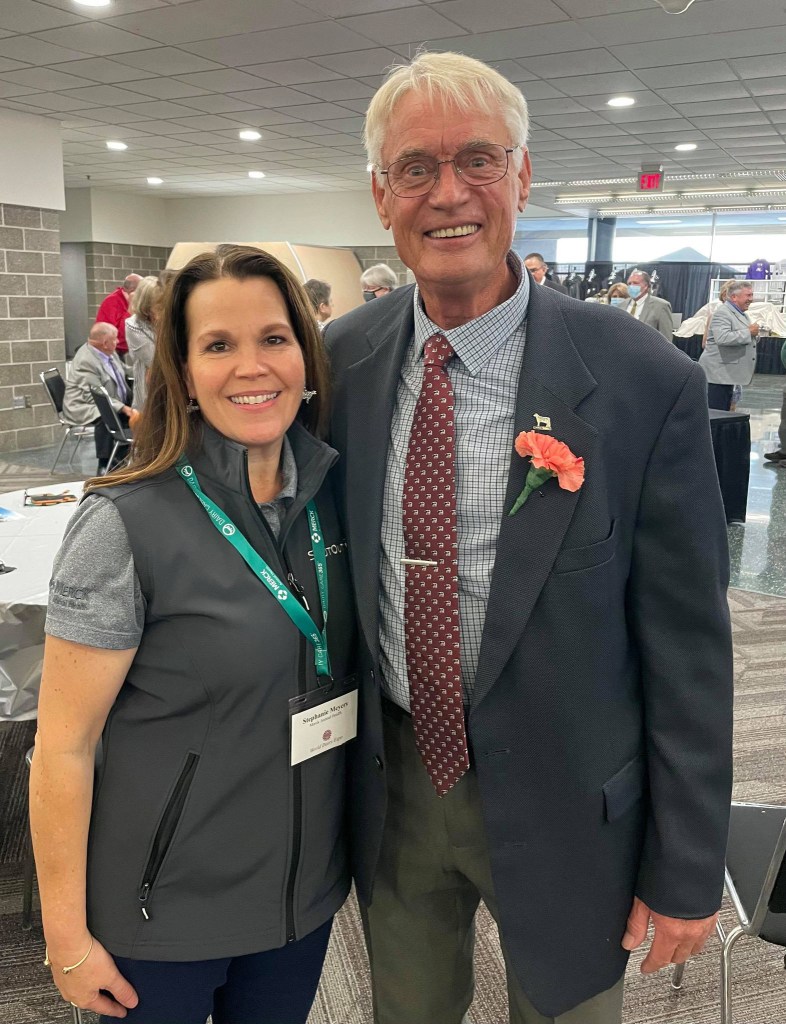
Writes Stephanie Meyers of Merck, “I was Dieter’s first Farmshine intern in 1989. I stopped by the NDS reception to congratulate him and thank him for giving me my start in dairy journalism, communications and marketing. I’m so thankful he hired me and for teaching me the ropes of dairy journalism and encouraging me to pursue my dreams of a career in dairy communications and marketing. It’s a joy to see him recognized for his many contributions to the dairy industry and for his commitment to telling the stories of dairy farmers.”

Josh Hushon of Cargill writes of what it meant to also be an intern with the paper. “This award is so well deserved. Dieter took a chance on me as a summer intern before anyone else was willing. I was 19 at the time, didn’t really know what I was going to do in life, and had a minuscule portfolio of writing. Despite what I didn’t have, Dieter saw what I did have, which was a passion for the dairy industry and work ethic developed on our farm. He opened the first door for me and I am eternally grateful for that.”

Giving back what he learned, Josh seeks to mentor others and wrote a blog a couple years ago after looking back on his own career path and pointing out moments when the right mentor came along with the right opportunity at the right time.

“One of those mentors is Dieter Krieg, who I recently reconnected with through the Holstein Foundation. He was a huge mentor early in my career as I was learning how to be a storyteller and communicator,” writes Josh.

Andrea Haines echoes these sentiments. Today she operates her own business, ALH Word and Image, and she also looks back on her pivotal internship with Dieter at Farmshine.

“I am forever thankful for Dieter and the opportunity he and his family provided me early on in my career. Finding an ‘internship’ within Farmshine for two summers really taught me how to write, edit, piece together a newspaper (wax-adhered layouts), and most importantly, how to network with people of the dairy industry. I will never forget the many rides in Rudolph (the famed 730,000-plus mile Oldsmobile) and long nights putting together the newspaper,” Andrea recalls.

Karen Wheatley, another intern with a career in the dairy industry notes “Dieter was my mentor too, and the man who got me interested in ‘really’ writing!”

Former Lancaster Farming editor Andy Andrews notes that, “Dieter has been the voice of dairy agribusiness for four decades! He is the publisher and editor the industry has come to rely on; great reporting and fearless with his observations. Dairy farmers have been blessed with his hard work and ‘udder’ devotion.”

Dairy producers also express their appreciation, and friends recount stories. Dave Bitler of Berks County, Pa., notes that he has always been very proud to call Dieter a friend. Recalling the summer of 1973, Dave writes: “We milked together at Dr. Carl Troop’s south of Quarryville. I always enjoyed Dieter’s company and his sharing about his family’s history in Germany and their coming to the United States. Looking back on my life back then as a new high school graduate, I was probably annoying, but Dieter was always kind.”

John and Linda Kisner of northern Pennsylvania write their thoughts as Farmshine readers. Linda recalls Dieter driving through a local town and stopping for gas, seeing the paper that had pictures of their triplet calves on the cover. “He looked us up, came out and took pictures (in Rudolph). Dad loved it.”

“Sometimes it just takes someone in a position to shine a light on certain issues,” adds John. “I think being independent with his own publication has allowed him the opportunity to do that a few times over the years. Where would we be without that sort of initiative?”

Another Pennsylvania farmer, Jeremy Meck, recalls being in 4-H with Dieter as one of the CowsRus 4-H leaders. “I remember learning that he had a small barn and milked a few cows. Even though he was the editor of a great farming newspaper, he still woke up every morning to milk cows before work,” writes Jeremy. “He is a role model for the industry.”

So many more thoughts have been written, but this one brings us back full circle. You see, Dieter wanted to be a dairy farmer, to follow in his father’s footsteps. As his father and brother moved the dairy from Pennsylvania to Florida and grew it to over 500 cows in the 1970s, Dieter wanted to find a farmer to work for in Pennsylvania and maybe find a transition situation where he could work toward having a smaller farm of his own. He confesses that was the reason he took that first newspaper job as editor of the farm page in the Pennsylvania Mirror.

What better way to meet farmers and build connections?

In his last semester at Penn State in Dairy and Animal Science, Dieter had taken a creative writing course because he did enjoy writing letters to family still in Germany, and he enjoyed writing about life on the farm (which later became a popular Farmshine column).

Right off the bat, he innovated that farm page in the Pennsylvania Mirror using a photo of a barn and placing various ag news stories on the side of that barn.

“I was told it wasn’t normal newspaper style, but my goal was that people would not overlook the farm page,” Dieter recalls. To this day, Dieter loves creating page layouts and using big pictures.

It was a hit, and he was a natural, and he found that he loved the job. So the job that was taken originally to meet and connect with more farmers to potentially work into a farm management position turned out to be the calling he was born to follow, which led him to blaze a trail for a weekly all-dairy newspaper in 1979 — no small feat.

After 42 years, what has he loved most? You guessed it: the people. While there is satisfaction in writing the stories and putting the finished product together, for Dieter, it’s really all about the people.

Like agriculture, the newspaper business has its ups and downs, and getting started meant many years of long hours putting the paper together and much travel gathering news and stories. When he looks back, even those early 100-hour weeks, though trying, were enjoyable. Sitting at a banquet, for instance, isn’t really work when you enjoy it, he says.

The mission of Farmshine, he says, always was and still is to get the word out, to tell the story, to cover the issues.

When he looks back at how it all came together, Dieter told the NDS awards dinner crowd, it is obvious God’s hand was working through it because all the pieces came together even before he realized Farmshine would be born. He expressed sincere gratitude for all who had a hand in it, including those who saw something in him to encourage along the way.

In her letter, Mary Shank Creek of Palmyra Farms notes that, “Dieter and his staff address all aspects of the dairy industry from commercially producing milk to the purebred sector and including alternative niche market opportunities. They do a wonderful job of highlighting individuals and unique accomplishments to shine a light on the personal side of our industry. Dieter is not afraid to tackle controversial issues and takes great effort to show an unbiased report while allowing editorials that stimulate thought.”

She sums up what so many feel, including me, having worked with Dieter on staff and in the later years as a freelance Farmshine contributor…

Mary says it so well: “The things I admire most about Dieter are his energy, enthusiasm and dedication. He is relentless in his commitment to serving agriculture and the dairy industry.”

Thank you Dieter for being a dairy journalism trailblazer, for starting Farmshine, the unique weekly all dairy newspaper 42 years ago, for shining a light, telling the stories, building connections, and touching the lives of others through the news, and so much more.

-30-

Milk Market Moos, June 25, 2021

By Sherry Bunting, published weekly in Farmshine Newspaper

Cutting through consumer confusion

Consumers and producers of food and beverages — anything in the protein market — are going to see a disruptor explosion of new products. As I look through the food-related publications coming across my desk and into my email inbox — Culinology, Progressive Grocer, Food Navigator, Meat + Poultry, Dairy Foods, Food and Beverage, and the list goes on — the sudden onslaught of animal-free cellular agriculture, portrayed as dairy and meat without the animals, is stunning.

Even Facebook pop-up ads push Nick’s ice cream every day in my Facebook ‘newsfeed’ — with the tagline ‘dairy without the cow’ courtesy of Perfect Day Foods.

They use ‘climate’ to generate interest from companies wanting to reduce a carbon footprint by incorporating the excrement of genetically-altered yeast to replace a portion of real dairy protein in the dairy manufacturing space. It’s an easy swap, Perfect Day founders say, and according to the USDA Bio-engineered labeling regulations that became official last January, the stuff doesn’t have to be labeled BE because the genetically-altered yeast are not being consumed — just their excrement harvested from the fermentation vats.

“We ran the numbers, and if we partnered with the dairy industry to use Perfect Day protein in just 5% of their products, we’d save 12.3 million metric tons of greenhouse-gas emissions – equivalent to the carbon emitted from every single car registered in the city of Los Angeles,” says Nicki Briggs, Perfect Day’s vice president of corporate communications in a Berkeleyside online interview on the third day of June 2021. Ms. Briggs was formerly an employee of Chobani.

There are other dairy turncoats and straddlers moving between real and fake and seeking to blend them to some sort of climate / carbon standard. But data like that of Ms. Briggs doesn’t tell the whole cow story. Just like the data Impossible Foods is using to coax schools to replace 50% of their beef with Impossible Burger — now that it has the coveted USDA Child Nutrition Label — are figures that do not consider the entire cycle of cattle for a net figure on GHG.

It is maddening. This onslaught of bright packaging with new and clever names and claims populating the meat, dairy and seafood offerings — starting with plant-based concentrates and chemical combinations and leading to cells growing in bioreactors and yeast excreting protein in fermentation vats. Big Tech is the new wannabe farmer, and Big Ag, Big Food, Big Finance, and Big ole Uncle Sam are in for the deal.

Consumers will begin to feel like they are stuck inside a pinball machine, or to be more current with my analogy, a warp-speed version of a video game bombarded by bangs, pops and whistles.

That’s what Gen Z wants, they all say. And yet, a survey by the Hartman Group recently showed Gen Z — just like the Millennials before them — are most comfortable with the food choices they grew up with, but unlike Millennials who still had a preference for local, seasonal and farm-to-table, Gen Z-ers have a preference for fast food and foods with familiar tastes.

We’ve got some work to do to navigate all of this with a straight forward message that cuts through the climate half-truths and outright lies about cows, that penetrates the government dietary restrictions based on outdated and incomplete reviews of the scientific literature on dietary fat.

We’ve got our work cut out for us to keep educating others, giving them the facts that are being ignored and bullied out of the national, even global, conversation about food as the industry grows its margins for investors through consumer confusion at the expense of consumer’s knowing what’s real.

USDA joins global school lunch deal

USDA can’t even get U.S. school lunch right, but now plans to lead America’s joining into a “global coalition” called the “School Meals: Nutrition, Health and Education for Every Child.”
There’s also a bill before Congress seeking to make three meals and a snack universal for all children through school.

As for the global coalition, this is right up Secretary Vilsack’s alley. In a press release Wed., June 23 about USDA’s leadership in joining the global deal, Vilsack talked about “powerful incentives” and “building resilience to future shocks” by focusing on improving the nutrition, health, and education of vulnerable children and adolescents worldwide. Sounds good, right? Who can argue with words like that? But like everything else out of USDA these days, where’s the details? And what’s it really mean?

The global coalition is centered around education and school meals and will launch at the United Nations’ Food Systems Summit in September. Like the 30 x 30, the Net Zero initiatives, and everything else coming through the pipeline from World Economic Forum, the goal line for this, too, is 2030 — making nutritious meals available for all children by 2030, with other benchmarks set for 2022.

Who can argue with nutritious meals for all children? There’s not a single person who doesn’t want all children to have nutritious meals. The problem is this: Who defines what is nutritious? How will the systemization child-feeding change the future of food and agriculture?

Details, please, because the track record so far where USDA is concerned is marred by lack of logic and reduced application of current nutrition science via institutions like the Dietary Guidelines and restrictive policies for feeding children.

“We look forward to bringing our expertise to bear, expanding our reach, and benefiting millions more vulnerable children by partnering with the World Food Program and other like-minded countries as part of this important coalition,” said Vilsack in Wednesday’s press release.

Okay, let’s hear those details.

Will USDA do dairy?

In a June 15 press release about previously authorized aid for dairy, USDA announced $580 million for Dairy Margin Coverage base changes and $400 million for Dairy Donation Program would be implemented within the next 60 days, but we’ve yet to see the details.

As part of that news release, USDA also noted that, “Additional Pandemic Assistance for Producers (PAP) payments would be targeted to dairy farmers who have demonstrated losses not covered by previous payments.” No details on that either.

However, on the same day of that press release — June 15 — Senator Patrick Leahy, Chairman of the Senate Appropriations Committee, asked USDA Secretary Tom Vilsack about delivering urgently needed relief to dairy farmers. Vilsack replied to say that USDA was announcing that day (again without details).

In the exchange between Vilsack and Leahy during a Senate hearing, Vilsack said: “We are creating a program to help reduce the differential that occurred between Class I and Class III milk pricing because of the disproportionate number of purchases of cheese during the Food Box effort. That distorted the market, and it caused a lot of harm to smaller producers. We’re putting resources in to reimburse those producers for some of the loss they incurred.”

Those ‘differential’ discrepancies have not been outlined yet by USDA, but here are several manifestations Farmshine and other publications have been documenting:

  1. Due to the new Class I base calculation that uses a III / IV averaging method instead of the prior ‘higher of’, which was implemented by USDA in May 2019, over $750 million in cumulative Class I value was lost from May 2019 through May 2021.
  2. As much as $3.5 billion was potentially withheld or represented as inequitable transmission of milk value when massive volumes of Class III milk were withdrawn from FMMOs, as further reflected in severely negative PPDs. This would be a net loss after months of positive PPDs are applied; however, even positive PPDs in some months were smaller than normal.
  3. Both 1 and 2 contributed to the inequitable transmission of Class III value to many producer milk checks
  4. These losses affected the performance of purchased risk management tools, meaning that a change in Class I pricing that was supposed to help dairy processors manage their risk, had the resulting effect of making it more difficult or impossible for dairy farmers to manage their risk — during a time when they needed it most.

Conundrum: U.S. milk production up 4.6% in May

But here is the conundrum in regard to USDA dragging its feet on details for ‘dairy aid’: May milk production nationwide was up a whopping 4.6% over year ago — so says the USDA report released June 22. April production was up over 3% vs. year ago.

USDA looks at this as though dairy producers are doing so well that they are expanding their herds. In fact, in May, there were 145,000 more milk cows in the U.S. than a year ago. Could this be another sign of the inequitable transfer of value in the milk pricing formulas?

More insight on the production report next week’s Market Moos.

July Class I advance $17.42

The July advance Class I base price, or ‘mover,’ was announced Wednesday (June 23) at $17.42. This is 87 cents lower than June’s Class I base price and 86 cents higher than a year ago. The July 2021 Class I base price at $17.42 — using the current formula of average plus 74 cents — is 34 cents higher than it would have been if figured using the previous ‘higher of’ method at $17.08.

July 2021 marks the first time in 12 straight months that the new calculation method resulted in a higher Class I base price than the old method. However, there’s a lot of ground to make up, considering that for 16 of the 27 months since the new method was implemented, the difference between the new ‘average plus’ and the old ‘higher of’ was lower and only 11 months were higher.

In fact, the Class I base value losses for 16 months averages to $3.28 per hundredweight while the value gains (including upcoming July 2021) for 11 months averages to just 39 cents.

Class III/IV milk futures plunge

Class III and IV milk futures were all lower across the board this week. The only green in the sea of red, was the Class III current month gained a dime heading into the last week of June contract trading, but the Class III July contract lost 15 cents and August plunged by $1.00 below week ago, with the rest of the board on Class III milk ranging 10 to 50 cents lower. On the Class IV board, the losses were more evenly spread ranging 20 to 50 cents lower across all 12 months.

As all four dairy commodities trended lower on the CME spot market this week, the 12-month futures average lost 29 cents on both classes, equally, by midweek, so the spread between Class III and IV 12-month future contract averages remained exactly at 67 cents on Wednesday, June 23 — right where it was a week ago and still well below the $1.48 mark.

On Wed., June 23, Class III milk futures for the next 12 months averaged $17.67, down 29 cents from the previous Wednesday’s average, the 7th straight week the 12-month Class III futures price average was lower than the prior week. Class IV contracts averaged $17.00 — down 29 cents from the 12-month average on the previous Wednesday.

Dairy commodities all lower

Butter slid lower almost daily, on the CME daily spot market. By Wed., June 23, the price was pegged at $1.73/lb — down 7 cents from the previous Wednesday with 6 loads trading.

Grade A nonfat dry milk (NFDM) also slipped this week. On Wed., June 23, the CME spot market price was pegged at $1.2575/lb, a penny lower than a week ago with a single load trading.

Cheddar trade plunged lower on the CME, then firmed up a penny or two at midweek. Barrels took the brunt of the decline and by Wed., June 23, both the 40-lb block Cheddar and 500-lb barrel cheese were pegged at $1.49/lb on the spot market with 2 loads of blocks and a single load of barrels changing hands. This was a net 3-cent loss for the week on blocks and a 15-cent loss on barrels.

Whey price was firm on the CME spot market, pegged at 59 1/2 cents with zero loads trading.

Out with the old. In with the new: Relentless cold.

SnowyFarms7280.jpgBy Sherry Bunting, Reprinted from Farmshine, January 5, 2018
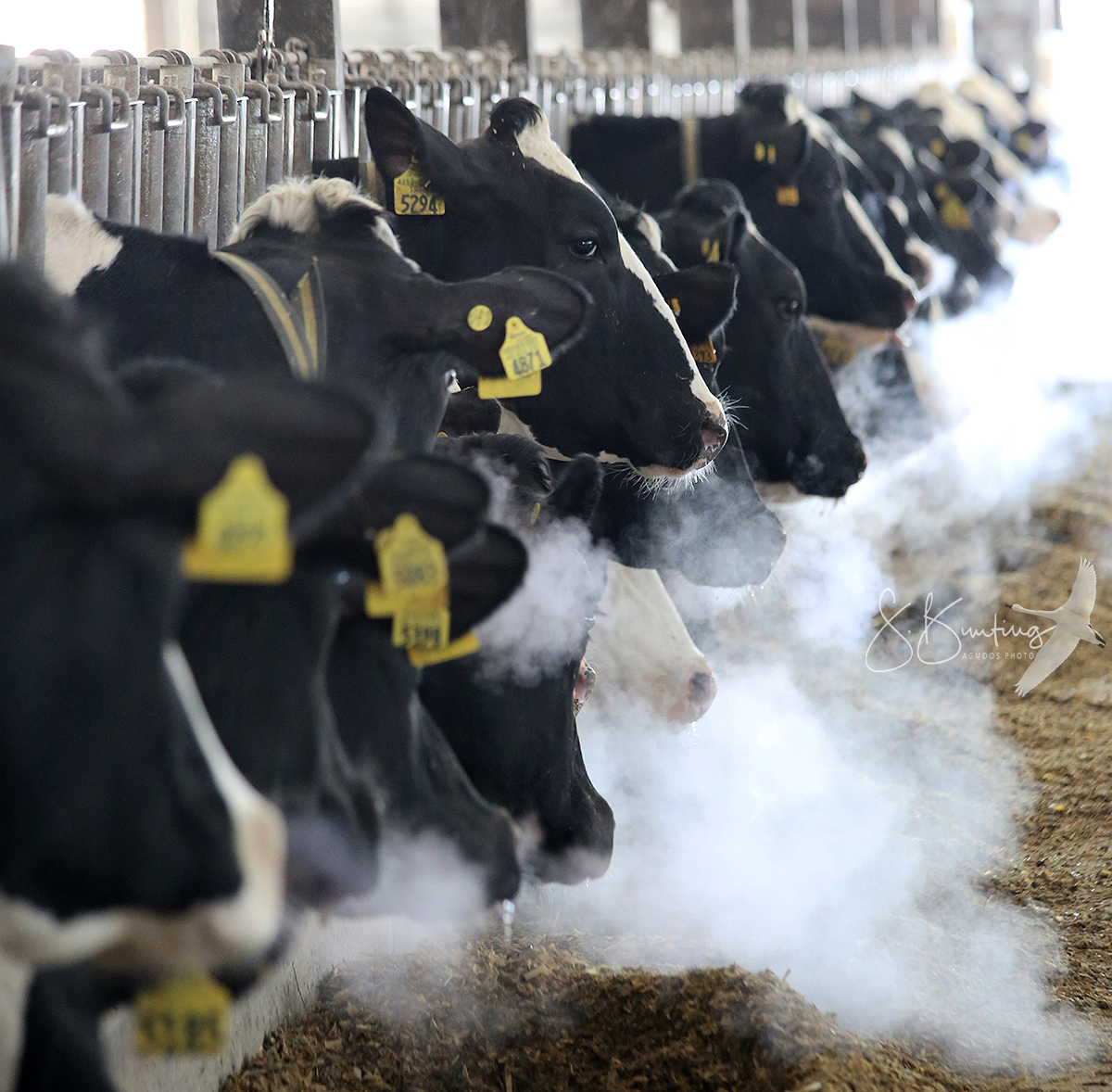
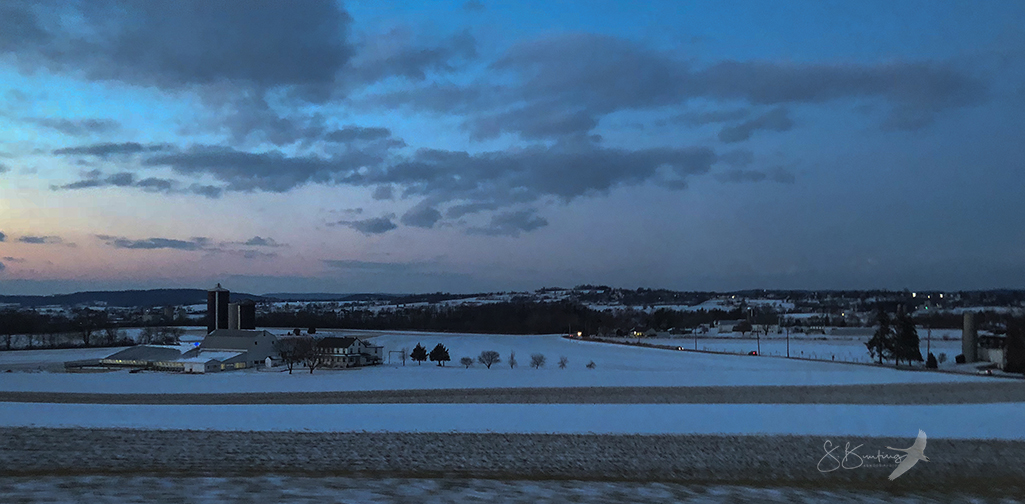
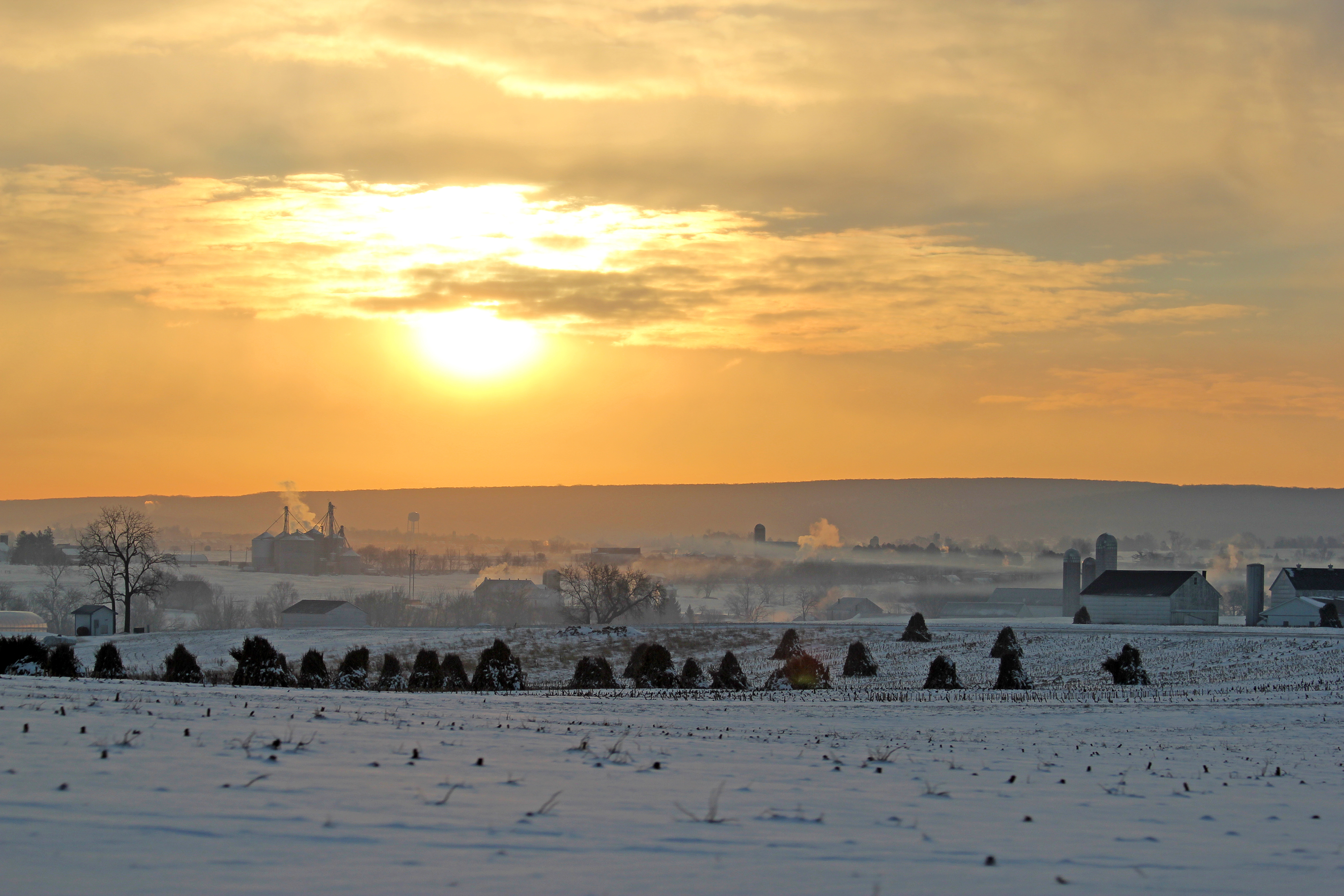
BROWNSTOWN, Pa. — Out with the old. In with the new. Record-smashing snowfalls and a relentless deep-freeze, that is what’s new as 2017 gave way to 2018 this week under a very bitter ‘wolf-moon’. The onslaught of extreme temps, high winds and heavy precipitation are taking their toll on dairy farms from New England to Georgia and from Pennsylvania to South Dakota.

In addition to bitter cold temperatures — persisting for four to five days with a one- to two-day ‘break’ at midweek — the next round of snowfall is already traveling up the coast and across the lakes ahead of another steep temperature plunge in the forecast.

Meanwhile, northwest Pennsylvania is still digging out of its record-breaking snowfall at Christmas, just ahead of the extreme drop in temps.

The Christmas Day lake-effect snowstorm lasted 48 hours and dumped a record-breaking 53 inches of snow in Erie, Pennsylvania, with additional snowfall two days later for a 4-day total of 63 inches. This eclipsed every snowfall record for the state of Pennsylvania, according to the National Weather Service.

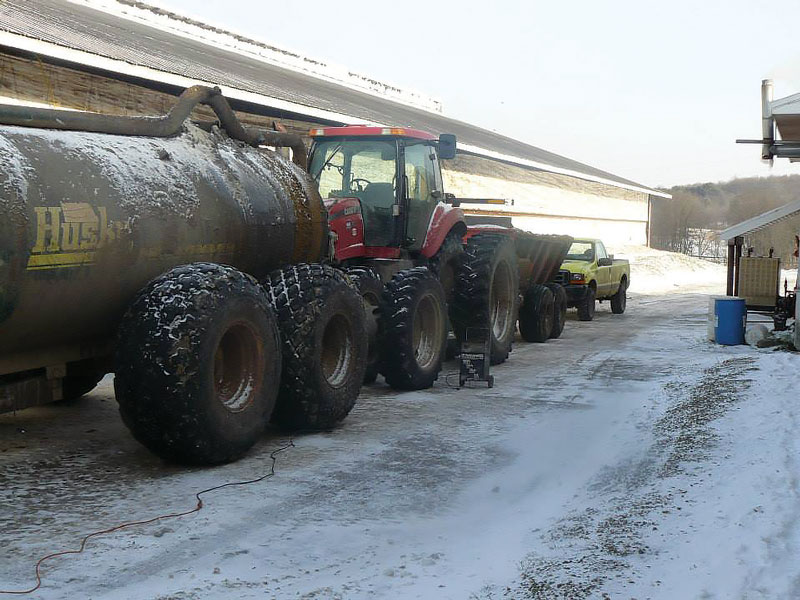
The biggest problems being seen on dairy farms are from the bitter temperatures — ranging on the mechanical side from gummed up diesel fuel to the inability to move manure and problems keeping milking system vacuum pumps and compressors running.

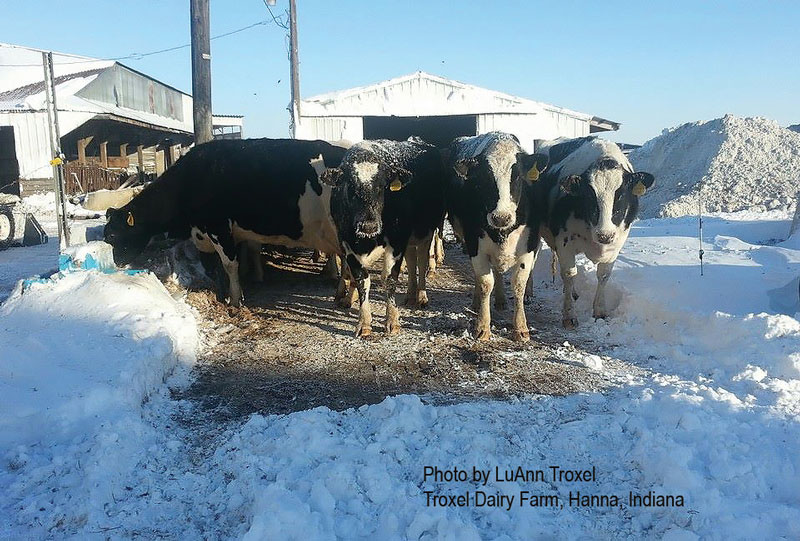
On the animal side, cattle and youngstock losses are being reported as well as frostbite concerns. These types of concerns are mostly reported in the areas along the great lakes from upstate New York to Minnesota, where temperatures hit -15 to -30 – not including the wind chills.

Milk is still moving from farms to plants, but delays are indicated this midweek where transportation has been slowed by problems with diesel fuel.

In its fluid milk summary this week, USDA reported that frigid temperatures throughout the East have created hauling delays, and frozen pipes have created issues at dairy manufacturing plants. This has added to the supply-demand imbalance that lingers from the holiday period.

Everyone from plant operators to farmers to haulers are yearning for a return to normal schedules that may not normalize until after the second round of arctic blast comes and goes next week.

Impacts on milk production in the Northeast and Midwest are also beginning to show up in load counts, but the lack of normalcy in milk movement means production is still steady to ample for usage.

On farms, producers are dealing with frozen pipes, slippery floors, frozen accumulated manure creating uneven walking surfaces, and the fact that everything — including moving cows to and from the parlor — takes more time.

Weather6782buntingw

Producers need a break in the weather to thaw out, clean out, and get ready for the next round of arctic air to hit.

In closed group discussions throughout social media, farmers are exchanging ideas and seeking support from each other — to know they are not dealing with these hardships alone.

The extreme cold has also increased the risk of fires as producers pull out the stops to keep animals warm and power infrastructures are tested to the max. A dairy outside Little Falls, New York experienced a tragic fire last weekend, in which all 50 cows were lost.

At midweek, temperatures climbed briefly, but snow has begun falling in earnest along the southeast coast where snow is seldom seen, while the Northeast coast braces for blizzard conditions with more snow and high winds, followed by a plunge back into low temperatures.

It is not an understatement to say that dairy producers everywhere are dealing with weather extremes that are testing their collective resolve. Whether it is 17 degrees in Texas or -30 in western Minnesota, -15 in upstate New York and New England, -3 in Kentucky or -1 in Lancaster County, Pennsylvania, the extremes are beyond what each area is typically prepared for. Producers are taking advantage of any temporary warmth to prepare for the next plunge.

Frozen waterers, vacuum pumps, manure removal equipment and difficulty starting feeding equipment are most commonly reported concerns shared by producers across the country in facebook posts.

Some asked for prayers this week, hoping for a break in the weather; others rejoiced with humor when 30 degrees below zero became 15 degrees above at midweek, saying ‘break out the shorts.’

But this respite is short-lived before the next mercury dive Friday through Monday.

Winter is tough, and farmers are prepared for it, but this is extreme, and there is only so much that can be prevented. What does not get prevented, must be dealt with as it happens, and this is causing frustration and low morale as producers strive to get the work done while also fighting the feeling of failing the cows.

You are not failing. You are heroes. Please be careful out there.

Bottom line for the cattle, say veterinarians, is plenty of feed and water and to be out of the wind with a dry place to lie down. These basics enable cows to survive a lot.

Dairies truly are in survival mode, focused diligently on animal care and getting done what must be done and no more.

Keeping waterers from freezing and breaking ice out of waterers that are frozen is a never-ending job in these temperatures.

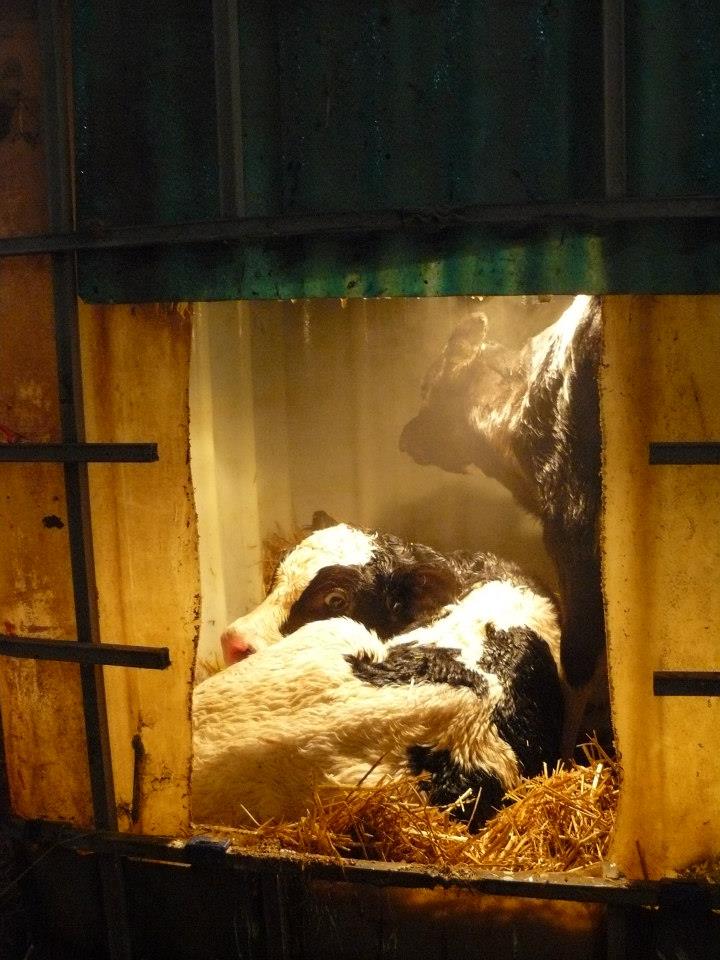
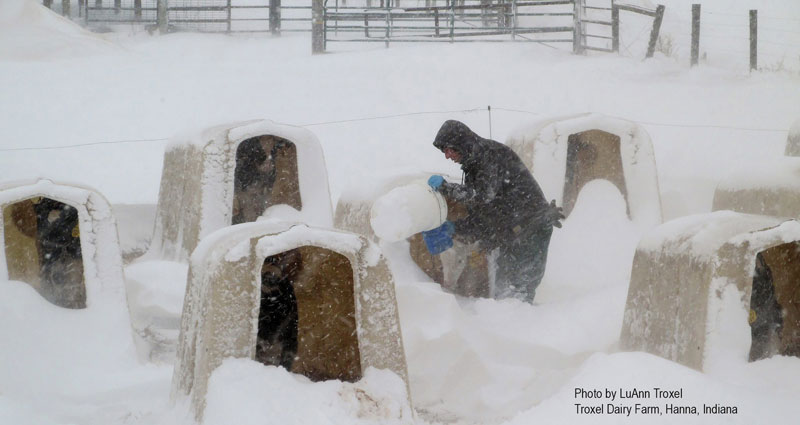
For calves, experts suggest increasing milk feeding and frequency since they do not have a rumen to heat them up. This will help calves stay warm and cope with the stress. But it’s difficult to do more when temps make everything take longer. Please be careful.

For cows, the mantra is energy and more energy. Rations can be adjusted to dense up that energy, without losing fiber. Cows normally eat more when it is cold, getting more energy into the cows helps.

From farmers to truckers to veterinarians to dairy system technicians and to all who are taking care of animals, equipment and transportation — we at Farmshine see and know how hard you work to keep things going. You have our ultimate respect and our prayers for safety during the bitter cold and we wish for a warming break in the weather to take hold soon.

-30-

bitter(wolf-moon)03Jan2-2018w

From East to West and North to South, relentless frigid temperatures are making things difficult on dairy farms. Photos by Sherry Bunting

Love and hope, transplanted. Hearts full of thanks for gift of life

Reese and kidney donor Alyssa are recovering from Monday’s transplant

Reese&AlyssaBy Sherry Bunting, Farmshine, November 24, 2017, Photo courtesy Bre Bogert Photography
BALTIMORE, Md. — At this season of Thanksgiving and gift-giving, it is a precious gift for Reese Burdette that has her and her family, friends — and all who have followed her journey back from the fire — especially thankful for the selfless generosity of another.

After nearly two years at Johns Hopkins from the May 2014 fire, Reese returned home to the family’s Windy Knoll View dairy farm, Mercersburg, Pennsylvania, in March of 2016. Since then, she has accomplished goals she set for herself, such as getting back to school with her friends and showing her cattle at the All-American. She had returned to an active life this year, improving every day.

But just before the All-American in September, her journey hit a rough spot. She was admitted to Johns Hopkins, where she and her family learned that Reese was in the final stages of renal failure and would need a kidney transplant.

The news was a shock. It seemed impossible. She was doing so well.

Reese returned home. Put her game face on. Showed her cattle at the All-American in Harrisburg. And everyone prayed for a miracle. Finding a match for Reese would be difficult, the doctors had said.

Enter Alyssa Hussey, 32, of Winchester, Virginia, a special education teacher with the Loudoun County Public Schools.

She is a friend of a cousin by marriage to sisters Claire Burdette, Reese’s mother, and Laura Jackson of Waverly Farm Jerseys. She had been among the friends and family tested to find a match. Alyssa had met Reese a few times before the fire and had followed her recovery after.

“Being around her and seeing that she’s such a sweet little girl just made me want to try and help,” a humble Alyssa told the Chambersburg Public Opinion in a story published over the weekend before the transplant surgery on Monday, November 20.

The seven-hour surgery to remove one of Alyssa’s kidneys and do the transplant Reese desperately needed began at 7 a.m. at Johns Hopkins after a celebratory time between family and friends and medical staff, Sunday evening.

“What a blessed day it has been,” wrote Laura Jackson, Reese’s aunt, in an update Monday afternoon. “It has been a long day, but a good day. Donor Alyssa is now recovering in her room. Bless her for all she has been through. From what we are told, Alyssa’s kidney is large and healthy.

“Reese is in recovery. Her surgeon was very pleased with how the surgery went. As always, Reese rocked her surgery and handled it very well. Now we wait to see if the new kidney kicks in. Pray that this new healthy kidney takes over and learns to love its new home,” Laura said further.

Reese will spend the next 100 days recovering at home and will attend her school class via the video robot she used when she first came home in March of 2016.

For her part, Alyssa told the Public Opinion: “I grew up (and) I didn’t have any issues or problems when I was a kid, so I knew what it was like to do all those normal kid things.

“I can only imagine how it would feel to have those taken away, still being so young and not being able to experience some of those things that (Reese is) not able to do right now. So, it’s a great feeling to know that she’s going to get those things back,” Alyssa said.

As she has from the beginning, Laura posted on Facebook about this rough spot in Reese’s journey. She observed that Reese “just wants to be a normal kid.”

But as all know who love and are inspired by her, Reese is an extraordinary 10-year-old. She is wise beyond her years — a ‘tuff girl’ with a big heart and a strong spirit and a determination and sense of humor that gives strength, focus and hope to those around her.

And they give back to her, and the circle continues. So many from across the country and around the world have reached out since May of 2014 to encircle Reese and the Burdette family with prayers, cards, gifts, and financial assistance.

This season, it is the kind and considered offering by someone willing to give a part of themselves — and all that goes with it — that is the gift invoking pure thanks-giving.

“We had a tremendous evening celebrating Reese, Alyssa and many doctors and staff,” wrote Laura in an update Sunday evening before Monday’s surgery. “Tonight, we celebrated life and all that Alyssa is offering to Reese. Pray big tomorrow. Bless these two and all involved.”

As they recover from Monday’s surgery, Reese is prepared to take a step back and build herself back up. She told the Winchester Star in a story published ahead of the surgery that she is looking forward to doing inside things during her recovery, that she loves cooking and baking for her family… but the cows that have inspired her fight to always get back are still inspiring her. This time, the calf a-callin’ is Cream Cheese (so named because she is mostly white).

We at Farmshine offer our heartfelt prayers and thoughts for Reese and her giver Alyssa as they recover. (Laura reports the recovery is going well!)

Correspondence can be sent to Reese Burdette, 8656 Corner Road, Mercersburg, PA 17236. Financial contributions to Reese and her family, can be sent to First Community Bank, 12 S. Main St., Mercersburg, PA 17236. Checks should be made out to “We Love Reese.”

-30-

CAPTION and CREDIT for photo

Photographer Bre Bogert captured this image of giver and receiver ahead of transplant surgery. Alyssa Hussey, 32, is the donor match for the kidney Reese Burdette, 10, needs. Both are recovering at Johns Hopkins where the 7-hour surgeries took place on Monday, November 20. Photo courtesy Bre Bogert Photography
 

Day 1: Milk and ministry are gifts that keep giving

12 days of Christmas… with a twist.

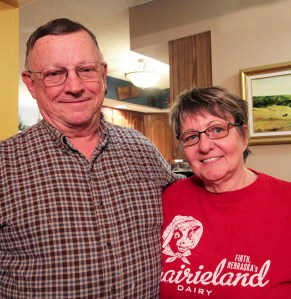
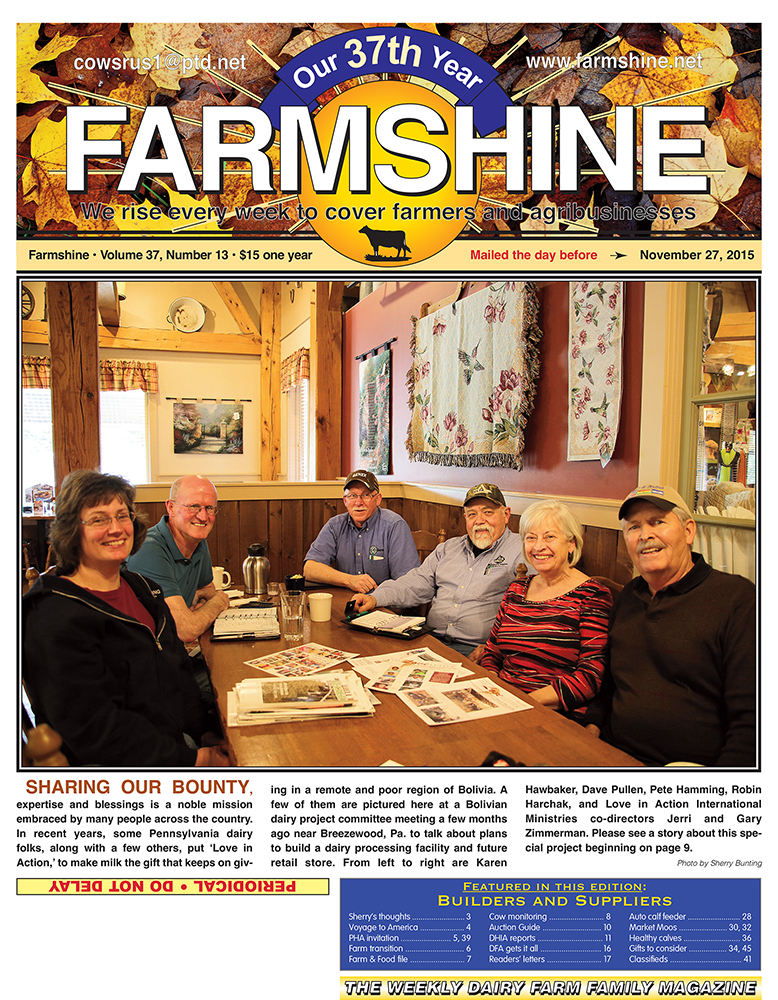
Day 1:  I met these folks last summer, learning of this mission to Bolivia that is rooted in Pennsylvania while visiting the Rice family of Prairieland Dairy in Nebraska last Spring. Two stories in two dairy publications resulted at long last. This one was the cover story in the Nov. 27, 2015 Farmshine and another will be found in the Dec. 14 edition of Progressive Dairyman. What these folks are doing is “love in action” for sure. Milk and ministry are gifts that keep giving. They’d love to share the project with others by speaking at dairy, church and other meetings where people have a passion for children, ministry… and milk!

BoliviaDairyCommittee3262web

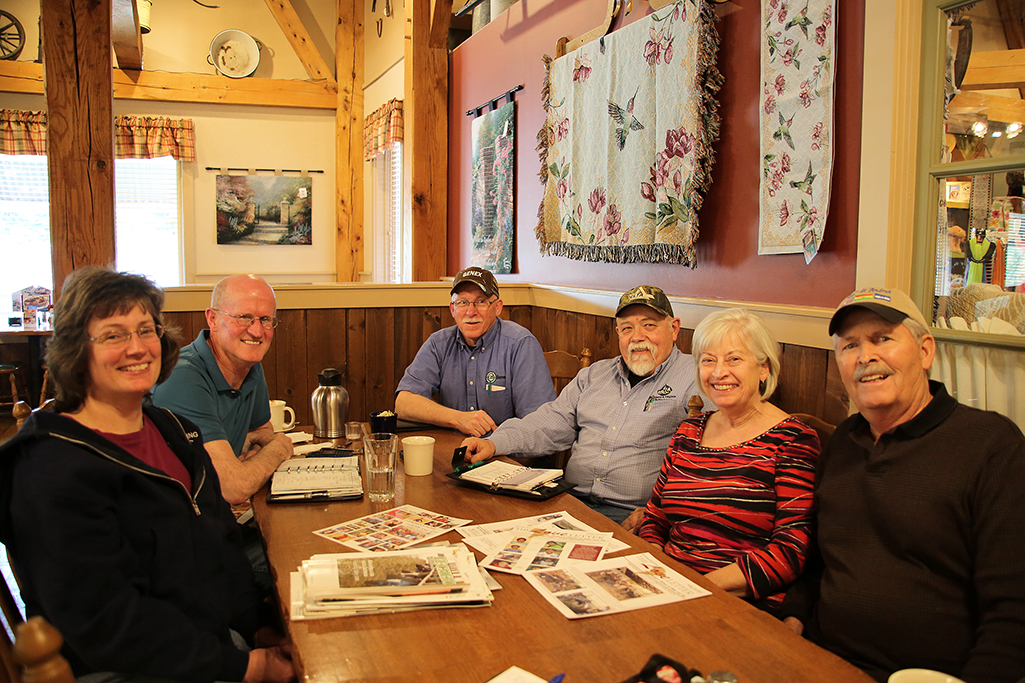
The Bolivian dairy project committee met a few months ago near Breezewood, Pa. to talk about plans to build a dairy processing facility and future retail store: (l-r) Karen Hawbaker, Dave Pullen, Pete Hamming, Robin Harchak, and Love in Action International Ministries co-directors Jerri and Gary Zimmerman. Photo by Sherry Bunting

By Sherry Bunting 

BREEZEWOOD, Pa. — The people we love and lose in our lifetimes leave indelible imprints on how we view the world and connect with others and where we put our time and energies.

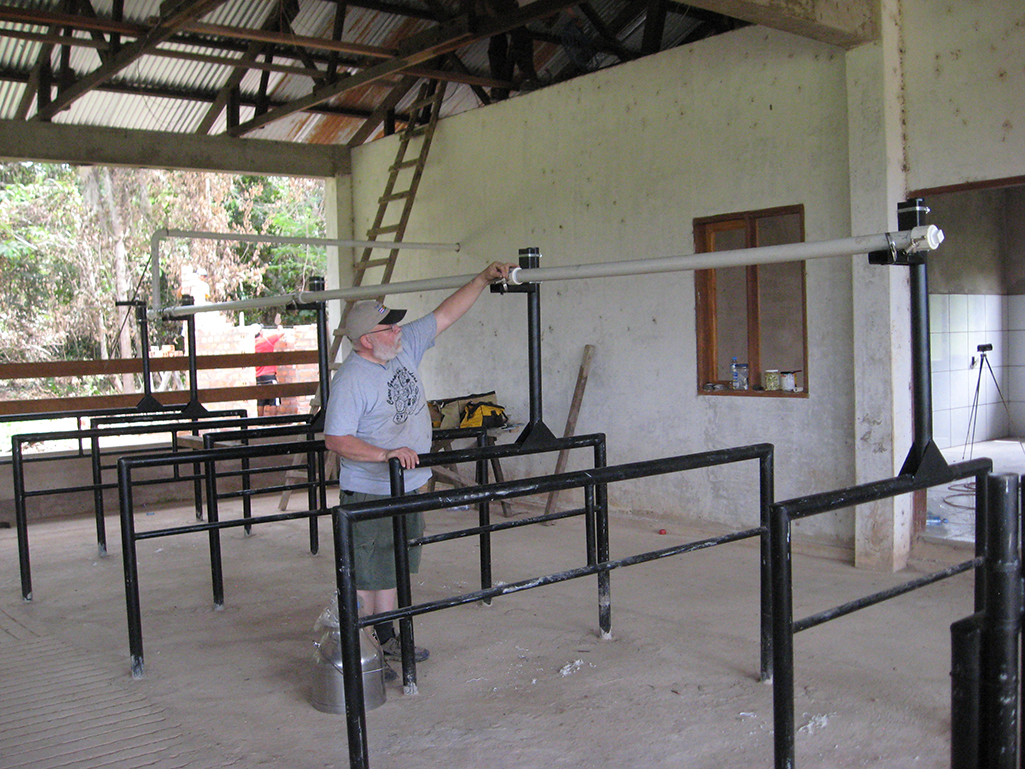
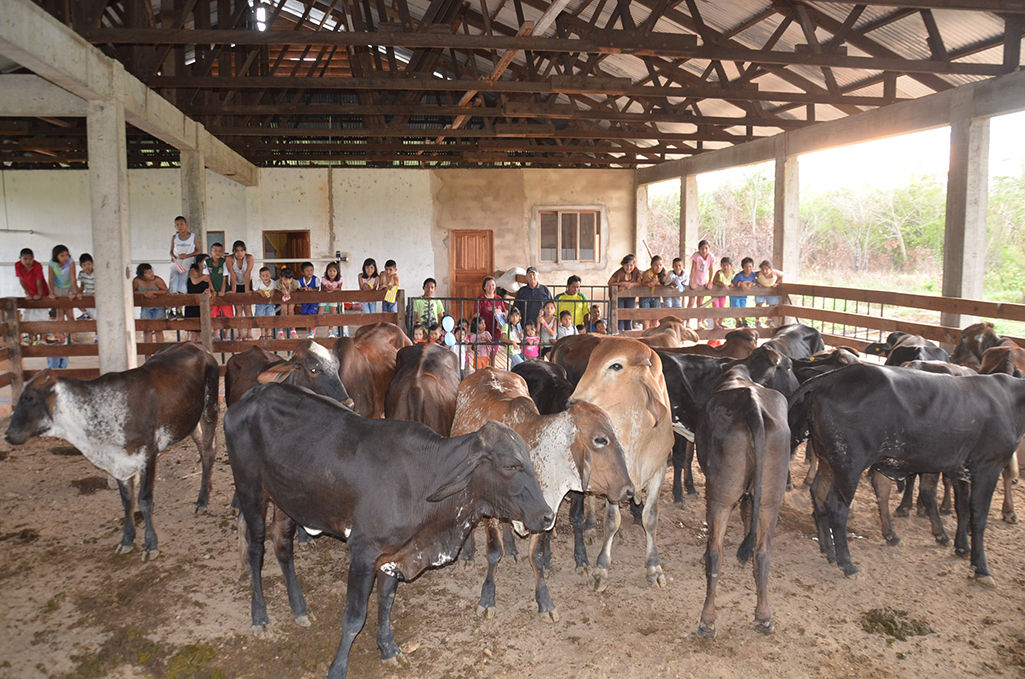
For the dairy producers and industry folks involved with Andrea’s Home of Hope and Joy — an orphanage of individual family units in Bolivia — the ‘Love in Action’ is linked to folks from Pennsylvania wanting to see that these children have the gift that keeps giving — Milk, of course!

The first seeds to build a dairy farm at Andrea’s Home were planted by the late Rodney Hawbaker, a Franklin County, Pa. dairy farmer. In late 2007, Hawbaker and his industry friends — Dave Pullen, a dairy nutritionist, Pete Hamming with AI, and Robin Harchak, a milking equipment specialist — brought their idea to Gary and Jerri Zimmerman of Love In Action International Ministries (LIAIM).

By 2009, they were fundraising, designing and planning for a dairy future at Andrea’s Home.

Known as Warm Springs Farm (Finca Aguas de Manantial), the Bolivian dairy project is so named in honor of Hawbaker, who died in a tragic farm accident in 2011 at the family’s Warm Springs Dairy, Chambersburg, Pa.

bolivia-rodneyweb

The late Rodney Hawbaker in 2010 with Wilson, one of the children at Andrea’s Home of Hope and Joy, where Hawbaker was instrumental in starting the Bolivian dairy project. It is now entering its next phase named in Hawbaker’s honor as Warm Spring Farm. Photo by Karen Hawbaker

“This was Rodney’s passion,” recalls his wife Karen during a planning meeting of the LIAIM dairy committee just off the Breezewood exit of the Pa. turnpike recently. Karen runs the 160-cow dairy in Franklin County and has taken Rodney’s place on the LIAIM board and dairy committee as well as volunteering with daughter Kirsten to help with the dairy’s progress at Andrea’s Home.

“Rodney was instrumental in helping design the barn as well as spearheading the initial fundraising through our church and a heifer sale in September of 2009,” Karen relates. “Rodney, Pete, Dave and Robin really dug into this, and we would travel to Bolivia every few months to work with the children and provide labor for the barn.”

Andrea’s Home, too, has its history — so-named for the Zimmermans’ youngest daughter Andrea, whom they had lost to cancer. Gary, a carpenter, and Jerri, a teacher, continued their mission work by fulfilling Andrea’s dream to focus the mission work on children. Thus, they set up Andrea’s Home of Hope and Joy through LIAIM. With the advent of the dairy project, the concept of Andrea’s Home has the potential to become a somewhat self-sustaining model for the future.

Divided into four 2-parent / 20 child units, Andrea’s Home currently serves 63 children with plans to build four more to serve 120 children. The dairy has become a key aspect of the planning to realize the goals of expanding Andrea’s Home and to build at a second location.

The heifers and bull for the dairy were delivered in 2014, with calvings ramping up through the summer and fall. Now plans are underway to build a processing facility and retail store.

boliviaworking at barnweb

Cows are housed on a bedded pack and milked in eight stalls using a vacuum and bucket system — doable with limited funds and infrastructure. Photo by Karen Hawbaker


The cow-to- consumer dairy has a fourfold purpose: Nutrition for the children, education and skills for the children, a business plan that improves the community infrastructure while employing members of the community, and eventual retail dairy sales to support the growth and mission of Andrea’s Home.

The nearby town of Guayaramerin is home to over 40,000 people. The region is isolated and poor with many children orphaned by tough lives on the street. Being just a mile from the Brazilian border — where coffee houses proliferate — the hope is that Warm Spring Farm can provide a source of milk for the orphanage, the town and additional offshoot sales to tourists crossing the Brazilian border, through a coffee and smoothie house run by the home.

“We are looking for others in this compassionate dairy industry with the heart to come down to Bolivia and help with the processing end of what we are planning,” Gary Zimmerman explained. “We want to have the capability to produce milk and also yogurt, butter and ice cream with the whole project providing a source of revenue for the orphanage, as well as learning opportunities, work and nutrition for the orphans.”

boliviamilking 'parlor'web

Robin Harchak works on the milking parlor. The challenge will be to convert to more advanced technologies as the dairy processing construction is planned. Photo by Karen Hawbaker

“We’re ministering to the needs of the orphans, and also trying to change the culture of what they return to for their futures and that of the region,” he added. For example, when the children age-out of the home, they will have skills and a purpose and something to turn to and a good base on which to continue their education.

Gifted 230 acres of land by the veterinarian who today serves as the farm’s director, they have stocked natural springs with fish and planted orchards and gardens, along with the work of getting the dairy up and running.

The processing and retailing idea began to form when five acres became available last year in the nearby town of Guayaramerin. With a location to build a retail store, the processing facility plan became the logical next step.

Since 2008, the group closest to the Warm Spring Farm project have worked to raise funds and to gather and send work crews to build the dairy. Now that the focus has shifted to processing and retail construction, they are reaching out in search of folks with this expertise. One such person is David Rice, a former Berks Countian who has two sons dairying near Kempton, Pa. and a son that is manager and partner in Prairieland Dairy out in Firth, Nebraska.

Dave&GloriaRice4263web

Dave and Gloria Rice of Firth, Nebraska (formerly from Berks County, Pa.)

Rice bring his building and dairy background, along with knowledge of the milk bottling and ice cream making at Prairieland, to his volunteer trips to Andrea’s Home.

He observes that, “Not only will the young people learn agriculture and industry skills, they will also learn the business side of operating the future store.”

“All the profits will go back to benefiting the home, and to build a second home with the idea that the business can be developed to cover 65 to 75 percent of the cost of the home’s operation, which now relies mostly on donations,” Zimmerman explains.

While the dairy’s initial cowherd consists of a native breed suited to the climate of life right on the Equator, the dairy committee plans to improve the herd with good milking genetics via AI crossbreeding.

boliviaour cows in the barnweb

As first calvings and milking are underway, the director brings milk to the home from his own primarily beef herd, and the children learn to make dairy products for their own use.

boliviagroupweb

Karen and Rodney Hawbaker’s daughter Kirsten with children at Andrea’s Home of Hope and Joy.

While there are no other dairies in this poor region of northeast Bolivia, the LIAIM dairy committee, and the folks at the home, have toured Brazilian dairies to look at cropping systems and forage ideas such as sugar cane and yucca root, which can be fed as green chop to boost dietary energy for more milk production.


The milking facility uses a vacuum and bucket system, which serves well its current purpose.

“Bolivia is the poorest South American country, and this LIAIM ministry seeks to reach the children here to provide the nutrition of milk while teaching business and industry skills that they can learn to be a part of,” Karen Hawbaker added. “We want to raise them and equip them for life. What better way to teach work habits and skills then through dairy.”

Hamming noted that the kids just love the dairy farm, the animals, seeing things grow, and are anxious to see the whole project move forward.

boliviakidsweb

Karen Hawbaker at Andrea’s Home…

Rodney’s good friend and area veterinarian Corey Meyers, DVM, wrote of Hawbaker after his passing: “Rod knew his purpose in life. He got it. Just days before the accident he had commented to friends in a Bible study in Ecclesiastes: ‘When I hear of a righteous man dying, I take it as a challenge or as a reminder that you never know when your time is up. Live each day as if it were your last.’”

Members of the LIAIM dairy committee are also interested in speaking at dairy meetings to raise awareness of the Bolivian dairy project at Andrea’s Home of Hope and Joy.

To learn more visit www.myloveinaction.com. Director Gary Zimmerman can be contacted at 719.440.6979 or email liaim@aol.com

Farmshine

-30-


How dairy farmers dealt with ‘Polar Vortex’

By Sherry Bunting, Farmshine, January 10, 2014

BROWNSTOWN, Pa. — While some of the photos posted by dairy farmers on their farm Facebook pages and Twitter were downright beautiful, others spoke volumes about the extreme challenges and dedication put forth to care for animals on farms this week during what is being called the “polar vortex.”

LuAnn Troxel captured this beautiful image at Troxel Dairy Farm. Behind the beauty was more snow and extreme temps.

LuAnn Troxel captured this beautiful image at Troxel Dairy Farm. Behind the beauty was more snow and extreme temps.

The extreme temperatures Tuesday and Wednesday were the talk of both the Pennsylvania Farm Show in Harrisburg and of farmers who were able to get away and attend the Keystone Farm Show in York, Pa. this week.

Frozen waterers, vacuum pumps, manure removal equipment and difficulty starting feeding equipment were the most commonly reported concerns shared by producers from New York, Pennsylvania, Maryland and Virginia who were able to get to the show in York.

Further North and West into the lake regions of the Upper Midwest, through Northern Indiana and Ohio into western New York and Northwest Pennsylvania, the “polar vortex” was amplified by the snow storm preceding it.

Thankfully, by the time you read this, warmer temperatures are forecast to prevail and bring relief to cattle and caretakers as well as equipment and transportation.

The mantra this week for farm families was to not only take care of their animals but to communicate what they were doing with their farm and non-farm “followers” on Facebook,

“There are no ‘snow days’ on the farm,” wrote Tricia Adams at her family’s Hoffman Farms page on Facebook. Three generations of the Hoffmans milk 700 cows near Shinglehouse, Potter County, Pennsylvania.

3 generations of the Hoffman family operate the 700-cow dairy.

3 generations of the Hoffman family operate the 700-cow dairy.

“The extreme weather makes us feel like we are surviving it and not thriving in it!” she said in an email interview Wednesday, reporting Tuesday’s low at Hoffman Farms was -18 with a high of -4. The mercury fi nally reaching a high of 12 degrees Wednesday. They are thankful to be spared the additional 3-feet of snow that fell just north of them in New York.

As for the polar temps and wind chills, “we run a heater in the parlor to help with frozen milkers but even that was icing up,” said Tricia, adding that the conditions for the cows in the freestall barns were “very slippery.”

The Hoffmans, like other farmers dealing with these conditions, did their best to cope with frozen, caked manure in the walkways, barns and parlor — not to mention frozen waterers, feed mixers and tractors freezing up as the off-road diesel gummed up.

Starting equipment and dealing with manure were difficult in double-digit below zero weather, not to mention the wind chill.

Starting equipment and dealing with manure were difficult in double-digit below zero weather, not to mention the wind chill.

“We changed fuel fi lters and used additives to thin the fuel and keep our equipment running,” Tricia explained. “Winter is tough, and up here we are prepared for it; but when it gets this extreme, you know there is only so much you can prevent. What you can’t prevent you just have to deal with as it happens.”

Much attention was paid to the especially important job of “tricky calvings.” At Hoffman Farms, Tricia used heated boxes for the newborn calves.

Tricia Adams pictures one of the heated boxes for newborn calves at Hoffman Farms

Tricia Adams pictures one of the heated boxes for newborn calves at Hoffman Farms

Over in Bradford County near Milan, Pa. Glenn and Robin Gorrell were thankful for the 45 degrees and rain over the weekend to melt the snow at their 600-cow dairy before the sub-zero temperatures arrived Tuesday.

Glenn reported temperatures ranging -10 to -20 depending on location in the hills or valleys.

“I think that we were lucky here and we are always happy the rest of our team helps get us through,” said Glenn in an email interview Wednesday.

“The wind was the killer. It can really drive the cold everywhere,” he said, adding that they had frozen pipes in the employee house for the first time ever.

“In the tie-stall barn we were like everybody else: Bowls on the west side were frozen. The milk house froze for the first time in years. We thought we had all the equipment ready with new fi lters and more fuel conditioner, but we were wrong,” he explained. “We needed to cut more with kerosene and put tarps around hoods of the loader tractor and feed mixer.”

The calves and youngstock at Gorrell Dairy got extra bedding and a little more grain to get them by.

“Robin always has calf jackets on them once it is below 50 degrees anyway,” Glenn reported. “We tried to double up feeding our heifers so we would have less equipment to start in the extreme cold.”

At Troxel Dairy Farm Laporte County, near Hanna, Indiana, conditions were quite severe, with extreme low temps in line with what farmers were seeing in northern Wisconsin and Minnesota this week.

Facebook followers commented that the cows must be “milking ice cream” as they read LuAnn Troxel’s posts about dairying in temps that had fallen to -12 and -17 with wind chills as low as -53 in northern Indiana on the heels of over 1-foot of snow.

The cows were "good sports" but after three days, the extreme cold wore think on man and beast.

The cows were “good sports” but after three days, the extreme cold wore think on man and beast.

Calling the cows “good sports,” LuAnn acknowledged how tough this week has been for man and beast. She and husband Tom and son Rudy, operate the 100-cow dairy.

“Cold weather management is really not too complicated,” said Tom Troxel, DVM, who in addition to the dairy farm has South County Veterinary practice.

“Cows need to have plenty of feed and water, be out of the wind, and have a dry place to lie down. If they have these things, they can survive an awful lot,” he explained in an email interview Wednesday.

“Calves need the same thing, including increased feed (calories),” Tom advised. “But sometimes the threat of scours keeps feeders from increasing milk to calves. There is no question that cold stress can cause younger animals to be more susceptible to scours and pneumonia, but careful monitoring and feeding electrolytes can help a lot.

While it's tempting to do the bare minimum when temps are -17 with a -53 wind chill and there's 14 inches of snow on the ground, LuAnn was out feeding her calves at Troxel Dairy farm MORE frequently to keep up their energy reserves. Snow drifts also help insulate and inside the hutches they are cozy warm with fresh bedding.

While it’s tempting to do the bare minimum when temps are -17 with a -53 wind chill and there’s 14 inches of snow on the ground, LuAnn was out feeding her calves at Troxel Dairy farm MORE frequently to keep up their energy reserves. Snow drifts also help insulate and inside the hutches they are cozy warm with fresh bedding.

“It’s more important to increase feed to cold, young calves. Also, try hand feeding starter grain to young calves that are at least 2 days old,” he suggested.

As for cow nutrition during extreme cold, it comes down to “energy, energy, energy,” said dairy consultant Ray Kline, during an interview at the Keystone Farm Show in York, Pa. Wednesday. Ray has retired from the Agri-Basics team of nutritionists but is as passionate as ever about cattle nutrition.

“Feeding calves more often — 3 to 4 times a day — also helps because they do not have a rumen to heat them up,” he observed. “With the cows, the ration can be adjusted for higher energy, but without losing fiber. Cows normally eat more when it is cold, but a more dense ration also helps get more energy to them.”

He suggests picking out the “barometer cows” in the herd and watching them for Body Condition Score to know if ration adjustments to the whole herd are needed. Ray also urged dairymen to pay attention to waterers and keep them running.

“After an event like this, we can see it in the repro,” said Ray. “The cow will take care of herself first; so what she eats will go to maintaining herself through the severe weather.”

The seasoned dairy consultant also noted that “life spins its pattern back to years before.” While the “polar vortex” this week was new for some generations on the farm, others have experienced it before.

“If you look at history, we’ve had winters like this, but you have to go a long way back,” said Ray.

As for the milking equipment and transportation, Gib Martin, general manager of Mount Joy Farmers Cooperative in Pennsylvania noted that milk pickup and transport required more time and labor this week.

“We had some issues with tank compressors and one truck down, but no major interruptions in the flow of milk,” said Gib during an interview at Tuesday.

Ken Weber recommends using a heat lamp to keep compressors going for cooling the milk. Weber is retired from service calls but still works with BouMatic equipment. He suggests paying close attention to vacuum pumps outside.

“They are the last thing the dairyman uses to wash the pipe line and that moisture in there can cause them to freeze up,” he said during an interview at the Keystone Farm Show in York, Pa. Tuesday. “Just take a pipe wrench and work it back and forth to loosen it and consider using supplemental heat like a heat lamp to keep the pump warm.”

snowtrees