Covering Ag since 1981. The faces, places, markets and issues of dairy and livestock production. Hard-hitting topics, market updates and inspirational stories from the notebook of a veteran ag journalist. Contributing reporter for Farmshine since 1987; Editor of former Livestock Reporter 1981-1998; Before that I milked cows. @Agmoos on Twitter, @AgmoosInsight on FB #MilkMarketMoos
97 Milk is a 501(c)3 non-profit. Donations are tax deductible.
By Sherry Bunting, Farmshine, November 22, 2024
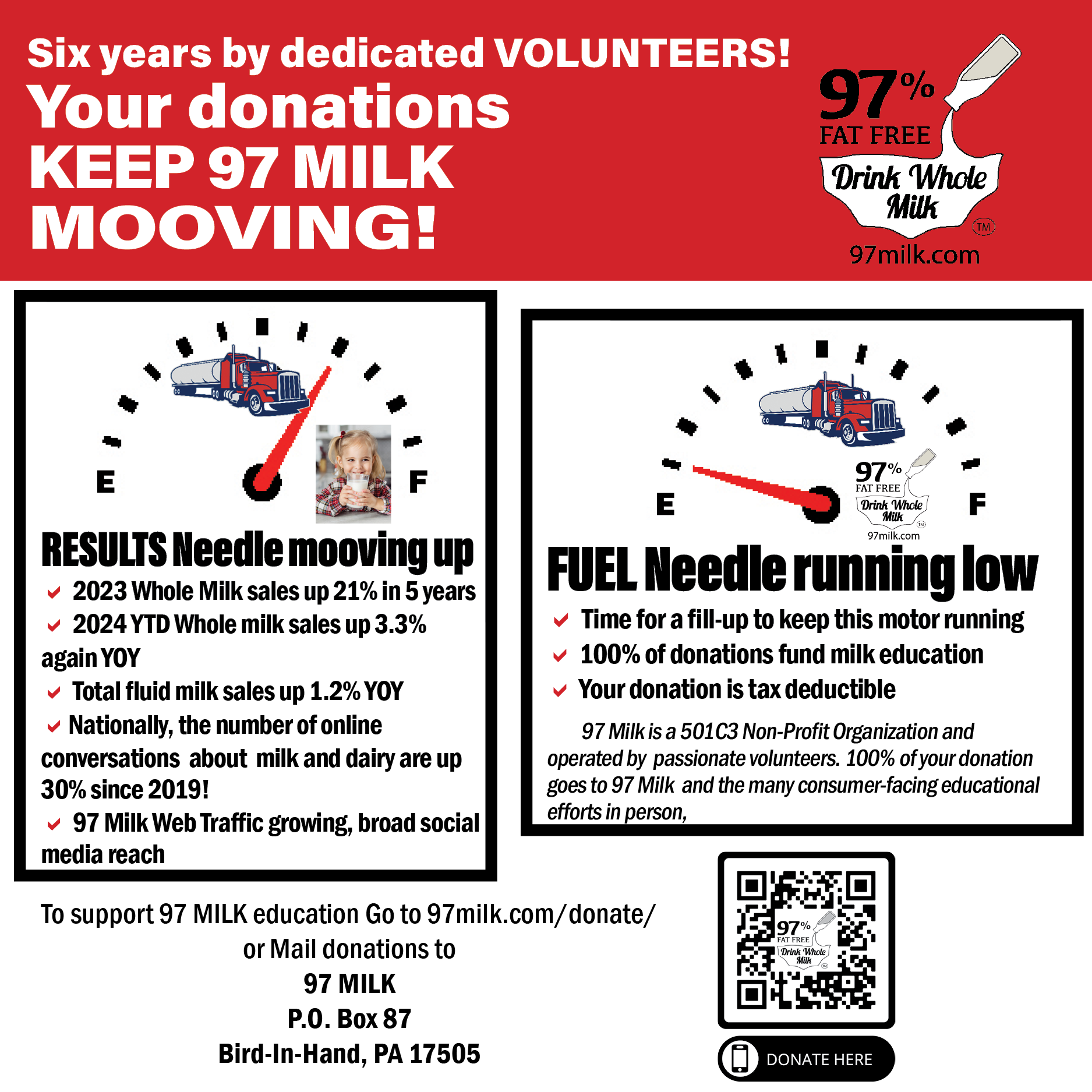
EPHRATA, Pa. – Farmshine readers are no-doubt aware of the work of the volunteers operating the 97 MILK education efforts. But awareness and thank you’s don’t pay the bills.
First of all, 97 MILK is a 501c3 non profit, meaning donations are tax deductible.
Secondly, 97 MILK is managed and operated by volunteers. Not a single person doing any of this great work is paid a dime or a nickel (not even a penny) for their time and only in some cases are personal expenses for projects reimbursed
97 MILK has made huge strides on literally a shoestring budget.
However, even the frugal cannot survive without donations because printers have to be paid for printing materials like the popular and eye-opening 6×6 cards.
Website hosts and programmers have to be paid to keep the platform up and running.
When whole milk isn’t donated for an event, it has to be purchased.
When dieticians or other experts are interviewed for a Q&A at the website or on social media platforms, they expect their expert time to be paid.
Boosting the best and most informative ad posts on facebook also comes at a cost.
The list goes on, and it doesn’t even cover the things 97 MILK wants to do that are expensive, like BILLBOARDS.
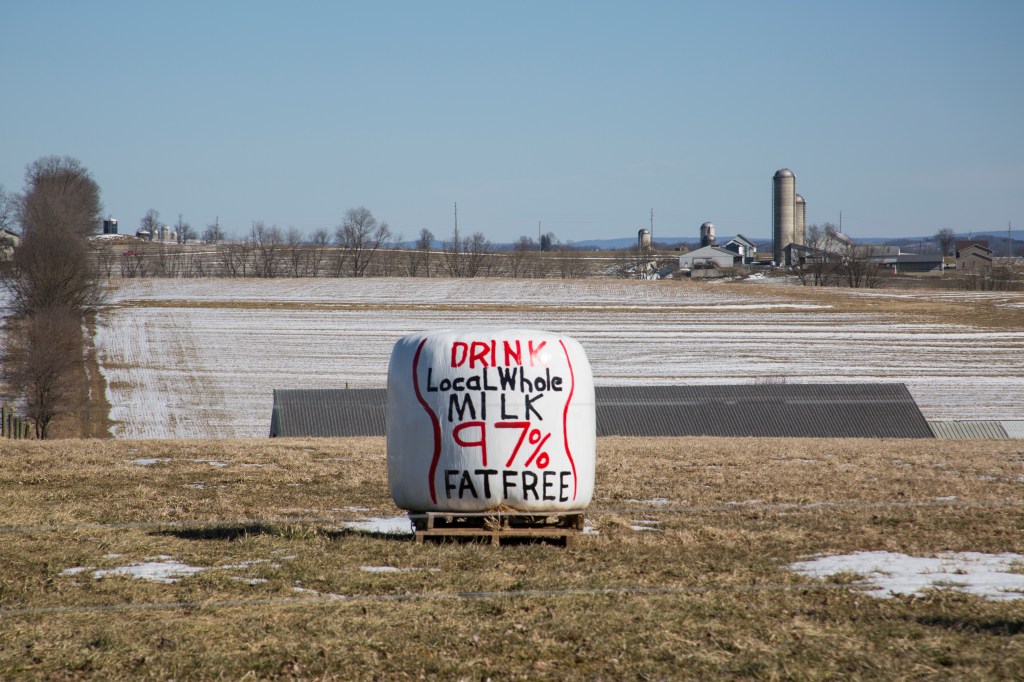
There’s a reason Nelson Troutman started this movement by painting a wrapped round bale, or BALEBOARD — because the billboards were too expensive, but wouldn’t it be nice to amplify the good work of 97 MILK with a few larger than life billboards?
These are tangible costs that surround the small but strong and dedicated army of 97 MILK volunteers.
When it comes to the content created, the daily social media posts, the educational printed materials, the interactions with followers to answer their questions on social media, the constant monitoring of social media conversations, along with the answering of emailed questions at the website question desk, the compiling of new information for the website designer to keep it refreshed, the staffing of booths at consumer-facing events, the painting of bales, the miles driven, time spent talking to consumers, time spent designing eye catching ads to show consumers, time spent actually communicating with consumers – that is all done by volunteers who take time away from their paid livelihoods to voluntarily promote whole milk education, often not even being reimbursed their personal costs for supplies.
We are in the season of Thanksgiving. A great way to show some gratitude to the hardworking 97 MILK volunteers is to help keep the boat afloat with a donation. Apart from a few regular givers, donations have not come into this volunteer effort for a long time, and the shoestring is baring thread, despite the important advances this educational effort has made for dairy farmers and the many agribusinesses that serve and depend on them.
A recent Dairy Foods Magazine website panel discussed the State of the Dairy Industry in 2024. One panelist observed that their monitoring data show a 30% increase in social media conversations about milk and dairy products. We can chalk some of that gain up to 97 MILK, posting six days a week and reaching hundreds of thousands of consumers every quarter, with many reacting and having conversations with 97 MILK volunteers — engaging directly.
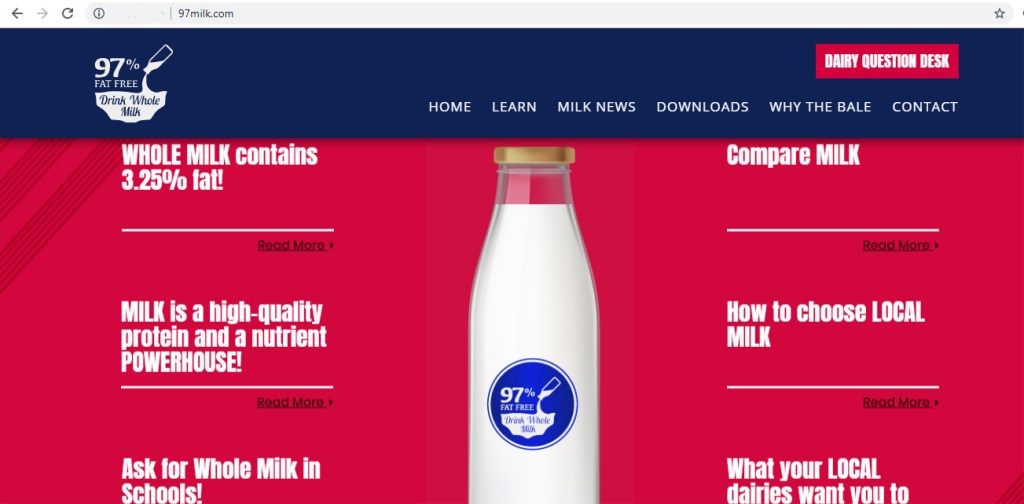
The website, alone, is averaging 200 users per day, most of them new users. That’s a big number.
Total page views at 97milk.com were 11,000 over the past 30 days – another big number.
Facebook reached tens of thousands of people last week, without any paid ads, but reaches tens of thousands more with boosting. Of these numbers, the nationwide reach is broad. Nope, they don’t all come from Pennsylvania. The places with the highest views register as California and Texas, along with states all in between East to West and North to South.
Of the website interactions, the No. 1 draw is the Milk Facts section. Visitors to the website spend an average of 2 minutes and 40 seconds there. In today’s fast-paced digital world, that’s a long visit!
97 MILK is doing things right.
And guess what? Have you read the Oct. 16, 2024 Farmshine story about fluid milk trends? Do you read Market Moos keeping you up to date on the monthly estimated packaged fluid milk report by USDA?
Fluid milk sales are UP year-to-date over year ago, and have been trending this way since partway through last year. In fact, the long-term fluid milk sales downturn was slowed and flattened ever since 97 MILK was formed in February 2019. But in the past 18 months, it’s turning slightly higher. There is momentum now — enough that industry trade organizations and other farm publications are beginning to take notice.
This is spurred by the big increases in whole milk sales as one of the main categories turning the trend around when looking at the volume, not just the percentage of increase on a smaller volume category. Whole milk sales are up 21% since 2019 when 97 MILK was formed.
Consumers want to eat and drink more healthfully. They want to know about milk!
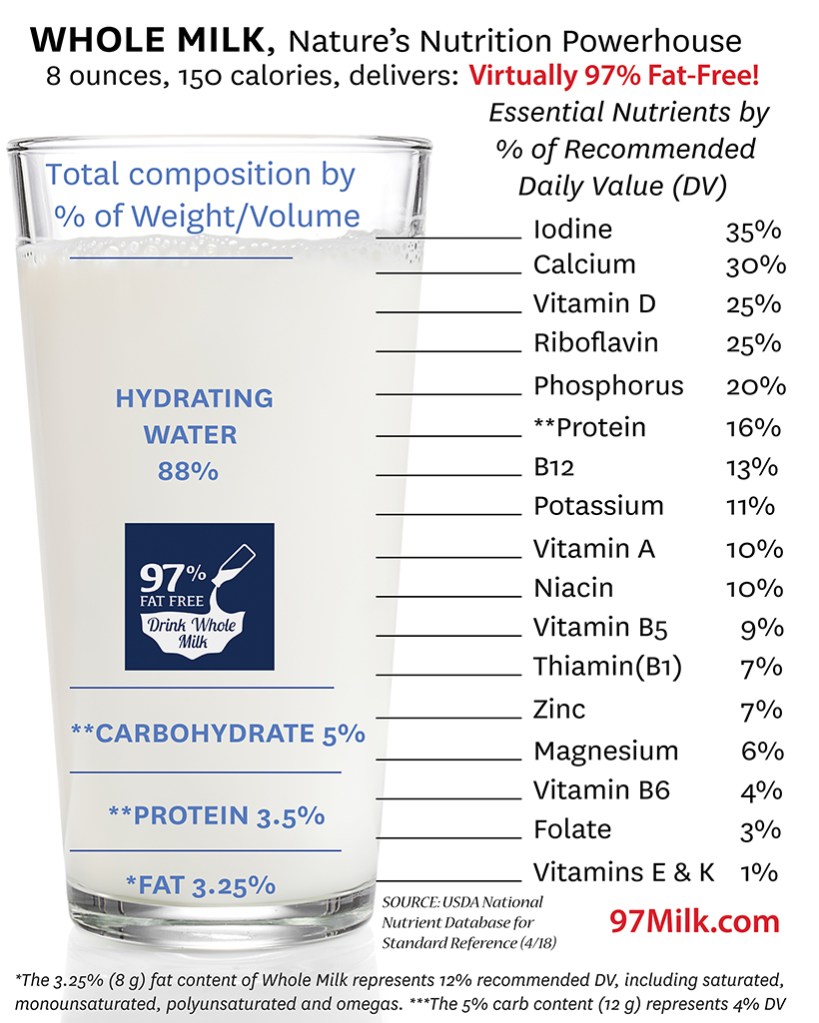
97 MILK has caught their attention, piqued their curiosity to learn more, and helped reveal the details about the nutrition in a glass of whole milk. Not to mention, the Whole Milk for Healthy Kids Act that passed the House of Representatives 330 to 99 last December got this far because of one thing: Whole Milk Education.
Whole milk bill champion, Representative G.T. Thompson, Chair of the House Ag Committee, said it best during a 97 MILK meeting attended by farmers in 2021, and he’s repeated similar statements at other meetings and panels where the subject of whole milk in schools comes up:
“Keep doing what you are doing with the well-designed combination of influencing, marketing and providing factual information. Keep up the education. It’s working,” said G.T.
I personally want to thank each and every person who has donated funds and / or donated their time to help keep this whole milk education movement going. Thank you 97 MILK for all you’ve done for America’s dairy farmers and consumers – and above all for America’s children!
So, what are you waiting for? Want 97 MILK to continue and do more? If so, go to https://www.97milk.com/donate/ and prove it, or mail your donation to 97 MILK, PO Box 87, Bird In Hand, PA 17505.
As new milk beverage platform is developed, it sounds to me like people want the many attributes fresh whole unfooled-around-with fluid milk already delivers. It checks all the boxes! Maybe children just need to be allowed to have whole milk at school and daycare where they eat most of their meals, and maybe new generations of adults need the education about why and how the dairy protein and natural nutrition in real milk beat the imposters, hands down.
By Sherry Bunting, republished from March 2023 editions of Farmshine
SAVANNAH, Ga. — Dairy checkoff-funded researchers say a new milk beverage platform is being developed to provide “the keys to the kingdom.”
Their consumer studies show people want clean labels, and at the same time they want more attributes. On the one hand, they want energy and protein. On yet anotherhand, they want indulgent creaminess.
Consumers also want flavor, but they want less sugar. They want sweeteners, but not artificial sweeteners. They want thickness without the thickeners. They do not want gums or gels, but they are okay with fibers and starches.
Some consumers want higher protein products. Others want everyday nutrition that is reasonably priced.
These are some of the highlights that were shared back in January 2023 during the Georgia Dairy Conference in Savannah. There, Dr. MaryAnne Drake, professor of food science at North Carolina State University and director of the Southeast Dairy Foods Research Center talked about the fluid milk innovation work funded through DMI.
The ‘new milk beverage platform’ leverages different processing applications for flavor and functionality around dairy protein, based on global protein trends in a rapidly growing nutritional drink market.
ESL shelf-stable milk: key to kingdom?
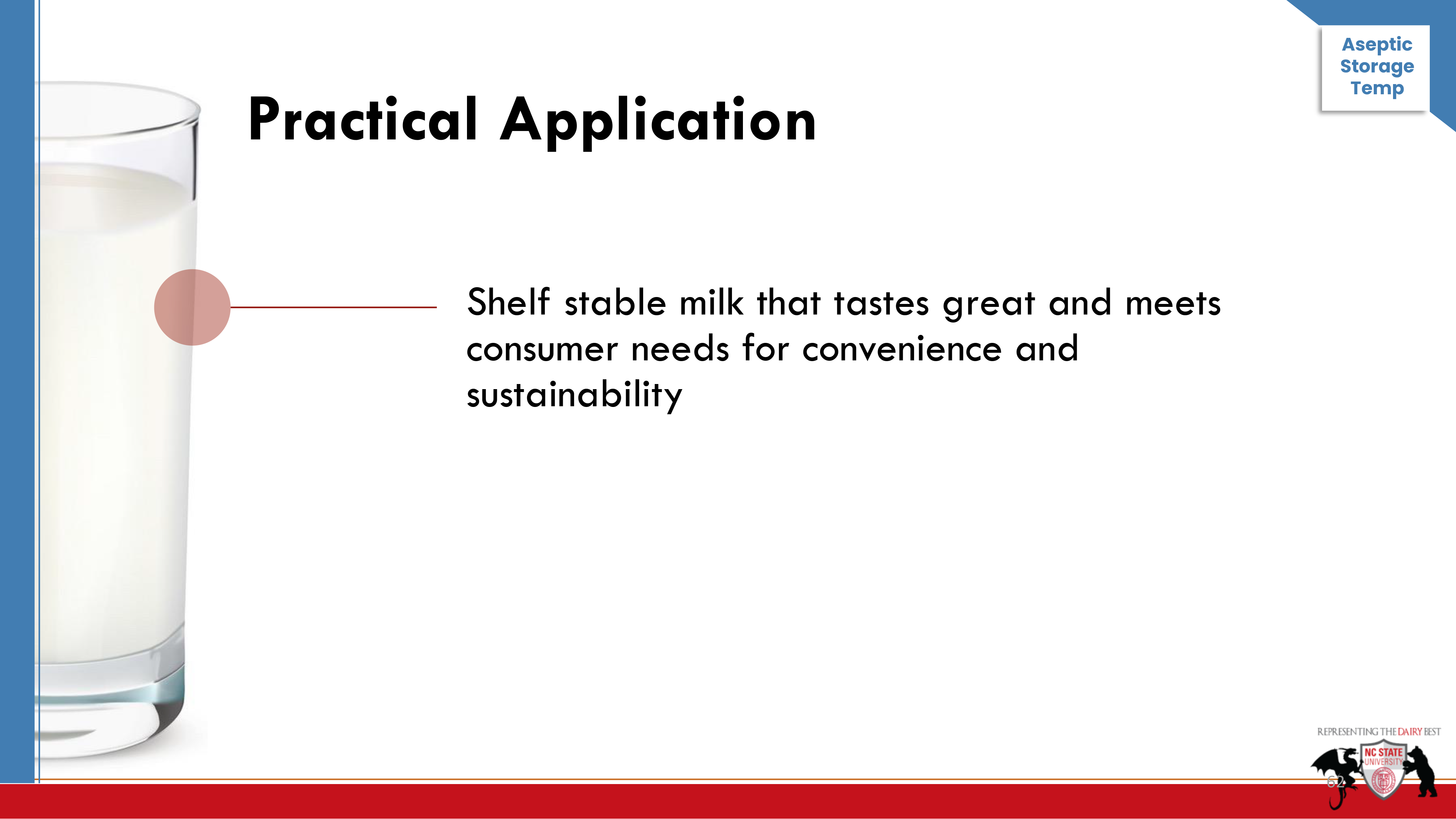
“We are after a shelf-stable milk that tastes great and meets our consumer’s sensory needs and our industry’s sustainability needs,” said Drake about the work of the four university research centers, including North Carolina State and Cornell, that are drilling into milk’s elements to sift, sort, and test different combinations, as part of the checkoff-funded Innovation Center for U.S. Dairy, under the DMI umbrella.
Through processes like membrane technology, ultrafiltration, and aseptic packaging, the physical, nutritional and sensory elements of milk are being isolated at a molecular level to create beverages that aim to deliver this broad list of what consumers say they are looking for.
At the same time, researchers are using interpretive surveys to understand how consumer desires actually translate into purchases, and then work with processors to build relationships with retailers to get these new beverage products into stores.
Reinventing milk
What does all of this mean? Reinventing milk by focusing on the domains in which real milk has a clear advantage for consumers among so many plant-based and now cell-based options.
For example, said Drake: “Consumers want to know from a credible source what the immune-boosting elements are in milk, not what we have added. They tell us they want to know the science. That’s new.”
Drake explained that the findings from their interpretive surveys represent a huge and divergent set of innovations to sort through and capitalize on as part of a new strategy.
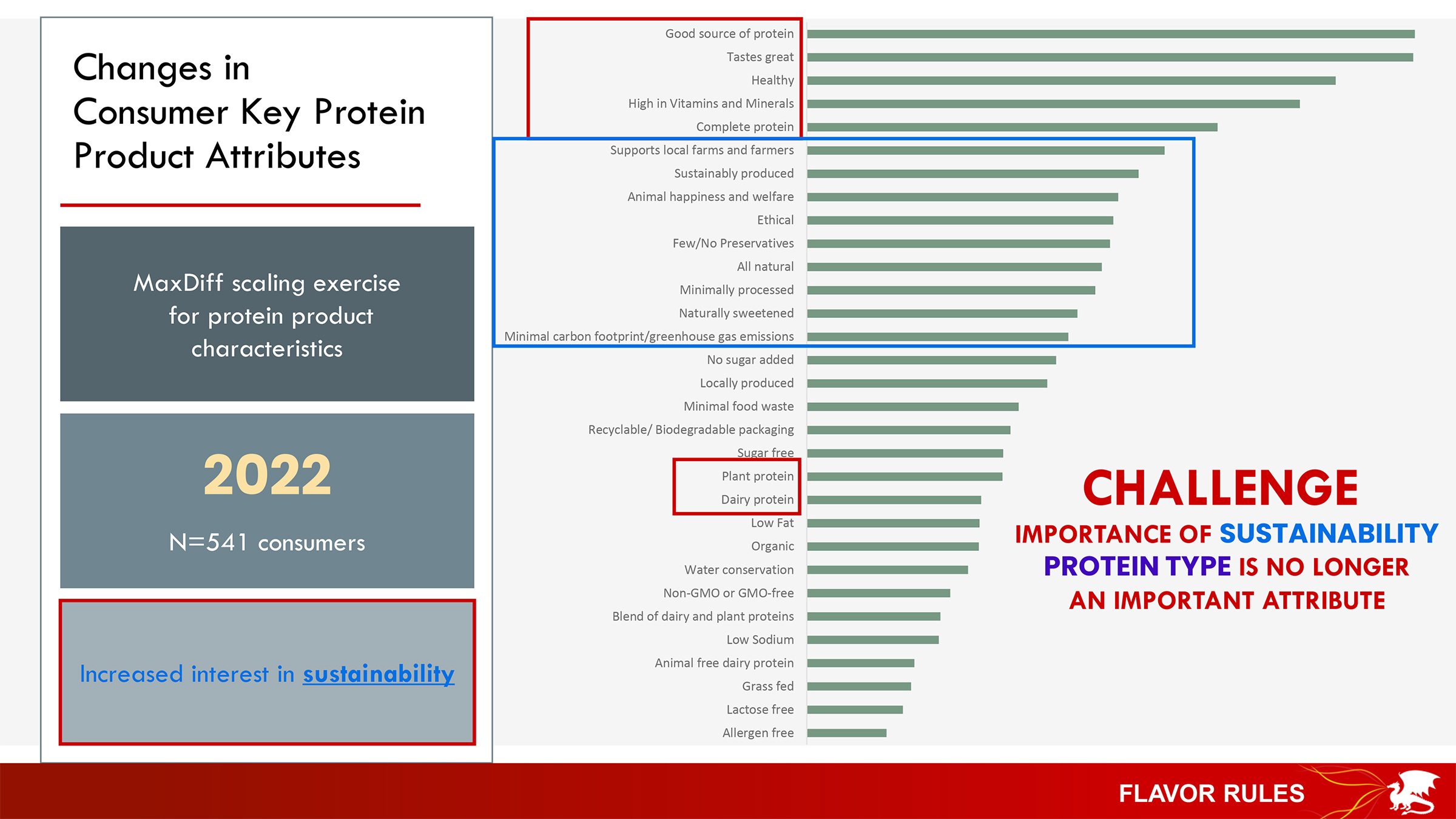
“Consumers don’t see the perceived value of animal protein vs. plant protein, so we had them graph what they want and don’t want, what they know and don’t know,” she said, adding that consumers gave the slight edge to plant protein over dairy protein. They rated the top three protein categories as plant protein, whey protein, and milk protein — in that order. (A large percentage believed whey protein is plant protein.)
As their familiarity with the differences between plant and animal protein increased, their liking of dairy protein increased, the researchers learned.
In other words, consumers do not know the science about the nutritional differences between plant and animal protein, and if they knew the differences, they would rank milk protein as number one.
Clearly, this is a failure in consumer education and messaging. Isn’t that the domain of the dairy checkoff?
New strategy
Drake indicated that educating consumers about dairy protein as a ‘complete protein’ is one thing that can help. However, she said, the functionality around dairy protein is the innovation strategy that is being pursued by the industry.
“The number one label claim consumers are looking for in a protein beverage is ‘naturally sweetened.’ We own that, and this is where we can deliver,” Drake declared.
“We own protein functionality. We understand the process parameters that impact flavor and functionality, and we can leverage this over plant proteins on this platform,” she said.
Bottom line: The surveys and flavor panels showed that consumers want “desirable flavor, texture and appearance. They want a protein drink that is nutritious, naturally sweetened, and has a clean label with simple ingredients,” said Drake.
“They also want education, messaging and positioning, and they are looking at sustainability,” she added.
“We are working on what does clean label mean? It’s not what we think it is,” Drake reported. “It’s costing us sales if what they actually want is not on the shelf. We have the opportunity to deliver what consumers still want. We just have to find those things they want — that we have — and be more strategic in how we deliver them.”
Food technology and engineering was a big part of the picture painted for attendees that day.
Diversify processing
Producers were urged to challenge the status quo and to not just add processing, but to diversify it. They were also reminded that the 10 southeastern states had lost eight fluid milk plants in the previous roughly two-year period (2020-22).
During his annual market outlook that year, retired co-op executive Calvin Covington hit the nail on the head with this reminder, saying “that’s done some damage. The major challenge for milk markets in the Southeast is we need more of them,” he said. “A lot of the fluid milk products that are sold in the Southeast are not processed here. If we are going to have a viable dairy industry in the Southeast, we need growing and stable markets for milk produced in the Southeast.”
Covington also differentiated the trends for domestic and export demand, showing that both lagged their respective 5-year-average annual growth in 2022, with domestic demand growing by just 0.5%, while exports grew by 3.5%.
Keeping in mind as exports are expected to top 20% of U.S. milk production on a total solids basis in the next two years and fluid milk sales as a percentage of total milk production have fallen to just under 20%, seismic shifts are already occurring in the heavily fluid milk market of the Southeast.
Transformation brings investors
Geri Berdak, CEO of Dairy Alliance, the Southeast regional checkoff organization, talked about “creating a path forward” with objectives centered on driving milk volume, increasing dairy’s reputation and transforming dairy while building checkoff support.
She said transformation is necessary to “identify high-growth opportunities and stimulate outside investment, technology and innovation.”
The need for processing is big as plants are closing in response to declining fluid milk demand, leaving the the need for more diverse processing assets.
Exports drive innovation
“The biggest thing exports do is to drive value and innovation,” said Patti Smith, a food technology specialist and CEO of DairyAmerica, now wholly-owned by California Dairies Inc. (CDI) milk cooperative. Earlier in her career, Smith held a leadership position with Fonterra and has served at board and officer levels with IDFA and USDEC.
“Exports are a lot more than powder today. Our biggest item is still excess powder,” she said. “But we also export many other products — even UHT (ultra high temperature) and ESL (extended shelf life) fluid milk and cream.”
What Smith sees into the future are “opportunities for the right products and the right product configurations. We have the opportunities to capitalize on them and the technologies to grow them.”
Smith said the biggest benefit of exports to-date is to have a home for milk that grows the dairy industry without relying on core domestic demand for that growth, but that U.S. dairy processing infrastructure is not quite reflective of the new export era.
“We need to make our industry world renown, through a strategic plan that the whole industry will work on together, with digitized supply chains and infrastructure for growth that is reliable and can be consistently demonstrated, and that includes shipping,” said Smith, citing the Innovation Center for U.S. Dairy as the nexus, where the industry’s “strategic plan” for global trade is being built.
Developing ‘new milk beverage platform’
Emanating from the DMI-founded and checkoff-funded Innovation Center for U.S. Dairy is the marketing and promotion arm of new product alliances and the National Dairy Research arm through several universities looking to essentially create a milk beverage platform by drilling into milk’s elements, sifting, sorting and testing different combinations.
Dr. Drake said the new milk beverage platform holds the “keys to the kingdom” as global protein trends were valued at $38.5 million in 2020 and projected to grow. Meanwhile, the nutritional drink markets are growing steadily, with 42% of consumers eating healthy as a higher priority since Covid, and the number of conversations about protein (95% positive) steadily flowing across social media platforms.
Those keys, she said, are membrane technology, ultrafiltration, aseptic packaging and research exploring all of the physical, nutritional and sensory elements of milk at the molecular level to bottle up what consumers say they are looking for, while also gauging through interpretive surveys how this translates to purchases, and then working with processors to build relationships with retailers to get new products into stores.
Drake shared details about the roadmap to play to dairy’s strengths through nutrition, education, capitalizing on calming and immune benefits and using dairy protein functionality to limit added ingredients in beverages to satisfy the clean label trend.
She talked about how elements like fat, protein and lactose at different levels impact milk’s flavor and appearance: “We want to determine the impact of ultrafiltration levels for different concentrations of fat and protein for different sensory or physical experiences.”
She talked about ultrafiltration in conjunction with aseptic packaging for shelf-stable storage using an elaborate diagram of processes.
Bottomline, she said: “The chemistry of these (aseptic) milks is different.”
She described consumer flavor panels where shelf-stable and fresh fluid milk were served cold and compared. The flavor panels evaluated two different storage temperatures for the shelf-stable milk.
The North Carolina researchers worked with their Northeast Dairy Foods Research counterpart at Cornell and with Byrne Dairy, running grad students from North Carolina to Syracuse, New York when batches were available for study. (The Southeast and Northeast as well as Midwest and California Dairy Foods Research Centers all receive funding from checkoff and other sources.)
‘Training consumers’
“Consumer panels still liked the HTST (fresh fluid) milk best overall, but in 14-day and 6-month follow up, we found we can train them,” said Drake, reporting the two best storage temperature options for aseptic milk saw longer-term increase in acceptance.
HTST is the acronym for High Temperature Short Time pasteurization that is basically commodity fresh fluid milk vs. ‘value added’ UHT (ultra high temperature) and ESL (extended shelf life) as well as aseptically-packaged, which is milk processed for longer shelf life and then bottled in a special sterile process and package to last months without refrigeration, but will taste best served cold.
Schools are the gateway
“For 25 years, consumers have not liked aseptic milk,” said Drake, “but we are changing that. Consumers may not like it or want it, yet, but it is great for schools.”
She reported the practical applications to come up with “great tasting school lunch milk that contains no lactose (no natural sugar).” Another practical application is to “determine the impact of storage temperature of 1% aseptic milk on physical and sensory properties.”
This partially checkoff-funded research is also working on “changing the chocolate milk formula to have zero sugar,” she said. “When we think about school milk, the question is how to get the sugar out of it. We want a chocolate milk that tastes great and new government standards on low- or no-added-sugars. Right now, chocolate milk has 8.5 grams of added sugar and 12 grams of natural sugar (lactose).”
In addition to ultrafiltration removing natural sugar, or lactose, they are exploring “non-nutritive” sweeteners like monk fruit and stevia. Additionally, they are looking at “lactose-hydrolized” to boost the flavor profile at much lower levels of sugars or other sweetener.
Whether talking about consumers or children, parents, and schools, the milk beverage platform is tricky “They want to know from a credible source what the immune-boosting elements are in milk, not what we have added. They tell us they want to know the science. That’s new.
“We have a huge and divergent set of innovations to sort through,” said Drake.
GORDONVILLE, Pa. — Empowerment. One word with power in it.
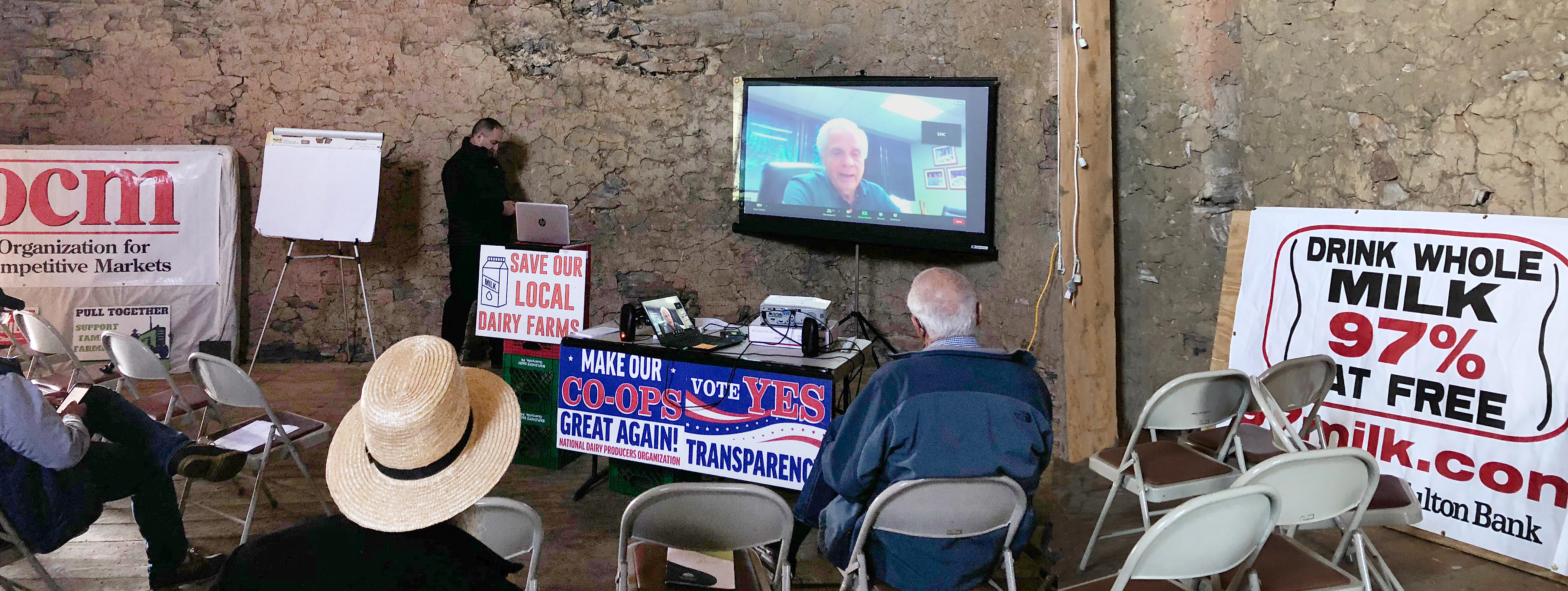
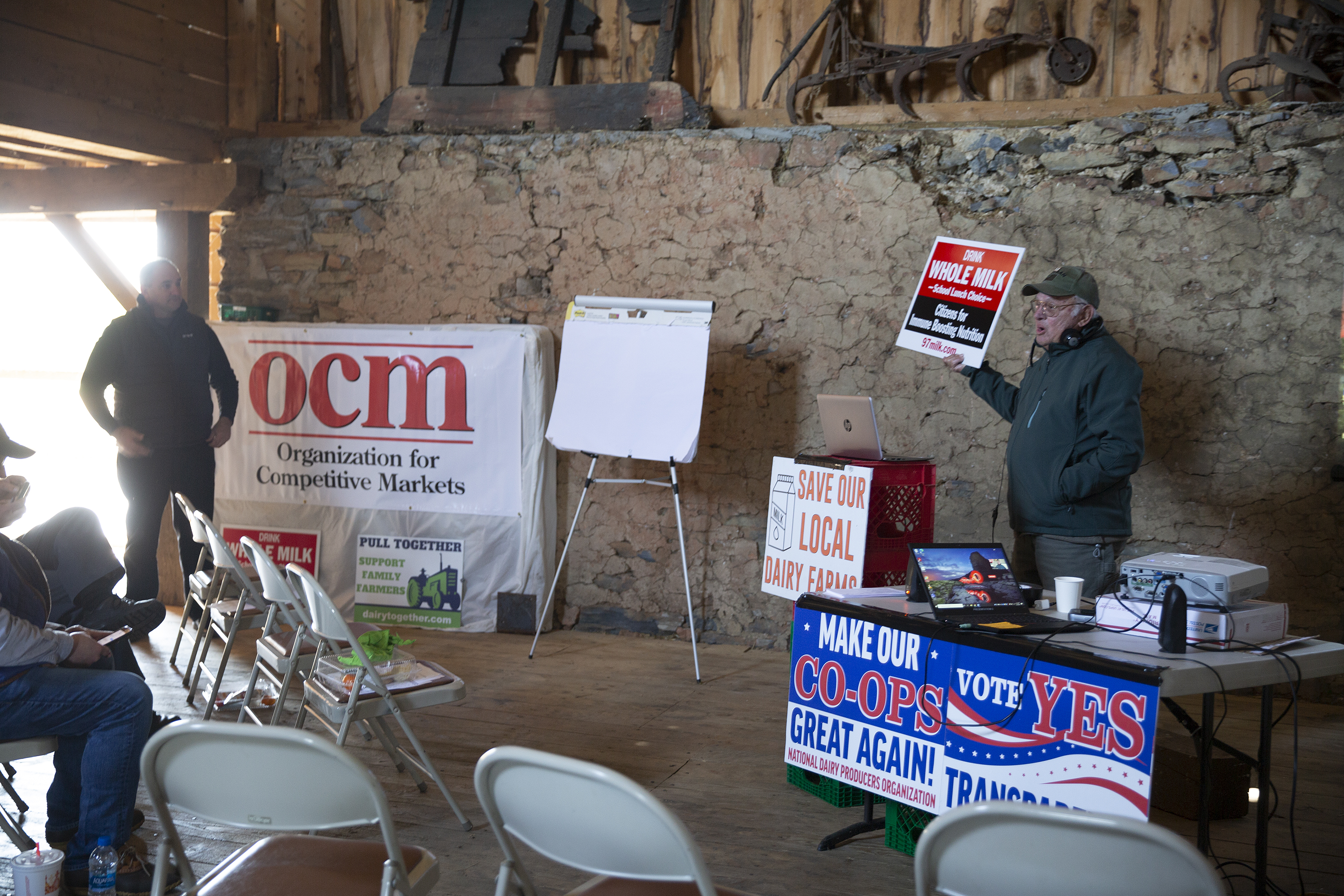
“I got to thinking about introducing this session and thought everyone knows what empowerment means, right? Give power. But then I looked up the opposite of empowerment,” said Kristine Ranger, a consultant in Michigan working with farms and writing and evaluates grants. She traveled to Gordonville, Pennsylvania with National Dairy Producers Organization board member Joe Arens to the farm of Mike Eby, NDPO chairman, for the ‘Empowering dairy farmers’ barn meeting Friday, April 23, 2021.
What is the opposite of empowerment?
“Here are the words in the dictionary,” said Ranger. “Disallow, forbid, hinder, inhibit, preclude, prevent and prohibit. Have any of you been experiencing any of that as you try to build a livelihood with your dairy farms?”
Good question.
From there, the daylong barn meeting moved headlong into weighty topics, but stayed focus on the positive concept of encouraging producer involvement in seeking accountability and transparency in the systems that govern dairy.
Although the sunshine and spring planting kept in-person attendance low, the event was livestreamed on visual and audio with producers listening in from all over.
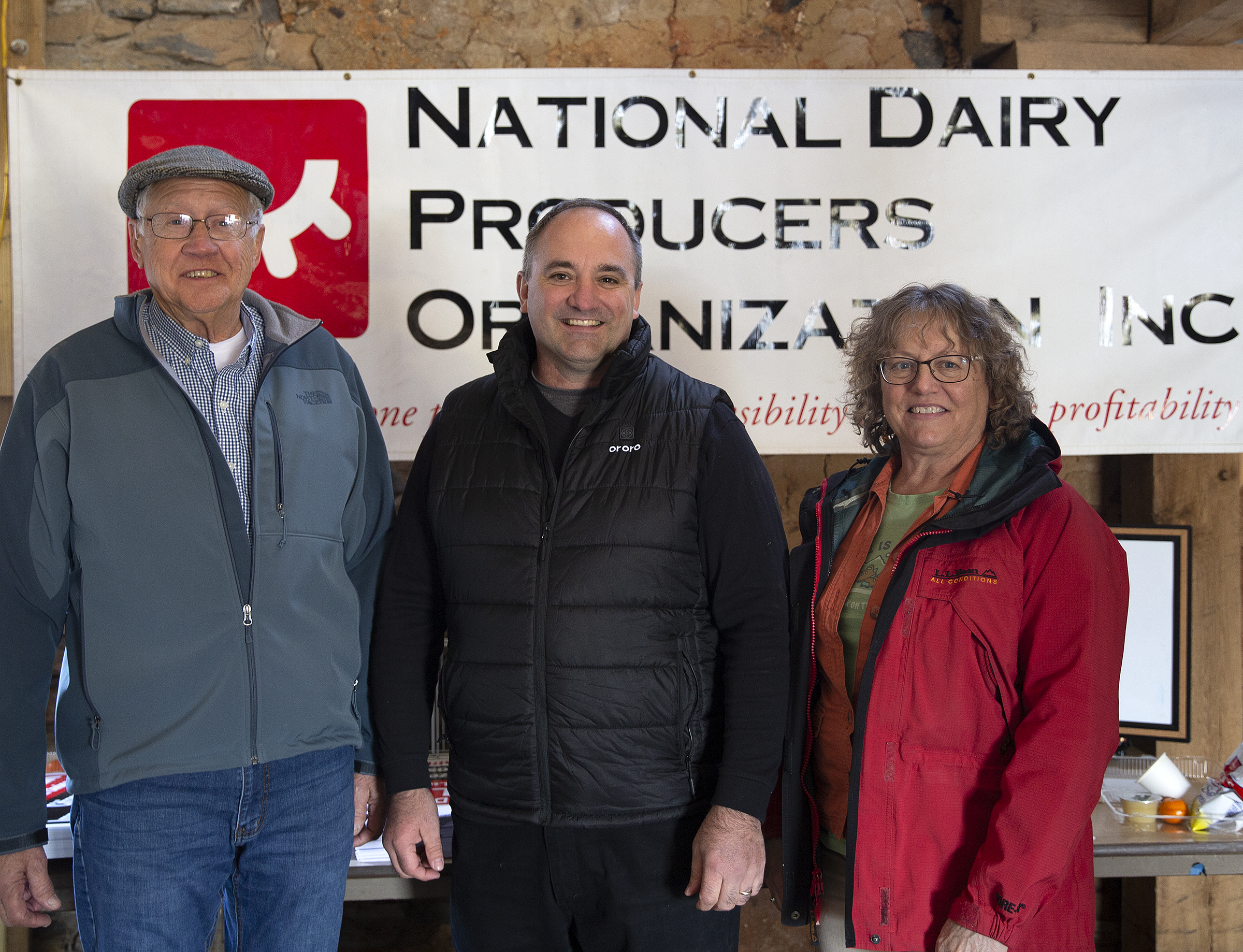
Traveling from Michigan to the Lancaster County, Pennsylvania farm of Mike Eby (center) for an ’empowering’ farmers meeting were Joe Arens (left), NDPO board member and Kristine Ranger, a knowledge consultant working with farms. Ranger worked with Eby to secure a grant for the in-person meeting and multi-media production. In addition to serving as NDPO (National Dairy Producers Organization) chairman, Eby is executive director of Organization for Competitive Markets (OCM), represents the south district on the PA Farmers Union board and is a member of the Grassroots PA Dairy Advisory Committee collaborating with 97 Milk education efforts.
A thought that kept surfacing in this reporter’s mind listening to the panel of speakers was this: The longer something goes uninterrupted, the more vulnerable it is to become corrupted.
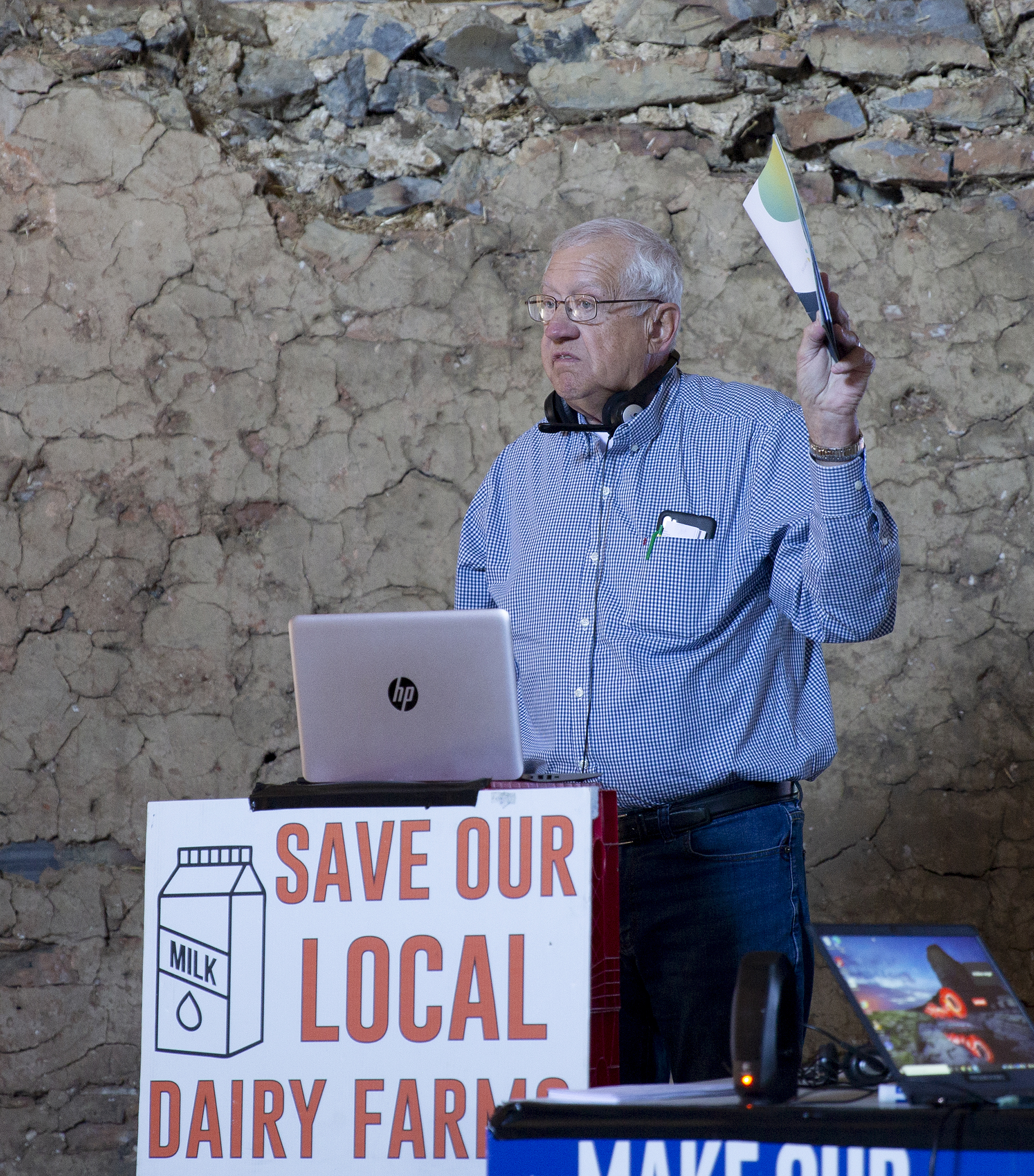
In fact, it tied in directly with Arens’ personal account following Gary Genske on the program. Arens urged producers to look at annual reports and ask questions. “That’s what NDPO is all about, to support your efforts to get to the cooperative boards of directors about what they should be doing at the co-op level,” said Arens, a member of the NDPO board for two years.
“Members own the milk. Members have the power, but the whole thing has been tipped upside down,” said Arens.
“We need to do something to change this,” said Arens. “Get in front of your board members… They are talking about expanding plants, not talking about producer price. Their one and only responsibility is that price on the milk check settlement statement.”
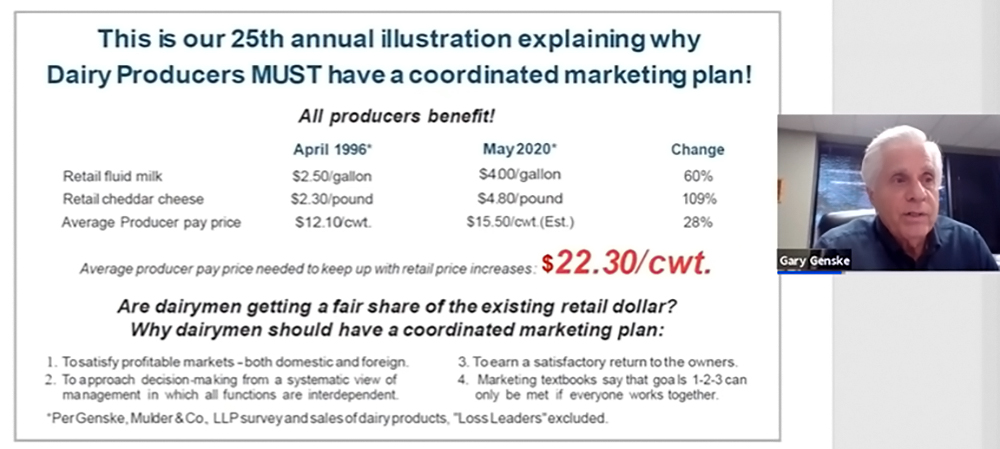
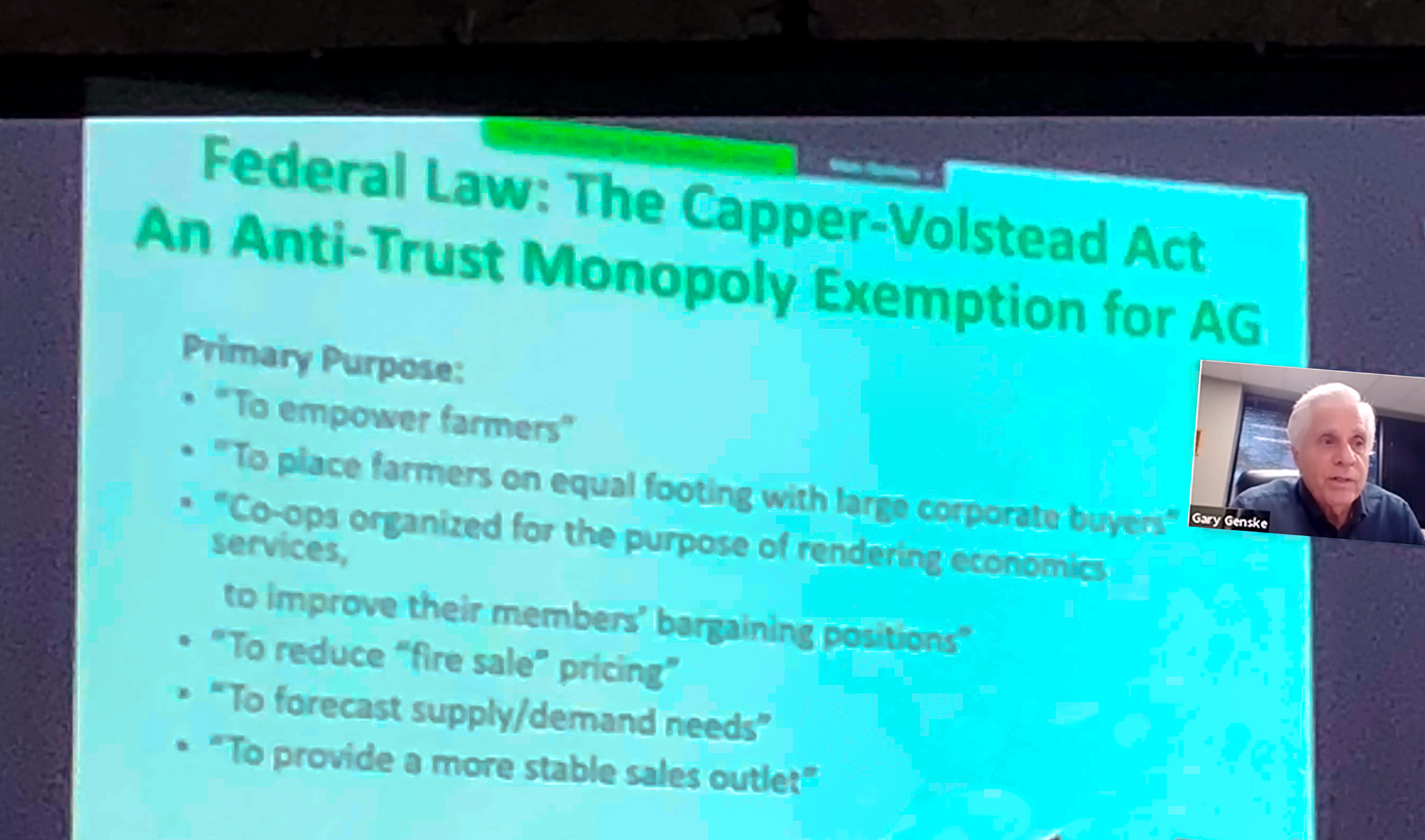
“If producers do not hold their co-ops accountable, then silence is your consent,” said Genske, a certified public accountant since 1974 based in California with a dairy in New Mexico.
He kicked things off at the barn meeting, presenting details about the roles and responsibilities of cooperatives, boards and members. He shared his insights into improving dairy farm milk prices.
Genske is a longtime member of the NDPO board. He highlighted the marketing concepts of 100% USA seal for milk and dairy products, returning to the true standards for fat and components in beverage milk that are still used today in California, and moving toward aligning milk production with profitable demand.
Gary Genske was the kickoff panelist, presenting virtually from his office in California.
The Genske Mulder firm does the financial statements for 2500 dairy farms each year and 10,000 farm tax returns annually. He sees the numbers and knows the deal.
Walking attendees through the various aspects of USDA regulation and the Capper Volstead Act, Genske gave producers the tools and encouragement to accept their responsibilities as cooperative members.
In October, he had a successful lawsuit in Kansas City. After requesting documents from the cooperative in which he is a member, and being denied or provided documents that were mostly redacted, he took the issue to court.
After a two-day hearing, the judge ruled in Genske’s favor on his request for documents, as a cooperative member, with a stated purpose.
In short, Genske said, “We have to put people in the position of taking care of the members… We want to cull cows not dairy farmers.”
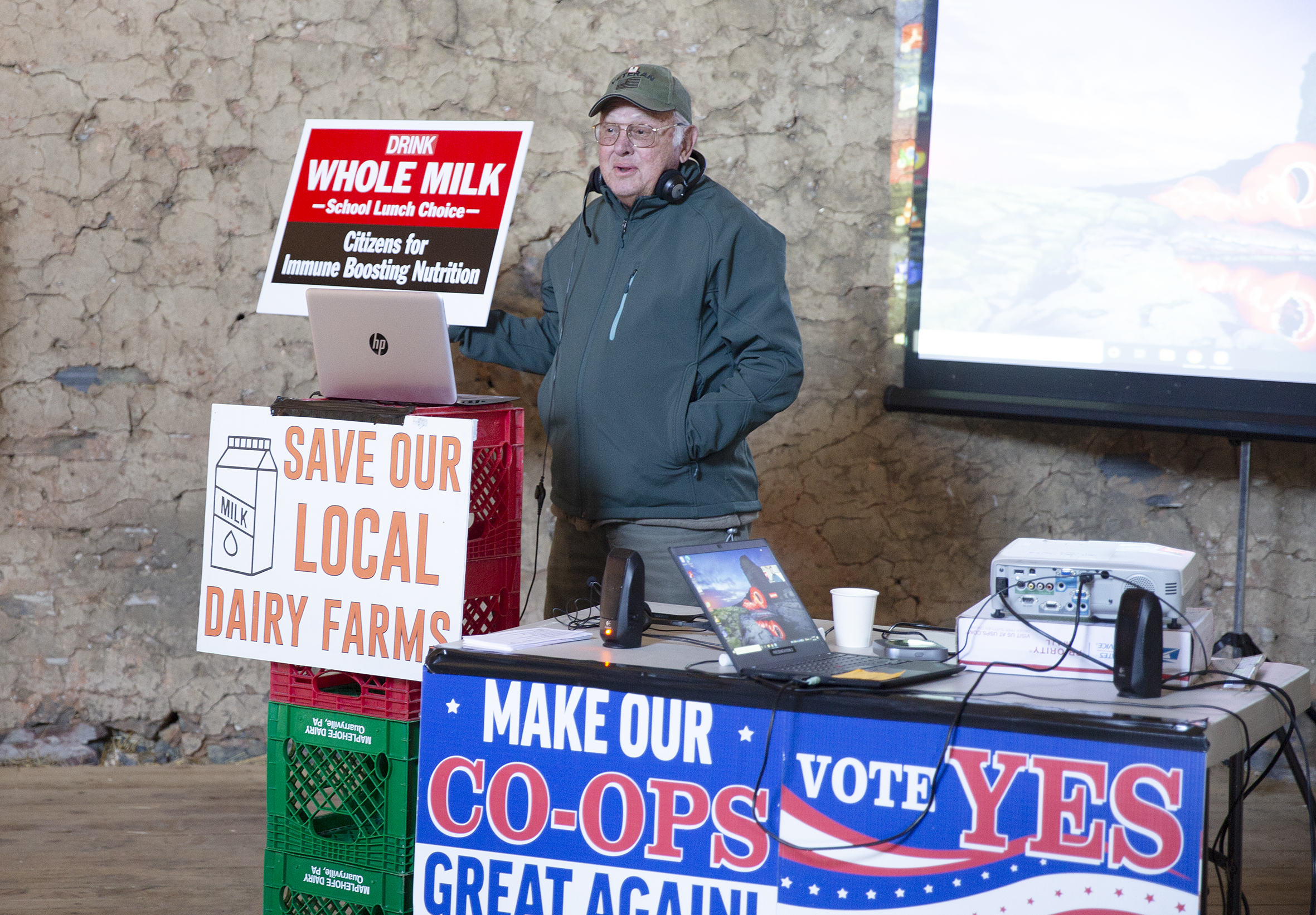
Bernie Morrissey, chairman of the Grassroots PA Dairy Advisory Committee talked after lunch about the 97 Milk effort when farmers empowered themselves to market whole milk, since no one else was; and all kinds of prohibiting, hindering, forbidding, preventing and precluding had been going on regarding whole milk availability and promotion.
“This is it,” said Bernie Morrissey. “The dairy farmers made me successful, so this is me giving back.” He talked about the whole milk education effort and the push to legalize whole milk choice in schools. If ever there was an example of the opposite of ’empower’, it would be the treatment of whole milk by industry and government, especially since 2008. The steep decline in fluid milk sales from 2010-2018 is starting to stabilize as consumers and policymakers are getting the message. Each step is hard work.
“It started with Nelson Troutman who painted the first round bale, just like that sign: Drink Whole Milk 97% Fat Free,” said Morrissey pointing to the large banners and holding up the Drink Whole Milk School Lunch Choice Citizens for Immune Boosting Nutrition yard signs.
With a joint effort underway now for a little over two years – working to educate lawmakers and consumers about whole milk, and pushing efforts to legalize whole milk choice in schools — Morrissey said “It’s working. Things are happening.”
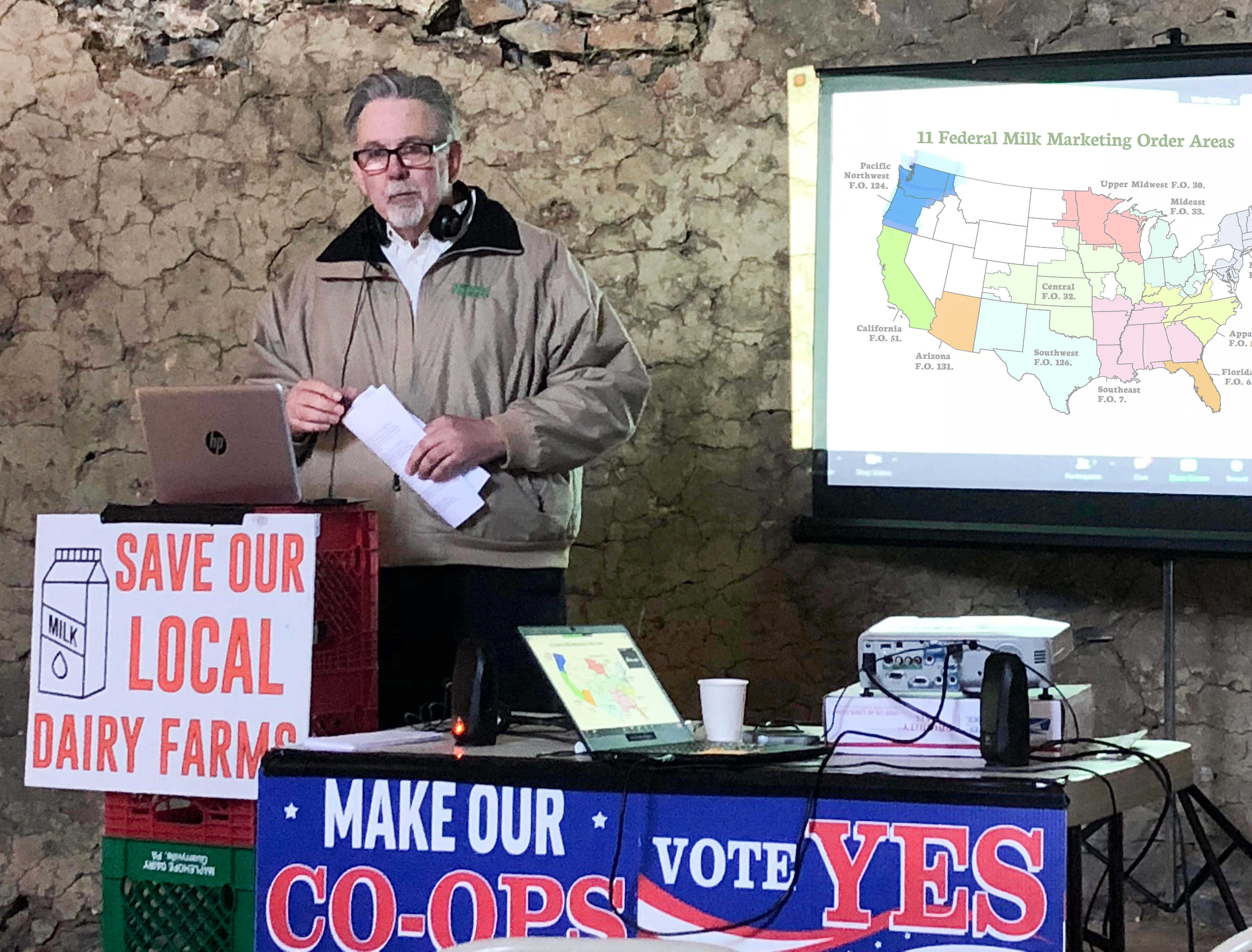
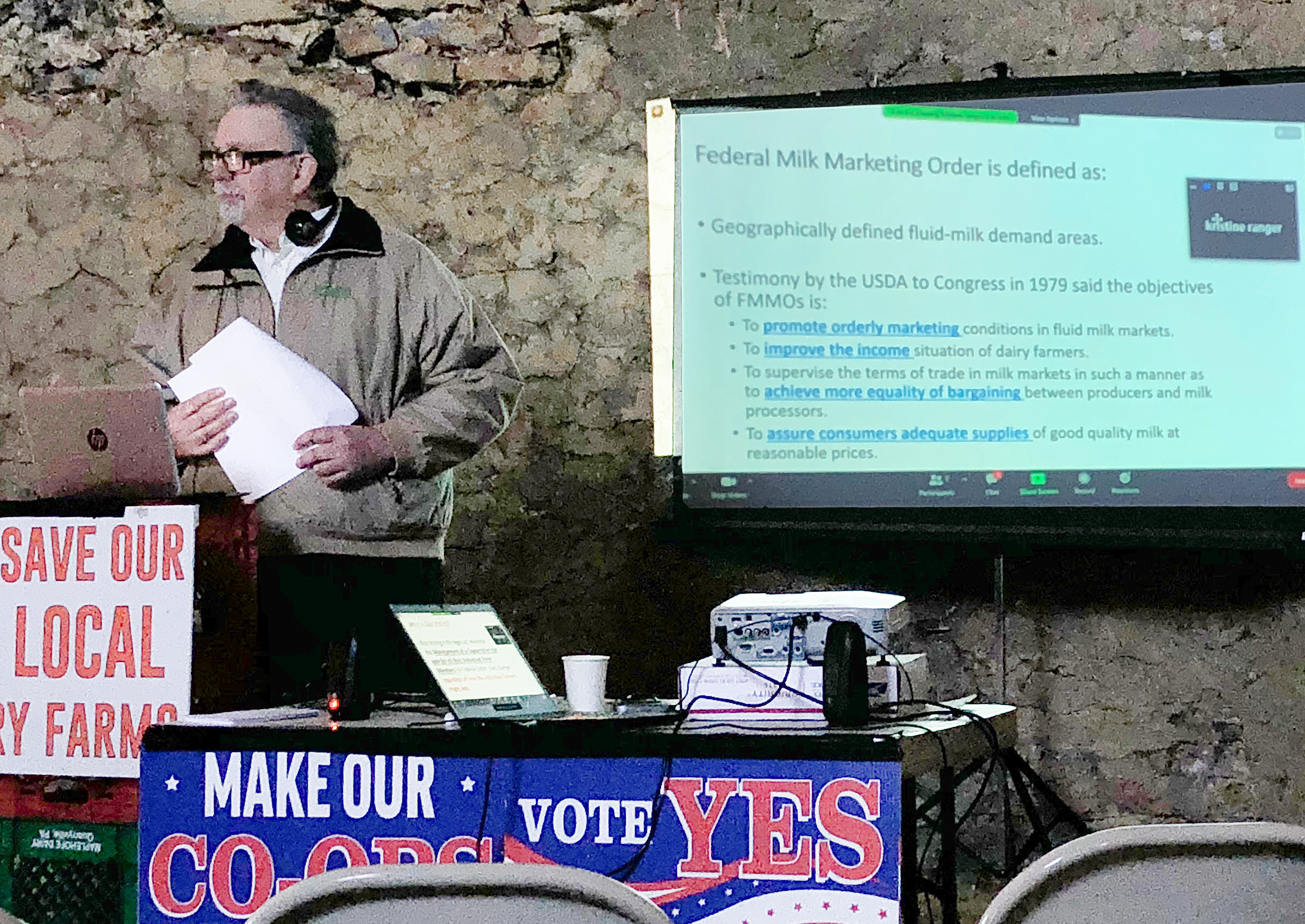
With the FMMO map on the screen behind him, Dick Bylsma of NFO talked about the history, purpose and hot FMMO topics of the day. He said the most empowering tool a dairy producer can have is the right to vote on milk order changes, instead of being bloc-voted by the cooperative.
Dick Bylsma of National Farmers Organization (NFO) traveled from Indiana to brief producers on joint efforts between NFO, Farmers Union and Farm Bureau to empower dairy farmers by getting their individual votes back in Federal Order hearings. He traced the history of Federal Milk Marketing Orders, and the genesis of bloc voting at a time in history when there were hundreds of thousands of farmers and communication was slow.
“It’s time to end bloc voting,” said Bylsma, and he laid out some of the efforts underway around that proposition, also highlighting the purpose of the Federal Orders.
These are just some fast highlights from a day of deep learning. More from these speakers and additional speakers on co-op involvement, systems accountability, checkoff reforms and referendums, and other empowering topics — including more from Genske about ending the silence and exercising rights and responsibilities with communication tools that work for cooperative members — will be published in a future edition.
Similar in-person meetings recently encouraged producers in Michigan and northern Indiana, said Ranger.
For dairy producers who are interested in knowing more, want to get involved, but aren’t sure how, NDPO chairman Mike Eby suggests joining in on the NDPO weekly national Tuesday night call at 8:00 p.m. eastern time at 712-775-7035 Pin 330090#. Every dairy producer in America has a standing invitation.
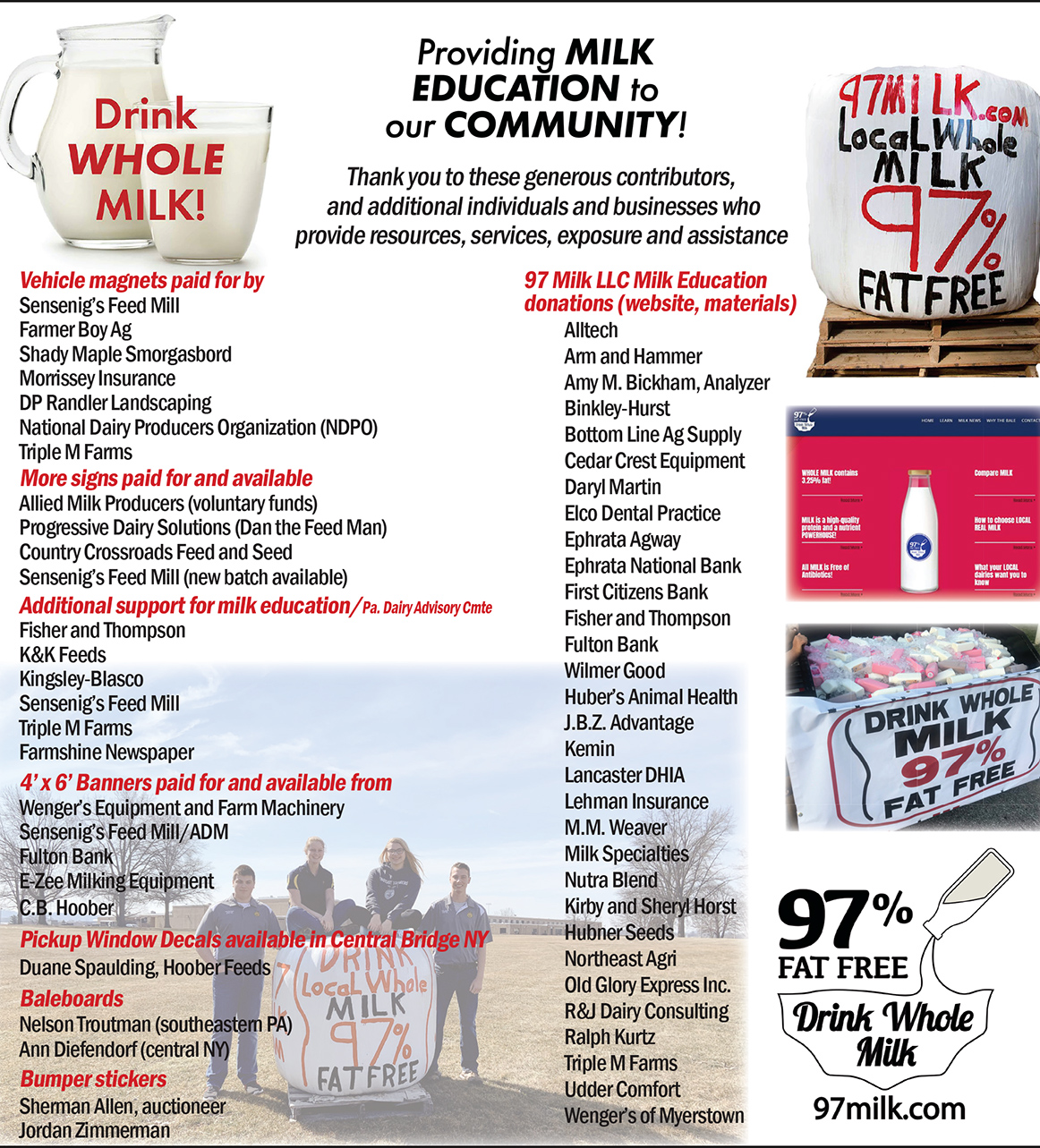
AUTHOR’S NOTE: With proof of concept in place, the support of farmers and community running strong (see graphic), and the public response rewarding these efforts, there is something powerful here with the 97 Milk effort, and it is just the beginning.
By Sherry Bunting from Farmshine, October 23, 2019
RICHLAND, Pa. — One farmer. One roundbale. And six painted words — Drink Whole Milk 97% Fat Free.
The excitement of the 97 Milk effort is contagious. What started with Nelson Troutman’s first painted roundbale in Richland, Pa., has rapidly multiplied into community-wide and nation-wide milk education efforts aimed at consumers on one hand and policymakers on the other.
Nelson Troutman placed his first “Milk Baleboard” in a pasture by an intersection.
By February, retired agribusinessman Bernie Morrissey of Robesonia found five businesses to pay for the first 1000 magnetic 12” x 12” vehicle signs with the same message. Since then, more companies have joined in and some of the original businesses have printed more.
As legislators began to take notice, Morrissey and Troutman assembled a grassroots Pa. Dairy Advisory Committee of 10 farmers that meet monthly in person or by teleconference and interact with lawmakers, including the petition effort to bring whole milk back to schools. More agribusinesses joined in to help fund their expenses.
Then, 4’ x 6’ banners were created for places of high visibility and an effort to place them at stores is underway. A September Farmshine cover story helped spread the word. Morrissey reports the banners “are going like hotcakes” with additional businesses joining in to print more.
Another effort was underway simultaneously, when Rick Stehr invited a diverse group of farmers to a February meeting in Lancaster County to talk about milk education beyond the bale. Today, the joint efforts work together like two well-oiled machines comprised solely of volunteers.
Stehr recalls getting questions back in January. He invited Morrissey to talk about the milk baleboards at R&J Dairy Consulting’s winter dairy meeting. Noted expert Calvin Covington was the keynote speaker that day, and he told the 300 dairy farmers that promotion needs to focus on domestic demand, and that “we in the dairy industry need to talk about milkfat and not hide behind it not wanting things to change. Consumers want that taste, and we’re not talking about it,” he said.
Morrissey then told the crowd about Troutman’s “Drink Whole Milk 97% Fat Free” roundbales that were just starting to multiply at farms and businesses after a cover story appeared in Farmshine.
“As I talked with non-ag people, I realized many of them didn’t know quite what it meant,” says Stehr. “I thought the missing link is education. We needed to educate the public.”
Stehr’s daughter Jackie Behr has long believed milk sales suffer because milk education is missing. She has a marketing degree from Penn State and experience in non-ag positions before becoming R&J’s marketing manager.
Even Behr was surprised by her February focus group interviews with non-ag friends. “I was blown away by the obvious gap between dairy farms, milk nutrition and consumer perception,” she reports.
Behr shared the focus group responses at a February meeting of farmers that included Troutman. “It was an obvious eye-opener for everyone. These were educated women responding to my questions. How did we miss so much milk education all of these years?” Behr wondered.
They not only had zero knowledge of milk’s nutrition — other than calcium — their minds were full of information that was just plain false.
They said they drank organic milk because they ‘didn’t want to drink all those hormones.’ Or they chose almond beverage ‘because there are no antibiotics in it.’
“The biggest misconception is how much fat they thought was in whole milk. Just like Nelson’s been saying. And when you tell them whole milk is standardized to 3.25% fat, their response is ‘Oh, wow!’ That alone is big,” says Behr.
Her marketing savvy kicked in. Ideas for a website were kicked around with obvious choices already taken.
Then one attendee said: “How about 97 Milk?”
It fit. And it captured attention. By the second meeting, they were ready to establish 97 Milk LLC and chose a volunteer board of Lancaster County farmers Mahlon Stoltzfus, Lois Beyer, Jordan Zimmerman and Behr, with GN Hursh serving as chairman.
The website was up and running by the end of February with a Facebook page (@97Milk) that has gained more than 8,500 followers in less than eight months and a weekly average reach of over 150,000. Individual posts have reached up to 1.2 million through thousands of shares and hundreds of interactions. Twitter (@97Milk1) and Instagram (@97Milk) are also active.
Behr says it all stems from what Troutman started, and he was happy to add 97milk.com to the bales with Morrissey making sure the website appears on signs and banners.
“To get someone to change their mind, you have to get the facts in front of them,” Behr observes. “We’ve got three seconds in front of their eyes to leave information that plants a seed.”
With some content help from others, Behr comes up with ideas, designs and coordinates Facebook posts six days a week.
The result? “People are shocked and come back and say, ‘I had no idea,’” Behr explains. “I am in the industry, and even I have learned so much about milk that I didn’t know before.”
“Now that 97 Milk has become a tool used by dairy farmers to educate the public about our product, the conversations that are happening are only the beginning,” Stehr observes. “We could have 97 Milk boards across the nation.”
As interest builds, 97 Milk LLC is looking into how different geographies could have their own chapters, with the website and materials providing some continuity.
“That’s where the power is, with the producers in each community or state,” says Stehr.
He credits Troutman and Morrissey for getting everyone’s attention and believes what they are doing creates the opportunity for the ‘beyond-the-bale’ education piece carried by 97 Milk LLC.
“The word milk has been used liberally, and the understanding of what it is has been diluted,” says Stehr. “We let that happen over the past 30 years and did nothing about it. We let them bash our product. Now we are educating people that the fat in milk is not bad, that there’s not 10% or 50% fat in whole milk, but 3.25%, that there is complete protein in milk and all of these other good things.”
From the baleboards, vehicle signs, banners and communications of the grassroots Pa. Dairy Advisory Committee, to the website, social media and educational events of 97 Milk LLC, a common bond unites these efforts — Troutman’s practical courage when he painted the first roundbale because he was frustrated and had had enough.
“We have lost market share, why? Because people don’t know what milk is and they don’t know what it tastes like,” says Troutman. “By promoting whole milk, we are opening their eyes and their tastebuds.”
While national co-ops think it’s “innovative” to develop a low-fat milk and nut juice blend, those involved in 97 Milk believe the response they see from diverse consumers tells a different story.
“People want to feel good about the products they are buying. The goal of 97 Milk is to share education, to share the dairy farmers’ stories,” says Behr. “You don’t pick up health magazines and see the benefits of milk. People need to see that positive information because they don’t know what milk provides.”
The Dairy Question Desk at the website fields a steady stream of five questions per week and when social media is included, 97 Milk fields 5 to 20 questions a day.
Every one of Behr’s original focus group have switched to whole dairy milk. The experience so far shows her consumers know very little about milk and have a real willingness to learn.
“All of our messages are simple. One fact. An infographic that’s simple to understand and that people can relate to,” says Behr. “Even if we have their eyes for just three seconds scrolling through, that little seed is huge.”
The posts fill other gaps. Behr believes people want to see that dairy farmers love their cows, that they care. The baleboard sightings and “cow kisses” have poured in for posting from several states.
The posts also help consumers fulfill a desire to be connected to their food, to buy local, and to support family-owned small businesses. “The simple fact that 97% of dairy farms are family-owned is a post that generated a lot of activity,” says Behr.
While she sees the environmental discussion as being big right now, she attributes this to the vegan activists driving it. By contrast, the 97 Milk facebook data and demographics reveal that 90% of consumers really want to hear about the health benefits, according to Behr.
She gives the example of the popular “yummy yogurt” infographic posted last week. It was visually attractive and simply listed a few health benefits.
“We get a few facts out on an infographic, and if you’re kind of hungry — or a mother like me trying to find healthy snacks for my kids — it hits,” says Behr. “It’s the simple things that get milk back in and help people feel good about buying milk products.”
The support from the agriculture community, and others, has been overwhelming.
“When someone calls, who you’re not even working with, to complement the work Jackie is doing, that’s rewarding,” says Stehr.
“When you see the response of a person in your community finding out they can drink whole milk and they really like it, that’s rewarding,” says Troutman.
“When legislators hold up a sign, or want their picture taken with a baleboard and say ‘this is the best thing going in dairy right now’, that’s rewarding,” says Morrissey.
“When people write into the Dairy Desk and we can answer their questions, that’s rewarding,” says Behr. “But most rewarding is hearing the excitement, seeing dairy farmers wanting to be involved, understanding the importance of marketing and seeing the results of getting involved. Receiving a simple note thanking us for positive messages, that’s rewarding.”
97 Milk LLC raised funds from more than 20 local and national businesses (see graphic) to cover expenses for the website and printed materials, and they’ve worked with Allied Milk Producers to have milk and dairy products available for parades, corn mazes, and other venues.
Meanwhile, individuals and communities take it upon themselves to paint bales, print bumper stickers, make signs, incorporate the message into corn maze designs, hometown parades, create farm tour handouts, initiate milk tents at athletic events, and more.
Young people are enthusiastic: FFA chapters, 4-H clubs and county dairy maids are printing their own banners and carrying the message at diverse public events. They love participating because it is real milk education, sharing the truth about milk and the life and work of America’s dairy farming families.
Morrissey and Troutman get calls from other states for banners and car magnets, and they’ve sent to these states at cost. Locally, the businesses paying for printing these items are giving them away (see graphic).
Behr has also designed items with the 97 Milk website logo, cows and farm scenes. These files are on the download area at 97milk.com and can be used to make banners, yard signs, license plates, bumper stickers, educational handouts, and more.
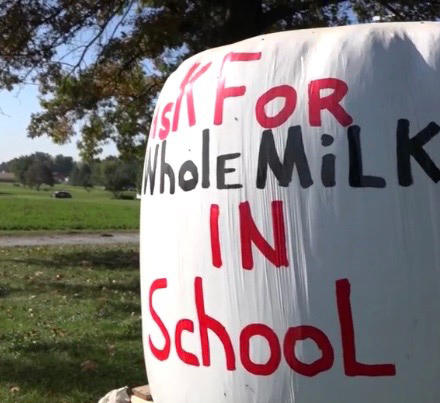
Troutman has added new baleboards for community events, including one that reads: Ask for Whole Milk in School. He and Behr recently did a television interview with a local PBS station.
Both the grassroots Pa. Dairy Advisory Committee and the 97 Milk LLC are running on shoestring budgets from donations (see graphic) with all volunteer effort, and the grassroots are blooming where planted to multiply the impact in ways too numerous to mention.
As a glimmer of hope, fluid milk sales nationally were up 0.2% in July, the first year-over-year increase in decades, with whole milk up 3.6% and flavored whole up 10.4%. Stores surveyed in southeastern Pennsylvania, where 97 Milk began, say whole milk sales are up significantly since January. It is also notable that many stores don’t seem to be able to keep enough whole milk on the shelves — a nationally obvious phenomenon.
Also being promoted is the petition to bring whole milk back to schools. This week, the online petition ( https://www.change.org/p/bring-whole-milk-back-to-schools ) topped 8000 signatures, plus 4000 were mailed in envelopes for a first-batch delivery in Washington Oct. 24, with a second batch goal to double that by January.
Reflecting on the past 10 months, Troutman says, “I thought if they’re not going to do it, someone has to, and here I am.”
And he’s happy. “Really, I’m thankful, thankful for so many who are helping make this work.”
To contact the grassroots Pa. Dairy Advisory Committee about banners, magnetic vehicle signs and baleboards, call Bernie Morrissey at 610.693.6471 or Nelson Troutman at 717.821.1484.
To contact 97 Milk LLC about spreading the milk education to other communities, email 97wholemilk@gmail.com or call Jackie Behr at 717.203.6777 or write to 97 Milk LLC, PO Box 87, Bird in Hand, PA 17505, and visit www.97milk.com, of course.
Tricia (Hoffman) Adams planned her educational exhibit for months ahead of a multi-county cross country meet at the farm on October 15.
SHINGLEHOUSE, Pa. — Educating the public has long been a passion of the Hoffman family at Hoffman Farms in Potter County, Pennsylvania. The school and home communities of the two generations (five families) involved in the 1000-cow dairy are on both sides of the Pennsylvania / New York boundary.
In fact, Tricia (Hoffman) Adams gave a presentation back in 2006 on how they set up the learning components of their school tours at a Women in Dairy Conference that year. Attendees were inspired to find ways to invite the community in, and the family was later recognized with a Pa. Pacesetter Award in part because of progressive operations on the farm and in part because of their commitment to educating the community about milk and dairy farms.
Today, with tours, community events, a facebook page and the next generation so involved in school clubs and sports activities — in addition to showing dairy animals and market steers and pigs — the family has become a recognized source for their community to ask questions about dairy, livestock and agriculture, in general.
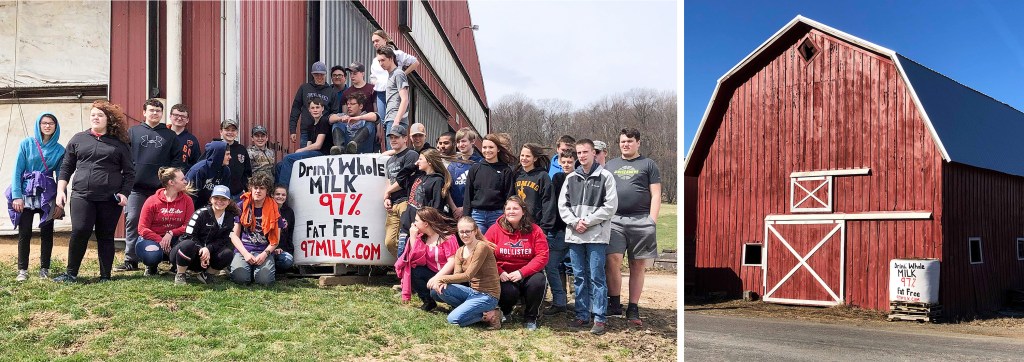
Earlier this year, the Hoffmans were among the many farms painting round bales and placing them in visible areas with the Drink Whole Milk 97% Fat Free message. They have always served whole milk, along with other dairy treats, when schools and community groups tour the farm. The Baleboards drew attention and gave Tricia an opening to answer questions people didn’t even know they had!
She reports that the schoolchildren on tours last spring loved the ‘milk baleboards’ and wanted their pictures taken with the “cool” roundbales.
In fact, the 97 Milk effort has revitalized Tricia’s educational resources, she says. She and her father Dale Hoffman are also both serving on the grassroots Pennsylvania Dairy Advisory Committee.
In September, Tricia worked with two vendors — Dan Rosicka of Progressive Dairy Solutions and Country Crossroads Feed and Seed to help share the good news about whole milk. Each vendor purchased 50 of the 12-inch x 12-inch magnetic vehicle signs with the 97 Milk message and website to make available in the community.
Tricia also acquired a 4-foot x 6-foot banner as well as other materials with the 97 Milk message and milk education information.
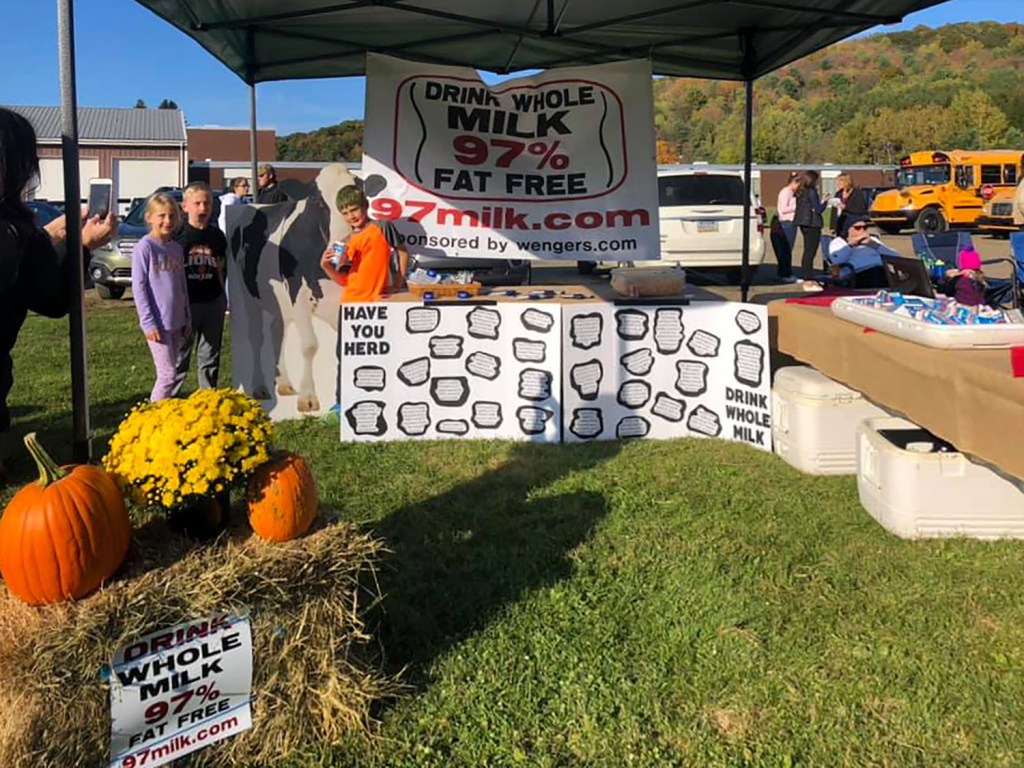
And then she added her own flare. She had been thinking about it and working on it on-and-off since summer. The farm was hosting a multi-school championship cross-country meet in October, and she was providing the “recovery” beverages – whole milk and whole chocolate milk — and other goodies.
“I’m not one to sit around and wait for help,” says Tricia. Like other dairy producers she is frustrated with the negativity surrounding milk and meat. “I am upset that our children have to suffer in their school diets, with the lack of milk choice and the meatless days. I decided our farm will do what we can to promote the ag industry through ag education, ag awareness and ag positivity!”
Each time Hoffman Farms is asked to donate money to a school club or a team sport, they donate dairy products instead — “with a side of education,” says Tricia.
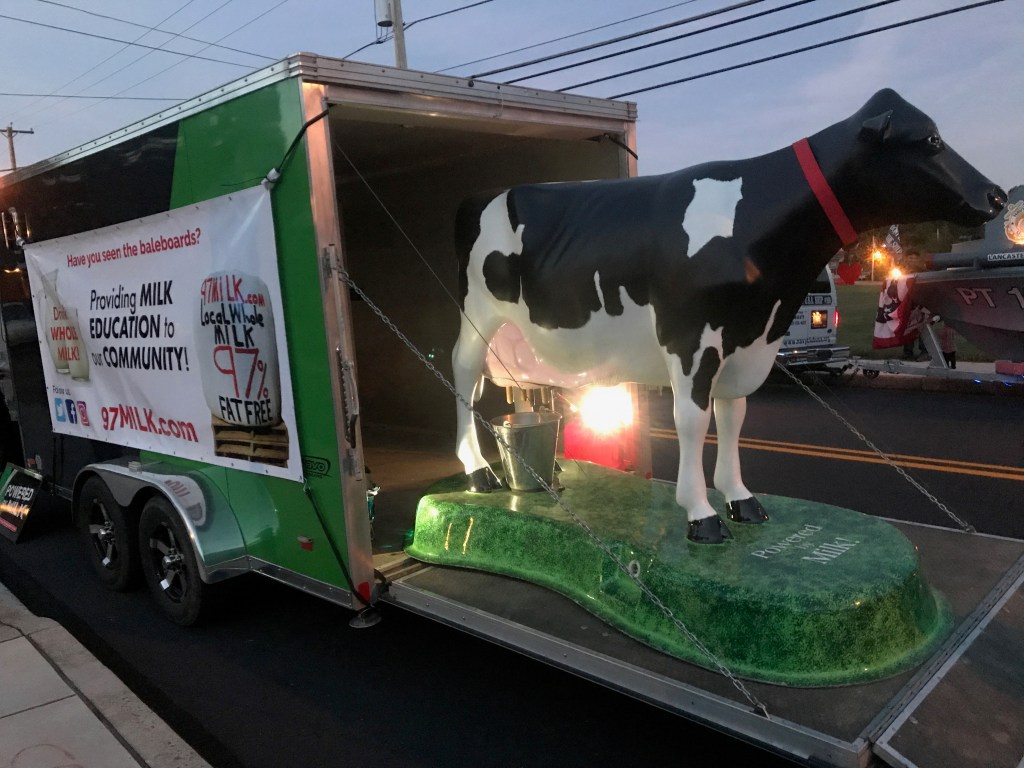
For the North Tier League Championship Cross-Country Meet on October 15 at Hoffman Farms, Tricia set up two tents and tables. In addition to the 97 Milk banner, she had a Chocolate Milk Refuel and Recovery banner. For the “side of education,” she created a large cutout cow and numerous ‘spots’ with questions and answers.
As a farm that buys their own materials for these events and tours, Tricia feels strongly that whole milk products should be served and serves them when the events are after school or at the farm so that the schools are not jeopardized in any way due to the flawed diet rules they have to live by during school hours.
She reports that the young people (and adults) say they look forward to having “the good milk.”
“Whole chocolate milk as a recovery drink after a race, whole milk cheese sticks or toasted cheese sandwich supplies to add to a sports concession stand — whatever helps our industry and our future generation of students is what we are going to focus on,” Tricia explains.
She’ll admit that some days, “It feels like an uphill battle, but we have had many clubs, organizations and businesses wanting to help as well,” says Trica.
“At the end of the day, I’m not sure how many people will benefit or even how much I can change, but I would rather try by doing something constructive.”
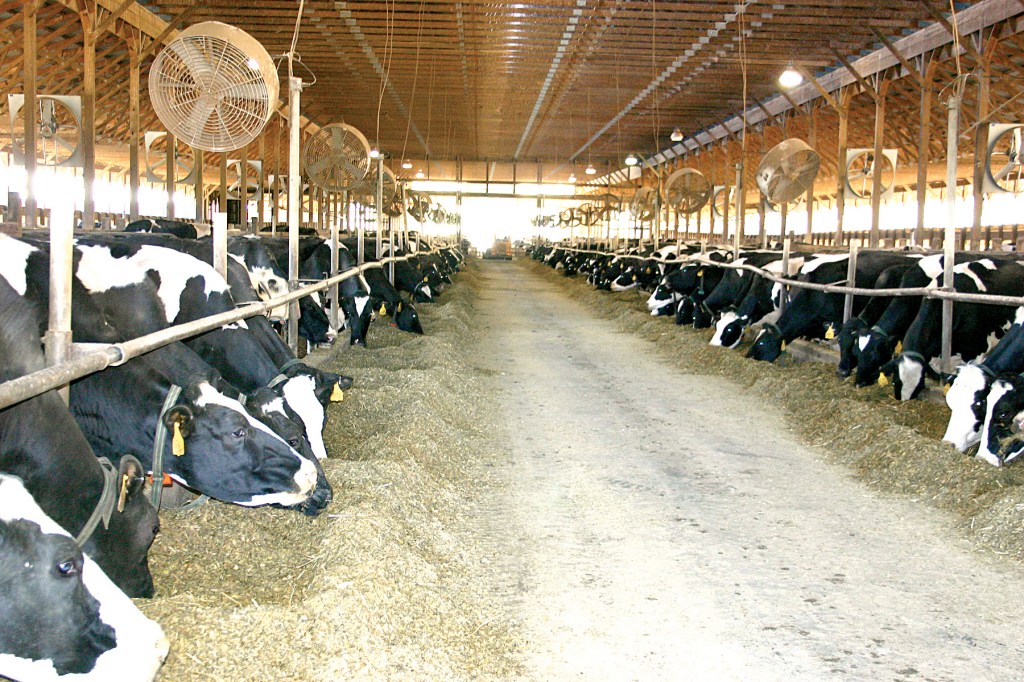
Three generations are involved in the award-winning 1000-cow dairy at Hoffman Farms in Potter County, Pa. The farm was founded by Dale and Carol Hoffman with 30 cows. Today their daughter Tricia and sons Keith, Brad, and Josh have transitioned into leadership and a third generation is also involved.


 Ag Moos