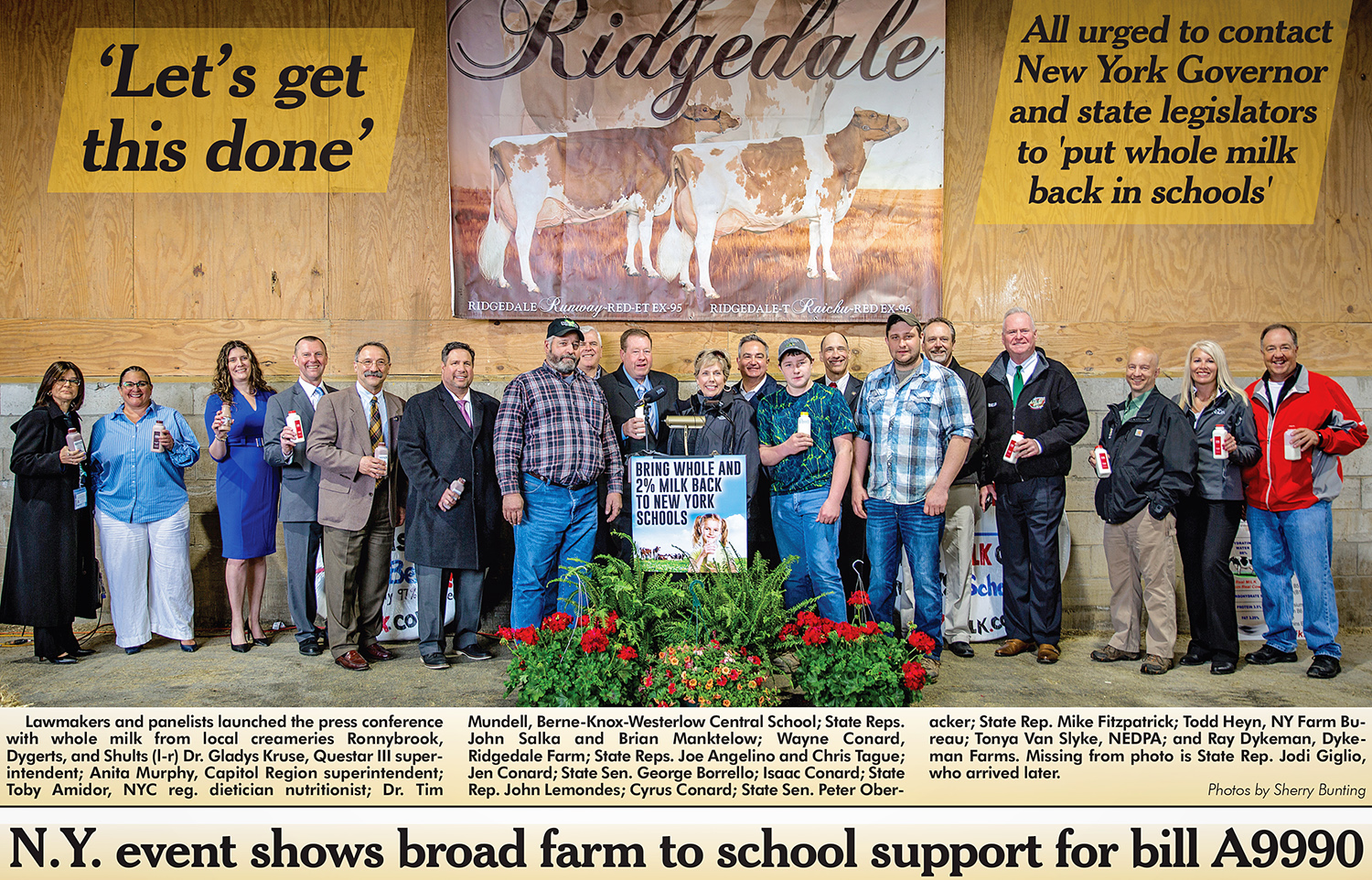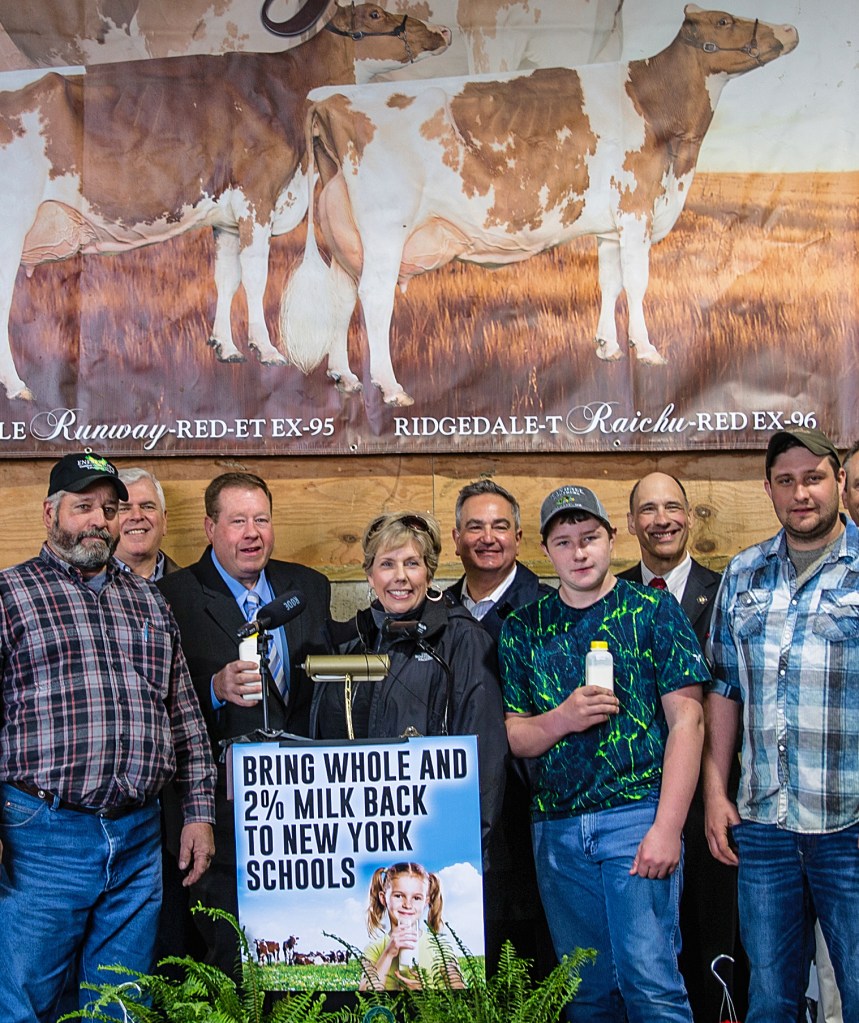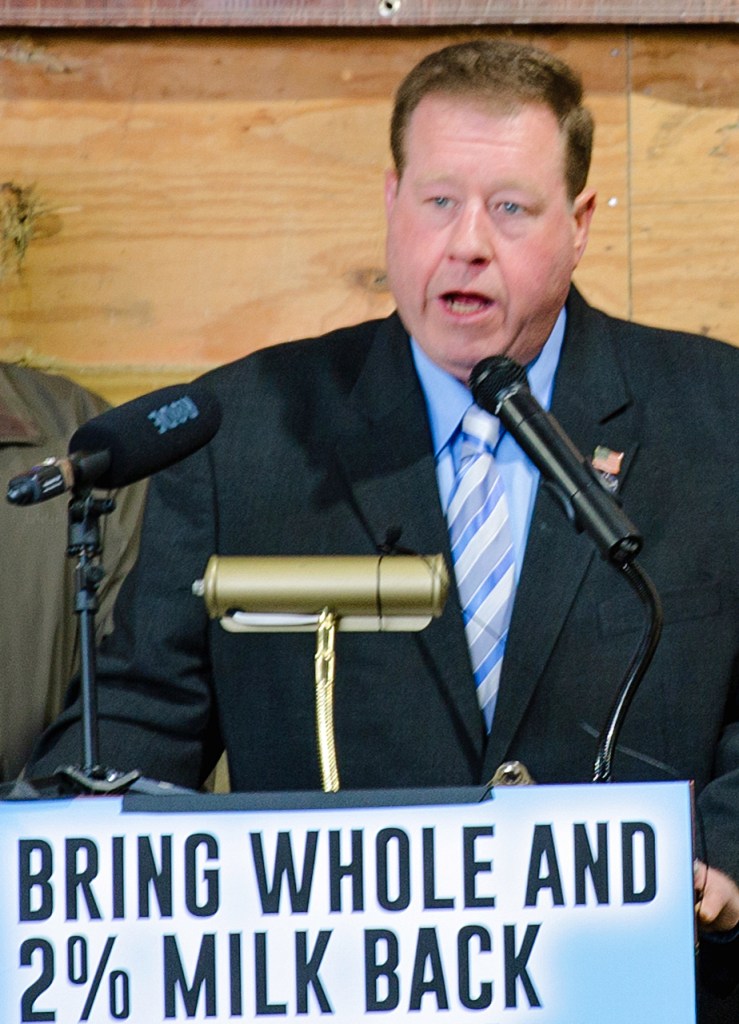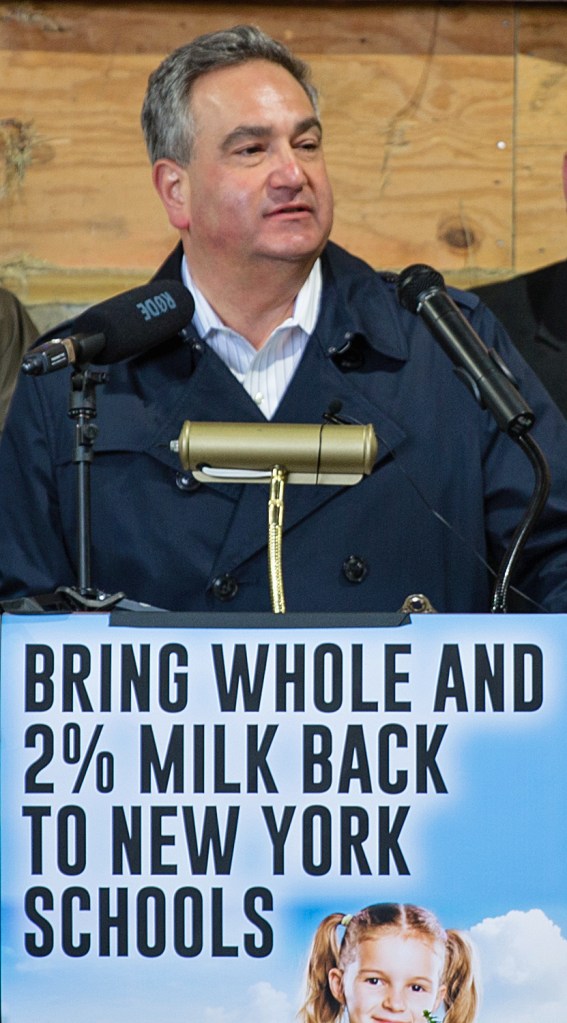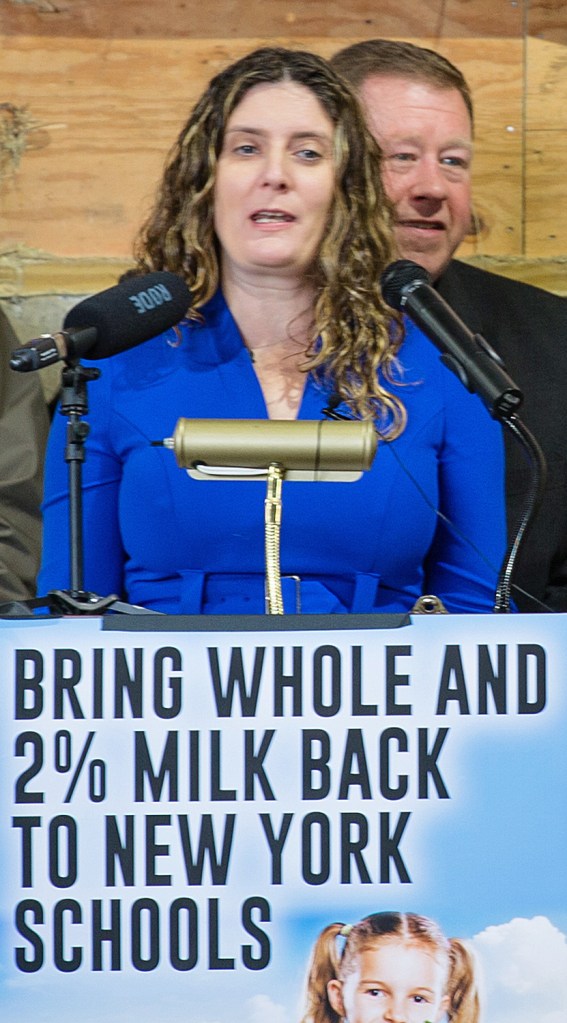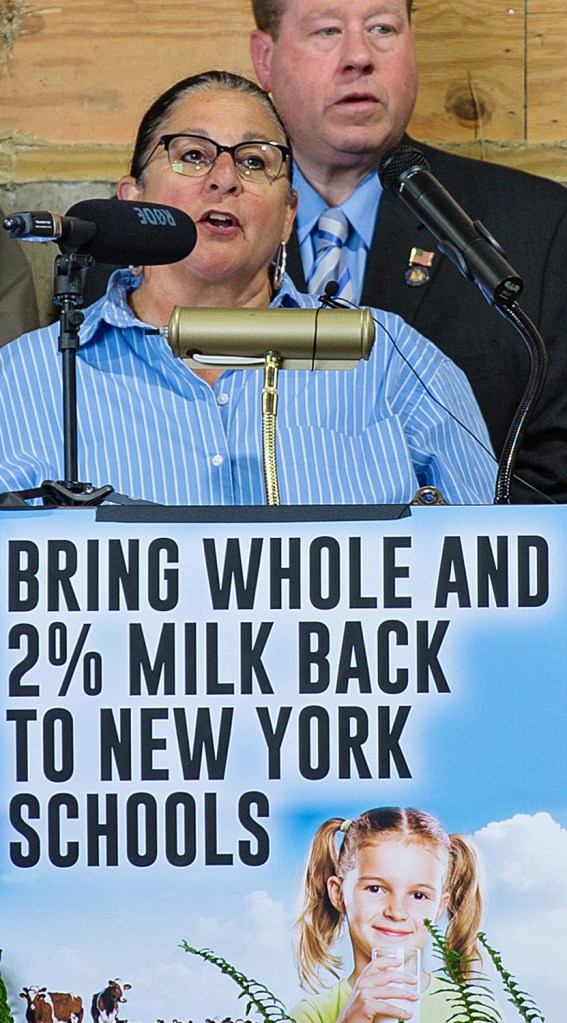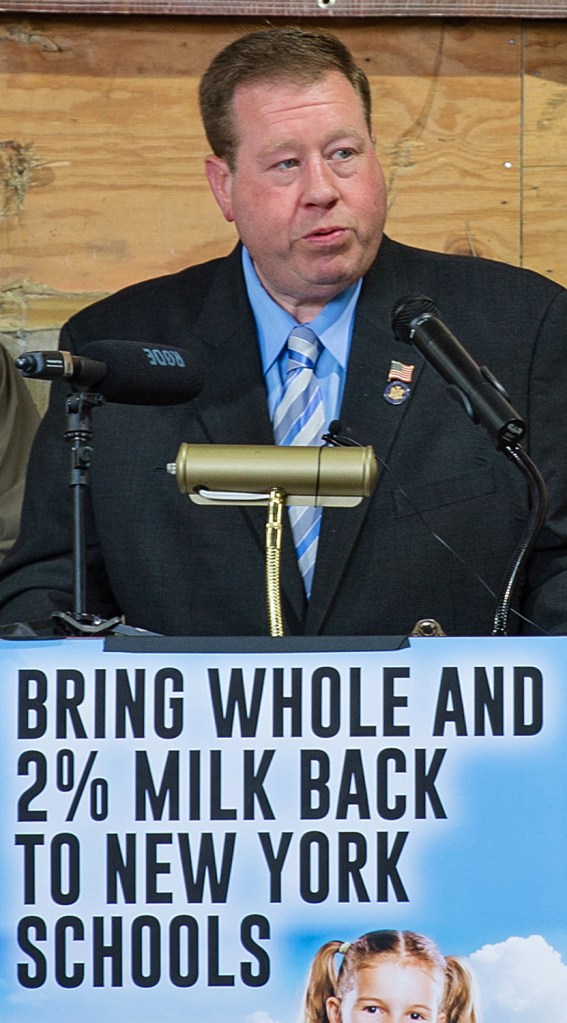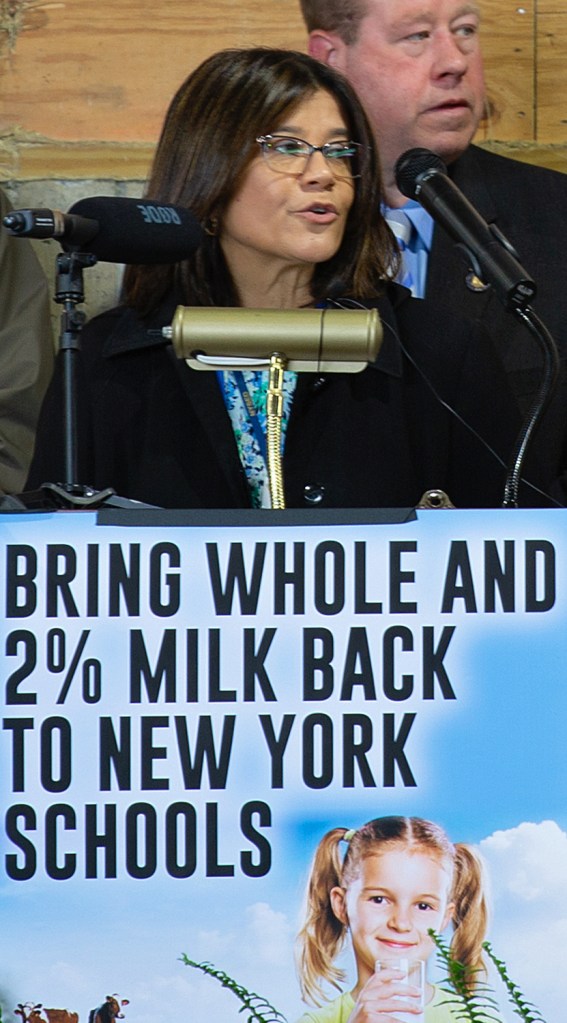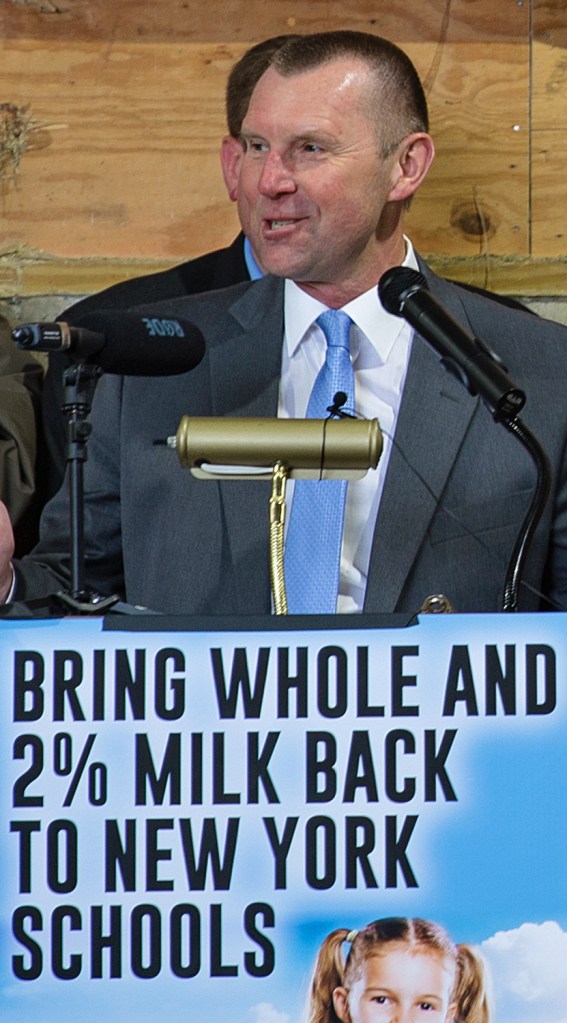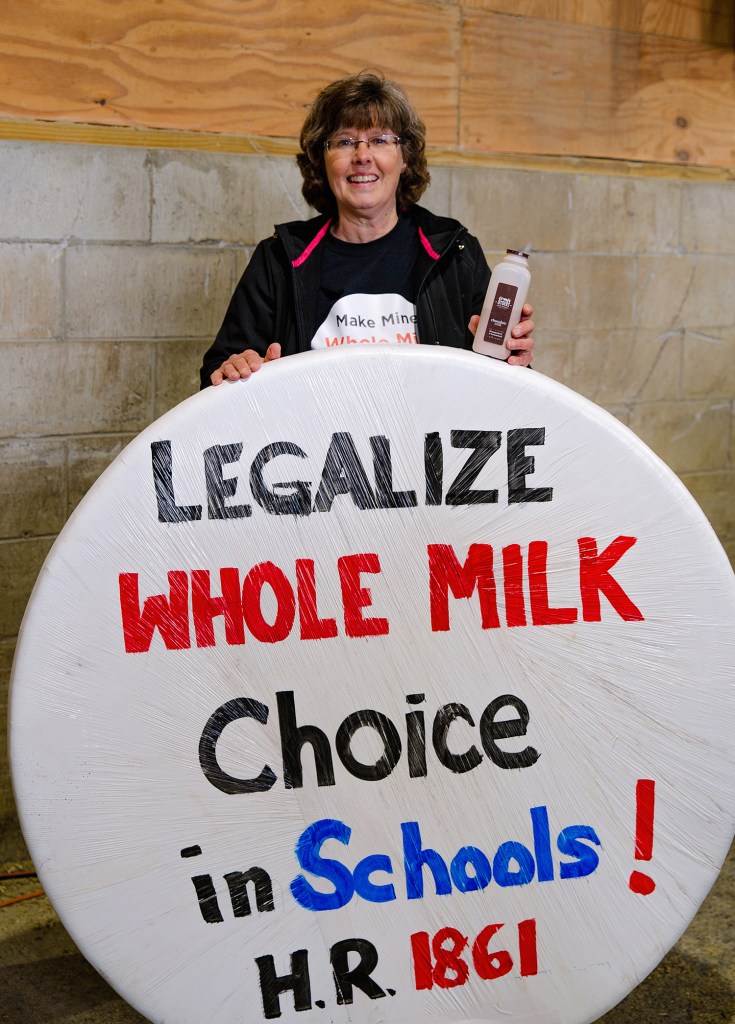
House passes Whole Milk for Healthy Kids 330-99!

Education Chair Virginia Foxx: ‘Let’s end the war on milk. Pass the bill!’

Ag Chair G.T. Thompson praised as champion who doesn’t give up

Bill mooves on to U.S. Senate

By Sherry Bunting, Farmshine, December 15, 2023

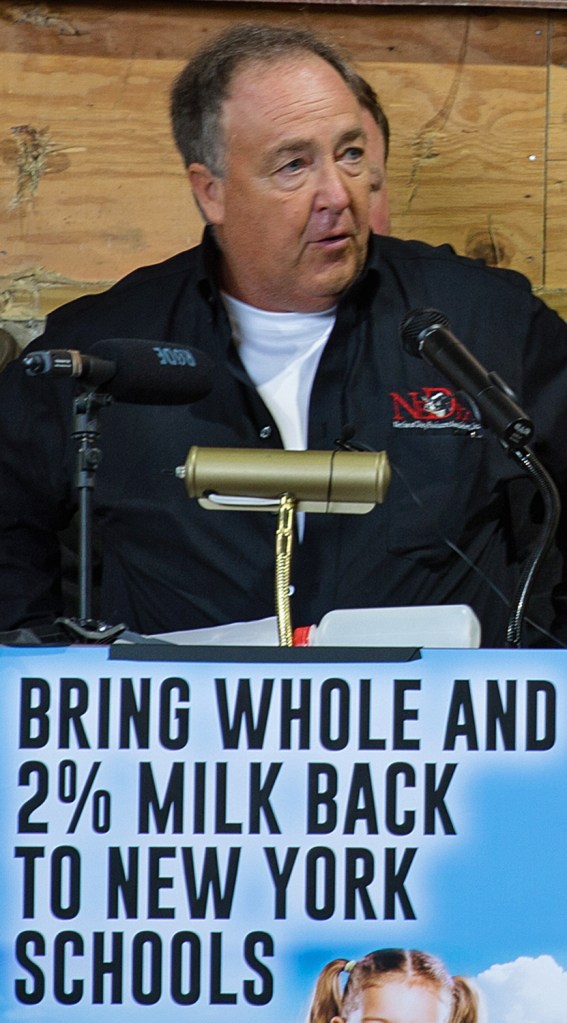
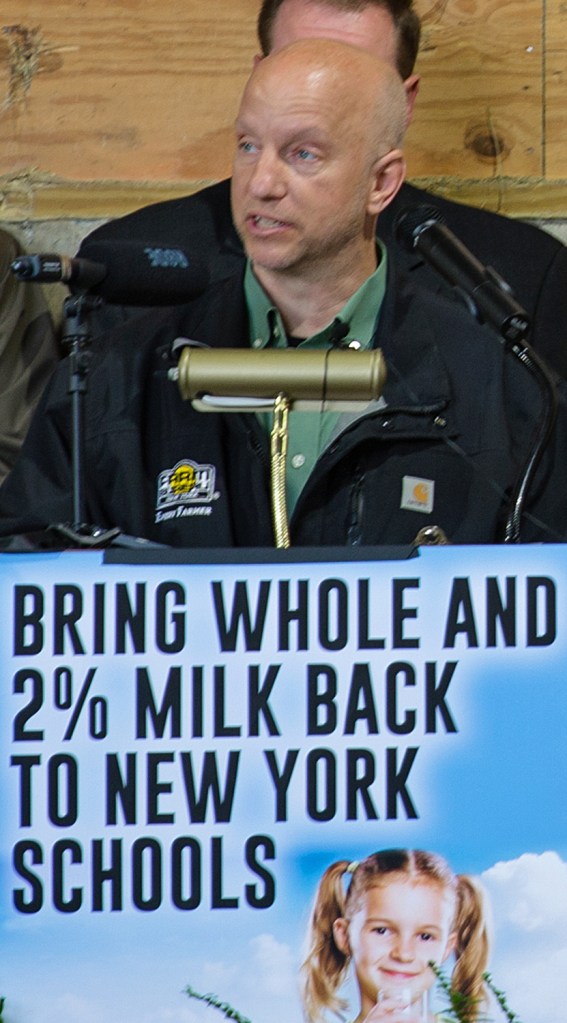
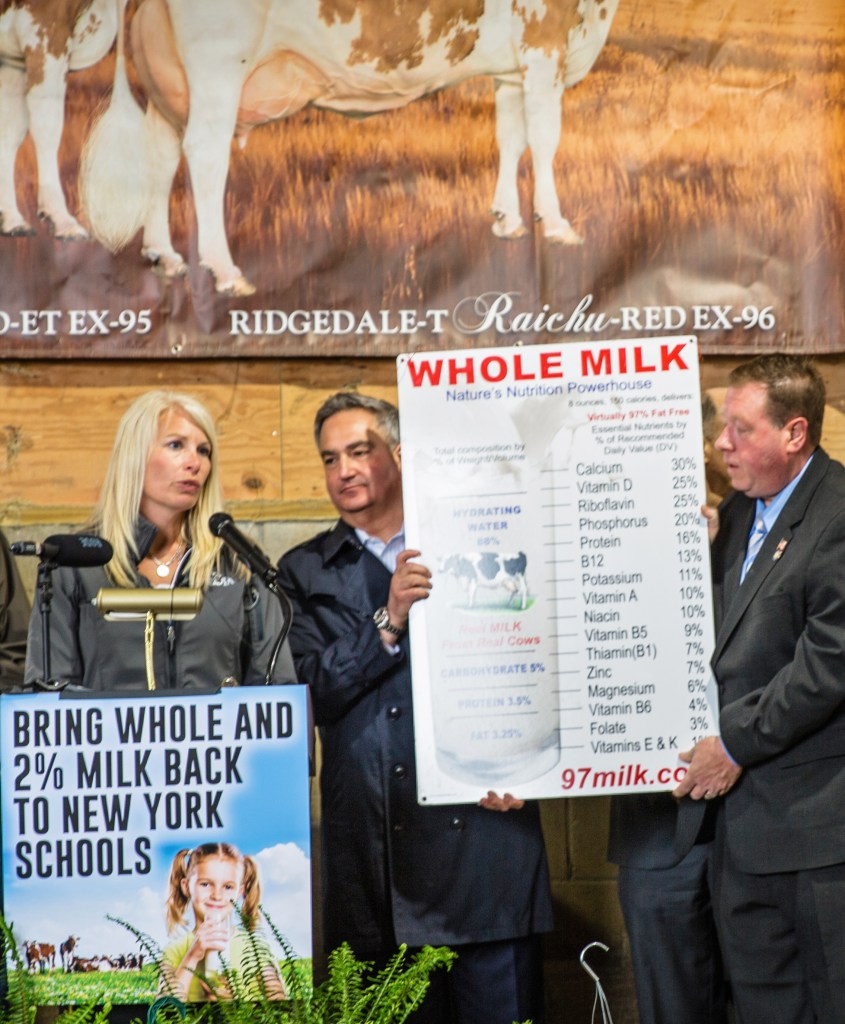
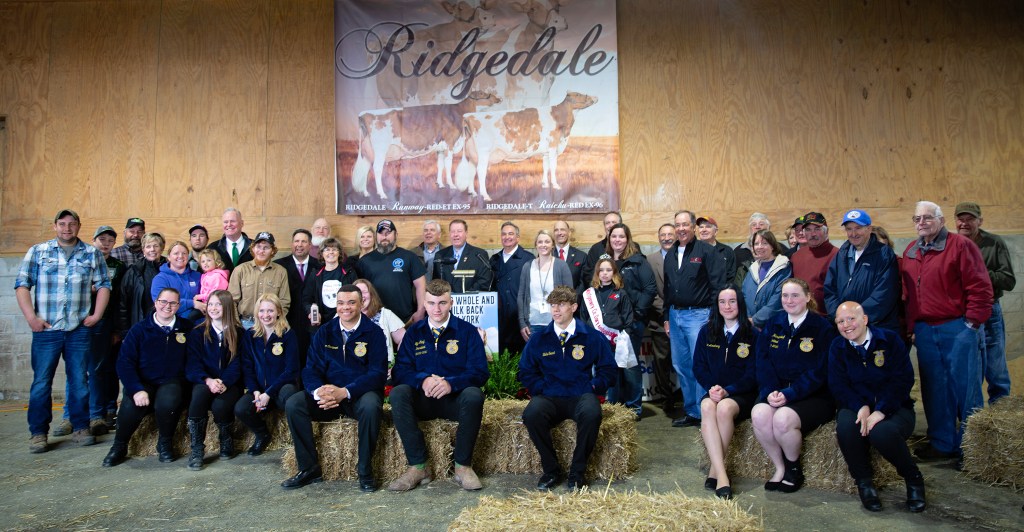
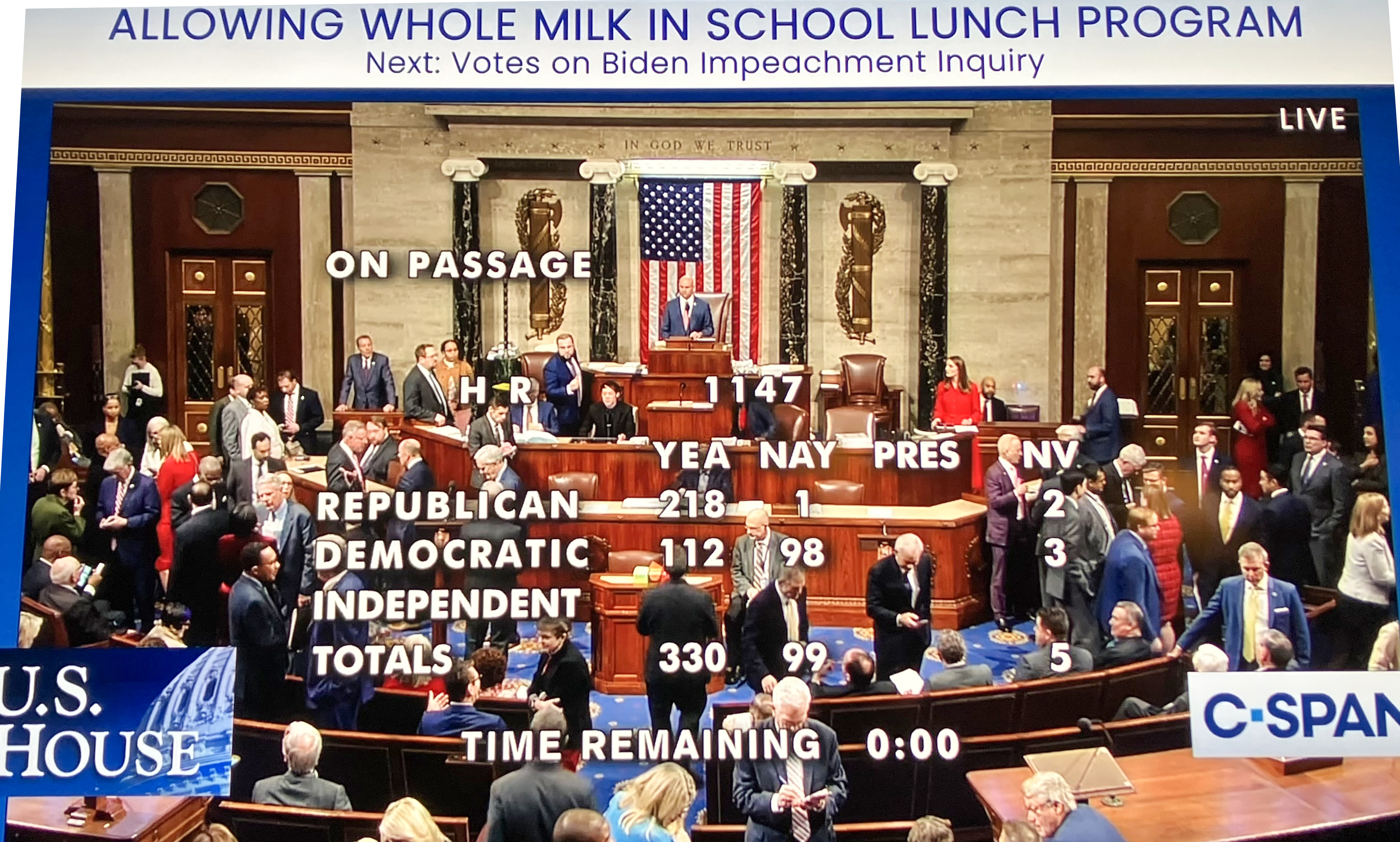
WASHINGTON — Wednesday, December 13th was a big day for dairy farmers and schoolchildren! After clearing the House Rules Committee Mon., Dec. 11, the Whole Milk for Healthy Kids Act, H.R. 1147, passed overwhelmingly in the U.S. House of Representatives.

The strong bipartisan 330 to 99 vote moves the choice of whole milk closer to school cafeterias across the nation with momentum for the next stop: the U.S. Senate, where S. 1957 has 12 bipartisan sponsors from 10 states – and more are needed.
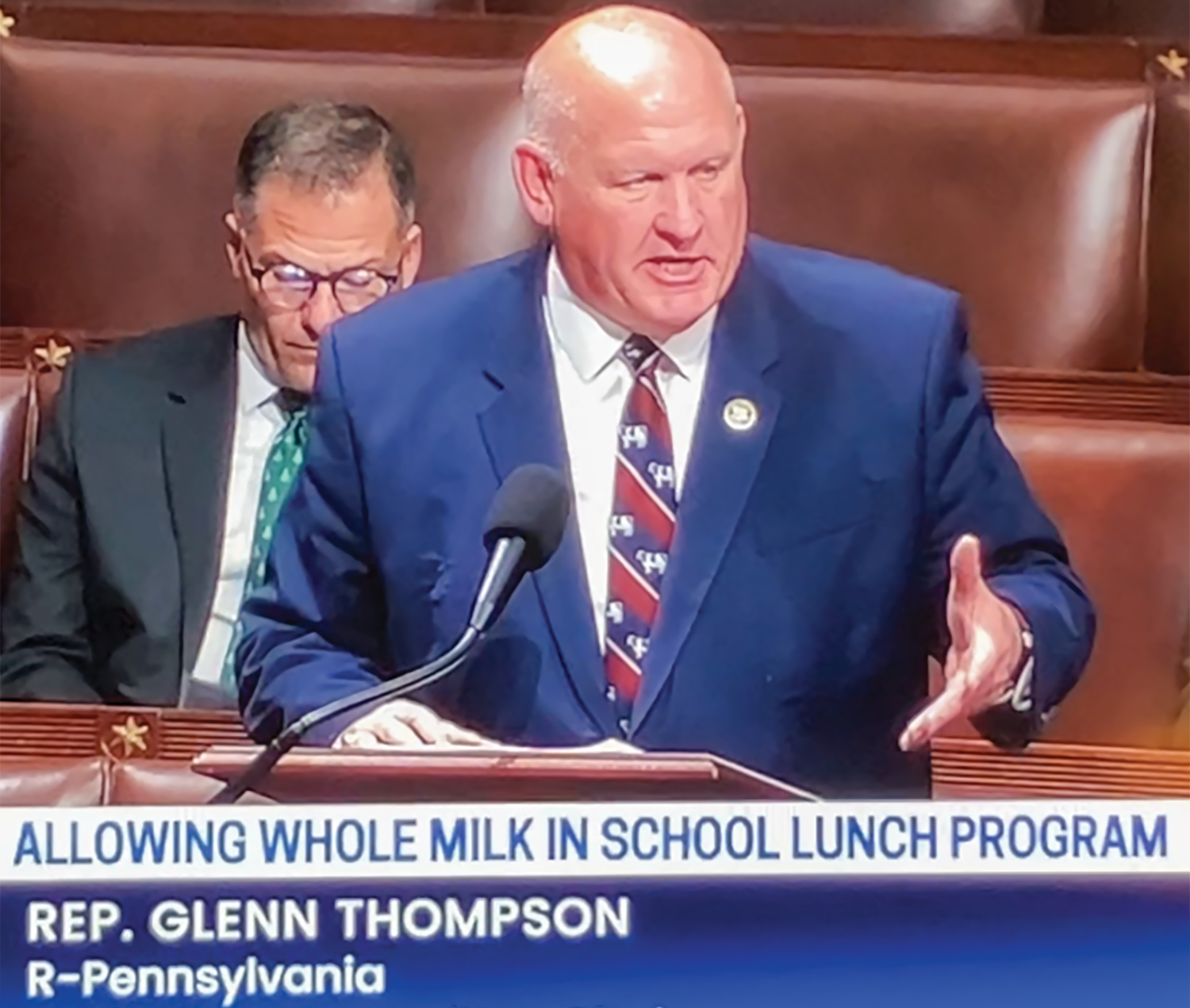
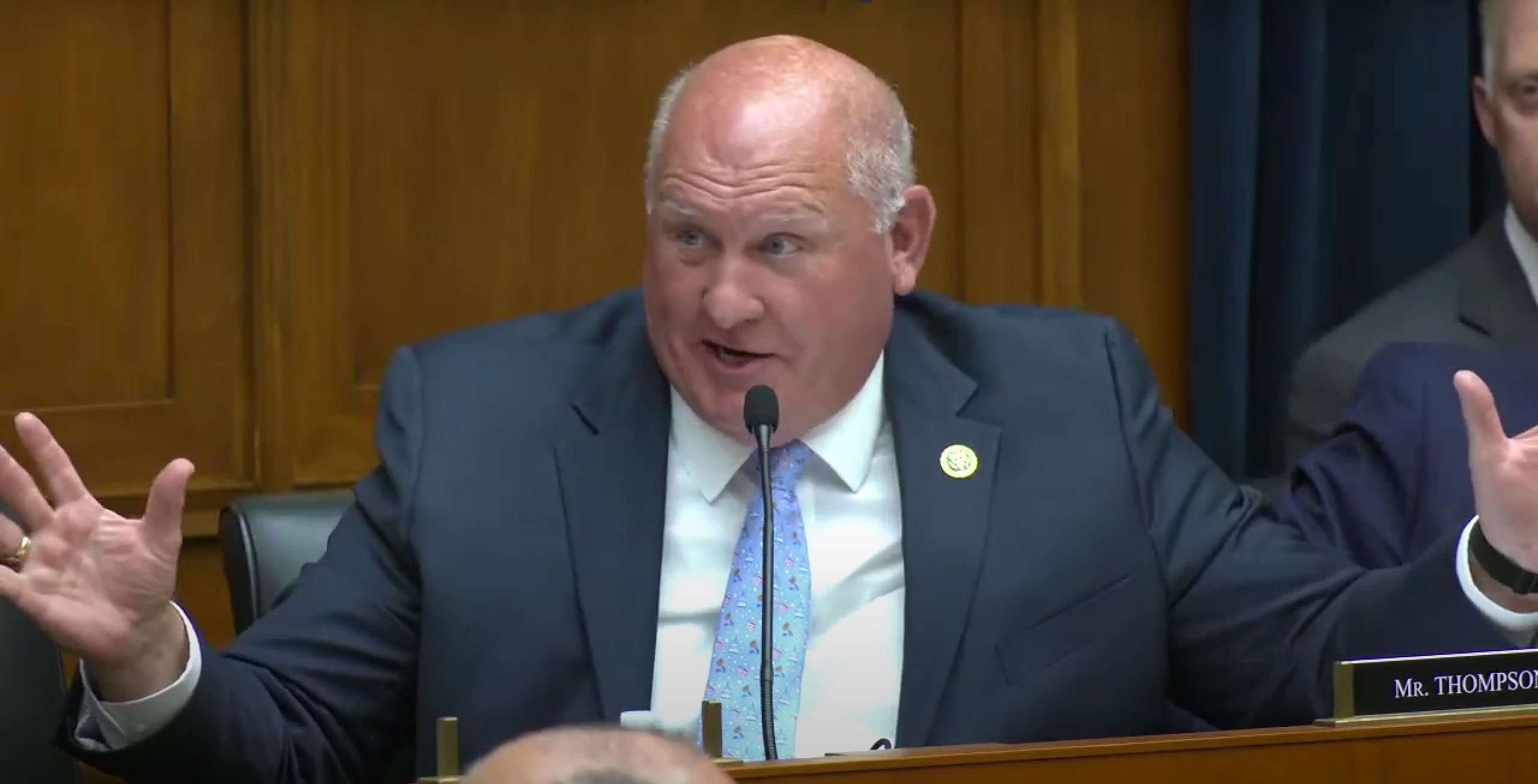
“Students across the nation deserve school lunches that are both enjoyable and nutritious, and this legislation achieves these goals,” said Whole Milk for Healthy Kids Act champion Glenn ‘G.T.’ Thompson (R-PA-15), Chairman of the House Agriculture Committee and senior member of the Education and Workforce Committee as he testified before the Rules Committee Monday.

“Milk is an essential building block for a well-rounded and balanced diet, offering 13 essential nutrients and numerous health benefits. However, outdated and out-of-touch federal regulations have imposed restrictions … Students are not able to access any of the milk’s essential nutrients if they won’t drink the milk being served to them. As we have seen over the last decade, there has been a steady decline in school milk consumption. This bill does not mandate anything. It gives schools, parents, and students the option of whole milk,” said Thompson.
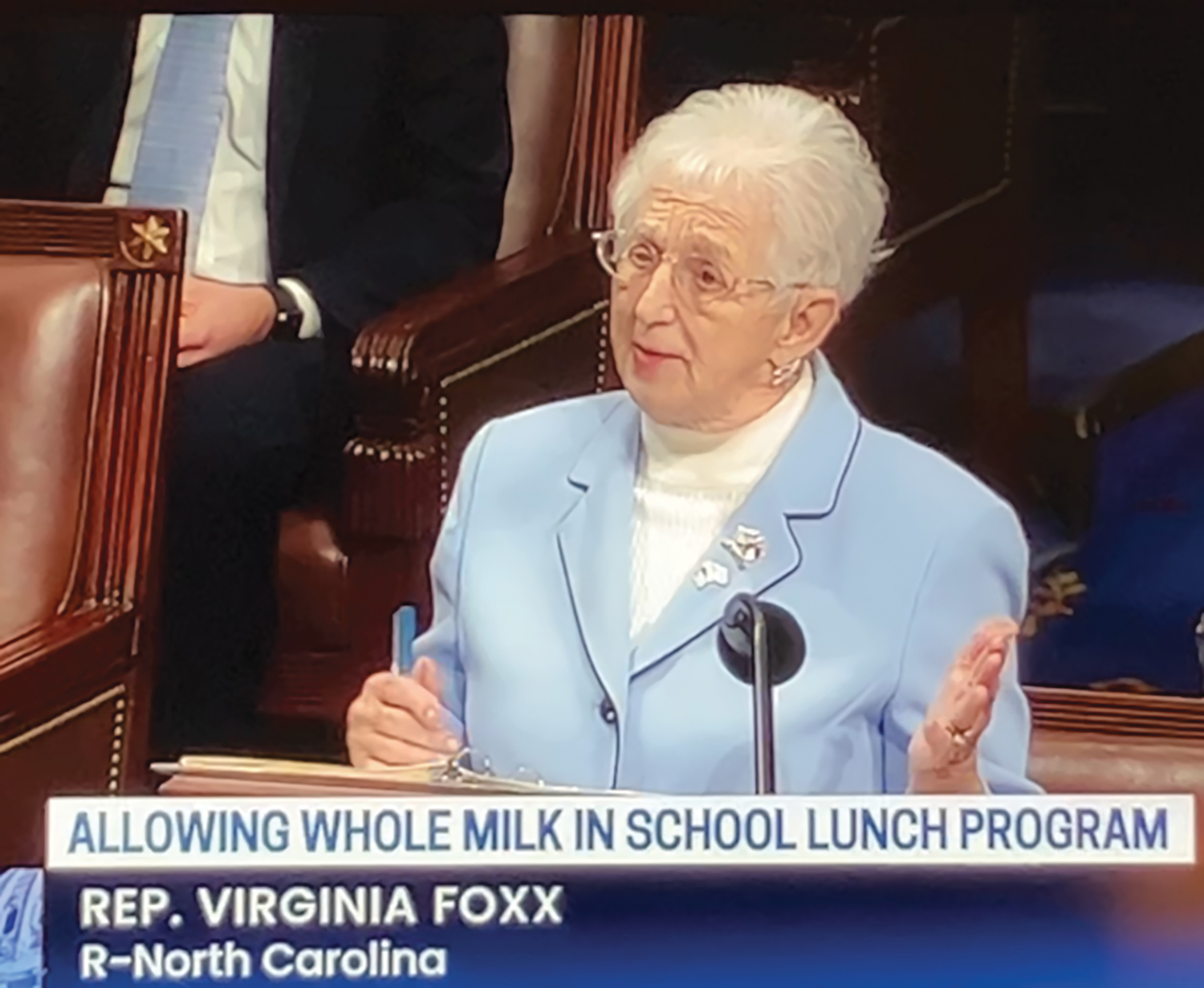
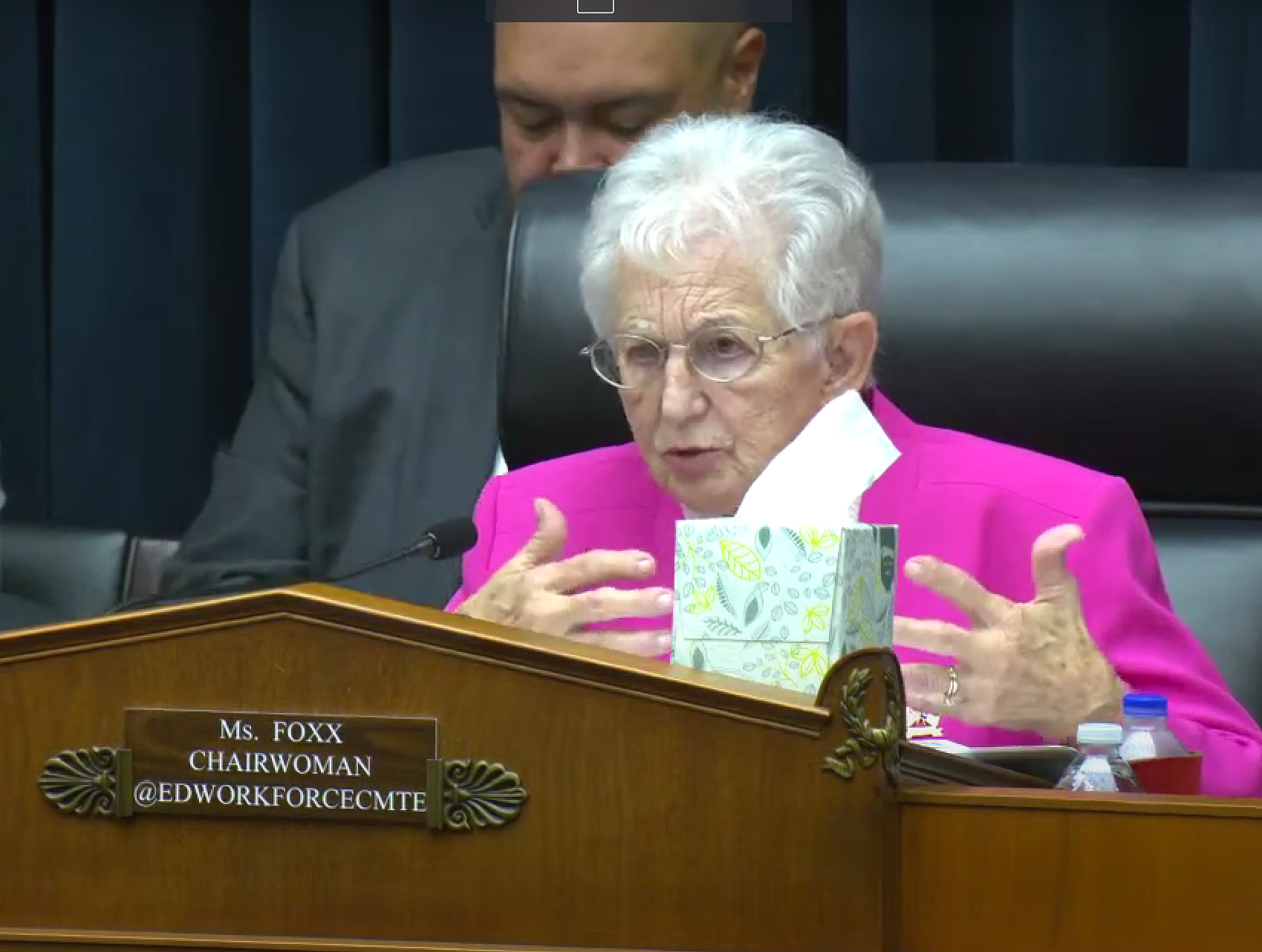
Education Committee Chairwoman Virginia Foxx (R-NC-5) was blunt on the House floor: “Whole milk isn’t just a beverage; it’s a vital source of nutrients essential for children’s growth. Denying access to its calcium, vitamin D, and protein threatens to inhibit their development. To the anti-milk advocates, I have one thing to ask of you: What do you have against milk? Let’s end this war on milk. Pass the bill!”

And they did. Resoundingly, the People’s House sent a strong message to the opposition that hung their hats on the flawed Dietary Guidelines for Americans (DGAs) as the end-all, be-all.

Education Committee Ranking Member Bobby Scott (D-VA-3rd) re-litigated his argument that was previously defeated in bipartisan Committee passage of H.R. 1147 in June. He kept referring to the DGAs. He insisted skim milk is the same as whole milk, nutritionally, but disregarded the roles of milkfat in key vitamin absorption and flavor to keep those nutrients from going down the drain.

Congress tied school meals closer to the DGAs in 2010, and the Obama-era USDA developed beverage rules in 2012 that banned whole milk — leading to the loss of a generation of milk drinkers and unprecedented increases in childhood obesity and diabetes — to the point where an April 2019 U.S. Senate hearing noted concern from U.S. military generals on fitness of recruits.

The Rules Committee asked why whole milk is being handled as a separate bill instead of within a Childhood Nutrition Reauthorization package. Thompson explained that the reauthorization has not occurred since the 2010 Healthy Hunger Free Kids Act created the issue.

“There is widespread bipartisan support in the Education and Workforce Committee, on the beverage part of this, milk in particular, because studies have shown the BMIs have gone up from what was a baseline prior to removing whole milk. Part of the urgency here is the significant impact that has had on the health of our youths,” he said.

Thompson cited the case study analysis of annual body mass index (BMI) data aggregated by Christine Ebersole RN, BSN, CSN, a school nurse from Martinsburg, Pennsylvania. She shared her data on 7th to 12th graders in a 97 Milk / Grassroots Pennsylvania Dairy Advisory Committee education session in Washington in June 2023 and in a State Senate hearing in Harrisburg in 2021

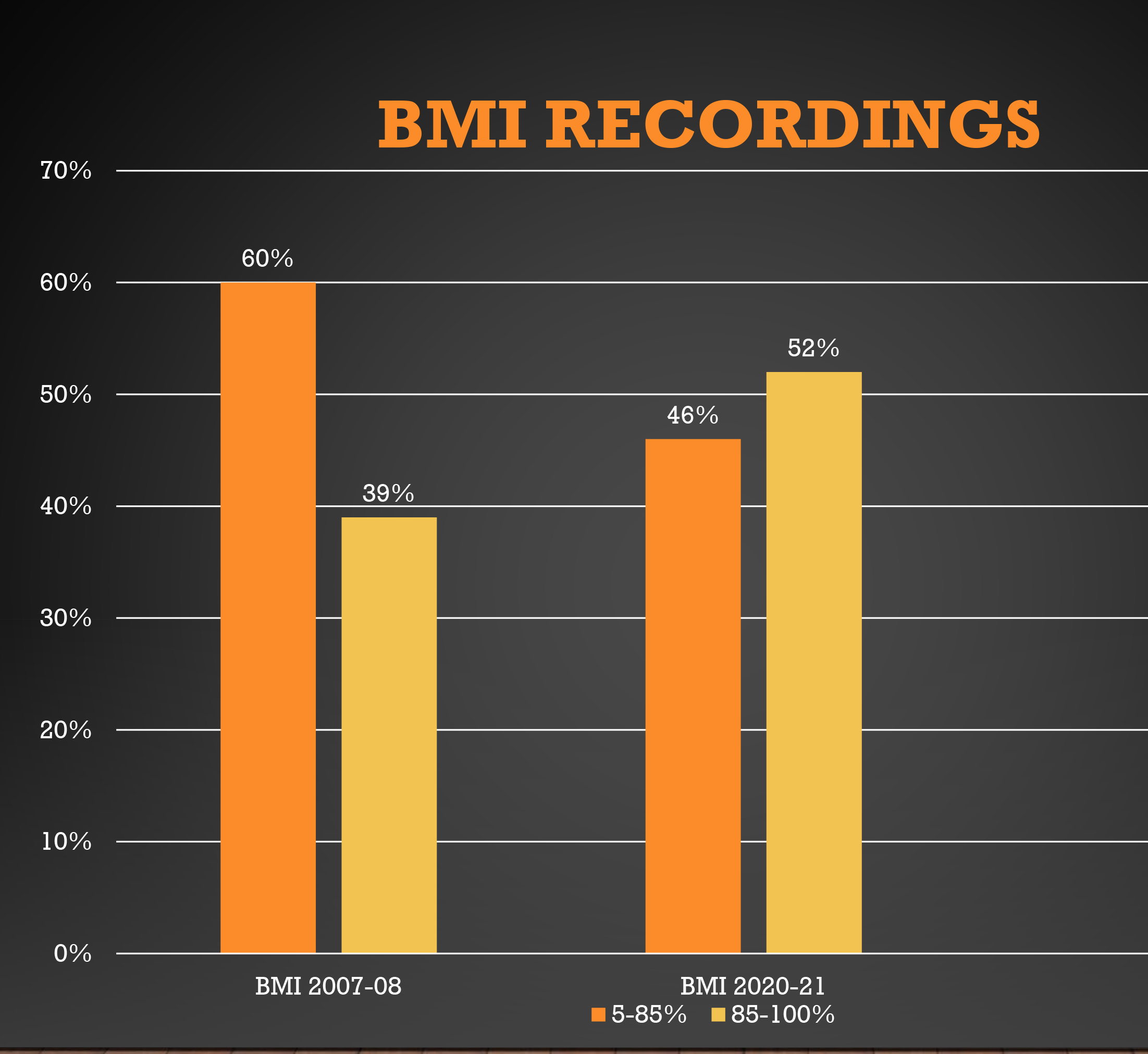
Her data showed the percentage of students in the overweight and obese categories, combined, grew from 39% in 2008 to 52% in 2021. This mirrors national trends demonstrating the anti-milkfat approach has not helped and may have harmed. The trends in fact have worsened ever since DGAs were created to infiltrate institutional feeding programs.

According to the latest National Survey of Children’s Health at the CDC website, the percentage of 10- to 17-year-olds with BMI in the obese category, alone, increased nationally from 15.4% in 2006 to 19.7% in 2018. In 1970 to 1980, it was 5%. This doubled eight years after the DGAs were born to 10% in 1988, then rose to 15.4% by 2006 after six years of USDA school lunch saturated fat caps were implemented, then stabilized at just over 15% from 2008 to 2012, then grew to 19.7% by 2018 — six years into the USDA ban on whole milk in schools.

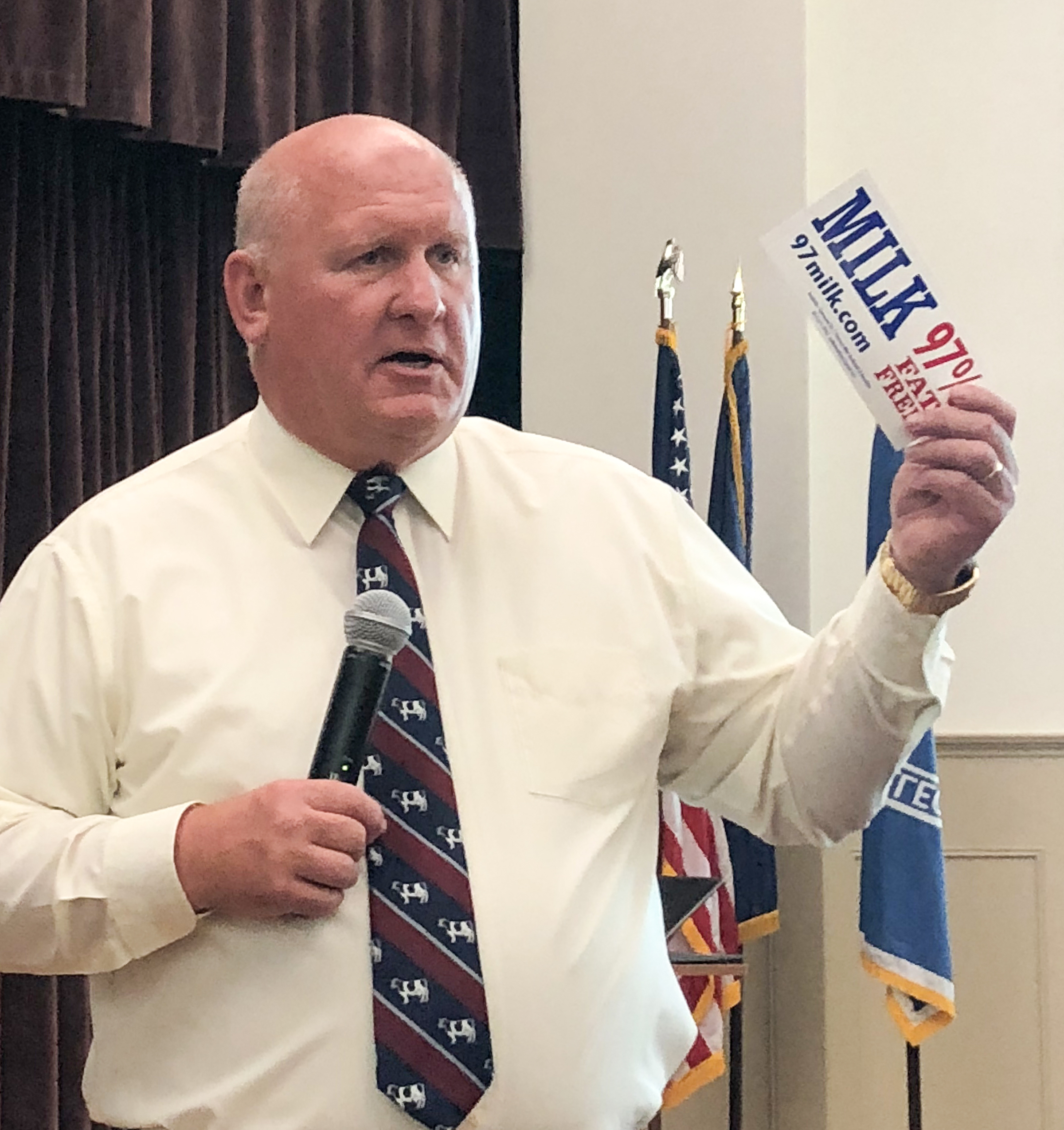
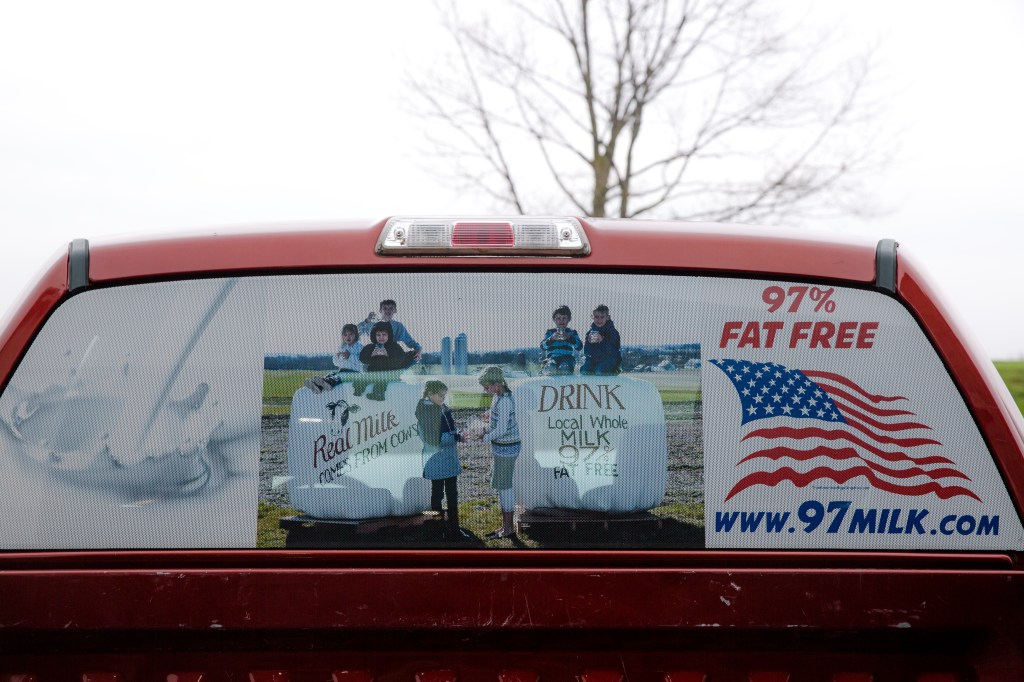
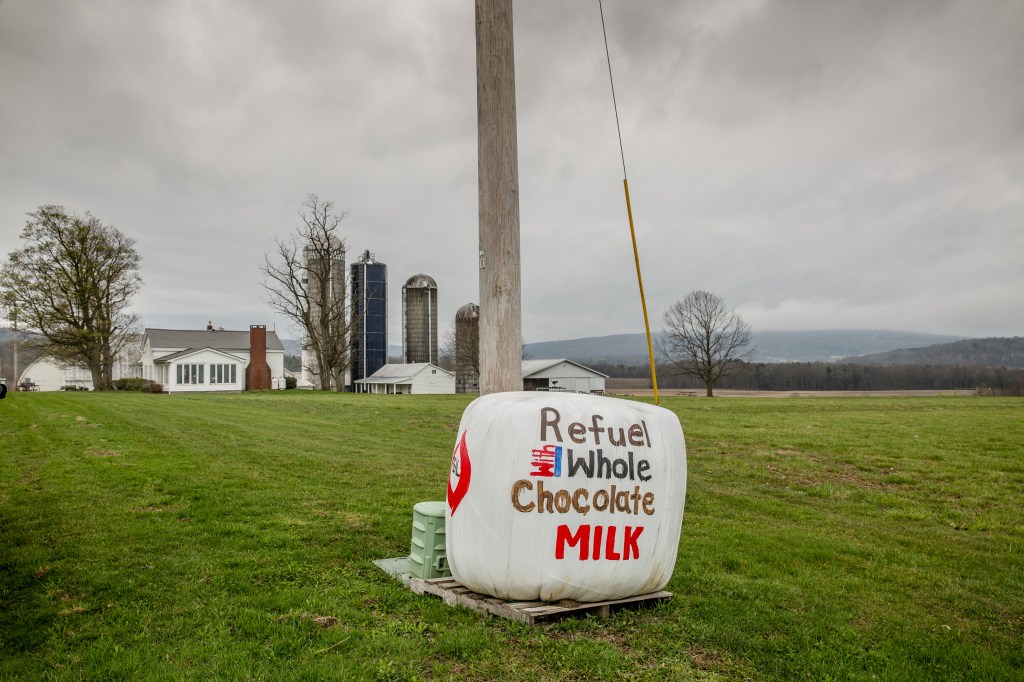
The big milestone for whole milk in schools comes on the 5-year anniversary of Berks County, Pennsylvania dairyman Nelson Troutman placing his first painted roundbale “Drink Whole Milk (virtually) 97% Fat Free” in a pasture by a crossroads, which led to questions, publicity, and the creation of 97 Milk.

The 97 Milk educational organization has worked alongside the Grassroots Pennsylvania Dairy Advisory Committee on the legislative side. As a team, they continue to lead the charge for children to have the choice of whole milk once again at school. They are pleased to have worked with the Nutrition Coalition, founded by Nina Teicholz, author of Big Fat Surprise, and to see other national dairy and farm organizations join in support in recent years — from the American Dairy Coalition and Farm Bureau to National Milk Producers Federation and International Dairy Foods Association.

“We are grateful for this bill’s champion, the honorable G.T. Thompson. We thank him for not giving up,” said 97 Milk Baleboard originator Nelson Troutman in a Farmshine phone interview about the bill. “So many legislators get pounded from the top down, and they give up… and really, G.T. didn’t have a lot to gain out of this except helping the people. He did this for the kids, for the people, for the farmers. This is not a mandate. This is a choice, and I cannot emphasize the word choice enough.”

“The reason we got here is G.T.’s dedication to children having nutritious and delicious milk choices, and he brought it to the finish line in the House,” said Bernie Morrissey, chairman of the Grassroots PA Dairy Advisory Committee. “We have to keep working on the Senate, and 97 Milk has been a major part of educating people about this choice kids will have when the Whole Milk for Healthy Kids Act becomes law. The people on our grassroots committee and 97 Milk – we are a team. Our teams help each other. When you have a great team and teamwork, that’s how things get done.”

“This is a strong step in the right direction, and we have to keep going to our total destination,” said G.N. Hursh, Lancaster County, Pa. dairy farmer and chairman of 97 Milk. “We at 97 Milk totally support this bill. Whole milk choice in schools is clearly a national improvement for our future leaders. This is a win for good taste and excellent nutrition!”

Dale Hoffman and his daughter Tricia Adams, also members of the Grassroots Pennsylvania Dairy Advisory Committee expressed their gratitude. Three generations operate Hoffman Farms in Potter County, Pa.

“G.T. has really fought for this and put a lot of work into this. We appreciate what he has done in helping out the kids and the farmers,” said Dale in a phone interview. “When you look at the health situation, the trends have gone the other way without whole milk in the schools. Kids are dumping the milk, and you can’t blame them. They need those nutrients physically and mentally. Milk is one of nature’s most perfect foods. We produce it and grew up with it. Children should be able to choose it.”

Grassroots committee member Krista Byler, of Spartansburg, Pa. is a Union City school foodservice director and head chef. She said the Whole Milk for Healthy Kids Act “is huge for me because I have seen this from the startup, and I finally seeing movement in the school nutrition organizations. I see the whole picture coming together. I am amazed to see it reach this point that now students are much closer to having a milk choice that meets their nutritional needs,” she said.

Byler notes that the milk carton shortage affecting school districts this year has been a catalyst for support among her peers for the expansion of choices in milkfat levels.

“It’s sad to say, but as we struggle on the milk carton shortage, it forces people in my position to think outside the box and look at alternative service methods,” said Byler. “We are seeing students asking for other milkfat options, such as whole milk.”

She says she sees more of her peers today are excited about this bill and how it is worded in a way that makes it possible for them, as school foodservice directors, to implement — to actually offer whole milk as an option for students and not be financially penalized by the federal government for exceeding arbitrary and outdated fat percentages on the meal.

“I’m excited to be closer to having this choice to meet students’ needs in a way that is nutritious and that they find delicious. My students will be so excited,” said Byler. “When it becomes law, it will be a huge win for kids everywhere, and our waste will certainly go down.”

Look for more in Farmshine about this milestone, what’s next, and the three amendments that were offered and approved along with the bill. They are: 1) allowing school milk to be either organic or non-organic, 2) preventing school milk from Chinese state-owned enterprises, and 3) prohibiting USDA from doing its proposed elementary school ban on flavored milk.
Editorial: Momentum builds for whole milk in schools

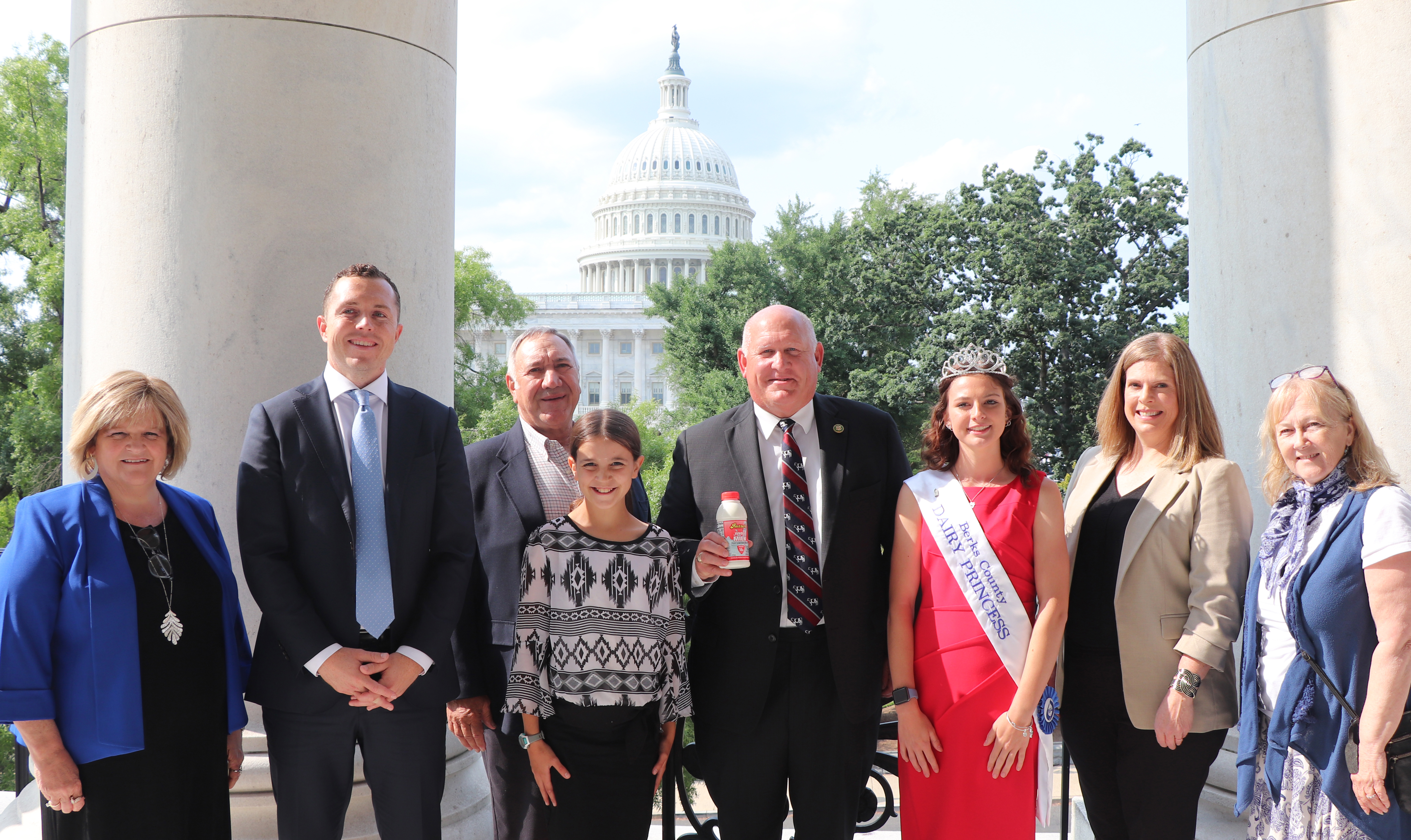
Standing with U.S. House Ag Committee Chairman, Glenn ‘G.T.’ Thompson are some of the volunteers who participated in the legislative staff briefing on G.T’s Whole Milk for Healthy Kids Act, including a June Dairy Month celebratory Whole Milk Bar at the Capitol in Washington on Tuesday, June 13. Congressman G.T. says he wants to reach 150 to 200 cosponsors before it comes to the House floor for a vote. Currently, there are 128 cosponsors representing 43 states (103 R’s and 25 D’s), and the Education and Workforce Committee recently passed H.R. 1147 in a bipartisan 26-13 vote. From left are Christine Ebersole, a school nurse in Blair County, Pa.; John Bates, executive director of The Nutrition Coalition; Nelson Troutman, a Berks County dairy farmer and 97 Milk Baleboard originator and his granddaughter Madalyn, the 2022-23 Lebanon County, Pa. Dairy Maid; Congressman G.T. Thompson (R-PA-15), the champion and prime sponsor of the Whole Milk for Healthy Kids Act; Sara Haag, the 2023-24 Berks County Dairy Princess; Krista Byler, a school foodservice director in Crawford County, Pa.; Sherry Bunting, Farmshine contributor and volunteer advocate for whole milk in schools. Photo credit: Maddison Stone

By Sherry Bunting, Farmshine, June 16, 2023 with June 23 update

WASHINGTON – “Wouldn’t it be great if we could unite the country with whole milk?” That question was posed by a fellow journalist in the Southeast, Julie Walker of Agrivoice, as I was updating her about the grassroots effort to bring milk education and the choice of whole milk to schools.

After the events of the past two weeks, my answer to that question is: Yes, I believe we can and we are… seeing the fruits of the labor of grassroots volunteers.

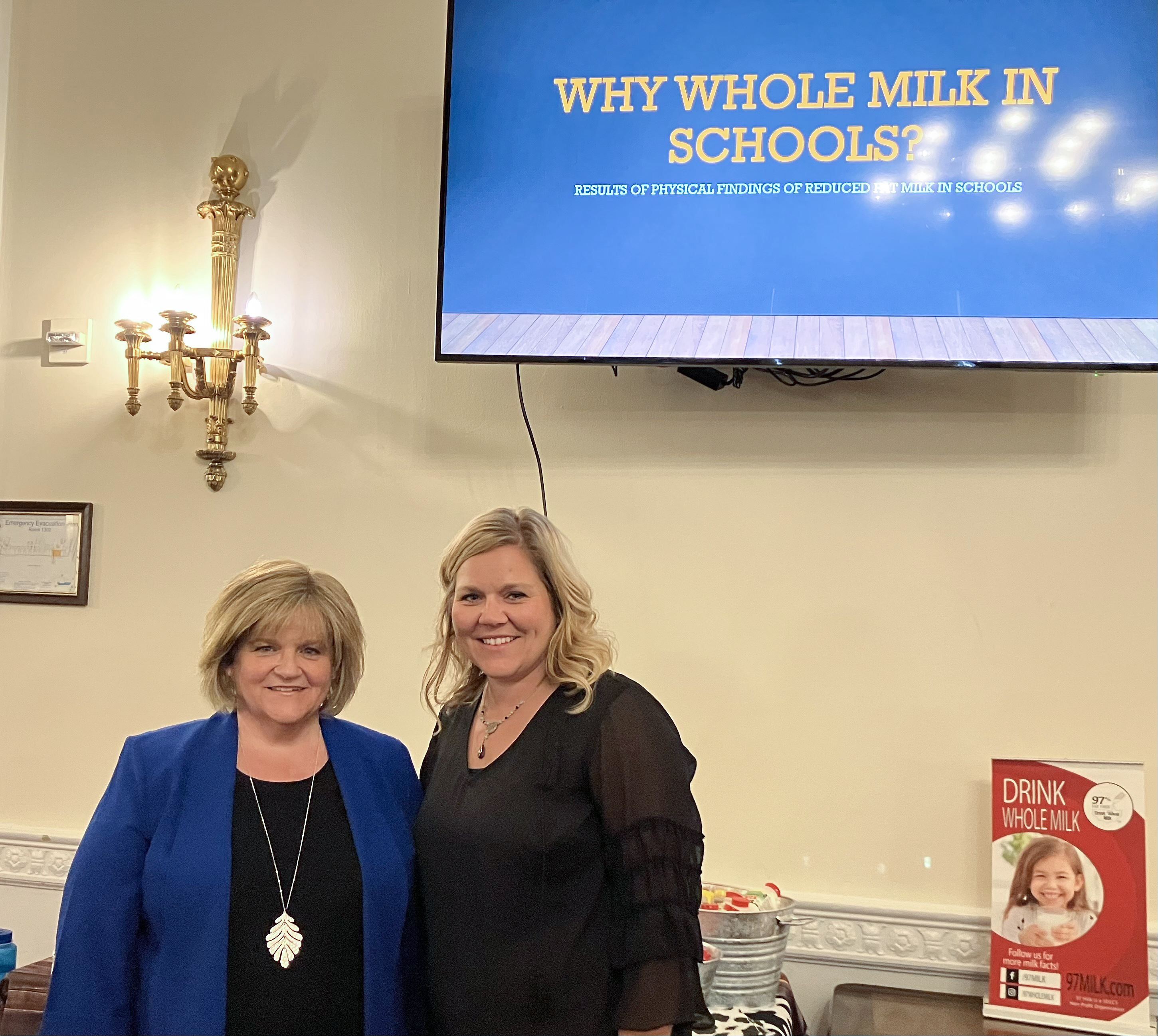
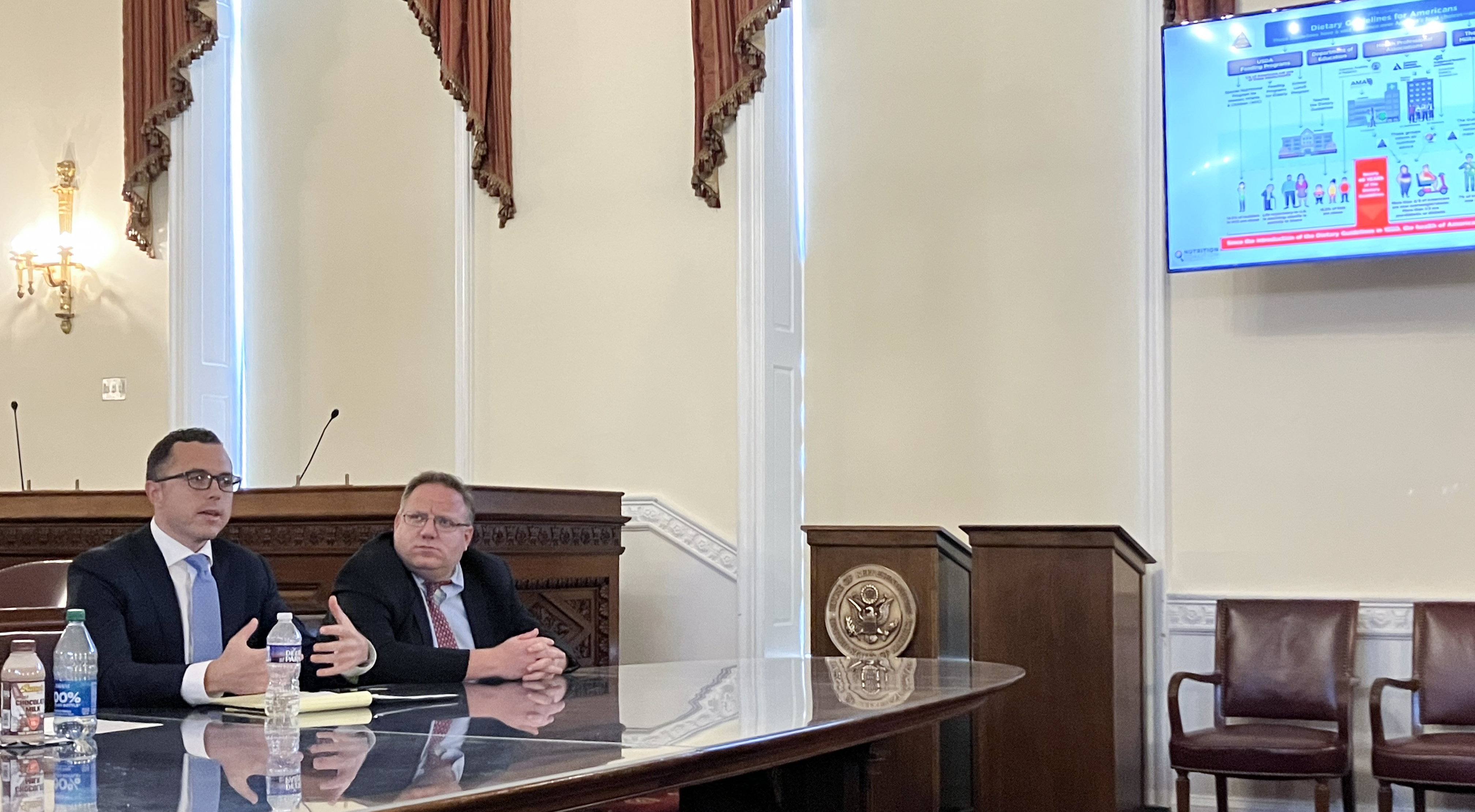
On Tuesday, June 13, the Grassroots Pennsylvania Dairy Advisory Committee and 97 Milk were part of a legislative staff briefing hosted by Congressman G.T. Thompson and his staff at the Longworth House office building on Capitol Hill in Washington. This had been planned weeks earlier, before Thompson’s bill – the Whole Milk for Healthy Kids Act, H.R. 1147 – passed the Education and Workforce Committee on June 6 in a bipartisan 26-13 vote.

This week, the identical bipartisan Senate companion bill was introduced on June 13 by prime sponsor Senator Roger Marshall, a Republican and medical doctor from Kansas and prime cosponsor Peter Welch, a Democrat from Vermont along with other bipartisan cosponsors.

Allow me to take you behind the scenes of the June 13 legislative staff briefing on Congressman Thompson’s House bill and why it gives me hope to see people rediscovering and uniting behind the effort to legalize whole milk in schools so children have true access to the most wholesome nutritional beverage, milk.

What becomes apparent is that children are not benefiting from milk’s nutrition when their choices at school are restricted to fat free and low fat. They should be able to choose whole milk and 2% milk that are currently banned by federal nutrition standards, and they should be able to continue to choose flavored milk, which USDA is considering restricting to only high school students.

“Milkfat was demonized as a part of the child nutrition standards, especially since 2010… and we’ve seen a lot of waste and unopened milk cartons at school cafeterias because (fat-free/low-fat milk) is not a great milk experience for kids. Meanwhile, we’ve seen a significant increase in childhood obesity. If they don’t have access to milk they like, they will drink something, and the alternatives won’t give them milk’s essential nutrients or be as satisfying,” said Rep. Thompson. “Everything has its own time, and I’m pleased that we’ve gotten to this point with the bill and appreciate the panel here today to share and answer the question: ‘Why whole milk in schools?’”

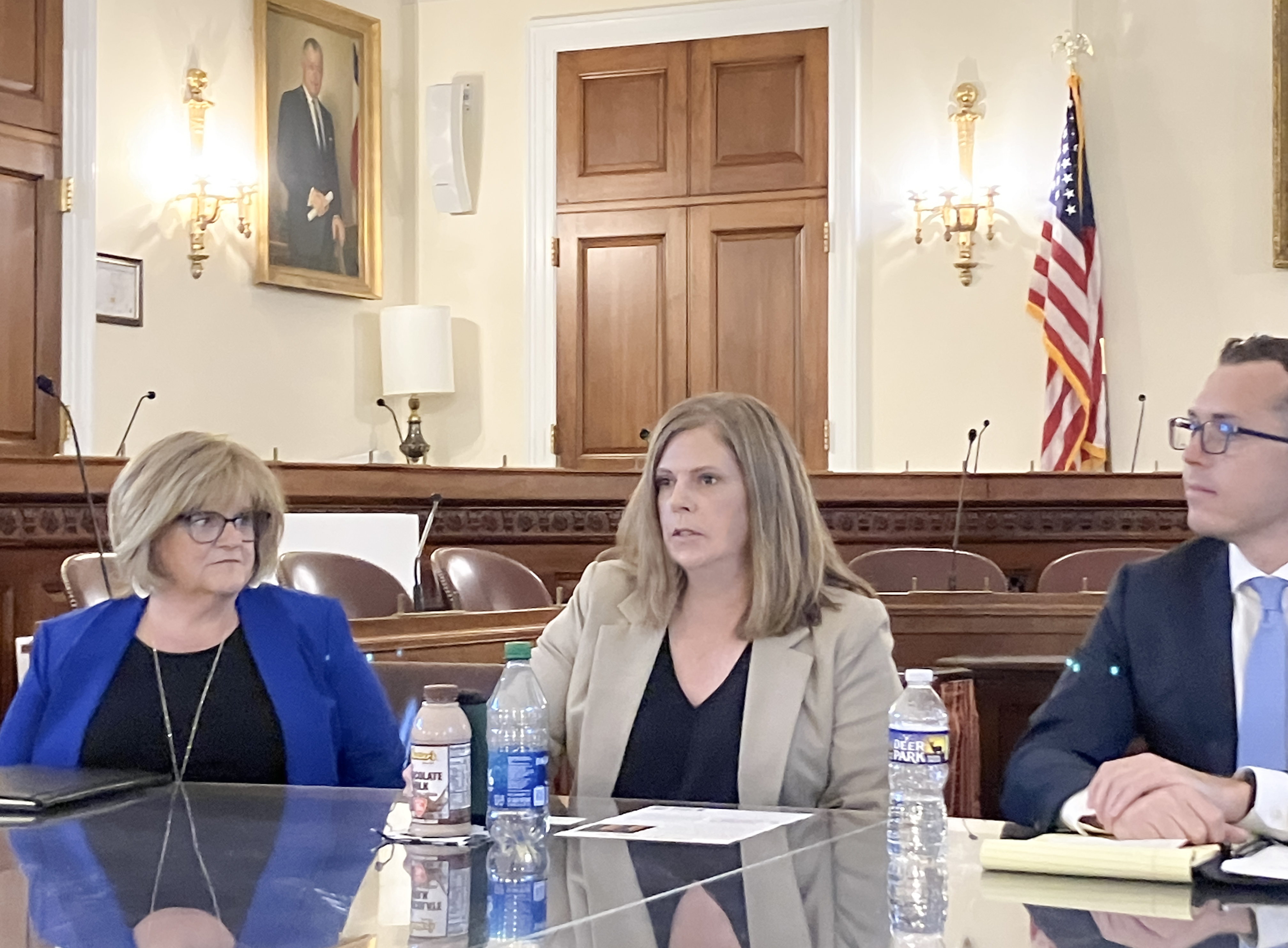
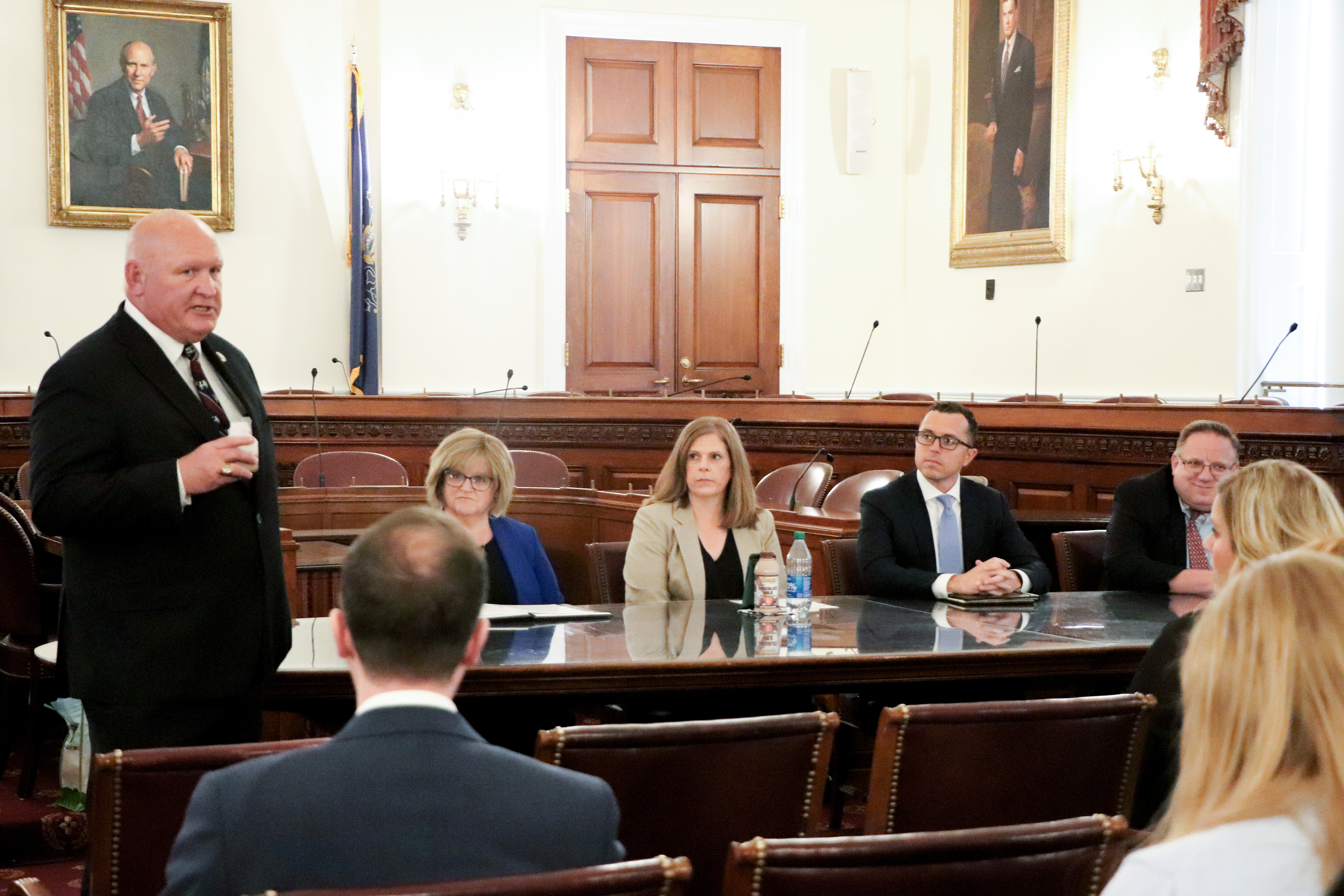
Two school professionals from the grassroots advisory group were on the panel: Krista Byler (second from left) of Spartanburg, foodservice director for Union City Area Schools and Christine Ebersole RN, BSN, CSN (left) of Martinsburg, school nurse at Williamsburg Community School District. They were joined by John Bates (second from right), executive director of the Nutrition Coalition, a nonprofit founded by Nina Teicholz, author of The Big Fat Surprise; as well as Paul Bleiberg (right) of National Milk Producers Federation.

Around 25 to 30 staff members working for Representatives and Senators from both parties attended for the entire briefing. That may not sound like a lot, but for this setting, and the constantly changing schedules during floor votes, hearings and meetings, it’s a big deal. The event was by invitation and targeted key legislative offices for an educational briefing on the bill.

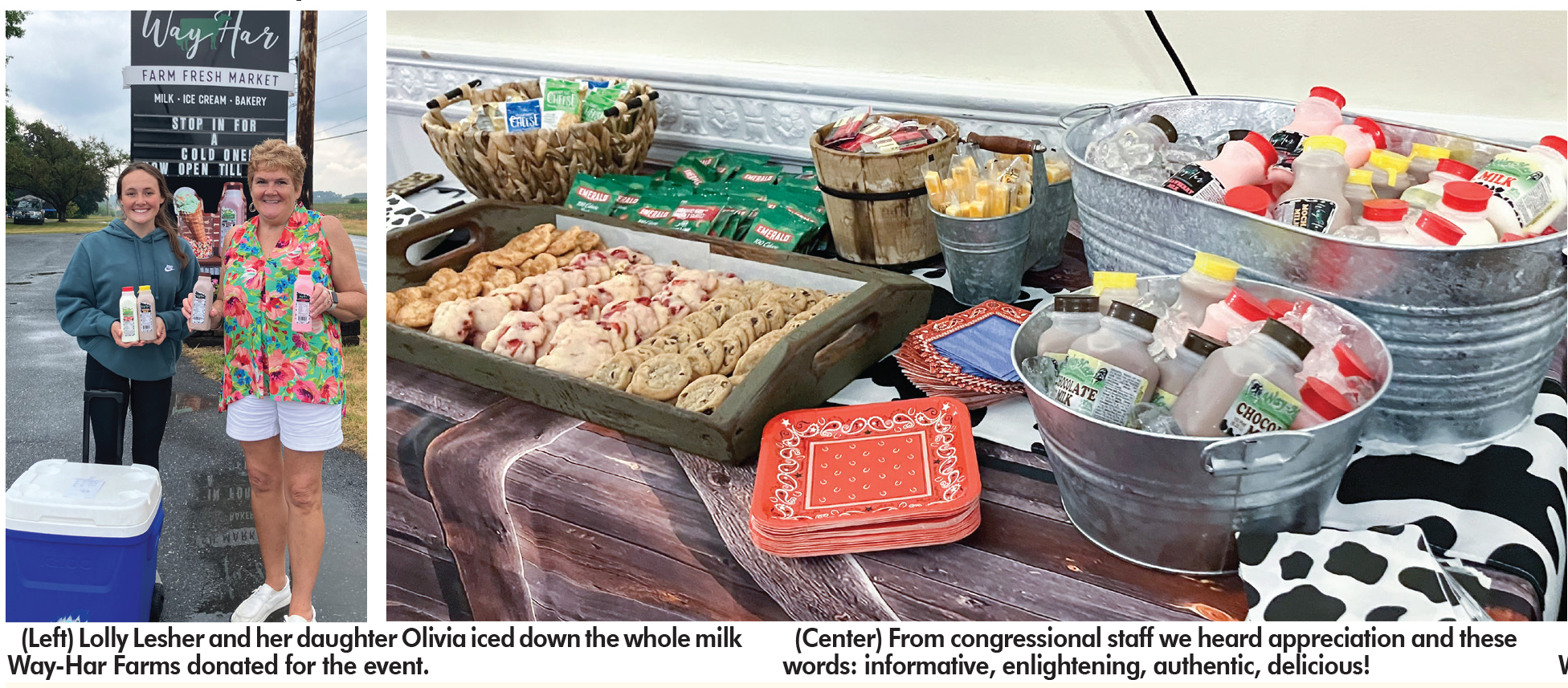
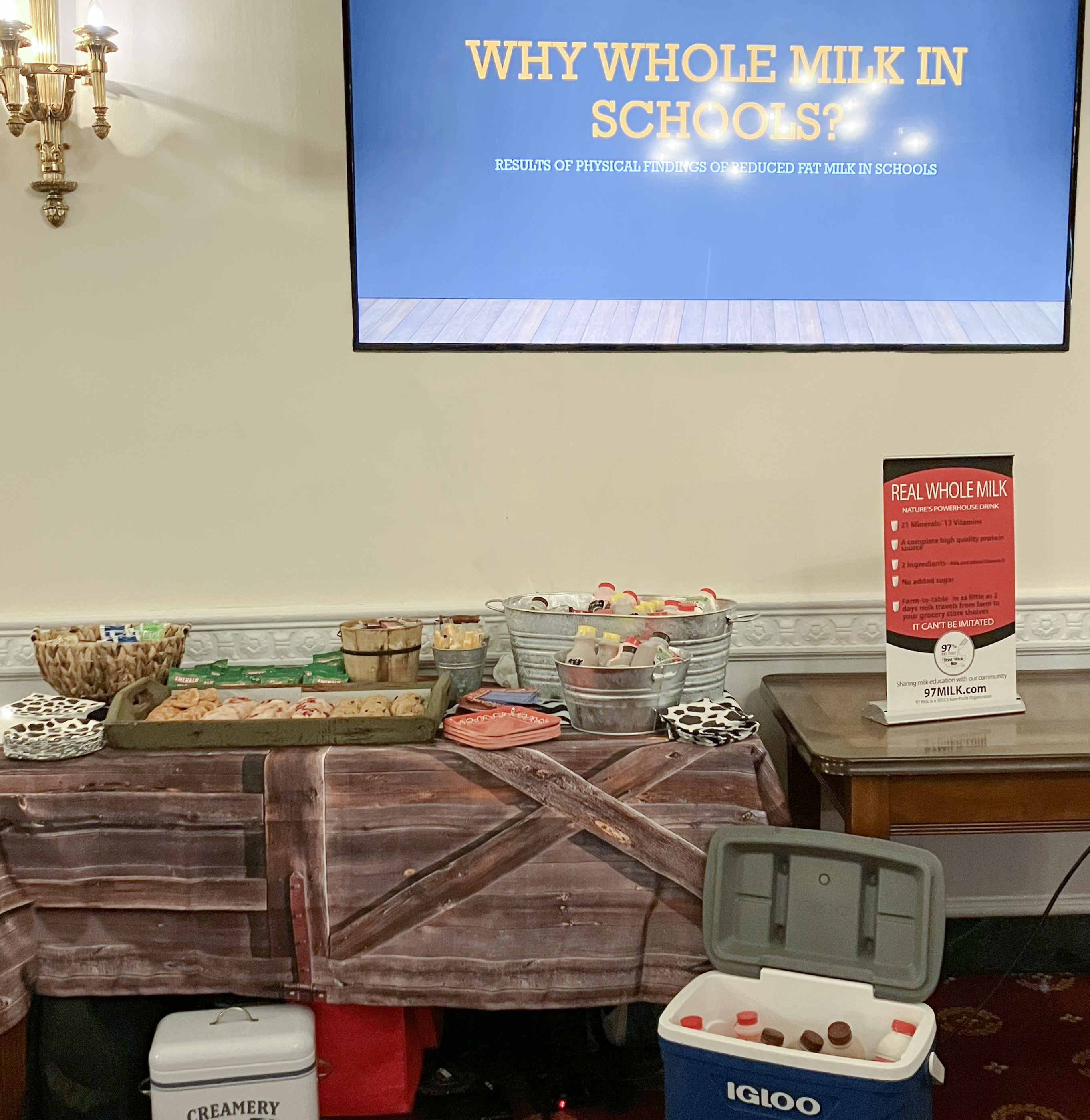
It was Congressman Thompson’s idea to have a “whole milk bar,” so our crew brought 100 half pints of whole milk — unflavored, chocolate, strawberry and mocha — donated by the Lesher family of Way-Har Farms, Bernville, Pennsylvania. We added some full pints of flavored and unflavored milk picked up at two convenience stores on the way (Rutter’s and Clover) to be sure we had enough as we heard interest in the briefing was growing.

We baked fresh strawberry cheesecake cookies with butter and cream cheese, and brought a few other types of cookies, as well as cheese snacks and nuts, arranged a nice table, kept the milk iced cold (that was a fun challenge through security scanners).

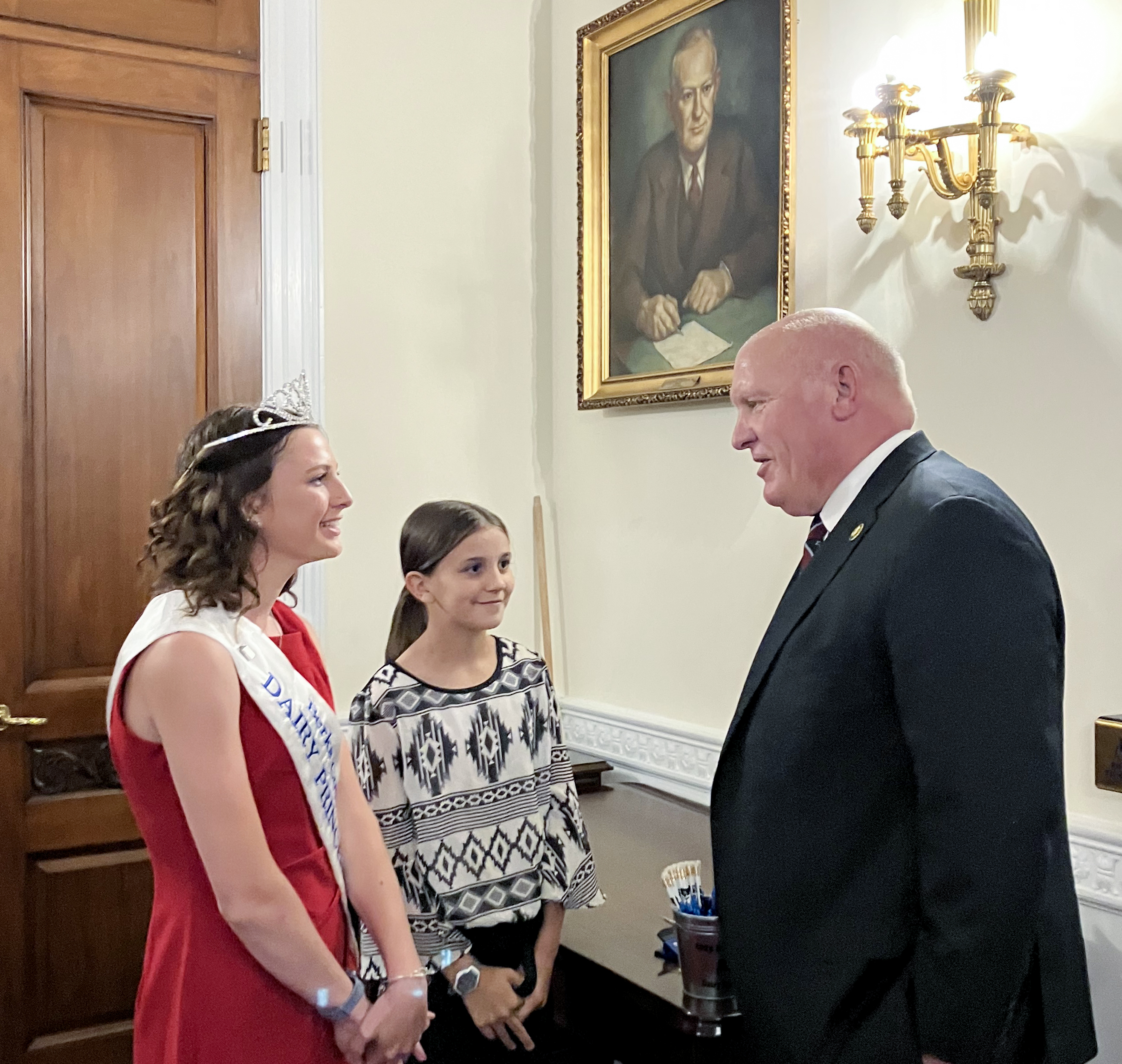
We brought with us Berks County Dairy Princess Sara Haag and former Lebanon County Dairy Maid Madalyn Troutman. Ebersole brought her daughter Vanessa Wiand, an elementary school teacher.

Nelson Troutman (right) with our driver Frank Tomko

Berks County farmer and Drink Whole Milk 97% fat free Baleboard originator Nelson Troutman was part of our crew, and he made sure the van we rented for travel had several 97 Milk magnets for the ride.

I provide these details because here’s the deal: Each person in our crew is a volunteer among the many volunteers working on the whole milk in schools issue, not just in Pennsylvania, but in other states as well.

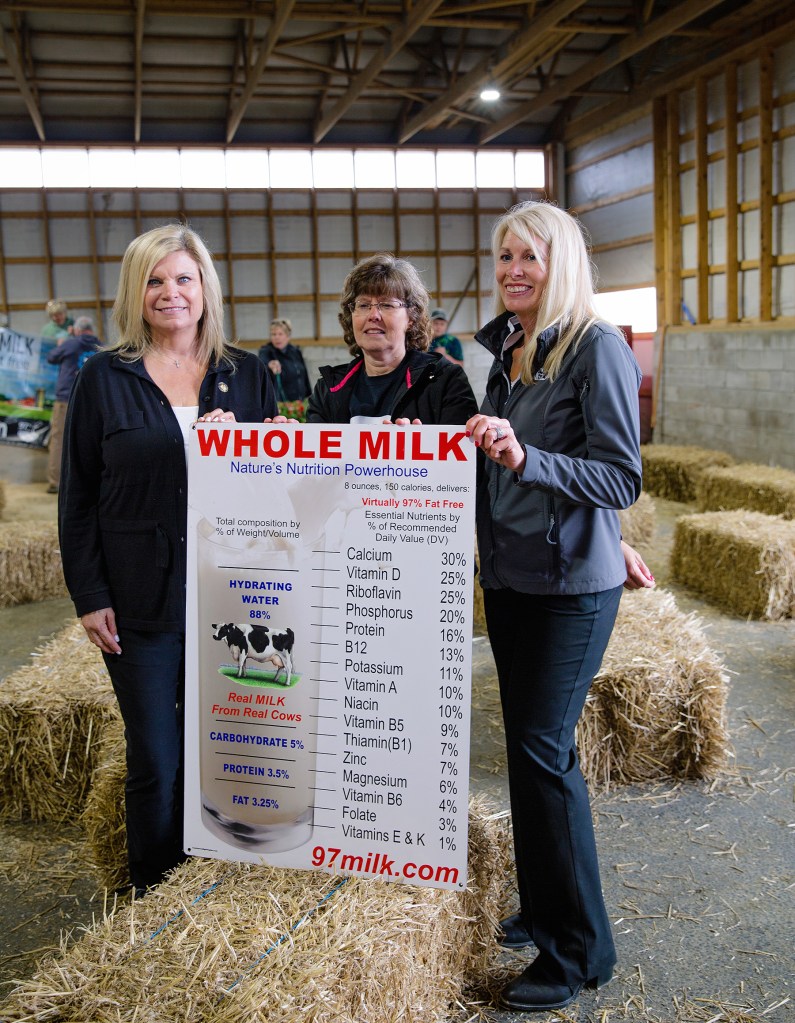
Sara and Madalyn handed out the 6×6 cards designed by Jackie Behr at 97 Milk that visually show what milk provides nutritionally. It’s an impressive piece. They also handed staffers a business card with a QR code (above) that they could scan to reach the online folder to a video created by students and technology teacher at Krista’s school as well as finding other important information about whole milk and the Whole Milk for Healthy Kids Act. On the table next to the whole milk bar was a one page handout with bullet points, and 97 Milk provided milk education tabletop displays.

As Congressman Thompson talked about “ruining a generation of milk drinkers with failed federal nutrition policy,” he praised the bipartisan support for H.R. 1147 and noted the 107 cosponsors in the House (as of June 13, the number as of June 23 is 128 and counting).

That’s a large number by historical standards, but Thompson wants to get to 150 cosponsors by the time the bill is officially reported to the House, which will be soon.

There is still time, and it is still important to keep contacting members of Congress to ask them to consider cosponsoring the Whole Milk for Healthy Kids Act in the House, and thank them if they already have signed on.

Ebersole shared with staffers her perspective as a nurse, what she observes, what milk nutrition means for children.

“I thought it would be interesting to compare BMI (Body Mass Index) screenings when whole milk was served in schools with the recent screening where students have been served only skim and 1% milk. The results of the comparison are striking (above). The overweight and obese categories for students in grades 7-12 in 2007-2008 school year was 39% with 60% in the proper BMI scale. In the year 2020-2021, after being served low fat milk during school hours, the overweight and obese categories were increased to 52% while the recommended range was decreased to 46%. That is a 13% increase over the past 13 years!” said Ebersole.

“While one cannot assume that the low fat milk alternatives are the only determining factors, they certainly did not have the intended outcome of reducing obesity in school age children,” she said.

Ebersole explained that, “Whole milk is a nutrient dense food and with its natural combination of protein, fats and carbohydrates, it is called Nature’s most nearly perfect food. Whole milk also provides satiety, which is stabilizing for blood sugar as well as feeling fuller longer thus decreasing food intake. Another important quality is that students prefer the taste of whole milk compared to the reduced fat and skim milk options.”

Byler talked about the trial at her school in the 2019-20 school year. She explained that the milkfat restrictions at school have led to a loss of school milk consumption with results that are far reaching.

“We are now hearing of very early onset osteoporosis and an increase in malnutrition and/or obesity. It is shameful that our youth cannot have a choice of a wholesome, nutritious product that is farm-to-table/farm-to-school,” said Byler. This, and the amount of milk wasted daily prompted the school trial.

She provided slides of the trial results and talked about how half of the students didn’t really know whole milk was not allowed. This means they didn’t know how good milk can be.

“The results of the trial were astounding. When offerings were expanded to include whole and 2% milk, the amount of wasted milk was reduced by 95% and we saw a 52% increase in students choosing milk,” said Byler, explaining that the student council did actual milk collection data as part of an environmental project.

She also shared results of her survey of the elementary school children showing that if this latest possible restriction on milk options for schoolchildren is approved by USDA, fewer than 25% of students currently taking and drinking the milk say they would continue taking milk and drinking it if flavored milk were not offered. 

“That’s huge,” said Byler.

That means we would see even more reductions in milk consumption at school and more waste. This struck a chord because when Byler presented the 2019-20 trial where her school offered whole and 2% along with fat free and 1% milk, for trial purposes, we heard audible gasps among those attending the briefing when Byler shared the data on the reduction of wasted milk. ((The students also created a video about school milk, view it here.)

We also saw reactions while Ebersole was sharing her analysis of student BMI data over the past 13 years.

Both women concluded by sharing a heartfelt message about how important dairy farmers are to communities, how they care for their cattle and work to provide a high quality nutritious product, and what it means to them for children to be able to choose milk they love so they can benefit from the nutrition the milk provides.

“As the wife and granddaughter of proud Pennsylvania dairymen, I knew the decrease in milk we were ordering for schools would impact dairy families. I know firsthand about the dairy farmers we have lost,” said Byler. “What I know based on 18 years in school nutrition, raising two children and being part of two dairy families is that restricting milk offerings to our school children does not benefit our children or our dairies. It benefits big corporations who have exponential marketing power and are preying upon our youth.”

School nurse Christine Ebersole and her daughter Vanessa Wiand, an elementary teacher at the briefing.

Ebersole noted that, “Being born and raised on a dairy farm and having lived in the dairy community all my life, I can say I know something about the American Dairy Farmer. They are on call 365 days a year and 24 hours a day.  They care about their animals and also care about their neighbors. When a tragedy happens like a fire, the neighbors come together. Dairy farmers work diligently to bring a wholesome natural food to us. Let’s do our part to support this industry by allowing students to have a choice of a delicious, nutritious whole food, whole milk,” she said.

For the Nutrition Coalition, John Bates explained they are a non-profit, non-partisan organization that seeks to improve health in America by ensuring that the public gets evidence-based nutritional advice. They emphasize good science, transparency, and methodology and receive no industry funding.

“When the Healthy, Hunger-Free Kids Act was enacted in 2010, milk became counted as part of that less than 10% of calories from saturated fat, when previously it had been in its own, separate beverage category,” said Bates.

He noted that the U.S. Dietary Guidelines that these rules for schools are based on “never reviewed studies on dietary fat specifically for children until 2020. Children have just been assumed to be like adults, but children are different: they need more protein for their growing bodies and more fat for their growing brains,” said Bates.

The Guidelines in 2020 cite a single clinical trial on school-aged children, ages 7-10 (“DISC,” funded by the NIH). It showed ‘Modestly’ lowered LDL-cholesterol, he explained. “Yet the study was not on a normal population. The expert USDA committee acknowledged this study could not reliably be generalized to a larger population

The bottom line, said Bates is that expert committees have found “insufficient evidence” to show that restricting saturated fats in childhood could prevent heart-disease or mortality in adulthood.

“In our view, a single trial on an atypical population is not enough to make population-wide guidelines to all American children,” he said.

Paul Bleiberg for National Milk Producers Federation focused his comments on the problems with underconsumption of dairy.

“Milk is the number one source of three of the four food nutrients of public health concern as identified by the DGA’s — calcium, vitamin D and potassium. Dairy delivers 7 of the 14 nutrients the American Academy of Pediatrics recommends for optimal brain development as well as nutrients vital for immune health and bone growth and development during a child’s school-aged years,” said Bleiberg. 

“The 2020 DGA Committee found that 79% of 9 to 13 year olds fall short of recommended dairy intake and the data from MilkPEP show that students take less milk and throw away more milk at schools when they do not have options they like,” he added.

Before, after and during these four short presentations on whole milk choice in schools, staffers trickled in, gathered around the whole milk bar and had conversations.

In fact, when news began to spread through texts and emails that there were milk and cookies in room 1302 — more staffers came and went. Connections were made around good food and delicious, nutritious milk.

From congressional staff we heard appreciation and these words: informative, enlightening, authentic, delicious!

Those four words give me hope that we can unite with whole milk… for our children and our dairy farmers.

June 23 UPDATE: This was another good week for the Whole Milk for Healthy Kids Act in Washington, and here’s how you can help…

As of June 23, the bipartisan Whole Milk for Healthy Kids Act, H.R. 1147 grew the number of cosponsors to 128 including prime sponsor G.T. Thompson (103 Republicans, 25 Democrats). These cosponsors represent 43 states.

Texas tops the list with 13, followed by Pennsylvania 10, New York 8, California, Florida and Wisconsin at 7. Maine, Idaho, Iowa, North and South Dakota and Wyoming have fewer Representatives and their full delegations are on board. Wisconsin is nearly 100% with 7 of their 8 Representatives signed on.

The 43 states now represented are listed in the order of number of cosponsors vs. the total number of representatives for the respective states: Texas 13 of 36, Pennsylvania 10 of 17, New York 8 of 26, California 7 of 52, Wisconsin 7 of 8, Florida 7 of 28, Georgia 5 of 14, Indiana 4 of 9, Iowa 4 of 4, Michigan 4 of 13, Minnesota 4 of 8, North Carolina 4 of 14, Illinois 3 of 17, Virginia 3 of 11, Washington 3 of 10, Alabama 2 of 7, Arizona 2 of 9, Connecticut 2 of 5, Idaho 2 of 2, Kansas 2 of 4, Kentucky 2 of 6, Maine 2 of 2, Missouri 2 of 8, New Jersey 2 of 12, Ohio 2 of 15, Oklahoma 2 of 5, Oregon 2 of 6, South Carolina 2 of 7, Tennessee 2 of 9, Arkansas 1 of 4, Colorado 1 of 8, Hawaii 1 of 2, Louisiana 1 of 6, Maryland 1 of 8, Mississippi 1 of 4, Nebraska 1 of 3, Nevada 1 of 4, New Mexico 1 of 3, North Dakota 1 of 1, South Dakota 1 of 1, Utah 1 of 4, West Virginia 1 of 2, and Wyoming 1 of 1.

To reach all 50 states, here’s what we need in the East: Delaware, Massachusetts, New Hampshire, Rhode Island, and Vermont. In the West: Alaska and Montana. Is your state on the list? Is your Congressional Representative a cosponsor? Make the call! Go to this link to see the bill’s progress and cosponsors, and click “contact your member” on the right to find your Representative.

Call Senators too. On June 13, the bipartisan Senate companion bill, S.1957, was introduced by Senator Roger Marshall, a Republican and medical doctor from Kansas, along with prime cosponsor Peter Welch, a Democrat from Vermont. Also cosponsoring right out of the gate are Democratic Senators Kirsten Gillibrand of New York and John Fetterman of Pennsylvania; Independent Senator Angus King of Maine; and Republican Senators Ron Johnson of Wisconsin, Chuck Grassley of Iowa, Susan Collins of Maine, Cindy Hyde-Smith of Mississippi, and James Risch and Mike Crapo, both of Idaho. As of June 23, that’s 11 Senate sponsors from 9 states. Maine and Idaho have both of their respective Senators on board!

-30-

Congressman G.T. Thompson’s Whole Milk for Healthy Kids Act approved 26-13 by House Education Committee

Thompson: ‘This is a win for children and dairy farmers, but we’re not done’

“This policy has cheated our children and has led to economic demise in Rural America as we’ve seen a loss of dairy farms and small businesses that are in that supply chain. It’s time to reverse the mistake that was made in 2010. We need to follow real science, not political science. I question the process of the Dietary Guidelines Advisory Committee. These are unelected bureaucrats, and there’s no oversight. This is our chance to actually do something positive in that process to say ‘hey we’re watching what you’re doing. We’re looking over your shoulder,’” said Rep. GT Thompson (R-PA-15). In a bipartisan 26 to 13 vote, the Committee on Education and Workforce passed Thompson’s motion to report the Whole Milk for Healthy Kids Act, H.R. 1147, to the House of Representatives with recommendation of passage. On the Republican side, 21 voted yes and 4 were absent. On the Democratic side, 5 voted yes, 13 no, and 3 were absent. The next step is getting the bill on the calendar for a vote on the House floor.

By Sherry Bunting, Farmshine, June 9, 2023

WASHINGTON — The Whole Milk for Healthy Kids Act, H.R. 1147, reached a major milestone this week, passing mark-up in the U.S. House Committee on Education and Workforce.

Dairy farmers could not have asked for a better way to kick off June Dairy Month as the committee discussion exposed the sides of this issue, and Congressman Glenn ‘GT’ Thompson, the Republican from Pennsylvania and the bill’s prime sponsor, laid out the case for children to have true access to the most nutritional beverage — milk.

In the end, the Education Committee on Tuesday, June 6 approved the bill in a bipartisan 26 to 13 vote. 

(Cross-section highlights of Education and Workforce Committee discussion and vote.)

Now that it is recommended by the House Education and Workforce Committee, the next step is scheduling of the vote on the House floor.

This is the first time in three legislative sessions that the bill to restore the choice of whole and 2% unflavored and flavored milk in schools has made it this far in the legislative process.

“This is a win for children and dairy farmers, but we’re not done. I took a deep breath to see this satisfying outcome in this first stage and another deep breath as we move to the next stage to get it onto the House calendar,” said Rep. Thompson in a Farmshine interview after committee passage.

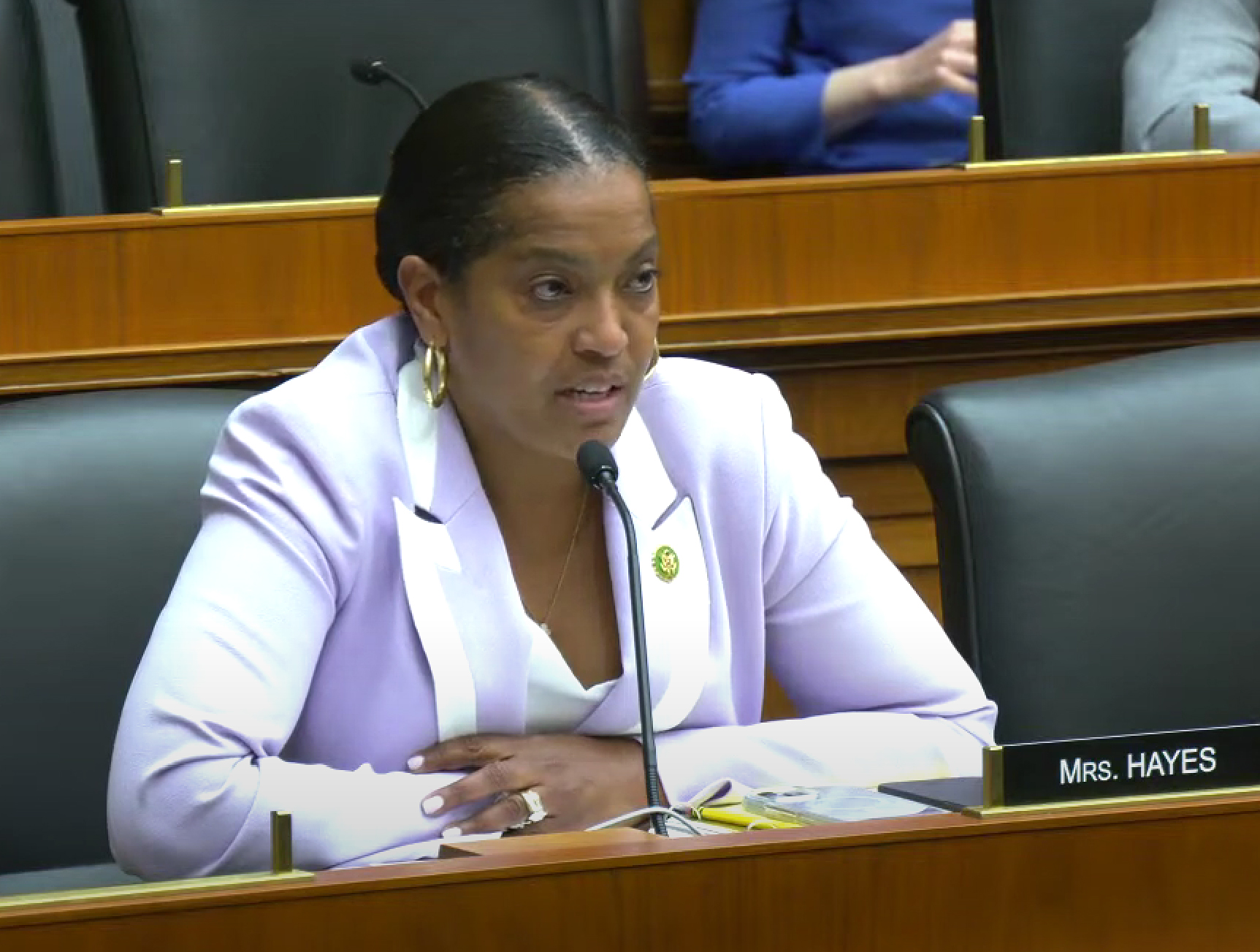
A further breath of bipartisan fresh air also came from Rep. Jahana Hayes, a Democrat and educator from Connecticut. She rose in support of the bill, quoting from the Dietary Guidelines 2020-25 report and from USDA, giving statistics about what is offered and what is consumed in recommended dairy intake, especially for children ages 2 to 18.

“I have belabored this point that children receive a huge amount of their daily nutrition at schools. Also, the school meal programs are a significant source of milk and dairy for kids,” said Hayes.

“But the part that sticks for me is that none of this matters if kids aren’t drinking the milk. We can have as much data and statistics on what kids need as dietary dairy intake, but if they’re not drinking it, then it’s all for naught,” she stressed. “We’ve seen students take less milk and throw away more milk when they don’t like the way it tastes.

“I support this amendment. I drink whole milk. My kids drink whole milk. We like it,” Hayes asserted.

Chairwoman Virginia Foxx, a Republican from North Carolina said the debate over whole milk “takes the cake.” 

She talked about how previous recommendations have been “walked back,” and she bemoaned the fact that there are “no checks and balances” over the Dietary Guidelines process of making these recommendations.

“I was shocked last year when I learned that whole milk has only 3.5% fat content, when we are saying to students: ‘drink skim milk or 1% milk,” the Chairwoman said. 

“Surely-to-goodness, that kind of fat content is not doing the damage that some people are saying. This Dietary Guidelines Advisory Committee is just a small group of unelected, appointed people, and we want to turn children’s lives over to groups like this? We should be dealing with this,” she added.

The bill’s champion, Rep. GT Thompson is a senior member of the Education Committee, and chairs the Agriculture Committee. 

Thompson said he is discussing the next stage with the House Majority Leader to schedule the legislation for a vote on the House floor.

“The bill had 106 bipartisan cosponsors supporting it from 39 states — before this committee vote — and we can build on that,” said Thompson. (As of June 16, there are 110 from 40 states).

This cosponsor list includes 22 members of the Education Committee. It also includes bipartisan cosponsors from the Agriculture Committee. It includes prime cosponsor Rep. Kim Schrier, a pediatrician from Washington State, and numerous members of Congress who are doctors, educators, parents. It has garnered the support of schools, students, parents and families throughout America who will benefit, according to Thompson.

His staff reports that more cosponsors continue notifying their office to sign on to the bill.

“This has been a really grassroots effort. Dairy farmers, the dairy industry, all of the rural businesses who provide inputs, the folks in the schools, the parents… we’ve had great support for this bill, and all of that helps,” said Thompson with a tip of the hat to the grassroots 97 Milk effort.

In fact, while speaking on his bill, Thompson mentioned “how this policy has negatively impacted the economy in Rural America. This (federal prohibition of whole milk in schools) negatively impacts kids and dairy farmers, and it’s time to turn that around.”

The Whole Milk for Healthy Kids Act allows the 95% of schools that are participating in the school lunch program to serve all varieties of flavored and unflavored milk, including whole milk. Thompson amended the bill from previous renditions to make minor technical changes that will help ensure foodservice workers have the flexibility they need in serving the students whole milk.

“Some Democrats on the committee spoke in opposition to the bill, using the same outdated science, but in the end, the committee vote to approve it was bipartisan,” said Thompson. 

During the committee discussion, he told his colleagues that he is focused on “listening to the school professionals who serve students every day and parents who are concerned about the lack of options.

“We need to follow real science, not political science. It’s time that we push back on the notion that federal bureaucrats know what’s best for students. Although there is more work to be done on school nutrition, this bill gives students access to the milk they want and need. The bottomline is the Whole Milk for Healthy Kids Act is all about ensuring students have the necessary nutrients to learn and grow,” he said.

Thompson was quick to point out that, “We’re not force-feeding anybody anything. We’re providing children options so we don’t turn them over to less healthy beverages.

“We’ve really ruined an entire generation of milk drinkers and have cheated them out of access to the most nutritional beverage. I appreciate the comments that there is nutrition also in 1% milk, but even that’s because of the milkfat, the vehicle that delivers the nutrition,” he explained.

This bill “will improve the nutritional status of our children going forward. If we give them a good milk experience …  I would argue we will see a reduction in childhood obesity,” he said, pointing to studies showing whole milk to be an effective drink weight management because of how satisfying it is.

To his colleagues citing ‘the science’, Thompson was tactful but blunt: “I agree we ought to do things with data and science, I just question the process of the Dietary Guidelines Advisory Committee. They’re completely appointed. These are unelected bureaucrats, and there’s no oversight. This is our chance to actually do something positive in that process to say ‘hey we’re watching what you’re doing. We’re looking over your shoulder.’”

Chairwoman Foxx reminded her committee that, “This is a choice. Instead of having bureacrats tell us what to do… we give a choice and not let someone else run our lives.”

At the start of the discussion, she explained the Whole Milk for Healthy Kids Act as “empowering food service providers and parents to make decisions on the health and welfare of children.”

Ranking Member Bobby Scott (D-VA-3, right) and Rep. Jamaal Bowman (D-NY-16) read from a letter of opposition to the whole milk bill from the Physician’s Committee for Responsible Medicine (PCRM). According to Guidestar, PCRM describes its vision as “creating a healthier world through a new emphasis on plant-based nutrition and scientific research conducted without using animals. ” In 2010, Newsweek and New York Times articles identified PCRM links to extreme animal rights organizations such as PETA. 

Ranking member Bobby Scott, a Democrat from Virginia, was one of four Democrats voicing opposition, saying H.R. 1147 is “an attempt to legislate nutrition standards and disregard evidence-based recommendations made by the Dietary Guidelines for America.” He said the bill would allow schools to “violate current science-based standards. 

“If it was consistent with science, we wouldn’t be here. The science-based committees would have already done this,” he said, also objecting to considering the bill outside of doing a comprehensive childhood nutrition reauthorization.

The last childhood nutrition reauthorization by Congress was the 2010 Healthy Hunger Free Kids Act, which tied schools more closely to the saturated fat restrictions of the Dietary Guidelines in the first place.

Scott noted the American Heart Association, Association of Nutrition and Dietetics, Center for Science in the Public Interest have “expressed concerns for this bill.” But mostly, he quoted from a letter of opposition from the Physicians Committee for Responsible Medicine. (PCRM is a known animal rights group tied to PETA.)

Rebutting Scott’s assertions in his characteristic calm and methodical manner, Congressman Thompson said he appreciated the recognition of science but that, “we don’t always get it right, and that’s what we’ve found with the Dietary Guidelines process. 

“You reference the Dietary Guidelines Committee, but the most recent Dietary Guidelines reported that more than two-thirds of school age children FAIL to meet the recommended level of dairy consumption, and a big part of that is, quite frankly, we gave them since 2010 an awful milk experience,” said Thompson.

“We’re talking about 3.5% milkfat. I was here for that 2010 debate. It’s been proven since then that it was bad science. The most recent science I referenced and our practioners, the American Academy of Pediatrics, have stated that dairy plays an important role in the diet of children, and it’s the leading food source for three of the four nutrients of public health concern — calcium, vitamin D and potassium,” said Thompson, providing 15 academic studies for the record on full fat dairy.

As members of Congress, “we visit our schools and spend time in the lunch line, and we see the waste and the unopened half-pint milk containers that are discarded. Quite frankly, we’ve been contributing to childhood obesity because … children are going to drink some type of beverage, and the substitutes have been high sugar beverages that do not have healthy outcomes,” said Thompson.

“This policy has cheated our children… and has led to economic demise in Rural America as we’ve seen a loss of dairy farms, dairy herds and small businesses that are in that supply chain. It’s time to reverse the mistake that was made in 2010,” he stressed.

Rep. Jamaal Bowman, a Democrat from New York agreed that the meals at school are for some kids the most important that they receive, and he said these meals should be consistent with the “latest science on nutrition.” 

However, he maintained that the Dietary Guidelines for Americans (DGAs) are “based on up-to-date science” and said “allowing whole milk to be served to children contradicts those recommendations.”

Rep. Bowman called the bill an “inappropriate attempt to legislate nutrition standards,” but he failed to acknowledge the shortcomings observed by other independent scientific bodies calling into question the research screening methods used in the DGA process, the make-up of the DGA committee, and the predetermined questions that form the boundaries for what “up-to-date research” will be included as “relevant” to the predetermined questions in each 5-year DGA cycle.

Bowman quoted extensively from the PCRM letter, which stated that “full fat milk is both unnecessary and harmful to children’s health.” Reading from the PCRM letter, Bowman said “early signs of heart disease, high total and LDL cholesterol and other indicators of impending cardiovascular disease are appearing in children with increasing frequency.”

(If that’s the case, then how can whole milk be blamed? How can saturated fat be blamed? Whole milk is nonexistent at school, and saturated fat is limited to less than 10% of calories in school meals since 2010. Children receive one, two, or even three meals a day, five days a week for at least three-quarters of the year at school. If the poor health outcomes the PCRM letter identifies are rising, doesn’t that tell us something about the scientific validity of the DGA recommendations? The PCRM’s own letter hits that nail on the head with its own statistics. PCRM calls “whole dairy milk a troubling source of saturated fat.” And yet, kids have not been allowed to have whole milk or 2%, and in some cases not even 1% fat milk, for the past 13 years during two meals a day, five days a week, most of the year!)

Here’s an eye-opener: Quoting again from PCRM, Bowman said lactose intolerance among communities that have been impacted by “historic racism” and “health inequities” are those less likely to be able to see a doctor for the doctor’s note to have dairy substitutes at school. The letter even mentioned children needing ‘climate friendly’ beverages. 

The roots of the anti-whole-milk agenda are clear in terms of encouraging more “non-dairy substitutes” for children in schools.

Rep. Alma Adams, a Democrat from North Carolina said the bill sets a “dangerous precedent” that takes the years of building nutrition programs backward, noting this would cause poor health outcomes. (But the poor outcomes were said to be already happening by those opposing the whole milk bill. This is occurring while whole milk is prohibited.)

During the committee markup, Thompson said he is proud of the number of cosponsors to-date and the broad and bipartisan support for the whole milk bill. 

“My legislation supports students and dairy farmers across America,” he explained.  “Milk is an essential building block for a well-rounded and balanced diet offering 13 essential nutrients and numerous health benefits. However, out of touch federal regulations have imposed dietary restrictions on the types of milk that students have access to in school meals… limited to fat free and low-fat milk since 2010. For our children to excel in the classroom and beyond, they must have access to more nutritious options they enjoy.”

Thompson  also stressed that the situation could become worse if the Whole Milk for Healthy Kids Act is not enacted into law. 

“The USDA’s latest proposed guidelines could roll back options even further by restricting flavored milk only to high school students and counting milk fat against weekly saturated fat allowances,” he said, giving several reasons why these top-down regulations are harmful to students and school districts that are forced to comply.

“First, we have seen students opt out (from milk) altogether,” said Thompson. “Let’s face it, the only way to benefit from milk’s essential nutrients is to consume it, and when students turn away from milk, they often opt for far less healthy alternatives.”

Thompson noted that these regulations also “perpetuate baseless claims that milk is bad for kids, but research has shown time and time again that whole and 2% milk are not responsible for childhood obesity and other health concerns. In fact, these beverages are so nutritious that research consistently shows positive health outcomes for children who consume milk.”

Referencing the 15 academic studies submitted from researchers across the country and around the world, Thompson asserted that, “These studies, and there are more, show that full fat dairy foods have no association with high blood pressure, cardiovascular disease, type II diabetes, obesity or cholesterol. In fact, several show full fat foods helped improve or lower negative health outcomes for children who drank more full fat dairy beverages.”

He also added to the record several letters of support, including a letter from the Nutrition Coalition (founded by science journalist Nina Teicholz, author of the Big Fat Surprise), the International Dairy Foods Association, the Northeast Dairy Foods Association, and a coalition of dairy producers from across the country. 

He said the bill has the support of schools and families across the country. 

This is evident by the tens of thousands of citizen petition signatures over the past few years and a 2021 IDFA survey of parents showing 78% find whole or 2% milk healthier for their families. Trouble is, their kids can’t get it at school where most of their meals are consumed.

-30-

Rep. G.T. Thompson: Whole Milk and Dairy Pride bills ‘more urgent than ever’

By Sherry Bunting, Farmshine, March 3, 2023

WASHINGTON — Pennsylvania has dairy champions in Congress. Not only has Rep. Glenn ‘G.T.’ Thompson (R-15th) introduced the Whole Milk for Healthy Kids Act, and made it better, Rep. John Joyce (R-13th) is getting ready to launch the House version of the Dairy Pride Act to uphold real milk’s standard of identity.

It’s “more urgent than ever” that Congress act on these bills, in light of recent USDA and FDA proposed rules, said Thompson in a Farmshine phone interview as Congress returned to session Monday (Feb. 27).

The bipartisan 2023 Whole Milk for Healthy Kids Act, H.R. 1147, has been introduced for just over one week, and already the number of congressional cosponsors grows daily at 43 to-date, including prime sponsor Rep. Thompson, a Republican from Pennsylvania and prime cosponsor Rep. Kim Schrier, a Democrat and pediatrician from Washington state. 

The other 41 cosponsors so far represent both sides of the aisle from 22 states.

“I’m very honored to reintroduce this whole milk legislation. We made some real progress in the 117th Congress with not quite 100 cosponsors and broad bipartisan support. That’s what it takes to get things done,” said Thompson. “But we had headwinds with the Republicans not having the majority and the Democratic party owning the demonization of milkfat and the removal of whole milk and flavor from the school system.”

What will be different this time? 

Thompson explained it’s a new Congress and he has the support of the new Education and Workforce Committee chair Virginia Foxx, a Republican from North Carolina.

“She is very excited about this bill and has had me speaking on it at a number of events over the past year,” said Thompson.

In addition to being chairman of the House Agriculture Committee, Thompson is also a senior member of the Education and Workforce Committee through which the Whole Milk bill must pass first.

Thompson believes it will be put on the House agenda, and he is optimistic that it will get passed off the House floor.

He is also looking for a sponsor for companion legislation in the Senate.

He said he appreciated former Senator Pat Toomey of Pennsylvania who had previously introduced a version of the bill.

“With Senator Toomey’s retirement from the Senate, we now have to find someone to take the lead in the Senate,” he said.

The fact that the number of cosponsors has grown quickly for the House bill, within the first few days, is a good sign. 

This response so far has happened without Thompson “working the floor” yet.

This “speaks to the significant need that this legislation addresses,” he said.

“This bill is about providing the best nutrition for children and addressing the economic impact on rural America,” he explained. “When the Democrats did what they did in 2010 with the nutrition standards, it was a crushing blow to dairy farmers. Dairy is the number one ag commodity in my home state of Pennsylvania, and agriculture is the number one industry. This is the case not just in Pennsylvania.

“This topic comes up everywhere I go and in every state,” he added. “Part of the reason is the awareness as many people and organizations, and quite frankly the 97 Milk grassroots effort, has impacted nationally and internationally by speaking to this need.”

Thompson improved the bill with what he calls a “common sense addition.” 

He acknowledged former Senator Toomey for articulating language that would allow whole and 2% milk to fit within the meal calculation for saturated fat since the milk has been included in the meal calculation since 2010. 

This way, not only does the Whole Milk for Healthy Kids Act proclaim the permission for whole and 2% unflavored and flavored milk options in school meals, it expands the saturated fat limit to accommodate these options so school foodservice directors are empowered to actually offer them.

“Milk is the only beverage that is regulated within the meal. Meanwhile, students may have access to non-nutritious beverages with high fructose corn syrup and caffeine that are not regulated, so we’re making sure we do not have a situation where the milkfat counts against the meal,” said Thompson.

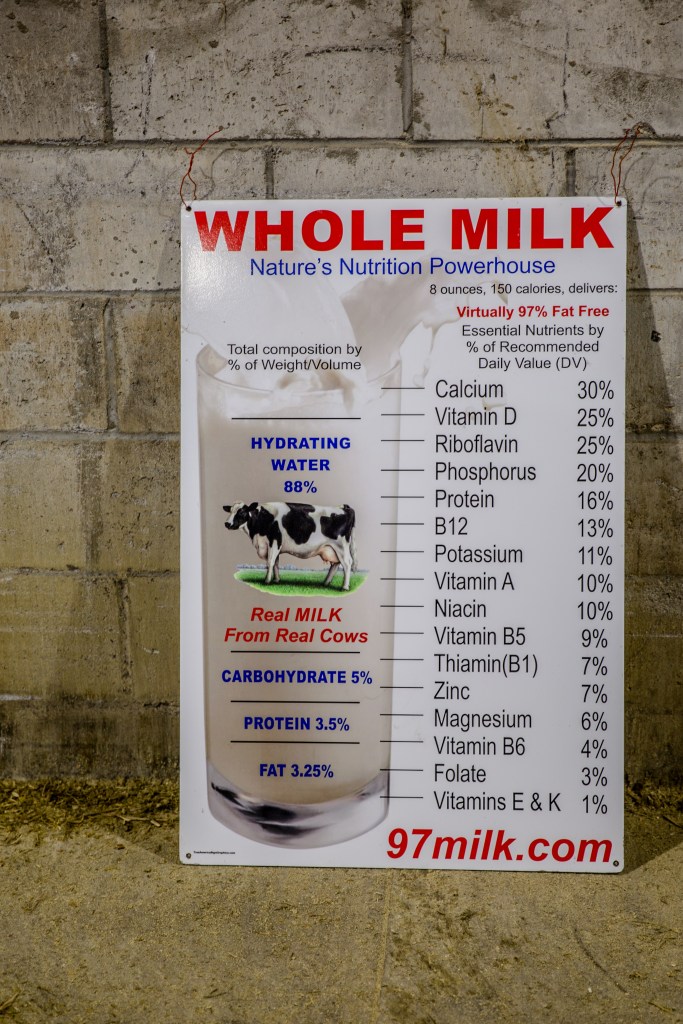
“Whole milk is only 3 to 3.5% fat compared to the low-fat milk being 1%. That means whole milk is 96.5 to 97% fat free. That extra milkfat is a positive thing in the lives of those young people,” Thompson declared, with a nod to the mountain of scientific evidence.

As the White House is moving rapidly in its proclaimed “whole of government approach” to implement the Biden-Harris Hunger, Nutrition and Health National Strategy, a flurry of bureaucratic actions could further affect milk access for children via USDA and FDA.

USDA just published proposed school nutrition rules, with comment period ending April 10, 2023, which could remove access to flavored milk in elementary and potentially middle schools, while further etching in concrete the fat-free and 1% sole options. 

FDA’s healthy labeling proposed rule also presents obstacles for whole milk, and that comment period recently ended. 

Plus, FDA last week issued draft guidance allowing imitation non-dairy beverages to be labeled as ‘milk’ with only a ‘voluntary’ recommendation that companies describe shortfalls in key nutrients. That public comment period ends April 24, 2023 (see related article in this week’s Farmshine).

Will the Whole Milk for Healthy Kids Act force revisions of any of these proposed rules?

Rep. Thompson was outspoken on this question.

“I don’t believe they have the authority to do what they are doing now,” he stated. 

“These moves are an outgrowth of the White House summit that they weren’t serious about. They failed to invite Republicans, including the Ranking Member of the Ag Committee until 48 hours before the conference. They didn’t want our input. It is more political science than science, and it is really frustrating,” he related.

“It is the Congress that determines nutritional standards, not the bureacrats. While the Whole Milk for Healthy Kids bill is mostly in the Education and Workforce Committee, I will do all I can in the Ag Committee to make sure science, not political science, is foremost.

“Science shows whole milk and whole milk with flavor added, are the most nutritious beverage available,” said Thompson.

On the FDA draft guidance for labeling fake-milk alternatives as ‘milk’, Thompson was even more blunt.

“The Dairy Pride Act is being reintroduced by Rep. John Joyce (R-PA). This bill is more important than ever given the insane draft guidance of the Biden-FDA. It is urgent to pass this one also,” said Thompson, confirming later that the Dairy Pride Act, which was introduced in the Senate this week will also be introduced in the House shortly by Rep. Joyce, along with a bipartisan cosponsor.

Thompson lamented the bombardment of parents and kids with marketing for alternative fake-milk beverages that are proliferating rapidly.

“I have a lot of friends among almond growers and soybean growers, and I like almonds, but this is about truth in advertising. The word ‘milk’ communicates a certain level of nutrition, and FDA has even acknowledged this. If FDA is going to mislead people by allowing the labeling of something as milk that is not milk, then they should be required to truly define the differences,” he said, adding that he’s not surprised.

“This administration can’t define what a woman is, and now it can’t define what milk is,” Thompson declared.

Stay tuned to Farmshine for updates!

-30-

Having already killed whole milk, USDA proposed school rule now takes aim at flavored milk with appalling lack of concern for nutrient-density

By Sherry Bunting, (updated from Farmshine print edition, Feb. 10, 2023)

WASHINGTON — USDA is taking aim at a different area of school milk with new proposed rules announced Feb. 7 that could limit flavored milk to only students in grades 9 through 12. A second option would be to allow all grade levels access to flavored milk, but with draconian cuts to the amount of added sugar they could contain, without regard for nutrient density.

We already have nonsensical restrictions on fat levels for school milk. The more fat is removed from diets, the more sugar is added. That’s a default truth, especially for chocolate milk.

With a 30-minute webinar panel moderated by Ag Secretary Tom Vilsack On Feb. 3, Vilsack cited the Tufts University Friedman School – developer of the infamous Food Compass – as an authoritative source for the Biden-Harris National Strategy on Hunger, Nutrition and Health. The proposed rule itself mentions a “Healthy Eating Index” — a rating system — was applied to align with the 2020-25 Dietary Guidelines.

In the subsequent news release, USDA stated that the proposed rule is part of this National Strategy, which was released in conjunction with the White House Conference on Hunger, Nutrition and Health in September. The conference development, incidentally, was headed up by Dariush Mozaffarian, Dean of the Tufts University Friedman School of Nutrition Science and Policy.

(Please note that the FDA Healthy Labeling proposed rule is another piece of the National Strategy. Public comments on that end Feb. 16, 2023 at this link)

The goal of the National Strategy and the Feb. 7 proposed school meal rule, said Vilsack, is to end hunger and diet-related diseases by 2030.

With that pronouncement and other platitudes about hunger and health… USDA set off to the races on a set of new standards in a proposed rule for school meals that will further limit consumption of nutrient dense foods as multi-year implementation begins when ‘transitional flexibilities’ end in the 2024-25 school year.

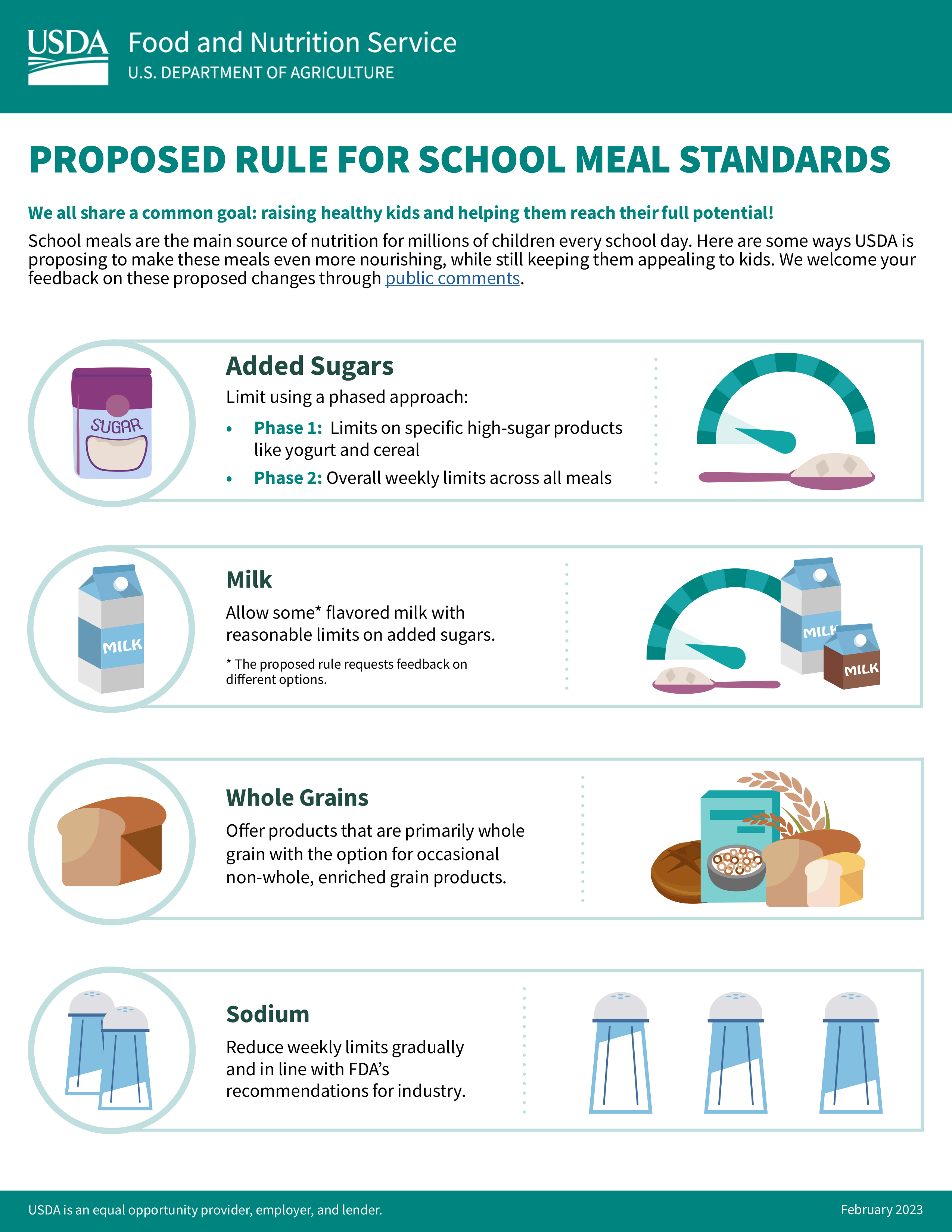
Reducing added sugar and sodium levels, as well as increasing the percentages of whole grains, are at the core of the new rules, but there are pages and pages of rules to analyze.

Saturated fat restrictions, including milkfat, will continue and will be more restrictive as the transitional flexibilities USDA has allowed since the Covid pandemic and supply chain disruptions will end in school year 2024-25; however, more flexibility is granted to saturated fats from plant-based sources, such as seed oils.

Secretary Vilsack insists USDA has been on the right track with school meals since 2010. He applauded the results since the Healthy Hunger Free Kids Act was passed (which set up the vehicle for USDA to further restrict saturated fat and to remove whole and 2% milk from schools).

He said that the rate of obesity has declined among children in lower income brackets in every year since 2010. (We’ll have to dig into that because we’ve seen studies and reports showing quite the opposite trend.)

In other words, Vilsack is fully committed to the fat restrictions, and now added sugar and sodium are the new screws to be tightened.

“This makes me sad for our kids,” wrote one school foodservice director in an email after reading the proposed rule.

“If they don’t want us anymore, just tell us now and save us all the misery,” a milk bottler said in conversation upon hearing the news.

“Do public comments ever really make a difference?” a prominent nutrition and health investigator and advocate wrote in an email. “It seems to me that it’s so much window-dressing.”

Friday’s panel with Secretary Vilsack could be described as window-dressing. Consisting of a school-involved mother, a teacher, and a foodservice director, they each called for greater flexibility, more resources and support and more tools to feed nutritious meals as well as more time for children to eat their meals.

Flexibility was a big part of their panel comments. However, the new proposed rule is anything but flexible.

Take a look. Public comments close April 10, 2023

According to the USDA news release Monday, the USDA Food Nutrition Service describes this as “a gradual, multi-year approach to implementing a few important updates to the nutrition standards.”

These include, according to USDA:

— Limiting added sugars in certain high-sugar products and, later, across the weekly menu;

— Allowing flavored milk in certain circumstances and with reasonable limits on added sugars;

— Incrementally reducing weekly sodium limits over many school years; and

— Emphasizing products that are primarily whole grain, with the option for occasional non-whole grain products.

In some of these areas, USDA FNS proposes different options and is requesting input on which of the options “would best achieve the goal of improving child health while also being practical and realistic to implement.”

Specifically for milk, the proposed rule open to public comment contains two options, stating: “Both options would include the new added sugars limit for flavored milk and maintain the requirement that unflavored milk is offered at each meal service.

The two options further restrict flavored milk — even after the added sugars are reduced — as follows:

• Option 1: Allow only unflavored milk for grades K-8 and allow flavored and unflavored for grades 9-12. OR Allow only unflavored milk for grades K-5 and allow flavored and unflavored for grades 6-12. Either proposal would be effective School Year 2025-26.

• Option 2: Continue to allow flavored and unflavored milks for all grades (K-12).

On added sugars affecting the milk as well as other dairy products served in schools, the proposed rule states:

• Limits for grain-based desserts, breakfast cereals, yogurts, and flavored milks, effective in school year (SY) 2025-26.2 are product-based. (This means different rules for different foods).

• Weekly added sugars limit that must average less than 10% of calories per meal, effective school year 2027-28.

Stricter sodium levels are another area of multi-year implementation that will impact cheeses served in schools.

Dairy organizations are noting in their statements that they are looking into the particulars of these changes, and are at least glad to see non-fat and low-fat milk and dairy included but share concern about the proposed flavored milk restrictions.

(In this reporter’s opinion, the food police are going too far. We must find a way to feed and nourish children at school without jeopardizing their actual consumption of nutrient-dense whole foods that strengthen them and help them learn.)

One thing is clear about children. If it doesn’t taste good, they’re not going to consume it. In fact, several surveys indicate that if flavored milk is removed at the grade levels USDA is proposing, school milk sales could drop as much as 40%. This is on top of the 30% drop seen since 2012 when USDA — under then Secretary Vilsack — issued the rule restricting school milk to be fat-free or 1% low-fat unflavored or fat-free flavored options only.

First, USDA removed the fat, which is one element of milk’s flavor, not to mention a wealth of scientific evidence USDA continues to ignore on the health and nutritional benefits of milkfat, especially for growing children. Now, USDA proposes to remove the flavored options of milk until high school (or middle school).

Offering only fat-free and 1% low-fat white milk to elementary and middle-school aged students will be a non-starter for most of them.

Count on this leading to reduced consumption of a most nutrient-dense food and beverage, more wasted milk headed to landfills as the requirement to serve the milk stays intact, and a faster decline in fluid milk consumption into the future.

The proposed rules do not address the role of ‘offer vs. serve’. Currently, many schools allow students to refuse one or two of the meal options to cut down on waste. If fat-free or 1% low-fat white milk is the only milk option for students until 9th grade or 6th grade, count on it being refused, which then produces trends that have cumulative effects on school milk orders.

USDA FNS encourages all interested parties to comment on the proposed school meal standards rule during the 60-day comment period that began February 7, 2023 and ends April 10, 2023.

To read the proposed rule and comment on the docket FNS-2022-0043-0001, click here

Or  mail comments to School Meals Policy Division, Food and Nutrition Service, P.O. Box 9233, Reston, Virginia 20195. Reference Docket # FNS-2022-0043-0001

Meanwhile, Congresswoman Elise Stefanik of New York recently introduced — again — her bill requiring schools to offer flavored milk. This was a response in the last legislative session to prevent the New York City mayor and others from removing flavored milk options from schools. It looks like now this is a bill that will directly compete with USDA’s proposed new rule. Interested parties may also want to contact their members of Congress to support the flavored milk bill and to support the choice of whole milk in schools, WIC and other government feeding programs. More on such legislative efforts later.
Biden, Vilsack pledge “whole of government approach” in scripted White House Nutrition Conference that converged with Tufts ‘Food Compass’ and FDA’s ‘healthy labeling’ rule; Fed. Reg. comments due Feb. 16, 2023

By Sherry Bunting, updated from original publication in Farmshine, Sept. 30, 2022

WASHINGTON — Get ready for unscientific nutrition bullying. Announced more than a year ago, the White House Conference on Food, Nutrition and Health Wednesday, September 28 was cloaked in secrecy until the eve of the event, when the 44-page “Biden-Harris Administration National Strategy on Hunger, Nutrition, and Health” was released Tuesday, September 27 around Noon. 

By 5:00 p.m., the Conference agenda appeared in the inbox of registered participants, and during the overnight hours, the Biden Administration released a fact-sheet announcing $8 billion in “new commitments” from over 100 private businesses, local governments and philanthropies for what it calls a “transformational vision.”

Taking a page from the World Economic Forum’s (WEF) Davos-style approach to food transformation, the White House solicited pledges to address the five “pillars” in its playbook. 

Of note among them are a $500 million investment by Sysco (foodservice vendor), nearly $50 million by Danone, $250 million from a collaboration of the Rockefeller Foundation and the American Heart Association on a ‘food as medicine’ initiative, and an undisclosed amount for a collaboration between Environmental Working Group, the James Beard Foundation, the Plant Based Foods Association and the Independent Restaurant Coalition to prompt more plant-based alternative and vegan offerings in foodservice — to name a few.

Then, at 9:15 a.m., just 15 minutes before USDA Secretary Vilsack was set to open the Conference ahead of President Joe Biden’s remarks, the Food and Drug Administration (FDA) announced its “proposed updated definition of a ‘Healthy’ claim on food packages to help improve diet and reduce chronic disease.”

Presto: FDA provided the ‘teeth,’ describing its proposal as aligning directly with the Dietary Guidelines. For the proposed rule, click here and to submit a comment by Dec. 28, 2022, (now updated as comment period ends Feb. 16, 2023): click here

This morsel had been under development over the past four years after public hearings in 2018-19 were reported by Farmshine and then deliberations went silent – until now.

The flurry of activity appeared in scripted fashion within the 24-hours prior to the start of the White House Nutrition Conference convening stakeholders. The first such conference was over 50 years ago and had served as the launch pad for what are known today as the infamous Dietary Guidelines for Americans (DGAs).

A Senate nutrition hearing exactly one year ago in November 2021 paved the way for the September 2022 White House Nutrition Conference.

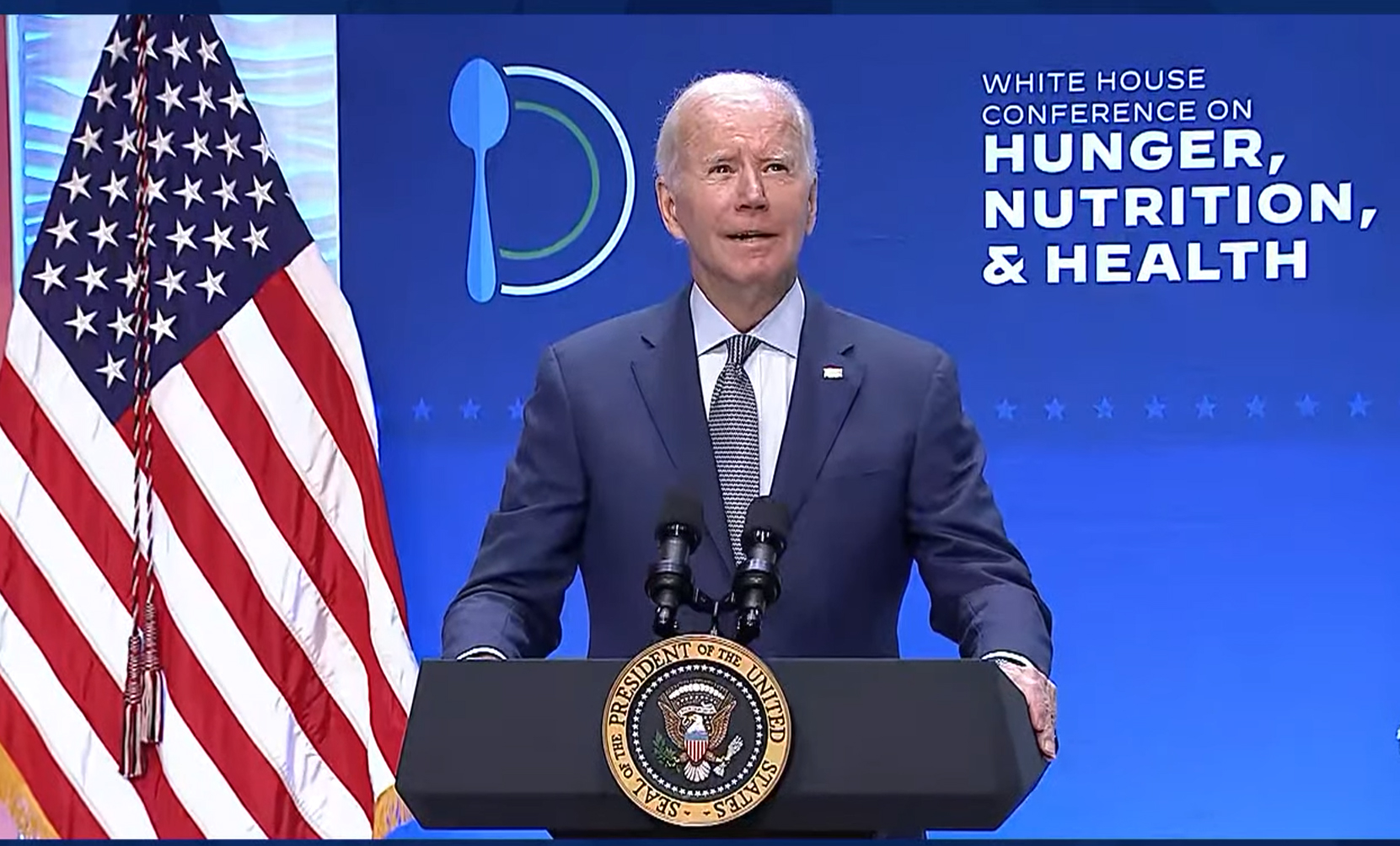
CAPTION: “We have to give families a tool to keep them healthy. People need to know what they should be eating, and the FDA is already using its authority around healthy labeling so you know what to eat,” said President Biden. White House Conference screen capture

The Conference and follow up actions, said President Biden on Sept. 28, are being devoted to “nourishing the soul of America so that no child goes to bed hungry and no parent dies of a disease that can be prevented. We can do big things,” he said about the stated 2030 goals of ending hunger, increasing healthy eating and physical activity, and reducing diet-related illnesses and other nutrition-related health inequities.

“But,” Biden declared: “We have to give families a tool to keep them healthy. People need to know what they should be eating, and the FDA is already using its authority around healthy labeling so you know what to eat.”

The President continued: “We can use these advances to do more to be a stronger and healthier nation, to achieve ambitious goals. We must take advantage of these opportunities when we have these children in a whole of government, whole of society approach. We need to think in ways we never thought before.”

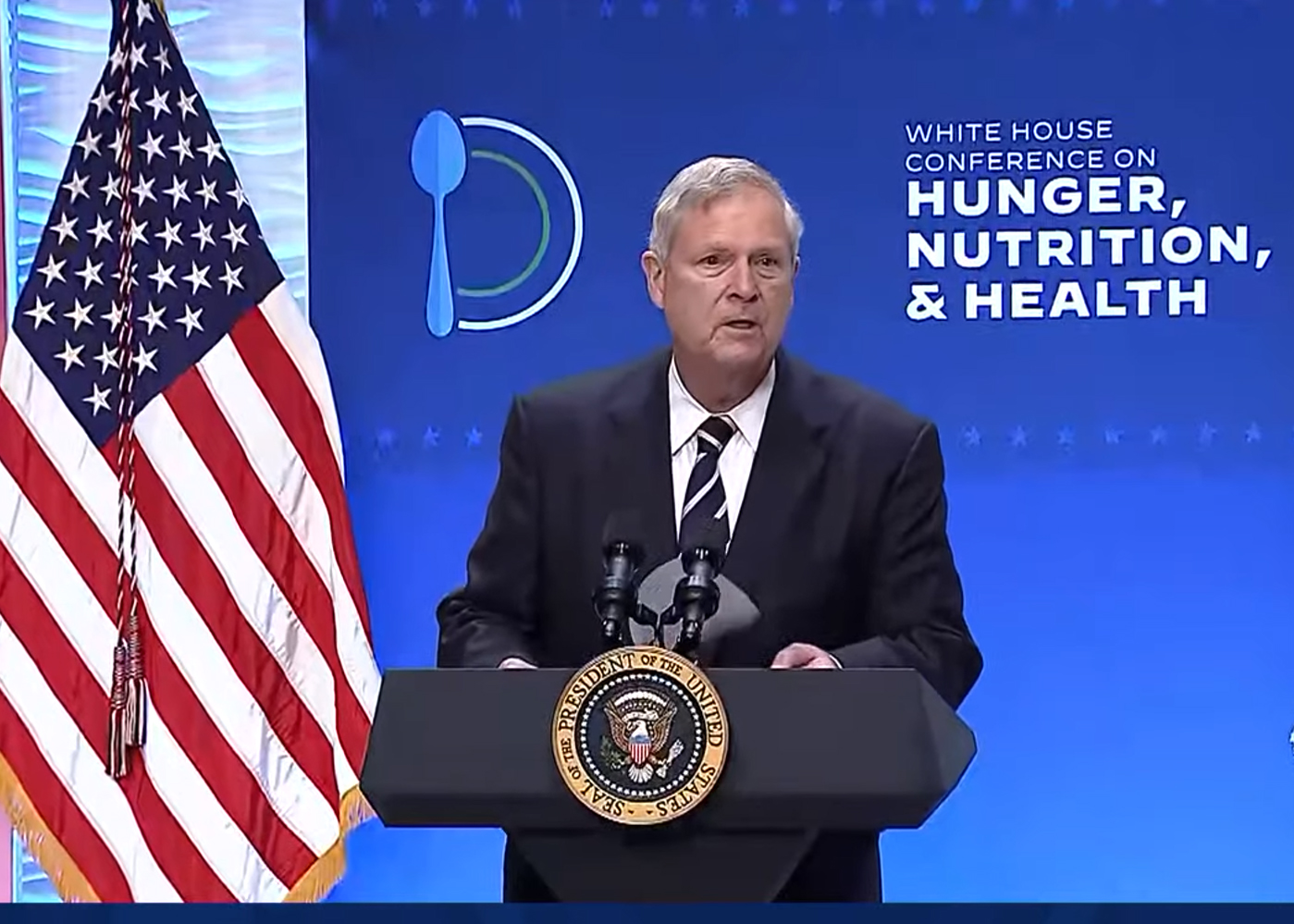
CAPTION: Ag Secretary Tom Vilsack told the White House Nutrition Conference crowd of more than 500 in-person and more than 6000 logged-in virtually that the Administration is looking to extend the child tax credits, provide more funds for more free school meals, and “take nutrition in a new direction using a whole of government approach that involves the entire federal family.” White House Conference screen capture

In his remarks ahead of the President, Ag Secretary Tom Vilsack stated that government programs feed 1 in 4 children. He and Biden both talked about expanding the child credit permanently. They talked about $2 billion in funding for food banks and schools, including $100 million for ‘incentives’ to make school meals healthier. They both noted funding to make free school meals available for 9 million additional children. A laundry-list of throwing money at a problem without re-evaluating the flawed guidelines that run the school meals and other USDA food programs despite preponderance of evidence that saturated fats are not the enemy.

There was talk of going “a new direction” but this is all process-based. There was no talk of reviewing the flawed Dietary Guidelines that helped get us here and that the Biden-Harris strategy puts so much emphasis on.

Parsing through the 44-page National Strategy, the bottom line is to expect more of the same drill-down on eliminating animal fats, only worse and with stiffer process, labeling and speech boundaries through FDA and the FTC.

We can expect nutrition bullying to commence — if we step outside of the still-vague but Dietary Guidelines-centered White House playbook. In fact, in addition to the FDA ‘Healthy’ label update, a small-print detail in the 44-page Strategy promises power and funding to the Federal Trade Commission (FTC) to scrutinize and penalize food marketing claims for being out-of-bounds on the Biden-Harris DGA-scripted nutrition field of play.

Vilsack noted the National Strategy’s approach is a “whole of government approach that involves the entire federal family.”

In preparation for the Conference, many have lamented the lack of transparency leading up to it. For months, the Conference website gave instructions on how to hold a ‘watch party,’ or a ‘satellite event,’ and how to rally support for nutrition and health ahead of time. But all of the necessary details were missing — until the day of the conference. 

Emailed invitations were sent to those who registered just three days before — requesting that they visit a web-portal and record an interview to provide input. There, people respond to White House questions and their faces are added to a streaming screen full of moving mouths — giving the appearance of broad input flowing in from Americans.

Made nervous by the lack of a published agenda or framework, over a dozen agricultural organizations had sent a letter to President Biden on September 8th asking for a “seat at the table.” Those organizations included American Farm Bureau and commodity groups for wheat, beef, sorghum, peanuts, canola, soybeans, barley, corn, sunflower, eggs and rice.

Dairy organizations were conspicuously absent from any of the pre-Conference letter-writing or other such public statements. But then, the dairy industry has its man Vilsack in play, and its DGA 3-a-day – so case-closed – can’t be bothered on the milkfat and whole milk issue.

On the agenda provided the day of the Conference, we found former DMI vice president of sustainability, Erin Fitzgerald — who now serves as CEO of the U.S. Farmers and Ranchers Alliance and who represented USFRA and referenced her boss at the dairy checkoff during a WEF panel in Davos earlier this year — leading a plenary session on “access to affordable foods.” Also, Chuck Conners of the National Association of Farmer Cooperatives led the plenary discussion on “empowering consumers to make healthy choices.”

(We learned after the Sept. Conference that National Milk Producers Federation and the National Dairy Council, funded by the mandatory dairy farmer checkoff, were invited to attend. They were represented, and they brought “student leaders” from GENYOUth. To read NMPF’s statement after the Conference, click here).

Key questions around “what are those healthy choices” to be compassed in tools and identified in FDA labeling went repeatedly unanswered as the discussions focused on approaches and processes, perhaps deeming the unsettled dietary science on fats to be settled science with no need for discussion.

Nutrition Coalition founder, advocate, author and investigative journalist Nina Teicholz has been writing about the Conference for weeks before it began, noting the lack of a pre-conference agenda and the refusal of the Administration to review the science on saturated fats ahead of this ‘landmark’ event.

She points out that the White House delegated Conference planning to the Dean of the Tufts Friedman School of Nutrition Science and Policy at Tufts University Professor Dariush Mozaffarian — developer of the Food Compass, which is a new method for rating and ranking foods in categories to be consumed frequently, modestly, and occasionally.

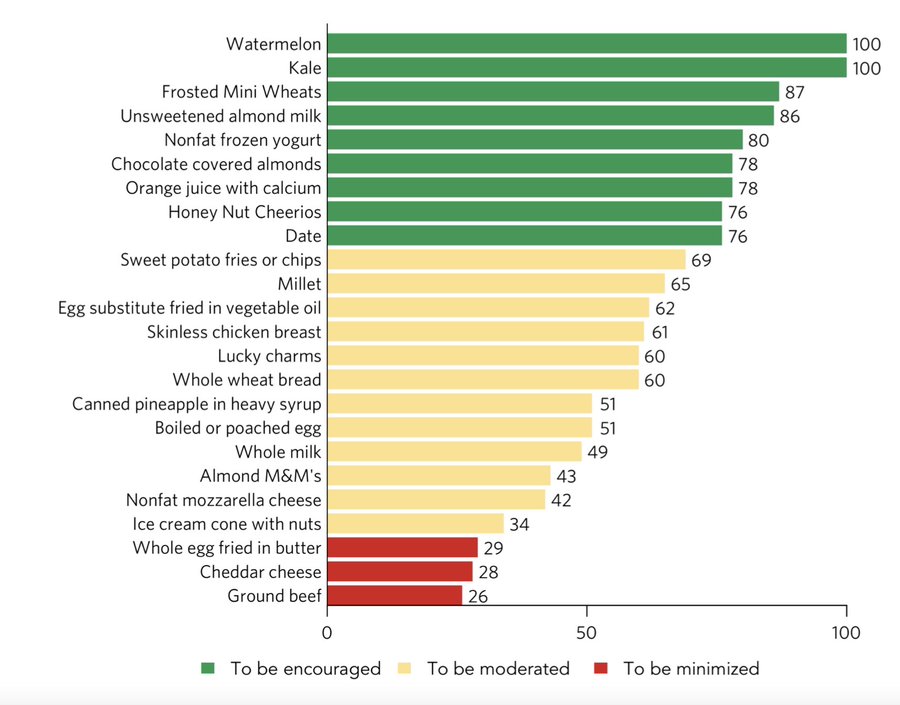
To understand what the Food Compass looks like — sugary cereals rank far ahead of the milk that goes in the bowl with them. And, nearly 70 brand-named cereals from General Mills, Kellogg’s, and Post are ranked twice as high as eggs cooked in butter! Alternative fake milk beverages, such as almond juice, rank ahead of skim milk and far ahead of whole milk. Potato chips (yes, potato chips) are an example of a food that ranks ahead of a simple hard-boiled egg and light-years ahead of whole milk, most cheeses and real beef.

In fact, the only cattle-derived product to get top sector ranking is plain non-fat yogurt. (Surprise: Danone was one of the Food Compass development sponsors). Meanwhile, most cheeses, whole milk, and beef ranked near or at the very bottom of the lowest categories.

Coincidentally, Mozaffarian’s department at Tufts also received a $10 million grant from USDA in November 2021 for a five-year project “to help develop cultivated meat” (aka lab-created meat) through assessment of consumer attitudes and development of K-12 curriculum.

Teicholz laments the lack of consideration by the White House, USDA, HHS and FDA as they ignore many reviews including the most recent state-of-the-art review on saturated fats, whose authors include five former members of the Dietary Guidelines Advisory Committee.

“These are the people who wrote the guidelines saying: ‘We got it wrong,’” writes Teicholz.

Their paper was published in the prestigious Journal of the American College of Cardiologists, whose Editor in Chief named it as one of the top 5 papers of the year. Science like this appears to be off the menu of the White House nutrition playbook.

The entire playbook hinges upon the main tenets of the current Dietary Guidelines for Americans even though the DGAs are being questioned by the scientific community… Even though the DGAs have screened out sound science on dietary animal fats and proteins for at least the past three cycles (15 years)… Even though the rates of American obesity and diet-related illnesses were mostly stable pre-DGA but have risen steadily since the DGA cycles began… And even though these consequences have risen dramatically among children and teens during the past decade since school meals, school milk and a la carte competing foods and beverages were further restricted to the low-fat levels of the DGAs.

What does the White House blame for this poor performance? The playbook cites the Covid pandemic food choices of Americans — stuck at home — for the deteriorated statistics. Unbelievable! These statistics have been deteriorating for decades, especially since 2012.

Looking over the playbook, it closely follows the pattern of FDA’s Multi-year Nutrition Innovation Strategy proceedings that have been quietly underway after public hearings in 2018-19 until the ‘Healthy’ label proposal was announced Sept. 28, 2022.

Appearing in the White House playbook is the proclamation that food and beverage packaging will move toward simpler nutrition guidance under FDA, that an easily recognizable ‘healthy symbol’ will be reserved for front-of-package labeling on those foods the government deems Americans should eat, and a potential ranking system for symbols will be developed for packaging of foods and beverages the federal government deems unhealthy.

This is all coincidentally similar to the Tufts Food Compass, and the substance behind these simplified ‘healthy’ (or not) symbols is a doubling-down on the low-fat DGAs as a primary base metric. Here is a deep dive into the Tufts Food Compass that Mozaffarian, the White House Nutrition Conference Chairman, had a critical role in developing to now be the formation of future food policy. Read the comprehensive analysis here

The National Strategy calls for even more adherence to the flawed DGAs among every sector of the economy beyond government feeding programs, schools, hospitals, and military diets to include foodservice offerings, supermarket layouts, online shopping algorithms, even licensing for all daycare or childcare providers and nutrition certification for these licensed childcare providers – not just those receiving government subsidies for food. 

This is so-called “stealth-health” at its best — or rather its worst.

The Biden Administration professes to be concerned about the 1 in 10 households experiencing food insecurity and the rise in diet-related diseases among the leading causes of death and disability in the U.S. The White House cites data showing 19 states have obesity prevalence at 35% or higher with 1 in 10 citizens having diabetes, 1 in 3 with cancer in their lifetime, and nearly 5 in 10 with high blood pressure. 

Yet, there is no pause for a comprehensive review of the very dietary guidance, the DGAs, that helped get us here. 

The National Strategy reveals how the Administration is assembling executive orders, legislative prompts, calls for action among food organizations, companies, agencies, academia and state and local governments to get everyone on the same page making Davos-style pledges and to conform to the federal playbook.

In the executive summary, the President writes: “Everyone has an important role to play in addressing these challenges: local, State, territory and Tribal governments; Congress; the private sector; civil society; agricultural workers; philanthropists; academics; and of course, the Federal Government.”

(Note Biden’s only reference to farmers or food producers is as “agricultural workers.”)

The playbook’s five pillars talk about improvement, integration, empowerment, support and enhancement. It coins phrases like ‘food as medicine’ and ‘prescriptions for food.’ Reading deeper, we see a launch pad for a new method of nutrition ranking and labeling with the primary factors listed as low-sodium, low-fat and reduced added sugars.

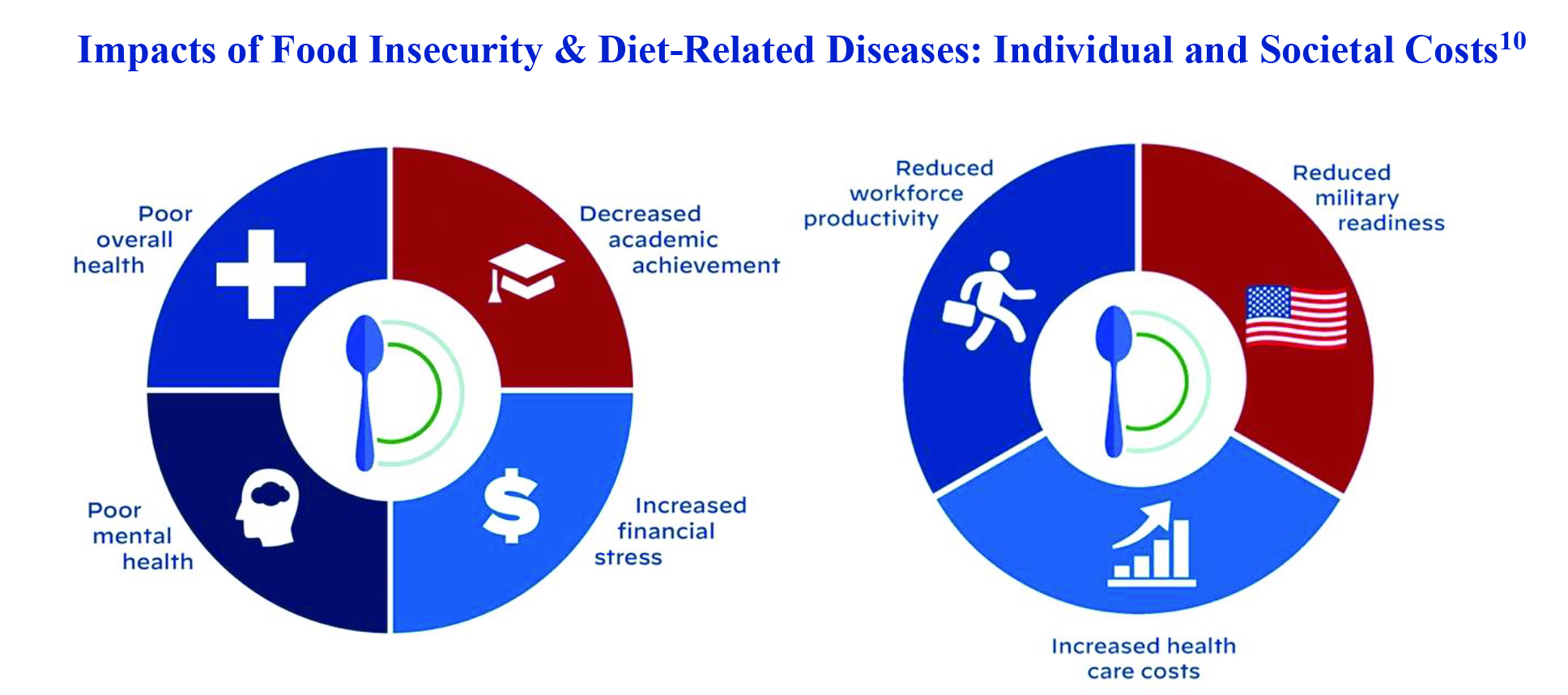
CAPTION: This diagram on page 6 of the 44-page Biden-Harris Nutrition Strategy, the White House ‘playbook,’ clearly identifies the very real concerns, but the pillars of this strategy double-down on perpetuating the problem by giving even more influence to the low-fat / high-carb Dietary Guidelines that many in the scientific community are questioning. The ‘playbook’ also increases the reach of the federal government into the diets of children in daycare and schools. 

The playbook’s diagrams show us the concerning impact of food insecurity and diet-related diseases in poor overall health, poor mental health, increased financial stress, decreased academic achievement, reduced workforce productivity, increased health care costs and reduced military readiness – but then doubles-down on the solution being more of the same low-fat / high-carb dietary path that got us here.

The White House playbook states that, “The vast majority of Americans do not eat enough vegetables, fruits or whole grains and eat too much saturated fat, sodium and added sugars.” But at the same time, on the saturated fat question, the data show per capita consumption of red meat has declined since the start of the DGAs, and milk consumption has substantially declined.

Americans are being called upon to “unify around a transformational vision,” said Biden. 

This vision includes more federal control of diets and nutrition education after failing miserably with the control it already possesses. There is no talk of revisiting the path we are on, just doubling-down on how to get more Americans onto that DGA path, to tell them what to eat, and to put the FDA stamp on ‘approved’ foods and beverages while having the FTC investigate health and nutrition claims that fall outside of the flawed DGAs.

Translation: Let the ‘nutrition bullying’ from the White House bully-pulpit begin. Some of us are ready to rumble.

-30-

Despite frustrations, G.T. is not giving up on ending federal prohibition of whole milk in schools

After his whole milk in schools amendment failed on a committee-level party-line vote in August, G.T. Thompson said he’s not giving up, but that a change in leadership is needed to get this done. “Current leadership has an anti-kid, anti-dairy bias. This has become all politics with no logic,” he said.
Bills that would end federal prohibition of whole milk in schools are before the United States Congress and in the Pennsylvania and New York state legislatures. In the U.S. House there are 95 cosponsors. In the Pennsylvania House, it was passed almost unanimously, but the PA Senate refuses to run it because of lunch money scare tactics. Proponents of the various whole milk bills say Democrat party leaders oppose this common sense measure. Some Democrat lawmakers have signed on along with the Republicans as cosponsors; however, as the fight to include it as an amendment in childhood nutrition reauthorization proved — the Democratic leadership has another agenda for America’s foods and beverages and has therefore halted any movement of this measure to end federal prohibition of whole milk in schools and in daycares and in WIC. This bill is simply about allowing a choice that would be healthy for America’s children and rural economy. The evidence is overwhelming that the Dietary Guidelines and Healthy Hunger Free Kids Act got it wrong. Our children and farmers are paying the price for this mistake. Those in charge don’t seem to care about science, freedom of choice, nor petitions signed by tens of thousands of people.

By Sherry Bunting, Farmshine, August 5, 2022

WASHINGTON, D.C. — An attempt by Congressman Glenn “G.T.” Thompson (R-Pa.) to get his Whole Milk for Healthy Kids bill attached as part of an amendment to the Childhood Nutrition Reauthorization package failed last week despite the bill having nearly 100 cosponsors, including both Republicans and Democrats.

Joining him in introducing the amendment during the Committee’s markup of the Democrat’s child nutrition reauthorization were Representatives Elise Stefanik (R-N.Y.), Fred Keller (R-Pa.) and Russ Fulcher (R-Idaho).

“Unfortunately, the Democrats folded on us, and the amendment was defeated,” said Thompson in a Farmshine phone interview Tuesday (Aug. 2). The amendment also included language that would have allowed whole milk for mothers and children over age 2 enrolled in the WIC program.

“The current leadership has an anti-kid, anti-dairy bias, that’s my interpretation,” Thompson said. “Our whole milk provisions are good for youth and their physical and cognitive well-being. It’s also good for rural America.”

Thompson said his effort as a member of the House Committee on Education and Labor was to include the substance of two bills related to whole milk in the huge reauthorization package. Child nutrition reauthorization is normally a five-year cycle, but it has not been updated in over a decade since the Healthy Hunger Free Kids Act passed under a Democrat majority in 2010 to double-down on anti-fat policies in all government feeding programs, including schools.

“We wanted moms and children to get access to the best milk, but this has become all politics with no logic,” he said.

The Committee moved the child nutrition package forward last week without the whole milk provisions. That package will now go to the full House for a vote.

Thompson said its fate is uncertain, that it is likely to pass the House, although the margins are tighter there, he explained. 

However, he believes the child nutrition package will be “dead on arrival” in the Senate where it likely will not receive the 60 votes needed to pass.

If that happens, then the task of writing it would begin again in the next legislative session (2023-24).

“Our best hope (of getting the whole milk provisions for schools and WIC) is for Republicans to take back the majority in November,” said Thompson, explaining that he is already working with Ranking Member Virginia Foxx, a Republican from North Carolina. “She understands the issue and knows this is one of my top priorities.”

If Republicans gain a House majority in the midterm elections, Foxx is a likely candidate for chair of Education and Workforce, and Thompson would be a senior member of that committee as well as being a likely candidate for chair of the House Agriculture Committee, where he is currently the Ranking Member.

In fact, he said he is “very positive” about being successful getting Whole Milk for Healthy Kids out of committee under Republican leadership and is already working hard to ensure its success out of the full House, pending who is in leadership after the midterms.

Thompson said he is also working on allies in the Senate.

Up until now, it has been the outgoing Senator from Pennsylvania – Pat Toomey – who has “carried the milk” on this issue with companion legislation in the Senate.

“His bill impressed me in how he and his team thought through the issue on fat limits that are imposed on our nutrition professionals in schools,” said Thompson, taking note for future reintroductions of his bill.

On the House side, the Childhood Nutrition Reauthorization originates in the Education and Workforce Committee, but in the Senate the package originates in the Agriculture Committee.

Thompson notes that if the Republicans have a majority in the Senate, the current Ranking Member of the Ag Committee, John Boozman of Arkansas, is a likely candidate for chair. Boozman, who previously served in the U.S. House and was a mentor to Thompson. Today, they are the Ag Ranking Members in the two chambers and work closely on issues important to farmers and ranchers.

Back in 2018, when Thompson was asked at a farm meeting why his first introduction of the Whole Milk for Healthy Kids did not pass when Republicans did have a majority in the House and Senate in the 2017-18 legislative session, Thompson noted that National Milk Producers Federation, at that particular time, supported a more gradual shift to first codify the permission for 1% flavored milk then work up to the whole milk provision. 

When asked the question again after his amendment failed, he reflected, noting that in the 2017-18 legislative session, the school milk issue was not well-understood in either chamber of Congress. Then Secretary of Agriculture had made an executive decision to provide flexibility for schools to serve 1% flavored milk instead of limiting it to fat-free. But a bill to codify that change into law has also failed to pass in its three attempts as well. 

It’s not hard to believe that members of Congress do not understand this issue — given the fact that it has taken many years and much grassroots education effort to open even the eyes of parents to the school milk issue. Today, many parents are still unaware that their children over age two at 75% of daycares and 95% of schools (any that receive any federal dollars) do not have the option of drinking whole and 2% milk. Their only milk options by federal prohibition are 1% and fat-free. People just don’t believe it to be true and figure the problem kids have with milk at school is because it’s not chilled enough or comes in a hard to open carton.

In the current effort to get whole milk provisions into the child nutrition reauthorization, however, Thompson confirmed that in addition to the Grassroots PA Dairy Advisory Committee and 97 Milk effort —  “all major dairy organizations were working on this.”

Put simply, said Thompson, if the Republicans gain a majority in November, they are likely to be the ones who will write the next child nutrition package. As the one written recently by the Democrats is headed to the full House and has a tough-go in the Senate, Thompson said even if it does pass, targeted legislative fixes could be achieved in the next legislative session, pending a change in leadership.

“My goal is to work hard. The package that is going to the House now under the Democrats not only does not include whole milk provisions, it continues to micromanage school nutrition professionals who are the ones who know the kids the best and are in the best position to know how to help them eat in a healthy way,” said Thompson.

“Under the current (Healthy Hunger Free Kids Act of 2010) and this update — if it passes — kids aren’t eating the lunches. If they are not eating the meals (or drinking the milk), then it is not nutritious,” he added.-30-

-30-

School lunch money scare tactics are holding up PA whole milk bill

Cousins Grace and Bella are my youngest granddaughters, pictured here in 2020 obviously enjoying their milk — mustache and all. They both started kindergarten in 2021, where for the next 12 years, their meals at school will not allow their choice of whole milk or even 2% milk — unless state and/or federal lawmakers act. Children consume 2 meals a day, 5 days a week, 75% of the year at school where they are denied the simple choice, even a la carte. A saddening and maddening state of affairs.

As adults, we should be ashamed of ourselves

By Sherry Bunting, Farmshine, July 8, 2022

I guess it’s true, good dairy bills – for more than a decade now – continue to be introduced in the Pennsylvania legislature, only to pass in the House but then die in the Senate. We’ve seen it with the many bills over the years aimed at amending the Pennsylvania Milk Marketing Law, and now we are seeing it with the Whole Milk in Pennsylvania Schools Act.

HB 2397 was introduced by Representative John Lawrence, and it passed the State House almost unanimously (196 to 2) in April. It then passed the State Senate Agriculture Committee and was re-referred to the State Senate Appropriations Committee, where it sits today digesting the “scare tactics” of its opponents – causing some heartburn for lawmakers thinking USDA could withhold all free and reduced school lunch reimbursements in Pennsylvania.

USDA is the bully waving children’s lunch money like a mighty sword demanding submissive obedience, even suggesting in May that schools lacking appropriate LGBTQ+ policies for “gender affirming” use of locker rooms, rest rooms and sports participation could be denied their free and reduced school lunch reimbursements. USDA has since recanted this notion — saying they meant only to address discrimination associated with the provision of the food. That’s more like it. But that redirection of the Department’s prior statement did not happen until more than 20 states’ Governors and Attorneys General threatened to sue the Biden Administration for using the lunch money of economically disadvantaged children to implement federalized bathroom gender policies.

On whole milk in schools, similar scare tactics are being used to prevent the Pennsylvania state bill from being voted on in the Senate chamber.

Bow thee, oh Pennsylvanians, to King Vilsack and the Dietary Police.

Even a certain farm paper published in Lancaster County has made it their business to take every point of whole milk choice supporters, the evidence, the law, and tear it apart – piece by piece. A head-scratcher, for sure.

I have been digging into the original Richard B. Russell National School Lunch Act of 1946 and the subsequent amendments through the 2010 Healthy Hunger Free Kids Act (HHFKA), as well as various memos from USDA to state nutrition program directors when the ‘Smart Snacks’ rules were implemented to govern a la carte beverages in 2012. I have also read through Pennsylvania Department of Education audits of schools, which are all publicly available. I can find no tie between a state law offering a self-select choice of whole milk (paid for with state or local or parental funds) to students as grounds for withholding free and reduced school meal reimbursements from schools. In fact, quite the contrary. 

Even the individual schools that would choose to provide the choice of whole and/or 2% milk to students could not be threatened with loss of their free and reduced lunch subsidy — as long as the meal pattern for the ‘served’ lunch is met; however, more importantly, it is clear that the only audit feature tied specifically to this reimbursement is that the financial eligibility of the recipients is properly qualified.

Here’s the key: Even if a school is deemed out of compliance on meal pattern or does not have a strong enough ‘wellness policy’ on ‘competing foods’ — as would be the case if whole milk was offered as a choice, USDA does not have the authority to yank the free and reduced school meal subsidy on that basis. This authority is linked to eligibility, financial eligibility.

Research into the 2010 HHFKA shows that the loss of this reimbursement is directly tied to how the students/families are qualified as financially eligible. There are extensive details on this in the law, and the auditing schools go through, the paper trail for eligibility, is extensive. This is a separate audit section from the meal pattern performance.

In fact, in passing the 2010 Healthy Hunger Free Kids Act (HHFKA), the U.S. Congress clearly stated — separately — that schools can receive a 6-cents per eligible meal ‘performance increase’ as an incentive to meet the new HHFKA-prescribed meal patterns and in addressing competing foods and beverages in school wellness policies per USDA. This ‘bonus’ is tied to the Food and Nutrition Board of the Academy of Sciences, not the Dietary Guidelines. (A 2018 National Academy of Sciences review was highly critical of the Dietary Guidelines process.)

In setting a 6-cent performance increase per eligible meal in the 2010 HHFKA, Congress also capped the total to be spent for this meal-pattern incentive at $50 million annually nationwide. This is over and above the separate free and reduced meal reimbursement, itself, which dwarfs the performance bonus at $14 billion annually nationwide. 

These are separate portions of the 2010 HHFKA. In Section E of the law, Failure to Comply spells out precisely what is at risk if a school is not in meal pattern compliance — the 6 cents increase per eligible meal, not the reimbursement for qualified free and reduced meals.

As for the ‘Smart Snacks’ rules promulgated by USDA and implemented fully in 2012, which govern the a la carte beverages and snacks that can be “available” on school premises during school hours? It is important to note that USDA’s own memos to state directors in 2014 clarified that the Department will “provide exemptions for certain foods that are nutrient dense, even if they may not meet all of the specific nutrient requirements.”

Whole milk is a nutrient dense food.

However, in playing ‘dictator’ with our children’s health, USDA chose its exemptions and ignored the nutrient density of whole milk. What did they use as an example in a memo to schools? “Peanut butter and other nut butters are exempt from the total fat and saturated fat standards since these foods are also nutrient dense… and we want students to consume more of these foods,” a memo to state directors stated.

Perhaps Impossible Burger is another ‘exemption’ given its calories, fat and sodium far exceed USDA rules, but it was so-impossibly approved by USDA in May 2021 for actual federal meal reimbursement. Impossible Burger is not particularly nutrient dense – but real beef is, and real beef is greatly limited in school meal pattern compliance, along with the ban on whole milk.

Bottomline, the USDA under Secretary Vilsack in 2012 took aim at beverages. In 2018, while working for DMI as one of dairy checkoff’s highest paid executives serving as President and CEO of the U.S. Dairy Export Council, Tom Vilsack was cheered and awarded during the dairy checkoff founded and funded GENYOUth Gala that year for his “success” in “finally” addressing the beverage situation in schools. 

Those were the words of former President Bill Clinton, a vegan, who spoke at length during the Gala about the beverage problem in the obesity crisis and how his friend Tom is the person who finally “got it done.”

What did he get done? He booted out the whole milk and paved the path for all of PepsiCo’s artificially sweetened and partially artificially sweetened beverages in school cafeterias – the Gatorade Zero, Mountain Dew Kickstart, Diet Coolers, Diet Cola’s, flavored waters – with that blend of high fructose corn syrup and sucralose that keeps them under 60 calories (the USDA threshold for an a la carte beverage per the Smart Snacks rules) and of course fat free – but also nutrition free. (PepsiCo got the GENYOUth Gala award the following year)

Sadly, the U.S. Congress also let dairy farmers down in 2010 by including the reference to the Dietary Guidelines in the one and only sentence on school milk in the HHFKA. All other nutritional references for the meal pattern are linked to the Food and Nutrition Board of the Academy of Sciences. 

Here’s what the HHFKA states under Nutrition Requirements for Fluid Milk Section 9(a)(2)(A) is amended to say: “shall offer students a variety of fluid milk. Such milk shall be consistent with the most recent Dietary Guidelines for Americans.” 
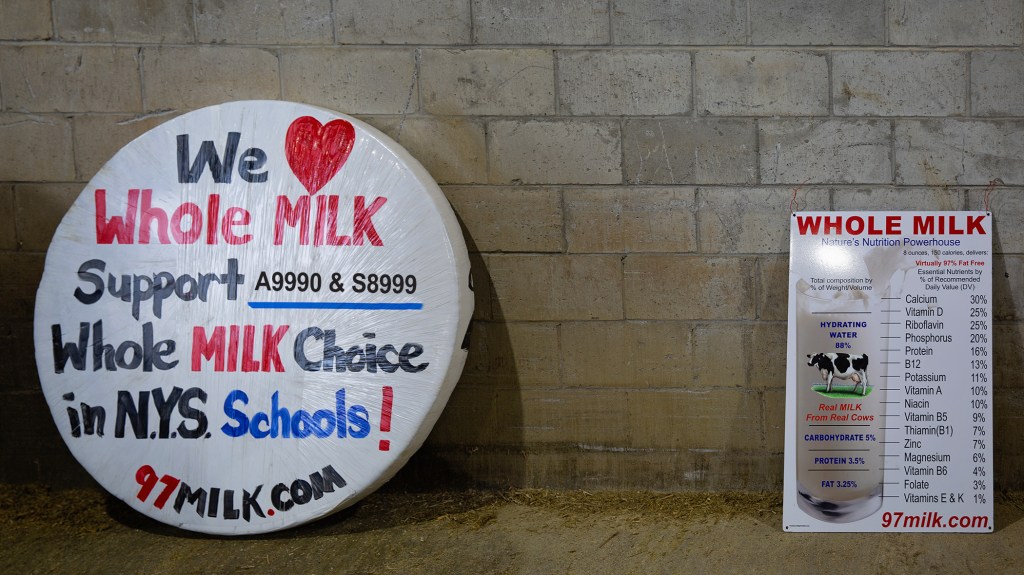
Even that milk sentence is ‘loose,’ and open to interpretation. Is the DGA recommendation of consuming ‘less than 10% calories from saturated fat’ a per-food, per-beverage, or per-meal ordinance or a whole-day allotment? 

We are told over and over that the DGAs are recommendations. Somehow USDA didn’t get that memo and decided to use DGAs to bully milk choices of children.

Never mind how counterproductive this is for children. When removing satiating nutrient dense fat from whole nutrient dense foods, kids compensate and replace this with nutritionally empty carbohydrates. 

Such were the early warnings of school foodservice personnel I interviewed over a decade ago as they piloted the draconian rules  before they were implemented. 

Such is also among the recent findings of the Milky Way controlled study by Australian researchers involving two sets of children — one having their milkfat consumption increased and the other having their milkfat consumption decreased. 

Care to guess which group saw a reduction in Body Mass Index percentile? Or which group had higher blood sodium levels? Or what the differences were in other biomarkers related to cardiovascular and metabolic health? (An article about this study appeared in the May 20 edition of Farmshine. It was the group of children who increased milkfat consumption that saw decreased BMI percentile and it was the group of children who decreased milkfat consumption that saw increased blood sodium levels! All other biomarkers for health were the same between the two groups.)

There are so many tentacles behind the scenes of how this whole school meal and school milk thing really work, that it boggles the mind – so much so that vested interests can come in and scare well-intentioned state lawmakers into thinking if they dare pass this bill and make nutrient dense flavorful whole milk available to schoolchildren as a CHOICE, that somehow the economically disadvantaged children of the Commonwealth could go hungry because USDA will take their lunch money. School foodservice directors are undoubtedly scared as well because the free/reduced reimbursements are a huge part of their budgets.

I’ve got news for the opponents of this bill, the State Senate Appropriations Committee, the Governor and the USDA: Our children are already suffering from hunger pangs in math class, and the absence of nutrient density in their school meals – on your watch right now, today. Do you care? Do the opponents of the whole milk bill spewing their scare tactics care?

The federal prohibition of whole milk in schools is the tip of a mighty iceberg that is failing our children while paving the path to an even less healthful future for America and a less economically healthful status for Pennsylvania dairy farms, the backbone of our state’s ag economy into the future.

We just celebrated our nation’s Independence Day, and yet our children cannot choose whole milk at school — even if their locally elected school boards want to offer it and even if their parents pay for it.

No one supporting this bill believes USDA will reimburse the actual whole milk, itself. Supporters just want the choice to be fully recognized as legal so that as parents, grandparents, farmers, citizens we can get about the business of next finding a way to provide this nutrient dense, satiating, delicious option to the children in our communities who consume two meals a day, five days a week, three-quarters of the year at school.

The issue spills out from the schools into other foodservice meals. It is heartwrenching for this reporter to listen to adults involved in dairy checkoff boast to farmers about how they are getting whole milk and cream into McDonald’s coffee drinks, into foodservice hot chocolate, into all of these trendy adult venues – while our children get a tiny fat-free chocolate milk in their happy meal because this school edict spills over into foodservice chains being bullied to do the same outside of school ‘for the kids’.

As adults, we should be ashamed of ourselves and reflect on our pathetic disregard for our children.

-30-

Global Symposium: Milky Way Study reinforces why children should be allowed to choose whole milk

Therese O’Sullivan, professor of nutrition and dietetics at Edith Cowan University in western Australia shared results from the Milky Way Study, answering the question: “Should our children be consuming reduced fat or whole fat dairy products?” The short answer, according to the evidence: “Let them choose!” IDF Symposium screen capture

Other countries are taking note, when will the U.S. get it right?

By Sherry Bunting

BRUSSELS — A new double-blind randomized study of children consuming whole fat vs. low fat milk and dairy reinforces the already accumulated evidence that the choice should be allowed, especially for children, according to Professor Therese O’Sullivan in nutrition and dietetics at the Edith Cowan University in western Australia.

“The Milky Way Study suggests healthy children can safely consume whole fat dairy without concern. Future dietary guidelines can and should recommend either whole or reduced fat dairy,” O’Sullivan confirmed as she presented the study’s results during the Nutrition and Health Symposium organized by the International Dairy Federation in Brussels, Belgium last Thursday (May 12).

The virtual event was attended by over 200 nutrition and health professionals from all over the world. They heard from eight experts and two moderators from various regions of the world, focusing on the role dairy plays across life stages. The first five sessions of the daylong event focused on the role of dairy in maternal diets and for children and teens. The last half focused on aging adults.

The Milky Way Study is deemed the first ‘direct dairy intervention’ study, and it supports the already accumulating evidence that children should be able to choose whole fat milk and dairy as there is no scientific or health reason not to let them choose, O’Sullivan indicated.

The study was costly and time intensive as a double-blind randomized intervention in which the whole fat dairy group consumed more milkfat during the study than their normal consumption had been before the study, and the low fat dairy group consumed less.

Continual testing during the study period showed no statistical differences in key health and nutrition biomarkers except the whole fat milk group’s BMI percentile declined during the study period. This is a key result because this is the first “intervention” study to test “causation” in what the already accumulated evidence shows.

The push by dietary guidelines to limit milkfat in countries like the U.S. and Australia was mentioned during panel discussion in relation to the Milky Way Study, supporting studies, and meta-analysis, with experts noting these guidelines need revisited.

“There is no evidence to suggest that moving to low fat dairy helps,” O’Sullivan said, noting there were no significant differences between the whole fat and low fat study groups when it came to the children’s daily caloric intake, blood pressures, blood cholesterol and lipids, cardiometabolic disease — or any other measure.

However, O’Sullivan did observe a slight trend toward a reduction in BMI (body mass index) percentile in the study group consuming whole fat milk and dairy vs. low-fat milk and dairy.

As the primary researcher on the Milky Way Study, O’Sullivan found it interesting that the daily calorie intakes of both groups were equal, even though the group of children consuming whole fat milk and dairy were getting more calories in their dairy servings because the fat was left in.

“This showed us that as the calories came out of milk in the low fat group, the kids replaced those calories with something else,” O’Sullivan reported.

The sodium intakes were also higher in the low-fat milk group, suggesting the “replacement calories” came from snacks.

O’Sullivan noted that another “very interesting finding was that we didn’t see any improvement in blood lipids in the low fat group that we would expect to see based on the theory of saturated fat increasing lipids,” she said.

Bottom line, she noted: “Whole milk and dairy had a neutral or beneficial effect on cardiovascular (biomarkers) with no difference in lipids, and a small decrease in LDL (bad cholesterol) in the whole fat dairy group.”

She also observed that as the calories came out of the milk in the low fat group, the children were coming up in their consumption of other foods that – depending on their choices — could have an impact on lipid profiles.

(This basically supports the tenet that whole fat milk and dairy is satiating, satisfying, and because it is nutrient dense, children may be less likely to keep ‘searching’ for needed nutrition via salty, sweet and high-carb snacks. The Milky Way study supports what many have long said should be changed in dietary guidelines to increase and make more flexible the saturated fat limits and return the choice of whole fat milk and dairy to schools and daycare centers.)

“High fat dairy foods are not detrimentally affecting adults, children or adolescents,” said O’Sullivan in discussing supporting research and meta-analysis. She noted that her three-month Milky Way Study could be repeated for 12 months for more data, but that it is in line with other evidence.

During the panel discussion, nutrition experts talked about some of the issues in vegan / vegetarian dietary patterns, noting that even when given vitamin and mineral supplements, studies show children and teens could not get their levels where they needed to be in many cases, especially true for B12 and calcium, key nutrients found in milk.
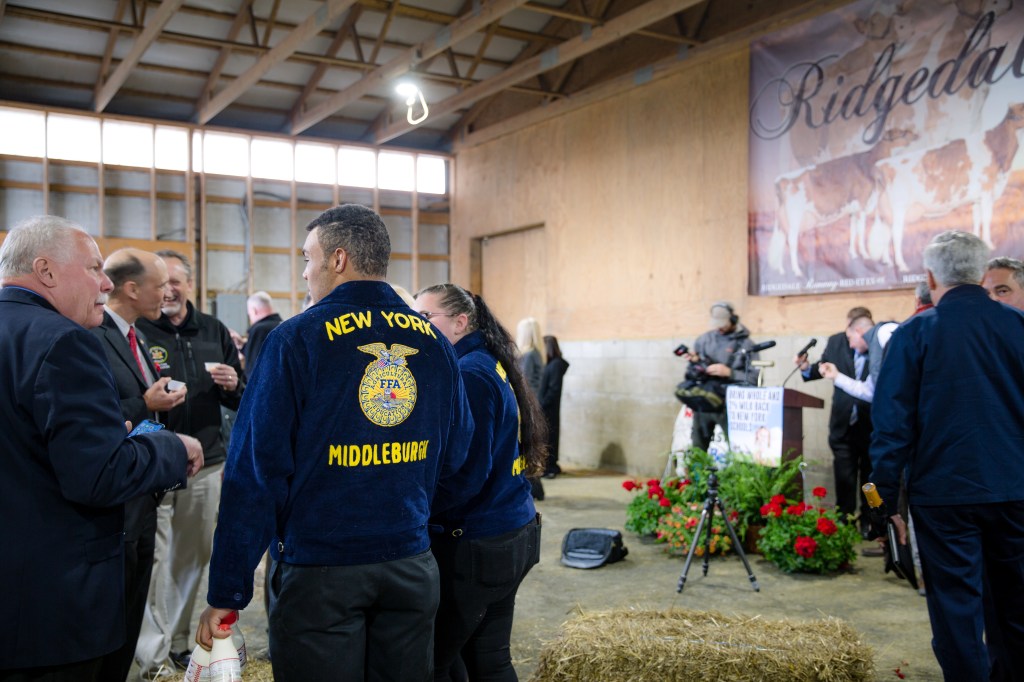
One attendee asked why saturated fats are always ‘the bad guys’ in the dietary guidelines, wondering if there was any associated health risk effect in going from the whole fat to the low fat in the first place.

“Similar to other studies, we saw the kids were good at regulating their food intake to appetite and as we take away the fat, they replace it with something else for the calories to be the same,” O’Sullivan replied. “In one group, they ate more tortillas, in another we noticed sodium intakes went up, suggesting they ate more snack foods (when the fat was removed from the milk and dairy).”

She reminded attendees that there are also other types of fats in milk, including Omega 3 fatty acids.

“Kids do not have much Omega 3 in their diets because they are not as likely to be eating oily fish,” said O’Sullivan. “In the low fat group (in the Milky Way Study), when Omega 3 status went low, they were not replacing it.”

This means the whole fat milk group had an advantage in maintaining Omega 3 status also.

O’Sullivan explained that researchers looked at the membranes of the red blood cells and saw the long chain fats were also down, so if they stayed on that (low fat) diet, and did not have increased Omega somewhere else in the diet, “they may have a health impact down the line.”

An attendee from India noted their government is planning to introduce milk into the supplemental feeding programs for children, with milk programs in schools, beginning with elementary schools.

Increasingly, the global focus is on milk in schools, and this means the type of milk recommended by government dietary guidance is so important.

Attendees also wanted to know “How much saturated fat would be recommended daily for children?”

(In the U.S., schools, daycares and other institutional settings are required to keep calories from saturated fat below 10% of total calories of the meal with the milk included, and of the milk as a competing a la carte beverage, with no attention paid to nutrient density.)

O’Sullivan indicated the answer lies in looking more at the food source of the saturated fat and the level of nutrients accompanying it.

“We need food-focused dietary guidelines,” she said, noting the evidence shows it’s important to change the focus from ‘dietary’ saturated fat ‘levels’ to looking at “the whole food matrix, the overall matrix of the food and the nutrients when the saturated fat is contained in that matrix.”

Good nutrition is key for health and wellbeing throughout life and can help us live our lives to the fullest, said Symposium organizers. They noted that dairy products are nutrient-rich and are a source of protein, B vitamins, iodine, calcium, phosphorus, vitamin A, zinc and potassium – making them an excellent choice for nutritional needs at all ages and stages of life. The unique combination of nutrients and bioactive factors, and how they interact with each other in the dairy matrix, combine to produce the overall effect on health.

In fact, during panel discussion, some noted there is so much emphasis now on maternal nutrition and the first 1000 days of life, whereas not enough attention has been paid to children and teens.

“Intervention is required in the three later phases: middle childhood (5-9 years), when infection and malnutrition constrain growth; adolescent growth spurt (10-14 years) and the adolescent phase of growth, brain maturation and consolidation (15-19 years) if a child is to achieve his full potential as an adult – an important but often overlooked area being the diet”, noted Professor Seema Puri from Delhi University, India.

Professor Lisanne Du Plessis from Stellenbosch University, South Africa explained that food-based dietary guidelines are a key way to provide healthy eating guidance in every life stage. 

However, she said, only a few countries such as South Africa, Kenya and Nigeria have guidelines tailored to the specific nutritional needs of children.

In fact, this was a glaring concern in the Australian and U.S. guidelines — given the emphasis on avoiding milkfat leaving children and teens missing out on the key nutrients if they didn’t consume the required low-fat and fat-free products.

Talking about what type of milk children can and should drink seemed like a basic area of discussion that needs intervention.

“Changing to reduced-fat dairy does not result in improvements to markers of adiposity (high body mass index) or cardiometabolic disease risk in healthy children,” O’Sullivan stated.

Contrary to popular belief, she said, “there are no additional health benefits to consuming low-fat or fat-free dairy for children.”

Not only did conclusions from the Milky Way Study back this up, but also comparisons to other supporting evidence were shared.

-30-

NY launches state bills to put whole milk option back in schools, joins PA in tackling federal prohibition

‘Let’s get this done’All urged to contact New York Governor and state legislators to ‘put whole milk back in schools’

By Sherry Bunting, Farmshine, May 6, 2022

SHARON SPRINGS, N.Y. — It was a rainy, dreary Monday (May 2), but dairy nutrition advocacy was bright and sunny in the feed room at Ridgedale Farm. The Conard family hosted a press conference supporting New York State legislation to bring whole and 2% milk back to schools.

Patterned after the Pennsylvania bill that has already passed the state House and is expected to be voted on in the Senate this month, the New York bill would support schools in their desire to offer more milk options, including whole and 2% milk produced on New York farms. The bill includes provisions for the Commissioner of Education to notify school superintendents about the flexibility as well as for the State Attorney General to file civil suits on behalf of schools if the federal government withholds other-than-milk funding.

While some media outlets continue to point to the superiority of federal regulations, there is a groundswell of state lawmakers saying “enough is enough” when it comes to the children and the farmers being victims of regs based on false narratives that push young people away from the very nutrition they need, and the very nutrients the Dietary Guidelines committee admitted their government-sanctioned dietary patterns are not providing.

The movement to have state legislatures get involved is not – as some would say – ‘political theater.’ No, this is the reality of where ‘we the people’ get a voice in the very sustenance of farms, food, and future generations. 

In Pennsylvania, it began with U.S. Congressman G.T. Thompson (Dist. 15) with H.R. 1861 as well as State Rep. John Lawrence (Dist. 13) with HB 2397. In New York State, it began with Congressman Antonio Delgado (Dist. 19) a prime cosponsor of H.R. 1861 and Assemblyman Chris Tague (Dist. 102) introducing A9990 with 25 cosponsors. Within a week of Tague’s bill, State Senator George Borrello (Dist. 57) sponsored S8999 with cosponsor Peter Oberacker (Dist. 51).

The New York legislation has been referred to each chamber’s Education Committee. Tague and Borrello are Ranking Members of each chamber’s Agriculture Committee.

Tague and Borrello were joined Monday by other supporting lawmakers, government officials, nutrition and education experts, dairy farmers, FFA members, school superintendents, town mayors, school principals, discussing why it is so important and urging a public groundswell to contact all NYS lawmakers and the Governor’s office in support.

“We are going to get whole milk back in schools. We’re dispelling the myths propagated by many over the years,” said Tague.

“I ask every one of you to spread the word — to your friends, to your family, to your neighbors, even your enemies. Ask them to join us. Call, email and text every single member of the New York State legislature. Tell them: ‘Put whole milk back in our schools!” he exclaimed.

“Then call Governor Hochul and tell Kathy we want whole milk back in our schools,” Tague explained that the bill must go through committee, then to the floor, then get voted on, and then it would go to the Governor.

“Government and misinformed people need to stop biting the hand that feeds them,” he added. “We cannot live without good nutritious foods. No farms, no food. How does a young person today make a go at it? Farmers are not only ‘price takers,’ they take everything else that comes at them. There’s never anybody that stands up for them. That ends today. We’re here to stand up for you.”

Senator Borrello reflected on the problem, which he said is “based on false narratives. A long time ago, they convinced us that taking skimmed milk and pouring it on high sugar, no fat, breakfast cereal was somehow a good breakfast choice for kids, and they’ve taken whole milk out of our schools. The result has been more waste, it ends up in the garbage. And what have we told our kids to do? It’s okay to have energy drinks and other things that just aren’t good for your health. We’ve also seen a dramatic rise in obesity rates.”

The data for these dietary patterns just is not there, said Borrello.

“Now we know that having fat in the diet is not only good for kids, it helps with their growth, and the kids that do drink whole milk actually end up with less obesity. The science had changed, but unfortunately, our government has not,” he said. “We should give the children the choice. But most importantly, we should recognize this is a good choice. That’s why this is an important bill. Most people don’t understand, that even whole milk is 97% fat free.”

Borrello observed these current dietary rules have further impact, that they are “the beginning of the push to take us away from products like milk, that want to push us toward things like almond beverage, which is not milk, and other things. That’s the real agenda here. Let’s understand that whole milk is nutritious. It feeds your brain. It feeds your body. It is probably one of the best, most nutritious drinks that you can have. But instead of serving that, they want to push these artificially created products onto our children and tell them that’s okay,” he said.

“We need to give them this (whole milk) choice because it is the right thing to do and because it is also good for agriculture, the most important and largest industry in New York State. People forget that. We are here today from all points of the state standing united to say this is the right time to bring back whole milk into our schools,” Borrello stressed.

Nutrition expert agreed

Toby Amidor, registered dietitian, nutrition expert, food safety consultant, instructor, speaker and author in New York City, drove out from Brooklyn to give her thoughts on the bill and whole milk misconceptions.

She confirmed the 2020-25 Dietary Guidelines for Americans “pinpoint three under-consumed nutrients that are found in milk, that people of all ages, including school age children, adolescent children, even toddlers, they don’t get enough of,” said Amidor.

“Those nutrients are calcium, vitamin D and potassium. Milk is a vehicle that you can get all of this nourishment into children in order to grow and thrive like we want them to. It’s an important thing to give them a choice. Choose (the milk) you want,” she explained.

Amidor was joined by various school system superintendents noting the key concern of student access to nutrition.

“School is where many children get their nourishment. So that’s where you want to give them these choices,” said Amidor. “It’s okay to have the fat in milk… it’s a nourishing drink, the fat increases the palatability of that nourishment – more power to it!”

School officials were blunt

“We have a large food service system and are highly focused on farm-to-school initiatives. Milk is one of those,” said Anita Murphy, Capitol Region Board of Cooperative Educational Services (BOCES) superintendent, representing 24 districts and 80,000 schoolchildren across four NYS counties.

“On a personal level, I don’t drink skim milk. If that’s the only thing there, I pass,” said Murphy. “I think that’s what happens with our children. If you walk into our cafeterias, what you will see is kids passing on milk. A lot of these kids eat two meals a day at school, and that’s it. That’s what they get, so if we don’t give them those things that they need and that they want that are good for them, we are making a mistake. We are willing to lend any support you need to get this done.”

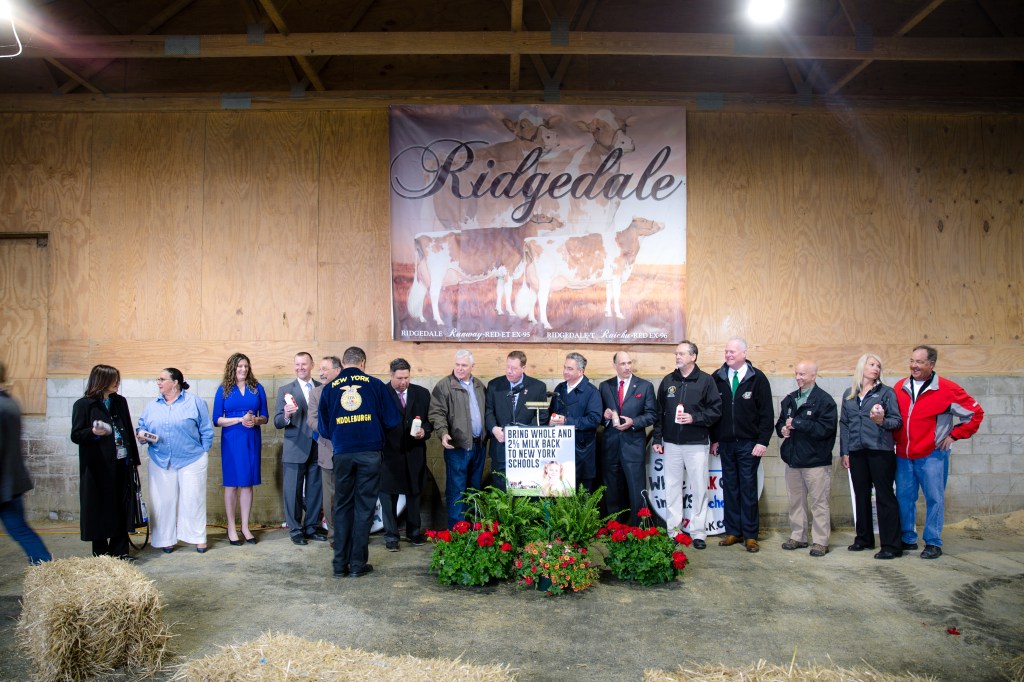
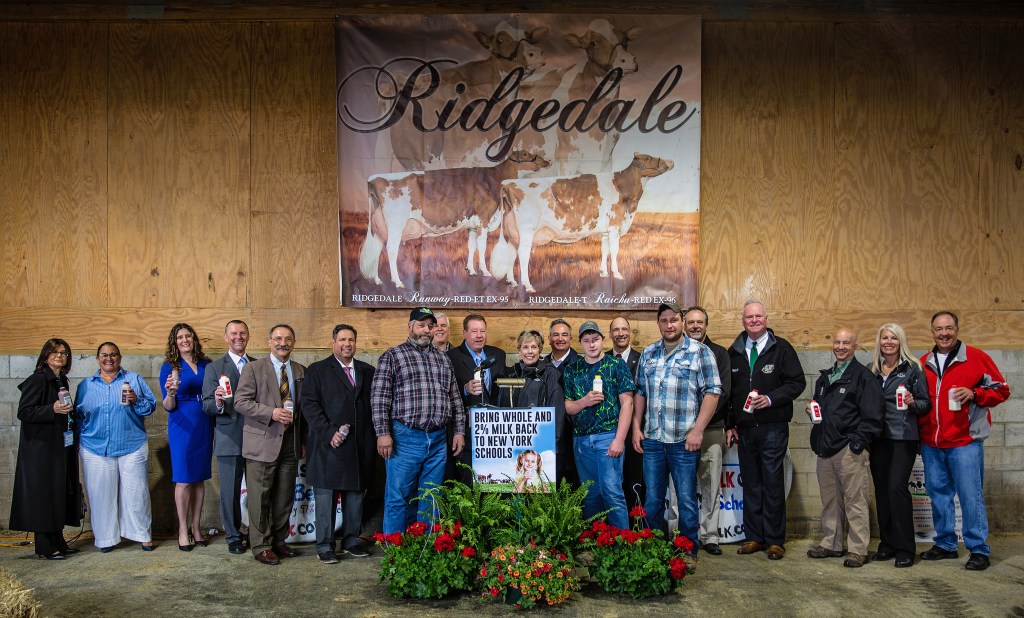
Representing 22 school districts and more than 30,000 students, Dr. Gladys Kruse, Questar III BOCES district superintendent concurred. She thanked the lawmakers for their efforts.

“We need more children to drink milk to get the nutrition they need. We know some of our students get two of their meals a day at our schools. When we hear students throwing away their lunch or their milk, or we hear of farmers having to dump the milk they cannot sell, it is time to reevaluate and reconsider the options and the policies. This legislation is a welcome step in expanding the availability and consumption of milk locally and across the state,” said Dr. Kruse.

Thanking Tague for his leadership, Kruse stated the bill would “provide the flexibility to have more milk options available to our students. This includes whole milk and 2% milk produced here and across the state. From our first beverage as a child to a staple in our daily school lunches, milk is fuel of our young people’s growth and development.”

From the Berne-Knox-Westerlo Central School District, superintendent Dr. Tim Mundell talked about partnership and collaboration, calling the day’s event a great example of that.

“The passage of this bill would help us bring local whole milk to our students, viable nutrition and real value,” said Mundell noting the need for flexibility. “Students get two meals a day from us. Many of our students live in very isolated and rural areas and access to nutritional foods, like whole milk… for their health and well-being, it’s scarce, and it’s scary.”

“When we put kids at the center of all of our decisions and all of our advocacy, great things happen, and the decisions are easy. This (should be) a very easy decision,” he said.

Mundell also observed the losses in enrollments and economic opportunity throughout rural regions of the state. He said FFA leadership learning is so important, and when students are able to see agriculture economically thriving, it gets their minds thinking about life and options after high school.

“Passage of this bill will enhance the capacity of all rural areas in New York State to re-engage in economic development. We are on board for collaboration in making this economic activity happen,” he said.

From the dairy farmer perspective, Ray Dykeman of Dykeman and Sons, Fultonville admitted that farmers prefer being in the field or with the cows and doing the work producing nutritious food, but, he stressed that this advocacy is vital for the future.

“This bill is extremely important for the kids in school (and) for the dairy farmers in the area,” said Dykeman with appreciation to the Conard family and their “beautiful cows” as hosts.

He challenged people to compare whole milk’s label to most other beverage options, “if you can even pronounce half of the ingredients that were made in a laboratory. We were using milk products as many as 10,000 years ago. Why not trust the cow, probably one of the most perfect animals in the world?”

Dykeman also thanked the lawmakers for taking on this issue to bring whole milk back to schools at a time when dairy farms are challenged. “This legislation will support our hard working dairy farm family businesses and get more milk into New York schools. This is very encouraging. Agriculture is our number one industry, and milk is our number one commodity.”

Among the panel of speakers, the New York Farm Bureau and the Northeast Dairy Producers Association (NEDPA), based in Geneseo, were represented. Behind the scenes and joined by 30 other farmers in the Ridgedale feed room were grassroots whole milk promoters Duane Spaulding and Ann Diefendorf. They brought the 97 Milk messages and signage used prominently throughout the event.

In fact, Tague thanked the grassroots efforts of farmers, of 97 Milk, and even mentioned Milk Baleboard originator Nelson Troutman in his opening remarks.

For Farm Bureau, Todd Heyn noted their “long advocacy for the return of whole milk to schools, giving districts the ability to provide this healthy and nutritious dairy product to school kids.”

Heyn reported the bill would “provide additional markets for whole milk, a Class I dairy product that earns dairy farmers a higher price.” 

Heyn said this would support New York dairy farmers and raise awareness to find a workable solution at the national level, explaining that Farm Bureau is formally asking USDA to “follow the science around nutrition and revise the school nutrition guidelines for dairy products in the school lunch programs.”

The energy was really high by the time NEDPA executive director Tonya Van Slyke got to the podium. She talked about dairy farmers are part of a global economy but take pride in what they do locally… especially in schools.

While Tague and Borrello held the sign taken from images at 97milk.com touting all the benefits of whole milk, Van Slyke — a mother and dairy farmer — recalled walking intop the school cafeteria and being asked by the director: “’Dairy farmer, how did you let this happen? Why are they taking the healthy fat away from my babies?’ Nutrition helps them have good brain power.”

As she turned to Tague and thanked him and his colleagues, Van Slyke said: “Let’s get this done,” and the room erupted in echoes and applause.

Tague, a former dairy farmer himself, noted he had actually milked a famous cow in the very barn where the event was held Monday. He worked years ago for Wayne Conard and his father Willis. He made a direct appeal to the farmers, encouraging farmers everywhere to get into the game.

“We have a lot of work to do. This press conference today is just the beginning… the squeaky wheel gets the grease. Sometimes as farmers, we are too proud and too busy to let our voices be heard,” he said. “But folks, it ends today. We’ve got to get up and scream it. We’ve got to make them hear us that enough is enough. 

“Let’s leave here today with one thing in mind: Whole Milk back in our schools!”

-30-