Covering Ag since 1981. The faces, places, markets and issues of dairy and livestock production. Hard-hitting topics, market updates and inspirational stories from the notebook of a veteran ag journalist. Contributing reporter for Farmshine since 1987; Editor of former Livestock Reporter 1981-1998; Before that I milked cows. @Agmoos on Twitter, @AgmoosInsight on FB #MilkMarketMoos
EDITORIAL: This time it’s Senators Chuck Schumer of New York and Ben Luján of New Mexicoblocking forward progress in the Senate
By Sherry Bunting, Farmshine, Aug. 15, 2025
EAST EARL, Pa. – Congressman Glenn “GT” Thompson has been busy. He recently held a Pennsylvania Ag Republicans webinar, then hosted his 7th annual Ag Summit in Pleasant Gap on Aug. 11, before heading to Ag Progress Days Aug. 12-14.
At these events, Thompson updated farmers on the farm bill — 80% completed in the One Big Beautiful Bill Act passed in June — and efforts to finish the remaining 20%, dubbed the “skinny” farm bill or “farm bill 2.0.” He reminded participants that SNAP “cuts” are really a return to pre-pandemic levels with measures to ensure states enforce work requirements that are already on the books.
Thompson also addressed his signature legislation: the Whole Milk for Healthy Kids Act. H.R. 649 passed the House Education and Workforce Committee in February and the Senate version (S. 222) cleared the Senate Agriculture Committee in late June, three months after a warm bipartisan reception during an April 1 hearing.
At that hearing, Sen. Peter Welch (D-Vt.) urged colleagues to fast-track the bill to the Senate floor to prove the chamber can act on bipartisan measures.
The Senate version (S. 222) includes an amendment allowing “nutritionally equivalent” milk alternatives in schools — a concession meant to secure the 60 votes needed in the Senate.
Even Senate Majority Leader Chuck Schumer (D-N.Y.) has told New York dairy farmers he’s “not against” the bill. But he’s not helping move it forward either!
Despite these facts, here we sit, with the bill stalled — again — in the Senate.
During a July webinar before the August Congressional recess, GT said the bill was “sitting on Chuck Schumer’s desk.” Senate leaders from both parties would need to agree to “hotline” the measure — sending it directly to the House for a vote without floor objections. The House previously passed the bill 330–99 in December 2023 and must vote again in the current Congress.
Instead, Thompson shared Monday at the Ag Summit that three Senate Democrats are holding the bill hostage, led by Sen. Ben Ray Luján of New Mexico.
Luján reportedly wants to trade his support for expanding universal free school meals, despite praising whole milk in the April hearing and recalling drinking raw whole milk as a child.
My thoughts are this: “Good for you, Sen. Luján! But what about the kids in your state receiving two meals a day, five days a week at school? Where is their whole milk choice?”
S. 222 passed the Senate Ag Committee, where Luján is a member, on a voice vote with no objections. Now, he’s among those blocking its forward progress.
Scott Holcomb, District 1 manager for USJersey, attended Monday’s Summit and noted that the bill “is being stalled by the Senator from New Mexico.” He assured GT that USJersey fully supports the measure, joining a growing list of dairy and nutrition groups with official policy supporting it and taking time to speak out.
In 2019, over 30,000 signatures from every state were also presented to Congress in support of whole milk choice in schools. Surveys show more than 80% of parents prefer whole or 2% milk for their children (both are federally prohibited in schools).
New York dairyman Dale Covert reported to Farmshine that he recently received a letter from Sen. Schumer thanking him for his support of S. 222 and outlining the bill’s history.
Schumer wrote, “I will continue to monitor the progress of this bill and any related legislation that comes before the Senate.”
At the time, the bill was literally on his desk!
The rest of Schumer’s three-page letter listed his legislative record on school meals, SNAP, and WIC, ending with a swipe at the Trump Administration over “cuts to hunger assistance” and vowing to “fight for funding hunger assistance.”
Children from low-income households rely on school meals as their primary source of nutrition — two meals a day, five days a week, most of the year. Others may get to drink whole milk at home, but disadvantaged kids may only get offered the skim milk they get at school, which many discard.
The result? Wasted nutrition, wasted taxpayer dollars. The USDA buys the milk, schools pay for waste removal. Kids do not benefit.
Restoring whole milk choice could improve intake and student health without new spending. But first, it must be made legal, then we get to work on more education for schools and creative solutions.
This issue dates back to 2012, when federal rules quietly removed whole milk from schools, even locking up or changing the contents of FFA vending machines containing whole milk for sale.
Grassroots volunteers have tirelessly pushed for its return ever since this clandestine act of prohibition was discovered.
America’s children are watching, and they are not impressed that D.C. can’t even get simple things done — simple truths that are self-evident!
While Congress is in recess, constituents should press their Senators to act, especially in New York and New Mexico.
Contact Sen. Schumer via schumer.senate.gov or call 202-224-6542, fax 202-228-3027.
Messages should be short, polite, and clear: Support the Whole Milk for Healthy Kids Act so children can choose milk they’ll drink, not waste. Millions of kids are depending on it. If you want to help them so much, then get this done.
Dairy checkoff: ‘If we focus on whole milk, we miss these market optimizers’ Really? At the 2025 Pennsylvania Dairy Summit, Paul Ziemnisky, DMI’s head of wellness, innovation, and business development, and Rebecca Pfeffer, Maola brand manager, with moderator Amy Mearkle (left) spoke about fluid milk innovation in which extended shelf life (ESL), otherwise known as ultra pasteurized (UP) milk, is seen as the gateway to new products aiming to meet ‘functional needs’ of consumers.
By Sherry Bunting, Farmshine, March, 2025
STATE COLLEGE, Pa. – Food-as-medicine, food-and-medicine, fun-and-portable, young kids talking about pre-aging, on-the-go snack and beverage convenience, the quest for guilt-free ways to unwind with fewer calories than wine, the growing double-income-no-kids (DINK) consumer landscape that is focused on wellness, consumer shifts from coffees to teas, the surge in protein demand, and the growth in sales of lactose-free milk…
These are some emerging trends mentioned during a panel about extended shelf life (ESL) milk as the gateway to dairy checkoff’s Milk Molecules Initiative during the Pennsylvania Dairy Summit last month.
In the Feb. 21st Farmshine, we brought you part one, a panel overview in this three-part series. In this second installment, we dig into what Dairy Management Inc (DMI) is doing with protein in the fluid milk space, and the technologies they are working on to separate molecules.
This public launch of the Milk Molecules Initiative (MMI) comes after 10 to 15 years of work through the pre-competitive industry collaboration vehicle – The Innovation Center for U.S. Dairy, a 501c6 established by DMI in 2008.
What we’ve learned is that MMI — as a fluid milk strategy — began even before the formation of DMI’s Fluid Milk Innovation Task Force seven years ago. It goes all the way back to 2010, right about the time whole milk choice was abolished in schools.
This strategy has been developed to discover, strip out, and repurpose the “functional benefits” of specific bioactive compounds, or molecules, in milk. The concept goes back to the early alliance between Fonterra and DMI, with headquarters less than three miles apart in the suburbs of Chicago around O’Hare Airport.
This strategy has been under development via research grants from USDA, NIH, and the National Dairy Council to the Dairy Research Institutes at four university locations, including the Barile Lab at the University of California-Davis. There, researchers have worked on isolating compounds from both human and bovine milk, and more recently, student researchers have been working on a DMI project “building a digital ecosystem and platform for these milk compounds.”
The Feb. 2022 memorandum of understanding between DMI and Mayo Clinic in Rochester, Minnesota, is tying-in the human health linkages to specific bioactive compounds in milk, and the Feb. 2024 DMI partnership with PIPA, an artificial intelligence (AI) platform, is accelerating the knowledge gain in how to break down milk’s so-called “bioactive family tree” to leverage functional milk products with new health benefits.
“We are finding the molecules in the whole milk matrix and picking things that are on the ‘whey stream’ as one area of focus, such as stripping out the lactorferrin,’” said Dairy Summit panelist Paul Ziemnisky, head of wellness, innovation and business development for Dairy Management Inc. (DMI), who has spearheaded the work of the Fluid Milk Innovation Task Force.
“We have partners talking about building a lactoferrin plant centered on just one of thousands of molecules in milk. We are looking at how to protect this molecule so it doesn’t lose its bioavailability, so we can put it back into dairy (post-processing),” he said.
Ziemnisky observed how past checkoff messaging has touted things like: “chocolate milk as a recovery beverage.”
Today, he said, “We’re going beyond that. We’re looking at ways to add milk to milk and to use these concepts to give it a different look and to capture huge value potential.”
How does DMI plan to partner with industry to capture this value? By linking milk and technology to create new products.
According to Ziemnisky, the MMI is looking aggressively at encapsulation and separation technologies as well as drying technologies that can be patented while testing the concepts with consumers to “learn how to talk about it.”
“If we focus on whole milk, we miss these market optimizers,” Ziemnisky declared. “Whole milk is for the 17% of traditionalists. We must innovate this category. We’re giving consumers a reason to understand what they need.”
He says MMI and ESL are pathways to get “milk” into more top-demand moments to capture a larger share of the $159 billion total beverage category.
(More ultra processed beverages are just what global consumer packaged goods companies are famous for. But is this what consumers really want? And will the ‘huge value potential’ trickle down to farm milk checks?)
According to Ziemnisky, there is at least $2 billion in new investment coming into the beverage space across geographies. “But it’s not your father’s Oldsmobile. Those new plants are filtration and separation, and we can add functionality to it.
“There are things we know of that we can’t even talk about yet,” he said as he gave a snapshot of where MMI is, and what is yet to come.
He cited a proliferation of ESL milk beverages that are mainly lactose-free, high protein milks as the gateway to molecular separation. Examples included the ESL capabilities at the Maola plant in Philadelphia, the national launch of Milk50 by DFA, the new nutrition line of beverages developed by Dairy Gold, Nestle’s new line made exclusively for Target, and others.
Asked if these new products are taking sales away from non-milk alternatives or traditionally branded milk, Ziemnisky said DMI’s work with MilkPEP shows that the plant-based beverages – on a volume and value basis – are “over-shelved.”
“They haven’t grown their category, their volume is declining. Those guys are eating themselves — going after each other. They’re not going after us anymore because they can’t. We win with nutrition and value. When we see all the innovation that is coming into dairy, we’re taking our space back by meeting the functional needs of the consumer. The quality of the protein is in demand now,” he said, confirming data showing that, “People are coming back to us because of the nutrition and the quality of the protein.”
During questions, he dug into the health and wellness “playbook” that checkoff has created with the help and blessing of USDA and has put into the hands of the top people at all of the big companies in food processing and retailing.
“We’ve traditionally undersold our nutritional benefits, and that’s changing,” he said.
Where MMI comes into the picture is to identify the bioactive molecules for separation and marketing linked to specific health claims that can go on a label.
A graduate student in the audience said the presentation gave her “a lot of hope in the future as a scientist.” She asked if DMI has noticed any difference in regional trends related to consumers, and specifically wondered what is happening in California?
Ziemnisky said California was moving the other direction. “They like to try things out there,” he said, explaining that the dairy industry is so volume- and scale-focused that pilot products are not the norm.
“California is coming back. California has assets that do smaller runs to try things. Last year, California grew (beverage milk sales) at a faster pace, whereas the Northeast market is so heavily regulated,” he said, adding that government regulation puts pressure on local retailers who want to try things.
DMI’s role is to test and learn, he explained: “We help processors prove these markets to retailers. Value-add is 30% of the dollars in the fluid milk category today. We went to 30% from just 10% just 10 years ago. We are targeting both volume and value with our retail and direct sales teams.”
One attendee asked what checkoff can do about the out-of-stock issues at retail, noting that perhaps fluid milk sales would increase if the dairy cases were consistently well-stocked.
“When we ask the store people, they say we don’t do the orders, it all comes from above us,” the questioner said.
Ziemnisky replied: “They are not telling you the truth. The real out of stock rate nationally is 3%. The problem is they are not managing their inventory. The inventory is there, but not the labor.”
“What we run into is the problem is store help,” said John Chrisman of ADANE, jumping into the conversation, noting new laser-system camera technologies are coming within the next five years to issue alerts about what is “flying off the shelves.”
In the meantime, he told attendees to report out-of-stocks to ADANE so they can get it resolved.
Another question asked was how farmers can feed or manage their herds to hit higher levels of functional bioactives like lactoferrin.
Ziemnisky said that’s a question for the milk buyers’ field service personnel, but in general, feeding cattle to hit higher component levels will raise the functional level of milk molecules like lactoferrin.
This reporter asked Ziemnisky what DMI is doing to know if there is any change in the protein structure with the further processed options: “How are we protecting that message on whey protein by protecting its structure through the ultra pasteurization process?”
(The only published research we could find was an NIH study showing heat and mechanical processes of ESL packaging change the structure of the protein, namely the whey protein.)
Ziemnisky replied that DMI is “doing significant work” on the nutrition research side to prove the efficacy of dairy’s high quality protein vs. other proteins.
“And on the product science side, we’re investing significantly in everything from the clarity of protein, so you can put it into other products, to the quality as it goes through different processes that it stays stabilized. We work with the industry on what are the needs we can solve,” he assured.
On follow up questioning about protecting the protein, he added that, “Encapsulation is just one technology we’re doing to preserve the bioactive pull, and we have other things underway as well. We also look at the byproducts. What do we do with lactose coming through on the lactose-free? What do we do with the permeates on the cheese, the passive whey? These are where we’re doing work to create products from the bioplastics all the way to the functional ingredients.”
Bottom line, he said: “Whey was the bastard child, and now it is the largest gaining market share because of demand for high quality proteins. We are seeing the fractionation piece of this, the precision nutrition, the new players coming in and doing research on different compounds, driving whey to where it is today vs. 20 years ago.”
With an estimated 6300 molecules in milk identified by artificial intelligence, all located within the 13% of milk that is the solids, Ziemnisky expressed excitement about the future.
“We are at the cusp of this, and with our artificial intelligence partnerships, we are getting the learnings in 2 to 3 years that used to take 10 years,” he suggested. “This is moving fast toward a sustainable future with zero-waste circular milk plants.”
Paul Ziemnisky reported that DMI has implemented the Milk Molecules Initiative, or MMI, which focuses on the functional benefits in milk and uses their proprietary AI model to accelerate research and development to identify the molecules, create prototypes, and bring to market health and wellness branded value-added dairy beverages, using ESL (extended shelf-life) and shelf stable milk as the base.
By Sherry Bunting, Farmshine, February 2025
STATE COLLEGE, Pa. — Forward-looking presentations from farm to processing and promotion were highlights of the 20th Pennsylvania Dairy Summit attended by over 350 people at the Penn Stater Conference Center Feb. 5-6.
Many questions and much discussion came from the general session panel on the second day, entitled “Emerging Market for Fluid Dairy: Aseptic Milk and Milk Molecule Maximization.”
Sponsored by American Dairy Association Northeast, it was presented by Paul Ziemnisky, the head of wellness, innovation and business development for Dairy Management Inc (DMI), and Rebecca Shaw Pfeffer, brand manager for Maola Local Dairies — positioned as “embracing innovation and pursuing new market opportunities for fluid milk.”
Several attendees expressed how uplifted they were by this presentation. Others had thought-provoking questions that were not entirely answered.
DMI has had a seven-year partnership with the industry through the Fluid Milk Innovation task force’s response to fluid milk demand “that has struggled.” The response has focused on milk molecule separation for value-added growth – all of which starts with extended shelf life (ESL), ultra-pasteurized, aseptic, shelf-stable milk, as the base beverage or gateway to the opportunities.
The bottom-line is dairy checkoff is focused on guiding the industry into new spaces in the beverage category, such as health and wellness. DMI develops concepts and prototypes to help guide industry investments, using its proprietary artificial intelligence (AI) database to “unlock the growth opportunities.”
Ziemnisky reported that DMI has implemented the Milk Molecules Initiative, or MMI, which focuses on the functional benefits in milk and uses an AI platform for dairy research and development.
He said DMI’s AI model has identified 6300 molecules in milk, and the MMI is just getting started on what to target, and how.
“We are seeing growth in ultra-pasteurized and value-added, and we are taking our space back with the molecules and magic of milk,” said Ziemnisky, who oversees DMI’s domestic growth programs, much of it hinging on checkoff-funded health and wellness research, including 41 active projects with Mayo Clinic.
Part of this work is identifying the health and other associations linked to specific molecules, like lactoferrin. “We identify them and size the trends to see how to attack the spaces,” he said.
MMI is the innovation plan to get dairy past the 15% it currently holds of the $159 billion retail beverage category. To that end, Ziemnisky talked about changes in technologies that DMI is working on to “take advantage of the bioactives in milk through separation and put them back in milk or other products, using AI to accelerate our learning, faster.”
He confirmed $10 billion in new processing coming online in the U.S. in the next two years, saying “a lot of this is in the fluid milk space, using filtration and separation for functionality.”
DMI has broken the market into three categories: snacking and entertainment, vital performance, and clinical cuisine. Ziemnisky spent much of his time on the latter as the new and growing ‘food as medicine’ trend.
He talked about DMI partnering with the Calm App to produce a prototype that would add the separated molecule of tryptophan to ESL milk, for a prototype ‘calm’ or ‘sleep’ beverage.
However, Ziemnisky spent much of his time talking about the lactoferrin molecule and the technology to encapsulate and separate it during dairy processing to be added to milk to make “immunity milk” with a Very Well brand prototype.
He talked of Nestle’s new ESL lactose free milk, marketed as high protein, low sugar, called Pioneer Pastures, and available only at Target, as well as DFA’s new Milk 50 beverage as slim and fit.
He talked about how shelf-stable milk is the vehicle to deliver wellness or vitamin claims, like has been done with water drinks.
DMI is also working on bringing MMI into the arena of competing with bone health supplements in the vitamin aisle.
“We’ve baked the cake and are looking for the products to use this technology to steal market share from these areas,” he said.
“We’re looking at the molecules in the whole milk matrix,” he explained, highlighting lactoferrin with 1758 health associations in the scientific literature.
“But you’d have to drink 20 glasses of milk, so we’ll take it out and put it back into one glass of milk and call it ‘immunity milk,’” he said.
In fact, DMI has created a ‘family tree’ of milk’s natural bioactives to then pick channels, to size the growth potential, design prototypes, and look for partners.
According to Ziemnisky, DMI has 46 proposals for women’s health, alone, and there is talk of building lactoferrin processing capacity as this molecule is also being looked at for beauty and skin health.
“But we have to make sure it doesn’t lose its bioavailability in the processing,” he said, referencing the encapsulation technology, similar to what is used to make infant formula, which is needed “to protect the molecule, and put it back into dairy.”
By combining milk with MMI technology, Ziemnisky said a molecule can be targeted, extracted, and then added back into the milk at a higher volume for a wellness claim.
“Now we can marry it out to the big retail beverage growth spaces, where there is $159 billion in consumer spending to show the industry where we (milk) can play,” he said.
“We’re adding milk to milk with some of these concepts, with a different look and a huge value. We are testing concepts with consumers and learning how to talk about it, and patenting our technology for our farmers,” he continued.
“People ask, why not just promote whole milk?” Ziemnisky noted.
His answer? “Only 17% of the market is ‘traditionalist.’ We have to innovate the category and do the research to understand what our consumers need. We’ve been baking the cake, working with the industry, doing the concepts to gain share in the top demand-moments that we only have a 15% share of now. MMI represents a really strong opportunity for us to do that.”
Extended shelf life, ultrapasteurized, and aseptic shelf-stable milk processing is the gateway to this ‘promised land,’ according to Ziemnisky, and DMI is testing proof of concept, working with startups and processors to get geared up to move prototypes from concept to consumer.
“People are realizing the value of milk,” he said. “Our biggest opportunity is making sure there is a good intro marketing plan for retailers to drive the products. If we can win the first six months, we usually can stay on the shelf. That’s our biggest opportunity to make sure they have a plan to drive awareness and trial the products.”
DMI and MilkPEP are working with companies and retailers on this, providing tools and tactics to get the higher-level consumer engagement. This includes developing the sell-story to new buyers.
“Milk is on fire in the category, and we often look at conventional milk, which is 82% controlled by the retailer,” Ziemnisky stated, emphasizing that DMI tells processors that they have to educate the retailers. “Using our analytics, there is a piece of winning even on the conventional milk side in this trajectory. Everything we’ve touched in the industry has grown.”
He showed the value-added products on the market today that were prototyped through checkoff, including high protein, lactose free, and flavored.
“Conventional has held us back because, again, we have to get the retailers using the health and wellness playbook to educate the consumers,” Ziemnisky said, noting that value-added is more than 30% of the fluid milk category dollars and when he started at DMI nearly a decade ago, it was less than 10%. (Note that value-add products are more expensive, so dollar growth does not necessarily correspond to volume growth, and that conventional whole milk is already a large volume of the category that has been consistently growing).
In part two from this discussion, we look at what DMI is doing with protein in the fluid milk space, and our question about what DMI is doing in terms of research to ensure protein structure is protected from impacts of ultra-pasteurization.
AUTHOR’S NOTE: Who’s the wizard behind the curtain on USDA’s last-minute milk pricing surprise, the splitting of the Class I baby to favor ESL? Vilsack, of course, with a little help from his checkoff cronies at Midwest Dairy and DMI — masquerading as ‘dairy farmers.’
By Sherry Bunting
USDA’s recommended decision on Federal Milk Marketing Order Class I (fluid milk) formulas brought a big surprise getting very little attention. That surprise: “splitting the Class I baby” and adding what constitutes a “fifth Class” of milk — TWO Class I movers announced each month.
ZERO proposals to divide Class I into a two-mover system were aired at the national hearing. Even USDA’s analysis shows the two movers would differ by as much as $1 apart — or more — in any given month.
The hearing record is woefully inadequate, indeed completely void of testimony for a second Class I mover. No proposal. No evidence. No testimony. No analysis. No parameters. No definition.
What does this surprise two-mover decision mean?
Fresh, conventionally processed (HTST) milk would go back to being priced by the prior method, using the higher of the Class III or IV advance pricing factors to determine the Class I skim milk base price portion of the mover.
On the other hand, milk used to make extended shelf life (ESL) fluid milk products, defined only as “good for 60 days or more,” would continue to be priced using the average of these two pricing factors, plus-or-minus a rolling adjuster of the difference between the higher-of and average-of for 24 months, with a 12-month lag.
Confused yet?
The industry is calling this surprise two-mover twist ‘innovative’ and ‘creative’, even ‘brilliant.’ But let’s hold the horses a moment.
With two movers, fluid milk costs could be different for plants in the same location based on shelf life. Could processors change the label to move between the movers and pay whichever mover was lower? Who knows? There is no clear definition for the new class, and the parameters to qualify are non-existent.
ESL processors will know the rolling adjuster 12 months in advance, due to the “lag.” They will know the two advance-priced movers a month in advance. They will have it charted in an algorithm no doubt, and make decisions accordingly.
Dairy farmers, on the other hand, will find out how their milk was used and priced two weeks after all their milk for the month was trucked off the farm. If the two-price Class I system becomes law, dairy producers’ milk checks will be even less transparent than they are now!
Not only does the USDA hearing record and decision fail to clearly define ESL, the industry doesn’t even have an exact and generally-accepted definition or standard for ESL.
ESL is both a loose and specific term.
Generally speaking, ESL is a term covering a broad range of products — ranging from UHT (ultra high temperature) or ultra pasteurization, aseptic packaging, to the inclusion of a process that combines microfiltration, skim separation, and indirect heating (in stages). These processes yield what is more specifically referred to as ESL fresh milk with a longer shelf life in refrigeration, but is not shelf-stable.
What’s at the root here?
Dairy checkoff personnel have openly identified ESL — especially shelf stable aseptically packaged milk — as its “new milk beverage platform.” Dairy farmers’ promotion funds are being used to research and promote ESL milk, as well as studying and showing how consumers can be “taught” to accept it.
For the past few years, the four research centers supported by the checkoff have been drilling into milk’s elements to sift, sort, and test different combinations to reinvent milk as new beverages.
In 2023, North Carolina State researcher Dr. MaryAnne Drake —speaking at the 2023 Georgia Dairy Conference — talked about this “new milk beverage platform. We are after a shelf-stable milk that tastes great and meets our consumer’s sensory needs and our industry’s sustainability needs,” she said.
Bingo. Dairy checkoff funds for ESL are being driven by the net-zero sustainability targets. And now USDA’s federal milk order changes are proposing to lower dairy farmers’ Class I income and/or competitively favor, and in a way subsidize, ESL processors over fresh HTST fluid milk processors. Follow the money.
Dr. Michael Dykes of IDFA, at the Georgia Dairy Conference in January 2024, told dairy producers that “this is the direction we (processors) are moving… to get to some economies of scale and bring margin back to the business.” He said the planned new fluid milk processing capacity investments are largely ultra-filtered, aseptic, and ESL — 10 of the 11 new fluid plants on the IDFA map he displayed are ESL. Some will also make ultrafiltered milk and plant-based beverages too.
The linchpin to regional dairy systems and markets for milk from farms that fit USDA’s description of small businesses is the processing of fresh, conventionally pasteurized (HTST) fluid milk.
Meanwhile, dairy checkoff overseers, in cahoots with processors, are making big bets that consumers will embrace the obvious conversion underway to the consolidating shelf stable ESL milk, emboldened by the average-of pricing that has failed farmers miserably over the past five years and is now part of the proposed two-price Class I system mysteriously added to the USDA recommended decision when a two-price Class I system was never noticed as part of the hearing scope.
In the recommended decision, USDA notes that ESL currently represents 8 to 10% of total fluid milk sales but does not present the full picture of how the industry began aggressively converting to ESL since 2019 when Class I average-of was implemented. More of these accelerated investments will become operational in 2024-26.
Before we know it, the industry will have converted to ESL, and dairy farmers will once again experience disorderly marketing, depooling, and the basis risk of the mysterious average-of mover.
Dairy farmers have seen this movie before.
In 2018, the average-of method — which changed how the Class I base was calculated — was portrayed by National Milk and the IDFA as “revenue neutral.” But at the recent national milk order hearing, testimony revealed that farmers experienced Class I revenue losses totaling nearly $1.25 billion from May 2019 through July 2024… and other impacts.
Disorderly markets via the ‘average-of’ continue to result in losses and disrupt performance of risk management tools that fail to protect farmers against the intervals of extreme basis risk.
Proponents say the proposed rolling 36-to-13-month ESL adjuster on the second mover in USDA’s decision provides compensation to farmers for the difference between average-of and higher-of. However, that occurs gradually — over time — with a lagged interval. If tight milk supplies boost commodity prices and drive up all classes of milk, then dairy farmers’ incomes will at least partially lag years behind real-time markets!
ESL processors like Nestle and fairlife testified that the average-of method over the past five years allowed them to use Class III and IV hedges on the CME to offer flat 9- to-12-month pricing to wholesale customers and increase their sales. Nice to know the big corporations made money on that inequitable Class I pricing system.
Would a two-mover system ultimately reduce farmers’ access to milk markets in some regions and diminish the food security of those consumers? Watch the impact of a new, unregulated ESL plant now being built in Idaho!
Many legitimate questions lack answers
Milk is commonly prized as the freshest, least processed, most regionally local food at the supermarket. Will the USDA recommended decision accelerate consolidation and a reduction in fresh fluid milk availability for consumers?
Has USDA considered the purpose of the FMMO system is to promote orderly marketing and the adequate supply of fresh fluid milk? Will consumers accept the taste of the not-so-fresh ESL, or migrate faster to other beverages if fresh fluid milk is less available to them?
How will the two-mover system impact dairy farms located outside of the industry’s very specific identified growth centers?
Will this perpetuate the wide divergence between Classes III and IV that has been an issue since 2019, further punishing dairy farmers with disorderly marketing and opportunistic depooling?
Who knows? The hearing failed to define, examine, or obtain evidence on any such questions… or any other questions that the hearing process is meant to be open to because this decision falls outside of the hearing scope!
Vilsack strikes again?
This proposal — a price break favoring ESL milk — fits the climate and export goals set forth by Ag-Secretary-then-DMI-executive-then-Secretary-again, Tom Vilsack. The pathway to rapidly consolidate the dairy industry to meet those goals is to tilt the table against fresh fluid milk. This is something Vilsack already put a big dent in by removing whole milk from schools.
It’s like one well respected veterinarian in the industry observed recently in conversation: “Someone decided: Thou shalt drink low-fat milk and like it.”
That “someone” is apparently equally convinced that the industry shall move to ESL and aseptic milk processing… while using dairy farmers’ checkoff funds to figure out how to get consumers to like that too.
As new milk beverage platform is developed, it sounds to me like people want the many attributes fresh whole unfooled-around-with fluid milk already delivers. It checks all the boxes! Maybe children just need to be allowed to have whole milk at school and daycare where they eat most of their meals, and maybe new generations of adults need the education about why and how the dairy protein and natural nutrition in real milk beat the imposters, hands down.
By Sherry Bunting, republished from March 2023 editions of Farmshine
SAVANNAH, Ga. — Dairy checkoff-funded researchers say a new milk beverage platform is being developed to provide “the keys to the kingdom.”
Their consumer studies show people want clean labels, and at the same time they want more attributes. On the one hand, they want energy and protein. On yet anotherhand, they want indulgent creaminess.
Consumers also want flavor, but they want less sugar. They want sweeteners, but not artificial sweeteners. They want thickness without the thickeners. They do not want gums or gels, but they are okay with fibers and starches.
Some consumers want higher protein products. Others want everyday nutrition that is reasonably priced.
These are some of the highlights that were shared back in January 2023 during the Georgia Dairy Conference in Savannah. There, Dr. MaryAnne Drake, professor of food science at North Carolina State University and director of the Southeast Dairy Foods Research Center talked about the fluid milk innovation work funded through DMI.
The ‘new milk beverage platform’ leverages different processing applications for flavor and functionality around dairy protein, based on global protein trends in a rapidly growing nutritional drink market.
ESL shelf-stable milk: key to kingdom?
“We are after a shelf-stable milk that tastes great and meets our consumer’s sensory needs and our industry’s sustainability needs,” said Drake about the work of the four university research centers, including North Carolina State and Cornell, that are drilling into milk’s elements to sift, sort, and test different combinations, as part of the checkoff-funded Innovation Center for U.S. Dairy, under the DMI umbrella.
Through processes like membrane technology, ultrafiltration, and aseptic packaging, the physical, nutritional and sensory elements of milk are being isolated at a molecular level to create beverages that aim to deliver this broad list of what consumers say they are looking for.
At the same time, researchers are using interpretive surveys to understand how consumer desires actually translate into purchases, and then work with processors to build relationships with retailers to get these new beverage products into stores.
Reinventing milk
What does all of this mean? Reinventing milk by focusing on the domains in which real milk has a clear advantage for consumers among so many plant-based and now cell-based options.
For example, said Drake: “Consumers want to know from a credible source what the immune-boosting elements are in milk, not what we have added. They tell us they want to know the science. That’s new.”
Drake explained that the findings from their interpretive surveys represent a huge and divergent set of innovations to sort through and capitalize on as part of a new strategy.
“Consumers don’t see the perceived value of animal protein vs. plant protein, so we had them graph what they want and don’t want, what they know and don’t know,” she said, adding that consumers gave the slight edge to plant protein over dairy protein. They rated the top three protein categories as plant protein, whey protein, and milk protein — in that order. (A large percentage believed whey protein is plant protein.)
As their familiarity with the differences between plant and animal protein increased, their liking of dairy protein increased, the researchers learned.
In other words, consumers do not know the science about the nutritional differences between plant and animal protein, and if they knew the differences, they would rank milk protein as number one.
Clearly, this is a failure in consumer education and messaging. Isn’t that the domain of the dairy checkoff?
New strategy
Drake indicated that educating consumers about dairy protein as a ‘complete protein’ is one thing that can help. However, she said, the functionality around dairy protein is the innovation strategy that is being pursued by the industry.
“The number one label claim consumers are looking for in a protein beverage is ‘naturally sweetened.’ We own that, and this is where we can deliver,” Drake declared.
“We own protein functionality. We understand the process parameters that impact flavor and functionality, and we can leverage this over plant proteins on this platform,” she said.
Bottom line: The surveys and flavor panels showed that consumers want “desirable flavor, texture and appearance. They want a protein drink that is nutritious, naturally sweetened, and has a clean label with simple ingredients,” said Drake.
“They also want education, messaging and positioning, and they are looking at sustainability,” she added.
“We are working on what does clean label mean? It’s not what we think it is,” Drake reported. “It’s costing us sales if what they actually want is not on the shelf. We have the opportunity to deliver what consumers still want. We just have to find those things they want — that we have — and be more strategic in how we deliver them.”
Food technology and engineering was a big part of the picture painted for attendees that day.
Diversify processing
Producers were urged to challenge the status quo and to not just add processing, but to diversify it. They were also reminded that the 10 southeastern states had lost eight fluid milk plants in the previous roughly two-year period (2020-22).
During his annual market outlook that year, retired co-op executive Calvin Covington hit the nail on the head with this reminder, saying “that’s done some damage. The major challenge for milk markets in the Southeast is we need more of them,” he said. “A lot of the fluid milk products that are sold in the Southeast are not processed here. If we are going to have a viable dairy industry in the Southeast, we need growing and stable markets for milk produced in the Southeast.”
Covington also differentiated the trends for domestic and export demand, showing that both lagged their respective 5-year-average annual growth in 2022, with domestic demand growing by just 0.5%, while exports grew by 3.5%.
Keeping in mind as exports are expected to top 20% of U.S. milk production on a total solids basis in the next two years and fluid milk sales as a percentage of total milk production have fallen to just under 20%, seismic shifts are already occurring in the heavily fluid milk market of the Southeast.
Transformation brings investors
Geri Berdak, CEO of Dairy Alliance, the Southeast regional checkoff organization, talked about “creating a path forward” with objectives centered on driving milk volume, increasing dairy’s reputation and transforming dairy while building checkoff support.
She said transformation is necessary to “identify high-growth opportunities and stimulate outside investment, technology and innovation.”
The need for processing is big as plants are closing in response to declining fluid milk demand, leaving the the need for more diverse processing assets.
Exports drive innovation
“The biggest thing exports do is to drive value and innovation,” said Patti Smith, a food technology specialist and CEO of DairyAmerica, now wholly-owned by California Dairies Inc. (CDI) milk cooperative. Earlier in her career, Smith held a leadership position with Fonterra and has served at board and officer levels with IDFA and USDEC.
“Exports are a lot more than powder today. Our biggest item is still excess powder,” she said. “But we also export many other products — even UHT (ultra high temperature) and ESL (extended shelf life) fluid milk and cream.”
What Smith sees into the future are “opportunities for the right products and the right product configurations. We have the opportunities to capitalize on them and the technologies to grow them.”
Smith said the biggest benefit of exports to-date is to have a home for milk that grows the dairy industry without relying on core domestic demand for that growth, but that U.S. dairy processing infrastructure is not quite reflective of the new export era.
“We need to make our industry world renown, through a strategic plan that the whole industry will work on together, with digitized supply chains and infrastructure for growth that is reliable and can be consistently demonstrated, and that includes shipping,” said Smith, citing the Innovation Center for U.S. Dairy as the nexus, where the industry’s “strategic plan” for global trade is being built.
Developing ‘new milk beverage platform’
Emanating from the DMI-founded and checkoff-funded Innovation Center for U.S. Dairy is the marketing and promotion arm of new product alliances and the National Dairy Research arm through several universities looking to essentially create a milk beverage platform by drilling into milk’s elements, sifting, sorting and testing different combinations.
Dr. Drake said the new milk beverage platform holds the “keys to the kingdom” as global protein trends were valued at $38.5 million in 2020 and projected to grow. Meanwhile, the nutritional drink markets are growing steadily, with 42% of consumers eating healthy as a higher priority since Covid, and the number of conversations about protein (95% positive) steadily flowing across social media platforms.
Those keys, she said, are membrane technology, ultrafiltration, aseptic packaging and research exploring all of the physical, nutritional and sensory elements of milk at the molecular level to bottle up what consumers say they are looking for, while also gauging through interpretive surveys how this translates to purchases, and then working with processors to build relationships with retailers to get new products into stores.
Drake shared details about the roadmap to play to dairy’s strengths through nutrition, education, capitalizing on calming and immune benefits and using dairy protein functionality to limit added ingredients in beverages to satisfy the clean label trend.
She talked about how elements like fat, protein and lactose at different levels impact milk’s flavor and appearance: “We want to determine the impact of ultrafiltration levels for different concentrations of fat and protein for different sensory or physical experiences.”
She talked about ultrafiltration in conjunction with aseptic packaging for shelf-stable storage using an elaborate diagram of processes.
Bottomline, she said: “The chemistry of these (aseptic) milks is different.”
She described consumer flavor panels where shelf-stable and fresh fluid milk were served cold and compared. The flavor panels evaluated two different storage temperatures for the shelf-stable milk.
The North Carolina researchers worked with their Northeast Dairy Foods Research counterpart at Cornell and with Byrne Dairy, running grad students from North Carolina to Syracuse, New York when batches were available for study. (The Southeast and Northeast as well as Midwest and California Dairy Foods Research Centers all receive funding from checkoff and other sources.)
‘Training consumers’
“Consumer panels still liked the HTST (fresh fluid) milk best overall, but in 14-day and 6-month follow up, we found we can train them,” said Drake, reporting the two best storage temperature options for aseptic milk saw longer-term increase in acceptance.
HTST is the acronym for High Temperature Short Time pasteurization that is basically commodity fresh fluid milk vs. ‘value added’ UHT (ultra high temperature) and ESL (extended shelf life) as well as aseptically-packaged, which is milk processed for longer shelf life and then bottled in a special sterile process and package to last months without refrigeration, but will taste best served cold.
Schools are the gateway
“For 25 years, consumers have not liked aseptic milk,” said Drake, “but we are changing that. Consumers may not like it or want it, yet, but it is great for schools.”
She reported the practical applications to come up with “great tasting school lunch milk that contains no lactose (no natural sugar).” Another practical application is to “determine the impact of storage temperature of 1% aseptic milk on physical and sensory properties.”
This partially checkoff-funded research is also working on “changing the chocolate milk formula to have zero sugar,” she said. “When we think about school milk, the question is how to get the sugar out of it. We want a chocolate milk that tastes great and new government standards on low- or no-added-sugars. Right now, chocolate milk has 8.5 grams of added sugar and 12 grams of natural sugar (lactose).”
In addition to ultrafiltration removing natural sugar, or lactose, they are exploring “non-nutritive” sweeteners like monk fruit and stevia. Additionally, they are looking at “lactose-hydrolized” to boost the flavor profile at much lower levels of sugars or other sweetener.
Whether talking about consumers or children, parents, and schools, the milk beverage platform is tricky “They want to know from a credible source what the immune-boosting elements are in milk, not what we have added. They tell us they want to know the science. That’s new.
“We have a huge and divergent set of innovations to sort through,” said Drake.
EAST EARL, Pa. — Year-to-date Whole Milk sales for the first two months of 2024 are up a whopping 5% year-over-year (YOY) at 2.57 million pounds. Even when adjusted for Leap Year, the average daily increase is a substantial 3% surge, compared with the past several years of steady 1% increases YOY.
Flavored whole milk sales, year-to-date (YTD) are up a whopping18.6% YOY. Adjusted for Leap Year, the increase is a substantial 14%.
As the number one volume category representing more than one-third of the fluid milk category since 2020, the recent surge in whole milk sales has been enough to reverse the decline in total packaged fluid milk sales in four of the past five months.
USDA tallied 2023’s total packaged fluid milk sales down by a smaller margin of 1.5% for the year compared with previous years of decline; however, October and November sales were up 1% and 0.3% YOY for the first time since the months of the Covid shutdown when families ate at home. December’s total packaged fluid milk sales trailed year-earlier, but January and February 2024 have come back strong.
USDA estimates total fluid milk sales were up 2.4% and 2.5% YOY for January and February, respectively. When adjusted for Leap Year, the February increase is a respectable 0.8%. Similarly, when we adjust the YTD total of 7.325 million pounds in total fluid milk sales to reflect the extra consumption day in February, this is also 0.8% higher on an average daily basis vs. year ago.
This is good news! Let’s keep this upward trend MOOVING in fluid milk sales, led by surging whole milk sales — thanks to volunteers spreading the good word.
Now, if we could just get the United States Senate off the sidelines and into cosponsoring S. 1957 Whole Milk for Healthy Kids, we could really gain some ground — and America’s kids would be free to choose milk they love at school where they receive 2 meals a day, 5 days a week, 3/4 of the year.
Thanks to the U.S. House of Representatives and the leadership of Congressman G.T. Thompson of Pennsylvania, the Whole Milk for Healthy Kids Act (H.R. 1147) passed the House on December 13, 2023 by an overwhelming bipartisan majority 330 to 99. If the U.S. Senate doesn’t have the opportunity to vote it through by December 31, 2024, we must start all over again in the next legislative session 2025-26!
Check out the map above to see how S. 1957 remains stalled for the past 60 days at just 17 sponsors from 13 states.
Where do your state’s U.S. Senators stand? Ask them! And think about their answers when going to the polls this fall. Elections have consequences.
Also consider asking your state senators and representatives to follow Tennessee’s lead and get a whole milk bill passed in your state and signed by your Governor.
Pennsylvania and New York State tried to be first, but leaders are afraid of USDA’s monetary penalties. Maybe the No. 8 and No. 5 milk producing states can be second and third in state whole milk bill passage.
Just think what would happen if more states passed bills that ALLOWED choice and sought creative language to let their schools choose to let children choose. Tennessee will make it available in bulk dispensers separate from the school lunch line. Pennsylvania sought to do it as a wholly in-state proposition.
Meanwhile, DMI sent a press release on April 29 touting their “checkoff-led pilot in Cincinnati schools that offered lactose-free chocolate milk increased milk consumption…” Specifically, the pilot schools experienced a 16% increase in milk consumption and a 7% higher meal participation, according to DMI.
(Of course, this lactose-free pilot was also fat-free per the USDA rules for milk at school built on the Dietary Guidelines that the dairy checkoff agreed to “advance” when the memorandum of understanding was signed between the USDA, National Dairy Council, GENYOUth and the NFL in 2010).
Remember, this reporter warned several years ago that checkoff and dairy industry leaders would wait until lactose-free shelf-stable milk was firmly entrenched in schools before pushing whole milk choice through. Senate Ag Chairwoman Debbie Stabenow is the main blockade this time around. She hails from the No. 6 milk producing state of Michigan, where the foundation fairlife plant is located, collecting milk from large producers in Michigan, Indiana and Ohio.
Wonder what consumption looks like when whole milk is offered as a choice. That’s right! A Grassroots PA Dairy Advisory Committee / 97 Milk trial in a school in northwestern Pennsylvania saw consumption grow 52% and waste decline 95%.
So, drink up Senators! Talk to your constituent Moms this Mother’s Day. Sales data and surveys both show what Moms think, and most don’t even realize the federal ban, the bait-and-switch their kids face at school where milk and dairy are concerned.
Then pour a tall cold glass of delicious, nutritious whole milk. It may just strengthen those political spines!
This week, we look at the third C: ‘Competition’: If schoolchildren are offered whole milk, will it significantly impact butterfat supplies, raise butter prices, and compete with the industry’s cheap milk cheese-focused future?
Every winter conference for the past few years has had at least one speaker telling dairy farmers that fluid milk sales are declining because Americans are eating more of their milk instead of drinking it.
Fair enough. Cheese is the future, and the industry wants to make more of it. Lots more of it. So much more cheese, in fact, that inventory is growing. Analysts at conferences put up slides with the words “Export or perish!” in large font.
Yes, U.S. Dairy wants to export more cheese, including mozzarella. U.S. Dairy wants to export more butter and cream products. U.S. Dairy wants to export more of the higher-value products. (And we want to sell more cream to the upscale coffee houses and downscale McCafe drinks we adults get to choose while junior sips a paltry half-pint of fat-free chocolate milk, sugar water, in the back seat. What’s wrong with us?)
This map shows the over $7 billion in new processing coming online between now and 2026. “There’s a lot of cheese on this map,” said IDFA CEO Michael Dykes, presenting at the Georgia Dairy Conference. This slide has also been popping up in other industry conference speaker powerpoint decks this meeting season. IDFA data
The industry also wants to take milk down to its molecular level – to turn the jug of milk into ingredients at the start — to make new function-targeted products for the beverage space outside of Class I parameters within an increasingly Class III dominated processing infrastructure.
Toward that end, new processing capacity won’t convert milk to traditional products, leaving elements to be marketed as ingredients. Instead, these new state-of-the-art cheese and ingredient plants start by taking milk apart to the ingredients-level to be used in making health beverages, bars, and other products, as well as to make cheese.
At the Georgia Dairy Conference in January, IDFA CEO Michael Dykes mentioned IDFA’s support for the Whole Milk for Healthy Kids Act, giving attendees a QR code to weigh-in with their Senators.
Later in his presentation, he noted that a shift to more fat in school milk would make a 3% impact on the butter supply.
“I’m a believer that the markets work, when you take it one place, you make a difference and change it someplace else. Those are the things we can work through,” said Dykes.
So, we reached out to Calvin Covington, a former cooperative CEO who is intimately familiar with component pricing as it became part of the Federal Milk Marketing Order (FMMO) system over 20 years ago. We asked his thoughts on how increasing fat in the school milk supply would impact butter.
“Increased Cheddar cheese production has used millions and millions of pounds of butterfat. No one complains about this. Doesn’t the dairy industry want to increase demand for all milk components?” he replied and sent forth his own calculations, providing a spreadsheet showing his estimates of milk used in schools and the additional fat that would be needed for all of that milk to go completely to 3.25% (whole) milk.
Covington ran the numbers, moving methodically through assumptions on Table 1 to conclude the impact of shifting from a school milk fat percentage of 0.5% (half fat-free and half 1%) all the way to 3.25% (whole milk) would have a small impact on the butterfat supply — raising the school milk’s usage of butterfat from 0.25% of total butterfat production at the current national average fat test of 4.11% to being 1.47% of total butterfat production at the average 4.11% fat test.
Using the identified assumptions, Table 1 shows estimates on school milk volume and use of butterfat under today’s fat-free and 1% low-fat milk requirement compared with a scenario in which all school milk pounds were at 3.25% fat as standardized whole milk. Provided by Calvin Covington
He estimates public schools use 9.72% of all fluid milk, and for the purpose of the spreadsheet exercise, he assumed that half of those school milk sales are currently fat-free and half are 1%. If that is the case, then going to 3.25% (whole) milk for all pounds of school milk sales, the additional fat that would be needed is almost 114 million pounds, he reports.
“This should be a non-issue,” Covington concludes, using estimates that are based on all of those school milk pounds moving to 3.25% fat.
The more likely scenario, however, is that schools would implement a more gradual increase in fat percentage. If it mirrored the national average for fluid milk sales at 2% fat, the increase would be smaller initially. Using Covington’s chart and assumptions, the additional fat that would be needed if school milk fat content averaged 2% is closer to 84 million pounds, going from using 0.25% of total fat production to 0.9% of total fat production.
Not all schools will choose to offer all milk at 3.25%. Some may offer 2% milk, which has also been banned since 2010 and would be given regulatory relief under the Whole Milk for Healthy Kids Act.
Even if 3.25% fat milk is universally offered, some schoolchildren will continue to choose low-fat milk, as they did in the Pennsylvania trial, where the preference was 3 to 1 for whole 3.25% over low-fat 1%.
While a potentially higher fat content in school milk is being scrutinized for its impact on butter and butterfat, the impact of aggressive increases in cheese production is ignored. This speaks a bit to industry priorities.
“As butter and cheese consumption increase, processors do not argue against the increase because utilizing more fat would increase the fat price,” Covington observes, wondering why anyone would be concerned about the impact on butterfat supply if children get to choose whole milk while not being concerned about the impact on butterfat supply in any other sector.
“An increase in fluid milk sales, in schools, or anywhere, benefits all dairy farmers. With all things being equal, it would shift milk from Class III and IV to Class I, which is a (normally) higher milk price,” Covington explains. “If Class III or IV need more milk to replace the loss to Class I, more money would need to be paid by Class III and IV milk buyers, again, helping dairy farmers.”
So, what is the current status of butterfat production and usage?
The national butterfat average is 4.11%. A decade ago, it was 3.69. From 2011 to 2022, total butterfat pounds produced on farms in the U.S. grew by 2 billion pounds from 7.3 billion to 9.3 billion. That’s a butterfat volume response to a price signaling demand.
Where’s it all going? Around 20% goes to butter production, 8% to ice cream and frozen desserts, 10% in fluid milk sales, and close to 50% is used in cheese production. And then there is this growing market for cream used in coffee drinks.
Meanwhile, dairy producers out West report receiving a letter from a large cheese plant, putting in a new base program at 1.5% over base.
Another producer in an unregulated state in the West reported receiving a letter from his cheese plant stating they will reduce the butterfat multiple in their cheese milk payment, beginning April 1. The reason, according to the letter, is the farms are making too much butterfat, and the plant is having to buy condensed solids (skim) to pair with the additional fat or sell the extra fat as excess sweet cream at a loss.
During the FMMO hearing, fluid milk bottlers complained that the higher fat and component levels in milk today are more costly for them to deal with, that they must move the excess cream at a loss, and they have to clean the separator more often because of ‘sludge’ buildup. (I kid you not, one witness called it ‘sludge.’)
Processors have petitioned USDA with multiple proposals to get regulated minimum prices down to their definition of a ‘market clearing’ level that then allows them to add market premiums to attract new milk. Read that sentence again.
Who would be paying those premiums to grow milk supply? Not the processors. It would be revenue coming out of the regulated minimum price benchmarks for all farmers, including farmers that are not growing, to then get added back in by the processors wherever they want to direct growth.
Cheap milk is the name of the game, while at the same time, dairy farmers are being challenged to grow to meet the future ‘demand gap’ to fill $7 billion in new processing investments that will become operational over the next few years.
Dairy analysts tell how milk production expansion to meet this investment will not be as easy to do and will take longer than in the past because of the shortage in replacement heifers.
We’re at a standoff, so to speak.
Dairy producers have bred beef-on-dairy to bring margin back to their farms after 10 years of dairy margin compression. This strategy has been a good hedge against overproduction of milk in the era of sexed-semen, and it has helped protect farm balance sheets by reinforcing the value of the cattle as collateral.
So, what tool will be used now to drive consolidation and growth in dairy? Dykes told Georgia producers that, “Sustainability will be one of the biggest drivers of consolidation we’ve seen in a generation. Why? Because it’s going to take investment, and it’s going to take scale. We need to figure it out, to measure it, verify it, account for it, not double count it. We’re going to need investments to make sure we have the infrastructure.”
He said sustainability will become the gateway for exports where countries have mandates and carbon taxes for purchased ag products.
So, here we are back at the question about milk supply, butterfat supply, skim supply and school milk. Wouldn’t whole milk sales to schools offer a much-needed tug on the demand side to help shift some milk away from this runaway, market-depressing, buildup of excess cheese production that elicits the powerpoint headline: ‘Export or perish?’
Just think, if the fluid milk sales to schools increased as they did in the Pennsylvania trial by 52%, or even half that, by 25% as more kids choose milk instead of refusing it, market principles could work — gaining something in one place to affect it someplace else.
Meanwhile, the industry can do some soul-searching and adapting amid the double-speak. If more milk, fat and components are needed, then farmers need to be able to make a living milking cows and producing fat and components.
Is the problem not enough milk? Or too much milk? Not enough fat? Or too much fat? Not enough skim? Or too much skim? Or is the problem rooted in making sure milk can be bought cheap and that farmers are forced to find revenue in other ways, such as carbon monitoring?
Let’s get it straight please.
On the horizon, we see: Checkoff-funded fluid milk innovations for new beverages that identify and separate specific milk molecules for specific benefits (sleep drinks, energy drinks, immune function drinks, specific protein type drinks)? More on that in Milk Molecules Initiative Part I and Part II
ROSEMONT, Ill. — Fonterra CEO Miles Hurrell has been named the new board chairman of the Global Dairy Platform (GDP), a non-profit industry association representing the international dairy sector. A portion of its revenue is from membership dues, but also from the 7.5-cents per hundredweight equivalent checkoff on U.S. dairy imports as well as grants for research and program services from Dairy Management Inc (DMI).
Fonterra’s Hurrell will replace Hein Schumacher, who is leaving his position as CEO of Royal FrieslandCampina to become CEO of Unilever.
In the April 26 news release, Hurrell cites Schumacher’s leadership in “accelerating climate action via the ground-breaking Pathways to Dairy Net Zero Initiative.”
Announced in the same release is the appointment to the GDP operational committee of French multinational Danone’s senior vice president of sustainability strategy.
According to its 501(c)6 non-profit tax filings, “GDP is a pre-competitive collaboration,” and its governance groups — the board and the operational committee — “manage a ‘Dairy Sustainability Framework’ to unify the approach being taken by dairy organizations to the broad challenges of sustainability from environmental, social, and economic perspectives.”
The Dairy Sustainability Framework is part of the Dairy Sustainability Alliance of the Innovation Center for U.S. Dairy, another non-profit founded and funded by dairy checkoff organizations under the DMI umbrella. The Innovation Center sets U.S. Dairy Stewardship Commitments that are implemented through the FARM program and reviewed every three to five years to show U.S. dairy is, according to its website, “moving the needle toward achieving the Sustainable Development Goals (SDGs) of the United Nations.”
DMI, its Innovation Center, Dairy Sustainability Alliance, Dairy Sustainability Framework, and U.S. Dairy Stewardship Commitments are all located at Suite 900, 10255 W Higgins Road, Rosemont, Illinois, and the Global Dairy Platform (GDP) address of record is Suite 820 at the same street address.
Along with New Zealand’s Fonterra, CEOs from these top-15 dairy multinationals serve on the GDP Board: Dairy Farmers of America (DFA), headquartered in Kansas; Arla Foods, headquartered in Denmark; Leprino, headquartered in Colorado; China’s Mengniu Dairy Company; Moringa Milk Industry, headquartered in Japan; Royal FrieslandCampina, headquartered in the Netherlands, and Saputo, headquartered in Canada.
Along with the board of directors, the GDP operational committee provides governance and includes sustainability executives for Arla, DFA, Fonterra, Land O’Lakes, Meiji Holdings and FrieslandCampina.
In a separate April 2023 bulletin, GDP announced the May 1, 2023 retirement of Dr. Greg Miller from his position as research lead for GDP since its inception. Known as ‘Dr. Dairy’, Miller has served as the chief science officer for the National Dairy Council for nearly 32 years and as executive vice president of research, regulatory and scientific affairs for DMI. Miller will continue as a member of the UN Food and Agriculture Organization Scientific Advisory Committee.
Key paid staff for GDP is Donald Moore, the executive director since 2010. Before that, he was a Fonterra senior executive in business development and ingredients marketing for 20 years.
Moore also serves as chairman of the governance group for the Dairy Sustainability Framework since its inception in 2013.
With Fonterra’s CEO as the new board chairman of the GDP, and with a former Fonterra senior executive serving 13 years to-date as the executive director of the GDP and the chair of the governance group for the Dairy Sustainability Framework, it’s worth noting that Fonterra announced six months ago its new start-up company for alternative dairy ingredients. According to the October 2022 press release, Fonterra has partnered with Royal DSM, a Dutch company, in creating this start-up “to accelerate the development and commercialization of (animal-free) fermentation-derived proteins with dairy-like properties.”
With Danone’s senior vice president of sustainability strategy now appointed to the GDP operational committee, it’s worth noting that in October 2022, Danone announced it would use artificial intelligence to reformulate 70% of its plant-based fake-milk products. This followed the 2021 earnings call where Danone executives outlined new fake-milk and dairy product launches with plans to use “new dairy-like technology” to “win over” the 60% of U.S. consumers not in the plant-based category because of taste and texture. The Danone executives told shareholders their Renew strategy identifies the U.S. as a “key plant-based market.” In January 2023, Danone announced it is eyeing sale of Horizon Organic, saying it falls outside of their key areas of focus.
Global Dairy Platform (GDP) was formed in 2006 as an alliance, according to its website. Its tax filings confirm incorporation as a 501(c)6 non-profit in 2012 and its address of record at Suite 820 at 10255 W Higgins Road, Rosemont, IL 60018.
According to the GDP’s most recent IRS 990s that are publicly available for 2017 through 2019, the years when former DFA CEO Rick Smith was its chairman, GDP had revenues between $3.7 and $4.2 million annually. This increased to $4.7 million in 2020, according to an available summary of the IRS 990 for that year.
The tax returns show approximately $1 million in GDP revenue came from membership dues and approximately $2.7 million annually from granted program services and research funds (checkoff).
The GDP revenue also included approximately $500,000 in ‘import assessments.’ The 7.5-cent import checkoff, which was implemented in 2011 amid formation of the Innovation Center and its resulting alliances and frameworks.
GDP’s executive director Donald Moore is paid a salary package of nearly $600,000 annually. The top three independent contractors in 2018-19 included DMI receiving over $800,000 annually for program services and administration; Massey University in New Zealand $451,000; Emerging Ag in Calgary, Alberta, Canada $600,000 (for UN access), and Lindsey Consulting, in the UK nearly $300,000 with Brian Lindsey serving as the GDP’s sustainability lead.
According to GDP, its membership consists of more than 95 corporations, companies, associations, scientific bodies, and other partners, with operations in more than 150 countries, collectively accounting for approximately one-third of global milk supplies.
DMI manages the national nickel from the 15 cents per hundredweight checkoff deducted from U.S. milk checks for research, education, and promotion. DMI also manages the unified marketing plan many state and regional checkoff organizations contribute toward, and DMI manages the 7.5 cents per hundredweight equivalent import checkoff, handed off to the GDP.
DMI states in its 501(c)6 non-profit tax filing that it is “investing dairy producer checkoff funds in strategic, coordinated marketing programs designed to increase consumption of U.S. dairy products domestically and internationally.”
The Innovation Center for U.S. Dairy was initiated in 2008, but according to its tax filings, was incorporated as a 501(c)6 non-profit in 2012 under the name: The Dairy Center for Strategic Innovation and Collaboration Inc., doing business as Innovation Center for U.S. Dairy.
In 2017, DMI trademarked the names ‘Innovation Center for U.S. Dairy’ and ‘Dairy Sustainability Alliance.’
Leprino CEO Mike Durkin was elected chairman of the board of the Innovation Center in January 2023.
-30-
AUTHOR’S NOTE: Why do these connections matter? Because the UN Food and Agriculture Organization is getting ready to make a decision about how livestock methane is calculated using GWP100, a 30 year old measure that the Intergovernmental Panel on Climate Change even agreed overblows the problem by 3 to 4 times, or GWP*, which includes not just the sources but also the natural sinks for methane as a short-lived greenhouse gas. Dr. Frank Mitloehner has written about this, and Farmshine readers have read my many articles about the differences between the calculations and what they mean for our cows in the future. The Global Dairy Platform put out a bulletin a few months ago and pinned it to their website exploring the differences in these calculations, saying that “GWP* is not appropriate as a benchmarking tool at less than a global level.” This is concerning because it means that global dairy multinationals have oversight through dairy checkoff non-profits and alliances into formulating and deciding what U.S. dairy farmers — and their cows — will be expected to live up to, even when the science behind the decision is highly debatable. As we now know, even scientists are becoming frustrated. It’s important to know that multinational companies investing in competing animal-free fermentation-produced DNA-altered dairy-like ingredients are in leadership positions in these collaborations.
Officials say it will be Northeast’s largest milk plant, using 5 million pounds of ‘locally sourced’ milk per day
By Sherry Bunting, published in Farmshine, May 12, 2023
WEBSTER, N.Y. – New York got the nod this week as the “preferred location” where The Coca-Cola Company will build its new fairlife ultrafiltered milk processing plant in the Northeast.
New York State Governor Kathy Hochul made the announcement Tuesday (May 9) that the company selected a site in Webster, Monroe County, New York for the $650 million project, expected to break ground this fall and be operational by the fourth quarter of 2025, pending final due diligence and appropriate approvals.
The 745,000 square-foot facility is expected to create up to 250 new jobs and “utilize an estimated 5 million pounds of locally sourced milk per day, making it the largest dairy plant in the Northeast,” the NYS Governor’s announcement stated.
Founded in 2012 through a “strategic partnership” between Select Milk Producers cooperative and Coca-Cola, with early grants from Dairy Management Inc (checkoff), fairlife is now wholly-owned by Coca-Cola since 2020.
Calling the fairlife project a “major opportunity for New York,” Gov. Hochul said it will “drive economic impact, particularly in the Finger Lakes,” and it will “position New York to regain its spot as the 3rd largest producer of milk in the U.S.”
“The Town of Webster is well situated between high-quality dairy cooperatives in the Rochester and Niagara regions, with a surrounding workforce that has the relevant manufacturing and food and beverage experience, making it the ideal location for fairlife’s expansion,” said fairlife CEO Tim Doelman in a statement at the company’s website.
He noted the new facility will allow the company to “significantly increase capacity and deliver fairlife to more households.”
Empire State Development (ESD) is providing up to $21 million in assistance for the fairlife project through the performance-based Excelsior Jobs Tax Credit Program in exchange for the job creation commitments.
Monroe County Industrial Development Authority (IDA) is expected to apply to the ESD for a separate $20 million Capital Grant, to provide adequate power and infrastructure services to the site. Also collaborating on the project are the Town of Webster, Rochester Gas and Electric and Greater Rochester Enterprise, and NYS Ag and Markets.
ESD Commissioner Hope Knight highlighted Upstate New York’s farm and dairy infrastructure, and Assemblyman Brian Manktelow observed the increased demand for local dairy production and transportation would be additional economic benefits on top of the creation of in-facility jobs.
NYS Ag Commissioner Richard Ball said the decision “highlights the excellence of our dairy community whose farmers will be supplying the milk.”
New York Farm Bureau president David Fisher, a dairy farmer, said the news “is needed for the long-term success of our dairy farms.” He noted the state has 3500 dairy farms, milking 620,000 cows and producing over 15 billion pounds of milk annually with “abundant resources, good land, access to water, and innovative farmers.”
“We were in tough competition with other states,” said New York Gov. Hochul, noting her own heritage coming from a family of dairy farmers in Ireland.
One of the states competing for selection was Pennsylvania.
“While the outcome of this selection is not what we hoped, the Shapiro Administration remains strongly committed to supporting Pennsylvania’s dairy industry and attracting processors to grow here,” said Pennsylvania Ag Secretary Russell Redding in an email response to Farmshine questions Wednesday (May 10).
Redding noted that Gov. Shapiro and teams across agencies were engaged in this project “allowing us to meet fairlife’s criteria for tax climate, resources, utilities, permitting, and incentives.” He reported that Pennsylvania currently makes $15 million in tax credits available annually for dairy manufacturing companies to expand processing in the Commonwealth.
“Just as we were nationally competitive for this project, we plan to be in the running for other selections of this type,” Redding added, thanking all industry and government entities who work on these coordinated efforts to welcome businesses and support agriculture.
When asked specifically about the whether or not Pennsylvania’s state-mandated Class I fluid milk over-order premium (OOP) played any role in the outcome, Redding stated: “The OOP was not a factor.”
The fairlife line includes Class I fluid milk products as well as dairy beverages that fall outside of the Class I criteria into manufacturing milk classes. The company offers a range of products including fairlife ultrafiltered milk, Core Power protein shakes, and fairlife Nutrition Planmeal replacement shakes.
The fairlife products are made through an ultrafiltration process that removes lactose and condenses other solids to raise the protein content while lowering the natural sugar (lactose) content. For flavored beverages, this means more sugar and other sweeteners can be added because the natural sugar content is lower.
According to the New York Governor’s press announcement, this ultrafiltration process “gives milk a longer shelf life.”
All fairlife products carry the UHT mark for ultra high temperature pasteurization, which also increases shelf-life. Some of the flavored fairlife products, such as YUP and CorePower are already offered as shelf-stable beverages in supermarkets and online, so it is unclear whether aseptic packaging will extend to all fairlife milk and beverage products in the future.
Other leaders from the collaborating New York State agencies and organizations highlighted the project expands their goal of positioning New York as a hub for attracting technology and innovation in food and beverage manufacturing.
In fact, the Governor’s press announcement stated that, “The research for fairlife’s branded milk process (ultrafiltration) originated at Cornell University over a decade ago.”
However, the story told by fairlife co-founders Mike and Sue McCloskey, as recently as the 2020 Pennsylvania Dairy Summit, and in earlier meetings, presentations, and published interviews, is that they discovered the reverse osmosis and membrane filtration process when dealing with a well issue on their former dairy in New Mexico.
After seeing what this filtration did for separating minerals in the water to make it more palatable to the cows, they started tinkering with filtration for milk, the story goes.
Select Milk Producers (SMP), also founded by the McCloskeys, then began using reverse osmosis and ultrafiltration as early as 1995 to reduce the water when moving loads of milk to cheese plants. At the same time, they began their high protein, low sugar milk proposition by partnering first with H-E-B supermarkets across the Southwest under the Mootopia brand in 1996 – a precursor to what is fairlife today.
She said this means that the raw milk going into the ultrafiltration process must be very low in somatic cell counts because the process separates some solids, like lactose, while concentrating other solids.
Products in the fairlife line are currently made at the original SMP ultrafiltration plants in Dexter, New Mexico and Coopersville, Michigan. Newer plants opened in Goodyear, Arizona in 2021 and Petersborough, Ontatio, Canada in late 2020. The latter sources all of its milk from Canadian farms for the Canadian consumer market.
Ultrafiltration is employed by other dairy companies, such as Cayuga Milk Ingredients (CMI) using proprietary European technology to produce unique liquid and dry milk and dairy ingredients for sale in the U.S. and internationally.
Also located in the Finger Lakes Region of New York in the town of Auburn, CMI announced its own expansion last year to break ground this spring on a second facility that will have aseptic packaging capabilities for manufacturing a range of shelf-stable fluid milk, filtered milk, and dairy-based beverage products.
Study says dairy should aim for climate neutrality, not net-zero carbon. Dr. Frank Mitloehner explains meaningful metric, achievable goal post during webinar
Sherry Bunting, previously published in Farmshine
BROWNSTOWN, Pa. — Net-zero carbon, net-zero GHG, net-zero GHG footprint, carbon neutrality, GHG neutrality… These terms are being used to describe the dairy checkoff’s 2050 commitments via DMI’s Net Zero Initiative.
But do they consider the warming impact of methane from dairy cows over time?
Bottomline, the so-called “Net-Zero Initiative” of DMI is a set up to be always chasing the cow’s biology without measuring her methane as the flow gas it really is — without considering the short-lived nature of methane and the biogenic cycle cattle are a part of.
If net-zero carbon is the goal, and if methane is measured on carbon dioxide equivalency without considering its short-lived cycle, then dairy farmers could find themselves in the position of unnecessarily and continually chasing the natural biology of their cows without a meaningful and accurate metric and without an achievable goal post that satisfies what all industries around the world are really being asked to do, and that is to limit additional warming.
A new study by foremost animal scientists and air quality specialists Dr. Frank Mitloehner and Dr. Sara Place is calling for the U.S. dairy industry to aim for climate neutrality (net-zero warming) rather than net-zero carbon or net-zero GHG.
The peer-reviewed study from the University of California-Davis CLEAR Center and Elanco Animal Health was published recently in the Journal of Dairy Science. It outlines a path for the U.S. dairy industry to reach climate neutrality by 2041 with small methane reductions every year, and even sooner with more aggressive reductions.
Dr. Mitloehner brought dairy farmers up to date and took questions during the American Dairy Coalition’s annual meeting by webinar in December.
One important take-home message was for dairy producers to understand that how methane’s global warming potential is quantified (whether GWP100 or GWP*) “has a profound impact on the predicted warming of your industry. The only way you can become climate neutral is by using a metric fit for purpose, one that predicts the warming, and that is GWP*,” said Mitloehner.
He explained how methane is an important and powerful greenhouse gas (GHG), but it is different from other gases because it is the only one that undergoes atmospheric removal in a chemical process that takes about a decade. This does not occur for carbon dioxide or nitrous oxide, which are stock gases that remain in earth’s atmosphere for 1000 and 100 years, respectively.
“Methane is the most important gas for agriculture, so its removal must be included in the calculation also,” he confirmed, noting that GWP* does that. “Methane is fast and furious. It has a good punch that is 28 times more trapping of heat from the sun (vs. carbon dioxide), but it is also fast. It doesn’t stay in the atmosphere for long.”
In a slide showing all global methane sources and sinks, Mitloehner noted that nearly 560 terragrams of methane are produced worldwide annually, and at the same time 550 are destroyed by this natural atmospheric process.
In terms of atmospheric growth, “the net is then 10. This is still a number we want to reduce, but it is not 560,” he said.
As the DMI Innovation Center’s Sustainability goals, Net Zero Initiative and FARM program are on the cusp of calculating these things at the farm level, both the measurement and the goal matter.
A net-zero carbon or GHG commitment poses a problem for dairy farmers. This is compounded by the CO2 equivalency for methane being calculated using GWP100.
The GWP100 metric has been around since the 1990s, but it describes stock gases, whereas methane is a flow gas.
Using GWP100 with a net-zero carbon commitment is not only unnecessary, it’s problematic.
“It means the belches from your cows are (being calculated) in addition to what they belched last year, and the year before that, and so forth 10 years from now,” said Mitloehner. “In reality, constant herds are a constant source of methane that generates a constant warming, not a new warming. That’s what the Paris Treaty asks all sectors to do – to limit additional warming.”
Aiming for climate neutrality or net-zero warming instead of net-zero carbon would put the focus where it needs to be — on the warming impact of the emitted methane over time. This is important because methane makes up 62% of the estimated total GHG for dairy, according to the CLEAR Center study.
“If we use GWP100 to describe a relatively constant source, to characterize that methane, then we are overblowing its impact by a factor of 3 to 4, and we are overlooking the ability for the U.S. dairy industry to reduce warming when we reduce methane,” said Mitloehner, citing page 173 of the Intergovernmental Panel on Climate Change (IPCC) 2021 Assessment Report 6.
The metric GWP-star (GWP*) is also mentioned on this page of the IPCC report. GWP* was developed by the University of Oxford. It is based on GWP100, but it looks at how methane warms the planet over time. It characterizes methane as the flow gas that it is and calculates it based on CO2 warming equivalents (CO2we), not as accumulating CO2 stock equivalents (CO2e).
A white paper published with the peer-reviewed CLEAR Center study explains it this way:
“Net zero carbon refers to a state where carbon is removed from the atmosphere (through carbon sinks or other offsets) at a rate equal to carbon being emitted into the atmosphere. This balance between carbon emission and removal creates a ‘net-zero’ carbon output. Climate neutrality, on the other hand, focuses on temperature impacts from emission sources, referring to the point in which no additional warming is added to the atmosphere.”
The paper goes on to explain how “climate neutrality is analogous to net-zero carbon when dealing with long-lived greenhouse gases such as carbon dioxide, but short-lived pollutants like methane do not need to reach net-zero carbon to be climate-neutral.”
“Is it new and additional carbon being added to the atmosphere? Do constant herds add new warming? No, they do not,” said Mitloehner.
“Belched out methane is the number one source in agriculture, but again, it doesn’t stay in the atmosphere for 1000 or even 100 years like carbon dioxide and other GHG,” he explained while also noting the pathway of the carbon in this methane is already present in the atmosphere, is captured by plants, then consumed by cows. Some of this consumed carbon (energy) is converted to carbohydrate and some of it is emitted in the methane by the cow in a continuous cycle.
Unlike fossil fuel emissions, this is not ancient carbon brought out of the ground and into the atmosphere as a one-way-street, he explained: “Do not fall for the people who are comparing cars to cows. The University of Oxford says this is a mischaracterization, and I agree.”
What is exciting, “is if we reduce methane, we can come to a point where we produce negative warming or a cooling effect. That’s what my work is about (Fig. 4). If we do a couple of things to reach no new warming, and if we then get aggressive to go further, we can sell credits as offsets,” said Mitloehner, referencing the implications, limitations and conclusions of the CLEAR Center study.
As innovations related to managing cattle diets are being developed, the good news is emerging tools show the promise of steering more of that carbon, that energy, toward milk yield and components and less of it to methane that is belched back into the cycle.
In contrast, a net-zero carbon or net-zero GHG goal that measures methane as a stock gas (GWP100) and does not accurately describe its warming impact and flow-gas status in the way GWP-star (GWP*) does, would leave dairy farmers needlessly and continually chasing what under the GWP100 scenario are accumulated and continuing belches from their cows.
If the industry continues to chart net zero carbon, will dairy farms be forever chasing their belching cows with tech investments and offsets?
“In my opinion, you will never reach net zero carbon. Your cows will always produce methane no matter how aggressive you are. You will over promise and leave stakeholders disappointed. We are dealing with a biological system, the microbial fermentation in the rumen. It is not feasible and I have advised the industry in the past against it, but that is the direction it goes – in general,” said Mitloehner.
As for unintended consequences on the path to ‘net zero,’ Dr. Mitloehner was clear to say: “What matters is climate neutrality. If you tell the world you want to be climate neutral with no new warming and achieve it through annual reductions of 0.3 to 0.5%, you will indeed be climate neutral in less than 20 years. At a 1% per year reduction in methane, you will accelerate that timeline. But you will never achieve it with GWP100. It’s not possible and not necessary to go that way of treating methane as if it were a stock gas. It doesn’t account for the reduction.”
A piece of good news, he said, is that GWP-star (GPW*) can be used parallel to GWP100. The maitrix is a more scientific predictor of what you (dairy) has to do to bend that curve and how strongly.
“The excel spreadsheet calculator in the white paper helps you identify when in the future as a creamery or a statewide association reach the point that you are no longer creating additional warming, and that should be the goal,” Mitloehner explains.
Net zero carbon or net zero GHG is a setup to always be chasing the cow’s biology without acknowledging her gas is a flow gas, not a stock gas. It does not accumulate. Some will say “you can use offsets” for the cow’s biology. But why? They are not necessary as offsets and could be viewed as solutions if the dairy industry gets its math right. (We’ve seen this movie before)


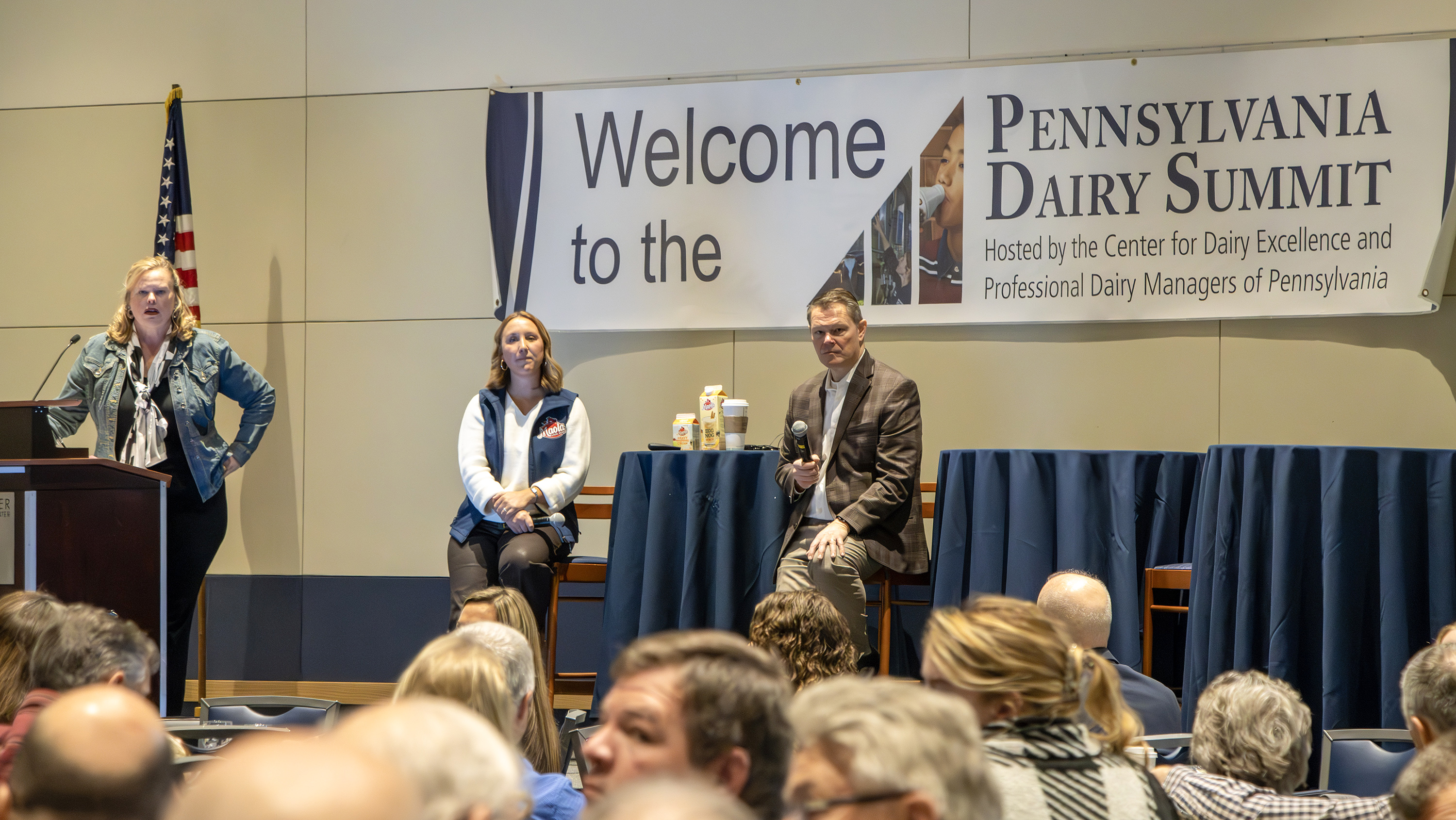
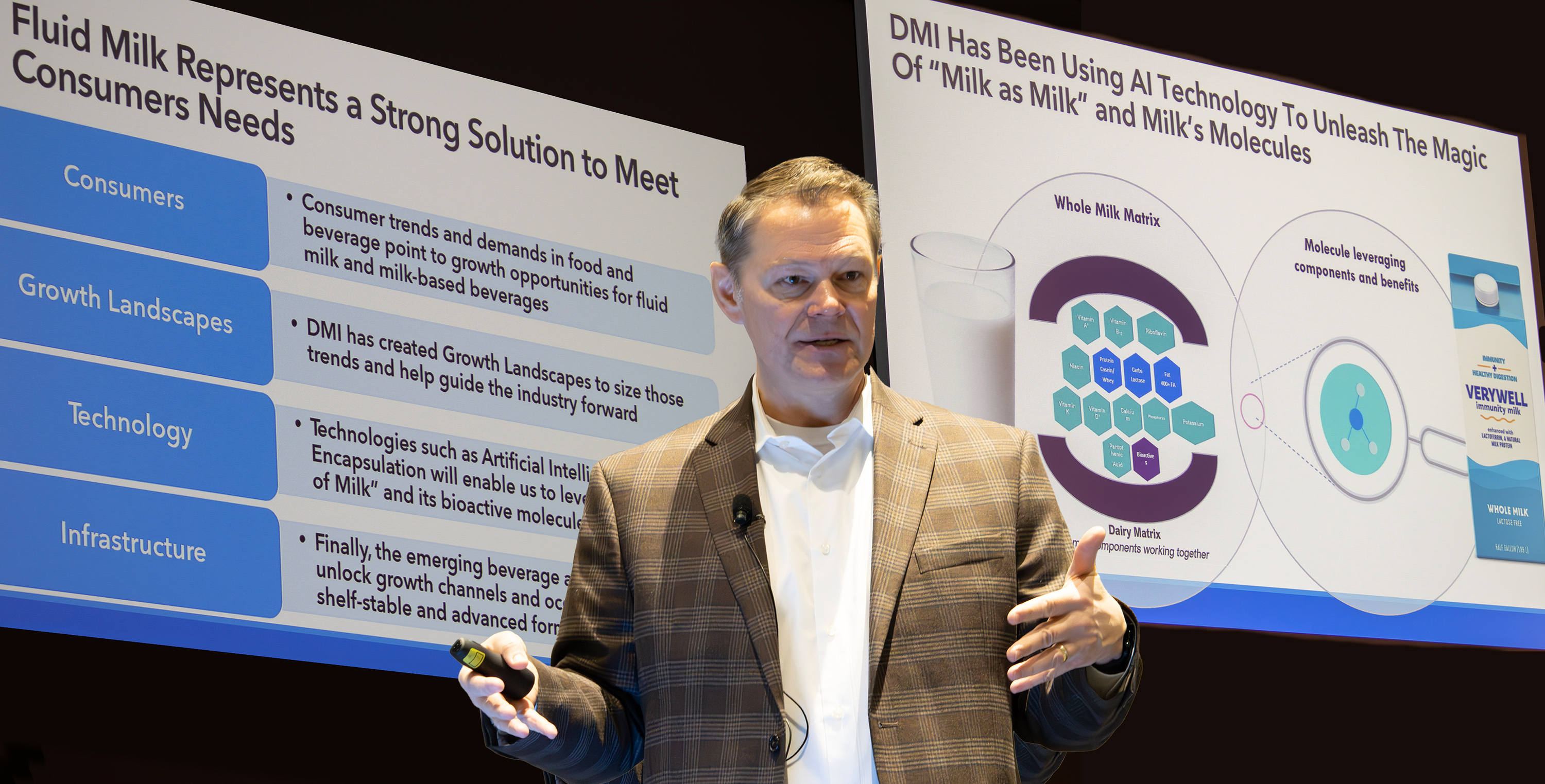

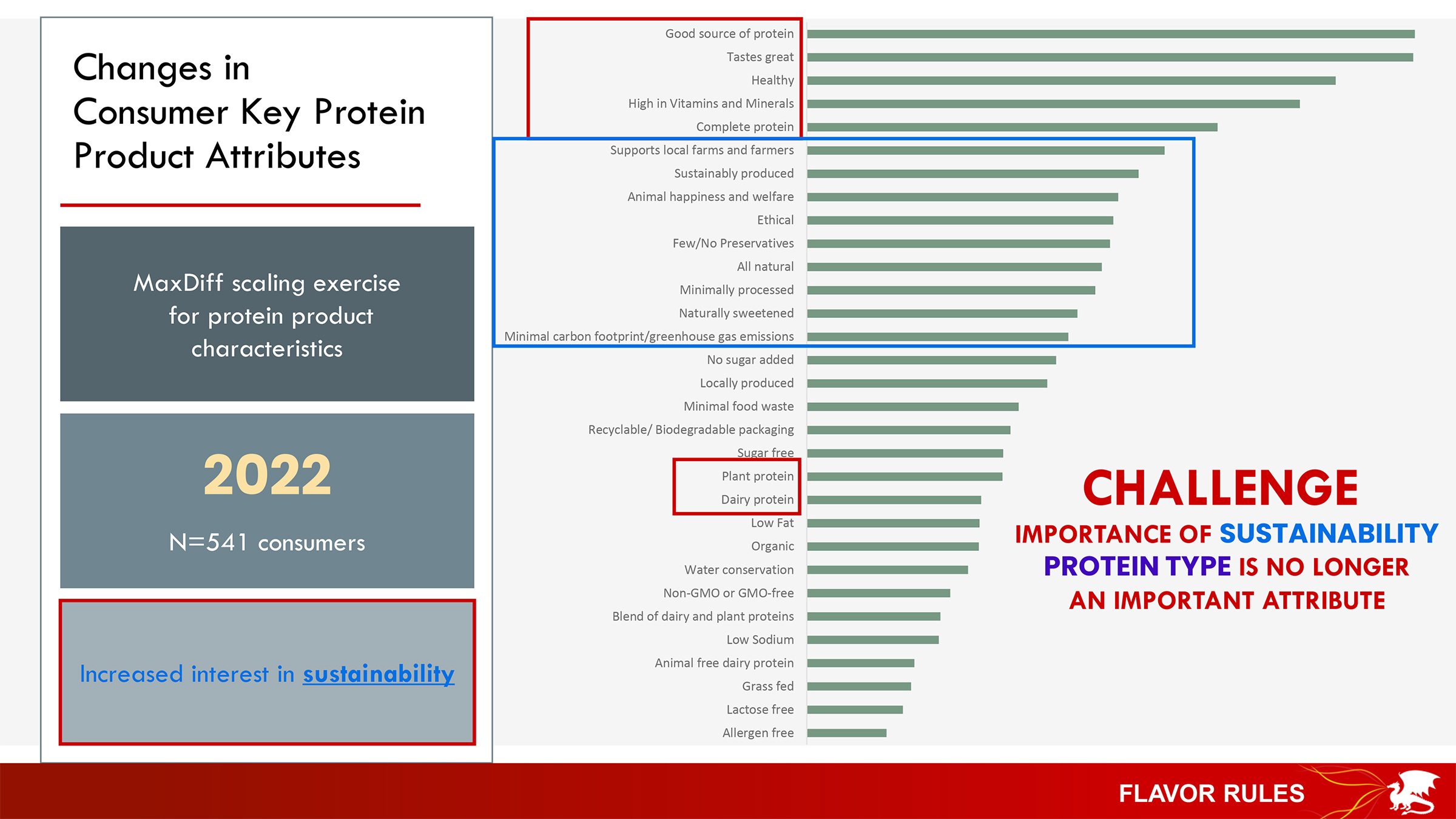

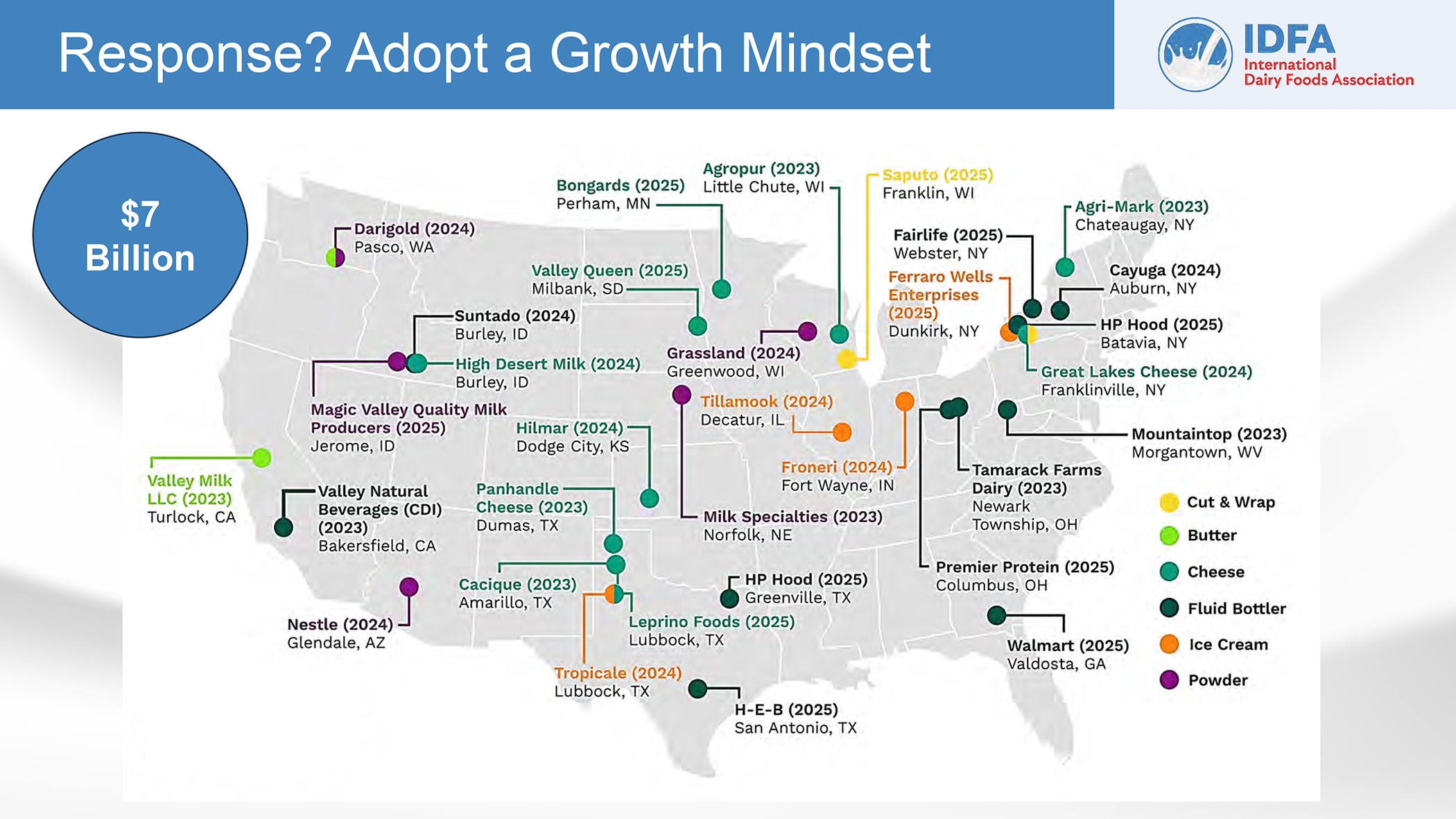
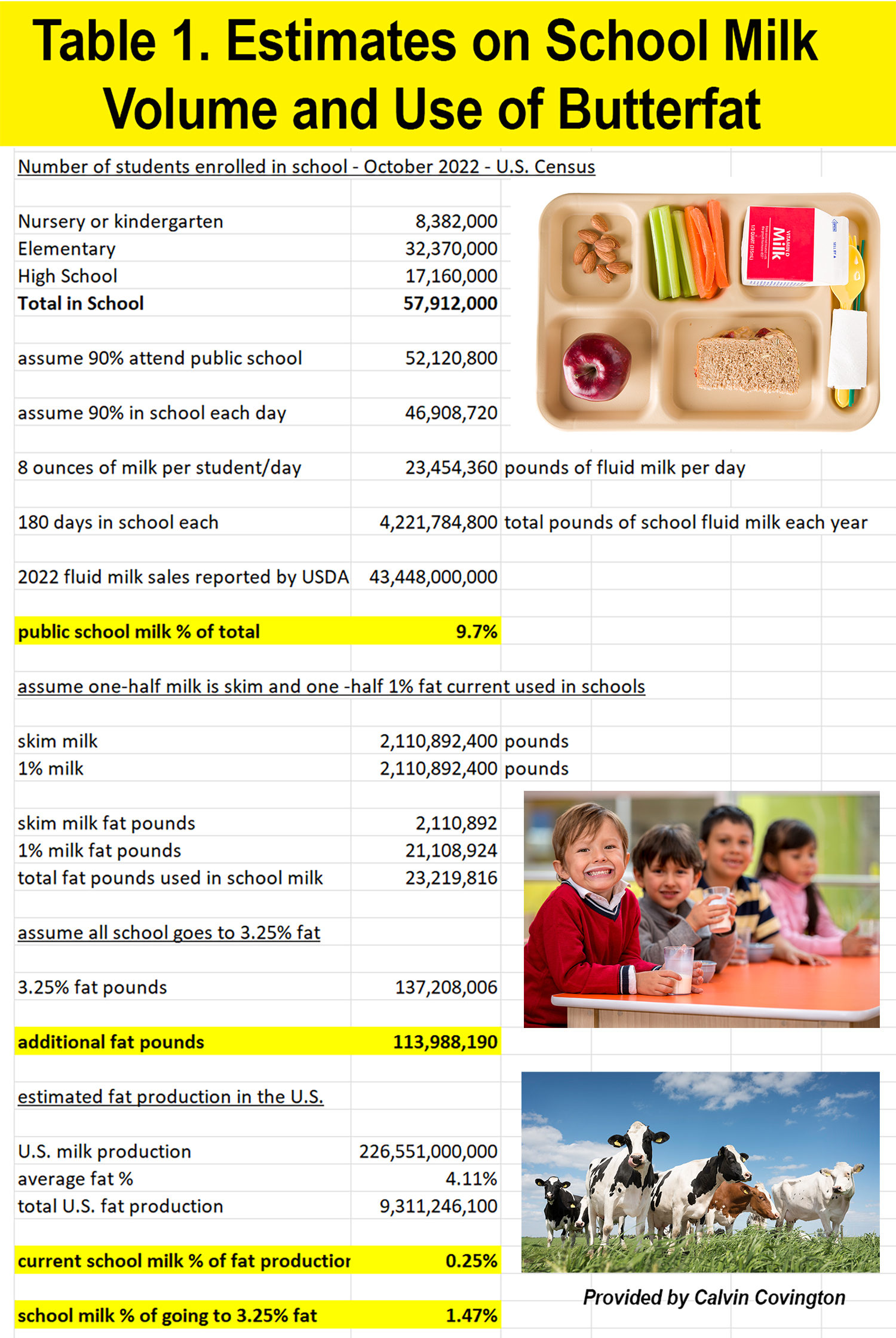

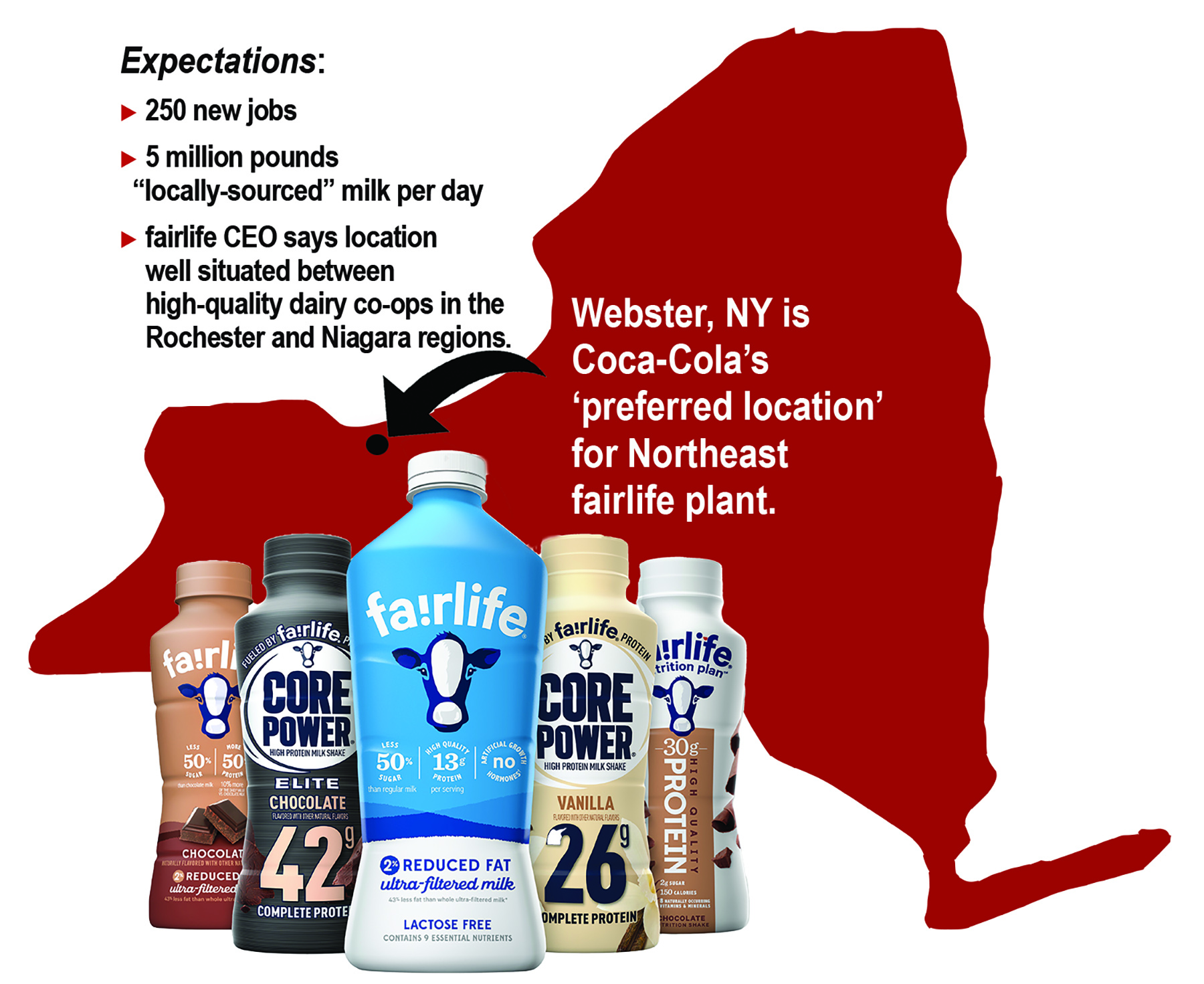
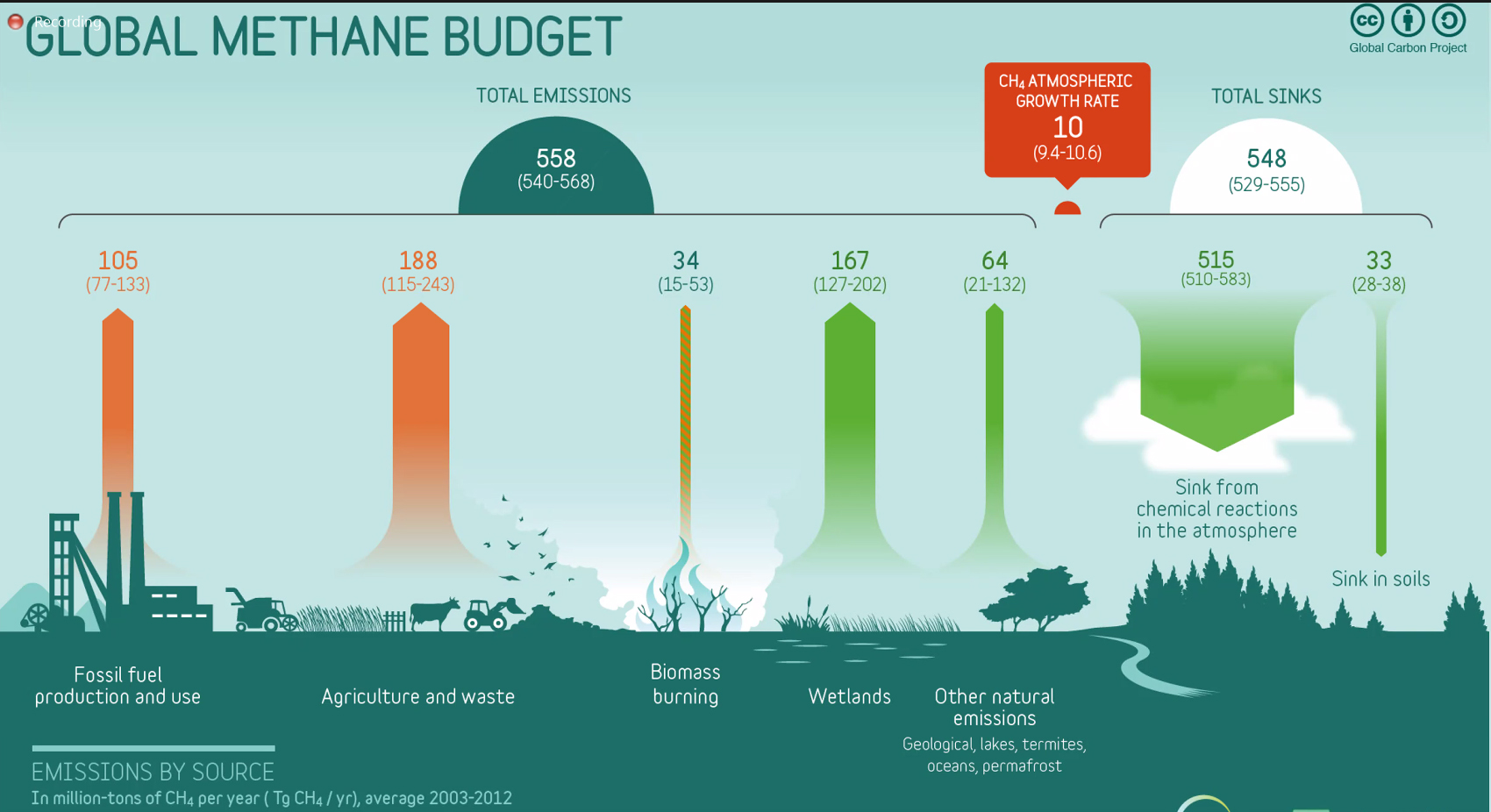
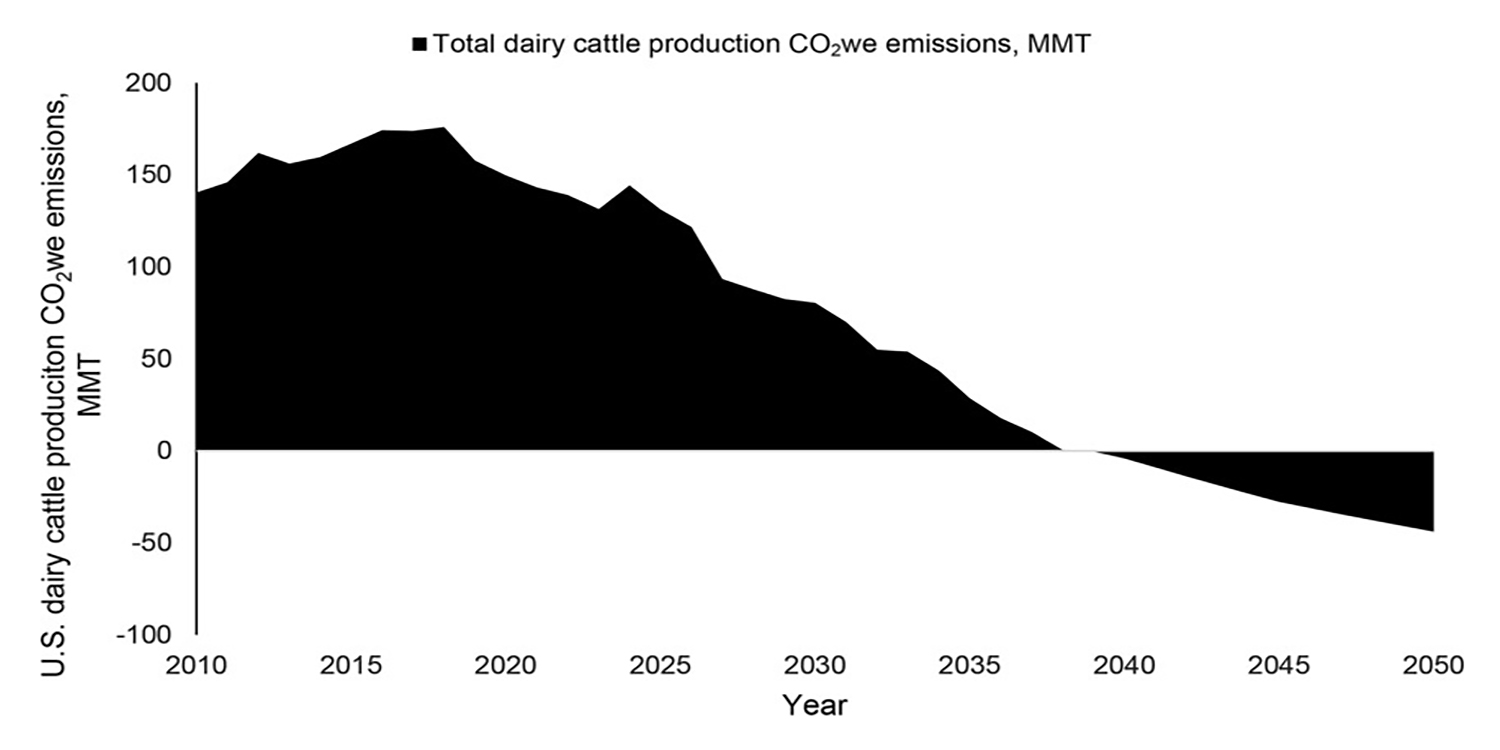
 Ag Moos