How do we unwind a trend that demonizes and suppresses a food group?

NESAWG(Philly)3890.jpg

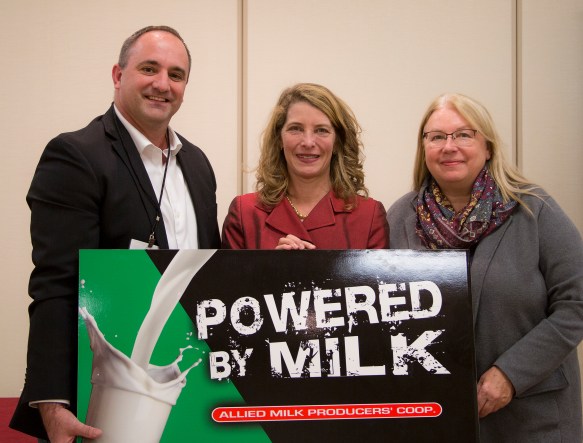
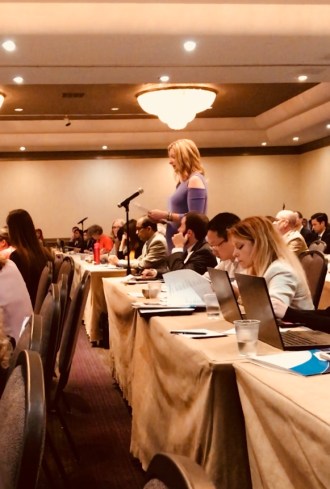
A dairy panel with Mike Eby, Nina Teicholz (center), Lorraine Lewandrowski and John King (not pictured) was eye-opening to food-interested people at the 25th NESAWG conference in Philadelphia. Minds were opened as food policy influencers report weeks later some are reading Teicholz’s book The Big Fat Surprise, and it is changing their thinkingAllied Milk Producers helped sponsor this panel. Stay tuned. 

JUNK NUTRITION SCIENCE STILL RULES DIETARY GUIDELINES

25th NESAWG brings dairy to table in Philadelphia 

By Sherry Bunting, Farmshine, December 14, 2018

PHILADELPHIA, Pa. — Justice, power, influence… Balance. How do people unwind a trend that demonizes and suppresses a food group?

How do Americans have faith in an increasingly globalized food system that gives them choices, but behind the scenes, makes choices for them?

How do urban and rural people connect?

These questions and more were addressed as hundreds of food-interested people from all backgrounds and walks of life gathered for two days in center-city Philadelphia recently for the 25th Northeast Sustainable Agriculture Working Group (NESAWG) conference.
webNESAWG9725

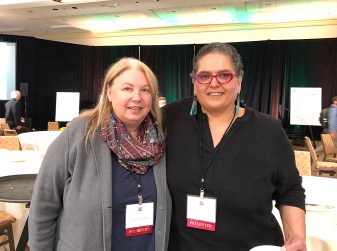
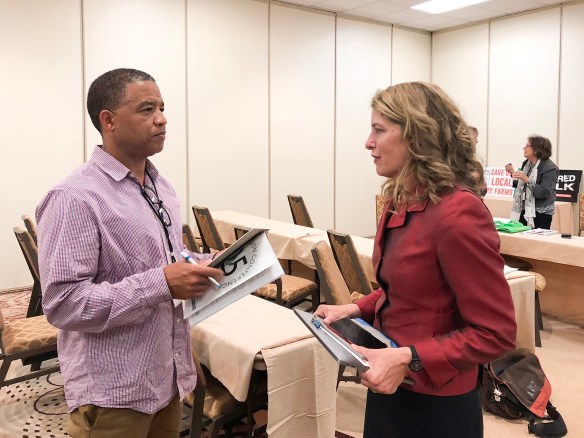
Lorraine Lewandrowski (left), a central New York dairy farmer and attorney, talks with Niaz Dorry of NFFC. Dorry spoke on the opening panel about her 67,000-mile tour of rural America, urging others to “meet the farmers where they are.” Lewandrowski spoke about the ecology of rainfed grasslands in the Northeast and the struggle of family dairy farms throughout this landscape.

For Niaz Dorry of the National Family Farm Coalition (NFFC), the answer is simple: “Get out into the countryside and meet the farmers — where they are,” she said, during the opening panel of the conference as she talked of her recently completed America the Bountiful tour, driving over 67,000 miles of countryside — coast to coast.

Dorry also touched on the dairy crisis. “Go and experience their grief with them. Be with them at milking on Tuesday and see them sell a portion of their cows on Wednesday — just to make payroll.”

Pennsylvania Secretary of Agriculture, Russell Redding echoed this theme during the lunch address as he said agriculture is “zipcode-neutral,” that we need to forge “a more perfect union in our food system” but that the future lies in “differentiating” agriculture here.
NESAWG(Philly)9757-Redding

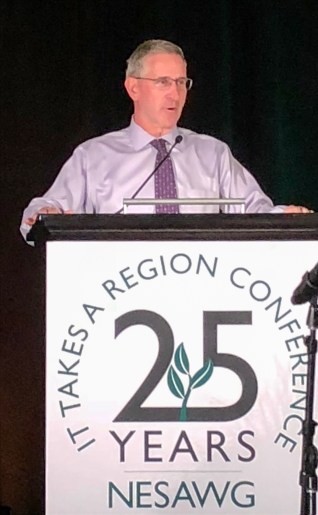
“We see our future — and our long-term investments in Pennsylvania — driven by differentiation…” said Pennsylvania Ag Secretary Russ Redding.

“It’s nice to be with folks who understand the power of food to change lives,” said Redding as he mentioned rooftop gardens, urban brownfields and Pennsylvania’s rank as number two in the nation for organic sales.

“We see our future — and our long-term investments in Pennsylvania — driven by differentiation, by being able to grow and produce and market organic agriculture,” said Sec. Redding.

With the NESAWG goal to “cultivate a transformative food system,” panels and breakouts covered topics from building networks and insuring equity among sectors to understanding urban food trends and ways to position Northeast agriculture within the power grid that ordains the direction of mainstream food production, processing and distribution today.

A breakout session on building “farm-to-school” hubs, for example, gave attendees insight for getting more fresh, local foods into school meals. Presenters talked about obstacles, and how they are navigated, about martialing available resources, identifying networks, working in collaboration with others, piloting ideas and growing them. Farm-to-School began in 2007, and it is growing.

Another breakout brought a panel of dairy producers to share with urban neighbors the crisis on Northeast dairy farms. The panel featured the work of dairy producers Jonathan and Claudia Haar of West Edmeston, New York, who spoke about consolidation that has been underway for decades in dairy.

But it was an afternoon panel — Milk Economies, Ecology and Diet — that put dairy and livestock producers squarely in the realm of hope for a re-wind.

Keynoting this panel was Nina Teicholz, author of The Big Fat Surprise and founder of The Nutrition Coalition. She covered the history of current government Dietary Guidelines and how rigorous studies have been ignored for decades because they don’t “fit” the narrative on saturated fats and cholesterol.

She was joined by dairy farmer and attorney Lorraine Lewandrowski of Herkimer County, New York, who spoke on dairy ecology and how the rainfed grasslands and croplands of Northeast dairy farms are a haven to wildlife, especially important species of birds and butterflies and pollinators.

They were joined by Mike Eby and John King of Lancaster County, Pennsylvania, representing National Dairy Producers Organization and Allied Milk Producers. The two men spoke on the dairy economy and what is happening on family dairy farms, struggling to remain viable.

“The land is most important to us,” said Lewandrowski about her deep love of Honey Hill, where her family has farmed for four generations. While, she is an attorney in town with farmers among her clients, she also helps her brother with the farm and her sister with her large animal veterinary practice.

Lewandrowski is known as @NYFarmer to her over 26,000 followers on Twitter — generating over 75,000 interactions from nearly a quarter-million tweets in the past 10 years!

She described a reverence for the land and its wildlife — cohabitating with a rich agricultural heritage and sense of rural community that exists within an afternoon’s drive of New York City.

“We have land that is rich in water,” she said with a nod to a dairy industry consolidating into regions that rely on irrigation.

“Our lands are rainfed: 21 million gallons of water run through our farm with an inch of rainfall,” she said. “Our farms are diverse across this landscape. But our farmers are going out of business in this economy. So many of these farms are then turned into urban sprawl. What will become of the people, the land and its wildlife?”

Lewandrowski talked about identifying bird species on their farm, of the crops and pasture in dairy operations, and the economic hardships she sees firsthand. She shared her vision of Northeast rural lands and what they bring to urban tables and communities.

Introducing Teicholz to an audience primarily of urban people, Lewandrowski shared how dairy farmers feel — working hard to produce healthy food, and then contending with poor prices driven by regulations that suppress its value.

“I didn’t know why our food is not considered good and healthy. Nina’s book gave me hope,” she said. “We are fighting for our land, and yet the vegans are so mean. When our farmers go out of business, they cheer on social media. They cheer when our families lose everything. But the land and wildlife lose also, and the vegans cheer.”

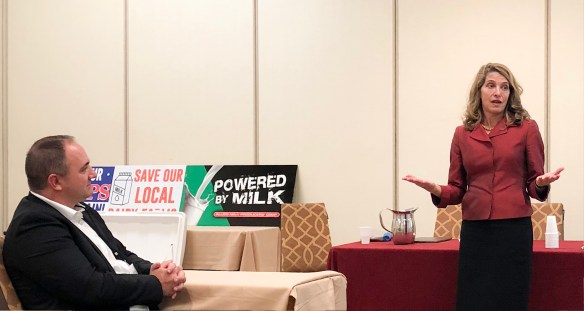
Teicholz traced the history of her 10-year investigation that led to The Big Fat Surprise: Why Butter, Meat, and Cheese Belong in a Healthy Diet. It started with a newspaper assignment on dietary fat.
NESAWG(Philly)9769

Nina Teicholz explains the revelations of a decade of investigation leading to The Big Fat Surprise. In the 5 years since publishing, farmers seek her out to thank her. She says she never realized how it must feel to be a dairy or meat producer — producing a healthy product while being told it is not healthy and seeing your livelihood pushed down by faulty dietary controls.

“Before I knew it, I had taken this huge deep-dive into fats and realized we have gotten it all completely wrong,” said Teicholz, a former vegetarian for 25 years before her research.

“I’m here to speak today because I found Lorraine’s twitter account and fell in love with her photos and stories from the dairy farm,” said Teicholz. In the nearly five years since her book was published, awareness of ignored science has been raised.

A California native, living in New York City, Teicholz described herself as an urban person and how surprised she was to hear the stories from farmers about how her book and her work gives them hope.

“It breaks my heart to now realize that — after all this time — the dairy farmers and meat producers have been led to feel that there is something wrong with the food they are producing, and to see how vegans go after these farmers, and now after me too,” Teicholz related.

“How did we come to believe these things that led to the decline in foods like whole milk, and have pushed down the producer?” Teicholz traced the history of dietary caps to the theory of one researcher — Ancel Keys from the University of Minnesota.

“Concern about heart disease in the 1960s led to many theories. The diet-heart hypothesis of Ancel Keys was just one theory, but he was unshakably confident in his own beliefs, and he was considered arrogant, even by his friends,” said Tiecholz.

“When the American Heart Association nutrition committee first supported Keys’ recommendations — even though the scientific evidence was very weak — that was the little acorn that grew into the giant oak, and it’s why we are where we are today,” she explained.

Methodically, Teicholz took her audience through the science that was used to support Keys’ theory, as well as the many more rigorous studies that were buried for decades.

In fact, some of the very research by the National Institute of Health (NIH) that had set out to prove causation for Keys’ theory was buried in the NIH basement because “the results were so disappointing to that theory.”

The studies that did not validate Keys’ theory — that fat in the diet is the cause of heart disease, obesity and other diseases — were suppressed, along with the studies that outright refuted his theory. A steady drumbeat of science — both new and exposed from those earlier times — shows a reverse association and causation.
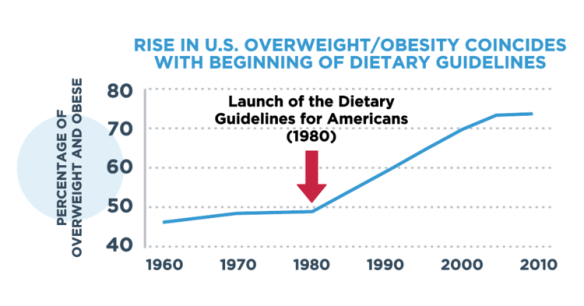
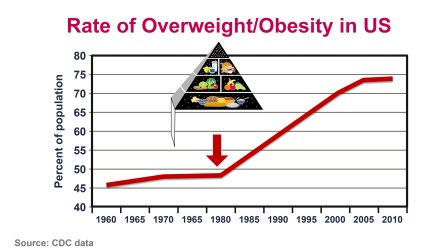
48329399_2290819234570553_8398919649542012928_n.pngIn fact, since the Dietary Guidelines capped saturated fat in the 1980s — becoming progressively more restrictive in requiring lowfat / high carb diets — the data show the association, that Americans have become more obese, with higher rates of diabetes and heart disease.

“It feels like the battle is endless,” John King said as he spoke of the real struggle on dairy farms and of selling his dairy herd in 2015. “But it is rewarding and encouraging to see what people are doing to expose the truth now.”

King posed the question: “Do urban communities really care about rural communities? If not, then we are done. Our food will come from somewhere else and the system will be globalized.

“As farmers, we care about what we produce, and we care about our animals,” he said. “What happens to us on our farms trickles down to the urban areas. It’s an uphill battle to try to go against the status quo, and we need urban communities to care if we are going to be successful. It comes down to whether urban and rural care about each other. Do we care about our neighbors?”

Teicholz sees the U.S. being in the midst of a paradigm shift. However, it is taking time for the Dietary Guidelines Advisory Committee to change and open up to the science. She noted that in the 2015-2020 guidelines, the caps were removed for cholesterol, but they were kept in place for saturated fat.

“The cholesterol we consume has nothing to do with blood cholesterol,” said Teicholz. “The body produces cholesterol, and if we eat fat, our body makes less of it. It is the science that remains buried that needs to continue to surface. People need to know that the fat you eat is not the fat you get.”

She cited studies showing the healthfulness of full-fat dairy, that drinking whole milk and consuming the healthy fats in butter, beef, bacon and cheese are the fastest ways to increase the HDL ‘good’ cholesterol in the bloodstream.

It is the saturated fat caps in the current guidelines that are the reason whole milk, real butter, beef, and 100% real cheese are not served in schools today, said Teicholz. She showed attendees how these recommendations drive the food supply.

“The recommendations are allowing children to have whole milk only for the first two years of life, after that, at age one or two, children on skim milk,” she said. “The recommendations drive what we eat whether we realize it or not.”

She showed how the current flawed Dietary Guidelines drive the diets of the military, school children, daycare centers, WIC programs, hospitals, prisons, retirement villages. And these recommendations are downloaded by foodservice and healthcare: physicians, dieticians, nutrition services, foodservice menu guides. They are driving how dairy and meat products are presented in restaurants, fast food chains and other menus of choice. They are driving the current FDA nutrition innovation strategy that is working on a symbol for “healthy” and looking at modernizing standards of identity to accomplish these nutritional goals that focus on lowfat / high carb diets.

“Meanwhile, it is the unsaturated fats, the new products in the food supply, that are negatively affecting us and those are all there… in the USDA feeding programs,” Teicholz pointed out.

Others in the panel discussion pointed to an anti-animal view, that cattle are bad for the planet in terms of climate change. These views perpetuate the current dietary guidelines. In fact, in 2015, the Dietary Guidelines Advisory Committee attempted to introduce “sustainability” guidelines on what they deemed “healthy” for the planet into these guidelines, officially.

This is the ecology side that Lewandrowski addressed, showing urban food influencers how the concept of sustainability is being overtaken and systemized and how Northeast dairy farmers have a great story to tell that is being ignored, drowned-out.

“We have to think about how the shifts are occurring in the food system and manage those shifts. We can work together and make change happen,” said Mike Eby, articulating the message of National Dairy Producers Organization (NDPO), seeking to work with the system to manage farmers’ interests.

Allied Milk Producers helped sponsor this dairy panel, and Eby said that whether it is milk promotion through Allied, membership in NDPO, or supporting the buying and donating of dairy products through Dairy Pricing Association (DPA), it is important for people to participate.

NESAWG(Philly)9741.jpg

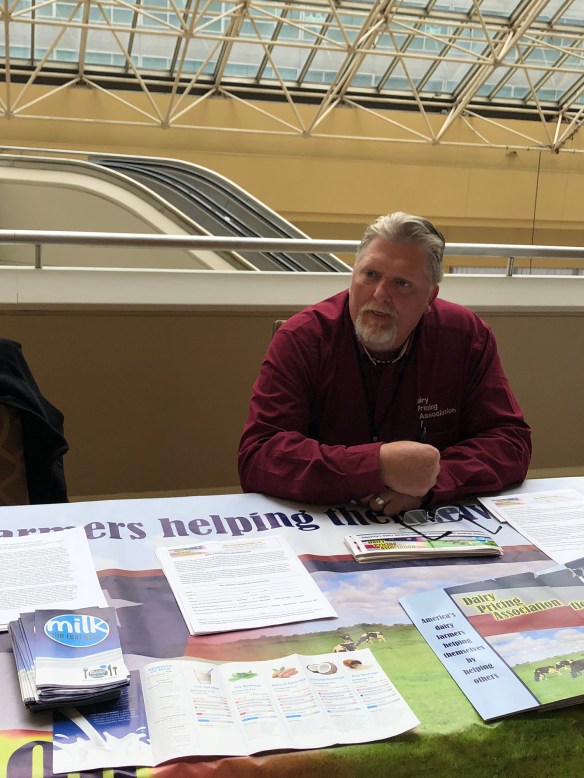
Mike Eby and John King brought Allied Milk Producers materials — and plenty of milk — to the NESAWG conference in Philadelphia. Amos Zimmerman also had a booth for Dairy Pricing Association.

He gave examples of how Allied and DPA — funded by farmers — are reaching out to consumers, schools, urban communities with donations of product and a positive message.

“We need more people to get involved to fix these issues, and to create a system that supports its producers and stabilizes prices,” said Eby.

“We need to reach out and work together as urban and rural communities,” added Lewandrowski.

 

NESAWG(Philly)3802.jpg

Hundreds of food-interested people from all backgrounds and walks of life attended the 25th Northeast Sustainable Agriculture Working Group conference in Philadelphia, where networking from urban to rural looked at regional solutions.

NESAWG9779

NESAWG9729

NESAWG9748.jpg

webNESAWG9759


New PMMB consumer rep sees dairy crisis from outside-in

Dr. Carol Hardbarger is digging in and looking at all angles of PA dairy crisis.

Hardbarger9825 (1).jpgBy Sherry Bunting, from Farmshine, Sept. 7, 2018
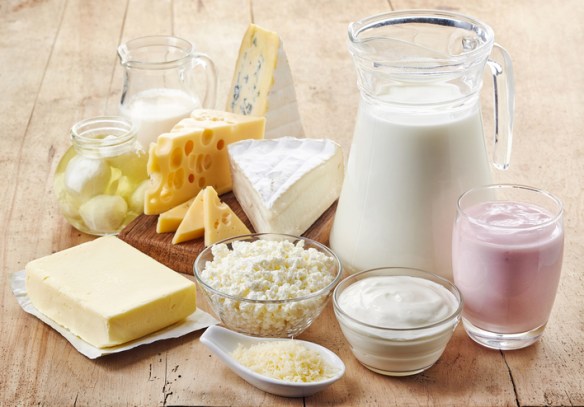
HARRISBURG, Pa. — Solving problems, bridging gaps, making connections, bringing different interests together – these are skills Carol Hardbarger, Ph.D. has been using throughout her career in education. Today, she brings a unique combination of skills and background to the Pennsylvania Milk Marketing Board (PMMB). She was appointed by Gov. Tom Wolf in May and confirmed by the Senate in June.

“It is a tremendous honor for this to come at the end of my career, to be asked by Governor Wolf, to meet with Senators during confirmation, and to have this opportunity to do something for the state and the dairy industry I love,” Hardbarger said in a recent interview with Farmshine at the PMMB offices in Harrisburg.

She reflects on that call from the Governor’s office, telling her she had been nominated and asking if she would serve. She promptly began looking at the information on what the PMMB does.

“There is a crisis in the dairy industry,” says Dr. Hardbarger. “Oftentimes, when there is a problem, there is a solution that can be obvious to someone looking at the problem from the outside, to go back to what the objectives are of an organization or project at hand, looking at what has been done and why it hasn’t worked.”

She talks about the smaller steps that may be missed in trying to get to an end goal.

“That’s how my brain is wired,” the intense, but easy-to-talk-to Hardbarger says with a smile. She is a big-picture thinker with an obvious knack for process details.

In every job before retirement, she was brought in to help solve a problem and was able to deal successfully with those situations.

The dairy industry issues go well beyond the regulatory aspects of the PMMB. As the board’s consumer representative, Hardbarger seeks a broader role in marketing and advocacy that is refreshing.

She has rolled up her sleeves to dig in, confessing that she loves an intellectual challenge.

Her intention to spend one day a week at the PMMB offices in Harrisburg, quickly became two days a week and has now evolved into a full-time 40- to 50-hour work week.

Hardbarger serves on the board with dairy producers Jim Van Blarcom of Bradford County and Rob Barley (chair) of Lancaster County. They are also putting more time in their roles.

“That’s okay,” she says. “In order to accomplish what the Governor and Senators have communicated, that level of time and organization is necessary.”

She spends her time combing through records, meeting with government and industry entities, opening lines of communication, and being helpful to staff, which has been reduced in recent years by unfilled retirements.

Hardbarger sees external communication and a visible, accessible board on “advocacy things” as vital for developing the relationships that lead to solving problems.

She started the PMMB facebook page and twitter feed (@PAMilkBoard), as well as an email newsletter to legislators and industry that will eventually broaden to consumers. She also helped organize upcoming listening sessions. There is no need to pre-register or pre-submit comments, and the board urges those who can’t attend to send comments electronically to ra-pmmb@pa.gov.

The first listening session was held Sept. 26 from 6 to 9 p.m. in western Pennsylvania. The second will be Oct. 16 at Troy Fairgrounds in northern Pennsylvania, and another is being planned for southeastern Pennsylvania, potentially in Lebanon in November.

In the office with staff through the week, Hardbarger says Pennsylvania’s dairy industry is lucky to have these individuals, who are “highly capable and dedicated in jobs that are not easy.”

On the road forward, she sees a starting point is identifying where there is agreement.

“We have to start with what we all agree are issues to address. Otherwise, we are just putting on band-aids,” says Hardbarger, explaining that such a “holistic approach” is a way for deep-rooted past, present and future issues to be addressed for the long-term.

“I have some concern as I listen to the various constituency groups in the dairy industry — the farmers, the dealers, the retailers, the consumers — that when they speak, for the most part, I hear a lot of individual agenda,” she relates. “I believe strongly that we must be able to look at the agendas of all the groups and somehow integrate them to come up with solutions and prioritize them.”

When Hardbarger talks about “systemic solutions,” as she did in her Senate confirmation hearing, she means the longstanding parts of the system that are “built into how the industry operates.”

She gives the example that some are talking about “temporarily suspending” the minimum milk price, which would require changes in the law.

“We told the Senate that we want to look at some legislative items and see what makes sense for 2018 and 2019,” says Hardbarger.

Another example is some want the over-order premium to end.

“They believe it is not working the way it needs to,” she says. “We are not hearing many suggestions to raise the over-order premium. It will be interesting to see what comments and ideas we get at the upcoming listening sessions.”

The challenge is, according to Hardbarger, “how do we blend a holistic approach to a problem and how it developed systemically over the years with legislation and regulation that was implemented in a time very much different from today.”

She says the board is taking a neutral approach as they look at impacts.

“There are some misconceptions about what the board can and cannot do… so I hope the newsletter and outreach will develop good lines of communication with the legislature while correcting misconceptions and give us the ability to come back to the Assembly with information they need,” Hardbarger relates. “We obviously have the two laws we are responsible for with the associated regulations. But as our name implies, we are ‘marketing.’”

Through facebook and twitter, Hardbarger posts things she sees every day of interest to dairy. The newsletter will eventually include a calendar, an information piece from the chairman, questions and answers by staff, and the school nutrition aspect will be discussed.

Asked why the PMMB’s facebook and twitter profile picture is the PA Preferred logo, Hardbarger responded simply: “We want to promote Pennsylvania dairy products.”

She gave the example of a recent step — sending information to retailers and processors on how special milk promotions can legally be done, and suggesting such promotions be linked to PA Preferred milk.

Hardbarger says she wants PMMB’s communications to be an information clearinghouse between the industry and the legislature and ultimately the consumer.

In developing her role as consumer representative, she is already pursuing relationships with consumer groups and civic organizations to provide information about the nutritional benefits of consuming dairy products and what the industry means to Pennsylvania and its communities.

For example, Hardbarger has already reached out to school nutrition officials with ideas about how milk and dairy are nutritionally assessed within the USDA meal profile for school breakfast, lunch and after school programs.

“If milk and dairy products were separated from the nutritional analysis… we may see schools offer more milk and dairy in the morning and after school programs without having to fit into a total nutrition analysis,” she suggests, adding that this idea is being provided to Representative G.T. Thompson, who sits on the Congressional workforce and education committee as well as to U.S. Senators Pat Toomey and Bob Casey.

“We are also communicating with USDA on this issue of getting whole milk (unflavored) in the schools along with now flavored 1% milk,” she said.

PMMB also sent official comments to the FDA docket to enforce and uphold milk’s standard of identity, and sent emails encouraging others to do so.

Hardbarger understands the nutritional tightrope schools walk to serve foods and milk that students enjoy and will consume. She is aware of the steady drumbeat of scientific studies showing dairy as a complete protein and complete source of vitamins and minerals children today are lacking, as well as the positive dietary revelations about whole milk and full fat dairy, especially for children.

She remembers her youth and spending much time on her grandparents’ dairy farm in northern Maryland, of making and consuming everything from homemade cottage cheese, butter and farmers cheese to whipped cream pies.

And she reminisces about doing just about every chore on that diversified farm, pointing out a decades-old framed photo of her son as a child milking one of four Jersey cows the family kept at that time.

While her career has been in education and technology, she is quick to point out that she has been around farmers and agriculture all of her life.

“There is a passion people have for this life, this business. And the dairy industry is vital to the economy of our state and a big part of what defines us, of who we are,” the proud mother and grandmother two-generations removed from dairy farming explains.

Since her first day on the PMMB in early July, Hardbarger has encountered “no real surprises” but a fuller understanding of issues that have swirled for years.

What surprises her is “the differences of opinion among constituent groups and their differing opinions about what needs to be done,” and seeing how far the industry is from dealing with differences over coffee and a handshake.

“Now we have groups with lawyers and CPAs and very strong individual agendas,” Hardbarger observes. “That has surprised me. I wasn’t aware of how fractured it is. This is an observation, not a criticism, because each constituency has a business interest to protect.”

From staff development to planning a staff retreat, to emailing staff for their ideas, Hardbarger says the momentum is “forward,” even though it’s “frustrating” to learn that state bureaucracies do not move as quickly as desired and there are regulations for literally everything.

“We can’t” are words she does not like to hear.

“There are very few things in this world that cannot be done. It may be that we need to do them in a different or particular way,” says Hardbarger. “We have to fix this dairy crisis, and we can, if we get all the players involved.”

Toward that end, Hardbarger says her next goal is to have the PMMB work with other agencies in forming a “rapid response team” for dairy.

“We hear stories about how a vital bridge can be fixed within 40 days… how the state government made it easier to deal with regulatory processes and provided waivers to make something happen, fast, because it was economically feasible to do that,” she says. “Pennsylvania has a Dairy Development plan… and we need the same ‘rapid response’ in dealing with our dairy crisis.”

Looking ahead, she is most hopeful that, “We can get a working group together of one or two representatives of each constituency group… and start hammering out solutions to our problems, to talk honestly face-to-face about the issues and come up with a few solutions that will work, and that my time here will be productive.”

Adds Hardbarger: “The most rewarding thing so far is the people I’ve met. There is nothing like coming into the office in the morning and seeing smiles and enthusiasm among the staff and having positive responses and feedback from Senate and House staff, to see us moving in a direction.”

-30-

PHOTO CAPTION Hardbarger9825

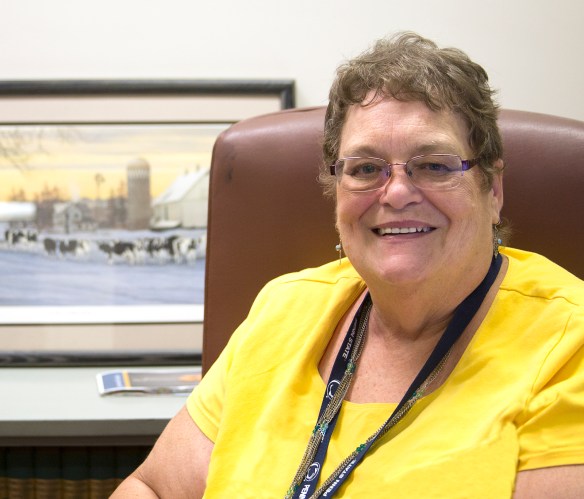
Retired education and technology expert Carol Hardbarger, Ph.D., of Newport, talks about the dairy crisis and her role as the new consumer representative on the Pennsylvania Milk Marketing Board during a recent interview at the PMMB offices in Harrisburg. She says the Bonnie Mohr painting behind her is a favorite reminder of youthful days spent on her grandparents’ dairy farm. “It also reminds me that the number of dairy farms throughout Pennsylvania help define who we are as a state,” she says. Photo by Sherry Bunting


Comment period for milk, dairy identity ends 8/27. Part 2 of 7/26 hearing right here

iStock-544807136.jpgBy Sherry Bunting, from Farmshine, August 17, 2018
WASHINGTON, D.C. – There are 10 days remaining for public comment on FDA standards of identity for milk and nearly 80 other dairy products, along with the other aspects at stake as FDA launched its Nutrition Innovation Strategy to determine – and stamp – healthy choices for consumers while taking steps to “modernize” standards of identity to “achieve nutritional goals.”

The daylong FDA hearing on July 26 was one of several relating to these issues on the FDA docket, and as previously reported in Farmshine, dairy has taken center stage for several reasons.

First, Scott Gottlieb, head of the FDA, responded to calls for FDA to take a closer look at the dairy industry standards of identity, especially for milk. He opened the hearing saying that the agency must first determine “how consumers understand and use the term ‘milk’ to know if the inherent differences between these products is well understood by consumers so we can understand how consumers are being misled.”

The public comments being received by FDA through August 27, are the first step in its multi-faceted approach.

Individual comments on any of these converging standards of identity issues and the Nutrition Innovation Strategy can be sent to FDA prior to the Aug. 27, 2018 deadline at the docket portal here.

Or, send to: Dockets Management Staff (HFA–305), Food and Drug Administration, 5630 Fishers Lane, Rm. 1061, Rockville, MD 20857. 

The second aspect of this brief comment period is to discuss the standards of identity more broadly.

“We want to hear about changes in science to review and update,” said Gottlieb. “We are hearing the standards of identity can cause the food industry to avoid reformulations that would reduce fat and calories. We want to gather this input and encourage out-of-the-box thinking with the bottom line helping consumers to identify healthier options.”

We covered some of the testimony at FDA’s July 26 listening session in Part One in Farmshine, Aug. 10, 2018.

Here, in Part Two, published in Farmshine August 17, 2018, are more of the elements from that hearing that are so important to know and understand…

Of particular interest on dairy product standards of identity were the hearing comments by Cary Frye, senior vice president of regulatory affairs for the International Dairy Foods Association (IDFA). She commended Commissioner Gottlieb for undertaking the Nutrition Innovation Strategy “to improve nutrition and health.”

While absolutely silent on enforcement of milk’s standard of identity, despite representing the nation’s milk and dairy food processors, Frye said, “the key area we are working on is to modernize the standards of identity for dairy products, which make up more than one-third of the 280 standards of identity currently on the FDA books.”

She said these standards “are outdated and stand in the way of innovations and novel processes. Current systems are not working and definitely need to be reformed.”

Frye noted that the cheese standards have been unchanged while ultrafiltered milk processes have been around for 20 years. “Clearly a new approach is needed for processes like this to be used to create new and healthful products.”

She said “processing milk by filtration to concentrate proteins and remove lactose is embraced around the world, but these new processes are not permitted in our dairy products with the current standards.”

Frye did, however, thank the FDA for what she described as FDA’s “recent guidance allowing ultrafiltered milk as an ingredient for cheeses.”

“But the agency needs to go further and make dairy a top priority for modernized standards of identity,” said Frye on behalf of IDFA. “We must incentify innovation. We can’t make these investments if we must petition for standards that take decades to complete.”

Along with standards, FDA wants to modernize label claims as a key element of the nutrition innovation strategy, to give consumers “quick signals” with important information on the nutritional benefits of food choices.

A key question FDA is looking at is: What claims best stimulate innovation to create products that are better choices?

Speakers at the hearing identified food trends, saying consumers are committed to a more balanced approach between nutrition and function, but also the idea of food, that it is part of how they experience life, with taste becoming more important to consumers than nutritional profile as they move away from “lowfat” foods.

(Unfortunately, this FDA strategy has not yet acknowledged there are health-related and nutritional reasons for consumers to move away from “lowfat” dogma of the past 30 to 40 years. My comment to the FDA docket will include sending by mail, a copy of The Big Fat Surprise, by Nina Teicholz, who will join me in sending copies of this book to FDA?)

As in many of these discussions, the generational shifts in food trends and choices are the most noticeable. Hearing presenters noted that millennials are pursuing “clean eating and natural foods” as more important than a nutrition-based label.

With that in mind, upholding and enforcing the current standards of identity for milk and dairy products becomes important since it is simple compared with concocted imitation formulations with long lists of ingredients unable to provide all of the nutrition milk has – naturally.

Hearing presenters also acknowledged that the declines in consumption of meat and dairy over the past 40 years have just begun to “shift back the other way.” People are returning to the fresh perimeter of the grocery store.

(Again, no mystery here, FDA needs to read the book: The Big Fat Surprise)

With millennial food choices driven by a so-called “return to purity,” my thoughts as I listened to the July 26 FDA Nutrition Innovation Strategy hearing is this: Will FDA move incrementally toward giving consumers what they want, while slipping into that desired food the science and innovation the FDA and food industry believe consumers need… in order to “get” the FDA ‘healthy choice’ stamp – however that is ultimately defined in this multi-year strategy and however it is ultimately designed for packaging?

These are big things to watch and participate in.

This is not to say that some new standards aren’t needed. Rob Post for Chobani, testified that they produce a nutrient dense, healthy, strained Greek yogurt, but because no standard of identity exists for this type of yogurt, they are challenged to have standardized nutrition profiles “that account for the 52% protein content in Greek yogurt” when used in institutional feeding programs like the National School Lunch Program.

“Today’s consumers have evolving demands and a new set of food values,” said Post. “Health is important, but so are other values and drivers.”

Others noted that the current standards of identity “do not allow lower salt content for cheese.”

This could be an issue when it comes to nutritional cheese getting a ‘healthy choice’ FDA stamp in the future, if such stamps are based on what are now questionable low-salt directives for healthy eating.

“Standards are important because they assure the consistency of the product, its authenticity and nutrition,” said Post.

Laura MacCleery, Policy Director, Center for Science in the Public Interest testified that, “Americans overconsume saturated fat.” They are among the contingent of wanting to work on labeling to steer consumers away from saturated fat.

Meanwhile, the American Heart Association testified to FDA that they want the standards of identity “modernized to improve the nutritional value of food by reducing both sodium and saturated fat.”

On the flipside, members of the dairy processing industry said they are looking for standards to be modernized to abolish the milk fat minimums and allow lower sodium on natural cheeses that currently have rigid standards of identity. Dairy processors testified that this is necessary to conform to the nutritional focal points of this discussion – salt and fat – that are still based on current dietary guidelines.

Will FDA grant these wishes and will we see lowfat and low salt cheeses introduced as “the real thing” because the standard has changed based on a dietary guideline many in the scientific community are already saying is a flawed guideline?

You can see the intertwined dilemma this FDA Nutrition Innovation Strategy could spawn.

Taste is king, according to the food processors speaking about low salt claims. They said they go ahead and formulate low salt varieties, they just are not always advertising it on the packaging space.

Will modernization of standards of identity low-salt and low-fat our food – our cheese for example — without our knowing it or being able to choose? Do we care if that happens as long as it tastes good? And how is that happening? With milk protein concentrates, given FDA’s already loosened grip on allowable ingredients in cheese standards of identity?

A representative for Great Lakes Cheese spoke up to say that, “Consumer transparency around label claims and that presents a huge consumer perception issue. We are interested in experimenting to reduce sodium in cheeses, but without having to put a flag saying so on our product.”

Without a change in standards, a low salt or low fat cheese would have to be labeled that way. If the fat and salt standards are abolished, no ‘flag’ is needed and consumers won’t know the fat or salt is lowered – it just may taste different.

One question asked was “If our goal is to impact consumer behavior, how do we empower consumers to look for better choices by looking to the nutrition facts instead of making changes to do it for them (with modernized standards and healthy-choice stamps)?”

Part of this process is FDA’s work to “update” the definition of “healthy” as a “voluntary” claim. What kind of symbol should be used, should it be by food group.

“What’s healthy and not healthy shifts over time, and it’s not the same for everyone. If you’re putting a stamp on something today, you may have to take it off at some time down the road,” said one hearing participant.

Dieticians were on the side of “one size doesn’t fit all” when it comes to using FDA-sanctioned ‘healthy’ stamps or symbols on food labels. They preferred to see a focus on foods and food patterns more than specific nutrients.

In fact, one anonymous dietician has already commented on the public document online to say they have spent 30 years with government food programs and this is his or her observation over those 30 years: “We have done a great disservice to the public in trying to get people to eat 6 to 12 servings of carbohydrates per day while subsisting on a lowfat diet.”

A participant from the Edge dairy farmer cooperative of 800 members in the Midwest (formerly Dairy Business Association Cooperative based in Wisconsin) said that, “Accurate labeling is the first step in FDA’s enforcement of existing standards for milk, cheese, yogurt. High nutrition and taste have come to be expected,” he said.

“Inaccurate labeling is not fair to farmers and their investment or to customers who may have been misled. We’re encouraged by FDA’s announcement and we encourage innovation in the dairy case to keep up with changing wants and needs with options for healthy products, but most people under-consume dairy products. We must have the flexibility to make what competes and to label innovative foods made with milk.”

-30-

‘FDA may have forgotten the standard for milk, but we haven’t’ – Part One

Dairy epicenter of broader FDA strategy

 Public comments due August 27

By Sherry Bunting, from Farmshine August 10, 2018

WASHINGTON, D.C. — While the dairy industry is focused on multiple layers to the milk and dairy standards of identity — the FDA review of these standards, and their enforcement, is couched within the broader Comprehensive Multi-Year Nutrition Innovation Strategy launched recently by the Food and Drug Administration (FDA).

Labeling and education are aspects of the strategy, along with a new FDA definition of “healthy choice” to be identified “visually” on foods that meet criteria FDA is still defining.

But the key to the strategy, according to FDA, is to “modernize” standards of identity in order to achieve specific nutrition goals the agency believes will reduce chronic diseases – namely diabetes, obesity and heart disease.

Since 80 of the 280 foods with current standards of identity are dairy foods, and many of the remaining 200 are meat products, the FDA’s noted allegiance to the low-fat dogma of the current Dietary Guidelines does not bode well for how this may all turn out.

That’s why grassroots consumers and producers NEED to get involved.

Of particular concern in a July 26 FDA hearing are regulator use of terms such as “barrier to innovation” or “reformulations of foods using science” in discussing how modernized standards of identity can help the government attain an objective of getting consumers to eat in accordance with the ways it believes will lower chronic disease.

This, despite the fact that noted scientists in the health and nutrition fields and investigative science journalists, like Nina Teicholz, author of The Big Fat Surprise, continue to point out how flawed the science has been for current dietary guidelines,  and how these flawed guidelines have actually led to epidemic rates of obesity and diabetes while doing nothing to abate heart disease and morbidity.

Teicholz observed in submitted comments that, “There is no evidence that saturated fats cause obesity. Consumption of saturated fats have declined 17% since 1970, animal fats down by 29% in same period, while obesity rates are up, so explain how saturated fats can be the cause?”

Hearings on parts of the Nutrition Innovation Strategy have already taken place prior to FDA commissioner Scott Gottlieb’s now-famous statement that “Almonds don’t lactate.” This statement propelled milk and dairy into the epicenter of the standard of identity modernization process FDA already had in motion.

A daylong FDA hearing on July 26 kicked off the standard of identity portion of the Nutrition Innovation Strategy, and two weeks prior, the administration held a listening session specifically on the labeling and regulation of new cell-cultured protein technologies — funded by billionaire investors and conventional agriculture companies — seeking to gain standardized status as ‘animal-free’ versions of various meats and dairy proteins for inclusion in products — interchangeably without notice.

The July 26 session attracted a larger than expected attendance due to the national discussion on imitation milk products, and FDA moderator Kari Barrett indicated there was a “very large webcast audience participating.”

Commissioner Gottlieb kicked it off telling how FDA has been monitoring food innovation trends and sees these trends as providing an opportunity to empower individuals to use nutrition to reduce chronic disease.

He acknowledged a “deep personal interest” in the Nutrition Innovation Strategy as he believes nutrition innovation can help solve health issues, and he believes FDA can develop a policy framework to achieve it in their regulatory role.

(However as the daylong hearing progressed, it became obvious that the notable presenters and regulators on various panels are relying heavily on the current flawed Dietary Guidelines for Americans, which themselves are in need of “modernization” due to the revelations about the poor science behind them, particularly on saturated fat).

“We want to empower consumers with innovation and facilitate industry innovation for healthier foods … to remove barriers and leverage nutrition toward these goals,” said Gottlieb, calling it one of his “top priorities.”

He reminded participants that FDA regulates 80% of the food supply with a long history of informing that regulatory process via the Dietary Guidelines for Americans.

“We want to modernize our regulatory approaches to help consumers seek healthier options,” said Gottlieb. “The historic approach (of FDA) is to set barriers. But by modernizing our framework and approach and looking at consumer trends, the food industry can provide these healthier options with foods consumers are seeking.”

The new area of focus for the agency, according to Gottlieb, will be to see the food industry “compete on the nutritional attributes of their products” within a policy framework that allows innovative reformulation.

Gottlieb also mentioned “calls for FDA to take a closer look at dairy identity,” he said. “But first we must better understand how consumers understand and use the term milk and how they are being misled.”

Gottlieb acknowledged the “proliferation of beverages calling themselves milk” and said the FDA is being questioned about its enforcement of milk’s standard of identity.

“The challenge is that we can’t unilaterally change if we have been historically enforcing it a certain way,” he said.  “That’s what we are starting, a conversation. We are meeting with interested stakeholders and will post a definition later this summer or early fall with specific questions for feedback and then revisit our enforcement.”

The next steps after comments, feedback and proposed definitions for milk will be to provide the industry with guidance on labeling, and then compliance.

“In the meantime, we will take steps on labels where there is a high likelihood of consumers being misled in cases where public health is affected,” Gottlieb said.

In total, the FDA has 280 standards of identity on the books “created when our grandparents were younger than me,” he said. “We want to hear about the changes in science to review so that we can update these standards.”

He gave the example of standards of identity being modernized with industry and consumer input “to reduce fat and calories.”

He said that FDA wants “to gather input and encourage out-of-the-box thinking” so that the standards are not so rigid as to “cause the industry to avoid reformulations that would reduce fat and calories.

“We need diverse opinions,” said Gottlieb, “but the bottom line (of the Nutrition Innovation Strategy) is for consumers to identify healthier options.”

He said that, “Disparities in diet contribute to disparities in health… modernizing standards and label claims are a key element of our strategy to give consumers quick signals with important information on nutritional benefits and provide incentives for industry to innovate for foods with more healthful attributes.”

Expert panelists, like David Portalatin, vice president and food industry advisor, The NPD Group, testified about consumer trends: “Our data suggest that plant-based protein alternatives are increasing very rapidly, and a large percentage of these consumers are not vegan.”

“Protein is the number one thing consumers seem to want to add to their diets, and we’ve seen a proliferation of ways to add it, and consumers say ‘yes’ I’ll try that,’” said Portalatin about the renewed interest in high protein diets. “When we invest in new stuff, we buy it, we are not a meat-avoidance society.”

He noted that according to survey data, 84% of people reporting they are consuming plant-based alternatives while they are not vegan or vegetarian. “There are a lot of us trying these alternatives,” said Portalatin.

He also mentioned that the interest consumers have in purchasing “low-fat” foods is declining, that people want real food – as it is – and want to control their intake of fat by portion size.

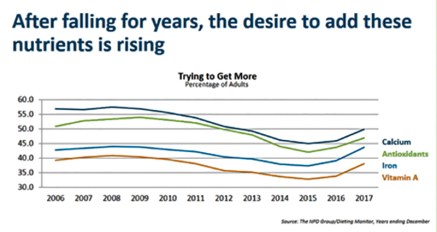
FDA hearing graph

David Portalatin said that in addition to more protein and fewer concerns among consumers about fat, consumers aso want more calcium, iron, Vit. A and antioxidants. Milk contains all and is a big source all but iron, while beef is a big source of the iron. A recent study showed that milk and other dairy foods are “densely packed” with antioxidants delivered in a more soluble way via the protein and fat found naturally in milk —  the very fat that FDA and the food police want people to eat less of and the very protein that some experts at the hearing said consumers want more of, but are not deficient in. In other words, consumers are going one way with their diets (away from flawed guidelines that have led to chronic illness) while the government may use this nutrition strategy to shepherd consumers back into the flawed guidelines obedience flock they are just now breaking free of. Screenshot by Sherry Bunting during FDA hearing webcast 

Interestingly, the four areas consumers are trying to improve their diets are found in the combination of real milk and beef in the diet.

The American Heart Association had a representative during the open comment time telling FDA they “want the standards of identity to be modernized to improve the nutritional value of food by reducing sodium and saturated fat.” (More on this in a future part of this series).

While he noted that generational cohorts are the biggest drivers of change, the renewed interest in high protein diets is, in his opinion, not necessary since “American diets are certainly not deficient in protein,” in Portalatin’s opinion.

He and other panelists tended to lump this high protein diet preference with a return to higher fat in the diet. Not one panelist recognized the revelations about low-fat dogma of 40 years contributing to the very chronic diseases the FDA strategy seeks to prevent. Every indication from this hearing is that FDA will fall in line with the Dietary Guidelines Advisory Committee in continuing to tweak all kinds of rules and regulations to get Americans to eat less fat — unconsciously — through modernized standards and reformulated foods.

The Good Food Institute — an organization representing plant-based and cell-culture imitation meat and dairy products — had legal representatives testifying on July 26 that, “FDA’s practice for the last decade or more in its guidance for ‘milk’ is that we could use the term ‘milk’ with appropriate modifiers, like almondmilk. The same has been true of butter, such as cashewbutter.”

The Good Food Institute insisted that when their foods can use a standardized term with a modifier, it allows their new – and they say healthier (but are they?) – products come to market more easily. “If that changes, it will make it harder for newer and healthier foods to come to market,” they said.

A representative for Dairy Farmers of America spoke during the open comment time saying that, “The current standard for milk should be enforced as it is. The plethora of products are borrowing the dairy industry’s nutrition profile, and those products may not be as nutritional or wholesome with FDA not enforcing the standard.”

From the Academy of Nutritionists and Dieticians, Jeannie Blankenship, said their professional members will have to “translate” whatever FDA decides on these things. “Consumers must be able to readily understand,” she said. “People with food allergies and intolerances use these standardized terms in a different manner than the general population.”

North Carolina Ag Commissioner Joe Reardon cited the standard of identity defines milk as a lacteal secretion of the mammary gland. “Plant-based beverages do not meet that definition,” he said. “If milk is on the label, then milk should be in the product. Without enforcement of this simple standard, then all standards of identity are compromised.”

He and others made it clear they are not advocating for these plant-based beverages to be removed from the market.

“We recognize they are a vital option for many consumers; however, they should be labeled correctly, without the term ‘milk,’” said Reardon. “North Carolina and other states stand ready and willing to assist FDA to enforce this standard and for the industry to come into compliance. We have heard here all day about the importance of a label, but without truth in labeling, none of the other matters.”

Kim Bremmer FDA Hearing (1).jpg

Kim Bremmer testified to FDA on behalf of the American Dairy Coalition about enforcement of the definition of milk. Photo provided by ADC

Speaking for the American Dairy Coalition, which recently started an Integrity Initiative, Kim Bremmer, a dairy producer from Wisconsin said “You play a vital role in giving consumers the information to make choices. Nutrition matters. I see tens of thousands of consumers in my speaking and the vast amount think some of these beverages have cow’s milk in them, and most believe they are as nutritional as milk, and they aren’t. The play on words is misleading.”

Bremmer described cow’s milk as a powerhouse of nutrition with crucial nutrients for cellular function. “No other drink packs this nutrition. There’s no comparison,” she said, explaining what she sees and hears when fourth-graders visit her farm and she watches the children connect the dots to realize the almondmilk they may be drinking at home, isn’t milk at all.

“One in five people are food insecure and one out of 10 adolescent girl are deficient in calcium. We have a problem. We must protect the integrity and identity of milk because nutrition matters,” said Bremmer.

Rob Post from Chobani was there to talk about getting a standard of identity for Greek yogurt so that schools and other institutional feeding situations could accurately quantify the protein levels. As it is now, they are standardized at the regular yogurt levels of protein even though strained Greek yogurts are 52% protein — twice that of regular yogurt.

While he said standards of identity have not kept pace with new food innovations, and he wants to see a better process, he was quick to defend the current definition of milk and dairy — and its enforcement — saying that, “It’s important to have options, but words matter to consumers and dairy means something specific. It means nutrient dense, minimal processing. It is important that this standard is preserved,” said Post.

From National Milk Producers Federation (NMPF), Tom Balmer noted that the issue comes down to “safeguarding the standards to help maintain honesty in the markets.”

“Milk, yogurt, cheese, butter. Standardized dairy terms are being coopted by others as purely a marketing gimmick, while these products lack the nutrients and attributes of dairy,” said Balmer.

“Consumers don’t realize they are being shortchanged. It’s hard to talk about ‘modernizing’ standards when current standards are not enforced. FDA may have forgotten the standard for milk, but we haven’t. Enforce the current standards and stop the confusing and deceitful marketing practices.”

International Dairy Foods Association (IDFA), representing milk and dairy processors, was mum on milk, but touted an array of expanded and modernized standards they want to see for many dairy standards. More on that in part two.

The American Dairy Coalition is urging the FDA to stop allowing the wrongful use of the word “milk” on non-milk, plant-based alternative products labels. To sign the ADC Milk Integrity Initiative petition, it is available online at http://www.americandairycoalitioninc.com/the-integrity-initiative.html

Public comments can be sent to FDA prior to the Aug. 27, 2018 deadline at the docket portal at https://www.regulations.gov/docket?D=FDA-2018-N-2381.

Or, send to: Dockets Management Staff (HFA–305), Food and Drug Administration, 5630 Fishers Lane, Rm. 1061, Rockville, MD 20852

All submissions received must include the Docket No. FDA– 2018–N–2381 for ‘‘FDA’s Comprehensive, Multi-Year Nutrition Innovation Strategy.’’

Look for part 2 this week.

-30-

FDA admits almonds don’t lactate, but here’s the rest of the story…

CowFace.jpg

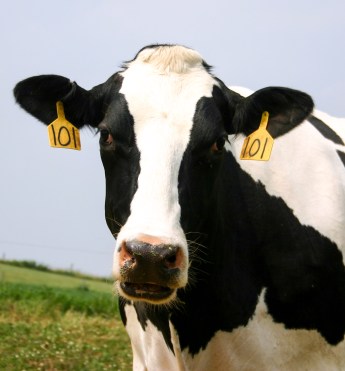
They’re even taking her ‘moo!’ Investor-heavy high-tech startup companies are (with USDA’s help) taking her DNA to give food-grade yeast her protein-producing ability in a fermentation process to make “animal-free milk and dairy.” They’re editing her cells to grow muscle blobs in bioreactors for “animal-free boneless beef” and using her unborn bovine fetal serum as the culture media for the so-called ‘clean’ ‘animal-free’ cell-cultured meat growth. And they are taking her “moo” with website invitations to “join the ‘Moo’-vement or to get ‘moo-ving’ for all the dairy you love with none of the cows.” Meanwhile, FDA is poised — in a multi-year nutrition innovation strategy — to expand standards of identity for milk/dairy and meat/beef to accomplish nutrition innovation goals that, themselves, are being questioned and in the end may give these companies the license to steal. Photo by Sherry Bunting

FDA nutrition innovation strategy poised to ‘modernize’ how milk, beef defined as high-tech labs make cow-less versions of both

By Sherry Bunting for Farmshine, July 27, 2018

WASHINGTON, D.C. — As President Ronald Reagan famously said: “The nine most terrifying words in the English language are: I’m from the government and I’m here to help.”

Last week’s news that the Food and Drug Administration (FDA) will “help” the situation of imitation milk labels was followed by specifics from FDA Commissioner Scott Gottlieb.

He revealed in a live interview with Politico: “An almond doesn’t lactate, I will confess.”

Now there’s the sound bite everyone wants to hear, and the media and social media worlds went wild. But what does it really mean? Here’s the rest of the story and how to get involved.

Gottlieb said publicly that FDA plans to start gathering public comments before taking next steps in “redefining the rules for milk products”.

What he didn’t say in the Politico Pro Summit on July 17 is that FDA has already published a hearing and comment notice in the June 27, 2018 Federal Register for a July 26 hearing that covers three topics related to “modernizing” standards of identity, and the comment period ending August 27, 2018.

Will the government’s offer to ‘help’, in this case, result in more dishonesty and skulduggery, tricking consumers into eating what they may not otherwise choose and allowing investor-heavy startup companies to steal from farmers and ranchers, not only the identity of the products they produce, but also the very commodity-promoting checkoff dollars the government mandates they pay?

FDA already has a standard of identity for milk, and almost 100 dairy products, that it has chosen to ignore for more than a decade on any product except actual dairy milk.

Here’s the rub… If real dairy milk does not have added Vitamin D (when fat is removed Vit D is added to bring it back to full-fat levels of Vit. D), it can be deemed “mislabeled” by FDA and unable to call itself MILK.

But, if there are almonds and soybeans in your milking parlor — by all means, have at it,  label it milk — with or without Vit. D — not to mention without real milk’s levels of protein, quality amino acid profile and 9 essential nutrients.

You see, the standard of identity for milk is enforced when it comes from a cow, but not when it comes from a plant. And yet, because there is a standard of identity for milk — a nutritional and functional expectation — the plant-based knock-offs get to hijack that profile without being held to it and can selectively market from it with ‘more xxx’ or ‘free of xxx’ statements without stipulating what they are deficient in. (Example: Almond milk labels should say “88% less protein” if they are going to differentiate from the standard of identity they are hijacking).

By its own admission, FDA has maintained a non-enforcement posture on plant-based imitation beverages. Described as “enforcement discretion,” FDA has looked the other way and the dairy foods industry was either asleep at the wheel or developing imitations on the side, while these imposters were flooding the dairy case.

Meanwhile the companies investing in the imitations were free to do their market development and consumer confusion while securing space in the dairy case.

The timing of Gottlieb’s comments last week is even worse, given FDA’s launch of a multi-year nutrition innovation review as part of the agency’s nutrition innovation strategy revealed in March that seeks to expand standards of identity for products like milk and meat.

FDA meetings are happening quickly and quietly in various areas of imitation animal protein labeling and regulation. Yes, they are public meetings, but no one really knows about them.

Milk and dairy products have already been on the receiving end of identity-theft for more than a decade, and now that griddle is heating up to pancake both dairy farmers and ranchers (cattle are the target) with new plant-based mixtures, but even more horrifying are the genetically-edited cellular protein blobs or white-substance-exuding yeast grown in bioreactors yearning to be beef and milk.

There are new identity-thieves lurking about and guess what? USDA — the government — is the source of the bovine gene-edited cells and bovine gene-sequenced yeast in the heavily-investor-funded tech food startup companies that are the real focus of FDA’s recent moves.

With patents in hand — and funding from their big investors to scale up manufacturing — they seeking regulatory and labeling authority under FDA to be meat/beef and milk/dairy — without the cows.

FDA had a hearing on cell-cultured proteins July 12, and comments on regulation and labeling for this are due September 25.

A hearing on standards of identity was held by FDA on July 26 (after Farmshine press time), and comments are due August 27. (Look for more on this in next week’s Farmshine).

Dairy and beef producers need to become actively engaged in these moves by FDA because the main organizations that represent them — National Milk Producers Federation and National Cattlemen’s Beef Association — are on record stating these cell-cultured products should be subject to regulation under USDA like real meat and dairy. They are mainly seeking a level playing field in the marketplace, not opposing their classification as meat, milk, dairy.

(NMPF is vigorously defending milk’s standard of identity against plant-based imitations on nutritional grounds, but seeking a level playing field on the cell-cultured proteins).

Trust me, food and dairy manufacturing companies and investors have already hired the best and the brightest and are already involved in this FDA process — cheering for the other team.

Here’s an example: Perfect Day ‘animal-free milk’ is on the market after receiving its patent in February and raising $24.7 million in first-round startup funding from investors to scale-up manufacturing.

This company has a business-to-business (B2B) model, according to an interview with Reuters, and is already working with some of the world’s largest dairy food and beverage manufacturers. Its website states that the product is just like milk in terms of proteins, but without the cholesterol, saturated fats, lactose, and environmental impact of cattle. Just think what this portends for the dumping of even more fat-free real milk from the market.

In fact, a primary foreign investor indicated support for the Perfect Day (fake milk) startup because it aligns with United Nations Sustainability Goals for 2030. (There’s that S-word again. I hope we are paying attention to how the S-word and cattle are getting along these days). Continental Grain is a big investor in both the Memphis Meats (fake meat) and Perfect Day (fake milk) startups, while Cargill and Tyson are investors in the Memphis Meats startup.

These high-tech food sciences are attracting big high-tech investors at a rapid rate because they are viewed as “disruptor technologies,” and their websites and promotional materials hold nothing back. Milk, meat, beef, dairy – no words are off limits in their branding and marketing.

In effect, while the government forces dairy and beef producers to pay a checkoff tax for promotion of their commodities, beef and dairy — and the names of products associated with those commodities — the government is looking the other way or now potentially encouraging more identity-theft as techies enter the food space to market proteins using the dairy and beef profiles and images, without paying one dime.

As for Perfect Day, this fake-milk is made by genetically altering food-grade yeast, taking DNA from a cow and sharing its protein-producing qualities with the yeast. (Sourced from the USDA, the genetically-altered yeast are cultivated to produce ‘dairy’ protein).

This process results in a microbe that is combined with a sugar substrate (food for the microbe) to feed, grow and exude in a fermentation process the company says is like “craft-beer-style-brewing,” producing protein “building blocks” for making dairy milk, yogurt and cheese. Perfect Day’s website says: “Dairy reinvented: Sustainable. Kind. Delicious.”

The end game is to provide a ‘base dairy’ protein that looks and tastes like milk, for inclusion in manufactured dairy products like cheese, ice cream, pizza, yogurt, and to work “synergistically” with the dairy foods industry as — according to the website — “a complement to cow-based milk that takes some of the stress away from the factory-farming system, rather than replace dairy cows entirely.”

fake-meat.jpg

Enter a caption

Memphis Meats and other companies on the fake meat side are doing similar things with cell-culturing to grow cellular protein blobs in laboratory bioreactors.

In each case, the ultimate goal is to decrease the need for cattle — be they dairy or beef bovines.

Think about this for a moment. Even at a 1 to 3% inclusion rate in common dairy foods or ground beef, these lab-cultured proteins and genetically-altered yeast give processors even more control over supply, demand and pricing of milk as well as boneless beef, and if standards of identity allow this, or if FDA enforcement discretion looks the other way – consumers will never know the integrity of their food has been changed.

If FDA modernizes its standards of identity to accomplish the goals as outlined by Commissioner Gottlieb — including a reduction in saturated fat consumption despite revelations that saturated fats are healthful not harmful — it is entirely possible that FDA’s new guidance could allow these protein “innovations” in standardized dairy and meat products, without being considered mislabeled and with no indication to consumers.

Gottlieb has already established FDA’s desire to accomplish certain nutritional goals by spurring innovation with more “flexible” standards of identity.

Ahead of the July 26 hearing, FDA published its intention to cover three aspects in the standards of identity discussion: 1) Protecting consumers against economic adulteration; 2) Maintaining the basic nature, essential characteristics, and nutritional integrity of food; and 3) Promoting industry innovation and providing flexibility to encourage manufacturers to produce more healthful foods.

FDA’s Federal Register notice also says the following: “Our intent is that modernizing standards of identity to improve the nutrition and healthfulness of standardized foods will promote honest and fair dealing in the interest of consumers and achieve the goals of the Nutrition Innovation Strategy.”

How can FDA pursue this course in the face of what has been revealed in the past three to four years? It appears that bringing these B2B products to market, along with the FDA nutritional innovation strategy, are happening ahead of the battleground brewing for the next round of Dietary Guidelines.

It appears they want to modernize standards of identity for dairy within less than one year, to get them in place before the current flawed dietary guidelines are challenged in the 2020 cycle, which begins in earnest in 2019.

Numerous investigations and scientific reports and studies show that the saturated fat avoidance of more than 30 years was not only never proven to be healthful, it is now shown to be harmful. And the rhetoric from the United Nations and various Sustainability projects continues to focus on cattle as being bad for the planet, despite evidence to the contrary.

FDA wants comments that specifically talk about how the agency can use standards of identity to encourage the production of more healthful foods, to take into consideration technology, nutrition science and marketing trends, and to assess what consumers expect these standards to tell them.

Is FDA about to help the food industry blur the lines of food integrity to trick people into eating according to USDA/HHS flawed set of dietary guidelines (and UN environmental sustainability assumptions)?

That would be the ultimate dishonesty, and much worse than the 10-plus years of ignoring dairy identity theft already happening daily in the supermarket dairy case. Expanding the standard of identity, depending upon how it is accomplished, would give large, powerful, multinational food corporations a true license to steal.

Last week, the American Dairy Coalition (ADC) launched a “Protecting Milk Integrity Initiative” to advocate for the proper use of federally standardized terms established for the word “milk” on product labels. ADC is a coalition of dairy, ag and livestock producers, and they are devoting a branch of their organization to work specifically on “providing clarity and consistency for consumers across the nation,” the organization said in a July 17 news release.

ADC is getting the word out that it believes the dairy industry must speak up to ensure the FDA understands how important it is, not only for the current standard of identity for milk and dairy products to be upheld, but for it to be fully enforced — restricting the use of the word “milk” on all future plant-based or alternative product labels.

They point out that the price of milk continues to decline while sales of plant-based alternatives are up 61% over the past five years with projections of more market share gains in the future.

Don’t be fooled by FDA’s admission that almonds don’t lactate. Instead of the enforcement of milk’s standard of identity that dairy farmers have been waiting for, FDA has already quietly launched its process for modernizing standards of identity to achieve specific (and flawed) nutritional goals.

To comment on Docket No. FDA-2018-N-2381 for “FDA’s Comprehensive, Multi-Year Nutrition Innovation Strategy,” due August 27, 2018, use the docket portal at https://www.regulations.gov/docket?D=FDA-2018-N-2381.

To comment on Docket No. FDA-2018-N-2155 for “Foods Produced Using Animal Cell Culture Technology, due September 25, 2018, use the docket portal at https://www.regulations.gov/docket?D=FDA-2018-N-2155 .

To mail comments for either one, reference the appropriate docket name and number in your letter and mail to: Dockets Management Staff (HFA-305), Food and Drug Administration, 5630 Fishers Lane, Rm. 1061, Rockville, MD 20852

In addition to commenting, a petition has been developed by the American Dairy Coalition’s Protecting Milk Integrity Initiative, and signatures are being collected to submit with public comments. ADC is also taking donations to raise funds to fight this cause.

More information about Protecting Milk Integrity Initiative, visit American Dairy Coalition

To learn more about the July 12 FDA cellular protein hearing (fake meat) and July 26 standards of identity hearing (fake milk), stay tuned to future editions of Farmshine for full reports ahead of the deadlines for commenting to FDA on both.

-30-

CAPTIONS

FAKE MEAT and FAKE MILK

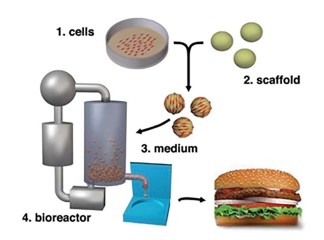
New Harvest and Memphis Meats testifed to FDA on July 12 that cell-cultured ‘meats’ are inevitable. They showed diagrams of how gene-edited bovine DNA and culture media are combined in bioreactors to make cellular blobs they want to call ‘boneless beef’ — without the cow. Similar diagrams can be found for Perfect Day and their phrase: ‘all the dairy you love with none of the cows’ at their website perfectdayfoods.com. Screenshot of materials displayed during FDA hearing by Sherry Bunting

Start your engines… the milk’s a’chillin’

By Sherry Bunting, May 25, 2018

kim-minich-684x1024x

Photo credit ADAI

INDIANAPOLIS, Ind. — Just as those Indy Cars are fueled to perfection for 500 miles at blistering speeds of 215 to 225 mph, that famed Bottle of Milk fuels the checkered-flag dreams of winners at the finish line of the Indy 500.

It’s the honor of the Milk People (aka dairy farmers) to get it there.

While I didn’t meet this year’s Indy 500 Milk Woman — I did meet her husband and children during a visit to the farm last March while passing through Northern Indiana.

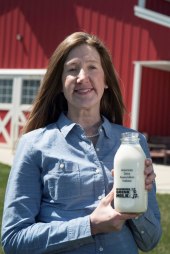
Kim Minich, Triple M Dairy, LaPorte, was the rookie last year when Milk Man Joe Kelsay, Kelsay Farms, Whiteland, had the honor of delivering the “coolest trophy in sports.” This year, Kim is the veteran, and her rookie understudy is Andrew Kuehnert, Fort Wayne. They all hail from six and seven generation Indiana dairy farms.

kim-minich-684x1024.jpg

Photo credit ADAI

Last year, as the ‘rookie,’ Kim learned the ropes for this year’s 102nd big race at the Indianapolis Motor Speedway, where legends are born, speed and tradition rule, and milk always wins!

During my brief March visit to Triple M Dairy where Kim and her husband Luke are part of the dairy farm that has been in his family since 1909, their children Anna, Kate, Mary, Will and Calvin were looking forward to May. They talked of how exciting it was to see Mom’s rookie year as Milk Woman in 2017 … How it felt like the dairy farmers were celebrities like the Indy car drivers — two long and storied traditions brought together when three-time Indy 500 winner Louis Meyer requested buttermilk to quench his thirst after his second win in 1933.

Indy500-4137According to American Dairy Association Indiana (ADAI), Meyer was then photographed in Victory Lane drinking milk after his third win in 1936. Milk was presented off and on during the next several years until, in 1956, the Bottle of Milk was made a permanent part of the post-race celebration by Indianapolis Motor Speedway owner Anton “Tony” Hulman.

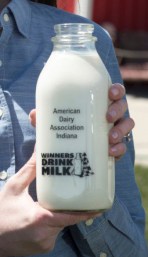
Today, the milk choices of the drivers are kept cold in a secure “Winners Drink Milk” cooler.

The drivers are polled ahead of time on their milk preferences — whole milk (3.5%), 2%, 1% or fat-free, and the cooler is stocked with these choices, so the ‘milk people’ are ready.

For this year’s race, 17 drivers chose the whole milk option, 10 chose 2%, 4 chose fat-free and 2 said any milk was fine with them!

Hoosier driver Ed Carpenter chose to up the ante with a request for the throw-back choice of Louis Meyers: Buttermilk. That could be a lucky move as he is considered a strong contender going into the race scoring a pole position.

Tomorrow, as always, the milk will be kept under lock and key in a secret location with one of the Milk People keeping a watchful eye at all times. This year, in fact, the Milk People will be the first to enter the Indianapolis Motor Speedway grounds at 5 a.m., Winners Drink Milk cooler in tow.

Minich5414wRecalling her mom’s rookie year in 2017, Anna says “they looked like the secret service in sunglasses guarding the milk cooler!”

In 2016, the 100th running ended with a milk toast by spectators. The children wonder what milk drama will unfold this year.

“The bottle of milk is the star,” says Kim’s husband Luke. “When they start making their way toward the winner’s circle with that cooler, and you hear the crowd chanting ‘It’s the milk,’ as a dairy farmer, that’s pretty cool.”

Each year the ADAI selects a dairy producer to represent Indiana’s 1100 dairy farms as the Milk Man or Milk Woman.

People flocking through the gates want to talk to the Milk People (aka dairy farmers), and for weeks ahead of the big day, they have opportunities to tell the story of milk and dairy farming. They even co-host the Fastest Rookie Luncheon earlier in the week.

Kim married into dairy farming, and in one pre-race-day interview, she explained how she grew up in the Indianapolis suburbs and would watch the Indy time trials with her father.

Minich5418wToday in her career as a nurse-practitioner, Kim says she has a big appreciation for the milk-side of the big race and appreciates the opportunity to tell others about the nutritional goodness of milk and dairy products as well as the life their family lives — like other dairy farm families across the country — caring for the animals and the land.

The children are passionate about the farm too. They have a growing array of 4-H projects that make your head spin: Cattle, chickens, rabbits, goats, horses. In fact, while the dairy farm is home to 1000 mainly Holstein milk cows, Luke and Kim’s older children each have a few of their own breed — Anna with Jerseys, Kate with Brown Swiss, Mary with Shorthorns, and Will with Ayrshires. They love their chores and are happy to show visitors, like me, around.

“This is a great way to raise a family and produce a quality product for other families to enjoy,” says Luke on a brisk March day at the farm.

His wife Kim could not agree more, saying in pre-race interviews that being part of the dairy farm “has been absolutely wonderful, and as a nurse practitioner, I’m able to talk to my patients about the importance of dairy.”

As for her job tomorrow as the provider of the Indy 500 Bottle of Milk, “It’s a great honor to do this,” says Kim. “It’s exciting to meet the drivers and to represent our dairy farmers and what we do.”

web2016WinnersDrinkMilk-46As the sun rises tomorrow, drivers and crews will be getting ready, spectators will be pumped, our nation’s service men and and women will be honored, anthems will be sung and tributes given… and after 500 miles of exhilarating speed, the winner drinks milk!

So chill your milk, and get ready. The thrill of the 102nd Indy 500 is hours away.

Here’s a video teaser from the 100th Indy 500! Wait for it… The powerful and patriotic blend of freedom and speed that ensues after the recognition of our military, the moment of silence for fallen heroes, the singing of America the Beautiful, the National Anthem followed by the Blue Angels flyover, the singing of Back Home in Indiana, the anticipated “Gentlemen Start Your Engines”, the breaking free of the pace cars as the field of Indy cars passes the paddock with Old Glory in tow!


-30-

There’s a war to win for our health and our dairy producers

NinaTeicholz0181Learn, then comment! Deadline: March 30!
By Sherry Bunting, Farmshine March 2, 2018

STATE COLLEGE, Pa. – Never did Nina Teicholz envision herself talking about nutrition to groups of dairy and livestock producers and hearing how important it was to them to hear that the work they care deeply about and the product they produce is good, great, healthy, in its full-fat form after decades of being maligned by flawed advice for a low fat or fat free diet.

Nina Teicholz-27“Not only has this advice been bad for people, it is especially bad for children,” said Teicholz as she told her story of a decade of investigation met by intimidation uncovering stories of a scientist who bullied others who had alternative hypotheses and a powerful nutrition elite still controlling the food supply through their grip on Dietary Guidelines.
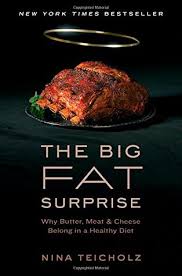
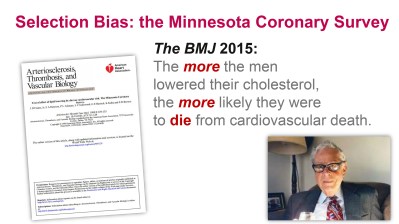
The author of New York Times best seller The Big Fat Surprise has not only challenged but also disproved the anti-fat dogma of 40 years and revealed the politics that have overshadowed the science in the confusing world of diets and nutrition.

In fact, she says, the power of an elite class of experts who control nutrition guidelines that in turn control the food supply is still strong and very tough to overcome – even when the evidence is not on their side.

imagesTeicholz’s Big Fat Surprise has had a ripple effect in the food industry among consumers since 2014,but the dietary elites have challenged her each step of the way.

And there’s a lot of war left to be fought for what is right.

This is especially true when it comes to the milk the USDA prohibits from being served in the National School Lunch program or through Women, Infants and Children (WIC) programs.

The intimidation that Teicholz and others have endured shows just how much is at stake and just how tough the politics are in trumping the science. With a steady drumbeat of proof, one would think the bad advice could be easily overturned, but the work is hard and it needs to continue, Teicholz indicates.

(Not only are the flawed guidelines affecting health, but also reverberating in their economic effects on family farms across the country, in part aided by the dairy industry accepting a role in working alongside former first lady Michelle Obama when it came to school meals, allowing her to deal the final blow to milk in school, while accepted yogurt on the plate as a compromise.)

Nina Teicholz kicked off the 2018 Pennsylvania Dairy Summit last Wednesday, Feb. 21 here in State College, treating nearly 500 dairy producers and industry representatives to an inside look at her 10 years of investigative journalism on this topic that began when her editor assigned her a piece on defining trans fats.

Little did she know then where this would lead her today. Who would have thought that the former vegetarian from Berkley, California and New York City would end up uncovering what may be the biggest nutritional tragedy done to consumers and dairy and livestock producers, worldwide.

She told Summit attendees that she began to suspect a problem when her initial inquiries started revealing a pattern of resistance.

“That’s where my deep dive into the world of fats began,” said Teicholz. “The fats we obsess about that have made us all crazy over what kind to eat and how much.”

She started hearing about scientists getting “visits” and papers being yanked from scientific journals. She started feeling the intimidation, herself, as she widened her investigative scope, reading scientific papers and seeking interviews with scientific experts at some of America’s most trusted universities and institutions.

“I would be interviewing scientists at top universities and they would hang up on me,” Teicholz revealed. “I thought, am I investigating the mob? What’s going on?”

Her deep dive into fats took her through a decade of work reading thousands of scientific papers and doing hundreds of interviews to write a book investigating the research on all fats in the diet.

“Every idea has a beginning, like an acorn to a tree,” said Teicholz, “and this had its beginning when President Eisenhower had a heart attack. This is when the concern about heart disease rose out of nowhere to be labeled the nation’s leading killer.”

Many ideas of causes were initially looked at, and then University of Minnesota physiology scientist Ancel Keys posited the cholesterol theory, that like hot oil down a cold stove pipe, would clog arteries and cause heart attacks.

Through her research, Teicholz discovered that so in love was Keys with his own theory that colleagues described his approach to the work of others as “bullying.”

“They described him as very charismatic and able to debate an idea to death. And, yes, a bully,” she said. “Once he was able to get his idea implemented into the American Heart Association, it was on.”

By 1960 he was on the nutrition committee and by 1961, “that acorn had grown into a giant oak tree of the advice leading to what we have today. The world transitioned from saturated to unsaturated fats,” said Teicholz. “But rarely do checks for common sense happen in the world of nutrition. Keys became ‘Mr. Cholesterol’ on the cover of Time Magazine with just one study.”

This study was not a randomized controlled study, but rather a series of contacts in seven countries relating diets to disease in middle-aged men.

Teicholz spent six months studying the Keys’ study. While it involved seven countries, the study looked only at the diets of middle-aged men and created this “big bang” theory. His study had been funded by the National Institutes of Health (NIH).

“But what happened is that Keys already had his idea. He loved his idea, and he set out to find what he found,” said Teicholz.

She outlined the numerous problems with the Keys study. It did not include countries with high consumption of fats and low rates of heart disease, which would have destroyed his hypothesis. He went to countries that were ravaged by war, not the countries that were eating well.

“And his star subjects were on the island of Crete, mainly hard-working peasants he worked with for three months one of which was during Lent, where he clearly undercounted the amount of fat these people ate,” Teicholz observed.

What was mind-boggling for Teicholz as she went through the record is that absolutely none of this theory — or the 40 years of advice that followed — is based on randomized controlled clinical trials.

“The government and the American Heart Association understood the evidence was weak, so the NIH funded a study to follow people through their death to set out to prove Keys’ theory this way,” she said.

Meanwhile it was being treated as gospel.

After more than a decade and following 75,655 men and women for one to 12 years, some of them with controlled in-patient diets, “The results showed no effect of saturated fats on cardiac mortality or total mortality!”

In fact, there was no effect whether subjects consumed 18% of their dietary calories in fat or 6%.

At the same time, Teicholz reports that people in the study, who had replaced fats with soy and margarine, had higher rates of cancer.

So, by this time in the presentation, it’s hard to keep the hair from standing up on your neck, and Teicholz asks the question: Why is this advice still around? Why is it still controlling food programs and markets?

“The politics explain so much more than the science,” she said. There is a small group of nutrition aristocrats controlling who they invite to lead panels or grant appearances, and they sit on editorial boards of medical journals and control these institutions.

“This is still true today,” said Teicholz, noting how an invitation for her to join a panel at an international conference was later withdrawn because the other people on the panel were key members of the U.S. Dietary Guidelines committee.

“This relative small (but obviously powerful) group does not include critics. They are the reason why we still have these ideas even if they are wrong,” said Teicholz.

An educated writer and scientist herself, Teicholz understands that scientists are trained to discover for themselves, but selective bias crept into nutrition the moment Ancel Keys at the University of Minnesota, fell in love with his own hypothesis.

Nina Teicholz-25A colleague of Keys had done research with 5000 people around the same time, but it didn’t see the light of day. This Minnesota Coronary Survey found no difference from fat in the diet between treatment and control. It is the biggest and most well controlled study of its time but was not published for 16 years!
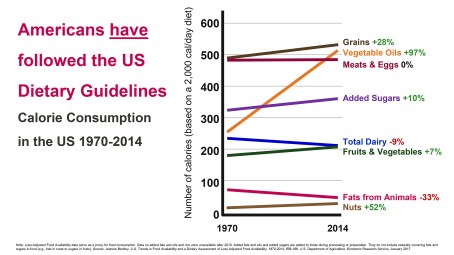
Teicholz explained further that when the competing research was ultimately published, long after the Keys hyposthesis had grown into an oak with roots, it was only published in an out-of-the-way journal.

Meanwhile, it was the 1980s and Senator George McGovern initiated the Dietary Goals report, written by staffers with no background in nutrition, some of them vegans. This formed the basis for the food pyramid.

From that point forward, Teicholz showed graphs of the increase in obesity and diabetes. But as a science-minded journalist, she reminded her audience that the graph, by itself, didn’t show causation. However, other studies have proved causation, and she shared those as well.

In fact, studies have been showing that Americans really have been following the flawed dietary guidelines and that while consumption of full fat dairy is down, and pounds of fruits and vegetables up 20 and 30%, along with grains and cereals up 30%, obesity and diabetes has risen exponentially.

Nina Teicholz-29“We follow the guidelines and eat more calories, but all of those extra calories are coming from the increase in carbs,” said Teicholz.
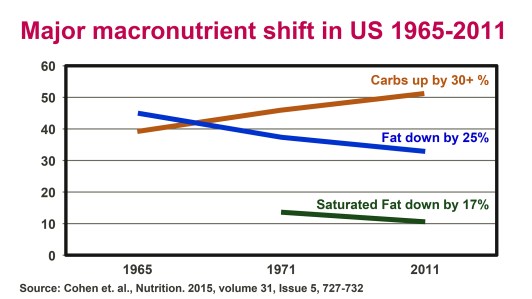
So the third rail some say we dare not touch is that the hallmark recommendation of 60 minutes of exercise — meant to accompany the promotion of a low fat diet – was touched by Teicholz during her presentation.

The kicker is that Americans are not getting fat because they don’t exercise enough, she said. Not one study could show where this 60-minutes of exercise and a lowfat diet actually helped.

Nina Teicholz-30“We cannot exercise ourselves out of a bad diet,” said Teicholz. “Is it our own fault or is it the advice we have been given? I’m here to tell you that saturated fats do not cause cardiovascular death, and Canada is already working to remove the percent of fat requirement from their guidelines.”
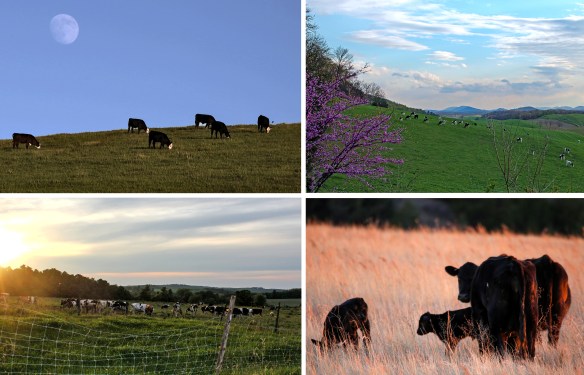
In fact, Teicholz cited the work of Salin Ysuf, a leading cardiology specialist. His work showed that patients who ate the least amounts of fat had the highest risk of stroke and those who ate more, lived longer.

“We are in the midst of a paradigm change,” she said. “Cholesterol in the diet has not been proven to increase blood cholesterol. Eating egg whites instead of eggs has accomplished nothing.”

In a small step in 2013, the American Heart Association dropped its caps on cholesterol and this also occurred in the 2015 Dietary Guidelines. However, the recognition that a low fat diet doesn’t work has not made it to the dietary guidelines elite, and the next cycle to change them doesn’t happen until 2020.

“Fat is not making you fat,” said Teicholz. “It’s like a tragic horror movie. The truth is the fat we eat is not the fat we get.”

So what does cause disease? Teicholz explained the carb insulin hypothesis, where carbs become like glue in the bloodstream, and the body has to secrete insulin, a hormone, so the body socks this away as fat. She explained that not all carbs have the same effect and that gaining and losing weight also has a hormonal aspect being found as a key culprit in obesity and diabetes.

“There is a growing drumbeat of positive research coming out showing that whole dairy, full fat dairy, is good for cardio risk factors and that there should be no caps on cholesterol in the diet; however, the caps on saturated fat remain,” she said.

The reason the Dietary Guidelines are so powerful is that they control so much of what we think about what we are eating, according to Teicholz. She noted that soy milk has been allowed as a replacement for dairy milk in the Dietary Guidelines.

This is huge because these guidelines dictate what schools can serve, the WIC program and so many other aspects of nutrition where the government is involved.

“The Dietary Guidelines for Americans have huge control over the food supply, and trying to change them is so difficult because those in charge are so incredibly powerful,” said Teicholz.

This is why she has initiated the Nutrition Coalition to fight for our diets. Her aim is to have evidence-based Dietary Guidelines, and to see an end to the promotion of 60 minutes of exercise and a low fat, low sodium diet as what’s good for our children.

“This advice has not worked for people, and especially not for kids,” said Teicholz. At best, the 60 minutes of exercise is disingenuous when accompanied by low fat, high carb dietary advice, and at worst, the promotion of low fat and fat free is harmful.

Alas, her attempts so far, including a piece in a British medical journal about changing the flawed Dietary Guidelines was met with a petition signed by 180 nutrition aristocrats on the Dietary Guidelines committee, who demanded a retraction of Teicholz’s paper.

“It took them a year to put it out, but the BMC did their review and stood up strong for my paper,” she said. “This shows us just how much is at stake and how tough the politics are in this field of nutrition.”

Learn more about Teicholz’s work and the Nutrition Coalition she founded as well as how to comment by March 30, 2018 on issues to review in the Dietary Guidelines Advisory Committee’s next 5-year review for the 2020-2025 guidelines.
-30-

To read other agmoos articles / columns authored by Sherry Bunting on the School lunch program and dietary guidelines from the past several years, here is a link: https://agmoos.com/2015/04/24/nutrition-politics-kids-and-cattle-caught-in-the-crossfire/

About Nina Teicholz: Nina is an investigative journalist and author of the International (and New York Times) bestseller, The Big Fat Surprise (Simon & Schuster). The Economist named it No. 1 science book of 2014, and it was also named a 2014 *Best Book* by the Wall Street Journal, Forbes, Mother Jones, and Library Journal. The Big Fat Surprise has upended the conventional wisdom on dietary fat and challenged the very core of our nutrition policy. A review of the book in the American Journal of Clinical Nutrition said, “This book should be read by every nutritional science professional.”

Before taking a deep dive into researching nutrition science for nearly a decade, Teicholz was a reporter for National Public Radio and also contributed to many publications, including the Wall Street Journal, New York Times, Washington Post, The New Yorker, and The Economist. She attended Yale and Stanford where she studied biology and majored in American Studies. She has a master’s degree from Oxford University and resides in New York City.


A world without cattle?

GL45-Earth Day(Bunting).jpgCaption: The health of the dairy and livestock economies are harbingers of the economic health of rural America … and of the planet itself. Here’s some food for thought as we celebrate Earth Day and as climate change discussions are in the news and as researchers increasingly uncover proof that dietary animal protein and fat are healthy for the planet and its people.

By Sherry Bunting, published April 22 Register-Star (Greene Media)

A world without cattle… would be no world at all.

How many of us still believe the long refuted 2006 United Nations Food and Agriculture Organization (FAO) report, which stated that 18 percent of all greenhouse gas emissions, worldwide, come from livestock, and mostly from cattle?

This number continues to show up in climate-change policy discussion even though it has been thoroughly refuted and dismissed by climate-change experts and biologists, worldwide.

A more complete 2006 study, by the top global-warming evaluators, the Intergovernmental Panel on Climate Change, stated that the greenhouse gas emissions from all of agriculture, worldwide, is just 10 to 12 percent. This includes not only livestock emissions, but also those from tractors, tillage, and production of petroleum based fertilizers, pesticides and herbicides.

Hence, the UN Environmental Program disputed the UN FAO assertion to state the percentage of emissions from total agriculture, worldwide, is just 11%, and that cattle — as a portion of that total — are responsible for a tiny percentage of that 11%. While cattle contribute a little over 2% of the methane gas via their digestive system as ruminants (like deer, elk, bison, antelope, sheep and goats), they also groom grasslands that cover over one-quarter of the Earth’s total land base, and in so doing, they facilitate removal of carbon dioxide from the atmosphere to be tied up in renewable grazing plant material above and below the ground — just like forests do!

Think about this for a moment. The UN Environmental Program and the Intergovernmental Panel on Climate Change are in agreement that cattle and other livestock are not the problem the anti-meat and anti-animal-ag folks would have us believe. In fact, they are in many ways a major solution.

Think about the fact that man’s most necessary endeavor on planet Earth — the ongoing production of food — comes from the agriculture sector that in total accounts for just 11 percent of emissions!

Why, then, are major environmental groups and anti-animal groups so fixated on agriculture, particularly animal agriculture, when it comes to telling consumers to eat less meat and dairy as a beneficial way to help the planet? Why, then, has the U.S. Dietary Guidelines Council pushed that agenda in its preliminary report to the U.S. Departments of Agriculture and Health and Human Services, that somehow the Earth will be better sustained if we eat less meat?

They ignore the sound science of the benefits livestock provide to the Earth. In fact, it is no exaggeration to say what Nicolette Niman has written in her widely acclaimed book “Defending Beef” that, “Cattle are necessary to the restoration and future health of the planet and its people.”

Niman is a trained biologist and former environmental attorney as well as the wife of rancher Bill Niman. She has gathered the data to overturn the myths that continue to persist falsely in the climate-change debate, and her book is loaded with indisputable facts and figures that debunk the “sacred cows” of the anti-animal agenda:

  • Eating meat causes world hunger. Not true. In fact, livestock are not only a nutrient dense food source replacing much more acreage of vegetation for the same nutritive value, livestock are deemed a “critical food” that provides “critical cash” for one billion of the planet’s poorest people — many of whom live where plant crops cannot be grown.
  • Eating meat causes deforestation. Not true. Forests, especially in Brazil, are cleared primarily for soybean production. Approximately 85 percent of the global soybean supply is crushed resulting in soybean oil used to make soy products for human consumption and byproduct soybean meal for animal consumption. A two-fer.
  • Eating meat, eggs and full-fat dairy products are the cause of cardiovascular disease. Not true. Researchers are re-looking at this failed advice that has shaped 40-years of American dietary policy. Its source was the 1953 Keys study, which actually showed no causative link! Meanwhile, excessive dietary carbohydrates have replaced fats in the diet, which turn to more dangerous forms of fat as we metabolize them than if we had consumed the natural saturated fats themselves. When healthy fats from nutrient-dense animal proteins are removed from the diet, additional sugars and carbs are added and these have led us down the road to increased body mass and diabetes.
  • Cattle overgrazing has ruined the western prairies. Not true. While improper grazing can have a localized detrimental effect, the larger issue is the pervasive negative effect that is largely coming from not grazing enough cattle. Higher stocking densities that are rotated actually improve the health of grasslands. Large herds provide the activity that loosens, aerates and disperses moisture along with the nutrients the cattle return to the soil — for more vigorous grass growth and soil retention — much as 30 million buffalo and antelope groomed the prairies two centuries ago. Meanwhile, the Bureau of Land Management has favored controlled burns over grazing and is taking away land rights our federal government once shared with ranchers. BLM reductions in allowable stocking densities have initiated a land-grabbing cycle of ranchers losing their land and livelihoods while the land is robbed of its benefits.

The anti-animal agenda continues — groundless, yet powerful. Rural economies, farm families, consumers and the Earth pay the price.

The majority of the lifecycle of supermarket beef and dairy products is rooted in grooming the grasslands and forage croplands that are vital to the Earth and its atmosphere. In addition, farmers and ranchers reduce tillage by planting winter cattle forage to hold soil in place, improve its organic matter and moisture-holding capacity, provide habitat for wildlife while providing temporary weed canopy between major crop plantings. Not only do cattle eat these harvested winter forages, they dine on crop residues and a host of other food byproducts that would otherwise go to waste.

Our planet needs livestock and the farmers and ranchers who care for them. They not only feed us — with more high quality dietary protein with all of the necessary amino acids, calcium, zinc, iron and other nutrients per serving than plant-based sources alone — they also feed the planet by providing necessary environmental benefits.

Enjoy your meat and dairy products without fear — certainly without guilt — and with gratefulness and appreciation for the gift of life given by the animals and because of the hard work and care they have been given by the men and women who work daily caring for the land and its animals. This Earth Day, we are grateful for the circle of life and the farmers and ranchers and their cattle, which sustain our existence, our economies, and our environment.

A former newspaper editor, Sherry Bunting has been writing about dairy, livestock and crop production for over 30 years. Before that, she milked cows. She can be reached at agrite2011@gmail.com

Learn more about the latest research to measure emissions due to the dairy and livestock industries.

-30-

Images by Sherry Bunting

Reinventing milk… promotion

MilkMarketMoosHeader070914.jpg

Reprinted from FARMSHINE, April 8, 2016

Fewer Americans eat breakfast today, adding to the milk consumption woes created when families stopped eating sit-down dinners, for the most part. Both were the staples of commodity fluid milk consumption that have been diminishing over the past two generations and four decades to where we are today.

Forecasters say it will only get worse. They are projecting continued declines in ‘white milk’ consumption while consumption of milk alternatives is predicted to increase dramatically through 2021.

A major reason is that the majority of urban consumers — up to 90% — do not view white milk (aka Vit. D whole milk) as a protein drink, when clearly it is the original, the natural protein drink.

But what is DMI working on? Alternatives. Checkoff dollars continue to flow through DMI to alternatives milks. Yes they are dairy products, but they are further processed, as in the case of Fairlife, which is ultrafiltered, for example.

I have had dairymen involved in these boards excitedly tell me: “We finally have a product consumers want!”

If they are referring to Fairlife, that may be true for consumers we’ve lost to Muscle Milk (which does contain some whey) or Almondmilk (which is the equivalent of eating an almond and chasing it with water full of thickeners, sugar and chemically added calcium and vitamins.)

But I find myself confused. Isn’t dairy promotion supposed to promote what contributes most to the dairy farmer’s milk check? I mean, it is the dairy farmer’s money, is it not?

As long as the Federal Order milk pricing scheme puts the value on Class I utilization, then the milk checkoff organizations should be most diligently promoting regular, straight-from-the-cow (pasteurized of course and maybe even flavored) milk as the healthy high-protein beverage it is, naturally, because I’m sorry to tell you friends, consumers just don’t know this information.

Milk: The protein drink that’s right under our noses and costs a lot less than fancy packaged and advertised alternatives — some of them complete frauds in that they are not even milk!

Why is it that milk alternatives can claim all sorts of things, but milk is not even allowed to advertise itself as 96.5% fat free! Why can’t the milk bottle say “8 times more protein than almondmilk per 8 oz serving!”

Why can’t it say: “Want Protein? Get Milk!”

Do we really need Coca Cola to revolutionize our branding? Or should dairy farmers take the bull by the horns and demand great packaging, savvy catch phrases, eye-catching point-of-purchase education, head-on comparisons to the fraudulent beverages that so wish to be milk that they call themselves milk.

No, USDA does not allow dairy farmers to promote their product comparatively with those other commodities that have stolen some of their market share by stealing the name milk. You dairy folks must play nice of course!

That’s hardly fair since dairymilk is losing market share. If you can’t defend your own market turf with your own collected monies, then what’s the point of collecting the money? All of these joint partnerships to sell cheese on pizza and mixes through frappes at McDonalds might move some more milk, but the value is in the Class I fluid milk, so unless we’re going to change the complicated milk pricing formula and glean more value and a guaranteed minimum for the manufacturing milk via its products, then we might just as well use the money to buy-back our own fluid milk and donate it to the poor to keep the demand for Class I tight vs. the supply.

Or put the money in a kitty to develop better fluid milk labels. Make them cool and splashy with P-R-O-T-E-I-N in large letters.

Milk: The original protein drink!

Milk: Protein drink of champions!

Milk: Why pay more? We’ve got what your looking for!

I could go on all day.

If the growth of our Class I milk markets rely on the USDA school lunch program, then we’re sunk and USDA is once again to blame for this dismal failure by tying the hands of school districts who want to serve 2% and whole milk.

Analysts say that the strong growth in the milk markets of emerging countries like Chile is attributed to their school milk programs.

In the U.S., milk is stigmatized as a “commodity.” We sure don’t help that with plain white bottles and lackluster graphics.

Milk alternatives such as soymilk and almondmilk (aren’t they so tricky in creating their own new words by paring their commodity to the word milk as one word) are increasingly viewed as ‘fashionable drinks’ and a more health-conscious choice compared to white milk.

Let’s reverse this trend by making dairymilk fashionable again!

Let’s call it dairymilk (a tricky combined word!) and come up with a new standard of identity that allows us to say 96.5% fat free instead of “whole.”

Maybe even come up with a standard for protein and say to call it dairymilk it must meet that protein standard and then colorfully package and protein-promote the heck out of it.

Analysts say that consumers like innovation in their drinks and they are finding “innovation” in the “newer milk categories” which are so much more attractive than the “mature” white milk category.

Okay then, let’s give the consumer what they want. Great tasting real milk but let’s reinvent the packaging and the promotion and the name… not the beverage itself.

Just think how much money we can save on fancy equipment if all we have to do is reinvent the promotion of milk, not reinvent the milk itself. After all, it is nature’s most nearly perfect food.

Maybe instead of fighting each other for Class I sales by moving milk all over to get the best price and utilization (see chart on page 13 showing that picture for the beleagured Northeast Order)… we should be fighting, instead, together, to save our beverage from its continued depreciation at the hands of internal politics, external politics, USDA rules upon rules, fraudulent not-milk-milks whom regulators ignore and even patronize, and other assorted casts of characters.

Day 6: Purpose-driven bond is Feeding America

12 days of Christmas… with a twist.

Day 6:  Food banks say the most requested and least available item is fresh milk. Dairy producers have set out to change that, just as the North American Meat Institute ‘meating the need’ partnership provides fresh meat and poultry, and produce growers donate 800 million pounds of fresh fruits and vegetables annually — along with canned and boxed donations from many citizen sources — provide 3 billion meals to the 46.5 million Americans (including 12 million children) who face hunger and rely on the Feeding America Food Bank system. Farmers and ranchers have a purpose-driven bond with their land and animals, and thank God they do. Look for links in this blog post to help!

flag9770

By Sherry Bunting

Nothing against a plate of cucumbers, but there is something intangibly dynamic about this relationship-of-purpose between man and beast. It is a purpose-driven bond, and on farms and ranches, it is a working relationship.

HELT-26w

Farms have had to expand over the years to survive with multiple generations operating larger farms together. But size doesn’t matter when it comes to the principles of caring for land and animals. Farmers and veterinarians use today’s advances to make the purpose-driven life of animals ever better.

What it comes down to is how we look at animals as a culture — the acceptance of animals as being useful to man, and of our role to protect and foster those animals in their service to man.

Beyond caring for the cows, farmers also care about their consumers and are the first to donate the fruits of their labor to the disadvantaged among us. Simply put: Farmers don’t like to see hunger. They constantly improve their practices to efficiently produce wholesome food that is affordable.

But hunger persists in America. Over 46 million Americans, including 12 million children rely on Feeding America food bank donations each year. Milk is one of the most requested and least donated items.

Leave it to farmers to pool their resources to help change that.

At the upcoming Pennsylvania Farm Show, a milk can for donations will be placed near the famous Pa. Dairyman’s milkshake stand for visitors to join with the companies and producers that are helping to “Fill a glass with hope.” In order to provide fresh milk, the cost of transport, refrigeration and distribution to families who rely on the Food Bank are part of what it takes. Those donations help move more milk to more food insecure families. Each dollar donated provides 8 servings of milk to a neighbor facing hunger. This has been going for one year, and to-date, 850,000 servings of milk have been donated.

Nationally, dairy producers are instrumental in the Great American Milk Drive to get milk to food banks. In its two years (and growing) more than 625,000 gallons (over 10 million servings) of milk have been delivered to families across the country through The Great American Milk Drive food bank donations. Meat and poultry producers also channel surplus to Food Banks as do produce growers, orchards — you name it. Farm folk pitch in because hunger is something they do not like to see.

All-AmericanCheeseForFoodBank50076

Another Food Bank drive in Pennsylvania began during the All-American Dairy Show last September, 12,000 gallons of milk (nearly 100,000 pounds) were harvested from cows during their stay at the show. Through the efforts of the show and the Pennsylvania Dairymens Association this milk was turned into four tons of mild, creamy Farmers Cheese and provided to the Central Pennsylvania Food Bank.

Out of the purpose-driven circle-of-life bond between man and animal comes the ability to feed a family and the families of countless others throughout the economy.

Out of this purpose-driven relationship comes a youngster’s first foray into animal care in the calf barn at home or cleaning up after livestock at the county fair.

Out of this purpose-driven relationship comes respect, responsibility, accomplishment and passion instilled in new generations.

Out of this purpose-driven relationship comes life-sustaining food worthy of our respect — not to be taken for granted.

Wherever you are reading this today, consider joining the farmers in their effort to bring fresh food to Food Banks. Check out The Great American Milk Drive, and check out Feeding America to give the gift of holiday meals.