
Over 100 food-thinkers and influencers attend Forgotten Farms film premier in New York City, bring questions and perspectives
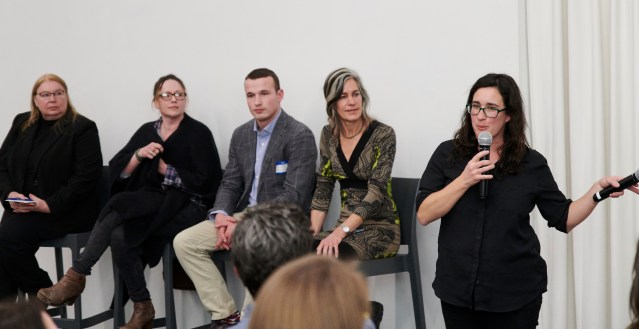
Lorraine Lewandrowski (left) and Forgotten Farms film creator Sarah Gardner (second from right) take questions from attendees after the premier showing at Project Farm House in Manhattan on March 9. Photo CADE / Zachary Schulman
By Sherry Bunting, Farmshine, May 8, 2020
MANHATTAN, N.Y. — While new farmers are celebrated by food-thinkers and thought-influencers, there’s another farmer mostly left out of the local food celebration. Traditional dairy farmers are underestimated and seen as declining, when in fact, they remain the backbone of rural communities and are integral to a renewal of regional food systems — their farms have served urban neighbors in some cases for a century.
Yet these essential farms have been essentially forgotten by the food movement as they fight for survival…
On March 9, they were remembered and celebrated thoughtfully during a premier showing of the acclaimed Forgotten Farms film in New York City. A group of upstate dairy farmers hosted the occasion. The documentary shows the cultural divide between the new food movement and traditional farming. It can be streamed at http://www.forgottenfarms.org or by purchasing a DVD.
After months of work and years of time invested in building relationships with food-thinkers in the metropolitan area, Herkimer County, N.Y. dairy producer and attorney Lorraine Lewandrowski — working closely with the Center For Agricultural Development and Entrepreneurship (CADE) — secured a beautiful Manhattan venue at Project Farmhouse to show the documentary film.
Lewandrowski is @NYFarmer on Twitter with near 33,000 followers and has tweeted nearly a quarter of a million times over the past decade spanning everything from issues of the day to simple photos of a day on the farm.
Always looking for ways to connect dairy farmers with food-interested people, Lewandrowski and other dairy producers tag-teamed as hosts for the Forgotten Farms film premier in Manhattan on March 9 and had a booth at the International Restaurant Show at the Javits Center on March 10.
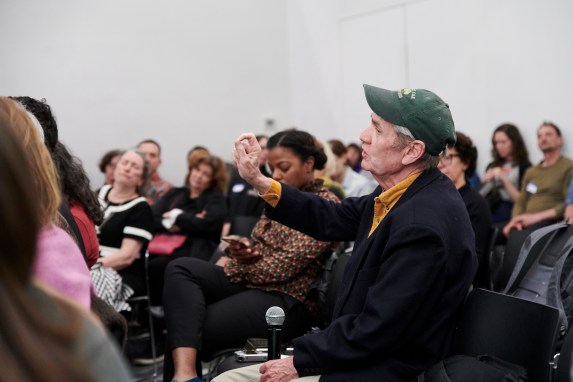
Photo CADE / Zachary Schulman
For many of the 100 food-thinkers, food-writers, and food-influencers attending the film, it was their last congregating event before New York City began safe-at-home policies as the novel Coronavirus pandemic hit the region a few days after. In the throws of the pandemic’s impact on global and national food supply chains, the Forgotten Farms documentary brings a timely message — looking into the past and ahead at a vision for a future regional food system.
“This event was made possible by (CADE) in Oneonta, New York and event coordinator, Lauren Melodia of Brooklyn,” writes Lewandrowski in an email interview with Farmshine recently. “We had seating for 100 New York City food-thinkers, influencers, writers and students. In just over an hour, the film told the stories of Northeast dairy farmers. Actual dairy farmers, some of them ‘real unique characters,’ were the stars of this award winning film created by Sarah Gardner and David Simonds.”
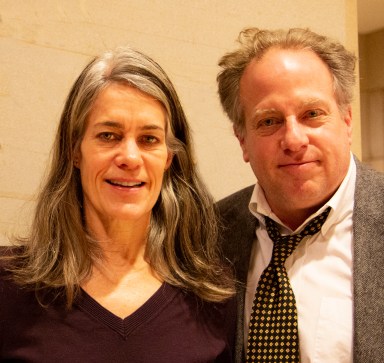
Sarah Gardner and David Simonds (Photo S.Bunting)
Gardner was also present to join Lewandrowski on a panel taking questions from attendees as they enjoyed the beautiful cinematography while learning about a few central themes: The challenges of farming, milk pricing, history of farm communities, abundant natural resources of the Northeast and the feeling in dairy farm communities that dairy farmers were forgotten by the popular urban food movement.
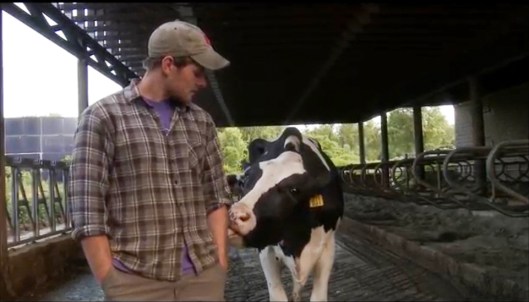
Photo capture from Forgotten Farms preview trailer
“The event was also a ‘deep listening’ session for us as farmers while attendees expressed their ideas, asked questions of us and gave us information from their perspectives,” Lewandrowski reflects. She notes that for the group of New York farmers the opportunity to really hear what is on the minds of city food-thinkers is essential to bridge the gaps and communicate about the future of food systems and dairy farming.
All the more telling in the eight weeks of COVID-19 impact to the national and global food supply chain, were the regional themes of the Forgotten Farms film showing the wealth of resources tended by farmers within a short drive of New York City.
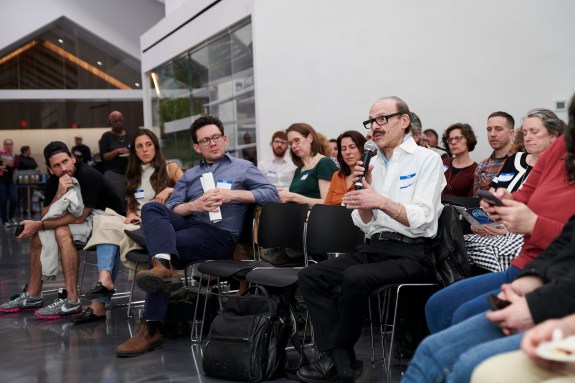
Dr. Keith Ayoob tells the audience his concerns about public belief that imitations are ‘equivalent’ to dairy milk. Photo CADE / Zachary Schulman
“A young coffee bar owner asked what she should say to the increasing number of consumers who ask for oat ‘milk.’ A pediatric nutritionist, Dr. Keith Ayoob, told the audience his concerns about public belief that imitations are ‘equivalent’ to dairy milk,” Lewandrowski relates. “Dr. Ayoob brought copies of a letter he had written in the March 7, 2020 New York Daily News rebutting Brooklyn Borough President, Eric Adams, who has called for ‘plant based’ milks and for dairy farmers to transition out of producing milk.”
Attendees asked the farmers if they knew which New York City officials are interested in regional food and who they should support politically.
Lewandrowski described these encounters:
One consumer asked how to respond to fellow environmentalists who disparage dairy milk while urging almond beverages as better for the environment.
A group of food studies students told how the film inspired them to question food “shockumentaries” they have seen in their programs and to seek trustworthy sources of information.
“Each of these questions and comments gave us ideas on other projects we as farmers can do during future trips into the City,” writes Lewandrowski.
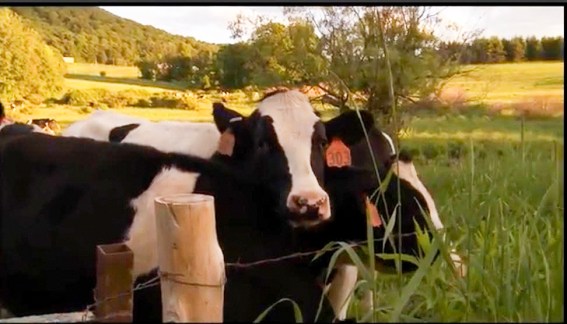
Photo capture from Forgotten Farms preview trailer
“A high point of our Project Farmhouse event was the support shown for the Cobleskill Dairy Judging team by attendees, most of whom have never touched a cow,” she notes. “Our announcement that the students from SUNY Cobleskill had placed first in the nation in junior college dairy judging was met with a big round of applause. We sold raffle tickets for a gift basket of New York food products to benefit these students, and the atendees gave generously to support the dairy students that they saw as their “home team.”
In speaking with guests after the film, Lewandrowski reports they were invited to do more showings in Queens, Brooklyn, Manhattan and Westchester County.
“We also met New York City food policy leaders and some of the people who have quietly worked behind the scenes as the ‘guardian angels’ of the farmers and NYC food security,” she writes. “It is the work of these unsung people that has built an extensive network of farmers markets in NYC and who are now connecting with more rural dairy farmers who sell into commodity networks.
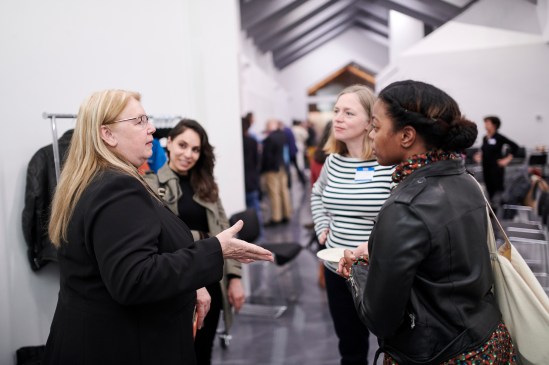
- Photo CADE / Zachary Schulman
“Now is the time that the work of these people will be recognized and respected as city planners think about regional food in the years following the Coronavirus impact,” she adds. “Young urban supporters of farmers showed us the seaport area of southern Manhattan and invited us to return to host a NYC Dairy Festival. They urged that the public would love to see and sample cheeses, ice creams, and other products of our rich dairy region. How could such an event be accomplished?”
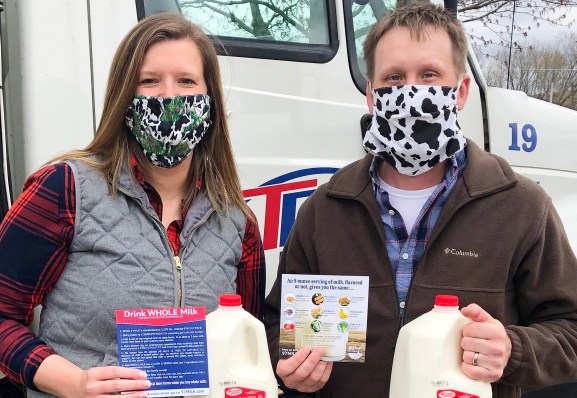
On the following day, Jacob Javits Center hosted the combined International Restaurant Show, the Natural Foods Show and the Coffee Festival. The dairy presence was very thin, while imitation “milks” had several booths, Lewandrowski reported. CADE organized a booth for dairy farmers where they proudly handed out fresh whole milk bottled by Clark Farm in Delhi, New York.
“Although the dairy and beef checkoffs were absent, we were happy to see booths from Belgioioso Cheese and Tillamook Creamery, both of whom drew enthusiastic cheese sampling,” Lewandrowski explains. “The Government of Quebec had multiple booths showcasing their dairy, cheeses, beef, bison and specialty lamb. Irish beef also had a presence, catering to specialty marketing in New York City.”
To be continued


 Prioritize cow health, and “avoid strategies that truly damage the ability of your cows to produce milk,” he said. “You don’t want to make decisions that cost you more in the end.”
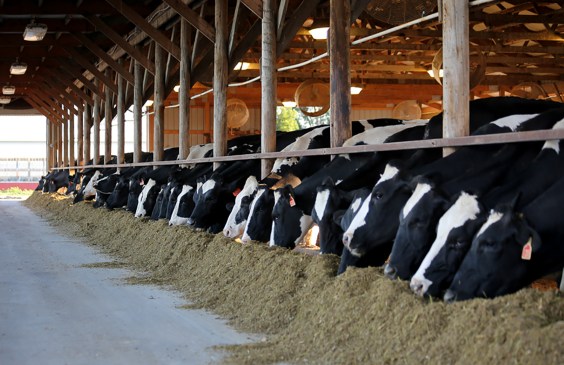 4) Focus on health when evaluating strategies and additives. Don’t just take a lot of the extras out, but do it in a way that makes feeding a less expensive but keeps them in good health, said Van Amburgh.
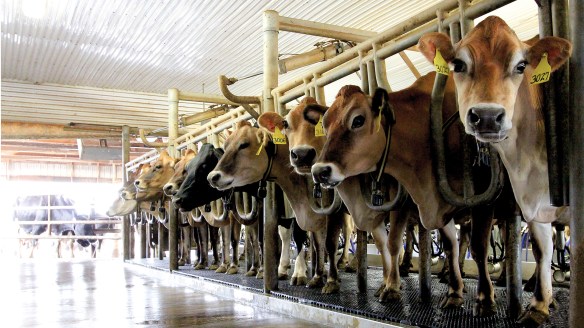 8) Going from 3x to 2x milking is the last thing to consider, according to Van Amburgh. That is, unless there are acute labor considerations in the mix. Either way, Van Amburgh advised doing this strategically.
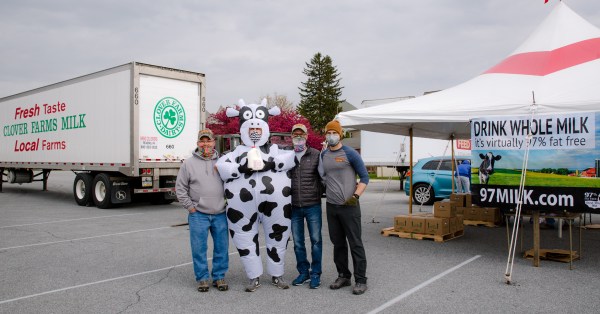 The idea started coming together two weeks ago. Many of the feed mill’s dairy farm customers in eastern Lancaster County ship their milk to


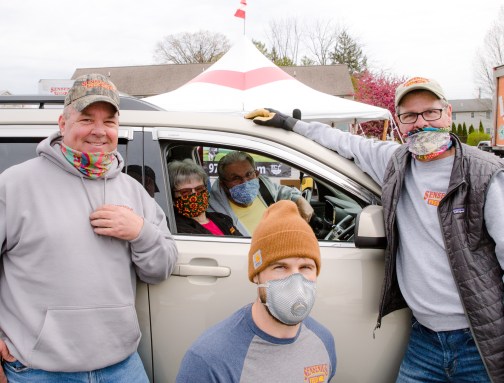 They are quick to point out that this would not have been possible without their employees. “This isn’t just us,” he said. “Everyone was excited to do this and to be involved.” The family’s feed mill is celebrating its 75th year in New Holland.
 Kurt Sensenig even donned an inflatable cow costume at the start, before he was called back to the feed mill.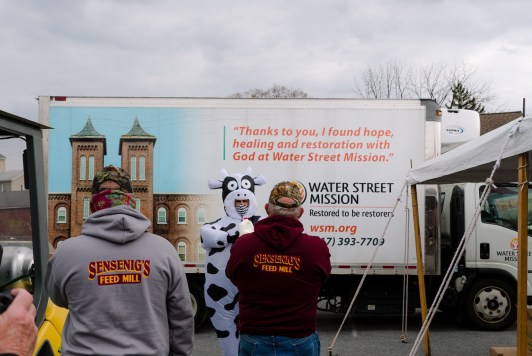

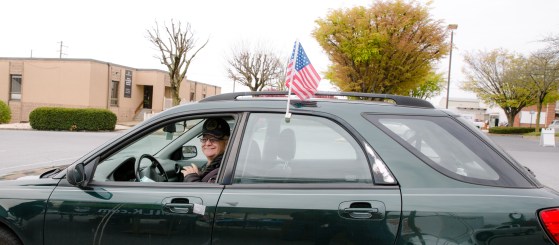 The bottom line for the Sensenigs and their employees was to bless others even as they believe they are blessed; to do something positive for their community; to help dairy farmers by connecting dots to get


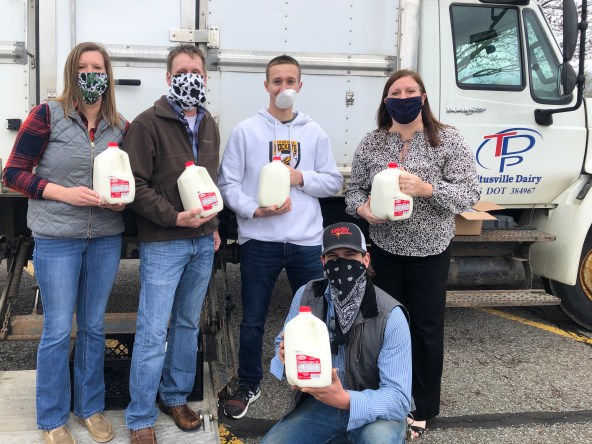
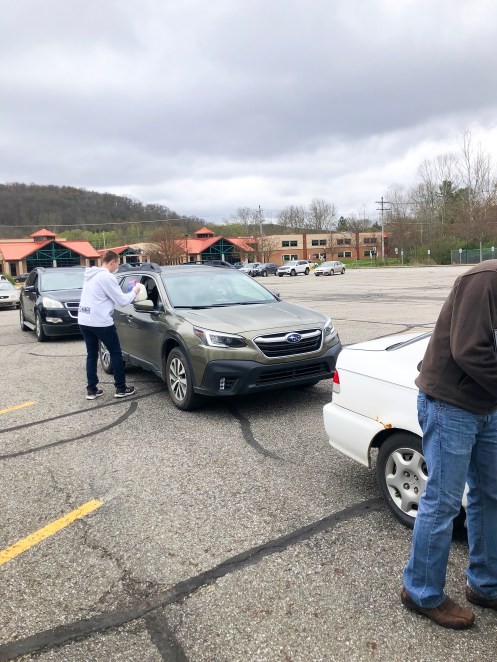
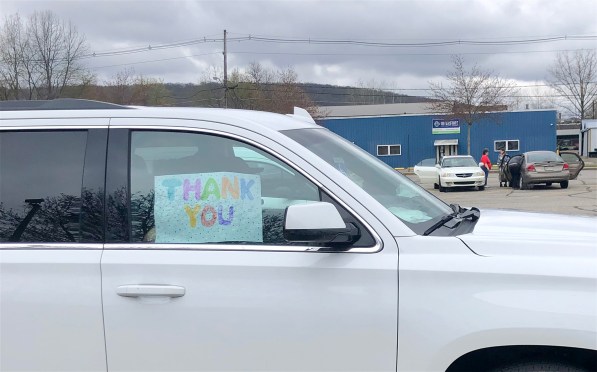
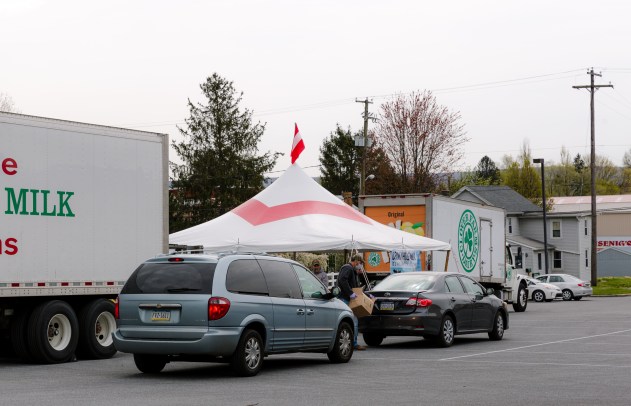 Others have stepped up doing similar milk donations. Some businesses have bought 500 gallons to give to employees and food banks; one couple in western Pennsylvania feeling blessed to still be working in agriculture are using their stimulus check to buy 500 gallons of whole milk to donate in a drive-through next week at their school; young farmer clubs and other organizations are working with milk cooperatives and processors to donate and raise funds for dairy donation drive-throughs in other parts of Pennsylvania, New York, the Southeast and elsewhere. Some are set up weekly, with people giving donations as they pick up milk and dairy products that are then used the next week to purchase more for donation.
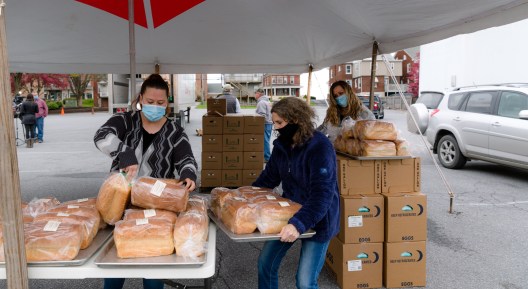
 Postcript: Karl and Mike Sensenig wish to recognize the mill’s entire team of employees for making the April 23-24 Whole Milk Donation Drive-Through possible: In addition to Karl, Mike, Kurt, Kyle, Scott, Emily and Nancy Sensenig, employees Calvin Buckwalter, Dale Clymer Jr., Ryan Crowther, Raymond Geiter III, Ashley Gesswein, Jared Grosh, Tim Hall, Curtis Hershey, Greg Hill, Dr. Don Jaquette, Joshua Kenderdine, Gerald Martin, Lawrence Martin, Nathan Martin, Steve Morris, Todd Morris, Steven Oberholtzer, Ron Phippen Jr., Devin Shirk, Eugene Shirk, David Stauffer, Allen Steffy, Terry Tshudy, Dwayne Weaver, Elmer Weaver, John Weaver, Logan Weaver, Nelson Weaver, Thomas Weaver and Dawn Wright were all involved. Even the previous generation to run the feed mill — Ken and Sandy Sensenig — came out to watch.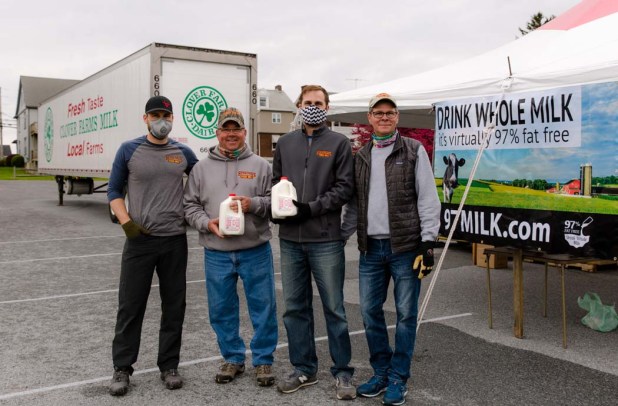
 Ag Moos