ESL milk panel: Innovation? Market optimizers?

Dairy checkoff: ‘If we focus on whole milk, we miss these market optimizers’ Really?
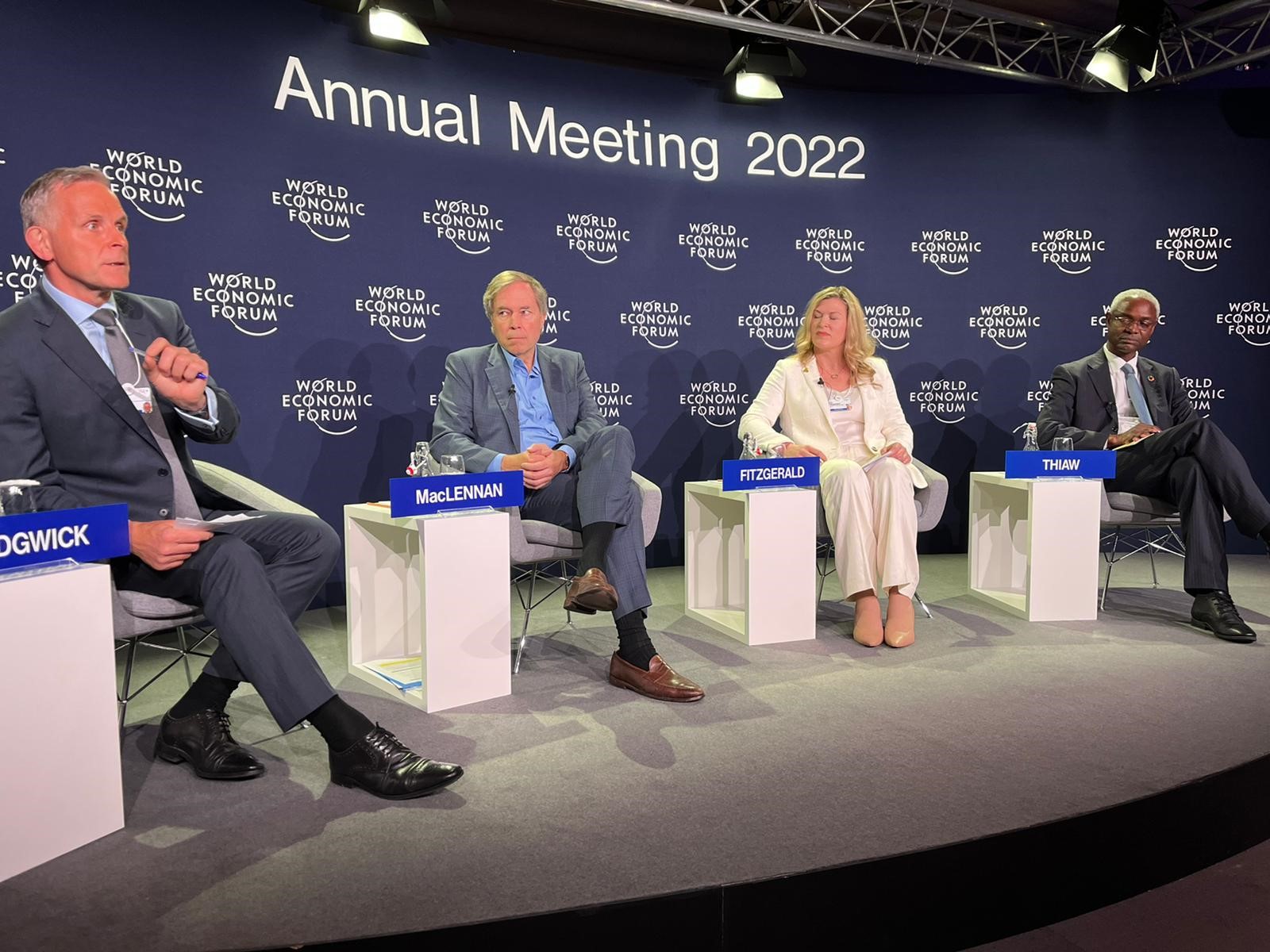
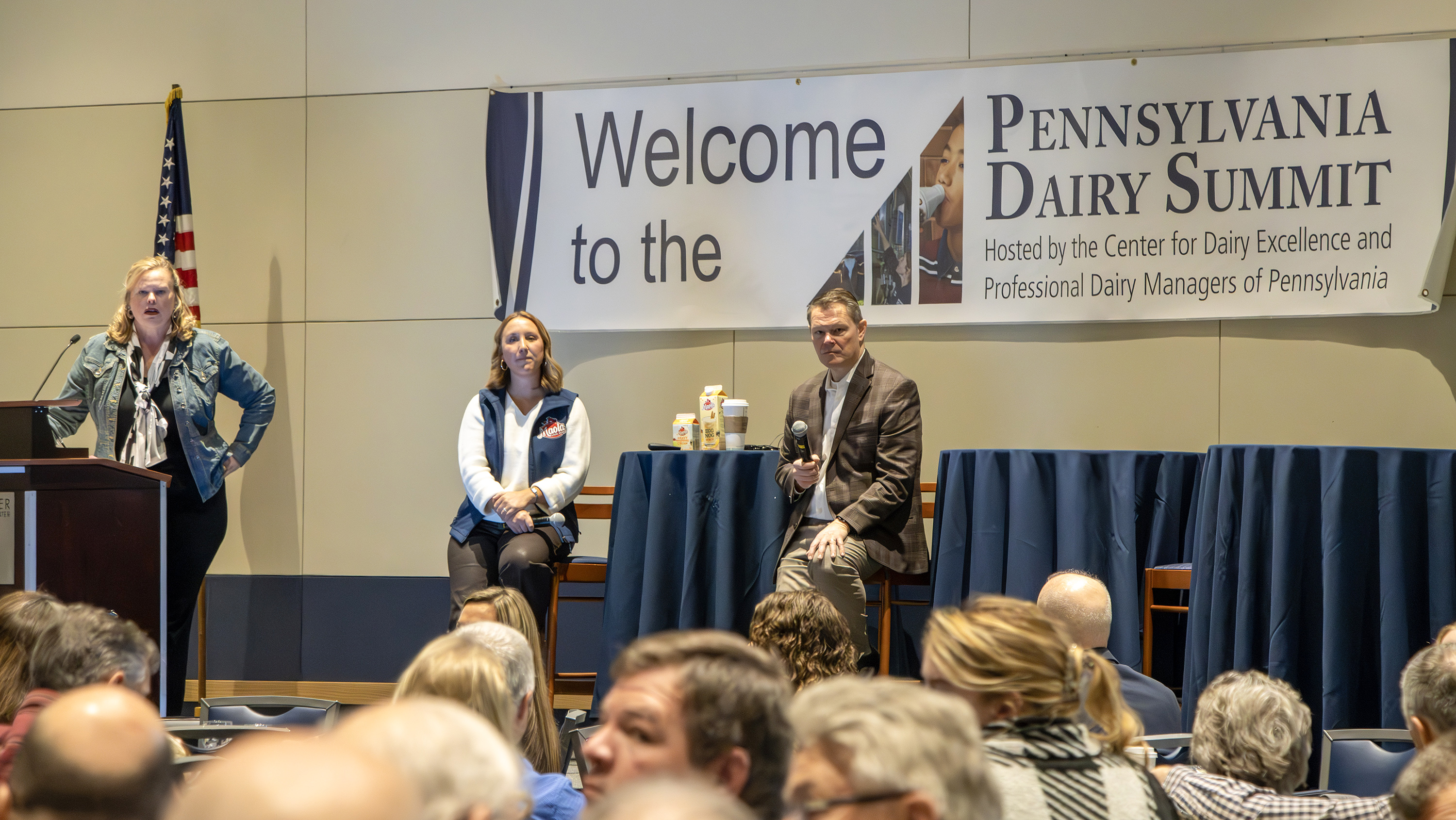
At the 2025 Pennsylvania Dairy Summit, Paul Ziemnisky, DMI’s head of wellness, innovation, and business development, and Rebecca Pfeffer, Maola brand manager, with moderator Amy Mearkle (left) spoke about fluid milk innovation in which extended shelf life (ESL), otherwise known as ultra pasteurized (UP) milk, is seen as the gateway to new products aiming to meet ‘functional needs’ of consumers.

By Sherry Bunting, Farmshine, March, 2025

STATE COLLEGE, Pa. – Food-as-medicine, food-and-medicine, fun-and-portable, young kids talking about pre-aging, on-the-go snack and beverage convenience, the quest for guilt-free ways to unwind with fewer calories than wine, the growing double-income-no-kids (DINK) consumer landscape that is focused on wellness, consumer shifts from coffees to teas, the surge in protein demand, and the growth in sales of lactose-free milk… 

These are some emerging trends mentioned during a panel about extended shelf life (ESL) milk as the gateway to dairy checkoff’s Milk Molecules Initiative during the Pennsylvania Dairy Summit last month.

In the Feb. 21st Farmshine, we brought you part one, a panel overview in this three-part series. In this second installment, we dig into what Dairy Management Inc (DMI) is doing with protein in the fluid milk space, and the technologies they are working on to separate molecules.

This public launch of the Milk Molecules Initiative (MMI) comes after 10 to 15 years of work through the pre-competitive industry collaboration vehicle – The Innovation Center for U.S. Dairy, a 501c6 established by DMI in 2008.

What we’ve learned is that MMI — as a fluid milk strategy — began even before the formation of DMI’s Fluid Milk Innovation Task Force seven years ago. It goes all the way back to 2010, right about the time whole milk choice was abolished in schools.

This strategy has been developed to discover, strip out, and repurpose the “functional benefits” of specific bioactive compounds, or molecules, in milk. The concept goes back to the early alliance between Fonterra and DMI, with headquarters less than three miles apart in the suburbs of Chicago around O’Hare Airport.

This strategy has been under development via research grants from USDA, NIH, and the National Dairy Council to the Dairy Research Institutes at four university locations, including the Barile Lab at the University of California-Davis. There, researchers have worked on isolating compounds from both human and bovine milk, and more recently, student researchers have been working on a DMI project “building a digital ecosystem and platform for these milk compounds.”

The Feb. 2022 memorandum of understanding between DMI and Mayo Clinic in Rochester, Minnesota, is tying-in the human health linkages to specific bioactive compounds in milk, and the Feb. 2024 DMI partnership with PIPA, an artificial intelligence (AI) platform, is accelerating the knowledge gain in how to break down milk’s so-called “bioactive family tree” to leverage functional milk products with new health benefits.

“We are finding the molecules in the whole milk matrix and picking things that are on the ‘whey stream’ as one area of focus, such as stripping out the lactorferrin,’” said Dairy Summit panelist Paul Ziemnisky, head of wellness, innovation and business development for Dairy Management Inc. (DMI), who has spearheaded the work of the Fluid Milk Innovation Task Force.

“We have partners talking about building a lactoferrin plant centered on just one of thousands of molecules in milk. We are looking at how to protect this molecule so it doesn’t lose its bioavailability, so we can put it back into dairy (post-processing),” he said.

Ziemnisky observed how past checkoff messaging has touted things like: “chocolate milk as a recovery beverage.”

Today, he said, “We’re going beyond that. We’re looking at ways to add milk to milk and to use these concepts to give it a different look and to capture huge value potential.”

How does DMI plan to partner with industry to capture this value? By linking milk and technology to create new products.

According to Ziemnisky, the MMI is looking aggressively at encapsulation and separation technologies as well as drying technologies that can be patented while testing the concepts with consumers to “learn how to talk about it.”

“If we focus on whole milk, we miss these market optimizers,” Ziemnisky declared. “Whole milk is for the 17% of traditionalists. We must innovate this category. We’re giving consumers a reason to understand what they need.”

He says MMI and ESL are pathways to get “milk” into more top-demand moments to capture a larger share of the $159 billion total beverage category.

(More ultra processed beverages are just what global consumer packaged goods companies are famous for. But is this what consumers really want? And will the ‘huge value potential’ trickle down to farm milk checks?)

According to Ziemnisky, there is at least $2 billion in new investment coming into the beverage space across geographies. “But it’s not your father’s Oldsmobile. Those new plants are filtration and separation, and we can add functionality to it.

“There are things we know of that we can’t even talk about yet,” he said as he gave a snapshot of where MMI is, and what is yet to come.

He cited a proliferation of ESL milk beverages that are mainly lactose-free, high protein milks as the gateway to molecular separation. Examples included the ESL capabilities at the Maola plant in Philadelphia, the national launch of Milk50 by DFA, the new nutrition line of beverages developed by Dairy Gold, Nestle’s new line made exclusively for Target, and others.

Asked if these new products are taking sales away from non-milk alternatives or traditionally branded milk, Ziemnisky said DMI’s work with MilkPEP shows that the plant-based beverages – on a volume and value basis – are “over-shelved.”

“They haven’t grown their category, their volume is declining. Those guys are eating themselves — going after each other. They’re not going after us anymore because they can’t. We win with nutrition and value. When we see all the innovation that is coming into dairy, we’re taking our space back by meeting the functional needs of the consumer. The quality of the protein is in demand now,” he said, confirming data showing that, “People are coming back to us because of the nutrition and the quality of the protein.”

During questions, he dug into the health and wellness “playbook” that checkoff has created with the help and blessing of USDA and has put into the hands of the top people at all of the big companies in food processing and retailing. 

“We’ve traditionally undersold our nutritional benefits, and that’s changing,” he said.

Where MMI comes into the picture is to identify the bioactive molecules for separation and marketing linked to specific health claims that can go on a label.

A graduate student in the audience said the presentation gave her “a lot of hope in the future as a scientist.” She asked if DMI has noticed any difference in regional trends related to consumers, and specifically wondered what is happening in California?

Ziemnisky said California was moving the other direction. “They like to try things out there,” he said, explaining that the dairy industry is so volume- and scale-focused that pilot products are not the norm. 

“California is coming back. California has assets that do smaller runs to try things. Last year, California grew (beverage milk sales) at a faster pace, whereas the Northeast market is so heavily regulated,” he said, adding that government regulation puts pressure on local retailers who want to try things.

DMI’s role is to test and learn, he explained: “We help processors prove these markets to retailers. Value-add is 30% of the dollars in the fluid milk category today. We went to 30% from just 10% just 10 years ago. We are targeting both volume and value with our retail and direct sales teams.”

One attendee asked what checkoff can do about the out-of-stock issues at retail, noting that perhaps fluid milk sales would increase if the dairy cases were consistently well-stocked.

“When we ask the store people, they say we don’t do the orders, it all comes from above us,” the questioner said.

Ziemnisky replied: “They are not telling you the truth. The real out of stock rate nationally is 3%. The problem is they are not managing their inventory. The inventory is there, but not the labor.”

“What we run into is the problem is store help,” said John Chrisman of ADANE, jumping into the conversation, noting new laser-system camera technologies are coming within the next five years to issue alerts about what is “flying off the shelves.”

In the meantime, he told attendees to report out-of-stocks to ADANE so they can get it resolved.

Another question asked was how farmers can feed or manage their herds to hit higher levels of functional bioactives like lactoferrin.

Ziemnisky said that’s a question for the milk buyers’ field service personnel, but in general, feeding cattle to hit higher component levels will raise the functional level of milk molecules like lactoferrin.

This reporter asked Ziemnisky what DMI is doing to know if there is any change in the protein structure with the further processed options: “How are we protecting that message on whey protein by protecting its structure through the ultra pasteurization process?”

(The only published research we could find was an NIH study showing heat and mechanical processes of ESL packaging change the structure of the protein, namely the whey protein.)

Ziemnisky replied that DMI is “doing significant work” on the nutrition research side to prove the efficacy of dairy’s high quality protein vs. other proteins. 

“And on the product science side, we’re investing significantly in everything from the clarity of protein, so you can put it into other products, to the quality as it goes through different processes that it stays stabilized. We work with the industry on what are the needs we can solve,” he assured.

On follow up questioning about protecting the protein, he added that, “Encapsulation is just one technology we’re doing to preserve the bioactive pull, and we have other things underway as well. We also look at the byproducts. What do we do with lactose coming through on the lactose-free? What do we do with the permeates on the cheese, the passive whey? These are where we’re doing work to create products from the bioplastics all the way to the functional ingredients.”

Bottom line, he said: “Whey was the bastard child, and now it is the largest gaining market share because of demand for high quality proteins. We are seeing the fractionation piece of this, the precision nutrition, the new players coming in and doing research on different compounds, driving whey to where it is today vs. 20 years ago.”

With an estimated 6300 molecules in milk identified by artificial intelligence, all located within the 13% of milk that is the solids, Ziemnisky expressed excitement about the future.

“We are at the cusp of this, and with our artificial intelligence partnerships, we are getting the learnings in 2 to 3 years that used to take 10 years,” he suggested. “This is moving fast toward a sustainable future with zero-waste circular milk plants.” 

-30-
Details shared on DMI’s Milk Molecules Initiative

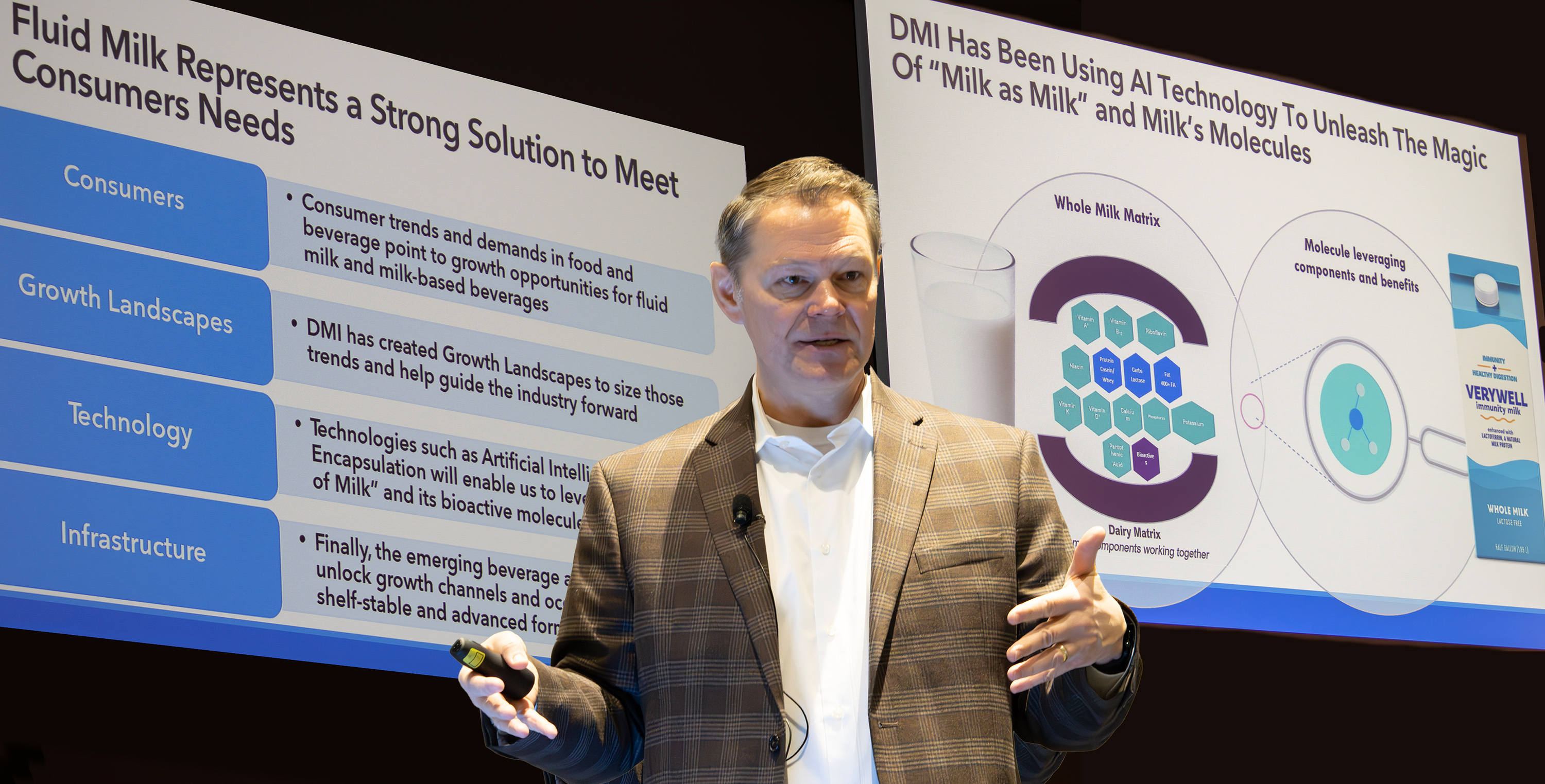
Paul Ziemnisky reported that DMI has implemented the Milk Molecules Initiative, or MMI, which focuses on the functional benefits in milk and uses their proprietary AI model to accelerate research and development to identify the molecules, create prototypes, and bring to market health and wellness branded value-added dairy beverages, using ESL (extended shelf-life) and shelf stable milk as the base.

By Sherry Bunting, Farmshine, February 2025

STATE COLLEGE, Pa. — Forward-looking presentations from farm to processing and promotion were highlights of the 20th Pennsylvania Dairy Summit attended by over 350 people at the Penn Stater Conference Center Feb. 5-6.

Many questions and much discussion came from the general session panel on the second day, entitled “Emerging Market for Fluid Dairy: Aseptic Milk and Milk Molecule Maximization.” 

Sponsored by American Dairy Association Northeast, it was presented by Paul Ziemnisky, the head of wellness, innovation and business development for Dairy Management Inc (DMI), and Rebecca Shaw Pfeffer, brand manager for Maola Local Dairies — positioned as “embracing innovation and pursuing new market opportunities for fluid milk.”

Several attendees expressed how uplifted they were by this presentation. Others had thought-provoking questions that were not entirely answered.

DMI has had a seven-year partnership with the industry through the Fluid Milk Innovation task force’s response to fluid milk demand “that has struggled.” The response has focused on milk molecule separation for value-added growth – all of which starts with extended shelf life (ESL), ultra-pasteurized, aseptic, shelf-stable milk, as the base beverage or gateway to the opportunities.

The bottom-line is dairy checkoff is focused on guiding the industry into new spaces in the beverage category, such as health and wellness. DMI develops concepts and prototypes to help guide industry investments, using its proprietary artificial intelligence (AI) database to “unlock the growth opportunities.”

Ziemnisky reported that DMI has implemented the Milk Molecules Initiative, or MMI, which focuses on the functional benefits in milk and uses an AI platform for dairy research and development. 

He said DMI’s AI model has identified 6300 molecules in milk, and the MMI is just getting started on what to target, and how.

“We are seeing growth in ultra-pasteurized and value-added, and we are taking our space back with the molecules and magic of milk,” said Ziemnisky, who oversees DMI’s domestic growth programs, much of it hinging on checkoff-funded health and wellness research, including 41 active projects with Mayo Clinic.

Part of this work is identifying the health and other associations linked to specific molecules, like lactoferrin. “We identify them and size the trends to see how to attack the spaces,” he said.

MMI is the innovation plan to get dairy past the 15% it currently holds of the $159 billion retail beverage category. To that end, Ziemnisky talked about changes in technologies that DMI is working on to “take advantage of the bioactives in milk through separation and put them back in milk or other products, using AI to accelerate our learning, faster.”

He confirmed $10 billion in new processing coming online in the U.S. in the next two years, saying “a lot of this is in the fluid milk space, using filtration and separation for functionality.”

DMI has broken the market into three categories: snacking and entertainment, vital performance, and clinical cuisine. Ziemnisky spent much of his time on the latter as the new and growing ‘food as medicine’ trend.

He talked about DMI partnering with the Calm App to produce a prototype that would add the separated molecule of tryptophan to ESL milk, for a prototype ‘calm’ or ‘sleep’ beverage.

However, Ziemnisky spent much of his time talking about the lactoferrin molecule and the technology to encapsulate and separate it during dairy processing to be added to milk to make “immunity milk” with a Very Well brand prototype.

He talked of Nestle’s new ESL lactose free milk, marketed as high protein, low sugar, called Pioneer Pastures, and available only at Target, as well as DFA’s new Milk 50 beverage as slim and fit.

He talked about how shelf-stable milk is the vehicle to deliver wellness or vitamin claims, like has been done with water drinks.

DMI is also working on bringing MMI into the arena of competing with bone health supplements in the vitamin aisle.

“We’ve baked the cake and are looking for the products to use this technology to steal market share from these areas,” he said.

“We’re looking at the molecules in the whole milk matrix,” he explained, highlighting lactoferrin with 1758 health associations in the scientific literature. 

“But you’d have to drink 20 glasses of milk, so we’ll take it out and put it back into one glass of milk and call it ‘immunity milk,’” he said.

In fact, DMI has created a ‘family tree’ of milk’s natural bioactives to then pick channels, to size the growth potential, design prototypes, and look for partners.

According to Ziemnisky, DMI has 46 proposals for women’s health, alone, and there is talk of building lactoferrin processing capacity as this molecule is also being looked at for beauty and skin health.

“But we have to make sure it doesn’t lose its bioavailability in the processing,” he said, referencing the encapsulation technology, similar to what is used to make infant formula, which is needed “to protect the molecule, and put it back into dairy.”

By combining milk with MMI technology, Ziemnisky said a molecule can be targeted, extracted, and then added back into the milk at a higher volume for a wellness claim.

“Now we can marry it out to the big retail beverage growth spaces, where there is $159 billion in consumer spending to show the industry where we (milk) can play,” he said. 

“We’re adding milk to milk with some of these concepts, with a different look and a  huge value. We are testing concepts with consumers and learning how to talk about it, and patenting our technology for our farmers,” he continued. 

“People ask, why not just promote whole milk?” Ziemnisky noted. 

His answer? “Only 17% of the market is ‘traditionalist.’ We have to innovate the category and do the research to understand what our consumers need. We’ve been baking the cake, working with the industry, doing the concepts to gain share in the top demand-moments that we only have a 15% share of now. MMI represents a really strong opportunity for us to do that.”

Extended shelf life, ultrapasteurized, and aseptic shelf-stable milk processing is the gateway to this ‘promised land,’ according to Ziemnisky, and DMI is testing proof of concept, working with startups and processors to get geared up to move prototypes from concept to consumer.

“People are realizing the value of milk,” he said. “Our biggest opportunity is making sure there is a good intro marketing plan for retailers to drive the products. If we can win the first six months, we usually can stay on the shelf. That’s our biggest opportunity to make sure they have a plan to drive awareness and trial the products.”

DMI and MilkPEP are working with companies and retailers on this, providing tools and tactics to get the higher-level consumer engagement. This includes developing the sell-story to new buyers.

“Milk is on fire in the category, and we often look at conventional milk, which is 82% controlled by the retailer,” Ziemnisky stated, emphasizing that DMI tells processors that they have to educate the retailers. “Using our analytics, there is a piece of winning even on the conventional milk side in this trajectory. Everything we’ve touched in the industry has grown.”

He showed the value-added products on the market today that were prototyped through checkoff, including high protein, lactose free, and flavored.

“Conventional has held us back because, again, we have to get the retailers using the health and wellness playbook to educate the consumers,” Ziemnisky said, noting that value-added is more than 30% of the fluid milk category dollars  and when he started at DMI nearly a decade ago, it was less than 10%. (Note that value-add products are more expensive, so dollar growth does not necessarily correspond to volume growth, and that conventional whole milk is already a large volume of the category that has been consistently growing).

In part two from this discussion, we look at what DMI is doing with protein in the fluid milk space, and our question about what DMI is doing in terms of research to ensure protein structure is protected from impacts of ultra-pasteurization.

What’s the future for fluid milk?

Fluid milk sales are up, Whole Milk for Healthy Kids Act is moving. Meanwhile industry globalists put big bets on ESL, shelf-stable, with favor from Vilsack  

By Sherry Bunting, Farmshine, October 18, 2024

EAST EARL, Pa. — Protein is all the rage right now, and consumers are turning back to real milk as they realize its natural high quality protein benefits. Year-to-date fluid milk sales continue to outpace year ago, and that’s good news. Here are some key factors in the future of fluid milk in the U.S.

Fluid milk sales up!

July’s total packaged fluid milk sales more than recovered the June slump — in a big way, and August looks promising too.

USDA estimated packaged fluid milk sales at 3.4 billion pounds in July, up 4.3% year-on-year (YOY). This amplifies the pivotal year-to-date trend above year ago for the first time in decades (except the 2020 pandemic year).

Specifically, USDA’s Estimated Fluid Milk Product Sales Report for July, released in late September, noted conventional fluid milk sales total 3.7% higher YOY, with organic up 11.7%.

Conventional unflavored whole milk sales were up 4.7% YOY in July, while organic whole milk sales were up 17.1%.

Flavored whole milk sales were mixed because these sales rely upon what processors are willing to make and offer on store shelves, not necessarily reflecting what consumers want to buy. When fewer packages of whole flavored milk are offered, the full potential of sales are restrained.

Year-to-date (YTD) sales of all fluid milk products for the first seven months of 2024, at 24.7 billion pounds, are up 0.7% YOY, adjusted for Leap Year. Of this, YTD conventional whole milk sales for the first seven months of 2024, at 8.8 billion pounds, are up 2.1% and organic whole milk sales at 914 million pounds are up 12.6%.

The August report to be released in the coming weeks is shaping up similarly. August Class I utilization pounds reported last week by USDA are up 1.1% YOY and 1.1% YTD (Jan-Aug).

Making more fat, importing it too?

Meanwhile, the monthly World Agricultural Supply and Demand Estimates (WASDE) released Oct. 9 reduced its milk price forecasts for the rest of 2024 and into 2025, expecting Class III prices to fall from September highs as cheese price declines are expected to more than offset the higher whey prices.

This report is looking at all the major new cheese capacity coming online in the next 12 months, which is expected to saturate the cheese market to drive prices lower so that U.S. cheese makers can be globally competitive and continue exporting record amounts of cheese.

But is the milk available to do this? Likely not without robbing from Classes I, II and IV channels. Still, the WASDE forecasts lower Class IV prices also due to the abruptly declining butter price being only partially offset by the higher nonfat dry milk prices.

In short, dairy farms are making higher-fat milk, and the food industry is importing more milkfat, especially in the form of whole milk powder. WMP imports have been up by a record amount YOY in each of the past four years, especially 2024.

Restoring whole milk choice for kids!

Now would be a particularly good time for whole milk choice to be restored in our nation’s schools since we apparently have too much milkfat and not enough skim. Given this scenario, how can anyone in this industry still believe the whole milk in schools would hurt the industry’s ability to make enough butter and cheese. 

Unless it is excess butter and cheese that is needed to push prices down in order to continue beating record exports at reduced prices paid to farmers. 

Getting whole milk choice into schools would help. IDFA has been touting the Whole Milk for Healthy Kids Act. NMPF says they are on board too. This means the industry is united, right?

What are the chances that GT Thompson’s bill to bring whole milk choice back to schools will finally make it all the way to the President’s desk?

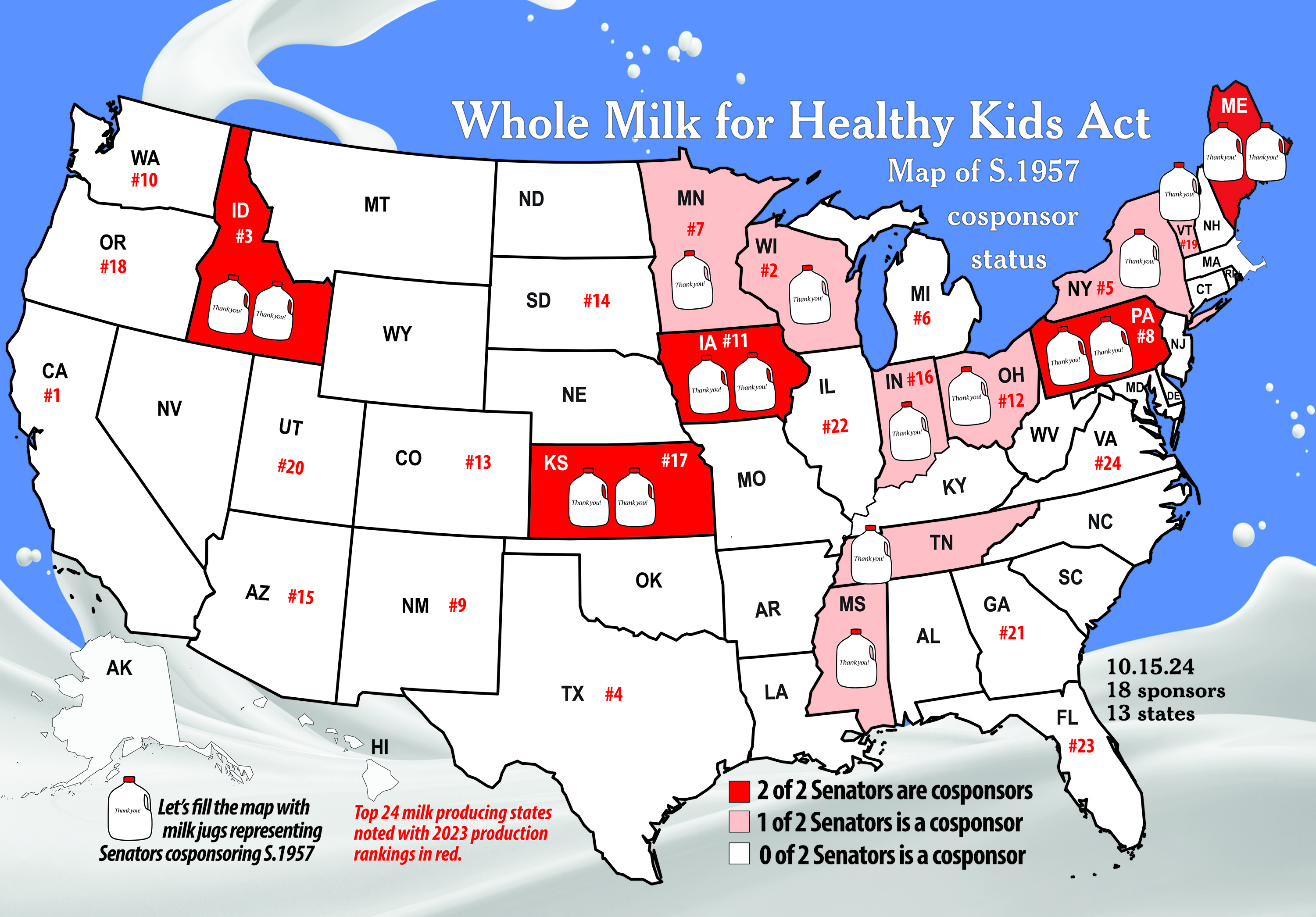
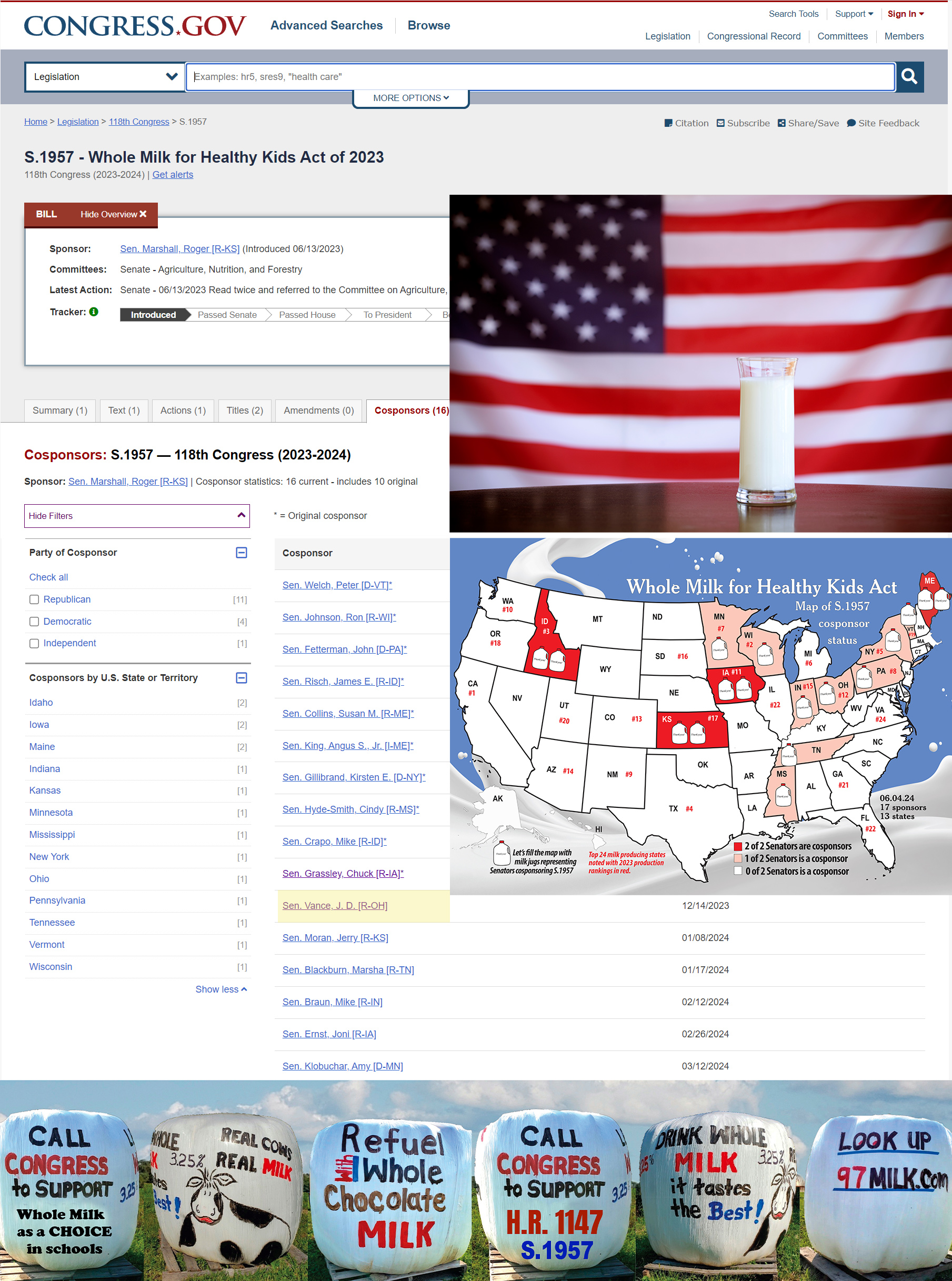
For starters, it passed the House by an overwhelming bipartisan majority last December. The Senate bill, S. 1957, has 11 Republicans, one Independent and five Democrats signed on, including notable Democrats such as Amy Klobuchar of Minnesota, Peter Welch of Vermont, Kirsten Gillibrand of New York, and John Fetterman of Pennsylvania who chairs the Senate Ag Subcommittee on Nutrition. 

The main sponsor is Republican Senator Roger Marshall of Kansas, a doctor. States represented are Pennsylvania, Vermont, Wisconsin, Idaho, New York, Iowa, Ohio, Indiana, Tennessee, Maine, and Mississippi.

In fact, Pennsylvania now has both Senators signed on. Senator Bob Casey Jr. (D-Pa.) is late to the party, but he has finally signed on as a cosponsor of S. 1957 on Sept. 19. It’s nice to see both senatorial milk jugs filled on the map for the Keystone State, but the bill needs more cosigners to fend off the blockade by Senate Ag chairwoman Debbie Stabenow (D-Mich.).

GT has included the Whole Milk for Healthy Kids Act in the House Ag Committee-passed farm bill. Word from Washington over the past few weeks is that a new farm bill is expected to get done after the elections in the lame duck session, and that GT will fight to keep the Whole Milk for Healthy Kids Act in the bill. Let’s hope so.

USDA: two movers for Class I?

Also related to Class I fluid milk sales, the dairy industry awaits a final decision on USDA’s proposed changes to federal milk pricing formulas, which includes a surprise for fluid milk: splitting the baby and adding a fifth class of milk in the form of two Class I mover announcements each month. 

The hearing record is woefully inadequate. No proposal. No evidence. No testimony. No analysis. No parameters. No definition. Even USDA’s own static analysis shows these two movers would be as much as $1 or more apart in any given month.

Fresh, conventionally processed (HTST) milk would go back to being priced by the the higher of the Class III or IV advance pricing factors to determine the Class I skim milk base price portion of the mover. 

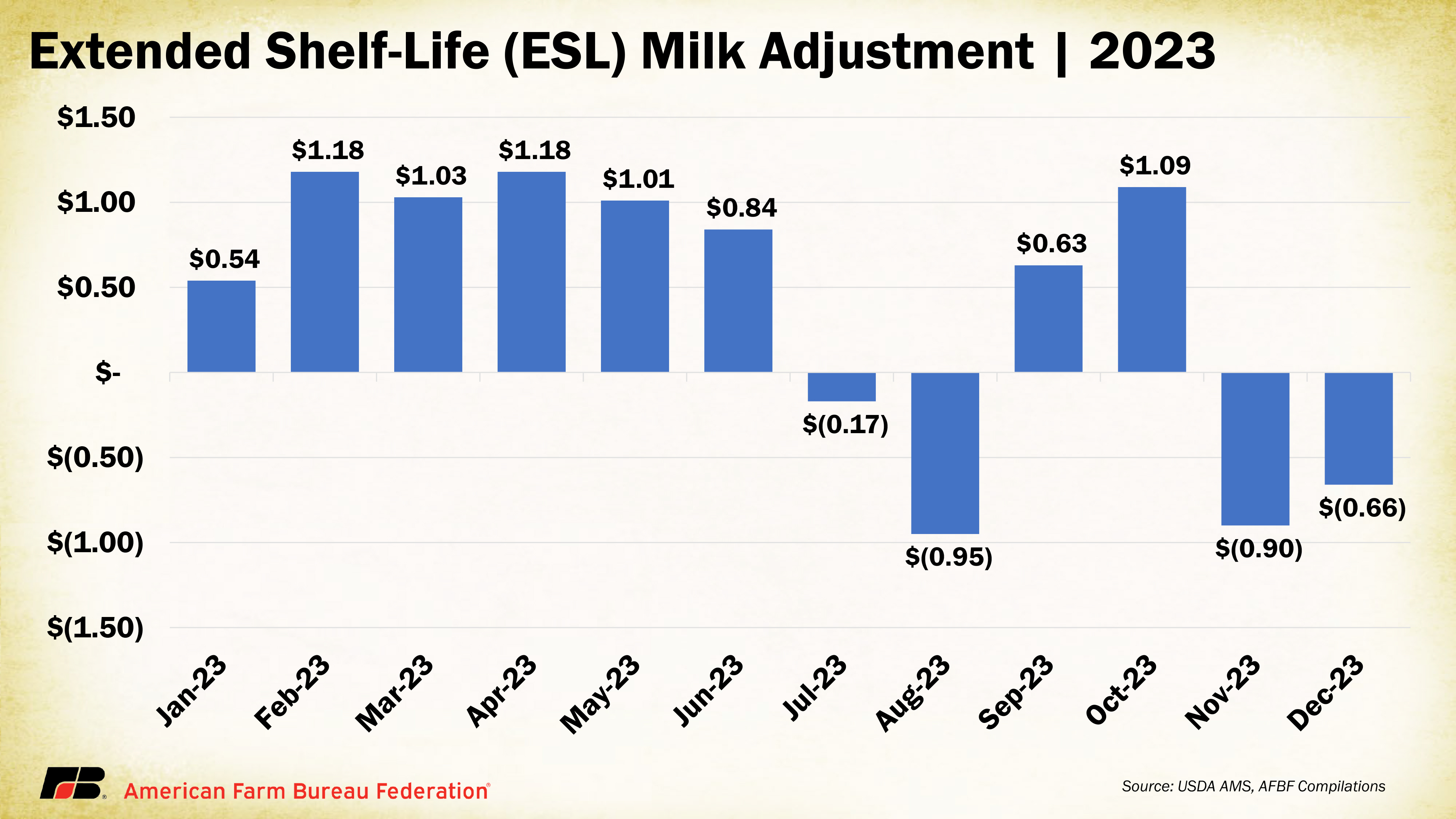
However, milk used to make extended shelf life (ESL) fluid milk products, defined only as “good for 60 days or more,” would continue to be priced using the average of these two pricing factors, plus-or-minus a rolling adjuster of the difference between the higher-of and average-of for 24 months, with a 12-month lag.

With two movers, fluid milk costs could be different for plants in the same location based on shelf life, with no clear definition for the new class, nor parameters established to qualify. Could we see label changes to move between movers?

Processors will know the rolling adjuster 12 months in advance, due to the “lag.” They will know the two advance-priced calculations (higher-of and average-of) a month in advance. They will have it charted in an algorithm no doubt and make decisions accordingly.

Farmers, on the other hand, will find out how their milk was used and priced two weeks after all their milk for the month was shipped. Those milk checks will be even less transparent than they are now.

Big bets on ESL, shelf stable

The dairy checkoff has openly identified ESL, especially shelf stable aseptically packaged milk, as its “new milk beverage platform,” using dairy farmer funds to research and promote it and to study and show how consumers can be “taught” to accept it.

The whole deal is driven by the net-zero sustainability targets. So, follow the money.

Dr. Michael Dykes of IDFA, at the Georgia Dairy Conference in January 2024, told dairy producers that “this is the direction we (processors) are moving… to get to some economies of scale and bring margin back to the business.”

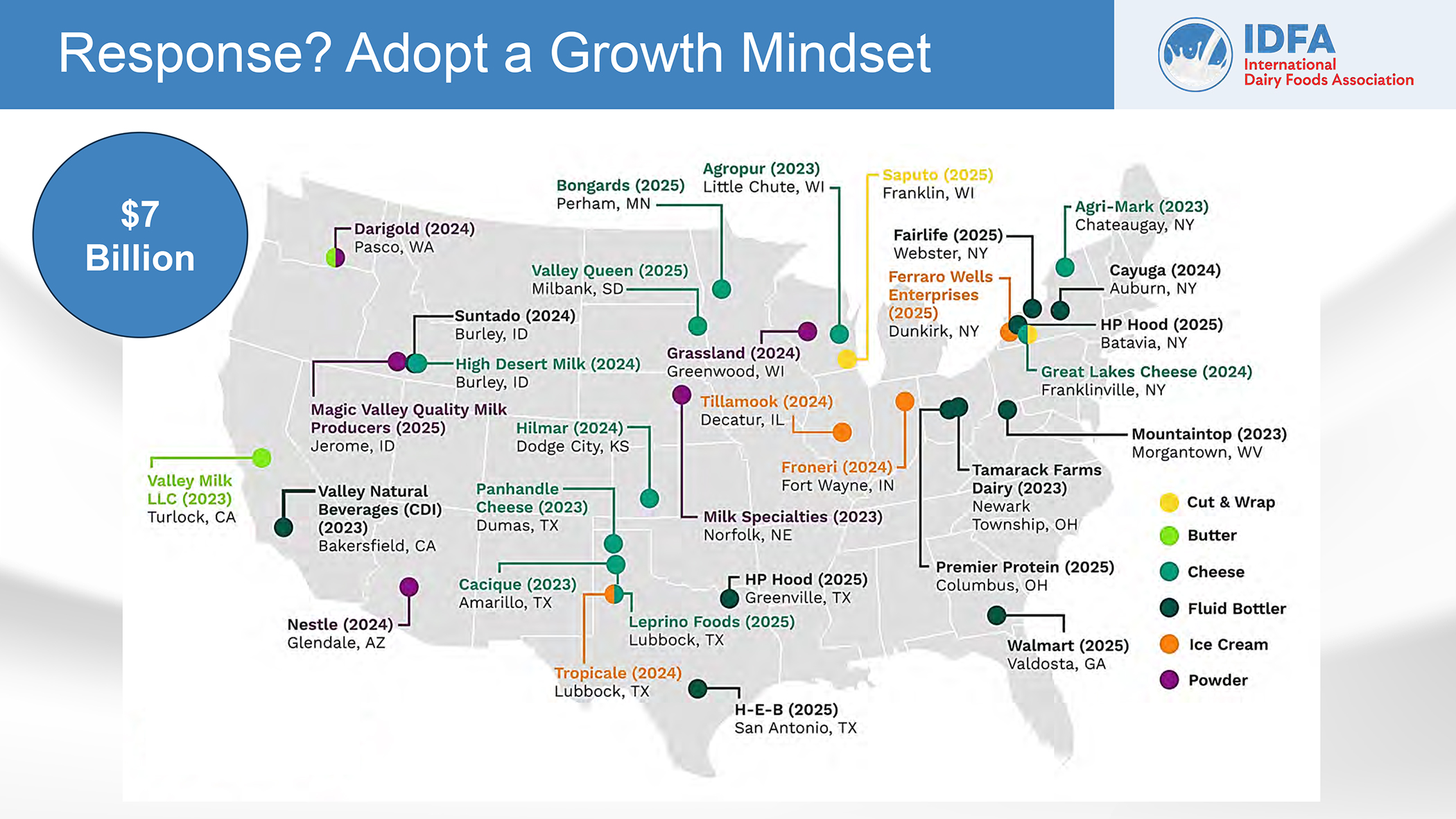
He said the planned new fluid milk processing capacity investments are largely ultra-filtered, aseptic, and ESL — 10 of the 11 new fluid plants on the IDFA map he displayed are ESL. Some will also make ultrafiltered milk, and some will make plant-based beverages also.

Meanwhile, the linchpin of regional dairy systems is conventionally pasteurized (HTST) fluid milk, prized as the freshest, least processed, most regionally local food at the supermarket.

To be sure, this two-mover proposal fits the climate and export goals set forth by the current Ag Secretary Tom Vilsack when he was working as the highest paid dairy checkoff executive in between the Obama and Biden administrations. 

The pathway to rapidly consolidate the dairy industry to meet those goals is to tilt the table against fresh fluid milk, something he already put a big dent in when removing whole milk from schools.

They decided thou shalt drink low-fat milk and like it. Apparently, they are equally convinced about ESL / shelf stable milk as the way of the future and will continue using mandatory farmer checkoff funds to figure out how to get consumers to like that too.

Just this week, the food writer for The Atlantic did a piece on shelf-stable milk, calling it “a miracle of food science” and lamenting in her Op-Ed that it’s a product “Americans just can’t learn to love.”

Author Ellen Cushing took jabs at America’s preference for fresh natural milk from a global perspective, without a thought for the local dairy farms and regional food systems that are tied to fresh milk. She states that by worldwide standards, other countries have gone shelf-stable milk, which she describes as “one of the world’s most consumed, most convenient and least wasteful types of dairy.”

Processors are making big bets on consumer conversion to ESL and shelf-stable.  There are cards to play in every hand. TO BE CONTINUED!

-30-

There is NO basis for two Class I movers in FMMO recommended decision!

AUTHOR’S NOTE: Who’s the wizard behind the curtain on USDA’s last-minute milk pricing surprise, the splitting of the Class I baby to favor ESL? Vilsack, of course, with a little help from his checkoff cronies at Midwest Dairy and DMI — masquerading as ‘dairy farmers.’

By Sherry Bunting

USDA’s recommended decision on Federal Milk Marketing Order Class I (fluid milk) formulas brought a big surprise getting very little attention. That surprise: “splitting the Class I baby” and adding what constitutes a “fifth Class” of milk — TWO Class I movers announced each month.

ZERO proposals to divide Class I into a two-mover system were aired at the national hearing. Even USDA’s analysis shows the two movers would differ by as much as $1 apart — or more — in any given month.

The hearing record is woefully inadequate, indeed completely void of testimony for a second Class I mover. No proposal. No evidence. No testimony. No analysis. No parameters. No definition.

What does this surprise two-mover decision mean? 

Fresh, conventionally processed (HTST) milk would go back to being priced by the prior method, using the higher of the Class III or IV advance pricing factors to determine the Class I skim milk base price portion of the mover. 

On the other hand, milk used to make extended shelf life (ESL) fluid milk products, defined only as “good for 60 days or more,” would continue to be priced using the average of these two pricing factors, plus-or-minus a rolling adjuster of the difference between the higher-of and average-of for 24 months, with a 12-month lag.

Confused yet? 

The industry is calling this surprise two-mover twist ‘innovative’ and ‘creative’, even ‘brilliant.’ But let’s hold the horses a moment. 

With two movers, fluid milk costs could be different for plants in the same location based on shelf life. Could processors change the label to move between the movers and pay whichever mover was lower? Who knows? There is no clear definition for the new class, and the parameters to qualify are non-existent.

ESL processors will know the rolling adjuster 12 months in advance, due to the “lag.” They will know the two advance-priced movers a month in advance. They will have it charted in an algorithm no doubt, and make decisions accordingly.

Dairy farmers, on the other hand, will find out how their milk was used and priced two weeks after all their milk for the month was trucked off the farm. If the two-price Class I system becomes law, dairy producers’ milk checks will be even less transparent than they are now!

Not only does the USDA hearing record and decision fail to clearly define ESL, the industry doesn’t even have an exact and generally-accepted definition or standard for ESL.

ESL is both a loose and specific term.

Generally speaking, ESL is a term covering a broad range of products — ranging from UHT (ultra high temperature) or ultra pasteurization, aseptic packaging, to the inclusion of a process that combines microfiltration, skim separation, and indirect heating (in stages). These processes yield what is more specifically referred to as ESL fresh milk with a longer shelf life in refrigeration, but is not shelf-stable.

What’s at the root here?

Dairy checkoff personnel have openly identified ESL — especially shelf stable aseptically packaged milk — as its “new milk beverage platform.” Dairy farmers’ promotion funds are being used to research and promote ESL milk, as well as studying and showing how consumers can be “taught” to accept it.

For the past few years, the four research centers supported by the checkoff have been drilling into milk’s elements to sift, sort, and test different combinations to reinvent milk as new beverages.

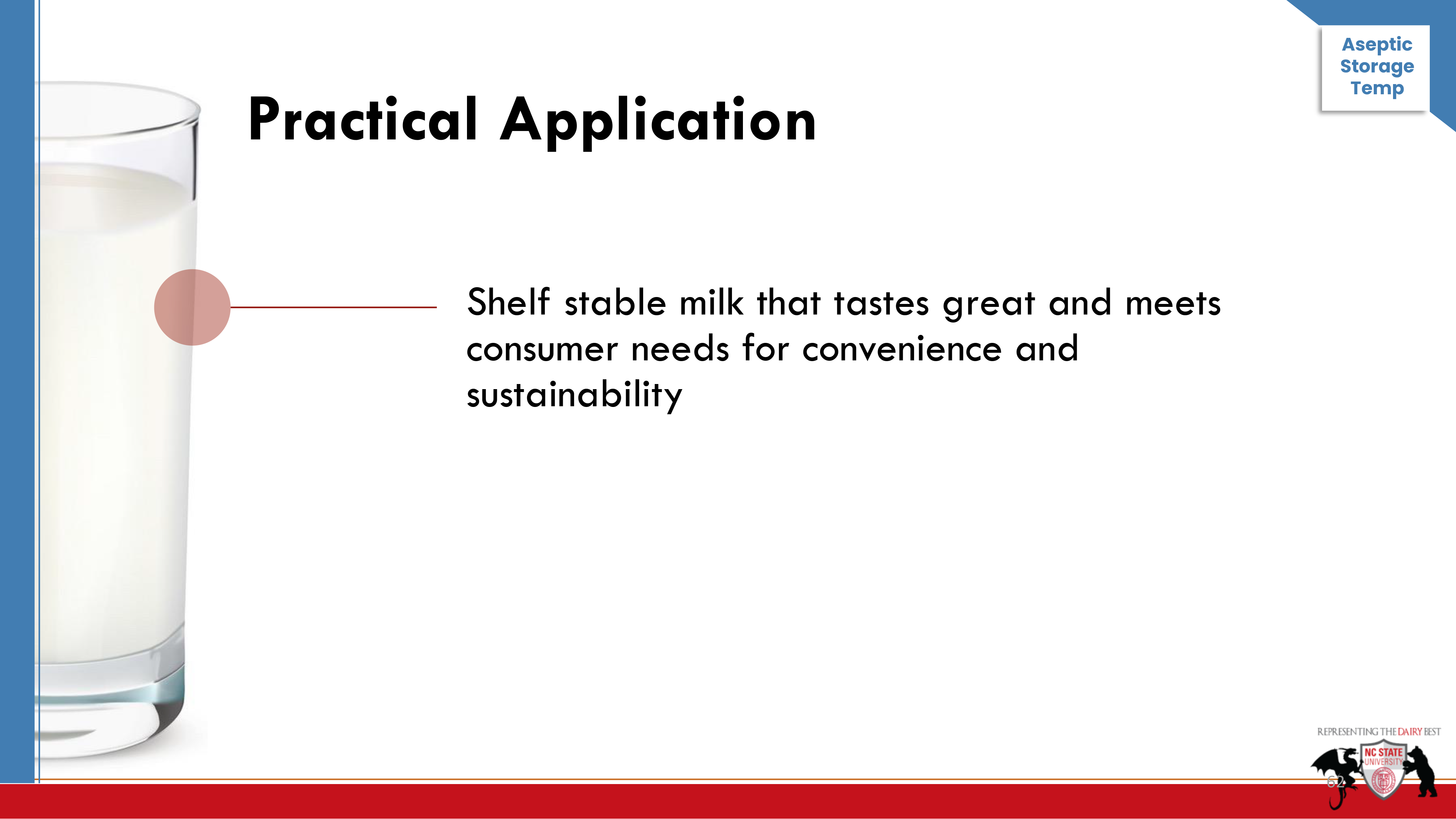
In 2023, North Carolina State researcher Dr. MaryAnne Drake —speaking at the 2023 Georgia Dairy Conference — talked about this “new milk beverage platform. We are after a shelf-stable milk that tastes great and meets our consumer’s sensory needs and our industry’s sustainability needs,” she said.

Bingo. Dairy checkoff funds for ESL are being driven by the net-zero sustainability targets. And now USDA’s federal milk order changes are proposing to lower dairy farmers’ Class I income and/or competitively favor, and in a way subsidize, ESL processors over fresh HTST fluid milk processors. Follow the money.

Dr. Michael Dykes of IDFA, at the Georgia Dairy Conference in January 2024, told dairy producers that “this is the direction we (processors) are moving… to get to some economies of scale and bring margin back to the business.” He said the planned new fluid milk processing capacity investments are largely ultra-filtered, aseptic, and ESL — 10 of the 11 new fluid plants on the IDFA map he displayed are ESL. Some will also make ultrafiltered milk and plant-based beverages too.

The linchpin to regional dairy systems and markets for milk from farms that fit USDA’s description of small businesses is the processing of fresh, conventionally pasteurized (HTST) fluid milk.

Meanwhile, dairy checkoff overseers, in cahoots with processors, are making big bets that consumers will embrace the obvious conversion underway to the consolidating shelf stable ESL milk, emboldened by the average-of pricing that has failed farmers miserably over the past five years and is now part of the proposed two-price Class I system mysteriously added to the USDA recommended decision when a two-price Class I system was never noticed as part of the hearing scope.

In the recommended decision, USDA notes that ESL currently represents 8 to 10% of total fluid milk sales but does not present the full picture of how the industry began aggressively converting to ESL since 2019 when Class I average-of was implemented. More of these accelerated investments will become operational in 2024-26.

Before we know it, the industry will have converted to ESL, and dairy farmers will once again experience disorderly marketing, depooling, and the basis risk of the mysterious average-of mover.

Dairy farmers have seen this movie before. 

In 2018, the average-of method — which changed how the Class I base was calculated — was portrayed by National Milk and the IDFA as “revenue neutral.” But at the recent national milk order hearing, testimony revealed that farmers experienced Class I revenue losses totaling nearly $1.25 billion from May 2019 through July 2024… and other impacts. 

Disorderly markets via the ‘average-of’ continue to result in losses and disrupt performance of risk management tools that fail to protect farmers against the intervals of extreme basis risk.

Proponents say the proposed rolling 36-to-13-month ESL adjuster on the second mover in USDA’s decision provides compensation to farmers for the difference between average-of and higher-of. However, that occurs gradually — over time — with a lagged interval. If tight milk supplies boost commodity prices and drive up all classes of milk, then dairy farmers’ incomes will at least partially lag years behind real-time markets!

ESL processors like Nestle and fairlife testified that the average-of method over the past five years allowed them to use Class III and IV hedges on the CME to offer flat 9- to-12-month pricing to wholesale customers and increase their sales. Nice to know the big corporations made money on that inequitable Class I pricing system.

Would a two-mover system ultimately reduce farmers’ access to milk markets in some regions and diminish the food security of those consumers? Watch the impact of a new, unregulated ESL plant now being built in Idaho!

Many legitimate questions lack answers

Milk is commonly prized as the freshest, least processed, most regionally local food at the supermarket. Will the USDA recommended decision accelerate consolidation and a reduction in fresh fluid milk availability for consumers?

Has USDA considered the purpose of the FMMO system is to promote orderly marketing and the adequate supply of fresh fluid milk? Will consumers accept the taste of the not-so-fresh ESL, or migrate faster to other beverages if fresh fluid milk is less available to them?

How will the two-mover system impact dairy farms located outside of the industry’s very specific identified growth centers? 

Will this perpetuate the wide divergence between Classes III and IV that has been an issue since 2019, further punishing dairy farmers with disorderly marketing and opportunistic depooling?

Who knows? The hearing failed to define, examine, or obtain evidence on any such questions… or any other questions that the hearing process is meant to be open to because this decision falls outside of the hearing scope!

Vilsack strikes again?

This proposal — a price break favoring ESL milk — fits the climate and export goals set forth by Ag-Secretary-then-DMI-executive-then-Secretary-again, Tom Vilsack. The pathway to rapidly consolidate the dairy industry to meet those goals is to tilt the table against fresh fluid milk. This is something Vilsack already put a big dent in by removing whole milk from schools.

It’s like one well respected veterinarian in the industry observed recently in conversation: “Someone decided: Thou shalt drink low-fat milk and like it.”

That “someone” is apparently equally convinced that the industry shall move to ESL and aseptic milk processing… while using dairy farmers’ checkoff funds to figure out how to get consumers to like that too.

-30-

Editorial: ‘Wouldn’t it be great if we could unite the country with whole milk?”

By Sherry Bunting, Farmshine July 26, 2024

‘Wouldn’t it be great if we could unite the country with whole milk?”

Those words were messaged to me by a friend and colleague a year ago, right after the Whole Milk for Healthy Kids Act had passed the House Education Committee in bipartisan fashion before the overwhelming passage on the House floor Dec. 13, 2023 and before Senate Ag Chair Debbie Stabenow (D-Mich.) blocked it the next day, Dec. 14, 2023.

This was my first thought, when former President Donald Trump announced Senator J.D. Vance of Ohio as his running mate in the Republican campaign. (Vance is an early cosponsor of S. 1957, the Senate’s whole milk bill.)

Like others, I’ve been involved in the effort to bring the choice of whole milk back to schools for more than a decade. It’s about natural, simple goodness — to simply strip away the federal ban and allow hungry, learning children to be nourished by milk they will love. 

Looking back at the years of this long fight, I realize that if it’s so painstakingly hard to get something so simple and so right accomplished for America’s children and farmers, we’ve got problems in this country.

With President Joe Biden now withdrawing from the campaign for a second term, and Vice President Kamala Harris as presumptive nominee launching her campaign this week in the Dairyland State, I’m reminded of where she stands on such things.

Harris is no friend to livestock agriculture. She was an original cosponsor of the Senate version of “The Green New Deal.” She has strong positions on climate change that may lead to harsher rules on methane emissions and water consumption in the dairy industry, while perhaps promoting methane digesters, which are not an equitable nor necessary solution. Cows are NOT the problem!

Some in the dairy industry are on record stating that this would be good for dairy because the DMI Net Zero goals fall in-line and tout some of the same objectives. But no matter how you slice and dice all the fancy offsets, insets, innovations, grants, projects and the billions of dollars, the bottom line leaves cattle holding the bag. 

Cattle are in the crosshairs of a very long game set to control land, food and people.

Harris has already indicated she would use the Dietary Guidelines to reduce red meat consumption on the basis of this erroneous climate impact claim about cattle that we are all being brainwashed to quite literally buy into.

As a presidential candidate in 2019, in a CNN town hall, she was specifically asked: “Would you support changing the Dietary Guidelines to reduce red meat specifically to reduce emissions?”

“Yes, I would,” Harris replied, with a burst of laughter.

It’s not funny.

Earlier, she had said she “enjoys a cheeseburger from time to time,” but the balance to be struck is “what government can and should do around creating incentives, and then banning certain behaviors… that we will eat in a healthy way, and that we will be educated about the effect of our eating habits on our environment. We have to do a much better job at that, and the government has to do a much better job at that.”

Read those words again: “creating incentives and then banning certain behaviors.” In plain English, that means dangling the carrot and then showing us the stick.

Harris joins Senators like Ag Chair Stabenow, as well as Bob Casey from Pennsylvania, as card-carrying members of perennial Ag Secretary Vilsack’s food and climate police.

Not only is Ag Chair Stabenow blocking the whole milk bill in her Committee, she is dragging her feet on the critical farm bill. 

As President Biden’s approval ratings fell, there were indications she would bring her side of the aisle to the table to negotiate a compromise to get the farm bill done this year.

Now that Biden has withdrawn from the race, and the pundits, media, and party organizers are breathless with excitement over Harris as presumptive nominee, it appears that the farm bill negotiations between the Committee-passed House version, the Republican Senate version and the Democrat Senate version have fallen apart.

House Ag Chair G.T. Thompson (R-Pa.) has called upon his colleagues to get to the table and do the work because a perfect storm is brewing in Rural America as net farm income is forecast to fall by 27% this year on top of the 19% decline last year. 

Meanwhile, there is political upheaval everywhere we look. Seeing Vance picked as Trump’s running mate and knowing he was among the early cosponsors of Senate Bill 1957 – The Whole Milk for Healthy Kids Act – offers some hope.

That bill — in true bipartisan spirit — was introduced in the U.S.Senate in June 2023 by Senator Dr. Roger Marshall (R-Kan.) with prime cosponsors Peter Welch (D-Vt.), Ron Johnson (R-Wis.), Kirsten Gillibrand (D-N.Y.), Chuck Grassley (R-Iowa), John Fetterman (D-Penna.), Mike Crapo and James Risch (R-Idaho), Susan Collins (R-Maine), Angus King (I-Maine), and Cindy Hyde-Smith (R-Miss.). The bill eventually earned cosponsorship from other Senators, including the influential Democrat from Minnesota, Amy Klobuchar.

Vance signed on as cosponsor on December 14, 2023, one day after the U.S. House of Representatives had passed their version of the bill by an overwhelming bipartisan majority of 330 to 99.

The Senate bill 1957 is identical to the successful House whole milk bill H.R. 1147, which was authored by Pennsylvania’s own Representative GT Thompson.

GT is a man of courage, conviction, compassion, of humility and humanity. I’ve heard him say more than once: “God gave us two ears and only one mouth for a reason.”

He is a determined man, doing the work. He included whole milk bill in the House Committee-passed farm bill. He’s standing firm on his pledge to put the farm back in the farm bill. He is concerned about the financial crisis in agriculture on the horizon, and held a hearing July 23 with witnesses from agriculture and banking giving stark warnings.

Even though whole milk choice in schools seems like a minor issue in the grand scheme of things today, it is really a linchpin. If we could just get something with broad bipartisan support accomplished, this could lead to other steps on common ground. 

Cows are not the climate problem. Cows are a solution. Cows are part of a carbon cycle, they don’t take carbon out of the ground and put new carbon into the air. 

Carbon is essential to life. It seems that those seeking full control of land, food, and people, are starting with carbon. 

As the whole milk choice remains hung up in the Senate, let’s pause to think about how ridiculous it is that we adults get to choose, but our growing children do not. For them, whole milk is banned at two meals a day, five days a week, three-quarters of the year at school. (The federal government, via USDA school lunch rules, only allows fat-free and 1% milk to be offered with the meal or even a la carte.)

Maybe the Harris ticket would like to ban food choice behaviors for adults as well.

We have Republicans and Democrats supporting whole milk choice in schools. Both parties say they care about our nation’s farmers and ranchers who feed us and are the backbone of our national security.

Let’s take that and run with it.

-30-

While fakes campaign to BE ‘milk’, dairy checkoff aims to REINVENT milk. New ‘milk beverage platform’ deemed ultrafiltered, ESL, shelf-stable

As new milk beverage platform is developed, it sounds to me like people want the many attributes fresh whole unfooled-around-with fluid milk already delivers. It checks all the boxes! Maybe children just need to be allowed to have whole milk at school and daycare where they eat most of their meals, and maybe new generations of adults need the education about why and how the dairy protein and natural nutrition in real milk beat the imposters, hands down.

By Sherry Bunting, republished from March 2023 editions of Farmshine

SAVANNAH, Ga. — Dairy checkoff-funded researchers say a new milk beverage platform is being developed to provide “the keys to the kingdom.”

Their consumer studies show people want clean labels, and at the same time they want more attributes. On the one hand, they want energy and protein. On yet anotherhand, they want indulgent creaminess. 

Consumers also want flavor, but they want less sugar. They want sweeteners, but not artificial sweeteners. They want thickness without the thickeners. They do not want gums or gels, but they are okay with fibers and starches. 

Some consumers want higher protein products. Others want everyday nutrition that is reasonably priced. 

These are some of the highlights that were shared back in January 2023 during the Georgia Dairy Conference in Savannah. There, Dr. MaryAnne Drake, professor of food science at North Carolina State University and director of the Southeast Dairy Foods Research Center talked about the fluid milk innovation work funded through DMI.

The ‘new milk beverage platform’ leverages different processing applications for flavor and functionality around dairy protein, based on global protein trends in a rapidly growing nutritional drink market.

ESL shelf-stable milk: key to kingdom?

“We are after a shelf-stable milk that tastes great and meets our consumer’s sensory needs and our industry’s sustainability needs,” said Drake about the work of the four university research centers, including North Carolina State and Cornell, that are drilling into milk’s elements to sift, sort, and test different combinations, as part of the checkoff-funded Innovation Center for U.S. Dairy, under the DMI umbrella.

Through processes like membrane technology, ultrafiltration, and aseptic packaging, the physical, nutritional and sensory elements of milk are being isolated at a molecular level to create beverages that aim to deliver this broad list of what consumers say they are looking for. 

At the same time, researchers are using interpretive surveys to understand how consumer desires actually translate into purchases, and then work with processors to build relationships with retailers to get these new beverage products into stores.

Reinventing milk

What does all of this mean? Reinventing milk by focusing on the domains in which real milk has a clear advantage for consumers among so many plant-based and now cell-based options. 

For example, said Drake: “Consumers want to know from a credible source what the immune-boosting elements are in milk, not what we have added. They tell us they want to know the science. That’s new.” 

Drake explained that the findings from their interpretive surveys represent a huge and divergent set of innovations to sort through and capitalize on as part of a new strategy.

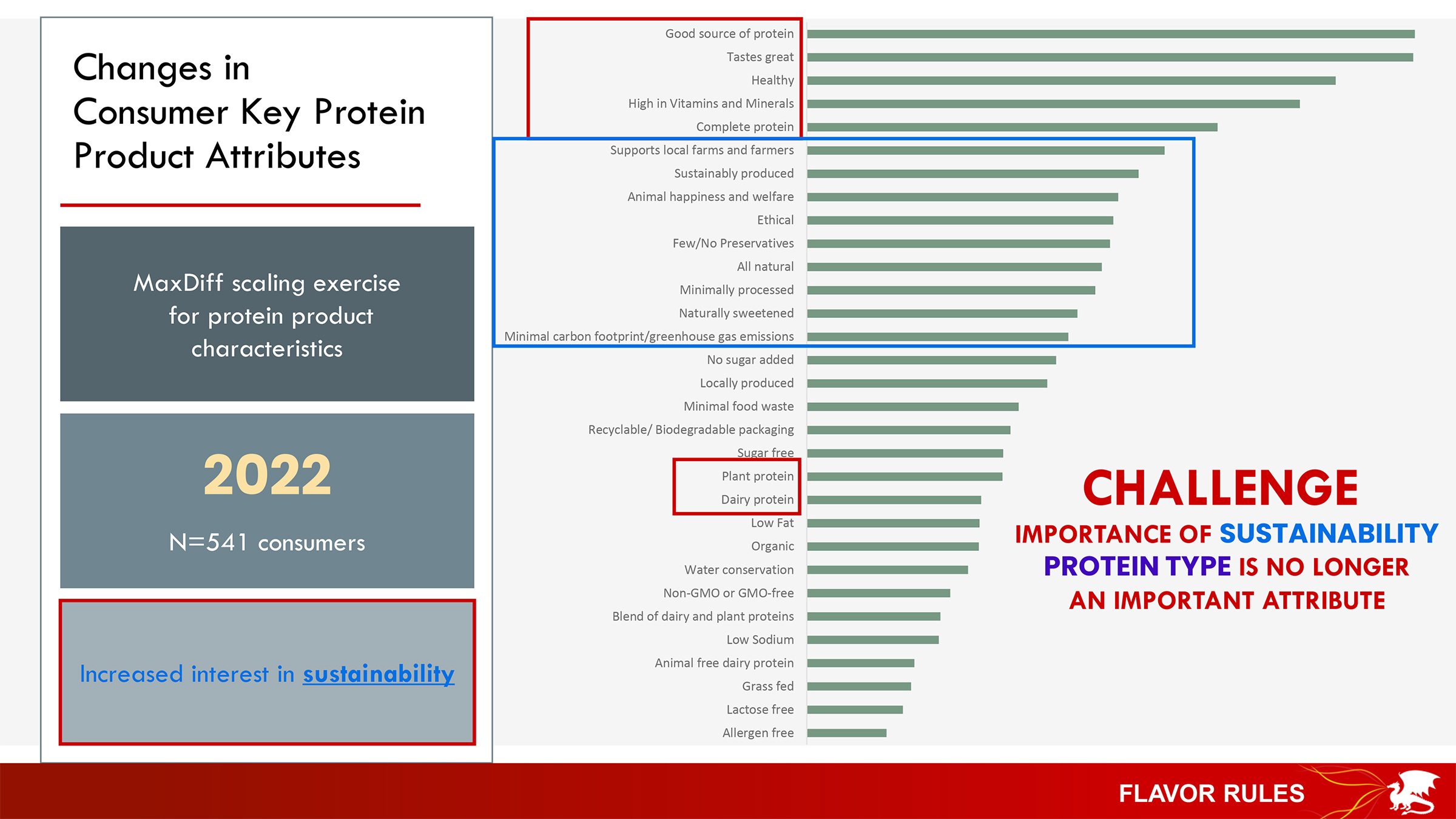
“Consumers don’t see the perceived value of animal protein vs. plant protein, so we had them graph what they want and don’t want, what they know and don’t know,” she said, adding that consumers gave the slight edge to plant protein over dairy protein. They rated the top three protein categories as plant protein, whey protein, and milk protein — in that order. (A large percentage believed whey protein is plant protein.)

As their familiarity with the differences between plant and animal protein increased, their liking of dairy protein increased, the researchers learned.

In other words, consumers do not know the science about the nutritional differences between plant and animal protein, and if they knew the differences, they would rank milk protein as number one. 

Clearly, this is a failure in consumer education and messaging. Isn’t that the domain of the dairy checkoff?

New strategy

Drake indicated that educating consumers about dairy protein as a ‘complete protein’ is one thing that can help. However, she said, the functionality around dairy protein is the innovation strategy that is being pursued by the industry.

“The number one label claim consumers are looking for in a protein beverage is ‘naturally sweetened.’ We own that, and this is where we can deliver,” Drake declared.

“We own protein functionality. We understand the process parameters that impact flavor and functionality, and we can leverage this over plant proteins on this platform,” she said.

Bottom line: The surveys and flavor panels showed that consumers want “desirable flavor, texture and appearance. They want a protein drink that is nutritious, naturally sweetened, and has a clean label with simple ingredients,” said Drake. 

“They also want education, messaging and positioning, and they are looking at sustainability,” she added.

“We are working on what does clean label mean? It’s not what we think it is,” Drake reported. “It’s costing us sales if what they actually want is not on the shelf. We have the opportunity to deliver what consumers still want. We just have to find those things they want — that we have — and be more strategic in how we deliver them.”

Food technology and engineering was a big part of the picture painted for attendees that day.

Diversify processing

Producers were urged to challenge the status quo and to not just add processing, but to diversify it. They were also reminded that the 10 southeastern states had lost eight fluid milk plants in the previous roughly two-year period (2020-22).

During his annual market outlook that year, retired co-op executive Calvin Covington hit the nail on the head with this reminder, saying “that’s done some damage. The major challenge for milk markets in the Southeast is we need more of them,” he said. “A lot of the fluid milk products that are sold in the Southeast are not processed here. If we are going to have a viable dairy industry in the Southeast, we need growing and stable markets for milk produced in the Southeast.”

Covington also differentiated the trends for domestic and export demand, showing that both lagged their respective 5-year-average annual growth in 2022, with domestic demand growing by just 0.5%, while exports grew by 3.5%.

Keeping in mind as exports are expected to top 20% of U.S. milk production on a total solids basis in the next two years and fluid milk sales as a percentage of total milk production have fallen to just under 20%, seismic shifts are already occurring in the heavily fluid milk market of the Southeast.

Transformation brings investors

Geri Berdak, CEO of Dairy Alliance, the Southeast regional checkoff organization, talked about “creating a path forward” with objectives centered on driving milk volume, increasing dairy’s reputation and transforming dairy while building checkoff support.

She said transformation is necessary to “identify high-growth opportunities and stimulate outside investment, technology and innovation.”

The need for processing is big as plants are closing in response to declining fluid milk demand, leaving the the need for more diverse processing assets.

Exports drive innovation

“The biggest thing exports do is to drive value and innovation,” said Patti Smith, a food technology specialist and CEO of DairyAmerica, now wholly-owned by California Dairies Inc. (CDI) milk cooperative. Earlier in her career, Smith held a leadership position with Fonterra and has served at board and officer levels with IDFA and USDEC.

“Exports are a lot more than powder today. Our biggest item is still excess powder,” she said. “But we also export many other products — even UHT (ultra high temperature) and ESL (extended shelf life) fluid milk and cream.”

What Smith sees into the future are “opportunities for the right products and the right product configurations. We have the opportunities to capitalize on them and the technologies to grow them.”

Smith said the biggest benefit of exports to-date is to have a home for milk that grows the dairy industry without relying on core domestic demand for that growth, but that U.S. dairy processing infrastructure is not quite reflective of the new export era.

“We need to make our industry world renown, through a strategic plan that the whole industry will work on together, with digitized supply chains and infrastructure for growth that is reliable and can be consistently demonstrated, and that includes shipping,” said Smith, citing the Innovation Center for U.S. Dairy as the nexus, where the industry’s “strategic plan” for global trade is being built.

Developing ‘new milk beverage platform’

Emanating from the DMI-founded and checkoff-funded Innovation Center for U.S. Dairy is the marketing and promotion arm of new product alliances and the National Dairy Research arm through several universities looking to essentially create a milk beverage platform by drilling into milk’s elements, sifting, sorting and testing different combinations.

Dr. Drake said the new milk beverage platform holds the “keys to the kingdom” as global protein trends were valued at $38.5 million in 2020 and projected to grow. Meanwhile, the nutritional drink markets are growing steadily, with 42% of consumers eating healthy as a higher priority since Covid, and the number of conversations about protein (95% positive) steadily flowing across social media platforms. 

Those keys, she said, are membrane technology, ultrafiltration, aseptic packaging and research exploring all of the physical, nutritional and sensory elements of milk at the molecular level to bottle up what consumers say they are looking for, while also gauging through interpretive surveys how this translates to purchases, and then working with processors to build relationships with retailers to get new products into stores.

Drake shared details about the roadmap to play to dairy’s strengths through nutrition, education, capitalizing on calming and immune benefits and using dairy protein functionality to limit added ingredients in beverages to satisfy the clean label trend.

She talked about how elements like fat, protein and lactose at different levels impact milk’s flavor and appearance: “We want to determine the impact of ultrafiltration levels for different concentrations of fat and protein for different sensory or physical experiences.”

She talked about ultrafiltration in conjunction with aseptic packaging for shelf-stable storage using an elaborate diagram of processes.

Bottomline, she said: “The chemistry of these (aseptic) milks is different.”

She described consumer flavor panels where shelf-stable and fresh fluid milk were served cold and compared. The flavor panels evaluated two different storage temperatures for the shelf-stable milk.

The North Carolina researchers worked with their Northeast Dairy Foods Research counterpart at Cornell and with Byrne Dairy, running grad students from North Carolina to Syracuse, New York when batches were available for study. (The Southeast and Northeast as well as Midwest and California Dairy Foods Research Centers all receive funding from checkoff and other sources.)

‘Training consumers’

“Consumer panels still liked the HTST (fresh fluid) milk best overall, but in 14-day and 6-month follow up, we found we can train them,” said Drake, reporting the two best storage temperature options for aseptic milk saw longer-term increase in acceptance.

HTST is the acronym for High Temperature Short Time pasteurization that is basically commodity fresh fluid milk vs. ‘value added’ UHT (ultra high temperature) and ESL (extended shelf life) as well as aseptically-packaged, which is milk processed for longer shelf life and then bottled in a special sterile process and package to last months without refrigeration, but will taste best served cold.

Schools are the gateway

“For 25 years, consumers have not liked aseptic milk,” said Drake, “but we are changing that. Consumers may not like it or want it, yet, but it is great for schools.”

She reported the practical applications to come up with “great tasting school lunch milk that contains no lactose (no natural sugar).” Another practical application is to  “determine the impact of storage temperature of 1% aseptic milk on physical and sensory properties.”

This partially checkoff-funded research is also working on “changing the chocolate milk formula to have zero sugar,” she said. “When we think about school milk, the question is how to get the sugar out of it. We want a chocolate milk that tastes great and new government standards on low- or no-added-sugars. Right now, chocolate milk has 8.5 grams of added sugar and 12 grams of natural sugar (lactose).”

In addition to ultrafiltration removing natural sugar, or lactose, they are exploring “non-nutritive” sweeteners like monk fruit and stevia. Additionally, they are looking at “lactose-hydrolized” to boost the flavor profile at much lower levels of sugars or other sweetener.

Whether talking about consumers or children, parents, and schools, the milk beverage platform is tricky “They want to know from a credible source what the immune-boosting elements are in milk, not what we have added. They tell us they want to know the science. That’s new.

“We have a huge and divergent set of innovations to sort through,” said Drake. 

-30-

New Year, New Hope: 2024 will be year of reckoning, Part One

From whole milk in schools to farm bill to climate-warped food transformation, scientists and lawmakers are getting busy, farmers need to get busy too


In the global anti-animal assault, real science must lock horns with political science and defend American farmers — the climate superheroes that form the basis of our national security. Photo by Sherry Bunting

By Sherry Bunting, Farmshine, Jan. 5, 2024

EAST EARL, Pa. – It’s a New Year, and we have new hope on several fronts that are all linked together, in my analysis.

Top 2023 headlines for dairy farmers revolved around dairy markets that underperformed, successes and challenges in the quest to get Whole Milk choice back in schools, a plethora of draft USDA and FDA proposals that dilute real dairy, farm losses and governmental hearings on federal milk pricing, negotiations and extensions for the farm bill, and acceleration of ‘climate-smart’ positives and negatives buckling down for business in an area where political science is trumping real science on the rollercoaster ride ahead.

All of these headlines are inextricably linked. There is a global anti-animal assault underway, but people are wising up to the not-so-hidden agenda that is grounded in climate transitions and food transformation that give more power and control over food to global corporations while diminishing what little power farmers have in Rural America where our national security is at risk.

Real science locks horns with political science

As we head into 2024, a bit of good news is emerging as scientists are mobilizing to defend the nutritional, environmental and social honor of livestock — especially the much-maligned cow.

After an international summit of scientists in October 2022, work has been underway to bring together an international pact.

Dubbed the Dublin Declaration of Scientists, experts around the world have authored and are getting colleagues to sign-on to this document that calls for governments, companies, and NGOs to stop ignoring important scientific arguments when pushing their anti-animal agendas in the name of climate, transformation, and the Global Methane Pledge.

To date, nearly 1200 scientists have signed the Dublin Declaration, aimed foremost at the Irish government’s proposal to slaughter cows to meet methane targets. The Dublin Declaration represents the work of scientists across the globe for a global audience beyond Ireland.

Here in the U.S., we are sitting on the cusp of Scope 3 emissions targets of global milk buyers that have been hastily formulated based on the science of greed, not the science of greenhouse gas emissions. It’s time for the dairy organizations and land grant universities that represent, serve and rely on farmers to drink up on their milk and strengthen their spines.

Farmshine has brought readers the news about what has been happening in Europe, such as in the Netherlands and Ireland, regarding proposed farm seizures and cow slaughter, and the response of farmers there has been to challenge the political establishment.

The U.S. is not far behind. At COP28 recently, American cattle industries were criticized, and even Congressional Ag Leaders are miffed by what they heard. 

Still, some of our dairy organizations brag about being at COP26, 27, 28 and taking part. Even the dairy farmers’ own checkoff program is caught flat-footed. They’ve already caved to the Danone’s, the Nestles, the Unilevers, and such.

In fact, DMI’s yearend review touted its increase in U.S. Dairy Stewardship Commitment adopters to 39 companies representing 75% of the milk supply with membership in the Dairy Sustainability Alliance standing at 200 member companies and organizations. But what are they doing with those relationships to STAND UP ON SCIENCE FOR THE COWS?

The Stewardship Commitment includes DMI’s Net-Zero Initiative, where the cyclical short-lived nature of methane and the role of cattle in the carbon cycle is still not appropriately accounted for and is one of the points made in the Dublin Declaration of Scientists.

In the U.S. dairy industry, the trend on GHG revolves around DMI’s Innovation Center for U.S. Dairy, which placates large multinational corporations in the development of voluntary programs, telling farmers they are in control with their organizations as a sort of gatekeeper. That is, until those programs become mandatorily enforced by those milk buying corporations, while the science on methane and the cow’s role in the carbon cycle as well as U.S. data vs. global data continue to be ignored when they are sitting in the midst of UN Food Transformation Summits, COP26, 27 and 28, and the WEF at Davos.

In fact, during the annual meeting webinar of American Dairy Coalition in December, U.S. House Ag Chairman G.T. Thompson of Pennsylvania was asked his thoughts on some of the statements that came out of COP28 recently criticizing American dairy and livestock consumption.

“My first response was to find it laughable because it really shows you the difference between political science and real science,” he said. “It’s sad when people are so illiterate about the industry that provides food and fiber that they don’t understand how livestock contribute to carbon sequestration.

“We have a real battle,” Thompson said, adding that those putting out such statements criticizing American livestock “don’t even know which end the methane comes from. The world needs more U.S. farmers and less UN if we want a better world. The facts and the science are on our side. Let’s not let the other side control the narrative.”

Bottomline for Thompson is this: “The American farmers are climate heroes sequestering 10% more carbon that we emit. No one does it better anywhere in the world. Let’s be speaking up and speaking out. We can push it back with the facts and the science. I would encourage each of us to do that and become effective just telling that story,”

In the same ADC webinar in December, Trey Forsythe, professional staff for Senate Ag Committee Ranking Member John Boozman of Arkansas agreed.

“The language coming out of COP28, a likely European-led effort, shows what we are up against from people with no background on the role of dairy and livestock. We have to keep beating that drum on the efficiency of U.S. dairy and livestock farms,” he said.

In the same accord, scientists are getting busy, and we all need to get more involved.

In a dynamic white paper released last year, scientists made 10 critical arguments on this topic of livestock greenhouse gas emissions (GHG). Here’s what the scientists behind the Dublin Declaration are saying and why it’s so important for our land grant university scientists to sign on.

“Livestock agriculture creates GHG emissions, which is a serious challenge for future food systems. However, arguing that climate change mitigation requires a radical dietary transition to either veganism or vegetarianism, or the restriction of meat and dairy consumption to very small amounts is overly simplistic and possibly counterproductive,” the scientists wrote in a recent description of the Dublin Declaration.

“Such reasoning overlooks that dietary change has only a modest impact on fossil fuel-intensive lifestyle budgets, that enteric methane is part of a natural carbon cycle and has different global warming kinetics than CO2, that the rewilding of agricultural land would generate its own emissions and that afforestation comes with many limitations, that global data should not be generalized to evaluate local contexts, that there are still ample opportunities to improve livestock efficiency, that livestock not only emit but also sequester carbon, and that foods should be compared based on nutritional value. Such calls for nuance are often ignored by those arguing for a shift to plant-based diets,” they continued, listing these 10 Arguments with scientific explanations for each one.

Here is how the growing number of international scientists, including Dr. Frank Mitloehner of UC-Davis, situate the problem:

Argument 1 – Global data should not be used to evaluate local contexts

Argument 2 – Further mitigation is possible and ongoing

Argument 3 – Only a relatively small gain can be obtained from restricting animal source foods

Argument 4 – Dietary focus distracts from more impactful interventions

Argument 5 – Nutritional quality should not be overlooked when comparing foods

Argument 6 – Co-product benefits of livestock agriculture should be accounted for

Argument 7 – Livestock farming also sequesters carbon, partially offsetting its emissions

Argument 8 – Rewilding comes with its own climate impact

Argument 9 – Large-scale afforestation of grasslands is not a panacea

Argument 10 – Methane should be evaluated differently than CO2  

These arguments take nothing away from the technologies that are being developed to help dairy and livestock producers further reduce emissions and sequester carbon. Technology has a role in amplifying the cow’s position as a solution, not to cure a problem she does not have! And farmers deserve to get credit for what they’ve already achieved.

Farm, food, and national security interdependent

The 2018 Farm Bill was extended for another year at the end of 2023, but the urgency to complete a new one continues as a big priority for House Ag Committee Chairman G.T. Thompson. In the recent ADC annual meeting webinar, he said: “You don’t want us writing farm bill legislation — or any legislation — just listening to voices inside the Beltway in Washington. It would not work out well.”

He thanked and encouraged farmers for being part of the process, saying there’s more to do.

“We’re building this farm bill listening to your voices, the voices of those who produce, those who process, and those who consume — all around the country,” said Thompson, noting nearly 40 states were visited for nearly 80 listening sessions over 2.5 years on the House side.

“This farm bill is about farm security. It’s about food security. And it’s about national security – all three of those are interdependent,” he added.

The extension and funding of the current farm bill for another year — while Congress works on the new one — means programs like Dairy Margin Coverage will continue for 2024, but the enrollment announcement has not yet been made by USDA.

In past years, the enrollment began in October of the previous year and ended at the end of January for that program year. When DMC first replaced the precursor MPP, enrollment was announced late and continued into March of the first program year (2019). At that time, farms could sign up for five years through 2023 or do it annually.

In 2023, DMC paid out a total of $1.27 billion in DMC payments for the first 10 months of the year.

Chairman Thompson noted that effective farm policy is the key, and the extension means no disruptions, he said: “We attached good data for dairy with policy changes, including for DMC, and some positive changes for the nutrition title within the debt ceiling discussion.”

On DMC, the supplemental production history was added in the legislation extending the current farm bill that was signed by the President at the end of November.

“It provides our dairy farmers the certainty that their additional production will be covered moving forward,” Thompson confirmed, adding that they are looking at moving up the tier one cap to be more reflective of the industry.

The farm bill is also being crafted to use no new tax dollars by reworking priorities, looking at the Inflation Reduction Act (IRA) funds, administrative funds and shoring up funds from the Commodity Credit Corporation (CCC) priorities to secure the farm bill baseline for the future.

The $20 billion in IRA funds being thrown about for conservation and environmental programs as well as ‘climate-smart’ grants is already down to $15 billion without spending a dime because of how it is designed to phase down and go away in 2031 and the fact that USDA is believed to not have the authority to keep these funds outside of the farm bill, Thompson explained. Negotiations are considering bringing this into the farm bill baseline so that it is there – and used for farmers – now and in the future.

“(The IRA) is not a victory if agriculture does not get the full benefit of these dollars. We can make that happen in this farm bill,” said Thompson. “Reinvesting the IRA dollars into the farm bill baseline will allow us to perpetually fund conservation in the future.”

Conservation programs are historically oversubscribed and underfunded.

Thompson expects crafting and advancing of the next farm bill to continue in earnest. He hopes to have a chairman’s mark of the bill released by the end of January and have it before the House by the end of February. Much of this timeline depends on House leadership, and the Senate has its own time frame, said Thompson.

He urged dairy farmers to spread the word to their members of Congress that farm security and food security are national security.

He also noted that the nutrition title had some of its toughest elements ironed out during the continuing resolution process in which the farm bill was extended. 

“I’ve managed this in such a way that we’ve accomplished already the hard things in that title,” said Thompson.

Deploying dairy farmers on legislative efforts

“Passage of the Whole Milk for Healthy Kids Act is good for kids good for the dairy industry, and good for the economy. It simply restores the option, the choice, of whole milk and flavored whole milk, and holds harmless our hardworking school cafeteria folks by making sure the milkfat does not count toward the meal recipe limitations,” Thompson reported.

He wanted well over 300 votes for H.R. 1147 in the House to send a strong message to the Senate. On Dec. 13, the House gave him 330 ‘yes’ votes for Whole Milk for Healthy Kids.

“I would like to deploy you now on the Senate. The bill in the Senate (S. 1957) has the same language and it is tri-partisan with Republican Senator Roger Marshall, a medical doctor, Democrat Peter Welch and Independent Angus King as original sponsors,” said Thompson to dairy farmers gathered virtually for the ADC annual meeting webinar.

“There are other co-sponsors as well (12), and from my state of Pennsylvania, Senator John Fetterman is a cosponsor. Our other Senator (Bob Casey, Jr.) has not cosponsored and seems to be in opposition to it,” he said. “We need you to weigh in with your senators that this is about nutrition and health of our kids and the health of our rural communities. You are in a good position to tell the story of what happened in 2010 when fat was taken out of the milk in schools.”

Thompson noted that, “As you are doing that, you are developing relationships that will help us in the farm bill also. On the farm bill, talk about return on investment, the number of jobs and economic activity and taxes from agribusinesses, about the food security and national security and environmental benefits, science, technology and innovation in agriculture,” he said. 

“Less than 1.75% of what we spend nationally is the farm bill. That’s a big return on investment, again, for food security and national security.”

Questioned about the milk labeling bill of Pennsylvania Congressman John Joyce, a doctor, Thompson said it is a strong bill. He confessed his dismay with USDA caving on this question and called FDA “a problem child” on milk labeling. 

“This bill is not self-serving for dairy. This is about consumers having the information to make proper decisions on their nutrition,” he said.

To be continued

Under the DMI umbrella: Fonterra CEO to chair Global Dairy Platform, Danone sustainability strategist to join GDP operating committee

Global Dairy Platform launched Pathways to Dairy Net Zero Initiative in September 2021, one year after DMI’s Innovation Center for U.S. Dairy launched the Dairy Net Zero Initiative (NZI) in October 2020 (A year prior to that in 2019, the current and former Ag Secretary Tom Vilsack testified to the Senate Ag Committee as a dairy-checkoff executive, serving then as president of the U.S. Dairy Export Council, and he foretold the nuts and bolts of the not-yet launched Dairy Net Zero Initiative and asked Congress to fund pilot farms. GDP has governance in and manages the Dairy Sustainability Framework that underpins what U.S. farmers, and their cows, will have to live up to — including how livestock methane is calculated, mitigated and monitored, which may be based on inaccurate math and science in terms of CO2 equivalents.

By Sherry Bunting, Farmshine, Friday, May 5, 2023

ROSEMONT, Ill. — Fonterra CEO Miles Hurrell has been named the new board chairman of the Global Dairy Platform (GDP), a non-profit industry association representing the international dairy sector. A portion of its revenue is from membership dues, but also from the 7.5-cents per hundredweight equivalent checkoff on U.S. dairy imports as well as grants for research and program services from Dairy Management Inc (DMI).

Fonterra’s Hurrell will replace Hein Schumacher, who is leaving his position as CEO of Royal FrieslandCampina to become CEO of Unilever.

In the April 26 news release, Hurrell cites Schumacher’s leadership in “accelerating climate action via the ground-breaking Pathways to Dairy Net Zero Initiative.” 

Announced in the same release is the appointment to the GDP operational committee of French multinational Danone’s senior vice president of sustainability strategy.

According to its 501(c)6 non-profit tax filings, “GDP is a pre-competitive collaboration,” and its governance groups — the board and the operational committee — “manage a ‘Dairy Sustainability Framework’ to unify the approach being taken by dairy organizations to the broad challenges of sustainability from environmental, social, and economic perspectives.”

The Dairy Sustainability Framework is part of the Dairy Sustainability Alliance of the Innovation Center for U.S. Dairy, another non-profit founded and funded by dairy checkoff organizations under the DMI umbrella. The Innovation Center sets U.S. Dairy Stewardship Commitments that are implemented through the FARM program and reviewed every three to five years to show U.S. dairy is, according to its website, “moving the needle toward achieving the Sustainable Development Goals (SDGs) of the United Nations.”

DMI, its Innovation Center, Dairy Sustainability Alliance, Dairy Sustainability Framework, and U.S. Dairy Stewardship Commitments are all located at Suite 900, 10255 W Higgins Road, Rosemont, Illinois, and the Global Dairy Platform (GDP) address of record is Suite 820 at the same street address.

Along with New Zealand’s Fonterra, CEOs from these top-15 dairy multinationals serve on the GDP Board: Dairy Farmers of America (DFA), headquartered in Kansas; Arla Foods, headquartered in Denmark; Leprino, headquartered in Colorado; China’s Mengniu Dairy Company; Moringa Milk Industry, headquartered in Japan; Royal FrieslandCampina, headquartered in the Netherlands, and Saputo, headquartered in Canada.

Along with the board of directors, the GDP operational committee provides governance and includes sustainability executives for Arla, DFA, Fonterra, Land O’Lakes, Meiji Holdings and FrieslandCampina.

In a separate April 2023 bulletin, GDP announced the May 1, 2023 retirement of Dr. Greg Miller from his position as research lead for GDP since its inception. Known as ‘Dr. Dairy’, Miller has served as the chief science officer for the National Dairy Council for nearly 32 years and as executive vice president of research, regulatory and scientific affairs for DMI. Miller will continue as a member of the UN Food and Agriculture Organization Scientific Advisory Committee.

Key paid staff for GDP is Donald Moore, the executive director since 2010. Before that, he was a Fonterra senior executive in business development and ingredients marketing for 20 years.

Moore also serves as chairman of the governance group for the Dairy Sustainability Framework since its inception in 2013.

With Fonterra’s CEO as the new board chairman of the GDP, and with a former Fonterra senior executive serving 13 years to-date as the executive director of the GDP and the chair of the governance group for the Dairy Sustainability Framework, it’s worth noting that Fonterra announced six months ago its new start-up company for alternative dairy ingredients. According to the October 2022 press release, Fonterra has partnered with Royal DSM, a Dutch company, in creating this start-up “to accelerate the development and commercialization of (animal-free) fermentation-derived proteins with dairy-like properties.” 

With Danone’s senior vice president of sustainability strategy now appointed to the GDP operational committee, it’s worth noting that in October 2022, Danone announced it would use artificial intelligence to reformulate 70% of its plant-based fake-milk products. This followed the 2021 earnings call where Danone executives outlined new fake-milk and dairy product launches with plans to use “new dairy-like technology” to “win over” the 60% of U.S. consumers not in the plant-based category because of taste and texture. The Danone executives told shareholders their Renew strategy identifies the U.S. as a “key plant-based market.” In January 2023, Danone announced it is eyeing sale of Horizon Organic, saying it falls outside of their key areas of focus.

Global Dairy Platform (GDP) was formed in 2006 as an alliance, according to its website. Its tax filings confirm incorporation as a 501(c)6 non-profit in 2012 and its address of record at Suite 820 at 10255 W Higgins Road, Rosemont, IL 60018.

According to the GDP’s most recent IRS 990s that are publicly available for 2017 through 2019, the years when former DFA CEO Rick Smith was its chairman, GDP had revenues between $3.7 and $4.2 million annually. This increased to $4.7 million in 2020, according to an available summary of the IRS 990 for that year.

The tax returns show approximately $1 million in GDP revenue came from membership dues and approximately $2.7 million annually from granted program services and research funds (checkoff). 

The GDP revenue also included approximately $500,000 in ‘import assessments.’ The 7.5-cent import checkoff, which was implemented in 2011 amid formation of the Innovation Center and its resulting alliances and frameworks.

GDP’s executive director Donald Moore is paid a salary package of nearly $600,000 annually. The top three independent contractors in 2018-19 included DMI receiving over $800,000 annually for program services and administration; Massey University in New Zealand $451,000; Emerging Ag in Calgary, Alberta, Canada $600,000 (for UN access), and Lindsey Consulting, in the UK nearly $300,000 with Brian Lindsey serving as the GDP’s sustainability lead.

According to GDP, its membership consists of more than 95 corporations, companies, associations, scientific bodies, and other partners, with operations in more than 150 countries, collectively accounting for approximately one-third of global milk supplies.

DMI manages the national nickel from the 15 cents per hundredweight checkoff deducted from U.S. milk checks for research, education, and promotion. DMI also manages the unified marketing plan many state and regional checkoff organizations contribute toward, and DMI manages the 7.5 cents per hundredweight equivalent import checkoff, handed off to the GDP.

DMI states in its 501(c)6 non-profit tax filing that it is “investing dairy producer checkoff funds in strategic, coordinated marketing programs designed to increase consumption of U.S. dairy products domestically and internationally.”

The Innovation Center for U.S. Dairy was initiated in 2008, but according to its tax filings, was incorporated as a 501(c)6 non-profit in 2012 under the name: The Dairy Center for Strategic Innovation and Collaboration Inc., doing business as Innovation Center for U.S. Dairy.

In 2017, DMI trademarked the names ‘Innovation Center for U.S. Dairy’ and ‘Dairy Sustainability Alliance.’

Leprino CEO Mike Durkin was elected chairman of the board of the Innovation Center in January 2023.

-30-

AUTHOR’S NOTE: Why do these connections matter? Because the UN Food and Agriculture Organization is getting ready to make a decision about how livestock methane is calculated using GWP100, a 30 year old measure that the Intergovernmental Panel on Climate Change even agreed overblows the problem by 3 to 4 times, or GWP*, which includes not just the sources but also the natural sinks for methane as a short-lived greenhouse gas. Dr. Frank Mitloehner has written about this, and Farmshine readers have read my many articles about the differences between the calculations and what they mean for our cows in the future. The Global Dairy Platform put out a bulletin a few months ago and pinned it to their website exploring the differences in these calculations, saying that “GWP* is not appropriate as a benchmarking tool at less than a global level.” This is concerning because it means that global dairy multinationals have oversight through dairy checkoff non-profits and alliances into formulating and deciding what U.S. dairy farmers — and their cows — will be expected to live up to, even when the science behind the decision is highly debatable. As we now know, even scientists are becoming frustrated. It’s important to know that multinational companies investing in competing animal-free fermentation-produced DNA-altered dairy-like ingredients are in leadership positions in these collaborations.

Are we moving toward cow islands and milk deserts?

Opinion/Analysis

By Sherry Bunting, Farmshine (combined 2 part series Aug. 12 and 19, 2022)

In Class I utilization markets, the landscape is rapidly shifting, and we should pay attention, lest we end up with ‘cow islands’ and ‘milk deserts.’

Farmshine readers may recall in November 2019, I wrote in the Market Moos column about comments made Nov. 5 by Randy Mooney, chairman of both the DFA and NMPF boards during the annual convention in New Orleans of National Milk Producers Federation together with the two checkoff boards — National Dairy Board and United Dairy Industry Association. 

Mooney gave a glimpse of the future in his speech that was podcast. (Listen here at 13:37 minutes). He said he had been “looking at a map,” seeing “plants on top of plants,” and he urged the dairy industry to “collectively consolidate,” to target limited resources “toward those plants that are capable of making the new and innovative products.”

One week later, Dean Foods (Southern Foods Group LLC) filed for bankruptcy as talks between Dean and DFA about a DFA purchase were already underway. It was the first domino right on the heels of Mooney’s comments, followed by Borden filing Chapter 11 two months later in January, and followed by three-years of fresh fluid milk plant closings and changes in ownership against the backdrop of declining fluid milk sales and an influx of new dairy-based beverage innovations, ultrafiltered and shelf-stable milk, as well as lookalike alternatives and blends.

The map today looks a lot different from the one described by Mooney in November 2019 when he urged the industry to “collectively consolidate.” The simultaneous investments in extended shelf-life (ESL) and aseptic packaging are also a sign of the direction of ‘innovation’ Mooney may have been referring to.

Two months prior to Mooney issuing that challenge, I was covering a September 2019 industry meeting in Harrisburg, Pennsylvania, where dairy checkoff presenters made it clear that the emphasis of the future is on launching innovative new beverages and dairy-‘based’ products.

Here is an excerpt from my opinion/analysis of the discussion at that time:

“While we are told that consumers are ditching the gallon jug (although it is still by far the largest sector of sales), and we are told consumers are looking for these new products; at the same time, we are also told that it is the dairy checkoff’s innovation and revitalization strategy to ‘work with industry partners to move consumers away from the habit of reaching for the jug and toward looking for these new and innovative products’ that checkoff dollars are launching.”

These strategy revelations foreshadowed where the fluid milk markets appear to be heading today, and this is also obvious from recent Farmshine articles showing the shifting landscape in cow, farm, and milk production numbers.

When viewing the picture of the map that is emerging, big questions come to mind:

Are today’s Class I milk markets under threat of becoming ‘milk deserts’ as the dairy industry consolidates into ‘cow islands’?

Would dairy farmers benefit from less regulation of Class I pricing in the future so producers outside of the “collectively consolidating” major-player-complex are freer to seek strategies and alliances of their own, to carve out market spaces with consumers desiring and rediscovering fresh and local, to put their checkoff dollars toward promotion that helps their farms remain viable and keeps their regions from becoming milk deserts? 

What role is the industry’s Net Zero Initiative playing behind the scenes, the monitoring, scoring, tracking of carbon, the way energy intensity may be viewed for transportation and refrigeration and other factors in Scope 1, 2 and 3 ESG (Environment, Social, Governance) scores? 

Shelf-stable milk may provide solutions for some emerging (or are they self-inflicted?) milk access and distribution dilemmas, and maybe one view of ESG scoring favors it? But ultimately it also means milk can come from cow islands to milk deserts — from anywhere, to anywhere.

It also becomes clearer why the whole milk bill is having so much trouble moving forward. The industry machine gives lip-service support to the notion of whole milk in schools, but the reality is, the industry is chasing other lanes on this highway to ‘improve’ the school milk ‘experience’ and ensure milk ‘access’ through innovations that at the same time pave the road from the ‘cow islands’ to the ‘milk deserts.’ 

It is now clearer — to me — why the Class I mover formula is such a hotly debated topic. 

If major industry-driving consolidators are looking to transition away from turning over cow to consumer fresh, local/regional milk supplies by turning toward beverage stockpiles that can sit in a warehouse ‘Coca-Cola-style’ at ambient temperatures for six to 12 months, it’s no wonder the consolidators want the ‘higher of’ formula to stay buried. What a subversion that was in the 2018 Farm Bill.

In fact, if the industry is pursuing a transition from fresh, fluid milk to a more emphasis on shelf-stable aseptic milk, such a transition would, in effect, turn the federal milk marketing orders’ purpose and structure — that is tied to Class I fresh fluid milk — completely upside down.

Landscape change has been in motion for years, but let’s look at the past 6 years — Dean had already closed multiple plants and cut producers in the face of Walmart opening it’s own milk bottling plant in Spring 2018. The Class I ‘mover’ formula for pricing fluid milk — the only milk class required to participate in Federal Milk Marketing Orders — was changed in the 2018 Farm Bill that went into effect Sept. 2018. The new Class I mover formula was implemented by USDA in May 2019, resulting in net losses to dairy farmers on their payments for Class I of well over $750 million across 43 months since then.

(Side note: Under the formula change, $436 million of Class I value stayed in processor pockets from May 2019 through October 2019, alone. DFA purchased 44 Dean Foods plants in May 2019 and became by far the largest Class I processor at that time.)

These and other landscape changes were already in motion when Mooney spoke on Nov. 5, 2019 at the convention of NMPF, NDB and UDIA describing the milk map and seeing plants on top of plants and issuing the challenge to “collectively consolidate” to target resources to those plants that can make the innovative new products. 

One week later, Nov. 12, 2019, Dean Foods filed for bankruptcy protection to reorganize and sell assets (mainly to DFA).

Since 2019, this and other major changes have occurred as consolidation of Class I milk markets tightens substantially around high population swaths, leaving in wake the new concerns about milk access that spur the movement toward ESL and aseptic milk. A chain reaction.

What does Mooney’s map look like today after his 2019 call for “collective consolidation” and the targeting of investments to plants that can make the innovative products, the plants that DMI fluid milk revitalization head Paul Ziemnisky told farmers in a 2021 conference call were going to need to be “dual-purpose” — taking in all sorts of ingredients, making all sorts of beverages and products, blending, ultrafiltering, and, we see it now, aseptically packaging?

In addition to the base of Class I processing it already owned a decade ago, the string of DFA mergers has been massive. The most recent acquisitions, along with exits by competitors, essentially funnel even more of the market around key population centers to DFA with its collective consolidation strategy and investments in ESL and aseptic packaging.

The South —

The 14 Southeast states (Maryland to Florida and west to Arkansas) have 29% of the U.S. population. If you include Texas and Missouri crossover milk flows, we are talking about 37% of the U.S. population. 

The major players in the greater Southeast fluid milk market include DFA enlarged by its Dean purchases, Kroger supplied by Select and DFA, Prairie Farms with its own plants, DFA and Prairie Farms with joint ownership of Hiland Dairy plants, Publix supermarkets with its own plants, an uncertain future for four remaining Borden plants in the region as Borden has exited even the retail market in some of these states, and a handful of other fluid milk processors. 

In Texas, alone, DFA now owns or jointly owns a huge swath of the fluid milk processing plants, having purchased all Dean assets in the Lone Star State in the May 2020 bankruptcy sale and now positioned to gain joint ownership of all Borden Texas holdings through the announced sale to Hiland Dairy

The Midwest — 

Just looking at the greater Chicago, Milwaukee, Green Bay metropolis, the population totals are a lake-clustered 6% of U.S. population. Given the recent closure by Borden of the former Dean plants in Chemung, Illinois and De Pere, Wisconsin, this market is in flux with DFA owning various supply plants including a former Dean plant in Illinois and one in Iowa with Prairie Farms having purchased several of the Dean plants serving the region.

In the Mideast, there is Coca Cola with fairlife, Walmart and Kroger among the supermarkets with their own processing, and DFA owning two former Dean plants in Ohio, two in Indiana, two in Michigan, and a handful of other bottlers. 

In the West: DFA owns a former Dean plant in New Mexico, two in Colorado, two in Montana, one in Idaho, two in Utah, one in Nevada and one in California, as well as other plants, of course. 

The Northeast —

This brings us to the Northeast from Pennsylvania to Maine, where 18% of the U.S. population lives, and where consolidation of Class I markets, especially around the major Boston-NYC-Philadelphia metropolis have consolidated rapidly against the backdrop of declining fluid milk sales and a big push by non-dairy alternative beverage launches from former and current dairy processors.

DFA owns two former Dean plants in Massachusetts, one in New York, all four in Pennsylvania, one in New Jersey. The 2019 merger with St. Alban’s solidified additional New England fluid milk market under DFA. In 2013, DFA had purchased the Dairy Maid plant from the Rona family in Maryland; in 2014, the prominent Oakhurst plant in Maine; and in 2017, the Cumberland Dairy plant in South Jersey.

More recently, DFA struck a 2021 deal with Wakefern Foods to supply their Bowl and Basket and other milk, dairy, and non-dairy brands for the various supermarket chains and convenience stores under the Wakefern umbrella covering the greater New York City metropolis into New Jersey and eastern Pennsylvania. This milk had previously been supplied by independent farms, processed at Wakefern’s own iconic Readington Farms plant in North Jersey, which Wakefern subsequently closed in January 2022.

The long and twisted tale begs additional questions:

As Borden has dwindled in short order from 14 plants to five serving the most populous region of the U.S. – the Southland — what will happen with the remaining five plants in Ohio, Kentucky, Georgia, Louisiana, and Florida? What will become of Elsie the Cow and Borden’s iconic brands and new products?

What percentage of the “collectively consolidated” U.S. fluid milk market does DFA now completely or partially own and/or control?

Will the “collective consolidation” in the form of closures, sales and mergers continue to push shelf-stable ESL and aseptic milk into Class I retail markets and especially schools… and will consumers, especially kids, like this milk and drink it?

What role are rising energy prices, climate ESG-scoring and net-zero pledges and proclamations playing in the plant closures and shifts toward fewer school and retail milk deliveries, less refrigeration, more forward thrust for shelf-stable and lactose-free milk, as well as innovations into evermore non-dairy launches and so-called flexitarian blending and pairing?

Looking ahead at how not only governments around the world, but also corporations, creditors and investors are positioning for climate/carbon tracking, ESG scoring and the so-called Great Reset, the Net Zero economy, there’s little doubt that these factors are driving the direction of fluid milk “innovation” over the 12 years that DMI’s Innovation Center has coordinated the so-called ‘fluid milk revitalization’ initiative — at the same time developing the FARM program and the Net Zero Initiative.

The unloading of nine Borden plants in five months under Gregg Engles, the CEO of “New Borden” and former CEO of “Old Dean” is also not surprising. Engles is referred to in chronicles of dairy history not only as “the great consolidator” but also as “industry transformer.”

In addition to being CEO of Borden, Engles is chairman and managing partner of one of the two private equity investment firms that purchased the Borden assets in bankruptcy in June 2020. Investment firms fancy themselves at the forefront of ESG scoring.

Engles is also one of only two U.S. members of the Danone board of directors. Danone, owner of former Dean’s WhiteWave, including Silk plant-based and Horizon Organic milk, has positioned itself in the forefront on 2030 ESG goals, according to its 2019 ‘one planet, one health’ template that has also driven consolidation and market loss in the Northeast. 

Not only is Danone dumping clusters of its Horizon milk-supplying organic family dairy farms, it continues to heavily invest in non-dairy processing, branding, launching and marketing of alternative lookalike dairy products and beverages, including Next Milk, Not Milk and Wondermilk. 

There is plenty of food-for-thought to chew on here from the positives to the negatives of innovation, consolidation, and climate ESGs hitting full-throttle in tandem. These issues require forward-looking discussion so dairy farmers in areas with substantial reliance on Class I fluid milk sales can navigate the road ahead and examine all lanes on this highway that appears to be leading to cow islands and milk deserts.

-30-

Deals with the devil at Davos; it all comes down to money… and land

WEF panel at Davos on redirecting capital in agriculture. (screen capture)

NEWS / ANALYSIS

By Sherry Bunting, published in Farmshine Newspaper, June 10, 2022

DAVOS — Let’s follow your checkoff money all the way to Davos, where Klaus Schwab and friends, known as the World Economic Forum (WEF), gather annually in Switzerland. This is where globalist elites have been plotting and planning the net zero economy, complete with food transformation maps.

On May 26, your message was delivered and your future was signed up, with your money through your checkoff programs — a plan 14 years in the making under the DMI umbrella of multiple so-called non-profit foundations and alliances.

Some of the same global actors in the WEF food transformation movement are also represented in the various non-profit alliances that were created by your checkoff in the 2008 through 2012 time-period.

At Davos, the May 26 panel on “redirecting capital in agriculture” is where “farmers voices were heard for the first time,” they said.

Don’t worry, the purpose was to get you the money from Davos billionaires to do all the things they will be requiring you to do to be part of the new net zero economy they are creating with the net zero goal DMI has set for you — despite the fact you didn’t vote on it or sign up for it, and experts can’t even agree on what it means or how it will be measured.

But that’s okay, your checkoff created surveys, sustainability platforms and strategic alliance non-profits to bring the largest processors together “pre-competitively” to set the timelines, plan the parameters, and craft your messages.

DMI “thought leaders” often talk about getting ahead of “societal issues” such as animal care and the environment via the Innovation Center — to avoid regulation. That is the basis of the FARM program, for example.

But the reality is the regulatory side has at least some accountability — a process via our democratic republic if we still have one. 

What democratic process was used to determine the rules your farm will live by — as decreed by the corporations buying what you produce, and now also the access to capital you will need to continue?

Consumers have not asked for this, and neither have you. But your checkoff has done it for you and will help you navigate.

DMI issued a press release just a few days before Davos about how the Sustainability Summit they held state-side to help you, the farmer, navigate this new future they have been creating with your checkoff money.

“Never has the opportunity been greater for us to come together and demonstrate our collective impact,” said DMI CEO Barb O’Brien in opening the pre-Davos Summit. “And frankly, never has it been more urgent as we work to meet the growing demands and expectations of both customers and consumers around personal wellness, environmental sustainability and food security.”

These are pretty words.

The press release cites the U.S. Dairy Stewardship Commitment as having 35 companies representing 75% of the milk market signed on. The four pieces DMI is working on were listed in a vague way: 1) utilizing new ‘digital frontiers’ for point-of-purchase ‘strategies’, 2) promoting a new definition of ‘health and wellness’, 3) fulfilling an ‘impact imperative’ they say exists among consumers positioning U.S. Dairy as the leader in addressing societal challenges such as climate change, and 4) targeting ‘inclusive relevance,’ which O’Brien said Gen Z is the driver as the most diverse generation to-date with societal expectations for companies and brands.

Two weeks later, the thought leader representing you in Davos told the gathered elite, the billionaires, the power-centers, that your soil has “perpetual societal value” and should be invested-in and traded as an “asset class,” that farmers are the “eco workforce to be deployed,” and that investors and lenders should “redirect capital” to “de-risk” the investments farmers must make as “climate warriors that are planting the future.”

We missed that memo. Lots of buzz terms here, so let them sink in.

Here’s the reality: Farmers’ voices were NOT heard in Davos. Instead, what was heard was the voices of the WEF billionaires, the WWF supply-chain leveraging model, the string-pullers (thought leaders), and the plan-developers. 

The World Wildlife Fund 2012 “Better Production for a Living Planet” identifies the strategy depicted in this graphic on biodiversity (30×30), water and climate. Instead of trying to change the habits of 7 billion consumers or working directly with 1.5 billion producers worldwide, WWF stated that their research identified a “practical solution” to leverage about 300 to 500 companies that control 70% of food choices. By partnering with dairy and beef checkoff national boards in this “pre-competitive” strategy, WWF has essentially used farmer funds to implement their priorities in lockstep with the World Economic Forum. Image from 2012 WWF Report

We don’t even know all the tentacles behind the pretty words used to describe what you have already been signed up for. Rest assured, DMI will roll them out gradually through the Innovation Center and FARM, and investors, lenders and others will put them in the fine print of farmer access to capital and markets.

It’s more truthful to say the farmers’ voice is being stolen in this process.

Your autonomy, independence and decision-making is being overridden. Your permission is being granted for the WEF Davos billionaires to step right up, help themselves, and determine your options, your future through their investments in a soils asset class — because, climate.

During the WEF panel, it was Erin Fitzgerald who carried “the farmers’ voice” to Davos.

Erin Fitzgerald (USFRA photo)

Fitzgerald is CEO of U.S. Farmers and Ranchers in Action (name changed in 2020 from the previous U.S. Farmers and Ranchers Alliance). She became the USFRA CEO in 2018 after spending the previous 11 years working for DMI as Vice President of Sustainability and several other roles and titles while the FARM program and net zero framework was being developed. She spoke “for farmers and ranchers” in four sessions at the WEF annual meeting in Davos, including one panel about redirecting capital in agriculture, where she talked about soil as an “asset class” and farmers as the “eco workforce.”

During her comments on the Davos panel about “redirecting capital,” she made it clear that your consumer is “no longer the person at the checkout” in the grocery store. She said it’s the pension fund investors looking for low-risk investments. 

Even that is not entirely accurate. The truth is that DMI — in the creation of its many precompetitive alliances — has its sights set on bigger fish: the billionaires at Davos, the venture capitalists, the global corporations investing in climate. 

In fact, this is being driven behind the scenes by Edelman, the global PR firm that receives $16 to $18 million in checkoff funds annually as the contractor for DMI over the past decade of plotting and planning. Edelman is a key player at Davos. GENYOUth was the Edelman brainchild, and outgoing CEO Alexis Glick was originally tapped by Richard Edelman, himself, to lead GENYOUth as a former financial analyst who made Davos a high point of her itinerary.

Back to the WEF panel on May 26 — the messages that have been crafted were touted, along with a narrative about what you will do in the next 30 harvests as the “eco workforce” of the “new global net zero economy.”

Listening to some of the livestreamed sessions, other panels highlighted the future of food, energy and financing to all be rooted in carbon impact.

Some panels noted the fast pace of the WEF global transformation is creating inflation pain, but the globalist elites are not concerned, even saying “that’s a good thing.”

Other panels delved into individual carbon tracking, to measure, record and score what each one of us eats, where we go, how we get there.

Truth be told, consumers are also being signed up for the net zero economy, although most don’t even know it yet. In a free America, I’m not sure we voted on this global-control-fast-track either.

Fitzgerald, whose role is described as “building sustainable food systems of the future,” laid it out for the crowd of investors, corporations, regulators, and government officials.

On the Davos stage, she said she brought the farmers’ message and referred specifically to the DMI board chair as “my chair Marilyn, a farmer from Pennsylvania.” (Marilyn Hershey also sits on the USFRA board.) 

In the ‘redirecting capital’ discussion, another layer of the World Wildlife Fund (WWF) model of leveraging the few players in the middle of the food supply chain to move consumers and producers at both ends was very much in play.

This is not surprising. The DMI alliance with WWF also spanned a 12-year period from 2008 to 2020 when all of these non-profit alliances were formed under the DMI umbrella to bring global processors together as a platform for “pre-competitively” determining how all farms will operate in the future.

Your innovation and hard work were mentioned, but no credit was given to where you are, what you already accomplish, as farmers. It is all forward-looking to annually “make progress” over “the next 30 harvests.”

The stage was set for farmers to see capital “redirected” to de-risk certain types of operations and to make the soil you farm an “asset class.”

“We officially have our first solution,” declared the Davos panel moderator, turning to the panelist sitting beside Fitzgerald, saying “that’s your area, let’s do it.” Who was this panelist? None other than David MacLennan, the board chair and CEO of Cargill, and a former member of the Chicago Board of Trade and Board of Options Exchange.

Think about this for a moment. Soil as an asset class dovetails nicely with the 30 x 30 land grab, another WEF / WWF / Great Reset / Build Back Better invention.

Lured by money or financing, the soil you farm — if it becomes a tradable asset class with financing channeled to certain practices begs this question: Whose land does it become and what will be your accountability through the Security and Exchange Commission or the Commodity Futures Trading Commission for disclosures? Farm Bureau is already sounding the alarm on proposed rules about supply chain producers being an open book to the SEC for claims made by companies buying their raw commodities.

More importantly, who will make the decisions on your farm? Fitzgerald asked the audience to “put aside the term ‘farmer’ and think about ‘these people’ as the “eco workforce.’”

Your voice, through your checkoff, just went into the den of thieves to offer your land, your future, your autonomy — as a farmer, rancher, landowner, generational steward of God-given resources in your community — and put it on a silver platter for the Davos global elites under the feel-good message of farmer as climate warrior, an eco workforce planting the future in the net zero economy.

They said your voice was heard, your story was told, and they’ll get you the investment funds for projects. In  “thinking about soils as a perpetual asset to society,” Fitzgerald said investors can do what was done for the renewable energy sector in 2008 to “prop it up and get it moving.”

“This eco workforce has boots on the ground,” she said. “They have every bit of capability, but they’re going to be battling the real effects of disrupted markets and climate change, and they also have unbelievable talent. Our farmers are doing amazing work as climate eco warriors. Are we as business agents of change here at Davos really creating the finance models to de-risk their investment to let them plant the future and be the eco warriors they can be in the fight on climate change?” 

More pretty words that might sound inspiring to some, until we pull back the layers and realize deals are being made with the devil.

-30-