One-sided bias evident as DGAC edges fat ‘caps’ lower, even our toddlers aren’t safe

Over 500 pages, 250,000 reports screened-out, nutrient deficiencies ignored, and now toddler food patterns included

IMG-8568By Sherry Bunting, Farmshine, June 19, 2020 edition

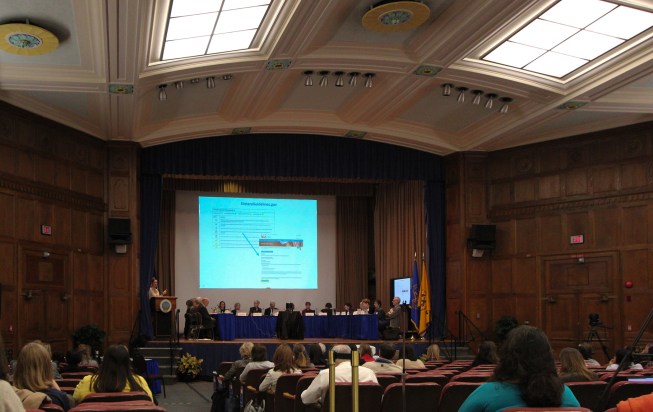
WASHINGTON, D.C. — The big news from the final Dietary Guidelines Advisory Committee (DGAC) meeting in which they presented their 500-plus page report Wednesday, June 17, is that the current saturated fat caps — at less than 10% of calories — will stand. But at the same time, the saturated fat subcommittee detailed its true recommendations, pegging saturated fat levels to be at 7 to 8% of calories, and these charts are the ones that will likely be forced on schools and daycares and nursing homes and military diets. (More detail on this to come.)

After 7 hours of subcomittee presentations, in an online virtual format, covering all facets of the 2020-25 DGAC ‘expert’ report, it was hard to choose which of the many eyebrow-raising moments was most concerning. In fact, DGAC comments were at times actually humorous, if this was not such a serious matter.

Perhaps it was the moment when the subcommittee handling the saturated fat questions decided to go backwards from 2015. Not only are they edging the saturated fat caps lower in their forward-looking recommendations, they want to bring cholesterol caps back into the mix. That’s right folks, we’re going back to cholesterol caps “because humans have no need for dietary cholesterol,” they declared matter of factly.

That’s the mentality. No need for cholesterol, which is essential for every single cell in the body and especially important in hormone synthesis, not to mention brain function. But, then again, the DGAC never was happy about giving up those cholesterol caps in 2015, especially since the anti-animal agenda of noted DGAC vegetarian leanings have found they need more than saturated fat caps to hang their hats on — especially since the 2020 DGAC included toddler food patterns in their report for the first time.

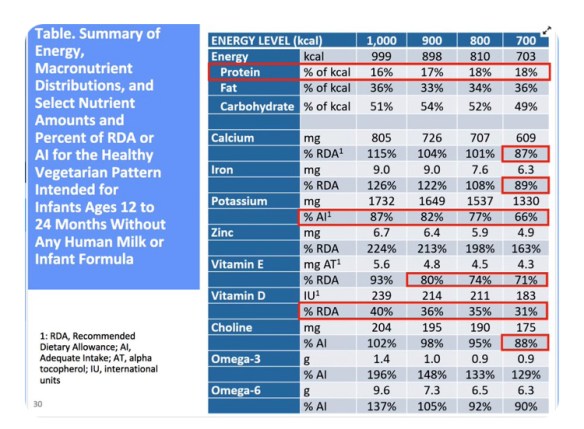
That discussion was also perplexing. No less than a full hour was spent going through every diet formulation the subcommittee could conjure up in order to get toddler food patterns closer to a “healthy vegetarian diet”, the one of three currently government-approved dietary patterns favored by the DGAC, now being recommended for children UNDER 2 years of age.

Each combination of foods they walked through (because the new way of presenting these patterns is to have actual foods listed to avoid) had them facing a big dilemma. Within the amount of calories a toddler will consume, there was no way to deliver the nutrients they need for life without more animal protein foods. In each case, the toddler patterns did not provide all the essential nutrients needed for brain development, growth, and health.

Iron was just one of them. When it was pointed out by one DGAC member that animal protein delivers absorbable iron — critical for toddlers — unlike a handy-dandy supplement pill, vegan-leaning Linda Van Horn from the saturated fat committee chimed in with a bizarre comment. She said it was not a concern because research she couldn’t put her fingers on at that moment suggests vegetarian adults have the ability to absorb more iron from supplements and other foods, so, she said, “kids of vegetarian parents could have this ‘accelerated absorption’ capability from their parents.”

Inherited vegetarian genetics? Eye-roll.

Another committee member politely suggested that, yes, there is research showing vegetarians absorb more iron from supplements and other food sources “because they are deficient in iron in the first place.”
66686

DGAC says healthy vegetarian pattern for toddlers is good to go even though it doesn’t meet their needs for essential nutrients for life. No solution was given by DGAC for this problem. Sadly, in fact, children in schools and daycares were referenced as a group that can “adhere” to the diets  due to government p.

Unfazed, the committee ignored any attempt at logic on the many questions of these diets missing quite a few “nutrients of concern.” They simply moved on… next slide.

Throughout the discussions of dietary patterns, saturated fat caps, and such, the “nutrients of concern” not being met in the food patterns — mainly fat soluble vitamins like D and A found naturally and more absorbable in whole milk vs. fat free and low fat dairy, for example — they just kept moving on in their direction away from animal foods, comforted by their cherry-picked research.  It wasn’t just vitamins D and A and iron, but also iodine, choline, B12 (in adults), potassium, and more. Throughout the daylong presentations, this problem with nutrients not being met kept cropping up for each “life stage” the DGAC was addressing. What was new this time was the addition of food patterns for pregnant and lactating women and children from birth to 24 months of age.

In a more detailed look at the report next week, a few ‘good news’ points for dairy as a food category can be shared, but this underlying avoidance of saturated fat put all things dairy squarely in the fat-free and low-fat zone, and the new and stricter recommendations for added sugars and beverage calories were another concern for children and the dairy sector. Yep, you guessed it. Coke and Pepsico will be happy as their high fructose corn syrup mixed with artificial sweetener concoctions will be looked upon favorably vs. nutrient-dense chocolate milk. (More on that next week.)

Other mentally exhausting moments occurred when subcommittees made recommendations based on limited evidence, or conversely, graded evidence as strong when it was based purely on observational studies. When these concerns were brought up, the answer was to point at the work of the 2015 DGAC that considered “so many more studies” and that the DGAC had decided at the outset to “build on the 2015 report” — more or less picking up where they left off — when it came to the question of dietary fats.

That was the ‘magic wand’ applied throughout the day.

In fact, as Nina Teicholz, author of Big Fat Surprise and founder of the Nutrition Coalition, pointed out in her blow-by-blow twitter feed throughout the day, the movement to subtly edge saturated fat caps lower happened on the very day that a major new review was published on saturated fats to the contrary. The authors of that report — unconsidered by the DGAC of course — included the chair and another member of the former 2005 DGAC.

“Their findings are quite opposite of those by the current one-sided 2020 DGAC,” wrote Teicholz.

Another eyebrow-raising moment came when the committee debated how to “harmonize” the food listings on their charts taken from studies where they had different meanings or included different foods.

Dairy was one example. Whole milk bad, fat-free good, and yet ‘milk’ as an entity showed up with so many positive influences in combined research charts (including cardiovascular disease, all cause mortality, obesity, type 2 diabetes, immune status and more). But the committee didn’t know which milk was in the study, and that distinction is important!

Similarly, they lumped red meat and processed meat together on one chart (the negatives), and then on another chart showing positives, they listed ‘lean meat’ but said they didn’t know if that category included lean red meat or just poultry and fish — even though the same chart had separated poultry and fish into their own categories!

It all seemed like nonsense the DGAC should have taken time to figure out before rushing their report to print.

Even though a letter signed by nearly 300 doctors and medical professionals, letters from dietician groups, letters from members of Congress and others had requested a delay, the DGAC was in a hurry to do the June 17 presentation. In fact, when registering to participate in the presentation online, a note was sent back stating that “this is only a draft and it will have a comment period.”

Trouble is, the expert report is now out, and it’s going to be difficult to put that jack back in the box with a 30-day or 60-day comment period after USDA and HHS formalize it — because so much science was excluded from the beginning. A do-over with a new committee is needed.

This committee took time Wednesday to explain the litany of poor reasons why favorable fat studies were excluded from their cadre. The federal staff that screened for each subcommittee went through a total of 270,000 reports and whittled it down to 1500 on all pertinent questions for this DGAC cycle. That is a story in itself because rigorous evidence was ignored in favor of “associated” studies.

Another concerning moment came early in the day’s presentations when committee members talked about promoting federal diet-tracking, biomarkers and monitoring. Americans will love that kind of intrusion. And in the course of the behavioral recommendations they made, the schoolchildren were their go-to for such monitoring. A captive group of guinea pigs!

But perhaps it was the concluding remarks Wednesday evening at 7:30 p.m. as the daylong meeting came to a close that really stood out. Chairwoman Barbara Schneeman, Ph.D. talked about the enormous task the DGAC had completed over the past 15 months. She said the committee would put its report in final form over the next two weeks, present it to USDA and HHS by the end of June and then USDA and HHS would “formulate it” into recommendations that can be posted for public comment by July 15 and they would be a done deal for implementation by the end of 2020 for the next five years.

Schneeman also went on to talk about how the government nutrition programs needed to be working on how to get more Americans “adhering to these diets”, with emphasis on restricting fat, added sugars and salt while still maintaining positive energy balance and meeting nutrient needs even though the DGAC had not even the slightest answer for the dilemma of meeting nutritient targets with these patterns and recommendations, especially for children.

The clincher. Schneeman pointed out how the COVID-19 pandemic shows just how much the current state of chronic dietary-related diseases put certain populations in the most vulnerable position for infectious diseases like Coronavirus.

But that’s okay, the reason we have an obesity and diabetes epidemic as well as other chronic conditions is because, she said “Americans have never followed our dietary guidelines.”

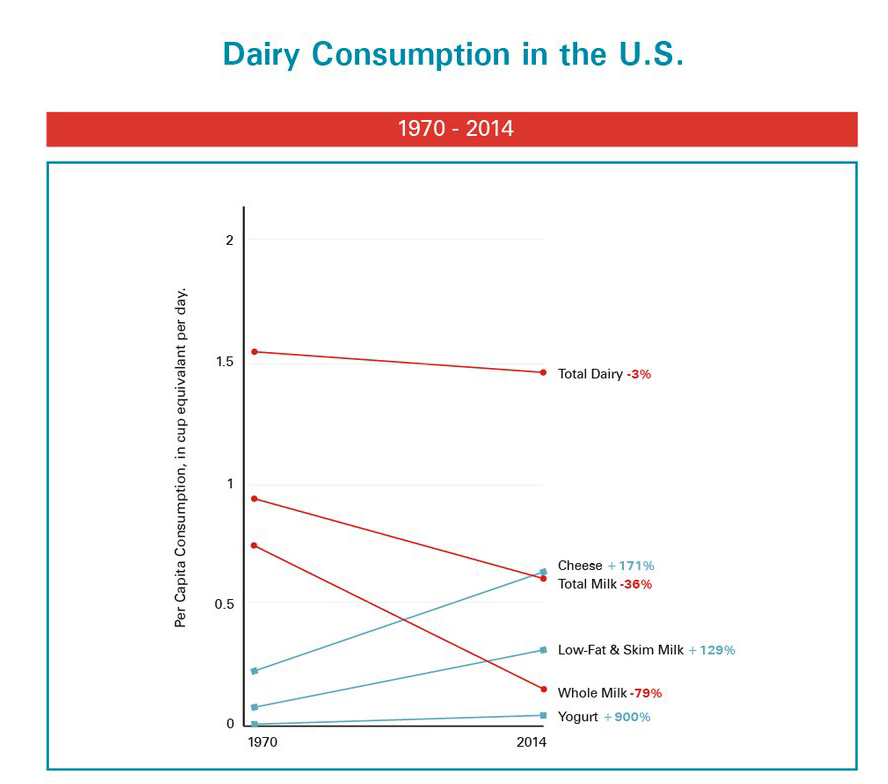
Begging to differ with their federal statistics, the record is clear that per-capita consumption has declined among the foods DGAC set out over the years to have Americans increasingly avoid. These chronic conditions have worsened with each 5-year cycle moving us further in the fat-free and low-fat direction. So much so, that many of us don’t even realize how we are impacted, and especially how our children are impacted. Now, even the toddlers won’t be safe.

Get involved by sending or phoning a comment to YOUR members of Congress and the Secretaries of Agriculture (USDA) and Health and Human Services (HHS) at this link https://www.nutritioncoalition.us/take-action/

Look for more details in part two.

Past articles on this blog about the DGAC process are listed below

Dietary Guidelines Committee must be stopped… 

Call to action: Feds ignore science on saturated fats… 

Dairy advisory committee formed… 
There is a war to win for our farmers and our children… 

Nutrition politics: Kids and cattle caught in crossfire… 

Dietary Guidelines Committee must be stopped, its flawed upcoming report excludes rigorous fat studies

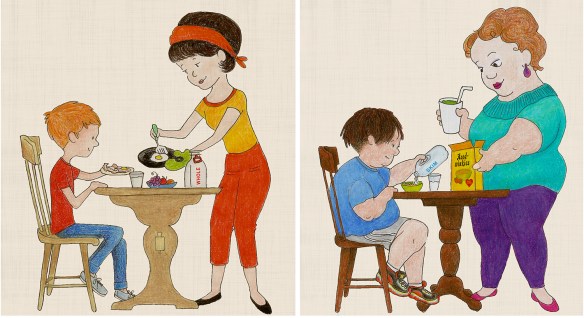
ThenAndNow_DGAs_web

Drawings by Heidi Krieg Styer as published on Farmshine cover, June 12, 2020 edition

By Sherry Bunting, Farmshine, June 12, 2020

WASHINGTON, D.C. — As we have reported for several years now, there is this thing called the Dietary Guidelines for Americans that most people think is simply government guidance of how Americans should eat to be healthy, and that we can take – or leave – that advice based on our own choices and understanding of the science.

Wrong!

The Dietary Guidelines for Americans increasingly control our choices in ways subtle and obvious, especially where our children are concerned and especially where the poorest among us are concerned.

They began in the 1980s and are updated every five years by a Dietary Guidelines Advisory Committee. Since 2000, these Guidelines have become more restrictive, and in 2010 — under the Obama administration with Ag Secretary Tom Vilsack implementing measures to ban whole milk in schools and then lobbying for the bill, Congress took the step that linked the guidelines more closely than ever to our schoolchildren through the Healthy Hunger-Free Kids Act. The bill is anything but what its name implies.

At the same time, Americans have continued to grow fatter, sicker and sadder as the limits on saturated fat have grown stricter and the federal control more pervasive.

dga2

Most of the ‘experts’ on the DGA Committee are free to choose their own meal pattern. Our schoolchildren, our poor, our chronically ill, our elderly, our military, our economically and nutritionally at-risk persons — their dietary choices are controlled by the DGA. According to the CDC, these are the demographic populations dealing with the most pervasive rise in obesity, diabetes and other chronic illnesses many scientists believe are rooted in the DGAs.

For 40 years, the advice coming from the Dietary Guidelines Advisory Committee every five years, and then virtually rubber-stamped by the Secretaries of Agriculture and Health and Human Services, has led Americans down an unhealthy road. The Committee pushes vegetarian eating patterns, high carb / low fat dogma, and increasingly strict saturated fat restrictions despite sound science to the contrary.

The process needs reform, according to the Academies of Sciences.

The 2020-25 Dietary Guidelines draft will be released next Wednesday, June 17 by the current Dietary Guidelines Advisory Committee (DGAC), and as the Nutrition Coalition and others have been warning, this draft is bad for Americans, bad for our children, and bad for our dairy and livestock producers.

What’s more, this draft is based on the deliberations of a committee that excluded rigorous studies showing the saturated fat in milk and dairy products is actually GOOD for us, especially for our children, and that it has little if any negative effect on cardiovascular health and all-cause mortality, with positive effect on Type II diabetes, obesity, cognition, brain function and mood.

Quite literally, the DGAC, Secretaries of Ag and HHS (even Congress and past and present administrations) — in their infinite wisdom and refusal to turn this Titanic away from the iceberg – are happy to watch American health sink, and the survival of our farmers and ranchers to sink right along with it.

If ever there was a time for action (and believe me, this chorus I’ve sung quite a few times since the year 2000), it is now!

Contact your Senators and Representatives in Washington and ask them to urge Secretaries Perdue and Azar to delay this DGAC report until all of the science is considered.

It is unconscionable that USDA – through its strange screening process that includes “conformance to current federal policy” implemented by department interns – was the first layer prohibiting rigorous science from the DGAC work over the past year.

It is even more deleterious that the DGAC further refined the science included in the saturated fat questions to illogical parameters that no other DGAC subcommittee used for its screening process.

Americans are smart. They are choosing whole milk and full-fat dairy products because they are learning about the science that was buried and suppressed over the past 40 years as well as the new studies surfacing.

But that’s only good for the wealthy adults among us. Children are ruled by DGAC decisions, thanks to Congress. Those suffering poor health are ruled by DGAC decisions because medical professionals tend to regurgitate them.

Families in need are perhaps MOST controlled by DGAC decisions because they rely on government feeding programs that must meet these fat-restricting Dietary Guidelines, but are issued SNAP cards that allow them to buy soda and cheap snacks full of carbohydrates that do nothing nutritionally for them.

Amid the COVID-19 crisis, how many times have we heard that the obesity and diabetes in our population, especially the poor, increases how harmful this virus is to certain populations, demographically? With these guidelines governing USDA feeding programs, it’s no wonder.

Shameful!

Not to mention, a year ago, military generals crafted a letter to Congress over their concerns about recruits being too obese or unhealthy to serve. Yes, the military is another sector of government-feeding that is tied to the flawed Dietary Guidelines for Americans.

So, big deal, my family can still choose. Right? For many families, those choices are made for them when dining out as restaurants increasingly document calories, saturated fat and other information on menus. This is required by the federal government for chain restaurants of a certain size. More of these restaurants admit to using “stealth health” to make adjustments to meals to show that they are meeting – you guessed it – the Dietary Guidelines.

In fact, the Food and Drug Administration (FDA) began its multi-year Nutrition Innovation Strategy, whereby it is seeking to “modernize” standards of identity to “achieve nutritional goals.” FDA also is designing a “good for you” symbol that foods will only get if they meet the criteria being developed. The agency in its meetings over the past year, cited reduced consumption of fat and salt as primary nutritional goals, and have made statements such as “American consume too much protein.” The FDA’s “modernization” of food labeling and standards of identity will certainly move forward under the good ‘ole Dietary Guidelines.

Meanwhile, when it comes to the simple “choice” of whole milk or even 2% in schools and daycares for children over two years of age, these wholesome products are outright banned because of the Dietary Guidelines. In fact, not only does the government require non-fat and 1% milk to be served, cheese and yogurt are also limited to low- and non-fat.

When fat is removed from the diet, carbs and sugars replace it, and foods are not consumed that bring tons of nutrients and vitamins to the table.

Here we are at a crossroads in our nation’s health. Obesity and diabetes are reaching epidemic proportions in our children. Iron, iodine, calcium, and certain vitamins, especially fat-soluble vitamins found in whole fat dairy and meats are nutrients of concern. Doctors are finding Americans, especially children and teens, are deficient in these nutrients when low-fat Dietary Guidelines rule the plate.

The only thing that can possibly turn the Titanic as it is already crashing on the iceberg is a groundswell of letters, phone calls, emails and faxes to members of Congress, Secretary of Agriculture Sonny Perdue, Secretary of Health and Human Services Alex Azar, even the President of the United States.

Sheer numbers are needed. To-date, medical and health professionals, scientists, teachers, parents, citizens have commented on the DGAC docket. Many have written letters and opinions, forwarded research that has been excluded, pointed out the flaws in research that was included.

Now Congress needs to hear from their constituents. There’s a war to win for our health and our farmers.

Concerned citizens have met with members of Congress over the past year on issues such as whole milk in schools, and yet the Whole Milk for Healthy Kids Act, House bill 832, and Milk in Lunches for Kids Act, Senate Bill 1810, have stalled at 41 and 3 cosponsors, respectively, which is where they were in October when I went to Washington with the first 10,000 of the 30,000 names on the Whole Milk Choice in Schools petition.

There are heavy hitters on the other side of this fat discussion. Never mind the animal and climate activists with their facts all jumbled up, there are huge investments in the future of food by powerful people who want to see the Dietary Guidelines continue the current path.

Processed With Darkroom

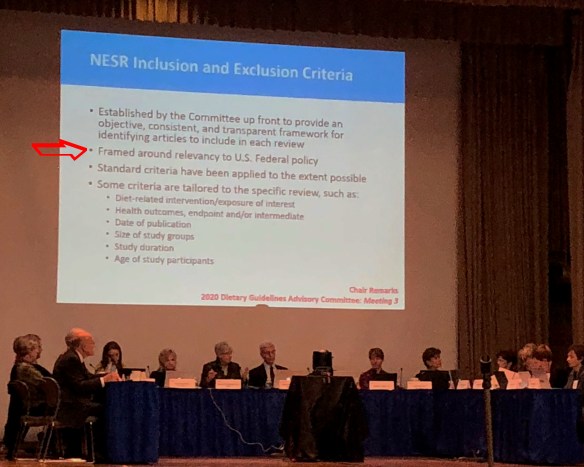
Part of the screening process used by USDA for science that will be included or excluded from Dietary Guidelines Advisory Committee consideration is this curious item shown above: “Framed around relevancy to U.S. Federal  Policy”. Committee members in October asked for more information on this research screening criteria. USDA explained it to them and those watching that this refers to including only the research that “aligns with current federal policy.”

While I was in Washington in October, my eyes were opened. I sat in on the DGAC meeting and wrote about it in Farmshine. There, I learned that one of the screening criteria by USDA for determining what science was “in” or “out” of the DGAC process is this strange point: “relevancy to U.S. federal policy.” When a question was asked by a member of the committee about that point, it was explained as “research inclusion that conforms or aligns with current federal policy”.

That, my friends, is the unelected bureaucracy feeding itself and pretending to have the scientific basis to use diet to achieve other goals.

I visited Senator Bob Casey (D-Pa.) that day and asked his staffer why Sen. Casey would not support Senator Pat Toomey’s (R-Pa.) Milk in Lunches for Schools bill.

The response? “We (Congress) are not a scientific body. We have a process for that, the Dietary Guidelines.”

Yep. There it is again.

When pressed further, asking how citizens – constituents — can redress their concerns with ELECTED officials if that committee stands in the way, I was surprised to hear the staffer note that National Milk Producers Federation (NMPF) did not support Sen. Toomey’s bill. I had identified myself as a member of the Grassroots PA Dairy Advisory Committee but also as a mother, grandmother and former school board director, but the answer I was given honed-in on my “dairy” reference.

I was told by the Casey staffer that NMPF did not support Toomey’s Senate bill on whole milk because it included language that would not just allow the choice of whole milk, but would also exempt school milk choices from the “10% calories from saturated fat limit.”

Later, I contacted NMPF and spoke with one of their lobbyists who confirmed that NMPF did not support the Toomey bill language. They did not want that exemption for milk because they said they believed “we can win the fat argument.”

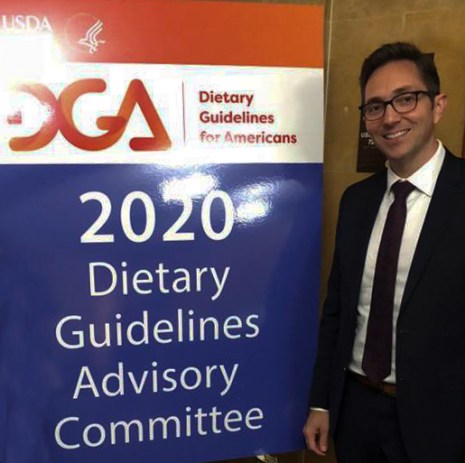
dga1Meanwhile, on the day of my trip to Washington in October, as I posted a photo on facebook of USDA Food and Nutrition Services undersecretary Brandon Lipps in front of the Dietary Guidelines sign at the DGAC meeting in the USDA building, I recalled his words to me, that the department loves milk, but that the “science” needs to come together, and that the industry needs to be on the same page. (I had just handed him his copy of the first 10,000 signatures on the whole milk in schools petition)
Mr. Undersecretary, how can “the science” come together when your USDA interns and DGAC members left a lot of the good science on the cutting room floor and effectively screened it out of the “coming together” process these 5-year DGAC cycles are intended to address?

As I walked out of the USDA building to meet with legislators on that day in October 2019, I noticed a post on my facebook newsfeed from Hoard’s Dairyman quoting DMI CEO Tom Gallagher as follows:  “Now, we’re not sure if it will be in this go-around with the Dietary Guidelines for Americans . . . but I believe by the next Dietary Guidelines we will get the fat story reversed,” said Gallagher. “That opens up the door to whole milk products and other dairy products in schools, which would be a big plus.”

Already in October, when the DGAC process was near its beginning, the top national dairy checkoff leader was publicly admitting defeat. Or, was he actually telegraphing the wishes of DMI “partners” to USDA, another partner, that they’d prefer to keep stalling it.

In this quote, Gallagher makes it look like DMI supports whole milk in schools, while at the same time stalling a change in policy and conceding to a defeat in 2020 before the game got off the ground — while diverting everyone’s attention to 2025.

Back in 2014-15, I was involved in that DGAC cycle, writing several columns for a metropolitan newspaper. Same story, different year. You’ll find lots of background here.

At the time, I asked checkoff leaders at a dairy meeting why they weren’t involved in turning this around on saturated fat and why were they not more vocal in the guidelines process. I was told in 2015, that they were working on it for 2020.

Stall, delay, stall.

Our kids and our farmers don’t have 5 more years to get 40 years of wrong and 10 years of really-really-wrong, right.

This week, I was pleased to see Bob Gray who has represented the Northeast Council of Dairy Cooperatives sent out a memo to industry colleagues citing what Nina Teicholz and the Nutrition Coalition have been sounding the alarm about. He urged people to contact members of Congress and ask them to get a delay in the release of the DGAC 2020-25 report, to keep it from being released next Wednesday, and to keep it off the table until the science that was excluded is considered.

Unfortunately, at other levels of industry involvement, the response is a shrug.

For example, two weeks ago, I heard from a dairy farmer who contacted her regional dairy checkoff organization and asked for help distributing whole milk gallons to families in need at her local school during lunch pickup.

“You can’t do that,” she was told. “It’s not allowed.”

Unfazed, she contacted the school and the processor anyway, on her own, and both were enthusiastic about making her idea happen. She and her husband purchased the whole milk with their own money – 200 gallons of it – and they stood beside the school foodservice folks and gave it to families driving through picking up school lunches.

Additionally, ADA Northeast is a regional checkoff organization that has indicated to dairy farmers that their taste tests in cities show children don’t really notice the difference between whole milk and 1% low-fat milk, and that consumption of milk did not increase when whole milk was offered, but that consumption did increase when 1% chocolate milk was offered instead of just non-fat chocolate milk.

For the industry – it’s all about the 1% milk in schools. In fact, if the DGAC report is released next Wednesday and gets on its way to USDA / HHS approval, 1% milk will be kissed goodbye in schools as well because the DGAC is doubling-down on saturated fat levels, not loosening them.

Meanwhile, a high school / middle school trial in western Pennsylvania would put these checkoff findings to shame. Teenagers given the choice of whole milk this school year favored whole milk three to one over 1% low-fat milk. The milk choices were put in front of them with no information, and within a short time, they figured it out on their own. Within five months of students having this choice of whole milk, teenagers were consuming 65% more milk and the amount of milk being discarded fell by 95%.

On every level – nutrition, satiety, sustainability, environment – you name it, that’s a win. A win that schools and children will not get to realize if the DGAC issues its 2020-25 report doubling-down on saturated fat.

This Dietary Guidelines scandal has many players and parties involved – and it’s obvious by now this has nothing whatsoever to do with “the science.”

Contact your Senators and Representatives as soon as possible before Wed., June 17 and ask them to urge Sec. Perdue and Sec. Azar to delay the DGAC report and to send the committee back to the drawing board to include the science they left out.

If you don’t know who represents you in Washington, use this link to plug in your home address at this link to find out: 

Also, register your comment with Secretaries Perdue and Azar here

Let’s get this Titanic turned around. We don’t have 5 more years to waste. Who’s with me?

-30-

WWF school milk waste report ignores the one small step that changes the WHOLE story!

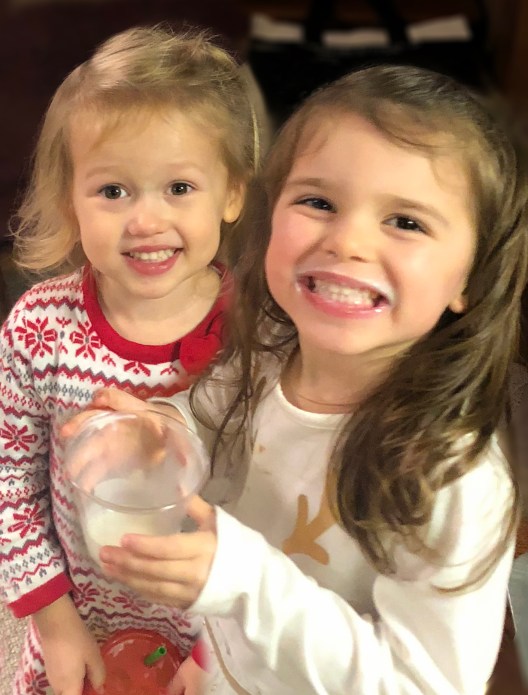
WholeMilkKidsBy the time these two little girls are in school, their happy smiles and enjoyment of milk will be but a memory as the low-fat and fat-free brain-washing will begin and the full-fat brain-building they get at home will come to an end. Milk will become yucky to them, and the one they get with their school lunch and/or breakfast will likely go into the trash. Such is the plight for millions of children in our schools every day over the nine years of government prohibition against whole milk. Meanwhile the weights and waste at U.S. schools are ballooning out of control. 
But never fear, the government (and its NGOs) are here! Dairy checkoff’s “sustainability” partner, the World Wildlife Fund (WWF) — in cooperation with the U.S. Environmental Protection Agency (EPA) — estimates 45 million gallons of milk are discarded at U.S. schools annually. Here’s the unbelievable part: They recommend schools reduce the size of milk containers, use self-serve dispensers and end the practice of ‘serving’ milk with every meal. Yes, the dairy checkoff’s sustainability partner is recommending less milk as the solution to more waste.

Meanwhile, one school is offering whole milk on a trial basis and gathering data showing how this one small step is changing the whole story — for healthy kids and a healthy planet. We are protecting the identity of this school from the USDA school milk police because if “caught” for doing what’s right, they could lose eligibility for state and federal education funds that are tied to participation in USDA’s low-fat school lunch rules.

By Sherry Bunting

Dairy Checkoff’s “sustainability” partner — the World Wildlife Fund (WWF) — released a 2019 “Food Waste Warriors” student-led audit report a few weeks ago indicating that U.S. schools discard an average of 28.7 containers of milk per student per year.

This amounts to an estimated 45 million gallons of milk discarded from schools annually, the report said.

Of the totals, elementary students discarded 37.6 cartons per student per year while middle schools discarded 19.4 cartons per student per year. The difference is middle and high school students have more alternative beverage options.

A gallon of skimmed milk weighs 8.63 pounds, so 45 million gallons amounts to over 388 million pounds per year and a cumulative estimated 3.5 billion pounds of discarded school lunch skimmed milk over the past nine years since USDA removed whole and 2% milk as choices in the 100,000 schools participating in the National School Lunch Program (95% of U.S. schools).

WWF funded the study, with support from Kroger Co. Foundation and the EPA, analyzing food waste in 46 schools in nine cities across eight states.

The objectives of the WWF project were to engage students in the act of measuring waste, foster an understanding of connections between food and its environmental impacts, and “formalize how we might gather more streamlined data on cafeteria food waste,” the report explained.

In its report, WWF identifies the National School Lunch Program as “one of the most influential programs for educating youth on conservation opportunities linked to our food system.”

Waste-reducing milk strategies used, compared and suggested in the WWF report are: 1) serve smaller containers of milk, 2) educate schools to realize they are actually not required by USDA to force students to take a milk with their lunch or breakfast in the first place, and 3) invest in bulk milk dispensers so students can take only the amount of milk they will drink.

So here we go. Let the WWF / USDA / EPA / DMI ‘sustainability’ propaganda begin. The idea of milk dispensers is a good one. But, what matters more is the fat content of the milk IN the dispensers, bottles or cartons!

Of course, the report does not identify the simplest, tastiest, most nutritious and ‘sustainable’ solution: Waste could be reduced overnight if USDA would simply allow the 100,000 schools enrolled in the National School Lunch Program to put whole milk on the menu! 

That’s right folks: 95% of U.S. schools are ruled by the iron-hand of the USDA milk police.

Not only are school nurses beginning to report to Farmshine that their annual student weight averages have climbed 7 to 9% in the 9 years that whole milk has been forcibly removed from school menus, one school reports it is doing its own study of student preferences and milk waste reduction this year.

We are keeping the names of the reporting schools anonymous to protect their identities from the USDA milk police.

Since September, one anonymous school’s study shows students are choosing whole milk 3 to 1 over 1% low-fat milk at the middle school and high school where the trial is being conducted.

Imagine that! Middle and high school students CHOOSING milk, and actually drinking it!

Oh, and by the way, when whole milk is used to make chocolate milk instead of using skimmed (1% or fat free) milk, less sugar is added!!

And, by the way, the data from this particular anonymous school shows that not only are their secondary students CHOOSING whole milk 3 to 1 over skimmed, the school has reduced its milk waste by 94%… in one year!

They report that their “milk not consumed” totals now average 32 ounces per day as compared with 4 gallons, or 512 ounces, per day the previous year!

Where school lunch is concerned, USDA’s rules are neither practical, nor are they logical, nor are they healthy for our kids or our planet. At the same time, WWF’s suggestions miss the mark completely!

Join in with those farmers and consumers asking Congress and USDA to bring back the choice of whole milk in schools. Sign the petition for choice and be part of the WHOLE solution. If you haven’t signed, you have until February 15 to do so online at this link: https://www.change.org/p/bring-whole-milk-back-to-schools

Also, to get signatures in your community, download the printable version of the petition at this link: WHOLE-MILK-IN-SCHOOL_PETITION_011520_


-30-

Congressman to dairy farmers: ‘Government is between you and the consumer’

Dairy Advisory Committee formed, meets with federal, state lawmakers

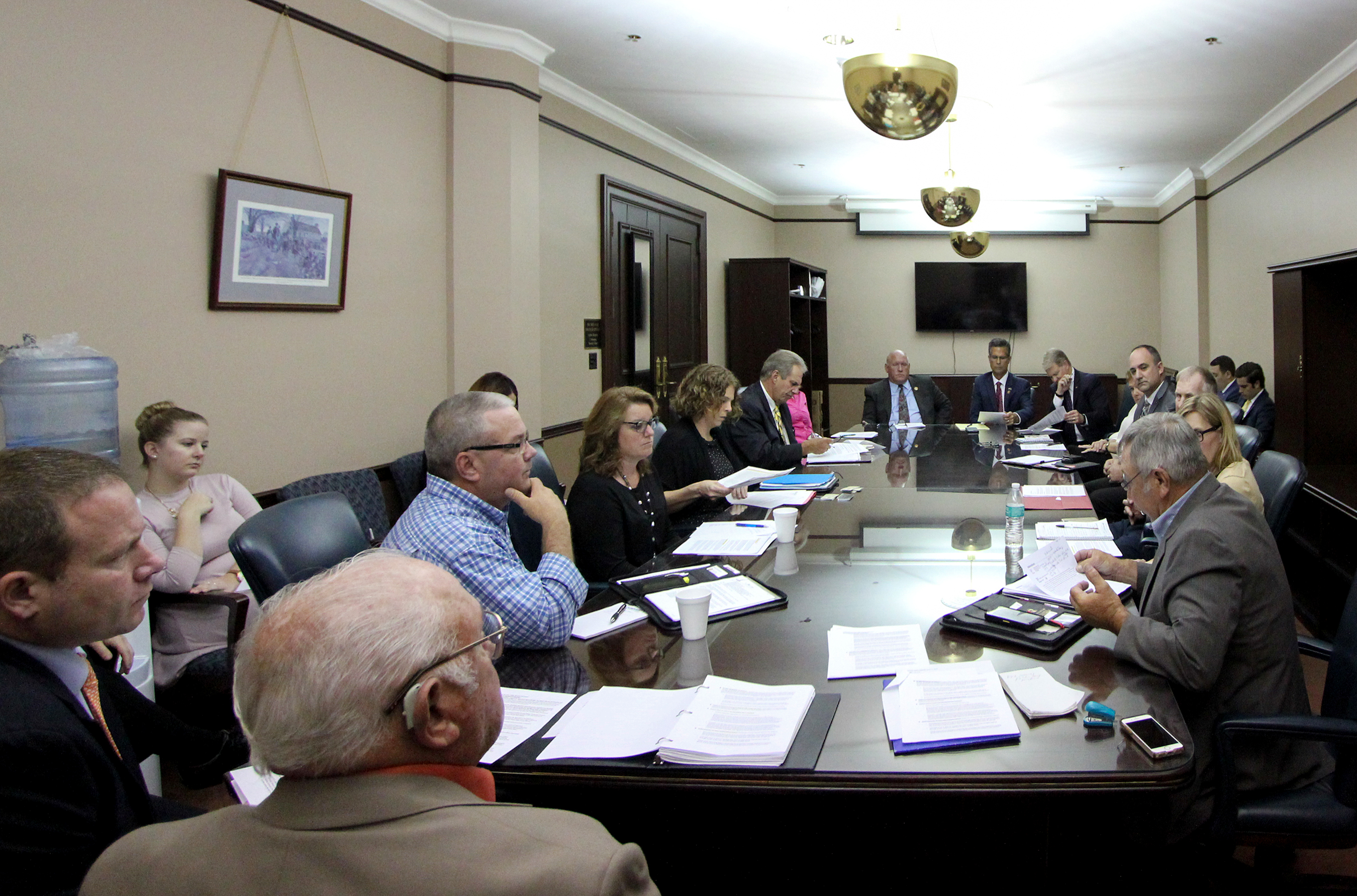
During a June 3 roundtable discussion between dairy stakeholders and Pennsylvania state and federal lawmakers, Nelson Troutman (right) said Pennsylvania is a fluid milk island with milk and consumers right here, but pressure pushing in from all sides. He said the state is losing its ability to compete as federal dietary rules suppress fluid milk sales while the state’s antiquated milk marketing law incentivizes more milk-swaps along the four borders as fluid milk sales decline. Clockwise from top left are U.S. Congressmen G.T. Thompson (R-15th) and Dan Meuser (R-9th), State Senator David Argall, Lolly Lesher, Mike Eby, Dale Hoffman, Tricia Adams, Nelson Troutman, Bernie Morrissey, State Senator Scott Martin, Karl Sensenig, Bonnie Wenger, Krista Byler, Craig Lutz for Sen. Argall’s office, and Katie Sattazahn. Also present were various legislative staff. Attendees shared USDA data showing that in the past 12 months, Pennsylvania lost more cows (29,000 head) and more production (66 mil. monthly pounds) than any other state in the nation, with the potential see even greater losses in the next 12 months without substantial change.

By Sherry Bunting, Farmshine, June 14, 2019

HARRISBURG, Pa. — “What I’m hearing here is that the government is between you and the consumer. You would have no problem marketing milk if you could get your message and product to the people,” said U.S. Congressman G.T. Thompson, representing Pennsylvania’s 15th legislative district over a swath of central and northcentral and northwest Pennsylvania.

That summed up the concerns related to school milk, dairy checkoff, fake milk labeling and other issues during a meeting between 11 dairy stakeholders and a dozen state and federal lawmakers and staff in Harrisburg on June 3.

It was a listening session that was followed by a productive work session as the grassroots group will continue to meet and correspond as a Dairy Advisory Committee.

(l-r) Nelson Troutman, Mike Eby, Pa. State Senator David Argall, Bernie Morrissey, Craig Lutz.

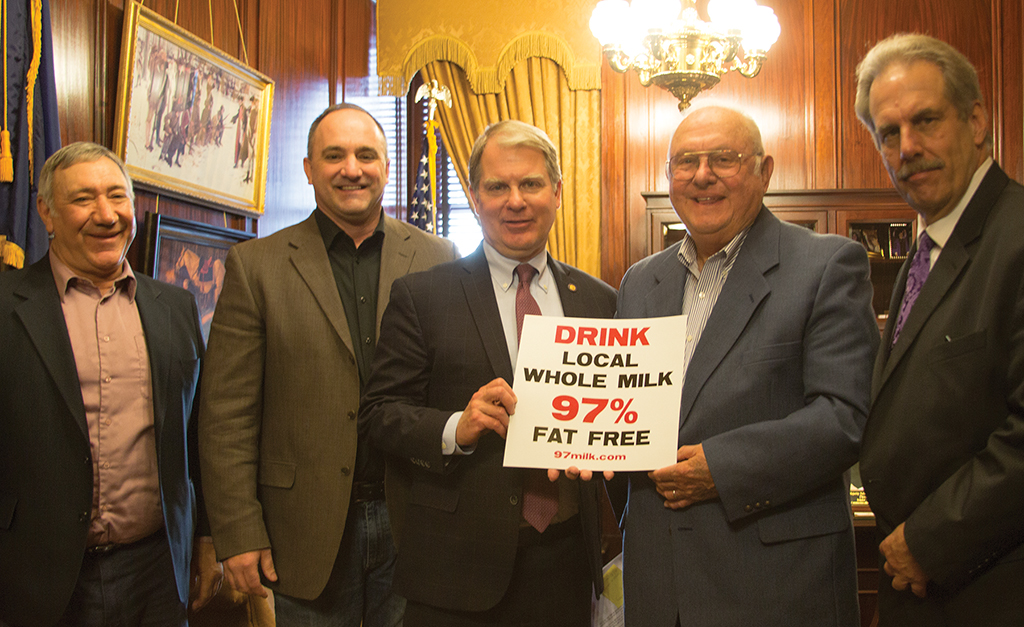
Retired agribusinessman Bernie Morrissey and 97 Milk Baleboard initiator Nelson Troutman worked with Pa. State Senator David Argall of Berks and Schuykill counties to set up the meeting.

They pulled together an advisory committee of 11 people, including Troutman and Morrissey, along with Dale Hoffman and his daughter Tricia Adams of Hoffman Farms, Potter County; Mike Eby, a Lancaster County farmer and president of National Dairy Producers Organization; Lolly Lesher of Way-Har Farms, Berks County; Katie Sattazahn of Zahncroft Farms, Womelsdorf; Krista Byler, foodservice director for Union City School District in Crawford and Erie counties, whose husband operates a crop and dairy farm in Spartansburg; Bonnie Wenger of Wen-Crest Farms, doing custom cropping and heifer raising for dairies in Lebanon and Berks counties; and Karl Sensenig of Sensenig Feed Mill, New Holland. 

I was privileged to moderate the discussion, for which an outline was provided in advance.

Congressman Thompson was joined by Congressman Dan Meuser, who represents Pennsylvania’s 9th district covering Carbon, Columbia, Lebanon, Montour and Schuykill counties along with portions of Berks, Luzerne and Northumberland.

In addition to State Senator David Argall, State Senator Scott Martin of Lancaster County attended, as ded legislative aids for Senators Ryan Aument, Elder Vogel, and Mike Folmer with additional interest from State Representatives John Lawrence and David Zimmerman.

Lawmakers said they left the discussion with “more work to do” and an “elevated awareness.” Their message to dairy farmers was: “Keep it up. Keep doing what you’re doing (a nod to the 97 Milk campaign and the planned rally for the Whole Milk for Healthy Kids Act on June 18 at the state Capitol). They said raising public awareness is crucial.

“Every few days, the bill gets another cosponsor,” said Rep. Thompson of HR 832 introduced in late January. “It will take public support and momentum to reverse this. It’s a challenging task.”

Even with evidence that bad science led to the federal school lunch milkfat restrictions, Thompson said the House Committee on Education and Labor must take up the bill in order for it to move forward. He noted that current leadership of that committee is the same as in 2010 when The Healthy Hunger Free Kids Act tightened the vice grip on milk fat. (Learn more about the school lunch changes over the past 10 to 20 years here.)

The 2010 legislation with the blessing of former Ag Secretary Tom Vilsack not only prohibited whole milk in the National School Lunch Program, it also reduced total calories, required less than 10% calories from saturated fat and made the milk part of the meal’s nutrient analysis.

With a nod to Krista Byler, Thompson said he understands more is needed beyond HR 832. “We need to eliminate the beverage information from the nutrient standards limitations,” said Thompson.

Discussion followed about the current Childhood Nutrition Reauthorization process currently underway in the Senate and what opportunities might exist for a regulatory change there.

Byler noted that while every child gets a milk, many students throw the milk away and buy sugary drinks that don’t offer milk’s nutrition.

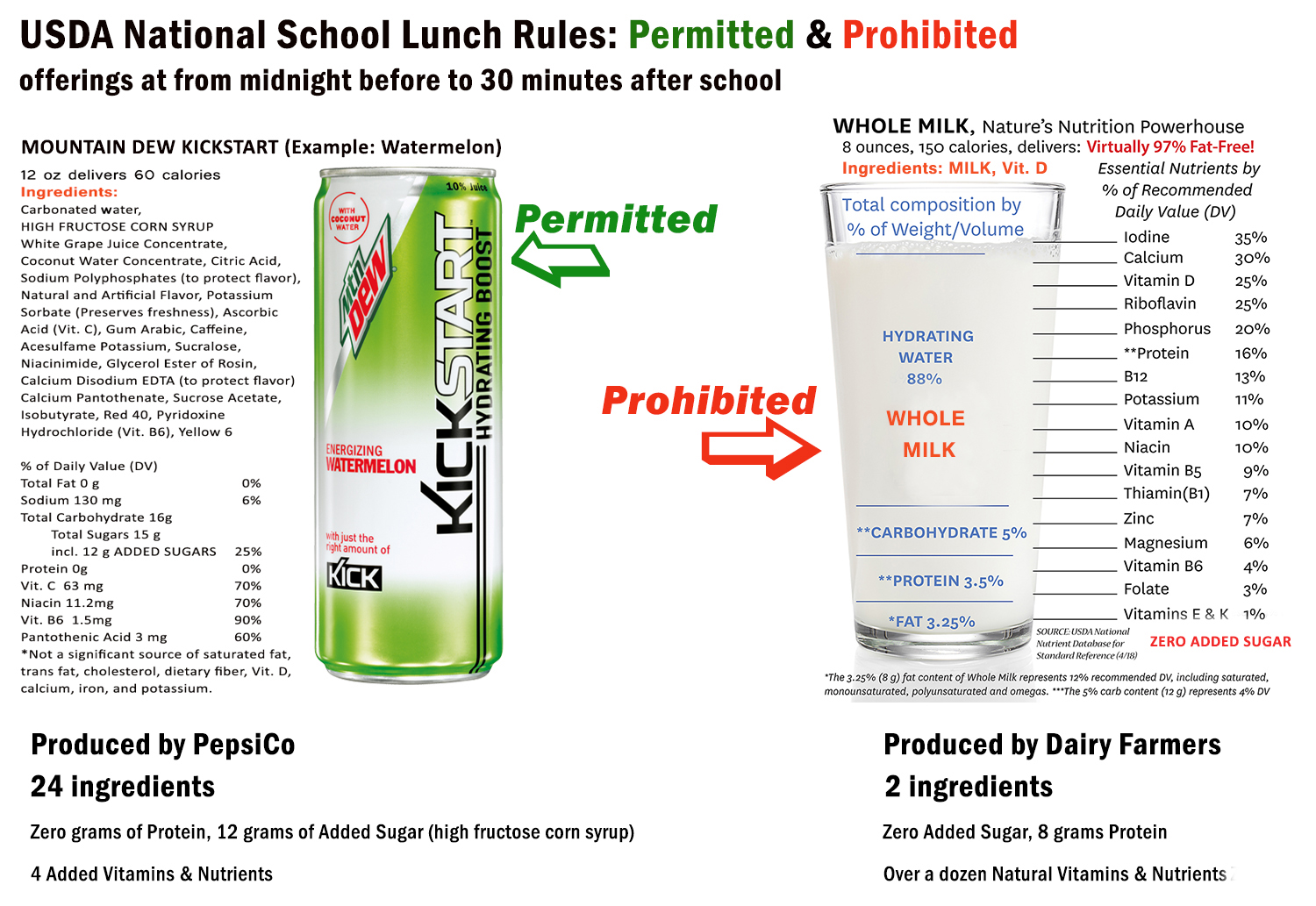
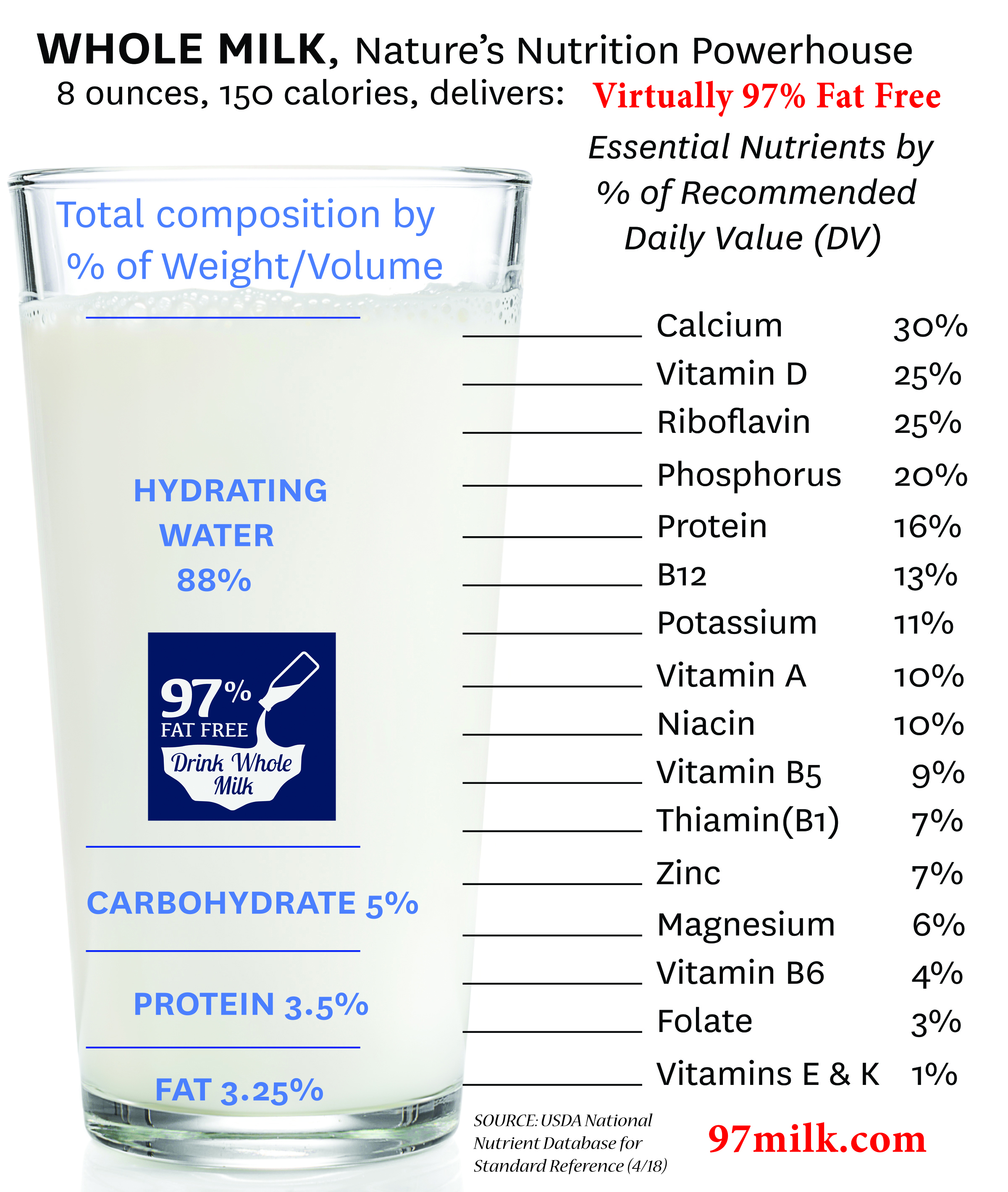
Legislators were surprised to learn that high school students can’t buy whole milk but they can buy Mountain Dew Kickstart at school. This 80-calorie beverage made by PepsiCo — the company that also created a Smart Snacks website for school foodservice directors and received the GENYOUth Vanguard Award last November — is deemed “okay” by the current USDA Dietary Guidelines because it has fewer calories than milk, zero fat and a list of added, not natural, vitamins and minerals. But it also has 20 grams of carbohydrate, 19 grams of sugar in the form of high fructose corn syrup and zero protein, whereas whole milk has 12 grams of natural carbohydrate and 8 grams of protein.

In addition to Mountain Dew Kickstart, students in high schools and middle schools across the U.S. can buy other sweetened drinks like PepsiCo’s Gatorade as well as iced tea coolers. In addition, high schools are also permitted to have coffee bars.

Yet schools are prohibited from offering whole milk (3.25% fat) or reduced-fat (2%) with its high-quality protein and long list of natural nutrients – unless a child has a medical note from a physician.

On the flip side, schools must provide non-dairy substitutes like soy and almond beverage if a parent, not a physician, writes a note. And no notes are needed for students to throw away the milk and grab a sweetened high-carb beverage from PepsiCo.

“My purpose in coming here, after speaking with other foodservice directors across the state, is the changes that were made to allow 1% flavored milk last spring are having disheartening results. Schools have been doing the fat-free flavored milk as a requirement for so long, they don’t all understand the new rule,” Byler explained.

Part of the issue, she said, is they have their cycle menus done far in advance, and the changes to the milk — even if whole milk were suddenly allowed — do not fit into the nutrient analysis of the meal.

Before 2010, the milk was not included in the nutrient analysis of the school lunch or breakfast.

“It’s a breath of fresh air to hear members of Congress talk about this,” said Byler. “This bill (HR 832) is amazing, but it doesn’t have legs to stand on without the regulatory change to exclude milk from the nutrient analysis of the meal. For schools to have this choice, this bill needs to pass, and the milk needs to be a standalone component of the meal, otherwise schools won’t be able to make it work.”

She said the same goes for the Smart Snacks program. An exception to regulations is needed so schools can offer whole milk, just as they can offer PepsiCo’s energy drinks.

At the federal level, Rep. Thompson said the Pennsylvania Congressional delegation is working on getting a companion bill for HR 832 in the U.S. Senate. (This actually did happene a day after this report was filed for press — Senators Pat Toomey (R-Pa.) and Ron Johnson (R-Wis.) introduced the Milk In Lunch for Kids (MILK) Act this week. Bill number and text have not yet been posted)

“The biggest thing we need is to generate enough public support,” said Thompson.

The Dairy Advisory Committee urged Pa. State Senators to support a resolution on the federal bills.

On The Dairy Pride Act, Thompson was more optimistic. He believes FDA is giving an indication that the public has been misled by competing alternative beverages that infer by the name “milk” to have the nutritional attributes of milk.

Tricia Adams spoke of the many school tours she conducts at Hoffman Farms in the spring and summer, and what the kids tell them about school milk.

She says the kids are “brutally honest. They tell us, ‘This is the good milk!’ But just to get whole milk for a tour, I have to special order weeks in advance,” she says. “It’s a struggle to get enough of it at one time. It’s just not available.”

 Her father Dale Hoffman observed that farmers are so busy, it’s tough to be involved in these things. He said it is scary how fast Pennsylvania is dropping in cow numbers and production.

“Somewhere, we need to get our foot in the door. This has got to be done if Pennsylvania is going to compete. We have the milk and the consumers right here,” said Hoffman. “We need your help. We hear it’s tough to get done, but it’s time to get whole milk back in the schools.”

Mike Eby said he sold his cows three years ago, but producers selling today “are getting half of what I got.” He said the dairy situation is increasingly difficult for farm families to manage whether they are staying in, or getting out, as the value of their assets shrink along with income.

“Where is our milk going to be coming from when we all go out?” he asked.

Eby describe the power of whole milk. He has been part of an effort to give out whole milk that is standardized to 3.5% fat instead of 3.25% to meet the California standards. 

“We give the milk away at four parades a year,” he said, and the math adds up to over 10,000 individual servings. “We could give more! They love it. People are screaming for that milk.”

Circling back to Rep. Thompson’s point. The problem isn’t the product, the problem is the government getting between the farmer and the consumer when it comes to marketing the high value, nutritious and delicious product they produce.

State issues were also discussed, including needed reforms to the Pennsylvania Milk Marketing Law. Each participant also gave a fast view of the long dairy situation.

“The average dairy farmer we serve is under 150 cows, and our feed mill has 107 years in the business. We’ve seen a lot, but nothing as bad as this,” said Karl Sensenig. “We are greatly concerned about what is the future for the generations to come in our business and on the farms. We have become their bank. The situation is beyond dire, and I’m afraid we haven’t begun to see the true loss of farms. Even if the price gets a little better, many are so far gone that there’s no way out.”

Katie Sattazahn also questioned the future. She is integral to the farm operated by her husband and his brother, and she works off the farm. They upgraded their facility three years ago, never expecting a downturn of this duration and magnitude.

“The biggest thing is, we are supposed to be glad when we have a breakeven year, but that has to change. As dairy farmers, we need to be profitable to put something back into our operations,” she said. “Every dollar we spend is spent locally. Our farms provide open space and benefits for the environment, and the money we spend in our business helps the economy.”

With two young children, Sattazahn says, “If it stays the way it is, why would we encourage them to do this?”

Bonnie Wenger explained the conditions she sees in the community of dairy farmers. She explained to lawmakers the added difficulty of this year’s prevented plantings, a struggle that will get worse this fall in terms of feeding cows.

Byler also talked about the dire situation in her county. “The dairy farms support our communities. They support other businesses and bring in revenues for our school districts,” she said. “What will be left for our small rural communities?”

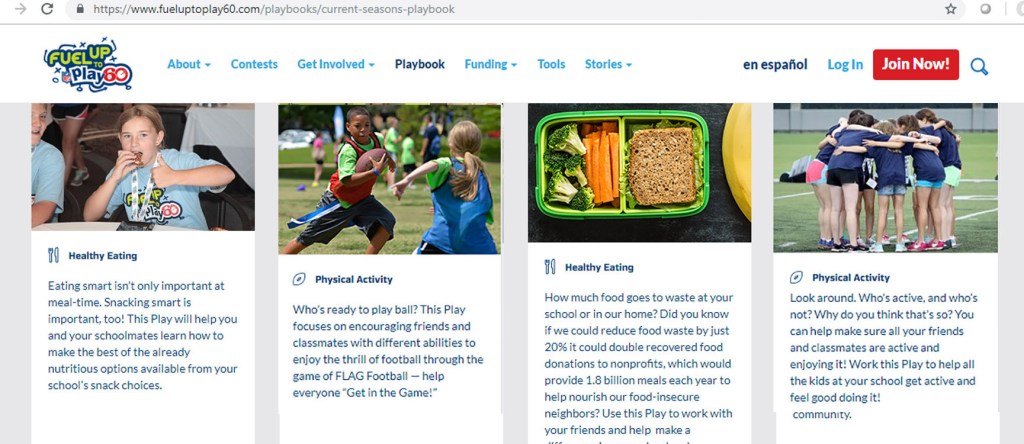
On the school front, she showed examples of the marketing foodservice directors see, pushing them away from animal protein. This included visuals from Fuel Up To Play 60 and its focus on fat-free and low-fat. She wonders why they can’t just talk about milk, why they have to pound home the fat-free, low-fat with every caption, every sentence, over and over. She has trouble seeing the value in it from the side of the dairy farmer or the school program.

Lawmakers and staff were taking notes, writing in the margins and circling things on the outline provided. By the end of the session, Sen. Argall said, “You’ve created a lot of work for us.”

Congressman Meuser noted this is now an even higher priority for him.

Sen. Martin said this is on the Pennsylvania Assembly’s radar, and he mentioned a package of bills coming that are “just a start.” He mentioned the dairy commission being put together to advise the legislature on dairy. 

They reminded the group to urge others to attend the rally on June 18 at 11:00 a.m. at the Capitol Rotunda in Harrisburg to support the federal dairy bills on whole milk in schools and mislabeling of non-dairy beverages. The media will be there, and this is a chance to get the public involvement that is necessary.

Here is another link to 8 ways you can help. (Swipe to read second page of this pdf).

-30-

Even in worst of times, milk stayed true

Let’s work to put some pressure on our elected representatives to stop this immoral travesty of sub-par nutrition to our children. — Renee Troutman

This letter, which ran on the cover of Farmshine, February 15, 2019, is republished here with permission.

By Renee Troutman, Myerstown, Pennsylvania

Recently in my children’s history lessons about World War I we were learning specifically about war efforts on the home front to ration and save food so there would be enough for our soldiers and European countries ravaged by war. Americans were asked to save on wheat, meat, fats, and sugar. They selflessly sacrificed things like beef, pork, and candy. They ate more vegetables and used fruit preserves to sweeten their desserts. Not a crumb of bread was wasted.

In each history lesson we also read some form of original history, whether it be a speech, newspaper article, songs, or letters. This time we read excerpts from a popular 1918 publication called Foods That Will Win the War and How to Cook Them that gave recipes and tips to help with the rationing efforts. There was a section about using milk and I thought it was very interesting. Here’s what it says:

“To Save Milk: Use it all. Buy whole milk and let the cream rise. Use this cream, and you secure your milk without cost. Economize on milk and cream except for children. The children must have milk whole. Serve buttermilk. Serve cottage cheese regularly in varying forms. It is especially nutritious. Use cheese generally.”

Is anyone else as intrigued as I am that even during times when rationing food was a necessity, the thought of giving remnants of milk to children wasn’t even a consideration? Conventional wisdom and common sense knew that children going through the most critical growth periods of their lives needed whole milk for proper development. In no way was anyone going to suggest that children be deprived of nutritious, dietary fat. Many vitamins in milk are fat soluble and calcium absorption is aided with the fat so giving children anything less made that nutrition null and void. Nobody was going to do that to children and nobody did.

But yet, 100 years later, while we’re supposedly drowning in surplus milk, here we are giving our children nutritional remnants of milk because the government tells us to. Whole milk has somehow been villainized even though milk has been heralded as a sacred nutritional staple for millennia. Our national security is now being compromised as we lose farms daily to financial ruin as milk drinkers are dismayed at the blah of skim milk. And, to add insult to injury, farmers are shooting themselves in their own foot as promotion money forcibly taxed off of their meager milk checks is used to push this erroneous and devastating no-fat/low-fat message.

Our children deserve so much better. We produce an abundance of wholesome, nutritious, and delicious milk in this country. I’d really like to know why we are mandated by the government to only give ourselves measly remnants. The tide needs to turn, and fortunately, I think it is.

Let’s work to put some pressure on our elected representatives to stop this immoral travesty of sub-par nutrition to our children. Call your U.S. Congressman to make HR 832 Whole Milk for Healthy Kids Act of 2019 to happen and fast. Do whatever you can yourself to educate the public about the truth and goodness of whole milk and let’s make the consumers we provide for confident and excited about using our whole product again and not just the measly remnants of it. 

-30- 

It’s 4th and 40 with 4 seconds on the clock, backed up to our own endzone…

Web-based FUTP60’s branding is long on NFL, short on dairy, while funding is long on dairy, short on NFL

By Sherry Bunting, Farmshine, Feb. 8, 2019

BROWNSTOWN, Pa. — Since 2010, Fuel Up to Play 60 (FUTP60) has been GENYOUth’s flagship program, a marriage between the NFL’s Play 60 initiative for students to participate in 60 minutes of exercise daily and the Fuel Up portion touted by DMI and underpinned by USDA, focusing on healthy eating, defined as whole grains, fruits and vegetables, including fat-free and low-fat dairy. This is a program where dairy checkoff outspends the NFL $4 to $1.

In its 2016-18 report “Building the Evidence Base for FUTP60,” published in January 2018 and available here, the FUTP60 program is called “the nation’s largest in-school wellness program with over 73,000 enrolled schools.” The report states further that, “FUTP60 aims to improve K-12 school nutrition and physical activity environments using a student-centered approach and social marketing tactics along with promising practices for creating positive, incremental environmental changes.”

The team regularly tracks key indicators of program reach, effectiveness, adoption, implementation and maintenance, according to the report.

An illustrative infographic documents progress through educator surveys, reporting in January 2018 that of the 38 million students in the 73,000 enrolled schools, 13 million were “actively engaged” in the program.

Under healthy eating, the report states that “because of FUTP60, 14 million students are eating healthier, consuming vegetables, fruits, whole grains, fat-free or low-fat dairy (milk, yogurt, cheese) and that 18 million students are more physically active.” 

But there are no surveys tracking actual food selections as the impact data are self-reported as “educator insights.”

In fact, all of these numbers are self-reported as the fine print states: “Data are based on a combination of annual FUTP60 Utilization Survey of almost 10,000 educators nationwide, funds for FUTP60 reporting and program enrollment data.”

So, just 10,000 educators are surveyed for the report, but 73,000 schools are said to be enrolled.

According to the Jan. 2018 report, the GENYOUth funding supported the following items in 2016-17: 2333 breakfast carts, 2,338 school kitchen equipment upgrades, 1833 projects to create active classrooms, 244 projects to improve physical education, 1984 school-wide walking clubs, and 741 cafeteria makeovers.”

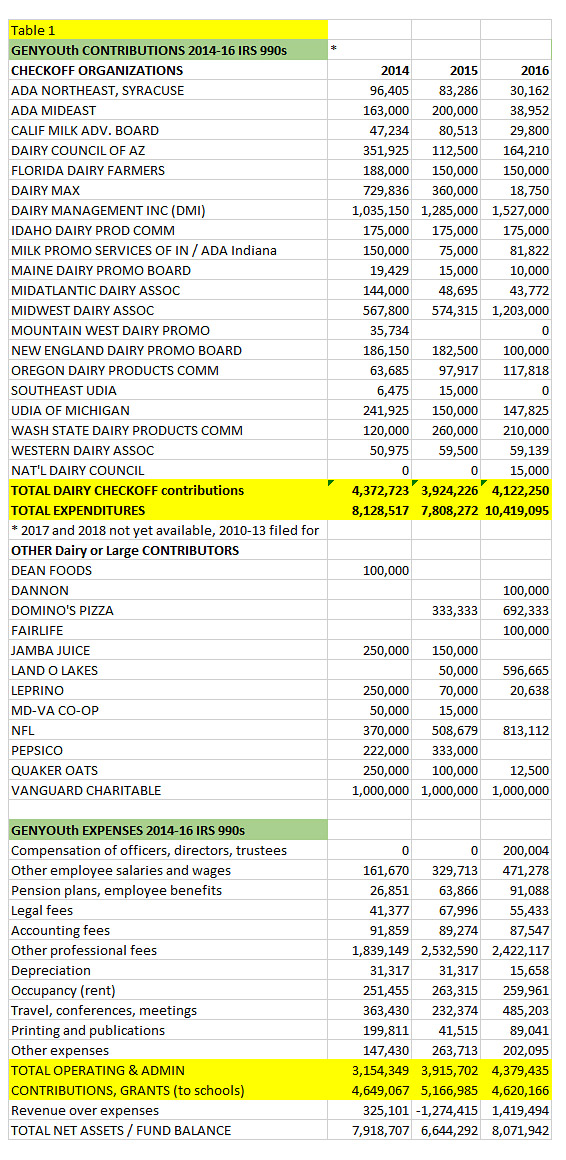
The report describes the funding as “generously donated by America’s dairy farmers, U.S. corporations, non-profit organizations and philanthropies.” (Table 1).

FUTP60 was founded in 2009. GENYOUth was licensed as a non-profit in 2010, and a memorandum of understanding (MOU) was signed by the National Dairy Council, NFL and USDA in 2011. IRS 990 forms for 2014-16 available at guidestar.org show dairy farmer checkoff organizations are the single largest contributor to GENYOUth – outspending the NFL $4 to $1, while bound by the MOU signed with USDA to not use the platform to advertise. Meanwhile, the entire program is clothed in NFL branding and USDA dietary dogma. Table compiled by Sherry Bunting with available 990s for 2014, 2015 and 2016.

Peer-reviewed articles mostly studied the design of the program. However, a 4-year (2011-15) review of the impact of FUTP60 was published in the March 2017 edition of the American Journal of Preventive Medicine, available here.

The authors studied participants in schools within the 32 NFL franchise markets, including a range of 50,000 to 100,000 students from just 497 schools (not 10,000 nor 73,000 schools). These 497 schools completed FitnessGram assessments annually for 2011-2015. Program participation was not required, and its implementation was evaluated each year through self-reported school surveys. 

The study measured the main outcomes of aerobic capacity and Body Mass Index (BMI) of students. Results showed that about 19% of the 497 schools were “classified as FUTP60 programming schools.”

Annual improvements in aerobic capacity were “significantly greater in schools that participated in the programs for both girls (3%) and boys (2.9%) compared with non-program schools. The annual improvements in BMI Healthy Fitness Zone achievement were also higher in girls (1.3%) and in boys (1.2%) from schools that participated in the program vs. those that did not.”

The report stated that schools implementing the programs for the entire 4-year period tended to have better improvements in aerobic capacity than schools enrolled for only 2 or 3 years.

Still, the study authors concluded that, “The results … support the utility of the NFL Play 60 physical activity promotion programs for improving youth aerobic capacity and potentially helping to reverse the prevalence of overweight / obesity. However, the overall program adoption rate is low.”

Most of the FUTP60 program is web-based, with toolkits for lead educators at participating schools. In fact, IRS Form 990s for 2014-16 show that of the $7 to $10 million in funds received annually through checkoff and other organizations, roughly $3 to 4 million was used annually in the form of grants to qualifying schools and of the remaining $4 to $6 million, an average of just $109,000 (roughly 1%) from 2014 through 2016 was used for printing or publishing materials.


FUTP60 is mainly a web-based program where a playbook and toolkits are available for schools to choose one healthy eating play and one physical activity play to implement to qualify for up to $4000 a year for physical activity or foodservice equipment or projects. The playbook branding is long on NFL branding, short on dairy. DMI cites the mobile breakfast carts as a ‘prime mover’ for students to consume more fat-free and low-fat milk, yogurt and cheese that are among the breakfast options offered.

The detailed website is augmented by NFL ‘Play60’ apps that students can download and use on electronic devices to participate in ‘virtual challenges’ relating to movement and activity.

The less than $1 million contributed by the NFL and the larger number Commissioner Goodell articulates based on ‘services’ can be considered as furthering the advertising value for the NFL — attracting future generations to the game while attracting schools to participate in FUTP60. The FUTP60 infographic explains how the NFL “brings excitement to school wellness”… with these 2016-17 statistics: 2700 NFL players, mascots and cheerleaders visited schools, 4200 local events were held, 12,000 flag (football) kits were donated to schools to get over 6 million students moving more, and over $1 million in hometown grants were donated to schools.”

It is certainly true that there is plenty of NFL branding in this program under the auspices of “bringing NFL excitement to physical activity” — even though…

America’s dairy farmers — through their mandatory checkoff organizations — outspend the NFL $4 to $1, according to available 2014, 2015 and 2016 IRS 990s at guidestar.org

Even the video spots created by DMI for this year’s social media lead-up to the 53rd Super Bowl were long on NFL branding and short on dairy messaging. Read more about that, here.

Again, the Youth Improved Incorporated Foundation, doing business as GENYOUth, is short on dairy and long on NFL.

FUTP60 is largely a program focusing on physical activity, and there are other areas of youth wellness that are being added each year.

This year’s new foray for GENYOUth is sleep studies. The new big thing in weight-loss is getting enough sleep.

As it grows, GENYOUth’s founding and primary funding is by dairy farmers who see their message diluted – just like the flavor of their milk at the school lunch counter or mobile breakfast cart.

The thinking is that fat-free and low-fat dairy can be quietly positioned for the future within this overall youth wellness effort. Insiders put stock in the mobile breakfast carts that schools can earn using FUTP60 healthy eating and physical activity ‘plays’ to score ‘touchdowns’.

DMI staff point to these breakfast carts as opportunities for children to consume more fat-free and low-fat milk and yogurt and skim-processed cheese.

Should dairy farmers be investing in youth wellness? That feels like a good idea. But when there are so many questions about how ‘well’ kids are permitted to eat at school, one has to wonder where this is all going.

In terms of truly promoting dairy, this all has the feel of a hope-to-catch, hail-Mary-pass that is destined to be intercepted vs. a game plan that earns a win for the home-team that sits at 4th and 40 with 4 seconds on the clock — backed up to their own endzone.

-30-

Thompson, Peterson introduce Whole Milk for Healthy Kids Act of 2019

schoolmilkiStock-510657195web.jpgBipartisan bill would allow whole milk as option in school cafeterias

WASHINGTON – Making good on a promise to introduce legislation to bring whole milk back to schools, U.S. Representative Glenn ‘GT’ Thompson (R-PA) has joined forces with House Agriculture Committee Chairman Collin Peterson (D-MN) to introduce a bipartisan bill to allow for unflavored and flavored whole milk to be offered in school cafeterias.

H.R. 832, the Whole Milk for Healthy Kids Act of 2019 recognizes the importance of milk to the health and well-being of growing children.

Last year, the U.S. Department of Agriculture Secretary Sonny Perdue directed USDA to allow schools to serve 1% low-fat flavored milk in school meal programs that had been restricted previously to fat-free flavored milk.

H.R. 832 would take this further to allow whole milk to be included as well.


“Milk is the No. 1 source of nine essential nutrients in the diets of our students, but if they don’t drink it these health benefits are lost,” Rep. Thompson said in a press release Wednesday (Jan. 30). “Milk consumption has been declining in schools throughout the nation because kids are not consuming the varieties of milk being made available to them. It is my hope that the Whole Milk for Healthy Kids Act will bring a wider range of milk options to American lunchrooms so students can choose the kind they love best.”

“I’m proud to join Congressman Thompson in this effort that will provide more choices for nutritious and healthy milk to kids in schools, and a valuable market for dairy farmers in Minnesota, Pennsylvania and nationwide at a time when they’re continuing to face extremely difficult market conditions,” Chairman Peterson said in a statement.

Rep. Peterson is Chairman of the House Ag Committee and Rep. Thompson is a member of the House Ag Committee.

Thompson is also a member of the House Committee on Education and Workforce to which the bill was referred after its introduction on Jan. 29.

The nine original co-sponsors of the bill include Agriculture Committee Republican Leader Mike Conaway (R-TX) and three members of the Committee on Education and Workforce to which the bill was referred — Rep. Lloyd Smucker (R-PA), Rep. Dan Meuser (R-PA) and Rep. Elise Stefanik (R-NY).

Additional co-sponsors are Rep. Chris Collins (R-NY), Rep. Rodney Davis (R-IL), Rep. John Joyce (R-PA), and Rep. Mike Kelly(R-PA).

In a press release late last week, Thompson gave some background on this bill. He noted that in 2010, Congress passed the Healthy, Hunger-Free Kids Act which amended nutrition standards in the School Lunch Program.  Among the changes, the law mandated that flavored milk must be fat-free within the program.

This 2010 law, along with lower participation in the program, led to an alarming decline in milk consumption in schools since 2010. Declining milk consumption in schools not only impacts students, but also dairy farm families and rural communities across the nation.

Two years ago, to help encourage nutritious options in the School Lunch Program and increase consumption, Rep. Thompson introduced legislation – H.R. 4101, the School Milk Nutrition Act of 2017 – which provided schools the option to serve 1% low-fat flavored milk varieties.

In May of 2017, the USDA announced a rule that allowed schools to receive waivers for low-fat (1%) flavored milk, rather than only fat-free, which is the essence of H.R. 4101.

On January 29, 2019, Rep. Thompson introduced this bipartisan bill — H.R. 832, the Whole Milk for Healthy Kids Act of 2019. This legislation builds on the previous bill and USDA’s rule by allowing whole milk (both unflavored and flavored) to be offered within the School Lunch Program.

Producers and consumers are urged to contact their representatives to support this bill. Key members of Congress to reach out to on the Committee on Education and Workforce, which will be the committee to consider the bill, include Rep. Joe Courtney (D-CT), Chairman Bobby Scott (D-VA), Rep. Marsha Fudge (D-OH). View all Congressmen and women serving on this committee here

Follow the progress of H.R. 832, the Whole Milk for Healthy Kids Act of 2019 here.

-30-

Are dairy farmers funding their demise? USDA ‘straight-jackets’ promotion; GENYOUth alliances suspicious

AUTHOR’S NOTE: This is Part 2 of an investigative report on GENYOUth, which began with USDA contacting National Dairy Council in Sept. 2009, National Dairy Council contacting National Football League in 2009/10 and an official signing of a memorandum of understanding (MOU) between NDC and NFL with USDA in February 2011. 

By Sherry Bunting, from Farmshine, Friday, January 18, 2019

They call it “the dairy farmers’ youth wellness program,” but GENYOUth is under the thumb of USDA with some questionable corporate alliances and trends underway.

This multi-part series looks at GENYOUth’s founding, its alliances, its mixed-messages, intended and unintended consequences, its partners and the new alternative products they are and will be introducing into the nutritional vacuum paved by low-fat and fat-free promotion, the winners and losers, and the impact on our dairy farms, and our children.

Let’s pick up where we left off from last week’s Part One.

Helping America’s youth lead better and healthier lives is a worthy pursuit, and there is no intention here to blame good-hearted people trying to do good within the straight-jacket of USDA control. What is being questioned is the direction. What is being exposed is the roots of the oak tree and its impact on our dairy farms and our children.

The problem with the GENYOUth model is that it is primarily funded by mandatory dairy check-off dollars and the government control of it.

The anti-animal and environmental NGO’s (non-governmental organizations) are driving decisions by Big Food, Big Ag, Big Government (and the World Health Organization). And there are new billionaire corporate “sustainability” alliances poised to profit on this main course, while dairy farmer GENYOUth “founders” hope for crumbs.

GENYOUth began in 2010 as a memorandum of understanding (MOU) between National Dairy Council and National Football League with the U.S. Departments of Agriculture, Education, and Health and Human Services. This six-way MOU was officially signed on Feb. 4, 2011 during the Superbowl that year (below).

GENYOUth-MOU(2011).jpg

This 2011 USDA photo found on a USDA flickr stream shows lots of cameras, but few, if any, dairy farming publications were notified. The Memorandum of Understanding (MOU) was signed Fri., Feb. 4, 2011 during Superbowl week in Dallas Texas. It had been under development since Sept. 2009. The MOU outlined the joint commitment of the NFL, USDA, National Dairy Council, GENYOUth Foundation, to end childhood obesity. Signing from left were NDC President Jean Regalie, Ag Secretary Tom Vilsack, NFL Commissioner Roger Goodell, GENYOUth CEO Alexis Glick.

According to Guidestar, the non-profit is listed under the name Youth Improved Incorporated (aka GENYOUth) with the tagline ‘exercise your influence.’ It refers to itself as an NGO. (NGO is defined as “a nonprofit organization that operates independently of any government, typically one whose purpose is to address a social or political issue.”)

GENYOUth was launched to increase physical activity among schoolchildren as well as to encourage healthy eating with emphasis on school breakfast and then mobile breakfast carts. The 2014 (most recent) progress report noted that 73,000 schools and 38 million children had been reached by Fuel Up to Play 60 (FUTP60), affecting the health and wellness of an estimated 14 million students’.

The only reference to dairy in the FUTP60 message pounded home about fruits, vegetables and whole grains is the inclusion of low-fat and fat-free dairy.

A year ago at a bank meeting in front of 500 farmers, then U.S. House Ag Committee vice chair G.T. Thompson of Pennsylvania said he wanted his healthy school milk bill to bring the standard up to 2% or whole milk, but, he said “producers and processors came to me and told me to go slow, to keep it at 1% and take baby-steps.”

Who were the “producers” and “processors” coming to him with that request? National Milk Producers Federation (NMPF), International Dairy Foods Association (IDFA) and the check-off MOU under the thumb of USDA.

Those same entities then turn around and tell grassroots farmers that they are forced to work within the confines of what USDA will allow. And so, the circular argument continues. Round and round we go.

Which brings us back to the Nov. 27, 2018 GENYOUth Gala in New York City and the Vanguard Award to PepsiCo.

PepsiCo has been a GENYOUth partner for seven years. In 2018, PepsiCo not only paid its “hero” sponsorship of $150,000 for the event, they gave an additional $1 million for the purchase of 45 additional mobile breakfast carts and the Espanol version of FUTP60.

According to the only piece of the 2011 MOU that can be found, the NFL, NDC, and GENYOUth have agreed not to use FUTP60 “as a vehicle to sell or promote products or services.” But it is clear that the NFL and other corporate partners, like Pepsi, have brand recognition.

How is dairy’s brand recognized? Hats are tipped at the Gala to “America’s dairy farmers” as the founders who launched the platform. But they are hog-tied by generic promotion and exclusion of the full nutritional value of their product — whole milk, real butter and real cheese — within the government straight-jacket.

GENYOUth was created while Tom Vilsack was Secretary of Agriculture (below). According to cross-posted blog entries between DMI and USDA near the end of 2009: “The USDA discussed in September (2009) a plan to develop the Memorandum of Understanding (MOU) between USDA, the NFL and DMI to allow USDA programs and Fuel Up to Play 60 to collaborate and collectively tackle the critical issue of children’s health.”

VILSACK-FUTP60(2011).jpg

Former Secretary of Agriculture Tom Vilsack, who is currently CEO of the check-off funded U.S. Dairy Export Council (USDEC), is photographed in 2011 with young people during Superbowl week in Dallas, Texas, after the signing of the 2011 GENYOUth MOU — 18 months after USDA first discussed the plan for the MOU with the National Dairy Council and a year after NFL commissioner Roger Goodell says Tom Gallagher of DMI approached him. 2011 USDA photo

When former President Bill Clinton was invited to speak about Vilsack at the 2017 Gala where Vilsack was presented with the 2017 Vanguard Award, Clinton, a vegan, talked about every entity in the “diverse partnership” that he was celebrating — except for America’s dairy farmers.

He talked about how children receive 40 to 60% of their calories from drinks in school. He talked about turning the obesity epidemic around by everyone taking responsibility in that area. He talked about how Vilsack’s leadership with Michelle Obama, made beverages and snacks abide by the fat-free rules, including school vending machines. He talked about how Vilsack was instrumental “under the radar… working for a healthier generation of kids before coming to USDA and before the launch of GENYOUth.”

Meanwhile, the more the government’s direction squeezes healthy fat from the diet, the more the obesity figures in children continue to grow.

This year, at the 2018 Gala, GENYOUth CEO Alexis Glick thanked each partner. “We give a heartfelt thank you to our founding partners America’s dairy farmers and the National Football League and the players association,” said Glick in a YouTube video of the November Gala. She had previously thanked longtime partners Land O’Lakes and Domino’s while also acknowledging Mike and Sue McCloskey (fairlife) as well as Leprino and Schreiber.

“I say to our farmers: You had a dream. And we have been blessed to be part of that dream. You gave us life. You believed in us. And can you believe we are standing here today on the cusp of the 10-year anniversary of FUTP60?” she said.

“And we extend an extra special thank you to PepsiCo,” Glick continued. “The generosity of your vision, your resources, your team, time and talent have changed our organization.”

In accepting the Vanguard Award on behalf of PepsiCo, CEO Albert Carey said: “We’ve had a wonderful partnership with the NFL over the years… doing things together like the Pepsi half-time show and Gatorade sidelines. We have had ads and retail programs for both of our brands,” he said.

“But the one NFL program our team noticed probably 10 years ago, or maybe 9 years ago, is one we have admired and wanted to be part of and that was Play 60,” said Carey, careful not to include the Fuel Up (dairy) part of the Play 60 tagline.

Carey said “you guys are doing a fantastic job inspiring kids… using football role models.”

He went on to say that PepsiCo wanted to be part of the program because of the importance of kids being active.

“But we also believe at PepsiCo that we need to provide healthy products for our consumers,” said Carey. “Some of you may be familiar with our mission ‘performance with purpose.’”

He described this as “getting great business performance while also serving others… on the part of the environment… or many other ways, but this one particular way is about providing healthier foods for our consumers.”

Carey said he thought PepsiCo had done a pretty good job at this over the past several years, “but we haven’t talked about it much. You see some obvious things like Pepsi zero sugar, Gatorade Zero,” he said. “But you don’t hear much about Bubbly Sparkling Water, Life Water, Quaker oat milk, and we just bought a company called Bare Snacks and our Kevita Kombucha products (probiotic drinks).”

He mentioned that the Quaker oat beverage, which he personally called “oat milk” but in reality this product is labeled “oat beverage for cereal, smoothies, coffee and more”. It is being launched this month and will be in stores by March.

The PepsiCo website mentions these products as part of the company’s commitment to further the World Health Organization goals of alternative products to reduce saturated fat consumption and reduce greenhouse gas emissions, thereby improving global environmental and nutritional sustainability.

Carey said the “oat milk” and bare snacks and probiotic drinks are part of PepsiCo goal of “converting its portfolio to healthier foods for the future.”

In fact, PepsiCo is also in development of so-called non-dairy ‘cheese’ and ‘yogurt’ snacks through its “Nutrition Greenhouse Accelerator program, including the purchase of Health Warrior, which PepsiCo said in an October 2018 Food and Beverage article “is a nutrition-forward trailblazer that can provide great insight into high value categories and consumers while benefiting from our expertise and resources to bring plant-based nutrition to more people.”

Meanwhile, the GENYOUth program bestowed the 2018 GENYOUth Vanguard Award on PepsiCo for its seven years of partnership and its commitment to give an additional $1 million, which PepsiCo’s Carey said would fund Play 60 in Espanol as well as 45 new mobile school breakfast carts, bringing PepsiCo’s cart total to 100.

It will be interesting to see what may appear on these carts in the future, given the new oat beverage, plant-based probiotic drinks, and other “Nutrition Greenhouse” products emerging in the PepsiCo portfolio.

-30-

Rep. Marino introduces Whole Milk Act

Seeks to make school milk great again by making it whole again

By Sherry Bunting, reprinted from Farmshine May 4, 2018

d3938-1 (1).jpg

Peggy Greb, USDA ARS

WASHINGTON, D.C. — It has been talked about for years, and the evidence has been put before USDA and the Dietary Guidelines Advisory Committee even before the 2015 cycle began, but while the caps on cholesterol were removed, freeing the egg industry to promote the healthiness of eggs, the caps on saturated fat were left where they are, despite the same body of research and investigation showing just how flawed the 30-plus years of deteriorating dietary advice were from the beginning.

Meanwhile, schoolchildren continue to be served only fat-free and lowfat milk, and this means a huge lost opportunity to serve children the best tasting best nutrition available while improving the loss of milk markets and value affecting dairy farmers across the nation.

Tom-Marino.jpg

Congressman Tom Marino (PA-10th)

In fact, by at least one estimate, the move by the Obama administration to reduce flavored milk from lowfat (1%) to fat-free, alone, resulted in lost sales of 288 million cartons of milk since 2014 — not to mention milk on the school lunch tray ending up in the trash.

Congressman Tom Marino, representing Pennsylvania’s 10th legislative district seeks to put an end to this loss of dairy nutrition and markets. Last Thursday, April 26, he introduced The Whole Milk Act, H.R. 5640, which was referred to the Committee on Education and Workforce. Rep. Virginia Foxx of North Carolina chairs this committee, and G.T. Thompson of Pennsylvania, who serves as vice chair of the Ag Committee, also is a member of the Education and Workforce Committee.

In fact, Rep. Thompson later signed on to become an original cosponsor of Marino’s Whole Milk Act.

Rep. Thompson has a separate bill as well, which was introduced last year to codify the small administrative step taken by Secretary Sonny Perdue last fall, allowing 1% lowfat flavored milk to be served in schools instead of the previous rule of fat-free-only. Choices for white milk were already at 1%. Not much forward movement has been seen in the School Milk bill introduced by Thompson.

Marino’s H.R. 5640 affects the unflavored milk offered by schools. It seeks to amend the Richard B. Russell National School Lunch Act to allow schools that participate in the National School Lunch Program to serve unflavored whole milk.

Rep. Marino also sent a letter to Secretary Perdue last week, asking USDA to update guidelines to the National School Lunch Program to allow schools to sell unflavored whole milk during lunch.

“Under the Obama Administration, schools participating in the National School Lunch Program were barred from selling unflavored whole milk and could only sell 1% unflavored milk,” said Rep. Marino in a statement.

“When the Obama Administration changed the National School Lunch Program to allow only 1% unflavored milk to be sold during school lunches, they claimed to be doing a service for our school children,” Marino’s statement indicated. “We saw the complete opposite, children stopped drinking milk in school, and food waste went up.”

Marino referenced the “Numerous studies that have shown consuming unflavored whole milk to be a good way to prevent childhood obesity and help your body absorb more vitamins. This bill will not only help our children get the proper nutrition they need to lead a healthy lifestyle, but will also help America’s dairy farmers who have been struggling with stagnant milk prices.  I strongly urge my colleagues in the House to support this bill.”

While this bill will not, by itself, correct the issues with milk and dairy in the National School Lunch Program, with its questionable rules on the percentage of lunch calories that are allowed to come from fat, the truth is that if this bill is taken up by the committee and is voted on, passed and signed by the President, it does send a strong message that the needle must move on this issue sooner, rather than later.

Early this week, Nina Teicholz, author of The Big Fat Surprise and founder of the Nutrition Coalition, tweeted her support for H.R. 5640.

“This bill is supported by the science!” writes Teicholz. “Never was there any science (to begin with) to show that kids should restrict their consumption of saturated fats; fats, nutrients are needed for growth.”

The Nutrition Coalition echoed, stating that H.R. 5640, The Whole Milk Act, “is supported by peer-reviewed science showing whole-fat milk is equal to or better for kids than skim.”

In fact, at issue is that while both skim and whole milk contain the 9 essential vitamins found in milk, those 9 essential vitamins do no child any good in their school lunch or breakfast if they don’t make their way from the carton to the belly and end up instead in the trash.

One thing is for sure. Whole milk tastes better. Giving schools this choice allows whole milk, at just 3.25 to 3.5% fat, or even 2% to be the more nourishing choice because it is more likely to be consumed. With better tasting milk at school and the satiety of these healthy fats, children can think better, and this would be a positive step toward turning around the epidemic of childhood obesity and diabetes.

Nina Teicholz-27

With this graph showing the rise in obesity as the Dietary Guidelines worsened from the McGovern food pyramid through today, Big Fat Surprise author Nina Teicholz told PA Dairy Summit attendees in February that this graph, itself, does not show causation, but she revealed the growing number of studies that have proved it as well.

A growing number of cardiologists are already making this recommendation to patients as the veil has been lifted to reveal that consuming fats is not what is making us fat. (See Chart 1).

Chart 2Meanwhile, Teicholz shows that, “The introduction of skim milk is arguably what turned kids away from milk altogether (because it tastes bad); then kids turn to sugar-filled options instead,” she writes on Twitter. “The drop in milk consumption is driven by the decline in whole milk.” (See Chart 2).

In a separate letter to Agriculture Secretary Sonny Perdue, Rep. Marino notes that “The Healthy, Hunger-Free Kids Act of 2010 required USDA to update federal nutrition standards for school meals. This update included schools only being able to offer one cup of fat-free or I% milk. These changes have led to a decrease in milk consumption and a significant increase in food waste in schools. Additionally, these guidelines have negatively impacted America’s dairy farmers who have been suffering from low milk prices and a significant decrease in the purchase of fluid milk.”

He notes that not only is milk the number one source of 9 essential nutrients, “it also provides  significant health benefits. For instance, Conjugated Linoleic Acid (CLA), a fatty acid found in milk, has been shown to reduce the risk of cancer and is a great source of protein,” writes Marino. “Furthemore, if children do not drink milk, it is very difficult for them to get sufficient amounts of three of the four major nutrients lacking in most children’s diets: calcium, potassium, and Vitamin D.”

Marino notes that the bonus is that “increased milk sales would help America’s dairy farmers who have been impacted by stagnant milk prices.

There are several ways we can all help support Rep. Marino’s Whole Milk Act.

First, contact your cooperative board members and ask them to let National Milk Producers Federation know that the dairy producers they represent want this bill supported. Contact organizations you are a member of, including your state Farm Bureau and the American Farm Bureau Federation and state and national breed associations, for example.

Most importantly, contact your representative in the U.S. House and ask them to cosponsor and support H.R. 5640 The Whole Milk Act. If you don’t know who to call, enter your zipcode here to find out who represents you

Also, call the U.S. House of Representatives at 202-225-3121 and let them know that H.R. 5640 is important for the health and well-being of our schoolchildren.

In addition, check this link to the Education and Workforce Committee and look for members who may be from your state, contact them, and the Committee chairwoman as well. Ask them to put this bill on the committee’s agenda. Its passage must begin in this committee.

Also, write to Agriculture Secretary Sonny Perdue or contact the USDA with your support for the letter Rep. Marino has sent in conjunction with introducing H.R. 5640 The Whole Milk Act. USDA is key to making school milk great again by making it whole again.

Finally, contact Rep. Marino’s office and thank him 202-225-3731.

Follow H.R. 5640, The Whole Milk Act, at this link.


-30-

Caption

TomMarino

At the Farm Bill hearing during the Pa. Farm Show in Harrisburg in January, Rep. Tom Marino was part of the panel. While he does not serve on the Ag Committee, he has attended this hearing the past two years it was held. He spoke from the heart and admitted he is not the most well-versed in agriculture and since he does not sit on the ag committee, has less influence on these things, but he said he comes home late at night from Washington and sees the lights on at the dairy farms in his district, sees the activity going on on the farms, sees what people put into producing a quality product and hears from constituents on these issues of school milk — brought up at Farm Show hearings also. He said at the 2018 hearing that he is tired of seeing things that don’t make sense and he said if the government is involved in these things, they better be getting it right or they should not be involved. Last week, Rep. Marino introduced The Whole Milk Act, H.R. 5640, to bring whole milk back to the National School Lunch Program. Photo by Sherry Bunting


Reinventing milk… promotion

MilkMarketMoosHeader070914.jpg

Reprinted from FARMSHINE, April 8, 2016

Fewer Americans eat breakfast today, adding to the milk consumption woes created when families stopped eating sit-down dinners, for the most part. Both were the staples of commodity fluid milk consumption that have been diminishing over the past two generations and four decades to where we are today.

Forecasters say it will only get worse. They are projecting continued declines in ‘white milk’ consumption while consumption of milk alternatives is predicted to increase dramatically through 2021.

A major reason is that the majority of urban consumers — up to 90% — do not view white milk (aka Vit. D whole milk) as a protein drink, when clearly it is the original, the natural protein drink.

But what is DMI working on? Alternatives. Checkoff dollars continue to flow through DMI to alternatives milks. Yes they are dairy products, but they are further processed, as in the case of Fairlife, which is ultrafiltered, for example.

I have had dairymen involved in these boards excitedly tell me: “We finally have a product consumers want!”

If they are referring to Fairlife, that may be true for consumers we’ve lost to Muscle Milk (which does contain some whey) or Almondmilk (which is the equivalent of eating an almond and chasing it with water full of thickeners, sugar and chemically added calcium and vitamins.)

But I find myself confused. Isn’t dairy promotion supposed to promote what contributes most to the dairy farmer’s milk check? I mean, it is the dairy farmer’s money, is it not?

As long as the Federal Order milk pricing scheme puts the value on Class I utilization, then the milk checkoff organizations should be most diligently promoting regular, straight-from-the-cow (pasteurized of course and maybe even flavored) milk as the healthy high-protein beverage it is, naturally, because I’m sorry to tell you friends, consumers just don’t know this information.

Milk: The protein drink that’s right under our noses and costs a lot less than fancy packaged and advertised alternatives — some of them complete frauds in that they are not even milk!

Why is it that milk alternatives can claim all sorts of things, but milk is not even allowed to advertise itself as 96.5% fat free! Why can’t the milk bottle say “8 times more protein than almondmilk per 8 oz serving!”

Why can’t it say: “Want Protein? Get Milk!”

Do we really need Coca Cola to revolutionize our branding? Or should dairy farmers take the bull by the horns and demand great packaging, savvy catch phrases, eye-catching point-of-purchase education, head-on comparisons to the fraudulent beverages that so wish to be milk that they call themselves milk.

No, USDA does not allow dairy farmers to promote their product comparatively with those other commodities that have stolen some of their market share by stealing the name milk. You dairy folks must play nice of course!

That’s hardly fair since dairymilk is losing market share. If you can’t defend your own market turf with your own collected monies, then what’s the point of collecting the money? All of these joint partnerships to sell cheese on pizza and mixes through frappes at McDonalds might move some more milk, but the value is in the Class I fluid milk, so unless we’re going to change the complicated milk pricing formula and glean more value and a guaranteed minimum for the manufacturing milk via its products, then we might just as well use the money to buy-back our own fluid milk and donate it to the poor to keep the demand for Class I tight vs. the supply.

Or put the money in a kitty to develop better fluid milk labels. Make them cool and splashy with P-R-O-T-E-I-N in large letters.

Milk: The original protein drink!

Milk: Protein drink of champions!

Milk: Why pay more? We’ve got what your looking for!

I could go on all day.

If the growth of our Class I milk markets rely on the USDA school lunch program, then we’re sunk and USDA is once again to blame for this dismal failure by tying the hands of school districts who want to serve 2% and whole milk.

Analysts say that the strong growth in the milk markets of emerging countries like Chile is attributed to their school milk programs.

In the U.S., milk is stigmatized as a “commodity.” We sure don’t help that with plain white bottles and lackluster graphics.

Milk alternatives such as soymilk and almondmilk (aren’t they so tricky in creating their own new words by paring their commodity to the word milk as one word) are increasingly viewed as ‘fashionable drinks’ and a more health-conscious choice compared to white milk.

Let’s reverse this trend by making dairymilk fashionable again!

Let’s call it dairymilk (a tricky combined word!) and come up with a new standard of identity that allows us to say 96.5% fat free instead of “whole.”

Maybe even come up with a standard for protein and say to call it dairymilk it must meet that protein standard and then colorfully package and protein-promote the heck out of it.

Analysts say that consumers like innovation in their drinks and they are finding “innovation” in the “newer milk categories” which are so much more attractive than the “mature” white milk category.

Okay then, let’s give the consumer what they want. Great tasting real milk but let’s reinvent the packaging and the promotion and the name… not the beverage itself.

Just think how much money we can save on fancy equipment if all we have to do is reinvent the promotion of milk, not reinvent the milk itself. After all, it is nature’s most nearly perfect food.

Maybe instead of fighting each other for Class I sales by moving milk all over to get the best price and utilization (see chart on page 13 showing that picture for the beleagured Northeast Order)… we should be fighting, instead, together, to save our beverage from its continued depreciation at the hands of internal politics, external politics, USDA rules upon rules, fraudulent not-milk-milks whom regulators ignore and even patronize, and other assorted casts of characters.