Gates et. al. peddle fake food, climate propaganda; Guarding real food ID will be critical

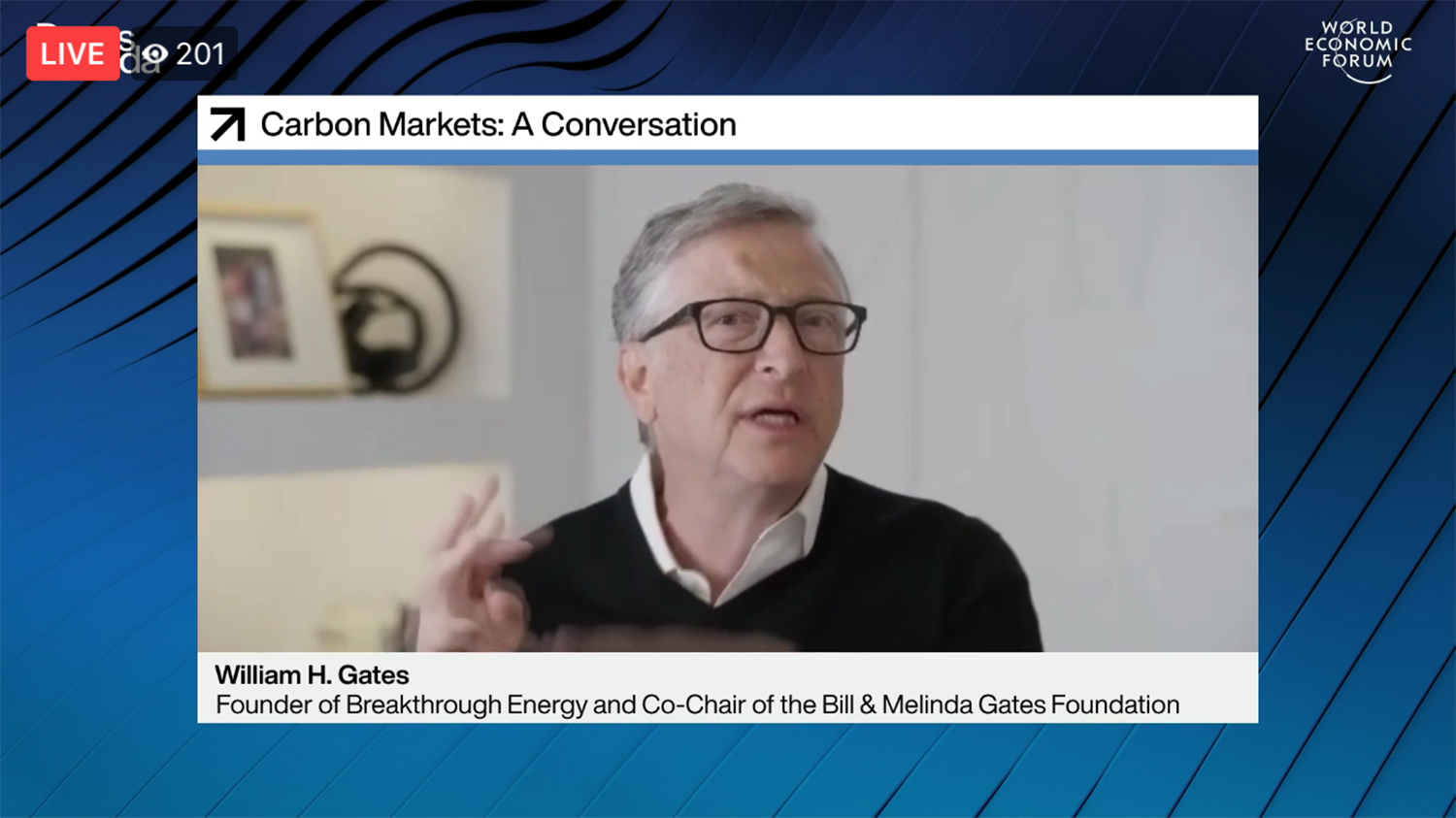
Bill Gates is pictured here in a Jan. 27, 2021 screenshot talking about carbon markets during the World Economic Forum Davos Agenda 21 livestream. A massive land grab is underway at the same time as this push toward ‘synthetic animal protein’ and as the WEF and UN goals of 30 x 30 are implemented. Big tech billionaires, like Gates the single largest owner of  U.S. farmland, are heavily invested in ‘synthetic animal protein’ (otherwise known as ‘lab-garbage’). WEF screenshot by Sherry Bunting

By Sherry Bunting, Farmshine, Feb. 26, 2021

EAST EARL, Pa. — Bill Gates gave hair-raising interviews last week with the Feb. 16th release of his new book: How to Avoid a Climate Disaster. In it, Gates lays out what he says it will take to eliminate greenhouse gas (GHG) emissions to ‘save the planet’.

Grabbing headlines is the Microsoft founder and software developer’s proclamation that ‘rich’ nations should move to 100% synthetic animal protein, while ‘poor’ nations, like Africa, can keep consuming animal-sourced proteins — if they reduce animal GHGs and environmental footprint by “merging-in” the meat and milk genetics and other technologies that have made U.S. cattle herds so productive.

Specifically, in a published interview with MIT Technology Review, Gates was asked: “Do you believe plant-based and lab-grown meats could be the full solution to the protein problem globally?”

Gates replied: “No, I don’t think the poorest 80 countries will be eating synthetic meat. I do think all rich countries should move to 100% synthetic beef. You can get used to the taste difference, and the claim is they’re going to make it taste even better over time. Eventually, that ‘green premium’ is modest enough that you can sort of change the (behavior of) people or use regulation to totally shift demand.”

That’s a mouthful.

Gates laments the “politics” of animal-sourced foods being a challenge for his fake-food-based climate goals and investments. “There are all these bills that say it’s got to be called, basically, ‘lab garbage’ to be sold,” Gates said. “They don’t want us to use the beef label.”

He goes on in the interview to explain why poor countries will continue to animal-source protein.

“For Africa and other poor countries, we’ll have to use animal genetics to dramatically raise the amount of beef per emissions for them. Weirdly,” says Gates in the MIT interview, “the U.S. livestock, because they’re so productive, the emissions per pound of beef are dramatically less than emissions per pound in Africa. And as part of the (Bill and Melinda Gates) Foundation’s work, we’re taking the benefit of the African livestock, which means they can survive in heat, and crossing-in the monstrous productivity both on the meat side and the milk side of the elite U.S. lines.”

Here’s the thing. A month before his book release, Gates made headlines as “the man who is about to change the way America farms.” In January, the 2020 Land Report 100 featured Gates as “America’s leading farmland owner with 242,000 acres of productive farmland in more than a dozen states.”

According to the Land Report map, Gates’ swaths of farmland, amassed through front-company Cascade Investments, are located mainly near water and ports across 19 states.

Gates is also a founding member of an investor group (Leading Harvest), setting a sustainability standard for over 2 million farming acres in 22 states and another 2 million in 7 countries, according to the Land Report.

Furthermore, the Bill and Melinda Gates Foundation (separate from Cascade Investments and Breakthrough Ventures) has a farmland initiative called Gates Ag One, based in St. Louis. According to the St. Louis Business Journal, its focus is research to help farms in low- and middle-income countries adapt to climate change by becoming “more productive, resilient and sustainable.”
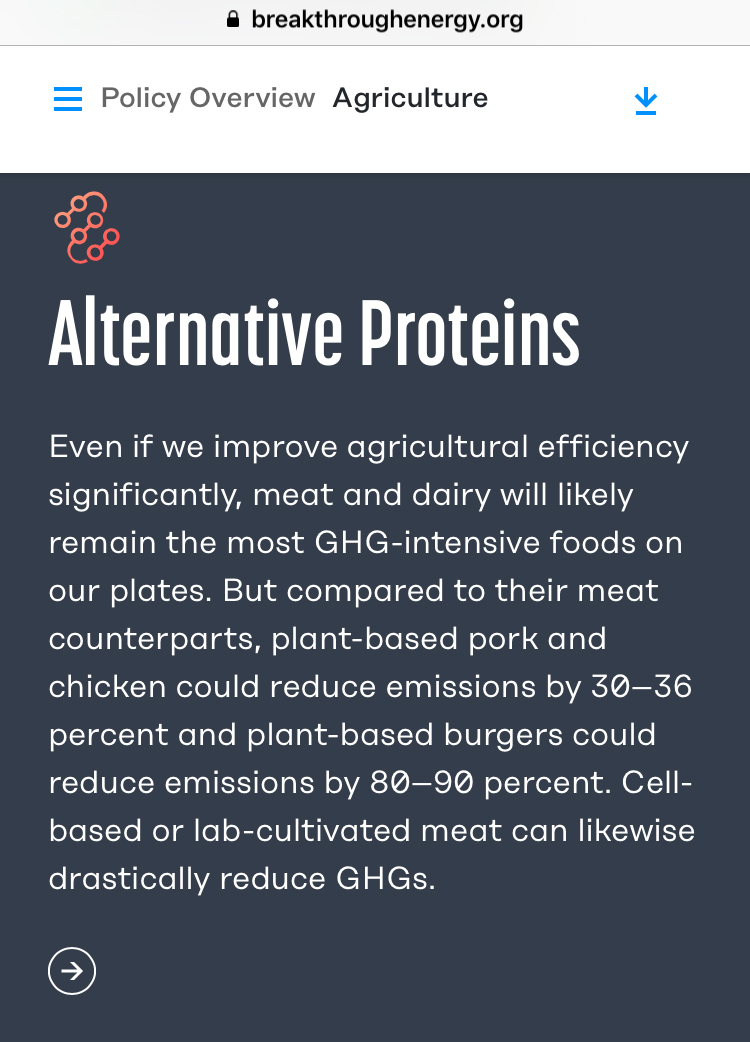
The Breakthrough Energy Ventures (BEV) investment fund recently changed its website, but the strategies for agriculture and food production are still clear when clicking through tabs. Here’s just the tip of the iceberg. BEV website screenshot by Sherry Bunting

Gates also chairs the investment fund called Breakthrough Energy Ventures (BEV), mentioned in various ‘fake-meat’ and ‘fake-dairy’ articles published in Farmshine over the past three years.

The BEV fund is mentioned throughout Gates’ new book as a ‘philanthropic’ fund with a climate strategy. Digging into the website, one sees the fund’s climate investments described as “patient, risk-tolerant capital” that will recoup return on investment years down the road once the global supply chains, government policies, and other strategies move consumers toward the various sector outcomes the BEV billionaires are investing in.

The BEV investor list includes significant interests based in China; Democratic party candidates and/or donors like George Soros, Tom Steyer, and Michael Bloomberg; big tech billionaires like Gates, along with Mark Zuckerburg, founder of Facebook, and Jeff Bezos, CEO of Amazon.

The two-pronged approach to animal protein in Gates’ book reflects the two-pronged investments of Gates, BEV, Leading Harvest and the Bill and Melinda Gates Foundation. On the personal and fund investment side, Gates and friends have put billions of dollars into ‘replacement ag systems’ featuring fake-animal-protein for ‘rich’ countries, while on the foundation side, the focus is on research for efficient animal ag systems in poor countries.
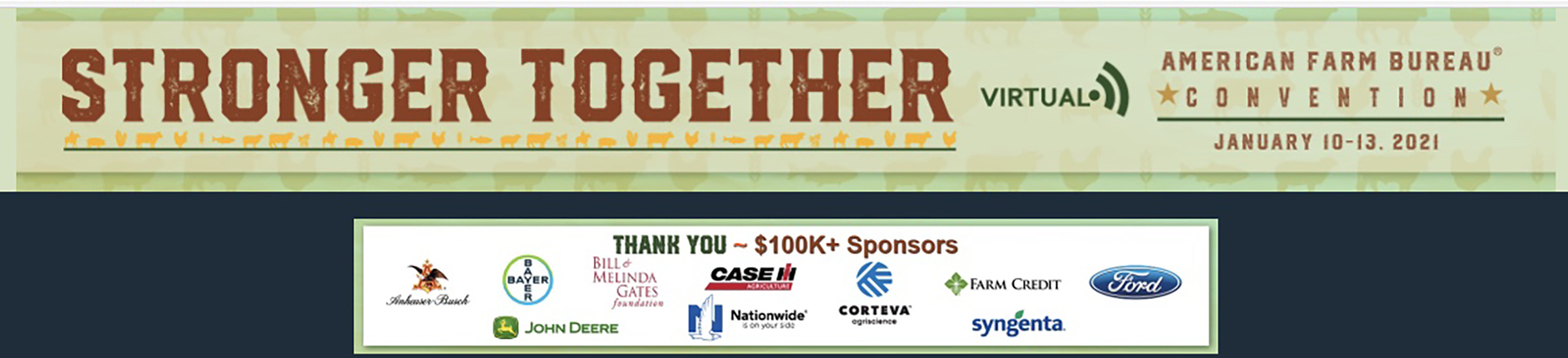
In fact, the Bill and Melinda Gates Foundation – which has endeared itself to Big Ag by supporting biotech research for developing countries — was among 11 top-level sponsors in the $100,000-plus donation category for the American Farm Bureau Federation’s virtual convention in January.

During the 2021 convention, Farm Bureau president Skippy Duvall and Land O’Lakes CEO Beth Ford — together — provided a joint keynote discussion under the ‘stronger together’ 2021. Ford spoke of Land O’Lakes’ 2020 partnership with Microsoft to build an “artificial intelligence” ag-tech platform to automatically gather data from farms and trade carbon credits. The discussion ended with a focus on climate-smart technology and a more “inclusive” advocacy platform less cluttered by production identity labels.

For his part, Duvall stated that, “There’s room in the marketplace for everyone, every type of production — organic, conventional, plant-based meat, whatever it might be — there’s enough room in the market for all of us,” he said. “We have to stop throwing ourselves under the bus and work together as one united family.”

This sentiment dovetails with the global food transformation agenda of companies and investors wanting to mix-match-and-blend in a way that melts-away protein identities in favor of planetary diet standards, labels and symbols. Walmart’s director of sustainability talked about this during a World Economic Forum virtual event reported in Farmshine in January, and it is showing up in Walmarts today with big name frozen entrées in lookalike packaging, featuring BE’F, CHICK’N and DAI’Y. How clever.

On the fake-animal-protein investments, Gates and friends are working with global mainline agriculture companies like Cargill, Tyson, ConAgra and ADM, as well as global food supply chains like PepsiCo, Nestle, Unilever, and Coca Cola, along with ‘replacement’ plant-based and cell-cultured fake-meat and fake-dairy manufacturers like Beyond Meat, Impossible Foods, Memphis Meats, BioPrint, and Perfect Day.

All of this ‘replacement’ or ‘alternative’ ag push is setting the stage for a massive land grab to meet the 30 by 30 executive order of President Biden that dovetails with United Nations goals to have 30% of U.S. and global lands in conservation protection by 2030. That would double the current 15%.

With billions in ‘patient capital’ invested, Gates and friends want to see U.S. consumers ‘herded’ toward the ‘herdless’ imposter-foods they’ve invested in.

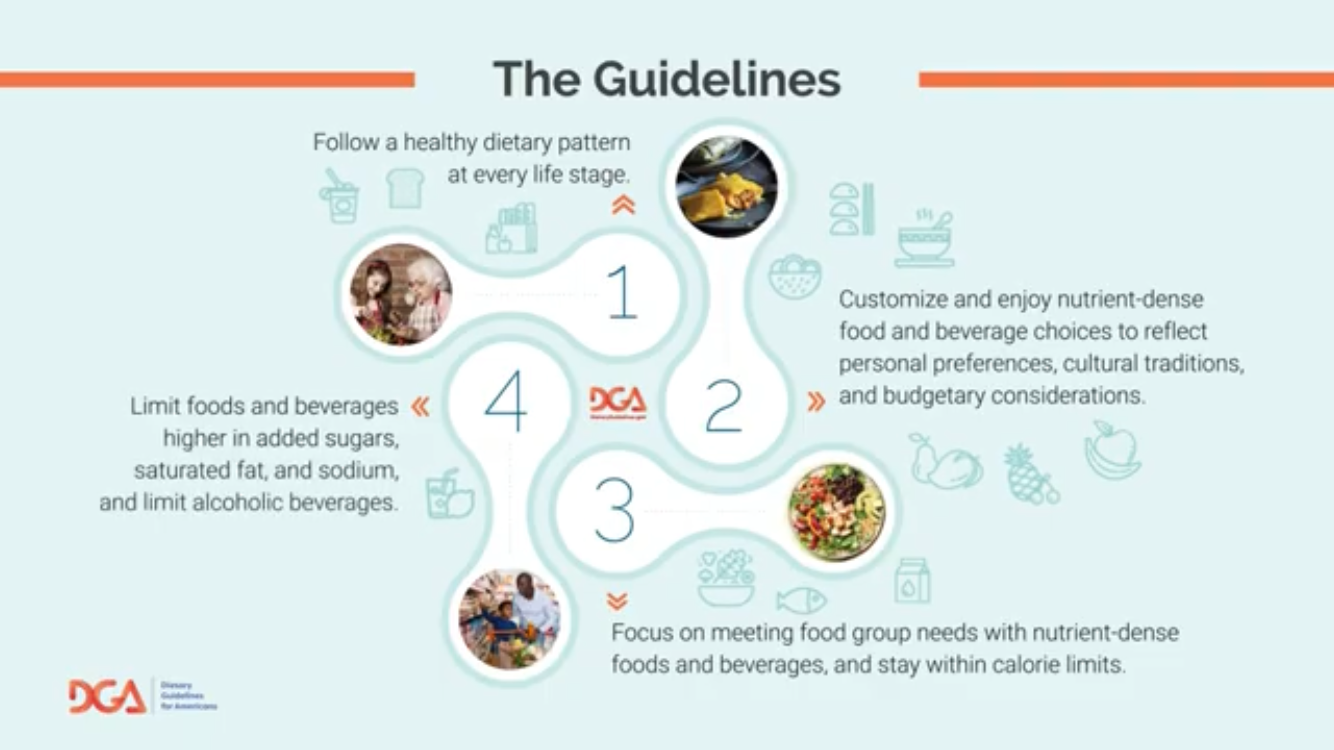
The USDA-HHS Dietary Guidelines have the facilitating low-fat diets positioned and ready. The FDA Nutrition Innovation Strategy is a multi-year effort underway to modernize standards of identity and develop a universal ‘healthy’ symbol for ‘approved’ foods.

Meanwhile, Gates and friends are pushing for polices and pricing that shift diets more quickly from the ‘climate’ side. For example, wholesale boneless wing and tender prices, as well as beef, are rising rapidly (but not to producers). This effectively narrows the gap between real and fake to help with the transition. Even the dairy industry is moving to ‘dual purpose’ processing.

Digesting Gates’ book interviews, hearing him talk about carbon markets during a World Economic Forum Davos Agenda 21 livestream, and seeing the ‘who’s who’ board of the BEV investment fund – it is clear Gates and friends are politically well-positioned to push policies that can shift diets based on their investments.

They are also getting help from within the animal-sourced food industries to corral Gen Z as ‘agents of change’ that will embrace these China-sourced pea-protein concentrates and lab-created franken-foods as they scale up across household name brands. In its recent joint-venture announcement with Beyond Meat, PepsiCo admitted their alternative snack and beverage rollouts must be “effortless” so consumers don’t have to think about making the “right choices for the planet.”

Food transformation is unfolding rapidly as Big Ag, Big Food, Big Tech, Big Money players align with governments, non-governmental organizations (NGOs) and globalized supply chains.

To affirm the identity of real, local, U.S.-produced animal-sourced foods from farms will require a direct appeal to consumers and accountability for industry leaders and policymakers.

Overblown climate propaganda about dairy and livestock fuel policies that gradually undermine food production identity. Gates is not a food fortune-teller, but rather he is fixing to be a food fortune-maker believing he and his billionaire big tech cronies can ‘software program’ food and behavior to enrich their own outcomes.

We need to follow the money and wake up the public to see the garbage the elites are selling for what it really is. Some of us are ready to pick this food identity hill to die on.

-30-
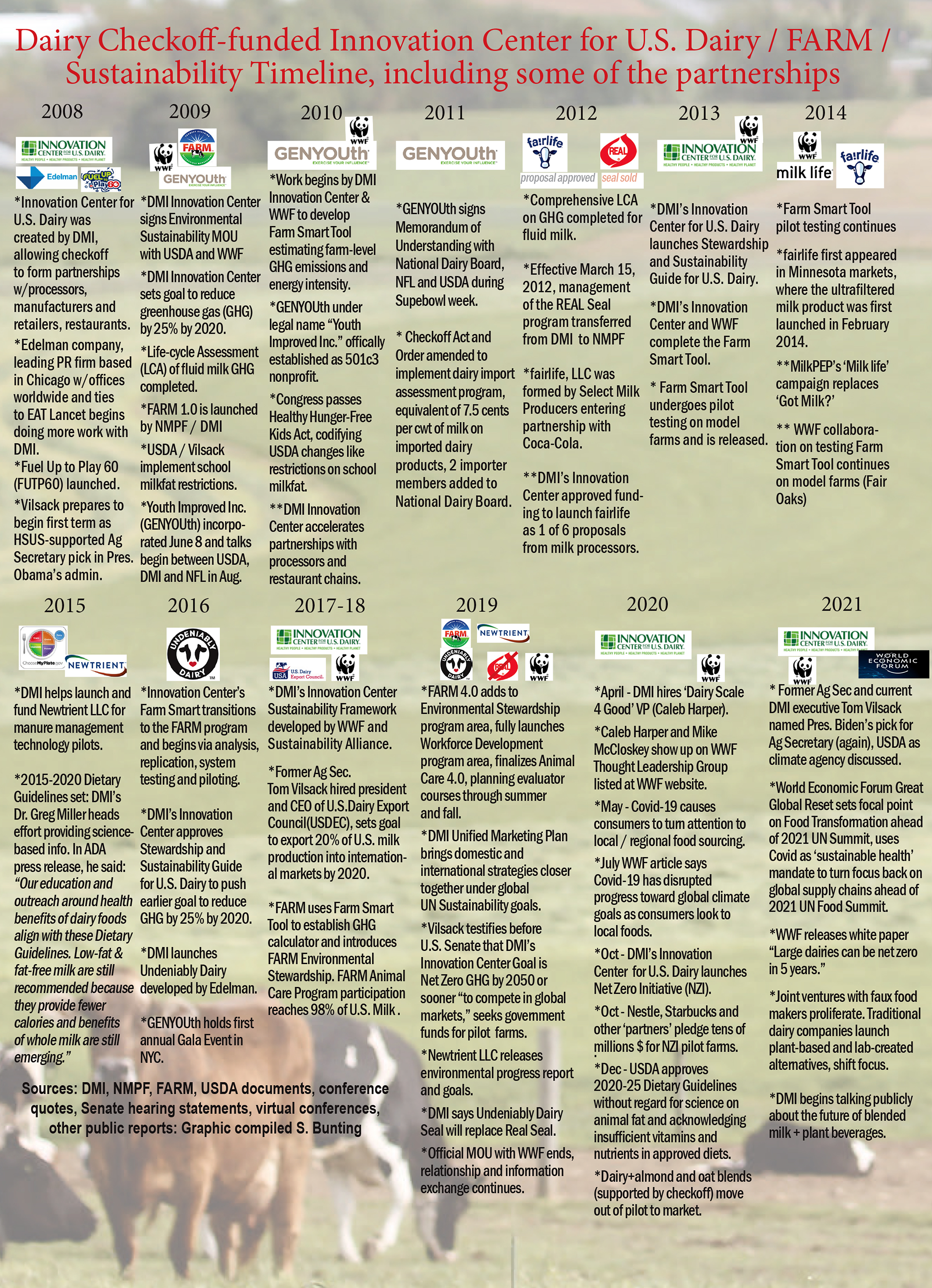

DMI’s WWF connection

This DMI-funded ‘Sustainability’ timeline includes some of the proprietary partnerships and ‘non-profit’ organizations under the DMI umbrella, as well as supply chain and NGO alignments. It has been updated from the one that ran in the May 10, 2020 edition of Farmshine. Compiled by Sherry Bunting

By Sherry Bunting, Farmshine, February 19, 2021

HARRISBURG, Pa. — A question dairy farmers have long asked their dairy checkoff leaders pertains to the history and details of DMI’s relationship with WWF. That question was finally answered during a “What has dairy checkoff done for you lately?” session at the virtual 2021 Pennsylvania Dairy Summit last week. 

There were many parts to this more than two-hour session where submitted questions were also fielded spanning everything from sustainability, Net Zero Initiative and FARM program to youth wellness, hunger channel coordination, nutrition science and dietary guidelines, to the supply chain and NGO partnerships and social media investments that have built dairy checkoff into today’s business-to-business model that views itself as the ‘gateway’ to trust so that farmers can continue to farm and “grow dairy” as compared with past promotion and education strategies aimed directly to consumers.

Last week, we learned that the partnership between Dairy Management Inc. (DMI) and World Wildlife Fund (WWF, also known as Worldwide Fund for Nature), goes all the way back 12 to 13 years to DMI’s formation of the Innovation Center for U.S. Dairy. We learned that WWF helped design the Smart Tool collecting farm environmental data through the FARM program. We learned that blended products are the future and that manufacturing plants will become “dual purpose” to create beverages with milk in them vs. milk bottling, per-se. We learned that checkoff invests farmer funds in working with the middle of the supply chain to make new products that are focused on meeting consumer changes in the future.

We learned so much that this is part one of a three-part series. This week, we focus on the Net Zero Initiative and the DMI / WWF connection.

A picture emerged from the discussion of how WWF and DMI have worked together to transform dairy promotion, to set sustainability parameters, to work on the very ‘Smart Tool’ that is now gathering dairy farmer environmental, energy use and emissions data via the FARM program, and placed DMI into the very food transformation committees of the upcoming United Nations food summit sponsored by the World Economic Forum (Great Reset) and – you guessed it – WWF – and how the stage is set to transform the face of the dairy industry, voluntarily of course.

The Farmshine timeline published last summer has been updated in this edition. Originally, our investigations placed the start of this DMI / WWF partnership at 2014 when Innovation Center Sustainability Alliance chairman Mike McCloskey and current Dairy Scale for Good director Caleb Harper became part of the WWF Thought Leadership Group and we could find evidence of WWF working with DMI on the FARM program ‘Smart Tool’.

But no, the truth learned last week from Karen Scanlon, DMI’s vice president of sustainability, answered this reporter’s submitted question about the DMI / WWF relationship. That history goes back to a memorandum of understanding (MOU) signed by DMI and WWF in 2008-09 when DMI formed the Innovation Center for U.S. Dairy and Mike McCloskey started his 12 to 13 year tenure as chairman of the Innovation Center’s ‘Sustainability Alliance’ (also known as Global Dairy Platform).

This was the same point in time when MOUs were signed between DMI, USDA (Vilsack) and the NFL to create GENYOUth, and the same point in time when the MOU on sustainability was signed by DMI and USDA (Vilsack).

DMI president Barb O’Brien was quick to interject that WWF-US is “much different” from WWF-International. Dairy producers have heard this line before. However, it is clear from the WWF organizational structure that it has always been global in its goals and aligned on reducing animal-sourced foods along the lines of the EAT Lancet diets and the World Economic Forum Great Reset and United Nations Food Transformation goals.

DMI board chairwoman Marilyn Hershey explained that DMI will be involved in the United Nations Food Transformation Summit to be held this summer. She said DMI has people on some of the Summit’s committees.

“Up until a few years ago, the UN was making decisions without us at the table. We are going into that Summit at a lot of levels — top, middle and bottom — and we have farmers involved, bringing the farmer story,” said Hershey.

The question is, what farmer story will be told? The one that is coming out of the WWF study that exaggerates the dairy industry’s GHG emissions ‘starting point’ while advocating the solution for investment in what is essentially a 3000-cow Fair Oaks model, which many producers in many sizes and geographies can’t replicate?

From the comments made by Scanlon, it was clear that WWF “opened doors” for DMI’s involvement, and, in essence, held their hand into the food transformation movement. This lends to what Paul Ziemnisky, vice president of global innovation partnerships, spoke of in terms of blended beverages and the future being “dual purpose” milk plants, producing the blended beverages that are “relevant.”

Hershey railed against the way animal-rights organization HSUS is causing “internal disruption” in the dairy industry.

“That is their plan,” she said. “We have to be aware that there is a plan to get rid of the checkoff so that the checkoff is not there anymore to serve as the gateway protecting farmers so they can continue to farm. We can’t pit farmer against farmer. There has to be unity.”

And yet, many would put WWF in the same category with HSUS in terms of end-game goals. Even checkoff leaders admit that the “international” WWF is an organization to be wary of, but they somehow believe WWF-US is different, even though they are all part of the same global structure and strategy.

What does it matter if dairy is led by the hand with doors opened by WWF to be part of food transformation that reduces the role of animals, or if this transformation is internally disrupted by concerned producers of all types and sizes as they strive to find their place in that future painted in part by WWF?

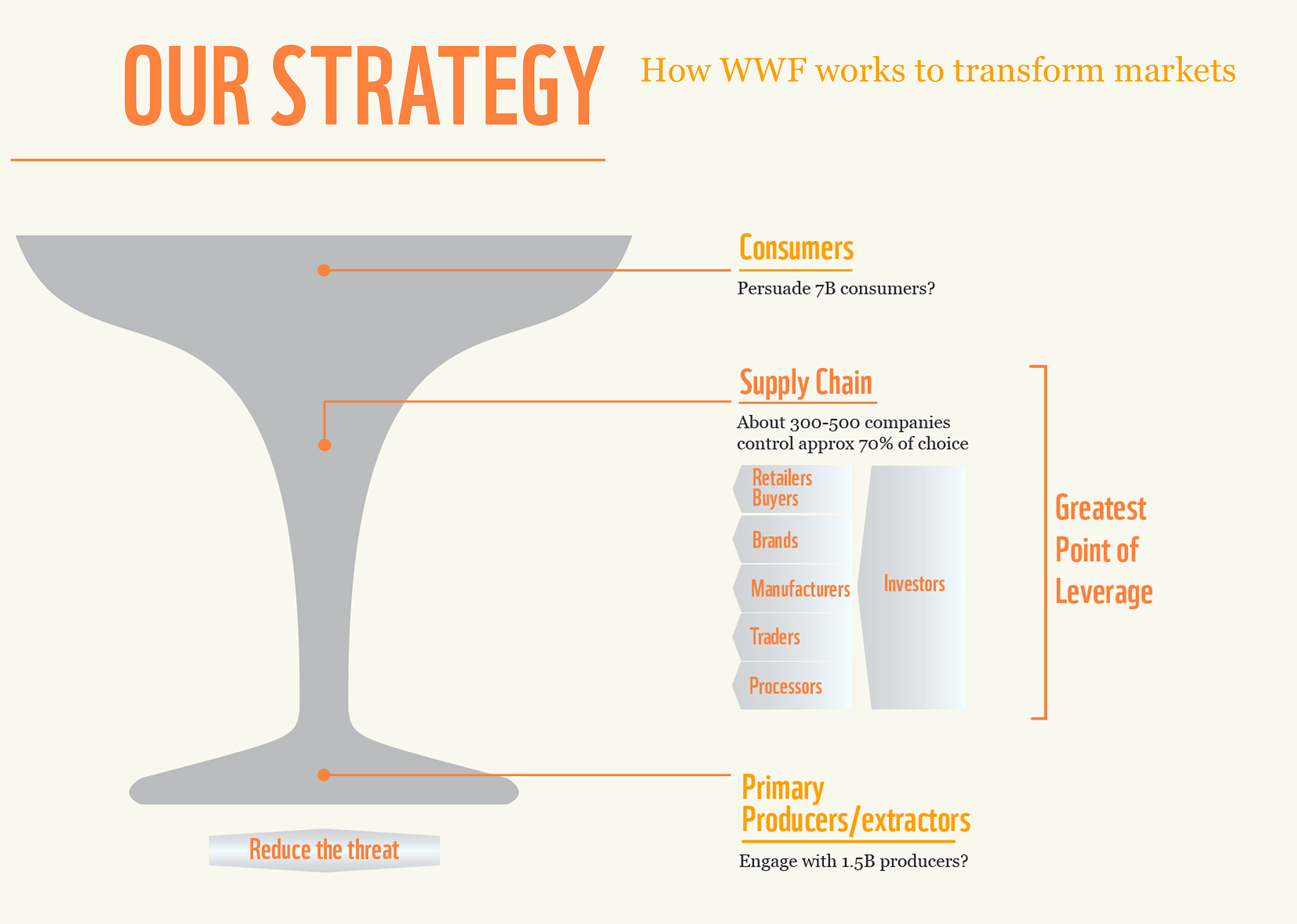
The World Wildlife Fund in its 2012 Report “Better Production for a Living Planet” identifies the strategy it has been using to accomplish its priorities for 15 identified commodities, including dairy and beef, related to biodiversity, water and climate. Instead of trying to change the habits of 7 billion consumers or working directly with 1.5 billion producers, worldwide, WWF stated that their research identified a “practical solution” to leverage about 300 to 500 companies that control 70% of food choices. By partnering with dairy and beef checkoff national boards in this “supply-chain” leverage strategy, WWF has essentially used producer funds to implement their message and priorities both to consumers through supply chain decisions and to producers through checkoff-funded programs validating farm practices. Image and explanation directly from 2012 WWF Report

The WWF end-game as a partner with the WEF Great Reset and UN Food Summit is to transition American and European diets to more plant-based and lab-created alternatives and blends, while helping developing countries like Africa use the efficient technologies of those transitioning ‘rich’ nations to improve the environmental footprint of their ‘poor nation’ cattle herds. This dovetails with the announcements by Microsoft founder Bill Gates as he released his new book on climate change this week — complete with hair-raisihng interviews talking about rich countries moving to 100% plant-based and cell-cultured diets, while poor countries continue to eat animal-sourced products using U.S. advancements to reduce their GHGs. (see related story).

There was so much to learn about how the dairy checkoff arrived to where it is today in terms of direction and structure. This part of the multi-part series focuses on the relationship with WWF, the Net Zero Initiative and the new WWF “independent” study highlighting how “large dairies can be net zero in five years.” 

Not only is this recently-released study promoted by DMI based entirely on the 3000-cow Fair Oaks model – with a methane digester that includes over 50% co-digestion of other waste products, 70% forage ration fed to cattle, 80% of cow diets grown on-site, and zero heifers on-site – it is also riddled with mathematical inaccuracies that exaggerate the “starting point” for collective greenhouse gas emissions from U.S. dairy farms, making the problem appear to be worse than it really is perhaps in order to make a pre-competitive ‘solution’ seem better than it needs to be. (see related story)

“What has your checkoff done for you lately?” According to the so-named session during the Pa. Dairy Summit, O’Brien stated: “We know who we work for in all of these partnerships is the dairy farmer, to bring your voice forward for growth in the marketplace and protecting your freedom to produce…”

There was emphasis placed on how the Net Zero Initiative (NZI) is central to DMI’s work and its partnerships as the ‘voice of producers for growth.’

“Consumers want to feel good about, and have trust in what they buy,” said Scanlon, explaining how NZI addresses this.

She displayed a slide showing the many investor groups in climate and sustainability efforts that are setting their own goals and expectations throughout their supply chains, as well as countries making legal commitments to be carbon neutral by 2050 or sooner.

“The consumer piece is to meet people where they are,” said Scanlon, adding that the NZI was an 18-month process of stakeholder input with the results announced last April when the new dairy sustainability goals were released. However, we learned in later questioning that this has been in the works for 12 to 13 years since WWF and DMI began their MOU-signed formal relationship at the start of the Innovation Center.

“We are flipping to dairy as a climate solution,” said Scanlon. “The goal is 2050, and these are the ways we can reach them.”

Scanlon stressed that the NZI goals are “aggregate,” meaning they are collective industry goals. She said the processors have their own working group developing their own strategies from farm to consumer, and NZI is the field-to-farm portion through DMI’s Innovation Center for U.S. Dairy.

“We have formed specific work streams related to waste, water use, packaging and greenhouse gas emissions, and we (DMI) have been investing in the reporting tool to track them,” she said.

“This is completely voluntary. It is not immediate. Not everyone will do all the things, and there are pathways for all to contribute with a long runway (to 2050),” she said. “We are meeting consumers where they are and matching environmental benefits with economic benefits to make voluntary adoption happen to avoid regulation.”

She referenced the WWF study as a “viability study” that Dairy Scale for Good, headed by Caleb Harper, can use to track and implement. She called the study a “spreadsheet exercise” that Harper, as director of Dairy Scale for Good, can put out on pilot farms to “prove out through a combination of practices that in the real world, we can see net-zero emissions with improved economic viability.”

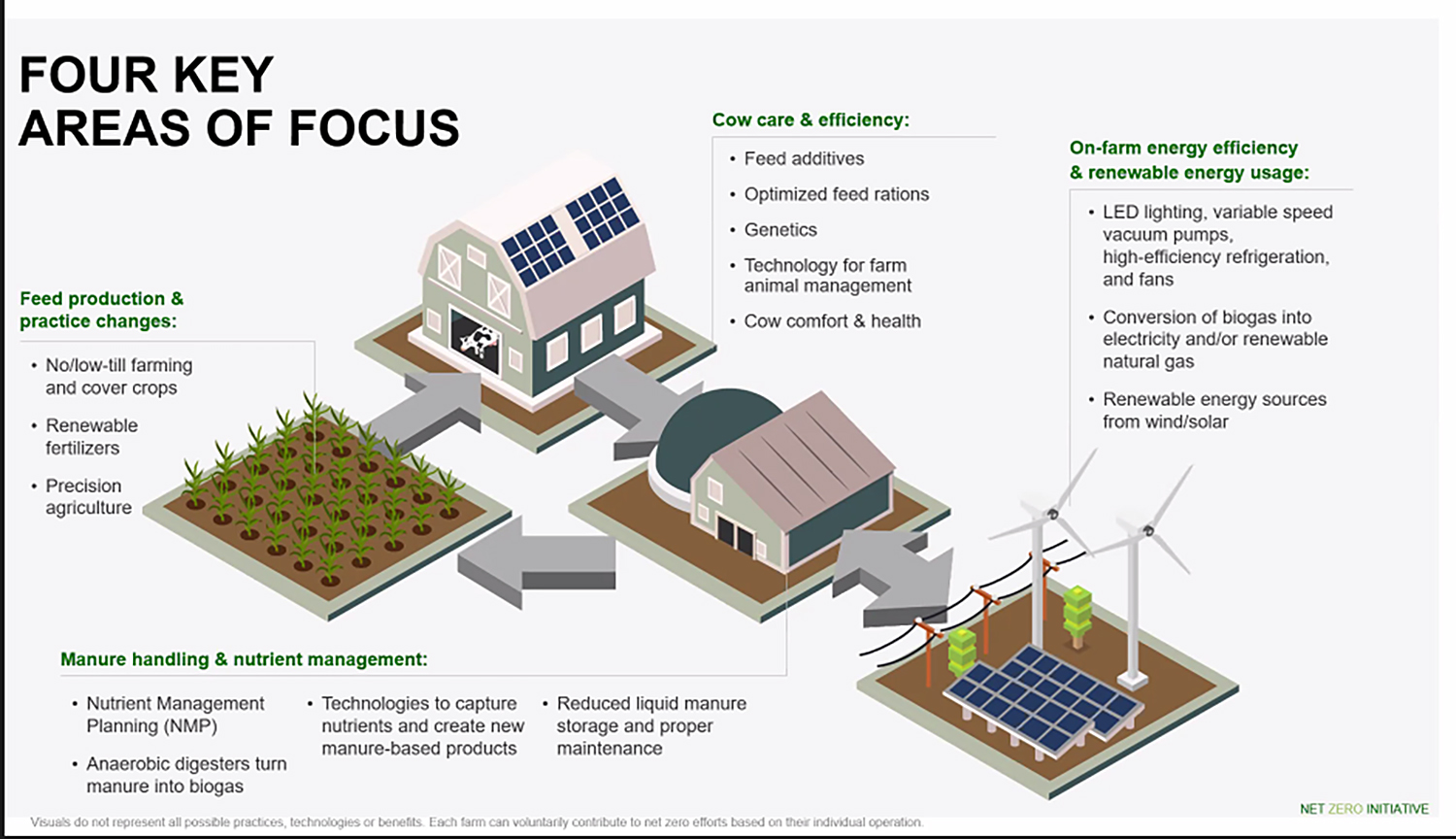
Scanlon noted that the “collective impact” of NZI will be driven by “broad voluntary adoption” through four environmental footprints on the farm.

Right now, what is underway through the FARM program “Farm Smart Tool” (developed with WWF), is to “quantify ecosystem services that are being provided by farms and to accelerate new income from providing these ecosystem services,” Scanlon explained.

With this becoming part of the FARM program, voluntary would, by default, become mandatory when member cooperatives and milk processors begin to expect their producers to show improvement on the data currently being collected. Yes, it is voluntary for the milk buyers and cooperatives. But once they sign on with that module in FARM — as it is developed through pilot farms ‘proving out’ the  ‘spreadsheet exercise’ – this would potentially translate as mandatory through the milk buyer or cooperative.

When asked what NZI could mean for those farms with methane digesters, Scanlon said the purpose is to “knock down barriers for farms to invest and for those already invested, so they will potentially see a return.” 

In addition to farms providing for “ecosystem service markets,” the other pathway mentioned is farms meeting low carbon fuel standards.

“NZI is focused on how to take on the barriers that prevent more farms from affording or using more technologies,” said Scanlon, noting many farms with digesters could be “pretty close to net-zero already.”

Bottom line? The DMI / WWF decade-plus partnership is now culminating with data collection that will be used to “help farms understand where they are today on their own journey to net-zero, and where we are today as an industry on that journey,” said Scanlon.

In response to a question on the good work already being done on dairy farms, how it is tracked and counted toward this model, Scanlon said that during 2019 into early 2020, two studies were done. Both concluded that U.S. Dairy and the North American continent decreased their overall carbon footprint by 19% over a 10-year period.

“The tool available through the FARM program is the environmental stewardship module,” Scanlon explained.

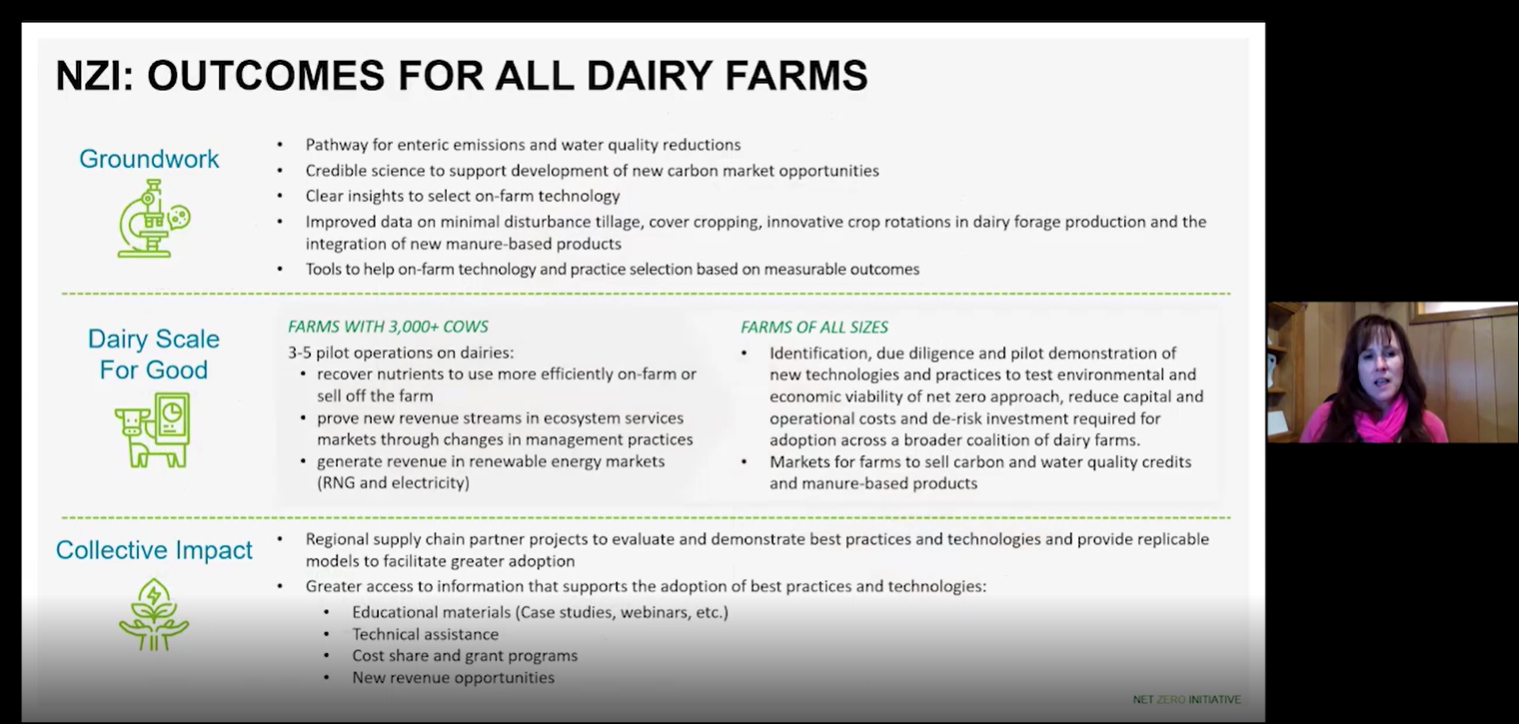
Karen Scanlon, DMI vice president of sustainability, acknowledged the 12 to 13 year relationship between DMI and WWF at the very beginning of DMI’s formation of the Innovation Center for U.S. Dairy working on tools and strategies leading up to the Net Zero Initiative (NZI) launch last fall. She explained NZI’s four focus areas, the outcomes that are planned and the Farm Smart Tool WWF helped design that is already collecting on-farm environmental data via the FARM program. Screenshot during virtual Pa. Dairy Summit session

The Farm Smart Tool in that module is the tool to assess farms for a “snapshot of their emissions and energy intensity, and we are working to make it more clear on the four focus areas. This will evolve and improve over time,” she said.

“What’s important in 2021 is to work with our partners — the cooperatives and processors — to do the inventory of current practices on farms. We would like to catalog what you are doing on your farms today so that we (DMI) can tell that story,” Scanlon stressed.

As has been seen with the FARM program, to-date, ‘the devil is in the details.’ Producers asked whether this will be like the other modules being monitored through cooperatives and third-party auditors.

“Our intention is to support the voluntary and progressive actions of dairy, and we already have major dairy customers asking farms to document how they are sustainable,” Scanlon replied. “We are working globally and nationally to streamline this and to reduce the burden down at the farm level, to have a way to document and have assurance that our tools and metrics and reporting will satisfy what they are looking for.”

Scanlon noted that the FARM program’s on-farm assessment tool (Smart Tool developed with WWF) is how the industry will move toward its 2050 Net Zero Initiative goals.

So, back to WWF. Why is DMI working with WWF?

O’Brien stated: “First, we see (WWF) as two different organizations. There are two operations of WWF — domestic and international. They are two very different organizations in terms of their positioning and tenor toward agriculture and animal agriculture, with a different level of activisim within their own strategies.”

She stressed that the recently-released WWF white paper describing how large dairies can be net zero in five years was “an independent report published by WWF and done with no checkoff funding, but it drew on our modeling and science,” said O’Brien. “We feel it is important for WWF to put that forward. They are viewed by other non-governmental organizations (NGOs), businesses and consumers as being an important voice around climate change.”

While O’Brien stated that, “We (DMI) do not currently have an MOU with WWF, we did have a very positive partnership with WWF going back 5 to 6 years and this was about bringing additional third-party credibility to what we are doing.”

Scanlon gave a more detailed answer – perhaps more detailed than DMI would have desired. She stated that, “WWF was around from the beginning of the Innovation Center for U.S. Dairy (2008-09). WWF was one of the initial NGOs coming together with dairy around the table for precompetitive planning.”

Scanlon went on to say that, “WWF gave us support and felt there was a lot of value in sitting down with dairy farmers and companies. They contributed to the development of the FARM model, provided third-party credibility and have been a longtime reviewer and supporter of those farms receiving annual innovation awards.

“Through WWF, we (DMI) had access to expertise and doors opened to companies… to use that relationship to better inform them about what dairy is actually doing,” said Scanlon. “The agreement expired at the end of 2019. We have not renewed that agreement. We have continued our conversations and exchange of information, but with no formal relationship with WWF at this time.”

No formal relationship at this time? After a 10-plus-year formal relationship, WWF has helped DMI set the stage for dairy transformation that converges perfectly with the agenda set by big tech, billionaire faux food and climate investors, World Economic Forum’s Great Reset, the back-and-forth USDA / DMI musical chairs of Tom Vilsack and the Green New Deal approach, and the billing that the UN Food Transformation Summit is the focal point of the Great Reset to meet climate goals set in the background by billionaires like Gates and his Breakthrough Ventures colleagues George Soros, Tom Steyer, Michael Bloomberg, Mark Zuckerburg, Jeff Bezos (Amazon) and others as Walmart, Bank of America, MasterCard, PepsiCo, Nestle, Unilever and others file in.

Yes, DMI is at that table, according to staff and leadership. Yes, WWF helped them get to that table and helped develop the very tool to collect, track and catalog on-farm climate and environmental data. But, who is leading whom, and while at that table, with middle-of-the-supply-chain partnerships, who is DMI really working for? 

And while all this planning and scheming is going on at the global level, who is communicating with consumers about some of the realities? Are we really meeting consumers where they are? Or are we knowingly or unknowingly participating in a scheme to move consumers to where these entities want them to be? (See WWF strategy model above).

Look for more DMI umbrella categories covered as this series continues.

-30-

Smoke and mirrors

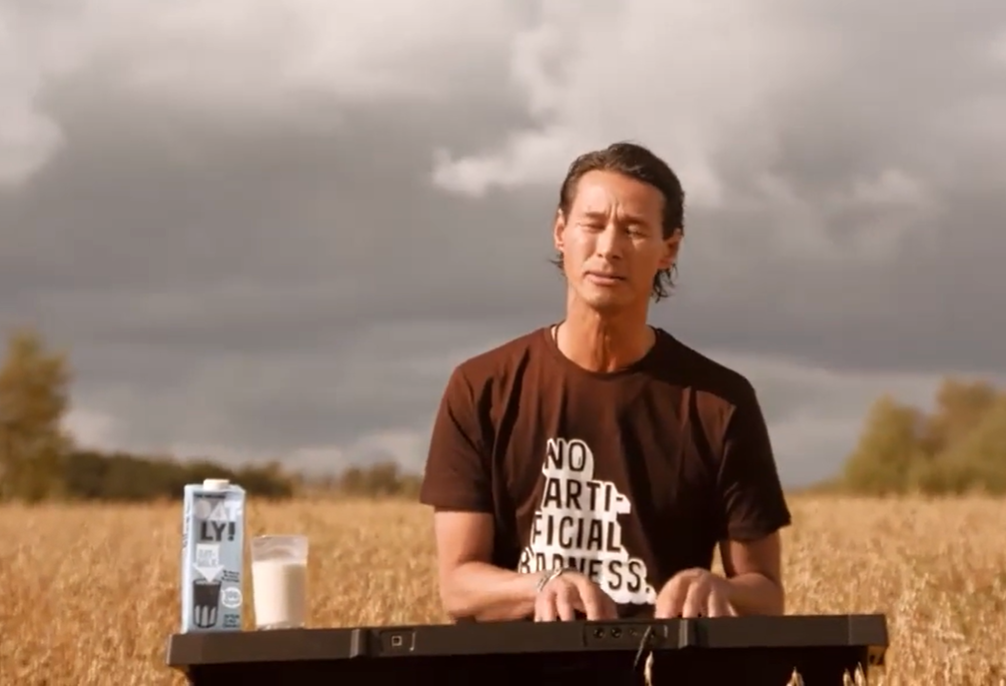
Oatly CEO Toni Petersson sings ‘Wow, wow, no cow’ in the 30-second ad spot during the Super Bowl Sunday evening. It was filmed in 2014 in Sweden where the commercial is legally banned from airing. Screenshot

By Sherry Bunting, Farmshine, Feb. 12, 2021

EAST EARL, Pa. – Some are calling it the worst commercial of this year’s Super Bowl, others say it was so bad, it could be the most memorable. The 30-second ad aired over most of the nation in the second quarter of the game. It was filmed in Sweden in 2014 and ultimately banned from airing in Sweden, where the Oatly brand of fake-milk beverage originated.

The ad seen by millions during the Super Bowl depicted Oatly CEO Toni Petersson singing in the middle of a field of oats (some believe the crop looked more like soybeans but that is beside the point). 

Donning a T-shirt with the words “No artificial badness,” Petersson played an electric piano with a carton of Oatly and a poured glass of the oat beverage atop, singing: “It’s like milk, but made for humans. Wow, wow, no cow. No, no, no. Wow, wow, no cow.”

At another point in the Super Bowl, TurboTax ran its #taxfacts ad showing a man on a computer screen atop a rolling desk going from one scene and tax-related question to another. As the singing computer face atop the desk rolls through a herd of beef cows, we hear the words: “In some places they tax flatulence, like the kind that comes from cows,” (followed by the sound of a fart). Just a couple seconds of the 30-second spot completely unrelated to cows and reality subtly reinforces and normalizes the myth that cow flatulence is taxable because it’s a climate-thing, when it is actually, factually and mathematically insignificant as a climate thing.

Seriously, stop the madness. And, as always, the lack of a television presence for milk and dairy farmers leaves silence as the answer.

One thing is clear: Dairy farmers once again find themselves on the losing end of a long-term ‘partnership’ with the National Football League.

By his own admission, DMI CEO Tom Gallagher says the checkoff has been working through its partnerships over the past 12 to 13 years on the sustainability plan and Net Zero Initiative. Now the rollout dove tails in content and timing with the malarkey coming out of the World Economic Forum Great Reset and its food transformation stalwart the World Wildlife Fund (also known as Worldwide Fund for Nature, WWF).

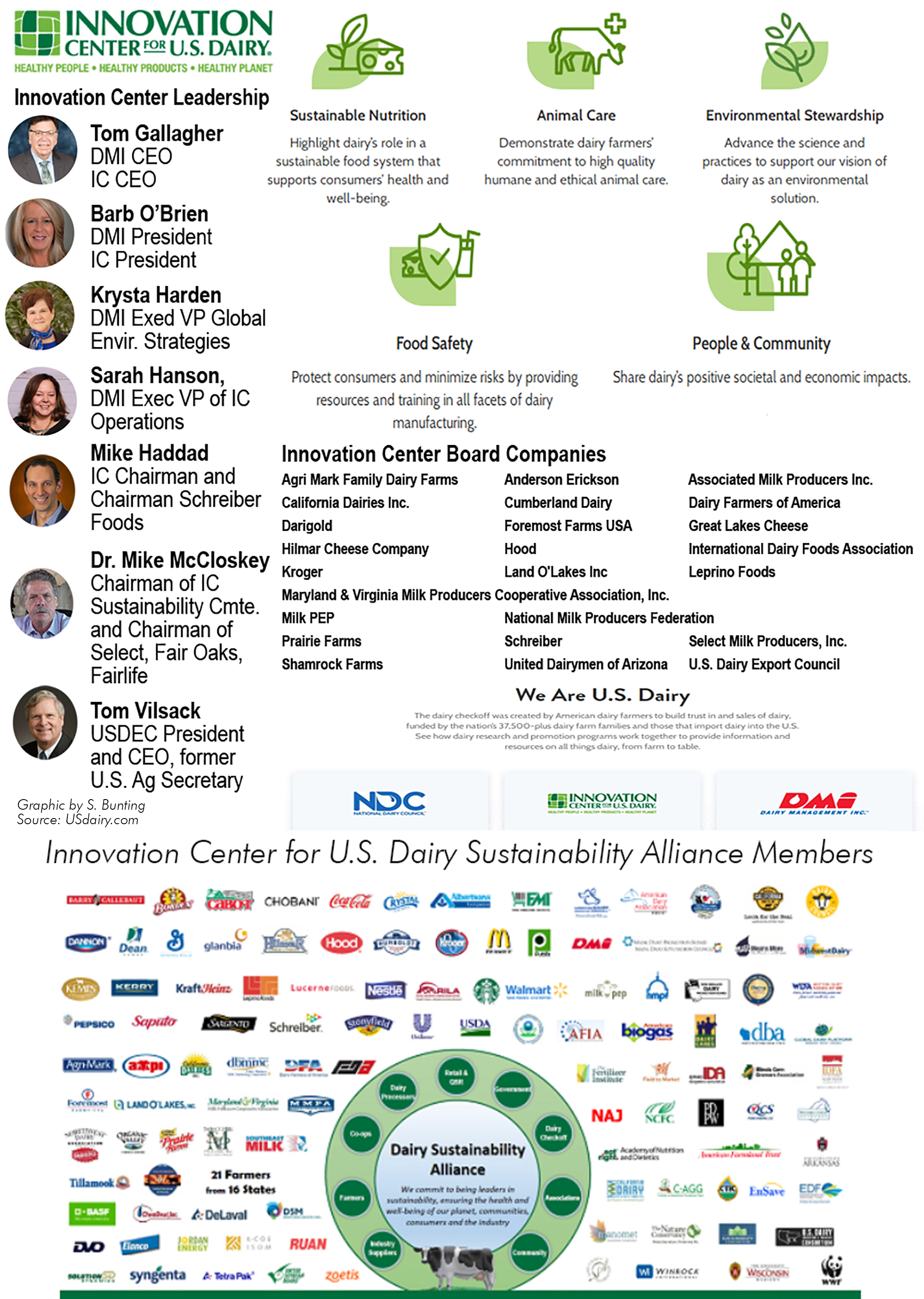
DMI integrates the industry through its unified marketing plan and the various nonprofit organizations, alliances, committees and initiatives — beginning with the Innovation Center for U.S. Dairy, formed in 2008-09, launching the industry’s structural drivers beginning with the globalization initiative (Bain Study 2008), then social responsibility (FARM program 2015) and now ‘sustainability’ (Net Zero Initiative 2020). Graphic by Sherry Bunting, source USdairy.com

Over those past 12 to 13 years, the direction of promotion has moved off-radar through partnerships. This began with DMI’s creation of the Innovation Center for U.S. Dairy (known officially to the IRS as the Dairy Center for Strategic Innovation and Collaboration). Within the Innovation Center is the Sustainability Initiative headed by Mike McCloskey over the past 12 to 13 years and known officially as listed on IRS 990 forms as Global Dairy Platform.

Yes, it is all so very confusing. An entire new structure for the dairy industry and its farm-to-table supply chain has been created, along with sustainability parameters and promotion partnerships, within these non-profits under the DMI umbrella.

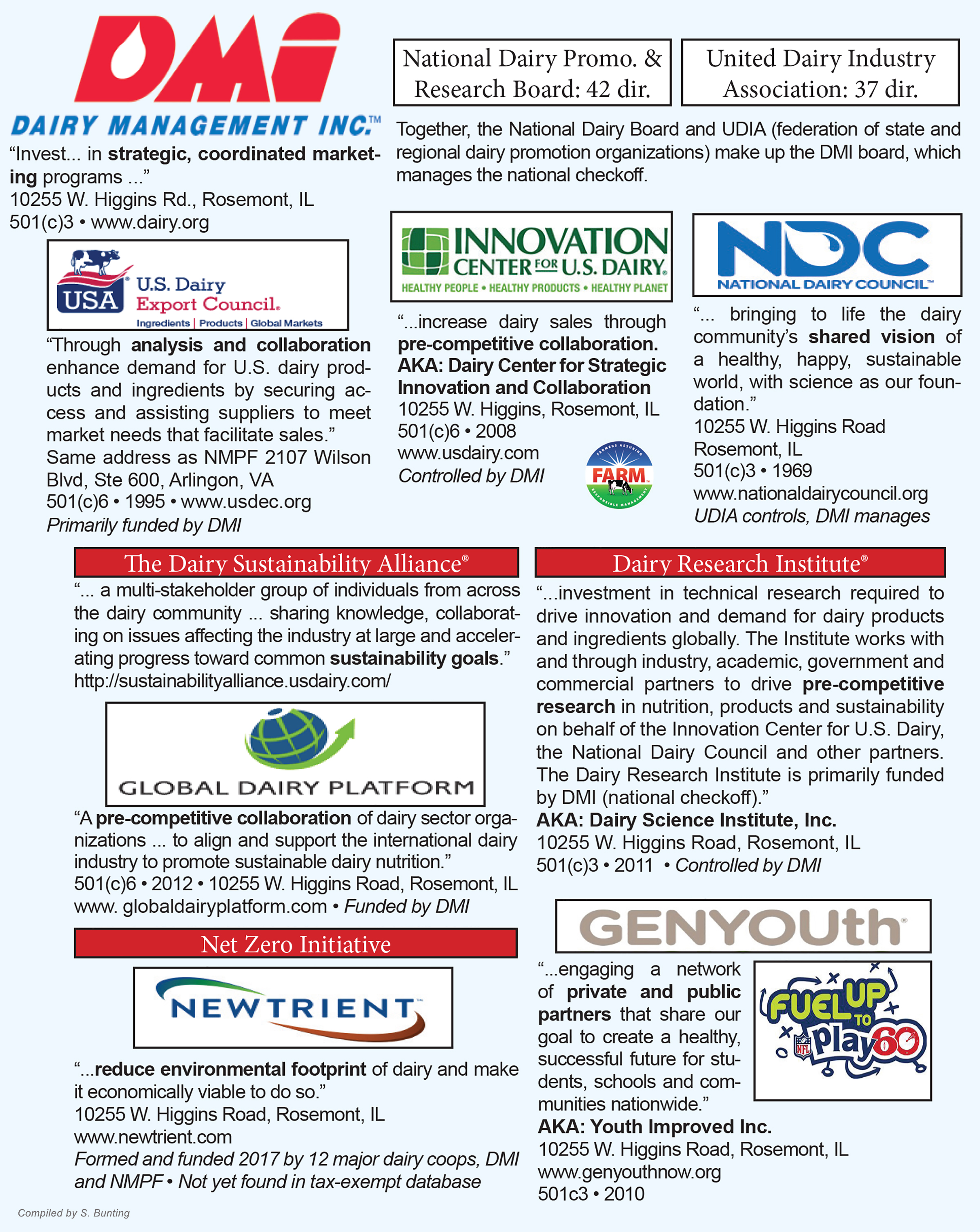
DMI’s umbrella of tax-exempt organizations where checkoff dollars flow and bring partners into the picture to “work on shared priorities.”

Cutting through to the point here is this: Dairy farmers have continually asked their dairy checkoff leaders over the past 12 to 13 years why television ads are seldom, if ever, seen; why those that are seen air at off hours; why the NFL’s reference to Play 60 never includes the “Fuel up” part. The milk is always absent from the promotion on the NFL side.

Whenever these questions are asked at meetings or on conference calls, dairy checkoff leaders say – in unison – “television ads don’t work” and “the NFL owns Play 60, but we own the Fuel Up and can use the Fuel Up to Play 60. Yes, the flagship program of GENYOUth.

Meanwhile, milk’s competitors are using television ads. All the beverage competition is using television ads. Granted, the checkoff budget is not large enough to put all of its eggs into the television ad basket, but surely a few well-placed prime time ads – like in the Super Bowl – would generate ongoing exposure. Those ads get rated, replayed and talked about for weeks.

Here’s the thing: Each year, DMI lists the NFL among its top five independent contractors on its IRS 990 form showing $4 to $6 million annually in checkoff funds is paid to NFL Properties for “promotion.”

In the recently acquired 2019 IRS 990 form, DMI listed just over $6 million to NFL Properties.

By comparison, the cost of a 30-second television spot during the prime-time Super Bowl for 2021 was $5.5 million. Perhaps the over $6 million handed over to the NFL would have been better spent buying 30 seconds of airtime to promote milk and dairy.

After all, DMI can’t even answer the question asked by farmers or media who have inquired about what the money paid to the NFL is actually for. This question was asked face-to-face last March at a Q&A meeting on a farm with DMI chair Marilyn Hershey and UDIA executive vice president Lucas Lentsch. They did not answer it. They scratched their heads and acted as though they didn’t know that kind of money was paid to the NFL. They said they would ask. This reporter has also asked the question. No answers have been forthcoming.

Here’s the other deal. It was 12 to 13 years ago that GENYOUth was created with the official name as it appears on tax forms: Youth Improved Incorporated. That saga began with a memorandum of understanding (MOU) signed by then USDA Secretary Tom Vilsack, the NFL and the National Dairy Council, along with GENYOUth CEO Alexis Glick. She was suggested for the spot by worldwide communications firm Edelman. (Edelman does the PR work for Oatly, is engaged with the NFL and also with PepsiCo. Edelman also received over $16 million for promotion from DMI in 2019 and similar amounts in each of the previous four years as DMI’s all-in-one PR firm, creator of Undeniably Dairy.)

Since that 2009 MOU signing, we have seen fancy New York City Gala events explained as a way for GENYOUth to raise funds for school breakfast carts and to give dairy farm checkoff leaders the chance to rub elbows and talk with ‘thought leaders.’ Meanwhile, GENYOUth is the vehicle to make students ‘agents of change’ for ‘planetary diets’.

We have seen PepsiCo – the NFL’s real long-term beverage partner – come on-board the GENYOUth bus, even receiving a major GENYOUth award in 2018, with just a $1 million one-off investment next to the over $4 million spent every year since inception by DMI to keep the GENYOUth vehicle running — not to mention salaries and other soft costs not parsed-out on tax forms. We have seen a proliferation of PepsiCo branded products on breakfast carts and in school cafeterias next to fat-free and low-fat milk and dairy offerings.

And at this year’s Super Bowl pre-game festivities, DMI excitedly reported that GENYOUth would have the honor of hosting the “Taste of NFL” in the virtual pandemic environment and using the event to “raise money for children to get their school meals.”

Throughout the Taste of NFL pre-game session last week, GENYOUth CEO Alexis Glick was promoting the PepsiCo-product-filled thank you boxes for donators. In one video appearance, she stated, offhand, that she’ll have to go get her milk, but never did. There was no milk in the scene, just a small plate of cheese and fruit off to the side and a large zoom lens focused on the PepsiCo Super Bowl box.

Promotion time – and money — wasted.

But checkoff leaders say it’s okay because all of this is for a good cause! The GENYOUth bus full of boarders focused on one thing, raising money for hungry children.

While it’s true that the NFL ran an ad this football season talking about partnering with America’s dairy farmers to raise money to feed hungry kids. Those commercials were only seen by this reporter during pre-game interviews, not during actual games and nothing of the sort ran on Super Bowl night. The closest thing to it was the NFL’s celebration of essential workers at the start of the game, where glimpses of farmers, truckers, and store staff stocking shelves were included among the photos and videos of medical personel.

As for NFL’s big beverage partner, PepsiCo, the CEO of its North American division, Albert Carey, was presented with the GENYOUth Vanguard award at the 2018 Gala, he stated that the company had long admired the Play 60 program of the NFL and wanted to be part of it. — Now PepsiCo has a new joint venture with Beyond Meat to produce and market ‘alternative protein’ snacks and beverages.

Yes, the cross-purposes and proprietary partnerships make the whole scene confusing.

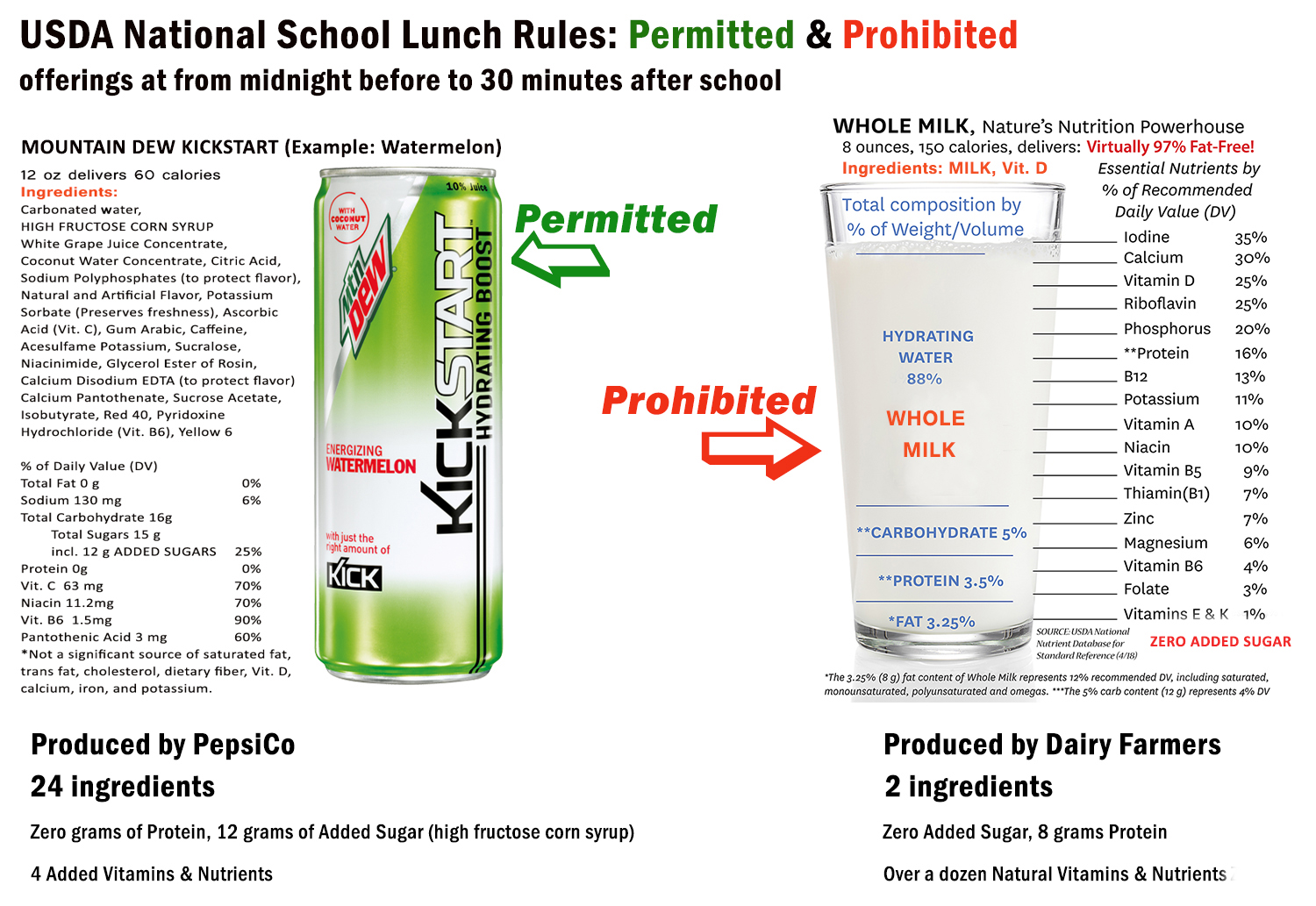
Dairy farmers are good hearted people. Of course, they want to be part of efforts to feed hungry children and to help America’s youth be well and have access to good nutrition. But even this worthy goal has been wrestled right out of their hands by the other ‘partner’ in the three-way MOU – the USDA and its flawed Dietary Guidelines that inform regulations that smile on Mountain Dew Kickstart offerings in schools and prohibit whole milk.

You can’t make this stuff up.

Dairy transformation has been in the works for 12 to 13 years through the proprietary partnerships working ‘pre-competitively’ within the vehicles constructed with mandatory farmer funds under the DMI umbrella.

It is all smoke and mirrors. So much of what has gone on for these 12 to 13 years is just now becoming evident as the smoke clears, and producers can see they have indeed been funding their own demise.

Time to get back to the drawing board.

-30-

Dairy milk: The rest of the story on milk fat and fraud

Dairy milk consumption has two faces: nutrition and sustainability. Aside from a small percentage of healthy fat and more protein than the knock-offs, dairy milk is fresher than soy, almond, coconut, oat and other counterfeit ‘milks.’ In fact, it is so locally produced and bottled that it is also much better for the health of local economies and environment. Have you seen any almond, coconut or cashew trees on the East Coast and Midwest of the U.S.? As for oat beverage, most of the oats are harvested in Canada and processed in Asia. Here in the Northeast U.S., there are millions of acres of grasslands and croplands that provide habitat for wildlife, filter rainwater, hold soil in place, maintain open spaces, photosynthesize carbon from the air, keep something growing on the land year-round as cover crop and forage, and create jobs and economic stimulus that all begin with land being managed by dairy farmers. A dairy cow can eat grass, hay, whole corn plant silage, and other roughage grown on marginal lands. These forage crops are 50 to 70 percent of the dairy cow’s diet, and she will turn them into nutrients we can use in the form of nutrient-dense milk and dairy products we love. How cool is that?

By Sherry Bunting

We read about and see the growing number of choices in the dairy aisle that make a simple trip to the store for milk, one that can be quite confusing. There’s the thing about fat (all those different percentages) and the thing about fraud (all those plant, nut, and bean drink products calling themselves ‘milk.’)

First, the different “percentage milks” we know as skim, 1 percent, 2 percent and whole milk. The latter is confusing, is it 100 percent milk? Do some people think it is 100% fat?

Well, all dairy milk is 100 percent milk, no mater what the fat percentage… But, No: Whole milk is not 100 percent fat. It is not even 10 percent fat. It is standardized to 3.25 percent fat, and if you drank it straight from the cow it would be anywhere from 3 to 5 percent fat depending on breed of cow, time of year, and type of roughage fed.

And then there is protein. Did you know dairy milk provides a little over 8 grams of protein per 8 oz. serving? It packs quite a bit more protein-punch than almond ‘milk’ at a little over 1 gram of protein per 8 oz. serving.

Made like coffee, the crushed almonds are filtered with water. In fact, an 8 oz. serving of almond milk may be more like eating an almond and drinking a glass of water with sugar and thickeners added and a handful of other ingredients.

A common almondmilk brand label lists these ingredients the first being almondmilk defined as almond-filtered water: Almondmilk (Filtered Water, Almonds), Cane Sugar, Sea Salt, Natural Flavor, Locust Bean Gum, Sunflower Lecithin, Gellan Gum, Calcium Carbonate, Vitamine E Acetate, Zinc Gloconate, Vitamin A Palmitate, Riboflavin (B2), Vitamin B12, Vitamin D2.

A typical dairy milk label lists these ingredients: Milk, Vitamin D3. Pretty simple to see that the calcium and vitamins on the milk label are already in the milk and that zero sugar is added and zero thickeners.

The freshness of REAL dairy milk can’t be beat going from farm to table in 24 to 48 hours. It comes naturally from the cow providing the natural proteins and calcium and small amounts of healthy fat that our bodies readily absorb and utilize.

In fact, the carb-to-protein ratio of chocolate milk is now shown to be one of the best sports-recovery drinks on the market today. Yes, plain ‘ole chocolate milk. Maybe if farmers call it by another name, consumers will take notice to what has been in front of them all along.

Still, for many consumers, the perception persists that whole milk is a high-fat beverage, when in reality it is practically 97 percent fat free!

At the bottling plant, milk is pasteurized and standardized. Cream is skimmed to package whole milk at 3.25 precent fat. The skimmed cream—along with additional cream skimmed to bottle the 1% and 2% and non-fat milks—is then used to make other products like butter, ice cream, yogurt, cream cheese, sour cream and dips.

The “standard of identity” for yogurt states it also contain a minimum of 3.25% fat—just like whole milk.

Even ice cream is not 100 percent fat. The FDA standard of identity is that it contain a minimum of 10 percent fat. Some of the richer, higher-end ice creams contain up to 14 percent fat. But along with that fat, comes some nutritional benefits. These are not empty calories.

Butter is high in fat because it is, after all, a fat. Even it ranges 82 to 84 percent fat. A tablespoon of butter in the pan or on your veggies is a smaller quantity serving than an 8 oz. glass of milk; so even though the fat content is much more concentrated at a higher percentage, no one sits down and eats a cup of butter (2 sticks)!

Furthermore, we have learned that the saturated fat in milk and meat are not bad for us and that when part of a healthy integrated diet may actually provide heart healthy ‘good’ cholesterol.

The fears ingrained over 50 years of low-fat dogma are being abandoned as a nutritional experiment that has failed miserably, even though the federal government continues to hang on to the failed lowfat experiment in the recent 202-25 Dietary Guidelines.

What a growing number of scientists have found is that we need not have blamed whole milk, butter—or beef for that matter—all of these years. In fact, the recent rise in obesity and diabetes is linked more to overconsumption of carbohydrates that have filled the energy-void after we collectively sucked healthy fat out of our diets.

Saturated fats are not the enemy, the “new” science shows. However, the science is really not new. Long-time observers, investigative reporters, and scientists note that the very science supporting the health benefits of saturated fats found in milk and meat has been around for decades, but was ignored — even buried.

Meanwhile, U.S. consumer demand for butter has been expanding, and worldwide demand for U.S.-produced ice cream and yogurt has grown as well. Dairy foods and snacks that offer an energy boost with a healthy protein-to-energy ratio—such as yogurt, whole milk, and even ice cream—will be particularly in demand in nations where busy, on-the-go consumers look for reviving options.

Healthy, natural fat and protein from milk and meat keep food cravings at bay to prevent binge-eating on empty-carb snacks. Enjoyed as part of a healthy integrated diet, dairy products—even ice cream—are satisfying, nutrient-dense, carb-moderating foods that can even be the dieter’s best friend.

Go real, go natural. There’s no reason to fear real milk, dairy and beef products from cattle. Contrary to what the activists say and contrary to government ‘guidelines’ that refused again to consider all the science, nutrient-dense full-fat dairy foods and meat are good for us, and yes, good for the planet.

-30-

Net Zero Initiative will ‘shape future of dairy,’ say leaders

Editor’s Note: Part one provided some details on the “official” launch of the Net Zero Initiative, which according to DMI’s Innovation Center for U.S. Dairy, “signals bold climate action” as “an industry-wide effort that will help U.S. dairy farms of all sizes and geographies implement new technologies and adopt economically viable practices.”

By Sherry Bunting, Farmshine, October 27, 2021

CHICAGO, Ill. — The Innovation Center for U.S. Dairy — formed in 2008-09 by the national dairy checkoff via Dairy Management Inc (DMI) — unveiled the Net Zero Initiative earlier this month along with Nestlé’s announcement pledging up to $10 million over five years as the first ‘legacy partner’ to fund research, pilot farms and provide expertise to scale technologies and practices to achieve carbon neutrality, optimized water usage and improved water quality by 2050.

Innovation Center chairman Mike Haddad noted in a DMI media call Oct. 14 that the Environmental Sustainability Committee “has been in place a very long time – many, many years.

‘Mature effort’

“Mike McCloskey has always chaired this committee. This is quite a mature effort for us,” Haddad explained, adding that the committee decided a couple years ago that dairy can become carbon neutral, and many dairies can sequester carbon.

“We felt like there was enough evidence already with existing technology and practices, that by scaling them, we can achieve this over time, and we have been working for years to build out this framework,” he said.

As chairman of Schreiber Foods, Haddad said suppliers, companies like Schreiber, “already see this requirement from our customers who want to have our sustainability efforts feed into their sustainability efforts. They want to know that we are taking care of the earth in making our dairy products, and we have to prove it to them with our measurements along the way.”

Environmental ‘mapping’

In 2007-08, just as the Innovation Center for U.S. Dairy was being formed, the mapping of dairy’s environmental footprint began.

“We were the very first ag sector to establish life cycle measurement of greenhouse gas emissions, showing U.S. Dairy at 2%,” said Krysta Harden, DMI executive vice president of global environmental strategy and former USDA undersecretary of Tom Vilsack when he was ag secretary.

“Through modernization and innovation, the environmental impact of producing milk uses 30% less water, 21% less land and manure, and has a 19% smaller carbon footprint today than in 2007,” she said. “It’s amazing where we have come since 2007.”

Harden explained that Net Zero Initiative (NZI) was started as “a dairy organization that represents farmers, cooperatives, processors, and includes DMI and the Innovation Center for U.S. Dairy, NMPF, IDFA, U.S. Dairy Export Center and Newtrient.

“All of these groups came together to establish NZI,” she said. “This really is the pathway for how to get there, how to break down barriers and make it more accessible and affordable for dairy farms of all sizes and all places.”

‘Piloting’ underway

Pilot farms are already being identified throughout the country, and 2021 is set as the year to move them forward.

Next, the constant focus will be on “scaling up to accelerate progress over time to our 2050 goals,” Haddad said.

“Largely these technologies already exist but need operational improvement,” Harden added. “We can see how we can get there, but the barrier is the significant investment needed by farmers to get there. We want to knock this out by scaling, to lower the investment by farmers and generate new revenue streams for farmers. This will be critical to a self-sustaining future.”

Bottom line, said Harden: “Dairy is committed to being an environmental solution.” She said the key, at the heart of it, is the dairy farmers.

According to the Innovation Center’s official statement, the 27 dairy companies that make up its board, represent 70% of the nation’s milk production and have voluntarily adopted the U.S. Dairy Stewardship Commitment and contribute to the industry’s ability to track, aggregate and report on progress.

“We know dairy farmers are leaders, and they care about what they are producing and how they are producing it,” said Harden. “They are passionate first-adopters, embracing how the world is changing.”

Sustainable profit?

DMI vice president and California dairy producer Steve Maddox shared his thoughts from the producer perspective.

“When we first started talking about sustainability efforts by the Innovation Center, most dairy farmers viewed this with a jaded eye because it often means requiring more of them, and not of others,” said Maddox. “But this effort focuses on improving profitability and efficiency that is also environmentally sound.”

He said farmers know the importance of being as efficient as possible. Early-on, Maddox said the Innovation Center started down the road of environmental sustainability to fight claims by anti-animal-ag groups by doing the scientific measurements in 2008, to show how dairy has reduced its footprint since 1944.

“That is a significant date near the end of World War II when some of America’s greatest generation went to college, and extension — through our land grant universities — taught us to maximize production and take better care of the land,” said Maddox. “That led us to continue improving.”

As that generation retired, and with government budget cuts to research and extension, a dropoff in improvement was seen, according to Maddox. He said this signals the need for the industry to pick things up to “shape the continuous improvement of the industry at the farm level.”

During media questions, Harden stated that the $10 million from Nestlé is specifically geared toward on-farm improvement — not changes in processing or new dairy products.

However, the Innovation Center for U.S. Dairy is also looking at the processing and transportation aspects of achieving the NZI goals.

In fact, the climate impact of transportation and refrigeration of milk and dairy products is already a big part of the entire shaping process through innovations such as ultrafiltration, microfiltration, and aseptic packaging for shelf stable beverages and products. These are other pieces that come from precompetitive Innovation Center collaborations.

As for the farm-level impacts of NZI, Maddox stressed how the 2007-08 life cycle analysis on milk and cheese showed that the industry reduced its use of feed, land and water through collaboration on animal care, improved genetics and the FARM program.

Shaping dairy

In other words, through FARM and NZI, companies will shape dairy’s “continuous improvement” instead of relying on extension education for those gains — mainly because, they say, the industry is at a point where these future gains will cost money. Since farms will need to invest in those gains, NZI is banking on industry and government to step up and help pay for it.

Something that often gets lost in discussions about climate change and sustainability, said Maddox is: “Cows, being ruminants, are miracles onto themselves. They convert byproduct to nature’s most perfect food.”

At his California dairy, over 50% of the cow feed on a dry matter basis is byproduct that would have gone into landfills.

“This, too, is a major part of it. We can feed all sorts of things, bakery waste, Doritos, sunflower meal… There are 400 different commercial crops grown in California, and all of them can be fed to cattle,” said Maddox.

He painted a picture of farmers learning from each other within the NZI framework.

Maddox observed that cow care and breeding to have more efficient cows is a big part of reducing dairy’s environmental impact to meet the ambitious new industrywide goals. 

“All of these sustainability practices will have a bottom-line impact,” he said.

-30-

DMI’s NZI fits globalist agenda; How are ‘life cycle assessments’ developed? What do they value?

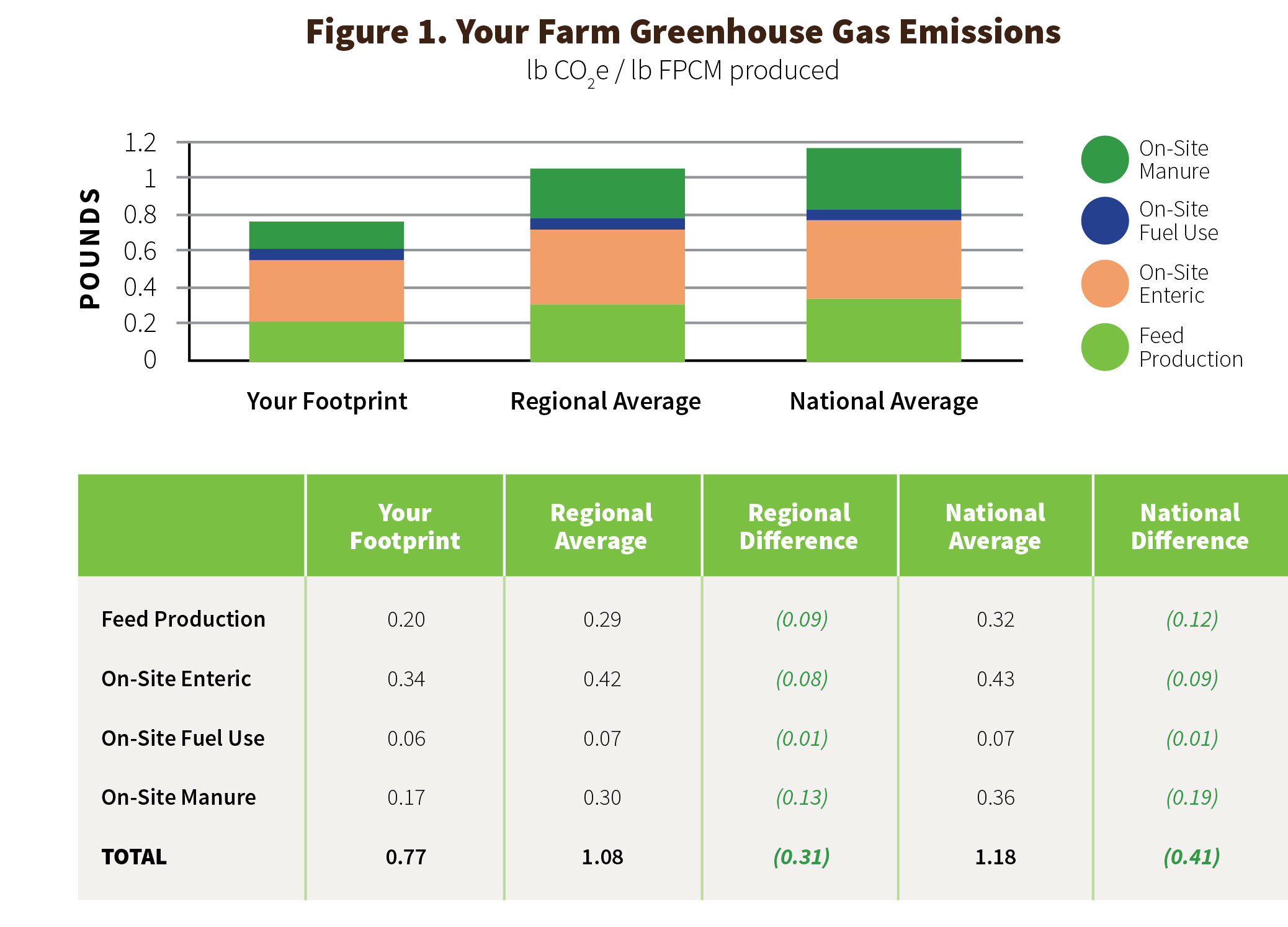
As Stewardship Commitments and Net Zero Initiative flow through to the FARM program’s Environmental Stewardship module, a user guide developed by NMPF covers what has already begun in terms of data collection. A farm’s cattle inventory of various classes and milk production, component production, feed ingredients, crop inputs and other data will be used to figure the farm’s GHG emissions relative to a regional average and relative to a national average. The guide can be read here, and additional information is available here 

By Sherry Bunting, Farmshine, December 4, 2020

Where do the life cycle assessments come from that are being used to benchmark progress on U.S. dairy’s impact on climate and environment? How might this “collective” method of measurement affect dairy diversity and geography in the future?

When dairy leaders talk about the Net Zero Initiative goals, they are using analysis by well-known animal scientists comparing data over time to benchmark industrywide collective progress using a determined scope of collective measurement that fits the controlling globalist view.

The idea is to peg dairy’s progress at one value that the global supply chain can then plug into their own brand impact measurements. Yes, this is both simple and complicated.

DMI leaders are quick to point out that this pathway was decided upon by dairy farmers, dairy cooperatives, and dairy processors and that dairy checkoff is simply providing the science. But it is also clear that DMI provides the staff and structure for implementation. The national dairy farmer checkoff organizations provide the science, the staff and the structure so that the entire dairy industry can be described as one unit – not multiple units competing with each other on the aspect of ‘sustainability.’ That’s the point, they say.

Along with the Net Zero carbon neutrality goal by 2050, DMI’s Innovation Center for U.S. Dairy offers this report on a decade of progress:  “The effects of improved performance in the U.S. dairy cattle industry on environmental impacts between 2007 and 2017,” was published in the January 2020 edition of the Journal of Animal Science

This report showed dairy used 30% less water, 21% less land, produced 21% less manure nutrients and produced 19% less greenhouse gas (GHG) emissions — referred to in press statements as carbon footprint — per metric ton of energy-corrected milk over the decade of 2007 to 2017.

The research by Jude Capper and Roger Cady, along with other animal scientists, observed that, “As dairy systems become more productive, efficiency improves via the dilution of maintenance effect (Bauman, VandeHaar, St. Pierre) and both resource use and GHG emissions are reduced per unit of milk.”

The researchers indicated that monitoring changes in food production processes, yields, and environmental impacts is a time-consuming and expensive undertaking, which they took to a higher level in this study as compared to 2006 and 2009 studies that looked at how efficiency gains reduced the environmental footprint of dairy from 1944 to 2007 based completely on animal productivity gains.

In the 2007 to 2017 study, researchers only looked at dairy’s impact from the manufacture and transport of crop inputs to milk at the farm gate. Excluded from the scope of collective farm progress are the impacts of milk transportation, processing and retail.

Dairy systems were modeled using typical management practices, herd population dynamics and production data from U.S. dairy farms (USDA NASS and Dairy Records Management System-DRMS). Crop data were sourced from national databases, including NASS. Modeling and training ration formulation software was used as well as a host of data from public sources to determine water recycling, electricity and other energy usage, for example.

“The U.S. dairy industry has made remarkable productivity gains and environmental progress over time,” write Capper and Cady. “To maintain this culture of continuous improvement, dairy must build on gains and demonstrate commitment to reducing environmental impacts while improving both economic viability and social acceptability.”

At the same time, Dr. Frank Mitloehner of University of California-Davis CLEAR center has been instrumental, mainly in evaluating – and putting into perspective – accurate greenhouse gas (GHG) emissions for dairy and livestock as well as participating in research on how various technologies could further reduce U.S. dairy’s current contribution of just 2% of total GHG emissions.

Progress to reduce GHGs is measured per unit of milk production, but as Dr. Mitloehner frequently points out, a better way to pinpoint it would be to incorporate the nutrient density of milk and meat in calculating the impact of dairy and livestock industries per nutritive value.

For example, almond beverage might have a smaller footprint, the experts say, but what is the nutritive value of selling water with the equivalent of two almonds per serving? Much of the climate impact discussion around food is not an apples to apples comparison in terms of nutrition and calories delivered.

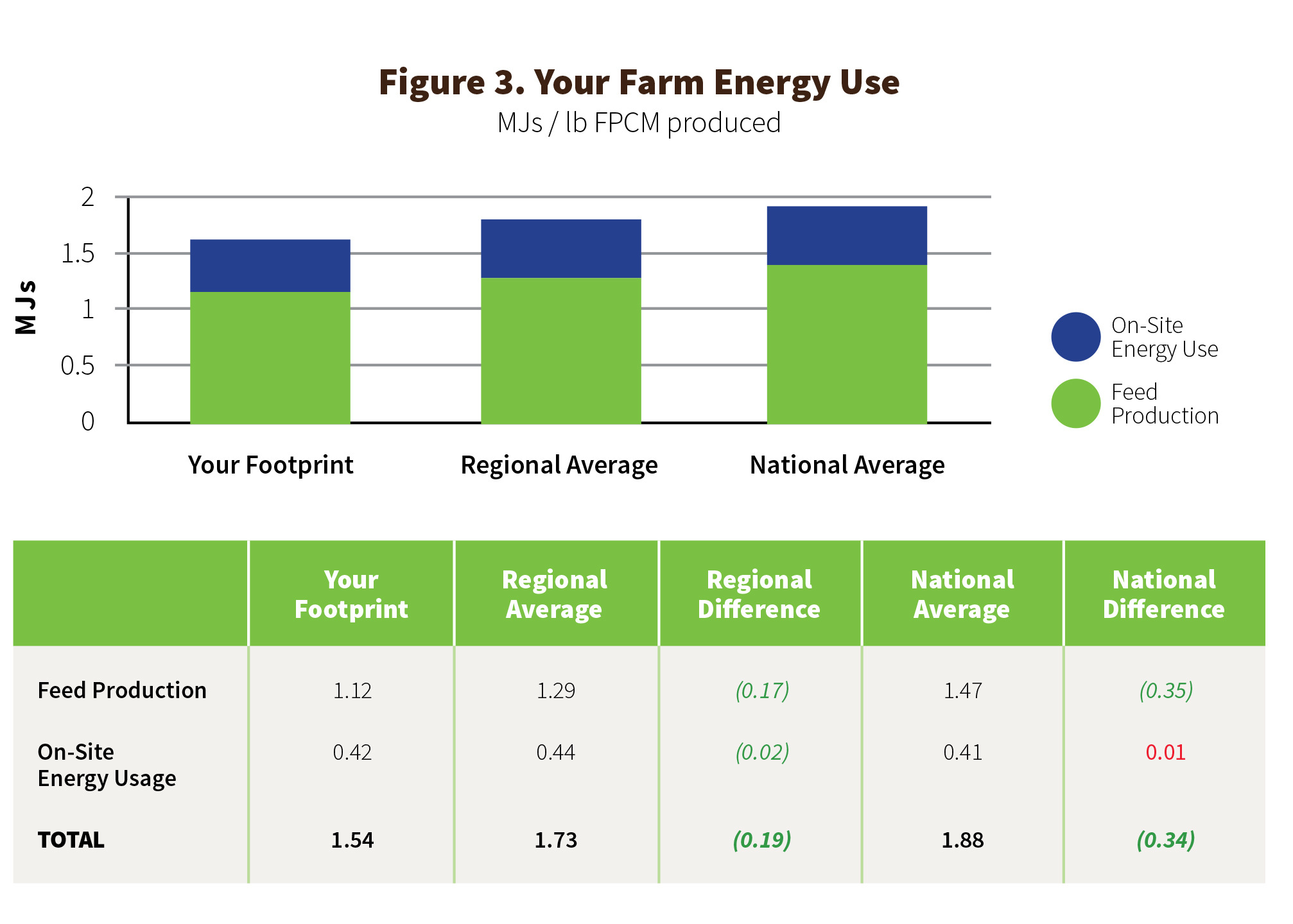
The FARM program’s Environmental Stewardship guide prepares dairy farmers for collection of energy use data to compare a farm to a regional and national average for energy use as a part of its carbon footprint per unit of milk production. The guide can be read here, and additional information is available here.

There are other positive aspects of “environmental impact” at local levels that fall outside of the collective global method of impact measurement. How far food travels within local or regional food systems versus national and global supply chains is not part of the farm-level Net Zero Initiative.

Meanwhile, the Innovation Center for U.S. Dairy is working on product innovations at the processing level from a centralized or global supply chain perspective to reduce environmental impacts on a global scale. How do these ‘global’ vs. ‘local’ pathways intersect in the future in terms of a farm’s real contribution to the surrounding community vs. its contribution to a global impact model?

Where do the 2007 to 2017 gains from this research come from? First off, milk production increased 16% over that decade, and the number of dairy cows increased 2.2%.

Researchers explain the environmental impact was assessed using “a deterministic model based on animal nutrition, metabolism, and herd population parameters founded on life cycle assessment (LCA) principles.”

Those principles first establish the scope (in this case the scope was from crop input to milk output and did not include processing and distribution to consumers). Then inventory is established (input and output). Then the impact is established (input versus unit of output). Then the relative change is figured (improvement or reduction).

The researchers attributed a large portion of the gains to the continued dilution of ‘maintenance’ requirements per head of cattle and milk volume via these measurements: 

1) A 22.3% increase in energy-corrected milk production per cow as the 12% increase in fat yield and 10% increase in protein yield were factored in, 

2) Lifetime milk yield was figured to have increased 18.7% as a combination of shorter calving interval, shorter dry periods, increased replacement of mature cows with heifers, shortened days of life, and earlier calving age, 

3) increased productive-animal-days across the cattle population, 

4) reduced SCC as a proxy for reduced milk waste, 

5) How animals are fed, how water is used, and how inputs factor into the land and carbon footprint equation, collectively.

The research showed that even though total cattle numbers have increased slightly from 2007 to 2017, the number of productive-animal-days and lifetime milk increased by more during that time due to the way all of these factors combine to show reductions in environmental impact by reducing the inputs for non-productive cattle that are counted against the productive cattle population at points in time.

Life cycle assessment of environmental impact is all about data modeling and allocation. The age at first calving is a prime example. Until a dairy animal calves, she is using resources without delivering a product. Growth rates can improve these impacts in the modeling by getting cattle to production, faster. Once the animal has a calf and begins producing milk, she is now contributing to reducing carbon footprint by supplying milk yield and component yield in the national figures against the resources she is consuming. Length of dry period, calving interval, and other reproductive efficiency also affect this. Longevity, oddly enough, has less of an effect because of how the data are assembled and used.

As for land use and manure production, researchers looked at dairy rations without full consideration of the wide range of commodity byproducts. They included some common byproduct feeds like distillers grain for both 2007 and 2017. More could be done to show the relative feed value vs. environmental impact of many byproduct commodity feedstuffs, particularly if credit could be given for keeping fiber and carbohydrate from the food processing sector out of landfills.

Double-cropping (cover crop forages) are common practice on dairy farms today, which reduce environmental impact of milk production, but are not really quantified in this life cycle assessment research at this point.

In pasture systems, the intensive rotational grazing methods used today reduce the land to milk ratio within the context of grazing-based production, but may have a smaller positive impact on the industrywide collective figure if production per cow is below benchmark. That will need to be considered because there are clear sustainability benefits to these grazing systems that fall outside of this collective model.

All of these factors being analyzed and allocated to one U.S. dairy figure are calculated to paint one picture of reduced environmental footprint. This includes water recycling. Water that is used to cool milk is also used to wash down parlors and milking equipment and in some cases, a third time in manure flush systems before being recaptured as nutrient-rich effluent to irrigate crops. In some regions and some management styles, water recycling is not measured, but natural. Take grazing operations in rainfed rolling hills. Their recycling isn’t measured, but it’s happening.

Unfortunately, when it comes to all of these measurables, including the impact of productive-animal-days vs. animal population vs. energy-corrected milk volume, it is the increased consolidation of milk production to fewer and larger farms from 2007 to 2017 that has had, perhaps, the most significant positive impact on the collective industrywide dairy environmental footprint calculations.

Why? Because as more milk production is brought into heavily controlled confinement environments, it becomes easier to measure to directly influence the model. On the other hand, pasture and drylot systems offer other sustainability and animal care positives that consumers care about but are not as easily measured by this global supply chain model of environmental footprint.

The elite globalist view seeks to control every aspect of food, agriculture, and energy. It’s important to keep sight of other sides of the ‘sustainability’ equation. Local and regional food systems provide benefits to local economies, local land use and local ecosystems that are not reflected when we measure a national or global model.

As the industry moves toward controlled environments where inputs and outputs can be precisely measured, smaller less concentrated dairy farms may not be fully appreciated for what they contribute to a community’s environmental footprint in terms of how far food travels or how local economies and ecosystems are affected. This divergence needs to be addressed.

Remember, Net Zero Initiative fits the globalist view and aligns with World Economic Forum’s Great Reset. It also aligns with language in the Green New Deal.

Viewing footprint progress on a national or global scale across all cattle and all milk volume brings positive messages but also the aforementioned concerns.

It’s important to see ‘industry’ progress, and most dairy farmers welcome the opportunity to talk to consumers about what their industry has done collectively to be good stewards. However, when the dairy leaders at DMI and all of its organized underlings tell us that food safety, sustainability and animal care are NOT areas in which brands should compete, what they are really telling us is that these are areas that will be controlled by one message using their one collective measurement method in scope and calculation.

Farm size and geography will be considered, and they say diversity is a strength, but the bottom line is measurement toward a national model seeking to meet a global goal.

By their own admission, the dairy checkoff has pursued globalization since 2008, implemented FARM to keep animal care from being a marketing factor, and they admit they are implementing Net Zero to be sure dairy comes completely into alignment with the globalist view having collective measurement that fits the United Nations Sustainable Development Goals, while discouraging other forms of ‘sustainability’ marketing between brands.

Case in point, cattle longevity has little if any positive bearing on the life cycle assessment for water use, land use, manure produced and greenhouse gas emissions in the context of total-industry-collective measurement of inventory input vs. output.

In fact, the research cited in this article that is the basis for the DMI Innovation Center life cycle assessment actually shows a benefit for continual throughput of cattle with faster growth rates for calves and earlier age at first calving being more significant on the front end than the age of the cattle on the back end when applied to a collective industrywide measurement.

That’s because the total inventory of cattle in the dairy industry at any given time includes non-productive animals. Research models focus on the collective data about productive animal days vs. total cow numbers vs. milk production for input and output at given points in time — not over the lifetime of animals in the herd. Logic doesn’t always apply in this scenario.

In short, the way the industry looks at collective industrywide progress on environmental impact may differ from how an individual dairy producer or community of producers view their contribution by other equally valid measurements.  

Both methods can be supported by sound scientific data, but the industrywide collective method fits the global supply chain perspective. Thus, it is the approach for the Net Zero Initiative embraced by DMI’s Innovation Center for U.S. Dairy and the 27 companies that represent its board and the over 320 companies that are part of its Sustainability Alliance. 

The companies at the forefront are the largest global dairy companies and food retailers. They are also positioned as leaders and drivers of the World Economic Forum’s Great Reset, seeking to have food, technology, finance and energy sectors of the global economy work together to transform food, farming, energy, and our lives.

It will be important for individual dairy producer ideas, regional food systems, and their positive impacts on a more local scale to have a voice in how they are measured and evaluated within this truly global agenda. Speak up and stay tuned.

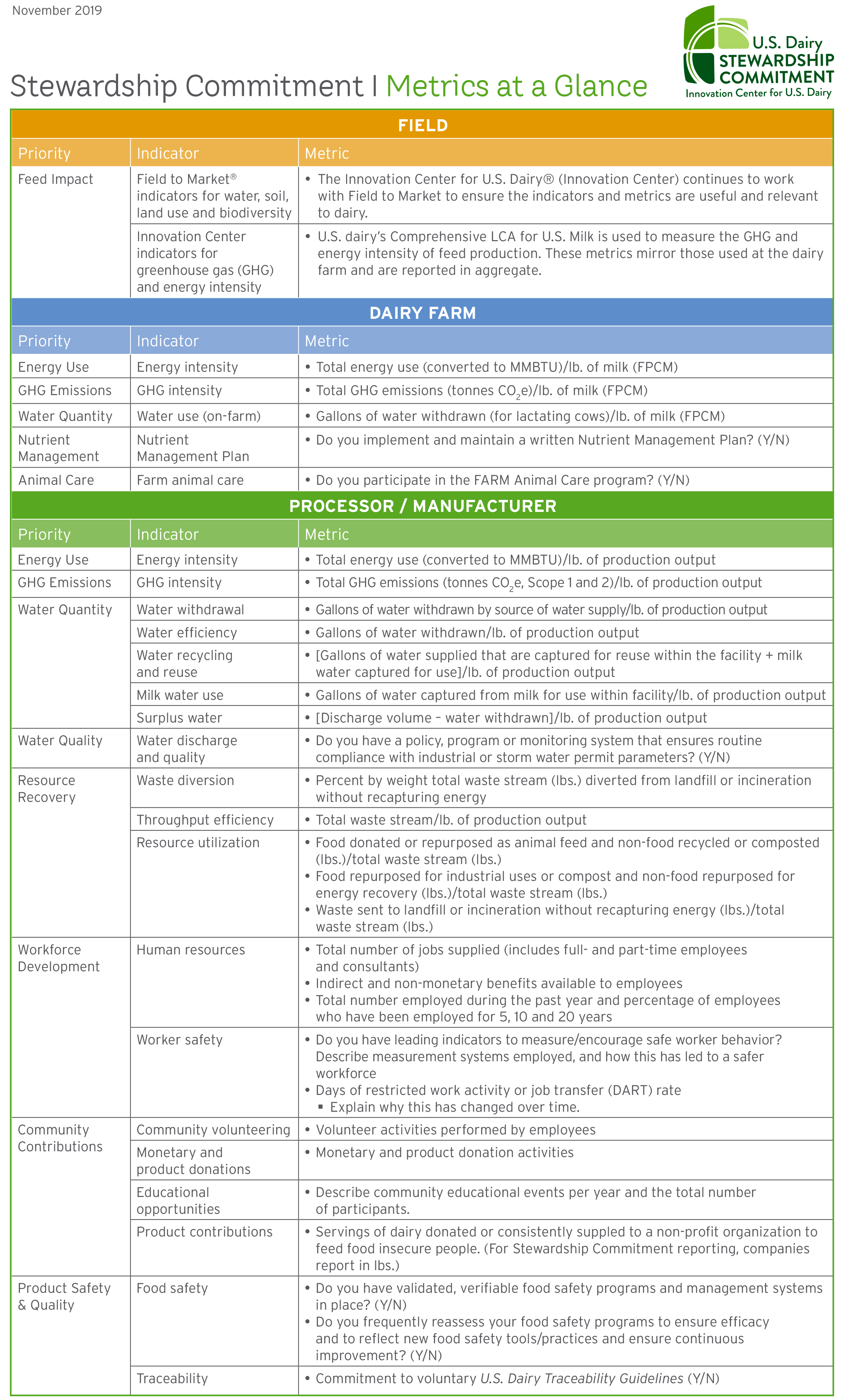
This document composed by the DMI Innovation Center for U.S. Dairy in November 2019 shows the “Stewardship Commitment” at a glance for each sector of the dairy supply chain involved in the Sustainability Alliance. Interestingly, under processing, there is a line item to quantify gallons of water captured from milk for use within the facility per pound of production output. 

-30-


What has checkoff done for you lately?

Is now the time for a separate voluntary checkoff to divorce USDA, promote real U.S.-produced dairy, and take back the market value of consumer trust?

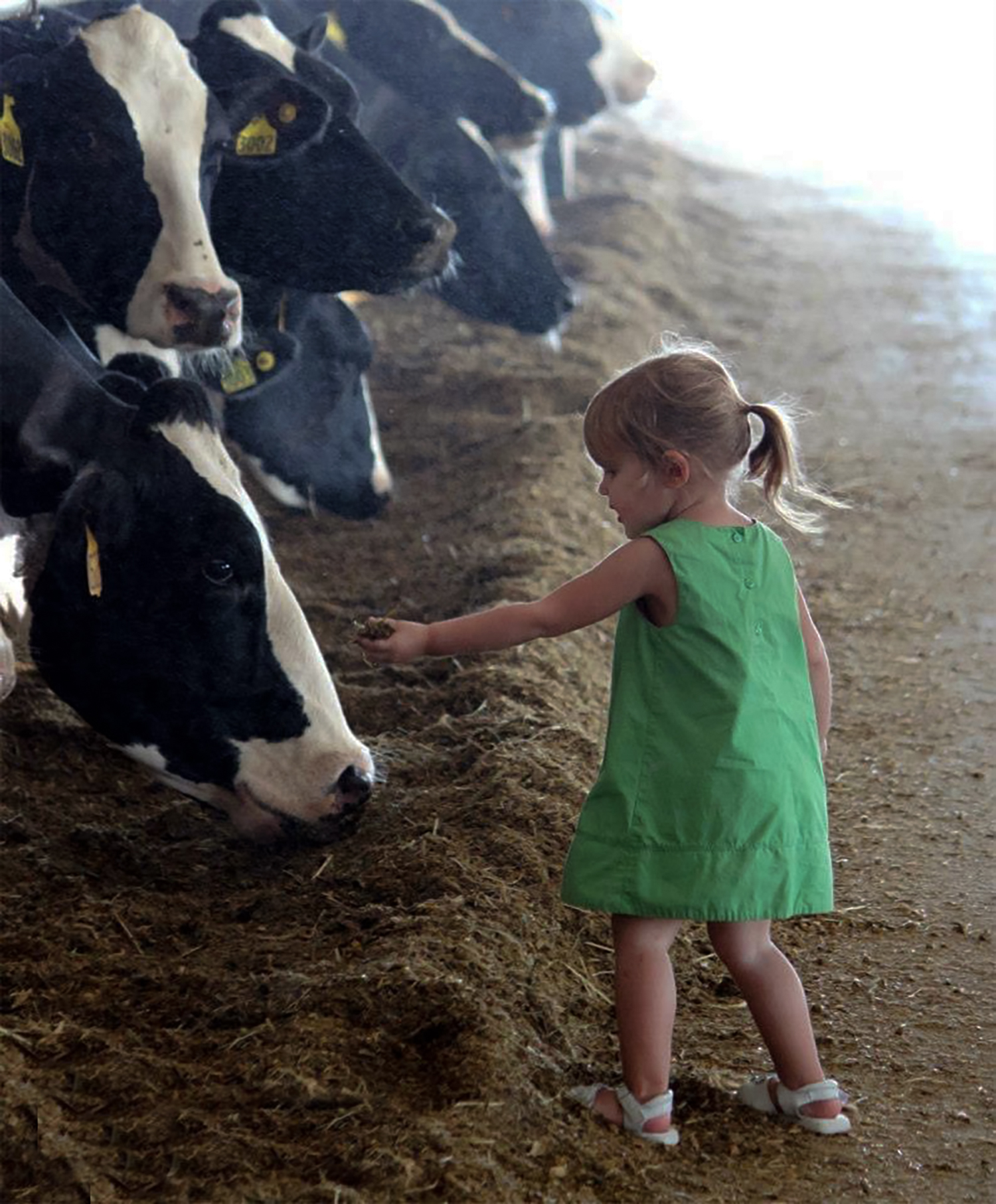
A young girl comes face to face with cows at a dairy farm open house in 2011. Since then, questions about checkoff direction beg only more questions. Who will stand up? Children on and off the farm need someone to stand up for their future. The World Economic Forum’s Great Reset tagline is (can you believe it?) Build Back Better, and it includes a plan already well underway to transform the global food and agriculture industries as well as the human diet. Huge global food and technology players say their plan will reduce hunger and disease, protect water and mitigate climate change. The real motive is tighter corporate control of food. The pattern is clear in the path of the checkoff, especially since 2008. Even the trust consumers repeatedly say they have in farmers is being arbitrated, re-designed and outright stolen. File photo by Sherry Bunting

By Sherry Bunting, Farmshine, January 22, 2021

BROWNSTOWN, Pa. — What has the mandatory dairy checkoff done for you its funders — the dairy farmers — lately? That’s a loaded question.

The short answer? Lots of herding.

One would believe mandatory checkoff promotion would be focused on herding consumers toward dairy products, but it may be more aptly described as herding producers toward certain global food transformation and marketing goals.

In various DMI phone conferences with producers, checkoff leaders have often repeated how they build relationships to ‘move milk’, work hard to ‘move milk’ and pivot through circumstances to ‘move milk’.

What has checkoff done for you lately? Apparently, they ‘move milk’.

Yes, there are several important and functional programs funded with checkoff dollars, mostly by state and regional checkoff organizations, including various ‘point of purchase’ and ‘tell your story’ programs aimed at connecting farmers with consumers. They help, and they also fit the agenda.

Survey after survey shows consumers trust farmers. They do not necessarily trust the global processors, retailers and chain restaurants that put farmers’ products in the consumer space.

This should come as no surprise. When it comes right down to it: Do farmers, themselves, even trust these consolidated globalized conglomerates?

Consumers trust farmers (88% up 4% since June according to AFBF survey), so ‘moving milk’ means connecting farmers with consumers. But the profit in that equation rests with the consolidated power structure – the global corporations – in the middle.

What has checkoff done for you lately? They’ve facilitated corporate use of farmers to dress their windows even as they participate in the World Economic Forum Great Reset for food transformation that seeks to dilute animal protein consumption, including dairy, through ‘sustainability’ definitions and goals.

Even the Edelman company, which receives $15 to $17 million annually in checkoff funds as the DMI public relations firm, is busy promoting a top oat-milk look-alike brand globally, serving as a sponsor and integrator of the EAT forum (EAT Lancet diets), and getting involved in several purpose-driven marketing efforts that dilute dairy around the marketing concept of climate.

Edelman knows consumers trust farmers. They do the annual global consumer ‘trust barometer’ where corporations are told consumers want purpose-driven marketing. They create prophecy and fulfill it.

What has checkoff done for you lately? They have taken what consumers love and trust about farmers and fund programs that make farmers earn what they already have. They tell farmers that consumers demand corporations show how they are improving climate, the environment and animal care. But do they tell farmers that consumers also want corporations to stand up for and improve how they care for the families who farm?

Along with producing the milk to make delicious, nutritious dairy products, dairy farmers possess the trust-commodity the global corporations covet.

One thing the national checkoff has done for you lately (especially since 2008) is to transfer that trust-commodity from farmers to global brands. They treat this trust-commodity as though it is a formless piece of clay they can mold to accomplish goals set by the pre-competitive roundtable of global conglomerates — via the Innovation Center for U.S. Dairy, formed by checkoff and funded with checkoff dollars since 2008.

DMI CEO Tom Gallagher has called this his job of ‘getting people to do things with your milk.’

While producers are being herded toward goals set by these corporations in concert with NGOs like World Wildlife Fund (WWF) for animal care, employee care and sustainability, consumers are also being herded toward prioritizing these same goals and messages.

Yes, consumers want to know where and how their food is produced. But they TRUST farmers. So farmers are being used to carry the purpose-driven messages of corporations. Shouldn’t these companies be paying farmers for this trust-commodity instead of farmers paying the freight for checkoff to transfer it?

What has checkoff done lately? How often do we hear that checkoff is “building trust”?

The trust is there. Checkoff is using that trust to build marketing, for who? You? The farmer? 

Checkoff launched and funded – through its Innovation Center for U.S. Dairy – the Farmers Assuring Responsible Management (FARM) program. What about a Corporations Assuring Responsible Ethics (CARE) program for the treatment of dairy farmers? Shouldn’t there be something like that to balance the scales of power?

Isn’t that what checkoff was originally created for? According to statute, it is to be the producer’s voice in promoting their product.

Repeatedly, we see evidence that consumers care about how farmers are treated. They indicate preferences for locally-produced and U.S.-produced food. Why? Because they trust farmers and want them to be supported by their purchases. The more local or domestic the farms producing the food, the better they like it.

So here is a short and incomplete list of some things checkoff has done for you lately:

1_ Used your farmer-trust-commodity to market brands via the ‘pre-competitive’ work of the Innovation Center for U.S. Dairy.

2_  Applauded USDA’s Dietary Guidelines every five years and carried the government-speech message on fat-free and low-fat dairy.

3_ Convinced farmers they must do x, y and z to ‘build trust and sales’ via the FARM program as determined by the pre-competitive collaboration of global corporations via the Innovation Center for U.S. Dairy. 

The FARM program convinces farmers they (checkoff) is building trust by setting requirements for how farmers manage their dairy farms, cows, employees and land. These parameters are agreed to pre-competitively by global corporations via DMI’s Innovation Center for U.S. Dairy and then enforced on farms through their milk buyers with the equal weight of a contractual obligation.

The next wave for the FARM program is environmental to fulfill the new “sustainability” platform, the Net-Zero Initiative. Be appreciative, say checkoff leaders, FARM is farmer-led and the Net-Zero Initiative will be profitable.

4_ Used farmer checkoff funds to partner with global corporations buying breakfast carts – and influence – in schools to create ‘change agents’ through GENYOUth. A year ago, we reported that GENYOUth, in its newsletter, admitted using our nation’s schoolchildren and the climate change conversation as leverage for an emerging global vision for food transformation. 

The pre-pandemic spring 2020 GENYOUth ‘Insights’ newsletter put it this way: “What youth know, care about and do might make or break the future for healthy, sustainable food and food systems. The future of sustainability – which includes the future of food and food systems – will benefit from youth leadership and voice.”

The GENYOUth Insights article bemoaned the Edelman-guided checkoff-funded survey revelation: “Youth are twice as likely to think about the (personal) healthfulness of their food over its environmental impact. Teens aren’t thinking too much about the connection between food and the health of the planet.”

That was PRE-pandemic. If anything, the pandemic has only reinforced the consumer focus on health, price and taste, while checkoff actively seeks to move the dietary goal posts and herd farmers and consumers toward marketing terms like: ‘sustainable nutrition’, ‘sustainable health’ and ‘good for you good for the planet.’ These terms will have definitions and requirements set by global corporations. Again, farmers will be told they must do x, y and z to build trust.

5_ Used checkoff funds to develop and promote products that dilute dairy and ultimately subtract value. A prime example is DFA’s ‘purely perfect’ blends, like Dairy-Plus-Almond, a 50/50 blend of almond beverage and low-fat ultrafiltered real milk – not to be confused with a better idea: why not almond-flavored 100% milk?

The rationale? DFA sold the concept for DMI investment as: “This product is not about pivoting away from dairy, instead we saw an opportunity to fulfill a need as people like almond or oat drinks for certain things and dairy for others. This product combines the two into a new, different-tasting drink that’s still ultimately rooted in real, wholesome dairy.”

This fits what CEO Gallagher has talked about in the past projecting the fluid milk future as being ‘milk-based’. 

In terms of milk products in schools, Gallagher put it this way in his 2019 CEO address: “Schools represent just 7.7% of consumption, but… We have got to deal with the kids for a variety of reasons on sales and trust.” He went on to say that the fluid milk committee “asked DMI to put together a portfolio of products for kids inside of schools and outside of schools. What are the niches that need to be filled? What’s the right packaging? What needs to be in the bottle? And we can do that,” he said.

6_ Coached farmers on how to talk to consumers in a way that touches on the Net-Zero sustainability goals of these global corporations and links the farmer’s trust-commodity with global brands.

The bottom line is what the checkoff has done for farmers in the past 12 years is to establish a roundtable of global corporations that determine what dairy innovations to promote for the consumer level and what production practices to audit at the farm level, and then convinces you, the farmer, that they are doing these things to ‘build trust and sales’ and ‘move milk.’

While farmer checkoff funds are the financial side of this effort, farmers themselves are also being used to transfer that trust-commodity to the corporations, ostensibly so checkoff can keep convincing them to ‘do things with your milk.’

If a referendum on dairy checkoff is not possible, then perhaps a new voluntary checkoff is a way for dairy farmers to create an entity that stands apart from USDA government speech and MOUs, apart from global WEF Great Reset influence, apart from corporate decision-making, to stand with and for farmers, to take back their trust-commodity, to define who they are, what they already do, what it is worth to consumers, and create market value for the farmers’ milk and the consumers’ trust.

What has dairy checkoff done for you lately? Did you request checkoff materials or assistance with a project that was denied or approved? Did you participate in a checkoff program that was wonderful or not so much? Do you have examples of programs and ideas you started at the grassroots level that checkoff  ‘took over’ and changed the message? Did you have a dairy donation event for whole milk that checkoff said could not be done at schools? Have your milk buyers ever paid you — or even thanked you — for the premium-consumer-trust-commodity they pick up every time they pick up your milk? Send your observations to agrite2011@gmail.com

To be continued

-30-

Free yard signs offered, grassroots effort continues promoting whole milk’s immune boosting nutrition

Bernie Morrissey has boxes of signs getting a bit of a makeover, assembled and available – free – in the Morrissey Insurance vestibule at 890 North Reading Road, Ephrata, Pa., or by visiting Wenger’s of Myerstown or Sensenig’s Feed Mill, New Holland during business hours. “Take only what you will place. They are free,” says Morrissey.

By Sherry Bunting, Farmshine, January 18, 2021

EPHRATA, Pa. – Now that elections are over, and five more years of Dietary Guidelines were recently announced with the comment period concluded and thousands of comments disregarded — the Whole Milk – School Lunch Choice – Citizens for Immune Boosting Nutrition yard signs are getting a makeover.

The action word “Vote” on the campaign-style yard signs that began popping up last fall has been changed to “Drink”, but the message and reference to 97milk.com remain the same.

These are signs to make people aware of two things:

1) Whole milk is still not allowed as a school lunch choice under current federal rules, and

2) Whole milk is the best way to get Vitamin D and other immune boosting nutrition for children and elderly, whose diets are most controlled by the fat-free and low-fat rules of yet another round of 2020-25 Dietary Guidelines.

Retired agribusinessman Bernie Morrissey has changed 300 available signs printed with the financial sponsorship of Morrissey Insurance of Ephrata and Troy, Pa.; Sensenig’s Feed Mill, New Holland; and Wenger’s of Myerstown.

“Our main message is the same,” says Morrissey. “News reports increasingly mention vitamin D supporting the immune system in this time of coronavirus pandemic. Even national broadcasts bring on specialists citing research showing the vital role of vitamin D. The best way to get vitamin D is in whole milk, but our children are not permitted to choose whole milk at school. They can only choose fat-free and 1% low-fat milk, according to the federal government’s dietary rules.”

In fact, according to a recent health report aired on several major broadcasting networks, dozens of studies have identified the importance of vitamin D in relation to Covid-19. Even before the pandemic, the medical community identified vitamin D as a nutrient deficiency of concern among Americans.

A huge new study is underway to test causation between higher vitamin D levels and prevention of deaths due to Covid-19 after several smaller studies showed nine out of 10 deaths could have been prevented with adequate vitamin D levels.

Winter and spring are the seasons of concern with Covid-19, and it is the time when vitamin D deficiency is most prevalent, say health professionals in countless interviews.

Vitamin D is one of several fat-soluble vitamins in milk. Vitamin D occurs naturally in the milk fat at some level but is also fortified in milk — and has been for decades because of the longstanding concern about vitamin D deficiency and the importance of vitamin D in conjunction with calcium for strong bones and overall health.

A study at St. Michael’s hospital in Toronto, Canada, published in the American Journal of Clinical Nutrition in 2017, showed children who drank whole milk had up to three times higher absorbed levels of vitamin D compared with children drinking 1% low-fat milk. This study also showed that children drinking whole milk were leaner. They had 40% less risk of becoming overweight than children drinking low-fat milk.

Another study there showed children drinking only non-cow’s milk plant and nut alternatives, which are also fortified with added vitamin D, were twice as likely to be deficient in vitamin D. In fact, the pediatrician researchers stated that, “Among children who drank non-cow’s milk, every additional cup of non-cow’s milk was associated with a five percent drop in vitamin D levels per month.”

“What we are doing with the yard signs and Drink Whole Milk 97% Fat Free painted hay bales and banners and the efforts of the 97 Milk education group with their website and social media is all working. The yard signs focus on the nutritional message for our children and elderly that the Dietary Guidelines ignore, which is the immune boosting nutrition of whole milk,” says Morrissey, also pointing out the benefits of whole milk for maintaining a healthy weight and stabilizing metabolism.

“This is a slow process to get things changed in Washington and Harrisburg, but we’re working on it,” he adds, praising the combined efforts of the Grassroots PA Dairy Advisory Committee and 97 Milk, as well as all the many people and agribusinesses supporting both grassroots efforts initiated by dairy farmers.

Morrissey said the 300 Drink Whole Milk – School Lunch Choice – Citizens for Immune Boosting Nutrition – 97milk.com yard signs are available in the vestibule at Morrissey Insurance at 890 North Reading Road, Ephrata, Pa. Signs are also available at Sensenig’s Feed Mill, New Holland and Wenger’s of Myerstown during business hours.

“These yard signs are free because of the three businesses that paid for them – Morrissey, Sensenig’s and Wenger’s. Come and get them, but take only what you will place,” says Morrissey, wanting to be sure signs are put out for others to see, and learn and question and get involved.

Producers and other businesses wanting to sponsor the continued printing of more yard signs, or those with questions about how to participate from other areas, contact Bernie Morrissey from 9:00 a.m. to 9:00 p.m. at 610.693.6471.

Find even more good news about whole milk and dairy foods at 97milk.com

-30-

A plea for Eve: ‘She deserves our every consideration. She earned it.’

Eve Project seeks 200,000-pound record for Elevation’s dam: Relocated from Pennsylvania to Canada for trailblazing ET surgery in 1974 left 8th lactation incomplete

For George Miller, Eve is special. He is pictured here at the 2011 National Convention in Virginia. He was recognized in 2019 by Holstein USA for distinguished service, noting his vision, leadership, determination and advocacy for the Holstein cow and the people behind her. Today, at age 94, George is under nursing care, residing with his wife Pippin. (Cards and well wishes can be sent to the Millers at 5675 Ponderosa Drive, Apt. 304, Columbus, OH 43231) Sherry Bunting photo

By Sherry Bunting, published Farmshine, January 15, 2021

BROWNSTOWN, Pa. — Less than 4000 pounds. That’s what separates Round Oak Ivanhoe Eve’s recorded lifetime production from the 200,000-pound mark she is believed to have earned but for the circumstances of her relocation and donor cow surgery at the peak of her eighth lactation.

Aptly named ‘Eve’, the dam of the one and only Round Oak Rag Apple Elevation has touched over 95% of the Holstein breed — given Elevation’s more than 100,000 recorded offspring and around 9 million descendants, worldwide.

In fact, her son’s growing impact was part of the reason she was relocated for several months in 1974 from her last owners in Pennsylvania to Modern Ova Trends, Norval, Ontario, Canada for superovulation and embryo recovery transfer surgery to attempt a multiple repeat of the mating that had produced Elevation a decade earlier.

That move at 12 years of age, in peak lactation, created a lapse in milk recording that shorted Round Oak Ivanhoe Eve’s lifetime record to be 3,970 pounds shy of the 200,000-pound mark at 196,030M 4.1 8070F. 

This shortfall is believed to be milk Eve made, or would have made, in the second part of her eighth lactation had she not been a trailblazer. She was housed several months mainly with beef animals as the only lactating animal in a facility without milk-recording and submitted to embryo transfer, which in those days was major surgery, especially for an aged lactating cow.

Round Oak Ivanhoe Eve EX94 4E was making 100 pounds of milk a day when pictured in September 1971 at Willsholm Holsteins, Berlin, Pa. at around age 8. She had already had at least two lactations over 1000 pounds of fat by that point. Photo courtesy

Bred by the Ron Hope family of Round Oak Farms, Purcellville, Virginia, Eve produced Elevation in 1965 at age 3. She was sold at age 8 in the 1970 Round Oak dispersal to the late Calvin Will of Willsholm Holsteins, Berlin, Somerset County, Pennsylvania. The sale occurred when her son was still a young sire, before his prowess for transmitting that rare combination of production, conformation, fertility, and longevity had the world clamoring for Elevation.  

For 2019 Holstein USA distinguished service award winner George Miller, Eve is special. 

George Miller spent his lifelong career in Holstein genetics, 17 years with Virginia Artificial Breeders Association (VaABA), which merged to become part of Select Sires, Inc., with Miller serving as director of marketing from 1973 through retirement. 

Miller grew up helping at his uncle’s Round Oak farm and had early involvement with his cousin Ron Hope’s development of the Holstein herd, even while earning his Master of Science at Virginia Tech. Recognized as instrumental in directing the development of ‘do-it-yourself’ insemination programs to propel A.I. and genetic progress cost-effectively for dairy farmers, Miller’s keen eye for cattle and knowledge of bulls as a sire analyst in those early days of A.I., led to his participation in a series of decisions at Round Oak.

Key decisions included the purchase of Ivanhoe semen in Lancaster, Pa. in 1958, which led to the mating that produced Round Oak Ivanhoe Eve as well as Miller’s suggested mating of Eve to Tidy Burke Elevation that produced Round Oak Rag Apple Elevation.

The rest, as they say, is history, except for a bit of unfinished business for Eve.

During a December 2020 conversation between two 1974-78 University of Guelph classmates, the Eve Project was born. The Eve Project is a proposal to Holstein Associations USA and Canada, requesting Eve’s legacy be reviewed for special consideration of her lifetime milk record based on her circumstances in 1974.

Not long ago, Miller inquired about Eve’s production record. Miller, 94, has been retired from Select Sires since 1996, but continued active in Holstein genetics. He is currently in nursing care, residing with his wife Pippin at Friendship Village in Columbus, Ohio. Eve is on his mind. 

A close friend Mark Comfort, co-founder of Udder Comfort and founder of Transfer Genetics, which became TransCanada Select Sires, Ontario, discovered last month that there is more to Eve’s story after communicating with classmate John Birks of Modern Ova Trends, Via Pax Corp Ltd., and TRIAD ET Ltd., Ontario.

As a college student, Birks was a weekend herdsman for Modern Ova Trends in 1974. He remembers Eve as the “iron lady” because of her strength, production and easy going, undaunted nature.

Birks also began looking into Eve’s production record, recently finding that almost half of her eighth lactation is missing.

In a December 2020 letter to Holstein Associations USA and Canada, Birks makes the strong case. Unlike many cows that had trouble coming back after what was major ET surgery, Eve not only continued to milk, she went on to breed back and have a ninth lactation at 14 years of age!

The Eve Project is simply a request to respect her legacy and review her production history, “that she may be awarded the 200,000-pound lifetime record, which she deserves,” Comfort relates in an email.

“George and Eve have influenced the Holstein breed,” Comfort explains. He says Miller’s impact on him and others of the Select Sires family “is absolutely appreciated. We are thankful for the influence he has had on our lives, causing us to be better people. His ideals and principles are second to none.”

Gathered in 1979 to commemorate Elevation at Select Sires, Plain City, Ohio are (l-r) Ronald and Marjorie Hope of Round Oak; Robert H. Rumler, executive secretary Holstein Association USA; Richard Chichester, Select Sires general manager; and George A. Miller, Select Sires director of marketing. Photo courtesy Select Sires

At the same time, Miller’s work with Eve touched so many in the Holstein breed.

Nowadays, a breeder can request a ‘special consideration’ waiver from the DHIA company to calculate unrecorded milk for sick cows or traveling cows for up to two milk tests of up to 75 days each. If Eve were alive today, relocating for surgery or traveling on extended show circuit, a qualified waiver could be requested and potentially approved.

In retrospect, this is all that would be needed to account for her time off-test during the ET work in Canada; however, Eve lived almost half a century ago.

“George thinks the Eve project is a long shot, but his love for this cow is undeniable,” Comfort says, relating a recent conversation in which Miller recalled visiting Eve at Willsholm after she returned from Canada.

He had been impressed with her care and how beautiful she looked at 14, how she had thrived after the surgery, breeding back with a Fond Matt bull calf.

“This is a testament to her iron will. All we want is a chance to be heard, to plead our case. In my letter to the associations, I emphasized that Eve had a major surgical procedure. Few people today realize how challenging surgical embryo recovery was then,” writes Birks in an email, listing several top-of-mind examples of high-profile Holsteins that died shortly after this surgery.

Birks observes that Eve’s time under care for ET surgery in Canada easily equates to the special consideration given today to sick cows or show cows away from home for extended periods of time.

“The reality is, Eve did produce these 4000 pounds of milk during her several-month relocation,” writes Birks in his letter. “Please focus on Eve’s eighth lactation starting June 26, 1973, which is recorded as 181 days, 14,949 pounds 4.2% ending January 23, 1974. Obviously, this is an incomplete record, but there is a logical and verifiable reason.” 

Birks explains that in the second half of 1973, two embryo transfer facilities were established in Canada, one being Modern Ova Trends. They were initiated to fill a North American demand to reproduce exotic beef imports from Europe. The technology was equally applicable to dairy cattle, but new.

“The owners of Round Oak Ivanhoe Eve chose to submit her to this ground-breaking, cutting edge procedure. In January or February 1974 at 181 DIM, Eve was sent to Modern Ova Trends… to undergo superovulation and embryo transfer,” Birks writes firsthand as he worked there at the time.

“Eve was attended to by a very capable herdsman, Ron Westgate, a former employee of Romandale Farms Limited. Eve was the only lactating cow at Modern Ova Trends in 1974. Ron and I were hired by Dr. Donald C. Wilson (1941-2020) a veterinarian with G.D Stirk and Associates, Brampton, ON,” Birks recalls, stating that Westgate can “verify Eve was milking during winter and spring. He worked with her daily. I was weekend barn staff.”

Birks goes on to explain that, “Official milk recording was not provided to the embryo transfer industry in Canada until 1977 at Via Pax Corp. Limited Woodbridge, Ontario. It was recognised in 1977 that many seedstock cows were away from home and were absent for two or more official tests leaving gaps in their official records. I know this to be factual because I worked at Via Pax at the time.”

Eve’s ET time in Canada was three years earlier. She arrived in mid-winter 1974, was superovulated in early spring 1974 and inseminated to Tidy Burke Elevation by Modern Ova Trends veterinarian Dr. Casey Ringleberg, now retired, according to Birks, who assisted.

“By today’s ET standards, surgical embryo transfer was a laborious and challenging procedure,” he writes, explaining the procedure in detail in his letter. “Eve recovered and continued to milk. She was also able to return to the U.S…. and completed a ninth lactation starting May 4, 1976. This iron lady finished her career with a 14 year 305-day record of 20,000 pounds and 25,000 pounds in 519 days. With the completion of this record, her official lifetime total is 196,030 pounds.”

Dan Will also has great respect for Eve. He recalls the day 51 years ago when his father paid $11,000 for her at the Round Oak dispersal, where Eve was among 15 Ivanhoe daughters sold.

“That was back when a unit of Elevation was still $1.50 and plentiful. Neighbors thought we were nuts, but she was worth that, probably 20 times over. She helped spark my interest in the registered Holstein business, brought people in the driveway, and made dairy farming very interesting for me. We loved that cow,” Will relates in a Farmshine phone interview this week.

When Elevation earned his Gold Medal on first provings in 1971, Holstein World featured Eve and Elevation on the cover. Courtesy photocopy

From 1970 until 2016, when Dan and his brother John dispersed the Willsholm herd, their North View Farm in Berlin, Pa., was known as “Home of the Eve family.”

Will visited Eve while she was in Canada. “She looked really good and well taken care of,” he recalls.

“She was a tremendous milk cow. She was a strong cow, big framed, a real good eater. The challenge was always to keep the feed in front of her,” Will says. “Eve gave a lot of milk, never kicked, milked out clean in all four quarters. She was a real pleasure to work with. I don’t recall her ever being sick and I don’t recall her ever having mastitis.”

Birks puts the Eve Project into perspective as boiling down to respect.

“Eve left the U.S. at 181 DIM for a procedure that was in the best interests of advancing the Holstein breed. She was absent from her home and official milk recording during the peak of lactation in a country (Canada) and facility (Modern Ova Trends) being submitted to a procedure (superovulation and surgical embryo recovery). Official milk recording was not considered,” Birks explains.

“She was stuck in limbo because she was a trailblazer,” Birks writes. “The stark reality is that the donor population at Modern Ova Trends at the time was almost exclusively European beef imports, many right off the plane or boat, subject to strict quarantine requirements. Eve could not have been sent to an Export/AI herd such as Rowntree Farms Limited for milk recording.”

With a “keen sense of duty to a great cow,” Birks respectfully proposes special consideration for extending the eighth lactation of Eve starting July 26,1973 by a suitable number of tests to “credit this great cow with the additional 4000 pounds. God knows she deserves our every consideration. She earned it,” he writes.

Others have described Eve’s strength in historical writings of the Holstein breed.

During the Century of Holsteins celebration, the Virginia Holstein Association wrote: “No one Holstein animal can claim the impact worldwide as Round Oak Rag Apple Elevation. His dam, Round Oak Ivanhoe Eve (4E-94) was a big, tall, open-ribbed Ivanhoe daughter that traces 20 times to Johanna Rag Apple Pabst.”

Former Loudoun County, Va. extension agent Walter S. McClure, Sr. writes: “Eve was sired by Osborndale Ivanhoe, who was quickly becoming the most exciting bull in the Holstein industry. Over the next few years, I watched her develop into a tremendous cow both in production and type, producing a maternal line 6 generations of Excellent dams.”

McClure was with VABA by 1966 and recalls the day the Holstein Sire Committee agreed to go to Round Oak after the annual field day to see Eve’s yearling son Elevation. “Today, his influence, and that of his dam, is in the pedigree of over 90% of recent Holstein bulls in almost every major dairy country worldwide,” wrote McClure in 2016.

During a 2013 Farmshine interview, Miller recalled the path to Elevation really started for Round Oak with the Hope family’s interest in the line-bred Rag Apple family of Mount Victoria in Quebec. The line descended from owner T.B. Macauley’s purchase of Johanna Rag Apple Pabst in the 1920s.

Eve’s dam came from this line.

“Ivanhoe was the most extreme bull we ever saw,” Miller recalled the stop made in Lancaster at Southeast Pennsylvania Animal Breeder’s Cooperative (which became Atlantic Breeders) on the way to the National Convention in Boston in 1958.

“Ivanhoe was taller and longer, a breed-changer in my opinion. My cousin (Ron Hope) ordered 100 units of Ivanhoe that day for that reason,” said Miller.

Hope had been using two bulls from Glenafton Farms in Canada. One was Glenafton Gaity. “I suggested they breed Gaiety daughters to Ivanhoe. As those Ivanhoe daughters started freshening, they were impressive,” Miller related.

One of those impressive Ivanhoe x Gaity daughters was Eve.

Round Oak’s first significant outcross in 20 years was the mating suggested by Miller of Round Oak Ivanhoe Eve to Tidy Burke Elevation that produced Round Oak Rag Apple Elevation.

In fact, the surgery on Eve at Modern Ova in 1974 was an effort 9 years later to repeat and multiply that breeding. No fertile embryos were recovered.

Eve recovered and thrived according to first-hand accounts of those who cared for and worked with her. The procedures did not keep her from milking. Had she been able to transfer to a facility with milk recording, the remainder of her eighth lactation would have been recorded.

With great respect for George Miller and his love for this beautiful ‘iron lady’, those involved in the Eve Project are hoping the Holstein Association USA and Canada will consider Birks’ letter and proposal. Holstein enthusiasts who are interested or able to provide further details or information are encouraged to contact the association, and/or the Eve Project via John Birks at john.birks@live.com and Mark Comfort at comfort@ripnet.com.  

Fans of Eve are also hoping those associated with the former Pennsylvania DHIA, which Will says did the official milk recording at Willsholm in those days, could posthumously evaluate her eighth lactation for special consideration waiver almost half a century later.

-30-

A Select Sires ad in March 1971 Holstein World featured Eve and Elevation. Volumes have been written about Elevation’s impact, worldwide. Courtesy photocopy
This highway marker in Virginia signifies the birthplace of Round Oak Rag Apple Elevation EX96 Gold Medal, Bull of the Century. Photo courtesy Virginia Holstein Association

U.S. ‘Dietary Guidelines’ released in wake of continued failures, Checkoff and industry organizations ‘applaud’

More than a decade of research on saturated fat is again ignored: A look at the reality of where we are and how we got here.

On the surface, the broad brush language of the 2020-25 Dietary Guidelines looks and sounds good. But the devil is in the details.

By Sherry Bunting, Farmshine, January 15, 2021

WASHINGTON, D.C. – “Make every bite count.” That’s the slogan of the new 2020-25 Dietary Guidelines for Americans (DGA), released Tuesday, December 29 by the U.S. Departments of Agriculture (USDA) and Health and Human Services (HHS).

In the webcast announcement from Washington, the focus was described as helping Americans meet nutritional needs primarily from nutrient-dense ‘forms’ of foods and beverages. However, because of the continued restriction on saturated fat to no more than 10% of calories, some of the most nutrient-dense foods took the biggest hits.

For example, the 2020-25 DGA executive summary describes the Dairy Group as “including fat-free or low-fat milk, yogurt and cheese and/or lactose-free versions, and fortified soy beverages and yogurt.” 

Even though the 2020-25 Dietary Guidelines exclude important dairy products from the Dairy Food Group and continue to restrict whole milk and full-fat cheese with implications for school meals, the checkoff-funded National Dairy Council says “Dairy organizations applaud.” Screenshot at https://www.myplate.gov/eat-healthy/dairy

At the newly re-launched MyPlate website, exclusions are listed, stating “the Dairy Group does not include foods made from milk that have little calcium and a high fat content, such as cream cheese, sour cream, cream, and butter.”

In fact, the webcast announcement flashed a slide of MyPlate materials showing consumers how to customize favorite meals for so-called ‘nutrient density’. The example was a burrito bowl, before and after applying the DGAs. Two recommended ‘improvements’ were to remove the sour cream and to replace ‘cheese’ with ‘reduced-fat cheese.’

For the first time, the DGAs included recommendations for birth to 2 years of age. The new toddler category is the only age group (up to age 2) where whole milk is recommended.

The 2020-25 DGAs “approve” just three dietary patterns for all stages of lifespan: Heathy U.S., Vegetarian, and Mediterranean. Of the three, two include 3 cups of low-fat or fat-free dairy and one includes 2 to 2.5 cups low-fat and fat-free dairy. Protein recommendations range 2 to 7 ounces. All 3 dietary patterns are heavy on fruits, vegetables and especially grains. 

In short, the DGA Committee, USDA and HHS collectively excluded the entire past decade of research on saturated fat. Throughout the DGA process, many in the nutrition science and medical communities asked the federal government to add another dietary pattern choice that is lower in carbohydrates and higher in protein with a less restrictive saturated fat level — especially given the government’s own numbers shared in the Dec. 29 announcement that, today, 60% of adults have one or more diet-related chronic illnesses, 74% of adults are overweight or obese, and 40% of children are overweight or obese.

USDA and HHS shared these statistics during the announcement of the new 2020-25 Dietary Guidelines. The next slide stated the reason for the worsening obesity and chronic diet-related disease rates is that Americans are not following the Guidelines. And yet, this progression has a marked beginning with the 1980s start of Dietary Guidelines and has accelerated in children during the 10 years since USDA linked rules for school and daycare meals more directly to the Guidelines in 2010.

Ultimately, the 2020-25 DGAs fulfilled what appears to be a predetermined outcome by structuring its specific and limiting questions to set up the research review in a way that builds on previous cycles. This, despite letters signed by over 50 members of Congress, hundreds of doctors, as well as a research review conducted by groups of scientists that included former DGA Committee members — all critical of the DGA process. 

As current research points out, saturated fat is not consumed by itself. It is part of a nutrient-dense package that supplies vitamins and minerals the DGA Committee, itself, recognized their approved dietary patterns lack. Full-fat dairy foods and meats have complex fat profiles, including saturated, mono and polyunsaturated fats, CLAs and omegas.

But USDA and HHS chose to ignore the science, and the dairy and beef checkoff and industry organizations ‘applauded.’

National Dairy Council ‘applauds,’ NCBA ‘thrilled’

Both the checkoff-funded National Dairy Council (NDC) and checkoff-funded self-described Beef Board contractor National Cattleman’s Beef Association (NCBA) were quick to respond with public statements.

An NCBA spokesperson was quoted in several mainstream articles saying beef producers are “thrilled with the new guidelines affirming lean beef in a healthy diet.”

NDC stated in the subject line of its news release to media outlets that “dairy organizations applaud affirmation of dairy’s role in new Dietary Guidelines.”

The NDC news release stated: “Daily inclusion of low-fat and fat-free dairy foods is recommended in all three DGA healthy dietary patterns. Following the guidelines is associated with reduced risk of chronic diseases like cardiovascular disease and type 2 diabetes.”

The dairy checkoff news release also identified nutrient deficiencies that are improved by consuming dairy but failed to mention how fat in whole milk, full-fat cheese and other dairy products improves nutrient absorption.

Checkoff-funded NDC’s news release described the DGAs as “based on a sound body of peer-reviewed research.” The news release further identified the guidelines’ continued saturated fat limits at no more than 10% of calories but did not take the opportunity to mention the excluded peer-reviewed research showing saturated fat, milkfat, whole milk and full-fat dairy foods are beneficial for health, vitamin D and other nutrient absorption, all-cause mortality, satiety, carbohydrate metabolism, type 2 diabetes and neutral to beneficial in terms of cardiovascular disease and certain cancers.

They did not take the opportunity to encourage future consideration of the ignored body of research. Even National Milk Producers Federation (NMPF) included a fleeting mention of its hopes for future fat flexibility in its own DGA congratulatory news release.

The checkoff-funded NDC news release did reveal its key priority: Sustainability. This topic is not part of the guidelines, but NDC made sustainability a part of their news release about the guidelines, devoting one-fourth of their communication to this point, listing “sustainable food systems” among its “dietary” research priorities, and stating the following:

“While these Guidelines don’t include recommendations for sustainable food systems, the U.S. dairy community has commitments in place to advance environmental sustainability,” the National Dairy Council stated in its DGA-applauding news release. “Earlier (in 2020), the Innovation Center for U.S. Dairy announced the 2050 Environmental Stewardship Goals, which include achieving carbon neutrality or better, optimizing water usage and improving water quality.”

(Remember, DMI CEO Tom Gallagher told farm reporters in December that “sustainable nutrition” will be the new phrase. It is clear that the dairy checkoff is on-board the ‘planetary diets’ train).

International Dairy Foods Association (IDFA) and National Milk Producers Federation (NMPF) also issued news releases praising the inclusion of low-fat and fat-free dairy in the DGAs and upholding the guidelines as ‘science-based.’

According to the Nutrition Coalition, and a panel of scientists producing a parallel report showing the nutrient-dense benefits of unprocessed meat and full fat dairy as well as no increased risk of heart disease or diabetes, the 2020-25 DGAs excluded more than a decade of peer-reviewed saturated fat research right from the outset.

The exclusion of a decade or more of scientific evidence sends a clear message from the federal government — the entrenched bureaucracy — that it does not intend to go back and open the process to true scientific evaluation. In this way, the DGAs dovetail right into ‘sustainable nutrition’ and ‘planetary diets’ gradually diluting animal protein consumption as part of the World Economic Forum’s Great Reset for food transformationEAT Lancet style.

So, while dairy checkoff is applauding the DGAs, dairy producers are lamenting the way the guidelines rip key products right out of the dairy food group.

Saturated fat and added sugars combined

A less publicized piece of the DGA combines saturated fat and added sugars. In addition to no more than 10% of each, the new DGAs state no more than 15% of any combination of the two.

The 2020-25 DGAs limit saturated fat and added sugar each to 10% of calories; however, both are combined at 15% of daily calories.

This detail could impact the way schools, daycares and other institutional feeding settings manage the calorie levels of both below that 10% threshold to comply with USDA oversight of the combined 15%.

These two categories could not be more different. Saturated fat provides flavor plus nutritional function as part of nutrient-dense foods, whereas added sugar provides zero nutritional function, only flavor. 

USDA and HHS fail

During the DGA webcast announcement, Ag Secretary Sonny Perdue said: “The new Dietary Guidelines are focused on nutrient dense foods and are based on a robust body of nutritional scientific evidence to make every bite count.”

However, Perdue failed to acknowledge any role for the robust scientific evidence that was completely excluded from consideration in the process, nor did he acknowledge the stacked-against-fat formation of the DGA Committee, especially the subcommittee handling the 2020 dietary fats questions.

Perdue talked about how the guidelines are there to help Americans make healthy choices. He repeatedly used the term “nutrient dense foods” to describe dietary patterns that are notably lacking in nutrient dense foods – so much so that even the DGA Committee admitted in its final live session last summer that the approved dietary patterns leave eaters, especially children and elderly, deficient in key vitamins and minerals.

(Last summer in their final session, members of the DGA Committee said Americans can supplement with vitamin pills, and one noted there are ‘new designer foods’ coming.)

“We are so meticulous and careful about developing the DGAs because we use them to inform food and federal programs,” said Admiral Brett Giroir of HHS during the DGA announcement.

Part of the screening process used by USDA for science that will be included or excluded from Dietary Guidelines Advisory Committee consideration is this curious item shown above: “Framed around relevancy to U.S. Federal  Policy”. Committee members in October 2019 asked for more information on this research screening criteria. USDA explained it to them in the public meeting, stating that this bullet item “refers to including only the research that ALIGNS with current federal policy.”

At least Admiral Giroir was honest to remind us that the DGAs are more than ‘guidelines’, the DGAs are, in fact, enforced upon many Americans — especially children, elderly, food insecure families, and military through government oversight of diets at schools, daycares, retirement villages, hospitals, nursing homes, military provisions, and government feeding programs like Women Infants and Children.

“The 2020-25 DGAs put Americans on a path of sustainable independence,” said USDA Food Nutrition Services Deputy Undersecretary Brandon Lipps during the Dec. 29 unveiling.

Lipps was eager to share the new MyPlate website re-launch — complete with a new MyPlate ‘app’ and ‘fun quizzes and challenges.’ He said every American, over their whole lifespan, can now benefit from the DGAs. In addition, the MyPlate ‘app’ will record dietary data for the government to “see how we are doing.”

Congress fails

In the postscript comments of the 2020-25 report, USDA / HHS authorities say they intend to look again at ‘preponderance’ of evidence about stricter sugar and alcohol limits in future DGA cycles but made no mention of looking at ‘preponderance of evidence’ on loosening future saturated fat restrictions.

The ‘preponderance’ threshold was set by Congress in 1990. Then, in 2015, Congress took several steps to beef up the scientific review process for 2020.

During an October 2015 hearing, members of Congress cited CDC data showing the rate of obesity and diabetes in school-aged children had begun to taper down by 9% from 2006 to 2010, but from 2010 to 2014 the rates increased 16%.

2010 was the year Congress passed the Healthy Hunger Free Kids Act to tie the most fat-restrictive DGAs to-date more closely to the schools and other government-subsidized feeding. 

USDA, under Tom Vilsack as former President Obama’s Ag Secretary at the time promulgated the implementation rules for schools, outright prohibiting whole and 2% milk as well as 1% flavored milk for the first time — even in the a la carte offerings. These ‘Smart Snacks’ rules today govern all beverages available for purchase at schools, stating whole milk cannot be offered anywhere on school grounds from midnight before the start of the school day until 30 minutes after the end of the school day.

In the October 2015 Congressional hearing, lawmakers from both sides of the aisle grilled then Secretaries Tom Vilsack (agriculture) and Sylvia Burwell (HHS) about the Nutrition Evidence Library (NEL) that is housed at USDA, asking why large important studies on saturated fat funded by the National Institute of Health (NIH) were left out of the 2015-20 DGA consideration.

That 2015 hearing indicates why we are where we are in 2020 because of how each 5-year cycle is structured to only look at certain questions and to build on previous DGA Committee work. This structure automatically excludes some of the best and most current research. On saturated fat in 2020, the DGA Committee only considered new saturated fat evidence on children (of which very little exists) or what met previous cycle parameters.

This, despite Congress appropriating $1 million in tax dollars in 2016 to fund a review of the DGA process by the National Academy of Sciences, Engineering and Medicine. That review was particularly harsh in its findings, and the 2020-25 DGA process ignored the Academy’s recommendations.

Opinion, not fact

During the 2015 Congressional hearing, then Secretary of Agriculture Tom Vilsack was asked why 70% of the DGA process did not use studies funded by the National Institutes of Health (NIH).

“The (DGA) process starts with a series of questions that are formulated and then information is accumulated, and it goes through a process of evaluation,” Vilsack replied.

Answering a charge by then Congressman Dan Benishek, a physician from Michigan who was concerned about the 52% of Americans in 2015 that were diabetic, pre-diabetic and carbohydrate intolerant in regard to the fat restrictions, Vilsack replied:

“The review process goes through a series of mechanisms to try to provide an understanding of what the best science is, what the best available science is and what the least biased science is, and it’s a series of things: the Cochrane Collaboration, the Academy of Nutrition and Dietetics, the aging for health care equality, data quality, all part of the Data Quality Act (2001 under Clinton Admin). That’s another parameter that we have to work under, Congress has given us direction under the Data Quality Act as to how this is to be managed.”

Unsatisfied with this answer, members of Congress pressed further in that 2015 hearing, stressing that fat recommendations for children have no scientific basis because all the studies included were on middle aged adults, mainly middle-aged men.

https://www.c-span.org/video/standalone/?c4932695/user-clip-excerpt-preponderance-evidence

Vilsack admitted that the DGAs are “opinion” not “scientific fact.” He explained to the members of Congress how “preponderance of evidence” works in the DGA process.

“In some circumstances, you have competing studies, which is why it’s important to understand that this is really about well-informed opinion. I wish there were scientific facts. But the reality is stuff changes. The key here is taking a look at the preponderance, the greater weight of the evidence,” said then Sec. Vilsack in 2015. “If you have one study on one side and you have 15 on another side, the evidence may be on this side with the 15 studies. That’s a challenge. That’s why we do this every five years to give an opportunity for that quality study to be further enhanced so that five years from now maybe there are 15 studies on this side and 15 studies on this side. It’s an evolving process.”

What now?

What we are seeing again in 2020 is what happens when ‘preponderance’ is affected by structures that limit what research is included to be weighed.

Stay involved and engaged. The grassroots efforts are making inroads, even though it may not appear that way.

For their part, the checkoff and commodity organizations ‘applauding’ the latest guidelines would benefit from drinking more whole milk and eating more full-fat cheese and beef to support brain function and grow a spine.

-30-