Good news about milk is spreading rapidly

Milk Baleboard message reaches over 1 million people in first 7 days online (www.97milk.com, @97milk on facebook, @97milk1 on twitter)
By Sherry Bunting, Farmshine, March 1, 2019

RICHLAND, Pa. – It has taken off with overwhelming response on social media, and consumers reading and sharing the posts from “97 Milk” are expressing their surprise at how much they are learning about the goodness of milk while farmers are enthused to have a vehicle of grassroots promotion that sticks to the basics — promoting the healthy wholesomeness of dairy and helping consumers make informed choices about milk.

The big news this week is that the 97milk.com website and its corresponding facebook (@97milk) and twitter (@97milk1) accounts, have been very active, very quickly since launching last Friday evening, Feb. 22. Facebook, alone, had reached 1.2 million people by midnight Wednesday, just six days after launching.

What is 97 Milk, you ask?

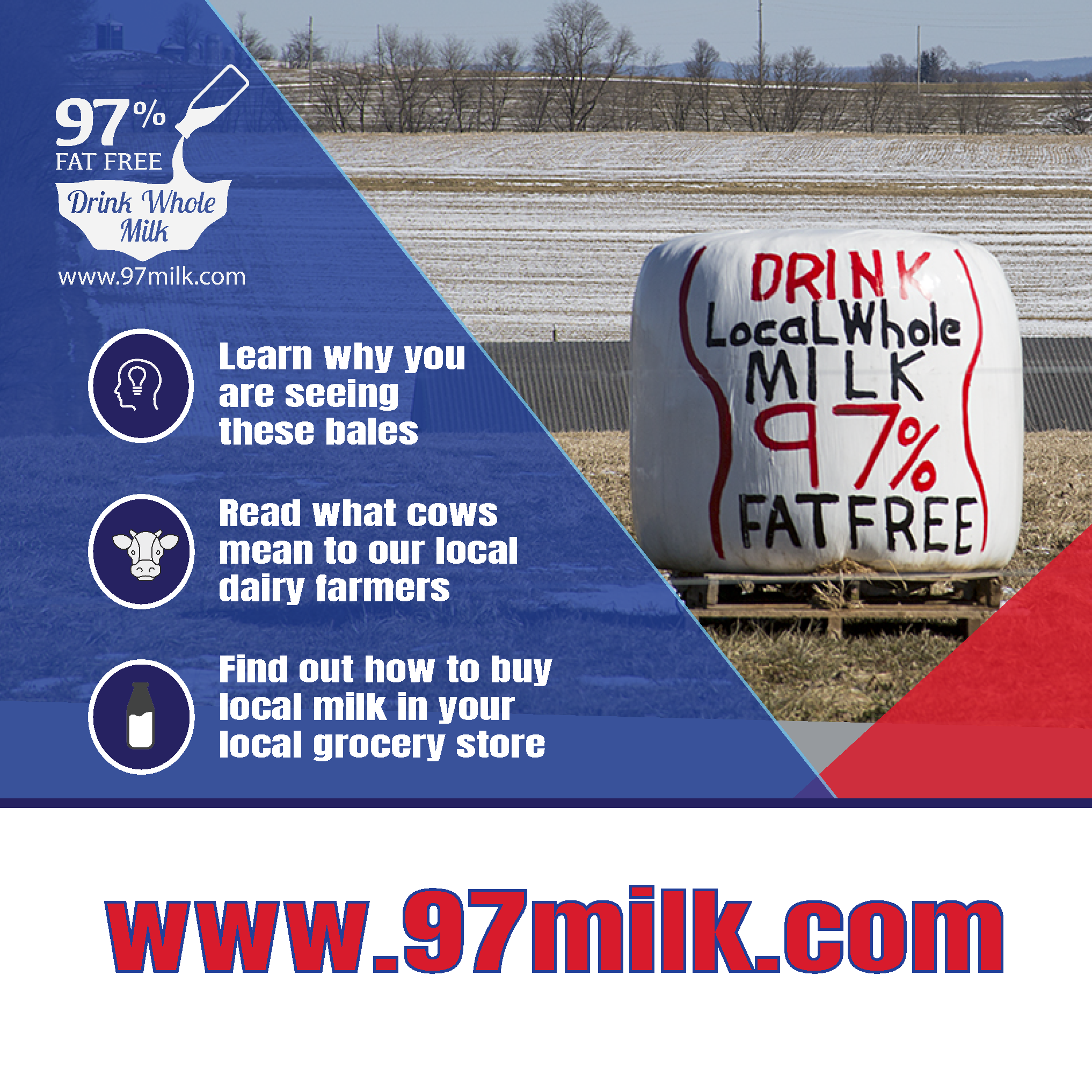
Last week’s Farmshine had a feature story on page 19 about the launch of the website www.97milk.com as a grassroots offshoot of the Milk Baleboards that are popping up on farms and business properties across the countryside.

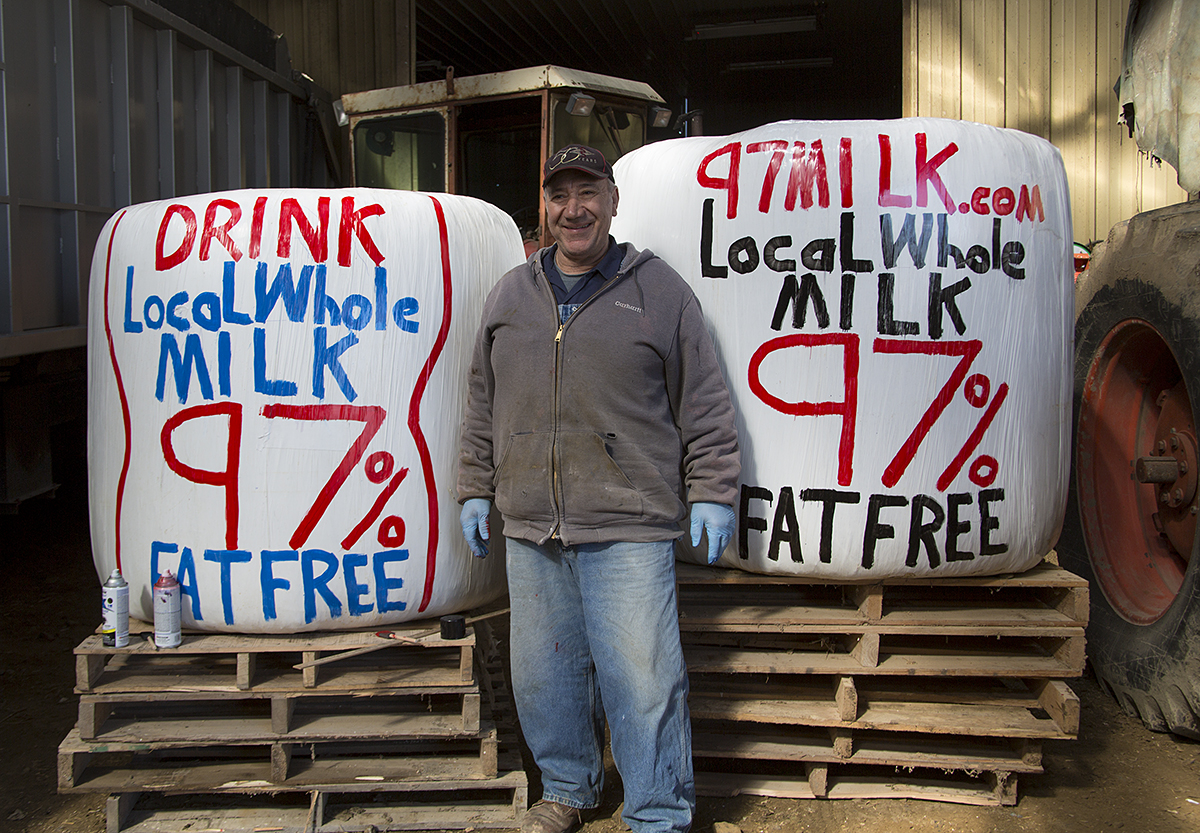
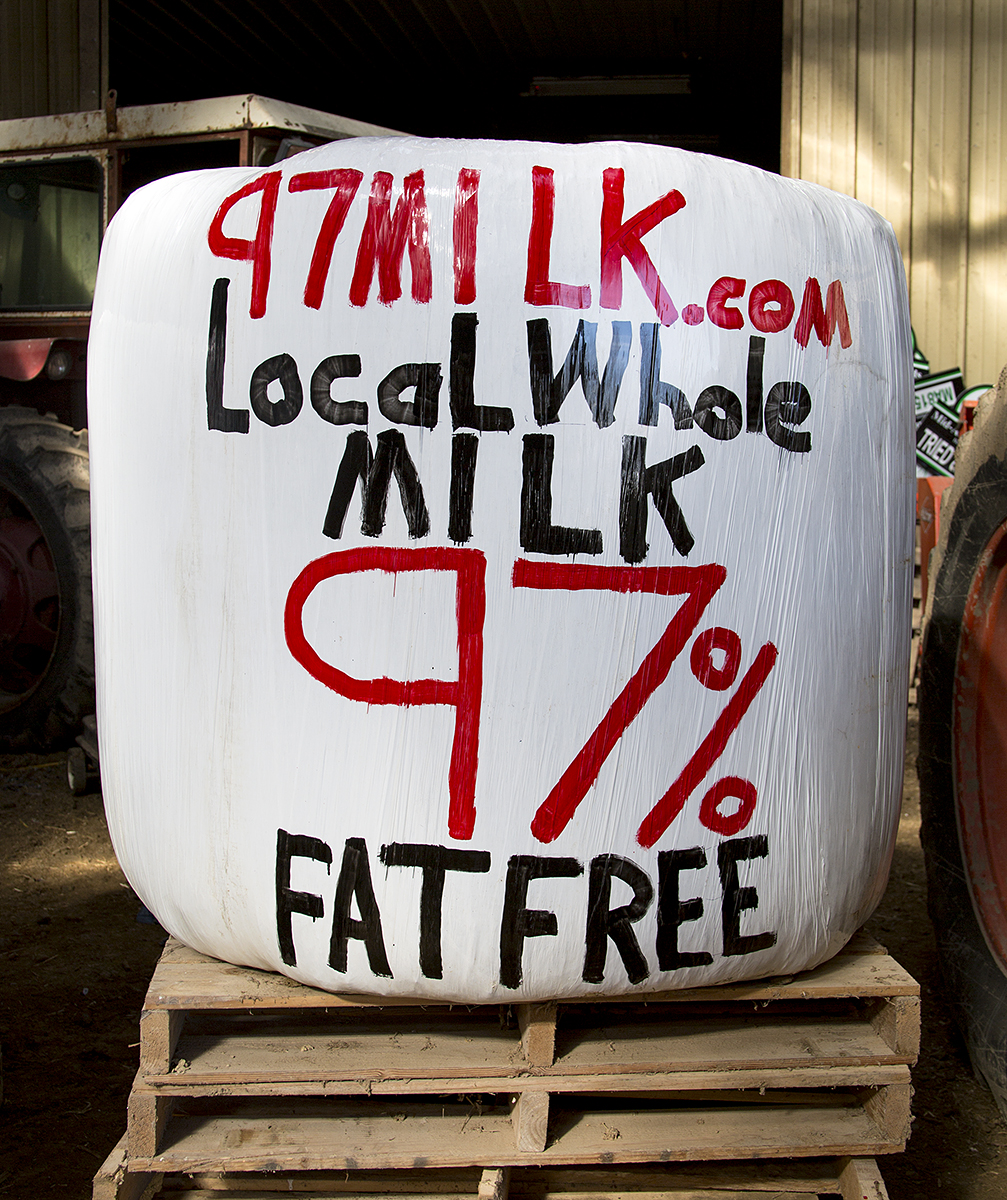
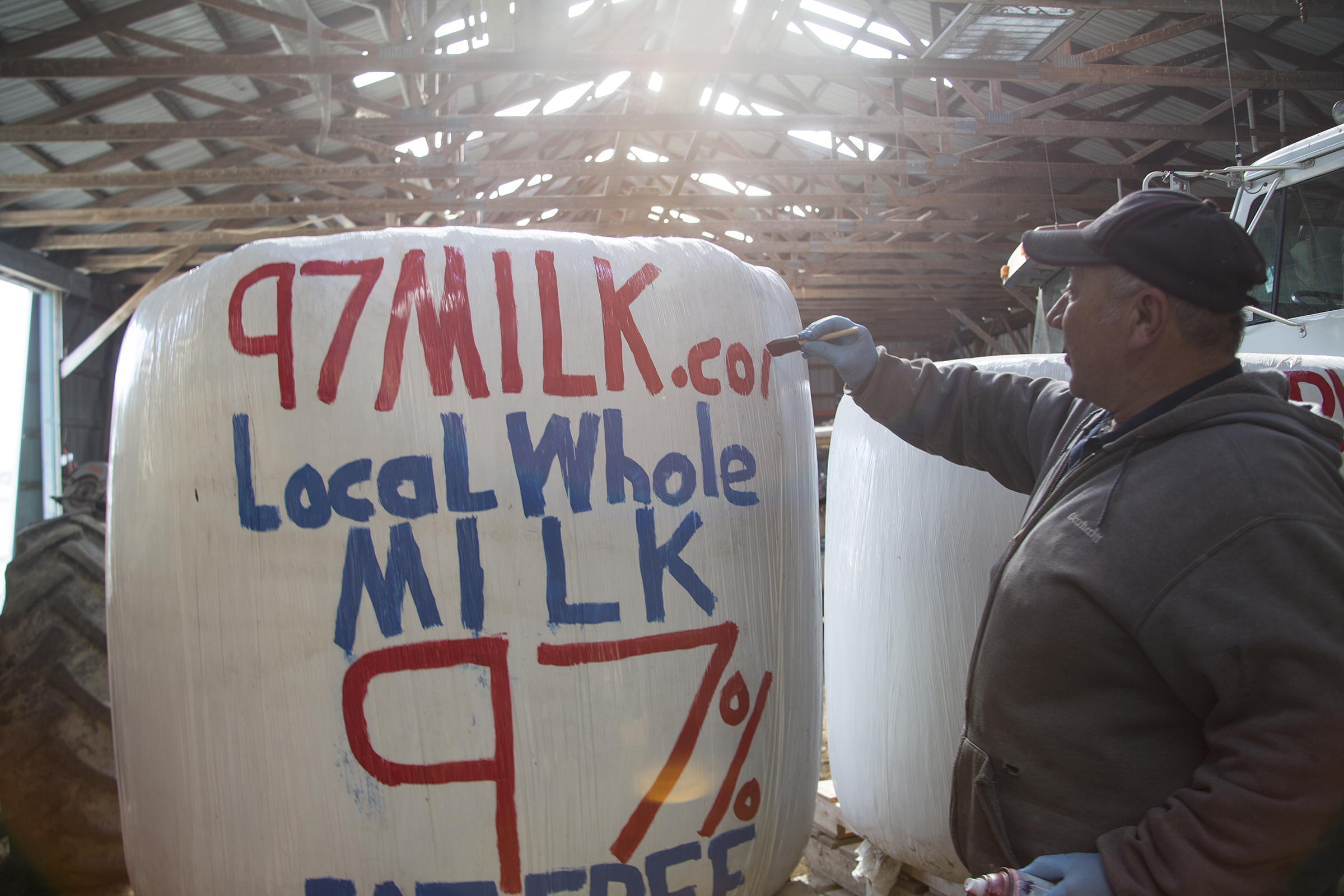
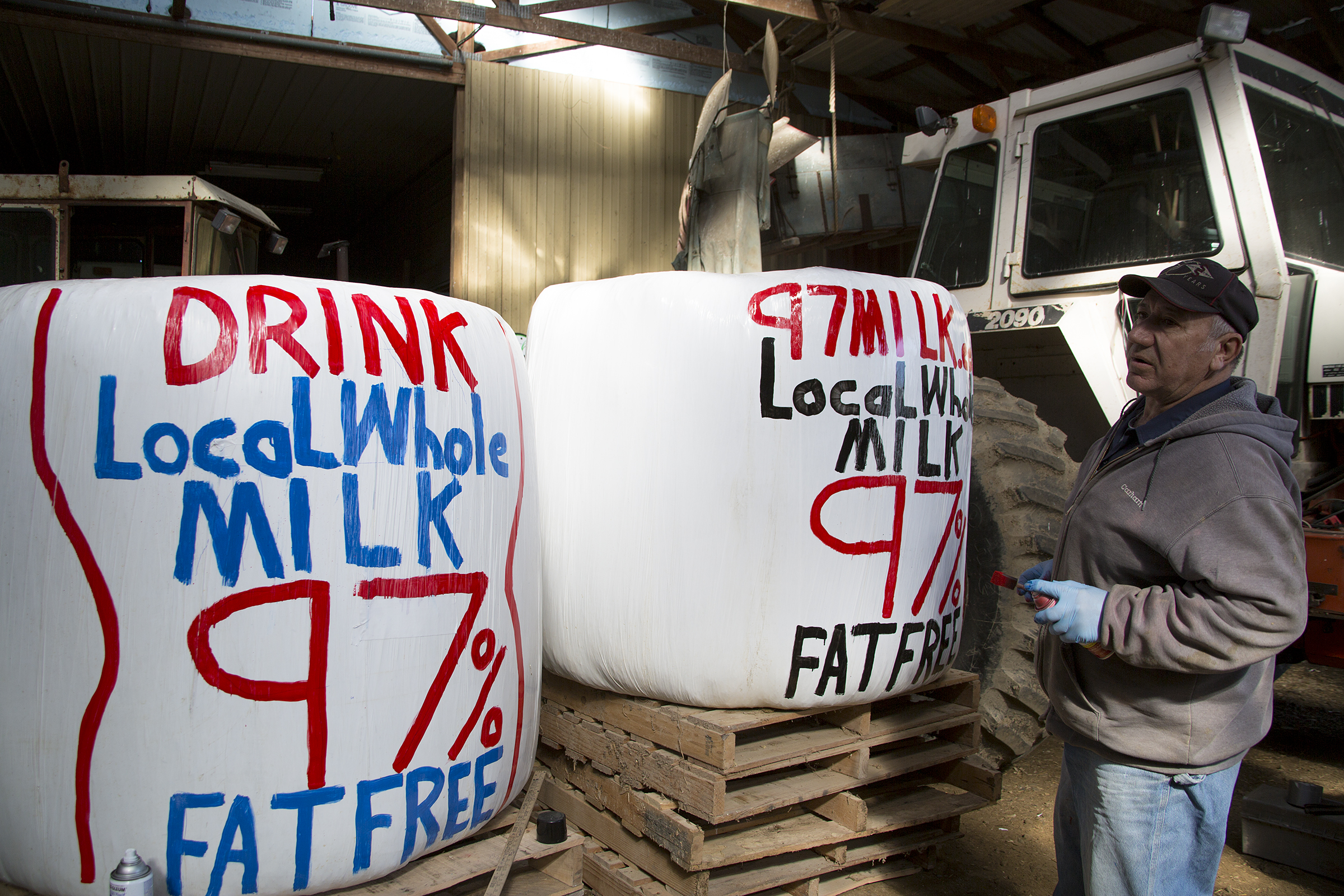
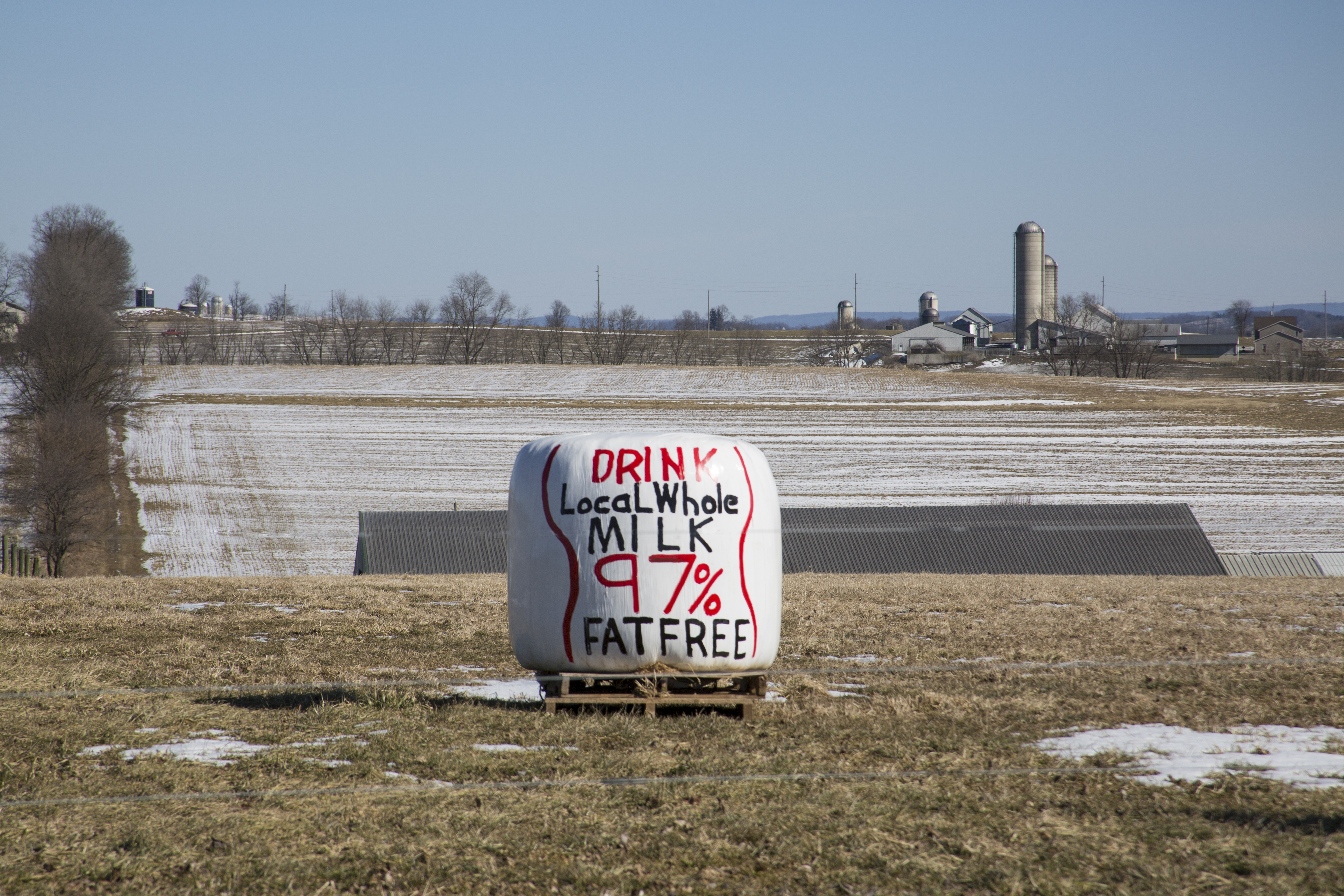
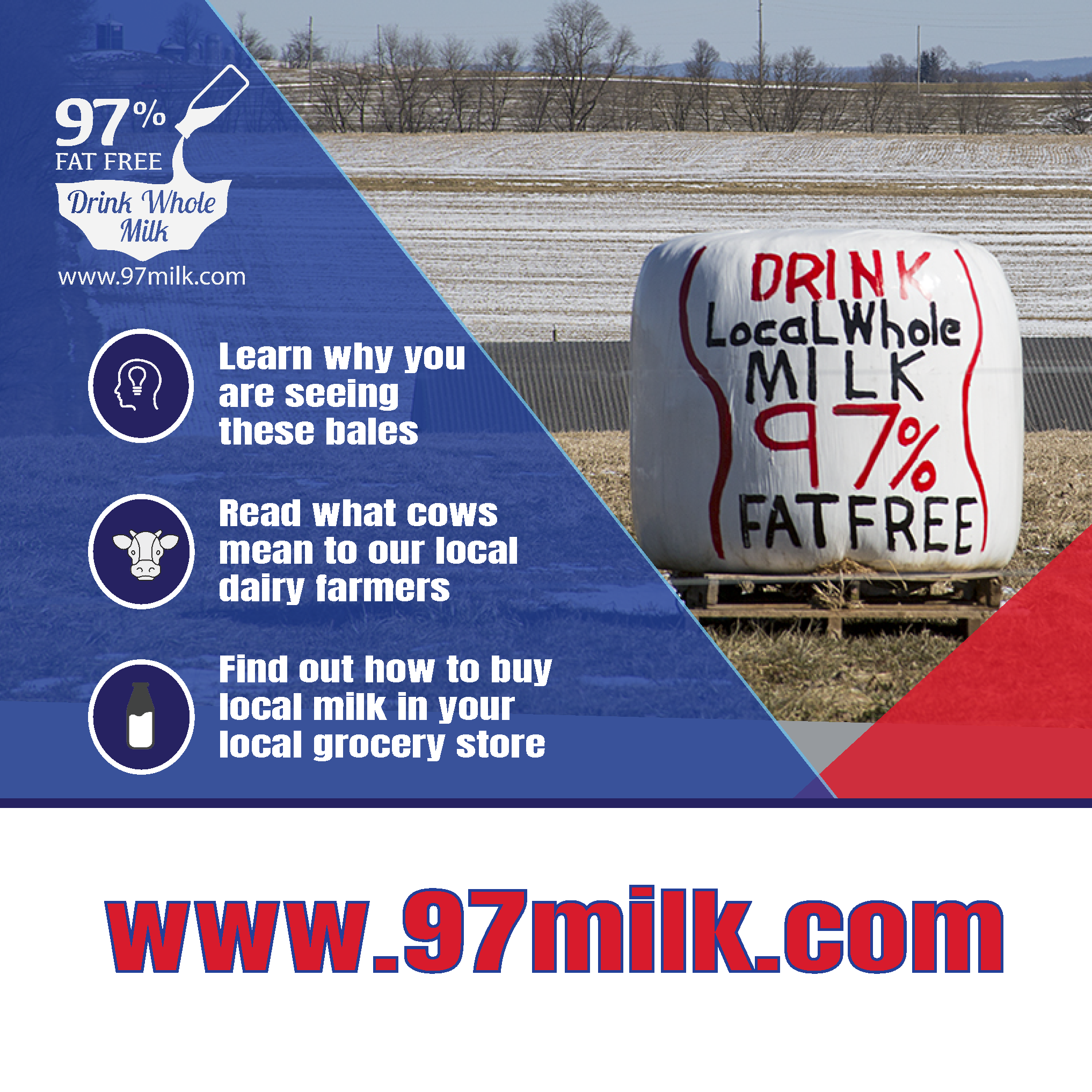
Those round bales painted with the message: Drink Local Whole Milk – 97% Fat Free were the idea of Richland, Pennsylvania dairy farmer Nelson Troutman. We have been following the development of his idea in the pages of Farmshine since Nelson made his first Milk Baleboard, pictured on our January 4, 2019 cover.
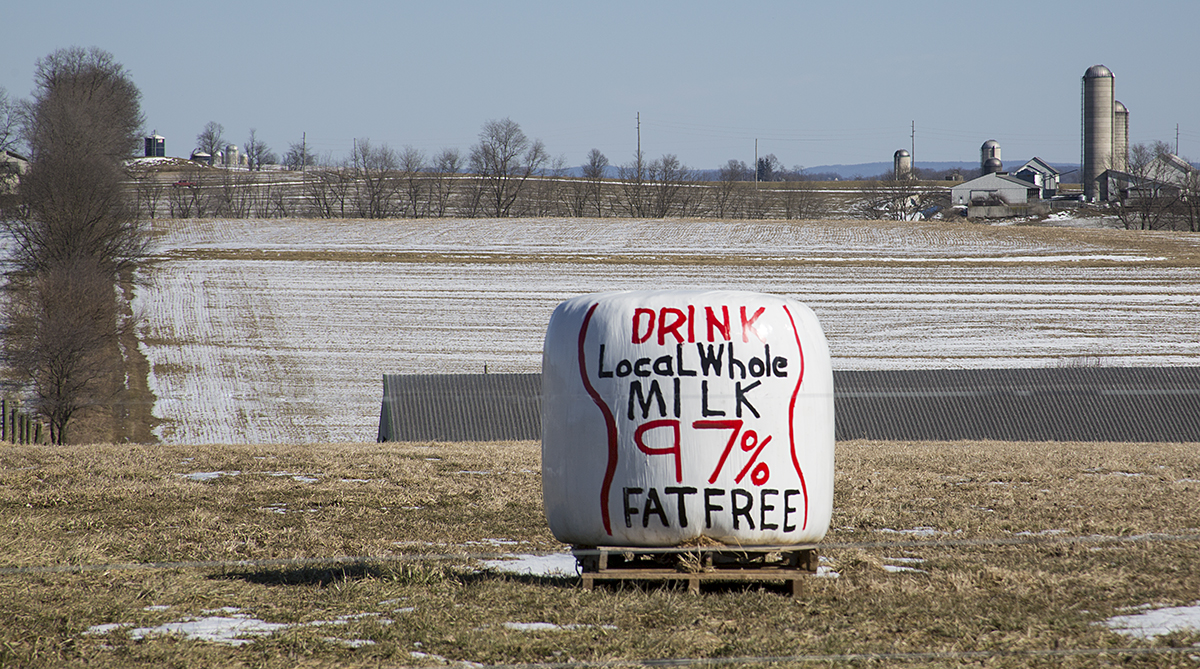
In fact, Nelson reports as of Wednesday morning, nearly two months after he made his first Milk Baleboard, he has made 26 — including one that was delivered to Farmshine on Feb. 27. He has delivered to many farms and businesses.

In addition, Dale Zimmerman of Zimhaven Holsteins in East Earl, made Milk Baleboards for his farm as well as for Shady Maple Smorgasbord just down the road. And other farmers are joining in.

Nelson continues to receive phone calls and has become somewhat famous in his community, attracting shoppers when he visits the grocery store in his home town.

“No one. Not one person, has said to me that, yes, they knew milk is virtually 97% fat free. No one, not young, nor old, nor in between,” Nelson stated in a follow up email with Farmshine early Wednesday morning, Feb. 27. “Since the bales and the website, I had people say to me that when their kids were small, the doctor told them to drink 2% milk, and now the kids are grown, and they were still drinking 2% milk — until this information came out. Now, they tell me they are drinking whole milk.

“This is all 100% education,” Nelson relates.

This overwhelming response has gone to the next level with the online presence that began Feb. 22 through a website, facebook page, instagram and twitter account for 97 Milk as the educational effort of grassroots dairy farmers. Through social media, the good news is spreading well beyond the Lebanon, Lancaster and Berks County region of Pennsylvania where the first Milk Baleboards were made and placed by Nelson on farms and businesses in the area.

How can this be?

Judging by the facebook page, there is an obvious consumer thirst for milk knowledge and an obvious farmer passion to deliver knowledge simply — without the dietary politics.

Within the first 72 hours, the @97milk facebook page had over 1000 likes and had reached over 100,000 people with the good news that whole milk is virtually 97% fat free.

Over the next 36 hours by mid-morning on Wed., Feb. 27 — not quite five days after launch — the facebook page had nearly 1,650 likes and follows, and the informational posts had reached a whopping 700,000 people. (By Thursday, Feb. 28, less than 7 days after launch, the page had over 2000 likes and had reached 1.2 million people.)

Even more important, these posts had — in less than 7 days — “engaged” nearly 100,000 people via likes, comments and shares of the educational information posted on the page. This does not include those who downloaded the informational images and shared them without sharing directly from the facebook page!

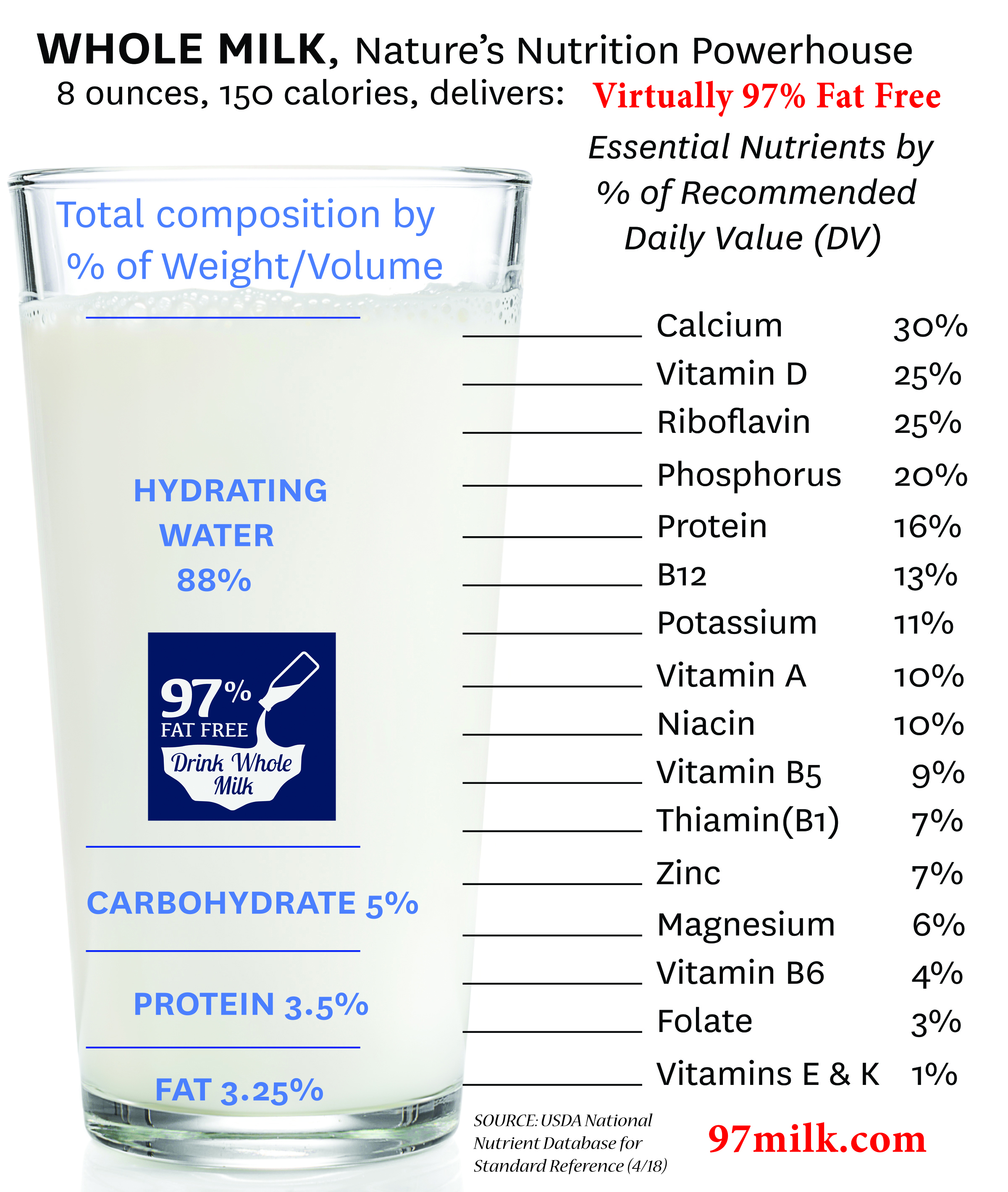
A post over the weekend (see image) illustrated the essential nutrients in milk and its composition as a hydrating beverage made up of 88% water, 5% carbohydrate, 3.5% protein and 3.25% fat, showing the long list of essential nutrients by their percentages of daily recommended values. This illustrative glass of milk reached nearly 100,000 facebook users by Wednesday morning and had engaged over 7,000 in likes, comments and shares.
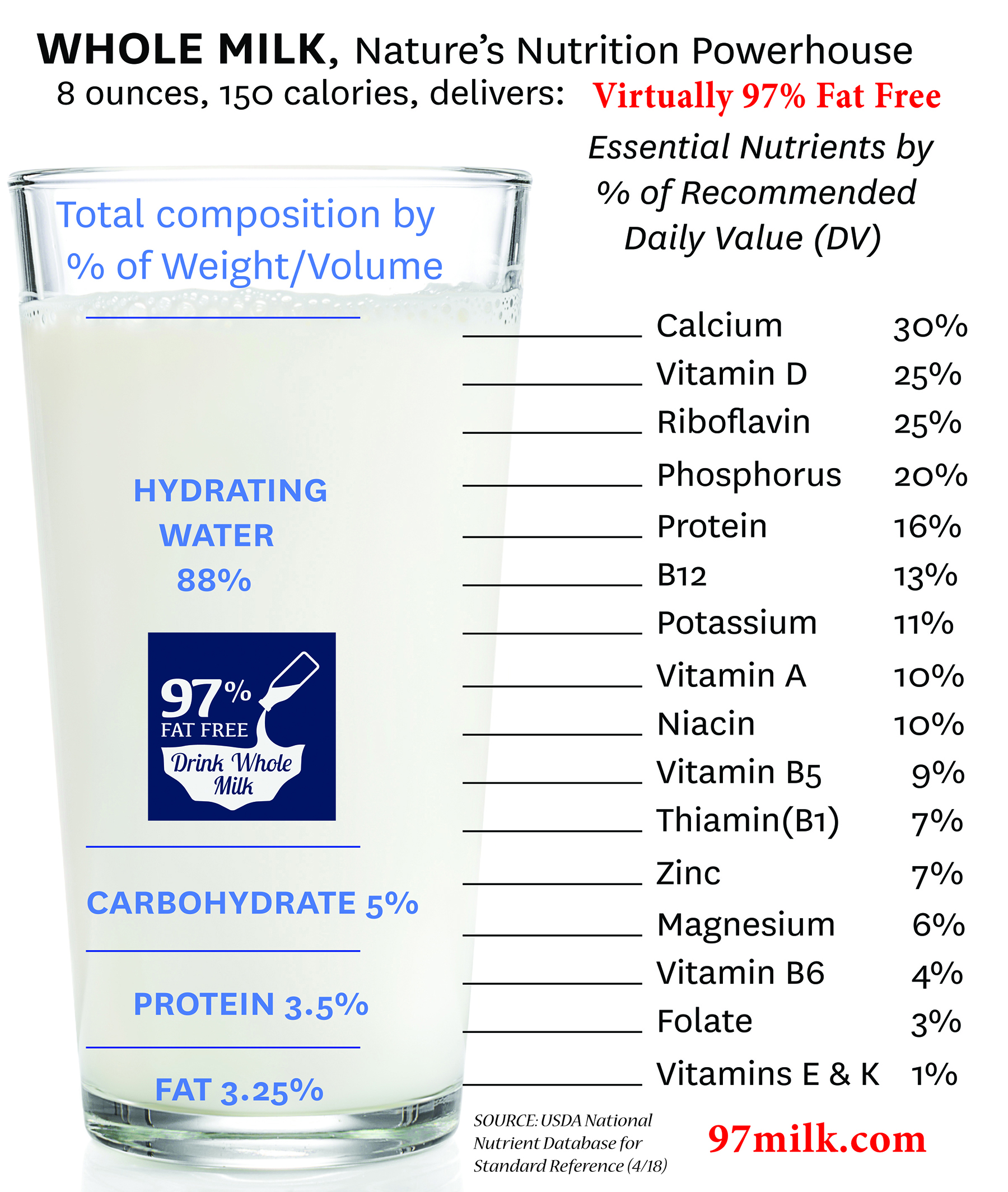

Consumers are thirsty for knowledge about milk. Here is one simple example of how 97 Milk keeps the good news going. This visual facebook message was posted Wed., Feb. 27, reaching 3,300 people with nearly 300 interactions within its first three hours. Facebook image from @97milk

Another post that explained the fat percentages of milk had reached 45,000 people with 3200 interactions.

Another post giving comparisons of Real Whole Milk, 1% Real Milk, Soy, Almond and Coconut beverage reached over 17,000 people with over 1700 interactions within 24 hours.

And another post sharing the good news that all milk is tested free of antibiotics reached a whopping 608,000 facebook users and resulted in over 44,000 interactions, including over 9,000 direct shares!

Meanwhile, the posts have brought in questions and discussion in the form of public comments on the facebook page and in the form of questions sent by private message. In fact, these interactions are coming from far and wide — local, national, even international.

On Tuesday morning, the 97 Milk facebook page posted this explanation of why the Milk Baleboards have expanded to online 97 Milk communications:

“97 Milk was created to be a voice for our local dairy farmers. This is a place where people can get information on nutritious dairy products. It’s a place where farmers can tell their story, a place where our community can get information on how to support local dairy farms. There is so much confusing information regarding dairy, and there are always two sides to every story. 97 Milk tells the story of the many farms that love and care for their cows, the passion that many dairy farmers have, the many proven research-based facts on milk nutrition. This is our side that our community deserves to hear.”

The website is mentioned on every post, and it is a simple place to direct people who see the Milk Baleboards and the social media posts and want to learn more of the basics about Real Whole Milk.

Planned in the coming weeks are posts for social media that continue to provide bite-sized fact nuggets about milk, including how to learn where milk was bottled, why milk protein is called a complete protein, quotes from farmers about why they love what they do, and other inspirations. Check it out.

If you have a Milk Baleboard on your property, or have seen one displayed, please let us know the location (agrite@ptd.net) in order to help create a map of how the good news is spreading by these grassroots efforts.

If you would like a Milk Baleboard, check out last week’s page 19 feature story giving tips from Nelson on how to make one, and contact Nelson at 717. 821.1484 or Bernie Morrissey at 717.951.1774.

Jordan Zimmerman of East Earl is making and selling bumper stickers through the Lancaster County Holstein Association, and Morrissey has ordered magnetic signs.

To learn more about the online efforts, and to help spread the good news, check out the website at 97milk.com, facebook page @97milk and twitter account @97milk1.
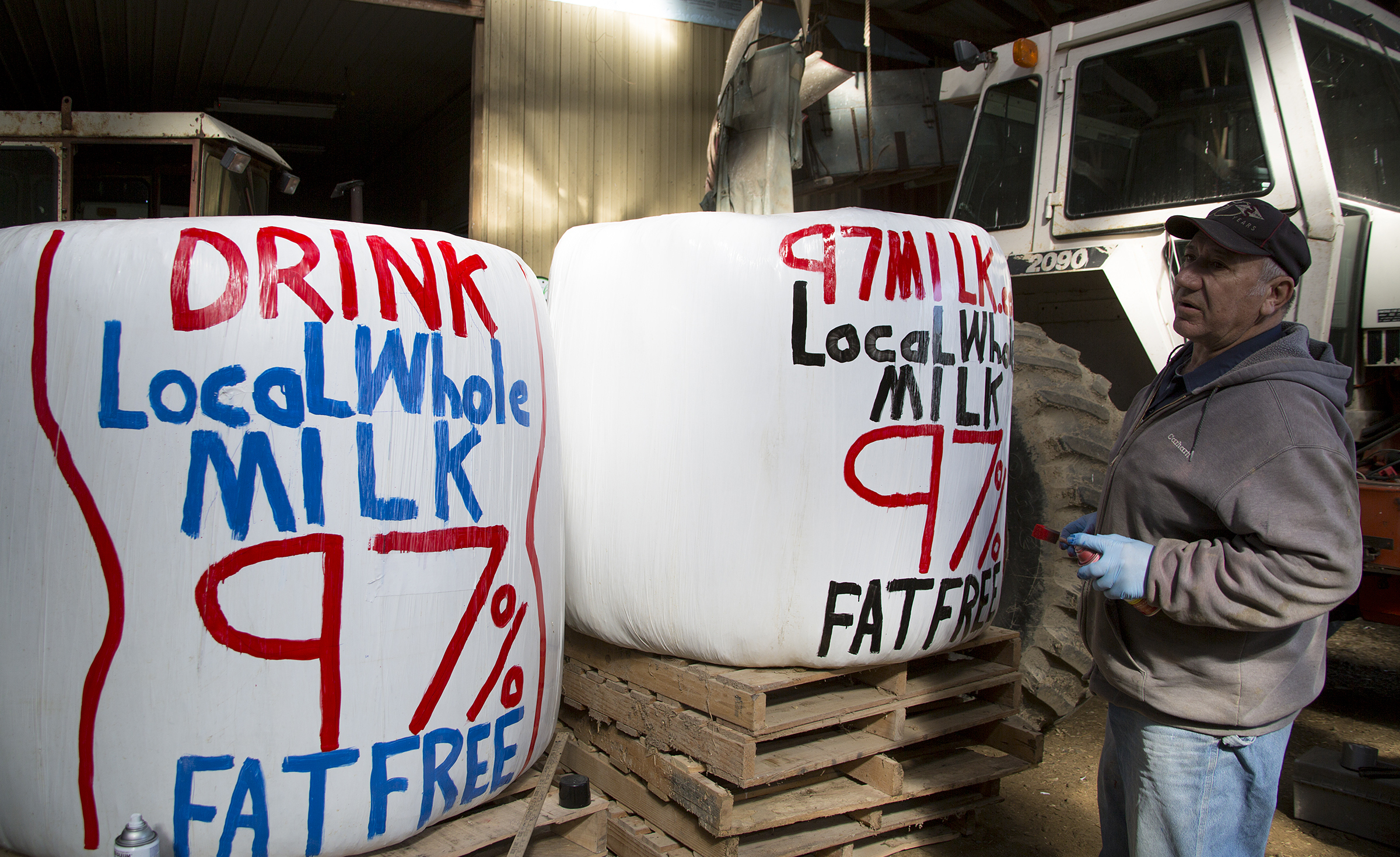

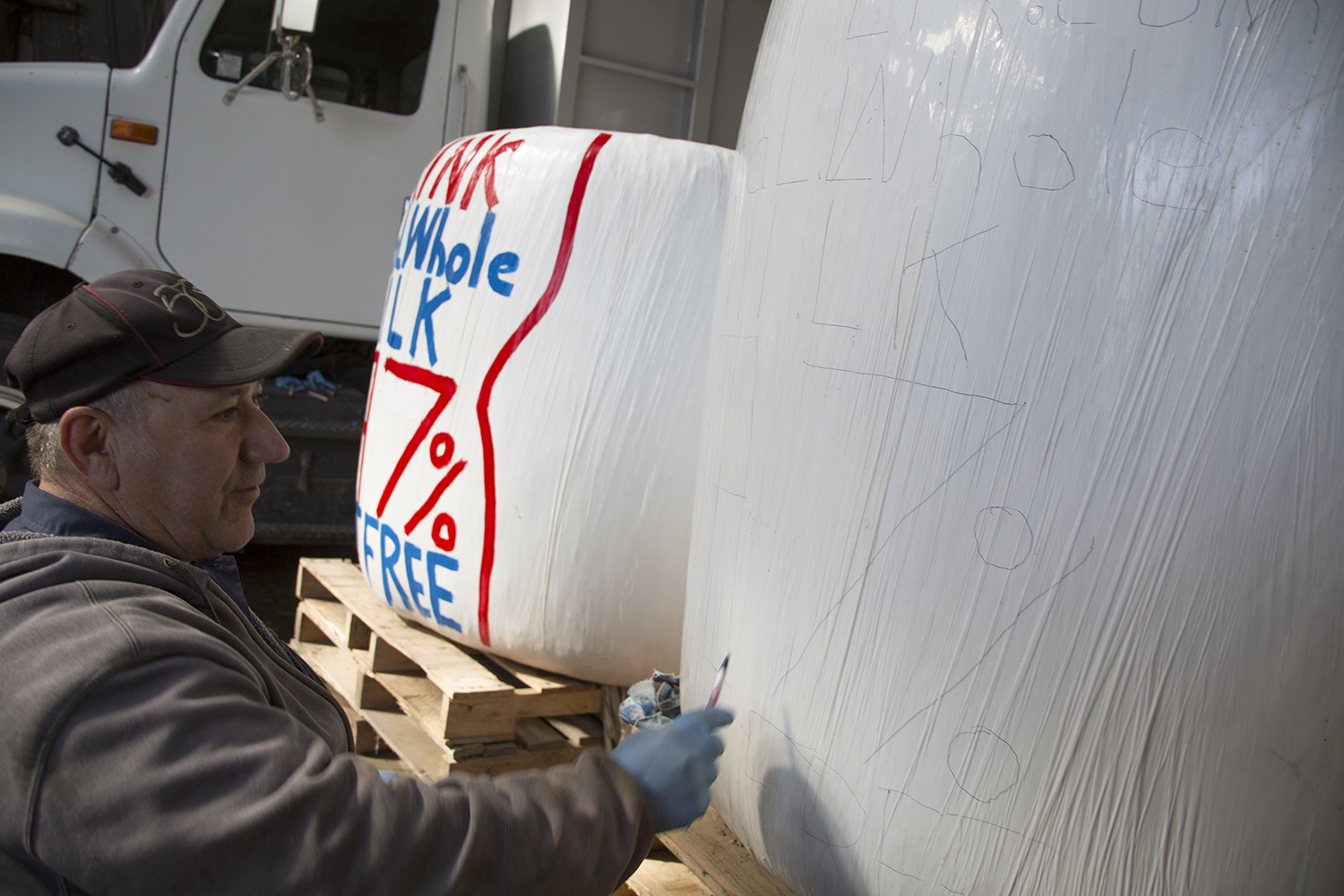
Nelson Troutman of Richland, Pa. has made 26 Milk Baleboards for other farms and businesses in the area. Two weeks ago, he began painting them in his shop with the 97milk.com website! Photo by Sherry Bunting
Animal Ag is in globalists’ crosshairs

DMI’s longtime PR firm is link to EAT Lancet

Decade of ‘players’ and ‘playbooks’ drive youth toward global food transformation endzone

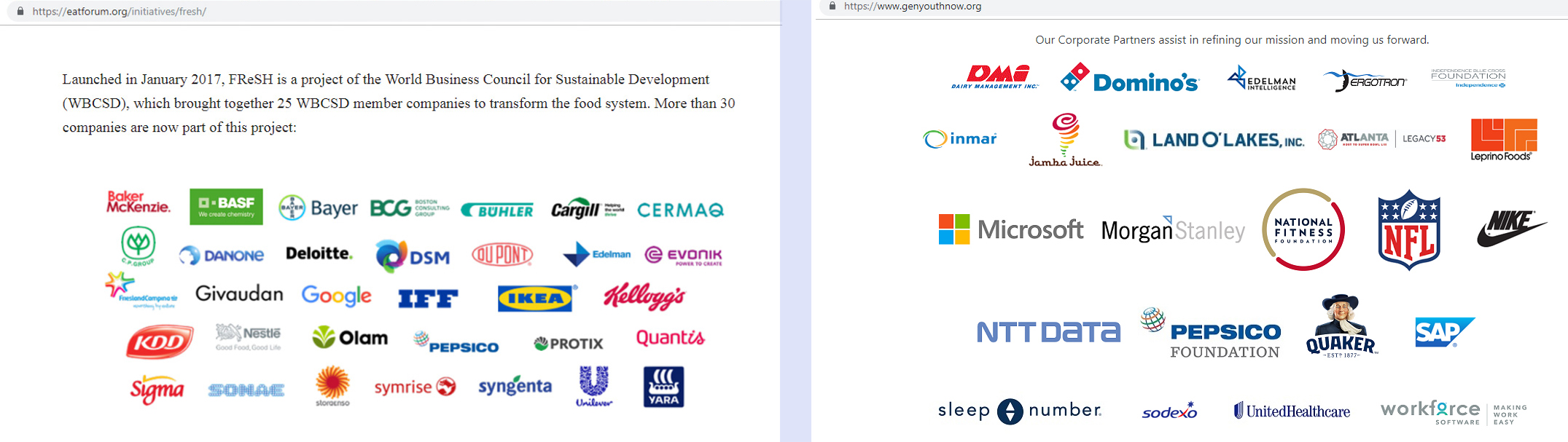
(Left) This is a screenshot of the corporate partners in the EAT FReSH Initiative as displayed at the eatforum.org website on January 15, 2019. (Right) This is a screenshot of the corporate partners of GENYOUth as displayed at genyouthnow.org on January 15, 2019

By Sherry Bunting, Farmshine, February 15, 2019

BROWNSTOWN, Pa. — Edelman, a communications marketing and public relations company, which has been called the world’s largest global public relations firm, figures prominently as a herd-dog bringing non-governmental organizations (NGOs) and corporations together in the launch of the EAT Lancet forum last month.

Edelman also figures prominently in its similar work for DMI and GENYOUth. Richard Edelman, CEO and president of the company, sits on the board ofGENYOUth. According to a 2011 MarketWatch article, Edelman was instrumental in recruiting Alexis Glick to be CEO of GENYOUth.

He and his company have had a working relationship with DMI for 20 years, according to Edelman. The company most recently crafted and launched DMI’s Undeniably Dairy campaign.

None of this is, by itself, alarming, until peeling back the layers to see that Edelman is the core asset for the EAT FReSH launch as part of its move toward working with clients to build social values into business communication goals. The company is known for its annual Edelman Trust Barometer that monitors and interprets societal shifts.

So, what is EAT Lancet and what is EAT FReSH?

Dairy producers who attended the Pennsylvania Dairy Summit recently in Lancaster may have heard Dr. Frank Mitloehner, a climate and air quality expert from the University of California, Davis, talk about climate change and how cows are the solution, not the problem. (click here to read about that)

Dr. Mitloehner talked about how he found the flaws that led to retractions in the 2012 United Nations FAO report on Livestock’s Long Shadow. His discovery led to a substantial change in the report’s original assessment that animal agriculture accounted for 18% of green house gas (GHG) emissions, when the real number “corrected by the authors” is 3.9%.

The EAT Lancet Commission’s report released in January recycles portions of the old and discredited ‘longshadow’ report — and its flawed process — with a new approach to drive global eating patterns toward vegan goals for what it deems to be the pathway to healthy people and a healthy planet.

Mitloehner was confident last week that this EAT Lancet report is full of inaccuracies where milk and meat production are concerned. He outlined them methodically.

So what’s the connection of all of this to checkoff? In a word: Edelman.

In a May 2018 blog post at the company website, CEO and president Richard Edelman wrote about the company’s involvement in the EAT Lancet Commission. He wrote about the EAT FReSH initiative initially involving 25 food and agriculture supply-chain companies, which has since grown to 41. Some of the logos on the accompanying graphic reveal further cross-over alliances with GENYOUth

PepsiCo is one example. (And PepsiCo — recently honored by GENYOUth for buying 100 school breakfast carts at a reported cost of $7000 each – has detailed on its website its health and sustainability goals to be focused on plant-based diet leadership, which they’ve pursued this year with the launch of Quaker Oat beverage, a milk alternative, and with their nutrition “greenhouse” incubator program working with startup companies on non-dairy cheese and non-dairy yogurt).

Another cross-over alliance is Corteva Agriscience / DuPont / Dow as Dupont is part of the corporate EAT FReSH alliance and Corteva now has representation on the GENYOUth board via Krysta Harden, who served as Deputy Secretary of Agriculture under Secretary Vilsack.

Back to the EAT Lancet report and the EAT FReSH Initiative (see eatforum.org), Edelman writes in May 2018 – eight months before the EAT launch: “Food Reform for Sustainability and Health (FReSH) was launched at the World Economic Forum in Davos, Switzerland by the World Business Council for Sustainable Development (WBCSD) and the EAT Foundation (EAT). The alliance of 41 global food and agricultural companies aims to create new pathways to reach healthy, enjoyable diets for all, produced responsibly within planetary boundaries.”

Richard Edelman continues in his blog post, stating: “Edelman has partnered with (EAT) FReSH to help accelerate transformational change in global food systems.”

These two paragraphs, alone, signal what has occurred since January 2019 in the form of internal media launches, even though the first EAT Forum in the U.S., held at the United Nations last week, had a small media presence on site to “cover” it. In fact, dairy farmers and leaders listening to Dr. Mitloehner at the Pa. Dairy Summit last week breathed a collective sigh of relief because there had been little media coverage of the EAT Forum at the UN on the day before.

Instead, the PR campaign is in full swing. Videos about what the world would be like if it all went vegan were released a few weeks prior by the internationally-renowend magazine, The Economist.

Stories picking up portions of the report signaling animal agriculture in various separate ways as threatening the planet’s ecosystem have been circulating and published in media such as The Guardian.

Democrats, led by Alexandria Ocasio-Cortez, launched the Green New Deal resolution for which the original “FAQ” included a statement about “eliminating farting cows” and transforming the food system.

A high-profile interview with 2020 presidential hopeful Rep. Cory Booker, a vegan, this week quoted his thoughts. Here’s a sample: “The tragic reality is this planet simply can’t sustain billions of people consuming industrially-produced animal agriculture because of environmental impact.”

These are but a few examples of the insidious PR campaign that has erupted from all angles in the span of a few weeks on the one hand while the actual media coverage of the details of the EAT Lancet Report, itself, have been ‘light.’  

Back to Edelman’s May 2018 blog, where he talks about Lara Luten, who is the account director for Edelman, Amsterdam. In that blog post prior to the EAT launch, Edelman wrote that Luten “will be helping the (EAT FReSH) partnership build communications and marketing plans in preparation for the Stockholm Food Forum and the upcoming (EAT) Lancet Commission Report.”

This EAT deal has a marketing plan underway. Meanwhile, the science behind it needs to be tried in the press with transparency on its significant shortcomings. A marketing campaign is  guiding the public discussion instead.

The EAT Lancet Report calls for drastic reductions in dairy and meat consumption, globally. It mentions a carbon tax on foods derived from cattle. It positions a more vegan diet as the only way to feed 10 billion people seeking to transform the food supply to exist “within planetary boundaries” by 2030 – all based on science that is far from being settled on a dietary or planetary level — while completely overlooking science showing cows to be the solution, not the problem.

Going back to Edelman’s May 2018 blog post again for a moment, he describes his company’s work in the EAT launch as “working in a pre-competitive environment on a project that is driving impact by leading change.”

This same sort of pre-competitive environment has been used by DMI in the formation of the Innovation Center for U.S. Dairy eight to 10 years ago, which works on new products for checkoff grant funding as well as establishing sustainability and stewardship parameters for dairy farms to follow that are then incorporated at program-and-enforcement-levels by milk buyers and cooperatives down through the supply-chain to the farms that fund the checkoff.

What’s all this got to do with GENYOUth and helping kids be healthier in school?

GENYOUth has emerged as an alliance of corporations, government, NGOs and other ‘thought leaders’ on various areas of youth as change agents.

Here, too, Edelman is the prime mover on public relations that one can argue has morphed into NGO social-engineering.

GENYOUth describes its view of youth as “change agents”. Throughout its program layers, youth are educated and ‘herded’ toward the plant-based, low-fat, global-sustainability platforms that form the foundation for the very food-system transformation that the EAT Lancet Commission advocated in its report.

The wheels for this global agenda were set in motion 30 years ago by progressively more restrictive iterations of USDA Dietary Guidelines. Over the past 10 years, the progress toward this end was hastened under the Obama/Vilsack administration, in part through an alliance with Dairy Checkoff and others to educate and feed America’s youth along the lines of these transformational food choices – in the name of fighting obesity — even as obesity and diabetes levels worsened among America’s youth.

In the name of fighting obesity and diabetes, the Clinton Foundation has also been actively involved for at least 10 years, according to former President Bill Clinton’s remarks during his YouTube-televised speech at the 2017 GENYOUth Gala, where Clinton, a vegan, presented the Vanguard Award that year to his friend, former Secretary of Agriculture Tom Vilsack.

-30-

How did we get here?

OPINION

By Sherry Bunting, Farmshine, Friday, February 15, 2019

It’s like whack-a-mole. So many converging things are happening rapidly related to a ‘herding’ mechanism for the masses in terms of what we will eat in the future. 

Where did it all come from? How did we get here? Why is the science so flawed and against us?

What we see unfold via the EAT Lancet Commission and the Green New Deal over the past few weeks — not to mention the currently ongoing FDA and USDA deliberations on dietary guidelines and labeling for fake dairy and fake meat — has been a disaster gradually in the making. 

The wheels were set in motion 10 years ago, or more, and Dairy Checkoff was at the table in more ways than one.

Trouble is, until now, no one really knew about the seat at the table, the foundations, pre-competitive environments, memorandums of understanding and so forth. 

The connections, directions and alliances were unclear and clothed in happy talk about breakfast carts that put a half-pint of milk on every plate and maybe some fat-free yogurt and skim-processed cheese, excited talk about helping kids move more to lose weight, enthusiasm about putting farmers face-to-face with school children to teach them how they care for cows and environment (we all know that there are plenty of these efforts paid for by voluntary organizations and farmers themselves, FUTP60 can’t claim the ground on this part). 

What we did not see, due to lack of transparency, was the deeper layers of direction where dairy farmers have, in a sense, been funding their own demise.

This is not meant to attack people in the checkoff system working with good intention on behalf of dairy farmers or our nation’s young people. This series of articles I have been involved in has been a peeling of an onion that should have been diced on the table to pass the sniff test from the beginning — but it was not.

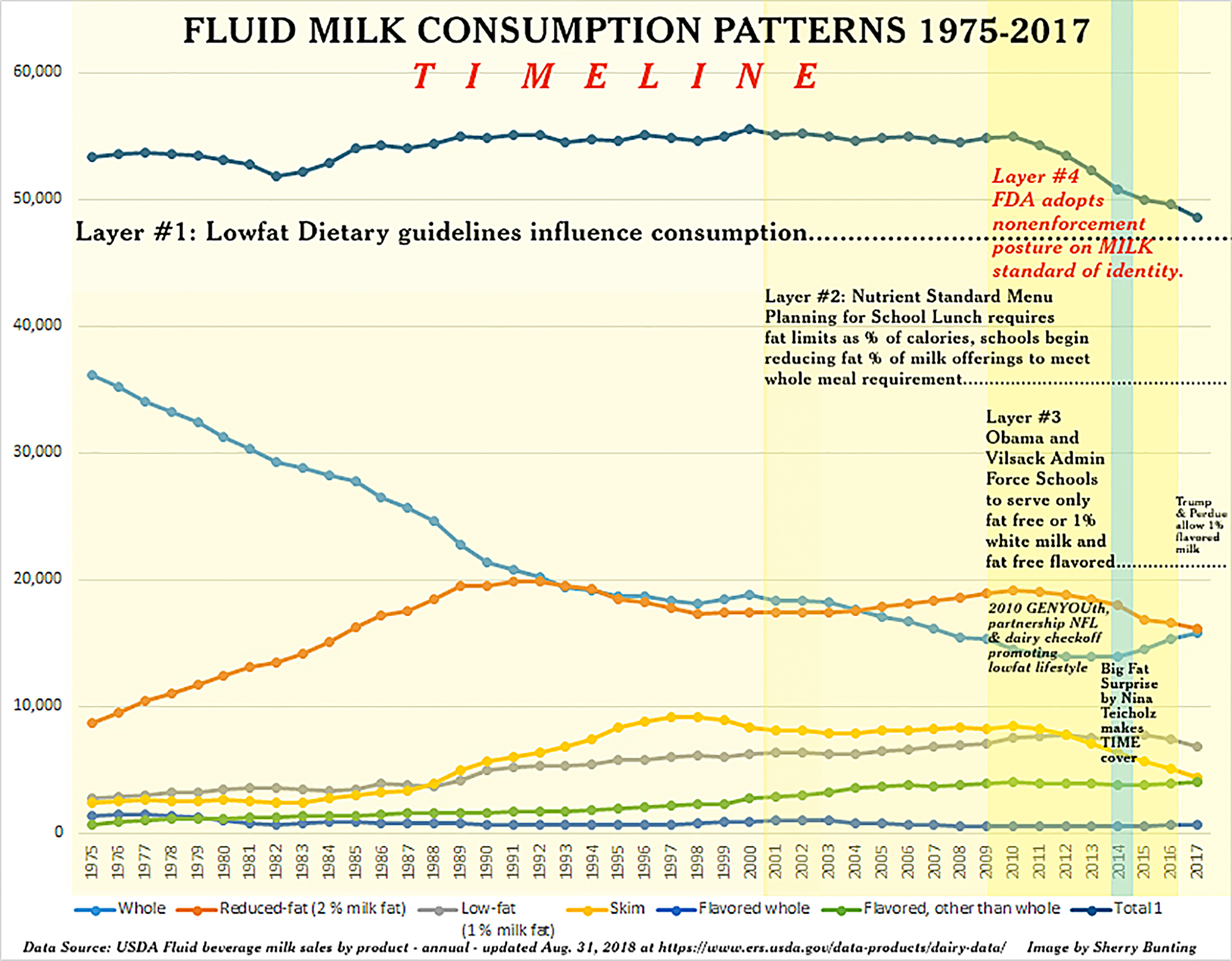
In part one of the GENYOUth series in January, we showed the steep nosedive in fluid milk sales from 2010 to the present. There is no shortage of experts who now point to the school milk changes as precipitating this decline and in fact costing dairy farmers a whole generation of beverage decision-makers who have and are now graduated into the New World Order on “healthy diets for a healthy planet” — despite the lack of rigorous science to support either in terms of milk and meat production.

There was no transparency in which primary dairy checkoff stakeholders could question the direction as the track was greased for where we are today. 

There was no transparency about alliances developed over the past 10 years — never mind the rather small detail of who paid whom for what and how many football players showed up to christen a school’s new breakfast cart. The IRS 990 figures reported in parts three and four of the GENYOUth series pale in comparison to the lack of transparency in Dairy Checkoff’s role as a participant educating and leading a whole generation of consumers, tied by an MOU to tote the government’s diet message.

There are two crossroads in front of us, and our dairy cows are standing in that intersection — mooing loudly for assistance, I might add.

Dairy Checkoff has taken the dairy industry down both roads — diet and sustainability — without transparency to its funding dairy farmers. 

Now, today, these two roads are converging at regulatory, legislative, corporate, media and cow-less protein innovation levels.

And the industry is splintering over what to do about it.

This conversation is at least 10 years past-due, and it is why farmers are fragmented, why they can’t come together.

You see, the template for the future is written for some, not all. 

It is written to be complicit in dietary goals that are not supported by rigorous science for our human health or our planetary health. 

It has been written, in part, with money taken mandatorily under USDA oversight from dairy farmers of all types and sizes to streamline “U.S. Dairy” into the New World Order of food choices that are on the cusp of substantial change with Silicon Valley in the picture with its billionaire-funded cell and yeast cultured startup companies needing this propaganda to launch their cattle-less dairy and beef protein. 

The FDA and USDA are poised to decide (and in the case of some labeling have already decided) how and IF consumers are going to be informed about what they are eating in the future.

As the deeper layers of the past 10 years of GENYOUth and Innovation Center for U.S. Dairy are revealed — with their separate memorandums of understanding (MOU’s) signed with USDA during the Obama/Vilsack era, and in ‘pre-competitive’ alliances with the world’s largest food and agriculture supply-chain companies — anyone publicly revealing or questioning the direction of checkoff on this road, is now cast as a character of division, a spoiler of profitability, a misinformed stakeholder reading the writings of a ‘yellow’ journalist.

In fact, DMI has created a secret facebook group for discussion of Dairy Checkoff questions and concerns. Participation is by invitation. Checkoff staff — hired by all dairy farmers through their mandatory checkoff dollars — are the gatekeepers, deciding who can join the group-think.

To understand where this is all leading, the crossover alliances between GENYOUth and the EAT Lancet Commission are known. (See related story here).

Dairy Checkoff is smack dab in the middle and has been for some time. That’s where you want to be if you want to influence a debate. But thus far, the direction of influence is questionable, naive and opaque at best, and has at worst created winners and losers among our nation’s dairy farmers, individually and regionally.

The global agenda unfolding right now has been years in the making. The deeper layers of the work at that table where Dairy Checkoff has had a seat — and its impact on the dairy farmers who collectively funded that seat — has been quietly pursued… until now.

Consumers have been telling us what they want: simple, flavorful, natural, real food. That’s what dairy and livestock producers do best!

But instead of marketing to that desire, instead of bolstering our consumer ranks by feeding that desire, the industry and checkoff have aligned us with government and corporate and special interests who want to shape and restrain those choices for future generations, by using our children as change agents for an agenda that has not been transparent, nor adequately discussed, by its funding stakeholders… until now.

Now, the global agenda has hit play in the public domain, and many of us are trying to find the rewind button.

Stay tuned. We’re not done.

-30-

‘Milk Baleboards’ are a ‘thing’, with a website!

Producers unite to send clear message to policymakers and consumers, website takes it to the next level.

Nelson Troutman (above) is a dairy farmer. He has made 20 Milk Baleboards and offers these DIY Tips with illustrations at the end of this story.

By Sherry Bunting, from Farmshine, Friday, Feb. 22, 2019

RICHLAND, Pa. — Nelson Troutman has been making the ‘Milk Baleboards’ since January. The Berks/Lebanon County dairy farmer came up with the idea after the Pennsylvania Milk Marketing Board listening session in December.

“It’s very important that the bales all have the same message: ‘Drink Local Whole MILK — 97% FAT-FREE.’ Don’t try to get funny with it. You could take the ‘local’ off and just focus on the ‘whole milk,’ but mainly to have impact, we want the bales to have the same message,” he said while painting bales in his shop during my visit last Saturday morning to the farm where he and his wife Mary live and which is now rented to a young couple for their dairy herd.

He still farms the land he has lived on his entire life, and he makes the feed for that herd and his son’s herd nearby. (In fact his daughter in law Renee wrote about whole milk recently, with a historical twist!)

Nelson has made 20 Milk Baleboards so far (check out his DIY tips at the end of this story). And he has seen new ones pop up from others following suit.

He has had 10 phone calls from fellow farmers as far away as New York, and has talked to so many more at meetings — out and about. He tells them: “Put a bale out… unless you are satisfied with your milk price.”

Did he think it would take off like it has? “No I didn’t,” he says. But he’s glad to see others joining in and hopes to see it catch on even more.

Retired agribusinessman Bernie Morrissey of Robesonia has been doing all he can to get other agribusinesses to put them out. In addition to Morrissey Insurance having one on their property along Rte 272 north of Ephrata, the Milk Baleboards are popping up along other main routes like 23, 322, and 422, to name a few.

“Our advertising checkoff dollars just didn’t seem to be doing a very good job these past 10 years. They have been promoting fat free and low-fat 1% milk and the fat free yogurt — not much whole milk,” Nelson relates.

“After the listening session with the PMMB, some of us were talking. We thought it was time to do something different, something like letting consumers know whole milk is 97% fat free,” he said further. “We didn’t come up with a plan that day. We were thinking about a billboard, but that was far too expensive. We thought about portable signs.”

Then over the weekend after that December meeting, he looked around. “I thought to myself that I already have the perfect thing: A wrapped hay bale! So, I painted one. I set it in the pasture at our crossroad. We farmers have silos, wagons, barns and sheds we can paint signs on.”

Lots of feedback has come in, and it seemed no one knew whole milk was 97% fat free. Some said “why are we drinking 2% milk, when whole milk tastes so much better?”

Nelson observes that young and older people said they never thought about how much fat or nutrition is in milk. “It seems so sad how people are misled by our checkoff dollars, our doctors and medical people — and our federal dietary guidelines committee.”

He admits that people are easily confused. To be sure, the bales are attracting attention, leading to questions.

While it started out as a way to send a clear and unified message to consumers and especially policymakers, Nelson said the information is so surprising to people that it offers educational opportunities.

That’s why R&J Dairy Consulting invited Nelson and Bernie to a meeting of dairy farmers last Friday to see what could be done to use this teachable moment.

The group decided to purchase a website domain — 97MILK.com, and direct people there to learn more: What is whole milk? How does it compare? What is Real Milk, Local Milk?

The website can help unite these efforts, and bring additional excitement to the project. For example, at the meeting organized by R&J Consulting, their marketing manager Jackie Behr said when she asked peers what questions they have about milk, she ended up with a whole list.

“Let’s use this opportunity to educate consumers and help them make a good choice,” she said. The group decided to start out with key simple answers to frequent questions. Many businesses and people are pulling together in various ways that it is impossible to name them all here. That will come in a future Milk Baleboard update.

Jackie at R&J, with some help from others, got the website 97milk.com up and running within seven days. This includes a facebook page @97Milk, so check it all out!

Want to make a Milk Baleboard? Here are Nelson’s DIY tips:


1) Keep the message the same: Drink Local Whole MILK — 97% FAT FREE (or now that there is a website, omit ‘Drink’ on a Round Bale and put the website 97MILK.com top or bottom.)

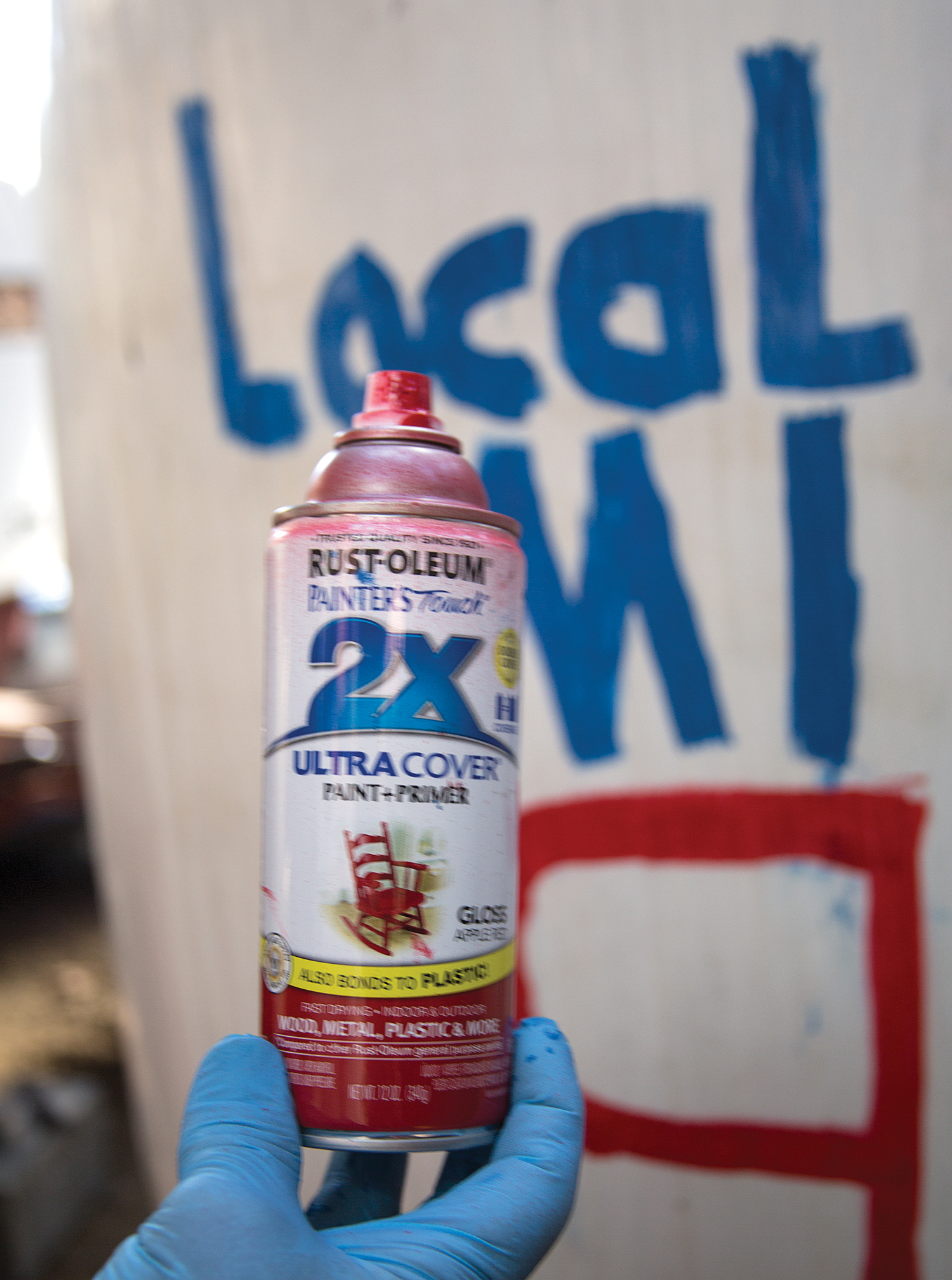
2) Get the right paint! Rustoleum Ultra Cover 2X paint and primer.

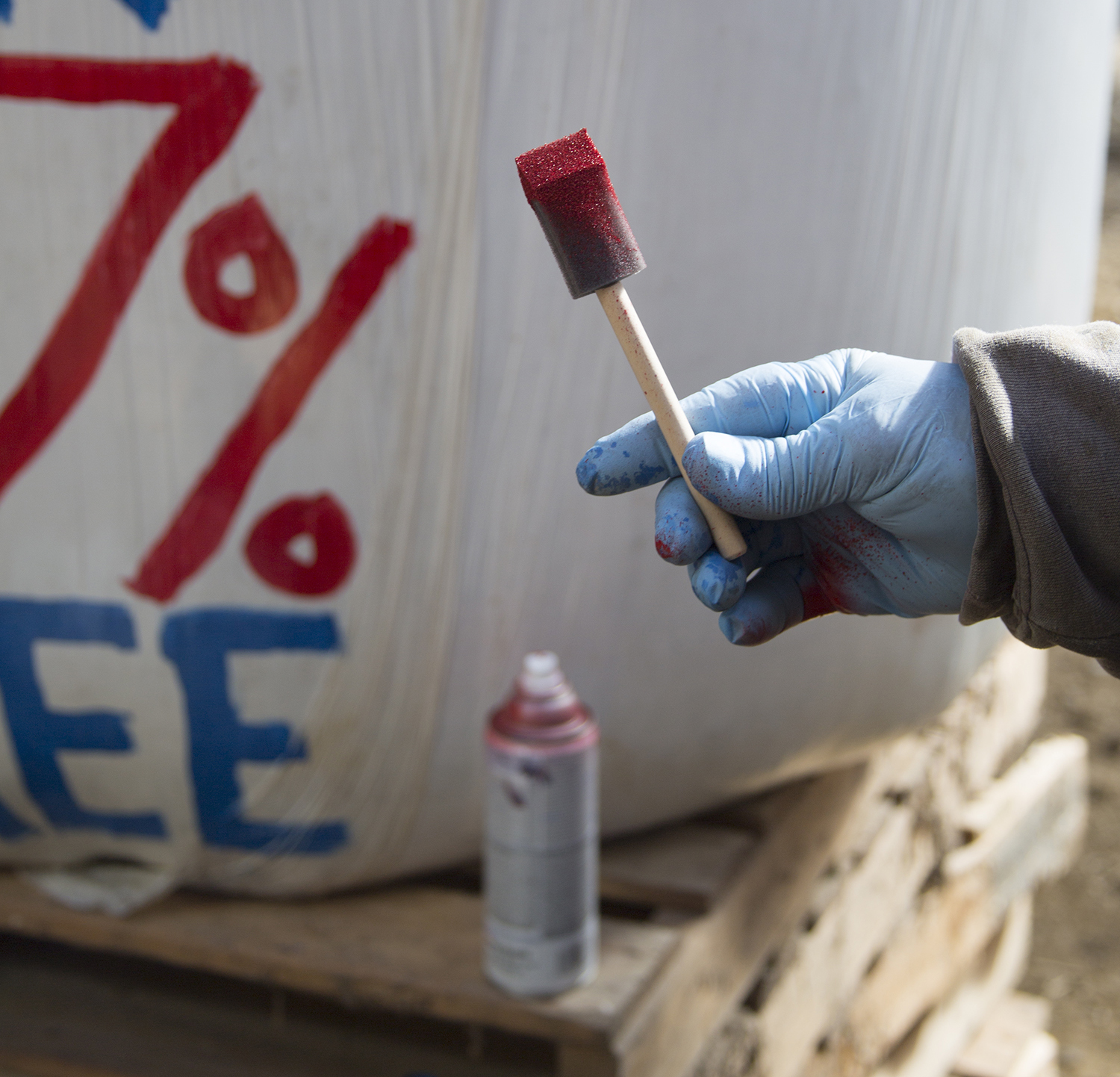
3) Use the small foam brushes and buy extra. This paint doesn’t wash out, so they can’t be re-used. Foam brushes can be turned for thick or thin letters.

4) Wear gloves, this paint will be with you a while if you don’t.

5) Before painting, sketch out a guide with a pen.

6) 97% is the largest and in making the percent-sign, put the circles parallel to each other and the slanted line in between to keep it straight.

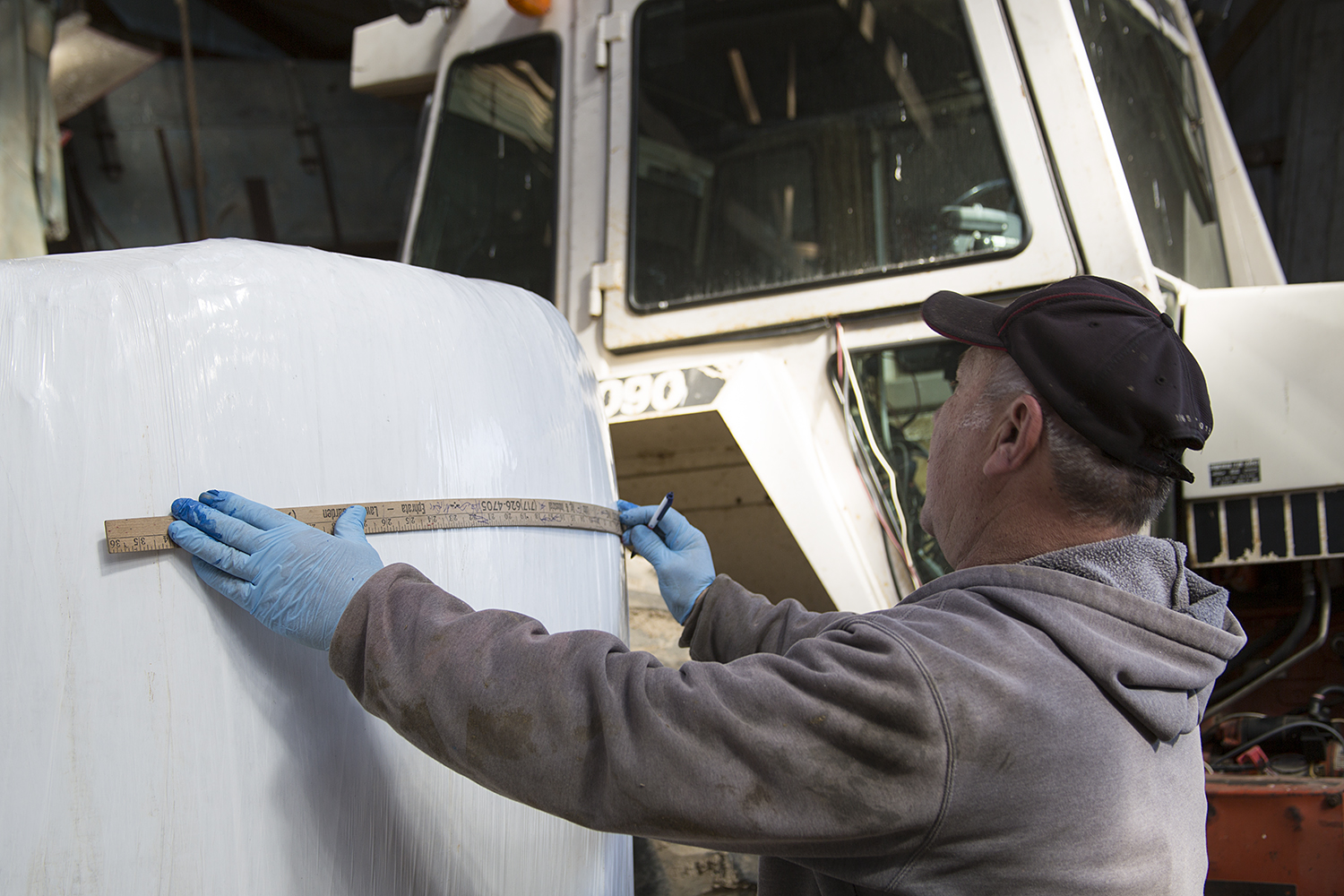
7) Find the middle and that’s where the “I” in Milk goes, then build on that.

8) Letters are placed every 2.5 inches for “Local Whole,” and adjust others accordingly.

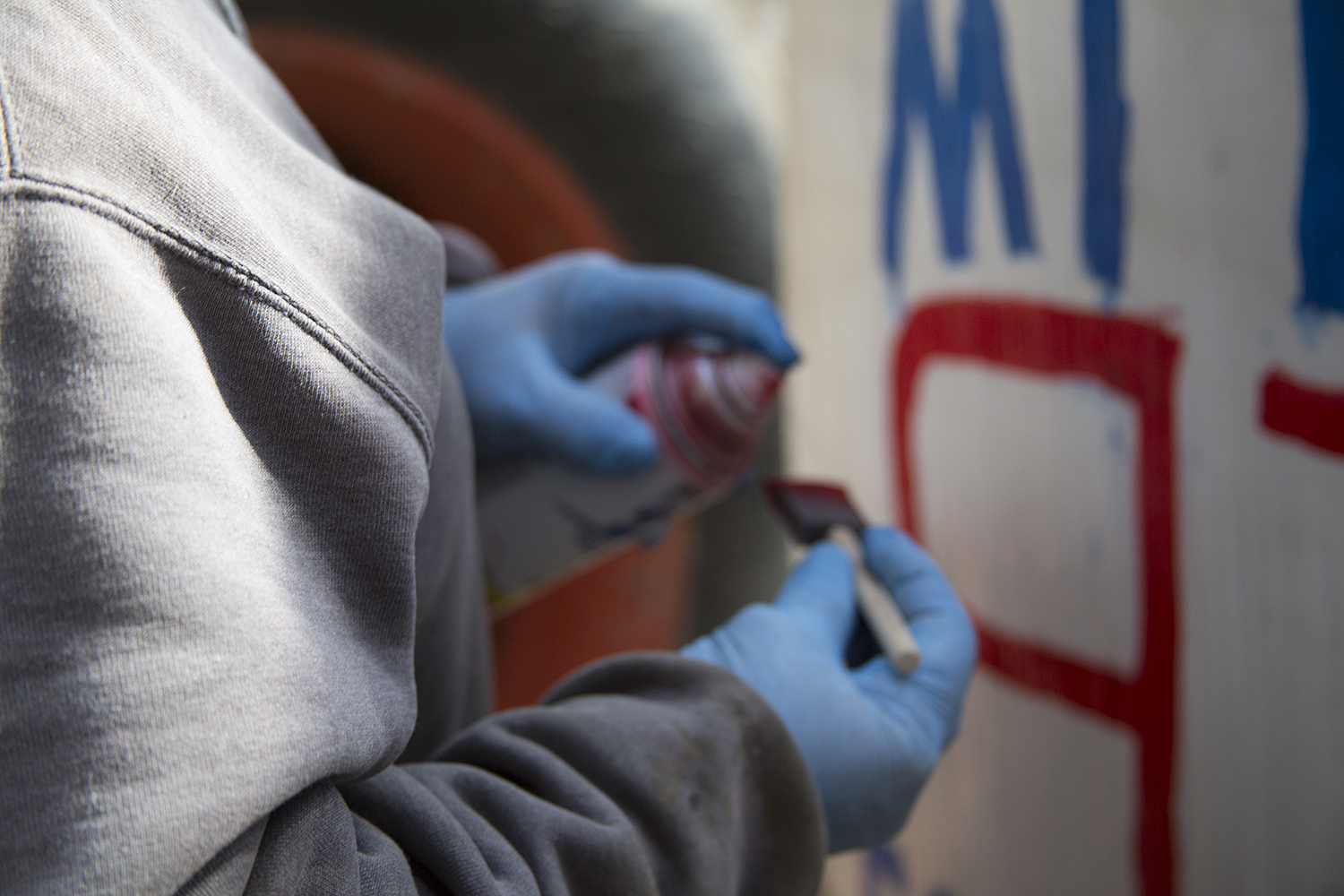
9) Spray paint onto foam brush, then apply to bale in strokes from the bottom to the top of each letter.

10) Alternate between colors (Blue/Red or Black/Red).

11) Make the letters broader and thicker for the word MILK, in all capital letters.

12) Follow your guide and use paint to even things out as you go.

13) Paint will dry faster and better, with fewer runs (in winter) if painting in sunshine or with a heater running in the shop.

14) Sit them on a pallet for better visibility on property you have along roads and set back from intersections.

Even in worst of times, milk stayed true

Let’s work to put some pressure on our elected representatives to stop this immoral travesty of sub-par nutrition to our children. — Renee Troutman

This letter, which ran on the cover of Farmshine, February 15, 2019, is republished here with permission.

By Renee Troutman, Myerstown, Pennsylvania

Recently in my children’s history lessons about World War I we were learning specifically about war efforts on the home front to ration and save food so there would be enough for our soldiers and European countries ravaged by war. Americans were asked to save on wheat, meat, fats, and sugar. They selflessly sacrificed things like beef, pork, and candy. They ate more vegetables and used fruit preserves to sweeten their desserts. Not a crumb of bread was wasted.

In each history lesson we also read some form of original history, whether it be a speech, newspaper article, songs, or letters. This time we read excerpts from a popular 1918 publication called Foods That Will Win the War and How to Cook Them that gave recipes and tips to help with the rationing efforts. There was a section about using milk and I thought it was very interesting. Here’s what it says:

“To Save Milk: Use it all. Buy whole milk and let the cream rise. Use this cream, and you secure your milk without cost. Economize on milk and cream except for children. The children must have milk whole. Serve buttermilk. Serve cottage cheese regularly in varying forms. It is especially nutritious. Use cheese generally.”

Is anyone else as intrigued as I am that even during times when rationing food was a necessity, the thought of giving remnants of milk to children wasn’t even a consideration? Conventional wisdom and common sense knew that children going through the most critical growth periods of their lives needed whole milk for proper development. In no way was anyone going to suggest that children be deprived of nutritious, dietary fat. Many vitamins in milk are fat soluble and calcium absorption is aided with the fat so giving children anything less made that nutrition null and void. Nobody was going to do that to children and nobody did.

But yet, 100 years later, while we’re supposedly drowning in surplus milk, here we are giving our children nutritional remnants of milk because the government tells us to. Whole milk has somehow been villainized even though milk has been heralded as a sacred nutritional staple for millennia. Our national security is now being compromised as we lose farms daily to financial ruin as milk drinkers are dismayed at the blah of skim milk. And, to add insult to injury, farmers are shooting themselves in their own foot as promotion money forcibly taxed off of their meager milk checks is used to push this erroneous and devastating no-fat/low-fat message.

Our children deserve so much better. We produce an abundance of wholesome, nutritious, and delicious milk in this country. I’d really like to know why we are mandated by the government to only give ourselves measly remnants. The tide needs to turn, and fortunately, I think it is.

Let’s work to put some pressure on our elected representatives to stop this immoral travesty of sub-par nutrition to our children. Call your U.S. Congressman to make HR 832 Whole Milk for Healthy Kids Act of 2019 to happen and fast. Do whatever you can yourself to educate the public about the truth and goodness of whole milk and let’s make the consumers we provide for confident and excited about using our whole product again and not just the measly remnants of it. 

-30- 

Thompson, Peterson introduce Whole Milk for Healthy Kids Act of 2019

schoolmilkiStock-510657195web.jpgBipartisan bill would allow whole milk as option in school cafeterias

WASHINGTON – Making good on a promise to introduce legislation to bring whole milk back to schools, U.S. Representative Glenn ‘GT’ Thompson (R-PA) has joined forces with House Agriculture Committee Chairman Collin Peterson (D-MN) to introduce a bipartisan bill to allow for unflavored and flavored whole milk to be offered in school cafeterias.

H.R. 832, the Whole Milk for Healthy Kids Act of 2019 recognizes the importance of milk to the health and well-being of growing children.

Last year, the U.S. Department of Agriculture Secretary Sonny Perdue directed USDA to allow schools to serve 1% low-fat flavored milk in school meal programs that had been restricted previously to fat-free flavored milk.

H.R. 832 would take this further to allow whole milk to be included as well.


“Milk is the No. 1 source of nine essential nutrients in the diets of our students, but if they don’t drink it these health benefits are lost,” Rep. Thompson said in a press release Wednesday (Jan. 30). “Milk consumption has been declining in schools throughout the nation because kids are not consuming the varieties of milk being made available to them. It is my hope that the Whole Milk for Healthy Kids Act will bring a wider range of milk options to American lunchrooms so students can choose the kind they love best.”

“I’m proud to join Congressman Thompson in this effort that will provide more choices for nutritious and healthy milk to kids in schools, and a valuable market for dairy farmers in Minnesota, Pennsylvania and nationwide at a time when they’re continuing to face extremely difficult market conditions,” Chairman Peterson said in a statement.

Rep. Peterson is Chairman of the House Ag Committee and Rep. Thompson is a member of the House Ag Committee.

Thompson is also a member of the House Committee on Education and Workforce to which the bill was referred after its introduction on Jan. 29.

The nine original co-sponsors of the bill include Agriculture Committee Republican Leader Mike Conaway (R-TX) and three members of the Committee on Education and Workforce to which the bill was referred — Rep. Lloyd Smucker (R-PA), Rep. Dan Meuser (R-PA) and Rep. Elise Stefanik (R-NY).

Additional co-sponsors are Rep. Chris Collins (R-NY), Rep. Rodney Davis (R-IL), Rep. John Joyce (R-PA), and Rep. Mike Kelly(R-PA).

In a press release late last week, Thompson gave some background on this bill. He noted that in 2010, Congress passed the Healthy, Hunger-Free Kids Act which amended nutrition standards in the School Lunch Program.  Among the changes, the law mandated that flavored milk must be fat-free within the program.

This 2010 law, along with lower participation in the program, led to an alarming decline in milk consumption in schools since 2010. Declining milk consumption in schools not only impacts students, but also dairy farm families and rural communities across the nation.

Two years ago, to help encourage nutritious options in the School Lunch Program and increase consumption, Rep. Thompson introduced legislation – H.R. 4101, the School Milk Nutrition Act of 2017 – which provided schools the option to serve 1% low-fat flavored milk varieties.

In May of 2017, the USDA announced a rule that allowed schools to receive waivers for low-fat (1%) flavored milk, rather than only fat-free, which is the essence of H.R. 4101.

On January 29, 2019, Rep. Thompson introduced this bipartisan bill — H.R. 832, the Whole Milk for Healthy Kids Act of 2019. This legislation builds on the previous bill and USDA’s rule by allowing whole milk (both unflavored and flavored) to be offered within the School Lunch Program.

Producers and consumers are urged to contact their representatives to support this bill. Key members of Congress to reach out to on the Committee on Education and Workforce, which will be the committee to consider the bill, include Rep. Joe Courtney (D-CT), Chairman Bobby Scott (D-VA), Rep. Marsha Fudge (D-OH). View all Congressmen and women serving on this committee here

Follow the progress of H.R. 832, the Whole Milk for Healthy Kids Act of 2019 here.

-30-

Are dairy farmers funding their demise? USDA ‘straight-jackets’ promotion; GENYOUth alliances suspicious

AUTHOR’S NOTE: This is Part 2 of an investigative report on GENYOUth, which began with USDA contacting National Dairy Council in Sept. 2009, National Dairy Council contacting National Football League in 2009/10 and an official signing of a memorandum of understanding (MOU) between NDC and NFL with USDA in February 2011. 

By Sherry Bunting, from Farmshine, Friday, January 18, 2019

They call it “the dairy farmers’ youth wellness program,” but GENYOUth is under the thumb of USDA with some questionable corporate alliances and trends underway.

This multi-part series looks at GENYOUth’s founding, its alliances, its mixed-messages, intended and unintended consequences, its partners and the new alternative products they are and will be introducing into the nutritional vacuum paved by low-fat and fat-free promotion, the winners and losers, and the impact on our dairy farms, and our children.

Let’s pick up where we left off from last week’s Part One.

Helping America’s youth lead better and healthier lives is a worthy pursuit, and there is no intention here to blame good-hearted people trying to do good within the straight-jacket of USDA control. What is being questioned is the direction. What is being exposed is the roots of the oak tree and its impact on our dairy farms and our children.

The problem with the GENYOUth model is that it is primarily funded by mandatory dairy check-off dollars and the government control of it.

The anti-animal and environmental NGO’s (non-governmental organizations) are driving decisions by Big Food, Big Ag, Big Government (and the World Health Organization). And there are new billionaire corporate “sustainability” alliances poised to profit on this main course, while dairy farmer GENYOUth “founders” hope for crumbs.

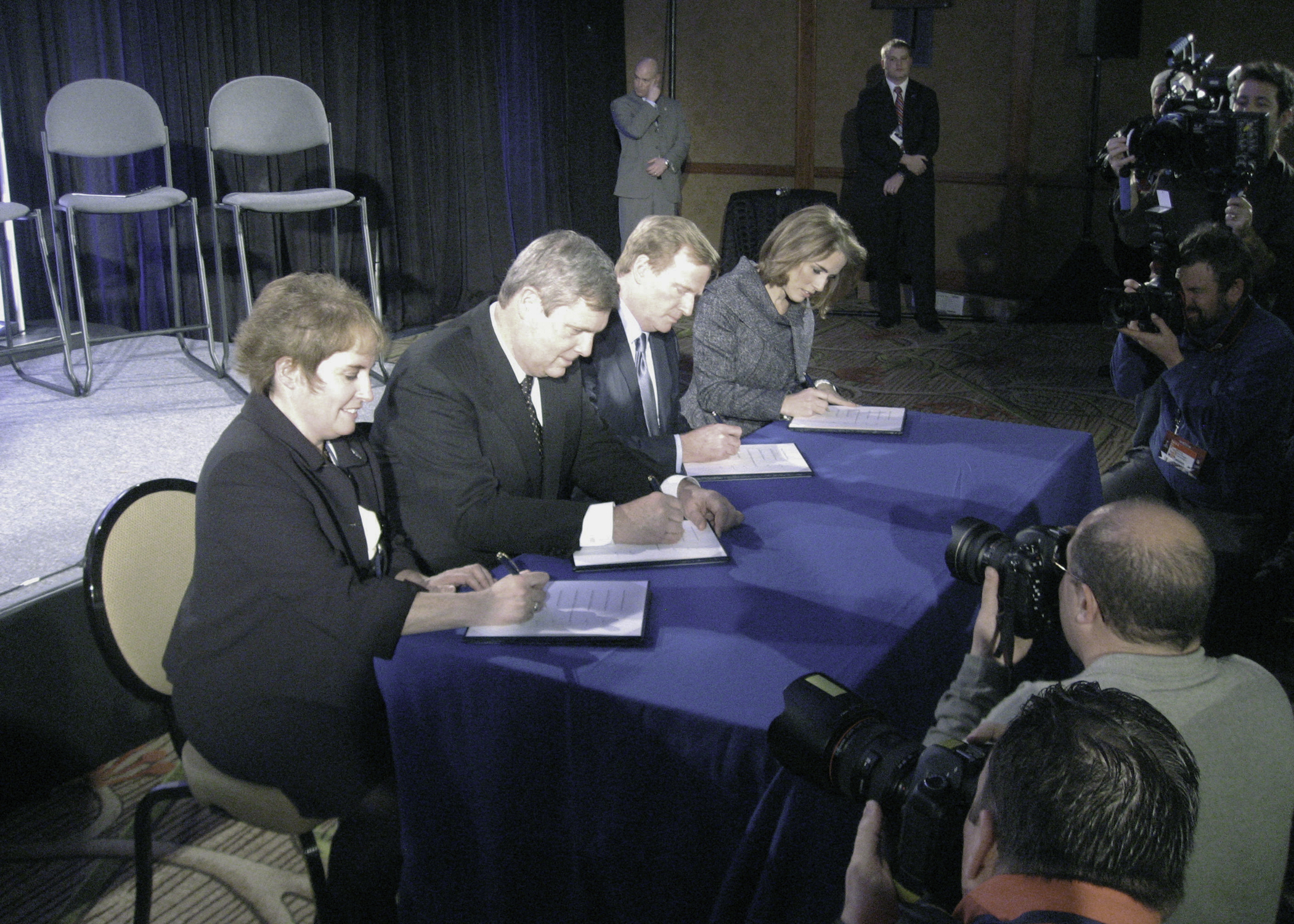
GENYOUth began in 2010 as a memorandum of understanding (MOU) between National Dairy Council and National Football League with the U.S. Departments of Agriculture, Education, and Health and Human Services. This six-way MOU was officially signed on Feb. 4, 2011 during the Superbowl that year (below).

GENYOUth-MOU(2011).jpg

This 2011 USDA photo found on a USDA flickr stream shows lots of cameras, but few, if any, dairy farming publications were notified. The Memorandum of Understanding (MOU) was signed Fri., Feb. 4, 2011 during Superbowl week in Dallas Texas. It had been under development since Sept. 2009. The MOU outlined the joint commitment of the NFL, USDA, National Dairy Council, GENYOUth Foundation, to end childhood obesity. Signing from left were NDC President Jean Regalie, Ag Secretary Tom Vilsack, NFL Commissioner Roger Goodell, GENYOUth CEO Alexis Glick.

According to Guidestar, the non-profit is listed under the name Youth Improved Incorporated (aka GENYOUth) with the tagline ‘exercise your influence.’ It refers to itself as an NGO. (NGO is defined as “a nonprofit organization that operates independently of any government, typically one whose purpose is to address a social or political issue.”)

GENYOUth was launched to increase physical activity among schoolchildren as well as to encourage healthy eating with emphasis on school breakfast and then mobile breakfast carts. The 2014 (most recent) progress report noted that 73,000 schools and 38 million children had been reached by Fuel Up to Play 60 (FUTP60), affecting the health and wellness of an estimated 14 million students’.

The only reference to dairy in the FUTP60 message pounded home about fruits, vegetables and whole grains is the inclusion of low-fat and fat-free dairy.

A year ago at a bank meeting in front of 500 farmers, then U.S. House Ag Committee vice chair G.T. Thompson of Pennsylvania said he wanted his healthy school milk bill to bring the standard up to 2% or whole milk, but, he said “producers and processors came to me and told me to go slow, to keep it at 1% and take baby-steps.”

Who were the “producers” and “processors” coming to him with that request? National Milk Producers Federation (NMPF), International Dairy Foods Association (IDFA) and the check-off MOU under the thumb of USDA.

Those same entities then turn around and tell grassroots farmers that they are forced to work within the confines of what USDA will allow. And so, the circular argument continues. Round and round we go.

Which brings us back to the Nov. 27, 2018 GENYOUth Gala in New York City and the Vanguard Award to PepsiCo.

PepsiCo has been a GENYOUth partner for seven years. In 2018, PepsiCo not only paid its “hero” sponsorship of $150,000 for the event, they gave an additional $1 million for the purchase of 45 additional mobile breakfast carts and the Espanol version of FUTP60.

According to the only piece of the 2011 MOU that can be found, the NFL, NDC, and GENYOUth have agreed not to use FUTP60 “as a vehicle to sell or promote products or services.” But it is clear that the NFL and other corporate partners, like Pepsi, have brand recognition.

How is dairy’s brand recognized? Hats are tipped at the Gala to “America’s dairy farmers” as the founders who launched the platform. But they are hog-tied by generic promotion and exclusion of the full nutritional value of their product — whole milk, real butter and real cheese — within the government straight-jacket.

GENYOUth was created while Tom Vilsack was Secretary of Agriculture (below). According to cross-posted blog entries between DMI and USDA near the end of 2009: “The USDA discussed in September (2009) a plan to develop the Memorandum of Understanding (MOU) between USDA, the NFL and DMI to allow USDA programs and Fuel Up to Play 60 to collaborate and collectively tackle the critical issue of children’s health.”

VILSACK-FUTP60(2011).jpg

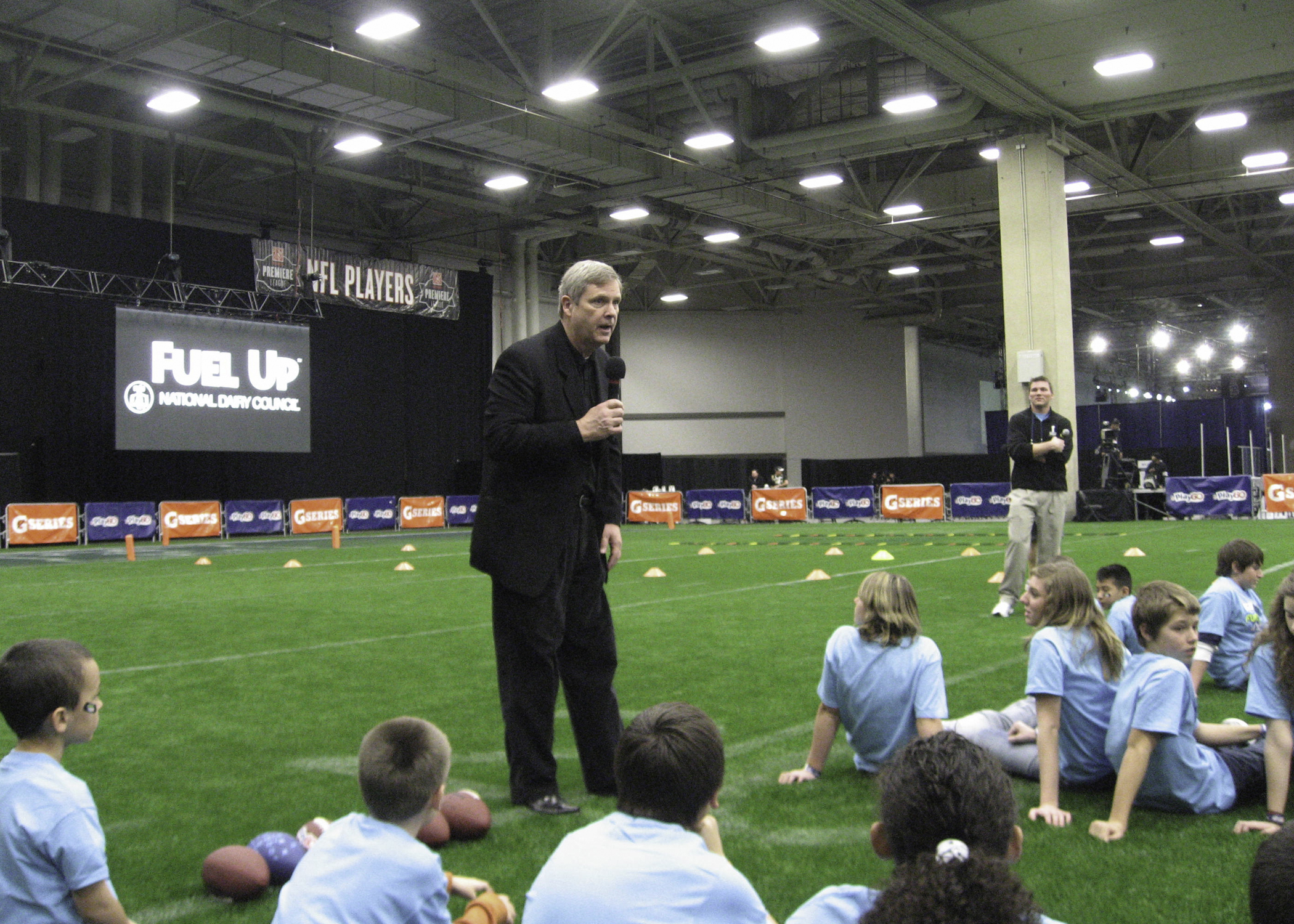
Former Secretary of Agriculture Tom Vilsack, who is currently CEO of the check-off funded U.S. Dairy Export Council (USDEC), is photographed in 2011 with young people during Superbowl week in Dallas, Texas, after the signing of the 2011 GENYOUth MOU — 18 months after USDA first discussed the plan for the MOU with the National Dairy Council and a year after NFL commissioner Roger Goodell says Tom Gallagher of DMI approached him. 2011 USDA photo

When former President Bill Clinton was invited to speak about Vilsack at the 2017 Gala where Vilsack was presented with the 2017 Vanguard Award, Clinton, a vegan, talked about every entity in the “diverse partnership” that he was celebrating — except for America’s dairy farmers.

He talked about how children receive 40 to 60% of their calories from drinks in school. He talked about turning the obesity epidemic around by everyone taking responsibility in that area. He talked about how Vilsack’s leadership with Michelle Obama, made beverages and snacks abide by the fat-free rules, including school vending machines. He talked about how Vilsack was instrumental “under the radar… working for a healthier generation of kids before coming to USDA and before the launch of GENYOUth.”

Meanwhile, the more the government’s direction squeezes healthy fat from the diet, the more the obesity figures in children continue to grow.

This year, at the 2018 Gala, GENYOUth CEO Alexis Glick thanked each partner. “We give a heartfelt thank you to our founding partners America’s dairy farmers and the National Football League and the players association,” said Glick in a YouTube video of the November Gala. She had previously thanked longtime partners Land O’Lakes and Domino’s while also acknowledging Mike and Sue McCloskey (fairlife) as well as Leprino and Schreiber.

“I say to our farmers: You had a dream. And we have been blessed to be part of that dream. You gave us life. You believed in us. And can you believe we are standing here today on the cusp of the 10-year anniversary of FUTP60?” she said.

“And we extend an extra special thank you to PepsiCo,” Glick continued. “The generosity of your vision, your resources, your team, time and talent have changed our organization.”

In accepting the Vanguard Award on behalf of PepsiCo, CEO Albert Carey said: “We’ve had a wonderful partnership with the NFL over the years… doing things together like the Pepsi half-time show and Gatorade sidelines. We have had ads and retail programs for both of our brands,” he said.

“But the one NFL program our team noticed probably 10 years ago, or maybe 9 years ago, is one we have admired and wanted to be part of and that was Play 60,” said Carey, careful not to include the Fuel Up (dairy) part of the Play 60 tagline.

Carey said “you guys are doing a fantastic job inspiring kids… using football role models.”

He went on to say that PepsiCo wanted to be part of the program because of the importance of kids being active.

“But we also believe at PepsiCo that we need to provide healthy products for our consumers,” said Carey. “Some of you may be familiar with our mission ‘performance with purpose.’”

He described this as “getting great business performance while also serving others… on the part of the environment… or many other ways, but this one particular way is about providing healthier foods for our consumers.”

Carey said he thought PepsiCo had done a pretty good job at this over the past several years, “but we haven’t talked about it much. You see some obvious things like Pepsi zero sugar, Gatorade Zero,” he said. “But you don’t hear much about Bubbly Sparkling Water, Life Water, Quaker oat milk, and we just bought a company called Bare Snacks and our Kevita Kombucha products (probiotic drinks).”

He mentioned that the Quaker oat beverage, which he personally called “oat milk” but in reality this product is labeled “oat beverage for cereal, smoothies, coffee and more”. It is being launched this month and will be in stores by March.

The PepsiCo website mentions these products as part of the company’s commitment to further the World Health Organization goals of alternative products to reduce saturated fat consumption and reduce greenhouse gas emissions, thereby improving global environmental and nutritional sustainability.

Carey said the “oat milk” and bare snacks and probiotic drinks are part of PepsiCo goal of “converting its portfolio to healthier foods for the future.”

In fact, PepsiCo is also in development of so-called non-dairy ‘cheese’ and ‘yogurt’ snacks through its “Nutrition Greenhouse Accelerator program, including the purchase of Health Warrior, which PepsiCo said in an October 2018 Food and Beverage article “is a nutrition-forward trailblazer that can provide great insight into high value categories and consumers while benefiting from our expertise and resources to bring plant-based nutrition to more people.”

Meanwhile, the GENYOUth program bestowed the 2018 GENYOUth Vanguard Award on PepsiCo for its seven years of partnership and its commitment to give an additional $1 million, which PepsiCo’s Carey said would fund Play 60 in Espanol as well as 45 new mobile school breakfast carts, bringing PepsiCo’s cart total to 100.

It will be interesting to see what may appear on these carts in the future, given the new oat beverage, plant-based probiotic drinks, and other “Nutrition Greenhouse” products emerging in the PepsiCo portfolio.

-30-

Who is empowering whom? PART ONE: Dairy check-off’s GENYOUth thin on milk.

AUTHOR’S NOTE: They call it “the dairy farmers’ youth wellness program” because it has been depicted as the brainchild of the National Dairy Council… But GENYOUth — including its flagship Fuel Up to Play 60 (FUTP60) — is thin on milk and threatens to steal even more demand as future milk drinkers are steered away from nutritious whole milk products. Meanwhile, the anti-animal and environmental NGO’s (non-governmental organizations) have been infiltrating new billionaire “sustainability” alliances poised to profit on the main course, while dairy farmers bow-down in hopes of crumbs. This is Part One of an investigative multi-part series.

Gala_Logo.png

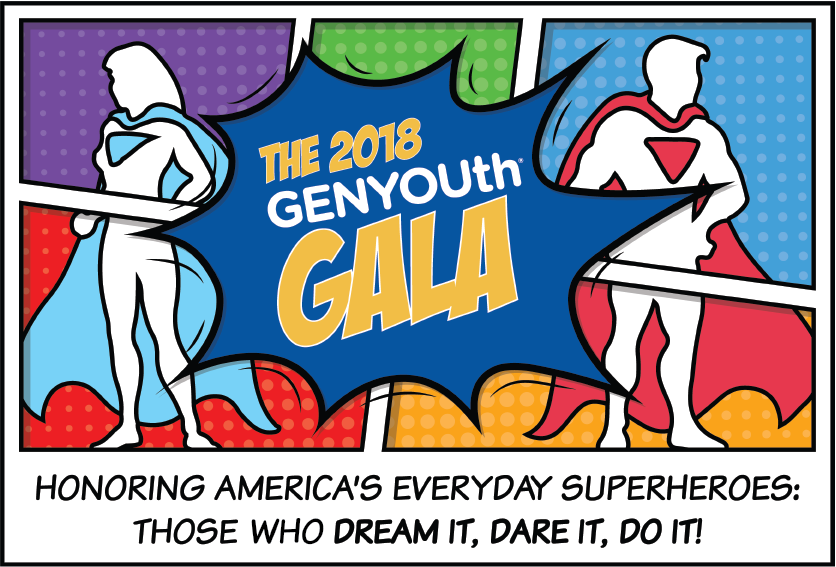
Depicted above is the illustration used to promote and glorify the 2018 GENYOUth Gala that was held at the Ziegfeld Ballroom in New York City on Nov. 27. The “superheroes” sponsors are listed further down on the 2018 GENYOUth Gala website. PepsiCo was the “hero” sponsor at $150,000. Champion sponsors of $100,000 each were UnitedHealthcare, Corteva Agriscience, Inmar and fairlife. So-called “defender” sponsors included Domino’s, Ecolab, Jamba Juice, Land O’Lakes, NFLPA, SAP, Leprino Foods, Schreiber, Ameritrade, RBC Capital Markets and Omnicom Group, each of which gave $50,000.

By Sherry Bunting, from Farmshine, Friday, January 11, 2019

BROWNSTOWN, Pa. — How serious is the National Dairy Board about improving fluid milk sales? We see some renewed emphasis on this lately, but our most important sales — those to children in school — threaten to steal even more demand from the future as we lose future milk drinkers with the forced service of only fat-free and 1% low-fat milk in the school lunch and breakfast programs.

Recent studies show that children and teenagers in the poorest demographic of the U.S. population are leading the epidemic of obesity and diabetes. One study by University of Michigan Health System, for example, revealed that for every 1% increase in low-income status among school districts, there as a 1.17% increase in rates of overweight/obese students. Researchers used data collected from mandated screenings that began in Massachusetts schools in 2011, and the percentage of overweight/obese students was compared with the percentage of students in each district eligible for free and reduced school lunch, transitional aid or food stamps (SNAP).

The meals these students receive at school are their best two options for nutrition and satiety all day. There are few restrictions for cheap, high-carb, high-fructose-corn-syrup foods and beverages that can be purchased with SNAP cards, so what will they find at the end of the day for their hunger at home? Soda pop and Dollar Store snacks.

What role is the National Dairy Council and its GENYOUth program playing?

The GENYOUth collaboration is aimed at making “a lasting difference in the lives of children.” That sounds great, but what have been both the intended and unintended lasting consequences?

Certainly, there is a long list of dairy research projects funded by the NDC. That’s a good thing.

But where the rubber meets the road, GENYOUth and its flagship program Fuel Up to Play 60 (FUTP60) are aimed at promoting a “healthy lifestyle” that focuses on 60 minutes of physical activity daily and consumption of fruits and vegetables, whole grains and lean protein “including low-fat and fat-free dairy.”

For nearly 10 years, the dairy checkoff has parroted the Dietary Guidelines on dairy service to children (and adults) when it comes to institutional feeding — the largest category of the food economy and the place where seeds are planted for lifelong choices based on nutrition education and flavor.

Let’s look at how GENYOUth was launched in 2010.

At the Nov. 27, 2018 gala in New York City, NFL Commissioner Roger Goodell stated that GENYOUth was the concept of Dairy Management Inc (DMI) CEO Tom Gallagher. Gallagher today serves as chairman of the GENYOUth board.

In a YouTube video of Goodell’s remarks — before handing the coveted 2018 Vanguard Award to PepsiCo CEO Albert Carey — Goodell stated that Gallagher came to him with the idea for GENYOUth 10 years ago, which was then “founded” in 2010 as a partnership between the National Dairy Council (NDC) and the National Football League (NFL).

In fact, in its 2014 Progress Report, GENYOUth’s beginning is described as making “cultural shifts” in school nutrition and exercise, stating further that, “Through signing a six-way Memorandum of Understanding (MOU) between the National Dairy Council, the National Football League, and the U.S. Department of Agriculture, Education, and Health and Human Services, we have created a productive synergy that has made the sky the limit for GENYOUth.”

According to a report at its website, genyouthnow.org, the foundation seeks to “convene leaders in a movement to empower America’s youth to create a healthier future.”

The 2018 GENYOUth Gala in New York City was billed as “honoring America’s everyday superheroes” and the Vanguard Award, as mentioned, went to PepsiCo.

But let’s go back to the second gala on Dec. 7, 2017 aboard the Intrepid in New York City. Former U.S. Secretary of Agriculture Tom Vilsack — who now serves as CEO of dairy checkoff-funded U.S. Dairy Export Council (USDEC) — was presented with the Vanguard Award that year.

The GENYOUth website cited “Vilsack’s accomplishments for dairy farmers” under President Obama — for having “legislated to improve the health of America’s kids.”

More specifically, the Vilsack accolades stated that he partnered with First Lady Michelle Obama on her “Let’s Move!” initiative — “alongside GENYOUth to improve the health of America’s children.”

These words show the partnership the NDC / DMI has had with the Obama / Vilsack administration on shared goals of promoting exercise and low-fat / high carb diets for children and youth.

According to the former GENYOUth foundation website before it was revamped to genyouthnow.org, the Vanguard Award presentation to Vilsack was described in January 2018 as follows:

“Sec. Vilsack helped pass and implement the Healthy, Hunger-Free Kids Act to help combat child hunger and obesity by making the most significant improvements to U.S. school meals in 30 years.”

What was included in these “significant improvements” in 2010?

For starters, America’s schools were forced to offer only fat-free flavored milk and only 1% or fat-free white milk, while the screws were tightened on the requirement that less than 10% of a school meal’s calories could come from saturated fat and by reducing the total number of calories in a meal served to children at school, while at the same time putting both program and promotion emphasis on plant-based meals containing scant lean protein.

This means that not only are dairy producers prohibited from putting their best and most nutritious foot forward with future milk drinkers at school, the schools are forced to serve butter substitutes and imitation cheese or cheeses that are diluted with starch to decrease the amount of calories the students receive from fat).

During the Pennsylvania Dairy Summit in February 2018, keynote speaker Nina Teicholz, author of The Big Fat Surprise — without realizing the significance of her statement — put these USDA / GENYOUth ideas to shame. She stated:

“The fat we eat is not the fat we get. The idea that 60 minutes of exercise can make up for a bad diet is disingenuous. You can’t exercise your way out of a bad diet.”

And Teicholz backed up her statement with facts, studies and charts.

Her 2014 book details her 10-years investigation, revealing the lack of sound science to support low-fat diets. Not only are new studies bearing this out, old studies were found to have been “buried” by the National Institute of Health (NIH) and American Heart Association, because they did not support the fat-heart hypothesis of Ancel Keys.

GENYOUth and FUTP60 not only dutifully “followed” these government guidelines but in reality worked alongside the Obama administration to develop them and further the reach of this low-fat dogma.

The implementation of those school milk rules have cost dairy farmers plenty in lost milk sales. Losses so steep that they drove the gradual declines in fluid milk consumption (see Fluid Milk Timeline chart below) plunging downward like a rock from 2010 through 2017 (most recent full-year figures)

FluidMilkTimeline-bunting.jpg

Timelines don’t lie. As we look at this fluid milk timeline, we can see the layered effects of government dietary policy, USDA requirements for fat-free milk (2010), that move occurring alongside the creation of GENYOUth (2010) and some reversal in whole milk trends moving higher after Nina Teicholz’s book Big Fat Surprise made the cover of Time magazine. Meanwhile, the past decade has also been one of FDA non-enforcement of milk’s standard of identity, allowing plant-based alternatives to take hold and proliferate. 

Bob Gray for the Northeast Association of Farm Cooperatives addressed these losses on a dairy policy forum panel in Washington exactly one year ago on January 8, 2018. Gray said: “For the last six years (2010 through 2016 data), we have not been able to sell 1% milk in the schools.”

He noted that in just the four years from 2012 to 2015, dairy producers had “lost 288 million half pints of sales to schoolchildren because of this move, alone.” And those losses continued through 2016 and 2017 and into 2018, despite the small move by the Trump administration to allow 1% flavored milk back into schools.

This is an uphill battle to turn around — what with all the fat-free and low-fat promotion and the fact that schools are already aligned with processors that prefer to keep the fat-free pipeline going.

In addition to GENYOUth honoring Secretary Vilsack with the 2017 Vanguard Award, the National Dairy Board provided him a checkoff-funded salaried position as CEO of USDEC, where his rallying cry has been to get export sales to 20% of expanding total milk production while Class I sales as a percentage of total milk production declined to below 20% by the end of 2017.

Remember, experts at various dairy market forums throughout 2018 have made the point that exports do not raise farm-level milk prices because they are “commodity clearing markets.”

But maybe that is the point.

If fluid milk consumption erodes as a percentage of milk production, the cost of milk to processors is reduced for the many other products competing globally for export sales to increase. Meanwhile, a pipeline for fat-free milk sales keeps the cost of milkfat for other products from accelerating in the farm milk check.

The highest-value class under the Federal Order pricing scheme is the shrinking piece of an expanding commodity-dairy-production-for-export pie.

Meanwhile, the past decade has been one of FDA non-enforcement of milk’s standard of identity, allowing plant-based alternatives to take hold and proliferate.

One can argue that the National Dairy Council — whether simply following USDA’s lead or by working alongside USDA to lead — has played right into the hands of GENYOUth ‘friend’ PepsiCo / Quaker.

Remember, Quaker was a company that DMI specifically partnered with a few years back, but the milk part of the Quaker Oatmeal promotion never really materialized, just like we don’t see the milk part promoted in any of the NFL’s Fuel Up to Play 60 spots. But the NFL is joined at the hip to PepsiCo with side-by-side logos during televised games.

Now, just six weeks after receiving the 2018 Vanguard award from GENYOUth, PepsiCo is launching its own Quaker Oat beverage.

In fact, PepsiCo CEO Albert Carey had the audacity to do a brief sales-pitch for what he called “our new oat milk” in his remarks after NFL commissioner Goodell handed him the highest GENYOUth award on behalf of the NFL and the National Dairy Council.

We’ll dig into that in future parts of this investigative series.

-30-

FARMSHINE Editor: ‘You should know what’s going on behind your back.’

16998665_1877802419128042_6866585577837346794_nBy DIETER KRIEG

This editorial by Farmshine editor and publisher Dieter Krieg, appeared in the January 4, 2019 edition of Farmshine and is republished here with permission.

The fact that most of you have never heard of GENYOUth is reason to suspect that its goals are dubious and very likely not in your interest. The non-profit was founded in 2010 by the National Dairy Council (NDC) and the National Football League (NFL). So, in the nine years since GENYOUth came to be, have you heard of it?

We discovered it in late 2017 … and not in a good way. On the contrary, we were appalled! All the more so because we had never heard of it. And surely the “dairy folks” at NDC, and its sister organizations, including ADA, UDIA, NDB and DMI would have had contact information for Farmshine. Indeed they did and do, regularly sending us “silly” stuff which is almost an insult to dairy farmers. Need an example? Turn to page 22, and see what DMI considers worthy of good news for you dairy producers.

In 2016, GENYOUth held its first “gala”… meaning they held their first very fancy gathering at one of the fanciest places this side of Paris. Internally, they patted themselves on their collective backs, but outside of their boardrooms and ballrooms, not a word. Were they — and are they — trying to keep their agenda out of your sight? Or, were you at the Waldorf-Astoria Hotel in December, 2016, for the inaugural high-class gathering of GENYOUth.

Don’t feel bad if you weren’t invited. Only a very select few dairy farmers (like maybe just one) gets to attend.

We suspect that dairy farmers are kept away and in the dark about it all because if they knew the truth … if they saw and heard what’s going on … there’d be a revolt. And that’s exactly what we need!

It wasn’t until December of 2017 that we were tipped off about the GENYOUth gala that had been held that month.

Once again, it was held in New York City, this time aboard the aircraft carrier, Intrepid — about as exotic a venue as you can find in the Big Apple. We’re sure it was nice, as well as shameful. We looked into it and concluded in short order that GENYOUth does not have the interests of America’s dairy farmers in mind. Not in the least. Not at all.

If our exposure of the 2017 GENYOUth gala accomplished anything at all, it’s this: We actually received a news release of the event this past year (2018). In typical DMI-NDC-ADAUDIA-NDB-USDEC fashion, the news release is full of praise for itself. It appears completely unedited on page 18, if you’d like to read it.

By the way, not mentioned in the GENYOUth report is where and when it was held. For the record, it took place on November 27th at the Ziegfeld Ballroom on 54th Street in
Manhattan. It bills itself as “New York City’s premier special events venue.” There’s really nothing wrong with that in itself.

What’s disturbing is that these galas feature some very heavy hitters with very deep pockets and they’re all united to promote, push and publicize skim and low-fat milk.

Their absolute mission is to change the culture of milk consumption. Down with whole milk; raise a glass of skim instead.

If you’re okay with that, then fine. If not, then it’s time for you to raise your voice.

Again, if you haven’t already read the GENYOUth article on page 18, please take the time to do so. You should know what’s going on behind your back. And don’t be surprised if you come away feeling like you’ve been stabbed in the back.

Shame on DMI, NDC, ADA, UDIA, NDB, USDEC for betraying the mission dairy farmers entrusted you with!

-30-

How will fake milk, fake meat be labeled and regulated?

Say, what? New twist on standards of identity: How will fake milk and fake meat be labeled and regulated?

cows.jpg

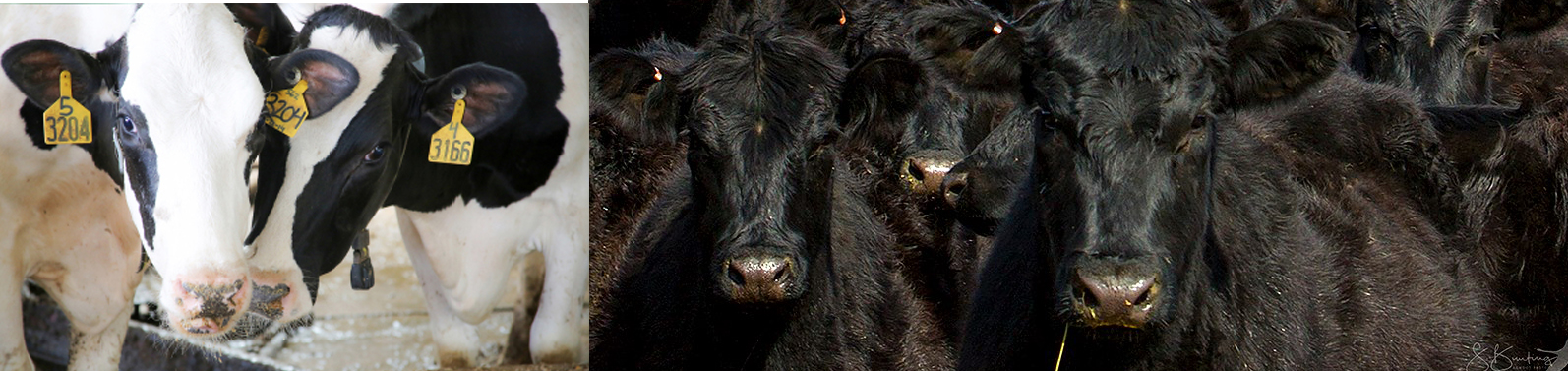
In a time when many people have lost their connection to the values and sustainability of the circle of life, cattle have been getting an undeserved bad rap on everything from diet to environment to compassion. On all three counts, the anti-animal agenda lies behind the false narrative that is leading us down a dishonest path to more fake concoctions of ill-fated science fueling profits at the expense of our physical and emotional health and the health of the planet. Fake meat and fake milk are funded by billionaires, genetically engineered by USDA, initiated as the brain children of Silicon Valley techies, with partnership from the biggest names in corporate agriculture. Noble goals of ending hunger are the defense, but it’s difficult to believe that when we have surplus dairy and meat protein produced naturally with the real problem of hunger coming down to distribution and waste. This so-called solution has the potential to quietly dictate food choices, markets and livelihoods.

By Sherry Bunting, updated since first published in Farmshine, November 21, 2018

WASHINGTON, D.C. –  “Dairy reinvented: Sustainable. Kind. Delicious,” is the tagline of Perfect Day’s website.

“Better meat, better world” are the words that jump from the Memphis Meats website.

To be more specific, Perfect Day’s mission is to “create a better way to make dairy protein, the same nutritious protein found in cow’s milk…without the help of a single cow.”

Meanwhile, at Memphis Meats, their mission is “To bring delicious and healthy meat to your table by harvesting it from cells instead of animals… feel good about how it’s made because we strive to make it better for you… and the world.”

On the fake meat side, Memphis Meats received Series A funding from four sources in August 2017: venture capitalist DFJ, billionaire investors Bill Gates and Richard Branson, and Cargill. In January of 2018, Tyson came on board as an investor.

On the fake dairy side, Perfect Day received its Series A funding from Singapore and Hong Kong venture capital and investment companies that have relationships with some of the largest food and beverage companies and brands in the world, according to a company news release. In addition, Continental Grain was part of the early investment, and in November 2018, Perfect Day announced a partnership with Archer Daniels Midland (ADM).

The big question, at present, is how will these proteins be regulated and labeled?

The discussion is converging with FDA’s nutrition innovation strategy and modernization of standards of identity (especially dairy standards of identity), along with parallel hearings and comment periods on how to regulate and label the ‘meat’ version of lab-created cellular proteins.

Make no mistake about it folks: Both of these processes involve genetic engineering start-to-finish.

Perfect Day (fake milk protein), for example, sources yeast from USDA research labs that has been “genetically-altered” to include bovine protein stimulators and synthesizers.

Memphis Meats (fake meat) uses animal cells, mainly bovine and poultry, from cell banks that have been edited to grow only desired muscle cells — separate from their whole-animal source.

The fake dairy protein would be the end-product of the fermentation of the genetically-altered yeast, while the fake meat protein would be the protein blobs that grow from the genetically-edited cells, using neonatal bovine serum — or a plant chemical substitute that is under development — as a growth “on” button.

Both systems would require energy feed sources, using a sugar and/or starch substrate to feed the growth.

Both processes would produce waste streams.

The dairy version are grown in fermentation vats. The meat version in bioreactor towers.

While opinions vary on how quickly these technologies can scale, it is clear that the technologies are well-funded, and that agriculture’s top-tier food supply-chain processors and distributors are partnering.

We must continue to let FDA and USDA know what farmers and consumers — the two ends of the supply chain that need to be talking to each other — feel about the potential of these technologies to create captive-supply market control using interchangeable proteins in common manufactured dairy products or as protein enhancements for plant-based beverages, as well as to stretch boneless beef and poultry products with fake counterparts, namely as ground beef, hamburger, meatballs and chicken tenders and nuggets.

In a press release Friday, November 16, the U.S. Food and Drug Administration (FDA) and U.S. Department of Agriculture (USDA) announced that they will “jointly oversee the production of cell-cultured food products derived from livestock and poultry.”

There has been no similar FDA PMO-regultory process established for the fake milk proteins.

USDA and FDA had a public meeting in July and October to discuss the use of bovine and poultry “cell lines” to develop these cell-cultured, lab-created foods.

In fact, meat industry stakeholders shared their perspectives on the regulation that is needed to “foster these innovative food products and maintain the highest standards of public health,” said FDA commissioner Scott Gottlieb in an official FDA statement in November.

USDA and FDA announced their “agreement on a joint regulatory framework wherein FDA oversees cell collection, cell banks and cell growth and differentiation. A transition from FDA to USDA oversight will occur during the cell harvest stage. USDA will then oversee the production and labeling of food products derived from the cells of livestock and poultry.”

As FDA and USDA are “actively refining the technical details of the framework,” some of the aspects of the framework are said to include robust collaboration and information-sharing between the two agencies to allow each to carry out our respective roles.

The well-funded startups and their lobbying organization Good Food Institute (a misnomer in this author’s opinion) had pushed for FDA to control labeling and inspection knowing that if USDA were in charge, their efforts to scale production would be slowed.

In view of this joint approach between FDA and USDA, the original public comment period about cell-cultured ‘meat’ had been extended to December 26, 2018. Comments can be seen at the FDA docket at https://www.regulations.gov/document?D=FSIS-2018-0036-0001  and there are thoughts that this comment period could be extended again as has the dairy standards of identity comment period.

Meanwhile, on the lab-created ‘dairy’ protein front, Perfect Day, a Silicon-Valley startup, announced in a press release in November that it has formed a partnership with ADM, an agricultural processor and food ingredient provider with a mission of plant-to-plate collaboration throughout the food industry.

In fact, ADM will provide facilities for scaling this technology as part of the deal.

This partnership is billed as “teaming up” to begin supplying “the world’s first animal-free dairy proteins to the food industry in 2019,” according to Perfect Day.

“Animal-free dairy proteins will not only offer consumers the option to have a lactose-free, animal-free alternative to conventional animal-based dairy, but also provide a portfolio of nutritious and functional, high-purity proteins with similar taste and nutrition profile of dairy proteins for a wide range of food and beverage applications,” Perfect Day said in their press release.

Meanwhile, the FDA has extended — yet again — its invitation for information specifically on “the use of names of dairy foods in the labeling of plant-based products.” So far, 10,043 comments (as of December 28, 2018) have been received on this docket. To comment by the new deadline of January 28, 2019, go to the docket online at https://www.regulations.gov/docket?D=FDA-2018-N-3522.

Dairy checkoff-funded DMI completed a survey of consumers recently showing that 73% are confused about the differences in nutrition between real dairy milk and plant-based alternatives calling themselves ‘milk.’

Other surveys show that more than half of U.S. consumers want healthy foods with ‘clean’ labels having few ingredients and limited or no processing.

It would seem that these findings, among others, would indicate clearly to FDA and USDA that consumers want no more monkey-business when it comes to their food, that they want to see clarity in the enforcement of milk and dairy standards of identity, and that they want to be informed about look-alike ingredients made in laboratories instead of in the time-honored land-and-animal care-taking profession of dairy and livestock farmers and ranchers.

One thing to keep in mind when commenting is to highlight the fact that over half of U.S. consumers want food that does not have a long list of additives and that is minimally processed.

That, on top of nutritional differences and new unproven processes, are enough reason to aggressively label any food containing either the fake dairy or fake meat protein because standards of identity are in place not just for health and safety but also to prevent fraudulent misleading of consumers.

Consumers should know what they are buying and be able to choose food based on their beliefs about what is a better world, not someone else defining what is kind and good and sustainable for them and not using the government’s currently flawed dietary guidelines to decide for consumers what is deemed “healthy.”

Let FDA and USDA know that we as consumers and farmers want clear labeling if these technologies are going to scale into our food system. We want the fake versions to have all of the inspection rigor that real dairy and meat proteins are subjected to.

Above all, we do not want the government quietly removing — via its one-size-fits-all nutrition innovation strategy — our ability to choose foods and production methods with which we want to nourish our bodies and on which we wish to spend our hard-earned money.

This may come down to a battle between fake animal protein ingredients funded by billionaires aligned with Silicon Valley startups and partnered by the biggest names in corporate agriculture vs. a collaboration between individual farmers and ranchers who are the backbone of our nation, the stewards of land and livestock, along with the public at-large, the consumers who are confused by the lines that are blurring.

Now, more than ever, both ends of the supply chain — farmers / ranchers and consumers — need to engage with each other directly — and not through the industry-scripted mouthpieces.

Stay tuned.

-30-