Covering Ag since 1981. The faces, places, markets and issues of dairy and livestock production. Hard-hitting topics, market updates and inspirational stories from the notebook of a veteran ag journalist. Contributing reporter for Farmshine since 1987; Editor of former Livestock Reporter 1981-1998; Before that I milked cows. @Agmoos on Twitter, @AgmoosInsight on FB #MilkMarketMoos
We appreciate the flexibilities rule, but it does not go far enough to benefit the healthy choices of our school children. WHOLE MILK should be offered as a choice at school meals because children and teens in trials preferred whole milk 3 to 1 over low-fat milk, meaning they drank it and consumed the nutrients instead of discarding! Store sales of whole milk during the pandemic are up 14% (while other classes are down). Parents are choosing whole milk for their families because it is nutritious and offers better absorption of important fat-soluble vitamins and other immune-supporting advantages.
Research shows whole milk consumption among healthy children was associated with higher (immune-boosting) Vitamin D stores and lower body mass index, a 40% reduction in risk of becoming overweight! Children and teens love whole milk so they will drink it instead of throwing it away.
In fact, a high school/middle school trial in Pennsylvania last year showed that when all fat percentages of milk were offered, milk consumption grew by 65% and the volume of milk being wasted / discarded declined 95%!
Current rules and “flexibilities” don’t even allow schools to offer whole milk or 2% reduced fat milk a la carte. We want to see flexibility that allows children to choose 2% milk and whole milk, which is standardized to 3.25% fat, so they can benefit from the healthy nutrition they love instead of being limited to fat-free and 1% low-fat milks that they throw away. Students discard the fat-free and low-fat milk then buy drinks devoid of nutrition and sweetened with a combination of high fructose corn syrup and artificial sweeteners! At middle and high school levels, USDA rules allow the choice of caffeinated energy drinks — but not whole milk!That’s a win for big beverage and foodservice companies, but not for our children. Let the health of our children win with whole milk choice.
BACKGROUND: USDA Food Nutrition Services (FNS) published a proposed rule in the Federal Register Nov. 27 that would ‘maintain’ the flexibility for school meals related to milk, grains, and sodium.
For the milk portion, the proposed rule would make permanent the choice of flavored low-fat 1% milk in child nutrition programs — without waivers. Back in 2010, low-fat flavored milk was eliminated along with whole and 2% reduced-fat white milk. This rule is a small step to solidify the change made by USDA Secretary Sonny Perdue to at least provide schools with flexibility to allow the choice of 1% low-fat flavored milk in 2017. At that time, flavored milk in schools was required to be fat-free.
The recent new rule up for comment was issued as an administrative step to insure that USDA is complying with a 2018 court ruling that challenged these flexibilities. The ruling required a comment period for the rule. Schools currently have this flexibility temporarily in all USDA child nutrition programs through June 30, 2021, in response to the COVID-19 national emergency.
USDA says it is “committed to listening to and collaborating with customers, partners, and stakeholders to make these reforms as effective as possible, and encourages all those who are interested in school meals to share their comments and recommendations for improvement through regulations.gov.”
This is an opportunity for communities to respond and ask USDA for better flexibilities.
The Grassroots PA Dairy Advisory Committee and 97 Milk will post to Regulations.gov docket — again — the 30,000-name petition with hundreds of comments supporting the choice of whole milk in schools. As customers, partners and stakeholders in child nutrition programs, parents, teachers, school foodservice staff, farmers and community in general have a stake in what USDA allows and doesn’t allow as beverage choices in schools.
BREAKING UPDATE (events on Dec. 4 after this article was published): Farm Bureau issued statement, stands up for producers. Farm Bureau attorneys sent a letter to ASK LLP and Dean Estate seeking withdrawal of preference demand letters within 10 days. The Pennsylvania Milk Marketing Board (PMMB) is working with the State Attorney General’s office and ASK LLP to resolve avoidance claim settlement offers received by dairy farmers and milk haulers. PMMB says ‘be patient, don’t sign anything and don’t write any checks.’ PMMB expects to provide specific guidance to dairy farmers and haulers prior to the December 10 Dairy Industry Conference Call sponsored by the Center for Dairy Excellence. The call will be open to dairy producers outside of Pa. as well.
Don’t ignore these letters. But don’t pay the settlement offers. Sit tight. Gather records.
AUTHOR’S NOTE: I am not a lawyer, and this is not legal advice. This is more of ‘what we know now’ in a rapidly evolving story. The Pennsylvania Attorney General is involved. Other states are mobilizing to perhaps work together. USDA AMS Dairy Programs is now referring all inquiries to the Department of Justice. American Farm Bureau is taking action. Please know that as dairy farmers, you have produced milk that was paid for according to federal and state milk marketing laws, that provided nourishment to families and that has enabled the Dean Foods Company to continue to operate until it was sold. Without you and those payments to you, Dean would have had to abruptly close, and the estate would have nothing.
BROWNSTOWN, Pa. — Most of the letters descended on dairy farms the day before and after Thanksgiving with due dates of December 19 or December 24. More were received this week, and it is expanding to include assignees. No, these are not Happy Thanksgiving and Merry Christmas John and Jane Q. Dairy Farmer. These are thinly veiled attempts at blackmail — demands to pay the Dean Foods Company estate a portion of milk checks from August 14 through November 12, 2019 in order to avoid being sued for much larger, scarier, sums of money.
ASK LLP, the St. Paul, Minn. law firm approved in September to be the Dean estate trustee, conjured up the ‘ghost of milk payments past’ to extort money from dairy farmers for the big bottler’s bankrupt estate by threatening lawsuits to reclaim payments to dairy farmers during what is known as the ‘preference’ period.
These are called ‘preference action recovery’ or ‘trustee avoidance’ claims. This is the legal basis for the action the letters threaten will occur if farmers don’t pay the ‘settlement offer’ or negotiate it with a satisfactory defense by the due date.
In layman’s terms, the claim is that a defendant farmer (Dean Foods creditor) could have received a pre-bankruptcy payment for milk that could have been a better deal than the ‘trustee’ would have divvied out.
Wrong. Federal and state law set forth dates and formulas for milk payments as a requirement for Class I beverage milk companies to operate. That money has already been spent by dairy farmers keeping cows fed and keeping lights on at farms already beleaguered by five years of marginal and below breakeven prices. No windfall there.
The intimidating letters show ways to assert a defense — through hiring a bankruptcy attorney and showing 15 to 18 months worth of invoices. But it’s cumbersome for farmers. They don’t invoice for their milk!
Of course, they want producers to just pay the settlement offer at a reduced rate, as stated in the letter, to avoid legal action commencing the week after the due date. (Don’t.)
Did I mention the due dates are December 19 for some; December 24 for others?
Did I mention farmers have 21 days from the date of the letter to respond with a defense and 30 days (now down to 14 to 20 days remaining) to sign the ‘settlement offers’ with checks payable to Dean Foods Company or risk – says the letter – paying amounts 5 to 6 times higher? People are still receiving these letters, given the Thanksgiving holiday and backlogged post offices. Some producers may not have opened them. The envelopes are non-descript.
In one example, a family milking 100 cows received a packet with a settlement offer of $20,000 placed next to the threat of paying over $110,000. Larger family farms face even larger sums. This is predatory intimidation to push farmers to send money that the bankrupt Dean estate is not entitled to. Yes, it is extortion.
So what happened? On the day before and after Thanksgiving, notices of Intended Litigation and Settlement Offers were received by dairy farmers from ASK LLP representing the Dean Foods Company estate. The action covers payments by the former Dean Foods to independent dairy farmers for raw milk sales from August 14 to November 12, 2019 — the 90 days prior to Dean’s filing on Nov. 12, 2019 for Chapter 11 bankruptcy protection and sale.
This is a little-known part of bankruptcy law where the estate trustee can go back 90 days before a filing to collect payments believed to be ‘preferential.’
Farmshine has confirmed letters were received by Dean Dairy Direct producers in numerous states — including Pennsylvania, Ohio, New York, Kentucky, Tennessee, and assuredly others.
The letters list payment transactions (on the Federal Order specified dates), a total claim amount the farmer will be sued for, and a settlement offer at about 15 to 20% of that amount due December 19 or 24, 2020 (depending on the date of the letter).
Under Southern Foods Group LLC, case number 19-36313 in the bankruptcy court of Houston, Texas, with Judge David R. Jones presiding, the Dean Chapter 11 reorganization is headed to an omnibus hearing scheduled for Dec. 11, 2020 and disclosure hearing Jan. 11, 2021. Debtor filed its Plan of Reorganization Nov. 30 as file number 3230 on the docket at https://dm.epiq11.com/case/dnf/info (The Milksheds blog offers additional happenings of context and perspective here.)
If you are a dairy farmer who received a ‘demand package’ from ASK LLP representing the Dean estate, don’t ignore this, but don’t panic, don’t pay anything, don’t sign anything, sit tight for a bit, get prepared by gathering records (milk statements, contracts) and know that many trustworthy, well-situated people are working on this.
These letters are an intimidating threat to see what ‘other people’s money’ the law firm can shake loose for the Dean estate after the fire sale in which the bulk of assets were sold to Dairy Farmers of America (DFA).
In an email Wednesday, DFA, a large supplier of former Dean plants they now own, indicated that they did not receive these legal preference action letters.
“As part of the Asset Purchase Agreement, and as a result of a broad release of claims against each other, Dean Foods released DFA from these potential claims,” a DFA representative stated. “Ultimately, we had no idea that the Dean estate was planning to make these claims against independent producers. It’s disappointing that they sould take this kind of aggressive action against hard-working dairy farm families who supplied them with milk prior to the filing.”
The cooperative indicated in a statement that it “DFA does not control the actions or decisions of Dean Foods in its bankruptcy liquidation and was not involved with the decision to pursue these claims.”
Among other cooperatives doing business with the former Dean plants, at least one regional cooperative executive confirmed receiving a letter six weeks ago for dairy ingredient sales (cream and condensed milk) during the 90-day pre-bankruptcy time-period. They have not agreed to nor negotiated any settlement, but they provided their volumes and documentation of these sales to ASK LLP through their bankruptcy attorneys — and are monitoring the situation.
This source also believes other regional cooperatives received letters pertaining to pre-bankruptcy raw milk and ingredient sales.
On Tuesday, we confirmed that a milk hauler received a letter, and at least two entities receiving “assignments” direct from a producer’s milk check have received letters. This goes deep, and it is getting deeper.
The letters mention two potential defenses in a separate “additional instructions” piece, urging producers to “make a copy of this letter and all enclosures to send to your attorney should you choose to defend this matter rather than settle and return the payments.”
Even the ‘instructions’ intimidate the dairy farmer to feel they might have some financial obligation to the Dean Estate (absurd).
The instructions state: “Under certain circumstances you may have a defense warranting settlement of this action at less than the settlement offer extended. We will be happy to consider your defense and ‘explore’ settlement.”
Media calls and emails to several undersigned representatives at ASK LLP have gone unanswered.
Questions posed to USDA AMS Dairy Programs have been met with a blanket response that they are looking into the situation and would be providing a general ‘official’ description of how Federal Orders govern payments for Class I milk in relation to producers showing ‘ordinary course of business’ defense. After all, USDA FMMO market administrators have the specified dates and regulations posted at each of the 11 FMMO websites, and the dates correspond with the payments made to producers as listed in these predatory preference action letters.
USDA has not confirmed nor denied whether market administrators received similar letters regarding payments Dean made to producer settlement funds in the pre-bankruptcy period.
Late Tuesday evening, USDA stated in an email that, “We’re forwarding all media inquiries on this matter to the Department of Justice press office.” This indicates the DOJ is potentially also looking at the concerns surrounding these predatory attempts to intimidate farmers into sending payments to Dean Foods.
In Pennsylvania, where over 100 dairy farmers are affected by the letters, the State Attorney General is involved. Pennsylvania has the added layer of Class I pricing regulation through the Pa. Milk Marketing Law enforced by the Pa. Milk Marketing Board (PMMB).
“The PMMB wants to make sure every Pa. dairy farmer is treated fairly,” states Rob Barley, chairman. “I have complete trust in the PMMB staff in consultation with the Attorney General that this will ultimately happen. We will do all we can in our power to ensure that it does.”
Expressing her concern for dairy farmers receiving these letters with a short time-frame for response at a difficult time, Carol Hardbarger, PMMB executive secretary confirmed late Monday that, “The Pennsylvania State Attorney General’s office is aware of these letters.”
Hardbarger noted that the PMMB board and staff sprang into action with a joint meeting Monday morning after learning about the legal actions over the weekend. They have been working on it ever since. She provided at Farmshine’s request a description of how payments to Pennsylvania farms by Pennsylvania-regulated plants are governed at the state level — in addition to Federal Order rules.
“Dairy farmers selling milk to a dairy processor and being paid per federal and state regulations is a paradigm that is ordinary course of business for the industry,” states PMMB chief counsel Doug Eberly. As with anything, he adds, there may be the odd deviation in that, but he can’t think of any leading to a trustee avoidance claim.
Both Eberly and Hardbarger stressed that the PMMB is working on this within the scope of their authority and working with the State Attorney General’s office as several producers in the eastern and western parts of the state have stepped forward to provide copies to PMMB of the legal packets they received.
More will be discussed as regards Pennsylvania producers at the upcoming Dairy Industry Conference call next Thursday, Dec. 10 where Eberly and Barley will speak.
Other state organizations are reaching out to Farmshine as they learn what Pennsylvania is doing. Even without a milk marketing board, producers and their organizations in other states can contact their Agriculture Secretaries or Commissioners, even lawmakers, and ask that their State Attorneys General look into these surprise legal notices and payment demands and the predatory nature of them.
While stopping short of giving legal advice, Eberly said there are some general points for producers to know within this rapidly evolving situation:
1) Absolutely don’t pay anything now. (And don’t sign anything without consulting an attorney.
2) Start gathering deposit records for the 3-month period identified in the letter (Aug. 14 – Nov. 12, 2020) and the 15 months prior to that (as stated in the letter), so you have this information ready.
3) Don’t worry about putting anything into the requested formats mentioned in the letter, just get these items together for now.
4) Know that the Pennsylvania State Attorney General’s office is aware of these letters.
“The ordinary course of business affirmative defense means that the vast majority of farmers most likely will owe nothing, we just have to get them there in the most efficient way possible,” said Eberly.
More key takeaways for dairy farmers in this rapidly evolving situation here:
BROWNSTOWN, Pa. – In addition to dairy producers, those receiving assigned amounts directly from producer milk checks, such as haulers, have begun receiving these letters of ‘preference action recovery.’ The wide net being cast by ASK LLP as trustee for the Dean Foods Company estate — in search of money to pay bankruptcy administration costs — may become a web of entanglement.
USDA AMS Dairy Programs has not confirmed nor denied whether Market Administrators for the 11 Federal Milk Marketing Order (FMMO) Producer Settlement Funds (PSF) have received letters from ASK LLP or whether Dean’s pre-bankruptcy payments to them have been made subject to these trustee avoidance claims. If so, this would produce another wrinkle.
While USDA AMS is now referring to the Department of Justice all inquiries about the bankrupt Dean Foods estate trustee letters intimidating farmers to repay a portion of their Aug – Nov 2019 milk checks, the USDA did respond late Wednesday evening to Farmshine’s request for a general official description of FMMO milk payment procedures and dates.
This could be helpful to affected dairy producers because the twice monthly transaction dates listed in the letters correspond directly with these official descriptions — showing pre-bankruptcy payments to farmers, and their milk check assignees, are not only ‘ordinary course of business’ and ‘customary for the industry’, but also regulated by Federal Orders.
In Pennsylvania, there is the added layer of the Pennsylvania Milk Marketing Law enforced by the Pa. Milk Marketing Board (PMMB).
PMMB executive secretary Carol Hardbarger provided a synopsis from state statute regarding how PA-regulated plants pay farmers for milk. There are seven Dean plants that are licensed dealers regulated under PMMB, four of these plants are located in Pennsylvania. All seven are now owned by Dairy Farmers of America (DFA) as part of the Southern Foods Group LLC (Dean Foods and holdings) bankruptcy sale.
The PMMB is recommending that farmers do not pay the settlement offers in these letters, and sit tight for further guidance. In Pennsylvania, the State Attorney General is involved. The PMMB chief counsel and Attorney General’s office plan to communicate with ASK LLP this week.
USDA’s FMMO milk payment description follows:
“In general, handlers report monthly to the FMMO (Federal Milk Marketing Orders) their receipts and utilization of producer milk from the previous month. The receipts include the skim and fat pounds of the milk, as well as its average monthly component tests (protein, other solids, nonfat solids) in the component orders. Utilization reports include how such butterfat and skim milk (including components) were used during that month.
“The FMMO office computes the uniform butterfat price and the uniform skim milk price in the four fat and skim pricing orders (FO 5, FO 6, FO 7, and FO 131) and the producer price differential (PPD) in the seven component pricing orders. These prices are computed based upon the total value of milk in the producer milk received and utilized by all handlers pooling on the Order for the month.
“Reporting and price announcement dates are set in regulation and vary by order (see attached chart). For example, for Orders 5, 6, and 7 (Southeast, Florida and Appalachian Orders), producer prices are released on or before the 11th of the month for the previous month, while the announced producer prices for the Northeast order could occur as late as the 17th of the month for the previous month.
“Each handler with pooled milk for the marketing period receives an accounting from the Market Administrator, indicating their plant(s) use value for the month along with the associated payments due to producers for that milk. If a plant use value is greater than the producer payments, the difference is due to the Producer Settlement Fund (PSF) of that respective Order.
“A handler whose plant use value is lower than the producer payments owed will receive a payment from the PSF to allow them to make the producer payments in a timely fashion. Th above reporting and payment date chart lists when payments are due to and from the PSF.
“Final payments to producers and cooperatives are made a day or two after the payments from the producer settlement fund are made.
“Each of the 11 orders requires (advance) payments by handlers for the milk received during the first 15 days of the month a week or two after the 15th of the month.“
For Pennsylvania regulated plants, payment due dates are outlined in Milk Marketing Law Regulation 143.12 as follows:
§ 143.12. Terms of payment.
“(a) Producers shall be paid not later than the 26th day of each month and the 17th day of the following month, as follows:
“(1) Payment that covers the approximate value of milk or cream purchased from the first to the 15th of each month shall be made not later than the 26th day of each month. This payment need not be accompanied by an itemized statement. This payment shall be at least the lowest announced class price for the previous month for the number of pounds purchased or received during the first 15 days of the month.
“(2) Final settlement for all milk and cream purchased during any month shall be made not later than the 17th day of the following month. The final settlement shall include any balances due for the first 15-day period and shall be accompanied by a statement to each producer setting forth the information required under § 143.14 (relating to monthly statement to producers).“
BREAKING NEWS UPDATES 4:00 – 9:00 p.m. Dec 2: Updates after the essential background article below, appear in separate articles here and here.
USDA is forwarding inquiries about ‘preference action’ letters to DOJ. In PA, the Attorney General’s office is involved.
By Sherry Bunting for Farmshine
Disclaimer: I am not a lawyer, and this is not legal advice, but researched information based on many people working on the issue.This is a ‘what we know now’ pre-press preview of a rapidly evolving story, check Friday’s Farmshine and this link for updates, including information about a conference call for dairy farmers in Pennsylvania and open to affecte producers outside of PA (call details here); other states also mobilizing!
BROWNSTOWN, Pa. — Notices of Intended Litigation and Settlement Offers have been received by dairy farmers last week from ASK LLP, a law firm in St. Paul, Minn., seeking payment to the Dean Foods Company Estate under what is known as preference action recovery or trustee avoidance claims covering payments to dairy farmers for raw milk (and co-ops for ingredients) from August 14 to November 12, 2019 — the 90 days prior to Dean’s Nov. 12, 2019 filing for Chapter 11 bankruptcy protection and sale.
We have confirmed these predatory letters have been received by Dean Dairy Direct producers in numerous states – including Pennsylvania, Ohio, New York, Kentucky, Tennessee and assuredly others — on the day before and after Thanksgiving. These letters contain a record of payment transactions (on the Federal Order specified dates), list a total claim amount the farmer will be sued for, and a settlement offer at about 15 to 20% of that amount due December 19 or 24, 2020 (depending on the date of the letter).
Under Southern Foods Group LLC, case number 19-36313 in the bankruptcy court of Houston, Texas, with Judge David R. Jones presiding, the Dean Chapter 11 reorganization is headed to an omnibus hearing scheduled for Dec. 11, 2020 and disclosure hearing Jan. 11, 2021. Debtor filed its Plan of Reorganization as file number 3230 today, Nov. 30, on the docket at https://dm.epiq11.com/case/dnf/info
If you are a dairy farmer who received a ‘demand package’ from ASK LLP representing the Dean Foods Company Estate, don’t ignore the letter, but don’t panic, don’t pay anything, don’t sign anything, sit tight for a bit, get prepared, and know many trustworthy, well-situated people are working on this.
The letters and legal packets are an intimidating threat to see what ‘other people’s money’ the law firm can shake loose for the Dean Foods Estate after the fire sale in which the bulk of assets were sold to Dairy Farmers of America (DFA). For its part, DFA as the new owner of the bulk of Dean’s plants issued a statement that it does not control Dean’s decisions on their bankruptcy and did not participate in this decision.
The letters do mention two potential defenses in a separate “additional instructions” piece, urging producers to “make a copy of this letter and all enclosures to send to your attorney should you choose to defend this matter rather than settle and return the payments.”
The instructions go on to state: “Under certain circumstances you may have a defense warranting settlement of this action at less than the settlement offer extended. We will be happy to consider your defense and ‘explore’ settlement.”
Even in that statement the ‘instructions’ intimidate the dairy farmer receiving it to feel they might have some financial obligation to the Dean Estate (absurd).
Please know that as dairy farmers, you have produced milk that was paid for according to federal and state milk marketing laws, that provided nourishment to families and that has enabled the Dean Foods Company to continue to operate until it was sold.
What’s happening and what dairy farmers should know:
First. Know that you are not alone and stay tuned. A range of emotions and reactions are no doubt happening on receipt of these letters.
Second. Don’t panic, don’t pay, don’t sign, and hold off in hiring an attorney. If you already have a trusted attorney advisor, talk to them, but these letters are concerning from a collective perspective. They name individual farms as defendants and demand a refund of a portion of what they were paid for milk they produced and shipped to Dean, that was bottled by Dean and sold by Dean in the 90 days BEFORE Dean filed for bankruptcy protection.
The situation may ultimately require farms to individually hire a bankruptcy attorney to assert a defense and prove qualification for exemption. But, well-situated sources indicate that it is also possible that collective group action could occur. More answers are needed by authorities and interested parties.
Yes, this preference recovery action is a loophole in bankruptcy law with farms caught in the shakedown net cast by the law firm working for the Dean Estate. There are concerning aspects based on how dairy farms are paid via federal and state laws that preclude the normal business activities of “invoicing.”
In Pennsylvania, the Pa. Milk Marketing Board is looking into this, and the State Attorney General’s office is aware of these letters. Dairy farmers selling milk to a dairy processor and being paid per federal/state regulations is ordinary course of business.
Third. Sit tight but use this time to be prepared by gathering milk statements for the past 15 to 18 months. Many trustworthy and reputable people are working on this issue affecting hundreds of independent dairy farms, and entities to which portions of their milk checks were assigned.
Sources indicate regional cooperatives may have received such letters for raw milk sales, though none have confirmed this. USDA has not confirmed nor denied whether market administrators received similar letters regarding producer settlement fund payments in the pre-bankruptcy period.
One regional cooperative executive has confirmed receiving a letter six weeks ago in relation to ingredient sales during the 90-day pre-bankruptcy time-period and indicates other regional co-ops have as well. They have not agreed to nor negotiated any settlement, but they provided their volumes and documentation of these sales to the soliciting law firm through their bankruptcy attorneys — and are monitoring the situation.
Dairy farmers can do the same.
Absolutely don’t pay or sign anything right now.
Start gathering deposit records for the 3-month period (Aug 14 – Nov 12, 2019) plus the 15 months before that as stated in the letter’s instructions about potential defense assertions.
Don’t worry about putting any of this information into the requested spreadsheet or other formats mentioned in the letter, just get these items together for now.
The Pennsylvania Attorney General’s office is aware of these letters. Producers in other states could look at involving the offices of their Secretaries of Agriculture and/or Attorneys General.
The ordinary course of business affirmative defense means that the vast majority of farmers most likely will owe nothing, and people are working on how to get producers to that point in the most efficient way possible.
Fourth. Know that USDA AMS Dairy Programs has been contacted and is looking into the matter.Know that every one of the Federal Milk Marketing Order websites shows the strict dates and procedures concerning payment for milk. Dean Foods – or Southern Foods Group LLC as it is named covering all holdings in the bankruptcy case #19-36313 – could not have operated nor could it have been sold to yield any funds for the estate had the farmers not been paid for the milk sold.
Fifth. Know that in Pennsylvania, the Pa. Milk Marketing Board (PMMB) became involved immediately. The board and staff started their day Monday morning with a joint meeting on this issue that was brought to their attention over the weekend. Know that they have begun a conversation with Pennsylvania’s State Attorney General who is looking into this and is already familiar with some of the elements having been involved in getting final payments arranged using the mandatory bond insurance Pennsylvania requires all licensed milk dealers to carry. Know that in Pennsylvania, milk plants follow state payment and bonding regulations in addition to federal orders. Know that there are seven Dean Foods plants regulated by PMMB because they receive milk produced on Pennsylvania farms, and four of these plants are located in Pennsylvania.
Know that producers outside of Pennsylvania can band together and through their state dairy organizations or Secretaries of Agriculture – ask their State Attorneys General to look at this.
Sixth. Know that other well-situated people are looking into a way for all affected producers to fight this together instead of each farm going it alone and having the expense of hiring legal counsel with bankruptcy experience to “assert” their defense in writing to the law firm ASK LLP (aka Ebenezer Scrooge).
Seventh. Know that answers to various questions and concerns are being sought.More will be learned in the coming days, and the situation is one that is rapidly evolving.
Eighth. Know that ASK LLP should know better. The Dean estate trustee should already know that these dairy farmer critical vendor payments are not “preferential” payments warranting trustee avoidance claims. Not only should they know the critical vendors of Dean Foods — since the bankruptcy judge issued orders that dairy farmers be paid as critical vendors during the proceedings so Dean could operate and be sold – they should know that Judge David R. Jones in hearings on several occasions stated his big concern that school children would continue to receive their milk and dairy farmers would continue to be paid during the bankruptcy proceedings.
ASK LLP should know that the very charts they included in their ‘demand packages’ — showing all transfers from Dean plants to individual ‘defendant’ dairy farmers — are made on the precise same dates twice a month as is the regulation for milk payments under Federal Orders.
Ninth. Know that Bankruptcy Judge David R. Jones’ office in Houston, Texas has been notified of the ‘demand packages’ sent to dairy farmers for the pre-petition period. Several high-profile members of the U.S. House and Senate Agriculture Committees have also been notified.
BACKGROUND: The letters descended on dairy farms the day before and after Thanksgiving with due dates of December 19 or December 24. No, these were not Happy Thanksgiving and Merry Christmas John and Jane Q Dairy Farmer, these were thinly veiled attempts at blackmail – demands to pay Dean Foods Company Estate a portion of milk checks from August 14 through November 12, 2019 in order to avoid being sued for much larger sums of money.
Ebenezer Scrooge (ASK LLP) conjured up the ghost of Dean Bankruptcy Past to insinuate that monetary transfers from Dean to dairy farmers — or their assigns — in return for milk they received, processed and sold, were ‘preferential’ resulting in what are called Trustee Avoidance claims by the law firm purported to represent Southern Foods Group LLC the conglomerate name for the bankruptcy and sale of Dean and all of its holdings.
A Trustee Avoidance claim – the legal action that the letters state will occur after the due date for payment of the settlement offer – indicate that such payments to farms could have been ‘preferential’ to avoid the bankruptcy trustee making sure all creditors are treated fairly. In layman’s terms, the claim is that a defendant farmer’s payment for milk pre-bankruptcy could have been a ‘better deal’ than the ‘trustee’ would have divvied out.
Wrong. Federal and state law set forth dates and formulas for milk payments as a requirement for milk companies to operate. That money has already been spent by dairy farmers keeping cows fed and keeping lights on at farms already beleaguered by five years of marginal and below breakeven prices. No windfall there.
Sure, the intimidating packet shows ways a recipient can assert their defense – through hiring a bankruptcy attorney. They can show invoices for those three months – and the 15 months before that – to show “ordinary course of business.” They can assert their defense with milk check statements the scrooge law firm says must be supplied in Excel spreadsheets requiring certain types of entries and documentation. Or they can just pay the settlement offer at a reduced rate to avoid legal action commencing the week after the due date.
Did I mention the due dates are December 19 for some; December 24 for others?
Did I mention farmers have 21 days from the date of the letter to sign and pay the ‘settlement offers’ with checks payable to Dean Foods Company or risk – says the letter – paying amounts 5 to 6 times higher?
Yes. This is what intimidation looks like, a shakedown to see what they can get away with, what money can be extorted, to improve their cut on the deal by threatening hard-working, nose-to-the-grindstone dairy farmers with big numbers, big words, and big assumptions.
This has been a year for the history books. A pandemic of global proportions, storms and wildfires leaving ruins, economic upheaval, political divide, social injustice, civil unrest, and in dairy and agriculture supply chain disruptions, bankruptcies, dispersals, consolidations and exits.
God’s promises are the blessings through all personal and public loss. This year, we saw loss, but we also saw courage, care and giving.
Whether or not we know someone who recovered from or was lost to Covid-19, we are reminded daily of the rising death toll, the rising number of positive cases. We are reminded daily of families facing evictions, still unemployed, of small businesses having to close, many for good. We see the rise in dairy herd dispersals and farm sales that were underway even before the pandemic. We see the shifting sands of rural landscapes.
It’s a lot to take in, what 2020 has delivered. But notice how folks in the midst of ruin are often more thankful than those going about their daily lives without a problem or care?
A family losing home, belongings and memories to a disaster hold each other close in thankfulness. Citizens of a community devastated by storm help each other pick up the pieces. When a farmer is gravely ill, neighbors gather to harvest the crops. When lives are lost, loved ones are lifted up and memories are shared.
A thankful heart does not change the circumstances or stop the pain of loss, rather gratitude offers a path to our resilience. Without gratitude, there can be no hope. The bird that sings in the midst of a storm is no doubt thankful for its perch and made stronger by its song.
The act of giving thanks strengthens us.
As we celebrate Thanksgiving 2020, it will be different for many of us. For some, the normal family gatherings will occur, for others it will not. Some will mark a first Thanksgiving without a loved one. Others will be celebrating the addition of new family members. Many will be separated from gathering if a family member is under quarantine for the virus. Some will spend the day working in earnest to get a home or barn under roof before winter after devastating summer storms. Some will find it difficult to buy groceries and prepare a meal. Some will navigate political differences that have sharp edges and create splinters.
For my mother, it will be the first Thanksgiving without my younger sister. And, because of the pandemic, and a member of our family’s exposure to the virus, with her underlying health, mom will spend Thanksgiving alone — except for telephone, ‘hugs’ (and a meal) through the glass door, and prayer. Many of our elders will see Thanksgiving 2020 this way.
We are accustomed to the traditions of gathering around a meal – representing a celebration of harvest. We are accustomed to gathering as family, extended family, friends and community, of having the opportunity to look around at family, friends, home, hearth, sustenance, to readily count our blessings in conversation, see our blessings in the faces of children, feel them in the warmth of a hug.
But to give thanks in ALL things is an action we are reminded to engage in despite our circumstances.
The first Thanksgiving in 1621 was such an occasion after profound loss. The community meal with prayer and thanksgiving came after a first successful harvest, which had been preceded by the plague of disease, hunger and fear, followed by a spring and summer of drought. Faith continued. A harvest sustained them, and they gave thanks.
We live in a world today of high-tech distractions from the things that are most important. 2020 brought events that got our attention. Time stood still, and families spent time together.
Whether we are in the storm or seeing our way clear of it, a thankful heart opens us to faith, hope and optimism. A thankful heart gives strength to sing instead of sitting quietly to dwell in the dark.
“In everything give thanks; for this is the will of God in Christ Jesus for you.” I Thessalonians 5:18
“The Lord is my strength and my shield; in Him my heart trusts, and I am helped; my heart exults, and with my song I give thanks to Him.” Psalms 28:7
But… when given the opportunity, teens choose regular fresh whole milk
siips: Siimply Perfect. Real Milk. Real Good. You Be You. These are the descriptive taglines for SIIPS, a shelf-stable, aseptically-packaged, ultrapasteurized, lowfat milk packaged by DFA in an 8-oz. aluminum can as a new “teen milk” based on DMI’s research of what it takes to make milk relevant to teens again. And DMI says more ‘innovations’ or ‘reinventions’ or ‘relevant products’ are on the way from other partners. All of this money and time spent to answer a question teens and pre-teens and elementary-aged students could have told us quickly, cheaply and easily, given the opportunity to choose whole milk – without the fancy packaging and processing that puts it neatly into a global supply chain instead of a local or regional fresh food system.
By Sherry Bunting (Farmshine, Nov. 13, 2020)
HARRISBURG, Pa. – On one hand they say they are not involved in reinventing school milk and then, well, they say they are.
Siips is the new low-fat, shelf-stable grab-and-go “teen milk” from Dairy Farmers of America (DFA). According to Dairy Management Inc (DMI), checkoff led the way on the innovation and test launch in selected locations over summer.
“Siips is a result of DMI’s fluid milk revitalization efforts and is targeted to improving the youth milk experience with relevant packaging and flavors,” according to a recent edition of Your Checkoff News.
During last week’s Center for Dairy Excellence industry conference call, a portion of the hour was devoted to questions and answers with DMI leaders, and we learned more about revitalization, innovation, and reinvention.
According to Paul Ziemnisky, executive vice president for global innovation partnerships at Dairy Management Inc. (DMI), DMI has been working since last summer to “understand perceptions of milk in schools.”
He said products like siips represent what DMI has learned from students in a variety of demographics so that milk can compete again.
“Siips is grab-and-go milk in an aluminum 8-oz. can in the flavors of caramel, mocha and chocolate,” he explained. “Products like this will make milk competitive in the school ala carte area, and we are working with other partners for other ala carte grab and go products.”
Ziemnisky noted that DMI is also working with processors and technology companies to develop dispensers like those used in foodservice where students can choose their milk ‘formula’ or ‘flavors’. He said Covid set the test launch back for those, but they are coming.
The bottom line is, he said: “We are looking at new packaging systems… aseptic sustainable packaging, all in the process of starting up. We are working with the industry to line up 6 to 7 tests in key systems to create a catalytic effect across the whole industry.”
A dairy producer submitted this question: “We are seeing grants from checkoff to develop a ‘kids milk’ at Cornell. We already have a ‘kids milk.’ It is called whole milk. We are frustrated. Why would our checkoff spend money on this rather than spending money to get whole milk back in schools?”
DMI president Barb O’Brien replied that she is “not familiar with the ‘kids milk’ project. We are not involved in specialized formulation for school milk,” she said. “But we can tell you about the research programs we have invested in.”
Ziemnisky picked up from there to explain that, “Everything we do has to start with consumers to make sure what we do is relevant.”
He said DMI’s partners, including MilkPEP, are the experts in marketing and advertising while DMI is the expert on consumer research and insights.
O’Brien and Ziemnisky explained that what DMI does is “back-end strategy with brands to advance U.S. Dairy’s priorities.”
They said the brand partners spend “10 to 20 times our investment in bringing to market these innovations.”
“Three years ago, the milk revitalization alliance was formed,” said Ziemnisky. “By partnering with brands, we unlock new platforms and then leverage that to access their customers.”
O’Brien said that’s how DMI has managed what is essentially a $300 million state and national budget to become the equivalent of $3 billion in consumer access and increased per capita dairy sales.
Ziemnisky reported that whole milk sales grew by $1.8 billion on a value basis over the past five years to 41% of net sales at retail. He owed this to what he said were DMI’s “57 whole milk studies.”
(We can’t find any whole milk studies on the list of 57 studies, just a few studies related to full-fat cheese.)
The problem with 40 years of declining overall fluid milk sales, said Ziemnisky is that “the sector has gone 40 years without innovation.”
(The sector has also gone 40 years under what have become increasingly fat-restrictive USDA enforcement of its Dietary Guidelines, but that wasn’t mentioned.)
Ziemnisky pointed out that the gains made in whole milk sales have come at the expense of fat-free milk sales.
“We have a fix for that too,” he said. “Our goal is to make milk relevant again with high protein, low carb, portability, as well as reinvention at schools, foodservice and e-commerce to fit changing consumer lifestyles.”
As for the simple choice of whole milk in schools? DMI leaders were asked if they would fund and support a research trial like the one done last year at one middle/high school in Pennsylvania showing 65% gains in milk sales and sustainable reductions in waste of 95%.
O’Brien was “thrilled” to hear about that study and said exceptions can be granted for research, but quickly turned the conversation over to Ziemnisky to talk about the research and innovation of school milk DMI is already investing in.
Look for more in the next edition on DMI’s partnership with DFA on plant-based blends – why and how and other topics.
BROWNSTOWN, Pa. — The bottom line is the Federal Milk Marketing Orders are not functioning as farm-level pricing can be easily manipulated.
Negative PPDs continue to persist, and all indications are this could be the case through yearend. Several stories in Farmshine since May have covered the Producer Price Differential (PPD) situation and what it means to producer milk checks.
Now, even the American Farm Bureau Federation (AFBF) is on record evaluating the fallout from the new way of calculating the Class I advance base price as implemented May 2019 after passage of the change was made part of the 2018 Farm Bill.
In terms of the money subtracted from Federal Milk Marketing Order (FMMO) pools, Farmshine first reported the $1.48 billion in FMMO revenue gap across 7 of the 11 FMMOs that are multiple component pricing orders. The article and above chart were published in the September 18 edition. September losses will be reflected in FMMO reports in mid-October, and so far PPDs for September milk are mixed, some positive and some negative, but all are well below what would be the case under the old Class I pricing method.
This week, AFBF dairy economist John Newton pegged the cumulative loss to Class I value, alone, at $2.00 per hundredweight or $403 million to-date, across all FMMOs just on Class I milk — money unpaid to farmers that stayed in processor pockets. That figure is about 28% of the $1.48 billion component loss figure shown in FMMO negative balance and it correlates to Class I utilization being roughly 28% of total U.S. milk volume.
The Farm Bureau summary also shows the concentrated loss of $436 million in Class I value for May through October 2020. (Interesting coincidence: DFA is today the largest Class I milk bottler with the May 2020 acquisition of 44 of Dean Foods’ 57 milk bottling plants at a bankruptcy auction price of $433 million.)
“Due to the rapid rise in Class III prices and a modest increase in Class IV prices, the spread between the two was $6.83 per hundredweight in July, $10.96 per hundredweight in August, $10.30 per hundredweight in September and (will be) $3.56 per hundredweight in October,” writes Newton this week in the Farm Bureau analysis.
“As a direct result of no longer including the higher-of in the milk price formula, the Class I milk price never fully captured the rally in Class III milk prices. Instead, the new Class I milk price was as much as $4.57 per hundredweight below the higher-of formula price in August and $4.26 lower in September,” he continues.
“As identified in Figure 2 (above), had the higher-of formula still been in place, the Class I mover would have exceeded $24 per hundredweight in August,” states Newton.
Newton cites a Class I minimum example for the Southeast, stating that these losses are “before Class I location adjustments are added. In South Florida, for example, with the $6 per hundredweight location adjustment, the Class I milk price would have been more than $30 per hundredweight in August 2020.”
Newton notes that from May 2020 to October 2020, the average difference between the old and new Class I milk price formulas was $2.04 per hundredweight in favor of the beverage milk processor. This means that the regulated minimum prices fluid milk processors had to pay dairy farmers from May through October 2020 were an average of $2.04 lower than what they would have been if the higher-of was still in place.
Going back to May 2019 when the new Class I formula was implemented, Newton notes that the Class I milk price was 62 cents per hundredweight lower on average for the past 19 months compared with the pre-farm bill higher-of formula. (Fig. 3 above)
When looking just at the 12 months pre-Covid from May 2019 to May 2020, the new Class I calculation added 9 cents per hundredweight to Class I pooled volume.
Newton writes that the Class I volume, alone, saw a $32 million benefit in the new Class I pricing in the first 12 months May 2019 through April 2020. Post-Covid, the new Class I pricing method is reflected as a $436 million loss May to October 2020, so the cumulative loss is estimated at $403 million over 19 months of implementation.
This analysis, says Newton, was based on actual Class I pool volume as determined pre-Covid, and does not account for the impact on all milk in and out of the pool for which producers were paid at or near FMMO blend price, before deductions.
The bottom line in looking at the Farm Bureau analysis, along with our own past four months of analysis, the new way of calculating Class I – per the 2018 Farm Bill – would be a relatively benign factor in a ho-hum market if dairy product and component values were at least somewhat accurately reflected across multiple manufacturing classes.
On the other hand, it works poorly in a lopsided market where markets are disrupted, huge government purchases occur on some products and not others, and where huge imports of some products (butter) and not others (cheese) impact accumulating inventory differently for the different milk classes.
While magnified in a severe market disruption like Covid-19 has created, the dairy “market” complex has had lopsided markets in the past and will again in the future at some level. The fact that this pricing change was made without a national hearing and without a dairy producer vote and without an FMMO administrative hearing is concerning.
Some members of Congress have stated that National Milk Producers Federation (NMPF) and International Dairy Foods Association (IDFA) — together — agreed on and requested this Class I pricing change and that Farm Bureau took a non-position, making the change a “no-brainer” for Congress to include in the Farm Bill.
Farm Bureau had done analysis before the change was implemented showing the average over time was neutral. But neutral over time does not reflect month to month cash flow impacts and messed up risk management tools when markets diverge.
What we see in this so-called “neutral” change is the capacity for processors to manipulate the transfer of market value by playing one class against others and essentially removing ‘market value’ from producer milk checks.
Congress needs to hear the story of how dairy farms are impacted in their cash flow and use of risk management tools when a minimum of $1.48 billion in component value is simply sucked out of milk checks over a 4-month period.
Yes, CFAP payments help dairy farmers. But government payments lead dairy even farther away from establishing market value to become more reliant on government payments that, quite frankly, come with more and more strings attached.
Remember, USDA Dairy Programs responded in a Farmshine interview in August to explain that the value missing from pools is “still in the marketplace” even if it doesn’t show up in the FMMO blend prices.
Specifically, USDA stated in that August 3 email that, “The blend price (SUP) is a weighted average of the uses of milk that was pooled for the marketing period (month). If some ‘higher value’ use milk is not in the ‘pool’ then the weighted average price will be lower. It is important to note that the Class III money still exists in the marketplace. It is just that manufacturing handlers are not required to share that money through the regulated pool.
From the looks of milk checks shared in Farmshine’s Market Moos survey in June and July — and looking at the All-Milk prices reported by USDA through August — this ‘money that still exists in the marketplace’ has been largely unshared with producers.
The Class I pricing change was made, according to NMPF / IDFA to so that Class I processors could manage their price risk with forward contracting.
However, CME market brokers and analysts who were questioned about the use of forward contracting by Class I milk bottlers say that few, if any, are doing it. Part of the NMPF / IDFA push for this change was their statements that Class I bottlers would use risk management to stabilize their milk costs if the higher-of method was abandoned in favor of “averaging”.
In fact, some analysts we spoke with report there’s no incentive – even with the new formula – for processors to forward contract a perishable, quick-turnaround product like gallon jug milk. It doesn’t sit in a warehouse like cheese or butter or powder.
… Unless it is shelf-stable ultrafiltered milk — like Coca Cola’s Fairlife products. Coca Cola purchased the remaining shares of Fairlife from the Select Milk Producers cooperative on Jan. 3, 2020 — just 9 months after the new Class I pricing method was implemented.
The industry said this Class I pricing change was needed so that fluid milk processors could stabilize prices and in turn be positioned to invest in fluid milk processing and innovation, which would help dairy producers in the end by providing more Class I markets.
But what happened? Just 6 months after the new Class I pricing method was implemented, the largest fluid milk bottler, Dean Foods, filed for bankruptcy protection and sale in November 2019 with DFA waiting in the wings to buy. Then, 3 months after that, Borden filed bankruptcy and ended up selling to a consortium headed by former Dean CEO Gregg Engles.
Farm Bureau’s analysis this week estimates the impact on dairy farmer revenue from a purely Class I perspective. It does not quantify the full extent of component value removed from FMMOs in the process. Thus, the $403 million cumulative loss impact declared by Farm Bureau represents about 28% of the total loss – which is equivalent to the current nationwide Class I utilization.
This is a Class I pricing calculation change, but its impact on FMMO blend prices and farm-level mailbox prices is pervasive.
In addition, it is important to be aware in this discussion of loss impacts that there is absolutely zero method of calculating the market value of fresh fluid milk. It is not possible to determine what fresh fluid milk is worth because it is:
1) Regulated by federal and state milk marketing orders and boards,
2) Used as a loss-leader by supermarkets selling it far below its cost – especially the largest milk bottling retailers like Walmart and Kroger, and
3) Federal government restrictions on the fat level of milk children are “allowed” to consume at school or daycare.
In short, the federal government controls fluid milk through USDA in lockstep with NMPF / IDFA — and don’t forget, DMI. Dairy checkoff figures prominently in this equation with the same heavyweights at the same table — pushing fat-free, low-fat, ultrafiltered, shelf-stable products, even 50/50 plant-based blends.
Even DMI CEO Tom Gallagher is on record stating that the white gallon isn’t the future because even if children can have whole milk “innovation” is needed and admitting that his job is to “get processors to do stuff with your milk”.
For processors to “do stuff with your milk”, they have to be promised a bigger margin. This could explain why the forward-looking focus of farmer-funded checkoff efforts is on innovation (processing partner margin), not on promoting and educating consumers about fresh fluid milk. And, it might explain why this new Class I formula was needed to average the only so-called market value left in the so-called dairy market.
CFAP payments are salve on some wounds, but the larger issue is still clear: Dairy producers need a voice — apart from the organizations that claim to represent them.
Producers share priorities, experiences during risk management conference
A panel of producers during the Center for Dairy Excellence Risk Management Conference last week agreed their top priority is stabilizing input costs, especially feed, is the first component to any dairy risk management strategy.
HARRISBURG, Pa. — How are dairy producers navigating the rapidly changing dairy markets? A panel of Pennsylvania producers shared during the 11th annual Center for Dairy Excellence Risk Management and Financial Conference, conducted ‘virtually’ by Zoom in September with an audience each day of over 100 people, most of them dairy lenders and consultants.
“Risk management is important, but it takes planning,” said Mike Hosterman of AgChoice Farm Credit, moderating the panel comprised of Mark Mosemann, who farms with his father and brother milking 450 cows at Misty Mountain Dairy, Fulton County; Glenn Kline, who farms with his two sons milking 600 cows at Y-Run Farms in Bradford County; and Rod Hissong, who farms with his brother milking 1600 cows at Mercer Vu Farms in Franklin County, Pa. and 1200 cows at their satellite dairy 65 miles south in Whitepost, Virginia.
Polling the audience, Hosterman revealed a low percentage of lenders see a risk management or marketing plan from clients.
All three producers put a big emphasis on the input side of the margin since 2012. Some common themes and priorities emerged.
Stabilize feed costs
The 2012 margin squeeze caught many producers by surprise as milk prices skyrocketed and feed prices went wild.
After that happened, all three panelists aimed to expand their land base through ownership and especially rented ground to produce all of their own forages and a portion of energy and protein.
They also increased inventory capacity to buy and store feed commodities and do risk management with local feed mills.
By stabilizing feed costs – the largest input cost on the dairy – they are positioned to operate the business, plan for the future and think about risk management opportunities on the milk side.
Hissong noted that their expansion with a satellite farm in Virginia was also a hedge on the future in terms of the next generation. The brothers will be able to downsize or upsize depending on how the future shapes up for sons, daughters, nieces and nephews because they invested in two sites, not expanding into one larger site.
Value of networking
“Don’t underestimate your networking capability,” said Mosemann, who described how this enabled his family to acquire rented ground and work with others in custom harvesting and feed inventory.
For Hissong, relationships on buying forage changed to relationships in acquiring ground.
They also brought more pieces under their own management, now raising their own dairy replacements and hauling their own milk.
The satellite dairy allows the Hissongs to manage weather risk on the feed side and to set up their cow flows to gain labor efficiencies in operating the dairy. Baby calves are raised at the home farm and go to the Virginia site when bred. They stay there through gestation and calving and for milking through first, sometimes second, lactation.
Kline and Mosemann both purchase some inputs collectively with other farms, which is a risk management strategy more producers are using to stabilize costs today. They also work with other farms in custom harvesting and trucking.
Relationships with feed mills offer additional opportunities to manage risk, and relationships with the nutritionists, veterinarians, and financial advisors bring ideas to the farm.
Two ways to breakeven
All three producers use their farm accountants to do both a cost of production analysis as well as cash flow analysis to come up with a Class III price that meets their farm’s breakeven price in both scenarios, including the cost of the risk management.
That’s essential because producers can’t afford to pay for risk management that doesn’t secure breakeven or better.
“We take the COP analysis and come up with a gross milk price. We calculate our basis into that and look at the Class III price that is required for us to break even,” said Mosemann, explaining that a separate cash flow analysis, with net income offsets, calculates a final Class III price target. “That’s what we use to measure against when deciding what to buy, and our goal is to come out of it with a net price above the net breakeven.”
Even armed with this knowledge, relying on the Class III breakeven method has become a challenge today with the inverted basis from negative PPDs.
While the basis on milk in the East has declined rapidly along with the declining Class I milk utilization over the past decade, at least it has been relatively stable and could be plugged into a Class III breakeven strategy at an approximate level.
However, in the current market, a “Class III breakeven” is much more difficult to calculate because the basis is all over the place and mostly negative. Looking out at risk management for the next six to 12 months is frustrating even for those who have been doing this for a while.
Hissong observed that their strategy changes with conditions, but a key to making it work is to keep their variable costs “fairly flat” from one quarter to the next.
“We are not trying to ‘guess the market,’” he explained. “We are trying to gather information and make an educated decision. We are trying to protect the breakeven.”
Watching it daily allows him to adjust using other tools through the cooperative. Forward contracting through the cooperative means no margin calls, but Hissong noted that, “Once you take a position, you are locked into that position.”
Having both Class III and IV contracts helped because where they lost on Class III because it went higher, they gained on Class IV because it went lower.
Layered approach
All three producers use a layered approach. They don’t put all their milk in one basket and they don’t necessarily cover all of their milk.
They start by using the Dairy Margin Coverage (DMC) on the first 5 million pounds of annual production.
Each farm on the panel also forward contracts with their respective cooperatives, and they use more than one tool offered by the cooperative. They have also used Dairy Revenue Protection (DRP) on a portion of their milk in a few quarters where it made sense.
Dedicated person
It is essential to have someone within the farm ownership core who manages the strategy and is looking at it every day, the panelists said. This is not something they do and then forget about, or hand off to someone else.
“You’ve got to be passionate about it. It takes a lot of time, and you’ve got to look at it every day. So that means someone has to have the time to do it, and enjoy doing it,” said Kline, who does the risk management at Y-Run.
For Mercer Vu, that person is Rod, and at Misty Mountain, it is Mark’s father.
Kline says he is able to do it because his two sons are doing the other things in the operation. “This gives me another perspective in the operation of the business to work on,” he explained.
“This is such an important part of our bottom line, so we believe we have to be more involved in it,” Hissong said. “The first thing to know is COP, so we know what price to protect. We have to know what is a profit. We do cash flows and budgets with Mike Hosterman and work with Acuity to do quarterly accrual-based accounting so we can calculate-back our breakeven through Class III and basis.”
“Risk management is not always successful,” Mosemann acknowledged. “But our strategy is to get base-hits, not a grand-slam homerun. If we can get on base and stabilize things, then we can plan. Risk management is now a cost of doing business for us to protect against the volatility we see.”
All three producers said they tap other resources for information in addition to those they work with on risk management.
Difficult environment
The current market environment is a difficult one in which to execute a risk management plan.
These producers do their homework, develop their strategies, layer their tools, know their breakevens, know their goals, watch the markets, work with their team — but still find it difficult to know over the next six to 12 months when to pull the trigger at what looks like a breakeven forward contract or price floor due to the unknown and negative basis relative to Class III.
Each producer said they would participate in more risk management right now, but it’s difficult to assess a breakeven level because the tools based on CME futures do not match up with how their farms could ultimately be paid for the milk in those future months.
Without knowing how their cash price will perform in relation to the futures price, it’s hard to commit to a strategy that worked in the past, so new thinking is needed. The producer needs to have a handle on what to do about basis. Will the farm’s cash price move in the same direction as the futures, and by what margin of premium or discount will the cash price move? This is part of the decision making when working through a plan.
Using advisors
All three producers mentioned working with their farm and financial advisors as a key to risk management. They see lenders starting to require some level of risk management and foresee this being part of lending packages in the future.
A little bit of everything
From renting more ground and networking with others, to contracting feed, creating inventory, running cost of production, budget and cash flow analyses and using multiple tools from DMC and DRP to forward contracting, these dairy producers say a little bit of everything adds up to some base-hits to keep margins in a zone where they can operate the business and plan for the future.
“With the way the last four to five years have been, and seeing how politics and a global pandemic can turn everything on its head, if we are looking to purchase land or expand for the next generation, we better have risk management in place even if the lender doesn’t require it,” said Kline.
Hissong added that, “We continue to see our industry change. For those actively wanting to be in it and see a future in it, or if they have to work with someone to make a go of it, risk management will almost become mandatory.”
At the same time, he observed that the government CFAP payments and dairy product purchases add another ripple.
“The CFAP payments changed the balance sheet for us, and they were definitely needed from the perspective of our dairies coming out of a rough spot and scary time,” said Mosemann.
At the same time, noted Hissong, the government involvement has an effect on the market “when trying to figure out market signals and trying to figure out what to do in 2021.”
With milk class and component pricing relationships in turmoil from pandemic disruptions and government intervention, risk management is more difficult to do right now.
Even so, these producers would encourage others to take this time to learn more about it, to work through their numbers and work through some scenarios to be prepared to implement risk management at some level in the future.
Nelson Troutman, a dairy farmer in Berks County who started the “Drink Whole Milk 97% Fat Free” round bale painting in January 2019 that led to the 97 whole milk education effort, was the first to get a “Vote Whole Milk — School Lunch Choice” yard sign. He’s pictured here with grandchildren (l-r) Jase, Emma, Evelyn, Carolyn, Jocelyn, Nolan, Madalyn. Photo submitted
EPHRATA, Pa. — It’s campaign season, and here’s a campaign everyone should be able to get behind: “Vote WHOLE MILK — School Lunch Choice — Citizens for Immune Boosting Nutrition.”
The Grassroots PA Dairy Advisory Committee and 97 Milk LLC are urging citizens to contact their local school boards and other community leaders about adopting resolutions to show federal and state governments they support the right to offer the simple choice of whole milk at school.
Campaign-style yard signs are now available to help communities show their support for the immune-boosting nutrition children love.
Retired agribusinessman Bernie Morrissey of Morrissey Insurance, Ephrata, Pa. and Nelson Troutman, the Berks County dairy farmer who painted the first “Drink Whole Milk 97% Fat Free” round bale, are working together to print yard signs (pictured with this article) and gain sponsorships from additional agribusinesses to make them available to customers and the public.
The first print-run of 300 were supported by and are available from these PA businesses: Wenger’s Equipment of Myerstown, Sensenig’s Feed Mill of New Holland, K&K Feeds of Richland, Triple M Feeds of Lebanon, and Morrissey Insurance of Ephrata and Troy.
“We are continuing to work on this issue of whole milk choice in schools and are concerned about children having this choice. The signs are professional campaign-style 24-inch by 18-inch yard signs, and it is important that we get them placed as soon as possible,” said Morrissey. “We are looking for others to join us as concerned citizens for children’s immune boosting nutrition, to get a sign, or several signs, and get them placed. They catch attention and show support.”
Morrissey just ordered a second round of 300 signs, so there will be more available shortly for more businesses to get involved in sponsorship and distribution. Companies that want a supply to give out to customers and/or the public can call Bernie at 610.693.6471 to acquire them at cost.
Bernie Morrissey doesn’t quit. At age 84, he is a powerhouse for dairy. On a beautiful sunny day this week, he was delivering “Vote Whole Milk — School Lunch Choice” yard signs. Requests have come in from Wisconsin, New York and Virginia to do a bulk supply of signs and Bernie is having a second-run of 300 signs printed for a total of 600 in PA. The first 300 signs popping up in southeast and southcentral Pennsylvania are sponsored and available from Morrissey Insurance, Sensenig’s Feed Mill, Wenger’s of Myerstown, K&K Feeds and Triple M Farms. The second 300 are up for grabs to businesses that want to make them available to customers and the public. If so, contact Bernie at 610.693.6471 to acquire a supply of signs at the printing cost of $6 each (plus shipping if they can’t be picked up). Or to find out how to simply have one for your yard, visit the businesses sponsoring them or call Bernie.
These yard signs include the 97milk.com website where people can go for information about the issue and the effort to bring whole milk choice back to schools.
A “Take Action” tab at the 97milk.com website provides online visitors with information about the issue and how school boards can adopt supportive resolutions. There, they also learn about the Dietary Guidelines process, as well as two bills in Congress and how to send a message to Senators and Representatives asking them to cosponsor and support the bills that would simply allow schools to offer a choice of milks, including whole milk (3.25%) and reduced-fat milk (2%), which are currently banned.
In January 2019, Rep. Glenn G.T. Thompson of Pennsylvania introduced the bipartisan House Bill 832 Whole Milk for Healthy Kids with co-sponsor Rep. Collin Peterson of Minnesota. Today, it has 42 cosponsors but has not been considered by the House Education and Labor Committee. Senate Bill 1810 Milk in Lunches for Kids was introduced by Pennsylvania Senator Pat Toomey and Wisconsin Senator Ron Johnson in June 2019 and has only 3 cosponsors.
Having publicized the “Vote Whole Milk – School Lunch Choice” effort on social media, 97 Milk received hundreds of shares, likes and comments and a few emails with additional questions. After one school asked for a sample resolution, such a template was developed.
To-date, one school in Wisconsin reports formally adopting the resolution, while two other schools report they are looking at it.
Asking school boards to show support for whole milk choice is one way to help the legislative efforts that are currently stalled in Congress. As schools adopt resolutions, this sends a message to USDA.
An earlier effort consisted of submitting a 30,000-plus-signature petition to members of Congress, USDA Food and Nutrition Service, USDA Secretary of Agriculture Sonny Perdue, legislative committee chairs, the Dietary Guidelines Advisory Committee, the DGA Federal Register Docket for Comment, and others.
The petition brought awareness but failed to increase the number of cosponsors for the two bills. This means members of Congress are un-moved on this issue despite over 30,000 signatures from across the country requesting the choice of whole milk in schools.
Over the past year, a few representatives of dairy checkoff, dairy industry organizations and a couple dairy processors have indicated in conversation that schools do not support whole milk choice because they can’t afford whole milk.
The idea behind the “Vote Whole Milk — School Lunch Choice” yard signs — and the sample school board resolutions — is to get parents and communities involved and to give schools the opportunity to show their tangible support for children’s immune boosting nutrition. This is a way for schools and communities to send a signal to state and federal policymakers that they want children to simply have the right to choose whole milk at school instead of being restricted to fat-free and 1% low-fat milk. Enough is enough.
This effort also seeks to make more parents aware that the federal government indeed currently restricts school milk offerings to be only fat-free or 1% low-fat milk. This is something many parents, teachers and even individual school board members are not fully aware of.
School Boards and other groups adopting resolutions are urged to contact their representatives in Congress and their state agriculture and education departments, as well as USDA Food Nutrition Services Deputy Undersecretary Brandon Lipp to let them know of their action.
They are also urged to email 97wholemilk@gmail.com in order to be added to a public list of resolution adopters.
Those who are interested in talking with their school boards about adopting a resolution can use the sample, which can then be customized by their board. This sample is also great for state legislatures, town boards, county commissioners, even civic, educational, health, nutrition, agricultural, and parent-teacher organizations to consider adopting. The more the merrier!
Even in this uncertain time of Covid-19, when schools are doing a combination of on-site and virtual learning, the breakfasts and lunches provided to students learning from home must also align to the same USDA Food Nutrition Services regulations that are dominated by the Dietary Guidelines.
Even the school meal “flexibilities” announced by USDA for bulk meal pickups during the pandemic require schools to obtain waivers and fill out paperwork explaining why low-fat and fat-free are not available — before they can offer the whole milk (3.25% fat) or reduced-fat (2%) milk.
With supermarket sales of whole milk rising 6.5% January through July, and fat-free milk sales falling 22% compared with a year ago, it’s obvious more parents choose whole milk for their families at home. Therefore, children should be able to choose the milk they love – the milk they have shown they will drink and not discard – at school.
It’s time to remove the federal government’s heavy hand on school meals and allow schools to simply offer the choice of whole milk for children’s immune boosting nutrition.
Congress and USDA and the Dietary Guidelines process are all dragging heels on this simple change despite the overwhelming evidence of the benefits.
Our schools and community leaders can help get Washington’s attention by adopting resolutions.
Our citizens can help show community support by placing yard signs and talking to their school boards.
And our businesses can help by sponsoring and distributing more yard signs and even talking with the civic and community organizations they may belong to.
By Sherry Bunting, Farmshine, Sept. 11, 2020 and preview Sept. 18, 2020
Whole milk sales up 6.5% Jan through May, total milk sales flat
While consumer packaged goods (CPG) reports indicate fluid milk sales being up 4 to 5% through the Coronavirus pandemic — and flattening as of the end of August back to year ago levels — the other side of that coin is the loss of institutional, foodservice and coffee house demand. Thus, the extra CPG sales at supermarkets slightly more than covered the lost usage in foodservice and the net wholesale volume of fluid milk sales reported by milk handlers January through May 2020 was virtually unchanged (up 0.2%) compared with a year ago, according to USDA.
Within that volume are some important shifts. Conventional fluid milk sales to all uses were down 0.5% vs. year ago in the first 5 months of 2020 while organic fluid milk sales were 14% higher than a year ago.
Within the conventional milk sales, whole milk was up 6.5% and reduced fat (2%) milk was up 3.3%. Also gaining in sales January through May 2020 were “other” fluid milk sales, which includes ultrafiltered milk such as Fairlife, up 10.5% vs. year ago.
The big losers were fat free milk down 12% from year ago and flavored fat reduced milk down 22%.
These numbers were reported in the most recent USDA product sales report. Given that this included the mid-March through early May period when shortages and purchase limits were put on fluid milk in many stores throughout the country, it will be interesting to see June and July data when they are reported in the next 30 to 60 days.
Clearly, consumers are shifting even more strongly to whole and 2% milk and away from 1% and fat-free milk. With organic sales also experiencing sales increases, it is a sign that consumers are looking at health indicators, and a sense for wanting what’s real, natural and perceived to be most local when choosing milk for home. At the same time, overall sales of conventional milk are negatively impacted by the steep drop in institutional, foodservice and coffee house demand.
Class I milk markets get demand push from gov. purchases
At the wholesale milk handler level, USDA reports tightening milk supplies in the eastern U.S. relative to Class I usage. Specifically, the USDA Eastern Fluid Milk and Cream Report Wednesday, Sept. 9 indicated Class I sales picking up this week in the Northeast with balancing operations receiving steady to lighter milk volumes compared with recent weeks.
In the Mid-Atlantic region, milk reported to be adequate for Class I needs, and loads traveled to the Southeast for immediate needs as USDA reports Southeast milk production is tight and output is down with most milk loads clearing only to Class I plants and no loads to manufacturing.
USDA reports production of seasonal milk beverages such as pumpkin spiced flavored milk and eggnog have begun to pick up.
USDA reports that the steady to higher Class I demand is due to some schools returning to session along with government programs purchasing extra loads from manufacturers this week. In fact, reports USDA, bottlers in eastern markets are receiving milk from other regions, which is loosening up the previously tighter cream availability.
Block cheese rallies past $2/lb, but futures rally is short-lived
Cheese markets made significant gains for the third week in row, fueled in part by the third round of USDA CFAP food box purchases for delivery October through December 2020.
On Wed., Sept. 9th, 40-lb block Cheddar was pegged at $2.1575/lb — up 25 cents from a week ago with a single load trading. The 500-lb barrel cheese price was pegged 10 cents higher than a week ago at $1.67/lb, with zero loads traded. The barrel price had reached $1.70 earlier in the week before backing down Wednesday, taking early week futures market gains along with it.
The block to barrel spread is at its widest level of 48 cents per pound, an indicator of cheese market vulnerability and volatility for the longer term. Butter loses cent, powder gains cent
Spot butter lost a penny with a significant 13 loads trading Wednesday on the CME spot market, pegging the price at $1.50/lb. Nonfat dry milk gained a penny at $1.0425/lb with 3 loads trading.
Negative PPDs persist, unpaid component value across 7 MCP Orders totals $1.47 billion for June through August milk
Look for more on this in the 9/18 Market Moos in Farmshine, but for now, here’s a chart I’ve compiled showing relevant information for August, July and June 2020 vs. same month year ago in 2019.
The bottom line is three months of significantly negative PPDs resulted in $1.47 billion in total unpaid component market value across the 7 Multiple Component Pricing Federal Milk Marketing Orders.
Losses were also incurred by the 4 Fat/Skim Pricing Orders but are not easily quantified on the FMMO pool balance sheet.
This has cost dairy producers even more who have paid to manage risk through a variety of tools because those tools only work when the milk check follows the market higher to provide the protected margin. When the market says ‘no fire here’ but the house burned down just the same, it’s a double-whammy.
Remember, fluid milk does not have a ‘market’ because it is regulated or used as a loss-leader by the nation’s largest supermarkets. Thus, the value of the components in fluid milk can only be market-valued in the other products made with milk that “sort of” have a market. When that market rallied, the value was pulled instead of pooled.
Instead of ‘band aid’ approaches to milk pricing reform, given the Class I change made in the 2018 Farm Bill has been a disaster, it’s long past time for a national hearing on milk pricing with report to Congress.
Read on, to see how other factors such as imports vs. exports affect storage anc contribute to unprecedented market misalignment.
Close-up Cl. III / IV spread widens, average for next 12 months narrows
The spread between Class III and IV milk futures widened to a $4 to $5 spread for September and October, $2 to $3 for November and December. But the average over the next 12 months for both classes in CME futures trading has narrowed this week.
The Class III futures contract for September traded at $16.62/cwt Wednesday, Sept. 9 — fully steady with a week ago while Class IV traded 15 cents lower than a week ago at $12.83.
October’s Class III futures contract traded at $18.48 Wednesday, down 54 cents from a week ago, while Class IV traded at $13.64, down 40 cents.
The next 12 months of Class III milk futures closed the Sept. 9 trading session at an average $16.68 — down 24 cents from a week ago.
The next 12 months of Class IV futures averaged $15.03 — down 4 cents from a week ago. At these midweek trading averages, the spread between Class III and IV over the next 12 months averages at $1.65/cwt — 20 cents tighter than the previous Wednesday.
Import-Export factors affect storage, which in turn affects markets
As mentioned previously, the most recent USDA Cold Storage Report showed butter stocks at the end of July were up 3% compared with June and 13% above year ago. Total natural cheese stocks were 2% less than June and up only 2% from a year ago. Bear these numbers in mind as we look at exports and imports.
According to the U.S. Dairy Export Council (USDEC), total export volume is up 16% over year ago year-to-date – January through July. For July, alone, total export volume was up 22% over year ago. Half of the 7-month export volume was skim milk powder to Southeast Asia. January through July export value is 14% above year ago.
However, butterfat export volume averaged 5% lower than a year ago year-to-date. The big butter export number for July was not enough to make up for the cumulative decline over the previous 6 months.
On the import side, the difference between cheese and butter is stark. Cheese imports are down 10% below year ago, but the U.S. imported 14% more butter and butterfat in the first 7 months of 2020 compared with a year ago.
The largest increase in butter and butterfat imports occurred in the March through June period at the height of the pandemic when retail butter sales were 46% greater than year ago.
Looking at these butter imports another way, is it any wonder butter stocks are accumulating in cold storage to levels 13% above year ago at the end of July — putting a big damper on butter prices and therefore Class IV?
The U.S. imported 14% more butter and butterfat and exported 5% less butter and butterfat year to date while storage has been running double-digits higher, up 13% at the end of July.
As accumulating supplies pressured butter prices lower, the U.S. became the low price producer and exported a whopping 80% more butter in July compared with a year ago. This was the first year over year increase in butter exports in 17 months. But the record is clear, year-to-date butter exports remain 30% below year ago and total butterfat exports are down 5% year-to-date.
Analysts suggest that butter and butterfat imports are higher because U.S. consumer demand for butterfat has been consistently higher — even before the impact of the Coronavirus pandemic stimulated butter demand for at-home cooking and baking.
This reasoning is difficult to justify — given there is 13% more butter currently stockpiled in cold storage vs. year ago keeping a lid on the wholesale prices (while retail prices rise) and undervaluing butterfat and Class IV milk price in the divergent milk pricing formula. If 14% more butter and butterfat are being imported, does this mean we need to import to serve consumer retail demand and keep larger inventory at the ready to serve that retail demand?
If so, why is the inventory considered so bearish as to hold prices back and thus amplify the Class III and IV divergence?
Does month to month cold storage inventory represent excess? Or does it simply represent a difference in how inventory is managed in today’s times, where companies are not as willing to do “just in time” and “hand to mouth” — after they dealt with empty butter cases and limits on consumer purchases at the height of the pandemic shut down this spring.
The trade has not sorted out the answers to these questions.
Meanwhile, these export, import, and government purchase factors impact the inventory levels of Class III and IV products very differently — and we see as a result the wide divergence between Class III and IV prices and between fat and protein component value.
Interestingly, USDA Dairy Programs in an email response about negative PPDs that have contributed to the wide range in “All-Milk” prices, says the higher value of components “is still in the marketplace” even if All-Milk and mailbox price calculations do not fully reflect it across more than half of the country.
Rep. Thompson and Keller want Whole Milk choice for WIC
The American Dairy Coalition, a national organization headquartered in Wisconsin, applauded Congressmen Fred Keller and G.T. Thompson, representing districts in Pennsylvania, for recently introducing a bill designed to offer an expanded variety of dairy products, including 2% and Whole fat milk, to participants of the Special Supplemental Nutrition Program for Women, Infants and Children (WIC). The bill, officially titled, “Giving Increased Variety to Ensure Milk into the Lives of Kids (GIVE MILK) Act,” would expand WIC offerings.
The Grassroots Pa. Dairy Advisory Committee joins the American Dairy Coalition in thanking Congressmen G.T. Thompson and Fred Keller for their dedication to trying to help nutritionally at-risk Americans have the ability to choose what dairy products fit the taste preferences of their families. Thompson is prime sponsor and Keller a co-sponsor along with 39 other members of Congress on another bill — the Whole Milk for Healthy Kids Act, H.R. 832 — aimed at allowing whole milk choice in schools too.
Current Dietary Guidelines have stifled Whole milk choice by recommending 1% and fat-free milk for children over 2 years of age even though Whole milk provides a nutritionally dense, affordable and accessible complete source of protein that children love.
Science shows consumption of these products promote a healthy weight in both children and adults and fends of chronic diseases.
“More initiatives such as the GIVE MILK Act are necessary to change the antiquated and unscientifically based notion that saturated fats are dangerous to public health,” states a press release from the American Dairy Coalition. “We encourage all members of the dairy industry to not only support the GIVE MILK Act, but also encourage their legislators to urge the Dietary Guidelines for Americans also be updated to remove caps on saturated fats, allowing once more the choice of whole milk in public schools. Children deserve the best — let’s give them whole milk!”
Look for more next week on what the Grassroots Pa. Dairy Advisory Committee and 97 Milk are working on to get the word out to “Vote WHOLE MILK choice in schools — Citizens for children’s immune-boosting nutrition.”

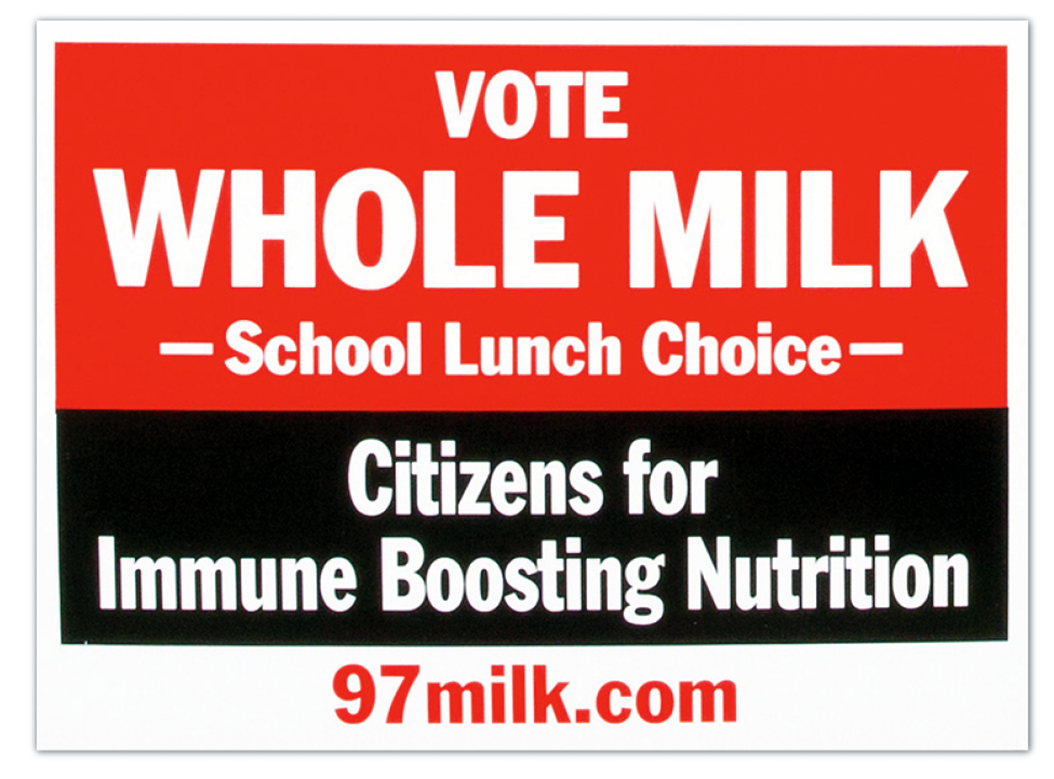

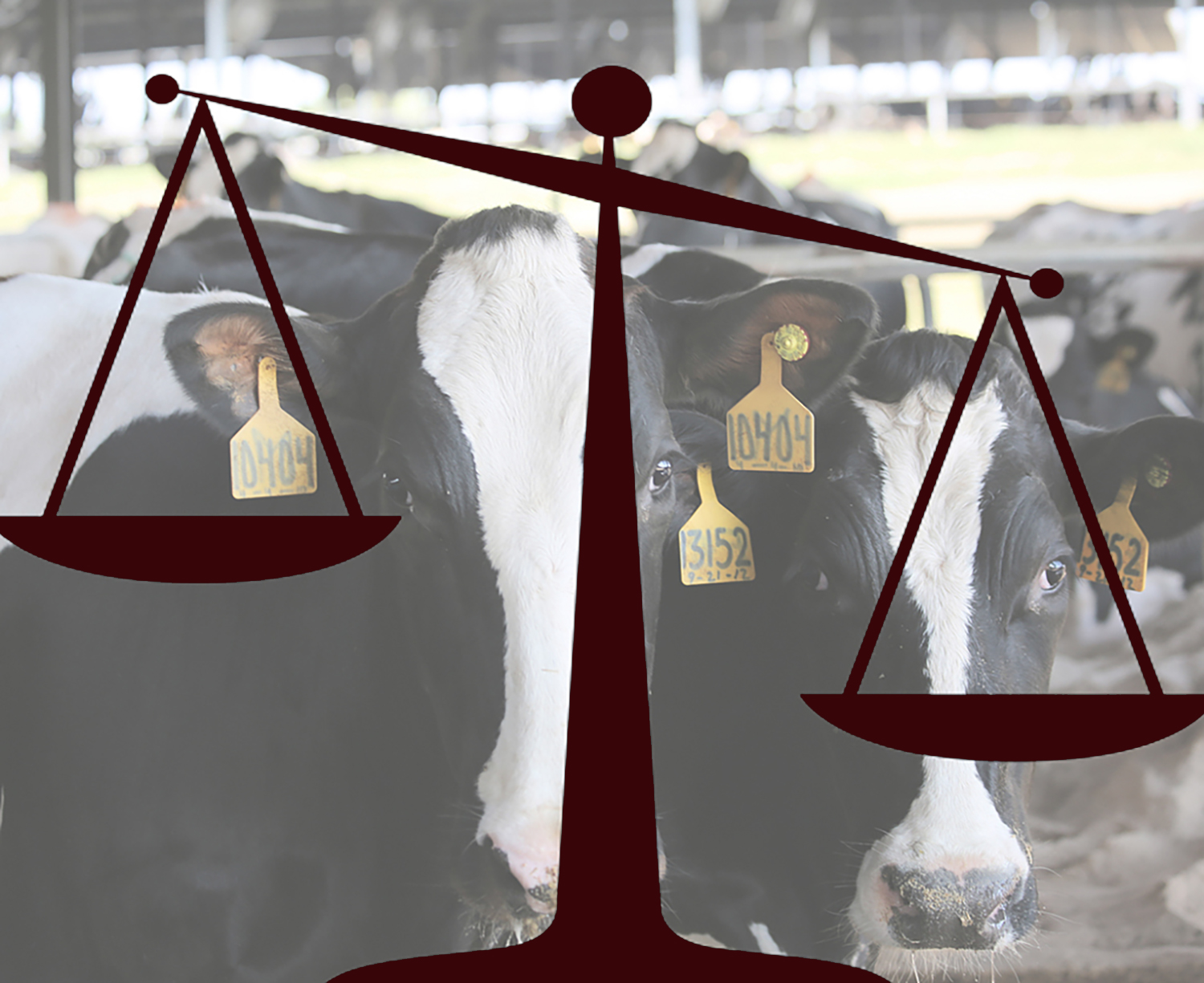

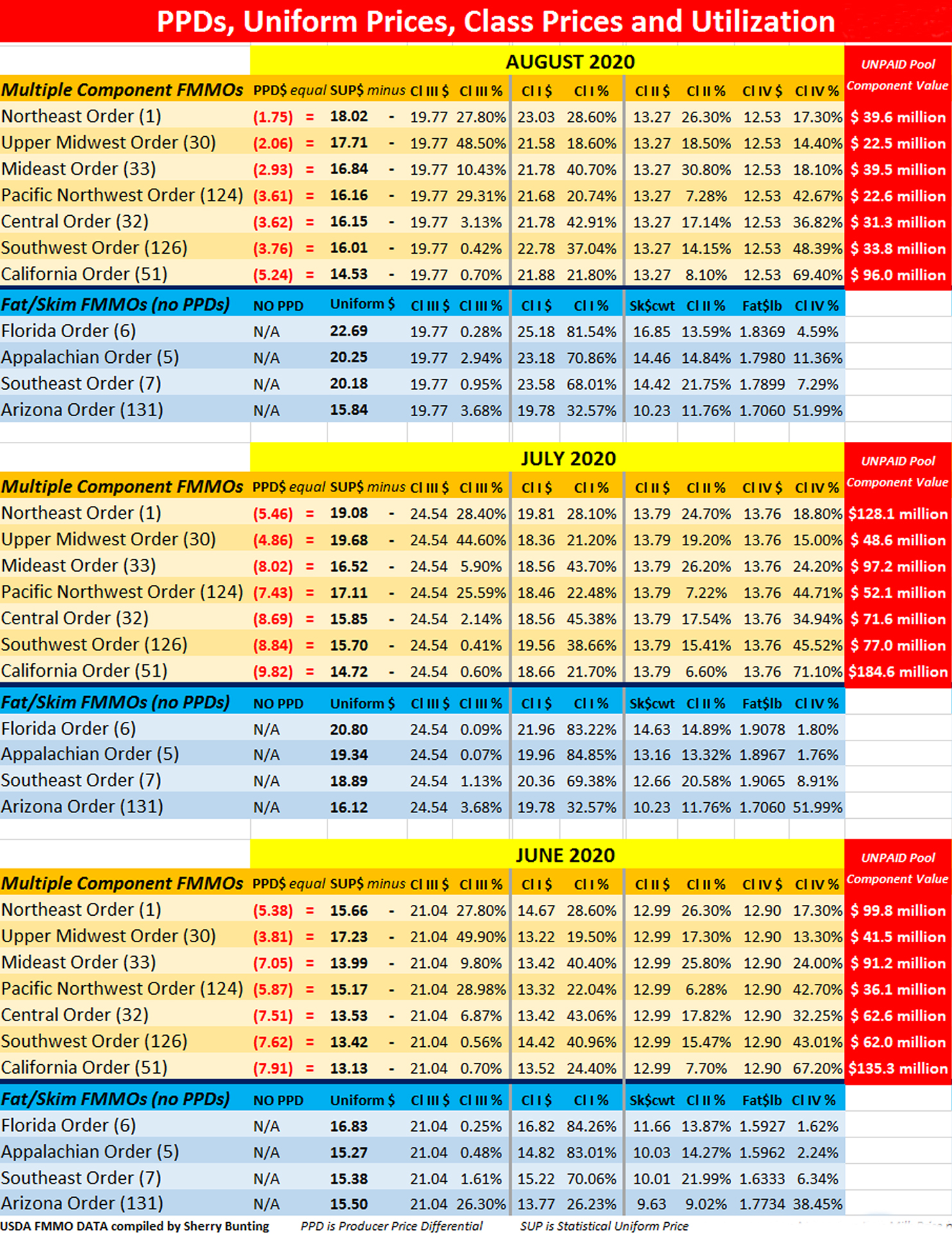
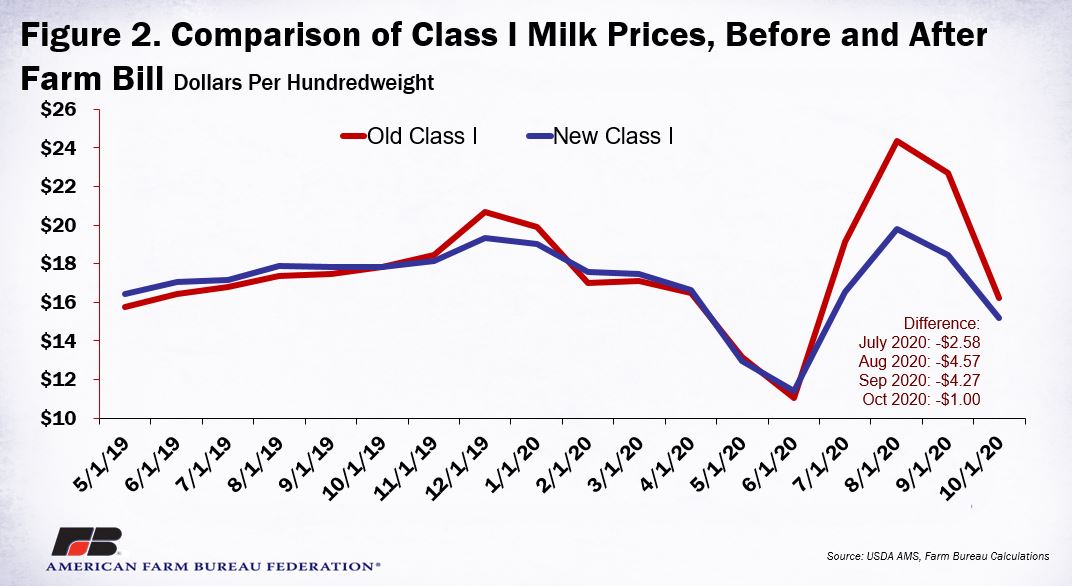
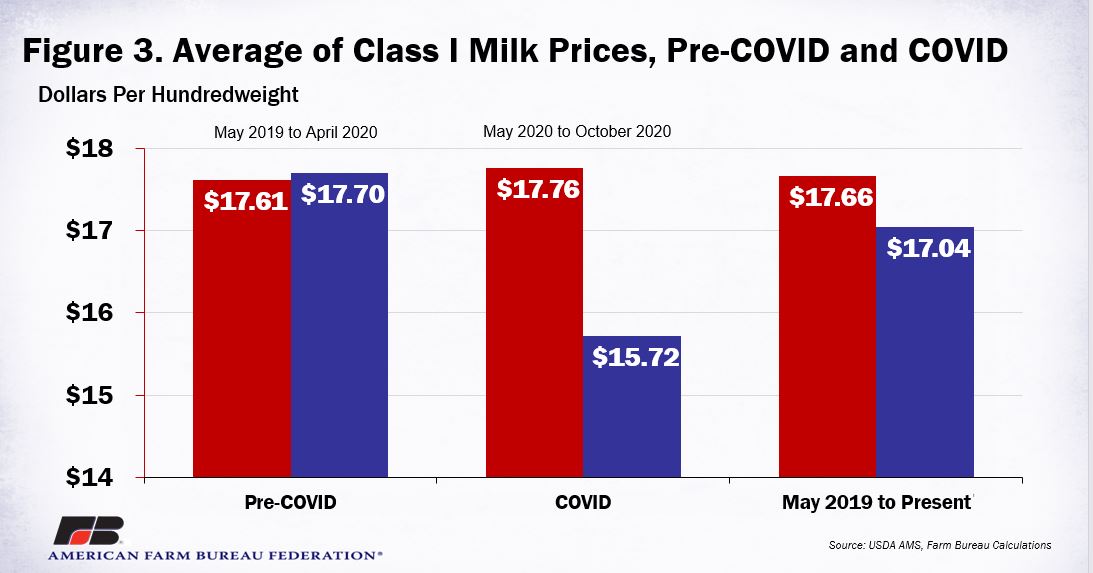
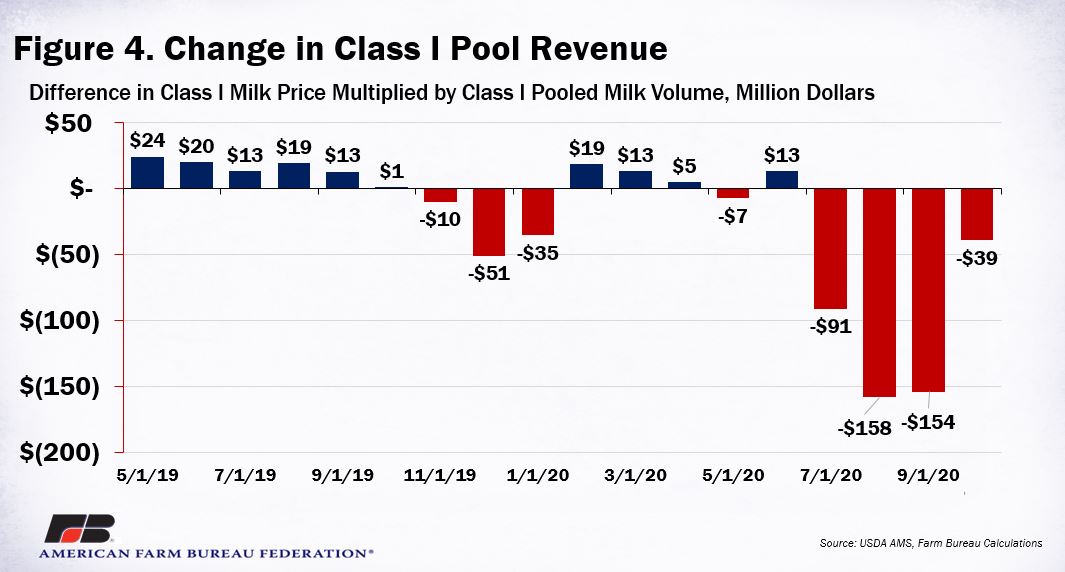
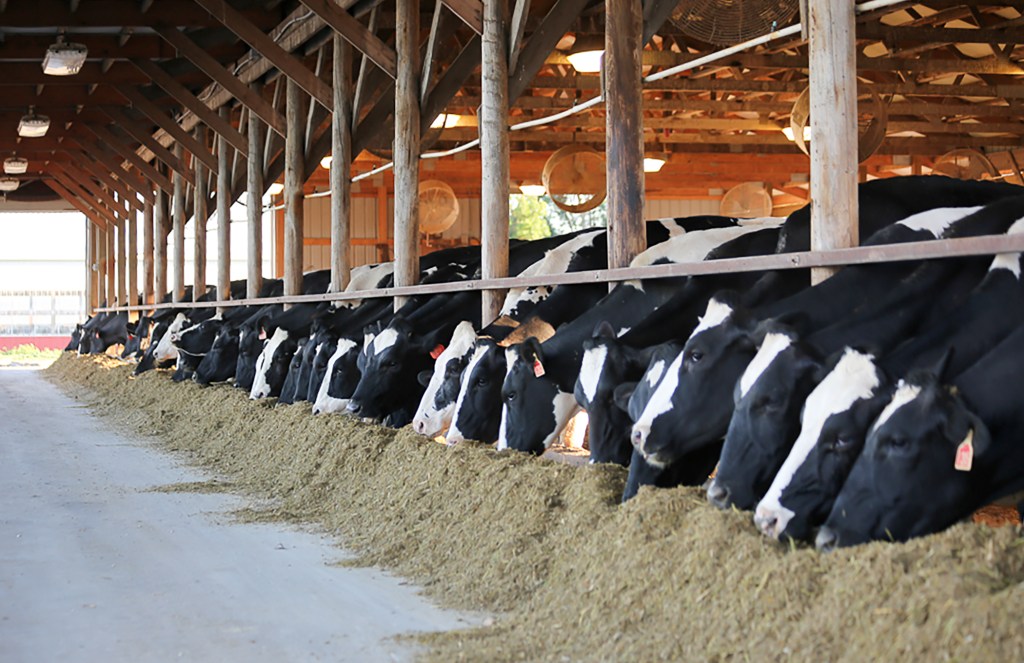
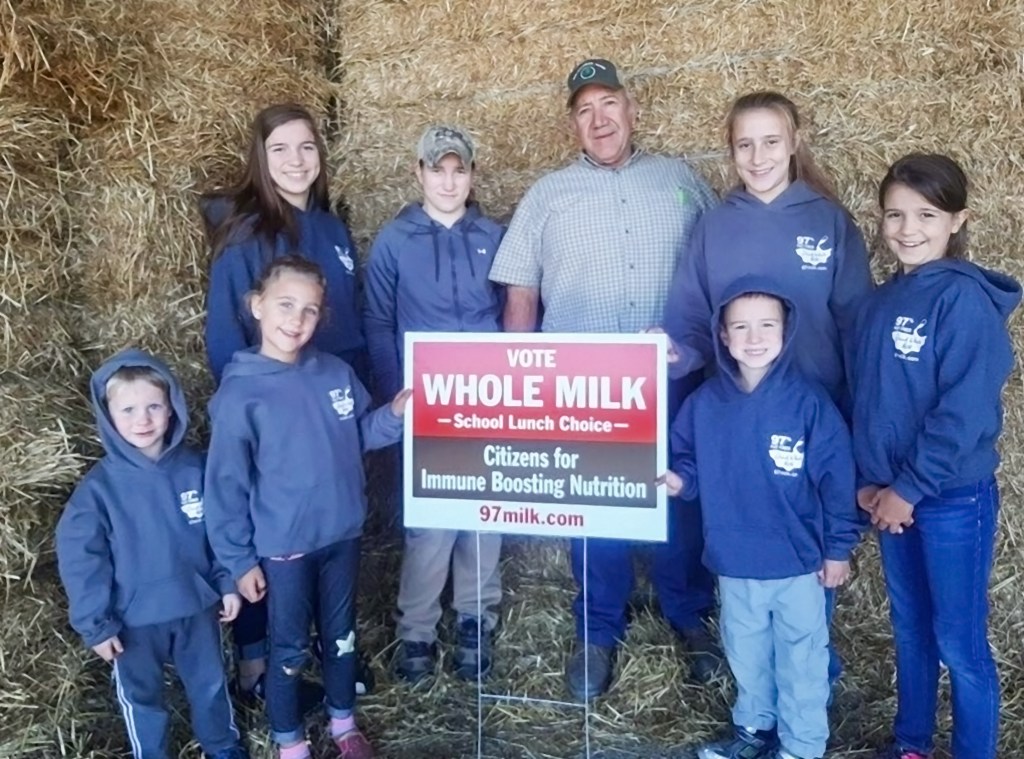
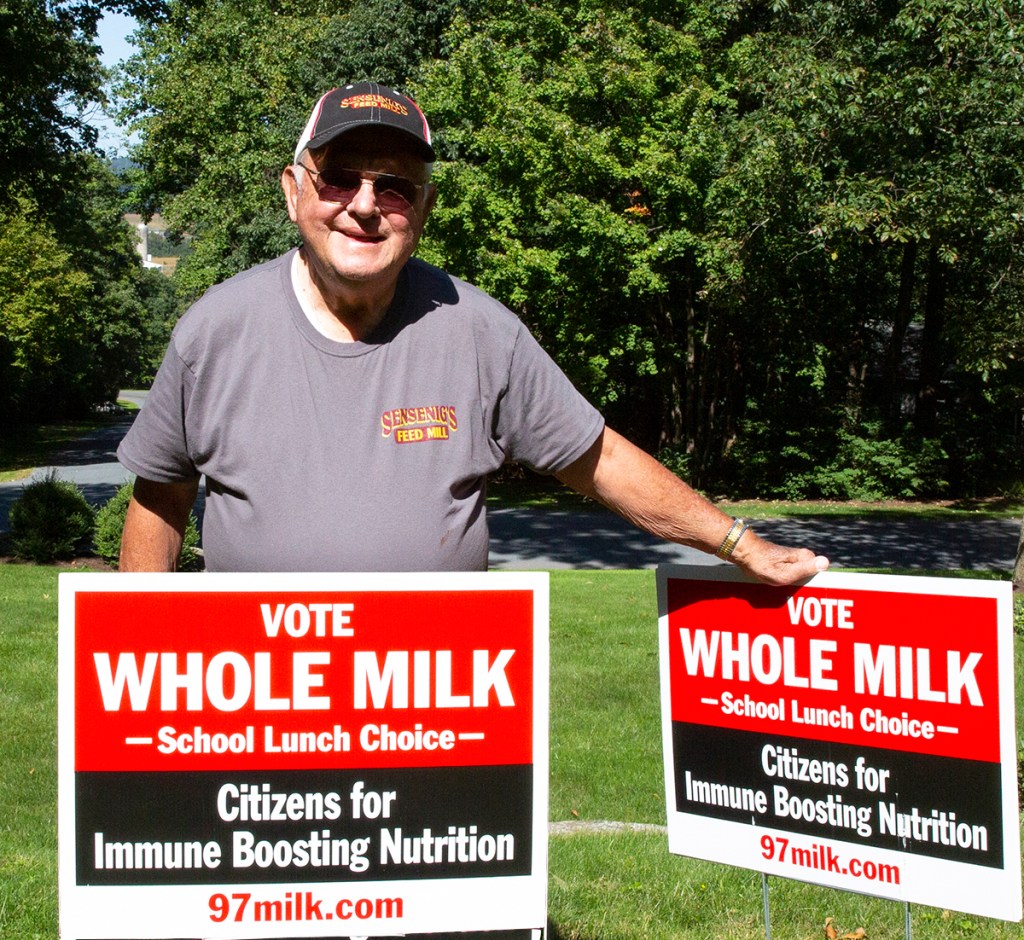
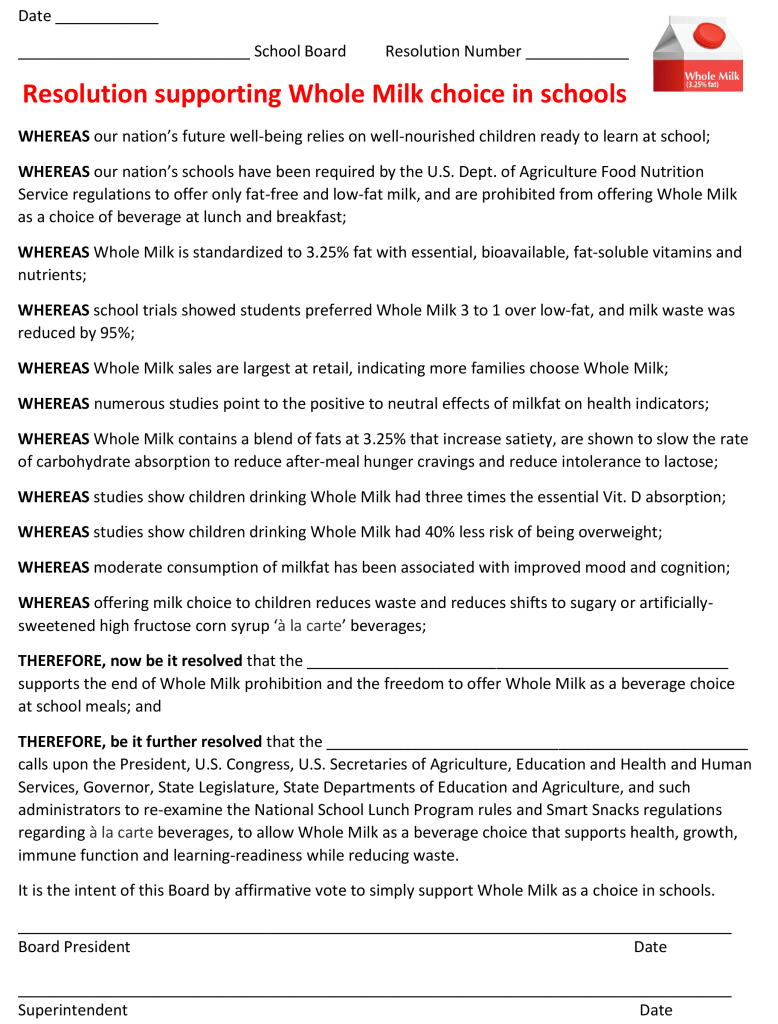
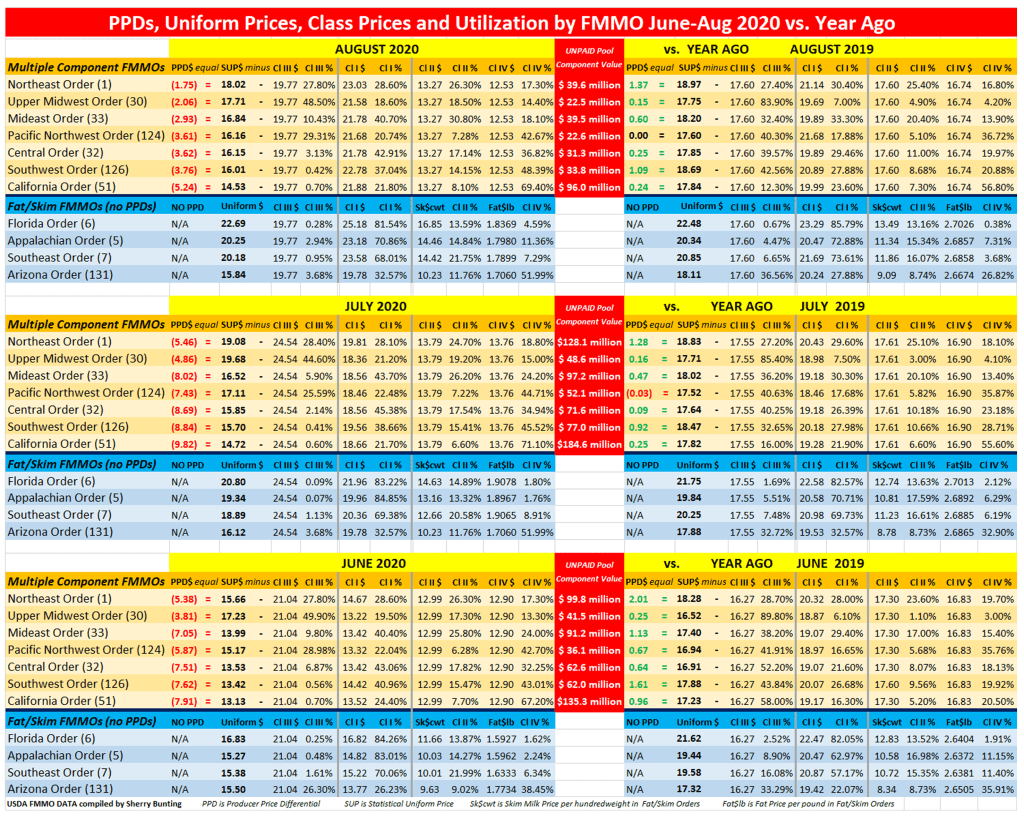
 Ag Moos