Dairy at a crossroads Part 2: Blinders off, seek help to navigate

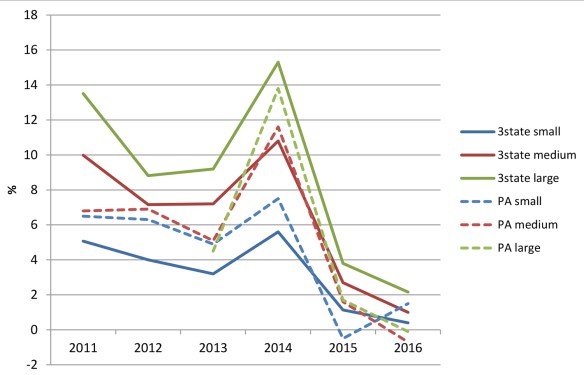
PA-Farm-Financials(CrossroadsPart2)Fig1

Fig. 1 from the farm financials in the Pennsylvania Dairy Study shows average annual rate of return on assets 2011-16 for Pennsylvania small, medium and large (over 500 cows) farms compared with a 3-state average (NY, MI, WI) for small, medium and large farms. The Center for Dairy Excellence confirms that producers of all sizes are calling to have Dairy Decision Consultants come out to help them figure out how to move forward and lower their cost of production or the best scenario for exiting the dairy business. 

By Sherry Bunting, Farmshine, March 2, 2018 

BROWNSTOWN, Pa. — Every avenue of approach to a four-way crossroads comes with a temporary stop or yield and the need to know whether to turn one way or the other, double back, or drive forward. Staying put is only an option for the time it takes to know which way to go.

For dairy producers at this turning point, not one of these options can be exercised without knowing the farm’s cost of production and its equity position to decide upon a direction for what’s ahead.

Difficult discussions are being had around farm kitchen tables across the country. Seek out the help that is available to navigate, say dairy lenders and consultants interviewed recently by Farmshine.

“Don’t internalize too much or to try to do it on your own. Don’t be afraid to reach out for help,” says Dale Hershey of Univest Bank and Trust. “Don’t wait to raise your hand until after it’s too late. There are people out there, good people, who can give advice and ways to do this at little or no cost.”

Competitive cost of production is shaping the future of the dairy industry. While we hear about the multi-owner multi-site dairies with nearly 100,000 cows and a very low cost of production, size does not dictate the ability to compete.

“It is being achieved here. We have 100-cow dairies and 1000-cow dairies with very competitive cost of production,” says Mike Peachey of Acuity Advisors and CPAs.

He explains that the Northeast has historically had a higher cost of production for a variety of reasons.

“We have been saved by having higher premiums for our milk, but as those premiums erode, the competitiveness of our operations is exposed,” says Peachey. “It comes down to how well-managed a dairy operation is — regardless of size — and how competitive we can get in cost of production.”

“We used to have a milk price advantage in Pennsylvania. That is gone,” adds Mike Hosterman AgChoice Farm Credit business consultant. “We are less than 25 to 50 cents difference to New York, when it used to be $1.00.”

They both see a wide range in cost of production among dairy farms that can vary by $2 to $3/cwt.

“There is easily a variance (in profitability) from bottom to top of at least $1000 per cow, so it really is segmented by thirds,” says Peachey. “We have a top third with a very competitive cost of production, a middle third hanging in there and a bottom third making tough decisions that carry a lot of emotion.”

“So much of the difference comes back to debt, especially for younger farmers,” says Hershey. “Dairy is tough to get into, and the biggest thing is how you come in. Those beginning farms won’t survive without capital or backing from family. We will have some startups this year, but fewer than other years.”

In this business of large capital investments, Hosterman observes debt per cow creeping higher.

“If you go back 10 years, debt was just under $3000/cow. As milk prices go through these wild swings, the trendline was still slowly increasing so producers could afford that increase. Now the price is leveling out while debt per cow can be over $5000 or $6000,” he reports.

“As lenders, we’re all stepping up to help these producers, but we may not have the capacity to help them all.” He notes that refinancing options, different debt structures, and FSA loan availability are some options.

While the fundamentals of future dairy demand and proximity to consumers in the eastern U.S. would suggest a key place for small farms here, Hershey is realistic about the hand being dealt.
DPAC(farmbill)9261(ExtraPhoto)“To be in this for the long haul, we have to look ahead and know what we’re dealing with,” he says, wistfully reflecting upon growing when his father made a good living with 40 registered dairy cows.

“That model is pretty tough to cash flow right now. I see a return to where we were 40 years ago, where farms here had different things going on, multiple income streams, seeing more farms diversify to strengthen their positions,” says Hershey. “If producers are solely dependent on their small dairies, it will be very tough unless they have a very low cost of production.”

Key advice? “Bring a team in around you.”

“Dairy producers are managing expenses and monitoring cash flows, budgets and cost of production throughout the year. They are bouncing ideas off their advisors and consultants to be more competitive,” says Mike Firestine of Fulton Bank. He was recently recognized by American Bankers Association with the Bruning Award for dedicated leadership.

Extension educators also report they are receiving very high interest from dairy farmers wanting to do financial analysis because of varying degrees of stress already experienced over the past three years.

As for Acuity, Peachey regularly looks at clients’ positions around four key areas: cost of production, percent equity, profitability and cash flow, providing information and context for discussions about where they stand, what is their competitive position and where they think they are going to be not just now, but a year from now.

Because things change from year to year due to many variables, including weather and markets, Peachey says it’s important to be monitoring all the things that go into that “cost of production stew,” including milk quality, good internal herd growth, good milk components and feed conversion.

Armed with a team approach, and the numbers, they can uncover how well the animal husbandry is being managed, the breeding program, pregnancy rates, heifer replacement programs, milk production, especially components, and milk quality.

“Done well, these things add up,” says Peachey. “Small farms can counteract some of the competitive disadvantages on the cost and income sides, by having their good management in all these areas add up.”

This becomes cumulative math. For each year that one dairy is not as competitive as another on cost of production (COP), the impact compounds.

For example, a $50,000 annual difference between two similarly-sized farms adds up to half a million dollars over a 10-year period that’s either not in a bank or being reinvested in the operation to stay competitive or being used to pay down debt to put the farm in a better financial position to weather these storms – to provide the liquidity and working capital to get through it, according to Peachey.

Continual monitoring of the COP and doing annual year-ahead budgets are key, Peachey points out, because “guarding cash flow is very important right now. Producers are really scrutinizing capital expenditures with an understanding of what is a need and a want. They are focusing on investments and management decisions that reduce cost of production beyond the initial payback.”

He notes that cutting costs is tricky: “If reduced feed costs means reduced milk production, for example, it ends up contributing to a tailspin when a cost-cut reduces top line revenue.”

“Some guys may sell off some assets and use proceeds to reduce debt,” says Hosterman, citing sales of mountain ground, extra timber, and selling heifers. “Heifer numbers have increased so much on dairy farms that selling extra heifers is not a bad option to generate some cash,” he says.
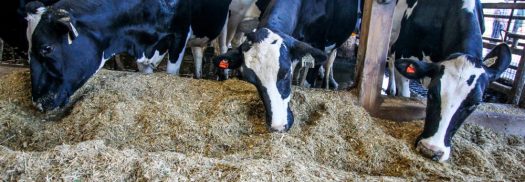
cropped-reprotour-73.jpgIn fact, some farms are opting to sell quite a few heifers. Even though prices are not the best, these sales contribute to cash flow, which is critical. Some farms are breeding to beef breeds and producing a dairy beef cross for the feeder market. Again, not a big price, but the cost of the breeding is less, and the calves generate cash flow as well as cost savings. Such strategies require careful thought so as not to jeopardize the position of the herd for the future.

Knowing the farm’s COP provides the information to make these types of decisions.

If the farm’s COP is not competitive, the question is, can it become competitive? Is the farm within striking distance of getting to a competitive COP? If the answer is ‘no’, there may be tough business and family decisions to make, according to Peachey.

He says it is also very important to evaluate the farm’s equity position, to sit down with the lender and look at the way the farm’s debt is structured.

“If the farm still has a strong equity base to restructure things to provide cash flow relief, it should be paired with an assessment of the farm’s COP and what can be done to improve it,” says Peachey. “How much runway do you have to work with? Knowing this is helpful for a restructure, but the airplane still has to get off the ground.”

In other words, equity for restructure provides the runway and working toward a competitive COP elevates the plane before it reaches the end of that runway.

It’s critical to go through the budgeting process, says Peachey, “to understand your cash burn rate for the coming year, to know if you have the working capital and liquidity to absorb this and if you have the broader equity base to recapitalize those losses. If I lose x-amount, can I put that on a 3-year note and pay it off and still be okay?”

Peachey equates the breakeven to a Class III price and looks at it from both the intermediate and long-term perspectives. For the short term, he sees the goal being a Class III breakeven of $15 to $15.50, so if the farm’s basis is $2 over Class III, that equates to a breakeven of $17 to $17.50 in other discussions or venues.

He cautions that, long term, the marketplace is going to demand a lower COP with Class III breakevens down to $13 and $14.

Hosterman concurs: “Some of our best farms are achieving a COP under $16.50 right now, so they can get by at a $14 Class III price, but the bottom third still needs a Class III price of $17, and the average producer needs a $15 or better Class III price to break even.”

“It is being achieved here,” says Peachey. “We can do it, but it gets back to all of the other little things that add up to how well the operation can be managed. When we know our COP, we know the weak spot in our model and can figure out how to compensate for that and find where the opportunities are.”

Hershey has received numerous calls from producers wanting to do these projections and breakevens to navigate the road ahead, and he cites Dr. Kohl’s four cornerstones of success — plan, strategize, implement and monitor. “We are pushing that, more than anything, that farmers who are struggling can ask for help.”

There is high praise for what the Center for Dairy Excellence and Penn State Extension offer to improve producer competitiveness to also improve the state’s competitiveness in dairy.

“The resources, educational opportunities and ways to connect folks are greater than ever,” says Peachey. “We have a strong infrastructure and a lot of good things in place.”

Other states have similar extension and organizational services. Seek them out.

Look for more in future editions of Farmshine as we continue this dairy crossroads conversation with producers, industry participants and leaders in the East… and beyond. The next installment will move into the policy realm with a look at the critically acclaimed film “Forgotten Farms,” produced in New England, and a panel discussion about our nation’s food policy centering on the burning question: why has dairy largely been left out of the local food movement? And what is being done about it.


-30-
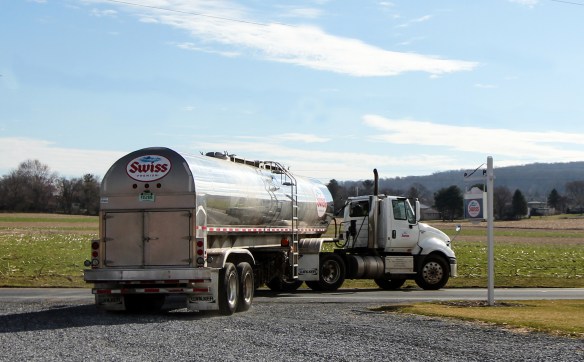


Seismic shifts in milk supply chain ahead: New Walmart plant triggers Dean’s cut of over 100 dairy farms in 8 states

SwissDeanStory9468

By Sherry Bunting, from Farmshine, March 9, 2018

LEBANON, Pa. — He saw the mailman drive up and linger in the driveway, wondering if they were expecting a package. Moments later, his wife was standing there, holding a letter she had signed for.

The certified letter informed this Lancaster County dairy farm family that after 13 years of sending their milk to the Swiss Premium plant in Lebanon – along with decades of the farm’s milk in generations before them — the agreement with Dean Dairy Direct would end May 31, 2018.

The same story played out Friday among neighboring farms on the same hauling route to the same plant. And it was the same scene in driveways for approximately 120 dairy farms in eight states, including 42 in eastern and western Pennsylvania — around half of the Dean Dairy Direct shippers to three plants in the state.

Reace Smith, director of corporate communications for the Dallas, Texas-based Dean Foods, confirmed in a phone call Monday that against the backdrop of expanding raw milk production, and companies “asserting and expanding their presence in a market where consumers are drinking less milk (namely the Fort Wayne, Indiana Walmart plant where bottling begins this month) over 100 dairy farms in eight states received 90-day termination notices” from Dean Dairy Direct on Friday and Saturday, March 2 and 3 stating that their agreements will end May 31, 2018.

Smith confirmed that the over 100 affected dairy farms are in the states of Indiana, Ohio, Pennsylvania, New York, Kentucky, Tennessee, North Carolina and South Carolina.

“This affects all size herds and is not a large or small farm thing,” said Smith. While she was unable to supply specific information about the farms that were terminated, she said the widespread volume adjustments at multiple plants across four Federal Orders was necessary due to the new Class I plant (Walmart) coming online this month and the loss of a contract through a competitive bidding process (Food Lion).

Both market losses for Dean indicating structural change to the dairy industry as more retailers move into milk bottling in more centralized distribution models.

Sources in the various states confirm the affected farms range in size from less than 100 cows to over 1000 cows.

“This was an incredibly difficult decision. We tried very hard to avoid it and regret this decision had to be made,” said Smith. She indicated that Dean Dairy Direct field representatives are serving as resources to these producers and can provide a list of contacts for potential milk buyers. They are also offering counseling.

DeanFoodsMap.jpgWhile the company will not provide a list of affected plants or a state by state break down in the number of farms or volume of milk affected, they have indicated that the state that may be hardest hit on a volume basis is Indiana.
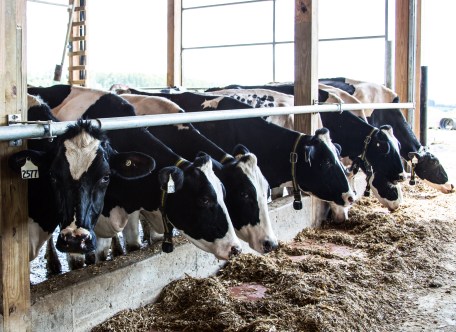
In fact, the volume of displaced milk in Indiana, alone, has been estimated at over 20 million pounds per month, representing the under 100 to over 1000 cow size range but most of them milking 300 to 1000.

The affected Indiana farms shipped milk to the Dean plant in Louisville, Kentucky, which also terminated 22 Kentucky dairy producers, ranging from 50 cows to 250, according to Maury Cox, executive director of the Kentucky Dairy Development Council.

In Tennessee, Julie Walker of Agri-Voice near Knoxville has confirmed nine (now 10 confirmed) affected producers ranging 60 cows to 300, and numbers in the Carolinas are unknown at this time.

From the standpoint of the farms affected, Pennsylvania is hardest hit, and while the number of New York farms is unknown at this time, some may have shipped to Dean plants in Pennsylvania.

According to Jayne Sebright, executive director of the Center for Dairy Excellence, 42 Pennsylvania dairy farms shipping to three Dean plants in eastern and western Pennsylvania received notices Friday – representing half of the Dean Dairy Direct shippers in the state. This includes 26 producers in eastern Pennsylvania, including Lebanon and Lancaster Counties, as well as 16 in western Pennsylvania, where the Dean plants in Sharpsville and Erie also ended agreements with Ohio farms. The number of Ohio farms affected is unknown at this time.

“The (Agriculture) Department and the Center have been reaching out to other markets to see what capacity is available, but at this point we do not know of any with available capacity,” said Sebright. “We are working to support the affected farms as best we can. We are very concerned both about the future of the farms and the well-being of the farm families.”

Sebright noted that the Center is making additional resources available and recommending use of their Dairy Decision Consultants Program to evaluate options — both within and outside of the dairy industry. “This is a difficult situation to be in and we are concerned.”

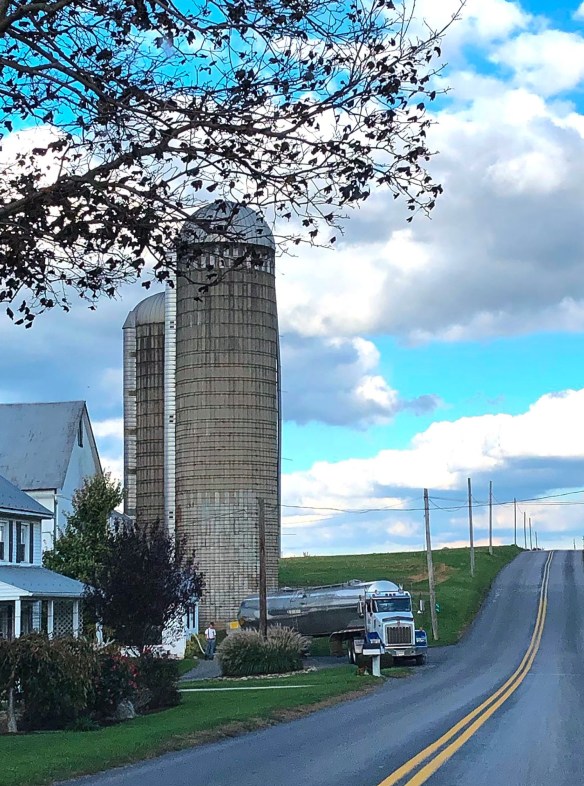
Dean-Cows.jpgIn fact, the farm this reporter visited in Lancaster County Tuesday was already working to call every available market and neighbors who also lost their contracts were looking at everything they could think of. Four or five trucks go through the county picking up milk every day so they wonder if each one can find a market or if they are better off pulling their milk together to find a single-haul market.
The producer was thankful, at least, for being part of a dairy producer discussion group and thankful for folks like Dr. Charlie Gardner with the Center who leads the group.

Not only were the Pennsylvania dairy farms shocked to receive the letters, veterinarians, nutritionists, feed company and equipment maintenance folks are facing this loss with their farm customers as the news spread this week throughout farm communities and the greater dairy community.

In Indiana, where estimates are that over 20 million pounds of milk per month has been displaced, producers had already been on edge as the Walmart plant took shape in their state and they contemplated its milk sourcing.

“We are working with producers and contacting cooperatives and potential markets to try to work together to get through this thing,” said Doug Leman, executive director of the Indiana Dairy Producers. He has been in contact with affected producers, the Indiana Department of Agriculture, and the plants and cooperatives that provide markets for milk in the region.

“I’ve had calls not just from the affected producers, but from many other Indiana dairy producers sharing their concern and asking if there is anything they can do,” said Leman. “I’m encouraged by that, and I am encouraging our producers to keep their chins up through this difficult time in their lives, families and businesses in the hopes that we can work through this together.”

Leman said he does not want to blame Walmart because, wherever the first Walmart plant would have been located, this was coming. Indeed, Walmart has entered a trend among retailers to move toward bottling their own private label store brands (Great Value and Sam’s Club Member’s Mark) rather than contracting with Dean Foods.

“Walmart was coming to Ohio, Michigan or Indiana, and I still believe it is better to have the plant in Indiana because it offers opportunities,” said Leman.

While fluid milk consumption is on the decline for 15 years — although stabilizing with more consumption of whole milk last year — retailers notice that nearly every shopping basket going through their stores includes milk. They seek their own store brand loyalty as loyalty to their store and some of the retail price wars happening in states without loss-leader protection are evidence of this. As is the ability to pull premiums away from states that have loss-leader protection or a minimum retail price as in Pennsylvania, to “fund” price wars in other surrounding states without any loss-leader protection.

The dichotomy points to a need, perhaps, for a federal loss-leader threshold versus random state programs that can fuel the picking of winners and losers in today’s times of seismic structural change to the dairy industry from retail all the way through the supply-chain.

In short, the region would likely have been affected by Walmart’s decision to vertically integrate its Great Value and Member’s Mark milk brand for its stores in the region — no matter which state the plant had been located.

In fact, sources indicate potential sites to the south are being eyed for a second Walmart plant in the future, revealing a corridor strategy to this vertical integration of single-source, full-traceability, each-truck-one-farm model.

The Dean Dairy Direct letters of termination to dairy producers in the region were dated February 26, 2018, which was the same day as Dean’s 2017 earnings call where the company projected its strategy in brand and private label supply and to “right size” its milk volume and consolidate its supply chain to achieve a “flatter, leaner and more agile” company into 2019.

According to Smith, there are no official announcements of any plant closures at this time and none of the plants involved have released all of their shippers. Still, there remains concern that some of the plants that have released a larger portion of their farms are vulnerable.

“We still have a commitment to local milk,” said Smith about the volume adjustments. “There are many factors that impacted this decision. We are seeing surplus raw milk when the public is consuming less fluid milk, and we see companies asserting and expanding their presence in a market where consumers are drinking three gallons less annually, per capita, since 2010 while the U.S. dairy industry is producing 350 million gallons more milk annually than the year before.”

In addition to the overall imbalance Smith said that, “The introduction of new plants when there is an industrywide surplus forced us into the position of further adjusting our milk supply according to demand.”

As vertical integration of milk at the retail level leads to consolidation by the nation’s largest milk bottler – Dean Foods – the company has diversified into soft dairy product brands that are just starting out of the gate and were discussed in the Dean earnings call as well.

Specifically, the letter received by Indiana and Kentucky dairy producers shipping to the Louisville plant stated “two indisputable dynamics led to this difficult decision. First and foremost, a retailer’s new Class I fluid processing plant is coming online in the region, significantly decreasing our production as milk volume is moved away from our facility to this new plant.

“The second reason is bigger than all of us. The steady increase of raw milk production combined with the decrease of Class I fluid dairy consumption…” the letter stated.

Letters received by producers in the southern market as well as eastern Pennsylvania did not specifically reference the new Class I fluid processing plant built by a retailer (Walmart) as had the letter to Kentucky and Indiana producers serving the Louisville plant and western Pennsylvania and Ohio producers serving the Sharpsville plant.

Those letters received by farms further to the east and the south indicated the plants had “lost a portion of customer fluid milk volume to a competitor through a customer-bid process.” Sources indicate this may include both the Food Lion private label store brand and the Walmart Great Value private label in these areas as well.

The letters received by producers said further that Dean was “unable to lock-in enough new customer volume to offset this loss.” This is a function of the overall decline in fluid milk consumption and the new milk via large multi-owner, multi-site farms in surplus regions of the Mideast and Midwest.

One thing is also clear in speaking with producers, veterinarians, organizations and others in the industry, the farms that are facing this difficulty are largely well-managed and producing high quality milk. Many of them are young families representing the next generation. Many are progressive, with updated facilities and technologies as well as utilizing the resources available to them for continued improvement in all that they do to supply their communities with milk.

In these states affected, whole transportation routes were terminated, presenting both challenges and opportunities for a collective effort in dealing with these market losses.

Walmart will not reveal the farms they have secured to supply the plant, but it is widely known that some of the milk will come from the north, some from within Indiana, and that a processor in Wisconsin is handling contracts and in a position to balance the Walmart plant’s fluid needs that may or may not have involvement by cooperatives.

As in Indiana and other states, Cox said of Kentucky: “We, are contacting other potential markets for our producers and would like to meet with Dean Foods to see what more we can do for these producers and to have a better understanding about the future of the Louisville plant” (where both the affected Kentucky and Indiana producers shipped their milk.)

Some state dairy organizations, state departments of agriculture and other industry leaders indicate they want to let the dust settle and allow options to emerge as they adopt a patient mindset to look at potential options for their respective state’s producers.

In the meantime, all are reaching out to producers and urging producers to reach out to them, and to each other. In fact, right now, more than ever, the dairy community needs to be reaching out and talking about its future to higher levels of relationships beyond what has occurred in the past.

“We want to survive,” said the dairyman this reporter visited 15 minutes from my home in Lancaster County, Pennsylvania, just four days after receiving the letter.

Like others this reporter has spoken to, they have done everything the industry suggests to make their farm competitive. While a small farm whose milk shipped for generations to the Lebanon Swiss plant serving local stores and consumers, this young farm family had invested in the latest technology, produces milk with very high components and very low somatic cell counts.

But here they are, facing what 120 of all sizes face throughout eight states as vertical integration from Walmart and other retailers sends a ripple effect and seismic shifts throughout the supply chain.

-30-


‘Faith and dairy passion’ fuel her humble work from Pennsylvania to Bolivia

Hawbaker(DistDairywoman).jpg

Secretary of Agriculture Russell Redding congratulates Karen Hawbaker, 2018 Distinguished Dairywoman. 

Karen’s humble courage and work at her own Warm Springs Dairy as well as the dairy at Andrea’s Homes of Hope and Joy in Bolivia through of Love In Action Ministries is an inspiration.

This is a small world. I met Karen six months after meeting my daughter-in-law Vanessa’s father who put me in touch with his brother David Rice in Nebraska for a stop to visit Prairieland Dairy on my working travels west. David told me about having volunteered in the project to build a dairy at the orphanage in Bolivia. He put me in touch with LIAM, and six months later, back in Pennsylvania where it all started, I met Karen and other project members to do this Nov. 27, 2015 Cover story in Farmshine, which was later reprinted in additional publications.

By Sherry Bunting for Farmshine

STATE COLLEGE, Pa. — A humble and honored Karen Hawbaker showed her faith and gratefulness as she was presented the 2018 Pennsylvania Distinguished Dairy Woman Award by the Pa. Dairymen’s Association, Center for Dairy Excellence and Professional Dairy Managers of Pennsylvania during the Pennsylvania Dairy Summit here at the Penn Stater Conference Center Feb. 21.

“Without God’s strength, provision and blessing, I wouldn’t be who I am or where I am today,” said Hawbaker, thanking also her crew at Warm Springs Dairy, where she owns and operates the 180 cow dairy she and her late husband Rodney started in 1988 in Franklin County.

The award recognizes a dairy woman who has distinguished herself in her leadership and service to the dairy industry, both on the farm or to the broader industry and community.

Warm Springs Dairy has been recognized for numerous production awards, consistently being in the top DHIA herds for production and milk quality.

Since Rodney’s passing in 2011 from a farming accident, Karen has continued to operate the business with her dedicated employees and a focus on the cows, with custom operators doing most of the field work.

Through Love in Action Ministries (LIAM), Karen has been able to share her dairy passion and her faith and has been instrumental in carrying on her husband’s legacy in helping LIAM establish a dairy farm at Andrea’s Home of Hope and Joy, an orphanage in Bolivia. 

“God instilled in me a passion and love for the work in this dairy industry both here and in Bolivia and wherever He may lead me,” said Karen when asked why she chooses this 3 a.m. work schedule with cows and all that goes with it. “God has been good, and He has brought good people into my life at the farm.”

The LIAM dairy project was started by Rodney as a plan to build a dairy in support of the orphanage. After planning the farm, Rod and Karen led fundraisers to build the dairy and then traveled to Bolivia in 2009 for the start of the barn, traveling there three other times before Rod passed away in 2011.

The project was delayed at that point, but cows arrived in the fall of 2014 and are doing well, with the farm providing milk and vocation for the children who live there.

Karen has served on the LIAM board and its dairy committee and loves the opportunities to volunteer her time to work with the farm in Bolivia. In addition to her involvement with LIAM, Karen is a member of Antrim Brethren in Christ Church where she teaches fourth grade Sunday school, leads a grief support group and helps with audio visual ministry every other month.

 -30-

Dairy at a Crossroads Part I: 2018 Turning point?

dairycrossroadssherry4-e1519953486606.jpg

Number of farms, robust infrastructure are interdependent. The ripple spreads wide and the pain in rural communities, deep.

 By Sherry Bunting, reprinted from Farmshine, February 23, 2018

BROWNSTOWN, Pa. — Dr. David Kohl recently said he is still bullish on the small farms that populate the eastern dairy industry, that there will always be a place for them, but they will change their focus.

Still, lenders and industry participants confide they are concerned about a large number of dairy exits in 2018. They are encouraging producers to work with advisors, and urging the industry to work together in the embattled eastern U.S., because the whole infrastructure depends on the number of farms as much as — if not more than — the number of cows and amount of milk produced.

While lenders like Dale Hershey, director of ag lending for Univest Bank and Trust, say they have already seen many diversify and change how they operate, others are in the process of re-thinking their futures.

The biggest concern for Hershey is when farms decide to sell the cows, seldom do the cows come back to the farm.

“Some of those farms will stay empty. That, I do see,” he asserts. “Occasionally they’ll come back in and milk, but mostly they will go into something else, or if the farm is sold, we’ll see most of them stay dark in terms of dairy production.

“I think we’ll look back 10 years from now and see 2018 as a turning point.”

Mike Peachey of Acuity Advisors and CPAs agrees. He sees dairy at a crossroads similar to the hog industry in the 1990s: “My concern is that we will see a dairy industry 10 years from now that looks very different from how it looks today, and we are helping our dairy customers take stock of that.”

Peachey observes that as the number of farms decreases, “This puts a lot of pressure on the dairy infrastructure and the ag businesses that support the dairy farms. One of Pennsylvania’s competitive advantages is that there is a lot of infrastructure and support in the whole supply chain that is very beneficial for competitive pricing for our dairy farmers.”

He cites the region’s multiple feed companies, multiple points of expertise, nutritional perspectives and a bidding process, multiple veterinarians, the strong ag lending infrastructure, equipment dealers, and expertise in different specialties.

“My concern is that if the number of dairy farms decreases, and if the infrastructure goes away, then it changes that competitive advantage,” he says, observing that the number of cows or the amount of milk produced does not necessarily make up for what is lost when the quantity of individual farms is reduced by consolidation.

Yes, the dairy industry is at a crossroads, and no where is this perhaps more evident than in eastern states, like Pennsylvania.

The Northeast was a fluid milk market in the past, close to 50% of utilization. Today it is less than 30%. As more milk is produced — even if per capita fluid milk consumption stayed the same — not enough other products are made here, so mailbox prices are falling under the coinciding weight of increased hauling costs and losses in competitive and quality premiums.

Meanwhile, the Class IV utilization has increased as a percentage in the blend price, leading many to believe the Northeast model of dairy pricing may be broken.

In fact, so concerned are states and dairy organizations that state-wide analyses are being conducted in top tier “notably fluid” states like Pennsylvania and New York in the Northeast as well as in Georgia, in the Southeast. The states of Michigan and Wisconsin are also looking at their state’s production, processing and infrastructure to improve their future competitiveness.

In Wisconsin, milk prices are driven off the cheese market — a growing market that has been cultivated to generate variety, demand and competitive premiums — whereas the Northeast model is built off Class I, which is not competitive, nor is it growing. And, unlike cheese with its diverse growth in specialties and brands, the Class I milk at the store is treated like a base commodity against which all newcomers and imitations are compared and premium-priced.

Dairy producers and industry participants also say they are concerned about the Pennsylvania Milk Marketing Board’s role in terms of the costs associated with milk assembly vs. where the state premiums are going.

Meanwhile, store inventories are kept close to the bone. If they throw a gallon of milk away, the margin on every other gallon is affected, and so stocking depth is being reduced.

These are the kinds of issues that states like Pennsylvania, Georgia, New York and Michigan, among others, are actively looking at as they study capacity and market needs and trends.

Producers don’t control these decisions, but their input is vital.

From farm to table, technology and workforce are two other big pieces with immigration reform being a double-edged sword.

If the Congress and the Trump administration are able to legalize immigrant worker status, what will that really do for the dairy workforce? A National Milk Producers Federation study with Texas A&M reveals that 80% of the nation’s milk was harvested by immigrant workers — up from 60% in 2009.

With general unemployment now falling below 5%, which many economists consider to be full employment, a legalized immigrant workforce may be lost to jobs in industries with better margins.

Workforce issues are also affecting trucking and other infrastructure employment.

Labor is fast replacing environmental as the number one issue facing the dairy industry, and against that background, farms will do things differently over the next 10 years to systemize their production, say various experts.

Builders, lenders and others are seeing the emphasis for this in three areas: wet calves, dry cows and post fresh, as well as through investments in technologies that improve management, specifically by their impacts on cost of production because this is the criteria that will drive farm-level investments into the future.

Technologies may help solve it, but this requires investment. The right answer, policy-wise, is elusive, but for individual farms, the right answer comes, again, from knowing cost of production from which to weigh out the options and run projections and scenarios based on where the farm is now and where it wants to be in the future.

While some see opportunities to drive milk output per cow higher with more cow comfort and better heifer programs, pointing out that Pennsylvania lags behind other states in its milk output per cow, others in the industry point to imposed restraints pushing the focus toward managing risk.

Complicating the marginal milk model for improvement in Pennsylvania is the Land O’Lakes base program. When producers are over base — because they’ve improved their management — they take a penalty when the base is enforced, depending on the eastern region’s total production.

Learning to manage through this intermittent penalty seems to be affecting mainly the producers in the East, despite more substantial growth in the West. In addition, DFA has started a base program for portions of its membership in parts of the Southeast U.S., where milk is already regionally deficit.

How will this push-pull play out at the farm level?

Some producers will carry a lunch. Hershey is seeing a trend toward small farm operators finding seasonal off-farm employment to keep their dairy farms running.

Others have and will become diversified, which can reveal two pathways: Getting successful in another area and exiting the dairy, or seeing the dairy as a lifestyle to keep, and using other income streams to weather the storm.

In addition to diversifying, lenders note niche processing will be a path for some. There are a number of niche producers in this part of the country. Some have been doing this a long time, others are just getting in.

“The good economy has really helped those operations. Tourists are traveling, coming to our county, dining out, and packing the places we deal with,” Hershey observes about Lancaster County, Pennsylvania. Some of our cheesemaking stores are flourishing right now, but that business is not for the faint of heart. It requires deep pockets to get into.”

Connecting dots for consumers is essential for eastern states, like Pennsylvania. For example, in Lancaster County, Pennsylvania, there is this dichotomy. The county — like other parts of the eastern U.S. — has grown in produce and other specialty crops to become a great hub of food. To some degree this includes dairy, but more stimulation is needed.

As will be further discussed in part two of this dairy-at-a-crossroads series, knowing the cost of production for the farm business and knowing where lie the passions, strengths and weaknesses of the farm family are keys to finding each farm’s own path — whether that means keeping the cows and diversifying, investing in niche marketing, getting more competitive on cost of production or giving the cows up and channeling that valuable positive experience and energy to new pursuits.

This industry is about the milk and the cows, but even moreso, it is about the people.

“We can do it here,” says Peachey. “When we know our farm’s cost of production, we know the weak spot in our model and can figure out how to compensate for that and find where our opportunities are.”

As these changing tides and issues sort themselves out, Peachey observes how dairymen are making these “tremendous strides to improve their operations,” and he believes the next wave of improvement is figuring out how to do risk management well, how to capture margins when they are available, and how to protect operations from downside risk.

“We can take an operation so far and continue to improve, but the next wave of significant profitability and improvement is in managing the top line price and the input costs and locking in those good margins when they are there,” says Peachey.

“A generation ago, with price supports, dairy farmers could work hard and do okay or very well. Now it is a business requiring an approach to management for the long run,” he adds.

In part two of this series, we’ll examine the map for navigating the dairy crossroads.


-30-

Ag economy runs counter to urban economy

Dr. Kohl connects dots, prepares farmers for economic reset

UnivestMeeting(DavidKohl)1.jpg

By Sherry Bunting, reprinted from Farmshine, February 2, 2018

EAST EARL, Pa. – “The growth of the economy is hotter than a pepper sprout, but for how much longer?” observed Dr. David Kohl, Virginia Tech professor emeritus. He then opened eyes, and ears, saying that, “When the urban and suburban economies are going gangbusters, the ag and rural economies tend to struggle. That is very typical. The ag economy tends to run counter to the general economy.”

And with that, we were off to the races with Dr. Kohl, who spoke about positioning for success in the economic reset as the keynoter for the annual Univest Ag Summit that drew over 350 people — mainly farm families and many of them dairy producers — to Shady Maple Smorgasbord here last Friday, Jan. 26.

When Kohl is on the agenda for a meeting, you know you are in for an invigorating look at socio-economic trends, and a whole lot more. His high energy presentations deliver tidbits of insight that help make sense of market patterns that are so difficult to understand. The fact that he is a partner in a creamery is just ice cream on top of the cake.

Part of the reason for these opposite fortunes for urban vs. rural economies is the strength of the dollar and the price of oil that coincide.

Kohl is watching what happens with the U.S. dollar because this will influence inflation and interest rates in the general economy as well as exports in the ag economy.

“When the dollar is stronger, we are in a weaker position to trade commodities,” said Kohl. “When the dollar is weaker, it picks up inflation, so we have to watch out for higher interest rates. We are well into this period of low flat interest rates, but that is about to change.”

Kohl sees the Fed raising the prime rate possibly four times in the coming year, but that will depend on the rate of inflation. If it stays below 3%, there will be less incentive to raise interest rates. In fact, the report released that day pegged it at 2.6%. We shall see.

As he went through the indicators, Kohl indicated his bullishness on agriculture in the East. “One-third of the consumers with money reside within 10 hours of you,” he said.

While it is true that as the economy improves and consumers have more money in their pockets, the food processing and foodservice sector positions have improved, the problem is that the farm sector tends to ride at the back of that bus. What makes the difference for ag, according to Kohl, is the economic growth of export partners.

Trade has become integral to the marketing, pricing and distribution of farm commodities, including dairy, according to Kohl.

He travels extensively, especially during meeting season, and he said it is his ability to go out and confirm the numbers that allows him to see trends and connect dots.

Right now, he said, the problem for dairy is that we are working through a surplus. “The high prices of 2014-15 brought in some inefficiencies,” said Kohl. “When I see the bottom third of producers making good money, that’s when I know we will see financial issues within the next two years.”

On the trade issues, Kohl said that 1 out of 7 days’ worth of milk production in the U.S. is exported somewhere, and 39% of those exports are going to Mexico. During a conference in Mexico, he learned that those buyers will go elsewhere and pay more for dairy if they need to.

And while Asia, and China, are important export destinations for farm products, Kohl said that  NAFTA re-negotiations are important because the U.S. exports more ag products to Canada and Mexico, combined, than to China.

He observes that 47% of the Mexican population is under 25 years of age, and that “This youthful population of consumers helps fuel continued growth in U.S. agriculture.”

He also noted that 3 of every 7 consumers with money to buy goods reside in Asia, but the U.S. has pulled out of the Trans Pacific Partnership, “leaving China to fill our spot, so now Canada and Mexico are in the TPP and they are making agreements without us there.”

Kohl acknowledged the currency manipulations that go on by other countries, including China and Mexico, to improve their market competitiveness globally, and he said that is something to watch both in the trade negotiation processes and in terms of economic factors affecting agriculture, particularly as the U.S. dollar is likely to weaken.

Within this trade discussion, Kohl said the single most important thing that President Trump has done is appointing former Iowa Governor Terry Branstad as Ambassador to China.

And here’s the stuff you get from a guy like Kohl: Branstad and China’s leader Xi Jinping have a very close trusting relationship that dates back 35 years to their work on an Iowa hog farm. In fact, China’s leader holds a Ph.D. in ag and rural markets. He came from an elite family in China, but during the 1980s farm crisis circumstances had him working on farms in east Iowa.

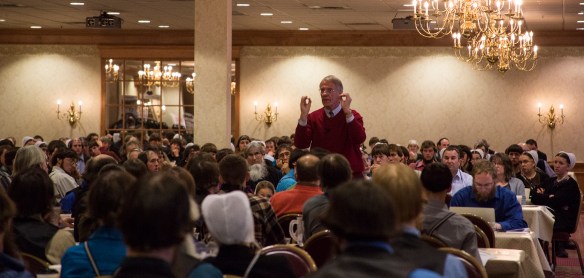
UnivestMeeting(DaveKohl)2“The leader of China worked on hog farms for two years. He ‘gets’ agriculture,” said Kohl, as he turned to a table populated with blue and gold jackets and said: “The relationships you form today, you will not know their impact down the road.”
Under the Trump administration, the U.S. sealed a “beefed up” pork and protein deal with China that has been good for the livestock sector. Perhaps dairy is next?

 Kohl also watches the weather. South America is in their double crop season and it is dry there. In the U.S. southwest, it is very dry in Texas, Oklahoma and Kansas. “If this continues through April 15 or May 15 and if it goes to the upper Midwest with a dry Southeast, it will impact corn.

He also keeps a careful eye on oil and energy prices, proclaiming that the U.S. made a pact after 9/11 to become energy independent within 25 years, but has done it in 10.

“We are now the energy leader in the world, so other nations can’t control us anymore,” said Kohl. Oil and energy costs influence the general economy, and really have an impact on farms. “8 out of every 10 dollars spent on the farm business are connected to oil.”

On the flip side of the oil coin is the historical relationship between oil prices and farm commodity prices. Kohl sees oil getting cheaper. “The demand side is changing. People are moving to cities and using public transportation,” he said, adding this surprising statistic: 31% of people aged 18 to 25 do not have a driver’s license.

He also noted that in Germany, they want to outlaw the internal combustion engine by 2040! And that in China, they want to have 25% of all vehicles run by electric by 2025.

The big trends impact so many things over time, and that is why Kohl pays attention to them.

In fact, he noted that the advances in farming technology have produced surpluses by taking the lower yield farms and really improving those yields. “That is what technology does. It improves the bottom end and that creates surplus, and this is why we need export markets.”

What does all of this mean for farmers? Kohl put the “correction” or “reset” he sees coming into perspective, observing that the 1980s correction went down fast and lasted five years. “This one is a grinder,” he said. “We are not seeing a collapse in the ag economy like we did in the 1980s. We are seeing it grinding along and surviving with technology and management.”

Kohl sees the stock market rate of gains as something that can’t last forever and believes it is a “bubble.” He quickly added that many people disagree.

He noted that student debt is record high, the rate of consumer savings in the U.S. is at the lowest level since 2007 and credit card debt just exceeded a trillion dollars.

Bubble or no bubble, Kohl encouraged listeners with his belief that what we have now is an “asset bubble” where equity and resilience will be the tools to guard. “Don’t get complacent on equity,” he urged.

The economic drivers of the current cycle are its elongation into a supercycle, the available technology and management, interest rates, stronger financial underwriting, working capital, land equity cushion, and crop insurance programs.

“Currently 90% of the world economy is hot,” said Kohl, adding that, “If it grows too fast, it’s a weed.” In his opinion, it is growing too fast.

The killers to watch out for are a rise in oil prices, a decline in the stock market, a tightening of credit strategies by the Central Bank and ‘bubbles.’ The bubbles to watch are auto debt, student debt, stock market, credit card debt and farm land asset to credit.

“Economic expansions do not die, they are killed off, and those are the things that can kill them,” said Kohl.

He said workforce development will be critical for sustaining the economic engine that is revving up, and he was encouraged to hear President Trump say last week that, “Not everybody needs to go to college. There is nothing wrong with vocational skills.”

What can dairy farmers do as these macro-economic factors around them are out of their control?

“Look at your business, and drive it toward efficiencies,” said Kohl. “Do your cash flows early and often to adjust to changing tides.”

Recognizing the trend toward diversified income streams on farms in southeast Pennsylvania, Kohl said that is more sustainable in today’s environment.

But the biggest piece of advice he gave was for farmers to “be proactive. Whether large or small, the top producers are making the adjustments, the middle is in denial waiting for bad weather somewhere to bring back commodity prices and the bottom third are at the end of the pier not knowing what is wrong.”

Look for Kohl’s cornerstones for success as this continues in a future edition.

Buy back and give? Sell cheap and dump? You decide.

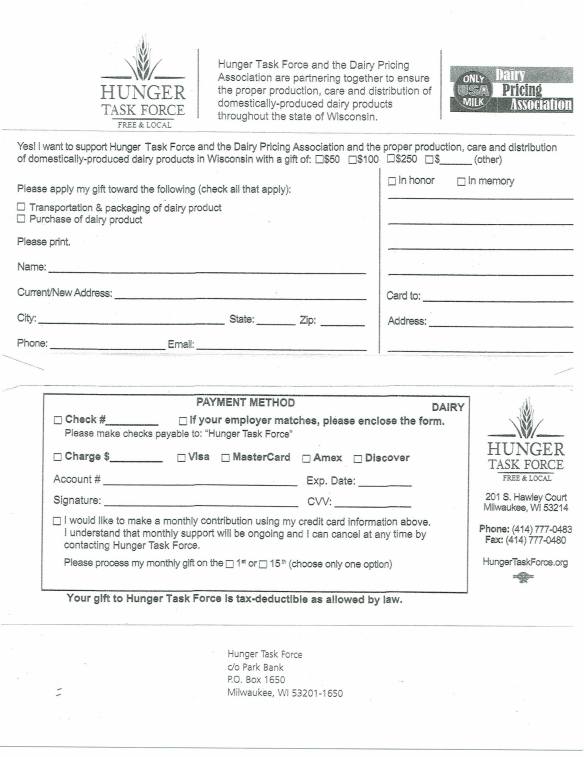
DairyPricing(HungerTaskForce) (1).jpg

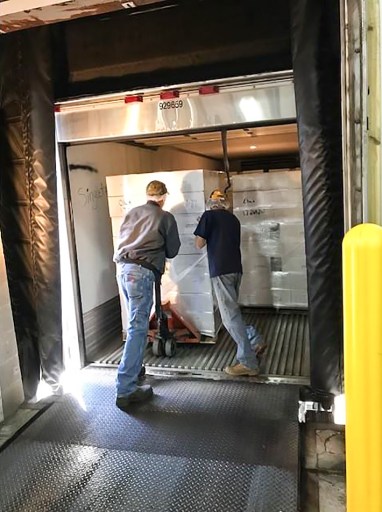
Cheese was loaded recently for Hunger Task Force, based in Wisconsin and part of the Feeding America network. Changes in USDA feeding programs are making Food Banks a more vital food access point for the poor. Farmers rise to the occasion when it comes to feeding the hungry. Dairy Pricing Association seeks to work continually with farmer funds to see that paying forward helps give back as times are very tough today on dairy farms across America. Facebook Photo: Dairy Pricing Association

Commentary, by Sherry Bunting, Farmshine, December 19, 2017

BROWNSTOWN, Pa. — Buy back and give? Or sell cheap and dump?That is the question.

“Just imagine what we could accomplish if there was a groundswell of farmers coming on board to fund this process to clear excess milk and dairy products and help others in need at the same time,” notes Amos Zimmerman of Dairy Pricing Association, Inc.

Zimmerman lives in Lancaster County, Pennsylvania and works with farmers here and in the Midwest on behalf of Dairy Pricing Association. He and others involved are excited about the organization’s track record and the new projects that are starting up that are funded by voluntary assessments. Dairy farmers sign up because they believe in the power of helping to clear the overloaded milk system of excess while helping people in need as the ultimate form of promotion.

Founded initially in Taylor, Wisconsin, the farmer-funded organization operates nationwide to help balance dairy plants across the country.

Dairy Pricing Association (DPA) does not disrupt the flow of milk. Instead, DPA uses the funds contributed by dairy producers to buy dairy products for donation to feeding programs in a way that has begun making a difference and has the potential to do even more.

Disappearance positively affects price, according to DPA literature. However, this is not milk ‘dumping,’ this is dairy giving. DPA’s activity in the marketplace is one that values the hard work of the dairy farmers while recognizing the pain and suffering caused by hunger in the world. DPA purchases dairy commodities and donates them for humanitarian purposes, for a two-fold benefit.

These and other donations show the heart of this dairy industry we are all proud to be a part of. Though it has been around for more than a decade, DPA is a lesser-known entity that is out there buying and donating milk and dairy products, not just at the holidays, but consistently throughout the year.

Buying excess dairy for donation is something Dairy Pricing Association has been expanding upon since its inception gathered steam in 2009 when a call to action by founder Robin Berg of Wisconsin led to a more systematic method. Farmers designate voluntary milk check assessments by signing up. Now others can also donate through a joint effort between Dairy Pricing Association and Hunger Task Force.

Tom Olson, DPA vice chair, tells of this history: “After the second meeting we could see that no one in the industry was going to help get this started. We were going to have to start this at someone’s kitchen table.”

With private donations for startup costs, Dairy Pricing Association, Inc. was born.

Today, their work is supported by dairy farmers who sign up to pay a voluntary assessment for the expressed purpose of buying excess milk and dairy products and channeling it to feeding programs that are the only option for poor consumers. The base of operations has expanded from the Upper Midwest into California and the Northeast as more farmers in Pennsylvania, New York, Ohio and Indiana have come on board to provide the necessary funding.

Dairy Pricing employee Amos Zimmerman of Lancaster County, Pennsylvania, is excited about the organization’s track record and the new projects that are starting up. In a phone interview with Zimmerman, Farmshine learned that dairy farmers can tailor the amount and purpose of their voluntary assessment to participate in this double-goal: To help clear the overloaded milk system of excess and help those in need as the ultimate form of promotion.

Every three months for the past two years, Dairy Pricing has been buying block cheese for donation to feeding programs. “We have gotten into a routine and the industry is starting to predict our purchases,” said Zimmerman. “We are changing things up and working on new projects for next year to start in January.”

One new project Dairy Pricing is working on is to satisfy the desire of the Central Pennsylvania Food Bank to have cheese donations coming every month of the year, not just at certain intervals, with the Food Bank paying half and DPA paying half.

“Central Penn Food Bank came to us to talk about a monthly arrangement,” Zimmerman said. With this in mind, Dairy Pricing is looking at a plan with Pennsylvania milk, processed in Maryland, but then cut to consumer package size by a Pennsylvania firm. DPA would purchase the cheese and Central Penn Food Bank would pay wholesale price for half of it, delivered in retail-size, pantry-ready.

Back on the bulk cheese purchases in the Midwest, recent loads of block Cheddar include one in October at 41,592 pounds, purchased by Dairy Pricing for donation to the Houston Food Bank for their needs after Hurricane Harvey.

The first load of blocks were purchased in 2016, when 30,588 pounds were bought at $1.65/lb for the Hunger Task Force in Milwaukee. That was followed by a $1.90/lb purchase of 41,604 pounds in December 2016 for Hunger Task Force and 41,860 pounds at $1.65 in April 2017 for Hunger Task Force. In July 2017, 39,662 pounds were purchased at $1.61 for Ruby’s Pantry in North Branch, Minnesota, followed by the October purchase of 41,592 pounds at $1.84/lb for the Houston Food Bank of Houston, Texas.

Dairy Pricing will be trying to do both the bulk purchases in the Midwest and the new programs in the Northeast and Midatlantic region, with the money available through dairy farmers’ voluntary assessments, according to Zimmerman.

Similar milk balancing through cheesemakers for feeding programs has also been happening in the Midwest, including recent milk to cheese through Lynn Dairies to The Community Table in Eau Claire, Wisconsin.

Another new startup project is coming about through inquiries by dairy farmers wanting to be involved in dairy donations through Christian Aid Ministries, based in Ephrata, Pa.

“They only handle powder because it goes overseas,” said Zimmerman. People who want to be involved in that project can sign up for a voluntary 15-cent/cwt assessment.

The powder project will be 100% whole milk powder to a host of oversees destinations where hunger is prevalent.

“Whatever we buy or donate, it has to be the whole milk product, not just the skim,” says Zimmerman, who spends his days on the road talking to farmers and attending meetings. He does a conference call with farmers every Monday night, attracting 100 to 150 people, and he serves as the boots-on-the-ground contact person for Dairy Pricing here — covering the whole East Coast and spending time in Ohio, Indiana, Kentucky, Virginia and Wisconsin.

He also works with farmers and farm groups on the side to help them with local processing start ups and other marketing solutions. He has been involved in the dairy industry his whole life, working as a herdsman for dairy farms since he was 18 and known for his curiosity in always looking for information about how the dairy industry works with a keen interest in the processing side.

“I’ve always had an interest in it, and since the marketing system is going the way that it is, people are having to find different routes to their consumers,” said Zimmerman, adding that “local consumers come to us all the time wondering how to support local farmers.”

This has become a difficult direct line within an increasingly national and global marketplace. Processing investments are the tough part of this task.

.“I can’t stress enough how important it is for dairy farmers to be informed to make better decisions,” Zimmerman says.

Since Dairy Pricing Association expanded to the east with its producer voluntary assessments, the very first milk donation was to New York for hurricane victims in 2012. When surplus milk is available over holidays, Dairy Pricing pulls gallons for donation, including donations last year to feeding programs in Washington D.C.

“None of what we do is to get the credit for doing it,” said Zimmerman. “We are doing this because it needs to be done.”

In fact, a bit more credit for doing this work could help get more of it done. As farmers learn more about what DPA is doing, more voluntary milk check assessments could accomplish an even greater impact.

Zimmerman noted that since Dairy Pricing balances the bottling of White Gold Milk and Chocolate Gold here in the East at California standards, this is the brand they typically pull from the wholesale supply for donations of fluid beverage milk. This utilizes both fresh fluid milk and powder to arrive at the higher solids content of the milk, including a 3.5% fat profile for whole milk instead of the minimum standard of 3.25%.

“What we can accomplish hinges on signups,” said Zimmerman. “The more we get the word out, the more interest we see. In 2014, we could hardly talk to farmers, prices were good. But that’s when we should be jumping on board to fix things before they get bad again.”

A ubiquitous figure in local dairy circles, Zimmerman gets calls every day from farmers in trouble thinking of selling their cows. “This problem is deeper than the milk prices,” he says. “It is the whole structure that is at risk that could destroy the infrastructure, even in Lancaster County.”

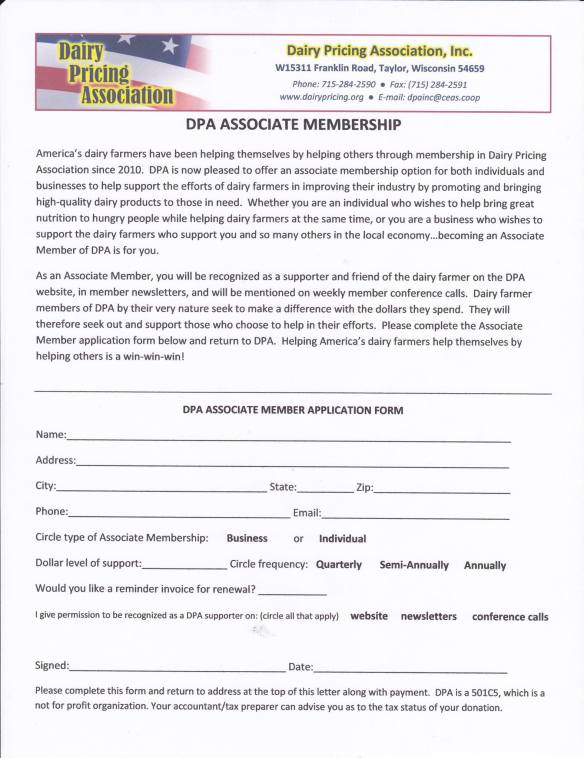
The typical voluntary assessment signup is 10 cents/cwt. But can be as little as 5 cents/cwt or as high as 30 cents. To specifically participate in the whole milk powder donations through Christian Aid overseas, a 15 cent/cwt level is required. (See form at the end of this story).

“It is all a donation, and farmers can cancel at any time,” Zimmerman explains, stressing that this assessment cannot be used to replace the 15-cent promotion checkoff nor the 4-cent CWT deductions taken off milk checks by member cooperatives.

In addition, others can also donate through a joint effort with Hunger Task Force. (See form at the end of this story).

DPA notes at their website that when milk is in great supply, many loads are sold at up to $3 per cwt below the Class III price. “When this happens, this cheap milk goes into storage as cheese or powder and starts to pile up,” according to DPA. “We need to have a fund to buy at these times to keep the system from being overloaded.”

Through Food for the Poor and Christian Aid, exporting to 17 countries overseas, the need is great for all the whole milk powder that can be supplied and as well for domestic use through Feeding America for soup kitchens and feeding the homeless here in the U.S.

The point is for the dairy product to go to people who could not get it any other way except through donation, not to take a sale away from a store. It is estimated that for every semi-trailer load of whole milk powder exported or used in domestic soup kitchens, eight tanker loads of milk are removed from the overloaded system.

Because the program is voluntary, producers can follow the progress of what DPA is doing, and can continue their contributions or cancel at any time.

Whether it is tens of thousands of gallons of milk or tens of thousands of pounds of cheese, DPA has steadily increased its benevolent presence from coast to coast as more farmers sign up to be involved.

Who are DPA members? They are dairy farmers from coast to coast shipping their milk via nearly every cooperative and direct milk plants. These dairy farms span the milk marketing and handling system across the U.S.

According to the DPA website, farmers funding Dairy Pricing Association with their voluntary assessments include shippers to Agri-Mark Inc. in New England; Associated Milk Producers in Minnesota, Clover Farms Dairy in Reading, Pa., Cloverland Farms Dairy in Baltimore, Md., Cooperative Milk Producers in Blackstone, Va., Dairy Farmers of America, Dean Foods, Farm First Coop in Wisconsin, Galliker’s Dairy in Johnstown, Pa., Grassland Dairy Products in Wisconsin, Guggisberg Cheese in Ohio, Horizon Organic based in Colorado, King’s Kreamery in Lancaster, Pa., LaGranders Hillside Dairy in Wisconsin, Lancaster Organic Farmers Cooperative and LANCO-Pennland, both based in Hagerstown, Md., Land O’Lakes, Lynn Dairy in Wisconsin, Maryland-Virginia in  Reston, Va., Mount Joy Coop, Mt. Joy, Pa., Nasonville Dairy in Wisconsin, National Farmers Organization headquartered in Ames, Iowa, Organic Valley, Prairie Farms based in Illinois, Smith Foods in Ohio, Westby Cooperative in Wisconsin, and former DMS shippers in New York and Pennsylvania.


Current dairy prices are not sustainable for the future survival of dairy farms and the rural communities and businesses that rely on them. At the same time, we read about the concerns of food insecure Americans as well as staggering numbers of war refugees and victims of disasters and famine throughout the world.

If our industry builds a storehouse of dairy goods that end up pressuring farm milk prices lower, and if growing numbers of people here and abroad are unable to access dairy nutrition without assistance, what better way to meet the needs of both than to voluntarily, consistently and strategically provide this assistance?

When the storehouse of goods is channeled to the needy through farmer-funded purchases in a way that helps to balance the market, America’s farm prices can improve and the food-security of our nation in the future can be assured.

The government and the industry do not have a plan that adequately addresses either of these concerns. This is why DPA exists as a way for farmers to help themselves by helping each other and helping those less fortunate at the same time.

Dairy Pricing Association is not funded by the government, nor is it funded by processors or marketers. Participation in DPA funding cannot be used to replace the 15-cent federally mandated promotion checkoff or the 4-cent CWT assessment. Nor can it  replace new deductions showing up on milk checks in the current marketing environment.

However, DPA attracts new farmers every day because the mission is funded by dairy farmers who believe that sitting back and doing nothing but complain is not an option. They want to take the future by the horns and move forward.

Through membership donations in the form of 5-cent to 15-cent per hundredweight (some even give 30 cents/cwt), farmers are joining together through DPA to strengthen the organization’s ability to place orders for finished dairy products from processing plants and once the order(s) are filled, donating the product for humanitarian purposes.

The possibilities of this concept are only limited by the funding available, and that means dairy farmers, themselves, can make the difference. Unlike the marketing and balancing fees that are being increased on dairy farm milk checks, the Dairy Pricing Association assessment is completely voluntary, simple, direct, farmer-run and built from the ground up to help dairy farmers help themselves, help each other and help children and families who know real hunger throughout America and the world.

The question is: Do farmers want to gain strength by joining together voluntarily to buy back their own excess for giving to people less fortunate?

Or do they want to continue to allow the system to do the incomplete job it has been doing – bound by its Federal Order rules that allow dumping but not giving, and costing farmers ever-higher deductions from their milk checks to “balance” the excess through below-class sales that create market-depressing inventory or by dumping milk down the drain at a cost to the farmers?

Hats off to the givers. May their vision and efforts continue to multiply.

To learn more about Dairy Pricing Association, Inc. and to acquire forms for milk check pledges, call Tom Olson at 715.284.9852 or 715.299.1332 or Amos Zimmerman at 717.872.1464  or email dpainc@ceas.coop. Visit DPA online at visit dairypricing.org and follow on Facebook @dairypricing. Ask about national producer conference calls.

To learn more about Christian Aid Ministries, the vehicle for a new farmer-funded Dairy Pricing Association, Inc. project of whole milk powder donations for hunger assistance worldwide, visit christianaidministries.org and dairypricing.org

Find out more about what they are doing, and then decide if your farm can help make a positive two-fold impact on markets and hunger. See below the forms for farmer milk check deductions and for non-farmer donations.

-30-

27908268_1706488862706495_1793134549468984843_o.jpg

27912562_1706540572701324_1580090599401814216_o.jpg

Electronic trading brings anonymity. Understand how CME dairy spot markets function

By Sherry Bunting, Reprinted from Farmshine, February 9, 2018

CHICAGO, Ill. — The CME dairy spot markets have been evolving since arriving in Chicago after a tumultuous past on the Green Bay Cheese Exchange, writes Ronald K. O’Brien, II, a dairy market risk specialist and geostrategist. He is director of global derivatives for Interfood, multidimensional global dairy risk managers using physical and financial global dairy markets to offset internal sales and inventory risk.

CME(RonOBrien).jpgRecently, Farmshine interviewed O’Brien to better understand from a trader’s perspective how the dairy spot markets function since the transition from live floor trading to electronic trading in the second half of 2017. We also gained insights on some differences between the global and domestic trading platforms.
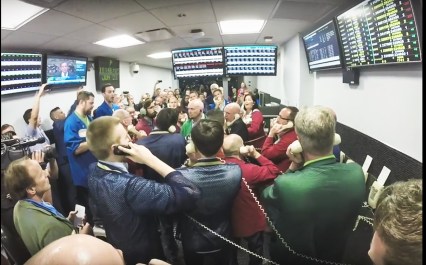
This conversation matters because the daily price at which those 15 minutes of CME trading close — whether bid, offer or trade — helps set pricing for the weekly USDA National Dairy Product Sales Report for cheese, whey, butter and nonfat dry milk (NFDM), which in turn sets the monthly commodity prices that are plugged into the Federal Order formulas that form the basis for how dairy farmers get paid for their milk.

O’Brien points out that markets are based on the “who” and the “what.” That’s as much true about CME dairy spot markets as it is about cattle auctions. People want to know, in the moment, where the auction is going in price, but also who is buying and who is selling, to infer a sense of market demand and resistance at those positions.

“Fundamentally, we have the same participants on the dairy spot markets, and it is still like coming to an auction,” says O’Brien of how bids, offers and trades occur on the electronic platform today, just like when it was live on the floor of the Chicago Mercantile Exchange (CME). “The difference, now, is the anonymity. This requires you to participate if you want to know what is going on. This brings a little more interest to those 15 minutes of spot trading.”

The anonymity also creates a situation where the largest market leaders know more because they know the buyer or seller once a trade is completed; whereas before, others outside of that transaction could observe and speculate based on which brokers were trading.

O’Brien observes that when the CME dairy spot markets traded live on the floor, analysts would not precisely know who was buying and selling; however, they knew the brokers and who they typically bid or cleared for.

CME(lastOpenOutcryDAIRY)For example, in past years, the largest physical producers and end users in the United States would regularly use the same clearing broker for their spot transactions, resulting in the majority of market participants acting on this inferred knowledge in real time. A single bid or offer from certain brokers would set distinct levels of support and resistance, and this was coveted as the most prolific dairy information of the day.

The electronic platform “made this all disappear,” says O’Brien. “Spot traders know who is trading when a transaction is complete, at the end of the auction, if they are involved in that transaction, but they have no clue about who else was involved during the session.”

Thus, he says, “it is now more difficult to sense how strong the support is or how heavy the resistance because (with electronic trading) you don’t know if the buyer in a session was the largest end user, or your grandmother taking a position.”

In fact, anyone with eligible product in a warehouse, a CME auction account and a funded futures account can sell on the CME dairy spot market.

This is different from the Global Dairy Trade (GDT), which is run by Fonterra of New Zealand. In the GDT biweekly internet auction, not just anyone can bring product to that exchange. “They have to be vetted and approved to offer product on the GDT, and selling is limited to processors,” O’Brien notes.

For this reason, the CME is more of a “natural and price transparent marketplace,” he explains.

He calculated the trade volume for the 12 months leading up to the change from floor trading to electronic trading, noting that 38,000 tons of 40-lb blocks and barrels were traded on the CME during the second half of 2016 and first half of 2017.

Trade volume on 40-lb Cheddar blocks has increased 16% and on barrels 38%. O’Brien points out that the amount is still relatively small considering that the U.S. produces 5.5 million tons of cheese annually, which is essentially priced off the CME session trades, bids or offers.

“We were trading 7/10ths of one percent of total cheese production on the CME spot market,” says O’Brien. Since the change to electronic trading, this has increased slightly to just shy of 1%.

The volume of CME spot butter trades, on the other hand, has increased 138%, while NFDM has been flat.

With more trades, one can argue that the CME spot markets have become a better price discovery mechanism via electronic trading, particularly for butter. For the 12 months prior to going electronic, the CME traded 1.44% of the total U.S. butter production, compared with trading 3.7% of total production in the past six months since going electronic.

“That is a dramatic jump in the price discovery for butter,” says O’Brien.

The CME spot market for cheese has some product specification differences from butter and powder. “It is a fresh cheese market,” O’Brien points out. “Sellers cannot bring product older than 30 days to the CME, so we can have 400 million pounds of cheddar in inventory, but if there are no sellers of fresh cheese, and if buyers have a need for fresh cheese, we get these massive short-squeezes.”

He notes that the CME could price fresh cheese at $1.60/lb on the spot market, but cheese that is 31 days old or older could be trading through normal distribution channels at discounts as great as 20 cents per pound.

In that sense, the CME gives dairy farmers hope — when they see Cheddar up 10 to 20 cents on the CME spot market — but then the rally erodes in real time as the “short-squeeze” on fresh product passes, and the CME spot market falls.

This volatility is often seen from week to week, and cheesemakers can get caught when their input cost for milk does not align with their output sales of cheese that is older than 30 days.

On NFDM, the product age window is 6 months, and for butter it is one year, making those spot markets more reflective of supply and demand in terms of stored product realities.

“We could have a better marketplace (for cheese), but at the moment, these are the boundaries that participants are forced to operate within, regardless of the increased volatility that results from them…volatility greases the track and gets things moving,” observes O’Brien.

His experience with dairy market risk over the past two decades gives him insights into many sectors of the dairy industry. He suggests that dairy farmers need to be aware of their options and be realistic about their cost of production.

“Everyone is in same boat (in terms of market risk), but for dairymen, it is different because they are mostly price takers, while physical trading houses and other market participants that have risk management departments can be price makers,” he says. “Physical traders incur risk when they can manage it, and if they cannot, they immediately offset it or avoid it altogether, whereas dairy producers make milk and work hard and do some things about risk on their inputs but neglect fixing the price of milk outputs.”

O’Brien notes that with the farm milk price based almost completely off the CME spot markets, this is also affected by delays. The CME spot market can be going up while the USDA weekly National Dairy Product Sales Report can be going down in the same window of time. Meanwhile, the CME spot dairy markets, especially on cheese, remain a “market of last resort” with limited participants on the processing side.

While there is increased activity of end-users coming to the spot market directly to buy — especially for butter — the spot market is mainly selling more product with the same participants. There are still a limited number of butter sellers — traders fulfilling contracts and a handful of processors that make butter.

The large processors and cooperatives focus on allocating the bulk of their sales for the year and make inventory based on those allocations. Global dairy traders, on the other hand, have ever-changing risk profiles, which forces them to buy, sell and arbitrage to survive.

“We don’t operate under the luxury of make allowances,” says O’Brien of the role of market participants such as themselves.

Meanwhile, market dynamics are changing in the cheese industry where cheese plants are being built as much for the cheese as for the whey stream valorization. This creates a supply of Cheddar barrels that can build up and are seldom exported.

U.S. processors continue to produce yellow Cheddar blocks and barrels, but few globally have the equipment to break down the barrels, so they are not exported. The industry makes what it wants — what milk is priced from — but is that reflective of the market?

There are certainly inefficiencies in the current commodity market pricing systems that underpin the Federal Order milk pricing. Can a case be built to improve this?

Could inclusion of more indexes built off more pricing points (products) bring better market transparency?

Meanwhile, the four basic commodities from CME to Federal Order set the allocation pricing barometer for dairy processing as well as both the spot milk and milk futures markets.

Looking overseas, O’Brien suggests that the countries of the EU “would love what we have in the ability to lock in a milk price for up to two years (via a mechanism like the CME futures markets). For the most part, farmers in Europe are paid on what milk-derived sales their co-op or processor can attain. Their pay price does not float with the market. But farmers in Europe have the intervention program — similar to the former dairy product price support program the U.S. eliminated in the 2014 farm bill,” O’Brien relates.

Volatility in the marketplace provides opportunities to manage risk, but it is easier said than done. For example, there must be access to funds to hold positions (through the margin calls when the market goes against their positions).

On the processing side, says O’Brien, “Deferred positions of just 5 months can move against you as much as 70% for products such as NFDM or Cheese and as much as 100% for butter.”

As for dairy farmers, he observes that there were opportunities during late 2008 to lock in $20 Class 3 milk prices during 2009.

“But most dairy farmers didn’t do this. A super majority operate without safeguards, eternally optimistic. Dairy production is not a pastime, and survivability is not certain,” he suggests. “The future is managing risk. The multinational companies do it, and traders do it. Successful farmers will have to do it also.”

Ron O’Brien can be followed @rko2milk on twitter and at milkfutures.com

Check out the final open outcry live CME dairy spot market auction from June 2017 here


check it out at https://www.youtube.com/watch?v=si2vVdOQemo&t=35s


Dairy market fluidity

041213FarmshinePage4.inddDairy market fluidity

By Sherry Bunting, Milk Market Moos, Farmshine, February 2, 2018

Picking up from the previous dairy export ‘Jeckyll and Hyde’ discussion… Let’s look at what has happened to the fluid milk market in the U.S.

There is a difference between Class I utilization declining and actual packaged milk sales declines. For example, the 2017 year figures are not yet in, but for the last reported month of November, USDA reports that packaged conventional fluid milk sales for January through November 2017 are down 2.1% from year ago and organic fluid milk sales are off by 0.2%.

While consumers are drinking less dairy milk on a per capita basis, Class I — as a percentage of all milk sold — is declining faster because the processing of milk into other growing dairy product sectors is increasing.

Some of the increase in these product sales reflects domestic growth, but the kicker is that as exports increase as a percentage of total milk production, Class I utilization as a percentage of total raw milk sales is pushed lower — even if consumers drink more milk.

Let’s identify how the markets are changing and how to value them back to the raw milk producer rather than laying blame for over production that leaves the farmers in the position of “deserving the price they get.”

Supply management is not the answer, nor is it at this point really possible. It is a distraction. We need to be looking at the dairy trade in a way that both prepares farmers for the future and prepares the industry for dealing fairly with producers.

Case in point. How concerned has the National Dairy Council and the dairy industry  been about the fraudulent use of the word ‘milk’ on plant juice labels? NMPF’s efforts to right this wrong came only within the past two years — and 15 years after these sales of fake milk started eating into the fluid dairy milk sales.

How serious have they been about the milk that our children drink in school? It is interesting that GENYOUth was “founded in 2010 as a partnership between the National Football League and National Dairy Council, convening leaders in a movement to empower America’s youth to create a healthier future.”

One example given at the GENYOUth website recognizes U.S. Dairy Export Council CEO Tom Vilsack for his accomplishments for dairy farmers while serving as Secretary of Agriculture under President Obama. In his current role, Vilsack’s salary is paid by DAIRY FARMERS via the mandatory promotion checkoff.

Specifically a December GENYOUth gala recognized Vilsack for having “legislated to improve the health of America’s kids. Under Sec. Vilsack, USDA partnered with First Lady Michelle Obama’s Let’s Move! initiative alongside GENYOUth to improve the health of America’s children. Sec. Vilsack helped pass and implement the Healthy, Hunger-Free Kids Act to help combat child hunger and obesity by making the most significant improvements to U.S. school meals in 30 years.”

school lunchThat is certainly a mouthful, considering that something else occurred in 2010-11. This was the very same year that schools were forced to offer only 1% or fat-free white milk and flavored milk could only be offered as fat-free!
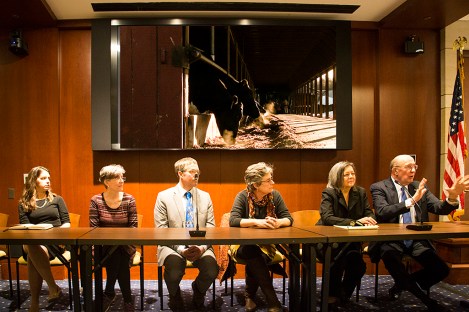
Unfortunately, this did not improve school lunch meal nutrition, and it has cost dairy farmers plenty in lost milk sales.

In fact, Bob Gray for the Northeast Association of Farm Cooperatives stated recently — during a panel of dairy producers and policy folks at a Congressional viewing of the New England documentary Forgotten Farms I attended in Washington D.C. earlier this month — stated the impact of the school milk issue on milk sales, surpluses and pricing.

ForgottenFarms2web.jpg“For the past six years, we have not been able to sell even 1% (fat) milk in the schools,” said Gray about being forced to sell flavored milk only as fat-free. “In the first four years, alone, we lost 288 million half pints of milk sales that were not consumed by schoolchildren (2012-15) because of this move, alone.”
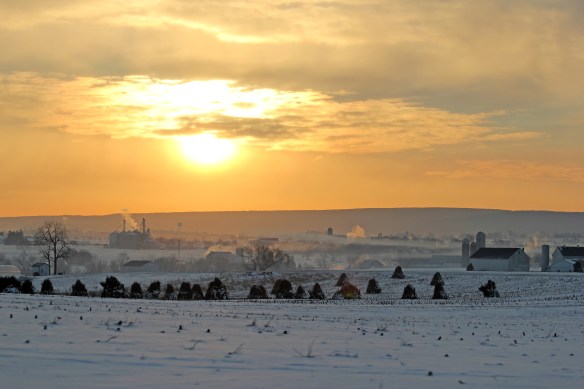
But maybe this is the point.

If fluid milk consumption erodes as a percentage of milk production, the cost of milk to processors becomes less for the many other products that need to be more competitive globally.

Technology is driving some of these trends. New opportunities and new knowledge are improving efficiencies throughout the supply chain. But marketing direction often leaves more questions than answers when it comes to spending money dairy farmers are forced to pay for it.

Meanwhile, as Dr. David Kohl, Virginia Tech professor emeritus, pointed out as a speaker last week in Lancaster County, Pa., the advances in technology are driving production from an efficiency standpoint. What these advances do for agriculture is to help less productive farms improve yields. “Technology improves the bottom end and that creates surplus, said Kohl. “And that is why we need export markets.”

To my thinking, exports are to be keenly pursued, but pursued with a strategy that does not ignore the market profile of dairy sales here at home, especially when the highest valued product classification under federal price regulation for dairy — fluid milk — is being treated like the Cinderella sister with odds against her, while her sisters get ready for the Prince’s ball.

There are plenty of great innovations in dairy products and distribution — including export markets — that deserve our attention. However, while Cinderella is ignored in plain clothes in the increasingly cluttered dairy case full of fake substitutes, she deserves an invitation to the ball. And a glass slipper or two sure wouldn’t hurt.

Whole milk up, fat-free way down

USDA’s January estimated fluid milk sales report indicates that whole milk sales for the first 11 months of 2017 were up by 2.5% over year ago and November, alone was up 3.5%. Meanwhile lowfat and fat-free losses drove the entire category lower as nearly 12% less fat-free milk was sold compared with year ago, 6.7% less 1% and 2.8% less 2% milk. Similar patterns were revealed among organic milk drinkers with fat-free down almost 20% Jan. through Nov. while whole milk was up 6.2%.

Author’s Note: Re-inventing this Ag Moos blog for the times….  Milk Market Moos is a column I’ve been writing in Farmshine since 2003. Find some of it here, at Ag Moos, along with other dairy and beef market related stories, agriculture news, and, in between, the stories and images of the inspirational people of agriculture… but you can get it first, and you can get it all, in Farmshine Newspaper, just $15/year. Farmshine is a weekly newspaper published in Brownstown, Pennsylvania — now in its 39th year of publishing all-dairy, all-the-time.

Out with the old. In with the new: Relentless cold.

SnowyFarms7280.jpgBy Sherry Bunting, Reprinted from Farmshine, January 5, 2018
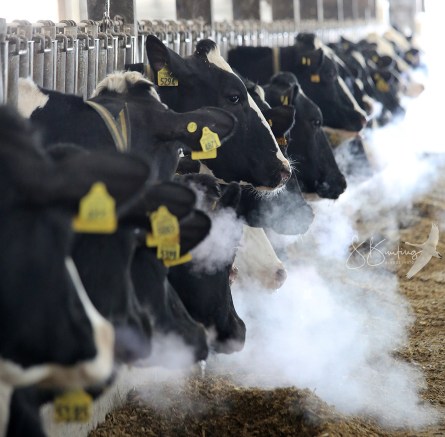
BROWNSTOWN, Pa. — Out with the old. In with the new. Record-smashing snowfalls and a relentless deep-freeze, that is what’s new as 2017 gave way to 2018 this week under a very bitter ‘wolf-moon’. The onslaught of extreme temps, high winds and heavy precipitation are taking their toll on dairy farms from New England to Georgia and from Pennsylvania to South Dakota.

In addition to bitter cold temperatures — persisting for four to five days with a one- to two-day ‘break’ at midweek — the next round of snowfall is already traveling up the coast and across the lakes ahead of another steep temperature plunge in the forecast.

Meanwhile, northwest Pennsylvania is still digging out of its record-breaking snowfall at Christmas, just ahead of the extreme drop in temps.

The Christmas Day lake-effect snowstorm lasted 48 hours and dumped a record-breaking 53 inches of snow in Erie, Pennsylvania, with additional snowfall two days later for a 4-day total of 63 inches. This eclipsed every snowfall record for the state of Pennsylvania, according to the National Weather Service.

The biggest problems being seen on dairy farms are from the bitter temperatures — ranging on the mechanical side from gummed up diesel fuel to the inability to move manure and problems keeping milking system vacuum pumps and compressors running.

On the animal side, cattle and youngstock losses are being reported as well as frostbite concerns. These types of concerns are mostly reported in the areas along the great lakes from upstate New York to Minnesota, where temperatures hit -15 to -30 – not including the wind chills.

Milk is still moving from farms to plants, but delays are indicated this midweek where transportation has been slowed by problems with diesel fuel.

In its fluid milk summary this week, USDA reported that frigid temperatures throughout the East have created hauling delays, and frozen pipes have created issues at dairy manufacturing plants. This has added to the supply-demand imbalance that lingers from the holiday period.

Everyone from plant operators to farmers to haulers are yearning for a return to normal schedules that may not normalize until after the second round of arctic blast comes and goes next week.

Impacts on milk production in the Northeast and Midwest are also beginning to show up in load counts, but the lack of normalcy in milk movement means production is still steady to ample for usage.

On farms, producers are dealing with frozen pipes, slippery floors, frozen accumulated manure creating uneven walking surfaces, and the fact that everything — including moving cows to and from the parlor — takes more time.

Weather6782buntingw

Producers need a break in the weather to thaw out, clean out, and get ready for the next round of arctic air to hit.

In closed group discussions throughout social media, farmers are exchanging ideas and seeking support from each other — to know they are not dealing with these hardships alone.

The extreme cold has also increased the risk of fires as producers pull out the stops to keep animals warm and power infrastructures are tested to the max. A dairy outside Little Falls, New York experienced a tragic fire last weekend, in which all 50 cows were lost.

At midweek, temperatures climbed briefly, but snow has begun falling in earnest along the southeast coast where snow is seldom seen, while the Northeast coast braces for blizzard conditions with more snow and high winds, followed by a plunge back into low temperatures.

It is not an understatement to say that dairy producers everywhere are dealing with weather extremes that are testing their collective resolve. Whether it is 17 degrees in Texas or -30 in western Minnesota, -15 in upstate New York and New England, -3 in Kentucky or -1 in Lancaster County, Pennsylvania, the extremes are beyond what each area is typically prepared for. Producers are taking advantage of any temporary warmth to prepare for the next plunge.

Frozen waterers, vacuum pumps, manure removal equipment and difficulty starting feeding equipment are most commonly reported concerns shared by producers across the country in facebook posts.

Some asked for prayers this week, hoping for a break in the weather; others rejoiced with humor when 30 degrees below zero became 15 degrees above at midweek, saying ‘break out the shorts.’

But this respite is short-lived before the next mercury dive Friday through Monday.

Winter is tough, and farmers are prepared for it, but this is extreme, and there is only so much that can be prevented. What does not get prevented, must be dealt with as it happens, and this is causing frustration and low morale as producers strive to get the work done while also fighting the feeling of failing the cows.

You are not failing. You are heroes. Please be careful out there.

Bottom line for the cattle, say veterinarians, is plenty of feed and water and to be out of the wind with a dry place to lie down. These basics enable cows to survive a lot.

Dairies truly are in survival mode, focused diligently on animal care and getting done what must be done and no more.

Keeping waterers from freezing and breaking ice out of waterers that are frozen is a never-ending job in these temperatures.

For calves, experts suggest increasing milk feeding and frequency since they do not have a rumen to heat them up. This will help calves stay warm and cope with the stress. But it’s difficult to do more when temps make everything take longer. Please be careful.

For cows, the mantra is energy and more energy. Rations can be adjusted to dense up that energy, without losing fiber. Cows normally eat more when it is cold, getting more energy into the cows helps.

From farmers to truckers to veterinarians to dairy system technicians and to all who are taking care of animals, equipment and transportation — we at Farmshine see and know how hard you work to keep things going. You have our ultimate respect and our prayers for safety during the bitter cold and we wish for a warming break in the weather to take hold soon.

-30-

bitter(wolf-moon)03Jan2-2018w

From East to West and North to South, relentless frigid temperatures are making things difficult on dairy farms. Photos by Sherry Bunting

Gift of life, keeps giving

Status

Agmoos's avatar
Burdettes_Dec2017(SherryPhoto)vertical.jpg

Justin, Claire, Reese, 10, Brinkley, 8, and Tripp, the dog, by the Christmas tree on a December afternoon just 3 weeks after the kidney transplant that gives Reese a new lease on life. Tucked in under the tree is Reese’s beloved cat Jack. Reese is quite enthusiastic about her four-legged friends, be they Holstein dairy cattle or house pets. Photo by Sherry Bunting 


‘Reese shows us you can have tragedy in your life and still move on and be full of life and hope for the future.’

 By Sherry Bunting, reprinted from Farmshine, Friday, December 15, 2017

MERCERSBURG, Pa. — Cheese ball is back on the menu this Christmas at the Burdette house on Corner Road outside of Mercersburg, Pennsylvania. It’s among the favorite foods that Reese Burdette has had to forgo for nearly four years to be easy on her damaged kidneys as she recovered from the May 2014 house fire.

That, along with hash brown casserole and all the yummy goodness of dairy foods, potatoes, orange juice and bananas — essentially nutritious foods high in vitamins such as potassium. In fact, so happy is Reese about bananas, Claire believes she’s eaten a tree full already.

Not only is Reese happy to be eating these foods again, “I hope to start growing again too!” the smiling 10-year-old said during my visit to Windy-Knoll View farm last Thursday.

While she has forged ahead on this journey on every front, it was the kidney transplant everyone knew Reese would eventually need that was hanging out there on the horizon. Justin and Claire Burdette learned in September that their daughter was in renal failure. She had been doing so well, so the timing was a bit of a shock.

Many people had already been tested as live donors — from friends and family members to colleagues in the dairy industry. But who would think that the “angel” sent into Reese’s life would be a friend of a cousin by marriage who had met Reese one time, a young, single woman with a heart of gold and willing to go through the surgery to donate a kidney to give Reese the vitality of life this ‘tuff girl’ has been fighting for.

Reese&Alyssa

Ahead of the kidney transplant surgery, Reese’s aunt Laura Jackson updated on social media describing Alyssa as selfless, inspirational, courageous and beautiful with a giving spirit that is truly admirable. “Her love of children and animals led her right to us because right now, Reese does need some extra help,” wrote Laura. What many may not realize is that this gift of a new kidney comes from a woman “who loves her family and just wants to make a difference in this crazy world we live in… What this beautiful soul has offered up is a very different kind of life for Reese… the chance to be a normal 10-year-old with a chance to grow.”  Photo credit Bre Bogert Photography

Through the selfless generosity of Alyssa Hussey, 32, of Winchester, Virginia, a special education teacher with the Loudoun County Public Schools, the successful kidney transplant took place at Johns Hopkins on November 20. Not only are they both home and doing well, Reese was released just five days after the surgery, getting her home just after Thanksgiving and far sooner than imagined.

The two were expecting to have a visit at the farm this week, and Reese said she is anxious to show her hero around to see her growing little herd of 12 Holsteins, not to mention the five calves her sister Brinkley has accumulated among the Windy-Knoll View herd of top registered Holsteins.

Ahead of the transplant surgery, Reese’s aunt Laura Jackson updated on social media to say:

“What many may not realize is what this beautiful soul has offered up is a very different kind of life for Reese, a chance at a life with more quality and abundance, of water parks, river swimming, better health and the chance to be a normal 10-year-old with a chance to grow.”

Alyssa has given Reese the ultimate gift — the gift of life.

“We are relieved to have faced this. We knew it was coming. We just didn’t think it would be now. But what a blessing,” Justin reflects. “This kidney transplant would not be possible without someone like Alyssa. It’s proof that living donors are out there and we found one that we had ties to and never knew.”

Claire says that, “It’s hard to fathom someone willing to give our child their kidney and we barely knew her. But she didn’t think twice. We are beyond grateful.”

Burdettes_Dec2017-14 (1)It was a regular day on the farm when I arrived just as Reese was finishing school via the virtual robot — a necessity as she avoids large indoor crowds for the next 100 days since the transplant. Her younger sister Brinkley was just getting off the school bus. We had an hour to talk before Justin headed out to milk, driving down Brinkley and Reese Way, the dirt roads across the field between their house and the farm. The late afternoon sun, as the farm’s name suggests, broke through cold windswept clouds in the gap of the south mountains.
 

Reese-Brinkley-Jim-Nina(FacebookPhotoProvided).jpg

Three weeks after her kidney transplant, Reese looked forward to the annual sleigh ride in Greencastle last Friday evening with grandparents Jim and Nina Burdette. While she must avoid indoor crowds for 100 days, the outdoor Christmas festivity was high on her list of things to look forward to. Facebook photo.

At the kitchen table, the topic of conversation centered on the many things Reese was already reintroducing into her life since the transplant, the goals she and her mother Claire have set, and the activities she is looking forward to – not the least of which was a trip to Greencastle Friday evening for the annual horse-drawn sleigh ride with her Momo and Papap (Jim and Nina Burdette).

What is it about Reese’s story that has inspired such a far-reaching interest and impact? People write and call and follow her progress from near and far. It’s a story of faith, hope and the determination to live life to the fullest, to overcome challenges and setbacks, to never give up, never let go of the rope and to keep moving forward in a matter-of-fact way with fierce strength, raw honesty, family love and accountability filtered by the wisdom of a 10-year-old’s keen sense of humor.

Justin notes that they had a visit not long ago from a Canadian couple who keep in touch often to see how Reese is doing. They traveled to Pennsylvania just to visit her, amazed by her journey after nearly two years at Johns Hopkins recovering from the fire. This dairy farming couple had been through a barn fire and had dealt with animal losses that were depressing. Knowing Reese, seeing her, has made a difference in their world.

They are but one example of hearts Reese has helped to heal through her own example.

They are among the many who have written the Burdettes about what Reese’s story means to them, and what her journey has done for them in their own circumstances. Claire explains that, at first, these responses were hard to realize and digest because so many have done so much for Reese and their family that they felt they were leaning on others only to learn that others were finding support also in them.

Reese-Brinkley-Sleigh(FacebookPhotoProvided)“I think what Reese shows us is that you can have tragedy in your life and still move on and be full of life and hope for the future. I think that is what Reese has done for people,” Claire explains.

Healing and support going both ways – a lifeline — gifts that keep giving.

In like manner, the kidney donated by Alyssa Hussey is new hope transplanted, a gift that keeps giving in a young girl with a second chance.

Justin and Claire also had high praise for their summer intern who came back to help at the farm so they could be with Reese, worry-free, in the hospital for the transplant. Mikey Barton is the grandson of Ken Main of Elite Dairy and Cutting-Edge Genetics in Copake, New York. He had served as an intern last summer at Windy-Knoll View, and when he heard about the upcoming kidney transplant for Reese, he came down to help take care of things.

“We are so blessed,” the Burdettes said, describing the bond Mikey has made with their family. “Blessed that he comes back to see us and that he would take his time off to come down here so we could focus on Reese.”


Justin was quick to point out that he got back to the farm Wednesday to be sure to have Mikey home with his family for Thanksgiving, and that Mikey made time to drive the two hours south to see Reese in the hospital before heading north back to New York.

“We felt we have learned as much from Mikey as he has learned from us through this internship experience,” said Claire. “It has been a neat connection. He knows our routine and we didn’t have to worry about things at home for those few days.”

The Burdettes also credit the support of their local community and the dairy community from the beginning. Flannery’s Tavern on the Square in Mercersburg hosted a Team Reese fundraiser a week before the kidney transplant to help with medical and related expenses with the restaurant donating 15% of the days sales and providing a room for 75 silent-auction items donated and bid on by the greater community.

For the Burdettes, it has been the physical outpouring that accompanies the financial support of others that has lifted them up. To see a Team Reese fundraiser pack the local restaurant from open to close shows how much Reese has lived up to her nickname as “Mercersburg’s daughter.” When she and Brinkley walk into Flannerys, as they do once a week, people cheer. No price can be put on that physical show of support.

Every effort to this point has come together toward a life that will be much different for Reese now. No lines to tether her. No long trips for dialysis.

Clair confirms the doctors are very happy with her progress and her bloodwork looks good. Her main job in the next 100 days is to stay healthy and drink lots of fluids for that new kidney.

High on Reese’s list of “new” is fewer shots, fewer medicines, and working on giving up the tracheotomy for supplemental oxygen.

She is pretty excited about her Dad’s promise of a trip to Great Wolf Lodge where a waterpark is in her future.

“I can’t wait to bathe in that waterpark and get Brinkley soaked!” she says with a laugh.

But first she needs to reach the point in her journey where the trach is no longer needed. Now that the kidney transplant has occurred, there will be sleep studies and trials to be sure the timing is right to close the trach, and then the watersports and other activities will beckon. Reese already gave up the constant companion of traveling oxygen last Easter when she wanted to be outside with the other kids for a longer period of time, and decided on her own, she didn’t need it.

Reese has set a goal to attend the Pennsylvania Junior Holstein Convention in Lancaster in February. Mom’s goal is to get her through the next three months away from crowds to be strong and healthy into this next chapter of her journey.

Because we all know what comes next. There are calves to work with and cows to care for and in addition to a new calf Cream Cheese from her Carrie cow, named after the child life specialist who has been inspirational on this journey, there are the new gals from her Pantene line, like Potato Chip and Pretzel.

Reese and Brinkley talk excitedly about their cattle as they rattle off names and pedigrees.

But the cow work will have to wait, except for drive-throughs this winter. Instead, Reese is happy to be making and eating some of her favorite dishes. This week she made sticky buns with her Momo and a repeat favorite meal – sloppy joes.

She says, “No more driving to dialysis and getting home late at night!” That all ended on November 21 along with the line in her belly and the constant hemoglobin shots.

The people who have stuck with Reese from the beginning continue to be there in large ways and small. A woman in town still sends Reese a card every week, just as she has since May 2014.

As for the Christmas celebration, her second at home since the fire, Reese has big plans. She shared her small, but typical 10-year-old’s list for Santa and the family traditions she looks forward to. To avoid contact with crowds, she’s shopping by internet, and she’s pretty excited that on Christmas Eve, she will be helping her Momo prepare the dinner.

For Claire and Justin, having their daughter home with her new kidney for Christmas is the greatest gift of all.

“There is so much good in this world,” Justin affirms. “We just have to look for it.”

One place to look is the inspiration of little Reese Burdette.

Correspondence can be sent to Reese Burdette, 8656 Corner Road, Mercersburg, PA 17236. Financial contributions or fundraisers for Reese and her family, can be sent to “We Love Reese” First Community Bank, 12 S. Main St., Mercersburg, PA 17236.

-30-